#RSAC
Who am I!
•Professionally
– 14yrs+ in CyberSecurity (last 7yrs spent helping companies build securely
in Public Cloud)
– CISO of Kaizenteq (Ed-Tech company)
– Host of Cloud Security Podcast , Co-Host of AI Cybersecurity Podcast
• Personally
– Grew older in Melbourne, Getting wiser in London, UK
– Can talk for hours on Coffee & Men’s Fashion
13
#RSAC
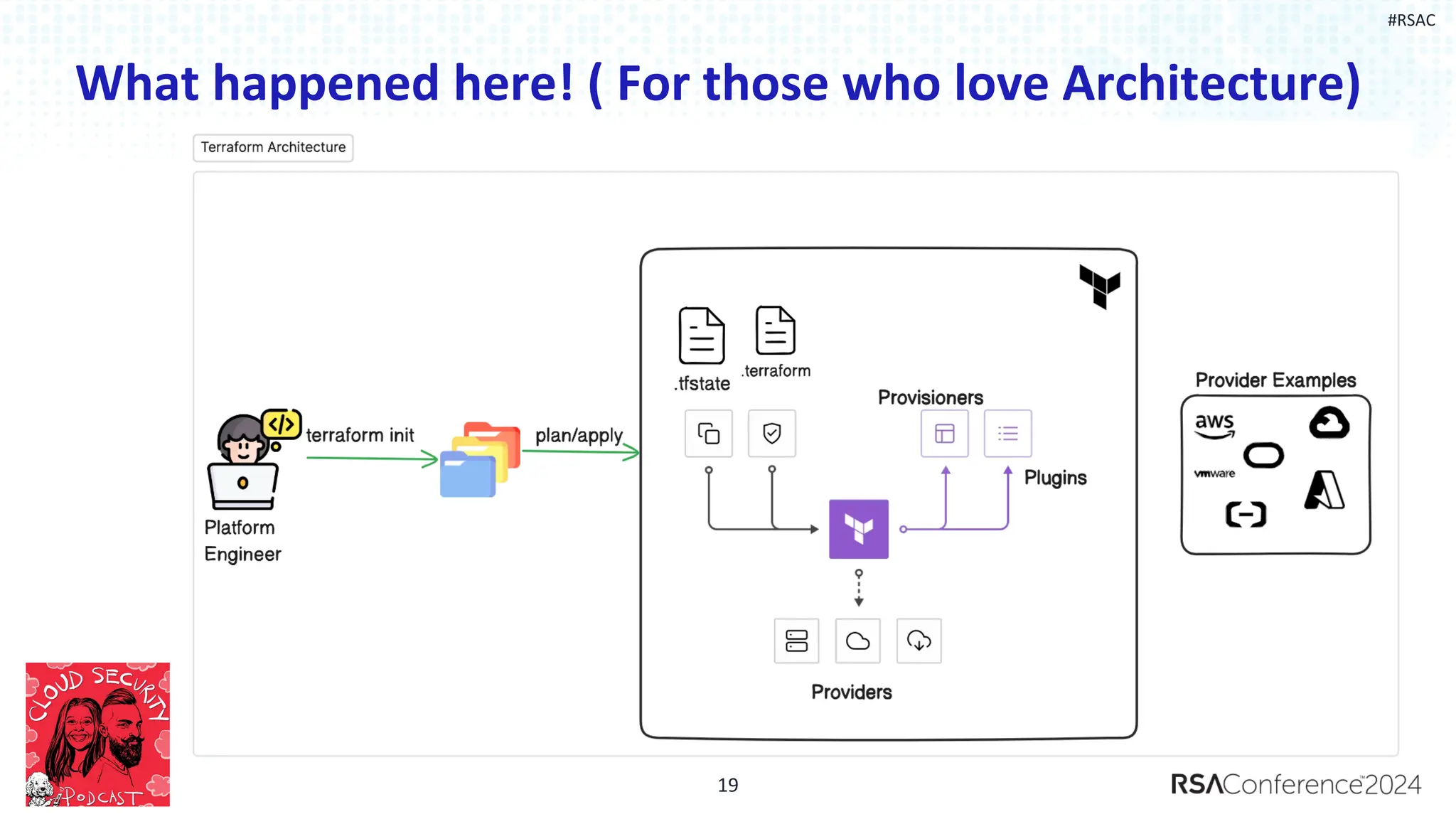
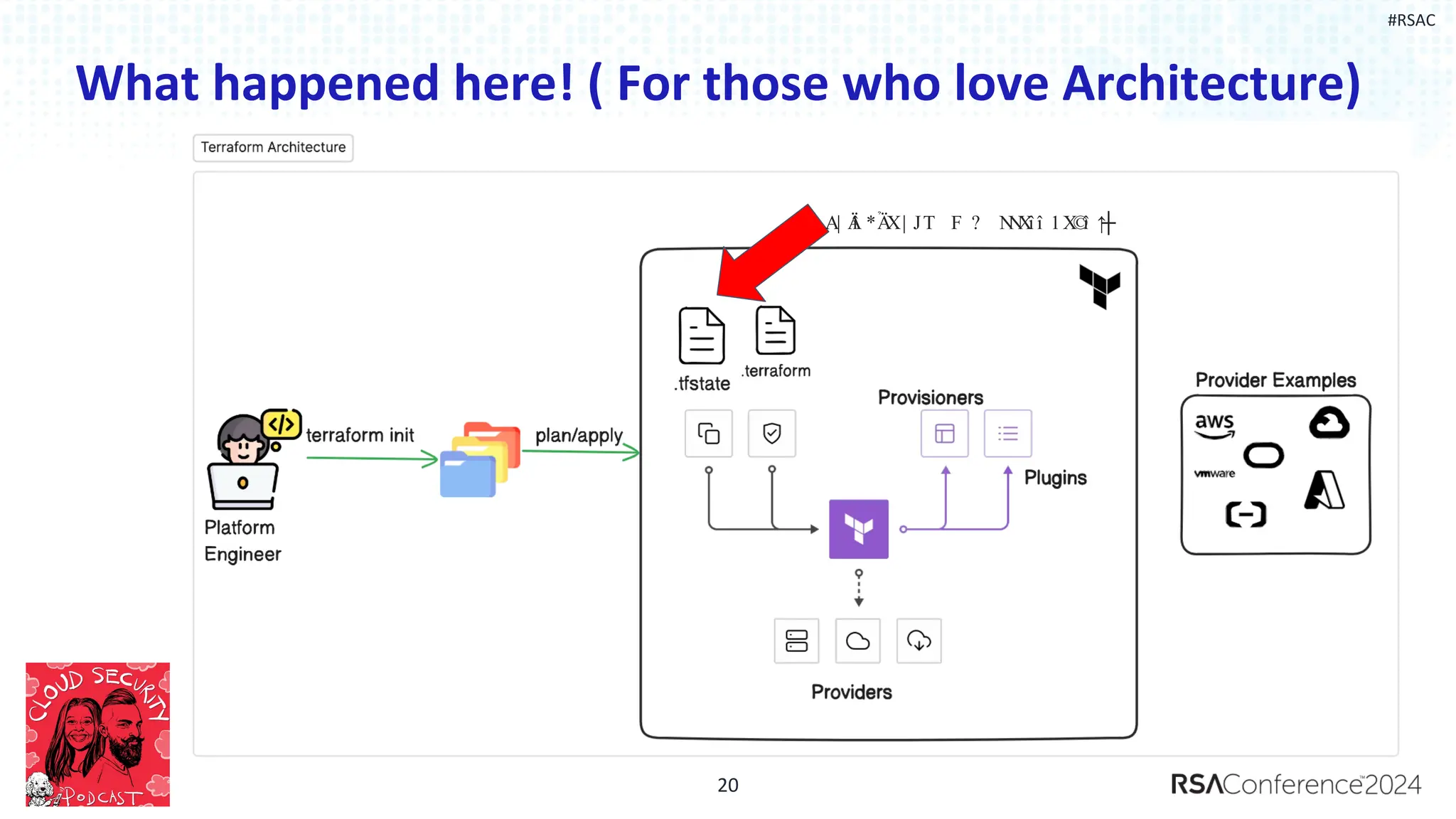
What happened here!
•Where did this start?
– We left a set of AWS Access Keys in a Terraform State file and merged it
into our public Github
• Possible Risk & Consequences
– Reputation Risk
– Not having the right information to correct this from further damage
– Low Hanging fruits are FREE TO FIX so should not exist
– Git History is not fun - forever on the internet!
18
#RSAC
Tale of the3 Cloud Breaches - #1
22
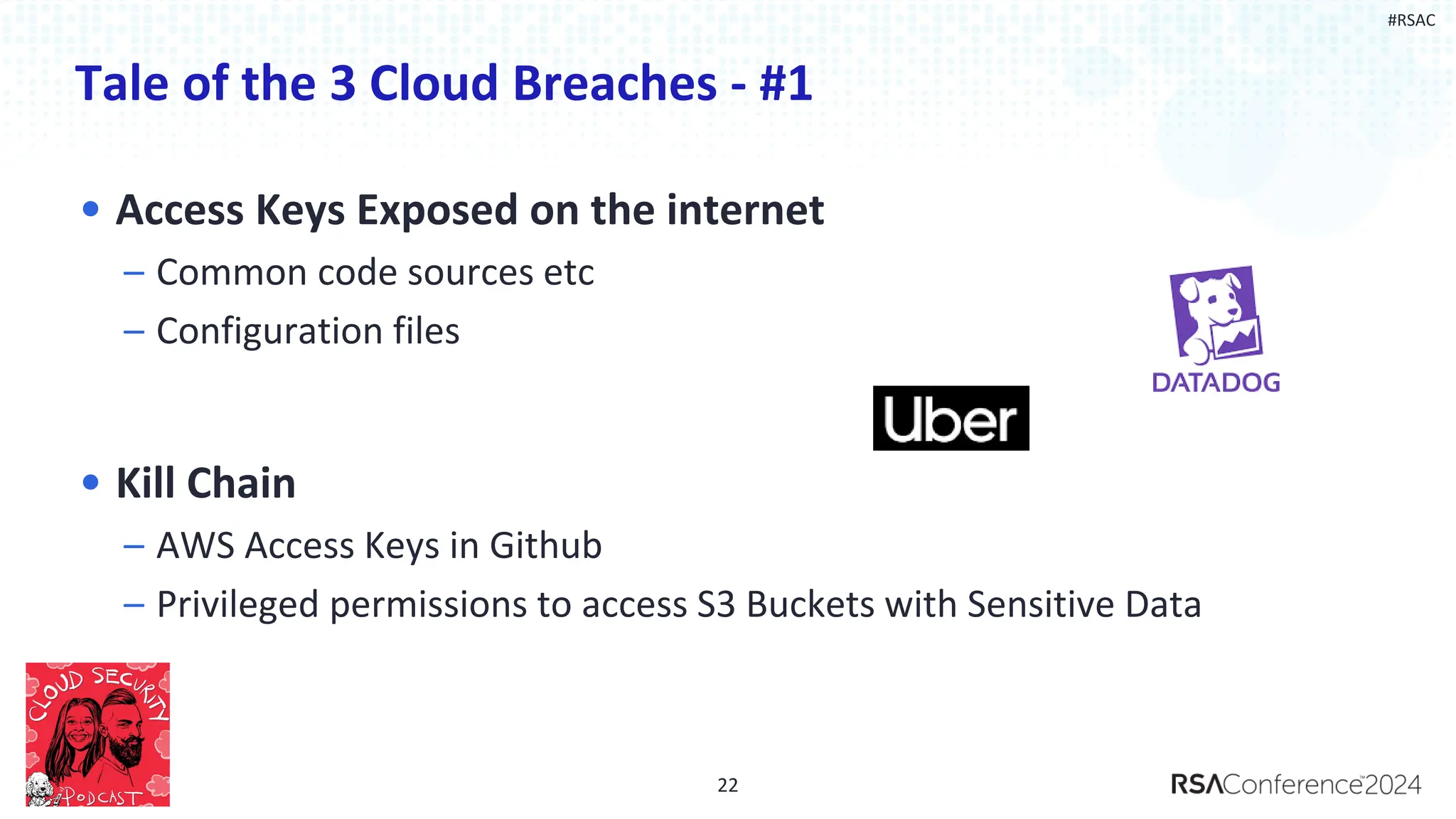
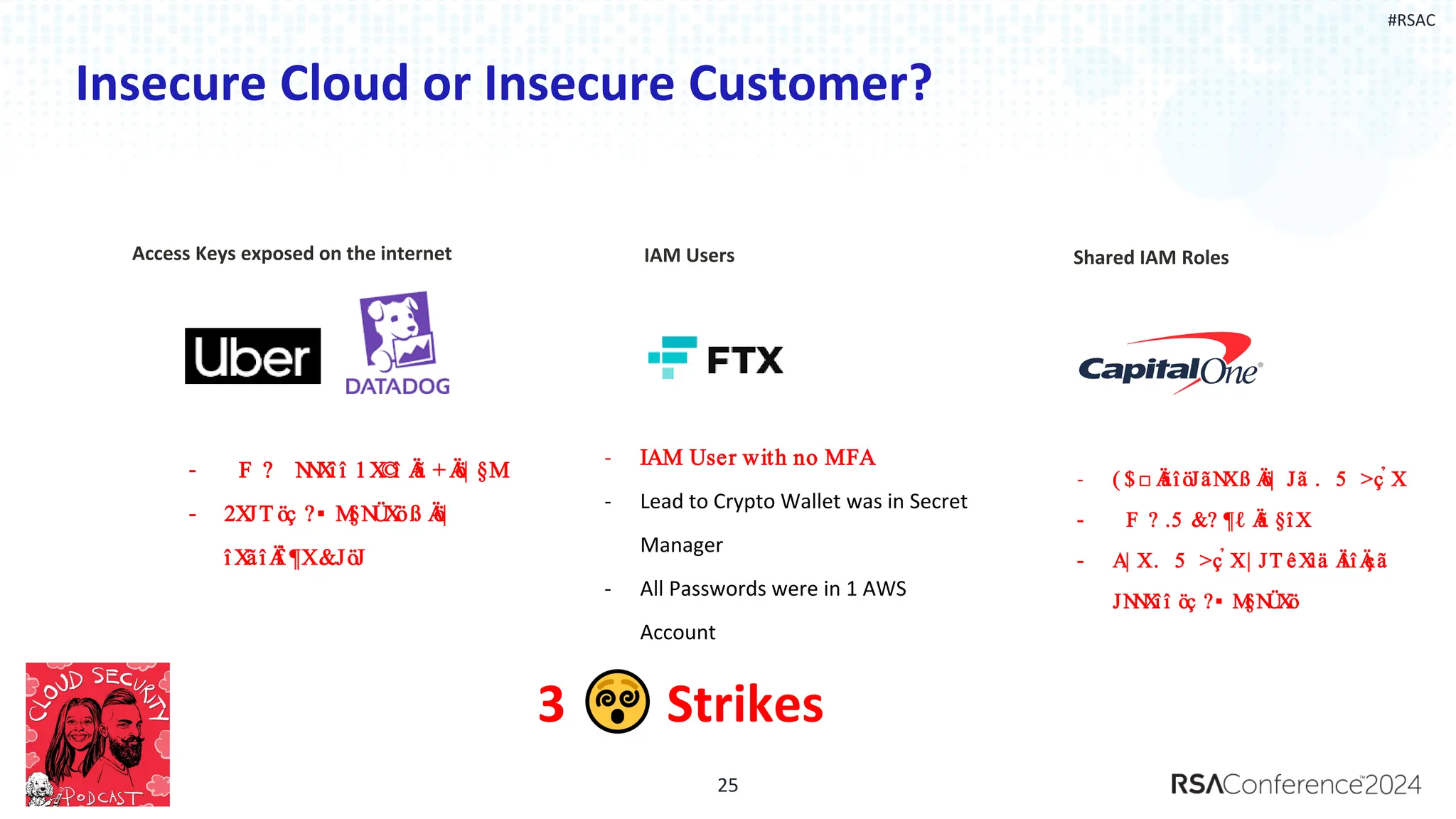
• Access Keys Exposed on the internet
– Common code sources etc
– Configuration files
• Kill Chain
– AWS Access Keys in Github
– Privileged permissions to access S3 Buckets with Sensitive Data
13.
#RSAC
Tale of the3 Cloud Breaches - #2
23
• Lost IAM Users Credentials
– No MFA
– Shared Password
• Kill Chain
– Lost access to AWS Account
– All Passwords in all password including Crypto Wallet in Secret Manager
14.
#RSAC
Tale of the3 Cloud Breaches - #3
24
• IAM Role with Excessive Permissions
– Role Shared across identity and resources
– Excessive permissions to a role
• Kill Chain
– EC2 instance with an IAM Role (with permission to access S3 bucket)
– AWS IMDS v1 was in use on the AWS EC2 instance
#RSAC
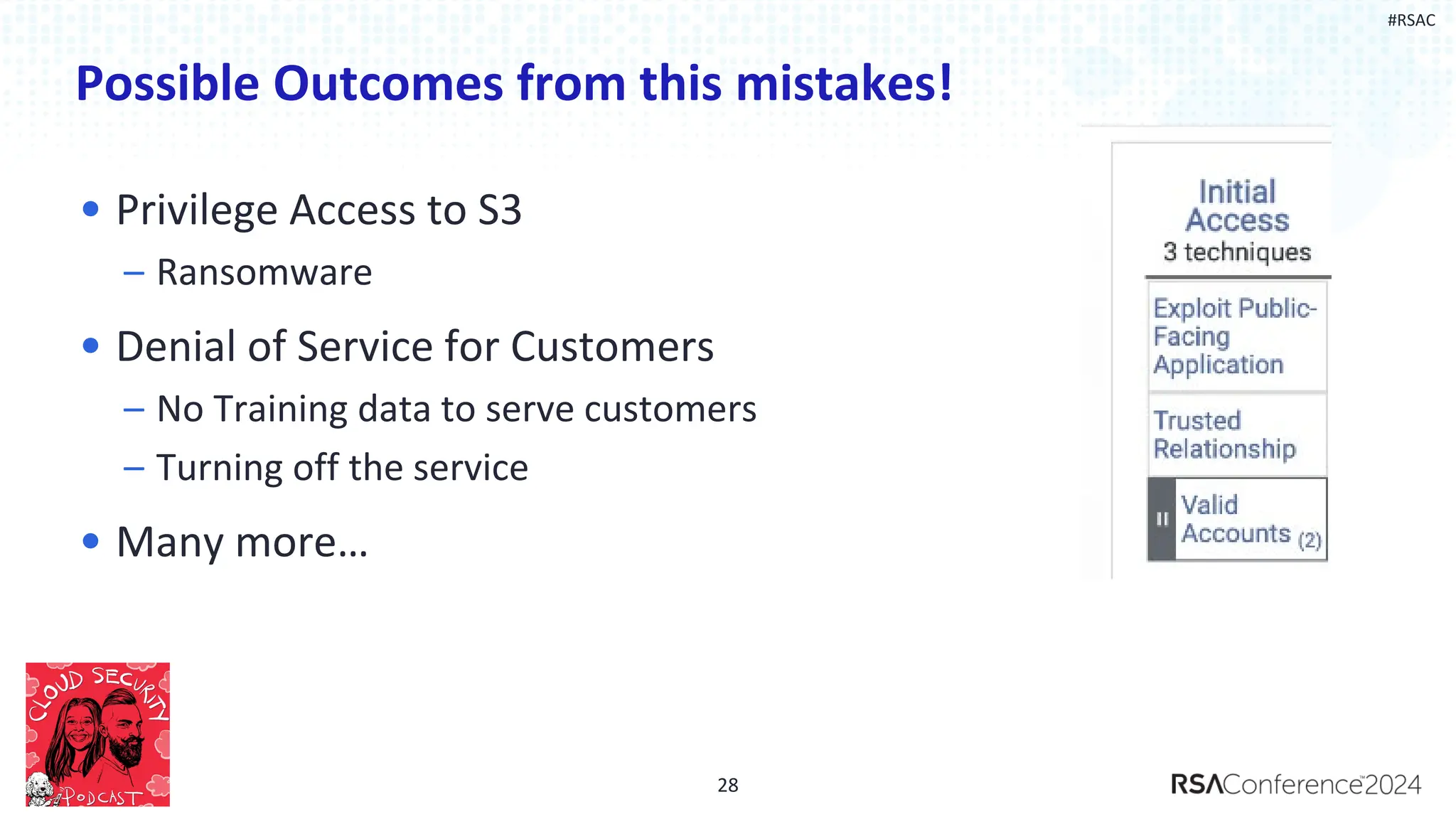
Possible Outcomes fromthis mistakes!
• Privilege Access to S3
– Ransomware
• Denial of Service for Customers
– No Training data to serve customers
– Turning off the service
• Many more…
28
#RSAC
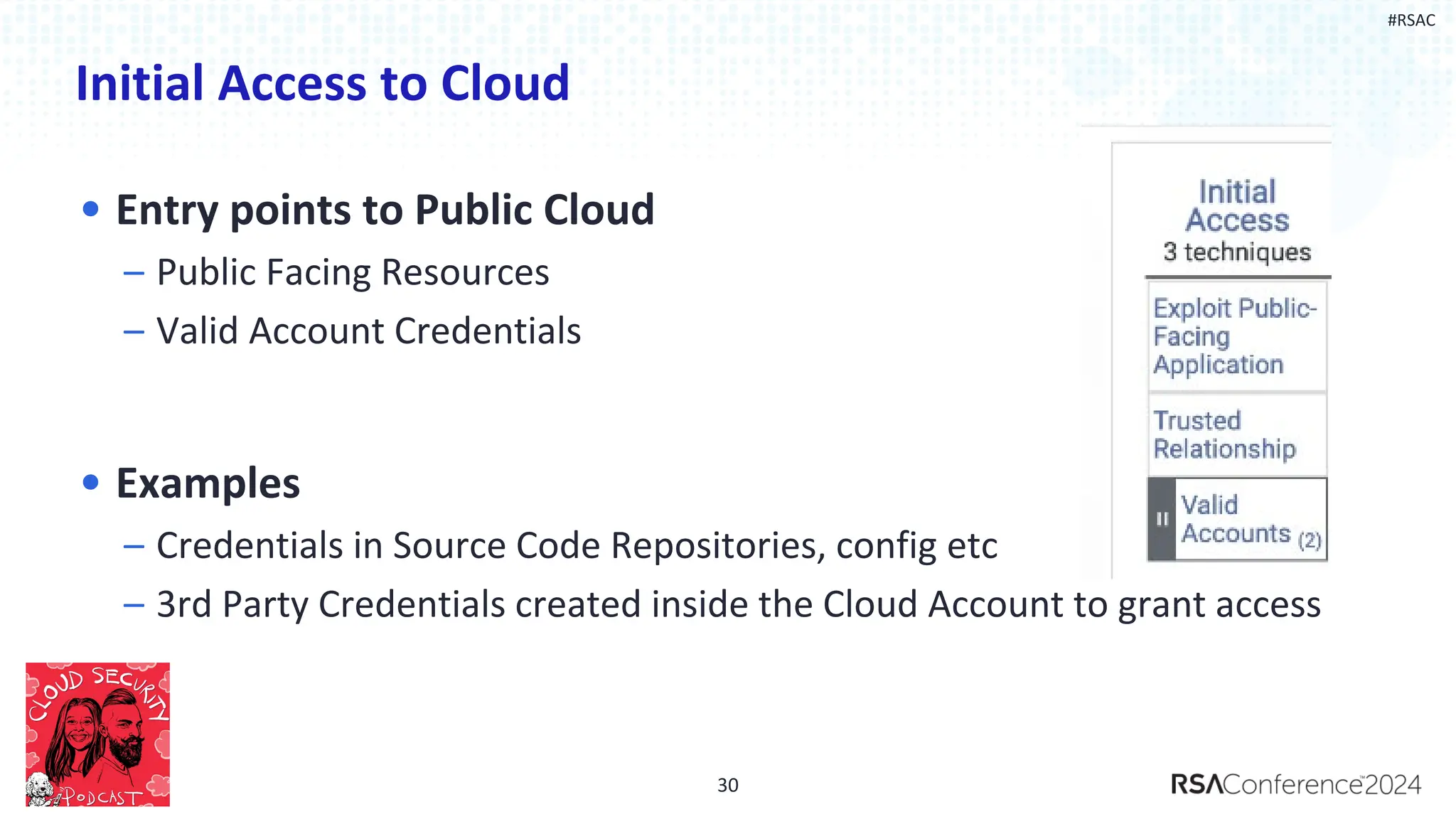
Initial Access toCloud
• Entry points to Public Cloud
– Public Facing Resources
– Valid Account Credentials
• Examples
– Credentials in Source Code Repositories, config etc
– 3rd Party Credentials created inside the Cloud Account to grant access
30
21.
#RSAC
3 things thatwork at scale to secure cloud
• Threat Model of Cloud & Application
• Establish Data Perimeter based Trusted Zone using Policies*
• Incident Response Readiness testing
31
22.
#RSAC
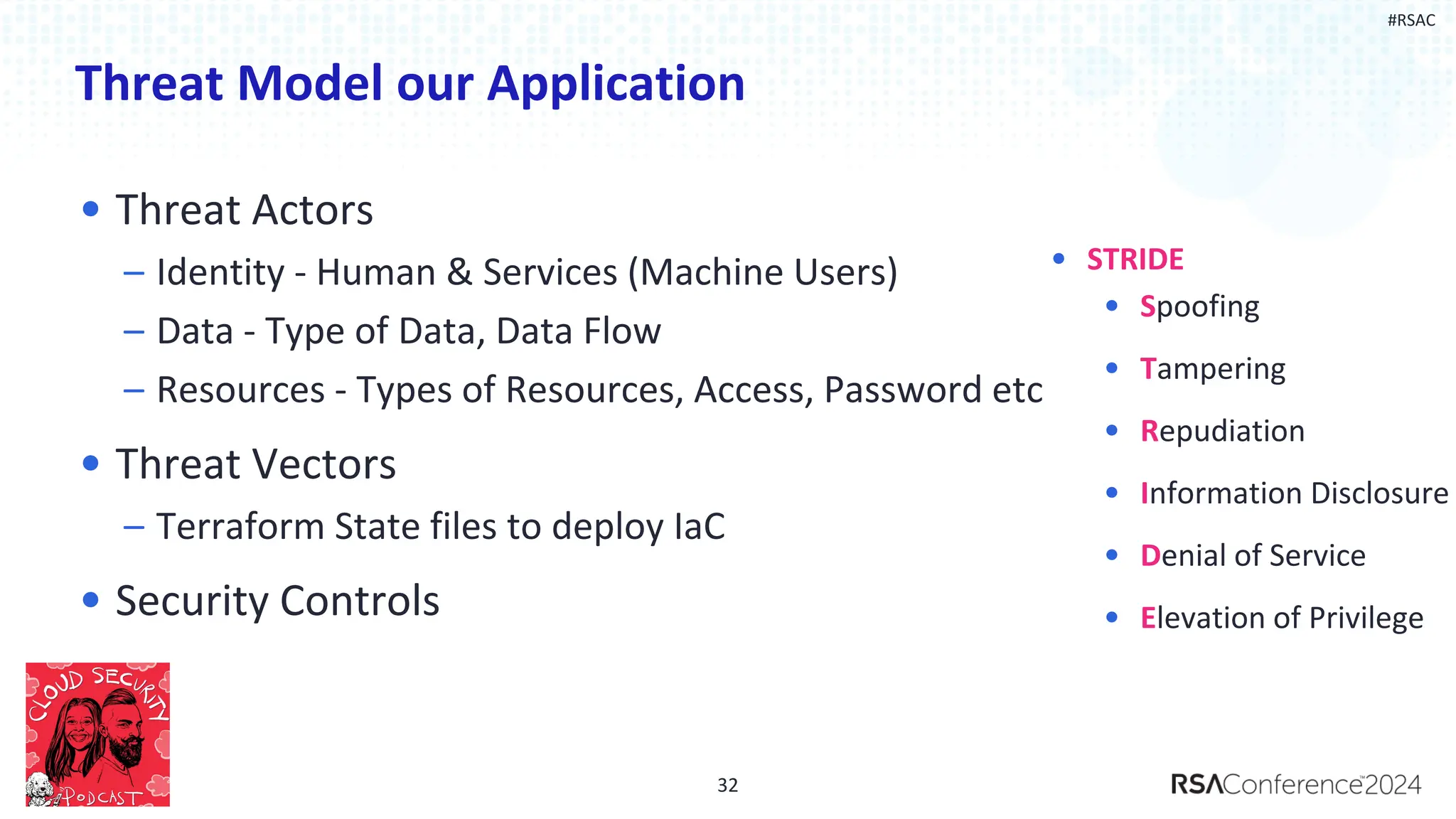
Threat Model ourApplication
• Threat Actors
– Identity - Human & Services (Machine Users)
– Data - Type of Data, Data Flow
– Resources - Types of Resources, Access, Password etc
• Threat Vectors
– Terraform State files to deploy IaC
• Security Controls
32
• Spoofing
• Tampering
• Repudiation
• Information Disclosure
• Denial of Service
• Elevation of Privilege
• STRIDE
23.
#RSAC
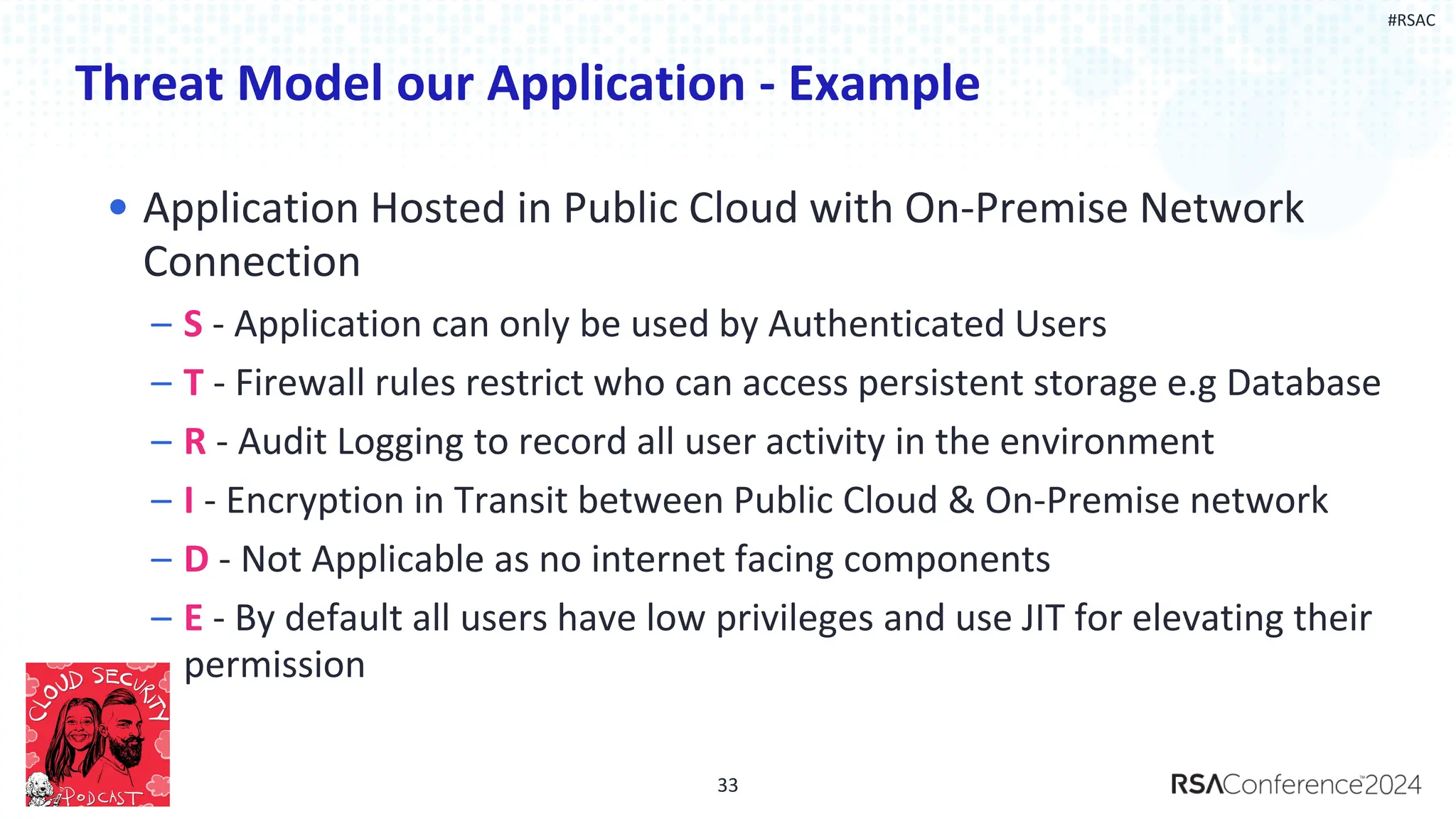
Threat Model ourApplication - Example
• Application Hosted in Public Cloud with On-Premise Network
Connection
– S - Application can only be used by Authenticated Users
– T - Firewall rules restrict who can access persistent storage e.g Database
– R - Audit Logging to record all user activity in the environment
– I - Encryption in Transit between Public Cloud & On-Premise network
– D - Not Applicable as no internet facing components
– E - By default all users have low privileges and use JIT for elevating their
permission
33
24.
#RSAC
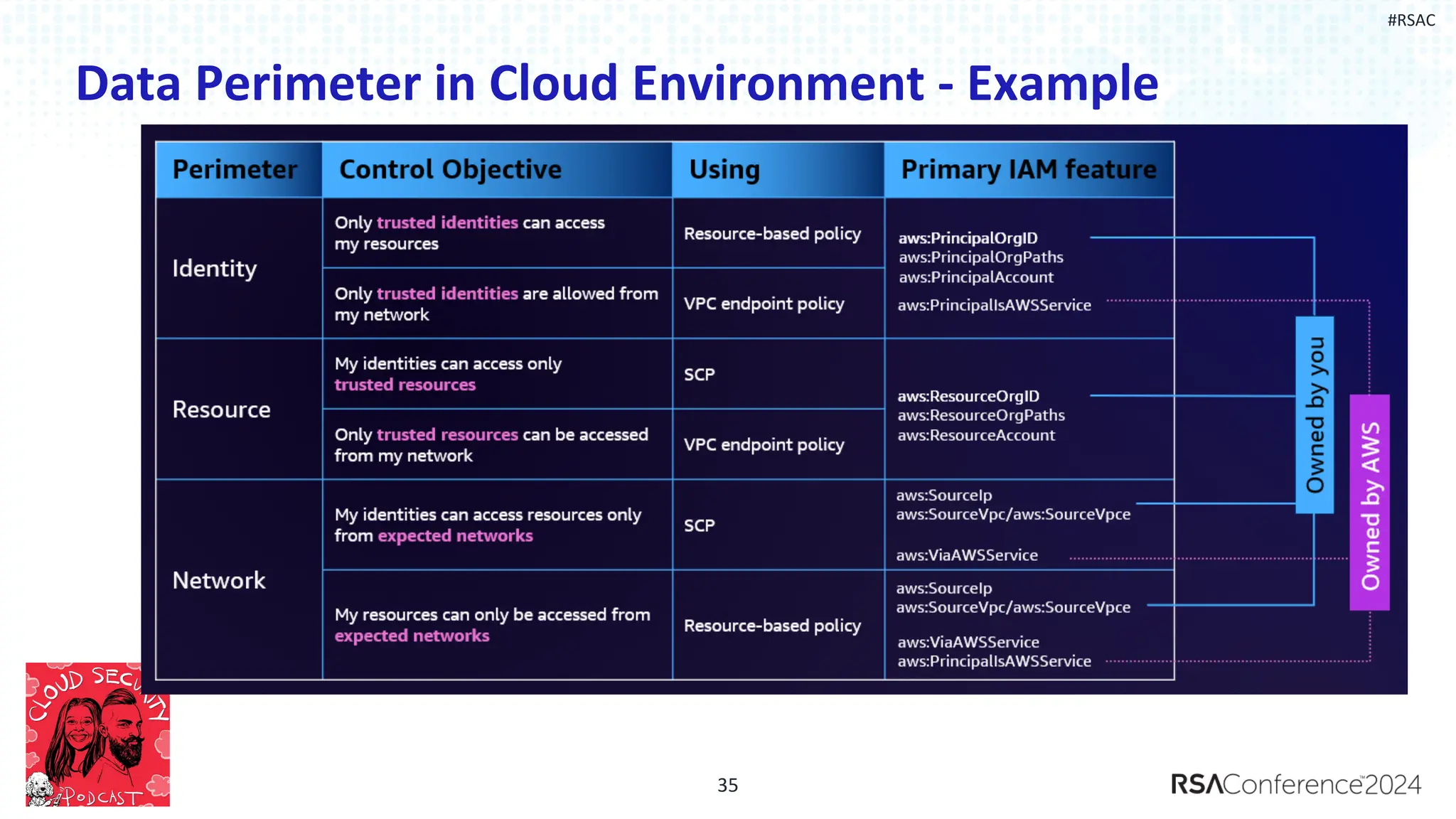
Establish Data Perimeterin your Cloud Environment
• Essential List for Data Perimeter
– Identity - Human & Machine Users (Native services acting on behalf)
– Network - Trusted Zone e.g Known Cloud Accounts & Networks
– Resources - Types of Resources owned by your company etc
• Threat Vectors
– Terraform State files to deploy IaC
• Security Controls
34
#RSAC
Incident Response ReadinessAssessment
• A review of existing or missing Incident Response Plan for both
Cloud & Hybrid
• Even if not a regulated entity, have process to regularly test the
incident response plan for business critical applications
• Good test - when was the last incident raised and what was the
source from where the incident came from?
36
27.
#RSAC
Incident Response Readiness- Example
• Is there logging for Host, container, database, orchestration, cloud
management api, cloud storage access and network logs available
for detection and inspection
• Access to security tools and environment incase of an incident -
how quickly can this be provided incase there is an incident
• Regular Table Top Exercises to test the Incident Response Plans
37
28.
#RSAC
What does notwork
• CSPM
– Scale 100K users limit
– Not using popular Cloud Services
• Business Logic Vulnerability
– User Access Review & SDLC Review Process
– Pentest of both Application & Infrastructure
• Zero Day
38
#RSAC
What can youdo today - What, When & How
• What are you using to ensure vulnerabilities are neutralised e.g
AWS Service Control Policy (SCP) to create data perimeter not a
network based perimeter
• When was the last time User Access Management was done of
your business critical production cloud environments?
• How was the last incident raised and what was the source for
where the incident came from?
40