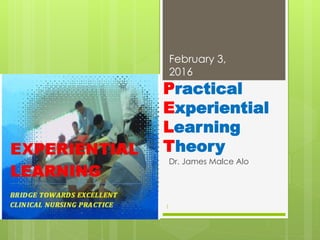
Practical
Experiential
Learning
Theory
Dr. James Malce Alo
February 3,
2016
1
“The mediocre teacher tells.
The good teacher explains.
The superior teacher demonstrates.
The great teacher inspires.”
- William A. Ward (1921-1994)
February 3, 20162
Learning Objectives
 Define experiential learning.
 Describes “Practical Experiential Learning”
theory (PEL).
 Differentiate TT, PRD and HE.
 Identify Experiential Educator’s Role and
Clinical Instructors Responsibilities.
 Illustrate the theoretical framework.
February 3, 20163
 Experiential Learning is the process of
formulating meaning from direct
experience.
 Aristotle once said, "For the things we
have to learn before we can do them, we
learn by doing them."
 Experiential learning focuses on the
learning process for the individual
February 3, 20164
Practical Experiential Learning (PEL)
 This theory believed that ;
 Involvement of the student from practice or action
is essential.
 Engaging students in actual activities, being such in
practice or effect.
 Letting the student nurses encounter knowledge
and skills in a particular field through experience.
February 3, 20165
This learning includes:
 Reflection on everyday experiences by which
learners has direct participation on the events of
the nurse and client’s life,
 This is also learned through programs and
activities structured by the teachers.
 The emphasis is placed on the nature of learners
objective and subjective experiences.
February 3, 20166
Experiential Educator's Role
 Organize
 Facilitate
 Direct
 experiences of phenomenon under the
assumption that this lead to genuine
(meaningful and long-lasting) learning.
February 3, 20167
Clinical Instructors’
Responsibilities
 1st, is to teach information/knowledge to
student nurses and to prescribe
study/learning exercises,
 2nd , afterwards practical return demonstration
in the skills laboratory as an initial application
preparing student nurses for their
 3rd, actual application on the nursing
management of care to a real client in the
hospital settings.
February 3, 20168
 Team Teaching is an academic
experience in which the team teachers
work together in designing the course and
teach the material.
 Practical Return Demonstration is a
strategy experienced by learners in the
clinical laboratory which is essential to the
learning process.
 Hospital Exposure is an actual experience.
February 3, 20169
February 3, 2016
Figure : The practical experiential learning of the student-teacher-patient interrelationship by
which student nurses learning from their experiences with team teaching, practical return
demonstration and hospital exposure which may result in obtaining knowledge, skills and
attitude requisite towards excellent clinical nursing practice, Alo, J.M. (2009).
10
 Therefore, the more experiences student
nurses in the clinical setting, laboratory
and classroom with their teacher to
acquire necessary knowledge and skills
in providing effective and efficient nursing
care to their clients. They will become
excellent in clinical nursing practice.
February 3, 201611
 Practical Experiential Learning (PEL) would
also be significant to educators in terms of
understanding the experiences of student
nurses and could be used as a frame of
reference to assist them in formulating
actual activities, organize, facilitate, and
direct experiences that lead to a
meaningful and lasting learning that will
lead to a better understanding and
appreciation of nursing practice.
February 3, 201612
“Learners are learning from experiences
which cannot be taught by teachers
except themselves.”
- James Malce Alo (2009)
February 3, 201613
February 3, 201614
Reference:
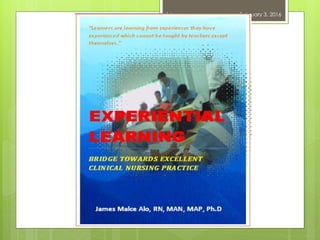
 Alo, JM. (2009). Experiential Learning, Bridge Towards
Excellent Clinical Nursing Practice. ISBN #978971-94484-
19 Hanjazzpublishing. Manila, Phils. Pp. 252.
February 3, 201615

Practical Experiential Learning (PEL) Theory.drjma

  • 1.
  • 2.
    “The mediocre teachertells. The good teacher explains. The superior teacher demonstrates. The great teacher inspires.” - William A. Ward (1921-1994) February 3, 20162
  • 3.
    Learning Objectives  Defineexperiential learning.  Describes “Practical Experiential Learning” theory (PEL).  Differentiate TT, PRD and HE.  Identify Experiential Educator’s Role and Clinical Instructors Responsibilities.  Illustrate the theoretical framework. February 3, 20163
  • 4.
     Experiential Learningis the process of formulating meaning from direct experience.  Aristotle once said, "For the things we have to learn before we can do them, we learn by doing them."  Experiential learning focuses on the learning process for the individual February 3, 20164
  • 5.
    Practical Experiential Learning(PEL)  This theory believed that ;  Involvement of the student from practice or action is essential.  Engaging students in actual activities, being such in practice or effect.  Letting the student nurses encounter knowledge and skills in a particular field through experience. February 3, 20165
  • 6.
    This learning includes: Reflection on everyday experiences by which learners has direct participation on the events of the nurse and client’s life,  This is also learned through programs and activities structured by the teachers.  The emphasis is placed on the nature of learners objective and subjective experiences. February 3, 20166
  • 7.
    Experiential Educator's Role Organize  Facilitate  Direct  experiences of phenomenon under the assumption that this lead to genuine (meaningful and long-lasting) learning. February 3, 20167
  • 8.
    Clinical Instructors’ Responsibilities  1st,is to teach information/knowledge to student nurses and to prescribe study/learning exercises,  2nd , afterwards practical return demonstration in the skills laboratory as an initial application preparing student nurses for their  3rd, actual application on the nursing management of care to a real client in the hospital settings. February 3, 20168
  • 9.
     Team Teachingis an academic experience in which the team teachers work together in designing the course and teach the material.  Practical Return Demonstration is a strategy experienced by learners in the clinical laboratory which is essential to the learning process.  Hospital Exposure is an actual experience. February 3, 20169
  • 10.
    February 3, 2016 Figure: The practical experiential learning of the student-teacher-patient interrelationship by which student nurses learning from their experiences with team teaching, practical return demonstration and hospital exposure which may result in obtaining knowledge, skills and attitude requisite towards excellent clinical nursing practice, Alo, J.M. (2009). 10
  • 11.
     Therefore, themore experiences student nurses in the clinical setting, laboratory and classroom with their teacher to acquire necessary knowledge and skills in providing effective and efficient nursing care to their clients. They will become excellent in clinical nursing practice. February 3, 201611
  • 12.
     Practical ExperientialLearning (PEL) would also be significant to educators in terms of understanding the experiences of student nurses and could be used as a frame of reference to assist them in formulating actual activities, organize, facilitate, and direct experiences that lead to a meaningful and lasting learning that will lead to a better understanding and appreciation of nursing practice. February 3, 201612
  • 13.
    “Learners are learningfrom experiences which cannot be taught by teachers except themselves.” - James Malce Alo (2009) February 3, 201613
  • 14.
  • 15.
    Reference:  Alo, JM.(2009). Experiential Learning, Bridge Towards Excellent Clinical Nursing Practice. ISBN #978971-94484- 19 Hanjazzpublishing. Manila, Phils. Pp. 252. February 3, 201615