Practical Considerations
in Research: Values and
Ethical Principles
DR. SATYANARAYAN PANDEY
ASSISTANT PROFESSOR BBMKU
DHANBAD
Overview
 Agenda:
1. Values in Research: Researcher & Organization
2. Ethical Principles in Research
1. Harm to Participants
2. Lack of Informed Consent
3. Invasion of Privacy
4. Deception
5. Reciprocity and Trust
6. Affiliation and Conflicts of Interest
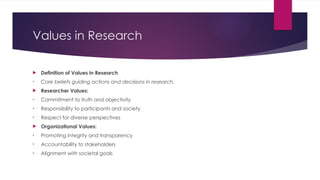
Values in Research
 Definition of Values in Research
• Core beliefs guiding actions and decisions in research.
 Researcher Values:
• Commitment to truth and objectivity
• Responsibility to participants and society
• Respect for diverse perspectives
 Organizational Values:
• Promoting integrity and transparency
• Accountability to stakeholders
• Alignment with societal goals
Example:
 A researcher funded by a pharmaceutical company ensures unbiased
reporting of drug efficacy despite organizational interests.
Ethical Principles in Research
 Ethical principles ensure research integrity and participant well-being.
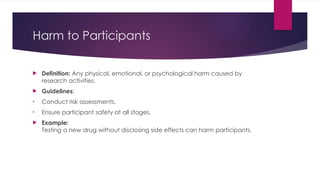
Harm to Participants
 Definition: Any physical, emotional, or psychological harm caused by
research activities.
 Guidelines:
• Conduct risk assessments.
• Ensure participant safety at all stages.
 Example:
Testing a new drug without disclosing side effects can harm participants.
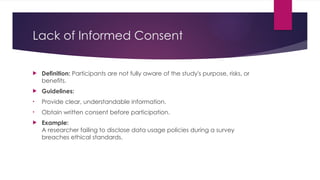
Lack of Informed Consent
 Definition: Participants are not fully aware of the study's purpose, risks, or
benefits.
 Guidelines:
• Provide clear, understandable information.
• Obtain written consent before participation.
 Example:
A researcher failing to disclose data usage policies during a survey
breaches ethical standards.
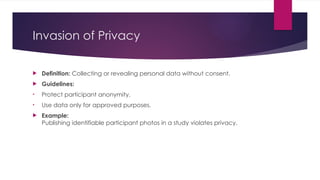
Invasion of Privacy
 Definition: Collecting or revealing personal data without consent.
 Guidelines:
• Protect participant anonymity.
• Use data only for approved purposes.
 Example:
Publishing identifiable participant photos in a study violates privacy.
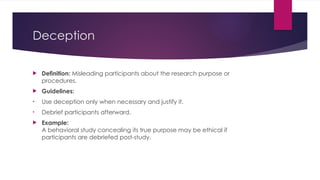
Deception
 Definition: Misleading participants about the research purpose or
procedures.
 Guidelines:
• Use deception only when necessary and justify it.
• Debrief participants afterward.
 Example:
A behavioral study concealing its true purpose may be ethical if
participants are debriefed post-study.
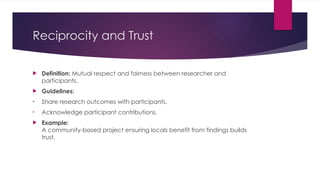
Reciprocity and Trust
 Definition: Mutual respect and fairness between researcher and
participants.
 Guidelines:
• Share research outcomes with participants.
• Acknowledge participant contributions.
 Example:
A community-based project ensuring locals benefit from findings builds
trust.
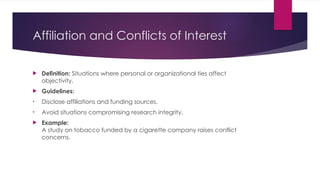
Affiliation and Conflicts of Interest
 Definition: Situations where personal or organizational ties affect
objectivity.
 Guidelines:
• Disclose affiliations and funding sources.
• Avoid situations compromising research integrity.
 Example:
A study on tobacco funded by a cigarette company raises conflict
concerns.
Conclusion
• Ethical research fosters trust and contributes to societal progress.
• Align values and ethics for research integrity.

Practical Considerations in Research.pptx

  • 1.
    Practical Considerations in Research:Values and Ethical Principles DR. SATYANARAYAN PANDEY ASSISTANT PROFESSOR BBMKU DHANBAD
  • 2.
    Overview  Agenda: 1. Valuesin Research: Researcher & Organization 2. Ethical Principles in Research 1. Harm to Participants 2. Lack of Informed Consent 3. Invasion of Privacy 4. Deception 5. Reciprocity and Trust 6. Affiliation and Conflicts of Interest
  • 3.
    Values in Research Definition of Values in Research • Core beliefs guiding actions and decisions in research.  Researcher Values: • Commitment to truth and objectivity • Responsibility to participants and society • Respect for diverse perspectives  Organizational Values: • Promoting integrity and transparency • Accountability to stakeholders • Alignment with societal goals
  • 4.
    Example:  A researcherfunded by a pharmaceutical company ensures unbiased reporting of drug efficacy despite organizational interests.
  • 5.
    Ethical Principles inResearch  Ethical principles ensure research integrity and participant well-being.
  • 6.
    Harm to Participants Definition: Any physical, emotional, or psychological harm caused by research activities.  Guidelines: • Conduct risk assessments. • Ensure participant safety at all stages.  Example: Testing a new drug without disclosing side effects can harm participants.
  • 7.
    Lack of InformedConsent  Definition: Participants are not fully aware of the study's purpose, risks, or benefits.  Guidelines: • Provide clear, understandable information. • Obtain written consent before participation.  Example: A researcher failing to disclose data usage policies during a survey breaches ethical standards.
  • 8.
    Invasion of Privacy Definition: Collecting or revealing personal data without consent.  Guidelines: • Protect participant anonymity. • Use data only for approved purposes.  Example: Publishing identifiable participant photos in a study violates privacy.
  • 9.
    Deception  Definition: Misleadingparticipants about the research purpose or procedures.  Guidelines: • Use deception only when necessary and justify it. • Debrief participants afterward.  Example: A behavioral study concealing its true purpose may be ethical if participants are debriefed post-study.
  • 10.
    Reciprocity and Trust Definition: Mutual respect and fairness between researcher and participants.  Guidelines: • Share research outcomes with participants. • Acknowledge participant contributions.  Example: A community-based project ensuring locals benefit from findings builds trust.
  • 11.
    Affiliation and Conflictsof Interest  Definition: Situations where personal or organizational ties affect objectivity.  Guidelines: • Disclose affiliations and funding sources. • Avoid situations compromising research integrity.  Example: A study on tobacco funded by a cigarette company raises conflict concerns.
  • 12.
    Conclusion • Ethical researchfosters trust and contributes to societal progress. • Align values and ethics for research integrity.