BASIC RESEARCHTERMINOLOGY
-A STUDY, INVESTIGATION, OR A RESEARCH
PROJECT.
-SUBJECTS (SOMETIMES ABBREVIATED AS SS)
OR THE STUDY PARTICIPANTS: THE PEOPLE
WHO ARE BEING STUDIED.
-RESPONDENTS OR, SOMETIMES,
INFORMANTS: WHEN THE SUBJECTS PROVIDE
INFORMATION TO THE RESEARCHERS.
- Researcher ,investigator, or scientist :is the person
who undertakes the research.
- Principal investigator or project director; the main
person directing the investigation when a study is
under taken by a research team
CONCEPTS:-
- Conceptualization refers to the
process of developing and refining
abstract ideas.
Scientific res .Is almost always
concerned with abstract rather than
tangible phenomena.
Variables:-
-Within the context of a research investigation,
concepts are referred to as variables.
- Is something that varies or differs from one
person to another.
- All research activity is aimed at trying to
understand how or why things vary and to
learn how differences in one variable are
related to differences in another.
-AVARIABLE,THEN, IS ANY QUALITY
OF PERSON, GROUP OR SITUATION
THATVARIES ORTAKES ON DIFFERENT
VALUES.
-CATEGORICALVARIABLES: PLACE
INDIVIDUALS INTO CATEGORICAL
( AS: PREGNANT / NOT PREGNANT,
MALE/ FEMALE, SINGLE/ MARRIED/
DIVORCED/WIDOWED).
-Attribute variables: are often inherent
ch.ch. Such as age, blood type, health
beliefs.
 Heterogeneity: when an attribute is
extremely varied in the group under study,
the group is said to be heterogeneous with
respect to that variable
HOMOGENEITY:
WHENTHE MEMBERS OF THE GROUP ARE
HIGHLY SIMILAR TO ONE ANOTHERWITH
RESPECT TO THATVARIABLE,THE GROUP IS
DESCRIBED AS HOMOGENEOUS.
Demographic variables:-
- Are ch. ch or attributes of the subject that are collected to describe the
sample.
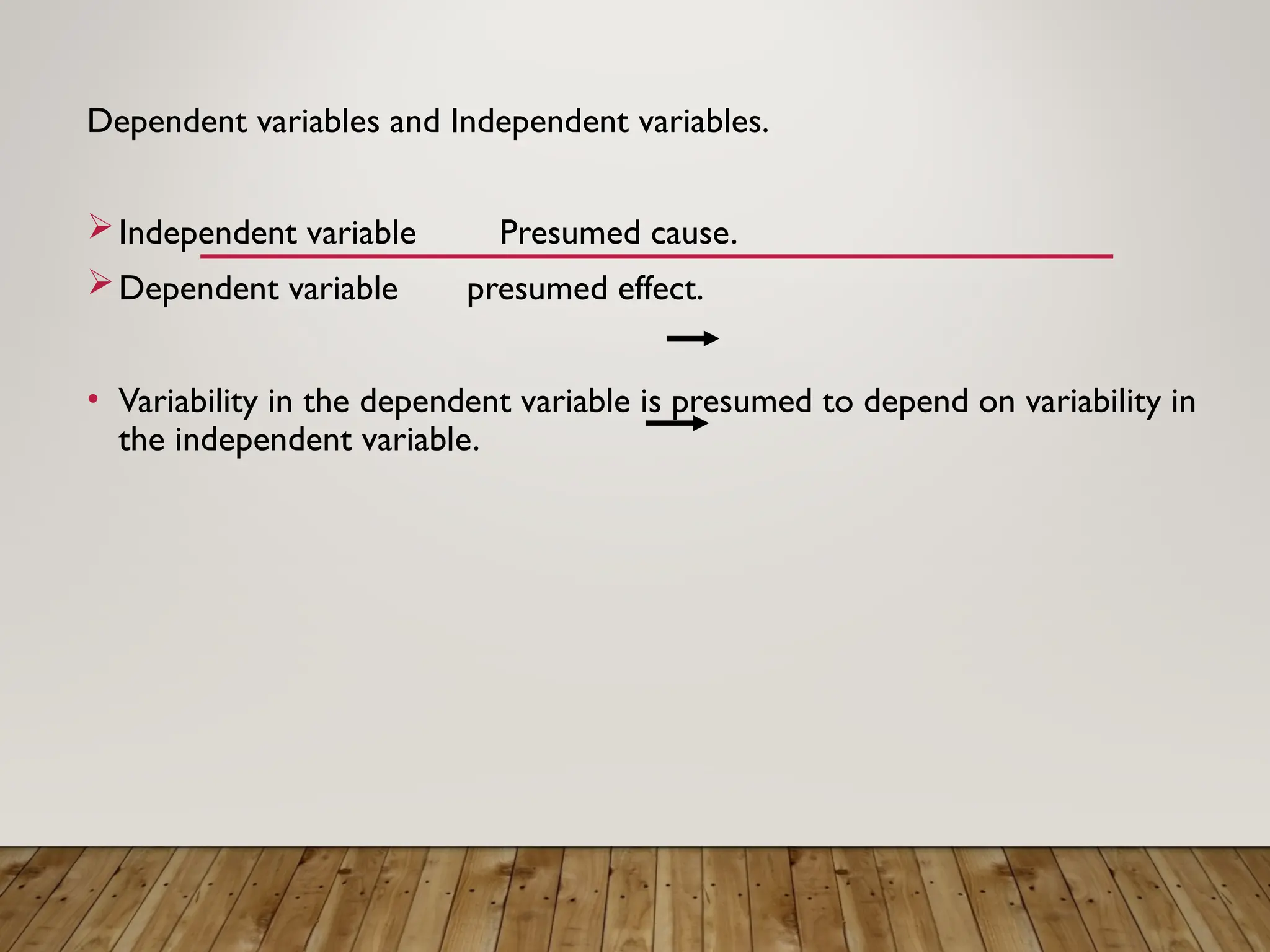
Dependent variables and Independent variables.
Independent variable Presumed cause.
Dependent variable presumed effect.
• Variability in the dependent variable is presumed to depend on variability in
the independent variable.
The dependent variable is the variable
the researcher is interested in
understanding explaining, or predicating.
Dependent is the response, behaviors or
out come that the researcher wants to
predict or explain.
The dependent variable is the
“effect’’ or the variable that is
influenced by the researcher’s
manipulation (Control) of the
independent variable.
The designation of a variables as
independent or dependent is a function of
the role that the variable plays in a
particular investigation.
OPERATIONAL DEFINITIONS:
The researcher usually clarifies and define the
variable under investigation.
The definition must specify how the variable will be
observed and measured in the actual research
situation.
It is a specification of the operations that the
researcher must perform to collect the required
information.
This operational definition clearly indicated to
both the investigator and to the consumer
what is meant by the variable weight.
Precision in defining the terms has the
advantage of communicating exactly what the
terms mean.
-Data:- singular, datum)
Are the pieces of information obtained in the
course of the investigation
RELATIONSHIP:-
• Refers to a bond or connection between two variables or
more.
Example:
Height: taller people will weigh more than
shorter people.
Metabolism: the lower a person’s metabolic
rate, the more he or she will weigh.
Caloric intake: people with higher caloric
intake will be heavier than those with lower
caloric intake.
Exercise: the greater the amount of exercise,
the lower the person’s weight.
•VARIABLES CAN BE RELATED TO ONE
ANOTHER IN DIFFERENTWAYS:
1. Cause – and – effect (or causal relationships).( as natural
phenomena) –
eating more calories causes weight gain.
2. Functional relationship
• Control
- Research control attempts to eliminate any contaminating
factors that might obscure the relationship between the
variables that are of central interest.

PR2 Q1 W6-7 Basic-Research-Terminology.ppt

  • 1.
    BASIC RESEARCHTERMINOLOGY -A STUDY,INVESTIGATION, OR A RESEARCH PROJECT. -SUBJECTS (SOMETIMES ABBREVIATED AS SS) OR THE STUDY PARTICIPANTS: THE PEOPLE WHO ARE BEING STUDIED. -RESPONDENTS OR, SOMETIMES, INFORMANTS: WHEN THE SUBJECTS PROVIDE INFORMATION TO THE RESEARCHERS.
  • 2.
    - Researcher ,investigator,or scientist :is the person who undertakes the research. - Principal investigator or project director; the main person directing the investigation when a study is under taken by a research team
  • 3.
    CONCEPTS:- - Conceptualization refersto the process of developing and refining abstract ideas. Scientific res .Is almost always concerned with abstract rather than tangible phenomena.
  • 4.
    Variables:- -Within the contextof a research investigation, concepts are referred to as variables. - Is something that varies or differs from one person to another. - All research activity is aimed at trying to understand how or why things vary and to learn how differences in one variable are related to differences in another.
  • 5.
    -AVARIABLE,THEN, IS ANYQUALITY OF PERSON, GROUP OR SITUATION THATVARIES ORTAKES ON DIFFERENT VALUES. -CATEGORICALVARIABLES: PLACE INDIVIDUALS INTO CATEGORICAL ( AS: PREGNANT / NOT PREGNANT, MALE/ FEMALE, SINGLE/ MARRIED/ DIVORCED/WIDOWED).
  • 6.
    -Attribute variables: areoften inherent ch.ch. Such as age, blood type, health beliefs.  Heterogeneity: when an attribute is extremely varied in the group under study, the group is said to be heterogeneous with respect to that variable
  • 7.
    HOMOGENEITY: WHENTHE MEMBERS OFTHE GROUP ARE HIGHLY SIMILAR TO ONE ANOTHERWITH RESPECT TO THATVARIABLE,THE GROUP IS DESCRIBED AS HOMOGENEOUS. Demographic variables:- - Are ch. ch or attributes of the subject that are collected to describe the sample.
  • 8.
    Dependent variables andIndependent variables. Independent variable Presumed cause. Dependent variable presumed effect. • Variability in the dependent variable is presumed to depend on variability in the independent variable.
  • 9.
    The dependent variableis the variable the researcher is interested in understanding explaining, or predicating. Dependent is the response, behaviors or out come that the researcher wants to predict or explain.
  • 10.
    The dependent variableis the “effect’’ or the variable that is influenced by the researcher’s manipulation (Control) of the independent variable. The designation of a variables as independent or dependent is a function of the role that the variable plays in a particular investigation.
  • 11.
    OPERATIONAL DEFINITIONS: The researcherusually clarifies and define the variable under investigation. The definition must specify how the variable will be observed and measured in the actual research situation. It is a specification of the operations that the researcher must perform to collect the required information.
  • 12.
    This operational definitionclearly indicated to both the investigator and to the consumer what is meant by the variable weight. Precision in defining the terms has the advantage of communicating exactly what the terms mean. -Data:- singular, datum) Are the pieces of information obtained in the course of the investigation
  • 13.
    RELATIONSHIP:- • Refers toa bond or connection between two variables or more. Example: Height: taller people will weigh more than shorter people. Metabolism: the lower a person’s metabolic rate, the more he or she will weigh. Caloric intake: people with higher caloric intake will be heavier than those with lower caloric intake. Exercise: the greater the amount of exercise, the lower the person’s weight.
  • 14.
    •VARIABLES CAN BERELATED TO ONE ANOTHER IN DIFFERENTWAYS: 1. Cause – and – effect (or causal relationships).( as natural phenomena) – eating more calories causes weight gain. 2. Functional relationship • Control - Research control attempts to eliminate any contaminating factors that might obscure the relationship between the variables that are of central interest.