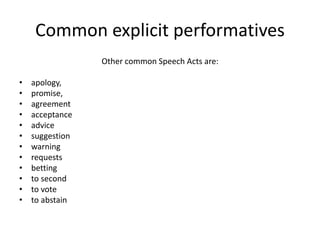
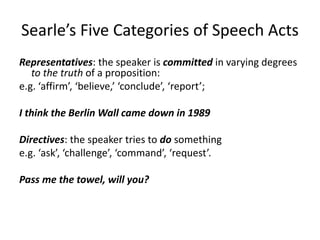
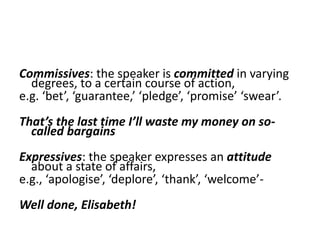
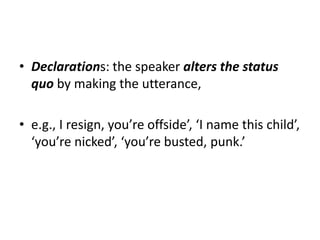
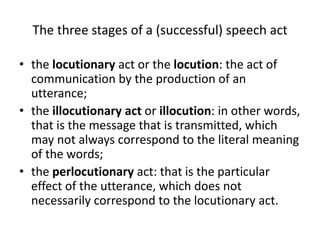
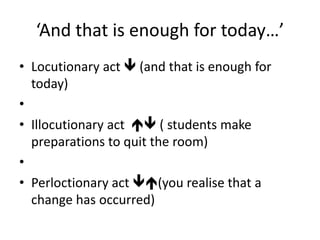
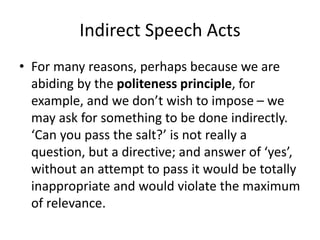
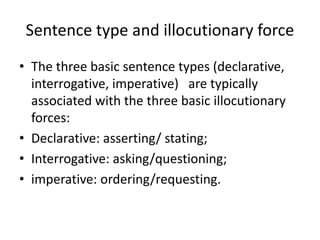
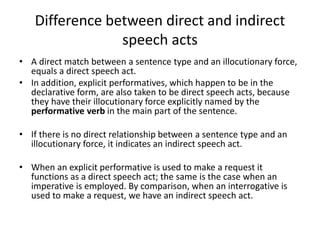
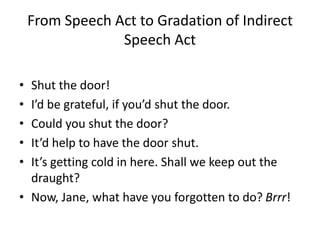
The document discusses speech acts, which are utterances that perform actions rather than just convey information. It defines direct and indirect speech acts, explicit and implicit performatives, and analyzes John Searle's five categories of speech acts. Felicity conditions that must be met for a speech act to be considered valid are outlined. The difference between direct and indirect speech acts is explained in terms of the relationship between sentence type and illocutionary force. Finally, an example is given showing the gradation from a direct to indirect speech act in requesting that a door be shut.