Copyright © 2013 Wolters Kluwer Health | Lippincott Williams & Wilkins
Drugs Affecting Blood
Coagulation
Chapter 48
Copyright © 2013 Wolters Kluwer Health | Lippincott Williams & Wilkins
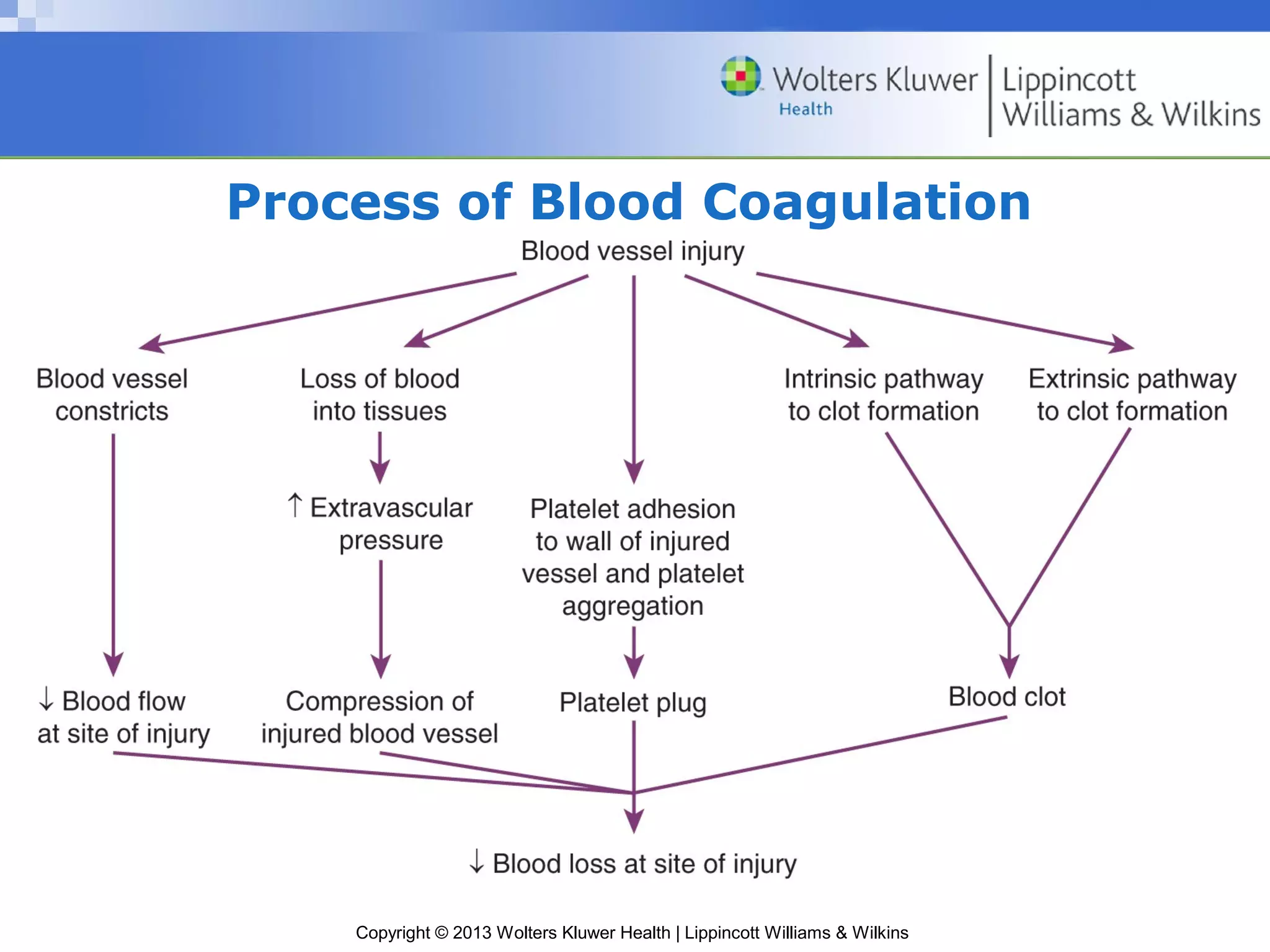
Process of Blood Coagulation
Copyright © 2013 Wolters Kluwer Health | Lippincott Williams & Wilkins
Blood Vessel Injury
• Local vasoconstriction seals off small injury
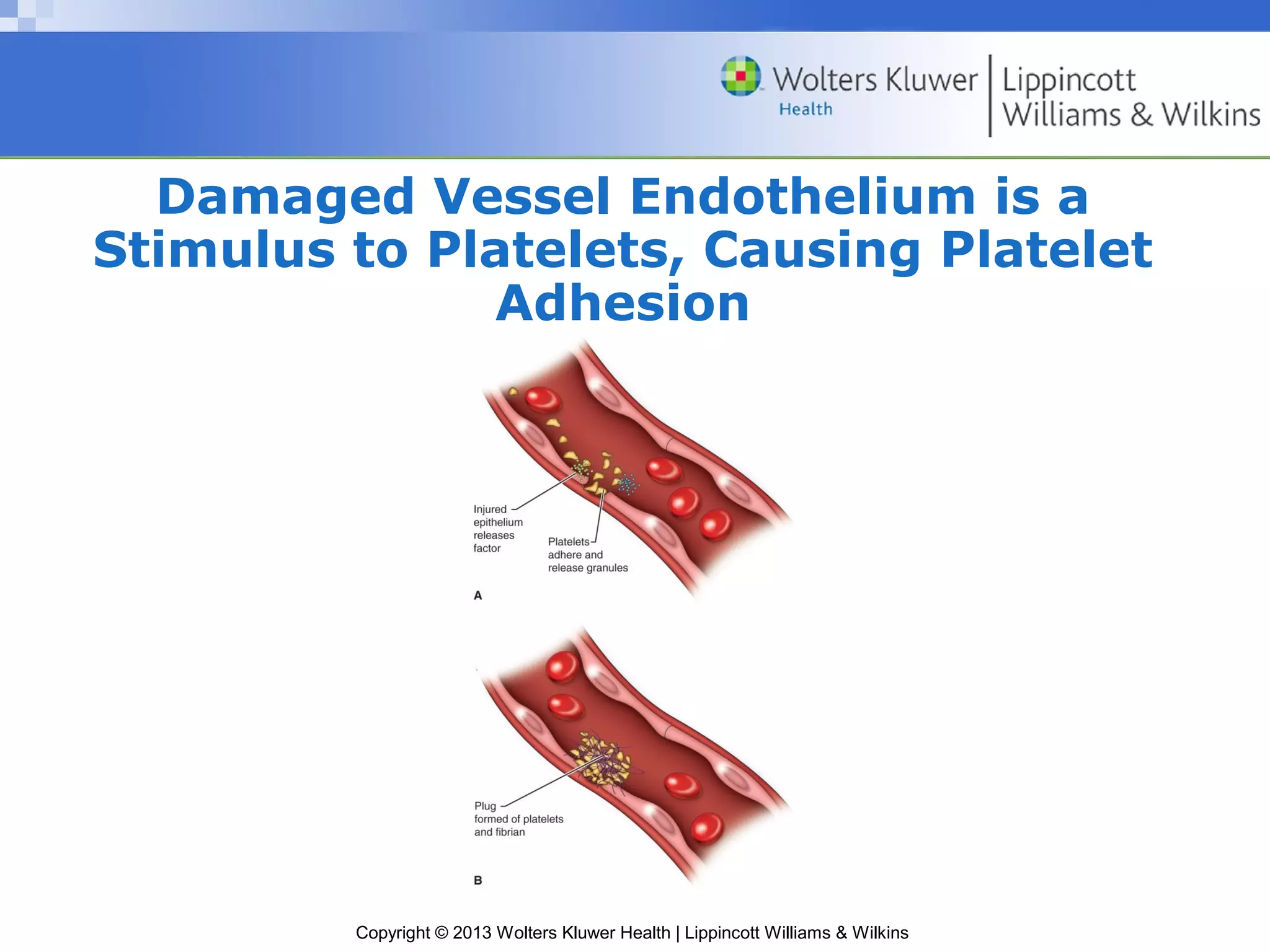
• Platelet aggregation forms a platelet plug
• Hageman factor is activated
• Intrinsic pathway converts prothrombin to thrombin to
seal system
• Extrinsic pathway clots the blood that has leaked out of
the vascular system
Copyright © 2013 Wolters Kluwer Health | Lippincott Williams & Wilkins
Damaged Vessel Endothelium is a
Stimulus to Platelets, Causing Platelet
Adhesion
Copyright © 2013 Wolters Kluwer Health | Lippincott Williams & Wilkins
Types of Blood Disorders
• Thromboembolic Disorder
– Conditions that predispose a person to the formation
of clots and emboli
• Hemorrhagic Disorder
– Disorder in which excess bleeding occurs
Copyright © 2013 Wolters Kluwer Health | Lippincott Williams & Wilkins
Actions of Anticoagulants
• Anticoagulants
– Interfere with the clotting cascade and thrombin
formation
• Antiplatelets
– Alter the formation of the platelet plug
• Thrombolytic Drugs
– Break down the thrombus that has been formed by
stimulating the plasmin system
Copyright © 2013 Wolters Kluwer Health | Lippincott Williams & Wilkins
Antiplatelet
• Actions
– Inhibit platelet adhesion and aggregation by blocking receptors
sites on the platelet membrane
– Anagrelide – Blocks the production of platelets in the bone
marrow
• Indications
– Reduce risk of recurrent TIAs or strokes; reduce death or
nonfatal MI; MI prophylaxis; anti-inflammatory, analgesic, and
antipyretic effects
• Pharmacokinetics
– Well absorbed and bound to plasma proteins
– Metabolized in the liver and excreted in the urine
Copyright © 2013 Wolters Kluwer Health | Lippincott Williams & Wilkins
Antiplatelet (cont.)
• Contraindications
– Allergy, pregnancy, and lactation
• Caution
– Bleeding disorder, recent surgery, closed-head injury
• Adverse Effects
– Bleeding
– Headache, dizziness, and weakness
– GI distress
• Drug-to-Drug Interactions
– Another drug that affects blood clotting
Copyright © 2013 Wolters Kluwer Health | Lippincott Williams & Wilkins
Question
How do antiplatelet medications work?
A. Interfere with the clotting cascade
B. Alter the formation of the platelet plug
C. Stimulates the plasmin system
D. Initiates the clotting cascade
Copyright © 2013 Wolters Kluwer Health | Lippincott Williams & Wilkins
Answer
B. Alter the formation of the platelet plug
Rationale: Antiplatelets alter the formation of the platelet
plug.
Copyright © 2013 Wolters Kluwer Health | Lippincott Williams & Wilkins
Anticoagulants and Their Indications
• Warfarin (Coumadin)
– Maintains a state of anticoagulation when patient is
susceptible to potentially dangerous clot formation
• Heparin (Generic)
– Inhibits the conversion of prothrombin to thrombin
• Antithrombin (Thrombate III)
– Used for hereditary antithrombin III deficiencies;
replacement therapy in congenital antithrombin III
deficiency
Copyright © 2013 Wolters Kluwer Health | Lippincott Williams & Wilkins
Anticoagulants and Their Indications
(cont.)
• Argatroban (Acova)
– Used to treat thrombosis in heparin-induced
thrombocytopenia
• Bivalirudin (Angiomax)
– Used with aspirin to prevent ischemic events in
patients undergoing transluminal coronary
angioplasty
Copyright © 2013 Wolters Kluwer Health | Lippincott Williams & Wilkins
Anticoagulants
• Actions
– Interfere with the normal cascade of events involved in
the clotting process
• Pharmacokinetics
– Different based on the drug
• Contraindications
– Allergy and condition that could be compromised by
increased bleeding tendencies
– Pregnancy, renal, or hepatic disorders
Copyright © 2013 Wolters Kluwer Health | Lippincott Williams & Wilkins
Anticoagulants (cont.)
• Caution
– CHF, thyrotoxicosis, senility, or psychosis
• Adverse Effects
– Bleeding
– GI upset
– Hepatic dysfunction
– Alopecia, dermatitis, bone marrow suppression,
prolonged, and painful erection
Copyright © 2013 Wolters Kluwer Health | Lippincott Williams & Wilkins
Anticoagulants (cont.)
• Drug-to-Drug Interactions
– Heparin and oral anticoagulants, salicylates,
penicillins, or cephalosporins
– Heparin and nitroglycerine
– Warfarin – Number of documented interactions
Copyright © 2013 Wolters Kluwer Health | Lippincott Williams & Wilkins
Low-Molecular-Weight Heparins
• Inhibit thrombus and clot formation by blocking factors
Xa and Iia
• Do not greatly affect thrombin, clotting, or prothrombin
times; therefore cause fewer systemic adverse effects
• Block angiogenesis, the process that allows cancer cells
to develop new blood vessels
• Are indicated for specific uses in the prevention of clots
and emboli formation after certain surgeries or bed rest
Copyright © 2013 Wolters Kluwer Health | Lippincott Williams & Wilkins
Thrombolytic Agents
• Actions
– Activating plasminogen to plasmin, which in turn
breaks down fibrin threads in a clot to dissolve a
formed clot
• Indications
– Acute MI, pulmonary emboli, ischemic stroke
• Pharmacokinetics
– Drugs must be injected and are cleared from the
body after liver metabolism
– Pregnancy and lactation
Copyright © 2013 Wolters Kluwer Health | Lippincott Williams & Wilkins
Thrombolytic Agents (cont.)
• Contraindications
– Allergy
– Any condition that would be worsened by dissolution
of clots
• Adverse Effects
– Bleeding
– Cardiac arrhythmias
– Hypotension
– Hypersensitivity – Rash, flushing, bronchospasm, and
anaphylactic reaction
Copyright © 2013 Wolters Kluwer Health | Lippincott Williams & Wilkins
Thrombolytic Agents (cont.)
• Drug-to-Drug Interactions
– Anticoagulants
– Antiplatelet
Copyright © 2013 Wolters Kluwer Health | Lippincott Williams & Wilkins
Question
The pharmacology instructor is talking to the student about
low-molecular-weight-heparin medications. What would
the instructor indicate as an advantage to these
medications?
A. Indicated for patients who are on an exercise regimen
B. Initiates angiogenesis
C. Blocking factors IXa and Iaa
D. Cause fewer systemic adverse effects
Copyright © 2013 Wolters Kluwer Health | Lippincott Williams & Wilkins
Answer
D. Cause fewer systemic adverse effects
Rationale: Low-molecular-weight-heparins do not greatly
affect thrombin, clotting, or prothrombin times; therefore
cause fewer systemic adverse effects.
Copyright © 2013 Wolters Kluwer Health | Lippincott Williams & Wilkins
Bleeding Disorders Treated With Clotting
Factors
• Hemophilia
– Genetic lack of clotting factors that leaves the patient
vulnerable to excessive bleeding with any injury.
• Liver Disease
– Clotting factors and proteins needed for clotting are
not produced.
• Bone Marrow Disorders
– Platelets are not formed in sufficient quantity to be
effective.
Copyright © 2013 Wolters Kluwer Health | Lippincott Williams & Wilkins
Antihemophilic
• Actions
– Replace clotting factors that are either genetically
missing or low in a particular type of hemophilia
• Indications
– Prevent blood loss from injury or surgery and to treat
bleeding disorders
• Pharmacokinetics
– Replace normal clotting factors and are processed as
such by the body
Copyright © 2013 Wolters Kluwer Health | Lippincott Williams & Wilkins
Antihemophilic (cont.)
• Contraindications
– Allergy
– Factor IX in the presence of liver disease
– Lactation
• Caution
– Pregnancy
Copyright © 2013 Wolters Kluwer Health | Lippincott Williams & Wilkins
Antihemophilic (cont.)
• Adverse Effects
– Involve risks associated with the use of blood
products
– Headache, flushing, fever, chills, lethargy
– Nausea and vomiting
– Stinging, itching, and burning at the site of injection
Copyright © 2013 Wolters Kluwer Health | Lippincott Williams & Wilkins
Systemic Hemostatic Agents
• Actions
– Stop the natural plasminogen clot-dissolving
mechanism by blocking its activation or by directly
inhibiting plasmin.
• Indications
– Prevent or treat excess bleeding in hyperfibrinolytic
states
• Pharmacokinetics
– Different for each drug
Copyright © 2013 Wolters Kluwer Health | Lippincott Williams & Wilkins
Systemic Hemostatic Agents (cont.)
• Contraindications
– Allergy
– Acute DIC
• Caution
– Cardiac disease, renal or hepatic dysfunction,
pregnancy and lactation
Copyright © 2013 Wolters Kluwer Health | Lippincott Williams & Wilkins
Systemic Hemostatic Agents (cont.)
• Adverse Effects
– Excessive clotting
– CNS – Hallucinations, drowsiness, dizziness, headache,
and psychotic states
– GI – Nausea, cramps, diarrhea
– Weakness, fatigue, malaise, and muscle pain
– Aprotinin – Cardiac arrhythmias, MI, CHF, and
hypotension
• Drug-to-Drug Interactions
– Heparin
– Oral contraceptives or estrogen
Copyright © 2013 Wolters Kluwer Health | Lippincott Williams & Wilkins
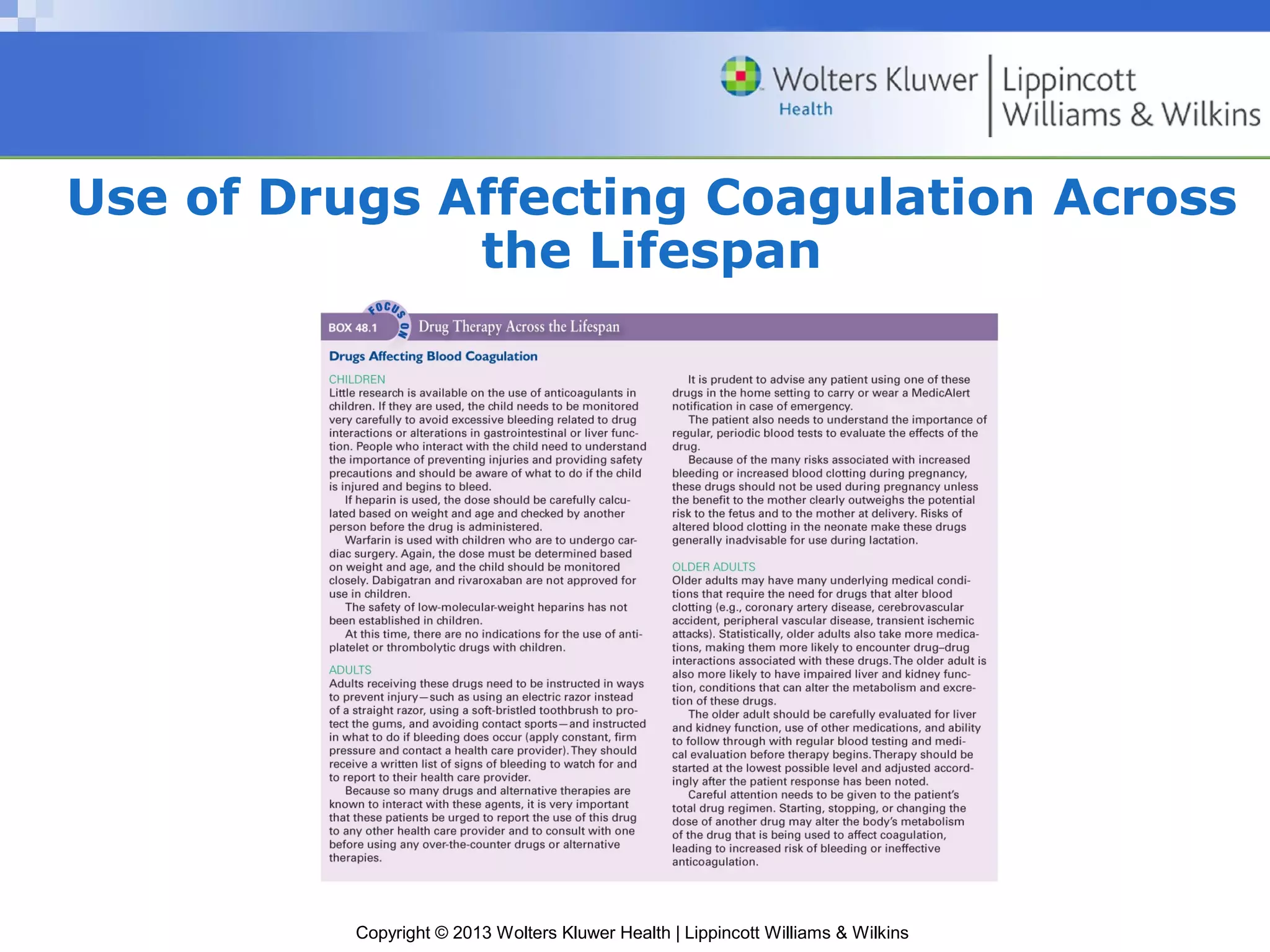
Use of Drugs Affecting Coagulation Across
the Lifespan
Copyright © 2013 Wolters Kluwer Health | Lippincott Williams & Wilkins
Question
Please answer the following statement as true or false.
The indications for use of a systemic hemostatic agent is to
prevent blood loss from injury or surgery and to treat
bleeding disorders.
Copyright © 2013 Wolters Kluwer Health | Lippincott Williams & Wilkins
Answer
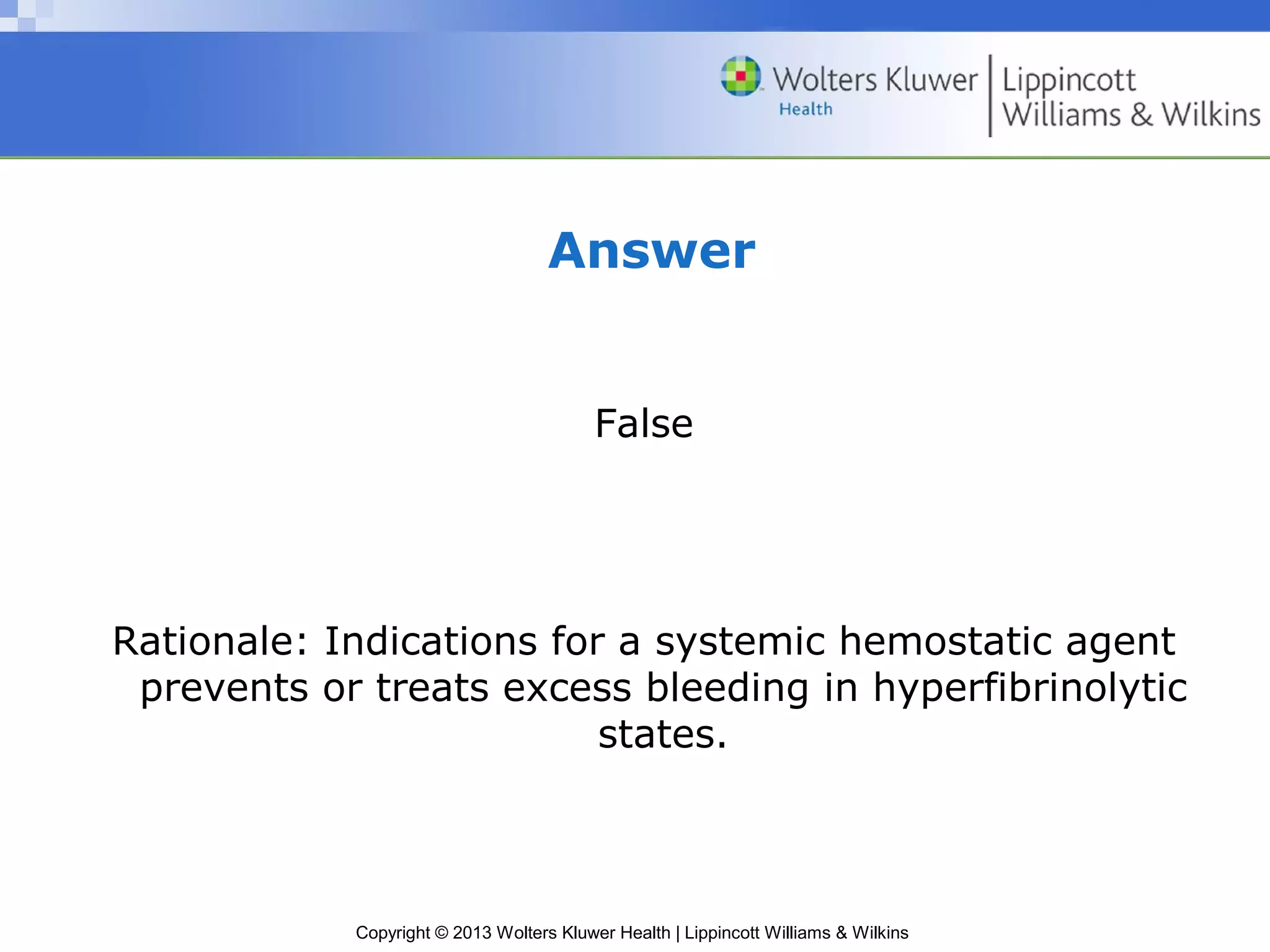
False
Rationale: Indications for a systemic hemostatic agent
prevents or treats excess bleeding in hyperfibrinolytic
states.
Copyright © 2013 Wolters Kluwer Health | Lippincott Williams & Wilkins
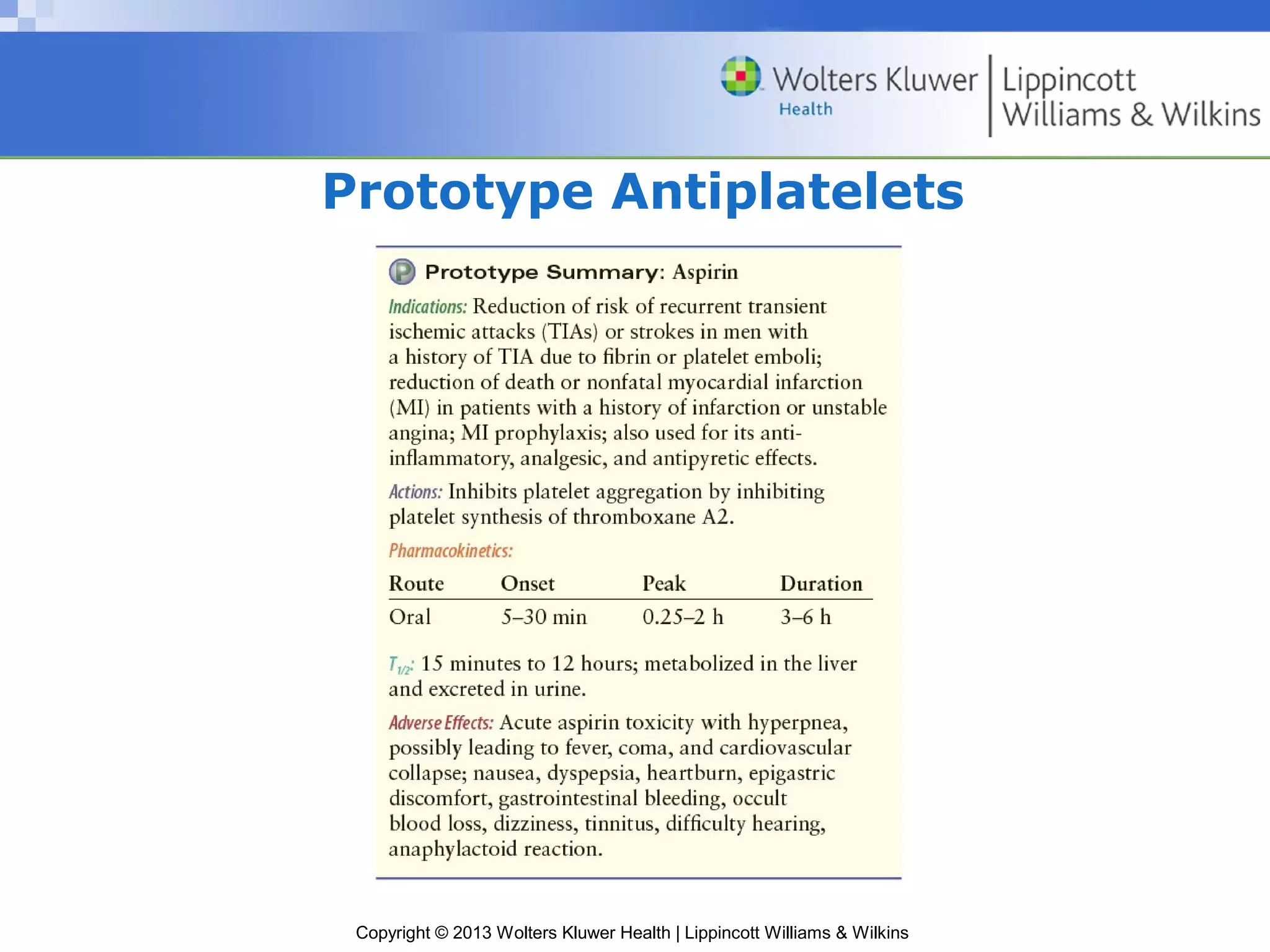
Prototype Antiplatelets
Copyright © 2013 Wolters Kluwer Health | Lippincott Williams & Wilkins
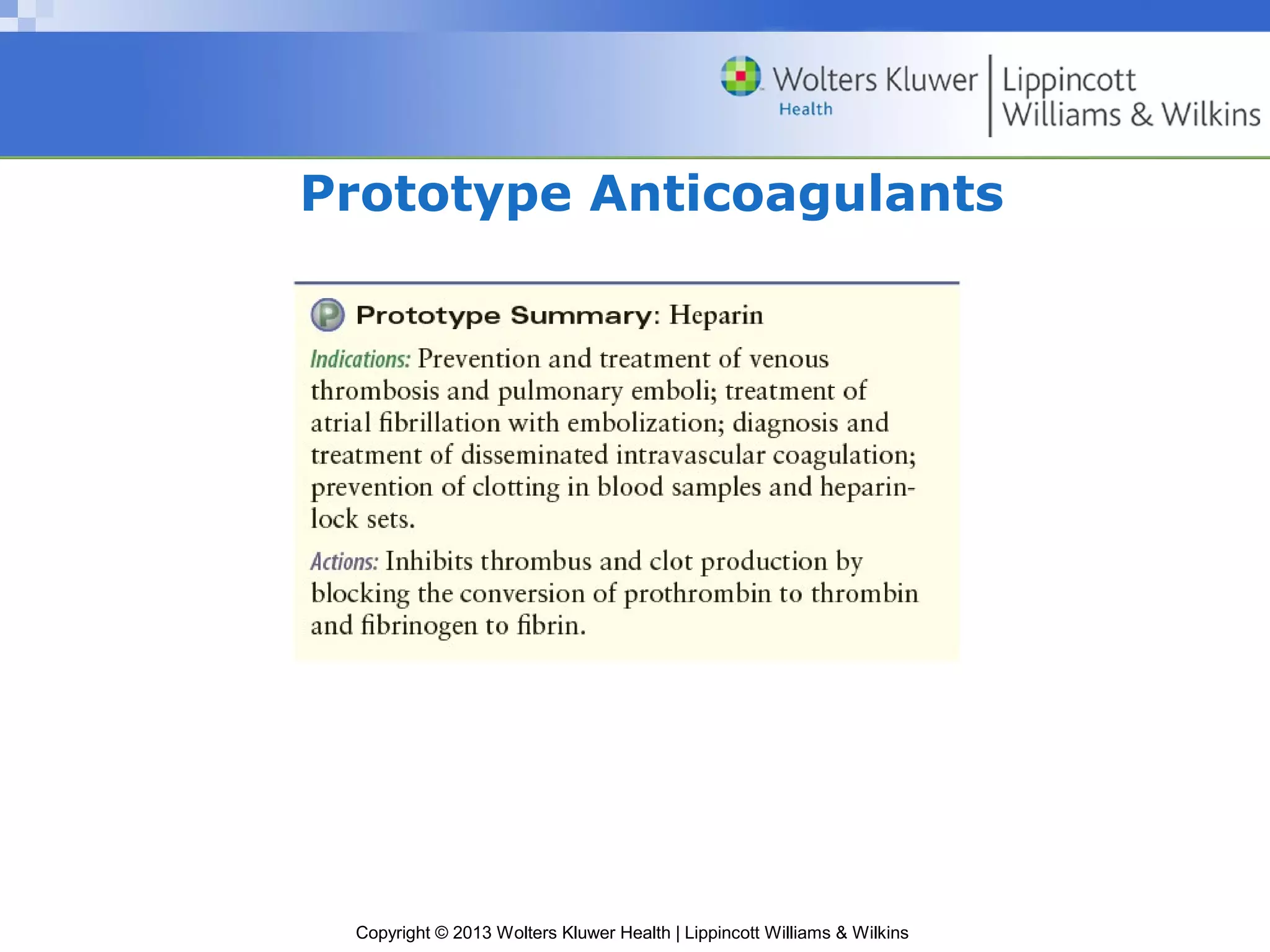
Prototype Anticoagulants
Copyright © 2013 Wolters Kluwer Health | Lippincott Williams & Wilkins
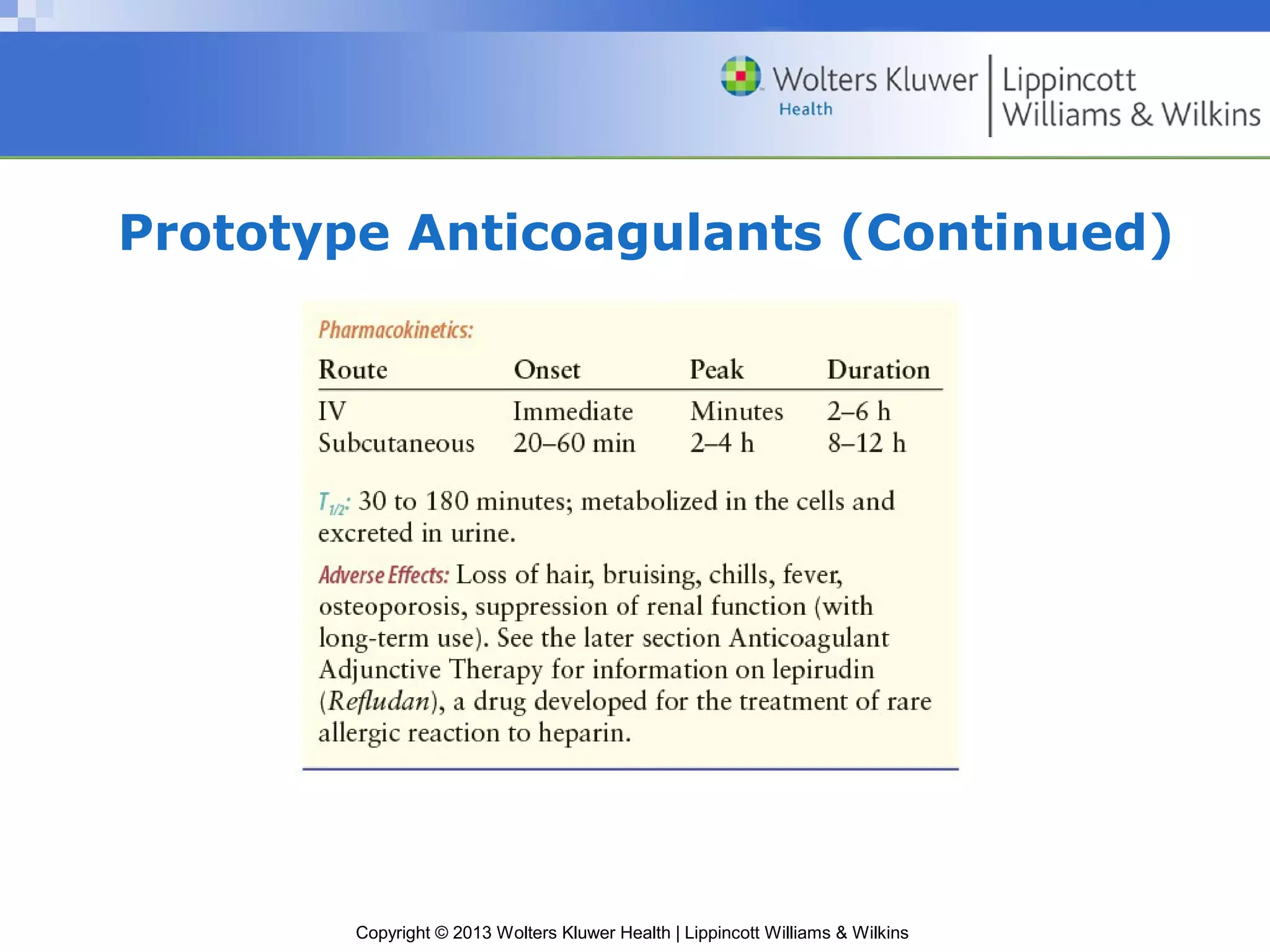
Prototype Anticoagulants (Continued)
Copyright © 2013 Wolters Kluwer Health | Lippincott Williams & Wilkins
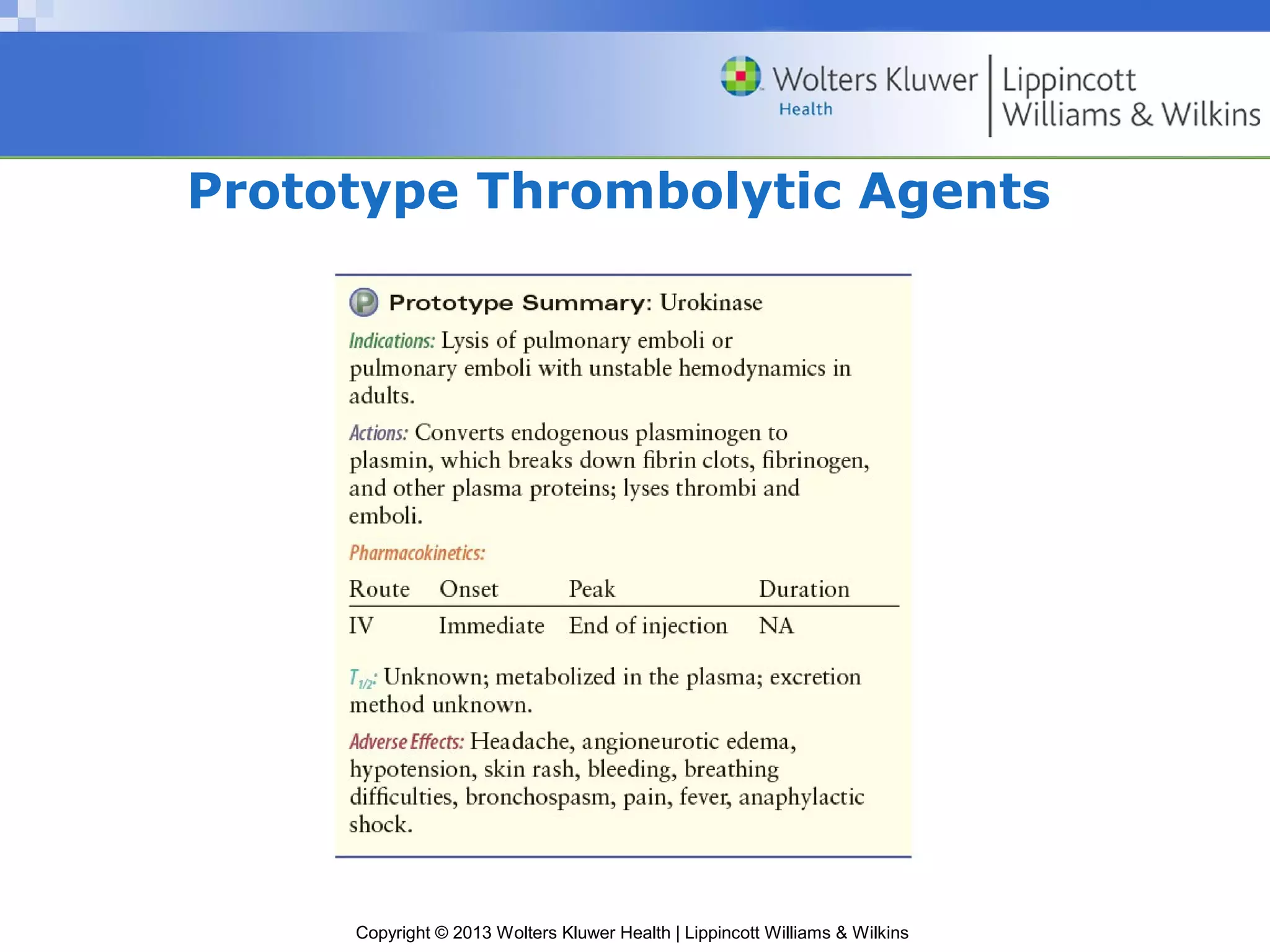
Prototype Thrombolytic Agents
Copyright © 2013 Wolters Kluwer Health | Lippincott Williams & Wilkins
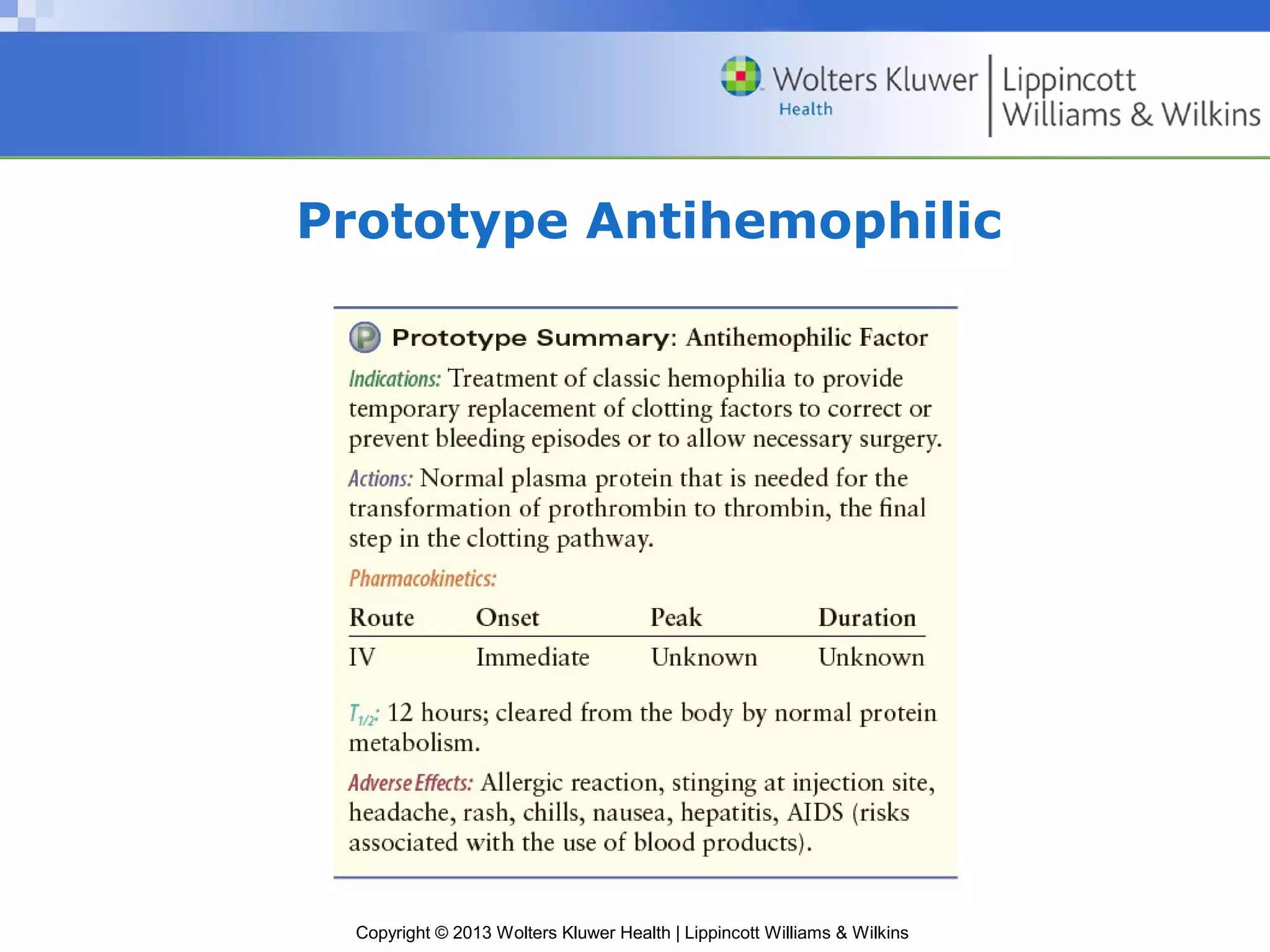
Prototype Antihemophilic
Copyright © 2013 Wolters Kluwer Health | Lippincott Williams & Wilkins
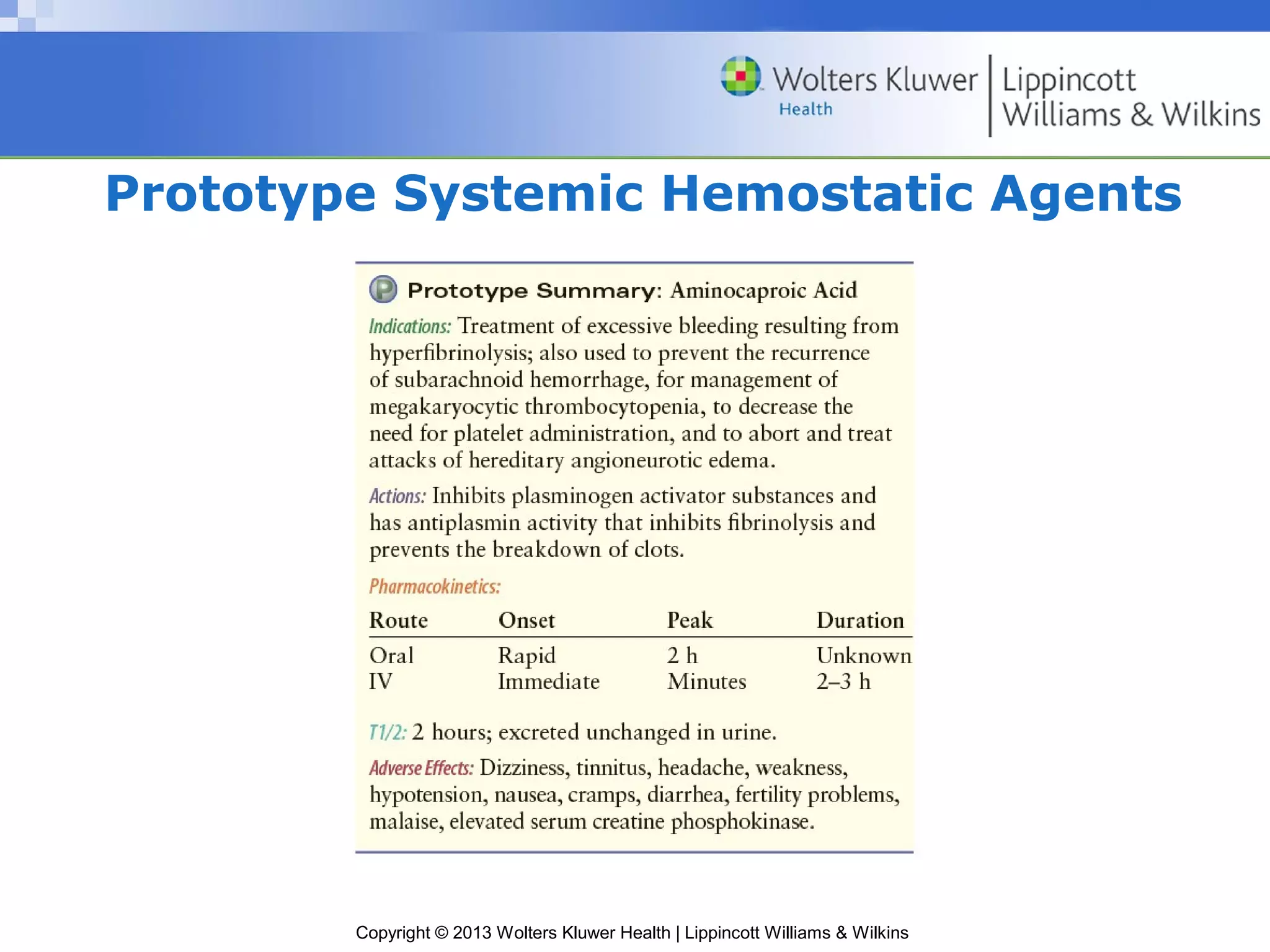
Prototype Systemic Hemostatic Agents
Copyright © 2013 Wolters Kluwer Health | Lippincott Williams & Wilkins
Nursing Considerations for Antiplatelet
Drugs
• Assessment: History and Physical Exam
• Nursing Diagnosis
• Implementation
• Evaluation
Copyright © 2013 Wolters Kluwer Health | Lippincott Williams & Wilkins
Nursing Considerations for Anticoagulants
• Assessment: History and Physical Exam
• Nursing Diagnosis
• Implementation
• Evaluation
Copyright © 2013 Wolters Kluwer Health | Lippincott Williams & Wilkins
Nursing Considerations for Thrombolytic
Agents
• Assessment: History and Physical Exam
• Nursing Diagnosis
• Implementation
• Evaluation
Copyright © 2013 Wolters Kluwer Health | Lippincott Williams & Wilkins
Nursing Considerations for Antihemophilic
Agents
• Assessment: History and Physical Exam
• Nursing Diagnosis
• Implementation
• Evaluation
Copyright © 2013 Wolters Kluwer Health | Lippincott Williams & Wilkins
Nursing Considerations for Systemic
Hemostatic Agents
• Assessment: History and Physical Exam
• Nursing Diagnosis
• Implementation
• Evaluation
Copyright © 2013 Wolters Kluwer Health | Lippincott Williams & Wilkins
Question
You are writing a care plan on a patient who is taking an
anticoagulant. What would be an appropriate nursing
diagnosis?
A. Evaluate patient for PT > 2.5
B. Establish safety precautions
C. Notify the health care provider of any patient receiving
this drug
D. Maintain narcan on standby
Copyright © 2013 Wolters Kluwer Health | Lippincott Williams & Wilkins
Answer
B. Establish safety precautions
Rationale: Patients on anticoagulants are at increased risk
for bleeding. The following are all important steps to
protect the patient from blood loss: using soft-bristled
toothbrushes, using electric instead of straight razors,
avoiding activities that could easily involve injury,
limiting invasive procedures, and ensuring adequate
compression to stop bleeding.

Ppt chapter 48

  • 1.
    Copyright © 2013Wolters Kluwer Health | Lippincott Williams & Wilkins Drugs Affecting Blood Coagulation Chapter 48
  • 2.
    Copyright © 2013Wolters Kluwer Health | Lippincott Williams & Wilkins Process of Blood Coagulation
  • 3.
    Copyright © 2013Wolters Kluwer Health | Lippincott Williams & Wilkins Blood Vessel Injury • Local vasoconstriction seals off small injury • Platelet aggregation forms a platelet plug • Hageman factor is activated • Intrinsic pathway converts prothrombin to thrombin to seal system • Extrinsic pathway clots the blood that has leaked out of the vascular system
  • 4.
    Copyright © 2013Wolters Kluwer Health | Lippincott Williams & Wilkins Damaged Vessel Endothelium is a Stimulus to Platelets, Causing Platelet Adhesion
  • 5.
    Copyright © 2013Wolters Kluwer Health | Lippincott Williams & Wilkins Types of Blood Disorders • Thromboembolic Disorder – Conditions that predispose a person to the formation of clots and emboli • Hemorrhagic Disorder – Disorder in which excess bleeding occurs
  • 6.
    Copyright © 2013Wolters Kluwer Health | Lippincott Williams & Wilkins Actions of Anticoagulants • Anticoagulants – Interfere with the clotting cascade and thrombin formation • Antiplatelets – Alter the formation of the platelet plug • Thrombolytic Drugs – Break down the thrombus that has been formed by stimulating the plasmin system
  • 7.
    Copyright © 2013Wolters Kluwer Health | Lippincott Williams & Wilkins Antiplatelet • Actions – Inhibit platelet adhesion and aggregation by blocking receptors sites on the platelet membrane – Anagrelide – Blocks the production of platelets in the bone marrow • Indications – Reduce risk of recurrent TIAs or strokes; reduce death or nonfatal MI; MI prophylaxis; anti-inflammatory, analgesic, and antipyretic effects • Pharmacokinetics – Well absorbed and bound to plasma proteins – Metabolized in the liver and excreted in the urine
  • 8.
    Copyright © 2013Wolters Kluwer Health | Lippincott Williams & Wilkins Antiplatelet (cont.) • Contraindications – Allergy, pregnancy, and lactation • Caution – Bleeding disorder, recent surgery, closed-head injury • Adverse Effects – Bleeding – Headache, dizziness, and weakness – GI distress • Drug-to-Drug Interactions – Another drug that affects blood clotting
  • 9.
    Copyright © 2013Wolters Kluwer Health | Lippincott Williams & Wilkins Question How do antiplatelet medications work? A. Interfere with the clotting cascade B. Alter the formation of the platelet plug C. Stimulates the plasmin system D. Initiates the clotting cascade
  • 10.
    Copyright © 2013Wolters Kluwer Health | Lippincott Williams & Wilkins Answer B. Alter the formation of the platelet plug Rationale: Antiplatelets alter the formation of the platelet plug.
  • 11.
    Copyright © 2013Wolters Kluwer Health | Lippincott Williams & Wilkins Anticoagulants and Their Indications • Warfarin (Coumadin) – Maintains a state of anticoagulation when patient is susceptible to potentially dangerous clot formation • Heparin (Generic) – Inhibits the conversion of prothrombin to thrombin • Antithrombin (Thrombate III) – Used for hereditary antithrombin III deficiencies; replacement therapy in congenital antithrombin III deficiency
  • 12.
    Copyright © 2013Wolters Kluwer Health | Lippincott Williams & Wilkins Anticoagulants and Their Indications (cont.) • Argatroban (Acova) – Used to treat thrombosis in heparin-induced thrombocytopenia • Bivalirudin (Angiomax) – Used with aspirin to prevent ischemic events in patients undergoing transluminal coronary angioplasty
  • 13.
    Copyright © 2013Wolters Kluwer Health | Lippincott Williams & Wilkins Anticoagulants • Actions – Interfere with the normal cascade of events involved in the clotting process • Pharmacokinetics – Different based on the drug • Contraindications – Allergy and condition that could be compromised by increased bleeding tendencies – Pregnancy, renal, or hepatic disorders
  • 14.
    Copyright © 2013Wolters Kluwer Health | Lippincott Williams & Wilkins Anticoagulants (cont.) • Caution – CHF, thyrotoxicosis, senility, or psychosis • Adverse Effects – Bleeding – GI upset – Hepatic dysfunction – Alopecia, dermatitis, bone marrow suppression, prolonged, and painful erection
  • 15.
    Copyright © 2013Wolters Kluwer Health | Lippincott Williams & Wilkins Anticoagulants (cont.) • Drug-to-Drug Interactions – Heparin and oral anticoagulants, salicylates, penicillins, or cephalosporins – Heparin and nitroglycerine – Warfarin – Number of documented interactions
  • 16.
    Copyright © 2013Wolters Kluwer Health | Lippincott Williams & Wilkins Low-Molecular-Weight Heparins • Inhibit thrombus and clot formation by blocking factors Xa and Iia • Do not greatly affect thrombin, clotting, or prothrombin times; therefore cause fewer systemic adverse effects • Block angiogenesis, the process that allows cancer cells to develop new blood vessels • Are indicated for specific uses in the prevention of clots and emboli formation after certain surgeries or bed rest
  • 17.
    Copyright © 2013Wolters Kluwer Health | Lippincott Williams & Wilkins Thrombolytic Agents • Actions – Activating plasminogen to plasmin, which in turn breaks down fibrin threads in a clot to dissolve a formed clot • Indications – Acute MI, pulmonary emboli, ischemic stroke • Pharmacokinetics – Drugs must be injected and are cleared from the body after liver metabolism – Pregnancy and lactation
  • 18.
    Copyright © 2013Wolters Kluwer Health | Lippincott Williams & Wilkins Thrombolytic Agents (cont.) • Contraindications – Allergy – Any condition that would be worsened by dissolution of clots • Adverse Effects – Bleeding – Cardiac arrhythmias – Hypotension – Hypersensitivity – Rash, flushing, bronchospasm, and anaphylactic reaction
  • 19.
    Copyright © 2013Wolters Kluwer Health | Lippincott Williams & Wilkins Thrombolytic Agents (cont.) • Drug-to-Drug Interactions – Anticoagulants – Antiplatelet
  • 20.
    Copyright © 2013Wolters Kluwer Health | Lippincott Williams & Wilkins Question The pharmacology instructor is talking to the student about low-molecular-weight-heparin medications. What would the instructor indicate as an advantage to these medications? A. Indicated for patients who are on an exercise regimen B. Initiates angiogenesis C. Blocking factors IXa and Iaa D. Cause fewer systemic adverse effects
  • 21.
    Copyright © 2013Wolters Kluwer Health | Lippincott Williams & Wilkins Answer D. Cause fewer systemic adverse effects Rationale: Low-molecular-weight-heparins do not greatly affect thrombin, clotting, or prothrombin times; therefore cause fewer systemic adverse effects.
  • 22.
    Copyright © 2013Wolters Kluwer Health | Lippincott Williams & Wilkins Bleeding Disorders Treated With Clotting Factors • Hemophilia – Genetic lack of clotting factors that leaves the patient vulnerable to excessive bleeding with any injury. • Liver Disease – Clotting factors and proteins needed for clotting are not produced. • Bone Marrow Disorders – Platelets are not formed in sufficient quantity to be effective.
  • 23.
    Copyright © 2013Wolters Kluwer Health | Lippincott Williams & Wilkins Antihemophilic • Actions – Replace clotting factors that are either genetically missing or low in a particular type of hemophilia • Indications – Prevent blood loss from injury or surgery and to treat bleeding disorders • Pharmacokinetics – Replace normal clotting factors and are processed as such by the body
  • 24.
    Copyright © 2013Wolters Kluwer Health | Lippincott Williams & Wilkins Antihemophilic (cont.) • Contraindications – Allergy – Factor IX in the presence of liver disease – Lactation • Caution – Pregnancy
  • 25.
    Copyright © 2013Wolters Kluwer Health | Lippincott Williams & Wilkins Antihemophilic (cont.) • Adverse Effects – Involve risks associated with the use of blood products – Headache, flushing, fever, chills, lethargy – Nausea and vomiting – Stinging, itching, and burning at the site of injection
  • 26.
    Copyright © 2013Wolters Kluwer Health | Lippincott Williams & Wilkins Systemic Hemostatic Agents • Actions – Stop the natural plasminogen clot-dissolving mechanism by blocking its activation or by directly inhibiting plasmin. • Indications – Prevent or treat excess bleeding in hyperfibrinolytic states • Pharmacokinetics – Different for each drug
  • 27.
    Copyright © 2013Wolters Kluwer Health | Lippincott Williams & Wilkins Systemic Hemostatic Agents (cont.) • Contraindications – Allergy – Acute DIC • Caution – Cardiac disease, renal or hepatic dysfunction, pregnancy and lactation
  • 28.
    Copyright © 2013Wolters Kluwer Health | Lippincott Williams & Wilkins Systemic Hemostatic Agents (cont.) • Adverse Effects – Excessive clotting – CNS – Hallucinations, drowsiness, dizziness, headache, and psychotic states – GI – Nausea, cramps, diarrhea – Weakness, fatigue, malaise, and muscle pain – Aprotinin – Cardiac arrhythmias, MI, CHF, and hypotension • Drug-to-Drug Interactions – Heparin – Oral contraceptives or estrogen
  • 29.
    Copyright © 2013Wolters Kluwer Health | Lippincott Williams & Wilkins Use of Drugs Affecting Coagulation Across the Lifespan
  • 30.
    Copyright © 2013Wolters Kluwer Health | Lippincott Williams & Wilkins Question Please answer the following statement as true or false. The indications for use of a systemic hemostatic agent is to prevent blood loss from injury or surgery and to treat bleeding disorders.
  • 31.
    Copyright © 2013Wolters Kluwer Health | Lippincott Williams & Wilkins Answer False Rationale: Indications for a systemic hemostatic agent prevents or treats excess bleeding in hyperfibrinolytic states.
  • 32.
    Copyright © 2013Wolters Kluwer Health | Lippincott Williams & Wilkins Prototype Antiplatelets
  • 33.
    Copyright © 2013Wolters Kluwer Health | Lippincott Williams & Wilkins Prototype Anticoagulants
  • 34.
    Copyright © 2013Wolters Kluwer Health | Lippincott Williams & Wilkins Prototype Anticoagulants (Continued)
  • 35.
    Copyright © 2013Wolters Kluwer Health | Lippincott Williams & Wilkins Prototype Thrombolytic Agents
  • 36.
    Copyright © 2013Wolters Kluwer Health | Lippincott Williams & Wilkins Prototype Antihemophilic
  • 37.
    Copyright © 2013Wolters Kluwer Health | Lippincott Williams & Wilkins Prototype Systemic Hemostatic Agents
  • 38.
    Copyright © 2013Wolters Kluwer Health | Lippincott Williams & Wilkins Nursing Considerations for Antiplatelet Drugs • Assessment: History and Physical Exam • Nursing Diagnosis • Implementation • Evaluation
  • 39.
    Copyright © 2013Wolters Kluwer Health | Lippincott Williams & Wilkins Nursing Considerations for Anticoagulants • Assessment: History and Physical Exam • Nursing Diagnosis • Implementation • Evaluation
  • 40.
    Copyright © 2013Wolters Kluwer Health | Lippincott Williams & Wilkins Nursing Considerations for Thrombolytic Agents • Assessment: History and Physical Exam • Nursing Diagnosis • Implementation • Evaluation
  • 41.
    Copyright © 2013Wolters Kluwer Health | Lippincott Williams & Wilkins Nursing Considerations for Antihemophilic Agents • Assessment: History and Physical Exam • Nursing Diagnosis • Implementation • Evaluation
  • 42.
    Copyright © 2013Wolters Kluwer Health | Lippincott Williams & Wilkins Nursing Considerations for Systemic Hemostatic Agents • Assessment: History and Physical Exam • Nursing Diagnosis • Implementation • Evaluation
  • 43.
    Copyright © 2013Wolters Kluwer Health | Lippincott Williams & Wilkins Question You are writing a care plan on a patient who is taking an anticoagulant. What would be an appropriate nursing diagnosis? A. Evaluate patient for PT > 2.5 B. Establish safety precautions C. Notify the health care provider of any patient receiving this drug D. Maintain narcan on standby
  • 44.
    Copyright © 2013Wolters Kluwer Health | Lippincott Williams & Wilkins Answer B. Establish safety precautions Rationale: Patients on anticoagulants are at increased risk for bleeding. The following are all important steps to protect the patient from blood loss: using soft-bristled toothbrushes, using electric instead of straight razors, avoiding activities that could easily involve injury, limiting invasive procedures, and ensuring adequate compression to stop bleeding.