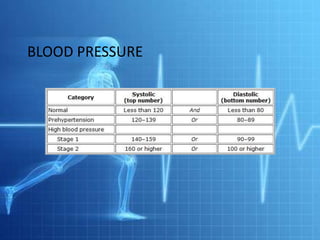
BLOOD PRESSURE

   •Refers to the force that blood exerts against a
   vessel wall.

   •These points are represented by the systolic
   (ventricular contraction) and diastolic (ventricular
   relaxation) pressures.
BLOOD PRESSURE
 BP is a function of 2 elements:

 (1) Cardiac Output – amount of blood flow
 (2) Peripheral Resistance – impediment to blood flow
     within a vessel
BLOOD PRESSURE
BLOOD PRESSURE

   •Postural (Orthostatic) Hypotension
            -is a sudden drop in BP that occurs when
   movement to upright postures (sitting or standing)
   is initiated.
BLOOD PRESSURE

 •Hypovolemia
       - Abnormally low volume of circulating blood

 •Hypervolemia
       - Abnormally increase in blood
BLOOD PRESSURE

Equipment Requirements

  •Sphygmomanometer
  •Stethoscope
BLOOD PRESSURE


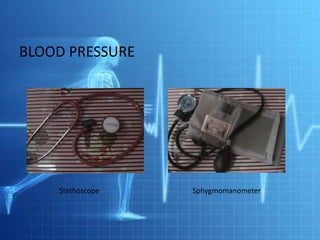
    Stethoscope   Sphygmomanometer
BLOOD PRESSURE


     Procedure for Measuring Blood Pressure
BLOOD PRESSURE


   •Expose the patient’s arm;

   • then wrap the deflated cuff evenly around the
   patient’s arm approximately 2.5 cm above the
   antecubital fossa
BLOOD PRESSURE


   •Place the earpieces of the stethoscope into ears;
   and place the head of the stethoscope firmly over
   the artery at the lower border of the BP cuff.
BLOOD PRESSURE

   •Close the valve of the BP cuff and start inflating until
   the estimated level previously determined or until it
   reaches approximately 20 to 30 mmHg above the
   anticipated systolic pressure.
BLOOD PRESSURE


    •Note the point at which the first sound was heard
    (systolic); and note when the sound first becomes
    muffled and the valve on the manometer when the
    sound disappears (diastolic).

Ppt

  • 2.
    BLOOD PRESSURE •Refers to the force that blood exerts against a vessel wall. •These points are represented by the systolic (ventricular contraction) and diastolic (ventricular relaxation) pressures.
  • 3.
    BLOOD PRESSURE BPis a function of 2 elements: (1) Cardiac Output – amount of blood flow (2) Peripheral Resistance – impediment to blood flow within a vessel
  • 4.
  • 5.
    BLOOD PRESSURE •Postural (Orthostatic) Hypotension -is a sudden drop in BP that occurs when movement to upright postures (sitting or standing) is initiated.
  • 6.
    BLOOD PRESSURE •Hypovolemia - Abnormally low volume of circulating blood •Hypervolemia - Abnormally increase in blood
  • 7.
    BLOOD PRESSURE Equipment Requirements •Sphygmomanometer •Stethoscope
  • 8.
    BLOOD PRESSURE Stethoscope Sphygmomanometer
  • 9.
    BLOOD PRESSURE Procedure for Measuring Blood Pressure
  • 10.
    BLOOD PRESSURE •Expose the patient’s arm; • then wrap the deflated cuff evenly around the patient’s arm approximately 2.5 cm above the antecubital fossa
  • 11.
    BLOOD PRESSURE •Place the earpieces of the stethoscope into ears; and place the head of the stethoscope firmly over the artery at the lower border of the BP cuff.
  • 12.
    BLOOD PRESSURE •Close the valve of the BP cuff and start inflating until the estimated level previously determined or until it reaches approximately 20 to 30 mmHg above the anticipated systolic pressure.
  • 13.
    BLOOD PRESSURE •Note the point at which the first sound was heard (systolic); and note when the sound first becomes muffled and the valve on the manometer when the sound disappears (diastolic).