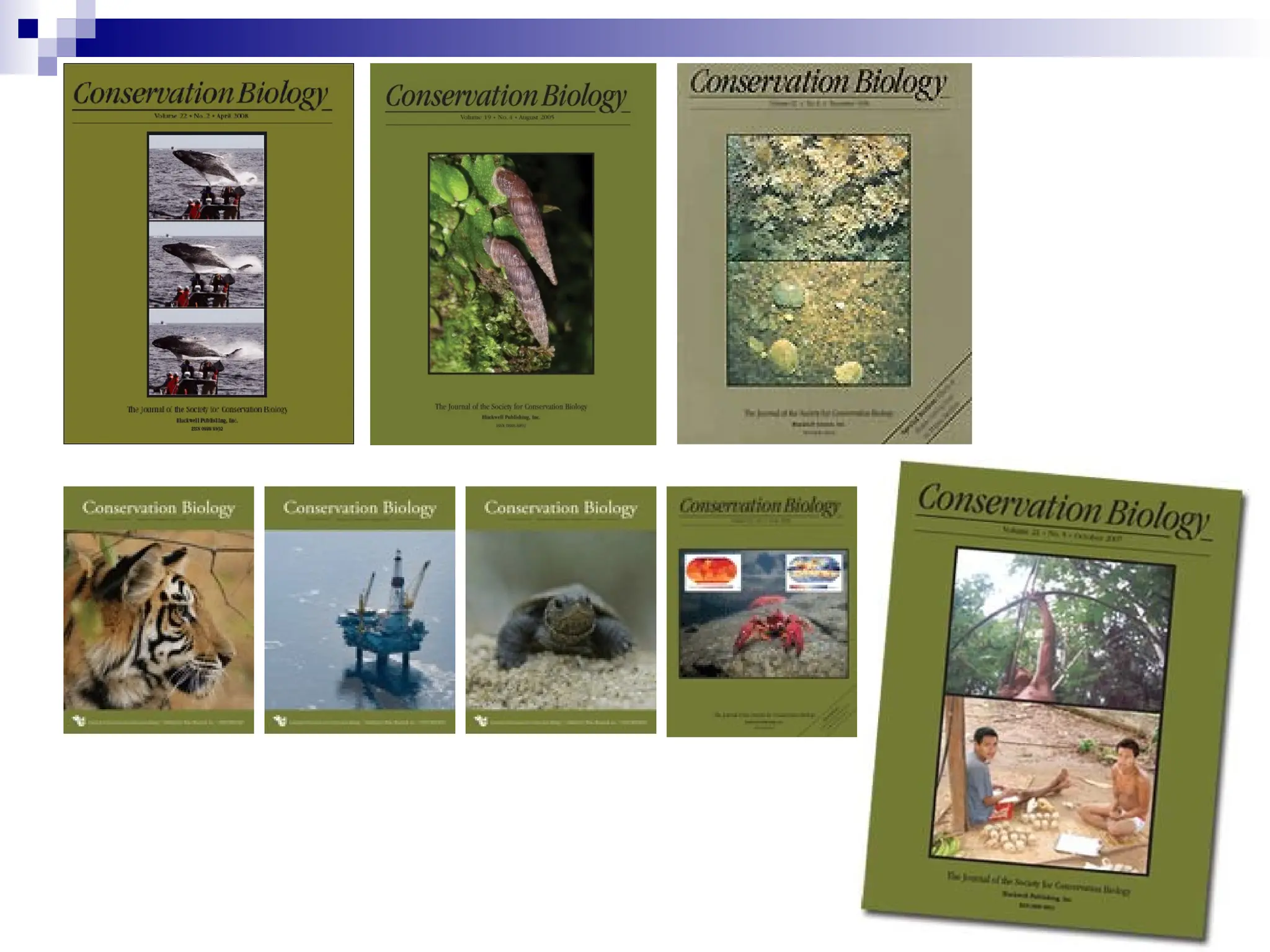
CONSERVATION
BIOLOGY
IN A NUTSHELL
Sandun J. Perera
Doctoral Student
School of Environmental Sciences, UKZN
Bit of the history of conservation
 Industrial & Green Revolution
 Concerns on Environment – 1950s – 1970s
 1948 International Union for Preservation of Nature
 1956 name changed to IUCN
 Public interests
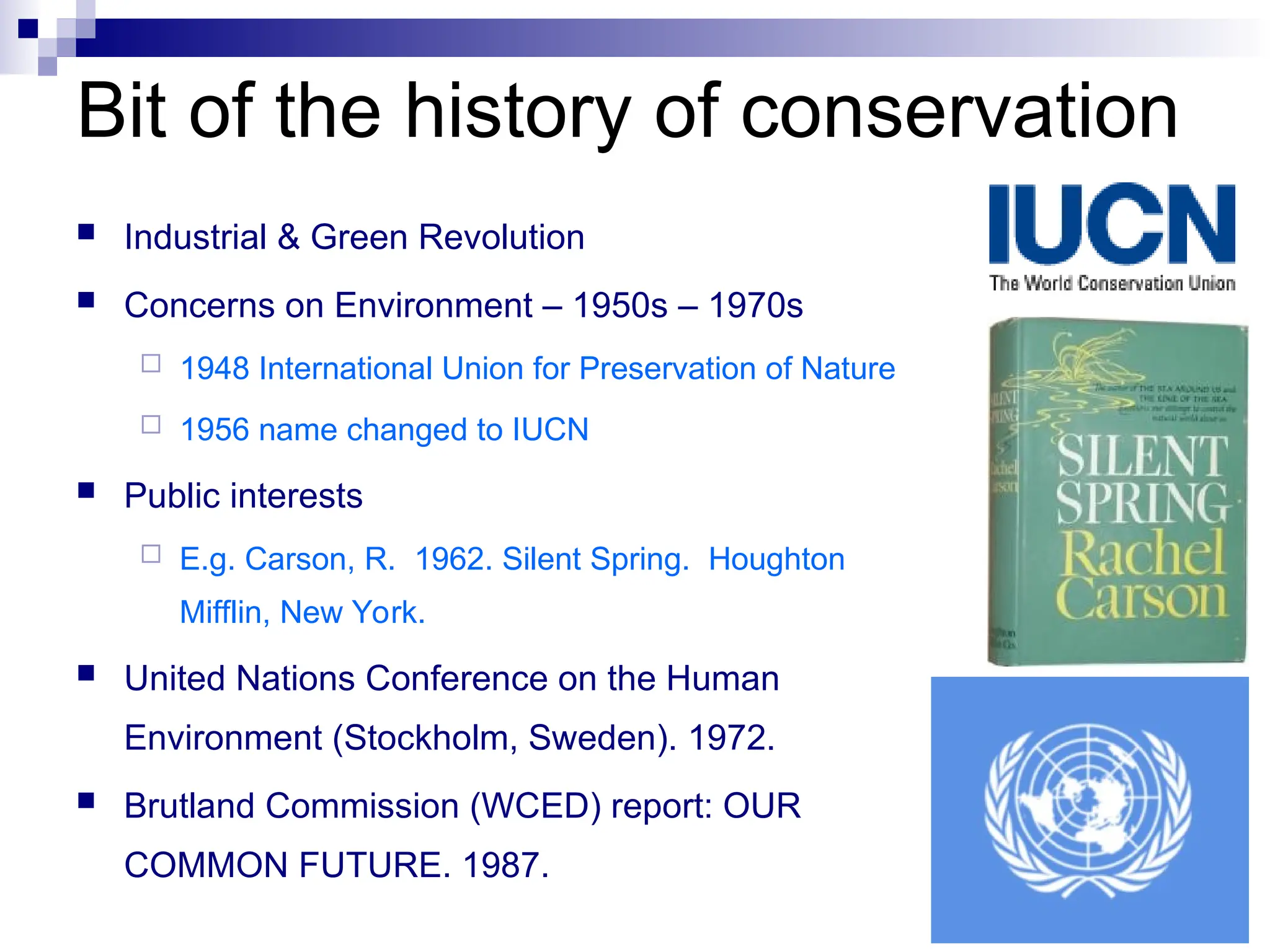
 E.g. Carson, R. 1962. Silent Spring. Houghton
Mifflin, New York.
 United Nations Conference on the Human
Environment (Stockholm, Sweden). 1972.
 Brutland Commission (WCED) report: OUR
COMMON FUTURE. 1987.
172 governments
participated with 108 at
level of heads of State or
Government.
The big milestone
United Nations Conference
on Environment and
Development
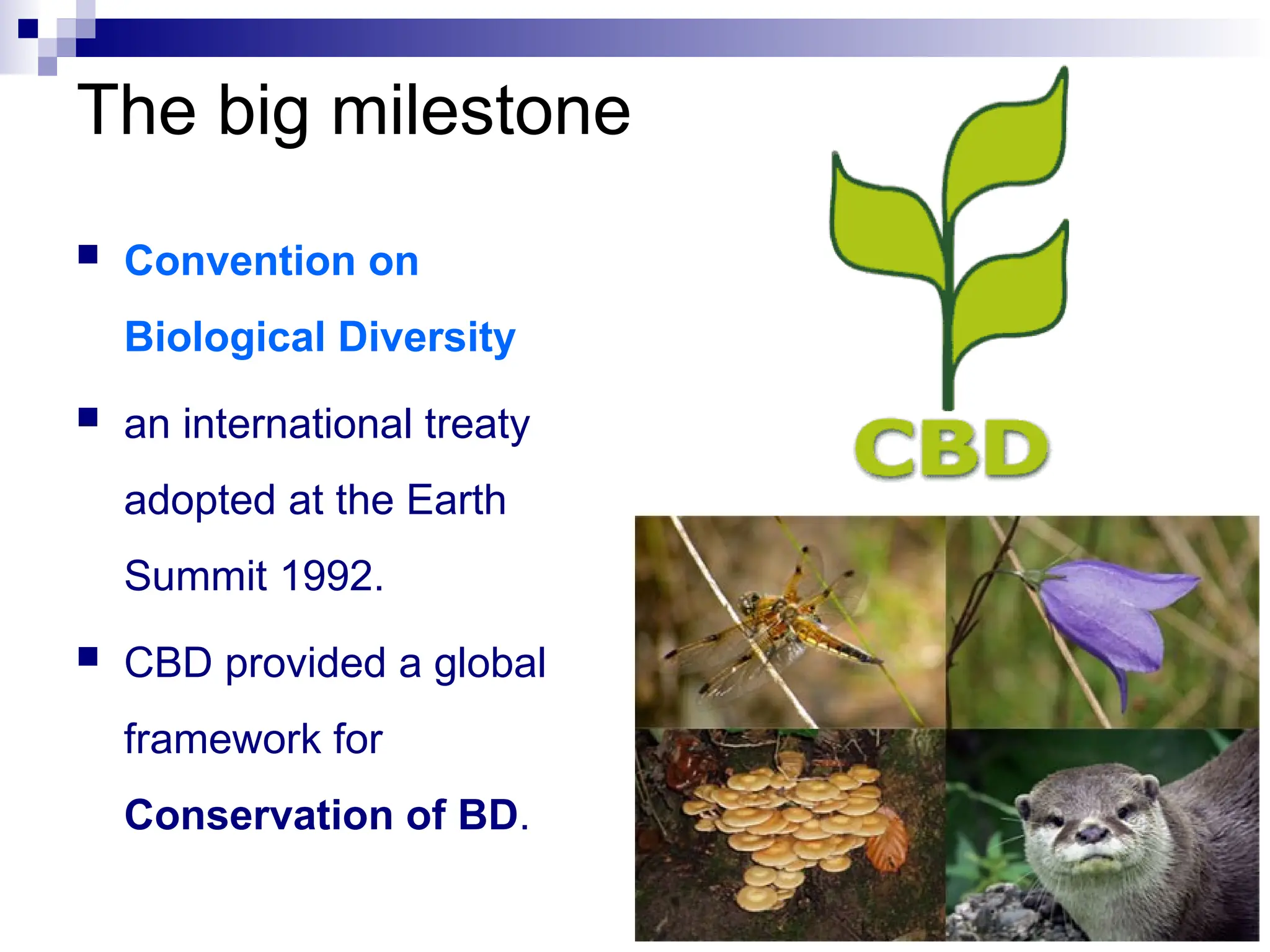
 Convention on
Biological Diversity
 an international treaty
adopted at the Earth
Summit 1992.
 CBD provided a global
framework for
Conservation of BD.
The big milestone
The Sixth Extinction
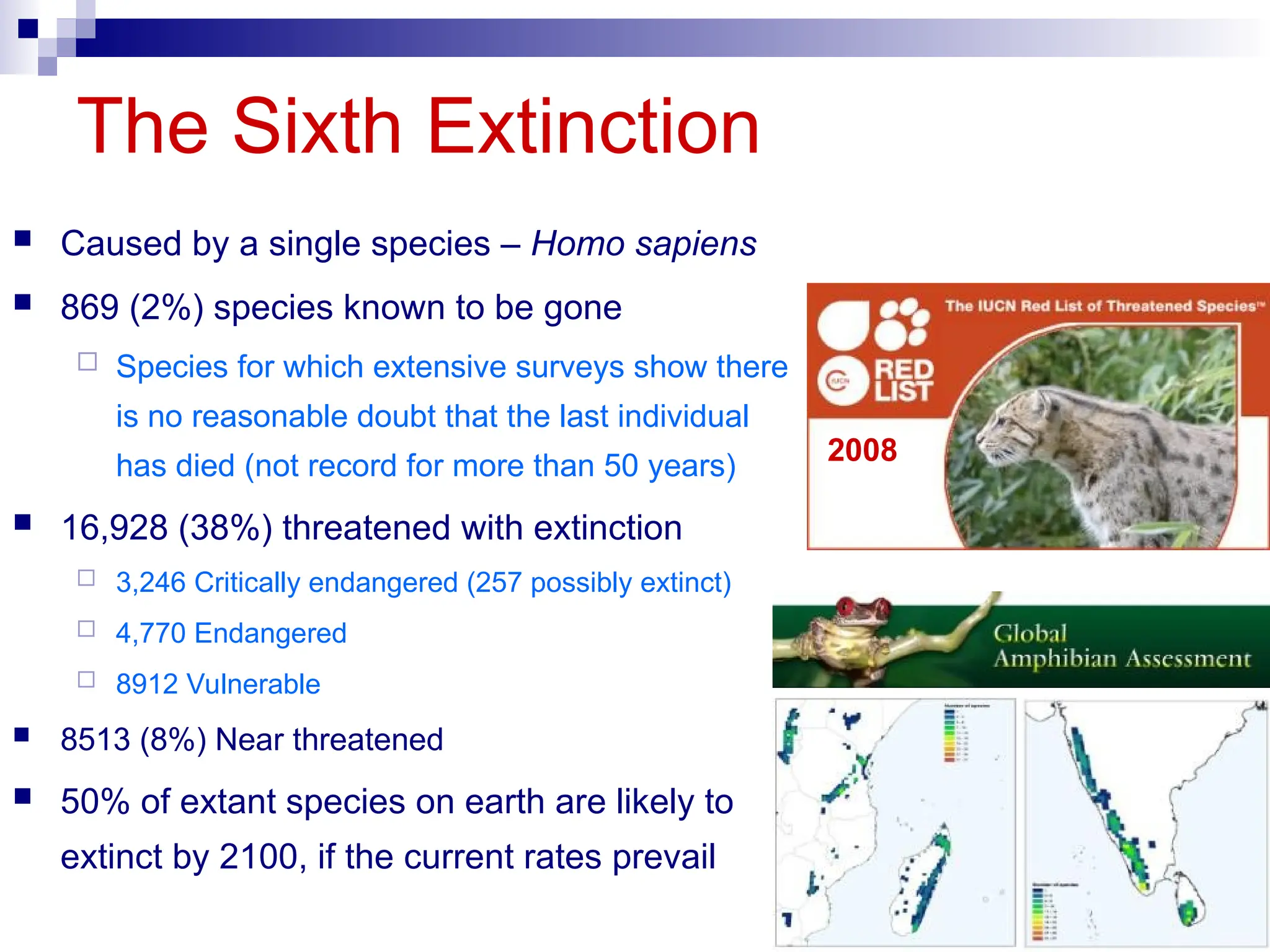
2008
 Caused by a single species – Homo sapiens
 869 (2%) species known to be gone
 Species for which extensive surveys show there
is no reasonable doubt that the last individual
has died (not record for more than 50 years)
 16,928 (38%) threatened with extinction
 3,246 Critically endangered (257 possibly extinct)
 4,770 Endangered
 8912 Vulnerable
 8513 (8%) Near threatened
 50% of extant species on earth are likely to
extinct by 2100, if the current rates prevail
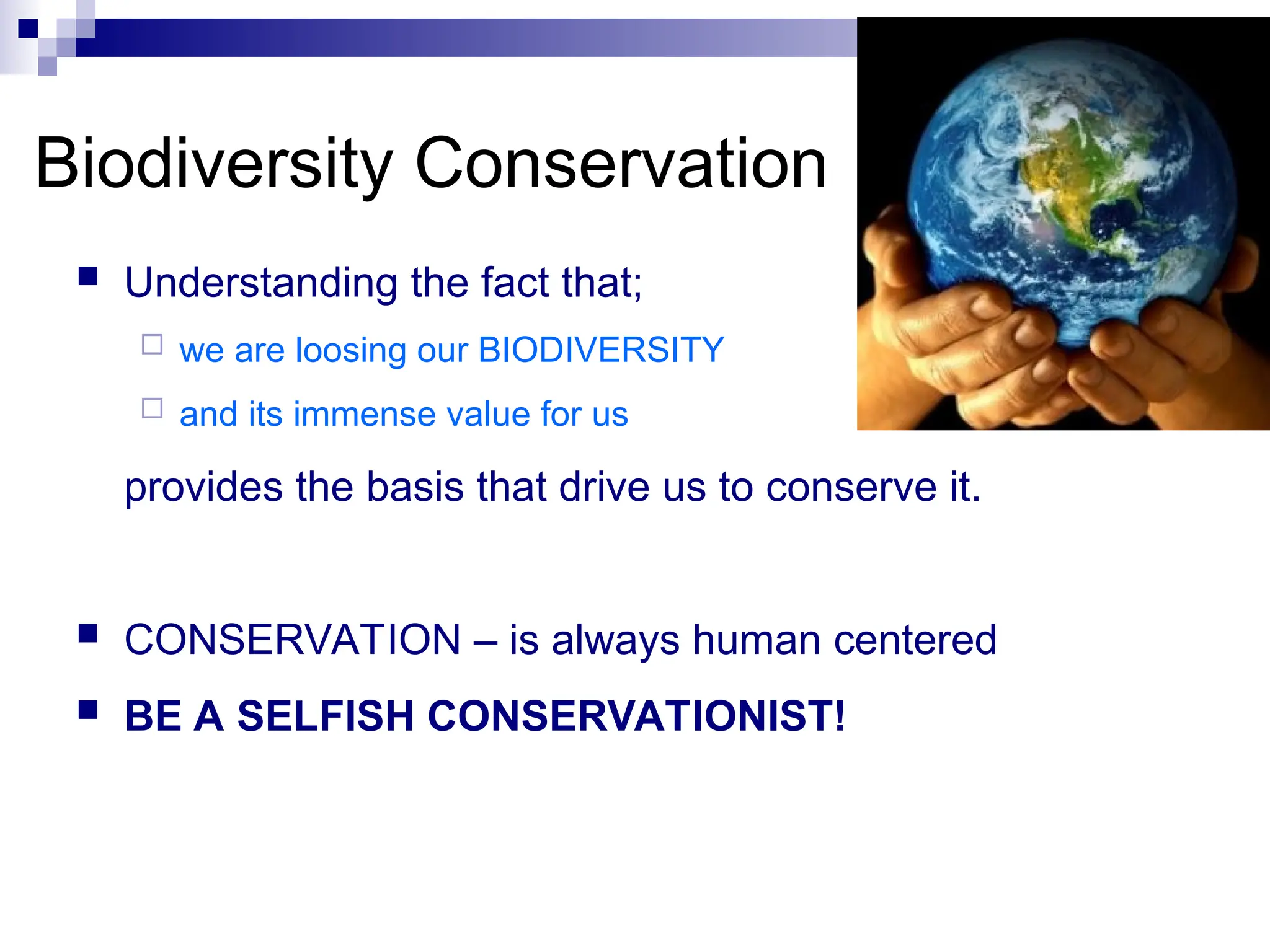
 Understanding the fact that;
 we are loosing our BIODIVERSITY
 and its immense value for us
provides the basis that drive us to conserve it.
 CONSERVATION – is always human centered
 BE A SELFISH CONSERVATIONIST!
Biodiversity Conservation
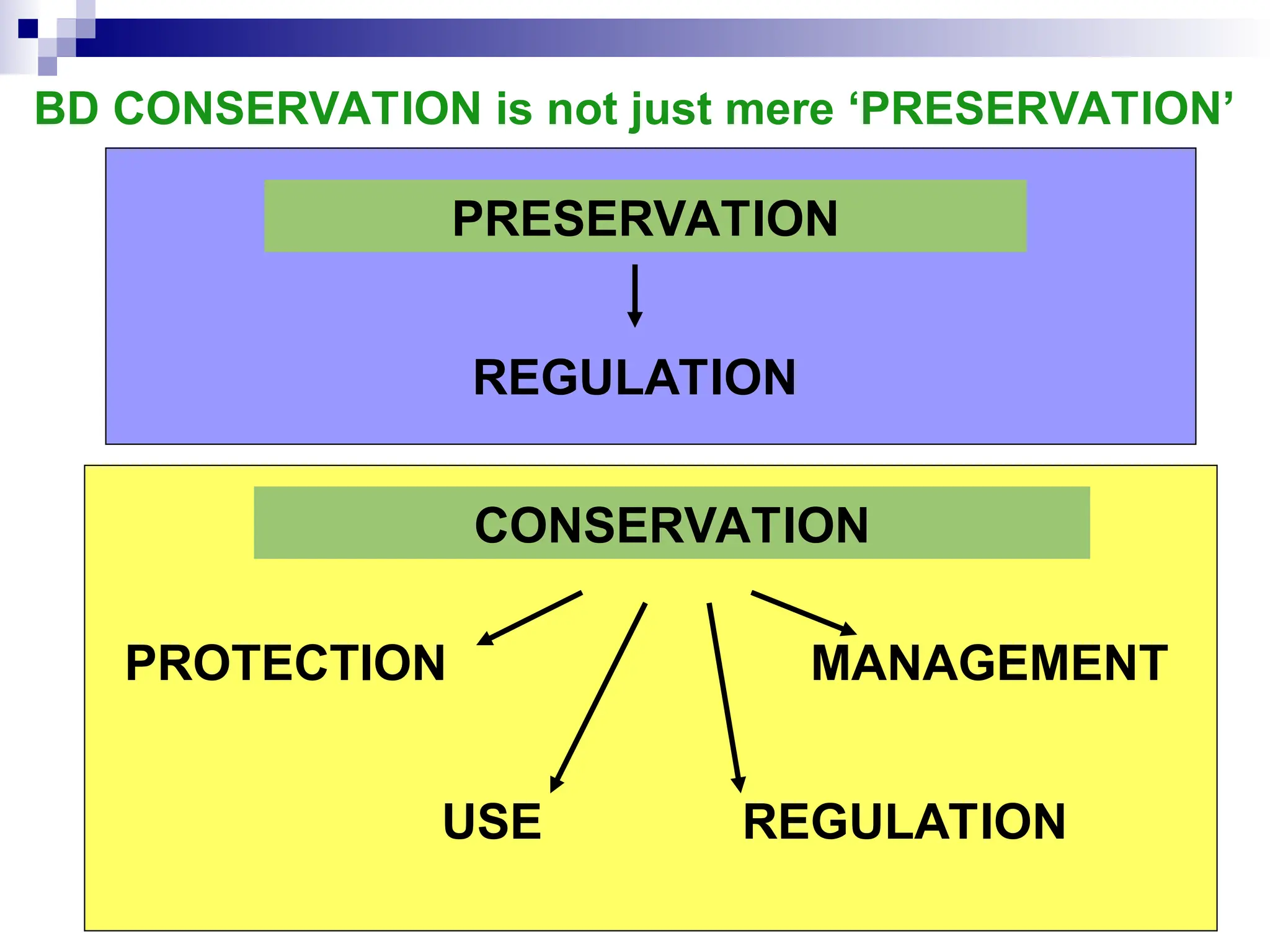
CONSERVATION
PROTECTION
USE REGULATION
MANAGEMENT
PRESERVATION
REGULATION
BD CONSERVATION is not just mere ‘PRESERVATION’
 The management of human use of the
biosphere, so that it may yield the greatest
sustainable benefit to the present generation,
while maintaining it’s potential to meet the
needs and aspirations of the future
generations
(IUCN/UNEP/WWF, 1980. The World Conservation Strategy)
 = THE SUSTAINABLE USE
= THE SUSTAINABLE USE
Therefore, Biodiversity Conservation is
Conservation Biology
 Application of science to the conservation of
genes, populations, species, and ecosystems.
 Scientific study of the phenomena that affect
the maintenance, loss, and restoration of
biological diversity.
 Conservation biology draws from the biological,
physical and social sciences, economics, and
the practice of natural-resource management.
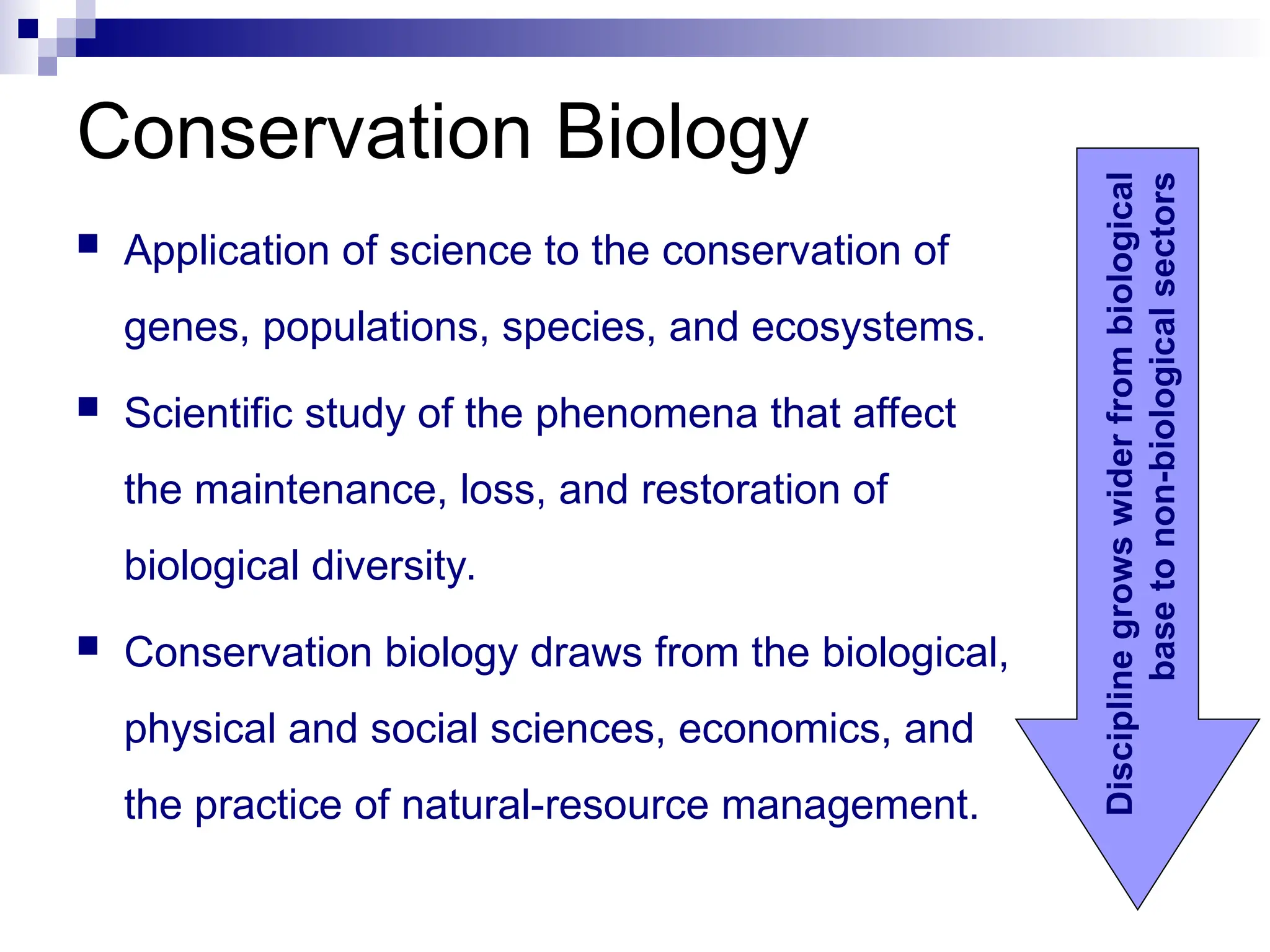
Discipline
grows
wider
from
biological
base
to
non-biological
sectors
PRACTICING
CONSERVATION
Sandun J. Perera.
School of Environmental Sciences, UKZN.
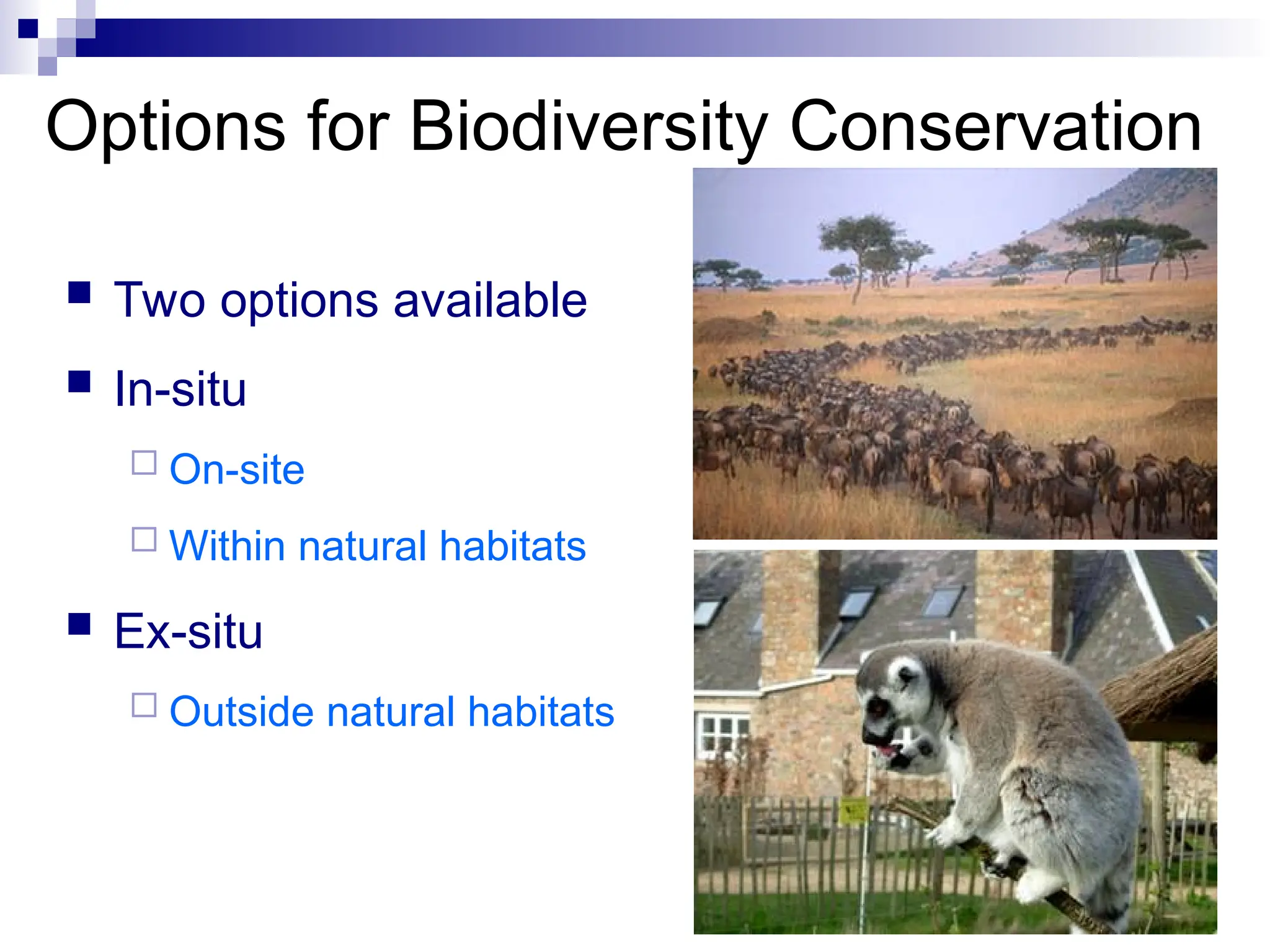
Options for Biodiversity Conservation
 Two options available
 In-situ
 On-site
 Within natural habitats
 Ex-situ
 Outside natural habitats
In-situ Conservation
 Primary approach for biodiversity conservation (Article 8 - CBD)
 Protection of wildlife habitats.
 Maintaining populations,
 In the surrounding where they have developed their distinctive
properties / adaptations.
 Where they have evolved
 Protected Areas (PAs) -
Areas dedicated for in-situ conservation
 The least costly - most suitable option.
 The only means of maintaining healthy populations
 Best way to sustain rare but important genotypes.
 Good resilience over physical failures or catastrophes in PAs
 Opportunity to study the biodiversity, ecology and dynamics
 Only way to meet species-specific necessities of ecological
interactions
 Can sustainably operated with a better income generation.
Why in-situ conservation?
Ex-situ Conservation
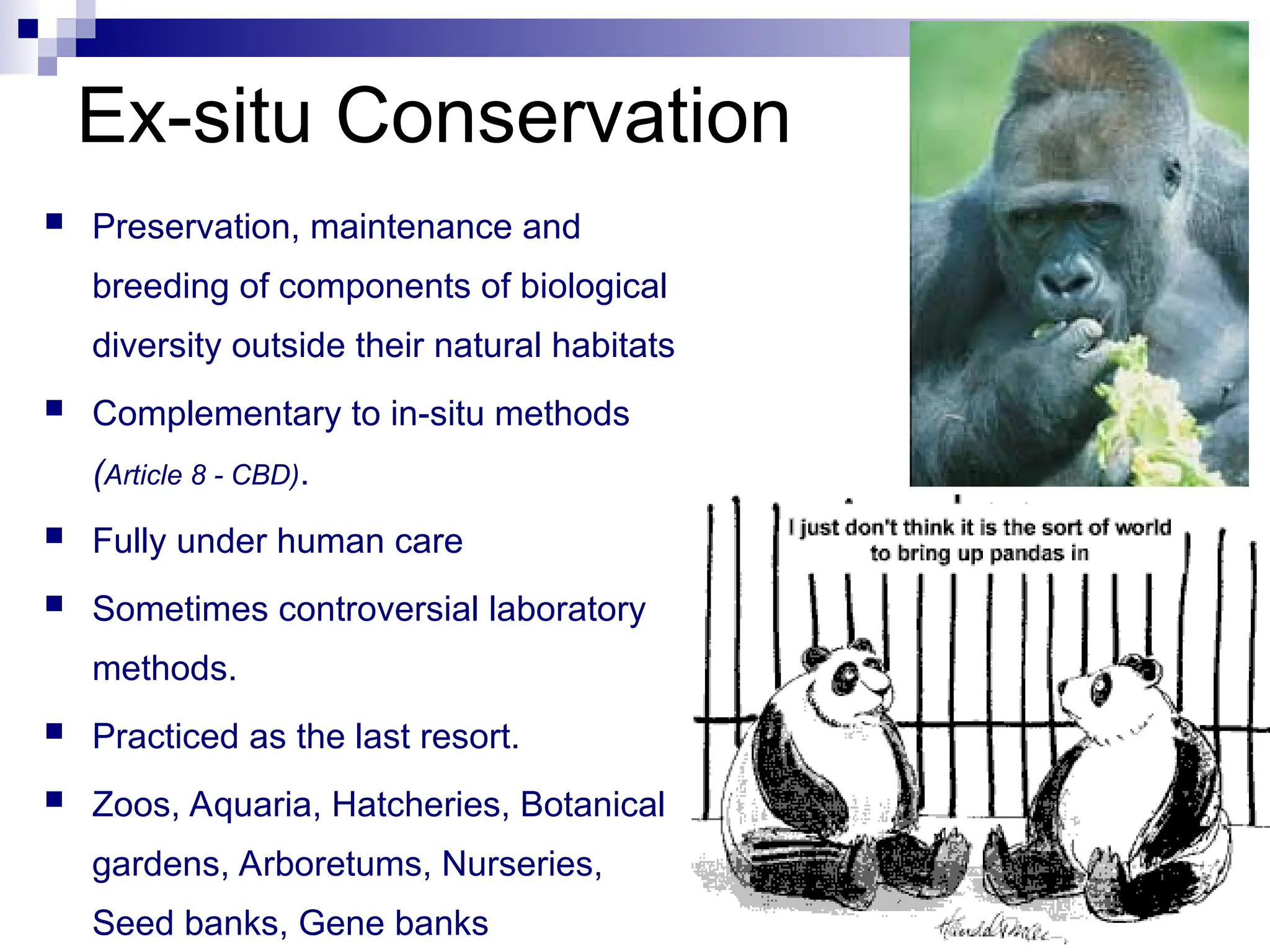
 Preservation, maintenance and
breeding of components of biological
diversity outside their natural habitats
 Complementary to in-situ methods
(Article 8 - CBD).
 Fully under human care
 Sometimes controversial laboratory
methods.
 Practiced as the last resort.
 Zoos, Aquaria, Hatcheries, Botanical
gardens, Arboretums, Nurseries,
Seed banks, Gene banks
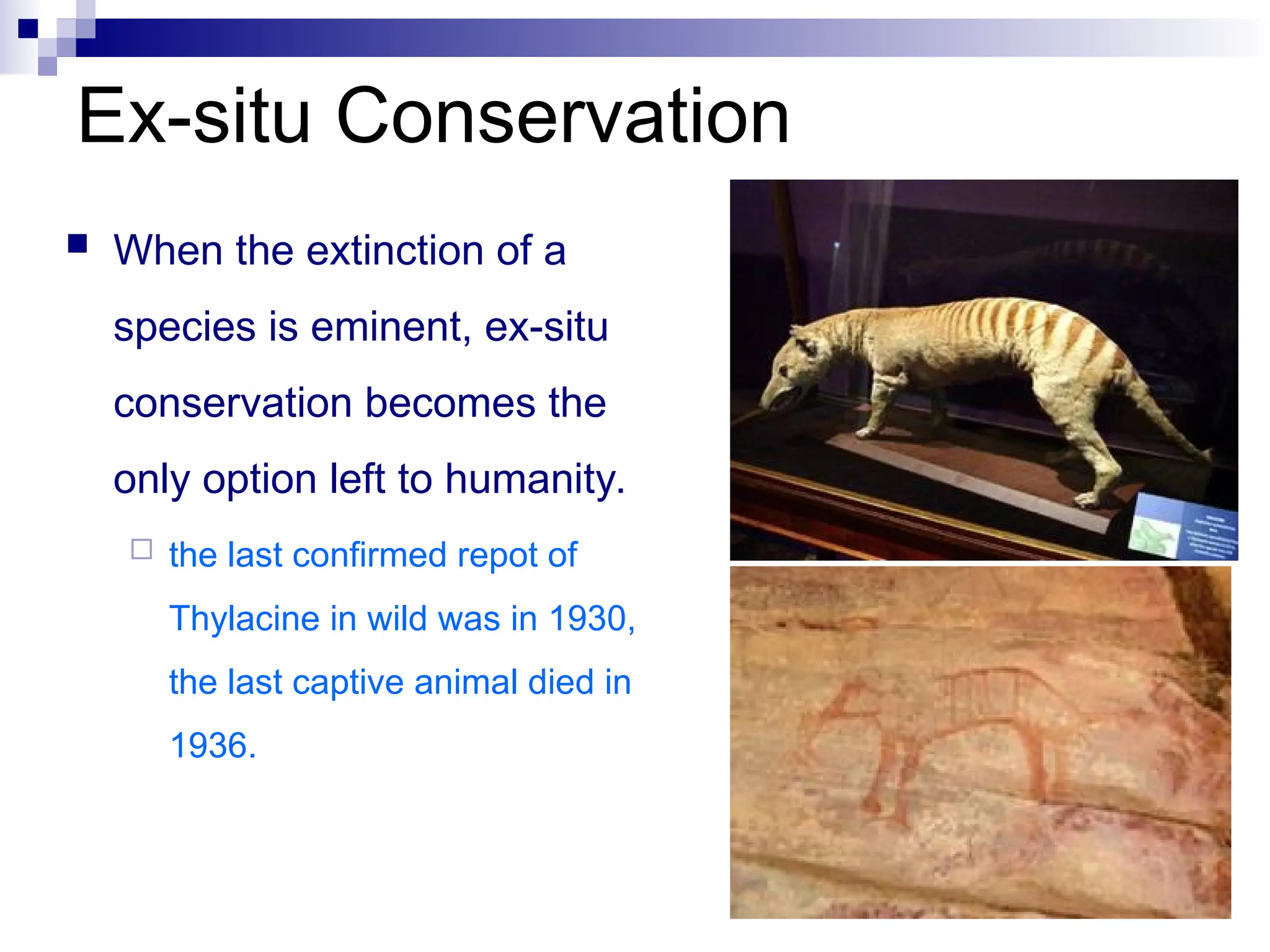
 When the extinction of a
species is eminent, ex-situ
conservation becomes the
only option left to humanity.
 the last confirmed repot of
Thylacine in wild was in 1930,
the last captive animal died in
1936.
Ex-situ Conservation
Why ex-situ conservation?
 Ex-situ stocks serve as ‘saving accounts’ for PA managers
 Play a valuable role in recovery programmes for
endangered species.
 Several species would be extinct - if not for captive breeding.
 Important for agricultural crop enhancement.
 Research opportunities on sub-species components of BD
 Public education and awareness raising.
Protected Areas (PAs)
 Geographically defined area – designated, regulated and
managed to achieve specific conservation objectives.
 PAs form the central element of any national strategy to
conserve biodiversity.
 Declaration of PAs is the best possible way to;
 Conserve BD
 Maintaining a healthy environment
 Ensure the sustainability of BD,
 without compromising development
 The first PA management decision to take would be,
 Whether we let nature to take its own course
 Whether to actively manipulate the system.
 Because, an inappropriate management decision might
result in the opposite of anticipated outcome.
 If active manipulation is selected –
two approaches to go with,
 Species management
 Ecosystem management
What do we do in PAs?
 No other option when;
 Species is endangered – need recovery
 Population is overabundant – need population control
 Human-animal conflict situations – need pop control
 Control of exotic species – pop control / eradication
Species Management
Endangered sp recovery:
Habitat management
 Supplemental feeding
 Predator eradication, control or
exclusion
 Disease control
 Provision of breeding sites
 Improve nest sites / boxes
 Habitat protection and
restoration
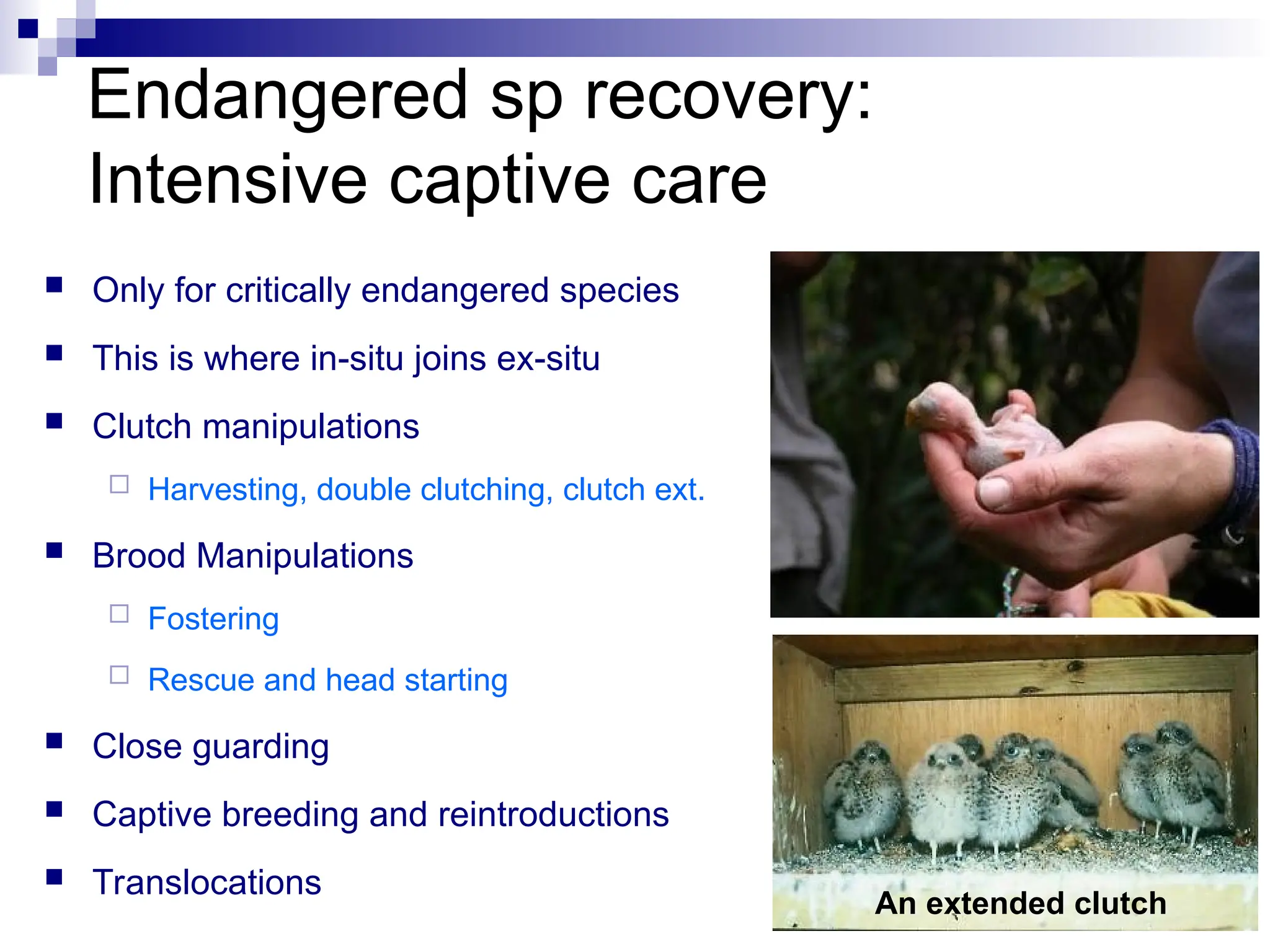
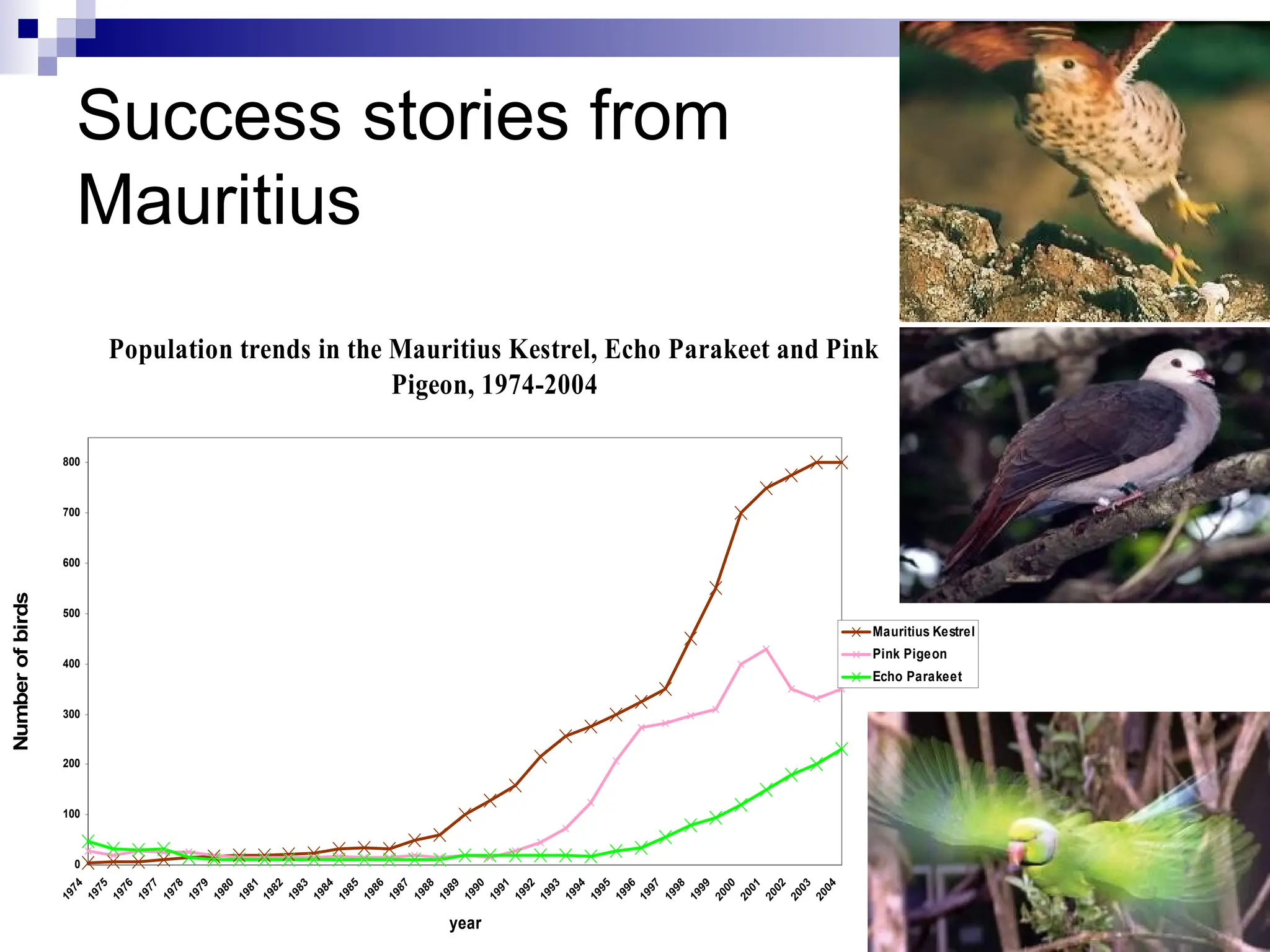
 Only for critically endangered species
 This is where in-situ joins ex-situ
 Clutch manipulations
 Harvesting, double clutching, clutch ext.
 Brood Manipulations
 Fostering
 Rescue and head starting
 Close guarding
 Captive breeding and reintroductions
 Translocations
An extended clutch
Endangered sp recovery:
Intensive captive care
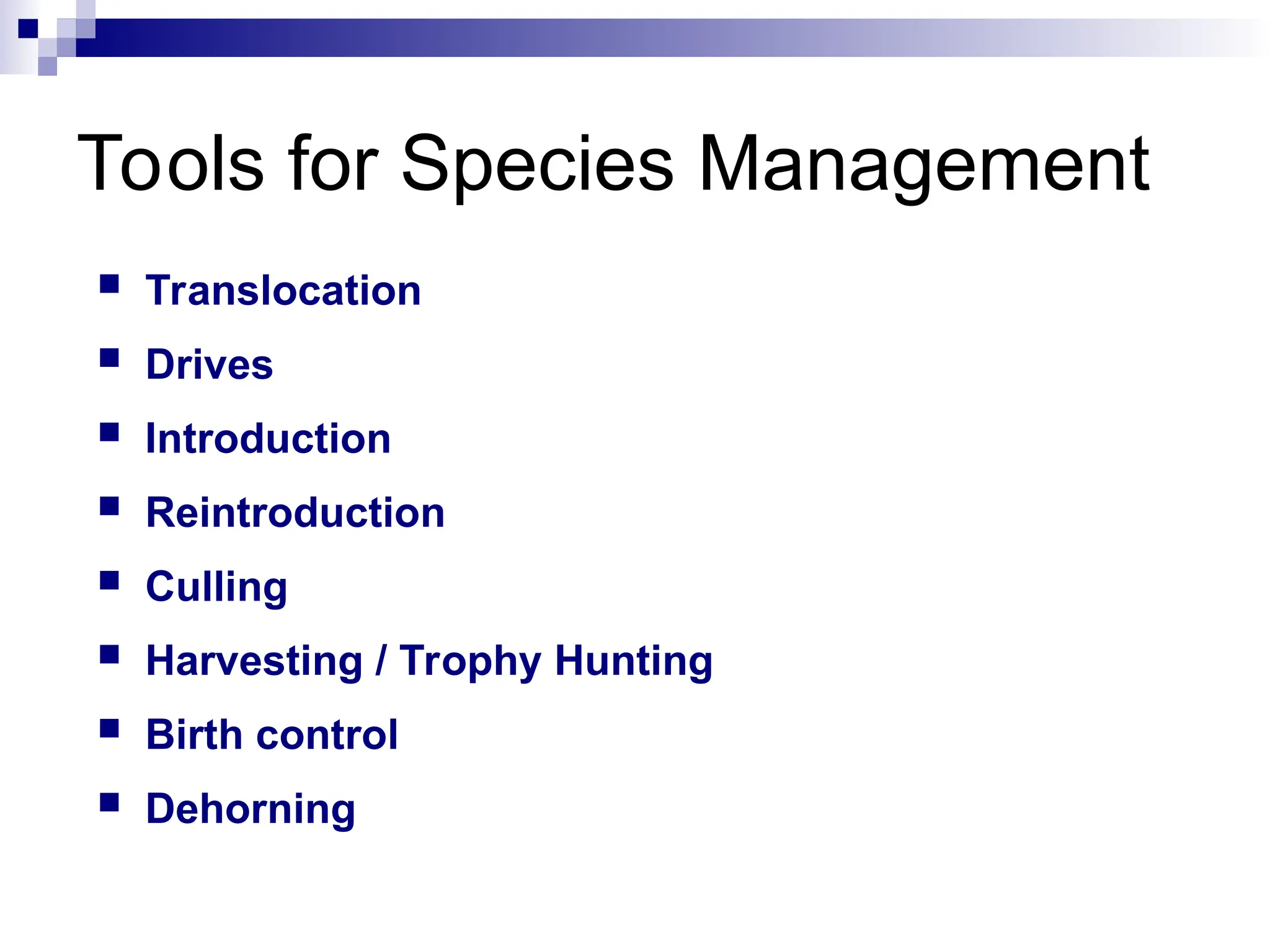
Population trends in the Mauritius Kestrel, Echo Parakeet and Pink
Pigeon, 1974-2004
0
100
200
300
400
500
600
700
800
year
Number
of
birds
Mauritius Kestrel
Pink Pigeon
Echo Parakeet
Success stories from
Mauritius
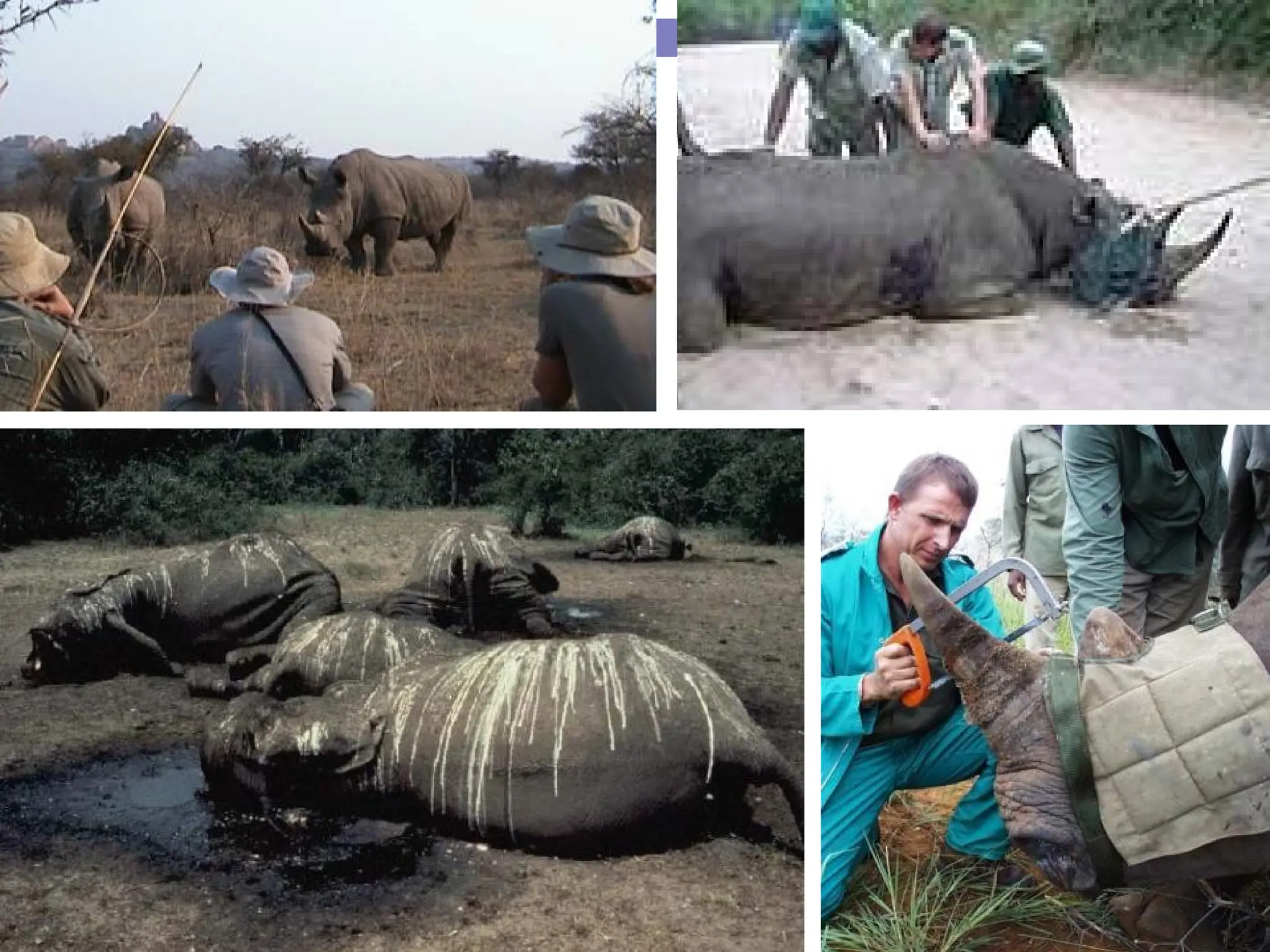
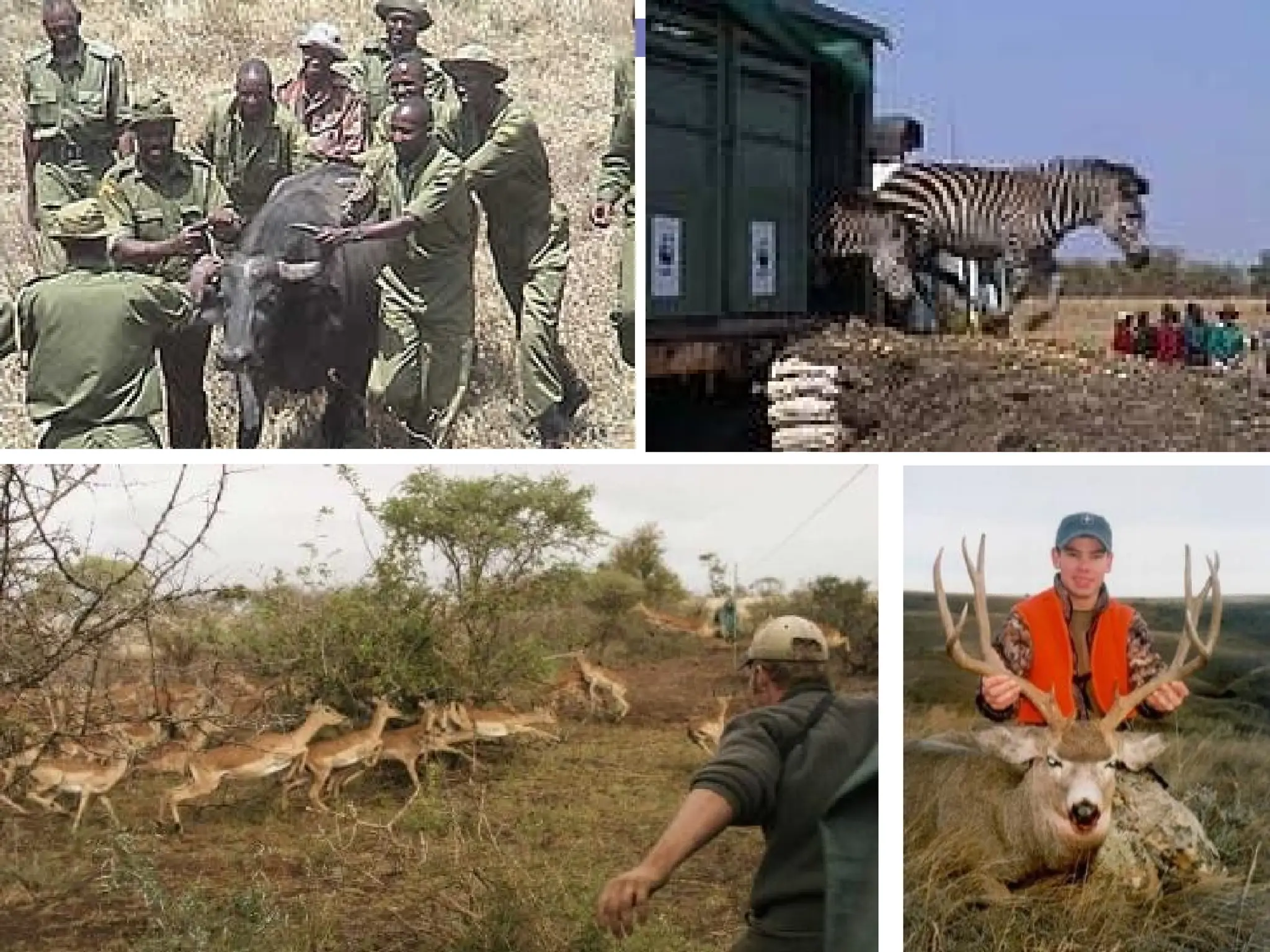
Tools for Species Management
 Translocation
 Drives
 Introduction
 Reintroduction
 Culling
 Harvesting / Trophy Hunting
 Birth control
 Dehorning
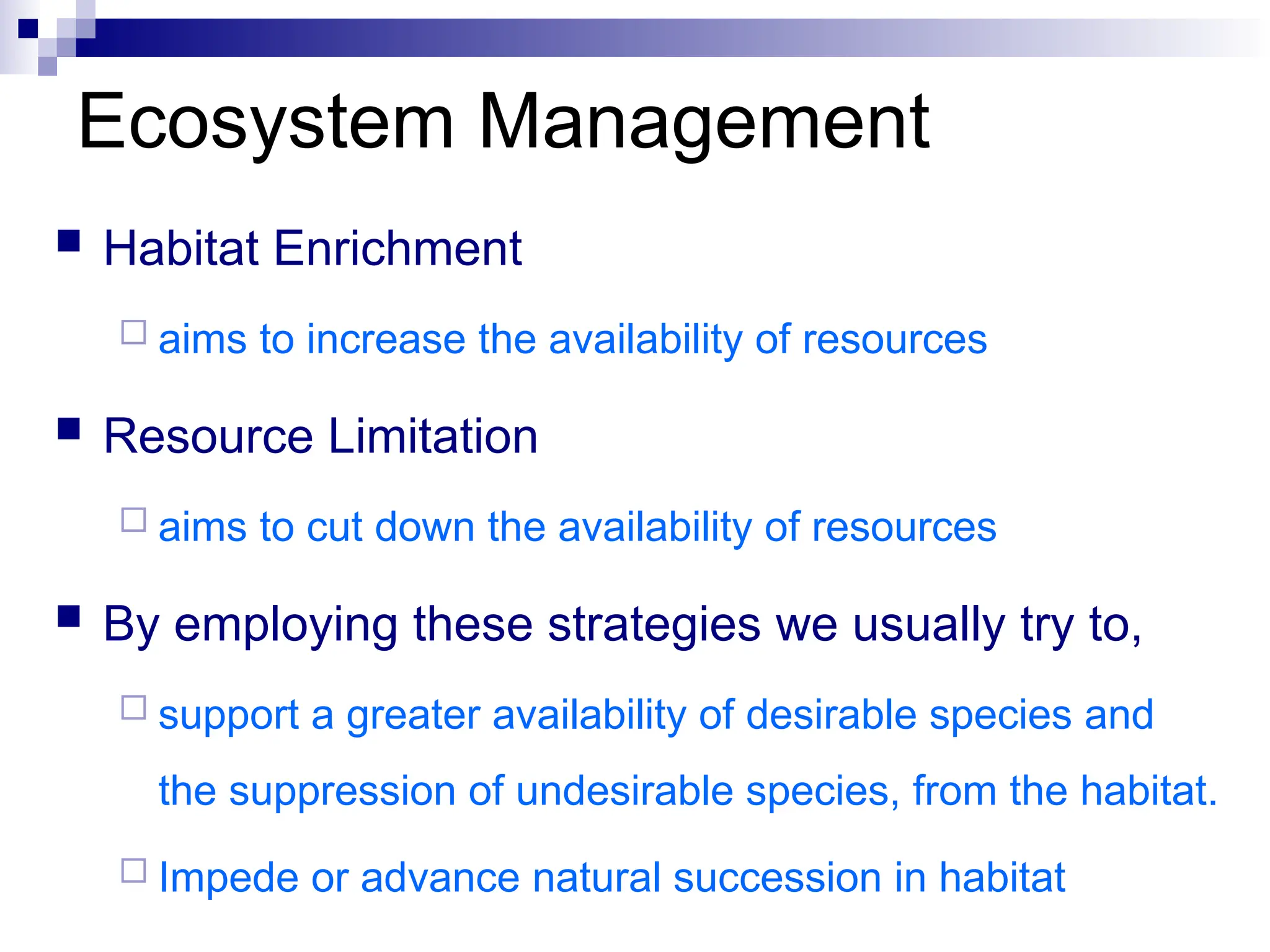
Ecosystem Management
 Habitat Enrichment
 aims to increase the availability of resources
 Resource Limitation
 aims to cut down the availability of resources
 By employing these strategies we usually try to,
 support a greater availability of desirable species and
the suppression of undesirable species, from the habitat.
 Impede or advance natural succession in habitat
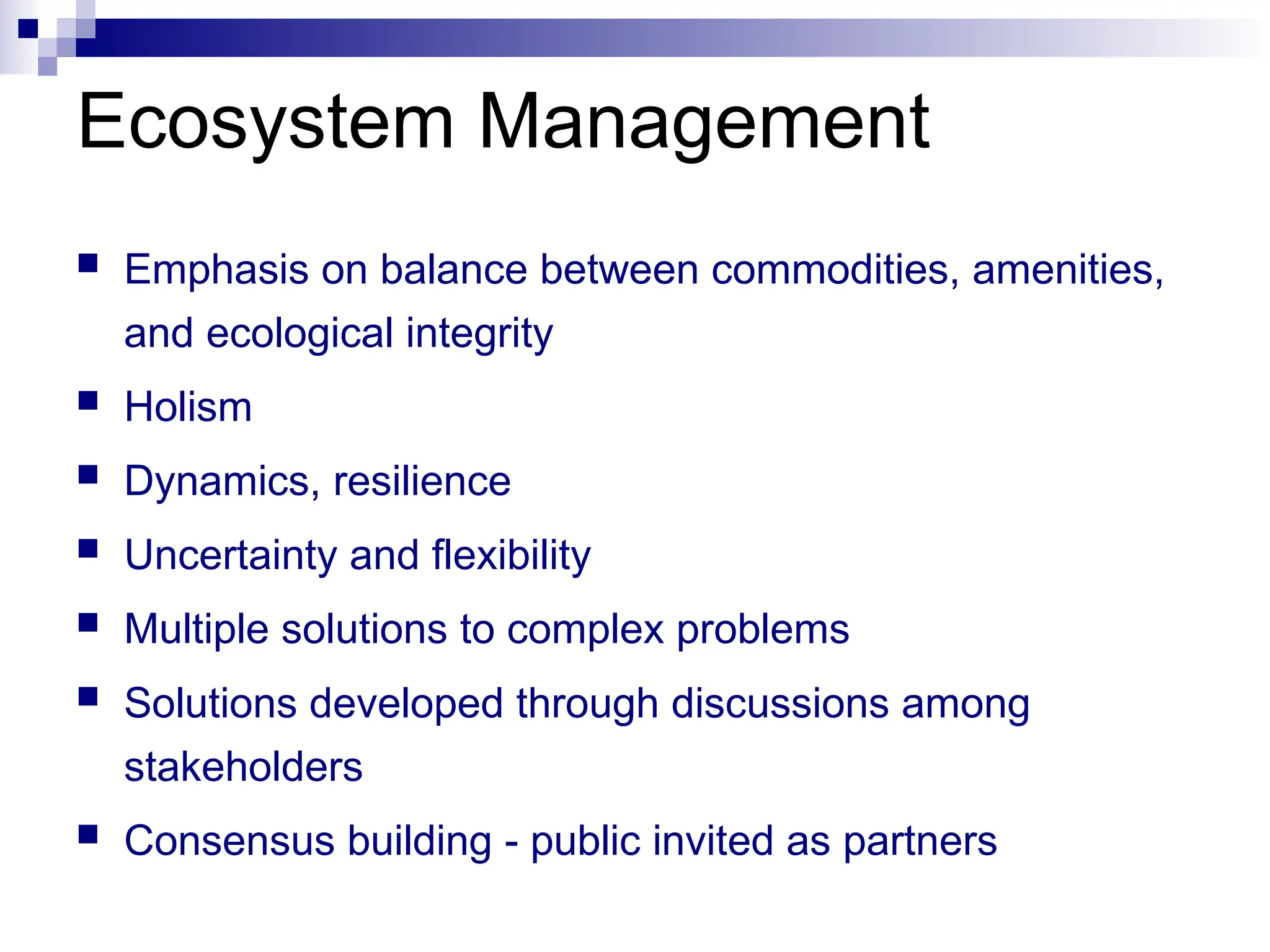
 Emphasis on balance between commodities, amenities,
and ecological integrity
 Holism
 Dynamics, resilience
 Uncertainty and flexibility
 Multiple solutions to complex problems
 Solutions developed through discussions among
stakeholders
 Consensus building - public invited as partners
Ecosystem Management
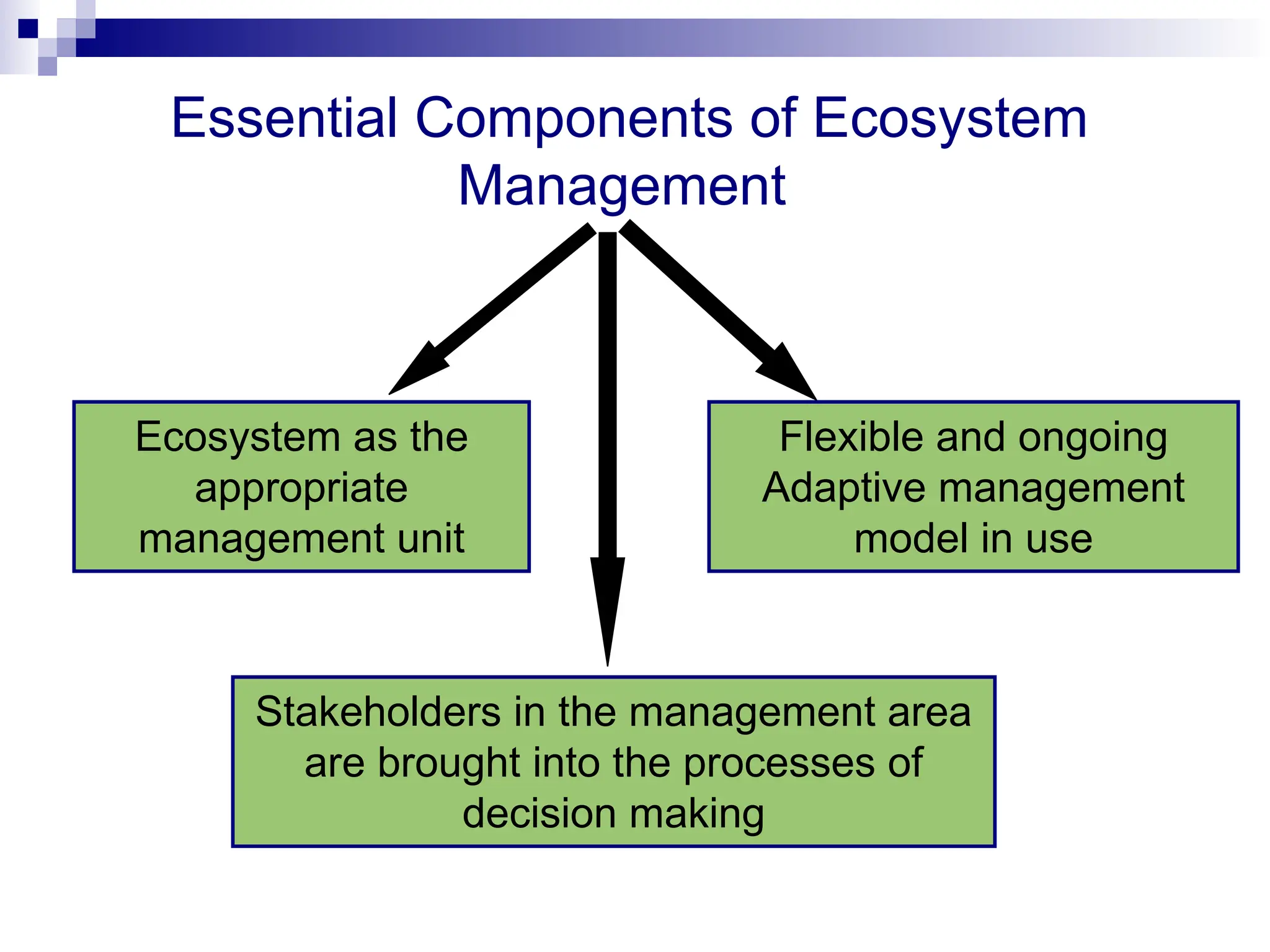
Essential Components of Ecosystem
Management
Ecosystem as the
appropriate
management unit
Flexible and ongoing
Adaptive management
model in use
Stakeholders in the management area
are brought into the processes of
decision making
Adaptive Management in Conservation
 Crisis situation
 Action desperately needed
 Information – unknown > known
 Proceed, despite considerable uncertainty of the
ecosystem
 With precaution & understanding of irreversibility of
environment
 Luxury of making mistakes
 The need to MONITOR the action taken
 Always a learning process (learn from “failures”)
Ecosystem management
by single-species management
 Single species is focused as a shortcut to achieve ecosystem
management in landscape level conservation
 Umbrella species
 Species that needs such large tracts of habitat that saving it will
automatically save many other species and ultimately the ecosystem.
 Flagship species
 A charismatic species – usually a large vertebrate used as the symbol
of conservation in a particular area.
 Keystone species
 Species whose activities govern the well-being of many other species
through affecting the proper functioning of whole ecosystem.
Prioritizing Conservation
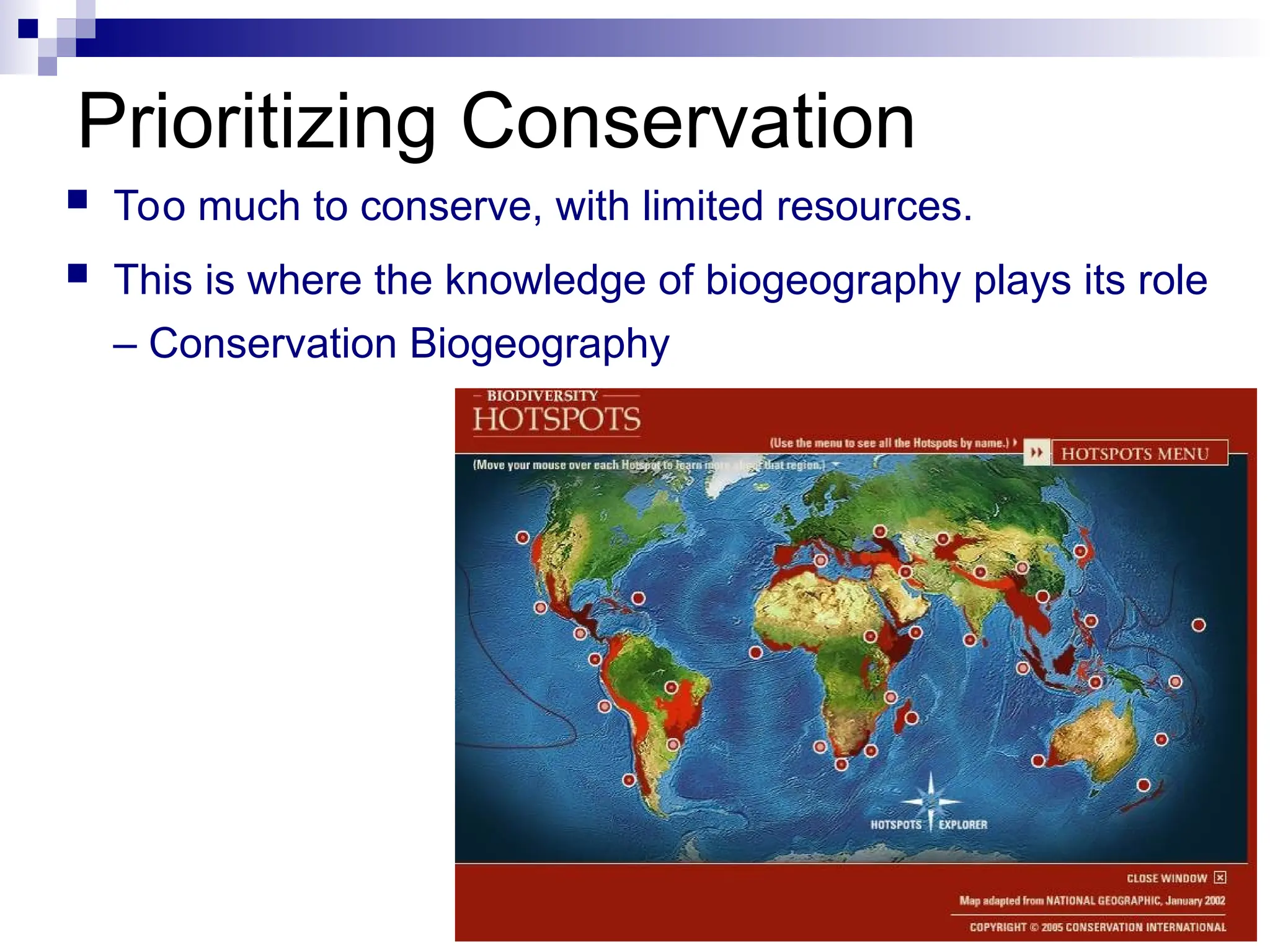
 Too much to conserve, with limited resources.
 This is where the knowledge of biogeography plays its role
– Conservation Biogeography

Power point presentation on convention on biological diversity

  • 1.
    CONSERVATION BIOLOGY IN A NUTSHELL SandunJ. Perera Doctoral Student School of Environmental Sciences, UKZN
  • 2.
    Bit of thehistory of conservation  Industrial & Green Revolution  Concerns on Environment – 1950s – 1970s  1948 International Union for Preservation of Nature  1956 name changed to IUCN  Public interests  E.g. Carson, R. 1962. Silent Spring. Houghton Mifflin, New York.  United Nations Conference on the Human Environment (Stockholm, Sweden). 1972.  Brutland Commission (WCED) report: OUR COMMON FUTURE. 1987.
  • 3.
    172 governments participated with108 at level of heads of State or Government. The big milestone United Nations Conference on Environment and Development
  • 4.
     Convention on BiologicalDiversity  an international treaty adopted at the Earth Summit 1992.  CBD provided a global framework for Conservation of BD. The big milestone
  • 5.
    The Sixth Extinction 2008 Caused by a single species – Homo sapiens  869 (2%) species known to be gone  Species for which extensive surveys show there is no reasonable doubt that the last individual has died (not record for more than 50 years)  16,928 (38%) threatened with extinction  3,246 Critically endangered (257 possibly extinct)  4,770 Endangered  8912 Vulnerable  8513 (8%) Near threatened  50% of extant species on earth are likely to extinct by 2100, if the current rates prevail
  • 6.
     Understanding thefact that;  we are loosing our BIODIVERSITY  and its immense value for us provides the basis that drive us to conserve it.  CONSERVATION – is always human centered  BE A SELFISH CONSERVATIONIST! Biodiversity Conservation
  • 7.
  • 8.
     The managementof human use of the biosphere, so that it may yield the greatest sustainable benefit to the present generation, while maintaining it’s potential to meet the needs and aspirations of the future generations (IUCN/UNEP/WWF, 1980. The World Conservation Strategy)  = THE SUSTAINABLE USE = THE SUSTAINABLE USE Therefore, Biodiversity Conservation is
  • 9.
    Conservation Biology  Applicationof science to the conservation of genes, populations, species, and ecosystems.  Scientific study of the phenomena that affect the maintenance, loss, and restoration of biological diversity.  Conservation biology draws from the biological, physical and social sciences, economics, and the practice of natural-resource management. Discipline grows wider from biological base to non-biological sectors
  • 11.
    PRACTICING CONSERVATION Sandun J. Perera. Schoolof Environmental Sciences, UKZN.
  • 12.
    Options for BiodiversityConservation  Two options available  In-situ  On-site  Within natural habitats  Ex-situ  Outside natural habitats
  • 13.
    In-situ Conservation  Primaryapproach for biodiversity conservation (Article 8 - CBD)  Protection of wildlife habitats.  Maintaining populations,  In the surrounding where they have developed their distinctive properties / adaptations.  Where they have evolved  Protected Areas (PAs) - Areas dedicated for in-situ conservation
  • 14.
     The leastcostly - most suitable option.  The only means of maintaining healthy populations  Best way to sustain rare but important genotypes.  Good resilience over physical failures or catastrophes in PAs  Opportunity to study the biodiversity, ecology and dynamics  Only way to meet species-specific necessities of ecological interactions  Can sustainably operated with a better income generation. Why in-situ conservation?
  • 15.
    Ex-situ Conservation  Preservation,maintenance and breeding of components of biological diversity outside their natural habitats  Complementary to in-situ methods (Article 8 - CBD).  Fully under human care  Sometimes controversial laboratory methods.  Practiced as the last resort.  Zoos, Aquaria, Hatcheries, Botanical gardens, Arboretums, Nurseries, Seed banks, Gene banks
  • 16.
     When theextinction of a species is eminent, ex-situ conservation becomes the only option left to humanity.  the last confirmed repot of Thylacine in wild was in 1930, the last captive animal died in 1936. Ex-situ Conservation
  • 17.
    Why ex-situ conservation? Ex-situ stocks serve as ‘saving accounts’ for PA managers  Play a valuable role in recovery programmes for endangered species.  Several species would be extinct - if not for captive breeding.  Important for agricultural crop enhancement.  Research opportunities on sub-species components of BD  Public education and awareness raising.
  • 18.
    Protected Areas (PAs) Geographically defined area – designated, regulated and managed to achieve specific conservation objectives.  PAs form the central element of any national strategy to conserve biodiversity.  Declaration of PAs is the best possible way to;  Conserve BD  Maintaining a healthy environment  Ensure the sustainability of BD,  without compromising development
  • 19.
     The firstPA management decision to take would be,  Whether we let nature to take its own course  Whether to actively manipulate the system.  Because, an inappropriate management decision might result in the opposite of anticipated outcome.  If active manipulation is selected – two approaches to go with,  Species management  Ecosystem management What do we do in PAs?
  • 20.
     No otheroption when;  Species is endangered – need recovery  Population is overabundant – need population control  Human-animal conflict situations – need pop control  Control of exotic species – pop control / eradication Species Management
  • 21.
    Endangered sp recovery: Habitatmanagement  Supplemental feeding  Predator eradication, control or exclusion  Disease control  Provision of breeding sites  Improve nest sites / boxes  Habitat protection and restoration
  • 22.
     Only forcritically endangered species  This is where in-situ joins ex-situ  Clutch manipulations  Harvesting, double clutching, clutch ext.  Brood Manipulations  Fostering  Rescue and head starting  Close guarding  Captive breeding and reintroductions  Translocations An extended clutch Endangered sp recovery: Intensive captive care
  • 23.
    Population trends inthe Mauritius Kestrel, Echo Parakeet and Pink Pigeon, 1974-2004 0 100 200 300 400 500 600 700 800 year Number of birds Mauritius Kestrel Pink Pigeon Echo Parakeet Success stories from Mauritius
  • 24.
    Tools for SpeciesManagement  Translocation  Drives  Introduction  Reintroduction  Culling  Harvesting / Trophy Hunting  Birth control  Dehorning
  • 27.
    Ecosystem Management  HabitatEnrichment  aims to increase the availability of resources  Resource Limitation  aims to cut down the availability of resources  By employing these strategies we usually try to,  support a greater availability of desirable species and the suppression of undesirable species, from the habitat.  Impede or advance natural succession in habitat
  • 28.
     Emphasis onbalance between commodities, amenities, and ecological integrity  Holism  Dynamics, resilience  Uncertainty and flexibility  Multiple solutions to complex problems  Solutions developed through discussions among stakeholders  Consensus building - public invited as partners Ecosystem Management
  • 29.
    Essential Components ofEcosystem Management Ecosystem as the appropriate management unit Flexible and ongoing Adaptive management model in use Stakeholders in the management area are brought into the processes of decision making
  • 30.
    Adaptive Management inConservation  Crisis situation  Action desperately needed  Information – unknown > known  Proceed, despite considerable uncertainty of the ecosystem  With precaution & understanding of irreversibility of environment  Luxury of making mistakes  The need to MONITOR the action taken  Always a learning process (learn from “failures”)
  • 31.
    Ecosystem management by single-speciesmanagement  Single species is focused as a shortcut to achieve ecosystem management in landscape level conservation  Umbrella species  Species that needs such large tracts of habitat that saving it will automatically save many other species and ultimately the ecosystem.  Flagship species  A charismatic species – usually a large vertebrate used as the symbol of conservation in a particular area.  Keystone species  Species whose activities govern the well-being of many other species through affecting the proper functioning of whole ecosystem.
  • 32.
    Prioritizing Conservation  Toomuch to conserve, with limited resources.  This is where the knowledge of biogeography plays its role – Conservation Biogeography