POWER NEGOTIATION
RIMMON A. PAREN
Master in Business Administration
Senior Student
POWER NEGOTIATING
 Sharpen your beat-the system skills.
 Tap the hidden powers within YOU!
 Understand body language
 Discover and develop your charisma
 Manipulate a confrontation
(Everything form the physical setting to the actual argument)
 Use fear & anger effectively without losing
your “cool”.
MOTIVATING OPPONENTS SO
THAT YOUR OBJECTIVE
BECOME
THEIRS!
“There are but two powers in the world,
the sword and the mind, in the long run
the sword is always beaten by the mind.”
Napoleon
When to Use Power
Negotiation
 Purchasing or remodeling a home
 Buying a Car or an appliance
 Asking the boss for a raise, etc.
To achieve your goals, you must have a working arsenal
of power negotiating techniques. And more important is
possessing a precise and accurate knowledge of the
conception of power.
Glossary of Terms
 Power = (lit.) the ability to accomplish
objectives, i.e. Physical strength, force,
high position
 Art of persuasion = Motivation
 Negotiator = asking or pushing favor/s
 Opponent = recipient of negotiation
techniques & strategies
 Negotiator’s negotiating objective = goal
 Leverage = Process of increasing power
to attain the desired result
Chapter 1
 POWER NEGOTIATING
DEFINED
Any systematic treatment of a subject should begin with a
definition so that everyone may understand what is the object
of the inquiry.
Cicero
Power – the ability to accomplish objectives, i.e.
Physical strength, force, high position
Negotiating – motivating, persuading
Power - the ability to accomplish
objectives, i.e. Physical strength,
force, high position
 Goals:
 Accomplish objectives
 Motivate opponent
Power Negotiating
 The ability of the negotiator to motivate
an opponent in a manner that is
favorable to the negotiator’s negotiating
objectives.
The “Crooked Picture” Power
negotiating technique
 Usually used for opponents that has
strong negotiating positions. Most
especially for PERFECTIONIST, it
makes them uneasy.
It is an act of breaking the
opponents concentration
 Example:
 Picture frame hanged crooked.
 Sloppily stacked papers, books
 Overflowing ashtrays
Objective:
 Impairment
 Distraction
 Unfunctional
Result:
Air of discontentment
Impaired presentation
Favorable condition to
the negotiator
Negotiator’s negotiating objectives are becoming
favorable because of decrease of opponents
effectiveness automatically means an increase in
negotiator’s effectiveness.
Be careful!
 Negotiation is a very delicate business, it
is mind pitted against mind.
A simulation:
 Confidence Level
Negotiator Opponent
Be Careful!
 Negotiation is a very delicate business, it
is mind pitted against mind.
!
Vs.
Chapter 2
 An Essential Primary Steps in
Using Negotiating Power
 ….Our opponent is our helper.
Edmund Burke
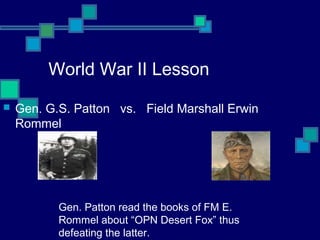
World War II Lesson
 Gen. G.S. Patton vs. Field Marshall Erwin
Rommel
Gen. Patton read the books of FM E.
Rommel about “OPN Desert Fox” thus
defeating the latter.
Observe this things!
 Opponents habit – we tell people all
about ourselves by our habits.
Physical Outlook:
• Nicotine stained finger
• Sloppily dressed
• Coffee drinkers and etc.
Personal Contacts
-time to be observant
 From the first time the opponent sits
down to negotiate, watch for the habits.
 Leg Crossing
 Leaning Body
 Jerking Movement
 Sudden raise of voice
Weak
manifestation of
advocacy
Background Investigation
- Former encounter with other negotiator
 HAZARDS!
 Inaccuracy of the information
 Mistaken conception, biased, or prone to
exaggerate
 Anticipated info gathering may leak “false”
information
 Can be used by opponent for further
encounters.
Scrutinize Opponent’s Written
Works
 Read published books, but better take an
account on oral statement where he/she
will not be unable to rehearse, edit or
prune.
Sample Case:
Labor Union vs. Administrator
Anticipation
 Negotiator may use tentative countering
strategy and provide facts & arguments
to increase the negotiators upper hand of
the situation.
Out-of-date writings
 Thinking shifts overtime – don’t rely on it
too much.
 Somehow, it might reflect still his
personality or line of thinking by his or
her previous writings.
The Necessity for Probing
 Watch the opponents action and derive a
conclusion by reasoning that those actions are
his/her habit, and equally important is to listen to
every word the opponent says.
 OBSERVATIONS:
 Financially Conservative – puffed the cigar up to the
filter or virtually burn one’s finger.
 Unnoticed the burning flesh made by cigar.
OBSERVE:
 Observe a preoccupied opponent, he is
vulnerable!
 Applying to what you see and hear
towards winning the negotiation.
Chapter 3
 Use of Leverage to Increase
Negotiating Power
Give me a lever long enough and a prop
strong enough, I can single handed move the
world.
Archimedes
ADVANTAGE
 Advance Knowledge
 Use of fear
Sample Case:
Parcel of Land for Sale
Benefits
 As the lever grows longer, the effort is
less in moving your objective toward the
goal.
 Increasing your negotiating leverage or
power gives you a more advantageous
position to move or persuade the
opponent.
Chapter 4
 Features:
 Take time to think –it is a source of power
Old Irish Prayer
Four Conception of Power
 Two, pertains directly to you, perception of own
negotiating power and your conception of the
extent of your opponent’s negotiating power.
 Two, pertains to the opponent, your opponent’s
conception of the extent of your negotiating
power and your opponent’s conception of the
extent of his negotiating power.
Emotional Intelligence (E.Q.)
EMOTIONAL UNEMOTIONAL
Accuracy in Judgment
Chapter 5
 Negotiator’s Conception of their Own
Negotiating Power Should Be:
 Evaluate the strength & weaknesses (YOU)
 Gather all facts
 Research on Laws – if a legal problem
 Decision making on favorable and
unfavorable conditions
Points to Ponder!
 Avoid over estimating or under estimating
your potential.
 Towards opponent – Rule of Thumb
 To over estimate the opponent’s negotiating
power rather than under estimating it.
-Avoid being caught off-guard.
Advantage
 Why the certainty on conception of the
opponent towards the negotiator’s power
 Show the force (Intimidation)
 Repetition – mother of all learning
ex. Advertisements, flaunting
Disadvantage
 Might be misconstrued as just a show of
force and not a real threat by an
experienced negotiator.
Benefits:
 Understanding Potential Power Means:
 Affects the final negotiation outcome
Sample Case: Employee asking for a raise.

Power Negotiation

  • 1.
    POWER NEGOTIATION RIMMON A.PAREN Master in Business Administration Senior Student
  • 2.
    POWER NEGOTIATING  Sharpenyour beat-the system skills.  Tap the hidden powers within YOU!  Understand body language  Discover and develop your charisma  Manipulate a confrontation (Everything form the physical setting to the actual argument)  Use fear & anger effectively without losing your “cool”.
  • 3.
    MOTIVATING OPPONENTS SO THATYOUR OBJECTIVE BECOME THEIRS! “There are but two powers in the world, the sword and the mind, in the long run the sword is always beaten by the mind.” Napoleon
  • 4.
    When to UsePower Negotiation  Purchasing or remodeling a home  Buying a Car or an appliance  Asking the boss for a raise, etc. To achieve your goals, you must have a working arsenal of power negotiating techniques. And more important is possessing a precise and accurate knowledge of the conception of power.
  • 5.
    Glossary of Terms Power = (lit.) the ability to accomplish objectives, i.e. Physical strength, force, high position  Art of persuasion = Motivation  Negotiator = asking or pushing favor/s  Opponent = recipient of negotiation techniques & strategies  Negotiator’s negotiating objective = goal  Leverage = Process of increasing power to attain the desired result
  • 6.
    Chapter 1  POWERNEGOTIATING DEFINED Any systematic treatment of a subject should begin with a definition so that everyone may understand what is the object of the inquiry. Cicero Power – the ability to accomplish objectives, i.e. Physical strength, force, high position Negotiating – motivating, persuading
  • 7.
    Power - theability to accomplish objectives, i.e. Physical strength, force, high position  Goals:  Accomplish objectives  Motivate opponent
  • 8.
    Power Negotiating  Theability of the negotiator to motivate an opponent in a manner that is favorable to the negotiator’s negotiating objectives.
  • 9.
    The “Crooked Picture”Power negotiating technique  Usually used for opponents that has strong negotiating positions. Most especially for PERFECTIONIST, it makes them uneasy.
  • 10.
    It is anact of breaking the opponents concentration  Example:  Picture frame hanged crooked.  Sloppily stacked papers, books  Overflowing ashtrays
  • 11.
    Objective:  Impairment  Distraction Unfunctional Result: Air of discontentment Impaired presentation Favorable condition to the negotiator Negotiator’s negotiating objectives are becoming favorable because of decrease of opponents effectiveness automatically means an increase in negotiator’s effectiveness.
  • 12.
    Be careful!  Negotiationis a very delicate business, it is mind pitted against mind.
  • 13.
    A simulation:  ConfidenceLevel Negotiator Opponent
  • 14.
    Be Careful!  Negotiationis a very delicate business, it is mind pitted against mind. ! Vs.
  • 15.
    Chapter 2  AnEssential Primary Steps in Using Negotiating Power  ….Our opponent is our helper. Edmund Burke
  • 16.
    World War IILesson  Gen. G.S. Patton vs. Field Marshall Erwin Rommel Gen. Patton read the books of FM E. Rommel about “OPN Desert Fox” thus defeating the latter.
  • 17.
    Observe this things! Opponents habit – we tell people all about ourselves by our habits. Physical Outlook: • Nicotine stained finger • Sloppily dressed • Coffee drinkers and etc.
  • 18.
    Personal Contacts -time tobe observant  From the first time the opponent sits down to negotiate, watch for the habits.  Leg Crossing  Leaning Body  Jerking Movement  Sudden raise of voice Weak manifestation of advocacy
  • 19.
    Background Investigation - Formerencounter with other negotiator  HAZARDS!  Inaccuracy of the information  Mistaken conception, biased, or prone to exaggerate  Anticipated info gathering may leak “false” information  Can be used by opponent for further encounters.
  • 20.
    Scrutinize Opponent’s Written Works Read published books, but better take an account on oral statement where he/she will not be unable to rehearse, edit or prune. Sample Case: Labor Union vs. Administrator
  • 21.
    Anticipation  Negotiator mayuse tentative countering strategy and provide facts & arguments to increase the negotiators upper hand of the situation.
  • 22.
    Out-of-date writings  Thinkingshifts overtime – don’t rely on it too much.  Somehow, it might reflect still his personality or line of thinking by his or her previous writings.
  • 23.
    The Necessity forProbing  Watch the opponents action and derive a conclusion by reasoning that those actions are his/her habit, and equally important is to listen to every word the opponent says.  OBSERVATIONS:  Financially Conservative – puffed the cigar up to the filter or virtually burn one’s finger.  Unnoticed the burning flesh made by cigar.
  • 24.
    OBSERVE:  Observe apreoccupied opponent, he is vulnerable!  Applying to what you see and hear towards winning the negotiation.
  • 25.
    Chapter 3  Useof Leverage to Increase Negotiating Power Give me a lever long enough and a prop strong enough, I can single handed move the world. Archimedes
  • 26.
    ADVANTAGE  Advance Knowledge Use of fear Sample Case: Parcel of Land for Sale
  • 27.
    Benefits  As thelever grows longer, the effort is less in moving your objective toward the goal.  Increasing your negotiating leverage or power gives you a more advantageous position to move or persuade the opponent.
  • 28.
    Chapter 4  Features: Take time to think –it is a source of power Old Irish Prayer
  • 29.
    Four Conception ofPower  Two, pertains directly to you, perception of own negotiating power and your conception of the extent of your opponent’s negotiating power.  Two, pertains to the opponent, your opponent’s conception of the extent of your negotiating power and your opponent’s conception of the extent of his negotiating power.
  • 30.
    Emotional Intelligence (E.Q.) EMOTIONALUNEMOTIONAL Accuracy in Judgment
  • 31.
    Chapter 5  Negotiator’sConception of their Own Negotiating Power Should Be:  Evaluate the strength & weaknesses (YOU)  Gather all facts  Research on Laws – if a legal problem  Decision making on favorable and unfavorable conditions
  • 32.
    Points to Ponder! Avoid over estimating or under estimating your potential.  Towards opponent – Rule of Thumb  To over estimate the opponent’s negotiating power rather than under estimating it. -Avoid being caught off-guard.
  • 33.
    Advantage  Why thecertainty on conception of the opponent towards the negotiator’s power  Show the force (Intimidation)  Repetition – mother of all learning ex. Advertisements, flaunting
  • 34.
    Disadvantage  Might bemisconstrued as just a show of force and not a real threat by an experienced negotiator.
  • 35.
    Benefits:  Understanding PotentialPower Means:  Affects the final negotiation outcome Sample Case: Employee asking for a raise.