Power
 Power refers to a capacity or ability of a person or a group to influence the beliefs and action of other
people.
 It is merely dependence.
 Power need not to be official in nature.
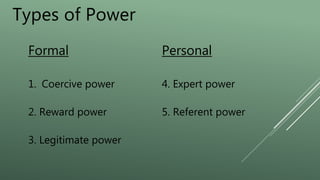
Formal Personal
1. Coercive power 4. Expert power
2. Reward power 5. Referent power
3. Legitimate power
Types of Power
Coercive power is associated with people who are in a position to punish others. People fear the consequences of
not doing what has been asked of them. There are some advantages to coercive power.
Advantages
 During potentially harmful condition, coercive power might be exactly what’s needed(Save the team).
 Useful if people consistently under perform.
Disadvantages
 If used at inappropriate times or too often, it could prompt a backlash from employees.
 it could create resentment or distrust.
Coercive power
Reward power is based upon a person’s ability to bestow rewards. Those rewards might come in the
form of job assignments, schedules, pay or benefits.
Reward power
Types
1. Tangible : monetary awards, salary increase, bonuses, plaques, certificate.
2. Intangible : Praise, positive feedback, recognition.
Advantages Disadvantages
 Encouragement.
 Motivation.
 Fraud Activities.
 Unhealthy Competition.
 Deviation from actual work.
Legitimate power comes from the position a person holds. This is related to a person’s title and job
responsibilities.
Legitimate power
Advantages
Disadvantages
 Roles and Responsibilities are clear.
 Power to take action within the responsibility.
 Chances of misuse of power.
 Inappropriate person.
Expert power comes from a person’s expertise or knowledge.
Expert power
 Based on skill and experience in one area.
 It is also based on perception of expertise.
 Expert power have a tendency to diminish over time.
Factors
Advantages Disadvantages
Guidance.
To meet the contingencies.
Wrong direction leads to face consequences
Referent Power
Referent power is created based on :
 Trust and respect
 Gained by behavior and effective use of team or delegation.
 Motivation to learn
 Effective completion of work.
Only works when there is low employee turnover.
Thank you

Power

  • 1.
    Power  Power refersto a capacity or ability of a person or a group to influence the beliefs and action of other people.  It is merely dependence.  Power need not to be official in nature.
  • 2.
    Formal Personal 1. Coercivepower 4. Expert power 2. Reward power 5. Referent power 3. Legitimate power Types of Power
  • 3.
    Coercive power isassociated with people who are in a position to punish others. People fear the consequences of not doing what has been asked of them. There are some advantages to coercive power. Advantages  During potentially harmful condition, coercive power might be exactly what’s needed(Save the team).  Useful if people consistently under perform. Disadvantages  If used at inappropriate times or too often, it could prompt a backlash from employees.  it could create resentment or distrust. Coercive power
  • 4.
    Reward power isbased upon a person’s ability to bestow rewards. Those rewards might come in the form of job assignments, schedules, pay or benefits. Reward power Types 1. Tangible : monetary awards, salary increase, bonuses, plaques, certificate. 2. Intangible : Praise, positive feedback, recognition. Advantages Disadvantages  Encouragement.  Motivation.  Fraud Activities.  Unhealthy Competition.  Deviation from actual work.
  • 5.
    Legitimate power comesfrom the position a person holds. This is related to a person’s title and job responsibilities. Legitimate power Advantages Disadvantages  Roles and Responsibilities are clear.  Power to take action within the responsibility.  Chances of misuse of power.  Inappropriate person.
  • 6.
    Expert power comesfrom a person’s expertise or knowledge. Expert power  Based on skill and experience in one area.  It is also based on perception of expertise.  Expert power have a tendency to diminish over time. Factors Advantages Disadvantages Guidance. To meet the contingencies. Wrong direction leads to face consequences
  • 7.
    Referent Power Referent poweris created based on :  Trust and respect  Gained by behavior and effective use of team or delegation.  Motivation to learn  Effective completion of work. Only works when there is low employee turnover.
  • 8.