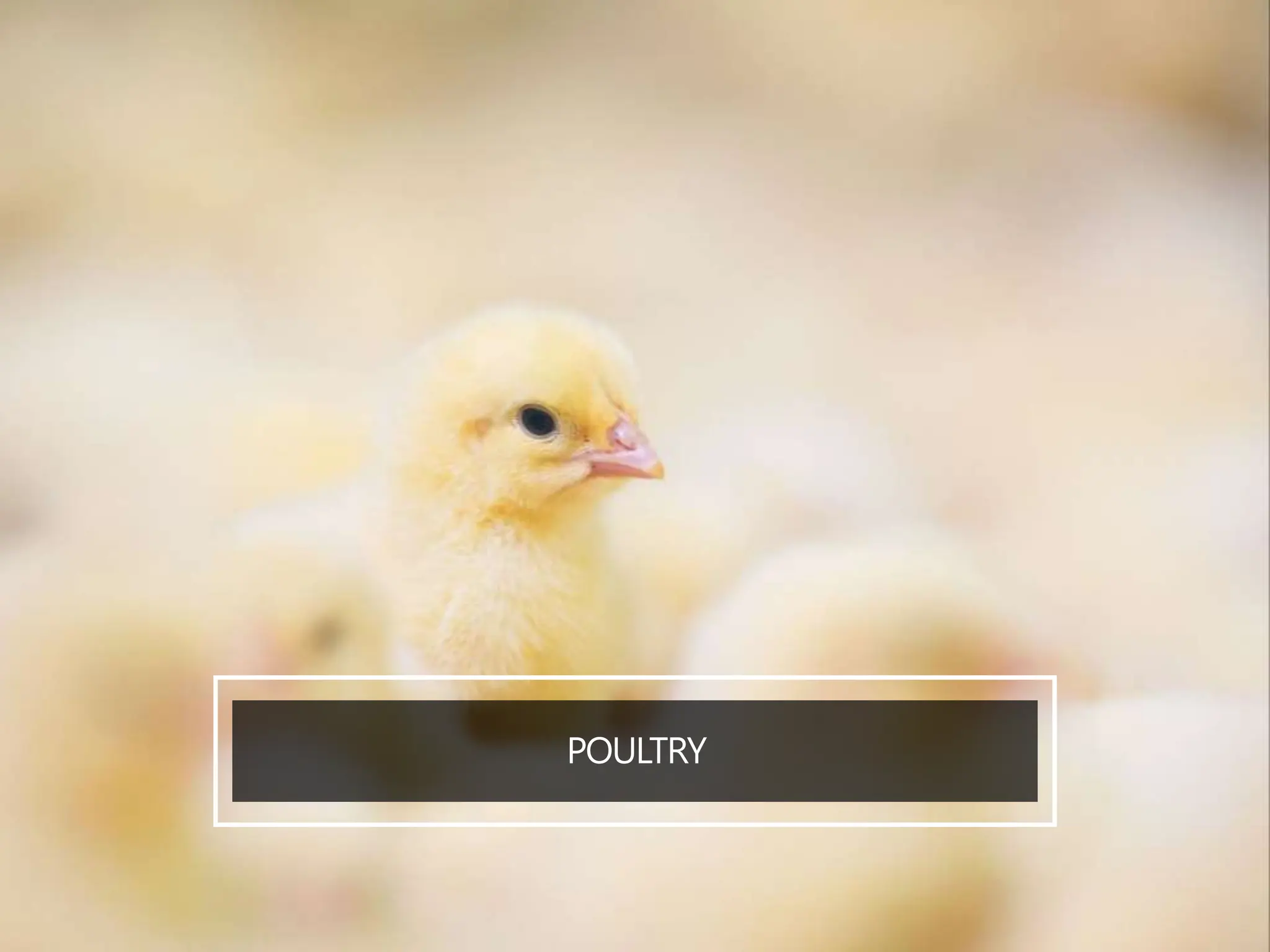
POULTRY
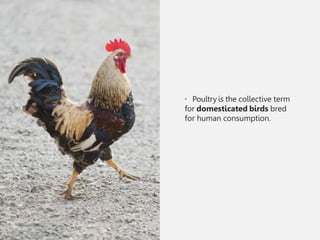
• Poultry is the collective term
for domesticated birds bred
for human consumption.
MUSCLE COMPOSITION
Fat is stored under the skin and in the
abdominal cavity
Poultry fat has a
lower melting point
than other animal
fats
Contains no
intramuscular fat
(Marbling)
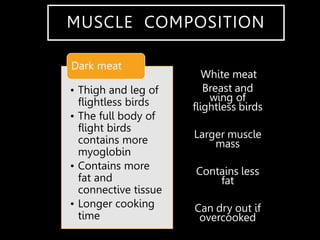
MUSCLE COMPOSITION
White meat
Breast and
wing of
flightless birds
Larger muscle
mass
Contains less
fat
Can dry out if
overcooked
• Thigh and leg of
flightless birds
• The full body of
flight birds
contains more
myoglobin
• Contains more
fat and
connective tissue
• Longer cooking
time
Dark meat
IDENTIFYING
POULTRY
• Categories of poultry
recognized by the
USDA
• Chicken
• Duck
• Goose
• Guinea
• Pigeon
• Turkey
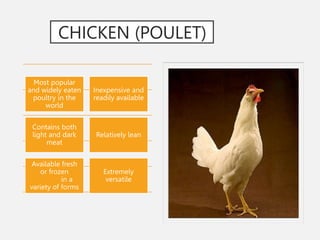
CHICKEN (POULET)
Most popular
and widely eaten
poultry in the
world
Inexpensive and
readily available
Contains both
light and dark
meat
Relatively lean
Available fresh
or frozen
in a
variety of forms
Extremely
versatile
CHICKEN
CLASSES • Game Hen
• 5-6 weeks old
• Broiler/fryer
• 13 weeks old
• Roaster
• 3-5 months old
• Capon
• Under 8
months old
• Hen/stewing
• Over 10
months old
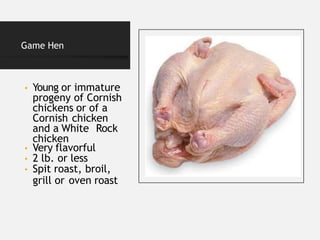
Game Hen
• Young or immature
progeny of Cornish
chickens or of a
Cornish chicken
and a White Rock
chicken
• Very flavorful
• 2 lb. or less
• Spit roast, broil,
grill or oven roast
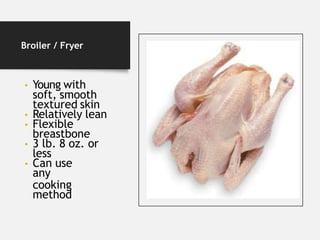
Broiler / Fryer
• Young with
soft, smooth
textured skin
• Relatively lean
• Flexible
breastbone
• 3 lb. 8 oz. or
less
• Can use
any
cooking
method
CAPON
Surgically castrated male
Tender meat with soft smooth skin Bred for
well-flavored meat
Contains a high portion of light to dark
meat
Relatively high in fat
6-10 lb.
Roast
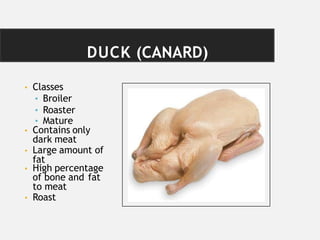
DUCK (CANARD)
• Classes
• Broiler
• Roaster
• Mature
• Contains only
dark meat
• Large amount of
fat
• High percentage
of bone and fat
to meat
• Roast
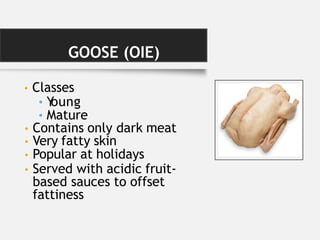
GOOSE (OIE)
• Classes
• Y
oung
• Mature
• Contains only dark meat
• Very fatty skin
• Popular at holidays
• Served with acidic fruit-
based sauces to offset
fattiness
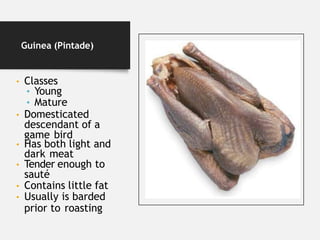
Guinea (Pintade)
• Classes
• Young
• Mature
• Domesticated
descendant of a
game bird
• Has both light and
dark meat
• Tender enough to
sauté
• Contains little fat
• Usually is barded
prior to roasting
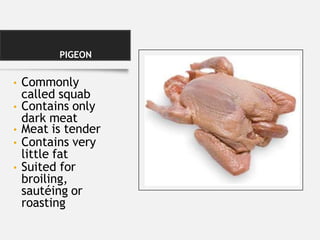
PIGEON
• Commonly
called squab
• Contains only
dark meat
• Meat is tender
• Contains very
little fat
• Suited for
broiling,
sautéing or
roasting
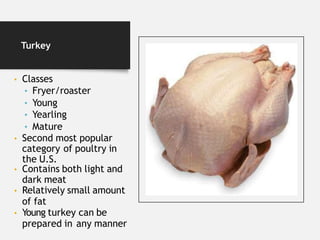
Turkey
• Classes
• Fryer/roaster
• Young
• Yearling
• Mature
• Second most popular
category of poultry in
the U.S.
• Contains both light and
dark meat
• Relatively small amount
of fat
• Young turkey can be
prepared in any manner
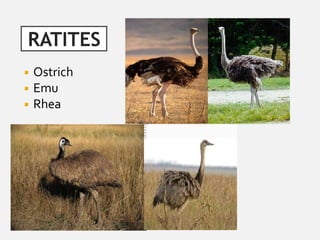
◾ Ostrich
◾ Emu
◾ Rhea
RATITES
Nutrition
for Poultry
ECONOMICAL SOURCE OF
HIGH-QUALITY PROTEIN
LIKE OTHER MEATS
Chicken and turkey
breast are lower in fat
and higher in niacin than
other lean meats
Generally dark meat
contains more niacin and
riboflavin than white
meat
INSPECTION
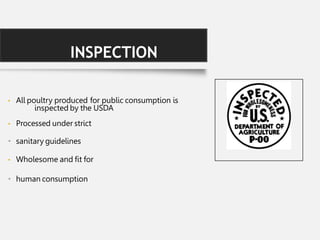
• All poultry produced for public consumption is
inspected by the USDA
• Processed under strict
• sanitary guidelines
• Wholesome and fit for
• human consumption
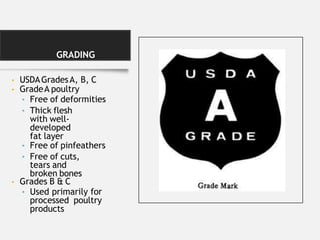
GRADING
• USDAGradesA, B, C
• GradeA poultry
• Free of deformities
• Thick flesh
with well-
developed
fat layer
• Free of pinfeathers
• Free of cuts,
tears and
broken bones
• Grades B & C
• Used primarily for
processed poultry
products
Storing
Poultry
Poultry is a potentially hazardous
It is highly perishable
Particularly susceptible to
contamination by salmonella
bacteria
Store on ice or at 32°F–34°F
Thaw under refrigeration
Precautions
BE SURE THAT ALL
EQUIPMENT USED IN THE
PREPARATION OF POULTRY
IS SANITIZED BEFORE AND
AFTER COMING IN CONTACT
WITH POULTRY
Be careful that juices and
trimmings from poultry do
not come into contact with
other foods
Rinse poultry in cold
running water and dry
before cooking to remove
collected juices

Introduction to Poultry and its categories

  • 1.
  • 2.
    • Poultry isthe collective term for domesticated birds bred for human consumption.
  • 3.
    MUSCLE COMPOSITION Fat isstored under the skin and in the abdominal cavity Poultry fat has a lower melting point than other animal fats Contains no intramuscular fat (Marbling)
  • 4.
    MUSCLE COMPOSITION White meat Breastand wing of flightless birds Larger muscle mass Contains less fat Can dry out if overcooked • Thigh and leg of flightless birds • The full body of flight birds contains more myoglobin • Contains more fat and connective tissue • Longer cooking time Dark meat
  • 5.
    IDENTIFYING POULTRY • Categories ofpoultry recognized by the USDA • Chicken • Duck • Goose • Guinea • Pigeon • Turkey
  • 6.
    CHICKEN (POULET) Most popular andwidely eaten poultry in the world Inexpensive and readily available Contains both light and dark meat Relatively lean Available fresh or frozen in a variety of forms Extremely versatile
  • 7.
    CHICKEN CLASSES • GameHen • 5-6 weeks old • Broiler/fryer • 13 weeks old • Roaster • 3-5 months old • Capon • Under 8 months old • Hen/stewing • Over 10 months old
  • 8.
    Game Hen • Youngor immature progeny of Cornish chickens or of a Cornish chicken and a White Rock chicken • Very flavorful • 2 lb. or less • Spit roast, broil, grill or oven roast
  • 9.
    Broiler / Fryer •Young with soft, smooth textured skin • Relatively lean • Flexible breastbone • 3 lb. 8 oz. or less • Can use any cooking method
  • 10.
    CAPON Surgically castrated male Tendermeat with soft smooth skin Bred for well-flavored meat Contains a high portion of light to dark meat Relatively high in fat 6-10 lb. Roast
  • 11.
    DUCK (CANARD) • Classes •Broiler • Roaster • Mature • Contains only dark meat • Large amount of fat • High percentage of bone and fat to meat • Roast
  • 12.
    GOOSE (OIE) • Classes •Y oung • Mature • Contains only dark meat • Very fatty skin • Popular at holidays • Served with acidic fruit- based sauces to offset fattiness
  • 13.
    Guinea (Pintade) • Classes •Young • Mature • Domesticated descendant of a game bird • Has both light and dark meat • Tender enough to sauté • Contains little fat • Usually is barded prior to roasting
  • 14.
    PIGEON • Commonly called squab •Contains only dark meat • Meat is tender • Contains very little fat • Suited for broiling, sautéing or roasting
  • 15.
    Turkey • Classes • Fryer/roaster •Young • Yearling • Mature • Second most popular category of poultry in the U.S. • Contains both light and dark meat • Relatively small amount of fat • Young turkey can be prepared in any manner
  • 16.
  • 17.
    Nutrition for Poultry ECONOMICAL SOURCEOF HIGH-QUALITY PROTEIN LIKE OTHER MEATS Chicken and turkey breast are lower in fat and higher in niacin than other lean meats Generally dark meat contains more niacin and riboflavin than white meat
  • 18.
    INSPECTION • All poultryproduced for public consumption is inspected by the USDA • Processed under strict • sanitary guidelines • Wholesome and fit for • human consumption
  • 19.
    GRADING • USDAGradesA, B,C • GradeA poultry • Free of deformities • Thick flesh with well- developed fat layer • Free of pinfeathers • Free of cuts, tears and broken bones • Grades B & C • Used primarily for processed poultry products
  • 20.
    Storing Poultry Poultry is apotentially hazardous It is highly perishable Particularly susceptible to contamination by salmonella bacteria Store on ice or at 32°F–34°F Thaw under refrigeration
  • 21.
    Precautions BE SURE THATALL EQUIPMENT USED IN THE PREPARATION OF POULTRY IS SANITIZED BEFORE AND AFTER COMING IN CONTACT WITH POULTRY Be careful that juices and trimmings from poultry do not come into contact with other foods Rinse poultry in cold running water and dry before cooking to remove collected juices