TREATMENT OF POST-STROKE APHASIA -
AVANT PROGRAM
Dang Phuc Duc, MD. Ph.D - Military Hospital 103, Vietnam
26th INTERNATIONAL MONDSEE MEDICAL MEETING
Salzburg, Austria / September 12 - 13, 2019
• PSD has been reported in 50.9%
of IS patients. [Arnold, M., et al. 2016.
PloS one]
• PSD is associated with
malnutrition, aspiration, and
pneumonia [Arnold, M., et al. 2016.
PloS one]
Post-stroke dysphagia
• An independent variable predicting death and
disability at 90 days [Smith, E. E., et al. 2018. Stroke]
Comparison of outcome in dysphagic
and non-dysphagic patients
[Arnold, M., et al. 2016. PloS one]
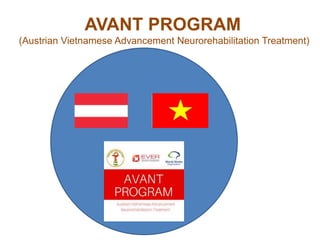
AVANT PROGRAM
(Austrian Vietnamese Advancement Neurorehabilitation Treatment)
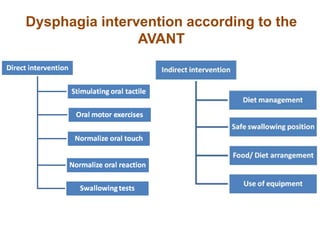
Dysphagia intervention according to the
AVANT
PATIENT INFORMATION
• Nguyen Van T, male , 63 years old
• medical history:
 Dyslipidemia
 Hypertension
 Ischemic stroke in 9/2018 (completely recovered).
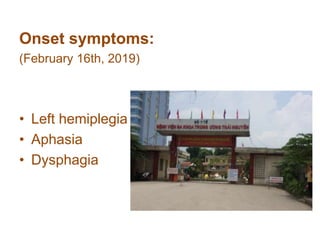
Onset symptoms:
(February 16th, 2019)
• Left hemiplegia
• Aphasia
• Dysphagia
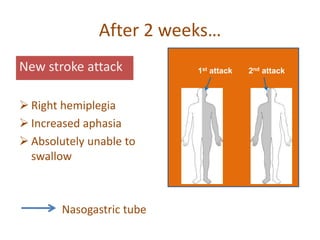
After 2 weeks…
New stroke attack
 Right hemiplegia
 Increased aphasia
 Absolutely unable to
swallow
Nasogastric tube
1st attack 2nd attack
The patient was transferred to the Stroke
department – Military 103 hospital
• GCS 15
• Dysphagia: GUSS 0/20
• Aphasia: patient's speech is so slurred.
• Quadriplegia: MRC left 2/5; right 3/5
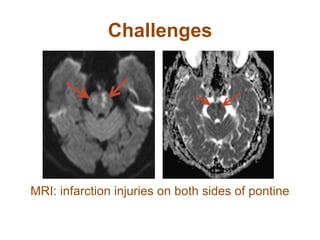
Challenges
MRI: infarction injuries on both sides of pontine
Dysphagia in patients with pontine infarction
• Pontine infarction constitutes approximately 7% of
all ischemic infarctions.
• Dysphagia in patients with bilateral pontine
infarction 2.2 times higher than unilateral pontine
infarction.
[Chang, M. C., et al. (2018). Neural regeneration research]
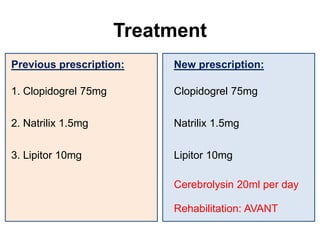
Treatment
Previous prescription:
1. Clopidogrel 75mg
2. Natrilix 1.5mg
3. Lipitor 10mg
New prescription:
Clopidogrel 75mg
Natrilix 1.5mg
Lipitor 10mg
Cerebrolysin 20ml per day
Rehabilitation: AVANT
Avant
• A rehabilitation team
• Evaluation of the patient’s dysphagia
• Instructions for patient
Explanation on the mechanism
Causes of dysphagia
Positions for eating and drinking
Suitable food and drink
Exercises for muscles involved swallowing
(lips, tongue, cheeks, etc.)
• Design an exercise program
Day 7
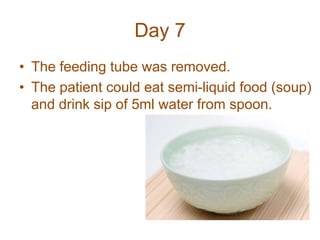
• The feeding tube was removed.
• The patient could eat semi-liquid food (soup)
and drink sip of 5ml water from spoon.
Day 21
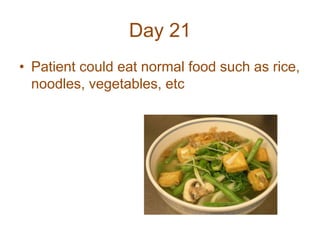
• Patient could eat normal food such as rice,
noodles, vegetables, etc
Day 25
• The patient is discharged and given
instructions on the administration of drugs
and exercises at home.
Thank you

Post stroke aphasia - avant program - mondsee 2019

  • 1.
    TREATMENT OF POST-STROKEAPHASIA - AVANT PROGRAM Dang Phuc Duc, MD. Ph.D - Military Hospital 103, Vietnam 26th INTERNATIONAL MONDSEE MEDICAL MEETING Salzburg, Austria / September 12 - 13, 2019
  • 2.
    • PSD hasbeen reported in 50.9% of IS patients. [Arnold, M., et al. 2016. PloS one] • PSD is associated with malnutrition, aspiration, and pneumonia [Arnold, M., et al. 2016. PloS one] Post-stroke dysphagia • An independent variable predicting death and disability at 90 days [Smith, E. E., et al. 2018. Stroke]
  • 3.
    Comparison of outcomein dysphagic and non-dysphagic patients [Arnold, M., et al. 2016. PloS one]
  • 4.
    AVANT PROGRAM (Austrian VietnameseAdvancement Neurorehabilitation Treatment)
  • 5.
  • 6.
    PATIENT INFORMATION • NguyenVan T, male , 63 years old • medical history:  Dyslipidemia  Hypertension  Ischemic stroke in 9/2018 (completely recovered).
  • 7.
    Onset symptoms: (February 16th,2019) • Left hemiplegia • Aphasia • Dysphagia
  • 8.
    After 2 weeks… Newstroke attack  Right hemiplegia  Increased aphasia  Absolutely unable to swallow Nasogastric tube 1st attack 2nd attack
  • 10.
    The patient wastransferred to the Stroke department – Military 103 hospital • GCS 15 • Dysphagia: GUSS 0/20 • Aphasia: patient's speech is so slurred. • Quadriplegia: MRC left 2/5; right 3/5
  • 11.
    Challenges MRI: infarction injurieson both sides of pontine
  • 12.
    Dysphagia in patientswith pontine infarction • Pontine infarction constitutes approximately 7% of all ischemic infarctions. • Dysphagia in patients with bilateral pontine infarction 2.2 times higher than unilateral pontine infarction. [Chang, M. C., et al. (2018). Neural regeneration research]
  • 13.
    Treatment Previous prescription: 1. Clopidogrel75mg 2. Natrilix 1.5mg 3. Lipitor 10mg New prescription: Clopidogrel 75mg Natrilix 1.5mg Lipitor 10mg Cerebrolysin 20ml per day Rehabilitation: AVANT
  • 14.
    Avant • A rehabilitationteam • Evaluation of the patient’s dysphagia • Instructions for patient Explanation on the mechanism Causes of dysphagia Positions for eating and drinking Suitable food and drink Exercises for muscles involved swallowing (lips, tongue, cheeks, etc.) • Design an exercise program
  • 15.
    Day 7 • Thefeeding tube was removed. • The patient could eat semi-liquid food (soup) and drink sip of 5ml water from spoon.
  • 16.
    Day 21 • Patientcould eat normal food such as rice, noodles, vegetables, etc
  • 17.
    Day 25 • Thepatient is discharged and given instructions on the administration of drugs and exercises at home.
  • 19.

Editor's Notes

  • #4 Patients with dysphagia had a higher probability of pneumonia, mortality rate; and a lower chance to get favorable outcome as compared to non-dysphagic patients
  • #5 - AVANT is an assistance program of Austria for Vietnam to improve the quality of rehabilitation for stroke patients. - Many Vietnamese doctors and nurses have participated in AVANT training program. - So far, the results obtained show that this is a very effective program.
  • #6 * The swallowing rehabilitation program for patients is divided into 2 parts: direct and indirect intervention. - Direct intervention includes measures such as: - Indirect intervention includes measures such as:
  • #8 The patient was hospitalized and treated at Thai Nguyen Hospital, a hospital in the northern mountainous region of Vietnam
  • #9 On the 14th day after onset. Patients suddenly appear hemiplegia right side more. He was unable to pronounce. The patient cannot swallow.
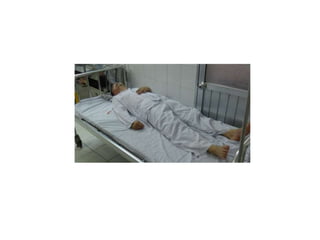
  • #10 - patients need enteral feeding through a nasogastric tube
  • #11 - Thai Nguyen Hospital prognosis that the patient was severe and complex. So they transfered him to Military 103 hospital. - The disease status at admission is as follows:
  • #12 Brain MRI shows bilateral pontine infarction - With such injury characteristics, patients are at risk of severe disability, especially swallowing function.
  • #14 - After evaluation, we decided to keep the previous prescription and add cerebrolysin. - In addition, we apply the rehabilitation method under the AVANT program.
  • #15 Before conducting rehabilitation exercises, we consulted the patient about swallowing disorders, including: mechanisms, causes, eating postures, appropriate foods, exercises. swallow... After that, we set up the exercise program and informed the patient.
  • #16  On day 7, patients had hiccups due to nasogastric tube irritated the stomach. We removed tube. …
  • #17  On day 21, …
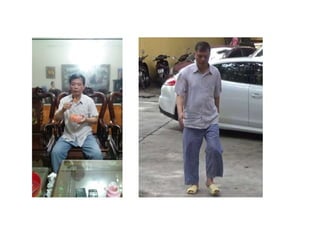
  • #19 And, this is the patient's current images. He was able to perform most of his daily activities, eat and drink.