Post exposure prophylaxis
with ARV for the HIV exposed
infant and HIV testing in
infants
Prepared by:
Kalpana kawan
BNS 2nd year
Roll no. 06
General objective
• At the end of this session, Bsc Nursing 3rd year students will be able
to explain about "Breastfeeding among HIV positive mother or HIV
unknown mother ”
Specific objectives
• introduce HIV testing in infants
• introduce Early infant diagnosis (EID)
• list the guiding principles of the National EID programme
• explain diagnostic algorithms for EID
• listed the presumptive clinical diagnosis of HIV infection
• define post exposure prophylaxis of HIV
• Explain post exposure prophylaxis with ARV for the HIV exposed
infant.
HIV testing in Infants
• HIV testing : It is the process of determining if client is infected with
HIV.
• Most of HIV testing detect for antibodies to HIV so, a baby born to an
HIV-positive mother will always test positive for HIV, whether that
newborn is truly seropositive or not.
Early infant diagnosis:
• Diagnosis of HIV infection in babies born to HIV-infected mothers
cannot be confirmed by conventional antibody tests.
• The presence of anti-HIV antibodies in the newborn may not
necessarily indicate primary infection. It may be due to the presence
of passively transmitted anti-HIV antibodies from the mother to
uninfected babies.
• These maternal antibodies may persist in the infant for as long as 18
months.
Contd.........
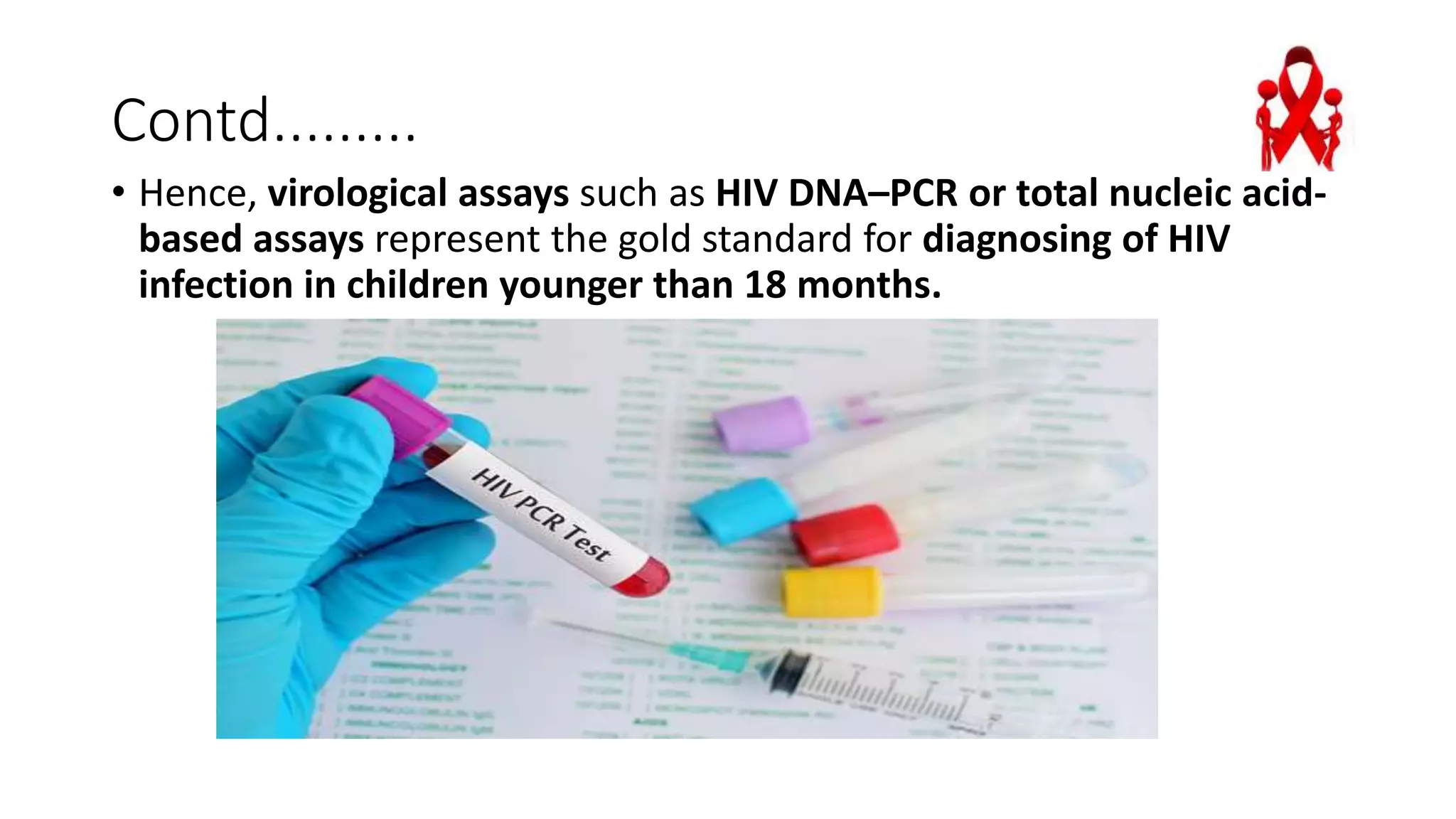
• Hence, virological assays such as HIV DNA–PCR or total nucleic acid-
based assays represent the gold standard for diagnosing of HIV
infection in children younger than 18 months.
Contd......
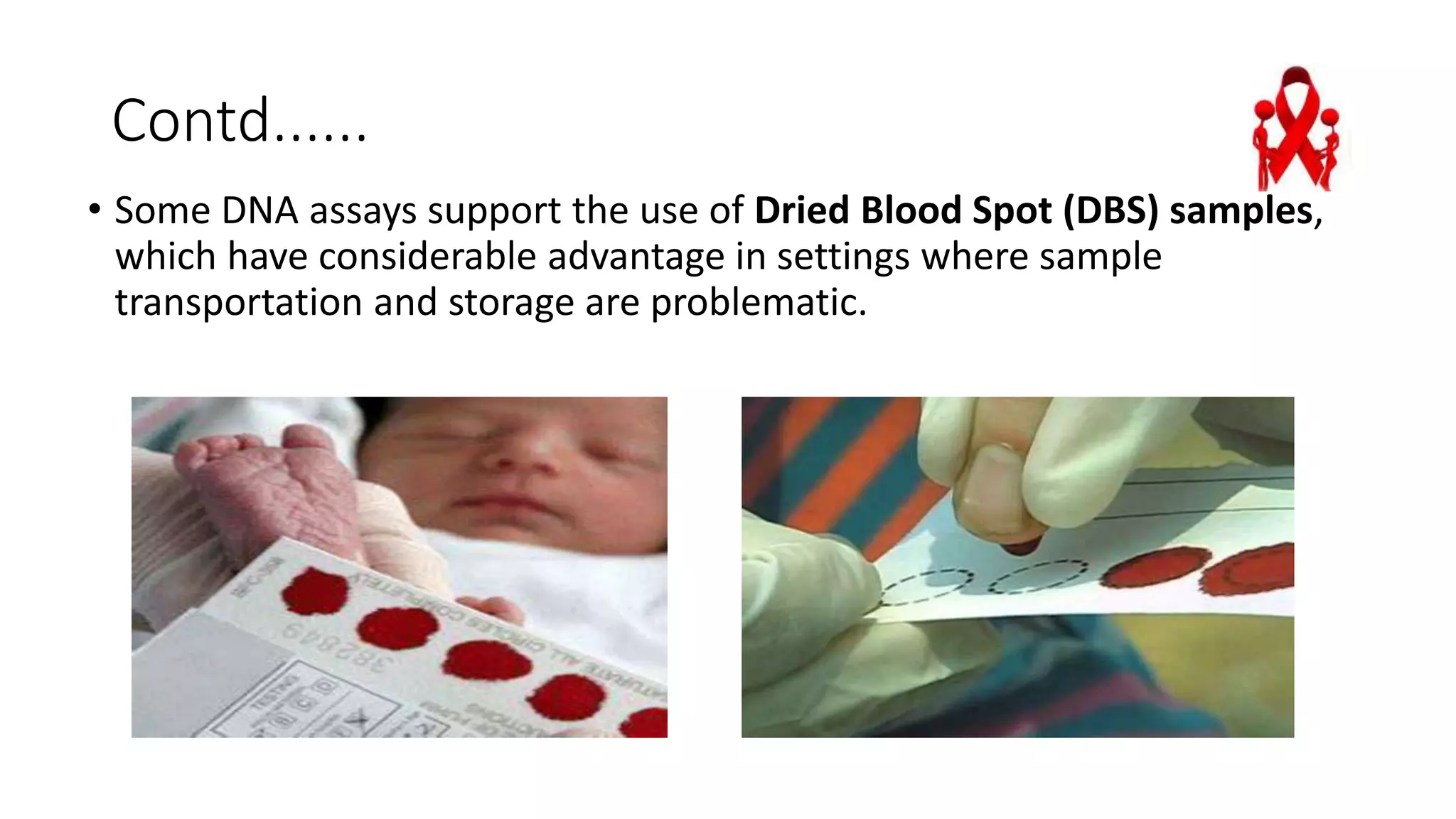
• Some DNA assays support the use of Dried Blood Spot (DBS) samples,
which have considerable advantage in settings where sample
transportation and storage are problematic.
The following are the guiding principles of the
National EID programme:
• Routine virological test of all HIV-exposed infants at birth and again
at six weeks of age;
• Virological test prior to 6 weeks of age in any HIV-exposed infant
with signs and symptoms suggestive of HIV infection or referred by
ART clinician;
•Routine virological test of all HIV-exposed infants entering care at six
weeks to nine months of age at their first health contact;
Contd....
Repeat virological test for the following situations:
• Any HIV-antibody-positive infant aged less than 18 months who
develops signs and symptoms consistent with HIV infection;
• Children aged less than nine months who initially tested HIV
negative by HIV DNA PCR testing while breastfeeding or within 3
months of last breastfeeding who have now stopped breastfeeding
for more than 3 months;
Contd......
• Children between 9 and 18 months of age who have completely
stopped breastfeeding for more than 3 months and whose HIV
antibody test is positive,using a rapid antibody assay; and
• To confirm any positive initial virological test.
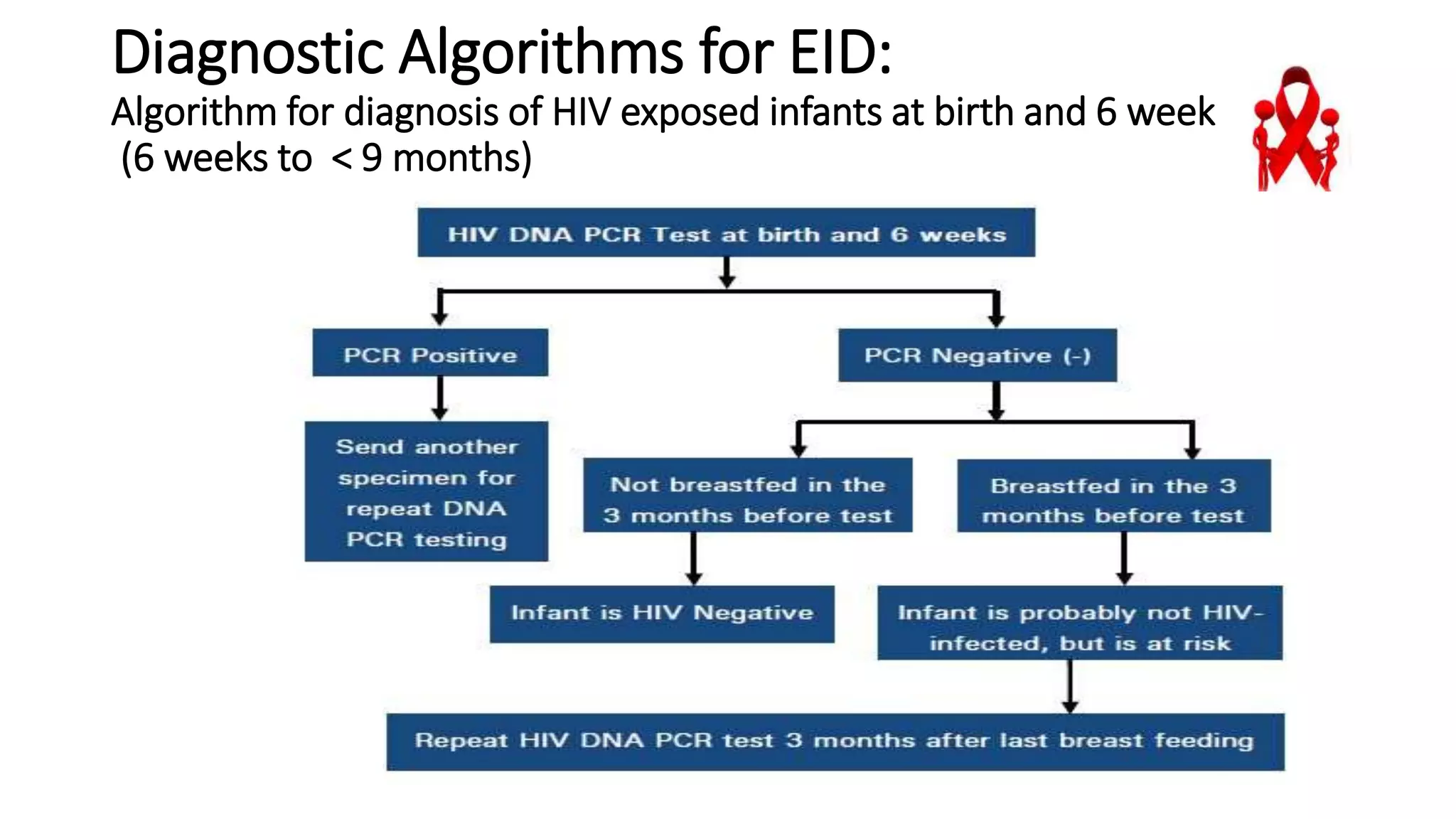
Diagnostic Algorithms for EID:
Algorithm for diagnosis of HIV exposed infants at birth and 6 week
(6 weeks to < 9 months)
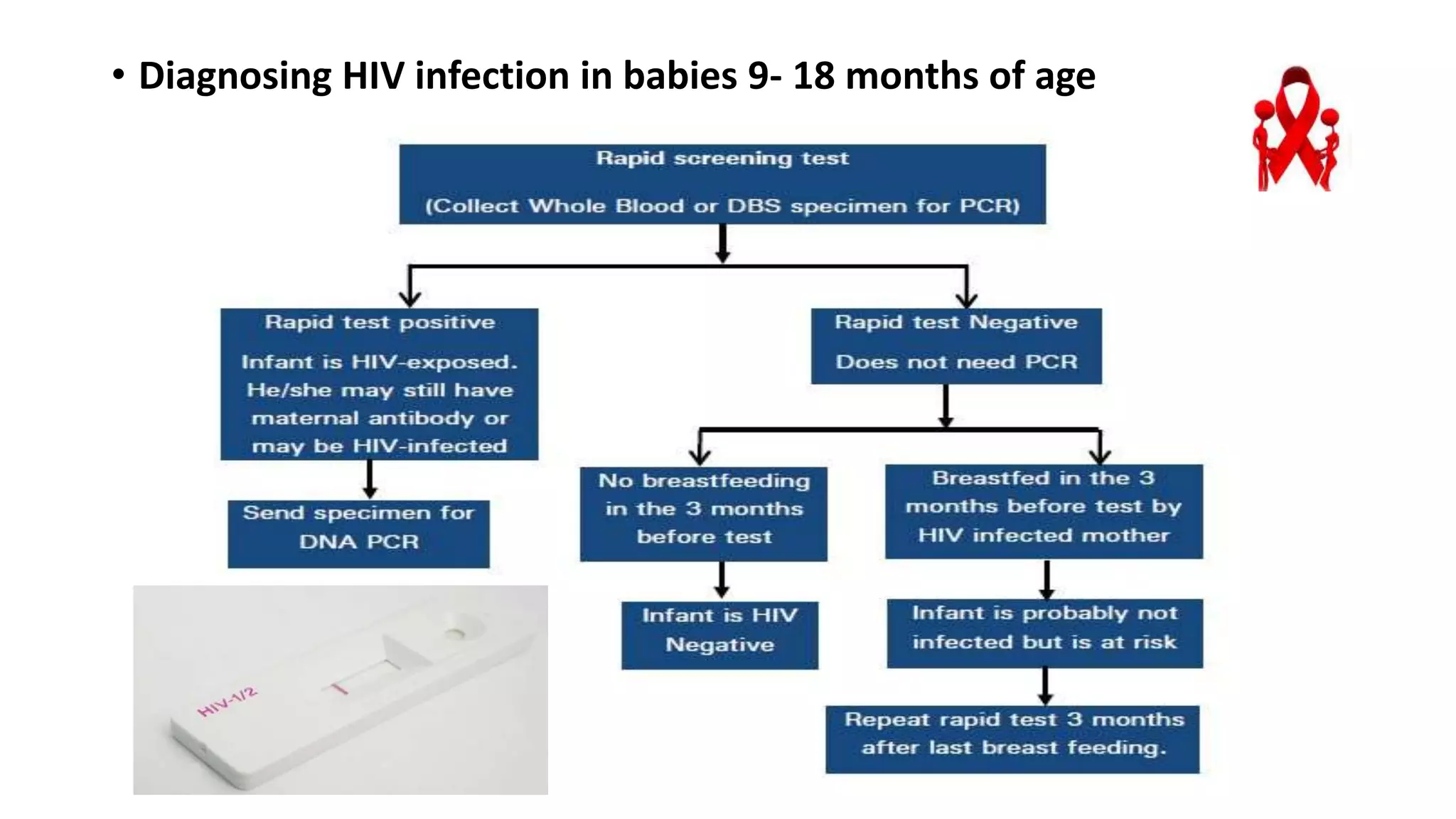
• Diagnosing HIV infection in babies 9- 18 months of age
Contd.....
• If the initial DNA PCR test is positive, repeat the DNA PCR for
confirmatory testing. All PCR positive children should have an
antibody test at 18 months of age to confirm HIV positive status.
Interpreting HIV test results for infants and
children
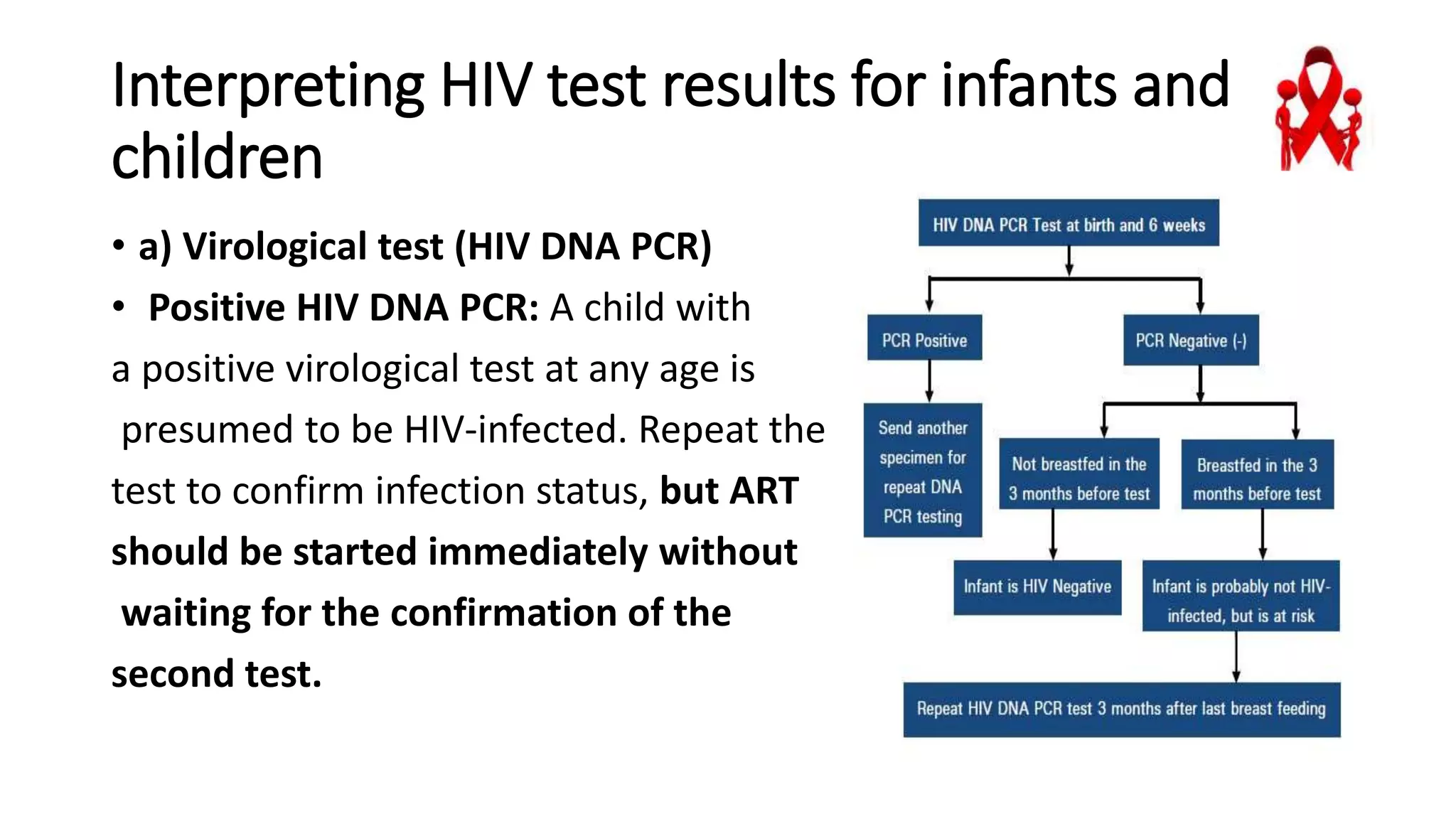
• a) Virological test (HIV DNA PCR)
• Positive HIV DNA PCR: A child with
a positive virological test at any age is
presumed to be HIV-infected. Repeat the
test to confirm infection status, but ART
should be started immediately without
waiting for the confirmation of the
second test.
Contd.........
• Negative HIV DNA PCR: The interpretation of a negative virological
test is dependent upon whether or not the child is breastfeeding:
• In a child who was weaned more than 3 months prior to virological
test: A single negative PCR test is likely to exclude HIV infection. An
antibody test at 18 months is done to confirm that the child is not
infected.
Contd......
• In a child who is breastfeeding at the time of virological test:
A negative HIV DNA PCR test demonstrates that the child is not
infected at the time of testing.
However, ongoing exposure to HIV through breastfeeding continues
to put the child at risk of infection.
 Confirmatory testing should be done more than three months after
breastfeeding is stopped.
Contd......
After an initial positive, if the second test returns negative, a third
sample must be collected and sent for analysis.
Direct communication with the laboratory staff responsible for the
EID programme is needed to arrive at the correct diagnosis.
Consultation with an expert HIV clinician is recommended in all
cases of discordant results.
Contd......
For infants and children less than 18 months , if access to laboratory
testing using PCR is not available , but a child has symptoms that are
suggestive of HIV infection, a presumptive clinical diagnosis of HIV
infection may need to be made as follows:
Contd.............
• Infant is confirmed HIV - antibody positive: and
- diagnosis of AIDS- indicator condition(s) can be made or
• the infant is symptomatic with two or more of the following:
 oral thrush
severe pneumonia
 severe sepsis
Contd.......
• Other factors that support the diagnosis of severe HIV diseses in an
HIV seropositive infant include:
 recent HIV -related maternal death or advanced HIV diseases in the
mother
 CD4< 200/mm
• Confirmation of the diagnosis of HIV infection should be sought as
soon as possible.
Lets refresh
Post exposure prophylaxis with ARVs for the
HIV exposed infant
• Post exposure prophylaxis(PEP) of HIV is the use of ARV drugs by
people who are not infected with HIV but who may have been
exposed to HIV to block HIV infection.
• HIV exposed infant:Newborns keep their mother antibodies until
they produce their own antibodies at around 18 months of age, a
positive neonatal HIV test result reveals the presence of maternal
antibodies that indicate exposure to the virus, not necesarily infection
by the virus.
Contd.......
• All HIV exposed babies should receive ARV prophylaxis as soon as
possible after birth.
• Dual prophylaxis for babies with high risk of HIV as adopted to
reduce the risk of HIV transmission.
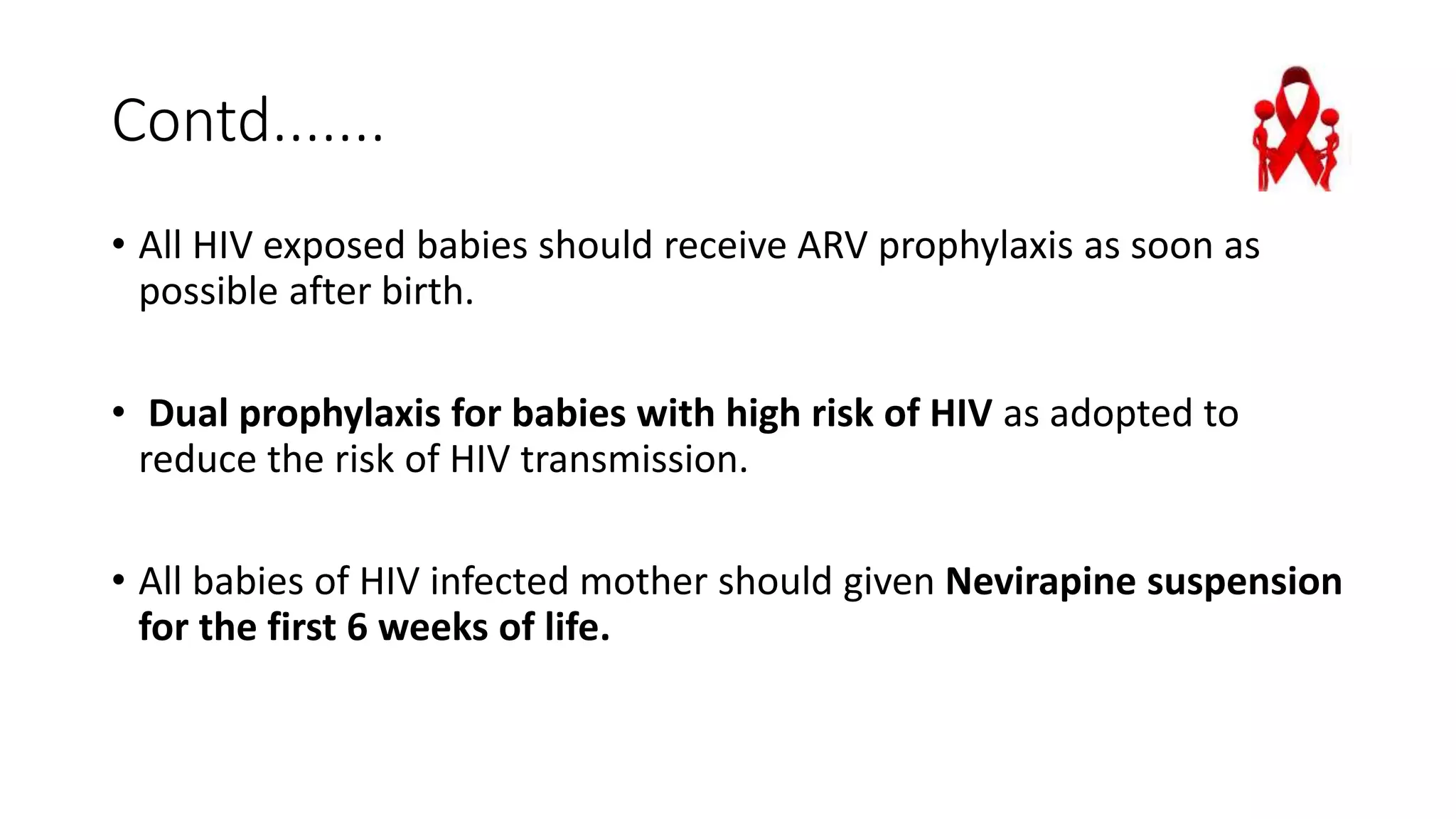
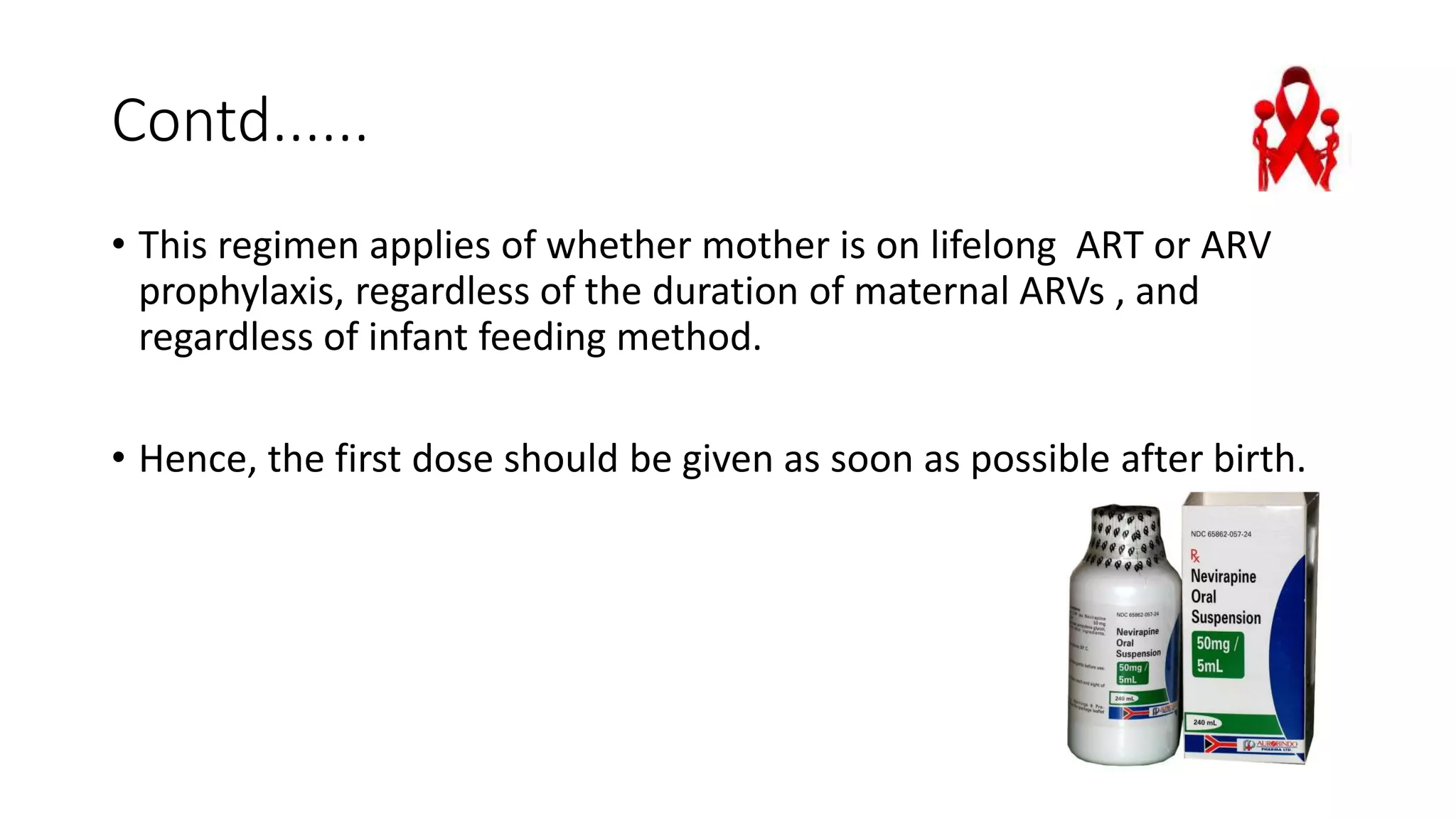
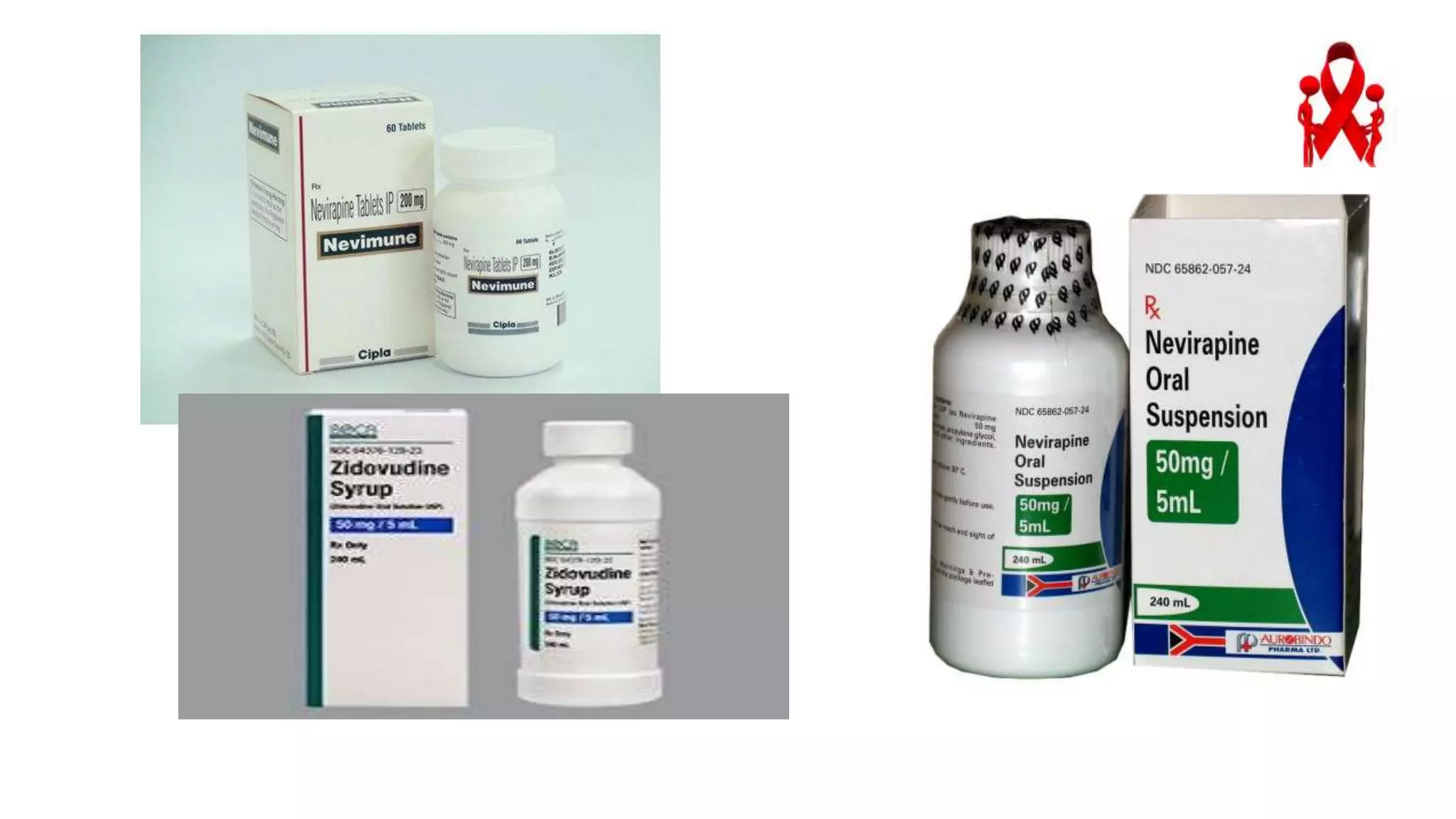
• All babies of HIV infected mother should given Nevirapine suspension
for the first 6 weeks of life.
Contd......
• This regimen applies of whether mother is on lifelong ART or ARV
prophylaxis, regardless of the duration of maternal ARVs , and
regardless of infant feeding method.
• Hence, the first dose should be given as soon as possible after birth.
Contd.....
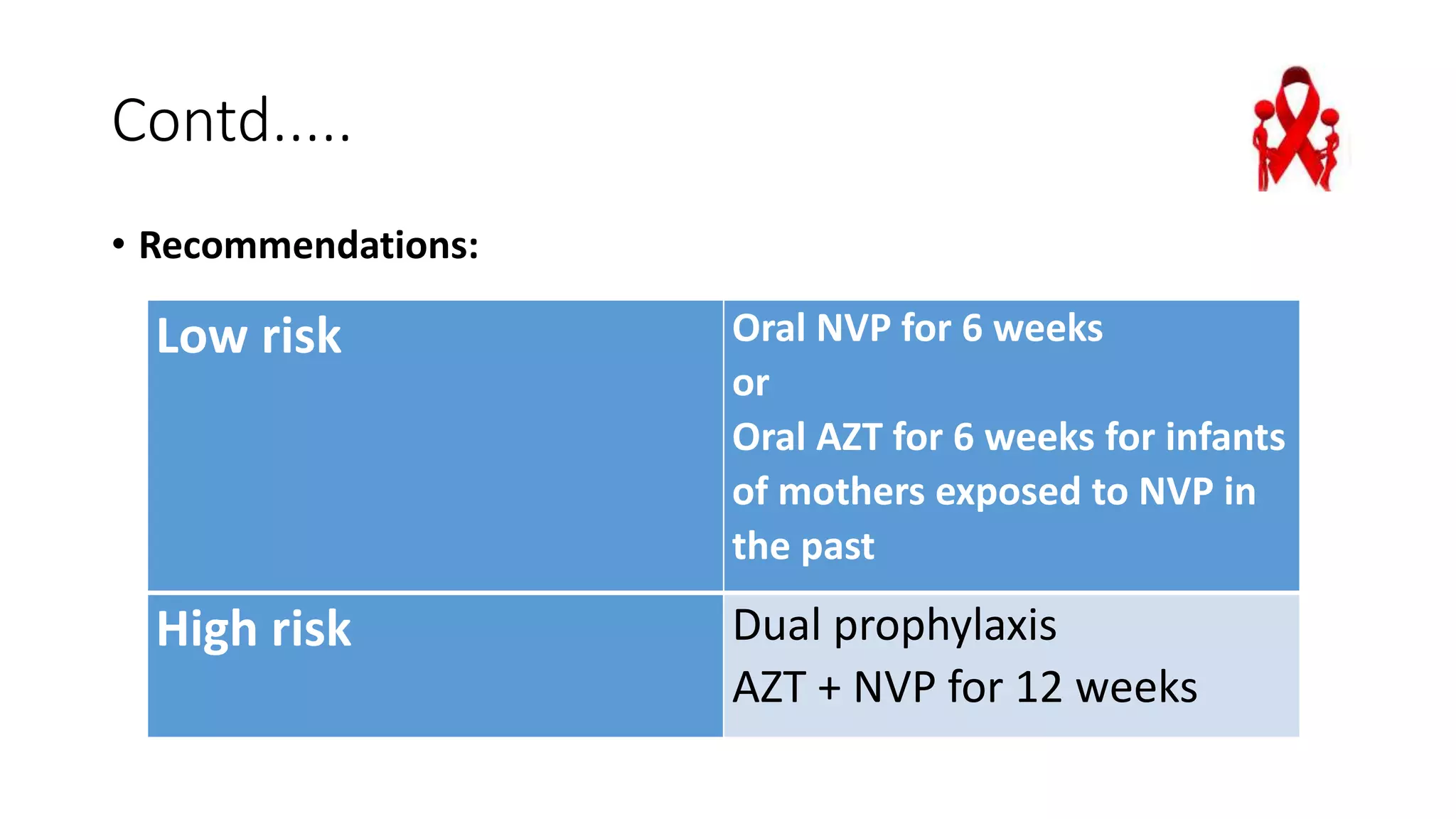
• Recommendations:
Low risk Oral NVP for 6 weeks
or
Oral AZT for 6 weeks for infants
of mothers exposed to NVP in
the past
High risk Dual prophylaxis
AZT + NVP for 12 weeks
Contd....
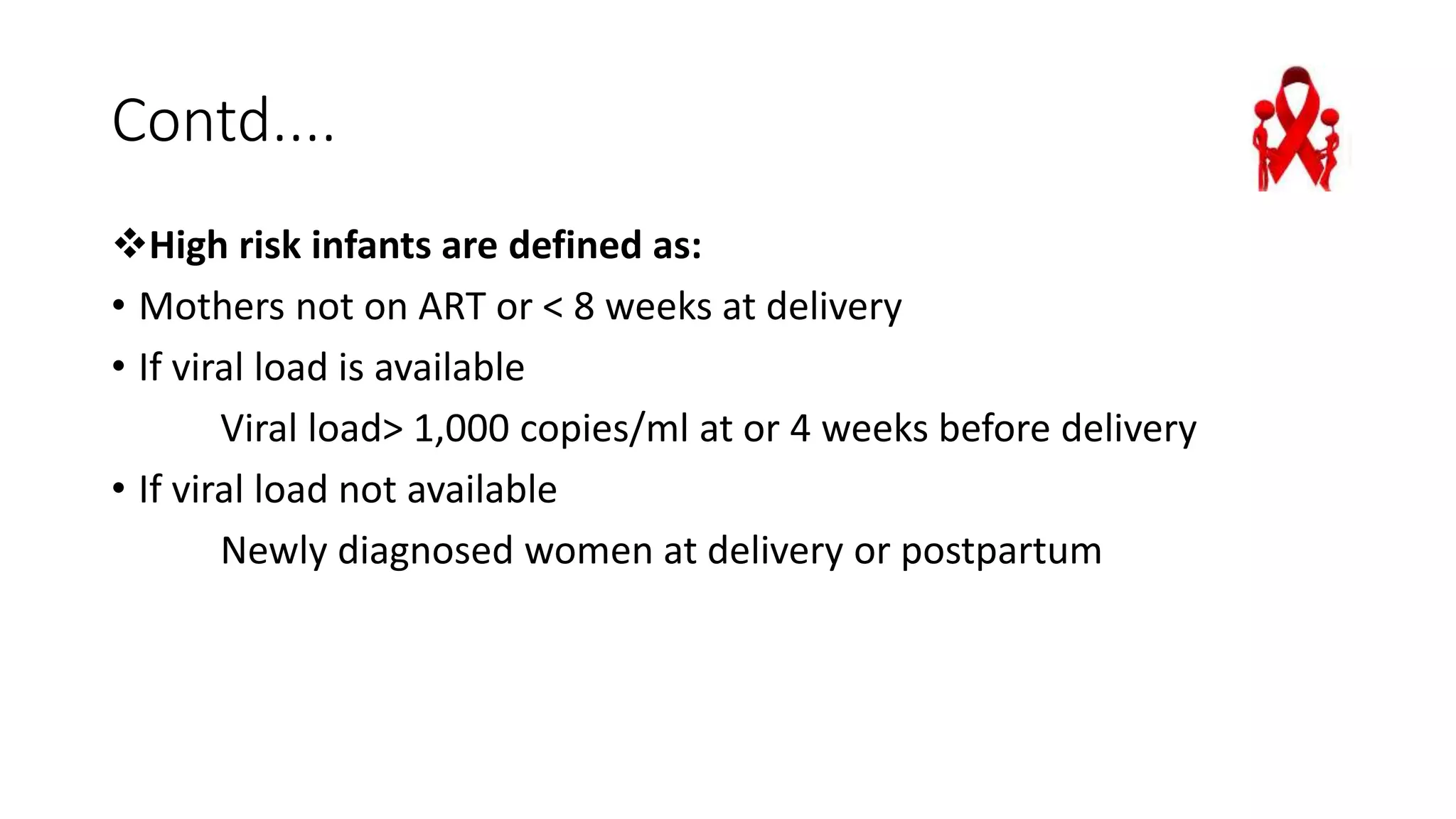
High risk infants are defined as:
• Mothers not on ART or < 8 weeks at delivery
• If viral load is available
Viral load> 1,000 copies/ml at or 4 weeks before delivery
• If viral load not available
Newly diagnosed women at delivery or postpartum
Contd.............
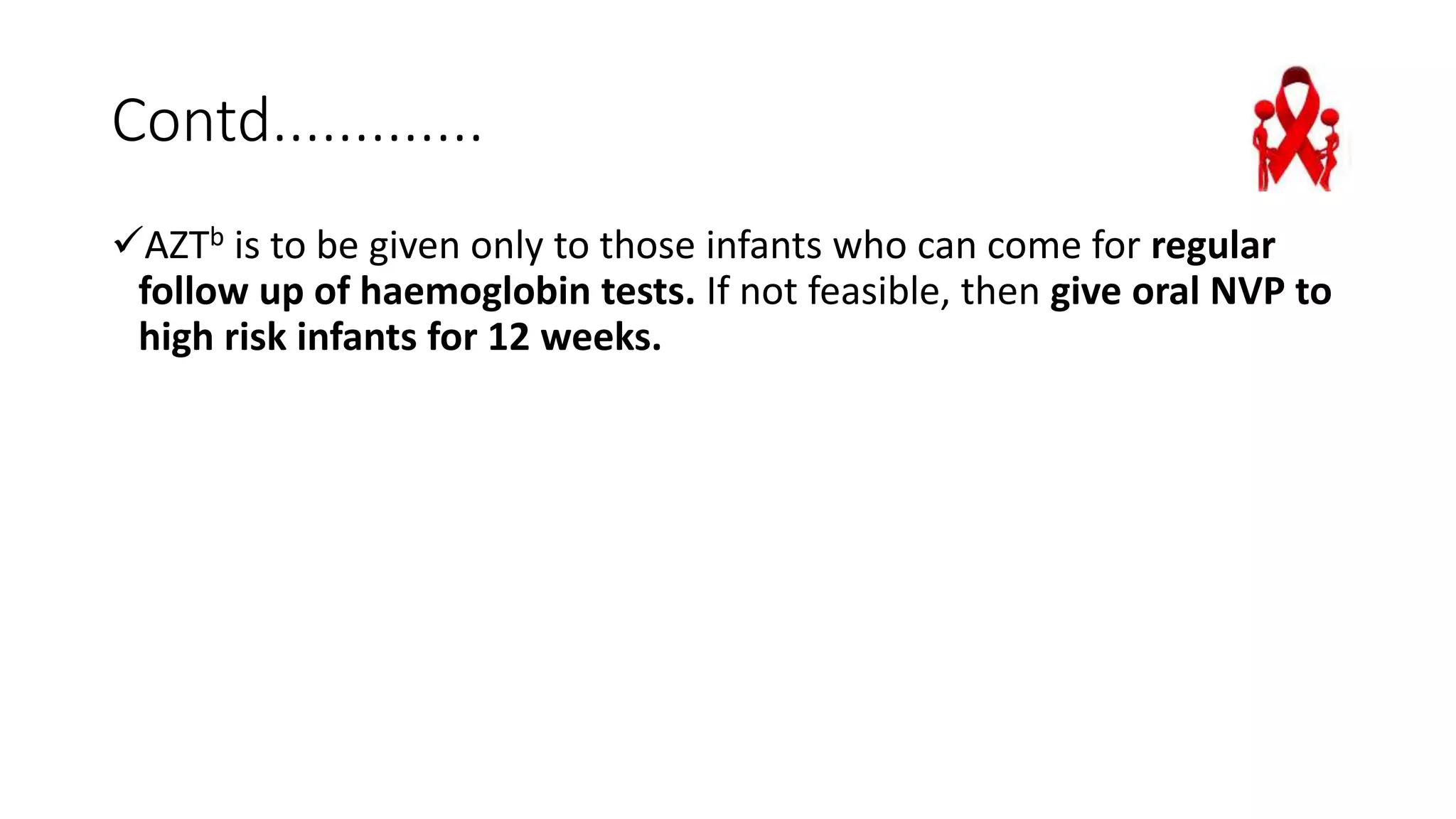
AZTb is to be given only to those infants who can come for regular
follow up of haemoglobin tests. If not feasible, then give oral NVP to
high risk infants for 12 weeks.
Contd....
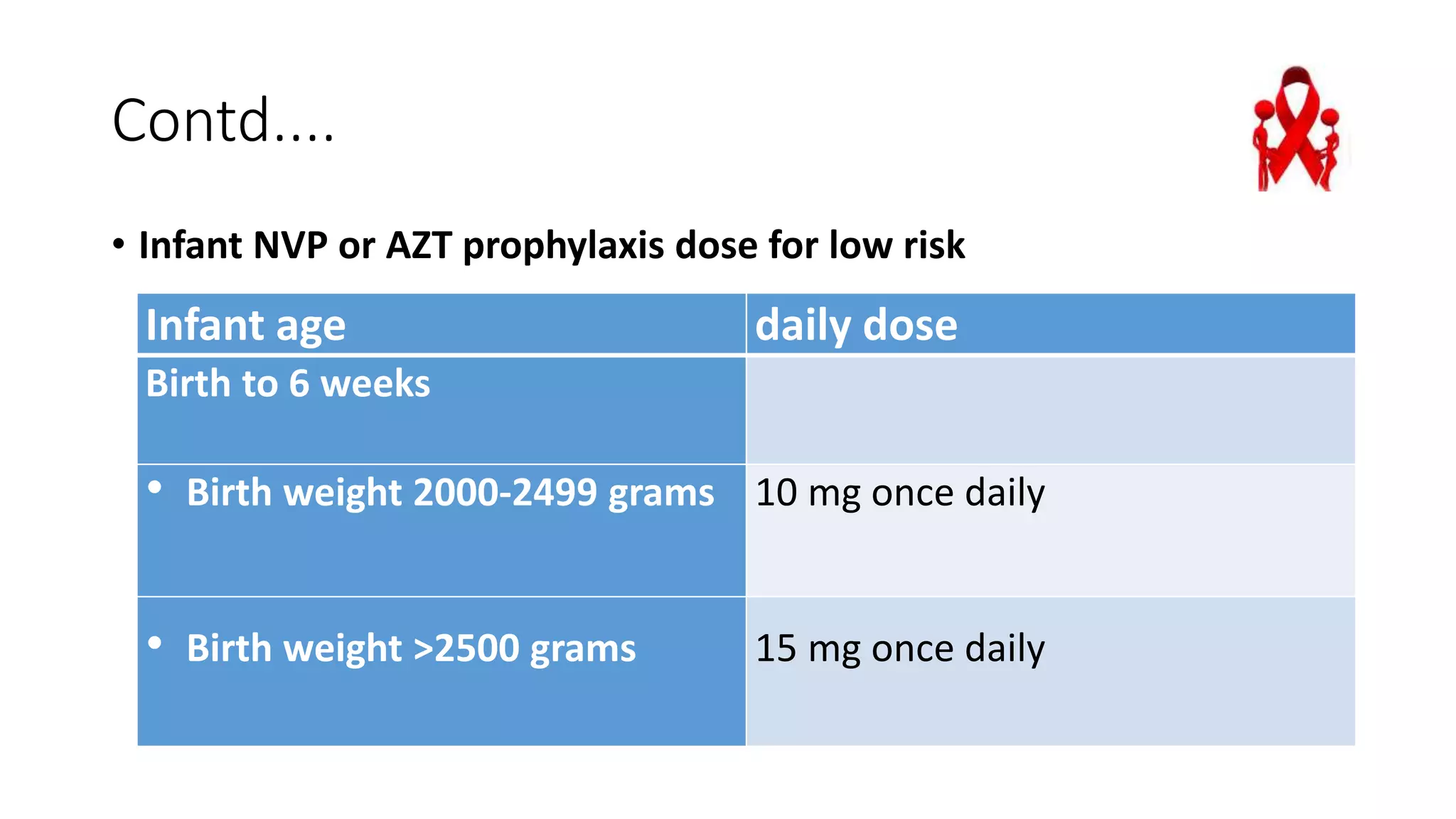
• Infant NVP or AZT prophylaxis dose for low risk
Infant age daily dose
Birth to 6 weeks
• Birth weight 2000-2499 grams 10 mg once daily
• Birth weight >2500 grams 15 mg once daily
Contd.....
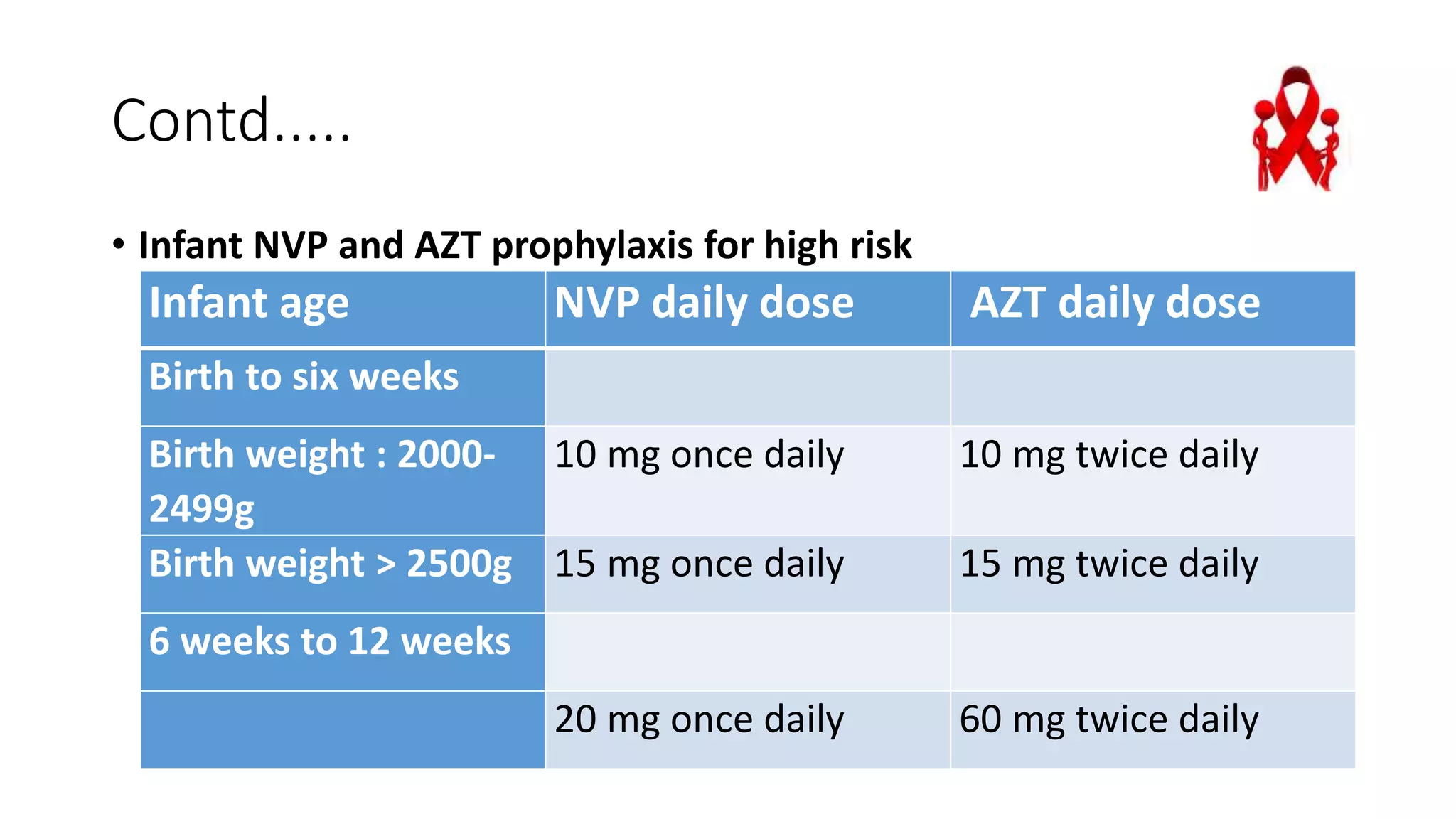
• Infant NVP and AZT prophylaxis for high risk
Infant age NVP daily dose AZT daily dose
Birth to six weeks
Birth weight : 2000-
2499g
10 mg once daily 10 mg twice daily
Birth weight > 2500g 15 mg once daily 15 mg twice daily
6 weeks to 12 weeks
20 mg once daily 60 mg twice daily
Contd....
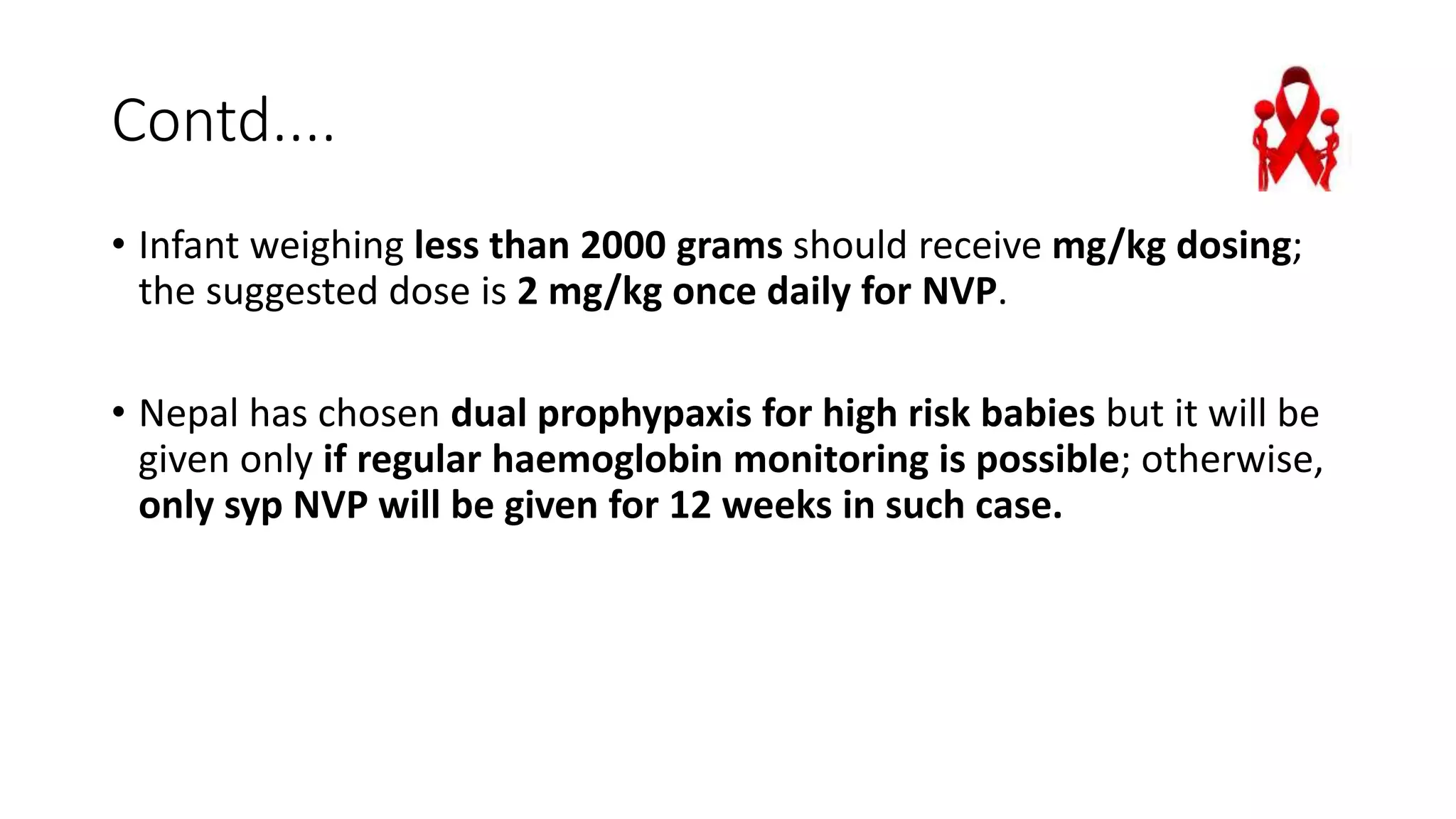
• Infant weighing less than 2000 grams should receive mg/kg dosing;
the suggested dose is 2 mg/kg once daily for NVP.
• Nepal has chosen dual prophypaxis for high risk babies but it will be
given only if regular haemoglobin monitoring is possible; otherwise,
only syp NVP will be given for 12 weeks in such case.
•Post test
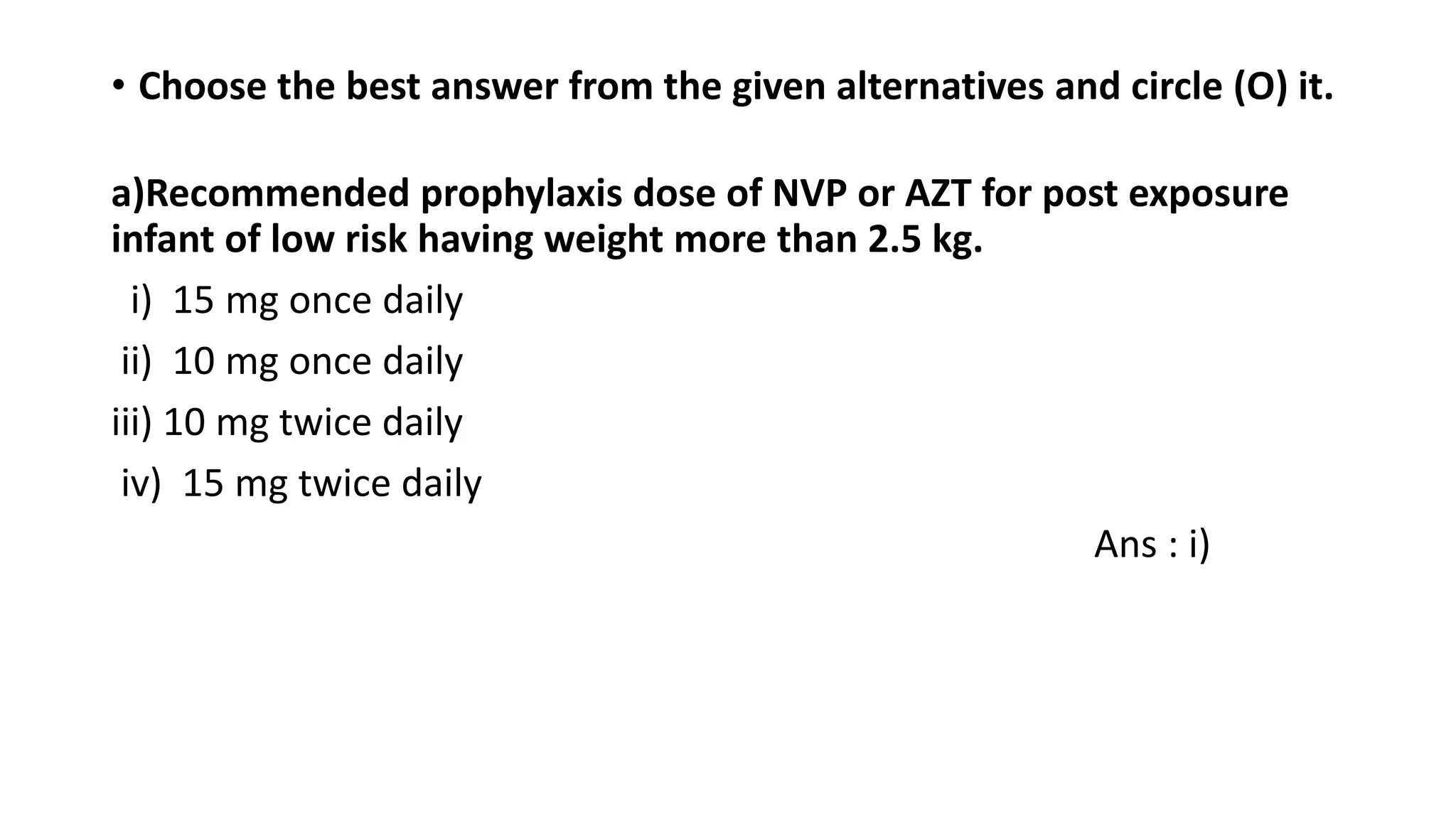
• Choose the best answer from the given alternatives and circle (O) it.
a)Recommended prophylaxis dose of NVP or AZT for post exposure
infant of low risk having weight more than 2.5 kg.
i) 15 mg once daily
ii) 10 mg once daily
iii) 10 mg twice daily
iv) 15 mg twice daily
Ans : i)
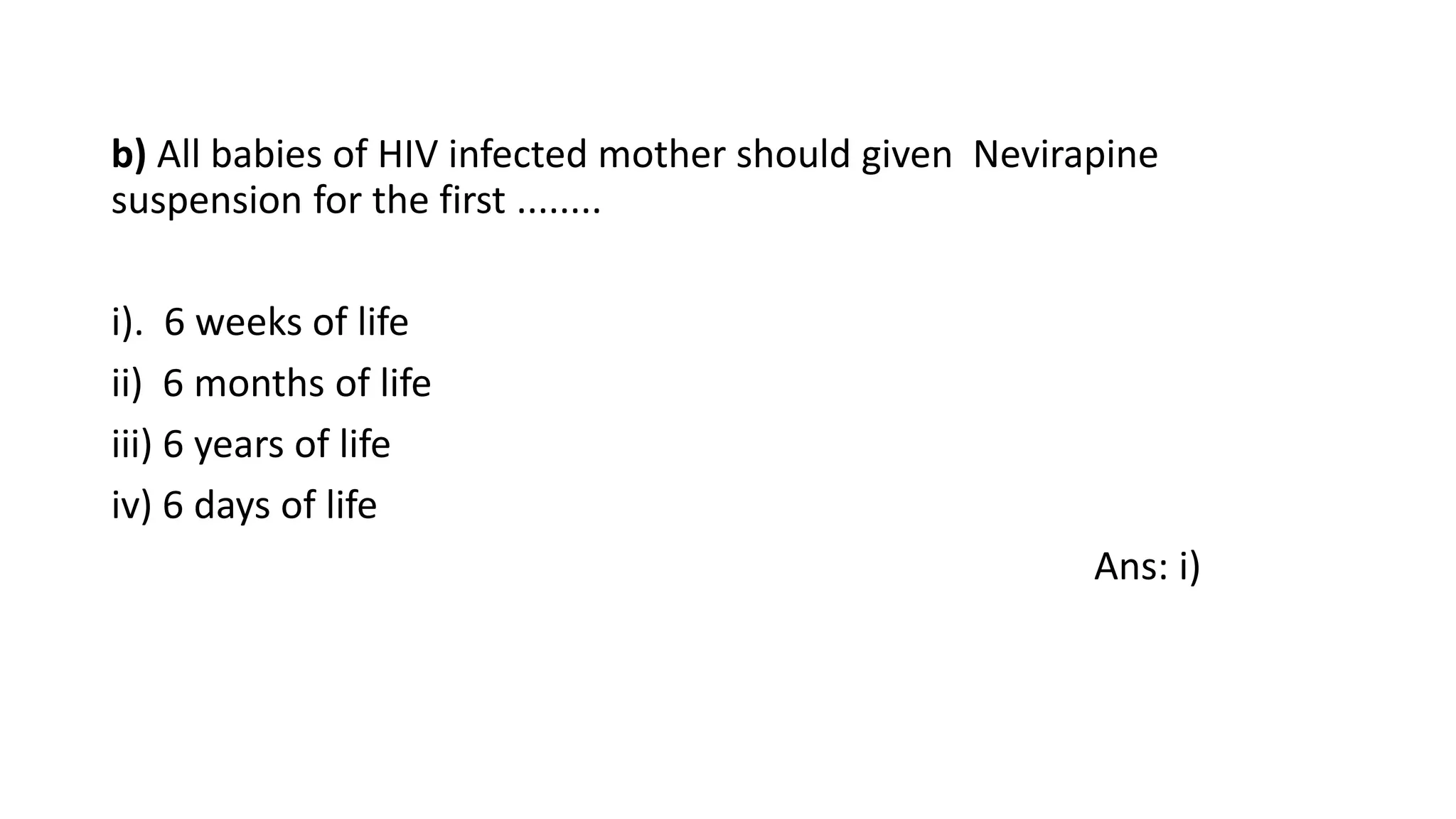
b) All babies of HIV infected mother should given Nevirapine
suspension for the first ........
i). 6 weeks of life
ii) 6 months of life
iii) 6 years of life
iv) 6 days of life
Ans: i)
• Write 'T' for True and 'F' for false in the box for following statement.
i) Polymerase Chain Reaction(PCR) testing is recommended for all HIV -
exposed children at birth, at 6th week, and later with antibody testing.
ii) The infant with the first reactive DNA PCR at birth should repeat the
test to confirm infection status, then only started ART after the
confirmation of the second test
T
F
Contd.....
iii) AZT is given to all high risk infants for 12 weeks.
iv) Infant weighing less than 2000 grams should receive mg/kg dosing;
the suggested dose is 2 mg/kg once daily for NVP.
T
F
•Summary
References
• Prasai( Subedi) D.,"Textbook of Midwifery Nursing(Postpartum
care)part III",Akshav Publication,Kathmandu, 1st edition,2018,page
no. 190-195.
• Prasai (Subedi)D,"Textbook of midwifery Nursing Part I"Medhavi
publication,Jamal,Kantipath,Kathmandu,3rd edition,Jan 2016, Page
no. 502-511.
• Awasthi Sherpa M." Essential Textbook of MIdwifery Nursing Part I"
Samiksha Publication Pvt.Ltd. 1st edition 2074,page no. 354- 356.
• Tuitui R." Manual of Midwifery-C (postnatal)",Vidyarthi Pustak
Bhandar,bhotahity, kathmandu,10th edition,2014,page no.110- 115
• National HIV testing and treatment guidement 2017.
• Retrived from https://who.int on 2977/07/28
• Retrived from www.unicef.org on 2077/07/28
Post exposure prophylaxis with arv for the HIV exposed infant and hiv testing in infant class iii

Post exposure prophylaxis with arv for the HIV exposed infant and hiv testing in infant class iii

  • 1.
    Post exposure prophylaxis withARV for the HIV exposed infant and HIV testing in infants Prepared by: Kalpana kawan BNS 2nd year Roll no. 06
  • 2.
    General objective • Atthe end of this session, Bsc Nursing 3rd year students will be able to explain about "Breastfeeding among HIV positive mother or HIV unknown mother ”
  • 3.
    Specific objectives • introduceHIV testing in infants • introduce Early infant diagnosis (EID) • list the guiding principles of the National EID programme • explain diagnostic algorithms for EID • listed the presumptive clinical diagnosis of HIV infection • define post exposure prophylaxis of HIV • Explain post exposure prophylaxis with ARV for the HIV exposed infant.
  • 4.
    HIV testing inInfants • HIV testing : It is the process of determining if client is infected with HIV. • Most of HIV testing detect for antibodies to HIV so, a baby born to an HIV-positive mother will always test positive for HIV, whether that newborn is truly seropositive or not.
  • 5.
    Early infant diagnosis: •Diagnosis of HIV infection in babies born to HIV-infected mothers cannot be confirmed by conventional antibody tests. • The presence of anti-HIV antibodies in the newborn may not necessarily indicate primary infection. It may be due to the presence of passively transmitted anti-HIV antibodies from the mother to uninfected babies. • These maternal antibodies may persist in the infant for as long as 18 months.
  • 6.
    Contd......... • Hence, virologicalassays such as HIV DNA–PCR or total nucleic acid- based assays represent the gold standard for diagnosing of HIV infection in children younger than 18 months.
  • 7.
    Contd...... • Some DNAassays support the use of Dried Blood Spot (DBS) samples, which have considerable advantage in settings where sample transportation and storage are problematic.
  • 8.
    The following arethe guiding principles of the National EID programme: • Routine virological test of all HIV-exposed infants at birth and again at six weeks of age; • Virological test prior to 6 weeks of age in any HIV-exposed infant with signs and symptoms suggestive of HIV infection or referred by ART clinician; •Routine virological test of all HIV-exposed infants entering care at six weeks to nine months of age at their first health contact;
  • 9.
    Contd.... Repeat virological testfor the following situations: • Any HIV-antibody-positive infant aged less than 18 months who develops signs and symptoms consistent with HIV infection; • Children aged less than nine months who initially tested HIV negative by HIV DNA PCR testing while breastfeeding or within 3 months of last breastfeeding who have now stopped breastfeeding for more than 3 months;
  • 10.
    Contd...... • Children between9 and 18 months of age who have completely stopped breastfeeding for more than 3 months and whose HIV antibody test is positive,using a rapid antibody assay; and • To confirm any positive initial virological test.
  • 11.
    Diagnostic Algorithms forEID: Algorithm for diagnosis of HIV exposed infants at birth and 6 week (6 weeks to < 9 months)
  • 12.
    • Diagnosing HIVinfection in babies 9- 18 months of age
  • 13.
    Contd..... • If theinitial DNA PCR test is positive, repeat the DNA PCR for confirmatory testing. All PCR positive children should have an antibody test at 18 months of age to confirm HIV positive status.
  • 14.
    Interpreting HIV testresults for infants and children • a) Virological test (HIV DNA PCR) • Positive HIV DNA PCR: A child with a positive virological test at any age is presumed to be HIV-infected. Repeat the test to confirm infection status, but ART should be started immediately without waiting for the confirmation of the second test.
  • 15.
    Contd......... • Negative HIVDNA PCR: The interpretation of a negative virological test is dependent upon whether or not the child is breastfeeding: • In a child who was weaned more than 3 months prior to virological test: A single negative PCR test is likely to exclude HIV infection. An antibody test at 18 months is done to confirm that the child is not infected.
  • 16.
    Contd...... • In achild who is breastfeeding at the time of virological test: A negative HIV DNA PCR test demonstrates that the child is not infected at the time of testing. However, ongoing exposure to HIV through breastfeeding continues to put the child at risk of infection.  Confirmatory testing should be done more than three months after breastfeeding is stopped.
  • 17.
    Contd...... After an initialpositive, if the second test returns negative, a third sample must be collected and sent for analysis. Direct communication with the laboratory staff responsible for the EID programme is needed to arrive at the correct diagnosis. Consultation with an expert HIV clinician is recommended in all cases of discordant results.
  • 18.
    Contd...... For infants andchildren less than 18 months , if access to laboratory testing using PCR is not available , but a child has symptoms that are suggestive of HIV infection, a presumptive clinical diagnosis of HIV infection may need to be made as follows:
  • 19.
    Contd............. • Infant isconfirmed HIV - antibody positive: and - diagnosis of AIDS- indicator condition(s) can be made or • the infant is symptomatic with two or more of the following:  oral thrush severe pneumonia  severe sepsis
  • 20.
    Contd....... • Other factorsthat support the diagnosis of severe HIV diseses in an HIV seropositive infant include:  recent HIV -related maternal death or advanced HIV diseases in the mother  CD4< 200/mm • Confirmation of the diagnosis of HIV infection should be sought as soon as possible.
  • 21.
  • 22.
    Post exposure prophylaxiswith ARVs for the HIV exposed infant • Post exposure prophylaxis(PEP) of HIV is the use of ARV drugs by people who are not infected with HIV but who may have been exposed to HIV to block HIV infection. • HIV exposed infant:Newborns keep their mother antibodies until they produce their own antibodies at around 18 months of age, a positive neonatal HIV test result reveals the presence of maternal antibodies that indicate exposure to the virus, not necesarily infection by the virus.
  • 23.
    Contd....... • All HIVexposed babies should receive ARV prophylaxis as soon as possible after birth. • Dual prophylaxis for babies with high risk of HIV as adopted to reduce the risk of HIV transmission. • All babies of HIV infected mother should given Nevirapine suspension for the first 6 weeks of life.
  • 24.
    Contd...... • This regimenapplies of whether mother is on lifelong ART or ARV prophylaxis, regardless of the duration of maternal ARVs , and regardless of infant feeding method. • Hence, the first dose should be given as soon as possible after birth.
  • 26.
    Contd..... • Recommendations: Low riskOral NVP for 6 weeks or Oral AZT for 6 weeks for infants of mothers exposed to NVP in the past High risk Dual prophylaxis AZT + NVP for 12 weeks
  • 27.
    Contd.... High risk infantsare defined as: • Mothers not on ART or < 8 weeks at delivery • If viral load is available Viral load> 1,000 copies/ml at or 4 weeks before delivery • If viral load not available Newly diagnosed women at delivery or postpartum
  • 28.
    Contd............. AZTb is tobe given only to those infants who can come for regular follow up of haemoglobin tests. If not feasible, then give oral NVP to high risk infants for 12 weeks.
  • 29.
    Contd.... • Infant NVPor AZT prophylaxis dose for low risk Infant age daily dose Birth to 6 weeks • Birth weight 2000-2499 grams 10 mg once daily • Birth weight >2500 grams 15 mg once daily
  • 30.
    Contd..... • Infant NVPand AZT prophylaxis for high risk Infant age NVP daily dose AZT daily dose Birth to six weeks Birth weight : 2000- 2499g 10 mg once daily 10 mg twice daily Birth weight > 2500g 15 mg once daily 15 mg twice daily 6 weeks to 12 weeks 20 mg once daily 60 mg twice daily
  • 31.
    Contd.... • Infant weighingless than 2000 grams should receive mg/kg dosing; the suggested dose is 2 mg/kg once daily for NVP. • Nepal has chosen dual prophypaxis for high risk babies but it will be given only if regular haemoglobin monitoring is possible; otherwise, only syp NVP will be given for 12 weeks in such case.
  • 33.
  • 34.
    • Choose thebest answer from the given alternatives and circle (O) it. a)Recommended prophylaxis dose of NVP or AZT for post exposure infant of low risk having weight more than 2.5 kg. i) 15 mg once daily ii) 10 mg once daily iii) 10 mg twice daily iv) 15 mg twice daily Ans : i)
  • 35.
    b) All babiesof HIV infected mother should given Nevirapine suspension for the first ........ i). 6 weeks of life ii) 6 months of life iii) 6 years of life iv) 6 days of life Ans: i)
  • 36.
    • Write 'T'for True and 'F' for false in the box for following statement. i) Polymerase Chain Reaction(PCR) testing is recommended for all HIV - exposed children at birth, at 6th week, and later with antibody testing. ii) The infant with the first reactive DNA PCR at birth should repeat the test to confirm infection status, then only started ART after the confirmation of the second test T F
  • 37.
    Contd..... iii) AZT isgiven to all high risk infants for 12 weeks. iv) Infant weighing less than 2000 grams should receive mg/kg dosing; the suggested dose is 2 mg/kg once daily for NVP. T F
  • 38.
  • 39.
    References • Prasai( Subedi)D.,"Textbook of Midwifery Nursing(Postpartum care)part III",Akshav Publication,Kathmandu, 1st edition,2018,page no. 190-195. • Prasai (Subedi)D,"Textbook of midwifery Nursing Part I"Medhavi publication,Jamal,Kantipath,Kathmandu,3rd edition,Jan 2016, Page no. 502-511.
  • 40.
    • Awasthi SherpaM." Essential Textbook of MIdwifery Nursing Part I" Samiksha Publication Pvt.Ltd. 1st edition 2074,page no. 354- 356. • Tuitui R." Manual of Midwifery-C (postnatal)",Vidyarthi Pustak Bhandar,bhotahity, kathmandu,10th edition,2014,page no.110- 115 • National HIV testing and treatment guidement 2017. • Retrived from https://who.int on 2977/07/28 • Retrived from www.unicef.org on 2077/07/28