

ASCO 2019
TODAY’S WEBINAR
 SPEAKER(S)
 Scott Kopetz, MD, PhD
 QUESTIONS
 Ask a question in the panel on the RIGHT SIDE of your
screen
 WEBINAR ARCHIVE
 FightCRC.org/webinar
 TWEET ALONG
 Follow along via Twitter – use the hashtag #CRCWebinar
RESOURCES
TABOO-TY PODCAST MINI MAGAZINES CLINICAL TRIAL FINDER
FIGHTCOLORECTALCANCERDISCLAIMER
The information and services provided
by Fight Colorectal Cancer are for
general informational purposes only.
The information and services are not
intended to be substitutes for
professional medical advice,
diagnoses or treatment.
If you are ill, or suspect that you are ill,
see a doctor immediately. In an
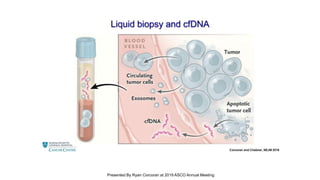
emergency, call 911 or go to the
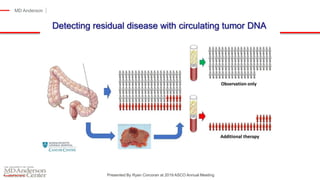
nearest emergency room.
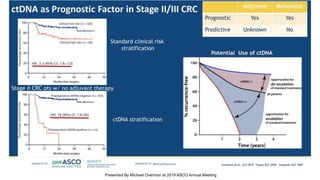
Fight Colorectal Cancer never
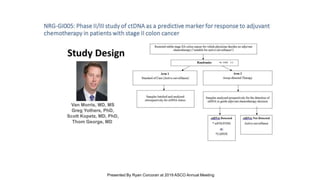
recommends or endorses any specific
physicians, products or treatments for
any condition.
ScottKopetz,MD,PhD
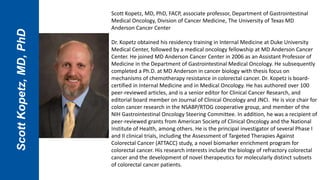
Scott Kopetz, MD, PhD, FACP, associate professor, Department of Gastrointestinal
Medical Oncology, Division of Cancer Medicine, The University of Texas MD
Anderson Cancer Center
Dr. Kopetz obtained his residency training in Internal Medicine at Duke University
Medical Center, followed by a medical oncology fellowship at MD Anderson Cancer
Center. He joined MD Anderson Cancer Center in 2006 as an Assistant Professor of
Medicine in the Department of Gastrointestinal Medical Oncology. He subsequently
completed a Ph.D. at MD Anderson in cancer biology with thesis focus on
mechanisms of chemotherapy resistance in colorectal cancer. Dr. Kopetz is board-
certified in Internal Medicine and in Medical Oncology. He has authored over 100
peer-reviewed articles, and is a senior editor for Clinical Cancer Research, and
editorial board member on Journal of Clinical Oncology and JNCI. He is vice chair for
colon cancer research in the NSABP/RTOG cooperative group, and member of the
NIH Gastrointestinal Oncology Steering Committee. In addition, he was a recipient of
peer-reviewed grants from American Society of Clinical Oncology and the National
Institute of Health, among others. He is the principal investigator of several Phase I
and II clinical trials, including the Assessment of Targeted Therapies Against
Colorectal Cancer (ATTACC) study, a novel biomarker enrichment program for
colorectal cancer. His research interests include the biology of refractory colorectal
cancer and the development of novel therapeutics for molecularly distinct subsets
of colorectal cancer patients.
MD Anderson
Scott Kopetz, MD, PhD
June 25, 2019
Update from ASCO 2019
MD Anderson
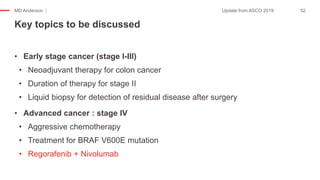
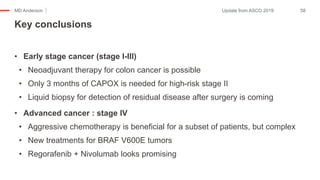
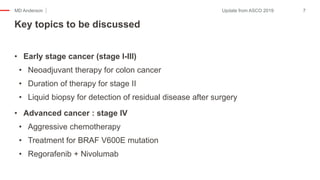
• Early stage cancer (stage I-III)
• Neoadjuvant therapy for colon cancer
• Duration of therapy for stage II
• Liquid biopsy for detection of residual disease after surgery
• Advanced cancer : stage IV
• Aggressive chemotherapy
• Treatment for BRAF V600E mutation
• Regorafenib + Nivolumab
Key topics to be discussed
7Update from ASCO 2019
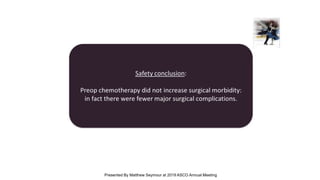
FOxTROT:
Presented By Matthew Seymour at 2019 ASCO Annual Meeting
Slide 3
Presented By Matthew Seymour at 2019 ASCO Annual Meeting
Slide 12
Presented By Matthew Seymour at 2019 ASCO Annual Meeting
Slide 11
Presented By Matthew Seymour at 2019 ASCO Annual Meeting
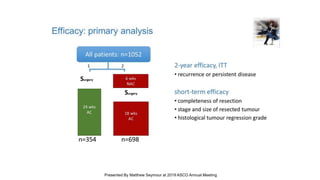
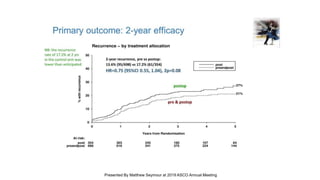
Primary outcome: 2-year efficacy
Presented By Matthew Seymour at 2019 ASCO Annual Meeting
MD Anderson 13Update from ASCO 2019
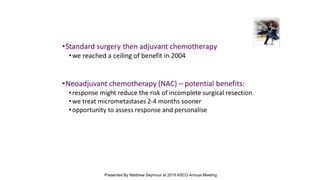
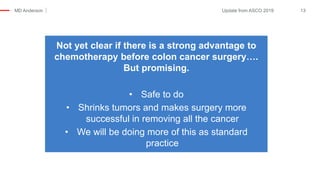
Not yet clear if there is a strong advantage to
chemotherapy before colon cancer surgery….
But promising.
• Safe to do
• Shrinks tumors and makes surgery more
successful in removing all the cancer
• We will be doing more of this as standard
practice
MD Anderson
• Early stage cancer (stage I-III)
• Neoadjuvant therapy for colon cancer
• Duration of therapy for stage II
• Liquid biopsy for detection of residual disease after surgery
• Advanced cancer : stage IV
• Aggressive chemotherapy
• Treatment for BRAF V600E mutation
• Regorafenib + Nivolumab
Key topics to be discussed
14Update from ASCO 2019
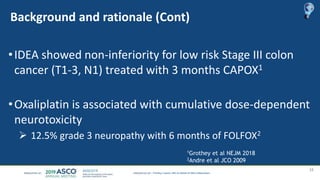
Background and rationale (Cont)
•IDEA showed non-inferiority for low risk Stage III colon
cancer (T1-3, N1) treated with 3 months CAPOX1
•Oxaliplatin is associated with cumulative dose-dependent
neurotoxicity
 12.5% grade 3 neuropathy with 6 months of FOLFOX2
15
Timothy J Iveson, MD on behalf of IDEA collaborators
1Grothey et al NEJM 2018
2Andre et al JCO 2009
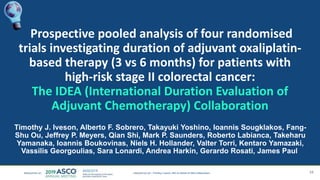
Prospective pooled analysis of four randomised
trials investigating duration of adjuvant oxaliplatin-
based therapy (3 vs 6 months) for patients with
high-risk stage II colorectal cancer:
The IDEA (International Duration Evaluation of
Adjuvant Chemotherapy) Collaboration
Timothy J. Iveson, Alberto F. Sobrero, Takayuki Yoshino, Ioannis Sougklakos, Fang-
Shu Ou, Jeffrey P. Meyers, Qian Shi, Mark P. Saunders, Roberto Labianca, Takeharu
Yamanaka, Ioannis Boukovinas, Niels H. Hollander, Valter Torri, Kentaro Yamazaki,
Vassilis Georgoulias, Sara Lonardi, Andrea Harkin, Gerardo Rosati, James Paul
16Timothy J Iveson, MD on behalf of IDEA collaborators
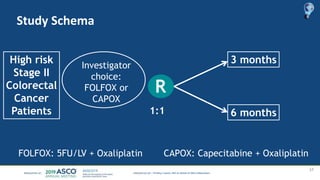
Study Schema
17
Timothy J Iveson, MD on behalf of IDEA collaborators
High risk
Stage II
Colorectal
Cancer
Patients
R
3 months
6 months
Investigator
choice:
FOLFOX or
CAPOX
1:1
FOLFOX: 5FU/LV + Oxaliplatin CAPOX: Capecitabine + Oxaliplatin
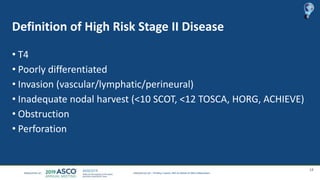
Definition of High Risk Stage II Disease
• T4
• Poorly differentiated
• Invasion (vascular/lymphatic/perineural)
• Inadequate nodal harvest (<10 SCOT, <12 TOSCA, HORG, ACHIEVE)
• Obstruction
• Perforation
18
Timothy J Iveson, MD on behalf of IDEA collaborators
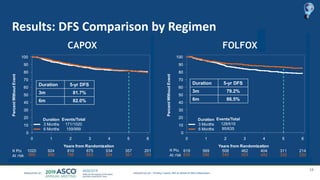
Results: DFS Comparison by Regimen
19
Timothy J Iveson, MD on behalf of IDEA collaborators
0 1 2 3 4 5 6
Years from Randomization
0
10
20
30
40
50
60
70
80
90
100
PercentWithoutEvent
0 1 2 3 4 5 6
Years from Randomization
0
10
20
30
40
50
60
70
80
90
100
PercentWithoutEvent
6 Months
3 Months
Duration
1020 924 810 675 534 357 201
999 906 786 653 504 361 185
0 1 2 3 4 5 6
Years from Randomization
0
10
20
30
40
50
60
70
80
90
100
PercentWithoutEvent
0 1 2 3 4 5 6
Years from Randomization
0
10
20
30
40
50
60
70
80
90
100
PercentWithoutEvent
6 Months
3 Months
Duration
619 569 508 462 404 311 214
635 586 545 503 442 332 220
CAPOX FOLFOX
N Pts
At risk
N Pts
At risk
Duration 5-yr DFS
3m 81.7%
6m 82.0%
Duration 5-yr DFS
3m 79.2%
6m 86.5%
Events/Total
171/1020
159/999
Events/Total
128/619
95/635
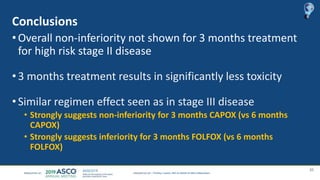
Conclusions
•Overall non-inferiority not shown for 3 months treatment
for high risk stage II disease
•3 months treatment results in significantly less toxicity
•Similar regimen effect seen as in stage III disease
• Strongly suggests non-inferiority for 3 months CAPOX (vs 6 months
CAPOX)
• Strongly suggests inferiority for 3 months FOLFOX (vs 6 months
FOLFOX)
20
Timothy J Iveson, MD on behalf of IDEA collaborators
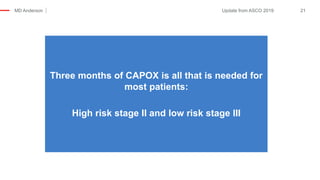
MD Anderson 21Update from ASCO 2019
Three months of CAPOX is all that is needed for
most patients:
High risk stage II and low risk stage III
MD Anderson
• Early stage cancer (stage I-III)
• Neoadjuvant therapy for colon cancer
• Duration of therapy for stage II
• Liquid biopsy for detection of residual disease after surgery
• Advanced cancer : stage IV
• Aggressive chemotherapy
• Treatment for BRAF V600E mutation
• Regorafenib + Nivolumab
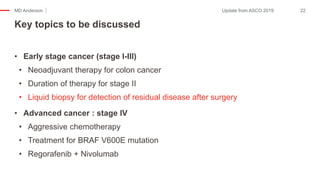
Key topics to be discussed
22Update from ASCO 2019
Slide 3
Presented By Ryan Corcoran at 2019 ASCO Annual Meeting
MD Anderson
Slide 25
Presented By Ryan Corcoran at 2019 ASCO Annual Meeting
ctDNA as Prognostic Factor in Stage II/III CRC
Presented By Michael Overman at 2019 ASCO Annual Meeting
NRG-GI005: Phase II/III study of ctDNA as a predictive marker for response to adjuvant chemotherapy in patients with stage II colon cancer
Presented By Ryan Corcoran at 2019 ASCO Annual Meeting
MD Anderson 27Update from ASCO 2019
Circulating DNA (Liquid Biopsy) may be the next
major advance in detecting and treating CRC
First studies are starting now….
MD Anderson
• Early stage cancer (stage I-III)
• Neoadjuvant therapy for colon cancer
• Duration of therapy for stage II
• Liquid biopsy for detection of residual disease after surgery
• Advanced cancer : stage IV
• Aggressive chemotherapy
• Treatment for BRAF V600E mutation
• Regorafenib + Nivolumab
Key topics to be discussed
28Update from ASCO 2019
MD Anderson
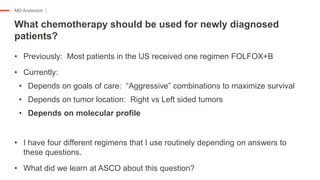
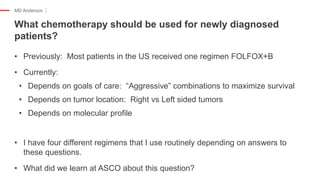
• Previously: Most patients in the US received one regimen FOLFOX+B
• Currently:
• Depends on goals of care: “Aggressive” combinations to maximize survival
• Depends on tumor location: Right vs Left sided tumors
• Depends on molecular profile
• I have four different regimens that I use routinely depending on answers to
these questions.
• What did we learn at ASCO about this question?
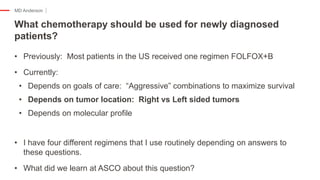
What chemotherapy should be used for newly diagnosed
patients?
MD Anderson
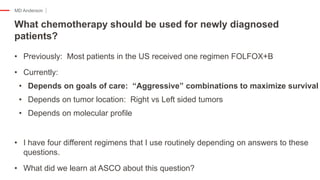
• Previously: Most patients in the US received one regimen FOLFOX+B
• Currently:
• Depends on goals of care: “Aggressive” combinations to maximize survival
• Depends on tumor location: Right vs Left sided tumors
• Depends on molecular profile
• I have four different regimens that I use routinely depending on answers to these
questions.
• What did we learn at ASCO about this question?
What chemotherapy should be used for newly diagnosed
patients?
MD AndersonMD Anderson
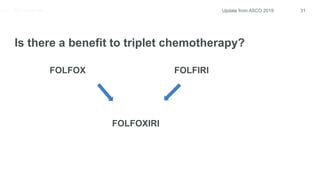
Is there a benefit to triplet chemotherapy?
31Update from ASCO 2019
FOLFOX FOLFIRI
FOLFOXIRI
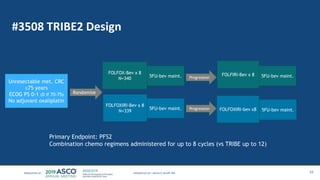
#3508 TRIBE2 Design
32Hanna K. Sanoff, MD
Unresectable met. CRC
≤75 years
ECOG PS 0-1 (0 if 70-75)
No adjuvant oxaliplatin
Randomize
FOLFOX-Bev x 8
N=340
FOLFOXIRI-Bev x 8
N=339
Progression
FOLFIRI-Bev x 8
Progression FOLFOXIRI-bev x85FU-bev maint.
5FU-bev maint.
Primary Endpoint: PFS2
Combination chemo regimens administered for up to 8 cycles (vs TRIBE up to 12)
5FU-bev maint.
5FU-bev maint.
Median follow up =
30.6 mos
Arm A
N = 340
Arm B
N = 339
Events, N (%) 217 (64%) 191 (56%)
Median OS, mos 22.6 27.6
HR = 0.81 [95%CI: 0.67-0.98] p=0.033
Overall Survival – preliminary results
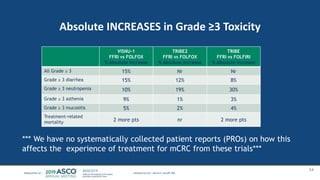
Absolute INCREASES in Grade ≥3 Toxicity
34
VISNU-1
FFRI vs FOLFOX
% Absolute Increase
TRIBE2
FFRI vs FOLFOX
% Absolute Increase
TRIBE
FFRI vs FOLFIRI
% Absolute Increase
All Grade ≥ 3 15% Nr Nr
Grade ≥ 3 diarrhea 15% 12% 8%
Grade ≥ 3 neutropenia 10% 19% 30%
Grade ≥ 3 asthenia 9% 1% 3%
Grade ≥ 3 mucositis 5% 2% 4%
Treatment-related
mortality 2 more pts nr 2 more pts
*** We have no systematically collected patient reports (PROs) on how this
affects the experience of treatment for mCRC from these trials***
Hanna K. Sanoff, MD
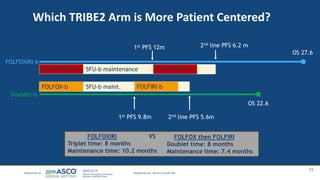
Which TRIBE2 Arm is More Patient Centered?
35
FOLFOXIRI-b
Doublet-b
OS 27.6
OS 22.6
1st PFS 12m 2nd line PFS 6.2 m
1st PFS 9.8m 2nd line PFS 5.6m
FOLFIRINOX-b
FOLFOX-b
5FU-b maintenance
FOLFOXIRI
Triplet time: 8 months
Maintenance time: 10.2 months
FOLFOX then FOLFIRI
Doublet time: 8 months
Maintenance time: 7.4 months
VS
5FU-b maint.
Hanna K. Sanoff, MD
FOLFIRINOX-b
FOLFIRI-b
MD Anderson
• Previously: Most patients in the US received one regimen FOLFOX+B
• Currently:
• Depends on goals of care: “Aggressive” combinations to maximize survival
• Depends on tumor location: Right vs Left sided tumors
• Depends on molecular profile
• I have four different regimens that I use routinely depending on answers to
these questions.
• What did we learn at ASCO about this question?
What chemotherapy should be used for newly diagnosed
patients?
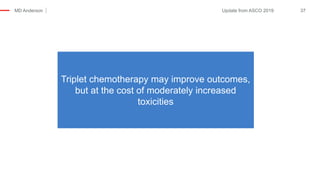
MD Anderson 37Update from ASCO 2019
Triplet chemotherapy may improve outcomes,
but at the cost of moderately increased
toxicities
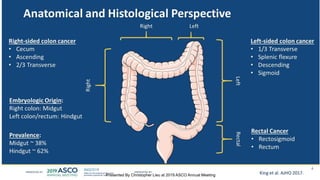
Anatomical and Histological Perspective
Presented By Christopher Lieu at 2019 ASCO Annual Meeting
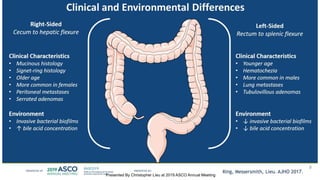
Clinical and Environmental Differences
Presented By Christopher Lieu at 2019 ASCO Annual Meeting
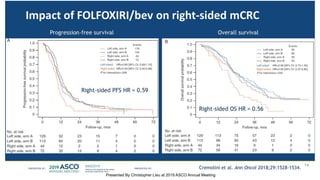
Impact of FOLFOXIRI/bev on right-sided mCRC
Presented By Christopher Lieu at 2019 ASCO Annual Meeting
MD Anderson 41Update from ASCO 2019
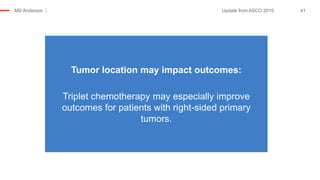
Tumor location may impact outcomes:
Triplet chemotherapy may especially improve
outcomes for patients with right-sided primary
tumors.
MD Anderson
• Previously: Most patients in the US received one regimen FOLFOX+B
• Currently:
• Depends on goals of care: “Aggressive” combinations to maximize survival
• Depends on tumor location: Right vs Left sided tumors
• Depends on molecular profile
• I have four different regimens that I use routinely depending on answers to
these questions.
• What did we learn at ASCO about this question?
What chemotherapy should be used for newly diagnosed
patients?
MD Anderson
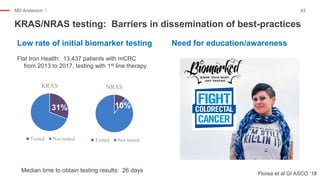
KRAS/NRAS testing: Barriers in dissemination of best-practices
43
KRAS
Tested Not tested
31%
NRAS
Tested Not tested
Median time to obtain testing results: 26 days
Low rate of initial biomarker testing
Flat Iron Health: 13,437 patients with mCRC
from 2013 to 2017, testing with 1st line therapy
Florea et al GI ASCO ‘18
10%
Need for education/awareness
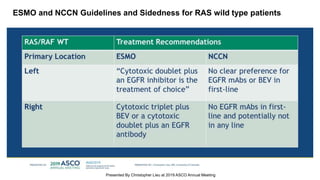
ESMO and NCCN Guidelines and Sidedness for RAS wild type patients
Presented By Christopher Lieu at 2019 ASCO Annual Meeting
MD Anderson
100
80
60
40
20
0
0 12 24 36 48 60 72 84 96 108
Time From Study Entry, Months
%EventFree
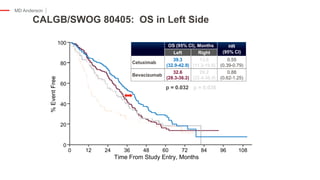
CALGB/SWOG 80405: OS in Left Side
Bevacizumab
32.6
(28.3-36.2)
29.2
(22.4-36.9)
0.88
(0.62-1.25)
*Adjusted for biologic, protocol CT, prior adjuvant therapy, prior RT, age, sex, synchronous disease, in place primary, liver metastases.
Venook A, et al. Presented at: ESMO. 2016.
OS (95% CI), Months HR
(95% CI)Left Right
Cetuximab
39.3
(32.9-42.9)
13.6
(11.3-19.0)
0.55
(0.39-0.79)
p = 0.032 p = 0.036
MD Anderson
100
80
60
40
20
0
0 12 24 36 48 60 72 84 96 108
Time From Study Entry, Months
%EventFree
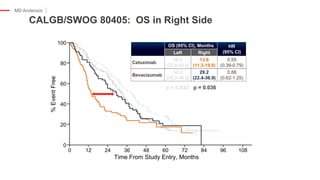
CALGB/SWOG 80405: OS in Right Side
*Adjusted for biologic, protocol CT, prior adjuvant therapy, prior RT, age, sex, synchronous disease, in place primary, liver metastases.
Venook A, et al. Presented at: ESMO. 2016.
Bevacizumab
32.6
(28.3-36.2)
29.2
(22.4-36.9)
0.88
(0.62-1.25)
OS (95% CI), Months HR
(95% CI)Left Right
Cetuximab
39.3
(32.9-42.9)
13.6
(11.3-19.0)
0.55
(0.39-0.79)
p = 0.032 p = 0.036
MD Anderson 47Update from ASCO 2019
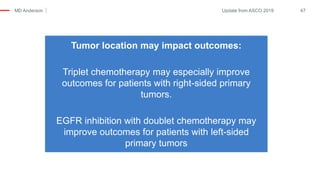
Tumor location may impact outcomes:
Triplet chemotherapy may especially improve
outcomes for patients with right-sided primary
tumors.
EGFR inhibition with doublet chemotherapy may
improve outcomes for patients with left-sided
primary tumors
MD Anderson
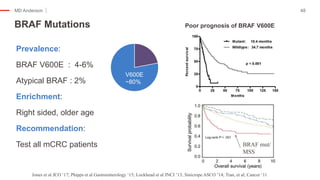
BRAF Mutations
48
BRAF mut/
MSS
Jones et al JCO ‘17; Phipps et al Gastroenterology ‘15; Lockhead et al JNCI ’13; Sinicrope ASCO ’14; Tran, et al, Cancer ‘11
Prevalence:
BRAF V600E : 4-6%
Atypical BRAF : 2%
Enrichment:
Right sided, older age
Recommendation:
Test all mCRC patients
V600E
~80%
Poor prognosis of BRAF V600E
MD Anderson
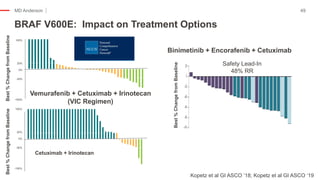
BRAF V600E: Impact on Treatment Options
49
Vemurafenib + Cetuximab + Irinotecan
(VIC Regimen)
100%
20%
-100%
0%
-30%
Best%ChangefromBaseline
Cetuximab + Irinotecan
100%
20%
-100%
0%
-30%
Binimetinib + Encorafenib + Cetuximab
Kopetz et al GI ASCO ‘18; Kopetz et al GI ASCO ‘19
Best%ChangefromBaselineBest%ChangefromBaseline
Safety Lead-In
48% RR
MD Anderson
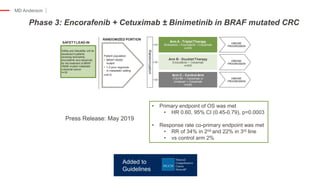
Phase 3: Encorafenib + Cetuximab ± Binimetinib in BRAF mutated CRC
50
Arm A - TripletTherapy
Binimetinib + Encorafenib + Cetuximab
n=205
Arm B - DoubletTherapy
Encorafenib + Cetuximab
n=205
Arm C - ControlArm
FOLFIRI + Cetuximab or
irinotecan + Cetuximab
n=205
DISEASE
PROGRESSION
Randomization
DISEASE
PROGRESSION
DISEASE
PROGRESSION
Patient population
• BRAF V600E
mutant
• 1-2 prior regimens
in metastatic setting
n=615
Safety and tolerability will be
assessed in patients
receiving binimetinib,
encorafenib and cetuximab
for the treatment of BRAF
V600E-mutant metastatic
colorectal cancer
n=30
SAFETYLEAD-IN
RANDOMIZED PORTION
Safety and tolerability will be
assessed in patients
receiving binimetinib,
encorafenib and cetuximab
for the treatment of BRAF
V600E-mutant metastatic
colorectal cancer
n=30
Press Release: May 2019
• Primary endpoint of OS was met
• HR 0.60, 95% CI (0.45-0.79), p=0.0003
• Response rate co-primary endpoint was met
• RR of 34% in 2nd and 22% in 3rd line
• vs control arm 2%
Added to
Guidelines
MD Anderson 51Update from ASCO 2019
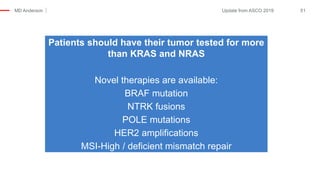
Patients should have their tumor tested for more
than KRAS and NRAS
Novel therapies are available:
BRAF mutation
NTRK fusions
POLE mutations
HER2 amplifications
MSI-High / deficient mismatch repair
MD Anderson
• Early stage cancer (stage I-III)
• Neoadjuvant therapy for colon cancer
• Duration of therapy for stage II
• Liquid biopsy for detection of residual disease after surgery
• Advanced cancer : stage IV
• Aggressive chemotherapy
• Treatment for BRAF V600E mutation
• Regorafenib + Nivolumab
Key topics to be discussed
52Update from ASCO 2019
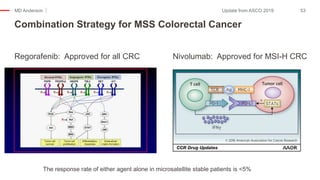
MD Anderson
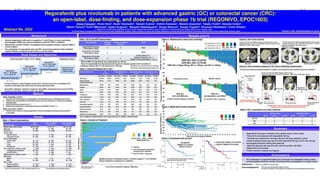
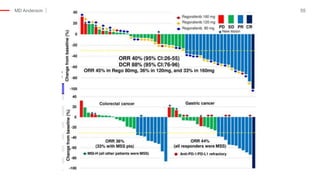
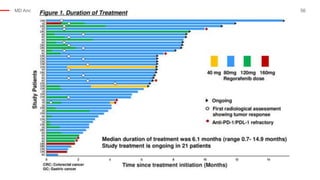
Regorafenib: Approved for all CRC
Combination Strategy for MSS Colorectal Cancer
53Update from ASCO 2019
Nivolumab: Approved for MSI-H CRC
The response rate of either agent alone in microsatellite stable patients is <5%
MD Anderson 54
MD Anderson 55
MD Anderson 56
MD Anderson 57Update from ASCO 2019
Keep an eye on this combination
But still needs confirmation in larger studies
MD Anderson
• Early stage cancer (stage I-III)
• Neoadjuvant therapy for colon cancer is possible
• Only 3 months of CAPOX is needed for high-risk stage II
• Liquid biopsy for detection of residual disease after surgery is coming
• Advanced cancer : stage IV
• Aggressive chemotherapy is beneficial for a subset of patients, but complex
• New treatments for BRAF V600E tumors
• Regorafenib + Nivolumab looks promising
Key conclusions
58Update from ASCO 2019
Q
&
A
SNAP A #STRONGARMSELFIE
In 2018, up to $55,000 will be donated thanks to our
sponsors: Bayer, Fujifilm, Myriad Genetics and Taiho
Oncology!
Flex a “strong arm” & post it to Twitter or Instagram using the
hashtag #StrongArmSelfie
CONTACT US
CALL TOLL FREE
1.877.427.2111

Post ASCO Webinar 2019

  • 1.
  • 2.
    TODAY’S WEBINAR  SPEAKER(S) Scott Kopetz, MD, PhD  QUESTIONS  Ask a question in the panel on the RIGHT SIDE of your screen  WEBINAR ARCHIVE  FightCRC.org/webinar  TWEET ALONG  Follow along via Twitter – use the hashtag #CRCWebinar
  • 3.
    RESOURCES TABOO-TY PODCAST MINIMAGAZINES CLINICAL TRIAL FINDER
  • 4.
    FIGHTCOLORECTALCANCERDISCLAIMER The information andservices provided by Fight Colorectal Cancer are for general informational purposes only. The information and services are not intended to be substitutes for professional medical advice, diagnoses or treatment. If you are ill, or suspect that you are ill, see a doctor immediately. In an emergency, call 911 or go to the nearest emergency room. Fight Colorectal Cancer never recommends or endorses any specific physicians, products or treatments for any condition.
  • 5.
    ScottKopetz,MD,PhD Scott Kopetz, MD,PhD, FACP, associate professor, Department of Gastrointestinal Medical Oncology, Division of Cancer Medicine, The University of Texas MD Anderson Cancer Center Dr. Kopetz obtained his residency training in Internal Medicine at Duke University Medical Center, followed by a medical oncology fellowship at MD Anderson Cancer Center. He joined MD Anderson Cancer Center in 2006 as an Assistant Professor of Medicine in the Department of Gastrointestinal Medical Oncology. He subsequently completed a Ph.D. at MD Anderson in cancer biology with thesis focus on mechanisms of chemotherapy resistance in colorectal cancer. Dr. Kopetz is board- certified in Internal Medicine and in Medical Oncology. He has authored over 100 peer-reviewed articles, and is a senior editor for Clinical Cancer Research, and editorial board member on Journal of Clinical Oncology and JNCI. He is vice chair for colon cancer research in the NSABP/RTOG cooperative group, and member of the NIH Gastrointestinal Oncology Steering Committee. In addition, he was a recipient of peer-reviewed grants from American Society of Clinical Oncology and the National Institute of Health, among others. He is the principal investigator of several Phase I and II clinical trials, including the Assessment of Targeted Therapies Against Colorectal Cancer (ATTACC) study, a novel biomarker enrichment program for colorectal cancer. His research interests include the biology of refractory colorectal cancer and the development of novel therapeutics for molecularly distinct subsets of colorectal cancer patients.
  • 6.
    MD Anderson Scott Kopetz,MD, PhD June 25, 2019 Update from ASCO 2019
  • 7.
    MD Anderson • Earlystage cancer (stage I-III) • Neoadjuvant therapy for colon cancer • Duration of therapy for stage II • Liquid biopsy for detection of residual disease after surgery • Advanced cancer : stage IV • Aggressive chemotherapy • Treatment for BRAF V600E mutation • Regorafenib + Nivolumab Key topics to be discussed 7Update from ASCO 2019
  • 8.
    FOxTROT: Presented By MatthewSeymour at 2019 ASCO Annual Meeting
  • 9.
    Slide 3 Presented ByMatthew Seymour at 2019 ASCO Annual Meeting
  • 10.
    Slide 12 Presented ByMatthew Seymour at 2019 ASCO Annual Meeting
  • 11.
    Slide 11 Presented ByMatthew Seymour at 2019 ASCO Annual Meeting
  • 12.
    Primary outcome: 2-yearefficacy Presented By Matthew Seymour at 2019 ASCO Annual Meeting
  • 13.
    MD Anderson 13Updatefrom ASCO 2019 Not yet clear if there is a strong advantage to chemotherapy before colon cancer surgery…. But promising. • Safe to do • Shrinks tumors and makes surgery more successful in removing all the cancer • We will be doing more of this as standard practice
  • 14.
    MD Anderson • Earlystage cancer (stage I-III) • Neoadjuvant therapy for colon cancer • Duration of therapy for stage II • Liquid biopsy for detection of residual disease after surgery • Advanced cancer : stage IV • Aggressive chemotherapy • Treatment for BRAF V600E mutation • Regorafenib + Nivolumab Key topics to be discussed 14Update from ASCO 2019
  • 15.
    Background and rationale(Cont) •IDEA showed non-inferiority for low risk Stage III colon cancer (T1-3, N1) treated with 3 months CAPOX1 •Oxaliplatin is associated with cumulative dose-dependent neurotoxicity  12.5% grade 3 neuropathy with 6 months of FOLFOX2 15 Timothy J Iveson, MD on behalf of IDEA collaborators 1Grothey et al NEJM 2018 2Andre et al JCO 2009
  • 16.
    Prospective pooled analysisof four randomised trials investigating duration of adjuvant oxaliplatin- based therapy (3 vs 6 months) for patients with high-risk stage II colorectal cancer: The IDEA (International Duration Evaluation of Adjuvant Chemotherapy) Collaboration Timothy J. Iveson, Alberto F. Sobrero, Takayuki Yoshino, Ioannis Sougklakos, Fang- Shu Ou, Jeffrey P. Meyers, Qian Shi, Mark P. Saunders, Roberto Labianca, Takeharu Yamanaka, Ioannis Boukovinas, Niels H. Hollander, Valter Torri, Kentaro Yamazaki, Vassilis Georgoulias, Sara Lonardi, Andrea Harkin, Gerardo Rosati, James Paul 16Timothy J Iveson, MD on behalf of IDEA collaborators
  • 17.
    Study Schema 17 Timothy JIveson, MD on behalf of IDEA collaborators High risk Stage II Colorectal Cancer Patients R 3 months 6 months Investigator choice: FOLFOX or CAPOX 1:1 FOLFOX: 5FU/LV + Oxaliplatin CAPOX: Capecitabine + Oxaliplatin
  • 18.
    Definition of HighRisk Stage II Disease • T4 • Poorly differentiated • Invasion (vascular/lymphatic/perineural) • Inadequate nodal harvest (<10 SCOT, <12 TOSCA, HORG, ACHIEVE) • Obstruction • Perforation 18 Timothy J Iveson, MD on behalf of IDEA collaborators
  • 19.
    Results: DFS Comparisonby Regimen 19 Timothy J Iveson, MD on behalf of IDEA collaborators 0 1 2 3 4 5 6 Years from Randomization 0 10 20 30 40 50 60 70 80 90 100 PercentWithoutEvent 0 1 2 3 4 5 6 Years from Randomization 0 10 20 30 40 50 60 70 80 90 100 PercentWithoutEvent 6 Months 3 Months Duration 1020 924 810 675 534 357 201 999 906 786 653 504 361 185 0 1 2 3 4 5 6 Years from Randomization 0 10 20 30 40 50 60 70 80 90 100 PercentWithoutEvent 0 1 2 3 4 5 6 Years from Randomization 0 10 20 30 40 50 60 70 80 90 100 PercentWithoutEvent 6 Months 3 Months Duration 619 569 508 462 404 311 214 635 586 545 503 442 332 220 CAPOX FOLFOX N Pts At risk N Pts At risk Duration 5-yr DFS 3m 81.7% 6m 82.0% Duration 5-yr DFS 3m 79.2% 6m 86.5% Events/Total 171/1020 159/999 Events/Total 128/619 95/635
  • 20.
    Conclusions •Overall non-inferiority notshown for 3 months treatment for high risk stage II disease •3 months treatment results in significantly less toxicity •Similar regimen effect seen as in stage III disease • Strongly suggests non-inferiority for 3 months CAPOX (vs 6 months CAPOX) • Strongly suggests inferiority for 3 months FOLFOX (vs 6 months FOLFOX) 20 Timothy J Iveson, MD on behalf of IDEA collaborators
  • 21.
    MD Anderson 21Updatefrom ASCO 2019 Three months of CAPOX is all that is needed for most patients: High risk stage II and low risk stage III
  • 22.
    MD Anderson • Earlystage cancer (stage I-III) • Neoadjuvant therapy for colon cancer • Duration of therapy for stage II • Liquid biopsy for detection of residual disease after surgery • Advanced cancer : stage IV • Aggressive chemotherapy • Treatment for BRAF V600E mutation • Regorafenib + Nivolumab Key topics to be discussed 22Update from ASCO 2019
  • 23.
    Slide 3 Presented ByRyan Corcoran at 2019 ASCO Annual Meeting
  • 24.
    MD Anderson Slide 25 PresentedBy Ryan Corcoran at 2019 ASCO Annual Meeting
  • 25.
    ctDNA as PrognosticFactor in Stage II/III CRC Presented By Michael Overman at 2019 ASCO Annual Meeting
  • 26.
    NRG-GI005: Phase II/IIIstudy of ctDNA as a predictive marker for response to adjuvant chemotherapy in patients with stage II colon cancer Presented By Ryan Corcoran at 2019 ASCO Annual Meeting
  • 27.
    MD Anderson 27Updatefrom ASCO 2019 Circulating DNA (Liquid Biopsy) may be the next major advance in detecting and treating CRC First studies are starting now….
  • 28.
    MD Anderson • Earlystage cancer (stage I-III) • Neoadjuvant therapy for colon cancer • Duration of therapy for stage II • Liquid biopsy for detection of residual disease after surgery • Advanced cancer : stage IV • Aggressive chemotherapy • Treatment for BRAF V600E mutation • Regorafenib + Nivolumab Key topics to be discussed 28Update from ASCO 2019
  • 29.
    MD Anderson • Previously:Most patients in the US received one regimen FOLFOX+B • Currently: • Depends on goals of care: “Aggressive” combinations to maximize survival • Depends on tumor location: Right vs Left sided tumors • Depends on molecular profile • I have four different regimens that I use routinely depending on answers to these questions. • What did we learn at ASCO about this question? What chemotherapy should be used for newly diagnosed patients?
  • 30.
    MD Anderson • Previously:Most patients in the US received one regimen FOLFOX+B • Currently: • Depends on goals of care: “Aggressive” combinations to maximize survival • Depends on tumor location: Right vs Left sided tumors • Depends on molecular profile • I have four different regimens that I use routinely depending on answers to these questions. • What did we learn at ASCO about this question? What chemotherapy should be used for newly diagnosed patients?
  • 31.
    MD AndersonMD Anderson Isthere a benefit to triplet chemotherapy? 31Update from ASCO 2019 FOLFOX FOLFIRI FOLFOXIRI
  • 32.
    #3508 TRIBE2 Design 32HannaK. Sanoff, MD Unresectable met. CRC ≤75 years ECOG PS 0-1 (0 if 70-75) No adjuvant oxaliplatin Randomize FOLFOX-Bev x 8 N=340 FOLFOXIRI-Bev x 8 N=339 Progression FOLFIRI-Bev x 8 Progression FOLFOXIRI-bev x85FU-bev maint. 5FU-bev maint. Primary Endpoint: PFS2 Combination chemo regimens administered for up to 8 cycles (vs TRIBE up to 12) 5FU-bev maint. 5FU-bev maint.
  • 33.
    Median follow up= 30.6 mos Arm A N = 340 Arm B N = 339 Events, N (%) 217 (64%) 191 (56%) Median OS, mos 22.6 27.6 HR = 0.81 [95%CI: 0.67-0.98] p=0.033 Overall Survival – preliminary results
  • 34.
    Absolute INCREASES inGrade ≥3 Toxicity 34 VISNU-1 FFRI vs FOLFOX % Absolute Increase TRIBE2 FFRI vs FOLFOX % Absolute Increase TRIBE FFRI vs FOLFIRI % Absolute Increase All Grade ≥ 3 15% Nr Nr Grade ≥ 3 diarrhea 15% 12% 8% Grade ≥ 3 neutropenia 10% 19% 30% Grade ≥ 3 asthenia 9% 1% 3% Grade ≥ 3 mucositis 5% 2% 4% Treatment-related mortality 2 more pts nr 2 more pts *** We have no systematically collected patient reports (PROs) on how this affects the experience of treatment for mCRC from these trials*** Hanna K. Sanoff, MD
  • 35.
    Which TRIBE2 Armis More Patient Centered? 35 FOLFOXIRI-b Doublet-b OS 27.6 OS 22.6 1st PFS 12m 2nd line PFS 6.2 m 1st PFS 9.8m 2nd line PFS 5.6m FOLFIRINOX-b FOLFOX-b 5FU-b maintenance FOLFOXIRI Triplet time: 8 months Maintenance time: 10.2 months FOLFOX then FOLFIRI Doublet time: 8 months Maintenance time: 7.4 months VS 5FU-b maint. Hanna K. Sanoff, MD FOLFIRINOX-b FOLFIRI-b
  • 36.
    MD Anderson • Previously:Most patients in the US received one regimen FOLFOX+B • Currently: • Depends on goals of care: “Aggressive” combinations to maximize survival • Depends on tumor location: Right vs Left sided tumors • Depends on molecular profile • I have four different regimens that I use routinely depending on answers to these questions. • What did we learn at ASCO about this question? What chemotherapy should be used for newly diagnosed patients?
  • 37.
    MD Anderson 37Updatefrom ASCO 2019 Triplet chemotherapy may improve outcomes, but at the cost of moderately increased toxicities
  • 38.
    Anatomical and HistologicalPerspective Presented By Christopher Lieu at 2019 ASCO Annual Meeting
  • 39.
    Clinical and EnvironmentalDifferences Presented By Christopher Lieu at 2019 ASCO Annual Meeting
  • 40.
    Impact of FOLFOXIRI/bevon right-sided mCRC Presented By Christopher Lieu at 2019 ASCO Annual Meeting
  • 41.
    MD Anderson 41Updatefrom ASCO 2019 Tumor location may impact outcomes: Triplet chemotherapy may especially improve outcomes for patients with right-sided primary tumors.
  • 42.
    MD Anderson • Previously:Most patients in the US received one regimen FOLFOX+B • Currently: • Depends on goals of care: “Aggressive” combinations to maximize survival • Depends on tumor location: Right vs Left sided tumors • Depends on molecular profile • I have four different regimens that I use routinely depending on answers to these questions. • What did we learn at ASCO about this question? What chemotherapy should be used for newly diagnosed patients?
  • 43.
    MD Anderson KRAS/NRAS testing:Barriers in dissemination of best-practices 43 KRAS Tested Not tested 31% NRAS Tested Not tested Median time to obtain testing results: 26 days Low rate of initial biomarker testing Flat Iron Health: 13,437 patients with mCRC from 2013 to 2017, testing with 1st line therapy Florea et al GI ASCO ‘18 10% Need for education/awareness
  • 44.
    ESMO and NCCNGuidelines and Sidedness for RAS wild type patients Presented By Christopher Lieu at 2019 ASCO Annual Meeting
  • 45.
    MD Anderson 100 80 60 40 20 0 0 1224 36 48 60 72 84 96 108 Time From Study Entry, Months %EventFree CALGB/SWOG 80405: OS in Left Side Bevacizumab 32.6 (28.3-36.2) 29.2 (22.4-36.9) 0.88 (0.62-1.25) *Adjusted for biologic, protocol CT, prior adjuvant therapy, prior RT, age, sex, synchronous disease, in place primary, liver metastases. Venook A, et al. Presented at: ESMO. 2016. OS (95% CI), Months HR (95% CI)Left Right Cetuximab 39.3 (32.9-42.9) 13.6 (11.3-19.0) 0.55 (0.39-0.79) p = 0.032 p = 0.036
  • 46.
    MD Anderson 100 80 60 40 20 0 0 1224 36 48 60 72 84 96 108 Time From Study Entry, Months %EventFree CALGB/SWOG 80405: OS in Right Side *Adjusted for biologic, protocol CT, prior adjuvant therapy, prior RT, age, sex, synchronous disease, in place primary, liver metastases. Venook A, et al. Presented at: ESMO. 2016. Bevacizumab 32.6 (28.3-36.2) 29.2 (22.4-36.9) 0.88 (0.62-1.25) OS (95% CI), Months HR (95% CI)Left Right Cetuximab 39.3 (32.9-42.9) 13.6 (11.3-19.0) 0.55 (0.39-0.79) p = 0.032 p = 0.036
  • 47.
    MD Anderson 47Updatefrom ASCO 2019 Tumor location may impact outcomes: Triplet chemotherapy may especially improve outcomes for patients with right-sided primary tumors. EGFR inhibition with doublet chemotherapy may improve outcomes for patients with left-sided primary tumors
  • 48.
    MD Anderson BRAF Mutations 48 BRAFmut/ MSS Jones et al JCO ‘17; Phipps et al Gastroenterology ‘15; Lockhead et al JNCI ’13; Sinicrope ASCO ’14; Tran, et al, Cancer ‘11 Prevalence: BRAF V600E : 4-6% Atypical BRAF : 2% Enrichment: Right sided, older age Recommendation: Test all mCRC patients V600E ~80% Poor prognosis of BRAF V600E
  • 49.
    MD Anderson BRAF V600E:Impact on Treatment Options 49 Vemurafenib + Cetuximab + Irinotecan (VIC Regimen) 100% 20% -100% 0% -30% Best%ChangefromBaseline Cetuximab + Irinotecan 100% 20% -100% 0% -30% Binimetinib + Encorafenib + Cetuximab Kopetz et al GI ASCO ‘18; Kopetz et al GI ASCO ‘19 Best%ChangefromBaselineBest%ChangefromBaseline Safety Lead-In 48% RR
  • 50.
    MD Anderson Phase 3:Encorafenib + Cetuximab ± Binimetinib in BRAF mutated CRC 50 Arm A - TripletTherapy Binimetinib + Encorafenib + Cetuximab n=205 Arm B - DoubletTherapy Encorafenib + Cetuximab n=205 Arm C - ControlArm FOLFIRI + Cetuximab or irinotecan + Cetuximab n=205 DISEASE PROGRESSION Randomization DISEASE PROGRESSION DISEASE PROGRESSION Patient population • BRAF V600E mutant • 1-2 prior regimens in metastatic setting n=615 Safety and tolerability will be assessed in patients receiving binimetinib, encorafenib and cetuximab for the treatment of BRAF V600E-mutant metastatic colorectal cancer n=30 SAFETYLEAD-IN RANDOMIZED PORTION Safety and tolerability will be assessed in patients receiving binimetinib, encorafenib and cetuximab for the treatment of BRAF V600E-mutant metastatic colorectal cancer n=30 Press Release: May 2019 • Primary endpoint of OS was met • HR 0.60, 95% CI (0.45-0.79), p=0.0003 • Response rate co-primary endpoint was met • RR of 34% in 2nd and 22% in 3rd line • vs control arm 2% Added to Guidelines
  • 51.
    MD Anderson 51Updatefrom ASCO 2019 Patients should have their tumor tested for more than KRAS and NRAS Novel therapies are available: BRAF mutation NTRK fusions POLE mutations HER2 amplifications MSI-High / deficient mismatch repair
  • 52.
    MD Anderson • Earlystage cancer (stage I-III) • Neoadjuvant therapy for colon cancer • Duration of therapy for stage II • Liquid biopsy for detection of residual disease after surgery • Advanced cancer : stage IV • Aggressive chemotherapy • Treatment for BRAF V600E mutation • Regorafenib + Nivolumab Key topics to be discussed 52Update from ASCO 2019
  • 53.
    MD Anderson Regorafenib: Approvedfor all CRC Combination Strategy for MSS Colorectal Cancer 53Update from ASCO 2019 Nivolumab: Approved for MSI-H CRC The response rate of either agent alone in microsatellite stable patients is <5%
  • 54.
  • 55.
  • 56.
  • 57.
    MD Anderson 57Updatefrom ASCO 2019 Keep an eye on this combination But still needs confirmation in larger studies
  • 58.
    MD Anderson • Earlystage cancer (stage I-III) • Neoadjuvant therapy for colon cancer is possible • Only 3 months of CAPOX is needed for high-risk stage II • Liquid biopsy for detection of residual disease after surgery is coming • Advanced cancer : stage IV • Aggressive chemotherapy is beneficial for a subset of patients, but complex • New treatments for BRAF V600E tumors • Regorafenib + Nivolumab looks promising Key conclusions 58Update from ASCO 2019
  • 59.
    Q & A SNAP A #STRONGARMSELFIE In2018, up to $55,000 will be donated thanks to our sponsors: Bayer, Fujifilm, Myriad Genetics and Taiho Oncology! Flex a “strong arm” & post it to Twitter or Instagram using the hashtag #StrongArmSelfie
  • 60.
    CONTACT US CALL TOLLFREE 1.877.427.2111