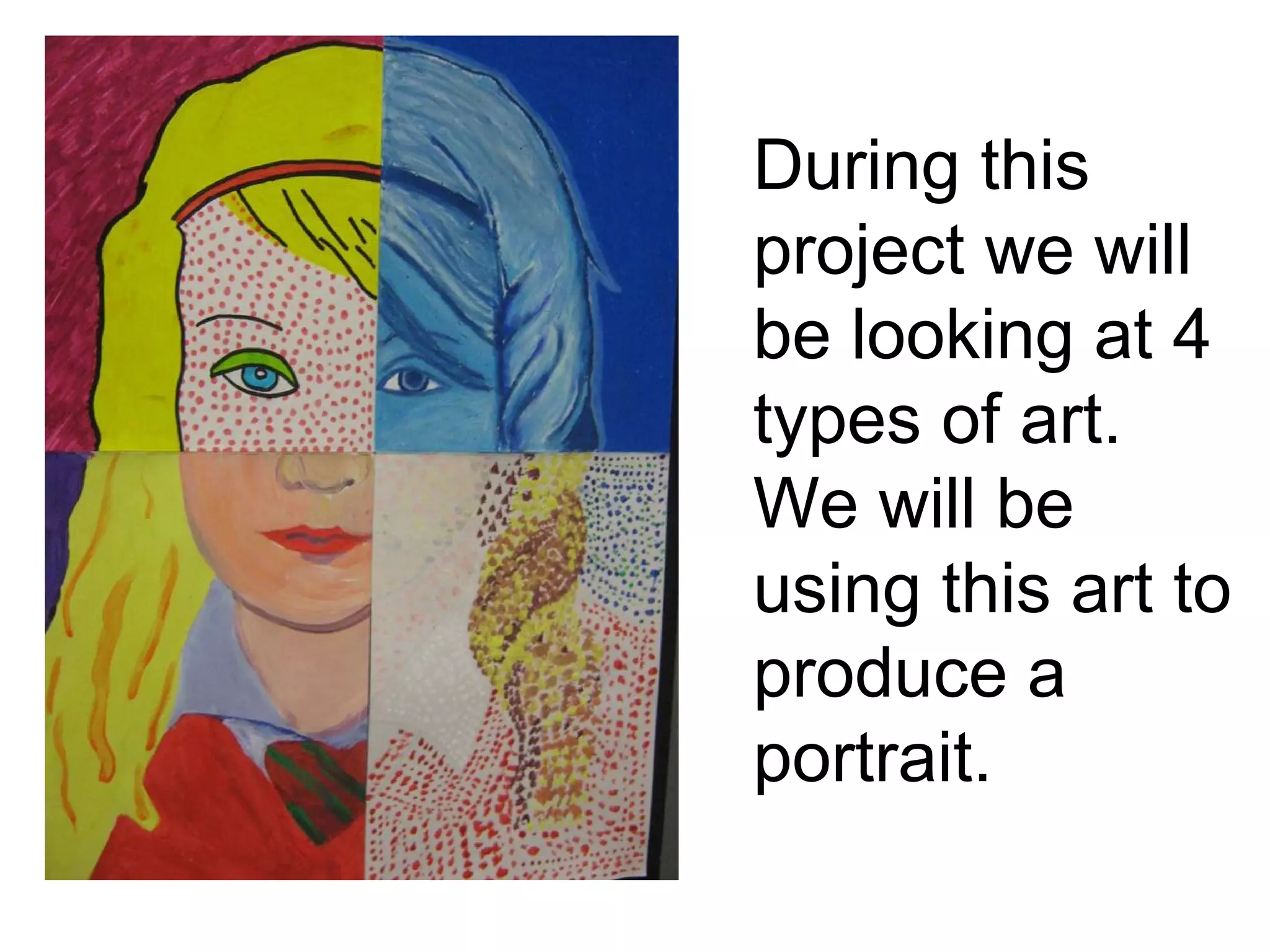
During this
project we will
be looking at 4
types of art.
We will be
using this art to
produce a
portrait.
Today we are learning;
• To understand Pointillism and
  how to make Pointillist art.

• To work in the style of another
  artist.
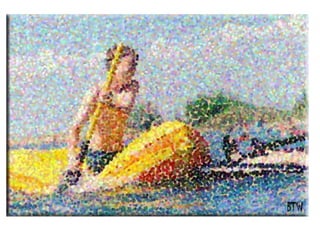
Pointillism
Some artists have found different ways of
painting.

 In the 19th Century, artists such as
Andre Derain and Georges Seurat used a
technique called the ‘Pointillist’ technique.

Instead of using brushstrokes to paint, they put
small dots of colour on the paper.
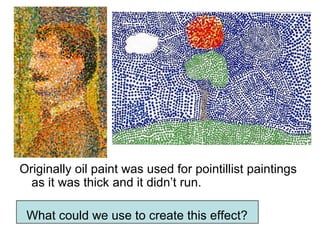
Originally oil paint was used for pointillist paintings
  as it was thick and it didn’t run.

 What could we use to create this effect?
• When we use this technique, we are mixing
  colours -- not by blending them together --
  but by placing two colours side by side.

• It's called the optical mixing of colours.

• For example, we may place clusters of red
  dots and surround them with yellow dots.
  Up close we will see red and yellow, but
  from a distance, we will see orange.
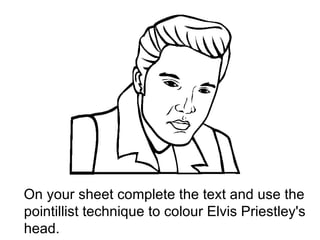
On your sheet complete the text and use the
pointillist technique to colour Elvis Priestley's
head.
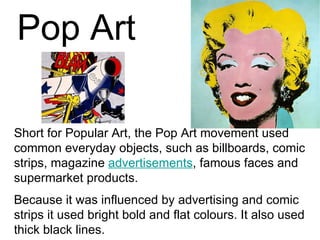
Pop Art

Short for Popular Art, the Pop Art movement used
common everyday objects, such as billboards, comic
strips, magazine advertisements, famous faces and
supermarket products.
Because it was influenced by advertising and comic
strips it used bright bold and flat colours. It also used
thick black lines.
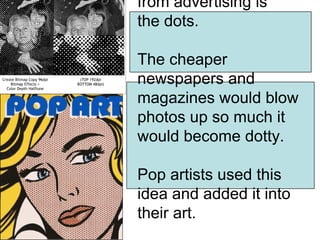
from advertising is
the dots.

The cheaper
newspapers and
magazines would blow
photos up so much it
would become dotty.

Pop artists used this
idea and added it into
their art.
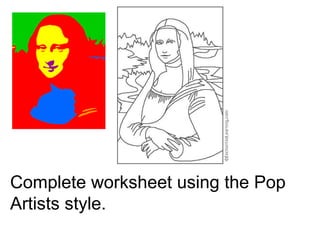
Complete worksheet using the Pop
Artists style.
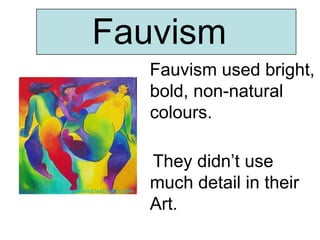
Fauvism
   Fauvism used bright,
   bold, non-natural
   colours.

   They didn’t use
   much detail in their
   Art.
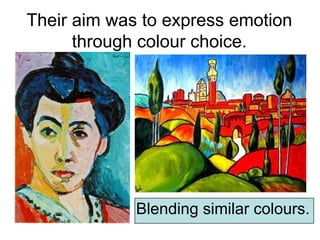
Their aim was to express emotion
      through colour choice.


             Blending similar colours.
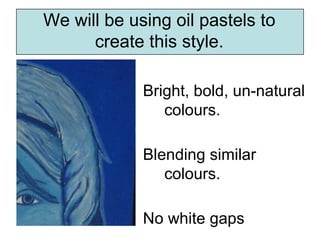
We will be using oil pastels to
      create this style.

             Bright, bold, un-natural
                colours.

             Blending similar
                colours.

             No white gaps
Tips when using oil pastels;
• Press on until all the white of the paper is
  covered.

• Blend the oil pastels by overlapping similar
  colours. (remember to put the lightest colour
  on first)

• Go back over until blended.
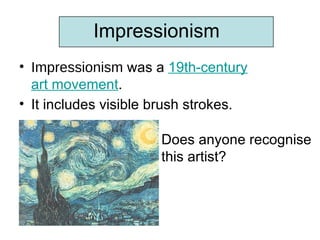
Impressionism
• Impressionism was a 19th-century
  art movement.
• It includes visible brush strokes.

                      Does anyone recognise
                      this artist?
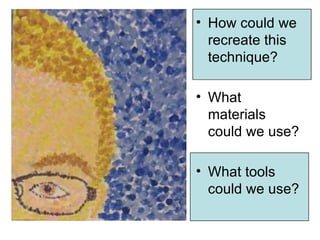
• How could we
  recreate this
  technique?

• What
  materials
  could we use?

• What tools
  could we use?

Portrait week 3

  • 1.
    During this project wewill be looking at 4 types of art. We will be using this art to produce a portrait.
  • 2.
    Today we arelearning; • To understand Pointillism and how to make Pointillist art. • To work in the style of another artist.
  • 3.
    Pointillism Some artists havefound different ways of painting. In the 19th Century, artists such as Andre Derain and Georges Seurat used a technique called the ‘Pointillist’ technique. Instead of using brushstrokes to paint, they put small dots of colour on the paper.
  • 4.
    Originally oil paintwas used for pointillist paintings as it was thick and it didn’t run. What could we use to create this effect?
  • 5.
    • When weuse this technique, we are mixing colours -- not by blending them together -- but by placing two colours side by side. • It's called the optical mixing of colours. • For example, we may place clusters of red dots and surround them with yellow dots. Up close we will see red and yellow, but from a distance, we will see orange.
  • 10.
    On your sheetcomplete the text and use the pointillist technique to colour Elvis Priestley's head.
  • 11.
    Pop Art Short forPopular Art, the Pop Art movement used common everyday objects, such as billboards, comic strips, magazine advertisements, famous faces and supermarket products. Because it was influenced by advertising and comic strips it used bright bold and flat colours. It also used thick black lines.
  • 12.
    from advertising is thedots. The cheaper newspapers and magazines would blow photos up so much it would become dotty. Pop artists used this idea and added it into their art.
  • 13.
    Complete worksheet usingthe Pop Artists style.
  • 14.
    Fauvism Fauvism used bright, bold, non-natural colours. They didn’t use much detail in their Art.
  • 15.
    Their aim wasto express emotion through colour choice. Blending similar colours.
  • 16.
    We will beusing oil pastels to create this style. Bright, bold, un-natural colours. Blending similar colours. No white gaps
  • 17.
    Tips when usingoil pastels; • Press on until all the white of the paper is covered. • Blend the oil pastels by overlapping similar colours. (remember to put the lightest colour on first) • Go back over until blended.
  • 18.
    Impressionism • Impressionism wasa 19th-century art movement. • It includes visible brush strokes. Does anyone recognise this artist?
  • 19.
    • How couldwe recreate this technique? • What materials could we use? • What tools could we use?