Unit 57: Photography and 
Photographic Practice 
Research of other photographers 
work (P1, M1, D1) 
Photographer: Yousuf Karsh
Theme or focus of images 
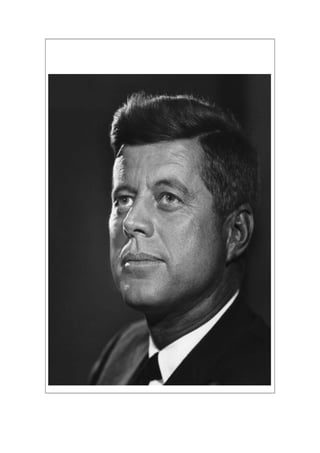
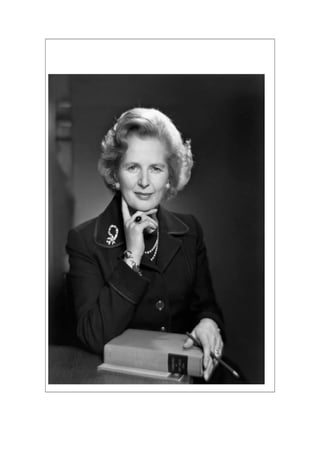
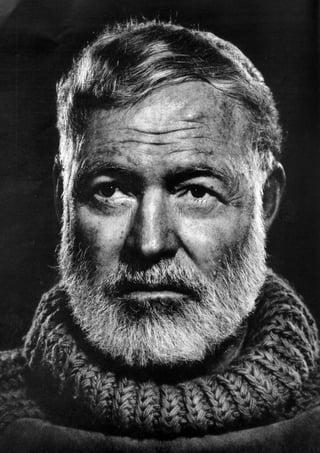
Yousuf Karsh took portrait photographs of some of the most important figures of the 
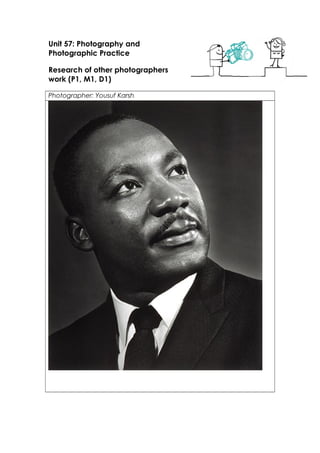
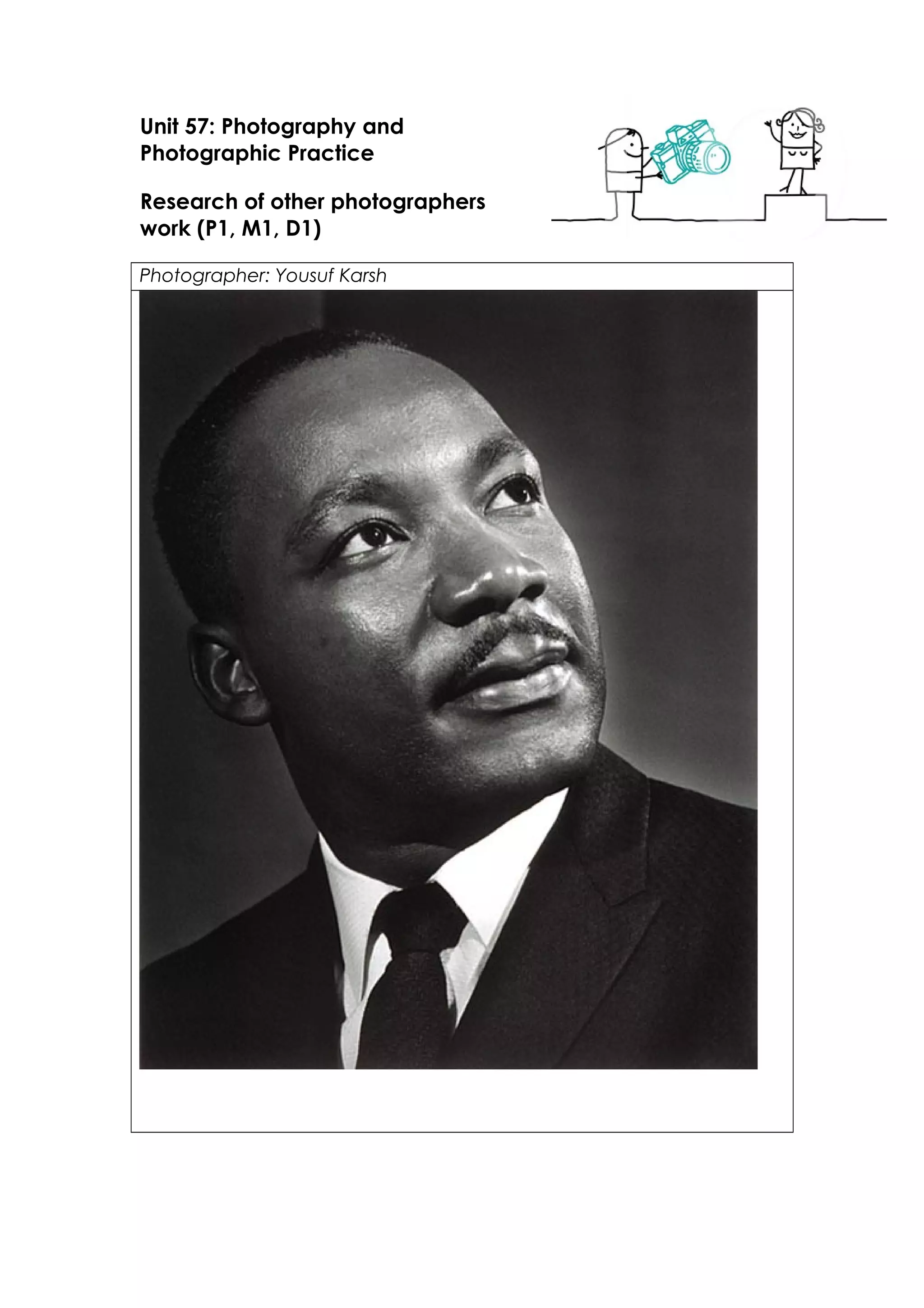
20th century- he captured their essence within one single frame. Above are six 
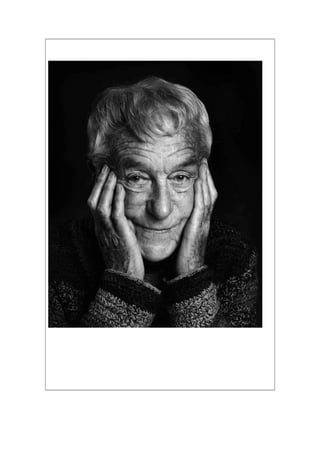
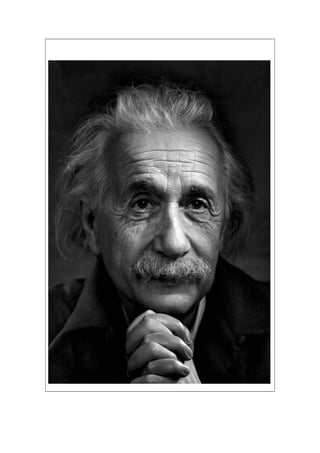
examples of his work- (1) Martin Luther King, (2) Jacques Henri Lartigue, (3) Albert 
Einstein, (4) J.F Kennedy, (5) Margaret Thatcher and (6) Princess Grace of Monaco. 
Yousuf Karsh makes his subjects the pinnacle of the photographs, he represents them 
in a way we believe them to be- he has portrayed them in a strong and powerful 
manor. Each image has a sense of truthfulness in it; the subjects photographed were 
well established people that were looked up too by many. We see this sense of 
nobleness and admiration in the images from the way they’re posed, they’re 
demeanour connotes heroism. Yousuf Karsh gave all his subjects a heroic persona, it’s 
a unique element of all his photographs; however he did in such a way that no two 
people were ever presented to us in the same way- the images stay true to the 
subjects and who they are. Each photo amplifies their personality and everything 
they’re about. 
All of his photos give us a certain perception of the subjects he’s photographed. 
Martin Luther King was one of the greatest leaders in the African-American Civil Rights 
Movement, he is famously known for his ‘I Have a Dream’ speech. This important 
element of his life is represented in his photo-. In the image we see him gazing into the 
distance- just like he has a ‘dream’- his pose is almost acting as a political statement, 
it’s everything he has worked and stands for. 
Einstein is one of the greatest physicists in history. The image shows him in a very 
benevolent way. His facial expression is very powerful in terms of emotion, Yousuf 
Karsh has made his eyes and hands the key focal point images- it’s as if he is 
contemplating something yet at the same time his hands are showing us that he 
stands proud of his achievements- we are made to feel proud. 
There’s a certain ideology that we relate to presidency that has been captured in the 
photo of J.F Kennedy. He has been posed in such a way that he portrays a 
stereotypical heroic persona. People viewed him as the protector of their country 
and themselves- Yousuf Karsh has given him this essence of immortalness. He’s been 
presented to us in such a way that when we see this image we’re made to feel as if 
he’s proud of his country. 
Margaret Thatcher was the first female president in the UK. This prestigiousness and 
eliteness plays a big part in the photograph- Yousuf Karsh clearly wanted her to 
appear as a very powerful woman. Margaret Thatcher has been posed in a way that 
her demeanour appears proud. Becoming the first female president was a very 
honourable moment. Personally I believe the image is representing an iconic moment 
in politics for women. 
Becoming and prince or princess- particularly as children- is something we all dream
of. Stereotypically in in fairytales they’re viewed as friendly and open figures; however 
Yousuf Karsh has presented the princess of Monaco realistically. Princess Grace is a 
powerful and highly regarded women, she comes from a very prestigious family. She 
has been presented to us in a way that represents this, we can see in the image that 
her head is held high- this is to show how important and better off than us she is. Whilst 
her features have been accentuated, there is a clear focus on the jewellery on her 
neck- this is showing us her wealth. 
From the above six images it is not obvious as to where they were taken, however 
personally I believe it to be a studio since the same backdrop is used in every image. 
Composition 
Yousuf Karsh makes his subjects the focal point of his photos- they are the ones telling 
a story. The aim of his work is to capture there essence, therefore the images are 
taken as close ups so all our focus is on them. Any eye catching scenery that may 
take our attention away from the subjects is excluded. The purpose of this is too place 
an emphasis on how important the photographed subjects are. In all his images 
Yousuf Karsh accentuates the hands and faces; they are much more contrasted than 
the rest of the image. Heroism plays a pig part in his work. By choosing to only 
photograph the subjects he is conveying to us that they are the heroes, they’re faces 
alone are the only thing that matter. 
Techniques used 
The rule of third has been applied to the images- their eyes are within the focal point of the 
image meaning our eyes are drawn directly to them. A dark backdrop seemingly appears to 
have been used, however artificial studio lighting has been used, therefore I believe the 
shutter speed Is around 1/1000. As to not overexpose the subjects faces an aperture of 
around f12 would have been applied. 
Strengths & Weaknesses 
A key strength in Yousuf Karsh’s work is his ability to portray his subjects in such a way 
that it represents them how we believe them to be- powerful and influential people. 
However I don’t like how each subject is depicted as a hero just because of who they 
are. The fact they’ve been presented to us as hero’s shows that they’re putting on a 
front- everyone has down days. Yousuf Karsh’s work will influence my own work in the 
fact I want to capture a photo that presents someone in a way that shows who they 
are and everything they stand for. However I want it to be real rather than how others 
view them.

Portrait finished

  • 1.
    Unit 57: Photographyand Photographic Practice Research of other photographers work (P1, M1, D1) Photographer: Yousuf Karsh
  • 7.
    Theme or focusof images Yousuf Karsh took portrait photographs of some of the most important figures of the 20th century- he captured their essence within one single frame. Above are six examples of his work- (1) Martin Luther King, (2) Jacques Henri Lartigue, (3) Albert Einstein, (4) J.F Kennedy, (5) Margaret Thatcher and (6) Princess Grace of Monaco. Yousuf Karsh makes his subjects the pinnacle of the photographs, he represents them in a way we believe them to be- he has portrayed them in a strong and powerful manor. Each image has a sense of truthfulness in it; the subjects photographed were well established people that were looked up too by many. We see this sense of nobleness and admiration in the images from the way they’re posed, they’re demeanour connotes heroism. Yousuf Karsh gave all his subjects a heroic persona, it’s a unique element of all his photographs; however he did in such a way that no two people were ever presented to us in the same way- the images stay true to the subjects and who they are. Each photo amplifies their personality and everything they’re about. All of his photos give us a certain perception of the subjects he’s photographed. Martin Luther King was one of the greatest leaders in the African-American Civil Rights Movement, he is famously known for his ‘I Have a Dream’ speech. This important element of his life is represented in his photo-. In the image we see him gazing into the distance- just like he has a ‘dream’- his pose is almost acting as a political statement, it’s everything he has worked and stands for. Einstein is one of the greatest physicists in history. The image shows him in a very benevolent way. His facial expression is very powerful in terms of emotion, Yousuf Karsh has made his eyes and hands the key focal point images- it’s as if he is contemplating something yet at the same time his hands are showing us that he stands proud of his achievements- we are made to feel proud. There’s a certain ideology that we relate to presidency that has been captured in the photo of J.F Kennedy. He has been posed in such a way that he portrays a stereotypical heroic persona. People viewed him as the protector of their country and themselves- Yousuf Karsh has given him this essence of immortalness. He’s been presented to us in such a way that when we see this image we’re made to feel as if he’s proud of his country. Margaret Thatcher was the first female president in the UK. This prestigiousness and eliteness plays a big part in the photograph- Yousuf Karsh clearly wanted her to appear as a very powerful woman. Margaret Thatcher has been posed in a way that her demeanour appears proud. Becoming the first female president was a very honourable moment. Personally I believe the image is representing an iconic moment in politics for women. Becoming and prince or princess- particularly as children- is something we all dream
  • 8.
    of. Stereotypically inin fairytales they’re viewed as friendly and open figures; however Yousuf Karsh has presented the princess of Monaco realistically. Princess Grace is a powerful and highly regarded women, she comes from a very prestigious family. She has been presented to us in a way that represents this, we can see in the image that her head is held high- this is to show how important and better off than us she is. Whilst her features have been accentuated, there is a clear focus on the jewellery on her neck- this is showing us her wealth. From the above six images it is not obvious as to where they were taken, however personally I believe it to be a studio since the same backdrop is used in every image. Composition Yousuf Karsh makes his subjects the focal point of his photos- they are the ones telling a story. The aim of his work is to capture there essence, therefore the images are taken as close ups so all our focus is on them. Any eye catching scenery that may take our attention away from the subjects is excluded. The purpose of this is too place an emphasis on how important the photographed subjects are. In all his images Yousuf Karsh accentuates the hands and faces; they are much more contrasted than the rest of the image. Heroism plays a pig part in his work. By choosing to only photograph the subjects he is conveying to us that they are the heroes, they’re faces alone are the only thing that matter. Techniques used The rule of third has been applied to the images- their eyes are within the focal point of the image meaning our eyes are drawn directly to them. A dark backdrop seemingly appears to have been used, however artificial studio lighting has been used, therefore I believe the shutter speed Is around 1/1000. As to not overexpose the subjects faces an aperture of around f12 would have been applied. Strengths & Weaknesses A key strength in Yousuf Karsh’s work is his ability to portray his subjects in such a way that it represents them how we believe them to be- powerful and influential people. However I don’t like how each subject is depicted as a hero just because of who they are. The fact they’ve been presented to us as hero’s shows that they’re putting on a front- everyone has down days. Yousuf Karsh’s work will influence my own work in the fact I want to capture a photo that presents someone in a way that shows who they are and everything they stand for. However I want it to be real rather than how others view them.