photojournalism rushabh gandhi
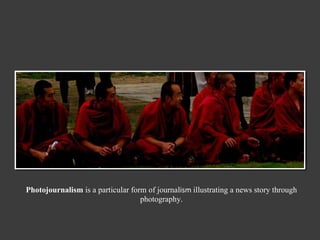
Photojournalism  is a particular form of journal ism  illustrating a news story through photography.
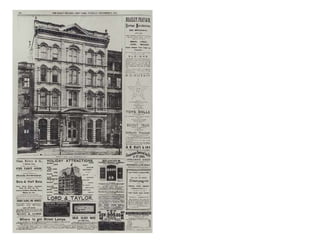
S tarted in the 1850s when men started adding photos to newspaper stories.  These photos were added through a process called engraving. Engravings were not actual photos, but interpretations of photos created by an engraver .  Carol Szathmari was the very first photojournalist. During the Crimean War in 1853 to 1856, he took photos which were sent to the royal houses in Europe. In 1880, The Daily Graphic became the first publication to include a picture that was not an engraving. This was the first halftone reproduction of a photograph used for news purposes. the first photo printed using a halftone was in the  Daily Graphic  in 1880.
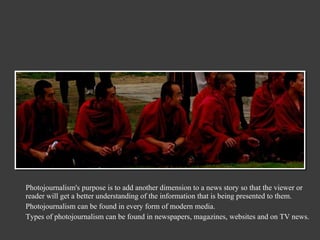
Photojournalism's purpose is to add another dimension to a news story so that the viewer or reader will get a better understanding of the information that is being presented to them. Photojournalism can be found in every form of modern media. Types of photojournalism can be found in newspapers, magazines, websites and on TV news.
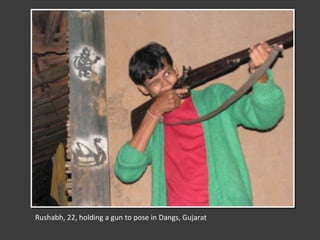
Rushabh, 22, holding a gun to pose in Dangs, Gujarat
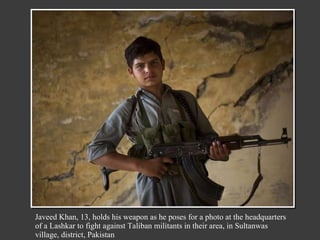
Javeed Khan, 13, holds his weapon as he poses for a photo at the headquarters of a Lashkar to fight against Taliban militants in their area, in Sultanwas village, district, Pakistan
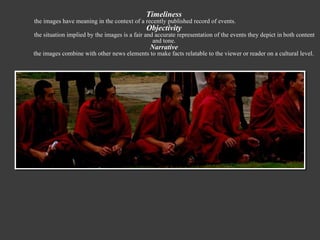
Timeliness the images have meaning in the context of a recently published record of events. Objectivity the situation implied by the images is a fair and accurate representation of the events they depict in   both content and tone. Narrative the images combine with other news elements to make facts relatable to the viewer or reader on a cultural level.
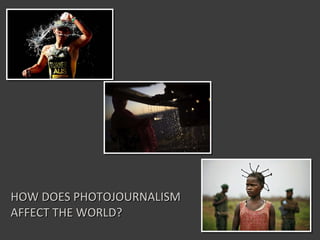
HOW DOES PHOTOJOURNALISM AFFECT THE WORLD?
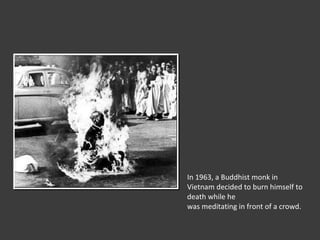
In 1963, a Buddhist monk in Vietnam decided to burn himself to death while he  was meditating in front of a crowd.
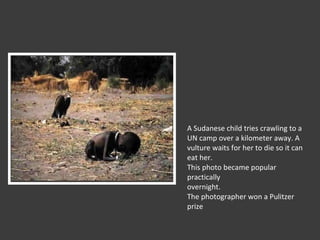
A Sudanese child tries crawling to a UN camp over a kilometer away. A vulture waits for her to die so it can eat her.  This photo became popular practically  overnight.  The photographer won a Pulitzer prize
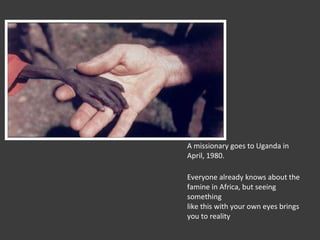
A missionary goes to Uganda in April, 1980. Everyone already knows about the famine in Africa, but seeing something like this with your own eyes brings you to reality
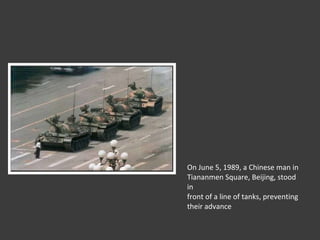
On June 5, 1989, a Chinese man in  Tiananmen Square, Beijing, stood in front of a line of tanks, preventing their advance
Steve Ludlum  New York Times
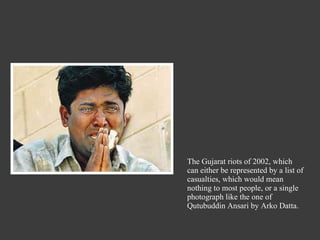
The Gujarat riots of 2002, which can either be represented by a list of casualties, which would mean nothing to most people, or a single photograph like the one of Qutubuddin Ansari by Arko Datta.
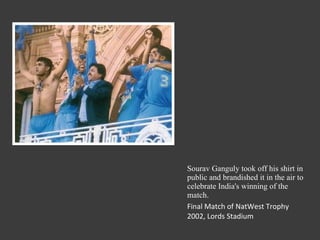
Sourav Ganguly took off his shirt in public and brandished it in the air to celebrate India's winning of the match. Final Match of NatWest Trophy 2002, Lords Stadium
Photojournalism goes beyond conveying a mood, it inspires people to act.
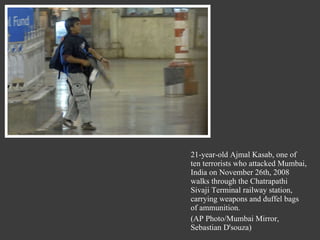
21-year-old Ajmal Kasab, one of ten terrorists who attacked Mumbai, India on November 26th, 2008 walks through the Chatrapathi Sivaji Terminal railway station, carrying weapons and duffel bags of ammunition. (AP Photo/Mumbai Mirror, Sebastian D'souza)
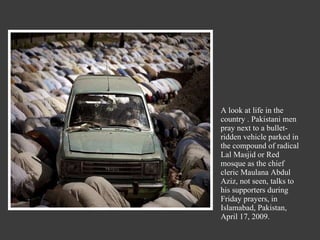
A look at life in the country . Pakistani men pray next to a bullet-ridden vehicle parked in the compound of radical Lal Masjid or Red mosque as the chief cleric Maulana Abdul Aziz, not seen, talks to his supporters during Friday prayers, in Islamabad, Pakistan, April 17, 2009.
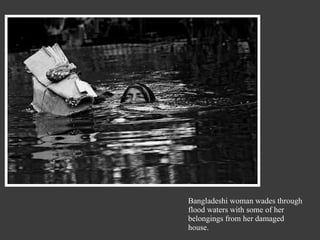
Bangladeshi woman wades through flood waters with some of her belongings from her damaged house.
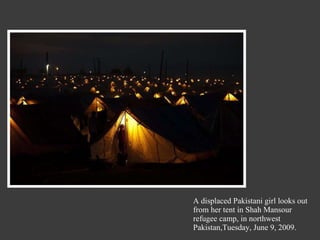
  A displaced Pakistani girl looks out from her tent in Shah Mansour refugee camp, in northwest Pakistan,Tuesday, June 9, 2009.
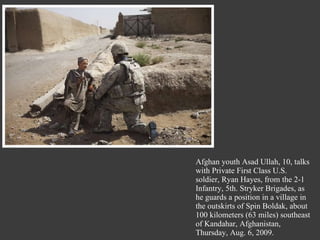
Afghan youth Asad Ullah, 10, talks with Private First Class U.S. soldier, Ryan Hayes, from the 2-1 Infantry, 5th. Stryker Brigades, as he guards a position in a village in the outskirts of Spin Boldak, about 100 kilometers (63 miles) southeast of Kandahar, Afghanistan, Thursday, Aug. 6, 2009.
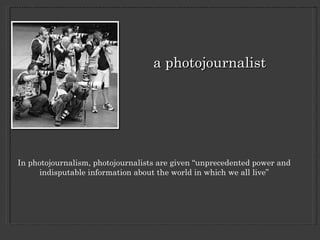
a photojournalist In photojournalism, photojournalists are given “unprecedented power and indisputable information about the world in which we all live”
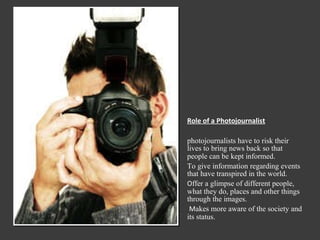
Role of a Photojournalist photojournalists have to risk their lives to bring news back so that people can be kept informed . To give information regarding events that have transpired in the world.  O ffer a glimpse of different people, what they do, places and other things through the images. M akes more aware of the society and its status.
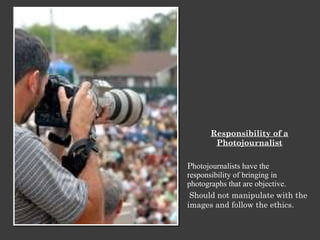
Responsibility of a Photojournalist P hotojournalists have the responsibility of bringing in photographs that are objective. Should not manipulate with the images and follow the ethics.
 
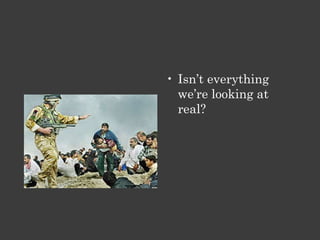
Isn’t everything we’re looking at real?
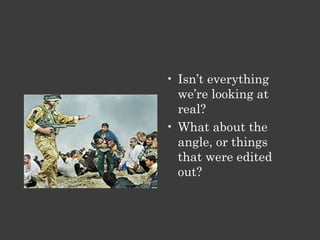
Isn’t everything we’re looking at real? What about the angle, or things that were edited out?
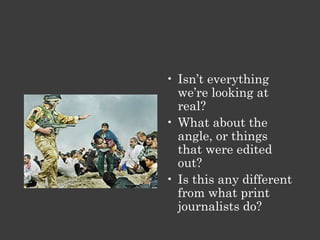
Isn’t everything we’re looking at real? What about the angle, or things that were edited out? Is this any different from what print journalists do?
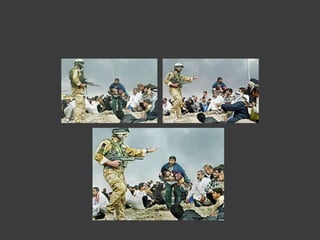
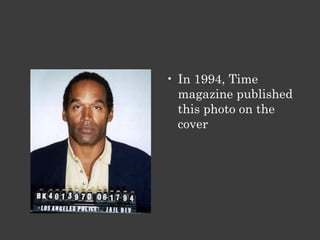
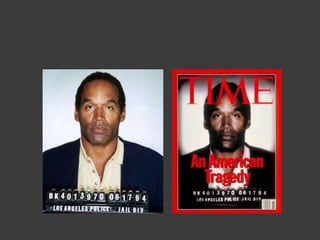
In 1994, Time magazine published this photo on the cover
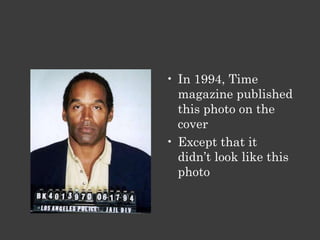
In 1994, Time magazine published this photo on the cover Except that it didn’t look like this photo
 
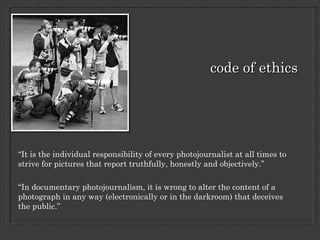
code of ethics “ It is the individual responsibility of every photojournalist at all times to strive for pictures that report truthfully, honestly and objectively.” “ In documentary photojournalism, it is wrong to alter the content of a photograph in any way (electronically or in the darkroom) that deceives the public.”
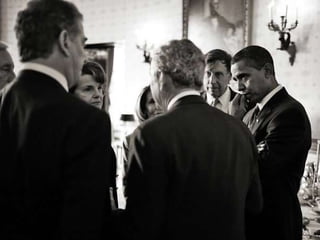
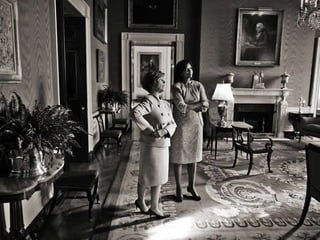
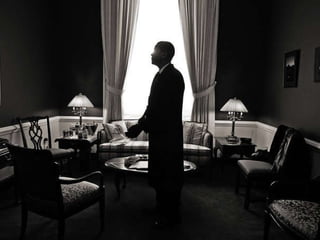
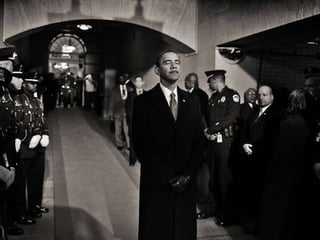
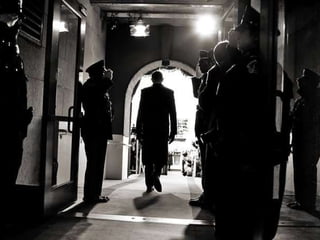
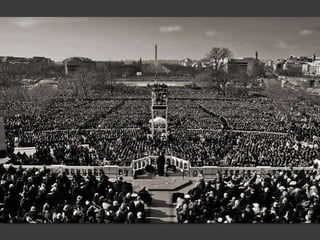
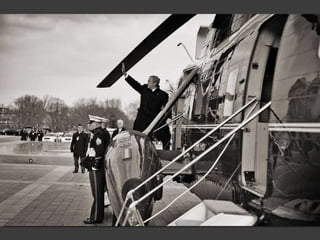
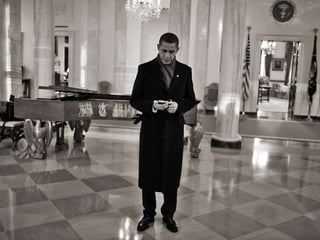
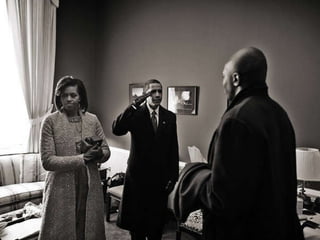
a  picture story photojournalist: Charles Omanney
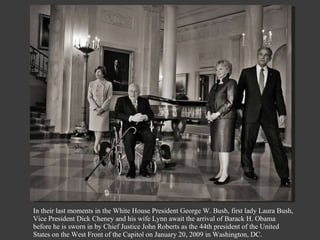
In their last moments in the White House President George W. Bush, first lady Laura Bush, Vice President Dick Cheney and his wife Lynn await the arrival of Barack H. Obama before he is sworn in by Chief Justice John Roberts as the 44th president of the United States on the West Front of the Capitol on January 20, 2009 in Washington, DC.


the indian side of photojournalism
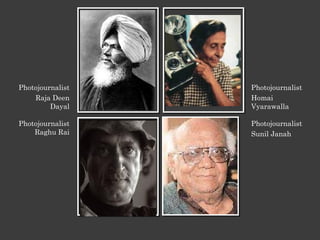
Photojournalist Raja Deen Dayal Photojournalist Homai Vyarawalla PhotojournalistRaghu Rai Photojournalist Sunil Janah
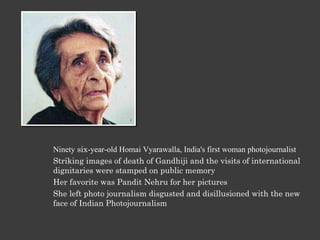
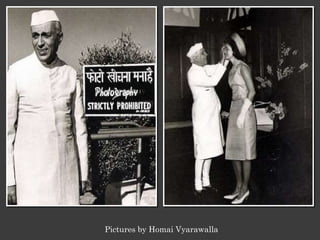
  Ninety  six -year-old Homai Vyarawalla, India's first woman photojournalist Striking images of death of Gandhiji and the visits of international dignitaries were stamped on public memory Her favorite was Pandit Nehru for her pictures She left photo journalism disgusted and disillusioned with the new face of Indian Photojournalism
Pictures by Homai Vyarawalla
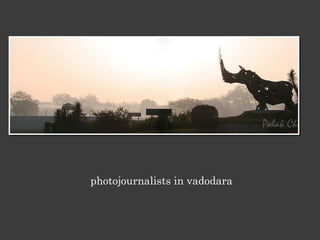
photojournalists in vadodara
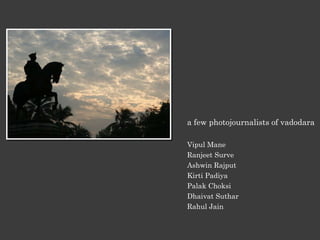
a few photojournalists of vadodara Vipul Mane Ranjeet Surve Ashwin Rajput Kirti Padiya Palak Choksi Dhaivat Suthar Rahul Jain
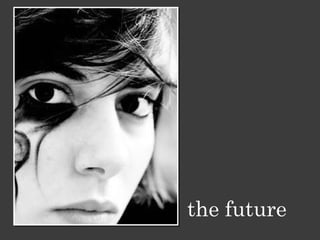
the future
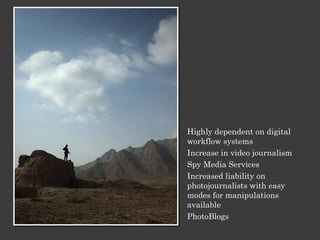
Highly dependent on digital workflow systems Increase in video journalism Spy Media Services Increased liability on photojournalists with easy modes for manipulations available PhotoBlogs
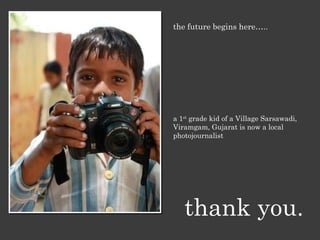
the future begins here….. a 1 st  grade kid of a Village Sarsawadi, Viramgam, Gujarat is now a local photojournalist thank you.

Photojournalism new

  • 1.
  • 2.
    Photojournalism isa particular form of journal ism illustrating a news story through photography.
  • 3.
    S tarted inthe 1850s when men started adding photos to newspaper stories. These photos were added through a process called engraving. Engravings were not actual photos, but interpretations of photos created by an engraver . Carol Szathmari was the very first photojournalist. During the Crimean War in 1853 to 1856, he took photos which were sent to the royal houses in Europe. In 1880, The Daily Graphic became the first publication to include a picture that was not an engraving. This was the first halftone reproduction of a photograph used for news purposes. the first photo printed using a halftone was in the Daily Graphic in 1880.
  • 4.
    Photojournalism's purpose isto add another dimension to a news story so that the viewer or reader will get a better understanding of the information that is being presented to them. Photojournalism can be found in every form of modern media. Types of photojournalism can be found in newspapers, magazines, websites and on TV news.
  • 5.
    Rushabh, 22, holdinga gun to pose in Dangs, Gujarat
  • 6.
    Javeed Khan, 13,holds his weapon as he poses for a photo at the headquarters of a Lashkar to fight against Taliban militants in their area, in Sultanwas village, district, Pakistan
  • 7.
    Timeliness the imageshave meaning in the context of a recently published record of events. Objectivity the situation implied by the images is a fair and accurate representation of the events they depict in both content and tone. Narrative the images combine with other news elements to make facts relatable to the viewer or reader on a cultural level.
  • 8.
    HOW DOES PHOTOJOURNALISMAFFECT THE WORLD?
  • 9.
    In 1963, aBuddhist monk in Vietnam decided to burn himself to death while he was meditating in front of a crowd.
  • 10.
    A Sudanese childtries crawling to a UN camp over a kilometer away. A vulture waits for her to die so it can eat her. This photo became popular practically overnight. The photographer won a Pulitzer prize
  • 11.
    A missionary goesto Uganda in April, 1980. Everyone already knows about the famine in Africa, but seeing something like this with your own eyes brings you to reality
  • 12.
    On June 5,1989, a Chinese man in Tiananmen Square, Beijing, stood in front of a line of tanks, preventing their advance
  • 13.
    Steve Ludlum New York Times
  • 14.
    The Gujarat riotsof 2002, which can either be represented by a list of casualties, which would mean nothing to most people, or a single photograph like the one of Qutubuddin Ansari by Arko Datta.
  • 15.
    Sourav Ganguly tookoff his shirt in public and brandished it in the air to celebrate India's winning of the match. Final Match of NatWest Trophy 2002, Lords Stadium
  • 16.
    Photojournalism goes beyondconveying a mood, it inspires people to act.
  • 17.
    21-year-old Ajmal Kasab,one of ten terrorists who attacked Mumbai, India on November 26th, 2008 walks through the Chatrapathi Sivaji Terminal railway station, carrying weapons and duffel bags of ammunition. (AP Photo/Mumbai Mirror, Sebastian D'souza)
  • 18.
    A look atlife in the country . Pakistani men pray next to a bullet-ridden vehicle parked in the compound of radical Lal Masjid or Red mosque as the chief cleric Maulana Abdul Aziz, not seen, talks to his supporters during Friday prayers, in Islamabad, Pakistan, April 17, 2009.
  • 19.
    Bangladeshi woman wadesthrough flood waters with some of her belongings from her damaged house.
  • 20.
      A displacedPakistani girl looks out from her tent in Shah Mansour refugee camp, in northwest Pakistan,Tuesday, June 9, 2009.
  • 21.
    Afghan youth AsadUllah, 10, talks with Private First Class U.S. soldier, Ryan Hayes, from the 2-1 Infantry, 5th. Stryker Brigades, as he guards a position in a village in the outskirts of Spin Boldak, about 100 kilometers (63 miles) southeast of Kandahar, Afghanistan, Thursday, Aug. 6, 2009.
  • 22.
    a photojournalist Inphotojournalism, photojournalists are given “unprecedented power and indisputable information about the world in which we all live”
  • 23.
    Role of aPhotojournalist photojournalists have to risk their lives to bring news back so that people can be kept informed . To give information regarding events that have transpired in the world. O ffer a glimpse of different people, what they do, places and other things through the images. M akes more aware of the society and its status.
  • 24.
    Responsibility of aPhotojournalist P hotojournalists have the responsibility of bringing in photographs that are objective. Should not manipulate with the images and follow the ethics.
  • 25.
  • 26.
  • 27.
    Isn’t everything we’relooking at real? What about the angle, or things that were edited out?
  • 28.
    Isn’t everything we’relooking at real? What about the angle, or things that were edited out? Is this any different from what print journalists do?
  • 29.
    In 1994, Timemagazine published this photo on the cover
  • 30.
    In 1994, Timemagazine published this photo on the cover Except that it didn’t look like this photo
  • 31.
  • 32.
    code of ethics“ It is the individual responsibility of every photojournalist at all times to strive for pictures that report truthfully, honestly and objectively.” “ In documentary photojournalism, it is wrong to alter the content of a photograph in any way (electronically or in the darkroom) that deceives the public.”
  • 33.
    a picturestory photojournalist: Charles Omanney
  • 34.
    In their lastmoments in the White House President George W. Bush, first lady Laura Bush, Vice President Dick Cheney and his wife Lynn await the arrival of Barack H. Obama before he is sworn in by Chief Justice John Roberts as the 44th president of the United States on the West Front of the Capitol on January 20, 2009 in Washington, DC.
  • 35.
  • 36.
  • 37.
  • 38.
  • 39.
  • 40.
  • 41.
  • 42.
  • 43.
  • 44.
  • 45.
    the indian sideof photojournalism
  • 46.
    Photojournalist Raja DeenDayal Photojournalist Homai Vyarawalla PhotojournalistRaghu Rai Photojournalist Sunil Janah
  • 47.
      Ninety six -year-old Homai Vyarawalla, India's first woman photojournalist Striking images of death of Gandhiji and the visits of international dignitaries were stamped on public memory Her favorite was Pandit Nehru for her pictures She left photo journalism disgusted and disillusioned with the new face of Indian Photojournalism
  • 48.
  • 49.
  • 50.
    a few photojournalistsof vadodara Vipul Mane Ranjeet Surve Ashwin Rajput Kirti Padiya Palak Choksi Dhaivat Suthar Rahul Jain
  • 51.
  • 52.
    Highly dependent ondigital workflow systems Increase in video journalism Spy Media Services Increased liability on photojournalists with easy modes for manipulations available PhotoBlogs
  • 53.
    the future beginshere….. a 1 st grade kid of a Village Sarsawadi, Viramgam, Gujarat is now a local photojournalist thank you.