KLE SOCIETY'S COLLEGE OF EDUCATION,
VIDYANAGAR, HUBBALLI.
Subject: ICT BASICS:OPERATING SYSTEM AND APPLICAT
ION SOFTWARE.
SEMINAR ON: INTRODUCTION TO APPLICATION SOFTW
ARE.
Contents
 Todays Topic: Introduction to Computer application Software
 We will learn
1. What is software?
2. What is Hardware?
3. Types of Software
 System s/w, Application s/w, Open source & Propri
etary s/w
4. Examples of system Software
 Operating System, compiler, loader, linker, Interpr
eter
5. Examples of Application Software
 Word processors, Spreadsheets, Presentation, Dat
abase systems
Introduction to Computer appl
ication Software
Software & Hardware?
 Computer Instructions or data, anything that can be store
d electronically is Software.
 Hardware is one that is tangible. The storage devices (
Hard disk, CD’s etc.,), mouse, keyboard CPU and displa
y devices (Monitor) are Hardware.
For example: There is a problem in the Software implies
– Problem with program or data
Types of Software
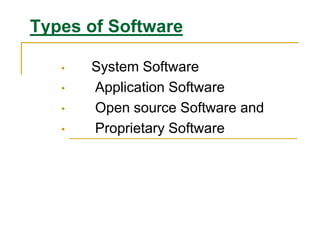
• System Software
• Application Software
• Open source Software and
• Proprietary Software
System Software:
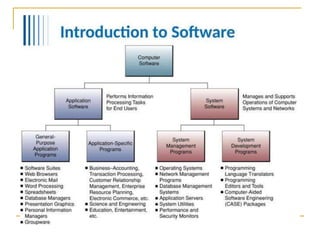
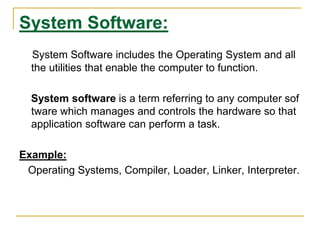
System Software includes the Operating System and all
the utilities that enable the computer to function.
System software is a term referring to any computer sof
tware which manages and controls the hardware so that
application software can perform a task.
Example:
Operating Systems, Compiler, Loader, Linker, Interpreter.
System Software:
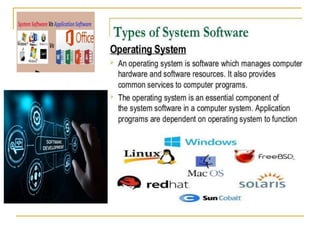
Operating System:
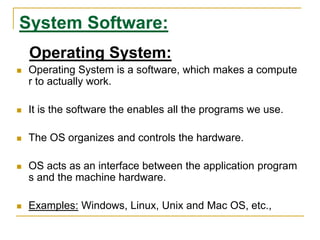
 Operating System is a software, which makes a compute
r to actually work.
 It is the software the enables all the programs we use.
 The OS organizes and controls the hardware.
 OS acts as an interface between the application program
s and the machine hardware.
 Examples: Windows, Linux, Unix and Mac OS, etc.,
System Software (contd):
Source Languages Target Languages
‘C’ language ‘C’ language
‘Pascal’ language Machine language
FORTRAN language
C++ language
ADA language
Compiler: A compiler is a program that reads a prog
ram in one language – the source language and tran
slates into an equivalent program in another languag
e – the target language.
System Software (contd):
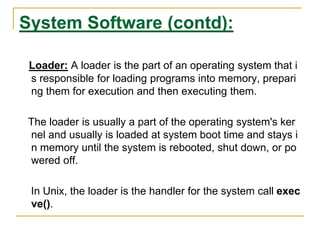
Loader: A loader is the part of an operating system that i
s responsible for loading programs into memory, prepari
ng them for execution and then executing them.
The loader is usually a part of the operating system's ker
nel and usually is loaded at system boot time and stays i
n memory until the system is rebooted, shut down, or po
wered off.
In Unix, the loader is the handler for the system call exec
ve().
System Software (contd):
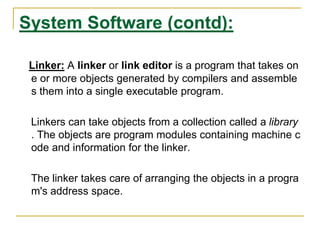
Linker: A linker or link editor is a program that takes on
e or more objects generated by compilers and assemble
s them into a single executable program.
Linkers can take objects from a collection called a library
. The objects are program modules containing machine c
ode and information for the linker.
The linker takes care of arranging the objects in a progra
m's address space.
System Software (contd):
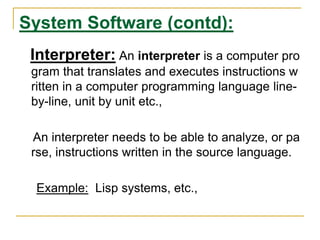
Interpreter: An interpreter is a computer pro
gram that translates and executes instructions w
ritten in a computer programming language line-
by-line, unit by unit etc.,
An interpreter needs to be able to analyze, or pa
rse, instructions written in the source language.
Example: Lisp systems, etc.,
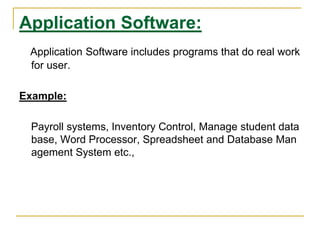
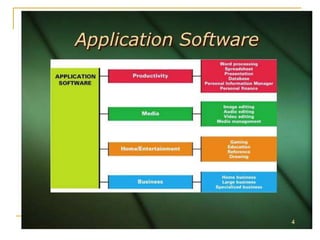
Application Software:
Application Software includes programs that do real work
for user.
Example:
Payroll systems, Inventory Control, Manage student data
base, Word Processor, Spreadsheet and Database Man
agement System etc.,
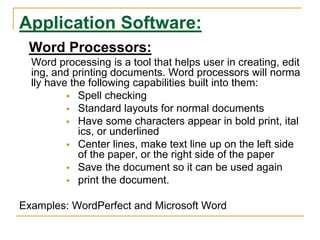
Application Software:
Word Processors:
Word processing is a tool that helps user in creating, edit
ing, and printing documents. Word processors will norma
lly have the following capabilities built into them:
 Spell checking
 Standard layouts for normal documents
 Have some characters appear in bold print, ital
ics, or underlined
 Center lines, make text line up on the left side
of the paper, or the right side of the paper
 Save the document so it can be used again
 print the document.
Examples: WordPerfect and Microsoft Word
Application Software
(contd…):
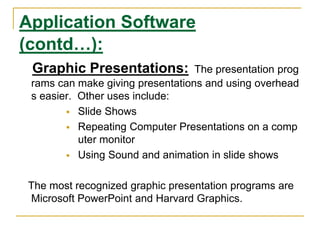
Graphic Presentations: The presentation prog
rams can make giving presentations and using overhead
s easier. Other uses include:
 Slide Shows
 Repeating Computer Presentations on a comp
uter monitor
 Using Sound and animation in slide shows
The most recognized graphic presentation programs are
Microsoft PowerPoint and Harvard Graphics.
Application Software
(contd…):
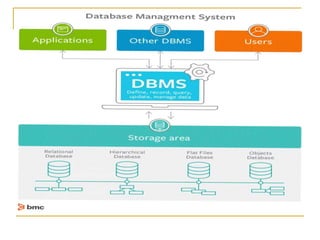
Database Management System (DBMS):
 A DBMS is a software tool that allows multiple users to st
ore, access, and process data into useful information.
 Database programs are designed for these types of appli
cations:
 Membership lists
 Student lists
 Grade reports
 Instructor schedules
All of these have to be maintained so you can find what y
ou need quickly and accurately.
 Example:Microsoft Access, dBASE, Oracle.
Application Software
(contd…):
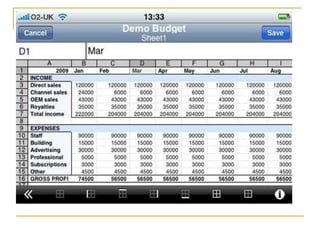
Spreadsheets: The spreadsheet packages are des
igned to use numbers and formulas to do calculations wit
h ease. Examples of spreadsheets include:
 Budgets
 Payrolls
 Grade Calculations
 Address Lists
The most commonly used spreadsheet programs are Mi
crosoft Excel and Lotus 123.
Open Source Software:
 Open source software (OSS) is computer software w
hose source code is available under a license that permit
s users to use, change, and improve the software, and to
redistribute it in modified or unmodified form.
 It is often developed in a public, collaborative manner.
Well-known OSS products are Linux, Netscape, Apache,
etc.,
Proprietary Software:
 Proprietary software (also called non-free software
) is software with restrictions on using, copying and m
odifying as enforced by the proprietor. Restrictions on
use, modification and copying is achieved by either le
gal or technical means and sometimes both.
 Proponents of proprietary software are Microsoft.
 Ex: CAD, Nortan Antivirus etc.,
Pooja H
Pooja H

Pooja H

  • 1.
    KLE SOCIETY'S COLLEGEOF EDUCATION, VIDYANAGAR, HUBBALLI. Subject: ICT BASICS:OPERATING SYSTEM AND APPLICAT ION SOFTWARE. SEMINAR ON: INTRODUCTION TO APPLICATION SOFTW ARE.
  • 2.
    Contents  Todays Topic:Introduction to Computer application Software  We will learn 1. What is software? 2. What is Hardware? 3. Types of Software  System s/w, Application s/w, Open source & Propri etary s/w 4. Examples of system Software  Operating System, compiler, loader, linker, Interpr eter 5. Examples of Application Software  Word processors, Spreadsheets, Presentation, Dat abase systems
  • 3.
    Introduction to Computerappl ication Software
  • 4.
    Software & Hardware? Computer Instructions or data, anything that can be store d electronically is Software.  Hardware is one that is tangible. The storage devices ( Hard disk, CD’s etc.,), mouse, keyboard CPU and displa y devices (Monitor) are Hardware. For example: There is a problem in the Software implies – Problem with program or data
  • 6.
    Types of Software •System Software • Application Software • Open source Software and • Proprietary Software
  • 7.
    System Software: System Softwareincludes the Operating System and all the utilities that enable the computer to function. System software is a term referring to any computer sof tware which manages and controls the hardware so that application software can perform a task. Example: Operating Systems, Compiler, Loader, Linker, Interpreter.
  • 8.
    System Software: Operating System: Operating System is a software, which makes a compute r to actually work.  It is the software the enables all the programs we use.  The OS organizes and controls the hardware.  OS acts as an interface between the application program s and the machine hardware.  Examples: Windows, Linux, Unix and Mac OS, etc.,
  • 9.
    System Software (contd): SourceLanguages Target Languages ‘C’ language ‘C’ language ‘Pascal’ language Machine language FORTRAN language C++ language ADA language Compiler: A compiler is a program that reads a prog ram in one language – the source language and tran slates into an equivalent program in another languag e – the target language.
  • 10.
    System Software (contd): Loader:A loader is the part of an operating system that i s responsible for loading programs into memory, prepari ng them for execution and then executing them. The loader is usually a part of the operating system's ker nel and usually is loaded at system boot time and stays i n memory until the system is rebooted, shut down, or po wered off. In Unix, the loader is the handler for the system call exec ve().
  • 11.
    System Software (contd): Linker:A linker or link editor is a program that takes on e or more objects generated by compilers and assemble s them into a single executable program. Linkers can take objects from a collection called a library . The objects are program modules containing machine c ode and information for the linker. The linker takes care of arranging the objects in a progra m's address space.
  • 12.
    System Software (contd): Interpreter:An interpreter is a computer pro gram that translates and executes instructions w ritten in a computer programming language line- by-line, unit by unit etc., An interpreter needs to be able to analyze, or pa rse, instructions written in the source language. Example: Lisp systems, etc.,
  • 14.
    Application Software: Application Softwareincludes programs that do real work for user. Example: Payroll systems, Inventory Control, Manage student data base, Word Processor, Spreadsheet and Database Man agement System etc.,
  • 17.
    Application Software: Word Processors: Wordprocessing is a tool that helps user in creating, edit ing, and printing documents. Word processors will norma lly have the following capabilities built into them:  Spell checking  Standard layouts for normal documents  Have some characters appear in bold print, ital ics, or underlined  Center lines, make text line up on the left side of the paper, or the right side of the paper  Save the document so it can be used again  print the document. Examples: WordPerfect and Microsoft Word
  • 18.
    Application Software (contd…): Graphic Presentations:The presentation prog rams can make giving presentations and using overhead s easier. Other uses include:  Slide Shows  Repeating Computer Presentations on a comp uter monitor  Using Sound and animation in slide shows The most recognized graphic presentation programs are Microsoft PowerPoint and Harvard Graphics.
  • 19.
    Application Software (contd…): Database ManagementSystem (DBMS):  A DBMS is a software tool that allows multiple users to st ore, access, and process data into useful information.  Database programs are designed for these types of appli cations:  Membership lists  Student lists  Grade reports  Instructor schedules All of these have to be maintained so you can find what y ou need quickly and accurately.  Example:Microsoft Access, dBASE, Oracle.
  • 21.
    Application Software (contd…): Spreadsheets: Thespreadsheet packages are des igned to use numbers and formulas to do calculations wit h ease. Examples of spreadsheets include:  Budgets  Payrolls  Grade Calculations  Address Lists The most commonly used spreadsheet programs are Mi crosoft Excel and Lotus 123.
  • 23.
    Open Source Software: Open source software (OSS) is computer software w hose source code is available under a license that permit s users to use, change, and improve the software, and to redistribute it in modified or unmodified form.  It is often developed in a public, collaborative manner. Well-known OSS products are Linux, Netscape, Apache, etc.,
  • 24.
    Proprietary Software:  Proprietarysoftware (also called non-free software ) is software with restrictions on using, copying and m odifying as enforced by the proprietor. Restrictions on use, modification and copying is achieved by either le gal or technical means and sometimes both.  Proponents of proprietary software are Microsoft.  Ex: CAD, Nortan Antivirus etc.,