s 
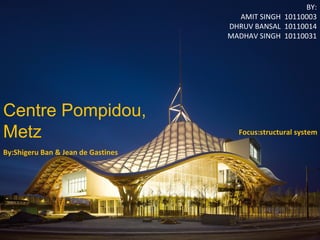
Centre Pompidou, 
Metz 
BY: 
AMIT SINGH 10110003 
DHRUV BANSAL 10110014 
MADHAV SINGH 10110031 
By:Shigeru Ban & Jean de Gastines 
Focus:structural system
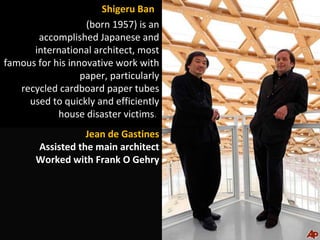
Shigeru Ban 
(born 1957) is an 
accomplished Japanese and 
international architect, most 
famous for his innovative work with 
paper, particularly 
recycled cardboard paper tubes 
used to quickly and efficiently 
house disaster victims. 
Jean de Gastines 
Assisted the main architect 
Worked with Frank O Gehry
About the Project 
• Project Type: Modrern Contemporary Art 
Museum 
• Location:Metz, France 
• Construction started:November 7, 2006 
• Inaugurated:May 12, 2010 
• Cost:69.33 million Euros 
• Height:77 m (253 ft) 
• Floor area:10,660 m2 (114,700 sq ft) 
• Architecture firm:Shigeru Ban Architects Europe 
• Main contractor:Metz Métropole
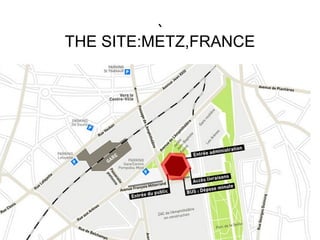
` THE SITE:METZ,FRANCE
About the Project 
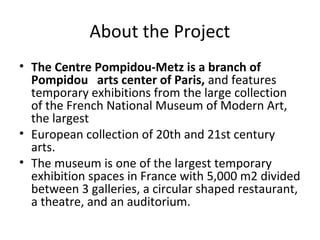
• The Centre Pompidou-Metz is a branch of 
Pompidou arts center of Paris, and features 
temporary exhibitions from the large collection 
of the French National Museum of Modern Art, 
the largest 
• European collection of 20th and 21st century 
arts. 
• The museum is one of the largest temporary 
exhibition spaces in France with 5,000 m2 divided 
between 3 galleries, a circular shaped restaurant, 
a theatre, and an auditorium.
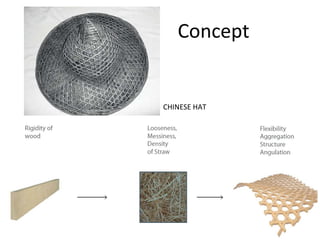
Concept 
CHINESE HAT
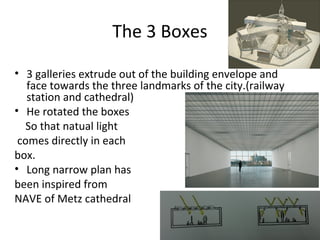
The 3 Boxes 
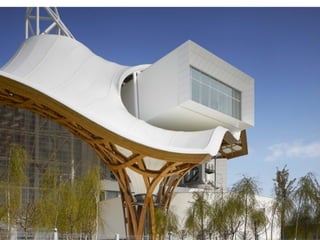
• 3 galleries extrude out of the building envelope and 
face towards the three landmarks of the city.(railway 
station and cathedral) 
• He rotated the boxes 
So that natual light 
comes directly in each 
box. 
• Long narrow plan has 
been inspired from 
NAVE of Metz cathedral
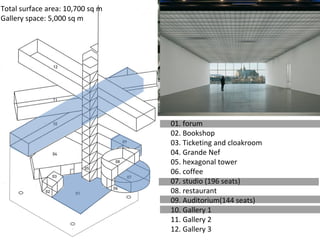
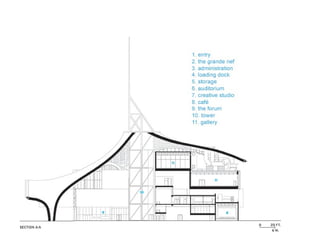
01. forum 
02. Bookshop 
03. Ticketing and cloakroom 
04. Grande Nef 
05. hexagonal tower 
06. coffee 
07. studio (196 seats) 
08. restaurant 
09. Auditorium(144 seats) 
10. Gallery 1 
11. Gallery 2 
12. Gallery 3 
Total surface area: 10,700 sq m 
Gallery space: 5,000 sq m
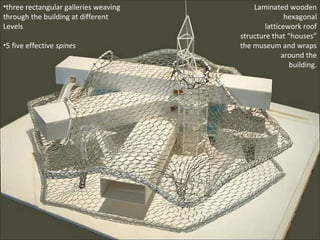
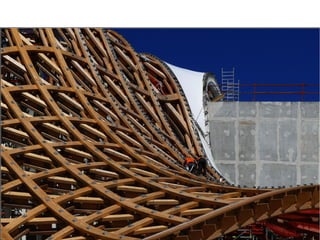
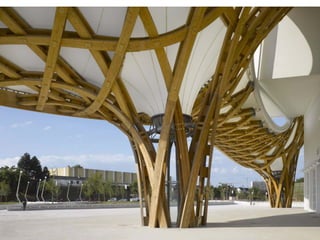
Laminated wooden 
hexagonal 
latticework roof 
structure that “houses” 
the museum and wraps 
around the 
building. 
•three rectangular galleries weaving 
through the building at different 
Levels 
•5 five effective spines
a unique experience 
• a place for visitors to engage with artistic 
creation in all its forms 
• It is a living venue with events scheduled 
throughout the year.
THE ROOF STRUCTURE 
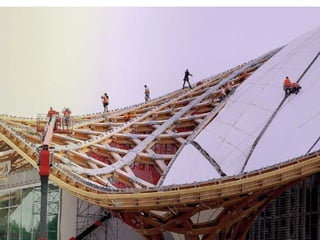
• The roof is a 90 meters wide hexagon with a surface 
area of 8,500 m². 
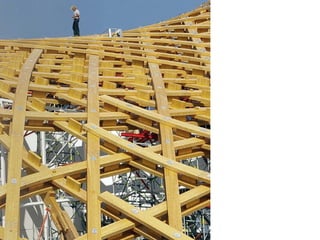
• The roof structure is composed of 16 km of glued 
laminated timber. 
• Form hexagonal wooden units resembling the cane-work 
pattern of a Chinese hat. 
• The roof’s geometry is irregular. 
• The entire wooden structure is covered with a white 
PTFE membrane and a coating of Teflon, which has the 
distinction of being self-cleaning, protects from direct 
sunlight and also is transparent at night, thus offering 
viewers a spectacular and unique overview.
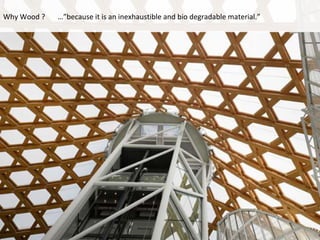
Why Wood ? …”because it is an inexhaustible and bio degradable material.”
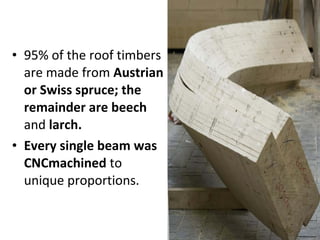
• 95% of the roof timbers 
are made from Austrian 
or Swiss spruce; the 
remainder are beech 
and larch. 
• Every single beam was 
CNCmachined to 
unique proportions.
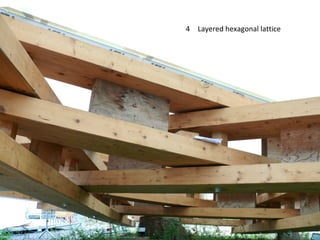
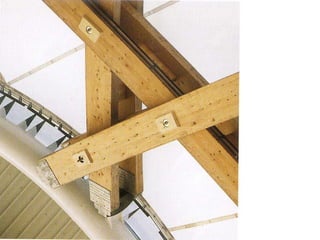
4 Layered hexagonal lattice
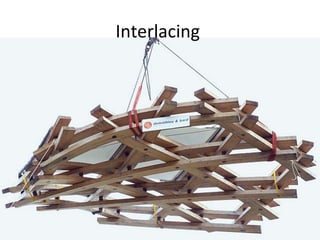
Interlacing
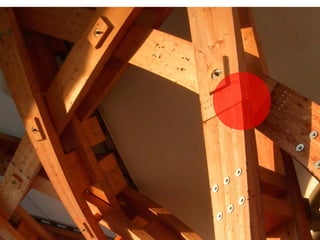
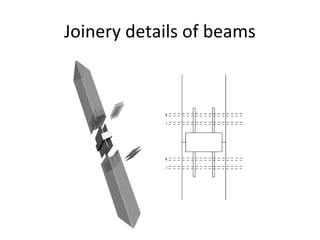
Joinery details of beams
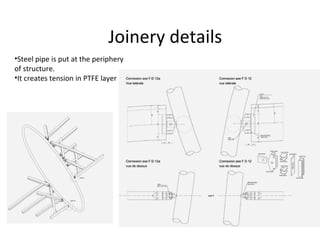
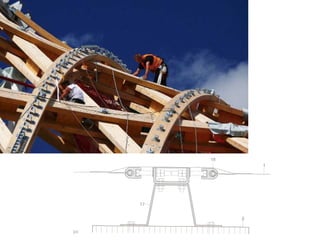
Joinery details 
•Steel pipe is put at the periphery 
of structure. 
•It creates tension in PTFE layer
wo
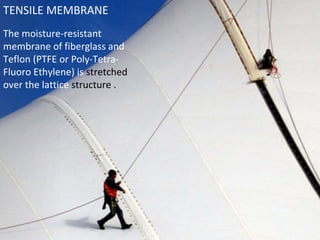
TENSILE MEMBRANE 
The moisture-resistant 
membrane of fiberglass and 
Teflon (PTFE or Poly-Tetra- 
Fluoro Ethylene) is stretched 
over the lattice structure .
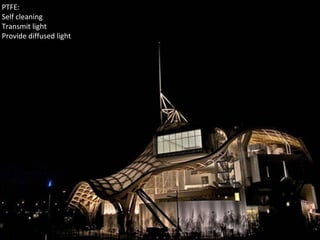
PTFE: 
Self cleaning 
Transmit light 
Provide diffused light
MATERIALS 
• 12,000 m3 of concrete 
(foundations and structure) 
• 1,500 tons of reinforcing bars 
• 970 tons of structural steel 
(walls and hexagonal tower) 
• 650 tons of roof timber 
• 18 km of beams and 16,000 pieces to build the 
wooden roof structure 
• 8,000 sq m of PTFE membrane
Criticism 
• The most ironic part of the design is its key 
feature, the roof. 
• Is it a tent? 
• Is it a dome? 
• Is it a frame?
Criticism 
• Concept is vague. He completely discards the 
theory of iconography.(traditionally attached 
to a theme of the region) 
• Internal circulation is disjoint 
• Roof becomes ponderous. 
• Though the structure is pleasing, but it is very 
difficult to execute.
conclusion 
• If something looks pleasing,it need not to 
have iconography
THANK YOU

Pompidou centre,metz

  • 1.
    s Centre Pompidou, Metz BY: AMIT SINGH 10110003 DHRUV BANSAL 10110014 MADHAV SINGH 10110031 By:Shigeru Ban & Jean de Gastines Focus:structural system
  • 2.
    Shigeru Ban (born1957) is an accomplished Japanese and international architect, most famous for his innovative work with paper, particularly recycled cardboard paper tubes used to quickly and efficiently house disaster victims. Jean de Gastines Assisted the main architect Worked with Frank O Gehry
  • 3.
    About the Project • Project Type: Modrern Contemporary Art Museum • Location:Metz, France • Construction started:November 7, 2006 • Inaugurated:May 12, 2010 • Cost:69.33 million Euros • Height:77 m (253 ft) • Floor area:10,660 m2 (114,700 sq ft) • Architecture firm:Shigeru Ban Architects Europe • Main contractor:Metz Métropole
  • 4.
  • 5.
    About the Project • The Centre Pompidou-Metz is a branch of Pompidou arts center of Paris, and features temporary exhibitions from the large collection of the French National Museum of Modern Art, the largest • European collection of 20th and 21st century arts. • The museum is one of the largest temporary exhibition spaces in France with 5,000 m2 divided between 3 galleries, a circular shaped restaurant, a theatre, and an auditorium.
  • 6.
  • 7.
    The 3 Boxes • 3 galleries extrude out of the building envelope and face towards the three landmarks of the city.(railway station and cathedral) • He rotated the boxes So that natual light comes directly in each box. • Long narrow plan has been inspired from NAVE of Metz cathedral
  • 8.
    01. forum 02.Bookshop 03. Ticketing and cloakroom 04. Grande Nef 05. hexagonal tower 06. coffee 07. studio (196 seats) 08. restaurant 09. Auditorium(144 seats) 10. Gallery 1 11. Gallery 2 12. Gallery 3 Total surface area: 10,700 sq m Gallery space: 5,000 sq m
  • 10.
    Laminated wooden hexagonal latticework roof structure that “houses” the museum and wraps around the building. •three rectangular galleries weaving through the building at different Levels •5 five effective spines
  • 11.
    a unique experience • a place for visitors to engage with artistic creation in all its forms • It is a living venue with events scheduled throughout the year.
  • 12.
    THE ROOF STRUCTURE • The roof is a 90 meters wide hexagon with a surface area of 8,500 m². • The roof structure is composed of 16 km of glued laminated timber. • Form hexagonal wooden units resembling the cane-work pattern of a Chinese hat. • The roof’s geometry is irregular. • The entire wooden structure is covered with a white PTFE membrane and a coating of Teflon, which has the distinction of being self-cleaning, protects from direct sunlight and also is transparent at night, thus offering viewers a spectacular and unique overview.
  • 13.
    Why Wood ?…”because it is an inexhaustible and bio degradable material.”
  • 14.
    • 95% ofthe roof timbers are made from Austrian or Swiss spruce; the remainder are beech and larch. • Every single beam was CNCmachined to unique proportions.
  • 15.
  • 16.
  • 21.
  • 22.
    Joinery details •Steelpipe is put at the periphery of structure. •It creates tension in PTFE layer
  • 23.
  • 25.
    TENSILE MEMBRANE Themoisture-resistant membrane of fiberglass and Teflon (PTFE or Poly-Tetra- Fluoro Ethylene) is stretched over the lattice structure .
  • 28.
    PTFE: Self cleaning Transmit light Provide diffused light
  • 29.
    MATERIALS • 12,000m3 of concrete (foundations and structure) • 1,500 tons of reinforcing bars • 970 tons of structural steel (walls and hexagonal tower) • 650 tons of roof timber • 18 km of beams and 16,000 pieces to build the wooden roof structure • 8,000 sq m of PTFE membrane
  • 30.
    Criticism • Themost ironic part of the design is its key feature, the roof. • Is it a tent? • Is it a dome? • Is it a frame?
  • 31.
    Criticism • Conceptis vague. He completely discards the theory of iconography.(traditionally attached to a theme of the region) • Internal circulation is disjoint • Roof becomes ponderous. • Though the structure is pleasing, but it is very difficult to execute.
  • 32.
    conclusion • Ifsomething looks pleasing,it need not to have iconography
  • 33.