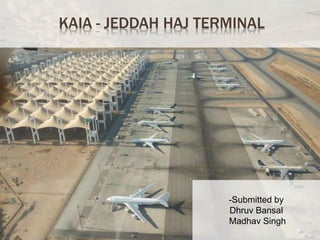
KAIA - JEDDAH HAJ TERMINAL 
-Submitted by 
Dhruv Bansal 
Madhav Singh
OBJECTIVE 
 To accommodate for the drastic increase in 
the number of Haj (Pilgrims). 
 To provide symbolic power pertinent to the 
Haj as embodying the most important and 
sacred event in the life of a muslim. 
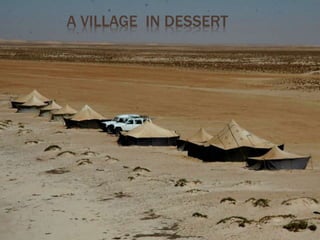
 To provide for the unique requirements of the 
Haj which makes the terminal more of a 
village than a regular terminal.
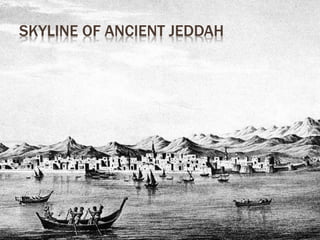
SKYLINE OF ANCIENT JEDDAH
LOCATION AND CONTEXT 
 The climate is hot and humid. Sea breezes 
produce high humidity and hence affect the 
comfort level . Total precipitation is low and 
concentrated from November to January.
LOCAL ARCHITECTURAL CHARACTER 
 KAIA is a showcase of international architects 
attempting to provide an architecture with a 
cultural and symbolic flavor. 
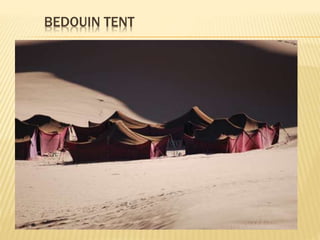
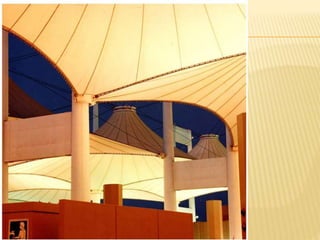
 The terminal is designed by Edward Stone with 
a shell structure roof inspired by a “one way 
tent” like fold. 
 The domestic terminals in KAIA have a measure 
of coherence attained through its layout, as well 
as the compatibility of forms. A visual axis 
organizes the location of two terminals with the 
centre line of Haj terminals.
BEDOUIN TENT
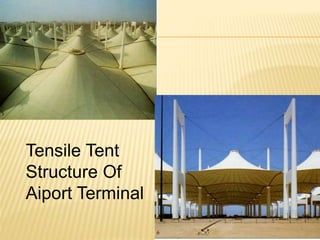
Tensile Tent 
Structure Of 
Aiport Terminal
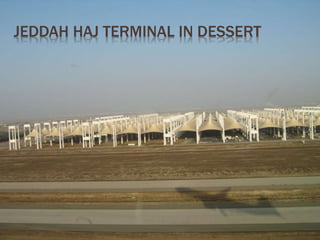
A VILLAGE IN DESSERT
JEDDAH HAJ TERMINAL IN DESSERT
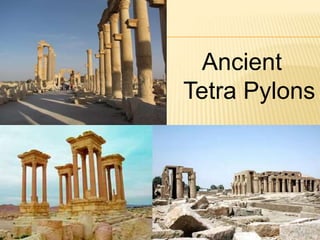
Ancient 
Tetra Pylons
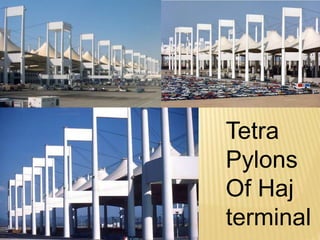
Tetra 
Pylons 
Of Haj 
terminal
SIGNIFICANCE OF THE PROJECT 
 Islam requires every one who is physically able to perform Haj at least 
once in his or her lifetime, it is therefore a most significant journey. Many 
pilgrims are inexperienced travelers , separated from their culture and 
surroundings for the first time. The Haj terminal design responds to the 
Hajis physical needs and comfort in a form that is technologically 
appropriate for its use and architecturally responsive to the surrounding 
environment. 
 The translucent fabric roof helps create a naturally ventilated and lighted 
open space which prevents distraction from the Hajis spiritual objectives 
yet affords the pilgrims needed shelter and walking distance. 
 The terminal prepares him for his next journey which will take place in a 
similar open air setting. The terminal is a transitional shelter yet it is 
visually powerful and well organized transportation facility which 
attempts to avoid confusion or cultural shock of the Haji. 
 Because the terminal is only minimally mechanized, the need for 
extensive maintenance for a building that is active only a few week of 
the year is eliminated.
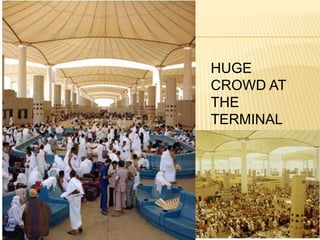
HUGE 
CROWD AT 
THE 
TERMINAL
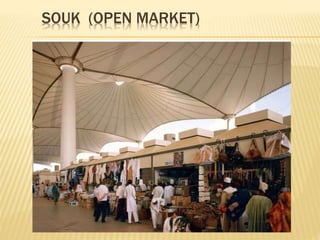
SOUK (OPEN MARKET)
 It does not impose the conventional “airport discipline” which 
would be both alien and uncomfortable to most pilgrims. 
 Most have saved all their lives to make the journey, and this is 
probably the first and last time they be traveling by air. 
 The informal and flexible design of the support area, conforms 
with the spirit of haj. 
 The thousands of pilgrims arriving at the terminal during this 
period often have to wait, sometimes for up to thirty hours, for 
certain formalities to be completed. 
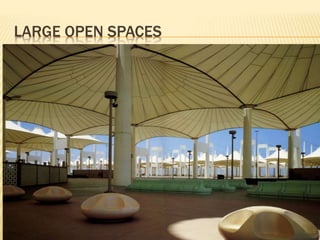
 Large rest areas have been provided with benches that allow 
pilgrims ample room to lie down comfortably. At the same time 
enormous floor space allows them to roll out rugs and offer 
prayers without obstructing anyone.
LARGE OPEN SPACES
DESIGN AND CONSTRUCTION 
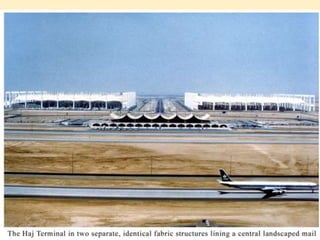
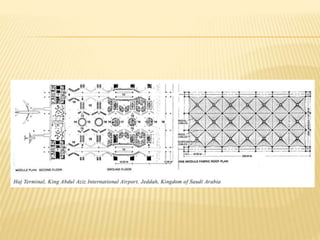
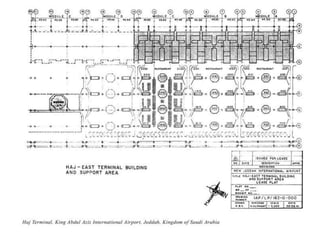
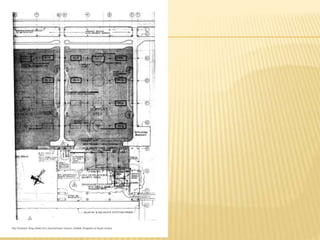
 In plan the Haj terminal consist of two identical halves, 320m x 686 m 
and separated by a landscaped mall. 
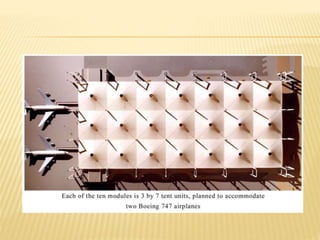
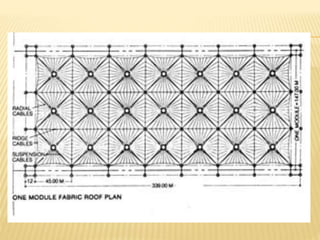
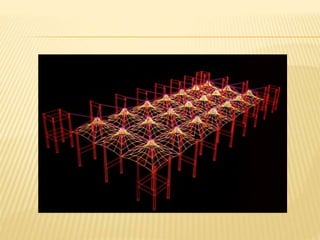
 Each half of the terminal is divided into five equal modules. Each module 
in turn is made of 21 lightweight tent structure arranged on 3 x 7 tents for 
each module and cover 10.5 acres (4 hectares). Each unit is 45 m x 45 
m. 
 As developed, the terminal has 20 gate processing areas, 10 on each 
side of the terminal. Each gate has equal areas within the terminal for 
passenger processing. 
 The aircraft aprons are designed to accommodate a wide range of 
aircrafts: B747,DC10,DC1011,B707,DC8,B727, B737 DC9. 
 On leaving the plane the pilgrims enter the second level of the air-conditioned 
terminal building for health and immigration processing, 
Baggage claims and customs are on the lower level. 
 Upon leaving the terminal the pilgrims enter the shaded area called 
“Terminal Support Area”, or tent tent structure.
STRUCTURE 
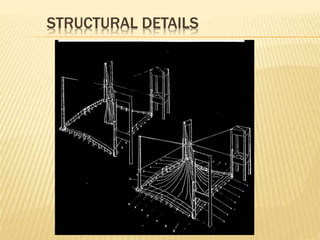
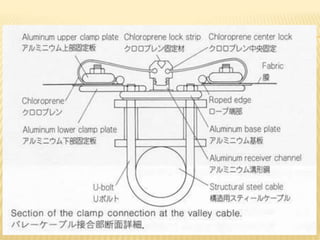
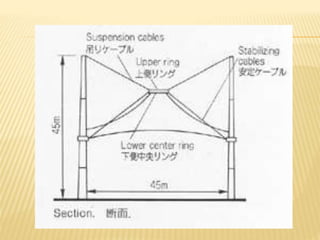
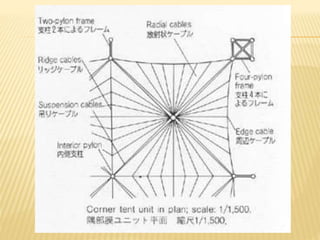
 The roof unit is a tensile membrane structure 
spanning between 4 corner pylons which are 45 
meters in height. 
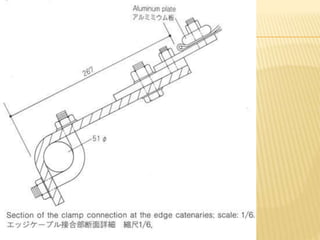
 The double curved skin of each unit is made up 
of heavy weight teflon coated fiberglass fabric 
supported on 32 steel radial cables, which in 
turn span between an upper tension ring and a 
lower tie down catenary cable. 
 Pairs of suspension cables are used to provide 
degree of safety in the structure in case of 
accidental failure of one cable.
STRUCTURAL DETAILS
MATERIALS 
 Concrete : cast in place and pre-stressed concrete used 
for terminal facilities. 
 Steel : rolled shaped steel for the tent pylons. 
 Cables : plastic jacketed bridge strand (for stretching the 
tent). 
 Teflon coated fiberglass : high strength teflon – coated 
fiberglass with an average weight of 45oz. per sq. yard. 
 Infill : precast concrete elements are used. 
 Finishing : a concrete floor for the support area is treated 
with apexy for fire resistance and as a heavy duty 
treatment.
CONSTRUCTION 
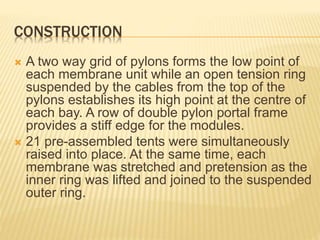
 A two way grid of pylons forms the low point of 
each membrane unit while an open tension ring 
suspended by the cables from the top of the 
pylons establishes its high point at the centre of 
each bay. A row of double pylon portal frame 
provides a stiff edge for the modules. 
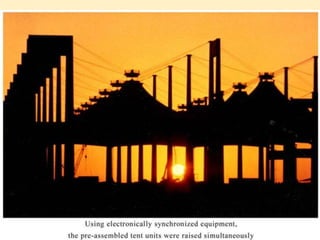
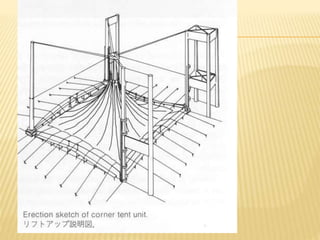
 21 pre-assembled tents were simultaneously 
raised into place. At the same time, each 
membrane was stretched and pretension as the 
inner ring was lifted and joined to the suspended 
outer ring.
PROPERTIES OF FABRIC MEMBRANE 
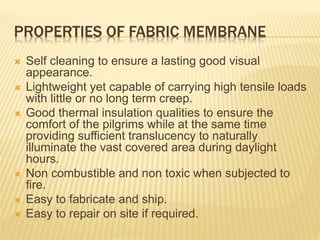
 Self cleaning to ensure a lasting good visual 
appearance. 
 Lightweight yet capable of carrying high tensile loads 
with little or no long term creep. 
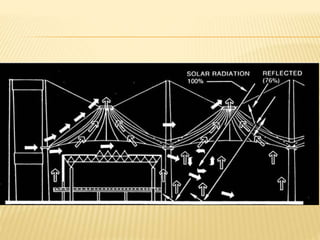
 Good thermal insulation qualities to ensure the 
comfort of the pilgrims while at the same time 
providing sufficient translucency to naturally 
illuminate the vast covered area during daylight 
hours. 
 Non combustible and non toxic when subjected to 
fire. 
 Easy to fabricate and ship. 
 Easy to repair on site if required.
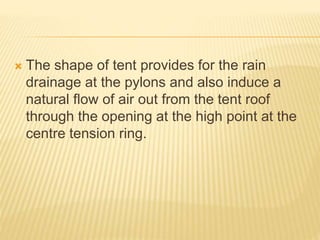
 The shape of tent provides for the rain 
drainage at the pylons and also induce a 
natural flow of air out from the tent roof 
through the opening at the high point at the 
centre tension ring.
THANK YOU

Jeddah haj terminal

  • 1.
    KAIA - JEDDAHHAJ TERMINAL -Submitted by Dhruv Bansal Madhav Singh
  • 2.
    OBJECTIVE  Toaccommodate for the drastic increase in the number of Haj (Pilgrims).  To provide symbolic power pertinent to the Haj as embodying the most important and sacred event in the life of a muslim.  To provide for the unique requirements of the Haj which makes the terminal more of a village than a regular terminal.
  • 3.
  • 4.
    LOCATION AND CONTEXT  The climate is hot and humid. Sea breezes produce high humidity and hence affect the comfort level . Total precipitation is low and concentrated from November to January.
  • 5.
    LOCAL ARCHITECTURAL CHARACTER  KAIA is a showcase of international architects attempting to provide an architecture with a cultural and symbolic flavor.  The terminal is designed by Edward Stone with a shell structure roof inspired by a “one way tent” like fold.  The domestic terminals in KAIA have a measure of coherence attained through its layout, as well as the compatibility of forms. A visual axis organizes the location of two terminals with the centre line of Haj terminals.
  • 6.
  • 7.
    Tensile Tent StructureOf Aiport Terminal
  • 8.
    A VILLAGE INDESSERT
  • 9.
  • 10.
  • 11.
    Tetra Pylons OfHaj terminal
  • 12.
    SIGNIFICANCE OF THEPROJECT  Islam requires every one who is physically able to perform Haj at least once in his or her lifetime, it is therefore a most significant journey. Many pilgrims are inexperienced travelers , separated from their culture and surroundings for the first time. The Haj terminal design responds to the Hajis physical needs and comfort in a form that is technologically appropriate for its use and architecturally responsive to the surrounding environment.  The translucent fabric roof helps create a naturally ventilated and lighted open space which prevents distraction from the Hajis spiritual objectives yet affords the pilgrims needed shelter and walking distance.  The terminal prepares him for his next journey which will take place in a similar open air setting. The terminal is a transitional shelter yet it is visually powerful and well organized transportation facility which attempts to avoid confusion or cultural shock of the Haji.  Because the terminal is only minimally mechanized, the need for extensive maintenance for a building that is active only a few week of the year is eliminated.
  • 13.
    HUGE CROWD AT THE TERMINAL
  • 14.
  • 15.
     It doesnot impose the conventional “airport discipline” which would be both alien and uncomfortable to most pilgrims.  Most have saved all their lives to make the journey, and this is probably the first and last time they be traveling by air.  The informal and flexible design of the support area, conforms with the spirit of haj.  The thousands of pilgrims arriving at the terminal during this period often have to wait, sometimes for up to thirty hours, for certain formalities to be completed.  Large rest areas have been provided with benches that allow pilgrims ample room to lie down comfortably. At the same time enormous floor space allows them to roll out rugs and offer prayers without obstructing anyone.
  • 16.
  • 18.
    DESIGN AND CONSTRUCTION  In plan the Haj terminal consist of two identical halves, 320m x 686 m and separated by a landscaped mall.  Each half of the terminal is divided into five equal modules. Each module in turn is made of 21 lightweight tent structure arranged on 3 x 7 tents for each module and cover 10.5 acres (4 hectares). Each unit is 45 m x 45 m.  As developed, the terminal has 20 gate processing areas, 10 on each side of the terminal. Each gate has equal areas within the terminal for passenger processing.  The aircraft aprons are designed to accommodate a wide range of aircrafts: B747,DC10,DC1011,B707,DC8,B727, B737 DC9.  On leaving the plane the pilgrims enter the second level of the air-conditioned terminal building for health and immigration processing, Baggage claims and customs are on the lower level.  Upon leaving the terminal the pilgrims enter the shaded area called “Terminal Support Area”, or tent tent structure.
  • 27.
    STRUCTURE  Theroof unit is a tensile membrane structure spanning between 4 corner pylons which are 45 meters in height.  The double curved skin of each unit is made up of heavy weight teflon coated fiberglass fabric supported on 32 steel radial cables, which in turn span between an upper tension ring and a lower tie down catenary cable.  Pairs of suspension cables are used to provide degree of safety in the structure in case of accidental failure of one cable.
  • 28.
  • 35.
    MATERIALS  Concrete: cast in place and pre-stressed concrete used for terminal facilities.  Steel : rolled shaped steel for the tent pylons.  Cables : plastic jacketed bridge strand (for stretching the tent).  Teflon coated fiberglass : high strength teflon – coated fiberglass with an average weight of 45oz. per sq. yard.  Infill : precast concrete elements are used.  Finishing : a concrete floor for the support area is treated with apexy for fire resistance and as a heavy duty treatment.
  • 36.
    CONSTRUCTION  Atwo way grid of pylons forms the low point of each membrane unit while an open tension ring suspended by the cables from the top of the pylons establishes its high point at the centre of each bay. A row of double pylon portal frame provides a stiff edge for the modules.  21 pre-assembled tents were simultaneously raised into place. At the same time, each membrane was stretched and pretension as the inner ring was lifted and joined to the suspended outer ring.
  • 38.
    PROPERTIES OF FABRICMEMBRANE  Self cleaning to ensure a lasting good visual appearance.  Lightweight yet capable of carrying high tensile loads with little or no long term creep.  Good thermal insulation qualities to ensure the comfort of the pilgrims while at the same time providing sufficient translucency to naturally illuminate the vast covered area during daylight hours.  Non combustible and non toxic when subjected to fire.  Easy to fabricate and ship.  Easy to repair on site if required.
  • 39.
     The shapeof tent provides for the rain drainage at the pylons and also induce a natural flow of air out from the tent roof through the opening at the high point at the centre tension ring.
  • 41.