A Political Primer
Sharon Pearce, CRNA, MSN
Background
 Sharon Pearce, CRNA, MSN
 Past President NCANA
 Immediate Past President AANA
 Registered lobbyist for NCANA and CAA
 Chaired a committee for the Senate Minority Leader
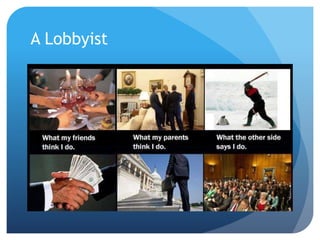
A Lobbyist
What you will learn today….
 You may not like it
 I will communicate the rules of the game
 You may not like it
 I will communicate the “birds and bees of politics”
 You may not like it
 But….I will review the “good, bad, and ugly”
The penalty that good men pay for
not being interested in politics is to
be governed by men worse than
themselves.
-Plato, philosopher (427-347 BC)
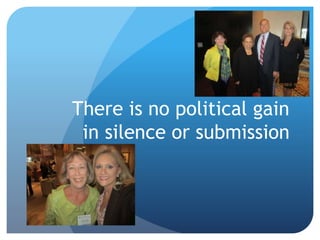
There is no political gain
in silence or submission
What is lobbying?
 To try to influence the thinking of legislators or
other public officials for or against a specific
cause www.dictionary.com
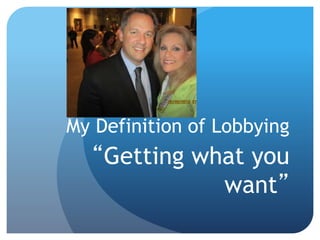
My Definition of Lobbying
“Getting what you
want”
Political Truth
 This is where most nurses have trouble
 Politics is not always:
 Fair
 Honest
 Consistent or predictable, where the art comes in and not
the science
 Open
 Democratic
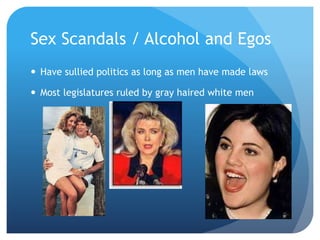
Sex Scandals / Alcohol and Egos
 Have sullied politics as long as men have made laws
 Most legislatures ruled by gray haired white men
Politics Changes Promises!
 Even if they didn’t vote with you this time….
 It doesn’t mean they will not vote with you next time….
 Don’t take it personal
Legislatures NEED to be lobbied
 Most legislatures lack
 Time- Thousands of bills are introduced every
year
 Staff
 Technical expertise- They can’t understand all
bills and all topics
 LOBBYING FUELS THE LEGISLATIVE PROCESS
 They NEED someone to educate them about your
Profession and health care needs
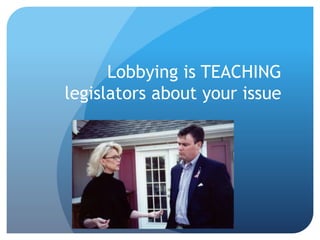
Lobbying is TEACHING
legislators about your issue
The Difference Between State and
Federal Lobbying
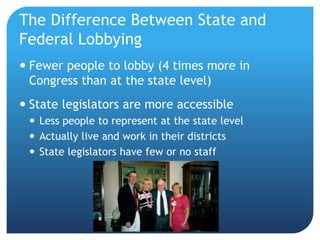
 Fewer people to lobby (4 times more in
Congress than at the state level)
 State legislators are more accessible
 Less people to represent at the state level
 Actually live and work in their districts
 State legislators have few or no staff
When do we lobby?
When we do NOT need anything!
(hopefully)
Why lobby?
 For most practical purposes, the legislature
can do anything it wants, to you or for you!
 Who defines/controls your practice?
What is the Most Influential Type
of Communication?
 1. Constituent meeting
 2. Constituent phone call
 3. Constituent letters (personal, non form)
Showalter Group Inc. 2013
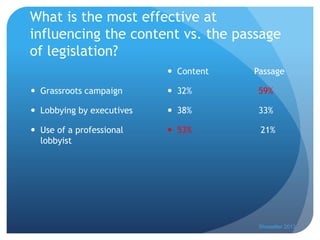
What is the most effective at
influencing the content vs. the passage
of legislation?
 Grassroots campaign
 Lobbying by executives
 Use of a professional
lobbyist
 Content Passage
 32% 59%
 38% 33%
 53% 21%
Showalter 2013
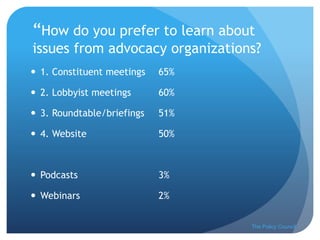
“How do you prefer to learn about
issues from advocacy organizations?
 1. Constituent meetings 65%
 2. Lobbyist meetings 60%
 3. Roundtable/briefings 51%
 4. Website 50%
 Podcasts 3%
 Webinars 2%
The Policy Council
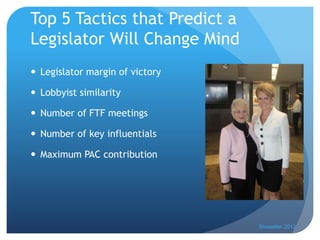
Top 5 Tactics that Predict a
Legislator Will Change Mind
 Legislator margin of victory
 Lobbyist similarity
 Number of FTF meetings
 Number of key influentials
 Maximum PAC contribution
Showalter 2013
Authentic vs. Authority Traps
 True persuasive authority comes from being an authority
rather than in authority
Showalter 2013
Building a Relationship
 Ask not what they can do for you but what you can do
for them
 Behaviors that Build Relationships in Your Circles of
Influence
 Exclusive information
 Scare information and resources
 Favors
 Being nice
Showalter 2013
The Myth of the Passionista
 Passion (only) works when you give them
 HERO STATUS
 New friends
Showalter 2013
Coalitions
 Coalitions multiply
influence
 Consider any group that
may have an interest in
your bill
 Will be surprised who
will be FOR and
AGAINST your bill
Where do we lobby?
 Wherever we find the
opportunity
 Socially
 Business context
 In the district
 At the General
Assembly
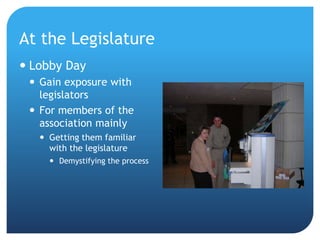
At the Legislature
 Lobby Day
 Gain exposure with
legislators
 For members of the
association mainly
 Getting them familiar
with the legislature
 Demystifying the process
When do we lobby? (for real)
 Before session
 During session
 After session
 Special session
 Anytime in between
Elements of effective lobbying
 Campaign based
 Established on trust
 Education centered
 Constituent driven
Where is your power?
 Being a constituent
 That means VOTES to the legislators
 Relationship with legislator
 Party affiliation
 Wealth
 Education
 Professional organization
Legislative Procedure
 All legislatures consists of two groups of lawmakers and
two chambers (except Nebraska)
 Upper house- Senate- Senators
 Lower house- Representatives, Delegates, or Assembly
Members
 Usually have 2-3 times more House members
 North Carolina
 Short session
 Long session
Legislative Officers
 Each state’s constitution establishes two
presiding officers, one for each chamber (3)
 The presiding officer
 Appoints chairs, vice-chairs, and members of
committees
 Establish the calendar
 Refer bill to committees
 Chair the chamber sessions
 Authenticate acts of the chamber by their
signature
Legislative Procedure
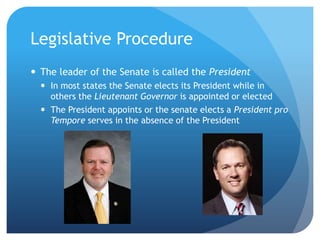
 The leader of the Senate is called the President
 In most states the Senate elects its President while in
others the Lieutenant Governor is appointed or elected
 The President appoints or the senate elects a President pro
Tempore serves in the absence of the President
Legislative Procedure
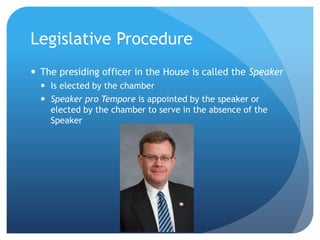
 The presiding officer in the House is called the Speaker
 Is elected by the chamber
 Speaker pro Tempore is appointed by the speaker or
elected by the chamber to serve in the absence of the
Speaker
Legislative Procedure
 Majority Leader or Rules Chair
 The majority party selects a leader to represent it on the
floor of the chamber
 Minority Leader
 The minority party selects a leader to represent it on the
floor of the chamber
 Committee Chairs
 Have power to influence the survival of a bill
Legislative Procedure
 Sergeant-at-Arms
 Helps the President of Speaker maintain order in the
chamber, bars unauthorized people from the floor,
announces and carries messages
 Ethics Office
 Enforces lobbyist registration
 Legislative Services Agencies
 Non-partisan offices that draft bills
 Committee and personal staff
 Each committee has clerical staff and legislators have
personal staff
More on Lobbying
What do I do as an RN/ CRNA?
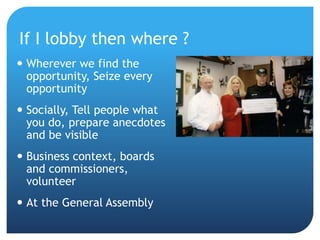
If I lobby then where ?
 Wherever we find the
opportunity, Seize every
opportunity
 Socially, Tell people what
you do, prepare anecdotes
and be visible
 Business context, boards
and commissioners,
volunteer
 At the General Assembly
When is the best time to Lobby
 Before session
 During session
 After session
 Special session
 Anytime in between
Established on Trust
 Honesty
 Accuracy
 Credibility
 Know what influences member
 Familiarity with formal processes
 Abiding by the unwritten and unspoken rules
Educate lawmakers about
 Yourself
 Your association
 Your issues
 Need for your bill
 Technical foundations
 Legal foundations
 Politics surrounding your issue
 How your proposed law would be good for the
lawmaker, district, and state
Expect lawmakers and staff to
 Know next to nothing about you
 Know less about your issue and the politics surrounding
it
 Have other important matters taking their time and
attention
 Will not learn your issue
 Have to be motivated
 Will listen for a few moments
Lawmakers advocates
 Almost any lawmaker can add value to your lobbying
effort
 They are members of the “club”
 Can affect lawmakers of the same views
 May cash in political favors for you
Follow-up
 Periodically,
 visit select lawmakers to provide new or additional
information
 Update them on political developments
 inform lawmakers when legislative actions on your bill are
coming
 drop by to say “hello” while respecting their time
Never do:
 Expect legislators or staff are there for your
convenience
 Forget your are there to make a sale
 Be a nuisance
 Waste a lawmaker’s time
 Waste staff’s time
 Be terse or rude
 Lie or mislead
“Never do”
 Promise to give or withhold support
 Suggest political consequences
 Overlook that staff has power
 Show disappointment if “only meeting with staff”
Staff
 There are no unimportant staff
 Build relationships with them
 At times, staff may be more important to you than
lawmakers
 Staff can mean the difference between success and
failure
Working in Campaigns
Unwritten, unspoken, inviolate
Golden Rule:
You help me, I’ll help
you
How To Help
 Campaign contributions
 Labor
 Access to your members
 Endorsements
 Constituent support
 Money
 Money is the mother’s milk
of politics
 Jesse Unrah, CA Assembly
Campaigns & Contributions
 PAC
 Personal
 Start small
 THEY WILL BE BACK FOR
MORE
 Deliver contributions
yourself
 WHO ELSE IS
CONTRIBUTING?
 Look on Board of Elections
website
Getting Started
Where should I begin
Where to Start?
 Find out who your legislator is
 Go to legislature website
 Make contact and make an appointment
 Follow up with a note
 Birthdays?
 Continue making periodic contact
 Donate to campaigns
 Offer to help
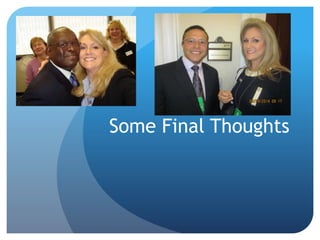
Some Final Thoughts
You are your own best advocate
Never let other professions speak for
your profession
You can do this! 1 in 3 is a genius!
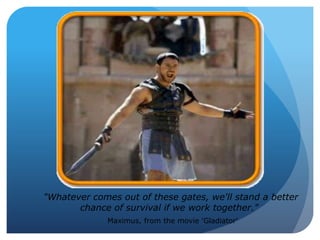
"Whatever comes out of these gates, we'll stand a better
chance of survival if we work together."
Maximus, from the movie 'Gladiator'
Questions
1.What is lobbying?
2.When do we lobby?
a. Before Session
b. After Session
c. During Session
d. After Session
e. All of the above
Questions
1.Where do we lobby?
a. Wherever we find the opportunity
b. Socially
c. Business context
d. In the district
e. In the legislature
f. All of the above
Questions
4. Never ______ with a legislator?
5. What is the MOST influential type of communication
with a legislator?
a. Constituent phone call
b. Constituent meeting
c. Constituent letters (Personal, non form)

Political Primer 2015

  • 1.
    A Political Primer SharonPearce, CRNA, MSN
  • 2.
    Background  Sharon Pearce,CRNA, MSN  Past President NCANA  Immediate Past President AANA  Registered lobbyist for NCANA and CAA  Chaired a committee for the Senate Minority Leader
  • 4.
  • 5.
    What you willlearn today….  You may not like it  I will communicate the rules of the game  You may not like it  I will communicate the “birds and bees of politics”  You may not like it  But….I will review the “good, bad, and ugly”
  • 6.
    The penalty thatgood men pay for not being interested in politics is to be governed by men worse than themselves. -Plato, philosopher (427-347 BC)
  • 7.
    There is nopolitical gain in silence or submission
  • 8.
    What is lobbying? To try to influence the thinking of legislators or other public officials for or against a specific cause www.dictionary.com
  • 9.
    My Definition ofLobbying “Getting what you want”
  • 10.
    Political Truth  Thisis where most nurses have trouble  Politics is not always:  Fair  Honest  Consistent or predictable, where the art comes in and not the science  Open  Democratic
  • 11.
    Sex Scandals /Alcohol and Egos  Have sullied politics as long as men have made laws  Most legislatures ruled by gray haired white men
  • 12.
    Politics Changes Promises! Even if they didn’t vote with you this time….  It doesn’t mean they will not vote with you next time….  Don’t take it personal
  • 13.
    Legislatures NEED tobe lobbied  Most legislatures lack  Time- Thousands of bills are introduced every year  Staff  Technical expertise- They can’t understand all bills and all topics  LOBBYING FUELS THE LEGISLATIVE PROCESS  They NEED someone to educate them about your Profession and health care needs
  • 14.
  • 15.
    The Difference BetweenState and Federal Lobbying  Fewer people to lobby (4 times more in Congress than at the state level)  State legislators are more accessible  Less people to represent at the state level  Actually live and work in their districts  State legislators have few or no staff
  • 16.
    When do welobby? When we do NOT need anything! (hopefully)
  • 17.
    Why lobby?  Formost practical purposes, the legislature can do anything it wants, to you or for you!  Who defines/controls your practice?
  • 18.
    What is theMost Influential Type of Communication?  1. Constituent meeting  2. Constituent phone call  3. Constituent letters (personal, non form) Showalter Group Inc. 2013
  • 19.
    What is themost effective at influencing the content vs. the passage of legislation?  Grassroots campaign  Lobbying by executives  Use of a professional lobbyist  Content Passage  32% 59%  38% 33%  53% 21% Showalter 2013
  • 20.
    “How do youprefer to learn about issues from advocacy organizations?  1. Constituent meetings 65%  2. Lobbyist meetings 60%  3. Roundtable/briefings 51%  4. Website 50%  Podcasts 3%  Webinars 2% The Policy Council
  • 21.
    Top 5 Tacticsthat Predict a Legislator Will Change Mind  Legislator margin of victory  Lobbyist similarity  Number of FTF meetings  Number of key influentials  Maximum PAC contribution Showalter 2013
  • 22.
    Authentic vs. AuthorityTraps  True persuasive authority comes from being an authority rather than in authority Showalter 2013
  • 23.
    Building a Relationship Ask not what they can do for you but what you can do for them  Behaviors that Build Relationships in Your Circles of Influence  Exclusive information  Scare information and resources  Favors  Being nice Showalter 2013
  • 24.
    The Myth ofthe Passionista  Passion (only) works when you give them  HERO STATUS  New friends Showalter 2013
  • 26.
    Coalitions  Coalitions multiply influence Consider any group that may have an interest in your bill  Will be surprised who will be FOR and AGAINST your bill
  • 27.
    Where do welobby?  Wherever we find the opportunity  Socially  Business context  In the district  At the General Assembly
  • 28.
    At the Legislature Lobby Day  Gain exposure with legislators  For members of the association mainly  Getting them familiar with the legislature  Demystifying the process
  • 29.
    When do welobby? (for real)  Before session  During session  After session  Special session  Anytime in between
  • 30.
    Elements of effectivelobbying  Campaign based  Established on trust  Education centered  Constituent driven
  • 31.
    Where is yourpower?  Being a constituent  That means VOTES to the legislators  Relationship with legislator  Party affiliation  Wealth  Education  Professional organization
  • 32.
  • 33.
    Legislative Procedure  Alllegislatures consists of two groups of lawmakers and two chambers (except Nebraska)  Upper house- Senate- Senators  Lower house- Representatives, Delegates, or Assembly Members  Usually have 2-3 times more House members  North Carolina  Short session  Long session
  • 34.
    Legislative Officers  Eachstate’s constitution establishes two presiding officers, one for each chamber (3)  The presiding officer  Appoints chairs, vice-chairs, and members of committees  Establish the calendar  Refer bill to committees  Chair the chamber sessions  Authenticate acts of the chamber by their signature
  • 35.
    Legislative Procedure  Theleader of the Senate is called the President  In most states the Senate elects its President while in others the Lieutenant Governor is appointed or elected  The President appoints or the senate elects a President pro Tempore serves in the absence of the President
  • 36.
    Legislative Procedure  Thepresiding officer in the House is called the Speaker  Is elected by the chamber  Speaker pro Tempore is appointed by the speaker or elected by the chamber to serve in the absence of the Speaker
  • 37.
    Legislative Procedure  MajorityLeader or Rules Chair  The majority party selects a leader to represent it on the floor of the chamber  Minority Leader  The minority party selects a leader to represent it on the floor of the chamber  Committee Chairs  Have power to influence the survival of a bill
  • 38.
    Legislative Procedure  Sergeant-at-Arms Helps the President of Speaker maintain order in the chamber, bars unauthorized people from the floor, announces and carries messages  Ethics Office  Enforces lobbyist registration  Legislative Services Agencies  Non-partisan offices that draft bills  Committee and personal staff  Each committee has clerical staff and legislators have personal staff
  • 40.
    More on Lobbying Whatdo I do as an RN/ CRNA?
  • 41.
    If I lobbythen where ?  Wherever we find the opportunity, Seize every opportunity  Socially, Tell people what you do, prepare anecdotes and be visible  Business context, boards and commissioners, volunteer  At the General Assembly
  • 42.
    When is thebest time to Lobby  Before session  During session  After session  Special session  Anytime in between
  • 43.
    Established on Trust Honesty  Accuracy  Credibility  Know what influences member  Familiarity with formal processes  Abiding by the unwritten and unspoken rules
  • 44.
    Educate lawmakers about Yourself  Your association  Your issues  Need for your bill  Technical foundations  Legal foundations  Politics surrounding your issue  How your proposed law would be good for the lawmaker, district, and state
  • 45.
    Expect lawmakers andstaff to  Know next to nothing about you  Know less about your issue and the politics surrounding it  Have other important matters taking their time and attention  Will not learn your issue  Have to be motivated  Will listen for a few moments
  • 46.
    Lawmakers advocates  Almostany lawmaker can add value to your lobbying effort  They are members of the “club”  Can affect lawmakers of the same views  May cash in political favors for you
  • 47.
    Follow-up  Periodically,  visitselect lawmakers to provide new or additional information  Update them on political developments  inform lawmakers when legislative actions on your bill are coming  drop by to say “hello” while respecting their time
  • 48.
    Never do:  Expectlegislators or staff are there for your convenience  Forget your are there to make a sale  Be a nuisance  Waste a lawmaker’s time  Waste staff’s time  Be terse or rude  Lie or mislead
  • 49.
    “Never do”  Promiseto give or withhold support  Suggest political consequences  Overlook that staff has power  Show disappointment if “only meeting with staff”
  • 50.
    Staff  There areno unimportant staff  Build relationships with them  At times, staff may be more important to you than lawmakers  Staff can mean the difference between success and failure
  • 51.
  • 52.
    Unwritten, unspoken, inviolate GoldenRule: You help me, I’ll help you
  • 53.
    How To Help Campaign contributions  Labor  Access to your members  Endorsements  Constituent support  Money  Money is the mother’s milk of politics  Jesse Unrah, CA Assembly
  • 54.
    Campaigns & Contributions PAC  Personal  Start small  THEY WILL BE BACK FOR MORE  Deliver contributions yourself  WHO ELSE IS CONTRIBUTING?  Look on Board of Elections website
  • 55.
  • 56.
    Where to Start? Find out who your legislator is  Go to legislature website  Make contact and make an appointment  Follow up with a note  Birthdays?  Continue making periodic contact  Donate to campaigns  Offer to help
  • 59.
  • 60.
    You are yourown best advocate Never let other professions speak for your profession You can do this! 1 in 3 is a genius!
  • 61.
    "Whatever comes outof these gates, we'll stand a better chance of survival if we work together." Maximus, from the movie 'Gladiator'
  • 62.
    Questions 1.What is lobbying? 2.Whendo we lobby? a. Before Session b. After Session c. During Session d. After Session e. All of the above
  • 63.
    Questions 1.Where do welobby? a. Wherever we find the opportunity b. Socially c. Business context d. In the district e. In the legislature f. All of the above
  • 64.
    Questions 4. Never ______with a legislator? 5. What is the MOST influential type of communication with a legislator? a. Constituent phone call b. Constituent meeting c. Constituent letters (Personal, non form)

Editor's Notes

  • #63 To try to influence for or against a cause
  • #65 4. Expect legislators or staff are there for your convenience Forget your are there to make a sale Be a nuisance Waste a lawmaker’s time Waste staff’s time Be terse or rude Lie or mislead 5.