Civil Society, a way to make politics.
Definition
- It is a non governmental organization
working to benefit society.
- Expresses the will of the people, the
citizens.
Functions of Civil Society
1. Vertical accountability. Checking and correcting the
abuse of power.

2. Movilizing against an authoritarian rule.
3. Stimulating political and civil participation
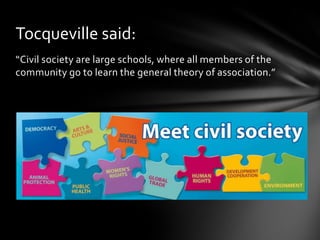
Tocqueville said:
“Civil society are large schools, where all members of the
community go to learn the general theory of association.”
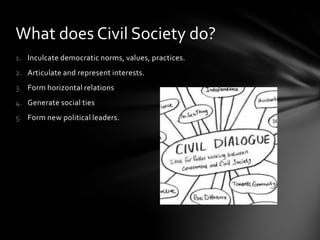
What does Civil Society do?
1. Inculcate democratic norms, values, practices.
2. Articulate and represent interests.

3. Form horizontal relations
4. Generate social ties
5. Form new political leaders.
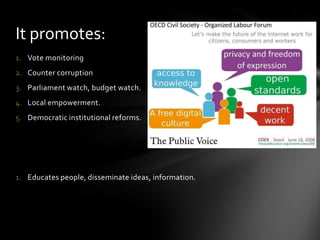
It promotes:
1. Vote monitoring
2. Counter corruption

3. Parliament watch, budget watch.
4. Local empowerment.
5. Democratic institutional reforms.

1. Educates people, disseminate ideas, information.
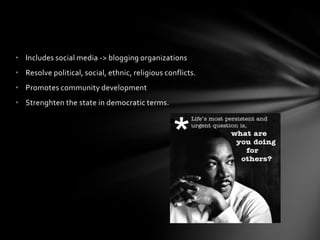
• Includes social media -> blogging organizations
• Resolve political, social, ethnic, religious conflicts.

• Promotes community development
• Strenghten the state in democratic terms.
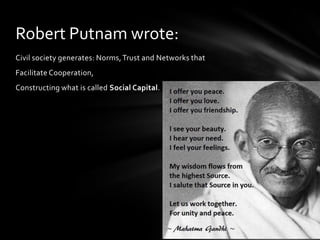
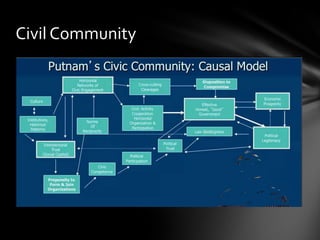
Robert Putnam wrote:
Civil society generates: Norms, Trust and Networks that
Facilitate Cooperation,

Constructing what is called Social Capital.
Political Communication agents
Should endeavor in:
1. Control corruption.
2. Implement laws and rules impartially.
3. Generate public foods rather than private
goods.
4. Produce sustained economic development.
5. Mitigate social and economical inequality.
Communicators should form
Civil societies to protect and institute:
1. Democracy: Rule of the people.
2. Republicanism: Political institutions of
horizontal accountability and rule of law.
3. Liberalism: Protection of individual liberties.
4. Citizenship: Norms and structures of the civic
community.
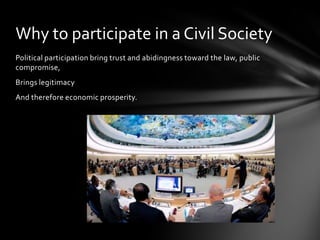
Why to participate in a Civil Society
Political participation bring trust and abidingness toward the law, public
compromise,
Brings legitimacy
And therefore economic prosperity.
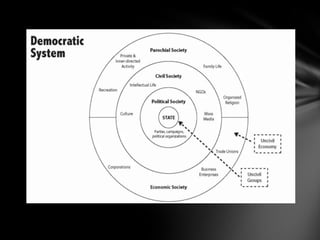
Civil Community
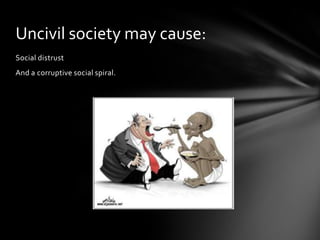
Uncivil society may cause:
Social distrust
And a corruptive social spiral.
With the use of ICT’s it has never been so cheap to unite people in sharing
and collaborate with ideas.
• It is easy now to find those who share your interests and concerns and
work together, with ideas and visions.

• As Gandhi said: “Be the change you want to be”
• Like for example Yoanni Sanchez, in her blog Generation Y.
• Please prepare a report on this blog:
• http://lageneraciony.com/
Be that change that we all need.

Political communications1

  • 1.
    Civil Society, away to make politics.
  • 2.
    Definition - It isa non governmental organization working to benefit society. - Expresses the will of the people, the citizens.
  • 3.
    Functions of CivilSociety 1. Vertical accountability. Checking and correcting the abuse of power. 2. Movilizing against an authoritarian rule. 3. Stimulating political and civil participation
  • 4.
    Tocqueville said: “Civil societyare large schools, where all members of the community go to learn the general theory of association.”
  • 5.
    What does CivilSociety do? 1. Inculcate democratic norms, values, practices. 2. Articulate and represent interests. 3. Form horizontal relations 4. Generate social ties 5. Form new political leaders.
  • 6.
    It promotes: 1. Votemonitoring 2. Counter corruption 3. Parliament watch, budget watch. 4. Local empowerment. 5. Democratic institutional reforms. 1. Educates people, disseminate ideas, information.
  • 7.
    • Includes socialmedia -> blogging organizations • Resolve political, social, ethnic, religious conflicts. • Promotes community development • Strenghten the state in democratic terms.
  • 8.
    Robert Putnam wrote: Civilsociety generates: Norms, Trust and Networks that Facilitate Cooperation, Constructing what is called Social Capital.
  • 9.
    Political Communication agents Shouldendeavor in: 1. Control corruption. 2. Implement laws and rules impartially. 3. Generate public foods rather than private goods. 4. Produce sustained economic development. 5. Mitigate social and economical inequality.
  • 10.
    Communicators should form Civilsocieties to protect and institute: 1. Democracy: Rule of the people. 2. Republicanism: Political institutions of horizontal accountability and rule of law. 3. Liberalism: Protection of individual liberties. 4. Citizenship: Norms and structures of the civic community.
  • 11.
    Why to participatein a Civil Society Political participation bring trust and abidingness toward the law, public compromise, Brings legitimacy And therefore economic prosperity.
  • 12.
  • 13.
    Uncivil society maycause: Social distrust And a corruptive social spiral.
  • 17.
    With the useof ICT’s it has never been so cheap to unite people in sharing and collaborate with ideas. • It is easy now to find those who share your interests and concerns and work together, with ideas and visions. • As Gandhi said: “Be the change you want to be” • Like for example Yoanni Sanchez, in her blog Generation Y. • Please prepare a report on this blog: • http://lageneraciony.com/
  • 18.
    Be that changethat we all need.