Optimizing the Use of  Atypical Antipsychotics
Background – Variations in Care Assumption Most physicians will make similar diagnostic and treatment decisions, and will offer care in similar ways Reality A wide variety of factors influence clinical decisions made by physicians leading to high variability of clinical practice High variability in care can lead to poor patient outcomes including unacceptably high rates of side effects and lack of efficacy
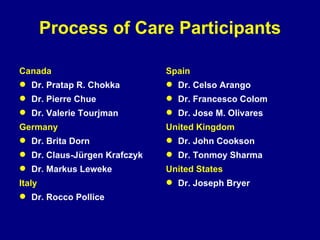
Process of Care Participants Canada Dr. Pratap R. Chokka Dr. Pierre Chue Dr. Valerie Tourjman Germany Dr. Brita Dorn Dr. Claus-J ürgen Krafczyk Dr. Markus Leweke Italy Dr. Rocco Pollice Spain Dr.  Celso Arango Dr.  Francesco Colom Dr. Jose M. Olivares United Kingdom Dr.  John Cookson Dr.  Tonmoy Sharma United States Dr. Joseph Bryer
Table of Contents History of Psychosis Management Variations in Care The Optimal Care Process  Overview Barriers and Best Practices Elements: Diagnosis, Medication Initiation,  Treatment Optimization, Continuation of Care Putting It All Together The Atypical Antipsychotic CareMap ™ Discussion References
Objectives To increase awareness of best clinical practices in the management of patients with bipolar disorder or schizophrenia To provide practical information, keys to success, and tools to help practitioners overcome barriers to achieving high quality care
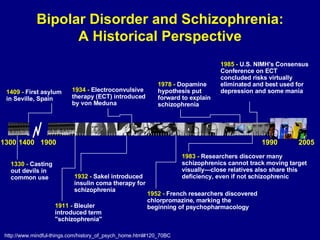
Bipolar Disorder and Schizophrenia: A Historical Perspective http://www.mindful-things.com/history_of_psych_home.html#120_70BC 1409 -  First asylum in Seville, Spain 1934 -  Electroconvulsive therapy (ECT) introduced by von Meduna 1978 -  Dopamine hypothesis put forward to explain schizophrenia  1985 -  U.S. NIMH's Consensus Conference on ECT concluded risks virtually eliminated and best used for depression and some mania   1300 1400 1900 1990 2005 1330 -  Casting out devils in common use 1911 -  Bleuler introduced term "schizophrenia" 1932 -  Sakel introduced insulin coma therapy for schizophrenia 1952 -  French researchers discovered chlorpromazine, marking the beginning of psychopharmacology   1983 -  Researchers discover many schizophrenics cannot track moving target visually—close relatives also share this deficiency, even if not schizophrenic
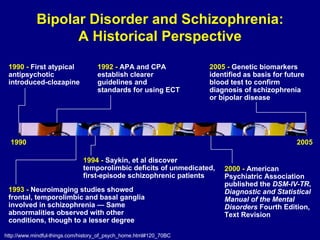
Bipolar Disorder and Schizophrenia: A Historical Perspective 1990 2005 1990 -  First atypical antipsychotic introduced-clozapine 1992 -  APA and CPA establish clearer guidelines and standards for using ECT 1993 -  Neuroimaging studies showed frontal, temporolimbic and basal ganglia involved in schizophrenia — Same abnormalities observed with other conditions, though to a lesser degree 1994 -  Saykin, et al discover temporolimbic deficits of unmedicated, first-episode schizophrenic patients 2000 -  American Psychiatric Association published the  DSM-IV-TR ,  Diagnostic and Statistical Manual of the Mental Disorders  Fourth Edition, Text Revision http://www.mindful-things.com/history_of_psych_home.html#120_70BC 2005 -  Genetic biomarkers identified as basis for future blood test to confirm diagnosis of schizophrenia or bipolar disease
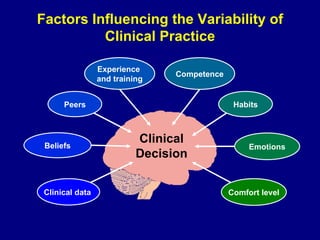
Factors Influencing the Variability of Clinical Practice Clinical Decision Clinical data  Beliefs Peers Experience  and training Competence Habits Emotions Comfort level
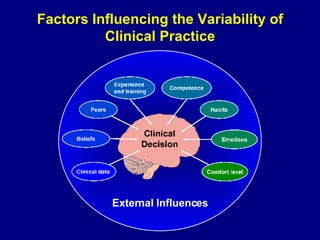
Factors Influencing the Variability of Clinical Practice External Influences
Variations in Care Can result from the following: The capacity of the local health care system influencing how much care is given The practice styles of local physicians determining the type of care delivered Local medical opinion and resources appearing to be more important than science in determining how medical care is delivered  (Wennberg, 2002)
Variations in Care Can lead to: An average 17 year lag between the discovery of more effective forms of treatment and their incorporation into routine patient care  (Balas, 2003) Avoidable deaths of roughly 79,000/year in U.S. (National Committee for Quality Assurance, 2004) Only 55% of patients receiving recommended care  (McGlynn, 2003)
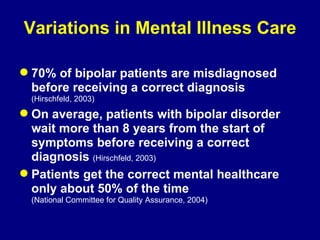
Variations in Mental Illness Care 70% of bipolar patients are misdiagnosed before receiving a correct diagnosis  (Hirschfeld, 2003) On average, patients with bipolar disorder wait more than 8 years from the start of symptoms before receiving a correct diagnosis  (Hirschfeld, 2003) Patients get the correct mental healthcare only about 50% of the time  (National Committee for Quality Assurance, 2004)
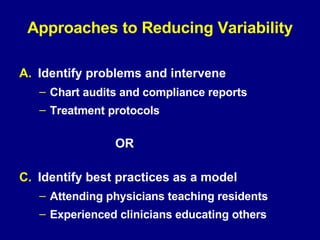
Approaches to Reducing Variability Identify problems and intervene Chart audits and compliance reports Treatment protocols OR Identify best practices as a model Attending physicians teaching residents Experienced clinicians educating others
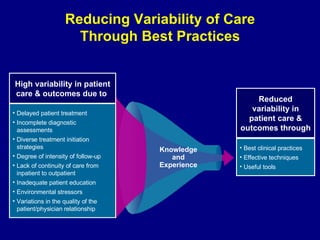
Reducing Variability of Care Through Best Practices Best clinical practices Effective techniques  Useful tools Reduced variability in patient care & outcomes through Delayed patient treatment  Incomplete diagnostic assessments Diverse treatment initiation strategies Degree of intensity of follow-up  Lack of continuity of care from inpatient to outpatient Inadequate patient education Environmental stressors Variations in the quality of the patient/physician relationship High variability in patient care & outcomes due to  Knowledge and Experience
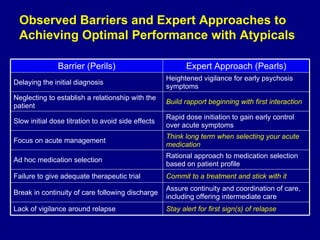
Observed Barriers and Expert Approaches to Achieving Optimal Performance with Atypicals Assure continuity and coordination of care, including offering intermediate care  Break in continuity of care following discharge Rational approach to medication selection based on patient profile Ad hoc medication selection Rapid dose initiation to gain early control over acute symptoms Slow initial dose titration to avoid side effects Heightened vigilance for early psychosis symptoms Delaying the initial diagnosis Stay alert for first sign(s) of relapse Lack of vigilance around relapse Commit to a treatment and stick with it Failure to give adequate therapeutic trial Think long term when selecting your acute medication  Focus on acute management Build rapport beginning with first interaction Neglecting to establish a relationship with the patient  Expert Approach (Pearls) Barrier (Perils)
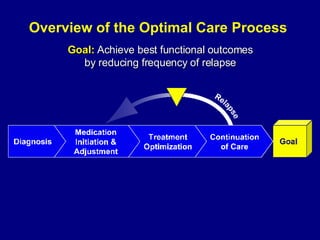
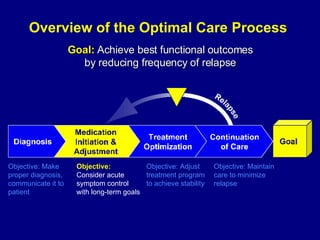
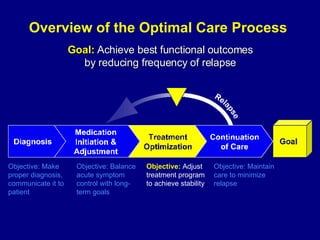
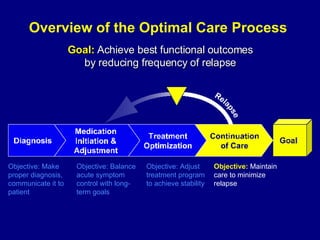
Overview of the Optimal Care Process  Goal:   Achieve best functional outcomes  by reducing frequency of relapse
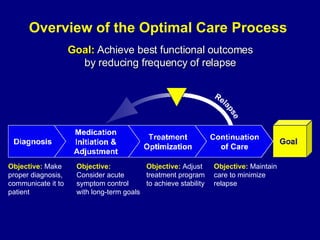
Overview of the Optimal Care Process  Goal:   Achieve best functional outcomes  by reducing frequency of relapse  Objective:  Consider acute symptom control with long-term goals Objective:  Adjust  treatment program to achieve stability  Objective:  Maintain  care to minimize relapse Objective:   Make  proper diagnosis, communicate it to patient
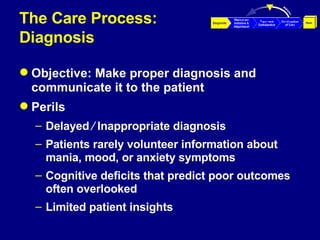
The Care Process:  Diagnosis Objective: Make proper diagnosis and communicate it to the patient Perils Delayed ⁄ Inappropriate diagnosis Patients rarely volunteer information about mania, mood, or anxiety symptoms Cognitive deficits that predict poor outcomes often overlooked  Limited patient insights
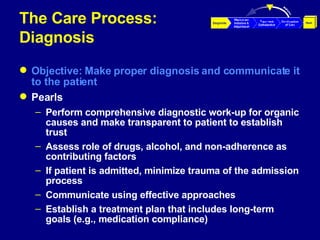
The Care Process:  Diagnosis Objective: Make proper diagnosis and communicate it to the patient Pearls Perform comprehensive diagnostic work-up for organic causes and make transparent to patient to establish trust Assess role of drugs, alcohol, and non-adherence as contributing factors If patient is admitted, minimize trauma of the admission process Communicate using effective approaches Establish a treatment plan that includes long-term goals (e.g., medication compliance)
Key to Success Build trust beginning with first interaction
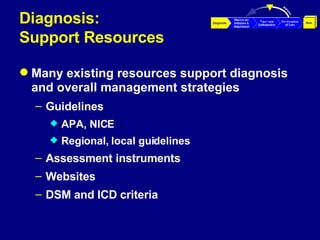
Diagnosis:  Support Resources Many existing resources support diagnosis and overall management strategies Guidelines APA, NICE Regional, local guidelines Assessment instruments Websites DSM and ICD criteria
Overview of the Optimal Care Process  Goal:   Achieve best functional outcomes  by reducing frequency of relapse  Objective:  Consider acute symptom control with long-term goals Objective: Adjust  treatment program to achieve stability  Objective: Maintain  care to minimize relapse Objective: Make  proper diagnosis, communicate it to patient
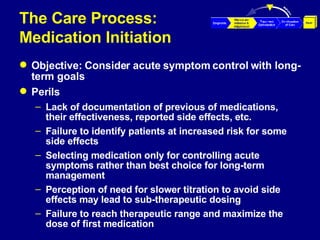
The Care Process:  Medication Initiation Objective: Consider acute symptom control with long- term goals Perils Lack of documentation of previous of medications, their effectiveness, reported side effects, etc. Failure to identify patients at increased risk for some side effects  Selecting medication only for controlling acute symptoms rather than best choice for long-term management Perception of need for slower titration to avoid side effects may lead to sub-therapeutic dosing Failure to reach therapeutic range and maximize the dose of first medication
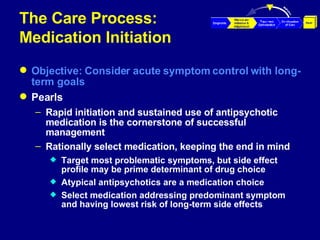
The Care Process:  Medication Initiation Objective: Consider acute symptom control with long- term goals Pearls Rapid initiation and sustained use of antipsychotic medication is the cornerstone of successful management Rationally select medication, keeping the end in mind Target most problematic symptoms, but side effect profile may be prime determinant of drug choice Atypical antipsychotics are a medication choice Select medication addressing predominant symptom and having lowest risk of long-term side effects
The Care Process:  Medication Initiation Objective: To consider acute symptom control with long-term goals Pearls Build early rapport with patient  Set expectations regarding side effects, effectiveness, etc. Involve patient in medication selection process Gain early feedback on effects of medication
Rational Medication  Selection Criteria Benefits Primary diagnosis Severity of acute symptoms Long-term adherence Functional outcome(s) Risks Relative severity of possible adverse events Patient risks for selected side effects (see slide 27) Benefit-risk ratio Effectiveness and side effects of past medication(s)
Rational Medication Selection: Potential Adverse Events to Consider Symptoms to consider EPS/Tardive Dyskinesia Akathisia Nausea and vomiting Prolactin elevation/  sexual dysfunction Weight gain Sedation Signs to consider Glucose abnormalities Lipid abnormalities QTc prolongation Hypotension Anti-cholinergic side effects When selecting a medication, a clinician should consider both the patient’s needs in the short and the long term and the efficacy and side-effects of various medications References: American Psychiatric Association. Practice Guideline for the Treatment of Patients with Schizophrenia, Second Edition: February, 2004. Bagnall AM, et. Al. A systematic review of atypical antipsychotic drugs in schizophrenia.  Health Technology Assessment  . 2003;7(13). National Institute for Clinical Excellence. Schizophrenia: Core interventions in the treatment and management of schizophrenia in primary and secondary care. Clinical Guideline 1, December 2002.
External Factors Affecting  Medication Selection Drug formulary committee Anecdotal experience Availability of samples Patient preference
Key to Success Think long term when selecting your acute medication
Medication Initiation Tool: Medication Schedule
Overview of the Optimal Care Process  Goal:   Achieve best functional outcomes  by reducing frequency of relapse  Objective: Balance acute symptom control with long-term goals Objective:  Adjust  treatment program to achieve stability  Objective: Maintain  care to minimize relapse Objective: Make  proper diagnosis, communicate it to patient
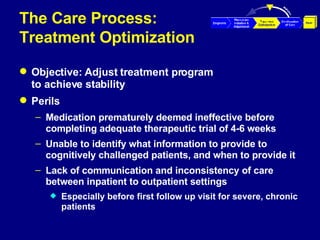
The Care Process: Treatment Optimization Objective: Adjust treatment program  to achieve stability Perils Medication prematurely deemed ineffective before completing adequate therapeutic trial of 4-6 weeks Unable to identify what information to provide to cognitively challenged patients, and when to provide it Lack of communication and inconsistency of care between inpatient to outpatient settings Especially before first follow up visit for severe, chronic patients
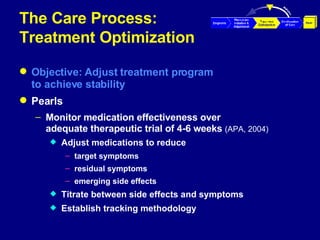
The Care Process: Treatment Optimization Objective: Adjust treatment program  to achieve stability Pearls Monitor medication effectiveness over  adequate therapeutic trial of 4-6 weeks  (APA, 2004) Adjust medications to reduce target symptoms residual symptoms  emerging side effects Titrate between side effects and symptoms Establish tracking methodology
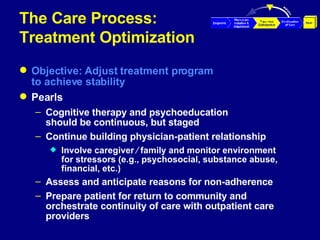
The Care Process: Treatment Optimization Objective: Adjust treatment program  to achieve stability Pearls Cognitive therapy and psychoeducation  should be continuous, but staged Continue building physician-patient relationship Involve caregiver ⁄ family and monitor environment  for stressors (e.g., psychosocial, substance abuse, financial, etc.) Assess and anticipate reasons for non-adherence Prepare patient for return to community and orchestrate continuity of care with outpatient care providers
Key to Success Commit to a treatment and stick with it
Treatment Optimization Tool: Treatment Plan Checklist
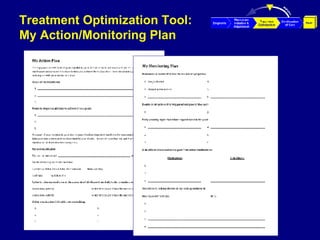
Treatment Optimization Tool: My Action/Monitoring Plan
Overview of the Optimal Care Process  Goal:   Achieve best functional outcomes  by reducing frequency of relapse  Objective: Balance acute symptom control with long-term goals Objective: Adjust  treatment program to achieve stability  Objective:  Maintain  care to minimize relapse Objective: Make  proper diagnosis, communicate it to patient
The Care Process: Continuation of Care Objective: Maintain care to minimize relapse Perils Failing to make plans for continued care after hospitalization leading to early relapse Strong propensity for substance and/or alcohol abuse  Bipolar patients may seek to achieve mood elevation  Isolation/lack of a caregiver support system
The Care Process: Continuation of Care Objective: Maintain care to minimize relapse Pearls Provide appropriate degree of intervention for patients prone to relapse  Assure caregiver education and involvement Maintain a high trust relationship Make crisis management resources available Assure strict vigilance to early recognition of relapse symptoms Reinforce medication adherence and avoidance of drugs and alcohol Target optimizing functional outcomes
Key to Success Stay alert for first sign(s) of relapse
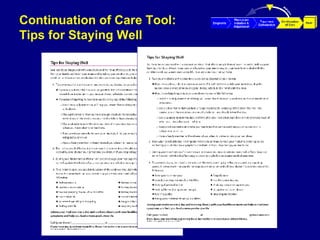
Continuation of Care Tool: Tips for Staying Well
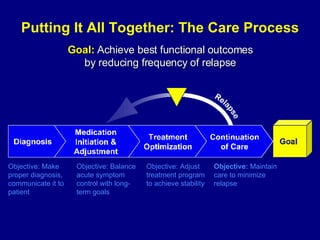
Putting It All Together: The Care Process Goal:   Achieve best functional outcomes  by reducing frequency of relapse  Objective: Balance acute symptom control with long-term goals Objective: Adjust  treatment program to achieve stability  Objective:  Maintain  care to minimize relapse Objective: Make  proper diagnosis, communicate it to patient
Putting It All Together: The CareMap ™ Pierre Chue, F Markus Leweke, Ana González-Pinto on behalf of the CareMap Research Team.  Sharing best practice in the management of schizophrenia and bipolar disorder:  development of an atypical antipsychotic CareMap. Int J Neuropsychopharmacol 2006; 9 (Suppl 1): S261. Abstract number P03.124
Summary Goal: Achieve best functional outcomes Keys to success Build trust beginning with first interaction Think about the long term when selecting your acute medication  Commit to a treatment and stick with it Stay alert for first sign(s) of relapse Best practices Resources
Discussion
References American Psychiatric Association. Practice Guideline for the Treatment of Patients with Schizophrenia, Second Edition: February, 2004. Bagnall AM, et. Al. A systematic review of atypical antipsychotic drugs in schizophrenia.  Health Technology Assessment  . 2003;7(13). Balas EA. Information Systems Can Prevent Errors and Improve Quality.  J Am Med Inform Assoc . 2001;8:398-99. Hirschfeld RM, Lewis L, Vornik LA. Perceptions and Impact of Bipolar Disorder: How Far Have We Really Come? Results of the National Depressive and Manic-Depressive Association 2000 Survey of Individuals With Bipolar Disorder.  J Clin Psychiatry . 2003;64:161-74. Institute of Medicine. Health Professions Education: A Bridge to Quality. Washington, D.C.: National Academy Press, 2003. McGlynn EA, Asch SM, Adams J, et al. The Quality of Health Care Delivered to Adults in the United States.  N Engl J Med . 2003;348:2635-45. National Committee for Quality Assurance. The State of Health Care Quality: Industry Trends and Analysis. Washington, D.C.: NCQA, 2004. National Institute for Clinical Excellence. Schizophrenia: Core interventions in the treatment and management of schizophrenia in primary and secondary care. Clinical Guideline 1, December 2002. Tsuang MT, Nossova N, Yager T, et al. Assessing the validity of blood-based gene expression profiles for the classification of schizophrenia and bipolar disorder: A preliminary report. Part B: Neuropsychiatric Genetics.  Am J Med Genetics.  2005;133B:1-5. Wennberg JE. Unwarranted Variations in Healthcare delivery: Implications for Academic Medical Centres.  BMJ . 2002;325:961-64.
Point of Care

  • 1.
    Optimizing the Useof Atypical Antipsychotics
  • 2.
    Background – Variationsin Care Assumption Most physicians will make similar diagnostic and treatment decisions, and will offer care in similar ways Reality A wide variety of factors influence clinical decisions made by physicians leading to high variability of clinical practice High variability in care can lead to poor patient outcomes including unacceptably high rates of side effects and lack of efficacy
  • 3.
    Process of CareParticipants Canada Dr. Pratap R. Chokka Dr. Pierre Chue Dr. Valerie Tourjman Germany Dr. Brita Dorn Dr. Claus-J ürgen Krafczyk Dr. Markus Leweke Italy Dr. Rocco Pollice Spain Dr. Celso Arango Dr. Francesco Colom Dr. Jose M. Olivares United Kingdom Dr. John Cookson Dr. Tonmoy Sharma United States Dr. Joseph Bryer
  • 4.
    Table of ContentsHistory of Psychosis Management Variations in Care The Optimal Care Process Overview Barriers and Best Practices Elements: Diagnosis, Medication Initiation, Treatment Optimization, Continuation of Care Putting It All Together The Atypical Antipsychotic CareMap ™ Discussion References
  • 5.
    Objectives To increaseawareness of best clinical practices in the management of patients with bipolar disorder or schizophrenia To provide practical information, keys to success, and tools to help practitioners overcome barriers to achieving high quality care
  • 6.
    Bipolar Disorder andSchizophrenia: A Historical Perspective http://www.mindful-things.com/history_of_psych_home.html#120_70BC 1409 - First asylum in Seville, Spain 1934 - Electroconvulsive therapy (ECT) introduced by von Meduna 1978 - Dopamine hypothesis put forward to explain schizophrenia 1985 - U.S. NIMH's Consensus Conference on ECT concluded risks virtually eliminated and best used for depression and some mania 1300 1400 1900 1990 2005 1330 - Casting out devils in common use 1911 - Bleuler introduced term "schizophrenia" 1932 - Sakel introduced insulin coma therapy for schizophrenia 1952 - French researchers discovered chlorpromazine, marking the beginning of psychopharmacology 1983 - Researchers discover many schizophrenics cannot track moving target visually—close relatives also share this deficiency, even if not schizophrenic
  • 7.
    Bipolar Disorder andSchizophrenia: A Historical Perspective 1990 2005 1990 - First atypical antipsychotic introduced-clozapine 1992 - APA and CPA establish clearer guidelines and standards for using ECT 1993 - Neuroimaging studies showed frontal, temporolimbic and basal ganglia involved in schizophrenia — Same abnormalities observed with other conditions, though to a lesser degree 1994 - Saykin, et al discover temporolimbic deficits of unmedicated, first-episode schizophrenic patients 2000 - American Psychiatric Association published the DSM-IV-TR , Diagnostic and Statistical Manual of the Mental Disorders Fourth Edition, Text Revision http://www.mindful-things.com/history_of_psych_home.html#120_70BC 2005 - Genetic biomarkers identified as basis for future blood test to confirm diagnosis of schizophrenia or bipolar disease
  • 8.
    Factors Influencing theVariability of Clinical Practice Clinical Decision Clinical data Beliefs Peers Experience and training Competence Habits Emotions Comfort level
  • 9.
    Factors Influencing theVariability of Clinical Practice External Influences
  • 10.
    Variations in CareCan result from the following: The capacity of the local health care system influencing how much care is given The practice styles of local physicians determining the type of care delivered Local medical opinion and resources appearing to be more important than science in determining how medical care is delivered (Wennberg, 2002)
  • 11.
    Variations in CareCan lead to: An average 17 year lag between the discovery of more effective forms of treatment and their incorporation into routine patient care (Balas, 2003) Avoidable deaths of roughly 79,000/year in U.S. (National Committee for Quality Assurance, 2004) Only 55% of patients receiving recommended care (McGlynn, 2003)
  • 12.
    Variations in MentalIllness Care 70% of bipolar patients are misdiagnosed before receiving a correct diagnosis (Hirschfeld, 2003) On average, patients with bipolar disorder wait more than 8 years from the start of symptoms before receiving a correct diagnosis (Hirschfeld, 2003) Patients get the correct mental healthcare only about 50% of the time (National Committee for Quality Assurance, 2004)
  • 13.
    Approaches to ReducingVariability Identify problems and intervene Chart audits and compliance reports Treatment protocols OR Identify best practices as a model Attending physicians teaching residents Experienced clinicians educating others
  • 14.
    Reducing Variability ofCare Through Best Practices Best clinical practices Effective techniques Useful tools Reduced variability in patient care & outcomes through Delayed patient treatment Incomplete diagnostic assessments Diverse treatment initiation strategies Degree of intensity of follow-up Lack of continuity of care from inpatient to outpatient Inadequate patient education Environmental stressors Variations in the quality of the patient/physician relationship High variability in patient care & outcomes due to Knowledge and Experience
  • 15.
    Observed Barriers andExpert Approaches to Achieving Optimal Performance with Atypicals Assure continuity and coordination of care, including offering intermediate care Break in continuity of care following discharge Rational approach to medication selection based on patient profile Ad hoc medication selection Rapid dose initiation to gain early control over acute symptoms Slow initial dose titration to avoid side effects Heightened vigilance for early psychosis symptoms Delaying the initial diagnosis Stay alert for first sign(s) of relapse Lack of vigilance around relapse Commit to a treatment and stick with it Failure to give adequate therapeutic trial Think long term when selecting your acute medication Focus on acute management Build rapport beginning with first interaction Neglecting to establish a relationship with the patient Expert Approach (Pearls) Barrier (Perils)
  • 16.
    Overview of theOptimal Care Process Goal: Achieve best functional outcomes by reducing frequency of relapse
  • 17.
    Overview of theOptimal Care Process Goal: Achieve best functional outcomes by reducing frequency of relapse Objective: Consider acute symptom control with long-term goals Objective: Adjust treatment program to achieve stability Objective: Maintain care to minimize relapse Objective: Make proper diagnosis, communicate it to patient
  • 18.
    The Care Process: Diagnosis Objective: Make proper diagnosis and communicate it to the patient Perils Delayed ⁄ Inappropriate diagnosis Patients rarely volunteer information about mania, mood, or anxiety symptoms Cognitive deficits that predict poor outcomes often overlooked Limited patient insights
  • 19.
    The Care Process: Diagnosis Objective: Make proper diagnosis and communicate it to the patient Pearls Perform comprehensive diagnostic work-up for organic causes and make transparent to patient to establish trust Assess role of drugs, alcohol, and non-adherence as contributing factors If patient is admitted, minimize trauma of the admission process Communicate using effective approaches Establish a treatment plan that includes long-term goals (e.g., medication compliance)
  • 20.
    Key to SuccessBuild trust beginning with first interaction
  • 21.
    Diagnosis: SupportResources Many existing resources support diagnosis and overall management strategies Guidelines APA, NICE Regional, local guidelines Assessment instruments Websites DSM and ICD criteria
  • 22.
    Overview of theOptimal Care Process Goal: Achieve best functional outcomes by reducing frequency of relapse Objective: Consider acute symptom control with long-term goals Objective: Adjust treatment program to achieve stability Objective: Maintain care to minimize relapse Objective: Make proper diagnosis, communicate it to patient
  • 23.
    The Care Process: Medication Initiation Objective: Consider acute symptom control with long- term goals Perils Lack of documentation of previous of medications, their effectiveness, reported side effects, etc. Failure to identify patients at increased risk for some side effects Selecting medication only for controlling acute symptoms rather than best choice for long-term management Perception of need for slower titration to avoid side effects may lead to sub-therapeutic dosing Failure to reach therapeutic range and maximize the dose of first medication
  • 24.
    The Care Process: Medication Initiation Objective: Consider acute symptom control with long- term goals Pearls Rapid initiation and sustained use of antipsychotic medication is the cornerstone of successful management Rationally select medication, keeping the end in mind Target most problematic symptoms, but side effect profile may be prime determinant of drug choice Atypical antipsychotics are a medication choice Select medication addressing predominant symptom and having lowest risk of long-term side effects
  • 25.
    The Care Process: Medication Initiation Objective: To consider acute symptom control with long-term goals Pearls Build early rapport with patient Set expectations regarding side effects, effectiveness, etc. Involve patient in medication selection process Gain early feedback on effects of medication
  • 26.
    Rational Medication Selection Criteria Benefits Primary diagnosis Severity of acute symptoms Long-term adherence Functional outcome(s) Risks Relative severity of possible adverse events Patient risks for selected side effects (see slide 27) Benefit-risk ratio Effectiveness and side effects of past medication(s)
  • 27.
    Rational Medication Selection:Potential Adverse Events to Consider Symptoms to consider EPS/Tardive Dyskinesia Akathisia Nausea and vomiting Prolactin elevation/ sexual dysfunction Weight gain Sedation Signs to consider Glucose abnormalities Lipid abnormalities QTc prolongation Hypotension Anti-cholinergic side effects When selecting a medication, a clinician should consider both the patient’s needs in the short and the long term and the efficacy and side-effects of various medications References: American Psychiatric Association. Practice Guideline for the Treatment of Patients with Schizophrenia, Second Edition: February, 2004. Bagnall AM, et. Al. A systematic review of atypical antipsychotic drugs in schizophrenia. Health Technology Assessment . 2003;7(13). National Institute for Clinical Excellence. Schizophrenia: Core interventions in the treatment and management of schizophrenia in primary and secondary care. Clinical Guideline 1, December 2002.
  • 28.
    External Factors Affecting Medication Selection Drug formulary committee Anecdotal experience Availability of samples Patient preference
  • 29.
    Key to SuccessThink long term when selecting your acute medication
  • 30.
    Medication Initiation Tool:Medication Schedule
  • 31.
    Overview of theOptimal Care Process Goal: Achieve best functional outcomes by reducing frequency of relapse Objective: Balance acute symptom control with long-term goals Objective: Adjust treatment program to achieve stability Objective: Maintain care to minimize relapse Objective: Make proper diagnosis, communicate it to patient
  • 32.
    The Care Process:Treatment Optimization Objective: Adjust treatment program to achieve stability Perils Medication prematurely deemed ineffective before completing adequate therapeutic trial of 4-6 weeks Unable to identify what information to provide to cognitively challenged patients, and when to provide it Lack of communication and inconsistency of care between inpatient to outpatient settings Especially before first follow up visit for severe, chronic patients
  • 33.
    The Care Process:Treatment Optimization Objective: Adjust treatment program to achieve stability Pearls Monitor medication effectiveness over adequate therapeutic trial of 4-6 weeks (APA, 2004) Adjust medications to reduce target symptoms residual symptoms emerging side effects Titrate between side effects and symptoms Establish tracking methodology
  • 34.
    The Care Process:Treatment Optimization Objective: Adjust treatment program to achieve stability Pearls Cognitive therapy and psychoeducation should be continuous, but staged Continue building physician-patient relationship Involve caregiver ⁄ family and monitor environment for stressors (e.g., psychosocial, substance abuse, financial, etc.) Assess and anticipate reasons for non-adherence Prepare patient for return to community and orchestrate continuity of care with outpatient care providers
  • 35.
    Key to SuccessCommit to a treatment and stick with it
  • 36.
    Treatment Optimization Tool:Treatment Plan Checklist
  • 37.
    Treatment Optimization Tool:My Action/Monitoring Plan
  • 38.
    Overview of theOptimal Care Process Goal: Achieve best functional outcomes by reducing frequency of relapse Objective: Balance acute symptom control with long-term goals Objective: Adjust treatment program to achieve stability Objective: Maintain care to minimize relapse Objective: Make proper diagnosis, communicate it to patient
  • 39.
    The Care Process:Continuation of Care Objective: Maintain care to minimize relapse Perils Failing to make plans for continued care after hospitalization leading to early relapse Strong propensity for substance and/or alcohol abuse Bipolar patients may seek to achieve mood elevation Isolation/lack of a caregiver support system
  • 40.
    The Care Process:Continuation of Care Objective: Maintain care to minimize relapse Pearls Provide appropriate degree of intervention for patients prone to relapse Assure caregiver education and involvement Maintain a high trust relationship Make crisis management resources available Assure strict vigilance to early recognition of relapse symptoms Reinforce medication adherence and avoidance of drugs and alcohol Target optimizing functional outcomes
  • 41.
    Key to SuccessStay alert for first sign(s) of relapse
  • 42.
    Continuation of CareTool: Tips for Staying Well
  • 43.
    Putting It AllTogether: The Care Process Goal: Achieve best functional outcomes by reducing frequency of relapse Objective: Balance acute symptom control with long-term goals Objective: Adjust treatment program to achieve stability Objective: Maintain care to minimize relapse Objective: Make proper diagnosis, communicate it to patient
  • 44.
    Putting It AllTogether: The CareMap ™ Pierre Chue, F Markus Leweke, Ana González-Pinto on behalf of the CareMap Research Team. Sharing best practice in the management of schizophrenia and bipolar disorder: development of an atypical antipsychotic CareMap. Int J Neuropsychopharmacol 2006; 9 (Suppl 1): S261. Abstract number P03.124
  • 45.
    Summary Goal: Achievebest functional outcomes Keys to success Build trust beginning with first interaction Think about the long term when selecting your acute medication Commit to a treatment and stick with it Stay alert for first sign(s) of relapse Best practices Resources
  • 46.
  • 47.
    References American PsychiatricAssociation. Practice Guideline for the Treatment of Patients with Schizophrenia, Second Edition: February, 2004. Bagnall AM, et. Al. A systematic review of atypical antipsychotic drugs in schizophrenia. Health Technology Assessment . 2003;7(13). Balas EA. Information Systems Can Prevent Errors and Improve Quality. J Am Med Inform Assoc . 2001;8:398-99. Hirschfeld RM, Lewis L, Vornik LA. Perceptions and Impact of Bipolar Disorder: How Far Have We Really Come? Results of the National Depressive and Manic-Depressive Association 2000 Survey of Individuals With Bipolar Disorder. J Clin Psychiatry . 2003;64:161-74. Institute of Medicine. Health Professions Education: A Bridge to Quality. Washington, D.C.: National Academy Press, 2003. McGlynn EA, Asch SM, Adams J, et al. The Quality of Health Care Delivered to Adults in the United States. N Engl J Med . 2003;348:2635-45. National Committee for Quality Assurance. The State of Health Care Quality: Industry Trends and Analysis. Washington, D.C.: NCQA, 2004. National Institute for Clinical Excellence. Schizophrenia: Core interventions in the treatment and management of schizophrenia in primary and secondary care. Clinical Guideline 1, December 2002. Tsuang MT, Nossova N, Yager T, et al. Assessing the validity of blood-based gene expression profiles for the classification of schizophrenia and bipolar disorder: A preliminary report. Part B: Neuropsychiatric Genetics. Am J Med Genetics. 2005;133B:1-5. Wennberg JE. Unwarranted Variations in Healthcare delivery: Implications for Academic Medical Centres. BMJ . 2002;325:961-64.

Editor's Notes

  • #2 Slide Unlike presentations of clinical study data, this slide set presents: Insights gained by observing physicians in practice who have achieved a measure of success using atypical antipsychotics for treatment of bipolar disorder and schizophrenia. Barriers to successful use that could be addressed by modeling clinical best practices and then implementing these insights. Tools and approaches that can help support physicians in implementing these best practices.