Analyzing literature involves
understanding and accurately using a
common vocabulary.
Literary Terminology
(Information directly from About.com, 9-10-09 with changes by Tina Heller)
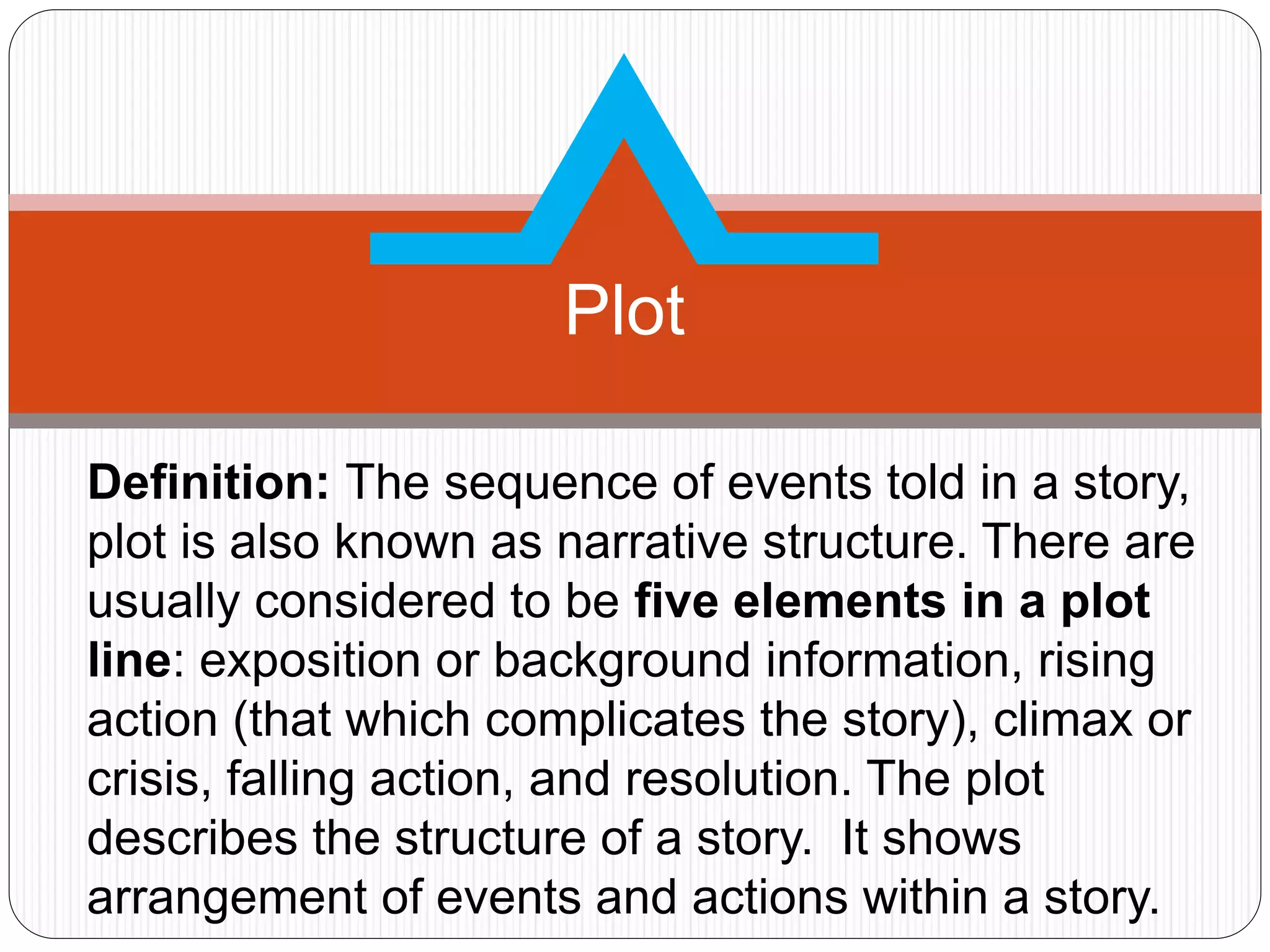
Definition: The sequence of events told in a story,
plot is also known as narrative structure. There are
usually considered to be five elements in a plot
line: exposition or background information, rising
action (that which complicates the story), climax or
crisis, falling action, and resolution. The plot
describes the structure of a story. It shows
arrangement of events and actions within a story.
Plot
Plot
Exposition
Climax
Resolution
(Dénouement)
Definition: The part of the plot that provides the
reader with background information introducing the
setting, characters, and main conflicts. The
exposition usually occurs at the beginning of a
novel or story and may be short or long. the start
of the story, the situation before the action starts.
It provides background information about
characters and circumstances or explains
Exposition
Definition: The part of the plot where the round
characters are developed, the conflicts are
increased and acted out in many ways, motives
are introduced, things happen; generally, the major
part of a novel or story. Rising action includes the
series of events (usually the conflicts or struggles
of the protagonist) that increase tension, propel the
plot forward, and lead to the climax of the story.
Rising Action
Definition: The part of the plot that is the point of
greatest tension in a work of literature and the
turning point in the action or plot; it is the most
intense moment – either mentally or in action. In a
plot line, the climax occurs after the rising action
and before the falling action.
Climax
Definition: The part of the plot in a work of
literature that follows the climax and ends in the
resolution. This is in contrast to the rising action
which leads up to the plot's climax. The part of the
plot which follows the climax and diminishes
tension before the resolution.
Falling Action
Definition: The conclusion of a plot’s conflicts and
complications. Events immediately following the
climax – a kind of “cleaning up.” Resolution is the part
of the story's plot line in which the problem of the story
is resolved or worked out. This occurs after the falling
action and is typically where the story ends. where
everything ends; the reader may have some sense of
"closure.”
Resolution
("De'nouement")
Definition: Dénouement is a French word meaning
the “unraveling” or “unknotting.” Sometimes referred
to as the part of the plot in which a resolution or
clarification takes place, but often truly containing no
firm resolution to tensions or conflicts.
Resolution
("De'nouement")
Definition: Conflict is the struggle between the
opposing forces on which the action in a work of
literature depends. There are five basic forms of
conflict: person versus person (man vs. man),
person versus self (man vs. man), person versus
nature (man vs. nature), person versus society
(man vs. society), and person versus God.
Conflict
Definition: the central character, who propels the
plot.
Protagonist
Definition: the character or force that opposes the
protagonist.
Antagonist
Definition: the context in which the action
occurs; includes time, place, and social
environment.
Setting
Definition: An allusion is a reference to a famous
person, place, thing or part of another work of
literature, well-known person, place, event, work of
art, mythology, or religion. It is assumed that the
reader understands the allusion.
Allusion

Story Elements

  • 1.
    Analyzing literature involves understandingand accurately using a common vocabulary. Literary Terminology (Information directly from About.com, 9-10-09 with changes by Tina Heller)
  • 2.
    Definition: The sequenceof events told in a story, plot is also known as narrative structure. There are usually considered to be five elements in a plot line: exposition or background information, rising action (that which complicates the story), climax or crisis, falling action, and resolution. The plot describes the structure of a story. It shows arrangement of events and actions within a story. Plot
  • 3.
  • 4.
    Definition: The partof the plot that provides the reader with background information introducing the setting, characters, and main conflicts. The exposition usually occurs at the beginning of a novel or story and may be short or long. the start of the story, the situation before the action starts. It provides background information about characters and circumstances or explains Exposition
  • 5.
    Definition: The partof the plot where the round characters are developed, the conflicts are increased and acted out in many ways, motives are introduced, things happen; generally, the major part of a novel or story. Rising action includes the series of events (usually the conflicts or struggles of the protagonist) that increase tension, propel the plot forward, and lead to the climax of the story. Rising Action
  • 6.
    Definition: The partof the plot that is the point of greatest tension in a work of literature and the turning point in the action or plot; it is the most intense moment – either mentally or in action. In a plot line, the climax occurs after the rising action and before the falling action. Climax
  • 7.
    Definition: The partof the plot in a work of literature that follows the climax and ends in the resolution. This is in contrast to the rising action which leads up to the plot's climax. The part of the plot which follows the climax and diminishes tension before the resolution. Falling Action
  • 8.
    Definition: The conclusionof a plot’s conflicts and complications. Events immediately following the climax – a kind of “cleaning up.” Resolution is the part of the story's plot line in which the problem of the story is resolved or worked out. This occurs after the falling action and is typically where the story ends. where everything ends; the reader may have some sense of "closure.” Resolution ("De'nouement")
  • 9.
    Definition: Dénouement isa French word meaning the “unraveling” or “unknotting.” Sometimes referred to as the part of the plot in which a resolution or clarification takes place, but often truly containing no firm resolution to tensions or conflicts. Resolution ("De'nouement")
  • 10.
    Definition: Conflict isthe struggle between the opposing forces on which the action in a work of literature depends. There are five basic forms of conflict: person versus person (man vs. man), person versus self (man vs. man), person versus nature (man vs. nature), person versus society (man vs. society), and person versus God. Conflict
  • 11.
    Definition: the centralcharacter, who propels the plot. Protagonist
  • 12.
    Definition: the characteror force that opposes the protagonist. Antagonist
  • 13.
    Definition: the contextin which the action occurs; includes time, place, and social environment. Setting
  • 14.
    Definition: An allusionis a reference to a famous person, place, thing or part of another work of literature, well-known person, place, event, work of art, mythology, or religion. It is assumed that the reader understands the allusion. Allusion