PLEURA AND PLEURAL SPACE
Dr Winston Makanga, M.B.Ch.B., M.Med. (Surg)
Consultant General and Laparoscopic Surgeon
Outline
• Introduction and definition
• Anatomy
• Physiology
• Pathology
• General approach to treatment
Introduction & definition
• Pleura
• Pleural cavity
Surgical anatomy
• Parietal pleura
• Costal (thickest)
• Cervical
• Mediastinal
• Diaphragmatic
• Visceral pleura
• Arterial, venous and lymphatics
• One layered mesothelium with underlying elastic stromal tissue
(endothoracic fascia)
• Histological architecture of the
pleural surfaces
• Note the thickness of the
endothoracic fascia
Physiology
• 0.01mL/kg/hr fluid produced by the pleura (mainly parietal)
• Reabsorbed by lymphatics (90% visceral pleura)
• Reduces friction between the lungs and chest wall
• Cavity is in basal negative pressure due to elastic pull of the lung and
chest wall -2 to -5 cmH2O (-4 mmHg)
• Differential pressure in the apex vs base in the upright position
• Increase in volume of the cavity during inhalation results in further
drop in pressure (-25 to -30 cmH2O) causing entry of air via the
tracheobronchial system
Pathology
• Pneumothorax
• Traumatic (blunt vs penetrating)
• Spontaneous (primary vs secondary)
• Pleural effusion
• Hemothorax
• Empyema thoracis
• Emphysema
• Mesothelioma
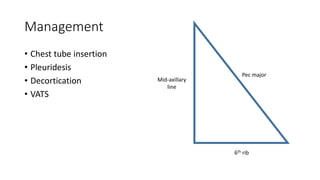
Management
• Chest tube insertion
• Pleuridesis
• Decortication
• VATS
6th rib
Mid-axillary
line
Pec major
Video assisted Thoracic Surgery
Review
• Definitions
• Anatomy
• Physiology
• Pathology
• Treatment
Thank you

pLEURAL SPACE.pptx

  • 1.
    PLEURA AND PLEURALSPACE Dr Winston Makanga, M.B.Ch.B., M.Med. (Surg) Consultant General and Laparoscopic Surgeon
  • 2.
    Outline • Introduction anddefinition • Anatomy • Physiology • Pathology • General approach to treatment
  • 3.
    Introduction & definition •Pleura • Pleural cavity
  • 4.
    Surgical anatomy • Parietalpleura • Costal (thickest) • Cervical • Mediastinal • Diaphragmatic • Visceral pleura • Arterial, venous and lymphatics • One layered mesothelium with underlying elastic stromal tissue (endothoracic fascia)
  • 5.
    • Histological architectureof the pleural surfaces • Note the thickness of the endothoracic fascia
  • 6.
    Physiology • 0.01mL/kg/hr fluidproduced by the pleura (mainly parietal) • Reabsorbed by lymphatics (90% visceral pleura) • Reduces friction between the lungs and chest wall • Cavity is in basal negative pressure due to elastic pull of the lung and chest wall -2 to -5 cmH2O (-4 mmHg) • Differential pressure in the apex vs base in the upright position • Increase in volume of the cavity during inhalation results in further drop in pressure (-25 to -30 cmH2O) causing entry of air via the tracheobronchial system
  • 8.
    Pathology • Pneumothorax • Traumatic(blunt vs penetrating) • Spontaneous (primary vs secondary) • Pleural effusion • Hemothorax • Empyema thoracis • Emphysema • Mesothelioma
  • 9.
    Management • Chest tubeinsertion • Pleuridesis • Decortication • VATS 6th rib Mid-axillary line Pec major
  • 10.
  • 11.
    Review • Definitions • Anatomy •Physiology • Pathology • Treatment
  • 12.