FACTS & FIGURES
     INLAND NAVIGATION IN EUROPE
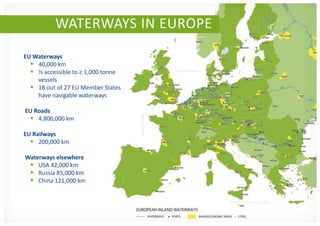
WATERWAYS IN EUROPE

EU Waterways
   40,000 km
   ½ accessible to ≥ 1,000 tonne
    vessels
   18 out of 27 EU Member States
    have navigable waterways

EU Roads
  4,800,000 km

EU Railways
   200,000 km

Waterways elsewhere
  USA 42,000 km
  Russia 85,000 km
  China 121,000 km
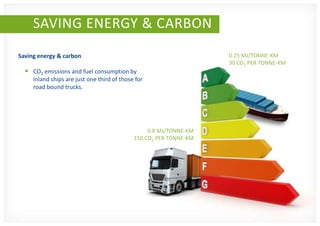
SAVING ENERGY & CARBON
Saving energy & carbon                                              0.25 MJ/TONNE-KM
                                                                    30 CO2 PER TONNE-KM
   CO2 emissions and fuel consumption by
     inland ships are just one third of those for
     road bound trucks.


                                                  0.8 MJ/TONNE-KM
                                             150 CO2 PER TONNE-KM
HISTORIC ADVANTAGE
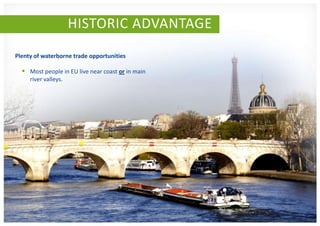
Plenty of waterborne trade opportunities

   Most people in EU live near coast or in main
     river valleys.
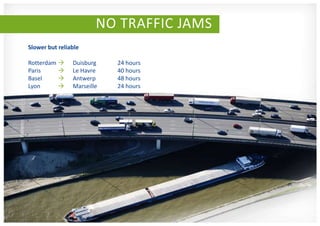
NO TRAFFIC JAMS
Slower but reliable

Rotterdam      Duisburg    24 hours
Paris          Le Havre    40 hours
Basel          Antwerp     48 hours
Lyon           Marseille   24 hours
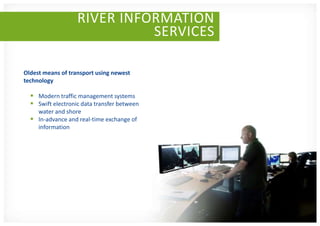
RIVER INFORMATION
                             SERVICES

Oldest means of transport using newest
technology

   Modern traffic management systems
   Swift electronic data transfer between
    water and shore
   In-advance and real-time exchange of
    information
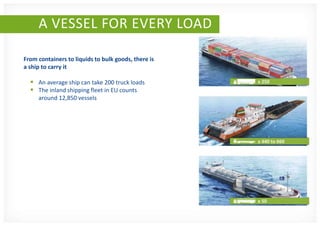
A VESSEL FOR EVERY LOAD

From containers to liquids to bulk goods, there is
a ship to carry it

   An average ship can take 200 truck loads
   The inland shipping fleet in EU counts
     around 12,850 vessels
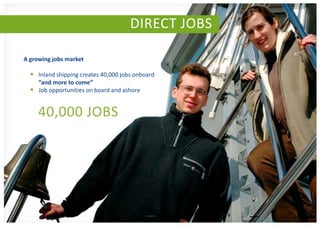
DIRECT JOBS

A growing jobs market

   Inland shipping creates 40,000 jobs onboard
    “and more to come”
   Job opportunities on board and ashore


     40,000 JOBS
WATERWAY GEOGRAPHY

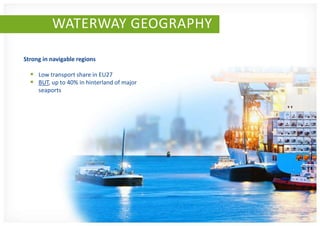
Strong in navigable regions

   Low transport share in EU27
   BUT, up to 40% in hinterland of major
     seaports
TRANSPORTED GOODS

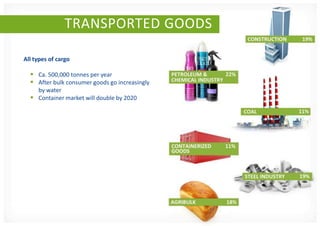
All types of cargo

   Ca. 500,000 tonnes per year
   After bulk consumer goods go increasingly
    by water
   Container market will double by 2020
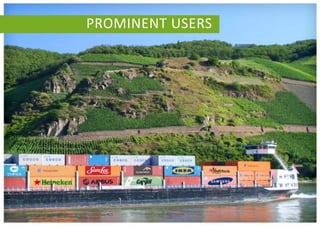
PROMINENT USERS
SEAMLESS EUROPEAN
            WATERWAY NETWORK

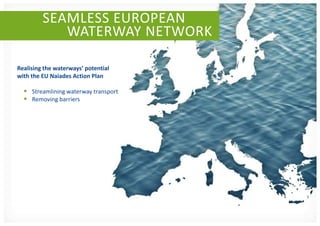
Realising the waterways’ potential
with the EU Naiades Action Plan

   Streamlining waterway transport
   Removing barriers
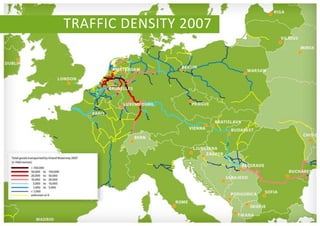
TRAFFIC DENSITY 2007
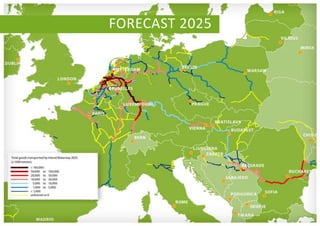
FORECAST 2025
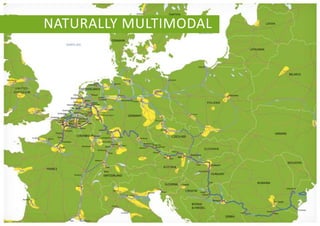
NATURALLY MULTIMODAL
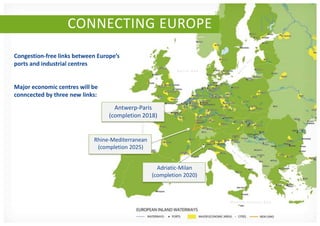
CONNECTING EUROPE
Congestion-free links between Europe’s
ports and industrial centres


Major economic centres will be
conncected by three new links:
                                    Antwerp-Paris
                                  (completion 2018)


                            Rhine-Mediterranean
                             (completion 2025)


                                                    Adriatic-Milan
                                                  (completion 2020)
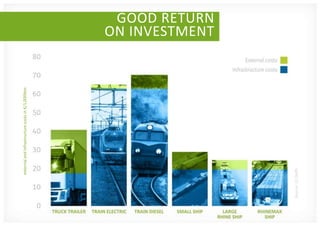
external and infrastructure costs in €/1,000tkm

                                                              ON INVESTMENT
                                                               GOOD RETURN


Source: CE Delft
2020 SUPPLY CHAIN

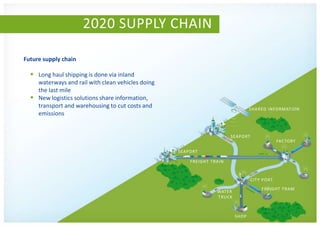
Future supply chain

   Long haul shipping is done via inland
    waterways and rail with clean vehicles doing
    the last mile
   New logistics solutions share information,
    transport and warehousing to cut costs and                                  SHARED INFORMATION
    emissions


                                                                       SEAPORT
                                                                                             FACTORY

                                                   SEAPORT

                                                       FREIGHT TRAIN


                                                                                 CITY PORT
                                                                                     FREIGHT TRAM
                                                                 WATER
                                                                 TRUCK


                                                                         SHOP
2020 INLAND SHIPPING
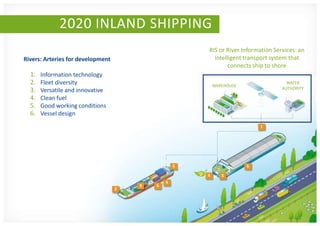
                                                       RIS or River Information Services: an
Rivers: Arteries for development                         intelligent transport system that
                                                               connects ship to shore
  1.   Information technology
  2.   Fleet diversity                                     WAREHOUSE
                                                                                     WATER
                                                                                   AUTHORITY
  3.   Versatile and innovative
  4.   Clean fuel
  5.   Good working conditions
  6.   Vessel design
                                                                           1


                                                   5                   6

                                                       4      5
                                               4
                                       3   6
                                   2
TOWARDS A 2020 LANDSCAPE

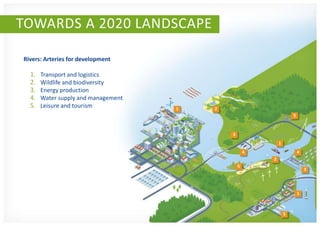
Rivers: Arteries for development

  1.   Transport and logistics
  2.   Wildlife and biodiversity
  3.   Energy production
  4.   Water supply and management
  5.   Leisure and tourism           1   2
                                                                     5


                                             3
                                                             1
                                                     4                   4
                                                         2
                                                 5
                                                                             3


                                                                         1


                                                                 5

Platina F&F general

  • 1.
    FACTS & FIGURES INLAND NAVIGATION IN EUROPE
  • 2.
    WATERWAYS IN EUROPE EUWaterways  40,000 km  ½ accessible to ≥ 1,000 tonne vessels  18 out of 27 EU Member States have navigable waterways EU Roads  4,800,000 km EU Railways  200,000 km Waterways elsewhere  USA 42,000 km  Russia 85,000 km  China 121,000 km
  • 3.
    SAVING ENERGY &CARBON Saving energy & carbon 0.25 MJ/TONNE-KM 30 CO2 PER TONNE-KM  CO2 emissions and fuel consumption by inland ships are just one third of those for road bound trucks. 0.8 MJ/TONNE-KM 150 CO2 PER TONNE-KM
  • 4.
    HISTORIC ADVANTAGE Plenty ofwaterborne trade opportunities  Most people in EU live near coast or in main river valleys.
  • 5.
    NO TRAFFIC JAMS Slowerbut reliable Rotterdam  Duisburg 24 hours Paris  Le Havre 40 hours Basel  Antwerp 48 hours Lyon  Marseille 24 hours
  • 6.
    RIVER INFORMATION SERVICES Oldest means of transport using newest technology  Modern traffic management systems  Swift electronic data transfer between water and shore  In-advance and real-time exchange of information
  • 7.
    A VESSEL FOREVERY LOAD From containers to liquids to bulk goods, there is a ship to carry it  An average ship can take 200 truck loads  The inland shipping fleet in EU counts around 12,850 vessels
  • 8.
    DIRECT JOBS A growingjobs market  Inland shipping creates 40,000 jobs onboard “and more to come”  Job opportunities on board and ashore 40,000 JOBS
  • 9.
    WATERWAY GEOGRAPHY Strong innavigable regions  Low transport share in EU27  BUT, up to 40% in hinterland of major seaports
  • 10.
    TRANSPORTED GOODS All typesof cargo  Ca. 500,000 tonnes per year  After bulk consumer goods go increasingly by water  Container market will double by 2020
  • 11.
  • 12.
    SEAMLESS EUROPEAN WATERWAY NETWORK Realising the waterways’ potential with the EU Naiades Action Plan  Streamlining waterway transport  Removing barriers
  • 13.
  • 14.
  • 15.
  • 16.
    CONNECTING EUROPE Congestion-free linksbetween Europe’s ports and industrial centres Major economic centres will be conncected by three new links: Antwerp-Paris (completion 2018) Rhine-Mediterranean (completion 2025) Adriatic-Milan (completion 2020)
  • 17.
    external and infrastructurecosts in €/1,000tkm ON INVESTMENT GOOD RETURN Source: CE Delft
  • 18.
    2020 SUPPLY CHAIN Futuresupply chain  Long haul shipping is done via inland waterways and rail with clean vehicles doing the last mile  New logistics solutions share information, transport and warehousing to cut costs and SHARED INFORMATION emissions SEAPORT FACTORY SEAPORT FREIGHT TRAIN CITY PORT FREIGHT TRAM WATER TRUCK SHOP
  • 19.
    2020 INLAND SHIPPING RIS or River Information Services: an Rivers: Arteries for development intelligent transport system that connects ship to shore 1. Information technology 2. Fleet diversity WAREHOUSE WATER AUTHORITY 3. Versatile and innovative 4. Clean fuel 5. Good working conditions 6. Vessel design 1 5 6 4 5 4 3 6 2
  • 20.
    TOWARDS A 2020LANDSCAPE Rivers: Arteries for development 1. Transport and logistics 2. Wildlife and biodiversity 3. Energy production 4. Water supply and management 5. Leisure and tourism 1 2 5 3 1 4 4 2 5 3 1 5