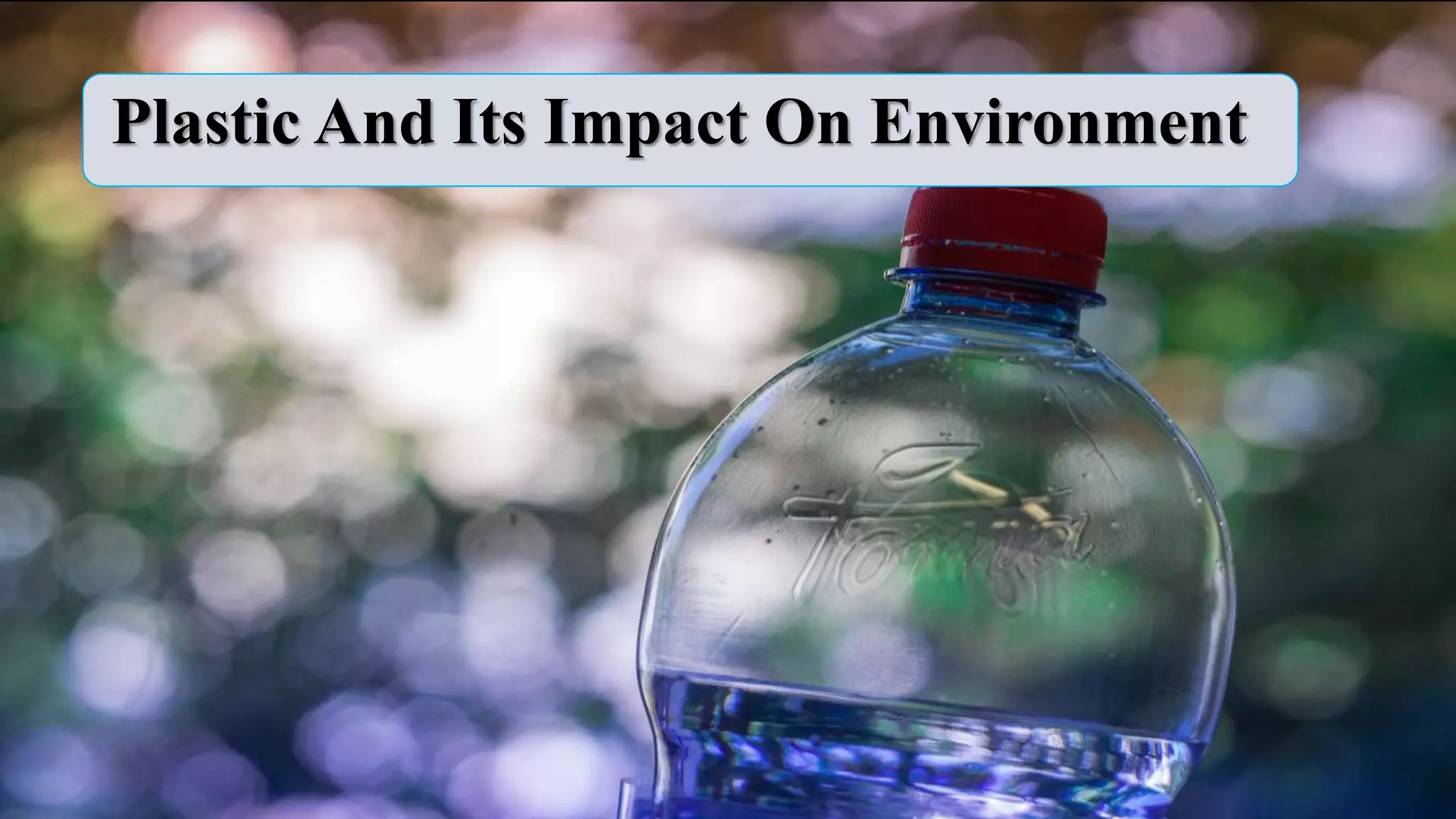
Plastic And Its Impact On Environment
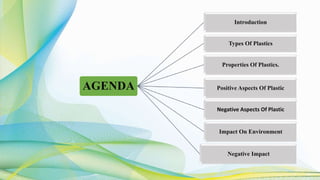
AGENDA
Introduction
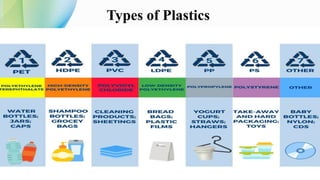
Types Of Plastics
Properties Of Plastics.
Positive Aspects Of Plastic
Negative Aspects Of Plastic
Impact On Environment
Negative Impact
Introduction Of Plastic
 The word Plastic is derived from the Latin word “Plasticus” that means capable of
Moulding.
 The first plastic is invented by Sir Alexander Parkes, in 1862.
 At first plastics could be made in brown or black colour.
 “Amino Plastics” had been invented in 1930, which could be made in lots of bright color.
 The plastic is basically formless material which can be moulded under heat and pressure.
 Plastics are made from these three materials:
 Petroleum
 Coal
 Cellulose
Types of Plastics
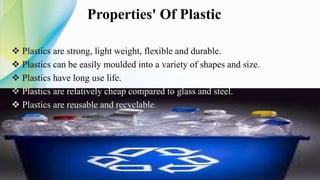
 Plastics are strong, light weight, flexible and durable.
 Plastics can be easily moulded into a variety of shapes and size.
 Plastics have long use life.
 Plastics are relatively cheap compared to glass and steel.
 Plastics are reusable and recyclable.
Properties' Of Plastic
Positive aspect of Plastic
 Plastics are resistant to Chemicals, Water, Air and Soli.
 Plastics are cheap and dispensable.
 Plastics are goods heat and electrical insulator.
 Plastics do not corrode or decay.
Negative Aspect of Plastic
 Plastic usually have low melting point and expand with heat.
 Plastics are not as strong as metals.
 Plastics can either be non-biodegradable or degrade very slowly.
 Plastics are flammable and release toxic fumes when burned.
Impact on Environment
 Plastics is the part of Our life.
 People use Plastics in a variety of ways ranging from household use to
industrial and commercial products.
 The Production of Plastics is growing about 9% annually.
 According to the research an estimate about 100 million tones of plastics
produce every year all over the world.
 There are Currently 5.25 trillion pieces of plastics in the world oceans.
Negative Impact
 In Production-
 Plastics resins are made by using non- renewable natural resources.
 Approximately 8% of world’s oil production is used to make plastics.
 On Land-
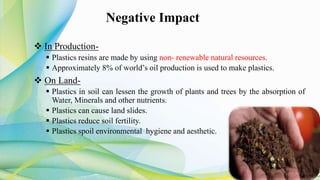
 Plastics in soil can lessen the growth of plants and trees by the absorption of
Water, Minerals and other nutrients.
 Plastics can cause land slides.
 Plastics reduce soil fertility.
 Plastics spoil environmental hygiene and aesthetic.
 On Air-
 Industries emit large amounts of Carbon Monoxide, Hydrogen cyanide and
Dioxin.
 These gaseous pollutants contaminate air and cause respiratory disease,
nervous system disorders and immune suppression in human beings.
On Fresh Water-
 Plastics wastes dumped in water courses contaminate and poisons freshwater
life.
 Chocked drains cause flooding in monsoons.
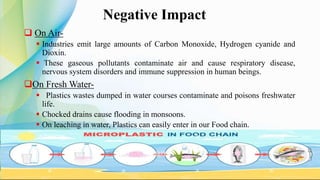
 On leaching in water, Plastics can easily enter in our Food chain.
Negative Impact
Negative Impact
 Plastics on marine environment.
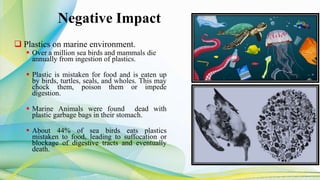
 Over a million sea birds and mammals die
annually from ingestion of plastics.
 Plastic is mistaken for food and is eaten up
by birds, turtles, seals, and wholes. This may
chock them, poison them or impede
digestion.
 Marine Animals were found dead with
plastic garbage bags in their stomach.
 About 44% of sea birds eats plastics
mistaken to food, leading to suffocation or
blockage of digestive tracts and eventually
death.
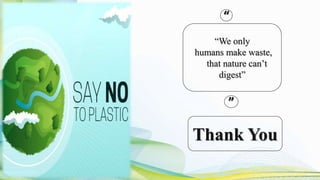
Thank You
”
“We only
humans make waste,
that nature can’t
digest”
“

Plastic And Its Impact On Environment.pptx

  • 1.
    Plastic And ItsImpact On Environment
  • 2.
    AGENDA Introduction Types Of Plastics PropertiesOf Plastics. Positive Aspects Of Plastic Negative Aspects Of Plastic Impact On Environment Negative Impact
  • 3.
    Introduction Of Plastic The word Plastic is derived from the Latin word “Plasticus” that means capable of Moulding.  The first plastic is invented by Sir Alexander Parkes, in 1862.  At first plastics could be made in brown or black colour.  “Amino Plastics” had been invented in 1930, which could be made in lots of bright color.  The plastic is basically formless material which can be moulded under heat and pressure.  Plastics are made from these three materials:  Petroleum  Coal  Cellulose
  • 4.
  • 5.
     Plastics arestrong, light weight, flexible and durable.  Plastics can be easily moulded into a variety of shapes and size.  Plastics have long use life.  Plastics are relatively cheap compared to glass and steel.  Plastics are reusable and recyclable. Properties' Of Plastic
  • 6.
    Positive aspect ofPlastic  Plastics are resistant to Chemicals, Water, Air and Soli.  Plastics are cheap and dispensable.  Plastics are goods heat and electrical insulator.  Plastics do not corrode or decay.
  • 7.
    Negative Aspect ofPlastic  Plastic usually have low melting point and expand with heat.  Plastics are not as strong as metals.  Plastics can either be non-biodegradable or degrade very slowly.  Plastics are flammable and release toxic fumes when burned.
  • 8.
    Impact on Environment Plastics is the part of Our life.  People use Plastics in a variety of ways ranging from household use to industrial and commercial products.  The Production of Plastics is growing about 9% annually.  According to the research an estimate about 100 million tones of plastics produce every year all over the world.  There are Currently 5.25 trillion pieces of plastics in the world oceans.
  • 9.
    Negative Impact  InProduction-  Plastics resins are made by using non- renewable natural resources.  Approximately 8% of world’s oil production is used to make plastics.  On Land-  Plastics in soil can lessen the growth of plants and trees by the absorption of Water, Minerals and other nutrients.  Plastics can cause land slides.  Plastics reduce soil fertility.  Plastics spoil environmental hygiene and aesthetic.
  • 10.
     On Air- Industries emit large amounts of Carbon Monoxide, Hydrogen cyanide and Dioxin.  These gaseous pollutants contaminate air and cause respiratory disease, nervous system disorders and immune suppression in human beings. On Fresh Water-  Plastics wastes dumped in water courses contaminate and poisons freshwater life.  Chocked drains cause flooding in monsoons.  On leaching in water, Plastics can easily enter in our Food chain. Negative Impact
  • 11.
    Negative Impact  Plasticson marine environment.  Over a million sea birds and mammals die annually from ingestion of plastics.  Plastic is mistaken for food and is eaten up by birds, turtles, seals, and wholes. This may chock them, poison them or impede digestion.  Marine Animals were found dead with plastic garbage bags in their stomach.  About 44% of sea birds eats plastics mistaken to food, leading to suffocation or blockage of digestive tracts and eventually death.
  • 12.
    Thank You ” “We only humansmake waste, that nature can’t digest” “