DOCTORAL SEMINAR
ON
Plant Responses and Adaptive Mechanisms Under Heat Stress
Department of Plant Physiology, AB & MAPs
Indira Gandhi Krishi Vishwavidyalaya
Raipur, Chhattisgarh-492012
Presented by-
Ujjwal kumar
Ph.D 2nd
year
Doctoral Seminar-II
PP – 692 (0+1)
What is Heat Stress in Plants?
 Heat stress in plants refers to the physiological and biochemical
damage caused when temperatures rise above a critical
threshold for a prolonged period, impairing normal growth and
development.
 For most plant species, this threshold lies between 35°C to 45°C,
though it can vary depending on the crop, genotype,
developmental stage, and duration of exposure.
Source: (Dubey et al., 2021)
Northwest India
experienced maximum
temperatures of 45°C to
46 °C nearly every
day in June 2024, the
longest since 1951.
•Delhi, Punjab,
Haryana, Rajasthan:
Night-Time Heat Woes:
Minimum
temperatures reached
33-37°C in cities (e.g.,
Alwar, Varanasi)
https://www.hindustantimes.com/india-news/over-50-of-nw-india-in-grip-of-its-hottest-spell-since-1951-101718735666863.html
Impact of Rising Night Temperatures
•Diurnal
Temperature
Range (DTR)
= Difference
between
daytime
maximum and
nighttime
minimum
temperatures.
•A decline in
DTR means
night
temperatures
are rising
than daytime
temperatures
Dark red areas show a 1–4°C drop in DTR, indicating faster night-time warming in parts of Punjab, Haryana, Rajasthan,
Madhya Pradesh, Maharashtra, Chhattisgarh, Telangana, Karnataka, Tamil Nadu, Andhra Pradesh, and the Indo-
Gangetic plains.
https://thediplomat.com/2024/06/extreme-heat-threatens-health-jobs-and-democracy-in-india/
How Heat Stress Causes in Plants?
https://www.researchgate.net/figure/Possible-effects-of-heat-stress-on-different-parts-of-plants_n 2025] fig1_333853824
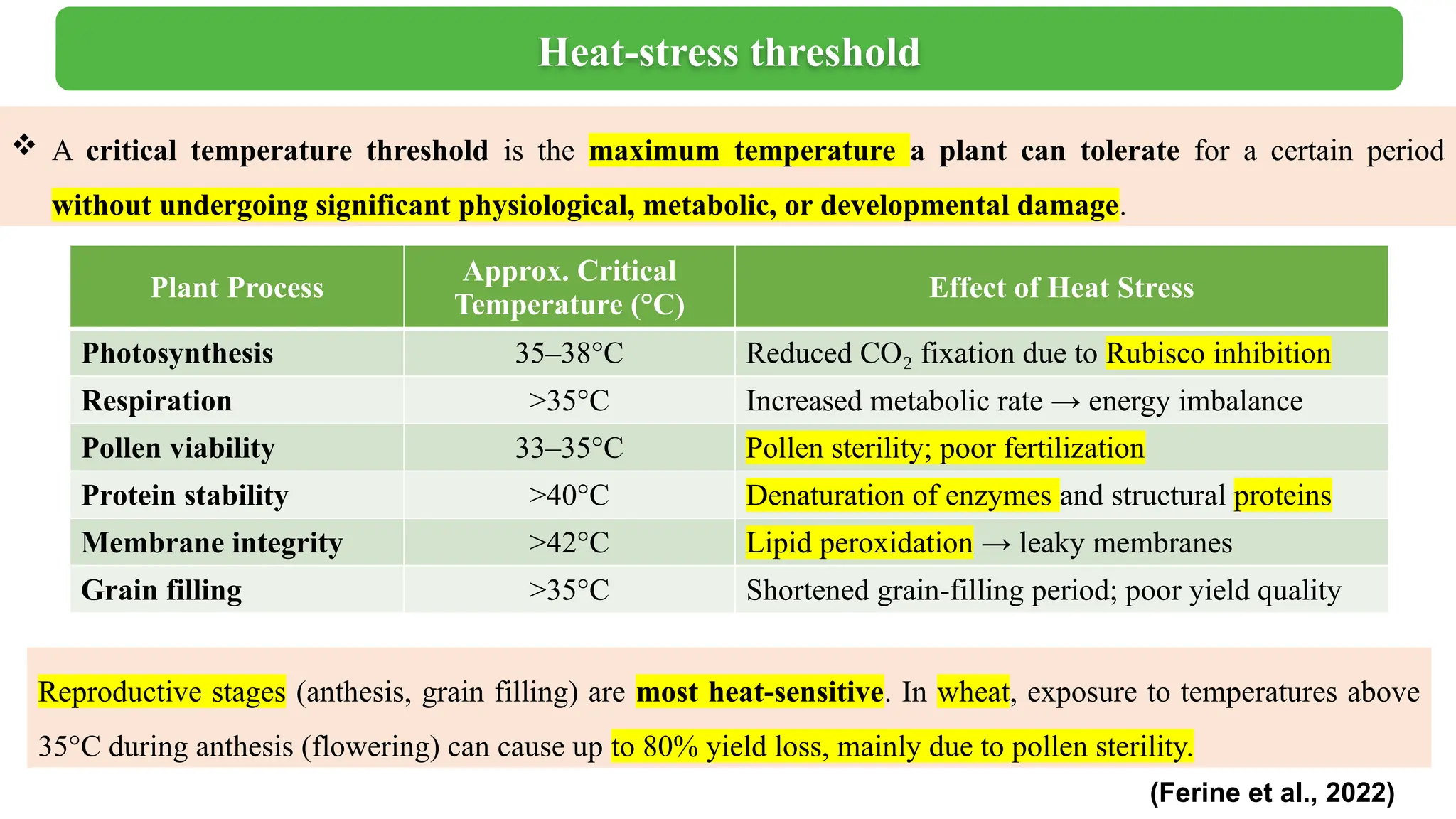
Heat-stress threshold
 A critical temperature threshold is the maximum temperature a plant can tolerate for a certain period
without undergoing significant physiological, metabolic, or developmental damage.
Reproductive stages (anthesis, grain filling) are most heat-sensitive. In wheat, exposure to temperatures above
35°C during anthesis (flowering) can cause up to 80% yield loss, mainly due to pollen sterility.
Plant Process
Approx. Critical
Temperature (°C)
Effect of Heat Stress
Photosynthesis 35–38°C Reduced CO fixation due to
₂ Rubisco inhibition
Respiration >35°C Increased metabolic rate → energy imbalance
Pollen viability 33–35°C Pollen sterility; poor fertilization
Protein stability >40°C Denaturation of enzymes and structural proteins
Membrane integrity >42°C Lipid peroxidation → leaky membranes
Grain filling >35°C Shortened grain-filling period; poor yield quality
(Ferine et al., 2022)
Crop plants Threshold tem.(0
C) Growth stage References
Wheat 26.0 Post -anthesis Stone and Nicolas (1994)
Corn 38.0 Grain filling Thompson (1986)
Cotton 45.0 Reproductive Rehman et al., (2004)
Pearl millet 35 Seedling Ashraf and Hafeez (2004)
Tomato 30 Flowering Camejo et al., (2005)
Brassica 29 Flowering Morrison Stewart (2002)
Cool season pulses 25 Flowering Siddique et al., (1999)
Ground nut 34 Pollen production Vara Prasad et al., (2000)
Cow Pea 41 Flowering Patel and Hall (1990)
Rice > 35–36°C (for ≥1
hour)
Flowering Morita et al., (2004)
Threshold high temperatures for some crops plants
Crop
Critical Night
Temp
Observed Impact Why It Happened (Mechanism) Reference
Rice
+1°C during
flowering
Yield ↓ by ~10%
↑ Night respiration
↓ carbohydrate for grain filling
Peng et al., 2004
Tomato >24°C Flower drop; ↓ fruit set
Ovule degeneration and disrupted
hormonal balance (↓ auxin & GA
levels)
Sato et al., 2006
Maize
>23°C during
flowering
Poor pollination; ↓ grains/cob; ↑ kernel
abortion
Reduced pollen viability and silking
synchrony under thermal stress
Lobell et al., 2011
Wheat
>22°C during
grain filling
↓ Kernel weight; ↓ protein content; grain
filling shortened by 2–4 days
Accelerated senescence Tiwari et al., 2022
Soybean >25°C ↓ Pod set; fewer filled seeds
↑ Respiratory drain and ↓ assimilate
partitioning to reproductive sinks
Salem et al., 2007
Chickpea >20°C ↓ Pollen germination; lower pod setting
High temp alters enzyme activity and
pollen tube growth during
fertilization
Kalra et al., 2013
Impact of Elevated Night Temperature on Crops
Crop
Name
Vulnerability
% yield
reduction
Most Affected
Region
Mango Flower drop, sunburn 20-30 UP, Bihar
Guava
Fruit cracking,
sunburn
15-25% Punjab, Haryana
Citrus
Fruit drop, peel
damage
10-20 Rajasthan
Tomato Pollination failure 30-50 Uttar Pradesh
Cucumber
Reduced quality, pest
increase
20-40 Punjab, Haryana
Okra Flower/pod drop 15-25
Rajasthan,
Haryana
Wheat Grain filling stress 6-10 Punjab, Haryana
Mustard Reduced oil content 10-20 Rajasthan, UP
Chickpea Pod-filling failure 15-20 MP, Haryana, CG
Most affected crops during the February to April period in Northwest India
(Malasala et al., 2018)
Phenological Changes During Heat Stress
1. High soil temperatures may accelerate germination but often lead to poor seedling
vigor.
2. Reduced Vegetative Growth Period
•Shortened vegetative phase due to faster leaf expansion and internode elongation.
•Higher respiration rates reduce net carbon gain, leading to stunted growth.
•Heat accelerates leaf senescence and chlorophyll degradation, especially under prolonged
exposure.
3. Early Flowering and Anthesis
•Plants may enter the reproductive phase prematurely under heat stress.
•This reduces the accumulation of photosynthates, which are critical for
flowering and grain setting.
(Source:Shi et al., 2022)
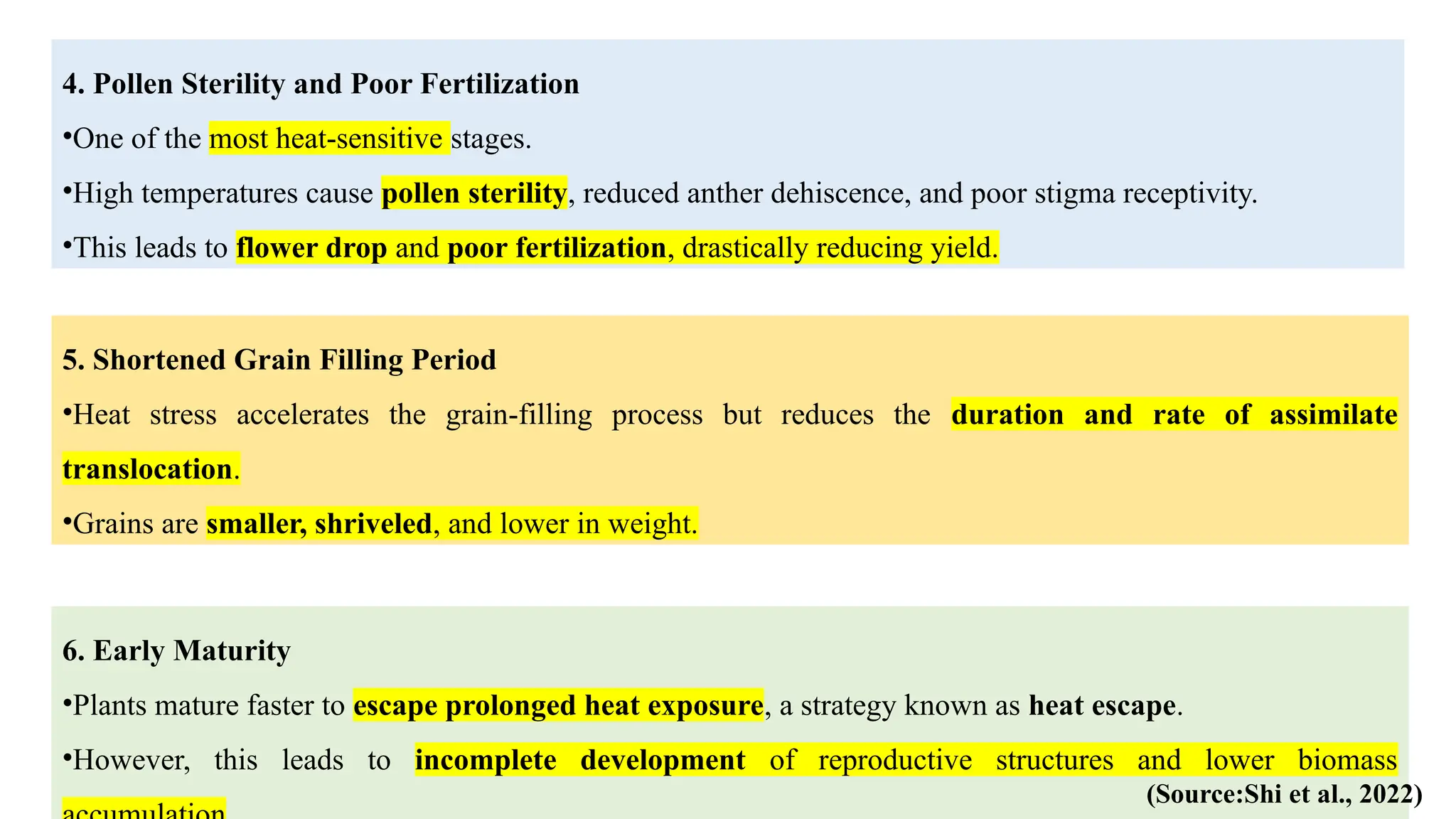
4. Pollen Sterility and Poor Fertilization
•One of the most heat-sensitive stages.
•High temperatures cause pollen sterility, reduced anther dehiscence, and poor stigma receptivity.
•This leads to flower drop and poor fertilization, drastically reducing yield.
5. Shortened Grain Filling Period
•Heat stress accelerates the grain-filling process but reduces the duration and rate of assimilate
translocation.
•Grains are smaller, shriveled, and lower in weight.
6. Early Maturity
•Plants mature faster to escape prolonged heat exposure, a strategy known as heat escape.
•However, this leads to incomplete development of reproductive structures and lower biomass
(Source:Shi et al., 2022)
Chickpea Pollen at optimum temp. Heat stress affected pollen of chickpea
Source: (Devasirvatham et al., 2013)
1. Leaf Morphology
•Leaf rolling, wilting, and scorching are common under high temperatures.
•Reduced leaf area: Plants may produce smaller, narrower, or folded leaves to minimize
heat absorption.
•Increased leaf senescence (early leaf aging) due to protein and chlorophyll degradation.
•Chlorosis and necrosis (yellowing and death of leaf tissue) are common signs in sensitive
crops like wheat and rice.
2. Stem and Internode Changes
•Reduced stem elongation due to inhibited cell expansion and division.
•Stems may become thinner and weaker, affecting structural stability.
•In crops like maize and sorghum, shortened internodes are a typical morphological
response.
Morphological Changes During Heat Stress
Leaf rolling in tomato Scorching of leave Wilting in tomato
Sunscald on tomatoes
Sunburns on leaves
4. Reproductive Organ Abnormalities
•Abortion of flowers and pods due to reduced viability and fertilization.
•Smaller panicles/spikes, fewer spikelets, and malformed floral structures.
•Grain or fruit shrinkage due to impaired filling and translocation.
5. Canopy Architecture
•Sparse canopy formation due to fewer and smaller leaves.
•Reduced leaf area index (LAI) impacts photosynthetic efficiency and transpiration control.
•Canopy temperature rises due to lower transpiration cooling, making heat damage worse.
1. Leaf Anatomy
•Reduction in mesophyll cell size
•Disruption of chloroplast structure,
•Cuticle thickening to reduce transpiration loss under high temperature.
2. Stomatal Changes
•Decrease in stomatal density or complete closure under prolonged stress.
•Altered stomatal pore size and shape, which affects gas exchange and transpiration.
3. Vascular Tissue Alterations
•Xylem vessel deformation or shrinkage, and Phloem tissues become less active or
collapsed
Anatomical Changes During Heat Stress
Stomata in optimum condition in linseed
Stomata rupture due to heat stress in linseed
Embryo Sac Development in Rice (IR64) Under Optimum condition
This figure illustrates the stages of embryo sac (female gametophyte) development in rice (Oryza sativa, variety IR64) when
exposed to control temperature (30°C) during the gametogenesis stage (a critical phase of reproductive development). The
labels (A-H) show the progression from megaspore formation to a mature eight-nucleate embryo sac. (Source:Shi et al.
Embryo Sac Development in Rice (IR64) Under Heat Stress
This figure demonstrates the disruptions caused by heat stress (38°C and 40°C) during gametogenesis in rice (Oryza
sativa, variety IR64). Compared to the normal development at 30°C (Figure 2), high temperatures lead to severe
abnormalities in embryo sac formation, which can result in sterility and reduced grain yield. (Source:Shi et al. 2022)
5. Root Anatomy
•Cortical cell collapse and reduction in root diameter under high temperatures.
•Reduced xylem and phloem development affects nutrient and water uptake.
•Heat stress can lead to death of root cap cells, compromising root elongation and
direction.
6. Reproductive Tissue Anatomy
• Degeneration of anther tissues and tapetum breakdown, leading to pollen sterility.
•Ovary development is often impaired due to poor vascular connection and disrupted cell
division.
4. Stem and Meristem Tissues
•Reduced vascular cambium activity affects secondary growth and stem thickening which
affects the plant’s ability to transport water and stay upright.
Effects of Heat Stress on Photosynthesis
Effect Why it Happens Impact
Rubisco inactivation
High temperatures (~35–40°C) destabilize Rubisco activase, the enzyme
that activates Rubisco for CO fixation
₂
↓ CO fixation → ↓
₂
photosynthesis
PSII damage
Heat disrupts the oxygen-evolving complex (OEC) in PSII and
denatures core proteins, leading to impaired electron transport.
↓ ATP & NADPH → energy
shortage for Calvin cycle
Thylakoid
membrane damage
Heat alters lipid composition and fluidity of thylakoid membranes →
leads to swelling, leakage, and ROS production.
Disrupted electron flow →
photo-oxidative stress
Stomatal closure To prevent excessive water loss via transpiration, plants close stomata.
↓ CO entry → photosynthetic
₂
limitation
Chlorophyll
degradation
Chlorophyllase and reactive oxygen species (ROS) degrade
chlorophyll molecules under heat stress.
Chlorosis → ↓ light capture &
energy production
Effect Why it Happens Impact
respiration rate
Due to the Q effect
₁₀ , metabolic enzyme activity doubles for every 10°C
rise. However, above 35–40°C, enzymes start to denature.
Increased energy demand
→ net carbon loss
Energetic imbalance
Respiration leads to excessive ATP consumption while photosynthesis is
suppressed, resulting in negative carbon balance.
Reduced growth and
biomass accumulation
ROS generation in
mitochondria
Rapid respiration under stress cases electron leakage in the mitochondrial
ETC (especially Complex I & III), generating superoxide radicals (O )
₂⁻ .
Oxidative damage to
membranes, proteins, DNA
Enzyme
denaturation
Temperatures, respiratory enzymes like cytochrome oxidase and
malate dehydrogenase lose structure and function.
Reduced ATP synthesis →
growth suppression
Photorespiration
increase
Temperature enhances oxygenation activity of Rubisco, increasing
photorespiration, which consumes energy and reduces net carbon fixation.
Further energy loss →
Effects of Heat Stress on Respiration
Effect Why it Happens Impact
Root-to-Shoot Signaling
Disruption
Heat impairs production/transport of abscisic
acid (ABA) and other signaling molecules from
roots to shoots.
Inefficient stomatal regulation, leading to
excessive water loss
Aquaporin Dysfunction
High temperatures alter expression or
functionality of aquaporins, proteins facilitating
water transport across membranes.
Reduced water movement, causing cellular
dehydration and impaired metabolic
processes.
Vascular Tissue
Degradation and
Reduced root hydraulic
conductance
Oxidative stress from heat damages phloem and
xylem tissues, disrupting water and nutrient
flow.
Localized desiccation in leaves/stems,
reduced nutrient delivery, and potential
plant death.
Decreased Relative Water
Content (RWC)
Heat-induced water loss exceeds water uptake,
especially when root function is impaired. RWC
drops below critical level (~70%).
Physiological drought symptoms → leaf
wilting
Effects of heat stress on plant water relations
Effect Why it Happens Impact
Increased membrane
fluidity
Heat stress causes phase transition in membrane lipids (from
gel to fluid state), disturbing membrane structure and increasing
permeability.
Loss of structural integrity →
ion leakage
Disruption of lipid
composition
High temperature reduces unsaturated fatty acid content in
membranes, making them less flexible and more stiff
Reduced membrane
adaptability → increased
sensitivity
Electrolyte leakage
Heat-damaged membranes lose their semipermeability, causing
ions (K , Ca² ) to leak out of the cell.
⁺ ⁺
Indicates early cellular injury
under heat stress
Loss of
compartmentalization
Heat breaks down the walls inside cells (like storage areas),
causing enzymes to spill out.
Enzyme leakage → disrupted
metabolic processes
Oxidative damage to
membranes
Accumulation of ROS (O , H O )
₂⁻ ₂ ₂ leads to lipid peroxidation
(measured by MDA levels) which damages membrane lipids and
proteins.
Permanent damage → necrosis
and cell death
Effects of Heat Stress on Membrane Stability
Effect Why it Happens Impact
Reduced nutrient absorption
Heat stress impairs root growth and root hair formation,
decreasing the surface area for nutrient uptake.
Lower uptake of N, K, Ca,
Mg, Zn → metabolic
slowdown
Disruption in nutrient
transport
High temperatures inhibit phloem loading and unloading,
especially in reproductive tissues.
Poor grain/fruit filling →
reduced yield
Decreased nutrient use
efficiency
Increased respiration and stress metabolism divert resources
from growth to defense, reducing the efficiency of absorbed
nutrients.
Less biomass/yield per unit
nutrient
Hormonal imbalance
affecting uptake
Heat stress lowers cytokinin levels, which regulate root activity
and nutrient mobilization. Auxin fluxes also get disturbed.
Impaired uptake signaling →
root-shoot communication
fails
Effects of Heat Stress on Nutrient Uptake
Heat Shock Proteins (HSPs) are special proteins that help plants cope with high temperatures and other stresses. They
act like molecular chaperones, assisting in protecting and repairing other proteins.
HSP Class Localization & Function
HSP100 Dissolves protein aggregates in cytosol; aids thermotolerance
HSP90 Stabilizes hormone receptors
HSP70 Refolds Rubisco activase and denatured enzymes in chloroplasts
HSP60 Located in mitochondria and chloroplasts for folding organellar proteins
Biochemical and Molecular Responses of Plants to Heat Stress
•Heat sensed → HSFs (mainly HSFA1 and HSFA2) activated
•HSFs → Move to nucleus
•HSFs bind to Heat Shock Elements (HSEs) → Trigger HSP mRNA production
•mRNAs translated → Produce more HSP proteins → Help plant handle stress
1. Binding to Unfolded or
Misfolded Proteins
•Under heat stress, normal
proteins begin to lose their
shape (denature).
•HSPs quickly bind to these
partially unfolded proteins,
preventing them from
clumping together
(aggregation), which would
otherwise be toxic to cells.
2. Refolding of Damaged
Proteins (ATP-Dependent)
•HSP70 and HSP90, with the
help of co-chaperones like
HSP40 and HSP110, refold
proteins into their correct
functional shape.
3. Tagging and Removal of
Irreparably Damaged Proteins
•If a protein is too damaged to be
saved, HSPs mark it for
destruction by attaching ubiquitin
molecules.
•These proteins are then sent to the
proteasome, the cell’s recycling bin,
where they’re broken down safely.
This keeps the cell clean and avoids
buildup of harmful protein debris.
Mechanism of Protection by HSPs (Heat Shock Proteins)
Discovery / Technique Finding / Benefit Crop / Model
Reference /
Year
Overexpression of HSP101 Improved seed set, grain yield at 40–42°C Rice Li et al., 2023
CRISPR-Cas9 mediated
upregulation of HSP70
Improved pollen viability and spikelet fertility
under heat
Wheat
Singh et al.,
2022
sHSP17.8 expression driven by
heat-inducible promoter
Maintained chloroplast function and leaf integrity
at high temperatures
Soybean
Zhang et al.,
2023
HSP interaction with APX, SOD
antioxidant enzymes
Functional link between ROS detoxification and
protein stabilization
Arabidopsis,
Maize
Kumar et al.,
2022
Exogenous SA and Glycine
Betaine triggered HSP
upregulation
Boosted HSP70/90 levels and heat tolerance in
field conditions
Tomato
Rehman et al.,
2024
HSP20 overexpression enhanced
thermotolerance in pollen
Protected male reproductive organs from heat-
induced sterility
Tomato,
Brassica
Chen et al.,
2022
Tissue-specific HSFA2
promoters used in engineering
Targeted protection of floral meristems under heat Rice, Petunia
Wang et al.,
2023
Combined expression of HSPs +
LEA proteins
Synergistic improvement in survival rate and
biomass
Groundnut
Reddy et al.,
2024
Recent Discoveries and Novel Insights on HSPs
Reactive Oxygen Species (ROS) and Oxidative Stress
Reactive Oxygen Species (ROS) are highly reactive oxygen-containing molecules. They are by-products of
normal metabolic activities in plant cells, especially during photosynthesis and respiration.
Under heat stress, their levels increase dramatically, turning them into toxic agents unless controlled.
ROS Type Formula Reactivity Where Formed
Superoxide Radical O •
₂⁻ High Chloroplast, mitochondria
Hydrogen Peroxide H O
₂ ₂ Moderate Peroxisomes, cytosol
Hydroxyl Radical •OH Extremely High All organelles
Singlet Oxygen ¹O₂ Very High Chloroplast (PSII light damage)
Organelles / Pathway ROS Generation Mechanism
Chloroplast Heat damages Photosystem II (PSII) → electrons escape → produce O and ¹O
₂⁻ ₂
Mitochondria Electron leakage from Complex I and III during respiration produces O₂⁻
Peroxisomes High photorespiration rates under heat → produce H O
₂ ₂
Plasma Membrane NADPH oxidase (RBOH proteins) actively generate O for signaling
₂⁻
Damage Caused by ROS Effect on the Plant
Lipid Peroxidation ROS attack membrane lipids → causes membrane leakage and cell injury.
Protein Oxidation ROS damage amino acids → enzyme inactivation, loss of protein function.
DNA/RNA Damage ROS break DNA strands or cause mutations → disrupts cell division & gene expression.
Chlorophyll Breakdown
ROS degrade chlorophyll → causes leaf yellowing (chlorosis) and lowers
photosynthesis.
How ROS Are Produced in Plants Under Heat Stress
Why ROS Are Dangerous in Excess
If ROS are not controlled, they trigger programmed cell death (PCD) or necrosis in tissues.
Controlled ROS levels help plants detect heat and trigger protective responses like:
 HSP production
 Antioxidant enzyme activation (e.g., SOD, CAT, APX)
 Stress hormone (ABA, SA) signaling.
ROS Threshold Level Role
🟢 Low (Basal) Acts as signaling molecule → activates protection.
🟡 Moderate Temporary stress → reversible damage if antioxidant systems respond quickly.
🔴 High (Severe) Causes oxidative stress → membrane damage, enzyme loss, DNA mutations.
The Dual Role of ROS: Damage & Defense
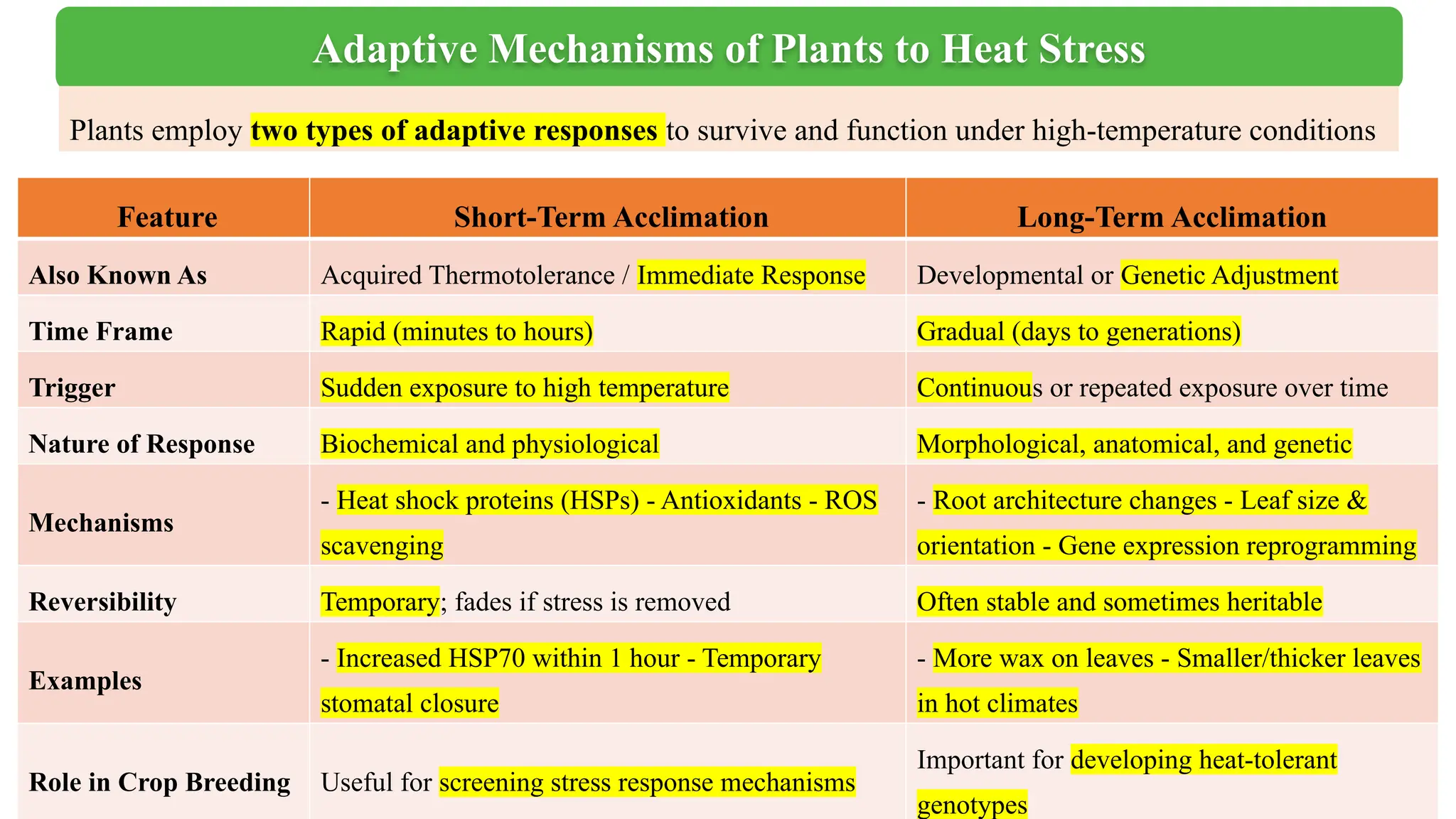
Feature Short-Term Acclimation Long-Term Acclimation
Also Known As Acquired Thermotolerance / Immediate Response Developmental or Genetic Adjustment
Time Frame Rapid (minutes to hours) Gradual (days to generations)
Trigger Sudden exposure to high temperature Continuous or repeated exposure over time
Nature of Response Biochemical and physiological Morphological, anatomical, and genetic
Mechanisms
- Heat shock proteins (HSPs) - Antioxidants - ROS
scavenging
- Root architecture changes - Leaf size &
orientation - Gene expression reprogramming
Reversibility Temporary; fades if stress is removed Often stable and sometimes heritable
Examples
- Increased HSP70 within 1 hour - Temporary
stomatal closure
- More wax on leaves - Smaller/thicker leaves
in hot climates
Role in Crop Breeding Useful for screening stress response mechanisms
Important for developing heat-tolerant
genotypes
Adaptive Mechanisms of Plants to Heat Stress
Plants employ two types of adaptive responses to survive and function under high-temperature conditions
Crop Threshold Temperature (°C)
Yield Reduction
(%)
Most Affected Stage(s) References
Rice
> 35°C (anthesis), > 38°C (grain
filling)
20–80% Anthesis, spikelet fertility
Jagadish et al. (2010);
Sharma et al. (2021)
Wheat
> 32°C (grain filling), > 36°C
(anthesis)
15–40% Anthesis, grain filling
Reynolds et al. (2007);
Bheemanahalli et al. (2022)
Maize
> 35°C (flowering), > 38°C
(silking)
20–50%
Anthesis-silking interval
(ASI)
Cairns et al. (2013
Chickpea
> 30–32°C (reproductive), >
35°C (podding)
25–60% Flowering, podding
Awasthi et al. (2014); Kumar
et al. (2021)
Soybean > 35°C (anthesis to pod set) 20–45%
Flowering, early pod
development
Djanaguiraman et al. (2013);
Zhang et al. (2022)
Sorghum
> 36°C (booting), > 38°C
(flowering)
10–30% Flowering, grain filling
Prasad et al. (2008); Singh et
al. (2021)
Groundnut > 34°C (pegging, pod filling) 15–40%
Pegging, early pod
development
Craufurd et al. (2002);
Reddy et al. (2018)
Yield Reduction (%) in Major crops due to Heat Stress
Yield loss depends on duration, timing, and genotype.
Reproductive stages are most heat-sensitive in almost all crops.
Crop Threshold Temp (°C) Avg. Yield Reduction (%) Most Affected Stage(s) References
Tomato > 35°C to > 38°C 30–70% Flowering, fruit set Wang et al. (2023)
Chili
> 33°C (flowering), > 36°C
(fruit setting)
25–55%
Flower retention, fruit
formation
Devi et al. (2022)
Brinjal (Eggplant) > 35°C 20–40% Flowering, pollination Batra et al. (2021)
Cucumber
> 32°C (pollination), >
35°C (fruit growth)
20–45% Pollen viability, fruit set Ghosh et al. (2022)
Lettuce > 27–30°C 30–60% Head formation, bolting Al-Debei et al. (2021)
Cabbage > 28–30°C 25–50% Head formation He et al. (2020)
Potato > 30°C (tuberization) 20–70% Tuber initiation, bulking
Wang-Pruski et al.
(2023)
Onion > 35°C (bulbing) 15–40% Bulb enlargement Rana et al. (2022)
Okra > 35–37°C 20–45% Flowering, pod formation Singh et al. (2022)
Yield Reduction (%) in Major Vegetable Crops due to Heat Stress
Crop Threshold Temp (°C)
Avg. Yield
Reduction (%)
Most Affected Stage(s) References
Mango
> 38°C (flowering), >
40°C (fruit set)
25–60% Flowering, fruit retention Singh & Patel (2020)
Banana > 35°C 15–30% Bunch initiation, fruit filling Tiwari et al. (2023)
Grapes
> 35°C (veraison), >
38°C (ripening)
20–45% Berry development, sugar formation Sun et al. (2021)
Papaya > 36°C (flowering) 30–50% Pollination, fruit growth Das & Prasad (2022)
Citrus > 38°C (flowering) 15–40% Flower drop, fruit setting Sharma et al. (2021)
Yield Reduction (%) in Major Vegetable Crops due to Heat Stress
Objective: To study how high temperatures (38°C and 40°C) during the development of the
female part of the rice flower affect its structure and function, and how it leads to spikelet sterility.
Case Study: 01
Two rice genotypes were used:️IR64 (heat-sensitive) & N22 (heat-tolerant) and plants were grown in pots under
greenhouse conditions with optimum irrigation.
Heat stress was imposed during megasporogenesis stage (female organ
development):
Temperatures: 30°C (control), 38°C, 40°C
Duration: 6 days, 6 hours per day (8:30 AM – 2:30 PM)
After treatment, plants were shifted back to normal conditions.
Observations and analyses included:
▪️Spikelet fertility (manual count)
▪️Pistil anatomy (confocal microscopy with eosin B staining)
▪️Biochemical assays for sugar, starch, H O , MDA
₂ ₂
▪️Antioxidant enzyme activity: SOD, CAT, POD
Materials and Methods
Parameter IR64 (Heat-Sensitive) N22 (Heat-Tolerant)
Spikelet Fertility Significant reduction in fertility (↓)
High fertility maintained; minimal effect even at
40°C
Embryo Sac Integrity
Abnormal embryo sac development: missing
egg cell, polar nuclei.
Mostly normal embryo sacs; minimal abnormalities
even under stress
Oxidative Stress
(H O , MDA)
₂ ₂
High accumulation of ROS and lipid
peroxidation after stress
ROS levels stayed close to normal; effective
detoxification post-stress
Antioxidant Defense
(SOD, CAT, POD)
Antioxidant enzyme activities (SOD, CAT)
dropped significantly during and after stress
Enzyme activities remained stable or increased,
helping in ROS scavenging
Carbohydrate Supply
(Sugar, Starch)
Sharp decrease in sugar and starch in pistils;
possible energy deficit for pollen tube growth
Higher sugar and starch retention; good energy
supply post-stress
Heat Tolerance
Mechanism
Sensitive due to sugar starvation, high oxidative
stress, and disrupted metabolism
Tolerant due to ROS balance, strong metabolism, and
sufficient carbohydrate & antioxidant activity
Major Findings: Response of IR64 vs N22 Under Heat Stress (38°C & 40°C)
Heat stress during the development of the female part of the rice flower can cause permanent
damage, especially in sensitive varieties like IR64. Major factors that help rice plants tolerate
heat include:
• Healthy pistil structure
• Balanced reactive oxygen species (ROS)
• Good sugar and energy supply
These findings are important for developing heat-tolerant rice varieties, especially for future
climate challenges and hybrid seed production.
Conclusion
Case Study: 02
Objective: To examine how high temperature during flowering affects photosynthesis, oxidative
stress, and yield in rice, and to identify physiological traits linked to heat tolerance.
Plant Material & Experimental Setup
•Rice Varieties:
• N22 (tolerant, India)
• IR64 (sensitive, Philippines)
• NPB (Japan)
• NER (Africa)
• BIL & BIM (Afghanistan)
•Conditions:
• Heat Stress: Glasshouse (max
temp ~50°C)
• Control: Ambient (net-house)
Physiological & Biochemical
Parameters Studied
•Photosynthetic rate, transpiration rate,
stomatal conductance
•Leaf temperature
•Pollen viability, spikelet fertility, panicle
weight
•MDA, H O (oxidative stress
₂ ₂
indicators)
•Ascorbic acid
Major Findings: Morphology & Yield
Variety Spikelet Fertility Loss Yield Loss Pollen Viability
N22 ↓ 19% ↓ 25% High
IR64 ↓ 34.9% ↓ 34.9% Medium
NPB ↓ 50% ↓ 58.4% Moderate
NER ↓ 56.2% ↓ 77% Very Low
BIL/BIM ↓ ~50% ↓ ~59.7% Moderate
N22 had the lowest fertility and yield loss under heat.
NER and NPB were most affected by heat stress.
Pollen viability strongly influenced yield resilience.
Photosynthesis & Oxidative Stress Response
Variety Photosynthesis ↓ MDA ↑ H O ↑
₂ ₂ Leaf Temp ↑
N22 Mild Low Low Lowest
IR64 Moderate High Low High
NPB High (↓ up to 52%) Moderate High High
NER Moderate Highest Highest High
BIL/BIM Moderate High Moderate High
1. N22 was the most heat-tolerant variety, showing the least reduction in spikelet fertility (↓19%) and yield
loss (↓25%) under ~50°C.
2. Pollen viability was the key trait for heat tolerance — strongly linked with spikelet fertility and yield.
3. N22 had highest transpiration rate, which helped keep leaf temperature lower and reduced heat damage.
4. Oxidative stress markers (MDA, H O )
₂ ₂ were lowest in N22, indicating less cellular damage under heat.
Conclusions
 Heat stress significantly impairs plant growth, development, and yield—especially during reproductive
stages like anthesis, pollination, and grain/pod filling.
 Physiological disruptions include photosynthesis inhibition, oxidative stress, and hormonal
imbalance, while anatomical changes affect pistil, pollen, and vascular structures.
 Heat-tolerant genotypes maintain pollen viability, membrane stability, transpirational cooling, and
antioxidant defenses, reducing yield loss even under extreme conditions.
 Elevated night temperatures are equally detrimental, increasing respiration losses and disturbing grain
development across crops like rice, wheat, tomato, and maize.
 Key traits for heat-tolerant varieties include high pollen viability, stay-green trait, efficient transpiration
cooling, strong antioxidant activity, and a stable or deeper root system.
THANK YOU
References
Aldubai, A. A., Hasan, A. A., Othman, Y. A., & Ibrahim, A. A. (2022). Response of Tomato (Solanum lycopersicum L.) Genotypes to Heat Stress
Using Morphological and Expression Study. Plants, 11(3), 615. https://doi.org/10.3390/plants11050615.
Aryan, S., Jaiswal, D. K., Mishra, A., Prasad, R. N., & Sinha, A. (2025). Physiological responses of rice varieties to heat stress: exploring
photosynthetic efficiency, oxidative stress, and yield resilience. Discover Plants, 2:152. https://doi.org/10.1007/s44372-025-00243-y.
Dubey, R., Tiwari, A. K., Singh, V., Kumar, A., & Singh, M. (2021). Impact of terminal heat stress on wheat yield in India and options for
adaptation. Agricultural Systems, 181, 102826. https://doi.org/10.1016/j.agsy.2020.102826.
Farhad, M., Kumar, U., Tomar, V., Bhati, P. K., Krishnan, N. J., Mustarin, K. E., Barek, V., Brestic, M., & Hossain, A. (2023). Heat stress in wheat:
a global challenge to feed billions in the current era of the changing climate. Frontiers in Sustainable Food Systems, 7, 1203721.
https://doi.org/10.3389/fsufs.2023.1203721.
Hanif, S., Saleem, M., Sarwar, M., Irshad, M., Shakoor, A., Wahid, M., & Khan, H. Z. (2021). Biochemically Triggered Heat and Drought Stress
Tolerance in Rice by Proline Application. Journal of Plant Growth Regulation, 40, https://doi.org/10.1007/s00344-020-10095-3.
Kothari, M., Singh, T., Shankhdhar, S., & Guru, S. (2025). Identification of Key Physiological Traits for Heat Stress Tolerance in Rice (Oryza
Sativa L.) During Reproductive Stage Through Correlation and Pca Studies. doi:10.2139/ssrn.5203849.
Md. Omar Kayess, Md. Ashrafuzzaman, Md. Arifur Rahman Khan, Md. Nurealam Siddiqui. (2024). Functional phenomics and genomics:
Unravelling heat stress responses in wheat. Plant Stress, 14, 100601. https://doi.org/10.1016/j.stress.2024.100601.
Sarma, B., Kashtoh, H., Lama Tamang, T., Bhattacharyya, P. N., Mohanta, Y. K., & Baek, K. H. (2023). Abiotic Stress in Rice: Visiting the
Physiological Response and Its Tolerance Mechanisms. Plants (Basel, Switzerland), 12(23), 3948.
https://doi.org/10.3390/plants12233948.
Shi, W., Yang, J., Kumar, R., Zhang, X., Impa, S. M., Xiao, G., & Jagadish, S. V. K. (2022). Heat stress during gametogenesis irreversibly damages
female reproductive organ in rice. Rice, 15(32). https://doi.org/10.1186/s12284-022-00578-0.
Camejo, D., Rodríguez, P., Morales, M. A., Dell’Amico, J. M., Torrecillas, A., & Alarcón, J. J. (2005). High temperature effects on
photosynthetic activity of two tomato cultivars with different heat susceptibility. Journal of Plant Physiology, 162(3),
281–289. https://doi.org/10.1016/j.jplph.2004.07.014.
Morita, S., Wada, H., & Matsue, Y. (2004). Countermeasures for heat damage in rice grain quality under climate change. Plant
Production Science, 7(3), 165–172. https://doi.org/10.1626/pps.7.165.
Morrison, M. J., & Stewart, D. W. (2002). Heat stress during flowering in summer Brassica. Crop Science, 42(3), 797–803.
https://doi.org/10.2135/cropsci2002.7970.
Rehman, S., Harris, P. J. C., Bourne, W. F., & Wilkin, J. (2004). The effect of temperature on the germination of cotton seeds and
the development of seedlings. Seed Science and Technology, 32(1), 163–175.
Vara Prasad, P. V., Boote, K. J., Thomas, J. M. G., Allen, L. H., & Gorbet, D. W. (2000). Growth and development of groundnut
(Arachis hypogaea L.) cultivars at high temperature. Field Crops Research, 66(2), 119–133.
https://doi.org/10.1016/S0378-4290(00)00070-8.
Peng, S., Huang, J., Sheehy, J. E., Laza, R. C., Visperas, R. M., Zhong, X., ... & Cassman, K. G. (2004). Rice yields decline with
higher night temperature from global warming. Proceedings of the National Academy of Sciences, 101(27), 9971–9975.
https://doi.org/10.1073/pnas.0403720101.
Sato, S., Peet, M. M., & Thomas, J. F. (2006). Physiological factors limit fruit set of tomato (Lycopersicon esculentum Mill.)
under chronic, mild heat stress. Plant, Cell & Environment, 29(4), 417–426.
https://doi.org/10.1111/j.1365-3040.2005.01422.x.
Lobell, D. B., Schlenker, W., & Costa-Roberts, J. (2011). Climate trends and global crop production since 1980. Science,
333(6042), 616–620. https://doi.org/10.1126/science.1204531.
Tiwari, A., Kumar, S., Verma, R. K., & Sharma, I. (2022). Nighttime warming and its impact on wheat productivity in the Indo-
Gangetic Plains. Climate Change and Environmental Sustainability, 10(1), 36–42.
Kalra, N., Chakraborty, D., Sharma, A., Rai, H. K., Jolly, M., & Barman, D. (2013). Effect of increasing temperature on yield of
some winter crops in northwest India. Current Science, 101(1), 133–135.
Awasthi, R., Kaushal, N., Vadez, V., & Turner, N. C. (2014). Individual and combined effects of drought and heat stress on carbon
assimilation, seed filling and chlorophyll retention in chickpea. Functional Plant Biology, 41(11), 1148–1167.
https://doi.org/10.1071/FP13330
Bheemanahalli, R., Ramachandran, S., Manoharan, M., Gill, K. S., Talukder, S. K., Sathyendra, M., ... & Krishna, J. S. (2022).
Characterizing heat stress response in spring wheat using physiological and yield traits. Agronomy, 12(2), 347.
https://doi.org/10.3390/agronomy12020347
Djanaguiraman, M., Prasad, P. V. V., Boyle, D. L., & Schapaugh, W. T. (2013). Soybean pollen anatomy, viability and pod set
under high temperature stress. Journal of Agronomy and Crop Science, 199(3), 171–177.
https://doi.org/10.1111/jac.12006
Jagadish, S. V. K., Craufurd, P. Q., & Wheeler, T. R. (2010). High temperature stress and spikelet fertility in rice (Oryza sativa L.).
Journal of Experimental Botany, 58(7), 1627–1635. https://doi.org/10.1093/jxb/erm003
Kumar, S., Kaushal, N., Nayyar, H., & Gaur, P. (2021). Reproductive stage heat stress in chickpea: strategies for tolerance.
Agronomy, 11(5), 904. https://doi.org/10.3390/agronomy11050904.
Prasad, P. V. V., Boote, K. J., Allen, L. H., Sheehy, J. E., & Thomas, J. M. G. (2008). Species, ecotype and cultivar differences in
spikelet fertility and harvest index of rice in response to high temperature stress. Field Crops Research, 95(2-3), 398–
411. https://doi.org/10.1016/j.fcr.2005.03.002.
Reynolds, M. P., Balota, M., Delgado, M. I. B., Amani, I., & Fischer, R. A. (1994). Physiological and morphological traits
associated with spring wheat yield under hot, irrigated conditions. Australian Journal of Plant Physiology, 21(6), 717–
730. https://doi.org/10.1071/PP9940717
Sharma, D., Choudhary, M., Gupta, G. K., & Chinchmalatpure, A. R. (2021). Impact of heat stress on wheat and breeding for heat
tolerance – A review. Journal of Pharmacognosy and Phytochemistry, 10(2), 1755–1760.
Devi, N., Kumari, A., Yadav, S., & Kumar, M. (2022). Heat stress effect on growth and reproductive traits in chilli (Capsicum
spp.). Journal of Pharmacognosy and Phytochemistry, 11(5), 2590–2594.
Devi, N., Kumari, A., Yadav, S., & Kumar, M. (2022). Heat stress effect on growth and reproductive traits in chilli (Capsicum
spp.). Journal of Pharmacognosy and Phytochemistry, 11(5), 2590–2594.
Das, R., & Prasad, P. V. V. (2022). Reproductive stage heat stress responses in papaya (Carica papaya L.): Physiological insights
and implications. Scientia Horticulturae, 304, 111280. https://doi.org/10.1016/j.scienta.2022.111280
Aryan, S., Gulab, G., Habibi, N., Amin, M. W., Habibi, S., & Irie, K. (2025). Physiological responses of rice varieties to heat
stress: exploring photosynthetic efficiency, oxidative stress, and yield resilience. Discover Plants.
Devasirvatham, V., Gaur, P. M., Mallikarjuna, N., Raju, T. N., Trethowan, R. M., & Tan, D. K. Y. (2013). Reproductive biology of
chickpea response to heat stress in the field is associated with the performance in controlled environments. Field Crops
Research, 142, 9–19. https://doi.org/10.1016/j.fcr.2012.11.011
Malasala, M., Dhekale, B., & Mohanty, U. C. (2018). Impact of climate variability on various Rabi crops over Northwest India.
Theoretical and Applied Climatology, 131, DOI: 10.1007/s00704-016-1991-7.
Approaches in Enhancing Thermotolerance in Plants: An Updated Review - Scientific Figure on ResearchGate. Available from:
https://www.researchgate.net/figure/Possible-effects-of-heat-stress-on-different-parts-of-plants_fig1_333853824
[accessed 26 Jun 2025]

Plant Responses and Adaptive Mechanisms Under Heat Stress.pptx

  • 1.
    DOCTORAL SEMINAR ON Plant Responsesand Adaptive Mechanisms Under Heat Stress Department of Plant Physiology, AB & MAPs Indira Gandhi Krishi Vishwavidyalaya Raipur, Chhattisgarh-492012 Presented by- Ujjwal kumar Ph.D 2nd year Doctoral Seminar-II PP – 692 (0+1)
  • 2.
    What is HeatStress in Plants?  Heat stress in plants refers to the physiological and biochemical damage caused when temperatures rise above a critical threshold for a prolonged period, impairing normal growth and development.  For most plant species, this threshold lies between 35°C to 45°C, though it can vary depending on the crop, genotype, developmental stage, and duration of exposure. Source: (Dubey et al., 2021)
  • 3.
    Northwest India experienced maximum temperaturesof 45°C to 46 °C nearly every day in June 2024, the longest since 1951. •Delhi, Punjab, Haryana, Rajasthan: Night-Time Heat Woes: Minimum temperatures reached 33-37°C in cities (e.g., Alwar, Varanasi) https://www.hindustantimes.com/india-news/over-50-of-nw-india-in-grip-of-its-hottest-spell-since-1951-101718735666863.html Impact of Rising Night Temperatures
  • 4.
    •Diurnal Temperature Range (DTR) = Difference between daytime maximumand nighttime minimum temperatures. •A decline in DTR means night temperatures are rising than daytime temperatures Dark red areas show a 1–4°C drop in DTR, indicating faster night-time warming in parts of Punjab, Haryana, Rajasthan, Madhya Pradesh, Maharashtra, Chhattisgarh, Telangana, Karnataka, Tamil Nadu, Andhra Pradesh, and the Indo- Gangetic plains. https://thediplomat.com/2024/06/extreme-heat-threatens-health-jobs-and-democracy-in-india/
  • 6.
    How Heat StressCauses in Plants? https://www.researchgate.net/figure/Possible-effects-of-heat-stress-on-different-parts-of-plants_n 2025] fig1_333853824
  • 7.
    Heat-stress threshold  Acritical temperature threshold is the maximum temperature a plant can tolerate for a certain period without undergoing significant physiological, metabolic, or developmental damage. Reproductive stages (anthesis, grain filling) are most heat-sensitive. In wheat, exposure to temperatures above 35°C during anthesis (flowering) can cause up to 80% yield loss, mainly due to pollen sterility. Plant Process Approx. Critical Temperature (°C) Effect of Heat Stress Photosynthesis 35–38°C Reduced CO fixation due to ₂ Rubisco inhibition Respiration >35°C Increased metabolic rate → energy imbalance Pollen viability 33–35°C Pollen sterility; poor fertilization Protein stability >40°C Denaturation of enzymes and structural proteins Membrane integrity >42°C Lipid peroxidation → leaky membranes Grain filling >35°C Shortened grain-filling period; poor yield quality (Ferine et al., 2022)
  • 8.
    Crop plants Thresholdtem.(0 C) Growth stage References Wheat 26.0 Post -anthesis Stone and Nicolas (1994) Corn 38.0 Grain filling Thompson (1986) Cotton 45.0 Reproductive Rehman et al., (2004) Pearl millet 35 Seedling Ashraf and Hafeez (2004) Tomato 30 Flowering Camejo et al., (2005) Brassica 29 Flowering Morrison Stewart (2002) Cool season pulses 25 Flowering Siddique et al., (1999) Ground nut 34 Pollen production Vara Prasad et al., (2000) Cow Pea 41 Flowering Patel and Hall (1990) Rice > 35–36°C (for ≥1 hour) Flowering Morita et al., (2004) Threshold high temperatures for some crops plants
  • 9.
    Crop Critical Night Temp Observed ImpactWhy It Happened (Mechanism) Reference Rice +1°C during flowering Yield ↓ by ~10% ↑ Night respiration ↓ carbohydrate for grain filling Peng et al., 2004 Tomato >24°C Flower drop; ↓ fruit set Ovule degeneration and disrupted hormonal balance (↓ auxin & GA levels) Sato et al., 2006 Maize >23°C during flowering Poor pollination; ↓ grains/cob; ↑ kernel abortion Reduced pollen viability and silking synchrony under thermal stress Lobell et al., 2011 Wheat >22°C during grain filling ↓ Kernel weight; ↓ protein content; grain filling shortened by 2–4 days Accelerated senescence Tiwari et al., 2022 Soybean >25°C ↓ Pod set; fewer filled seeds ↑ Respiratory drain and ↓ assimilate partitioning to reproductive sinks Salem et al., 2007 Chickpea >20°C ↓ Pollen germination; lower pod setting High temp alters enzyme activity and pollen tube growth during fertilization Kalra et al., 2013 Impact of Elevated Night Temperature on Crops
  • 10.
    Crop Name Vulnerability % yield reduction Most Affected Region MangoFlower drop, sunburn 20-30 UP, Bihar Guava Fruit cracking, sunburn 15-25% Punjab, Haryana Citrus Fruit drop, peel damage 10-20 Rajasthan Tomato Pollination failure 30-50 Uttar Pradesh Cucumber Reduced quality, pest increase 20-40 Punjab, Haryana Okra Flower/pod drop 15-25 Rajasthan, Haryana Wheat Grain filling stress 6-10 Punjab, Haryana Mustard Reduced oil content 10-20 Rajasthan, UP Chickpea Pod-filling failure 15-20 MP, Haryana, CG Most affected crops during the February to April period in Northwest India (Malasala et al., 2018)
  • 11.
    Phenological Changes DuringHeat Stress 1. High soil temperatures may accelerate germination but often lead to poor seedling vigor. 2. Reduced Vegetative Growth Period •Shortened vegetative phase due to faster leaf expansion and internode elongation. •Higher respiration rates reduce net carbon gain, leading to stunted growth. •Heat accelerates leaf senescence and chlorophyll degradation, especially under prolonged exposure. 3. Early Flowering and Anthesis •Plants may enter the reproductive phase prematurely under heat stress. •This reduces the accumulation of photosynthates, which are critical for flowering and grain setting. (Source:Shi et al., 2022)
  • 12.
    4. Pollen Sterilityand Poor Fertilization •One of the most heat-sensitive stages. •High temperatures cause pollen sterility, reduced anther dehiscence, and poor stigma receptivity. •This leads to flower drop and poor fertilization, drastically reducing yield. 5. Shortened Grain Filling Period •Heat stress accelerates the grain-filling process but reduces the duration and rate of assimilate translocation. •Grains are smaller, shriveled, and lower in weight. 6. Early Maturity •Plants mature faster to escape prolonged heat exposure, a strategy known as heat escape. •However, this leads to incomplete development of reproductive structures and lower biomass (Source:Shi et al., 2022)
  • 13.
    Chickpea Pollen atoptimum temp. Heat stress affected pollen of chickpea Source: (Devasirvatham et al., 2013)
  • 14.
    1. Leaf Morphology •Leafrolling, wilting, and scorching are common under high temperatures. •Reduced leaf area: Plants may produce smaller, narrower, or folded leaves to minimize heat absorption. •Increased leaf senescence (early leaf aging) due to protein and chlorophyll degradation. •Chlorosis and necrosis (yellowing and death of leaf tissue) are common signs in sensitive crops like wheat and rice. 2. Stem and Internode Changes •Reduced stem elongation due to inhibited cell expansion and division. •Stems may become thinner and weaker, affecting structural stability. •In crops like maize and sorghum, shortened internodes are a typical morphological response. Morphological Changes During Heat Stress
  • 15.
    Leaf rolling intomato Scorching of leave Wilting in tomato Sunscald on tomatoes Sunburns on leaves
  • 16.
    4. Reproductive OrganAbnormalities •Abortion of flowers and pods due to reduced viability and fertilization. •Smaller panicles/spikes, fewer spikelets, and malformed floral structures. •Grain or fruit shrinkage due to impaired filling and translocation. 5. Canopy Architecture •Sparse canopy formation due to fewer and smaller leaves. •Reduced leaf area index (LAI) impacts photosynthetic efficiency and transpiration control. •Canopy temperature rises due to lower transpiration cooling, making heat damage worse.
  • 17.
    1. Leaf Anatomy •Reductionin mesophyll cell size •Disruption of chloroplast structure, •Cuticle thickening to reduce transpiration loss under high temperature. 2. Stomatal Changes •Decrease in stomatal density or complete closure under prolonged stress. •Altered stomatal pore size and shape, which affects gas exchange and transpiration. 3. Vascular Tissue Alterations •Xylem vessel deformation or shrinkage, and Phloem tissues become less active or collapsed Anatomical Changes During Heat Stress
  • 18.
    Stomata in optimumcondition in linseed Stomata rupture due to heat stress in linseed
  • 19.
    Embryo Sac Developmentin Rice (IR64) Under Optimum condition This figure illustrates the stages of embryo sac (female gametophyte) development in rice (Oryza sativa, variety IR64) when exposed to control temperature (30°C) during the gametogenesis stage (a critical phase of reproductive development). The labels (A-H) show the progression from megaspore formation to a mature eight-nucleate embryo sac. (Source:Shi et al.
  • 20.
    Embryo Sac Developmentin Rice (IR64) Under Heat Stress This figure demonstrates the disruptions caused by heat stress (38°C and 40°C) during gametogenesis in rice (Oryza sativa, variety IR64). Compared to the normal development at 30°C (Figure 2), high temperatures lead to severe abnormalities in embryo sac formation, which can result in sterility and reduced grain yield. (Source:Shi et al. 2022)
  • 21.
    5. Root Anatomy •Corticalcell collapse and reduction in root diameter under high temperatures. •Reduced xylem and phloem development affects nutrient and water uptake. •Heat stress can lead to death of root cap cells, compromising root elongation and direction. 6. Reproductive Tissue Anatomy • Degeneration of anther tissues and tapetum breakdown, leading to pollen sterility. •Ovary development is often impaired due to poor vascular connection and disrupted cell division. 4. Stem and Meristem Tissues •Reduced vascular cambium activity affects secondary growth and stem thickening which affects the plant’s ability to transport water and stay upright.
  • 22.
    Effects of HeatStress on Photosynthesis Effect Why it Happens Impact Rubisco inactivation High temperatures (~35–40°C) destabilize Rubisco activase, the enzyme that activates Rubisco for CO fixation ₂ ↓ CO fixation → ↓ ₂ photosynthesis PSII damage Heat disrupts the oxygen-evolving complex (OEC) in PSII and denatures core proteins, leading to impaired electron transport. ↓ ATP & NADPH → energy shortage for Calvin cycle Thylakoid membrane damage Heat alters lipid composition and fluidity of thylakoid membranes → leads to swelling, leakage, and ROS production. Disrupted electron flow → photo-oxidative stress Stomatal closure To prevent excessive water loss via transpiration, plants close stomata. ↓ CO entry → photosynthetic ₂ limitation Chlorophyll degradation Chlorophyllase and reactive oxygen species (ROS) degrade chlorophyll molecules under heat stress. Chlorosis → ↓ light capture & energy production
  • 23.
    Effect Why itHappens Impact respiration rate Due to the Q effect ₁₀ , metabolic enzyme activity doubles for every 10°C rise. However, above 35–40°C, enzymes start to denature. Increased energy demand → net carbon loss Energetic imbalance Respiration leads to excessive ATP consumption while photosynthesis is suppressed, resulting in negative carbon balance. Reduced growth and biomass accumulation ROS generation in mitochondria Rapid respiration under stress cases electron leakage in the mitochondrial ETC (especially Complex I & III), generating superoxide radicals (O ) ₂⁻ . Oxidative damage to membranes, proteins, DNA Enzyme denaturation Temperatures, respiratory enzymes like cytochrome oxidase and malate dehydrogenase lose structure and function. Reduced ATP synthesis → growth suppression Photorespiration increase Temperature enhances oxygenation activity of Rubisco, increasing photorespiration, which consumes energy and reduces net carbon fixation. Further energy loss → Effects of Heat Stress on Respiration
  • 24.
    Effect Why itHappens Impact Root-to-Shoot Signaling Disruption Heat impairs production/transport of abscisic acid (ABA) and other signaling molecules from roots to shoots. Inefficient stomatal regulation, leading to excessive water loss Aquaporin Dysfunction High temperatures alter expression or functionality of aquaporins, proteins facilitating water transport across membranes. Reduced water movement, causing cellular dehydration and impaired metabolic processes. Vascular Tissue Degradation and Reduced root hydraulic conductance Oxidative stress from heat damages phloem and xylem tissues, disrupting water and nutrient flow. Localized desiccation in leaves/stems, reduced nutrient delivery, and potential plant death. Decreased Relative Water Content (RWC) Heat-induced water loss exceeds water uptake, especially when root function is impaired. RWC drops below critical level (~70%). Physiological drought symptoms → leaf wilting Effects of heat stress on plant water relations
  • 25.
    Effect Why itHappens Impact Increased membrane fluidity Heat stress causes phase transition in membrane lipids (from gel to fluid state), disturbing membrane structure and increasing permeability. Loss of structural integrity → ion leakage Disruption of lipid composition High temperature reduces unsaturated fatty acid content in membranes, making them less flexible and more stiff Reduced membrane adaptability → increased sensitivity Electrolyte leakage Heat-damaged membranes lose their semipermeability, causing ions (K , Ca² ) to leak out of the cell. ⁺ ⁺ Indicates early cellular injury under heat stress Loss of compartmentalization Heat breaks down the walls inside cells (like storage areas), causing enzymes to spill out. Enzyme leakage → disrupted metabolic processes Oxidative damage to membranes Accumulation of ROS (O , H O ) ₂⁻ ₂ ₂ leads to lipid peroxidation (measured by MDA levels) which damages membrane lipids and proteins. Permanent damage → necrosis and cell death Effects of Heat Stress on Membrane Stability
  • 26.
    Effect Why itHappens Impact Reduced nutrient absorption Heat stress impairs root growth and root hair formation, decreasing the surface area for nutrient uptake. Lower uptake of N, K, Ca, Mg, Zn → metabolic slowdown Disruption in nutrient transport High temperatures inhibit phloem loading and unloading, especially in reproductive tissues. Poor grain/fruit filling → reduced yield Decreased nutrient use efficiency Increased respiration and stress metabolism divert resources from growth to defense, reducing the efficiency of absorbed nutrients. Less biomass/yield per unit nutrient Hormonal imbalance affecting uptake Heat stress lowers cytokinin levels, which regulate root activity and nutrient mobilization. Auxin fluxes also get disturbed. Impaired uptake signaling → root-shoot communication fails Effects of Heat Stress on Nutrient Uptake
  • 27.
    Heat Shock Proteins(HSPs) are special proteins that help plants cope with high temperatures and other stresses. They act like molecular chaperones, assisting in protecting and repairing other proteins. HSP Class Localization & Function HSP100 Dissolves protein aggregates in cytosol; aids thermotolerance HSP90 Stabilizes hormone receptors HSP70 Refolds Rubisco activase and denatured enzymes in chloroplasts HSP60 Located in mitochondria and chloroplasts for folding organellar proteins Biochemical and Molecular Responses of Plants to Heat Stress •Heat sensed → HSFs (mainly HSFA1 and HSFA2) activated •HSFs → Move to nucleus •HSFs bind to Heat Shock Elements (HSEs) → Trigger HSP mRNA production •mRNAs translated → Produce more HSP proteins → Help plant handle stress
  • 28.
    1. Binding toUnfolded or Misfolded Proteins •Under heat stress, normal proteins begin to lose their shape (denature). •HSPs quickly bind to these partially unfolded proteins, preventing them from clumping together (aggregation), which would otherwise be toxic to cells. 2. Refolding of Damaged Proteins (ATP-Dependent) •HSP70 and HSP90, with the help of co-chaperones like HSP40 and HSP110, refold proteins into their correct functional shape. 3. Tagging and Removal of Irreparably Damaged Proteins •If a protein is too damaged to be saved, HSPs mark it for destruction by attaching ubiquitin molecules. •These proteins are then sent to the proteasome, the cell’s recycling bin, where they’re broken down safely. This keeps the cell clean and avoids buildup of harmful protein debris. Mechanism of Protection by HSPs (Heat Shock Proteins)
  • 29.
    Discovery / TechniqueFinding / Benefit Crop / Model Reference / Year Overexpression of HSP101 Improved seed set, grain yield at 40–42°C Rice Li et al., 2023 CRISPR-Cas9 mediated upregulation of HSP70 Improved pollen viability and spikelet fertility under heat Wheat Singh et al., 2022 sHSP17.8 expression driven by heat-inducible promoter Maintained chloroplast function and leaf integrity at high temperatures Soybean Zhang et al., 2023 HSP interaction with APX, SOD antioxidant enzymes Functional link between ROS detoxification and protein stabilization Arabidopsis, Maize Kumar et al., 2022 Exogenous SA and Glycine Betaine triggered HSP upregulation Boosted HSP70/90 levels and heat tolerance in field conditions Tomato Rehman et al., 2024 HSP20 overexpression enhanced thermotolerance in pollen Protected male reproductive organs from heat- induced sterility Tomato, Brassica Chen et al., 2022 Tissue-specific HSFA2 promoters used in engineering Targeted protection of floral meristems under heat Rice, Petunia Wang et al., 2023 Combined expression of HSPs + LEA proteins Synergistic improvement in survival rate and biomass Groundnut Reddy et al., 2024 Recent Discoveries and Novel Insights on HSPs
  • 30.
    Reactive Oxygen Species(ROS) and Oxidative Stress Reactive Oxygen Species (ROS) are highly reactive oxygen-containing molecules. They are by-products of normal metabolic activities in plant cells, especially during photosynthesis and respiration. Under heat stress, their levels increase dramatically, turning them into toxic agents unless controlled. ROS Type Formula Reactivity Where Formed Superoxide Radical O • ₂⁻ High Chloroplast, mitochondria Hydrogen Peroxide H O ₂ ₂ Moderate Peroxisomes, cytosol Hydroxyl Radical •OH Extremely High All organelles Singlet Oxygen ¹O₂ Very High Chloroplast (PSII light damage)
  • 31.
    Organelles / PathwayROS Generation Mechanism Chloroplast Heat damages Photosystem II (PSII) → electrons escape → produce O and ¹O ₂⁻ ₂ Mitochondria Electron leakage from Complex I and III during respiration produces O₂⁻ Peroxisomes High photorespiration rates under heat → produce H O ₂ ₂ Plasma Membrane NADPH oxidase (RBOH proteins) actively generate O for signaling ₂⁻ Damage Caused by ROS Effect on the Plant Lipid Peroxidation ROS attack membrane lipids → causes membrane leakage and cell injury. Protein Oxidation ROS damage amino acids → enzyme inactivation, loss of protein function. DNA/RNA Damage ROS break DNA strands or cause mutations → disrupts cell division & gene expression. Chlorophyll Breakdown ROS degrade chlorophyll → causes leaf yellowing (chlorosis) and lowers photosynthesis. How ROS Are Produced in Plants Under Heat Stress Why ROS Are Dangerous in Excess If ROS are not controlled, they trigger programmed cell death (PCD) or necrosis in tissues.
  • 32.
    Controlled ROS levelshelp plants detect heat and trigger protective responses like:  HSP production  Antioxidant enzyme activation (e.g., SOD, CAT, APX)  Stress hormone (ABA, SA) signaling. ROS Threshold Level Role 🟢 Low (Basal) Acts as signaling molecule → activates protection. 🟡 Moderate Temporary stress → reversible damage if antioxidant systems respond quickly. 🔴 High (Severe) Causes oxidative stress → membrane damage, enzyme loss, DNA mutations. The Dual Role of ROS: Damage & Defense
  • 33.
    Feature Short-Term AcclimationLong-Term Acclimation Also Known As Acquired Thermotolerance / Immediate Response Developmental or Genetic Adjustment Time Frame Rapid (minutes to hours) Gradual (days to generations) Trigger Sudden exposure to high temperature Continuous or repeated exposure over time Nature of Response Biochemical and physiological Morphological, anatomical, and genetic Mechanisms - Heat shock proteins (HSPs) - Antioxidants - ROS scavenging - Root architecture changes - Leaf size & orientation - Gene expression reprogramming Reversibility Temporary; fades if stress is removed Often stable and sometimes heritable Examples - Increased HSP70 within 1 hour - Temporary stomatal closure - More wax on leaves - Smaller/thicker leaves in hot climates Role in Crop Breeding Useful for screening stress response mechanisms Important for developing heat-tolerant genotypes Adaptive Mechanisms of Plants to Heat Stress Plants employ two types of adaptive responses to survive and function under high-temperature conditions
  • 34.
    Crop Threshold Temperature(°C) Yield Reduction (%) Most Affected Stage(s) References Rice > 35°C (anthesis), > 38°C (grain filling) 20–80% Anthesis, spikelet fertility Jagadish et al. (2010); Sharma et al. (2021) Wheat > 32°C (grain filling), > 36°C (anthesis) 15–40% Anthesis, grain filling Reynolds et al. (2007); Bheemanahalli et al. (2022) Maize > 35°C (flowering), > 38°C (silking) 20–50% Anthesis-silking interval (ASI) Cairns et al. (2013 Chickpea > 30–32°C (reproductive), > 35°C (podding) 25–60% Flowering, podding Awasthi et al. (2014); Kumar et al. (2021) Soybean > 35°C (anthesis to pod set) 20–45% Flowering, early pod development Djanaguiraman et al. (2013); Zhang et al. (2022) Sorghum > 36°C (booting), > 38°C (flowering) 10–30% Flowering, grain filling Prasad et al. (2008); Singh et al. (2021) Groundnut > 34°C (pegging, pod filling) 15–40% Pegging, early pod development Craufurd et al. (2002); Reddy et al. (2018) Yield Reduction (%) in Major crops due to Heat Stress Yield loss depends on duration, timing, and genotype. Reproductive stages are most heat-sensitive in almost all crops.
  • 35.
    Crop Threshold Temp(°C) Avg. Yield Reduction (%) Most Affected Stage(s) References Tomato > 35°C to > 38°C 30–70% Flowering, fruit set Wang et al. (2023) Chili > 33°C (flowering), > 36°C (fruit setting) 25–55% Flower retention, fruit formation Devi et al. (2022) Brinjal (Eggplant) > 35°C 20–40% Flowering, pollination Batra et al. (2021) Cucumber > 32°C (pollination), > 35°C (fruit growth) 20–45% Pollen viability, fruit set Ghosh et al. (2022) Lettuce > 27–30°C 30–60% Head formation, bolting Al-Debei et al. (2021) Cabbage > 28–30°C 25–50% Head formation He et al. (2020) Potato > 30°C (tuberization) 20–70% Tuber initiation, bulking Wang-Pruski et al. (2023) Onion > 35°C (bulbing) 15–40% Bulb enlargement Rana et al. (2022) Okra > 35–37°C 20–45% Flowering, pod formation Singh et al. (2022) Yield Reduction (%) in Major Vegetable Crops due to Heat Stress
  • 36.
    Crop Threshold Temp(°C) Avg. Yield Reduction (%) Most Affected Stage(s) References Mango > 38°C (flowering), > 40°C (fruit set) 25–60% Flowering, fruit retention Singh & Patel (2020) Banana > 35°C 15–30% Bunch initiation, fruit filling Tiwari et al. (2023) Grapes > 35°C (veraison), > 38°C (ripening) 20–45% Berry development, sugar formation Sun et al. (2021) Papaya > 36°C (flowering) 30–50% Pollination, fruit growth Das & Prasad (2022) Citrus > 38°C (flowering) 15–40% Flower drop, fruit setting Sharma et al. (2021) Yield Reduction (%) in Major Vegetable Crops due to Heat Stress
  • 37.
    Objective: To studyhow high temperatures (38°C and 40°C) during the development of the female part of the rice flower affect its structure and function, and how it leads to spikelet sterility. Case Study: 01
  • 38.
    Two rice genotypeswere used:️IR64 (heat-sensitive) & N22 (heat-tolerant) and plants were grown in pots under greenhouse conditions with optimum irrigation. Heat stress was imposed during megasporogenesis stage (female organ development): Temperatures: 30°C (control), 38°C, 40°C Duration: 6 days, 6 hours per day (8:30 AM – 2:30 PM) After treatment, plants were shifted back to normal conditions. Observations and analyses included: ▪️Spikelet fertility (manual count) ▪️Pistil anatomy (confocal microscopy with eosin B staining) ▪️Biochemical assays for sugar, starch, H O , MDA ₂ ₂ ▪️Antioxidant enzyme activity: SOD, CAT, POD Materials and Methods
  • 39.
    Parameter IR64 (Heat-Sensitive)N22 (Heat-Tolerant) Spikelet Fertility Significant reduction in fertility (↓) High fertility maintained; minimal effect even at 40°C Embryo Sac Integrity Abnormal embryo sac development: missing egg cell, polar nuclei. Mostly normal embryo sacs; minimal abnormalities even under stress Oxidative Stress (H O , MDA) ₂ ₂ High accumulation of ROS and lipid peroxidation after stress ROS levels stayed close to normal; effective detoxification post-stress Antioxidant Defense (SOD, CAT, POD) Antioxidant enzyme activities (SOD, CAT) dropped significantly during and after stress Enzyme activities remained stable or increased, helping in ROS scavenging Carbohydrate Supply (Sugar, Starch) Sharp decrease in sugar and starch in pistils; possible energy deficit for pollen tube growth Higher sugar and starch retention; good energy supply post-stress Heat Tolerance Mechanism Sensitive due to sugar starvation, high oxidative stress, and disrupted metabolism Tolerant due to ROS balance, strong metabolism, and sufficient carbohydrate & antioxidant activity Major Findings: Response of IR64 vs N22 Under Heat Stress (38°C & 40°C)
  • 40.
    Heat stress duringthe development of the female part of the rice flower can cause permanent damage, especially in sensitive varieties like IR64. Major factors that help rice plants tolerate heat include: • Healthy pistil structure • Balanced reactive oxygen species (ROS) • Good sugar and energy supply These findings are important for developing heat-tolerant rice varieties, especially for future climate challenges and hybrid seed production. Conclusion
  • 41.
    Case Study: 02 Objective:To examine how high temperature during flowering affects photosynthesis, oxidative stress, and yield in rice, and to identify physiological traits linked to heat tolerance.
  • 42.
    Plant Material &Experimental Setup •Rice Varieties: • N22 (tolerant, India) • IR64 (sensitive, Philippines) • NPB (Japan) • NER (Africa) • BIL & BIM (Afghanistan) •Conditions: • Heat Stress: Glasshouse (max temp ~50°C) • Control: Ambient (net-house) Physiological & Biochemical Parameters Studied •Photosynthetic rate, transpiration rate, stomatal conductance •Leaf temperature •Pollen viability, spikelet fertility, panicle weight •MDA, H O (oxidative stress ₂ ₂ indicators) •Ascorbic acid
  • 43.
    Major Findings: Morphology& Yield Variety Spikelet Fertility Loss Yield Loss Pollen Viability N22 ↓ 19% ↓ 25% High IR64 ↓ 34.9% ↓ 34.9% Medium NPB ↓ 50% ↓ 58.4% Moderate NER ↓ 56.2% ↓ 77% Very Low BIL/BIM ↓ ~50% ↓ ~59.7% Moderate N22 had the lowest fertility and yield loss under heat. NER and NPB were most affected by heat stress. Pollen viability strongly influenced yield resilience.
  • 44.
    Photosynthesis & OxidativeStress Response Variety Photosynthesis ↓ MDA ↑ H O ↑ ₂ ₂ Leaf Temp ↑ N22 Mild Low Low Lowest IR64 Moderate High Low High NPB High (↓ up to 52%) Moderate High High NER Moderate Highest Highest High BIL/BIM Moderate High Moderate High 1. N22 was the most heat-tolerant variety, showing the least reduction in spikelet fertility (↓19%) and yield loss (↓25%) under ~50°C. 2. Pollen viability was the key trait for heat tolerance — strongly linked with spikelet fertility and yield. 3. N22 had highest transpiration rate, which helped keep leaf temperature lower and reduced heat damage. 4. Oxidative stress markers (MDA, H O ) ₂ ₂ were lowest in N22, indicating less cellular damage under heat.
  • 45.
    Conclusions  Heat stresssignificantly impairs plant growth, development, and yield—especially during reproductive stages like anthesis, pollination, and grain/pod filling.  Physiological disruptions include photosynthesis inhibition, oxidative stress, and hormonal imbalance, while anatomical changes affect pistil, pollen, and vascular structures.  Heat-tolerant genotypes maintain pollen viability, membrane stability, transpirational cooling, and antioxidant defenses, reducing yield loss even under extreme conditions.  Elevated night temperatures are equally detrimental, increasing respiration losses and disturbing grain development across crops like rice, wheat, tomato, and maize.  Key traits for heat-tolerant varieties include high pollen viability, stay-green trait, efficient transpiration cooling, strong antioxidant activity, and a stable or deeper root system.
  • 46.
  • 47.
    References Aldubai, A. A.,Hasan, A. A., Othman, Y. A., & Ibrahim, A. A. (2022). Response of Tomato (Solanum lycopersicum L.) Genotypes to Heat Stress Using Morphological and Expression Study. Plants, 11(3), 615. https://doi.org/10.3390/plants11050615. Aryan, S., Jaiswal, D. K., Mishra, A., Prasad, R. N., & Sinha, A. (2025). Physiological responses of rice varieties to heat stress: exploring photosynthetic efficiency, oxidative stress, and yield resilience. Discover Plants, 2:152. https://doi.org/10.1007/s44372-025-00243-y. Dubey, R., Tiwari, A. K., Singh, V., Kumar, A., & Singh, M. (2021). Impact of terminal heat stress on wheat yield in India and options for adaptation. Agricultural Systems, 181, 102826. https://doi.org/10.1016/j.agsy.2020.102826. Farhad, M., Kumar, U., Tomar, V., Bhati, P. K., Krishnan, N. J., Mustarin, K. E., Barek, V., Brestic, M., & Hossain, A. (2023). Heat stress in wheat: a global challenge to feed billions in the current era of the changing climate. Frontiers in Sustainable Food Systems, 7, 1203721. https://doi.org/10.3389/fsufs.2023.1203721. Hanif, S., Saleem, M., Sarwar, M., Irshad, M., Shakoor, A., Wahid, M., & Khan, H. Z. (2021). Biochemically Triggered Heat and Drought Stress Tolerance in Rice by Proline Application. Journal of Plant Growth Regulation, 40, https://doi.org/10.1007/s00344-020-10095-3. Kothari, M., Singh, T., Shankhdhar, S., & Guru, S. (2025). Identification of Key Physiological Traits for Heat Stress Tolerance in Rice (Oryza Sativa L.) During Reproductive Stage Through Correlation and Pca Studies. doi:10.2139/ssrn.5203849. Md. Omar Kayess, Md. Ashrafuzzaman, Md. Arifur Rahman Khan, Md. Nurealam Siddiqui. (2024). Functional phenomics and genomics: Unravelling heat stress responses in wheat. Plant Stress, 14, 100601. https://doi.org/10.1016/j.stress.2024.100601. Sarma, B., Kashtoh, H., Lama Tamang, T., Bhattacharyya, P. N., Mohanta, Y. K., & Baek, K. H. (2023). Abiotic Stress in Rice: Visiting the Physiological Response and Its Tolerance Mechanisms. Plants (Basel, Switzerland), 12(23), 3948. https://doi.org/10.3390/plants12233948. Shi, W., Yang, J., Kumar, R., Zhang, X., Impa, S. M., Xiao, G., & Jagadish, S. V. K. (2022). Heat stress during gametogenesis irreversibly damages female reproductive organ in rice. Rice, 15(32). https://doi.org/10.1186/s12284-022-00578-0.
  • 48.
    Camejo, D., Rodríguez,P., Morales, M. A., Dell’Amico, J. M., Torrecillas, A., & Alarcón, J. J. (2005). High temperature effects on photosynthetic activity of two tomato cultivars with different heat susceptibility. Journal of Plant Physiology, 162(3), 281–289. https://doi.org/10.1016/j.jplph.2004.07.014. Morita, S., Wada, H., & Matsue, Y. (2004). Countermeasures for heat damage in rice grain quality under climate change. Plant Production Science, 7(3), 165–172. https://doi.org/10.1626/pps.7.165. Morrison, M. J., & Stewart, D. W. (2002). Heat stress during flowering in summer Brassica. Crop Science, 42(3), 797–803. https://doi.org/10.2135/cropsci2002.7970. Rehman, S., Harris, P. J. C., Bourne, W. F., & Wilkin, J. (2004). The effect of temperature on the germination of cotton seeds and the development of seedlings. Seed Science and Technology, 32(1), 163–175. Vara Prasad, P. V., Boote, K. J., Thomas, J. M. G., Allen, L. H., & Gorbet, D. W. (2000). Growth and development of groundnut (Arachis hypogaea L.) cultivars at high temperature. Field Crops Research, 66(2), 119–133. https://doi.org/10.1016/S0378-4290(00)00070-8. Peng, S., Huang, J., Sheehy, J. E., Laza, R. C., Visperas, R. M., Zhong, X., ... & Cassman, K. G. (2004). Rice yields decline with higher night temperature from global warming. Proceedings of the National Academy of Sciences, 101(27), 9971–9975. https://doi.org/10.1073/pnas.0403720101. Sato, S., Peet, M. M., & Thomas, J. F. (2006). Physiological factors limit fruit set of tomato (Lycopersicon esculentum Mill.) under chronic, mild heat stress. Plant, Cell & Environment, 29(4), 417–426. https://doi.org/10.1111/j.1365-3040.2005.01422.x. Lobell, D. B., Schlenker, W., & Costa-Roberts, J. (2011). Climate trends and global crop production since 1980. Science, 333(6042), 616–620. https://doi.org/10.1126/science.1204531. Tiwari, A., Kumar, S., Verma, R. K., & Sharma, I. (2022). Nighttime warming and its impact on wheat productivity in the Indo- Gangetic Plains. Climate Change and Environmental Sustainability, 10(1), 36–42. Kalra, N., Chakraborty, D., Sharma, A., Rai, H. K., Jolly, M., & Barman, D. (2013). Effect of increasing temperature on yield of some winter crops in northwest India. Current Science, 101(1), 133–135.
  • 49.
    Awasthi, R., Kaushal,N., Vadez, V., & Turner, N. C. (2014). Individual and combined effects of drought and heat stress on carbon assimilation, seed filling and chlorophyll retention in chickpea. Functional Plant Biology, 41(11), 1148–1167. https://doi.org/10.1071/FP13330 Bheemanahalli, R., Ramachandran, S., Manoharan, M., Gill, K. S., Talukder, S. K., Sathyendra, M., ... & Krishna, J. S. (2022). Characterizing heat stress response in spring wheat using physiological and yield traits. Agronomy, 12(2), 347. https://doi.org/10.3390/agronomy12020347 Djanaguiraman, M., Prasad, P. V. V., Boyle, D. L., & Schapaugh, W. T. (2013). Soybean pollen anatomy, viability and pod set under high temperature stress. Journal of Agronomy and Crop Science, 199(3), 171–177. https://doi.org/10.1111/jac.12006 Jagadish, S. V. K., Craufurd, P. Q., & Wheeler, T. R. (2010). High temperature stress and spikelet fertility in rice (Oryza sativa L.). Journal of Experimental Botany, 58(7), 1627–1635. https://doi.org/10.1093/jxb/erm003 Kumar, S., Kaushal, N., Nayyar, H., & Gaur, P. (2021). Reproductive stage heat stress in chickpea: strategies for tolerance. Agronomy, 11(5), 904. https://doi.org/10.3390/agronomy11050904. Prasad, P. V. V., Boote, K. J., Allen, L. H., Sheehy, J. E., & Thomas, J. M. G. (2008). Species, ecotype and cultivar differences in spikelet fertility and harvest index of rice in response to high temperature stress. Field Crops Research, 95(2-3), 398– 411. https://doi.org/10.1016/j.fcr.2005.03.002. Reynolds, M. P., Balota, M., Delgado, M. I. B., Amani, I., & Fischer, R. A. (1994). Physiological and morphological traits associated with spring wheat yield under hot, irrigated conditions. Australian Journal of Plant Physiology, 21(6), 717– 730. https://doi.org/10.1071/PP9940717 Sharma, D., Choudhary, M., Gupta, G. K., & Chinchmalatpure, A. R. (2021). Impact of heat stress on wheat and breeding for heat tolerance – A review. Journal of Pharmacognosy and Phytochemistry, 10(2), 1755–1760. Devi, N., Kumari, A., Yadav, S., & Kumar, M. (2022). Heat stress effect on growth and reproductive traits in chilli (Capsicum spp.). Journal of Pharmacognosy and Phytochemistry, 11(5), 2590–2594.
  • 50.
    Devi, N., Kumari,A., Yadav, S., & Kumar, M. (2022). Heat stress effect on growth and reproductive traits in chilli (Capsicum spp.). Journal of Pharmacognosy and Phytochemistry, 11(5), 2590–2594. Das, R., & Prasad, P. V. V. (2022). Reproductive stage heat stress responses in papaya (Carica papaya L.): Physiological insights and implications. Scientia Horticulturae, 304, 111280. https://doi.org/10.1016/j.scienta.2022.111280 Aryan, S., Gulab, G., Habibi, N., Amin, M. W., Habibi, S., & Irie, K. (2025). Physiological responses of rice varieties to heat stress: exploring photosynthetic efficiency, oxidative stress, and yield resilience. Discover Plants. Devasirvatham, V., Gaur, P. M., Mallikarjuna, N., Raju, T. N., Trethowan, R. M., & Tan, D. K. Y. (2013). Reproductive biology of chickpea response to heat stress in the field is associated with the performance in controlled environments. Field Crops Research, 142, 9–19. https://doi.org/10.1016/j.fcr.2012.11.011 Malasala, M., Dhekale, B., & Mohanty, U. C. (2018). Impact of climate variability on various Rabi crops over Northwest India. Theoretical and Applied Climatology, 131, DOI: 10.1007/s00704-016-1991-7. Approaches in Enhancing Thermotolerance in Plants: An Updated Review - Scientific Figure on ResearchGate. Available from: https://www.researchgate.net/figure/Possible-effects-of-heat-stress-on-different-parts-of-plants_fig1_333853824 [accessed 26 Jun 2025]