Composition and Framing


              Lesson Goal:
To understand the importance of where
    objects are placed in the frame.
Rule of Thirds
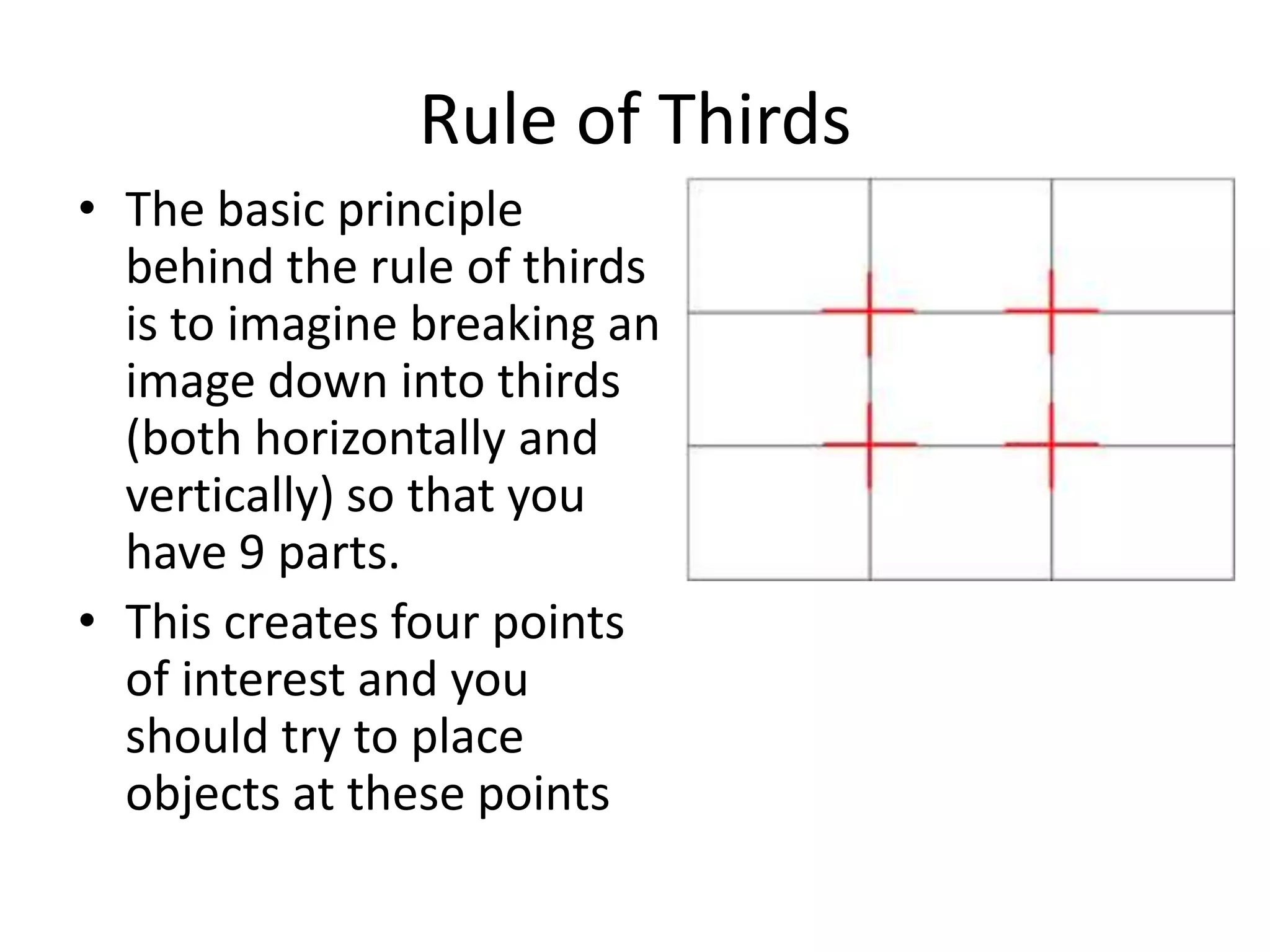
• The basic principle
  behind the rule of thirds
  is to imagine breaking an
  image down into thirds
  (both horizontally and
  vertically) so that you
  have 9 parts.
• This creates four points
  of interest and you
  should try to place
  objects at these points
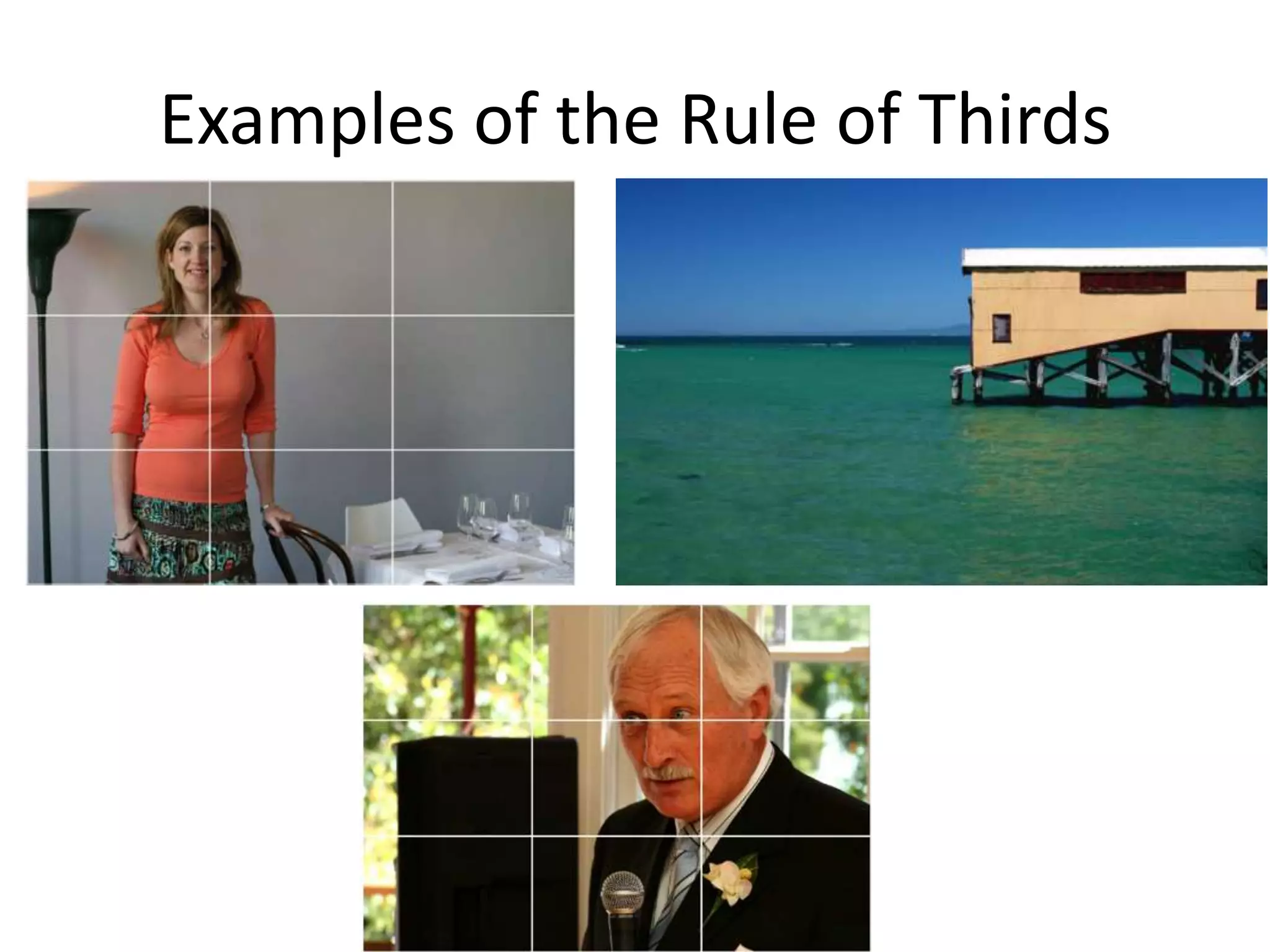
Examples of the Rule of Thirds
Use of Lines
• The lines that can be found in images are very
  powerful elements that with a little practice can
  add dynamic impact to a photograph in terms of
  mood as well as how they lead an image’s viewer
  into a photo.
• The Three Lines
  – Vertical
  – Horizontal
  – Diagonal
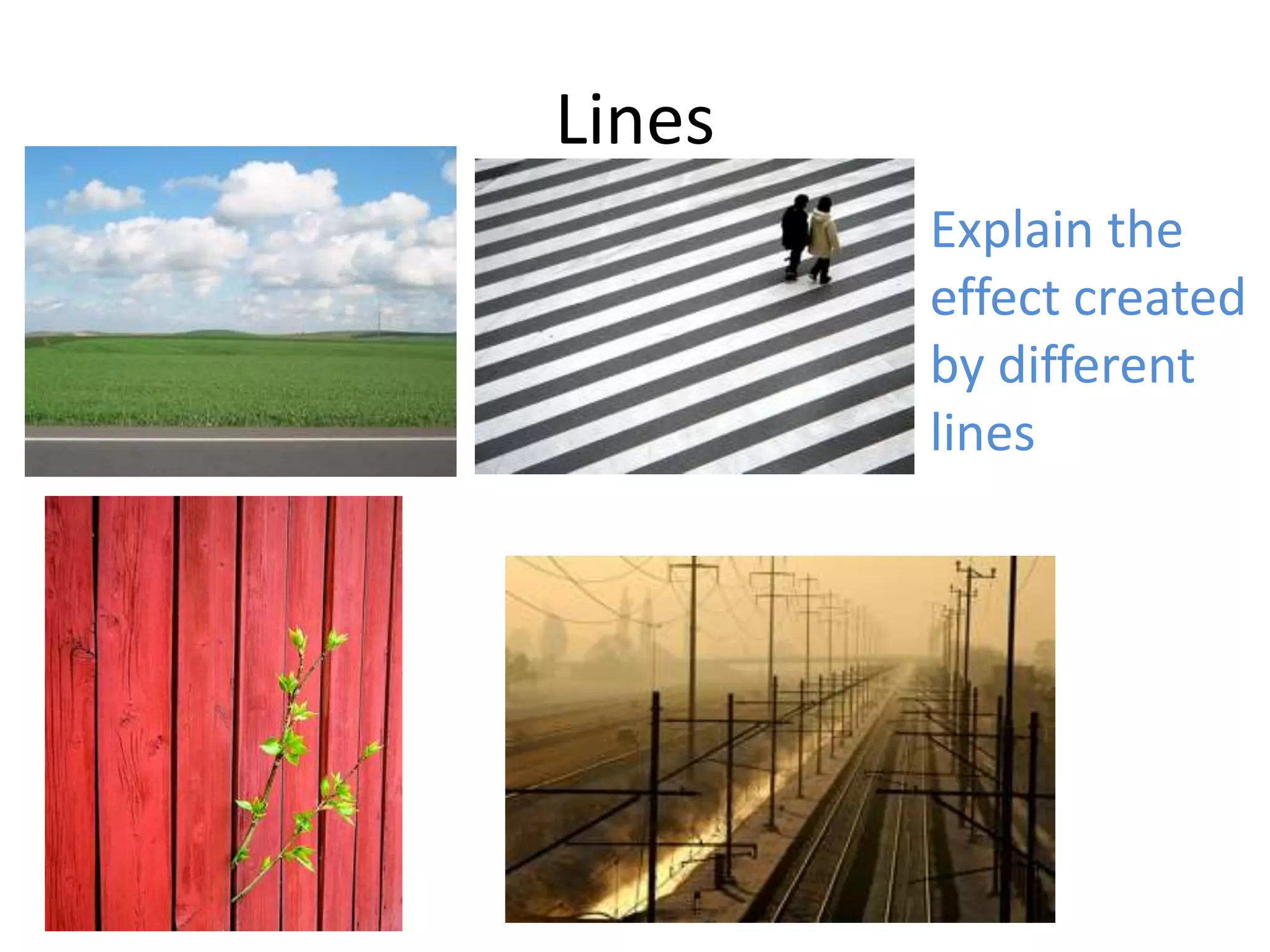
Lines
        Explain the
        effect created
        by different
        lines
Focal Points
• The reason a focal point is important is that when
  you look at an image your eye will generally need
  a ‘resting place’ or something of interest to really
  hold it. Without it you’ll find people will simply
  glance at your shots and then move on to the
  next one.
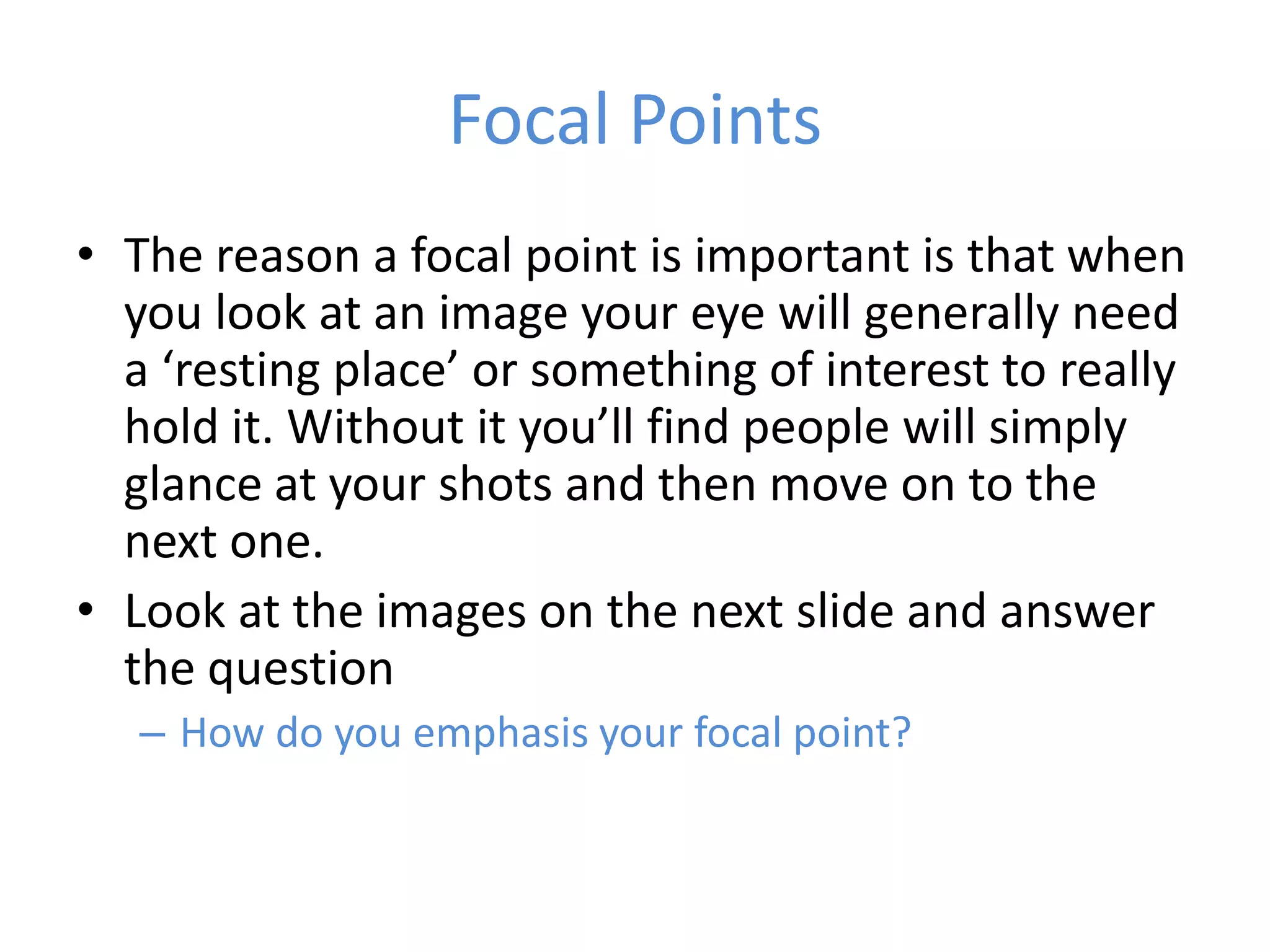
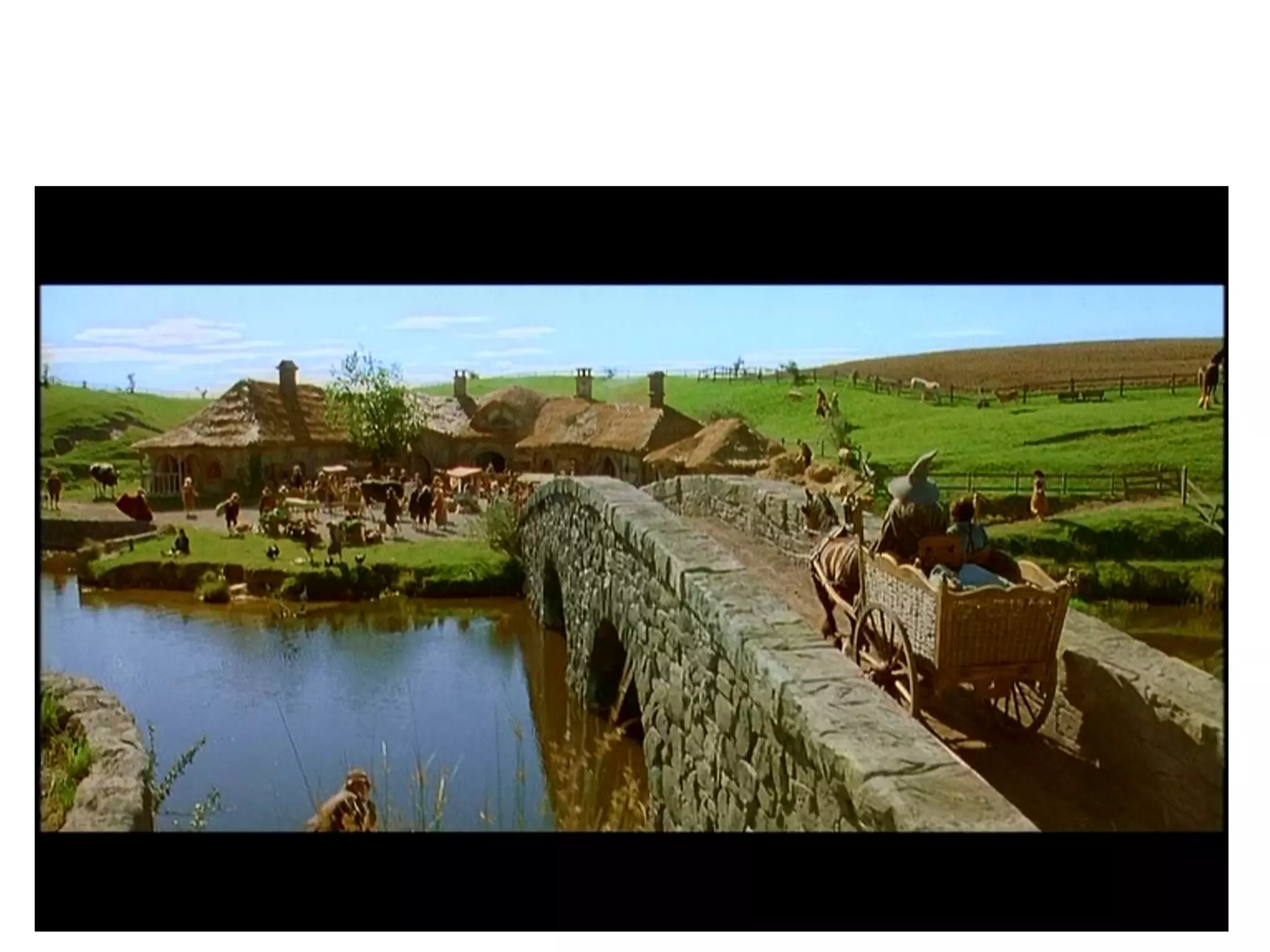
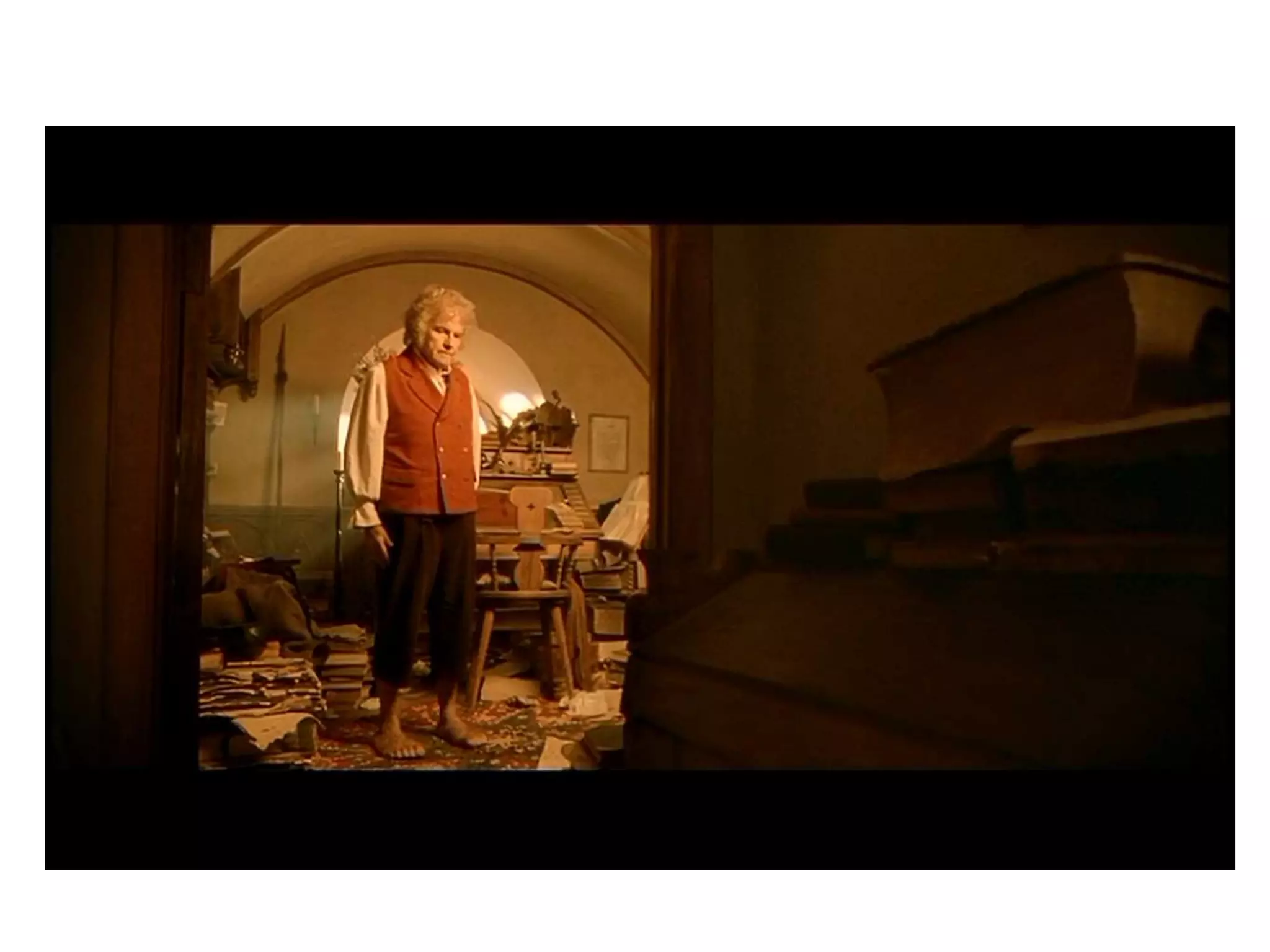
• Look at the images on the next slide and answer
  the question
   – How do you emphasis your focal point?
Placement of objects

Placement of objects

  • 1.
    Composition and Framing Lesson Goal: To understand the importance of where objects are placed in the frame.
  • 2.
    Rule of Thirds •The basic principle behind the rule of thirds is to imagine breaking an image down into thirds (both horizontally and vertically) so that you have 9 parts. • This creates four points of interest and you should try to place objects at these points
  • 3.
    Examples of theRule of Thirds
  • 4.
    Use of Lines •The lines that can be found in images are very powerful elements that with a little practice can add dynamic impact to a photograph in terms of mood as well as how they lead an image’s viewer into a photo. • The Three Lines – Vertical – Horizontal – Diagonal
  • 5.
    Lines Explain the effect created by different lines
  • 6.
    Focal Points • Thereason a focal point is important is that when you look at an image your eye will generally need a ‘resting place’ or something of interest to really hold it. Without it you’ll find people will simply glance at your shots and then move on to the next one. • Look at the images on the next slide and answer the question – How do you emphasis your focal point?

Editor's Notes

  • #5 H dividing point in a photograph V can emphasize it’s height.D They can also add a sense of action to an image and add a dynamic looks and feel.Consider how you might use diagonal lines to lead the eye to your photograph’s main subject or point of intereste
  • #6 H dividing point in a photograph V can emphasize it’s height.D They can also add a sense of action to an image and add a dynamic looks and feel.Consider how you might use diagonal lines to lead the eye to your photograph’s main subject or point of interest
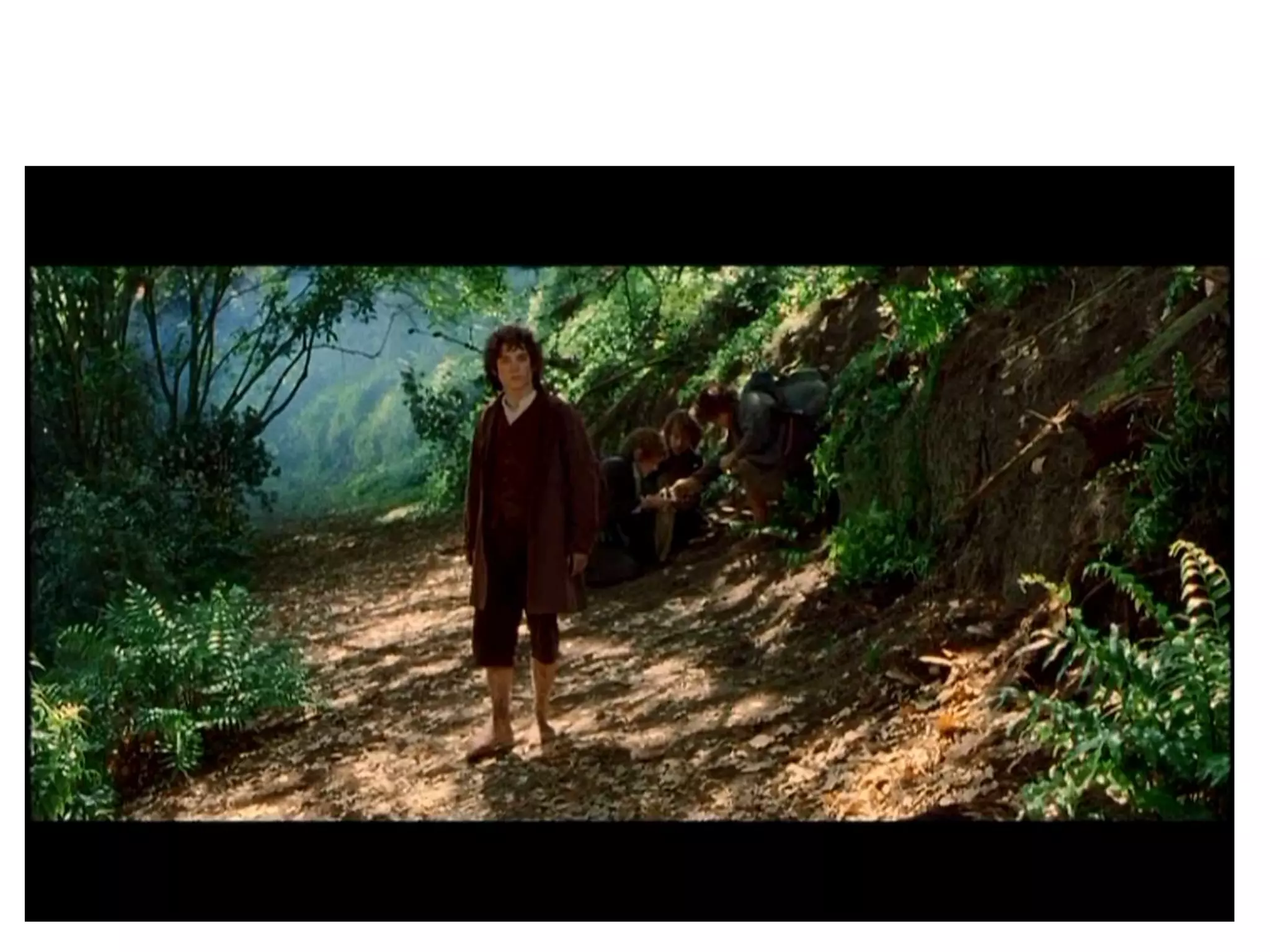
  • #10 Deep depth of field or deep focus
  • #11 Framing
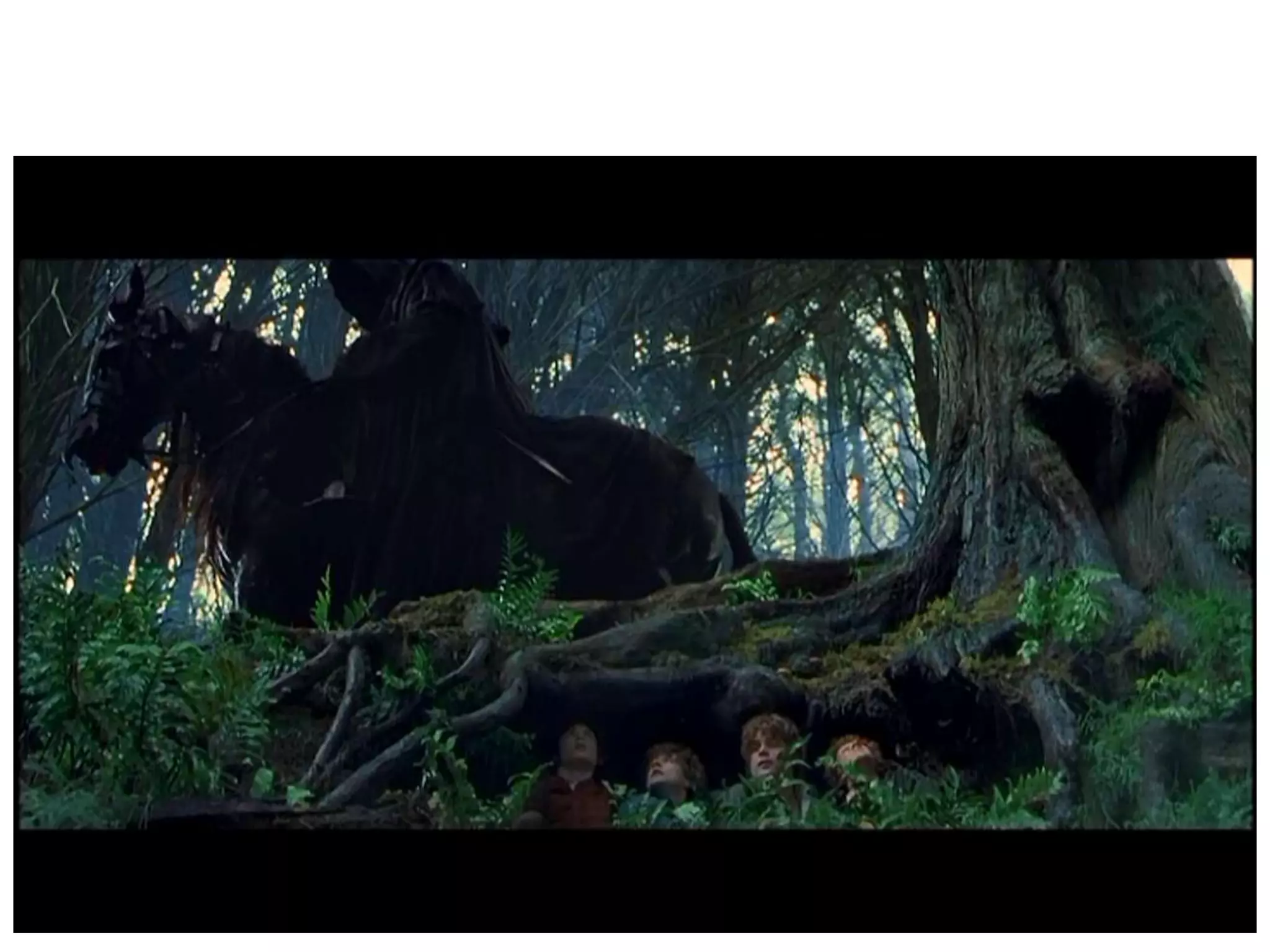
  • #13 Lower third – weak, in danger
  • #14 Vertical – unbalanced, unsettling for the audience
  • #17 Framing
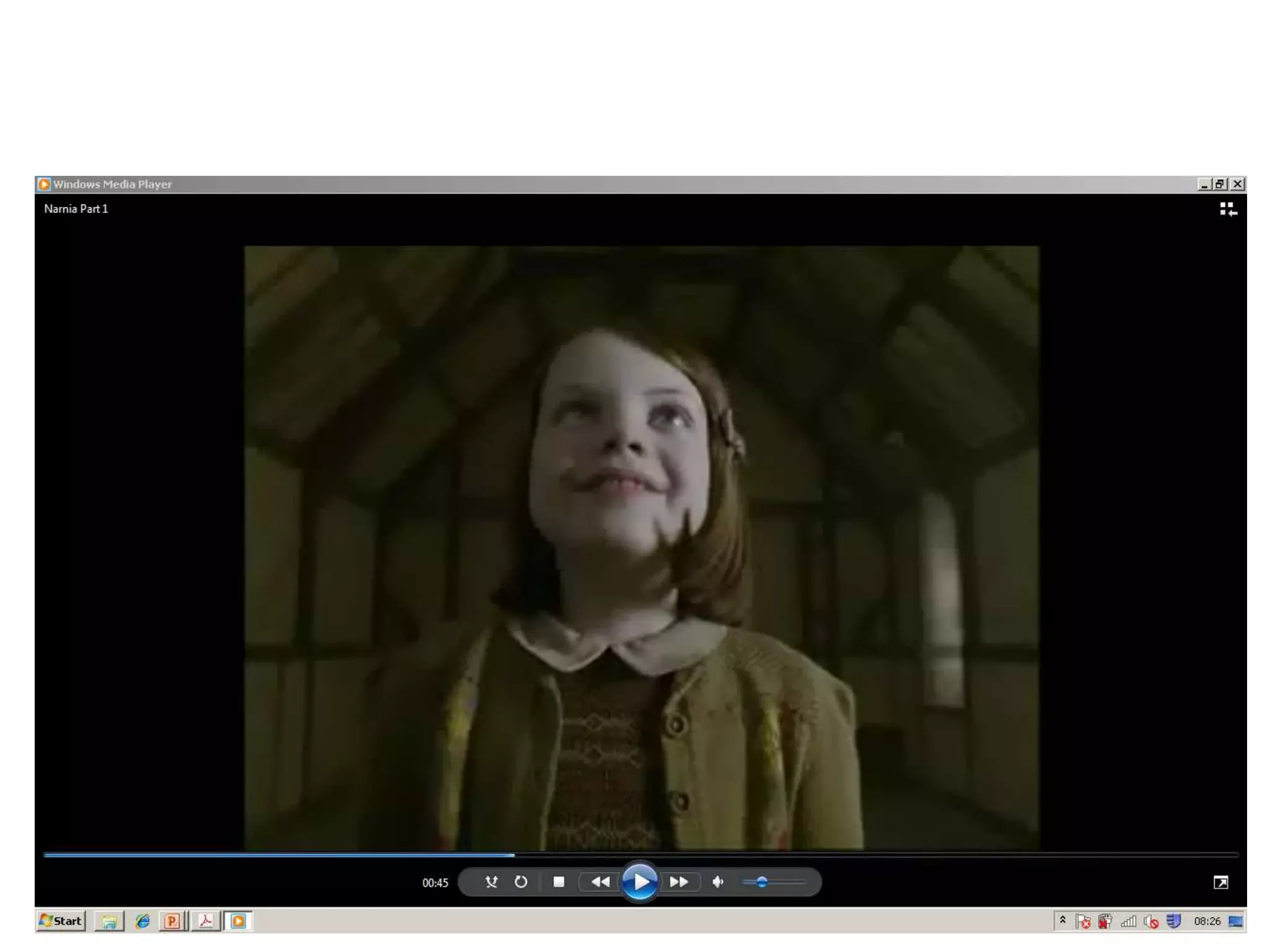
  • #18 Shallow depth of field – character importantr
  • #19 RelationshipLucy on the left – more imporatnt
  • #20 Still close but now Mr Tumnus is the focus