1
Land Degradation By Piping
Abstract
In India around 147 million hectares (Mha) of land is under degradation, this includes 94 Mha from water erosion, 16 Mha
from acidification, 14 Mha from flooding, 9 Mha from wind erosion, 6 Mha from salinity, and 7 Mha from a combination of
factors. Even though The total land area of India is just 2.4% ofthe world’s land area , it ranks second in the world in farming.
Agriculture employs almost 50% ofthe total workforcein India. So there is an increased need for monitoring and researching
the various facets of land degradation. The present study concerns with the process of soil erosion caused by piping. Soil
piping also known as “tunnel erosion” is a ubiquitous process that occurs in almost all climatic conditions and in various
soil genesis. It is characterised by the formation of underground channels of various sizes from a few centimeters to a couple
of meters by internal erosion leading to the occurrence of landscape evolution, through initiating and transforming gully
networks and hazardous pipe-roof collapses at the surface. All districts in Kerala except Thiruvananthapuram, Kollam and
Alapuzha had reported the occurrences of soil piping following the heavy rainfall in August 2018. As a result failure of roads,
large cracks in the surface over longer lengths, and soil subsidence, has been reported in the Idukkidistrict. Failure of earth
dams due to piping has been common since 2900 BC, when the earliest dams were constructed ,because of this civil engineers
have become aware of the need for increased monitoring and research of soil piping.
Key Words: Soil Piping, Erosion, Failure, Land Degradation
I. INTRODUCTION
Soil degradation implies long term
decline in soil’s productivity and its
environment moderating capacity.In
other words,it means decline in soil
quality,or reduction in attributes of the
soil in relation to specific functions of
value to humans.It has plagued the earth
since the dawn of settled agriculture.In
ancient times ,soil degradation caused
the downfall of several thriving ancient
civilizations,eg.the Harappan and the
Kalibangan cultures in the Indus
Valley,the Mesopotamian and Lydian
kingdoms in the Mediterranean region,
and the Mayan civilization in Central
America.During the 20th century,the
increase in population has drastically
accentuated the risks and extent of soil
degradation.(Lal,2001). Land
degradation is not being adequately
addressed, but is of vital importance to
raise awareness so that future land
management decisions can lead to more
sustainable and resilient agricultural
systems. Of India’s total geographical
area (328.7 Mha), 304.9 Mha comprise
the reporting area with 264.5 Mha being
used for agriculture, forestry, pasture
and other biomass production. The
severity and extent of soil degradation
in the country has been previously
assessed by many agencies (Table 1).
According to the National Bureau of
Soil Survey and Land Use Planning
~146.8 Mha is degraded. Water erosion
is the most serious degradation problem
in India, resulting in loss of topsoil and
terrain deformation. Based on first
approximation analysis of existing soil
loss data, the average soil erosion rate
was ~16.4 ton ha−1year−1, resulting in
an annual total soil loss of 5.3 billion
tons throughout the country .Nearly
29% of total eroded soil is permanently
lost to the sea, while 61% is simply
transferred from one place to another
and the remaining 10% is deposited in
reservoirs.( Bhattacharyya et al.,2015)
2
Now the problem of soil erosion is gaining
importance due to the extensive
degradation of land caused by it.But the
importance of the sub surface erosion is
often neglected by many researchers in this
field.One of the main reasons for this
negligence is the myth that soil piping
process occurs only in certain
media.Apparently a great change has been
brought about around the 1960s due to the
solid proof available from various sources
about the wide reaching effects of internal
erosion on the hydraulic works irrespective
of the climatic conditions and soil
profiles,which resulted in a continuous flow
between the upstream and downstream.
Soil piping erosion is also termed as tunnel
erosion,internal erosion and also subsurface
erosion.All these terms are used to indicate
the process of separation of particles and
their movement or flow below the ground
to an egress which is free especially in
insoluble clastic deposits, loose permeable
media by the development of underground
conduits by the percolating rain water
which further increases the permeability of
the media.Various sources suggest that the
main causes of this may be the infiltration
or the saturation of the run off water. causes
of These ducts which may initially have the
sizes ranging in few millimetres or
centimetres through which the movement
of fine silt and clay can take place may
gradually progress and have widths in the
range of meters.These passages once it
commences can occur at both shallow
depths or deeper down and it accrues over
time,this can may become visible on the
surface as ground subsidence making it
unfit for cultivation.The growth of gullies
in very dry areas is mainly attributed to
these collapses.The materials which are
most prone to these pipe collapses are
lithified clay,mud,silt and also fine grained
earth materials such as alluvium and
colluvium.
The use of fibres in soil as a minimal
reinforcement is a very economical method
to decrease the formation and propagation
of channels under the ground.The
reinforcement of soil is found to be very
efficient in bringing down the seepage
velocity. Concrete piles are also used to
tether the pipeflow process but its high cost
decreases its applicability in many cases.
Table 1. Extent of land degradation in India,
as assessed by different organizations
( Bhattacharyya et al,2015)
II.Soil Piping
The “Soilpiping”, also known as tunnel
erosion is the subsurface erosion of soil by
Organizations Assessment
Year
Degraded
Area
(Mha)
National Commission
on Agriculture
1976 148.1
Ministry of Agriculture-
Soil and Water
Conservation Division
1978 175.0
Department of
Environment
1980 95.0
National Wasteland
Development Board
1985 123.0
Society for Promotion
of Wastelands
Development
1984 129.6
National Remote
Sensing Agency
1985 53.3
Ministry of Agriculture 1985 173.6
Ministry of Agriculture 1994 107.4
NBSS&LUP 1994 187.7
NBSS&LUP (revised) 2004 146.8
3
percolating waters to produce pipe-like
conduits below ground especially in non-
lithified earth materials. Soil piping or
“tunnel erosion” is the formation of
subsurface tunnels due to subsurface soil
erosion. Piping is an insidious and
enigmatic process involving the hydraulic
removal of subsurface soil causing the
formation of an underground passage.
During rain percolating waters carries finer
silt and clay particles and forms passage
ways. The resulting "pipes" are commonly
a few millimetres to a few centimetres in
size, but can grow to a meter or more in
diameter. They may lie very close to the
ground surface or extend several meters
below ground. Once initiated they become
cumulative with time, the conduits expand
due to subsurface erosion leading to roof
collapse and subsidence features on
surface. Since it happens in the
underground, in many cases the
phenomenon goes unnoticed. The cavities
or pipes developed below the ground grow
with respect to time and affect large extents
of land in the form of subsidence thereby
making it not suitable for cultivation.
Occasionally the subsurface flow of water
can result in conduits (pipes) through
relatively insoluble clastic deposits. The
piping results in caving and collapse of
surficial conduits. This is an important
process in the head ward extension of
gullies, especially in arid semi-arid regions.
The materials most subject to piping
include fine- grained alluvium or
colluvium, and some rocks (especially clay
stone, mudstone and siltstone).
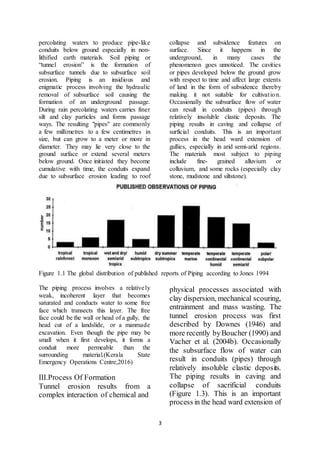
Figure 1.1 The global distribution of published reports of Piping according to Jones 1994
The piping process involves a relatively
weak, incoherent layer that becomes
saturated and conducts water to some free
face which transects this layer. The free
face could be the wall or head of a gully, the
head cut of a landslide, or a manmade
excavation. Even though the pipe may be
small when it first develops, it forms a
conduit more permeable than the
surrounding material.(Kerala State
Emergency Operations Centre,2016)
III.Process Of Formation
Tunnel erosion results from a
complex interaction of chemical and
physical processes associated with
clay dispersion, mechanical scouring,
entrainment and mass wasting. The
tunnel erosion process was first
described by Downes (1946) and
more recently byBoucher (1990) and
Vacher et al. (2004b). Occasionally
the subsurface flow of water can
result in conduits (pipes) through
relatively insoluble clastic deposits.
The piping results in caving and
collapse of sacrificial conduits
(Figure 1.3). This is an important
process in the head ward extension of
4
gullies, especially in arid semi–arid
regions .The materials most subject
to Piping includes loess, tuff,
volcanic ash, fine- grained alluvium
or colluviums, and some rocks
(especially clay stone, mudstone and
siltstone). Field tunnel erosion may
be initiated by a range of processes
including loss or disturbance of
vegetation resulting in the
development of soil cracks and
generation ofsurface runoff (Downes
1946; Crouch 1976; Laffan and
Cutler 1977), formation of gully
erosion which provides an outlet for
water flow (Boucher and Powell
1994), increased infiltration due to
ponding (Vacher et al. 2004a,
2004b), or disturbance and poor
consolidation of dispersive clays
(Ritchie 1965, 1963; Richley 1992).
Overland flow with low electrolyte
concentration enters the soil via
desiccation cracks, resulting in the
dispersion of sodic clay subsoil’s
(Crouch 1976; Laffan and Cutler
1977). Provided the soil matrix has
sufficient permeability to minimise
poreblockages (Vacher et al. 2004b),
dispersed soil material moves down
slope through soil cracks, leaving
behind a small tunnel or cavity
(Richley 1992). Further rainfall
events entrain and translocate more
dispersed soil material, resulting in
both head ward and tail ward linking
of cavities into a continuous tunnel
system (Laffan and Cutler 1977;
Boucher and Powell 1994; Zhu
2003). Tunnel expansion enables
flowing water to scour the base and
undercut sidewalls, resulting in
tunnel expansion through mass
wasting (Laffan and Cutler 1977;
Zhu 2003). Eventually undermining
reaches an extent where complete
roof collapse occurs and gullies form
(Laffan and Cutler 1977). The
general similarity of this process to
karsts formation (involving mainly
solution) has led to “pseudokarst”
being used for landforms that
originate by piping.(Kerala State
Emergency Operations Centre,2016)
IV.Conclusion
Appropriate mitigation strategies
of the nearly 147 Mha of existing
degraded land in the sub-
continent of India are of the
utmost importance. With
changing climate, land
degradation is expected to only
increase due to high intensity
storms, extensive dry spells, and
denudation of forest cover.
Combating further land
degradation and investing in soil
conservation is a major task
involving promotion of
sustainable development and
nature conservation. An
integrated watershed approach
should be given maximum
attention to combat land
degradation and environmental
problems particularly in fragile
areas. Sustainable agricultural
intensification using innovative
farming practices have
tremendous potential of
increasing productivity and
conserving natural resources,
particularly by sequestering SOC
5
(both labile and recalcitrant) and
improving soil quality.
Conservation agriculture (CA)
coupled with other technologies
like micro-irrigation, fertigation,
and management of problem soils
using specific and necessary
technologies hold great promise
to increase productivity of crops
and fruits and reverse soil
degradation. Novel CA practices
include: permanent broad bed
with residue retention under
maize/cotton/pigeon pea-wheat
cropping systems and seasonal
tillage alterations under rainfed
and rice-based agro-ecosystems.
These practices need to be
evaluated in micro-environments
of different agro-climatic regions
with different farming practices
for wider adaptability on a
watershed basis. For sure, the
non-edible (to animals)
agricultural residues must not be
burnt and should be used for
mulching along with growing of
cover crops, preferably legumes.
Improved grazing practices,
irrigation management, controlon
urban sprawl and control and
management on mining are a few
other solutions for preventing
land degradation. Domestic and
municipal wastes, sludges,
pesticides, industrial wastes, etc.
need to be used if possibleto close
nutrient cycles, but with caution
to avoid the possibility of soil
pollution. ( Bhattacharyya et al.,2015)
References
1.Holden, J. and Burt, T.P. (2002)
“Piping and pipeflow in a deep peat
catchment”. Catena, 48 (3). pp. 163-
199. ISSN 0341-8162
2.Lal.R,(2001),”Soil Degradation By
Erosion”
3.Ojha.C.S.P,Singh.V.P,Adrian
D.D,(2017) “Determination Of
Critical Head In soil Piping”.
4. Jones J. A. A (1994) “Soil piping
and its Hydro geomorphic
functions”, University of Wales
Aberystwyth.
5. Laffan M.D. and Cutler E.J.B.
(1977), “Landscapes, soils, and
erosion of a catchment in the Wither
Hills, Marlborough”. New Zealand
Journal of Science 20, 279–289
6.Studies on”The soil piping in the
highland and foothills of
Kerala”,2016
7. Nassar.M.B, Muhsina PM, Shaju
N, Shihin AN, Basil Jaimon(2019),
“Effect of coir fiber on the piping
behaviour of soil”
8. Bhattacharyya.R , Ghosh.B.N ,
Mishra P.K, Mandal.B , Rao.C.S ,
Sarkar.D , Das.K , Anil.K.S ,
Lalitha.M , Hati.K.M and
Franzluebbers.A.J (2014)
Soil Degradation in India:
Challenges and Potential Solutions
6
9. Jakiela.A.B, Gutiérrezb.F,
Romeroc.E.N, Jakiela.M(2019)
Exploring the frequency-size
relationships of pipe collapses in
different morphoclimatic
Regions
10. Boucher SC (1990) “Field tunnel
erosion, its characteristics and
amelioration.” Dept. of
Conservation and Environment,
Land Protection Division, Victoria,
East Melbourne.
11.

Pipe report

  • 1.
    1 Land Degradation ByPiping Abstract In India around 147 million hectares (Mha) of land is under degradation, this includes 94 Mha from water erosion, 16 Mha from acidification, 14 Mha from flooding, 9 Mha from wind erosion, 6 Mha from salinity, and 7 Mha from a combination of factors. Even though The total land area of India is just 2.4% ofthe world’s land area , it ranks second in the world in farming. Agriculture employs almost 50% ofthe total workforcein India. So there is an increased need for monitoring and researching the various facets of land degradation. The present study concerns with the process of soil erosion caused by piping. Soil piping also known as “tunnel erosion” is a ubiquitous process that occurs in almost all climatic conditions and in various soil genesis. It is characterised by the formation of underground channels of various sizes from a few centimeters to a couple of meters by internal erosion leading to the occurrence of landscape evolution, through initiating and transforming gully networks and hazardous pipe-roof collapses at the surface. All districts in Kerala except Thiruvananthapuram, Kollam and Alapuzha had reported the occurrences of soil piping following the heavy rainfall in August 2018. As a result failure of roads, large cracks in the surface over longer lengths, and soil subsidence, has been reported in the Idukkidistrict. Failure of earth dams due to piping has been common since 2900 BC, when the earliest dams were constructed ,because of this civil engineers have become aware of the need for increased monitoring and research of soil piping. Key Words: Soil Piping, Erosion, Failure, Land Degradation I. INTRODUCTION Soil degradation implies long term decline in soil’s productivity and its environment moderating capacity.In other words,it means decline in soil quality,or reduction in attributes of the soil in relation to specific functions of value to humans.It has plagued the earth since the dawn of settled agriculture.In ancient times ,soil degradation caused the downfall of several thriving ancient civilizations,eg.the Harappan and the Kalibangan cultures in the Indus Valley,the Mesopotamian and Lydian kingdoms in the Mediterranean region, and the Mayan civilization in Central America.During the 20th century,the increase in population has drastically accentuated the risks and extent of soil degradation.(Lal,2001). Land degradation is not being adequately addressed, but is of vital importance to raise awareness so that future land management decisions can lead to more sustainable and resilient agricultural systems. Of India’s total geographical area (328.7 Mha), 304.9 Mha comprise the reporting area with 264.5 Mha being used for agriculture, forestry, pasture and other biomass production. The severity and extent of soil degradation in the country has been previously assessed by many agencies (Table 1). According to the National Bureau of Soil Survey and Land Use Planning ~146.8 Mha is degraded. Water erosion is the most serious degradation problem in India, resulting in loss of topsoil and terrain deformation. Based on first approximation analysis of existing soil loss data, the average soil erosion rate was ~16.4 ton ha−1year−1, resulting in an annual total soil loss of 5.3 billion tons throughout the country .Nearly 29% of total eroded soil is permanently lost to the sea, while 61% is simply transferred from one place to another and the remaining 10% is deposited in reservoirs.( Bhattacharyya et al.,2015)
  • 2.
    2 Now the problemof soil erosion is gaining importance due to the extensive degradation of land caused by it.But the importance of the sub surface erosion is often neglected by many researchers in this field.One of the main reasons for this negligence is the myth that soil piping process occurs only in certain media.Apparently a great change has been brought about around the 1960s due to the solid proof available from various sources about the wide reaching effects of internal erosion on the hydraulic works irrespective of the climatic conditions and soil profiles,which resulted in a continuous flow between the upstream and downstream. Soil piping erosion is also termed as tunnel erosion,internal erosion and also subsurface erosion.All these terms are used to indicate the process of separation of particles and their movement or flow below the ground to an egress which is free especially in insoluble clastic deposits, loose permeable media by the development of underground conduits by the percolating rain water which further increases the permeability of the media.Various sources suggest that the main causes of this may be the infiltration or the saturation of the run off water. causes of These ducts which may initially have the sizes ranging in few millimetres or centimetres through which the movement of fine silt and clay can take place may gradually progress and have widths in the range of meters.These passages once it commences can occur at both shallow depths or deeper down and it accrues over time,this can may become visible on the surface as ground subsidence making it unfit for cultivation.The growth of gullies in very dry areas is mainly attributed to these collapses.The materials which are most prone to these pipe collapses are lithified clay,mud,silt and also fine grained earth materials such as alluvium and colluvium. The use of fibres in soil as a minimal reinforcement is a very economical method to decrease the formation and propagation of channels under the ground.The reinforcement of soil is found to be very efficient in bringing down the seepage velocity. Concrete piles are also used to tether the pipeflow process but its high cost decreases its applicability in many cases. Table 1. Extent of land degradation in India, as assessed by different organizations ( Bhattacharyya et al,2015) II.Soil Piping The “Soilpiping”, also known as tunnel erosion is the subsurface erosion of soil by Organizations Assessment Year Degraded Area (Mha) National Commission on Agriculture 1976 148.1 Ministry of Agriculture- Soil and Water Conservation Division 1978 175.0 Department of Environment 1980 95.0 National Wasteland Development Board 1985 123.0 Society for Promotion of Wastelands Development 1984 129.6 National Remote Sensing Agency 1985 53.3 Ministry of Agriculture 1985 173.6 Ministry of Agriculture 1994 107.4 NBSS&LUP 1994 187.7 NBSS&LUP (revised) 2004 146.8
  • 3.
    3 percolating waters toproduce pipe-like conduits below ground especially in non- lithified earth materials. Soil piping or “tunnel erosion” is the formation of subsurface tunnels due to subsurface soil erosion. Piping is an insidious and enigmatic process involving the hydraulic removal of subsurface soil causing the formation of an underground passage. During rain percolating waters carries finer silt and clay particles and forms passage ways. The resulting "pipes" are commonly a few millimetres to a few centimetres in size, but can grow to a meter or more in diameter. They may lie very close to the ground surface or extend several meters below ground. Once initiated they become cumulative with time, the conduits expand due to subsurface erosion leading to roof collapse and subsidence features on surface. Since it happens in the underground, in many cases the phenomenon goes unnoticed. The cavities or pipes developed below the ground grow with respect to time and affect large extents of land in the form of subsidence thereby making it not suitable for cultivation. Occasionally the subsurface flow of water can result in conduits (pipes) through relatively insoluble clastic deposits. The piping results in caving and collapse of surficial conduits. This is an important process in the head ward extension of gullies, especially in arid semi-arid regions. The materials most subject to piping include fine- grained alluvium or colluvium, and some rocks (especially clay stone, mudstone and siltstone). Figure 1.1 The global distribution of published reports of Piping according to Jones 1994 The piping process involves a relatively weak, incoherent layer that becomes saturated and conducts water to some free face which transects this layer. The free face could be the wall or head of a gully, the head cut of a landslide, or a manmade excavation. Even though the pipe may be small when it first develops, it forms a conduit more permeable than the surrounding material.(Kerala State Emergency Operations Centre,2016) III.Process Of Formation Tunnel erosion results from a complex interaction of chemical and physical processes associated with clay dispersion, mechanical scouring, entrainment and mass wasting. The tunnel erosion process was first described by Downes (1946) and more recently byBoucher (1990) and Vacher et al. (2004b). Occasionally the subsurface flow of water can result in conduits (pipes) through relatively insoluble clastic deposits. The piping results in caving and collapse of sacrificial conduits (Figure 1.3). This is an important process in the head ward extension of
  • 4.
    4 gullies, especially inarid semi–arid regions .The materials most subject to Piping includes loess, tuff, volcanic ash, fine- grained alluvium or colluviums, and some rocks (especially clay stone, mudstone and siltstone). Field tunnel erosion may be initiated by a range of processes including loss or disturbance of vegetation resulting in the development of soil cracks and generation ofsurface runoff (Downes 1946; Crouch 1976; Laffan and Cutler 1977), formation of gully erosion which provides an outlet for water flow (Boucher and Powell 1994), increased infiltration due to ponding (Vacher et al. 2004a, 2004b), or disturbance and poor consolidation of dispersive clays (Ritchie 1965, 1963; Richley 1992). Overland flow with low electrolyte concentration enters the soil via desiccation cracks, resulting in the dispersion of sodic clay subsoil’s (Crouch 1976; Laffan and Cutler 1977). Provided the soil matrix has sufficient permeability to minimise poreblockages (Vacher et al. 2004b), dispersed soil material moves down slope through soil cracks, leaving behind a small tunnel or cavity (Richley 1992). Further rainfall events entrain and translocate more dispersed soil material, resulting in both head ward and tail ward linking of cavities into a continuous tunnel system (Laffan and Cutler 1977; Boucher and Powell 1994; Zhu 2003). Tunnel expansion enables flowing water to scour the base and undercut sidewalls, resulting in tunnel expansion through mass wasting (Laffan and Cutler 1977; Zhu 2003). Eventually undermining reaches an extent where complete roof collapse occurs and gullies form (Laffan and Cutler 1977). The general similarity of this process to karsts formation (involving mainly solution) has led to “pseudokarst” being used for landforms that originate by piping.(Kerala State Emergency Operations Centre,2016) IV.Conclusion Appropriate mitigation strategies of the nearly 147 Mha of existing degraded land in the sub- continent of India are of the utmost importance. With changing climate, land degradation is expected to only increase due to high intensity storms, extensive dry spells, and denudation of forest cover. Combating further land degradation and investing in soil conservation is a major task involving promotion of sustainable development and nature conservation. An integrated watershed approach should be given maximum attention to combat land degradation and environmental problems particularly in fragile areas. Sustainable agricultural intensification using innovative farming practices have tremendous potential of increasing productivity and conserving natural resources, particularly by sequestering SOC
  • 5.
    5 (both labile andrecalcitrant) and improving soil quality. Conservation agriculture (CA) coupled with other technologies like micro-irrigation, fertigation, and management of problem soils using specific and necessary technologies hold great promise to increase productivity of crops and fruits and reverse soil degradation. Novel CA practices include: permanent broad bed with residue retention under maize/cotton/pigeon pea-wheat cropping systems and seasonal tillage alterations under rainfed and rice-based agro-ecosystems. These practices need to be evaluated in micro-environments of different agro-climatic regions with different farming practices for wider adaptability on a watershed basis. For sure, the non-edible (to animals) agricultural residues must not be burnt and should be used for mulching along with growing of cover crops, preferably legumes. Improved grazing practices, irrigation management, controlon urban sprawl and control and management on mining are a few other solutions for preventing land degradation. Domestic and municipal wastes, sludges, pesticides, industrial wastes, etc. need to be used if possibleto close nutrient cycles, but with caution to avoid the possibility of soil pollution. ( Bhattacharyya et al.,2015) References 1.Holden, J. and Burt, T.P. (2002) “Piping and pipeflow in a deep peat catchment”. Catena, 48 (3). pp. 163- 199. ISSN 0341-8162 2.Lal.R,(2001),”Soil Degradation By Erosion” 3.Ojha.C.S.P,Singh.V.P,Adrian D.D,(2017) “Determination Of Critical Head In soil Piping”. 4. Jones J. A. A (1994) “Soil piping and its Hydro geomorphic functions”, University of Wales Aberystwyth. 5. Laffan M.D. and Cutler E.J.B. (1977), “Landscapes, soils, and erosion of a catchment in the Wither Hills, Marlborough”. New Zealand Journal of Science 20, 279–289 6.Studies on”The soil piping in the highland and foothills of Kerala”,2016 7. Nassar.M.B, Muhsina PM, Shaju N, Shihin AN, Basil Jaimon(2019), “Effect of coir fiber on the piping behaviour of soil” 8. Bhattacharyya.R , Ghosh.B.N , Mishra P.K, Mandal.B , Rao.C.S , Sarkar.D , Das.K , Anil.K.S , Lalitha.M , Hati.K.M and Franzluebbers.A.J (2014) Soil Degradation in India: Challenges and Potential Solutions
  • 6.
    6 9. Jakiela.A.B, Gutiérrezb.F, Romeroc.E.N,Jakiela.M(2019) Exploring the frequency-size relationships of pipe collapses in different morphoclimatic Regions 10. Boucher SC (1990) “Field tunnel erosion, its characteristics and amelioration.” Dept. of Conservation and Environment, Land Protection Division, Victoria, East Melbourne. 11.