PHYSICS
in Health Services
Prepared by:
Angelique Remillete
• Branches of Science
• What is Physics?
• Nature of Physics
• Physics in Health Sciences
• Different Health Sciences
BRANCHES OF
SCIENCE
• Life Sciences
• Earth Sciences
• Physical
Sciences
Life Sciences
(Biology)
- It is the study of life and
looks at how different life
forms work.
BIOLOGY Subsets:
• Botany
• Zoology
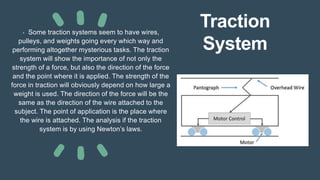
• Genetics
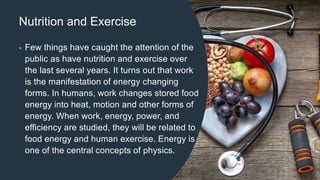
• Human Biology
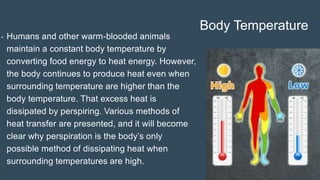
• Nutrition
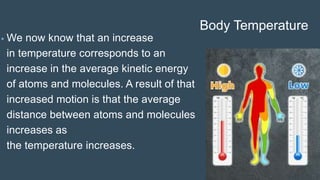
• Genetics
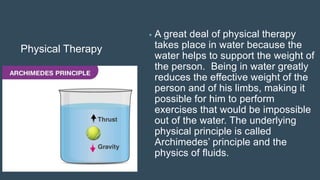
• Medicine
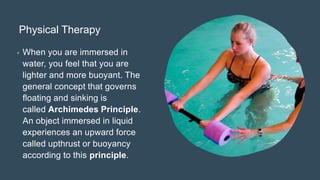
- The fields of study concerned
with the solid Earth, its
waters, and the air that
envelops it.
- It deals with physical and
chemical constitution of the
earth and its atmosphere
• Geology
• Oceanography
• Astronomy
• Meteorology
Earth Sciences
Physical
Sciences
- Focus on the physical
aspects of how things
happen within or in it.
• Chemistry
• Astronomy
• Physics
PHYSICS
What is Physics?
The nature of Physics
• Comes from the Greek word “φύσις” (fýsis)
that means nature.
• Physics is the study of matter in the
perspective of energy and motion. It involves
how matter reacts with energy, what causes
the energy, and how it affects the matter all
around us, including ourselves.
www.study.com/academy/lesson/the-main-branches-of-science.html
PHYSICS
PHYSICS
• Physics is the science of matter and its
motion—the science that deals with
concepts such as force, energy, mass,
and charge.
• As an experimental science, its goal is to
understand the natural world. In one form
or another, physics is one of the oldest
academic disciplines; through its modern
subfield of astronomy, it may be the oldest
of all.
- Science Daily
PHYSICS
• Physics aims to describe the function of
everything around us, from the movement
of tiny charged particles to the motion of
people, cars, and spaceships. In fact,
almost everything around you can be
described quite accurately by the laws of
physics.
• -Mr. Andersen from Courses Lumen Learning
Physics is a major science, dealing with the
systematic study of the basic properties of the
universe, the forces they exert on one another, and
the results produced by these forces. It is the
remaining core of natural philosophy and concerns
itself with questions of what underlies the
interactions of matter, energy, space and time, and
even with what constitutes reality.
It is not surprising that a field that has produced the theories of
relativity and quantum mechanics and has drastically altered our
concept of the universe has an aura of mystery --- of being remote
from everyday experience and impossible to understand. Once
one becomes accustomed to looking for an explanation of various
phenomena in terms of underlying scientific principles, it is
possible to see physics everywhere. The flight of birds, the
operation of a microwave oven, the color of the sunset, and the
pitch of one’s voice all have basic explanations in physics. Those
explanations can be understood by anyone, not just professional
scientists.
Physics is closely related to the other natural sciences and, in
a sense, encompasses them. Chemistry, for example deals
with the interaction of atoms to form molecules. Much of
modern geology is largely a study of the physics of the earth
and is known as geophysics. Astronomy deals with the
physics of the stars and outer space. Even living systems are
made up of fundamental particles and, as studied
inbiophysics and biochemistry, they follow the same type of
laws as the simpler particles traditionally studied by a
physicist.
NATURE OF PHYSICS
Physics emerged as a separate science only in
the early 19th century, until that time a physicist
was often also a mathematician, philosopher,
chemist, biologist, engineer, or even primarily a
political leader or an artist. Today, the field has
grown to such an extent that with few exceptions
modern physicists have to limit their attention to
one or two branches of the science.
NATURE OF PHYSICS
Once the fundamental aspects of a new field are discovered
and understood, they become the domain of engineers and
other applied scientist. The 19th century discoveries in
electricity and magnetism, for example, are now the
concentrations of electrical and communication engineers;
the properties of matter discovered at the beginning of the
20th century have been applied in electronics; and the
discoveries of nuclear physics, have passed into the hands
of nuclear engineers for applications to peaceful or military
uses.
The Scientific
Method
– is a method that is extremely
effective in gaining, organizing,
and applying new knowledge.
Steps:
Physics in the
Health Science
• A science that deals with the
Applications of Matter, Energy,
Space and Time in the Diagnosis
Treatment and prevention of
disease and injury.
Physics in the
Health Science • Physics, whether one is aware of
it or not, is encountered in many
situations --- recreational,
occupational, and even social.
The situations described in this
section are but a few, of the
many, particularly in the health
sciences.
PHYSICS IN HEALTH SCIENCES
• Athletics
• Traction systems
• Nutrition and Exercise
• Body Temperature
• Physical Therapy
• Blood Flow and Respiration
• Hearing
• Ultrasonic Scanners
PHYSICS IN HEALTH SCIENCES
• Electrical Safety
• Nervous System
• Vision
• From microwave Deep Heating to Sun Lamps
• Spectroanalysis
• X rays
• Radiotherapy, Radiation Diagnostics, and Radiation
Protection
Athletics
• Athletics is a group of sporting
events that involves competitive
running, jumping, throwing, and
walking. The most common types of
athletics competitions are track and
field, road running, cross country
running, and race walking.
Traction
System
• Some traction systems seem to have wires,
pulleys, and weights going every which way and
performing altogether mysterious tasks. The traction
system will show the importance of not only the
strength of a force, but also the direction of the force
and the point where it is applied. The strength of the
force in traction will obviously depend on how large a
weight is used. The direction of the force will be the
same as the direction of the wire attached to the
subject. The point of application is the place where
the wire is attached. The analysis if the traction
system is by using Newton’s laws.
Nutrition and Exercise
• Few things have caught the attention of the
public as have nutrition and exercise over
the last several years. It turns out that work
is the manifestation of energy changing
forms. In humans, work changes stored food
energy into heat, motion and other forms of
energy. When work, energy, power, and
efficiency are studied, they will be related to
food energy and human exercise. Energy is
one of the central concepts of physics.
Body Temperature
• Humans and other warm-blooded animals
maintain a constant body temperature by
converting food energy to heat energy. However,
the body continues to produce heat even when
surrounding temperature are higher than the
body temperature. That excess heat is
dissipated by perspiring. Various methods of
heat transfer are presented, and it will become
clear why perspiration is the body’s only
possible method of dissipating heat when
surrounding temperatures are high.
Body Temperature
• We now know that an increase
in temperature corresponds to an
increase in the average kinetic energy
of atoms and molecules. A result of that
increased motion is that the average
distance between atoms and molecules
increases as
the temperature increases.
Physical Therapy
• A great deal of physical therapy
takes place in water because the
water helps to support the weight of
the person. Being in water greatly
reduces the effective weight of the
person and of his limbs, making it
possible for him to perform
exercises that would be impossible
out of the water. The underlying
physical principle is called
Archimedes’ principle and the
physics of fluids.
Physical Therapy
• When you are immersed in
water, you feel that you are
lighter and more buoyant. The
general concept that governs
floating and sinking is
called Archimedes Principle.
An object immersed in liquid
experiences an upward force
called upthrust or buoyancy
according to this principle.
• Physics is the study of matter, motion, energy, and forces. It includes
concepts of gravity, electricity, magnetism, heat, light, and
radioactivity.
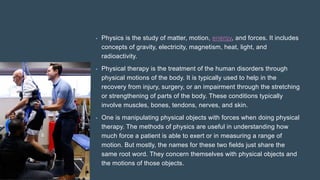
• Physical therapy is the treatment of the human disorders through
physical motions of the body. It is typically used to help in the
recovery from injury, surgery, or an impairment through the stretching
or strengthening of parts of the body. These conditions typically
involve muscles, bones, tendons, nerves, and skin.
• One is manipulating physical objects with forces when doing physical
therapy. The methods of physics are useful in understanding how
much force a patient is able to exert or in measuring a range of
motion. But mostly, the names for these two fields just share the
same root word. They concern themselves with physical objects and
the motions of those objects.
Hearing
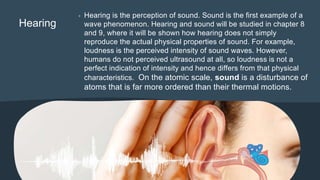
• Hearing is the perception of sound. Sound is the first example of a
wave phenomenon. Hearing and sound will be studied in chapter 8
and 9, where it will be shown how hearing does not simply
reproduce the actual physical properties of sound. For example,
loudness is the perceived intensity of sound waves. However,
humans do not perceived ultrasound at all, so loudness is not a
perfect indication of intensity and hence differs from that physical
characteristics. On the atomic scale, sound is a disturbance of
atoms that is far more ordered than their thermal motions.
Ultrasonic Scanners
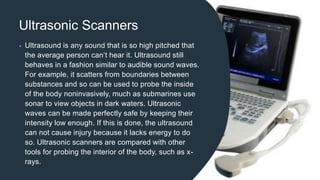
• Ultrasound is any sound that is so high pitched that
the average person can’t hear it. Ultrasound still
behaves in a fashion similar to audible sound waves.
For example, it scatters from boundaries between
substances and so can be used to probe the inside
of the body noninvasively, much as submarines use
sonar to view objects in dark waters. Ultrasonic
waves can be made perfectly safe by keeping their
intensity low enough. If this is done, the ultrasound
can not cause injury because it lacks energy to do
so. Ultrasonic scanners are compared with other
tools for probing the interior of the body, such as x-
rays.
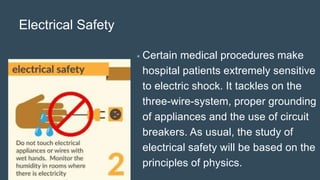
Electrical Safety
• Certain medical procedures make
hospital patients extremely sensitive
to electric shock. It tackles on the
three-wire-system, proper grounding
of appliances and the use of circuit
breakers. As usual, the study of
electrical safety will be based on the
principles of physics.
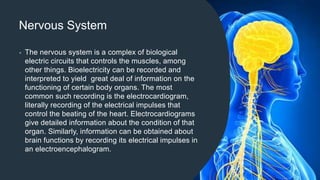
Nervous System
• The nervous system is a complex of biological
electric circuits that controls the muscles, among
other things. Bioelectricity can be recorded and
interpreted to yield great deal of information on the
functioning of certain body organs. The most
common such recording is the electrocardiogram,
literally recording of the electrical impulses that
control the beating of the heart. Electrocardiograms
give detailed information about the condition of that
organ. Similarly, information can be obtained about
brain functions by recording its electrical impulses in
an electroencephalogram.
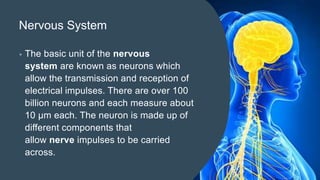
Nervous System
• The basic unit of the nervous
system are known as neurons which
allow the transmission and reception of
electrical impulses. There are over 100
billion neurons and each measure about
10 μm each. The neuron is made up of
different components that
allow nerve impulses to be carried
across.
Thank you!
Resources:
• https://phys.libretexts.org/Bookshelves/College_Physics/Book%3A_College_Physics_(Ope
nStax)/01%3A_The_Nature_of_Science_and_Physics
• https://www.slideshare.net/ElviIdiosolo/physics-in-the-health-sciences
• http://waytosuccessinphysics.blogspot.com/2015/04/lesson-1-physics-for-health-
sciences.html
• https://study.com/academy/lesson/the-main-branches-of-science.html
• https://www.sciencedaily.com/terms/physics.htm#:~:text=Physics%20is%20the%20science
%20of,to%20understand%20the%20natural%20world.
• https://www.livescience.com/46252-earth-science.html

Physics in Health Services

  • 1.
    PHYSICS in Health Services Preparedby: Angelique Remillete
  • 2.
    • Branches ofScience • What is Physics? • Nature of Physics • Physics in Health Sciences • Different Health Sciences
  • 3.
    BRANCHES OF SCIENCE • LifeSciences • Earth Sciences • Physical Sciences
  • 4.
    Life Sciences (Biology) - Itis the study of life and looks at how different life forms work. BIOLOGY Subsets: • Botany • Zoology • Genetics • Human Biology • Nutrition • Genetics • Medicine
  • 5.
    - The fieldsof study concerned with the solid Earth, its waters, and the air that envelops it. - It deals with physical and chemical constitution of the earth and its atmosphere • Geology • Oceanography • Astronomy • Meteorology Earth Sciences
  • 6.
    Physical Sciences - Focus onthe physical aspects of how things happen within or in it. • Chemistry • Astronomy • Physics
  • 7.
  • 8.
    • Comes fromthe Greek word “φύσις” (fýsis) that means nature. • Physics is the study of matter in the perspective of energy and motion. It involves how matter reacts with energy, what causes the energy, and how it affects the matter all around us, including ourselves. www.study.com/academy/lesson/the-main-branches-of-science.html PHYSICS
  • 9.
    PHYSICS • Physics isthe science of matter and its motion—the science that deals with concepts such as force, energy, mass, and charge. • As an experimental science, its goal is to understand the natural world. In one form or another, physics is one of the oldest academic disciplines; through its modern subfield of astronomy, it may be the oldest of all. - Science Daily
  • 10.
    PHYSICS • Physics aimsto describe the function of everything around us, from the movement of tiny charged particles to the motion of people, cars, and spaceships. In fact, almost everything around you can be described quite accurately by the laws of physics. • -Mr. Andersen from Courses Lumen Learning
  • 11.
    Physics is amajor science, dealing with the systematic study of the basic properties of the universe, the forces they exert on one another, and the results produced by these forces. It is the remaining core of natural philosophy and concerns itself with questions of what underlies the interactions of matter, energy, space and time, and even with what constitutes reality.
  • 12.
    It is notsurprising that a field that has produced the theories of relativity and quantum mechanics and has drastically altered our concept of the universe has an aura of mystery --- of being remote from everyday experience and impossible to understand. Once one becomes accustomed to looking for an explanation of various phenomena in terms of underlying scientific principles, it is possible to see physics everywhere. The flight of birds, the operation of a microwave oven, the color of the sunset, and the pitch of one’s voice all have basic explanations in physics. Those explanations can be understood by anyone, not just professional scientists.
  • 13.
    Physics is closelyrelated to the other natural sciences and, in a sense, encompasses them. Chemistry, for example deals with the interaction of atoms to form molecules. Much of modern geology is largely a study of the physics of the earth and is known as geophysics. Astronomy deals with the physics of the stars and outer space. Even living systems are made up of fundamental particles and, as studied inbiophysics and biochemistry, they follow the same type of laws as the simpler particles traditionally studied by a physicist.
  • 14.
    NATURE OF PHYSICS Physicsemerged as a separate science only in the early 19th century, until that time a physicist was often also a mathematician, philosopher, chemist, biologist, engineer, or even primarily a political leader or an artist. Today, the field has grown to such an extent that with few exceptions modern physicists have to limit their attention to one or two branches of the science.
  • 15.
    NATURE OF PHYSICS Oncethe fundamental aspects of a new field are discovered and understood, they become the domain of engineers and other applied scientist. The 19th century discoveries in electricity and magnetism, for example, are now the concentrations of electrical and communication engineers; the properties of matter discovered at the beginning of the 20th century have been applied in electronics; and the discoveries of nuclear physics, have passed into the hands of nuclear engineers for applications to peaceful or military uses.
  • 16.
    The Scientific Method – isa method that is extremely effective in gaining, organizing, and applying new knowledge.
  • 17.
  • 18.
    Physics in the HealthScience • A science that deals with the Applications of Matter, Energy, Space and Time in the Diagnosis Treatment and prevention of disease and injury.
  • 19.
    Physics in the HealthScience • Physics, whether one is aware of it or not, is encountered in many situations --- recreational, occupational, and even social. The situations described in this section are but a few, of the many, particularly in the health sciences.
  • 20.
    PHYSICS IN HEALTHSCIENCES • Athletics • Traction systems • Nutrition and Exercise • Body Temperature • Physical Therapy • Blood Flow and Respiration • Hearing • Ultrasonic Scanners
  • 21.
    PHYSICS IN HEALTHSCIENCES • Electrical Safety • Nervous System • Vision • From microwave Deep Heating to Sun Lamps • Spectroanalysis • X rays • Radiotherapy, Radiation Diagnostics, and Radiation Protection
  • 22.
    Athletics • Athletics isa group of sporting events that involves competitive running, jumping, throwing, and walking. The most common types of athletics competitions are track and field, road running, cross country running, and race walking.
  • 23.
    Traction System • Some tractionsystems seem to have wires, pulleys, and weights going every which way and performing altogether mysterious tasks. The traction system will show the importance of not only the strength of a force, but also the direction of the force and the point where it is applied. The strength of the force in traction will obviously depend on how large a weight is used. The direction of the force will be the same as the direction of the wire attached to the subject. The point of application is the place where the wire is attached. The analysis if the traction system is by using Newton’s laws.
  • 24.
    Nutrition and Exercise •Few things have caught the attention of the public as have nutrition and exercise over the last several years. It turns out that work is the manifestation of energy changing forms. In humans, work changes stored food energy into heat, motion and other forms of energy. When work, energy, power, and efficiency are studied, they will be related to food energy and human exercise. Energy is one of the central concepts of physics.
  • 25.
    Body Temperature • Humansand other warm-blooded animals maintain a constant body temperature by converting food energy to heat energy. However, the body continues to produce heat even when surrounding temperature are higher than the body temperature. That excess heat is dissipated by perspiring. Various methods of heat transfer are presented, and it will become clear why perspiration is the body’s only possible method of dissipating heat when surrounding temperatures are high.
  • 26.
    Body Temperature • Wenow know that an increase in temperature corresponds to an increase in the average kinetic energy of atoms and molecules. A result of that increased motion is that the average distance between atoms and molecules increases as the temperature increases.
  • 27.
    Physical Therapy • Agreat deal of physical therapy takes place in water because the water helps to support the weight of the person. Being in water greatly reduces the effective weight of the person and of his limbs, making it possible for him to perform exercises that would be impossible out of the water. The underlying physical principle is called Archimedes’ principle and the physics of fluids.
  • 28.
    Physical Therapy • Whenyou are immersed in water, you feel that you are lighter and more buoyant. The general concept that governs floating and sinking is called Archimedes Principle. An object immersed in liquid experiences an upward force called upthrust or buoyancy according to this principle.
  • 29.
    • Physics isthe study of matter, motion, energy, and forces. It includes concepts of gravity, electricity, magnetism, heat, light, and radioactivity. • Physical therapy is the treatment of the human disorders through physical motions of the body. It is typically used to help in the recovery from injury, surgery, or an impairment through the stretching or strengthening of parts of the body. These conditions typically involve muscles, bones, tendons, nerves, and skin. • One is manipulating physical objects with forces when doing physical therapy. The methods of physics are useful in understanding how much force a patient is able to exert or in measuring a range of motion. But mostly, the names for these two fields just share the same root word. They concern themselves with physical objects and the motions of those objects.
  • 30.
    Hearing • Hearing isthe perception of sound. Sound is the first example of a wave phenomenon. Hearing and sound will be studied in chapter 8 and 9, where it will be shown how hearing does not simply reproduce the actual physical properties of sound. For example, loudness is the perceived intensity of sound waves. However, humans do not perceived ultrasound at all, so loudness is not a perfect indication of intensity and hence differs from that physical characteristics. On the atomic scale, sound is a disturbance of atoms that is far more ordered than their thermal motions.
  • 31.
    Ultrasonic Scanners • Ultrasoundis any sound that is so high pitched that the average person can’t hear it. Ultrasound still behaves in a fashion similar to audible sound waves. For example, it scatters from boundaries between substances and so can be used to probe the inside of the body noninvasively, much as submarines use sonar to view objects in dark waters. Ultrasonic waves can be made perfectly safe by keeping their intensity low enough. If this is done, the ultrasound can not cause injury because it lacks energy to do so. Ultrasonic scanners are compared with other tools for probing the interior of the body, such as x- rays.
  • 32.
    Electrical Safety • Certainmedical procedures make hospital patients extremely sensitive to electric shock. It tackles on the three-wire-system, proper grounding of appliances and the use of circuit breakers. As usual, the study of electrical safety will be based on the principles of physics.
  • 33.
    Nervous System • Thenervous system is a complex of biological electric circuits that controls the muscles, among other things. Bioelectricity can be recorded and interpreted to yield great deal of information on the functioning of certain body organs. The most common such recording is the electrocardiogram, literally recording of the electrical impulses that control the beating of the heart. Electrocardiograms give detailed information about the condition of that organ. Similarly, information can be obtained about brain functions by recording its electrical impulses in an electroencephalogram.
  • 34.
    Nervous System • Thebasic unit of the nervous system are known as neurons which allow the transmission and reception of electrical impulses. There are over 100 billion neurons and each measure about 10 μm each. The neuron is made up of different components that allow nerve impulses to be carried across.
  • 35.
  • 36.
    Resources: • https://phys.libretexts.org/Bookshelves/College_Physics/Book%3A_College_Physics_(Ope nStax)/01%3A_The_Nature_of_Science_and_Physics • https://www.slideshare.net/ElviIdiosolo/physics-in-the-health-sciences •http://waytosuccessinphysics.blogspot.com/2015/04/lesson-1-physics-for-health- sciences.html • https://study.com/academy/lesson/the-main-branches-of-science.html • https://www.sciencedaily.com/terms/physics.htm#:~:text=Physics%20is%20the%20science %20of,to%20understand%20the%20natural%20world. • https://www.livescience.com/46252-earth-science.html