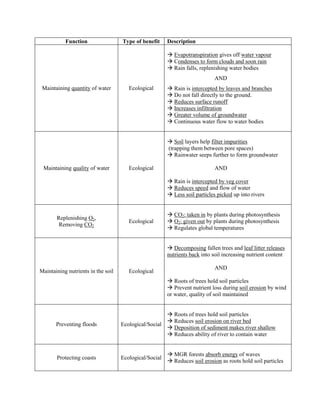
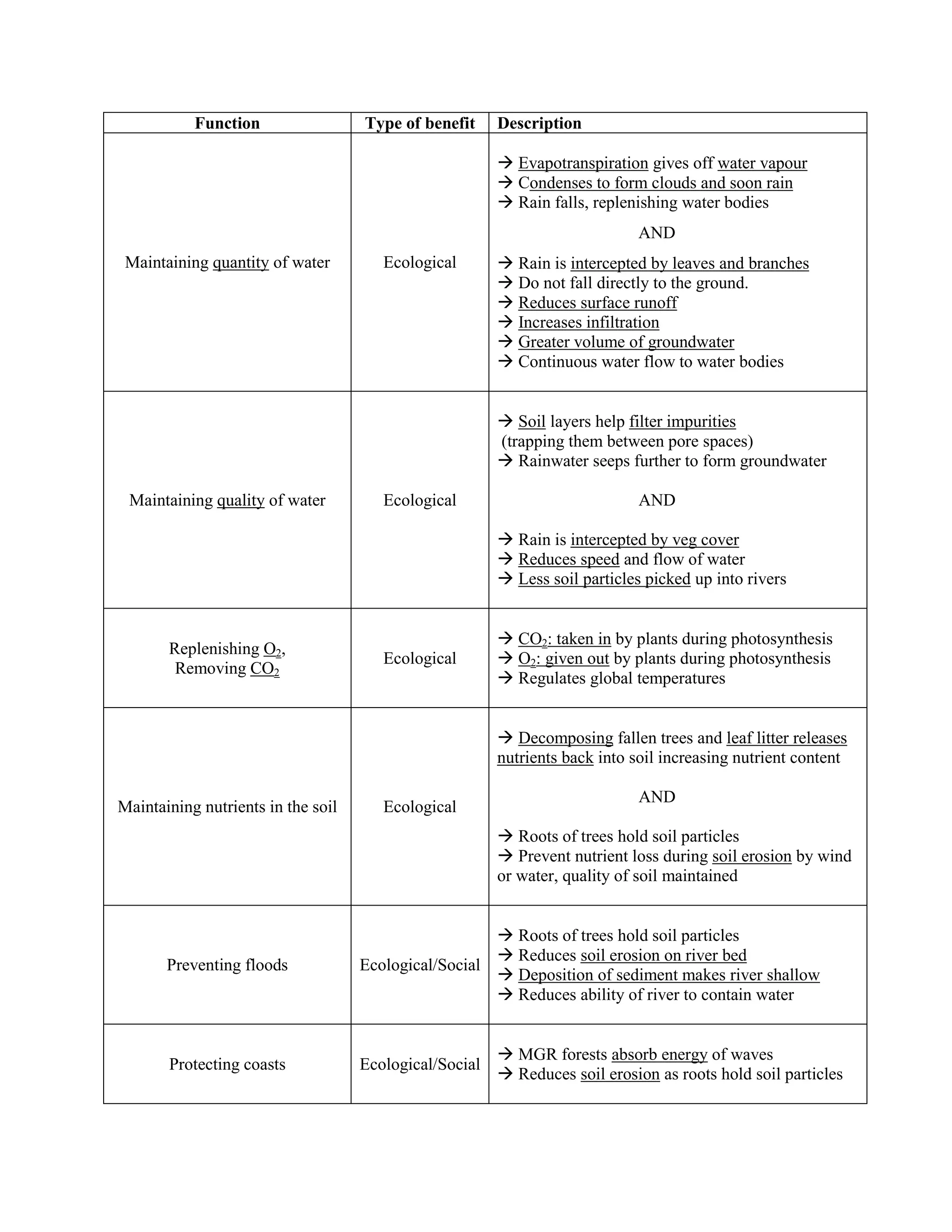
Function                 Type of benefit     Description

                                                         Evapotranspiration gives off water vapour
                                                         Condenses to form clouds and soon rain
                                                         Rain falls, replenishing water bodies
                                                                            AND
 Maintaining quantity of water         Ecological        Rain is intercepted by leaves and branches
                                                         Do not fall directly to the ground.
                                                         Reduces surface runoff
                                                         Increases infiltration
                                                         Greater volume of groundwater
                                                         Continuous water flow to water bodies


                                                         Soil layers help filter impurities
                                                        (trapping them between pore spaces)
                                                         Rainwater seeps further to form groundwater

 Maintaining quality of water          Ecological                            AND

                                                         Rain is intercepted by veg cover
                                                         Reduces speed and flow of water
                                                         Less soil particles picked up into rivers


                                                         CO2: taken in by plants during photosynthesis
       Replenishing O2,
                                       Ecological        O2: given out by plants during photosynthesis
        Removing CO2
                                                         Regulates global temperatures


                                                         Decomposing fallen trees and leaf litter releases
                                                        nutrients back into soil increasing nutrient content

                                                                             AND
Maintaining nutrients in the soil      Ecological
                                                         Roots of trees hold soil particles
                                                         Prevent nutrient loss during soil erosion by wind
                                                        or water, quality of soil maintained


                                                       Roots of trees hold soil particles
                                                       Reduces soil erosion on river bed
       Preventing floods            Ecological/Social
                                                       Deposition of sediment makes river shallow
                                                       Reduces ability of river to contain water


                                                         MGR forests absorb energy of waves
       Protecting coasts            Ecological/Social
                                                         Reduces soil erosion as roots hold soil particles
 Roots of MGR trap waste materials
                                                 Filter the water before it flows into sea
Natural treatment of waste water   Ecological
                                                 Bacteria in soil of MGR break down
                                                biodegradable wastes, convert them to nutrients.


                                                 Forests are homes to more than half of all species
                                                of flora and fauna in the world.
  Habitat for flora and fauna      Ecological
                                                 TRF: tigers and rare species of orchids of MAS
                                                 CFR: grizzly bears of N America


                                                 Timber: paper and furniture
                                                 Rattan: furniture and baskets
                                                 Fuelwood, charcoal: heating and cooking
                                                 Sago, midin, forest animals: consumption
                                                 Quinine in Cinchona: drug against malaria
                                                 Bark of Eastern White Pine tree: cough syrup
   Source of useful materials      Economic      Tannin in Rhizophora: treatment of leather
                                                 Sap of east African mangroves: black dyes
                                                 Resin: wood varnishes and ointments
                                                 Forests are a renewable resource (+)
                                                 Takes 40 years before maturity (-)
                                                 Forests are cleared faster than they regrow


                                                 60 mil people live in TRFs of Southeast Asia,
       Habitat for people            Social     South America & Africa.
                                                 Example: Korubu tribe in Amazon TRF.


                                                 Ecotourism can gain revenue for a country while
                                                it does not damage or harm the natural environment.
    Recreation/Ecotourism          Economic
                                                 Example: Taman Negara as a national park
                                                 Activities (eg. rafting and hiking) are carried out.


                                                 Development of new medicines and new
                                                varieties of crops thru studying of forest plants
                                                 New sources of food and medicines may be
    Research and Education           Social     found.
                                                 Scientists study animal-plant interactions,
                                                weather-animal-plant relationships to understand
                                                human-ecosystem relationships

Physical GEOG: Chapter 10 - Forests as a Resource

  • 1.
    Function Type of benefit Description  Evapotranspiration gives off water vapour  Condenses to form clouds and soon rain  Rain falls, replenishing water bodies AND Maintaining quantity of water Ecological  Rain is intercepted by leaves and branches  Do not fall directly to the ground.  Reduces surface runoff  Increases infiltration  Greater volume of groundwater  Continuous water flow to water bodies  Soil layers help filter impurities (trapping them between pore spaces)  Rainwater seeps further to form groundwater Maintaining quality of water Ecological AND  Rain is intercepted by veg cover  Reduces speed and flow of water  Less soil particles picked up into rivers  CO2: taken in by plants during photosynthesis Replenishing O2, Ecological  O2: given out by plants during photosynthesis Removing CO2  Regulates global temperatures  Decomposing fallen trees and leaf litter releases nutrients back into soil increasing nutrient content AND Maintaining nutrients in the soil Ecological  Roots of trees hold soil particles  Prevent nutrient loss during soil erosion by wind or water, quality of soil maintained  Roots of trees hold soil particles  Reduces soil erosion on river bed Preventing floods Ecological/Social  Deposition of sediment makes river shallow  Reduces ability of river to contain water  MGR forests absorb energy of waves Protecting coasts Ecological/Social  Reduces soil erosion as roots hold soil particles
  • 2.
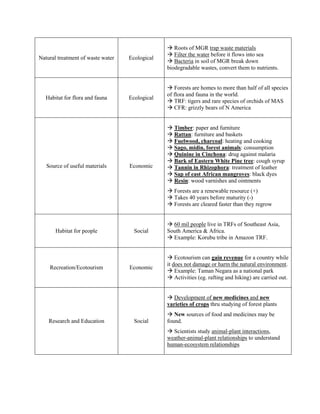
     Roots ofMGR trap waste materials  Filter the water before it flows into sea Natural treatment of waste water Ecological  Bacteria in soil of MGR break down biodegradable wastes, convert them to nutrients.  Forests are homes to more than half of all species of flora and fauna in the world. Habitat for flora and fauna Ecological  TRF: tigers and rare species of orchids of MAS  CFR: grizzly bears of N America  Timber: paper and furniture  Rattan: furniture and baskets  Fuelwood, charcoal: heating and cooking  Sago, midin, forest animals: consumption  Quinine in Cinchona: drug against malaria  Bark of Eastern White Pine tree: cough syrup Source of useful materials Economic  Tannin in Rhizophora: treatment of leather  Sap of east African mangroves: black dyes  Resin: wood varnishes and ointments  Forests are a renewable resource (+)  Takes 40 years before maturity (-)  Forests are cleared faster than they regrow  60 mil people live in TRFs of Southeast Asia, Habitat for people Social South America & Africa.  Example: Korubu tribe in Amazon TRF.  Ecotourism can gain revenue for a country while it does not damage or harm the natural environment. Recreation/Ecotourism Economic  Example: Taman Negara as a national park  Activities (eg. rafting and hiking) are carried out.  Development of new medicines and new varieties of crops thru studying of forest plants  New sources of food and medicines may be Research and Education Social found.  Scientists study animal-plant interactions, weather-animal-plant relationships to understand human-ecosystem relationships