Water-wise Landscaping
                                                                                                  Vol. I Issue 1


        Tips for Water Efficiency
W        ater is a finite resource that
         is renewed only at the whim
of nature. With growing
                                                 tips to keep the number of thirsty can minimize water usage. Place
                                                 plants and grasses in your landscape shrubs that need watering once a
                                                 to a minimum.                        week on a different water line than
populations and increasing                                                            summer annuals that need daily
development, it is essential that we                                                  water. Plants that require little or
look at water as a precious resource               “It is estimated that up to no summer water are effective in
not to be wasted. It is estimated                   50% of water consumed outer areas.
that up to 50% of water consumed                      by the average urban               Reduce lawn areas. Use turf
by the average urban household is                     household is used for           grass for function more than
used for landscape plants and turf                    landscape plants and            appearance. Grass is a good choice
grass.                                                                                where children play but avoid long
                                                             turf grass.”
   To manage water in your yard,                                                      narrow strips of turf and isolated
you can gradually introduce                                                           islands of grass that are difficult and
drought-tolerant plants into an                     Plan your landscape to match wasteful to water. In outlying areas,
existing garden or design and plant              the exposure at the site, the        use drought-resistant grasses or
a new water-efficient landscape.                 drainage, water availability, wind   meadow mixes instead of lawn.
“Water-Efficient Landscape” is a                 direction, and soil type. As a          Save water with effective
generally accepted term for a                    general rule, southern and western irrigation. Using the proper
landscape which uses plants that                 exposures result in the greatest     irrigation practices can lead to a
have low water requirements and                  water loss. Excessive use of rock in 30-80% reduction in water usage.
are able to withstand periods of                 southern or western exposures can For flowers and shallow-rooted
drought. Water-efficient                         cause temperature increases in and shrubs, drip irrigation is efficient
landscapes are a conscious attempt               around the house. Use sun-loving, and reduces pest and disease
to develop plantings compatible                  drought-tolerant plants to save      problems caused by wet foliage.
with the environment. California                 water in these locations.
has a Mediterranean type climate                    Define separate irrigation
with warm, dry summers and cool,                 zones for plants with similar
wet winters. Take this into account              water requirements. Use water-
when you select plants.                          loving shade plants like hostas and
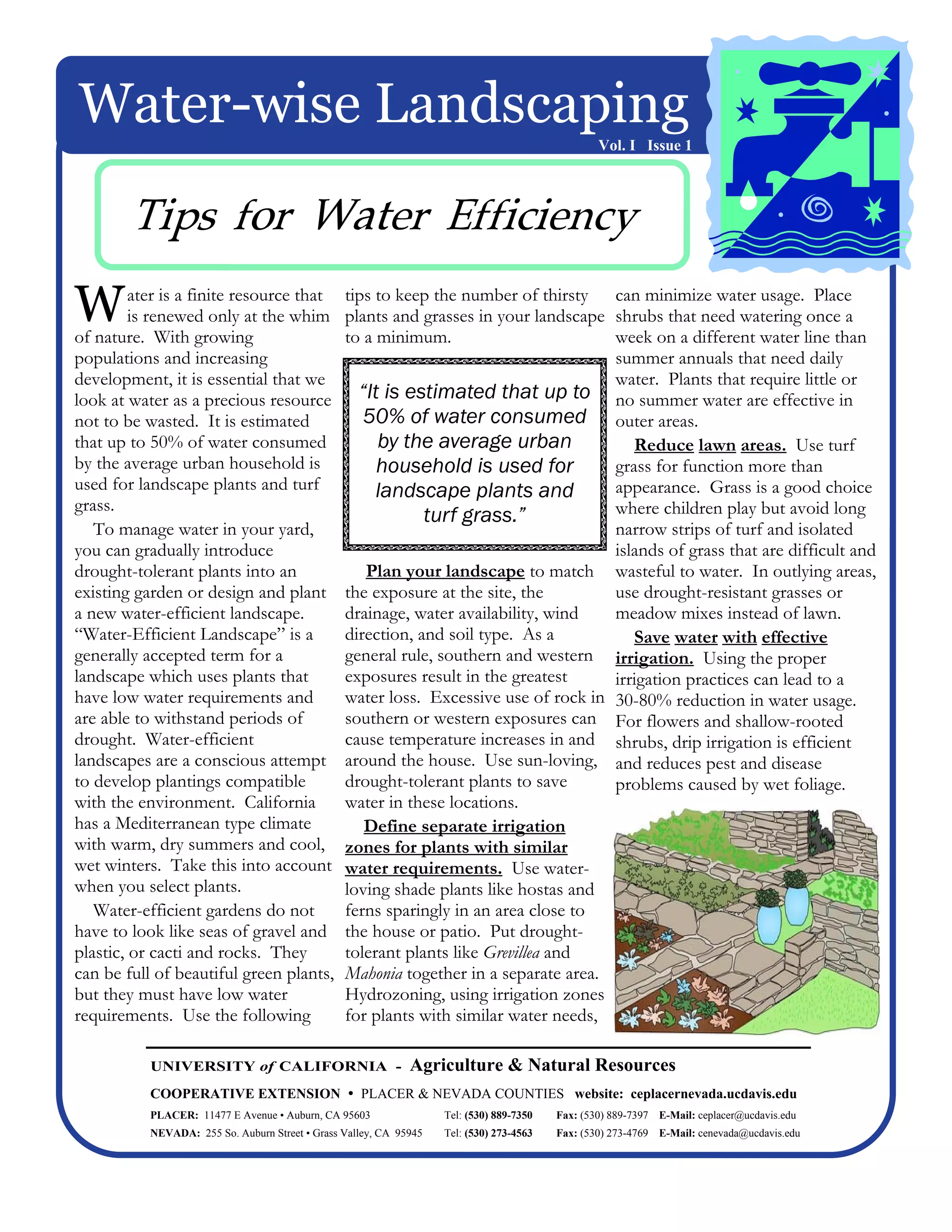
   Water-efficient gardens do not                ferns sparingly in an area close to
have to look like seas of gravel and             the house or patio. Put drought-
plastic, or cacti and rocks. They                tolerant plants like Grevillea and
can be full of beautiful green plants,           Mahonia together in a separate area.
but they must have low water                     Hydrozoning, using irrigation zones
requirements. Use the following                  for plants with similar water needs,

           UNIVERSITY of CALIFORNIA -                         Agriculture & Natural Resources
           COOPERATIVE EXTENSION                    PLACER & NEVADA COUNTIES website: ceplacernevada.ucdavis.edu
           PLACER: 11477 E Avenue • Auburn, CA 95603                Tel: (530) 889-7350   Fax: (530) 889-7397 E-Mail: ceplacer@ucdavis.edu
           NEVADA: 255 So. Auburn Street • Grass Valley, CA 95945   Tel: (530) 273-4563   Fax: (530) 273-4769 E-Mail: cenevada@ucdavis.edu
Use a low-volume sprinkler system                                                         Use water-efficient plants and                                                         Use mulches to reduce
 for lawn areas. Lawns require                                                          those that originated in climatic                                                      evaporation, minimize erosion,
 enough weekly water to penetrate                                                       conditions similar to yours. Water-                                                    keep soil cool, and improve the
 the soil to a depth of 4-6 inches.                                                     efficient landscape plants are not                                                     soil. Mulches will also reduce the
 Daily watering with a hand-held                                                        limited to natives. A huge array of                                                    number of weeds that compete for
 sprinkler is ineffective and                                                           plants with low water requirements                                                     valuable moisture.
 wasteful. Adjust irrigation timing                                                     is available at local nurseries.                                                          A well-planned water-efficient
 at least 4 times a year as the                                                         Plants with higher water                                                               gardens combine beauty and
 seasons change. Do not irrigate                                                        requirements can be grouped                                                            function. It offers low
 during the winter months.                                                              together in limited areas. Use                                                         maintenance, lower water bills, and
                                                                                        islands of intensely managed and                                                       a beautifully varied landscape.
The following is just a glimpse                                                         irrigated plantings for accent. A
of a few Water-Efficient Plants:                                                                                                                                               References:
                                                                                        small arrangement of bright color
        Trees                                                                                                                                                                  Xeriscaping: Creative Land-
                                                                                        can make a strong, tasteful
         Crape Myrtle                                                                                                                                                             scaping. http://
                                                                                        statement with less water than                                                            cecalaveras.ucdavis.edu/xeri.htm
        Lagerstroemia indica
                                                                                        rambling shrubs or turf.
         Incense Cedar                                                                                                                                                         California Master Gardener
        Calocedrus decurrens                                                                                                                                                      Handbook. 2002. Dennis R.
         California Buckeye                                                                                                                                                       Pittenger, editor, UCANR Pub.
        Aesculus californica                                                                                                                                                      3382.
        Shrubs
         Manzanita                                                                                                                                                                                             Resources
        Arctostaphylos (many)                                                                                                                                                        Placer County Water Agency
         Western Redbud                                                                                                                                                              http://www.pcwa.com
        Cercis occidentalis
         Wild Lilac                                                                                                                                                                  Water Wise Gardens of
        Ceanothus (many)                                                                   Include hardscape design                                                                  California
        Perennials                                                                      elements such as decks, patios,                                                              http://www.usbr.gov/mp/
         Yarrow                                                                         walkways, arches, and seating                                                                watershare/
        Achillea (many)                                                                 areas. Accent them with container                                                            Water Education Foundation
         Matilija Poppy                                                                 plants or water features. While                                                              http://www.water-ed.org
        Romneya coulteri
                                                                                        conserving water, they can make
         Russian Sage                                                                                                                                                                Water Saver Home
        Perovskia
                                                                                        outdoor “rooms” that add interest
                                                                                                                                                                                     http://www.h2ouse.org
                                                                                        and utility to your landscape.

                                 Written and compiled by RONNIE INGRAHAM, UCCE Master Gardener,
                                 and KEVIN MARINI, UC Program Representative
                                 WATER-WISE LANDSCAPING is a collaborative project of the University of California Cooperative Extension,
                                 UCCE Master Gardeners of Placer and Nevada Counties, Placer County Water Agency, and the US Bureau of
                                 Reclamation. For more information call 530-889-7388 or visit http://ceplacernevada.ucdavis.edu


The University of California prohibits discrimination against or harassment of any person employed by or seeking employment with the University on the basis of race, color, national origin, religion, sex, physical or mental disability, medical condition (cancer-
  related or genetic characteristic), ancestry, marital status, age, sexual orientation, citizenship, or status as a covered veteran (covered veterans are special disabled veterans, recently separated veterans, Vietnam-era veterans or any other veterans who
               served on active duty during a war or in a campaign or expedition for which a campaign badge has been authorized) in any of its programs or activities or with respect to any of its employment policies, practices, or procedures.
 University Policy is intended to be consistent with the provisions of applicable State and Federal laws. Inquiries regarding the University’s nondiscrimination policies may be directed to the Affirmative Action/Staff Personnel Services Director, University of
                                                                         California, Agriculture and Natural Resources, 1111 Franklin, 6th Floor, Oakland, CA 94607-5200; (510) 987-0096
                                                                        University of California, United States Department of Agriculture, Placer and Nevada Counties Cooperating

Tips for Water Efficiency - Master Gardeners of Nevada County, California

  • 1.
    Water-wise Landscaping Vol. I Issue 1 Tips for Water Efficiency W ater is a finite resource that is renewed only at the whim of nature. With growing tips to keep the number of thirsty can minimize water usage. Place plants and grasses in your landscape shrubs that need watering once a to a minimum. week on a different water line than populations and increasing summer annuals that need daily development, it is essential that we water. Plants that require little or look at water as a precious resource “It is estimated that up to no summer water are effective in not to be wasted. It is estimated 50% of water consumed outer areas. that up to 50% of water consumed by the average urban Reduce lawn areas. Use turf by the average urban household is household is used for grass for function more than used for landscape plants and turf landscape plants and appearance. Grass is a good choice grass. where children play but avoid long turf grass.” To manage water in your yard, narrow strips of turf and isolated you can gradually introduce islands of grass that are difficult and drought-tolerant plants into an Plan your landscape to match wasteful to water. In outlying areas, existing garden or design and plant the exposure at the site, the use drought-resistant grasses or a new water-efficient landscape. drainage, water availability, wind meadow mixes instead of lawn. “Water-Efficient Landscape” is a direction, and soil type. As a Save water with effective generally accepted term for a general rule, southern and western irrigation. Using the proper landscape which uses plants that exposures result in the greatest irrigation practices can lead to a have low water requirements and water loss. Excessive use of rock in 30-80% reduction in water usage. are able to withstand periods of southern or western exposures can For flowers and shallow-rooted drought. Water-efficient cause temperature increases in and shrubs, drip irrigation is efficient landscapes are a conscious attempt around the house. Use sun-loving, and reduces pest and disease to develop plantings compatible drought-tolerant plants to save problems caused by wet foliage. with the environment. California water in these locations. has a Mediterranean type climate Define separate irrigation with warm, dry summers and cool, zones for plants with similar wet winters. Take this into account water requirements. Use water- when you select plants. loving shade plants like hostas and Water-efficient gardens do not ferns sparingly in an area close to have to look like seas of gravel and the house or patio. Put drought- plastic, or cacti and rocks. They tolerant plants like Grevillea and can be full of beautiful green plants, Mahonia together in a separate area. but they must have low water Hydrozoning, using irrigation zones requirements. Use the following for plants with similar water needs, UNIVERSITY of CALIFORNIA - Agriculture & Natural Resources COOPERATIVE EXTENSION PLACER & NEVADA COUNTIES website: ceplacernevada.ucdavis.edu PLACER: 11477 E Avenue • Auburn, CA 95603 Tel: (530) 889-7350 Fax: (530) 889-7397 E-Mail: ceplacer@ucdavis.edu NEVADA: 255 So. Auburn Street • Grass Valley, CA 95945 Tel: (530) 273-4563 Fax: (530) 273-4769 E-Mail: cenevada@ucdavis.edu
  • 2.
    Use a low-volumesprinkler system Use water-efficient plants and Use mulches to reduce for lawn areas. Lawns require those that originated in climatic evaporation, minimize erosion, enough weekly water to penetrate conditions similar to yours. Water- keep soil cool, and improve the the soil to a depth of 4-6 inches. efficient landscape plants are not soil. Mulches will also reduce the Daily watering with a hand-held limited to natives. A huge array of number of weeds that compete for sprinkler is ineffective and plants with low water requirements valuable moisture. wasteful. Adjust irrigation timing is available at local nurseries. A well-planned water-efficient at least 4 times a year as the Plants with higher water gardens combine beauty and seasons change. Do not irrigate requirements can be grouped function. It offers low during the winter months. together in limited areas. Use maintenance, lower water bills, and islands of intensely managed and a beautifully varied landscape. The following is just a glimpse irrigated plantings for accent. A of a few Water-Efficient Plants: References: small arrangement of bright color Trees Xeriscaping: Creative Land- can make a strong, tasteful Crape Myrtle scaping. http:// statement with less water than cecalaveras.ucdavis.edu/xeri.htm Lagerstroemia indica rambling shrubs or turf. Incense Cedar California Master Gardener Calocedrus decurrens Handbook. 2002. Dennis R. California Buckeye Pittenger, editor, UCANR Pub. Aesculus californica 3382. Shrubs Manzanita Resources Arctostaphylos (many) Placer County Water Agency Western Redbud http://www.pcwa.com Cercis occidentalis Wild Lilac Water Wise Gardens of Ceanothus (many) Include hardscape design California Perennials elements such as decks, patios, http://www.usbr.gov/mp/ Yarrow walkways, arches, and seating watershare/ Achillea (many) areas. Accent them with container Water Education Foundation Matilija Poppy plants or water features. While http://www.water-ed.org Romneya coulteri conserving water, they can make Russian Sage Water Saver Home Perovskia outdoor “rooms” that add interest http://www.h2ouse.org and utility to your landscape. Written and compiled by RONNIE INGRAHAM, UCCE Master Gardener, and KEVIN MARINI, UC Program Representative WATER-WISE LANDSCAPING is a collaborative project of the University of California Cooperative Extension, UCCE Master Gardeners of Placer and Nevada Counties, Placer County Water Agency, and the US Bureau of Reclamation. For more information call 530-889-7388 or visit http://ceplacernevada.ucdavis.edu The University of California prohibits discrimination against or harassment of any person employed by or seeking employment with the University on the basis of race, color, national origin, religion, sex, physical or mental disability, medical condition (cancer- related or genetic characteristic), ancestry, marital status, age, sexual orientation, citizenship, or status as a covered veteran (covered veterans are special disabled veterans, recently separated veterans, Vietnam-era veterans or any other veterans who served on active duty during a war or in a campaign or expedition for which a campaign badge has been authorized) in any of its programs or activities or with respect to any of its employment policies, practices, or procedures. University Policy is intended to be consistent with the provisions of applicable State and Federal laws. Inquiries regarding the University’s nondiscrimination policies may be directed to the Affirmative Action/Staff Personnel Services Director, University of California, Agriculture and Natural Resources, 1111 Franklin, 6th Floor, Oakland, CA 94607-5200; (510) 987-0096 University of California, United States Department of Agriculture, Placer and Nevada Counties Cooperating