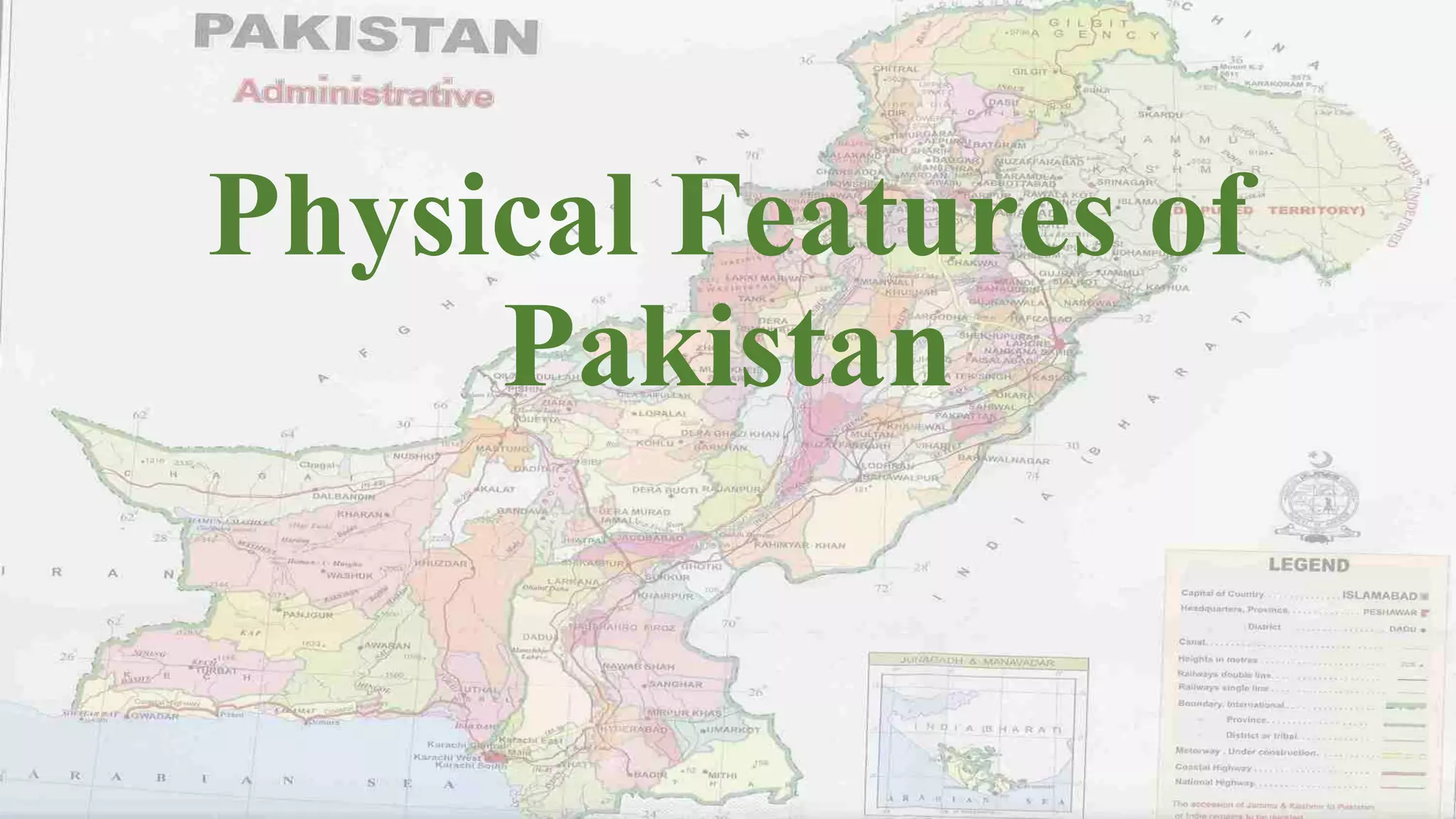
Physical Features of
Pakistan
Physical map of Pakistan
Physical features of Pakistan
The study of physical map of Pakistan shows that Pakistan has a number of peculiar
features. The major part of our country consists,
North Eastern Mountains
North Western Mountains
Indus Plain
Plateaus
Deserts
North Eastern Mountains
The highest mountains of the world known as “The Himalayas”
Comprising of a series of ranges is situated in the north east of our
country.
 The siwalik range
 The peer pinjal range
 Central or great hamaliya
 Karakoram range
The Siwalik Range:
These are the line of low altitude hills,situated adjacent to plain areas of Hazara
district in NWFP and Attock, Rawalpindi,Jhelum, Gujarat and Sialkot district.
The Peer Pinjal Range:
These range lies further of the north and mostly run parallel to the Siwlik hills.
Beside Murree and Hazara hills.
The Central of great Himalaya:
These mountains lie in between the Pir Pinjal range & Karakoram range.
The Karakoram range:
The famous Karakoram Range lies to the north of central Himalaya in northern
Kashmir and Gilgit area. This range has an average height of about 20000 feet
above sea level. The second highest peak of the world and highest peak of Pakistan,
Godwin Austin (K-2) year.
North Western Mountains
The north western ranges of our country are also known as western
branches of the Himalayas mountains. These mountains consist of series
parallel ranges and are lower in altitude than the northeastern
mountains
 The Hindu Kush
Koh Safed
 Wazirstan Hills
The Sulaiman Mountain
 The Kerther Mountain
The Hindu Kush:
Between the Indus and Kabul rivers lies the Hindu Kush range. The average height of this
range is between 10,000 to 16,000 feet above sea level.
Koh Safed:
South of the Kabul River up to Kurram pass lies the Safed Koh range, which runs east and
west.
Wazirstan Hills:
Between the Kurram and the Gomal rivers lies the Waziristan hills area. These hills have
low altitude.
The Sulaiman Mountain:
In the south of the Gomal river lies the Sulman mountain. It rims southward for a distance
of about 300 miles
The Kerther Mountain:
In the west of lower Indus plain lies a hilly area known as “The Kerther hills”. These hills
are not high enough, their average height being about 7000 feet
The Indus Plain
River Indus is the largest river of our country. This river after
originating from northern slopes of Kailash Range in Tibet (China)
passing through the Himalaya and enters in Pakistan's territory near
Gilgit.
 The Upper Indus Plain
 The Lower Indus Plain
 The Indus Delta
The Upper Indus Plain:
From the point of junction eastern tributaries of river Indus is known as
the upper Indus Plain . It includes most of the areas of Punjab Province.
The Lower Indus Plain:
Mithankot is known as junction of Indus river and its eastern tributaries.
Beyond Mithankot River Indus flows alone and carries not only its own
water, but also that of its eastern and western tributaries, while flowing
from the Province of Sindh.
The Indus Delta:
The Indus delta begins near Thatta(Sindh) and the river Indus by
distributing itself into a number of branches joins with the water of
Arabian sea.
Plateaus
The Salt range
The areas of salt range begins in the east near the Jhelum in the Jogi tilla and
Bakralla ridges and runs south-west to the north of the river Jhelum for some
distance before turning north west to cross the Indus near Kalabagh.
Potwar Plateau:
North of salt range the area of Rawalpindi Jhelum and Mianwali districts are
known as potwar plateau. These areas have also an uneven surface.
The Baluchistan Plateaus:
This plateau lies to the west of the Sulaiman and Kirthar mountains. Like
potwar plateau, the dry hills run across the plateau from the north east to the
south west.
The Deserts
Although some desert areas of our country are parts of plain, but due to come difference
characteristics, these are known as deserts.
Thal Desert:
The area between river Indus and Jhelum is known as Sindh Sagar Doab. This includes the
areas of Mianwali, Sargodha, Muzaffargarh and Dera Ismail Khan district in the Province of
Punjab.
Cholistan Desert:
The south boarder area of our Bahawalpur divison is known as Cholistan. In fact, it is a part of
Rajhistan desert situated adjacent to in India, due to shortage of rainfall these areas have
become barren land.
The Nara And Tharparkar Desert:
The southern border areas of Khairpur district in Sindh is known as Nara desert and border
areas of Mirpur Khas and Sanghar district are called Tharparkar or Thar desert. These are also
part of Rajhistan desert in India. These are the deserts part of country
Physical features of pakistan

Physical features of pakistan

  • 1.
  • 2.
  • 3.
    Physical features ofPakistan The study of physical map of Pakistan shows that Pakistan has a number of peculiar features. The major part of our country consists, North Eastern Mountains North Western Mountains Indus Plain Plateaus Deserts
  • 4.
    North Eastern Mountains Thehighest mountains of the world known as “The Himalayas” Comprising of a series of ranges is situated in the north east of our country.  The siwalik range  The peer pinjal range  Central or great hamaliya  Karakoram range
  • 5.
    The Siwalik Range: Theseare the line of low altitude hills,situated adjacent to plain areas of Hazara district in NWFP and Attock, Rawalpindi,Jhelum, Gujarat and Sialkot district. The Peer Pinjal Range: These range lies further of the north and mostly run parallel to the Siwlik hills. Beside Murree and Hazara hills. The Central of great Himalaya: These mountains lie in between the Pir Pinjal range & Karakoram range. The Karakoram range: The famous Karakoram Range lies to the north of central Himalaya in northern Kashmir and Gilgit area. This range has an average height of about 20000 feet above sea level. The second highest peak of the world and highest peak of Pakistan, Godwin Austin (K-2) year.
  • 6.
    North Western Mountains Thenorth western ranges of our country are also known as western branches of the Himalayas mountains. These mountains consist of series parallel ranges and are lower in altitude than the northeastern mountains  The Hindu Kush Koh Safed  Wazirstan Hills The Sulaiman Mountain  The Kerther Mountain
  • 7.
    The Hindu Kush: Betweenthe Indus and Kabul rivers lies the Hindu Kush range. The average height of this range is between 10,000 to 16,000 feet above sea level. Koh Safed: South of the Kabul River up to Kurram pass lies the Safed Koh range, which runs east and west. Wazirstan Hills: Between the Kurram and the Gomal rivers lies the Waziristan hills area. These hills have low altitude. The Sulaiman Mountain: In the south of the Gomal river lies the Sulman mountain. It rims southward for a distance of about 300 miles The Kerther Mountain: In the west of lower Indus plain lies a hilly area known as “The Kerther hills”. These hills are not high enough, their average height being about 7000 feet
  • 8.
    The Indus Plain RiverIndus is the largest river of our country. This river after originating from northern slopes of Kailash Range in Tibet (China) passing through the Himalaya and enters in Pakistan's territory near Gilgit.  The Upper Indus Plain  The Lower Indus Plain  The Indus Delta
  • 9.
    The Upper IndusPlain: From the point of junction eastern tributaries of river Indus is known as the upper Indus Plain . It includes most of the areas of Punjab Province. The Lower Indus Plain: Mithankot is known as junction of Indus river and its eastern tributaries. Beyond Mithankot River Indus flows alone and carries not only its own water, but also that of its eastern and western tributaries, while flowing from the Province of Sindh. The Indus Delta: The Indus delta begins near Thatta(Sindh) and the river Indus by distributing itself into a number of branches joins with the water of Arabian sea.
  • 10.
    Plateaus The Salt range Theareas of salt range begins in the east near the Jhelum in the Jogi tilla and Bakralla ridges and runs south-west to the north of the river Jhelum for some distance before turning north west to cross the Indus near Kalabagh. Potwar Plateau: North of salt range the area of Rawalpindi Jhelum and Mianwali districts are known as potwar plateau. These areas have also an uneven surface. The Baluchistan Plateaus: This plateau lies to the west of the Sulaiman and Kirthar mountains. Like potwar plateau, the dry hills run across the plateau from the north east to the south west.
  • 11.
    The Deserts Although somedesert areas of our country are parts of plain, but due to come difference characteristics, these are known as deserts. Thal Desert: The area between river Indus and Jhelum is known as Sindh Sagar Doab. This includes the areas of Mianwali, Sargodha, Muzaffargarh and Dera Ismail Khan district in the Province of Punjab. Cholistan Desert: The south boarder area of our Bahawalpur divison is known as Cholistan. In fact, it is a part of Rajhistan desert situated adjacent to in India, due to shortage of rainfall these areas have become barren land. The Nara And Tharparkar Desert: The southern border areas of Khairpur district in Sindh is known as Nara desert and border areas of Mirpur Khas and Sanghar district are called Tharparkar or Thar desert. These are also part of Rajhistan desert in India. These are the deserts part of country