Submitted by,
Rajasekaran E
Second year- Bachelor of Technology,
Department of Pharmaceutical Technology,
University college of Engineering- BIT Campus,
Anna University,
Tiruchirappalli-24
Vocabulary
• Bactericidal: Bacteria-killing
• Bacteriostasis: Bacterial growth inhibiting
• Disinfection: Destruction of vegetative pathogens
• Antisepsis: Destruction of vegetative pathogens on living tissue
• Aseptic: Absence of a pathogen from an object or an area
Contd.
• Sanitation: Reduction of pathogens on eating utensils, etc. to public health
standards
• Antiseptic: chemical used for disinfection of skin or mucous membranes
• Disinfectant: Chemical used on inanimate objects to kill or inhibit bacterial
growth
• Sterile: Without life, free of microorganisms
Measuring the effectiveness of
bacterial control methods
• Not all genera of bacteria are equally susceptible to a
given method of control.
 Example:
 E. coli bacteria are highly susceptible to heat and die
quickly when they reach boiling temperatures.
 Pathogens that create endospores on the other hand,
can survive long periods of boiling.
• How do we determine how hot and how long we need to
keep a microbe at to kill it?
Three acceptable
ways to measure
microbial
tolerance to heat
1. Decimal reduction time (DRT): time in which
90% of the population of bacteria at a given
temperature will die.
2. Thermal death time (TDT): Time in which all
cells in a suspension are killed at a given
temperature.
3. Thermal death point (TDP): The lowest
temperature in which all microorganisms will be
killed in 10 minutes.
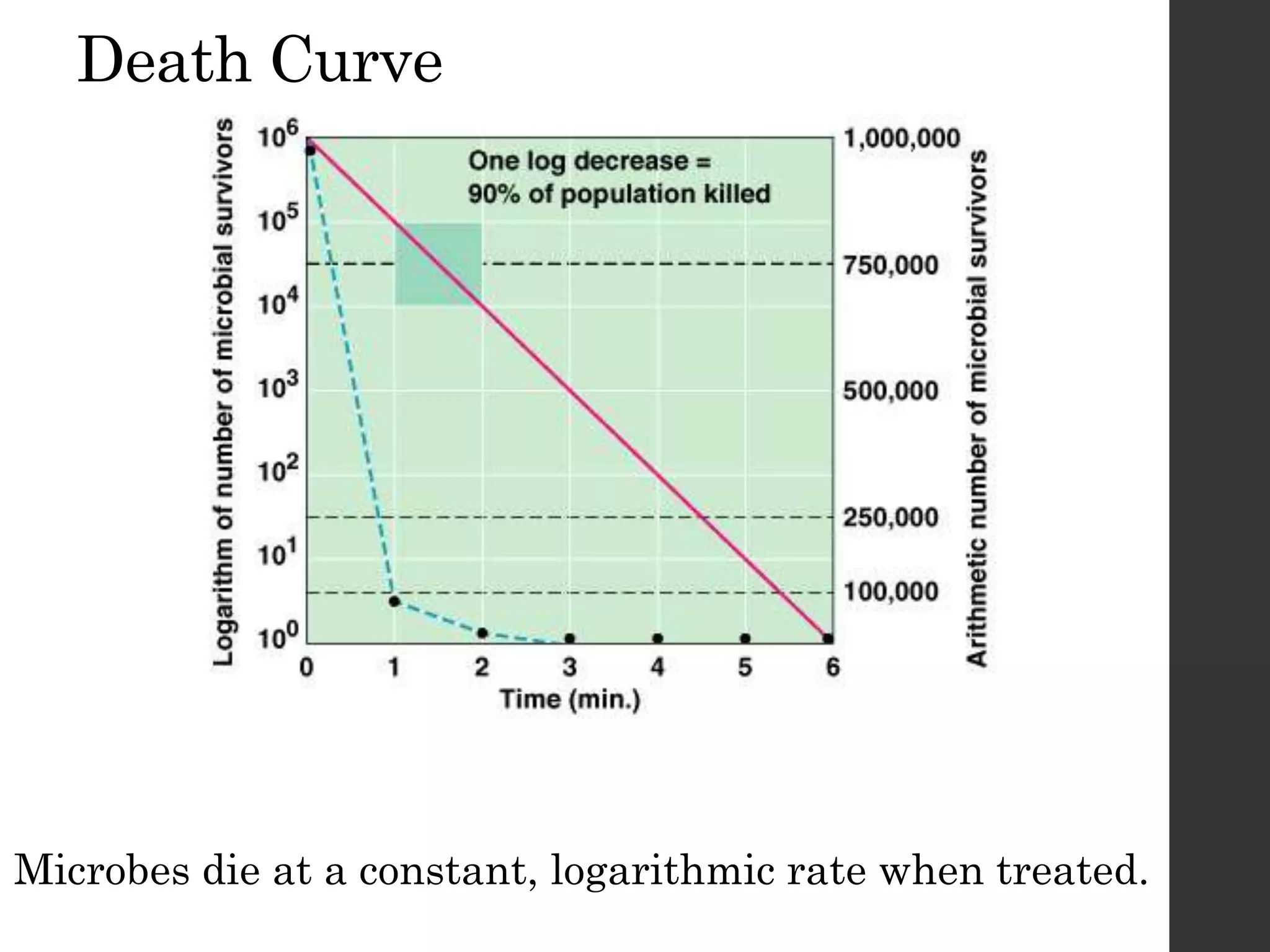
Death Curve
Microbes die at a constant, logarithmic rate when treated.
Physical Methods
of Controlling
Microbial Growth
Types of controlling method
• Heat
• Filtration
• cold
• Desiccation
• Lyophilization
• Radiation
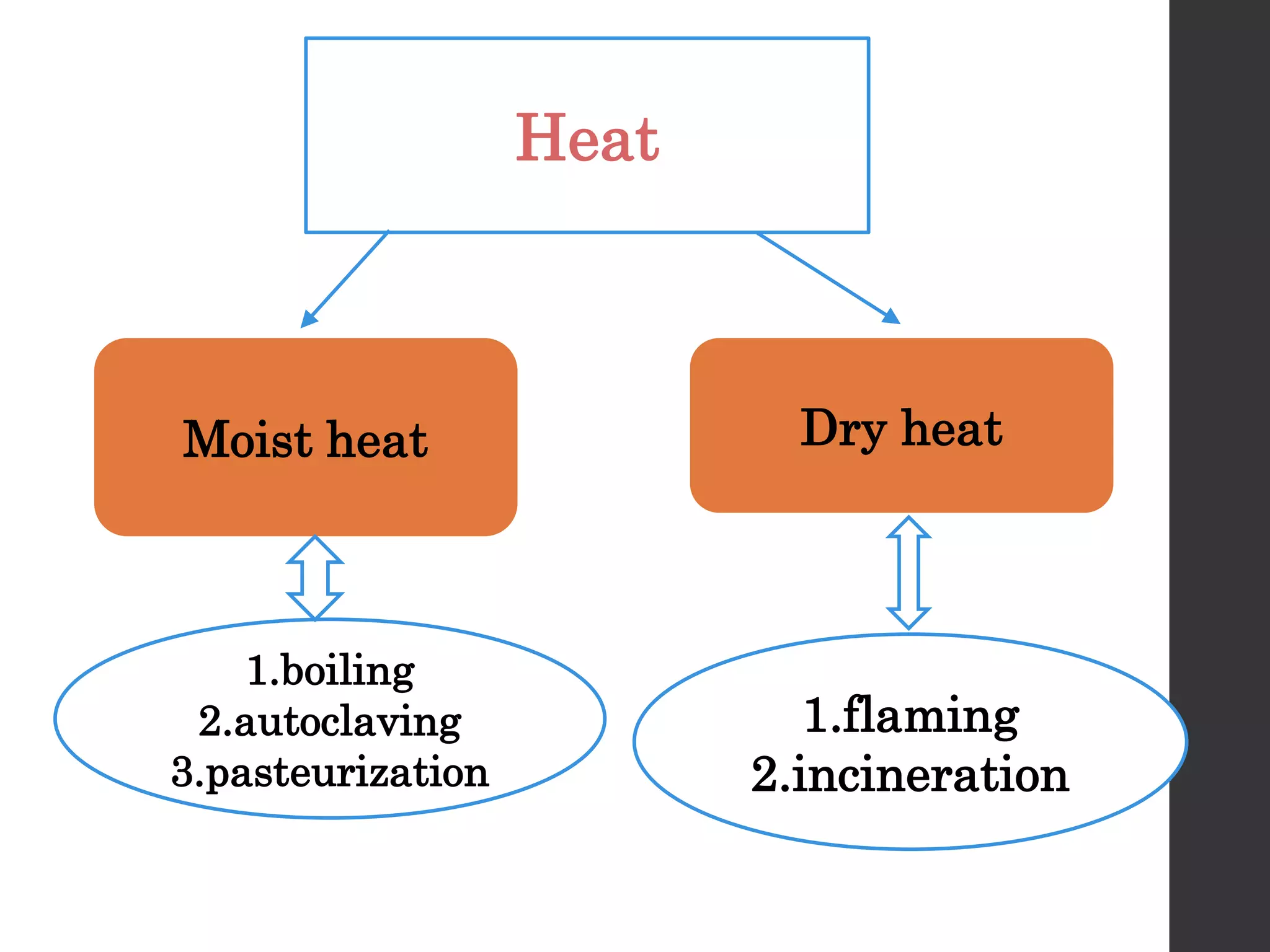
Moist heat Dry heat
Heat
1.boiling
2.autoclaving
3.pasteurization
1.flaming
2.incineration
Moist Heat Methods
• More effective than dry heat
• Kills by coagulation of proteins
• Three methods: boiling, autoclaving,
pasteurization
Boiling
100 C for 10 min: kills vegetative bacteria, most viruses,
and fungal spores.
Endospores and some viruses (hepatitis) can survive for
long boiling periods.
Good for making drinking water and food safe for
consumption.
Unreliable for sterilization of surgical equipment
(endospores survive without stomach acid to kill them).
Free flowing unpressurized steam is equivalent to boiling.
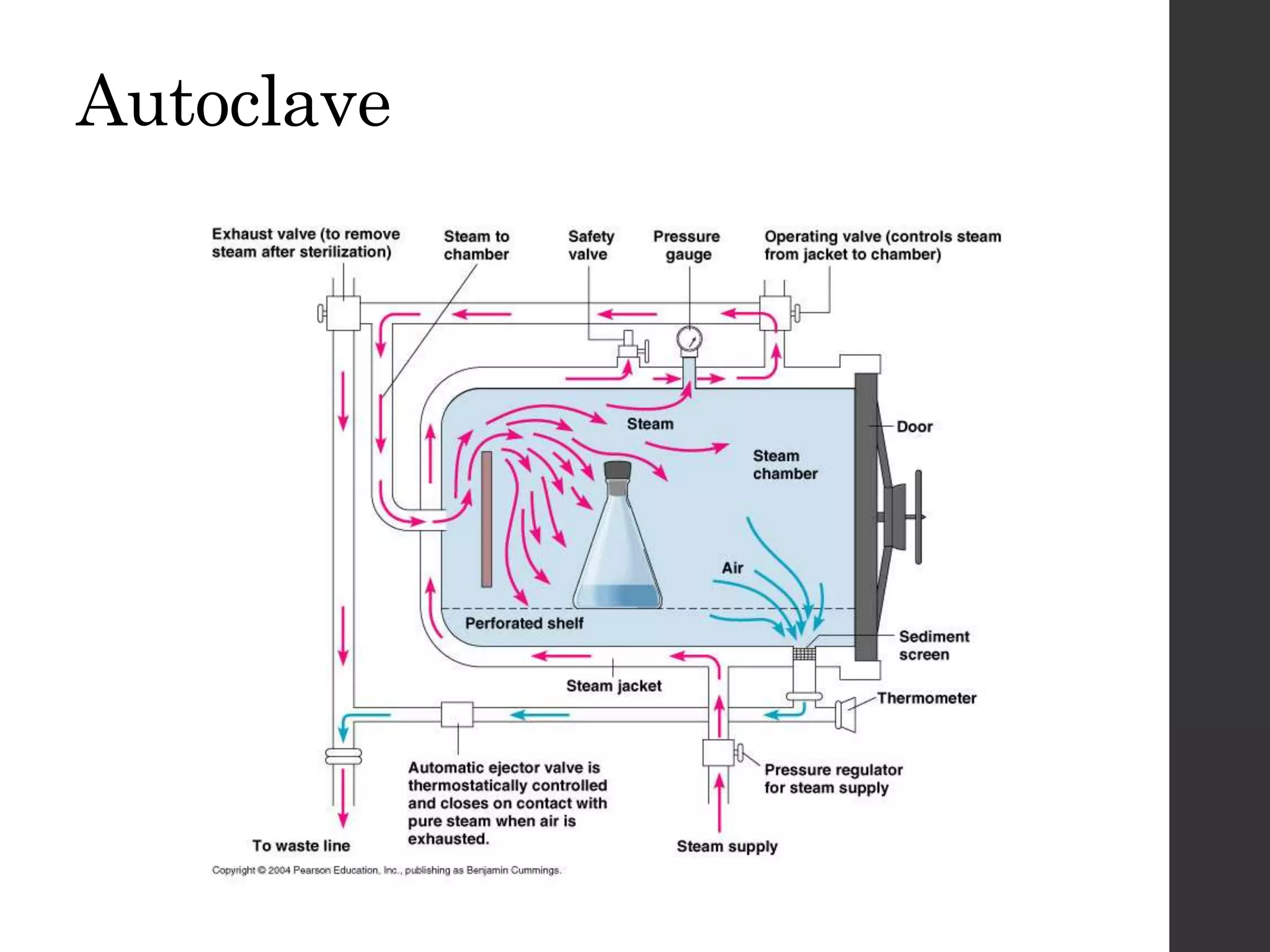
Autoclave
• Pressurizing of steam to make it hotter. 1 atm
temp = 121 C kills all organisms and their
endospores. Most effective and most preferred
method of sterilization. Steam must contact all
solid surfaces since solids don’t have convection
currents like liquids do.
Autoclave
Pasteurization
• Mildly heating food products to kill particular
spoilage microorganisms or pathogens. 72 C for
15 seconds with refrigeration needed afterwards.
Many heat resistant bacteria survive
pasteurization but these are unlikely to cause
disease.
• Ultra high temperature pasteurization 140 C for
3 seconds sterilizes milk.
Dry Heat
• Kills and sterilizes by oxidation effect.
• Direct flaming or incineration
• Hot air sterilization (170 C for 2 hours)
Filtration
• Filters are made of cellulose or plastic polymers
with pores of about .2 micrometers. Viruses can
still get through.
• There are filters with pore size as small as .01
micrometers for viruses but filtration is very slow.
• Filters are important when you can’t heat
something up because you’ll destroy what you’re
trying to keep.
Cold
• Cold is bacteriostatic
• Slow freezing is more harmful as crystals can set
up better.
• Deep freezing is quick freezing at temp between
-50 and -95 degrees. This is usually done to
preserve the specimen.
Desiccation
• Desiccation is the absence of water. Microbes
need water in order to grow and reproduce.
However, microbes in a desiccated state can be
viable for years. When water is added, they can
resume growth.
• Desiccation is bacteriostatic, though the ability
to survive varies by species.
Lyophilization (freeze drying)
• A suspension of microbes is quickly frozen at
temp between -54 and -72 C and water is
removed by high vacuum. Microbes can be
stored for years in this state.
Radiation
Types of radiation
1.ultraviolet radiation
2.ionization radiation
Ultraviolet radiation
• The ultraviolet portion of the light spectrum includes all
radiations with wavelengths from 100 nm to 400 nm.
• It has low wave-length and low energy.
• The microbicidal activity of ultraviolet (UV) light depends
on the length of exposure: the longer the exposure the
greater the cidal activity.
• It also depends on the wavelength of UV used.
• The most cidal wavelengths of UV light lie in the 260 nm -
270 nm range where it is absorbed by nucleic acid.
Ionization radiation
• Ionizing radiation, such as X-rays and gamma rays,
has much more energy and penetrating power than
ultraviolet radiation.
• It ionizes water and other molecules to form
radicals (molecular fragments with unpaired
electrons) that can disrupt DNA molecules and
proteins.
• It is often used to sterilize pharmaceuticals and
disposable medical supplies such as syringes,
surgical gloves , catheters, sutures, and petri plates.
Chemical
Methods for
Controlling
Microbial Growth
Test Guide to Chemotherapy
• Different strains of microbes have different
levels of susceptibility to different
chemotherapeutic agents.
• Susceptibility of a microorganism can change
over the course of a treatment.
• Physicians need to know the sensitivities of the
pathogen before treatment can be started.
Various tests are employed to give Physicians the
knowledge they need.
Tolerance of microbes towards
chemicals
• All disinfectant and chemicals are not
purely effective in destruction of
microbes
• Because microbes are resistant towards
chemical
• These microbes degrade chemical
substances
• some times it is used in favor for humans
in degradation of hydrocarbons
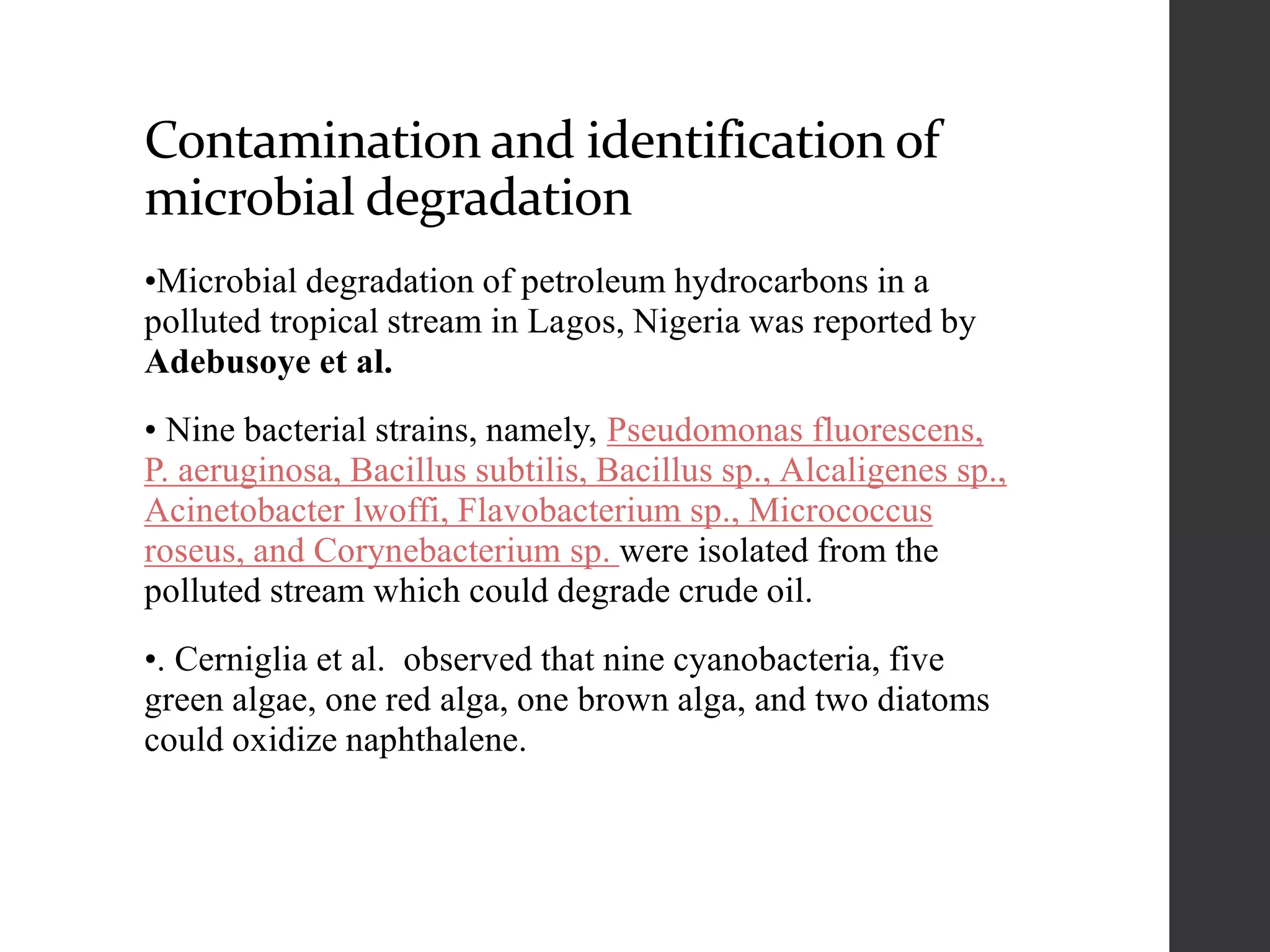
Contamination and identification of
microbial degradation
•Microbial degradation of petroleum hydrocarbons in a
polluted tropical stream in Lagos, Nigeria was reported by
Adebusoye et al.
• Nine bacterial strains, namely, Pseudomonas fluorescens,
P. aeruginosa, Bacillus subtilis, Bacillus sp., Alcaligenes sp.,
Acinetobacter lwoffi, Flavobacterium sp., Micrococcus
roseus, and Corynebacterium sp. were isolated from the
polluted stream which could degrade crude oil.
•. Cerniglia et al. observed that nine cyanobacteria, five
green algae, one red alga, one brown alga, and two diatoms
could oxidize naphthalene.
•Protozoa, by contrast, had not been shown to utilize
hydrocarbons.
•finally more effective hydrocarbon degrader PSEUDONOS
PUTIDA is genetically engineered by Indian Anand
chakrabarthy
Methods for Testing
Disinfectants
• The American Official Analytical Chemist’s
Use-dilution method (Use-Dilution Method)
• The Disk-diffusion Method
• Three bacteria, Salmonella, Staphylococcus, and
Pseudomonas, are used as standards to examine
the effectiveness of a given disinfectant.
Use-Dilution
• Small stainless steel cylinders are dipped and
coated with these bacteria and than allowed to dry.
• The cylinder is than dipped into one of several
dilutions of the chemical agent to be tested for 10
minutes, removed, rinsed with water, and placed
into a tube of nutrient broth.
• Chemicals that prevent growth at the greatest
dilutions are considered to be the most effective.
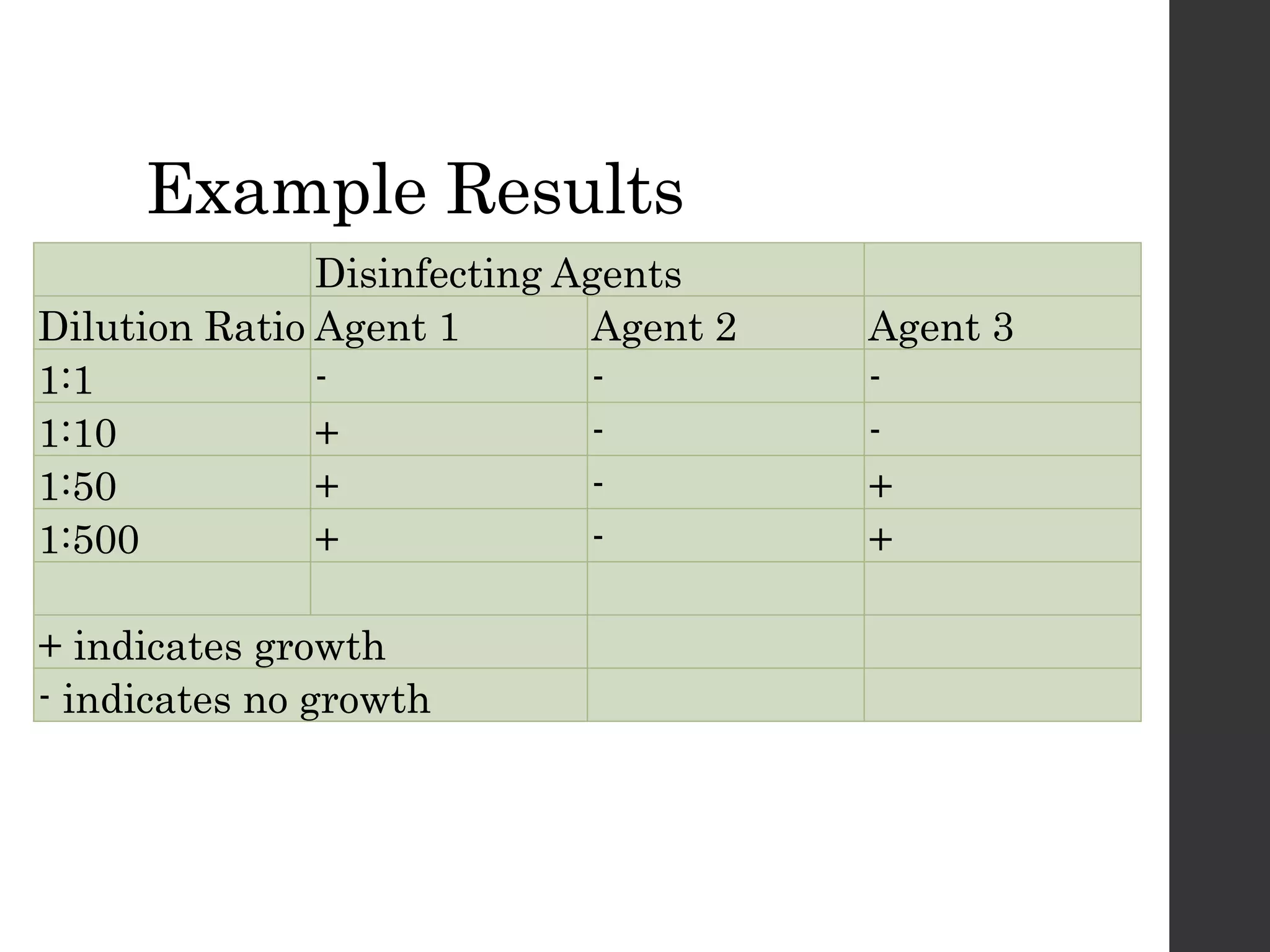
Example Results
Disinfecting Agents
Dilution Ratio Agent 1 Agent 2 Agent 3
1:1 - - -
1:10 + - -
1:50 + - +
1:500 + - +
+ indicates growth
- indicates no growth
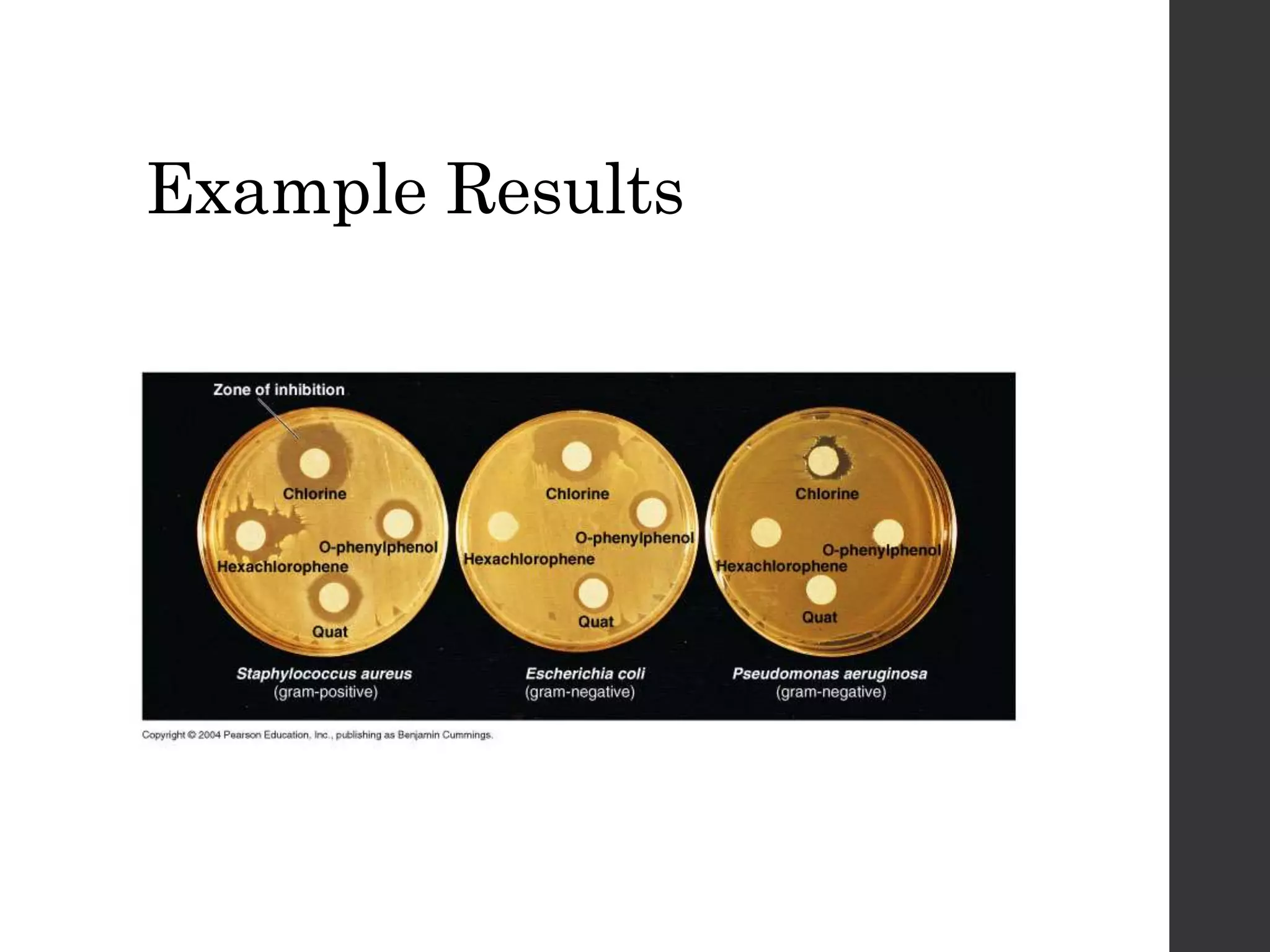
Disk-diffusion (Filter Paper)
Method
• Most common testing method.
• Small disc of filter paper is soaked with chemical and
placed on surface of agar plate that has been previously
inoculated with the test organism.
Disk-diffusion Cont.
• The chemical is concentrated in one area, and as it
diffuses out, it is less concentrated. The effectiveness is
based on how big of a circle “kill-zone” or zone of
inhibition is around where the chemical is introduced.
• Multiple chemicals can be tested against one bacteria at
a time with this method.
Example Results
Chemical Disinfectants
Can kill in three ways:
Damage of Plasma Membrane
Inactivate Enzymes
Denature Proteins
Phenol and Phenolic
• Phenol: First used by Joseph Lister for
sterlization and aseptic method of operation
• Phenolic: Adapted version of phenol that is less
potent and more useful.
• Kills in all three ways.
• Phenol used by lister in an operating room is proved to have more
toxic substance towards skin and had a terrible odor.
• On basis on pasteur's evidence,Lister discovered a system for
"antiseptic " surgery.
• Which prevents surgical wound infections and other lethal
complications.
stucture of phenol and phenolic
disinfectant
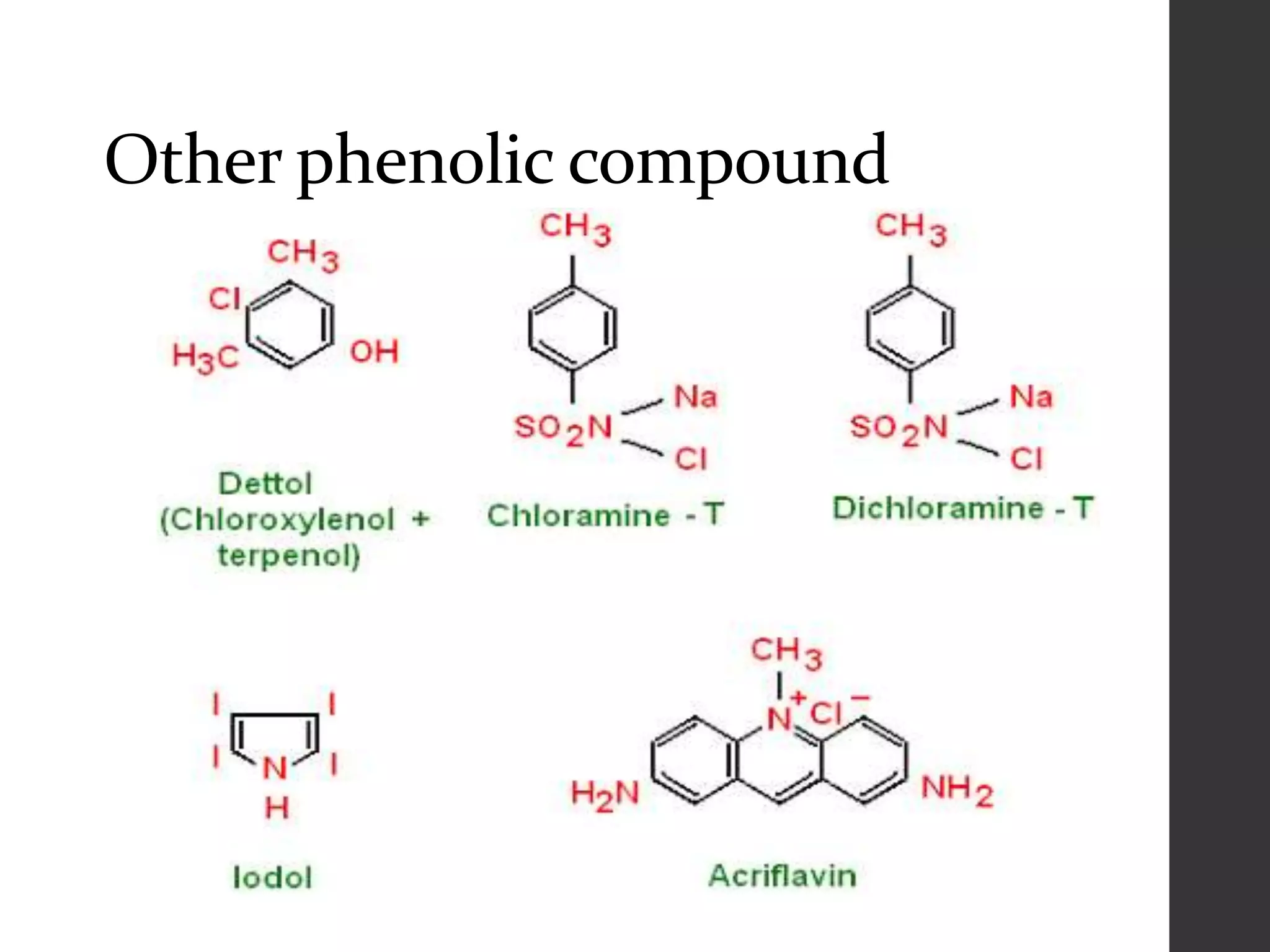
Other phenolic compound
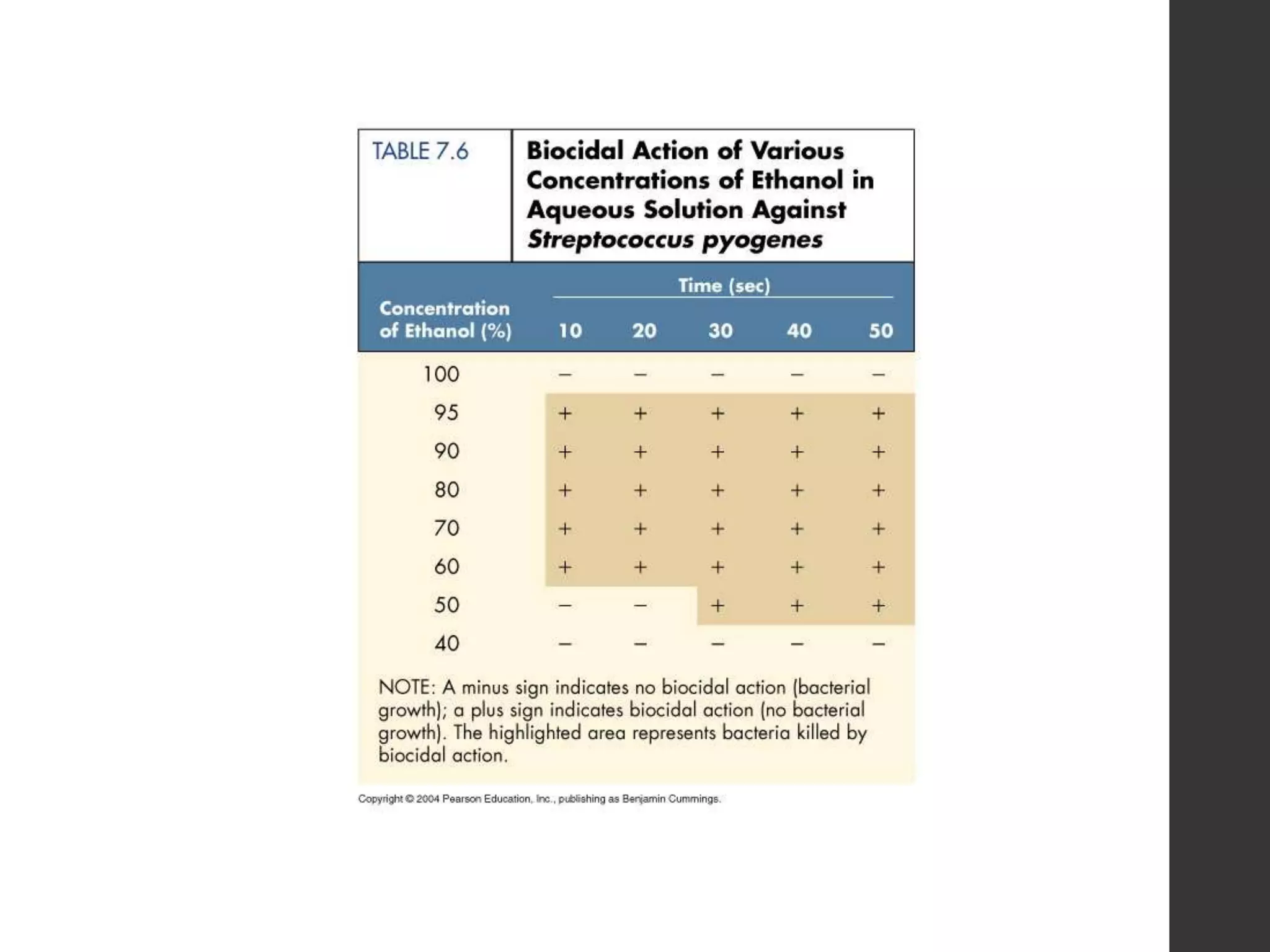
Alcohol (ethanol and
isopropyl)
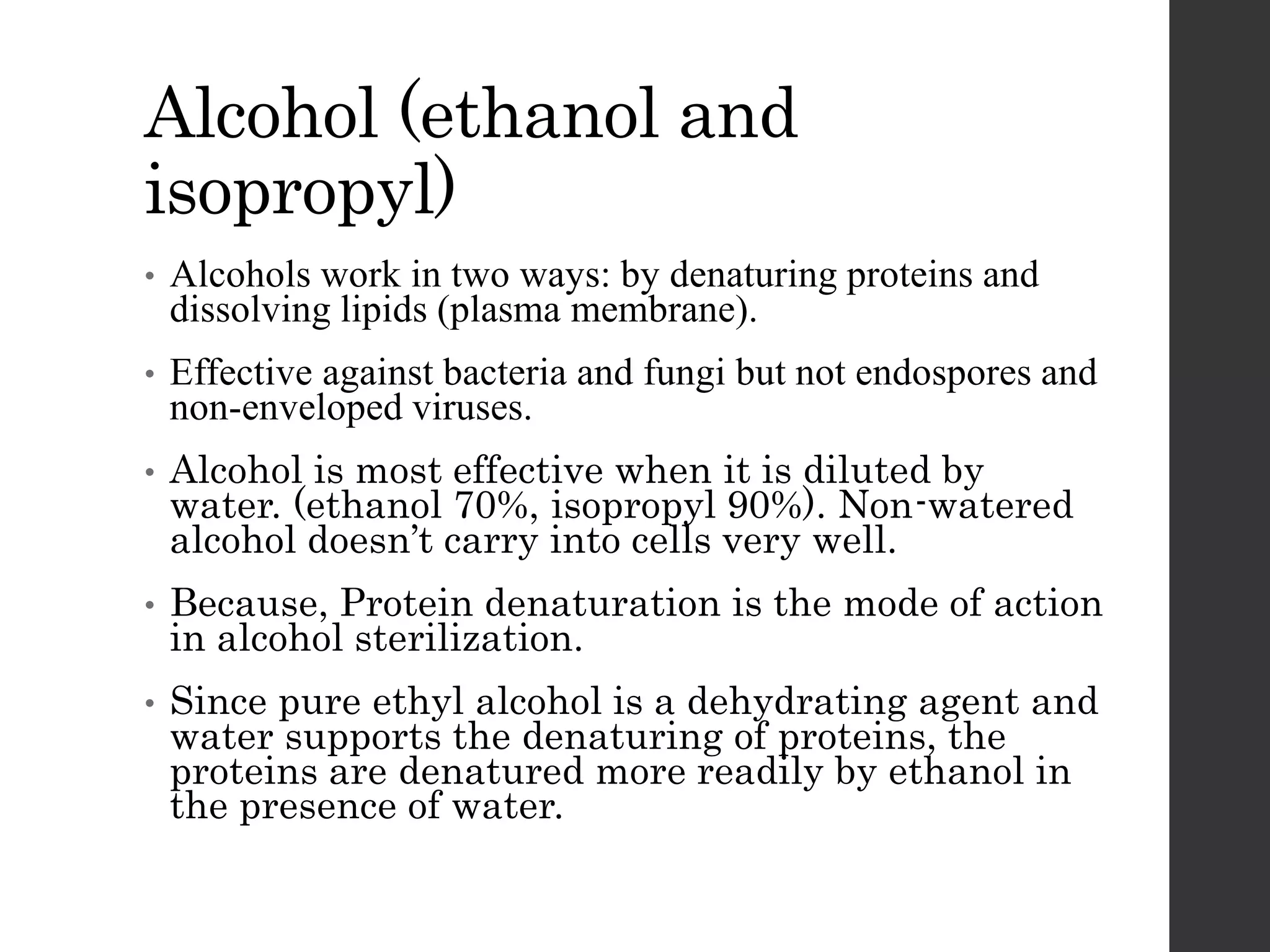
• Alcohols work in two ways: by denaturing proteins and
dissolving lipids (plasma membrane).
• Effective against bacteria and fungi but not endospores and
non-enveloped viruses.
• Alcohol is most effective when it is diluted by
water. (ethanol 70%, isopropyl 90%). Non-watered
alcohol doesn’t carry into cells very well.
• Because, Protein denaturation is the mode of action
in alcohol sterilization.
• Since pure ethyl alcohol is a dehydrating agent and
water supports the denaturing of proteins, the
proteins are denatured more readily by ethanol in
the presence of water.
Don’t drink isopropyl alcohol.
That causes
1.Nervous system impact
2.Internal burns
3.Heart and blood abnormalities
Iodine (a halogen)
• Kills by inactivating enzymes by attaching to the
amino acid tyrosine.
• Effective against bacteria, endospore, fungi, and
some viruses.
• Iodine is available as tincture solution (in solution
with alcohol). Tincture solutions often stain and
patients may develop hypersensitivity to it.
• Iodine can come in Iodophor (combined with an
organic molecule for slower releasing).
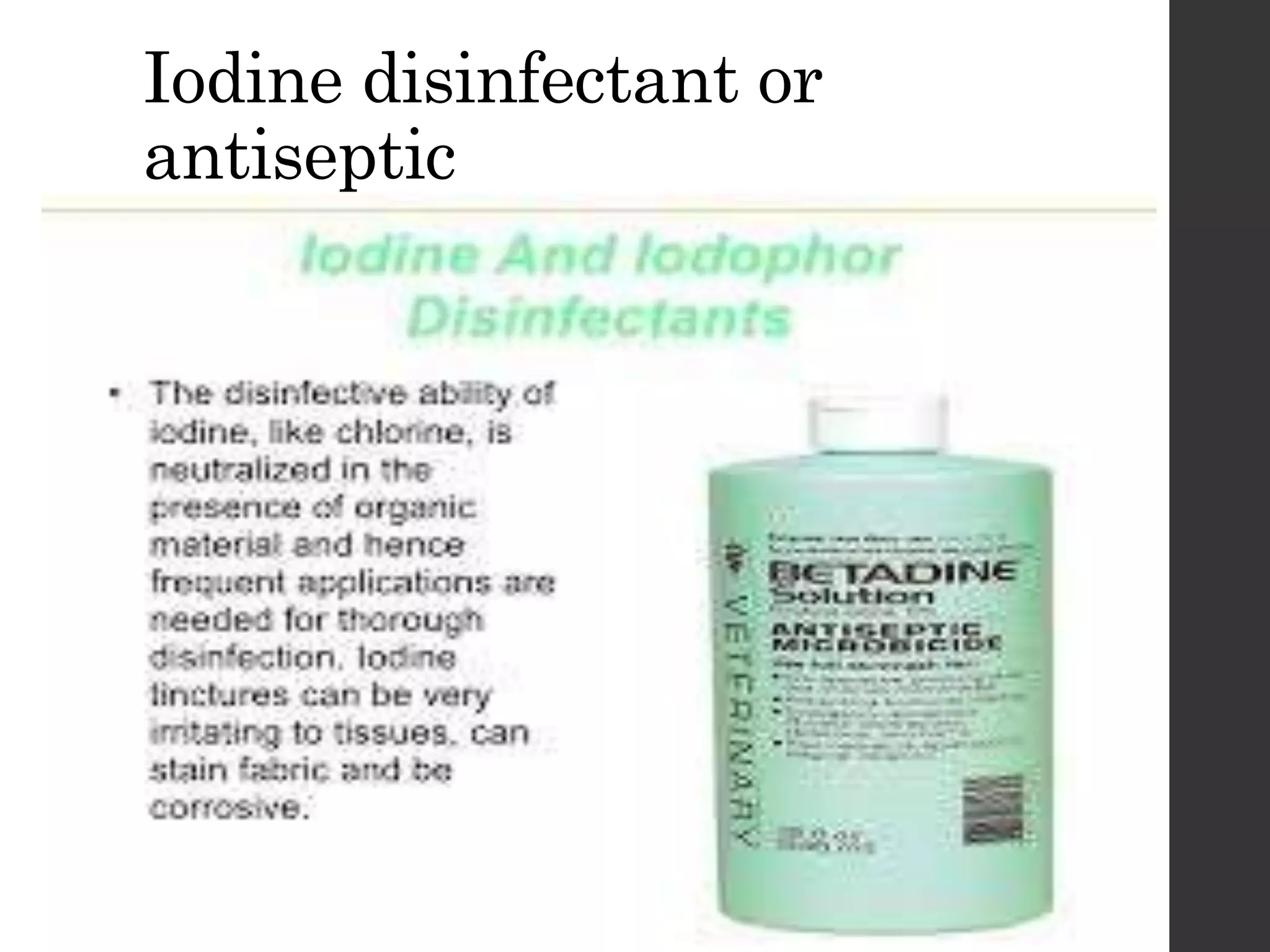
Iodine disinfectant or
antiseptic
Chlorine (a halogen)
• Chlorine is mostly just a disinfectant. Chlorine
turns to hyochlorous acid, its active form, when
it’s added to water.
• Kills by deactivating enzymes. The acid oxidizes
cellular molecules into inactive forms.
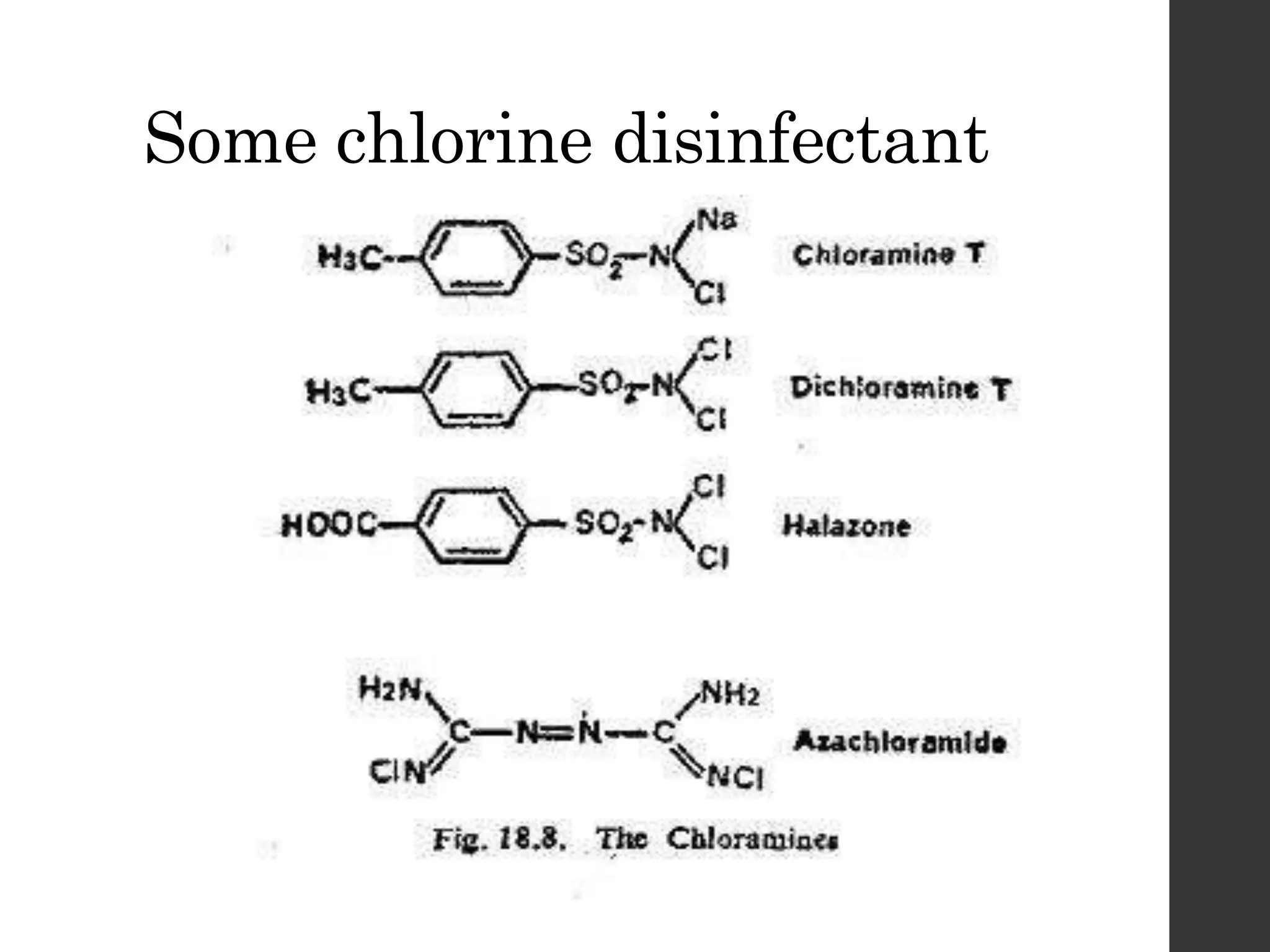
Some chlorine disinfectant
Heavy Metals
• Gold, silver, copper and zinc are germicidal.
Silver nitrate is used in infants’ eyes.
• Selenium and zinc in shampoos control fungi
that cause dandruff.
• Heavy metals combing with –SH groups to
denature proteins.
Why disinfectant is used only
in inanimate things?
• most disinfectants are also, by nature, potentially
harmful (even toxic) to humans or animals.
• Most modern household disinfectants
contain Bitrex, an exceptionally bitter substance
added to discourage ingestion, as a safety measure.
• Those that are used indoors should never be mixed
with other cleaning products as chemical
reactionscan occur.
Thank you
For your patience
By
இ.ராஜசேகரன்

Physical and chemical method to Control microbial growth

  • 1.
    Submitted by, Rajasekaran E Secondyear- Bachelor of Technology, Department of Pharmaceutical Technology, University college of Engineering- BIT Campus, Anna University, Tiruchirappalli-24
  • 2.
    Vocabulary • Bactericidal: Bacteria-killing •Bacteriostasis: Bacterial growth inhibiting • Disinfection: Destruction of vegetative pathogens • Antisepsis: Destruction of vegetative pathogens on living tissue • Aseptic: Absence of a pathogen from an object or an area
  • 3.
    Contd. • Sanitation: Reductionof pathogens on eating utensils, etc. to public health standards • Antiseptic: chemical used for disinfection of skin or mucous membranes • Disinfectant: Chemical used on inanimate objects to kill or inhibit bacterial growth • Sterile: Without life, free of microorganisms
  • 4.
    Measuring the effectivenessof bacterial control methods • Not all genera of bacteria are equally susceptible to a given method of control.  Example:  E. coli bacteria are highly susceptible to heat and die quickly when they reach boiling temperatures.  Pathogens that create endospores on the other hand, can survive long periods of boiling. • How do we determine how hot and how long we need to keep a microbe at to kill it?
  • 5.
    Three acceptable ways tomeasure microbial tolerance to heat
  • 6.
    1. Decimal reductiontime (DRT): time in which 90% of the population of bacteria at a given temperature will die. 2. Thermal death time (TDT): Time in which all cells in a suspension are killed at a given temperature. 3. Thermal death point (TDP): The lowest temperature in which all microorganisms will be killed in 10 minutes.
  • 7.
    Death Curve Microbes dieat a constant, logarithmic rate when treated.
  • 8.
  • 9.
    Types of controllingmethod • Heat • Filtration • cold • Desiccation • Lyophilization • Radiation
  • 10.
    Moist heat Dryheat Heat 1.boiling 2.autoclaving 3.pasteurization 1.flaming 2.incineration
  • 11.
    Moist Heat Methods •More effective than dry heat • Kills by coagulation of proteins • Three methods: boiling, autoclaving, pasteurization
  • 12.
    Boiling 100 C for10 min: kills vegetative bacteria, most viruses, and fungal spores. Endospores and some viruses (hepatitis) can survive for long boiling periods. Good for making drinking water and food safe for consumption. Unreliable for sterilization of surgical equipment (endospores survive without stomach acid to kill them). Free flowing unpressurized steam is equivalent to boiling.
  • 13.
    Autoclave • Pressurizing ofsteam to make it hotter. 1 atm temp = 121 C kills all organisms and their endospores. Most effective and most preferred method of sterilization. Steam must contact all solid surfaces since solids don’t have convection currents like liquids do.
  • 14.
  • 15.
    Pasteurization • Mildly heatingfood products to kill particular spoilage microorganisms or pathogens. 72 C for 15 seconds with refrigeration needed afterwards. Many heat resistant bacteria survive pasteurization but these are unlikely to cause disease. • Ultra high temperature pasteurization 140 C for 3 seconds sterilizes milk.
  • 16.
    Dry Heat • Killsand sterilizes by oxidation effect. • Direct flaming or incineration • Hot air sterilization (170 C for 2 hours)
  • 17.
    Filtration • Filters aremade of cellulose or plastic polymers with pores of about .2 micrometers. Viruses can still get through. • There are filters with pore size as small as .01 micrometers for viruses but filtration is very slow. • Filters are important when you can’t heat something up because you’ll destroy what you’re trying to keep.
  • 18.
    Cold • Cold isbacteriostatic • Slow freezing is more harmful as crystals can set up better. • Deep freezing is quick freezing at temp between -50 and -95 degrees. This is usually done to preserve the specimen.
  • 19.
    Desiccation • Desiccation isthe absence of water. Microbes need water in order to grow and reproduce. However, microbes in a desiccated state can be viable for years. When water is added, they can resume growth. • Desiccation is bacteriostatic, though the ability to survive varies by species.
  • 20.
    Lyophilization (freeze drying) •A suspension of microbes is quickly frozen at temp between -54 and -72 C and water is removed by high vacuum. Microbes can be stored for years in this state.
  • 21.
    Radiation Types of radiation 1.ultravioletradiation 2.ionization radiation
  • 22.
    Ultraviolet radiation • Theultraviolet portion of the light spectrum includes all radiations with wavelengths from 100 nm to 400 nm. • It has low wave-length and low energy. • The microbicidal activity of ultraviolet (UV) light depends on the length of exposure: the longer the exposure the greater the cidal activity. • It also depends on the wavelength of UV used. • The most cidal wavelengths of UV light lie in the 260 nm - 270 nm range where it is absorbed by nucleic acid.
  • 23.
    Ionization radiation • Ionizingradiation, such as X-rays and gamma rays, has much more energy and penetrating power than ultraviolet radiation. • It ionizes water and other molecules to form radicals (molecular fragments with unpaired electrons) that can disrupt DNA molecules and proteins. • It is often used to sterilize pharmaceuticals and disposable medical supplies such as syringes, surgical gloves , catheters, sutures, and petri plates.
  • 24.
  • 25.
    Test Guide toChemotherapy • Different strains of microbes have different levels of susceptibility to different chemotherapeutic agents. • Susceptibility of a microorganism can change over the course of a treatment. • Physicians need to know the sensitivities of the pathogen before treatment can be started. Various tests are employed to give Physicians the knowledge they need.
  • 26.
    Tolerance of microbestowards chemicals • All disinfectant and chemicals are not purely effective in destruction of microbes • Because microbes are resistant towards chemical • These microbes degrade chemical substances • some times it is used in favor for humans in degradation of hydrocarbons
  • 27.
    Contamination and identificationof microbial degradation •Microbial degradation of petroleum hydrocarbons in a polluted tropical stream in Lagos, Nigeria was reported by Adebusoye et al. • Nine bacterial strains, namely, Pseudomonas fluorescens, P. aeruginosa, Bacillus subtilis, Bacillus sp., Alcaligenes sp., Acinetobacter lwoffi, Flavobacterium sp., Micrococcus roseus, and Corynebacterium sp. were isolated from the polluted stream which could degrade crude oil. •. Cerniglia et al. observed that nine cyanobacteria, five green algae, one red alga, one brown alga, and two diatoms could oxidize naphthalene.
  • 28.
    •Protozoa, by contrast,had not been shown to utilize hydrocarbons. •finally more effective hydrocarbon degrader PSEUDONOS PUTIDA is genetically engineered by Indian Anand chakrabarthy
  • 29.
    Methods for Testing Disinfectants •The American Official Analytical Chemist’s Use-dilution method (Use-Dilution Method) • The Disk-diffusion Method • Three bacteria, Salmonella, Staphylococcus, and Pseudomonas, are used as standards to examine the effectiveness of a given disinfectant.
  • 30.
    Use-Dilution • Small stainlesssteel cylinders are dipped and coated with these bacteria and than allowed to dry. • The cylinder is than dipped into one of several dilutions of the chemical agent to be tested for 10 minutes, removed, rinsed with water, and placed into a tube of nutrient broth. • Chemicals that prevent growth at the greatest dilutions are considered to be the most effective.
  • 31.
    Example Results Disinfecting Agents DilutionRatio Agent 1 Agent 2 Agent 3 1:1 - - - 1:10 + - - 1:50 + - + 1:500 + - + + indicates growth - indicates no growth
  • 32.
    Disk-diffusion (Filter Paper) Method •Most common testing method. • Small disc of filter paper is soaked with chemical and placed on surface of agar plate that has been previously inoculated with the test organism.
  • 33.
    Disk-diffusion Cont. • Thechemical is concentrated in one area, and as it diffuses out, it is less concentrated. The effectiveness is based on how big of a circle “kill-zone” or zone of inhibition is around where the chemical is introduced. • Multiple chemicals can be tested against one bacteria at a time with this method.
  • 34.
  • 35.
    Chemical Disinfectants Can killin three ways: Damage of Plasma Membrane Inactivate Enzymes Denature Proteins
  • 36.
    Phenol and Phenolic •Phenol: First used by Joseph Lister for sterlization and aseptic method of operation • Phenolic: Adapted version of phenol that is less potent and more useful. • Kills in all three ways.
  • 37.
    • Phenol usedby lister in an operating room is proved to have more toxic substance towards skin and had a terrible odor. • On basis on pasteur's evidence,Lister discovered a system for "antiseptic " surgery. • Which prevents surgical wound infections and other lethal complications.
  • 38.
    stucture of phenoland phenolic disinfectant
  • 39.
  • 40.
    Alcohol (ethanol and isopropyl) •Alcohols work in two ways: by denaturing proteins and dissolving lipids (plasma membrane). • Effective against bacteria and fungi but not endospores and non-enveloped viruses. • Alcohol is most effective when it is diluted by water. (ethanol 70%, isopropyl 90%). Non-watered alcohol doesn’t carry into cells very well. • Because, Protein denaturation is the mode of action in alcohol sterilization. • Since pure ethyl alcohol is a dehydrating agent and water supports the denaturing of proteins, the proteins are denatured more readily by ethanol in the presence of water.
  • 42.
    Don’t drink isopropylalcohol. That causes 1.Nervous system impact 2.Internal burns 3.Heart and blood abnormalities
  • 43.
    Iodine (a halogen) •Kills by inactivating enzymes by attaching to the amino acid tyrosine. • Effective against bacteria, endospore, fungi, and some viruses. • Iodine is available as tincture solution (in solution with alcohol). Tincture solutions often stain and patients may develop hypersensitivity to it. • Iodine can come in Iodophor (combined with an organic molecule for slower releasing).
  • 44.
  • 45.
    Chlorine (a halogen) •Chlorine is mostly just a disinfectant. Chlorine turns to hyochlorous acid, its active form, when it’s added to water. • Kills by deactivating enzymes. The acid oxidizes cellular molecules into inactive forms.
  • 46.
  • 47.
    Heavy Metals • Gold,silver, copper and zinc are germicidal. Silver nitrate is used in infants’ eyes. • Selenium and zinc in shampoos control fungi that cause dandruff. • Heavy metals combing with –SH groups to denature proteins.
  • 48.
    Why disinfectant isused only in inanimate things? • most disinfectants are also, by nature, potentially harmful (even toxic) to humans or animals. • Most modern household disinfectants contain Bitrex, an exceptionally bitter substance added to discourage ingestion, as a safety measure. • Those that are used indoors should never be mixed with other cleaning products as chemical reactionscan occur.
  • 49.
    Thank you For yourpatience By இ.ராஜசேகரன்