Photo composition
Composition
• When looking for a photograph, these are the key aspects
to look at through your viewfinder.
• Photos can be a combination of multiple rules of
composition or just one.
• Regardless, following each rule will bring out a better, or
more unique, photo.
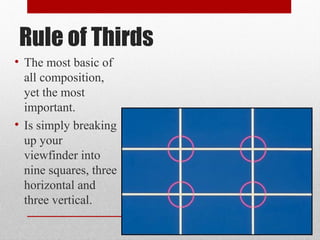
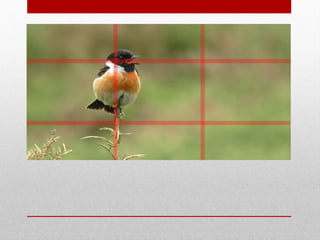
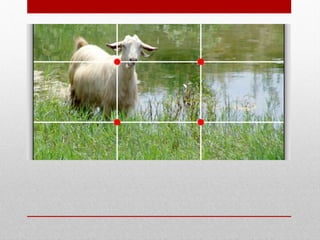
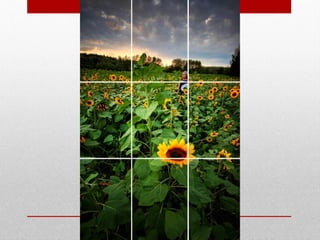
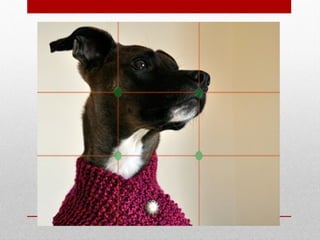
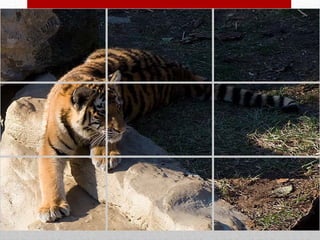
Rule of Thirds
• The most basic of
all composition,
yet the most
important.
• Is simply breaking
up your
viewfinder into
nine squares, three
horizontal and
three vertical.
Leading Lines
• Our eyes are naturally drawn to line and skim start to
finish.
• The lines can direct us to a subject or on a journey.
• Lines can consist of straight, diagonal, curvy, zigzag or
radial/spiral lines.
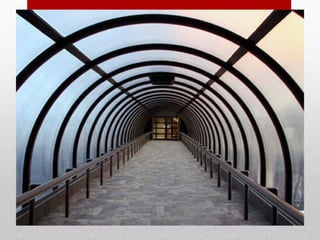
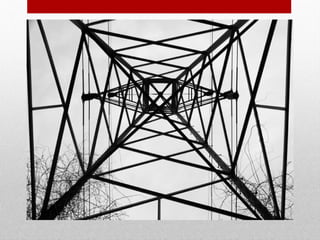
Symmetry and patterns
• Symmetry-either both the left and right sides are identical
or top and bottom.
• Symmetry can bring our focus to a specific point.
• Patterns-a repeated subject; can be circular, linear, etc.
• Both may be the only time the middle part of the rule of
thirds is the most interesting.
Foreground/Middle/Back
ground
• Used to bring focus to particular subjects, in the front,
middle and/or back of the photo.
• Goal is to avoid having busy, unnecessary elements in a
photo.
• Can be done in two ways:
FMB
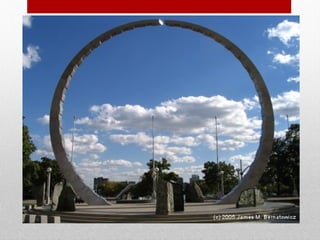
Framing
• A combination of almost every composition.
• Similar to FMB as it puts focus on a particular subject.
• Also, similar to the symmetry/pattern, is a point of
emphasis, surrounded by a symmetrical, or patterned,
background.
• If done right, your eye will be naturally drawn to the
subject.
• Is a natural frame.
Photo composition basic

Photo composition basic

  • 1.
  • 2.
    Composition • When lookingfor a photograph, these are the key aspects to look at through your viewfinder. • Photos can be a combination of multiple rules of composition or just one. • Regardless, following each rule will bring out a better, or more unique, photo.
  • 3.
    Rule of Thirds •The most basic of all composition, yet the most important. • Is simply breaking up your viewfinder into nine squares, three horizontal and three vertical.
  • 11.
    Leading Lines • Oureyes are naturally drawn to line and skim start to finish. • The lines can direct us to a subject or on a journey. • Lines can consist of straight, diagonal, curvy, zigzag or radial/spiral lines.
  • 18.
    Symmetry and patterns •Symmetry-either both the left and right sides are identical or top and bottom. • Symmetry can bring our focus to a specific point. • Patterns-a repeated subject; can be circular, linear, etc. • Both may be the only time the middle part of the rule of thirds is the most interesting.
  • 24.
    Foreground/Middle/Back ground • Used tobring focus to particular subjects, in the front, middle and/or back of the photo. • Goal is to avoid having busy, unnecessary elements in a photo. • Can be done in two ways:
  • 25.
  • 31.
    Framing • A combinationof almost every composition. • Similar to FMB as it puts focus on a particular subject. • Also, similar to the symmetry/pattern, is a point of emphasis, surrounded by a symmetrical, or patterned, background. • If done right, your eye will be naturally drawn to the subject. • Is a natural frame.