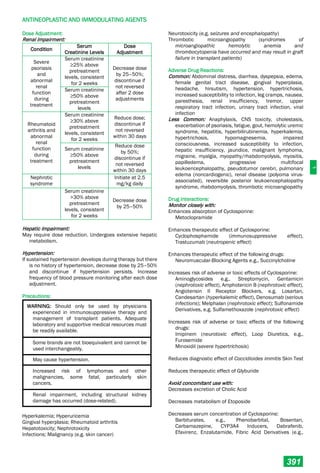
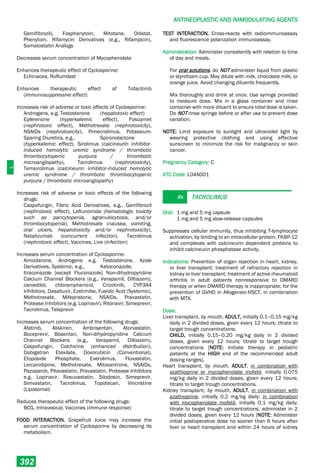
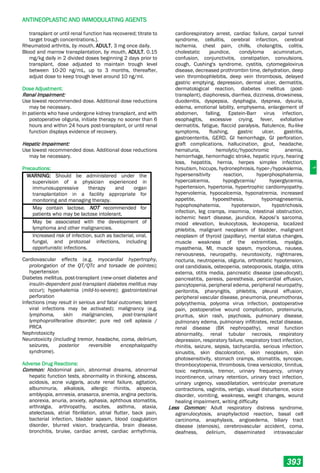
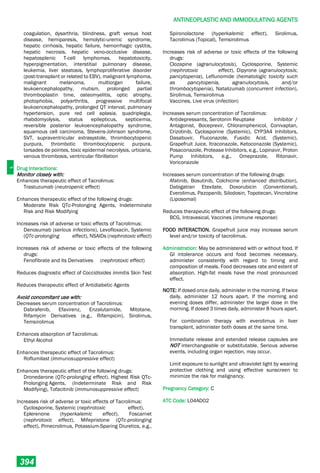
1
Philippine National Formulary
8th Edition
Published by
Department of Health
Manila, Philippines
2019
DISCLAIMER
The list of medicines and the prescribing information contained in this edition of
the Formulary were collated as meticulously as possible through the collaborative efforts of
the Formulary Executive Council (FEC), pharmacists, medical specialists, and specialty
societies applying the standard clinical practice current at the time of the undertaking. Thus,
the medicines and the accompanying prescribing information in this edition are the most
recent only insofar as the dates of the actual collaboration are concerned. There is no
guarantee, therefore, that after the final drafting for this edition, the new medicines or new
information that may subsequently become available will be included.
While diligent effort has been made to ensure the accuracy of each entry, it is
essential to bear in mind that the information presented here is a synopsis of key points in
the official product labeling, and that the complete labeling contains additional precautionary
information that may be of significance in specific cases. Thus, the editors do not warrant
that the information contained herein is in every aspect accurate.
Since a manual of this volume cannot be as exhaustive, the editors have included
only the information which they consider to be essential, and the most relevant and useful
for rapid reference by the physicians. It is the hope of the editors that this Formulary is
perceived as a readily accessible, easily understandable, up-to-date source of independent
medicine information. Nevertheless, this Formulary should be supplemented, where
necessary, by more recent and comprehensive materials and publications.
Moreover, the recommendations incorporated into this Formulary are intended to
serve only as guides that will supplement and not replace the best clinical judgment of the
prescribing clinicians. Readers are enjoined to confirm the information contained herein with
other sources, particularly with regard to new or the latest updates.
ISBN 978-621-95540-3-9
All rights reserved 2019
The Formulary Executive Council
Pharmaceutical Division, Health Regulation Team
Published by:
Department of Health
San Lazaro Compound, Rizal Ave., Sta. Cruz, Manila, Philippines, 1003
Any part or the whole book may be reproduced or transmitted without any alteration, in any form
or by any means, with permission from DOH provided it is not sold commercially.
THE PHILIPPINE NATIONAL FORMULARY
8th Edition
2019
DEPARTMENT OF HEALTH
FRANCISCO T. DUQUE III, MD, MSc
Secretary of Health
ROLANDO ENRIQUE D. DOMINGO, MD, DPBO
Undersecretary of Health
Health Regulation Team
ANNA MELISSA S. GUERRERO, MD, MPH (HTA)
Chief
Pharmaceutical Division
FORMULARY EXECUTIVE COUNCIL
Froilan A. Bagabaldo, RPh, Ll.B.
Cleotilde H. How, MD, FPSECP, FPPS
Cecilia A. Jimeno, MD, FPCP, FPSEDM
Cecilia C. Maramba-Lazarte, MD, MScID, MScCT, FPPS, FPIDSP,
FPSECP
Paul Matthew Pasco, MD, FPNA
Imelda G. Peña, RPh, MS, DrPH
John Q. Wong, MD, MSc
THE PHILIPPINE NATIONAL FORMULARY
8th Edition
2019
EDITORIAL TEAM
Yolanda R. Robles, RPh, MPharm, PhD
Shiela Mae J. Nacabu-an, RPh, MHPEd
Christine Aileen C. Benosa, RPh, MPH
Ian Theodore G. Cabaluna, RPh, MD GDip (Epi)
Editors
Jeanne Genevive A. Pillejera, RPh
Associate Editor
Joshua Elijah M. Chavez, RPh
Ena Elizabeth L. Naoe, RPh
Kristel Keith N. Nieva, RPh
Frances Lois U. Ngo
Jarvin Enosh T. Tan, RPh
Rose Charisse L. Traballo, RPh
Ryan Joseph C. Tuzon
Mikaella B. Santos
Martha O. de la Paz
Arizaldo E. Castro, MSc
Leo Miguel S. Vergeire
Technical Writers
Irene V. Florentino-Fariñas, RPh, MD, MNSA
Joyce Anne D. Ceria-Pereña, RPh, MPM
Johanna B. Mallari, RPh
Kate D. Dunlao, RPh
April Rose B. Macandog, RPh
Members of the Editorial Team
John Michael L. Roque
Technical Assistant
C O N T R I B U T O R S
DOH Disease Prevention and Control Bureau
DOH Family Health Office
National Antiobiotic Guidelines Committee
National Center for Mental Health
Rodney Ribleza Boncajes, MD
National Kidney and Transplant Institute
Jean Anne B. Toral, MD, MSc
Lynn B. Bonifacio, MD
Chrystal Catli Burog, MD
Teresita Dumagay, MD
Roxan Perez, MD
National Poison Management and Control Center
Pediatric Infectious Disease Society of the Philippines
Philippine Academy of Ophthalmology
Philippine Academy of Pediatric Pulmonologists
Philippine Children’s Medical Center
Marilou A. Abrera, MD
Cecilia Cruz, MD
Philippine College of Chest Physicians
Philippine College of Geriatric Medicine
Philippine College of Radiology
Philippine Dermatological Society
Philippine Heart Association
Philippine Heart Center
Maria Teresa B. Abola, MD
Eden A. Gabriel, MD
Philippine Neurological Association
Philippine Obstetrical and Gynecological Society
Philippine Orthopaedic Association
Philippine Psychiatric Association
Philippine Rheumatology Association
Philippine Society of Allergy, Asthma and Immunology, Inc.
Philippine Society of Anesthesiologists, Inc.
Angel M. Gomez, MD
Philippine Society of Endocrinology, Diabetes and Metabolism
Philippine Society of Gastroenterology
Philippine Society of Hematology and Blood Transfusion
Philippine Society of Medical Oncology
Mary Claire V. Soliman, MD, FPCP, FPSMO
Marcelo Severino B. Imasa, MD, FPCP
Philippine Society for Microbiology and Infectious Diseases
Philippine Society of Nephrology
Philippine Society of Newborn Medicine
Philippine Society of Otolaryngology, Head and Neck Surgery
Philippine Society of Parenteral and Enteral Nutrition
Philippine Society of Pediatric Metabolism and Endocrinology
Philippine Society of Pediatric Oncology
Philippine Urological Association
Stroke Society of the Philippines
Department of Health - Office of the Secretary
Message
The revitalization of the Fourmula One Plus for Health as the framework of the
healthcare reform agenda of the national government is anchored on the values of
equitable and inclusive health system, transparent and accountable provision of
quality health services, and efficient use of resources.
The 8th edition of the Philippine National Formulary (PNF) is a tool to exercise
these values while contributing to the achievement of the objectives of financial
protection and better health outcomes.
Its previous editions have been the basis of tailored procurement of medicines in
public health facilities while providing efficient use of limited resources. It is also the
basis of the Philippine Health Insurance Corporation (PhilHealth) in reimbursing
claims to end-users for medicines use.
With its new format and content, the PNF 8th edition can now maximize the PNF’s
contribution to the rational use of medicines. Its abridged content is intended to
provide concise evidence-based drug information which is vital in medical practice.
The latest PNF is a useful tool to ensure rational prescribing, dispensing, and
administration of medicines. I would like to encourage our health professionals to fully
utilize it in their medicines procurement as well as in their day-to-day clinical decision-
making.
Let us continue to work for our shared vision of all for health towards health for all!
Mabuhay!
FRANCISCO T. DUQUE III, MD, MSc
Secretary of Health
Department of Health – Health Regulation Team
Message
Greetings!
The Philippine National Formulary (PNF) plays a vital role in promoting the rational
use of medicines in the country. As mandated by Republic Act 9502, otherwise known
as the “Universally Accessible Cheaper and Quality Medicines Act of 2008,” and in
accordance with Republic Act 9184, also known as “Government Procurement
Reform Act,” the PNF serves as the basis of procurement of medicines in all
government agencies, including government units.
PNF requires continuous revisions and updating to ensure its relevance. It is part
of the important role of the Department of Health (DOH) in regulating health products
and services and providing technical assistance to health providers and stakeholders.
While the FDA ensures that only quality medicines are available in the market, the
PNF helps assure that only safe, effective, and affordable medicines are procured by
public health facilities.
The 8th edition of the PNF includes critical revisions that would facilitate the work
of physicians, nurses, pharmacists, and other healthcare professionals. Thus, in
behalf of the DOH, particularly the Health Regulation Team, I would like to commend
the movers behind the PNF in promoting rational prescribing, dispensing, and use of
medicines. Their valuable efforts in revising the National Formulary enable the country
to ACHIEVE better health outcomes.
Congratulations!
ROLANDO ENRIQUE D. DOMINGO, MD, DPBO
Undersecretary of Health
Health Regulation Team
ACKNOWLEDGMENTS
This Formulary is adapted from the World Health Organization (WHO) Model
Formulary (2008) with the publisher’s permission. We acknowledge, with sincere
thanks, the work of the WHO in producing the Model Formulary so that countries and
organizations can compile and produce their own national formularies.
For their invaluable contribution to the current edition of the Philippine National
Formulary (PNF), sincere gratitude is also due to the following:
Members of the Formulary Executive Council (FEC) who thoroughly reviewed the
list of essential medicines and the Formulary monographs: Atty. Froilan Bagabaldo,
Dr. Cleotilde H. How, Dr. Cecilia A. Jimeno, Dr. Hilton Y. Lam, Dr, Cecilia C. Maramba-
Lazarte, Dr, Paul Matthew Pasco, Dr. Imelda G. Peña, and Dr. John Q. Wong;
Hospitals who participated in the pilot run of the formulary: Philippine Children’s
Medical Center, Philippine Heart Center, Lung Center of the Philippines, National
Kidney and Transplant Institute, Luis Hora Memorial Regional Hospital, Bicol Medical
Center, and San Lazaro Hospital; and
All the experts from the national health programs (NHA), specialty hospitals, and
professional medical societies who participated in the review of the content of the
Formulary and provided valuable and indispensable comments and corrections.
TABLE OF CONTENTS
GENERAL GUIDE ON THE USE OF THIS FORMULARY ......................................................................................... i
MEDICINE MONOGRAPH KEY ............................................................................................................................ ii
FDA PREGNANCY RISK CATEGORIES .................................................................................................................. iii
SYMBOLS AND ABBREVIATIONS ........................................................................................................................ iv
GENERAL GUIDE TO PRESCRIBING
A. RATIONAL APPROACH TO THERAPEUTICS ............................................................................................. v
B. VARIATION IN DOSE RESPONSE
1. PHYSIOLOGICAL AND PHARMACOKINETIC VARIABLES ................................................................. vii
2. MEDICINE DISTRIBUTION ................................................................................................................ ix
3. MEDICINE METABOLISM AND EXCRETION ................................................................................... ix
4. PHARMACODYNAMIC VARIABLES ................................................................................................... ix
5. DISEASE VARIABLES ........................................................................................................................ ix
6. ENVIRONMENTAL VARIABLES ......................................................................................................... x
C. ADHERENCE TO (COMPLIANCE WITH) MEDICINE TREATMENT .............................................................. x
1. PATIENT-RELATED REASONS .......................................................................................................... x
2. DISEASE-RELATED REASONS ......................................................................................................... xi
3. DOCTOR-RELATED REASONS .......................................................................................................... xi
4. THE DOCTOR-PATIENT INTERACTION ............................................................................................. xi
5. PRESCRIPTION-RELATED REASONS .............................................................................................. xi
6. PHARMACIST-RELATED REASONS ................................................................................................. xi
7. RECOMMENDATIONS TO THE PRESCRIBERS ............................................................................... xi
D. ADVERSE EFFECTS
1. ADVERSE DRUG REACTIONS (ADR) ................................................................................................ xii
2. MAJOR FACTORS PREDISPOSING TO ADVERSE EFFECTS ............................................................ xii
E. PRESCRIPTION WRITING
1. PRESCRIPTION FORM ....................................................................................................................... xiii
2. INCORRECT PRESCRIPTIONS .......................................................................................................... xiv
3. NARCOTICS AND CONTROLLED SUBSTANCES .............................................................................. xiv
F. PATIENT COUNSELING ............................................................................................................................... xv
1. WHAT TO COUNSEL ......................................................................................................................... xv
2. WHO AND WHEN TO COUNSEL ....................................................................................................... xv
3. COUNSELING: PROCESS STEPS ..................................................................................................... xvi
ANTIMICROBIAL RESISTANCE ............................................................................................................................. xvii
MEDICINE AND THERAPEUTIC INFORMATION
A – ALIMENTARY TRACT AND METABOLISM 1
DRUGS FOR ACID RELATED DISORDERS ................................................................................................... 1
DRUGS FOR FUNCTIONAL GASTROINTESTINAL DISORDERS .................................................................. 8
ANTIEMETICS AND ANTINAUSEANTS ......................................................................................................... 11
BILE AND LIVER THERAPY .......................................................................................................................... 13
DRUGS FOR CONSTIPATION ....................................................................................................................... 14
ANTIDIARRHEALS, INTESTINAL ANTIINFLAMMATORY/ANTIINFECTIVE AGENTS .................................... 17
DRUGS USED IN DIABETES ........................................................................................................................ 22
VITAMINS ..................................................................................................................................................... 26
MINERAL SUPPLEMENTS ........................................................................................................................... 33
OTHER ALIMENTARY TRACT AND METABOLISM PRODUCTS ................................................................... 41
B – BLOOD AND BLOOD FORMING ORGANS 43
ANTITHROMBOTIC AGENTS ........................................................................................................................ 43
ANTIHEMORRHAGICS ................................................................................................................................. 57
ANTIANEMIC PREPARATIONS ..................................................................................................................... 61
BLOOD SUBSTITUTES AND PERFUSION SOLUTIONS ............................................................................... 66
C – CARDIOVASCULAR SYSTEM 94
CARDIAC THERAPY ...................................................................................................................................... 94
AGENTS ACTING ON ARTERIOLAR SMOOTH MUSCLE............................................................................... 112
AGENTS ACTING ON THE RENIN-ANGIOTENSIN SYSTEM......................................................................... 115
BETA-BLOCKING AGENTS............................................................................................................................ 124
CALCIUM CHANNEL BLOCKERS ................................................................................................................. 129
CENTRALLY ACTING ANTIADRENERGIC AGENTS....................................................................................... 139
DIURETICS.................................................................................................................................................... 140
LIPID MODIFYING AGENTS ......................................................................................................................... 148
D – DERMATOLOGICALS 152
ANTIFUNGALS FOR DERMATOLOGICAL USE ............................................................................................. 152
EMOLLIENTS AND PROTECTIVES ............................................................................................................... 156
ANTIPRURITICS, INCLUDING ANTIHISTAMINES, ANESTHETICS, ETC. ...................................................... 156
ANTIPSORIATICS ......................................................................................................................................... 156
ANTIBIOTICS AND CHEMOTHERAPEUTICS FOR DERMATOLOGICAL USE ............................................... 158
CORTICOSTEROIDS, DERMATOLOGICAL PREPARATIONS ........................................................................ 160
ANTISEPTICS AND DISINFECTANTS ........................................................................................................... 162
ANTI-ACNE PREPARATIONS ........................................................................................................................ 165
G – GENITO URINARY SYSTEM AND SEX HORMONES 167
ANTIINFECTIVES AND ANTISEPTICS, EXCLUDING COMBINATIONS WITH CORTICOSTEROIDS ...... ……. 167
OTHER GYNECOLOGICALS ........................................................................................................................ 167
SEX HORMONES AND MODULATORS OF THE GENITAL SYSTEM ............................................................. 170
UROLOGICALS ............................................................................................................................................. 184
H – SYSTEMIC HORMONAL PREPARATIONS, EXCLUDING SEX HORMONES AND INSULINS 187
PITUTARY AND HYPOTHALAMIC HORMONES AND ANALOGUES .............................................................. 187
CORTICOSTEROIDS FOR SYSTEMIC USE ................................................................................................... 189
THYROID THERAPY ...................................................................................................................................... 197
J – ANTIINFECTIVES FOR SYSTEMIC USE 202
ANTIBACTERIALS FOR SYSTEMIC USE ....................................................................................................... 202
ANTIFUNGALS FOR SYSTEMIC USE ............................................................................................................ 250
ANTIMYCOBACTERIALS .............................................................................................................................. 255
ANTIVIRALS FOR SYSTEMIC USE ................................................................................................................ 266
IMMUNE SERA AND IMMUNOGLOBULINS ............................................................................................... 280
VACCINES .................................................................................................................................................... 287
L – ANTINEOPLASTIC AND IMMUNOMODULATING AGENTS 312
ANTINEOPLASTIC AGENTS ........................................................................................................................ 312
ENDOCRINE THERAPY ................................................................................................................................ 366
IMMUNOSTIMULANTS ................................................................................................................................ 374
IMMUNOSUPPRESSANTS ........................................................................................................................... 381
M – MUSCULO-SKELETAL SYSTEM 397
ANTIINFLAMMATORY AND ANTIRHEUMATIC PRODUCTS ......................................................................... 397
MUSCLE RELAXANTS .................................................................................................................................. 406
ANTIGOUT PREPARATIONS ......................................................................................................................... 415
DRUGS FOR TREATMENT OF BONE DISEASE ............................................................................................ 417
OTHER DRUGS FOR DISORDERS OF THE MUSCULO-SKELETAL SYSTEM............................................... 420
N – NERVOUS SYSTEM 424
ANESTHETICS .............................................................................................................................................. 424
ANALGESICS ................................................................................................................................................ 438
ANTIEPILEPTICS .......................................................................................................................................... 465
ANTI-PARKINSON DRUGS ........................................................................................................................... 481
PSYCHOLEPTICS ......................................................................................................................................... 487
PSYCHOANALEPTICS .................................................................................................................................. 519
OTHER NERVOUS SYSTEM DRUGS ............................................................................................................ 529
P – ANTIPARASITIC PRODUCTS, INSECTICIDES, AND REPELLENTS 540
ANTIPROTOZOALS ....................................................................................................................................... 540
ANTHELMINTICS ......................................................................................................................................... 548
ECTOPARASITICIDES, INCLUDING SCABICIDES, INSECTICIDES, AND REPELLENTS .............................. 551
R – RESPIRATORY SYSTEM 553
NASAL PREPARATIONS ............................................................................................................................... 553
THROAT PREPARATIONS ............................................................................................................................ 554
DRUGS FOR OBSTRUCTIVE AIRWAY DISEASES ......................................................................................... 555
COUGH AND COLD PREPARATIONS ........................................................................................................... 571
ANTIHISTAMINES FOR SYSTEMIC USE ...................................................................................................... 572
OTHER RESPIRATORY SYSTEM PRODUCTS ............................................................................................. 575
S – SENSORY ORGANS 579
OPHTHALMOLOGICALS .............................................................................................................................. 579
OTOLOGICALS ............................................................................................................................................. 601
EAR, NOSE, AND THROAT PREPARATIONS ................................................................................................ 603
V – VARIOUS 605
ALL OTHER THERAPEUTIC PRODUCTS ...................................................................................................... 605
DIAGNOSTIC AGENTS ................................................................................................................................ 631
GENERAL NUTRIENTS ................................................................................................................................. 633
CONTRAST MEDIA ....................................................................................................................................... 640
DIAGNOSTIC RADIOPHARMACEUTICALS ................................................................................................... 650
THERAPEUTIC RADIOPHARMACEUTICALS ................................................................................................. 651
X – HERBAL PREPARATIONS 653
APPENDICES
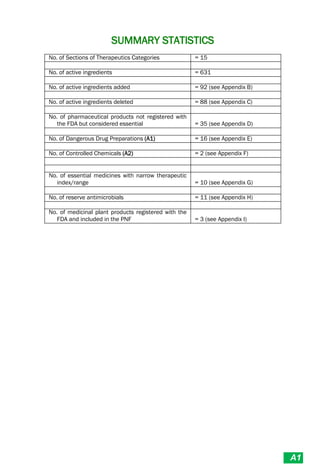
SUMMARY STATISTICS .............................................................................................................................. A1
LIST OF DRUG MOLECULES ADDED TO THE PNF 8TH EDITION................................................................ A2
LIST OF DRUG MOLECULES DELETED FROM THE PNF 7th EDITION....................................................... A4
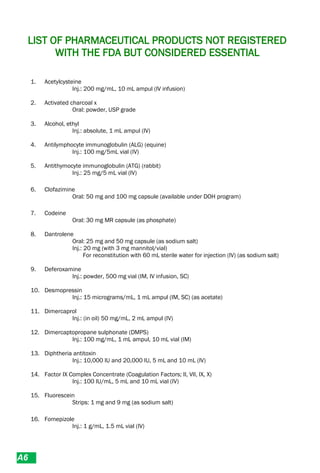
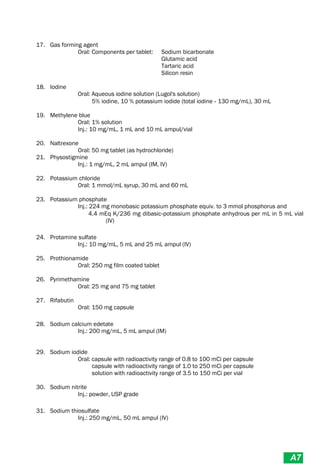
LIST OF ESSENTIAL MEDICINES INCLUDED IN THE PNF BUT NOT REGISTERED WITH THE FDA .......... A6
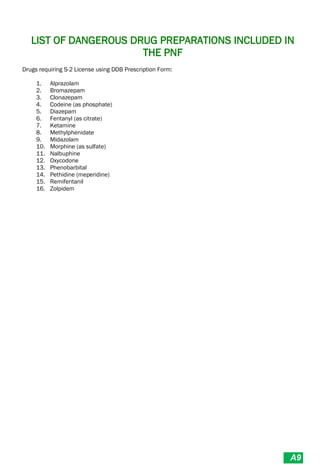
LIST OF DANGEROUS DRUG PREPARATIONS INCLUDED IN THE PNF.................................................... A9
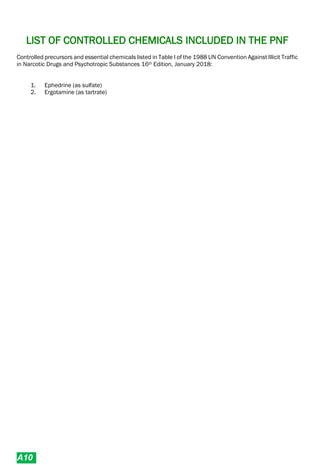
LIST OF CONTROLLED CHEMICALS INCLUDED IN THE PNF.................................................................... A10
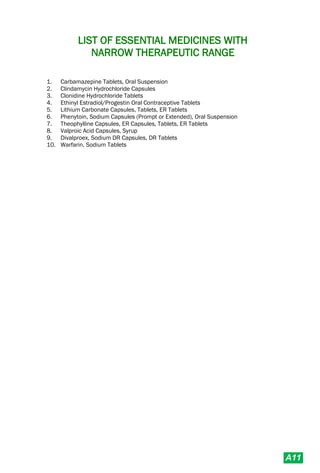
LIST OF ESSENTIAL MEDICINES WITH NARROW THERAPEUTIC RANGE................................................. A11
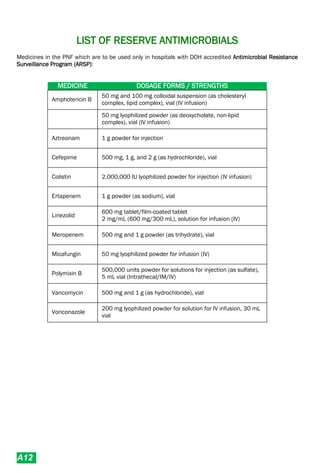
LIST OF RESTRICTED ANTIMICROBIALS ................................................................................................... A12
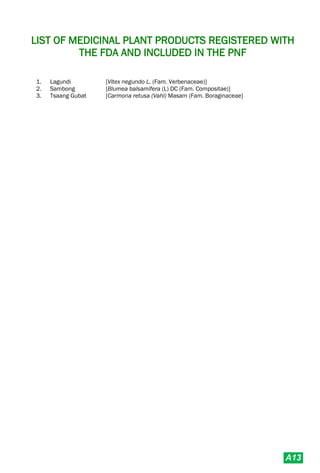
LIST OF MEDICINAL PLANT PRODUCTS REGISTERED WITH THE FDA AND INCLUDED IN THE PNF A13
DEFINITION OF DOSAGE FORMS .............................................................................................................. A14
FDA ADVERSE DRUG REACTION (ADR) REPORTING FORM ...................................................................... A17
DIRECTORY ........................................................................................................................................................... A20
REFERENCES ........................................................................................................................................................ A22
ISSUANCES ........................................................................................................................................................... A26
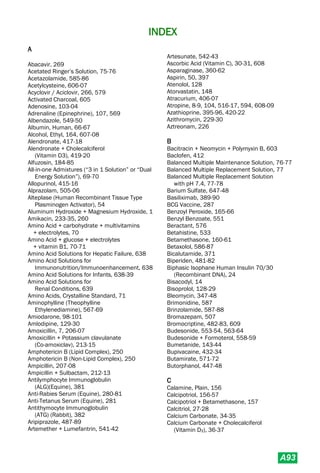
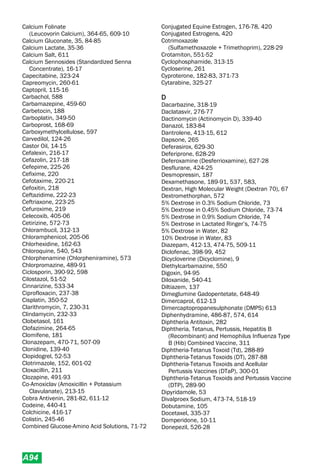
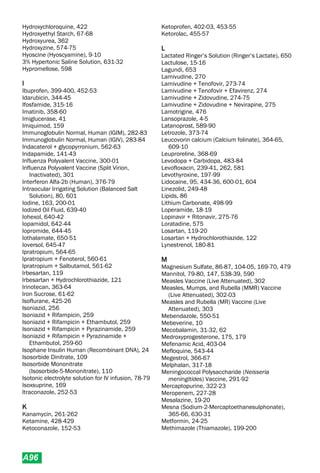
INDEX .................................................................................................................................................................... A93
GENERAL
GUIDANCE
i
GENERAL GUIDANCE
ON THE USE OF THIS FORMULARY
The Philippine National Formulary 8th Edition allows healthcare practitioners – physicians,
dentists, pharmacists, nurses, and other allied healthcare professionals – to find important
medicine information to guide them in the rational use of medicines.
In this new edition of the PNF, the essential medicines list and monographs have been
integrated into a single manual. The medicines are arranged using the Anatomical Therapeutic
Chemical (ATC) Classification System. Medicines with more than one therapeutic indication
appear in more than one category. Each monograph consists of:
•Generic Name
•Dosage Form/Strength
•Indications
•Contraindications
•Dosage (weight and/or age-specific dosage recommendations)
•Dose Adjustments (for patients with renal or hepatic disease; or the elderly patients)
•Precautions/Warnings
•Adverse Drug Reactions
•Drug Interactions
•Administration Guide
•Pregnancy Category
•ATC Code
The therapeutic information in this Formulary have been adapted from various current and
comprehensive references (refer to Appendix M. This edition also followed and adapted previously
approved format and contents of the Philippine National Formulary Manual for Primary Healthcare.
ii
MEDICINE MONOGRAPH KEY
The medicine monograph key summarizes and describes the types of information contained
in this edition that the physicians and dentists can utilize in prescribing medicines for their
patients. This key also shows the format of how the prescribing information is arranged.
GENERIC NAME
DOSAGE FORM/STRENGTH
INDICATION/S: This section only includes Philippine FDA-approved indications. In addition, the
indications listed for the Anti-Infective Agents are restricted to those included in the most current
local clinical practice guidelines that were made available to the editors and/or the latest
published recommendations of the Philippine Antimicrobial Resistance Surveillance Program
(ARSP).
CONTRAINDICATION/S: This section details disease states where and patient populations for
whom the medicine should not be used.
DOSE: This section lists dosages of the medicines for adult, child and elderly patients, if
specified, as indicated in the official FDA-approved labeling and/or other main references.
DOSE ADJUSTMENT/S: This section gives dosage adjustment recommendations for the elderly,
or for patients with renal or hepatic impairment.
PRECAUTIONS: This section details (1) harmful conditions related to the use of the medicine
(e.g., exacerbations, increased risk of adverse effects), and (2) disease states or patient
populations where caution is advised. This may also include precautions for breastfeeding
mothers and nursing infants. Black Box Warnings are included.
ADVERSE DRUG REACTIONS: This section denotes side effects and adverse drug reactions
(ADRs) listed in the official FDA-approved labeling. Only Common ADRs are listed in this
Formulary. A complete listing of ADRs can be viewed on the online copy of the formulary.
DRUG INTERACTION/S: This section includes the effects and implications of the concomitant
administration of different medicines, or their use together with food.
ADMINISTRATION: This section lists recommendations on the proper intake or administration of
the medicines.
PREGNANCY CATEGORY: This section is based on the US FDA Pregnancy Risk Categories.
ATC CODE: This section is based on the WHO ATC/DDD Index 2016. (WHO Collaborating Centre
for Drug Statistics Methodology).
iii
US FDA PREGNANCY RISK CATEGORIES
The FDA-assigned pregnancy categories as used in the Drug Formulary are as follows:
Category Interpretation
A CONTROLLED STUDIES SHOW NO RISK.
Adequate and well-controlled studies in pregnant women have failed to
demonstrate a risk to the fetus in the first trimester of pregnancy (and there
is no evidence of risk in later trimesters).
B NO EVIDENCE OF RISK IN HUMANS.
Animal reproduction studies have failed to demonstrate a risk to the fetus and
there are no adequate and well-controlled studies in pregnant women.
C RISK CANNOT BE RULED OUT.
Animal reproduction studies have shown an adverse effect on the fetus and
there are no adequate and well-controlled studies in humans, but potential
benefits may warrant use of the drug in pregnant women despite potential
risks.
D POTENTIAL EVIDENCE OF RISK.
There is positive evidence of human fetal risk based on adverse reaction
data from investigational or marketing experience or studies in humans, but
potential benefits may warrant use of the drug in pregnant women despite
potential risks.
X CONTRAINDICATED IN PREGNANCY.
Studies in animals or humans have demonstrated fetal abnormalities
and/or there is positive evidence of human fetal risk based on adverse
reaction data from investigational or marketing experience, and the risks
involved in the use of the drug in pregnant women clearly outweigh potential
benefits.
iv
SYMBOLS AND ABBREVIATIONS
ACE - Angiotensin-converting
enzyme
ADR - Adverse drug reaction
AIDS - Acquired
Immunodeficiency
Syndrome
a.m. - Morning; before noon
Amp - Ampule
AV - Atrioventricular
BCG - Bacille Calmette-Guérin
BP - Blood pressure
BSA - Body surface area
cap., caps - Capsule(s)
CNS - Central Nervous System
comp. - Compound
cr., crm. - Cream
CR - Controlled-release
CSF - Cerebrospinal fluid
D5NS - Glucose (dextrose) 5% in
normal saline (0.9%)
D5W - Glucose (dextrose) 5%
solution
DOTS - Directly observed
treatment, short-course
DMARD - Disease modifying agents
in rheumatoid disorders
DPI - Dry powder inhaler
EC - Enteric-coated
ECG - Electrocardiogram
emuls. - Emulsion
EPS - Extrapyramidal syndrome
ER - Extended Release
FC - Film-coated
G - Gram
GFR - Glomerular Filtration Rate
GI - Gastrointestinal
gtt(s) - Drop(s)
h, hr. - Hour
HAI - Hospital-Acquired
Infections
HIV - Human
Immunodeficiency Virus
HRT - Hormone Replacement
Therapy
(ID) - Intradermal
(IM) - Intramuscular
Inj. - Injection
INR - International Normalized
Ratio
IU - International Unit(s)
(IV) - Intravenous
L - Liter
LA - Long-Acting
lin. - Liniment
lot. - Lotion
MAOI - Monoamine Oxidase
Inhibitor
MDI - Metered Dose Inhaler
MDR-TB - Multidrug-resistant
tuberculosis
mEq - Milliequivalent
Mg - Milligram
mL - Milliliter
Mmol - Millimole
MR - Modified release
[includes CR, ER, SR, LA]
nebul. - Spray
NSAID - Non-steroidal Anti-
Inflammatory Drugs
p.m. - Afternoon / Evening
RE - Retinol Equivalent
Resp. Soln. - Respiratory Solution
Rx - Prescription
(SC) - Subcutaneous
(SL) - Sublingual; under the
tongue
sig. - Signa / write on label
Soln. - Solution
spp. - Species
SR - Sustained Release
SSRI - Selective Serotonin
Reuptake Inhibitor
supp. - Suppository
susp. - Suspension
syr. - Syrup
tab., tabs. - Tablet(s)
TB - Tuberculosis
top. - Topical
XDR-TB - Extensively Drug-resistant
Tuberculosis
v
GENERAL GUIDE TO PRESCRIBING
A RATIONAL APPROACH TO THERAPEUTICS
Rational use of medicines (RUM) is the fundamental concept where patients receive
medicines, when these are needed, that are appropriate for the clinical needs, in doses
that meet the individual requirements, for an adequate period of time, at the lowest
possible cost, and administered correctly by the right person.
The problem of irrational use of medicines concerns the following:
a. This is one of the most critical causes of unsuccessful treatment outcomes, health
hazards that include antimicrobial resistance (AMR), wastage of resources, and
increased health costs.
b. Worldwide, 50% of medicines are prescribed, dispensed or sold inappropriately;
moreover, half of the patient population fails to take them correctly.
c. In the Philippines, many irrational practices are prevalent such as rationing (often
termed as “diby-diby”), prescribing of inappropriate alternative medicines, “shotgun”
therapy, misuse and overuse of antibiotics, dispensing of antibiotics without a
prescription, self-medication, buying medicines piecemeal (“tingi”), and failure to
complete treatment.
d. The problems that underlie the irrational practices are far-reaching and include
inadequate supplies of medicines that are in turn due to the sheer number of patients
coming for consultation, the lack of funds or poor support from the government
officials, poverty, inherent limitations of the National Formulary, anomalous
transactions, geographical isolation and poor health literacy of patients and even
some health care providers.
The solutions for many of the causes of irrational practices are often beyond the
control of the physicians. However, the physicians, as stewards of the people’s health,
must lead by example the efforts to adhere faithfully to the principles of RUM. The
basic tenets of RUM include:
a. Prescribing medicines only when these are necessary;
b. Prescribing appropriately; and,
c. Considering the benefits of administering medicines in relation to the risks
involved.
The key points of the systematic processes that will assist in determining the proper
treatment are:
a. Defining the patient’s problem;
b. Specifying the therapeutic objective; and,
c. Selecting the therapeutic strategy.
The selected strategy for achieving a health outcome should be agreed upon
with the patient. The total costs for all therapeutic options should be considered.
Strategies can either be non-pharmacologic and/or pharmacologic.
1) Non-pharmacologic Treatment
This implies that patients do not always need medicine for the treatment
of their conditions. This includes changes in lifestyle or diet, use of
physiotherapy or exercise, provision of adequate psychological support,
and other non-pharmacologic treatments. This is of equal importance as
prescription medicines; instructions for such treatments must be written,
explained, and monitored in the same way.
vi
2) Pharmacologic Treatment
a) Selecting the correct group of medicines:
There are two fundamental principles for rational therapeutics:
i. Knowledge about the pathophysiology involved in the clinical
situation of each patient
ii. Pharmacodynamics of the chosen group of medicines
b) Verifying the suitability of the chosen pharmaceutical treatment:
i. Is the active substance chosen suitable for the patient?
ii. Is the dosage form suitable for the patient?
iii. Is the standard dosage schedule suitable for the patient?
iv. Is the standard duration of treatment suitable for the patient?
c) Prescription Writing:
i. This serves as the link between the prescriber, the pharmacist (or
dispenser), and the patient.
ii. This is vital to the successful management of presenting
medical conditions (see detailed Prescription Writing below).
iii. In the Philippines, only validly registered medical doctors and
dentists (as well as veterinarians) are allowed to prescribe.
d) Giving information, instructions, and warnings:
This is essential in ensuring patient adherence.
e) Monitoring treatment:
i. The evaluation of the follow-up and the outcome of treatment
allows for possible termination of treatment (if the patient’s
problem is solved), or its reformulation when necessary.
ii. This step gives rise to important information about the effects
of medicines, contributing to the pool of knowledge on
pharmacovigilance; that in turn is needed to promote the
rational use of medicines.
B VARIATION IN DOSE-RESPONSE
Correct dose regimen is necessary for the success in medicine treatment. The use of
standard doses in the marketing literature suggests that standard responses are the rule,
but in reality there is considerable variation in medicine response. The reasons for the
variation include: adherence (see Adherence with Medicine Treatment), medicine
formulation, body weight and age, composition, variation in medicine absorption,
distribution, metabolism, and excretion, variation in pharmacodynamics, disease variables,
and genetic and environmental variables.
MEDICINE FORMULATION
a. Poorly formulated medicines may fail to disintegrate or to dissolve.
b. Enteric-coated medicines may pass through the GI tract intact. Changes in
absorption can produce sudden changes in medicine concentrations of
medicines with a narrow therapeutic-to-toxic ratio.
For such medicines, quality control surveillance should be carried out.
BODY WEIGHT AND AGE
Although the concept of varying the dose with the body weight or age of children
has long been a tradition, adult doses have been assumed to be the same irrespective
of size or shape. However, adult weights vary 2- to 3-folds. Furthermore, a patient with
vii
a large fat mass can store large excesses of highly lipid-soluble medicines compared
with a lean patient of the same weight.
Age can also be important. Adolescents may metabolize some medicines relatively
more rapidly than adults, while the elderly may have reduced renal function and
eliminate some medicines more slowly.
DOSE CALCULATION IN CHILDREN
Many children’s doses are standardized by weight (and therefore require multiplying
by the body-weight in kilograms to determine the child’s dose). Occasionally, the
doses have been standardized by body surface area (BSA) in m2.
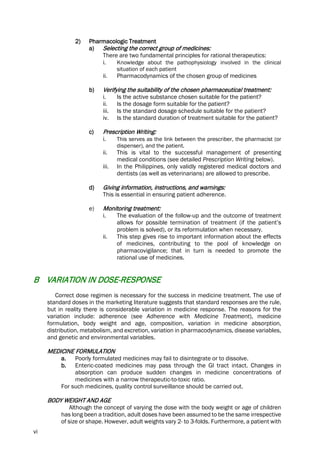
To calculate a child’s medication based on BSA, use the formula:
child′
s BSA
1.73
× adult dose = child′
s dose
with the BSA computed as follows:
A = �
W × H
3600
where:
A – patient’s BSA (m2)
W – patient’s weight in kg
H – patient’s height in cm
3600 – conversion / correction factor (kg/m2)
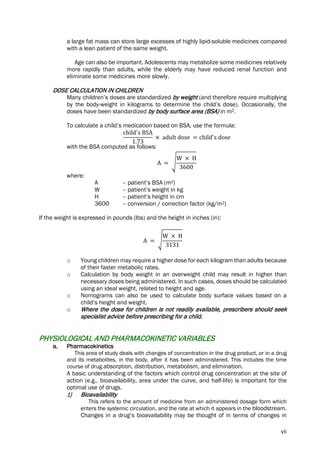
If the weight is expressed in pounds (lbs) and the height in inches (in):
A = �
W × H
3131
o Young children may require a higher dose for each kilogram than adults because
of their faster metabolic rates.
o Calculation by body weight in an overweight child may result in higher than
necessary doses being administered. In such cases, doses should be calculated
using an ideal weight, related to height and age.
o Nomograms can also be used to calculate body surface values based on a
child’s height and weight.
o Where the dose for children is not readily available, prescribers should seek
specialist advice before prescribing for a child.
PHYSIOLOGICAL AND PHARMACOKINETIC VARIABLES
a. Pharmacokinetics
This area of study deals with changes of concentration in the drug product, or in a drug
and its metabolites, in the body, after it has been administered. This includes the time
course of drug absorption, distribution, metabolism, and elimination.
A basic understanding of the factors which control drug concentration at the site of
action (e.g., bioavailability, area under the curve, and half-life) is important for the
optimal use of drugs.
1) Bioavailability
This refers to the amount of medicine from an administered dosage form which
enters the systemic circulation, and the rate at which it appears in the bloodstream.
Changes in a drug’s bioavailability may be thought of in terms of changes in
viii
exposure to the drug which, if substantial, can relate to safety and efficacy
concerns.
2) Bioequivalence
This indicates that a drug in two or more similar dosage forms reaches the
general circulation at the same relative rate and the same relative extent (i.e.,
that the plasma level profiles of the drug obtained using the two dosage forms
are the same).
This is an important consideration in several key situations involving lot-to-lot
consistency, innovator to generic product therapeutic equivalence, and
situations where a marketed product undergoes changes in certain aspects
(formulation, manufacturing process, and dosage strength).
3) Half-life
This indicates the time required to reduce the amount of medicine in the body
or the plasma concentration by 50%.
This is a clinically useful pharmacokinetic parameter because this indicates
when the next dose of a medicine needs to be administered, and thus helpful
in determining an optimal dosing regimen.
b. Medicine absorption rates may vary widely among individuals and in the same individual
at different times and in different physiological states.
Medicines taken after a meal are delivered to the small intestine more slowly than in
the fasting state, leading to much lower medicine concentrations. In pregnancy, gastric
emptying is also delayed, while some medicines may increase or decrease gastric
emptying, and affect absorption of other medicines.
MEDICINE DISTRIBUTION
a. Fat-soluble medicines (vitamins A, D, E, and K) are stored in adipose tissues.
b. Water-soluble medicines are distributed chiefly in the extracellular space.
c. Acidic medicines bind strongly to plasma albumin.
d. Basic medicines go to muscle cells.
e. Hence, variations in plasma albumin concentration, fat content, or muscle mass may
all contribute to dose variation.
MEDICINE METABOLISM AND EXCRETION
a. Medicine metabolism is affected by genetic, environmental, and disease-state
factors.
b. Medicine acetylation shows genetic polymorphism, where individuals fall clearly into either
fast or slow acetylator types. This means that some patients can metabolize medicines
more rapidly (fast acetylators) than the others (slow acetylators).
c. Medicine oxidation, however, is polygenic.
Although a small proportion of the population can be classified as very slow
oxidizers of some medicines, there is a normal distribution of medicine-
metabolizing capacity for most medicines and most subjects.
d. Many medicines are eliminated by the kidneys without being metabolized.
e. Renal disease or toxicity of some medicines on the kidney can slow excretion of some
medicines.
f. Hepatic disease or toxicity of some medicines on the liver can slow excretion of some
medicines.
ix
PHARMACODYNAMIC VARIABLES
Significant variations in receptor response to some medicines (especially CNS
responses, such as pain and sedation) are attributed to genetic factors, tolerance,
medicine interactions, and medicine dependence.
DISEASE VARIABLES
a. Both liver and kidney diseases can have major effects on metabolism and elimination,
respectively (resulting in increasing toxicity), but also through effects on plasma
albumin (resulting in increasing free medicine and thus toxicity).
b. Heart failure can also affect metabolism of medicines with rapid hepatic clearance
(e.g., lidocaine).
c. Respiratory disease and hypothyroidism can impair oxidation of drugs.
ENVIRONMENTAL VARIABLES
a. Many medicines and environmental toxins can induce the hepatic microsomal
enzyme oxidizing system or cytochrome P450 oxygenases, leading to more rapid
metabolism and elimination, and thus less effective treatment.
b. Environmental pollutants, anesthetic medicines, and other compounds, such as
pesticides, can also induce metabolism.
c. Diet and nutritional status also affect pharmacokinetics:
1) In malnourished infantile and elderly populations, medicine oxidation rates are
decreased.
2) High protein diets, charcoal-cooked foods, and certain other foods act as
metabolizing enzyme inducers.
3) Chronic alcohol use induces oxidation of some medicines; but in the presence
of high circulating alcohol concentrations, medicine metabolism may be
inhibited.
C ADHERENCE TO (COMPLIANCE WITH) MEDICINE TREATMENT
One of the most important reasons for treatment failure is poor adherence to
(compliance with) the treatment plan.
Reasons for non-compliance may be related to: (1) the patient, (2) the disease, (3) the
doctor, (4) the prescription, (5) the pharmacist, or (6) the health system.
o For instance, patients' perceptions of the risk and severity of adverse drug
reactions may differ from those of the healthcare provider and may affect
adherence.
o Poor prescribing or a dispensing error may also create a problem, which patients
may have neither the insight nor the courage to question. Even with good
prescribing though, failure to adhere to treatment is common.
Valid reasons for poor adherence include the ff.: the medicine may be poorly tolerated,
may cause obvious adverse effects, or may be prescribed in a toxic dose. Failure to adhere
with such a prescription has been described as “intelligent non-compliance”.
Low-cost strategies for improving adherence increase effectiveness of health
interventions and reduce costs. Such strategies must be tailored to the individual patient.
Healthcare providers should be familiar with techniques for improving adherence and they
should employ systems to assess adherence and to determine what influences it.
x
1. PATIENT-RELATED REASONS
a. Women tend to be more adherent than men.
b. Younger patients and the very elderly tend to be less adherent.
c. People living alone are less adherent than those living with partners or spouses.
d. Specific education interventions have been reported and shown to improve
adherence and compliance.
e. Some patient disadvantages include illiteracy, poor eyesight, or cultural
attitudes, which includes preference for traditional or alternative medicines, and
distrust of modern medicines.
f. Economic factors affect patient adherence, compliance and maintenance.
2. DISEASE-RELATED REASONS
Conditions with a known worse prognosis (e.g., cancer) or painful conditions (e.g.,
rheumatoid arthritis) elicit better adherence than asymptomatic “perceived as
benign” conditions such as hypertension.
3. DOCTOR-RELATED REASONS
a. Failure to inspire confidence in the treatment offered
b. Little or no explanation provided
c. Too many medicines prescribed
d. Errors in prescribing
e. Overall attitude to the patient
4. THE DOCTOR-PATIENT INTERACTION
a. Quality of the doctor–patient interaction is crucial to adherence and compliance.
b. “Satisfaction with the interview” is one of the best predictors of good adherence.
c. If they are in doubt or dissatisfied, they may turn to alternative options, including
complementary medicine.
5. PRESCRIPTION-RELATED REASONS
a. Illegible or inaccurate prescriptions may discourage patients to adhere to
medications.
b. Lost prescriptions may delay patients to start or continue medications.
c. Prescriptions not refilled as intended or instructed for a chronic disease may
reduce maintenance.
d. Too complex prescriptions (greater number of different medicines, poorer
adherence).
e. Multiple doses decrease adherence and compliance especially if more than two
doses per day are given.
f. Adverse effects, like drowsiness, impotence, or nausea, reduce adherence.
6. PHARMACIST-RELATED REASONS
a. Manner and professionalism
b. Pharmacist information and counseling can serve as a valuable reinforcement,
as long as they agree with the physician’s advice.
7. RECOMMENDATIONS TO THE PRESCRIBERS
a. Review the prescription to make sure it is correct.
b. Spend time explaining the health problem and the reason for the medicine.
c. Establish good rapport with the patient.
d. Explore problems, such as difficulty with reading the label or getting the
prescription filled.
xi
e. Encourage patients to bring their medication to the clinic so that tablet counts
can be done to monitor compliance.
f. Encourage patients to learn the names of their medicines, and review their
regimen with them. Write notes for them.
g. Keep treatment regimens simple.
h. Communicate with other healthcare professionals to develop a team approach
and to collaborate on helping and advising the patient.
i. Involve the partner or another family member.
j. Listen to the patient.
D ADVERSE EFFECTS AND INTERACTIONS
1. ADVERSE DRUG REACTIONS (ADR)
Any response to a medicine which is noxious, unintended and occurs at doses
normally used for prophylaxis, diagnosis, or therapy. These reactions are different
from accidental OR deliberate excessive dosage or medicine maladministration.
2. MAJOR FACTORS PREDISPOSING TO ADVERSE EFFECTS
a. EXTREMES OF AGE
1) The very old and the very young populations are more susceptible to ADRs.
Examples of which are: hypnotics, antihypertensives, Non-Steroidal Anti-
inflammatory Drugs (NSAIDs), psychotropics, diuretics, and digoxin.
2) All children, particularly neonates, differ from adults in their response to
medicines.
Some medicines are likely to cause problems in
o Neonates, but are generally tolerated in children
o Children of all ages, who are at increased risk of ADRs for
other medicines
b. INTERCURRENT ILLNESSES/COMORBIDITIES
This occurs when a patient suffers from another disease aside from the
current condition being treated (kidney, liver or heart disease). The genetic
make-up of the individual patient plays a role.
c. MEDICINE INTERACTIONS
These may occur among medicines which compete for the same receptor, or
which act on the same physiological system.
1) These may occur indirectly when a medicine-induced disease, or a change
in fluid/electrolyte balance, alters the response to another medicine.
2) These may occur when one medicine alters the absorption, distribution, or
elimination of another medicine, such that the amount which reaches the
site of action is either increased or decreased.
Drug–drug interactions are some of the most common causes of adverse effects. When
two medicines are administered to a patient, they may either act independently of each
other, or interact with each other. Interaction may increase or decrease the effects of the
medicines concerned and may cause unexpected toxicity. As newer and more potent
medicines become available, the frequency of serious drug interactions is likely to increase.
NOTE: Interactions which modify the effects of a medicine may involve non-prescription
medicines, non-medicinal chemical agents, and social drugs such as alcohol,
marijuana and tobacco, and traditional remedies, as well as certain types of food.
The physiological changes in individual patients, caused by such factors as age and
sex, also influence the predisposition to ADRs resulting from drug interactions.
xii
d. INCOMPATIBILITIES BETWEEN MEDICINES AND IV FLUIDS
Medicines should not be added to blood, amino acid solutions, or fat emulsions.
o Certain medicines, when combined with intravenous fluids, may be
inactivated by pH changes, precipitation, or chemical reaction.
e. ADVERSE EFFECTS CAUSED BY TRADITIONAL MEDICINES
Patients who have been, or are taking, traditional herbal remedies may
develop ADRs. In these types of preparation, it is not always easy to identify the
responsible constituents. Refer to the medicine and toxicology information
service if available or to suitable literature.
f. EFFECT OF FOOD ON MEDICINE ABSORPTION
Food delays gastric emptying and reduces the rate of absorption of many
medicines; however, the total amount of medicine absorbed may or may not be
reduced. On the other hand, some medicines are taken with food, either to
increase absorption or to decrease the irritant effect on the stomach.
E PRESCRIPTION WRITING
1. PRESCRIPTION FORM
Administrative Order No. 62 (series of 1989) on the rules and regulations to
implement prescribing requirements under the Generics Act defines a prescription as
a written order and instruction of a validly-registered physician, dentist or veterinarian
for the use of a specific medicine (or medical device) for a specific patient.
The most important requirement for a prescription is that it should be clear. It
should be legible and indicate precisely what should be given. The language used may
be in English, Filipino, or the local dialect.
In accordance with R.A. 5921, or the Pharmacy Act as amended, all prescriptions
should contain the following information:
o The patient’s name, age and sex;
o The prescriber’s name, office address, professional registration number, and
professional tax receipt number; and,
o Date of the prescription
In addition, Section 3 of the Generics Act lists the following specific guidelines to
prescribing:
o Generic names shall be used in all prescriptions. For drugs with a single active
ingredient, the generic name of that active ingredient shall be used in
prescribing. For drugs with two or more active ingredients, the generic name as
determined by the Philippine FDA shall be used.
o The generic name must be written in full, but the salt or chemical form may be
abbreviated. The symbol Rx means prescription which originated in medieval
manuscripts as an abbreviation of the Latin verb recipe. The imperative form is
recipere which means “to take” or “take thus.”)
o The generic name must be clearly written immediately after the Rx symbol or on
the order chart.
o The pharmaceutical form (e.g., “tablet”, “oral solution”, “eye ointment”) should
also be stated.
o The strength of the medicine should be stated in standard units using
abbreviations which are consistent with the Système International (SI) [Refer to
Appendices for abbreviations and symbols].
xiii
o Avoid decimals whenever possible. If this is unavoidable, a zero should be
written before the decimal point.
2. INCORRECT PRESCRIPTIONS
Three types of incorrect prescriptions may be identified:
a. Erroneous prescription:
o Where the brand name precedes the generic name
o Where the generic name is the one in parenthesis
o Where the brand name is not in parenthesis
b. Violative prescription:
o Where the generic name is not written
o Where the generic name is not legible, and a brand name which is
legible is written
o Where the brand name is indicated and instructions added (such as
the phrase “no substitution”) which tend to obstruct, hinder or
prevent proper dispensing
c. Impossible prescription:
o When only the generic name is written, but it is not legible
o When the generic name does not correspond to the brand name
o When both the generic and brand names are not legible
o When the drug product prescribed is not registered with the
Philippine Food and Drug Administration
If an erroneous prescription is received, the prescription may be filled but it should
be kept and reported to the nearest Department of Health (DOH) office for appropriate
action. In contrary, violative and impossible prescriptions are not to be filled and
should also be kept and reported to the nearest DOH office.
3. NARCOTICS AND CONTROLLED SUBSTANCES
The prescribing of a medicinal product which is liable to abuse requires special
attention and may be subjected to specific statutory requirements. Practitioners may
need to be authorized to prescribe controlled substances. In such cases, it might be
necessary to indicate details of the authority on the prescription.
In particular, the strength, directions, and the quantity of the controlled substance
to be dispensed should be stated clearly, with all quantities written in words, as well
as in figures to prevent alteration. Other details, such as patient particulars and date,
should also be filled in carefully to avoid alteration.
F PATIENT COUNSELING
One-to-one, dynamic interaction between a health care practitioner and a patient and/or
caregiver, which should include an assessment if the information was received as
intended, and that the patient understands how to use the information to improve the
probability of positive therapeutic outcomes.
1. WHAT TO COUNSEL
Routinely, effectively and appropriately educate patients on the following: (1) when
dispensing prescription and non-prescription drugs, (2) when counseling on discharge
medications, and (3) when providing recommendations about management of
specific drug-related problems:
a. The medication’s name (generic), indication and when appropriate to use;
xiv
b. The medication’s expected onset of action and what to do if the action
does not occur;
c. The medication’s route, dosage form, dosage and administration schedule
(including duration of therapy);
d. Directions for use including education about drug devices;
e. Proper storage requirements;
f. Common or important drug-drug or drug-food interactions;
g. Potential common and severe adverse effects, and actions to prevent or
minimize their occurrence;
h. What the patient should do to monitor his/her therapeutic response or
when side effects develop;
i. What actions the patient should take if the intended therapeutic response
is not obtained or if side effects develop; and,
j. Proper disposal of contaminated, discontinued or unused medications.
2. WHO AND WHEN TO COUNSEL
a. Patients who should always be counseled together with their families and
caregivers:
o Confused patients;
o Patients who are sight- or hearing-impaired;
o Patients with poor literacy;
o Patients whose profiles show change in medications or
dosing;
o New patients, or those receiving a medication for the first time; and,
o Patients who have medications with significant side effects, specific
storage requirements, and complicated directions.
b. Patients who should be counseled at certain intervals:
o Asthmatic patients;
o Diabetic patients;
o Patients taking four (4) or more prescribed medications;
o Patients who are mentally ill;
o Epileptic patients; and,
o Patients with skin complaints.
3. COUNSELING: PROCESS STEPS
Steps in patient education and counseling process will vary according to the health
system’s policies and procedures, environment, and practice setting. Generally, the
following steps are appropriate for patients receiving new medications or returning
for refills:
a. Establish caring relationship with the patient as appropriate to the practice
setting, and stage in the patient’s health care management. Show interest
in the patient verbally and non-verbally
o Explain the purpose and expected length of sessions.
o Obtain the patient’s agreement to participate.
b. Assess the patient’s knowledge about his or her health problems,
medications, physical and mental capability to use the medications
appropriately, and attitude towards the health problems and medications.
o Ask why the patient is being prescribed with the medication
(if known), or the medication’s use, expected benefits and
action.
o Provide information orally, and use demonstrations or visual
aids to fill the patient’s gaps in knowledge and
understanding.
xv
o Open the medication containers and show patient what the
medication looks like, or demonstrate use. Explain how to
take the medication.
o Discuss when to take and how long to take the medication.
o Plan what to do if a dose is missed.
o Determine any special precautions to heed and follow.
Explain how to store the medication.
o Demonstrate if the prescription can be refilled, and if so,
determine when it is done.
o Give specific details on how the patient will know if the
medication is working.
c. Verify patient’s knowledge and understanding of medication use.
o Ask the patient to describe (or show) how the medication
should be used, and its effects.
o Ask the patient if they have any questions.
xvi
ANTIMICROBIAL RESISTANCE
A. DEFINITION OF ANTIMICROBIAL RESISTANCE
1. Antimicrobial Resistance (AMR) refers to the resistance of a micro-organism
(including bacteria, viruses and some parasites) to an antimicrobial agent to which it
was previously sensitive. Resistant organisms withstand attack by antibacterials,
antivirals, or antimalarials. Thus, standard treatments become ineffective, allowing
infections to persist and spread.
2. AMR which is a consequence of the use or misuse of antimicrobials develops when
the organism mutates or acquires a resistance gene.
B. CAUSES OF ANTIMICROBIAL RESISTANCE
1. Although the ultimate causes of AMR are microbial, clinical, and programmatic in
nature, it is essentially a man-made occurrence.
2. The proliferation of drug-resistant strains is associated with various management,
healthcare provider, and patient-related issues. Table 1 enumerates several of the
causes leading to drug resistance.
3. The general categories of the causes, i.e., therapeutic protocols, drug characteristics,
and drug selling and purchasing practices, provide opportunities where potential
strategies to combat AMR arise.
Table 1. Causes of inadequate treatment which may contribute to emergence of drug
resistance
Healthcare providers:
Inadequate regimens
Drugs:
Inadequate
supply/quantity
Patients:
Inadequate drug intake
- Inappropriate guidelines
- Noncompliance with
guidelines
- Absence of guidelines
- Poor training
- No treatment monitoring
- Poorly organized or
funded control
programs
- Poor quality
- Unavailability of certain
drugs (stock-outs or
delivery disruptions)
- Poor storage conditions
- Wrong dose or
combinations
- Poor adherence (or poor
directly observed
therapy)
- Lack of information
- Lack of money (no
treatment available free
of charge
- Lack of transportation
- Adverse effects
- Social barriers
- Malabsorption
- Substance dependency
disorders
Source: Final Report, Country Situation Analysis on Antimicrobial Resistance, Philippines,
2012.
C. ANTIMICROBIAL RESISTANCE: A GROWING GLOBAL CONCERN
1. The WHO cites the following alarming reasons: AMR is already a global concern, AMR kills,
AMR challenges control of infectious disease, AMR threatens a return to the pre-antibiotic
era, AMR increases the costs of health care, AMR jeopardizes healthcare gains to society,
and AMR compromises health security, and damages trade and economy.
2. Furthermore, the following facts collated by WHO1 indisputably demonstrate the
potential and real dangers that AMR causes and has caused:
a. About 440,000 new cases of multi-drug resistant TB (MDR-TB which is defined
as resistance to Rifampicin and Isoniazid) emerge annually, causing at least
xvii
150,000 deaths. Therapy of MDR-TB requires 18-24 months of treatment with
expensive second-line drugs, like capreomycin and kanamycin.
b. Extensively drug-resistant TB (XDR-TB defined as MDR plus resistance to any
member of the quinolone family and at least to any second-line anti-TB
injectable, such as kanamycin, capreomycin or amikacin) is a global threat with
a case-fatality rate of 50%. XDR-TB is a big problem because there are very few
options for treatment, which probably accounts for the high mortality rate among
them.
c. Resistance to earlier generation antimalarial medicines such as chloroquine
and sulfadoxine-pyrimethamine is widespread in most malaria-endemic
countries. Falciparum malaria parasites resistant to artemisinins are emerging
in Southeast Asia; infection showed delayed clearance after the start of
treatment (indicating resistance).
d. Ciprofloxacin is the only antibiotic currently recommended by WHO for the
management of bloody diarrhea due to Shigella, now that wide-spread
resistance has developed to any previously effective antibiotics. But rapidly
increasing prevalence of resistance to Ciprofloxacin in Shigellosis is reducing
the options for safe and efficacious treatment especially for children. New
antibiotics suitable for oral use are badly needed.
e. AMR has become a serious problem for treatment of gonorrhea (caused by
Neisseria gonorrhoea), involving even “last-line” oral cephalosporins, and this is
increasing in prevalence worldwide. In multidrug-resistant N. gonorrhoea,
resistance is found against tetracyclines, macrolides (including azithromycin),
sulfonamide and trimethoprim combinations and more recently, to quinolones.
Untreatable gonococcal infections will result in higher rates of illness and death
thus reversing the gains made in the control of the sexually transmitted
infections.
f. ESBLs (extended-spectrum beta-lactamases) are resistant to third-generation
cephalosporins (ceftazidime, cefotaxime and cefpodoxime) as well as
monobactams (aztreonam); common in the Enterobacteriaceae, particularly
E.coli and K. pneumoniae.
g. New resistance mechanisms, such as the beta-lactamase NDM-1 (New Delhi metalo-
beta-lactamase 1), have emerged among several gram-negative bacilli. This is
considered as a new superbug that has resistance to broad spectrum antibiotics that
are often the last defense against multi-resistant bacterial strains.
h. A high percentage of hospital acquired infections is caused by highly resistant
bacteria such as methicillin-resistant Staphylococcus aureus (MRSA) and
vancomycin resistant enterococci.
i. Resistance is an emerging concern for treatment of HIV infection, following the
rapid expansion in access to anti-retroviral medicines in recent years.
D. STATUS OF ANTIMICROBIAL RESISTANCE IN THE PHILIPPINES
1. The need to approach the problem of AMR in the Philippines with a sense of urgency
is clearly elucidated by several evidence of the dangers it poses.
a. The most dreaded recognized AMR gene, the NDM-1, was identified in the
Escherichia coli isolated from the urine of a 33 year old female in 2011. The
gene can render even the most powerful antibiotics ineffective.
b. Many of the causative bacterial pathogens that cause infections included in the Top
Ten causes of morbidity in the Philippines have already become resistant to multiple
antibiotics. At the forefront is TB, with MDR-TB and even XDR-TB already present in
the Philippines which ranked 6th among 27 identified countries with MDR-TB. In 2006,
the occurrence of MDR-TB was 4% among new cases and a high 27% among
previously treated patients.
xviii
2. The DOH established in 1988 the Antimicrobial Resistance Surveillance Program (ARSP) to
determine the current status and developing trends of antimicrobial resistance of selected
bacteria to specific antimicrobials. The ARSP, which now has 24 sentinel sites hospital
bacteriology laboratories in 16 regions of the Philippines and 2 gonococcal surveillance
sites, submits and publishes annual summary reports focusing on aerobic bacterial
pathogens of public health importance causing common infectious diseases.
All readers are enjoined to refer to the yearly published ARSP surveillance data
provided by RITM for updated information and proper guidance.
3. The ARSP found alarming rates of resistance among various bacterial pathogens. 1,2
a. The ESBL enzyme, which can render pathogens resistant to many antibiotics,
has been identified in Escherichia coli and Klebsiella spp.
b. Multi-drug resistant Pseudomonas aeruginosa and Acinetobacter spp. which
account for 43% of all hospital-acquired pneumonia have been identified.
c. The percent resistance, in all ARSP sites from January-December of 2013 of
Streptococcus pneumonia (which causes acute respiratory tract infections) to
penicillin was 5% compared to 0 in 2010. Resistance to cotrimoxazole was 20%
in 2013.²
d. The percent resistance of non-typhoidal Salmonella from January-December,
2013, to ampicillin and cotrimoxazole were 56% and 34%, respectively. ²
e. There is a steady increase in the resistance rates of Staphylococcus aureus and
consequently higher prevalence of MRSA which is also an important cause of hospital
acquired infections.
f. In the period 2012-2013, there were very high resistance rates of Neisseria
gonorrhoea to ciprofloxacin (74%), penicillin (80%), and tetracycline (55%). ²
4. These alarming increasing trends of AMR in the country are clearly demonstrated in
Table 2 which summarized the results of a comparison of the antimicrobial resistance
of selected organisms in 1993 and 2011.
Please refer to the Antimicrobial Resistance Surveillance Program (ARSP) Summary Report
for antimicrobial resistance patterns of specific organisms.
E. RECOMMENDATIONS OF THE PHILIPPINE ANTIMICROBIAL RESISTANCE
SURVEILLANCE PROGRAM
Below are the recommendations of the ARSP regarding antibiotic treatment for aerobic
bacterial pathogens of public health importance based on the reported antimicrobial
resistance surveillance data for 2013 (Carlos, C, 2013):
1. Respiratory Bacterial Pathogens:
a. Infections secondary to Streptococcus pneumoniae can still be covered with
penicillin or one of the anti-pneumococcal macrolides, although there is a need
to closely monitor the changing trends of resistance among pneumococci.
Improved local data on serotype distribution will allow for better surveillance
information especially needed for vaccination recommendations.
b. Due to high resistance rate of Haemophilus influenzae to ampicillin, this
antibiotic is no longer recommended for empiric therapy for infections
secondary to the pathogen.
c. Recommended empiric treatment for suspected H. influenzae infections may
consist of beta-lactam-beta-lactamase inhibitor combinations, extended
spectrum oral cephalosporins and the newer macrolides.
xix
2. Bacterial Enteric Pathogens:
a. For suspected uncomplicated enteric fever, empiric treatment can still consist
of either chloramphenicol or cotrimoxazole or amoxicillin/ampicillin. There are
increasing reports of nalidixic acid resistance and ciprofloxacin non-
susceptibility which may result to clinical treatment failures when treating
enteric fever using fluoroquinolones. Microbiological data is recommended for
pathogen directed therapy.
b. In Salmonella gastroenteritis, increasing rates of ciprofloxacin resistance should
remind clinicians to use antibiotics judiciously as this is usually a self-limiting
disease.
c. Due to the emerging resistance of Shigellae to the quinolones and limited data
available, more vigilant surveillance of the resistance pattern of this organism
should be pursued by encouraging clinicians to send specimens for culture.
d. For cholera, tetracycline, chloramphenicol and cotrimoxazole remain to be good
treatment options.
3. Sexually-Transmitted Bacterial Pathogens:
a. Limited data is available on N. gonorrhoeae in recent years, but based on
reported isolates, ceftriaxone remains as empiric antibiotic of choice for
gonococcal infections. More vigilant surveillance of the resistance patterns of
this organism must be pursued by encouraging clinicians to send specimens for
culture.
4. Gram-positive Cocci:
a. In view of the continuous high rates of methicillin/oxacillin resistance among
staphylococci, there may be an indication to shift empiric treatment of
suspected staphylococcal infections from oxacillin to alternative agents such as
cotrimoxazole, doxycycline, clindamycin, linezolid or vancomycin.
5. Gram-negative Bacilli:
a. Hospitals should base their treatment recommendations for the Enterobacteriaceae
on their institution’s prevailing resistance patterns as these have been found to be
variable from hospital to hospital. The high percentage of possible ESBL-producing
isolates complicates treatment of serious infections caused by these organisms and
may lead to the increased use of carbapenems that may favor the spread of the
carbapenem-resistant Enterobacteriaceae.
b. Increasing resistance among the bacterial organisms Pseudomonas aeruginosa
and Acinetobacter baumannii continue to be a concern as both carry intrinsic
resistance to a number of antimicrobial classes and acquisition of additional
resistance severely limits the available treatment options.
c. Prudent antimicrobial use, monitoring of resistance patterns and antimicrobial
use, and improved standards of infection control are essential in addressing the
clinical and public health concerns.
All readers are enjoined to refer to the yearly published ARSP surveillance data
provided by RITM for updated information and proper guidance.
F. DRIVING FORCES BEHIND ANTIMICROBIAL RESISTANCE
1. The inappropriate and irrational use of medicines provides favorable
conditions for resistant microorganisms to emerge and spread. WHO enumerates the
following as the underlying factors that drive AMR:
a. Inadequate national commitment to a comprehensive, coordinated response,
ill-defined accountability, and insufficient engagement of communities;
xx
b. Weak or absent surveillance and monitoring systems;
c. Inadequate systems to ensure quality and uninterrupted supply of medicines;
d. Inappropriate and irrational use of medicines, in both clinical practice and
animal husbandry, and aquaculture;
e. Poor infection prevention and control practices; and,
f. Depleted arsenals of diagnostics, medicines, and vaccines as well as
insufficient research and development of new products.
G. THE RESPONSE OF THE NATIONAL GOVERNMENT TO THE RISING
ANTIMICROBIAL RESISTANCE
1. Creating an Inter-Agency Committee on AMR (ICAMR).
2. Developing a National Plan that will include, but not limited to, the following
strategies:
a. Establishing short and long term programs to address the different aspects of
response to AMR;
b. Strengthening the surveillance system and laboratory detection capacity of AMR
in both humans and animals;
c. Ensuring accessibility, affordability, availability and quality of antimicrobial drugs
for humans and its appropriate use in food producing animals including banning
the use of antibiotics as growth promoters;
d. Developing relevant and utilizable essential medicines list for human and
veterinary use;
e. Monitoring the rational use of antimicrobials in humans, animal husbandry and
aquaculture;
f. Advocating the rational use of antimicrobials to consumers and community
through media and the academe;
g. Training and educating on, and promotion of infection prevention and control
measures in health care facilities and the community;
h. Conducting researches to develop new antimicrobials and innovative technology
to improve diagnosis and treatment;
i. Monitoring and evaluating compliance with existing policies and on the proper
execution of the AMR control plan;
j. Engaging all relevant stakeholders such as government agencies, healthcare
providers, non-government institutions, professional organizations, drug
industry, veterinary and aquaculture groups, consumer groups, researchers and
civil societies; and,
k. Ensuring that activities are well financed for sustainability.
H. ACTION PLANS, WHICH THE PRIMARY PHYSICIANS AND DENTISTS CAN
ADOPT TO HELP COMBAT ANTIMICROBIAL RESISTANCE
1. Assuring the judicious use of antimicrobial agents through faithful adherence to the
principles of rational use of medicines and utilizing antimicrobial agents only for the
appropriate indications as recommended by the Antimicrobial Resistance
Surveillance Program (ARSP) or the task force for Clinical Practice Guidelines and
included in the Philippine National Formulary. The choice of antibiotics must strictly
conform to the best standard treatment guidelines or clinical practice guidelines (e.g.,
National Antibiotic Guidelines), and guided by the latest findings and
recommendations of the ARSP;
2. Keeping abreast of the latest information on AMR through reviews of the latest
antibiotic susceptibility data published by the ARSP, literature search, attendance in
seminars, and participation in continuing medical education programs;
3. Devoting sufficient time to educate the patients and their families and caregivers about the
appropriate use of antibiotics and the reasons behind the need for strict adherence to the
xxi
prescribed dosage schedule and completion of full course of treatment as well as to
educate them on the prevention of AMR;
4. Careful monitoring of the patients’ compliance and their response to the antimicrobial
agents;
5. Submitting specimen for culture when indicated (e.g., for suspected gonococcal
infections);
6. Complying with the rules on prescribing, and other regulations in the Pharmacy Law;
7. Developing better communication with pharmacists and other dispensers;
8. Educating other healthcare providers (nurses, midwives, barangay health workers)
about the RUM and prevention of AMR; and,
9. Educating the community continually on the need for and proper ways of maintaining
good personal hygiene and sanitation, avoidance of vices or unhealthy habits,
sanitation, and prevention of infections, including maintaining cleanliness of their
surroundings.
MEDICINE AND
THERAPEUTIC
INFORMATION
A
ALIMENTARY TRACT AND METABOLISM
1
ALIMENTARY TRACT AND METABOLISM
DRUGS FOR ACID-RELATED
DISORDERS
ANTACIDS
OTC
ALUMINUM HYDROXIDE +
MAGNESIUM HYDROXIDE
Oral: 200 mg aluminum hydroxide + 100 mg magnesium
hydroxide tablet
225 mg aluminum hydroxide + 200 mg magnesium
hydroxide per 5 mL suspension, 60 mL and 120 mL
An antacid that combines aluminum hydroxide and
magnesium hydroxide to reduce effect on bowel
movement and to relieve epigastric pain from peptic
ulcer through acid neutralization.
Indication: Symptomatic relief of symptoms related to
hyperacidity from heartburn, hiatal hernia, upset
stomach, peptic ulcer, peptic esophagitis, or gastritis.
Contraindications: Severe renal impairment;
hypophosphatemia; undiagnosed GI and rectal bleeding;
porphyria; appendicitis.
Dose:
Hyperacidity, by mouth, ADULT, 10-20 mL 4 times daily
(maximum 80 mL daily).
Dose Adjustment:
Renal Impairment:
Use with caution due to risk of accumulation and toxicity.
For mild-to-moderate renal impairment, dose reduction is
warranted.
For severe impairment, avoid use and refer patient to a
specialist.
Precautions:
WARNING: Aluminum and magnesium salts may be
hazardous in patients with renal insufficiency. If
intensive antacid therapy is to be used, only non-
systemic (non-absorbable) antacids should be
considered because of the potential danger of
alkalosis with systemic therapy.
Acute porphyria; prolonged antacid therapy may result in
hypophosphatemia (i.e., decreased phosphate
absorption in the GI tract); dehydration; fluid restriction;
constipation; diarrhea; hepatic impairment; renal
impairment; GI disorders associated with decreased
bowel motility or obstruction; some products may contain
phenylalanine.
Elderly (may be predisposed to diarrhea or constipation);
children.
Adverse Drug Reactions:
Common: Constipation, diarrhea, GI irritation.
Less Common: Chalky taste, fecal discoloration,
hypophosphatemia, nausea, vomiting.
Rare: Anemia, encephalopathy, fecal impaction,
hypermagnesemia, hypophosphatemia, intestinal
obstruction, osteomalacia, proximal myopathy.
Drug Interactions:
Monitor closely with:
Increases excretion due to urine alkalinization:
Acetylsalicylic Acid
Reduces absorption of the following drugs:
Azithromycin, Chloroquine, Digoxin, Enalapril, Isoniazid,
Rifampicin
Avoid concomitant use with:
Reduces therapeutic effect of the following drugs
Bisphosphonates e.g., Alendronate, Iron, Ketoconazole,
Quinolones e.g., Nalidixic acid, Rosuvastatin,
Tetracyclines, e.g., Doxycycline. [Separate dosing by at
least 2 hours before, or 4–6 hours after the antacid]:
Administration: Shake well before use.
Best given 1–3 hours after the last meal to neutralize and
buffer the acid produced.
NOTE: Antacids should preferably not be taken at the same
time as other oral drugs since they may impair
absorption (interactions may be avoided by having an
interval of at least 2 hours between taking an antacid
and the other drug).
Pregnancy Category: B
ATC Code: A02AD01
OTC SODIUM BICARBONATE
Oral: 325 mg and 650 mg tablet
A short-acting, potent systemic antacid that rapidly
neutralizes gastric acid to form sodium chloride, carbon
dioxide, and water. After absorption of sodium
bicarbonate, plasma alkali reserve is increased, and
excess sodium and bicarbonate ions are excreted in
urine, rendering urine less acid.
Indications: Symptomatic relief of hyperacidity (belching,
heartburn, indigestion, gas pains), gastritis, and peptic
ulcer; urine alkalinizer.
Contraindications: Diuretics known to produce
hypochloremic alkalosis; edema; hypertension;
hypocalcemia; hypochloremia; hypernatremia; impaired
renal function; metabolic alkalosis; respiratory alkalosis
or acidosis; any situation where administration of sodium
could be clinically detrimental.
Dose:
Antacid, by mouth, ADULT, 2–8 tablets every 4 hours
(maximum, 48 tablets in 24 hours); ADULT ≥60 years, 2–
4 tablets every 4 hours (maximum, 24 tablets in 24
hours.
A
ALIMENTARY TRACT AND METABOLISM
2
Urine alkalinizer, by mouth, ADULT, initially 3.94 g, then
0.97–1.95 g every 4 hours; CHILD, 84–840 mg/kg daily,
in divided doses.
Dose Adjustment:
Geriatric, Renal and Hepatic Impairment:
Dose adjustment may be required.
Precautions:
WARNING: Ask attending physician before use if on a
sodium restricted diet.
Do not use maximum dose for more than 2 weeks.
Cardiac, liver, or renal disease;
Fluid or solute overload;
Postoperative patients with cardiovascular or renal
insufficiency (e.g., sodium or water retention and edema
which may result in serious pulmonary edema);
Arrested patients with preexisting metabolic acidosis,
hyperkalemia, or tricyclic or barbiturate overdose;
Elderly;
Pregnancy (restrict intake in hypertension and toxemia).
Adverse Drug Reactions:
Common: Belching, gastric distention, flatulence, metabolic
alkalosis, electrolyte imbalance, (sodium overload,
hypocalcemia, hypokalemia, milk-alkali syndrome,
dehydration), reduction in CSF pressure, intracranial
hemorrhage, severe tissue damage following
extravasation of IV solution, renal calculi or crystals,
impaired kidney function
Drug Interactions:
Monitor closely with:
Decreases the absorption of Ketoconazole
Decreases therapeutic effect of the following drugs:
Chlorpropamide, Lithium Carbonate, Salicylates,
Tetracyclines
Increases therapeutic effect of the following drugs:
Appetite Suppressants (e.g., Amphetamines), Flecainide,
Mecamylamine, Quinidine, Sympathomimetics (e.g.,
Ephedrine, Dopamine)
NOTE: Sodium bicarbonate raises intra-gastric pH, which
may affect the absorption of certain drugs.
Administration: Should be taken on an empty stomach.
Tablets may be swallowed whole or dissolved in water
prior to use.
Do NOT add oral preparation to calcium-containing
solutions.
Pregnancy Category: C
ATC Code: A02AH
FOR PEPTIC ULCER AND GASTRO-ESOPHAGEAL
REFLUX DISEASE (GERD)
H2-RECEPTOR ANTAGONISTS
Rx (Inj.)
OTC (Oral)
FAMOTIDINE
Oral: 20 mg tablet
Inj.: 10 mg/mL, 2 mL ampule / vial (IM, IV)
A competitive inhibitor of histamine H2­receptor, inhibiting
both daytime and nocturnal basal gastric acid secretion,
as well as food-stimulated and pentagastrin-stimulated
gastric acid secretion.
Indications: Relief and prevention of heartburn; treatment
and maintenance of active duodenal ulcers, pathological
hypersecretory conditions (e.g., Zollinger-Ellison
Syndrome or multiple endocrine adenomas),
Gastroesophageal Reflux Disease (GERD) and active
benign gastric ulcer.
Contraindications: Cirrhosis of the liver; impaired renal or
hepatic function; lactation; other H2 antagonists.
Dose:
Duodenal ulcer, acute therapy, by mouth, ADULT, 40 mg
daily at bedtime (or 20 mg twice daily) for 4-8 weeks.
Duodenal ulcer, maintenance therapy, by mouth, ADULT, 20
mg daily at bedtime.
Gastric ulcer, acute therapy, by mouth, ADULT, 40 mg daily
at bedtime.
Peptic ulcer, by mouth, CHILD 1-16 years, 0.5 mg/kg daily
at bedtime or divided twice daily (maximum dose, 40 mg
daily) (doses of up to 1 mg/kg daily have been used in
clinical studies); by IV injection, CHILD 1-16 years, 0.25
mg/kg every 12 hours (maximum dose, 40 mg daily)
(doses of up to 0.5 mg/kg have been used in clinical
studies).
GERD, by mouth, ADULT, 20 mg twice daily for 6 weeks;
CHILD 1-16 years, 1 mg/kg daily divided twice daily
(maximum dose, 40 mg twice daily) (doses of up to 2
mg/kg/day have been used in clinical studies); CHILD 3-
12 months, 0.5 mg/kg twice daily; CHILD <3 months, 0.5
mg/kg once daily.
Esophagitis and accompanying symptoms due to GERD, by
mouth, ADULT, 20 mg or 40 mg twice daily for up to 12
weeks.
Hypersecretory conditions, by mouth, ADULT, initially, 20 mg
every 6 hours, may increase in increments up to 160 mg
every 6 hours.
Patients unable to take oral medication, by IV injection,
ADULT, 20 mg every 12 hours.
Dose Adjustment:
Renal Impairment:
For creatinine clearance <50, reduce dose by half or
increase dosing interval to 36–48 hours.
Precautions:
Increases risk of community-acquired pneumonia with
prolonged use; prolonged treatment (≥2 years) may lead
to vitamin B12 malabsorption and subsequent vitamin
B12 deficiency; gastric malignancy.
A
ALIMENTARY TRACT AND METABOLISM
3
Elderly >50 years.
Lactation (excreted into breast milk).
Adverse Drug Reactions:
Common: Headache, dizziness, constipation, diarrhea,
nausea and vomiting, anxiety, confusion.
Less Common: Acne, pruritus, urticaria, dry skin, fever,
hypertension, flushing, musculoskeletal pain, arthralgia,
tinnitus
Drug Interactions:
Monitor closely with:
Decreases absorption of the following drugs:
Cefpodoxime, Cefuroxime, Iron salts
Decreases serum concentration of the following drugs:
Indinavir, Multivitamins / Minerals with ADEK,
Folate, Iron
Increases the absorption of: Methylphenidate
Increases serum concentration of Famotidine:
Bupropion
Avoid concomitant use with:
Decreases absorption of Famotidine:
Antacid
Decreases absorption of Diazepam
Decreases serum concentration of the following drugs:
Atazanavir, Cefditoren, Itraconazole
Ketoconazole (systemic)
Increases serum concentration of Risedronate
Administration:
For oral administration, may be taken with or without
food
For IV injection or IV push, inject over at least 2 minutes.
If administered by IV infusion, administer over 15–30
minutes.
Pregnancy Category: B
ATC Code: A02BA03
Rx RANITIDINE
Oral: 150 mg and 300 mg tablet (as hydrochloride)
75 mg/5 mL syrup (as hydrochloride), 60 mL and 150
mL
Inj.: 25 mg/mL, 2 mL ampule / vial (IM, IV, IV infusion) (as
hydrochloride)
A competitive inhibitor of histamine H2­receptor, inhibiting
both daytime and nocturnal basal gastric acid secretion,
as well as food- and pentagastrin-stimulated gastric acid
secretion. Ranitidine is also a weak cytochrome P-450
enzyme inhibitor.
Indications: Relief and prevention of heartburn.
Management of duodenal ulcer, erosive esophagitis,
gastric ulcer, GERD, pathological hypersecretory
conditions (e.g., Zollinger-Ellison syndrome, systemic
mastocytosis)
Contraindications: Cirrhosis of the liver; impaired renal or
hepatic function; acute porphyria
Dose:
Duodenal ulcer, acute therapy, by mouth, ADULT, 150 mg
twice daily, or 300 mg once daily after the evening meal
or at bedtime; INFANT, CHILD, and ADOLESCENT ≤16
years, 4-8 mg/kg daily divided twice daily (maximum,
300 mg daily).
Duodenal ulcers, maintenance therapy, by mouth, ADULT,
150 mg once daily at bedtime; INFANT, CHILD, and
ADOLESCENT ≤16 years, 4–8 mg/kg daily divided twice
daily; 2–4 mg/kg once daily (maximum, 150 mg daily);
by IM injection, ADULT, 50 mg every 6–8 hours;
by IV intermittent bolus or IV infusion, ADULT, 50 mg
every 6–8 hours (if increased doses are necessary utilize
more frequent administration up to a maximum of 400
mg daily);
by IV injection, INFANT, CHILD, and ADOLESCENT ≤16
years, 2–4 mg/kg daily divided every 6–8 hours
(maximum dose, 50 mg/dose);
by continuous IV infusion, ADULT, 6.25 mg/hour.
Benign gastric ulcer, acute therapy, by mouth, ADULT, 150
mg twice daily; INFANT, CHILD, and ADOLESCENT ≤16
years, 4-8 mg/kg daily divided twice daily (maximum,
300 mg daily).
Benign gastric ulcer, maintenance therapy, by mouth,
ADULT, 150 mg once daily at bedtime; INFANT, CHILD,
and ADOLESCENT ≤16 years, 2-4 mg/kg once daily
(maximum, 150 mg daily).
Erosive esophagitis, acute therapy, by mouth, ADULT, 150
mg 4 times daily, INFANT, CHILD, and ADOLESCENT ≤16
years, 5-10 mg/kg daily divided twice daily (maximum,
300 mg daily).
Erosive esophagitis, maintenance therapy, by mouth,
ADULT, 150 mg twice daily.
Gastroesophageal reflux disease (GERD), by mouth, ADULT,
150 mg twice daily; INFANT, CHILD, and ADOLESCENT
≤16 years, 5-10 mg/kg daily divided twice daily
(maximum, 300 mg daily).
Heartburn, prevention, by mouth, CHILD ≥12 years, 75-150
mg 30-60 minutes before eating food or drinking
beverages that cause heartburn (maximum, 2 doses
daily), not to be used for more than 14 days.
Pathological hypersecretory conditions (e.g. Zollinger Ellison
Syndrome), by mouth, ADULT, 150 mg twice daily, adjust
dose or frequency as clinically indicated (doses of up to
6 g daily have been used in patients with severe
disease);
by IM injection, ADULT, 50 mg every 6–8 hours;
by continuous IV infusion, ADULT, 6.25 mg/hour, initially,
1 mg/kg per hour (measure gastric acid output at 4
hours, if >10 mEq or if patient is symptomatic, increase
dose in increments of 0.5 mg/kg per hour) (doses of up
to 2.5 mg/kg per hour (220 mg/hour) have been used
by IV intermittent bolus or infusion); 50 mg every 6–8
hours (if increased doses are necessary utilize more
frequent administration up to a maximum of 400 mg
daily).
Patients not able to take oral medication, by IM injection,
ADULT, 50 mg every 6–8 hours;
A
ALIMENTARY TRACT AND METABOLISM
4
by IV intermittent bolus or infusion, ADULT, 50 mg every
6–8 hours; 50 mg every 6–8 hours (if increased doses
are necessary utilize more frequent administration up to
a maximum of 400 mg daily);
by continuous IV infusion, ADULT, 6.25 mg/hour; by IV
injection, INFANT, CHILD, and ADOLESCENT <16 years,
2–4 mg/kg daily divided every 6–8 hours (maximum
dose, 50 mg/dose).
Dose Adjustment:
Renal Impairment:
For patients with creatinine clearance <50 mL/minute,
adjust dose cautiously. Adjust dosing schedule to not
coincide with the end of hemodialysis.
Precautions:
WARNING: NOT to be used if there is trouble or pain
when swallowing food, vomiting with blood, or bloody
or black stools.
NOT to be used in combination with other acid
reducers. Avoid the use of 150 mg tablet for patients
with kidney disease.
Relief of symptoms does not preclude the presence
of a gastric malignancy.
Rare cases of reversible confusion have been associated
with use, usually among elderly or severely ill patients, or
in patients with renal or hepatic impairment.
Prolonged treatment (≥2 years) may lead to vitamin B12
malabsorption and subsequent vitamin B12 deficiency.
Decreased renal or hepatic function (use with caution).
Elderly (use with caution)
Pregnancy; lactation (excreted into breast milk; use with
caution).
Adverse Drug Reactions:
Common: Headache, abdominal pain, constipation,
diarrhea, nausea, and vomiting.
Less Common: Asystole, atrioventricular block, bradycardia
(with rapid IV administration), premature ventricular
beats, tachycardia, vasculitis.
Drug Interactions:
Monitor closely with:
Decreases absorption of the following drugs:
Cephalosporins, Iron salts [except ferric carboxymaltose,
ferric citrate, ferric gluconate, ferric pyrophosphate
citrate, iron dextran complex, iron sucrose]
Enhances therapeutic effect of: Procainamide
Reduces therapeutic effect of:
Warfarin (decreased prothrombin time)
Avoid concomitant use with:
Decreases absorption of the following drugs:
Cyanocobalamin / Vitamin B12
Decreases serum concentration of Azoles, e.g.,
Ketoconazole
Decreases therapeutic effect of Ranitidine:
Cigarette smoking
Decreases therapeutic effect of Diazepam
Administration:
For IM administration, no dilution is required.
For IV administration, solution must be diluted. May be
administered by intermittent bolus, intermittent IV
infusion, or continuous IV infusion.
Pregnancy Category: B
ATC Code: A02BA02
PROTON PUMP INHIBITORS
Rx LANSOPRAZOLE
Oral: 15 mg and 30 mg capsule
15 mg and 30 mg MR tablet
A substituted benzimidazole, which acts as a proton pump
inhibitor (PPI), by blocking the final step of acid
production. It acts by inhibiting the H+/K+–ATPase
system at the parietal cells of the stomach, suppressing
both basal and stimulated gastric acid secretion.
Indications: Management of acid-related dyspepsia, erosive
esophagitis, Gastroesophageal Reflux Disease (GERD),
peptic ulcer, Helicobacter pylori infection, NSAID-
associated ulcer, Zollinger-Ellison syndrome.
Contraindication: Known severe hypersensitivity to
lansoprazole or any ingredient in the formulation
Dose:
Acid-related dyspepsia, by mouth, ADULT, 15–30 mg once
daily in the morning for 2–4 weeks.
GERD, acute therapy, by mouth, ADULT, 15–30 mg once
daily in the morning for 4–8 weeks.
GERD, maintenance therapy, by mouth, ADULT,
maintenance therapy, 15–30 mg once daily (adjust
dosing according to response); CHILD 12–17 years, 15
mg once daily for up to 8 weeks; CHILD 1–11 years (≤30
kg), 15 mg once daily in the morning for up to 12 weeks;
CHILD >30 kg, 30 mg once daily in the morning for up to
12 weeks (may increase doses up to 30 mg twice daily if
patient is still symptomatic after 2 or more weeks of
treatment).
Erosive esophagitis, acute therapy, by mouth, ADULT, 30 mg
once in the morning for up to 8 weeks; by IV injection,
ADULT, 30 mg over 30 minutes for up to 7 days; CHILD
12–17 years, 30 mg once daily for up to 8 weeks; CHILD
1–11 years (≤30 kg), 15 mg once daily in the morning for
up to 12 weeks; CHILD >30 kg, 30 mg once daily in the
morning for up to 12 weeks (may increase doses up to
30 mg twice daily if patient is still symptomatic after 2 or
more weeks of treatment).
Erosive esophagitis, maintenance therapy, by mouth,
ADULT, 15 mg once daily.
Peptic ulcer, acute therapy, by mouth, ADULT, 15 mg once
daily.
Peptic ulcer, maintenance therapy, by mouth, ADULT, 30 mg
once daily in the morning for up to 4 weeks (for duodenal
ulcer) or up to 8 weeks (for gastric ulcer).
A
ALIMENTARY TRACT AND METABOLISM
5
Helicobacter pylori infection, by mouth, ADULT, 1-week
triple therapy, 30 mg twice daily (administered with
clarithromycin and amoxicillin or metronidazole; see
under Chapter 1: Alimentary Tract and Metabolism –
Drugs for eradication of H. pylori).
NSAID-associated ulceration, treatment, by mouth, ADULT,
30 mg once daily in the morning for 4 to 8 weeks.
NSAID-associated ulceration, prophylaxis, by mouth, ADULT,
15–30 mg once daily in the morning.
Zollinger-Ellison syndrome, by mouth, ADULT, initially 60 mg
once daily in the morning to be adjusted as required
(daily doses >120 mg should be given in 2 divided
doses).
Dose Adjustment:
Hepatic Impairment:
Adjust the dose in patients with severe hepatic impairment
(maximum dose, 30 mg daily).
Precautions:
Gastric malignancy should be ruled out;
Hepatic impairment;
Lactation (not known if excreted in breastmilk; potential for
serious adverse reactions in the nursing infant).
Adverse Drug Reactions:
Common: Abdominal pain, constipation, diarrhea,
flatulence, headache, nausea, vomiting.
Less Common: Decreased absorption of vitamin B12,
dizziness, drowsiness, dry mouth, fatigue, insomnia,
malaise, paresthesia, pruritus, rash, somnolence,
urticarial, vertigo, atopic gastritis, Clostridium difficile-
associated diarrhea (CDAD), anaphylaxis (potentially
fatal), Stevens-Johnson syndrome (potentially fatal),
toxic epidermal necrolysis (potentially fatal).
Rare: Alopecia, arthralgia, blurred vision, confusion,
dermatitis, gynecomastia, hemolytic anemia,
hypersensitivity reactions, hypomagnesemia, hepatitis,
interstitial nephritis, jaundice, leukopenia, microscopic
colitis, myalgia, myopathy pancreatitis, peripheral
edema, raised liver enzymes, skin reactions, taste
disturbance, thrombocytopenia.
Drug Interactions:
Monitor closely with:
Decreases bioavailability of Azoles, e.g., Itraconazole,
Ketoconazole
Increases risk of adverse or toxic effects of the following
drugs:
Digoxin (hypomagnesemia), Diuretics
(hypomagnesemia)
Reduces bioavailability of Lansoprazole
Antacids, Sucralfate
Avoid concomitant use with:
Decreases serum concentration and therapeutic effects of
the following drugs (possibly fatal):
Atazanavir, Ripivirine
Administration: To be taken on an empty stomach,
preferably before meals. Swallow whole. Do NOT crush or
chew.
For patients with swallowing difficulties, the contents of
the capsules (enteric-coated granules) can be sprinkled
on a small amount of soft food (such as yogurt or apple
sauce) or mixed with a little fruit juice and swallowed.
For dosage by nasogastric tube, the contents of a
capsule may be mixed with 40 mL of apple juice and
flushed with additional apple juice.
Pregnancy Category: B
ATC Code: A02BC03
Rx OMEPRAZOLE
Oral: 20 mg and 40 mg capsule
Inj.: 40 mg powder, vial + 10 mL solvent, ampule/vial (IV)
A benzimidazole, which acts as a proton pump inhibitor
(PPI), by blocking the final step of acid production. It acts
by inhibiting the H+/K+–ATPase system at the parietal
cells of the stomach, suppressing both basal, and
stimulated gastric acid secretion.
Indications: Management of duodenal ulcer, gastric ulcer,
and NSAID-associated gastric and duodenal ulcers and
erosions, symptomatic GERD, reflux esophagitis, acid-
related dyspepsia; H. pylori eradication in peptic ulcer
disease prophylaxis of acid aspiration before surgery, or
aspiration of gastric contents during general anesthesia.
Dose:
Duodenal ulcer, by mouth, ADULT, 20–40 mg daily for at
least 4 weeks; CHILD >20 kg, 20 mg daily; CHILD 10–20
kg, 10 mg daily; CHILD 5–10 kg, 5 mg daily.
Gastric ulcer, by mouth, ADULT, 20–40 mg daily for 4–8
weeks; CHILD >20 kg, 20 mg daily; CHILD 10–20 kg, 10
mg daily; CHILD 5–10 kg, 5 mg daily.
Erosive esophagitis, by mouth, ADULT, 20–40 mg for at
least 4 weeks; maintenance, 20 mg daily for up to one
year; CHILD >20 kg, 20 mg daily; CHILD 10–20 kg, 10
mg daily; CHILD 5–10 kg, 5 mg daily.
Helicobacter pylori infection, by mouth, ADULT, 40 mg every
12 hours for 10 days, WITH amoxicillin at 1 g every 12
hours, AND clarithromycin at 500 mg every 12 hours for
10–14 days; CHILD >20 kg, 20 mg daily; CHILD 10–20
kg, 10 mg daily; CHILD 5–10 kg, 5 mg daily.
Hypersecretory conditions (e.g., Zollinger-Ellison Syndrome),
by mouth, ADULT, 60 mg daily (initial) up to 360 mg daily
divided every 8 hours; if dose >80 mg, divide it;
by IV injection, ADULT, initially 60 mg once daily, higher
doses may be required; administer doses >60 mg in 2
divided doses.
Alternative to oral therapy, by IV injection, ADULT, 40 mg
once daily at a rate no greater than 4 mL/minute; shift to
oral omeprazole as soon as feasible.
Dose Adjustment:
Hepatic Impairment:
For mild-to-moderate hepatic impairment, dose reduction is
warranted; for severe impairment, the patient should be
referred to a specialist.
A
ALIMENTARY TRACT AND METABOLISM
6
Precautions:
GI infection; Gastric malignancy; Fractures;
Hypomagnesemia; Hepatic impairment; Surgery;
Lactation.
Adverse Drug Reactions:
Common: Abdominal pain, constipation, diarrhea,
flatulence, headache, nausea, vomiting.
Less Common: Decreased absorption of vitamin B12,
dizziness, drowsiness, dry mouth, fatigue, insomnia,
malaise, paresthesia, pruritus, rash, somnolence,
urticarial, vertigo.
Rare: Alopecia, arthralgia, blurred vision, confusion,
dermatitis, gynecomastia, hemolytic anemia, hepatitis,
hypersensitivity reactions, hypomagnesemia, interstitial
nephritis, jaundice, leukopenia, microscopic colitis,
myalgia, myopathy pancreatitis, peripheral edema,
raised liver enzymes, skin reactions, taste disturbance,
thrombocytopenia.
Drug Interactions:
Monitor closely with:
Enhances therapeutic effect of the following drugs:
Anticoagulants, e.g., Warfarin, Anti-epileptic agents e.g.
Phenytoin, Digoxin
Reduces therapeutic effect of the following drugs:
Azoles, e.g., Ketoconazole, Clopidogrel (antiplatelet
activity), Iron salts, Mycophenolate
Administration:
For IV administration, administer by slow IV injection (not
less than 2.5 minutes) at a rate of no greater than 4
mL/minute. Do NOT administer as an IV infusion.
For oral administration, take 30 minutes before meals,
preferably at breakfast if to be taken once a day.
For patients with swallowing difficulties, capsules can be
opened, and the contents swallowed or suspended in a
slightly acidic fluid, e.g., fruit juice or in non-carbonated
water. Drink the suspension within 30 minutes.
Alternatively, the contents of the capsule can be sucked
and swallowed. Do NOT chew or crush the contents of
the capsule.
Pregnancy Category: C
ATC Code: A02BC01
Rx RABEPRAZOLE
Oral: 10 mg and 20 mg tablet
A substituted benzimidazole, gastric proton-pump inhibitor
that suppresses gastric secretion by inhibiting gastric
H+/K+ ATPase at the parietal cells.
Indications: Management of active duodenal ulcer, active
benign gastric ulcer, anastomotic ulcer, symptomatic
erosive or Gastroesophageal Reflux Disease (GERD);
pathological hypersecretory conditions (e.g. Zollinger
Ellison Syndrome; eradication of Helicobacter pylori
peptic ulcer disease.
Contraindication: Lactation
Dose:
GERD, acute therapy, by mouth, ADULT, 20 mg daily for 4–
8 weeks; CHILD ≥12 years, 20 mg once daily in the
morning for up to 8 weeks.
GERD, maintenance therapy, by mouth, ADULT, 10 or 20 mg
once daily in the morning.
Helicobacter pylori eradication, by mouth, ADULT, 1–week
triple therapy, 20 mg twice daily (combined with
clarithromycin 500 mg twice daily and amoxicillin 1 g
twice daily or combined with clarithromycin 250 mg
twice daily and metronidazole 400 mg twice daily).
Zollinger-Ellison Syndrome, by mouth, ADULT, initially, 60
mg once daily in the morning, adjusted to maximum dose
of 120 mg daily, if needed; daily doses >100 mg should
be given in 2 divided doses.
Peptic ulcer, by mouth, ADULT, initially, 20 mg once daily in
the morning for 4–8 weeks (duodenal ulcer) or for 6–12
weeks (gastric ulcer).
Erosive esophagitis, acute therapy, by mouth, ADULT,
initially, 20 mg daily for 4–8 weeks; may continue for
another 8 weeks if healing is incomplete.
Erosive esophagitis, maintenance therapy, by mouth,
ADULT, initially, 10 or 20 mg daily once in the morning.
Dose Adjustment:
Geriatric:
Consider dose adjustment.
Precautions:
Symptomatic response to therapy does not preclude the
presence of gastric malignancy.
Elderly (greater sensitivity is possible).
Lactation (not known if excreted in breast milk; potential for
serious adverse reactions in the nursing infant).
Adverse Drug Reactions:
Common: Headache, GI upset, diarrhea, insomnia,
nervousness, rash, itching, dry mouth, dizziness,
peripheral edema, hepatic enzyme increase, hepatitis,
hepatic encephalopathy, myalgia, arthralgia.
Less Common: Rectal hemorrhage, melena, anorexia,
cholelithiasis, mouth ulceration, convulsions, myocardial
infarction.
Rare: agranulocytosis, hemolytic anemia, leukopenia,
pancytopenia, thrombocytopenia, sudden death, coma,
jaundice, rhabdomyolysis, disorientation, delirium,
anaphylaxis (potentially fatal), angioedema, bullous,
severe dermatologic reactions (e.g., toxic epidermal
necrolysis, potentially fatal), Stevens-Johnson syndrome
(potentially fatal), erythema multiforme, interstitial
pneumonia, interstitial nephritis.
Drug Interactions:
Monitor closely with:
Decreases bioavailability of Rabeprazole:
Sucralfate
Decreases bioavailability of the following drugs:
Azoles, e.g., Itraconazole, Ketoconazole, Clopidogrel
Enhances therapeutic effect of Warfarin (prothrombin time
and INR)
A
ALIMENTARY TRACT AND METABOLISM
7
Increases risk of adverse or toxic effects of the following
drugs:
Digoxin (hypomagnesemia), Diuretics
(hypomagnesemia)
Avoid concomitant use with:
Decreases serum concentration and therapeutic effects of
the following drugs (possibly fatal):
Atazanavir, Ripivirine
Administration: May be taken with or without food.
Pregnancy Category: C
ATC Code: A02BC04
DRUGS FOR THE MANAGEMENT OF ACID PEPTIC
DISEASE
Rx SUCRALFATE
Oral: 1 g tablet
An anionic sulfated disaccharide, that acts as an inhibitor of
pepsin. It also acts as an antiulcer agent by binding to
the surface of ulcers, forming a protective barrier.
Indications: Management of duodenal ulcer, gastric ulcer
and chronic gastritis.
Contraindication: Patients undergoing dialysis
Dose:
Chronic gastritis, acute therapy, by mouth, ADULT, 1 g 4
times daily for 4–8 weeks for up to 12 weeks, if needed.
Chronic gastritis, maintenance therapy, by mouth, ADULT, 1
g twice daily to prevent the recurrence of duodenal ulcers
(maximum, 8 g daily); CHILD 12–18 years, 1 g 4–6 times
daily; CHILD 2–12 years, 500 mg 4–6 times daily; CHILD
1 month to 2 years, 250 mg 4–6 times daily.
GI hemorrhage from stress ulceration, prophylaxis, by
mouth, ADULT, 1 g 6 times daily (maximum, 8 g daily);
CHILD 12–18 years, 1 g 4–6 times daily; CHILD 2–12
years, 500 mg 4–6 times daily; CHILD 1 month to 2
years, 250 mg 4–6 times daily.
Precautions:
Chronic renal failure (e.g., systemic aluminum toxicity).
Children; neonates.
Lactation (not known if excreted in breastmilk).
Adverse Drug Reactions:
Common: Constipation, diarrhea, nausea, vomiting,
dizziness, dry mouth, flatulence, GI disturbances, rash,
pruritus, headache, vertigo, back pain, drowsiness.
Less Common: Insomnia, hypersensitivity reactions (e.g.,
pruritus, edema, urticaria, respiratory difficulty, rhinitis,
laryngospasm, facial swelling).
Rare: Urticaria (hives), angioedema, respiratory difficulty,
rhinitis, bezoars.
Drug Interactions:
Monitor closely with:
Decreases absorption of the following drugs:
Cimetidine, Digoxin, Ketoconazole, Phenytoin
Ranitidine, Tetracyclines, Theophylline
Increases risk of adverse and toxic effects of Citrate-
containing preparations
Avoid concomitant use with:
Reduces therapeutic effect of Sucralfate:
Antacids (take at least 30 minutes apart)
Administration: To be taken 1 hour before meals or 2 hours
after meals
NOTE: Dosing Intervals. Ensure a dosing interval of at least
2 hours between sucralfate and other non-antacid
medications, an interval of at least 30 minutes between
sucralfate and antacids, and an interval of at least 1 hour
between sucralfate and enteral feeding.
Pregnancy Category: B
ATC Code: A02BX02
DRUGS FOR ERADICATION OF Helicobacter pylori
Helicobacter pylori treatment should be preceded by H.
pylori diagnostic testing. Eradication treatment includes
the standard triple regimen reflected on Table A.
Antibiotics should NOT be used singly (i.e., should use 2-
3 antibiotic combination) because of risk of emergence
of drug resistance.
Table A. Standard triple H. pylori eradication regimen
Regimen Dosage Duration
If not allergic to Penicillin
Omeprazole
Clarithromycin
Amoxicillin
Standard dose
500 mg twice a day
1 g twice a day
10–14
days
If Allergic to Penicillin
Omeprazole
Metronidazole
Clarithromycin
Standard dose
500 mg thrice a day
500 mg twice a day
10–14
days
AMOXICILLIN
See Amoxicillin under Chapter 7 Antiinfectives under Beta-
Lactam Antibacterials, Penicillins
CLARITHROMYCIN
See Clarithromycin under Chapter 7 Antiinfectives under
Macrolides, Lincosamides and Streptogramins
METRONIDAZOLE
A
ALIMENTARY TRACT AND METABOLISM
8
See Metronidazole under Chapter 7 Anti-infectives under
Other Antibacterials
DRUGS FOR FUNCTIONAL
GASTROINTESTINAL DISORDERS
ANTICHOLINERGICS
Rx ATROPINE
Oral: 600 micrograms (as sulfate) (equivalent to 500
micrograms atropine) tablet
Inj.: 500 micrograms/mL, 600 micrograms/mL, and 1
mg/mL (as sulfate), 1 mL ampule (IM, IV, SC)
A naturally occurring tertiary amine anti-muscarinic alkaloid
from Atropa belladonna that competitively blocks
acetylcholine action in central and peripheral muscarinic
autonomic receptors.
Indications: Pre-operative medication to reduce salivary,
bronchial, and nasal secretions; treatment of functional
disturbances of GI motility such as irritable bowel
syndrome.
NOTE: Has limited efficacy as an anti-muscarinic and should
be used only if other measures (e.g., diet, sedation,
counseling, amelioration of environmental factors) have
been of little or no benefit.
Contraindications: Angle-closure glaucoma; severe
inflammatory GI disease or GI obstruction; prostatic
hypertrophy; prostatism and urinary obstruction;
myasthenia gravis; thyrotoxicosis; organochlorine
poisoning; pyloric stenosis; poisoning caused by CNS
adrenergic stimulants, phenothiazines, tricyclic
antidepressants; and, other anticholinergics.
Dose:
Diverticular disease, irritable bowel syndrome, non-ulcer
dyspepsia, by mouth, ADULT, 0.6–1.2 mg as a single
dose at bedtime.
Premedication in balanced anesthesia, by IM or SC
injection, ADULT, 300–600 micrograms 30–60 minutes
before anesthesia; CHILD >20 kg, 300 to 600
micrograms 30–60 minutes before anesthesia; CHILD
12–16 kg, 300 micrograms 30–60 minutes before
anesthesia; CHILD 7–9 kg, 200 micrograms 30–60
minutes before anesthesia; CHILD 3 kg, 100 micrograms
30 to 60 minutes before anesthesia;
by IV injection, ADULT, 300–600 micrograms
immediately before induction of anesthesia.
Dose Adjustment:
Renal Impairment:
For mild-to-moderate renal impairment, dose reduction, or
less frequent doses, after initial atropinization is
warranted (since atropine may be eliminated more
slowly).
For severe impairment, the patient should be referred to a
specialist.
Precautions:
GI disorders; pyrexia and in warm environments; Down
syndrome; prostatic enlargement; cardiac disorders;
hypoxia; constipation; delirium; tachycardia; or fever
from any cause.
Elderly; children.
Lactation (may cause anti-muscarinic effects in infants).
NOTE: Since atropine has a short duration, late unopposed
bradycardia may result. Close monitoring is necessary.
Adverse Drug Reactions:
Common: Blurred vision, constipation, cycloplegia, delirium,
dryness of mouth, nose and skin, difficulty in micturition
and swallowing, fever, flushing, mydriasis, palpitations,
photophobia, thirst, transient bradycardia followed by
tachycardia, urinary retention.
Less Common: Agitation, arrhythmias, ataxia, confusion (in
elderly), disorientation, excitement, headache, heat
prostration, hyperpyrexia, hypertension, paralytic ileus,
psychosis, rapid respiration, rash, restlessness,
vomiting.
Drug Interactions:
Monitor closely with:
Decreases oral absorption of Atropine:
Antacids
Increases risk of adverse or toxic effects of the following
drugs:
Alcohol (CNS depression), Chlorpromazine (anti-
muscarinic)
Increases bioavailability of Beta Blockers, e.g., Metoprolol
Avoid concomitant use with:
Decreases serum concentration of the following drugs,
decreasing their therapeutic effects:
Haloperidol (schizophrenic symptoms may worsen)
Enhances therapeutic effect of Atropine:
Drugs with anticholinergic effects, e.g., Amantadine,
Belladonna Alkaloids, Ipratropium
Enhances therapeutic effect of the following drugs:
Digoxin, Norepinephrine (pressor effect; blocks its reflex
bradycardia)
Increases risk of adverse or toxic effects of Atropine:
Drugs with anticholinergic effects, e.g., Amantadine,
Belladonna Alkaloids, Ipratropium (central
anticholinergic delirium)
Increases risk of adverse or toxic effect of the following
drugs:
Digoxin, Phenylephrine eye drops (severe
hypertension)
Increases serum concentration of Digoxin
Reduces therapeutic effect of Atropine:
Anticholinesterases, e.g., Neostigmine, Pyridostigmine
(antagonizes anticholinergic effect of Atropine)
Reduces therapeutic effect of Metoclopramide
(antagonism)
A
ALIMENTARY TRACT AND METABOLISM
9
Administration:
For oral administration, may be taken with or without
food.
For IV administration, administer undiluted by rapid IV
injection.
Pregnancy Category: C
ATC Code: A03BA01
Rx DICYCLOVERINE (DICYCLOMINE)
Oral: 10 mg tablet (as hydrochloride)
10 mg/5 mL syrup (as hydrochloride), 60 mL
An anti-muscarinic agent used primarily as anti-spasmodic.
It has a much less marked anti-muscarinic action than
atropine and may also have some direct action on
smooth muscle.
Indications: Treatment of patients with functional bowel or
irritable bowel syndrome; adjunct in GI disorders
characterized as functional disturbances of
gastrointestinal motility.
Contraindications: Obstructive diseases of the GI tract;
severe ulcerative colitis; reflux esophagitis; unstable
cardiovascular status in acute hemorrhage; obstructive
uropathy; glaucoma; myasthenia gravis; breastfeeding;
infants <6 months of age; hypersensitivity to
dicycloverine or any component of the formulation.
Dose:
Gastrointestinal motility disorders or irritable bowel, by
mouth, ADULT, 20 mg 4 times daily for 7 days; after 1
week, may increase to 40 mg 4 times daily; CHILD 2–12
years, 10 mg per dose 3–4 times daily; INFANT 6–24
months, 5 mg per dose 3–4 times daily.
NOTE: In adults, if doses <80 mg daily does not achieve
desired results or if adverse effects occur, discontinue
therapy. Safety data are not available for doses >80 mg
daily for duration >2 weeks.
Dose Adjustment:
Geriatric:
Use with caution. Lower doses may be warranted.
Renal and Hepatic Impairment:
Dose adjustment in this population has not been studied.
Use with caution.
Precautions:
WARNING: Do NOT administer to children <6 months.
Diarrhea;
Hot weather and/or exercise (heat exhaustion may occur);
Psychosis and delirium;
Elderly (avoid long-term use);
Infants (serious respiratory reactions, central nervous
system symptoms, and deaths have been reported).
SKILLED TASKS. May cause drowsiness or blurred vision. Avoid
performing tasks, which require mental alertness, e.g., operating
machinery or driving.
Adverse Drug Reactions:
Common: Dizziness, xerostomia, nausea, blurred vision,
somnolence, nervousness, weakness.
Drug Interactions:
Monitor closely with:
Increases risk of adverse or toxic effects of Dicycloverine:
Anticholinergic Agents e.g., Atropine
Increases risk of adverse or toxic effects of Opioid
Analgesics (constipation; urinary retention)
Avoid concomitant use with:
Enhances therapeutic effect of Dicycloverine:
Ipratropium, Oral Inhalation (anticholinergic effect)
Administration: May be taken before or after meals
Pregnancy Category: B
ATC Code: A03AA07
Rx HYOSCINE (HYOSCYAMINE)
Oral: 10 mg tablet (as N-butyl bromide)
5 mg/5 mL syrup (as N-butyl bromide), 60 mL
Inj.: 20 mg/mL (as N-butyl bromide), 1 mL ampule (IM, IV,
SC)
A poorly-absorbed, quaternary amine, anticholinergic agent
that is used to relax smooth muscles, and reduce GI
motility and spasm.
Indication: Smooth muscle spasm of the genito-urinary or GI
tract (e.g., renal and biliary spasm).
Contraindications: Glaucoma; megacolon; myasthenia
gravis; stenotic lesions of the GI tract; paralytic ileus;
acute hemorrhage; tachycardia; angina or heart failure;
obstructive prostatic hypertrophy; IM administration in
patients with anticoagulant therapy; hypersensitivity to
hyoscine or any component of the formulation.
Dose:
Acute therapy of smooth muscle spasm, by mouth, ADULT,
10–20 mg daily; prolonged therapy, by mouth, ADULT,
10 mg 3–5 times daily (maximum, 60 mg daily);
by IM, IV, or SC injection, 10–20 mg (maximum, 100 mg
daily); CHILD >6 years, 10 mg 3 times daily.
NOTE: Doses can be repeated after 30 minutes if needed
(may need to be repeated more frequently in endoscopy).
Dose Adjustment:
Renal Impairment:
For mild-to-moderate renal impairment, dose reduction is
warranted.
For severe impairment, refer patient to a specialist.
For patients with renal failure, use of this drug is not
recommended.
A
ALIMENTARY TRACT AND METABOLISM
10
Precautions:
CNS effects; Idiosyncratic reactions (e.g., acute toxic
psychosis, agitation, confusion, delusions,
hallucinations, paranoid behavior, and rambling
speech);
Visual disturbances;
Withdrawal (e.g., dizziness, headache, nausea, and
vomiting, following abrupt discontinuation);
Dementia;
Fever, high ambient temperature;
Cardiovascular disease; GI obstruction or atony;
Genitourinary disease and obstruction;
Glaucoma;
Hiatal hernia;
Hyperthyroidism;
Psychosis;
Seizure disorders;
Ulcerative colitis;
Renal and hepatic impairment;
Anaphylaxis;
Elderly (avoid use);
Children (increased risk of adverse effects).
SKILLED TASKS. May cause drowsiness or blurred vision. Avoid
performing tasks, which require mental alertness, e.g., operating
machinery or driving.
Adverse Drug Reactions:
Less Common: Diarrhea, dry mouth, nose, throat, or skin,
dyshidrosis, headache, increased eye pressure, itching,
mydriasis, nausea, skin reactions (e.g., urticaria,
pruritus, erythema, rash), tachycardia, vomiting.
Drug Interactions:
Monitor closely with:
Enhances therapeutic effect of Alcohol (CNS depressant)
Increases risk of adverse or toxic effects of the following
drugs:
Topiramate (hyperthermia; decreased sweating),
Zonisamide (hyperthermia; decreased sweating)
Avoid concomitant use with:
Enhances therapeutic and toxic effects of Anticholinergic
Drugs, e.g., Atropine
Reduces therapeutic of Anticholinesterases, e.g.,
Neostigmine
Administration: Swallow tablets whole with full glass of
water.
Pregnancy Category: C
ATC Code: A03BA03
Rx MEBEVERINE
Oral: 100 mg tablet (as hydrochloride)
An antispasmodic with direct effects on smooth muscles of
the gastrointestinal (GI) tract without altering normal gut
motility.
Indications: Symptomatic relief of abdominal pain and
cramps, bowel disturbances and intestinal discomfort
associated with irritable bowel syndrome; GI spasm
secondary to organic diseases.
Contraindication: Paralytic ileus
Dose:
Irritable bowel syndrome, by mouth, ADULT, 135 mg 3 times
daily before meals (or 100 mg 4 times daily), may
gradually reduce after several weeks of symptomatic
relief.
Gastrointestinal smooth muscle spasm, symptomatic relief,
by mouth, ADULT and CHILD >10 years, 135 mg 3 times
daily (or 100 mg 4 times daily), may gradually reduce
after several weeks when desired effect has been
obtained; CHILD 8-10 years, 100 mg 3 times daily; CHILD
4–8 years, 50 mg 3 times daily; CHILD 3–4 years, 25 mg
3 times daily.
Precautions:
Cardiac disorders, e.g., heart block; renal and hepatic
impairment.
Lactation (no data available, use with caution).
Adverse Drug Reactions:
Common: Urticaria, angioedema, face edema, exanthema,
anaphylactic reactions.
Less Common: Gastrointestinal disturbances, dizziness,
headache, insomnia, anorexia, decreased heart rate.
Drug Interactions: No information found
Administration: To be taken 20 minutes before meals.
Swallow whole with at least 100 mL of water. Do NOT
chew or crush.
Pregnancy Category: Not available
ATC Code: A03AA04
PROPULSIVES
Rx DOMPERIDONE
Oral: 10 mg tablet
1 mg/mL suspension, 60 mL
A peripheral dopamine-receptor blocker that facilitates
gastric emptying by increasing esophageal peristalsis,
enhancing gastroduodenal coordination and lower
esophageal sphincter pressure, as well as gastric motility
and peristalsis.
Indication: Gastrointestinal motility disorders e.g., diabetic
gastroparesis and gastritis.
Contraindications: Prolactin-releasing pituitary tumor
(prolactinoma); known existing prolongation of cardiac
conduction intervals, particularly QT; significant
electrolyte disturbances; underlying cardiac disease
(e.g., heart failure); moderate or severe hepatic
impairment; patients with GI hemorrhage, mechanical
obstruction, or perforation; concomitant use with potent
A
ALIMENTARY TRACT AND METABOLISM
11
CYP3A4 inhibitors, macrolides (e.g., erythromycin),
protease inhibitors, or nefazodone; concomitant use with
QT-prolonging drugs.
Dose:
Gastrointestinal motility disorders, by mouth, ADULT, 10 mg
3 times daily (maximum, 30 mg daily), (use the lowest
effective dose for the shortest duration necessary);
ADOLESCENT <35 kg, CHILD <12 years, and INFANT,
0.25 mg/kg up to 3 times daily (maximum, 0.75 mg/kg
daily or 30 mg daily).
Gastroparesis, by mouth, ADULT, initially 10 mg 3 times
daily.
Dose Adjustment:
Geriatric:
In patients >60 years, there is an increased risk of serious
ventricular arrhythmia or sudden cardiac death. Use with
caution
Renal Impairment:
In severe renal impairment, reduce dose or dosing
frequency with prolonged treatment.
Hepatic Impairment:
In mild hepatic impairment, use with caution (undergoes
hepatic metabolism).
In moderate to severe hepatic impairment, use is
contraindicated.
Precautions:
WARNING: Prolongs QT interval and poses a risk of
torsades de pointes. Consult with physician prior to
concomitant use of a vasoconstrictor. Use
epinephrine, mepivacaine, and levonordefrin with
caution.
Cardiac conduction disorders or cardiac disease; Moderate
or severe hepatic impairment;
Prolactinoma;
In patients >60 years, there is an increased risk of serious
ventricular arrhythmia or sudden cardiac death.
Adverse Drug Reactions:
Common: Headache, migraine, xerostomia
Less Common: Abdominal cramps, appetite changes,
conjunctivitis, constipation, diarrhea, dizziness, drug
intolerance, dysuria, edema, extrapyramidal symptoms
(EPS).
Rare: Galactorrhea, gynecomastia, heartburn, hot flashes,
insomnia, irritability, lethargy, leg cramps, mastalgia,
menstrual irregularities, nausea, nervousness,
palpitation, increased prolactin, pruritus, rash,
regurgitation, stomatitis, sudden death, thirst, torsade
de pointes, urinary frequency, urticaria, weakness.
Drug Interactions:
Monitor closely with:
Decreases therapeutic effects of both Domperidone and
MAO Inhibitors e.g., Selegeline
Increases risk of adverse or toxic effects of Domperidone:
MAO Inhibitors e.g., Selegeline
Avoid concomitant use with:
Enhances QTc-prolonging effect of the following drugs:
Ivabradine, Mifepristone, QTc-prolonging Agents
Increase serum concentration Domperidone:
Conivaptan, CYP3A4 Inhibitors, Fusidic Acid
Administration: To be taken 15–30 minutes before meals.
It should be taken on an empty stomach.
Pregnancy Category: C
ATC Code: A03FA03
ANTIEMETICS AND ANTINAUSEANTS
SEROTONIN (5HT3) ANTAGONISTS
Rx ONDANSETRON
Oral: 8 mg tablet (as hydrochloride dihydrate)
Inj.: 2 mg/mL (as hydrochloride), 2 mL and 4 mL ampule
(IM, IV)
A selective type 3 serotonin (5-HT3) receptor inhibitor that
acts as an antiemetic by blocking the effect of serotonin
on the vagal afferent nerves.
Indications: Treatment of nausea and vomiting induced by
cytotoxic chemotherapy and radiotherapy; prevention
and treatment of postoperative nausea and vomiting.
Contraindication: Concomitant use of apomorphine;
Dose:
Prevention of nausea and vomiting associated with
chemotherapy, by mouth, ADULT, 8 mg twice daily; by IV
injection, ADULT, 0.15 mg/kg per dose (maximum, 16
mg/dose) administered over 15 minutes for 3 doses,
beginning 30 minutes prior to chemotherapy, followed by
subsequent doses 4–8 hours after the first dose;
ADOLESCENT, CHILD, and INFANT ≥6 months, 0.15
mg/kg per dose (maximum, 16 mg/dose) over 15
minutes for 3 doses, beginning 30 minutes prior to
chemotherapy, followed by subsequent doses
administered 4–8 hours after the first dose.
Prevention of nausea and vomiting associated with highly
emetogenic chemotherapy, by mouth, ADULT, 24 mg 30
minutes prior to the start of single-day chemotherapy.
Prevention of nausea and vomiting associated with
moderately emetogenic chemotherapy, by mouth,
ADULT, 8 mg 30 minutes prior to the beginning of
chemotherapy, repeat dose 8 hours after initial dose,
then 8 mg every 12 hours for 1 to 2 days after completion
of chemotherapy; CHILD 4–11 years, 4 mg 30 minutes
prior to chemotherapy, repeat 4 and 8 hours after the
first dose, then 4 mg every 8 hours for 1–2 days after
completion of chemotherapy.
Prevention of radiation therapy-induced nausea and
vomiting, total body irradiation, by mouth, ADULT, 8 mg
1–2 hours before each fraction of radiotherapy.
Prevention of radiation therapy-induced nausea and
vomiting, single high-dose fraction radiotherapy to
abdomen, by mouth, ADULT, 8 mg 1–2 hours before
A
ALIMENTARY TRACT AND METABOLISM
12
irradiation, then 8 m every 8 hours after first dose for 1–
2 days after completion of radiotherapy.
Prevention of radiation therapy-induced nausea and
vomiting, daily fractionated radiotherapy to abdomen, by
mouth, ADULT, 8 mg 1–2 hours before irradiation, then
8 mg every 8 hours after first dose for each day of
radiotherapy.
Prevention of postoperative nausea and vomiting, by IM or
IV injection, ADULT, 4 mg as a single dose (over 2–5
minutes if by IV), administered approximately 30 minutes
before the end of anesthesia or as treatment if vomiting
occurs after surgery, repeat doses are generally
ineffective;
by IV injection, CHILD >40 kg, 4 mg as a single dose over
2–5 minutes; CHILD ≤40 kg, 0.1 mg/kg as a single dose
over 2–5 minutes.
NOTE: Single IV doses >16 mg is not recommended due to
the potential for QT prolongation.
Dose Adjustment:
Hepatic Impairment:
For severe hepatic impairment, maximum daily dose for oral
and parenteral administration is 8 mg.
Precautions:
QT prolongation (e.g., torsade de pointes); ileus or gastric
distention.
Adverse Drug Reactions:
Common: Headache, fatigue, malaise, constipation,
drowsiness, sedation, dizziness, agitation, anxiety,
paresthesia, sensation of cold, pruritus, skin rash,
diarrhea, urinary retention, elevated ALT and AST,
injection site reaction, hypoxia, fever.
Less Common: Abdominal pain, accommodation
disturbance, anaphylaxis, angina pectoris, angioedema,
atrial fibrillation, anaphylactoid reaction, bradycardia,
bronchospasm, cardiac arrhythmia, cardiorespiratory
arrest, bullous skin disease, chest pain, chills,
depression of ST segment on ECG, dyspnea, dystonic
reaction, ECG changes, extrapyramidal reaction,
hypersensitivity reaction, hypokalemia, hepatic failure,
hypotension, ischemic heart disease, laryngeal edema,
laryngospasm, mucosal tissue reaction, myocardial
infarction, neuroleptic malignant syndrome, oculogyric
crisis, palpitations, positive lymphocyte transformation
test, prolonged Q­T interval on ECG, second-degree
atrioventricular block, serotonin syndrome, shock,
Stevens-Johnson syndrome, stridor, supraventricular
tachycardia, syncope, tachycardia, tonic-clonic seizures,
torsade de pointes, toxic epidermal necrolysis, transient
blindness (≤48 hours), transient blurred vision (following
infusion), urticaria, vascular occlusive events, ventricular
premature contractions, ventricular tachycardia,
weakness, xerostomia.
Drug Interactions:
Monitor closely with:
Enhances therapeutic effect of the following drugs:
QTc-prolonging agents, Serotonin Modulators
(serotonergic effect)
Increases risk of adverse or toxic effects of Serotonin
Modulators
Reduces therapeutic effect of the following drugs:
Tapentadol (analgesic effect), Tramadol (analgesic
effect)
Avoid concomitant use with:
Decreases serum concentration of Ondansetron:
CYP3A4 Inducers, Dabrafenib, Mitotane
Increases risk of adverse or toxic effects of the following
drugs:
Apomorphine (hypotensive effect), Ivabradine,
Mifepristone, QTc-prolonging agents (QTc-prolonging
effect)
Increases serum concentration of the following drugs:
Tizanidine [if concomitant use cannot be avoided, initiate
tizanidine at 2 mg and increase in 2–4 mg increments
based on patient response]
Administration:
For oral administration, administer 30 minutes prior to
chemotherapy, 1–2 hours before radiotherapy, or 1 hour
prior to induction of anesthesia.
For IM injection, administer undiluted.
For IVPB, infuse diluted solution over 15–30 minutes.
For IV push, single doses may be administered by IV
injection as undiluted solution over 2–5 minutes.
For IV infusion, dilute in 50 mL D5W or NS.
Pregnancy Category: B
ATC Code: A04AA01
Rx METOCLOPRAMIDE
Oral: 10 mg tablet (as hydrochloride)
5 mg/5 mL syrup (as base and as hydrochloride), 60
mL
Inj.: 5 mg/mL (as base and as hydrochloride), 2 mL
ampule (IM, IV)
A dopamine (D2) antagonist that blocks receptors in the
chemoreceptor trigger zone of the medulla, resulting in
potent anti-nausea and antiemetic action; also blocks
receptors in the GI tract, stimulating gastric emptying
and small intestinal transit.
Indications: Management of nausea and vomiting in GI
disorders, in migraine, and in chemotherapy and
radiotherapy; disorders of decreased gastrointestinal
motility such as gastroparesis or ileus; Gastroesophageal
Reflux Disease (GERD).
NOTE: In children and adolescents <20 years, use is
restricted to treatment of severe intractable vomiting of
known etiology, as an aid to GI intubation, management
of radiotherapy and chemotherapy-induced nausea and
vomiting, and as premedication.
A
ALIMENTARY TRACT AND METABOLISM
13
Contraindications: Pheochromocytoma; GI obstruction; 3 to
4 days after GI surgery; perforation or hemorrhage;
convulsive disorders.
Dose:
Nausea and vomiting, GERD, gastroparesis, by mouth, IM
injection, or slow IV injection (over 1–2 minutes), ADULT,
10 mg 3 times daily; YOUNG ADULT 15–19 years (under
60 kg), 5 mg 3 times daily; CHILD 9–14 years (30 kg and
over), 5 mg 3 times daily; CHILD 5–9 years (20 to 29 kg),
2.5 mg 3 times daily; CHILD 3–5 years (15–19 kg), 2 mg
2–3 times daily; CHILD 1–3 years (10–14 kg), 1 mg 2–3
times daily; INFANT <1 year (or up to 10 kg), 1 mg twice
daily; (usual maximum 500 micrograms/kg daily,
particularly for children and young adults).
NOTE: High-dose use in cytotoxic chemotherapy is reserved for
patients at a high risk of emesis or when other therapies are
ineffective.
Dose Adjustment:
Renal Impairment:
For mild-to-moderate renal impairment, dose reduction is
warranted.
For severe impairment, refer patient to a specialist.
Precautions:
WARNING: Can cause tardive dyskinesia (TD). Avoid
treatment >12 weeks unless therapeutic benefit is
thought to outweigh the risk of developing TD.
May mask underlying disorders, such as cerebral irritation;
Avoid for 3–4 days after GI surgery.
for short-term use only, i.e., <12 weeks (increased risk of
tardive dyskinesia with cumulative dose and length of
treatment).
Edematous conditions; Parkinson’s disease; Depression;
epilepsy; hypertension; porphyria; severe renal
impairment.
Elderly (more sensitive to adverse effects); young adults and
children (increased risk of EPS).
Breastfeeding (present in milk; adverse effects may develop
in infants).
SKILLED TASKS. May cause drowsiness or blurred vision. Avoid
performing tasks, which require mental alertness, e.g., operating
machinery or driving.
Adverse Drug Reactions:
Common: Akathisia, dizziness, drowsiness, fatigue,
headache, somnolence.
Less Common: Bronchospasm, constipation, depression,
diarrhea, edema, EPS, hyperprolactinemia leading to
galactorrhea, hypertension, hypotension, pruritus, rash,
restlessness, urticaria.
Drug Interactions:
Monitor closely with:
Decreases absorption of Digoxin
Enhances therapeutic effect of the following drugs:
Alcohol (CNS depressant effects)
Analgesics, e.g., aspirin, paracetamol (analgesic
effect)
Increases absorption of Alcohol (accelerated gastric
emptying)
Avoid concomitant use with:
Increases risk of adverse or toxic effects of the following
drugs:
Extrapyramidal reactions-causing drugs, e.g.,
Chlorpromazine, Fluphenazine, Haloperidol
Reduces therapeutic effect of Metoclopramide
Opioid-containing Medications
Administration: Administer by IV injection over 1–2 minutes
to lessen transient agitation and restlessness.
Pregnancy Category: B
ATC Code: A03FA01
BILE AND LIVER THERAPY
BILE ACID PREPARATIONS
Rx
URSODEOXYCHOLIC ACID
(URSODIOL)
Oral: 250 mg capsule/tablet
500 mg tablet
A naturally occurring bile acid that decreases the cholesterol
content of bile and bile stones by reducing the secretion
of cholesterol from the liver and the fractional
reabsorption of cholesterol by the intestines. It is used as
a gallstone dissolution agent for its cholelitholytic or
anticholestatic action.
Indications: Management of Primary biliary cirrhosis;
prevention and dissolution of gallstones.
Contraindications: Calcified cholesterol stones, radiopaque
stones, or radiolucent bile pigment stones; unremitting
acute cholecystitis, cholangitis, biliary obstruction,
gallstone pancreatitis, or biliary-gastrointestinal fistula;
allergy to bile acids; hypersensitivity to ursodeoxycholic
acid or any component of the formulation.
Dose:
Primary biliary cirrhosis, by mouth, ADULT, 13–15 mg/kg
daily in 2–4 divided doses.
Gallstone dissolution, by mouth, ADULT, 8–10 mg/kg daily
in 2–3 divided doses for 6–12 months.
Gallstone prevention, by mouth, ADULT, 300 mg twice daily.
Precautions:
Biliary obstruction; non-visualizing gallbladder.
Adverse Drug Reactions:
Common: Headache, dizziness, diarrhea, constipation,
dyspepsia nausea, back pain, upper respiratory tract
infection, alopecia, skin rash, hyperglycemia, vomiting,
peptic ulcer, urinary tract infection, leukopenia,
thrombocytopenia, cholecystitis, hypersensitivity
reaction, viral infection, arthritis, musculoskeletal pain,
pharyngitis, bronchitis, cough, flu-like symptoms.
Less Common: biliary colic, esophagitis, facial edema, fever,
hepatobiliary disease, jaundice, laryngeal edema,
A
ALIMENTARY TRACT AND METABOLISM
14
malaise, metallic taste, myalgia, peripheral edema,
pruritus, urticaria, weakness.
Drug Interactions:
Monitor closely with:
Reduces therapeutic effect of Ursodeoxycholic Acid:
Estrogen Derivatives e.g. estriol, Fibric Acid Derivatives
e.g. clofibrate
Avoid concomitant use with:
Decreases absorption of Nitrendipine
Decreases serum concentration of Ursodeoxycholic Acid:
Aluminum Hydroxide [administer Ursodeoxycholic Acid 2
hours before or 6 hours after Aluminum-containing
Antacid products], Bile Acid Sequestrants [administer
Ursodeoxycholic Acid at least 5 hours after Bile Acid
Sequestrants]
Administration: To be taken with food.
Pregnancy Category: B
ATC Code: A05AA02
DRUGS FOR CONSTIPATION
LAXATIVES
OTC BISACODYL
Oral: 5 mg tablet
5 mg MR tablet
Rectal: 5 mg suppository (for children)
10 mg suppository (for adults)
A diphenylmethane stimulant laxative that acts by
stimulating peristalsis by directly irritating the smooth
muscle of the large intestine. It also alters water and
electrolyte secretion, producing net interstitial fluid
accumulation and laxation.
Indications: Bowel evacuation before investigational
procedures or surgery; management of constipation.
Contraindications: Acute abdominal conditions (e.g.
appendicitis, intestinal inflammatory bowel disease);
intestinal obstruction; ileus; severe dehydration; severe
abdominal pain associated w/ nausea and vomiting;
anal fissures or ulcerative colitis w/ mucosal damage
(rectal).
Dose:
Bowel evacuation, by mouth, ADULT, initially 10–20 mg the
night before the procedure followed by 10 mg rectal
suppository the next morning (or 10 mg on each of the 2
nights before the procedure); CHILD 4–10 years, 5 mg
the night before the procedure and 5 mg rectal
suppository the following morning.
Constipation, by mouth, ADULT, 5–10 mg at night, up to 20
mg may be given as necessary; CHILD 4 to 10 years, 5
mg at night;
by rectum, ADULT, 10 mg in the morning; CHILD ≤10
years, 5 mg in the morning.
Precautions:
Intestinal obstruction or acute abdominal conditions such
as appendicitis; inflammatory bowel disease; severe
dehydration; anal fissures, proctitis, ulcerated
hemorrhoids (avoid use of suppositories).
Adverse Drug Reactions:
Common: Abdominal discomfort, diarrhea, electrolyte
disturbance, nausea, vertigo, vomiting, hematochezia.
Less Common: Irritation, proctitis (rectal)
Rare: Hypersensitivity reactions
Drug Interactions: No information found
Administration: To be taken on an empty stomach.
For tablets, administer the evening before if a morning
bowel movement is desired. MR tablets must be
swallowed whole and not crushed or chewed. Do NOT
take within 1 hour of antacids or milk.
For suppositories, administer at the time a bowel
movement is desired.
Pregnancy Category: C
ATC Code: A06AB02
OTC CASTOR OIL
Oral: USP grade
A fixed oil obtained from the seeds of Ricinus communis
that is used as a stimulant laxative. It is hydrolyzed to
ricinoleic acid in the small intestine, which reduces net
absorption of fluid and electrolytes and stimulates
peristalsis.
Indication: Temporary relief of occasional constipation;
bowel evacuation.
Contraindications: Abdominal pain, nausea, vomiting
Dose:
Bowel evacuation / constipation, by mouth, ADULT, 15 to 60
mL as a single dose; CHILD 2–11 years, 5 to 15 mL as a
single dose.
Precautions:
WARNING: Do NOT use for >1 week or when
abdominal pain, nausea, vomiting, or rectal
bleeding are present unless directed by health care
provider.
Elderly (e.g., severe fluid and electrolyte loss, which may
affect mental function);
Pregnancy (associated with induction of labor).
A
ALIMENTARY TRACT AND METABOLISM
15
Adverse Drug Reactions:
Dizziness, electrolyte disturbance, abdominal cramps,
diarrhea, nausea, pelvic congestion
Drug Interactions: No known significant interactions
Administration: Should be administered on an empty
stomach, with juice or carbonated beverages.
Do NOT administer at bedtime because of rapid onset of
action.
Shake emulsions well before use. May be mixed with
120–240 mL of water, milk, fruit juice, or soft drink
before administration.
Pregnancy Category: Not available
ATC Code: A06AB05
OTC GLYCEROL (GLYCERIN)
Oral: USP grade (liquid)
Rectal: 2 g suppository
An osmotic dehydrating agent that possesses hygroscopic
and lubricating properties. It increases osmotic pressure,
drawing water into the colon and stimulating evacuation.
Indication: Management of constipation
Contraindications: No information found
Dose:
Constipation, by rectum, ADULT, 2.250 g suppository, as
needed; CHILD, 1.375 g suppository, as needed.
Precautions:
May cause rectal discomfort or a burning sensation;
Hypovolemia, cardiac failure, or renal disease (e.g.,
circulatory overload, pulmonary edema, and heart
failure)
Dehydration;
Diabetes mellitus.
Adverse Drug Reactions: Local irritation (e.g., rectal
discomfort, burning sensation), cramping pain,
tenesmus.
Drug Interactions: No information found
Administration: Insert suppository high in the rectum and
retain for approximately 15 minutes. Suppository does
not need to melt to produce response.
Pregnancy Category: Not available
ATC Code: A06AX01
Rx LACTULOSE
Oral: 3.3 g/5 mL (3.35 g/5 mL) syrup, 120 mL
A synthetic lactose derivative that can act as an ammonia
(NH3) detoxicant. It is degraded by bacteria in the gut
resulting in an acidic pH, which inhibits NH3 diffusion into
the blood, while enhancing the diffusion of NH3 from the
blood into the gut. It also produces an osmotic effect in
the colon with resultant distention, promoting peristalsis
and reducing blood ammonia concentration to reduce
the degree of portal systemic encephalopathy.
Indications: Prevention and treatment of hepatic
encephalopathy, management of constipation
Contraindication: Patients requiring low galactose diet
Dose:
Constipation, by mouth, ADULT, 10–20 g (15–30 mL) daily,
may be increased to 40 g (60 mL) daily if necessary.
Portal Systemic Encephalopathy (PSE), prevention, by
mouth, ADULT, 20–30 g (30–45 mL) 3–4 times daily
(adjust dose every 1–2 days to produce 2 to 3 soft stools
daily); CHILD, 26.7–60 g daily (40–90 mL daily) in
divided doses (adjust dosage to produce 2–3 stools
daily); INFANT, 1.7–6.7 g daily (2.5–10 mL daily) in
divided doses (adjust dosage to produce 2–3 stools
daily).
Acute PSE, treatment, by mouth, ADULT, 20–30 g (30–45
mL) every 1 hour to induce rapid laxation, reduce to 20–
30 g (30–45 mL) 3–4 times daily after laxation is
achieved (titrate to produce 2–3 soft stools/day).
Overt Hepatic Encephalopathy (OHE), treatment, by mouth,
ADULT, 20–30 g 16.7 g (25 mL) every 1 to 2 hours until
at least 2 soft or loose bowel movements are produced
daily (titrate to maintain 2–3 bowel movements daily).
Precautions:
Electrolyte imbalance (monitor periodically for electrolyte
imbalance when used >6 months or in patients
predisposed to electrolyte abnormalities);
Hepatic disease.
Diabetes (contains galactose and lactose; use with caution).
Elderly (may predispose electrolyte imbalance; more likely
to show CNS signs of dehydration and electrolyte loss;
sorbitol is equally effective as a laxative and less
expensive, however, sorbitol cannot be substituted in the
treatment of hepatic encephalopathy); infants; may
develop hyponatremia and dehydration).
Adverse Drug Reactions:
Common and Less Common: Dehydration, hypernatremia,
hypokalemia, abdominal discomfort, abdominal
distention, belching, cramping, diarrhea, flatulence,
nausea, vomiting.
Rare: Lactic acidosis
Drug Interactions:
Monitor closely with:
Reduces the therapeutic effect of Lactulose:
Glutamine (ammonia-lowering effects)
Administration: May mix with fruit juice, water, or milk. When
administered via a gastric tube, dilute to prevent
A
ALIMENTARY TRACT AND METABOLISM
16
induction of vomiting and the possibility of aspiration
pneumonia.
Pregnancy Category: B
ATC Code: A06AD11
OTC
MONOBASIC / DIBASIC
SODIUM PHOSPHATE
Oral: 48 g/18 g per 100 mL solution, 45 mL bottle
A saline laxative that promotes bowel movements by
increasing water retention in the intestines.
Indication: Management of constipation
NOTE: NOT for bowel cleansing.
Contraindications: Previous kidney problem, congestive
heart failure, impaired renal functions, decreased
intervascular volume, dehydration, uncorrected
electrolyte abnormalities, children under 5 years.
Dose:
Constipation, by mouth, ADULT, 15 mL (1 tablespoon)
(maximum dose, 30–45 mL or 2–3 tablespoons); CHILD
10–11 years, 15 mL (1 tablespoon) (maximum dose, 15
mL or 1 tablespoon); CHILD 5–9 years, 7.5 mL (½
tablespoon) (maximum dose, 7.5 mL or ½ tablespoon).
NOTE: Not to be administered in children under 5 years.
1 tablespoon = 3 teaspoons
Dose Adjustment:
Renal Impairment:
Do not administer in severe renal impairment.
Precautions:
WARNING: Taking more than the recommended dose
in 24 hours can be harmful.
Low serum calcium concentrations;
Infected phosphate renal calculi;
Hyperkalemia;
Congestive heart failure;
Hypertension;
Edema;
GI obstruction;
Inflammatory bowel disease;
Conditions where there is likely to be increased colonic
absorption;
Debilitated patients;
Patients with pre­existing electrolyte disturbances.
Elderly.
Adverse Drug Reactions:
Common and Less Common: Nausea, vomiting, diarrhea,
abdominal pain hyperkalemia, hypernatremia,
dehydration, hypokalemia, hyperphosphatemia and
hypocalcemia (resulting in tetany and death),
generalized tonic-clonic seizures and/or loss of
consciousness.
Rare: Acute renal failure, nephrocalcinosis.
Drug Interactions:
Monitor closely with:
Increases risk of adverse or toxic effects of the following
drugs:
Calcium-containing Antacids (ectopic calcification),
Calcium Supplements (ectopic calcification)
Avoid concomitant use with:
Increases absorption of Phosphates:
Vitamin D (decreases laxative effect)
Increases risk of adverse or toxic effects of the following
drugs:
Diuretics, Drugs that affect serum electrolytes
(hyperphosphatemia, hypocalcemia, hypernatremia),
(Vitamin D (hyperphosphatemia)
Reduced therapeutic effects of Phosphates:
Aluminum Salts, Calcium Salts, Magnesium Salts
Administration: Recommended doses are to be diluted in 1
full glass (8 fl. oz.) of cool water, followed with at least 1
additional full glass (8 fl. oz.) of cool water.
NOTE: Drink plenty of water after use to prevent dehydration
associated with significant loss of liquid when using this
product.
Pregnancy Category: Not available
ATC Code: A06AD17
OTC
(CALCIUM SENNOSIDES) STANDARD
SENNA
CONCENTRATE
Oral: 187 mg and 374 mg tablet
8.77 mg and 17.54 mg (calculated as sennoside B)
tablet (as Calcium sennosides, equivalent to
Standardized Senna Concentrate)
An anthraquinone glycoside preparation consisting of the
dried leaflet of Cassia acutifolia or Cassia angustifolia,
with sennosides A and B as active cathartic principles.
Indications: Short-term treatment of constipation;
evacuation of colon for bowel or rectal examinations.
Contraindications: Intestinal obstruction, acute intestinal
inflammation (e.g., Crohn Disease), colitis ulcerosa,
appendicitis, abdominal pain of unknown origin.
Dose:
Bowel evacuation, by mouth, ADULT, 130 mg between 2–4
in the afternoon of the day prior to the procedure.
Constipation, by mouth, ADULT, 15 mg once daily
(maximum, 70–100 mg daily taken in 2 divided doses);
CHILD 6–12 years, initially 7.5–8.6 mg once daily
(maximum, 50 mg daily taken in 2 divided doses); CHILD
2–6 years, initially 3.75 mg once daily (maximum, 15 mg
daily taken in 2 divided doses).
A
ALIMENTARY TRACT AND METABOLISM
17
Precautions:
WARNING: NOT recommended for use in patients
experiencing stomach pain, nausea, vomiting, or
sudden change in bowel movements which lasts >2
weeks.
NOT recommended for use in children <2 years.
Prolonged use (has been associated with finger clubbing,
hypokalemia, tetany, hypertrophic osteoarthropathy,
hypogammaglobulinemia, intermittent urinary excretion
of aspartyl glucosamine, reversible cachexia, hepatitis,
or hepatic failure);
Nausea or vomiting;
Undiagnosed abdominal pain;
Intestinal obstruction;
Inflammatory bowel disease;
Elderly (increased risk for dehydration due to predisposition
to constipation and decreased thirst reflex).
Adverse Drug Reactions:
Common: Abdominal discomfort (e.g., colic, cramps),
diarrhea with excessive loss of water and electrolytes,
yellowish-brown discoloration of the urine at acid pH and
red at alkaline pH
Less Common: Reversible melanosis coli
Rare: Atonic non-functioning colon
Drug Interactions: No known significant interactions
Administration: Once daily doses should be taken at
bedtime.
Pregnancy Category: Not available
ATC Code: A06AB06
ENEMAS
OTC
MONOBASIC / DIBASIC
SODIUM PHOSPHATE
Rectal: 19 g/7 g solution per 66 mL and 133 mL bottle
A saline laxative that promotes bowel movements by
increasing water retention in the intestines.
Indications: Management of constipation
NOTE: Not for bowel cleansing.
Contraindications: Previous kidney problem, congestive
heart failure, impaired renal functions, decreased
intervascular volume, dehydration, uncorrected
electrolyte abnormalities, children under 2 years.
Dose:
Constipation, by rectum, CHILD 5–11 years, one 66 mL
bottle; CHILD 2–5 years, one–half 66 mL bottle.
NOTE: Not to be administered in children under 2 years.
WARNING: Taking more than the recommended dose
in 24 hours can be harmful.
Adverse Drug Reactions: Local irritation, hyperkalemia,
hypernatremia, dehydration, hypokalemia,
hyperphosphatemia and hypocalcemia (resulting in
tetany and death), rectal gangrene (elderly).
Administration: Administer additional liquid during therapy
to ensure adequate hydration.
See under Alimentary Tract and Metabolism – Drugs for
Constipation, Laxatives for more information.
Pregnancy Category: Not available
ATC Code: A06AG01
ANTIDIARRHEALS,
INTESTINAL ANTIINFLAMMATORY/
ANTIINFECTIVE AGENTS
INTESTINAL ANTIINFECTIVES
ANTIBIOTICS
Rx RIFAXIMIN
Oral:200 mg tablet
Rifaximin inhibits bacterial RNA synthesis by binding to
bacterial DNA-dependent RNA polymerase. It lowers
incidence of hepatic encephalopathy due to its broad-
spectrum activity against ammonia-producing enteric
bacteria.
Indication: Prevention and treatment of hepatic
encephalopathy.
Contraindications: Hypersensitivity to rifaximin, other
rifamycin antibiotics, or any component of the
formulation.
Dose:
Hepatic encephalopathy, by mouth, ADULT, 400 mg every 8
hours for 5-10 days.
Dose Adjustment:
Renal and Hepatic impairment:
No dosage adjustment necessary; use with caution.
Precautions:
Hypersensitivity (e.g., exfoliative dermatitis, rash, urticarial,
flushing, angioneurotic edema, pruritus, and
anaphylaxis);
Superinfection (Prolonged use may result in fungal or
bacterial superinfection, i.e. C. difficile-associated
diarrhea (CDAD) and pseudomembranous colitis, CDAD
has been observed >2 months post-antibiotic
treatment);
Hepatic impairment (Monitor patients with severe hepatic
impairment for increased systemic exposure).
A
ALIMENTARY TRACT AND METABOLISM
18
Adverse Drug Reactions:
Common: Peripheral edema, dizziness, fatigue, ascites, and
nausea.
Less Common: Headache, depression, pruritus, skin rash,
abdominal pain, pseudomembranous colitis, anemia,
muscle spasm, arthralgia, nasopharyngitis, dyspnea,
epistaxis, and fever.
Rare: Anaphylaxis, angioedema, Clostridium difficile-
associated diarrhea, exfoliative dermatitis, flushing,
hypersensitivity reaction, and urticarial.
Drug Interactions:
Avoid concomitant use with:
BCG, intravesical (live), Cholera vaccine (Do not administer
cholera vaccine to patients who have received oral or
parenteral antibiotics within 14 days prior to
vaccination.)
Administration: May be taken with or without food.
Pregnancy Category: C
ATC Code:A07AA11
ORAL REHYDRATION SALT FORMULATIONS
OTC
ORAL REHYDRATION SALTS
(ORS 75-REPLACEMENT)
Oral: Composition: (Reduced osmolarity ORS per liter of
water, as recommended by WHO)
Composition g/L mmol/L
Sodium
Chloride
2.6 75
Trisodium
citrate dihydrate
2.9 10
Potassium
chloride
1.5 20
Glucose,
anydrous
13.5 75
Total weight 20.5
An oral rehydration salt formulation containing reduced
osmolar concentration of sodium and glucose that is
widely used in treating children with acute non-cholera
diarrhea, and in adults and children with cholera.
Indications: Replacement of fluid and electrolyte losses in
mild to moderate dehydration due to acute diarrhea or
vomiting; replacement of continuing loss from vomiting
or diarrhea.
Contraindications: Severe dehydration; severe and
sustained vomiting; diarrhea; glucose malabsorption; to
patients with difficulty in drinking.
Dose:
Fluid and electrolyte loss in acute diarrhea, by mouth,
ADULT, 200–400 mL solution after every loose motion;
INFANT and CHILD, refer to WHO IMCI.
Dose Adjustment:
Renal Impairment:
Select doses with care.
Precautions:
Renal impairment; severe dehydration should be treated
with IV electrolyte solutions.
Adverse Drug Reactions:
Rare: Hypernatremia, vomiting
Drug Interactions: No information found
Administration: May be taken with or without food.
Reconstitute with clean potable water. Discard unused
reconstituted solution after 24 hours.
Pregnancy Category: C
ATC Code: A07CA
ANTIPROPULSIVES
OTC LOPERAMIDE
Oral: 2 mg capsule (as hydrochloride)
A synthetic pethidine derivative that inhibits gut motility and
may also reduce gastrointestinal secretions. It acts
directly on circular and longitudinal muscles through the
opioid receptor to inhibit peristalsis and prolong transit
time.
Indications: Inhibition of gut motility for the reduction of
gastrointestinal secretion; symptomatic control of acute
and chronic non-specific diarrhea; adjunct to fluid
electrolytes replacement in the management of acute
and chronic non-specific diarrhea; management of
colostomies or ileostomies.
Contraindications: Hypersensitivity to loperamide or any
component of the formulation; abdominal pain without
diarrhea; children <2 years.
Dose:
Acute diarrhea, by mouth, ADULT, initially 4 mg, followed by
2 mg after each loose stool (maximum, 16 mg daily,
usual dose is 6-8 mg); CHILD 8–12 years (>30 kg), 2 mg
3 times daily; CHILD 6–8 years (20–30 kg), 2 mg twice
daily; CHILD 2–5 years (13–20 kg), 1 mg 3 times daily.
Chronic diarrhea, by mouth, ADULT, initially 4 mg, followed
by 2 mg after each loose stool (maximum, 16 mg daily),
maintenance dose must be slowly titrated downward to
minimum required to control symptoms (typically 4–8 mg
daily, in divided doses), if no improvement is seen after
treatment with 16 mg for at least 10 days, further use is
unlikely to be of benefit.
Traveler’s diarrhea, by mouth, ADULT, initially 4 mg after
first loose stool, followed by 2 mg after each subsequent
stool (maximum, 8 mg daily); CHILD 9–11 years, 2 mg
after first loose stool, followed by 1 mg after each
subsequent stool (maximum dose, 6 mg daily); CHILD 6–
8 years, 2 mg after first loose stool, followed by 1 mg
after each subsequent stool (maximum dose, 4 mg daily)
A
ALIMENTARY TRACT AND METABOLISM
19
NOTE: NOT recommended for infants and children <2 years.
Precautions:
WARNING: If diarrhea lasts longer than 2 days,
symptoms worsen, or abdominal swelling or
bulging develops, discontinue use and consult
healthcare provider.
Ileus and constipation; abdominal distension;
Acute inflammatory bowel disease;
Antibiotic-associated colitis;
Dysentery;
Hepatic impairment;
Children;
Pregnancy.
Adverse Drug Reactions:
Common: Dizziness, constipation, abdominal cramping,
nausea.
Less Common: Abdominal distention, abdominal pain,
allergic reactions, anaphylactic shock, anaphylactoid
reactions, angioedema, drowsiness, dyspepsia, fatigue,
flatulence, hypersensitivity, paralytic ileus, megacolon,
pruritus rash, toxic megacolon, urinary retention,
urticarial, vomiting, xerostomia.
Rare: Bullous eruption, erythema multiforme, Stevens-
Johnson Syndrome, toxic epidermal necrolysis.
Drug Interactions:
Monitor closely with:
Enhances therapeutic effects Loperamide:
Ramosetron (constipation effects)
Administration: May be taken with or without food.
Pregnancy Category: C
ATC Code: A07DA03
INTESTINAL ANTI-INFLAMMATORY AGENTS
OTC MESALAZINE
Oral: 500 mg enteric coated tablet
500 mg enteric MR tablet
Rectal: 250 mg suppository
A 5-aminosalicylic acid derivative that modulates local
chemical mediators of the inflammatory response,
especially leukotrienes.
Indications: Ulcerative colitis, ulcerative proctitis
Contraindications: GFR < 20ml/min; hypersensitivity to
mesalazine, aminosalicylates, salicylates, or any
component of the formulation (including suppository
vehicle of vegetable fatty acid esters).
Dose:
NOTE: Dose is dependent on product used.
Ulcerative colitis, acute treatment, by mouth, ADULT,
Asacol 400 mg
tablet
Ipocol tablet
Initially 2.4 g daily in divided
doses
Mezavant Initially 2.4–4.8 g once daily
Pentasa tablet
Initially up to 4 g daily in 2–3
divided doses
Pentasa granules
Initially up to 4 g daily in 2–4
divided doses
Salofalk tablet
Initially 1.5–3 g daily in 3
divided doses
Ulcerative colitis, maintenance, by mouth, ADULT,
Asacol 400 mg
tablet
Ipocol tablet
1.2–2.4 g once daily or in
divided doses
Asacol 800 mg
tablet
Up to 2.4 g daily in divided
doses
Mezavant 2.4 g once daily
Pentasa tablet
Initially 2 g once daily, then
adjusted individually
Pentasa granule 2 g once daily
Salofalk granules 1.5 g daily in 3 divided doses
Ulcerative colitis, acute exacerbations, by mouth, ADULT,
Asacol 800
mg tablet
MILD: 2.4 g daily in divided doses
MODERATE: 4.8 g daily in divided
doses
Ulcerative colitis, by mouth, CHILD ≥6 years, <40 kg,
ACUTE
ATTACK
MAINTENANCE
OF REMISSION
Ipocol tablet
Salofalk
tablet
Salofalk
granules
Initially 30–
50 mg/kg
daily in
divided
doses, then
adjusted
individually
(maximum,
75 mg/kg)
Initially 15–30
mg/kg daily in
divided doses,
then adjusted
individually
Ulcerative proctitis, by rectum, ADULT,
ACUTE
ATTACK
MAINTENANCE
OF REMISSION
Asacol supp.
0.75–1.5 g
daily in
divided doses
Initially 15–30
mg/kg daily in
divided doses,
then adjusted
individually
Pentasa
supp.
1 g daily for –-
4 weeks
1 g daily
Salofalk
supp.
0.5–1 g 2–3
times daily
A
ALIMENTARY TRACT AND METABOLISM
20
Dose Adjustment:
Renal Impairment:
Dose adjustment may be necessary because mesalazine is
renally eliminated. Use with caution.
If GFR <20 mL/min, use is contraindicated.
Hepatic Impairment:
Use with caution.
Precautions:
Elderly (may have difficulty administering and retaining
rectal suppositories).
Adverse Drug Reactions:
Common: Headache, abdominal pain, eructation, nausea,
exacerbation of ulcerative colitis, nasopharyngitis,
pharyngitis, chest pain, peripheral edema, vasodilation,
hypertension, dizziness, chills, fatigue, vertigo, anxiety,
migraine, nervousness, paresthesia, insomnia, malaise,
skin rash, diaphoresis, pruritus, alopecia, acne vulgaris,
weight loss, diarrhea, dyspepsia, flatulence,
constipation, vomiting, intolerance syndrome, abnormal
stools, gastroenteritis, gastrointestinal hemorrhage,
rectal hemorrhage, tenesmus, bloody diarrhea,
pancreatitis, rectal pain, sclerosing cholangitis,
abdominal distention, anorectal pain (on insertion of
enema tip), hemorrhoids, polyuria, decreased hematocrit
and hemoglobin, abnormal hepatic function tests,
infection, back pain, hypertonia, arthralgia, myalgia,
weakness, arthritis, musculoskeletal pain, visual
disturbance, conjunctivitis, tinnitus, otalgia, hematuria,
decreased creatinine clearance, sinusitis, rhinitis, cough,
flu-like symptoms, dyspnea, bronchitis.
Drug Interactions:
Monitor closely with:
Decreases metabolism of Thiopurine Analogues e.g.,
azathioprine
Decreases serum concentration of Cardiac Glycosides e.g.,
Digoxin
Increases risk of adverse or toxic effects of Mesalazine:
NSAIDs (nephrotoxic effect)
Increases risk of adverse or toxic effects of Heparin (risk for
bleeding / bruising)
Avoid concomitant use with:
Increases risk of adverse or toxic effects of Varicella virus-
containing Vaccines (potential development of Reye’s
Syndrome)
Reduces therapeutic effect of Mesalazine
Antacids (separate administration and/or lower antacid
doses to prevent interaction)
H2-Antagonists, Proton Pump Inhibitors
Administration:
For tablets, swallow whole. Do NOT break, chew, or
crush. Do NOT administer with antacids.
For suppositories, remove foil wrapper prior to
administration. Avoid excessive handling. Retain for at
least 1–3 hours to achieve maximum benefit.
Pregnancy Category: B / C (product specific)
ATC Code: A07EC02
HORMONAL DRUGS USED FOR ESOPHAGEAL
VARICES
HYPOTHALAMIC HORMONES
Rx OCTREOTIDE
Inj.: 100 micrograms/mL and 500 micrograms/mL (as
acetate), 1 mL ampule (IV infusion) wort
Octreotide is a synthetic polypeptide related to
somatostatin, a. growth hormone inhibiting factor.
Indication: For hemostasis for esophageal varices
Dose:
For esophageal varices bleeding, by IV injection, ADULT, IV
bolus of 25–100 micrograms (usual bolus dose, 50
micrograms) followed by continuous IV infusion of 25–
50 micrograms per hour for 2–5 days; may repeat bolus
in first hour if hemorrhage is not controlled. [NOTE:
Withdraw yearly for a 4-week interval (8 for depot
injection) in patients who have received irradiation.
Resume if levels increase and signs or symptoms recur].
For vasoactive intestinal peptide tumors (VIPomas), by IV
injection, ADULT, 200–300 micrograms daily in 2–4
divided doses for the first 2 weeks; titrate dose based on
response or tolerance (range, 150–750 micrograms
daily; doses >450 micrograms daily are rarely required).
Dose Adjustment:
Geriatric:
Dose adjustment may be required. Begin dosing at the lower
end of dosing range. Elimination half-life is increased by
46% and clearance is decreased by 26%.
Renal Impairment:
If dialysis-dependent, no specific dose adjustments
indicated. However, dose adjustment may be needed
since clearance is reduced by ~50%.
Precautions:
Cholelithiasis; Glucose regulation; Hypothyroidism;
Pancreatitis; Cardiovascular disease; Excessive fluid
loss.
Prophylactic cholecystectomy is recommended in patients
with gastrointestinal or pancreatic neuroendocrine
tumors undergoing abdominal surgery if octreotide
treatment is planned
Patients on TPN (periodically monitor for elevations in zinc
levels).
TEST INTERACTION. Chronic treatment has been associated
with abnormal Schillings test.
Adverse Drug Reactions:
Common: Sinus bradycardia, fatigue, headache, malaise,
dizziness, pruritus, hyperglycemia, fever, abdominal
pain, loose stools, nausea, diarrhea, flatulence,
A
ALIMENTARY TRACT AND METABOLISM
21
cholelithiasis, biliary sludge, constipation, vomiting,
biliary duct dilatation, injection site pain, back pain,
arthropathy, myalgia, upper respiratory tract infection,
dyspnea, antibodies to octreotide, flu symptoms
Less Common: Hypertension, conduction abnormalities,
arrhythmia, palpitation, peripheral edema, pain, anxiety,
confusion, hypoesthesia, insomnia, rash, alopecia,
dyspepsia, steatorrhea, tenesmus, anorexia, cramping,
arthralgia, myalgia, paresthesia, anemia, weakness,
earache, renal calculus, cough, pharyngitis, rhinitis,
sinusitis, allergy, diaphoresis, angina, cardiac failure,
edema, flushing, hematoma, phlebitis, abnormal gait,
amnesia, depression, dysphonia, hallucinations,
nervousness, neuralgia, somnolence, vertigo, acne,
rigors, bruising, cellulitis, hypoglycaemia, hypokalemia,
gout, cachexia, breast pain, impotence, colitis,
diverticulitis, dysphagia, gastritis, gastroenteritis,
gingivitis, glossitis, melena, stomatitis, taste perversion,
xerostomia, incontinence, urinary tract infection,
injection site hematoma, fat malabsorption,
hyperkinesia, hypertonia, joint pain, neuropathy, tremor,
blurred vision, visual disturbance, tinnitus, renal
abscess, bronchitis, epistaxis, bacterial infection,
moniliasis
Rare: Amenorrhea, anaphylactic shock, anaphylactoid
reactions, aneurysm, aphasia, appendicitis, arthritis,
ascending cholangitis, ascites, atrial fibrillation, basal
cell carcinoma, Bell's palsy, biliary obstruction, breast
carcinoma, cardiac arrest, cerebral vascular disorder,
CHF, cholecystitis, cholestatic hepatitis, CK increased,
creatinine increased, deafness, diabetes insipidus,
diabetes mellitus, facial edema, fatty liver, galactorrhea,
GI bleeding, GI hemorrhage, GI ulcer, glaucoma,
gynecomastia, gallbladder polyp, hematuria,
hemiparesis, hemorrhoids, hearing impairment,
hepatitis, hyperesthesia, hypertensive reaction,
hypoadrenalism, hypoxia (children), intestinal
obstruction, intracranial hemorrhage, intraocular
pressure increased, iron deficiency, ischemia, jaundice,
joint effusion, increased LFTs, decreased libido,
malignant hyperpyrexia, MI, necrotizing enterocolitis
(neonates), migraine, nephrolithiasis, neuritis,
oligomenorrhea, pancreatitis, orthostatic hypotension,
pancytopenia, paranoia, paresis, petechiae, pituitary
apoplexy, pleural effusion, pneumonia, pneumothorax,
polymenorrhea, pulmonary embolism, pulmonary
hypertension, pulmonary nodule, QT prolongation,
Raynaud’s syndrome, rectal bleeding, renal failure, renal
insufficiency, retinal vein thrombosis, scotoma, seizures,
status asthmaticus, suicide attempt, syncope,
tachycardia, thrombocytopenia, thrombophlebitis,
thrombosis, urticaria, vaginitis, visual field defect,
vitamin B12 deficiency, weight loss, wheal or erythema
Drug Interactions:
Monitor closely with:
Decreases metabolism of Codeine [impairs formation of two
major metabolites, morphine and norcodeine]
Enhances therapeutic effect of the following drugs:
Antidiabetic Agents, Bradycardia-causing Agents,
Ivabradine (bradycardic effect)
Increases risk of adverse or toxic effects of Octreotide:
Androgens [except Danazol] (hypoglycemic effect),
Bretylium (bradycardic effect; AV blockade), Herbs with
Hypoglycemic Properties (hypoglycemic effect), MAO
Inhibitors (hypoglycemic effect), Other Hypoglycemia-
associated Agents (hypoglycemic effect), Pegvisomant
(hypoglycemic effect), Quinolone Antibiotics
(hypoglycemic effect), Ruxolitinib (bradycardic effect),
Salicylates (hypoglycemic effect), Selective Serotonin
Reuptake Inhibitors e.g. fluoxetine (hypoglycemic effect),
Tofacitinib (bradycardic effect)
Increases risk of adverse or toxic effects of the following
drugs:
Lacosamide (AV-blocking effect), Moderate Risk QTc-
Prolonging Agents (QTc-prolonging effect), Pegvisomant
(significant elevations of liver enzymes)
Reduces therapeutic effect of Octreotide:
Quinolone Antibiotics e.g. Levofloxacin
Reduces therapeutic effect of Antidiabetic Agents
Avoid concomitant use with:
Decreases serum concentration of Cyclosporine (Systemic)
Increases risk of adverse or toxic effects of the following
drugs:
Ceritinib (bradycardic effect), Highest-Risk QTc-
Prolonging Agent (QTc-prolonging effect), Mifepristone
(QTc-prolonging effect)
Administration: Administer IV injections between meals to
decrease GI effects. May alter absorption of dietary fats.
Pregnancy Category: B
ATC Code: H01CB02
Rx SOMATOSTATIN
Inj.: 250 micrograms and 3 mg ampule / vial (IV, IV
infusion)
A cyclic tetradecapeptide that inhibits the release of human
growth hormone
Indication: Hemostatic medicines for esophageal varices
Contraindications: Pregnancy or breastfeeding (consult
specific product labeling)
Dose:
For esophageal varices bleeding, by IV bolus, ADULT, initially
250 micrograms over at least 1 minute, followed by
maintenance dose as continuous IV infusion at 250
micrograms/hour for 2–5 days, may repeat initial bolus
in first hour if hemorrhage is not controlled.
Dose Adjustment:
Renal Impairment:
For CrCl ≤30 mL/minute, administer 50% of the usual dose.
Precautions:
Glucose regulation; Insulin-dependent diabetes; Oliguria;
Cardiovascular disease (monitor vital functions closely,
especially following initial bolus injection).
A
ALIMENTARY TRACT AND METABOLISM
22
Adverse Drug Reactions: AV block, bradycardia,
hypertension, hypotension, hyperglycemia,
hypoglycemia, vertigo, flushing (rapid administration),
abdominal discomfort, diarrhea, nausea, vomiting
(infusion greater than 50 micrograms/minute),
bronchospasm, allergic reaction, severe water retention,
hyponatremia
Drug Interactions:
Monitor closely with:
Decreases metabolism of the following drugs:
Codeine [impairs formation of 2 major codeine
metabolites, morphine and norcodeine]
Increases risk of adverse or toxic effects of Somatostatin,
specifically, those associated with its hypoglycemic
effect:
Androgens [except Danazol], Antidiabetic Agents, Herbs
with Hypoglycemic Properties, MAO Inhibitors, Other
Hypoglycemia-associated Agents, Pegvisomant,
Quinolone Antibiotics Levofloxacin, Salicylates, Selective
Serotonin Reuptake Inhibitors
Increases serum concentration of the following drugs:
Bromocriptine (delays Bromocriptine absorption and
time to maximum plasma concentrations)
Reduces therapeutic effect of the following drugs:
Antidiabetic Agents, Pegvisomant (significant elevations
of liver enzymes)
Avoid concomitant use with:
Decreases metabolism of Cyclosporine (Systemic)
Increases risk of adverse or toxic effects of Barbiturates e.g.
Phenobarbital (sedative effects)
Administration: Administer IV bolus slowly over at least 1
minute, followed immediately by continuous infusion. If
infusion is interrupted for more than 3–5 minutes, re-
administer initial bolus dose to maintain continuous
treatment.
NOTE: Avoid abrupt discontinuation of therapy; decrease
infusion gradually for 24 hours before discontinuing.
Pregnancy Category: B
ATC Code: H01CB01
DRUGS USED IN DIABETES
INSULIN
GENERAL INFORMATION
Insulin is a polypeptide hormone of complex structure
produced by the pancreas that plays a key role in the
metabolism of carbohydrate, fat, and protein. All insulins
are developed by recombinant DNA technology but the
amino acid sequence of human and analogue insulins
differ. These explain the differences in pharmacokinetics
between human and analogue insulins.
Mode of Action: Increase or restore ability to metabolize
glucose by enhancing cellular glucose uptake; inhibit
endogenous glucose output and lipolysis.
Types of Insulin: The various formulations of insulin are
classified according to their duration of action after
subcutaneous injection, as: short-acting and rapid-acting
insulins, intermediate-acting insulins, and long-acting
insulins and ultra- long acting insulins. The intermediate-
acting and long-acting insulins are given for the basal
requirements, while the short-acting and rapid-actin
insulins are given before meals to control post-prandial
hyperglycemia.
Indications:
Management of type 1 diabetes mellitus; type 2 diabetes
mellitus inadequately controlled with diet, exercise, and
oral antidiabetic medications, and where oral therapy
cannot be used (e.g., during surgery, or in pregnant
women with Type 2 DM when diet alone fails to control
the diabetes), children with diabetes; diabetic
emergencies (e.g. diabetic ketoacidosis and
hyperosmolar hyperglycemic states).
Contraindications: Hypoglycemia
Dose:
Dose of insulin and regimen depend on the individual
treatment endpoints and are adjusted according to
(capillary) blood glucose monitoring.
Dose of human insulin is always expressed in units. Do NOT
abbreviate the word “unit.” One unit of human insulin,
which is contained in 0.03846 mg of the first
International Standard (1986) is equivalent to the
amount of insulin required to reduce the concentration
of blood glucose to 45 mg/dL in a fasting rabbit.
NOTE: Diabetes self-management education (DSME) is
essential to maximize the effectiveness of therapy.
Dose Adjustment:
Renal Impairment:
In mild-to-moderate impairment, reduce dose.
In severe impairment, refer to a specialist.
CrCl 10–50
mL/minute
Administer at 75% of normal dose
and monitor glucose closely
CrCl <10
mL/minute
Administer at 25% to 50% of normal
dose and monitor glucose closely
A
ALIMENTARY TRACT AND METABOLISM
23
Hepatic Impairment:
Insulin requirements may be decreased in patients with
hepatic impairment.
Precautions:
Acute illness or conditions, e.g., trauma,
Myocardial Infarction;
Infections;
Stroke;
Coma;
Infections;
Diabetic ketoacidosis
Surgery;
Renal impairment;
Exercise;
Pregnancy
SKILLED TASKS. Driving may be hazardous when
hypoglycemic since awareness is impaired. Check blood
glucose concentration before driving, and at intervals of
approximately 2 hours when on long journeys.
MONITORING: The facility should have monitoring at the
point of care. Blood glucose concentration varies
throughout the day. Diabetes patients should aim to
maintain their blood glucose concentration between 4–
9 mmol/L for most of the time [ideally, 80-130 mg/dL
(4–7 mmol/L before meals and <180 mg/dL (<9
mmol/L) after meals]. Prevent blood glucose
concentration from falling below 72mg/dL (4 mmol/L)
because of the risk of hypoglycemia. Glycated
hemoglobin concentration (HbA1c) should be <7% (53
mmol/L).
STABILITY and STORAGE: Insulin preparations should be
stored in a refrigerator at 2–8oC, protected from light and
not allowed to freeze. Patients should be advised not to
expose their vials or cartridges to excessive heat or
sunlight.
Adverse Drug Reactions:
Common: Hypoglycemia
Less Common: Edema, lipodystrophy (either as lipoatrophy
or lipohypertrophy) at the site of injection, weight gain.
Rare: Localized reactions (e.g., redness, swelling, itching),
generalized hypersensitivity reactions (including rash
over the whole body, shortness of breath, wheezing,
hypotension, tachycardia, sweating, or very rarely,
anaphylactic reactions).
Drug Interactions:
Monitor closely with:
Enhances therapeutic effect of Insulin:
ACE Inhibitors, e.g., Enalapril, Beta Blockers, e.g.,
Atenolol, Propranolol (hypoglycemic effect), Alcohol
(inhibits hepatic glucose output; decreases blood
glucose concentratin)
Increases risk of adverse effects of Insulin:
Alcohol (hypoglycemia; masks warning symptoms), Beta
Blockers, e.g., Atenolol, Propranolol (masks warning
signs of hypoglycemia), Drugs increasing blood glucose
concentration, e.g., Glucocorticoids, Antipsychotics,
Calcineurin Inhibitors, High-dose Thiazide Diuretics
(alters diabetes control of insulin)
Nifedipine (impairs glucose tolerance),
Thiazolidinediones (increases risk of edema and heart
failure)
Reduces therapeutic effect of Insulin:
Drugs increasing blood glucose concentration, e.g.,
Glucocorticoids, Antipsychotics, Calcineurin Inhibitors,
High-dose Thiazide Diuretics
Avoid concomitant use with:
Reduces therapeutic effect of Insulin:
Contraceptives, Oral, e.g., Levonorgestrel,
Medroxyprogesterone (Corticosteroids, e.g.,
Dexamethasone, Hydrocortisone, Prednisolone;
Diuretics, e.g., Furosemide, Hydrochlorothiazide)
Administration: Administered via injection because it is
easily inactivated by the body enzymes.
The SC route is ideal in most situations, usually injected
in the upper arms, thighs, buttocks, or abdomen. The
rate of absorption from different sites may vary
depending on local blood flow (absorption in the arm is
faster than in the buttock or thigh).
Do NOT administer mixtures of insulin formulations
intravenously.
Rx
REGULAR INSULIN
(RECOMBINANT DNA, HUMAN)
Inj.: 100 IU/mL, 3 mL pre-filled syringe (SC, IV/IM)
100 IU/mL, 5 mL and 10 mL vial (SC, IV/IM)
A short-acting, regular crystalline zinc insulin, which is
prepared as a sterile, clear aqueous solution. It contains
a polypeptide hormone structurally identical to the
human insulin synthesized through rDNA technology for
treatment of diabetes.
Regular or soluble insulin is the most appropriate form of
insulin for use in diabetic emergencies and during
surgery, and in these cases, are typically given in an
intravenous infusion (insulin drip). When injected IV, it
has a very short half-life of only about 5 minutes and its
effect disappears within 30 minutes.
Indications: Management of diabetes mellitus; diabetic
ketoacidosis.
Dose:
Diabetes mellitus, by SC, IM, IV injection or IV infusion (IV
route is reserved for urgent treatment, e.g., DKA and for
fine control in serious illness and peri-operatively),
according to requirements. [see under Insulin and
Analogues].
Administration: Shake the suspension gently before
withdrawing a dose. Do NOT use if solution is viscous or
cloudy. Use only if clear and colorless. Follow
manufacturer’s instructions.
See General Information on Insulin and Analogues listed
above for further information.
Pregnancy Category: B
A
ALIMENTARY TRACT AND METABOLISM
24
ATC Code: A10AB01
Rx
ISOPHANE HUMAN INSULIN /
NPH HUMAN INSULIN
(RECOMBINANT DNA)
Inj.: 100 IU/mL, 3 mL pre-filled syringe (SC)
100 IU/mL, 5 mL and 10 mL vial (SC)
Neutral Protamine Hagedorn (NPH Insulin) or isophane
insulin is a crystalline suspension of human insulin with
protamine and zinc providing an intermediate-acting
insulin with a slower onset of action (within about 2
hours), with peak activity at about 10-12 hours and a
longer duration of activity (up to about 24 hours) than
that of regular insulin. It is of particular value for the
initiation of twice-daily insulin regimens. NPH insulin is
often combined with regular insulin to achieve a more
rapid onset of action compared to NPH insulin alone.
Indication: Management of diabetes mellitus
Administration: For SC injection only. Shake the suspension
gently before withdrawing a dose. Follow manufacturer’s
instructions.
WARNING: NEVER administer intravenously.
NOT suitable for the emergency treatment of diabetic
ketoacidosis.
See General Information on Insulin and Analogues listed
above for further information.
Pregnancy Category: B
ATC Code: A10AC01
Rx
BIPHASIC ISOPHANE HUMAN
INSULIN 70/30
(RECOMBINANT DNA)
Inj.: 70% isophane suspension + 30% soluble insulin in:
100 IU/mL, 5 mL and 10 mL vial (SC)
100 IU/mL, 3 mL disposable syringe (SC)
100 IU/mL, 3 mL glass cartridge (SC)
A fixed ratio premix recombinant human insulin formulation
containing a short-acting insulin and an intermediate-
acting insulin (70% isophane insulin and 30% soluble
insulin). Human insulin is produced by recombinant DNA
technology utilizing a non-pathogenic laboratory strain of
Escherichia coli. It is a suspension of crystals produced
from combining human insulin and protamine sulfate
under appropriate conditions for crystal formation and
mixing with human insulin injection.
Indication: Management of diabetes mellitus
WARNING: NEVER administer intramuscularly or
intravenously.
NOT suitable for the emergency treatment of
diabetic ketoacidosis.
Administration: For SC injection only. Administer 30–45
minutes before meals. Shake the suspension gently
before withdrawing a dose. Follow manufacturer’s
instructions.
Inspect visually prior to use. It should not contain
particulate matter and should appear uniformly cloudy
after mixing. Do NOT use if particulate matter is seen. Do
NOT mix with other insulins or diluents.
See General Information on Insulin and Analogues listed
above for further information.
Pregnancy Category: B
ATC Code: A10AB30; A10AC30
BLOOD GLUCOSE LOWERING DRUGS, EXCLUDING
INSULINS
BIGUANIDES
Rx METFORMIN
Oral: 500 mg tablet / film-coated tablet (as hydrochloride)
850 mg tablet (as hydrochloride)
A biguanide that exerts its effects by inhibiting hepatic
gluconeogenesis and increasing peripheral glucose
utilization and is useful in overweight and obese patients
since it does not increase weight or provoke
hypoglycemia when used.
Indication: Management of type 2 diabetes mellitus
Contraindications: Ketoacidosis; severe infection or trauma;
dehydration; alcohol misuse; moderate to severe heart
failure; risk of tissue hypoxia caused by sepsis,
respiratory failure, recent MI, or hepatic impairment.
Dose:
Diabetes mellitus, by mouth, ADULT and CHILD >10 years,
initially 500 mg with breakfast for at least 1 week, then
500 mg with breakfast and evening meal for at least 1
week, then 500 mg with breakfast, lunch, and evening
meal, or 850 mg every 12 hours with or after food (usual
maximum, 2.5 g daily in divided doses).
Dose Adjustment:
Geriatric:
Use with caution. Reduce dose or discontinue, if necessary.
Renal and Hepatic Impairment:
For mild-to-moderate impairment, dose reduction is
warranted.
For severe impairment, refer patient to a specialist.
A
ALIMENTARY TRACT AND METABOLISM
25
Precautions:
WARNING: May cause lactic acidosis rarely but with
potentially severe consequences.
Use of iodine-containing X-ray contrast media (do not restart
metformin until renal function returns to normal);
Use of general anesthesia (suspend metformin on the
morning of surgery and restart when renal function
returns to normal);
Monitor renal function before treatment and once or twice
annually;
Substitute insulin during severe infection, trauma, or
surgery;
Severe renal and hepatic impairment;
Moderate-to-severe heart failure;
Surgery (stop metformin before surgery; monitor plasma
glucose concentration; restart when patient is no longer
fasting and renal function has recovered);
Pregnancy (avoid use during all trimesters; may be given for
pregnant women previously diagnosed with PCOS as
prescribed by the physician);
Lactation (monitor infant).
Adverse Drug Reactions:
Common: Abdominal pain, anorexia, asthenia, diarrhea,
disturbance in taste, dyspepsia, headache, indigestion,
flatulence, metallic taste, nausea, upper respiratory tract
infection, vitamin B12 malabsorption, vomiting
Less Common: Erythema, pruritus, rash, urticaria
Rare: Acute hepatitis, lactic acidosis
Drug Interactions:
Monitor closely with:
Enhances therapeutic effect of Metformin:
Alcohol (decreases blood glucose concentration);
Enalapril (hypoglycemic effect)
Increases risk of adverse or toxic effects of Metformin:
Alcohol (hypoglycemia; masks warning symptoms); Beta
Blockers e.g. Propranolol (masks warning signs of
hypoglycemia; increases risk of lactic acidosis), Drugs
increasing blood glucose concentration, e.g.,
Glucocorticoids, Antipsychotics, Calcineurin Inhibitors,
High-dose Thiazide Diuretics (alters diabetes control of
insulin)
Nifedipine (impairs glucose tolerance);
Thiazolidinediones (increases risk of edema and heart
failure)
Reduces therapeutic effect of Metformin:
Drugs increasing blood glucose concentration, e.g.,
Glucocorticoids, Antipsychotics, Calcineurin Inhibitors,
High-dose Thiazide Diuretics
Avoid concomitant use with:
Reduces therapeutic effect of Metformin:
Contraceptives (Oral); Furosemide Hydrocortisone
Administration: Take with meals to reduce stomach upset.
Pregnancy Category: B
ATC Code: A10BA02
SULFONYLUREAS
Rx GLICLAZIDE
Oral: 80 mg tablet (immediate-release)
30 mg and 60 mg MR tablet
A second-generation sulfonylurea, which acts by increasing
the pancreatic insulin secretion. Elevated insulin levels
are only seen with acute exposure to the drug.
Indication: Management of type 2 diabetes mellitus
Contraindications: Type 1 diabetes mellitus (insulin-
dependent, IDDM); diabetic ketoacidosis; diabetic
precoma and coma; severe renal or hepatic impairment;
stress conditions (e.g., serious infection, trauma,
surgery); porphyria; pregnancy; breastfeeding;
sulfonamide “sulfa” allergy (risk of cross-reaction);
Dose:
NOTE: There is no fixed-dosage regimen for the
management of diabetes mellitus with gliclazide.
Individualize doses based on frequent blood glucose
monitoring during dose titration and throughout
maintenance.
Type 2 diabetes, by mouth, ADULT,
as modified-release tablet, initially 30 mg once daily,
titrate in 30 mg increments every 2 weeks based on
blood glucose levels (maximum, 120 mg once daily);
as immediate-release tablet, initially 80 mg twice daily,
titrate based on blood glucose levels, usual dosage
range, 80-320 mg daily (maximum, 320 mg daily);
dosage of ≥160 mg should be divided into 2 equal parts
for twice-daily administration.
Dose Adjustment:
Renal Impairment:
In severe renal impairment, avoid use.
Precautions:
Acute illness, including MI, coma, trauma, or infection;
Hypoglycemia;
G6PD deficiency;
Renal impairment;
Severe hepatic disease;
Stress-related states e.g. surgery.
Elderly;
Pregnancy;
Lactation (monitor infants).
Adverse Drug Reactions:
Common: Dizziness, hypoglycemia, weight gain
Less Common: Abdominal pain, angina pectoris, arthralgia,
arthrosis, back pain, bronchitis, constipation, cough,
diarrhea, dyspepsia, headache, hypertension, metallic
taste, nausea, rash, rhinitis, upper respiratory infection,
urinary tract infection, viral infection, vomiting
Rare: Allergic reactions, blood disorders, erythema
multiforme, exfoliative dermatitis, fever, hepatic failure,
hepatitis, jaundice, malaise, photosensitivity, Stevens-
Johnson syndrome
A
ALIMENTARY TRACT AND METABOLISM
26
Drug Interactions:
Monitor closely with:
Enhances adverse effect of the following drugs:
Alcohol (flushing reaction; decreases blood glucose
concentration), Beta Blockers [except Levobunolol,
Metipranolol] (may mask symptoms of hypoglycemia),
Carbocisteine (may enhance adverse effects of alcohol
present in liquid formulations), Porfimer, Verteporfin
(photosensitizing effect)
Enhances hypoglycemic effect of Gliclazide:
Alcohol (masks warning symptoms, Alpha-Lipoic Acid;
Androgens [except Danazol]; Antidiabetic Agents; Beta
Blockers [except Levobunolol, Metipranolol]; Cyclic
Antidepressants; Fibric Acid Derivatives
Hypoglycemia-associated Agents; MAO Inhibitors;
Miconazole; Pegvisomant
Quinolone Antibiotics; Salicylates; SSRIs; Sulfonamide
Derivatives; Vitamin K Antagonists, e.g., Warfarin
Enhances therapeutic effect Vitamin K Antagonists, e.g.,
Warfarin (anticoagulant effect)
Increases risk of adverse or toxic effects of Gliclazide:
Dexketoprofen
Reduces therapeutic effect of Gliclazide:
Corticosteroids, systemic, Hyperglycemia-associated
Agents, Loop Diuretics (hypoglycemic effect), Quinolone
Antibiotics (loss of blood sugar control may occur),
Thiazide Diuretics
Avoid concomitant use with:
Decreases serum concentration of Gliclazide:
CYP2C9 Inducers, Dabrafenib, Rifampin
Enhances hypoglycemic effect of Gliclazide:
DPP-IV Inhibitors, Glucagon-like Peptide-1 Agonists /
GLP­1 Agonists, Sodium Glucose Cotransporter Inhibitors
/ SGLT2 Inhibitors (consider dose reduction of
gliclazide), Thiazolidinedione
Increases risk of adverse or toxic effects of Gliclazide:
CYP2C9 Inhibitors, Fluconazole, (hypoglycemia)
Increases risk of adverse or toxic effects of Mecamylamine
Increases serum concentration of Gliclazide:
CYP2C9 Inhibitors, Fluconazole, Mifepristone (monitor
closely for adverse effects, during and in the 2 weeks
following mifepristone treatment)
Reduces therapeutic effect of Gliclazide:
Dabrafenib, Rifampin
Administration:
Take immediate-release tablets before meals.
Take MR tablets with food to minimize the risk of
hypoglycemia.
Pregnancy Category: C
ATC Code: A10BB09
VITAMINS
MULTIVITAMINS, PLAIN
OTC MULTIVITAMINS
Oral:
For infants, drops, per 1 mL contains:
Vitamin A 325–380 micrograms RE
Vitamin B1 0.2–0.4 mg
Vitamin B2 0.3–0.4 mg
Vitamin B6 0.3–0.6 mg
Vitamin B12 0.3–0.4 micrograms
Vitamin C 30 mg
Vitamin D 200 – 400 IU (5 - 10 micrograms)
Vitamin E 3–4 mg
Folic Acid 20–65 micrograms
Niacin 1–5 mg
For children, syrup, per 5 mL contains:
Vitamin A 350–400 micrograms RE
Vitamin B1 0.5–1.0 mg
Vitamin B2 0.7–0.9 mg
Vitamin B6 0.9–1.6 mg
Vitamin B12 0.9–3.0 micrograms
Vitamin C 35–55 mg
Vitamin D 200 – 400 IU (5 - 10 micrograms)
Vitamin E 5–7 mg
Folic Acid 40–300 micrograms
Niacin 5–18 mg
For adults, tablet or capsule, each tablet / capsule contains:
Vitamin A 600–700 micrograms RE
(2000 – 2500 IU)
Vitamin B1 1.3–1.7 mg
Vitamin B2 0.7–1.3 mg
Vitamin B6 1.6–2 mg
Vitamin B12 2–6 micrograms
Vitamin C 60–80 mg
Vitamin D 400 IU (10 micrograms)
Vitamin E 6–10 mg (15 – 30 IU)
Folic Acid 400 micrograms
Niacin 13–23 mg
A dietary supplement containing essential multivitamins
and minerals that are needed for good health, growth,
and development.
Indications: Dietary supplementation, management of
vitamin deficiencies
Contraindications: Known hypersensitivity to any
component of the preparations
Dose:
Prevention or treatment of vitamin deficiencies, by mouth,
ADULT, 1 tablet or capsule daily.
Precautions:
Avoid taking similar vitamin products.
A
ALIMENTARY TRACT AND METABOLISM
27
NOTE: Not all products can be used in children of all age
groups. Consult specific product labeling prior to use. Do
NOT exceed recommended doses.
Drug Interactions:
Decreases serum concentration of certain components of
Multivitamins:
Food, e.g., eggs, milk (inhibits absorption of iron)
Administration: May be taken with or without food.
May be taken with meals for better absorption or if GI
discomfort occurs.
Pregnancy Category: Not available
ATC Code: A11BA
VITAMIN A AND D
Rx CALCITRIOL
Oral: 0.25 micrograms capsule
Also known as 1,25­dihydroxy-cholecalciferol, it is the active
form of vitamin D3 (cholecalciferol). Calcitriol is
structurally similar to calcifediol and plays an important
role in maintaining calcium balance and in the regulation
of parathyroid hormone (PTH). It is the preferred form for
the management of hypocalcemia in dialysis-dependent
renal failure patients.
Indications: Management of Hypocalcemia due to
secondary hyperparathyroidism, and resultant metabolic
bone disease; hypocalcemia associated with vitamin D
deficiency; postsurgical hypoparathyroidism; vitamin D-
dependent rickets; postmenopausal osteoporosis and
osteoporosis
Contraindications: Accidental exposure; arteriosclerosis;
breastfeeding; cardiac disease; dehydration; geriatric;
hypercalcemia; hyperphosphatemia; hypervitaminosis D;
occlusive dressing; ocular exposure; pregnancy; renal
failure; sarcoidosis; sunlight (UV) exposure
Dose:
NOTE: Serum calcium, phosphorus, alkaline phosphatase,
and creatinine concentrations should be determined
initially, monthly for 6 months, then periodically. Serum
PTH should be monitored initially and every 3–4 months.
Hypocalcemia, secondary hyperparathyroidism, and
resultant metabolic bone disease (renal osteodystrophy)
in patients with chronic kidney disease, by mouth,
ADULT, initially 0.25 micrograms daily; may increase
dose to 0.5 micrograms daily if necessary; titrate doses
as necessary to obtain target range; ADOLESCENT and
CHILD 1-2 years, initially 0.25 micrograms daily.
Management of hypocalcemia associated with vitamin D
deficiency, by mouth, ADOLESCENT, CHILD, and INFANT,
0.05 micrograms/kg daily (maximum, 0.5 micrograms
daily) until calcium levels normalize.
Postsurgical hypoparathyroidism, idiopathic
hypoparathyroidism, and pseudohypoparathyroidism
manifesting as hypocalcemia, by mouth, ADULT,
ADOLESCENT, and CHILD ≥6 years, initially 0.25
micrograms once daily in the morning; may be increased
at 2– to 4–week intervals; maintenance, 0.5-2
micrograms once daily; CHILD 1-5 years, 0.25-0.75
micrograms daily; NEONATE and INFANT, 0.25
micrograms daily.
Vitamin D-dependent rickets, by mouth, ADULT,
ADOLESCENT, and CHILD, 1 microgram once daily.
Postmenopausal osteoporosis, by mouth,
POSTMENOPAUSAL FEMALES, 0.25 micrograms twice
daily; modify dose according to serum calcium
concentration.
Osteoporosis, by mouth, CHILD, 1-2 micrograms/kg daily
given in 4-6 divided doses.
Precautions:
WARNING: Administration of more than the daily
requirement can cause hypercalcemia,
hypercalciuria, and hyperphosphatemia.
Renal impairment;
Hepatic and biliary disease;
Excessive doses;
Immobilized patients.
Adverse Drug Reactions:
Common: Hypervitaminosis D, hypercalcemia, fatigue,
weakness, headache, nausea, vomiting, abdominal pain,
constipation, diarrhea, vertigo, tinnitus, ataxia, myalgia,
arthralgia, irritability, hypercalciuria,
hyperphosphatemia, metallic taste.
Drug Interactions:
Monitor closely with:
Decreases intestinal absorption of Calcitriol:
Cholestyramine, Colestipol, Mineral Oil, Orlistat
Increases risk of adverse or toxic effects of the following
drugs:
Calcium-containing Antacids (hypercalcemia); Cardiac
Glycosides, e.g., Digoxin (hypercalcemia; cardiac
arrhythmias)
Reduces therapeutic effect of Calcitriol:
Anticonvulsants, e.g., Phenobarbital, Primidone,
Phenytoin, Fosphenytoin
Avoid concomitant use with:
Increases risk of adverse or toxic effects of Calcitriol:
Phosphorus Salts
Increases risk of adverse or toxic effects of the following
drugs:
Aluminum-containing Antacids (aluminum retention and
toxicity); Vitamin D Analogues (additive effects and
toxicity)
Administration: May be administered without regard to
meals. Protect from light.
NOTE: Patients must receive an adequate amount of
calcium while taking Calcitriol. Advise patients to have a
dietary intake of calcium of at least 600 mg daily.
A
ALIMENTARY TRACT AND METABOLISM
28
Calcitriol is readily absorbed from the intestine.
Absorption can be delayed in patients with hepatic,
biliary, or GI disease.
Pregnancy Category: C
ATC Code: A11CC04
Rx RETINOL (VITAMIN A)
Oral: 10,000 IU, 25,000 IU, and 50,000 IU soft gel capsule
(as palmitate)
100,000 IU and 200,000 IU soft gel capsule with
nipple (as palmitate) [only for DOH program]
A fat-soluble vitamin and dietary supplement that is
required by the eyes for the transduction of light into
neural signs necessary for vision.
Indications: For the prevention and treatment of vitamin A
deficiency states (e.g., xerophthalmia and night
blindness); prevention of complications of measles.
Contraindications: Hypervitaminosis A; known
hypersensitivity to vitamin A, or any component of the
formulation; dosages exceeding the Recommended
Energy and Nutrient Intake (RENI); women who are, or
may become, pregnant.
Dose:
Prevention of vitamin A deficiency (universal or targeted
distribution programs), by mouth, ADULT, 200,000 IU
every 6 months; ADULT (pregnant woman), maximum of
10,000 IU daily or maximum 25,000 IU weekly; ADULT
(woman of childbearing age), 200,000 IU at delivery or
within 8 weeks of delivery; CHILD >1 year (preschool),
200,000 IU every 4–6 months; INFANT 6–12 months,
100,000 IU every 4–6 months, preferably at measles
vaccination; INFANT <6 months, 50,000 IU. [NOTE:
Administer an additional dose the next day in
hospitalized children with measles infection.]
Treatment of xerophthalmia, by mouth, ADULT (except
woman of childbearing age) and CHILD >1 year, 200,000
IU on diagnosis, repeated the next day and again after 2
weeks; ADULT (woman of childbearing age with severe
signs of xerophthalmia), as for other adults; ADULT
(woman of childbearing age with less severe symptoms,
e.g., night blindness), either 5,000 to 10,000 IU daily for
at least 4 weeks or up to 25,000 IU weekly; INFANT 6–
12 months, 100,000 IU immediately on diagnosis,
repeated the next day and again after 2 weeks; INFANT
under 6 months, 50,000 IU on dis, repeat the next day
and again after 2 weeks. [NOTE: Oral vitamin A
preparations are preferred for the prevention and
treatment of vitamin A deficiency.]
Dose Adjustment:
Pregnant women susceptible to vitamin A deficiency during
the third trimester:
Should be given low dose vitamin A supplements on a daily
or weekly basis.
Precautions:
WARNING: Severe congenital malformations may occur
in infants of mothers consuming large amounts of
oral retinoids for acne treatment.
Patients on prolonged daily administration over 25,000 IU
should be under close supervision;
Chronic intake of vitamin A at levels 10–20 times the RDA
can lead to hypervitaminosis A;
Pregnancy (excessive doses during the first trimester may
be teratogenic);
Breastfeeding (there is theoretical risk of toxicity in infants
of mothers taking large doses).
NOTE: Dietary reference intakes (DRIs): Tolerable upper
intake level (UL) for adults is 3,000 micrograms daily of
preformed vitamin A, based on teratogenicity as the
critical adverse effect for women of childbearing age and
liver pathology for all other adults.
Adverse Drug Reactions:
Less Common: Diplopia, headache, nausea, symmetric
papilledema, vomiting
Rare: Birth defects (e.g., tense and bulging fontanelle in
infants), dry hair, enlarged liver, increased intracranial
pressure
Drug Interactions:
Monitor closely with:
Increases therapeutic effect of Warfarin (anticoagulant
effect)
Avoid concomitant use with:
Decreases absorption of Retinol:
Bile Acid–binding Resins, e.g., Cholestyramine,
Colestipol
Increases risk of adverse or toxic effects of the following
drugs:
Retinoid Drugs, e.g., Acitretin, All-trans-retinoic Acid,
Isotretinoin (hypervitaminosis A); Tetracyclines (benign
intracranial hypertension)
Administration: This vitamin is absorbed along with fat in the
diet. Take it with food.
Pregnancy Category: A; X if dose is greater than RENI
ATC Code: A11CA01
A
ALIMENTARY TRACT AND METABOLISM
29
VITAMIN B1, PLAIN AND IN COMBINATION WITH
VITAMIN B6 AND B12
(Oral) OTC
(Inj.) Rx
THIAMINE (VITAMIN B1)
Oral: 100 mg and 300 mg tablet (as hydrochloride)
Inj.: 100 mg/mL, 1 mL ampule / vial (IV)
100 mg/mL, 10 mL vial (as hydrochloride) (IM, IV)
A water-soluble vitamin found in yeast, cereal grains,
legumes, peas, nuts, pork, and beef. It is used to prevent
peripheral neuritis associated with pellagra (Vitamin B3
deficiency) and pregnancy. It combines with adenosine
triphosphate (ATP) to form thiamine pyrophosphate, an
essential coenzyme in carbohydrate metabolism.
Indications: Management of beriberi (Vitamin B1 deficiency,
maple syrup urine disease (MSUD) and Wernicke /
Korsakoff syndrome; nutritional supplementation.
Contraindications: Breast-feeding; encephalopathy;
pregnancy
Dose:
Nutritional supplementation, by mouth, ADULT and
ADOLESCENT (pregnant or lactating female), 1.4 mg
daily; ADULT and ADOLESCENT (male), 1.2 mg daily;
ADULT (female), 1.1 mg daily; ADOLESCENT (females), 1
mg daily; CHILD 9–13 years, 0.9 mg daily; CHILD 4-8
years, 0.6 mg daily; CHILD 1–3 years, 0.5 mg daily;
INFANT 7–12 months, 0.3 mg daily; INFANT 0–6 months,
0.2 mg daily.
Prevention of thiamine deficiency in patients receiving total
parenteral nutrition (TPN), by IV injection, ADULT, 3 mg
daily admixed with TPN.
Beriberi, by mouth, ADULT, 5–30 mg once daily or in 3
divided doses for 1 month; CHILD and INFANT, 10–50
mg once daily for 2 weeks, then 5-10 mg once daily for 1
month;
by IV or IM injection, ADULT, initially 5–30 mg once daily
or in 3 divided doses, then convert to oral route once
patient is taking PO (total treatment duration, 1 month);
CHILD and INFANT, 10–25 mg daily for 2 weeks, then 5–
10 mg once daily for 1 month. [NOTE: If beriberi occurs
in a breast-fed infant, both lactating mother and infant
should receive treatment.]
Wernicke/Korsakoff Syndrome, by IV or IM injection, ADULT,
initially 100 mg, followed by 50–100 mg daily until
normal dietary intake is established (clinical practice
guidelines recommend 200–500 mg 3 times daily for 5–
7 days or until there is no further improvement in
symptoms).
Metabolic disorders including necrotizing
encephalomyelopathy, maple syrup urine disease
(MSUD), and lactic acidosis associated with pyruvate
carboxylase deficiency, by mouth, ADULT, 10–20 mg
daily as a single dose, up to 4 g daily in divided doses.
Precautions:
WARNING: Serious hypersensitivity or anaphylactic
reactions can occur, especially after repeated
administration.
Hepatic impairment; Lactation (not known if excreted in
breastmilk).
Adverse Drug Reactions:
Common: Sneezing, pruritus (generalized), warmth,
urticaria, weakness, diaphoresis, nausea, restlessness,
tightness of throat, angioedema, cyanosis, pulmonary
edema, GI bleeding, injection site reaction
Rare: Hypersensitivity reactions
Drug Interactions:
Avoid concomitant use with:
Decreases serum concentration of Thiamine:
Ethyl Alcohol, Chronic Consumption (results in deficiency
of several nutrients)
Administration:
For oral administration, may be taken without regards to
meals.
Parenteral administration is reserved for patients for
which oral thiamine is not feasible.
Inspect visually for particulate matter and discoloration
prior to administration.
For slow IV push, no dilution is necessary.
For continuous IV infusion, dilute thiamine in a
compatible infusion solution. Administer at a rate
prescribed by the physician.
Pregnancy Category: A
ATC Code: A11DA01
(Oral) OTC
(Inj.) Rx
VITAMIN B1 B6 B12
Oral: 100 mg B1 + 5 mg B6 + 50 micrograms B12 per tablet
/ capsule
10 mg B1 + 5 mg B6 + 5 micrograms B12 per 0.6 mL
drops, 15 mL
Inj.: 100 mg B1 + 100 mg B6 + 1 mg B12 per 3 mL, ampule
(IV)
100 mg B1 + 100 mg B6 + 1 mg B12 per mL, 10 mL
vial (IV)
A dietary supplement, which contains vitamins B1, B6, and
B12 for nerve cell metabolism, and for vitamin B-complex
deficiencies.
Indications: Prevention and treatment of vitamin B complex
deficiencies; adjunct in the management of
neuromuscular pain responsive to vitamin B1, B6, and
B12, including neuralgia, neuritis and neuropathies.
Contraindications: Leber’s disease or tobacco amblyopia;
known hypersensitivity to any component of the
formulation.
Dose:
Prevention and treatment of vitamin B complex deficiency,
by mouth, ADULT, 1–2 tablets or capsules daily; by slow
IV injection, ADULT, 0.25–2 mL.
A
ALIMENTARY TRACT AND METABOLISM
30
Precautions:
Vitamin B12 >10 micrograms daily may produce
hematological response in folic acid deficiency.
Neurotoxicity (long-term administration of large doses >2 g
daily)
Malabsorption; Anemia; Neuropathy; Undiagnosed vitamin
B12 deficiency.
Adverse Drug Reactions:
Less Common: Headache, peripheral neuropathy (high
doses)
Rare: Hypersensitivity reactions
Drug Interactions:
Avoid concomitant use with:
Decreases therapeutic effect of Levodopa
Administration:
For oral administration, may be taken with or without
food. May be taken with meals to reduce GI discomfort.
High concentration IV solutions may be diluted using
parenteral infusion solutions
Pregnancy Category: A; C (doses greater than RENI)
ATC Code: A11DB
ASCORBIC ACID (VITAMIN C)
OTC ASCORBIC ACID (VITAMIN C)
Oral: 100 mg and 500 mg tablet
100 mg/mL drops, 15 mL and 30 mL
100 mg/5 mL syrup, 60 mL and 120 mL
Inj.: 250 mg/mL, 2 mL ampul (IV)
A water-soluble vitamin that acts as a free radical, an
antioxidant scavenger, and plays a major role in
oxidation-reduction reactions. Ascorbic acid is a cofactor
for enzymes involved in the biosynthesis of collagen,
carnitine, and neurotransmitters.
Indications: Nutritional supplementation; management of
iron toxicity, scurvy and furunculosis
Contraindications: Anemia, breastfeeding, diabetes
mellitus, G6PD deficiency, hemochromatosis,
nephrolithiasis, pregnancy, sideroblastic anemia,
sodium restriction, sulfite hypersensitivity, tartrazine dye
hypersensitivity, thalassemia
Dose:
Nutritional supplementation, by mouth, ADULT (male), 90
mg once daily, or 100 mg once or twice daily; ADULT
(female), 75 mg once daily, or 100 mg once or twice
daily; ADULT and ADOLESCENT (pregnant female), 80-85
mg once daily; ADULT and ADOLESCENT (lactating
female), 115–120 mg once daily; ADULT (male
smokers), 125 mg once daily; ADULT (female smokers),
110 mg once daily; ADOLESCENT (male), 75 mg once
daily; ADOLESCENT (female), 65 mg once daily; CHILD 9–
13 years, 45 mg once daily; CHILD 4–8 years, 25 mg
once daily; CHILD 1–3 years, 15 mg once daily; INFANT,
40–50 mg once daily.
Scurvy, by mouth, ADULT, 100–250 mg 1–2 times daily;
CHILD, 100–300 mg daily in divided doses; INFANT, 50–
100 mg daily in divided doses.
Adjunct to deferoxamine therapy in the treatment of chronic,
iron toxicity, by mouth, ADULT, 100–200 mg once daily
initiated 1–2 hours after deferoxamine infusion is
started.
Chronic recurrent furunculosis in patients with neutrophil
dysfunction, by mouth, ADULT, 1,000 mg daily for 4–6
weeks [NOTE: Studies show that ascorbic acid does not
alter the course of furunculosis in patients without
neutrophil dysfunction].
Dose Adjustment:
Renal Impairment:
Removed by hemodialysis. Adjust dosing accordingly.
For patients receiving intermittent hemodialysis, doses
greater than 200 mg daily are not recommended.
Precautions:
Heart failure (do not administer concurrently with
deferoxamine without approval of their health care
professional);
Hyperoxaluria;
Renal impairment;
Lactation
Adverse Drug Reactions:
Common: Renal tubular obstruction (oxalate, urate, or
cystine renal stones), lower back pain (costovertebral),
hyperoxaluria, flushing, headache, nausea, vomiting,
abdominal cramps, diarrhea, flatulence, heartburn,
dental caries (chewable tablets), fatigue, insomnia,
sleepiness
Less Common: Hemolytic anemia
Rare: Sickle-cell crisis
Drug Interactions:
NOTE: Decreases urine pH, which may cause an increase in
the excretion of alkaline drugs and an increase in renal
tubular reabsorption of acidic compounds.
Monitor closely with:
Decreases therapeutic effect of the following drugs:
Mexiletine;
Propranolol [take ascorbic acid at least 1 hour prior to
propranolol] (bradycardic effect)
Increase absorption of the following drugs:
Iron Salts, Polysaccharide-Iron Complex
Avoid concomitant use with:
Decreases therapeutic effect of the following drugs:
Disulfiram; Warfarin (anticoagulation effects)
Increases risk of adverse or toxic effects of the following
drugs:
Deferoxamine (e.g., impairment of cardiac function,
causing cardiac decompensation)
Administration: May be taken without regard to meals.
Administer with a full glass of water.
Pregnancy Category: C
A
ALIMENTARY TRACT AND METABOLISM
31
ATC Code: A11GA01
OTHER PLAIN VITAMIN PREPARATIONS
Rx FOLIC ACID
Oral: 400 micrograms, 800 micrograms, 1 mg and
5 mg tablet / capsule
2.5 mg/mL pediatric drops
5 mg/5 mL syrup
Also known as Vitamin B9, it is reduced in the body to
tetrahydrofolate, which is a coenzyme for various
metabolic processes, including the synthesis of purine
and pyrimidine nucleotides, and hence in the synthesis
of DNA. It is also involved in some amino acid
conversions, and in the formation and utilization of
formate. Folic acid is also used in women of child­bearing
potential and pregnant women to protect against neural
tube defects in their offspring.
Indications: Treatment of megaloblastic and macrocytic
anemias due to folate deficiency; used for diarrhea in
pediatric patients
Contraindication: Hypersensitivity to folic acid or any
component of the formulation
Dose:
Anemia, by mouth, IV, IM, or SC injection, ADULT, 0.4 mg
daily; PREGNANT AND LACTATING WOMEN, 0.8 mg daily;
CHILD <4 years, up to 0.3 mg daily; INFANT, 0.1 mg daily.
Adequate intake (expressed as folate equivalents), by
mouth, INFANT 7–12 months, 80 micrograms daily;
INFANT 1–6 months, 65 micrograms daily.
Recommended daily allowance, RDA (expressed as dietary
folate equivalents), by mouth, ADULT, 400 micrograms
daily; PREGNANT WOMEN, 600 micrograms daily;
LACTATING WOMEN, 500 micrograms daily; CHILD 9–13
years, 300 micrograms daily; CHILD 4–8 years, 200
micrograms daily; CHILD 1–3 years, 150 micrograms
daily.
Dose Adjustment:
Geriatric:
Vitamin B12 deficiency must be ruled out before initiating
folate therapy due to frequency of combined nutritional
deficiencies. RDA requirements, 400 micrograms daily
(minimum, 0.4 mg).
Precautions:
Anemia (not appropriate for monotherapy with pernicious,
aplastic, or normocytic anemias when anemia is present
with vitamin B12 deficiency); pernicious anemia (doses
>0.1 mg daily may obscure pernicious anemia with
continuing irreversible nerve damage progression);
Depressed hematopoiesis, alcoholism, and deficiencies of
other vitamins.
Elderly;
Neonates;
Lactation (excreted in breastmilk; increased folate
requirement).
Adverse Drug Reactions: Flushing, malaise, erythema,
pruritus, rash, bronchospasm, allergic reaction
Drug Interactions:
Avoid concomitant use with:
Reduces therapeutic effect of Raltitrexed
Administration: May be administered by deep IM injection.
For IV injection or infusion, administer ≤5 mg dose
undiluted over ≥1 minute or dilute ≤5 mg in 50 mL of NS
or D5W and infuse over 30 minutes. May be added to IV
maintenance solutions and given as an infusion.
Pregnancy Category: A
ATC Code: Not available
Rx MECOBALAMIN
Oral: 500 micrograms tablet
Inj.: 500 micrograms/mL, 1 mL ampule (IM, IV)
Vitamin B12, a water-soluble vitamin, occurs in the body
mainly as methylcobalamin (mecobalamin), and as
adenosylcobalamin (cobamamide) and
hydroxocobalamin. Mecobalamin and cobamamide act
as coenzymes in nucleic acid synthesis. Mecobalamin is
also closely involved with folic acid in several important
metabolic pathways.
Indications: Symptomatic treatment of peripheral
neuropathy associated with vitamin B12 deficiency (e.g.,
numbness, pain, paralysis), including diabetic
neuropathy and polyneuropathy and megaloblastic
anemia associated with vitamin B12 deficiency.
Dose:
Peripheral neuropathy, by mouth, ADULT, 500 micrograms
3 times daily;
by IV or IM injection, ADULT, 500 micrograms 3 times
weekly.
Megaloblastic anemia, by IV or IM injection, ADULT, initially
500 micrograms 3 times weekly; (maintenance dose
given after approximately 2 months of treatment, 500
micrograms every 1–3 months).
Precautions:
Anaphylactoid reactions;
CNS effects;
Hypokalemia;
Thrombocytosis;
Pregnancy and lactation (vitamin B12 requirements may be
increased).
Adverse Drug Reactions:
Common: Decreased blood pressure, diaphoresis,
induration at injection site, pain at injection site,
dyspnea.
Drug Interactions:
Monitor closely with:
Decreases therapeutic effect of Mecobalamin:
Chloramphenicol
A
ALIMENTARY TRACT AND METABOLISM
32
Administration: Administer immediately after removing from
package to limit direct exposure to light.
For IM administration, avoid multiple injections at the
same site. Do NOT inject near highly innervated regions.
NOTE: Do NOT use for more than 1 month without clear
signs of clinical improvement. Avoid long term use in
patients regularly exposed to mercury or mercury
compounds.
Pregnancy Category: C
ATC Code: Not available
Rx
PHYTOMENADIONE
(PHYTONADIONE, VITAMIN K1)
Oral: 2 mg/0.2 mL pediatric ampule (as mixed micelle)
Inj.: 2 mg/0.2 mL pediatric ampule (as mixed micelle) (IM,
IV)
10 mg/mL, 1 mL ampule (as mixed micelle) (IM, IV,
SC)
10 mg/mL, 1 mL ampule (as aqueous colloidal
solution with benzyl alcohol) (IM, IV, SC)
A fat-soluble vitamin that is an essential cofactor in the
synthesis of blood coagulation factors: prothrombin (II),
proconvertin (VII), plasma thromboplastin component
(IX), Stuart factor (X), and proteins C and S.
Indications: Management of anticoagulant-induced
prothrombin deficiency caused by indanedione or
coumarin derivatives such as warfarin; treatment and
prophylaxis against hemorrhagic disease of the newborn.
Contraindications: Known hypersensitivity to
phytomenadione or any component of the formulation;
avoid IM if bleeding; pregnancy (3rd trimester); it is not
effective in hereditary hypoprothrombinemia caused by
liver disease.
Dose:
Prophylaxis of hemorrhagic disease of the newborn, by IM
injection, NEONATE, 0.5-1 mg as single dose;
by mouth, NEONATE, 2 mg followed by a second dose
after 4-7 days and for breastfed babies a third dose after
1 month.
Treatment of hemorrhagic disease of the newborn, by slow
IV or IM injection, NEONATE, 1 mg (with further doses if
necessary, at 8-hour intervals).
Dose Adjustment:
Geriatric:
Dose should be at the lower end of the recommended
range.
Hepatic Impairment:
For mild-to-moderate impairment, use with caution.
For severe impairment, refer patient to a specialist.
Precautions:
Hepatic impairment; Elderly.
NOTE: Fat-soluble Vitamin. Patients with fat malabsorption,
especially in biliary obstruction or hepatic disease may
become Vitamin K deficient.
Adverse Drug Reactions:
Common: Erythema, flushing, nausea, pain, tenderness,
tiredness, vomiting, warmth sensation
Less Common: Allergic reactions (including anaphylaxis),
bradycardia, bronchospasm, dizziness, dyspnea,
hypotension, rebound bleeding
Rare: Anaphylactoid reactions, hemolytic anemia,
hyperbilirubinemia, kernicterus
Drug Interactions:
Monitor closely with:
Decreases therapeutic effect of Phytomenadione:
Anticonvulsants, e.g., Phenobarbital, Phenytoin, Anti-
tuberculosis Drugs, e.g., Isoniazid, Rifampicin (may
cause vitamin K deficiency bleeding on the first day of
life in newborns)
Avoid concomitant use with:
Decreases therapeutic effect of the following drugs:
Anticoagulants, e.g., Warfarin (increases synthesis of
blood clotting factors)
Administration: IV administration should be slow, over 30
seconds. Rapid infusion can cause dyspnea, chest pain,
and back pain.
Pregnancy Category: C; X in 3rd trimester or near term
ATC Code: Not available
OTC PYRIDOXINE (VITAMIN B6)
Oral: 100 mg tablet (as hydrochloride)
A naturally occurring, water-soluble vitamin. It is converted
in erythrocytes to its active moiety, pyridoxal phosphate,
which acts as coenzymes in metabolic processes,
including metabolism of fat, protein, and carbohydrate.
Indications: Nutritional supplementation; Management of
cystathionuria, management of homocystinuria,
hyperoxaluria, neuritis, pregnancy-inducednausea and
vomiting, premenstrual syndrome (PMS), pyridoxine-
dependent seizures, sideroblastic anemia, vitamin B6
deficiency and xanthurenic aciduria.
Contraindications: Breastfeeding, pregnancy, premature
neonates, renal impairment.
Dose:
Nutritional supplementation, by mouth, ADULT and
ADOLESCENT (pregnant female), 1.9 mg daily; ADULT
and ADOLESCENT (lactating female), 2 mg daily; ADULT
(male ≥51 years), 1.5 mg daily; ADULT (female ≥51
years), 1.7 mg once daily; ADULT, 1.3 mg daily;
ADOLESCENT (male), 1.3 mg daily (RDA); ADOLESCENT
(female), 1.2 mg daily (RDA); CHILD 9-13 years, 1 mg
daily (RDA); CHILD 4-8 years, 0.6 mg daily (RDA); CHILD
1-3 years, 0.5 mg daily (RDA); INFANT >6 months, 0.3 mg
daily (weight-based dosing is approximately 0.033
mg/kg daily); INFANT ≤6 months and NEONATE, 0.1 mg
daily (weight-based dosing is approximately 0.014
mg/kg daily); PREMATURE NEONATE, 150 TO 210
micrograms/kg daily.
A
ALIMENTARY TRACT AND METABOLISM
33
Vitamin B6 deficiency including neuritis (not drug-induced),
by mouth, ADULT (without neuritis), 2.5-10 mg daily; may
be adjusted to 2-5 mg daily once deficiency has been
corrected; ADULT (with neuritis), 100-200 mg daily for 3
weeks, then 25-100 mg daily thereafter; CHILD (without
neuritis), 5-25 mg daily for 3 weeks, then 1.5-2.5 mg
daily (may be supplemented in a multivitamin product);
CHILD (with neuritis), 10-50 mg daily for 3 weeks, then
1-2 mg daily (may be supplemented in a multivitamin
product.
Sideroblastic anemia, by mouth, ADULT, 200-600 mg daily;
following an adequate response, 30-50 g daily may be
used.
Selected metabolic disorders, including primary
cystathioniuria, primary homocystinuria, or xanthurenic
aciduria, by mouth, ADULT, 100 to 500 mg daily or more,
adjusted to clinical response; CHILD, 200-1000 mg daily,
adjusted to clinical response.
Primary hyperoxaluria, in combination with oral
orthophosphate therapy, by mouth, ADULT and CHILD,
initially 1.8-7 mg/kg daily with a final dose of 1-7 mg/kg
daily.
Premenstrual syndrome (PMS), by mouth, ADULT, 80-500
mg daily.
Pregnancy-induced nausea / vomiting, by mouth, ADULT,
10-25 mg 3 times daily; ADOLESCENT, 25-100 mg daily;
CHILD, 1-2 mg daily.
Pyridoxine-dependent seizures, maintenance, by mouth,
CHILD, INFANT, and NEONATE, initially 5 mg/kg once or
divided twice daily; titrate as needed to suppress
seizures.
Precautions:
Seizures (associated with high-dose administration).
Adverse Drug Reactions:
Common: Nausea, vomiting, headache, paresthesia,
hyperesthesia, somnolence, low serum folic acid levels,
peripheral neuropathy.
Less Common: Neuronopathy syndrome, unstable gait,
perioral numbness, “stocking-globe” sensory loss,
seizures, metabolic acidosis.
Drug Interactions:
Monitor closely with:
Decreases therapeutic effect of Pyridoxine:
Cycloserine (secondary niacin deficiency)
Decreases therapeutic effect of Levodopa
Avoid concomitant use with:
Not to be administered concomitantly without consent of
healthcare provider:
Altretamine, Cisplatin
Administration: Administer whole. Do not crush, break, or
chew.
Pregnancy Category: A
ATC Code: A11HA02
MINERAL SUPPLEMENTS
CALCIUM
GENERAL INFORMATION
An essential cation for the maintenance of the nervous,
muscular, and skeletal systems, as well as for cell
membrane and capillary permeability. It is the primary
component of skeletal tissue, providing structural
integrity and support for individual growth.
Indications: Cardiac arrest; cardiopulmonary resuscitation;
exchange transfusion-induced hypocalcemia
prophylaxis; hyperkalemia; hypermagnesemia;
hyperphosphatemia; hypocalcemia; nutritional
supplementation; osteoporosis prophylaxis.
Contraindications: Breastfeeding; cardiac arrhythmias;
dehydration; digitalis toxicity; extravasation;
hypercalcemia; hypercalciuria; necrotizing enterocolitis;
hyperphosphatemia; hypoparathyroidism; pregnancy;
sarcoidosis; ventricular fibrillation; diarrhea; vitamin D
toxicity.
Dose Adjustment:
Renal Impairment:
In end-stage renal disease, administer with meals (e.g., 10–
15 minutes before or during).
Adverse Drug Reactions:
Common: Mild to severe local irritation, chalky taste,
flushing, tingling sensation, hypotension (dizziness,
syncope), sinus bradycardia, cardiac arrhythmias,
cardiac arrest, diarrhea, gastric irritation.
Less Common: Milk-alkali syndrome, muscle cramps
Drug Interactions:
Monitor closely with:
Decreases absorption of Calcium:
Corticosteroids
Decreases absorption of the following drugs:
Dibasic Sodium Phosphate, Anhydrous, Monobasic
Sodium Phosphate, Monohydrate, Phenytoin (forms non-
absorbable complexes), Phosphorus Salts, Strontium-89
Chloride
Decreases therapeutic effect of Magnesium Salts
(neutralized by Calcium)
Increases risk of adverse or toxic effects of the following
drugs:
Calcitriol (hypercalcemia), Vitamin D Analogs (Vitamin D-
induced hypercalcemia)
Avoid concomitant use with:
Decreases absorption of Bisphosphonates e.g. Alendronate
(administer at least 2 hours apart)
Decreases bioavailability of the following drugs:
Fluoroquinolones e.g., Levofloxacin, Quinolones
[administer at least 2 hours before or 6 hours after
Calcium Salts], Tetracyclines [administer at least 1 hour
A
ALIMENTARY TRACT AND METABOLISM
34
before Calcium Salts], Thyroid Hormones [administer at
least 4 hours before or after Calcium Salts] (forms non-
absorbable complexes)
Decreases therapeutic effect of Calcium:
Vitamin A
Decreases therapeutic effect of the following drugs:
Calcitonin, Nondepolarizing Neuromuscular Blockers,
Sucralfate [stagger doses], Thyroid Hormones
(hypothyroidism)
Increases risk of adverse effects of Calcium:
Vitamin A (bone loss)
Increases risk of adverse effects of the following drugs:
Cardiac Glycosides e.g., digoxin (arrhythmias),
Ceftriaxone (fatal reactions involving ceftriaxone-
calcium precipitates in the lungs and kidneys), Sodium
Bicarbonate, Thiazide Diuretics (milk-alkali syndrome),
Pregnancy Category: C
OTC CALCIUM CARBONATE
Oral: tablet or chewable tablet (equivalent to 500 mg and
600 mg elemental calcium)
An inorganic Calcium salt useful in the treatment of
hyperphosphatemia secondary to chronic renal failure.
Indications: Management of hyperphosphatemia,
hypocalcemia, and premenstrual syndrome (PMS);
nutritional supplementation; prevention of osteoporosis.
Contraindications: Breastfeeding; constipation;
dehydration; GI bleeding; GI obstruction; hypercalcemia;
hyperparathyroidism; ileus; hypercalciuria; necrotizing
enterocolitis; neoplastic disease; nephrolithiasis; peptic
ulcer disease; pregnancy; renal disease; sarcoidosis.
Dose:
Oral hypocalcemia, by mouth, ADULT, 5–10 g daily
(equivalent to 2–4 g elemental calcium), given in 3–4
divided doses; CHILD, 112.5–162.5 mg/kg daily
(equivalent to 45–65 mg/kg), given in 4 divided doses;
NEONATE, 125–375 mg/kg daily (equivalent to 50–150
mg/kg), given in 4–6 divided doses (maximum dose, 1 g
daily).
Nutritional supplementation and prevention of
osteoporosis, by mouth, ADULT ≥51 years, 2,500–3,750
mg daily (equivalent to 1,000 to 1,500 mg elemental
calcium); ADULT 19–50 years, 2,500 mg daily
(equivalent to 1,000 mg elemental calcium);
ADOLESCENT and CHILD 9–18 years, 3,250 mg daily
(equivalent to 1,300 mg elemental calcium); CHILD 4–8
years, 2,000 mg daily (equivalent to 800 mg elemental
calcium); CHILD 1–3 years, 1,250 mg daily (equivalent
to 500 mg elemental calcium); INFANT 6–12 months,
equivalent to 270 mg elemental calcium, based on total
intake; INFANT <6 months and NEONATE, equivalent to
210 mg elemental calcium, based on total intake.
Dose Adjustment:
Renal Impairment:
In CrCl <30 mL/min, use with caution.
Precautions:
Renal impairment;
Hypoparathyroid disease;
Hypercalcemia-associated diseases;
Achlorhydria;
History of kidney stones.
Adverse Drug Reactions:
Common: Gastric hypersecretion, acid rebound, flatulence,
gastric distention, constipation, eructation
Less Common: Hypercalcemia, nephrolithiasis, milk-alkali
syndrome, renal failure
Rare: Hypophosphatemia
Drug Interactions:
Monitor closely with:
Decreases absorption of Calcium:
Corticosteroids, systemic
Increases risk of adverse effects of the following drugs:
Calcipotriene, Calcitriol (hypercalcemia), Mefloquine,
Thiazide Diuretics (hypercalcemia), Vitamin D Analogues
(Vitamin D-induced hypercalcemia)
Avoid concomitant use with:
Decreases absorption of the following drugs:
Bisacodyl [administer at least 1 hour apart]
Bisphosphonates e.g., Alendronate [administer at least 2
hours apart]
Decreases absorption of the following drugs:
Cefuroxime, oral [administer at least 1 hour before or 2
hours after Calcium Carbonate]
Delavirdine [administer at least 1 hour apart]
Ethotoin [administer Calcium Carbonate at least 1 hour
before or 6 hours after Ethotoin]
Itraconazole [administer at least 2 hours after
Itraconazole]
Ketoconazole, Oral [administer at least 2 hours after
Ketoconazole]
Phenytoin, oral [administer Calcium Carbonate at least 1
hour before or 6 hours after Phenytoin]
Rifampin [administer at least 1 hour apart]
Decreases bioavailability of the following drugs:
Fluoroquinolones e.g., Levofloxacin [administer at least
2 hours before or 6 hours after Calcium Salts],
Quinolones [administer at least 2 hours before or 6 hours
after Calcium Salts], Tetracyclines [administer at least 1
hour before Calcium Salts], Thyroid Hormones
[administer at least 4 hours before or after Calcium
Salts] (forms non-absorbable complexes)
Decreases serum concentration of the following drugs:
Ezetimibe and Rosuvastatin [administer at least 1 hour
before or 2 hours after Calcium Carbonate]
Gefitinib [administer at least 6 hours apart]
Decreases therapeutic effect of Calcium:
Vitamin A
A
ALIMENTARY TRACT AND METABOLISM
35
Decreases therapeutic effect of the following drugs:
Calcitonin, Cefuroxime (decrease antibiotic efficacy),
Methenamine, Sucralfate [stagger doses], Thyroid
Hormones (leads to hypothyroidism)
Decreases urinary excretion of Quinidine
Increases risk of adverse effects of Calcium:
Vitamin A (bone loss)
Increases risk of adverse effects of the following drugs:
Cysteamine [administer at least 1 hour apart] (increased
WBC cystine concentration)
Sodium Bicarbonate (milk-alkali syndrome)
Not to be use concomitantly with Calcium Carbonate:
Ammonium Chloride
Administration: Administer with meals to improve
absorption. Follow each dose with appropriate fluid
intake.
Separate administration with other medicines to prevent
interactions.
Pregnancy Category: C
ATC Code: A12AA04
Rx CALCIUM GLUCONATE (IV)
Inj.: 10% solution, 10 mL ampule (IV)
10% solution, 20 mL and 25 mL bottle (IV)
An organic Calcium salt used to prevent or treat negative
calcium balance. It also helps facilitate nerve and muscle
performance as well as normal cardiac function.
Indications: Hypocalcemia; hyperkalemia;
hypermagnesemia; nutritional supplementation.
Dose:
Hypocalcemia, by IV infusion, ADULT, 2-3 g slowly at a rate
not exceeding 5 mL/minute, repeat every 6 hours, as
needed (maximum dose, 15 g daily); alternatively, 15
mg/kg elemental calcium over 4–6 hours if symptoms
recur after initial IV calcium replacement; CHILD and
INFANT, 200 to 500 mg/kg daily as continuous IV
infusion or in 4 divided doses at a rate not exceeding 5
mL/minute; may be repeated after 6 hours or followed
by 500 mg/kg daily as continuous IV infusion or in 3–4
divided doses; NEONATE, 200–800 mg/kg daily as
continuous IV infusion or in 3–4 divided doses, followed
by 500 mg/kg daily as continuous IV infusion or in 3–4
divided doses.
Hyperkalemia, hypermagnesemia, and ionized
hypocalcemia, including life-threatening cardiac
arrhythmias, or during cardiopulmonary resuscitation
(CPR) associated with suspected or documented
hypermagnesemia, hyperkalemia, or ionized
hypocalcemia, by IV injection, ADULT, 500–800 mg of
10% solution (maximum dose, 3 g); CHILD and INFANT,
60–100 mg/kg (maximum dose, 3 g).
CNS depression due to hypermagnesemia, by slow IV
infusion, ADULT, 500–2,000 mg at a rate not exceeding
200 mg/minute (2 mL/minute of a 10% solution).
Nutritional supplementation to prevent hypocalcemia in
patients receiving total parenteral nutrition (TPN), by IV
injection, ADULT, 10–15 mEq daily admixed with TPN.
Exchange transfusion-induced hypocalcemia, prophylaxis,
by IV injection, NEONATE, 97 mg after each 100 mL of
citrated blood exchanged.
Precautions:
Impaired renal function; cardiac disease; hypercalcemia-
associated diseases, e.g., sarcoidosis.
Lactation (excreted in breastmilk; use with caution).
Administration: Administer by slow IV injection as a 10%
solution slowly through a small needle into a large vein
to avoid too rapid increase in serum calcium and
extravasation of calcium solution into the surrounding
tissue that may lead to tissue necrosis. Following IV
injection, the patient should remain recumbent for a
short time.
Visually inspect parenteral products for particulate
matter and discoloration prior to administration.
Close monitoring of serum calcium concentrations is
essential during IV administration of calcium.
Oral administration of calcium supplements or calcium-
rich foods should replace IV calcium therapy as soon as
possible.
NOTE: Do NOT administer by IM or SC route.
Closely monitor serum calcium concentrations during IV
administration of calcium.
Oral administration of calcium supplements or calcium-
rich foods should replace IV calcium therapy as soon as
possible.
See General Information on Calcium listed above for other
information.
ATC Code: A12AA03
OTC CALCIUM LACTATE
Oral: tablet (equivalent to 500 mg elemental calcium)
An organic Calcium salt used to prevent or treat negative
calcium balance. It also helps to prevent or reduce the
rate of bone loss, moderate nerve and muscle
performance and allow normal cardiac function.
Indications: Management of hypocalcemia; nutritional
supplementation
Dose:
Hypocalcemia, by mouth, ADULT, 15.4–30 g daily divided
every 8 hours; CHILD, 345–500 mg/kg daily in divided
doses every 6–8 hours (maximum dose, 9 g daily);
A
ALIMENTARY TRACT AND METABOLISM
36
INFANT, 400–500 mg/kg daily in divided doses every 4–
6 hours.
Nutritional supplementation, by mouth, ADULT, 1000 mg
daily; ADOLESCENT and CHILD ≥9 years, 1300 mg daily;
CHILD 4–8 years, 800 mg daily; CHILD 1–3 years, 500
mg daily; INFANT 6–12 months, 270 mg daily; INFANT <6
months and NEONATE, 210 mg daily.
Precautions:
WARNING: Avoid IV administration of calcium in
patients on cardiac glycosides e.g. Digoxin,
digitoxin
Renal impairment;
Sarcoidosis;
History of nephrolithiasis
Hypoparathyroidism;
History of kidney stones (use with caution).
Administration: Administer 1–1.5 hours after meals or with
a demulcent (e.g., milk). Follow each dose with
appropriate fluid intake. Separate administration with
other medicines to prevent interactions.
See General Information on Calcium listed above for other
information.
ATC Code: A12AA05
OTC
CALCIUM CARBONATE +
CHOLECALCIFEROL
(VITAMIN D3)
Oral: equivalent to 500 mg elemental calcium + 400 IU
vitamin D3
equivalent to 600 mg elemental calcium + 400 IU
vitamin D3
A two-component dietary supplement of calcium and fat-
soluble vitamin D, which serves to increase the calcium
pool available for GI absorption and assimilation into
bones.
Indications: Adjunct inosteoporosis; therapeutic
supplementation (e.g., lactose intolerance or with milk
allergy; established vitamin D dependent osteomalacia;
post-menopausal women; chronic kidney disease with or
without renal replacement therapy);
hyperphosphatemia.
Contraindications: hypercalcemia; hyperparathyroidism;
renal calculi; hypophosphatemia; vitamin D toxicity;
abnormal sensitivity to the effects of vitamin D;
malabsorption syndrome; renal failure or severe renal
impairment; known hypersensitivity to the preparation or
any of the excipients (e.g. soya oil).
Dose:
Calcium deficiency, by mouth, ADULT, supplementary intake
to achieve a total elemental calcium dosage of 1 g in 2
divided doses for male and premenopausal female
patients; 1.2–1.5 g in 3 divided doses for post-
menopausal women; not recommended for children <12
years.
Dose Adjustment:
NOTE: Check Recommended Energy and Nutrient Intakes (RENI) per
day for Calcium and Vitamin D for dose of different population
groups.
Precautions:
Should not be used in osteoporosis due to prolonged
immobilization, renal stones, or severe hypercalciuria;
Mild to moderate renal failure or mild hypercalciuria
(supervise carefully, including periodic checks of plasma
calcium levels and urinary calcium excretion);
History of renal stones;
Patients receiving treatment for cardiovascular diseases;
Rare hereditary problems of glucose-galactose
malabsorption or fructose intolerance;
Achlorhydria;
Hypercalcemia and hypercalciuria.
NOTE: Allowances should be made for calcium and vitamin
D supplements from other sources.
Adverse Drug Reactions:
Less Common: Hypercalcemia, hypercalciuria
Rare: Abdominal pain, acid rebound, anorexia, arrhythmia,
bone or muscle pain, constipation or diarrhea,
headache, hypophosphatemia, flatulence, loss of
appetite, metallic taste, milk-alkali syndrome, nausea,
pruritus, rash, urticaria, vomiting, xerostomia
Drug Interactions:
Monitor closely with:
Decreases absorption of Calcium:
Corticosteroids
Decreases absorption of Quinolone Antibiotics, e.g.,
Ciprofloxacin
Increases risk of adverse effects of the following drugs:
Digoxin (hypercalcemia), Thiazide Diuretics
(hypercalcemia; milk-alkali syndrome with high doses)
Avoid concomitant use with:
Decreases absorption of the following drugs:
Iron Salts, Levothyroxine, Tetracyclines, Zinc Salts
Decreases serum concentration of Bisphosphonate e.g.,
Alendronate
Decreases therapeutic effect of Calcium Channel Blockers
e.g., Amlodipine
FOOD INTERACTION. Foods that are rich in oxalic acid (e.g.,
spinach) and phytic acid (e.g., whole cereals) may reduce
calcium absorption due to formation of insoluble calcium
salts. Do NOT take calcium products within 2 hours of
eating such foods.
Administration: Administer, preferably with food, 2 hours
before or after other medications.
Maintain adequate fluid intake. Administration is
followed by increased serum gastric acid secretion,
within 2 hours.
Pregnancy Category: C
A
ALIMENTARY TRACT AND METABOLISM
37
ATC Code: A12AX
POTASSIUM
Rx POTASSIUM CHLORIDE
Oral: 600 mg tablet
750 mg durules (equivalent to approximately 10 mEq
potassium)
1 mmol/mL syrup, 30 mL and 60 mL
Inj.: 2 mEq/mL, 2 mL and 5 mL ampul (IV infusion)
2 mEq/mL, 10 mL and 20 mL vial (IV infusion)
A major cation of the intracellular fluid that plays an active
role in the conduction of nerve impulses in the heart,
brain, and skeletal muscle.
Indication: Treatment and prevention of hypokalemia
Contraindications: Hyperchloremia; severe renal or adrenal
insufficiency
Dose:
Hypokalemia, prophylaxis, by mouth, ADULT, 20 mEq daily.
Hypokalemia, treatment, by mouth, ADULT, 40-100 mEq
daily; give in divided doses if >20 mEq daily.
Precautions:
WARNING: Monitor urine output, plasma potassium,
and other electrolyte concentrations. Discontinue if
severe nausea, vomiting, or abdominal distress
develops.
Renal impairment (e.g., accumulation of potassium);
adrenocortical insufficiency; cardiac disease; acute
dehydration; extensive tissue destruction.
Adverse Drug Reactions: GI ulceration, hyperkalemia,
nausea, vomiting, diarrhea, abdominal cramps
Drug Interactions:
Monitor closely with:
Increases risk of adverse or toxic effects of Antimuscarinics
(GI adverse effects)
Avoid concomitant use with:
Increases risk of adverse or toxic effects of the following
drugs:
ACE Inhibitors, Potassium-containing Drugs, Potassium-
sparing Diuretics e.g. Spironolactone (hyperkalemia),
Administration: Should be taken with food.
Pregnancy Category: C
ATC Code: A12BA01
Rx POTASSIUM CITRATE
Oral: 10 mEq tablet
A major cation of the intracellular fluid that plays an active
role in the conduction of nerve impulses in the heart,
brain, and skeletal muscle.
Indications: Management of renal lithiasis, hypocitraturia,
chronic formers of calcium oxalate, phosphate calculi,
uric acid lithiasis and renal tubular acidosis with calcium
nephrolithiasis.
Contraindications: Renal insufficiency; persistent alkaline
urinary infections; urinary tract obstruction;
hyperpotassemia; adrenal insufficiency; respiratory or
metabolic alkalosis; active peptic ulcer; intestinal
obstruction; patients on anticholinergic therapy; slow
gastric emptying.
Dose:
Severe hypocitraturia, by mouth, ADULT, initially 60 mEq
daily in 3 divided doses.
Mild hypocitraturia, by mouth, ADULT, initially 30 mEq daily
in 3 divided doses.
Precautions:
Altered potassium excretion mechanism; Renal
insufficiency.
Adverse Drug Reaction:
Common: Slight GI disturbances
Drug Interactions:
Avoid concomitant use with:
Increases risk of adverse or toxic effects of the following
drugs:
Potassium-sparing Diuretics e.g., Spironolactone
(hyperkalemia)
Administration: To be taken 30 minutes after meals. Do NOT
chew, crush, or dilute tablets.
Determine urinary citrate and pH approximately 24 hours
after the first dose and adjust dose accordingly. Do NOT
exceed 100 mEq daily.
Pregnancy Category: A
ATC Code: A12BA02
A
ALIMENTARY TRACT AND METABOLISM
38
ZINC
GENERAL INFORMATION
An essential, mineral supplement in the diet, which is used
as an adjunct to oral rehydration in the treatment of
acute and persistent diarrhea.
Indication: Adjunct to oral rehydration therapy in acute and
persistent diarrhea
Contraindication: Severe renal impairment
Precaution:
Acute renal failure (may accumulate).
Adverse Drug Reactions:
Common: Diarrhea, dry mouth, dyspepsia, GI upset, mouth
irritation, nausea, regurgitation and vomiting (in
children), unpleasant taste
Less Common: Gastritis, headache, irritability, lethargy,
copper deficiency (with prolonged use)
Drug Interactions:
Avoid concomitant use with:
Decreases absorption of Zinc:
Calcium Salts [separate doses by 2–3 hours],
Ethambutol, Ferrous Salts, Food, e.g., milk, phytates
present in cereals, rice, corn, or legumes
Decreases absorption of the following drugs:
Bisphosphonates e.g., Alendronate; Ferrous Salts e.g.,
Ferrous sulfate; Quinolones, e.g., Ofloxacin, Ciprofloxacin
[separate doses by at least 2 hours]; Tetracyclines
[separate administration by at least 2 hours]
Decreases therapeutic effect of the following drugs:
Tetracyclines (anti-infective activity)
Administration: Tablets may be dispersed in breastmilk, oral
rehydration solution, or water on a small spoon. Older
children may chew the tablets or swallow them with
water.
Pregnancy Category: C
OTC ZINC GLUCONATE
Oral: tablet (equivalent to 30 mg elemental zinc) (as
trihydrate)
chewable tablet (equivalent to 10 mg elemental zinc)
70 mg/5 mL syrup (equivalent to 10 mg elemental
zinc), 60 mL and 120 mL
Zinc gluconate is commonly used to treat and to prevent
zinc deficiency, as well as for other purposes.
Indication: Adjunct to oral rehydration therapy in acute and
persistent diarrhea
Dose:
Oral rehydration therapy in acute and persistent diarrhea
(adjunct), by mouth, CHILD 6 months to 5 years, 20 mg
(elemental zinc) daily for 10-14 days; INFANT <6 months,
10 mg (elemental zinc) daily for 10-14 days.
See General Information on Zinc listed above for other
information.
Pregnancy Category: C
ATC Code: A12CB02
OTC ZINC SULFATE
Oral: 88 mg dispersible tablet (equivalent to 20 mg zinc)
solution (equivalent to 10 mg elemental zinc/mL)
drops (as monohydrate), 15 mL
solution (equivalent to 20 mg elemental zinc/5 mL)
syrup (as monohydrate), 60 mL
Zinc sulfate is widely distributed in the body but is
concentrated in the muscle, bone, skin, and prostatic
fluids.
Indication: Adjunct to oral rehydration therapy in acute and
persistent diarrhea
Dose:
Oral rehydration therapy in acute and persistent diarrhea
(adjunct), by mouth, CHILD 6 months to 5 years, 20 mg
(elemental zinc) daily for 10-14 days; INFANT <6 months,
10 mg (elemental zinc) daily for 10-14 days.
See General Information on Zinc listed above for other
information.
Pregnancy Category: C
ATC Code: A12CB01
OTHER MINERAL PRODUCTS
OTC FERROUS SALT
Oral: tablet (equivalent to 60 mg elemental iron)
solution (equivalent to 15 mg elemental iron/0.6 mL)
drops, 15 mL and 30 mL
solution (equivalent to 30 mg elemental iron/5 mL)
syrup, 60 mL
NOTE: The elemental iron content of a ferrous salt depends on
the type of preparation as follows:
Ferrous fumarate 33%
Ferrous gluconate 12%
Ferrous lactate 19%
Ferrous sulfate, hydrated 20%
Ferrous sulfate, desiccated 32%
An essential trace element required for the formation of
hemoglobin and for the efficient oxygen transport in the
blood.
A
ALIMENTARY TRACT AND METABOLISM
39
Indications: Treatment of iron-deficiency anemia and
supplement and prophylaxis in people on hemodialysis
receiving erythropoietin.
Contraindications: Anemia not due to iron deficiency;
parenteral iron therapy; in patients receiving repeated
blood transfusions; hemochromatosis; hemosiderosis
Dose:
Iron-deficiency anemia, by mouth, ADULT, elemental iron,
100–200 mg daily in divided doses.
Prevention of iron-deficiency anemia (in those at risk), by
mouth, ADULT (woman), elemental iron 60 mg daily;
CHILD >5 years, elemental iron 30 mg daily; CHILD <5
years, elemental iron 2 mg/kg daily (maximum, 30 mg).
NOTE: For women and children >5 years, folic acid may also
be given.
Precautions:
WARNING: May exacerbate GI bleeding. Use with
caution in patients with GI disorders.
Not to be administered for longer than 6 months (monitor
closely for potential complications);
Transfusion-dependent anemia;
Peptic ulcer;
Regional enteritis;
Ulcerative colitis;
Intestinal strictures;
Diverticula;
Pregnancy (avoid use in the first trimester; administer only
in women with low-normal hemoglobin).
NOTE: In cases of overdose, initiate therapy with
deferoxamine. Before administration of deferoxamine,
the stomach should be emptied by gastric lavage (with a
wide-bore tube), preferable within one hour of ingesting
a significant quantity of iron or if radiography reveals
tablets in the stomach.
Adverse Drug Reactions:
Common: Abdominal pain, black discoloration of feces,
constipation, diarrhea, nausea, vomiting
Less Common: Black discoloration of teeth
Rare: Anaphylaxis, GI erosion and perforation,
hemosiderosis
Drug Interactions:
Monitor closely with:
Decreases bioavailability of Methyldopa (interferes with
blood pressure control)
Avoid concomitant use with:
Decreases absorption of Iron:
Antacids, e.g., Aluminum or Magnesium Hydroxide,
Calcium, Doxycycline, Food, e.g., eggs, milk,
Tetracyclines, Zinc Salts
Decreases absorption of the following drugs:
Bisphosphonates e.g., Alendronate, Doxycycline,
Levothyroxine [administer at least 2 hours apart],
Quinolones, e.g., Ciprofloxacin, Tetracyclines, Zinc Salts
Decreases therapeutic effect of the following drugs:
Bisphosphonates e.g., Alendronate, Quinolones, e.g.,
Ciprofloxacin, Tetracyclines (anti-infective activity)
Administration: Best absorbed on an empty stomach but
may be taken after food to reduce GI adverse effects.
Dilute with water liquid preparations containing iron
salts, and if possible swallow through a drinking straw to
prevent teeth discoloration.
Pregnancy Category: C
ATC Code: Not available
Rx FERROUS SALT + FOLIC ACID
Oral: 60 mg elemental iron + 400 micrograms folic acid per
tablet / capsule / film-coated tablet
A two-component, nutritional supplement of iron and folic
acid given during pregnancy.
Indications: Prevention of iron and folic acid deficiencies,
especially in pregnancy; nutritional supplement during
pregnancy.
NOTE: Low doses of folic acid in combination preparations
are inadequate for the treatment of megaloblastic
anemia, overdose, and therapy with deferoxamine.
Contraindications: Hemolytic anemia; hemochromatosis;
hemosiderosis; repeated blood transfusions of
parenteral iron therapy; pernicious anemia
Dose:
Prevention of iron and folate deficiencies in pregnancy, by
mouth, ADULT, elemental iron, 100 mg + folic acid, 350–
400 micrograms daily throughout pregnancy.
Severe anemia, by mouth, ADULT, elemental iron, 120 mg
+ folic acid 400 micrograms daily for 3 months; CHILD
2–12 years, elemental iron 60 mg + folic acid, 400
micrograms daily for 3 months; CHILD <2 years,
elemental iron, 25 mg + folic acid 100–400 micrograms
daily for 3 months.
Dose Adjustment:
Renal Impairment:
Give iron supplementation when the patient is anemic, and
iron saturation is <20%.
Precautions:
WARNING: Iron salts can exacerbate GI bleeding; thus,
it should be used with caution in patients with GI
disorders.
Transfusion-dependent anemia;
Peptic ulcer, regional enteritis, ulcerative colitis, intestinal
strictures, diverticula;
Pernicious anemia;
Elderly and children;
Pregnancy (avoid use in the first trimester; administer only
in women with low-normal hemoglobin).
A
ALIMENTARY TRACT AND METABOLISM
40
Adverse Drug Reactions:
Common: Abdominal pain, black discoloration of feces,
constipation, diarrhea, nausea, vomiting
Less Common: Black discoloration of teeth
Rare: Anaphylaxis, bronchospasm, fever, GI erosion and
perforation, hemosiderosis, irritability, rash, sleep
disturbance
Drug Interactions:
Monitor closely with:
Decreases bioavailability of Methyldopa (interferes with
blood pressure control)
Avoid concomitant use with:
Decreases absorption of Iron:
Antacids, e.g., Aluminum or Magnesium Hydroxide
(separate administration times as long as possible),
Calcium, Doxycycline, Food, e.g., eggs, milk,
Tetracyclines e.g., Doxycyline, Zinc Salts
Decreases absorption of the following drugs:
Bisphosphonates e.g., Alendronate, Doxycycline,
Levothyroxine [administer at least 2 hours apart],
Quinolones, e.g., Ciprofloxacin, Levofloxacin,
Tetracyclines, Zinc Salts
Decreases serum concentration of Folic Acid:
Folic Acid Antagonists, e.g., Methotrexate,
Pyrimethamine, Triamterene, Sulfonamides,
Trimethoprim
Decreases therapeutic effect of the following drugs:
Bisphosphonates e.g., Alendronate, Quinolones, e.g.,
Ciprofloxacin, Levofloxacin, Tetracyclines e.g.,
Doxycycline (anti-infective activity)
Administration: To be taken on an empty stomach, at least
1 hour before or 2 hours after meals.
Avoid taking antacids or antibiotics within 2 hours before
or after administration.
Pregnancy Category: A
ATC Code: Not available
OTC MICRONUTRIENT POWDER
Oral: per 1-gram sachet contains:
Vitamin A 400 micrograms RE
Vitamin C 30 mg
Vitamin D 5 micrograms
Vitamin E 5 mg a-TE
Vitamin B1 0.5 mg
Vitamin B2 0.5 mg
Vitamin B6 0.5 mg
Vitamin B12 0.9 micrograms
Folic acid 150 micrograms
Niacin 6 mg
Iron 10 mg
Zinc 4.1 mg
Copper 0.56 mg
Iodine 90 micrograms
Selenium 17 micrograms
Single-dose packets vitamins and minerals, in powder form,
which can be sprinkled onto any ready-to-eat semisolid
food.
Indications: Prevent vitamin and mineral deficiencies;
improve iron status and reduce anemia among infants
and children 6-23 months of age.
Contraindications: Children with specific conditions, such as
HIV infection or TB (effects and safety of the intervention
have not been evaluated).
Dose:
Prevention of vitamin and mineral deficiencies, improving
iron status, and reducing anemia, by mouth, CHILD and
INFANT 6-23 months, 1 sachet daily, add a mixture of
micronutrients in powder form to any semisolid food.
Precautions:
Programs involving the use of multiple micronutrient
powders for fortification at home of foods should be
preceded by an evaluation of the nutritional status
among children <5 years of age, and existing measures
to control anemia and vitamin A deficiency (e.g.,
hookworm control programs, provision of supplements,
and use of other products for home fortification of foods
and fortified complementary foods), to ensure that daily
micronutrient needs are met and not exceeded.
Adverse Drug Reactions:
Common: Diarrhea
Less Common to Rare: Darkening of the stools, staining of
child’s teeth
Drug Interactions: No information found.
Administration: At minimum, for a period of 2 months,
followed by a period of 3–4 months off supplementation
(so that use of the micronutrient powders is started every
6 months.
Pregnancy Category: Not available
ATC Code: Not available
A
ALIMENTARY TRACT AND METABOLISM
41
OTHER ALIMENTARY TRACT AND
METABOLISM PRODUCTS
ENZYMES
Rx IMIGLUCERASE
Inj.: 400 U powder, 20 mL vial (IV infusion)
NOTE: Special Category: Drug for Compassionate Use
An analogue of the enzyme β-glucocerebrosidase (β-D-
glucosyl-N-acylsphingosine glucohydrolase), produced by
recombinant DNA technology. It is a lysosomal
glycoprotein enzyme, which catalyzes the hydrolysis of
the glycolipid glucocerebroside to glucose and ceramide.
Indication: Long-term enzyme replacement therapy in type
1 Gaucher disease that results in anemia,
thrombocytopenia, bone disease, or hepatomegaly /
splenomegaly.
Contraindications: No known contraindications
NOTE: Carefully re-evaluate treatment if there is
significant clinical evidence of hypersensitivity to the
product.
Dose:
NOTE: Individualize dose to each patient based on disease
severity and therapeutic goals.
Enzyme replacement therapy, by IV infusion, ADULT, initially
2.5 U/kg 3 times weekly to 60 U/kg once every 2 weeks.
Dose Adjustment: No information available
Precautions:
WARNING: Hypersensitivity reactions have occurred in
patients who developed IgG antibody to
imiglucerase.
Pulmonary hypertension and pneumonia (known
complications of Gaucher);
Previous treatment with alglucerase;
Carcinogenesis;
Mutagenesis;
Fertility (effect on reproductive capacity not known);
Children (use with caution).
STORAGE. Store products at 2–8oC (36–46oF).
Adverse Drug Reactions:
Common: Hypersensitivity reactions (pruritus, flushing,
urticaria, angioedema, chest discomfort, dyspnea,
coughing, cyanosis, hypotension), anaphylactoid
reaction, nausea, abdominal pain, vomiting, diarrhea,
rash, fatigue, headache, fever, dizziness, chills,
backache, tachycardia.
Drug Interactions: No information available
Administration: Administer via IV infusion over 1–2 hours.
Reconstitute as per manufacturer’s instruction. After
reconstitution, visually inspect prior to administration.
Slight flocculation (thin translucent fibers) may
occasionally occur after dilution. Do NOT use if there are
opaque particles or discoloration.
Pregnancy Category: C
ATC Code: A16AB02
ANTI-HYPOGLYCEMICS
Rx GLUCOSE (DEXTROSE)
Inj.: 50%, 10 mL and 20 mL ampule (IV)
50%, 50 mL vial (IV)
50%, 10 mL, 20 mL, and 50 mL (85 Kcal) vial (IV)
A sterile, hypertonic solution of glucose, which provides a
source of calories in a minimal volume of water and is
used in restoring blood glucose concentrations in the
treatment of hypoglycemia.
Indications: Fluid replacement without significant
electrolyte deficit; management of severe hypoglycemia
in an adult who is unable to take oral food or fluids.
Contraindications: Hyperglycemia; use of hyperosmotic
solutions in patients with anuria; diabetic coma; glucose-
galactose malabsorption syndrome; dehydrated patients
with delirium; intracranial or intraspinal hemorrhage;
should not be used after ischemic attacks.
Dose:
Fluid replacement, by IV infusion, ADULT and CHILD,
determined based on clinical data and, whenever
possible, electrolyte monitoring.
Treatment of hypoglycemia, by IV infusion (50% glucose
solution into a large vein), ADULT, 25-50 mL.
Dose Adjustment:
Renal Impairment:
Select doses with care.
Precautions:
May result in hypophosphatemia, hypokalemia and
hypomagnesemia;
Observe for signs of mental confusion and loss of
consciousness;
Prolonged use (may affect insulin production);
Diabetes mellitus.
Adverse Drug Reactions:
NOTE: Administration of glucose without adequate thiamine
levels may precipitate overt deficiency states e.g.,
Wernicke's encephalopathy.
Less Common: Pain at the injection site, phlebitis, tissue
necrosis, venous irritation, venous thrombosis.
Rare: Dehydration, edema or water intoxication, fluid and
electrolyte imbalance, glycosuria, hyperglycemia,
hypokalemia, hypomagnesemia, hypophosphatemia.
Drug Interactions:
A
ALIMENTARY TRACT AND METABOLISM
42
Monitor closely with:
Associated with lower fasting glucose and insulin:
Magnesium salts
Administration: Should be administered by IV infusion via a
large central vein (e.g., into a secure IV cannula in an
antecubital vein) to minimize damage at the site of
injection (e.g., thrombophlebitis). Do not administer
glucose solutions through the same infusion equipment
as whole blood since hemolysis and clumping may occur.
Visually inspect parenteral products for particulate
matter and discoloration prior to administration.
NOTE: Rapid administration of hypertonic glucose solutions
may produce substantial hyperglycemia and
hyperosmolar syndrome.
Pregnancy Category: C
ATC Code: Not available
Rx GLUCAGON
Inj.: 1 mg lyophilized powder (as hydrochloride) + solvent
(IM, IV, SC)
A polypeptide that is produced by α cells of islets of
Langerhans in the pancreas. It stimulates adenylate
cyclase to produce cAMP, promoting hepatic
glycogenolysis and gluconeogenesis, which causes an
increase in blood glucose levels. Glucagon is synthesized
using genetically altered Escherichia coli bacteria.
Indication: For life-threatening hypoglycemia
Contraindications: Pheochromocytoma; known
hypersensitivity to glucagon or any of its components
Dose:
Severe hypoglycemia, by IV, IM, or SC injection, ADULT ≥25
kg, initially 1 mg; if not responsive within 10 minutes,
administer IV glucose; repeat glucagon dose if
necessary; ADULT <25 kg, initially 0.5 mg; if not
responsive within 10 minutes, administer IV glucose;
repeat glucagon dose if necessary.
Precautions:
WARNING: Effective in treating hypoglycemia only if
sufficient liver glycogen is present.
Insulinoma;
Glucagonoma;
Pheochromocytoma;
Renal impairment;
Hepatic impairment;
Lactation (not known if excreted in breastmilk).
Adverse Drug Reactions:
Common: Nausea, vomiting, diarrhea, hypokalemia,
hypoglycemia
Less Common: Generalized allergic reactions
Drug Interactions:
Avoid concomitant use with:
Enhances therapeutic effect of Anticoagulants, e.g.,
Warfarin (anticoagulant effect)
Administration: Administer parenterally because glucagon is
destroyed in the GI tract.
Reconstitute as per manufacturer’s instructions. Use
reconstituted glucagon immediately. Discard any unused
portion.
Do NOT use at concentrations greater than 1 mg/mL (1
unit/mL).
NOTE: Patients with Type 1 diabetes may have less of an
increase in blood glucose levels compared with a stable
Type 2 patient. Administer supplementary carbohydrate
as soon as possible, especially to pediatric patients.
Pregnancy Category: B
ATC Code: Not available
B
BLOOD AND BLOOD FORMING ORGANS
43
BLOOD AND BLOOD FORMING ORGANS
ANTITHROMBOTIC AGENTS
VITAMIN K ANTAGONISTS
Rx WARFARIN
Oral: 1 mg, 2.5 mg, and 5 mg tablet (as sodium salt)
A coumarin derivative anticoagulant that exerts its effect by
interfering with the hepatic synthesis of vitamin K-
dependent coagulation factors II (prothrombin), VII, IX,
and X, as well as the anticoagulant proteins C and S.
Indications: Prophylaxis and treatment of thromboembolic
disorders (e.g., venous, pulmonary) and embolic
complications arising from atrial fibrillation or cardiac
valve replacement; adjunct to reduce risk of systemic
embolism (e.g., recurrent MI, stroke) after myocardial
infarction; acute coronary syndrome.
Contraindications: Hemorrhagic tendencies (e.g., cerebral
aneurysm, cerebrovascular hemorrhage, dissecting
aortic aneurysm, spinal puncture, other diagnostic or
therapeutic procedures with potential for significant
bleeding, history of bleeding disorders); recent or
potential surgery of the eye or CNS; major regional or
lumbar block anesthesia or traumatic surgery resulting
in large, open surfaces; blood dyscrasias; severe
uncontrolled or malignant hypertension; pericarditis or
pericardial effusion; bacterial endocarditis;
unsupervised patients with conditions associated with a
high potential for nonadherence; eclampsia or
pre­eclampsia; threatened abortion; pregnancy (except
in women with mechanical heart valves at high risk for
thromboembolism).
Dose:
NOTE: Carefully individualize dose based on clinical and
laboratory findings (i.e., INR, hepatic function, cardiac
function, age, nutritional status, concurrent therapy, risk
of bleeding, prior dose response, clinical situation).
Consider other patient related factors when determining
initial dose (e.g., age, body weight, concomitant
medications, comorbidities). Determine optimum dose
and duration of therapy by the condition being treated.
Adjust dosage in small increments and carefully monitor
patient response.
Thrombosis or embolism, prevention and/or treatment, by
mouth, ADULT, start with 2–5 mg once daily for 2 days or
for healthy individuals, 10 mg once daily for 2 days; lower
doses (e.g., 5 mg once daily) are recommended for
patients with confirmed heparin induced
thrombocytopenia (HIT) once platelet recovery has
occurred; in patients with acute venous
thromboembolism, initiation may begin on the first or
second day of low molecular weight heparin or
unfractionated heparin therapy; adjust dose according to
INR results; maintenance dose, 2–10 mg daily; CHILD, if
baseline INR is 1–1.3, initiate at 0.2 mg/kg (maximum
10 mg/dose); adjust dose based on INR to maintain INR
of 2–3; administer 0.09–0.33 mg/kg daily; INFANT <12
months, may require an average dose of 0.33 mg/kg
daily to maintain an INR of 2–3.
NOTE: Consistent anticoagulation may be difficult to
maintain in children <5 years.
Overlapping parenteral anticoagulant and warfarin by at
least 5 days is necessary in the treatment of DVT/PE
even if the INR is therapeutic earlier than 5 days.
Dose Adjustment:
Geriatric:
Initiate at ≤5 mg. Usual maintenance dose is 2–5 mg daily.
May require lower doses to produce a therapeutic level
of anticoagulation.
Precautions:
WARNING: Administration of large loading doses (i.e.,
>10 mg) is NOT recommended due to possible
increased risk of hemorrhage or necrosis.
Can cause major or fatal bleeding. Perform regular
monitoring of international normalized ratio (INR) on
all treated patients. Drugs, dietary changes, and
other factors affect INR levels achieved with warfarin
therapy. Instruct patients about prevention
measures to minimize the risk of bleeding and to
report immediately to their healthcare provider signs
and symptoms of bleeding.
Risk factors for bleeding include high intensity
anticoagulation (INR >4), age (≥65 years), variable INRs,
history of GI bleeding, hypertension, cerebrovascular
disease, serious heart disease, anemia, severe diabetes,
malignancy, trauma, renal insufficiency, polycythemia
vera, vasculitis, open wound, history of PUD, indwelling
catheters, menstruating and postpartum women, drug-
drug interactions, long duration of therapy, or known
genetic deficiency in CYP2C9 activity.
Anaphylaxis or hypersensitivity; skin necrosis or gangrene.
Artheroemboli or cholesterol microemboli;
Infection (use with caution in acute infection or active TB, or
any disruption of normal GI flora).
Dietary insufficiency (e.g. vitamin K deficiency);
Heparin-induced thrombocytopenia and DVT (limb
ischemia, necrosis, and gangrene have occurred).
Hepatic impairment; renal impairment; thyroid disease.
Surgery (discontinue for approximately 5 days before
surgery; may reinstitute warfarin therapy ~12–24 hours
after surgery).
Patients with genomic variants in CYP2C9 and/or VKORC1.
Elderly (may be more sensitive to anticoagulant therapy;
risk of bleeding complications has been associated with
increased age).
Lactation (carefully monitor breastfeeding women to avoid
excessive anticoagulation; monitor nursing infants for
bruising or bleeding).
Adverse Drug Reactions: Vasculitis, signs or symptoms of
bleeding (e.g., dizziness, fatigue, fever, headache,
lethargy, malaise, pain), alopecia, bullous eruptions,
dermatitis, rash, pruritus, urticaria, abdominal pain,
B
BLOOD AND BLOOD FORMING ORGANS
44
diarrhea, flatulence, gastrointestinal bleeding, nausea,
taste disturbance, vomiting, hematuria, anemia,
retroperitoneal hematoma, unrecognized bleeding sites
(e.g., colon cancer), hepatitis (including cholestatic
hepatitis), osteoporosis (potential association with long-
term use), paralysis, paresthesia, weakness, respiratory
tract bleeding, tracheobronchial calcification,
anaphylactic reaction, hypersensitivity / allergic
reactions, skin necrosis, gangrene, “purple toe”
syndrome.
Drug Interactions:
Monitor closely with:
Decreases absorption of Warfarin:
Bile Acid Sequestrants, Lixisenatide
Enhances anticoagulant effect of Warfarin:
Paracetamol, Agents with Antiplatelet Properties, e.g.,
P2Y12 Inhibitors, Amikacin, Amoxicillin, Bupropion.
Cephalosporins e.g., Cefuroxime, Chloramphenicol,
Chondroitin Sulfate, Cloxacillin, Systemic
Corticosteroids, COX-2 Inhibitors e.g., Celecoxib,
Cyclophosphamide, Etoposide, Exenatide, Fibrates e.g.,
Fenofibrate, Gefitinib, Gemcitabine, Glucagon,
Glucosamine, HMG-CoA Reductase Inhibitors [except
Atorvastatin], Ifosfamide, systemic Ivermectin,
Leflunomide, Levocarnitine, Mirtazapine, Multivitamins
with Fluoride with ADE
Enhances anticoagulant effect of Warfarin:
Multivitamins and Minerals with AE, no Iron, Neomycin,
Nonsteroidal Anti-Inflammatory Agents, Omega-3 Fatty
Acids, Orlistat, Other Anticoagulants, Penicillins [except
Dicloxacillin, Nafcillin, Pentoxifylline, Proguanil,
Propacetamol, Quinidine, Quinine, Quinolone Antibiotics
e.g. Levofloxacin, Salicylates, Selective Serotonin
Reuptake Inhibitors e.g. Sertraline, Sugammadex,
Sulfonylureas e.g., Gliclazide, Tetracycline Derivatives
e.g. Clarithromycin, Thrombolytic Agents e.g. Alteplase,
Thyroid Products, Tibolone, Tramadol, Tricyclic
Antidepressants e.g., Amitriptyline, Vitamin E
Enhances therapeutic effect of Sulfonylureas e.g., Gliclazide
(hypoglycemic effect)
Increases metabolism of Warfarin:
Anticholinergic/Sedative combination, Bosentan,
Rifamycin Derivatives
Increases risk of adverse or toxic effects of Warfarin (may
increase INR/ risk of bleeding):
Ampicillin, Clindamycin, Desvenlafaxine, Prostacyclin
Analogues e.g., Quinidine, Venlafaxine, Vitamin E
Increases risk of adverse or toxic effects (bleeding effect) of
the following drugs:
Deferasirox, Deoxycholic Acid, Nintedanib,
Obinutuzumab, Regorafenib, Iodine I131
Reduces anticoagulant effect of Warfarin:
Azathioprine, Cloxacillin, Coenzyme Q-10, Dicloxacillin,
Flucloxacillin, Floxacillin, Mercaptopurine, Multivitamins
and Minerals with ADEK, Folate, Iron
Avoid concomitant use with:
Counteracts anticoagulant effect of Warfarin:
Estrogen Derivatives or Progestins (potential
prothrombotic effects)
Decreases absorption of Warfarin:
Sucralfate [administer Warfarin at least 2 hours before
or 6 hours after Sucralfate]
Decreases metabolism of Warfarin and increases PT/ INR:
Acute alcoholism, strong CYP2C9 Inhibitors, Imatinib,
Sulfinpyrazone
Decreases protein binding of Warfarin:
Sulfinpyrazone
Decreases serum concentration of Warfarin:
Carbamazepine, Dabrafenib, Enzalutamide, Sucralfate
Enhances anticoagulant effect of Warfarin:
Allopurinol, Amiodarone, Androgens, Apixaban,
Cimetidine, Clopidogrel, Dabigatran Etexilate, Fibric Acid
Derivatives, Fosphenytoin, Imatinib, NSAID, Phenytoin,
Salicylates [except Salsalate], Sorafenib, Streptokinase,
Sulfonamide Derivatives
Enhances therapeutic effect of Rivaroxaban (anticoagulant
effect)
Increases metabolism of Warfarin and decreases PT / INR:
Chronic alcoholism, Barbiturates e.g., Phenobarbital,
strong CYP2C9 Inducers
Increases serum concentration of Warfarin:
Amiodarone [reduce Warfarin dose by 30 to 50%],
Capecitabine, Ceritinib, Fluconazole, systemic and
topical Fluorouracil, Fosphenytoin, systemic Fusidic Acid,
systemic Metronidazole, topical Miconazole, Phenytoin,
Sorafenib, Tamoxifen
Reduces anticoagulant effect of Warfarin:
Antithyroid Agents e.g., PTU, Contraceptives, e.g.,
Estrogens, Progestins, Phytonadione, Sucralfate
FOOD/SUPPLEMENT INTERACTIONS.
Cranberry juice, Ginkgo biloba, herbs with anticoagulant or
antiplatelet properties, e.g., alfalfa, anise, bilberry
(bleeding) may increase warfarin effect.
Vitamin K-rich foods, including green tea (Camellia
sinensis), chewing tobacco, a variety of oils (canola, corn,
olive, peanut, safflower, sesame seed, soybean, or
sunflower, may decrease anticoagulant effects of
Warfarin.
Administration: May be taken with or without food. Take at
the same time each day. Maintain a consistent diet.
Avoid drastic changes in diet which decrease efficacy of
warfarin. Consult prescriber before making changes in
diet.
NOTE: Instruct patients to report bleeding, accidents, or falls
as well as any new or discontinued medications, herbal
or alternative products used, or significant changes in
smoking or dietary habits. Unrecognized bleeding sites
B
BLOOD AND BLOOD FORMING ORGANS
45
(e.g., colon cancer) may be uncovered by
anticoagulation.
Pregnancy Category: D (women with mechanical heart
valves); X (other indications)
ATC Code: B01AA03
HEPARIN GROUP
GENERAL INFORMATION
Heparin is a heterogenous mixture of sulfated
mucopolysaccharides.
High-molecular-weight (HMW) heparin, also known as
unfractionated heparin (UFH), are fractions of heparin
with high affinity for antithrombin. UFH has a molecular
weight range of 5,000–30,000.
In contrast, the shorter chain low-molecular-weight (LMW)
fractions of heparin inhibit activated factor X but have
less effect on thrombin than the HMW species. LMW
heparins, in comparison with UFH, may have equal
efficacy, increased bioavailability from the subcutaneous
site of injection, and less frequent dosing requirements.
Mode of Action: Heparin acts as an anticoagulant by
enhancing the inhibition rate of clotting proteases such
as antithrombin III, whose action inhibits the activity of
clotting factors IXa, Xa, and thrombin (factor IIa).
Indications: Management of acute coronary syndrome,
peripheral artery occlusive disease and thrombosis or
thromboembolism.
Precautions:
WARNING: Bleeding is the major adverse effect of
anticoagulants. Hemorrhage may occur at virtually
any site. At recommended doses, single injections
do NOT significantly influence platelet aggregation
or affect global clotting time.
May contain benzyl alcohol as a preservative. Use
in neonates, infants, and pregnant or nursing
mothers has been associated with the
development of gasping syndrome in newborns.
May contain sodium metabisulfite, which may
cause allergic-type reactions, including
anaphylactic symptoms and life-threatening
asthmatic episodes.
Bleeding (discontinue if bleeding occurs; protamine may be
considered as a partial reversal agent in overdose
situations); Thrombocytopenia; Hyperkalemia; GI
ulceration; Renal impairment; Hepatic impairment;
Prosthetic heart valves; Low weight patients (risk of
bleeding may be increased in women <45 kg and in men
<57 kg); Obesity (consult with a specialist regarding
dosing in bariatric surgery patients and other obese
patients who may require higher LMWH doses); Surgical
patients (discontinue use 12–24 hours prior to CABG
and dose with unfractionated heparin as per institutional
practice); Extreme body weights (use with caution in
patients <45 kg or >120 kg); Elderly; Pregnancy;
Lactation.
NOTE: Some products are derived from porcine intestinal
mucosa.
Drug Interactions:
Monitor closely with:
Enhances anticoagulant effect of Heparins:
Agents with Antiplatelet Properties, e.g., P2Y12
Inhibitors, SSRIs e.g., Fluoxetine
Antithrombin III, Aspirin, NSAIDS, Omega-3 Fatty Acids,
Other Anticoagulants, Pentoxifylline, Salicylates e.g.
Aspirin, Sugammadex, Thrombolytic Agents e.g.,
Streptokinase, Tibolone, Vitamin E
Increases risk of adverse or toxic effects (bleeding or
antiplatelet effects) of Heparins:
5­ASA Derivatives, Dextran, Dipyridamole,
Hydroxychloroquine, Prostacyclin Analogues
Increases risk of adverse or toxic effects of the following
drugs:
Hyperkalemic effect: ACE Inhibitors e.g., Enalapril,
Aliskiren, Angiotensin II Receptor Blockers e.g., Losartan,
Canagliflozin, Potassium salts (hyperkalemic effect),
Potassium-sparing Diuretics e.g., Spironolactone
Bleeding complications: Antithrombin III,
injection site bruising and/or bleeding: Deoxycholic acid,
Nintedanib, Obinutuzumab, Iodine I131
GI ulceration or irritation and/or bleeding: Deferasirox
Reduces anticoagulant effect of Heparins:
Antihistamines e.g., diphenhydramine, Digitalis,
Nicotine, Nitroglycerine, Tetracyclines
Avoid concomitant use with:
Enhances anticoagulant effect of Heparins:
Apixaban, Dabigatran Etexilate, Streptokinase
Enhances therapeutic effects of Rivaroxaban
(anticoagulant effect)
Increases risk of adverse or toxic effects (bleeding) of
Heparins:
Herbs with anticoagulant or antiplatelet properties, e.g.,
Alfalfa, Anise, Bilberry, Vorapaxar
Reduces anticoagulant effect of Heparins:
Estrogen Derivatives, Progestins,
Rx ENOXAPARIN
Inj.: 100 mg/mL, 0.2 mL, 0.4 mL, and 0.6 mL pre-filled
syringe (SC) (as sodium salt)
A low molecular weight heparin (LMWH). LMWHs strongly
inhibit factor Xa but have a small effect on the activated
partial thromboplastin time. Enoxaparin has an
approximate anti-factor Xa activity of 100 units/mg.
Indications: Management of acute coronary syndrome (e.g.,
unstable angina, non-ST-elevation myocardial infarction
(NSTEMI), ST-elevation myocardial infarction (STEMI)),
B
BLOOD AND BLOOD FORMING ORGANS
46
peripheral artery occlusive disease and thrombosis /
thromboembolism (e.g., deep vein thrombosis (DVT)).
Contraindications: Thrombocytopenia associated with a
positive in vitro test for antiplatelet antibodies in the
presence of enoxaparin; active major bleeding; In
neonates, infants, and pregnant or nursing mothers.
Dose:
NOTE: 1 mg enoxaparin = 100 units anti-Xa activity
Weight-based doses (e.g., 1 mg/kg) are commonly
rounded to the nearest 10 mg.
Deep Vein Thrombosis (DVT) prophylaxis in abdominal
surgery, by SC injection, ADULT, 40 mg once daily, with
initial dose given 2 hours prior to surgery; continue until
risk of DVT has diminished, usually 7–10 days.
DVT prophylaxis in hip replacement surgery, by SC injection,
ADULT, 30 mg twice daily (every 12 hours), with initial
dose within 12–24 hours after surgery, and every 12
hours for at least 10 days or until risk of DVT has
diminished or the patient is adequately anticoagulated
on warfarin; or
40 mg once daily, with initial dose within 9–15 hours
before surgery, and daily for at least 10 days (or up to 35
days postoperatively) or until risk of DVT has diminished
or the patient is adequately anticoagulated on warfarin.
DVT prophylaxis in knee replacement surgery, by SC
injection, ADULT, 30 mg every 12 hours, with initial dose
within 12–24 hours after surgery, and every 12 hours for
at least 10 days or until risk of DVT has diminished or the
patient is adequately anticoagulated on warfarin.
DVT prophylaxis in medical patients with severely restricted
mobility during acute illness, by SC injection, ADULT, 40
mg once daily; continue until risk of DVT has diminished,
usually 6–11 days [NOTE: Start warfarin on the first or
second treatment day and continue enoxaparin until INR
is ≥2 for at least 24 hours (usually 5–7 days)].
DVT, acute treatment in inpatients with or without
pulmonary embolism, by SC injection, ADULT, 1 mg/kg
per dose every 12 hours or 1.5 mg/kg every 24 hours.
DVT, acute treatment in outpatients without pulmonary
embolism, by SC injection, ADULT, 1 mg/kg per dose
every 12 hours.
STEMI, by SC injection, ADULT ≥75 years, initially 0.75
mg/kg every 12 hours, do NOT administer by IV bolus
(maximum dose, 75 mg for first 2 doses), for
maintenance, after the first 2 doses, 0.75 mg/kg every
12 hours;
by IV bolus, ADULT <75 years, initially 30 mg once by IV
bolus plus 1 mg/kg once by SC injection, followed by 1
mg/kg by SC injection, every 12 hours (maximum, 100
mg for the first 2 doses).
STEMI, maintenance, by SC injection,
1 mg/kg every 12 hours (administer the first
maintenance dose 12 hours after the second SC dose)
[NOTE: Therapy may be continued for up to 8 days or until
revascularization. Unless contraindicated, all patients
should receive aspirin (indefinitely) and clopidogrel. In
patients with STEMI receiving thrombolytics, initiate
enoxaparin dosing between 15 minutes before and 30
minutes after fibrinolytic therapy.].
Unstable angina or NSTEMI, by SC injection, ADULT, 1
mg/kg every 12 hours in conjunction with oral aspirin
therapy; continue for the duration of hospitalization, at
least 2 days for up to 8 days.
Dose Adjustment:
Geriatric:
Dose adjustment may be required if renal impairment is
present.
In patients ≥75 years being treated for STEMI, administer a
lower dose of 0.75 mg/kg every 12 hours and omit IV
bolus dose.
Renal Impairment:
Primarily eliminated via the renal route. Reduce doses and
frequently monitor anti-Xa levels as accumulation may
occur with repeated doses.
For patients with CrCl <30 mL/minute, if used for DVT
prophylaxis in abdominal surgery, hip replacement, knee
replacement, or in medical patients during acute illness,
by SC injection, 30 mg once daily.
For patients with CrCl <30 mL/minute, if used for DVT
treatment, for both inpatient or outpatient treatment in
conjunction with warfarin, by SC injection, 1 mg/kg once
daily.
For patients with CrCl <30 mL/minute, if used for STEMI, by
SC injection, ADULT ≥75 years, maintenance, 1 mg/kg
once daily;
by IV bolus, ADULT <75 years, initially 30 mg with the first
dose of the SC maintenance regimen (maintenance, by
SC injection, 1 mg/kg once daily.
For patients with CrCl <30 mL/minute, if used for unstable
angina or NSTEMI, by SC injection, ADULT 1 mg/kg once
daily.
Obesity:
Use actual body weight to calculate dose. Dose capping is
not recommended. Twice daily dosing preferred.
CONVERSION:
Conversion from IV unfractionated heparin (UFH)
infusion to SC enoxaparin: Calculate specific dose for
enoxaparin based on indication. Discontinue UFH and
begin enoxaparin within 1 hour.
Conversion from SC enoxaparin to IV UFH infusion:
Discontinue enoxaparin, calculate specific dose for IV
UFH infusion based on indication. Omit heparin bolus or
loading dose.
Converting from SC enoxaparin dosed every 12 hours:
Start IV UFH infusion 10–11 hours after last enoxaparin
dose.
Converting from SC enoxaparin dosed every 24 hours:
Start IV UFH infusion 22–23 hours after last enoxaparin
dose.
Precautions:
WARNING: NOT to be used interchangeably (unit for
unit) with heparin or any other LMWH.
NOT recommended for use in patients with current
heparin-induced thrombocytopenia (HIT) or HIT with
thrombosis due to high cross-reactivity to heparin-
platelet factor-4 antibody.
B
BLOOD AND BLOOD FORMING ORGANS
47
Epidural or spinal hematomas may occur in patients
who are anticoagulated with LMWHs or heparinoids
and are receiving neuraxial anesthesia or
undergoing spinal puncture. May result in long-term
or permanent paralysis.
Renal impairment; Hepatic impairment; Elderly (increased
injection-associated bleeding and serious adverse
reactions; increased incidence of bleeding with doses of
1.5 mg/kg daily or 1 mg/kg every 12 hours).
Adverse Drug Reactions:
Common: Confusion, pain, nausea, diarrhea, major
hemorrhage (intracranial, retroperitoneal, or
intraocular), moderate thrombocytopenia, anemia,
bruise, hematuria, fever, and hematoma, irritation,
bruising, erythema, or pain at injection site,
Less Common: Alopecia, anaphylaxis, anaphylactoid
reaction, eczematous rash (plaques), eosinophilia,
epidural hematoma after spinal puncture, headache,
hepatic injury (hepatocellular and cholestatic),
hyperkalemia, hypersensitivity angiitis, hypersensitivity
reaction, osteoporosis (long-term use), pruritic
erythematous rash (patches), pruritus, purpura,
retroperitoneal hemorrhage, severe anemia
(hemorrhagic), skin necrosis, thrombocythemia,
thrombocytopenia, thrombosis (prosthetic valve;
enoxaparin-induced thrombocytopenia), shock, urticaria,
vesiculobullous rash
Rare: Intracranial hemorrhage
Administration: Administer by deep SC injection alternating
between the left or right anterolateral and left or right
posterolateral abdominal wall.
Do NOT administer intramuscularly.
Do NOT rub injection site to minimize bruising.
Do NOT expel the air bubble from the syringe prior to
injection to avoid loss of drug from the 30 mg and 40 mg
prefilled syringes.
Do NOT mix with other infusions or injections.
See General Information on Heparin Group under
Antithrombotic Agents for further information.
Pregnancy Category: B
ATC Code: B01AB05
Rx
HEPARIN SODIUM
(UNFRACTIONATED,
BOVINE ORIGIN)
Inj.: 1,000 IU/mL and 5,000 IU/mL, 5 mL and 30 mL vial
(IV infusion, SC)
It is a sulfated mucopolysaccharide prepared from the lungs
of oxen or the intestinal mucosa of oxen, pigs, or sheep.
Heparin inhibits clotting of blood by enhancing the action
of antithrombin III, which inhibits the activity of activated
clotting factors including thrombin (factor IIa) and
activated factor X (factor Xa).
Indications: Prophylaxis and treatment of thromboembolic
disorders (e.g, venous thromboembolism, acute arterial
thrombosis); acute coronary syndrome (e.g., unstable
angina, non-ST-elevation myocardial infarction (NSTEMI),
ST-elevation myocardial infarction (STEMI));
anticoagulant for extracorporeal and dialysis
procedures.
Contraindications: Severe thrombocytopenia; uncontrolled
active bleeding except when due to disseminated
intravascular coagulation (DIC); not for use when
appropriate blood coagulation tests cannot be obtained
at appropriate intervals; neonates; infants; pregnant or
nursing mothers
Dose:
STEMI, as adjunct to fibrinolysis with full-dose alteplase,
reteplase, or tenecteplase, by IV infusion, ADULT, initially
60 units/kg (maximum, 4000 units), then 12 units/kg
every hour (maximum, 1000 units/hour) as continuous
IV infusion, check aPTT every 4–6 hours; adjust to target
of 1.5–2 times the upper limit of control (50–70
seconds); continue for a minimum of 48 hours,
preferably for the duration of hospitalization (up to 8
days) or until revascularization.
Unstable angina or NSTEMI, by IV bolus, ADULT, initially 60
units/kg (maximum, 4000 units) followed by an initial IV
infusion of 12 units/kg every hour (maximum, 1000
units/hour); check aPTT every 4–6 hours; adjust to target
of 1.5–2 times the upper limit of control (50–70
seconds); recommended duration is 48 hours or until
percutaneous coronary intervention is performed
Anticoagulation, intermittent administration, by IV infusion,
ADULT, initially 10,000 units, then 50 to 70 units/kg
(5,000–10,000 units) every 4–6 hours.
Maintenance of line patency or line flushing, by IV infusion,
ADULT and CHILD, 100 units/mL; INFANT, 10 units/mL
[NOTE: Capped PVC catheters and peripheral heparin
locks require flushing more frequently (e.g., every 6–8
hours). The volume of heparin flush is similar or slightly
greater than the volume of catheter. Additional flushes
should be given when stagnant blood is observed in
catheter, after catheter is used for drug or blood
administration, and after blood withdrawal from
catheter.].
Thromboprophylaxis for venous thromboembolism
prevention, by SC injection, ADULT, 5,000 units every 8–
12 hours; in acutely ill hospitalized medical patients at
increased risk of thrombosis and selected surgical
patients; and for a minimum of 10–14 days is
recommended for patients undergoing total hip
arthroplasty, total knee arthroplasty, or hip fracture
surgery.
Treatment in venous thromboembolism (VTE), by IV or SC
injection, ADULT, For patients starting intravenous
unfractionated heparin (UFH), the initial bolus and initial
rate of the continuous infusion should be weight-
adjusted (bolus 80 units/kg, immediately followed by 18
units/kg/hour for venous thromboembolism (VTE); bolus
70 units/kg immediately followed by 15 units/kg/hour
for cardiac or stroke patients). Subsequent dose
adjustment should be guided by monitoring with
activated partial thromboplastin time (aPTT) testing 6
hours after UFH bolus/infusion is started with
therapeutic aPTT range of 1.5 – 2.5 times control. For
outpatients with VTE treated with subcutaneous UFH,
B
BLOOD AND BLOOD FORMING ORGANS
48
use weight-adjusted dosing (first dose 333 units/kg,
then 250 units/kg after 12 hours and every 12 hours
thereafter with no need for monitoring. Unless there are
contraindications or further plans for surgery, start
warfarin on the first or second treatment day and
continue heparin until INR is ≥2 for at least 24 hours
(usually 5–7 days).
Prophylaxis for cardiac catheterization, arterial approach, by
IV bolus, CHILD, 100 units/kg.
Systemic heparinization, by IV infusion, CHILD, initially 75
units/kg given over 10 minutes; adjust dose to maintain
aPTT of 60–85 seconds (assuming this reflects an anti-
factor Xa level of 0.35–0.7 units/mL);
For maintenance, CHILD >1 year, 20 units/kg per hour;
CHILD <1 year, 28 units/kg per hour.
Pediatric Protocol for Systemic Heparin Adjustment:
Obtain blood for aPTT 4 hours after heparin loading dose
and 4 hours after every infusion rate change.
Obtain daily CBC and aPTT after aPTT is therapeutic.
aPTT
(seconds)
Dose Adjustment
Time to
repeat aPTT
<50
50 units/kg bolus
and increase rate by
10%.
4 h after rate
change
50-59
Increase infusion
rate by 10%.
4 h after rate
change
60-85 Keep rate the same. Next day
86-95
Decrease infusion
rate by 10%.
4 h after rate
change
96-120
Hold infusion for 30
minutes and
decrease infusion
rate by 10%.
4 h after rate
change
>120
Hold infusion for 60
minutes and
decrease infusion
rate by 15%.
4 h after rate
change
Dose Adjustment:
Geriatric:
Lower doses may be required.
Renal and Hepatic Impairment:
No dose adjustment required. Adjust therapeutic heparin
according to aPTT or anti-Xa activity.
Adverse Drug Reactions:
Common: Allergic vasospastic reaction, chest pain,
hemorrhagic shock, shock, thrombosis, chills, fever,
headache, alopecia, unexplained bruising, cutaneous
necrosis, dysesthesia pedis, eczema, urticaria, purpura,
adrenal hemorrhage, hyperkalemia, ovarian
hemorrhage, rebound hyperlipidemia on
discontinuation, constipation, hematemesis, nausea,
tarry stools, vomiting, frequent or persistent erection,
bleeding from gums, epistaxis, hemorrhage, ovarian
hemorrhage, retroperitoneal hemorrhage,
thrombocytopenia, liver enzymes increased, irritation,
erythema, pain, hematoma, and ulceration have been
rarely reported with deep SC injections, peripheral
neuropathy, osteoporosis (chronic therapy),
conjunctivitis (allergic reaction), lacrimation, hematuria,
asthma, hemoptysis, pulmonary hemorrhage, rhinitis,
allergic reactions, anaphylactoid reactions, heparin
resistance, hypersensitivity (including chills, fever, and
urticaria)
Less Common: Erythematous plaques, bronchospasm
TEST INTERACTIONS. Increased thyroxine level (competitive
protein binding), increased PT
Precautions:
Thrombocytopenia; Elderly (has higher serum levels and
clinical response, e.g., longer aPTTs).
NOTE: NOT interchangeable with Heparin lock flush
solution.
Administration:
For IV administration by continuous IV infusion, infuse
via infusion pump. If preparing solution, mix thoroughly
prior to administration.
For IV administration via heparin lock, inject via injection
cap using positive pressure flushing technique.
For IV administration by central venous catheters, flush
with heparin solution when newly inserted, daily at the
time of tubing change, after blood withdrawal or
transfusion, and after an intermittent infusion through
an injectable cap. At least 10 mL of blood should be
removed and discarded from a heparinized line before
blood samples are sent for coagulation testing.
For SC administration, injection sites should be rotated,
usually left and right portions of the abdomen, above iliac
crest.
Do NOT administer by IM due to pain, irritation, and
hematoma formation.
NOTE:
Do NOT use 100 unit/mL concentration to flush heparin
locks, IV lines, or intra­arterial lines in neonates or infants
<10 kg as systemic anticoagulation may occur.
The 10 unit/mL flush concentration may inadvertently
cause systemic anticoagulation in infants <1 kg who
receive frequent flushes.
See General Information on Heparin Group under
Antithrombotic Agents for further information.
Pregnancy Category: C
ATC Code: B01AB01
Rx TINZAPARIN
Inj.: 10,000 anti-Xa IU/mL, 0.35 mL and 0.45 mL pre-filled
syringe (SC) (as sodium)
10,000 anti-Xa IU/mL, 2 mL vial (SC) (as sodium)
A low molecular weight heparin with anticoagulant
properties used in the prevention and treatment of
B
BLOOD AND BLOOD FORMING ORGANS
49
venous thromboembolism and to prevent clotting during
extracorporeal circulation.
Indications: Treatment of deep vein thrombosis (DVT)
and/or pulmonary embolism (PE) (except in patients with
severe hemodynamic instability) ; prevention of venous
thromboembolism (VTE) following orthopedic surgery or
following general surgery in patients at high risk of VTE;
prevention of clotting in indwelling intravenous lines and
extracorporeal circuit during hemodialysis (in patients
without high bleeding risk).
Contraindications: Active bleeding; history of confirmed or
suspected immunologically mediated heparin-induced
thrombocytopenia (HIT) or positive in vitro platelet
aggregation test in the presence of tinzaparin; acute or
subacute endocarditis; generalized hemorrhage
tendency and other conditions involving increased risks
of hemorrhage (e.g., severe hepatic insufficiency,
imminent abortion); hemophilia or major blood clotting
disorders; acute cerebral insult or hemorrhagic
cerebrovascular accidents without systemic emboli;
uncontrolled severe hypertension; diabetic or
hemorrhagic retinopathy; injury or surgery involving the
brain, spinal cord, eyes or ears; spinal / epidural
anesthesia in patients requiring treatment dosages of
tinzaparin; use of multi-dose vials containing benzyl
alcohol in children <2 years of age, premature infants,
and neonates; pregnant or nursing mothers
Dose:
NOTE: 1 mg of tinzaparin equals 70­120 units of anti-Xa
activity.
DVT and/or PE, treatment, by SC injection, ADULT, 175 anti-
Xa units/kg once daily (maximum, 18,000 anti-Xa
units/day), start warfarin on the first or second treatment
day and continue tinzaparin until INR is ≥2 for at least 24
hours, usually 5–7 days [NOTE: May use body weight dosing
using prefilled syringes].
DVT, prophylaxis in hip replacement surgery, by SC injection,
ADULT, preoperative regimen, 50 anti-Xa units/kg given
2 hours preoperatively followed by 50 anti-Xa units/kg
once daily for 7–10 days;
postoperative regimen, 75 anti-Xa units/kg once daily,
with initial dose given postoperatively and continued for
7–10 days [NOTE: Initiate of LMWH ≥12 hours preoperatively or
≥12 hours postoperatively, may extend duration up to 35 days].
DVT, prophylaxis in knee replacement surgery, by SC
injection, ADULT, 75 anti-Xa units/kg once daily, with
initial dose given postoperatively and continued for 7–10
days [NOTE: Initiate of LMWH ≥12 hours preoperatively or ≥12
hours postoperatively, may extend duration up to 35 days; may
use body weight dosing using prefilled syringes].
DVT, prophylaxis in general surgery, by SC injection, ADULT,
3,500 anti-Xa units once daily, with initial dose given 2
hours prior to surgery and then continued
postoperatively for 7–10 days.
Anticoagulant in extracorporeal circuit during hemodialysis,
for stable patients with chronic renal failure, by IV bolus,
ADULT, for dialysis session ≤4 hours and no hemorrhage
risk, initially 4,500 anti-Xa units at beginning of dialysis,
typically achieves plasma concentrations of 0.5–1 anti-
Xa units/mL, may give larger bolus for dialysis sessions
>4 hours; [NOTE: For subsequent dialysis sessions, may adjust
dose as necessary in increments of 500 anti-Xa units based on
previous outcome];
For dialysis sessions ≤4 hours with hemorrhage risk,
initially 2,250 anti-Xa units at beginning of dialysis [NOTE:
Do NOT add to dialysis circuit. For subsequent dialysis sessions,
adjust dose as necessary to achieve plasma concentrations of
0.2­0.4 anti-Xa units/mL].
Dose Adjustment:
Geriatric:
Use is not recommended in patients >70 years of age with
renal impairment.
Renal Impairment:
For patients with CrCl ≥30 mL/minute, no dose adjustment
needed provided it primarily undergoes renal
elimination.
For patients with CrCl <30 mL/minute, consider dose
reduction.
Hepatic Impairment:
No dosage adjustment needed provided it does not undergo
hepatic metabolism.
Precautions:
WARNING: Contraindicated in patients with HIT or HIT with
thrombosis due to high cross-reactivity to heparin-platelet
factor­4 antibody.
Hepatic impairment (use with caution); Renal impairment
(use with caution); Elderly (increased sensitivity may be
possible due to a decline in renal function).
Adverse Drug Reactions:
Common: chest pain, angina pectoris, arrhythmia, coronary
thrombosis or MI, dependent edema, thromboembolism,
fever, headache, pain, bullous eruption, erythematous
rash, maculopapular rash, skin necrosis, nausea,
abdominal pain, constipation, diarrhea, vomiting, urinary
tract infection, bleeding events, granulocytopenia,
thrombocytopenia, injection site hematoma or cellulitis,
back pain, epistaxis, dyspnea, allergic reaction,
neoplasm.
Less Common: Agranulocytosis, angioedema,
anaphylactoid reaction, hemoptysis, hypoaldosteronism,
hyperkalemia, metabolic acidosis, ocular hemorrhage,
osteopenia, osteoporosis, priapism, pruritus, rash, spinal
epidural hematoma, Stevens-Johnson syndrome,
thrombocytosis, toxic epidermal necrolysis, urticaria.
Administration: For SC use only.
Administer by deep SC injection into the lower abdomen,
outer thigh, lower back, or upper arm. Patient should be
lying down or sitting. Vary injection site daily.
Do NOT rub the injection site to minimize bruising.
May be administered by IV injection in hemodialysis
patients.
Do NOT administer by IM route and avoid IM
administration of other medications due to the risk of
hematoma formation.
B
BLOOD AND BLOOD FORMING ORGANS
50
See General Information on Heparin Group under
Antithrombotic Agents for further information.
Pregnancy Category: B
ATC Code: B01AB10
PLATELET AGGREGATION INHIBITORS, EXCLUDING
HEPARIN
Rx ASPIRIN
Oral: 80 mg, 100 mg, 300 mg, and 325 mg tablet
An irreversible, cyclo-oxygenase (COX) inhibitor, which
inhibits platelet aggregation. It is useful in the long-term
management and prevention of MI and stroke,
Indications: Primary prevention of acute MI and stroke in
patients with risk factors; secondary prevention of
thrombotic cardiovascular or cerebrovascular disease,
and following bypass surgery; management of acute MI
and acute ischemic stroke.
Contraindications: Children and adolescents <16 years (risk
of Reye’s syndrome); active peptic ulceration or bleeding
GI ulcers; hemophilia and other bleeding disorders;
aspirin-sensitive asthma; thrombocytopenia; ulcerative
colitis; lactating mothers; acute hemorrhagic stroke or
intracerebral bleeding.
Dose:
Acute ischemic infarction, by mouth, ADULT, 80–100 mg
once daily.
Transient ischemic attack (early specific treatment), by
mouth, ADULT, 50–325 mg once daily.
Prophylaxis of myocardial infarction or cerebrovascular
disease, by mouth, ADULT, 80–100 mg once daily.
Treatment of acute MI, by mouth, ADULT, 160–300 mg
once daily.
Dose Adjustment:
Renal Impairment:
For mild-to-moderate impairment (CrCl >10 mL/min), dose
adjustments are not necessary.
For severe impairment, use is not recommended.
Hepatic Impairment:
Avoid use in severe liver disease.
Precautions:
Gastritis and GI bleeding; Asthma; Urticaria; Allergic
disease; Uncontrolled hypertension; Dehydration; Gout;
Renal impairment (avoid use); hepatic impairment;
G6PD-deficiency; Elderly; Pregnancy (use in third
trimester may lead to impaired platelet function and risk
of hemorrhage, delayed onset and increased duration of
labor with increased blood loss; avoid analgesic doses in
the last few weeks; with high doses, closure of fetal
ductus arteriosus in utero and possibly persistent
pulmonary hypertension in the newborn; risk of
kernicterus in jaundiced neonates; risk of Reye’s
syndrome).
Adverse Drug Reactions:
Common: Abdominal pain, asymptomatic blood loss, back
pain, increased bleeding time, diarrhea, dyspepsia,
dyspnea, epistaxis, fatigue, GI irritation, headache,
malaise, melena, nausea, vomiting.
Less Common: Anorexia, asthenia, confusion, dizziness,
fever, flushing, gastritis, hemorrhage rectum,
hemorrhoids, hyperglycemia, hypoglycemia (children),
hypotension, myalgia, palpitations, syncope,
tachycardia, thirst, tinnitus, vertigo.
Rare: Arrhythmia, convulsions, deafness, edema, GI ulcer
and perforation, intracranial hemorrhage,
hypersensitivity reactions (including Stevens-Johnson
syndrome); interstitial nephritis, iron-deficiency anemia,
myocarditis, paresthesia, renal insufficiency, seizures,
thrombocytopenia, toxic epidermal necrolysis.
Drug Interactions:
Monitor closely with:
Enhances therapeutic effects of the following drugs:
Oral Hypoglycemics (hypoglycemic effect), Phenytoin,
Valproic Acid
Increases risk of adverse or toxic effects of the following
drugs:
Anticoagulant Therapy, e.g., Heparin, Warfarin
(bleeding), Corticosteroids (GI bleeding and ulceration),
Valproic Acid (increases effects on blood coagulation
and platelet function)
Avoid concomitant use with:
Increases excretion of Aspirin by alkaline urine:
Antacids, e.g., Aluminum and Magnesium Hydroxide
Increases risk of adverse or toxic effects of the following
drugs:
ACE Inhibitors, e.g., Enalapril (renal impairment with
Aspirin doses of >300 mg daily), NSAIDs, e.g., Ibuprofen,
Naproxen (gastric ulceration)
Reduces therapeutic effect of the Aspirin:
NSAIDs, e.g., Ibuprofen, Naproxen (anti-platelet activity
of low-dose aspirin)
Reduces therapeutic effect of the following drugs:
ACE Inhibitors, e.g., Enalapril (hyponatremic and
hypotensive effect), Diuretics, e.g., Spironolactone
(inhibition of renal prostaglandins), NSAIDs, e.g.,
Ibuprofen, Naproxen (cardioprotective effect)
Administration: Take tablets from packaging just before use.
Should be taken with food or immediately after meals.
Pregnancy Category: C; D in 3rd trimester
ATC Code: B01AC06
B
BLOOD AND BLOOD FORMING ORGANS
51
Rx CILOSTAZOL
Oral: 50 mg and 100 mg tablet
50 mg (20% w/w) powder, 0.25 g sachet
100 mg (20% w/w) powder, 0.5 g sachet
A quinolinone derivative selective phosphodiesterase (PDE)
type III inhibitor with antiplatelet and vasodilating
activity. It prevents the degradation of cyclic adenosine-
3′,5′-monophosphate (cAMP) in platelets and blood
vessels resulting in arterial vasodilation and inhibition of
platelet aggregation.
Indication: Reduction of symptoms of intermittent
claudication.
Contraindications: Heart failure; hemostatic disorders or
active pathologic bleeding, such as bleeding peptic ulcer
or intracranial bleeding.
Dose:
Intermittent claudication, by mouth, ADULT, 100 mg twice
daily in combination with Aspirin or Clopidogrel.
NOTE: Discontinue treatment if symptoms are not improved
after 3 months of therapy.
Dose Adjustment:
Renal Impairment:
In patients with CrCl <25 mL/minute, use is
contraindicated. Severe.
In patients with end-stage renal disease (ESRD) and on
dialysis, dose adjustment has not been studied,
however, high protein binding makes removal by dialysis
unlikely.
Hepatic Impairment:
Use with caution in patients with moderate to severe
impairment. Dose adjustment has not been studied.
Concomitant Medications:
CYP2C19 Inhibitors, e.g., Fluconazole, Omeprazole and
Strong or Moderate CYP3A4 Inhibitors, e.g., Diltiazem,
Erythromycin, Itraconazole, Ketoconazole, ADULT, 50 mg
Cilostazol twice daily.
Precautions:
Cardiovascular effects; Cardiovascular disease; Hemostatic
disorders (avoid use); Hematologic effects; Hepatic
impairment; Renal impairment; Elderly (must be
evaluated for cardiac status; CHF is common among
elderly); Lactation
Adverse Drug Reactions:
Common: Headache, abnormal stools, diarrhea, increased
susceptibility to infection, rhinitis, peripheral edema,
palpitations, tachycardia, dizziness, vertigo, dyspepsia,
nausea, abdominal pain, flatulence, back pain, myalgia,
pharyngitis, cough.
Less Common: Albuminuria, amblyopia, anemia, anorexia,
anxiety, arthralgia, asthma, atrial fibrillation, atrial flutter,
blindness, bursitis, cardiac arrest, cardiac failure,
cerebral infarction, chills, cholelithiasis, colitis,
conjunctivitis, cystitis, diabetes mellitus, diplopia,
duodenal ulcer, duodenitis, ecchymoses, edema,
epistaxis, esophageal hemorrhage, esophagitis, facial
edema, fever, furunculosis, gastric ulcer, gastritis,
gastroenteritis, gingival hemorrhage, gout,
hematemesis, hemorrhage, hemorrhage (eye),
hemoptysis, hyperuricemia, hypotension, insomnia, iron
deficiency anemia, malaise, melena, myocardial
infarction, neck stiffness, neuralgia, nodal arrhythmia,
orthostatic hypotension, ostealgia, otalgia, pelvic pain,
peptic ulcer, periodontal abscess, pneumonia,
polycythemia, purpura, rectal hemorrhage, retinal
hemorrhage, retroperitoneal hemorrhage, sinusitis, skin
hypertrophy, supraventricular tachycardia, syncope,
tinnitus, tongue edema, urinary frequency, urticaria,
vaginal hemorrhage, vaginitis, varicose veins,
vasodilation, ventricular premature contractions,
ventricular tachycardia, xeroderma.
Rare: Abnormal hepatic function tests, agranulocytosis,
aplastic anemia, cerebrovascular accident, chest pain,
coronary thrombosis (stent), fixed drug eruption,
gastrointestinal hemorrhage, granulocytopenia,
hematoma (extradural), hemorrhagic diathesis, hepatic
insufficiency, hot flash, hyperglycemia, increased blood
pressure, interstitial pneumonitis, intracranial
hemorrhage, jaundice, leukopenia, pain, pulmonary
hemorrhage, pruritus, prolonged Q­T interval on ECG,
Stevens-Johnson syndrome, subdural hematoma,
thrombocytopenia, thrombosis, torsade de pointes.
Drug Interactions:
NOTE: Cilostazol is a weak inhibitor of CYP3A4.
Monitor closely with:
Enhances therapeutic effect of Cilostazol:
antiplatelet effect: Agents with Antiplatelet Properties,
e.g., P2Y12 Inhibitors, NSAIDs, SSRIs; Glucosamine;
Multivitamins / Fluoride with Vitamins ADE;
Multivitamins / Minerals with Vitamins ADEK, Folate,
Iron; Multivitamins / Minerals with Vitamins AE, no Iron;
Omega­3 Fatty Acids; Vitamin E; Pentoxifylline,
Prostacyclin Analogues
anticoagulant effect: Other Anticoagulants, Thrombolytic
Agents
Increases risk of adverse or toxic effects of Cilostazol:
Anagrelide, Ibrutinib
Increases risk of adverse or toxic effects of the following
drugs:
Bleeding: Deoxycholic Acid, Obinutuzumab, Salicylates
(bleeding), Iodine I131
Avoid concomitant use with:
Decreases serum concentration of Cilostazol:
Dabrafenib
Enhances anticoagulant effect of Cilostazol:
Dabigatran Etexilate
Enhances therapeutic effect of Rivaroxaban (Anticoagulant
effect)
Increases risk of adverse or toxic effects of Cilostazol:
Herbs with anticoagulant or antiplatelet properties, e.g.,
Alfalfa, Anise, Bilberry (bleeding); Grapefruit Juice;
Stiripentol
B
BLOOD AND BLOOD FORMING ORGANS
52
Increases risk of adverse or toxic effects of Apixaban
(bleeding)
Increases serum concentration of Cilostazol:
Fusidic Acid (systemic), Grapefruit Juice
Increases serum concentration of Dabigatran Etexilate
FOOD INTERACTION. A high-fat meal may increase peak concentration
by 90% and increase AUC by 25%
Administration: Administer 30 minutes before or 2 hours
after meals (breakfast and dinner).
Pregnancy Category: C
ATC Code: B01AC23
Rx CLOPIDOGREL
Oral: 75 mg tablet
A thienopyridine-derived, platelet aggregation inhibitor that
has no effect on prostaglandin metabolism unlike
aspirin. It is used as an alternative for patients who are
unable to take aspirin in the treatment of thrombosis.
Indications: Prevention of atherothrombotic events in:
peripheral arterial disease, or within 35 days of MI, or
within 6 months of ischemic stroke; in acute coronary
syndrome without ST-segment elevation (unstable
angina or non-Q wave MI), including patients undergoing
stent placement following percutaneous coronary
intervention (in combination with aspirin); in acute MI
with ST-segment elevation, and in combination with ASA
in medically-treated patients eligible for thrombolytic
therapy; in patients with atrial fibrillation where oral
anticoagulation is unsuitable; neurologic indications;
transient ischemic attack and acute ischemic cerebral
infarction (for early specific treatment or secondary
prevention of ischemic stroke).
Contraindications: Severe liver impairment; intracranial
hemorrhage, peptic ulcer or other pathological bleeding;
breastfeeding.
Dose:
Acute coronary syndrome, unstable angina or NSTEMI, by
mouth, ADULT, 300 mg loading dose, then 75 mg daily
in combination with aspirin 75–100 mg daily.
Acute coronary syndrome, STEMI, by mouth, ADULT, 75 mg
daily (in combination with aspirin 162–325 mg daily,
then 81–162 mg daily).
Acute ischemic infarction and secondary prevention of
acute ischemic stroke, by mouth, ADULT, 75 mg once
daily.
Coronary artery disease, by mouth, ADULT, 75 mg once
daily.
Recent MI, stroke, or established peripheral arterial
disease, by mouth, ADULT, 75 mg daily [NOTE:
Recommended as alternative to aspirin, or
concomitantly with aspirin if patient is not at increased
risk for bleeding but at high risk for cardiovascular
disease].
Transient ischemic attack, early specific treatment), by
mouth, ADULT, 75 mg once daily.
Dose Adjustment:
Renal Impairment:
For mild-to-moderate impairment, dose adjustment is not
required.
For severe impairment, refer patient to a specialist.
Precautions:
WARNING: CYP2C19 Inhibition and Poor Metabolizers:
Effectiveness depends on activation to active
metabolite by cytochrome P450 system, principally
CYP2C19. May be less effective in poor metabolizers
lacking CYP2C19. Poor metabolizers exhibit higher
cardiovascular event rates after acute coronary
syndrome or percutaneous coronary intervention at
recommended doses. >50% of Asians have CYP2C19
genetic variants that inhibit Clopidogrel metabolism.
Use of CYP2C19 inhibitors (Proton Pump Inhibitors)
or use in poor metabolizers may decrease
antiplatelet effect.
Patients at risk of increased bleeding from trauma,
surgery, or other pathological conditions;
patients taking medications that increase
risk of bleeding; patients allergic to aspirin
who are undergoing PCI; History of bleeding or
hemostatic disorders; bleeding diathesis; ulcers; renal
impairment; hepatic impairment; Surgery (may need to
discontinue 5-10 days before surgical procedure);
Pregnancy (avoid use if possible).
Adverse Drug Reactions:
Common: Abdominal pain, bleeding, chest pain,
depression, diarrhea, dyspepsia, flu-like syndrome,
hemorrhage, rhinitis, upper respiratory tract infection,
urinary tract infection, urticaria.
Less Common: Constipation, dizziness, flatulence, gastritis,
GI ulcer, headache, leukopenia, nausea, paresthesia,
pruritus, rash, vomiting
Rare: Acute liver failure, agranulocytosis, angioedema,
aplastic anemia, bronchospasm, colitis, confusion,
exfoliative dermatitis, hallucinations, hepatitis,
hypersensitivity-like reactions, hypotension, interstitial
pneumonitis, lichen, myalgia, neutropenia, pancreatitis,
Stevens-Johnson syndrome (SJS), stomatitis,
thrombocytopenia, thrombotic thrombocytopenic
purpura, vasculitis
Drug Interactions:
NOTE: CYP2C19 enzyme metabolizes Clopidogrel to its
active metabolite. Combining Clopidogrel with CYP2C19
Inhibitors (e.g. Omeprazole) of may decrease its efficacy.
Monitor closely with:
Enhances therapeutic effect of Clopidogrel:
Carbamazepine. Rifampin
Increases risk of adverse or toxic effects when used in
combination with the following drugs:
Anticoagulants, e.g., Warfarin (bleeding); Aspirin
(unusual bleeding, severe abdominal pain, weakness,
black stools); drugs which can affect the clotting process,
e.g. NSAIDs, other Antiplatelets (bleeding; inhibits
platelet aggregation)
B
BLOOD AND BLOOD FORMING ORGANS
53
Reduces therapeutic effect of Clopidogrel:
Atorvastatin (blood clotting), Clarithromycin,
Erythromycin, Isoniazid
Avoid concomitant use with:
Reduces antiplatelet effect of Clopidogrel by reducing
formation of its active metabolite:
Proton Pump Inhibitors, e.g., Omeprazole, Esomeprazole
Administration: May be taken with or without food.
Pregnancy Category: B
ATC Code: B01AC04
Rx DIPYRIDAMOLE
Oral: 25 mg tablet
A non-nitrate coronary vasodilator that inhibits platelet
aggregation. It inhibits phosphodiesterase and
adenosine reuptake.
Indications: Secondary prevention of stroke in patients with
a history of non-cardioembolic ischemic stroke or TIA
(preferably with aspirin); to decrease thrombosis after
artificial heart valve replacement (with warfarin).
Dose:
Adjunctive therapy for prophylaxis of thromboembolism with
cardiac valve replacement, by mouth, ADULT, 75–200
mg 4 times daily.
Dose Adjustment:
Geriatric:
Avoid use due to risk of orthostatic hypotension.
Precautions:
Cardiovascular disease (use with caution in patients with
hypotension, unstable angina, and/or recent MI); hepatic
impairment; Elderly (use with caution); Lactation (use
with caution).
Adverse Drug Reactions:
Common: Dizziness, headache, skin rash, pruritus,
abdominal distress, diarrhea, vomiting, hepatic
insufficiency.
Less Common: Alopecia, arthritis, cholelithiasis, dyspepsia,
fatigue, hepatitis, hypersensitivity reaction, hypotension,
laryngeal edema, malaise, myalgia, nausea, palpitations,
paresthesia, tachycardia, thrombocytopenia.
Drug Interactions:
Monitor closely with:
Enhances anticoagulant effect of Dipyridamole:
Other Anticoagulants e.g., Warfarin, Heparin;
Thrombolytic Agents e.g., Streptokinase
Enhances antiplatelet effect of Dipyridamole:
Agents with Antiplatelet Properties, e.g., P2Y12
Inhibitors, NSAIDs, SSRIs; Glucosamine; Multivitamins/
Fluoride with Vitamins ADE; Multivitamins/ Minerals with
Vitamins ADEK, Folate, Iron; Multivitamins/ Minerals
with Vitamins AE, no Iron; Omega­3 Fatty Acids;
Pentoxifylline; Prostacyclin Analogues; Vitamin E
Enhances therapeutic effect of Dipyridamole:
Hypotensive effect: Barbiturates e.g., Phenobarbital;
Nicorandil; Risperidone
Enhances therapeutic effect of Beta Blockers (bradycardic
effect) [except Levobunolol, Metipranolol]
Increases risk of adverse or toxic effects of Dipyridamole:
Ibrutinib; Other Hypotensive Agents
Increases risk of adverse or toxic effects of the following
drugs:
Bleeding: Deoxycholic Acid; Obinutuzumab; Salicylates
e.g. Aspirin; Iodine 131; Ibritumab
Orthostatic hypotensive effect: Duloxetine
Levodopa
Reduces therapeutic effect of Acetylcholinesterase
Inhibitors e.g. Physiostigmine
Avoid concomitant use with:
Enhances therapeutic effect of Rivaroxaban (anticoagulant
effect)
Increases risk of adverse or toxic effects of Adenosine
(cardiovascular effects; Apixaban (bleeding)
Increases risk of adverse or toxic effects of Dipyridamole:
Herbs with anticoagulant or antiplatelet properties, e.g.,
Alfalfa, Anise, Bilberry (bleeding)
Increases serum concentration of the following drugs:
Afatinib (reduce Afatinib by 10mg if not tolerated);
Colchicine (increase distribution into certain tissues,
e.g., brain); Dabigatran Etexilate [active metabolites];
Doxorubicin (conventional); Everolimus [reduce doses if
used for subependymal giant cell astrocytoma or renal
cell carcinoma]; Pazopanib; Silodosin; Topotecan;
Vincristine (liposomal)
Administration: Administer with water 1 hour before meals.
NOTE: Preferably used in combination with aspirin. When
used concomitantly with aspirin, consider the cautions,
precautions, and contraindications associated with
aspirin.
Pregnancy Category: B
ATC Code: B01AC07
B
BLOOD AND BLOOD FORMING ORGANS
54
ENZYMES
Rx
HUMAN RECOMBINANT TISSUE
TYPE PLASMINOGEN ACTIVATOR
(ALTEPLASE)
Inj.: 50 mg powder (IV infusion)
A recombinant DNA-derived form of human tissue-type
plasminogen activator (t-PA) used as a thrombolytic
agent. The agent t-PA promotes thrombolysis by forming
the active proteolytic enzyme plasmin, which is capable
of degrading fibrin, fibrinogen, and factors V, VIII, and XII.
Indication: Management of acute ischemic stroke (within 0–
4.5 hours of symptom onset).
Contraindications: Active internal bleeding; history of
cerebrovascular accident; recent (within 2 months)
intracranial or interspinal surgery or trauma; intracranial
neoplasm; arteriovenous malformation; bleeding
disorders; severe uncontrolled hypertension; likelihood
of left heart thrombus; acute pericarditis; bacterial
endocarditis; severe liver dysfunction; age >75;
pregnancy; septic thrombophlebitis; concomitant use of
oral anticoagulants.
Dose:
NOTE: Each 1 mg of Alteplase provides 580,000 units of
human recombinant tissue plasminogen activator
activity.
Acute ischemic stroke or thrombotic stroke, by IV infusion,
ADULT, 0.9 mg/kg over 60 minutes with 10% of dose as
an initial bolus over 1 minute (maximum, 90 mg).
Precautions:
WARNING: Avoid administration of Aspirin or IV
Heparin within the first 24 hours after treatment. if
heparin is required for other indications, do NOT
exceed 10,000 units per day (SC).
If bleeding occurs, stop the infusion, then resume
when bleeding stops. Report any signs of bleeding.
Stop therapy immediately if dysrhythmias occur.
Recent major surgery (within 10 days); risk of bleeding from
venipuncture or invasive procedures; cerebral vascular
disease; acute stroke; recent GI or GU bleeding; recent
trauma; Conditions in which thrombolysis might give rise
to embolic complications such as enlarged left atrium
with atrial fibrillation; Hypertension; Hemorrhagic
ophthalmic conditions; External chest compression;
Recent or concurrent use of drugs that increase risk of
bleeding; Elderly; Children; Lactation.
Adverse Drug Reactions:
Common: Internal and superficial bleeding (cerebral,
retroperitoneal, GU, GI), hemorrhage at injection site,
increased blood pressure, decreased pulse, coronary
artery reperfusion events (e.g., rhythm disorders,
nausea, vomiting, headache, muscle pain, fever.
Rare: Anaphylaxis, other hypersensitivity reactions.
Drug Interactions:
Monitor closely with:
Increases risk of adverse or toxic effects of Alteplase:
Orolingual angioedema: ACE Inhibitors e.g. Enalapril
Hemorrhage: Anticoagulants e.g., Warfarin; Antiplatelet
Agents, e.g., Aspirin; Clopidogrel; Dipyridamole, GP
IIb/IIIa Inhibitors e.g. Abciximab
Administration:
Reconstitution of 50-mg vial:
Use a large-bore needle, e.g., 18-gauge. Do NOT prime
needle with air. Dilute contents of vial with SWFI supplied
by manufacturer. Direct the stream of sterile water into
the lyophilized cake. Slight foaming is normal. Allow to
stand until bubbles dissipate. The resulting
concentration is 1 mg/mL.
Start IV infusion as soon as possible after the
thrombolytic event, preferably within 6 hours. Administer
drug as reconstituted or further diluted with an equal
volume of NS or D5W to yield 0.5 mg/mL. Administer 5
mg as an initial bolus over 1 minute, then give the
remainder of the 0.75 mg/kg dose over 60 minutes.
Follow infusion with an IV flush of 30–50 mL of NS or
D5W.
Do NOT exceed a total dose of 100 mg (higher doses
have been associated with intracranial bleeding).
Do NOT use if vacuum in vial has been broken.
NOTE: Spontaneous bleeding occurs twice as often with
Alteplase than Heparin. Avoid invasive procedures. IM
injections are contraindicated. Avoid physical
manipulation of patient during thrombolytic therapy to
prevent bruising.
Pregnancy Category: C
ATC Code: B01AD02
Rx STREPTOKINASE
Inj.: 1,500,000 IU powder, vial (IV infusion)
A derivative of the beta-hemolytic streptococci. It promotes
thrombolysis by activating the conversion of
plasminogen to plasmin, the enzyme that degrades
fibrin, fibrinogen, and other procoagulant proteins. It
decreases blood and plasma viscosity and erythrocyte
aggregation tendency, thus increasing perfusion of
collateral blood vessels.
Indications: Management of acute myocardial infarction
(within 12 hours of onset) with persistent ST-segment
elevation or left bundle-branch block; for the lysis of
acute arterial thrombi or emboli; management of
extensive acute proximal deep vein thrombosis (DVT)
and acute massive pulmonary embolism (PE).
Contraindications: Hypersensitivity to Anistreplase aside
from Streptokinase; recent internal bleeding; recent
stroke, intracranial or intraspinal surgery or head trauma
B
BLOOD AND BLOOD FORMING ORGANS
55
(within 2 months); recent major or invasive operation
(within 6–10 days); intracranial neoplasm or other
neoplasm with risk of hemorrhage, arteriovenous
malformation, or aneurysm; known bleeding diathesis;
spontaneous fibrinolysis and extensive clotting
disorders; severe uncontrolled hypertension (systolic BP
>200 mmHg and/or diastolic BP >100 mmHg);
hypertensive retinopathy (grade III or IV); acute
pancreatitis; severe renal impairment; severe hepatic
impairment; endocarditis or pericarditis; concurrent oral
anticoagulant therapy (INR >1.3).
Dose:
ST-elevation myocardial infarction (STEMI), by IV infusion,
ADULT, 1.5 million units over 1 hour; may administer
second dose if re-occlusion occurs within 5 days of initial
dose.
Deep vein thrombosis, by IV infusion, ADULT, 250,000 units
over 30 minutes, followed by 100,000 units/hour for
24–72 hours;
alternative (high-dose) regimen, day 1, initially 250,000
units over 30 minutes followed by 1.5 million units/hour
for up to a maximum of 6 hours; days 2 and 3, if needed,
may repeat infusion of 1.5 million units/hour for 6 hours
once daily.
Pulmonary embolism, by IV infusion, ADULT, initially
250,000 units over 30 minutes, followed by 100,000
units/hour for 24–72 hours;
alternative accelerated regimen, 1.5 million units
administered over 2 hours.
Peripheral arterial thrombosis or embolism, by IV infusion,
ADULT, initially, 250,000 units over 30 minutes, followed
by 100,000 units/hour for 24 to 72 hours.
Dose Adjustment:
Renal and Hepatic Impairment:
For patients with severe impairment, use is contraindicated.
Precautions:
Recent intubation; Previous puncture of non-compressible
vessels; cerebrovascular disease; Recent
gastrointestinal or genitourinary bleeding (within 10
days); Recent trauma (within 10 days), including CPR;
High likelihood of left heart thrombus, e.g., mitral
stenosis with atrial fibrillation; Undergoing trans-lumbar
aortography; Subacute bacterial endocarditis; Active
tuberculosis or severe bronchitis; Hemostatic defects
including ones caused by renal or hepatic dysfunction;
Diabetic hemorrhagic retinopathy or other hemorrhagic
ophthalmic conditions; With indwelling urethral catheter;
Septic thrombophlebitis or occluded AV cannula at
seriously infected site any condition where bleeding
constitutes a significant hazard or would be particularly
difficult to manage because of location; Anaphylaxis;
Arrhythmias; Bleeding (discontinue if serious bleeding
occurs; hold heparin therapy prior to initiation of
streptokinase until aPTT is <2 times the normal control
value); Hypotension; Elderly (use with caution in patients
>75 years; may increase bleeding risk); Pregnancy;
obstetrical delivery or abortion.
Adverse Drug Reactions:
Common: Angina pectoris, arrhythmias, development of
anti-streptokinase antibodies, bradycardia, cardiogenic
shock, CHF, flushing, hypotension, myocardial
reinfarction, pericarditis, recurrent ischemia,
tachycardia, chills, fever, headache, malaise,
ecchymoses, pruritus, rash, urticaria, diarrhea, epigastric
pain, gastrointestinal hemorrhage, nausea, vomiting,
genitourinary hemorrhage, angioedema, bleeding at
injection site, back pain, muscle pain, weakness, eye
hemorrhage, periorbital edema, bronchospasm,
dyspnea, epistaxis, pulmonary edema.
Less Common: Agitation, allergic reactions, anaphylactic
shock, anaphylactoid reactions, anaphylaxis, arthritis,
cardiac arrest, cardiac tamponade, confusion, dizziness,
embolism, erysipelas-like rash, Guillain-Barré syndrome,
hemarthrosis, hemiparesis, intracranial hemorrhage,
iridocyclitis, iritis, laryngeal edema, major hemorrhage,
mitral valve insufficiency, myocardial rupture,
noncardiogenic pulmonary edema, paralysis, pericardial
effusion, pericardial epistaxis, polyneuropathy,
pulmonary embolism, respiratory arrest, respiratory
depression, retroperitoneal hemorrhage, serum
sickness, shock, splenic rupture, thrombolytic drug-
induced cholesterol embolism, uveitis, vasculitis.
Drug Interactions:
Monitor closely with:
Enhance therapeutic effect of Streptokinase:
Anticoagulant effect: Agents with antiplatelet properties,
e.g., P2Y12 inhibitors, NSAIDs, SSRIs; Other
Anticoagulants
Hypotensive effect: Barbiturates e.g. Phenobarbital;
Nicorandil
Enhances therapeutic effect of the following drugs:
Dabigatran Etexilate (anticoagulant effect); Risperidone
(hypotensive effect)
Increases risk of adverse or toxic effects of the following
drugs:
Orthostatic hypotensive effect: Duloxetine; Hypotensive
Agents
Bleeding: Levodopa, Prostacyclin Analogues, Salicylates
e.g. Aspirin
Avoid concomitant use with:
Increases risk of adverse or toxic effects of Streptokinase:
Herbs with anticoagulant or antiplatelet properties, e.g.,
Alfalfa, Anise, Bilberry (bleeding)
Reduces therapeutic effect of Streptokinase:
Aprotinin
Reduces therapeutic effect of the following drugs:
Aprotinin; Heparin (anticoagulant effect); Vitamin K
Antagonists, e.g., Warfarin (anticoagulant effect)
Administration: Temporarily loosen the needle from syringe
to remove any residual vacuum while adding the diluent
to ensure powder is completely dissolved. After
reconstitution withdraw entire contents of vial and add to
appropriate diluent for infusion.
May have a slight yellow color in solution due to the
presence of albumin.
Pregnancy Category: C
ATC Code: B01AD01
B
BLOOD AND BLOOD FORMING ORGANS
56
OTHER ANTITHROMBOTIC AGENTS
Rx FONDAPARINUX
Inj.: 2.5 mg/0.5 mL solution (as sodium salt)
A synthetic activated factor X (Xa) inhibitor used as an
anticoagulant. It increases the affinity of antithrombin III
for factor Xa, a key enzyme in the coagulation cascade.
Indications: Management of unstable angina (UA) or non-ST
segment elevation myocardial infarction (NSTEMI);
management of ST segment elevation myocardial
infarction (STEMI).
Contraindications: Severe renal impairment; body weight
<50 kg; active major bleeding; bacterial endocarditis;
Thrombocytopenia associated with a positive in vitro test
for antiplatelet antibodies in the presence of
Fondaparinux.
Dose:
NOTE: PT and aPTT are insensitive measures of
Fondaparinux activity. If unexpected changes in
coagulation parameters or major bleeding occur,
discontinue fondaparinux.
UA or NSTEMI, by SC injection, ADULT, 2.5 mg once daily for
the duration of hospitalization or up to 8 days, initiate as
soon as possible after presentation.
STEMI, by IV injection, ADULT, 2.5 mg once;
for subsequent doses, starting the following day, by SC
injection, 2.5 mg once daily for the duration of the
hospitalization up to 8 days, or until revascularization
[NOTE: Discontinue Fondaparinux 24 hours prior to
CABG surgery and administer UFH instead, as per
institutional practice].
Dose Adjustment:
Renal Impairment:
For CrCl >50 mL/minute, no dose adjustment is necessary,
however, total clearance is reduced ~25%.
For CrCl of 30–50 mL/minute, use with caution. Total
clearance ~40% lower compared to normal renal
function. When used for thromboprophylaxis, reduce
dose 50% or use low-dose heparin.
For CrCl <30 mL/minute, use is contraindicated.
Hepatic Impairment:
For severe impairment, use with caution. Monitor closely for
signs of bleeding.
Precautions:
WARNING: Epidural or spinal hematomas may occur in
patients who are anticoagulated with low molecular
weight heparins, heparinoids, or fondaparinux and
are receiving neuraxial anesthesia or undergoing
spinal puncture. This may result in long­term or
permanent paralysis. Monitor patients frequently for
signs and symptoms of neurologic impairment. If
neurologic compromise is noted, urgent treatment is
necessary.
Hemorrhage may occur at any site. Risk appears
increased by several factors including renal
dysfunction, age (>75 years), and weight (<50 kg).
Bleeding; thrombocytopenia; Hepatic impairment; Renal
impairment; Patients <50 kg (use with caution; dose
reduction recommended); Elderly (use with caution ;
increased risk of bleeding in patients >75 years of age);
Lactation (use with caution).
Adverse Drug Reactions:
Common: Anemia, hypotension, insomnia, dizziness,
confusion, increased wound secretion, skin blister,
hypokalemia, thrombocytopenia, purpura, hematoma,
minor or major hemorrhage, postoperative hemorrhage,
postoperative wound infection, epistaxis.
Less Common: Anaphylactoid reaction, anaphylaxis,
angioedema, catheter site thrombosis, elevated aPTT
associated with bleeding, epidural hematoma,
hemorrhagic death, injection site reaction (bleeding, skin
rash, pruritus), intracranial hemorrhage, reoperation due
to bleeding, spinal hematoma, thrombocytopenia,
severe thrombocytopenia (<50,000/mm3).
Drug Interactions:
Monitor closely with:
Enhances anticoagulant effect of Fondaparinux:
Agents with Antiplatelet Properties, e.g., P2Y12
Inhibitors, NSAIDs, SSRIs; Omega-3 Fatty Acids; Other
Anticoagulants; Salicylates e.g. Aspirin; Sugammadex;
Thrombolytic Agents; Tibolone; Vitamin E (increases
overall risk for bleeding)
Increases risk of adverse or toxic effects of Fondaparinux:
Ibrutinib; Prostacyclin Analogues
Increases risk of adverse or toxic effects of the following
drugs:
Deferasirox (GI ulceration or irritation; GI bleeding;);
Deoxycholic Acid (bleeding or bruising in the treatment
area)
Increases risk of adverse or toxic effects of the following
drugs:
Bleeding: Nintedanib; Obinutuzumab; Iodine I131
Avoid concomitant use with:
Enhances anticoagulant effect of the following drugs:
Apixaban; Dabigatran Etexilate; Rivaroxaban
Increases risk of bleeding of Fondaparinux:
Herbs with anticoagulant or antiplatelet properties, e.g.,
Alfalfa, Anise, Bilberry;
Reduces anticoagulant effect of Fondaparinux:
Estrogen Derivatives, Progestins [except Tibolone]
Administration: Initiate therapy 6–8 hours following surgery.
When used for DVT prophylaxis, early initiation (before 6
hours after orthopedic surgery) has been associated with
increased bleeding.
For STEMI, administer via IV route. Administer initial dose
as IV push or mix in NS and infuse over 1–2 minutes.
B
BLOOD AND BLOOD FORMING ORGANS
57
Flush tubing with NS after infusion to ensure complete
administration.
If to be administered via SC route, alternate injection
sites. Administer according to recommended regimen.
Do NOT expel air bubble from syringe before injection.
Do NOT administer with other agents that increase the
risk of hemorrhage unless they are essential for the
management of the underlying condition.
Do NOT administer via IM route.
CONVERSION. To convert from IV UFH infusion to SC Fondparinux,
calculate specific dose for Fondaparinux based on indication.
Discontinue UFH and begin Fondaparinux within 1 hour.
To convert from SC Fondaparinux to IV UFH infusion, discontinue
Fondaparinux, calculate specific dose for IV UFH infusion based on
indication. Omit Heparin loading dose.
For SC Fondaparinux dosed every 24 hours, start IV UFH infusion
22–23 hours after last Fondaparinux dose.
Pregnancy Category: B
ATC Code: B01AX05
ANTIHEMORRHAGICS
ANTIFIBRINOLYTICS
Rx TRANEXAMIC ACID
Oral: 250 mg and 500 mg capsule
500 mg tablet
Inj.: 100 mg/mL, 2.5 mL and 5 mL ampule (IM, IV)
A competitive inhibitor of plasminogen activity used as an
anti-fibrinolytic agent
Indication: Treatment and control of excessive bleeding in
various surgical and medical, obstetric and gynecologic,
and dental
conditions.
Contraindications: History or risk of thrombosis, unless
concomitant treatment with anticoagulants; active
thromboembolic disease (e.g., deep vein thrombosis,
pulmonary embolism, cerebral thrombosis); acquired
disturbances of color vision; subarachnoid hemorrhage.
Dose:
Menorrhagia or menometrorrhagia, by mouth, ADULT,
1–1.5 g every 6–8 hours for 3–4 days (maximum, 4 g
daily).
Dental surgery, by mouth, ADULT, 25 mg/kg 2
hours before surgery, then 25 mg/kg 3 or 4 times daily
for 6–8 days.
Epistaxis, by mouth, ADULT, 1.5 g every 8 hours for 4–10
days.
Gastrointestinal hemorrhage, by IV injection, ADULT, initially
1 g every 4 hours for a maximum of 3 days, followed by
an oral dose of 1.5 g every 6 hours for a maximum of 4
days.
Hematuria, by mouth, ADULT, 1–1.5 g every 8–12 hours
daily until macroscopic
hematuria is no longer present.
Dose Adjustment:
Pediatric:
Limited data suggest that dosing instructions for adults can
be used for children.
Geriatric:
No dose reduction necessary, unless there is
evidence of renal failure.
Renal Impairment:
Reduce doses because of risk of drug accumulation.
Precautions:
For prolonged treatment, perform an ophthalmological
examination, including visual acuity, color vision,
eyeground, and visual fields, before and at regular
intervals during treatment; Hematuria caused by
diseases of the renal parenchyma; High risk for
thrombosis; Genitourinary effect; Irregular menstrual
bleeding (use is not recommended); Indissoluble clots
may develop in body cavities,
such as pleural space, joint spaces and urinary tract
(e.g., renal pelvis, bladder) due to
extravascular clots, which may be resistant to physiologic
fibrinolysis; Children (limited use in children, principally
in tooth extraction); Pregnancy (use only if clearly
needed); Lactation (exercise caution when administering
to breastfeeding women).
Adverse Drug Reactions:
Common: Abdominal pain, anemia, arthralgia, back pain,
diarrhea, fatigue, headache, muscle cramps and
spasms, nausea, nasal and sinus symptoms, vomiting.
Rare: Allergic skin reactions, diarrhea, hypersensitivity
reactions, hypotension, thrombosis, thromboembolic
events (e.g., deep vein thrombosis, pulmonary
embolism); transient disturbance of color vision.
Drug Interactions:
Monitor closely with:
Enhances therapeutic effect of Tranexamic Acid:
Tretinoin (systemic) (thrombogenic effect)
Reduces therapeutic effect of the following drugs:
Fibrinolytic Preparations e.g., Streptokinase (counteracts
thrombolytic effect)
Avoid concomitant use with:
Enhances therapeutic effect of Tranexamic Acid:
Contraceptives, e.g., Estrogens, Progestins
(thrombogenic effect)
Enhances therapeutic effect of the following drugs:
Anti-Inhibitor Coagulant Complex, human (thrombogenic
effect)
Administration:
For oral route, may be taken with or without food.
Capsules must be swallowed whole. Do NOT chew,
break, or crush.
For intravenous route, administer by direct IV injection at
a maximum rate of 100 mg/minute. Use plastic syringe
B
BLOOD AND BLOOD FORMING ORGANS
58
only for IV push. Dilute loading doses in 50–250 mL and
administer over 5–30 minutes.
Pregnancy Category: B
ATC Code: B02AA02
VITAMIN K AND OTHE RHEMOSTATICS
BLOOD COAGULATION FACTORS
Rx FACTOR VIII CONCENTRATE
Inj.: 100 IU/g lyophilized powder, vial + diluent (IV)
A plasma protein fraction that contains the glycoprotein
coagulation factor VIII together with varying amounts of
von Willebrand factor. Factor VIII is required for clot
formation and maintenance of hemostasis. It acts by
activating factor X, a coagulation factor necessary in
thrombin and eventual fibrin formation.
Indication: Treatment of bleeding episodes in adults with
acquired hemophilia A.
NOTE: Not indicated for the treatment of congenital
hemophilia A or von Willebrand disease.
Contraindication: Life-threatening hypersensitivity reactions
to antihemophilic factor or any component of the
formulation (including traces of hamster proteins).
Dose:
NOTE: Individualize dose, dosing frequency, and duration
based on location and severity of bleeding, target factor
VIII levels, and clinical condition of the patient. Plasma
levels of factor VIII should not exceed 200% of normal or
200 units/dL.
Acquired hemophilia A, mild to moderate hemorrhage, by IV
injection, ADULT, initially 200 units/kg to achieve factor
VIII plasma level 50–100% of normal; titrate subsequent
doses to maintain recommended factor VIII trough levels
and individual clinical response; dose every 4–12 hours;
adjust frequency based on clinical response or factor VIII
levels.
Acquired hemophilia A, major hemorrhage, by IV injection,
ADULT, initially 200 units/kg to achieve factor VIII
plasma level 100–200% of normal for acute bleed or
50–100% of normal after acute bleed is controlled, if
required of normal; titrate subsequent doses to maintain
recommended factor VIII trough levels and individual
clinical response; dose every 4–12 hours; adjust
frequency based on clinical response or factor VIII levels.
Precautions:
Antibody formation (suspect an anti-porcine factor VIII
antibody if the plasma factor VIII level does not increase
as expected or if bleeding is not controlled after
administration); Hypersensitivity reactions (discontinue
immediately if allergic or anaphylactic-type reactions
occur); Lactation (use with caution).
Adverse Drug Reactions:
Common: Antibody development
Less Common: Hypersensitivity reaction
Drug Interactions: No known significant interactions
Administration: Administer via IV route at a rate of 1–2
mL/minute.
Prior to reconstitution, warm vial and diluent to room
temperature. Gently swirl vial in a circular motion after
adding diluent until dissolved.
Do NOT administer in the same tubing or container with
other medicinal products.
Pregnancy Category: C
ATC Code: B02BD02
Rx
FACTOR IX COMPLEX CONCENTRATE
(COAGULATION
FACTORS II, VII, IX, X)
Inj.: 100 IU/mL, 5 mL and 10 mL vial (IV)
500 IU lyophilized powder vial + diluent (IV)
A sterile lyophilized concentrate derived from human
plasma. It is also known as prothrombin complex
concentrate and is composed of several Vitamin K-
dependent clotting factors including factor IX, factor II
(prothrombin), factor X, and low levels of factor VII.
Indication: Prevention and control of bleeding in patients
with factor IX deficiency (hemophilia B).
NOTE: NOT indicated for the treatment of other factor
deficiencies, hemophilia A patient with inhibitors to
factor VIII, or bleeding caused by low levels of liver-
dependent coagulation factors.
Contraindications: Hypersensitivity reactions to factor IX
complex or any component of the formulation; known
allergy to heparin; history of heparin-induced
thrombocytopenia.
Dose:
NOTE: Dosage is expressed in units of factor IX activity.
Individualize doses based on severity of factor IX
deficiency, extent and location of bleeding, and clinical
status of patient. Closely monitor factor IX level to
determine proper dosage.
When multiple doses are required, administer at 24-hour
intervals unless otherwise specified.
Control or prevention of bleeding in patients with factor IX
deficiency, by IV injection, ADULT and CHILD,
B
BLOOD AND BLOOD FORMING ORGANS
59
Indication Bebulin Profilnine
Dental surgery,
single tooth
Usually 50–75
units/kg as a
single infusion
1 hour prior to
surgery [raise
factor IX level
to 40–60% of
normal on day
of surgery]
Maintenance
dose, 30–50
units/kg every
16–24 hours
for 7–10 days
following
surgery or until
healing has
been achieved
[raise factor IX
level to 50% of
normal
immediately
prior to
procedure;
maintain factor
IX levels at 30
to 50% of
normal]
Dental surgery,
multiple teeth
Replacement
therapy may be
required for up
to 1 week
[raise factor IX
level to 40–
60% of normal
on day of
surgery]
Indication Bebulin Profilnine
Minor
bleeding, e.g.,
early
hemarthrosis,
minor
epistaxis,
gingival
bleeding, mild
hematuria
Initially 25–35
units/kg for 1
day [raise
factor IX level
to 20% of
normal]
[NOTE: A single
dose is usually
sufficient, but
a second dose
may be given
after 24 hours]
Initially 20–30
units/kg every
16–24 hours
for 1–2 days
for minor
hemorrhage or
until
hemorrhage
stops and
healing has
been achieved
[raise factor IX
level to 20–
30% of normal]
Moderate
bleeding, e.g.,
severe joint
bleeding, early
hematoma,
major open
bleeding,
minor trauma,
minor
hemoptysis,
hematemesis,
melena, major
hematuria
Initially 50–65
units/kg for 2
days, or until
adequate
wound healing
[raise factor IX
level to 40% of
normal]
Initially, 20–30
units/kg every
16–24 hours
for 2–7 days
for moderate
hemorrhage,
or until
hemorrhage
stops and
healing has
been achieved
[raise factor IX
level to 20–
30% of normal]
Major
bleeding, e.g.,
severe
hematoma,
major trauma,
severe
hemoptysis,
hematemesis,
melena
Initially 75–90
units/kg for 2–
3 days or until
adequate
wound healing
[raise factor IX
level to ≥60%
of normal]
Initially 30–50
units/kg every
16–24 hours
(maintenance
dose, 20
units/kg) [raise
factor IX level
to 30–50% of
normal]
Following this
treatment
period,
maintain factor
IX levels at
20% of normal
for 3–10 days,
or until healing
has been
achieved
Minor surgical
procedures
Typical dose,
50–75
units/kg [raise
factor IX level
to 40–60% of
normal on day
of surgery]
Then lower
dose to usually
26–65
units/kg for 1–
2 weeks or
until adequate
wound healing
[decrease
factor IX level
to 20 to 40% of
normal during
initial postop
period]
Give preop
dose 1 hour
prior to
surgery,
initially every
12 hours, then
every 24 hours
postop
Initially 30–50
units/kg prior
to surgery
[raise factor IX
level to 30–
50% of normal]
Maintenance
dose, 30–50
units/kg every
16–24 hours
for 7–10 days
following
surgery or until
healing is
achieved
[maintain
factor IX levels
at 30 to 50% of
normal]
B
BLOOD AND BLOOD FORMING ORGANS
60
Formula for units required to raise blood level %:
NOTE: Larger doses may be required, especially if treatment
is delayed.
[Bebulin] factor IX 1 unit/kg will increase the plasma factor
IX level by 0.8%
Number of Factor IX units required =
body weight (kg) x desired factor IX increase (as % of
normal) x 1.2 units/kg
[Profilnine] factor IX 1 unit/kg will increase the plasma
factor IX level by 1%
Number of factor IX units required =
bodyweight (kg) x desired factor IX increase (as % of
normal) x 1 unit/kg
Dose Adjustment:
Hepatic Impairment:
No dose adjustment required. Monitor factor IX levels.
Precautions:
WARNING: Factor IX complex (factors II, IX, X) contains
low or nontherapeutic levels of factor VII component.
Do NOT confuse with prothrombin complex
concentrate (factors II, VII, IX, X, protein C, protein S),
which contains therapeutic levels of factor VII.
Antibody formation; Thrombotic events; Hepatic impairment
(use with caution)
Adverse Drug Reactions:
Common: Flushing, thrombosis, chills, fever, headache,
lethargy, somnolence, rash, urticaria, nausea, vomiting,
disseminated intravascular coagulation, paresthesia,
dyspnea, anaphylactic shock, development of clotting
factor antibodies, heparin-induced thrombocytopenia.
Administration: Administer by IV infusion. Infuse solution at
room temperature at 2 mL/minute for Bebulin or 10
mL/minute for Profilnine.
Prior to reconstitution, bring diluent (SWFI) and Factor IX
Concentrate to room temperature. Do NOT exceed 37°C
[98.6°F]. Gently rotate or agitate to dissolve. Do NOT
shake. Use reconstituted solution within 3 hours. Do NOT
refrigerate. Vials are intended for single use. Discard
unused portion.
Do NOT mix with other drugs or solvents.
Do NOT exceed the recommended infusion rates to
prevent vasomotor reactions due to rapid administration.
Slowing the rate of infusion, changing the lot of
medication, or administering antihistamines may relieve
some adverse reactions.
NOTE: [Bebulin] Reconstituted product should be a
colorless to slightly yellowish and clear to slightly turbid
solution.
[Profilnine] A few particles may remain in solution
following reconstitution. The Mix2Vial set will remove the
particles and the labeled potency will not be reduced.
Pregnancy Category: C
ATC Code: B02BD04
Indication Bebulin Profilnine
Major surgical
procedures
Typical initial
dose, 75–90
units/kg [raise
factor IX level
to ≥60% of
normal on day
of surgery]
Adjust dose to
typically 25–
75 units/kg for
1–2 weeks
[decrease
factor IX level
to 20–60% of
normal during
initial postop
period]
Adjust dose to
typically 25–
35 units/kg
during late
postop period
(≥3 weeks) and
continue until
adequate
wound healing
is achieved
[further
decrease to
maintain a
factor IX level
of 20% of
normal]
Give preop
dose 1 hour
prior to
surgery,
initially every
12 hours, then
every 24 hours
postop
Initially 30–50
units/kg prior
to surgery
[raise factor IX
level to 30–
50% of normal]
Maintenance
dose, 30–50
units/kg every
16–24 hours
for 7–10 days
following
surgery or until
healing is
achieved
[maintain
factor IX levels
at 30–50% of
normal]
B
BLOOD AND BLOOD FORMING ORGANS
61
ANTIANEMIC PREPARATIONS
IRON PREPARATIONS
OTC FERROUS SALT
Oral: Tablet (equivalent to 60 mg elemental iron)
Oral drops, 15 mL and 30 mL (equivalent to 15 mg
elemental iron/0.6 mL)
Syrup, 60 mL (equivalent to 30 mg elemental iron/5
mL)
NOTE: The elemental iron content of a ferrous salt depends
on the type of preparation as follows:
Ferrous fumarate 33%
Ferrous gluconate 12%
Ferrous lactate 19%
Ferrous sulfate, hydrated 20%
Ferrous sulfate, desiccated 32%
An essential trace element required for the formation of
hemoglobin and for the efficient oxygen transport in the
blood.
Indications: Treatment of iron-deficiency anemia and in
people on hemodialysis who are receiving erythropoietin
(supplement and prophylaxis); hematinic.
Dose:
Iron-deficiency anemia, by mouth, ADULT, elemental iron,
100–200 mg daily in divided doses.
Prevention of iron-deficiency anemia (in at risk population),
by mouth, ADULT (female), elemental iron 60 mg daily;
CHILD >5 years, elemental iron, 30 mg daily; CHILD <5
years, elemental iron, 2 mg/kg daily (maximum, 30 mg).
NOTE: May also administer Folic Acid in women and children
>5 years.
See Ferrous Salts under Mineral Supplements in Chapter 1:
Alimentary Tract and Metabolism for other information.
ATC Code: B03AA02, B03AA03, B03AA07
Rx IRON SUCROSE
Inj.: 20 mg/mL, 5 mL ampule (contains 100 mg elemental
iron)
Indication: Management of iron-deficiency anemia in non-
dialysis-dependent chronic kidney disease (NDD-CKD)
patients, rhemodialysis dependent chronic kidney
disease (HDD-CKD) patients receiving erythropoietin,
and peritoneal dialysis dependent chronic kidney
disease (PDD-CKD) patients receiving erythropoietin.
Contraindications: Iron overload; anemia not caused by iron
deficiency.
Dose:
NOTE: Dose is expressed in terms of mg of elemental iron.
Each 5-mL vial contains 100 mg elemental iron (20
mg/mL). Most CKD patients require a minimum
cumulative dose of 1,000 mg elemental iron
administered over sequential sessions to achieve a
favorable hemoglobin or hematocrit response. Patients
may then continue to require therapy at the lowest dose
necessary to maintain target levels of hemoglobin,
hematocrit, and iron storage parameters within
acceptable limits.
NDD-CKD, by slow IV injection, ADULT, 200 mg undiluted
over 2–5 minutes on 5 different occasions within a 14-
day period for a total cumulative dose of 1,000 mg;
patients weighing less than 70 kg may require a longer
infusion time.
HDD-CKD, by slow IV injection, ADULT, 100 mg undiluted
over 2–5 minutes; or
by IV infusion, ADULT, 100 mg diluted in a maximum of
100 mL of 0.9% NaCl over a period of at least 15 minutes
per consecutive hemodialysis session for a total
cumulative dose of 1,000 mg.
PDD-CKD, by IV injection, ADULT, 2 infusions of 300 mg over
1.5 hours 14 days apart followed by one 400 mg infusion
over 2.5 hours 14 days later for a total cumulative dose
of 1,000 mg in 3 divided doses within a 28-day period
(dilute each dose in a maximum of 250 mL of 0.9%
NaCl).
Precautions:
WARNING: Iron sucrose should only be administered
when personnel and resuscitative interventions are
immediately available for the treatment of
anaphylaxis and other serious hypersensitivity
reactions.
Hypersensitivity reactions; hypotension; Children; Lactation
(use with caution).
Adverse Drug Reactions:
Common: Dysgeusia, hypotension, nausea, dizziness,
diarrhea, vomiting, headache, pruritus, extremity pain,
arthralgia, back pain, muscle cramp, injection site
reactions, chest pain, peripheral edema.
Rare: Severe, life-threatening allergic reactions (loss of
consciousness, collapse, difficulty breathing or
convulsions), severe hypotension.
Drug Interactions:
Avoid concomitant use with:
Reduces absorption of the following drugs:
Oral Iron Preparations, concomitantly administered
Administration: Administered only by slow IV injection or IV
infusion. Discard unused portion
Inspect visually for clarity, particulate matter, precipitate,
discoloration and leakage prior to administration.
When prepared as an infusion, use immediately. Do NOT
store.
Do NOT mix iron sucrose with other medications or add
to parenteral nutrient solutions for IV infusion.
B
BLOOD AND BLOOD FORMING ORGANS
62
NOTE: Administer with caution due to limited excretion.
Excess tissue iron can be hazardous. Withhold
administration of IV iron formulations if patients
demonstrate transferrin saturation >50% and/or serum
ferritin >800 nanograms/mL.
Avoid paravenous infiltration. If this occurs, discontinue
infusion immediately. Apply ice to cause local
vasoconstriction and decrease fluid absorption. Do NOT
massage area.
Monitor patients for signs and symptoms of
hypersensitivity during and after administration for at
least 30 minutes and until clinically stable following
completion of the infusion.
Guide for Dilution:
Dose
(mg Fe)
Nominal
concentration
per mL
Volume
of iron
sucrose
Volume of
diluent
Hemodialysis-Dependent Chronic Kidney Disease
Patients (HDD-CKD)
100 mg
1 mg/mL (when
maximum
volume of
diluent is used)
5 mL
Maximum:
100 mL
0.9% NaCl
Non-Dialysis-Dependent Chronic Kidney Disease
Patients (NDD-CKD)
500 mg
2 mg/mL (when
maximum
volume of
diluent is used)
25 mL
Maximum:
250 mL
0.9% NaCl
Peritoneal Dialysis-Dependent Chronic Kidney Disease
Patients (PDD-CKD)
300 mg
1.2 mg/mL
(when
maximum
volume of
diluent is used)
15 mL
Maximum:
250 mL
0.9% NaCl
400 mg
1.6 mg/mL
(when
maximum
volume of
diluent is used)
20 mL
Pregnancy Category: B
ATC Code: B03AE10
VITAMIN B12 AND FOLIC ACID
VITAMIN B12 (CYANOCOBALAMIN AND ANALOGUES)
Rx MECOBALAMIN
Oral: 500 micrograms tablet
Inj.: 500 micrograms/mL, 1mL ampule (IM, IV)
A form of Vitamin B12, a water-soluble vitamin It acts as
coenzymes in nucleic acid synthesis.
Indications: Symptomatic treatment of peripheral
neuropathy associated with vitamin B12 deficiency (e.g.,
numbness, pain, paralysis), including diabetic
neuropathy and polyneuropathy; management of
megaloblastic anemia associated with vitamin B12
deficiency.
Dose:
Peripheral neuropathy, by mouth, ADULT, 500 micrograms
3 times daily;
by IV or IM injection, ADULT, 500 micrograms 3 times
weekly.
Megaloblastic anemia, by IV or IM injection, ADULT, initially
500 micrograms 3 times weekly; 500 micrograms every
1–3 months as maintenance dose after approximately 2
months of treatment).
Administration: For IM or IV use. Administer immediately
after removing from package to limit direct exposure to
light.
For IM route, avoid multiple injections at the same site.
Do NOT inject near highly innervated regions.
NOTE: Do NOT use for more than 1 month without clear
signs of clinical improvement. Avoid long term use in
patients regularly exposed to mercury or mercury
compounds.
See Mecobalamin under Vitamins in Chapter 1: Alimentary
Tract and Metabolism for other information.
Pregnancy Category: C
ATC Code: B03BA05
FOLIC ACID AND DERIVATIVES
Rx FOLIC ACID
Oral: 400 micrograms, 800 micrograms, 1 mg, and 5 mg
tablet/capsule
2.5 mg/mL pediatric drops
5 mg/5mL syrup
Also known as Vitamin B9, it is reduced in the body to
tetrahydrofolate, which is a coenzyme for various
metabolic processes, including the synthesis of purine
and pyrimidine nucleotides needed in DNA synthesis. It
is also involved in some amino acid conversions, and in
the formation and utilization of formate.
B
BLOOD AND BLOOD FORMING ORGANS
63
Indications: Treatment of megaloblastic and macrocytic
anemias due to folate deficiency; used in diarrhea in
pediatric patients.
Dose:
Anemia, by mouth, ADULT, 0.4 mg daily; PREGNANT and
LACTATING WOMEN, 0.8 mg daily; CHILD <4 years, up to
0.3 mg daily; INFANT, 0.1 mg daily.
Administration: May be administered by deep IM injection,
IV injection, or IV infusion.
For IV injection or infusion, administer ≤5 mg undiluted
over ≥1 minute; or dilute ≤5 mg in 50 mL of NS or D5W
and infuse over 30 minutes. May be added to IV
maintenance solutions and given as an infusion.
See Folic Acid under Vitamins in Chapter 1: Alimentary Tract
and Metabolism for other information.
Pregnancy Category: A
ATC Code: B03BB01
Rx FOLIC ACID + FERROUS SALT
Oral: 400 micrograms folic acid + 60 mg elemental iron per
tablet / capsule / FC tablet
A two-component, nutritional supplement of iron and folic
acid given during pregnancy.
Indication: Prevention of iron and folic acid deficiencies,
especially in pregnancy.
Dose:
Prevention of iron and folate deficiencies in pregnancy, by
mouth, ADULT, 100 mg elemental iron + 350 to 400
micrograms folic acid daily throughout pregnancy.
Administration: To be taken on an empty stomach, at least
1 hour before or 2 hours after meal. Avoid taking
antacids or antibiotics within 2 hours before or after
taking it.
See Ferrous Salt + Folic Acid under Mineral Supplements in
Chapter 1: Alimentary Tract and Metabolism for other
information.
Pregnancy Category: A
ATC Code: B03BB51
OTHER ANTIANEMIC PREPARATIONS
Rx
EPOETIN ALFA (RECOMBINANT
HUMAN ERYTHROPOIETIN)
Inj.: 2,000 IU/0.5 mL, pre-filled syringe (IV, SC)
4,000 IU/0.4 mL, pre-filled syringe (IV, SC)
4,000 IU/mL, 1 mL vial (IV, SC)
10,000 IU/mL, pre-filled syringe (IV, SC)
A glycosylated protein hormone and a hematopoietic growth
factor that regulates erythropoiesis by stimulating the
differentiation and proliferation of erythroid precursors,
the release of reticulocytes into the circulation, and the
synthesis of cellular hemoglobin. It has the same
pharmacological actions as endogenous erythropoietin.
Indications: Treatment of anemia due to concurrent
myelosuppressive chemotherapy, chronic kidney
disease (CKD), or associated with HIV (zidovudine)
therapy; reduction of allogeneic RBC transfusion for
elective, noncardiac, nonvascular surgery.
NOTE: NOT indicated for use in cancer patients receiving
hormonal therapy, therapeutic biologic products, or
radiation therapy unless also receiving concurrent
myelosuppressive chemotherapy.
Contraindications: Serious allergic reactions to epoetin alfa
or any component of the formulation; uncontrolled
hypertension; pure red cell aplasia (PRCA) that begins
after treatment with epoetin alfa or other epoetin protein
drugs; neonates, infants, pregnant women, and nursing
women (multi-dose vials).
Dose:
NOTE: Initiate treatment when hemoglobin is <10 g/dL.
Reduce dose or interrupt treatment if hemoglobin
approaches or exceeds 11 g/dL.
Anemia associated with CKD patients on dialysis, by IV or SC
injection, ADULT, initially 50–100 units/kg 3 times a
week; CHILD 1 month–16 years, initially 50 units/kg 3
times a week; if hemoglobin does not increase by >1
g/dL after 4 weeks, increase dose by 25%; if hemoglobin
increases >1 g/dL in any 2-week period, reduce dose by
≥25%.
Anemia associated with CKD patients not on dialysis, by IV
or SC injection, ADULT, initially 50–100 units/kg 3 times
a week (use only if rate of hemoglobin decline would
likely result in RBC transfusion and desire is to reduce
risk of alloimmunization and/or other RBC transfusion-
related risks); reduce dose or interrupt treatment if
hemoglobin exceeds 10 g/dL; if hemoglobin does not
increase by >1 g/dL after 4 weeks, increase dose by
25%; if hemoglobin increases >1 g/dL in any 2-week
period, reduce dose by ≥25%.
Anemia due to chemotherapy in cancer patients (only if
anticipated duration of myelosuppressive chemotherapy
is at least 2 additional months), by SC injection, ADULT,
initially 150 units/kg 3 times a week or 40,000 units
once weekly until completion of chemotherapy; titrate
dose to use the minimum effective dose that will
maintain a hemoglobin level sufficient to avoid RBC
transfusions; discontinue erythropoietin following
completion of chemotherapy; ADOLESCENT and CHILD
≥5 years, initially 600 units/kg once weekly until
B
BLOOD AND BLOOD FORMING ORGANS
64
completion of chemotherapy; titrate dosage to use the
minimum effective dose that will maintain hemoglobin
level sufficient to avoid RBC transfusions; discontinue
erythropoietin following completion of chemotherapy.
Anemia due to Zidovudine in HIV-infected patients (serum
erythropoietin levels ≤500 milliunits/mL and zidovudine
doses ≤4200 mg/week), by IV or SC injection, ADULT,
initially 100 units/kg 3 times a week; if hemoglobin does
not increase after 8 weeks, increase dose by 50–100
units/kg at 4– to 8-week intervals until hemoglobin
reaches a level sufficient to avoid RBC transfusion
(maximum dose, 300 units/kg); withhold dose if
hemoglobin exceeds 12 g/dL, may resume treatment
with a 25% dose reduction once hemoglobin <11 g/dL;
discontinue if hemoglobin increase is not achieved with
300 units/kg for 8 weeks; titrate dose to use the
minimum effective dose that will maintain a hemoglobin
level sufficient to avoid RBC transfusions; hemoglobin
levels should not exceed 12 g/dL); CHILD 8 months to
17 years, 50–400 units/kg 2–3 times a week; titrate
dosage to use the minimum effective dose that will
maintain a hemoglobin level sufficient to avoid RBC
transfusions; hemoglobin levels should not exceed 12
g/dL).
Surgery patients (perioperative hemoglobin should be >10
g/dL and ≤13 g/dL), by SC injection, ADULT, initially 300
units/kg daily for 15 days (10 days before surgery, the
day of surgery, and 4 days after surgery); or
600 units/kg once weekly for 4 doses (21, 14, and 7
days before surgery, and on the day of surgery).
Dose Adjustment:
Renal Impairment:
For CKD patients, use the minimum effective dose that will
maintain a hemoglobin level sufficient to avoid RBC
transfusions and evaluate patient for other causes of
anemia.
Dose reduction is recommended. Do NOT increase dose
more frequently than every 4 weeks. Dose decreases
may occur more frequently. Avoid frequent dosage
adjustments. Discontinue therapy if responsiveness
does not improve.
Adjustments in dialysis parameters may be needed.
Oncology:
Use lowest dose needed to avoid RBC transfusions. Use
ESAs only for treatment of anemia from concomitant
myelosuppressive chemotherapy.
Precautions:
WARNING: Erythropoiesis-stimulating Agents (ESAs)
increase the risk of death, myocardial infarction
(MI), stroke, venous thromboembolism, thrombosis
of vascular access.
Cardiovascular events; hypertension (use with caution);
Perisurgery patients; Pure red cell aplasia or PRCA
(discontinue treatment in patients with PRCA secondary
to neutralizing antibodies to erythropoietin; do not switch
to another ESA in patients who develop antibody-
mediated anemia); Severe anemia or acute blood loss;
Hypersensitivity; Chronic kidney disease; Seizures;
Elderly (decreased endogenous erythropoietin in elderly
with normocytic or iron deficiency anemias or those with
a serum hemoglobin concentration <12 g/dL);
Pregnancy (does not cross human placenta;
polyhydramnios and intrauterine growth retardation
have been reported; hypospadias and pectus excavatum
have been reported with first trimester exposure;
menstruation may resume following treatment with
recombinant erythropoietin in amenorrheic
premenopausal women; if needed, only use single dose
preparations); Lactation (use with caution).
Adverse Drug Reactions:
Common: Hypertension, fever, headache, pruritus, rash,
nausea, vomiting, injection site reactions, arthralgia,
cough, deep vein thrombosis, edema, thrombosis, chills,
depression, dizziness, insomnia, dysphagia, urticaria,
hyperglycemia, hypokalemia, stomatitis, weight loss,
leukopenia, clotted vascular access, muscle spasm,
myalgia, pulmonary embolism, bone pain, respiratory
congestion, upper respiratory infection.
Less Common: Anaphylactic reaction, angioedema,
bronchospasm, erythema, hypersensitivity reactions,
hypertensive encephalopathy, MI, microvascular
thrombosis, neutralizing antibodies, porphyria, pure red
cell aplasia (PRCA), renal vein thrombosis, retinal artery
thrombosis, seizure, stroke, tachycardia, temporal vein
thrombosis, thrombophlebitis, transient ischemic attack,
tumor progression.
Drug Interactions:
Monitor closely with:
Decreases bleeding time:
Desmopressin
Increases sensitivity of erythroid progenitors:
Androgens e.g. testosterone
Administration: For IV or SC administration. Do NOT shake.
For patients with CKD on hemodialysis, IV route is
preferred. May be administered into the venous line at
the end of the dialysis procedure.
For other patient populations, SC route is preferred.
Usually administered undiluted, although may use a 1:1
dilution with bacteriostatic NS (contains benzyl alcohol).
Pregnancy Category: C
ATC Code: B03XA01
Rx
EPOETIN BETA
(RECOMBINANT ERYTHROPOIETIN)
Inj.: 2,000 IU/0.3 mL, pre-filled syringe with needle (IV,
SC)
5,000 IU/0.3 mL, pre-filled syringe with needle (IV,
SC)
10,000 IU/0.6 mL, pre-filled syringe (IV, SC)
A glycosylated protein hormone and a hematopoietic growth
factor that regulates erythropoiesis by stimulating the
differentiation and proliferation of erythroid precursors,
the release of reticulocytes into the circulation, and the
synthesis of cellular hemoglobin. It has the same
pharmacological actions as endogenous erythropoietin.
B
BLOOD AND BLOOD FORMING ORGANS
65
Indication: Treatment of symptomatic anemia associated
with chemotherapy in patients treated for non-myeloid
malignancies and anemia associated with chronic renal
failure (CRF).
Contraindications: Hypersensitivity to Epoetin beta or any
component of the formulation; uncontrolled
hypertension; use in autologous blood donors with MI or
stroke in the past month, with unstable angina, or with
increased deep venous thrombosis (DVT) risk factors.
Dose:
Note: Individualize dose and use the lowest dose necessary
to control symptoms of anemia and avoid hemoglobin
>12 g/dL. Hemoglobin target range is 10–12 g/dL.
Anemia associated with CRF, by IV injection, ADULT, initially
40 units/kg 3 times per week; may increase dose to 80
units/kg 3 times per week based on hemoglobin
response after 4 weeks; may further increase dose by 20
units/kg 3 times per week every 4 weeks, if necessary
(maximum dose, 720 units/kg per week);
by SC injection, ADULT, 20 units/kg 3 times per week or
60 units/kg per week divided into 7 daily doses; may
increase dose every 4 weeks by 60 units/kg per week if
hemoglobin response is <0.25 g/dL per week (maximum
dose, 720 units/kg per week); maintenance, after
reaching hemoglobin target, reduce weekly dose to ½ of
the previously administered dose and titrate every 12
weeks as needed until stable hemoglobin response is
achieved.
Anemia associated with chemotherapy in cancer patients,
by SC injection, ADULT, initially 30,000 units/week or
450 units/kg per week given once weekly or in divided
doses administered 3 times weekly or once daily for 7
days (maximum dose, 60,000 units/week); after 4
weeks, adjust initial dose based on change in
hemoglobin.
Treatment for increasing yield of autologous blood, by IV
injection, ADULT, 200–800 units/kg twice weekly
(maximum, 1,600 units/kg per week);
by SC injection, ADULT, 150–600 units/kg twice per
week (maximum, 1,200 units/kg per week).
Dose Adjustment:
Renal Impairment:
Use with caution in patients with nephrosclerosis who have
not initiated dialysis. Avoid concomitant therapy with
aluminum-containing products.
Oncology:
Use lowest dose needed to avoid symptoms of anemia and
RBC transfusions.
Based on Response to Therapy:
HEMOGLOBIN
INCREASE
DOSE ADJUSTMENT
≥1 g/dL but <2 g/dL
(hemoglobin ≤12
g/dL)
Continue initial dose
<1 g/dL
Consider doubling initial
dose (maximum dose:
60,000 units weekly)
<1 g/dL after 8
weeks of therapy
Discontinue therapy
>2 g/dL in 4 weeks
Reduce dose by 25% to
50%
>12 g/dL and ≤13
g/dL
>13 g/dL
Temporarily discontinue
therapy; once hemoglobin
≤12 g/dL, reinitiate at
25% of previous dose
Precautions:
WARNING: Avoid all admixtures. Compatibility has not
been studied.
Cardiovascular events; electrolyte disturbance; Pure red cell
aplasia (patients with a sudden loss of response should
be evaluated for PRCA with associated neutralizing
antibodies to erythropoietin); Hypertension or
cardiovascular disease (use with caution; rapid rise of
hemoglobin is associated with development or
exacerbation of hypertension; hypertensive
encephalopathy, e.g. sudden headache, confusion, gait
instability, or seizure has been reported and requires
immediate intervention); Cancer; Chronic hepatic failure;
chronic renal failure; Myelodysplastic syndromes (MDS)
(use caution in patients with refractory anemia with
excess blasts in transformation); Seizures (use with
caution); Severe anemia or acute blood loss;
Thrombocytosis (use with caution); Pregnancy (does not
cross placenta; polyhydramnios and intrauterine growth
retardation have been reported with use in women with
chronic kidney disease; hypospadias and pectus
excavatum have been reported with first trimester
exposure; menstruation may resume in amenorrheic
premenopausal women; multi-dose formulations
containing benzyl alcohol are contraindicated for use in
pregnant women, use single dose preparations);
Lactation (use with caution).
Adverse Drug Reactions:
Common: hypertension, thromboembolism, headache.
Less Common: Hypertensive crisis, hypertensive
encephalopathy, injection site reaction, iron deficiency,
non-immunologic anaphylaxis or anaphylactoid reaction,
pruritus, pure red cell aplasia (PRCA), rash, seizure,
thrombocytosis, thrombosis of dialysis shunt, urticaria.
Drug Interactions:
Monitor closely with:
Enhance therapeutic effect of Epoetin Beta:
Nandrolone (erythropoiesis-stimulating effect)
Enhance therapeutic effect of the following drugs:
B
BLOOD AND BLOOD FORMING ORGANS
66
Thrombogenic effect: Lenalidomide Thalidomide
(thrombogenic effect)
Administration: May be administered by IV or SC route.
Dissolve powder with full contents in accompanying
solvent ampule. Swirl vial gently until dissolved. Do NOT
shake. Solution should be clear, colorless, and
practically free of particles. Use a 26-gauge needle to
withdraw appropriate amount for a single injection.
Replace needle before injection. Use appropriate size for
injection.
SC route is the preferred route of administration except
in patients with CRF on hemodialysis.
For IV route, administer over a period of 2 minutes. IV is
the preferred route in CRF patients on hemodialysis. May
be injected into the venous line at the end of the dialysis
procedure. In patients treated for increasing autologous
blood, administer after blood is donated.
NOTE: Multi-dose vials contain preservative.
Pregnancy Category: Not available
ATC Code: B03XA01
BLOOD SUBSTITUTES AND PERFUSION
SOLUTIONS
NOTE: All plasma fractions should comply with the WHO
requirements for the Collection, Processing and
Quality Control of Human Blood and Blood Products)
BLOOD AND RELATED PRODUCTS
Rx ALBUMIN, HUMAN
Inj.: 20%, 50 mL and 100 mL bottle (IV, IV infusion)
25%, 50 mL and 100 mL bottle (IV, IV infusion)
25%, 50 mL plastic bag (IV, IV infusion)
A protein colloid prepared as a sterile solution of serum
albumin by fractionating pooled plasma from healthy
human donors. Albumin is the major protein involved in
maintaining colloid osmotic pressure in the blood. It is
used to restore effective plasma circulating volume and
colloid osmotic pressure.
Indication: Management of neonatal hyperbilirubinemia
associated with hemolytic disease of the newborn.
Contraindications: Patients at risk of volume overload (e.g.,
patients with renal impairment, severe anemia, heart
failure); dilution with sterile water for injection.
Dose:
NOTE: Dose depends on the size of the patient, the severity
of trauma or illness, and on continuing fluid and protein
losses. Determine dose required based on measures of
adequacy of circulating volume and NOT plasma albumin
levels.
Hemolytic disease of the newborn, by IV infusion, INFANT, 1
g/kg per dose of 25% albumin prior to or during
exchange transfusion.
Dose Adjustment:
Renal Impairment:
In chronic renal insufficiency, receiving albumin solution
may be at risk for accumulation of aluminum and
potential toxicities.
Precautions:
WARNING: Parenteral product may contain aluminum.
Toxic aluminum concentrations may be seen with
high doses, prolonged use, or renal dysfunction.
Monitor for adequate hydration electrolytes level in patients
receiving hyperosmotic solutions of albumin; Anaphylaxis
(discontinue immediately if allergic or anaphylactic
reactions are suspected); Hemodynamic effects (closely
monitor hemodynamic parameters); Hypervolemia or
hemodilution (use with caution; adjust rate of
administration per hemodynamic status and solution
concentration; observe for signs of hypervolemia, such
as pulmonary edema); Cardiovascular disease (avoid
rapid infusions; may cause circulatory overload and
pulmonary edema; discontinue at first signs of
cardiovascular overload); Hepatic impairment; Renal
impairment; Critical illness; sodium restricted patients
(use with caution); Premature neonates; Lactation (use
with caution).
Adverse Drug Reactions:
Common: Anaphylactoid reactions, fever, chills, rash,
nausea, vomiting, tachycardia, hypotension.
Less Common: Anaphylaxis, urticaria, pruritus,
angioneurotic edema, erythema or flushing, dysguesia,
increased salivation, hyperhidrosis, headache,
confusion, loss of consciousness, pulmonary edema,
dyspnea, bronchospasm.
Rare: Hemolysis
Drug Interactions:
Monitor closely with:
Increase risk of adverse or toxic reactions of the following
drugs:
ACE Inhibitors (flushing, hypotension) [for patients
undergoing therapeutic plasma exchange with human
albumin replacement, withhold ACE inhibitors at least 24
hours prior to plasma exchange]
Administration: For IV administration only. Use within 4
hours after entering package. Discard unused portion. In
emergencies, may administer as rapidly as necessary to
improve clinical condition.
Do NOT use sterile water to dilute albumin solutions, as
this has been associated with hypotonic-associated
hemolysis. Do NOT use with ethanol or protein
hydrolysates as precipitation may form.
Do NOT use solution if it is turbid or contains a deposit.
Use within 4 hours after opening vial. Discard unused
portion.
B
BLOOD AND BLOOD FORMING ORGANS
67
After initial volume replacement:
5% albumin: Do not exceed 2–4 mL/minute in patients
with normal plasma volume or 5–10 mL/minute in
patients with hypoproteinemia. If unavailable, it may be
prepared by diluting 25% human albumin with NS or
D5W.
25% albumin: Do not exceed 1 mL/minute in patients
with normal plasma volume or 2–3 mL/minute in
patients with hypoproteinemia. May by diluted with NS or
D5W.
NOTE: Rapid infusion may cause vascular overload.
Pregnancy Category: C
ATC Code: B05AA01
Rx
DEXTRAN, HIGH MOLECULAR
WEIGHT (DEXTRAN 70)
Inj.: 6% dextran 70 in 0.9% sodium chloride, 500 mL
bottle (IV infusion)
6% dextran 70 in 5% dextrose, 500 mL bottle (IV
infusion)
A nonprotein colloid and plasma volume expander used in
the management of hypovolemic shock. It reduces blood
viscosity, interferes with fibrin polymerization, has an
antiplatelet effect, and inhibits sludging or aggregation
of red blood cells.
Indication: Blood volume expander used in treatment of
shock or impending shock when blood or blood products
are not available.
NOTE: NOT a substitute for blood or blood components.
Contraindications: Hypersensitivity with dextran or any
component of the formulation; severe heart failure;
bleeding disorders; renal failure
Dose:
Volume expansion or shock, by IV infusion, ADULT, initially
500–1,000 mL at a rate of 20–40 mL/minute for not
longer than 3 days (maximum dose, 20 mL/kg during the
first 24-hour period and 10 mL/kg daily thereafter).
Precautions:
Renal impairment; hemorrhage; chronic liver disease;
patients at risk of developing pulmonary edema or heart
failure; Lactation (use with caution).
Adverse Drug Reactions:
Common: Hypersensitivity reactions (fever, nasal
congestion, joint pains, urticaria, hypotension,
bronchospasm)
Less Common: Nausea, vomiting
Rare: Severe anaphylactic reactions
Drug Interactions:
Monitor closely with:
Enhances anticoagulant effect of Heparin
Administration: For IV infusion only.
Do NOT use if crystalline precipitate forms. Discard
partially used containers. Do NOT add any drugs to
dextran solution. Flush tubing well or change IV tubing
before infusing blood after dextran to prevent blood
coagulation.
Monitor central venous pressure during the initial period
of infusion to detect fluid overload. Stop immediately if
signs of anaphylactic reactions, or oliguria, or renal
failure appear. Maintain hematocrit at 30% or higher and
observe for signs of bleeding complications.
Pregnancy Category: C
ATC Code: B05AA05
Rx HYDROXYETHYL STARCH
Inj.: 6% solution, 250 mL and 500 mL bottle (IV infusion)
A nonprotein synthetic colloid used for the prevention or
treatment of hypovolemia. Derived from corn starch
composed it expand circulating blood volume by an
amount approximately equal to the volume infused.
Indication: Blood volume expander used in treatment of
hypovolemia.
Contraindications: Renal failure with oliguria or anuria (not
related to hypovolemia) ; any fluid overload condition
(e.g., pulmonary edema, CHF) ; pre­existing coagulation
or bleeding disorders; critically ill adult patients,
including patients with sepsis or burns; severe liver
disease; lactic acidosis; leukapheresis.
Dose:
NOTE: Determine daily dose and rate of infusion based on
the amount of blood lost, maintenance or restoration of
hemodynamics, and amount of hemodilution.
Administer lowest effective dose for the shortest period
possible. Do NOT administer etherified starches for more
than 24 hours. With severe dehydration, administer
crystalloid first.
Plasma volume expansion, by IV infusion, ADULT, 500–
1,000 mL or 20 mL/kg daily (maximum, 1,500 mL or 50
mL/kg daily); titrate to individual colloid needs,
hemodynamics, and hydration status.
Dose Adjustment:
Renal Impairment:
Avoid use in patients with pre­existing renal dysfunction.
Discontinue use at the first sign of renal injury.
Hepatic Impairment:
Use with caution.
B
BLOOD AND BLOOD FORMING ORGANS
68
Precautions:
WARNING: Etherified starches are associated with
increased bleeding. Avoid in patients with
coagulation disorders.
Hydroxyethyl starch (HES) solutions have been
associated with mortality and renal injury requiring
renal replacement therapy in critically ill patients.
Avoid use in critically ill adult patients, including those
with sepsis or burns, as well as patients admitted to
the ICU.
Anaphylactoid reactions (patients allergic to corn may be
allergic to hetastarch); Bleeding (not recommended as a
cardiac bypass pump prime; monitor the coagulation
status in patients undergoing open heart surgery in
association with cardiopulmonary bypass; may cause
coagulation abnormalities in conjunction with a
reversible, acquired von Willebrand-like syndrome
and/or factor VIII deficiency when used over a period of
days); Fluid overload; Hematologic reactions; Hepatic
impairment; Renal impairment; Critically-ill patients
(avoid use in patients with pre­existing renal dysfunction
and discontinue use at the first sign of renal injury;
monitor renal function in all patients for at least 90 days);
Lactation (use with caution).
Adverse Drug Reactions:
Common: Hypersensitivity reactions (including anaphylactic
reactions), pruritus, hemodilution, decreased plasma
proteins and hematocrit.
Drug Interactions: Incompatibilities can occur on mixing with
other medicaments.
Administration: Administer by IV infusion only.
Administration rates vary depending on the extent of
blood loss, age, and clinical condition of patient. Do NOT
exceed 1.2 g/kg per hour (20 mL/kg per hour).
Do NOT use if crystalline precipitate forms or appears as
a turbid deep brown solution.
May be administered via infusion pump or pressure
infusion. If administered by pressure infusion, air should
be withdrawn or expelled from bag prior to infusion to
prevent air embolus.
Do NOT administer with blood through the same
administration set. Change IV tubing or flush copiously
with NS before administering blood through the same
line. Change IV tubing at least every 24 hours.
Pregnancy Category: C
ATC Code: B05AA07
Rx
MODIFIED FLUID GELATIN
(POLYMERISATE OF DEGRADED
SUCCINYLATED GELATIN)
Inj.: 3% and 4% solution, 500 mL bottle (IV infusion)
A sterile non-pyrogenic solution for infusion of succinylated
gelatin used as colloidal plasma substitutes. They
contain large molecules that do not readily leave the
intravascular space where they exert osmotic pressure to
maintain circulatory volume.
Indications: Prophylaxis and treatment of absolute and
relative hypovolemia (e.g., following shock due to
hemorrhage or trauma, perioperative blood losses,
burns, sepsis); prophylaxis of hypotension (e.g., with
induction of epidural or spinal anesthesia);
hemodilution; extracorporeal circulation (heart-lung
machine, hemodialysis).
Contraindications: Hypervolemia; hyperhydration; severe
cardiac insufficiency; severe disturbance of blood
coagulation.
Dose:
NOTE: Determine infusion rate and duration of
administration based on individual requirements. Adjust
rate and duration to the current requirement by
monitoring the usual circulation parameters.
Hypovolemia or hypotension, prophylaxis, by IV infusion,
ADULT, 500–1,000 mL.
Mild hypovolemia, treatment, by IV infusion, ADULT, 500–
1,000 mL.
Hypovolemia, by IV infusion, ADULT, 500–1000 mL.
Severe hypovolemia, treatment, by IV infusion, ADULT,
1,000–2,000 mL;
Severe hypovolemia, emergencies with vital indications, by
rapid IV infusion, ADULT, 500 mL.
Hemodilution, isovolemic, by IV infusion, ADULT, not more
than 20 mL/kg body weight daily.
Extracorporeal circulation, by IV infusion, ADULT, 500–
1,500 mL.
NOTE: Infuse the first 20–30 mL slowly under close
observation to allow early recognition of allergic
reactions (e.g., anaphylactic, anaphylactoid).
Precautions:
Hypernatremia (use with great caution; additional sodium is
administered with modified fluid gelatin); States of
dehydration; Disturbance of blood coagulation; Renal
insufficiency; Hepatic impairment
.
Adverse Drug Reactions:
Less Common: Transient mild nausea or abdominal pain,
transient mild rise of body temperature.
Rare: Anaphylactoid reactions, tremor, hypotension,
hypertension, wheezing, dyspnea, hypoxia, urticarial
reactions, sweating, chills, pyrexia.
Drug Interactions: Incompatibilities can occur on mixing with
other medicaments.
Administration: Administer by IV route. Warm solution to
body temperature prior to administration by pressure
infusion.
Administer by rapid IV infusion under external pressure
in emergency situations. Remove all air from containers
with air space before starting the infusion to prevent air
embolism during infusion.
Do NOT use if solution is not clear or the container or its
closure show visible signs of damage.
B
BLOOD AND BLOOD FORMING ORGANS
69
Pregnancy Category: No information available
ATC Code: B05AA06
I.V. SOLUTIONS FOR PARENTERAL NUTRITION
Rx
ALL-IN-ONE ADMIXTURES
(3 IN 1 SOLUTIONS /
DUAL ENERGY SOLUTIONS)
Solution: Volume 400 – 2500 mL
Concentration Variable
Protein 3-6 g/100 mL
Carbohydrates 6–15 g/100 mL
Lipid 2–5 g/100 mL
Calories Variable
Electrolytes Variable
A sterile, nonpyrogenic emulsion of essential amino acids,
electrolytes, dextrose, and lipid for central venous
administration, in a three-chamber bag.
Indications: Supply of water, proteins, electrolytes, essential
amino acids & calories to patients by TPN when oral or
enteral nutrition is unfeasible, insufficient, or
contraindicated; prevention of essential fatty acid
deficiency; treatment of negative nitrogen balance in
adult patients.
Contraindications: Hypersensitivity to eggs, soy protein, fat
emulsion, amino acids, or glucose; hyperlipemia; severe
liver insufficiency; blood coagulation disorders;
congenital disorder of amino acid metabolism; severe
renal insufficiency without hemofiltration or dialysis;
acute shock; hyperglycemia requiring insulin over 6 units
hourly; elevated serum levels including electrolytes.
Dose:
NOTE: Individualize dose and infusion rate based on the
ability to eliminate fat and metabolize glucose.
Determine bag size with regard to the clinical condition
of the patient, the body weight and the nutritional
requirements.
Normal nutritional state or under mild catabolic stresses, by
IV drip infusion, ADULT, 0.7–1 g/kg (nitrogen 0.1–0.15
g/kg) daily of amino acids.
Moderate to high catabolic stresses, by IV drip infusion,
ADULT, 1–2 g/kg (nitrogen 0.15–0.3 g/kg); generally,
0.7–1 g/kg daily of total amino acid (nitrogen 0.1–0.15
g/kg) into peripheral or central veins; do not exceed a
rate of 3.7 mL/kg per hour (equivalent to 0.25 g glucose,
0.09 g amino acids, and 0.13 g lipids per kg);
recommended infusion period is 12–24 hours or as
prescribed by the physician.
Dose Adjustment:
Geriatric:
Administer more slowly or at reduced dose.
Precautions:
WARNING: Preterm infants and low birth weight
infants have poor clearance of IV lipid emulsion
and increased free fatty acid plasma levels
following lipid emulsion infusion. Deaths in preterm
infants after infusion of IV lipid emulsions have
been reported.
Special clinical monitoring is required at the beginning of IV
infusion (serum triglyceride level should not exceed 2
mmoL/L in 5–6 hours after the administration). Carefully
monitor serum glucose level, electrolytes, osmolarity,
fluid balance, acid-base status, liver enzyme level
[alkaline phosphatase, alanine aminotransferase (ALT),
and aspartate aminotransferase (AST) during
administration. Should any abnormal sign occur, the
infusion must be stopped.
For long-term administration, consider additional
administration of trace elements (e.g., copper, zinc) due
to increased urinary excretion accompanying IV
administration of amino acids. Monitor blood cell count
and coagulation during long-term administration.
Disorders of lipid metabolism (induced by renal failure,
pancreatitis, impaired liver function, hypothyroidism
accompanied by hypertriglyceridemia); sepsis; lactic
acidosis, insufficient cellular oxygen supply, increased
serum osmolarity; patients who need a fluid
resuscitation; patients with a tendency toward electrolyte
retention.
Renal failure (carefully monitor phosphate and potassium
intake to prevent hyperphosphatemia or hyperkalemia).
Patients under malnutrition state (monitor patients carefully
and fine tune of the amount of additional solutions,
electrolytes, vitamins, and minerals required).
Elderly (adjust dose; reduced physiological activities).
Adverse Drug Reactions:
Common: Transient increase in body temperature.
Less Common: Shivering, chillness, nausea, vomiting.
Rare: Thrombophlebitis, hypersensitivity reactions (e.g.,
anaphylactic reaction, rash, urticaria), respiratory
symptoms (hyperventilation), hypertension or
hypotension, hemolysis, increased reticulocytes,
abdominal pain, headache, fatigue, penile stiffness.
Drug Interactions:
Monitor closely with:
Interferes with lipase system:
Heparin (increases plasma lipolysis due to transient
release of lipoprotein lipase; transient decrease of
triglyceride clearance rate at initial administration),
Insulin
General incompatibilities:
Glucose in solution (may form precipitates)
Reduces therapeutic effect of Coumarin Derivatives:
Vitamin K1 [in soybean oil]
Administration: The solution is for IV infusion ONLY into a
central vein.
Correct any state of electrolyte imbalance prior to initial
administration. Observe strict aseptic procedures during
insertion and manipulation to catheters to avoid
contamination.
B
BLOOD AND BLOOD FORMING ORGANS
70
Inspect the bag prior to activation. Use only if glucose
solution and amino acid solution with electrolytes are
transparent, and fat emulsion is homogeneous. Discard
the bag if there is evidence of damage to the bag, if more
than one chamber is white, if the solution is yellow, or if
any seal is broken.
Mix the contents of each chamber thoroughly right
before use by inverting the bag upside down to ensure a
homogenous admixture. Ensure the vertical seals
between chambers are broken and the contents of all
three chambers are mixed together prior to infusion.
Ensure that precipitates have not formed during the
mixing or addition of additives and that the emulsion has
not separated. Separation of the emulsion can be visibly
identified by a yellowish streaking or the accumulation of
yellowish droplets in the mixed emulsion. If any of those
mentioned are observed, discard the admixture.
Consume solution within 24 hours unless specifically
stated that it is stable for a longer time. Discard any
remaining mixture after administration.
Do NOT inject with same syringe containing blood at the
same time to minimize risk of false coagulation reaction.
Use a dedicated line without any connections. Multiple
connections could result in air embolism due to residual
air being drawn from the primary container before
administration of the fluid from the secondary container
is completed.
NOTE: Use of a vented IV administration set with the vent in
the open position could result in air embolism.
Do NOT use administration sets and lines that contain di-
2-ethylhexyl phthalate (DEHP) or administration sets that
contain polyvinyl chloride (PVC) components as these
contain DEHP as a plasticizer.
Pregnancy Category: Not available
ATC Code: B05BA10
Rx
AMINO ACID + CARBOHYDRATE +
MULTIVITAMINS + ELECTROLYTES
Inj: Solution for IV injection/infusion set, 1000 mL
Indications: Provision of water, electrolytes, calories, amino
acids and vitamin in patients who require central venous
nutrition because oral or enteral nutrition is inadequate
or not possible.
Contraindications: Abnormal electrolyte metabolism;
hepatic dysfunction; serious renal dysfunction; abnormal
amino acid metabolism; hemophilia; hypersensitivity to
any component of the formulation.
Dose:
Parenteral nutrition, by IV infusion, ADULT, 2000 mL via
central vein over 24 hours.
Dose Adjustment:
The dosage should be adjusted according to patient’s
clinical condition, body weight, and age.
Use in Elderly:
Reduce the dose by decreasing the infusion rate.
Precautions:
Use in caution in patients with bacteremia, dehydration,
hepatic dysfunction, renal failure, severe burns, cardiac
failure, reduced urine output due to obstructive
uropathy, diabetes mellitus, diabetes insipidus, severe
acidosis, pancreatic disorders, history of allergic
reactions and known hypersensitivity to any component
of the formulation.
Adverse Drug Reactions:
Clinically Significant: Acidosis, shock and anaphylactoid
reactions, and hyperglycemia.
Less Common: Rash, pruritus, hyperkalemia,
hyperglycemia, nausea, and vomiting.
Frequency Unknown: Facial flushing, hypernatremia,
hypercalcemia, abdominal pain, diarrhea, anorexia,
abnormal liver function tests, chest discomfort,
palpitation, cerebral edema, pulmonary edema,
peripheral edema, water intoxication, chills, fever, feeling
of warmth, headache.
Drug Interactions:
Reduces the effects of the following:
Antiparkinsonian agents e.g. Levodopa, Warfarin
Enhances the effects of:
Digitalis agents
Administration: Infuse via central vein; do not infuse via
peripheral vein.
Pregnancy Category: C
ATC Code:B05BA
Rx
AMINO ACID + GLUCOSE +
ELECTROLYTES + VITAMIN B1
Inj: Solution for peripheral venous infusion, 500 mL and
1000 mL
The upper chamber contains an amino acid solution with
electrolytes and the lower chamber contains a glucose
solution with electrolytes and vitamin B1.
Indications: Provision of amino acids, electrolytes, vitamin
B1 and water via peripheral vein to patients with mild
hypoproteinemia or mild malnutrition due to inadequate
oral intake, before and after surgery.
Contraindications: Hepatic coma or at risk of developing
hepatic coma; serious renal dysfunction or azotemia;
congestive heart failure; severe acidosis; abnormal
electrolyte metabolism; reduced urine output due to
obstructive uropathy; abnormal amino acid metabolism;
known hypersensitivity to thiamine chloride
hydrochloride.
B
BLOOD AND BLOOD FORMING ORGANS
71
Dose:
Mild hypoproteinemia or mild malnutrition, by IV infusion,
ADULT, 500 mL per dose infused via peripheral vein at
infusion rate of 500 mL administered over 120 minutes.
Maximum dose: 2500 mL per day.
Dose Adjustment:
Use in Elderly:
Reduce the dose by decreasing the infusion rate under
careful supervision.
Precautions:
Use in caution in patients with hepatic dysfunction, renal
dysfunction, cardiovascular dysfunction, acidosis, and
diabetes mellitus.
Adverse Drug Reactions:
Common: Vascular pain and phlebitis.
Less Common: Nausea, vomiting, chest discomfort
Rare: Rash, palpitations, cerebral, pulmonary, and
peripheral edema, hyperkalemia, water intoxication,
acidosis, chills, fever, sensation of warmth, and fever.
Drug Interactions:
No information provided in the manufacturer’s labeling.
Administration: Immediately before use, break the center
seal between the two chambers and mix solutions
thoroughly. The usual infusion rate in adults is 500 mL
administered over 120 minutes.
Pregnancy Category: C
ATC Code:B05BA
Rx
AMINO ACIDS,
CRYSTALLINE STANDARD
Inj.: 3.5%, 500 mL bottle (IV infusion)
5%, 100 mL, 250 mL, and 500 mL bottle (IV infusion)
6%, 100 mL and 250 mL bottle (IV infusion)
7%, 8.5%, 10%, and 11.4%, 100 mL, 500 mL, and 1
L bottle (IV infusion)
8% (as branched chain), 500 mL bottle (IV infusion)
9.12%, 20 mL ampule and 200 mL bottle (IV infusion)
10%, 100 mL and 500 mL bottle (IV infusion)
A sterile, clear, nonpyrogenic solution of essential and
nonessential amino acids for intravenous infusion in
parenteral nutrition following appropriate dilution.
Indications: Treatment of negative nitrogen balance when
adequate nutrition by mouth or gastroduodenal tube is
impossible or undesirable; prevention of nitrogen loss.
Contraindications: Hepatic coma; severe renal failure;
metabolic disorders involving impaired nitrogen
utilization.
Dose: Dose depends on metabolic status and clinical
response of the patient as therapy proceeds. Accompany
administration with other calorie sources in the form of
carbohydrate or fat to ensure protein is utilized for
protein synthesis. Doses which achieve nitrogen
equilibrium or positive balance are the most desirable.
Precautions:
Exercise caution against volume overload; Monitor
periodically for signs of hyperosmolarity, hyperglycemia,
glycosuria, and hypertriglyceridemia; Essential fatty acid
deficiency syndrome (may be prevented or corrected by
appropriate treatment with IV fat emulsions).
Adverse Drug Reactions:
Common: Acidosis, alkalosis, hypophosphatemia,
hypocalcemia, rebound hypoglycemia, electrolyte
imbalance, hyperammonemia, nausea, vomiting, chills,
flushing, sensation of warmth, headache, dizziness.
Drug Interactions: No information available
Administration: To be administered by IV route.
Use only if bottle and seal are undamaged and solution
is clear with vacuum present. Do NOT expose to light
before using. Once closure is penetrated, transfer
contents promptly, total time not to exceed 4 hours.
Initiation and termination of infusions of TPN fluids must
be gradual to permit adjustment of endogenous insulin
release.
NOTE: Dose on the first day should be approximately half
the anticipated optimal dose and increased gradually to
minimize glycosuria.
Withdraw administration gradually to avoid rebound
hypoglycemia.
Pregnancy Category: Not available
ATC Code: B05BA01
Rx
COMBINED GLUCOSE-AMINO
ACID SOLUTIONS
Inj.:
Volume 100 mL and 500 mL
Concentration variable
Glucose (sorbitol) 25-50 g
Protein 20-30 g
Calories 300-450 kcal
Electrolytes variable
The solution provides carbohydrate calories and crystalline
amino acids to stimulate protein synthesis, limit protein
catabolism, minimize liver glycogen depletion, and
promote wound healing.
Indication: IV nutritional therapy to prevent nitrogen loss or
treat negative nitrogen balance in patients with
adequate stores of body fat, in whom, for short periods
of time, oral nutrition cannot be tolerated, is undesirable,
or inadequate.
Contraindications: Hypersensitivity to one or more amino
acids in the solution; allergy to corn or corn products;
hepatic coma; metabolic disorders involving impaired
nitrogen utilization; intracranial or intraspinal
hemorrhage; severe dehydration; severe liver disease.
B
BLOOD AND BLOOD FORMING ORGANS
72
Dose: Total daily dose depends on the daily protein
requirements and on the patient’s metabolic and clinical
response. Providing adequate calories in the form of
hypertonic dextrose may require the administration of
exogenous insulin to prevent hyperglycemia and
glycosuria. Administer 5% dextrose solution when
hypertonic dextrose infusions are abruptly discontinued
to prevent rebound hypoglycemia.
Precautions:
WARNING: Administration by central venous catheter
should be used only by those familiar with this
technique and its complications.
Renal impairment (may induce a rise in BUN; perform
appropriate laboratory tests periodically; a modest rise in
BUN normally occurs as a result of increased protein
intake; discontinue infusion if BUN levels exceed normal
postprandial limits); Hepatic insufficiency; Diabetic or
prediabetic patients (take special care when
administering glucose); Pulmonary disease, or with
cardiac insufficiency (use with caution to avoid excessive
fluid accumulation); Severe renal failure and in
conditions where potassium retention is present (use
with great care); Metabolic or respiratory alkalosis;
Increased level or impaired utilization of acetate (e.g.,
severe hepatic insufficiency) (use with great care);
Hyperammonemia.
Adverse Drug Reactions: Nausea, erythema, extravasation,
infection at the injection site, phlebitis extending from
the injection site, venous thrombosis, warm sensation,
hyperglycemia, hyperosmolar syndrome, hypervolemia,
diuresis, fever, flushing, glycosuria.
Drug Interactions:
Monitor closely with:
Reduces nitrogen-sparing effects of amino acids:
Tetracycline.
Administration: Administer by IV route. Hypertonic
admixtures may be administered by continuous IV
infusion through a central venous catheter with the tip
located in the superior vena cava.
Inspect visually for particulate matter and discoloration
prior to administration.
Administration time for a single bottle and set should
NEVER exceed 24 hours.
Solutions administrated to children by peripheral vein
should NOT exceed twice the normal serum osmolarity
(718 mOsmol/L).
Pregnancy Category: C
ATC Code: B05BA10
Rx
SOYA BEAN + MEDIUM CHAIN
TRIGLYCERIDES + OLIVE OIL +
PURIFIED FISH OIL
Inj: 20 mg/mL (20%) emulsion for IV infusion, 250 mL
A sterile, non-pyrogenic, white, homogenous lipid emulsion
consists of a mixture of soybean oil, medium-chain
triglycerides, olive oil, and fish oil.
Indications: Used for parenteral nutrition when oral or
enteral nutrition is impossible, insufficient or
contraindicated.
Contraindications: Known hypersensitivity to fish, egg,
soybean, or peanut protein, or to any active ingredients
or excipients of the product; severe hyperlipidemia or
severe disorders of lipid metabolism characterized by
hypertriglyceridemia.
Dose:
The dose depends on the patient’s individual energy
requirements influenced by age, body weight, tolerance,
clinical status, and the ability to eliminate and
metabolize lipids.
Dose Adjustment:
Hepatic Impairment
Use in caution in patients with hepatic impairment.
Precautions:
May cause death after infusion in preterm infants,
hypersensitivity reactions, increased risk of catheter-
related infections, fat overload syndrome, refeeding
syndrome, aluminum toxicity, parenteral nutrition-
associated liver disease, and hypertriglyceridemia.
Adverse Drug Reactions:
Common: Nausea.
Less Common: Vomiting, hyperglycemia, flatulence, pyrexia,
abdominal pain, increased blood triglycerides,
hypertension, sepsis, dyspepsia, UTI, anemia, and
device-related infection.
Rare: Dyspnea, leukocytosis, diarrhea, pneumonia,
cholestasis, dysgeusia, increased blood alkaline
phosphatase, tachycardia, headache, pruritus, dizziness,
rash and thrombophlebitis.
Drug Interactions:
No drug interaction studies have been performed. However,
vitamin K1 content of soybean oil and olive oil may
counteract the anticoagulant activity coumarin and
coumarin derivatives including warfarin.
Administration: For central or peripheral intravenous
infusion.
Pregnancy Category: C
ATC Code:B05BA02
B
BLOOD AND BLOOD FORMING ORGANS
73
I.V. SOLUTIONS AFFECTING THE ELECTROLYTE
BALANCE
DEXTROSE PREPARATIONS IN SODIUM CHLORIDE
General Information
Sterile preparations containing dextrose for IV
administration.
Contraindications: Known hypersensitivity to corn or corn
products; where the administration of sodium or chloride
could be clinically detrimental.
Dose:
Dose is dependent on age, weight, and clinical condition of
patient. Select dose and constant infusion rate with
caution in pediatric patients, particularly neonates and
low birth weight infants, because of the increased risk of
hyperglycemia or hypoglycemia.
Dose of sodium chloride is dependent on degree of sodium
depletion (e.g., moderately severe hyponatremia (serum
sodium, 125–129 mmol/L) or profound hyponatremia
(serum sodium <125 mmol/L); on severity of symptoms
(e.g., moderate or severe); and time of development of
hyponatremia (acute, where hyponatremia is
documented to exist <48 hours).
Dose Adjustment:
Renal Impairment:
Take care in dose selection due to an increased risk of
adverse effects.
Precautions:
WARNING: Mix infusion solutions thoroughly after
adding concentrated electrolytes to avoid possible
toxicity.
Cardiovascular condition, cirrhotic disease, and nephrotic
disease, and in patients receiving corticosteroid therapy;
Solutions containing dextrose should be used with
caution in patients with overt or known diabetes mellitus
and carbohydrate intolerance for any reason; clinical
evaluation and periodic laboratory examinations are
necessary; Cardiovascular effects.
Drug Interactions:
Monitor closely with:
Increases risk of hypertension and edema of the following
drugs due to sodium and water retention:
Corticosteroids
Administration: Adjust rate of administration according to
tolerance. Too rapid infusion of hypertonic solutions may
cause local pain and venous irritation.
Inspect visually for particulate matter and discoloration
prior to administration. Do NOT administer unless
solution is clear, and container is undamaged.
Rx
5% DEXTROSE
IN 0.3% SODIUM CHLORIDE
Inj.: 250 mL, 500 mL, and 1 L bottle / bag (IV infusion)
Composition:
Dextrose 50 g/L
Na+ 51 mmol/L
Cl- 51 mmol/L
A sterile, non-pyrogenic, large-volume parenteral solution,
which contains 0.3% of sodium chloride and 5% dextrose
in water for injection; a source of electrolytes, water, and
calories for patients.
Indication: Initial fluid replacement therapy for patients
having elevated serum sodium and conditions where
fluid loss exceeds electrolyte loss.
Adverse Drug Reactions:
Rare: Sodium accumulation, water retention
See General Information on Dextrose Preparations in
Sodium Chloride under Blood Substitutes and Perfusion
Solutions – I.V. Solutions affecting the Electrolyte
Balance in Chapter 02: Blood and Blood Forming Organs
for other information.
Pregnancy Category: C
ATC Code: B05BB02
Rx
5% DEXTROSE
IN 0.45% SODIUM CHLORIDE
Inj.: 250 mL, 500 mL, and 1 L bottle / bag (IV infusion)
Composition:
Dextrose 50 g/L
Na+ 77 mmol/L
Cl- 77 mmol/L
A sterile, non-pyrogenic, large-volume parenteral solution,
which contains 0.45% of sodium chloride and 5%
dextrose in water for injection, intended for intravenous
administration.
Indications: For parenteral replenishment of fluid, minimal
carbohydrate calories, and sodium chloride as required
by the clinical condition of the patient.
Adverse Drug Reactions: Febrile response, infection at the
site of injection, venous thrombosis or phlebitis
extending from the site of injection, extravasation,
hypervolemia.
Administration: Intended only as a single-dose injection.
Contains no bacteriostatic agent, antimicrobial agent, or
added buffer. Discard unused portion.
See General Information on Dextrose Preparations in
Sodium Chloride under Blood Substitutes and Perfusion
Solutions – I.V. Solutions affecting the Electrolyte
B
BLOOD AND BLOOD FORMING ORGANS
74
Balance in Chapter 02: Blood and Blood Forming Organs
for other information.
Pregnancy Category: C
ATC Code: B05BB02
Rx
5% DEXTROSE
IN 0.9% SODIUM CHLORIDE
Inj.: 250 mL, 500 mL, and 1 L bottle / bag (IV infusion)
Composition:
Dextrose 50 g/L
Na+ 154 mmol/L
Cl- 154 mmol/L
A sterile, non-pyrogenic, large-volume parenteral solution,
which contains 0.9% of sodium chloride and 5% dextrose
in water for injection; a source of electrolytes, water, and
calories for patients.
Indications: Initial fluid and electrolyte replacement therapy
in conditions with combined water and sodium depletion;
vehicle for IV drug administration.
Adverse Drug Reactions:
Rare: Sodium accumulation, water retention
See General Information on Dextrose Preparations in
Sodium Chloride under Blood Substitutes and Perfusion
Solutions – I.V. Solutions affecting the Electrolyte
Balance in Chapter 02: Blood and Blood Forming Organs
for other information.
Pregnancy Category: C
ATC Code: B05BB02
Rx
5% DEXTROSE
IN LACTATED RINGER’S
Inj.: 250 mL, 500 mL, and 1 L bottle / bag (IV infusion)
Composition:
Dextrose 50 g/L
Na+ 130 mmol/L
K+ 4 mmol/L
Ca++ 1.22 – 1.5 mmol/L
Cl- 109 mmol/L
Lactate 28 mmol/L
A sterile, non-pyrogenic solution, which contains 5%
dextrose and lactated ringer’s solution, in a single-dose
container for IV administration and can produce a
metabolic alkalinizing effect.
Indications: Source of water, electrolytes, and calories;
alkalinizing effect.
NOTE: Capable of inducing diuresis depending on the
clinical condition of the patient.
NOT for use the treatment of severe potassium
deficiency, lactic acidosis, or severe metabolic acidosis.
Contraindications: Known hypersensitivity to sodium
lactate; allergy to corn or corn products.
Dose: Dose is dependent on age, weight, and clinical
condition of patient.
Dose Adjustment:
Geriatric:
Start at the low end of the dosing range, reflecting the
greater frequency of decreased hepatic, renal, or cardiac
function, and of concomitant disease or drug therapy.
Renal and Hepatic Impairment:
Select dose with care due to increased risk of adverse
effects, e.g., sodium and potassium retention.
Precautions:
WARNING: Mix infusion solutions thoroughly after adding
concentrated electrolytes to avoid possible toxicity.
Hypersensitivity (immediately stop infusion if any signs or
symptoms of a suspected hypersensitivity reaction
develop); Electrolyte imbalance; Hyperkalemia or
conditions predisposing to hyperkalemia; alkalosis or
risk for alkalosis; Conditions that may cause sodium
and/or potassium retention, fluid overload, or edema;
Cardiac disease; hypervolemia; overhydration; Impaired
glucose tolerance or diabetes mellitus; Severe renal
impairment; Conditions associated with increased
lactate levels or impaired lactate utilization, such as
severe hepatic insufficiency; Substantially hypertonic
solutions (administer hyperosmolar solutions with
caution, if at all, to patients with hyperosmolar states);
Solutions containing calcium salts should be used with
caution in patients with hypercalcemia or conditions
predisposing to hypercalcemia, such as severe renal
impairment and granulomatous diseases associated
with increased calcitriol synthesis such as sarcoidosis,
calcium renal calculi; Elderly; children and newborns
Adverse Drug Reactions:
Less Common: Pain and inflammation at the injection site,
phlebitis, tissue necrosis, venous irritation, venous
thrombosis.
Rare: Angioedema, anxiety, blood pressure decreased,
bronchospasm, chest discomfort and pain, cough,
decreased heart rate, dysgeusia, dyspnea, edema,
erythema, flushing, headache, hyperkalemia,
hypersensitivity reactions, including anaphylactic and
anaphylactoid reactions; hypesthesia, nausea,
paresthesia, pruritus, pyrexia, rash, respiratory distress,
tachycardia, throat irritation, urticaria.
Drug Interactions:
Monitor closely with:
Alters renal clearance of the following drugs:
Acidic Drugs, e.g., Salicylates, Barbiturates (increased
renal clearance)
Basic Drugs, e.g., Sympathomimetics (decreased renal
clearance)
Lithium (increased renal clearance)
B
BLOOD AND BLOOD FORMING ORGANS
75
Increases risk of adverse or toxic effects of the following
drugs:
Corticosteroids (sodium and fluid retention)
Increases risk of adverse or toxic effects of the following
drugs:
Drugs which can cause hyperkalemia, e.g., Potassium-
sparing Diuretics, Angiotensin II Receptor Antagonists,
ACE Inhibitors, Immunosuppressants (hyperkalemia)
Thiazide Diuretics (hypercalcemia)
Vitamin D (hypercalcemia)
Avoid concomitant use with:
Increases risk of adverse or toxic effects of Ceftriaxone
(Ceftriaxone-Calcium Salt precipitation in the
bloodstream)
Administration: Administer via IV route.
Inspect visually for particulate matter and discoloration
prior to administration. Do NOT administer unless
solution is clear, and container is undamaged.
Do NOT connect flexible plastic containers in series to
avoid air embolism due to possible residual air contained
in the primary container. Pressurizing IV solutions
contained in flexible plastic containers to increase flow
rates can result in air embolism if the residual air in the
container is not fully evacuated prior to administration.
Do NOT administer simultaneously with citrate
anticoagulated or preserved blood through the same
administration set to prevent likelihood of coagulation.
Pregnancy Category: C
ATC Code: B05BB02
Rx ACETATED RINGER’S SOLUTION
Inj.: 500 mL and 1 L bottle / bag (IV infusion)
Composition:
Na+ 130 mmol/L
K+ 4 mmol/L
Ca++ 3 mmol/L
Cl- 109 mmol/L
Acetate 28 mmol/L
A sterile, non-pyrogenic, lactate-containing solution,
which serves as a source of water and electrolytes.
Indication: For fluid and electrolyte replacement therapy.
Contraindications: Extracellular hyperhydration;
hypervolemia.
Dose: Dose is dependent on age, weight, and
clinical and biological (acid-base balance) conditions of
patient and concomitant therapy.
Dose Adjustment:
Renal Impairment:
Select doses with care due to an increased
risk of adverse effects, e.g., sodium and potassium
retention.
Precautions:
WARNING: Mix infusion solutions thoroughly after
adding concentrated electrolytes to avoid possible
toxicity.
High volume infusion must be used under specific
monitoring in patients with cardiac or pulmonary failure,
in patients presenting edema, ascitic cirrhosis or renal
insufficiency; Closely monitor patient’s clinical status
and laboratory parameters, including plasma electrolyte
levels of sodium, chloride, potassium, magnesium and
calcium; Sodium content (administer carefully to
patients with hypertension, heart failure, peripheral or
pulmonary edema, impaired renal function, pre-
eclampsia, aldosteronism, or other conditions
associated with sodium retention); Potassium content
(administer with caution to patients with cardiac
diseases or conditions that can lead to hyperkalemia
such as renal or adrenocortical insufficiency, acute
dehydration, or extensive tissue destruction as occurs
with severe burns); Calcium content (Calcium Chloride is
an irritant; administer with caution to prevent
extravasation; administer with caution to patients with
impaired renal function, or disease associated with
elevated Vitamin D concentrations, such as sarcoidosis
or to patients receiving Digitalis therapy); Magnesium
content (use with caution in patients with renal
impairment, severe heart rate disorders, and myasthenia
gravis; monitor for clinical signs of excess magnesium,
particularly when being treated for eclampsia; use with
caution when administered after neuromuscular block
during the postoperative period since magnesium salts
can lead to a recurarisation effect); Acetate content (may
cause metabolic alkalosis; not suitable as treatment for
severe metabolic or respiratory acidosis).
Adverse Drug Reactions:
Common: Overhydration, heart failure in patient with
cardiac disorder, pulmonary edema, febrile reaction,
infection at the site of injection, local pain or reaction,
vein irritation, venous thrombosis or phlebitis extending
from the site of injection, extravasation.
Rare: Hypersensitivity reactions, allergic reactions or
anaphylactic or anaphylactoid symptoms, tachycardia,
bradycardia, chest tightness, chest pain, localized or
generalized urticaria, pruritus.
Drug Interactions:
Monitor closely with:
Alters renal clearance of the following drugs:
Bicarbonates (increased renal elimination of certain
drugs, e.g., quinidine, salicylates, lithium; decreased
elimination of sympathomimetics).
Increases risk of adverse or toxic effects of the following
drugs:
Potassium and or sodium retention: ACE Inhibitors e.g.,
Captopril; Cyclosporine; Corticosteroids e.g. Prednisone;
Digitalis Glycosides e.g. Digoxin; Potassium-sparing
Diuretics e.g. Spironolactone
B
BLOOD AND BLOOD FORMING ORGANS
76
Tacrolimus
Avoid concomitant use with:
Increases risk of adverse or toxic effects of the following
drugs:
Suxamethonium (hyperkalemia; intensifies negative
effect on cardiac rhythm); Potassium (hyperkalemia;
intensifies negative effect on cardiac rhythm)
Potentiates therapeutic effects of Neuromuscular Blockers,
e.g., Suxamethonium, Vecuronium, Tubocurarine:
Magnesium Salts
Administration: Administer via IV route.
Inspect visually for particulate matter and discoloration
prior to administration. Do NOT administer unless
solution is clear, and container is undamaged.
Administer with sterile equipment using aseptic
technique. Prime equipment with the solution to prevent
air entering the system.
Do NOT connect flexible plastic containers in series to
avoid air embolism due to possible residual air contained
in the primary container before the administration of the
fluid from the secondary container is completed.
Pressurizing IV solutions contained in flexible plastic
containers to increase flow rates can result in air
embolism if the residual air in the container is not fully
evacuated prior to administration. Avoid using a vented
IV administration set with the vent in the open position
to prevent air embolism.
Do NOT administer simultaneously with citrate
anticoagulated or preserved blood through the same
administration set to prevent likelihood of coagulation.
Do NOT administer via the same infusion system as
concomitant blood transfusion because of the risk of
coagulation
Due to its iso-osmolality, this solution can be
administered through a peripheral vein. Use only if the
solution is clear, without visible particles and if the
container is undamaged. Administer immediately
following the insertion of infusion set. Do NOT remove
unit from overwrap until ready for use. The inner bag
maintains the sterility of the product. Discard after single
use. Discard any unused portion. Do not reconnect
partially used bags.
NOTE: Additives may be introduced before or during infusion
through the injection site. When additive is used, verify
isotonicity prior to administration. Thorough and careful
aseptic mixing of any additive is mandatory. Solutions
containing additives should be used immediately and not
stored. Adding other medication or using an incorrect
administration technique might cause fever reactions
due to the possible introduction of pyrogens. Stop
infusion immediately in case of adverse reaction.
Pregnancy Category: C
ATC Code: B05BB01
Rx
BALANCED MULTIPLE
MAINTENANCE SOLUTON
Inj.: with 5% dextrose, 250 mL and 500 mL (infants) and
1 L (children and adults), bottle / bag (IV infusion)
Composition:
INFANTS CHILDREN
& ADULTS
Dextrose 50 g/L 50 g/L
Na+ 25-30 mmol/L 40-50 mmol/L
K+ 20-25 mmol/L 13-30 mmol/L
Mg++ 1.35-1.65 mmol/L 1.65 mmol/L
Cl- 22 mmol/L 40 mmol/L
Acetate 23 mmol/L 16 mmol/L
A sterile, nonpyrogenic, hypertonic solution of balanced
maintenance electrolytes and 5% dextrose injection in
water for injection.
Indication: Fluid and electrolyte maintenance therapy.
Contraindications: Hyperkalemia; oligo-anuric renal failure.
Dose: Dose is dependent on age, weight, and degree of fluid
and electrolyte loss.
Dose Adjustment:
Renal Impairment:
Select doses with care due to an increased risk of adverse
effects, e.g., sodium and potassium retention.
Precautions:
WARNING: Mix infusion solutions thoroughly after
adding concentrated electrolytes to avoid possible
toxicity.
Hypersensitivity reactions; CHF; renal insufficiency; clinical
states with edema with sodium retention.
Administration of the solution can cause fluid and/or solute
overloading resulting in dilution of serum electrolyte
concentration, overhydration, congested states or
pulmonary edema; Clinical evaluation and periodical
laboratory determinations are necessary to monitor
changes in fluid balance, electrolyte concentration, and
acid-base balance during prolonged therapy or whenever
the patient’s condition warrants such evaluation.
Adverse Drug Reactions: Febrile response, infection at the
site of injection, venous thrombosis or phlebitis
extending from the site of injection, extravasation,
hypervolemia
NOTE: May occur because of the solution or the technique
during administration.
Drug Interactions: No information available
NOTE: Additives may be incompatible. Consult with
pharmacist.
Administration: Administer by IV infusion. Contains no
bacteriostat, antimicrobial agent, or added buffer and is
intended only for use as a single-dose injection. Discard
unused portion.
B
BLOOD AND BLOOD FORMING ORGANS
77
When introducing additives, use aseptic technique, mix
thoroughly, and do not store.
Select dose and constant infusion rate of IV dextrose with
caution in pediatric patients, particularly neonates and
low birth weight infants, because of the increased risk of
hyperglycemia or hypoglycemia.
Pregnancy Category: C
ATC Code: B05BB02
Rx
BALANCED MULTIPLE
REPLACEMENT SOLUTON
Inj.: 500 mL and 1 L bottle / bag (IV infusion)
Composition:
Na+ 140-145 mmol/L
K+ 4-5 mmol/L
Mg++ 1-1.65 mmol/L
Cl- 98-127 mmol/L
Acetate 24-50 mmol/L
Plus 5% dextrose (50 g/L)
A sterile, non-pyrogenic solution consisting of balanced
electrolytes with 5% dextrose in water for injection.
Indications: Acute fluid and electrolyte replacement therapy;
fluid replacement in hyperchloremic acidosis.
Contraindications: Not to be used for fluid and electrolyte
maintenance therapy; hyperkalemia, hypermagnesemia;
metabolic alkalosis.
Dose: Dose is dependent on age, weight, and degree of fluid
and electrolyte loss.
Dose Adjustment:
Renal Impairment:
Select doses with care due to an increased risk of adverse
effects, e.g., sodium and potassium retention.
Precautions:
WARNING: Mix infusion solutions thoroughly after
adding concentrated electrolytes to avoid possible
toxicity.
Hypersensitivity reactions; CHF; renal insufficiency; clinical
states with edema with sodium retention; Administration
of the solution can cause fluid and/or solute overloading
resulting in dilution of serum electrolyte concentration,
overhydration, congested states or pulmonary edema;
Clinical evaluation and periodical laboratory
determinations are necessary to monitor changes in fluid
balance, electrolyte concentration, and acid-base
balance during prolonged therapy or whenever the
patient’s condition warrants such evaluation.
Adverse Drug Reactions: Febrile response, infection at the
site of injection, venous thrombosis or phlebitis
extending from the site of injection, extravasation,
hypervolemia.
NOTE: May occur because of the solution or the technique
during administration.
Drug Interactions:
Monitor closely with:
Increases risk of hypertension and edema of the following
drugs due to sodium and water retention:
Corticosteroids e.g. prednisone
Administration: Administer via IV infusion.
Inspect visually for particulate matter and discoloration
prior to administration. Do NOT administer unless
solution is clear, and container is undamaged.
Pregnancy Category: C
ATC Code: B05BB02
Rx
BALANCED MULTIPLE
REPLACEMENT SOLUTION
WITH pH 7.4
Inj.: 500 mL and 1 L bottle / bag (IV infusion)
Composition:
Na+ 140 mmol/L
K+ 5 mmol/L
Mg++ 3 mmol/L
Cl- 98 mmol/L
Acetate 50 mmol/L
A sterile, nonpyrogenic, isotonic solution of balanced
electrolytes in water for injection, administered by IV
infusion for parenteral replacement of acute losses of
extracellular fluid.
Indications: Replacement of acute losses of extracellular
fluid volume in surgery, trauma, burns, or shock; adjunct
to restore a decrease in circulatory volume in patients
with moderate blood loss.
NOTE: NOT intended to supplant transfusion of whole blood
or packed red cells in the presence of uncontrolled
hemorrhage or severe reductions of red cell volume.
NOT intended to correct acidosis or large deficits of
individual electrolytes, nor to replace blood or plasma
expanders when these are indicated.
Contraindications: Hypernatremia or hyperchloremia and
related conditions (hypermagnesemia,
hyperphosphatemia, edema, certain cardiac diseases).
Dose: Dose is dependent on age, weight, and degree of fluid
and electrolyte loss.
Dose Adjustment:
Geriatric:
Select doses with caution. Begin at the low end of the dosing
range.
Precautions:
Can cause fluid and/or solute overloading resulting in
dilution of serum electrolyte concentrations,
overhydration, congested states, or pulmonary edema;
Clinical evaluation and periodic laboratory
B
BLOOD AND BLOOD FORMING ORGANS
78
determinations are necessary to monitor changes in fluid
balance, electrolyte concentrations and acid-base
balance during prolonged parenteral therapy or
whenever the condition of the patient warrants such
evaluation; Sodium content (use with caution in CHF,
concomitant corticosteroid use, severe renal
insufficiency, and clinical states with edema with sodium
retention); Potassium content (use with caution in
hyperkalemia, severe renal failure, and potassium
retention); Acetate content (use with caution in
metabolic or respiratory alkalosis and severe hepatic
insufficiency); Renal impairment (monitor renal function
during fluid replacement); Elderly (have been shown to
secrete higher levels of ADH; increased risk for
developing fluid overload and dilutional hyponatremia).
Adverse Drug Reactions: Febrile response, infection at the
site of injection, venous thrombosis or phlebitis
extending from the site of injection, extravasation,
hypervolemia
NOTE: May occur because of the solution or the technique
during administration.
If an adverse reaction occurs, discontinue the infusion,
evaluate the patient, institute appropriate therapeutic
countermeasures, and save the remainder of the fluid for
examination, if deemed necessary.
Drug Interactions:
Monitor closely with:
Increases risk of hypertension and edema of the following
drugs due to sodium and water retention:
Corticosteroids e.g. Prednisone
NOTE: Additives may be incompatible. Consult with pharmacist.
Administration: Administer by IV infusion. Contains no
bacteriostat, antimicrobial agent, or added buffer
(except for pH adjustment) and is intended only for use
as a single-dose injection. Discard unused portion.
Inspect visually for particulate matter and discoloration
prior to administration. Do NOT administer unless
solution is clear, and container is undamaged.
Determine the amount to be infused based on
replacement of losses of extracellular fluid volume in the
individual patient. Up to 3 times the volume of estimated
blood loss during and after surgery can be given to
correct circulatory volume when there is only a moderate
loss of blood.
Pregnancy Category: C
ATC Code: B05BB02
Rx
ISOTONIC ELECTROLYTE SOLUTION
FOR IV INFUSION
Inj: 1 L bottle
Composition:
Sodium chloride - 6.80 g
Potassium chloride - 0.30 g
Calcium chloride dehydrate - 0.37 g
Magnesium chloride hexahydrate - 0.20 g
Sodium acetate trihydrate - 3.27 g
Malic acid - 0.67 g
An isotonic electrolyte solution resembling human plasma.
Indications: Use in the replacement of extracellular fluid
losses in the case of isotonic dehydration, where acidosis
is present or imminent.
Contraindications: Hypervolemia; severe congestive heart
failure, renal failure with oliguria or anuria; severe
general edema; hyperkalemia; hypercalcemia; metabolic
alkalosis.
Dose:
The dosage depends on the age, weight, clinical and
biological conditions of the patient and concomitant
therapy.
Dose Adjustment:
No dosage adjustments provided in the manufacturer’s
labeling.
Precautions:
Use in caution in patients with mild to moderate cardiac
insufficiency, peripheral or pulmonary edema or
extracellular hyperhydration, hypernatremia,
hyperchloremia, hypertonic dehydration, hypertension,
impaired renal function, present or imminent eclampsia,
aldosteronism or other conditions or treatment
associated with sodium retention;
Use in caution in patients with cardiac disease, or conditions
predisposing to hyperkalemia such as renal or
adrenocortical insufficiency, acute dehydration, or
extensive tissue destruction as occurs with severe burns;
May cause extravasation due to calcium content and should
be given cautiously in patients with impaired renal
function or diseases associated with elevated vitamin D
concentrations such as sarcoidosis.
Adverse Drug Reactions:
Less Common: Adverse reactions associated to the
technique of administration including febrile response,
infection at the injection site, local pain or reaction, vein
irritation, vein irritation, venous thrombosis or phlebitis
extending from the site of injection and extravasation.
Rare: Urticaria due to intravenous administration of
magnesium salts.
Drug Interactions:
Monitor closely with:
Corticosteroids- may be associated with sodium and water
retention, with increased risk of edema and
hypertension.
Digoxin- enhanced hypercalcemia, which can lead to cardiac
arrhythmia.
B
BLOOD AND BLOOD FORMING ORGANS
79
Drugs that can cause hyperkalemia (e.g., suxamethonium,
potassium-sparing diuretics or tacrolimus) - increased
risk of hyperkalemia.
Vitamin D- may induce hypercalcemia.
Administration: The solution is administered IV; do not
administer unless the solution is clear and container is
undamaged.
Pregnancy Category: C
ATC Code:B05BB01
I.V. SOLUTIONS PRODUCING OSMOTIC DIURESIS
Rx MANNITOL
Inj.: 20%, 250 mL and 500 mL bottle (IV)
A hexahydric alcohol related to mannose that acts as an
osmotic agent with little energy value. When given
parenterally, it raises the osmotic pressure of the
plasma, thus drawing water out of body tissues and
producing an osmotic diuresis.
Indications: To reduce cerebral edema; to reduce increased
intraocular pressure; to promote urinary excretion of
toxic substances.
NOTE: NOT recommended to be used for the prevention of
acute renal failure and/or promotion of diuresis.
Contraindications: Hypersensitivity to mannitol or any
component of the formulation; severe renal disease
(anuria); severe dehydration; active intracranial bleeding
except during craniotomy; progressive heart failure,
pulmonary congestion, or renal dysfunction after
administration; severe pulmonary edema or congestion.
Dose:
Increased intracranial pressure, cerebral edema, by IV
injection, ADULT, 0.25–2 g/kg per dose, may repeat
every 6–8 hours, as needed to maintain a serum
osmolality <300-320 mOsm/kg; CHILD, 0.25–1 g/kg per
dose administered over 30–60 minutes, repeat as
needed to maintain a serum osmolality <300–320
mOsm/kg.
Reduction of intraocular pressure, by IV injection, ADULT,
0.25–2 g/kg administered over 30–60 minutes 1–1.5
hours prior to surgery; CHILD, 1 to 2 g/kg or 30–60 g/m2
administered over 30–60 minutes 1–1.5 hours prior to
surgery.
Reduction of intraocular pressure, traumatic hyphema, by IV
injection, ADULT, 1.5 g/kg administered over 45 minutes
twice daily for IOP >35 mmHg; may administer every 8
hours; CHILD, 1.5 g/kg administered over 45 minutes
twice daily for IOP >35 mmHg; may administer every 8
hours in patients with extremely high pressure.
Dose Adjustment:
Geriatric:
Consider initiation at lower end of dosing range.
Small and/ or debilitated patients:
Consider giving 500 mg/kg.
Precautions:
WARNING: Use caution in patients with underlying
renal disease. May be used to reduce the incidence
of acute tubular necrosis when administered prior
to revascularization during kidney transplantation.
Carefully monitor fluid balance, electrolytes, renal function,
and vital signs during infusion to prevent fluid and
electrolyte imbalance, including circulatory overload and
tissue dehydration; Extravasation (vesicant at
concentrations >5%; ensure proper catheter or needle
position prior to and during IV infusion); fluid or
electrolyte loss (close medical supervision and dose
evaluation are required; adjust dose to avoid
dehydration); Nephrotoxicity (use caution in patients
taking other nephrotoxic agents, with sepsis or
pre­existing renal disease; maintain serum osmolality
less than 320 mOsm/L to minimize adverse effects;
discontinue if evidence of acute tubular necrosis occurs);
Cerebral edema; cardiovascular status should also be
evaluated; Lactation (use with caution).
Adverse Drug Reactions:
Common: Fluid and electrolyte imbalance including
circulatory overload and acidosis (large doses), nausea,
vomiting, thirst, headache, dizziness, chills, fever,
tachycardia, chest pain, hyponatremia, dehydration,
blurred vision, urticaria, hypotension or hypertension,
hypersensitivity reactions, extravasation (leading to
edema and skin necrosis), thrombophlebitis.
Rare: Acute renal failure (large doses)
Drug Interactions:
Monitor closely with:
Enhances therapeutic effect of Mannitol:
Barbiturates (hypotensive effect)
Brimonidine, topical (hypotensive effect)
MAO Inhibitors (hypotensive effect)
Nicorandil (hypotensive effect)
Pentoxifylline (antihypertensive effect)
Phosphodiesterase-5 Inhibitors (antihypertensive effect)
Prostacyclin Analogues (hypotensive effect)
Enhances therapeutic effect of the following drugs:
Alfuzosin (hypotensive effect), Other Antihypertensives
(hypotensive effect), Herbs with hypertensive properties
(hypotensive effect), Risperidone (hypotensive effect)
Increases risk of adverse or toxic effects of Mannitol:
Opioid Analgesics, Other Hypotensive Agents, MAO
Inhibitors [except Linezolid, Tedizolid] (orthostatic
hypotensive effect)
Increases risk of adverse or toxic effects of the following
drugs:
Duloxetine (orthostatic hypotensive effect)
Levodopa (orthostatic hypotensive effect)
Reduces therapeutic effect of Mannitol:
Herbs with hypertensive properties (antihypertensive
effect)
Methylphenidate (antihypertensive effect)
B
BLOOD AND BLOOD FORMING ORGANS
80
Avoid concomitant use with:
Increases risk of adverse or toxic effects of the following
drugs:
Aminoglycosides (nephrotoxic effect)
Obinutuzumab [withhold Mannitol 12 hours prior to
Obinutuzumab infusion until 1 hour after the end of the
infusion] (hypotensive effect)
Rituximab (hypotensive effect)
Sodium Phosphates (nephrotoxic effect; risk of acute
phosphate nephropathy)
Administration: For IV administration. Determine
concentration and rate of administration based on
indication or severity or adjust to urine flow.
Inspect for crystals prior to administration. If crystals are
present, re-dissolve by warming solution. Use filter type
administration set for infusion solutions containing
≥20% Mannitol.
Do NOT administer until adequacy of renal function and
urine flow is established. Use 1–2 test doses to assess
renal response.
Do NOT administer electrolyte-free mannitol solutions
with blood. NEVER add to whole blood for transfusion or
administer through the same set by which blood is being
infused to prevent crenation and agglutination of RBC.
Pregnancy Category: C
ATC Code: B05BC01
IRRIGATING SOLUTIONS
Rx
INTRAOCULAR IRRIGATING
SOLUTION
(BALANCED SALT SOLUTION)
Solution: 15 mL, 250 mL, and 500 mL bottle
Composition:
Sodium chloride 0.64%
Potassium chloride 0.075%
Calcium chloride 0.048%
Magnesium chloride
(hexahydrate) 0.03%
Sodium acetate 0.39%
Sodium citrate 0.17%
Water for injection to make 100%
A sterile, isotonic, balanced salt solution for use in irrigating
tissues of the eyes.
Indications: Extraocular and intraocular irrigating solution
during ocular surgical procedure involving the anterior
chamber (e.g., cataract and glaucoma surgeries) and
vitreous cavity (e.g., vitrectomy); for perfusion of the eye
with an expected maximum duration of <60 minutes.
Contraindications: No information available
Dose: For use as an irrigant during ocular surgery, consult
specialized references for proper use during various
ocular surgery types.
Precautions:
WARNING: Open under aseptic conditions only.
Corneal clouding and edema; Diabetes (use with caution in
patients undergoing vitrectomy).
Adverse Drug Reactions: Corneal swelling or bullous
keratopathy (prolonged procedures), inflammatory
reactions (post-operative), corneal edema (post-
operative), corneal decompensation (post-operative)
NOTE: Use proper solution in accordance to the surgical
procedure to prevent cytotoxic effects.
Drug Interactions: No information found
Administration: Use according to standard format for each
surgical procedure. For single patient use only. This
solution contains no preservative. Discard unused
portion.
Use an administration set with an air-inlet in the plastic
spike since the bottle does not contain a separate airway
tube. Follow directions of the administration set to be
used. Remove blue flip-off cap. Clean and disinfect the
rubber stopper using a sterile alcohol wipe. Insert the
spike aseptically into the bottle through the target area
of the rubber stopper. Allow the fluid to flow and remove
air from the tubing before irrigation.
Do NOT use unless product is clear, seal is intact,
vacuum is present, and container is undamaged. Do NOT
use if product is discolored or contains a precipitate.
Pregnancy Category: C
ATC Code: B05CX10
PERITONEAL DIALYTICS
Rx PERITONEAL DIALYSIS SOLUTION
Solution: Sterile with 1.5%, 2.3%, 2.5% and 4.25%
dextrose, 2 L and 5 L bottle/bag
Content per liter:
Glucose monohydrate 16.5 g
(equivalent to 15.0 g glucose)
Fructose up to 0.75 g
Sodium chloride 5.786 g
Sodium (S) – lactate solution 7.85 g
(equivalent to 3.925 g sodium (S) – lactate)
Calcium chloride dihydrate 183.8 mg
Magnesium chloride hexahydrate 101.7 mg
A sterile, nonpyrogenic solution containing electrolytes at a
concentration close to the electrolytic composition of
plasma and glucose in varying concentrations or other
suitable osmotic agents. It is used for peritoneal dialysis,
B
BLOOD AND BLOOD FORMING ORGANS
81
a procedure for removing toxic substances and
metabolites normally excreted by the kidneys, and for
aiding in the regulation of fluid and electrolyte balance.
Indications: Correct acid and electrolyte imbalance, and
fluid overload; remove metabolites in renal failure.
Contraindications: Known hypersensitivity to corn or corn
products; abdominal sepsis; previous abdominal
surgery; severe inflammatory bowel disease; presence of
abdominal devices; pre-existing severe lactic acidosis;
uncorrectable mechanical defects that prevent effective
peritoneal dialysis or increase the risk of infection;
documented loss of peritoneal function or extensive
adhesions that compromise peritoneal function.
Dose: Individualized according to clinical condition and
based on blood chemistry results.
Precautions:
Encapsulating Peritoneal Sclerosis; azotemic diabetics
(carefully monitor insulin requirements during and
following dialysis); Improper clamping or priming
sequence may result in infusion of air into the peritoneal
cavity; Abdominal conditions, including disruption of the
peritoneal membrane and diaphragm by surgery or from
congenital anomalies or trauma until healing is
complete, abdominal tumors, extensive adhesions,
bowel distension, undiagnosed abdominal disease,
abdominal wall infection, hernias or burns, fecal fistula,
colostomy or ileostomy, frequent episodes of
diverticulitis, inflammatory or ischemic bowel disease,
tense ascites, obesity, and large polycystic kidneys, or
other conditions that compromise the integrity of the
abdominal wall, abdominal surface, or intra-abdominal
cavity (perform peritoneal dialysis with great care); Aortic
graft replacement and severe pulmonary disease
(perform peritoneal dialysis with caution); Protein, amino
acids, water-soluble vitamins, and other medicines may
be lost during peritoneal dialysis and may require
replacement (carefully monitor patients to avoid over-
and under-hydration); Routine periodic evaluation of
blood chemistries, serum electrolyte concentrations, and
hematologic factors, as well as other indicators of patient
status, should be performed for stable patients
undergoing maintenance peritoneal dialysis.
Adverse Drug Reactions: Abdominal pain, bleeding,
peritonitis, catheter blockage, difficulty in fluid removal,
ileus, electrolyte and fluid imbalances, hypovolemia,
hypervolemia, hypertension, hypotension,
hyperphosphatemia, muscle cramping, fungal
peritonitis, bacterial peritonitis, catheter-related
infection, hypervolemia, fluid retention, hypokalemia,
hyponatremia, dehydration, hypochloremia, dyspnea,
sclerosing encapsulating, peritonitis, peritoneal cloudy
effluent, vomiting, diarrhea, nausea, constipation,
abdominal distension, abdominal discomfort, Stevens-
Johnson syndrome, urticaria, rash, pruritus, myalgia,
musculoskeletal pain, muscle spasms, generalized
edema, pyrexia, malaise, infusion site pain, catheter-
related complication.
Drug Interactions:
NOTE: Additives may be incompatible. Consult with
pharmacist familiar with peritoneal dialysis.
Administration: For intraperitoneal infusion only. Do NOT
administer by IV infusion.
Observe aseptic technique throughout the procedure.
The drained fluid should be inspected for the presence
of fibrin or cloudiness, which may indicate the presence
of peritonitis. Discard any unused solution.
Prior to use, check for leaks by squeezing the inner bag
firmly. If leaks are found, do NOT use solution as sterility
may be impaired. Check to see that solution is clear and
free of foreign matter. Solutions that are cloudy,
discolored, contain visible particulate matter, or show
evidence of leakage should not be used or discarded.
Heating the dialysis solution to 37°C while in the over
pouch may decrease discomfort and heat loss and
increase urea clearance compared to solution at room
temperature. Use only dry heat (e.g. heating pad,
warming plate). Do NOT heat solutions in water or in a
microwave oven due to the potential for patient injury or
discomfort.
When introducing additives, refer to directions for use
accompanying drugs to obtain full information on
additives, and use aseptic techniques. Mix thoroughly.
Do NOT store.
NOTE: 1,000–2,000 international units of heparin per liter
of solution may be added to the dialysis solution to
prevent catheter blockage in patients with peritonitis, or
when the solution drainage contains fibrinous or
proteinaceous material.
Pregnancy Category: C
ATC Code: B05DA (isotonic), B05DB (hypertonic)
I.V. SOLUTIONS ADDITIVES
Rx 0.9% SODIUM CHLORIDE
Inj.: 2 mL, 2.5 mL, 5 mL, 10 mL, and 20 mL ampule
50 mL, 100 mL, 200 mL, 500 mL, and 1 L bottle /
bag (IV infusion)
Solution: 1 L bottle solution for irrigation
Composition:
Na+ 154 mmol/L
Cl- 154 mmol/L
A sterile, non-pyrogenic, isotonic solution of sodium chloride
in water for injection.
Indications: Fluid and electrolyte replacement
therapy in conditions where water and sodium losses are
in isotonic proportion; vehicle for IV
drug administration; priming and rinsing fluid
for hemodialysis; lavage in surgical patients.
Contraindication: Where the administration of
sodium or chloride could be clinically detrimental.
B
BLOOD AND BLOOD FORMING ORGANS
82
Dose:
NOTE: Individualize fluid administration based on calculated
maintenance or replacement fluid requirements.
Fluid and electrolyte replacement, by IV infusion,
ADULT and CHILD, determined based on clinical and,
whenever possible, electrolyte
monitoring. See under Sodium Chloride.
Dose of sodium chloride is dependent on degree of sodium
depletion (i.e., moderately severe hyponatremia where
serum sodium is between 125-129 mmol/L or profound
hyponatremia where serum sodium is <125 mmol/L); on
severity of symptoms (i.e., moderately or severely
symptomatic); and on time of development of
hyponatremia (acute, where hyponatremia is
documented to exist <48hrs).
IMPORTANT NOTE: Sodium deficit must be corrected
gradually in stages. Avoid overtly rapid correction to
prevent development of Osmotic Demyelination
Syndrome (previously named Central Pontine
Myelinosis). The rate of correction of hyponatremia
should not be more than 10 mmol/L (or 10 mEq/L) in
24 hours, or 18 mmol/L (or 10 mEq/L) in 48 hours.
Dose Adjustment:
Renal Impairment:
Select doses with care due to an increased risk of adverse
effects.
Precautions:
WARNING: Mix infusion solutions thoroughly after adding
concentrated electrolytes to avoid possible toxicity.
Impaired renal function, cardiac failure, hypertension,
peripheral and pulmonary edema, and toxemia during
pregnancy (restrict intake); Cardiac, cirrhotic, or
nephrotic patients.
Adverse Drug Reactions: Air embolization, febrile response,
local tenderness, tissue necrosis or infection at the site
of injection, venous thrombosis or phlebitis extending
from the site of injection, extravasation, hypervolemia
NOTE: May occur because of the solution, added drugs or
the technique of reconstitution or administration.
Rare: Edema, sodium accumulation
Drug Interactions:
Monitor closely with:
Increases risk of hypertension and edema of the following
drugs due to sodium and water retention:
Corticosteroids
Administration: For single use only. Contamination may lead
to injury, illness or death.
Inspect visually for particulate matter and discoloration
prior to administration.
Pregnancy Category: C
ATC Code: B05XA03
Rx 5% DEXTROSE IN WATER
Inj.: 250 mL, 500 mL, and 1 L bottle / bag (IV infusion and
as vehicle for IV medications)
A sterile, non-pyrogenic solution of dextrose that is
indicated for use in adults and children as a
source of calories and water of hydration.
Indications: Replacement therapy in conditions
mainly due to water losses; elevated serum sodium; IV
infusion to keep vein open for IV drug administration.
Contraindication: Known hypersensitivity to corn
or corn products.
Dose:
For replacement therapy, by IV infusion, depending
on requirement, with average dose 1,000–2,000
mL/day (flow rate up to 120 drops/minute, 360
mL/hour).
Dose Adjustment:
Renal Impairment:
Select doses with care due to an increased risk of adverse
effects.
Precautions:
WARNING: Mix infusion solutions thoroughly after adding
concentrated electrolytes to avoid possible toxicity.
Fluid and/or solute overload; prolonged infusion of isotonic
or hypotonic dextrose in water; Hyponatremia; fluid
retention; DM or carbohydrate intolerance (use with
caution); Contains aluminum which may be toxic,
particularly in those with impaired kidney function, e.g.,
premature neonates.
Adverse Drug Reactions: Febrile response, infection at the
site of injection, venous thrombosis or phlebitis
extending from the sit
e of injection, extravasation, hypervolemia.
NOTE: may occur because of the solution or the technique
during administration.
Drug Interactions: No information found
Administration: Adjust rate of administration according to
tolerance. Too rapid infusion may cause local pain and
venous irritation. Use largest peripheral vein and a small-
bore needle.
Inspect visually for particulate matter and discoloration
prior to administration.
Pregnancy Category: C
ATC Code: Not available
B
BLOOD AND BLOOD FORMING ORGANS
83
Rx 10% DEXTROSE IN WATER
Inj.: 250 mL, 500 mL, and 1 L bottle / bag (IV infusion)
3 mL ampule (as solvent)
A sterile, non-pyrogenic, hypertonic solution of Dextrose,
USP in water for injection for intravenous administration
after appropriate admixture or dilution.
Indications: Source of water and calories; parenteral
nutrient, indicated as a caloric component in a
parenteral nutrition regimen; used with an appropriate
protein (nitrogen) source in the prevention of nitrogen
loss or in the treatment of negative nitrogen balance in
patients where:
(1) alimentary tract cannot or should not be used,
(2) GI absorption of protein is impaired, or
(3) metabolic requirements for protein are substantially
increased, as with extensive burns.
Contraindications: Intracranial or intraspinal hemorrhage;
severe dehydration; anuric; hepatic coma.
Dose: Dose is usually dependent upon the age, weight, and
clinical condition of the patient, as well as laboratory
determinations.
NOTE: Use with caution in infants of diabetic mothers,
except as may be indicated in hypoglycemic neonates.
Precautions:
WARNING: Contains aluminum that may be toxic. May
reach toxic aluminum levels with prolonged use if
kidney function is impaired.
Administration by central venous catheter should
be used only by those familiar with this technique
and its complications.
Overt or subclinical diabetes mellitus or carbohydrate
intolerance (use with caution); hyperglycemia and
glycosuria (slow the infusion rate to minimize these
conditions; monitor blood and urine glucose); vitamin B-
complex deficiency; Acute ischemic stroke (do not use
after acute ischemic strokes); cardiac insufficiency (use
with caution to avoid circulatory overload); Hypokalemia;
IV injections can cause fluid and/or solute overload
resulting in dilution of serum electrolyte concentrations,
overhydration, congested states, or pulmonary edema;
Clinical evaluation and periodic laboratory
determinations are necessary to monitor changes in fluid
balance, electrolyte concentrations, and acid-base
balance during prolonged parenteral therapy, or
whenever the condition of the patient warrants such
evaluation; Elderly and children (administer with
caution); premature neonates.
Adverse Drug Reactions: Febrile response, infection at the
site of injection, venous thrombosis or phlebitis
extending from the site of injection, extravasation,
hypervolemia [NOTE: May occur because of the solution or the
technique of administration].
Hyperosmolar syndrome (excessively rapid
administration), hypovolemia, dehydration, mental
confusion, and/or loss of consciousness, diuresis (too
rapid infusion), hyperglycemia (too rapid infusion),
glycosuria (too rapid infusion), hyperosmolar coma (too
rapid infusion)
NOTE: If an adverse reaction occurs, discontinue the
infusion, evaluate the patient, institute appropriate
therapeutic countermeasures and save the remainder of
the fluid for examination, if deemed necessary.
Drug Interactions:
Monitor closely with:
Increases risk of hypertension and edema of the following
drugs due to sodium and water retention:
Corticosteroids
NOTE: Additives may be incompatible. Consult a pharmacist.
If additives are to be introduced, use aseptic technique.
Administration: For IV administration only. Contains no
bacteriostat, antimicrobial agent or added buffer. For
use only as a single-dose injection following admixture or
dilution.
Inspect visually for particulate matter and discoloration
prior to administration. Do NOT administer unless
solution is clear and seal is intact.
Prior to administration, dilute to a concentration which,
when administered with an amino acid (nitrogen) source,
will result in an appropriate calorie-to-gram nitrogen
ratio, and which has an osmolarity consistent with the
route of administration.
NOTE: Unless appropriately diluted, hypertonic dextrose
infusion into a peripheral vein may result in vein
irritation, vein damage, and thrombosis. Strongly
hypertonic nutrient solutions should be administered
through an indwelling IV catheter with the tip located in
a large central vein such as the superior vena cava.
Use a final filter during administration. Slowly inject the
solution at a rate not exceeding 0.5 g/kg body weight per
hour.
NOTE: About 95% of the dextrose is retained when infused
at a rate of 0.8 g/kg/hour.
Do NOT administer by SC or IM route.
Do NOT administer simultaneously with blood through
the same administration set because of the possibility of
pseudo-agglutination or hemolysis.
NOTE: All injections in plastic containers are intended for IV
administration using sterile equipment. Replace IV
administration apparatus at least once every 24 hours.
Interruption or rapid cessation of hypertonic dextrose
therapy may result in a hypoglycemic reaction. Titrate
with a dilute dextrose solution until the patient has
reached glucose equilibrium.
Pregnancy Category: C
B
BLOOD AND BLOOD FORMING ORGANS
84
ATC Code: Not available
Rx CALCIUM GLUCONATE
Inj.: 10%, 10 mL ampule/vial (IV)
10%, 20 mL and 25 mL bottle (IV)
The calcium salt of gluconic acid, produced as an oxidation
product of glucose. Calcium is an essential element for
regulating the excitation threshold of nerves and
muscles, for blood clotting mechanisms, cardiac function
(rhythm, tonicity, contractility), maintenance of renal
function, for body skeleton and teeth, as well as in
regulating storage and release of neurotransmitters and
hormones, regulating amino acid uptake and absorption
of vitamin B12, gastrin secretion, and in maintaining
structural and functional integrity of cell membranes and
capillaries. Calcium gluconate increases cardiac muscle
tone and force of systolic contractions (positive inotropic
effect).
Indications: Treatment of conditions arising from calcium
deficiencies such as hypocalcemic tetany, hypocalcemia
related to hypoparathyroidism, and hypocalcemia due to
rapid growth or pregnancy; to antagonize cardiac toxicity
in patients not receiving digitalis.
Contraindications: Ventricular fibrillation; metastatic bone
disease; injection into myocardium; renal calculi;
hypercalcemia and predisposition to hypercalcemia (e.g.,
hyperparathyroidism, certain malignancies); above
normal serum calcium levels; concomitant
administration of ceftriaxone in neonates.
Dose: Dose depends on the individual requirements of the
patient.
NOTE: 1 g calcium gluconate = 90 mg (4.5 mEq, 9.3%)
elemental calcium.
Severe hypermagnesemia, severe hyperkalemia, by IV
administration, ADULT, 10 mL of 10% solution over 2
minutes, repeated every 10 minutes if needed.
Hypermagnesemia, by IV administration, ADULT, 1,000–
2,000 mg (10–20 mL) single dose at a rate not
exceeding 0.5–2 mL/min; CHILD and NEONATE, 0.5
mL/kg of 10% solution single dose.
Hyperkalemia, by IV administration, ADULT, 500 to 3,000
mg (5–30 mL) single dose at a rate not to exceed 0.5–2
mL/min; CHILD and NEONATE, 0.5 mL/kg of 10%
solution single dose.
Hypocalcemic tetany, severe acute hypocalcemia, by IV
administration, ADULT, 2.25 mmoL over 10 minutes by
slow IV injection, followed by 58–77 mL 10% solution in
0.5–1 L of 5% dextrose solution as continuous IV
infusion; CHILD and NEONATE, 0.5 mL/kg of 10%
solution as a single dose (maximum, 20 mL of 10%
solution).
Hypocalcemia secondary to citrated blood infusion, by IV
administration, ADULT, 0.45 mEq elemental calcium for
each 100 mL citrated blood infused
Tetany, by IV administration, CHILD and INFANT, 100–200
mg/kg per dose over 5–10 minutes; may repeat after 6
hours or follow with an infusion (maximum dose, 500
mg/kg daily).
Daily maintenance calcium, by IV administration, INFANT
and CHILD ≤25 kg, 1–2 mEq/kg daily, CHILD 25–45 kg,
0.5–1.5 mEq/kg daily; CHILD >45 kg, 0.2–0.3 mEq/kg
daily or 10–20 mEq daily.
Precautions:
WARNING: May cause asystole when given by rapid IV
administration.
Cardiovascular effects (monitor cardiac rate); Concomitant
digitalis therapy; Sarcoidosis or renal or cardiac disease
(use with caution); history of lithiasis; renal impairment;
Immobilized patients (use with caution); Premature
neonates; Lactation (use with caution).
NOTE: Supersaturated solutions are prone to precipitation.
If crystallization has occurred, warm in a 60°C water
bath for 15–30 minutes with occasional shaking. Cool to
body temperature before use.
Adverse Drug Reactions:
Common: Tingling sensation, sensations of heat waves
(peripheral vasodilation), fainting, constipation, chalky
taste, increased gastric acid secretion, hypotension,
bradycardia, cardiac arrhythmias, cardiac arrest, pain
and burning at IV site, severe venous thrombosis,
extravasation (with necrosis and sloughing)
Drug Interactions:
Monitor closely with:
Decreases absorption of the following drugs:
Magnesium, Quinolone
Avoid concomitant use with:
Decreases therapeutic effect of the following drugs:
Tetracycline (forms Tetracycline-Calcium complex),
Calcium Channel Blockers, e.g., Verapamil
Increases risk of adverse or toxic effects of the following
drugs:
Ceftriaxone Sodium Injection (may form precipitates),
Digitalis Glycosides e.g digoxin (arrhythmias)
Administration: For IV use only. No preservative added.
Discard unused portion.
Inspect visually for particulate matter and discoloration.
Use only if solution is clear and seal intact.
For direct IV administration, administer undiluted at a
rate of 0.5 mL or a fraction thereof over 1 minute. Do
NOT exceed 2 mL/minute.
For intermittent or continuous IV administration,
administer diluted in 1,000 mL of NS slowly. Do NOT
exceed 200 mg/minute, through a small-bore needle
into a large vein to avoid possibility of extravasation and
resultant necrosis.
Do NOT administer by SC or IM injection as this may
cause severe necrosis and sloughing. IM injection may
cause local necrosis and abscess formation.
B
BLOOD AND BLOOD FORMING ORGANS
85
NOTE: Injection should be stopped if patient complains of
any discomfort. Patient should be advised to remain in
bed for at least 15–30 minutes following injection,
depending on response.
Avoid scalp veins in children. Avoid rapid infusion. High
concentrations of calcium suddenly reaching the heart
can cause fatal cardiac arrest.
Pregnancy Category: B; C
ATC Code: Not available
Rx GLUCOSE (DEXTROSE)
Inj.: 50%, 50 mL vial (IV)
50%, 10 mL and 20 mL ampule (IV)
50%, 10 mL, 20 mL, and 50 mL (85 Kcal) vial (IV)
A sterile, hypertonic solution of glucose, which provides
calories in a minimal volume of water and is used in
restoring blood glucose concentrations in the treatment
of hypoglycemia.
Indication: Fluid replacement without significant electrolyte
deficit.
Contraindications: Hyperglycemia; diabetic coma; use of
hyperosmotic solutions in patients with anuria; glucose-
galactose malabsorption syndrome; dehydrated patients
with delirium; intracranial or intraspinal hemorrhage;
following ischemic attacks.
Dose:
Fluid replacement, by IV infusion, ADULT and CHILD,
determine dose based on clinical data and, whenever
possible, electrolyte monitoring.
Administration: Administer via a large vein (e.g., into a
secure IV cannula in an antecubital vein).
Inspect visually for particulate matter and discoloration.
Use only if solution is clear and seal intact.
See Glucose (Dextrose) under Antihypoglycemics in Chapter
01: Alimentary Tract and Metabolism for other
information.
Pregnancy Category: C
ATC Code: Not available
Rx
LACTATED RINGER’S SOLUTION
(RINGER’S LACTATE)
Inj.: 500 mL and 1 L bottle / bag (IV infusion)
Composition:
Na+ 130 mmol/L
K+ 4 mmol/L
Ca++ 1.22 – 1.5 mmol/L
Cl- 109 mmol/L
Lactate 28 mmol/L
A sterile, non-pyrogenic, lactate-containing solution, which
serves as a source of hydration and electrolytes and
produces a metabolic alkalinizing effect.
Indications: Fluid and electrolyte replacement
therapy in the presence of acidosis; IV infusion in the
initial management of the injured or wounded;
hypovolemic shock
Contraindications: Metabolic and respiratory
alkalosis; hypocalcemia; hypochlorhydria; lactic acidosis;
anuria; oliguria; hyperkalemia; increased BUN; cardiac
failure.
Dose: Dose is dependent on age, weight, and
clinical condition of patient.
Dose Adjustment:
Renal Impairment:
Select dose with care due to an increased
risk of adverse effects, e.g., sodium and potassium
retention.
Precautions:
WARNING: Mix infusion solutions thoroughly after
adding concentrated electrolytes to avoid possible
toxicity.
Avoid simultaneous administration with blood;
hyperkalemia; hypernatremia; hyperchloremia; cardiac
diseases; alkalosis; increased blood glucose; hepatic
impairment; conditions which may cause potassium or
sodium retention, fluid overload or edema, e.g., renal
impairment, hypervolemia, overhydration; There is risk
for hyponatremia due to lower sodium
content compared to 0.9% NaCl or Balanced
Multiple Replacement Solution.
Adverse Drug Reactions:
Less Common: Pain and inflammation at the injection site,
phlebitis, tissue necrosis, venous irritation, venous
thrombosis.
Rare: Angioedema, anxiety, blood pressure decreased,
bronchospasm, chest discomfort and pain, cough,
decreased heart rate, dysgeusia, dyspnea, edema,
erythema, flushing, headache, hyperkalemia,
hypersensitivity reactions, including anaphylactic and
anaphylactoid reactions; hypesthesia, nausea,
paresthesia, pruritus, pyrexia, rash, respiratory distress,
tachycardia, throat irritation, urticaria.
B
BLOOD AND BLOOD FORMING ORGANS
86
Drug Interactions:
Monitor closely with:
Alters renal clearance of the following drugs:
Increased renal clearance: Acidic Drugs, e.g., Salicylates,
Barbiturates; Lithium
Decreased renal clearance: Basic Drugs, e.g.,
Sympathomimetics
Increases risk of adverse or toxic effects of the following
drugs:
Hyperkalemia: Drugs which can cause hyperkalemia,
e.g., Potassium-sparing Diuretics, Angiotensin II
Receptor Antagonists, ACE Inhibitors,
Immunosuppressants
Hypercalcemia; Thiazide Diuretics, Vitamin D
Avoid concomitant use with:
Increases risk of adverse or toxic effects of the following
drugs:
Ceftriaxone (Ceftriaxone-Calcium salt precipitation in the
bloodstream)
Administration: For IV administration.
Inspect visually for particulate matter and discoloration.
Use only if solution is clear and seal intact.
Pregnancy Category: C
ATC Code: B05XA30
Rx LIPIDS
Inj.: 10%, 100 mL, 200 mL, and 500 mL bottle (IV
infusion)
20%, 100 mL, 250 mL, and 500 mL bottle (IV
infusion)
An isotonic nutrient containing emulsified fat particles used
as a source of calories and essential fatty acids.
Indications: Parenteral nutrition; prevention of essential
fatty acid deficiency; source of essential fatty acids and
additional calories in high-density form to patients
receiving prolonged TPN therapy who cannot tolerate
high dextrose concentrations or when fluid intake must
be restricted as in renal failure, CHF, and ascites.
Contraindications: Any condition that disturbs normal fat
metabolism (e.g., pathologic hyperlipemia, lipoid
nephrosis, acute pancreatitis with hyperlipemia); bone
marrow dyscrasias; allergy to egg yolk phospholipids.
Dose:
Prevention of essential fatty acid deficiency, by IV infusion,
ADULT, 500 mL 10% solution or 250 mL 20% solution
infused over 8–12 hours twice a week (maximum rate,
100 mL/hour); CHILD, 0.5–1 g/kg infused slowly over 8–
12 hours twice a week (maximum dose, 3–4 g/kg daily;
maximum rate, 0.25 g/kg per hour).
Calorie source in fluid-restricted patients, by IV infusion,
ADULT, up to 2.5 g/kg daily (60% of nonprotein calories)
infused over at least 8–12 hours (maximum rate, 100
mL per hour); CHILD, up to 4 g/kg daily (60% of
nonprotein calories) infused over at least 8–12 hours
(maximum rate, 100 mL/hour); PREMATURE NEONATE,
initially 0.25–0.5 g/kg daily; increase by 0.25–0.5 g/kg
daily (maximum dose, 3–4 g/kg daily; maximum rate,
0.15 g/kg per hour).
Dose Adjustment:
Renal Impairment:
Normal renal function required. Reduce dose.
Precautions:
Jaundice (use with caution); Pulmonary disease; Liver
disease; Anemia; blood coagulation disorders;
thrombocytopenia; Diabetes mellitus; History of gastric
ulcer or when there is any danger of fat embolism; Renal
impairment; Premature neonates (use with caution).
Adverse Drug Reactions:
Common: Hypersensitivity reactions, irritation at infusion
site, thrombocytopenia (neonates), hypercoagulability,
increased liver function tests (transient), hyperlipidemia,
sepsis, cholestatic jaundice, hepatomegaly, kernicterus
Rare: Shock
Drug Interactions: No information available
Administration: Do NOT use if oil appears to be separating
out of the emulsion.
Pregnancy Category: B (Soyacal®); C (others)
ATC Code: Not available
Rx MAGNESIUM SULFATE
Inj.: 250 mg/mL, 2 mL and 10 mL ampule (IM, IV) and 10
mL, 20 mL and 50 mL vial (IV) (as heptahydrate)
500 mg/mL, 2 mL and 10 mL ampule (IM, IV) (as
heptahydrate)
A sterile preparation that contains magnesium as
heptahydrate.
Indications: For parenteral nutrition; treatment and
prevention of hypomagnesemia; pediatric acute
nephritis; treatment of cardiac arrhythmias (VT/VF)
caused by hypomagnesemia; prevention and control of
seizures in women with severe preeclampsia.
Contraindications: Heart block; myocardial infarction;
hypermagnesemia; deranged
renal function; myasthenia gravis; IV use for
pre­eclampsia or eclampsia during the 2 hours prior to
delivery.
Dose:
NOTE: Individualize dose based on patient requirement and
response. Discontinue as soon as desired response is
obtained.
Total Parenteral Nutrition, by IV injection, ADULT, 0.5 to 3 g
daily.
B
BLOOD AND BLOOD FORMING ORGANS
87
Hypomagnesemia seizures, mild, by IV or IM injection,
ADULT, 1 g every 6 hours for 4 doses.
Hypomagnesemia seizures, mild, by IV or IM injection,
ADULT, 250 mg/kg infused over 4 hours.
Hypomagnesemia seizures, by IV injection, CHILD, 20–100
mg/kg every 4–6 hours, or as needed.
Hypomagnesemia seizures, severe, by IV or IM injection,
ADULT, 1–2 g/hour for 3–6 hours, then 0.5–1 g/hour as
needed based on serum magnesium levels.
Dose Adjustment:
Geriatric and Renal Impairment:
Reduce dose. Up to 50% of an IV dose may be eliminated in
the urine.
For patients with renal disease, Do NOT exceed 20 g every
48 hours for patients with renal disease.
Precautions:
WARNING: Toxicity causes loss of deep tendon
reflexes, followed by respiratory depression and
ultimately respiratory arrest. If deep tendon
reflexes are absent, withhold further doses until
reflexes return. Toxicity can be reversed with
calcium gluconate.
Magnesium is excreted by the kidney. Monitor
regularly serum levels in women with oliguria (urine
output <100 mL/4 hours). If repeated seizures
occur despite magnesium, other pre-hospital
options include administering diazepam.
Myasthenia gravis or other neuromuscular disease (use
with extreme caution); Renal impairment (use with
caution); Electrolyte abnormalities; Magnesium toxicity;
Pregnancy (monitor mother and fetus closely; do not use
for longer than 5–7 days to prevent adverse fetal
events).
Adverse Drug Reactions:
Common: Flushing, nausea, vomiting
Less Common: Dizziness, drowsiness, headache, thirst
Rare: Arrhythmias, cardiac arrest, coma, confusion,
loss of tendon reflexes, muscle weakness,
respiratory depression
Drug Interactions:
Monitor closely with:
Enhances therapeutic effect of Magnesium Sulfate:
Aminoglycosides (additive neuromuscular blocking
effect)
Enhances therapeutic effect of the following drugs:
Calcium Channel Blockers (hypotensive effect)
CNS Depressants, e.g., Barbiturates, Opiates, General
Aesthetics (CNS depressant effects)
Neuromuscular Blocking Agents, e.g., Tubocurarine,
Vecuronium, Succinylcholine (neuromuscular blocking
effect)
Increases risk of adverse or toxic effects of Magnesium
Sulfate:
Calcium Channel Blockers
Avoid concomitant use with:
Decreases absorption of Magnesium Sulfate:
Alpha-Lipoic Acid
Decreases absorption of the following drugs:
Alpha-Lipoic Acid, Multivitamins / Fluoride with ADE
(fluoride absorption) [separate administration by at least
1 hour]
Decreases serum concentration of the following drugs:
Bisphosphonate Derivatives [except Pamidronate,
Zoledronic Acid], Deferiprone, Dolutegravir,
Eltrombopag, Gabapentin, Levothyroxine, Multivitamins
/ Fluoride with ADE, Quinolone Antibiotics, Raltegravir
Enhances therapeutic effect of the following drugs:
Gabapentin (CNS depressant effect)
Increases serum concentration of Magnesium Sulfate:
Alfacalcidol, Calcitriol (systemic)
Administration: Administer at a concentration not exceeding
20%. Dilute according to manufacturer’s instructions.
For IM route, solutions may need dilution prior to
administration. 25% or 50% for adults or ≤20% for
children.
For IV route, solutions must be diluted to ≤20% for IV
infusion and may be administered by IV push, IVPB, or
continuous IV infusion.
For IV push, dilute first and do not administer faster than
150 mg/minute.
May be administered over 1–2 minutes in patients with
persistent pulseless VT or VF with known
hypomagnesemia. Administer over 15 minutes in
patients with torsade de pointes.
Maximum rate of infusion is 1 g/hour in asymptomatic
patients. For doses <6 g, infuse over 8–12 hours. For
larger doses, infuse over 24 hours.
If patient is severely symptomatic or has conditions such
as preeclampsia or eclampsia, more aggressive therapy
(≤4 g over 4-5 minutes) may be required.
Pregnancy Category: A
ATC Code: B05XA05
Rx POTASSIUM CHLORIDE
Oral: 600 mg tablet
750 mg durules (equiv. to approximately 10 mEq
potassium)
1 mmol/mL syrup, 30 mL and 60 mL
Inj.: 2 mEq/mL, 2 mL and 5 mL ampule (IV infusion)
2 mEq/mL, 10 mL and 20 mL vial (IV infusion)
A sterile preparation that contains potassium chloride,
utilized for the treatment of hypokalemia.
B
BLOOD AND BLOOD FORMING ORGANS
88
Indications: Prophylaxis and treatment of potassium
deficiency states; for parenteral nutrition.
Contraindications: Any disease or condition in which high
potassium levels may occur through potassium retention
or other processes (e.g., acute dehydration,
adrenocortical insufficiency); adynamia episodica
hereditaria (periodic loss of strength or weakness);
anuria; azotemia; crush syndrome; heat cramps;
hyperkalemia from any cause; oliguria; patients taking
digoxin with severe or complete heart block;
postoperative oliguria; renal failure; severe hemolytic
reactions.
Dose:
NOTE: Dose and rate of administration are dependent on specific
patient condition.
IV additive solution, by IV injection, ADULT, 40–100 mEq/L
or more daily (maximum, 150 mEq/L daily); maintenance
dose, 20–30 mEq/L.
Replacement in hypokalemia, IV additive solution, by IV
injection, CHILD and INFANT, 40–50 mEq/L.
Severe acute hypokalemia, by IV injection, ADULT,
serum potassium level >2.5 mEq/L, 40 mEq/L for not
more than 10 mEq/hour (maximum dose, 200 mEq/24
hours);
serum potassium level <2 mEq/L, 40 mEq/L at a rate of
up to 40 mEq/hr (maximum dose, 400 mEq/24 hours).
Dose Adjustment:
Geriatric:
Initiate at the lower end of the dosing range based on
potential for decreased organ function and concomitant
disease or drug therapy.
Renal Impairment:
Reduce dose. Do NOT use in patients with kidney failure.
Precautions:
WARNING: Concentrated solutions must be diluted before
administration. Direct injection of concentrated solutions
can be instantly fatal. Too rapid infusion may cause fatal
hyperkalemia. Rapid IV infusion or bolus may cause fatal
arrhythmia and cardiac arrest.
Impaired renal function or adrenal insufficiency; severe
hepatic insufficiency and metabolic or respiratory
alkalosis (use with caution); cardiac disease (cardiac
monitoring recommended); Potassium depletion (treat
cause of potassium depletion in addition to giving
potassium); Alkalizing potassium, e.g., acetate, citrate
(preferred for potassium-deficient patients with renal
tubular acidosis); May contain aluminum (may reach
toxic levels in impaired kidney function); Administration
of IV solutions can cause fluid and/or solute overload,
resulting in dilution of serum electrolyte concentrations,
overhydration, congested states, or pulmonary edema;
Premature neonates.
Adverse Drug Reactions:
Common: Abdominal pain, diarrhea, nausea, vomiting,
extravasation, fever, hyperkalemia, hypervolemia,
infection or pain at the site of injection, phlebitis, venous
thrombosis.
Potassium intoxication: Areflexia (absence of reflexes),
cardiac arrest, cardiac arrhythmias, ECG abnormalities,
heart block, hypotension, mental confusion, muscular or
respiratory paralysis, paresthesias of the extremities,
weakness; progression of side effects may cause death.
Potassium deficit: Disruption of neuromuscular function,
intestinal ileus, dilatation.
Drug Interactions:
Monitor closely with:
Increases risk of adverse or toxic effects of the following
drugs:
Hyperkalemia: ACE Inhibitors, e.g., Captopril, Enalapril,
Lisinopril; Angiotensin Receptor Blockers, e.g., Losartan,
Valsartan; Potassium-sparing Diuretics, e.g.,
Spironolactone
Administration: For IV infusion only. Infuse at a rate not
exceeding 10 mEq/hour. Adult patients with severe
potassium depletion may be able to tolerate 20
mEq/hour.
Each individual dose must be diluted in a larger volume
of suitable IV solution and given as an infusion. Add the
desired amount to 100–1,000 mL IV solution. 40 mEq/L
is preferred to lessen irritation to veins. Usual maximum
concentration is 80 mEq/1000 mL.
After adding potassium chloride, invert bag or bottle
several times to ensure even distribution and to avoid
layering of potassium. NEVER add potassium chloride to
an IV bag or bottle, which is hanging. Use only clear
solutions.
In severe hypokalemia, solutions without dextrose are
preferred.
NEVER administer by IV push or in concentrated
amounts by any route.
Take extreme care to prevent extravasation and
infiltration. At first sign, discontinue infusion and select
another site.
NOTE: Potassium phosphate is preferred for specific
intracellular deficiency not caused by alkalosis.
Pregnancy Category: C
ATC Code: B05XA01
Rx POTASSIUM PHOSPHATE
Inj.: 224 mg monobasic potassium phosphate equivalent
to 3 mmol phosphorus and 4.4 mEq potassium per
236 mg dibasic-potassium phosphate anhydrous per
mL in 5 mL vial (IV)
A sterile preparation that contains potassium phosphate,
utilized for the treatment of hypophosphatemia.
Indication: For parenteral nutrition to prevent or correct
hypophosphatemia in patients with restricted or no oral
intake.
B
BLOOD AND BLOOD FORMING ORGANS
89
Contraindications: Any disease with high phosphate or low
calcium levels; hyperkalemia; severe renal impairment;
infected phosphate renal calculi.
Dose:
NOTE: Dose is dependent on individual needs of the patient.
TPN, by IV injection, ADULT and CHILD, 10–15 mM (310–
465 mg) of phosphorus/liter of TPN solution to maintain
normal serum phosphate (1 mM equals 31 mg); INFANT,
1.5–2 mM/kg daily.
Acute hypophosphatemia, by IV injection, ADULT and CHILD,
0.08–0.32 mM/kg as loading dose, equally distributed
over 6 hour; maintain pediatric patients with 0.5–1.5
mM/kg every 24 hours and adults with 48.4–64.5 mM
every 24 hours.
Dose Adjustment:
Geriatric:
Initiate doses at the lower end of the dosing range based on
the potential for decreased organ function and
concomitant disease or drug therapy.
Precautions:
Rapid infusion may cause phosphate, sodium, or potassium
intoxication. Serum calcium may be reduced, rapidly
causing hypocalcemic tetany; Cardiac disease, renal
disease, and digitalized patients (use with caution).
Adverse Drug Reactions:
Common: Hyperphosphatemia, hypocalcemia, ectopic
calcification, hypotension, organ damage, acute renal
failure, tissue calcification, nausea, vomiting, diarrhea,
abdominal pain, flatulence, bradycardia, hyperkalemia,
weakness, dyspnea.
Potentially fatal: Acute renal failure, arrhythmia, chest
pain, decreased urine output, dyspnea, edema, mental
confusion, paralysis, paresthesias, phlebitis, tetany.
Drug Interactions:
Monitor closely with:
Alters absorption of the following drugs:
Aluminum, Calcium, or Magnesium Salts (decreased
absorption due to phosphate binding)
Increases risk of adverse or toxic effects of the following
drugs:
Hyperkalemia: ACE Inhibitors, e.g., Enalapril; Potassium-
sparing Diuretics
Hyperphosphatemia: Vitamin D (hyperphosphatemia)
Increases therapeutic effect of Digitalis
Administration: For IV infusion. Infuse slowly. Equally
distribute desired dose over 6 hours. May also
administer up to 15 mM over 2 hours, up to 30 mM over
4 hours, and up to 45 mM over 6 hours.
Dilute in a larger volume of suitable IV solution prior to
administration. Soluble in most commonly used IV
solutions except protein hydrolysate. Mix thoroughly.
When adding an additive, consult a pharmacist. Specific
conditions may apply. TPN solutions requiring the
addition of phosphates and calcium salts must be mixed
by the pharmacist to avoid a precipitate of calcium
phosphate.
NOTE: Rapid infusion may cause phosphate or potassium
intoxication. Serum calcium may be reduced rapidly,
causing hypocalcemic tetany.
Potassium phosphate will be further limited by the
maximum rate for potassium. Consider potassium
content.
Pregnancy Category: C
ATC Code: B05XA06
Rx SODIUM BICARBONATE
Oral: 325 mg and 650 mg tablet
Inj.: 1 mEq/mL, 10 mL vial (pediatric), 50 mL and 100 mL
ampule / vial (adult) (IV infusion)
A sterile preparation that contains sodium bicarbonate,
utilized as an alkalizing agent.
Indications: Systemic alkalinizer to correct metabolic
acidosis; buffer for acidic parenteral solutions to prevent
acidosis; for parenteral nutrition.
Contraindications: Diuretics known to produce
hypochloremic alkalosis; edema; hypertension;
hypocalcemia; hypochloremia; hypernatremia; impaired
renal function; metabolic alkalosis; respiratory alkalosis
or acidosis; any situation where administration of sodium
could be clinically detrimental.
Dose:
NOTE: Doses are adjusted according to pH, PaCO2,
calculated base deficit, clinical response, and fluid
limitations of the patient.
Cardiac arrest, by IV injection, ADULT, initially 1 mEq/kg of
7.5% or 8.4% solution initially, then 0.5 mEq/kg every 10
minutes, depending on arterial blood gas determinations
(8.4% solutions contain 50 mEq/50 mL), given over 1–2
minutes; CHILD, 0.5–1 mEq/kg of 4.2% solution every
10 minutes, depending on arterial blood gas
determinations, given over 1–2 minutes.
Metabolic acidosis, by IV infusion, ADULT, 2–5 mEq/kg over
4–8 hours; CHILD and INFANT, 2 to 3 mEq/kg daily of
4.2% solution over 4–8 hours.
Amount (mEq NaHCO3) = (base deficit)(0.3)(BW in kg)
Amount (mEq NaHCO3)=(27 mEq HCO3/L)(0.3)(BW in kg)
Dose Adjustment:
Geriatric, Renal and Hepatic Impairment:
Dose adjustment may be required.
Administration: Give 4.2% (0.5 mEq/mL) and 5% (0.595
mEq/mL) NaHCO3 solutions undiluted. Dilute 7.5%
(0.892 mEq/mL) and 8.4% (1 mEq/mL) solutions with
compatible IV solutions. Dilute to at least 4.2% for infants
and children. Give a bolus dose only in emergency
situations. The usual rate is 2–5 mEq/kg over 4–8 hours.
B
BLOOD AND BLOOD FORMING ORGANS
90
Do not exceed 50 mEq/hour. Stop infusion immediately
if extravasation occurs. Flush IV line thoroughly before
and after administration.
WARNING: Rapid or excessive administration may
produce alkalosis, hypokalemia, and hypocalcemia.
Cardiac arrhythmias may result from an intracellular
shift of potassium. Many other complications may
arise from electrolyte imbalance.
See Sodium Bicarbonate under Antacids in Chapter 1:
Alimentary Tract and Metabolism for other information.
Pregnancy Category: C
ATC Code: B05XA02
Rx SODIUM CHLORIDE
Inj.: 2.5 mEq/mL, 20 mL and 50 mL vial
A sterile, non-pyrogenic, concentrated solution of
sodium chloride administered to replenish electrolytes.
Indication: Hyponatremia with overt manifestations.
Contraindications: Where the administration of
sodium or chloride could be clinically detrimental (e.g.,
hypernatremia); fluid retention; hypertension; CHF.
Dose: Dose is dependent on degree of sodium depletion
(i.e., moderately severe hyponatremia where serum
sodium is between 125–129 mmol/L or profound
hyponatremia where serum sodium is <125 mmol/L); on
severity of symptoms (i.e., moderately or severely
symptomatic); and on time of development of
hyponatremia (acute, where hyponatremia is
documented to exist <48hrs).
IMPORTANT NOTE: Sodium deficit must be corrected
gradually in stages. Avoid overtly rapid correction to
prevent development of Osmotic Demyelination
Syndrome (previously named Central Pontine
Myelinosis). The rate of correction of hyponatremia
should not be more than 10 mmol/L (or 10 mEq/L) in 24
hours, or 18 mmol/L (or 10 mEq/L) in 48 hours.
Dose Adjustment:
Renal Impairment:
Select doses with caution due to potential to
result in sodium retention and increased risk
of adverse effects.
Precautions:
WARNING: Contains aluminum, which may be toxic. May
reach toxic aluminum levels with prolonged use,
especially if kidney function is impaired.
Monitor fluid balance, electrolyte concentration, and
acid-base balance; observe for hypernatremia, water
retention and pulmonary edema; restrict in patients with
renal insufficiency or failure, cardiac failure,
hypertension, peripheral and pulmonary edema, or
toxemia of pregnancy; Seizures or neurologic deficit
(requires aggressive therapy); IV administration can
cause fluid and/ or solute overloading resulting in
dilution of other electrolyte concentration, overhydration,
congested states or pulmonary edema; excessive
administration of potassium-free solutions may result in
significant hypokalemia; Premature neonates.
Adverse Drug Reactions: Air embolization, febrile response,
local tenderness, tissue necrosis or infection at the site
of injection, venous thrombosis or phlebitis extending
from the site of injection, extravasation [NOTE: May occur
because of the solution, added drugs or the technique of
reconstitution or administration].
Rare: Edema, sodium accumulation
Drug Interactions:
Monitor closely with:
Increases risk of hypertension and edema of the following
drugs due to sodium and water retention:
Corticosteroids e.g. Prednisone
Administration: Administer based on calculated dose
requirements for each patient. Must be diluted before
infusion to avoid a sudden increase in the plasma-
sodium level. Too rapid administration should be avoided
[see Important Note under Dose].
Inspect visually for particulate matter and discoloration
prior to administration. Do NOT use unless the solution
is clear, and seal is intact. Discard unused portion.
Pregnancy Category: C
ATC Code: B05XA03
Rx STERILE WATER FOR INJECTION
Inj.: 2 mL, 5 mL, 10 mL, and 20 mL ampule
50 mL, 100 mL, 500 mL, and 1 L bottle / bag (no
preservative)
A sterile, nonpyrogenic water for injection that does
not contain any antimicrobial agent or other
added substances, such as buffer, and is
supplied in single-dose containers to dilute or
dissolve drugs for injection.
Indication: For dissolving or diluting medicines that are
intended for parenteral injection.
NOTE: Use in accordance with the instructions set by the
manufacturer of the drug.
Contraindications: No information found
Dose: Volume to be used for any drug for injection is based
on the vehicle concentration, dose, and route of
administration as recommended by the drug
manufacturer.
B
BLOOD AND BLOOD FORMING ORGANS
91
Precautions:
WARNING: IV administration without a solute may
result in hemolysis.
Should be made isotonic prior to use; not for direct infusion;
not for non-automated admixture preparations;
Neonates and very small infants.
NOTE: Upon reconstitution of medicines, label to indicate
that no antimicrobial or other substance has been
added, and that it is not suitable for IV injection without
first having been made approximately isotonic by the
addition of a suitable solute.
Adverse Drug Reactions: Febrile response, local tenderness,
abscess, tissue necrosis or infection at the site of
injection, venous thrombosis or phlebitis extending from
the site of injection, extravasation.
NOTE: May occur because of the solution, added drugs, or
the technique reconstitution or administration
Drug Interactions: May be incompatible with some drugs for
injection in a given vehicle, or when combined in the
same vehicle.
Administration: Inspect reconstituted drugs for clarity and
freedom from unexpected precipitation or discoloration
prior to administration.
Do NOT use for IV injection unless the osmolar
concentration results in an isotonic admixture.
Do NOT use unless the solution is clear and intact. mix
thoroughly and use promptly after diluting or dissolving
drugs.
Do NOT store reconstituted solutions of drugs for
injection, unless otherwise directed. Do NOT reuse
single-dose containers.
Do NOT heat over 66°C (150°F).
Pregnancy Category: No information found
ATC Code: Not available
Rx TRACE ELEMENTS
Inj.: Contains Zn, Cu, Mn, Mg, Mb, etc., 10 mL ampule (IV
nutrition)
A sterile solution containing basic elements present in the
human body in specific amounts required to initiate,
facilitate, or maintain appropriate body systems. Trace
elements, or microminerals, are inorganic compounds
that aid physiological processes of the body such as
building and regulation.
Indication: Nutritional supplement to IV solutions given for
total parenteral or central nutrition.
Contraindications: Hypersensitivity to any component
(especially iodides); manganese contraindicated in
presence of high manganese levels; molybdenum
without copper supplementation contraindicated in
copper-deficient patients.
Dose: Dose is dependent on clinical condition of patient.
Dose Adjustment:
Geriatric:
Use with caution. Use lower end of the dosing range,
considering decreased organ function and concomitant
disease or drug therapy.
Renal Impairment:
Reduce or omit dose.
Precautions:
Assess possibility of diabetes mellitus when giving
chromium supplements to maintain normal glucose
metabolism; Selenium enhances vitamin E and
decreases the toxicity of mercury, cadmium, and arsenic;
Biliary tract obstruction; Wilson’s disease; Impaired
kidney function; Aluminum content; Premature
neonates; Lactation (use manganese with caution).
Adverse Drug Reactions:
Rare: Toxicity; anaphylaxis (due to iodine)
Drug Interactions:
NOTE: Therapeutic serum levels of copper and zinc will
decrease if not given together.
Administration: Must be added to daily volume of IV infusion
fluids including TPN. Administer properly diluted at rate
prescribed for IV infusion fluids or TPN.
Do NOT administer by direct IV.
If additives are to be added, consult with pharmacist;
specific conditions may apply.
Pregnancy Category: C
ATC Code: Not available
Rx
VITAMINS INTRAVENOUS (IV),
FAT-SOLUBLE
Inj.: Contains vitamins A, D, E, and K, 10 mL ampule (IV)
Organic substances that are essential for normal
metabolism and thus must be provided in the diet in
small quantities because these substances are not
synthesized in the human body.
Fat soluble vitamins include Vitamins A, D, E, and K. They
present a potential harm as they can be stored in
massive degree and many patients may take more than
the prescribed dose. Overdosing may cause toxic effects
because they are metabolized very slowly.
Indications: Daily multivitamin maintenance supplement for
patients receiving parenteral nutrition; situations, which
may provoke a stress response and alteration in the
body’s metabolic demands; dietary supplement when
oral administration is contraindicated, not possible, or
insufficient; treatment for specific deficiency states.
B
BLOOD AND BLOOD FORMING ORGANS
92
Contraindications: Hypersensitivity to any ingredient;
hypervitaminosis; pregnancy (vitamin A doses > RDA);
hypercalcemia; signs of vitamin D toxicity.
Dose: Dose is dependent on the clinical condition of the
patient. Multiples of the daily dose may be given for 2 or
more days in patients with multiple vitamin deficiencies
or markedly increased requirements. Individual
components may be indicated in specific or long-
standing deficiencies.
Precautions:
Do not wait for the development of clinical signs of vitamin
deficiency before initiating vitamin therapy; may contain
aluminum; Hypersensitivity reactions; elevated Vitamin E
blood levels; Renal failure or liver disease (use with
caution); Impaired kidney function; Premature neonates
Adverse Drug Reactions:
Rare: Agitation, allergic reactions, anxiety, diplopia,
dizziness, erythema, fainting, headache, pruritus, rash,
vitamin A and D hypervitaminosis
Drug Interactions:
Avoid concomitant use with:
Decreases therapeutic effect of Warfarin (anticoagulant
effect)
Administration: Most may be reconstituted with 5 mL of
SWFI or supplied diluent. All preparations must be
further diluted in at least 500 mL but preferably 1,000
mL of IV fluids.
Do NOT use if any crystals have formed. Vitamin A may
adhere to plastic, resulting in inadequate vitamin A
administration in the doses recommended.
If additives are to be added, consult with pharmacist.
Specific conditions may apply.
Pregnancy Category: C (product-specific)
ATC Code: B05XC
Rx
VITAMINS, INTRAVENOUS (IV),
WATER-SOLUBLE
Inj.: Contains vitamin B complex and vitamin C, 1 mL vial
and 2 mL ampule (IV)
Organic substances that are essential for normal
metabolism and thus must be provided in the diet in
small quantities because these substances are not
synthesized in the human body.
Water soluble vitamins include vitamins C, B1, B2, B6, B12,
biotin, folic acid, niacin, and pantothenic acid. Water-
soluble vitamins, are metabolized rapidly and any excess
is excreted in the urine. Except for niacin and pyridoxine,
overdosage seldom causes toxic effects in individuals
with normal renal function.
Indications: Daily multivitamin maintenance supplement for
patients receiving parenteral nutrition; dietary
supplement in a variety of circumstances where vitamin
deficiencies are likely to occur; for increased tissue
needs; for inborn errors of metabolism; treatment for
specific deficiency states.
Contraindications: Hypersensitivity to any ingredient;
hypervitaminosis; patients with hyperoxaluria; G6PD
deficiency; diabetes mellitus; hemochromatosis; renal
impairment; pregnancy; lactation.
Dose: Dose is dependent on the clinical condition of the
patient. Multiples of the daily dose may be given for 2 or
more days in patients with multiple vitamin deficiencies
or markedly increased requirements. Individual
components may be indicated in specific or long-
standing deficiencies.
Precautions:
Do not wait for the development of clinical signs of vitamin
deficiency before initiating vitamin therapy; may contain
aluminum; Preparations containing Vitamin C must be
protected from light; Hypersensitivity reactions;
Megaloblastic anemia (requires blood draws for the
detection of folic acid and cyanocobalamin deficiencies
prior to administration); pernicious anemia; diabetes
mellitus and hypoglycemic states; impaired kidney
function; Premature neonates.
Adverse Drug Reactions:
Rare: Agitation, allergic reactions, anxiety, diplopia,
dizziness, erythema, fainting, headache, pruritus, rash.
Drug Interactions:
Monitor closely with:
Bleomycin – inactivated in vitro by ascorbic acid (Vitamin C)
and riboflavin (Vitamin B2)
Chloramphenicol – hematologic response to vitamin B12
therapy in patients with pernicious anemia may be
inhibited
Erythromycin, kanamycin, streptomycin, doxycycline,
lincomycin – thiamine, riboflavin, pyridoxine,
niacinamide, and ascorbic acid may decrease their
antibiotic activity
Hydralazine, isoniazid (INH) – may increase pyridoxine
requirements
Levodopa – pyridoxine may reduce effectiveness of
levodopa
Methotrexate – folic acid may decrease the patient’s
response to methotrexate therapy
Phenytoin – folic acid may lower serum concentration of
phenytoin, resulting in increased seizure frequency;
monitor serum levels of both drugs; may decrease serum
folic acid concentrations; avoid during pregnancy
Administration: Most may be reconstituted with 5 mL of
SWFI or supplied diluent. All preparations must be
further diluted in at least 500 mL but preferably 1,000
mL of IV fluids. Do not use if any crystals have formed.
If additives are to be added, consult with pharmacist.
Specific conditions may apply.
Pregnancy Category: C
ATC Code: B05XC
B
BLOOD AND BLOOD FORMING ORGANS
93
HEMODIALYTICS AND HEMOFILTRATES
Rx HEMODIALYSIS SOLUTIONS
Preparations:
Acid Concentrate
Composition (g/L):
Glucose 0 – 49.50 g
Sodium chloride 216.19– 270.80 g
Potassium chloride 5.25 – 6.7 g
Calcium chloride 6.47 – 9.9 g
Magnesium chloride 3.58 – 4.75 g
Glacial acetic acid 8.1 – 8.46 g
Purified water 1,000 mL
Sodium bicarbonate for Hemodialysis
Sodium bicarbonate, 650 g powder
A clear, sterile solution of electrolytes with a concentration
close to the electrolytic composition of plasma.
Indications: Remove metabolites in renal failure; correct
electrolyte and acid-base abnormalities in End-Stage
Renal Disease (ESRD).
Dose: Dose depends on the clinical condition of the patient,
as well as the patient’s fluid, electrolyte, acid-base, and
glucose balance.
Precautions:
Monitor hemodynamic fluid, electrolyte and acid-base
balance throughout the procedure. Citrate, when used as
an anticoagulant, contributes to the base load, and can
reduce plasma calcium levels; Abnormalities in plasma
concentration of potassium, calcium, glucose, and
phosphate; Cardiovascular disease, especially those
using cardiac glycoside medications (carefully monitor
plasma levels of calcium, potassium, and magnesium).
Adverse Drug Reactions:
Common: Thrombophlebitis
Drug Interactions: No information found
NOTE: The blood concentrations of certain drugs may need
to be monitored and appropriate therapy implemented to
correct for removal during treatment.
Administration: Aseptic technique should be used
throughout administration. Take necessary precautions
during dilution and use to avoid microbial contamination.
Use diluted solutions immediately after preparation.
Discard any unused solution.
Hemodialysis solutions are usually prepared by diluting a
concentrated solution with water of suitable quality
because of the large volume used. In certain
circumstances, it may be necessary to use sterile
solutions.
Pregnancy Category: C
ATC Code: B05ZA
C
CARDIOVASCULAR SYSTEM
94
CARDIOVASCULAR SYSTEM
CARDIAC THERAPY
CARDIAC GLYCOSIDES
Rx DIGOXIN
Oral: 250 micrograms tablet
50 micrograms/mL elixir, 60 mL
Inj.: 250 micrograms/mL, 2 mL ampule (IM, IV)
A cardiac glycoside obtained from the leaves of Digitalis
lanata. Digoxin inhibits the Na+-K+-ATPase pump and
consequently increases the force of cardiac contraction
and slows the heart rate.
Indication: For rate control in chronic atrial fibrillation and
atrial flutter.
Contraindications: Ventricular tachycardia or fibrillation;
hypertrophic obstructive cardiomyopathy (unless there is
concomitant atrial fibrillation and heart failure);
permanent or even intermittent second-degree and third-
degree atrioventricular block without a cardiac
pacemaker; pre-excited atrial fibrillation/atrial flutter or
antidromic atrioventricular reentrant tachycardia
associated with Wolff-Parkinson-White (WPW) syndrome;
arrhythmias caused by cardiac glycoside intoxication
Dose:
Atrial fibrillation or flutter, by mouth, ADULT,
Rapid Oral Loading: 750–1,500 micrograms as a single-
dose; where there is less urgency or greater risk of
toxicity, e.g., elderly, oral loading dose is given in divided
doses 6 hours apart, with half of the total dose given as
the first dose; assess clinical response before each
additional dose;
Slow Oral Loading: 250–750 micrograms daily for 1
week followed by appropriate maintenance dose;
Maintenance Dose: 3.4–5.1 micrograms/kg daily or
125–500 micrograms daily; increase dose gradually
every 2 weeks based on clinical responses, toxicity, and
serum drug levels.
Dose Adjustment:
Geriatric:
Use lower doses due to the tendency to develop impaired
renal function and lean body mass, which can lead to
digoxin toxicity.
Loading Dose: by mouth, 125–250 micrograms every 4–6
hours, to a maximum of 500 micrograms;
Maintenance Dose: by mouth, 62.5–125 micrograms once
daily.
Renal Impairment:
For mild-to-moderate renal impairment, reduce dose.
For severe impairment, refer patient to a specialist.
Hypomagnesemia, hypokalemia, hypercalcemia, hypoxia,
hypothyroidism: Reduce dose
Precautions:
WARNING: Fatal arrhythmia may follow overdose.
Maintain heart rate above 60 beats/minute and
early signs of toxicity should be carefully
monitored.
Acute myocarditis, such as rheumatic carditis; advanced
heart failure; severe pulmonary disease; sick sinus
syndrome; recent MI; Fever and hyperthyroidism;
Hypomagnesemia, hypokalemia;
hypercalcemia, hypoxia; Hypothyroidism; Renal impairment;
Elderly; Pregnancy (may need dose adjustment); lactation
(amount in breastmilk too small to be harmful)
Adverse Drug Reactions:
Common: Abdominal pain, agitation, anorexia, blurred
vision, confusion, depression, diarrhea, dizziness,
drowsiness, nausea, nightmares, visual disturbances,
vomiting
Less Common: Acute psychosis, amnesia, atrial or
ventricular extrasystoles, delirium, fatigue,
gynecomastia, hallucinations, headache, heart block,
intestinal ischemia, paroxysmal atrial tachycardia and
fibrillation; shortened QRS complex
Rare: Arrhythmias, rash, seizures, thrombocytopenia,
xanthopsia (yellow vision)
Drug Interactions:
Monitor closely with:
Alters absorption of Digoxin:
Acarbose (decreased absorption); Macrolides, e.g.,
Azithromycin, Clarithromycin, Erythromycin (increased
absorption)
Enhances therapeutic effect of Digoxin:
Amiodarone (slowing cardiac conduction), Beta
Blockers, e.g., Atenolol, Propranolol (slow
atrioventricular conduction), Diltiazem (additive negative
effects on heart rate and cardiac conduction)
Avoid concomitant use with:
Decreases serum concentration of Digoxin:
Antacids, e.g., Aluminum or Magnesium Hydroxide,
Rifampicin, Salbutamol
Reduces therapeutic effect of Digoxin by reducing its
absorption:
Bile Acid Binding Resins
Increases serum concentration of Digoxin, increasing its risk
of adverse or toxic effects:
Verapamil (additive negative effects on heart rate and
cardiac conduction)
Administration: To be taken 1 hour before or 2 hours after
eating food. For meals high in fiber, take it 2 hours before
or 2 hours after eating food.
IM route is generally not preferred due to severe injection
site pain.
Avoid rapid IV administration (increased risk of
arrhythmias);
Pregnancy Category: C
C
CARDIOVASCULAR SYSTEM
95
ATC Code: C01AA05
ANTIARRHYTHMICS
CLASS I ANTIARRHYTHMICS
Rx LIDOCAINE
Inj.: 20 mg/mL (as hydrochloride), 2 mL, 5 mL, 20 mL, and
50 mL ampule / vial (IM, IV)
A class IB antiarrhythmic agent that acts by blocking fast
sodium channels, thereby inhibiting the rapid
depolarization (phase 0) of fast response cardiac action
potentials while decreasing the effective refractory
period.
Indications: Management of pulseless ventricular fibrillation
or ventricular tachycardia; emergency treatment of
ventricular arrhythmia
Contraindications: Adjacent skin infection or inflamed skin
to the proposed site of injection; concomitant therapy
with anticoagulants or an abnormal bleeding tendency;
severe anemia or heart disease; spinal/epidural
anesthesia in dehydrated or hypovolemic patients
Dose:
Pulseless ventricular fibrillation or ventricular tachycardia,
by IV injection, ADULT, 1–1.5 mg/kg repeated as
necessary (maximum dose, 3 mg/kg);
for ventricular arrhythmias in more stable patients, usual
loading dose, 50–100 mg at 25 to 50 mg/minute, may
repeat once or twice up to a maximum of 200–300 mg
in 1 hour, followed by 1–4 mg/minute via continuous IV
infusion, may need to reduce dose if the infusion is
longer than 24 hours.
Emergency treatment of ventricular arrhythmias, by IM
injection, ADULT, 300 mg injected into the deltoid
muscle, repeat after 60–90 minutes, if necessary.
Dose Adjustment:
Geriatric and Debilitated Patients:
Reduce doses commensurate with age and physical status.
Renal and Hepatic Impairment:
Reduce dose during prolonged infusion (>24 hours) or
repeated IV doses.
Precautions:
Severe bradycardia, heart block or impaired cardiac
conduction; severe shock; respiratory impairment; renal
impairment; hepatic impairment; epilepsy; porphyria;
neuromuscular diseases, e.g., myasthenia gravis;
neurological disease
Solutions containing epinephrine should be used with
caution for ring block of digits or appendages to prevent
risk of ischemic necrosis
Elderly (increased sensitivity); children <6 months (more
sensitive to toxic effects)
Pregnancy (avoid large doses during third trimester to
diminish risk of neonatal respiratory depression,
hypotonia and bradycardia after paracervical block);
lactation
Adverse Drug Reactions:
Common: Blurred vision, chest pain, confusion,
disturbances in vision, dizziness, drowsiness, dyspnea,
flushing, headache, lightheadedness, nausea,
paresthesia, tinnitus, tremors
Less Common: Arrhythmias, bradycardia, cardiac arrest,
coma, heart block, hypotension, muscle twitching,
recurrence of SVT, respiratory depression, restlessness,
seizures
Rare: Bronchospasm, convulsions, hypersensitivity
reactions, paraplegia, unconsciousness
Drug Interactions:
Monitor closely with:
Increases risk of adverse or toxic effects of Lidocaine by
increasing its serum concentration:
Beta Blockers e.g., Metoprolol
Avoid concomitant use with:
Decreases therapeutic effect of Lidocaine:
Diuretics, e.g. Furosemide, Hydrochlorothiazide
Decreases therapeutic effect of the following drugs:
Antiarrhythmics, e.g., Amiodarone, Sotalol, Disopyramide
Increases risk of adverse or toxic effects of the following
drugs:
Bupivacaine (Bupivacaine toxicity), Drugs which
depresses cardiac contractility and conduction (heart
failure; significant bradyarrhythmia)
Administration: For IV or IM use only.
Pregnancy Category: B
ATC Code: C01BB01
CLASS II ANTIARRHYTHMICS
Rx ESMOLOL
Inj.: 10 mg/mL (as hydrochloride), 10 mL vial (IV)
100 mg/mL, 10 mL vial (IV)
A class II antiarrhythmic agent that competitively blocks
response to beta1-adrenergic stimulation with little or no
effect to beta2-receptors except at high doses. Esmolol
does not exhibit intrinsic sympathomimetic activity and
membrane stabilizing activity.
Indications: Treatment of supraventricular tachycardia
(SVT); treatment of atrial fibrillation or flutter; treatment
of intraoperative and postoperative tachycardia
Contraindications: Any supraventricular tachyarrhythmia
conducted across an accessory pathway (WPW
Syndrome-associated tachyarrhythmias including
preexcited atrial fibrillation/atrial flutter, antidromic
atrioventricular reentrant tachycardia).
C
CARDIOVASCULAR SYSTEM
96
Dose:
Intraoperative and postoperative tachycardia, immediate
control, by IV injection, ADULT, initially 1 mg/kg bolus
over 30 seconds, followed by 150 micrograms/kg per
minute, if necessary (maximum dose, 300
micrograms/kg per minute).
Intraoperative and postoperative tachycardia, gradual
control, by IV injection, ADULT, initially 0.5 mg/kg bolus
over 1 minute, followed by an infusion of 50
micrograms/kg per minute for 4 minutes, may be
continued at 50 micrograms/kg per minute (if response
is inadequate, titrate dose upward at 50 micrograms/kg
per minute increments, increase no more frequently than
every 4 minutes (maximum dose, 300 micrograms/kg
per minute); may administer an optional loading dose of
0.5 mg/kg over 1 minute prior to each increase in
infusion rate.
Supraventricular tachycardia, by IV injection, ADULT,
optional loading dose, 0.5 mg/kg over 1 minute, followed
by 50 micrograms/kg per minute infusion for 4 minutes;
continue infusion at 50 micrograms/kg per minute (if
response is inadequate, increase dose in 50
micrograms/kg per minute increments, for no more
frequently than every 4 minutes (maximum dose, 200
micrograms/kg per minute);
for a more rapid response, re-bolus with a second 0.5
mg/kg loading dose over 1 minute, and increase the
maintenance infusion to 100 micrograms/kg per minute
for 4 minutes;
a third, final 0.5 mg/kg loading dose may be
administered, if necessary, prior to increasing infusion
rate of 150 micrograms/kg per minute; after 4 minutes,
(maximum infusion rate, 200 micrograms/kg per
minute; usual dose, 50–200 micrograms/kg per minute;
maintenance infusions may be continued for up to 48
hours).
Perioperative tachycardia, by IV injection, ADULT, initially
1.5 mg/kg bolus (maximum dose, 100 mg) over 30
seconds, followed by 150 micrograms/kg per minute
infusion; adjust infusion rate as needed to maintain
desired heart rate (maximum rate, 300 micrograms/kg
per minute).
Atrial fibrillation or atrial flutter, by IV injection, ADULT, 0.5
mg/kg over 1 minute, followed by 50 micrograms/kg per
minute infusion for 4 minutes; continue infusion at 50
micrograms/kg per minute; if response is inadequate, re-
bolus with a second 0.5 mg/kg loading dose over 1
minute, and increase the maintenance infusion to 100
micrograms/kg per minute for 4 minutes; repeat if
necessary, until target heart rate or safety end point
begins to occur, then omit subsequent loading dose and
decrease dosing increment of maintenance infusion to
≤25 micrograms/kg per minute (usual effective dose is
50–200 micrograms/kg per minute; doses as low as 25
micrograms/kg per minute may be adequate).
Dose Adjustment:
Geriatric:
Dose reductions may be necessary.
Administration: For IV administration only. Administer
loading doses over 30 seconds to 1 minute depending
on how urgent the need for effect.
Avoid infusion into small veins or through a butterfly
catheter to prevent thrombophlebitis.
NOTE: Esmolol is a vesicant. Ensure proper needle or
catheter placement prior to and during infusion to avoid
extravasation. If extravasation occurs, stop infusion
immediately and disconnect (leave cannula or needle in
place) and gently aspirate extravasated solution then
elevate extremity. Do NOT flush the line.
See General Information on Beta Blocking Agents, Selective
under Beta Blocking Agents in Chapter 3: Cardiovascular
System for other information.
Pregnancy Category: C
ATC Code: C07AB09
Rx METOPROLOL
Oral: 50 mg and 100 mg tablet (as tartrate)
A selective inhibitor of beta1­adrenergic receptors that
competitively blocks beta1­receptors, with little or no
effect on beta2­receptors. Metoprolol does not exhibit
any membrane stabilizing activity or intrinsic
sympathomimetic activity.
Indications: Atrial fibrillation or flutter; supraventricular
tachycardia (SVT)
Contraindications: Any supraventricular tachyarrhythmia
conducted across an accessory pathway (WPW
Syndrome-associated tachyarrhythmias including
preexcited atrial fibrillation/atrial flutter, antidromic
atrioventricular reentrant tachycardia).
Dose:
Atrial fibrillation or flutter (ventricular rate control), and SVT,
maintenance, by mouth, ADULT, 25–100 mg twice daily.
Dose Adjustment:
Renal Impairment:
For mild-to-moderate impairment, no dose adjustment
necessary.
For severe impairment, refer patient to a specialist.
Hepatic Impairment:
For mild-to-moderate impairment, dose reduction may be
warranted.
For severe impairment, refer patient to a specialist.
Precautions:
Major surgery. Do NOT routinely withdraw CHRONIC beta blocker
therapy prior to surgery. Use of high-dose extended-release
metoprolol in patients naive to beta blocker therapy undergoing
non-cardiac surgery has been associated with bradycardia,
hypotension, stroke, and death. Chronic beta-blocker therapy
should not be routinely withdrawn prior to major surgery.
See General Information on Beta Blocking Agents, Selective
under Beta Blocking Agents in Chapter 3: Cardiovascular
System for other information.
Pregnancy Category: C
ATC Code: C07AB02
C
CARDIOVASCULAR SYSTEM
97
Rx PROPRANOLOL
Oral: 10 mg and 40 mg tablet (as hydrochloride)
A non-selective beta-adrenergic blocker (class II
antiarrhythmic) that competitively blocks response to
beta1­ and beta2­adrenergic stimulation. It decreases
heart rate, myocardial contractility, blood pressure, and
myocardial oxygen demand.
Indication: Management of supraventricular
tachyarrhythmia
Contraindications: Uncompensated congestive heart failure
(unless the failure is due to tachyarrhythmias being
treated with propranolol); cardiogenic shock; severe
sinus bradycardia; sick sinus syndrome or heart block
greater than first degree (except in the presence of a
functioning artificial pacemaker); bronchial asthma; for
any supraventricular tachyarrhythmia conducted across
an accessory pathway (WPW Syndrome-associated
tachyarrhythmias including preexcited atrial
fibrillation/atrial flutter, antidromic atrioventricular
reentrant tachycardia).
Dose:
Tachyarrhythmias, by mouth, ADULT, 10–30 mg every 6–8
hours; usual maintenance dose, 10–40 mg 3 or 4 times
daily for rate control in patients with atrial fibrillation.
Dose Adjustment:
Geriatric:
Dose reduction may be necessary.
Administer 10 mg twice daily initially; increase dose every
3–7 days (usual dose range, 10–320 mg daily given in
1–2 divided doses).
Precautions:
WARNING: Exacerbations of angina pectoris and
myocardial infarction (MI) have occurred following
abrupt discontinuation of beta blockers. Gradually
reduce the dose over a period of 1–2 weeks and
monitor the patient. If angina or acute coronary
insufficiency develops, promptly resume therapy
temporarily, and take other measures appropriate
for the management of unstable angina. Avoid
abrupt discontinuation to prevent coronary artery
disease.
Anaphylactic reactions (patients may become more
sensitive to repeated challenges; treatment of
anaphylaxis, e.g., epinephrine, may be ineffective or
promote undesirable effects)
Bronchospastic disease (monitor closely)
Conduction abnormality (consider pre­existing conditions
such as sick sinus syndrome before initiating)
Heart failure (monitor for worsening of the condition);
Peripheral vascular disease (PVD) and Raynaud's disease
(can precipitate or aggravate symptoms of arterial
insufficiency);
Prinzmetal variant angina (unopposed alpha1-adrenergic
receptors mediate coronary vasoconstriction and can
worsen anginal symptoms; avoid beta­blockers without
alpha1­adrenergic receptor blocking activity)
Diabetes (may potentiate and/or mask signs and symptoms
of hypoglycemia); thyroid disease (may mask signs of
hyperthyroidism; carefully manage and monitor; abrupt
withdrawal may exacerbate symptoms of
hyperthyroidism or precipitate thyroid storm)
Pheochromocytoma (adequate alpha-blockade is required
prior to use of any beta blocker)
Hepatic impairment; renal impairment (may have increased
side effects)
Psoriasis; myasthenia gravis; psychiatric disease (may
cause or exacerbate CNS depression)
Smokers (may decrease plasma levels of propranolol by
increasing metabolism)
Elderly (bradycardia may be observed more frequently)
Pregnancy (may cause pharmacologic effects, such as
bradycardia, in the fetus and newborn infant)
NOTE: Do NOT withdraw abruptly. Gradually tapered over 1–
2 weeks to avoid acute tachycardia, hypertension,
and/or ischemia. Severe exacerbations of angina,
ventricular arrhythmias and myocardial infarction have
been reported following abrupt withdrawal of beta
blocker therapy. Temporary but prompt resumption of
beta blocker therapy may be indicated with worsening of
angina or acute coronary insufficiency.
Adverse Drug Reactions:
Common: Cold extremities, angina pectoris, AV conduction
disturbance, bradycardia, cardiogenic shock, congestive
heart failure, hypotension, ineffective myocardial
contractions, syncope, sleep disorder, agitation, fatigue,
dizziness, nightmares, irritability, drowsiness, amnesia,
catatonia, cognitive dysfunction, confusion,
hypersomnia, lethargy, paresthesia, psychosis, vertigo,
changes in nails, contact dermatitis, dermal ulcer,
eczematous rash, erosive lichen planus, hyperkeratosis,
pruritus, skin rash, hyperglycemia, hyperkalemia,
hyperlipidemia, diarrhea, abdominal pain, hypoglycemia,
decreased appetite, constipation, stomach discomfort,
immune thrombocytopenia, anorexia,
thrombocytopenia, oculomucocutaneous syndrome,
arthropathy, conjunctival hyperemia, decreased visual
acuity, polyarthritis, mydriasis, increased blood urea
nitrogen, bronchiolitis, bronchospasm, dyspnea,
bronchitis, pulmonary edema, wheezing, ulcer
Less Common: Abdominal cramps, agranulocytosis,
alopecia, arterial insufficiency, arterial mesenteric
thrombosis, decreased heart rate, depression, emotional
lability, epigastric distress, erythema multiforme,
erythematous rash, exfoliative dermatitis, fever,
hallucination, hypersensitivity reaction, impotence,
insomnia, ischemic colitis, lassitude, lupus-like
syndrome, myotonia, myopathy, nausea,
nonthrombocytopenic purpura, peripheral arterial
disease, Peyronie's disease, pharyngitis, psoriasiform
eruption, purpura, Raynaud's phenomenon, second-
degree atrioventricular block, slightly clouded
sensorium, Stevens-Johnson syndrome, systemic lupus
erythematosus, temporary amnesia, tingling of
extremities, toxic epidermal necrolysis, urticaria, visual
disturbance, vivid dream, vomiting, weakness,
xerophthalmia
Rare: Carpal tunnel syndrome, oliguria, proteinuria,
interstitial nephritis
C
CARDIOVASCULAR SYSTEM
98
Drug Interactions:
Monitor closely with:
Enhances therapeutic effect of Propranolol:
Bradycardic effect: Acetylcholinesterase Inhibitors e.g.
Neostigmine, Amiodarone (may induce cardiac arrest),
Bretylium, Dipyridamole, Disopyramide, Regorafenib,
Reserpine, Ruxolitinib, Tofacitinib, Other Bradycardia-
causing Agents
Antihypertensive effect: Phenothiazine Antipsychotic
Agents, Barbiturates e.g Phenobarbital, Brimonidine
(topical), Calcium Channel Blockers (Non-
Dihydropyridine e.g. Verapamil), Diazoxide, Lacidipine,
Molsidomine, Nicorandil, Nifedipine (also negative
inotropic effect), Pentoxifylline, Phosphodiesterase-5
Inhibitors, Prostacyclin Analogues e.g., Epoprostenol,
Propafenone (possesses independent beta-blocking
activity), Anilidopiperidine Opioids e.g., Fentanyl
(bradycardic and hypotensive effects),
Enhances therapeutic effect of the following drugs:
Bretylium (AV blockade), Cardiac Glycosides (bradycardic
effect), Disopyramide (negative inotropic effect),
Fingolimod (bradycardic effect), Insulin (hypoglycemic
effect), Ivabradine (bradycardic effect), Lacosamide (AV
blocking effect), Midodrine (bradycardic effect), Other
Antihypertensives (antihypertensive effect),
Sulfonylureas (hypoglycemic effect)
Increases metabolism of Propranolol:
CYP1A2 Inducers, CYP2D6 Inducers
Increases risk of adverse or toxic effects of Propranolol:
MAO Inhibitors (orthostatic hypotensive effect)
Increases risk of adverse or toxic effects of the following
drugs:
Cholinergic Agonists (potential for cardiac conduction
abnormalities and bronchoconstriction), Duloxetine
(orthostatic hypotensive effect), Levodopa (orthostatic
hypotensive effect), MAO Inhibitors [except Linezolid,
Tedizolid] (orthostatic hypotensive effect), Other
Antihypertensive Agents
Reduces therapeutic effect (anti-hypertensive effect) of
Propranolol:
Methylphenidate (antihypertensive effect), NSAIDS
(antihypertensive effect)
Avoid concomitant use with:
Enhances therapeutic effect of Propranolol:
Alpha2­agonists [except Apraclonidine] (AV blocking
effect), Dronedarone (bradycardic effect), Rivastigmine
(bradycardic effect)
Enhances therapeutic effect of the following drugs:
Alpha / Beta-Agonists, Direct-Acting (vasopressor effect)
Ceritinib (bradycardic effect), Ergot Derivatives e.g.,
Ergotamine (vasoconstricting effect)
Increases metabolism of Propranolol:
CYP1A2 Inducers, CYP2D6 Inducers
Increases risk of adverse or toxic effects of the following
drugs:
Alpha / Beta-Agonists, Direct-Acting (reduced beta-
adrenoceptor-mediated effects, including anaphylactic
effects of epinephrine), Alpha1 Blocker e.g. Tamsulosin
(orthostatic hypotensive effect), Alpha2­agonists [except
Apraclonidine] (rebound hypertension; may enhance
sinus node dysfunction), Amifostine (hypotensive
effect), Grass Pollen Allergen Extract / 5 Grass Extract
(may inhibit the ability to effectively treat severe allergic
reactions with epinephrine), Methacholine,
Obinutuzumab (hypotensive effect), Rituximab
(hypotensive effect)
Increases serum concentration of Propranolol:
Abiratone Acetate, Dronedarone, Fluvoxamine,
Panobinostat
Increases serum concentration of the following drugs:
Afatinib, Bosutinib, Colchicine (may increase distribution
to certain tissues, e.g., brain), Dabagitran Etexilate
[active metabolites], Doxorubicin (Conventional),
Edoxaban, Everolimus, Pazopanib, Rizatriptan [reduce
dose to 5 mg when used concomitantly], Silodosin,
Tizanidine, Topotecan, Vemurafenib, Vincristine
(Liposomal)
Reduces therapeutic effect of the following drugs:
Beta2­agonists e.g Salbutamol (bronchodilatory effect),
Theophylline Derivatives e.g., Aminophylline
(bronchodilatory effect)
Administration: To be taken on an empty stomach.
NOTE: Do NOT withdraw abruptly, particularly in patients
with CAD. Gradually taper dose to avoid acute
tachycardia, hypertension, and/or ischemia.
Pregnancy Category: C
ATC Code: C07AA05
CLASS III ANTIARRHYTHMICS
Rx AMIODARONE
Oral: 200 mg tablet (as hydrochloride)
Inj.: 50 mg/mL (as hydrochloride), 3 mL ampule (IV)
A class III antiarrhythmic agent with alpha- and beta-
blocking properties, that acts by inhibiting adrenergic
stimulation. Amiodarone affects sodium, potassium, and
calcium channels and prolongs the action potential
duration and refractory period in myocardial tissue. It
also decreases AV conduction and sinus node function.
Indications: Management of life-threatening recurrent
ventricular fibrillation (VF) or recurrent hemodynamically-
unstable ventricular tachycardia (VT); supraventricular
arrhythmias
Contraindications: Severe sinus-node dysfunction causing
marked sinus bradycardia; second- and third-degree
heart block; bradycardia causing syncope; cardiogenic
shock
C
CARDIOVASCULAR SYSTEM
99
Dose:
Recurrent life-threatening ventricular arrhythmias,
prevention, by mouth, ADULT, 800–1,600 mg daily in 1–
2 doses for 1–3 weeks; when adequate arrhythmia
control is achieved, decrease to 600–800 mg daily in 1–
2 doses for 1 month (maintenance, 300 mg daily).
Pulseless VT or VF, by IV push, I.O., ADULT, initially 300 mg
rapid bolus; if condition continues or recurs, administer
supplemental dose of 150 mg, preferably undiluted
(maximum recommended total daily dose, 2.2 g); once
spontaneous circulation returns, administer by IV
infusion of 1 mg/minute for 6 hours, then 0.5 mg/minute
for 18 hours); CHILD, 5 mg/kg rapid bolus (maximum,
300 mg per dose); may repeat twice up to a maximum
total dose of 15 mg/kg during acute treatment.
Stable VT, by IV infusion, ADULT, 150 mg over 10 minutes,
then 1 mg/minute for 6 hours, followed by 0.5
mg/minute; continue this rate for at least 18 hours or
until complete transition to oral (total infusion duration,
24 hours).
Breakthrough stable VT, by IV infusion, ADULT, 150 mg
supplemental doses in 100 mL D5W or NS over 10
minutes [NOTE: Mean daily doses >2.1 g/day have been
associated with hypotension.]
Atrial fibrillation, pharmacologic cardioversion, by mouth,
ADULT, 600–800 mg daily in divided doses to a total of
10 g, then 200 mg daily as maintenance dose (usual
maintenance dose, 100 mg daily); or
800 mg daily for 14 days, followed by 600 mg daily for
the next 14 days, then 300 mg daily for the remainder of
the first year, then 200 mg daily thereafter; or
10 mg/kg daily for 14 days, followed by 300 mg daily for
4 weeks, then 200 mg daily as maintenance dose;
by IV infusion, ADULT, 150 mg over 10 minutes, then 1
mg/minute for 6 hours, then 0.5 mg/minute for 18
hours, or change to oral dosing.
Maintenance of sinus rhythm, by mouth, ADULT, 400 to 600
mg daily in divided doses for 2–4 weeks followed by a
maintenance dose of 100–200 mg once daily.
Prevention of postoperative atrial fibrillation and atrial
flutter associated with cardiothoracic surgery, by mouth,
ADULT, 200 mg 3 times daily for 7 days prior to surgery,
followed by 200 mg daily until hospital discharge;
by IV injection, ADULT, 150 mg loading dose, followed by
0.4 mg/kg per hour for 3 days prior to surgery and for 5
days postoperative; after surgery, infuse 1,000 mg over
24 hours for 2 days.
Supraventricular tachycardia, pharmacologic cardioversion,
by mouth, ADULT, 600–800 mg daily in divided doses to
a total of 10 g, then 200 mg daily as maintenance;
by IV infusion, ADULT, 150 mg over 10 minutes, then 1
mg/minute for 6 hours, then 0.5 mg/minute for 18
hours, or change to oral dosing.
Dose Adjustment:
Geriatric:
Select doses with caution. Begin at low end of dosage range
and titrate slowly to evaluate response.
A maintenance dose of 100 mg daily is commonly used
especially for the elderly or patients with low body mass.
Hepatic Impairment:
Dose adjustment may be necessary. Decrease dose or
discontinue Amiodarone once hepatic enzymes exceed 3
times the normal or double in a patient with an elevated
baseline.
Precautions:
WARNING: For use only in patients with indicated life-
threatening arrhythmias due to the risk for
substantial, potentially fatal toxicity (e.g.,
pulmonary toxicity, overt liver disease).
Bradycardia or hypotension (infusion-rate related);
Proarrhythmic effects
Arrhythmias (hospitalize patients when amiodarone is
initiated), Wolff-Parkinson-White (WPW) syndrome
Cardiac devices, e.g., implantable defibrillators (chronic
therapy may increase defibrillation threshold)
Myocardial infarction
Dermatologic toxicity (may cause life-threatening or fatal
cutaneous reactions, including SJS and TEN)
photosensitivity (blue-gray discoloration of exposed skin
may occur during long-term treatment)
Hepatotoxicity
Neurotoxicity (peripheral neuropathy has been reported);
ocular effects (may cause optic neuropathy and/or optic
neuritis resulting in visual impairment; permanent
blindness has occurred; corneal microdeposits
commonly occur and may cause reversible visual
disturbances)
Pulmonary toxicity (hypersensitivity pneumonitis, or
interstitial or alveolar pneumonitis, and abnormal
diffusion capacity without symptoms may occur; acute-
onset pulmonary injury has occurred; most fatalities due
to sudden cardiac death occurred when amiodarone was
discontinued)
Thyroid effects (may cause hyper­ or hypothyroidism;
myxedema has been reported and may be fatal; thyroid
nodules and thyroid cancer have been reported)
Electrolyte imbalance (correct hypokalemia,
hypomagnesemia, or hypocalcemia prior to use and
throughout therapy)
Surgical patients (may enhance myocardial depressant and
conduction effects of halogenated inhalational
anesthetics; adult respiratory distress syndrome (ARDS)
has been reported postoperatively)
Elderly (use is associated with thyroid disease, pulmonary
abnormalities, and QT-interval prolongation)
Lactation (excreted in breastmilk; not recommended for
nursing mothers).
Adverse Drug Reactions:
Common: Hypotension, bradycardia, AV block, cardiac
arrest, cardiac arrhythmia, cardiac failure, ventricular
tachycardia, asystole, atrial fibrillation, cardiogenic
shock, torsade de pointes, ventricular fibrillation,
atrioventricular dissociation, cardiac conduction
disturbance, edema, flushing, peripheral
thrombophlebitis, pulseless electrical activity (PEA),
abnormal gait, ataxia, dizziness, fatigue, involuntary
body movements, malaise, peripheral neuropathy,
memory impairment, paresthesia, altered sense of
smell, headache, insomnia, sleep disorder, blue-gray
skin pigmentation, skin photosensitivity, hypothyroidism,
decreased libido, hyperthyroidism nausea, vomiting,
anorexia, constipation, altered salivation, dysgeusia,
abdominal pain, diarrhea, blood coagulation disorder,
hepatic disease, tremor, corneal deposits, visual halos,
visual disturbance, optic neuritis, photophobia,
pulmonary toxicity, pulmonary edema, hypersensitivity
C
CARDIOVASCULAR SYSTEM
100
pneumonitis, interstitial pneumonitis, pulmonary
fibrosis, fever
Less Common: Acute renal failure, adult respiratory distress
syndrome, agranulocytosis, alopecia, anaphylactic
shock, anaphylactoid reaction, anaphylaxis,
angioedema, aplastic anemia, back pain, bronchiolitis
obliterans organizing pneumonia, bronchospasm,
bullous dermatitis, cholestasis, cholestatic hepatitis,
confusion, cough, delirium, demyelinating
polyneuropathy, disorientation, DRESS syndrome, drug-
induced Parkinson disease, dyspnea, eczema,
eosinophilic pneumonia, epididymitis, erythema
multiforme, exfoliation of skin, exfoliative dermatitis,
fever, hallucination, hemolytic anemia, hemoptysis,
hepatic cirrhosis, hepatic failure, hepatitis,
hepatotoxicity (idiosyncratic), hypoesthesia,
hypotension, hypoxia, impotence, increased intracranial
pressure, injection site reaction, jaundice,
leukocytoclastic vasculitis, malignant neoplasm of skin,
pulmonary mass, myasthenia, myopathy, neutropenia,
optic neuropathy, pancreatitis, pancytopenia, pleural
effusion, pleurisy, prolonged QT interval, pruritus,
pseudotumor cerebri, pulmonary alveolar hemorrhage,
pulmonary infiltrates, pulmonary phospholipidosis, renal
insufficiency, respiratory arrest, respiratory distress
syndrome, respiratory failure, rhabdomyolysis, SIADH,
sinoatrial arrest, sinus node dysfunction, skin carcinoma,
skin granuloma, skin rash, skin sclerosis, spontaneous
ecchymoses, Stevens-Johnson syndrome, superior vena
cava syndrome, thrombocytopenia, thyroid cancer,
thyroid nodule, thyrotoxicosis, tissue necrosis at injection
site, toxic epidermal necrolysis, urticaria, vasculitis,
vortex keratopathy, wheezing, xerostomia
Drug Interactions:
Monitor closely with:
Decreases absorption of Amiodarone:
Orlistat
Decreases metabolism of Tramadol
Enhances therapeutic effect of Amiodarone:
Bretylium (bradycardic and AV blocking effects),
Lidocaine (arrhythmogenic effect), Ruxolitinib
(bradycardic effect)
Tofacitinib (bradycardic effect)
Enhances therapeutic effect of the following drugs:
Beta Blockers [except Levobunolol, Metipranolol]
(bradycardic effect), Bradycardia-causing Agents
(bradycardic effect), Lacosamide (AV blocking effect)
Increases risk of adverse or toxic effects of Amiodarone:
Cyclophosphamide (pulmonary toxicity), Porfimer
(photosensitizing effect), Telaprevir, Verteporfin
(photosensitizing effect)
Reduces therapeutic effect of the following drugs:
Codeine, Tramadol (opioid-like effects)
Avoid concomitant use with:
Decreases bioavailability of Amiodarone:
Bile acid sequestrants
Decreases metabolism of Amiodarone:
Grapefruit Juice
Decreases metabolism of the following drugs:
Cyclosporine (Systemic), HMG-CoA Reductase Inhibitors
[except Pitavastatin, Pravastatin; limit Simvastatin adult
maximum dose to 20 mg daily; limit Lovastatin adult
maximum dose to 40 mg daily], Tamoxifen, Tegafur
Decreases serum concentration of Amiodarone:
Dabrafenib, Fosphenytoin, Mitotane, Rifampin [including
its active metabolite, desethylamiodarone],
Decreases serum concentration of the following drugs:
Artesunate, Tamoxifen, Tegafur
Enhances therapeutic effect of Amiodarone:
QTc prolonging effect: Azithromycin (Systemic),
Fosphenytoin
Bradycardic effect: Non-Dihydropyrdine Calcium Channel
Blockers e.g., Diltiazem, Daclatasvir
Arrhythmogenic effect: Fingolimod
Enhances therapeutic effect of Amiodarone:
QTc prolonging effect: Ivabradine, Lopinavir,
Mifepristone, Other QTc-prolonging Agents, Saquinavir,
Bradycardic effect: Sofosbuvir
Enhances therapeutic effect of the following drugs:
Antiarrhythmic Agents, Class Ia (QTc prolonging effect),
Ceritinib (bradycardic effect), Flecainide [when used
concomitantly, decrease Flecainide dose by 50%] (QTc
prolonging effect), Vitamin K Antagonists, e.g., Warfarin
(anticoagulant effect)
Increases bioavailability of Amiodarone:
Grapefruit Juice
Increases risk of adverse or toxic effects of the following
drugs:
Loratadine (QT interval prolongation and torsade de
pointes), Propafenone (cardiac conduction and
repolarization)
Increases serum concentration of Amiodarone:
Cimetidine, Fusidic Acid (Systemic) Idelalisib, Indinavir,
Lopinavir, Nelfinavir, Ritonavir, Saquinavir, Tipranavir
Increases serum concentration of the following drugs:
Afatinib [reduce Afatinib dose by 10 mg if not tolerated],
Antiarrhythmic Agents, Class Ia e.g. Procainamide,
Artesunate, Bosutinib, Cardiac Glycosides e,g, Digoxin
[when used concomitantly, reduce Cardiac Glycosides
dose by 30-50% or reduce frequency of administration],
Colchicine (may increase colchicine distribution into
certain tissues, e.g., brain), Dabigatran Etexilate,
Doxorubicin (Conventional), Everolimus, Flecainide
[when used concomitantly, decrease Flecainide dose by
50%], Lomitapide [limit maximum dose to 30 mg daily],
Loratadine, Metoprolol, Pazopanib, Pimozide,
Propafenone, Silodosin, Thioridazine, Tizanidine [if
concomitant use cannot be avoided, initiate Tizanidine
at an adult dose of 2 mg and increase in 2–4 mg
increments based on patient response], Topotecan,
Vincristine (Liposomal), Vitamin K Antagonists, e.g.,
Warfarin
Reduces therapeutic effect of the following drugs:
Agalsidase Alfa, Agalsidase Beta, Sodium Iodide I131
C
CARDIOVASCULAR SYSTEM
101
Administration:
For oral administration, administer consistently with
meals. Take in divided doses with meals if GI upset
occurs or if taking large daily doses. If GI intolerance
occurs with single-dose therapy, use twice daily dosing.
For IV infusions >1 hour, use concentrations ≤2 mg/mL
unless a central venous catheter is used. Use only
volumetric infusion pump to prevent underdosage.
Administer through an IV line located as centrally as
possible.
For IV infusions >2 hours, administer in a non-PVC
container (e.g., glass, polyolefin). PVC tubing is
recommended for administration regardless of infusion
duration. Flush with saline prior to and following infusion
to prevent incompatibilities with heparin.
For continuous IV infusions, use an in­line filter to reduce
the incidence of phlebitis. Adjust administration rate to
urgency. Give more slowly when perfusing arrhythmia is
present. Slow the infusion rate if hypotension or
bradycardia develops.
NOTE: IV administration at lower flow rates, i.e., pediatric
use, and higher concentrations than recommended may
result in leaching of plasticizers (DEHP) from IV tubing.
DEHP may adversely affect male reproductive tract
development.
Pregnancy Category: D
ATC Code: C01BD01
CLASS IV ANTIARRHYTHMICS
Rx VERAPAMIL
Oral: 80 mg tablet (as hydrochloride)
240 mg MR tablet (as hydrochloride) [for
maintenance therapy]
Inj.: 2.5 mg/mL (as hydrochloride), 2 mL ampule (IV)
A non-dihydropyridine calcium channel blocker that acts
during depolarization by inhibiting calcium ions from
entering “slow channels” or select voltage-sensitive
areas of vascular smooth muscle and myocardium.
Verapamil produces relaxation of coronary vascular
smooth muscle and coronary vasodilation, which
increases myocardial oxygen delivery in patients with
vasospastic angina and slows automaticity and
conduction of AV node.
Indications: Paroxysmal supraventricular tachycardia (PSVT)
prophylaxis; atrial fibrillation (rate control); ventricular
tachycardia
Contraindications: Severe left ventricular dysfunction;
hypotension (systolic pressure <90 mm Hg); cardiogenic
shock; sick sinus syndrome; second- or third-degree AV
block without a cardiac pacemaker; atrial flutter or
fibrillation; accessory bypass tract; any supraventricular
tachyarrhythmia conducted across an accessory
pathway (Wolff-Parkinson-White syndrome-associated
tachyarrhythmias including pre-excited atrial
fibrillation/atrial flutter, antidromic atrioventricular
reentrant tachycardia); Lown-Ganong-Levine syndrome);
concurrent use of IV beta-blocking agents; ventricular
tachycardia.
Dose:
PSVT prophylaxis, by mouth, ADULT, 240–480 mg daily in
3–4 divided doses.
Atrial fibrillation (rate control), by IV injection, ADULT, initially
0.075–0.15 mg/kg IV bolus over 2 minutes (usual dose,
5–10 mg) ; if no response, administer an additional 10
mg after 15–30 minutes; if patient responds to the initial
or repeat bolus dose, administer continuous infusion
initially at 5 mg/hour; titrate to goal heart rate;
by mouth, ADULT, as immediate-release tablet, 240-480
mg daily in 3–4 divided doses;
as MR tablet, 180–480 mg once daily.
SVT, by IV injection, ADULT, 2.5–5 mg over 2 minutes; a
second dose of 5–10 mg (approximately 0.15 mg/kg)
may be given 15–30 minutes after the initial dose if
patient tolerates, but does not respond to initial dose
(maximum total dose, 20–30 mg); CHILD 1–15 years,
0.1–0.3 mg/kg per dose over 2 minutes (maximum, 5
mg per dose); may repeat dose in 30 minutes if
inadequate response (maximum for second dose, 10
mg).
NOTE: Verapamil is NOT included in the Pediatric Advanced
Life Support (PALS) tachyarrhythmia algorithm.
Dose Adjustment:
Renal Impairment: Use with caution and monitor ECG.
Reduced renal clearance of verapamil and its
metabolite, norverapamil, in advanced renal failure.
Initiate at 100 mg daily at bedtime.
NOTE: NOT removed by hemodialysis.
Hepatic Impairment:
In patients with liver cirrhosis, administer 20% and 50%
of normal dose for oral and IV administration,
respectively. Initiate at 100 mg daily at bedtime. Monitor
ECG.
For patients with severe impairment, administer 30% of the
normal dose.
Precautions:
Conduction abnormalities (can cause first-degree AV block
or sinus bradycardia); hypotension or syncope
(symptomatic hypotension with or without syncope rarely
occur; blood pressure must be lowered at a rate
appropriate for the patient's clinical condition);
arrhythmia (severe hypotension likely to occur upon
administration); heart failure (avoid use; can exacerbate
condition); hypertrophic cardiomyopathy (use with
caution in patients with outflow tract obstruction)
Attenuated neuromuscular transmission (dose reduction
may be required); gastrointestinal effects (use MR
tablets with caution in patients with severe GI narrowing)
Hepatic impairment (monitor hemodynamics and ECG);
increased hepatic enzymes; renal impairment (monitor
hemodynamics and ECG, particularly if with concomitant
hepatic impairment)
Elderly (may experience a greater hypotensive response;
constipation may be more of a problem in the elderly;
C
CARDIOVASCULAR SYSTEM
102
may not be bioequivalent in the elderly); children (avoid
IV use in neonates and young infants due to severe
apnea, bradycardia, hypotensive reactions, and cardiac
arrest; use with caution in children as myocardial
depression and hypotension may occur)
Pregnancy (may cause adverse effects, including
bradycardia, heart block, and hypotension in fetus, and
maternal toxicity; crosses the placenta; fetal monitoring
is recommended); lactation excreted in breastmilk; not
recommended in nursing mothers)
Adverse Drug Reactions:
Common: Headache, gingival hyperplasia, constipation,
peripheral edema, hypotension, CHF, pulmonary edema,
AV block, bradycardia, flushing, fatigue, dizziness,
lethargy, pain, sleep disturbance, rash, dyspepsia,
nausea, diarrhea, myalgia, paresthesia, dyspnea, flu­like
syndrome, abdominal discomfort, alopecia, angina,
arthralgia, atrioventricular dissociation, blurred vision,
bruising, cerebrovascular accident, chest pain,
claudication, confusion, diaphoresis, ECG abnormal,
equilibrium disorders, erythema multiforme, exanthema,
extrapyramidal symptoms, galactorrhea,
hyperprolactinemia, gastrointestinal distress,
gynecomastia, hyperkeratosis, impotence, insomnia,
macules, MI, muscle cramps, palpitation, psychosis,
purpura (vasculitis), shakiness, somnolence, spotty
menstruation, Stevens-Johnson syndrome, syncope,
tinnitus, urination increased, urticaria, weakness,
xerostomia
Less Common: Bronchospasm, laryngeal spasm,
depression, diaphoresis, itching, muscle fatigue,
respiratory failure, rotary nystagmus, seizure, sleepiness,
urticaria, vertigo, asystole, eosinophilia, EPS, exfoliative
dermatitis, GI obstruction, hair color change, paralytic
ileus, Parkinsonian syndrome, pulseless electrical
activity, shock, ventricular fibrillation
Drug Interactions:
NOTE: Verapamil may inhibit CYP1A2 (weak), CYP2C9
(weak), CYP2D6 (weak), CYP3A4 (moderate), and P-
glycoprotein.
Monitor closely with:
Decreases metabolism of the following drugs:
Pimecrolimus, Tacrolimus
Enhances therapeutic effect of Verapamil:
Anti-hypertensive effect: Alpha1 Blockers e.g. Alfuzosin
Anilidopiperidine Opioids e.g., Fentanyl (bradycardic);
Barbiturates e.g. (antihypertensive effect), Bretylium
(bradycardic effect; AV blockade); Brimonidine, Topical
(antihypertensive effect); Clonidine (AV blocking effect);
Magnesium Salts (antihypertensive effect), Molsidomine
(antihypertensive effect); Nicorandil (antihypertensive
effect); Other Antihypertensives (antihypertensive
effect); Other Bradycardia-causing Agents (bradycardic
effect); Other Calcium Channel Blockers
(antihypertensive effect); Pentoxifylline
(antihypertensive effect); Phosphodiesterase-5
Inhibitors (antihypertensive effect); Prostacyclin
Analogues (antihypertensive effect); Quinidine
(antihypertensive effect); Regorafenib (bradycardic
effect); Ruxolitinib (bradycardic effect); Tofacitinib
(bradycardic effect)
Enhances therapeutic effect of the following drugs:
Beta Blockers [except Levobunolol] (antihypertensive
effect); Cardiac Glycosides (AV blocking effect);
Diazoxide (antihypertensive effect); Fingolimod
(bradycardic effect); Herbs with Hypotensive Properties
(antihypertensive effect); Lacosamide (AV blocking
effect); MAO Inhibitors [except Linezolid, Tedizolid]
(antihypertensive effect)
Enhances therapeutic effect of the following drugs:
Midodrine (bradycardic effect); Neuromuscular-blocking
Agents; Nondepolarizing (neuromuscular blocking
effect); Nitroprusside (antihypertensive effect);
Salicylates (anticoagulant effect)
Increases bioavailability of the following drugs:
Fexofenadine
Increases metabolism of Verapamil:
Barbiturates
Increases risk of adverse or toxic effects of Verapamil:
Clonidine (sinus node dysfunction)
Other Antihypertensive Agents
Increases risk of adverse or toxic effects of the following
drugs:
Atosiban (pulmonary edema and/or dyspnea); Beta
Blockers [except Levobunolol] (bradycardia; heart
failure); Duloxetine (orthostatic hypotensive effect);
Flecainide (impairment of myocardial contractility and
AV nodal conduction); Levodopa (orthostatic hypotensive
effect); Lithium (neurotoxic effect); Magnesium Salts;
MAO Inhibitors [except Linezolid, Tedizolid] (orthostatic
hypotensive effect)
Reduces therapeutic effect of Verapamil:
Calcium Salts; Herbs with Hypertensive Properties
(antihypertensive effect); Methylphenidate
(antihypertensive effect)
Reduces therapeutic effect of the following drugs:
Clopidogrel, Metformin
Avoid concomitant use with:
Decreases metabolism of Verapamil:
Cyclosporine, Systemic; Macrolide
Antibiotics [except Azithromycin, Fidaxomicin,
Spiramycin]; Protease Inhibitors; Antifungal Agents,
Systemic Azole Derivatives [except Fluconazole
Decreases metabolism of the following drugs:
Buspirone, Cyclosporine (Systemic)
Decreases serum concentration of Verapamil:
Carbamazepine, Dabrafenib, Mitotane, Phenytoin,
Rifamycin Derivatives, St John’s Wort
Enhances therapeutic effect of Verapamil:
Antifungal Agents, Systemic Azole Derivatives [except
Fluconazole, Isavuconazonium Sulfate] (negative
inotropic effect); Dantrolene (negative inotropic effect);
Ivabradine (QTc-prolonging effect); Telithromycin
(bradycardic and antihypertensive effects)
C
CARDIOVASCULAR SYSTEM
103
Enhances therapeutic effect of the following drugs:
Amiodarone (bradycardic effect); Ceritinib (bradycardic
effect); Dronedarone (AV-blocking and other
electrophysiologic effects); Ivabradine (bradycardic
effect)
Increases metabolism of Verapamil:
Nafcillin
Increases risk of adverse or toxic effects of Verapamil:
Dantrolene (hyperkalemic effect); Protease Inhibitors (AV
nodal blockade)
Increases risk of adverse or toxic effects of the following
drugs:
Amifostine (hypotensive effect); Amiodarone (sinus
arrest); Antifungal Agents, Systemic Azole Derivatives
[except Fluconazole, Isavuconazonium Sulfate];
Disopyramide (potential for profound depression of
myocardial contractility); Obinutuzumab (hypotensive
effect); Oxycodone; Rituximab (hypotensive effect)
Increases serum concentration of Verapamil:
Cimetidine, Conivaptan, CYP3A4 Inducers; Fusidic Acid,
Systemic; Grapefruit Juice; Idelalisib; Mifepristone,
Protease Inhibitors; Stiripentol
Increases serum concentration of the following drugs:
Afatinib [reduce Afatinib by 10 mg if not tolerated];
Avanafil [when used concomitantly, limit Avanafil dose to
50 mg per 24-hour period]; Budesonide (Systemic);
Carbamazepine; Cilostazol [reduce Cilostazol dose to 50
mg twice daily]; Colchicine (may increase colchicine
distribution into certain tissues, e.g., brain); Dabigatran
Etexilate [active metabolites]; Dapoxetine (limit
Dapoxetine dose to 30 mg daily); Dofetilide,
Domperidone; Doxorubicin, Conventional Dronedarone,
Eletriptan, Eplerenone, Everolimus, Fentanyl,
Fosphenytoin, Halofantrine, Ivabradine, Ivacaftor,
Lovastatin [initiate Lovastatin at 10 mg daily; do not
exceed 20 mg daily]; Oxycodone [including active
metabolite, Oxymorphone]; Pazopanib, Phenytoin,
Pimozide; Ranolazine [limit Ranolazine dose to a
maximum of 500 mg twice daily]; Rivaroxaban, Silodosin,
Simeprevir; Simvastatin [if concomitant use cannot be
avoided, limit Simvastatin to 10 mg daily]; Suvorexant,
Tizanidine [if concomitant use cannot be avoided, initiate
Tizanidine at 2 mg and increase in 2–4 mg increments
based on patient response]; Tolvaptan, Topotecan,
Ulipristal, Vindesine; Zopiclone [if concomitant use
cannot be avoided, initiate Zopiclone dose at not more
than 3.75 mg]
Reduces therapeutic effect of Verapamil:
Yohimbine (antihypertensive effect)
Administration:
For IV route, administer for over 2 minutes. Administer
for over 3 minutes in older patients.
For oral route, take with food. Do NOT crush or chew MR
tablets.
Pregnancy Category: C
ATC Code: C08DA01
OTHER ANTIARRHYTHMIC AGENTS
Rx ADENOSINE
Inj.: 3 mg/mL, 2 mL vial (IV)
A class V antiarrhythmic agent that slows conduction time
through the AV node, interrupting the re­entry pathways
through the AV node, thus restoring normal sinus rhythm.
Indications: Treatment of paroxysmal supraventricular
tachycardia (PSVT), including accessory bypass tracts
(Wolff-Parkinson-White syndrome); pharmacologic stress
agent in myocardial perfusion thallium­201 scintigraphy.
Contraindications: Patients with second- or third-degree AV
block, sick sinus syndrome, and symptomatic
bradycardia but without a cardiac pacemaker; known or
suspected bronchoconstrictive or bronchospastic lung
disease; asthma.
Dose:
PSVT, by rapid IV push, ADULT and CHILD ≥50 kg, initially 6
mg over 1–2 seconds via a peripheral line; if not effective
within 1–2 minutes, administer 12 mg; may repeat 12
mg bolus if needed (maximum single dose, 12 mg);
follow each dose with 20 mL normal saline flush (reduce
initial dose to 3 mg if concomitantly on carbamazepine
or dipyridamole, or has a transplanted heart, or if
administered via central line); INFANT and CHILD
<50 kg, initially 0.05–0.1 mg/kg over 1–2 seconds via a
peripheral line (maximum initial dose, 6 mg); if
conversion of PSVT does not occur within 1–2 minutes,
increase dose by 0.05–0.1 mg/kg; repeat until sinus
rhythm is established or to a maximum single dose of 0.3
mg/kg or 12 mg; follow each dose with 20 mL normal
saline flush.
SVT treatment in pediatric advanced life support, by IV
injection, CHILD, initially 0.1 mg/kg (maximum initial
dose, 6 mg); if not effective within 1–2 minutes,
administer 0.2 mg/kg (maximum single dose, 12 mg);
follow each dose with ≥5 mL normal saline flush.
Pharmacologic stress testing, by continuous IV infusion,
ADULT, 140 micrograms/kg per minute for 6 minutes
using syringe or volumetric infusion pump via peripheral
line (total dose, 840 micrograms/kg); inject thallium–
201 at midpoint of infusion (3 minutes).
Dose Adjustment:
Heart Transplant Recipients:
Reduce dose.
Precautions:
Atrial fibrillation or flutter (especially in patients with PSVT
and underlying Wolff-Parkinson-White syndrome);
Cardiovascular events (e.g. cardiac arrest, fatal and
nonfatal, myocardial infarction, cerebrovascular
accident, hemorrhagic and ischemic, and sustained
ventricular tachycardia requiring resuscitation;
arrhythmia); conduction disturbances (may produce
first-, second-, or third-degree heart block; rare,
prolonged episodes of asystole);
Hypertension; Hypotension; Pulmonary artery hypertension
Respiratory disease (dyspnea, bronchoconstriction, and
respiratory compromise have occurred)
C
CARDIOVASCULAR SYSTEM
104
Hypersensitivity (watch out for dyspnea, pharyngeal edema,
erythema, flushing, rash, or chest discomfort)
Seizures (new-onset or recurrent seizures)
Electrolyte imbalance (correct hypokalemia or
hypomagnesemia prior to use and throughout therapy)
Heart transplant recipients (use with extreme caution; may
cause prolonged asystole)
Elderly (may be at increased risk of hemodynamic effects,
bradycardia, and/or AV block; may be more sensitive to
the effects of Adenosine)
Lactation (not known if excreted in breastmilk; potential for
adverse reactions in the nursing infant)
Adverse Drug Reactions:
Common: Cardiac arrhythmia, chest pressure and
discomfort, atrioventricular block, depression of ST
segment on ECG, hypotension, chest pain, palpitations,
headache, dizziness, nervousness, paresthesia,
numbness, apprehension, facial flushing, diaphoresis,
gastrointestinal distress, nausea, neck discomfort, upper
extremity discomfort, dyspnea, hyperventilation
Less Common: Asystole (prolonged), atrial fibrillation,
blurred vision, bradycardia, bronchospasm, burning
sensation, cardiac arrest (fatal and nonfatal), increased
intracranial pressure, injection site reaction, loss of
consciousness, metallic taste, myocardial infarction,
respiratory arrest, seizure, torsade de pointes, transient
hypertension, ventricular arrhythmia, ventricular
fibrillation, ventricular tachycardia
Drug Interactions:
Monitor closely with:
Enhances therapeutic effect of Adenosine:
Nicotine (AV-blocking and tachycardic effects)
Increases risk for adverse or toxic effects of Adenosine:
Digoxin
Avoid concomitant use with:
Increases risk of adverse or toxic effects of Adenosine:
Carbamazepine (risk of higher degree heart block),
Dipyridamole (cardiovascular effects)
Reduces therapeutic effect of Adenosine:
Caffeine and Caffeine-containing Products, Theophylline
Derivatives e.g Aminophylline
Administration: Administer via rapid bolus IV or IV infusion
only.
Administer IV push over 1–2 seconds via a peripheral IV
site as proximal as possible to trunk. Do NOT inject into
the lower arm, hand, lower leg, or foot. Follow each bolus
with a rapid normal saline flush. Use separate syringes
for Adenosine and NS flush, connected to a T-connector
or stopcock.
Pregnancy Category: C
ATC Code: C01EB10
Rx ATROPINE
Oral: 600 micrograms (as sulfate) (equivalent to 500 mcg
atropine)
Inj.: 1 mg/mL (as sulfate), 1 mL ampule (IM, IV, SC)
An alkaloid from Atropa belladonna that competitively
blocks acetylcholine action in central and peripheral
muscarinic autonomic receptors.
Indications: Adjunct chronotropic agent; bradycardia
Dose:
Bradycardia, by IV injection, ADULT, 0.5 mg every 3-5
minutes (maximum dose, 3 mg or 0.04 mg/kg);
ADOLESCENT, CHILD, and INFANT, 0.02 mg/kg
(maximum single dose, 0.5 mg); may repeat once in 3-5
minutes (maximum total dose, 1 mg).
Stress echocardiography (adjunct chronotropic agent), by IV
injection, ADULT, 0.25–0.5 mg up to a total dose of 1–2
mg until 85% of target heart rate is achieved.
NOTE: May be ineffective in heart transplant recipients.
Use in children at doses <0.1 mg have been associated
with paradoxical bradycardia.
Administration: Administer undiluted by rapid IV injection.
Slow injection may result in paradoxical bradycardia.
See Atropine under Drugs for Functional Gastrointestinal
Disorders – Anticholinergics in Chapter 1: Alimentary
Tract and Metabolism for other information.
Pregnancy Category: B/C (product-specific)
ATC Code: Not available
Rx MAGNESIUM SULFATE
Inj.: 250 mg/mL (as heptahydrate), 2 mL and 10 mL
ampule (IV)
250 mg/mL (as heptahydrate), 10 mL, 20 mL, and 50
mL vial (IV)
500 mg/mL (as heptahydrate), 2 mL and 10 mL
ampule (IV)
Indication: Ventricular arrhythmia
Dose:
NOTE: Individualize dose based on patient requirement and
response. Discontinue as soon as desired response is
obtained.
Torsade de pointes, ventricular fibrillation, or pulseless
ventricular tachycardia associated with torsade de
pointes, by IV injection, ADULT, 1–2 g over 15 minutes.
Dose Adjustment:
Geriatric:
Use with caution. Reduce dose of magnesium sulfate.
Renal Impairment:
Use with caution. Up to 50% of an IV dose may be eliminated
in the urine.
C
CARDIOVASCULAR SYSTEM
105
Reduce dose. Do not exceed 20 g every 48 hours.
Administration: For intravenous use. May be administered
via IV push, IVPB, or continuous IV infusion.
Do NOT administer at doses exceeding 20%.
For IV push, do NOT administer faster than 150
mg/minute. Administer over 1–2 minutes in patients
with persistent pulseless VT or VF with known
hypomagnesemia. Administer over 15 minutes in
patients with torsade de pointes.
If patient is severely symptomatic, or has conditions such
as preeclampsia or eclampsia, more aggressive therapy
(≤4 g over 4–5 minutes) may be required.
See Magnesium Sulfate under I.V. Solutions Additives in
Chapter 2: Blood and Blood Forming Organs for other
information.
Pregnancy Category: D
ATC Code: Not available
CARDIAC STIMULANTS, EXCLUDING
CARDIAC GLYCOSIDES
Rx DOBUTAMINE
Inj.: 50 mg/mL (concentrate, as hydrochloride), 5 mL
ampule (IV infusion)
2 mg/mL (as hydrochloride), 250 mL D5W (pre-mixed)
(IV)
A racemic mixture of dobutamine. It stimulates myocardial
beta1­adrenergic receptors and some alpha1-receptors.
This results in increased contractility and heart rate, and
some peripheral vasodilation.
Indications: For management of cardiogenic or vascular
shock; inotropic agent; cardiac decompensation
Contraindications: Hypertrophic cardiomyopathy with
outflow tract obstruction (formerly known as idiopathic
hypertrophic subaortic stenosis [IHSS])
Dose:
Immediate post­cardiac arrest care setting, based on Adult
Advanced Cardiovascular Life Support (ACLS) guidelines,
by IV infusion, ADULT, initially 5–10 micrograms/kg per
minute; titrate to effect.
Cardiac output maintenance and post-resuscitation
stabilization, based on Pediatric Advanced Life Support
(PALS) guidelines, by IV injection, CHILD, 2–20
micrograms/kg per minute.
Cardiac decompensation, by IV infusion, ADULT, initially
0.5–1 micrograms/kg per minute; may initiate at higher
doses, e.g., 2.5 micrograms/kg per minute, depending
on severity of decompensation with titration to desired
response (maintenance dose, 2–20 micrograms/kg per
minute; maximum dose, 40 micrograms/kg per minute).
Dose Adjustment:
Heart Failure:
Reduce doses to minimize adverse effects (maximum dose,
20 micrograms/kg per minute).
Precautions:
Arrhythmias (e.g. ventricular arrhythmias and sudden
cardiac death; may increase ventricular response rate)
Blood pressure effects (increase in blood pressure is more
common due to augmented cardiac output; may also
cause hypotension due to peripheral vasodilation)
Heart failure complications (increased risk of hospitalization
and death with prolonged use)
Tachycardia and ventricular ectopy (dose-related)
Aortic stenosis (renders therapy ineffective); electrolyte
imbalance (correct hypokalemia or hypomagnesemia
prior to use and throughout therapy to minimize the risk
of arrhythmias); hypovolemia; active myocardial
ischemia or recent myocardial infarction (can increase
myocardial oxygen demand)
Lactation (not known if excreted in breastmilk; use with
caution in nursing women)
Adverse Drug Reactions:
Common: Ventricular premature contractions, angina
pectoris, chest pain, palpitations, hypotension,
increased blood pressure, increased heart rate, localized
phlebitis, ventricular ectopy (increased), headache,
paresthesia, nausea, local inflammation, local pain (from
infiltration), leg cramps, dyspnea, fever
Rare: Skin necrosis, thrombocytopenia
Drug Interactions:
Monitor closely with:
Decreases metabolism of Dobutamine:
COMT Inhibitors e.g. Entacapone
Enhances therapeutic effect (hypertensive and tachycardic
effects) of Dobutamine:
Atomoxetine, Tedizolid
Increases risk of adverse or toxic effects of the following
drugs:
Doxofylline, Other Sympathomimetics
Reduces therapeutic effect of Dobutamine:
Calcium Salts
Avoid concomitant use with:
Enhances therapeutic effect of Dobutamine:
Linezolid (hypertensive effect)
Administration: For IV administration. Always administer via
infusion device into a large vein.
Pregnancy Category: B
ATC Code: C01CA07
C
CARDIOVASCULAR SYSTEM
106
Rx DOPAMINE
Inj.: 40 mg/mL (as hydrochloride), 5 mL vial / ampule (IV)
800 micrograms/mL (as hydrochloride), 250 mL D5W
(pre-mixed) (IV)
1.6 mg/mL (as hydrochloride), 250 mL D5W (pre-
mixed) (IV)
A direct-acting sympathomimetic, which acts on beta1
receptors in cardiac muscles, leading to increased
contractility with little effect on rate. Dopamine may be
given for short periods in the treatment of severe heart
failure; it also causes renal vasodilation, thus preserving
renal perfusion and renal function. It also has peripheral
vasoconstricting properties when given at higher doses.
Indications: Hypovolemic shock and hemorrhagic shock as
adjuvant therapy to volume replacement; cardiogenic
shock (where systolic BP <90 in adults); septic shock
Contraindications: Ischemic heart disease;
tachyarrhythmias, ventricular fibrillation;
pheochromocytoma; hyperthyroidism
Dose:
Hypovolemic and hemorrhagic shock as adjuvant therapy to
volume replacement, by IV infusion into a large vein,
ADULT, initially 5 micrograms/kg per minute, gradually
increase by 5–10 micrograms/kg per minute according
to blood pressure, cardiac output, and urine output
(seriously-ill patients, up to 20 micrograms/kg per
minute); CHILD, 2–10 micrograms/kg per minute
depending on patient response.
Dose Adjustment:
Renal and Hepatic Impairment:
For mild-to-moderate impairment, dose reduction may be
warranted. Use with caution
For severe impairment, refer patient to a specialist.
Precautions:
WARNING: This may cause peripheral ischemia in
patients with history of occlusive vascular disease
(e.g., atherosclerosis and Raynaud’s syndrome). In
case of extravasation causing peripheral ischemia,
use phentolamine for local infiltration.
NOTE: Dosage is critical – at low doses, it stimulates
myocardial contractility and increases cardiac output;
however, higher doses (more than 5 micrograms/kg per
minute) cause vasoconstriction, which increases blood
pressure and may also cause worsening of heart failure.
Close monitoring of arterial and venous pressure and
continuous ECG should be performed; treatment with
sympathomimetics should be guided by hemodynamic
monitoring (individualize treatment depending on clinical
response); use low dose in cardiogenic shock due to MI;
prolonged use of sympathomimetics may result in
diminution of therapeutic effect (downregulation of
receptors; disproportionate increase in diastolic
pressure)
Correct hypovolemia before treatment and maintain blood
volume during treatment; correct hypoxia, hypercapnia,
and metabolic acidosis before or at the start of treatment
(may reduce effectiveness and/or increase incidence of
adverse effects of dopamine)
Pulmonary hypertension (may be worsened due to
dopamine-induced pulmonary vasoconstriction);
suppresses pituitary secretion of thyroid-stimulating
hormone, growth hormone and prolactin
Elderly; Pregnancy (limited human data available)
Adverse Drug Reactions:
Common: Anginal pain, chest pain, dyspnea, ectopic beats,
flushing, headache, hypotension with dizziness, nausea,
palpitations, peripheral vasoconstriction, vomiting,
tachycardia
Less Common: Abnormal ventricular conduction,
bradycardia, extravasation (may cause necrosis and
sloughing of surrounding tissue), fainting, gangrene,
hypertension, mydriasis, piloerection, uremia
Rare: Allergic reactions, ventricular arrhythmia
Drug Interactions:
Monitor closely with:
Enhances therapeutic effect of Dopamine:
MAO Inhibitors, e.g., Linezolid, Phenelzine,
Tranylcypromine
Increases risk of adverse or toxic effects of Dopamine:
Phenytoin (hypotension; bradycardia)
Reduces therapeutic effect of Dopamine:
Alpha-adrenergic Blocking Agents
Avoid concomitant use with:
Decreases serum concentration of Dopamine:
Metoclopramide (inhibits GI absorption)
Increases risk of adverse or toxic effects of Dopamine:
Vasoconstrictors, e.g., Ergot Alkaloids (peripheral
ischemia)
Reduces therapeutic effect of Dopamine:
Beta-adrenergic Blocking Agents, e.g., Propranolol,
Metoprolol (cardiac effects); Chlorpromazine
(hypertensive effects); Fluphenazine (hypertensive
effects); Haloperidol (hypertensive effects);
Vasoconstrictors, e.g., Ergot Alkaloids (peripheral
vasoconstriction)
Administration: Administer via a large vein high up in the
limb, preferably the arm, to avoid tissue necrosis.
Dilute solution, usually to 1.6 or 3.2 mg/mL, in dextrose
5% or sodium chloride 0.9% before administration. Pre-
mixed dopamine solution is also available in
single/double concentration.
Do NOT admix with alkaline solutions, such as sodium
bicarbonate to prevent drug inactivation.
Pregnancy Category: C
ATC Code: C01CA04
C
CARDIOVASCULAR SYSTEM
107
Rx EPINEPHRINE (ADRENALINE)
Inj.: 1 mg/mL (as hydrochloride), 1 mL ampule (IV, IM, SC)
0.3 mg auto-injector (IM-preload), 0.3 mL preloaded
injection pen
A direct-acting, mixed alpha- and beta-adrenoceptor
agonist; a sympathomimetic catecholamine, which is a
potent cardiac stimulant, peripheral vasoconstrictor and
bronchodilator.
NOTE: Vasodilator at low dose (beta2-receptors).
Vasoconstrictor at high dose (alpha-receptors).
Indications: Management of anaphylactic shock; may be
used in cases of serious and fatal anaphylaxis; cardiac
arrest
Contraindications: Known hypersensitivity to epinephrine or
any of the excipients; pheochromocytoma; use in local
anesthesia of fingers, toes, ears, nose or genitalia;
shock; organic heart disease or cardiac dilatation;
closed-angle glaucoma; labor
NOTE: There are no absolute contraindications to the use of
epinephrine in life-threatening allergic reactions.
Dose:
Anaphylaxis, by IM or SC injection of 1:1,000 injection,
ADULT and ADOLESCENT, 500 micrograms (0.5 mL);
CHILD 6–12 years, 250 micrograms (0.25 mL); CHILD 6
months to 6 years, 120 micrograms (0.12 mL); INFANT
<6 months, 50 micrograms (0.05 mL); by SC injection of
1:1,000 injection, CHILD, 10 micrograms/kg (0.01
mL/kg), repeat if necessary at intervals of 20 minutes to
4 hours depending on the response of the patient and
the severity of the condition (maximum single dose, 500
micrograms).
Dose Adjustment: No information found
Precautions:
Cerebrovascular disease (increased risk of peripheral
ischemia or stroke); hypovolemia (correct before using
epinephrine); acidosis, hypercapnia, or hypoxia (may
reduce effectiveness and increase incidence of adverse
effects); heart diseases, e.g., ischemic heart disease,
heart failure, other arrhythmias (increased risk of
arrhythmias, angina, and myocardial ischemia); aortic
stenosis and hypertrophic cardiomyopathy (may
increase outflow obstruction); arrhythmias; pulmonary
hypertension (may worsen due to pulmonary
vasoconstriction).
Hyperthyroidism or diabetes mellitus (adverse reactions are
more likely to occur)
Elderly; Pregnancy (use with caution during second stage of
labor).
Adverse Drug Reactions:
Common: Anxiety, dizziness, dyspnea, fear, headache,
hyperglycemia, nausea, pallor, palpitations,
restlessness, sweating, tachycardia, tremor, vomiting,
weakness
Less Common: Angina, cerebral hemorrhage, excessive
increase in blood pressure, hypertension, peripheral
ischemia and necrosis (at infusion site), pulmonary
edema, ventricular arrhythmias
Rare: Allergic reactions
Drug Interactions:
NOTE: Alpha-adrenergic blockers antagonize
vasoconstricting and hypertensive effects of
epinephrine.
Monitor closely with:
Increases therapeutic effect of Epinephrine:
Tricyclic Antidepressants (blocks catecholamine uptake)
Increases risk of adverse or toxic effects of Epinephrine:
Drugs causing Potassium loss, [e.g., Corticosteroids,
Potassium-depleting Diuretics, Aminophylline,
Theophylline (hypokalemia)], Oxytocin (hypertension),
Tricyclic Antidepressants (arrhythmia)
Reverses therapeutic effect of Epinephrine:
Ergot Alkaloids (pressor effect)
Avoid concomitant use with:
Increases risk of adverse or toxic effects of Epinephrine:
Beta Blockers (hypertension followed by bradycardia)
Reduces therapeutic effect of Epinephrine:
Alpha Blockers (vasoconstricting and hypertensive
effects), Beta Blockers (prevents receptor activation)
Reduces therapeutic effect of Hypoglycemic Agents (loss of
blood sugar control)
Administration: Best administered by SC or IM injection into
the anterolateral aspect of the middle third of the thigh
for anaphylaxis or by IV injection for cardiac arrest or
emergency situations.
Administer by slow IV injection only in severely ill patients
when there is doubt about the adequacy of circulation
and absorption from the IM site.
Do NOT administer by intracardiac injection.
Do NOT mix with alkaline solutions. Discard after 24
hours or if solution is discolored or contains precipitate.
NOTE: If a central line is used, infusion pump is required. If
given through a peripheral line, each dose should be
followed by a flush of 20 mL of IV fluid to ensure delivery
of the drug to the central compartment.
Pregnancy Category: C
ATC Code: C01CA24
C
CARDIOVASCULAR SYSTEM
108
Rx NOREPINEPHRINE
Inj.: 1 mg/mL (as bitartrate), 2 mL and 4 mL ampule (IV
infusion)
1 mg/mL concentrate solution (as bitartrate), 10 mL
ampule (IV infusion)
2 mg/mL, solution for injection (as bitartrate), 4 mL
ampule
A direct-acting, mixed alpha- and beta-adrenoceptor agonist
that stimulates beta1-adrenergic receptors and alpha-
adrenergic receptors causing increased contractility and
heart rate, as well as peripheral vasoconstriction. This
results in an increased systemic blood pressure and
coronary blood flow. Vasoconstricting effects on alpha-
receptors are greater than the inotropic and chronotropic
effects on beta receptors.
Indications: For cardiogenic or vascular shock, persists after
adequate fluid volume replacement; severe hypotension;
first-choice vasopressor for the treatment of sepsis and
septic shock in adults
Contraindications: Hypotension from hypovolemia except as
an emergency measure to maintain coronary and
cerebral perfusion until volume could be replaced;
mesenteric or peripheral vascular thrombosis (unless
life-saving procedure); during anesthesia with
cyclopropane or halothane (risk of ventricular
arrhythmias)
Dose:
NOTE: Norepinephrine dose is stated in terms of its base
form.
Hypotension or shock, by continuous IV infusion, ADULT,
initially 8-12 micrograms/minute, titrate to desired
response (usual maintenance dose, 2–4
micrograms/minute); dosage range varies greatly
depending on clinical situation; CHILD, initially 0.05–0.1
micrograms/kg per minute; titrate to desired effect
(maximum dose, 2 micrograms/kg per minute) [NOTE: If
patient remains hypotensive despite large doses,
evaluate for occult hypovolemia, and provide fluid
resuscitation as appropriate.]
Post cardiac arrest care, by continuous IV infusion, ADULT,
initially 0.1–0.5 micrograms/kg per minute, titrate to
desired response.
Sepsis and septic shock, by continuous IV infusion, ADULT,
0.01–3 micrograms/kg per minute, titrate to desired
response.
Dose Adjustment: No information found
Precautions:
WARNING: If extravasation occurs, infiltrate the area
with 5–10 mg Phentolamine diluted in 10–15 mL
of saline using a fine hypodermic needle.
Administer Phentolamine within 12 hours after
extravasation is noted to prevent sloughing or
necrosis.
Extravasation (extravasation may cause severe ischemic
necrosis).
Pregnancy (animal reproduction studies have not been
conducted; norepinephrine is an endogenous
catecholamine and crosses the placenta);
Lactation (not known if excreted in breast milk; use with
caution when administering to nursing women).
Adverse Drug Reactions:
Common: Arrhythmias, bradycardia, peripheral ischemia,
anxiety, headache (transient), skin necrosis, dyspnea,
respiratory difficulty
Drug Interactions:
Monitor closely with:
Decreases metabolism of Norepinephrine:
COMT Inhibitors e.g., Entacapone
Enhances therapeutic effect of Norepinephrine:
MAO Inhibitors e.g., Selegeline (hypertensive effect;
tachycardia)
Enhances therapeutic effect of the following drugs:
Atomoxetine (hypertensive and tachycardic effects),
Droxidopa (hypertensive effect)
Increases risk of adverse or toxic effects of the following
drugs:
Doxofylline, Sympathomimetics
Reduces diagnostic effect of Ioflupane I123
Reduces therapeutic effect of Norepinephrine:
Alpha Blockers e.g., Phentolamine (vasodilating effect)],
Spironolactone (vasoconstricting effect)
Reduces therapeutic effect of Alpha Blockers e.g.,
Phentolamine (vasoconstricting effect)
Avoid concomitant use with:
Enhances therapeutic effect of Norepinephrine:
Beta Blockers (vasopressor effect), Ergot Derivatives
[except Ergoloid Mesylates] (hypertensive and
vasoconstricting effects), Hyaluronidase
(vasoconstricting effect), Linezolid (hypertensive effect)
[reduce initial dose], Serotonin / Norepinephrine
Reuptake Inhibitors (tachycardic and vasopressor
effects), Tricyclic Antidepressants e.g., Amitryptilline
(vasopressor effect)
Enhances therapeutic effect of Inhalational Anesthetics
e.g., Sevoflurane (arrhythmogenic effect)
Reduces therapeutic effect of Norepinephrine:
Beta Blockers e.g., Propranolol
Reduces therapeutic effect of Iobenguane I123
Administration: For IV route, administer as a continuous
infusion with the use of an infusion pump. Dilute prior to
use. Administer via a central line.
Do NOT administer alkaline solutions, i.e., sodium
bicarbonate, through the same IV line as norepinephrine.
Inactivation of norepinephrine may occur.
C
CARDIOVASCULAR SYSTEM
109
EXTRAVASATION MANAGEMENT: Norepinephrine is a
vesicant. Ensure proper needle or catheter placement
prior to and during infusion. Infuse into a large vein to
prevent extravasation. Avoid infusion into leg veins. If
extravasation occurs, stop infusion immediately and
disconnect. Leave cannula or needle in place then gently
aspirate extravasated solution. Do NOT flush the line.
Remove needle or cannula and elevate extremity. Initiate
phentolamine or alternative antidote. Apply dry warm
compresses.
Pregnancy Category: C
ATC Code: C01CA03
VASODILATORS USED IN
CARDIAC DISEASES
Rx ISOSORBIDE DINITRATE (ISDN)
Oral: 10 mg and 20 mg tablet
20 mg MR tablet / capsule
Sublingual: 5 mg tablet
Inj.: 1 mg/mL, 10 mL ampule (IV)
An organic nitrate vasodilator with better stability in storage
than nitroglycerin. It is useful in patients who require
nitrates infrequently because of its slower onset of action
but longer duration. Commonly used as a PRN drug.
Indication: Prophylaxis and treatment of angina
Contraindications: Hypotension; hypovolemia; hypertrophic
obstructive cardiomyopathy; aortic stenosis; cardiac
tamponade; constrictive pericarditis; mitral stenosis;
marked anemia; head trauma; cerebral hemorrhage;
angle-closure glaucoma; GI hypermotility; malabsorption
syndrome
Dose:
Angina, acute attack, by sublingual route, ADULT, 2.5–5 mg,
repeated every 5–10 minutes as required for 3 doses
[NOTE: Inability to relieve chest pain after 3 doses may signal
acute MI, which will need immediate hospitalization. IV infusion
may be started, while awaiting transfer to the hospital, at 1
mg/hour and titrated upward to 4 mg/hour.]
Angina prophylaxis, by mouth, ADULT,
as regular release tablet, initially 5–20 mg 2–3 times
daily (maintenance dose, 10–40 mg 2–3 times daily;
maximum dose, 240 mg);
as MR tablet, 40–80 mg 1–2 times daily, space twice
daily dose 6 hours apart (maximum dose, 160 mg daily)
[NOTE: Provide nitrate-free interval daily (14 hours for regular
release and 18 hours for extended release) to avoid development
of tolerance.]
Acute angina, prevention before a precipitating activity, by
sublingual route, ADULT, 5–10 mg taken 10 minutes
before activity.
Chronic angina, prevention, by mouth, ADULT, 5-20mg
(maintenance 10–40 mg) up to 3 times daily.
Dose Adjustment:
Renal Impairment:
Consider dose reduction. Significant accumulation of the
active metabolites may occur with chronic use.
Hepatic Impairment:
Consider dose reduction. Partially metabolized by the liver.
Precautions:
Long-term therapy (may develop nitrate tolerance;
administer nitrate-free interval daily to prevent
tolerance).
Severe hepatic impairment; renal impairment;
hypothyroidism; recent history of MI; malnutrition;
hypothermia.
Pregnancy (may cross placenta; avoid medication unless
potential benefit outweighs risk).
Adverse Drug Reactions:
Common: Dizziness, fainting, flushing, hypotension
(including orthostatic hypotension), palpitations,
peripheral edema, tachycardia, throbbing headache
Less Common: Heartburn, hypoxemia, nausea, rash,
rebound angina, syncope, vomiting
Rare: Angle-closure glaucoma
Drug Interactions:
Monitor closely with:
Enhances therapeutic effect of ISDN:
Drugs which reduce blood pressure (hypotensive effects)
Reduces therapeutic effect of ISDN:
Atropine (failure to dissolve under the tongue owing to
dry mouth)
Avoid concomitant use with:
Increases risk of adverse or toxic effects of ISDN:
Phosphodiesterase Inhibitors [e.g., Sildenafil
(hypotension; MI)]
Reduces therapeutic effect of ISDN:
Antagonism of hypotensive effect: Dexamethasone,
Hydrocortisone Ibuprofen, Oral Contraceptives,
Prednisolone
Administration:
For oral administration, take on an empty stomach ½
hour before meals.
For sublingual tablets, sit or lie down before use since
the tablet may cause dizziness. Place the appropriate
dose under the tongue. Do NOT swallow. After the pain
has been relieved, the patient may spit out or swallow
what is left of the tablet to avoid adverse effects, such as
headache.
For IV infusion, mix 10 mL (equivalent to 10 mg) in 90
mL NSS.
Pregnancy Category: C
ATC Code: C01DA08
C
CARDIOVASCULAR SYSTEM
110
Rx
ISOSORBIDE MONONITRATE
(ISMN)
Oral: 40 mg tablet
30 mg and 60 mg MR tablet / capsule
An antianginal agent that forms free radical nitric oxide.
Nitric oxide activates guanylate cyclase in smooth
muscle which leads to smooth muscle relaxation and
prominent vasodilator effect on the peripheral veins. It
also reduces cardiac oxygen demand by decreasing
preload and afterload due to its vasodilatory effect. It
likewise causes epicardial coronary arteries vasodilation.
Indication: Prevention of angina pectoris
Contraindications: Hypersensitivity to organic nitrates;
concurrent use with phosphodiesterase­5 inhibitors
Dose:
Angina, by mouth, ADULT,
as regular release tablet, initially 5–20 mg twice daily,
given 7 hours apart to decrease tolerance development;
patients initiating therapy with 5 mg twice daily should
be titrated up to 10 mg twice daily in the first 2–3 days;
as MR tablet, initially 30–60 mg once daily in the
morning; titrate upward as needed with at least 3 days
between increases (maximum single daily dose, 240
mg).
Dose Adjustment:
Geriatric:
Start with lowest recommended adult dose. Administer first
dose in a physician's office to observe for maximal
cardiovascular dynamic effects and adverse effects.
Adjust dose or change medication when reflux
esophagitis occurs.
Precautions:
Long-term therapy (may develop tolerance; administer
nitrate-free interval daily to prevent tolerance)
Hypotension or bradycardia (may be accompanied by
paradoxical bradycardia and increased angina pectoris;
increased risk of hypotension; orthostatic hypotension)
Hypertrophic cardiomyopathy (may reduce preload,
exacerbate obstruction, and cause hypotension or
syncope and/or worsening of heart failure)
Increased intracranial pressure (may worsen clinical
outcomes in patients with neurologic injury)
Lactation (not known if excreted in breastmilk)
Adverse Drug Reactions:
Common: Angina, flushing, headache, dizziness, fatigue,
pain, emotional lability, pruritus, rash, nausea,
abdominal pain, diarrhea, upper respiratory infection,
cough, allergic reaction
Less Common: Amblyopia, anorexia, anxiety, apoplexy,
arrhythmia, asthma, back pain, bradycardia, impaired
concentration, depression, diaphoresis, dyspepsia,
dyspnea, edema, hypertension or hypotension,
insomnia, MI, muscle cramps, neck pain, nervousness,
nightmares, orthostatic hypotension, pallor, palpitation,
paresthesia, prostatic disorder, restlessness, sinusitis,
susurrus aurium, tachycardia, taste disturbance, thirst,
tremor, vertigo, vomiting, xerostomia
Rare: Methemoglobinemia
Drug Interactions:
Monitor closely with:
Enhances therapeutic effect of ISMN:
Antihypertensive effect: Barbiturates e.g., Phenobarbital,
Molsidomine, Nicorandil; Vasodilatory effect: Ethyl
alcohol
Increases risk of adverse or toxic effects of ISMN:
Dapoxetine (orthostatic hypotension), Other
Antihypertensive Agents
Increases risk of adverse or toxic effects of the following
drugs:
Methemoglobinemia: Dapsone, (Topical), Nitric Oxide,
Prilocaine, Sodium Nitrite,
Orthostatic hypotension: Duloxetine, Levodopa,
Risperidone (hypotensive effect), Rosiglitazone
(ischemia)
Avoid concomitant use with:
Decreases serum concentration of ISMN:
CYP3A4 Inducers, Dabrafenib, Mitotane
Enhances therapeutic effect of ISMN:
Phosphodiesterase-5 Inhibitors e.g. Sildenafil
(vasodilatory effects)
Enhances therapeutic effect of Riociguat (hypotensive
effect)
Increases serum concentration of ISMN:
CYP3A4 Inhibitors, Fusidic Acid (Systemic), Idelalisib,
Mifepristone, Stiripentol
Administration: Do NOT administer around-the-clock.
For immediate release tablets, schedule twice daily
doses 7 hours apart (8 AM and 3 PM).
For MR tablets, administer once daily in the morning
upon rising with a half-glassful of fluid. Do NOT chew or
crush MR tablets. MR tablets that are scored may be
split.
Pregnancy Category: B / C (product-specific)
ATC Code: C01DA14
Rx
NITROGLYCERIN
(GLYCERYL TRINITRATE)
Inj.: 1 mg/mL, 10 mL and 25 mL ampule (IV infusion)
An antianginal agent which releases nitric oxide. Nitric oxide
produces a more prominent vasodilator effect on the
peripheral veins than arteries. In turn, it reduces cardiac
oxygen demand by decreasing preload and afterload. It
likewise causes epicardial coronary arteries vasodilation.
Indication: Management of unstable angina
Contraindications: Concurrent use with PDE­5 Inhibitors or
Riociguat; hypersensitivity to corn or corn products
(solutions containing dextrose); constrictive pericarditis;
pericardial tamponade; restrictive cardiomyopathy;
C
CARDIOVASCULAR SYSTEM
111
hypotension (SBP <90 mmHg or ≥30 mmHg below
baseline); marked bradycardia or tachycardia; right
ventricular infarction
Dose:
Angina, by IV infusion, ADULT, 5 micrograms/minute,
increase by 5 micrograms/minute every 3–5 minutes
until 20 micrograms/minute; if no response at 20
micrograms/minute, may increase dose by 10–20
micrograms/minute every 3–5 minutes (maximum dose,
400 micrograms/minute).
Unstable angina, management, by IV infusion, ADULT,
initially 10 micrograms/minute, increase by 10
micrograms/minute every 3–5 minutes until relief of
symptoms; if no response at 20 micrograms/minute,
may increase by 10 micrograms/minute and later by 20
micrograms/minute.
NOTE: If nitroglycerin is prescribed, advise the patient to
take 1 dose promptly in response to chest pain.
Dose Adjustment: No information found
Precautions:
Long-term therapy (may develop hemodynamic and
antianginal tolerance; administer 10–12 hours nitrate-
free interval daily to prevent tolerance; gradually
decrease dose to avoid withdrawal reaction).
Headache (dose-related; may occur during initial dosing);
increased intracranial pressure (may precipitate or
aggravate increased intracranial pressure; may worsen
clinical outcomes in patients with neurologic injury).
Hypotension or bradycardia (severe hypotension and
orthostatic hypotension can occur; paradoxical
bradycardia and increased angina pectoris can
accompany hypotension)
Hypertrophic cardiomyopathy (may reduce preload,
exacerbating obstruction and cause hypotension or
syncope and/or worsening of heart failure).
Elderly (hypotension is enhanced due to decreased
baroreceptor response, decreased venous tone,
hypovolemia, or other hypotensive drugs).
Lactation (not known if excreted in breastmilk; limited
information available; use with caution when
administering to nursing women).
Adverse Drug Reactions:
Common: Bradycardia, flushing, hypotension, orthostatic
hypotension, peripheral edema, syncope, tachycardia,
headache, dizziness, lightheadedness, nausea,
vomiting, xerostomia, paresthesia, weakness, dyspnea,
pharyngitis, rhinitis, diaphoresis
Less Common: Allergic reactions, anaphylactoid reaction,
blurred vision, cardiovascular collapse, crescendo
angina, exfoliative dermatitis, pallor, palpitation, rash,
rebound hypertension, restlessness, shock, vertigo
Rare: Methemoglobinemia
Drug Interactions:
Monitor closely with:
Enhances therapeutic effect of Nitroglycerin:
Antihypertensive effects: Alfuzosin, Barbiturates e.g.
Phenobarbital, Molsidomine, Nicorandil
Vasodilatory effect: Ethyl alcohol
Increases risk of adverse or toxic effects of Nitroglycerin:
Dapoxetine (orthostatic hypotension), Other
Antihypertensive Agents
Increases risk of adverse or toxic effects of the following
drugs:
Methemoglobinemia: Dapsone, (Topical), Nitric Oxide,
Prilocaine, Sodium Nitrite,
Orthostatic hypotension: Duloxetine, Levodopa
Risperidone (hypotensive effect), Rosiglitazone
(ischemia)
Reduces therapeutic effect of Heparin (anticoagulant
effect)
Avoid concomitant use with:
Enhances therapeutic effect of ISMN:
Phosphodiesterase-5 Inhibitors e.g. Sildenafil
(vasodilatory effects), Ergot Derivatives (vasodilatory
effects)
Enhances therapeutic effect of Riociguat (antihypertensive
effects)
Increases serum concentration of Ergot Derivatives
Administration: For IV administration, administer via
infusion pumps.
Prepare in glass bottles, EXCEL, or PAB containers.
Adsorption occurs to soft plastic (e.g., PVC). Use
administration sets intended for nitroglycerin.
Prepare a 100 micrograms/mL solution by withdrawing
25 mL D5W from a 250-mL bottle of D5W and replace
this volume with 25 mg (25 mL) of nitroglycerin.
Prepare a 200 micrograms/mL solution by withdrawing
50 mL D5W from a 250-mL bottle of D5W and replace
volume with 50 mg (50 mL) of nitroglycerin.
Pregnancy Category: B / C (product-specific)
ATC Code: C01DA02
OTHER CARDIAC PREPARATIONS
Rx TRIMETAZIDINE
Oral: 35 mg tablet (as hydrochloride)
A fatty acid oxidation (pFOX) inhibitor that exerts antianginal
and anti-ischemic effects by altering metabolism to
maintain intracellular ATP levels in ischemic regions
without changing hemodynamic parameters.
Indication: Adjunctive treatment of symptomatic stable
angina
NOTE: NOT recommended as treatment for angina attacks
or for use as initial treatment during acute coronary
syndrome.
C
CARDIOVASCULAR SYSTEM
112
Contraindications: Parkinson disease; parkinsonian
symptoms; tremors, restless leg syndrome (RLS), or
other movement disorders; severe renal impairment
(CrCl <30 mL/minute)
Dose:
Adjunct in treatment of symptomatic stable angina, by
mouth, ADULT, initially 20 mg 3 times daily (maximum
dose, 20 mg 3 times daily).
NOTE: Discontinue treatment if lack of significant
antianginal response within 3 months of initiation.
Dose Adjustment:
Renal Impairment:
In patients with CrCl of 30–60 mL/minute, initial and
maximum dose is 20 mg twice daily.
In patients with CrCl <30 mL/minute, use is
contraindicated.
Hepatic Impairment:
Use in hepatic impairment has not been studied.
Precautions:
Extrapyramidal symptoms (new-onset or worsening of
parkinsonian symptoms have been reported)
Renal impairment (elimination is primarily renal; use with
caution in mild renal impairment).
Elderly (decreased renal function has been observed with
increased Trimetazidine exposure; induced gait
disturbances and/or hypotension may increase fall risk).
Lactation (not known if excreted in breastmilk;
breast­feeding is not recommended).
Adverse Drug Reactions:
Common: Dizziness, headache, pruritus, rash, urticaria,
abdominal pain, diarrhea, dyspepsia, nausea, vomiting,
weakness
Less Common: Acute generalized exanthematous
pustulosis (AGEP), agranulocytosis, angioedema,
constipation, drowsiness, flushing, gait instability,
extrasystoles, hepatitis, hypotension, insomnia,
movement disorders, palpitations, Parkinsonian
symptoms (tremor, akinesia, hypertonia), restless leg
syndrome (RLS), tachycardia, thrombocytopenia,
thrombocytopenic purpura
Drug Interactions:
Avoid concomitant use with:
Increases risk of adverse or toxic effects of Trimetazidine:
Metoclopramide (extrapyramidal symptoms)
Administration: To be taken with food.
Pregnancy Category: C
ATC Code: C01EB15
ANTIHYPERTENSIVES
AGENTS ACTING ON ARTERIOLAR
SMOOTH MUSCLE
Rx HYDRALAZINE
Oral: 25 mg and 50 mg tablet (as hydrochloride)
Inj.: 20 mg/mL (as hydrochloride), 1 mL ampule (IM, IV)
A direct vasodilator of arterioles with little effect on veins
and decreased systemic resistance.
Indication: Management of moderate to severe
hypertension
Contraindications: Mitral valve rheumatic heart disease
Dose:
Hypertension, by mouth, ADULT, initially 10 mg 4 times daily
for the first 2–4 days; increase to 25 mg 4 times daily for
the rest of the first week; further increase gradually by
10–25 mg/dose every 2–5 days to 50 mg 4 times daily
(maximum dose, 300 mg daily in divided doses); CHILD,
initially 0.75–1 mg/kg daily in 2–4 divided doses;
increase over 3–4 weeks up to 7.5 mg/kg daily in 2–4
divided doses (maximum daily dose, 200 mg daily).
Acute hypertension, by IM or IV injection, CHILD, 0.1 to 0.2
mg/kg per dose every 4–6 hours as needed (maximum
dose, 20 mg), up to 1.7–3.5 mg/kg daily in 4–6 divided
doses.
Hypertensive emergency, by IM or IV injection, ADULT, 10–
20 mg every 4–6 hours as needed. [NOTE: NOT
recommended due to unpredictable and prolonged
antihypertensive effects.]
Hypertensive emergency in pregnancy with systolic BP ≥160
mmHg or diastolic BP ≥110 mmHg, by IM or IV injection,
ADULT, initially 5 or 10 mg, may repeat dose in 20–40
minutes with 5–10 mg if blood pressure continues to
exceed thresholds (maximum total cumulative dose, 20
mg IV or 30 mg IM); after the initial dose, may initiate a
continuous infusion of 0.5–10 mg/hour instead of
intermittent dosing.
Perioperative hypertension, by IV injection, ADULT, 3 to 20
mg every 20–60 minutes as needed. [NOTE: Lower end of
dosing range is preferred in the immediate perioperative period
and in patients with renal failure. Avoid use in perioperative
hypertension, especially in patients with ischemic heart disease,
aortic dissection, or an intracranial process due to unpredictable
and prolonged antihypertensive effects.]
Dose Adjustment:
Geriatric:
Use lower initial doses within the recommended dosage
range.
Renal Impairment:
For patients with CrCl of 10–50 mL/minute, administer
every 8 hours.
For patients with CrCl <10 mL/minute, administer every 8–
16 hours in fast acetylators and every 12–24 hours in
slow acetylators.
C
CARDIOVASCULAR SYSTEM
113
Precautions:
Drug-induced lupus-like syndrome (dose-related); fluid or
sodium retention (drug-induced; may require addition or
increased dose of a diuretic); peripheral neuritis
(associated with paresthesia, numbness, and tingling,
possibly due to an anti-pyridoxine effect).
Cardiovascular disease (increase in tachycardia may
increase myocardial oxygen demand); pulmonary
hypertension (may cause hypotension); renal
impairment; hepatic impairment (undergoes extensive
hepatic metabolism).
Elderly.
Pregnancy (crosses the placenta; may cause adverse
events); lactation (excreted into breastmilk; use with
caution in nursing mothers).
Adverse Drug Reactions:
Common: Angina pectoris, flushing, orthostatic
hypotension, palpitations, paradoxical hypertension,
peripheral edema, tachycardia, vascular collapse,
anxiety, chills, depression, disorientation, dizziness,
fever, headache, increased intracranial pressure,
psychotic reaction, pruritus, rash, urticaria, anorexia,
constipation, diarrhea, nausea, paralytic ileus, vomiting,
dysuria, impotence, agranulocytosis, eosinophilia,
erythrocyte count reduced, hemoglobin decreased,
hemolytic anemia, leukopenia, muscle cramps,
peripheral neuritis, rheumatoid arthritis, tremor,
weakness, conjunctivitis, lacrimation, dyspnea, nasal
congestion
Less Common: Diaphoresis, drug-induced lupus-like
syndrome, fever, arthralgia, splenomegaly,
lymphadenopathy, asthenia, myalgia, malaise, pleuritic
chest pain, edema, positive ANA and LE cells,
maculopapular facial rash, positive direct Coombs' test,
pericarditis, pericardial tamponade
Rare: Thrombocytopenia
Drug Interactions:
Monitor closely with:
Enhances antihypertensive effect of Hydralazine:
Alfuzosin, Barbiturates, Brimonidine (Topical), Diazoxide,
Herbs with hypotensive properties, Other
Antihypertensive Agents, Molsidomine, Nicorandil,
Pentoxifylline, Phosphodiesterase-5 Inhibitors,
Prostacyclin Analogues
Increases risk of adverse or toxic effects of Hydralazine:
Orthostatic hypotension: Dapoxetine, Duloxetine, Other
Antihypertensive Agents, Levodopa, MAO Inhibitors
[except Linezolid, Tedizolid]
Increases risk of adverse or toxic effects of Risperidone
(hypotensive effect)
Reduces antihypertensive effect of Hydralazine:
Methylphenidate, Nonsteroidal Anti-Inflammatory Agents
e.g., Ibuprofen
Avoid concomitant use with:
Increases risk of adverse or toxic effects of the following
drugs:
Hypotensive effect: Amifostine, Obinutuzumab,
Rituximab
TEST INTERACTION. Produces a positive direct Coombs’ Test,
interfering with blood cross-matching.
Administration: Food enhances bioavailability when taken
orally. Administer consistently with regard to meals.
For IV route, administer as a slow IV push with a
maximum rate of 5 mg/minute.
Pregnancy Category: C
ATC Code: C02DB02
Rx
NITROGLYCERIN
(GLYCERYL TRINITRATE)
Inj.: 1 mg/mL, 10 mL and 25 mL ampule (IV)
An antianginal agent that forms free radical nitric oxide,
which activates guanylate cyclase in smooth muscle,
increasing cGMP, leading to dephosphorylation of
myosin light chains and smooth muscle relaxation. It
produces a more prominent vasodilator effect on the
peripheral veins than arteries. It has blood pressure
lowering effects and also reduces cardiac oxygen
demand by decreasing preload and afterload.
Indication: For coronary artery disease
Dose:
Coronary artery disease, by IV injection, ADULT, 5
micrograms/minute, increase by 5 micrograms/minute
every 3–5 minutes until 20 micrograms/minute; if no
response at 20 micrograms/minute, may increase dose
by 10-20 micrograms/minute every 3–5 minutes
(maximum dose, 400 micrograms/minute).
See Nitroglycerin (Glyceryl Trinitrate) under Cardiac Therapy
– Vasodilators used in Cardiac Disease in Chapter 3:
Cardiovascular System for other information.
Pregnancy Category: B / C (product-specific)
ATC Code: Not available
Rx SODIUM NITROPRUSSIDE
Inj.: 50 mg powder, ampule (IV infusion)
A direct, short-acting vasodilating agent that acts directly on
the venous and arteriolar smooth muscle causing
peripheral vasodilation. It does not affect other smooth
muscle tissue, such as the uterus or duodenum, and has
no direct effect on vasomotor centers, sympathetic
nerves, or adrenergic receptors.
Indications: Management of hypertensive crisis; heart
failure and low-output syndromes; for controlled
hypotension during anesthesia
Contraindications: Inadequate cerebral circulation; use
during emergency surgery in patients near death;
C
CARDIOVASCULAR SYSTEM
114
compensatory hypertension; congenital (Leber’s) optic
atrophy; tobacco amblyopia
Dose:
Hypertensive crises, by IV infusion, ADULT and CHILD, 0.1–
10 micrograms/kg per minute (usual dose, 3
micrograms/kg per minute); start infusion at 0.25–0.3
micrograms/kg per minute and gradually increase every
few minutes until adequate blood pressure control is
achieved (maximum rate, 10 micrograms/kg per
minute); if well-tolerated, gradually reduce dose toward
normal in the next 24–48 hours.
Acute severe hypertension associated with preeclampsia,
by IV infusion, ADULT, 0.25 micrograms/kg per minute
(maximum dose, 5 micrograms/kg per minute)
NOTE: Do NOT exceed 10 micrograms/kg per minute to
avoid excessive thiocyanate accumulation and to
decrease the possibility of a precipitous drop in blood
pressure. Discontinue immediately if blood pressure is
not adequately controlled within 10 minutes following an
IV infusion of 10 micrograms/kg per minute.
Replace with longer-acting antihypertensive agents as
soon as possible to minimize the duration of sodium
nitroprusside therapy.
Dose Adjustment:
Renal Impairment:
For anuric patients, prolonged infusions should not exceed
1 microgram/kg per minute to maintain <60
micrograms/mL thiocyanate concentration.
Precautions:
WARNING: Infusions at rates exceeding 2
micrograms/kg per minute generate cyanogen
(cyanide radical) in amounts greater than can be
effectively buffered by normally present
methemoglobin, which can result to cyanogen
toxicity.
Hypotension; cyanogenic effects (toxic effects may be rapid,
serious, and possibly fatal; may manifest as venous
hyperoxemia, lactic acidosis, air hunger, confusion, and
death)
Methemoglobinemia; thiocyanate accumulation (monitor
for manifestations of thiocyanate).
Cyanogen or low plasma vitamin B12 concentrations
Renal and hepatic impairment (use with caution; cyanide
may accumulate); hypothyroidism; hyponatremia;
ischemic heart disease.
Increased intracranial pressure (use with extreme caution in
patients with preexisting increased intracranial
pressure); pulmonary disease (may reverse hypoxic
pulmonary vasoconstriction, which may exacerbate
intrapulmonary shunting, resulting in worsened
hypoxemia).
Pregnancy (effects are unknown); lactation (not known if
excreted in breastmilk; use with caution in nursing
mothers).
Adverse Drug Reactions:
Common: Profound hypotension, accumulation of cyanogen
(cyanide radical), metabolic acidosis
Less Common: Angina, myocardial infarction, ataxia,
seizures, stroke, tinnitus, miosis, confusion,
hyperreflexia, nausea, retching, vomiting, nasal
stuffiness, diaphoresis, apprehension, headache,
restlessness, muscle twitching, retrosternal discomfort,
palpitation, dizziness, abdominal pain or cramps,
bradycardia, tachycardia, ECG changes, rash, decreased
platelet aggregation, ileus, increased intracranial
pressure, flushing, venous streaking, irritation at the site
of injection
Rare: Methemoglobinemia, cyanosis, hyperthyroidism
Drug Interactions:
Monitor closely with:
Enhances therapeutic effect of Alteplase (prolongs
fibrinolytic activity)
Avoid concomitant use with:
Increases risk of adverse or toxic effects of Sodium
Nitroprusside:
Phosphodiesterase Inhibitors e.g., Sildenafil (severe
hypertension)
Enhances therapeutic effect of Sodium Nitroprusside:
Additive hypotensive effects: Antihypertensives,
Circulatory Depressants, Ganglionic-blocking Agents,
General Anesthetics, Negative Inotropic Agents
Administration: Administer by IV infusion only using a
controlled-infusion device, micro-drip regulator, or
similar device that will allow precise measurement of the
flow rate.
Dilute concentrate prior to IV infusion. One vial
containing 50 mg of the drug should be diluted in 250–
1,000 mL of 5% dextrose injection.
Inspect visually for particulate matter and discoloration
prior to administration. The freshly prepared infusion
solution has a very faint brownish tint. Discard highly
colored solutions or solutions containing particulate
matter.
For single use only. Do NOT add other drugs to the
infusion fluid for simultaneous administration.
Sodium nitroprusside infusions at the maximum
recommended infusion rate of 10 micrograms/kg per
minute should NEVER last longer than 10 minutes.
Immediately discontinue infusion if blood pressure has
not been adequately controlled after 10 minutes.
Protect from light by promptly wrapping the containers in
aluminum foil or other opaque material. It is not
necessary to cover the infusion drip chamber or IV
tubing. If properly protected from light, diluted solutions
of the drug are stable for 24 hours.
Avoid extravasation. Adjust rate of administration to
maintain the desired hypotensive effect based on
continuous monitoring of blood pressure.
NOTE: Administer only when adequate facilities, equipment,
and personnel are available for close monitoring of blood
pressure. The hypotensive effect of sodium nitroprusside
occurs rapidly and can produce precipitous decreases in
C
CARDIOVASCULAR SYSTEM
115
blood pressure. The possible sequelae of profound,
prolonged hypotension are serious.
Pregnancy Category: C
ATC Code: C02DD01
AGENTS ACTING ON THE
RENIN-ANGIOTENSIN SYSTEM
ACE INHIBITORS, PLAIN
GENERAL INFORMATION
Mode of Action: This drug class acts by inhibiting the
Angiotensin-Converting Enzyme (ACE), which produces
two mechanisms to reduce blood pressure. First, by
inhibiting the conversion of Angiotensin I to Angiotensin
II, a potent vasoconstrictor that stimulates the release of
norepinephrine. Its other mechanism prevents the
breakdown of bradykinin, a vasodilator substance.
Precautions:
WARNING: Overzealous treatment with ACE inhibitors
may lead to sudden hypotension, renal
insufficiency or failure, or hyperkalemia with the
risk of arrhythmia.
Drugs acting directly on the renin-angiotensin
system can cause injury and death to a developing
fetus. When pregnancy is detected, discontinue as
soon as possible.
NOTE: ACE inhibitors should be initiated with careful clinical
monitoring in those with severe heart failure or those:
• Receiving multiple or high-dose diuretic therapy
• With hypovolemia
• With hyponatremia (plasma-sodium concentration <130
mmol/L)
• With hypotension (SBP <90 mmHg)
• With unstable heart failure
• Receiving high-dose vasodilator therapy
• Known vascular disease
Cough (dry, hacking, non-productive, which usually occurs
within the first few months of treatment and should
generally resolve within 1-4 weeks after discontinuation
of the ACE inhibitor).
Angioedema (may occur rarely; may involve head and neck,
or the intestine); Peripheral vascular disease or
generalized atherosclerosis (risk of renovascular
disease)
Collagen vascular disease (increased risk of
agranulocytosis)
Severe or symptomatic aortic stenosis (risk of hypotension);
Hypertrophic cardiomyopathy
Renal impairment (increased risk hyperkalemia; may affect
the excretion of ACE inhibitors); Hepatic impairment;
jaundice or marked elevations of hepatic enzymes
(discontinue use due to risk of hepatic necrosis); Renal
artery stenosis
Neutropenia and agranulocytosis
Obstructive sleep apnea
Surgery (excessive hypotension may occur during
anesthesia and after surgery)
Hypotension with the first dose, especially in patients on
diuretics, on a low-sodium diet, on dialysis, dehydrated,
or with heart failure.
Concomitant use of diuretics (see notes below)
Concomitant use of statins (increased risk of myopathy;
limit simvastatin dose to 20 mg daily if used
concurrently).
Elderly (may be more predisposed to first dose hypotension,
hyperkalemia, and renovascular disease)
Pregnancy (use in first trimester may cause major
congenital malformations; use in second and third
trimester may cause fetal renal dysfunction and
oligohydramnios, and subsequently fetal death);
lactation (avoid use in the first few weeks after delivery,
particularly in preterm infants; risk of profound neonatal
hypertension).
NOTE: Initiation of therapy in patients with ischemic heart
disease or cerebrovascular disease warrants close
observation due to the potential consequences posed by
falling blood pressure, e.g., MI, stroke. Fluid replacement
may restore blood pressure, if needed. Discontinue
therapy if hypotension recurs.
Concomitant use of ARB or renin inhibitor, e.g., Aliskiren,
is associated with an increased risk of hypotension,
hyperkalemia, and renal dysfunction.
USE WITH DIURETICS. Initiate at very low doses to
minimize the risk of very rapid fall in blood pressure in
volume-depleted patients. Discontinue or significantly
reduce high-dose diuretic therapy, e.g., with furosemide
at doses >80 mg daily, at least 24 hours before starting
enalapril (may not be possible in heart failure due to the
risk of pulmonary edema). If high-dose diuretic therapy
cannot be stopped, medical supervision is advised for at
least 2 hours after administration or until blood pressure
is stable.
Rx CAPTOPRIL
Oral: 25 mg and 50 mg tablet
An ACE inhibitor useful in treating hypertension, decreasing
morbidity and mortality in heart failure and left
ventricular dysfunction after myocardial infarction, and
delaying the progress of diabetic nephropathy.
Indications: Management of mild-to-moderate essential
hypertension (alone, or with thiazide-diuretic therapy)
and severe hypertension resistant to other treatment;
CHF with left ventricular dysfunction following MI;
diabetic nephropathy (microalbuminuria >30 mg/day) in
type 1 diabetes
Contraindications: Significant hyperkalemia; hypotension;
significant bilateral renal artery stenosis; angioedema;
pregnancy; concurrent use with Aliskiren in patients with
DM or renal impairment
C
CARDIOVASCULAR SYSTEM
116
Dose:
NOTE Titrate dose according to patient's response. Use
lowest effective dose.
Heart failure, by mouth, ADULT, initially 6.25–12.5 mg 3
times daily in conjunction with cardiac glycoside and
diuretic therapy (initial dose depends upon patient's fluid
or electrolyte status); increased at 2-week intervals to
25–75 mg twice daily (target dose, 50 mg 3 times daily).
Hypertension, by mouth, ADULT, initially 25 mg twice daily,
may increase by 12.5–25 mg per dose at 1- to 2-week
intervals up to a total dose of 150 to 200 mg daily in 2
divided doses.
Hypertensive urgencies, by mouth, ADULT, 25 mg, may
repeat as required.
LV dysfunction following MI, by mouth, ADULT, initially 6.25
mg; if tolerated, follow with 12.5 mg 3 times daily; then
increase to 25 mg 3 times daily during next several days
and then gradually increase over next several weeks to
target dose of 50 mg 3 times daily (some dose schedules
are more aggressive to achieve an increased goal dose
within the first few days of initiation).
Diabetic nephropathy, by mouth, ADULT, initially 25 mg 3
times daily; may be taken with other antihypertensive
therapy if required to further lower blood pressure.
Dose Adjustment:
Geriatric:
Start treatment with lower doses.
Renal Impairment:
For mild-to-moderate renal impairment, dose reduction is
warranted.
For severe impairment, refer patient to a specialist.
Adverse Drug Reactions:
Common: Cough, dizziness, dysgeusia, fatigue, headache,
hyperkalemia, hypersensitivity reactions, hypertension,
malaise, nausea, rash
Less Common: Abnormal dreams, anaphylactoid reactions,
angina pectoris, anorexia, chest pain, congestive heart
failure, constipation, diarrhea, dry mouth, elevated
hepatic aminotransferases, alkaline phosphatase and
serum bilirubin; fever, flushing, hoarseness, itching,
muscle cramps, MI, pallor, palpitations, Raynaud’s
syndrome, sore throat, stomatitis, tachycardia, taste
disturbances, urticaria, vomiting
Rare: Acute renal failure, bronchospasm, cardiac arrest,
cerebrovascular insufficiency, dyspnea, angioedema,
erythema multiforme, exfoliative dermatitis,
gynecomastia, hepatitis, hemolytic anemia,
hyponatremia, impotence, neuropathy, myalgia, oliguria,
orthostatic hypotension, pancreatitis, pancytopenia,
polyuria, proteinuria, psoriasis, renal insufficiency,
serum sickness-like syndrome, rhythm disturbances,
Stevens-Johnson syndrome, syncope, toxic epidermal
necrolysis, visceral angioedema
Drug Interactions:
Monitor closely with:
Enhances antihypertensive effect of Captopril:
Other antihypertensive agents e.g. diuretics, other drugs
which reduce blood pressure
Increases risk of adverse or toxic effects of Captopril:
Angiotensin II Receptor Blockers e.g., Losartan, Loop
Diuretics e.g., Furosemide (severe hypotension with the
first ACE inhibitor dose), Drugs which reduce blood
pressure (ACE inhibitor-induced renal impairment),
Thiazide Diuretics (severe hypotension with the first ACE
inhibitor dose)
Avoid concomitant use with:
Decreases serum concentration of Captopril:
Antacids, e.g., Aluminum or Magnesium Hydroxide
Increases risk of adverse or toxic effects (hyperkalemia) of
Captopril:
Selective and Non-selective NSAIDs, (also renal
impairment); Potassium Supplements; Drugs that cause
Potassium retention, e.g., Potassium-sparing Diuretics
Reduces therapeutic effect of Captopril:
Indomethacin, Selective and Non-Selective NSAIDs,
Salicylates (other beneficial pharmacodynamic effects
desired for the treatment of CHF)
Administration: Take on an empty stomach.
Patient may feel dizzy when taking this medicine. Advise
the patient to get up gradually from sitting or lying
position to minimize this effect, and to sit or lie down if
the patient becomes dizzy or light-headed.
See General Information on Agents Acting on the Renin-
Angiotensin System – ACE Inhibitors, Plain in Chapter 3:
Cardiovascular System for information on Warnings and
Precautions.
Pregnancy Category: C in 1st trimester
D in 2nd & 3rd trimesters
ATC Code: C09AA01
Rx ENALAPRIL
Oral: 5 mg and 20 mg tablet (as maleate)
An oral ACE inhibitor, is converted by hydrolysis in the body
to enalaprilat. Its effects are similar with captopril.
Indications: Management of hypertension; heart failure;
acute coronary syndrome; post-myocardial infarction
maintenance
Contraindications: Significant bilateral renal artery stenosis;
renovascular disease; pregnancy; significant
hyperkalemia; hypotension; history of angioedema (ACEI-
induced, hereditary or idiopathic); concurrent use of
aliskiren in patients with DM or renal impairment
Dose:
Heart failure, adjunct or asymptomatic left ventricular
dysfunction, by mouth, ADULT, initially 2.5 mg once daily,
increased gradually over 2–4 weeks to 10–20 mg twice
daily if tolerated.
Hypertension, by mouth, ADULT, initially 5 mg once daily
(lower dose if used in addition to a diuretic); increased at
intervals of 1–2 weeks up to a total dose of 20 mg daily
in 1 or 2 divided doses; CHILD, refer to a specialist.
C
CARDIOVASCULAR SYSTEM
117
Dose Adjustment:
Renal Impairment:
For mild-to-moderate impairment, dose reduction is
warranted.
For severe impairment, refer patient to a specialist.
Hepatic Impairment:
For mild-to-moderate impairment, no dose adjustment is
needed.
For severe impairment, refer patient to a specialist.
Adverse Drug Reactions:
Common: Blurred vision, cough, depression, dizziness,
dyspnea, headache, hyperkalemia, hypertension
Less Common: Abnormal dreams, alopecia, anaphylactoid
reactions, angioedema, anorexia, chest pain, confusion,
diarrhea, drowsiness, dry cough, elevated hepatic
aminotransferases and bilirubin; dry mouth, fatigue,
fever, flushing, hoarseness, hypotension, impotence,
insomnia, muscle cramps, nausea, nervousness,
palpitations, rash, renal impairment, sweating, tinnitus,
urticaria, vertigo
Rare: Abdominal pain, agranulocytosis, allergic alveolitis,
aplastic anemia, arrhythmias, electrolyte disturbances,
exfoliative dermatitis, bronchospasm, GI angioedema,
gynecomastia, hepatitis, hemolytic anemia,
hypersensitivity-like reactions, hyponatremia, ileus, liver
damage, neuropathy, neutropenia, paresthesia, peptic
ulcer, pancreatitis, proteinuria, pulmonary infiltrates,
psoriasis, Raynaud’s syndrome, Stevens-Johnson
syndrome, thrombocytopenia, toxic epidermal necrolysis,
visceral angioedema, vomiting
Drug Interactions:
Monitor closely with:
Enhances therapeutic effect of Enalapril:
Drugs which reduce blood pressure
Increases risk of adverse or toxic effects of Enalapril:
Digoxin (cardiac toxicity), Loop Diuretics (profound
diuresis; serious electrolyte disturbance), Potassium-
lowering Drugs (hypokalemia), Salbutamol
(hypokalemia)
Avoid concomitant use with:
Increases risk of adverse or toxic effects of the following
drugs:
Ibuprofen (nephrotoxicity)
Selective and Non- selective NSAIDs (nephrotoxicity)
Reduces therapeutic effect of the following drugs:
Lidocaine, Metformin (antagonism of hypoglycemic
effect), Selective and non-selective NSAIDs (renal
function, diuretic and hypotensive effect)
Administration: Take once daily in the morning. If to be
taken twice daily, take the first dose in the morning and
the second dose before 6 in the evening.
See General Information on Agents Acting on the Renin-
Angiotensin System – ACE Inhibitors, Plain in Chapter 3:
Cardiovascular System for information on Warnings and
Precautions.
Pregnancy Category: B
ATC Code: C09AA02
ACE INHIBITORS, COMBINATIONS
Rx
ENALAPRIL +
HYDROCHLOROTHIAZIDE
Oral: 20 mg enalapril + 12.5 mg hydrochlorothiazide tablet
Hydrochlorothiazide increases plasma renin activity,
increases aldosterone secretion, and decreases serum
potassium.
Enalapril blocks the renin-angiotensin-aldosterone axis and
reverses the potassium loss associated with the diuretic.
Indication: Treatment of hypertension
Contraindications: Hypersensitivity to other sulfonamide-
derived drugs; history of angioedema; idiopathic
angioedema; anuria; diabetes; co-administration with a
neprilysin inhibitor
Dose:
Hypertension, by mouth, ADULT, 10–25 mg enalapril with
12.5–50 mg hydrochlorothiazide daily as a single dose
or in 2 divided doses.
Dose Adjustment:
Renal Impairment:
In patients with severe impairment, use is not
recommended. Loop diuretics are preferred to thiazide
diuretics.
Precautions:
WARNING: Fetal Toxicity. Drugs acting directly on the
renin-angiotensin system can cause injury and
death to the developing fetus. When pregnancy is
detected, discontinue as soon as possible.
Hypotension (excessive hypotension and syncope has been
reported; in patients with CHF with or without associated
renal insufficiency, excessive hypotension may be
associated with oliguria and/or progressive azotemia).
Anaphylactoid and related reactions (exacerbation or
activation of systemic lupus erythematosus has been
reported; may be subject to a variety of adverse
reactions, some serious; have been reported in patients
undergoing low-density lipoprotein apheresis with
dextran sulfate absorption).
Angioedema (angioedema of the face, extremities, lips,
tongue, glottis, and/or larynx has been reported;
angioedema associated with laryngeal edema may be
fatal; intestinal angioedema has been reported
presenting with abdominal pain with or without nausea
or vomiting).
Neutropenia or agranulocytosis (agranulocytosis and bone
marrow depression has been reported; consider periodic
monitoring of WBC counts).
Hepatic impairment (associated with a syndrome that starts
with cholestatic jaundice and progresses to fulminant
hepatic necrosis, and sometimes, death; may precipitate
hepatic coma)
Renal disease (may precipitate azotemia).
C
CARDIOVASCULAR SYSTEM
118
Ophthalmic effects (can cause idiosyncratic reactions;
acute myopia and secondary angle-closure glaucoma
have been reported).
Adverse Drug Reactions:
Common: Dizziness, headache, fatigue, cough, muscle
cramps, nausea, asthenia, orthostatic effects,
impotence, diarrhea
Less Common: Syncope, chest pain, abdominal pain,
orthostatic hypotension, palpitation, tachycardia,
vomiting, dyspepsia, constipation, flatulence, dry mouth,
insomnia, nervousness, paresthesia, somnolence,
vertigo, pruritus, rash, dyspnea, gout, back pain,
arthralgia, diaphoresis, decreased libido, tinnitus,
urinary tract infection, angioedema, hypotension, cough
Administration: Take once daily in the morning. If to be
taken twice daily, take the first dose in the morning and
the second dose before 6 in the evening.
See individual monographs for Enalapril under Agents
Acting on the Renin-Angiotensin System – ACE
Inhibitors, Plain in Chapter 3: Cardiovascular System and
Hydrochlorothiazide under Diuretics – Thiazide Diuretics
in Chapter 3: Cardiovascular System for other
information.
Pregnancy Category: D
ATC Code: C09BA02; C03AX01
ANGIOTENSIN II ANTAGONISTS, PLAIN
GENERAL INFORMATION
Also known as Angiotensin Receptor Blockers (ARB), they
act by blocking the type 1 angiotensin II (AT1) receptors
on blood vessels and other tissues such as the heart,
which prevents the stimulation of vascular smooth
muscle contraction.
Precautions:
WARNING: Fetal Toxicity. Drugs acting directly on the
renin-angiotensin system can cause injury and
death to the developing fetus. When pregnancy is
detected, discontinue as soon as possible.
Peripheral vascular disease (patients may be more likely to
have renal artery stenosis)
Volume or sodium depletion (may activate the renin-
angiotensin system leading to excessive hypotension)
Aortic or mitral valve stenosis and hypertrophic
cardiomyopathy; angioedema (may occur rarely; may
involve head and neck or the intestine)
Hypotension (symptomatic hypotension may occur upon
initiation in patients who are salt- or volume-depleted);
Heart failure
Hyperkalemia; renal function deterioration (increased risk
of hyperkalemia);
Hepatic impairment
Renal artery stenosis (avoid use in patients with unstented
unilateral or bilateral renal artery stenosis).
Surgical patients (if on chronic ARB therapy, intraoperative
hypotension may occur with induction and maintenance
of general anesthesia).
Elderly (may be volume-depleted due to diuretic use and/or
blunted thirst reflex resulting in inadequate fluid intake).
Pregnancy (avoid use unless essential; may adversely affect
fetal and neonatal BP control and renal function)
Lactation (not known if excreted into breastmilk;
information is limited).
NOTE: Concomitant use of an ACE inhibitor or renin inhibitor,
e.g., Aliskiren, is associated with an increased risk of
hypotension, hyperkalemia, and renal dysfunction.
Drug Interactions:
Monitor closely with:
Decreases metabolism of ARB:
Antifungal Agents, e.g., Azole Derivatives, (Systemic),
CYP2C8 Substrates, CYP2C9 Substrates
Enhances therapeutic effect (antihypertensive effect) of
ARB:
Alfuzosin, Barbiturates e.g. Phenobarbital, Brimonidine
(Topical), Canagliflozin, Diazoxide, MAO Inhibitors
[except Linezolid, Tedizolid], Molsidomine, Nicorandil,
NSAIDs, Other Antihypertensive Agents, Pentoxifylline,
Phosphodiesterase-5 Inhibitors e.g. Sildenafil,
Prostacyclin Analogues e.g. Epoprostenol
Increases risk of adverse or toxic effects of ARB:
Antifungal Agents, e.g., Azole Derivatives, (Systemic)
Hyperkalemic effect: Canagliflozin, Heparin, Eplerenone,
Nicorandil NSAIDS (also acute renal failure), Tolvaptan,
Trimethoprim
Orthostatic hypotension: Dapoxetine, MAO Inhibitors
[except Linezolid, Tedizolid]
First ARB dose hypotension: Loop diuretics, Thiazide
diuretics
Other Antihypertensive Agents
Increases risk of adverse or toxic effects of the following
drugs:
Ciprofloxacin (systemic) (arrhythmogenic effect),
Cyclosporine (systemic) (hyperkalemic effect),
Drospirenone (hyperkalemic effect), Duloxetine
(orthostatic hypotension), Levodopa (orthostatic
hypotension), Risperidone (hypotensive effect)
Reduces therapeutic effect of ARB:
Methylphenidate, Rifampicin
Avoid concomitant use with:
Increases risk of adverse or toxic effects (hyperkalemia) of
ARB:
Aliskiren (also hypotensive, and nephrotoxic effects),
Potassium Supplements, Drugs that cause Potassium
retention, e.g., Potassium-sparing Diuretics,
Spironolactone
Increases risk of adverse or toxic effects (hypotensive
effect) of the following drugs:
ACE Inhibitors e.g. Enalapril, Amifostine [withhold ARB 24
hours prior to Amifostine administration], Obinutuzumab
[withhold ARB 12 hours prior to Obinutuzumab infusion
until 1 hour after the end of the infusion], Ramipril,
Rituximab, Sodium Phosphates (also nephrotoxic effect,
specifically acute phosphate nephropathy)
C
CARDIOVASCULAR SYSTEM
119
Increases serum concentration of the following drugs:
ACE Inhibitors e.g. Enalapril, Amodiaquine, Lithium,
Ramipril [Ramiprilat]
NOTE: Dual blockade of the Renin-Angiotensin-Aldosterone
system, i.e., ARB and ACEI combination, in patients with
established heart failure, atherosclerotic disease, or
diabetes with end-organ damage is associated with
higher risk for hypotension, syncope, hyperkalemia, and
disordered renal function, including acute renal failure.
Rx IRBESARTAN
Oral: 150 mg and 300 mg tablet
An angiotensin receptor antagonist that binds to the AT1
angiotensin II receptor. It blocks the vasoconstrictor
effect of angiotensin II, as well as sodium and water
reabsorption which results in a decrease in blood
pressure.
Indication: Treatment of hypertension alone or in
combination with other antihypertensive agents
Contraindication: Concomitant use with aliskiren in patients
with diabetes mellitus
Dose:
Hypertension, by mouth, ADULT, 150 mg once daily;
patients may be titrated to 300 mg once daily; usual
dosage range, 150–300 mg daily; target dose, 300 mg
once daily.
Dose Adjustment:
Renal Impairment
Use with caution. Dose adjustment is only required if patient
is volume-depleted.
Volume Depletion:
Start dose at 75 mg.
Adverse Drug Reactions:
Common: Fatigue, diarrhea, dyspepsia, upper respiratory
infection, cough
Less Common: Abdominal distension, abnormal urination,
angina, angioedema, arrhythmia, arthritis, bronchitis,
bursitis, cardiopulmonary arrest, cerebrovascular
accident, chest pain (noncardiac), chills, congestion,
conjunctivitis, constipation, depression, dermatitis,
dyspnea, ear infection, ear pain, ecchymosis, epistaxis,
erythema, facial edema, fever, flatulence, flushing,
gastroenteritis, gout, hearing abnormality, heart failure,
hepatitis, hypertension or hypotension, hypertensive
crisis, jaundice, decreased libido, MI, muscle aches,
muscle cramps, muscle weakness, numbness,
orthostatic hypotension, paresthesia, prostate disorder,
pruritus, pulmonary congestion, renal failure, impaired
renal function, sexual dysfunction, sleep disturbance,
somnolence, thrombocytopenia, TIA, tremor, upper
extremity edema, urticaria, vision disturbance, wheezing
Rare: Hyperkalemia, anemia, rhabdomyolysis
Administration: May be administered with or without food.
See for General Information on Agents Acting on the Renin-
Angiotensin System – Angiotensin II Antagonists, Plain in
Chapter 3: Cardiovascular System for other information.
Pregnancy Category: D
ATC Code: C09CA04
Rx LOSARTAN
Oral: 50 mg and 100 mg tablet (as potassium salt)
An angiotensin II type 1 (AT1) receptor blocker whose
efficacy in hypertension is similar to that of ACE
inhibitors, but is associated with a lower incidence of
side-effects, such as dry cough and angioedema.
Indications: Treatment of hypertension; treatment of
diabetic nephropathy in patients with type 2 diabetes
mellitus (noninsulin dependent, NIDDM) and a history of
hypertension; risk reduction of stroke in patients with
HTN and left ventricular hypertrophy (LVH)
Contraindication: Concomitant use with aliskiren in patients
with diabetes mellitus
Dose:
Hypertension, by mouth, ADULT, usual starting dose, 50 mg
once daily; can be administered once or twice daily with
a total daily dose ranging from 25–100 mg (usual initial
dose in patients receiving diuretics, or those with
intravascular volume depletion: 25 mg once daily).
Nephropathy in type 2 DM and hypertension, by mouth,
ADULT, initial dose, 50 mg once daily; can be increased
to 100 mg once daily based on BP response.
Stroke reduction, HTN with LVH, by mouth, ADULT, 50 mg
once daily (maximum daily dose, 100 mg); may be in
combination with a thiazide diuretic.
Dose Adjustment:
Renal Impairment:
For severe impairment, refer patient to a specialist.
Hepatic Impairment:
For mild-to-moderate hepatic impairment, dose reduction is
warranted.
For severe impairment, refer patient to a specialist.
Adverse Drug Reactions:
Common: Dizziness, fatigue, headache, hyperkalemia,
hypoglycemia, nausea, upper respiratory tract infections,
urinary tract infections
Less Common: Abnormal liver function, angina, back pain,
decreased hemoglobin, diarrhea, dyspepsia, dyspnea,
edema, hypotension (first-dose), insomnia, malaise,
muscle cramps, myalgia, nasal congestion, palpitation,
pharyngitis, pruritus, rash, sleep disorders
Rare: Anaphylaxis, anemia, angioedema, atrial fibrillation,
cerebrovascular accidents, cough, depression, erectile
dysfunction, hepatitis, hyponatremia, pancreatitis,
purpura, renal impairment, rhabdomyolysis, syncope,
thrombocytopenia, vasculitis
Administration: May be taken with or without food.
C
CARDIOVASCULAR SYSTEM
120
The patient may feel dizzy when taking this medicine.
Advise patient to get up gradually from sitting or lying
position to minimize this effect. and sit or lie down if the
patient becomes dizzy or light-headed.
See for General Information on Agents Acting on the Renin-
Angiotensin System – Angiotensin II Antagonists, Plain in
Chapter 3: Cardiovascular System for other information.
Pregnancy Category: C in 1st trimester; D in 2nd and 3rd
trimesters
ATC Code: C09CA01
Rx TELMISARTAN
Oral: 40 mg and 80 mg tablet
It blocks the vasoconstriction and the aldosterone secreting
effects of angiotensin II, resulting to a decrease in blood
pressure.
Indications: Cardiovascular risk reduction in patients ≥55
years of age unable to take ACE inhibitors and who are
at high risk of major cardiovascular events (e.g., MI,
stroke, death); treatment of hypertension, alone or in
combination with other antihypertensive agents
Contraindication: Concurrent use of aliskiren in patients
with diabetes
Dose:
Hypertension, by mouth, ADULT, initially 40 mg once daily;
usual dosage range, 40–80 mg daily.
Cardiovascular risk reduction, by mouth, ADULT, 80 mg
once daily.
Dose Adjustment:
Hepatic Impairment:
Initiate therapy at a low dose, then titrate slowly with close
monitoring.
Volume Depletion:
Initiate at a lower dose with close supervision.
Adverse Drug Reactions:
Common: Intermittent claudication, chest pain,
hypertension, peripheral edema, dizziness, fatigue,
headache, pain, skin ulcer, diarrhea, abdominal pain,
dyspepsia, nausea, urinary tract infection, back pain,
myalgia, upper respiratory infection, sinusitis, cough,
pharyngitis
Less Common: Abnormal ECG, abnormal vision, abscess,
allergic reaction, anaphylaxis, anemia, angina,
angioedema, anxiety, arthralgia, arthritis, asthma, atrial
fibrillation, bradycardia, bronchitis, cerebrovascular
disorder, CHF, conjunctivitis, constipation, cramps,
cystitis, depression, dermatitis, diabetes mellitus,
diaphoresis, dyspnea, earache, eczema, edema,
enteritis, epistaxis, erectile dysfunction, erythema, facial
edema, fever, fixed drug eruption, flatulence, flushing,
frequent urination, fungal infection, gastroenteritis, gout,
hemorrhoids, hepatic dysfunction, hyperkalemia,
hypersensitivity, hypoglycemia (diabetic patients),
hypotension, impotence, insomnia , malaise, MI,
migraine, muscle cramps, neoplasm, nervousness,
orthostatic hypotension, palpitation, paresthesia,
pruritus, otitis media, renal dysfunction, renal failure,
rhabdomyolysis, rash, reflux, rhinitis, somnolence,
tachycardia, syncope, tendon pain, tendonitis,
tenosynovitis, thrombocytopenia, tinnitus, toothache,
urticaria, vertigo, vomiting, weakness, xerostomia
Administration: May be administered without regard to
meals.
NOTE: May contain sorbitol (refer to product labelling prior
to administration in patients with fructose intolerance).
See for General Information on Agents Acting on the Renin-
Angiotensin System – Angiotensin II Antagonists, Plain in
Chapter 3: Cardiovascular System for other information.
Pregnancy Category: D
ATC Code: C09CA07
Rx VALSARTAN
Oral: 80 mg and 160 mg tablet / film coated tablet
A direct antagonist of the angiotensin II (AT2) receptors,
displacing angiotensin II from the AT1 receptor. It
produces its blood pressure lowering effects by
antagonizing AT1­induced vasoconstriction, aldosterone
release, catecholamine release, arginine vasopressin
release, water intake, and hypertrophic responses.
Indications: Treatment of primary hypertension, alone or in
combination with other antihypertensive agents;
reduction of cardiovascular mortality in left ventricular
dysfunction post-myocardial infarction; treatment of HF,
NYHA Class II–IV
Contraindication: Concomitant use with aliskiren in patients
with diabetes mellitus
Dose:
Hypertension, by mouth, ADULT, initially 80 mg or 160 mg
once daily if not volume-depleted; dose may be
increased to achieve desired effect; usual dosage range,
80–320 mg daily; target dose, 160–320 mg daily
(maximum recommended dose, 320 mg daily); CHILD 6–
16 years, initially 1.3 mg/kg once daily (maximum dose,
40 mg daily); may increase dose to achieve desired
effect.
Heart failure, by mouth, ADULT, initially 40 mg twice daily,
titrate dose to 80–160 mg twice daily, as tolerated
(maximum daily dose, 320 mg).
Left ventricular dysfunction after MI, by mouth, ADULT,
initially 20 mg twice daily, titrate dose to target of 160
mg twice daily as tolerated; may initiate ≥12 hours
following MI.
Dose Adjustment:
Renal Impairment:
Use with caution in patients with CrCl <30 mL/min. Safety
and efficacy have not been established.
C
CARDIOVASCULAR SYSTEM
121
Adverse Drug Reactions:
Common: Hypotension, orthostatic hypotension, syncope,
dizziness, fatigue, orthostatic dizziness, headache,
vertigo, hyperkalemia, diarrhea, abdominal pain,
nausea, neutropenia, viral infection, arthralgia, back
pain, blurred vision, renal insufficiency, cough
Less Common: Alopecia, anaphylaxis, anemia, angioedema,
anorexia, anxiety, bullous dermatitis, chest pain,
constipation, drowsiness, dyspepsia, flatulence,
hypersensitivity reaction, impotence, insomnia, muscle
cramps, myalgia, palpitation, photosensitivity, pruritus,
renal failure, rhabdomyolysis, skin rash, taste disorder,
paresthesia, vasculitis, vomiting, weakness, xerostomia
Rare: Hepatitis, thrombocytopenia
Administration: Administer consistently with regard to
meals. Food decreases peak plasma concentration by
50% and extent of absorption by 40%. Avoid salt
substitutes which contain potassium.
NOTE: May contain sorbitol (refer to product labelling prior
to administration in patients with fructose intolerance).
See for General Information on Agents Acting on the Renin-
Angiotensin System – Angiotensin II Antagonists, Plain in
Chapter 3: Cardiovascular System for other information.
Pregnancy Category: D
ATC Code: C09CA03
ANGIOTENSIN II ANTAGONISTS,
COMBINATIONS
Rx
IRBESARTAN +
HYDROCHLOROTHIAZIDE
Oral: 150 mg irbesartan + 12.5 mg hydrochlorothiazide
tablet
Irbesartan is an angiotensin receptor antagonist that binds
to the AT1 angiotensin II receptor, blocking the
vasoconstrictor effect of angiotensin II, as well as sodium
and water reabsorption, resulting in a decrease in blood
pressure
Hydrochlorothiazide inhibits sodium reabsorption in the
distal tubules causing increased excretion of sodium and
water, as well as potassium and hydrogen ions.
Indication: Treatment of hypertension
Contraindications: Hypersensitivity to sulfonamide-derived
drugs concomitant use with aliskiren in patients with
diabetes mellitus; anuria
Dose:
NOTE: Maximum antihypertensive effects are attained
within 2 to 4 weeks after initiation or a change in dose;
however, if necessary, carefully titrate dose as soon as
after 1 week of treatment.
Hypertension, by mouth, ADULT, initially 1 tablet (150 mg
Irbesartan + 12.5 mg hydrochlorothiazide) once daily; if
initial response is inadequate, may titrate dose after 1–
2 weeks (maximum daily dose, 300 mg irbesartan + 25
mg hydrochlorothiazide).
Dose Adjustment:
Renal Impairment:
Use with caution in mild-to-moderate impairment.
Use is not recommended in severe impairment.
Adverse Drug Reactions:
Common: Edema, chest pain, tachycardia, dizziness,
fatigue, nausea, vomiting, abdominal pain, dyspepsia,
abnormal urination, musculoskeletal pain, flu-like
syndrome
Less Common: Angioedema, hepatitis, hyperkalemia,
urticaria
Administration: Administer with or without food.
See individual monographs for Irbesartan and
Hydrochlorothiazide under Agents Acting on the Renin-
Angiotensin System – Angiotensin II Antagonists, Plain
and under Diuretics – Thiazide Diuretics, respectively in
Chapter 3: Cardiovascular System for other information.
Pregnancy Category: D
ATC Code: C09DA04; C03AX01
Rx
LOSARTAN +
HYDROCHLOROTHIAZIDE
Oral: 50 mg losartan + 12.5 mg hydrochlorothiazide tablet
Losartan is an angiotensin II type 1 (AT1) receptor blocker
whose efficacy in hypertension is similar to that of ACE
inhibitors but is associated with a lower incidence of side
effects, such as dry cough and angioedema.
Hydrochlorothiazide inhibits sodium reabsorption in the
distal tubules causing increased excretion of sodium and
water, as well as potassium and hydrogen ions.
Indications: Treatment of hypertension; to reduce the risk of
stroke in patients with hypertension and left ventricular
hypertrophy (LVH)
Contraindications: Hypersensitivity to sulfonamide-derived
drugs ; concomitant use with aliskiren in patients with
diabetes mellitus; anuria
Dose:
NOTE: Individualize doses. Combination product may be
substituted for individual components in patients
currently maintained on both agents separately or in
patients not adequately controlled with monotherapy.
Hypertension, replacement therapy, by mouth, ADULT, 1–2
tablets (50–100 mg losartan + 12.5–25 mg
hydrochlorothiazide) once daily, may titrate dose after
approximately 3 weeks of therapy as necessary until
maximum daily dose is reached (maximum daily dose,
100 mg losartan + 25 mg hydrochlorothiazide).
Severe hypertension, by mouth, ADULT, initially 1 tablet (50
mg losartan + 12.5 mg hydrochlorothiazide) once daily,
may titrate dose after 2–4 weeks of therapy as
necessary until maximum daily dose is reached
C
CARDIOVASCULAR SYSTEM
122
(maximum daily dose, 2 tablets: 100 mg losartan + 25
mg hydrochlorothiazide).
Hypertension with left ventricular hypertrophy, by mouth,
ADULT, 1 tablet (50 mg losartan + 12.5 mg
hydrochlorothiazide) once daily, may increase to 2
tablets (100 mg losartan + 12.5 mg hydrochlorothiazide
once daily).
NOTE: Initiate treatment with losartan monotherapy. If blood
pressure reduction is inadequate, initiate losartan +
hydrochlorothiazide combination.
Dose Adjustment:
Renal Impairment:
In severe impairment (CrCl ≤30 mL/min), use is not
recommended and is ineffective.
Hepatic Impairment:
Use is not recommended as initial therapy.
Adverse Drug Reactions:
Common: Edema, palpitation, dizziness, skin rash,
abdominal pain, back pain, upper respiratory infection,
cough, sinusitis
Less Common: hypertension or hypotension, hyponatremia,
rhabdomyolysis, thrombocytopenia
Administration: May be administered without regard to
meals.
See individual monographs for Losartan under Agents
Acting on the Renin-Angiotensin System – Angiotensin II
Antagonists, Plain in Chapter 3: Cardiovascular System
and Hydrochlorothiazide under Diuretics – Thiazide
Diuretics in Chapter 3: Cardiovascular System for other
information.
Pregnancy Category: D
ATC Code: C09DA01; C03AX01
Rx SACUBITRIL/VALSARTAN
Oral: 50 mg, 100 mg and 200 mg tablet
Sacubitril is a prodrug that inhibits neprilysin leading to
increased natriuretic peptides, which promotes excretion
of sodium by the kidneys; valsartan produces direct
antagonism of the angiotensin II receptors preventing
vasoconstriction, aldosterone release, arginine
vasopressin release, water intake, and hypertrophic
responses.
Indications: Reduce the risk of cardiovascular death and
hospitalization for heart failure in patients with chronic
heart failure (NYHA Class II-IV) and reduced ejection
fraction; usually administered in conjunction with other
heart failure therapies, in place of an angiotensin-
converting enzyme (ACE) inhibitor or other angiotensin II
receptor blocker (ARB).
Contraindications: Hypersensitivity to sacubitril, valsartan,
or any component of the formulation; history of
angioedema related to previous ACE inhibitor or ARB
therapy; concomitant use or use within 36 hours of ACE
inhibitors; concomitant use of aliskiren in patients with
diabetes.
Dose:
Heart failure, by mouth, ADULT, 100 mg tab twice daily
initially, double the dose after 2-4 weeks until target dose
of 200 mg twice daily as tolerated.
Dose Adjustment:
Renal impairment:
Mild to moderate- no dosage adjustment necessary.
Severe- reduce starting dose to 50 mg tab twice daily;
double the dose every 2-4 weeks to target maintenance
dose of 200 mg twice daily as tolerated.
Hepatic impairment:
Mild- no dosage adjustment necessary.
Moderate- reduce starting dose to 50 mg tab twice daily;
double the dose every 2-4 weeks to target maintenance
dose of 200 mg twice daily as tolerated.
Severe- use not recommended.
Precautions:
May cause angioedema, hyperkalemia, hypotension, renal
function deterioration; use in caution in patients with
aortic or mitral stenosis, heart failure, hepatic
impairment, renal artery stenosis, and renal impairment.
Adverse Drug Reactions:
Common: Hypotension and hyperkalemia.
Less Common: Cough, dizziness, orthostatic hypotension,
falls, decreased hematocrit and hemoglobin,
angioedema, and renal failure.
Rare: Anaphylaxis, hypersensitivity, pruritus, and skin rash.
Drug Interactions:
Monitor closely with:
Both drugs increase serum potassium:
Aspirin, Atenolol, Betaxolol, Bisoprolol, Candesartan,
Carvedilol, Celecoxib, Diclofenac, Digoxin, Esmolol,
Ibuprofen, Ketorolac, Losartan, Mefenamic Acid,
Naproxen, Potassium Chloride, Potassium Citrate,
Propranolol, Spironolactone, Succinylcholine,
Telmisartan
Decreases effects of sacubitril/valsartan:
Aspirin, Celecoxib, Diclofenac, Ibuprofen, Ketoprofen,
Ketorolac, Mefenamic Acid, Naproxen.
Either drug increases the toxicity of the other:
Aspirin, Celecoxib, Diclofenac, Ibuprofen, Ketorolac,
Mefenamic Acid, Naproxen
Increases effects of sacubitril/valsartan
Atorvastatin, Carbamazepine, Carbidopa,
Clarithromycin, Daclatasvir, Digoxin, Erythromycin,
Levodopa, Paclitaxel, Rifampin, Simvastatin, Tacrolimus
Increases toxicity of sacubitril/valsartan
Enoxaparin, Heparin
Increases the toxicity of the following:
Atorvastatin
Avoid concomitant use with:
Either increases the toxicity of the other:
C
CARDIOVASCULAR SYSTEM
123
Captopril, Enalapril, Lithium
Administration: Administer with or without food.
Pregnancy Category: D
ATC Code:C09DX04
Rx
TELMISARTAN +
HYDROCHLOROTHIAZIDE
Oral: 40 mg telmisartan + 12.5 mg hydrochlorothiazide
tablet
Telmisartan is a nonpeptide AT1 angiotensin II receptor
antagonist that binds to the AT1 angiotensin II receptor
preventing angiotensin II binding, thereby blocking the
vasoconstriction and the aldosterone secreting effects of
angiotensin II, resulting to a decrease in blood pressure.
Hydrochlorothiazide inhibits sodium reabsorption in the
distal tubules causing increased excretion of sodium and
water, as well as potassium and hydrogen ions.
Indication: Treatment of hypertension
Contraindications: Hypersensitivity to sulfonamide-derived
drugs, or any component of the formulation; concomitant
use with aliskiren in patients with diabetes mellitus;
anuria
Dose:
NOTE: Combination product can be substituted for
individual titrated agents. Initiation of combination
therapy when monotherapy has failed to achieve desired
effects.
Do NOT use fixed-dose combination products as initial
therapy.
Hypertension, replacement therapy, by mouth, ADULT,
blood pressure not controlled by 80 mg telmisartan
monotherapy, 1 tablet (80 mg telmisartan + 12.5 mg
hydrochlorothiazide) once daily, may titrate dose up to 2
tablets (160 mg telmisartan + 25 mg
hydrochlorothiazide) if needed;
blood pressure not controlled by 25 mg
hydrochlorothiazide monotherapy, 1 tablet (80 mg
telmisartan + 12.5 mg hydrochlorothiazide) once daily,
may titrate dose up to 2 tablets (160 mg telmisartan +
25 mg hydrochlorothiazide) if blood pressure remains
uncontrolled after 2–4 weeks of therapy.
Dose Adjustment:
Renal Impairment:
If CrCl ≤30 mL/min, use is not recommended.
Hepatic Impairment:
In mild-to-moderate impairment or biliary obstructive
disorders, initiate at 40 mg telmisartan + 12.5 mg
hydrochlorothiazide.
In patients with severe hepatic impairment, use is not
recommended.
Adverse Drug Reactions:
Common: Dizziness, fatigue, diarrhea, nausea, upper
respiratory tract infection, sinusitis, flu-like syndrome
Less Common: Abdominal pain, back pain, increased
bilirubin, bronchitis, dyspepsia, decreased hematocrit
and hemoglobin, hypokalemia, orthostatic hypotension,
pharyngitis, rash, tachycardia, vomiting
Rare: Rhabdomyolysis
Administration: May be administered without regard to
meals.
See individual monographs for Telmisartan under Agents
Acting on the Renin-Angiotensin System – Angiotensin II
Antagonists, Plain in Chapter 3: Cardiovascular System
and Hydrochlorothiazide under Diuretics – Thiazide
Diuretics in Chapter 3: Cardiovascular System for other
information.
Pregnancy Category: D
ATC Code: C09DA07; C03AX01
Rx
VALSARTAN +
HYDROCHLOROTHIAZIDE
Oral: 80 mg valsartan + 12.5 mg hydrochlorothiazide tablet
Valsartan is a direct antagonist of the angiotensin II (AT1)
receptors, displacing angiotensin II from the AT1
receptor. It produces its blood pressure-lowering effects
by antagonizing AT1­induced vasoconstriction,
aldosterone release, catecholamine release, arginine
vasopressin release, water intake, and hypertrophic
responses.
Hydrochlorothiazide inhibits sodium reabsorption in the
distal tubule causing increased excretion of sodium and
water, as well as potassium and hydrogen ions.
Indication: Treatment of hypertension
Contraindications: Hypersensitivity to valsartan,
hydrochlorothiazide, sulfonamide-derived drugs, or any
component of the formulation; concomitant use with
aliskiren in patients with diabetes mellitus; anuria
Dose:
NOTE: Combination product can be substituted for
individual titrated agents. Initiation of combination
therapy when monotherapy has failed to achieve desired
effects.
Do NOT use fixed-dose combination products as initial
therapy.
Hypertension, replacement therapy, by mouth, ADULT,
blood pressure not controlled by 80 mg valsartan
monotherapy, 1 tablet (80 mg valsartan + 12.5 mg
hydrochlorothiazide) once daily, may titrate dose up to 2
tablets (160 mg valsartan + 25 mg hydrochlorothiazide)
if needed;
blood pressure not controlled by 25 mg
hydrochlorothiazide monotherapy, 1 tablet (80 mg
valsartan + 12.5 mg hydrochlorothiazide) once daily,
C
CARDIOVASCULAR SYSTEM
124
may titrate dose up to 2 tablets (160 mg telmisartan +
25 mg hydrochlorothiazide) if blood pressure remains
uncontrolled after 2–4 weeks of therapy.
Dose Adjustment:
Geriatric:
Use with caution. Monitor renal function.
Renal Impairment:
If CrCl ≤30 mL/min, use is not recommended.
Hepatic Impairment:
In mild-to-moderate impairment or biliary obstructive
disorders, initiate at 40 mg valsartan + 12.5 mg
hydrochlorothiazide.
In severe hepatic impairment, use is not recommended.
Adverse Drug Reactions:
Common: Hypotension, dizziness, hypokalemia,
nasopharyngitis
Less Common: Anaphylaxis, increased appetite,
bronchospasm, constipation, dehydration, depression,
dysuria, epistaxis, flushing, gout, decreased hematocrit
or hemoglobin, decreased libido, hyperkalemia,
neutropenia, orthostatic hypotension, photosensitivity,
pruritus, syncope, vasculitis, abnormal vision, abdominal
pain, anxiety, arthralgia, chest pain, cough, diarrhea,
dyspepsia, dyspnea, fatigue, fever, flatulence,
hyperhidrosis, infection, insomnia, myalgia, nausea,
palpitation, paresthesia, peripheral edema, pollakiuria,
postural dizziness, rash, somnolence, tachycardia,
tinnitus, vertigo, vomiting, weakness, xerostomia
Rare: Rhabdomyolysis
Administration: Administer with or without food.
See individual monographs for Valsartan under Agents
Acting on the Renin-Angiotensin System – Angiotensin II
Antagonists, Plain in Chapter 3: Cardiovascular System
and Hydrochlorothiazide under Diuretics – Thiazide
Diuretics in Chapter 3: Cardiovascular System for other
information.
Pregnancy Category: D
ATC Code: C09DA03; C03AX01
BETA-BLOCKING AGENTS
ALPHA AND BETA BLOCKING AGENTS
Rx CARVEDILOL
Oral: 6.25 mg and 25 mg tablet
A racemic mixture, carvedilol has non-selective beta-
adrenoreceptor and alpha-adrenergic blocking activity. It
causes exercise-induced or beta-agonist-induced
tachycardia, a reduction of cardiac output and reflex
orthostatic tachycardia, vasodilation, decreased
peripheral and renal vascular resistance, reduced
plasma renin activity, and increased levels of atrial
natriuretic peptide
Indication: Management of heart failure
Contraindications: Decompensated cardiac failure requiring
intravenous inotropic therapy; bronchial asthma or
related bronchospastic conditions; second­ or third-
degree AV block, sick sinus syndrome, and severe
bradycardia (except in patients with a functioning
artificial pacemaker) ; cardiogenic shock; severe hepatic
impairment
Dose:
Heart failure, by mouth, ADULT, 3.125 mg twice daily for 2
weeks; if tolerated, may increase to 6.25 mg twice daily;
double the dose every 2 weeks to the highest dose
tolerated by patient.
Mild-to-moderate heart failure, by mouth, ADULT >85 kg,
maximum dose, 50 mg twice daily; ADULT <85 kg,
maximum dose, 25 mg twice daily.
Severe heart failure, by mouth, ADULT, 25 mg twice daily
(maximum dose, 80 mg once daily).
Left ventricular dysfunction following MI, by mouth, ADULT,
initially 3.125–6.25 mg twice daily; increase dose
incrementally at intervals of 3–10 days, based on
tolerance, to a target dose of 25 mg twice daily
(maximum dose, 50 mg twice daily).
NOTE: Use with caution in patients who require inotropes
during their hospital course. Increase dose gradually and
monitor for congestive signs and symptoms of HF making
every effort to achieve target.
Dose Adjustment:
Geriatric:
Lower initial dose and titrate to response. Dose reductions
may be necessary.
Patients with Hypotension or Syncope:
Lower initial dose and titrate to response. Lower blood
pressure at a rate appropriate for the patient's clinical
condition.
Precautions:
Anaphylactic reactions
Diabetes (may potentiate and/or mask signs and symptoms
of hypoglycemia)
Pheochromocytoma (adequate alpha-blockade should be
initiated prior to use of any beta­blocker).
C
CARDIOVASCULAR SYSTEM
125
Bradycardia (may occur; reduce dose if heart rate drops to
<55 beats/minute); Hypotension or syncope (may occur
within the first 30 days of therapy); Angina
Heart failure (may experience a worsening of renal function;
worsening heart failure or fluid retention may occur
during upward titration).
Floppy iris syndrome (has been observed in cataract surgery
patients who were on or were previously treated with
alpha1 blockers);
Myasthenia gravis; peripheral vascular disease (may
precipitate or aggravate symptoms of arterial
insufficiency).
Bronchospastic disease (use with caution and close
monitoring)
Hepatic impairment
Psoriasis (associated with induction or exacerbation of
psoriasis)
Thyroid disease (may mask signs of hyperthyroidism; abrupt
withdrawal may exacerbate symptoms of
hyperthyroidism or precipitate thyroid storm)
Abrupt withdrawal (may cause acute tachycardia,
hypertension, and/or ischemia; severe exacerbation of
angina, ventricular arrhythmias, and myocardial
infarction have been reported; chronic beta­blocker
therapy should not be routinely withdrawn prior to major
surgery)
Elderly (bradycardia may be observed more frequently).
Pregnancy (increased risk of cardiovascular defects was
observed); lactation (not known if excreted in breastmilk;
may cause serious adverse reactions in the nursing
infant).
Adverse Drug Reactions:
Common: Hypotension, bradycardia, syncope, peripheral
edema, generalized edema, angina, dependent edema,
AV block, cerebrovascular accident, hypertension,
hypervolemia or hypovolemia, orthostatic hypotension,
palpitation, dizziness, fatigue, headache, depression,
fever, hypoesthesia, hypotonia, insomnia, malaise,
somnolence, vertigo, hyperglycemia,
hypercholesterolemia, hypertriglyceridemia, diabetes
mellitus, gout, hyperkalemia, hyperuricemia,
hypoglycemia, hyponatremia, weight gain, diarrhea,
nausea, vomiting, abdominal pain, melena, periodontitis,
weight loss, impotence, anemia, decreased prothrombin,
purpura, thrombocytopenia, weakness, back pain,
arthralgia, arthritis, muscle cramps, paresthesia, blurred
vision, glycosuria, hematuria, renal insufficiency, cough,
nasopharyngitis, rales, dyspnea, pulmonary edema,
rhinitis, nasal congestion, sinus congestion, injury,
allergy, flu­like syndrome, sudden death
Less Common: Anaphylactoid reaction, alopecia,
angioedema, aplastic anemia, amnesia, asthma,
bronchospasm, bundle branch block, cholestatic
jaundice, concentration decreased, diaphoresis,
erythema multiforme, exfoliative dermatitis, GI
hemorrhage, decreased hearing, hypersensitivity
reaction, hypokalemia, hypokinesia, interstitial
pneumonitis, leukopenia, libido decreased, migraine,
myocardial ischemia, nervousness, neuralgia,
nightmares, pancytopenia, paresis, peripheral ischemia,
photosensitivity, pruritus, rash, respiratory alkalosis,
seizure, Stevens-Johnson syndrome, tachycardia,
tinnitus, toxic epidermal necrolysis, urinary incontinence,
urticaria, xerostomia
Drug Interactions:
Monitor closely with:
Decreases metabolism of Carvedilol:
Aminoquinolines e.g. Antimalarial drugs; Phenothiazine
Antipsychotic Agents, CYP2D6 Inhibitors (Moderate)
Decreases metabolism of Phenothiazine Antipsychotic
Agents
Enhances therapeutic effect of Carvedilol:
Bradycardic effect: Acetylcholinesterase Inhibitors e.g.,
Neostigmine, Amiodarone, Anilidopiperidine Opioids e.g.,
Fentanyl (bradycardic effect; antihypertensive effect),
Bretylium (also AV blockade), Cardiac Glycosides e.g.,
Digoxin, Dipyridamole, Disopyramide, Other Bradycardia-
causing Agents, Regorafenib, Ruxolitinib, Tofacitinib
Antihypertensive effect: Anilidopiperidine Opioids e.g.
Fentanyl, Phenothiazine Antipsychotic Agents,
Barbiturates e.g. Phenobarbital, Brimonidine (Topical),
Calcium Channel Blockers, Non-Dihydropyridine [except
Bepridil], Diazoxide, MAO Inhibitors [except Linezolid,
Tedizolid], Molsidomine, Nicardipine, Nicorandil,
Nifedipine (also inotropic effects), Other
Antihypertensive Agents , Pentoxifylline,
Phosphodiesterase-5 Inhibitors e.g. Sidenafil,
Prostacyclin Analogues e.g. Epoporestenol, Reserpine;
Propafenone (possesses independent beta blocking
activity)
Enhances therapeutic effect of the following drugs:
Bradycardic effect: Fingolimod, Ivabradine, Midodrine
Hypoglycemic effect: Insulin, Sulfonylureas e.g.,
Gliclazide
Disopyramide (negative inotropic effect)
Lacosamide (AV blocking effect)
Increases risk of adverse or toxic effects of Carvedilol:
Amiodarone (cardiac arrest), Calcium Channel Blockers,
Non-Dihydropyridine [except Bepridil] (bradycardia; signs
of heart failure), MAO Inhibitors [except Linezolid,
Tedizolid] (orthostatic hypotension), Nicardipine (may
precipitate signs of heart failure), Other Antihypertensive
Agent
Increases risk of adverse or toxic effects of the following
drugs:
Cholinergic Agonists e.g., Betanechol (cardiac
conduction abnormalities; bronchoconstriction),
Duloxetine (orthostatic hypotension), Levodopa
(orthostatic hypotension), Risperidone (hypotensive
effect)
Reduces therapeutic effect of Carvedilol:
Antihypertensive effect: Methylphenidate, Nonsteroidal
Anti-Inflammatory Agents
Avoid concomitant use with:
Decreases metabolism of Carvedilol:
CYP2D6 Inhibitors
Enhances therapeutic effect of Carvedilol:
Bradycardic effect: Dronedarone, Rivastigmine
Enhances therapeutic effect of the following drugs:
C
CARDIOVASCULAR SYSTEM
126
Alpha / Beta Agonists, Direct-Acting [except Dipivefrin]
(vasopressor effect), Ceritinib (bradycardic effect), Ergot
Derivatives e.g., Ergotamine (vasoconstricting effect)
Increases risk of adverse or toxic effects of Carvedilol:
Alpha2 Agonists e.g., Clonidine (AV-blocking and sinus
node dysfunction effects; rebound hypertension),
Floctafenine
Increases risk of adverse or toxic effects of the following
drugs:
Alpha1 Blockers e.g. Tamsulosin (orthostatic
hypotension), Amifostine (hypotensive effect), Grass
Pollen Allergen Extract / 5 Grass Extract (inhibits the
ability to effectively treat severe allergic reactions with
Epinephrine), Methacholine, Obinutuzumab
(hypotensive effect), Rituximab (hypotensive effect)
Increases serum concentration of Carvedilol:
Abiraterone Acetate, Dronedarone, Panobinostat
Increases serum concentration of the following drugs:
Afatinib [reduce Afatinib by 10 mg], Bosutinib, Colchicine
(increase distribution into certain tissues, e.g., brain),
Cyclosporine (Systemic), Dabigatran Etexilate,
Doxorubicin (Conventional), Edoxaban, Everolimus.
Pazopanib, Silodosin, Topotecan, Vincristine (Liposomal)
Reduces therapeutic effect of the following drugs:
Alpha / Beta Agonists, Direct-Acting [except Dipivefrin]
(beta-adrenoceptor-mediated effects, including anti-
anaphylactic effects of epinephrine), Beta2 Agonists
(bronchodilatory effect), Theophylline Derivatives
(bronchodilatory effect)
Administration: Administer with food to minimize the risk of
orthostatic hypotension.
Initiate only in stable patients or hospitalized patients
after volume status has been optimized and IV diuretics,
vasodilators, and inotropic agents have all been
successfully discontinued. Stabilize other heart failure
medications and minimize fluid retention prior to
initiating therapy.
Pregnancy Category: C
ATC Code: C07AG02
BETA-BLOCKING AGENTS,
NON-SELECTIVE
Rx PROPRANOLOL
Oral: 10 mg and 40 mg tablet (as hydrochloride)
A non-selective beta-adrenergic blocker that competitively
blocks responses to beta1­ and beta2­adrenergic
stimulation, which results in decreases in heart rate,
myocardial contractility, blood pressure, and myocardial
oxygen demand. Propranolol exhibits no intrinsic
sympathomimetic activity (ISA).
Indications: Antianginal; Management of acute coronary
syndrome; post-myocardial infarction (MI) maintenance;
antihypertensive
Dose:
Hypertension, by mouth, ADULT, 40 mg twice daily; increase
dosage every 3–7 days; usual dosage range, 40–160 mg
twice daily; usual dose, 120 to 240 mg divided in 2–3
doses daily (maximum daily dose, 640 mg);
ADOLESCENT and CHILD, initially 1–2 mg/kg daily
divided in 2–3 doses daily; titrate dose to effect
(maximum dose, 4 mg/kg daily up to 640 mg daily).
Obstructive hypertrophic cardiomyopathy, by mouth, ADULT,
20–40 mg 3–4 times daily.
Post-MI mortality reduction, by mouth, ADULT, initially 40
mg 3 times daily; usual dosage range, 180 to 240 mg
daily in 3–4 divided doses.
Stable angina, by mouth, ADULT, 80–320 mg daily in
divided doses 2–4 times daily.
Dose Adjustment:
Geriatric:
For use in hypertension, consider lower initial doses and
titrate to response.
Renal and Hepatic Impairment:
Use with caution. Renal and/or hepatic impairment
increases systemic exposure to propranolol.
Administration: To be taken on an empty stomach.
See Propranolol under Cardiac Therapy – Antiarrhythmics
(Class II Antiarrhythmics) in Chapter 3: Cardiovascular
System for other information.
Pregnancy Category: C
ATC Code: C07AA05
BETA-BLOCKING AGENTS, SELECTIVE
GENERAL INFORMATION
Selective beta-blockers (cardio-selective) exhibit a
competitive inhibitory effect on beta1­adrenergic
receptors, with little or no effect on beta2­receptors,
except at high doses.
Mode of Action: Competitively inhibits beta1­adrenergic
receptors, preventing the action of norepinephrine and
epinephrine on these receptors. Beta1-adrenergic
receptors are primarily located in the heart. Their activity
causes a reduction in sympathetic influences, including
chronotropy (heart rate), inotropy (contractility),
dromotropy (electrical conduction), and lusitropy
(relaxation).
Contraindications: Reversible airway diseases; second- or
third-degree heart block (except in patients with
functioning artificial pacemaker); shock (cardiogenic and
hypovolemic); bradycardia (45 to 50 beats/minute); sick
sinus syndrome (except in the presence of a pacemaker);
severe hypotension; uncontrolled heart failure;
concomitant IV administration of calcium channel
blockers; pulmonary hypertension
C
CARDIOVASCULAR SYSTEM
127
Precautions:
WARNING: Do NOT withdraw beta blocker therapy
abruptly. Gradually taper over 1–2 weeks to avoid
acute tachycardia, hypertension, and/or ischemia.
Abrupt withdrawal may exacerbate angina and, in
some cases, cause myocardial infarction, ventricular
arrhythmias, and rebound hypertension. Temporary
but prompt resumption of beta-blocker therapy may
be indicated with worsening of angina or acute
coronary insufficiency.
Major surgery: Do NOT withdraw chronic beta blocker
therapy prior to major surgery.
Atrial fibrillation; Atrioventricular block (commonly produces
mild first-degree heart block; may also produce severe
first- (P-R interval ≥0.26 sec), second-, or third-degree
heart block; patients with acute myocardial infarction
have a high risk of developing heart block of varying
degrees)
Hypotension (symptomatic hypotension may occur with use)
Anaphylactic reactions (may become more sensitive to
repeated challenges; treatment of anaphylaxis, e.g.,
epinephrine, may be ineffective or even promote
undesirable effects)
Extravasation (can lead to skin necrosis and sloughing)
Hyperkalemia (associated with elevations in serum
potassium and development of hyperkalemia; monitor
serum potassium during therapy); hepatic impairment.
Bronchospastic disease (may be exacerbated)
Conduction abnormality (can cause bradycardia, including
sinus pause, heart block, severe bradycardia, and
cardiac arrest)
Diabetes (may potentiate and/or mask signs and symptoms
of hypoglycemia)
Heart failure (monitor for worsening of condition).
Myasthenia gravis
Peripheral vascular disease and Raynaud’s disease (can
precipitate or aggravate symptoms or arterial
insufficiency)
Pheochromocytoma (may aggravate hypertension; requires
adequate alpha blockade prior to use of beta-blockers)
Prinzmetal variant angina (requires concomitant alpha1-
adrenergic receptor blockage, unopposed alpha1-
adrenergic receptors mediate coronary vasoconstriction
and can worsen angina symptoms).
Psoriasis (associated with induction or exacerbation of
psoriasis)
Psychiatric disease (may cause or exacerbate CNS
depression)
Renal impairment (active metabolite is retained); thyroid
disease (may mask signs of hyperthyroidism, e.g.,
tachycardia; abrupt withdrawal may exacerbate
symptoms of hyperthyroidism and precipitate thyroid
storm; may alter thyroid function tests).
Elderly (bradycardia may be observed more frequently in
patients >65 years).
Pregnancy (crosses the placenta; may cause intrauterine
growth restriction, small placenta, fetal or neonatal
bradycardia, hypoglycemia, respiratory depression);
lactation (excreted in breast milk and detected in the
serum and urine of nursing infants; use with caution).
Adverse Drug Reactions:
Common: Alteration of glucose and lipid metabolism,
bradycardia, bronchospasm, cold extremities,
depression, diarrhea, dizziness, dyspepsia, dyspnea,
exacerbation of Raynaud’s phenomenon, fatigue,
hallucinations, first-degree heart block (P-R interval
≥0.26 seconds), heart failure, hypotension, nausea,
pruritus, second- and third-degree heart block, shortness
of breath, tiredness, syncope, vomiting, wheezing
Less Common: Acute urinary retention, anxiety, cardiogenic
shock, chest pain, claudication, confusion, constipation,
flatulence, gastric pain, headache, heartburn,
hyperhidrosis, impaired concentration, impotence,
insomnia, muscle cramps, nasal congestion,
nervousness, nightmares, palpitations, peripheral
edema, Peyronie’s disease, rash, reduced libido, sleep
disturbances, somnolence, taste disturbance, urticaria,
visual disturbances, vertigo, xerostomia
Rare: Agranulocytosis, alopecia, arthritis, blurred vision,
cardiac arrest, catatonia, emotional lability, exacerbation
of psoriasis, gangrene, hepatitis, hypersensitivity
reaction, jaundice, laryngospasm, liver function
abnormality, respiratory distress, retroperitoneal fibrosis,
thrombocytopenia, thrombocytopenic purpura, tinnitus
Drug Interactions:
Monitor closely with:
Decreases metabolism of Beta Blockers:
Aminoquinolines e.g., Antimalarial drugs
Enhances therapeutic effect of Beta Blockers:
Bradycardic effect: Acetylcholinesterase Inhibitors e.g.,
Neostigmine, Amiodarone; Anilidopiperidine Opioids e.g.,
Fentanyl (bradycardic and antihypertensive effects),
Bretylium (also AV blockade), Dipyridamole,
Disopyramide (also negative inotropic effect),
Regorafenib, Tofacitinib, Other Bradycardia-causing
Agents
Antihypertensive effect: Barbiturates e.g., Phenobarbital,
Brimonidine (Topical), Calcium Channel Blockers, Non-
Dihydropyridine [except Bepridil] e.g., Verapamil,
Diazoxide, Molsidomine, Nicorandil, Nifedipine (also
negative inotropic effect), Other Antihypertensives,
Pentoxifylline, Phosphodiesterase-5 Inhibitors e.g.,
Sildenafil, Prostacyclin Analogues e.g., Epoprostenol,
Reserpine; Propafenone (possesses independent beta
blocking activity)
Enhances therapeutic effect of the following drugs:
Bradycardic effect: Fingolimod, Ivabradine, Midodrine
Hypoglycemic effect: Insulin, Sulfonylureas e.g.,
Gliclazide
Lacosamide (AV blocking effect)
Increases risk of adverse or toxic effects of Beta Blockers:
Amiodarone (cardiac arrest), Calcium Channel Blockers,
Non-Dihydropyridine [except Bepridil] (bradycardia; signs
of heart failure), MAO Inhibitors [except Linezolid,
Tedizolid] (orthostatic hypotension), Other
Antihypertensive Agents
Increases risk of adverse or toxic effects of the following
drugs:
Cardiac Glycosides (bradycardic effect); Cholinergic
Agonists (cardiac conduction abnormalities;
C
CARDIOVASCULAR SYSTEM
128
bronchoconstriction); Duloxetine (orthostatic
hypotension)
Levodopa (orthostatic hypotension); MAO Inhibitors
[except Linezolid, Tedizolid] (orthostatic hypotension)
Risperidone (hypotensive effect)
Reduces therapeutic effect of Beta Blockers:
Methylphenidate (antihypertensive effect); Nonsteroidal
Anti-Inflammatory Agents (antihypertensive effect)
Reduces therapeutic effect of the following drugs:
Beta2 Agonists (bronchodilatory effect); Theophylline
Derivatives (bronchodilatory effect)
Avoid concomitant use with:
Enhances therapeutic effect of Beta Blockers:
Alpha2 Agonists (AV blocking effect),
Bradycardic effect: Dronedarone, Rivastigmine,
Ruxolitinib
Enhances therapeutic effect of the following drugs:
Alpha / Beta Agonists, Direct-Acting [except Dipivefrin]
(vasopressor effect); Ceritinib (bradycardic effect); Ergot
Derivatives (vasoconstricting effect)
Increases risk of adverse or toxic effects of Beta Blockers:
CYP2D6 Inhibitors (heart block)
Increases risk of adverse or toxic effects of the following
drugs:
Alpha1 Blockers (orthostatic hypotension), Alpha2
Agonists (rebound hypertension; sinus node
dysfunction), Amifostine (hypotensive effect),
Floctafenine, Grass Pollen Allergen Extract / 5 Grass
Extract (inhibits the ability to effectively treat severe
allergic reactions with Epinephrine)
Methacholine, Obinutuzumab (hypotensive effect),
Rituximab (hypotensive effect)
Increases serum concentration of Beta Blockers:
CYP2D6 Inhibitors, Dronedarone
Reduces therapeutic effect of the following drugs:
Alpha / Beta Agonists, Direct-Acting [except Dipivefrin]
(beta-adrenoceptor mediated effects, including anti-
anaphylactic effects of Epinephrine)
Rx ATENOLOL
Oral: 50 mg and 100 mg tablet
A beta1-selective antagonist that competitively blocks beta1-
adrenergic stimulation, with little or no effect on beta2-
receptors except at high doses. It exhibits no intrinsic
sympathomimetic activity (ISA).
Indications: Treatment of hypertension, alone or in
combination with other agents; management of angina
pectoris; secondary prevention post-myocardial
infarction; for acute coronary syndrome
Dose:
Hypertension, by mouth, ADULT, initially 25–50 mg once
daily, may increase to 100 mg once daily after 1–2
weeks (usual dose, 100 mg once daily; target dose, 100
mg once daily); CHILD, 0.5–1 mg/kg per dose daily;
usual dosage range, 0.5 to 1.5 mg/kg daily (maximum
dose, 2 mg/kg daily for up to 100 mg daily).
Angina pectoris, by mouth, ADULT, 50 mg once daily; may
increase to 100 mg daily; some patients may require 200
mg daily.
Post-myocardial infarction, by mouth, ADULT, 100 mg daily
or 50 mg twice daily for 6–9 days post-myocardial
infarction.
Dose Adjustment:
Geriatric:
In the management of hypertension, consider lower initial
doses and titrate to response.
Renal Impairment:
If CrCl is 15–35 mL/minute per 1.73m2, maximum dose is
50 mg daily.
If CrCl is <15 mL/minute per 1.73m2, maximum dose is 25
mg daily.
For patients on hemodialysis, administer dose post-dialysis
or administer 25–50 mg supplemental dose. Atenolol is
moderately dialyzable (20% to 50%) via hemodialysis.
Administration: May be taken without regard to meals.
NOTE: When administered acutely, monitor ECG and blood
pressure.
See General Information on Beta Blocking Agents, Selective
listed above for other information.
Pregnancy Category: D
ATC Code: C07AB03
Rx BISOPROLOL
Oral: 2.5 mg and 5 mg tablet (as fumarate)
A beta1-selective antagonist that competitively blocks beta1
adrenergic stimulation, with little or no effect on beta2-
receptors at doses ≤20 mg.
Indication: Management of coronary heart failure
Dose:
Hypertension, by mouth, ADULT, initially 2.5–5 mg once
daily; may be increased to 10 mg and then up to 20 mg
once daily, if necessary; usual dose range 5–10 mg once
daily.
Heart failure, by mouth, ADULT, initially 1.25 mg once daily
(maximum dose, 10 mg once daily); increase dose
gradually and monitor for congestive signs and
symptoms of HF making every effort to achieve target
dose shown to be effective.
NOTE: Initiate only in stable patients or hospitalized patients
after volume status has been optimized and IV diuretics,
vasodilators, and inotropic agents have all been
C
CARDIOVASCULAR SYSTEM
129
successfully discontinued. Caution should be used when
initiating in patients who require inotropes during their
hospital course.
Dose Adjustment:
Renal Impairment:
For use in hypertension, if CrCl <40 mL/minute, initiate at
2.5 mg daily; increase cautiously.
Hepatic Impairment:
For patients with hepatitis or cirrhosis, initiate at 2.5 mg
daily; increase cautiously.
Administration: May be taken without regard to meals.
See General Information on Beta Blocking Agents, Selective
listed above for other information.
Pregnancy Category: C
ATC Code: C07AB07
Rx METOPROLOL
Oral: 50 mg and 100 mg tablet (as tartrate)
A beta1-adrenoceptor (cardio-selective) antagonist without
intrinsic sympathomimetic activity (ISA), which may be
advantageous in treating hypertensive patients who also
suffer from asthma, diabetes, or peripheral vascular
disease.
Indications: Management of hypertension; angina pectoris;
acute coronary syndrome; post-myocardial infarction
maintenance
Dose:
Angina, by mouth, ADULT, initially 50 mg twice daily; usual
dosage range is 50–200 mg twice daily (maximum dose,
400 mg daily); increase dose gradually at weekly
intervals to achieve desired effect.
Hypertension, by mouth, ADULT, initially 50 mg twice daily;
effective dosage range is 100–450 mg daily in 2–3
divided doses; increase dose at weekly intervals to
desired effect (maximum total daily dose, 450 mg; usual
dosage range, 50–100 mg twice daily; target dose, 100–
200 mg daily); CHILD 1–17 years, initially 1–2 mg/kg
daily (maximum dose, 6 mg/kg daily (≤200 mg daily) ;
administer in 2 divided doses.
Myocardial infarction, early treatment, by mouth, ADULT,
25–50 mg every 6–12 hours; transition over the next 2–
3 days to twice daily dosing and increase as tolerated to
a maximum daily dose of 200 mg. [NOTE: The ACCF/AHA
guidelines for the management of STEMI recommend initiation
within the first 24 hours. Do not initiate this regimen in those with
signs of heart failure, a low output state, increased risk of
cardiogenic shock, or other contraindications.]
Myocardial infarction, secondary prevention, by mouth,
ADULT, 25–100 mg twice daily; optimize dose based on
heart rate and blood pressure; continue indefinitely.
Dose Adjustment:
Geriaric:
In the management of hypertension, consider lower initial
doses and titrate to response.
Renal Impairment:
For mild-to-moderate impairment, no dose adjustment is
necessary.
For severe impairment, refer patient to a specialist.
Hepatic Impairment:
For mild-to-moderate impairment, dose reduction may be
warranted
For severe impairment, refer patient to a specialist.
Administration: To be taken with or immediately following
food.
See General Information on Beta Blocking Agents, Selective
listed above for other information.
Pregnancy Category: C
ATC Code: C07AB02
CALCIUM CHANNEL BLOCKERS
SELECTIVE CALCIUM CHANNEL BLOCKERS WITH
MAINLY VASCULAR EFFECTS
Rx AMLODIPINE
Oral: 5 mg and 10 mg tablet (as besilate / camsylate)
A long-acting dihydropyridine, calcium channel blocker,
which is useful for hypertension and coronary artery
disease.
Indication: Management of hypertension
Contraindications: unstable angina; cardiogenic shock;
hypotension; significant aortic stenosis; in instances of
MI with heart failure or poor LV function
Dose:
Hypertension, by mouth, ADULT, initially 2.5 mg once daily,
increased if necessary (maximum dose, 10 mg once
daily); CHILD, refer to a specialist.
Dose Adjustment:
Hepatic Impairment:
In patients with hepatic insufficiency, consider dose
reduction, initiating with 2.5 mg daily.
In patients with severe impairment, titrate slowly.
Precautions:
Hypotension (poor cardiac function if given with other
cardiodepressant drugs); congestive heart failure; aortic
stenosis; pre-existing abnormalities in the sinoatrial
and/or atrioventricular node (increased angina or MI can
develop after starting or increasing the dose, particularly
in patients with severe obstructive coronary artery
disease).
Hepatic impairment (half-life prolonged); Acute porphyria
C
CARDIOVASCULAR SYSTEM
130
Increased intracranial pressure; Glaucoma
Pregnancy (limited information on use in humans; risk to
fetus should be balanced against the risk of uncontrolled
maternal hypertension); lactation (presence in milk is
possible; monitor infant).
Adverse Drug Reactions:
Common: Abdominal pain, dizziness, fatigue, flushing,
gingival hyperplasia, headache, nausea, palpitation,
peripheral edema, pulmonary edema, rash, sleep
disturbances
Less Common: Arthralgia, dryness of mouth, chest pain,
constipation, dyspepsia, dyspnea, GI disturbances,
gynecomastia, hypotension, impotence, myalgia,
paresthesia, polyuria, mood changes, pruritus,
pulmonary edema, sweating, syncope, tachycardia, taste
disturbances, tinnitus, tremor, urinary disturbances,
weight changes
Rare: Agitation, alopecia, amnesia, angioedema,
arrhythmias, ataxia, cardiac failure, cholestasis,
coughing, dermatitis, erythema multiforme, gastritis,
hepatitis, hyperglycemia, myocardial infarction,
pancreatitis, Parkinsonism, parosmia, jaundice,
peripheral neuropathy, purpura, thrombocytopenia,
twitching, vasculitis, abnormal visual accommodation,
xerophthalmia
Drug Interactions:
Monitor closely with:
Enhances therapeutic effect of Amlodipine:
Drugs that reduce blood pressure (enhanced
hypotensive effects)
Avoid concomitant use with:
Reduces therapeutic effect of Amlodipine:
Calcium Salts
Increases serum concentration of the following drugs,
increasing its risk of adverse or toxic effects:
Simvastatin [limit Simvastatin dose to 20 mg daily]
(myopathy)
Administration: May be taken with or without food.
Pregnancy Category: C
ATC Code: C08CA01
Rx FELODIPINE
Oral: 5 mg and 10 mg MR tablet
A dihydropyridine calcium channel blocker that inhibits
calcium ions from entering select voltage-sensitive areas
of vascular smooth muscle and myocardium during
depolarization, producing a relaxation of coronary
vascular smooth muscle and coronary vasodilation.
Indication: Management of hypertension
Dose:
Hypertension, by mouth, ADULT, 5 mg once daily; adjust
dose as needed at no less than 2-week intervals; usual
dose range, 5–10 once daily; ADOLESCENT and CHILD
≥6 years, initially 2.5 mg once daily; may increase as
needed at no less than 2-week intervals (maximum dose,
10 mg once daily).
Dose Adjustment:
Geriatric:
Consider lower initial doses and titrate at no less than 2-
week intervals to response.
Hepatic Impairment:
Initially administer 2.5 mg once daily. Monitor blood
pressure closely during titration.
Precautions:
Angina or myocardial infarction (reflex tachycardia may
occur)
Hypotension or syncope (symptomatic hypotension with or
without syncope rarely occur)
Peripheral edema (dose-dependent)
Aortic stenosis (may reduce coronary perfusion resulting in
ischemia); Heart failure (avoid use)
Hepatic impairment (may require lower starting dose)
Hypertrophic cardiomyopathy (reduction in afterload may
worsen symptoms associated with this condition)
Elderly (may experience a greater hypotensive response;
constipation may be more of a problem)
Pregnancy (untreated chronic maternal hypertension is
associated with adverse events in the fetus, infant, and
mother); lactation (not known if excreted in breastmilk)
Adverse Drug Reactions:
Common: Headache, peripheral edema, flushing,
tachycardia
Less Common: Abdominal pain, acid regurgitation, anemia,
angioedema, angina pectoris, anxiety disorders, arm
pain, arrhythmia, arthralgia, back pain, bronchitis, chest
pain, CHF, constipation, contusion, CVA, decreased
libido, depression, diarrhea, dizziness, dry mouth,
dyspnea, dysuria, epistaxis, erythema, facial edema,
flatulence, flu­like illness, flushing, foot pain, gingival
hyperplasia, gynecomastia, hip pain, hypotension,
impotence, influenza, insomnia, irritability, knee pain, leg
pain, leukocytoclastic vasculitis, MI, muscle cramps,
myalgia, nausea, nervousness, palpitation, paresthesia,
pharyngitis, polyuria, premature beats, respiratory
infection, sinusitis, somnolence, syncope, urinary
frequency, urinary urgency, urticaria, visual
disturbances, vomiting
NOTE: Doses >10 mg daily are associated with greater
antihypertensive effects but also with a large increase in
the incidence of peripheral edema and other
vasodilatory adverse effects.
Drug Interactions:
Monitor closely with:
Decreases metabolism of Felodipine:
Cyclosporine (Systemic), CYP2C8 Substrates, CYP3A4
Inhibitors (Moderate)
Enhances antihypertensive effect of Felodipine:
Alfuzosin, Alpha1 Blockers, Barbiturates e.g.,
Phenobarbital, Brimonidine (Topical); Non-
Dihydropyridine Calcium Channel Blockers e.g.,
Verapamil, Diazoxide, Magnesium Salts, MAO Inhibitors
[except Linezolid, Tedizolid], Molsidomine, Nicorandil,
C
CARDIOVASCULAR SYSTEM
131
Other Antihypertensive Agents; Pentoxifylline,
Phosphodiesterase-5 Inhibitors e.g., Sildenafil,
Prostacyclin Analogues e.g., Epoprostenol
Enhances therapeutic effect of the following drugs:
Nondepolarizing neuromuscular-blocking Agents e.g.,
Vecuronium (neuromuscular-blocking effect),
Nitroprusside (hypotensive effect)
Increases absorption of Felodipine:
Ethyl Alcohol
Increases metabolism of Felodipine:
Barbiturates e.g., Phenobarbital
Increases risk of adverse or toxic effects of Felodipine:
Dapoxetine (orthostatic hypotension), MAO Inhibitors
[except Linezolid, Tedizolid] (orthostatic hypotension),
Other Antihypertensive Agents
Increases risk of adverse or toxic effects of the following
drugs:
Atosiban (pulmonary edema and/or dyspnea),
Duloxetine (orthostatic hypotension), Levodopa
(orthostatic hypotension), Magnesium Salts, Risperidone
(hypotensive effect)
Reduces antihypertensive effect of Felodipine:
Calcium Salts, Methylphenidate
Reduces therapeutic effect of Clopidogrel
Avoid concomitant use with:
Decreases metabolism of Felodipine:
Antifungal Agents, Azole Derivatives, (Systemic) [except
Fluconazole, Isavuconazonium Sulfate], CYP3A4
Inhibitors (Strong), Macrolide Antibiotics [except
Azithromycin, Fidaxomicin, Spiramycin]
Decreases serum concentration of Felodipine:
Dabrafenib, Mitotane, Phenytoin, Rifamycin Derivatives
Increases metabolism of Felodipine:
Carbamazepine, CYP3A4 Inducers (Strong), Nafcillin
Increases risk of adverse or toxic effects of Felodipine:
Antifungal Agents, Azole Derivatives, Systemic [except
Fluconazole] (negative inotropic effects), Mifepristone,
Stiripentol
Increases risk of adverse or toxic effects of the following
drugs:
Amifostine (hypotensive effect), Obinutuzumab [withhold
Felodipine 12 hours prior to Obinutuzumab infusion until
1 hour after the end of the infusion] (hypotensive effect),
Phenytoin, Rituximab (hypotensive effect)
Increases serum concentration of Felodipine:
Cimetidine, Fosphenytoin, Fusidic Acid (Systemic),
Grapefruit Juice, Idelalisib, Itraconazole, Ketoconazole
(Systemic), Mifepristone, Stiripentol
Increases serum concentration of the following drugs:
Amodiaquine, Phenytoin
Reduces therapeutic effect of Felodipine:
Phenytoin
Administration: May be administered without food or with a
small meal that is low in fat and carbohydrates. Avoid
grapefruit juice during therapy.
Swallow tablet whole. Do NOT divide, crush, or chew.
NOTE: Felodipine peak plasma concentrations are
increased up to two-fold when taken after a meal high in
fat or carbohydrates. Grapefruit juice similarly increases
felodipine Cmax by two-fold. Increased therapeutic and
vasodilator side effects, including severe hypotension
and myocardial ischemia, may occur.
Pregnancy Category: C
ATC Code: C08CA02
Rx NICARDIPINE
Inj.: 1 mg/mL (as hydrochloride), 2 mL and 10 mL ampule
(IV)
A calcium channel blocker that inhibits calcium ions from
entering select voltage-sensitive areas of vascular
smooth muscle and myocardium. It produces a
relaxation of coronary vascular smooth muscle and
coronary vasodilation, thus increasing myocardial oxygen
delivery in patients with vasospastic angina.
Indication: Management of acute hypertension
Contraindications: Advanced aortic stenosis
Dose:
Acute hypertension, by IV infusion, ADULT, 5 mg/ hour
initially, may increase by 2.5 mg/hour every 5 minutes
for rapid titration, to every 15 minutes for gradual
titration (maximum dose, 15 mg/hour); in rapidly titrated
patients, consider reduction to 3 mg/hour after response
is achieved
Dose Adjustment:
Geriatric:
Initiate at the low end of the dosage range. Monitor closely.
Renal and Hepatic Impairment:
Dose adjustment may be necessary. Titrate slowly with
careful monitoring. Consider lower starting dose and
closely monitor response.
Precautions:
WARNING: Significant differences exist between oral
and IV dosing. Use caution when converting from
one route of administration to another.
Angina, myocardial infarction (increased frequency,
duration, or severity of angina and/or MI has occurred
with initiation or dosage titration; reflex tachycardia may
occur);
Hypotension; Syncope (rarely occurs); Peripheral edema
(dose-dependent); Tachycardia (may occur).
C
CARDIOVASCULAR SYSTEM
132
Aortic stenosis (may reduce coronary perfusion resulting in
ischemia)
Heart failure (may worsen symptoms of HF due to mild
negative inotropic effects of nicardipine, particularly with
concomitant beta blockade)
Hypertrophic cardiomyopathy with outflow tract obstruction
(reduction in afterload may worsen symptoms
associated with this condition)
Hepatic impairment; Renal impairment
Abrupt withdrawal may cause rebound angina in patients
with CAD
Elderly (constipation may be more of a problem; may
experience greater hypotensive response)
Pregnancy (adverse events have been observed in some
animal reproduction studies; crosses the placenta;
changes in fetal heart rate, neonatal hypotension and
neonatal acidosis have been observed following
maternal use); lactation (minimally excreted in
breastmilk; breast­feeding is not recommended).
Adverse Drug Reactions:
Common: Flushing, pedal edema, exacerbation of angina
pectoris, hypotension, palpitations, tachycardia, chest
pain, extrasystoles, hemopericardium, supraventricular
tachycardia, hypertension, edema, headache, dizziness,
hypoesthesia, intracranial hemorrhage, pain,
somnolence, diaphoresis, skin rash, hypokalemia,
nausea, vomiting, dyspepsia, abdominal pain,
xerostomia, hematuria, injection site reaction, pain at
injection site, weakness, myalgia, paresthesia
Less Common: Abnormal dreams, abnormal vision, angina
pectoris, anxiety, atrial fibrillation, atrioventricular block,
arthralgia, atypical chest pain, blurred vision, cerebral
ischemia, confusion, conjunctivitis, constipation, deep
vein thrombophlebitis, depression, ST segment
depression, dyspnea, ear disease, fever, gingival
hyperplasia, heart block, hot flash, hyperkinesia,
hypersensitivity reaction, hypophosphatemia,
hypertonia, impotence, infection, insomnia, inversion T
wave on ECG, malaise, myocardial infarction, neck pain,
nervousness, nocturia, orthostatic hypotension,
parotitis, pericarditis, peripheral vascular disease,
respiratory tract disease, rhinitis, sinus node
dysfunction, sinusitis, sore throat, sustained tachycardia,
syncope, thrombocytopenia, tinnitus, tremor, urinary
frequency, ventricular extrasystoles, ventricular
tachycardia, vertigo, vomiting
Drug Interactions:
Monitor closely with:
Decreases metabolism of Nicardipine:
Cyclosporine (Systemic), CYP2C19 Substrates, CYP2D6
Substrates
Enhances therapeutic effects of Nicardipine:
Antihypertensive effect: Alpha1 Blockers e.g. Alfuzosin,
Barbiturates e.g. Phenobarbital, Brimonidine (Topical),
Non-Dihydropyridine Calcium Channel Blockers,
Diazoxide, Magnesium Salts, Molsidomine, Nicorandil,
Pentoxifylline, Phosphodiesterase-5 Inhibitors e.g.
Sildenafil, Prostacyclin Analogues e.g. Epoporestenol,
Other Antihypertensive Agents
Moderate Risk QTc-prolonging Agents, Indeterminate
Risk and Risk Modifying (QTc-prolonging agents)
Enhances therapeutic effect of the following drugs:
Aripiprazole, Carvedilol (hypotensive effect),
Nondepolarizing Neuromuscular-blocking Agents e.g.
Pancuronium (neuromuscular-blocking effect),
Nitroprusside (hypotensive effect)
Increases metabolism of Nicardipine:
Barbiturates e.g. Phenobarbital
Increases risk of adverse or toxic effects of Nicardipine:
Dapoxetine (orthostatic hypotension), MAO Inhibitors
[except Linezolid, Tedizolid] (orthostatic hypotension),
Other Antihypertensive Agents
Increases risk of adverse or toxic effects of the following
drugs:
Atosiban (pulmonary edema and/or dyspnea), Carvedilol
(may precipitate signs of heart failure), Duloxetine
(orthostatic hypotension), Levodopa (orthostatic
hypotension), Magnesium Salts, Risperidone
(hypotensive effect)
Reduces therapeutic effect of Nicardipine:
Barbiturates e.g Phenobarbital, Calcium Salts,
Methylphenidate
Reduces therapeutic effect of the following drugs:
Codeine (prevents metabolic conversion to its active
metabolite, morphine); Tramadol (prevents metabolic
conversion to its active metabolite)
Avoid concomitant use with:
Decreases metabolism of Nicardipine:
Antifungal Agents, Azole Derivatives, Systemic [except
Fluconazole], CYP2C9 Substrates, CYP3A4 Inhibitors;
Macrolide Antibiotics [except Azithromycin, Spiramycin]
Decreases serum concentration of Nicardipine:
Dabrafenib, Efavirenz, Mitotane, Phenytoin, Rifamycin
Derivatives, Siltuximab
Decreases serum concentration of the following drugs:
Clopidogrel, Tamoxifen
Enhances therapeutic effect of the following drugs:
Highest Risk QTc-prolonging Agents, Indeterminate Risk
and Risk Modifying (QTc-prolonging effect)
Enhances therapeutic effect of Nicardipine:
Mifepristone (QTc-prolonging effect)
Increases metabolism of Nicardipine:
Carbamazepine, CYP3A4 Inducers, Nafcillin
Increases risk of adverse or toxic effects of Nicardipine:
Azole Antifungal Agents (Systemic) [except Fluconazole,]
(negative inotropic effects), Grapefruit Juice,
Mifepristone, Stiripentol
Increases risk of adverse or toxic effects of the following
drugs:
Amifostine [withhold Nicardipine 24 hours prior to
Amifostine administration] (hypotensive effect),
Citalopram (serotonin syndrome; QT prolongation),
Fosphenytoin, Highest Risk QTc-prolonging Agents,
Indeterminate Risk and Risk Modifying (alterations of
cardiac rhythm), Obinutuzumab [withhold Nicardipine 12
C
CARDIOVASCULAR SYSTEM
133
hours prior to Obinutuzumab infusion until 1 hour after
the end of the infusion] (hypotensive effect), Phenytoin,
Rituximab (hypotensive effect)
Increases serum concentration of Nicardipine:
Fosphenytoin, Fusidic Acid (Systemic), Grapefruit Juice,
Idelalisib, Mifepristone, Simeprevir, Stiripentol
Increases serum concentration of the following drugs:
Afatinib [reduce Afatinib dose by 10mg], Bosutinib,
Cilostazol [reduce Cilostazol dose to 50 mg twice daily],
Citalopram [limit Citalopram dose to a maximum of 20
mg daily], Colchicine (increases distribution into certain
tissues, e.g., brain), Dabigatran Etexilate, Diclofenac
(Systemic), Doxorubicin (Conventional), Edoxaban,
Eliglustat [reduce Eliglustat dose to 84 mg daily],
Everolimus, Lacosamide, Lomitapide [limit maximum
Lomitapide dose to 30 mg daily], Metoprolol, Pazopanib,
Phenytoin, Pimozide, Silodosin, Thioridazine, Topotecan,
Vincristine (Liposomal)
Reduces therapeutic effect of Nicardipine:
Phenytoin
Reduces therapeutic effect of the following drugs:
Clopidogrel, Fosphenytoin
Administration: Administer by slow continuous IV infusion
via a central line or through a large peripheral vein. Avoid
use of small peripheral veins to minimize infusion site
reactions.
Do NOT combine or run in the same line as other
medications.
Monitor infusion site closely to prevent extravasation.
Peripheral venous irritation may be minimized by
changing the site of infusion every 12 hours.
Evaluate cardiac status and blood pressure and monitor
for rash, hypotension, bradycardia, confusion, and
nausea when starting, adjusting dose, or discontinuing.
NOTE: Parenteral administration is indicated only for short-term use.
Teach patient orthostatic precautions.
Pregnancy Category: C
ATC Code: C08CA04
Rx NIFEDIPINE
Oral: 10 mg capsule
30 mg MR tablet
A calcium channel blocker that inhibits calcium ion from
entering select voltage-sensitive areas of vascular
smooth muscle and myocardium during depolarization.
It produces coronary vasodilation and reduces peripheral
vascular resistance and ultimately, arterial blood
pressure.
Indication: Treatment of hypertension
Contraindications: Concomitant use with strong CYP3A4
inducers (e.g., rifampin); cardiogenic shock; STEMI;
Heart failure
Dose:
Hypertension, by mouth, ADULT, initially 30–60 mg once
daily, titrate to 30–90 mg daily (maximum, 90–120 mg
daily).
NOTE: Adjust dose at 7– to 14–day intervals to allow for
adequate assessment of new dose. If clinically indicated,
titration may be done more rapidly with appropriate
monitoring.
Use same total daily dose when switching from
immediate-release
to sustained-release formulation.
Dose Adjustment:
Geriatric:
Consider lower initial doses and titrate to response. Half-life
is extended in elderly patients (6.7 hours) as compared
to younger subjects (3.8 hours).
Hepatic Impairment:
Use with caution. Clearance is reduced in cirrhotic patients,
which may lead to increased systemic exposure. Monitor
closely for adverse effects or toxicity and consider dose
adjustments.
Precautions:
WARNING: Use with extreme caution due to rapid and
prolonged fall in blood pressure.
Use is restricted for acute hypertensive emergencies in
patients less than 18 years old.
Abrupt withdrawal (may cause rebound angina in patients
with CAD).
Angina or MI (increased angina and/or MI have occurred;
reflex tachycardia may occur resulting in angina and/or
MI in patients with obstructive coronary disease)
Hypotension or syncope (rarely occurs; blood pressure must
be lowered at a rate appropriate for the patient's clinical
condition; death, cerebrovascular ischemia, syncope,
stroke, acute myocardial infarction, and fetal distress,
have been reported)
Peripheral edema (most common side effect).
Aortic stenosis (may reduce coronary perfusion resulting in
myocardial ischemia); Heart failure (avoid use)
Hypertrophic cardiomyopathy with outflow tract obstruction
(reduction in afterload may worsen symptoms
associated with this condition).
Gastrointestinal strictures (alterations in GI anatomy, e.g.,
severe GI narrowing, history of GI cancer, obstruction,
bowel resection, gastric bypass, vertical banded
gastroplasty, and underlying hypomotility disorders have
led to bezoar formation with extended release forms);
hepatic impairment.
Immediate-release formulations should not be used to
manage primary hypertension (adequate studies have
not been conducted)
May contain lactose (do not administer in patients with
galactose intolerance, Lapp lactase deficiency, or
glucose-galactose malabsorption syndromes).
C
CARDIOVASCULAR SYSTEM
134
Surgery (cardiopulmonary bypass, intraoperative blood loss
or vasodilating anesthesia may result in severe
hypotension and/or increased fluid requirements;
consider withdrawing nifedipine >36 hours before
surgery).
Elderly (immediate-release tablets may cause hypotension
and risk of precipitating myocardial ischemia; may
experience a greater hypotensive response; constipation
may be more of a problem).
Pregnancy (crosses the placenta and small amounts can be
detected in the urine of newborn infants; an increase in
perinatal asphyxia, cesarean delivery, prematurity, and
intrauterine growth retardation have been reported);
lactation (excreted in breast milk; breast­feeding is not
recommended).
Adverse Drug Reactions:
Common: Flushing, peripheral edema (dose-related),
palpitation, transient hypotension (dose-related),
coronary heart failure, lightheadedness, dizziness,
giddiness, nervousness, headache, mood changes,
fatigue, shakiness, jitteriness, sleep disturbances,
difficulties in balance, fever, chills, dermatitis, pruritus,
urticaria, sexual difficulties, nausea, heartburn,
constipation, diarrhea, cramps, flatulence, muscle
cramps or tremor, weakness, inflammation, joint
stiffness, gingival hyperplasia, blurred vision, coughing,
wheezing, nasal congestion, sore throat, chest
congestion, dyspnea, diaphoresis
Less Common: Agranulocytosis, allergic hepatitis, alopecia,
anemia, aplastic anemia, angina, angioedema,
arrhythmia, arthritis with positive ANA, bezoars, cerebral
ischemia, depression, dysosmia, epistaxis, EPS, erectile
dysfunction, erythromelalgia, exanthematous pustulosis,
erythema multiforme, exfoliative dermatitis, facial
edema, gastroesophageal reflux, gastrointestinal
obstruction, gastrointestinal ulceration, gynecomastia,
hematuria, ischemia, leukopenia, lip cancer, memory
dysfunction, migraine, myalgia, myoclonus, nocturia,
paranoid syndrome, parotitis, periorbital edema,
photosensitivity, polyuria, purpura, Stevens-Johnson
syndrome, syncope, tachycardia, taste perversion,
thrombocytopenia, tinnitus, toxic epidermal necrolysis,
transient blindness, ventricular arrhythm
Drug Interactions:
Monitor closely with:
Decreases metabolism of Nifedipine:
Cyclosporine (Systemic)
Enhances antihypertensive effect of Nifedipine:
Alpha1 Blockers e.g. Alfuzosin, Barbiturates e.g.
Phenobarbital, Brimonidine (Topical), Non-
dihydropyridine Calcium Channel Blockers, Diazoxide,
Magnesium Salts, Molsidomine, Nicorandil, Other
Antihypertensive Agents, Pentoxifylline,
Phosphodiesterase-5 Inhibitors e.g. Sildenafil,
Prostacyclin Analogues e.g. Epoprostenol
Enhances therapeutic effect of the following drugs:
Aripiprazole, Beta Blockers (hypotensive effect; negative
inotropic effect), Nondepolarizing Neuromuscular-
blocking Agents e.g. Pancuronium (neuromuscular-
blocking effect), Nitroprusside (hypotensive effect)
Increases metabolism of Nifedipine:
Barbiturates e.g. Phenobarbital
Increases risk of adverse or toxic effects of Nifedipine:
Dapoxetine (orthostatic hypotension), MAO Inhibitors
[except Linezolid, Tedizolid] (orthostatic hypotension),
Other Antihypertensive Agents
Increases risk of adverse or toxic effects of the following
drugs:
Atosiban (pulmonary edema and/or dyspnea),
Duloxetine (orthostatic hypotension), Fluoxetine,
Levodopa (orthostatic hypotension), Magnesium Salts,
Risperidone (hypotensive effect)
Reduces therapeutic effect of Nifedipine:
Calcium Salts, Melatonin (antihypertensive effect),
Methylphenidate (antihypertensive effect)
Reduces therapeutic effect of Clopidogrel
Avoid concomitant use with:
Decreases metabolism of Nifedipine:
CYP3A4 Inhibitors, Macrolide Antibiotics [except
Azithromycin, Spiramycin]
Decreases serum concentration of Nifedipine:
Dabrafenib, Phenytoin
Enhances therapeutic effect of Nifedipine:
Cimetidine, Grapefruit Juice
Enhances therapeutic effect of Tizanidine
Increases metabolism of Nifedipine:
CYP3A4 Inducers (Strong), Nafcillin
Increases risk of adverse or toxic effects of Nifedipine:
Azole Derivatives (Systemic) [except Fluconazole,
Isavuconazonium Sulfate], Grapefruit Juice (severe
hypotension; myocardial ischemia), Mifepristone,
Stiripentol
Increases risk of adverse or toxic effects of the following
drugs:
Amifostine [withhold Nifedipine 24 hours prior to
Amifostine administration] (hypotensive effect),
Obinutuzumab [withhold Nifedipine 12 hours prior to
Obinutuzumab infusion until 1 hour after the end of the
infusion] (hypotensive effect), Rituximab (hypotensive
effect), Tizanidine
Increases serum concentration of Nifedipine:
Cimetidine, Conivaptan, Fusidic Acid (Systemic),
Idelalisib, Mifepristone, Stiripentol
Increases serum concentration of the following drugs:
Phenytoin, Tizanidine [initiate Tizanidine at 2 mg and
increase in 2–4 mg increments based on patient
response]
Reduces therapeutic effect of Nifedipine:
Dabrafenib
Administration: May be taken with or without food. Capsules
are rapidly absorbed orally if administered without food
but may result in vasodilator side effects. If flushing is
C
CARDIOVASCULAR SYSTEM
135
problematic, administer low-fat meals to decrease
flushing.
Swallow tablets whole. Do NOT crush, split, or chew.
Teach patient orthostatic precautions.
NOTE: For Adalat CC, Afeditab CR, Nifediac CC, administer
on an empty stomach (as per manufacturer labelling).
Other extended-release products may not have this
recommendation; consult product labeling.
Nifedipine serum levels may be decreased if taken with
food. Food may decrease the rate but not the extent of
absorption of Procardia XL®.
Pregnancy Category: C
ATC Code: C08CA05
Rx NIMODIPINE
Oral: 30 mg tablet
A calcium channel blocker that inhibits calcium ion from
entering select voltage-sensitive areas of vascular
smooth muscle and myocardium during depolarization.
Nimodipine has a greater effect on cerebral arterials
than other arterials due to the drug's increased
lipophilicity and cerebral distribution.
Indication: Prophylaxis and treatment of ischemic
neurologic deficits caused by cerebral vasospasms
following subarachnoid hemorrhage of aneurysmal origin
Contraindications: Concomitant use with phenobarbital,
phenytoin, carbamazepine, or rifampin; concomitant use
with strong CYP3A4 inhibitors (e.g., clarithromycin,
telithromycin, delaviridine, indinavir, nelfinavir, ritonavir,
saquinavir, ketoconazole, itraconazole, voriconazole,
and nefazodone)
Dose:
Subarachnoid hemorrhage: oral: 60 mg every 4 hours for 21
consecutive days (maximum total duration of therapy), or
until transitioning IV therapy is needed.
Dose Adjustment:
Renal Impairment:
Nimodipine undergoes minimal renal elimination. Dose
adjustment may not be necessary.
Not removed by hemodialysis or peritoneal dialysis.
Supplemental dose is not necessary.
Hepatic Impairment:
Use with caution in patients with cirrhosis. Reduce dose to
30 mg every 4 hours.
Precautions:
Angina or MI (increased angina and/or MI have occurred
with initiation or dosage titration CCBs; reflex
tachycardia may occur resulting in angina and/or MI in
patients with obstructive coronary disease)
Hypotension or syncope (symptomatic hypotension with or
without syncope can occur; monitor blood pressure
closely during treatment); Peripheral edema.
Gastrointestinal events (intestinal pseudo-obstruction and
ileus)
Hepatic impairment (monitor blood pressure and heart rate
closely)
Hypertrophic cardiomyopathy with outflow tract obstruction
Elderly (may experience a greater hypotensive response;
constipation may be more of a problem)
Pregnancy (crosses the placenta; adverse events have been
observed in animal reproduction studies); lactation
(excreted into breastmilk; breast-feeding is not
recommended).
Adverse Drug Reactions:
Common: Decreased blood pressure, bradycardia,
headache, nausea
Less Common: Anemia, decreased platelet count,
diaphoresis, edema, disseminated intravascular
coagulation, dizziness, flushing, gastrointestinal
hemorrhage, GI pseudo-obstruction, hematoma,
hepatitis, hypertension, intestinal obstruction, jaundice,
muscle cramps, palpitations, pruritus, rebound
vasospasm, thrombocytopenia, vomiting, wheezing
Drug Interactions:
Monitor closely with:
Decreases metabolism of Nimodipine:
Cyclosporine (Systemic)
Enhances antihypertensive effect of Nimodipine:
Alpha1 Blockers e.g. Alfuzosin, Barbiturates e.g.
Phenobarbital, Brimonidine (Topical), Non-
Dihydropyridine Calcium Channel Blockers e.g.
Verapamil, Diazoxide, Magnesium Salts, MAO Inhibitors
[except Linezolid, Tedizolid], Molsidomine, Nicorandil,
Other Antihypertensive Agents, Pentoxifylline,
Phosphodiesterase-5 Inhibitors e.g. Sildenafil,
Prostacyclin Analogues e.g. Epoprostenol
Enhances therapeutic effect of the following drugs:
Nondepolarizing Neuromuscular-blocking Agents e.g.
Pancuronium (neuromuscular-blocking effect),
Nitroprusside (hypotensive effect)
Increases metabolism of Nimodipine:
Barbiturates e.g. Phenobarbital, Nafcillin
Increases risk of adverse or toxic effects of Nimodipine:
Dapoxetine (orthostatic hypotension)
MAO Inhibitors [except Linezolid, Tedizolid] (orthostatic
hypotension)
Other Antihypertensive Agents
Increases risk of adverse or toxic effects of the following
drugs:
Atosiban (pulmonary edema and/or dyspnea),
Duloxetine (orthostatic hypotension), Levodopa
(orthostatic hypotension), Magnesium Salts, Risperidone
(hypotensive effect)
Reduces antihypertensive effect of Nimodipine:
Methylphenidate
Reduces therapeutic effect of Clopidogrel
C
CARDIOVASCULAR SYSTEM
136
Avoid concomitant use with:
Decreases metabolism of Nimodipine:
Macrolide Antibiotics [except Azithromycin, Fidaxomicin,
Spiramycin]
Decreases serum concentration of Nimodipine:
CYP3A4 Inducers (Strong), Dabrafenib
Enhances therapeutic effect of Nimodipine:
Cimetidine
Increases risk of adverse or toxic effects of Nimodipine:
Mifepristone, Stiripentol
Increases risk of adverse or toxic effects of the following
drugs:
Amifostine [withhold Nimodipine 24 hours prior to
Amifostine administration] (hypotensive effect);
Obinutuzumab [withhold Nifedipine 12 hours prior to
Obinutuzumab infusion until 1 hour after the end of the
infusion] (hypotensive effect); Rituximab (hypotensive
effect)
Increases serum concentration of Nimodipine:
Cimetidine, Conivaptan, CYP3A4 Inhibitors (Strong),
Fusidic Acid (Systemic), Idelalisib, Mifepristone,
Stiripentol
Reduces therapeutic effect of Nimodipine:
Dabrafenib
Administration: Administer consistently with or without
meals.
Swallow tablet whole with an adequate amount of fluid,
e.g., glass of water. Do NOT crush tablet.
Avoid alkaline mixtures for 2 hours before or after
administration. Patient should not be lying down during
administration.
Do NOT administer parenterally. Life-threatening
adverse events have occurred when contents of oral
formulation were administered parenterally.
Pregnancy Category: C
ATC Code: C08CA06
SELECTIVE CALCIUM CHANNEL
BLOCKERS WITH DIRECT
CARDIAC EFFECTS
GENERAL INFORMATION
Selective calcium-channel blockers (CCBs) exhibit an
inhibitory effect on L-type calcium channels. It is used for
the treatment of hypertension, angina, and arrhythmias.
Mode of Action: Binds to L-type calcium channels located on
the vascular smooth muscle, cardiac myocytes, and
cardiac nodal tissue, blocking entry of calcium into the
cell. This causes vascular smooth muscle relaxation,
decreased myocardial force generation, decreased heart
rate, and decreased conduction velocity within the heart.
Precautions:
WARNING: All CCBs have some degree of negative
inotropic effect and may, in excessive doses or in
combination with other drugs, produce myocardial
depression especially after MI.
Abrupt withdrawal and long-term use (has been associated
with severe angina).
Conduction abnormalities (may worsen first-degree AV
block and exacerbate bradycardia); arrhythmia (severe
hypotension likely to occur upon administration); heart
failure (can exacerbate condition); impaired left
ventricular function; hypotension or syncope
(symptomatic hypotension with or without syncope rarely
occur);
Hypertrophic cardiomyopathy [HCM] with outflow tract
obstruction.
Hepatic and renal impairment (in severe impairment,
monitor hemodynamics and ECG); Increased hepatic
enzymes (rarely observed)
Diabetes mellitus (affects insulin secretion and its
peripheral action).
Attenuated neuromuscular transmission (decreased
neuromuscular transmission has been reported).
Patients taking beta-blockers or digitalis (at risk of AV block,
bradycardia, asystole, or sinus arrest);
Patients at risk to develop intestinal obstruction (diltiazem
has an inhibitory effect on intestinal motility; may be
associated with mood changes).
Children (severe apnea, bradycardia, hypotensive
reactions, and cardiac arrest may occur).
Elderly (greater hypotensive response; constipation may be
more of a problem)
Pregnancy (crosses the placenta; adverse events were
observed in some animal reproduction studies); lactation
(excreted into breast milk; not recommended).
C
CARDIOVASCULAR SYSTEM
137
Rx DILTIAZEM
Oral: 60 mg tablet (as hydrochloride)
60 mg, 120 mg, 180 mg, and 240 mg MR capsule (as
hydrochloride)
120 mg and 180 mg MR tablet (as hydrochloride)
A non-dihydropyridine calcium channel blocker, which has a
negative chronotropic effect, thus decreasing the
workload of the heart, and consequently reducing its
oxygen requirements.
Indication: Prophylaxis and treatment of angina
Contraindications: Marked bradycardia (<40
beats/minute); sick sinus syndrome (without
pacemaker); severe hypotension (<90 mmHg systolic);
CHF; acute porphyria; second- or third-degree AV block
(without pacemaker); Wolff-Parkinson-White syndrome;
acute MI and pulmonary congestion; pregnancy
Dose:
Angina, by mouth, ADULT, initially 30 mg 3 or 4 times daily;
increase as required or at 1- to 2-day interval until
optimum response is obtained (maximum dose, 360 mg
daily in 3–4 divided doses); doses of up to 360 mg/day
may be needed in unstable angina;
controlled-release products, initially 180 mg once daily;
increase as required up to 360 mg once daily.
NOTE: Dose should not be increased if heart rate drops to
50 beats/minute.
Dose Adjustment:
Geriatric:
Start treatment at a lower dose.
Renal Impairment:
Start treatment at a lower dose. Use with caution.
Hepatic Impairment:
For mild-to-moderate hepatic impairment, dose reduction
may be warranted.
For severe impairment, refer patient to a specialist.
Adverse Drug Reactions:
Common: Abdominal pain, bradycardia, dizziness, dyspnea,
congestion, flushing, headache, fatigue, nausea,
nervousness, pain, palpitations, peripheral edema,
vasodilation, vomiting
Less Common: AV block, gout
Rare: Depression, EPS, gum hyperplasia, gynecomastia,
hepatitis, hypersensitivity reactions, photosensitivity
reactions, rash
Drug Interactions:
Monitor closely with:
Increases risk of adverse or toxic effects of Diltiazem:
Drugs causing hypotension, bradycardia, or slow cardiac
conduction, e.g., Amlodipine, Diazepam, Methyldopa;
Hydrochlorothiazide (bradycardia; hypotension)
Increases risk of adverse or toxic effects of the following
drugs:
Carbamazepine, Digoxin, Midazolam (sedative and
respiratory depressant effects; due to decreased
metabolism), Phenytoin, Ritonavir (due to increased
serum concentration)
Reduces therapeutic effect of Rifampicin (due to increased
metabolism)
Avoid concomitant use with:
Increases risk of adverse or toxic effects of the following
drugs due to increased serum concentration:
Colchicine, HMG-CoA Reductase Inhibitors, e.g.,
Atorvastatin, Simvastatin (rhabdomyolysis; myopathy)
Administration: Normal release preparations may be taken
with or without food. Administer immediate-release
preparations before meals and at bedtime. For long-
acting dosage forms, swallow whole. Do NOT open, chew,
or crush.
NOTE: Serum levels may be elevated if taken with food.
See General Information on Calcium Channel Blockers –
Selective Calcium Channel Blockers with Direct Cardiac
Effects in Chapter 3: Cardiovascular System for other
information.
Pregnancy Category: C
ATC Code: C08DB01
Rx VERAPAMIL
Oral: 80 mg tablet (as hydrochloride)
240 mg MR tablet (as hydrochloride)
Inj.: 2.5 mg/mL (as hydrochloride), 2 mL ampule (IV)
A calcium channel blocker that inhibits calcium ion from
entering the “slow channels” or select voltage-sensitive
areas of vascular smooth muscle and myocardium
during depolarization, producing relaxation of coronary
vascular smooth muscle and coronary vasodilation.
Indication: Treatment of angina pectoris (vasospastic,
chronic stable, unstable), supraventricular arrhythmia,
and hypertension.
Contraindications: Severe left ventricular dysfunction;
hypotension (systolic pressure <90 mm Hg) or
cardiogenic shock; sick sinus syndrome (except in
patients with a functioning pacemaker) ; second- or third-
degree AV block (except in patients with a functioning
pacemaker) ; atrial flutter or fibrillation and an accessory
bypass tract (Wolff-Parkinson-White [WPW] syndrome,
Lown-Ganong-Levine syndrome)
Dose:
Angina, by mouth, ADULT, immediate-release tablets,
initially 80-120 mg 3 times daily; usual dose range, 80-
160 mg 3 times daily;
modified-release tablets, initially 180 mg once daily at
bedtime; if inadequate response, may increase dose at
weekly intervals to 240 mg once daily, then 360 mg once
C
CARDIOVASCULAR SYSTEM
138
daily, then 480 mg once daily (maximum dose, 480 mg
daily).
Hypertension, by mouth, ADULT, immediate-release tablets,
initially 80-120 mg 3 times daily; usual dose range, 80-
160 mg 3 times daily;
sustained-release tablets, initially 180-240 mg once
daily at bedtime.
Dose Adjustment:
Renal Impairment:
Use with caution. Monitor ECG.
Hepatic Impairment:
Dose reduction may be required.
In patients with cirrhosis, reduce dose to 20% of normal
dose. Monitor ECG.
Adverse Drug Reactions:
Common: Peripheral edema, hypotension, CHF, pulmonary
edema, AV block, bradycardia, flushing, headache,
fatigue, dizziness, lethargy, pain, sleep disturbance,
rash, gingival hyperplasia, constipation, dyspepsia,
nausea, diarrhea, myalgia, paresthesia, dyspnea, flu­like
syndrome
Less Common: Abdominal discomfort, alopecia, angina,
arthralgia, atrioventricular dissociation, blurred vision,
bruising, cerebrovascular accident, chest pain,
claudication, confusion, diaphoresis, ECG abnormal,
equilibrium disorders, erythema multiforme, exanthema,
extrapyramidal symptoms, galactorrhea or
hyperprolactinemia, gastrointestinal distress,
gynecomastia, hyperkeratosis, impotence, insomnia,
macules, MI, muscle cramps, palpitation, psychosis,
purpura (vasculitis), shakiness, somnolence, spotty
menstruation, SJS, syncope, tinnitus, urination
increased, urticaria, weakness, xerostomia, asystole,
eosinophilia, EPS, exfoliative dermatitis, GI obstruction,
hair color change, paralytic ileus, Parkinsonian
syndrome, pulseless electrical activity, shock, ventricular
fibrillation
Drug Interactions:
NOTE: Verapamil is a substrate of CYP1A2 (minor), CYP2B6
(minor), CYP2C9 (minor), CYP2E1 (minor), CYP3A4
(major), and P-glycoprotein.
Monitor closely with:
Decreases metabolism of the following drugs:
Pimecrolimus, Tacrolimus
Enhances antihypertensive effect of Verapamil:
Alfuzosin; Alpha1 Blockers e.g. Clonidine;
Anilidopiperidine Opioids e.g. Fentanyl; Barbiturates e.g.
Phenobarbital, Brimonidine (Topical); Diazoxide;
Magnesium Salts; MAO Inhibitors [except Linezolid,
Tedizolid]; Molsidomine; Nicorandil; Pentoxifylline;
Phosphodiesterase-5 Inhibitors e.g. Sildenafil;
Prostacyclin Analogues e.g. Epoprostenol; Quinidine,
Other Antihypertensive Agents
Enhances therapeutic effects of Verapamil:
Bradycardic effect: Anilidopiperidine Opioids, Bretylium
(AV blockade), Other Bradycardia-causing Agents,
Regorafenib, Ruxolitinib, Tofacitinib
AV blocking effect: Clonidine, Bretylium
Enhances therapeutic effect of the following drugs:
Aripiprazole, Beta Blockers [except Levobunolol,
Metipranolol] (hypotensive effect), Cardiac Glycosides
(AV blocking effect), Ethyl Alcohol, Fingolimod
(bradycardic effect), Lacosamide (AV blocking effect),
Midodrine (bradycardic effect), Non-depolarizing
Neuromuscular-blocking Agents e.g. Atracurium
(neuromuscular-blocking effect), Nitroprusside
(hypotensive effect), Salicylates (anticoagulant effect)
Increases risk of adverse or toxic effects of Verapamil:
MAO Inhibitors [except Linezolid, Tedizolid] (orthostatic
hypotension); Other Antihypertensive Agents
Avoid concomitant use with:
Decreases metabolism of Verapamil:
Azole Derivatives (Systemic) e.g. Ketoconazole,
Carbamazepine, Cyclosporine (Systemic), CYP3A4
Inhibitors (Strong), Macrolide Antibiotics [except
Azithromycin, Fidaxomicin, Spiramycin], Protease
Inhibitors e.g. Indinavir [reduce Verapamil dose by 50%]
Enhances therapeutic effect of Verapamil:
Cimetidine, Ivabradine (QTc-prolonging effect),
Telithromycin (bradycardic effect; antihypertensive
effect)
Enhances therapeutic effect of the following drugs:
Amiodarone (bradycardic effect) Ceritinib (bradycardic
effect), Dantrolene (negative inotropic effect),
Dronedarone (AV-blocking effect and other
electrophysiologic effects), Ivabradine (bradycardic
effect), Tizanidine
Increases metabolism of Verapamil:
CYP3A4 Inducers, Nafcillin
Increases risk of adverse or toxic effects of Verapamil:
Azole Derivatives e.g., Ketoconazole (Systemic) (negative
inotropic effects); Calcium Channel Blockers,
Dihydropyridine e.g. Amlodipine (hypotensive effect),
Dantrolene (hyperkalemic effect), Mifepristone,
Protease Inhibitors (AV nodal blockade), Stiripentol
Increases risk of adverse or toxic effects of the following
drugs:
Amifostine [withhold Verapamil 24 hours prior to
Amifostine administration], Amiodarone (sinus arrest),
Avanafil, Budesonide (corticosteroid excess),
Carbamazepine, Ceritinib (symptomatic bradycardia),
Colchicine (Colchicine toxicity), Disopyramide (profound
depression of myocardial contractility), Fosphenytoin
(Phenytoin toxicity), Ibrutinib; Lovastatin [initiate
Lovastatin at 10 mg daily; do not exceed 20 mg daily]
(myositis; rhabdomyolysis), Obinutuzumab [withhold
Nicardipine 12 hours prior to Obinutuzumab infusion
until 1 hour after the end of the infusion] (hypotensive
effect), Oxycodone, Phenytoin, Rituximab (hypotensive
effect), Sonidegib (musculoskeletal adverse reactions),
Tizanidine, Ulipristal, Zopiclone
Increases serum concentration of Verapamil:
Atorvastatin, Cimetidine, Conivaptan, Fusidic Acid
(Systemic), Grapefruit Juice, Mifepristone, Protease
Inhibitors e.g. Indinavir [reduce Verapamil dose by 50%]
Stiripentol
C
CARDIOVASCULAR SYSTEM
139
Increases serum concentration of the following drugs:
Vincristine (Liposomal); Zopiclone [initial Zopiclone dose
should not exceed 3.75 mg]
Reduces therapeutic effect of Verapamil:
Carbamazepine, Phenytoin
TEST INTERACTION. May produce a false-positive result in the urine
detection of Methadone.
Administration: May be administered without regard to
meals. Do NOT crush or chew MR products.
For Calan SR, Isoptin SR, administer with food or milk.
Pregnancy Category: C
ATC Code: C08DA01
See Verapamil under Cardiac Therapy – Antiarrhythmics
(Class IV Antiarrhythmics) in Chapter 3: Cardiovascular
System for other information.
CENTRALLY ACTING
ANTIADRENERGIC AGENTS
Rx CLONIDINE
Oral: 75 micrograms and 150 micrograms tablet (as
hydrochloride)
Inj.: 150 micrograms/mL (as hydrochloride), 1 mL ampule
(IV)
An imidazoline-derived, centrally-acting agonist at alpha2-
adrenoceptors and imidazoline receptors, which acts by
reducing sympathetic tone resulting in BP lowering.
Indication: Hypertension (alone or used concomitantly with
other antihypertensive agents)
Contraindications: Bradyarrhythmia secondary to second- or
third-degree AV block or sick sinus syndrome.
Dose:
NOTE: Individualize dose based on patient’s BP response.
Hypertension, by mouth, ADULT, initially 75 micrograms 2–
3 times daily, increased by 75 micrograms daily every 2–
3 days (maximum dose, 1.2 mg daily; maintenance dose,
150–300 micrograms twice daily).
Hypertensive urgencies, by mouth, ADULT, 75 micrograms.
Dose Adjustment:
Renal Impairment:
Adjust dose according to the degree of impairment. Patients
may benefit from a lower initial dose.
For mild-to-moderate impairment, use with caution.
For severe impairment, refer to a specialist.
Precautions:
WARNING: Severe withdrawal syndrome (rebound
HTN) may occur after abrupt discontinuation.
Sudden cessation of treatment has, in some cases,
resulted in nervousness, agitation, headache, and
tremor accompanied or followed by a rapid rise in
BP and elevated catecholamine concentration in
the plasma.
Withdrawal syndrome (may be worsened by concomitant
administration of beta blockers; taper dose over 5–7
days before stopping the drug; excessive rise in BP
following discontinuation can be reversed by oral
administration).
Mild-to-moderate bradyarrhythmia, constipation, or
polyneuropathy (avoid use in patients with depression or
a history of it); coronary heart disease, severe coronary
insufficiency, conduction disturbances, recent MI,
cerebrovascular disease, Raynaud’s phenomenon or
other vasospastic peripheral vascular disease (may be
exacerbated).
CNS effects (may cause drowsiness; may increase effects
of alcohol); diabetes mellitus (may cause transient rise
in blood glucose); renal impairment (may worsen chronic
renal failure).
Surgery (stopping abruptly may precipitate a severe
withdrawal syndrome).
Elderly (can cause drowsiness); children (may be
particularly susceptible to hypertensive episodes
resulting from abrupt inability to take medication).
Pregnancy (may lower fetal heart rate; risk should be
balanced against the risk of uncontrolled maternal
hypertension; avoid IV injection); lactation (avoid use if
possible; limited data available; present in breastmilk;
may decrease prolactin secretion).
SKILLED TASKS. May impair ability to drive or operate machinery due
to drowsiness.
Adverse Drug Reactions:
Common: Constipation, depression, dizziness, drowsiness,
dry mouth, fatigue, headache, malaise, nausea,
orthostatic hypotension, salivary gland pain, sedation,
sexual dysfunction, sleep disturbances, vomiting.
Less Common: Bradycardia, confusion, delusion, disturbed
mental state, hallucination, itching, nightmare,
paresthesia, pruritus, rash, urticaria.
Rare: Alopecia, AV block, colonic pseudoobstruction,
decreased lacrimation, dry eyes, gynecomastia,
hepatitis, impaired visual accommodation, nasal
dryness, Raynaud’s phenomenon, urinary retention.
Drug Interactions:
Monitor closely with:
Enhances therapeutic effect of Clonidine:
CNS Depressants [e.g., Alcohol, Barbiturates, Other
Sedating Drugs], Drugs that affect sinus node function or
AV nodal conduction [e.g., Digitalis, CCB (AV block;
bradycardia)]
Increases risk of adverse or toxic effects of Clonidine:
CNS Depressants [e.g., Alcohol, Barbiturates, Other
Sedating Drugs (sedation; bradycardia; hypotension)],
Drugs that reduce blood pressure and slow heart rate
(bradycardia; hypotension)
C
CARDIOVASCULAR SYSTEM
140
Avoid concomitant use with:
Increases risk of adverse or toxic effects of Clonidine:
Beta Blockers e.g., Propranolol (bradycardia;
hypotension; paradoxical increase in BP), Drugs that
reduce blood pressure and slow heart rate (bradycardia;
hypotension)
Reduces therapeutic effect of Clonidine:
Tricyclic Antidepressants e.g. Amitryptilline
(antihypertensive effect)
Administration: If further increments are needed to produce
the desired response, take larger portion of the oral daily
dose at bedtime to minimize drowsiness and dry mouth.
Advise the patient to get up gradually from sitting or lying
to minimize this effect, and to sit or lie down if the patient
becomes dizzy or light-headed.
Pregnancy Category: C
ATC Code: C02AC01
Rx METHYLDOPA
Oral: 250 mg tablet
A centrally-acting, alpha2-adrenoceptor agonist that is
useful in the management of hypertension in pregnancy.
Indication: For gestational hypertension and chronic
hypertension in pregnant women.
Contraindications: Pheochromocytoma; active liver disease;
depression, porphyria; patients in whom previous
methyldopa treatment resulted in liver abnormalities, or
direct Coombs’ positive hemolytic anemia
Dose:
Hypertension in pregnancy, by mouth, ADULT, initially 250
mg 2–3 times daily; gradually increase at intervals of 2
or more days, if necessary; (maximum dose, 3 g daily).
Dose Adjustment:
Renal Impairment:
Start with a small dose or adjust dosage frequency. May
require only usual initial dose.
For severe impairment, refer patient to a specialist.
Precautions:
Avoid abrupt withdrawal; monitor blood count and liver
function before treatment and at intervals during first 6–
12 weeks, or if unexplained fever occurs.
History of depression (may be exacerbated).
Renal impairment (increased sensitivity to hypotensive and
sedative effects); Hepatic impairment (caution in history
of liver disease; avoid use if possible).
Lactation (amount in breastmilk is too small to be harmful).
SKILLED TASKS. May impair ability to perform skilled or
hazardous tasks, e.g., operating machinery or driving.
Adverse Drug Reactions:
Common: Diarrhea, dizziness, dryness of mouth, fatigue,
fever, headache, light-headedness, positive Coombs’
test, sedation, tiredness, weakness.
Less Common: Angina, bradycardia, constipation,
depression, edema, sodium and water or fluid retention,
hemolytic anemia, impaired concentration and memory,
decreased libido and impotence in men, nasal
congestion, orthostatic hypotension, psychosis, rash,
sleep disturbance, sore or “black” tongue.
Rare: Arthralgia, bone marrow depression, hepatotoxicity
with acute or chronic active hepatitis or hepatic necrosis,
hyperprolactinemia, hypersensitivity reactions, jaundice,
leukopenia, myocarditis, nausea, pancreatitis,
Parkinsonism, pericarditis, sialadenitis, stomatitis,
thrombocytopenia, toxic epidermal necrolysis, urine
darkens on standing, vomiting.
Drug Interactions:
Monitor closely with:
Enhances therapeutic effect of Methyldopa:
Antihypertensive effect: Chlorpromazine, Drugs that
reduce blood pressure
Increases risk of adverse or toxic effects of Methyldopa:
Chlorpromazine (extrapyramidal effects), Salbutamol
(acute hypotension)
Avoid concomitant use with:
Reduces therapeutic effect of Methyldopa:
Ibuprofen (antagonizes antihypertensive effect), Iron
Preparations {e.g., Ferrous Sulfate, Ferrous Gluconate
[due to reduced bioavailability] (antihypertensive
effect)}, Oral Contraceptives (Estrogen antagonizes
antihypertensive effect)
TEST INTERACTION. Produces a positive direct Coombs’
Test, interfering with blood cross-matching.
Administration: May be taken with or without food.
Advise the patient to get up gradually from sitting or lying
to minimize this effect, and to sit or lie down if the patient
becomes dizzy or light-headed.
Pregnancy Category: B
ATC Code: C02AB01 (levorotatory)
C02AB02 (racemic)
DIURETICS
LOW-CEILING DIURETICS
Rx HYDROCHLOROTHIAZIDE
Oral: 12.5 mg and 25 mg tablet
A moderately-potent, thiazide diuretic whose maximal
antihypertensive effect is usually observed at doses
lower than those that produce maximal diuretic effect. It
acts by blocking the reabsorption of sodium in the distal
convoluted tubules of the nephrons.
C
CARDIOVASCULAR SYSTEM
141
Indications: Management of mild hypertension (alone), or in
moderate or severe hypertension (in combination with
other drugs); edema.
Contraindications: Severe renal impairment or anuria;
severe hepatic impairment; hyponatremia;
hypercalcemia; refractory hypokalemia; symptomatic
hyperuricemia; Addison disease.
Dose:
Hypertension, by mouth, ADULT, 12.5–25 mg daily,
increase to 25–100 mg daily if necessary; CHILD, refer
to a specialist.
Dose Adjustment:
Renal Impairment:
Avoid use if creatinine clearance <10 mL/minute.
Precautions:
High doses (may cause hypokalemia; avoid use if there is
history of kidney stones).
Hypokalemia (may precipitate coma).
Gout (diuretic-induced rise in serum uric acid
concentration).
Heart failure with significant edema (hyponatremia may
occur).
Hepatic impairment (may precipitate hepatic coma or
encephalopathy).
Alcoholic cirrhosis (increased risk of hypomagnesemia).
Renal impairment (may aggravate diabetes mellitus, gout,
and systemic lupus erythematosus); porphyria.
Elderly (more susceptible to electrolyte imbalance and
orthostatic hypotension).
Pregnancy (avoid use; may cause electrolyte disturbances
and thrombocytopenia in neonates if used during third
trimester; reduction of maternal blood volume may
diminish uteroplacental perfusion); Lactation (may
inhibit lactation).
Adverse Drug Reactions:
Common: Dizziness, headache, hyperuricemia,
hypochloremic alkalosis, hypokalemia,
hypomagnesemia, hyponatremia, lethargy, muscle
cramps, orthostatic hypotension, polyuria, weakness
Less Common: Blurred vision, dyslipidemia, hypercalcemia,
hyperglycemia, impotence, rash
Rare: Agranulocytosis, aplastic anemia, cardiac
arrhythmias, cholecystitis, constipation, dermatitis,
diarrhea, hemolytic anemia, hypersensitivity reactions,
impotence, intrahepatic cholestatic jaundice,
leukopenia, nausea, necrotizing vasculitis, pancreatitis,
purpura, thrombocytopenia, toxic epidermal necrolysis,
visual disturbances, vomiting
Drug Interactions:
Monitor closely with:
Enhances therapeutic effect of Hydrochlorothiazide:
Drugs that reduce blood pressure (additive hypotensive
effects), Loop Diuretics (synergistic effect; profound
diuresis and serious electrolyte disturbance)
Increases risk of adverse or toxic effects of
Hydrochlorothiazide:
Digoxin (cardiac toxicity due to hypokalemia), Potassium-
lowering Drugs (hypokalemia), Salbutamol (hypokalemia
with high doses)
Avoid concomitant use with:
Increases risk of adverse or toxic effects of
Hydrochlorothiazide:
ACE Inhibitors (severe hypotension with the first ACEi
dose), Angiotensin II Receptor Blockers (excessive
hypotension with the first ARB dose due to volume
depletion), Hydrocortisone (hypokalemia), Ibuprofen
(nephrotoxicity), NSAIDs including Selective COX-2
Inhibitors (nephrotoxicity)
Reduces therapeutic effect of Hydrochlorothiazide:
Hydrocortisone (antagonism of diuretic effect), Ibuprofen
(antagonism of diuretic effect), NSAIDs including
Selective COX-2 Inhibitors (renal function; diuretic and
antihypertensive effect), Lidocaine, Metformin
(antagonism of hypoglycemic effect), Oral
Contraceptives (antagonism of antihypertensive effect)
Administration: Usually taken once daily in the morning. If
the patient is to take it twice a day, take the first dose in
the morning and the second dose before 6 in the
evening.
Pregnancy Category: B
ATC Code: C03AA03
Rx INDAPAMIDE
Oral: 1.5 mg MR tablet
A thiazide-related diuretic that exerts its diuretic effect at
the proximal segment of the distal tubule of the nephron
by enhancing sodium, chloride, and water excretion, thus
interfering with the transport of sodium ions across the
renal tubular epithelium. It does not appear to have
significant effect on glomerular filtration rate or renal
blood flow.
Indication: Management of mild-to-moderate hypertension
in combination with other anti-hypertensive agents.
Contraindication: Anuria
Dose:
Hypertension, by mouth, ADULT, 1.5 mg once daily; doses
>1.5 mg daily may increase saluretic effect.
Dose Adjustment:
Renal Impairment:
Do not use in patients with CrCl <30 mL/minute.
Hepatic Impairment:
Do not use in patients with severe hepatic impairment or
hepatic encephalopathy.
Precautions:
WARNING: Prolongs QT interval and is accepted as
having a risk of causing torsade de pointes. The
risk of drug-induced torsade de pointes is
extremely low with one QT interval prolonging drug.
C
CARDIOVASCULAR SYSTEM
142
Electrolyte disturbances (severe hyponatremia with
hypokalemia has been reported; dose-dependent;
hypochloremic alkalosis, hypomagnesemia, or
hypercalcemia may occur); photosensitivity; sulfonamide
(potential for T-cell-mediated type IV reactions).
Diabetes (may alter glucose control); gout (can be
precipitated).
Hypercholesterolemia (may increase cholesterol
concentration).
Hypokalemia (use with caution; correct before initiating
therapy).
Hepatic impairment (use with caution; undergoes extensive
hepatic metabolism; electrolyte and acid / base
imbalance in cirrhosis might lead to hepatic
encephalopathy).
Renal impairment (use with caution; approximately 70% is
excreted in the urine).
Systemic lupus erythematosus (can cause exacerbation or
activation).
Elderly (increased risk for severe hyponatremia with
hypokalemia in elderly women).
Pregnancy (crosses the placenta; found in cord blood; may
cause fetal or neonatal jaundice, thrombocytopenia, or
other adverse events); lactation (not known if excreted in
breast milk).
Adverse Drug Reactions:
Common: Agitation, anxiety, dizziness, fatigue, headache,
irritability, lethargy, malaise, nervousness, pain, tension,
tiredness, hypokalemia, back pain, muscle cramps or
spasm, paresthesia, weakness, rhinitis, infection,
arrhythmia, chest pain, flushing, orthostatic hypotension,
palpitation, peripheral edema, PVC, vasculitis,
depression, drowsiness, insomnia, lightheadedness,
vertigo, hives, pruritus, rash, hyperglycemia,
hyperuricemia, hypochloremia, hyponatremia,
decreased libido, abdominal pain, anorexia,
constipation, cramping, diarrhea, dyspepsia, gastric
irritation, nausea, vomiting, weight loss, xerostomia,
nocturia, polyuria, hypertonia, blurred vision,
conjunctivitis, glycosuria, cough, pharyngitis, rhinorrhea,
sinusitis, flu­like syndrome
Less Common: Agranulocytosis, anaphylactic reaction,
aplastic anemia, bullous eruptions, erythema
multiforme, fever, hepatitis, hypercalcemia, cholestatic
jaundice, leukopenia, pancreatitis, photosensitivity,
pneumonitis, purpura, Stevens-Johnson syndrome,
thrombocytopenia, torsade de pointes
Drug Interactions:
Monitor closely with:
Enhances therapeutic effect of Indapamide:
Antihypertensive effects: ACE Inhibitors, Alfuzosin,
Brimonidine [Topical], Diazoxide, Ethyl Alcohol, Herbs
with hypotensive properties, MAO Inhibitors [except
Linezolid, Tedizolid], Methylphenidate, Molsidomine,
Nicorandil, Other Antihypertensives, Pentoxifylline,
Phosphodiesterase-5 Inhibitors e.g. Sildenafil,
Prostacyclin Analogues e.g. Epoprostenol
Enhances therapeutic effect of the following drugs:
QTc-prolonging Agents, Ivabradine (arrhythmogenic
effect)
Increases risk of adverse or toxic effects of Indapamide:
Barbiturates e.g. Phenobarbital (orthostatic
hypotension), Beta2 Agonists (hypokalemia), Calcium
Salts (metabolic alkalosis due to decreased excretion of
Calcium Salts), Corticosteroids (hypokalemia),
Dexketoprofen, Ethyl Alcohol (orthostatic hypotension),
Opioid Analgesics, Other Antihypertensive Agents,
Licorice (hypokalemia), Multivitamins / Fluoride with ADE
(hypercalcemic effect), Multivitamins / Minerals [with
ADEK, Folate, Iron (hypercalcemic effect)], Multivitamins
/ Minerals [with AE, no Iron
Increases risk of adverse or toxic effects of the following
drugs:
ACE Inhibitors (nephrotoxicity), Allopurinol (allergic or
hypersensitivity reactions), Carbamazepine
(hyponatremia), Cardiac Glycosides (toxicity due to
hypokalemic and hypomagnesemic effects of
Indapamide), Cyclophosphamide (granulocytopenia),
Diazoxide, Duloxetine (orthostatic hypotension),
Levodopa (orthostatic hypotension), MAO Inhibitors
[except Linezolid, Tedizolid] (orthostatic hypotension),
Oxcarbazepine (hyponatremia), Porfimer
(photosensitizing effect)
Reduces therapeutic effect of Indapamide:
Herbs with hypertensive properties, NSAIDS
Reduces therapeutic effect of Antidiabetic Agents
Avoid concomitant use with:
Decreases absorption of Indapamide:
Bile Acid Sequestrants e.g. Cholestyramine
Decreases excretion of Lithium
Enhances therapeutic effect of the following drugs:
Dofetilide (QTc-prolonging effect), QTc-prolonging Agents
Increases risk of adverse or toxic effects of Indapamide:
Mifepristone (QTc-prolonging effect), SSRIs e.g.
Fluoxetine (hyponatremic effect)
Increases risk of adverse or toxic effects of the following
drugs:
Amifostine (hypotensive effect), Levosulpiride, Rituximab
(hypotensive effect), Sodium Phosphates (nephrotoxic
effect, specifically the risk of acute phosphate
nephropathy), Topiramate (hypokalemic effect),
Risperidone (hypotensive effect), Verteporfin
(photosensitizing effect), Vitamin D Analogues
(hypercalcemic effect)
Increases serum concentration of the following drugs:
Dofetilide, Topiramate
Reduces therapeutic effect of Indapamide:
Bile Acid Sequestrants e.g. cholestyramine (diuretic
response)
Administration: May be administered without regard to
meals. Administer with food or milk to decrease GI
adverse effects.
Administer early in the day to avoid nocturia.
Swallow whole. Do NOT crush or chew.
C
CARDIOVASCULAR SYSTEM
143
Pregnancy Category: B
ATC Code: C03BA11
HIGH-CEILING DIURETICS
Rx BUMETANIDE
Oral: 1 mg tablet
Inj.: 500 micrograms/mL, 4 mL ampule (IM, IV)
A loop diuretic that inhibits reabsorption of sodium and
chloride in the ascending loop of Henle and proximal
renal tubule, interfering with the chloride-binding
cotransport system, thus causing increased excretion of
water, sodium, chloride, magnesium, phosphate, and
calcium.
Indications: Management of congestive heart failure;
management of edema secondary to heart failure or
hepatic or renal disease, including nephrotic syndrome
Contraindications: Anuria; hepatic coma or states of severe
electrolyte depletion until the condition improves or is
corrected
Dose:
Heart failure, by mouth, ADULT, 0.5–2 mg 1–2 times daily;
may repeat in 4–5 hours for up to 2 doses (maximum
dose, 10 mg daily);
by IM or IV injection, 0.5–1 mg per dose; may repeat in
2–3 hours for up to 2 doses (maximum dose, 10 mg
daily).
Edema, by mouth, ADULT, 0.5–2 mg 1–2 times daily; may
repeat in 4–5 hours for up to 2 doses (maximum dose,
10 mg daily);
by IM or IV injection, 0.5–1 mg per dose; may repeat in
2–3 hours for up to 2 doses (maximum dose, 10 mg
daily;
by mouth, IM or IV injection, CHILD and INFANT, 0.015–
0.1 mg/kg per dose every 6–24 hours (maximum dose,
10 mg daily).
NOTE: Adjust doses based on individual patient’s needs.
Dose equivalency for patients with normal renal function
(approximate): Furosemide 40 mg = Bumetanide 1 mg =
Torsemide 20 mg = Ethacrynic Acid 50 mg
Precautions:
WARNING: Bumetanide is a potent diuretic. If given in
excess, can lead to a profound diuresis with water
and electrolyte depletion. Careful medical
supervision is required.
Fluid or electrolyte loss (can lower serum calcium
concentrations; can predispose a patient to serious
cardiac arrhythmias),
Hyperuricemia; Nephrotoxicity (monitor fluid status and
renal function to prevent oliguria, azotemia, and
reversible increases in BUN and creatinine),
Ototoxicity (may occur with rapid IV administration, renal
impairment, excessive doses, and concurrent use of
other ototoxins),
Sulfonamide allergy (may stimulate T-cell-mediated type IV
reactions),
Cirrhosis and ascites (sudden changes in fluid and
electrolyte balance and acid / base status may lead to
hepatic encephalopathy; increased risk of precipitating
hepatic coma),
Renal impairment (may exhibit diminished effects;
increased risk of adverse effects).
Diuretic resistance (can be overcome by IV administration,
use of two diuretics together, or the use of a diuretic with
a positive inotropic agent; monitor serum electrolytes
very closely).
Surgical patients (may render the patient volume depleted
and blood pressure may be labile during general
anesthesia if given the morning of surgery),
Elderly (excess amounts can lead to profound diuresis with
fluid and electrolyte loss; severe loss of sodium and/or
increase in BUN can cause confusion); neonates (potent
displacer of bilirubin in critically ill patients),
Pregnancy (adverse events have been observed in animal
reproduction studies); lactation (not known if excreted in
breastmilk; can decrease milk volume and suppress
lactation; breast­feeding is not recommended),
Adverse Drug Reactions:
Common: Dizziness, hyperuricemia, hypochloremia,
hypokalemia, hyponatremia, hyperglycemia, phosphorus
change, variations in bicarbonate and CO2 content,
abnormal serum calcium, abnormal lactate
dehydrogenase, azotemia, and muscle cramps.
Less Common: Abdominal pain, arthritic pain, asterixis,
auditory impairment, brain disease (preexisting liver
disease), chest pain, dehydration, diaphoresis, diarrhea,
dyspepsia, ECG changes, erectile dysfunction, fatigue,
glycosuria, headache, hyperventilation, hypotension,
musculoskeletal pain, nausea, nipple tenderness,
orthostatic hypotension, otalgia, ototoxicity, premature
ejaculation, proteinuria, pruritus, renal failure, skin rash,
Stevens-Johnson syndrome, thrombocytopenia, toxic
epidermal necrolysis, urticaria, vertigo, vomiting,
weakness, xerostomia
Drug Interactions:
Monitor closely with:
Enhances therapeutic effect of Bumetanide:
Antihypertensive effect: Alfuzosin, Barbiturates e.g.
Phenobarbital, Brimonidine [Topical], Diazoxide, Herbs
with hypotensive properties, MAO Inhibitors [except
Linezolid, Tedizolid], Molsidomine, Nicorandil, Other
Antihypertensive Agents, Pentoxifylline,
Phosphodiesterase-5 Inhibitors e.g. Sildenafil,
Prostacyclin Analogues e.g., Epoprostenol
Diuretic effect: Fosphenytoin
Enhances therapeutic effect of the following drugs:
Dofetilide (QTc-prolonging effect), Ivabradine
(arrhythmogenic effect), Neuromuscular-blocking Agents
(neuromuscular-blocking effect)
Increases risk of adverse or toxic effects of Bumetanide:
Beta2 Agonists (hypokalemic effect), Corticosteroids
(hypokalemic effect), Cyclosporine, Licorice
C
CARDIOVASCULAR SYSTEM
144
(hypokalemic effect), Opioid Analgesics, Other
Antihypertensive Agents, Probenecid
Increases risk of adverse or toxic effects of the following
drugs:
ACE Inhibitors (hypotensive and nephrotoxic effects),
Allopurinol, Aminoglycosides (nephrotoxicity; ototoxicity),
Cardiac Glycosides (hypokalemia; hypomagnesemia),
Cisplatin (nephrotoxicity; ototoxicity), Duloxetine
(orthostatic hypotension), Levodopa (orthostatic
hypotension), MAO Inhibitors [except Linezolid, Tedizolid]
(orthostatic hypotension), Topiramate (hypokalemic
effect)
Reduces therapeutic effect of Bumetanide:
Methylphenidate (antihypertensive effect), Phenytoin
(diuretic effect), Probenecid, Salicylates (diuretic effect),
Reduces therapeutic effect of the following drugs:
Antidiabetic Agents, Neuromuscular-blocking Agents
(neuromuscular-blocking effect)
Avoid concomitant use with:
Decreases absorption of Bumetamide:
Bile Acid Sequestrants e.g. Cholestryamine
Enhances therapeutic effect of Bumetanide:
Canagliflozin (antihypertensive effect)
Increases risk of adverse or toxic effects of the following
drugs:
Hypotensive effect: Amifostine, Levosulpiride,
Obinutuzumab, Risperidone, Rituximab
Sodium Phosphates (nephrotoxic effect, specifically,
acute phosphate nephropathy)
Increases serum concentration of Bumetanide:
Methotrexate
Increases serum concentration of the following drugs:
Foscarnet, Methotrexate
Reduces therapeutic effect of Bumetanide:
Methotrexate, NSAIDS (diuretic effect)
Administration:
For oral administration, take without food. Administering
with food slows the rate of absorption and reduces the
extent of absorption and may reduce diuretic efficacy.
May require increased intake of potassium-rich foods.
Administer an alternate-day schedule or a 3–4 daily
dosing regimen with rest periods of 1–2 days in between.
For IV administration, administer slowly, over 1–2
minutes.
Pregnancy Category: C
ATC Code: C03CA02
Rx FUROSEMIDE
Oral: 20 mg and 40 mg tablet
Inj.: 10 mg/mL, 2 mL ampule (IM, IV)
10 mg/mL, 25 mL ampule (IV infusion)
A potent, high-ceiling, sulfonamide loop diuretic, which
produces dose dependent diuresis of relatively short
duration.
Indications: Management of edema; pulmonary edema;
cerebral edema; hepatic cirrhosis; nephrotic syndrome;
oliguria due to renal failure; congestive heart failure
Contraindication: Severe fluid and sodium depletion
Dose:
Edema, by mouth, ADULT, 40 mg daily in divided doses, may
be increased gradually to 120 mg in resistant edema;
CHILD, 1–3 mg/kg daily (maximum, 40 mg daily);
INFANT, 1–6 mg/kg daily given in divided doses every 6–
12 hours; NEONATES or PREMATURE INFANTS, 1–4
mg/kg per dose once or twice daily due to poor
bioavailability;
by IV injection, NEONATES or PREMATURE INFANTS, 1–2
mg/kg per dose every 12–24 hours;
by continuous IV infusion, NEONATES or PREMATURE
INFANTS, 0.05 mg/kg per hour (maximum, 0.4 mg/kg
per hour).
Heart failure, by mouth, ADULT, initially 20–40 mg; may
repeat the same dose or increase dose in increments of
20–40 mg per dose at intervals of 6–8 hours (maximum
total daily dose, 600 mg); usual maintenance dose
interval is once or twice daily; adjust dosing frequency
based on patient-specific needs; CHILD and INFANT,
initially 2 mg/kg per dose, increased in increments of 1–
2 mg/kg per dose at intervals of 6–8 hours until a
satisfactory response is achieved (maximum dose, 6
mg/kg per dose);
by IM or IV injection, ADULT, initially 20–40 mg per dose,
may repeat the same dose or increase dose in
increments of 20 mg per dose and administer 1–2 hours
after previous dose (maximum dose, 200 mg per dose);
given once or twice daily; CHILD and INFANT, initially 1
mg/kg per dose, may increase dose in increments of 1
mg/kg per dose and administer not sooner than 2 hours
after previous dose, until a satisfactory response is
achieved; may administer maintenance dose at intervals
of every 6–12 hours (maximum dose, 6 mg/kg per dose);
by continuous IV infusion, ADULT, initially administer an
IV bolus dose 40–100 mg over 1 to 2 minutes, followed
by continuous IV infusion rate of 10–40 mg/hour; repeat
loading dose before increasing infusion rate.
Acute pulmonary edema, by slow IV injection, ADULT, 40 mg
initially, dose may be doubled every hour until a ceiling
dose of 160 mg; CHILD 1 mg/kg daily (maximum,
6mg/kg daily);
by slow IV drip or infusion, ADULT, 40 mg/hour.
Oliguria with glomerular filtration rate <20 mL/minute, by
slow IV infusion at a rate not exceeding 4 mg/minute,
ADULT, initially 250 mg over 1 hour; if urine output is not
satisfactory during the hour after the first dose, infuse
500 mg over 2 hours then, if there is no satisfactory
response during the hour after the second dose, infuse
1 g over 4 hours; if there still is no response after the
C
CARDIOVASCULAR SYSTEM
145
third dose, dialysis is probably necessary; may repeat
effective dose, up to 1 g, every 24 hours.
Dose Adjustment:
Geriatric:
Reduce dose.
Renal Impairment:
In acute renal failure, higher doses may be required to
initiate desired response. Avoid use in oliguric states.
Not removed by hemodialysis or peritoneal dialysis.
Supplemental dose is not necessary.
In CrCl <25 mL/minute, use upper end of the initial infusion
dosage range. If urine output is <1 mL/kg per hour,
double as necessary to a maximum of 80–160 mg/hour.
Monitor effects, particularly with high doses.
NOTE: Dose equivalency for patients with normal renal function
(approximate): Furosemide 40 mg = Bumetanide 1 mg =
Torsemide 20 mg = Ethacrynic Acid 50 mg
Precautions:
WARNING: Cases of tinnitus, hearing impairment,
and deafness have been reported. Ototoxicity is
related to rapid injection, severe renal impairment,
use of higher than recommended doses,
hyponatremia, or concomitant therapy with
aminoglycoside antibiotics or other ototoxic drugs.
If high doses are necessary, parenteral therapy
with controlled IV infusion is advisable.
Prostatic enlargement and/or obstruction (may precipitate
acute urinary retention).
Gout (may be aggravated by diuretic-induced
hyperuricemia).
Hypotension.
Diabetes (may see changes in glucose control); SLE (may
cause SLE exacerbation or activation).
Oliguria (correct hypovolemia before administration).
Renal impairment (monitor electrolytes particularly
potassium and sodium, as well as creatinine).
Hepatic impairment (hypokalemia may precipitate coma);
cirrhosis (diminished natriuretic effect with increased
sensitivity to hypokalemia and volume depletion);
alcoholic cirrhosis (increased risk of hypomagnesemia).
Severe urinary retention.
Patients at high risk for radiocontrast nephropathy (can lead
to higher incidence of deterioration in renal function).
Elderly (more susceptible to electrolyte imbalance and
orthostatic hypotension).
Pregnancy (avoid use; may cause electrolyte disturbance in
fetus; possible neonatal thrombocytopenia; monitor fetal
growth because of potential for higher fetal birth
weights); lactation (enters breastmilk; use with caution).
Adverse Drug Reactions:
Common: Dehydration, dizziness, gout, hyperuricemia,
hypokalemia, hypomagnesemia, hyponatremia,
orthostatic hypotension, syncope
Less Common: Dyslipidemia, hyperglycemia, hypocalcemia,
concentration, rash
Rare: Acute pancreatitis, agranulocytosis, bone marrow
depression, bullous eruptions, exfoliative dermatitis,
hemolytic anemia, interstitial nephritis, jaundice,
photosensitivity, Stevens-Johnson syndrome,
thrombocytopenia, tinnitus, vertigo
Drug Interactions:
Monitor closely with:
Enhances therapeutic effect of Furosemide:
Alcohol (antihypertensive effect), Thiazide Diuretics [e.g.,
Hydrochlorothiazide (profound diuresis; serious
electrolyte disturbance)]
Increases risk of adverse or toxic effects of Furosemide:
Salbutamol (hypokalemia)
Increases risk of adverse or toxic effects of the following
drugs:
ACE Inhibitors [e.g., Enalapril (severe hypotension with
the first ACEi dose; ACEi-induced renal impairment)],
ARBs (excessive hypotension with the first ARB dose due
to volume depletion), Drugs causing hypotension [e.g.,
Amlodipine, Diazepam, Hydrochlorothiazide, Methyldopa
(hypotension)], Digoxin (cardiac toxicity due to
hypokalemia), NSAIDs including COX-2 Inhibitors
(nephrotoxicity), Ototoxic Drugs [e.g., Gentamicin,
Streptomycin (ototoxicity)]
Reduces therapeutic effect of Furosemide:
Selective and non-selective NSAIDs
Avoid concomitant use with:
Increases risk of adverse or toxic effects of Furosemide:
Hydrocortisone (hypokalemia)
Increases risk of adverse or toxic of Ibuprofen
(nephrotoxicity)
Reduces therapeutic effect of Furosemide:
Hydrocortisone (antagonism of diuretic effect), Ibuprofen
(antagonism of diuretic effect), Oral Contraceptives
(Estrogen antagonizes diuretic effect)
Reduces therapeutic effect of the following drugs:
Lidocaine (antagonized by hypokalemia), Metformin
(antagonism of hypoglycemic effect)
Administration:
For oral administration, take tablet once daily, in the
morning. If to be taken twice daily, take the first dose in
the morning and the second dose at lunchtime.
Advise the patient to get up gradually from sitting or lying
to minimize dizziness upon standing when taking the
medicine. The patient should sit or lie down if dizziness
occurs
For IV administration, administer no faster than 4
mg/minute to avoid ototoxicity. Dilute dose in a suitable
amount of infusion fluid, according to the hydration of
the patient.
Pregnancy Category: C
ATC Code: C03CA01
C
CARDIOVASCULAR SYSTEM
146
POTASSIUM-SPARING AGENTS
Rx SPIRONOLACTONE
Oral: 25 mg, 50 mg, and 100 mg tablet
A mineralocorticoid (aldosterone) receptor antagonist that
competes with aldosterone for receptor sites in the distal
renal tubules, increasing sodium chloride and water
excretion while conserving potassium and hydrogen ions.
Indications: Management of edema associated with
excessive aldosterone excretion or congestive heart
failure alone or in combination with other diuretics;
hypertension; primary hyperaldosteronism (establishing
diagnosis, short-term preoperative treatment, and long-
term maintenance therapy) ; hypokalemia; severe heart
failure (NYHA class III­IV)
Contraindications: Anuria; acute renal insufficiency;
significant impairment of renal excretory function;
hyperkalemia; Addison disease; concomitant use with
eplerenone.
Dose:
Edema, by mouth, ADULT, 25–200 mg daily in 1–2 divided
doses; CHILD 1–17 years, 1 mg/kg daily, divided every
12–24 hours (maximum dose: 3.3 mg/kg daily, up to
100 mg daily).
Hypokalemia, by mouth, ADULT, 25–100 mg once daily.
Hypertension, by mouth, ADULT, 50–100 mg in 1–2 divided
doses; may adjust dose after 2 weeks (usual dosage
range, 25–50 mg daily); CHILD 1 to 17 years, 1 mg/kg
daily, divided every 12–24 hours (maximum dose: 3.3
mg/kg daily, up to 100 mg daily).
Diagnosis of primary aldosteronism, by mouth, ADULT,
long test, 400 mg once daily for 3–4 weeks; short test,
400 mg once daily for 4 days (maintenance until surgical
correction: 100–400 mg once daily).
Severe heart failure, NYHA class III–IV, by mouth, ADULT,
initially 12.5–25 mg once daily (maximum daily dose, 50
mg); if 25 mg once daily is not tolerated, reduce to 25 mg
every other day.
NOTE: To reduce delay in onset of effect, a loading dose of
2 or 3 times the daily dose may be administered on the
first day of therapy.
Dose Adjustment:
Geriatric:
Use with caution and monitor potassium closely. Avoid using
doses >25 mg daily in heart failure or reduced renal
function.
Renal Impairment:
In patients with heart failure:
If eGFR ≥50 mL/minute/1.73 m2, administer an initial
dose of 12.5–25 mg once daily (maintenance dose, 25
mg once daily; after 4 weeks of treatment with potassium
≤5 mEq/L).
If eGFR 30–49 mL/minute/1.73 m2, administer an initial
dose of 12.5 mg once daily or every other day
(maintenance dose, 12.5–25 mg once daily; after 4
weeks of treatment with potassium ≤5 mEq/L); if eGFR
<30 mL/minute/1.73 m2, use is not recommended.
Discontinue therapy if potassium >5 mEq/L or serum
creatinine >4 mg/dL. Withhold treatment if potassium
>5.5 mEq/L or renal function worsens. Hold doses until
potassium is <5 mEq/L and consider restarting with a
reduced dose after confirming resolution of
hyperkalemia or renal insufficiency for at least 72 hours.
SKILLED TASKS. May cause drowsiness or blurred vision.
Avoid performing tasks, which require mental alertness,
e.g., operating machinery or driving.
Precautions:
WARNING: Hazardous agent. Use appropriate
precautions for handling and disposal.
Spironolactone has been shown to be tumorigenic
in chronic toxicity studies in rats. Avoid
unnecessary use of this drug.
CNS effects (somnolence and dizziness have been
reported); gynecomastia (dose-related).
Fluid or electrolyte loss (excess amounts can lead to
profound diuresis); hyperkalemia (dose-related; rates of
hyperkalemia increase with declining renal function;
concurrent use of large doses of ACE inhibitors increases
the risk of hyperkalemia).
Adrenal vein catheterization; cirrhosis (avoid electrolyte and
acid / base imbalances that may lead to hepatic
encephalopathy); heart failure (eGFR should be >30
mL/minute/1.73 m2 or creatinine should be ≤2.5 mg/dL
(men) or ≤2 mg/dL (women) with no recent worsening,
and potassium should be <5 mEq/L with no history of
severe hyperkalemia; renal impairment (increased risk of
hyperkalemia).
Ethanol use (may increase risk of orthostasis).
Elderly (monitor patient for increased risk of hyperkalemia).
Pregnancy (crosses the placenta; have been shown to
cause feminization of the male fetus in animal studies;
avoid use during first trimester; avoid use in women of
reproductive potential); lactation (active metabolite,
canrenone, has been found in breastmilk; may decrease
milk volume and suppress lactation).
Adverse Drug Reactions:
Common: Vasculitis, ataxia, confusion, drowsiness,
headache, erythematous maculopapular rash, lethargy,
Stevens-Johnson syndrome, toxic epidermal necrolysis,
urticaria, amenorrhea, gynecomastia, hyperkalemia,
abdominal cramps, diarrhea, gastritis, gastrointestinal
hemorrhage, gastrointestinal ulcer, nausea, vomiting,
impotence, irregular menses, postmenopausal bleeding,
agranulocytosis, malignant neoplasm of breast,
hepatotoxicity, anaphylaxis, DRESS syndrome, increased
blood urea nitrogen, renal failure, renal insufficiency,
fever.
Drug Interactions:
Monitor closely with:
Enhances antihypertensive effect of Spironolactone:
Alfuzosin, Barbiturates, Brimonidine (Topical), Diazoxide,
Herbs with hypotensive properties, MAO Inhibitors
[except Linezolid, Tedizolid], Methylphenidate,
C
CARDIOVASCULAR SYSTEM
147
Molsidomine, Nicorandil, Other Antihypertensive Agents,
Pentoxifylline, Phosphodiesterase-5 Inhibitors,
Prostacyclin Analogues, Yohimbine
Enhances therapeutic effect of the following drugs:
ACE Inhibitors (hyperkalemic effect), Neuromuscular-
blocking Agents [Non-Depolarizing (neuromuscular-
blocking effect)], Quinidine
Increases risk of adverse or toxic effects of Spironolactone:
Angiotensin II Receptor Blockers (hyperkalemia),
Atorvastatin (enhanced effects on reducing endogenous
steroid activity), Canagliflozin (hyperkalemia;
hypotension), Cholestyramine Resin (metabolic acidosis;
hyperkalemia), Digoxin, Drospirenone (hyperkalemia),
Heparin (hyperkalemia), MAO Inhibitors [except
Linezolid, Tedizolid] (orthostatic hypotension), Nicorandil
(hyperkalemia), Nitrofurantoin (hyperkalemia),
Nonsteroidal Anti-Inflammatory Agents (hyperkalemia),
Opioid Analgesics, Other Antihypertensive Agents,
Tolvaptan (hyperkalemia), Trimethoprim (hyperkalemia)
Increases risk of adverse or toxic effects of the following
drugs:
Ciprofloxacin [Systemic (arrhythmogenic effect)],
Duloxetine (orthostatic hypotension), Levodopa
(orthostatic hypotension), Risperidone (hypotensive
effect)
Reduces antihypertensive effect of Spironolactone:
Nonsteroidal Anti-Inflammatory Agents
Reduces therapeutic effect of the following drugs:
Abiraterone acetate, Alpha / Beta Agonists
(vasoconstricting effect), Cardiac Glycosides (inotropic
effects)
Avoid concomitant use with:
Enhances therapeutic effect of the following drugs:
Mitotane
Increases risk of adverse or toxic effects of Spironolactone:
Hyperkalemia: Amiloride, Eplerenone, Potassium Salts,
Triamterene
Ammonium Chloride (systemic acidosis)
Increases risk of adverse or toxic effects of the following
drugs:
Amifostine (hypotensive effect), Cyclosporine [Systemic
(hyperkalemia)], Obinutuzumab (hypotensive effect),
Rituximab (hypotensive effect), Sodium Phosphates
(nephrotoxic effect, specifically, acute phosphate
nephropathy), Tacrolimus [Systemic (hyperkalemia)]
TEST INTERACTIONS. Produces a false increase in assays
used to determine digoxin concentrations.
Administration: Administer with food to increase absorption
and decrease GI upset.
Pregnancy Category: C
ATC Code: C03DA01
OTHER DIURETICS
Rx MANNITOL
Inj.: 20%, 250 mL and 500 mL bottle (IV)
A hexahydric alcohol related to mannose that acts as an
osmotic agent with little energy value. It is eliminated
from the body before any metabolism can take place.
When given parenterally, mannitol raises the osmotic
pressure of the plasma, thus drawing water out of body
tissues and producing an osmotic diuresis.
Indications: To reduce cerebral edema; to reduce increased
intraocular pressure
NOTE: NOT recommended for the prevention of acute renal
failure and/or promotion of diuresis.
Dose:
Increased intracranial pressure, cerebral edema, by IV
injection, ADULT, 0.25–1 g/kg per dose; may repeat
every 6–8 hours, as needed; maintain serum osmolality
<300–320 mOsm/kg; CHILD, 0.25–1 g/kg per dose;
repeat as needed to maintain serum osmolality <300–
320 mOsm/kg; administer over 30–60 minutes.
Reduction of intraocular pressure, by IV injection, ADULT,
0.25–2 g/kg administered over 30–60 minutes 1–1.5
hours prior to surgery; CHILD, 1 to 2 g/kg or 30–60 g/m2
administered over 30–60 minutes 1–1.5 hours prior to
surgery.
Reduction of intraocular pressure, traumatic hyphema, by IV
injection, ADULT, 1.5 g/kg administered over 45 minutes
twice daily for IOP >35 mm Hg; may administer every 8
hours; CHILD, 1.5 g/kg administered over 45 minutes
twice daily for IOP >35 mm Hg; may administer every 8
hours in patients with extremely high pressure.
Administration: Administer by intravenous route.
Concentration and rate of administration depends on
indication, severity, or adjusted to urine flow.
Inspect for crystals prior to administration. If crystals are
present, warm solution to re-dissolve crystals. Use filter
type administration set for infusion solutions greater
than or equal to 20%.
Do NOT administer until adequacy of renal function and
urine flow is established. Use 1–2 test doses to assess
renal response.
NEVER add to whole blood for transfusion or administer
through the same set by which blood is being infused to
prevent crenation and agglutination of red blood cells.
See Mannitol under Blood Substitutes and Perfusion
Solutions – I.V. Solutions producing Osmotic Diuresis in
Chapter 2: Blood and Blood Forming Organs for other
information.
Pregnancy Category: C
ATC Code: Not available
C
CARDIOVASCULAR SYSTEM
148
LIPID MODIFYING AGENTS
HMG CoA REDUCTASE INHIBITORS
Rx ATORVASTATIN
Oral: 10 mg, 20 mg, 40 mg, and 80 mg tablet (as calcium)
A selective, competitive inhibitor of 3-hydroxy-3-
methylglutaryl coenzyme A (HMG-CoA) reductase, which
prevents the conversion of HMG-CoA to mevalonate, an
early and rate-limiting step in cholesterol biosynthesis.
Indication: Adjunct to diet for the reduction of elevated total
cholesterol, LDL cholesterol, apolipoprotein B, and
triglycerides, and elevation HDL cholesterol in patients
with primary hypercholesterolemia and combined
hyperlipidemia
NOTE: Atorvastatin has not been studied in conditions
where the major lipoprotein abnormality is elevation of
chylomicrons (Fredrickson Types I and V).
Contraindications: Active liver disease, including
unexplained persistent elevations in hepatic
transaminase levels; pregnancy; breastfeeding
Dose:
NOTE: Individualize starting and maintenance doses
according to patient characteristics, such as goal of
therapy and response.
Hyperlipidemia, by mouth, ADULT, initially 10 or 20 mg once
daily; usual range, 10–80 mg once daily;
patients who require an LDL-C reduction of more than
45% may be started at 40 mg once daily.
Heterozygous Familial Hypercholesterolemia, by mouth,
CHILD 10–17 years, initially 10 mg daily (maximum
dose, 20 mg daily); adjust doses at intervals of 4 weeks
or more.
Homozygous Familial Hypercholesterolemia, by mouth,
ADULT, 10–80 mg daily.
Dose Adjustment:
Renal Impairment:
Hemodialysis does not have any significant effect on
atorvastatin clearance.
Hepatic Impairment:
In patients with active liver disease, use is contraindicated.
Precautions:
Skeletal muscle effects (rare cases of rhabdomyolysis with
acute renal failure secondary to myoglobinuria have
been reported; immune-mediated necrotizing myopathy,
IMNM, rarely occurs).
Liver dysfunction (jaundice has been reported; reversible
increases in liver function tests may occur); hepatic
impairment; endocrine function (increased HbA1c and
fasting serum glucose levels have been reported).
CNS toxicity (brain hemorrhage and CNS vascular lesions,
characterized by perivascular hemorrhages, edema, and
mononuclear cell infiltration of perivascular spaces have
been observed in animal studies); stroke or TIA (may
occur).
Elderly (use with caution; age ≥65 years is a predisposing
factor for myopathy); children (use of doses >20 mg has
not been studied).
Pregnancy (crosses the placenta; use with caution;
insufficient studies on use during pregnancy); lactation
(not known if excreted in breastmilk; use with caution).
Adverse Drug Reactions:
Common: Nasopharyngitis, arthralgia, diarrhea, pain in
extremity, urinary tract infection, dyspepsia, nausea,
musculoskeletal pain, muscle spasms, myalgia,
insomnia, pharyngolaryngeal pain
Less Common and Rare: Rhabdomyolysis, myopathy, liver
enzyme abnormalities, malaise, pyrexia, abdominal
discomfort, eructation, flatulence, hepatitis, cholestasis,
muscle fatigue, neck pain, joint swelling, hyperglycemia,
nightmare, epistaxis, urticaria, vision blurred, tinnitus,
positive WBC in urine, anaphylaxis, angioneurotic
edema, bullous rashes, fatigue, tendon rupture, fatal and
non-fatal hepatic failure, dizziness, depression,
peripheral neuropathy, pancreatitis
Drug Interactions:
Monitor closely with:
Increases distribution of the following drugs:
Oral Contraceptives [norethindrone; ethinyl estradiol]
Avoid concomitant use with:
Increases distribution of Atorvastatin:
Cyclosporine
Increases risk of adverse or toxic effects (myopathy) of
Atorvastatin:
Colchicine (including rhabdomyolysis), Cyclosporine,
CYP3A4 Inhibitors, i.e., Clarithromycin, HIV Protease
Inhibitors, Itraconazole, Fibric Acid Derivatives, Niacin
Increases serum concentration of Atorvastatin:
CYP3A4 Inhibitors (Strong) i.e., Clarithromycin, HIV
Protease Inhibitors, Itraconazole, Grapefruit Juice [avoid
excessive consumption, i.e., >1.2 L/day]
Administration: Administer as a single dose at any time of
the day, with or without food.
Pregnancy Category: X
ATC Code: C10AA05
Rx ROSUVASTATIN
Oral: 10 mg and 20 mg tablet (as calcium salt)
An active HMG-CoA reductase inhibitor, which is effective in
reducing LDL-cholesterol concentration and has been
efficacious in severe hypercholesterolemia.
Indications: Prevention of cardiovascular events in patients
at high risk of a first cardiovascular event; mixed
dyslipidemia, or homozygous familial
hypercholesterolemia in patients who have not
responded adequately to diet and other appropriate
C
CARDIOVASCULAR SYSTEM
149
measures; (adults) treatment of primary
hypercholesterolemia, e.g., heterozygous familial and
non-familial hypercholesterolemia; (children and
adolescents) treatment of heterozygous familial
hypercholesterolemia
Contraindications: Pregnancy; breastfeeding; women who
are planning to conceive or those using inadequate
contraception; severe renal impairment; active liver
disease; unexplained persistent elevation in serum
transaminases
Dose:
NOTE: Individualize doses based on baseline LDL-
cholesterol levels, recommended goal of therapy, and
patient response. Adjust doses at 4-week intervals or
more.
Reserve highest dose (40 mg) only for patients who fail
to achieve desired cholesterol level at 20 mg daily.
High cardiovascular risk, by mouth, ADULT MEN >50 years
and WOMEN >60 years, 20 mg once daily.
Hypercholesterolemia, by mouth, ADULT, initially 5 or 10 mg
once daily, may increase dose to 20 mg if necessary at
intervals of at least 4 weeks; usual range, 5–20 mg once
daily (maximum dose, 40 mg once daily); CHILD 10–18
years, initially 5 mg once daily (maximum dose, 20 mg
once daily).
Dose Adjustment:
Geriatric:
Start at low dose. Initiate dose at 5 mg once daily.
Renal Impairment:
For mild-to-moderate impairment, initiate dose at 5 mg once
daily with a maximum dose of 10 mg once daily.
Asian Ancestry:
Patients may build up higher drug levels and be at higher
risk to develop myopathy. Initiate dose at 5 mg. Do not
administer 40 mg dose.
Patients at Risk for Myopathy:
Consider lower initial dose, e.g., 5 mg daily in adults.
Precautions:
Renal impairment (may reduce elimination of rosuvastatin;
increases risk of myopathy); Hepatic effects (hepatic
impairment may impair elimination of rosuvastatin).
Myopathy (may occur with lipid lowering agent; monitor
creatine kinase (CK) levels and discontinue if these are
markedly elevated; increased risk for rhabdomyolysis);
immune-mediated necrotizing myopathy (have been
rarely reported)
Severe intercurrent illness, e.g., infection, trauma,
metabolic disorder, endocrine and electrolyte
disturbances, uncontrolled seizures (increases risk of
myopathy, rhabdomyolysis, and renal failure).
Diabetes mellitus (small increases in HbA1c and fasting
blood glucose have been reported); hematuria and
proteinuria; hypothyroidism (should be managed
adequately before starting treatment with a statin)
Treatment with systemic Sodium Fusidate (may increase
the risk of rhabdomyolysis)
Elderly (risk of myopathy is higher); children (safety and
efficacy have not been established in children <10 years;
establish a healthy lifestyle to reduce cardiovascular
risk)
Pregnancy (use during first trimester has been associated
with fetal malformation; decreased synthesis of
cholesterol may possibly affect fetal development);
lactation
Adverse Drug Reactions:
Common: Abdominal pain, arthralgia, constipation, diabetes
mellitus, dizziness, headache, flu-like illness, insomnia,
mild GI symptoms, myalgia, nausea, UTI, weakness
Less Common: Pruritus, rash, urticaria
Rare: Myopathy (including myositis), angioedema, alopecia,
amnesia, anaphylaxis, gynecomastia, hematuria,
hepatitis, hypersensitivity (rash, pruritus, urticaria),
impotence, interstitial lung disease, jaundice, liver
failure, pancreatitis, paresthesia, peripheral neuropathy,
proteinuria, rhabdomyolysis, renal failure, toxic
epidermal necrolysis
Drug Interactions:
Monitor closely with:
Enhances therapeutic effect of Rosuvastatin:
Fibrates e.g. Fenofibrate (myopathy; rhabdomyolysis)
Avoid concomitant use with:
Enhances therapeutic effect of the following drugs:
Warfarin (increases INR)
Increases risk of adverse or toxic effects of Rosuvastatin:
Niacin (rhabdomyolysis; increased toxicity due to
pharmacodynamic synergism)
Increases risk of adverse or toxic effects of Warfarin
(bleeding)
Reduces absorption of Rosuvastatin:
Bile Acid Binding Resins [administer statin at least 1 hour
before, or 4 hours after, the resin]
Administration: May be taken with or without food. May be
taken at any time of the day.
Pregnancy Category: X
ATC Code: C10AA07
Rx SIMVASTATIN
Oral: 20 mg and 40 mg tablet
An HMG-CoA reductase inhibitor, which is effective in
reducing LDL cholesterol concentration, and has been
reported to reduce the incidence of fatal and non-fatal
MI, stroke and mortality, and the need for coronary and
non-coronary revascularization procedures.
Indications: For prevention of cardiovascular events in
patients with high cardiovascular risk due to
atherosclerotic cardiovascular disease or DM; primary
hypercholesterolemia; homozygous familial
hypercholesterolemia, or combined hyperlipidemia in
C
CARDIOVASCULAR SYSTEM
150
patients who have not yet responded adequately to diet
or other appropriate measures; (children and
adolescents) heterozygous familial
hypercholesterolemia
Contraindications: Known hypersensitivity to simvastatin or
any component of the formulation; active liver disease,
or persistently abnormal liver function tests; porphyria;
pregnancy (congenital anomalies reported; decreased
synthesis of cholesterol possibly affects fetal
development); breastfeeding
Dose:
Homozygous familial hypercholesterolemia, by mouth,
ADULT, initially 40 mg daily at night, adjusted at intervals
of at least 4 weeks (see restricted dosing with 80 mg
once daily at night).
Prevention of cardiovascular events, by mouth, ADULT,
initially 10–40 mg once daily at night, adjusted at
intervals of at least 4 weeks with recommended starting
dose of 40 mg for those at high risk of cardiovascular
events.
Primary hypercholesterolemia or combined hyperlipidemia,
by mouth, ADULT, 10–20 mg daily at night, adjusted at
intervals of at least 4 weeks (see restricted dosing with
80 mg once daily at night).
Heterozygous familial hypercholesterolemia, by mouth,
ADOLESCENT 10–18 years, initially 10 mg at night, may
increase if necessary, at intervals of at least 4 weeks to
a maximum of 40 mg at night.
NOTE: Maximum simvastatin dose:
with concomitant and diltiazem, 10 mg daily;
with concomitant amiodarone or amlodipine, 20 mg
daily. Contraindicated with erythromycin, clarithromycin,
ketoconazole, HIV protease inhibitors, and gemfibrozil.
Dose Adjustment:
Geriatric:
Use with caution. Start at low dose.
Renal Impairment:
For mild-to-moderate renal impairment, dose reduction is
warranted.
For severe impairment, refer patient to a specialist.
Hepatic Impairment:
Use with caution. Start at low dose. Contraindicated in
active liver disease or persistent abnormal liver function
tests.
Restricted Dosing for 80 mg:
Restrict use of 80-mg dose to patients who have been
taking Simvastatin 80 mg chronically, e.g., for 12 months
or more, without evidence of muscle toxicity, to minimize
the risk of myopathy, including rhabdomyolysis,
particularly during the first year of treatment.
Precautions:
Muscle effects (do not start simvastatin if creatine kinase
[CK] is elevated in patients at high risk of muscle effects;
risk of myopathy is increased if simvastatin is given at
high doses or with a fibrate, with lipid-lowering doses of
nicotinic acid, or with immunosuppressants; monitor
liver function and creatine kinase). Rhabdomyolysis
(rarely occurs; risk may be increased in renal impairment
and hypothyroidism).
Severe intercurrent illness, e.g., infection, trauma, or
metabolic disorder (increased risk of myopathy,
rhabdomyolysis, and renal failure;); hypothyroidism
(should be managed before starting treatment with a
statin); surgery (increased risk of acute renal
impairment, which increases the likelihood of myopathy
and rhabdomyolysis).
History of liver disease, or high alcohol intake (monitor liver
function at initiation of treatment, after 4 to 12 weeks
and periodically thereafter, e.g., at 6-month intervals or
when clinically indicated; discontinue if serum
transaminase concentration rises to, and persists at, 3
times the upper limit of the reference range); renal
impairment).
Elderly (increased risk of myopathy); Children (safety and
efficacy have not been established in children <10
years).
Adverse Drug Reactions:
Common: Abdominal pain, atrial fibrillation, constipation,
diabetes mellitus, dizziness, eczema, edema, elevated
CK and serum transaminase level, flatulence, gastritis,
headache, insomnia, myalgia, nausea, upper respiratory
infection, urinary tract infection, vertigo, vomiting
Less Common: Mild GI symptoms
Rare: Anaphylaxis, anemia, angioedema, gynecomastia,
hepatitis, hypersensitivity, impotence, interstitial lung
disease, jaundice, liver failure, myopathy, pancreatitis,
peripheral neuropathy, pruritus, rash, renal failure,
rhabdomyolysis, toxic epidermal necrolysis
Drug Interactions:
Monitor closely with:
Reduces therapeutic effect of Simvastatin:
Carbamazepine
Avoid concomitant use with:
Increases risk of adverse or toxic effects of simvastatin:
Clotrimazole (myopathy), CYP3A4 Inhibitors, e.g.,
Clarithromycin, Erythromycin, Ketoconazole, Diltiazem
(myopathy; rhabdomyolysis)
Increases serum concentration of the following drugs:
CYP3A4 Inhibitors, e.g., Clarithromycin, Erythromycin,
Ketoconazole, Diltiazem
Reduces absorption of simvastatin:
Bile Acid Binding Resins [administer statin at least 1 hour
before, or 4 hours after, the resin]
Administration: May be taken with or without food.
Avoid excessive consumption, i.e., >1 L daily of grapefruit
juice.
Pregnancy Category: X
ATC Code: C10AA01
C
CARDIOVASCULAR SYSTEM
151
FIBRATES
Rx FENOFIBRATE
Oral: 200 mg capsule
160 mg tablet
A peroxisome proliferator receptor alpha (PPARα) activator,
which modulates lipoprotein synthesis and catabolism. It
reduces plasma triglyceride, moderately increases high-
density lipoprotein (HDL) and has a variable effect on
LDL concentrations.
Indications: Hypertriglyceridemia; dyslipidemia associated
with type 2 diabetes; second-line treatment in
hypercholesterolemia
Contraindications: Photosensitivity to ketoprofen;
pancreatitis, unless due to hypertriglyceridemia; severe
renal impairment, including patients receiving dialysis;
hepatic impairment; primary biliary cirrhosis; gallstones;
gall bladder disease; unexplained, persistent liver
function abnormality; pregnancy; lactation
Dose:
NOTE: At least 2-3 months of therapy is required to
determine efficacy.
Hyperlipidemias, by mouth, ADULT, 200–300 mg once daily
in divided doses; usual range, 200–400 mg daily; CHILD
>10 years old, up to maximum of 5 mg/kg daily.
Dose Adjustment:
Geriatric:
Use with caution. May need dose adjustment.
Renal Impairment:
For mild-to-moderate impairment, dose reduction is
warranted. Initiate dose at 40–50 mg once daily in
adults. Refer child to pediatrician.
For severe impairment, fenofibrate is contraindicated.
Precautions:
NOTE: Fenofibrate has a uricosuric effect, which may reduce
uric acid concentrations by about 25%.
Hyperlipidemia; myopathy, myositis, and rhabdomyolysis
(have been reported; concomitant HMG-CoA reductase
inhibitor may potentiate rhabdomyolysis and lead to
acute renal failure).
Increase in hepatic transaminases (monitor regularly and
discontinue if enzyme levels persist 3 times above the
upper limit of normal); increase in serum creatinine (may
occur; monitor renal function).
Avoid exposure of skin to sun, wear protective clothing and
use sunscreen
Lack of optimal response (withdraw therapy if an adequate
response is not obtained after 2–3 months of therapy at
the maximal daily dose).
Women and obese individuals (at high risk for biliary tract
disease; modest increase in the risk of cholesterol
gallstones, reflecting an increase in the cholesterol
content of bile; may cause cholelithiasis)
Patients at risk for venous thromboembolism (associated
with pulmonary embolism and deep venous thrombosis).
Elderly (higher incident of renal impairment)
Pregnancy (embryotoxicity in animal studies); lactation.
Adverse Drug Reactions:
Common: Arthralgia, bronchitis, cough, dizziness, fatigue,
headache, insomnia, GI disturbances (e.g., dyspepsia,
abdominal pain); hypertension, nausea, rhinitis,
infections (e.g., urinary tract, respiratory tract)
Less Common: Pancreatitis, photosensitivity, pulmonary
embolism, VTE
Rare: Agranulocytosis, anemia, arrhythmias, hepatitis,
cholestatic jaundice, gallstones, hypersensitivity
reactions (e.g., angioedema, anaphylaxis, exfoliative
dermatitis), hypokalemia, leukopenia, myopathy,
rhabdomyolysis, thrombocytopenia
Drug Interactions:
Monitor closely with:
Enhances therapeutic effect of the following drugs:
Insulins, Sulfonylureas e.g. Gliclazide (hypoglycemic
effect)
Increases risk of adverse or toxic effects of Statins e.g.
Atorvastatin (myopathy; rhabdomyolysis)
Avoid concomitant use with:
Enhances therapeutic effect of Anticoagulants, e.g.,
Warfarin (anticoagulant effect)
Increases risk of adverse or toxic effects of Anticoagulants,
e.g., Warfarin (bleeding)
Reduces absorption of Fenofibrate:
Bile Acid Sequestrants
Administration: Best taken with food as food increases the
bioavailability of fenofibrate.
Pregnancy Category: C
ATC Code: C10AB05
D
DERMATOLOGICALS
152
DERMATOLOGICALS
ANTIFUNGALS FOR
DERMATOLOGICAL USE
ANTIFUNGALS FOR TOPICAL USE
IMIDAZOLE AND TRIAZOLE DERIVATIVES
Rx CLOTRIMAZOLE
Topical: 1% (10 mg/g) cream, 3 g, 10 g, and 20 g
2% (20 mg/g) cream, 30 g
Vaginal: 1% 10 g (vaginal cream)
A broad-spectrum imidazole active against fungi, (both
dermatophytes and yeasts) and gram-positive cocci
(Staphylococcus and Streptococcus spp.)
Indications: Management of anogenital and vulvovaginal
candidiasis; ringworm; skin infections, including
pityriasis versicolor and dermatophytosis (e.g., tinea
corporis, tinea pedis, tinea cruris); protozoal infections
(e.g. trichomoniasis)
Contraindication: Severe liver impairment
Dose:
Anogenital candidiasis, by topical use, ADULT, apply 1%
cream to anogenital area 2–3 times daily.
Skin infections, including pityriasis versicolor and
dermatophytosis, by topical use, ADULT, apply cream 2–
3 times daily for 1–2 weeks.
Vulvovaginal candidiasis, by vaginal administration, ADULT,
apply 5 g of 10% vaginal cream as a single dose at night,
repeated once if necessary 1% is to 6 doses; 2% is to 3
doses).
Dose Adjustment:
Vulvovaginal candidiasis in pregnancy:
Requires a longer duration of treatment, about 7 days, to
clear the infection. Avoid oral antifungals.
Precautions:
Discontinue if irritation or sensitivity occurs; Damages latex
condoms and diaphragms; Pregnancy (safety in the first
trimester has not been established)
Adverse Drug Reactions:
Common: Local pain or discomfort
Less Common: Blistering, burning, edema, erythema,
general skin irritation, itch, peeling, pruritus, stinging
Rare: Allergic reactions
Drug Interactions:
Monitor closely with:
Increases risk of adverse or toxic effect of Simvastatin
(myopathy)
Administration: For topical application, gently massage
sufficient amount into the affected and surrounding skin
areas twice daily, in the morning and evening.
If the feet are infected, wash and dry feet, especially
between the toes, before applying the cream.
Pregnancy Category: B
ATC Code: D01AC01
Rx KETOCONAZOLE
Topical: 2% (20mg/g) cream 3.5 g and 15 g
2% (20mg/g) shampoo 6 mL, 10 mL, 60 mL,
100 mL
Imidazole derivate that exerts its antifungal effects by
altering the permeability of the cell wall by blocking
fungal cytochrome P450. This inhibits the biosynthesis
of triglycerides and phospholipids in the fungal cell,
inhibiting several fungal enzymes that results in a build-
up of toxic concentrations of hydrogen peroxide.
Indications: Treatment of tinea corporis, tinea cruris, tinea
pedis, tinea versicolor, cutaneous candidiasis,
seborrheic dermatitis, pityriasis capitis; treatment and
prophylaxis of pityriasis versicolor
Dose:
Tinea corporis and tinea cruris, by topical application, rub
gently onto the affected area once daily for 2 weeks.
Tinea versicolor and cutaneous candidiasis, by topical
application, apply once daily to cover affected and
immediate surrounding area for 2 weeks.
Tinea pedis, by topical application, rub gently onto the
affected area once daily for 6 weeks.
As shampoo, massage onto scalp. Leave on for 3-5 minutes
then rinse.
Seborrheic dermatitis and pityriasis capitis, treatment,
apply shampoo twice weekly for 2-4 weeks
Seborrheic dermatitis and pityriasis capitis, prophylaxis,
apply shampoo once every 1 or 2 weeks
Pityriasis versicolor, treatment, apply once daily for 5 days.
Pityriasis versicolor, prophylaxis, once daily for 3 days during
a single treatment course.
Dose Adjustment: No information found
Precautions:
Hypersensitivity reactions; Irritation; Lactation (do not apply
to breast area of breastfeeding mothers).
Adverse Drug Reactions:
Common: Stinging, local burning, acne, allergic reaction,
contact dermatitis, discharge, dizziness, dryness,
erythema, facial swelling, headache, impetigo,
keratoconjunctivitis sicca, nail discoloration, ocular
irritation or swelling, pain, paresthesia, pruritus,
pustules, pyogenic granuloma, severe irritation
Drug Interactions: No known significant interactions
Administration: For external use only. Do NOT administer
intravaginally.
D
DERMATOLOGICALS
153
Do NOT apply directly to hands. Do NOT apply to the eyes.
If contact with eyes, mouth, or vagina occurs, rinse the
exposed areas thoroughly with water.
Pregnancy Category: C
ATC Code: D01AC08
Rx MICONAZOLE
Topical: 2% cream, 5 g
Oral gel: 20 mg, 3.5 g
A synthetic imidazole derivative that inhibits 14-α-
demethylase, a microsomal cytochrome P450-
dependent enzyme system critical to sterol synthesis,
causing membrane defects, reducing growth rate of the
fungal cell.
Indications: Treatment of tinea pedis, tinea cruris, tinea
capitis, oropharyngeal candidiasis, and GIT candidiasis
Contraindication: Self-administration of intravaginal
miconazole for longer than 7 days
Dose:
Tinea pedis, by topical application, ADULT, apply to the
cleansed, dry infected area twice daily for 4 weeks; pay
special attention to the areas between the toes.
Tinea capitis, by topical application, ADULT, apply to the
cleansed, dry infected area twice daily for 4 weeks.
Tinea cruris, by topical application, ADULT, apply to the
cleansed, dry infected area twice daily for 2 weeks.
Oropharyngeal candidiasis, oral gel, ADULT and CHILD ≥2 yr,
2.5 mL (½ measuring spoon) four times daily; INFANT 6-
24 months, 1.25 mL (¼ measuring spoon) four times
daily
GIT candidiasis, oral gel, CHILD ≥6 months, 20 mg/kg body
weight per day in 4 divided doses. (Maximum dose, 250
mg four times daily.
Precautions:
WARNING: Keep out of reach of children. If swallowed, get medical
help or contact a Poison Control Center immediately.
Avoid continuous and long-term use particularly on large
skin area; Avoid contact with eyes and moist membranes
lining the inside of mouth and nasal passages; Children;
Lactation.
Adverse Drug Reactions: Local sensitization or irritation
Drug Interactions: No known significant interactions
Administration: For external use only. Supervise children in
the use of this product.
Do NOT use if the safety-sealed tube is punctured or
damaged.
Clean the affected area and dry thoroughly. Apply a thin
layer of the product over the affected area twice daily
(morning and night) or as directed by a healthcare
professional. Prolong treatment for 10 days after all
lesions have disappeared to prevent relapse.
Avoid contact with the eyes. If contact with eyes occurs,
rinse the exposed areas thoroughly with water.
NOTE: For tinea pedis, instruct patients to wear well-fitting
ventilated shoes, and to change socks at least once
daily.
Do NOT use on children under 2 years of age unless
directed by a healthcare professional.
Pregnancy Category: C
ATC Code: D01AC02
OTHER ANTIFUNGALS FOR TOPICAL USE
Rx SALICYLIC ACID
Topical: 5% solution, 30 mL and 60 mL bottle
2-hydroxy derivative of benzoic acid that produces
desquamation of the horny layer of skin while not
effecting qualitative or quantitative changes in the
structure of the viable epidermis.
Indications: Keratolytic; management of keratosis in arsenic
poisoning; removal of excessive keratin in hyperkeratotic
skin disorders; acne
Contraindications: Prolonged use or application to large
areas; impaired circulation; warts with hair growth or on
face; birthmarks; moles
Dose:
Plantar warts, calluses, corns, by topical application, ADULT,
apply to affected area; repeat until condition clears;
occasional use will maintain remission.
Acne, by topical application, ADULT, as 0.5 to 2%
preparation, apply thinly to the affected area 1–3 times
daily, reduce to once daily or every other day if dryness
or peeling occurs.
NOTE: Safety and efficacy in children is not yet established.
Precautions:
Renal or hepatic impairment (monitor for signs of salicylate
toxicity, i.e., nausea, vomiting, dizziness, loss of hearing,
tinnitus, lethargy, hyperpnea, diarrhea, psychic
disturbances); Impaired peripheral circulation; Diabetes;
Significant peripheral neuropathy; Children (monitor for
signs of salicylate toxicity, listed above; avoid use in
children with varicella or influenza due to potential risk
of developing Reye’s Syndrome); Lactation.
Adverse Drug Reactions:
Common: Dermatitis, skin peeling, discomfort, irritation,
dryness, ulceration, erosion, salicylate toxicity (systemic),
toxic inner ear damage, excessive erythema and scaling
(when used on open skin lesions)
Rare: Hypersensitivity reactions (potentially fatal e.g.
anaphylactic reaction)
D
DERMATOLOGICALS
154
Drug Interactions:
Increases risk of adverse or toxic effects of the following
drugs:
Oral Anticoagulants (bleeding); Pyrazinamide
(pyrazinamide-induced uricemia); Sulfonylureas
(hypoglycemia)
Increases serum concentration of Salicylic Acid:
Aspirin, Other salicylate-containing Medications
Reduces therapeutic effect of Heparin (interferes with
heparin hemostasis due to decreased platelet
adhesiveness)
Administration: For external use only. Avoid contact with
eyes or mucous membrane.
NOTE. Excessive application of the product other than is
needed to cover the affected area will not result in more
therapeutic benefit.
Pregnancy Category: C
ATC Code: D01AE12
Rx SELENIUM SULFIDE
Topical: 2.5% lotion, 100 mL bottle
An anti-seborrheic and antifungal preparation for topical
application. It has a cytostatic effect on cells of the
epidermis and follicular epithelium, reducing corneocyte
production.
Indications: For treatment of tinea versicolor; seborrheic
dermatitis or dandruff
Contraindications: Broken or severely inflamed skin
Dose:
Tinea versicolor, by topical application, ADULT, apply to
affected areas and lather with a small amount of water;
leave on skin for 10 minutes; rinse body thoroughly;
repeat once daily for 7 days.
Seborrheic dermatitis, by topical application, ADULT,
massage 1 or 2 teaspoonfuls of shampoo into wet scalp;
leave on scalp for 2–3 minutes; rinse thoroughly; repeat
application and rinse thoroughly; apply 1 to 2 times
weekly; may repeat at less frequent intervals
subsequently.
NOTE: After treatment, wash hands well. Do NOT apply more
frequently than required to maintain control.
Precautions:
WARNING: Do NOT use on broken skin or inflamed areas. If
allergic reactions occur, discontinue use.
Do not use when acute inflammation or exudation is present
as increased absorption may occur; Children.
Adverse Drug Reactions: Skin irritation, hair loss, hair
discoloration, oiliness and dryness of scalp
Drug Interactions: No known significant interactions
Administration: For external use only. Protect from heat.
Shake well before use. Keep tightly capped. Keep out of
reach of children.
Avoid getting shampoo in eyes or in contact with genital
area as it may cause irritation and burning.
Avoid use within 48 hours of applying hair dye,
straightening, or waving preparations.
Pregnancy Category: C
ATC Code: D01AE13
OTC TERBINAFINE
Topical: 1% cream (as hydrochloride), 3 g, 5 g, 10 g, and
15 g tube
An allylamine derivative with a wide spectrum of antifungal
activity against pathogens of the skin, hair, and nails. It
inhibits squalene epoxidase, preventing fungal sterol
synthesis, resulting in ergosterol deficiency. This causes
membrane disruption and cell death.
Indications: Dermatophytosis (tinea corporis, tinea cruris,
tinea pedis, cutaneous candidiasis, and pityriasis)
Dose:
Tinea corporis and tinea cruris, by topical application,
ADULT, apply once daily for 1 week or as directed by a
doctor.
Tinea pedis, by topical application, ADULT, apply 1–2 times
for 1 week; apply twice daily between the toes for 1 week
or as directed by a doctor; apply twice daily on the bottom
or sides of the foot for 2 weeks or as directed by a doctor
(wear well-fitting, ventilated shoes; change shoes and
socks at least once daily).
Cutaneous candidiasis and pityriasis, by topical application,
ADULT, apply 1–2 times daily to affected area(s) for 2
weeks.
NOTE: NOT for vaginal yeast infections.
Precautions:
Do not use on nails or scalp, in or near the mouth or the
eyes; Presence of lesions.
NOTE: Stop use and ask a doctor if too much irritation
occurs or gets worse.
Adverse Drug Reactions:
Common: Psoriasis exacerbation, rash, pruritus, urticaria,
skin exfoliation, application site reaction
Rare: Serious skin reaction (potentially fatal)
Drug Interactions: No known significant interactions
Administration: For external use only. Do NOT use if seal on
tube is broken or is not visible.
D
DERMATOLOGICALS
155
Wash hands after each use.
Avoid contact with eyes. If contact with eyes occur, rinse
thoroughly with water.
Pregnancy Category: B/C
ATC Code: D01AE15
OTC SODIUM THIOSULFATE
Topical: 2.5% and 5% solution
A solution containing sodium thiosulfate, used topically for
fungal infections of the skin.
Indication: Treatment of pityriasis versicolor caused by
Malassezia furfur
Dose:
Fungal infections, by topical application, ADULT, thoroughly
clean affected area and dry well, apply a thin layer on the
affected and other susceptible areas and rub in gently;
apply twice daily; treatment usually lasts several weeks
to months.
NOTE: Evidence of infection may disappear within a few
days. Continue treatment as directed by physician
despite lack of signs or symptoms.
Precautions:
Do not put on irritated skin or healthy skin; Use only as
directed; Children; Lactation.
Adverse Drug Reactions:
Common: Skin irritation
Rare: Allergic reactions (e.g., rash, hives, itching, red,
swollen, blistered, or peeling skin with or without fever,
wheezing, tightness in the chest or throat, trouble
breathing or talking, unusual hoarseness, swelling of the
mouth, face, lips, tongue, or throat)
Drug Interactions: No known significant interactions
Administration: For external use only. Shake well before use.
Keep out of mouth, nose, and eyes. Contact may cause
a burning sensation.
Do NOT use coverings, e.g., bandages, dressings, unless
told to do so by the doctor.
Wash your hands before and after use. Do NOT wash
your hands after use if putting this on your hand.
Pregnancy Category: C
ATC Code: Not available
ANTIFUNGALS FOR SYSTEMIC USE
Rx TERBINAFINE
Oral: 250 mg tablet
An allylamine derivative with a wide spectrum of antifungal
activity against pathogens of the skin, hair, and nails. It
inhibits squalene epoxidase, preventing fungal sterol
synthesis, resulting in ergosterol deficiency and causes
membrane disruption and cell death.
Indications: Treatment of oncychomycosis of the toenail or
fingernail due to dermatophytes; dermatophytosis (tinea
corporis, tinea cruris, tinea pedis)
Contraindications: Chronic or active hepatic disease;
Lactation
Dose:
Fingernail onychomycosis, by mouth, ADULT, 250 mg once
daily for 6 weeks.
Toenail onychomycosis, by mouth, ADULT, 250 mg once
daily for 12 weeks.
Tinea cruris, by mouth, ADULT, 250 mg once daily for 2–4
weeks.
Tinea corporis, by mouth, ADULT, 250 mg once daily for 4
weeks.
Tinea pedis, by mouth, ADULT, 250 mg once daily for 2–6
weeks.
Dose Adjustment:
Geriatric:
Start at the low end of dosing range, increasing frequency
for decreased hepatic, renal, or cardiac function, and of
concomitant disease or other drug therapy.
Renal Impairment:
For patients with CrCl <50 mL/minute, reduce dose to 50%
of usual dose.
Precautions:
Immunosuppression; Psoriasis; Autoimmune disease;
Renal impairment; Hepatotoxicity; Hematologic effects;
Thrombotic microangiopathy; Elderly; Children;
Lactation.
Adverse Drug Reactions:
Common: Headache, diarrhea, dyspepsia, abdominal pain,
nausea, flatulence, rash, pruritus, urticaria, liver enzyme
abnormalities, decreased appetite, feeling of fullness,
visual disturbance, application site reactions (redness,
itching, stinging)
Less Common: Pancytopenia, agranulocytosis, severe
neutropenia, anemia, thrombotic microangiopathy,
hemolytic uremic syndrome, anxiety, depression, weight
loss, smell disturbances, paresthesia, hypoesthesia,
ocular lens and retina changes, vision color changes,
color confusion, decreased visual acuity, hearing
impairment, vertigo, tinnitus, vasculitis, psoriasis
exacerbation, photosensitivity, hair loss, rhabdomyolysis,
arthralgia, myalgia, malaise, fatigue, influenza-like
illness, pyrexia
Rare: Systemic lupus erythematosus, serious skin and
hypersensitivity reaction (potentially fatal), taste
D
DERMATOLOGICALS
156
disturbance, hepatic failure (potentially fatal),
hepatobiliary dysfunction
Drug Interactions:
Monitor closely with:
Increases risk of adverse or toxic effects of Oral
Contraceptives (menstrual disturbances)
Avoid concomitant use with:
Increases risk of adverse or toxic effects of Warfarin
(increases blood creatine phosphokinase)
Administration: May be taken with or without food.
Pregnancy Category: B
ATC Code: D01AE15
EMOLLIENTS AND PROTECTIVES
OTC PETROLATUM (PETROLEUM)
Topical: USP grade jelly, 25 g, 100 g, and 200 g jar
An emollient used to soothe, smooth, and hydrate the skin.
Indications: Skin emollient; protectant
Contraindication: No information found
Dose:
Apply topically to affected area(s) as needed.
Precautions:
Do not use in eyes, on puncture wounds, animal bites, or
serious burns or for more than one week unless directed
by a doctor; Do not use in nose to avoid lipid aspiration;
Breastfeeding.
Adverse Drug Reaction: Hypersensitivity
Drug Interactions: No known significant interactions
Administration: For external use only.
Pregnancy Category: A
ATC Code: D02AX
ANTIPRURITICS, INCLUDING
ANTIHISTAMINES, ANESTHETICS, ETC.
OTC CALAMINE, PLAIN
Topical: 8% lotion, 60 mL and 120 mL bottle
A topical antipruritic substance, which contains basic zinc
oxide with about 0.5% colored ferric oxide.
Indications: Symptomatic treatment of mild pruritus and
insect stings
Contraindication: Avoid application prior to x-ray (zinc oxide
may affect outcomes)
Dose:
Mild pruritus, ADULT and CHILD, apply liberally to the entire
affected area 3–4 times daily, or as often as needed.
Precautions:
If condition worsens or if rash develops, stop the medication
immediately.
Adverse Drug Reactions:
Rare: Irritation, rash
Drug Interactions: No known significant interactions
Administration: Shake well prior to use. Apply gently with a
pad of cotton wool to the affected parts as required.
Do NOT use on open wounds or burns. Avoid contact with
the eyes and the mucous membranes of the mouth,
nose, and anogenital area.
Pregnancy Category: No information found
ATC Code: Not available
ANTIPSORIATICS
ANTIPSORIATICS FOR TOPICAL USE
Rx CALCIPOTRIOL
Topical: 50 micrograms per g ointment, 30 g tube or
bottle
A synthetic vitamin D3 derivative that binds to vitamin D
receptors to induce differentiation and suppress
proliferation of keratocytes.
Indication: Management of mild-to-moderate plaque
psoriasis
Contraindications: Severe renal or hepatic impairment;
Hypercalcemia; Calcium metabolism disorder; Acute
psoriatic eruptions
Dose:
Mild-to-moderate plaque psoriasis, by topical application,
ADULT, apply a thin layer and rub in gently and
completely to the affected area 1–2 times daily
(maximum, 100 g per week); CHILD >12 years, apply
2 times daily (maximum, 75 g per week); CHILD 6-12
years, apply 2 times daily (maximum, 50 g per week).
Precautions:
Erythrodermic exfoliative psoriasis; Generalized pustular
psoriasis; Lactation.
D
DERMATOLOGICALS
157
Adverse Drug Reactions:
Common and Less Common: Skin irritation, burning, itching,
erythema, dryness, eczema, contact dermatitis,
aggravated psoriasis, hypercalcemia, hypercalciuria
Rare: Skin atrophy, hyperpigmentation, photosensitivity
Drug Interactions:
Avoid concomitant use with:
Reduces therapeutic effect of Calcipotriol:
Salicylic Acid (Topical) (inactivates Calcipotriol)
Administration: For external use only.
Avoid application to the face, eyes, or mucous
membranes. Avoid exposure to natural or artificial
sunlight.
Pregnancy Category: C
ATC Code: D05AX02
Rx
CALCIPOTRIOL +
BETAMETHASONE
Topical: 50 micrograms calcipotriol (as hydrate) + 500
micrograms betamethasone (as dipropionate)
per gram ointment, 30 g tube
Calcipotriol is a synthetic vitamin D3 derivative that binds to
vitamin D receptors to induce differentiation and
suppress proliferation of keratocytes. Betamethasone is
a topical corticosteroid with anti-inflammatory,
antipruritic, and vasoconstrictive properties. It depresses
the formation, release, and activity of endogenous
chemical mediators of inflammation through the
induction of phospholipase A2 inhibitory proteins
(lipocortins) and subsequent inhibition of the release of
arachidonic acid.
Indication: Psoriasis vulgaris
Contraindications: Known or suspected disorder of calcium
metabolism; erythrodermic, exfoliative and pustular
psoriasis; viral lesions of the skin, fungal or bacterial skin
infections, parasitic infections, skin manifestations in
relation to TB, perioral dermatitis, atrophic skin, striae
atrophicae, fragility of skin veins, ichthyosis, acne
vulgaris, rosacea, ulcers and wounds
Dose:
Psoriasis vulgaris, by topical application, ADULT, apply to
affected area once daily for up to 4 weeks for scalp
areas, or 8 weeks for non-scalp areas (maximum, 15 g
daily or 30% of body surface).
Dose Adjustment: No information found
Precautions:
Diabetes mellitus; Lactation.
Adverse Drug Reactions:
Common and Less Common: Allergic contact dermatitis,
pruritus, headache, nasopharyngitis, psoriasis, rash,
influenza, erythema, pain, burning sensation, eye
irritation, dry skin, skin atrophy, folliculitis, reversible
hypothalamic-pituitary-adrenal (HPA) axis suppression,
manifestations of Cushing’s syndrome, hyperglycemia,
glucosuria
Rare: Hypercalcemia, hypercalciuria, angioedema, facial
edema
Administration: For external use only.
Avoid exposure to natural or artificial sunlight. Avoid
application under occlusive dressings.
Pregnancy Category: C
ATC Code: D05AX52
Rx SALICYLIC ACID
Topical: 5% solution, 30 mL and 60 mL bottle
2-hydroxy derivative of benzoic acid that has been shown to
produce desquamation of the horny layer of skin while
not effecting qualitative or quantitative changes in the
structure of the viable epidermis.
Indications: Management of hyperkeratotic and scaling skin
conditions
Dose:
Hyperkeratotic and scaling skin conditions, by topical
application, ADULT, apply as 1.8 to 3% preparation to
affected area of the skin and/or scalp 1–4 times daily.
NOTE: Safety and efficacy in children is not yet established.
Administration: For external use only. Avoid contact with
eyes or mucous membrane.
NOTE. Excessive application of the product other than is
needed to cover the affected area will not result in more
therapeutic benefit.
See Salicylic Acid under Antifungals for Dermatological Use
– Other Antifungals for Topical Use in Chapter 4:
Dermatologicals for other information.
Pregnancy Category: C
ATC Code: Not available
D
DERMATOLOGICALS
158
ANTIBIOTICS AND CHEMOTHERAPEUTICS FOR
DERMATOLOGICAL USE
ANTIBIOTICS FOR TOPICAL USE
OTC
FUSIDATE SODIUM
(FUSIDIC ACID)
Topical: 2% cream, 5 g tube
2% ointment, 15 g tube
An antibiotic derived from Fusidium coccineum, which is
active against several gram-positive organisms and can
penetrate intact skin. It acts by disrupting translocation
of peptide subunits and elongating the peptide chain of
susceptible bacteria, inhibiting protein synthesis.
Indications: Treatment of skin infections caused by
staphylococci, streptococci and Corynebacterium
minutissimum; impetigo; infected wounds; folliculitis;
boils; sycosis barbae; carbuncles; hidradenitis;
paronychia; erythrasma
Dose:
Skin infection, by topical application, ADULT, apply to the
affected area 2–3 times daily for 7 days; may be used
with or without covering dressing.
Precautions:
Hepatic disease (monitor liver function); Neonates;
Lactation.
Adverse Drug Reactions:
Common: Rashes, irritation
Less Common: Hypersensitivity reactions
Drug Interaction:
Avoid concomitant use with:
Ciprofloxacin (antagonistic activity)
Administration: For external use only. Observe caution when
applying in the eye region; may cause eye irritation.
Pregnancy Category: Not available
ATC Code: D06AX01
Rx MUPIROCIN
Topical: 2% cream, 5 g sachet and 15 g tube
2% ointment, 5 g and 15 g tube
A bacteriostatic that inhibits protein synthesis of the
bacteria by binding to isoleucyl transfer RNA synthetase
Indications: Management of impetigo; secondary skin
infections (up to 10 cm in length or 100 cm2 in area) due
to susceptible Staphylococcus aureus and
Streptococcus pyogenes.
Dose:
Secondary skin infection, by topical application, ADULT and
CHILD ≥3 months, as cream, apply to affected area 3
times daily for up to 10 days; re-evaluate within 7 days if
no clinical response.
Impetigo, by topical application, ADULT and CHILD ≥2
months, as ointment, apply to affected area 3 times daily
for up to 5–10 days; re-evaluate after 3–5 days if no
clinical response.
Dose Adjustment:
Renal Impairment:
Use with caution. Some products contain polyethylene
glycol, which may be absorbed from open wounds and
damaged skin and secreted by the kidneys.
Precautions:
WARNING: Prolonged use may result in overgrowth of non-
susceptible microorganisms, including fungi.
Extensive burns and wounds; Renal impairment; Local
irritation (discontinue use when sensitization or severe
local irritation occurs); Lactation (not known if present in
breastmilk, has effects on breastfed child and milk
production).
Adverse Drug Reactions:
Common and Less Common: Burning, stinging, pruritus,
pain, rash, erythema, dry skin, tenderness, cellulitis, pain
or bleeding secondary to eczema, secondary wound
infection, urticaria, swelling, increased exudates, contact
dermatitis, furunculosis, exfoliative dermatitis
Rare: Systemic reactions (e.g., nausea, headache,
dizziness, abdominal pain, ulcerative stomatitis,
systemic allergic reactions)
Drug Interaction:
Avoid concomitant use with:
Reduces therapeutic effect of Mupirocin:
Chloramphenicol (interferes with antibacterial action of
Mupirocin in RNA synthesis)
Administration: For external use only. NOT for intranasal,
ophthalmic, or other mucosal use.
Avoid contact with eyes. In case of accidental contact,
rinse well with water.
Apply a small amount to the affected area using a cotton
swab or gauze pad. If desired, cover the treated area with
gauze dressing.
Do NOT apply concurrently with any other lotions,
creams, or ointments.
Pregnancy Category: C
ATC Code: D06AX09
D
DERMATOLOGICALS
159
CHEMOTHERAPEUTICS FOR TOPICAL USE
Rx IMIQUIMOD
Cream: 5%, aluminum foil sachet
Imiquimod, an immune response modifier, is a Toll-like
receptor 7 agonist that activates immune cells. Topical
application to the skin is associated with increases in
markers for cytokines and immune cells.
Indications: Treatment of external genital and perianal
warts.
Dose:
External genital warts, by topical use, ADULT and CHILD,
apply 3 times a week on alternate days until total
clearance of warts or for a maximum of 16 weeks.
Dose Adjustment:
Renal and Hepatic impairment:
No dosage adjustments provided in the manufacturer’s
labeling.
Precautions:
Avoid or minimize exposure to sunlight;
Local inflammatory reactions, flu-like symptoms, and vulvar
swelling;
Patients with actinic keratosis, autoimmune disorders, and
basal cell carcinoma;
Not recommended for oral, ophthalmic, urethral,
intravaginal, cervical, rectal, or intra-anal human
papilloma viral disease.
Adverse Drug Reactions:
Common: Application site reaction, URTI, erythema, erosion,
excoriation, edema, and itching.
Less Common: Sinusitis, burning sensation, headache,
squamous carcinoma, diarrhea, bleeding, stinging, pain,
eczema, induration, tenderness, irritation, back pain,
fatigue, atrial fibrillation, viral infection, dizziness,
vomiting, UTI, fever, rigor, and alopecia.
Rare: Headache, flu-like symptoms, and myalgia.
Drug Interactions:
Monitor closely with:
Increases levels or effects of Imiquimod: Trastuzumab
Avoid concomitant use with:
Decreases levels or effects of imiquimod: BCG
Increases levels or effects of imiquimod: Tacrolimus
Administration: Wash hands prior to and following
application. For topical use only. Apply a thin layer prior
to normal sleeping hours and leave on skin for
approximately 6-10 hours, then remove with mild soap
and water. Non-occlusive dressings may be used in the
management of skin reactions.
Pregnancy Category: C
ATC Code:D06BB10
Rx SILVER SULFADIAZINE
Topical: 1% cream, 15 g and 25 g tube
1% cream, 500 g jar (micronized)
A bactericidal agent with a broad spectrum of activity
against gram-negative and gram-positive bacterial, as
well as yeast.
Indications: Adjunct for the prevention and treatment of
wound sepsis in patients with second- and third-degree
burns
Contraindications: Pregnancy approaching or at term;
Lactation; Premature infants; Newborns ≤2 months;
Porphyria
Dose:
Condition, by topical administration, ADULT, apply 1 to 2
times daily to a thickness of approximately one-sixteenth
of an inch; reapply as needed.
Dose Adjustment:
Renal Impairment:
Use with caution. Some products contain polyethylene
glycol, which may be absorbed from open wounds and
damaged skin and secreted by the kidneys.
Precautions:
Maintain adequate fluid intake; Prolonged application over
a large area may result in argyria; Sulfonamides; G6PD
deficiency; Renal and hepatic impairment; Children;
Lactation (use with caution).
Adverse Drug Reactions:
Common: Leukopenia, nausea, vomiting, diarrhea,
hypersensitivity, skin reactions, hematuria, crystalluria,
thrombocytopenia, leucopenia, eosinophilia, Stevens-
Johnson syndrome (potentially fatal), agranulocytosis
(potentially fatal), jaundice (potentially fatal), hepatitis
(potentially fatal)
Less Common: Skin necrosis, erythema multiforme, skin
discoloration, burning sensation, rashes, and interstitial
nephritis
Rare: Skin rash
Drug Interaction: No known significant interactions
Administration: For external use only. Dressings may or may
not be used.
Clean and debride burn wounds, then apply to affected
area under sterile conditions. Burn areas should always
be well covered by the cream.
Reapply immediately after hydrotherapy. Continue
treatment until satisfactory healing has occurred or until
the burn site is ready for grafting.
Do NOT withdraw from the therapeutic regimen while
there remains the possibility of infection except if a
significant adverse reaction occurs.
Pregnancy Category: B
D
DERMATOLOGICALS
160
ATC Code: D06BA01
CORTICOSTEROIDS,
DERMATOLOGICAL PREPARATIONS
CORTICOSTEROIDS
GENERAL INFORMATION
Corticosteroids are group of natural and synthetic
analogues of the hormones secreted by the
hypothalamic-anterior pituitary-adrenocortical (HPA)
axis. Corticosteroids are classified as glucocorticoids,
mineralocorticoids, and corticotropins.
Glucocorticoids are potent anti-inflammatory agents that
affect glucose utilization, fat metabolism, and bone
development.
Mineralocorticoids control the retention of sodium and
water in the kidneys.
Corticotropins, also known as adrenocorticotropic hormone
(ACTH), control the secretion of hormones by the pituitary
gland.
Precautions:
WARNING: NOT for use in children under 2 years of
age.
NOT for diaper dermatitis, ocular herpes simplex,
cerebral malaria, fungal infections, or viral
hepatitis.
Application under occlusion may result to increased
incidence of adverse effects.
Adrenal suppression; Anaphylactoid reactions; contact
dermatitis; Eczema; Irritation (discontinue immediately);
Skin infections (use appropriate antifungal or
antibacterial agent; discontinue use until the infection
has been adequately controlled); Fungal or bacterial
dermatologic infection (institute appropriate antifungal
or antibacterial therapy; if the infection does not resolve
promptly, discontinue use until the infection has been
adequately controlled); Immunosuppression (observe
closely patients with latent tuberculosis and/or
tuberculosis reactivity); Kaposi sarcoma; Myopathy;
Myasthenia gravis; Psychiatric disturbances;
Sensitization; Skin reactions (discontinue if skin irritation
or contact dermatitis occurs; do not use in patients with
decreased skin circulation); Systemic effects; Diabetes
mellitus; Gastrointestinal disease; Ulcerative colitis;
Osteoporosis; Hepatic impairment; Renal impairment;
Cardiovascular disease; Myocardial infarction; Ocular
disease; Thyroid disease (dose adjustment may be
required); Stress due to trauma, surgery, or severe
infection (may require higher doses); Some dosage forms
may contain benzyl alcohol and/or sodium benzoate or
benzoic acid; Elderly; Children; Lactation
Drug Interactions:
Monitor closely with:
Enhances therapeutic effect of Ceritinib (hyperglycemic
effect)
Increases risk of adverse or toxic effects of Deferasirox (GI
ulceration, irritation, or bleeding)
Reduces therapeutic effect of Corticorelin (plasma ACTH
response)
Avoid concomitant use with:
Reduces therapeutic effect of the following drugs:
Aldesleukin (antineoplastic effect)
Hyaluronidase
Fingertip units (FTU) for Topical Steroids:
One FTU is the amount of topical steroid that is squeezed
out from a standard tube (5 mm nozzle) along an adult's
fingertip, from the very end of the finger to the first
crease in the finger. Two FTUs are about the same as 1
g of topical steroid. One FTU is enough to treat an area
of skin twice the size of the flat of an adult's hand with
the fingers together.
Area of skin to be
treated (average adult)
FTU per dose
Hand and fingers (front
and back)
1 FTU
Front of chest and
abdomen
7 FTU
Back and buttocks 7 FTU
Face and neck 2.5 FTU
Entire arm and hand 4 FTU
Entire leg and foot 8 FTU
NOTE: Above measurements are approximated on an
average adult. Values may differ based on patient
size.
Rx BETAMETHASONE
Topical: 0.05% cream / ointment (as dipropionate), 5 g
and 10 g tube
0.1% cream / ointment (as valerate), 5 g tube
A topical corticosteroid with intermediate to very high range
potency. It exerts its anti-inflammatory, antipruritic, and
vasoconstrictive properties by depressing the formation,
release, and activity of endogenous chemical mediators
of inflammation through the induction of phospholipase
A2.
Indications: Relief of inflammatory and pruritic
manifestations of corticosteroid-responsive dermatoses
D
DERMATOLOGICALS
161
Dose:
NOTE: Base dosage on severity of disease and patient
response. Therapy should be discontinued when control
is achieved. Reassess if no improvement after 2 weeks
of treatment.
Corticosteroid-responsive dermatoses, by topical
application, ADULT, as 0.05% dipropionate salt, apply 1–
2 times daily (maximum, 50 g weekly); as 0.1% valerate
salt, apply 1–3 times daily.
Dose Adjustment:
Geriatric and Pediatric:
Use lowest effective dose for the shortest possible duration.
Adverse Drug Reactions: Acneiform eruptions, allergic
dermatitis, burning, dry skin, erythema, folliculitis,
hypertrichosis, irritation, miliaria, pruritus, skin atrophy,
striae, vesiculation
Administration: For external use only. NOT for oral,
ophthalmic, or intravaginal use.
Apply sparingly to affected areas.
Do NOT use with occlusive dressings or on weeping or
exudative lesions.
Do NOT use on broken skin or in areas of infection.
Do NOT apply to wet skin unless directed.
Do NOT apply very high potency agents to face, groin,
axillae, or diaper area.
Do NOT apply on breasts when breastfeeding.
NOTE: Withdraw therapy with gradual tapering of dose by
reducing the frequency of application or substitution of a
less potent steroid.
See General Information on Corticosteroids under
Corticosteroids, Dermatological Preparations in Chapter
4: Dermatologicals for other information.
Pregnancy Category: C
ATC Code: D07AC01
Rx CLOBETASOL
Topical: 0.05% cream / ointment (as propionate), 5 g
and 15 g tube
0.05% shampoo (as propionate), 25 mL bottle
An analogue of prednisolone with a high degree of
glucocorticoid activity and a slight degree of
mineralocorticoid activity. It has anti-inflammatory,
antipruritic, and vasoconstrictive properties by the
induction of phospholipase A2.
Indication: For the relief of inflammatory and pruritic
manifestations of corticosteroid-responsive dermatoses
Contraindications: Untreated bacteria, fungal, or viral skin
lesions; rosacea; perioral dermatitis; acne; plaque
psoriasis; (ointment / cream) children <1 year;
(shampoo) children <2 years
Dose:
NOTE: Use should be limited to small areas at any one time.
Do NOT use for more than 2 weeks at a time.
Discontinue use once control has been achieved.
Dermatoses, by topical application,
as ointment, ADULT, apply to affected area 1–2 times
daily, reduce if necessary (maximum, 50 g weekly for 2
weeks); CHILD >1 year, apply to affected area 1–2 times
daily, reduce if necessary (maximum, 50 g weekly for 5
days);
as shampoo, ADULT, apply directly to scalp once daily,
leave for 15 minutes; do not cover with shower cap
(maximum duration, 4 weeks).
Dose Adjustment: No information found
Adverse Drug Reactions:
Common and Less Common: Hypothalamic-pituitary-
adrenal (HPA) axis suppression or hypercorticism,
Cushing’s syndrome (prolonged use), contact dermatitis,
skin irritation, numbness of fingers, intracranial
hypertension, burning and stinging sensation, tingling,
cracking, irritation, itching, dryness, hypopigmentation,
maceration, erythema, folliculitis, perioral dermatitis,
skin atrophy, hypertrichosis, tenderness, telangiectasia,
striae, miliaria, alopecia, pustules, tightening of the
scalp, acneiform eruptions, allergic contact dermatitis,
secondary infection
Administration: For external use only. NOT for oral,
ophthalmic, or intravaginal use.
Apply thinly and rub gently and completely to the affected
area.
Do NOT use on the face, groin, or axillae.
Do NOT cover with occlusive dressing.
NOTE: Withdraw therapy with gradual tapering of dose by reducing the
frequency of application or substitution of a less potent steroid.
See General Information on Corticosteroids under
Corticosteroids, Dermatological Preparations in Chapter
4: Dermatologicals for other information.
Pregnancy Category: C
ATC Code: D07AD01
Rx FLUOCINONIDE
Topical: 0.05% cream / ointment, 5 g and 15 g tube
A topical corticosteroid with anti-inflammatory, antipruritic,
and vasoconstrictive properties. It has glucocorticoid
activity, used in the treatment of various skin disorders.
Indications: For the relief of inflammatory and pruritic
manifestations of corticosteroid-responsive dermatoses
D
DERMATOLOGICALS
162
Contraindications: Infection at treatment site; drug
intolerance; preexisting skin atrophy
Dose:
Dermatoses, by topical application, ADULT, apply on
affected area(s) 1–4 times daily; reduce dose as
condition improves.
Dose Adjustment: No information found
Adverse Drug Reactions:
Common: Burning, itching, irritation, dryness, folliculitis,
hypertrichosis, acneiform eruptions, hypopigmentation,
perioral dermatitis, allergic contact dermatitis,
maceration of the skin, secondary infection, skin
atrophy, striae, miliaria
Administration: For external use only.
Avoid contact with eyes and prolonged facial application.
Do NOT cover with occlusive dressing. Do NOT use more
than instructed.
Do NOT apply on breasts when breastfeeding.
See General Information on Corticosteroids under
Corticosteroids, Dermatological Preparations in Chapter
4: Dermatologicals for other information.
Pregnancy Category: C
ATC Code: D07AC08
OTC HYDROCORTISONE
Topical: 1% cream / ointment, 5 g and 10 g tube
1% and 2.5% lotion, 25 mL bottle
A topical corticosteroid with anti-inflammatory, antipruritic,
and vasoconstrictive properties by depressing the
formation, release, and activity of endogenous chemical
mediators of inflammation through the induction of
phospholipase A2.
Indications: Dermatosis; anal and genital itching (external)
Dose:
Dermatosis, by topical application, ADULT and CHILD, apply
a thin film to the affected area 2–4 times daily.
Anal and external genital itching, by topical application,
ADULT and CHILD, apply to the affected area 3–4 times
daily.
Atopic dermatitis, by topical application, ADOLESCENT,
CHILD, and INFANT ≥3 months, apply thin film to affected
area twice daily.
Dose Adjustment:
Geriatric:
Use in the smallest possible effective dose for the shortest
duration. Limit use due to age-related changes in the
skin.
Adverse Drug Reactions: Acneiform eruptions, burning,
dryness, folliculitis, hypertrichosis, hypopigmentation,
irritation, itching, maceration of skin, miliaria, perioral
dermatitis, secondary infection, skin atrophy, striae
Administration: For external use only. Shake lotion well
before use.
Apply a thin film to clean, dry skin and rub in gently.
Do NOT use with occlusive dressings or on weeping or
exudative lesions.
Do NOT apply on breasts when breastfeeding.
NOTE: After long-term use, withdraw therapy with gradual
tapering of dose.
See General Information on Corticosteroids under
Corticosteroids, Dermatological Preparations in Chapter
4: Dermatologicals for other information.
Pregnancy Category: C
ATC Code: D07AA02
ANTISEPTICS AND DISINFECTANTS
BIGUANIDES AND AMIDINES
Rx (0.12% preparation)
OTC (4% preparation)
CHLORHEXIDINE
Topical: 0.12% and 4% solution (as gluconate), 50 mL,
120 mL, 380 mL, 500 mL, 4 L, and 5 L
A very potent cationic chemoprophylactic agent with broad-
spectrum of activity against gram-positive and gram-
negative bacteria. It is bactericidal at high
concentrations by altering the bacterial cell osmotic
equilibrium and leakage of potassium and phosphorus.
Indications: Treatment of gingivitis; surgical hand scrub;
health care personnel hand wash; preoperative skin
preparation; skin wound and general cleansing
Dose:
Gingivitis, by mouth, ADULT, as 0.12% preparation, swish 1
tablespoon (15 mL) in mouth undiluted for 30 seconds,
then spit out; rinse twice daily, morning and evening,
after tooth brushing
Surgical hand scrub, by topical application, ADULT, as 4%
preparation, wet hands and forearms under running
water for 30 seconds; scrub hands and forearms with 5
mL of product with or without wet brush for 3 minutes;
pay close attention to the nails, cuticles, and interdigital
spaces; rinse thoroughly under running water for 30
seconds; dry thoroughly.
Health care personnel hand wash, by topical application,
ADULT, as 4% preparation, wet hands with water; wash
hands with 5 mL of product in a vigorous manner for 15
seconds; rinse and dry thoroughly.
Preoperative skin preparation, by topical application,
ADULT, as 4% preparation, apply liberally to surgical site
and swab for at least 2 minutes; dry with a sterile towel;
D
DERMATOLOGICALS
163
repeat cleansing for an additional 2 minutes and dry with
a sterile towel.
Skin wound and general cleansing, by topical application,
ADULT, as 4% preparation, thoroughly rinse with water
the area to be cleansed; apply the minimum amount of
product necessary to cover the skin or wound area and
wash gently; rinse thoroughly.
Precautions:
Gingivitis and periodontitis; Staining of oral surfaces;
Alteration in taste perception; Children; Lactation.
Adverse Drug Reactions:
Common: Reversible brown staining of teeth and other oral
surfaces, increased calculus formation, transient taste
disturbance, skin sensitivity, irritation of conjunctiva,
mucosal irritation, burning sensation of tongue,
anaphylaxis
Less Common: Aphthous ulcer, grossly obvious gingivitis,
trauma, ulceration, erythema, desquamation, coated
tongue, keratinization, geographic tongue, mucocele,
short frenum, stomatitis, glossitis, dry mouth,
hypesthesia, glossal edema, paresthesia, parotid gland
swelling, sialadenitis
Drug Interactions: No known significant interactions
Administration: Avoid contact w/ brain, meninges, middle
ear or sensitive tissues and eyes. Do NOT inject or use in
body cavities.
For 0.12% preparation: NOT intended for ingestion.
Should be expectorated after rinsing. Do NOT rinse with
water, or other mouthwashes, brush teeth, or eat
immediately after. Initiate oral rinse therapy directly
following a dental prophylaxis. Reevaluate patients and
give a thorough prophylaxis at intervals no longer than 6
months.
For 4% preparation: For external use only. Do NOT use in
the genital area. Do NOT use as a preoperative skin
preparation on the head or face.
Keep out of reach of children. If swallowed, get medical
help or contact a poison control center immediately
Pregnancy Category: B (0.12%; mouth or throat);
C (periodontal)
ATC Code: D08AC02
IODINE PRODUCTS
OTC IODINE
Topical: 1% and 2% tincture
2% and 5% solution
A nonmetallic element with germicidal activity.
Indications: First aid to prevent infection in minor cuts,
scrapes, and burns
Contraindication: Hypersensitivity to iodine or any
component in the formulation
Dose:
Clean the affected area; apply a small amount 1–3 times
daily; if to be bandaged, allow sufficient time for the
iodine to dry completely.
Precautions:
Stains skin and clothing.
Adverse Drug Reaction:
Common: Skin irritation
Drug Interactions: No information found.
Administration: For external use only. Apply topically to the
affected areas as necessary.
Do NOT cover iodine-treated wounds to avoid irritation.
Do NOT apply over large areas of the body.
Avoid contact with eyes. If contact occurs, flush with large
amounts of water while lifting upper and lower lids.
Pregnancy Category: Not available
ATC Code: D08AG03
OTC POVIDONE-IODINE
Topical: 10% ointment, 5 g, 15 g, and 30 g tube
10% paint, 10 mL bottle
10% solution, 15 mL, 30 mL, 60 mL, 120 mL, 1
L, and 1-gallon bottle
7.5% surgical cleanser, 60 mL, 120 mL, 480
mL, 1 L, and 1-gallon bottle
An antiseptic preparation of a soluble form of iodine used
for the disinfection of minor skin infections.
Indications: Skin disinfection; antiseptic; treatment of
common skin infections; prevention of infection in minor
burns, lacerations, cuts, and abrasions; infection control
during insertion and care of urinary catheters,
circumcision, suture removal, and dressing changes;
degerming care of stasis ulcers and umbilical area;
degerming during use of IV devices in blood transfusions,
hyperalimentation, cutdowns, central venous pressure
(CVP) catheterization, and in other procedures;
treatment of mouth sores (aphthous ulcers), herpes
simplex, herpes zoster (shingles), herpes labialis (cold
sores), grazes abrasions, cuts and wounds, or any break
in the skin which requires protection from infection;
maximum degerming of skin as preoperative preparation
Contraindications: Postmenstrual age of 32 weeks; regular
or prolonged use in patients with thyroid disorders, or
those taking lithium; regular use in neonates; in very low-
birthweight infants (e.g., <1.5 kg); hyperthyroidism
Dose:
Prevention and treatment of infections, by topical
application, ADULT and CHILD, as 10% ointment, clean
D
DERMATOLOGICALS
164
and dry affected area; apply liberally and cover with a
dressing or bandage; may be used as often as required;
use only as prescribed.
Mouth sores, herpes simplex, herpes zoster, herpes labialis,
grazes abrasions, cuts and wounds, by topical
application, ADULT and CHILD, as 10% paint, apply
undiluted to affected area and allow to dry; use twice
daily and cover with a dressing if desired.
Pre-operative and post-operative skin disinfection, by
topical application, ADULT and CHILD, as 10% solution,
apply an appropriate volume of solution directly to the
skin area.
Antiseptic (minor wounds and burns), by topical application,
ADULT and CHILD, as 10% solution, apply an appropriate
volume of solution to the affected area, twice daily (see
Precautions below).
Degerming of skin on patients, by topical application,
ADULT, as 7.5% surgical cleanser, apply necessary
quantity on area to wash, thoroughly distribute while
rubbing for at least 5 minutes; rinse off with a sterile
gauze saturated with water.
Degerming of skin on health care personnel, by topical
application, ADULT, as 7.5% surgical cleanser, apply
necessary quantity on area to wash, thoroughly distribute
while rubbing for at least 5 minutes; clean under
fingernails using a brush if desired; rinse under running
water.
Precautions:
WARNING: Do NOT use 10% paint preparation in
children <3 years.
Broken skin; Renal impairment (avoid regular application to
inflamed or broken mucosa); Pregnancy (second and
third trimesters: sufficient iodine may be absorbed to
affect the fetal thyroid).
Adverse Drug Reactions:
Rare: local irritation of the skin and mucous membranes
Drug Interactions: No information found.
TEST INTERACTION. May interfere with thyroid function tests
due to systemic effects.
Administration: For external use only. Apply locally as
needed.
Pregnancy Category: D
ATC Code: D08AG02
OTHER ANTISEPTICS AND DISINFECTANTS
OTC ALCOHOL, ETHYL
Topical: 95% solution, for dilution to 70%
(with BIR seal)
A clear, aqueous solution of ethyl alcohol which is used as a
disinfectant and skin antiseptic.
Indications: Disinfection of skin prior to injection,
venipuncture, or surgical procedures
Contraindications: Management of broken skin; patients
who have suffered severe burns when diathermy has
been preceded by application of alcoholic skin
disinfectants
Dose:
Disinfection of skin, by topical application, ADULT and
CHILD, apply an appropriate volume of solution directly
to the skin area.
Precautions:
Avoid heat, sparks and open flame and temperatures above
30°C; Emission of toxic fumes of carbon monoxide and
carbon dioxide, if exposed to fire.
Adverse Drug Reaction: Skin dryness and irritation with
frequent application of the aqueous solution
Drug Interactions: No information found
Administration: For external use only. Apply locally as
needed.
Pregnancy Category: No information found
ATC Code: D08AX08
OTC HYDROGEN PEROXIDE
Topical: 3% solution, 60 mL and 120 mL bottle
A clear, colorless solution of hydrogen peroxide, which is a
powerful oxidizing agent, and is used as a disinfectant.
Indications: Mild disinfectant for minor cuts, skin ulcers, and
wounds
Contraindication: Injection or instillation into closed body
cavities for which the released oxygen has no free exit
Dose:
Disinfection, by topical application, ADULT and CHILD, dress
the wound with cotton wool soaked in an appropriate
volume of hydrogen peroxide.
Precautions:
Use with caution in large or deep wounds; Avoid contact with
healthy skin, eyes and clothes.
Adverse Drug Reactions:
Rare: Hypersensitivity reactions, irritating burns on the skin
and mucous membranes with a white eschar (strong
solution)
Drug Interactions:
Avoid concomitant use with:
Incompatible with the following products:
Preparations containing Iodine,
Preparations containing Potassium Permanganate
D
DERMATOLOGICALS
165
Administration: For external use only. Apply locally as
needed.
Pregnancy Category: No information found
ATC Code: D08AX01
OTC SODIUM HYPOCHLORITE
Solution: 1.25% available chlorine
A strong oxidizing agent that can be used for water
purification by producing chlorine when dissolved in
water.
Indications: To prevent and treat infections of the skin
tissue; pre- and post-surgery antiseptic; for cuts,
abrasions, and skin ulcers; for water purification
Contraindication: Sensitivity to chlorine compounds
Dose:
Management of lightly or moderately exudative wounds, by
topical application, ADULT and CHILD, pour on or apply
to affected area once daily; protect intact skin with a
moisture barrier ointment or skin sealant as needed.
Management of highly exudative or highly contaminated
wounds, by topical application, ADULT and CHILD, pour
on or apply to affected area twice daily; protect intact
skin with a moisture barrier ointment or skin sealant as
needed.
Water purification
Approximate Volume of
Sodium Hypochlorite
Approximate Volume of
Water to be Treated
2.5 mL (½ teaspoon) 22.5 L (5 gallons)
5 mL (1 teaspoon) 45 L (10 gallons)
25 mL (5 teaspoons) 227 L (50 gallons)
Precautions:
WARNING: Not for consumption. Do NOT ingest tablet.
Ensure that use of tablets, especially for large volume
waters, is conducted in a well-ventilated area; Stop use
and ask a doctor if redness, irritation, swelling or pain
persists or increases.
Adverse Drug Reactions: Cough, sore throat
Administration: For external use only.
Keep out of reach of children. If swallowed, get medical help
or contact a Poison Control Center immediately.
Keep container closed when not using.
Pregnancy Category: C
ATC Code: D10AE01
SODIUM DICHLOROISOCYANURATE
Solution: 3.5 mg tablet (2 mg free available chlorine)
8.68 mg tablet (5 mg free available chlorine)
12.5 mg tablet (8 mg free available chlorine)
17 mg tablet (10 mg free available chlorine)
67 mg tablet (40 mg free available chlorine)
The sodium salt of a chlorinated hydroxytriazine used as a
source of free available chlorine, in the form of
hypochlorous acid, for the disinfection of water.
Indication: For water purification used in cleaning hospital
facilities, washing of hands, gloves, and other daily use
articles, and sterilizing of items used in hospitals;
disinfection of water in the prevention of water-borne
diseases
Appropriate use:
Tablet
Strength
Approximate
Available
Chlorine
Approximate
Volume of
Water to be
Treated
8.68 mg 5 mg 1 L
17 mg 10 mg 4 L
75 mg 45 mg 10–20 L
Precautions:
WARNING: Not for consumption. Do NOT ingest
tablet.
Ensure that use of tablets, especially for large volume
waters, is conducted in a well-ventilated area.
Adverse Drug Reactions:
Rare: Cough, sore throat, redness, skin burns, pain
Pregnancy Category: Not applicable
ATC Code: Not applicable
ANTI-ACNE PREPARATIONS
OTC BENZOYL PEROXIDE
Topical: 5% gel, 20 g tube
A topical peroxide preparation used in the treatment of
acne.
Indication: Treatment of acne vulgaris
Contraindication: Sensitive skin
Dose:
Acne vulgaris, by topical application, ADULT, initially, cover
the entire affected area with a thin layer once daily;
gradually increase to 2–3 times daily if needed or as
directed by a doctor
D
DERMATOLOGICALS
166
Precautions:
Skin irritation and dryness; On initial application, a mild
burning sensation may be felt, and redness and peeling
may occur (reversible when drug is discontinued).
Adverse Drug Reactions: Allergic contact dermatitis, dryness
Drug Interactions: No information found
Administration: For external use only. Apply as directed after
thoroughly cleaning the affected area with a mild
cleanser and water.
Avoid contact with the eyes, lips, mouth, and mucous
membranes. Avoid unnecessary sun exposure and use
sunscreen. Avoid contact with hair and dyed fabrics
which may be bleached by this product.
Keep out of reach of children. If swallowed, get medical
help or contact a Poison Control Center right away.
Pregnancy Category: C
ATC Code: D10AE01
G
GENITO URINARY SYSTEM AND SEX HORMONES
167
GENITO URINARY SYSTEM
AND SEX HORMONES
ANTIINFECTIVES AND ANTISEPTICS,
EXCLUDING COMBINATIONS WITH
CORTICOSTEROIDS
Rx NYSTATIN
Vaginal: 100,000 units per tablet
A polyene antifungal obtained from Streptomyces noursei
that interfere with the permeability of cell membrane of
fungi, particularly Candida.
Indications: Used in the prophylaxis and treatment of
infections caused by Candida, including vulvovaginal
candidiasis
NOTE: Diagnosis should be confirmed by KOH smears
and/or cultures prior to treatment. Some pathogens that
are also commonly associated with vulvovaginitis like
Trichomonas and Haemophilus vaginalis should be ruled
out through adequate laboratory procedures.
Dose:
Vaginal candidiasis, by vaginal insertion, ADULT, 100,000–
200,000 units daily for 14 days or longer.
NOTE: For cutaneous lesions, ointment, gel, cream, or
dusting powder having 100,000 units per gram can be
applied 2 to 4 times daily.
Precautions:
Intravaginal preparations may damage latex contraceptives
(an additional contraceptive method is recommended
during treatment);
Pregnancy (check first with a health care professional if
pregnant or trying to get pregnant).
Adverse Drug Reactions:
Contact dermatitis, ashes, including urticaria, irritation,
sensitization, generalized pustular eruptions
Drug Interactions:
Monitor closely with:
Increases risk of adverse or toxic effects:
Other vaginal products [consult health care professional]
Avoid concomitant use with:
Increases risk of adverse or toxic effects of Progesterone
(Intravaginal gel) (alters progesterone release)
Administration: For use in the vagina only. Do NOT take by
mouth.
Wash hands first before and after use. Insert 1 tablet in the
applicator tip. Lie on the back then gently insert
applicator high in the vagina and push plunger to release
the tablet. Gently remove the applicator. Wash it well with
warm water and soap.
Follow course of medication. Do NOT use in amounts other
than what is directed.
Pregnancy Category: A
ATC Code: G01AA01
OTHER GYNECOLOGICALS
UTEROTONICS
ERGOT ALKALOIDS
Rx
METHYLERGOMETRINE
(METHYLERGONOVINE)
Inj.: 200 micrograms/mL (as hydrogen maleate or
maleate), 1 mL ampule (IM, IV)
Methylergometrine is an amine ergot alkaloid that increases
tone, rate, and amplitude of contractions on the smooth
muscles of the uterus.
Indications: For management of third stage labor; routine
management after delivery of the placenta;
management of postpartum hemorrhage, uterine
subinvolution, and postpartum atony
Contraindications: Hypertension; toxemia; pregnancy or
patients with threatened spontaneous abortion
Dose:
Management of postpartum hemorrhage, by IM or IV
injection, ADULT, 0.2 mg after delivery of anterior
shoulder, after delivery of placenta, or during
puerperium, may be repeated every 24 hours as needed.
Management of postpartum hemorrhage, severe
hemorrhage, by IM or IV injection, ADULT, 0.2 mg after
delivery of anterior shoulder, after delivery of placenta,
or during puerperium, may be repeated as required at 2-
to 4-hour intervals.
NOTE: IV administration must only be considered during life-
threatening situations due to the possibility of inducing
sudden hypertension and cerebrovascular incident.
Dose Adjustment:
Renal and Hepatic Impairment:
Use with caution.
Precautions:
WARNING: Do NOT exceed dosing guidelines and
avoid prolonged administration. Ergot alkaloids
use may result in ergotism or intense
vasoconstriction resulting in peripheral vascular
ischemia and possible gangrene, usually
associated with overdose or prolonged chronic use.
Coronary heart disease; Hypertension; Heart disease;
Venoatrial shunts;
Mitral valve stenosis;
Sepsis;
Obliterative vascular disease;
Ergotism;
G
GENITO URINARY SYSTEM AND SEX HORMONES
168
Pleural and/or retroperitoneal fibrosis;
Hepatic and renal impairment;
Pregnancy (use with caution in women in second stage of
labor).
Adverse Drug Reactions: Acute MI, angina pectoris, arterial
spasm, atrioventricular block, bradycardia,
cerebrovascular accident, chest pain,
hyper/hypotension, palpitation, tachycardia, vasospasm,
ventricular fibrillation, dizziness, hallucinations,
headache, seizure, rash, water intoxication, abdominal
pain, diarrhea, foul taste, nausea, vomiting,
thrombophlebitis, leg cramps, paresthesia, tinnitus,
hematuria, dyspnea, nasal congestion, anaphylaxis, and
diaphoresis
Drug Interactions:
Monitor closely with:
Enhances therapeutic effect of Methylergometrine:
Metoclopramide, Tedizolid (serotonergic effects)
Enhances therapeutic effect of Anti-emetics e.g., 5-HT3
Antagonists, Anti-psychotic Agents (dopamine blockade)
Increases risk of adverse or toxic effects of
Methylergometrine:
Anti-psychotic Agents, Tedizolid (serotonin syndrome),
CYP3A4 Inhibitors (ergotism), Metoclopramide
(serotonin syndrome; neuroleptic malignant syndrome)
Increases risk of adverse or toxic effects of the following
drugs:
Anti-emetics, e.g., 5-HT3 Antagonists (serotonin
syndrome), Anti-psychotic Agents (neuroleptic malignant
syndrome)
Avoid concomitant use with:
Enhances therapeutic effect of Methylergometrine:
Beta Blockers, Serotonin 5-HT1 Receptor Agonists
(vasoconstricting effects).
Enhances therapeutic effect of the following drugs:
Alpha / Beta Agonists, Alpha1 Agonists (hypertensive
effects), Serotonin 5-HT1 Receptor Agonists
(vasoconstricting effects)
Increases risk of adverse or toxic effects of
Methylergometrine:
Azole Antifungals, CYP3A4 Inhibitors, Dapoxetine,
Protease Inhibitors (ergotism), Serotonin Modulators
[except Tedizolid] (serotonin syndrome)
Increases serum concentration of Methylergometrine:
Anti-hepaciviral Combination Products, Boceprevir,
Fusidic Acid, Macrolide Antibiotics [except Azithromycin],
Mifepristone, Nitroglycerin
Reduces therapeutic effect of Nitroglycerin (vasodilatory
effect)
Administration: May be administered by IM or IV injection.
Limit IV use to patients with severe uterine bleeding or other
life-threatening emergency situations with doses given
over a period of not less than 1 minute. NOT for routine
IV administration due to risk of inducing sudden
hypertensive and cerebrovascular accidents. Some
clinicians recommend diluting the IV dose to a volume of
5 mL with 0.9% sodium chloride injection before
administration. Monitor blood pressure, CNS status, and
vaginal bleeding regularly.
Pregnancy Category: C
ATC Code: G02AB01
PROSTAGLANDINS
Rx CARBOPROST
Inj.: 125 micrograms/0.5 mL, 250 micrograms/mL
solution and 1 mL ampule/vial
Carboprost is a synthetic derivative of prostaglandin that
stimulates uterine smooth muscle, increasing uterine
tone.
Indication: For the treatment of post-partum hemorrhage
after failure of treatment with oxytocin therapy or if the
use of methylergometrine is contraindicated (pre-
eclampsia, hypertension, cardiovascular disease)
Contraindications: Acute pelvic inflammatory disease;
active cardiac, pulmonary, renal or hepatic disease
Dose:
NOTE: Ask clinician regarding the need for additional doses
and adequate dosing interval based on clinical events of
the patient.
Post-partum hemorrhage, by deep IM injection, ADULT, 250
micrograms/mL, then repeat every 15–90 minutes, if
needed (maximum total dose, 2 mg or 8 doses).
Dose Adjustment:
Renal and Hepatic Impairment:
Use with caution.
Precautions:
WARNING: A potent oxytocic agent. Strictly adhere to
recommended dosing. Use should only be under
the direct supervision of medically trained
personnel in a hospital that can immediately
provide intensive care unit and surgical facilities.
Glaucoma or raised intraocular pressure;
Asthma;
Hypertension, Hypotension, or any cardiovascular disease;
Anemia;
Jaundice;
Hepatic and renal impairment;
Diabetes;
Epilepsy
Adverse Drug Reactions:
Common: Diarrhea, nausea, vomiting, increase in body
temperature, flushing/hot flashes, chills, endometritis,
uterine hemorrhage, retained placenta or membranes,
headaches, cough
G
GENITO URINARY SYSTEM AND SEX HORMONES
169
Less Common / Rare: Nervousness, epistaxis, sleep
disorder, asthma, wheezing, chest pain, hypertension,
syncope, palpation, tachycardia, chest tightness, anxiety,
dizziness, drowsiness, dystonia, faintness, lethargy, light-
headedness, nervousness, sleep disturbance, vasovagal
syndrome, vertigo, rash, breast tenderness,
dysmenorrhea-like pain, thyroid storm, gagging/retching,
drowsiness, dry throat, choking sensation, thirst, taste
alterations, perforated uterus, posterior cervical
perforation, urinary tract infection, excessive uterine
bleeding, uterine rupture, uterine sacculation, pain at the
injection site, backache, leg cramps, muscular pain,
parethesia, torticollis, weakness, blurred vision, eye
pain, eyelid twitching, tinnitus, coughing, bronchospasm,
hyperventilation, pulmonary edema, respiratory distress,
upper respiratory tract infection, wheezing, diaphoresis,
hiccups, retained placental fragment, septic shock
Drug Interactions:
Avoid concomitant use with:
Enhances therapeutic effect of Carboprost:
Oxytocic agents
Administration: Administer by deep IM injection directly to
the uterine corpus. Do NOT administer intravenously.
Consider administration of anti-emetic and anti-diarrheal
drugs prior to therapy to decrease incidence of GI effects.
Pregnancy Category: C
ATC Code: G02AD04
Rx ISOXSUPRINE
Oral: 10 mg and 40 mg tablet (as hydrochloride)
Inj.: 5 mg/mL (as hydrochloride), 2 mL ampule (IM, IV
infusion)
A beta-adrenergic agonist that stimulates the beta2
receptors, causing direct relaxation of vascular and
uterine smooth muscle.
Indications: For management of uncomplicated premature
labor; uterine hypermotility disorder; threatened
abortion; dysmenorrhea
Contraindications: Recent arterial hemorrhage or bleeding;
immediately postpartum; infection
Dose:
Premature labor, treatment, IV infusion, ADULT, 200 to 500
micrograms/minute, adjusted according to the response
of the patient until control is achieved; once labor has
been arrested, by IM injection, ADULT, 10 mg every 3–8
hours.
Premature labor, prophylaxis, by mouth, ADULT, 30 to 90
mg daily after parental therapy.
NOTE: Oral therapy is no longer recommended because of
lack of reported evidence of benefit from this route.
Precautions:
WARNING: Extreme caution is required for risk of maternal
pulmonary edema or respiratory distress syndrome.
Elderly (avoid use due to its lack of reported efficacy in this
age group); Pregnancy (monitor maternal blood pressure
and hydration, as well as maternal and fetal heart rates
all throughout infusion).
Adverse Drug Reactions: Chest pain, hypotension,
tachycardia, dizziness, rash, abdominal distress,
nausea, vomiting, transient flushing, maternal
pulmonary edema, fetal tachycardia, trembling,
nervousness, weakness, transient palpitation
Drug Interactions:
Monitor closely with:
Enhances therapeutic effect of Isoxsuprine:
Barbiturates, Nicorandil (hypotensive effect)
Enhances therapeutic effect of Risperidone (hypotensive
effect)
Increases risk of adverse or toxic effects of Isoxsuprine:
Hypotensive Agents (orthostatic hypotension)
Increases risk of adverse or toxic effects of the following
drugs:
Duloxetine, Levodopa (orthostatic hypotension)
Administration:
For parenteral administration, may be administered by
syringe pump. Limit therapy to a maximum of 48 hours.
For oral administration, may be taken with meals, milk, or
antacids to minimize GI discomfort.
Pregnancy Category: C
ATC Code: Not available
Rx MAGNESIUM SULFATE
Inj.: 250 mg/mL (as heptahydrate), 2 mL and 10 mL
ampule (IM, IV)
250 mg/mL, 10 mL, 20 mL and 50 mL vial (IV)
500 mg/mL (as heptahydrate), 2 mL and 10 mL
ampule (IM, IV)
A sterile preparation that contains magnesium salt as
heptahydrate.
Indications: Drug of choice for the prevention of seizures in
women with severe preeclampsia; control of seizures or
prevention of recurrence among eclamptic patients
Contraindications: Heart block; myocardial infarction;
hypermagnesemia; deranged renal function; myasthenia
gravis
Dose:
Prevention of recurrent seizures, by IV injection, ADULT, 4 g
as loading dose over 5–15 minutes followed by IV
infusion of maintenance dose of 1 g/hour for at least 24
G
GENITO URINARY SYSTEM AND SEX HORMONES
170
hours after the last seizure or delivery, whichever occurs
later;
by deep IM injection (used when IV lines are not
available), ADULT, 5 g into each buttock, then 5 g every
4 hours into alternate buttocks for at least 24 hours after
the last seizure or delivery; treat recurrent seizure by
further IV bolus of 2 g or 4 g if body weight is over 70 kg.
Dose Adjustment:
Renal Impairment:
Dose should not exceed 20 g in 48 hours. Use with caution
and monitor for hypermagnesemia.
Precautions:
WARNING: Magnesium toxicity can cause loss of deep
tendon reflexes, followed by respiratory depression
and ultimately respiratory arrest. If deep tendon
reflexes are absent, withhold further doses of
magnesium sulfate until reflexes return. If
repeated seizures occur despite magnesium, other
pre-hospital options include administering
diazepam.
Magnesium toxicity can be reversed with
administration of calcium gluconate, administered
as a 10–20 mL IV of 10% solution, as an antidote
for problematic signs associated with
hypermagnesemia.
Magnesium is excreted by the kidney. Monitor
serum levels regularly in women with oliguria (urine
output <100 mL/4 hours).
Myasthenia gravis;
Hepatic impairment (avoid in hepatic coma if there is a risk
of renal failure);
Renal impairment;
Magnesium toxicity can lead to fatal cardiovascular arrest
and/or respiratory failure or paralysis;
Pregnancy.
Adverse Drug Reactions:
Common: Flushing, nausea, vomiting
Less Common: Dizziness, drowsiness, headache, thirst
Rare: Arrhythmias, cardiac arrest, coma, confusion, loss of
tendon reflexes, muscle weakness, respiratory
depression
Drug Interactions:
Monitor closely when used with drugs that:
Enhance the therapeutic effect of Mg Sulfate:
Aminoglycosides e.g. Streptomycin (additive
neuromuscular blocking effect), CNS Depressants, e.g.,
Barbiturates, Opiates, General Anesthetics, Gabapentin
(additive central depressant effects), Neuromuscular
Blockers e.g., Tubocurarine, Succinylcholine,
Vecuronium (potentiates neuromuscular blockade),
Nifedipine (Parenteral)
Increases risk of adverse or toxic effects of Magnesium
Sulfate:
Nifedipine (hypotension)
Administration: For IV administration, do not exceed the rate
of 150 mg/minute. See manufacturer’s directions for
instructions on dilution and administration.
NOTE: Should NOT be used via IV route for pre-eclampsia or
eclampsia during 2 hours prior to delivery.
Do NOT freeze since it may result in precipitation or
crystallization.
Route Preparation
IV
Concentration should NOT exceed 20% (200
mg/mL). Dilute 1 part magnesium sulfate,
50%, with at least 1.5 parts of water for
injection)
IM
Adult: Concentrations of 25% (250 mg/mL)
or 50% (500 mg/mL). Mix magnesium
sulfate, 50%, with 1 mL lidocaine injection,
2%
Child: Should not exceed 20% (200 mg/mL)
Pregnancy Category: D
ATC Code: Not available
SEX HORMONES AND MODULATORS OF
THE GENITAL SYSTEM
HORMONAL CONTRACEPTIVES
FOR SYSTEMIC USE
PROGESTINS AND ESTROGENS,
FIXED COMBINATIONS
General Information
Combination of hormonal contraceptives that inhibit
ovulation via a negative feedback mechanism involving
the hypothalamus. These modify the normal pattern of
gonadotropin secretion of the follicle stimulating
hormone (FSH) and luteinizing hormone by the anterior
pituitary. Thus, inhibiting the follicular phase FSH and
midcycle surge of gonadotropins. These contraceptives
also produce alterations in the genital tract, including
changes in the cervical mucus, making it unfavorable for
sperm penetration.
Indication: Contraception
Contraindications: Breast cancer (current or recent); risk
factors for venous thromboembolism and arterial
disease; heart disease associated with pulmonary
hypertension or risk of embolism; migraine; history of
subacute bacterial endocarditis; ischemic
cerebrovascular disease; liver disease, including
disorders of hepatic secretion; porphyria; systemic lupus
erythematosus (SLE); history of hemolytic uremic
syndrome; liver adenoma; gallstones; estrogen-
dependent neoplasm; neoplasm of genital tract;
G
GENITO URINARY SYSTEM AND SEX HORMONES
171
undiagnosed vaginal bleeding; history of pruritus during
pregnancy, chorea, deteriorating otosclerosis,
cholestatic jaundice, or pemphigoid gestationis; after
evacuation of hydatidiform mole; smokers >35 years
Dose:
ADMINISTRATION. Each tablet (“pill”) should be taken at
approximately the same time each day. If one or more
tablets are forgotten for more than 12 hours,
contraceptive protection will be reduced.
For Schedule 1:
Sunday
Starter
Begins dose on first Sunday after onset of
menstruation. If the menstrual period
starts on a Sunday, take first tablet that
very same day. With a Sunday start, an
additional method of contraception should
be used until after the first 7 days of
consecutive administration.
21-
tablet
package
Take 1 tablet daily for 21 consecutive
days, followed by 7 days off the
medication.
Start new course on the 8th day after the
last tablet is taken.
28-
tablet
package
Take 1 tablet daily without interruption.
For Schedule 2:
Day 1
Starter
Take 1 tablet daily starting on the first day
of the menstrual cycle.
21-
tablet
package
Take 1 tablet daily for 21 consecutive
days, followed by 7 days off the
medication (during which withdrawal
bleeding occurs).
Start new course on the 8th day after the
last tablet is taken.
28-
tablet
package
Take 1 tablet daily without interruption
(withdrawal bleeding occurs when inactive
tablets are being taken).
NOTE: If all doses have not been taken on schedule and one
menstrual period is missed, the possibility of pregnancy
should be considered. If 2 consecutive menstrual
periods are missed, pregnancy test is required before
starting a new dosing cycle.
MISSED PILL. The critical time for loss of contraception
protection is when a pill is omitted either at the beginning
or at the end of a cycle (as this lengthens the pill free
interval). If a woman forgets to take a pill, she should
take it as soon as she remembers, and take the next one
at the normal time. If the delay with any pill is 24 hours
or longer, the pill may not work. Continue taking the pill
normally but be aware that contraception may not work
for the next 7 days. If these 7 days run beyond the end
of the packet, the next packet should be started at once,
omitting the 7 inactive tablets or the pill-free interval.
Emergency contraception is recommended if more than
2 combined oral contraceptive tablets are missed from
the first 7 tablets in a packet.
DIARRHEA AND VOMITING. Vomiting within 2 hours of taking
an oral contraceptive or very severe diarrhea can
interfere with the absorption of the drug. Additional
precautions should be used during, and for 7 days after,
recovery. If vomiting and diarrhea occur during the last 7
pills, omit inactive pills or next pill-free period.
Dose Adjustment:
Renal Impairment
In mild-to-moderate impairment, use with caution.
In severe impairment, refer patient to a specialist.
Precautions:
WARNING: Increased risk of cardiovascular side
effects in women who smoke cigarettes
(especially heavy smokers with ≥15 cigarettes
per day). Strongly advise women who use
combination hormonal contraceptives to stop
use of oral contraceptives or not to smoke.
Unexplained vaginal bleeding (investigate cause before
starting contraceptive);
Risk factors for venous thromboembolism and arterial
disease;
Migraine without focal aura or controlled with 5HT1 agonist;
Hyperprolactinemia;
Gallbladder disease;
Some types of hyperlipidemia;
History of severe depression especially if induced by
hormonal contraception;
Long-term immobilization [see Travel below];
Sickle-cell disease;
Inflammatory bowel disease, including Crohn’s disease;
Diabetes;
Smoking;
BMI >30;
Malabsorption syndromes;
Surgery;
Systemic Lupus Erythematosus (SLE);
Pregnancy (epidemiological evidence suggests no harmful
effects on fetus; use within 3 weeks of birth);
Breastfeeding (combined oral contraceptives may inhibit
lactation; use alternative method of contraception until
weaning or for 6 months after birth).
MIGRAINE. Report any increase in headache frequency or
onset of focal symptoms. Discontinue immediately and
refer urgently to a neurologist if focal neurological
symptoms not typical of aura persist for more than 1
hour.
TRAVEL. Women may be at an increased risk of deep-vein
thrombosis during travel involving long periods of
immobility (over 5 hours). The risk may be reduced by
appropriate exercise during the journey, and possibly by
wearing elastic hosiery.
Adverse Drug Reactions:
Common: Acne, breakthrough bleeding, breast enlargement
and tenderness, changes in libido, chloasma, fluid
retention, headache, hypertension, mood changes (e.g.,
depression), nausea, thrush, vomiting
Less Common: Alopecia, amenorrhea, contact lens
intolerance, hirsutism, hyperinsulinemia, insulin
resistance, rash
Rare: Allergy, breast cancer, cervical cancer, hypertension,
jaundice, liver cancer, pancreatitis, photosensitivity,
stroke, VTE
G
GENITO URINARY SYSTEM AND SEX HORMONES
172
Drug Interactions:
NOTE: Combined oral contraceptives are metabolized by
CYP3A4.
Monitor closely with:
Enhances therapeutic effect of Fixed Combinations of
Progestins and Estrogens:
NSAIDs including COX-2 Inhibitors (thrombogenic effect)
Enhances therapeutic effect of Immune Globulin
(thrombogenic effect)
Reduces contraceptive effect of Fixed Combinations of
Progestins and Estrogens:
Cephalosporins e.g. Ceftriaxone, Macrolide Antibiotics
e.g., Azithromycin, Erythromycin, Metronidazole,
Penicillins e.g., Benzylpenicillin, Amoxicillin,
Phenoxymethylpenicillin, Ampicillin, Quinolones e.g.,
Ciprofloxacin, Levofloxacin, Tetracyclines e.g.
Doxycycline
Reduces therapeutic effect of the following drugs:
Anti-diabetic Agents, Thyroid Products
Avoid concomitant use with:
Decreases serum concentration of Fixed Combinations of
Progestins and Estrogens:
Bile Acid Sequestrants [administer oral contraceptives at
least 1-4 hours prior to or 4-6 hours after a Bile Acid
Sequestrant], Dabrafenib, Efavirenz, Exemestane,
Griseofulvin, Lamotrigine, Topiramate
Enhances therapeutic effect of Tranexamic Acid
(thrombogenic effect)
Increases metabolism of Fixed Combinations of Progestins
and Estrogens:
Carbamazepine, CYP2C19 Inducers, CYP3A4 Inducers,
Phenobarbital, Rifampicin
Increases risk of adverse or toxic effects of the following
drugs:
Anti-hepaciviral Combination Products (hepatotoxic
effect), Vitamin K Antagonists, e.g., Warfarin
(thromboembolic disorders)
Reduces therapeutic effect of Fixed Combinations of
Progestins and Estrogens, leading to contraceptive
failure:
Artemether, Barbiturates e.g. Phenobarbital,
Carbamazepine, CYP2C19 Inducers, CYP3A4 Inducers,
Fosphenytoin, Mifepristone, Mycophenolate,
Phenobarbital, Phenytoin, Protease Inhibitor [except
Indinavir], Retinoic Acid Derivatives [except Adapalene,
Tretinoin (topical)], Rifamycin Derivatives, Rifampicin
Reduces therapeutic effect of the following drugs:
Amlodipine, Enalapril, Isosorbide Dinitrate, Methyldopa
(antagonizes hypotensive effect), Anastrozole, Anti-
coagulants e.g. Warfarin, Heparin (counteracts
anticoagulant effects), Furosemide, Hyaluronidase,
Hydrochlorothiazide (antagonizes diuretic effect),
Metformin (antagonizes hypoglycemic effect)
Rx
ETHINYLESTRADIOL +
DESOGESTREL
Oral: 30 micrograms ethinylestradiol + 150 micrograms
desogestrel per tablet as 21 active tablets or 28-day
tablet with 21 active and 7 inactive pills
A combined oral contraceptive, which contains estrogen as
ethinylestradiol, and progesterone as desogestrel. It
inhibits ovulation, reduces receptivity of the
endometrium for implantation, and thickens cervical
mucus that serves as a barrier to sperm.
Indication: Contraception
Dose:
Contraception, by mouth, ADULT (female), 1 tablet (30
micrograms ethinylestradiol + 150 micrograms
desogestrel) daily for 21 days, followed by 7 days of
inactive pills.
Administration: Administer at the same time each day at
intervals not more than 24 hours. If 1 or more tablets are
forgotten for more than 12 hours, contraceptive
protection will be reduced.
Take 1 tab daily starting the 1st pack on the 1st day of
menstruation, without interruption for 22 days, followed
by 6 tab-free days. Start with the blue tablets and follow
the directional arrows on the pack. For missed doses,
take as soon as remembered. If remembered >12 hours
than intended, risk of becoming pregnant increases.
See General Information on Progestins and Estrogens,
Fixed Combinations listed above for further information.
Pregnancy Category: X
ATC Code: G03AA09
Rx
ETHINYLESTRADIOL +
LEVONORGESTREL
Oral: 30 micrograms ethinylestradiol + 150 micrograms
levonorgestrel per tablet as 21 active tablets or 28-
day tablet with 21 active and 7 inactive pills
A combined, oral contraceptive, which contains estrogen as
ethinylestradiol and progesterone as levonorgestrel. It
inhibits ovulation, reduces receptivity of the
endometrium for implantation, and thickens cervical
mucus that serves as a barrier to sperm.
Indication: Contraception
Dose:
Contraception, by mouth, 1 tablet daily for 21 days starting
on day 1 of the menstrual cycle; repeat subsequent
courses after a 7-day tablet-free interval (during which
withdrawal bleeding occurs); or
28 tablets of everyday (ED) preparations, take 1 active
tablet daily starting on D1 of the cycle up to D21; repeat
subsequent courses without interval (withdrawal
bleeding occurs when inactive tablets are being taken).
G
GENITO URINARY SYSTEM AND SEX HORMONES
173
Administration: Take each pill at approximately the same
time each day. If delayed by longer than 24 hours,
contraceptive protection may be lost.
See General Information on Progestins and Estrogens,
Fixed Combinations listed above for further information.
Pregnancy Category: X
ATC Code: G03AA07
Rx
ETHINYLESTRADIOL +
NORETHISTERONE
Oral: 35 micrograms ethinylestradiol + 400 micrograms
norethisterone acetate per tablet as 21 active tablets
or 28-day tablet with 21 active and 7 inactive pills
A combined oral contraceptive, which contains estrogen as
ethinylestradiol and progesterone as norethisterone. It
inhibits ovulation, reduces the receptivity of the
endometrium for implantation, and thickens cervical
mucus that serves as a barrier to sperm.
Indication: Contraception
Dose:
Contraception, by mouth, ADULT (female), 1 tablet (35
micrograms ethinylestradiol + 400 micrograms
norethisterone acetate) daily beginning on the 5th day of
menstrual cycle for 21 days, followed by 7 tab-free days.
Precautions:
WARNING: NOT for use as prophylaxis of dementia. An increased
incidence of dementia was observed in women ≥65 years of
age taking conjugated estrogens alone or in combination with
medroxyprogesterone acetate.
NOT for use in the prevention of cardiovascular disease. An
increased risk of deep vein thrombosis (DVT), stroke,
pulmonary emboli (PE), and myocardial infarction (MI) was
observed in postmenopausal women.
The use of unopposed estrogen in women with an intact uterus
is associated with an increased risk of endometrial cancer.
Combination or inclusion of a progestin to estrogen treatment
may decrease the risk of endometrial hyperplasia, a precursor
to endometrial cancer.
Administration: Administer at the same time each day at
intervals for not more than 24 hours. If one or more
tablets are forgotten for more than 12 hours,
contraceptive protection will be reduced.
Use for the shortest duration possible at the lowest
effective dose in accordance with treatment goals.
See General Information on Progestins and Estrogens,
Fixed Combinations listed above for further information.
Pregnancy Category: X
ATC Code: G03AA05
Rx
ETHINYLESTRADIOL +
NORGESTREL
Oral: 30 micrograms ethinylestradiol + 300 micrograms
norgestrel per tablet as 21 active tablets or 28-day
tablet with 21 active and 7 inactive pills
A combined oral contraceptive, which contains estrogen as
ethinylestradiol and progesterone as norgestrel. It
inhibits ovulation, reduces receptivity of the
endometrium for implantation, and thickens cervical
mucus that serves as a barrier to sperm.
Indication: Contraception
Dose:
Contraception, by mouth, ADULT (female), 1 tablet (30
micrograms ethinylestradiol + 300 micrograms
norgestrel) daily.
Administration: Administer at the same time each day at
intervals for not more than 24 hours. If one or more
tablets are forgotten for more than 12 hours,
contraceptive protection will be reduced.
See General Information on Progestins and Estrogens,
Fixed Combinations listed above for further information.
Pregnancy Category: X
ATC Code: G03AA06
PROGESTINS
Rx ETONOGESTREL
Subdermal: 68 mg subdermal implant
Etonogestrel is a hormone that prevents ovulation by
reducing reception of endometrium to implantation and
thickening of the cervical mucus that serves as a barrier
to sperm.
Indication: Contraception
Contraindications: Breast cancer or other estrogen-
dependent or progestin-dependent neoplasms (current
or a history of); hepatic impairment; hepatic tumors or
disease; pregnancy; thrombosis or thromboembolic
disorders (current or history of); undiagnosed abnormal
genital bleeding
Dose:
Contraception, by subdermal implant, ADULT, 68 mg
implant under the skin at the inner side of the non-
dominant upper arm (therapy can be started at any time
in the menstrual cycle once it is determined that the
woman is not pregnant); back-up contraception is not
needed if started within 5 days of onset of menstruation;
if started >5 days after the onset of menstruation or at
any time in a woman experiencing amenorrhea (not
postpartum), back-up contraception should be used for
7 days.
G
GENITO URINARY SYSTEM AND SEX HORMONES
174
Remove no later than the end of the third year. This can be
replaced with a new implant at time of removal if
continued contraception is needed, after ruling out
possibility of pregnancy. Insertion can be done as
follows:
No hormonal
contraceptives
within past month
Insert between days 1 through 5 of
menstruation, even if still bleeding
Switching from
combination
hormonal
contraceptive
Transdermal system or vaginal ring
Insert on the day of the removal of the
transdermal system or vaginal ring or on
the day following the transdermal-free or
ring-free interval
Switching from a
progestin-only
contraceptive
Implant or intrauterine device (IUD)
Insert on same day as removal of implant
or IUD
Injection
Insert on day next injection is due
First trimester
abortion or
miscarriage
Insert within first 5 days following first
trimester abortion or miscarriage.
Second trimester
abortion or
miscarriage
Insert between 21 and 28 days following
second trimester abortion or miscarriage.
Postpartum
If not breast-feeding, insert between 21 to
28 days postpartum.
If breast-feeding, insert after the fourth
post-partum week and use a second non-
hormonal form of contraception for the
first 7 days of insertion.
Precautions:
Breast cancer;
Carbohydrate intolerance and diabetes;
Ovarian cysts;
Retinal vascular thrombosis (discontinue if there is loss of
vision, proptosis, diplopia, papilledema, or retinal
vascular lesions);
Thromboembolism and other vascular events (e.g., deep
vein thrombosis, myocardial infarction, pulmonary
embolism);
Changes in vaginal bleeding;
Cardiovascular diseases;
Depression;
Disease that may be exacerbated by fluid retention;
Gallbladder disease;
Hepatic adenomas or carcinomas;
Hepatic impairment;
Hyperlipidemia;
Hypertension;
Renal impairment;
Overweight women;
Wearers of contact lens;
Increased risk of cervical or ovarian cancer;
May change results of some laboratory tests (e.g.,
coagulation factors, lipids, glucose tolerance, binding
proteins);
Does not protect against HIV infection or other sexually
transmitted disease
Adverse Drug Reactions:
Common: Headache, acne vulgaris, menstrual disease (<3
episodes or 90 days; prolonged menstrual bleeding
lasting >14 days: >5 episodes in 90 days) amenorrhea
(no bleeding in 90 days); weight gain, abdominal pain,
vaginitis, mastalgia, pharyngitis
Less Common: Dizziness, emotional lability, depression,
nervousness, pain, localized erythema, dysmenorrhea,
nausea, leukorrhea, hypersensitivity, application site
reaction, local pain, hematoma at injection site, bruising
at injection site, back pain, flu-like symptoms
Rare: Alopecia, angioedema (including exacerbation of
hereditary angioedema), cerebrovascular accident,
anaphylaxis, convulsions, migraine, hypertension,
myocardial infarction, ovarian cyst, pulmonary embolism,
seizure
Drug Interactions:
Monitor closely with:
Enhances therapeutic effect of C1 Inhibitors (thrombogenic
effect)
Reduces therapeutic effect of Antidiabetic Agents
Avoid concomitant use with drugs that
Decrease serum concentration of Etonogestrel:
Acitretin, Aprepitant, Artemether, Bile Acid Sequestrants
[administer Etonogestrel at least 1–4 hours prior to or
4–6 hours after Bile Acid Sequestrants], Bosentan,
Carbamazepine, Dabrafenib, Exenatide, Lixisenatide
[administer Etonogestrel 1 hour before or 11 hours after
Lixisenatide], Lumacaftor, Mycophenolate, Nelfinavir,
Nevirapine, Oxcarbazepine, Perampanel, Prucalopride,
Rifamycin Derivatives, Saquinavir, Sugammadex,
Telaprevir, Topiramate
Enhance therapeutic effect of Etonogestrel:
Tranexamic Acid (thrombogenic effect)
Increase risk of adverse or toxic effects of Vitamin K
Antagonists e.g. Warfarin (thromboembolic disorders)
Increases serum concentration of Etonogestrel:
Atazanavir
Reduces therapeutic effect of Etonogestrel, leading to
contraceptive failure:
Barbiturates, Efavirenz, Fosphenytoin, Griseofulvin,
Mifepristone, Phenytoin, Retinoic Acid Derivatives
[except Adapalene, Tretinoin (topical)], Ulipristal [for
uterine fibroids, avoid Etonogestrel within 12 days of
stopping Ulipristal; for emergency contraceptive, avoid
Etonogestrel within 5 days of stopping Ulipristal]
Reduces therapeutic effect of Anticoagulants, Vitamin K
Antagonists e.g. Warfarin (anticoagulant effect)
Administration: Insert implant subdermally at the inner side
of the non-dominant upper arm approximately 8–10 cm
(3–4 inches) above the medial epicondyle of the
humerus just under the skin. Implant must be palpable
after insertion.
X-ray, CT scan, ultrasound scanning, or MRI can be used to
confirm the location of the implant if it is not palpable.
G
GENITO URINARY SYSTEM AND SEX HORMONES
175
Use of a non-hormonal contraceptive is required until the
verification of the presence of the implant.
Confirm first that the entire implant has been removed by
measuring its length (4 cm), when removing. Get rid of all
pieces if implant has broken. A new implant may be
inserted in the same arm through the same incision.
Pregnancy Category: X
ATC Code: G03AC08
Rx MEDROXYPROGESTERONE
Inj.: 50 mg/mL (as acetate), 3 mL vial + syringe (IM)
150 mg/mL (as enanthate), 1 mL vial (IM)
NOTE: Use one (1) inch long needle
A long-acting, progestin injectable contraceptive indicated
for the prevention of pregnancy.
Indication: Parenteral progestin-only contraception (short-
or long-term)
Contraindications: Pregnancy; undiagnosed vaginal
bleeding; history of pruritus during pregnancy; active liver
disease and history of pruritus during pregnancy; severe
arterial disease; porphyria
Dose:
Contraception, by deep IM injection, ADULT (female),
short-term, 150 mg within the first 7 days of cycle or
within the first 5 days after parturition, delay until 6
weeks after parturition if breastfeeding;
long-term, by deep IM injection, ADULT (female), as for
short-term, repeated every 3 months.
NOTE: If the interval between injections is >3 months and
14 days, exclude pregnancy before administering the
next injection and advise patient to use additional
contraceptive measures (e.g., a condom) for 7 days after
the injection.
PATIENT ADVICE. Women should receive full counseling on
the likelihood of menstrual irregularities and the
potential for a delay in return to full fertility with long-term
use before treatment.
Dose Adjustment:
Hepatic Impairment:
Use with caution. Avoid use in active or severe liver disease.
Precautions:
Unexplained vaginal bleeding (investigate cause before
starting treatment);
History of endometriosis;
Uterine fibroids;
Migraine;
Liver disease (avoid use in active liver disease);
Thromboembolic or coronary vascular disease;
Diabetes Mellitus (monitor and adjust dose of antidiabetic
drug if necessary);
Epilepsy;
Smoking;
Systemic Lupus Erythematosus (SLE);
Hypertension;
Renal disease;
Gall bladder disease;
Severe arterial disease (multiple risk factors for venous
thromboembolism and arterial disease);
History of breast cancer (may be used after 5 years if no
evidence of current disease);
Elderly; (increased risk of coronary heart disease, stroke,
VTE and breast cancer);
Pregnancy (genital malformations and cardiac defects have
been reported in male and female fetuses; inadvertent
use of depot contraceptive injection unlikely to harm
fetus; avoid use if there is history of pruritus during
pregnancy);
Lactation (present in breastmilk; no adverse effects
reported; preferably start injectable contraceptive 6
weeks after birth or later)
Adverse Drug Reactions:
Common: Breast enlargement and tenderness, change in
libido, depression, endometrial hyperplasia, headache,
irregular or breakthrough bleeding, leg cramps, spotting
Less Common: Acne, benign proliferative breast disease,
breast cancer, cardiovascular events, dementia, edema,
exacerbation or recurrence of endometriosis, fluid
retention, gall stones, itch, migraine, nausea,
premenstrual-like syndrome
Rare: Chloasma, cholestatic jaundice, endometrial cancer,
enlargement of hepatic hemangiomas, enlargement of
uterine fibroids, galactorrhea, glucose intolerance,
hypersensitivity reactions, ovarian cancer, pancreatitis,
visual changes
Drug Interactions:
Avoid concomitant use with:
Reduces therapeutic effect of Metformin (antagonizes
hypoglycemic effect)
Administration: If the interval between injections is >3
months and 14 days, exclude pregnancy before
administering the next injection and advise patient to
use additional contraceptive measures (e.g. condom) for
7 days after the injection.
Pregnancy Category: X
ATC Code: G03AC06
ANDROGENS
Rx TESTOSTERONE
Inj.: 250 mg/mL solution (as undecanoate), 4 mL
The principal endogenous androgen responsible for
promoting growth and development of the male sex
organs and maintaining secondary sex characteristics in
androgen-deficient males.
Indication: For use in men who lack or have low testosterone
levels in conjunction with an associated medical
condition
G
GENITO URINARY SYSTEM AND SEX HORMONES
176
Contraindication: Known or suspected prostate cancer
Dose:
Hypogonadism, by IM injection, ADULT, 750 mg followed by
750 mg administered 4 weeks later, then 750 mg
administered every 10 weeks thereafter.
Dose Adjustment:
Renal and Hepatic Impairment:
May enhance edema formation. Contraindicated in serious
renal and hepatic disease.
Precautions:
WARNING: Serious pulmonary oil microembolism
(POME) reactions, involving urge to cough,
dyspnea, throat tightening, chest pain, dizziness,
syncope, and episodes of anaphylaxis, including
life-threatening reactions, have been observed
during or immediately after administration of
testosterone. Observe patients for 30 minutes
following each injection to provide adequate
medical treatment in the event of serious POME
reactions or anaphylaxis.
Caution must be performed for possible risk of developing
major adverse cardiovascular events such as MI, stroke,
or cardiovascular death;
Gynecomastia;
Hypercalcemia in patients with prolonged immobilization or
cancer;
Oligospermia;
Polycythemia priapism;
Venous thromboembolism;
Prostate cancer; Benign prostatic hyperplasia;
Diseases that may be exacerbated by fluid retention
including cardiac, hepatic, or renal dysfunction;
Sleep apnea.
Adverse Drug Reactions: Hypertension, hypotension, deep
vein thrombosis, edema, vasodilatation, headache,
fatigue, irritability, insomnia, mood swings, aggressive
behavior, taste disorder, altered sense of smell,
abnormal dreams, amnesia, anxiety, chills, depression,
dizziness, emotional lability, excitement, hostility,
malaise, nervousness, outbursts of anger, paresthesia,
seizure, sleep apnea, suicidal ideation, acne vulgaris,
hyperhidrosis, alopecia, contact dermatitis, diaphoresis,
erythema, folliculitis, hair discoloration, pruritus,
seborrhea, skin rash, xeroderma, increased plasma
estradiol concentration, weight gain, gynecomastia, hot
flash, change in libido, fluid retention, hirsutism
(increase in pubic hair growth), hypercalcemia,
hyperchloremia, hyperglycemia, hyperkalemia,
hypernatremia, hypoglycemia, hypokalemia, inorganic
phosphate retention, menstrual disease (including
amenorrhea), diarrhea, gastroesophageal reflux disease,
gastrointestinal hemorrhage, gastrointestinal irritation,
increased appetite, nausea, vomiting, prostatitis,
ejaculatory disorder, prostate induration, spontaneous
erections, benign prostatic hypertrophy, difficulty in
micturition, hematuria, impotence, irritable bladder,
mastalgia, oligospermia, priapism, testicular atrophy,
urinary tract infection, virilization, cholestatic hepatitis,
cholestatic jaundice, hepatic insufficiency, hepatic
necrosis, hepatocellular neoplasms, peliosis hepatis,
malignant neoplasm of prostate, clotting factors
suppression, hemorrhage, carcinoma, anaphylactoid
reaction, hypersensitivity reaction (including pulmonary
oil microembolism), pain at injection site, erythema at
injection site, inflammation at injection site, arthralgia,
back pain, abnormal bone growth (accelerated),
hemarthrosis, hyperkinesia, increased lacrimation,
polyuria, bronchitis, nasopharyngitis, sinusitis, upper
respiratory tract infection, dyspnea
Drug Interactions:
Monitor closely with:
Enhances therapeutic effect of the following drugs:
Blood Glucose Lowering Agents (hypoglycemic effect),
C1 Inhibitors (thrombogenic effect)
Increases risk of adverse effects of Testosterone:
Corticosteroids (fluid-retaining effect)
Avoid concomitant use with:
Enhances therapeutic effect of Vitamin K Antagonists e.g.
Warfarin (anticoagulant effect)
Increases risk of adverse or toxic effects of Cyclosporine
(hepatotoxic effect)
Increases serum concentration of Cyclosporine
Administration: Inject 3 mL of air through the gray rubber
stopper into the vial to create positive pressure, then
withdraw 3 mL of solution (750 mg) from the vial. Expel
air bubbles from the syringe and change the syringe
needle to a new IM needle. Discard unused portion.
Pregnancy Category: X
ATC Code: G03BA03
ESTROGENS
Rx CONJUGATED ESTROGEN
Oral: 625 micrograms and 1.25 mg tablet
Conjugated estrogen is a mixture of estrogens that are
available either as preparations that meet current official
USP standards or as nonofficial preparations, which are
prepared synthetically from plant sources (e.g., synthetic
conjugated estrogens A, synthetic conjugated estrogens
B).
Estrogens modulate the pituitary secretion of
gonadotropins, luteinizing hormone, and follicle-
stimulating hormone through a negative feedback
system reducing elevated levels of these hormones
possible for symptoms experienced by postmenopausal
women.
Indications: For estrogen replacement therapy; prevention
of progression of osteoporosis associated with estrogen
deficiency in postmenopausal women; management of
moderate to severe vasomotor symptoms associated
G
GENITO URINARY SYSTEM AND SEX HORMONES
177
with menopause; management of vulvar and vaginal
atrophy (atrophic vaginitis); management of female
hypoestrogenism secondary to hypogonadism,
castration, or primary ovarian failure; palliative treatment
of advanced, inoperable, metastatic carcinoma of the
breast in postmenopausal women and in men; palliative
treatment of advanced carcinoma of the prostate in men
Contraindications: Angioedema or anaphylactic reaction to
estrogen or any component of the formulation;
undiagnosed abnormal genital bleeding; DVT or PE
(current or history of); active or history of arterial
thromboembolic disease (e.g., stroke, MI); breast cancer
(known, suspected or history of); estrogen-dependent
tumor (known or suspected); hepatic impairment or
disease; protein C, protein S, antithrombin deficiency, or
other known thrombophilic disorders; pregnancy
Dose:
Treatment of moderate to severe vasomotor symptoms due
to menopause, by mouth, ADULT, 300 micrograms once
daily then maintain using 450 micrograms to 1.25 mg
daily, continuous or in cyclical regimens (e.g., 25 days on
therapy then 5 days off).
Treatment of moderate to severe vaginal dryness and pain
with intercourse, symptoms of vulvar and vaginal atrophy
due to intercourse, by mouth, ADULT, 300 micrograms
once daily, continuous or in cyclical regimens (e.g., 25
days on therapy then 5 days off).
Female hypoestrogenism due to hypogonadism, by mouth,
ADULT, 300–625 micrograms once daily administered
cyclically (e.g., 3 weeks on therapy then 1 week off).
Palliative treatment of advanced androgen-dependent
carcinoma of prostate, by mouth, ADULT, 1.25 to 2.5 mg
3 times daily.
Female castration or primary ovarian failure, by mouth,
ADULT, 1.25 mg once daily administered cyclically (e.g.,
3 weeks on therapy then 1 week off).
Palliative treatment of breast cancer in appropriately
selected women and men with metastatic disease, by
mouth, ADULT, 10 mg 3 times daily for at least 3 months.
Precautions:
Warning: Do NOT use for prophylaxis of dementia. An
increased incidence of dementia was observed in
women ≥65 years of age taking conjugated
estrogens alone or in combination with
medroxyprogesterone acetate.
Do NOT use in the prevention of cardiovascular
disease. An increased risk of deep vein thrombosis
(DVT), stroke, pulmonary emboli (PE), and
myocardial infarction (MI) was observed with
conjugated estrogens with medroxyprogesterone
acetate in postmenopausal women.
Use of unopposed estrogen in women with an
intact uterus is associated with an increased risk
of endometrial cancer. Combination therapy of a
progestin to estrogen treatment may decrease the
risk of endometrial hyperplasia, a precursor to
endometrial cancer. Conduct appropriate
monitoring and diagnostic measures, including
endometrial sampling if indicated, to rule out
malignancy in postmenopausal women with
undiagnosed abnormal vaginal bleeding.
An increased risk of invasive breast cancer was
observed in postmenopausal women using
conjugated estrogens in combination with
medroxyprogesterone acetate. An increase in
abnormal mammogram findings has also been
reported with estrogen alone or in combination
with progestin therapy. Treatment may also lead to
severe hypercalcemia in patients with breast
cancer and bone metastases. Stop treatment of
estrogen if this occurs. Use is contraindicated in
patients with known or suspected breast cancer.
Endometriosis (consider adding a progestin with residual
endometriosis post-hysterectomy);
Venous thromboembolism in women with inherited
thrombophilias;
Ovarian cancer;
Retinal vascular thrombosis (discontinue if migraine, loss of
vision, proptosis, diplopia, or other visual disturbances
occur);
Asthma;
Diabetes;
Cardiovascular diseases (avoid use);
Diseases exacerbated by fluid retention;
Epilepsy;
Gallbladder disease requiring surgery;
History of cholestatic jaundice associated with prior
estrogen use or pregnancy (discontinue if jaundice
develops or acute or chronic hepatic disturbances
occur);
Hepatic hemangiomas;
Hereditary angioedema;
Hypoparathyroidism;
Migraine;
Porphyria;
Renal impairment;
Systemic lupus erythematosus;
Estrogens should also be stopped at least 4-6 weeks prior
to elective surgery or be subjected to prolonged
immobilization due to increased risk of
thromboembolism. The use of estrogens may also modify
results of some laboratory tests (e.g., coagulation
factors, lipids, glucose tolerance, binding proteins)
Elderly (higher incidence of stroke and breast cancer was
seen in women >75 years old).
Adverse Drug Reactions:
Common: Headache, paresthesia, dizziness, pain,
abdominal pain, nausea, mastalgia, endometrial
hyperplasia, uterine hemorrhage, infection, back pain,
upper respiratory tract infection
Less Common: Anxiety, hypertonia, weight gain, dyspepsia,
vomiting, constipation, diarrhea, vaginitis, leg cramps,
cough, rhinitis, fever
Drug Interactions:
Monitor closely with:
Enhances thrombogenic effect of Conjugated Estrogen:
C1 Inhibitors, NSAIDs including COX-2 Inhibitors
Enhances thrombogenic effect of the following drugs:
Anthrax Immune Globulin (Human), Immune Globulin
G
GENITO URINARY SYSTEM AND SEX HORMONES
178
Increases risk of adverse or toxic effects of Dantrolene
(hepatotoxic effect)
Reduces therapeutic effect of Conjugated Estrogen:
Tocilizumab
Reduces therapeutic effect of the following drugs:
Antidiabetic Agents, Thyroid Products
Avoid concomitant use with:
Decreases serum concentration of Conjugated Estrogen:
Dabrafenib, Enzalutamide
Increases metabolism of Conjugated Estrogen:
CYP1A2 Inducers, CYP3A4 Inducers
Increases serum concentration of Tizanidine
Reduces therapeutic effect of the following drugs:
Anastrozole, Anticoagulants, Exemestane,
Hyaluronidase, Somatropin
Administration: May be taken without regard to meals. Use
alone or in combination with progestin with the lowest
effective dose and for the shortest duration possible.
Consider adding progestin when prescribing estrogen for a
postmenopausal woman with a uterus to reduce the risk
of endometrial cancer.
NOTE: Women without uterus do not need progestin,
however, hysterectomized women with a history of
endometriosis may need progestin.
Pregnancy Category: X
ATC Code: G03CA57
PROGESTINS
General Information
Progestins are synthetic forms of progesterone that
suppresses ovulation, thickens cervical mucus, alters
follicle stimulating hormone (FSH) and luteinizing
hormone (LH) concentrations, slows the movement of
ovum through the fallopian tubes, and alters the
endometrium.
Contraindications: Breast cancer or other estrogen- or
progestin-dependent neoplasms (current or a history of);
hepatic tumors or disease; thrombosis or
thromboembolic disorders (current or history of);
undiagnosed abnormal genital bleeding
Precautions:
Warning: Do NOT use for prophylaxis of dementia. An
increased incidence of dementia was observed in
women ≥65 years of age taking conjugated
estrogens alone or in combination with
medroxyprogesterone acetate.
Do NOT use in the prevention of cardiovascular
disease. An increased risk of deep vein
thrombosis, stroke, pulmonary emboli, and
myocardial infarction was observed in conjugated
estrogens with medroxyprogesterone acetate in
postmenopausal women.
An increased risk of invasive breast cancer was
observed in postmenopausal women using
conjugated estrogens in combination with
medroxyprogesterone acetate. An increase in
abnormal mammogram findings has also been
observed with estrogen alone or in combination
with progestin therapy. Treatment may also lead to
severe hypercalcemia in patients with breast
cancer and bone metastases. Use is
contraindicated in patients with known or
suspected breast cancer.
Breast, cervical or ovarian cancer; Ovarian cysts;
Retinal vascular thrombosis (discontinue if there is loss of
vision, proptosis, diplopia, papilledema, or retinal
vascular lesions);
Transient dizziness or drowsiness;
Cardiovascular diseases;
Depression;
Disease that may be exacerbated by fluid retention;
Thromboembolism and other vascular events, e.g., DVT, MI,
PE;
Hypertension;
Changes in vaginal bleeding;
Carbohydrate intolerance and diabetes;
Gallbladder disease;
Hepatic tumor;
Hepatic impairment;
Hyperlipidemia;
Renal impairment;
Porphyria;
Does not protect against HIV infection or other sexually
transmitted disease;
Laboratory tests (may alter results, e.g., coagulation factors,
lipids, glucose tolerance, binding proteins);
Overweight women;
Wearers of contact lens
Drug Interactions:
Monitor closely with:
Enhances therapeutic effect of C1 Inhibitors (thrombogenic
effect)
Reduces therapeutic effect of Antidiabetic Agents
Avoid concomitant use with:
Decreases serum concentration of Progestins:
Acitretin, Aprepitant, Artemether, Bile Acid Sequestrants
[administer oral progestin-containing contraceptives at
least 1-4 hours prior to or 4-6 hours after Bile Acid
Sequestrants], Bosentan, Carbamazepine, Clobazam,
Dabrafenib, Darunavir, Exenatide, Felbamate,
Fosaprepitant, Lixisenatide [administer oral
contraceptives 1 hour before or at least 11 hours after
Lixisenatide], Lumacaftor, Mycophenolate, Nelfinavir,
Nevirapine, Oxcarbazepine, Prucalopride, Rifamycin
Derivatives, Saquinavir, Sugammadex, Telaprevir,
Topiramate
G
GENITO URINARY SYSTEM AND SEX HORMONES
179
Enhances therapeutic effect of Progestins:
Tranexamic Acid (thrombogenic effect)
Increases risk of adverse or toxic effects of Vitamin K
Antagonists e.g. Warfarin (thromboembolic disorders)
Reduces therapeutic effect of Progestins, leading to
contraceptive failure:
Barbiturates, Fosphenytoin, Griseofulvin, Mifepristone,
Phenytoin, Retinoic Acid Derivatives [except Adapalene,
Topical Bexarotene, Tretinoin (Topical)], Ulipristal [avoid
Progestins within 5 days of stopping Ulipristal]
Reduces therapeutic effect of the following drugs:
Anticoagulants, Vitamin K Antagonists e.g. Warfarin
(anticoagulant effect)
Administration: Use for the shortest duration possible at the
lowest effective dose in accordance with treatment
goals.
PREGNEN (4) DERIVATIVES
Rx MEDROXYPROGESTERONE
Oral: 5 mg and 10 mg tablet (as acetate)
Inj.: 50 mg/mL (as acetate), 3 mL vial + syringe (IM)
150 mg/mL (as acetate or enanthate), 1 mL vial (IM)
NOTE: Use one (1) inch long needle
Medroxyprogesterone transforms the endometrium from a
proliferative to a secretory state. If given parenterally, it
can inhibit gonadotropin production, preventing follicular
maturation and ovulation.
Indications: Prophylaxis for endometrial hyperplasia;
Management of abnormal uterine bleeding,
amenorrhea, renal cell carcinoma andendometrial
carcinoma; hormonal replacement therapy
Contraindications: Suspected or known pregnancy; hepatic
impairment or disease
Dose:
Prophylaxis for endometrial hyperplasia, by mouth, ADULT,
5–10 mg once a day, in combination with estrogen
replacement therapy beginning on day 1 or day 16 of
each cycle, continuing for 12 to 14 consecutive days per
month; or 2.5 mg once a day continuously with estrogen
replacement therapy.
Abnormal uterine bleeding, by IM injection, ADULT and
ADOLESCENT, 5–10 mg once a day starting on the 16th
day of the cycle and continue for 10 days; or begin on the
21st day of the cycle and continue for 5 days (withdrawal
bleeding usually occurs within 3–7 days after the
discontinuation).
Amenorrhea, by IM injection, ADULT and ADOLESCENT, 5–
10 mg once a day starting at any time and continuing for
5–10 days (withdrawal bleeding usually occurs within 3–
7 days after the discontinuation).
Renal cell carcinoma and endometrial carcinoma, by IM
injection, ADULT, 400–1,000 mg once a week; can be
reduced to 400 mg once a month; frequency of
administration can be reduced if improvement or
stabilization occurs.
Administration: Shake injectable suspension immediately
prior to use. Administer IM injection deeply into gluteal,
deltoid or anterior thigh muscle.
See Medroxyprogesterone under Hormonal Contraceptives
for Systemic Use for other information.
Pregnancy Category: X
ATC Code: G03DA02
PREGNADIEN DERIVATIVES
Rx DYDROGESTERONE
Oral: 10 mg tablet
A synthetic retroisomer of progesterone that lacks
androgenic, estrogenic, thermogenic, corticoid, and
anabolic properties. It induces secretory changes in the
endometrium.
Indications: Abnormal uterine bleeding; secondary
amenorrhea; dysmenorrhea; endometriosis; infertility;
irregular menstrual cycle; menopause; recurrent and
threated pregnancy loss; premenstrual syndrome;
severe hepatic impairment
Dose:
Abnormal uterine bleeding, by mouth, ADULT, 10 mg twice
daily for 5-7 days to stop bleeding. Then continue to 10
mg twice daily on days 11–25 of cycle for prevention.
Amenorrhea, secondary, by mouth, ADULT, 10 mg twice
daily on days 11–25 of cycle. [NOTE: Prime endometrium with
adequate estrogen, exogenous or endogenous, prior to
administration. A dose of 10 mg once daily for 14 consecutive days
of each 28-day cycle has shown efficacy in premenopausal women
with normal estrogen levels.]
Dysmenorrhea, by mouth, ADULT, 10 mg twice daily on days
5–25 of cycle.
Endometriosis, by mouth, ADULT, 10 mg 2 or 3 times daily
on days 5–25 of cycle, or continuously.
Infertility due to luteal insufficiency, by mouth, ADULT, 10
mg once daily on days 14–25 of cycle for ≥6 consecutive
cycles.
Irregular menstrual cycle, by mouth, ADULT, 10 mg twice
daily on days 11–25 of cycle.
Menopause, by mouth, ADULT, in combination with cyclic
estrogen therapy, 10 mg once daily for the last 12–14
days of cycle, may increase to 10 mg twice daily if
evidence of lack of response or withdrawal bleeding
occurs; in combination with continuous estrogen
therapy, 10 mg once daily for 14 consecutive days of a
28-day cycle.
Pregnancy loss, recurrent, by mouth, ADULT, 10 mg twice
daily; may be taken through week 20 of pregnancy.
Pregnancy loss, threatened, by mouth, ADULT, 40 mg
loading dose, followed by 10 mg every 8 hours until
symptoms resolve; or 10 mg twice daily, with or without
40 mg loading dose.
G
GENITO URINARY SYSTEM AND SEX HORMONES
180
Premenstrual syndrome, by mouth, ADULT, 10 mg twice
daily on days 11 to 25 of cycle.
Adverse Drug Reactions:
Less Common: Headache, migraine, amenorrhea,
hypermenorrhea, oligomenorrhea, nausea, breast
tenderness, dysmenorrhea, mastalgia
Rare: Abdominal pain, allergic dermatitis, angioedema,
breast swelling, depressed mood, dizziness, drowsiness,
edema, exacerbation of porphyria, hemolytic anemia,
hypersensitivity, jaundice, malaise, pruritus, rash, tumor
growth (meningioma), urticaria, vomiting, weakness,
weight gain
Administration: May split tablet to facilitate swallowing.
Missed dose can be administered as soon as possible if
<12 hours have elapsed; otherwise, skip missed dose
and resume with next scheduled dose.
NOTE: May contain lactose. Use with caution in patients with
galactose intolerance.
See General Information on Progestins listed under Chapter
5: Genito Urinary System and Sex Hormones for further
information.
Pregnancy Category: B
ATC Code: G03DB01
ESTREN DERIVATIVES
Rx LYNESTRENOL
Oral: 500 mcg tablet
A progestin-only pill that contains very low doses of a
progestin similar to the natural hormone, progesterone,
in a woman’s body.
Indication: For contraception in cases of intolerance to
estrogen-progestogen combined pills or when estrogen
is contraindicated.
Contraindications: Pregnancy, possible pregnancy,
porphyria, severe arterial disease, undiagnosed vaginal
bleeding, hormone-dependent neoplasms, severe liver
disease such as hepatic adenoma, and after recent
evacuation of a hydatidiform mole.
Dose:
Contraceptive, by mouth, ADULT, one tablet daily.
Dose Adjustment:
No dosage adjustments provided in the manufacturer’s
labeling.
Precautions:
Use in caution in patients with asthma, diabetes mellitus,
epilepsy, heart disease, hypertension, thromboembolic
disorders, history of depression, past ectopic pregnancy,
functional ovarian cysts, malabsorption syndromes,
migraine, renal impairment, liver dysfunction, and other
conditions which may be aggravated by fluid retention.
Adverse Drug Reactions:
Common: Gastrointestinal disturbances, changes in
appetite or weight, fluid retention, edema, chloasma,
allergic skin rashes, urticarial, mental depression, breast
changes including discomfort or occasionally
gynecomastia, changes in libido, hair loss, hirsutism,
fatigue, drowsiness, insomnia, fever, headache,
premenstrual syndrome-like symptoms and altered
menstrual cycles or irregular menstrual bleeding.
Rare: Anaphylaxis or anaphylactoid reactions, serum lipid
profile and liver function test alterations, and jaundice.
Drug Interactions:
Decreases effects of Lynestrenol:
Carbamazepine, Nevirapine, Oxcarbazepine, Phenytoin,
Phenobarbital, Topiramate, Rifabutin, Rifampicin
Increases side effects of the following drugs:
Atorvastatin, Tacrolimus
May enhance or reduce anticoagulant effect of Coumarins
e.g. Warfarin
Antagonizes the effect of Antidiabetics (hypoglycemic
effect)
Administration: Take one pill daily beginning on the first day
of menstrual bleeding or any other day as long as not
pregnant. Breastfeeding women can start six weeks after
giving birth. The interval between two pills should be 24
hours. If a pill is missed, take within three hours after the
24-hour lapse to sustain its efficacy.
Pregnancy Category: D
ATC Code:G03DC03
Rx NORETHISTERONE
Oral: 5 mg tablet (as acetate and as base)
Progestin-only contraception that acts by inhibiting
ovulation through thickening of cervical mucus, inhibiting
sperm penetration; altering FSH and LH concentrations;
slowing the movement of ovum through the fallopian
tubes, and modifying the endometrium.
Indications: Management of abnormal uterine bleeding,
amenorrhea, and endometriosis; contraception;
Contraindications: Current or history of deep vein
thrombosis, active or recent history of arterial
thromboembolic disease (e.g., stroke, MI); as a
diagnostic test for pregnancy; suspected or known
pregnancy; hepatic impairment or tumors
Dose:
Abnormal uterine bleeding and amenorrhea, by mouth,
ADULT, 2.5–10 mg once a day for 5–10 days; withdrawal
bleeding usually occurs within 3–7 days after the last
dose.
Endometriosis, by mouth, ADULT, 5 mg once a day for 14
days; increase dose at increments of 2.5 mg per day
G
GENITO URINARY SYSTEM AND SEX HORMONES
181
every 2 weeks until reaching 15 mg daily, continue for 6–
9 months or until presence of breakthrough bleeding.
Contraception, by mouth, ADULT, 350 micrograms once
daily; start on the first day of menstruation or after
miscarriage or abortion; if switching from a combined
oral contraceptive, begin on the day after finishing the
last active pill if the patient is not pregnant; if switching
from an UID, continue this or abstain or use an
alternative emergency contraceptive for at least 2 days
after contraceptive is initiated; in case of missed dose,
take as soon as remembered; if ≥3 hours late, use a
backup method of contraception for 48 hours. [NOTE:
Back up contraception is needed if therapy is initiated within 5
days of onset of menstruation. If started >5 days or at any time
women experienced amenorrhea, back up contraception should
be used for 2 days.]
Adverse Drug Reactions: Cerebral embolism, cerebral
thrombosis, deep vein thrombosis, edema, pulmonary
embolism, retinal thrombosis, depression, dizziness,
fatigue, headache, insomnia, migraine, emotional
lability, nervousness, acne vulgaris, alopecia, chloasma,
pruritus, skin rash, urticarial, amenorrhea, hirsutism,
hypermenorrhea, menstrual disease, weight gain,
abdominal pain, nausea, vomiting, breakthrough
bleeding, breast hypertrophy, breast tenderness, cervical
erosion, change in cervical secretions, decreased
lactation, genital discharge, mastalgia, spotting, vaginal
hemorrhage, hypersensitivity, cholestatic jaundice,
hepatitis, arm pain, leg pain, optic neuritis (with or
without vision loss)
Drug Interactions: No information found
Administration: Administer tablets at the same time each
day. NOT used for emergency contraception.
Pregnancy Category: X
ATC Code: G03DC02
GONADOTROPINS AND OTHER
OVULATION STIMULANTS
OVULATION STIMULANTS, SYNTHETIC
Rx CLOMIFENE
Oral: 50 mg tablet (as citrate)
A racemic mixture that acts at the level of the hypothalamus,
occupying the cell surface and intracellular estrogen
receptors (ERs) for longer durations than estrogen. It
inhibits receptor recycling, depletes hypothalamic ERs,
and prevents normal estrogenic negative feedback.
Inhibition of the feedback signal results in increased
pulsatile secretion of GnRH from the hypothalamus and
release of pituitary gonadotropins (FSH, LH) causing
growth of the ovarian follicle, followed by follicular
rupture.
Indications: Treatment of anovulatory infertility and male
infertility due to oligospermia
Contraindications: Hepatic disease or history of hepatic
impairment; abnormal uterine bleeding; enlargement or
development of ovarian cyst not due to polycystic ovarian
syndrome; uncontrolled thyroid or adrenal dysfunction;
presence of an organic intracranial lesion such as
pituitary tumor; pregnancy
Dose:
NOTE: Schedule intercourse to coincide with the expected
time of ovulation, usually 5–10 days after taking
Clomifene.
Ovulation induction, by mouth, ADULT (female), 50 mg once
a day for 5 days. Begin on or about the fifth day of cycle
if progestin-induced bleeding is expected or
spontaneous uterine bleeding occurs before starting
therapy. Therapy can be started anytime if there is no
recent uterine bleeding. Subsequent doses may be
increased to 100 mg once daily for 5 days only if
ovulation does not occur at the initial dose. Maximum
dose is 100 mg once a day for 5 days for 6 cycles (150
mg for women with PCOS). Long-term therapy of >6
cycles is not recommended; lower doses (12.5 to 25 mg
daily) can be used in women sensitive to clomiphene or
who consistently develop large ovarian cysts.
NOTE: May repeat 5-day cycle if needed as early as 30 days
after the previous therapy, ruling out the possibility of
pregnancy and using the lowest effective dose.
Discontinue treatment if ovulation does not occur after 3
courses of treatment; or if 3 ovulatory responses already
occurred but pregnancy is still not achieved.
Precautions:
Ovarian enlargement (generally regresses after stopping
treatment);
Visual disturbances;
Ovarian hyperstimulation syndrome;
Ascitic, pleural or pericardial fluids can be removed if
necessary to lessen symptoms (women with OHSS
should avoid pelvic examination and/or intercourse);
Borderline or invasive ovarian cancer;
Polycystic ovarian syndrome;
Patients unusually sensitive to pituitary gonadotropins;
Uterine fibroids
Adverse Drug Reactions:
Common: Ovarian enlargement
Less Common: Headache, hot flashes, breast discomfort,
abnormal uterine bleeding, distention,
bloating/discomfort, nausea, vomiting, visual symptoms
including blurred vision, diplopia, floaters, lights,
phosphenes, photophobia, scotomata, waves
Rare: Acute abdomen, alopecia, appetite increased,
constipation, depression, dermatitis, diarrhea, dizziness,
dry hair, fatigue, insomnia, lightheadedness,
nervousness, rash, urinary frequency/volume increased,
vaginal dryness, vertigo, weight gain or loss
Administration: Total daily dose should only be taken one at
a time to maximize effectiveness.
Pregnancy Category: X
ATC Code: G03GB02
G
GENITO URINARY SYSTEM AND SEX HORMONES
182
ANTI-ANDROGENS
Rx CYPROTERONE
Oral: 50 mg tablet (as acetate)
Inj.: 100 mg/mL (as acetate), 3 mL ampule, depot (IM)
A steroid possessing anti-androgenic, anti-gonadotropic,
and progestin-like activity. It blocks binding of
dihydrotestosterone (DHT) to prostatic cancer cells and
utilizes negative feedback on hypothalamic-pituitary axis
by inhibiting luteinizing hormone (LH) secretion, leading
to decreased testosterone production.
Indication: Palliative treatment for advanced prostate
cancer
Contraindications: Hepatic disease or dysfunction; Dubin-
Johnson syndrome; Rotor syndrome; previous or existing
hepatic tumors (if not due to metastases from prostate
cancer); presence or history of meningioma; wasting
diseases (except inoperable prostate cancer); severe
chronic depression; existing thromboembolic processes
Dose:
Palliative treatment of advanced prostate cancer, by mouth,
ADULT (males), 200–300 mg once daily in 2–3 divided
doses; if following orchiectomy, reduce to 100–200 mg
once daily (maximum dose, 300 mg daily);
by IM injection, ADULT, 300 mg equivalent to 3 mL once
a week; if following orchiectomy, reduce to 300 mg every
2 weeks.
NOTE: Oral and IM administration may be interchanged but
must remain in the usual ranges (100–300 mg once
daily for oral route and 300 mg every 1 or 2 weeks for IM
route).
Precautions:
WARNING: Use is associated with dose-dependent
hepatotoxicity (jaundice, hepatitis, acute hepatic
failure) including fatal case reports with doses
≥100 mg daily. Hepatotoxicity typically develops
after a few weeks to several months of treatment
initiation. Use caution with concurrent use of other
hepatotoxic drugs. Monitor hepatic function and
discontinue in patients with evidence of hepatic
injury.
Adrenal cortical function suppression may occur;
Hypochromic anemia (monitor CBC regularly);
Metastatic prostate cancer;
Benign and malignant hepatic tumors (rule out the presence
of tumor in patients presenting with severe upper
abdominal discomfort, hepatic enlargement, or signs of
intraabdominal hemorrhage);
CNS depression
Lassitude, weakness, and fatigue;
Gynecomastia;
Thromboembolism;
Existing pulmonary dysfunction;
Familial defects of lipoprotein metabolism;
Diseases aggravated by fluid retention or cardiovascular
disease;
History of depression (contraindicated in severe chronic
depression);
Diabetes or impaired glucose tolerance;
Fertility effects;
Pregnancy.
SKILLED TASKS. May cause drowsiness or blurred vision.
Avoid performing tasks, which require mental alertness,
e.g., operating machinery or driving.
Adverse Drug Reactions: Edema, heart failure, hypotension,
myocardial infarction, phlebitis, shock, stroke, syncope,
tachycardia, thrombosis (DVT, embolus, superficial
venous thrombosis), aphasia, chills, coma, depression,
dizziness, encephalopathy, fatigue, headache,
hemiplegia, lassitude, personality disorder, meningioma
(chronic therapy), psychotic depression, restlessness,
vascular headache, vasovagal reactions, dry skin (sebum
reduction), malaise, eczema, erythema nodosum,
exfoliative dermatitis, hirsutism, maculopapular rash,
patchy loss of body hair, pruritus, rash, photosensitivity,
scleroderma, skin discoloration, urticaria, adrenal
suppression (dose-related), benign nodular breast
hyperplasia, diabetes mellitus, galactorrhea,
gynecomastia, decreased libido, hypercalcemia, hot
flashes, hypernatremia, impotence, inhibition of
spermatogenesis, negative nitrogen balance, anorexia,
constipation, diarrhea, dyspepsia, glossitis, nausea,
pancreatitis, vomiting, weight gain/loss, bladder
carcinoma, urinary frequency, uterine fibroids enlarged,
uterine hemorrhage, anemia crystalluria, ascites,
cholestatic jaundice, cirrhosis, hepatic coma, hepatic
carcinoma, hepatic dysfunction (dose related), hepatic
failure, hepatitis, hepatoma, hepatic necrosis,
hepatomegaly, injection site reaction, abnormal gait,
myasthenia, abnormal accommodation, osteoporosis,
weakness, blindness, abnormal vision, optic neuritis,
optic atrophy, retinal vascular disorder, retinal vein
thrombosis, asthma, hematuria, renal failure, pulmonary
embolism, cough, dyspnea, hyperventilation, pulmonary
fibrosis, pulmonary oil microembolism, allergic reaction,
diaphoresis
NOTE: Reduces sperm count and volume of ejaculate at oral
doses of 30–50 mg daily. Infertility may be noted after
approximately 2 months of treatment. Changes are
reversible upon discontinuation of therapy, usually within
3–5 months, up to 20 months.
Drug Interactions:
Monitor closely with:
Decreases metabolism of Cyproterone:
CYP3A4 Inhibitors
Enhances therapeutic effect of C1 Inhibitors (thrombogenic
effect)
Reduces therapeutic effect of Cyproterone:
Ethyl Alcohol (androgenic effect)
Reduces therapeutic effect of the following drugs:
Antidiabetic Agents, Choline C11
G
GENITO URINARY SYSTEM AND SEX HORMONES
183
Avoid concomitant use with:
Decreases metabolism of Cyproterone:
CYP3A4 Inhibitors
Decreases serum concentration of Cyproterone:
CYP3A4 Inducers, Dabrafenib
Increases serum concentration of Cyproterone:
Mifepristone
Increases serum concentration of the following drugs:
Amodiaquine, HMG-CoA Reductase Inhibitors [except
Pitavastatin, Pravastatin, Rosuvastatin]
Reduces therapeutic effect of Cyproterone:
Ulipristal [for uterine fibroids, avoid progestins within 12
days of stopping ulipristal; for emergency contraception,
avoid progestins within 5 days of stopping ulipristal]
Reduces therapeutic effect of Anticoagulants
Administration:
For oral administration, take tablets at the same time each
day, after meals and with liquids. May be divided into
equal halves to facilitate swallowing.
For IM injection, administer slowly. Avoid IV injection to
prevent pulmonary microembolism.
Pregnancy Category: X
ATC Code: G03HA01
OTHER SEX HORMONES AND MODULATORS OF THE
GENITAL SYSTEM
Rx DANAZOL
Oral: 200 mg capsule
A synthetic derivative of ethisterone with weak androgenic
and anabolic properties. It suppresses pituitary output of
FSH and LH resulting to the regression and atrophy of
normal and ectopic endometrial tissues.
Indications: Treatment of endometriosis, fibrocystic breast
diseases, and hereditary angioedema
Contraindications: Undiagnosed genital bleeding;
pregnancy; breastfeeding; porphyria; markedly impaired
hepatic, renal, or cardiac function; androgen-dependent
tumor; thrombosis or thromboembolic disease (active or
history)
Dose:
Endometriosis, by mouth, ADULT (female),
mild disease, 200–400 mg daily;
moderate-to-severe, 800 mg daily in 2 divided doses;
continue therapy uninterrupted for 3–6 months up to 9
months.
Fibrocystic breast disease, by mouth, ADULT (female), 100–
400 mg daily in 2 divided doses; pain and tenderness
may be eliminated in 2–3 months; elimination of
nodularity may require therapy for 4–6 months.
Hereditary angioedema, by mouth, ADULT, 200 mg 2 to 3
times daily; after favorable response, decrease the
dosage to ≤100 mg at 1–3 months interval or longer if
needed; if an attack occurs, increase dose by up to 200
mg daily.
Precautions:
WARNING: Thromboembolism, thrombotic, and
thrombophlebitic events, including sagittal sinus
thrombosis and life-threatening or fatal strokes,
have been reported.
Peliosis hepatis and benign hepatic adenoma have
been reported with long-term use of the drug.
Has been associated with pseudomotor cerebri, a
case of benign intracranial hypertension.
Androgenic effects;
Blood lipid changes;
Diabetes;
Edematous condition;
Fibrocystic disease;
Porphyria;
Pregnancy (if patient becomes pregnant during treatment,
discontinue the drug, and appraise patient on the
potential risk to the fetus).
Adverse Drug Reactions:
Common and Less Common: Edema, flushing,
hypertension, MI, palpitation, tachycardia, depression,
dizziness, emotional lability, fainting, fatigue, headache,
nervousness, sleep disorders, Acne, alopecia, mild
hirsutism, maculopapular rash, papular rash, petechial
rash, pruritus, purpuric rash, seborrhea, urticaria,
vesicular rash, amenorrhea (may continue post therapy),
breast size reduction, glucose intolerance or glucagon
changes, libido changes, menstrual disturbances
(spotting, altered timing of cycle), semen abnormalities
(changes in volume, viscosity, sperm count or motility),
sex hormone and thyroid binding globulin changes,
constipation, gastroenteritis, nausea, vomiting,
spermatogenesis reduction, weight gain, vaginal
dryness, vaginal irritation, cholestatic jaundice, hepatic
adenoma, jaundice, malignant tumors (prolonged use),
peliosis, hepatis, back pain, extremity pain, joint lockup,
joint pain, joint swelling, muscle cramps, paresthesia,
spasms, neck pain, tremor, visual disturbances,
weakness, hematuria, Interstitial pneumonitis,
diaphoresis, voice change (hoarseness, sore throat,
instability, deepening of pitch), hepatotoxicity
(idiosyncratic)
Rare: Benign intracranial hypertension, anxiety, chills,
convulsions, Guillain Barré syndrome, erythema
multiforme, fever, Stevens-Johnson syndrome,
photosensitivity, clitoris hypertrophy, nipple discharge,
appetite changes, bleeding gums, pancreatitis, splenic
peliosis, pelvic pain, carpal tunnel syndrome, cataracts,
nasal congestion
G
GENITO URINARY SYSTEM AND SEX HORMONES
184
Drug Interactions:
Monitor closely with:
Enhances therapeutic effect of C1 Inhibitors (thrombogenic
effect)
Increases risk of adverse or toxic effects of Vitamin D
Analogues [except Calcipotriene] (hypercalcemic effect)
Increases risk of adverse or toxic effects of Danazol:
Corticosteroids (Dofetilide)
Reduces therapeutic effect of Antidiabetic Agents
Avoid concomitant use with:
Decreases metabolism of Carbamazepine
Enhances therapeutic effect of Vitamin K Antagonists e.g.
Warfarin (anticoagulant effect)
Increases risk of adverse or toxic effects of Cyclosporine
(hepatotoxic effect)
Increases serum concentration of the following drugs:
Cyclosporine, HMG-CoA Reductase Inhibitors [except
Fluvastatin, Pravastatin, Rosuvastatin],
Increases serum concentration of the following drugs:
Pimozide, Simvastatin
Pregnancy Category: X
ATC Code: G03XA01
UROLOGICALS
DRUGS USED IN BENIGN PROSTATIC
HYPERTROPHY (BPH)
ALPHA-ADRENOCEPTOR ANTAGONISTS
General Information
Alpha–adrenoceptor blockers act preferentially on the
receptors in the lower urinary tract resulting to relaxation
in the muscles of bladder and prostate.
Indications: Treatment of signs and symptoms of benign
prostatic hypertrophy and relief of symptoms of urinary
obstruction
Precautions:
Hypotension;
Volume depletion;
Renal impairment;
Hepatic impairment;
Patients who are receiving an antihypertensive treatment
may require dose reduction and supervision;
Monitor for an improved urine flow and for “first dose”
orthostatic hypotension, headache, or GI disturbances,
e.g., nausea, vomiting, at the beginning of therapy and
on a regular basis;
Elderly and patients undergoing cataract surgery (risk of
intraoperative floppy iris syndrome)
Drug Interactions:
Monitor closely with:
Enhances therapeutic effect of Alpha-adrenoceptor
Antagonists:
Anti-hypertensives, Aprepitant, Calcium Channel
Blockers (hypotensive effect), Cimetidine, Dasatinib,
Fosaprepitant, Ivacaftor, Luliconazole, Netupitant
Enhances therapeutic effect of Alpha-adrenoceptor
Antagonists:
Nitroglycerin (hypotensive effect), Palbociclib,
Phosphodiesterase Inhibitors (hypotensive effect),
Simeprevir
Increases risk of adverse or toxic effects of Alpha-
adrenoceptor Antagonists:
Beta Blockers (orthostatic hypotension), CYP3A4
Inhibitors, e.g., Ketoconazole, Itraconazole, Ritonavir,
Dapoxetine (orthostatic hypotension), MAO Inhibitors
[except Linezolid, Tedizolid] (orthostatic hypotension)
Reduces therapeutic effect of Alpha-adrenoceptor
Antagonists:
Alpha / Beta Agonists (vasoconstricting effect),
Bosentan, CYP3A4 Inducers, Deferasirox, Siltuximab,
Toclizumab
Avoid concomitant use with:
Decreases serum concentration of Alpha-adrenoceptor
Antagonists:
CYP3A4 Inducers, Dabrafenib
Enhances therapeutic effect of Alpha-adrenoceptor
Antagonists:
Alpha1 Blockers (antihypertensive effect),
Phosphodiesterase-5 Inhibitors e.g. Sildenafil
(antihypertensive effect), Protease Inhibitors e.g.,
Indinavir, Telaprevir
Enhances therapeutic effect of QTc-prolonging Agents
(Highest Risk)
Increases risk of adverse or toxic effects of Alpha-
adrenoceptor Antagonists:
Beta Blockers [except Levobunolol, Metipranolol],
Stiripentol (orthostatic hypotension), CYP3A4 Inhibitors,
Fusidic Acid, Mifepristone (orthostatic hypotension),
Increases serum concentration of Alpha-adrenoceptor
Antagonists:
CYP3A4 Inhibitors, Fusidic Acid, Telaprevir
Reduces therapeutic effect of Alpha-adrenoceptor
Antagonists:
Dabrafenib
Rx ALFUZOSIN
Oral: 10 mg tablet (as hydrochloride)
An alpha1-selective adrenoceptor antagonist used in Benign
Prostatic Hypertrophy (BPH) to relieve symptoms of
urinary obstruction, including acute urinary retention.
G
GENITO URINARY SYSTEM AND SEX HORMONES
185
Indication: Treatment of functional symptoms of benign
prostatic hypertrophy
Contraindications: Moderate or severe hepatic impairment
Dose:
Benign prostatic hypertrophy, by mouth, ADULT, 10 mg once
daily.
NOTE: Do NOT use as an antihypertensive.
Dose Adjustment:
Renal Impairment:
Use with caution in patients with creatinine clearance <30
mL/minute.
Hepatic Impairment:
Use with caution in patients with mild impairment.
Adverse Drug Reactions:
Less Common: Dizziness, fatigue, headache, pain,
constipation, dyspepsia, nausea, impotence, upper
respiratory tract infection, bronchitis, pharyngitis,
sinusitis
Rare: Angina pectoris, angioedema, atrial fibrillation, chest
pain, diarrhea, edema, flushing, hepatic injury,
orthostatic hypotension, intraoperative floppy iris
syndrome, jaundice, priapism, pruritus, rhinitis, skin
rash, syncope, tachycardia, toxic epidermal necrolysis,
urticaria
Administration: Administer immediately following a meal at
the same time each day. Swallow tablets whole. Do NOT
crush or chew.
NOTE: Food increases extent of absorption.
See General Information on Alpha-Adrenoceptor
Antagonists under Drugs used in Benign Prostatic
Hypertrophy listed above for further information.
Pregnancy Category: B
ATC Code: G04CA01
Rx TAMSULOSIN
Oral: 200 micrograms capsule (as hydrochloride)
200 micrograms orally disintegrating tablet
400 micrograms prolonged-release FC tablet
An alpha1-selective adrenoceptor antagonist that is used in
mediating smooth muscle tone in the prostate to relieve
symptoms of urinary obstruction caused by BPH.
Indications: Treatment of sign and symptoms of BPH; relief
of symptoms of obstruction in BPH
Contraindications: History of micturition, syncope, and
postural hypotension
Dose:
Benign prostatic hypertrophy, by mouth, ADULT, 400
micrograms once daily.
NOTE: Do NOT use as an antihypertensive.
Dose may be increased after 2-4 weeks to 800
micrograms once daily in patients who fail to respond. If
therapy is interrupted for several days, restart with 400
micrograms once daily.
Dose Adjustment:
Renal and Hepatic Impairment:
For mild-to-moderate impairment, use with caution.
For severe impairment, refer patient to a specialist.
Adverse Drug Reactions:
Common: Abnormal ejaculation, chest pain, dizziness,
drowsiness, fatigue, headache, insomnia, nasal
congestion, rhinitis, urinary urgency, weakness
Less Common: Blurred vision, dryness of mouth, edema,
first-dose hypotension, orthostatic hypotension,
increased sweating, nausea, palpitations, syncope,
tachycardia, urinary incontinence, vomiting
Rare: Angioedema, depression, dyspnea, hypersensitivity
reactions, itch, mood changes, paresthesia, rash,
urticaria, vertigo
Administration: Administer 30 minutes after the same meal
each day. Swallow capsules whole. Do NOT crush, chew,
or open.
NOTE: The extent and rate of absorption are reduced by the
presence of food.
See General Information on Alpha-Adrenoceptor
Antagonists under Drugs used in Benign Prostatic
Hypertrophy listed above for further information.
Pregnancy Category: B
ATC Code: G04CA02
Rx TERAZOSIN
Oral: 1 mg, 2 mg, and 5 mg tablet (as hydrochloride)
An alpha1-selective adrenoceptor antagonist used in BPH to
relieve symptoms of urinary obstruction, including acute
urinary retention.
Indications: For hypertension and lower urinary tract
symptoms (LUTS) associated with BPH; treatment of
signs and symptoms of BPH and relief of symptoms of
urinary obstruction
Dose:
Benign prostatic hypertrophy, by mouth, ADULT, 1 mg every
bedtime; may gradually increase at 7-day intervals
according to response; (maintenance dose, 5–10 mg
once every bedtime).
Adverse Drug Reactions:
Common: Dizziness, asthenia
Less Common: Hypotension, rhinitis, light-headedness,
somnolence, palpitation, nausea, edema, sinusitis,
dyspnea, fatigue, headache, back pain, flu-like
syndrome, tachycardia, amblyopia, blurred vision,
impotence, syncope
G
GENITO URINARY SYSTEM AND SEX HORMONES
186
Administration: Administer with or without food once daily at
bedtime. Give first dose and subsequent increase at
bedtime to prevent syncope.
See General Information on Alpha-Adrenoceptor
Antagonists under Drugs used in Benign Prostatic
Hypertrophy listed above for further information.
Pregnancy Category: C
ATC Code: G04CA03
TESTOSTERONE-5-ALPHA
REDUCTASE INHIBITORS
Rx FINASTERIDE
Oral: 5 mg tablet
A type II 5-alpha reductase inhibitor with anti-androgenic
properties due to the conversion of testosterone to
dihydrotestosterone.
Indications: Management of BPH; reduction of incidence of
acute urinary retention and need for surgery
NOTE: Although effective in partially relieving lower urinary
tract symptoms, therapy with and alpha1-adrenergic
blocker appears to result in greater improvement in
symptoms.
Contraindications: Pregnant or women of childbearing age
Dose:
Benign prostatic hypertrophy, by mouth, ADULT, initially 1
mg at bedtime, subsequently increase stepwise to 2, 5,
or 10 mg once daily, as single drug or in combination, at
7-day intervals.
NOTE: A minimum of 6 months of treatment may be
necessary to determine if an individual will respond to
finasteride.
Dose Adjustment:
Hepatic Impairment:
Use with caution. Finasteride is metabolized extensively in
the liver.
Precautions:
WARNING: Decreases concentration of serum
markers of prostate cancer such as the Prostate
Specific Antigen (PSA) by up to 50% even if cancer
is present. Adjust reference values accordingly.
Monitor patients carefully with severely diminished urinary
flow;
Hepatic impairment (metabolized extensively in the liver);
Men at risk of obstructive uropathy;
Rule out prostate cancer before initiating treatment;
Pregnancy (women of childbearing age should not touch or
handle crushed or broken tablets; active ingredient of
crushed or broken tablets can be absorbed through the
skin and may negatively impact fetal development).
Adverse Drug Reactions:
Common: Orthostatic hypotension, dizziness, decreased
libido, impotence, neuromuscular and skeletal
weakness
Less Common: Edema, drowsiness, skin rash,
gynecomastia, decreased ejaculate volume, breast
tenderness, dyspnea, rhinitis
Rare: Altered mental status; change in libido, decreased
testicular size, depression, disturbed sleep,
hypersensitivity (angioedema, facial swelling, pharyngeal
edema, pruritus, skin rash, swelling of the lips, swollen
tongue, urticaria), male infertility (temporary), malignant
neoplasm of the male breast, prostate cancer high
grade, prostatitis, reduction in penile curvature,
reduction in penile size, sexual disorder (may not be
reversible with discontinuation), testicular pain
Drug Interactions: No known significant interactions
Administration: May be administered with or without meals.
Pregnancy Category: X
ATC Code: G04CB01
H
SYSTEMIC HORMONAL PREPARATIONS, EXCLUDING SEX HORMONES AND INSULINS
187
SYSTEMIC HORMONAL
PREPARATIONS, EXCLUDING SEX
HORMONES AND INSULINS
PITUITARY AND HYPOTHALAMIC
HORMONES AND ANALOGUES
POSTERIOR PITUITARY LOBE HORMONES
VASOPRESSIN AND ANALOGUES
Rx DESMOPRESSIN
Oral: 100 micrograms and 200 micrograms tablet (as
acetate)
Inj.: 15 micrograms/mL (as acetate), 1 mL ampule (IM,
SC)
A synthetic analogue of the antidiuretic hormone arginine
vasopressin. It increases cAMP in renal tubular cells in a
dose dependent manner. This increases water
permeability, resulting in decreased urine volume and
increased urine osmolality, as well as increases plasma
levels of von Willebrand factor, factor VIII, and tPA
contributing to a shortened activated partial
thromboplastin time (aPTT) and bleeding time.
Indications: For the treatment of central diabetes insipidus
and primary nocturnal enuresis in children aged 5 years
and above
Contraindications: Hyponatremia (current or a history of),
CrCl <50 mL/minute), type 2B or platelet type (pseudo)
von Willebrand’s disease; habitual or psychogenic
polydipsia; cardiac insufficiency; conditions requiring
diuretic therapy (sublingual); nephrosis, severe hepatic
dysfunction (sublingual)
Dose:
Nocturnal emesis, by mouth, ADULT and CHILD ≥5 years,
initially 0.2 mg at bedtime, may be titrated up to 0.6 mg.
[NOTE: Limit fluid intake 1 hour prior to dose until the
next morning, or at least 8 hours after administration].
Diabetes insipidus, IM, SC, ADULT, 2–4 micrograms (0.5–1
mL) daily in 2 divided doses;
by mouth, ADULT and CHILD ≥4 years, 0.05 mg twice daily;
total daily dose should be increased or decreased as
needed to obtain adequate anti-diuresis (range: 0.1 to 1.2
mg 2–3 divided doses). [NOTE: Observe fluid restriction].
Age (years)
Initial Dose
(micrograms, 2-
3 times daily)
Range
(micrograms
daily)
Neonate 1 – 4 None stated
1 month -
2 years
10 30 – 150
2 – 12 50 100 – 800
12 – 18 100 200 – 1,200
Dose Adjustment:
Renal Impairment:
In CrCl <50 mL/minute, use is contraindicated.
Precautions:
Allergic reactions;
Hyponatremia;
Thrombotic events (use with caution in patients
predisposed to thrombus formation);
Von Willebrand disease type 2B; Habitual or psychogenic
polydipsia (use with caution);
Primary nocturnal enuresis (interrupt treatment if the
patient experiences an acute illness, e.g. fever,
recurrent vomiting, or diarrhea);
Vigorous exercise;
Any condition associated with increase in water
consumption;
Elderly and children.
Adverse Drug Reactions:
Common: Flushing (facial), headache, skin rash,
hyponatremia, water intoxication, abdominal cramps,
burning sensation at injection site, sore throat, erythema
or swelling at injection site, cough, nasal congestion,
upper respiratory tract infection
Less Common: Abnormality in thinking, agitation, balanitis,
chest pain, diarrhea, drowsiness, pain, coma, dyspepsia,
insomnia, edema, localized warm feeling, palpitations,
photophobia, seizure, eye pruritus, tachycardia,
vomiting, vulvar pain
Rare: Anaphylaxis, hypersensitivity reaction
Drug Interactions:
Monitor closely with:
Increases risk of adverse or toxic effects of Desmopressin:
Carbamazepine, Chlorpromazine, Chlorpropramide,
Lamotrigine, Nonsteroidal Anti-Inflammatory Agents,
Opioid Analgesics e.g., morphine, fentanyl, Selective
Serotonin Reuptake Inhibitors e.g. Fluoxetine, Sertraline,
Tricyclic Antidepressants e.g., Amitriptyline Imipramine,
Urea
Reduces therapeutic effect of Desmopressin:
Demeclocycline, Epinephrine [large doses], Ethyl Alcohol,
Heparin, Lithium
Avoid concomitant use with:
Reduces therapeutic effect of Desmopressin:
Tolvaptan
Administration: Restrict fluid intake from 1 hour before to 8
hours after taking desmopressin tablets to decrease the
possibility of water intoxication and hyponatremia.
Pregnancy Category: B
ATC Code: H01BA02
H
SYSTEMIC HORMONAL PREPARATIONS, EXCLUDING SEX HORMONES AND INSULINS
188
OXYTOCIN AND ANALOGUES
Rx CARBETOCIN
Inj: 100 mcg/mL, 1 mL ampule/vial, solution for injection
(IV)
Carbetocin binds oxytocin receptors located in uterine
smooth muscle producing rhythmic uterine contractions
characteristic to deliver, as well as increasing both the
frequency of existing contractions and uterine tone. It
enhances uterine involution early in postpartum.
Indications: Prevention of uterine atony and postpartum
hemorrhage following cesarean section under epidural
or spinal anesthesia.
Contraindications: Hypersensitivity to carbetocin, oxytocin,
or any component of the formulation; administration
prior to delivery of infant for any reason (including
elective or medical induction of labor); serious
cardiovascular disorders; use in children.
Dose:
Prevention of uterine atony and postpartum hemorrhage, by
IV injection, ADULT, 100 mcg (single dose only).
Dose Adjustment:
Renal and Hepatic impairment:
No dosage adjustments provided in the manufacturer’s
labeling.
Precautions:
Antidiuretic effect and bleeding;
Use in caution in patients with asthma, cardiovascular
disease, epilepsy, and migraines.
Adverse Drug Reactions:
Common: Flushing, hypotension, headache, pruritus,
abdominal pain, nausea, vomiting, tremor, and feeling of
warmth.
Less Common: Chest pain, tachycardia, anxiety, chills,
dizziness, metallic taste, anemia, back pain, dyspnea,
and diaphoresis.
Drug Interactions:
Monitor closely with:
Increased levels/effects by Carbetocin:
Antipsychotic Agents (Second Generation), Hypotension-
Associated Agents, Levodopa-Containing Products.
Increases levels/effects of Carbetocin:
Alfuzosin, Barbiturates, Blood Pressure Lowering Agent,
Brimonidine, Carboprost.
Administration: Administer as bolus IV injection over 1
minute only after delivery of infant has been completed
by cesarean section. May administer before or after
delivery of placenta.
Pregnancy Category: C
ATC Code:H01BB03
Rx OXYTOCIN (SYNTHETIC)
Inj.: 10 IU/mL, 1 mL ampule (IM, IV)
A synthetic nonapeptide identical with oxytocin, a peptide
hormone, which participates in labor or delivery and
stimulates uterine contraction.
Indications: Prevention and treatment of postpartum and
post-abortion hemorrhage; induction and augmentation
of labor
Contraindications: Hypertonic uterine contractions;
mechanical obstruction to delivery; fetal distress; any
condition where spontaneous labor or vaginal delivery is
inadvisable; major cephalopelvic disproportion
Dose:
Induction of labor, by IV infusion, ADULT and ADOLESCENT,
initially 0.0005–0.001 IU/minute increased in 0.001–
0.002 IU/minute increments at intervals of 30 minutes
until up to 3–4 contractions occur every 10 minutes
(maximum rate, 0.02 IU/minute).
NOTE: Careful monitoring of fetal heart rate and uterine
motility is essential for dose titration. Discontinue
immediately in uterine hyperactivity or fetal distress.
Prevention of postpartum hemorrhage, by IM injection,
ADULT and ADOLESCENT, 10 IU when the anterior
shoulder is delivered or immediately after birth.
Prevention of postpartum hemorrhage, by slow IM injection,
ADULT and ADOLESCENT, 5 IU when the anterior
shoulder is delivered or immediately after birth.
Treatment of postpartum hemorrhage, by slow IV injection,
ADULT, 10-40 IU in 1000 mL of IV fluid at a rate sufficient
to control uterine atony; ADOLESCENT, 5-10 IU;
by IM injection, ADULT and ADOLESCENT, 10 IU, followed
in severe cases by a total of 40 IU, by intravenous
infusion, at a rate of 0.02-0.04 IU/minute; this should be
started after the placenta is delivered.
Dose Adjustment:
Renal Impairment:
Use with caution (increased risk of water retention and
oxytocin accumulation).
Precautions:
Oxytocin-resistant uterine inertia (avoid prolonged
administration);
Severe pre-eclamptic toxemia;
Severe cardiovascular disease;
Previous uterine surgery, multiple pregnancy, or >4 previous
births;
Induction or enhancement of labor in the presence of
borderline cephalopelvic disproportion (avoid use if
significant);
Mild-to-moderate pregnancy-associated hypertension or
cardiovascular disease;
Age >35 years;
History of low-uterine segment caesarean section;
Caudal block anesthesia;
Avoid tumultuous labor if fetal death or meconium-stained
amniotic fluid
H
SYSTEMIC HORMONAL PREPARATIONS, EXCLUDING SEX HORMONES AND INSULINS
189
Adverse Drug Reactions:
Less Common: Nausea, vomiting
Rare: Anaphylactoid reaction, arrhythmias, ECG changes,
flushing, prolonged QT interval, rash, reflex tachycardia,
severe (tetanic) uterine spasm and contraction leading
to uterine rupture or fetal distress, hypoxia and death,
seizures, transient hypotension, water intoxication
Drug Interactions:
Monitor closely with:
Increases risk of adverse or toxic effects of the following
drugs due to enhanced vasopressor effect:
Ephedrine, Epinephrine
Administration: For IV bolus injection, administer slowly.
Avoid rapid injection due to risk of cardiovascular effects.
Avoid bolus IV injection during labor.
For IV infusion, monitor fluid balance to prevent water
intoxication.
Avoid large volume infusions and restrict fluid intake to
prevent water intoxication and hyponatremia.
Pregnancy Category: X
ATC Code: H01BB02
CORTICOSTEROIDS FOR
SYSTEMIC USE
GLUCOCORTICOIDS
GENERAL INFORMATION
Glucocorticoids act as an anti-inflammatory agent by
suppressing the release of inflammatory proteins. It also
aids in the biological response to stress, which includes
mobilization of fat and sugar stores in the body.
Mode of Action: Glucocorticoids mimic the actions of
corticosteroids produced in the adrenal cortex and
naturally found in the human body.
Dose Adjustment:
Geriatric:
Use in the smallest effective dose for the shortest duration
possible.
Precautions:
Adrenal suppression;
Anaphylactoid reactions;
Diabetes;
Immunosuppression;
Latent TB;
Kaposi sarcoma;
Myopathy;
Myasthenia gravis;
Psychiatric disturbances;
Seizure disorders;
Cardiovascular disease; Myocardial infarction;
GI disease (avoid ethanol since this may enhance gastric
mucosal irritation);
Head injury (high doses should not be used for the
management of head injury);
Ocular disease;
Hepatic impairment i.e. cirrhosis and renal impairment;
Osteoporosis;
Thyroid disease;
Stress (may require higher doses when subject to stress,
i.e., trauma, surgery, severe infection);
Elderly;
Children;
Pregnancy (use in early pregnancy may slightly increase the
risk of orofacial clefts);
Lactation (allow a 4-hour interval between administration
and breastfeeding).
Administration: For IM, intraarticular or intralesional use
only. Do NOT administer by IV or epidural injection. Avoid
injection into the deltoid muscle due to high incidence of
SC atrophy.
Use caution when transferring from systemic to inhaled
corticosteroids due to possible adrenal insufficiency or
withdrawal from steroids, including an increase in
allergic symptoms.
NOTE: Withdraw therapy with gradual tapering of dose.
Chronic use may result in hypothalamic-pituitary adrenal
axis suppression, Cushing’s syndrome, and
hyperglycemia
Rx DEXAMETHASONE
Oral: 500 micrograms, 750 micrograms, 3 mg, and 4 mg
tablet
Inj.: 4 mg/mL (as sodium phosphate), 1 mL and 2 mL
ampule / vial (IM, IV)
5 mg/mL (as sodium phosphate), 1 mL ampule (IM,
IV)
A corticosteroid with mainly glucocorticoid activity, but lacks
mineralocorticoid properties.
Indications: Management of a wide variety of inflammation
and allergic disorders responsive to corticosteroid
therapy; management of asthma and related
bronchospastic disorders; treatment of cerebral edema
caused by malignancy in intensive therapy or in
emergencies; prevention of nausea and vomiting
induced by the cancer chemotherapy; treatment of all
conditions for which corticosteroid therapy is indicated
except adrenal deficiency states; replacement therapy in
adrenal insufficiency
Contraindications: Systemic fungal infections; cerebral
malaria.
Dose:
Anti-inflammatory, by mouth or by IM or IV injection, ADULT,
0.75–9 mg daily in divided doses every 6–12 hours.
Anti-inflammatory or immunosuppressant, by mouth or by
IM or IV injection, CHILD, 0.08–0.3 mg/kg daily or 2.5–
10 mg/m2 daily in divided doses every 6–12 hours.
For extubation or airway edema, by mouth or by IM or IV
injection, ADULT and CHILD, 0.5–2 mg/kg daily in
H
SYSTEMIC HORMONAL PREPARATIONS, EXCLUDING SEX HORMONES AND INSULINS
190
divided doses every 6 hours beginning 24 hours prior to
extubation and continuing for 4–6 doses afterwards
Antiemetic, by mouth or by IV injection, ADULT, 10 to 20 mg
15–30 minutes before treatment on each treatment day;
by IV injection, CHILD, 10 mg/m2 per dose every 12–24
hours on days of chemotherapy for severely emetogenic
chemotherapy courses.
Type of Therapy for
Adults
Route Dose
Continuous
infusion regimen
Oral or
IV
10 mg every 12
hours on each
treatment day
Mildly emetogenic
therapy
Oral, IM,
or IV
4 mg every 46
hours
Delayed nausea and vomiting, by mouth, ADULT, 4 to 10 mg
1–2 times daily for 2–4 days.
Multiple myeloma, by mouth or by IV injection, ADULT, 40
mg daily, days 1 to 4, 9 to 12, and 17 to 20, repeated
every 4 weeks, alone or as part of a regimen.
Multiple sclerosis, by mouth, ADULT, 30 mg daily for 1 week,
followed by 4–12 mg daily for 1 month.
Treatment of Addisonian crisis or shock, by IV injection,
ADULT, 4–10 mg as a single dose, may be repeated if
necessary.
Treatment of unresponsive shock, by IV route, ADULT, 1-6
mg/kg as a single dose or up to 40 mg initially followed
by repeat doses every 2–6 hours while shock persists.
Physiological replacement, by mouth or by IM or IV injection,
ADULT, as sodium phosphate, 0.03–0.15 mg/kg daily or
0.6 to 0.75 mg/m2 daily in divided doses every 6–12
hours; CHILD, 0.03 to 0.15 mg/kg daily or 0.6–0.75
mg/m2 daily in divided doses every 6-12 hours.
Croup or laryngotracheobronchitis, by mouth or by IM or IV
injection, CHILD, 0.6 mg/kg once (usual maximum dose,
16 mg; doses as high as 20 mg have been used), a single
oral dose of 0.15 mg/kg has been shown effective in
children with mild-to-moderate croup.
Bacterial meningitis, by IV injection, INFANT and CHILD >6
weeks, 0.15 mg/kg per dose every 6 hours for the first
2–4 days of antibiotic treatment; initiate 10–20 minutes
before or with the first dose of antibiotic.
Cushing's syndrome, diagnosis, by mouth, ADULT, 1 mg at
11 PM, draw blood at 8 AM; greater accuracy for
Cushing's syndrome may be achieved by the following:
0.5 mg every 6 hours for 48 hours (with 24­hour urine
collection for 17­hydroxycorticosteroid excretion)
Differentiation of Cushing's syndrome due to ACTH
excess from Cushing's due to other causes, 2 mg every 6
hours for 48 hours (with 24­hour urine collection for
17­hydroxy-corticosteroid excretion).
Adverse Drug Reactions: Arrhythmia, bradycardia, cardiac
arrest, cardiomyopathy, CHF, circulatory collapse,
edema, hypertension, myocardial rupture (post-MI),
syncope, thromboembolism, vasculitis, depression,
euphoria, emotional instability, headache, increased
intracranial pressure, insomnia, malaise, neuritis, mood
swings, personality changes, pseudotumor cerebri
(following discontinuation), seizure, psychic disorders,
vertigo, allergic dermatitis, acne, alopecia, angioedema,
bruising, dry skin, erythema, fragile skin, hypertrichosis,
hirsutism, hyperpigmentation or hypopigmentation, rash,
perianal pruritus (following IV injection), petechiae, skin
atrophy, impaired skin test reaction, striae, urticaria,
impaired wound healing, adrenal suppression,
decreased carbohydrate tolerance and glucose
intolerance, Cushing's syndrome, diabetes mellitus,
growth suppression (children), hypokalemic alkalosis,
hyperglycemia, menstrual irregularities, negative
nitrogen balance, protein catabolism, pituitary-adrenal
axis suppression, sodium retention, abdominal
distention, increased appetite, GI hemorrhage, GI
perforation, pancreatitis, peptic ulcer, ulcerative
esophagitis, weight gain; altered spermatogenesis,
hepatomegaly, nausea, arthropathy, aseptic necrosis
(femoral and humoral heads), fractures, muscle mass
loss, myopathy (in conjunction with neuromuscular
disease or neuromuscular-blocking agents),
thrombophlebitis, neuropathy, osteoporosis,
paresthesia, tendon rupture, weakness, vertebral
compression fractures, cataracts, exophthalmos,
glaucoma, increased intraocular pressure, glucosuria,
pulmonary edema, abnormal fat deposition,
anaphylactoid reaction, anaphylaxis, avascular necrosis,
diaphoresis, hiccups, hypersensitivity, impaired wound
healing, infections, Kaposi sarcoma, moon face,
secondary malignancy
Drug Interactions:
Monitor closely with:
Enhances therapeutic effect of Dexamethasone:
Trastuzumab (neutropenic effect)
Enhances therapeutic effect of Warfarin (anticoagulant
effect)
Increases risk of adverse or toxic effects of Dexamethasone:
Denosumab (serious infections), Salicylates (GI
ulceration and bleeding)
Increases risk of adverse or toxic effects of the following
drugs:
Acetylcholinesterase Inhibitors e.g. pyridostigmine
edrophonium (increased muscular weakness),
Amphotericin B, Thiazide Diuretics, Loop Diuretics
(hypokalemic effect), Androgens (fluid-retaining effect),
COX-2 Inhibitors e.g. Celecoxib, Deferasirox (GI
ulceration or irritation; GI bleeding), NSAID (Non-
selective), Quinolone Antibiotics e.g. Levofloxacin
(tendonitis; tendon rupture)
Reduces absorption of Dexamethasone:
Bile Acid Sequestrants
Reduces diagnostic effect of Coccidioides immitis Skin Test
Reduces therapeutic effect of the following drugs:
Antidiabetic Agents, Calcitriol, Corticorelin (blunts
plasma ACTH response to corticorelin), Urea Cycle
Disorder Agents (increases protein catabolism and
plasma ammonia concentrations, increasing doses of
Urea Cycle Disorder Agents needed to maintain
concentrations in the target range)
Avoid concomitant use with:
Decreases bioavailability of Dexamethasone:
Antacids [separate doses by at least 2 hours]
Decreases serum concentration of Dexamethasone:
H
SYSTEMIC HORMONAL PREPARATIONS, EXCLUDING SEX HORMONES AND INSULINS
191
Fosphenytoin, Phenytoin
Decreases serum concentration of the following drugs:
Dasatinib, Fosphenytoin, Imatinib [increase Imatinib
dose by at least 50%], Nilotinib, Phenytoin, Rilpivirine,
Ticagrelor [including its active metabolites], Vincristine
Enhances therapeutic effect of Dexamethasone:
Nondepolarazing Neuromuscular-Blocking Agents e.g.
Pancuronium, Atracurium (neuromuscular effect)
Enhances therapeutic effect of Thalidomide (thrombogenic
effect)
Increases risk of adverse or toxic effects of Dexamethasone:
Nondepolarizing Neuromuscular-Blocking Agents,
(increased muscle weakness, possibly progressing to
polyneuropathies and myopathies)], Pimecrolimus,
Tacrolimus (Topical)
Increases risk of adverse or toxic effects of the following
drugs:
Leflunomide (hematologic toxicity such as pancytopenia,
agranulocytosis, and/or thrombocytopenia),
Thalidomide (dermatologic adverse effect), Tofacitinib
(immunosuppressive effect), Vaccines (Live)
Increases serum concentration of Dexamethasone:
Mifepristone
Increases serum concentration of the following drugs:
Fosphenytoin, Phenytoin
Reduces therapeutic effect of Dexamethasone:
Mifepristone
Reduces therapeutic effect of the following drugs:
Aldesleukin (antineoplastic effect), BCG, (boosting
effects), Hyaluronidase, Vaccines (Inactivated)
[complete all age-appropriate vaccinations at least 2
weeks prior to starting Dexamethasone; if vaccinated
during Dexamethasone therapy, revaccinate at least 3
months after discontinuation],
Unknown impact on the therapeutic effect of Budesonide EC
Tablets (could dissolve prematurely if given with drugs
that lower gastric acid)
Administration: For oral administration, take after meals or
with food or milk to decrease GI effects. Increased
dietary intake of pyridoxine, vitamins A, B6, C, D, folate,
calcium, zinc, and phosphorus is also recommended.
See General Information on Corticosteroids for Systemic
Use – Glucocorticoids listed under Chapter 6: Systemic
Hormonal Preparations for further information.
Pregnancy Category: C
ATC Code: H02AB02
Rx HYDROCORTISONE
Oral: 5 mg and 20 mg tablet
Inj.: 100 mg and 250 mg (as sodium succinate), vial (IV)
50 mg/mL (as sodium succinate), 2 mL vial (IM, IV)
125 mg/mL powder (as sodium succinate), 2 mL vial
(IV)
A glucocorticoid used for replacement therapy in adrenal
insufficiency, management of autoimmune and
inflammatory conditions, and as emergency
management of anaphylaxis and severe systemic
allergies.
Indications: Management of autoimmune or inflammatory
conditions; endocrinal disorders; management of all
conditions requiring corticosteroids; replacement
therapy in cases of adrenocortical insufficiency (usually
in combination with a more potent mineral corticoid);
hypersensitivity reactions, such as anaphylactic shock
and angioedema; bilateral adrenalectomy
Contraindications: Systemic fungal infections; serious
infections, except septic shock or tuberculous
meningitis; viral, fungal, or tubercular skin lesions;
infective arthritis, skin or soft tissue infections near joints
or a prosthetic joint; concurrent administration of live
virus vaccines and immunosuppressive doses of
corticosteroids; IM administration in idiopathic
thrombocytopenia purpura; intrathecal administration
Dose:
Anti-inflammatory, by IV or IM injection, ADULT, 100 to 500
mg 3 or 4 times daily; CHILD, 2–4 mg/kg every 6 hours
for 24 hours, reduce over subsequent 24 hours or
change to oral prednisone
by mouth, ADULT, 20–240 mg once daily.
Initial control of autoimmune disease, by IV injection,
ADULT, 100–500 mg 3 or 4 times daily according to
severity of condition.
Status asthmaticus, by IV injection, ADULT and CHILD, 1–2
mg/kg per dose every 6 hours for 24 hours, then
maintenance of 0.5–1 mg/kg every 6 hours.
Physiologic replacement, by mouth, CHILD, 0.4–0.8 mg/m2
daily divided in 2–3 divided doses.
Stress dosing, surgery in patients who are adrenally-
suppressed or on chronic systemic steroids, by IV
injection, ADULT:
Level of
Stress
Conditions Dose
Minor
Inguinal
herniorrhaphy
25 mg for 1 day
Moderate
Joint replacement,
cholecystectomy
50–75 mg daily
(25 mg every 8–
12 hours) for 1–2
days
Major
Pancreatico-
duodenectomey,
esophago-
gastrectomy,
cardiac surgery
100–150 mg
daily
(50 mg every 8–
12 hours) for 2–3
days
H
SYSTEMIC HORMONAL PREPARATIONS, EXCLUDING SEX HORMONES AND INSULINS
192
Dose Adjustment:
Renal and Hepatic Impairment:
For mild-to-moderate impairment, dose reduction is
warranted.
For severe impairment, refer patient to a specialist.
Adverse Drug Reactions:
Common: Acne, adrenal suppression, amenorrhea,
bruising, delayed wound healing, dyslipidemia,
dyspepsia, edema, fat redistribution, fractures, growth
retardation, hirsutism, hyperglycemia, hypertension,
hypokalemia, increased appetite, increased
susceptibility to infection, masking of signs of infection,
muscle weakness and wasting, myopathy, osteoporosis,
psychiatric effects, skin atrophy, sodium and water
retention, weight gain
Less Common: Glaucoma, ocular hypertension,
osteonecrosis (femoral and humeral heads)
Rare: Anaphylactoid reaction, chorioretinopathy (central),
euphoria, hypersensitivity reactions, hypomania, peptic
ulceration, tendon rupture
Drug Interactions:
Monitor closely with:
Enhances therapeutic effect of Hydrocortisone:
Trastuzumab (neutropenic effect)
Enhances therapeutic effect of the following drugs:
Warfarin (anticoagulant effect)
Increases risk of adverse or toxic effects of Hydrocortisone:
Denosumab (serious infections), Salicylates (GI
ulceration and bleeding)
Increases risk of adverse or toxic effects of the following
drugs:
Acetylcholinesterase Inhibitors (increased muscular
weakness), Amphotericin B, Thiazide Diuretics, Loop
Diuretics (hypokalemic effect), Androgens (fluid-
retaining effect), COX-2 Inhibitors e.g. Celecoxib,
Deferasirox (GI ulceration or irritation; GI bleeding),
NSAID (Non-selective), Quinolone Antibiotics (tendonitis;
tendon rupture)
Reduces absorption of Hydrocortisone:
Bile Acid Sequestrants
Reduces therapeutic effect of the following drugs:
Antidiabetic Agents, Calcitriol, Corticorelin (blunts
plasma ACTH response to Corticorelin), Urea Cycle
Disorder Agents (increases protein catabolism and
plasma ammonia concentrations, increasing doses of
Urea Cycle Disorder Agents needed to maintain
concentrations in target range)
Reduces diagnostic effect of Coccidioides immitis Skin Test
Avoid concomitant use with:
Decreases bioavailability of Hydrocortisone:
Antacids [separate doses by at least 2 hours]
Increases risk of adverse or toxic effects of Hydrocortisone:
Nondepolarazing Neuromuscular-Blocking Agents,
(increased muscle weakness, possibly progressing to
polyneuropathies and myopathies), Pimecrolimus,
Tacrolimus (Topical)
Increases risk of adverse or toxic effects of the following
drugs:
Diuretics e.g., Furosemide, Hydrochlorothiazide
(hypokalemia), Drugs controlling Blood Glucose
Concentration (may increase blood glucose
concentration; may alter control of diabetes),
Leflunomide (hematologic toxicity such as pancytopenia,
agranulocytosis, and/or thrombocytopenia), Tofacitinib
(immunosuppressive effect), Vaccines (Live)
Increases serum concentration of Hydrocortisone:
Mifepristone
Reduces therapeutic effect of Hydrocortisone:
Mifepristone
Reduces therapeutic effect of the following drugs:
Aldesleukin (antineoplastic effect), Amlodipine,
Antihypertensives (e.g., Enalapril, Isosorbide Dinitrate,
Methyldopa), Diuretics (e.g., Furosemide,
Hydrochlorothiazide (antagonizes hypotensive effect),
BCG (Intravesical)
Reduces therapeutic effect of the following drugs:
Hyaluronidase, Vaccines (Inactivated [complete all age-
appropriate vaccinations at least 2 weeks prior to
starting Dexamethasone; if vaccinated during
Dexamethasone therapy, revaccinate at least 3 months
after discontinuation]), Vaccines (Live)
Reduces absorption of Calcium Salts
Unknown impact on the therapeutic effect of Budesonide EC
Tablets (could dissolve prematurely if given with drugs
that lower gastric acid)
Administration: Give directly or dilute in normal saline or
D5W. Administer within 24 hours after diluting.
See General Information on Corticosteroids for Systemic
Use – Glucocorticoids listed under Chapter 6: Systemic
Hormonal Preparations for further information.
Pregnancy Category: C; D in the 1st trimester
ATC Code: H02AB09
H
SYSTEMIC HORMONAL PREPARATIONS, EXCLUDING SEX HORMONES AND INSULINS
193
Rx METHYLPREDNISOLONE
Oral: 4 mg and 16 mg tablet
Inj.: 500 mg lyophilized powder (as sodium succinate), vial
(IM, IV)
1 g lyophilized powder (as sodium succinate), vial (IM,
IV)
125 mg/mL powder (as sodium succinate), 2 mL vial
+ diluent vial (IM, IV, IV infusion)
500 mg/7.7 mL powder (as sodium succinate), vial +
diluent vial (IM, IV, IV infusion)
500 mg/8.0 mL powder (as sodium succinate), vial +
diluent vial (IM, IV, IV infusion)
1 g/16 mL powder (as sodium succinate), vial +
diluent vial (IM, IV, IV infusion)
40 mg solution (as sodium succinate), single-dose vial
(IV, IM)
A synthetic glucocorticoid used principally as an anti-
inflammatory or immunosuppressant agent.
Indications: For the suppression of inflammatory and
allergic disorders, rheumatic diseases, and various skin
disorders; emergency management of acute idiopathic
thrombocytopenic purpura (ITP); management of the
chronic form of ITP
Contraindications: Systemic fungal infection; formulations
containing benzyl alcohol preservative are
contraindicated in premature infants; IM administration
in idiopathic thrombocytopenic purpura; intrathecal
administration
Dose:
Anti-inflammatory or immunosuppressive,
by mouth, ADULT, initially mg daily in 1–4 divided doses,
followed by a gradual reduction in dose to the lowest
effective dose;
by IM injection, ADULT, as sodium succinate, 10–80 mg
once daily;
by IM injection, ADULT, as acetate, 10–80 mg every 1–2
weeks;
by IV injection, ADULT, as sodium succinate, 10 to 40 mg
over a period of several minutes and repeated IV or IM at
intervals depending on the clinical response; when high
doses are required, a 30 mg/kg dose over a period of at
least 30 minutes may be given and may be repeated
every 4–6 hours for 48 hours;
by mouth or by IM or IV injection, CHILD, as sodium
succinate, 0.5–1.7 mg/kg daily or 5–25 mg/m2 daily in
divided doses every 6–12 hours (“pulse” therapy may
also be given at 15–30 mg/kg per dose for at least 30
minutes given once daily for 3 days).
Allergic condition, by mouth, ADULT
Asthma exacerbations, including status asthmaticus,
emergency medical care or hospital doses, by mouth or
IV injection, ADULT, 32–64 mg daily in 1–2 divided doses
until peak expiratory flow is 70% of predicted or personal
best; CHILD ≥12 years, 32–48 mg/kg daily in 2 divided
doses until symptoms resolve and peak expiratory flow is
80% of predicted or personal best; CHILD <12 years,
0.8–1.6 mg/kg daily in 2 divided doses (maximum, 60
mg daily), until peak expiratory flow is 80% of predicted
or personal best.
Severe persistent asthma or long-term control, by mouth,
ADULT and CHILD ≥12 years, 6–48 mg once daily or
every other day as needed for asthma control; CHILD
<12 years, 0.2–1.6 mg/kg once daily or every other day
as needed for asthma control (maximum dose, 48 mg).
For acute gout, by IM injection, ADULT, 4–120 mg.
For dermatomyositis or polymyositis, by IV injection, ADULT,
as sodium succinate, 1 g daily for 3–5 days for severe
muscle weakness, followed by conversion to oral
prednisone.
Adverse Drug Reactions:
Common: Arrhythmias, bradycardia, cardiac arrest,
cardiomegaly, circulatory collapse, congestive heart
failure, edema, hypertension, hypertrophic
cardiomyopathy (premature infants), myocardial rupture
(post-MI), fat embolism, syncope, tachycardia,
thromboembolism, vasculitis, delirium, depression,
emotional instability, euphoria, hallucinations,
headache, increased intracranial pressure, insomnia,
malaise, mood swings, nervousness, neuritis, personality
changes, psychic disorders, pseudotumor cerebri
(following discontinuation), seizure, vertigo, acne,
allergic dermatitis, alopecia, dry scaly skin, ecchymoses,
edema, erythema, hyperpigmentation or
hypopigmentation, rash, hirsutism, hypertrichosis,
impaired wound healing, petechiae, skin atrophy, sterile
abscess, impaired skin test reaction, striae, urticaria,
adrenal suppression, amenorrhea, increased
carbohydrate intolerance, Cushing's syndrome, diabetes
mellitus, fluid retention, glucose intolerance, growth
suppression (children), hyperglycemia, hyperlipidemia,
hypokalemia, hypokalemic alkalosis, menstrual
irregularities, negative nitrogen balance, pituitary-
adrenal axis suppression, protein catabolism, sodium
and water retention, abdominal distention, increased
appetite, GI hemorrhage, GI perforation, nausea,
pancreatitis, peptic ulcer, perforation of the small and
large intestine, ulcerative esophagitis, vomiting, weight
gain, leukocytosis (transient); hepatomegaly,
thrombophlebitis, arthralgia, arthropathy, aseptic
necrosis (femoral and humoral heads), fractures, muscle
mass loss, muscle weakness, myopathy (in conjunction
with neuromuscular disease or neuromuscular-blocking
agents), neuropathy, osteoporosis, paresthesia, tendon
rupture, vertebral compression fractures, weakness,
cataracts, glaucoma, glycosuria, pulmonary edema,
abnormal fat disposition, anaphylactoid reaction,
angioedema, avascular necrosis, anaphylaxis, increased
intraocular pressure, diaphoresis, hiccups,
hypersensitivity reactions, infections, exophthalmoses,
secondary malignancy
Rare: Venous thrombosis
Drug Interactions:
Monitor closely with:
Enhances therapeutic effect of Methylprednisolone:
Trastuzumab (neutropenic effect)
Enhances therapeutic effect of Warfarin (anticoagulant
effect)
Increases risk of adverse or toxic effects of
Methylprednisolone:
Denosumab (serious infections), Salicylates (GI
ulceration and bleeding)
H
SYSTEMIC HORMONAL PREPARATIONS, EXCLUDING SEX HORMONES AND INSULINS
194
Increases risk of adverse or toxic effects of the following
drugs:
Acetylcholinesterase Inhibitors (increased muscular
weakness), Amphotericin B (hypokalemic effect),
Androgens (fluid-retaining effect), COX-2 Inhibitor,
Deferasirox (GI ulceration or irritation; GI bleeding), Loop
Diuretics (hypokalemic effect), NSAIDs (Non-selective),
Quinolone Antibiotics (tendonitis; tendon rupture),
Thiazide Diuretics (hypokalemic effect)
Reduces absorption of Methylprednisolone:
Bile Acid Sequestrants
Reduces diagnostic effect of Coccidioides immitis Skin Test
Reduces therapeutic effect of the following drugs:
Antidiabetic Agents, Calcitriol (Systemic), Corticorelin
(blunts plasma ACTH response to Corticorelin), Urea
Cycle Disorder Agents (increases protein catabolism and
plasma ammonia concentrations, increasing doses of
Urea Cycle Disorder Agents needed to maintain
concentrations in target range)
Avoid concomitant use with:
Decreases bioavailability of Methylprednisolone:
Antacids [separate doses by at least 2 hours]
Increases risk of adverse or toxic effects of
Methylprednisolone:
Neuromuscular-blocking agents [Non-depolarizing
(increased muscle weakness, possibly progressing to
polyneuropathies and myopathies)], Pimecrolimus,
Tacrolimus
Increases risk of adverse or toxic effects of the following
drugs:
Leflunomide (hematologic toxicity such as pancytopenia,
agranulocytosis, and/or thrombocytopenia), Tofacitinib
(immunosuppressive effect), Vaccines (Live)
Increases serum concentration of Methylprednisolone:
Mifepristone
Reduces therapeutic effect of Methylprednisolone:
Mifepristone
Reduces therapeutic effect of the following drugs:
Aldesleukin (antineoplastic effect), BCG (Intravesical),
Hyaluronidase, Vaccines (Inactivated [complete all age-
appropriate vaccinations at least 2 weeks prior to
starting Dexamethasone; if vaccinated during
Dexamethasone therapy, revaccinate at least 3 months
after discontinuation]), Vaccines (Live)
Unknown impact on the therapeutic effect of Budesonide EC
Tablets (could dissolve prematurely if given with drugs
that lower gastric acid)
See General Information on Corticosteroids for Systemic
Use – Glucocorticoids listed under Chapter 6: Systemic
Hormonal Preparations for further information.
Pregnancy Category: C
ATC Code: H02AB04
Rx PREDNISOLONE
Oral: 15 mg/5 mL syrup (as sodium phosphate), 60 mL
A synthetic glucocorticoid, which can decrease
inflammation by suppressing migration of
polymorphonuclear leukocytes and by the reversal of
increased capillary permeability. It also suppresses the
immune system by reducing activity and volume of the
lymphatic system.
Indications: Relief of severe asthma; suppression of
inflammatory and allergic disorder
Contraindications: Acute superficial herpes simplex
keratitis; live or attenuated virus vaccines; systemic
fungal infections; varicella
Dose:
NOTE: Asthma Exacerbations. For the short course
outpatient “burst” type, continue burst until symptoms
resolve and the peak expiratory flow is at least 80% of
personal best.
Asthma exacerbations, by mouth, ADULT and CHILD ≥12
years, dose will depend on the type of treatment:
Guideline
Type of
Treatment
Dose
Global
Initiative for
Asthma
(GINA)
2015
Management
in primary
care or acute
care facility
1mg/kg daily as a
single daily dose
usually given for 5–
7 days (maximum,
50 mg daily).
National
Asthma
Education
and
Prevention
Program
(NAEPP)
2007
Asthma
exacerbation
(emergency
care or
hospital
doses)
40–80 mg daily in
a single dose or in
2 divided doses
until peak
expiratory flow is
70% of the
predicted or
personal best.
Short course
outpatient
“burst” (acute
asthma)
40–60 mg daily in
a single dose or in
2 divided doses for
5 to 10 days.
Long-term
treatment
7.5–60 mg daily
given as a single
dose in the
morning or every
other day as
needed for control
of asthma.
Asthma exacerbations, by mouth, CHILD <12 YEARS, dose
will depend on the age of the child,
Based on the Global Initiative for Asthma (GINA)
2015:
Age
(Years)
Dose
Maximum Dose
(mg daily)
<3
1–2 mg/kg daily for up
to 5 days
20
3–5
1–2 mg/kg daily for up
to 5 days
30
H
SYSTEMIC HORMONAL PREPARATIONS, EXCLUDING SEX HORMONES AND INSULINS
195
6–11
1–2 mg/kg daily
usually given for 3–5
days
40
Based on the National Asthma Education and
Prevention Program (NAEPP) 2007 Guidelines:
Type of
Treatment
Dose
Asthma
exacerbation
(emergency
care or hospital
doses)
1–2 mg/kg daily in 2 divided
doses (maximum, 60 mg daily)
until peak expiratory flow is 70%
of the predicted or personal best.
Short course
outpatient
“burst” (acute
asthma)
1–2 mg/kg daily as a single dose
or in 2 divided doses for 3–10
days (maximum dose, 60 mg
daily).
Long-term
treatment
0.25–2 mg/kg daily as a single
dose in the morning or every
other day as needed for control of
asthma (maximum dose, 60 mg
daily).
Rheumatoid arthritis, by mouth, ADULT, initially 5–7.5 mg
daily, then adjust dose as needed.
Multiple sclerosis, by mouth, ADULT, 200 mg daily for 1
week followed by 80 mg every other day for 1 month.
Anti-inflammatory or immunosuppressant, by mouth,
ADULT, 5–60 mg in 2–4 divided doses (maintenance,
2.5–15 mg daily); CHILD, 1–2 mg/kg once daily
(maximum, 60 mg daily).
Nephrotic syndrome, by mouth, CHILD, for the first 3
episodes, initially 2 mg/kg daily or 60 mg/m2 daily
(maximum, 80 mg daily) in 3–4 divided doses until urine
is protein-free for 3 consecutive days (maximum of 28
days), followed by 1–1.5 mg/kg per dose or 40 mg/m2
per dose given every other day for 4 weeks; for frequent
relapses, 0.5–1 mg/kg per dose as maintenance every
other day for 3–6 months.
Dose Adjustment:
Renal Impairment:
For patients undergoing hemodialysis, administer
appropriate dose post-hemodialysis since the drug is
slightly dialyzable.
Precautions:
Cataracts; Glaucoma
Adverse Drug Reactions:
Common: Cardiomyopathy, CHF, edema (including facial),
hypertension, headache, insomnia, malaise,
nervousness, pseudotumor cerebri, psychic disorders,
seizure, vertigo, bruising, facial erythema, hirsutism,
petechiae, skin test reaction suppression, thin fragile
skin, urticaria, decreased carbohydrate tolerance,
Cushing's syndrome, growth suppression,
hyperglycemia, diabetes mellitus, hypernatremia,
hypokalemia, hypokalemic alkalosis, menstrual
irregularities, negative nitrogen balance, pituitary-
adrenal axis suppression, abdominal distention,
increased appetite, indigestion, nausea, pancreatitis,
peptic ulcer, ulcerative esophagitis, weight gain,
arthralgia, aseptic necrosis (humeral or femoral heads),
fractures, tendon rupture, decreased muscle mass,
muscle weakness, osteoporosis, steroid myopathy,
weakness, cataracts, exophthalmus, eyelid edema,
glaucoma, increased intraocular pressure, epistaxis,
increased diaphoresis, irritation, impaired wound healing
Rare: Venous thrombosis
Drug Interactions:
Monitor closely with:
Enhances therapeutic effect of Prednisolone:
Trastuzumab (neutropenic effect)
Enhances therapeutic effect of Warfarin (anticoagulant
effect)
Increases risk of adverse or toxic effects of Prednisolone:
Denosumab (serious infections), Salicylates (GI
ulceration and bleeding)
Increases risk of adverse or toxic effects of the following
drugs:
Acetylcholinesterase Inhibitors e.g. Neostigmine,
Edrophonium (increased muscular weakness),
Amphotericin B (hypokalemic effect), Androgens e.g.
Testosterone (fluid-retaining effect), COX-2 Inhibitors,
Deferasirox (GI ulceration or irritation; GI bleeding), Loop
Diuretics, Thiazide Diuretics (hypokalemic effect),
NSAIDs (Non-selective), Quinolone Antibiotics e.g.
Levofloxacin (tendonitis; tendon rupture)
Reduces absorption of Prednisolone:
Bile Acid Sequestrants e.g. Cholestryramine
Reduces diagnostic effect of Coccidioides immitis Skin Test
Reduces therapeutic effect of the following drugs:
Antidiabetic Agents, Calcitriol (Systemic), Corticorelin
(blunts plasma ACTH response to Corticorelin), Urea
Cycle Disorder Agents (increases protein catabolism and
plasma ammonia concentrations, increasing doses of
Urea Cycle Disorder Agents needed to maintain
concentrations in target range)
Avoid concomitant use with:
Decreases bioavailability of Prednisolone:
Antacids [separate doses by at least 2 hours]
Increases risk of adverse or toxic effects of Prednisolone:
Nondepolarizing Neuromuscular-blocking Agents
(increased muscle weakness, possibly progressing to
polyneuropathies and myopathies), Pimecrolimus,
Tacrolimus (Topical)
Increases risk of adverse or toxic effects of the following
drugs:
Leflunomide (hematologic toxicity such as pancytopenia,
agranulocytosis, and/or thrombocytopenia), Tofacitinib
(immunosuppressive effect), Vaccines (Live)
Increases serum concentration of Prednisolone:
Mifepristone, Ritonavir
Reduces therapeutic effect of Prednisolone:
Mifepristone
Reduces therapeutic effect of the following drugs:
Aldesleukin (antineoplastic effect), BCG (Intravesical),
Hyaluronidase, Vaccines (Inactivated [complete all age-
H
SYSTEMIC HORMONAL PREPARATIONS, EXCLUDING SEX HORMONES AND INSULINS
196
appropriate vaccinations at least 2 weeks prior to
starting Dexamethasone; if vaccinated during
Dexamethasone therapy, revaccinate at least 3 months
after discontinuation]), Vaccines (Live)
Unknown impact on the therapeutic effect of Budesonide EC
Tablets (could dissolve prematurely if given with drugs
that lower gastric acid)
Administration: Should be taken after meals or with food or
milk to decrease GI effects. Increased dietary intake of
pyridoxine, vitamins A, B6, C, D, folate, calcium, zinc, and
phosphorus is also recommended.
See General Information on Corticosteroids for Systemic
Use – Glucocorticoids listed under Chapter 6: Systemic
Hormonal Preparations for further information.
Pregnancy Category: C or D (product-specific)
ATC Code: H02AB06
Rx PREDNISONE
Oral: 5 mg, 10 mg, and 20 mg tablet
10 mg/5 mL suspension, 60 mL
A corticosteroid with glucocorticoid and anti-inflammatory
effects that can suppress adrenal function at high doses.
It is rapidly converted to the prednisolone in the body. Its
antitumor effects may be related to the inhibition of
glucose transport, phosphorylation, or induction of cell
death in immature lymphocytes. Its antiemetic effects
are thought to occur due to blockade of cerebral
innervations of the emetic center by inhibiting
prostaglandin synthesis.
Indications: Management of autoimmune disease; croup;
short-term suppression of inflammation in allergic
disorders; Pneumocystis carinii pneumonia; atopic
dermatitis; dermatomyositis or polymyositis; nephrotic
syndrome (idiopathic or related to lupus erythematosus);
immune-mediated thrombocytopenia; inflammatory
bowel disease; eye inflammation; rheumatic disease;
immunosuppression; acute severe asthma (reliever);
severe persistent asthma not responding to high-dose
inhaled steroids, long-acting agonists, and
methylxanthines (controller); adrenal insufficiency
Contraindications: Untreated systemic fungal infections;
administration of live attenuated virus vaccines with
immunosuppressive doses of prednisone
Dose:
NOTE: No definitive treatment guidelines exist. Dosing is
dependent on institution protocols and individual
response.
General dosing range, by mouth, initially 5–60 mg daily:
RECOMMENDATIONS ON APPROPRIATE USE:
Prior to use, dose and duration of treatment should be
based on the risk versus benefit for each individual
patient. Generally, use the smallest effective dose for the
shortest duration of time to minimize the adverse events.
Consider alternate day therapy for long-term therapy to
reduce adverse effects.
Dosage for infants and children should be based on severity
of the disease and response of the patient rather than
age, weight, or body surface area.
Gradually taper dose prior to discontinuing therapy,
especially long-term therapy. Abrupt withdrawal may
precipitate acute adrenal insufficiency.
Individualize tapering of dose based on the disease and
severity of condition. For example, the dose may be
tapered off by 10–20% every 3–5 days until a dose of 10
mg daily is reached. A slower weekly tapering is
recommended.
Autoimmune or inflammatory disease, by mouth, ADULT,
initially 5–60 mg once daily depending on the disease
and its severity, adjust dose according to response and
recommended guidelines; CHILD, initially 1–2 mg/kg
once daily (usual maximum dose, 60 mg) with dose
adjustments based on guidelines.
Croup, by mouth, CHILD, 1 mg/kg; repeat dose after 12–24
hours if necessary.
Pneumocystis carinii pneumonia, by mouth, ADULT, begin
within 72 hours of PCP therapy: 40 mg twice daily for 5
days, followed by 20 mg once daily for 11 days or until
antimicrobial regimen is completed; CHILD, 1 mg/kg
twice daily for 5 days, followed by 0.5–1 mg/kg twice
daily for 5 days, followed by 0.5 mg/kg once daily for 11–
21 days.
Acute asthma, by mouth, ADULT, 40–60 mg daily for 3–10
days as a single dose or in 2 divided doses; CHILD <12
years, 1–2 mg/kg daily for 3–10 days, with a maximum
of 60 mg daily.
Rheumatoid arthritis, by mouth, ADULT, ≤10 mg daily
[NOTE: Once the condition has stabilized, reduce to the
minimum required to maintain control of disorder.]
Acute gout, by mouth, ADULT, initially at least 0.5 mg/kg for
5–10 days.
Dermatomyositis/polymyositis, by mouth, ADULT, 1 mg/kg
daily (range of 0.5–1.5 mg/kg daily), often in conjunction
with steroid-sparing therapies.
Immune thrombocytopenia, by mouth, ADULT, 1–2 mg/kg
daily.
Nephrotic syndrome, by mouth, CHILD, initially 2 mg/kg
daily or 60 mg/m2 daily in 1–3 divided doses, with a
maximum of 80 mg daily until urine is protein free for 4–
6 weeks; followed by a maintenance dose of 2 mg/kgor
40 mg/m2every other day in the morning; discontinue
after 4–6 weeks by gradual tapering.
Lupus nephritis, induction, by mouth, ADULT, the following
doses apply:
Lupus
Nephritis
Class
Dose
III–IV
0.5–1 mg/kg daily (after glucocorticoid pulse)
tapered, after a few weeks, to the lowest
effective dose, combined with an
immunosuppressive agent
V
0.5 mg/kg daily for 6 months combined with
mycophenolate mofetil and, if no improvement is
seen after 6 months, use 0.5–1 mg/kg daily
(after glucocorticoid pulse) for an additional 6
months combined with cyclophosphamide
H
SYSTEMIC HORMONAL PREPARATIONS, EXCLUDING SEX HORMONES AND INSULINS
197
Dose Adjustment:
Renal Impairment:
For mild-to-moderate renal impairment, dose reduction is
warranted.
For severe impairment, refer patient to a specialist.
Adverse Drug Reactions:
Common: Acne, adrenal suppression, amenorrhea,
bruising, delayed wound healing, dyslipidemia,
dyspepsia, edema, fat redistribution, fractures, growth
retardation, hirsutism, hyperglycemia, hiccups,
hypertension, hypokalemia, increased appetite,
increased susceptibility to infections, malaise, masking
of signs of infection, muscle weakness and wasting,
myopathy, nausea, osteoporosis, psychiatric effects, skin
atrophy, sodium and water retention, weight gain
Less Common: Glaucoma, ocular hypertension,
Osteonecrosis or aseptic necrosis (femoral and humeral
heads)
Rare: Anaphylactoid reaction, chorioretinopathy (central),
euphoria, hypersensitivity reactions, hypomania, peptic
ulceration, tendon rupture
Drug Interactions:
NOTE: Prednisone is a substrate for CYP3A-based
interaction.
Please see Drug Interactions under Prednisolone
Administration: Best taken with food. Taking it early in the
morning reduces possible side effects.
See General Information on Corticosteroids for Systemic
Use – Glucocorticoids listed under Chapter 6: Systemic
Hormonal Preparations for further information.
Pregnancy Category: C; D in the 1st trimester
ATC Code: H02AB07
THYROID THERAPY
THYROID PREPARATIONS
Rx LEVOTHYROXINE
Oral: 50, 100, and 150 micrograms tablet (as
sodium/anhydrous sodium)
A synthetic form of thyroxine (T4), a thyroid hormone
involved in normal metabolism, growth, and
development. It promotes gluconeogenesis, increase
utilization of glycogen stores, stimulate synthesis of
proteins, and increase basal metabolic rate.
Indications: Management of hypothyroidism of any etiology;
TSH suppression
Contraindications: Hyperthyroidism from any cause; acute
MI; untreated subclinical (suppressed serum TSH level
with normal T3 and T4 levels); overt thyrotoxicosis of any
etiology; uncorrected adrenal insufficiency
Dose:
Chronic hypothyroidism, by mouth, CHILD, initially 25
micrograms daily, adjust by 25 micrograms every 2–4
weeks.
Congenital hypothyroidism, juvenile myxedema, by mouth,
NEONATE ≤1 month, initially 5–10 micrograms/kg daily,
adjust by 25 micrograms every 2–4 weeks until mild
toxic symptoms appear, then reduce dose slightly;
INFANT and CHILD >1 month, 5 micrograms/kg daily,
adjust by 25 micrograms every 2–4 weeks until mild
toxic symptoms appear, then reduce dose slightly.
Severe hypothyroidism, by mouth, ADULT, initially 12.5–25
micrograms daily, adjust by 25 micrograms every 2–4
weeks, as appropriate; CHILD, initially 25 micrograms
daily, adjust by 25 micrograms every 2–4 weeks
Subclinical hypothyroidism, if treated, by mouth, ADULT, 1
microgram/kg daily.
Hypothyroidism, by mouth, ADULT, usually 1.6–1.7
micrograms/kg daily, may give full dose right away if
without contraindications; for most, initially 50–100
micrograms daily before breakfast (25–50 micrograms
for patients >50 years), increase by 25–50 micrograms
every 3 to 4 weeks until normal metabolism is
maintained (maintenance dose, 100–200 micrograms
daily);
CHILD, dose would depend on the age:
Age Daily Dose (microgram/kg)
1–3
months*
10–15
3–6 months 8–10
6–12
months
6–8
1–5 years 5–6
6–12 years 4–5
>12 years 2–3
[NOTE: For infants 1-3 months at risk for developing
cardiac failure, administer a lower starting dose of 25
micrograms daily. If the initial serum thyroxine is
below 5 micrograms/dL, begin treatment at a higher
dose of 50 micrograms daily (12–17 micrograms/kg
daily).];
in cardiac disease, initially 25 micrograms daily or 50
micrograms on alternate days, adjusted by 25
micrograms every 4 weeks);
dosing for specific populations:
Population Dose
Adults <50 years;
children in whom
growth and puberty
are complete; adults
>50 years recently
treated for
hyperthyroidism or
who have been
hypothyroid for only a
few months
1.6–1.7
micrograms/kg daily;
usually ≤200
micrograms daily;
titrate dose every 6
weeks; may give full
dose right away if
without
contraindications.
Adults <50 years with
or without cardiac
disease
Initially 25–50
micrograms daily,
adjust by 12.5–25
microgram
increments at 6– to
H
SYSTEMIC HORMONAL PREPARATIONS, EXCLUDING SEX HORMONES AND INSULINS
198
8-week intervals, as
needed.
Adults >50 years with
cardiac disease
Initially 12.5–25
micrograms daily,
then adjusted by
12.5–25 microgram
increments at 4- to
6-week intervals, as
needed.
TSH suppression in well-differentiated thyroid cancer,
papillary and follicular, by mouth, ADULT, dose is highly
individualized; in general, more than 2 micrograms/kg
daily may be needed to suppress TSH to <0.1 mIU/L in
intermediate- to high-risk tumors; low-risk tumors may be
maintained at 0.1–0.5 mIU/L.
TSH suppression in benign nodules and nontoxic
multinodular goiter, by mouth, ADULT, initially 1.7–2
micrograms/kg daily may be used with a target TSH of
0.1–0.3 mIU/L [NOTE: Routine use is not recommended.
Avoid if TSH is already suppressed].
Dose Adjustment:
Geriatric:
Introduce gradually to avoid sudden increase in metabolic
demands. Maintenance replacement dose may be less
than in younger people.
The initial dose should not exceed 25–50 micrograms daily.
Maintain at intervals of at least 4 weeks.
Cardiovascular disorders (angina, heart failure, myocardial
infarction or insufficiency, hypertension):
Lower initial doses. Smaller increments and longer intervals
between increases could be necessary. Full replacement
dose may not be appropriate. Use with caution and
reduce dose as needed.
Long-standing Hypothyroidism:
Introduce gradually to avoid sudden increase in metabolic
demands. Maintenance replacement dose may be less
than in younger people.
Precautions:
WARNING: Use with caution in patients with underlying
coronary artery disease, previous MI, or acute coronary
syndromes and tachyarrhythmias.
Thyroid supplements are ineffective and potentially toxic
when used for the treatment of obesity or for weight
reduction, especially in euthyroid patients. High doses may
produce serious or even life-threatening toxic effects,
particularly when used with some anorectic.
Cardiovascular disorders, including angina, heart failure,
myocardial infarction or insufficiency, and hypertension;
Hypopituitarism or predisposition to adrenal insufficiency
(correct with a corticosteroid prior to treatment with
levothyroxine to prevent precipitation of an acute adrenal
crisis, e.g., panhypopituitarism);
Adrenal insufficiency (in uncorrected adrenal insufficiency,
glucocorticoid treatment should precede use of
levothyroxine);
Myxedema;
Diabetes insipidus or diabetes mellitus (may need to
increase dose of insulin or oral antidiabetic drug);
Myasthenic syndrome;
Osteoporosis;
Benign thyroid nodules (treatment should never be fully
repressive;
Avoid use in postmenopausal women, men more than 60
years of age, patients with cardiovascular disease,
osteoporosis, or systemic illness, and patients with large
thyroid nodules or long-standing goiters, or low-normal
TSH levels);
Elderly;
Pregnancy (monitor thyroid function each trimester;
reassess thyroxine maintenance dosage 6–8 weeks
post-partum);
Lactation (amount is too small to affect tests for neonatal
hypothyroidism).
Adverse Drug Reactions:
Common: Anginal pain, excitability, headache, flushing,
muscular weakness, restlessness, sweating, vomiting,
weight loss
Less Common: Cramps, diarrhea, nervousness, insomnia,
palpitations, tachycardia
Rare: Arrhythmias, decreased bone density (women),
papilledema, seizures, tremors
Drug Interactions:
Monitor closely with:
Decreases metabolism of Theophylline (hypothyroidism)
Enhances therapeutic effect of the following drugs:
Anticoagulants e.g. Warfarin, Tricyclic Antidepressants
e.g. (stimulatory effect)
Increases metabolism of Levothyroxine, increasing its
requirements in hypothyroidism:
Phenobarbital, Phenytoin, Rifampicin
Increases risk of adverse or toxic effects of Levothyroxine:
Piracetam (confusion, irritability, and sleep disorders)
Increases risk of adverse or toxic effects of the following
drugs:
Tricyclic Antidepressants (arrhythmogenic effect)
Reduces therapeutic effect of Levothyroxine:
Selective Serotonin Reuptake Inhibitors
Avoid concomitant use with:
Decreases serum concentration of Levothyroxine:
Aluminum Hydroxide [administer at least 4 hours apart],
Bile Acid Sequestrants [administer 4 hours prior to
Colesevelam; administer at least 1 hour before or 4–6
hours after Cholestyramine]
Decreases serum concentration of Levothyroxine:
Calcium Polystyrene Sulfonate [separate dosing or
administer Calcium Polystyrene Sulfonate rectally],
Lanthanum [administer at least 2 hours apart],
Magnesium Salts [administer at least 4 hours apart],
Multivitamins / Minerals (with ADEK, Folate, Iron)
[administer at least 4 hours apart], Sevelamer, Sodium
Polystyrene Sulfonate [separate dosing or administer
Sodium Polystyrene Sulfonate rectally], Sucroferric
Oxyhydroxide
H
SYSTEMIC HORMONAL PREPARATIONS, EXCLUDING SEX HORMONES AND INSULINS
199
Reduces absorption of Levothyroxine, reducing its
therapeutic effect, resulting to hypothyroidism:
Calcium Salts [administer at least 4 hours apart],
Ciprofloxacin, Ferrous Salts [administer at least 4 hours
apart], Orlistat, Raloxifene, Simethicone
Reduces therapeutic effect of Sodium Iodide I 131
Administration: Should be taken in the morning on an empty
stomach, at least 30–90 minutes before food intake.
The tablet may be crushed and suspended in 5 to 10 mL
water, however, this must be used immediately.
Pregnancy Category: A
ATC Code: H03AA01
ANTITHYROID PREPARATIONS
Rx PROPYLTHIOURACIL
Oral: 50 mg tablet
An antithyroid agent derived from thiourea. It inhibits the
peripheral conversion of thyroxine to triiodothyronine in
the tissues.
Indication: Treatment of hyperthyroidism
Contraindication: Breastfeeding patients
Dose:
Hyperthyroidism, by mouth, ADULT, initially 300–400 mg
daily in 3 equally divided doses at 8-hour intervals;
Severe hyperthyroidism and/or very large goiters, by mouth,
ADULT, 400 mg daily; some may require 600–900 mg
daily; maintenance dose is usually at 100–150 mg daily
in 3 equally divided doses; ADOLESCENT and CHILD >10
years, initially 150–300 mg daily in 3 equally divided
doses, then maintain at 50 mg twice daily when
euthyroid; CHILD 6–10 years, initially 50–150 mg daily
in 3 equally divided doses, then maintain at 50 mg twice
daily when euthyroid.
Precautions:
WARNING: Severe liver injury and acute liver failure
(sometimes fatal) were reported, requiring liver
transplantation in some patients, including
pregnant women. Reserve use of PTU for
patients who cannot tolerate methimazole or in
whom radioactive iodine therapy or surgery are
not appropriate.
Treatment of choice when antithyroid is
indicated during to or just prior to first trimester
of pregnancy due to the risk of fetal
abnormalities associated with the use of
methimazole.
Bleeding; Bone marrow suppression (discontinue if
significant bone marrow suppression occurs, particularly
agranulocytosis or aplastic anemia);
Dermatologic toxicity;
Hypothyroidism;
Lupus-like syndrome;
Nephritis;
Interstitial pneumonitis; Vasculitis
Adverse Drug Reactions: Allergy, periarteritis, edema,
vasculitis (ANCA-positive, cutaneous, leukocytoclastic),
drowsiness, headache, drug fever, neuritis, paresthesia,
vertigo, alopecia, dermal ulcer, erythema nodosum,
exfoliative dermatitis, pruritus, skin pigmentation, skin
rash, Stevens-Johnson syndrome, toxic epidermal
necrolysis, urticaria, ageusia, dysgeusia, nausea, salivary
gland disease, stomach pain, vomiting, agranulocytosis,
aplastic anemia, granulocytopenia,
hypoprothrombinemia, acute hepatic failure,
hemorrhage, leukopenia, lymphadenopathy,
thrombocytopenia, hepatitis, hepatotoxicity, jaundice,
arthralgia, lupus-like syndrome, splenomegaly, myalgia,
acute renal failure, glomerulonephritis, nephritis;
interstitial pneumonitis, pulmonary alveolar hemorrhage;
fever
Drug Interactions:
Avoid concomitant use with:
Increases risk of adverse or toxic effects of the following
drugs:
Clozapine (agranulocytosis), Dipyrone (agranulocytosis
and pancytopenia)
Reduces therapeutic effect of the following drugs:
BCG, Intravesical, Sodium Iodide I 131 [discontinue
antithyroid therapy 3–4 days prior to sodium iodide I 131
administration], Vitamin K Antagonists [e.g. Warfarin
(anticoagulant effect)]
Pregnancy Category: D
ATC Code: H03BA02
SULFUR-CONTAINING IMIDAZOLE
DERIVATIVES
Rx METHIMAZOLE (THIAMAZOLE)
Oral: 5 mg and 10 mg tablet
A thioamide used as an antithyroid agent that inhibits the
synthesis of thyroid hormones by blocking iodine
oxidation in the thyroid gland.
Indications: For hyperthyroidism; for long-term use (1–2
years) to induce remission in small goiters;
hyperthyroidism associated with Graves’ disease
Contraindications: Previous agranulocytosis to
methimazole; drug-induced nephritis or polyarteritis
nodosa; liver disease; blood disorders, such as
granulocytopenia and aplastic anemia
Dose:
Hyperthyroidism, by mouth, ADULT,
Mild hyperthyroidism, initially 15 mg daily in 3 divided
doses, approximately every 8 hours;
H
SYSTEMIC HORMONAL PREPARATIONS, EXCLUDING SEX HORMONES AND INSULINS
200
Moderately severe hyperthyroidism, 30–40 mg daily;
Severe hyperthyroidism, 60 mg daily;
Maintenance, 5–15 mg daily as a single dose, continue
for 12–18 months to induce remission, or for 6–12
months to prepare patients for definitive therapy in the
form of surgery or radioactive iodine therapy;
CHILD, initially 0.4 mg/kg daily in 3 divided doses,
maintenance: 0.2 mg/kg daily in 3 divided doses;
suggested dosing based on the age:
Population Daily Dose (mg)
Infants 1.25
Children 1–5 years 2.5–5
Children 5–10 years 5–10
Children and
Adolescents 10–18 years
10–20
Dose Adjustment:
Renal Impairment:
For mild-to-moderate renal impairment, dose reduction is
warranted
For severe impairment, refer patient to a specialist.
Hypothyroidism:
Adjust dose to maintain euthyroid state. Monitor THS and
free T4 levels.
Precautions:
Hypoprothrombinemia;
Bone marrow suppression;
Bleeding;
Aplastic anemia;
Thrombocytopenia;
Leukopenia;
Leukocytoclastic vasculitis and positive vasculitis
(discontinuation immediately if vasculitis develops
during therapy);
Dermatologic toxicity (discontinue if exfoliative dermatitis
develops);
Urticaria;
Infection (discontinue at signs of infections, e.g., fever, sore
throat, mouth ulcer, and clinical evidence of
neutropenia;
Hepatic necrosis (hepatitis, fever);
Encephalopathy (discontinue in the presence of hepatitis;
transaminase >3 times upper limit of normal);
Lupus-like syndrome;
Pregnancy (first trimester: can cause fetal harm; high risk of
agranulocytosis if doses >40 mg/day).
Adverse Drug Reactions:
Common: Pruritus, rash
Less Common: Abnormal loss of hair, arthralgia, edema,
epigastric distress, headache, loss of taste,
lymphadenopathy, neuritis, paresthesia, pigmentation,
pruritus, sialadenopathy, urticaria, myalgia, nausea,
vertigo, vomiting
Rare: Agranulocytosis, alopecia, aplastic anemia, drug
fever, granulocytopenia, hypoprothrombinemia,
hepatitis, jaundice, myopathy, nephritis, lupus-like
syndrome, periarteritis, thrombocytopenia
Drug Interactions:
Monitor closely with:
Enhances therapeutic effect of Methimazole:
Anticoagulants e.g. Warfarin
Increases risk of adverse or toxic effects of Methimazole:
Macrolide Antibiotics e.g. Azithromycin (QT-prolongation)
Avoid concomitant use with:
Increases risk of adverse or toxic effects of the following
drugs:
Clozapine (agranulocytosis), Dipyrone (agranulocytosis and
pancytopenia)
Increases serum concentration of Tizanidine [initiate
Tizanidine at 2 mg and increase in 24 mg increments
based on patient response]
Reduces therapeutic effect of the following drugs:
BCG (Intravesical), Sodium Iodide I 131 [discontinue
Methimazole 3–4 days before Sodium Iodide I 131
administration], Vitamin K Antagonists e.g. Warfarin
(anticoagulant effect)
Administration: May be taken with food or milk to reduce
stomach upset.
Pregnancy Category: D
ATC Code: H03BB02
IODINE THERAPY
Rx IODINE
Oral: aqueous iodine solution (Lugol's solution)
5% iodine, 10% potassium iodide (total iodine = 130
mg/mL), 30 mL
An anti-hyperthyroid agent that acts by reducing of the
thyroid gland through various mechanisms, such as the
reduction of vascularity, a firming of the glandular tissue,
and shrinkage of the size of individual cells.
Indication: Antidote to thyroid block following radiation
emergency
Contraindications: Dermatitis herpetiformis;
hypocomplementemic vasculitis, nodular thyroid
condition with heart disease
Dose:
Antidote, by mouth, ADULT (including pregnant and lactating
women), 130 mg once daily for 10–14 days or until risk
of exposure is gone; CHILD, dose should continue for
10–14 days or until risk of exposure has passed; dose
based on age:
Population
Dose (mg
once daily)
1 month and below 16.25
>1 month – 3 years 32.5
>3 years – 12 years 65
>12 years and adolescent
weighing less than 68 kg
65
H
SYSTEMIC HORMONAL PREPARATIONS, EXCLUDING SEX HORMONES AND INSULINS
201
>12 years and adolescent
weighing at least 68 kg
130
Precautions:
Allergy to iodine or potassium iodide;
Skin reactions;
Hypothyroidism;
Adrenal insufficiency, including Addison disease;
Bronchitis;
Cardiac disease;
Myotonia congenital;
Renal impairment tuberculosis.
Adverse Drug Reactions: Cardiac arrhythmia, confusion,
fatigue, fever, numbness, tingling sensation, skin rash,
urticaria, hyperthyroidism (prolonged use),
hypothyroidism (prolonged use), goiter, myxedema,
diarrhea, enlargement of salivary glands, gastric
distress, GI hemorrhage, metallic taste, nausea,
stomach pain, vomiting, lymphedema, thyroid adenoma,
weakness, dyspnea, hypersensitivity reaction
(angioedema, cutaneous and mucosal hemorrhage,
serum sickness-like symptoms), wheezing, iodine
poisoning (prolonged use, high doses)
Drug Interactions:
Monitor closely with:
Increases risk of adverse or toxic effects of the following
drugs:
ACE Inhibitors e.g., Enalapril, Aliskiren
Angiotensin II Receptor Blockers e.g. Losartan, Heparin
(hyperkalemic effect)
Increases risk of adverse or toxic effects of the following
drugs:
Lithium (hypothyroid effect), Nicorandil (hyperkalemic
effect)
Avoid concomitant use with:
Increases risk of adverse or toxic effects of the following
drugs:
Eplerenone (hyperkalemic effect), Potassium-sparing
Diuretics (hyperkalemic effect)
Reduces therapeutic effect of the following drugs:
Sodium Iodide I 131 [discontinue Iodine 3 to 4 days prior
to Sodium Iodide I 131 administration], Vitamin K
Antagonists e.g. Warfarin (anticoagulant effect)
Administration: Administer with food or milk to decrease
gastric irritation. Dilute in a glassful of water, fruit juice,
or milk.
Pregnancy Category: D
ATC Code: H03CA
Rx PROPRANOLOL
Oral: 10 mg and 40 mg tablet (as hydrochloride)
A non-selective beta-adrenergic blocker that competitively
blocks response to beta adrenergic stimulation.
Indications for thyroid diseases are considered as off-
label use.
Indications: Management of thyroid storm, thyrotoxicosis
Contraindications: Uncompensated congestive heart failure
(unless the failure is due to tachyarrhythmias being
treated with propranolol); cardiogenic shock; severe
sinus bradycardia; sick sinus syndrome or heart block
greater than first degree (except in the presence of a
functioning artificial pacemaker); bronchial asthma
Dose:
Thyroid storm, by mouth, ADULT, 60–80 mg every 4 hours.
Thyrotoxicosis, by mouth, ADULT, 10–40 mg/dose every 6–
8 hours; ADOLESCENT and NEONATE, 10–40 mg per
dose every 6 hours.
Administration: To be taken on an empty stomach.
Do NOT withdraw abruptly, particularly in patients with CAD.
Gradually taper dose to avoid acute tachycardia,
hypertension, and/or ischemia.
See individual entry for Propranolol under Cardiac Therapy
– Antiarrhythmics, Class II Antiarrhythmics in Chapter 3:
Cardiovascular System for further information.
Pregnancy Category: C
ATC Code: Not available
J
ANTI-INFECTIVES FOR SYSTEMIC USE
202
ANTI-INFECTIVES FOR SYSTEMIC USE
ANTIBACTERIALS FOR SYSTEMIC USE
Antibacterial Drug Classes
BETA- LACTAM, PENICILLINS
Penicillins with extended spectrum
The extended-spectrum penicillins are a group of semi-
synthetic penicillin antibiotics that have a wider
spectrum of activity than natural penicillins,
penicillinase-resistant penicillins, and aminopenicillins.
They are more active against gram-negative bacteria
because they are more resistant to inactivation by
extended-spectrum β-lactamases and/or because they
more readily penetrate the outer membranes of these
gram-negative organisms.
Beta-lactamase sensitive penicillins
This class of antibiotics binds to penicillin binding proteins
that catalyzes the synthesis of peptidoglycan and this
leads to the interruption of cell wall synthesis, leading to
bacterial cell growth inhibition and cell lysis
Beta-lactamase resistant penicillins
These semisynthetic penicillins are indicated for infection by
β-lactamase-producing staphylococci, although
penicillin-susceptible strains of streptococci and
pneumococci are also susceptible to these agents.
Listeria monocytogenes, Enterococci, and methicillin-
resistant strains of Staphylococci are resistant.
Beta-lactamase inhibitors
Commonly used for empirical therapy against a large
number of pathogens such as treatments for aerobic and
anaerobic infections. These class of drugs are potent
inhibitors of beta-lactamases and protects hydrolysable
penicillins from inactivation.
Beta-lactamase inhibitors in combination
The β-lactamase inhibitors bind to β-lactamases and
inactivate them. The β-lactamase inhibitors lack direct
antimicrobial activity but when combined with an
antibiotic, they extend the spectrum of activity and
increase stability against β-lactamases.
OTHER BETA-LACTAM ANTIBACTERIALS
Cephalosphorins (1st, 2nd, 3rd, 4th)
1st: First-generation cephalosporins include cefazolin,
cefadroxil, cephalexin, cephalothin, cephapirin, and
cephradine. These drugs are very active against gram-
positive cocci.
2nd: Second-generation cephalosporins include cefaclor,
cefamandole, cefonicid, cefuroxime, cefprozil,
loracarbef, and ceforanide; and the structurally related
cephamycins cefoxitin, cefmetazole, and cefotetan,
which have activity against anaerobes.
3rd: Third-generation cephaosphorins include cefoperazone,
cefotaxime, ceftazidime, ceftizoxime, ceftriaxone,
cefixime, cefpodoxime proxetil, cefdinir, cefditoren
pivoxil, ceftibuten, and moxalactam. They are active
against Citrobacter, S marcescens, and Providencia.
4th: Cefepime belongs to the fourth-generation
cephalosporin. It is more resistant to hydrolysis by
chromosomal β lactamases. Cefepime has good activity
against P aeruginosa, Enterobacteriaceae, S. aureus,
and S. pneumoniae. It is highly active against
Haemophilus and Neisseria sp.
Monobactams
They have a narrow and characteristic spectrum of activity
which acts by inhibiting bacterial cell wall synthesis due
to its high affinity for penicillin-binding protein 3 (PBP-3)
of gram-negative bacteria. It is also active against most
Enterobacteriaceae (including E. coli, Citrobacter,
Enterobacter, Klebsiella, Proteus, Providencia,
Salmonella, Serratia, Shigella, Yersinia spp. and
Morganella morganii).
Carbapenems
Carbapenems have an extremely broad spectrum of
antimicrobial activity and are highly resistant to a variety of
β-lactamases. They bind to penicillin-binding proteins and
inhibit bacterial cell wall synthesis.
Tetracyclines
Tetracycline are broad-spectrum antibiotics that inhibit
bacteriostatic action by reversibly binding to the 30S
subunits of the ribosome, thus preventing protein
synthesis and arresting cell growth. They are active
against many gram-positive and gram-negative bacteria
including Chlamydiaceae, Mycoplasma spp., Rickettsia
spp., spirochetes, and some protozoa.
Aminoglycosides
Aminoglycosides are used most widely in combination with
a β-lactam antibiotic in serious infections with gram-
negative bacteria, in combination with vancomycin or a
β-lactam antibiotic for gram-positive endocarditis, and
for treatment of tuberculosis. They are rapid bactericidal
irreversible inhibitors of protein synthesis by binding on
the 30S ribosome.
Lincosamides
Lincosamide is an antibiotic that binds to the 50S ribosomal
subunit at a site closely related to that at which
macrolides act resulting in bacteriostatic inhibition of
microbial protein synthesis.
Macrolides
Macrolides are bacteriostatic antibiotics with a broad
spectrum of activity against many gram-positive bacteria.
The antimicrobial activity of macrolides is exhibited by
the inhibition of bacterial protein biosynthesis after
binding of the macrolide, selectively and reversibly, to
the 50S ribosomal subunit.
Chloramphenicol
Chloramphenicol is a potent inhibitor of microbial protein
synthesis by reversibly binding to the 50S subunit of the
bacterial ribosome, thus preventing peptide bond
formation by peptidyl transferase. It has both
bacteriostatic and bactericidal action against H.
influenzae, N. meningitidis and S. pneumoniae.
Quinolones
Quinolones are broad-spectrum antibacterial agents. They
act by blocking bacterial DNA synthesis by inhibiting
bacterial topoisomerase II and topoisomerase IV.
Inhibition of topoisomerase II prevents the relaxation of
positively supercoiled DNA while inhibition of
J
ANTI-INFECTIVES FOR SYSTEMIC USE
203
topoisomerase IV interferes with separation of replicated
chromosomal DNA.
Glycopeptide antibiotics
It is a narrow-spectrum antibiotic which affects gram-
positive bacteria by interfering with the incorporation of
penicillin-binding protein enzymes into the cell wall by
binding to precursors of cell wall synthesis.
Polymyxins
Polymyxins are bactericidal drugs that bind to
lipopolysaccharides (LPS) and phospholipids in the outer
cell membrane of gram-negative bacteria. They
competitively displace divalent cations from the
phosphate groups of membrane lipids, which leads to
disruption of the outer cell membrane, leakage of
intracellular contents, and bacterial death.
Imidazole derivatives
These drugs inhibit the biosynthesis of ergosterol, the
main sterol in membranes of fungi. These agents also
affect the synthesis of triglycerides and phospholipids
leading to an intracellular buildup of toxic
concentrations of hydrogen peroxide, contributing to the
deterioration of subcellular organelles and to cell
necrosis.
Nitrofuran derivatives
Nitrofurans are bacteriostatic and bactericidal for many
gram-negative and gram-positive organisms but may not
affect P. aeruginosa and many strains of proteus.
Folic acid antagonists
Antifolate agents act at various steps in the folic acid
cycle. Antifolate agents are most commonly used in
combination to block sequential steps in the folic acid
metabolic pathway.
TETRACYCLINES
Rx DOXYCYCLINE
Oral: 100 mg capsule (as hyclate)
Indications: Treatment of leptospirosis; juvenile
periodontitis; gastroenteritis; acute bacterial
exacerbation of chronic bronchitis (ABECB); blepharitis
with associated acne rosacea; chlamydia and
mycoplasma infections; second-line treatment of acute
bacterial rhinosinusitis (ABRS) or for patients with severe
penicillin allergy; pneumonia due to Burkholderia
pseudomallei
Contraindications: Pregnancy; breastfeeding; porphyria;
SLE
Dose:
Acute bacterial exacerbation of chronic bronchitis ABECB,
mild-to-moderate, by mouth, ADULT, 100 mg twice daily.
Acute bacterial rhinosinusitis, ABRS, by mouth, ADULT, 100
mg every 12 hours for 5-7 days.
Blepharitis with associated acne rosacea, by mouth, ADULT,
100 mg twice daily for 2 weeks, then every 24 hours.
Chlamydia infections, by mouth, ADULT, 100 mg twice daily
for 7 days
Pneumonia due to Burkholderia pseudomallei, by mouth,
ADULT, 100 mg twice daily; CHILD, 4 mg/kg divided twice
daily with Trimethoprim-Sulfamethoxazole
Juvenile periodontitis, by mouth, CHILD ≥8 years, 200 mg
daily for 7 days.
Mycoplasma infections, by mouth, ADULT, 100 mg twice a
day for five to ten days
Leptospirosis a
Clinical manifestations that should lead a health
practitioner to consider suspected leptospirosis: any
individual with acute febrile illness of at least 2 days
duration and residing in a flooded area or has high-risk
exposure (defined as wading in floods and contaminated
water, contact with animal fluids, swimming in flood
water or ingestion of contaminated water, with or without
cuts or wounds) and with at least 2 of the following
symptoms: myalgia, calf tenderness, conjunctival
suffusion, chills, abdominal pain, headache, jaundice,
oliguria.
For mild leptospirosis (defined as acute febrile illness and
various manifestations BUT with stable vital signs,
anicteric sclera, good urine output and no evidence of
meningismus or meningeal irritation, sepsis or septic
shock, difficulty of breathing, and jaundice, that is able
to take oral medications) as first line agent to be started
as soon as the diagnosis is suspected regardless of the
phase of the disease or duration of symptoms, by mouth,
ADULT, 100 mg twice daily for 7 days; CHILD ≥8 years, 2-
4 mg/kg daily twice a day for 7 days (maximum dose,
200 mg daily).
For moderate to severe leptospirosis, refer immediately to a
higher level of healthcare facility or the hospital.
For pre-exposure and post-exposure prophylaxis: Pre-
exposure prophylaxis is not routinely recommended
except for travelers, soldiers, those engaged in water-
related recreational and occupational activities in high
endemic areas, by mouth, ADULT, 4 mg/kg single dose
(maximum dose, 200 mg regardless of age), take 100
mg twice daily if 200 mg daily is not tolerated.
For post-exposure prophylaxis:
Post-exposure prophylaxis depends on type of risk and
may be repeated once weekly if with continued exposure
to risk factors.
- Low-Risk Exposure (defined as single history of wading
in flood or contaminated water and the absence of
wounds, cuts, or open lesions of the skin), by mouth,
ADULT, 200 mg within 24-72 hours from exposure.
- Moderate-Risk Exposure (defined as single history of
wading in flood or contaminated water and the presence
of wounds, cuts, or open lesion in the skin, or the
accidental ingestion of contaminated water), by mouth,
ADULT, 200 mg once daily for 3-5 days to be started
immediately within 24-72 hours from exposure.
- High-Risk Exposure (defined as continuous exposure –
more than a single exposure or several days exposure –
of wading in flood or contaminated water with or without
the presence of wounds, cuts, or open lesions of the skin;
swimming in flooded waters especially in areas infested
with domestic / sewer rats and ingestion of
contaminated water), by mouth, ADULT, 200 mg once
weekly until the end of the exposure.
J
ANTI-INFECTIVES FOR SYSTEMIC USE
204
- For Pediatrics: by mouth, CHILD >8 years, 4 mg/kg as
single dose (maximum, 200 mg); if child is exposed for
more than 7 days, repeat the dose after one week.
NOTE: Antibiotic prophylaxis in the prevention of
leptospirosis is NOT 100% effective. Protective
measures should still be used. The most effective
preventive measure remains to be avoidance of high-risk
exposure. If unavoidable, use protective measures such
as boots, goggles, overalls, or rubber gloves.
WARNING: There is currently NO recommended pre-
exposure and post-exposute prophylaxis that is
safe for pregnant or lactating women.
a The Philippine Clinical Practice Guidelines on the
Diagnosis, Treatment and Prevention of Leptospirosis in
Adults 2010, PSMID, Quezon City.
Dose Adjustment:
Renal Impairment:
Doxycycline can be used without dose adjustment (does
NOT lead to excessive accumulation when used at the
usual recommended doses).
Hepatic Impairment:
Avoid high doses (hepatotoxicity more likely to occur in
hepatic impairment).
Precautions:
WARNING: Do not administer to pregnant women.
Avoid use in children less than 8 years of age.
Tetracyclines may increase muscle weakness in patients
with myasthenia gravis and may exacerbate SLE;
Overgrowth of non-susceptible organisms;
Hepatic impairment;
Photosensitivity (avoid exposure to sunlight or sunlamps);
tissue hyperpigmentation (skin, nail, eye, tooth, or gum
discoloration may occur);
Intracranial hypertension;
Autoimmune;
Possible interaction if co-administered with statins or
laxatives;
Breastfeeding (use alternative drugs if possible);
Probable absorption and discoloration of teeth in infants
may usually be prevented by chelation with calcium from
milk.
Adverse Drug Reactions:
Common: Abdominal pain, diarrhea, enamel dysplasia,
epigastric burning, headache, nausea, photosensitivity,
reduced bone growth (in children <8 years), tooth
discoloration, vaginitis, vomiting
Less Common: Anorexia, bone deformity, dental hypoplasia,
flushing, fungal overgrowth, rash, stomatitis
Rare: Allergic reactions including SJS and anaphylaxis;
benign intracranial hypertension, blood disorders, C.
difficile-associated disease, esophageal ulcers,
hepatitis, hepatotoxicity, nail discoloration, pancreatitis,
serum sickness-like reactions, toxic epidermal
necrolysis, visual disturbances, tinnitus
Drug Interactions:
Monitor closely with:
Reduces therapeutic effect of Contraceptives (oral)
Reduces therapeutic effect of Doxycycline:
Rifampicin
Avoid concomitant use with:
Reduces absorption of Doxycycline:
Aluminum, Magnesium or Calcium containing antacids
(separate administration by at least 2 hours), Calcium
salts (separate administration by at least 2 hours), Ferric
salts (separate administration by as long as possible, at
least 2 hours), Magnesium salts (separate
administration by at least 2 hours), Zinc salts (separate
administration by at least 2 hours)
Increases risk of adverse or toxic effects Doxycyline:
Oral retinoids (e.g., isotretinoin, acitretin)
Reduces therapeutic effect of Penicillin
Administration: To be taken with food or after a meal.
Capsules should be swallowed whole with plenty of fluid
(a full glass of water); remain sitting or standing (for at
least ½ hour) to prevent esophageal irritation or damage.
Do not give with milk.
Pregnancy Category: D
ATC Code: J01AA02
Rx TETRACYCLINE
Oral: 250 mg and 500 mg capsule
Indications: Treatment of susceptible bacterial infections of
both gram-positive and gram-negative organisms;
infections due to Mycoplasma, Chlamydia, and
Rickettsia; acute diarrhea (suspected cholera);
gastroenteritis; second-line treatment of malaria;
second-line treatment of trachoma; second-line
treatment of syphilis
Dose:
Bacterial infection, general dosing, by mouth, ADULT, 250-
500 mg every 6 hours; CHILD >8 years, 25 to 50 mg/kg
daily in divided doses every 6 hours.
Gastroenteritis due to Vibrio cholera, by mouth, ADULT, 500
mg 4 times daily for 3 days by mouth, CHILD 2 months to
5 years, 250 mg 4 times daily for 3 days.
Syphilis, primary, secondary, or latent, by mouth, ADULT,
500 mg 4 times daily for 14 days.
Syphilis, late latent, by mouth, ADULT, 500 mg 4 times daily
for 30 days.
Trachoma due to Chlamydia trachomatis, second-line, by
mouth, ADULT and CHILD, 250 mg 4 times daily for 14
days.
Dose Adjustment:
Renal Impairment:
For patients with CrCl of 50-80mL/minute, administer every
8-12 hours.
J
ANTI-INFECTIVES FOR SYSTEMIC USE
205
For patients with CrCl of 10-50mL/minute, administer every
12-24 hours.
For patients with CrCl <10mL/minute, administer every 24
hours
Tetracycline is slightly dialyzable (5-20%) via hemodialysis,
peritoneal dialysis, and continuous arteriovenous or
venous hemofiltration. Supplemental dose is not
necessary.
Precautions:
Do NOT administer to pregnant women.
Nephropathy;
Photosensitivity (discontinue if skin erythema occurs);
Superinfection;
Hepatic and renal impairment;
Pediatric (may cause tissue hyperpigmentation, enamel
hypoplasia, or permanent tooth discoloration; avoid use
in children <8 years);
Pregnancy (may affect fetal tooth development; associated
with retarded skeletal development and reduced bone
growth);
Lactation (excreted in breastmilk; binds to calcium in
maternal milk).
Adverse Drug Reactions: Pericarditis, bulging fontanels in
infants, increased intracranial pressure, paresthesia,
pseudotumor cerebri, exfoliative dermatitis,
photosensitivity, pigmentation of nails, pruritus,
abdominal cramps, anorexia, antibiotic-associated
pseudomembranous colitis, diarrhea, discoloration of
teeth (young children), enamel hypoplasia (young
children), esophagitis, nausea, pancreatitis,
staphylococcal enterocolitis, vomiting, thrombophlebitis,
hepatotoxicity, acute renal failure, azotemia, renal
damage, anaphylaxis, hypersensitivity reactions,
superinfection
Drug Interactions:
Monitor closely with:
Enhances therapeutic effect of the following drugs:
Neuromuscular-blocking agents e.g. Pancuronium
Vitamin K antagonists
Increases serum concentration of Quinine
Reduces therapeutic effect of BCG vaccine
Avoid concomitant use with:
Reduces absorption of Tetracycline:
Antacids, Bile acid sequestrants e.g. Colestipol
Magnesium salts, Sucralfate (if concomitant use cannot
be avoided, administer at least 2 hours apart), Zinc salts
(if concomitant use cannot be avoided, separate
administration by at least 2 hours; except: Zinc chloride)
Reduces absorption of Iron salts
Decreases serum concentration of Tetracycline:
Calcium salts, Dabrafenib, Dairy products, Iron salts
(except: ferric carboxymaltose, ferric gluconate, ferric
pyrophosphate citrate, ferumoxytol, iron dextran
complex, iron sucrose), Lanthanum (separate doses by
at least 2 hours), Multivitamins / Minerals (with ADEK,
folate, iron) (if concomitant use cannot be avoided,
separate administration by several hours), Multivitamins
/ Minerals (with AE, no iron) (if concomitant use cannot
be avoided, separate administration by several hours),
Quinapril (separate doses by at least 2 hours; if
concomitant use cannot be avoided, monitor for reduced
efficacy of tetracycline), Strontium ranelate
(discontinuation of strontium ranelate treatment during
tetracycline therapy is recommended)
Increases risk of adverse or toxic effects of the following
drugs:
Retinoic acid derivatives (pseudotumor cerebri) (except:
Adapalene), Tretinoin (Topical)
Increases metabolism of the Tetracycline:
CYP3A4 inducers (strong)
Reduces therapeutic effect of the following drugs:
BCG (intravesical), Penicillin, Sodium picosulfate,
Typhoid vaccine (postpone use of this vaccine until at
least 3 days after cessation of antibacterial agents)
Administration: Administer on an empty stomach (1 hour
before or 2 hours after meals) to increase total
absorption. Administer around-the-clock to promote less
variation in peak and trough serum levels.
Administer at least 1-2 hours prior to, or 4 hours after
antacid because aluminum and magnesium cations may
chelate with tetracycline and reduce its total absorption.
Do NOT administer to pregnant women.
Pregnancy Category: D
ATC Code: J01AA07
AMPHENICOLS
Rx CHLORAMPHENICOL
Oral: 500 mg capsule
125 mg/5 mL suspension (as palmitate), 60 mL
Inj.: 1 g vial (as sodium succinate) (IV, IM if recommended)
Indications: Treatment of brain abscess in the presence of
dental infection, meningitis, uncomplicated typhoid
fever, salmonella gastroenteritis. It is associated with
serious hematological side-effects when given
systemically and should therefore be reserved for the
treatment of life-threatening infections
Contraindications: Treatment of trivial or viral infections;
bacterial prophylaxis.
Dose:
Brain abscess, in the presence of dental infection, by IV or
IM injection, CHILD, 100 mg/kg in divided doses every 6
hours; ADULT, 1g every 6 hours.
Meningitis, by IV injection, CHILD and INFANT >2 months –
18 years old, 100 mg/kg in divided doses every 8 hours;
maximum daily dose: 4g.
Uncomplicated typhoid fever, by IV injection or by mouth
CHILD, 50-75 mg/kg in divided doses every 6 hours;
maximum daily dose: 500 mg 2 capsules every 6 hours;
by mouth, ADULT, 1 g every 6 hours for 14 days.
J
ANTI-INFECTIVES FOR SYSTEMIC USE
206
Salmonella gastroenteritis, by IV injection or by mouth,
CHILD, 50-75 mg/kg in divided doses every 6 hours for
7 days; maximum daily dose: 2-4 g.
Dose Adjustment:
Renal and Hepatic Impairment:
Use with caution; monitor serum concentrations.
Precautions:
WARNING: Serious and fatal blood dyscrasias (aplastic
anemia, hypoplastic anemia, thrombocytopenia, and
granulocytopenia) have occurred after both short-term
and prolonged therapy. Monitor CBC frequently in all
patients.
Characterized by circulatory collapse, cyanosis, acidosis,
abdominal distention, myocardial depression, coma, and
death. Reaction appears to be associated with serum
levels ≥50mcg/mL. May result from drug accumulation
in patients with impaired hepatic or renal function;
Prolonged use may result in fungal or bacterial
superinfections, including C. difficile-associated diarrhea
(CDAD) and pseudomembranous colitis;
Use with caution in patients with hepatic impairment
(reduced dosage recommended);
Use with caution in patients with renal impairment.
Adverse Drug Reactions:
Confusion, delirium, depression, fever, headache,
angioedema, rash, urticaria, diarrhea, enterocolitis,
glossitis, nausea, stomatitis, vomiting, aplastic anemia,
bone marrow suppression, granulocytopenia,
hypoplastic anemia, pancytopenia, thrombocytopenia,
optic neuritis, anaphylaxis, hypersensitivity reactions,
Gray baby syndrome.
Drug Interactions:
Decreases serum concentration of Chloramphenicol:
Anticonvulsants e.g. Phenytoin
Decreases metabolism of the following drugs:
Anticonvulsants e.g., Phenytoin, Barbiturates
Sulfonylureas
Increases serum concentration of Voriconazole
Increases metabolism of Chloramphenicol:
Barbiturates, Rifampin
Reduces therapeutic effect of the following drugs:
BCG, Cyanocobalamin, Typhoid Vaccine
Enhances therapeutic effect of Vitamin K Antagonists e.g.
Warfarin
Administration:
Do NOT administer IM; can be administered IV push over at
least 1 minute at a concentration of 100 mg/mL, or IV
intermittent infusion over 15-30 minutes at a final
concentration for administration of ≤20mg/mL.
Pregnancy Category: C
ATC Code: J01BA01
BETA-LACTAM ANTIBACTERIALS,
PENICILLINS
PENICILLINS WITH EXTENDED SPECTRUM
Rx AMOXICILLIN
WHO anti-biotic category: ACCESS
Oral: 250 mg and 500 mg capsule (as trihydrate)
100 mg/mL granules / powder for drops (as
trihydrate), 15 mL
250 mg/5 mL granules / powder for suspension (as
trihydrate), 60 mL
Indications: Treatment of acute bacterial exacerbation of
chronic bronchitis, acute otitis media, community
acquired pneumonia, eradication of H. pylori,
uncomplicated typhoid fever, mild leptospirosis,
pericoronitis and dental prophylaxis; second line
treatment for exudative tonsilitis
Contraindications: Hypersensitivity to amoxicillin, penicillin,
other beta-lactams, or any component of the formulation
Dose:
Acute bacterial exacerbation of chronic bronchitis (ABECB),
mild moderate infections, by mouth, ADULT, 500 mg
thrice a day for 5-10 days.
Acute otitis media, by mouth, CHILD <2 years old, 80-90
mg/kg in divided doses every 12 hours for 10 days;
CHILD 2-5 years old, 80-90 mg/kg in divided doses every
12 hours for 7 days; , CHILD >5 years old, 80-90 mg/kg
in divided doses every 12 hours for 5-7 days; ADULT, 1g
every 8 hours for 10 days.
Community Acquired Pneumonia with complete Hib
vaccination, by mouth, INFANT and CHILD up to 5 years
old, 80-90 mg/kg every 12 hours for 5 days.
Community Acquired Pneumonia, without co-morbid illness,
by mouth, ADULT, 1g thrice a day for 5-7 days.
Exudative tonsillitis, by mouth, ADULT and CHILD, 50 mg/kg
ever 8-12 hours for 10 days
Uncomplicated typhoid fever, by mouth, ADULT, 1g every 6
hours for 14 days; CHILD, 75-100 mg/kg in divided
doses every 8 hours; maximum daily dose: 500 mg, 2
capsules every 6 hours)
Leptospirosis, mild, by mouth, CHILD, 50 mg/kg every 8
hours for 7 days;
Pre-exposure prophylaxis, by mouth, 50 mg/kg every 8
hours for 3-5 days; maximum daily dose: 500 mg every 8
hours
Dental Prophylaxis, by mouth, ADULT, 2 g per day; CHILD,
50 mg/kg per day.
Pericoronitis, by mouth, ADULT, 500 mg every 8 hours for 7
days.
Dose Adjustment:
Renal Impairment:
Use of certain dosage forms (i.e. ER 775 mg tablet and IR
875 mg tablet) should be avoided in patients with CrCl
<30 mL/minute or patients requiring hemodialysis.
CrCl 10-30 mL/minute: 250-500 mg every 12 hours.
CrCl <10 mL/minute: 250-500 mg every 24 hours.
Moderately dialyzable (20% to 50%) by hemodialysis or
peritoneal dialysis; approximately 50 mg of amoxicillin
J
ANTI-INFECTIVES FOR SYSTEMIC USE
207
per liter of filtrate is removed by continuous
arteriovenous or venovenous hemofiltration.
Precautions:
WARNING: Serious and occasionally severe or fatal
hypersensitivity reactions have been reported in
patients on penicillin therapy.
Prolonged use may result in fungal or bacterial
superinfection, including C. difficile-associated diarrhea
(CDAD) and pseudomembranous colitis;
A high percentage of patients with infectious mononucleosis
have developed rash during therapy; (ampicillin-class
antibiotics not recommended in these patients);
Use with caution in patients with renal impairment (dosage
adjustment recommended).
Adverse Drug Reactions:
Agitation, anxiety, behavioral changes, confusion, dizziness,
headache, hyperactivity, insomnia, seizure, acute
exanthematous pustulosis, erythematous
maculopapular rash, erythema multiforme, exfoliative
dermatitis, hypersensitivity vasculitis, mucocutaneous
candidiasis, SJS, toxic epidermal necrolysis, urticaria,
black hairy tongue, diarrhea, hemorrhagic colitis,
nausea, pseudomembranous colitis, tooth discoloration,
vomiting, agranulocytosis, anemia, eosinophilia,
hemolytic anemia, leukopenia, thrombocytopenia, acute
cytolytic hepatitis, cholestatic jaundice, hepatic
cholestasis, crystalluria, anaphylaxis, serum sickness-
like reaction.
Drug Interactions:
Increases risk of adverse or toxic effects Amoxicillin:
Allopurinol
Reduces therapeutic effect of Amoxicillin:
Fusidic acid, Tetracycline derivatives
Reduces therapeutic effect of the following drugs:
BCG, Typhoid vaccine
Decreases excretion of Methotrexate
Decreases serum concentration of Mycophenolate
Increases serum concentration of Amoxicillin:
Probenecid
Administration:
May be taken with or without food. Best taken at the start of
meals for better absorption and reduction of GI
discomfort. Administer around-the-clock to promote less
variation in peak and trough serum levels. Appropriate
amount of suspension may be mixed with formula, milk,
fruit juice, water, ginger ale, or cold drinks; administer
dose immediately after mixing.
Pregnancy Category: B
ATC Code: J01CA04
Rx AMPICILLIN
WHO anti-biotic category: ACCESS
Inj.: 250 mg, 500 mg, and 1 g vial (as sodium salt) (IM, IV)
Indications: Treatment of potential neonatal sepsis,
uncomplicated typhoid fever, chronic carrier, moderate
to severe leptospirosis, prosthetic joint infection, native
valve infective endocarditis, community acute bacterial
meningitis, community-acquired pneumonia, and dental
prophylaxis
Contraindications: Hypersensitivity to ampicillin, any
component of the formulation, or other penicillin.
Dose:
Potential neonatal sepsis, by IM injection or IV infusion,
NEONATE ≤7 days old ≤2kg, 50 mg/kg every 12 hours;
NEONATE 8-28 days old ≤2kg, 50 mg/kg every 8 hours;
NEONATE ≤7 days old >2kg, 50 mg/kg every 8 hours;
NEONATE 8-28 days old >2kg, 50 mg/kg every 6 hours;
with gentamicin or amikacin
Sepsis from intra-abdominal source, by IV infusion, CHILD,
200-400 mg/kg in divided doses every 8 hours;
maximum daily dose: 6-12 g.
Uncomplicated typhoid fever, by IV infusion, CHILD, 100-
200 mg/kg in divided doses every 6 hours for 14 days;
maximum daily dose: 12 g.
Chronic carrier, by IV infusion, CHILD, 100-200 mg/kg in
divided doses every 6 hours for 4 weeks; maximum daily
dose: 12 g.
Leptospirosis, moderate to severe, by IV infusion, CHILD,
100 mg/kg every 6 hours for 7 days; maximum daily
dose: 0.5-1 g every 6 hours.
Prosthetic joint infection, Enterococci (penicillin-
susceptible), by IV infusion, ADULT, 2 g every 4 hours for
4-6 weeks.
Native valve infective endocarditis, S. vidaris or S. bovis with
Penicillin G MIC >0.12 to ≤0.5mcg/mL, by IV infusion,
CHILD, 200-300 mg/kg in divided doses every 4-6 hours
for 6 weeks; maximum daily dose: 12 g; ADULT, 12 g in
divided doses every 4 hours for 4-6 weeks.
Native valve infective endocarditis, S. vidaris or S. bovis with
Penicillin G MIC >0.5 mcg/mL, by IV infusion, CHILD, 12
g in divided doses every 4 hours for 4-6 weeks with
gentamicin 1 mg/kg every 8 hours for 4-6 weeks.
Native valve infective endocarditis, Enterococci, penicillin-
susceptible, aminoglycoside-resistant, streptomycin
susceptible, by IV infusion, CHILD, 200–300 mg/kg IV
divided q4-6h daily (Max dose 12 g/d) with ceftriaxone
100 mg/kg IV/IM in divided doses every 12 hours or 80
mg/kg; maximum daily dose: 2 g every 12 hours for 6
weeks; ADULT, 12 g in divided doses every 4 hours with
ceftriaxone 2 g IV every 12 hours for 6 weeks.
Dental prophylaxis, by IM injection or IV infusion, CHILD, 50
mg/kg; ADULT, 2 g.
Community acute bacterial meningitis, by IM injection or IV
infusion, NEONATE <7 days old and <2kg, 50 mg/kg
every 12 hours; NEONATE <7 days old and ≥2kg, 50
mg/kg every 8 hours; NEONATE >7 days old and <2kg,
50 mg/kg every 8 hours; NEONATE >7 days old and
≥2kg, 50 mg/kg every 6 hours; with amikacin or
gentamicin; by IV infusion, ADULT >50 years old, 2 g
every 4 hours.
Community-acquired pneumonia, by IV infusion, NEONATE,
100-200 mg/kg in divided doses every 6 hours; INFANT
J
ANTI-INFECTIVES FOR SYSTEMIC USE
208
and CHILD up to 5 years old, 200 mg/kg in divided doses
every 6 hours.
Dose Adjustment:
Renal Impairment:
CrCl >50 mL/minute: Administer every 6 hours.
CrCl 10-50 mL/minute: Administer every 6-12 hours.
CrCl <10 mL/minute: Administer every 12-24 hours.
Intermittent hemodialysis (IHD) (administer after
hemodialysis on dialysis days): Dialyzable (20% to 50%):
IV: 1-2 g every 12-24 hours. Note: Dosing dependent on
the assumption of 3 times/week, complete IHD sessions.
Peritoneal dialysis (PD): 250 mg every 12 hours.
Continuous renal replacement therapy (CRRT): Drug
clearance is highly dependent on the method of renal
replacement, filter type, and flow rate. Appropriate
dosing requires close monitoring of pharmacologic
response, signs of adverse reactions due to drug
accumulation, as well as drug concentrations in relation
to target trough (if appropriate). The following are general
recommendations only (based on dialysate
flow/ultrafiltration rates of 1-2 L/hour and minimal
residual renal function) and should not supersede
clinical judgment:
CVVH: Loading dose of 2 g followed by 1-2 g every 8-12
hours.
CVVHD: Loading dose of 2 g followed by 1-2 g every 8
hours.
CVVHDF: Loading dose of 2 g followed by 1-2 g every 6-8
hours.
Precautions:
WARNING: Serious and occasionally severe or fatal
hypersensitivity reactions have been reported in
patients on penicillin therapy, especially with a
history of beta-lactam hypersensitivity, history of
sensitivity to multiple allergens, or previous IgE-
mediated reactions. Use with caution in asthmatic
patients.
Appearance of a rash should be carefully evaluated to
differentiate a non-allergic ampicillin rash from a
hypersensitivity reaction; rash occurs in 5% to 10% of
children and is a generalized dull red, maculopapular
rash, generally appearing 3-14 days after the start of
therapy. It normally begins on the trunk and spreads over
most of the body. It may be most intense at pressure
areas, elbows and knees;
Prolonged use may result in fungal or bacterial
superinfection, including C. difficile-associated diarrhea
(CDAD) and pseudomembranous colitis;
Use with caution in patients with renal impairment (dosage
adjustment recommended).
Adverse Drug Reactions:
Fever, penicillin encephalopathy, seizure, erythema
multiforme, exfoliative dermatitis, rash, urticaria, black
hairy tongue, diarrhea, enterocolitis, glossitis, nausea,
pseudomembranous colitis, sore mouth or tongue,
stomatitis, vomiting, oral candidiasis, agranulocytosis,
anemia, hemolytic anemia, eosinophilia, leukopenia,
thrombocytopenia purpura
Drug Interactions:
Decreases bioavailability of Atenolol
Reduces therapeutic effect of Ampicillin:
Fusidic acid, Tetracycline derivatives
Reduces therapeutic effect of the following drugs:
BCG, Typhoid vaccine (only the live attenuated Ty21a
strain is affected)
Decreases serum concentration of Ampicillin:
Chloroquine, Lanthanum
Decreases serum concentration of Mycophenolate
Decreases excretion of Methotrexate
Increases serum concentration of Ampicillin:
Probenecid
Administration:
Administer around-the-clock to promote less variation in
peak and trough serum levels.
Administer over 3-5 minutes (125-500 mg) or over 10-15
minutes (1-2 g). More rapid infusion may cause seizures.
Ampicillin and gentamicin should not be mixed in the
same IV tubing.
Pregnancy Category: B
ATC Code: J01CA01
BETA-LACTAMASE SENSITIVE
PENICILLINS
Rx
PENICILLIN G BENZATHINE
(BENZATHINE BENZYLPENICILLIN)
WHO anti-biotic category: ACCESS
Inj: 1,200,000 units vial (MR) (IM)
Indications: Secondary prevention for acute rheumatic fever
and treatment for pharyngitis or tonsilitis
Contraindications: Hypersensitivity to penicillin or any
component of the formulation.
Dose: Acute rheumatic fever, secondary prevention, by IM
injection, CHILD ≤27kg, 600,000 units every 3 weeks;
CHILD >27kg, 1,200,000 units every 3 weeks.
Pharyngitis or tonsillitis, by IM injection, ADULT, 1,200,000
units.
Dose Adjustment:
Geriatric:
Refer to adult dosing.
Precautions:
WARNING: Not for intravenous use; cardiopulmonary
arrest and death have occurred from inadvertent IV
administration.
Serious and occasionally severe or fatal hypersensitivity
reactions have been reported in patients on penicillin
therapy, especially a history of beta-lactam
J
ANTI-INFECTIVES FOR SYSTEMIC USE
209
hypersensitivity, history of sensitivity to multiple
allergens, or previous IgE-mediated reactions (Use with
caution in asthmatic patients);
Prolonged use may result in fungal or bacterial
superinfection, including C. difficile-associated diarrhea
(CDAD) and pseudomembranous colitis.
Adverse Drug Reactions:
Cerebral vascular accident, cyanosis, gangrene,
hypotension, pallor, palpitations, syncope, tachycardia,
vasodilation, vasospasm, vasovagal reaction, anxiety,
coma, confusion, dizziness, euphoria, fatigue, headache,
nervousness, pain, seizure, somnolence, bloody stool,
intestinal necrosis, nausea, vomiting, impotence,
priapism, arthritis, exacerbation, joint disorder,
neurovascular damage, numbness, periostitis,
rhabdomyolisis, transverse myelitis, tremor, weakness,
blindness, blurred vision, hematuria, myoglobinuria,
neurogenic bladder, proteinuria, renal failure,
diaphoresis, hypersensitivity reactions, Jarisch-
Herxheimer reaction, lymphadenopathy, mottling,
warmth
Drug Interactions:
Reduces therapeutic effect of Penicillin G benzathine:
Fusidic acid, Tetracycline derivatives
Reduces therapeutic effect of the following drugs:
BCG, Typhoid vaccine (only the live attenuated Ty21a
strain is affected)
Decreases serum concentration of Mycophenolate
Decreases excretion of Methotrexate
Increases serum concentration of Penicillin G benzathine:
Probenecid
Administration: Warm to room temperature before
administration to lessen the pain associated with
injection. Administer by deep IM injection in the upper
outer quadrant of the buttock; in children <2 years of
age, IM injections should be made into the mid-lateral
muscle of the thigh, not the gluteal region. Do not inject
near an artery or a nerve; permanent neurological
damage or gangrene may result. When doses are
repeated, rotate the injection site. Do NOT administer by
IV, SC, or intra-arterially.
Pregnancy Category: B
ATC Code: J01CE08
Rx
PENICILLIN G CRYSTALLINE
(BENZYLPENICILLIN)
WHO anti-biotic category: ACCESS
Inj.: 1,000,000 units vial (as sodium salt) (IM, IV)
5,000,000 units vial (as sodium salt) (IM, IV)
Indications: Treatment of native valve infective
endocarditis, membranous pharyngitis due to diphtheria,
streptococcal infections, and rat - bite fever severe
community acquired pneumonia in children with
complete Hib vaccination
Contraindications: Hypersensitivity to penicillin or any
component of the formulation.
Dose:
Native valve infective endocarditis, S. viridans or S. bovis (S.
gallolyticus) with Penicillin G MIC ≤0.12 mcg/mL, by IV
infusion, CHILD, 200,000-300,000 U/kg in divided
doses every 4 hours for 4 weeks.
Membranous pharyngitis due to diphtheria, by IV infusion,
CHILD, 100,000-150,000 U/kg every 6 hours; ADULT,
50,000 U/kg every 12 hours.
Rat-bite fever, for mild- moderate infections, by IV, 100,000-
150,000 U/kg/day in 4 doses, for severe infections, by
IV, 200,000-300,000 U/kg/day in 6 doses
Severe community acquired pneumonia, with complete Hib
vaccination, by IV, 200,000 U/kg every six hours daily
Neurosyphilis, by IV, 3-4 MU every four hours or continuous
infusion for 10- 14 days
Proven or highly probable congenital syphilis, by IV, 50,000
U/kg every 12 hours during the first 7 days of life and
every 8 hours thereafter for a total of 10- 15 days
Possible congenital syphilis, by IV, 50,000 U/kg every 12
hours during the first 7 days of life and every 8 hours
thereafter for a total of 10 days
Dose Adjustment:
Renal Impairment:
Uremic patients with CrCl >10 mL/minute/1.73m2:
Administer full loading dose followed by ½ of the loading
dose given every 4-5 hours.
CrCl <10 mL/minute/1.73m2: Administer full loading dose
followed by ½ of the loading dose given every 8-10
hours.
Intermittent hemodialysis (IHD) (administer after
hemodialysis on dialysis days): Administer normal
loading dose followed by either 25% to 50% of normal
dose every 4-6 hours or 50% to 100% of normal dose
every 8-12 hours. For mild-to-moderate infections,
administer 0.5-1 MU every 4-6 hours or 1-2 MU every 8-
12 hours. For neurosyphilis, endocarditis, or serious
infections, administer up to 2 MU every 4-6 hours;
administer after dialysis on dialysis days or supplement
with 500,000 units after dialysis. Note: Dosing
dependent on the assumption of 3 times/week,
complete IHD sessions.
Continuous renal replacement therapy (CRRT): Drug
clearance is highly dependent on the method of renal
replacement, filter type, and flow rate. Appropriate
dosing requires close monitoring of pharmacologic
response, signs of adverse reactions due to drug relation
to target trough (if appropriate). The following are general
recommendations only (based on dialysate
flow/ultrafiltration rates of 1-2 L/hour and minimal
residual renal function) and should not supersede
clinical judgment.
CVVH: Loading dose of 4 MU, followed by 2 MU every 4-6
hours.
CVVHD: Loading dose of 4 MU, followed by 2-3 MU every 4-
6 hours.
CVVHDF: Loading dose of 4 MU, followed by 2-4 MU every 4-
6 hours.
J
ANTI-INFECTIVES FOR SYSTEMIC USE
210
Precautions:
WARNING: Serious and occasionally severe or fatal
hypersensitivity reactions have been reported in
patients on penicillin therapy, especially with a history
of beta-lactam hypersensitivity, history of sensitivity to
multiple allergens, or previous IgE-mediated reactions.
Use with caution in asthmatic patients.
Avoid intra-arterial administration or injection into or near
major peripheral nerves or blood vessels; Prolonged use
may result in fungal or bacterial superinfection, including
C. difficile-associated diarrhea (CDAD) and
pseudomembranous colitis.
Adverse Drug Reactions:
Coma, hyper-reflexia, seizures, contact dermatitis, rash,
pseudomembranous colitis, neutropenia, positive
hemolytic anemia, phlebitis, thrombophlebitis,
myoclonus, acute interstitial nephritis, renal tubular
damage, anaphylaxis, hypersensitivity reactions, Jarisch-
Herxheimer reaction, serum sickness.
Drug Interactions:
Reduces therapeutic effect of Penicillin G crystalline:
Fusidic acid, Tetracycline derivatives
Reduces therapeutic effect of the following drugs:
BCG, Typhoid vaccine (only the live attenuated Ty21a
strain is affected)
Decreases serum concentration of Mycophenolate
Decreases excretion of Methotrexate
Increases serum concentration of Penicillin G crystalline:
Probenecid
Administration:
For IM: Administer IM by deep injection in the upper outer
quadrant of the buttock.
For Intermittent IV: May be dissolved in small amounts of
SQFI, NS, D5W and administered peripherally as a
50,000-100,000 units/mL solution. In fluid-restricted
patients, 146,000 units/mL in SQ results in a maximum
recommended osmolality for peripheral infusion. Infused
over 15-30 minutes.
For Continuous IV infusion: Determine the volume of fluid
and rate of its administration required by the patient in a
24-hour period. Add the appropriate daily dosage of
penicillin to this fluid.
Pregnancy Category: B
ATC Code: J01CE01
Rx
PENICILLIN V
(PHENOXYMETHYLPENICILLIN)
WHO anti-biotic category: ACCESS
Oral: 250 mg and 500 mg tablet / capsule (as potassium
salt)
250 mg/5 mL granules / powder for syrup /
suspension (as potassium salt), 60 mL
Indications: Treatment of acute rheumatic fever, acute
gingivitis, acute necrotizing ulcerative gingivitis,
pericoronitis, pharyngitis, erisipelas and tonsillitis.
Contraindications: Hypersensitivity to penicillin or any
component of the formulation.
Dose:
Acute rheumatic fever, by mouth, ADULT, 250mg twice daily
for 3 weeks.
Acute gingivitis, by mouth, ADULT, 500mg every 4 hours
with metronidazole 500mg every 8 hours.
Acute necrotizing ulcerative gingivitis, by mouth, ADULT,
500mg every 6 hours with metronidazole 500mg every 8
hours.
Pericoronitis, by mouth, ADULT, 500mg every 6 hours for 7
days.
Pharyngitis or tonsillitis, by mouth, CHILD, 25-50mg/kg
every 6 hours for 10 days; ADULT, 500mg every 12 hours
or 250mg every 6 hours for 10 days.
Recurrent pharyngitis, by mouth, CHILD, 25-50mg/kg in
divided doses every 6 hours for 10 days; ADULT, 500mg
every 12 hours or 250mg every 6 hours for 10 days.
Dose Adjustment:
Geriatric:
Refer to adult dosing.
Renal Impairment:
CrCl 10-50mL/minute: Administer every 8-12 hours.
CrCl <10mL/minute: Administer every 12-16 hours.
Precautions:
WARNING: Serious and occasionally severe or fatal
hypersensitivity reactions have been reported in
patients on penicillin therapy, especially with a history
of beta-lactam hypersensitivity, history of sensitivity to
multiple allergens, or previous IgE-mediated reactions.
Use with caution in asthmatic patients.
Prolonged use may result in fungal or bacterial
superinfection, including C. difficile-associated diarrhea
(CDAD) and pseudomembranous colitis;
Use with caution in patients with severe renal impairment
(dosage adjustment necessary);
Use with caution in patients with a history of seizure
disorder; high levels, particularly in the presence of renal
impairment, may increase risk of seizures.
Adverse Drug Reactions:
Common: Mild diarrhea, vomiting, nausea, oral candidiasis.
Rare: Acute interstitial nephritis, convulsions, hemolytic
anemia, positive Coombs reaction.
Drug Interactions:
Reduces therapeutic effect of the following drugs:
J
ANTI-INFECTIVES FOR SYSTEMIC USE
211
BCG vaccine, Typhoid vaccine
Reduces therapeutic effect of Penicillin:
Fusidic acid, Tetracycline derivatives
Decreases excretion of Methotrexate
Decreases serum concentration of Mycophenolate
Increases serum concentration of Penicillin:
Probenecid
Administration:
Administer on an empty stomach to increase oral
absorption.
Pregnancy Category: B
ATC Code: J01CE02
BETA-LACTAMASE RESISTANT
PENICILLINS
Rx CLOXACILLIN
WHO anti-biotic category: ACCESS
Oral: 500 mg capsule (as sodium salt)
250 mg/5 mL powder for solution (as sodium salt),
60 mL
Indications: Treatment of bacterial infections caused by
susceptible strains of penicillinase-producing
staphylococci.
Contraindications: Hypersensitivity to cloxacillin, other
penicillins, cephalosporins, or any component of the
formulation.
Dose:
Internal hordeolum, by mouth, ADULT, for MSSA, 250-500
mg every 6 hours with hot packs; CHILD, 100-150 mg/kg
in divided doses every 6 hours.
Dose Adjustment:
Geriatric:
Refer to adult dosing.
Precautions:
WARNING: Serious and occasionally severe or fatal
hypersensitivity reactions have been reported in
patients on penicillin therapy, especially with a history
of beta-lactam hypersensitivity, history of sensitivity to
multiple allergens, or previous IgE-mediated reactions.
Use with caution in asthmatic patients.
Penicillin use has been associated with hematologic
disorders believed to be a hypersensitivity phenomenon.
Reactions are most often reversible upon discontinuing
therapy.
Adverse Drug Reactions:
Hypotension, confusion, fever, lethargy, seizure, pruritus,
rash, urticaria, abdominal pain, black or hairy tongue,
diarrhea, flatulence, nausea, oral candidiasis,
pseudomembranous colitis, stomatitis, vomiting,
agranulocytosis, bone marrow depression, eosinophilia,
granulocytopenia, hemolytic anemia, leukopenia,
neutropenia, thrombocytopenia, hepatotoxicity,
thrombophlembitis, arthralgia, myalgia, myoclonus,
hematuria, interstitial nephritis, proteinuria, renal
insufficiency, renal tubular damage, bronchospasm,
laryngeal edema, sneezing, wheezing, serum sickness-
like reaction.
Drug Interactions:
Reduces therapeutic effect of the following drugs:
BCG, Typhoid vaccine (Only the live attenuated Ty21a
strain is affected.)
Reduces therapeutic effect of Cloxacillin:
Fusidic acid, Tetracycline derivatives
Decreases excretion of Methotrexate
Decreases serum concentration of Mycophenolate
Increases serum concentration of Cloxacillin:
Probenecid
Administration:
Administer with water 1 hour before or 2 hours after meals.
Pregnancy Category: B
ATC Code: J01CF02
Rx OXACILLIN
Inj.: 250 mg and 500 mg vial (as sodium salt) (IM, IV)
Indications: Treatment of infections caused by susceptible
penicillinase­producing staphylococci.
Contraindications: Hypersensitivity to oxacillin, any penicillin
or any component of the formulation.
Dose:
Acute mastoiditis, by IV push, CHILD, 150-200 mg/kg in
divided doses every 6 hours.
Bacterial purulent pericarditis, MSSA, by IV push, CHILD,
200 mg/kg every 6 hours for 3-4 weeks.
Central-line associated bloodstream infection, MSSA, by IV
push, ADULT, 2 g every 4 hours.
Dacryocystitis, MSSA, by IV push, ADULT, 2 g every 6 hours
for 7-14 days.
Neonatal sepsis, by IM injection or IV push, NEONATE ≤7
days old ≤2 kg, 25 mg/kg every 12 hours; NEONATE 8-
28 days old ≤2 kg, 50 mg/kg every 8 hours; NEONATE ≤7
days old >2 kg, 50 mg/kg every 8 hours; NEONATE 8-28
days old >2 kg, 50 mg/kg every 6 hours.
Staphylococcal toxic shock syndrome, by IV push, CHILD,
150-200 mg/kg in divided doses 4-6 hours with
clindamycin or IVIG for 10-14 days; maximum daily dose:
4-12 g.
Osteomyelitis, contiguous focus, mild to moderate, by IV
push, CHILD, 100-150 mg/kg in 4 doses; maximum daily
dose: 4 g;
J
ANTI-INFECTIVES FOR SYSTEMIC USE
212
Severe, by IV push, CHILD, 150-200 mg/kg in 4-6 doses;
maximum daily dose: 12 g.
Osteomyelitis, hematogenous unlikely MRSA, long bones, by
IV push, ADULT, 2 g every 4 hours for 4-6 weeks;
Vertebral, by IV push, ADULT, 2 g every 4 hours with
ceftriaxone, piperacillin-tazobactam, OR levofloxacin for
6-12 weeks.
Septic bursitis, MSSA, by IV push, 2 g every 4 hours for 14-
21 days.
Prosthetic joint infection, MSSA, by IV push, ADULT, 2 g
every 4 hours with oral rifampin 300 mg twice daily for 2-
6 weeks.
Native valve infective endocarditis, MSSA, by IV push,
CHILD, 200 mg/kg in divided 4-6 doses for 6 weeks with
or without gentamicin; maximum daily dose: 12 g;
ADULT, 2 g every 4 hours for 4-6 weeks.
Prosthetic valve infective endocarditis, MSSA, by IV push,
CHILD, 200 mg/kg in divided 4-6 doses for 6 weeks with
rifampicin AND gentamicin; ADULT, 2 g every 4 hours
with rifampin and gentamicin.
Dose Adjustment:
Geriatric:
Refer to adult dosing.
Precautions:
WARNING: Serious and occasionally severe or fatal
hypersensitivity reactions have been reported in
patients on penicillin therapy, especially with a
history of beta-lactam hypersensitivity, history of
sensitivity to multiple allergens, or previous IgE-
mediated reactions. Use with caution in asthmatic
patients.
Monitor patients for anaphylactic/hypersensitivity
reactions, hepatitis, superinfection;
Use with caution in patients with renal impairment;
Elderly;
Neonates.
Adverse Drug Reactions:
Fever, rash, diarrhea nausea and vomiting, agranulocytosis,
eosinophilia, leukopenia, neutropenia,
thrombocytopenia, hepatotoxicity, acute interstitial
nephritis, hematuria, serum sickness­like reactions
Drug Interactions:
Reduces therapeutic effect of the following drugs:
BCG, Typhoid vaccine (Only the live attenuated Ty21a
strain is affected.)
Reduces therapeutic effect of Oxacillin:
Fusidic acid, Tetracycline derivatives
Decreases excretion of Methotrexate
Decreases serum concentration of Mycophenolate
Increases serum concentration of Oxacillin:
Probenecid
Administration:
For IM: Administer into muscle; Avoid sciatic nerve injury.
For IV: Administer around-the-clock to promote less
variation in peak and trough serum levels. Administer IV
push over 10 minutes. Administer IV piggyback over 30
minutes.
Pregnancy Category: B
ATC Code: J01CF04
COMBINATIONS OF PENICILLINS,
INCLUDING BETA-LACTAMASE
INHIBITORS
PENICILLINS + BETA- LACTAMASE INHIBITORS
Rx AMPICILLIN + SULBACTAM
Inj.: 500 mg ampicillin + 250 mg sulbactam (as sodium
salt) per vial (IM, IV)
1000 mg ampicillin + 500 mg sulbactam (as sodium
salt) per vial (IM, IV)
2000 mg ampicillin + 1000 mg sulbactam (as sodium
salt) per vial (IM, IV)
Indications: Treatment of susceptible bacterial infections
involved with skin and skin structure, intra-abdominal
infections, Native valve infective endocarditis,
dentoalveolar infection or peri-apical abscess, Ludwig’s
angina, peritonsillar abscess, deep neck abscess/
retropharyngeal abscess, parapharyngeal space
infection, acute epiglottitis, severe community-acquired
pneumonia, acute emphysema, lung abscess
Dose:
Intra-abdominal source, by IM/IV injection, CHILD, 200
mg/kg in divided doses every 6 hours with or without
gentamicin/amikacin for 10-14 days or longer.
Native valve infective endocarditis, community-acquired, by
IV injection, CHILD, 200-300 mg/kg in 4-6 divided doses
with gentamicin; ADULT, 3 g every 6 hours with
gentamicin;
Haemophilus sp, Aggregatibacter sp, Cardiobacterium
hominis, Eikenella corrodens, and Kingella species
(HACEK), beta-lactamase producing, by IV injection,
CHILD, 200-300 mg/kg in 4-6 divided doses every 24
hours for 4 weeks; ADULT, 3 g every 6 hours for 4 weeks.
Dentoalveolar infection or peri-apical abscess, by IV
injection, CHILD, 200-400 mg every 6 hours for 7-14
days until local inflammation has resolved completely;
ADULT, 3 g every 6 hours for 7-14 days until local
inflammation has resolved completely.
Ludwig’s angina, by IV injection, CHILD, 200-400 mg every
6 hours with metronidazole or clindamycin for 2-3 weeks;
ADULT, 3 g every 6 hours with metronidazole or
clindamycin for 2-3 weeks.
Peritonsillar abscess, Deep neck abscess/ retropharyngeal
abscess, by IM/IV injection, CHILD, 100 mg/kg in divided
doses every 6 hours; ADULT, 6-12 g in divided doses
every 6 hours.
Parapharyngeal space infection, by IM/IV injection, CHILD,
100 mg/kg in divided doses every 6 hours; ADULT, 3 g in
divided doses every 6 hours.
Acute epiglottitis, by IV injection, CHILD, 100 mg/kg in
divided doses every 6 hours for 10 days.
J
ANTI-INFECTIVES FOR SYSTEMIC USE
213
Community-acquired pneumonia, severe, with no Hib
vaccination or incomplete or unknown vaccination
history, by IV injection, INFANT and CHILD up to 5 years,
100 mg/kg in divided doses every 6 hours;
Moderate-risk, by IV injection, ADULT, 1.5 g every 6 hours
with azithromycin OR clarithromycin OR levofloxacin for
7-28 days.
Acute emphysema, by IV injection, ADULT, 100 mg/kg in
divided doses every 6 hours for 2-4 weeks.
Lung abscess, by IV injection, ADULT, 3 g in divided doses
every 6 hours with metronidazole or piperacillin-
tazobactam for 4-6 weeks.
Pneumonia, anaerobic or aspiration with or without lung
abscess, by IV injection, ADULT, 3 g every 6 hours with
clindamycin for 3-4 weeks or longer.
Pathogen-specific treatment, Acinetobacter species, by IV
injection, ADULT, 3 g every 6 hours with meropenem;
Carbapenem resistant strains, by IV injection, CHILD,
100-200 mg/kg in divided doses every 6 hours with
amikacin OR gentamicin.
Dose Adjustment:
Geriatric:
Refer to adult dosing.
Renal Impairment:
CrCl 15-29 mL/minute/1.73m2: 1.5-3 g every 12 hours.
CrCl 5-14 mL/minute/1.73m2: 1.5-3 g every 24 hours.
Intermittent hemodialysis (IHD) (administer after
hemodialysis on dialysis days): 1.5-3 g every 12-24
hours. Note: Dosing dependent on the assumption of 3
times/week, complete IHD sessions.
Peritoneal dialysis (PD): 3 g every 24 hours.
Continuous renal replacement therapy (CRRT): Drug
clearance is highly dependent on the method of renal
replacement, filter type, and flow rate. Appropriate
dosing requires close monitoring of pharmacologic
response, signs of adverse reactions due to drug
accumulation, as well as drug levels in relation to target
trough (if appropriate). The following are general
recommendations only (based on dialysate
flow/ultrafiltration rates of 1-2L/hour and minimal
residual renal function) and should not supersede
clinical judgment:
CVVH: Initial: 3 g; maintenance: 1.5-3 g every 8-12 hours.
CVVHD: Initial: 3 g; maintenance: 1.5-3 g every 8 hours.
CVVHDF: Initial: 3 g; maintenance: 1.5-3 g every 6-8 hours.
Precautions:
WARNING: Serious and occasionally severe or fatal
hypersensitivity reactions have been reported in
patients on penicillin therapy, especially with a history
of beta-lactam hypersensitivity, history of sensitivity to
multiple allergens, or previous IgE-mediated reactions.
Use with caution in asthmatic patients.
Appearance of a rash should be carefully evaluated to
differentiate a non-allergic ampicillin rash from a
hypersensitivity reaction; rash occurs in 5% to 10% of
children and is a generalized dull, red maculopapular
rash, generally appearing 3-14 days after the start of
therapy;
Prolonged use may result in fungal or bacterial
superinfection, including C. difficile-associated diarrhea
(CDAD) and pseudomembranous colitis.
Adverse Drug Reactions:
Common: Pain at injection site.
Less Common: Rash, diarrhea, thrombophlebitis, allergic
reaction.
Rare: Abdominal distention, candidiasis, chest pain, chills,
dysuria, edema, epistaxis, erythema, facial swelling,
fatigue, flatulence, glossitis, hairy tongue, headache,
interstitial nephritis, itching, malaise, mucosal bleeding,
nausea, pseudomembranous colitis, seizure, substernal
pain, throat tightness, thrombocytopenia, urine
retention, vomiting.
Drug Interactions:
Decreases bioavailability of Atenolol
Reduces therapeutic effect of the following drugs:
BCG, Typhoid vaccine (Live attenuated Ty21a strain)
Reduces therapeutic effect of Ampicillin + Sulbactam:
Fusidic acid, Tetracycline derivatives
Decreases excretion of Methotrexate
Decreases serum concentration of Mycophenolate
Increases serum concentration of Ampicillin + Sulbactam:
Probenecid
Decreases serum concentration of Ampicillin + Sulbactam:
Chloroquine, Lanthanum
Administration:
Administer around-the-clock to promote less variation in
peak and trough serum levels. Administer by slow
injection over 10-15 minutes or IV over 15-30 minutes.
Ampicillin and gentamicin should NOT be mixed in the same
IV tubing.
Pregnancy Category: B
ATC Code: J01CR01; J01CA51
Rx
CO-AMOXICLAV
(AMOXICILLIN +
POTASSIUM CLAVULANATE)
WHO anti-biotic category: ACCESS
Oral: 500 mg amoxicillin (as trihydrate) + 125 mg
potassium clavulanate per tablet
875 mg amoxicillin (as trihydrate) + 125 mg
potassium clavulanate per tablet
200 mg amoxicillin (as trihydrate) + 28.5 mg
potassium clavulanate per 5 mL granules / powder
for suspension, 70 mL
400 mg amoxicillin (as trihydrate) + 57 mg potassium
clavulanate per 5 mL granules / powder for
suspension, 70 mL
600 mg amoxicillin (as trihydrate) + 42.9 mg
potassium clavulanate per 5 mL granules / powder
for suspension
Indications: Upper respiratory tract infection: exudative or
diffuse erythematous, recurrent pharyngitis, peritonsillar
abscess (Quincy), deep neck abscess/retropharyngeal
abscess, parapharyngeal space infection, acute
J
ANTI-INFECTIVES FOR SYSTEMIC USE
214
bacterial rhinosinusitis (ABRS), acute otitis media, acute
otitis media (clinical failure after 3 days), second line
treatment for buccal cellulitis, severe lower respiratory
tract infection, community-acquired pneumonia, febrile
neutropenia
Contraindications: History of cholestatic jaundice or hepatic
dysfunction with amoxicillin/clavulanate potassium
therapy
Dose:
Recurrent pharyngitis, by mouth, ADULT, 500 mg/125 mg
every 12 hours for 10 days; CHILD <40 kg (second line
treatment), 25-45 mg/kg/day divided every 8 hours for
10 days; CHILD >40 kg (second line), 500 mg divided
every 12 hours or 250 mg every 8 hours (or more severe
infections, may increase the dose to 500 mg every 8
hours); INFANT >3 months old, 15-45 mg/kg/day divided
every 12 hours for 10 days.
Peritonsillar abscess (Quincy), by mouth, ADULT, 750 mg–
1.5 g per day every 8 hours (amoxicillin component) for
ten days; CHILD, 40 mg/kg per day divided every 8 hours
for 10 days.
Parapharyngeal space infection, by mouth, CHILD, 40
mg/kg per day divided every 8 hours for 10 days.
Acute bacterial rhinosinusitis, by mouth, ADULT (first line),
875/125 mg every 12 hours for 5-7 days; INFANT 1-3
months (first line), 30 mg/kg per day divided every 12
hours for 10-14 days; INFANT >3 months, 20-40 mg/kg
per day divided every 8 hours or 25-45 mg/ kg per day
divided every 12 hours for 10-14 days; For twice daily
dosing, use 200/28.5 mg or 400/57 mg, CHILD >3
months and greater than 40 kg (second line), 90 mg/kg
per day every 12 hours using 600/42.9 mg.
Acute otitis media, by mouth, ADULT with no penicillin
allergy (second line), 875/125 mg every 12 hours for 10
days.
Acute otitis media (clinical failure after 3 days), by mouth,
CHILD > 3 months and <40 kg (first line treatment), 90
mg/kg per day every 12 hours using 600/42.9 mg for 10
days (<2 years old) and for 5-7 days (> 2 years old).
Buccal cellulitis, by mouth, CHILD <5 years old, 45 mg/kg
per day divided every 12 hours for 7-14 days
Bite wounds, by mouth, CHILD and ADOLESCENT ≥40 kg,
875 mg every 12 hours.
Lower Respiratory Tract Infection, with severe infection, by
mouth, ADULT, 875/125 mg twice a day for 5-10 days.
Community-acquired pneumonia, PCAP A or B if with no Hib
vaccination or incomplete or unknown vaccination
history, by mouth, INFANT and CHILD up to 5 years old,
80-90 mg/kg per day (amoxicillin component) divided
every 8 hours (4:1 preparations) or divided every 12
hours (7:1 preparations), CHILD >40 kg, 500/125 mg
every 8 hours (Max 2 g/day of amoxicillin)
Low-risk CAP with stable co-morbid illness, by mouth,
ADULT, 1 g twice daily.
Pneumonia, anaerobic or aspiration with or without lung
abscess, by mouth, ADULT (first line or second line), 1 g
twice daily.
Febrile neutropenia, by mouth, ADULT, 625 mg three times
a day with ciprofloxacin or levofloxacin.
Dose Adjustment:
Renal Impairment:
Note: 875 mg tablet is not recommended for patients with
renal impairment. The extended-release formulation is
contraindicated in patients with a CrCl of 30mL/min.
Adult and pediatric patients weighing more than 40 kg:
CrCl 30 mL/min or more: No dosage adjustment necessary
CrCl 10-30 mL/min 250 to 500 mg (amoxicillin component)
every 12 hours, depending on the severity of the
infection
CrCl less than 10 mL/min 250-500 mg (amoxicillin
component) every 24 hours, depending on the severity
of the disease
Pediatric patients: dose adjustments are based on a usual
dose of 20-40 mg/kg per day (amoxicillin component)
divided every 8 hours, 25-45 mg/kg per day (amoxicillin
component) divided every 12 hours
CrCl 10-29 mL/min/1.73 m2: 8-20 mg/kg/dose amoxicillin
component (20 mg/kg/dose for high dose) every 12
hours
CrCl less than 10 ml/min/1.73 m2: 8-20 mg/kg/dose
amoxicillin component (20 mg/kg/dose for high dose)
every 24 hours
Precautions:
Monitor for anaphylactic or hypersensitivity reactions,
diarrhea, hepatic effects;
Monitor prolonged use for hepatic, renal and hematopoietic
functions and superinfection if used beyond
recommended duration of treatment;
Use with caution in patients with hepatic impairment
(monitor liver function tests at regular intervals);
Patients with infectious mononucleosis may develop rash
with this product;
Due to differing content of clavulanic acid, not all products
are interchangeable.
Adverse Drug Reactions:
Common: Diarrhea
Less Common: Diaper rash, skin rash, urticaria, abdominal
distress, vomiting, candidiasis, nausea, vaginal mycosis,
vaginitis, cholestatic jaundice, flatulence, headache,
hepatic insufficiency, vasculitis (hypersensitivity
Rare: Reversible leucopenia (including neutropenia),
erythema multiforme
Drug Interactions:
Monitor closely with:
Incompatible with Warfarin (unpredictable effects)
Avoid concomitant use with:
Increases risk of adverse or toxic effects of Methotrexate
Administration: Dosage depends on age, weight and renal
function of the patient and the severity of infection.
Dosages are expressed in terms of co-amoxiclav content
except when doses are stated in terms of an individual
component. Therapy can be started parenterally and
continued with an oral preparation.
Two co-amoxiclav 250/125 mg tablets should not be
substituted for one co-amoxiclav 500/125 mg tablet
since they are not equivalent.
Pregnancy Category: B
J
ANTI-INFECTIVES FOR SYSTEMIC USE
215
ATC Code: J01CR02
Rx PIPERACILLIN + TAZOBACTAM
WHO anti-biotic category: WATCH
Inj.: 2 g piperacillin + 250 mg tazobactam (as sodium salt)
per vial (IV infusion)
4 g piperacillin + 500 mg tazobactam (as sodium salt)
per vial (IV infusion)
Indications: Blood-borne infections due to urinary source
(complicated UTI), blood-borne infections due to intra-
abdominal source, high risk blood-borne infection, health
care associated sepsis, severe sepsis and associated
shock, febrile neutropenia in children, non-neutropenic
sepsis, sepsis from suspect urinary tract infection, sepsis
from suspect intra-abdominal source, sepsis from
suspect illicit drug IV use source, osteomyelitis
(hematogenous), vertebral including disk space infection
and other sites, foot bone (calcaneus) following puncture
wound, long bone post-internal fixation of fracture, spinal
implant, acute bacterial arthritis, central line-associated
bloodstream infection (CLABSI) in children,
cardiovascular infection (impaired host, burn
neutropenic), primary spontaneous bacterial peritonitis,
secondary peritonitis, liver abscess, gallbladder
infection, biliary complicated intra-abdominal infection,
extra-biliary complicated intra-abdominal infection,
orbital cellulitis, jugular vein suppurative phlebitis
(Lemierre’s syndrome), necrotizing otitis externa, acute
mastoiditis, chronic or recurrent mastoiditis, high-risk
CAP, lung abscess, pneumonia (anaerobic or aspiration
with or without lung abscess)
Contraindications: History of acute, severe allergic reaction
to any other ß-lactam active substances (e.g.
cephalosporin, monobactam or carbapenem)
Dose:
Blood-borne infection due to intra-abdominal source, by IV
infusion, ADULT (second line), 300 mg (piperacillin
component) for 10-14 days or longer depending on
established foci of infection; (Max: 9-16 g per day)
Healthcare-associated shock, by IV infusion, ADULT, 300
mg/kg per day every 8 hours (piperacillin component)
(Max: 9-16 g per day) for a period of 10-14 days in the
absence of a complication.
Severe sepsis and aseptic shock, by IV infusion, CHILD, 300
mg/kg per day every 8 hours (piperacillin component)
(Max: 9-16 g per day) for a period of 10-14 days in the
absence of a complication.
Febrile neutropenia, by IV infusion, ADULT, 4.5 g every 6
hours, duration of treatment should be dictated by
organism or site; CHILD, 300 mg/kg per day divided
every 6 hours.
Sepsis, Non-neutropenic, by IV infusion, ADULT, (first line)
4.5 g every 6-8 hours.
Sepsis, Intra-abdominal suspect, by IV infusion, ADULT (first
line), 4.5 g every 6-8 hours.
Sepsis, Urinary tract infection suspect, by IV infusion, ADULT
(first line), 4.5 g every 6-8 hours.
Sepsis, Illegal drug IV use suspect, by IV infusion, ADULT,
4.5 g every 6-8 hours.
Osteomyelitis (hematogenous, long bone), by IV infusion,
ADULT, 4.5 g every 8 hours for 4-6 weeks.
Vertebral, including disk space infection and other sites, by
IV infusion, ADULT, (first and second line) 4.5 g every 8
hours, optimal duration of treatment is unknown, usually
6-12 weeks.
Foot bone (calcaneus), following puncture wound, by IV
infusion, ADULT, 4.5 g every 8 hours.
Long bone, post-internal fixation of fracture, by IV infusion,
ADULT, 4.5 g every 8 hours.
Spinal implant, by IV infusion, ADULT, 4.5 g every 8 hours
(within 30 days).
Acute bacterial arthritis, monoarticular, by IV infusion,
ADULT, (not at risk for STI) 4.5 g every 8 hours for 2-4
weeks.
CLABSI, by IV infusion, CHILD, 200-300 mg/kg per day every
8 hours (plus vancomycin and aminoglycoside) 5-7 days
or 10-14 days when catheter is retained or removed.
Cardiovascular infection (impaired host, neutropenic), by IV
infusion, ADULT, 4.5 g every 6-8 hours (plus
vancomycin).
Primary spontaneous bacterial peritonitis, by IV infusion,
ADULT (first line), 4.5 g every 6 hours or 4-hour infusion
of 4.5 g every 8 hours; CHILD, 300 mg/kg per day divided
3 doses (piperacillin component).
Secondary peritonitis, by IV infusion, CHILD, 300 mg/kg per
day divided 3 doses (piperacillin component) generally
given for 5-10 days but the primary basis for duration of
antibiotic treatment is the patient’s clinical course.
Liver abscess, by IV infusion, ADULT, 4.5 g every 4-6 hours
(with metronidazole); CHILD, 300 mg/kg per day divided
in 3 doses (piperacillin component) (plus metronidazole).
Gallbladder infection, by IV infusion, CHILD, 300 mg/kg per
day divided by 3 doses (piperacillin component).
Biliary complicated intra-abdominal infection (community-
acquired acute cholecystitis), by IV infusion, ADULT, (first
line) 4.5 g every 6 hours.
Extra-biliary complicated intra-abdominal infection (high
risk), by IV infusion, ADULT, (first line) 4.5 g every 6 hours.
Acute Peritonitis, by IV infusion, ADULT, (first line) 4.5 g
every 4-6 hours. (Maximum dose for children is 3000
mg/ dose)
Orbital Cellulitis, by IV infusion, ADULT, (if MRSA is not
considered) 4.5 g/kg every 8 hours; CHILD, (first line)
240-300 mg/kg per day in 3-4 doses (piperacillin
component) (max: 16 g/day).
Jugular vein suppurative phlebitis (Lemierre’s syndrome), by
IV infusion, ADULT/CHILD, (first line) 4.5 g every 8 hours.
Acute sinusitis in hospitalized patients with intubation, by IV
infusion, ADULT/CHILD, (first line) 4.5 g every 6-8 hours.
Necrotizing otitis externa, by IV infusion, ADULT, (first line)
4.5 g every 6 hours, (second line) 4.5 g every 6 hours +/-
gentamicin or amikacin per day; CHILD, (second line)
300 mg/kg per day every 8 hours.
Acute mastoiditis, by IV infusion, ADULT, (second line) 4.5 g
every 8 hours (plus vancomycin).
Chronic or recurrent mastoiditis, by IV infusion, CHILD, 300
mg/kg per day every 6 hours (plus gentamicin).
High-risk CAP (Risk for P. aeruginosa), by IV infusion, ADULT,
4.5 g every 6 hours (plus azithromycin and gentamicin or
levofloxacin or ciprofloxacin).
Lung abscess, by IV infusion, ADULT, 4.5 g every 8 hours (for
mixed infections with resistant gram-negative aerobes)
in combination with clindamycin or ampicillin-sulbactam
or ceftriaxone for 4-6 hours.
Pneumonia (anaerobic or aspiration with or without lung
abscess), by IV infusion, ADULT, (second line) 4.5 g every
8 hours.
J
ANTI-INFECTIVES FOR SYSTEMIC USE
216
(HAP) Hospital-acquired pneumonia and Ventilator-
associated pneumonia (MDR pathogens), by IV infusion,
ADULT/CHILD, 300 mg/kg/day every 6 hours.
HAP with or without high risk of mortality and with or without
risk factor for MDR, by IV infusion, ADULT and CHILD, 4.5
g every 6 hours.
Empiric treatment of Ventilation-acquired pneumonia, by IV
infusion, ADULT and CHILD, 4.5 g every 6 hours.
Lower respiratory tract infection due to P. aeruginosa, by IV
infusion, ADULT, 4.5 g every 6 hours by extended
infusion; CHILD (second line), 300 mg/kg/day divided
every 6 hours.
NOTE: Maximum dose for adults is 18 g daily unless
specified
Dose Adjustment:
Renal Impairment:
CrCl 20 to 40 mL/min:
Nosocomial pneumonia: 3.375 g IV every 6 hours
Other indications: 2.25 g IV every 6 hours
Precautions:
WARNING: Serious and occasional fatal hypersensitivity
(anaphylactic) reactions for people with hypersensitivity
to multiple allergens.
Cross sensitivity reactions may happen with other
lactam antibiotics such as cephalosporins.
In case of severe, persistent diarrhea, the possibility of
antibiotic -induced pseudomembranous colitis must be
taken into consideration.
Patient with cystic fibrosis, history of seizure disorder, renal
impairment, children, pregnancy and lactation
Adverse Drug Reactions:
Common: Phlebitis, headache, insomnia, skin rash,
pruritus, electrolyte disturbance, hypokalemia,
hyperglycemia, diarrhea, constipation, nausea,
dyspepsia, vomiting, abdominal pain, eosinophilia,
positive direct Coombs test, leukopenia, neutropenia,
prolonged bleeding time, thrombocythemia,
thrombocytopenia, candidiasis, local irritation, fever
Less Common: Flushing, hypotension, rigors,
thrombophlebitis, purpura, pseudomembranous colitis,
hypoglycemia, anaphylaxis, injection site reaction,
arthralgia, myalgia, epistaxis
Drug Interactions:
Monitor closely with:
Reduces therapeutic effect of BCG Vaccine
Increases risk of adverse or toxic effects of Vancomycin
Enhances absorption of Vecuronium
Enhances therapeutic effect of Vitamin K Antagonists e.g.
Warfarin
Avoid concomitant use with:
Decreases serum concentration of Aminoglycosides e.g.
Streptomycin
Reduces therapeutic effect of the following drugs:
BCG (Intravesical), Sodium Picosulfate
Increases serum concentration of Piperacillin +
Tazobactam:
Probenecid
Reduces therapeutic effect of Piperacillin + Tazobactam:
Tetracycline, Typhoid Vaccine (Only the live attenuated
Ty21a strain is affected)
Administration:
Compatible diluents for reconstitution are 0.9% Sodium
Chloride for Injection, Sterile Water for Injection,
Bacteriostatic Water for Injection, Bacteriostatic Water
for Injection with benzyl alcohol, Bacteriostatic water for
injection with parabens.
Reconstitute vial with the right diluent. Shake well until
dissolved.
Pregnancy Category: C
ATC Code: J01CR05
OTHER BETA-LACTAM ANTIBACTERIALS
FIRST-GENERATION CEPHALOSPORINS
Rx CEFALEXIN (CEPHALEXIN)
WHO anti-biotic category: ACCESS
Oral: 500 mg capsule (as monohydrate)
100 mg/mL, granules / powder for drops (as
monohydrate), 10 mL
125 mg/5 mL granules / powder for syrup /
suspension (as monohydrate), 30 mL
250 mg/5 mL granules / powder for syrup /
suspension (as monohydrate), 60 mL
Indications: Treatment of dacryocystitis, mild methicillin
sensitive staphylococcus aureus infections, and dental
prophylaxis
Dose:
Dental prophylaxis, allergic to penicillins or ampicillin, by
mouth, CHILD, 50 mg/kg; ADULT, 2 g.
Dacryocystitis, by mouth, ADULT, 500 mg four times a day
for 7-14 days.
Methicillin sensitive staphylococcus aureus, mild to
moderate infections, by mouth, 25- 50 mg/kg/day
divided in 3-4 doses, severe infections, by mouth, 75-
100 mg/kg/day divided in 3- 4 doses
Dose Adjustment:
Renal Impairment:
Adults: CrCl 10-50mL/min, 500 mg every 8-12 hours; CrCl
< 10 mL/min, 250-500 mg every 12-24 hours
Hemodialysis patients, 250 mg every 12-24 hours;
moderately dialyzable (20-50%); give dose after dialysis
session.
Precautions:
Elevated INR especially with nutritionally-deficient patients,
prolonged treatment, hepatic or renal disease;
Penicillin allergy. Use with caution in patients with history of
penicillin allergy, especially IgE-mediated reactions (eg.
anaphylaxis, angioedema, urticaria);
J
ANTI-INFECTIVES FOR SYSTEMIC USE
217
Prolonged use may result in bacterial or fungal
superinfection including C. difficile-associated diarrhea
(CDAD) and pseudomembranous colitis, CDAD has been
observed >2 months post-antibiotic treatment.
Adverse Drug Reactions:
Common and Less Common: Agitation, confusion,
dizziness, fatigue, hallucination, headache, genital
pruritus, skin rash, urticaria, abdominal pain, diarrhea,
dyspepsia, pseudomembranous colitis, gastritis, genital
candidiasis, vaginal discharge, vaginitis, eosinophilia,
hemolytic anemia, thrombocytopenia, neutropenia,
anaphylaxis, angioedema, arthralgia, arthritis,
arthropathy, hypersensitivity reactions
Rare: Erythema multiforme, Stevens Johnson syndrome,
toxic epidermal necrosis, nausea, vomiting, cholestatic
jaundice, hepatitis (transient), interstitial nephritis
Drug Interactions:
Avoid concomitant use with:
Reduces therapeutic effect of the following drugs:
BCG (intravesical), Sodium picosulfate, Typhoid vaccine
Enhances therapeutic effect of Vitamin K antagonists e.g.
Warfarin
Increases serum concentration of Cefalexin:
Metformin, Probenecid
Decreases serum concentration of Cefalexin:
Multivitamins/Minerals (with ADEK, folate, iron)
Reduces absorption of Cefalexin:
Zinc salts
Administration: Take without regard to food. If GI distress,
take with food. Give around­the­clock to promote less
variation in peak and trough serum levels.
Pregnancy Category: B
ATC Code: J01DB01
Rx CEFAZOLIN
WHO anti-biotic category: ACCESS
Inj.: 500 mg and 1 g vial (as sodium salt) (IM, IV)
Indications: Treatment of staphylococcal toxic shock
syndrome, osteomyelitis, septic bursitis, prosthetic joint
infection, native valve infective endocarditis, central-line
associated bloodstream infection, dacryocystitis, and
dental prophylaxis
Contraindication: Known allergy to the cephalosporin group
of antibiotics.
Dose:
Staphylococcal toxic shock syndrome, by IV injection/
infusion, CHILD, 75-100 mg/kg in divided doses every 8
hours; maximum daily dose: 3-6 g.
Osteomyelitis, contiguous focus, MSSA, mild to moderate,
by IV injection/ infusion, CHILD, 50 mg/kg in 3 doses;
maximum daily dose: 4 g;
Severe, by IV injection/ infusion, CHILD, 100-150 mg/kg
in 3 doses; maximum daily dose: 6 g.
Septic bursitis, MSSA, by IV injection/ infusion, ADULT, 2 g
every 8 hours for 14-21 days.
Prosthetic joint infection, MSSA, by IV injection/ infusion,
ADULT, 2 g every 8 hours with rifampin for 2-6 weeks.
Native valve infective endocarditis, MSSA, by IV injection/
infusion, ADULT, 2 g every 8 hours for 6 weeks.
Dental prophylaxis, by deep IM injection or IV injection/
infusion, CHILD, 50 mg/kg; ADULT, 1 g.
Central-line associated bloodstream infection, MSSA, by IV
injection/ infusion, ADULT, 2 g every 8 hours.
Dacryocystitis, by IV injection/ infusion, ADULT, 2 g every 8
hours for 7-14 days.
Dose Adjustment:
Geriatric:
Refer to adult dosing.
Renal Impairment:
Adults:
CrCl 35-54 mL/minute or SrCr 1.6-3 mg%: Full dose every 8
hours or longer; ClCr 11-34 mL/minute or SrCr 3.1-4.5
mg%: 1/2 usual dose every 12 hours; CrCl ≤10
mL/minute or SrCr ≥4.6 mg%: 1/2 usual dose every 18-
24 hours.
Pediatrics:
CrCl 41-70 mL/minute: 60% of usual dose given in equally
divided doses every 12 hours; CrCl 21-40 mL/minute:
25% of usual dose given in equally divided doses every
12 hours; CrCl ≤5-20 mL/minute: 10% of usual dose
given in equally divided doses every 24 hours.
Precautions:
Monitor patients for: Elevated INR, Penicillin Allergy,
Superinfection;
Use with caution in patients with: Renal Impairment, Seizure
Disorders.
Adverse Drug Reactions: Diarrhea, oral candidiasis,
stomach cramps, anorexia, anaphylaxis, eosinophilia,
itching, skin rash, leukopenia, thrombocytopenia,
hepatitis, genital or anal pruritus
Drug Interactions:
Increases serum concentration of Cefazolin:
Probenecid
Increases risk of adverse or toxic effects of the following
drugs:
Fosphenytoin, Phenytoin, Vitamin K Antagonists e.g.
Warfarin
Reduces therapeutic effect of the following drugs:
BCG Vaccine (Immunization), Typhoid Vaccine
Administration:
For IM: Inject deep IM into large muscle mass.
For IV: Inject direct IV over 5 minutes or may infuse as an
intermittent infusion over 30­60 minutes.
Pregnancy Category: B
ATC Code: J01DB04
J
ANTI-INFECTIVES FOR SYSTEMIC USE
218
SECOND-GENERATION CEPHALOSPORINS
Rx CEFOXITIN
Inj.: 1 g vial (as sodium salt) (IM, IV)
1 g powder for injection (as sodium) + 4% Dextrose
Solution for injection (IV infusion)
Indications: Treatment of serious infections wherein
anaerobes are suspected or documented including
those of the lower respiratory tract, skin and skin
structure, bone and joint, and urinary tract; septicemia;
Gynecologic infections; intra­abdominal infections
caused by susceptible bacteria; perioperative
prophylaxis
Contraindications: Hypersensitivity to cefoxitin, any
component of the formulation, or other cephalosporins.
Dose:
General dosing information, by IV push/ infusion,
ADOLESCENT, CHILD, and INFANT >3 months, 80-160
mg/kg/day divided every 4-6 hours (max. daily dose: 12
g).
NOTE: Alternative dose: Mild­to­moderate infection: Infants
>3 months old and Children, 80 mg/kg/day in divided
doses every 6-8 hours (maximum daily dose: 4000
mg/day);
Severe infection: Infants >3 months old and Children, 160
mg/kg/day in divided doses every 4-6 hours (maximum
dose: 12 g/day).
Susceptible infections, by IV push/ infusion, ADULT, 1-2 g
every 6-8 hours.
NOTE: IM injection is painful
Gas gangrene, by IV push/ infusion, ADULT, 2 g every 4
hours or 3 g every 6 hours (max. daily dosage: 12 g).
Intra­abdominal infection, complicated community-
acquired, by IV push/ infusion, ADULT, Mild to moderate:
2 g every 6 hours for 4-7 days;
Moderately severe or severe infections: 1 g every 4 hours or
2 g every 6-8 hours (max. daily dosage: 8 g);
Extra-biliary complicated intra- abdominal infections: 2 g
every 6 hours.
Pelvic inflammatory disease for inpatients, by IV push/
infusion, ADULT, 2 g every 6 hours plus doxycycline for at
least 24 hours after clinical improvement, followed by
doxycycline to complete 14 days;
For outpatients, by IM injection, ADULT, 2 g with oral
probenecid, followed by doxycycline (with or without
concomitant metronidazole) for 14 days.
Surgical (perioperative) prophylaxis, by IV push/ infusion,
ADULT and ADOLESCENT, procedures other than
Cesarean section, 2g 30-60 minutes prior to surgical
incision, followed by 2g every 6 hours for no more than
24 hours after surgery depending on the procedure;
Cesarean section: 2g as soon as umbilical cord is clamped
as a single dose or 2g as soon as umbilical cord is
clamped followed by 2g at 4 and 8 hours after the initial
dose;
NOTE: Alternative recommendations: 2g within 60 minutes
prior to surgical incision; Doses may be repeated in 2
hours if procedure is lengthy or if there is excessive blood
loss.
CHILD and INFANT >3 months old, 30-40 mg/kg 30-60
minutes prior to surgical incision followed by 30-40
mg/kg/dose every 6 hours for no more than 24 hours
after surgery depending on the procedure.
NOTE: Alternative recommendations: Children ≥1 years old:
40 mg/kg within 60 minutes prior to surgical incision
(maximum: 2000 mg/dose), doses may be repeated in 2
hours if procedure is lengthy or if there is excessive blood
loss.
Dose Adjustment:
Renal Impairment:
IV: CrCl 30-50mL/minute: 1-2g every 8-12 hours; CrCl 10-
29mL/minute: 1-2g every 12-24 hours; CrCl 5-9
mL/minute: 0.5-1g every 12-24 hours; CrCl
<5mL/minute: 0.5-1g every 24-48 hours; Hemodialysis:
Loading dose: 1-2g after each hemodialysis;
Maintenance dose as noted above based on creatinine
clearance.
Precautions:
Monitor patients for: Hypersensitivity, Superinfection; Use
with caution in patients with: Gastrointestinal disease;
renal impairment; seizure disorders; Discontinuation of
therapy: In pediatric patients ≥3 months old, higher
doses have been associated with an increased incidence
of eosinophilia and elevated AST.
Adverse Drug Reactions:
Local reactions, rash, pruritus, fever, dyspnea, hypotension,
diarrhea, pseudomembranous colitis, exacerbation of
myasthenia gravis, eosinophilia, leukopenia,
thrombocytopenia, bone marrow depression
Drug Interactions:
Increases serum concentration of Cefoxitin:
Probenecid
Increases risk of adverse or toxic effects of the following
drugs:
Aminoglycosides e.g. Streptomycin
Vitamin K Antagonists e.g. Warfarin
Reduces therapeutic effect of the following drugs:
BCG Vaccine, Typhoid Vaccine
Administration:
For IM: Inject deep IM into large muscle mass.
For IV: Can be administered IVP over 3-5 minutes or by IV
intermittent infusion over 10-60 minutes.
Pregnancy Category: B
ATC Code: J01DC01
J
ANTI-INFECTIVES FOR SYSTEMIC USE
219
Rx CEFUROXIME
Oral: 500 mg tablet (as axetil)
125 mg/5 mL granules for suspension (as axetil), 70
mL
250 mg/5 mL granules for suspension, 50 mL and
120 mL
Inj.: 250 mg and 750 mg vial (IM, IV)
1.5 g VIAL (as sodium salt) (IV infusion)
Indications: Treatment of infections caused by methicillin
sensitive staphylococci, group B. streptococcus, H.
influenzae (type A and B), E. coli, Enterobacter,
Salmonella, and Klebsiella; treatment of susceptible
infections of the upper and lower respiratory tract, otitis
media
Contraindications: Hypersensitivity to cefuroxime, any
component of the formulation, or other cephalosporins.
Dose:
Acute otitis media, no anaphylaxis, by mouth, CHILD, 30
mg/kg every 12 hours for 10 days (<2 years old), 7 days
(2-5 years old), 5-7 days (>5 years old); ADULT, 500 mg-
1 g in divided doses every 12 hours for 7 days.
Acute otitis media, clinical failure after 3 days, by mouth,
CHILD, 30 mg/kg in divided doses every 12 hours for 10
days (2yrs old OR severe symptoms regardless of age),
5-7 days (>2yrs with mild or moderate disease).
Acute bacterial exacerbation of chronic bronchitis (ABECB),
by mouth, ADULT, 500 mg twice a day for 5-10 days
Community-acquired pneumonia, non-severe, by mouth,
CHILD >40 kg, 20-30 mg/kg in divided doses every 12
hours for 7 days;
Severe, with no Hib vaccination or incomplete or
unknown vaccination history, by mouth, CHILD, 100
mg/kg in divided doses every 8 hours.
With stable co-morbid illness, by mouth, ADULT, 500 mg
twice a day for 5-7 days or 3-5 days if using with
azithromycin.
Recurrent pharyngitis, by mouth, CHILD, 20 mg/kg in
divided doses every 12 hours for 10 days; ADULT, 500
mg-1 g every 12 hours for 10 days.
Deep neck abscess/ Retropharyngeal abscess, by mouth,
CHILD, 20-30 mg/kg in divided doses every 12 hours
with metronidazole 10 mg/kg in divided doses every 6
hours for at least 7 days; ADULT, 500 mg twice daily with
metronidazole 500 mg every 8 hours for at least 7 days.
Acute bacterial rhinosinusitis, with severe penicillin allergy,
by mouth, CHILD, 30 mg/kg in divided doses every 12
hours for 10 days; ADULT, 500 mg twice daily for 5-7
days.
Acute sinusitis (clinical failure after 3 days), by mouth,
ADULT, 500 mg twice daily for 7-10 days.
Dose Adjustment:
Geriatric:
Refer to adult dosing.
Renal Impairment:
CrCl 10-20mL/minute: Administer every 12 hours.
CrCl <10mL/minute: Administer every 24 hours.
Hemodialysis: Dialyzable (25%).
Peritoneal dialysis: Dose every 24 hours.
Continuous renal replacement therapy (CRRT): 1 g every 12
hours.
Precautions:
WARNING: Use with caution in patients with a history of
penicillin allergy.
May be associated with increased INR, especially in
nutritionally-deficient patients, prolonged treatment,
hepatic or renal disease; Prolonged use may result in
fungal or bacterial superinfection, including C. difficile-
associated diarrhea (CDAD) and pseudomembranous
colitis; CDAD has been observed >2 months post-
antibiotic treatment.
Adverse Drug Reactions:
Common: Diarrhea
Less Common: Diaper rash, nausea, vomiting, vaginitis,
eosinophilia
Rare: Anaphylaxis, angioedema, chest pain, cholestasis,
colitis, dyspnea, erythema multiforme, fever, GI bleeding,
hemolytic anemia, hepatitis, hives, hyperbilirubinemia,
hypersensitivity, interstitial nephritis, jaundice,
leukopenia, neutropenia, pain at injection site,
pancytopenia, positive Coombs test,
pseudomembranous colitis, rash, renal dysfunction,
seizure, SJS, stomach cramps, tachycardia,
thrombocytopenia, tongue swelling, toxic epidermal
necrolysis, urticaria.
Drug Interactions:
Decreases serum concentration of Cefuroxime:
Antacids
Reduces therapeutic effect of the following drugs:
BCG, Typhoid vaccine (Only the live attenuated Ty21a
strain is affected.)
Increases serum concentration of Cefuroxime:
Probenecid
Reduces absorption of Cefuroxime:
H2-antagonists e.g. Cimetidine (Separate oral doses by
at least 2 hours.)
Administration:
For Oral suspension: Administer with food. Shake well
before use.
For IM: Inject deep IM into large muscle mass.
For IV: Inject direct IV over 3-5 minutes. Infuse intermittent
infusion over 15-30 minutes.
Pregnancy Category: B
ATC Code: J01DC02
J
ANTI-INFECTIVES FOR SYSTEMIC USE
220
THIRD-GENERATION CEPHALOSPORINS
Rx CEFIXIME
WHO anti-biotic category: ACCESS and WATCH
Oral: 200 mg capsule and 400 mg capsule
20 mg/mL granules for drops (suspension), 10 mL
100 mg/5 mL granules for suspension, 60 mL
Indications: Second line therapy for uncomplicated typhoid
fever, salmonella gastroenteritis, uncomplicated
gonococcal infections of the cervix, urethras, rectum and
conjunctiva. Step down therapy for severe/complicated
typhoid fever
Dose:
Gonococcal conjunctivitis, CHILD, by mouth, 8 mg/kg/day
with 10- 12 mg/kg/day of azithromycin
Uncomplicated typhoid fever (second line), by mouth,
CHILD, 15-20 mg/kg/day every 12 hours for 7-10 days;
maximum daily dose: 12 g; ADULT, 200mg every 12
hours for 7-10 days.
Step down therapy, Severe complicated typhoid fever, by
mouth, CHILD, 15-20 mg/kg every 12 hours for 7-10
days; maximum daily dose: 200 mg 1 tablet every 12
hours; ADULT, 200 mg 1 tablet every 12 hours for 7-10
days.
Salmonella gastroenteritis, by mouth, CHILD, 15 mg/kg in
divided doses every 12 hours for 7-10 days; maximum
daily dose: 400 mg.
Uncomplicated gonococcal infections of the cervix, urethras
and rectum, ADULT, 400 mg per dose with 1g of
azithromycin per dose, CHILD, by mouth, 8 mg/kg/day
with 10-12 mg/kg/day of azithromycin
Dose Adjustment:
Renal Impairment:
CrCl 21-60 mL/ minute: Administer 75% of the standard
dose.
CrCl <20 mL/minute: Administer 50% of the standard dose.
10% removed by hemodialysis.
Precautions:
WARNING: Use with caution in patients with a history
of penicillin allergy, especially IgE-mediated
reactions.
Prolonged use may result in fungal or bacterial
superinfection, including C. difficile-associated diarrhea
(CDAD) and pseudomembranous colitis. CDAD has been
observed >2 months post-antibiotic treatment; Use with
caution in patients with renal impairment; modify
dosage.
Adverse Drug Reactions:
Common: Diarrhea
Less Common: Abdominal pain, nausea, dyspepsia,
flatulence, loose stools.
Rare: Acute renal failure, anaphylactic reactions,
angioedema, candidiasis, dizziness, drug fever,
eosinophilia, erythema multiforme, facial edema, fever,
headache, hepatitis, hyperbilirubinemia, jaundice,
leukopenia, neutropenia, pseudomembranous colitis,
rash, seizure, serum sickness-like reaction, SJS,
thrombocytopenia, toxic epidermal necrolysis, urticaria,
vaginitis, vomiting.
Drug Interactions:
Reduces therapeutic effect of the following drugs:
BCG, Typhoid vaccine (Only the live attenuated Ty21a strain
is affected)
Increases serum concentration of Cefixime:
Probenecid
Administration:
May be administered with or without food; administer with
food to decrease GI distress.
Shake oral suspension well before use.
Pregnancy Category: B
ATC Code: J01DD08
Rx CEFOTAXIME
WHO anti-biotic category: ACCESS and WATCH
Inj.: 250 mg vial (as sodium salt) + 2 mL diluent (IM, IV)
500 mg vial (as sodium salt) + 2 mL diluent (IM, IV)
Indications: Treatment of serious bone and joint infections,
meningitis and other central nervous system infections,
serious lower respiratory tract infections (including
pneumonia), bacteremia/septicemia, serious skin and
skin structure infections, multi drug resistant or
complicated typhoid fever and other infections caused by
Salmonella, infections caused by Vibrio
parahaemolyticus or V. vulnificus.
Dose:
Bacterial purulent pericarditis, by IV bolus/ infusion, CHILD,
200-300 mg/kg in divided doses every 6 to 8 hours;
maximum daily dose: 12 g.
Community acute bacterial meningitis, by deep IM injection
or IV bolus/ infusion, NEONATE 0-7 days old and <2kg,
50 mg/kg every 12 hours; NEONATE 0-7 days old and
≥2kg, 50 mg/kg every 8 hours; NEONATE >7 days old
and <2kg, 50 mg/kg every 8 hours; NEONATE >7 days
old and ≥2kg, 50 mg/kg every 6 hours; duration
dependent on the etiology of bacterial meningitis.
Neonatal Sepsis, by deep IM injection or IV bolus/ infusion,
NEONATE ≤7 days old ≤2kg, 50 mg/kg every 12 hours;
NEONATE 8-28 days old ≤2kg, 50 mg/kg every 8-12
hours; NEONATE ≤7 days old >2kg, 50 mg/kg every 12
hours; NEONATE 8-28 days old >2kg, 50 mg/kg every 8
hours; with gentamicin OR amikacin with or without
oxacillin OR vancomycin.
Clinical sepsis without focus, by deep IM injection or IV
bolus/ infusion, CHILD, 200-225 mg/kg in divided doses
every 4-6 hours for 10-14 days or longer depending on
established foci of infection.
Immunocompetent children, Urinary source, by IV bolus/
infusion, CHILD, 200-225 mg/kg in divided doses every
4-6 hours; maximum daily dose: 8-12 g.
Immunocompetent children, Intra-abdominal source, by IV
bolus/ infusion, CHILD, 200-225 mg/kg in divided doses
every 4-6 hours; maximum daily dose: 8-12 g.
J
ANTI-INFECTIVES FOR SYSTEMIC USE
221
Post-splenectomy, by IV bolus/ infusion, CHILD, 200-225
mg/kg in divided doses every 4-6 hours; maximum daily
dose: 8-12 g.
Non-typhoidal salmonellosis, by IV bolus/ infusion, CHILD,
100-200 mg/kg in divided doses every 6 hours for 5-14
days; maximum daily dose: 8-12 g.
Leptospirosis, moderate to severe, by IV bolus/ infusion,
CHILD, 100-150 mg/kg every 6-8 hours for 7 days;
maximum daily dose: 1 g every 6 hours.
Orbital Cellulitis, by IV bolus/ infusion, CHILD, 100-200
mg/kg in 3-4 doses with linezolid for 7-14 days
depending on clinical response; maximum daily dose: 2g.
Osteomyelitis, hematogenous, by IV bolus/ infusion, INFANT
0-4 weeks and <1.2kg, 100 mg/kg in 2 doses; INFANT
<7 days old and 1.2-2kg, 100 mg/kg in 2 doses; INFANT
>7 days old and 1.2-2kg, 150 mg/kg in 3 doses; INFANT
<7 days old and >2kg, 100 mg/kg in 2 doses; INFANT >7
days old and >2kg, 150-200 mg/kg in 3-4 doses; CHILD,
100-200 mg/kg in 1-2 doses; maximum daily dose: 8 g.
Prosthetic valve infective endocarditis, gram negative
enteric bacilli, by IV bolus/ infusion, CHILD, 200 mg/kg
in divided doses every 6 hours daily for 6 weeks with
gentamicin; maximum daily dose: 12 g.
Suppurative arthritis, gram stain is negative OR if gram stain
is positive for gram-positive cocci, by IV bolus/ infusion,
CHILD, 100-200 mg/kg in 3-4 doses with vancomycin;
maximum daily dose: 12 g.
Suppurative arthritis, gram stain is positive for gram-
negative organisms, by IV bolus/ infusion, CHILD, 100-
200 mg/kg in 3-4 doses; maximum daily dose: 12 g.
Dose Adjustment:
Geriatric:
Refer to adult dosing.
Renal Impairment:
Note: Renal function may be estimated using
Cockcroft­Gault formula for dosage adjustment
purposes.
CrCl <20mL/minute/1.73 m2: dose should be decreased by
50%.
Alternative recommendation:
Adults:
Glomerular Filtration Rate >50 mL/minute: Administer
every 6 hours; Glomerular Filtration Rate 10-50
mL/minute: Administer every 6-12 hours; Glomerular
Filtration Rate <10 mL/minute: Administer every 24
hours or decrease the dose by 50% (and administer at
usual intervals); Intermittent hemodialysis: Administer 1-
2 g every 24 hours (on dialysis days, administer after
hemodialysis).
NOTE: Dosing dependent on the assumption of 3 times a
week, complete intermittent hemodialysis sessions.
Peritoneal dialysis: 1 g every 24 hours
Continuous renal replacement therapy: Drug clearance is
highly dependent on the method of renal replacement,
filter type, and flow rate. Appropriate dosing requires
close monitoring of pharmacologic response, signs of
adverse reactions due to drug accumulation, as well as
drug concentrations in relation to target trough (if
appropriate). The following are general
recommendations only (based on dialysate flow
ultrafiltration rates of 1-2 L/h and minimal residual renal
function) and should not supersede clinical judgment:
Continuous veno-venous hemofiltration: 1-2 g every 8-12
hours; Continuous veno-venous hemodialysis: 1-2 g
every 8 hours; Continuous venovenous
hemodiafiltration: 1-2 g every 6-8 hours.
Children:
NOTE: Glomerular filtration rate should be estimated using
an acceptable pediatric method (eg, Schwartz equation,
Traub­Johnson equation, or a height/weight nomogram).
Dose Adjustment:
Glomerular filtration rate 30-50 mL/minute/1.73m2: 35-70
mg/kg/dose every 8-12 hours; Glomerular filtration rate
10 to 29 mL/minute/1.73m2: 35-70 mg/kg/dose every
12 hours; Glomerular filtration rate <10
mL/minute/1.73m2: 35 to 70 mg/kg/dose every 24
hours; Intermittent hemodialysis: 35-70 mg/kg/dose
every 24 hours; Peritoneal dialysis: 35-70 mg/kg/dose
every 24 hours; Continuous renal replacement therapy:
35-70 mg/kg/dose every 12 hours.
Precautions:
Monitor patients for: arrhythmia, granulocytopenia,
penicillin allergy, tissue inflammation, superinfection;
Use with caution in patients with colitis and renal
impairment.
Adverse Drug Reactions:
Injection-site reactions (e.g., pain, induration, tenderness,
inflammation)
Drug Interactions:
Increases serum concentration of Cefotaxime:
Probenecid
Increases risk of adverse or toxic effects of the following
drugs:
Aminoglycosides, Vitamin K Antagonists (e.g. Warfarin)
Reduces therapeutic effect of the following drugs:
BCG Vaccine (Immunization), Typhoid Vaccine
Administration:
For IM: Inject deep IM into large muscle mass. Individual
doses of 2 g may be given if the dose is divided and
administered in different IM site
Philippine National Formulay 8th Ed.pdf

Philippine National Formulay 8th Ed.pdf

  • 1.
  • 3.
    Philippine National Formulary 8thEdition Published by Department of Health Manila, Philippines 2019
  • 5.
    DISCLAIMER The list ofmedicines and the prescribing information contained in this edition of the Formulary were collated as meticulously as possible through the collaborative efforts of the Formulary Executive Council (FEC), pharmacists, medical specialists, and specialty societies applying the standard clinical practice current at the time of the undertaking. Thus, the medicines and the accompanying prescribing information in this edition are the most recent only insofar as the dates of the actual collaboration are concerned. There is no guarantee, therefore, that after the final drafting for this edition, the new medicines or new information that may subsequently become available will be included. While diligent effort has been made to ensure the accuracy of each entry, it is essential to bear in mind that the information presented here is a synopsis of key points in the official product labeling, and that the complete labeling contains additional precautionary information that may be of significance in specific cases. Thus, the editors do not warrant that the information contained herein is in every aspect accurate. Since a manual of this volume cannot be as exhaustive, the editors have included only the information which they consider to be essential, and the most relevant and useful for rapid reference by the physicians. It is the hope of the editors that this Formulary is perceived as a readily accessible, easily understandable, up-to-date source of independent medicine information. Nevertheless, this Formulary should be supplemented, where necessary, by more recent and comprehensive materials and publications. Moreover, the recommendations incorporated into this Formulary are intended to serve only as guides that will supplement and not replace the best clinical judgment of the prescribing clinicians. Readers are enjoined to confirm the information contained herein with other sources, particularly with regard to new or the latest updates. ISBN 978-621-95540-3-9 All rights reserved 2019 The Formulary Executive Council Pharmaceutical Division, Health Regulation Team Published by: Department of Health San Lazaro Compound, Rizal Ave., Sta. Cruz, Manila, Philippines, 1003 Any part or the whole book may be reproduced or transmitted without any alteration, in any form or by any means, with permission from DOH provided it is not sold commercially.
  • 7.
    THE PHILIPPINE NATIONALFORMULARY 8th Edition 2019 DEPARTMENT OF HEALTH FRANCISCO T. DUQUE III, MD, MSc Secretary of Health ROLANDO ENRIQUE D. DOMINGO, MD, DPBO Undersecretary of Health Health Regulation Team ANNA MELISSA S. GUERRERO, MD, MPH (HTA) Chief Pharmaceutical Division FORMULARY EXECUTIVE COUNCIL Froilan A. Bagabaldo, RPh, Ll.B. Cleotilde H. How, MD, FPSECP, FPPS Cecilia A. Jimeno, MD, FPCP, FPSEDM Cecilia C. Maramba-Lazarte, MD, MScID, MScCT, FPPS, FPIDSP, FPSECP Paul Matthew Pasco, MD, FPNA Imelda G. Peña, RPh, MS, DrPH John Q. Wong, MD, MSc
  • 8.
    THE PHILIPPINE NATIONALFORMULARY 8th Edition 2019 EDITORIAL TEAM Yolanda R. Robles, RPh, MPharm, PhD Shiela Mae J. Nacabu-an, RPh, MHPEd Christine Aileen C. Benosa, RPh, MPH Ian Theodore G. Cabaluna, RPh, MD GDip (Epi) Editors Jeanne Genevive A. Pillejera, RPh Associate Editor Joshua Elijah M. Chavez, RPh Ena Elizabeth L. Naoe, RPh Kristel Keith N. Nieva, RPh Frances Lois U. Ngo Jarvin Enosh T. Tan, RPh Rose Charisse L. Traballo, RPh Ryan Joseph C. Tuzon Mikaella B. Santos Martha O. de la Paz Arizaldo E. Castro, MSc Leo Miguel S. Vergeire Technical Writers Irene V. Florentino-Fariñas, RPh, MD, MNSA Joyce Anne D. Ceria-Pereña, RPh, MPM Johanna B. Mallari, RPh Kate D. Dunlao, RPh April Rose B. Macandog, RPh Members of the Editorial Team John Michael L. Roque Technical Assistant
  • 9.
    C O NT R I B U T O R S DOH Disease Prevention and Control Bureau DOH Family Health Office National Antiobiotic Guidelines Committee National Center for Mental Health Rodney Ribleza Boncajes, MD National Kidney and Transplant Institute Jean Anne B. Toral, MD, MSc Lynn B. Bonifacio, MD Chrystal Catli Burog, MD Teresita Dumagay, MD Roxan Perez, MD National Poison Management and Control Center Pediatric Infectious Disease Society of the Philippines Philippine Academy of Ophthalmology Philippine Academy of Pediatric Pulmonologists Philippine Children’s Medical Center Marilou A. Abrera, MD Cecilia Cruz, MD Philippine College of Chest Physicians Philippine College of Geriatric Medicine Philippine College of Radiology Philippine Dermatological Society Philippine Heart Association Philippine Heart Center Maria Teresa B. Abola, MD Eden A. Gabriel, MD
  • 10.
    Philippine Neurological Association PhilippineObstetrical and Gynecological Society Philippine Orthopaedic Association Philippine Psychiatric Association Philippine Rheumatology Association Philippine Society of Allergy, Asthma and Immunology, Inc. Philippine Society of Anesthesiologists, Inc. Angel M. Gomez, MD Philippine Society of Endocrinology, Diabetes and Metabolism Philippine Society of Gastroenterology Philippine Society of Hematology and Blood Transfusion Philippine Society of Medical Oncology Mary Claire V. Soliman, MD, FPCP, FPSMO Marcelo Severino B. Imasa, MD, FPCP Philippine Society for Microbiology and Infectious Diseases Philippine Society of Nephrology Philippine Society of Newborn Medicine Philippine Society of Otolaryngology, Head and Neck Surgery Philippine Society of Parenteral and Enteral Nutrition Philippine Society of Pediatric Metabolism and Endocrinology Philippine Society of Pediatric Oncology Philippine Urological Association Stroke Society of the Philippines
  • 11.
    Department of Health- Office of the Secretary Message The revitalization of the Fourmula One Plus for Health as the framework of the healthcare reform agenda of the national government is anchored on the values of equitable and inclusive health system, transparent and accountable provision of quality health services, and efficient use of resources. The 8th edition of the Philippine National Formulary (PNF) is a tool to exercise these values while contributing to the achievement of the objectives of financial protection and better health outcomes. Its previous editions have been the basis of tailored procurement of medicines in public health facilities while providing efficient use of limited resources. It is also the basis of the Philippine Health Insurance Corporation (PhilHealth) in reimbursing claims to end-users for medicines use. With its new format and content, the PNF 8th edition can now maximize the PNF’s contribution to the rational use of medicines. Its abridged content is intended to provide concise evidence-based drug information which is vital in medical practice. The latest PNF is a useful tool to ensure rational prescribing, dispensing, and administration of medicines. I would like to encourage our health professionals to fully utilize it in their medicines procurement as well as in their day-to-day clinical decision- making. Let us continue to work for our shared vision of all for health towards health for all! Mabuhay! FRANCISCO T. DUQUE III, MD, MSc Secretary of Health
  • 12.
    Department of Health– Health Regulation Team Message Greetings! The Philippine National Formulary (PNF) plays a vital role in promoting the rational use of medicines in the country. As mandated by Republic Act 9502, otherwise known as the “Universally Accessible Cheaper and Quality Medicines Act of 2008,” and in accordance with Republic Act 9184, also known as “Government Procurement Reform Act,” the PNF serves as the basis of procurement of medicines in all government agencies, including government units. PNF requires continuous revisions and updating to ensure its relevance. It is part of the important role of the Department of Health (DOH) in regulating health products and services and providing technical assistance to health providers and stakeholders. While the FDA ensures that only quality medicines are available in the market, the PNF helps assure that only safe, effective, and affordable medicines are procured by public health facilities. The 8th edition of the PNF includes critical revisions that would facilitate the work of physicians, nurses, pharmacists, and other healthcare professionals. Thus, in behalf of the DOH, particularly the Health Regulation Team, I would like to commend the movers behind the PNF in promoting rational prescribing, dispensing, and use of medicines. Their valuable efforts in revising the National Formulary enable the country to ACHIEVE better health outcomes. Congratulations! ROLANDO ENRIQUE D. DOMINGO, MD, DPBO Undersecretary of Health Health Regulation Team
  • 13.
    ACKNOWLEDGMENTS This Formulary isadapted from the World Health Organization (WHO) Model Formulary (2008) with the publisher’s permission. We acknowledge, with sincere thanks, the work of the WHO in producing the Model Formulary so that countries and organizations can compile and produce their own national formularies. For their invaluable contribution to the current edition of the Philippine National Formulary (PNF), sincere gratitude is also due to the following: Members of the Formulary Executive Council (FEC) who thoroughly reviewed the list of essential medicines and the Formulary monographs: Atty. Froilan Bagabaldo, Dr. Cleotilde H. How, Dr. Cecilia A. Jimeno, Dr. Hilton Y. Lam, Dr, Cecilia C. Maramba- Lazarte, Dr, Paul Matthew Pasco, Dr. Imelda G. Peña, and Dr. John Q. Wong; Hospitals who participated in the pilot run of the formulary: Philippine Children’s Medical Center, Philippine Heart Center, Lung Center of the Philippines, National Kidney and Transplant Institute, Luis Hora Memorial Regional Hospital, Bicol Medical Center, and San Lazaro Hospital; and All the experts from the national health programs (NHA), specialty hospitals, and professional medical societies who participated in the review of the content of the Formulary and provided valuable and indispensable comments and corrections.
  • 15.
    TABLE OF CONTENTS GENERALGUIDE ON THE USE OF THIS FORMULARY ......................................................................................... i MEDICINE MONOGRAPH KEY ............................................................................................................................ ii FDA PREGNANCY RISK CATEGORIES .................................................................................................................. iii SYMBOLS AND ABBREVIATIONS ........................................................................................................................ iv GENERAL GUIDE TO PRESCRIBING A. RATIONAL APPROACH TO THERAPEUTICS ............................................................................................. v B. VARIATION IN DOSE RESPONSE 1. PHYSIOLOGICAL AND PHARMACOKINETIC VARIABLES ................................................................. vii 2. MEDICINE DISTRIBUTION ................................................................................................................ ix 3. MEDICINE METABOLISM AND EXCRETION ................................................................................... ix 4. PHARMACODYNAMIC VARIABLES ................................................................................................... ix 5. DISEASE VARIABLES ........................................................................................................................ ix 6. ENVIRONMENTAL VARIABLES ......................................................................................................... x C. ADHERENCE TO (COMPLIANCE WITH) MEDICINE TREATMENT .............................................................. x 1. PATIENT-RELATED REASONS .......................................................................................................... x 2. DISEASE-RELATED REASONS ......................................................................................................... xi 3. DOCTOR-RELATED REASONS .......................................................................................................... xi 4. THE DOCTOR-PATIENT INTERACTION ............................................................................................. xi 5. PRESCRIPTION-RELATED REASONS .............................................................................................. xi 6. PHARMACIST-RELATED REASONS ................................................................................................. xi 7. RECOMMENDATIONS TO THE PRESCRIBERS ............................................................................... xi D. ADVERSE EFFECTS 1. ADVERSE DRUG REACTIONS (ADR) ................................................................................................ xii 2. MAJOR FACTORS PREDISPOSING TO ADVERSE EFFECTS ............................................................ xii E. PRESCRIPTION WRITING 1. PRESCRIPTION FORM ....................................................................................................................... xiii 2. INCORRECT PRESCRIPTIONS .......................................................................................................... xiv 3. NARCOTICS AND CONTROLLED SUBSTANCES .............................................................................. xiv F. PATIENT COUNSELING ............................................................................................................................... xv 1. WHAT TO COUNSEL ......................................................................................................................... xv 2. WHO AND WHEN TO COUNSEL ....................................................................................................... xv 3. COUNSELING: PROCESS STEPS ..................................................................................................... xvi ANTIMICROBIAL RESISTANCE ............................................................................................................................. xvii MEDICINE AND THERAPEUTIC INFORMATION A – ALIMENTARY TRACT AND METABOLISM 1 DRUGS FOR ACID RELATED DISORDERS ................................................................................................... 1 DRUGS FOR FUNCTIONAL GASTROINTESTINAL DISORDERS .................................................................. 8 ANTIEMETICS AND ANTINAUSEANTS ......................................................................................................... 11 BILE AND LIVER THERAPY .......................................................................................................................... 13 DRUGS FOR CONSTIPATION ....................................................................................................................... 14 ANTIDIARRHEALS, INTESTINAL ANTIINFLAMMATORY/ANTIINFECTIVE AGENTS .................................... 17 DRUGS USED IN DIABETES ........................................................................................................................ 22 VITAMINS ..................................................................................................................................................... 26 MINERAL SUPPLEMENTS ........................................................................................................................... 33 OTHER ALIMENTARY TRACT AND METABOLISM PRODUCTS ................................................................... 41 B – BLOOD AND BLOOD FORMING ORGANS 43 ANTITHROMBOTIC AGENTS ........................................................................................................................ 43 ANTIHEMORRHAGICS ................................................................................................................................. 57 ANTIANEMIC PREPARATIONS ..................................................................................................................... 61 BLOOD SUBSTITUTES AND PERFUSION SOLUTIONS ............................................................................... 66 C – CARDIOVASCULAR SYSTEM 94 CARDIAC THERAPY ...................................................................................................................................... 94 AGENTS ACTING ON ARTERIOLAR SMOOTH MUSCLE............................................................................... 112 AGENTS ACTING ON THE RENIN-ANGIOTENSIN SYSTEM......................................................................... 115 BETA-BLOCKING AGENTS............................................................................................................................ 124 CALCIUM CHANNEL BLOCKERS ................................................................................................................. 129 CENTRALLY ACTING ANTIADRENERGIC AGENTS....................................................................................... 139 DIURETICS.................................................................................................................................................... 140
  • 16.
    LIPID MODIFYING AGENTS......................................................................................................................... 148 D – DERMATOLOGICALS 152 ANTIFUNGALS FOR DERMATOLOGICAL USE ............................................................................................. 152 EMOLLIENTS AND PROTECTIVES ............................................................................................................... 156 ANTIPRURITICS, INCLUDING ANTIHISTAMINES, ANESTHETICS, ETC. ...................................................... 156 ANTIPSORIATICS ......................................................................................................................................... 156 ANTIBIOTICS AND CHEMOTHERAPEUTICS FOR DERMATOLOGICAL USE ............................................... 158 CORTICOSTEROIDS, DERMATOLOGICAL PREPARATIONS ........................................................................ 160 ANTISEPTICS AND DISINFECTANTS ........................................................................................................... 162 ANTI-ACNE PREPARATIONS ........................................................................................................................ 165 G – GENITO URINARY SYSTEM AND SEX HORMONES 167 ANTIINFECTIVES AND ANTISEPTICS, EXCLUDING COMBINATIONS WITH CORTICOSTEROIDS ...... ……. 167 OTHER GYNECOLOGICALS ........................................................................................................................ 167 SEX HORMONES AND MODULATORS OF THE GENITAL SYSTEM ............................................................. 170 UROLOGICALS ............................................................................................................................................. 184 H – SYSTEMIC HORMONAL PREPARATIONS, EXCLUDING SEX HORMONES AND INSULINS 187 PITUTARY AND HYPOTHALAMIC HORMONES AND ANALOGUES .............................................................. 187 CORTICOSTEROIDS FOR SYSTEMIC USE ................................................................................................... 189 THYROID THERAPY ...................................................................................................................................... 197 J – ANTIINFECTIVES FOR SYSTEMIC USE 202 ANTIBACTERIALS FOR SYSTEMIC USE ....................................................................................................... 202 ANTIFUNGALS FOR SYSTEMIC USE ............................................................................................................ 250 ANTIMYCOBACTERIALS .............................................................................................................................. 255 ANTIVIRALS FOR SYSTEMIC USE ................................................................................................................ 266 IMMUNE SERA AND IMMUNOGLOBULINS ............................................................................................... 280 VACCINES .................................................................................................................................................... 287 L – ANTINEOPLASTIC AND IMMUNOMODULATING AGENTS 312 ANTINEOPLASTIC AGENTS ........................................................................................................................ 312 ENDOCRINE THERAPY ................................................................................................................................ 366 IMMUNOSTIMULANTS ................................................................................................................................ 374 IMMUNOSUPPRESSANTS ........................................................................................................................... 381 M – MUSCULO-SKELETAL SYSTEM 397 ANTIINFLAMMATORY AND ANTIRHEUMATIC PRODUCTS ......................................................................... 397 MUSCLE RELAXANTS .................................................................................................................................. 406 ANTIGOUT PREPARATIONS ......................................................................................................................... 415 DRUGS FOR TREATMENT OF BONE DISEASE ............................................................................................ 417 OTHER DRUGS FOR DISORDERS OF THE MUSCULO-SKELETAL SYSTEM............................................... 420 N – NERVOUS SYSTEM 424 ANESTHETICS .............................................................................................................................................. 424 ANALGESICS ................................................................................................................................................ 438 ANTIEPILEPTICS .......................................................................................................................................... 465 ANTI-PARKINSON DRUGS ........................................................................................................................... 481 PSYCHOLEPTICS ......................................................................................................................................... 487 PSYCHOANALEPTICS .................................................................................................................................. 519 OTHER NERVOUS SYSTEM DRUGS ............................................................................................................ 529 P – ANTIPARASITIC PRODUCTS, INSECTICIDES, AND REPELLENTS 540 ANTIPROTOZOALS ....................................................................................................................................... 540 ANTHELMINTICS ......................................................................................................................................... 548 ECTOPARASITICIDES, INCLUDING SCABICIDES, INSECTICIDES, AND REPELLENTS .............................. 551 R – RESPIRATORY SYSTEM 553 NASAL PREPARATIONS ............................................................................................................................... 553 THROAT PREPARATIONS ............................................................................................................................ 554 DRUGS FOR OBSTRUCTIVE AIRWAY DISEASES ......................................................................................... 555 COUGH AND COLD PREPARATIONS ........................................................................................................... 571 ANTIHISTAMINES FOR SYSTEMIC USE ...................................................................................................... 572 OTHER RESPIRATORY SYSTEM PRODUCTS ............................................................................................. 575 S – SENSORY ORGANS 579 OPHTHALMOLOGICALS .............................................................................................................................. 579 OTOLOGICALS ............................................................................................................................................. 601 EAR, NOSE, AND THROAT PREPARATIONS ................................................................................................ 603 V – VARIOUS 605 ALL OTHER THERAPEUTIC PRODUCTS ...................................................................................................... 605 DIAGNOSTIC AGENTS ................................................................................................................................ 631
  • 17.
    GENERAL NUTRIENTS .................................................................................................................................633 CONTRAST MEDIA ....................................................................................................................................... 640 DIAGNOSTIC RADIOPHARMACEUTICALS ................................................................................................... 650 THERAPEUTIC RADIOPHARMACEUTICALS ................................................................................................. 651 X – HERBAL PREPARATIONS 653 APPENDICES SUMMARY STATISTICS .............................................................................................................................. A1 LIST OF DRUG MOLECULES ADDED TO THE PNF 8TH EDITION................................................................ A2 LIST OF DRUG MOLECULES DELETED FROM THE PNF 7th EDITION....................................................... A4 LIST OF ESSENTIAL MEDICINES INCLUDED IN THE PNF BUT NOT REGISTERED WITH THE FDA .......... A6 LIST OF DANGEROUS DRUG PREPARATIONS INCLUDED IN THE PNF.................................................... A9 LIST OF CONTROLLED CHEMICALS INCLUDED IN THE PNF.................................................................... A10 LIST OF ESSENTIAL MEDICINES WITH NARROW THERAPEUTIC RANGE................................................. A11 LIST OF RESTRICTED ANTIMICROBIALS ................................................................................................... A12 LIST OF MEDICINAL PLANT PRODUCTS REGISTERED WITH THE FDA AND INCLUDED IN THE PNF A13 DEFINITION OF DOSAGE FORMS .............................................................................................................. A14 FDA ADVERSE DRUG REACTION (ADR) REPORTING FORM ...................................................................... A17 DIRECTORY ........................................................................................................................................................... A20 REFERENCES ........................................................................................................................................................ A22 ISSUANCES ........................................................................................................................................................... A26 INDEX .................................................................................................................................................................... A93
  • 19.
  • 21.
    i GENERAL GUIDANCE ON THEUSE OF THIS FORMULARY The Philippine National Formulary 8th Edition allows healthcare practitioners – physicians, dentists, pharmacists, nurses, and other allied healthcare professionals – to find important medicine information to guide them in the rational use of medicines. In this new edition of the PNF, the essential medicines list and monographs have been integrated into a single manual. The medicines are arranged using the Anatomical Therapeutic Chemical (ATC) Classification System. Medicines with more than one therapeutic indication appear in more than one category. Each monograph consists of: •Generic Name •Dosage Form/Strength •Indications •Contraindications •Dosage (weight and/or age-specific dosage recommendations) •Dose Adjustments (for patients with renal or hepatic disease; or the elderly patients) •Precautions/Warnings •Adverse Drug Reactions •Drug Interactions •Administration Guide •Pregnancy Category •ATC Code The therapeutic information in this Formulary have been adapted from various current and comprehensive references (refer to Appendix M. This edition also followed and adapted previously approved format and contents of the Philippine National Formulary Manual for Primary Healthcare.
  • 22.
    ii MEDICINE MONOGRAPH KEY Themedicine monograph key summarizes and describes the types of information contained in this edition that the physicians and dentists can utilize in prescribing medicines for their patients. This key also shows the format of how the prescribing information is arranged. GENERIC NAME DOSAGE FORM/STRENGTH INDICATION/S: This section only includes Philippine FDA-approved indications. In addition, the indications listed for the Anti-Infective Agents are restricted to those included in the most current local clinical practice guidelines that were made available to the editors and/or the latest published recommendations of the Philippine Antimicrobial Resistance Surveillance Program (ARSP). CONTRAINDICATION/S: This section details disease states where and patient populations for whom the medicine should not be used. DOSE: This section lists dosages of the medicines for adult, child and elderly patients, if specified, as indicated in the official FDA-approved labeling and/or other main references. DOSE ADJUSTMENT/S: This section gives dosage adjustment recommendations for the elderly, or for patients with renal or hepatic impairment. PRECAUTIONS: This section details (1) harmful conditions related to the use of the medicine (e.g., exacerbations, increased risk of adverse effects), and (2) disease states or patient populations where caution is advised. This may also include precautions for breastfeeding mothers and nursing infants. Black Box Warnings are included. ADVERSE DRUG REACTIONS: This section denotes side effects and adverse drug reactions (ADRs) listed in the official FDA-approved labeling. Only Common ADRs are listed in this Formulary. A complete listing of ADRs can be viewed on the online copy of the formulary. DRUG INTERACTION/S: This section includes the effects and implications of the concomitant administration of different medicines, or their use together with food. ADMINISTRATION: This section lists recommendations on the proper intake or administration of the medicines. PREGNANCY CATEGORY: This section is based on the US FDA Pregnancy Risk Categories. ATC CODE: This section is based on the WHO ATC/DDD Index 2016. (WHO Collaborating Centre for Drug Statistics Methodology).
  • 23.
    iii US FDA PREGNANCYRISK CATEGORIES The FDA-assigned pregnancy categories as used in the Drug Formulary are as follows: Category Interpretation A CONTROLLED STUDIES SHOW NO RISK. Adequate and well-controlled studies in pregnant women have failed to demonstrate a risk to the fetus in the first trimester of pregnancy (and there is no evidence of risk in later trimesters). B NO EVIDENCE OF RISK IN HUMANS. Animal reproduction studies have failed to demonstrate a risk to the fetus and there are no adequate and well-controlled studies in pregnant women. C RISK CANNOT BE RULED OUT. Animal reproduction studies have shown an adverse effect on the fetus and there are no adequate and well-controlled studies in humans, but potential benefits may warrant use of the drug in pregnant women despite potential risks. D POTENTIAL EVIDENCE OF RISK. There is positive evidence of human fetal risk based on adverse reaction data from investigational or marketing experience or studies in humans, but potential benefits may warrant use of the drug in pregnant women despite potential risks. X CONTRAINDICATED IN PREGNANCY. Studies in animals or humans have demonstrated fetal abnormalities and/or there is positive evidence of human fetal risk based on adverse reaction data from investigational or marketing experience, and the risks involved in the use of the drug in pregnant women clearly outweigh potential benefits.
  • 24.
    iv SYMBOLS AND ABBREVIATIONS ACE- Angiotensin-converting enzyme ADR - Adverse drug reaction AIDS - Acquired Immunodeficiency Syndrome a.m. - Morning; before noon Amp - Ampule AV - Atrioventricular BCG - Bacille Calmette-Guérin BP - Blood pressure BSA - Body surface area cap., caps - Capsule(s) CNS - Central Nervous System comp. - Compound cr., crm. - Cream CR - Controlled-release CSF - Cerebrospinal fluid D5NS - Glucose (dextrose) 5% in normal saline (0.9%) D5W - Glucose (dextrose) 5% solution DOTS - Directly observed treatment, short-course DMARD - Disease modifying agents in rheumatoid disorders DPI - Dry powder inhaler EC - Enteric-coated ECG - Electrocardiogram emuls. - Emulsion EPS - Extrapyramidal syndrome ER - Extended Release FC - Film-coated G - Gram GFR - Glomerular Filtration Rate GI - Gastrointestinal gtt(s) - Drop(s) h, hr. - Hour HAI - Hospital-Acquired Infections HIV - Human Immunodeficiency Virus HRT - Hormone Replacement Therapy (ID) - Intradermal (IM) - Intramuscular Inj. - Injection INR - International Normalized Ratio IU - International Unit(s) (IV) - Intravenous L - Liter LA - Long-Acting lin. - Liniment lot. - Lotion MAOI - Monoamine Oxidase Inhibitor MDI - Metered Dose Inhaler MDR-TB - Multidrug-resistant tuberculosis mEq - Milliequivalent Mg - Milligram mL - Milliliter Mmol - Millimole MR - Modified release [includes CR, ER, SR, LA] nebul. - Spray NSAID - Non-steroidal Anti- Inflammatory Drugs p.m. - Afternoon / Evening RE - Retinol Equivalent Resp. Soln. - Respiratory Solution Rx - Prescription (SC) - Subcutaneous (SL) - Sublingual; under the tongue sig. - Signa / write on label Soln. - Solution spp. - Species SR - Sustained Release SSRI - Selective Serotonin Reuptake Inhibitor supp. - Suppository susp. - Suspension syr. - Syrup tab., tabs. - Tablet(s) TB - Tuberculosis top. - Topical XDR-TB - Extensively Drug-resistant Tuberculosis
  • 25.
    v GENERAL GUIDE TOPRESCRIBING A RATIONAL APPROACH TO THERAPEUTICS Rational use of medicines (RUM) is the fundamental concept where patients receive medicines, when these are needed, that are appropriate for the clinical needs, in doses that meet the individual requirements, for an adequate period of time, at the lowest possible cost, and administered correctly by the right person. The problem of irrational use of medicines concerns the following: a. This is one of the most critical causes of unsuccessful treatment outcomes, health hazards that include antimicrobial resistance (AMR), wastage of resources, and increased health costs. b. Worldwide, 50% of medicines are prescribed, dispensed or sold inappropriately; moreover, half of the patient population fails to take them correctly. c. In the Philippines, many irrational practices are prevalent such as rationing (often termed as “diby-diby”), prescribing of inappropriate alternative medicines, “shotgun” therapy, misuse and overuse of antibiotics, dispensing of antibiotics without a prescription, self-medication, buying medicines piecemeal (“tingi”), and failure to complete treatment. d. The problems that underlie the irrational practices are far-reaching and include inadequate supplies of medicines that are in turn due to the sheer number of patients coming for consultation, the lack of funds or poor support from the government officials, poverty, inherent limitations of the National Formulary, anomalous transactions, geographical isolation and poor health literacy of patients and even some health care providers. The solutions for many of the causes of irrational practices are often beyond the control of the physicians. However, the physicians, as stewards of the people’s health, must lead by example the efforts to adhere faithfully to the principles of RUM. The basic tenets of RUM include: a. Prescribing medicines only when these are necessary; b. Prescribing appropriately; and, c. Considering the benefits of administering medicines in relation to the risks involved. The key points of the systematic processes that will assist in determining the proper treatment are: a. Defining the patient’s problem; b. Specifying the therapeutic objective; and, c. Selecting the therapeutic strategy. The selected strategy for achieving a health outcome should be agreed upon with the patient. The total costs for all therapeutic options should be considered. Strategies can either be non-pharmacologic and/or pharmacologic. 1) Non-pharmacologic Treatment This implies that patients do not always need medicine for the treatment of their conditions. This includes changes in lifestyle or diet, use of physiotherapy or exercise, provision of adequate psychological support, and other non-pharmacologic treatments. This is of equal importance as prescription medicines; instructions for such treatments must be written, explained, and monitored in the same way.
  • 26.
    vi 2) Pharmacologic Treatment a)Selecting the correct group of medicines: There are two fundamental principles for rational therapeutics: i. Knowledge about the pathophysiology involved in the clinical situation of each patient ii. Pharmacodynamics of the chosen group of medicines b) Verifying the suitability of the chosen pharmaceutical treatment: i. Is the active substance chosen suitable for the patient? ii. Is the dosage form suitable for the patient? iii. Is the standard dosage schedule suitable for the patient? iv. Is the standard duration of treatment suitable for the patient? c) Prescription Writing: i. This serves as the link between the prescriber, the pharmacist (or dispenser), and the patient. ii. This is vital to the successful management of presenting medical conditions (see detailed Prescription Writing below). iii. In the Philippines, only validly registered medical doctors and dentists (as well as veterinarians) are allowed to prescribe. d) Giving information, instructions, and warnings: This is essential in ensuring patient adherence. e) Monitoring treatment: i. The evaluation of the follow-up and the outcome of treatment allows for possible termination of treatment (if the patient’s problem is solved), or its reformulation when necessary. ii. This step gives rise to important information about the effects of medicines, contributing to the pool of knowledge on pharmacovigilance; that in turn is needed to promote the rational use of medicines. B VARIATION IN DOSE-RESPONSE Correct dose regimen is necessary for the success in medicine treatment. The use of standard doses in the marketing literature suggests that standard responses are the rule, but in reality there is considerable variation in medicine response. The reasons for the variation include: adherence (see Adherence with Medicine Treatment), medicine formulation, body weight and age, composition, variation in medicine absorption, distribution, metabolism, and excretion, variation in pharmacodynamics, disease variables, and genetic and environmental variables. MEDICINE FORMULATION a. Poorly formulated medicines may fail to disintegrate or to dissolve. b. Enteric-coated medicines may pass through the GI tract intact. Changes in absorption can produce sudden changes in medicine concentrations of medicines with a narrow therapeutic-to-toxic ratio. For such medicines, quality control surveillance should be carried out. BODY WEIGHT AND AGE Although the concept of varying the dose with the body weight or age of children has long been a tradition, adult doses have been assumed to be the same irrespective of size or shape. However, adult weights vary 2- to 3-folds. Furthermore, a patient with
  • 27.
    vii a large fatmass can store large excesses of highly lipid-soluble medicines compared with a lean patient of the same weight. Age can also be important. Adolescents may metabolize some medicines relatively more rapidly than adults, while the elderly may have reduced renal function and eliminate some medicines more slowly. DOSE CALCULATION IN CHILDREN Many children’s doses are standardized by weight (and therefore require multiplying by the body-weight in kilograms to determine the child’s dose). Occasionally, the doses have been standardized by body surface area (BSA) in m2. To calculate a child’s medication based on BSA, use the formula: child′ s BSA 1.73 × adult dose = child′ s dose with the BSA computed as follows: A = � W × H 3600 where: A – patient’s BSA (m2) W – patient’s weight in kg H – patient’s height in cm 3600 – conversion / correction factor (kg/m2) If the weight is expressed in pounds (lbs) and the height in inches (in): A = � W × H 3131 o Young children may require a higher dose for each kilogram than adults because of their faster metabolic rates. o Calculation by body weight in an overweight child may result in higher than necessary doses being administered. In such cases, doses should be calculated using an ideal weight, related to height and age. o Nomograms can also be used to calculate body surface values based on a child’s height and weight. o Where the dose for children is not readily available, prescribers should seek specialist advice before prescribing for a child. PHYSIOLOGICAL AND PHARMACOKINETIC VARIABLES a. Pharmacokinetics This area of study deals with changes of concentration in the drug product, or in a drug and its metabolites, in the body, after it has been administered. This includes the time course of drug absorption, distribution, metabolism, and elimination. A basic understanding of the factors which control drug concentration at the site of action (e.g., bioavailability, area under the curve, and half-life) is important for the optimal use of drugs. 1) Bioavailability This refers to the amount of medicine from an administered dosage form which enters the systemic circulation, and the rate at which it appears in the bloodstream. Changes in a drug’s bioavailability may be thought of in terms of changes in
  • 28.
    viii exposure to thedrug which, if substantial, can relate to safety and efficacy concerns. 2) Bioequivalence This indicates that a drug in two or more similar dosage forms reaches the general circulation at the same relative rate and the same relative extent (i.e., that the plasma level profiles of the drug obtained using the two dosage forms are the same). This is an important consideration in several key situations involving lot-to-lot consistency, innovator to generic product therapeutic equivalence, and situations where a marketed product undergoes changes in certain aspects (formulation, manufacturing process, and dosage strength). 3) Half-life This indicates the time required to reduce the amount of medicine in the body or the plasma concentration by 50%. This is a clinically useful pharmacokinetic parameter because this indicates when the next dose of a medicine needs to be administered, and thus helpful in determining an optimal dosing regimen. b. Medicine absorption rates may vary widely among individuals and in the same individual at different times and in different physiological states. Medicines taken after a meal are delivered to the small intestine more slowly than in the fasting state, leading to much lower medicine concentrations. In pregnancy, gastric emptying is also delayed, while some medicines may increase or decrease gastric emptying, and affect absorption of other medicines. MEDICINE DISTRIBUTION a. Fat-soluble medicines (vitamins A, D, E, and K) are stored in adipose tissues. b. Water-soluble medicines are distributed chiefly in the extracellular space. c. Acidic medicines bind strongly to plasma albumin. d. Basic medicines go to muscle cells. e. Hence, variations in plasma albumin concentration, fat content, or muscle mass may all contribute to dose variation. MEDICINE METABOLISM AND EXCRETION a. Medicine metabolism is affected by genetic, environmental, and disease-state factors. b. Medicine acetylation shows genetic polymorphism, where individuals fall clearly into either fast or slow acetylator types. This means that some patients can metabolize medicines more rapidly (fast acetylators) than the others (slow acetylators). c. Medicine oxidation, however, is polygenic. Although a small proportion of the population can be classified as very slow oxidizers of some medicines, there is a normal distribution of medicine- metabolizing capacity for most medicines and most subjects. d. Many medicines are eliminated by the kidneys without being metabolized. e. Renal disease or toxicity of some medicines on the kidney can slow excretion of some medicines. f. Hepatic disease or toxicity of some medicines on the liver can slow excretion of some medicines.
  • 29.
    ix PHARMACODYNAMIC VARIABLES Significant variationsin receptor response to some medicines (especially CNS responses, such as pain and sedation) are attributed to genetic factors, tolerance, medicine interactions, and medicine dependence. DISEASE VARIABLES a. Both liver and kidney diseases can have major effects on metabolism and elimination, respectively (resulting in increasing toxicity), but also through effects on plasma albumin (resulting in increasing free medicine and thus toxicity). b. Heart failure can also affect metabolism of medicines with rapid hepatic clearance (e.g., lidocaine). c. Respiratory disease and hypothyroidism can impair oxidation of drugs. ENVIRONMENTAL VARIABLES a. Many medicines and environmental toxins can induce the hepatic microsomal enzyme oxidizing system or cytochrome P450 oxygenases, leading to more rapid metabolism and elimination, and thus less effective treatment. b. Environmental pollutants, anesthetic medicines, and other compounds, such as pesticides, can also induce metabolism. c. Diet and nutritional status also affect pharmacokinetics: 1) In malnourished infantile and elderly populations, medicine oxidation rates are decreased. 2) High protein diets, charcoal-cooked foods, and certain other foods act as metabolizing enzyme inducers. 3) Chronic alcohol use induces oxidation of some medicines; but in the presence of high circulating alcohol concentrations, medicine metabolism may be inhibited. C ADHERENCE TO (COMPLIANCE WITH) MEDICINE TREATMENT One of the most important reasons for treatment failure is poor adherence to (compliance with) the treatment plan. Reasons for non-compliance may be related to: (1) the patient, (2) the disease, (3) the doctor, (4) the prescription, (5) the pharmacist, or (6) the health system. o For instance, patients' perceptions of the risk and severity of adverse drug reactions may differ from those of the healthcare provider and may affect adherence. o Poor prescribing or a dispensing error may also create a problem, which patients may have neither the insight nor the courage to question. Even with good prescribing though, failure to adhere to treatment is common. Valid reasons for poor adherence include the ff.: the medicine may be poorly tolerated, may cause obvious adverse effects, or may be prescribed in a toxic dose. Failure to adhere with such a prescription has been described as “intelligent non-compliance”. Low-cost strategies for improving adherence increase effectiveness of health interventions and reduce costs. Such strategies must be tailored to the individual patient. Healthcare providers should be familiar with techniques for improving adherence and they should employ systems to assess adherence and to determine what influences it.
  • 30.
    x 1. PATIENT-RELATED REASONS a.Women tend to be more adherent than men. b. Younger patients and the very elderly tend to be less adherent. c. People living alone are less adherent than those living with partners or spouses. d. Specific education interventions have been reported and shown to improve adherence and compliance. e. Some patient disadvantages include illiteracy, poor eyesight, or cultural attitudes, which includes preference for traditional or alternative medicines, and distrust of modern medicines. f. Economic factors affect patient adherence, compliance and maintenance. 2. DISEASE-RELATED REASONS Conditions with a known worse prognosis (e.g., cancer) or painful conditions (e.g., rheumatoid arthritis) elicit better adherence than asymptomatic “perceived as benign” conditions such as hypertension. 3. DOCTOR-RELATED REASONS a. Failure to inspire confidence in the treatment offered b. Little or no explanation provided c. Too many medicines prescribed d. Errors in prescribing e. Overall attitude to the patient 4. THE DOCTOR-PATIENT INTERACTION a. Quality of the doctor–patient interaction is crucial to adherence and compliance. b. “Satisfaction with the interview” is one of the best predictors of good adherence. c. If they are in doubt or dissatisfied, they may turn to alternative options, including complementary medicine. 5. PRESCRIPTION-RELATED REASONS a. Illegible or inaccurate prescriptions may discourage patients to adhere to medications. b. Lost prescriptions may delay patients to start or continue medications. c. Prescriptions not refilled as intended or instructed for a chronic disease may reduce maintenance. d. Too complex prescriptions (greater number of different medicines, poorer adherence). e. Multiple doses decrease adherence and compliance especially if more than two doses per day are given. f. Adverse effects, like drowsiness, impotence, or nausea, reduce adherence. 6. PHARMACIST-RELATED REASONS a. Manner and professionalism b. Pharmacist information and counseling can serve as a valuable reinforcement, as long as they agree with the physician’s advice. 7. RECOMMENDATIONS TO THE PRESCRIBERS a. Review the prescription to make sure it is correct. b. Spend time explaining the health problem and the reason for the medicine. c. Establish good rapport with the patient. d. Explore problems, such as difficulty with reading the label or getting the prescription filled.
  • 31.
    xi e. Encourage patientsto bring their medication to the clinic so that tablet counts can be done to monitor compliance. f. Encourage patients to learn the names of their medicines, and review their regimen with them. Write notes for them. g. Keep treatment regimens simple. h. Communicate with other healthcare professionals to develop a team approach and to collaborate on helping and advising the patient. i. Involve the partner or another family member. j. Listen to the patient. D ADVERSE EFFECTS AND INTERACTIONS 1. ADVERSE DRUG REACTIONS (ADR) Any response to a medicine which is noxious, unintended and occurs at doses normally used for prophylaxis, diagnosis, or therapy. These reactions are different from accidental OR deliberate excessive dosage or medicine maladministration. 2. MAJOR FACTORS PREDISPOSING TO ADVERSE EFFECTS a. EXTREMES OF AGE 1) The very old and the very young populations are more susceptible to ADRs. Examples of which are: hypnotics, antihypertensives, Non-Steroidal Anti- inflammatory Drugs (NSAIDs), psychotropics, diuretics, and digoxin. 2) All children, particularly neonates, differ from adults in their response to medicines. Some medicines are likely to cause problems in o Neonates, but are generally tolerated in children o Children of all ages, who are at increased risk of ADRs for other medicines b. INTERCURRENT ILLNESSES/COMORBIDITIES This occurs when a patient suffers from another disease aside from the current condition being treated (kidney, liver or heart disease). The genetic make-up of the individual patient plays a role. c. MEDICINE INTERACTIONS These may occur among medicines which compete for the same receptor, or which act on the same physiological system. 1) These may occur indirectly when a medicine-induced disease, or a change in fluid/electrolyte balance, alters the response to another medicine. 2) These may occur when one medicine alters the absorption, distribution, or elimination of another medicine, such that the amount which reaches the site of action is either increased or decreased. Drug–drug interactions are some of the most common causes of adverse effects. When two medicines are administered to a patient, they may either act independently of each other, or interact with each other. Interaction may increase or decrease the effects of the medicines concerned and may cause unexpected toxicity. As newer and more potent medicines become available, the frequency of serious drug interactions is likely to increase. NOTE: Interactions which modify the effects of a medicine may involve non-prescription medicines, non-medicinal chemical agents, and social drugs such as alcohol, marijuana and tobacco, and traditional remedies, as well as certain types of food. The physiological changes in individual patients, caused by such factors as age and sex, also influence the predisposition to ADRs resulting from drug interactions.
  • 32.
    xii d. INCOMPATIBILITIES BETWEENMEDICINES AND IV FLUIDS Medicines should not be added to blood, amino acid solutions, or fat emulsions. o Certain medicines, when combined with intravenous fluids, may be inactivated by pH changes, precipitation, or chemical reaction. e. ADVERSE EFFECTS CAUSED BY TRADITIONAL MEDICINES Patients who have been, or are taking, traditional herbal remedies may develop ADRs. In these types of preparation, it is not always easy to identify the responsible constituents. Refer to the medicine and toxicology information service if available or to suitable literature. f. EFFECT OF FOOD ON MEDICINE ABSORPTION Food delays gastric emptying and reduces the rate of absorption of many medicines; however, the total amount of medicine absorbed may or may not be reduced. On the other hand, some medicines are taken with food, either to increase absorption or to decrease the irritant effect on the stomach. E PRESCRIPTION WRITING 1. PRESCRIPTION FORM Administrative Order No. 62 (series of 1989) on the rules and regulations to implement prescribing requirements under the Generics Act defines a prescription as a written order and instruction of a validly-registered physician, dentist or veterinarian for the use of a specific medicine (or medical device) for a specific patient. The most important requirement for a prescription is that it should be clear. It should be legible and indicate precisely what should be given. The language used may be in English, Filipino, or the local dialect. In accordance with R.A. 5921, or the Pharmacy Act as amended, all prescriptions should contain the following information: o The patient’s name, age and sex; o The prescriber’s name, office address, professional registration number, and professional tax receipt number; and, o Date of the prescription In addition, Section 3 of the Generics Act lists the following specific guidelines to prescribing: o Generic names shall be used in all prescriptions. For drugs with a single active ingredient, the generic name of that active ingredient shall be used in prescribing. For drugs with two or more active ingredients, the generic name as determined by the Philippine FDA shall be used. o The generic name must be written in full, but the salt or chemical form may be abbreviated. The symbol Rx means prescription which originated in medieval manuscripts as an abbreviation of the Latin verb recipe. The imperative form is recipere which means “to take” or “take thus.”) o The generic name must be clearly written immediately after the Rx symbol or on the order chart. o The pharmaceutical form (e.g., “tablet”, “oral solution”, “eye ointment”) should also be stated. o The strength of the medicine should be stated in standard units using abbreviations which are consistent with the Système International (SI) [Refer to Appendices for abbreviations and symbols].
  • 33.
    xiii o Avoid decimalswhenever possible. If this is unavoidable, a zero should be written before the decimal point. 2. INCORRECT PRESCRIPTIONS Three types of incorrect prescriptions may be identified: a. Erroneous prescription: o Where the brand name precedes the generic name o Where the generic name is the one in parenthesis o Where the brand name is not in parenthesis b. Violative prescription: o Where the generic name is not written o Where the generic name is not legible, and a brand name which is legible is written o Where the brand name is indicated and instructions added (such as the phrase “no substitution”) which tend to obstruct, hinder or prevent proper dispensing c. Impossible prescription: o When only the generic name is written, but it is not legible o When the generic name does not correspond to the brand name o When both the generic and brand names are not legible o When the drug product prescribed is not registered with the Philippine Food and Drug Administration If an erroneous prescription is received, the prescription may be filled but it should be kept and reported to the nearest Department of Health (DOH) office for appropriate action. In contrary, violative and impossible prescriptions are not to be filled and should also be kept and reported to the nearest DOH office. 3. NARCOTICS AND CONTROLLED SUBSTANCES The prescribing of a medicinal product which is liable to abuse requires special attention and may be subjected to specific statutory requirements. Practitioners may need to be authorized to prescribe controlled substances. In such cases, it might be necessary to indicate details of the authority on the prescription. In particular, the strength, directions, and the quantity of the controlled substance to be dispensed should be stated clearly, with all quantities written in words, as well as in figures to prevent alteration. Other details, such as patient particulars and date, should also be filled in carefully to avoid alteration. F PATIENT COUNSELING One-to-one, dynamic interaction between a health care practitioner and a patient and/or caregiver, which should include an assessment if the information was received as intended, and that the patient understands how to use the information to improve the probability of positive therapeutic outcomes. 1. WHAT TO COUNSEL Routinely, effectively and appropriately educate patients on the following: (1) when dispensing prescription and non-prescription drugs, (2) when counseling on discharge medications, and (3) when providing recommendations about management of specific drug-related problems: a. The medication’s name (generic), indication and when appropriate to use;
  • 34.
    xiv b. The medication’sexpected onset of action and what to do if the action does not occur; c. The medication’s route, dosage form, dosage and administration schedule (including duration of therapy); d. Directions for use including education about drug devices; e. Proper storage requirements; f. Common or important drug-drug or drug-food interactions; g. Potential common and severe adverse effects, and actions to prevent or minimize their occurrence; h. What the patient should do to monitor his/her therapeutic response or when side effects develop; i. What actions the patient should take if the intended therapeutic response is not obtained or if side effects develop; and, j. Proper disposal of contaminated, discontinued or unused medications. 2. WHO AND WHEN TO COUNSEL a. Patients who should always be counseled together with their families and caregivers: o Confused patients; o Patients who are sight- or hearing-impaired; o Patients with poor literacy; o Patients whose profiles show change in medications or dosing; o New patients, or those receiving a medication for the first time; and, o Patients who have medications with significant side effects, specific storage requirements, and complicated directions. b. Patients who should be counseled at certain intervals: o Asthmatic patients; o Diabetic patients; o Patients taking four (4) or more prescribed medications; o Patients who are mentally ill; o Epileptic patients; and, o Patients with skin complaints. 3. COUNSELING: PROCESS STEPS Steps in patient education and counseling process will vary according to the health system’s policies and procedures, environment, and practice setting. Generally, the following steps are appropriate for patients receiving new medications or returning for refills: a. Establish caring relationship with the patient as appropriate to the practice setting, and stage in the patient’s health care management. Show interest in the patient verbally and non-verbally o Explain the purpose and expected length of sessions. o Obtain the patient’s agreement to participate. b. Assess the patient’s knowledge about his or her health problems, medications, physical and mental capability to use the medications appropriately, and attitude towards the health problems and medications. o Ask why the patient is being prescribed with the medication (if known), or the medication’s use, expected benefits and action. o Provide information orally, and use demonstrations or visual aids to fill the patient’s gaps in knowledge and understanding.
  • 35.
    xv o Open themedication containers and show patient what the medication looks like, or demonstrate use. Explain how to take the medication. o Discuss when to take and how long to take the medication. o Plan what to do if a dose is missed. o Determine any special precautions to heed and follow. Explain how to store the medication. o Demonstrate if the prescription can be refilled, and if so, determine when it is done. o Give specific details on how the patient will know if the medication is working. c. Verify patient’s knowledge and understanding of medication use. o Ask the patient to describe (or show) how the medication should be used, and its effects. o Ask the patient if they have any questions.
  • 36.
    xvi ANTIMICROBIAL RESISTANCE A. DEFINITIONOF ANTIMICROBIAL RESISTANCE 1. Antimicrobial Resistance (AMR) refers to the resistance of a micro-organism (including bacteria, viruses and some parasites) to an antimicrobial agent to which it was previously sensitive. Resistant organisms withstand attack by antibacterials, antivirals, or antimalarials. Thus, standard treatments become ineffective, allowing infections to persist and spread. 2. AMR which is a consequence of the use or misuse of antimicrobials develops when the organism mutates or acquires a resistance gene. B. CAUSES OF ANTIMICROBIAL RESISTANCE 1. Although the ultimate causes of AMR are microbial, clinical, and programmatic in nature, it is essentially a man-made occurrence. 2. The proliferation of drug-resistant strains is associated with various management, healthcare provider, and patient-related issues. Table 1 enumerates several of the causes leading to drug resistance. 3. The general categories of the causes, i.e., therapeutic protocols, drug characteristics, and drug selling and purchasing practices, provide opportunities where potential strategies to combat AMR arise. Table 1. Causes of inadequate treatment which may contribute to emergence of drug resistance Healthcare providers: Inadequate regimens Drugs: Inadequate supply/quantity Patients: Inadequate drug intake - Inappropriate guidelines - Noncompliance with guidelines - Absence of guidelines - Poor training - No treatment monitoring - Poorly organized or funded control programs - Poor quality - Unavailability of certain drugs (stock-outs or delivery disruptions) - Poor storage conditions - Wrong dose or combinations - Poor adherence (or poor directly observed therapy) - Lack of information - Lack of money (no treatment available free of charge - Lack of transportation - Adverse effects - Social barriers - Malabsorption - Substance dependency disorders Source: Final Report, Country Situation Analysis on Antimicrobial Resistance, Philippines, 2012. C. ANTIMICROBIAL RESISTANCE: A GROWING GLOBAL CONCERN 1. The WHO cites the following alarming reasons: AMR is already a global concern, AMR kills, AMR challenges control of infectious disease, AMR threatens a return to the pre-antibiotic era, AMR increases the costs of health care, AMR jeopardizes healthcare gains to society, and AMR compromises health security, and damages trade and economy. 2. Furthermore, the following facts collated by WHO1 indisputably demonstrate the potential and real dangers that AMR causes and has caused: a. About 440,000 new cases of multi-drug resistant TB (MDR-TB which is defined as resistance to Rifampicin and Isoniazid) emerge annually, causing at least
  • 37.
    xvii 150,000 deaths. Therapyof MDR-TB requires 18-24 months of treatment with expensive second-line drugs, like capreomycin and kanamycin. b. Extensively drug-resistant TB (XDR-TB defined as MDR plus resistance to any member of the quinolone family and at least to any second-line anti-TB injectable, such as kanamycin, capreomycin or amikacin) is a global threat with a case-fatality rate of 50%. XDR-TB is a big problem because there are very few options for treatment, which probably accounts for the high mortality rate among them. c. Resistance to earlier generation antimalarial medicines such as chloroquine and sulfadoxine-pyrimethamine is widespread in most malaria-endemic countries. Falciparum malaria parasites resistant to artemisinins are emerging in Southeast Asia; infection showed delayed clearance after the start of treatment (indicating resistance). d. Ciprofloxacin is the only antibiotic currently recommended by WHO for the management of bloody diarrhea due to Shigella, now that wide-spread resistance has developed to any previously effective antibiotics. But rapidly increasing prevalence of resistance to Ciprofloxacin in Shigellosis is reducing the options for safe and efficacious treatment especially for children. New antibiotics suitable for oral use are badly needed. e. AMR has become a serious problem for treatment of gonorrhea (caused by Neisseria gonorrhoea), involving even “last-line” oral cephalosporins, and this is increasing in prevalence worldwide. In multidrug-resistant N. gonorrhoea, resistance is found against tetracyclines, macrolides (including azithromycin), sulfonamide and trimethoprim combinations and more recently, to quinolones. Untreatable gonococcal infections will result in higher rates of illness and death thus reversing the gains made in the control of the sexually transmitted infections. f. ESBLs (extended-spectrum beta-lactamases) are resistant to third-generation cephalosporins (ceftazidime, cefotaxime and cefpodoxime) as well as monobactams (aztreonam); common in the Enterobacteriaceae, particularly E.coli and K. pneumoniae. g. New resistance mechanisms, such as the beta-lactamase NDM-1 (New Delhi metalo- beta-lactamase 1), have emerged among several gram-negative bacilli. This is considered as a new superbug that has resistance to broad spectrum antibiotics that are often the last defense against multi-resistant bacterial strains. h. A high percentage of hospital acquired infections is caused by highly resistant bacteria such as methicillin-resistant Staphylococcus aureus (MRSA) and vancomycin resistant enterococci. i. Resistance is an emerging concern for treatment of HIV infection, following the rapid expansion in access to anti-retroviral medicines in recent years. D. STATUS OF ANTIMICROBIAL RESISTANCE IN THE PHILIPPINES 1. The need to approach the problem of AMR in the Philippines with a sense of urgency is clearly elucidated by several evidence of the dangers it poses. a. The most dreaded recognized AMR gene, the NDM-1, was identified in the Escherichia coli isolated from the urine of a 33 year old female in 2011. The gene can render even the most powerful antibiotics ineffective. b. Many of the causative bacterial pathogens that cause infections included in the Top Ten causes of morbidity in the Philippines have already become resistant to multiple antibiotics. At the forefront is TB, with MDR-TB and even XDR-TB already present in the Philippines which ranked 6th among 27 identified countries with MDR-TB. In 2006, the occurrence of MDR-TB was 4% among new cases and a high 27% among previously treated patients.
  • 38.
    xviii 2. The DOHestablished in 1988 the Antimicrobial Resistance Surveillance Program (ARSP) to determine the current status and developing trends of antimicrobial resistance of selected bacteria to specific antimicrobials. The ARSP, which now has 24 sentinel sites hospital bacteriology laboratories in 16 regions of the Philippines and 2 gonococcal surveillance sites, submits and publishes annual summary reports focusing on aerobic bacterial pathogens of public health importance causing common infectious diseases. All readers are enjoined to refer to the yearly published ARSP surveillance data provided by RITM for updated information and proper guidance. 3. The ARSP found alarming rates of resistance among various bacterial pathogens. 1,2 a. The ESBL enzyme, which can render pathogens resistant to many antibiotics, has been identified in Escherichia coli and Klebsiella spp. b. Multi-drug resistant Pseudomonas aeruginosa and Acinetobacter spp. which account for 43% of all hospital-acquired pneumonia have been identified. c. The percent resistance, in all ARSP sites from January-December of 2013 of Streptococcus pneumonia (which causes acute respiratory tract infections) to penicillin was 5% compared to 0 in 2010. Resistance to cotrimoxazole was 20% in 2013.² d. The percent resistance of non-typhoidal Salmonella from January-December, 2013, to ampicillin and cotrimoxazole were 56% and 34%, respectively. ² e. There is a steady increase in the resistance rates of Staphylococcus aureus and consequently higher prevalence of MRSA which is also an important cause of hospital acquired infections. f. In the period 2012-2013, there were very high resistance rates of Neisseria gonorrhoea to ciprofloxacin (74%), penicillin (80%), and tetracycline (55%). ² 4. These alarming increasing trends of AMR in the country are clearly demonstrated in Table 2 which summarized the results of a comparison of the antimicrobial resistance of selected organisms in 1993 and 2011. Please refer to the Antimicrobial Resistance Surveillance Program (ARSP) Summary Report for antimicrobial resistance patterns of specific organisms. E. RECOMMENDATIONS OF THE PHILIPPINE ANTIMICROBIAL RESISTANCE SURVEILLANCE PROGRAM Below are the recommendations of the ARSP regarding antibiotic treatment for aerobic bacterial pathogens of public health importance based on the reported antimicrobial resistance surveillance data for 2013 (Carlos, C, 2013): 1. Respiratory Bacterial Pathogens: a. Infections secondary to Streptococcus pneumoniae can still be covered with penicillin or one of the anti-pneumococcal macrolides, although there is a need to closely monitor the changing trends of resistance among pneumococci. Improved local data on serotype distribution will allow for better surveillance information especially needed for vaccination recommendations. b. Due to high resistance rate of Haemophilus influenzae to ampicillin, this antibiotic is no longer recommended for empiric therapy for infections secondary to the pathogen. c. Recommended empiric treatment for suspected H. influenzae infections may consist of beta-lactam-beta-lactamase inhibitor combinations, extended spectrum oral cephalosporins and the newer macrolides.
  • 39.
    xix 2. Bacterial EntericPathogens: a. For suspected uncomplicated enteric fever, empiric treatment can still consist of either chloramphenicol or cotrimoxazole or amoxicillin/ampicillin. There are increasing reports of nalidixic acid resistance and ciprofloxacin non- susceptibility which may result to clinical treatment failures when treating enteric fever using fluoroquinolones. Microbiological data is recommended for pathogen directed therapy. b. In Salmonella gastroenteritis, increasing rates of ciprofloxacin resistance should remind clinicians to use antibiotics judiciously as this is usually a self-limiting disease. c. Due to the emerging resistance of Shigellae to the quinolones and limited data available, more vigilant surveillance of the resistance pattern of this organism should be pursued by encouraging clinicians to send specimens for culture. d. For cholera, tetracycline, chloramphenicol and cotrimoxazole remain to be good treatment options. 3. Sexually-Transmitted Bacterial Pathogens: a. Limited data is available on N. gonorrhoeae in recent years, but based on reported isolates, ceftriaxone remains as empiric antibiotic of choice for gonococcal infections. More vigilant surveillance of the resistance patterns of this organism must be pursued by encouraging clinicians to send specimens for culture. 4. Gram-positive Cocci: a. In view of the continuous high rates of methicillin/oxacillin resistance among staphylococci, there may be an indication to shift empiric treatment of suspected staphylococcal infections from oxacillin to alternative agents such as cotrimoxazole, doxycycline, clindamycin, linezolid or vancomycin. 5. Gram-negative Bacilli: a. Hospitals should base their treatment recommendations for the Enterobacteriaceae on their institution’s prevailing resistance patterns as these have been found to be variable from hospital to hospital. The high percentage of possible ESBL-producing isolates complicates treatment of serious infections caused by these organisms and may lead to the increased use of carbapenems that may favor the spread of the carbapenem-resistant Enterobacteriaceae. b. Increasing resistance among the bacterial organisms Pseudomonas aeruginosa and Acinetobacter baumannii continue to be a concern as both carry intrinsic resistance to a number of antimicrobial classes and acquisition of additional resistance severely limits the available treatment options. c. Prudent antimicrobial use, monitoring of resistance patterns and antimicrobial use, and improved standards of infection control are essential in addressing the clinical and public health concerns. All readers are enjoined to refer to the yearly published ARSP surveillance data provided by RITM for updated information and proper guidance. F. DRIVING FORCES BEHIND ANTIMICROBIAL RESISTANCE 1. The inappropriate and irrational use of medicines provides favorable conditions for resistant microorganisms to emerge and spread. WHO enumerates the following as the underlying factors that drive AMR: a. Inadequate national commitment to a comprehensive, coordinated response, ill-defined accountability, and insufficient engagement of communities;
  • 40.
    xx b. Weak orabsent surveillance and monitoring systems; c. Inadequate systems to ensure quality and uninterrupted supply of medicines; d. Inappropriate and irrational use of medicines, in both clinical practice and animal husbandry, and aquaculture; e. Poor infection prevention and control practices; and, f. Depleted arsenals of diagnostics, medicines, and vaccines as well as insufficient research and development of new products. G. THE RESPONSE OF THE NATIONAL GOVERNMENT TO THE RISING ANTIMICROBIAL RESISTANCE 1. Creating an Inter-Agency Committee on AMR (ICAMR). 2. Developing a National Plan that will include, but not limited to, the following strategies: a. Establishing short and long term programs to address the different aspects of response to AMR; b. Strengthening the surveillance system and laboratory detection capacity of AMR in both humans and animals; c. Ensuring accessibility, affordability, availability and quality of antimicrobial drugs for humans and its appropriate use in food producing animals including banning the use of antibiotics as growth promoters; d. Developing relevant and utilizable essential medicines list for human and veterinary use; e. Monitoring the rational use of antimicrobials in humans, animal husbandry and aquaculture; f. Advocating the rational use of antimicrobials to consumers and community through media and the academe; g. Training and educating on, and promotion of infection prevention and control measures in health care facilities and the community; h. Conducting researches to develop new antimicrobials and innovative technology to improve diagnosis and treatment; i. Monitoring and evaluating compliance with existing policies and on the proper execution of the AMR control plan; j. Engaging all relevant stakeholders such as government agencies, healthcare providers, non-government institutions, professional organizations, drug industry, veterinary and aquaculture groups, consumer groups, researchers and civil societies; and, k. Ensuring that activities are well financed for sustainability. H. ACTION PLANS, WHICH THE PRIMARY PHYSICIANS AND DENTISTS CAN ADOPT TO HELP COMBAT ANTIMICROBIAL RESISTANCE 1. Assuring the judicious use of antimicrobial agents through faithful adherence to the principles of rational use of medicines and utilizing antimicrobial agents only for the appropriate indications as recommended by the Antimicrobial Resistance Surveillance Program (ARSP) or the task force for Clinical Practice Guidelines and included in the Philippine National Formulary. The choice of antibiotics must strictly conform to the best standard treatment guidelines or clinical practice guidelines (e.g., National Antibiotic Guidelines), and guided by the latest findings and recommendations of the ARSP; 2. Keeping abreast of the latest information on AMR through reviews of the latest antibiotic susceptibility data published by the ARSP, literature search, attendance in seminars, and participation in continuing medical education programs; 3. Devoting sufficient time to educate the patients and their families and caregivers about the appropriate use of antibiotics and the reasons behind the need for strict adherence to the
  • 41.
    xxi prescribed dosage scheduleand completion of full course of treatment as well as to educate them on the prevention of AMR; 4. Careful monitoring of the patients’ compliance and their response to the antimicrobial agents; 5. Submitting specimen for culture when indicated (e.g., for suspected gonococcal infections); 6. Complying with the rules on prescribing, and other regulations in the Pharmacy Law; 7. Developing better communication with pharmacists and other dispensers; 8. Educating other healthcare providers (nurses, midwives, barangay health workers) about the RUM and prevention of AMR; and, 9. Educating the community continually on the need for and proper ways of maintaining good personal hygiene and sanitation, avoidance of vices or unhealthy habits, sanitation, and prevention of infections, including maintaining cleanliness of their surroundings.
  • 43.
  • 45.
    A ALIMENTARY TRACT ANDMETABOLISM 1 ALIMENTARY TRACT AND METABOLISM DRUGS FOR ACID-RELATED DISORDERS ANTACIDS OTC ALUMINUM HYDROXIDE + MAGNESIUM HYDROXIDE Oral: 200 mg aluminum hydroxide + 100 mg magnesium hydroxide tablet 225 mg aluminum hydroxide + 200 mg magnesium hydroxide per 5 mL suspension, 60 mL and 120 mL An antacid that combines aluminum hydroxide and magnesium hydroxide to reduce effect on bowel movement and to relieve epigastric pain from peptic ulcer through acid neutralization. Indication: Symptomatic relief of symptoms related to hyperacidity from heartburn, hiatal hernia, upset stomach, peptic ulcer, peptic esophagitis, or gastritis. Contraindications: Severe renal impairment; hypophosphatemia; undiagnosed GI and rectal bleeding; porphyria; appendicitis. Dose: Hyperacidity, by mouth, ADULT, 10-20 mL 4 times daily (maximum 80 mL daily). Dose Adjustment: Renal Impairment: Use with caution due to risk of accumulation and toxicity. For mild-to-moderate renal impairment, dose reduction is warranted. For severe impairment, avoid use and refer patient to a specialist. Precautions: WARNING: Aluminum and magnesium salts may be hazardous in patients with renal insufficiency. If intensive antacid therapy is to be used, only non- systemic (non-absorbable) antacids should be considered because of the potential danger of alkalosis with systemic therapy. Acute porphyria; prolonged antacid therapy may result in hypophosphatemia (i.e., decreased phosphate absorption in the GI tract); dehydration; fluid restriction; constipation; diarrhea; hepatic impairment; renal impairment; GI disorders associated with decreased bowel motility or obstruction; some products may contain phenylalanine. Elderly (may be predisposed to diarrhea or constipation); children. Adverse Drug Reactions: Common: Constipation, diarrhea, GI irritation. Less Common: Chalky taste, fecal discoloration, hypophosphatemia, nausea, vomiting. Rare: Anemia, encephalopathy, fecal impaction, hypermagnesemia, hypophosphatemia, intestinal obstruction, osteomalacia, proximal myopathy. Drug Interactions: Monitor closely with: Increases excretion due to urine alkalinization: Acetylsalicylic Acid Reduces absorption of the following drugs: Azithromycin, Chloroquine, Digoxin, Enalapril, Isoniazid, Rifampicin Avoid concomitant use with: Reduces therapeutic effect of the following drugs Bisphosphonates e.g., Alendronate, Iron, Ketoconazole, Quinolones e.g., Nalidixic acid, Rosuvastatin, Tetracyclines, e.g., Doxycycline. [Separate dosing by at least 2 hours before, or 4–6 hours after the antacid]: Administration: Shake well before use. Best given 1–3 hours after the last meal to neutralize and buffer the acid produced. NOTE: Antacids should preferably not be taken at the same time as other oral drugs since they may impair absorption (interactions may be avoided by having an interval of at least 2 hours between taking an antacid and the other drug). Pregnancy Category: B ATC Code: A02AD01 OTC SODIUM BICARBONATE Oral: 325 mg and 650 mg tablet A short-acting, potent systemic antacid that rapidly neutralizes gastric acid to form sodium chloride, carbon dioxide, and water. After absorption of sodium bicarbonate, plasma alkali reserve is increased, and excess sodium and bicarbonate ions are excreted in urine, rendering urine less acid. Indications: Symptomatic relief of hyperacidity (belching, heartburn, indigestion, gas pains), gastritis, and peptic ulcer; urine alkalinizer. Contraindications: Diuretics known to produce hypochloremic alkalosis; edema; hypertension; hypocalcemia; hypochloremia; hypernatremia; impaired renal function; metabolic alkalosis; respiratory alkalosis or acidosis; any situation where administration of sodium could be clinically detrimental. Dose: Antacid, by mouth, ADULT, 2–8 tablets every 4 hours (maximum, 48 tablets in 24 hours); ADULT ≥60 years, 2– 4 tablets every 4 hours (maximum, 24 tablets in 24 hours.
  • 46.
    A ALIMENTARY TRACT ANDMETABOLISM 2 Urine alkalinizer, by mouth, ADULT, initially 3.94 g, then 0.97–1.95 g every 4 hours; CHILD, 84–840 mg/kg daily, in divided doses. Dose Adjustment: Geriatric, Renal and Hepatic Impairment: Dose adjustment may be required. Precautions: WARNING: Ask attending physician before use if on a sodium restricted diet. Do not use maximum dose for more than 2 weeks. Cardiac, liver, or renal disease; Fluid or solute overload; Postoperative patients with cardiovascular or renal insufficiency (e.g., sodium or water retention and edema which may result in serious pulmonary edema); Arrested patients with preexisting metabolic acidosis, hyperkalemia, or tricyclic or barbiturate overdose; Elderly; Pregnancy (restrict intake in hypertension and toxemia). Adverse Drug Reactions: Common: Belching, gastric distention, flatulence, metabolic alkalosis, electrolyte imbalance, (sodium overload, hypocalcemia, hypokalemia, milk-alkali syndrome, dehydration), reduction in CSF pressure, intracranial hemorrhage, severe tissue damage following extravasation of IV solution, renal calculi or crystals, impaired kidney function Drug Interactions: Monitor closely with: Decreases the absorption of Ketoconazole Decreases therapeutic effect of the following drugs: Chlorpropamide, Lithium Carbonate, Salicylates, Tetracyclines Increases therapeutic effect of the following drugs: Appetite Suppressants (e.g., Amphetamines), Flecainide, Mecamylamine, Quinidine, Sympathomimetics (e.g., Ephedrine, Dopamine) NOTE: Sodium bicarbonate raises intra-gastric pH, which may affect the absorption of certain drugs. Administration: Should be taken on an empty stomach. Tablets may be swallowed whole or dissolved in water prior to use. Do NOT add oral preparation to calcium-containing solutions. Pregnancy Category: C ATC Code: A02AH FOR PEPTIC ULCER AND GASTRO-ESOPHAGEAL REFLUX DISEASE (GERD) H2-RECEPTOR ANTAGONISTS Rx (Inj.) OTC (Oral) FAMOTIDINE Oral: 20 mg tablet Inj.: 10 mg/mL, 2 mL ampule / vial (IM, IV) A competitive inhibitor of histamine H2­receptor, inhibiting both daytime and nocturnal basal gastric acid secretion, as well as food-stimulated and pentagastrin-stimulated gastric acid secretion. Indications: Relief and prevention of heartburn; treatment and maintenance of active duodenal ulcers, pathological hypersecretory conditions (e.g., Zollinger-Ellison Syndrome or multiple endocrine adenomas), Gastroesophageal Reflux Disease (GERD) and active benign gastric ulcer. Contraindications: Cirrhosis of the liver; impaired renal or hepatic function; lactation; other H2 antagonists. Dose: Duodenal ulcer, acute therapy, by mouth, ADULT, 40 mg daily at bedtime (or 20 mg twice daily) for 4-8 weeks. Duodenal ulcer, maintenance therapy, by mouth, ADULT, 20 mg daily at bedtime. Gastric ulcer, acute therapy, by mouth, ADULT, 40 mg daily at bedtime. Peptic ulcer, by mouth, CHILD 1-16 years, 0.5 mg/kg daily at bedtime or divided twice daily (maximum dose, 40 mg daily) (doses of up to 1 mg/kg daily have been used in clinical studies); by IV injection, CHILD 1-16 years, 0.25 mg/kg every 12 hours (maximum dose, 40 mg daily) (doses of up to 0.5 mg/kg have been used in clinical studies). GERD, by mouth, ADULT, 20 mg twice daily for 6 weeks; CHILD 1-16 years, 1 mg/kg daily divided twice daily (maximum dose, 40 mg twice daily) (doses of up to 2 mg/kg/day have been used in clinical studies); CHILD 3- 12 months, 0.5 mg/kg twice daily; CHILD <3 months, 0.5 mg/kg once daily. Esophagitis and accompanying symptoms due to GERD, by mouth, ADULT, 20 mg or 40 mg twice daily for up to 12 weeks. Hypersecretory conditions, by mouth, ADULT, initially, 20 mg every 6 hours, may increase in increments up to 160 mg every 6 hours. Patients unable to take oral medication, by IV injection, ADULT, 20 mg every 12 hours. Dose Adjustment: Renal Impairment: For creatinine clearance <50, reduce dose by half or increase dosing interval to 36–48 hours. Precautions: Increases risk of community-acquired pneumonia with prolonged use; prolonged treatment (≥2 years) may lead to vitamin B12 malabsorption and subsequent vitamin B12 deficiency; gastric malignancy.
  • 47.
    A ALIMENTARY TRACT ANDMETABOLISM 3 Elderly >50 years. Lactation (excreted into breast milk). Adverse Drug Reactions: Common: Headache, dizziness, constipation, diarrhea, nausea and vomiting, anxiety, confusion. Less Common: Acne, pruritus, urticaria, dry skin, fever, hypertension, flushing, musculoskeletal pain, arthralgia, tinnitus Drug Interactions: Monitor closely with: Decreases absorption of the following drugs: Cefpodoxime, Cefuroxime, Iron salts Decreases serum concentration of the following drugs: Indinavir, Multivitamins / Minerals with ADEK, Folate, Iron Increases the absorption of: Methylphenidate Increases serum concentration of Famotidine: Bupropion Avoid concomitant use with: Decreases absorption of Famotidine: Antacid Decreases absorption of Diazepam Decreases serum concentration of the following drugs: Atazanavir, Cefditoren, Itraconazole Ketoconazole (systemic) Increases serum concentration of Risedronate Administration: For oral administration, may be taken with or without food For IV injection or IV push, inject over at least 2 minutes. If administered by IV infusion, administer over 15–30 minutes. Pregnancy Category: B ATC Code: A02BA03 Rx RANITIDINE Oral: 150 mg and 300 mg tablet (as hydrochloride) 75 mg/5 mL syrup (as hydrochloride), 60 mL and 150 mL Inj.: 25 mg/mL, 2 mL ampule / vial (IM, IV, IV infusion) (as hydrochloride) A competitive inhibitor of histamine H2­receptor, inhibiting both daytime and nocturnal basal gastric acid secretion, as well as food- and pentagastrin-stimulated gastric acid secretion. Ranitidine is also a weak cytochrome P-450 enzyme inhibitor. Indications: Relief and prevention of heartburn. Management of duodenal ulcer, erosive esophagitis, gastric ulcer, GERD, pathological hypersecretory conditions (e.g., Zollinger-Ellison syndrome, systemic mastocytosis) Contraindications: Cirrhosis of the liver; impaired renal or hepatic function; acute porphyria Dose: Duodenal ulcer, acute therapy, by mouth, ADULT, 150 mg twice daily, or 300 mg once daily after the evening meal or at bedtime; INFANT, CHILD, and ADOLESCENT ≤16 years, 4-8 mg/kg daily divided twice daily (maximum, 300 mg daily). Duodenal ulcers, maintenance therapy, by mouth, ADULT, 150 mg once daily at bedtime; INFANT, CHILD, and ADOLESCENT ≤16 years, 4–8 mg/kg daily divided twice daily; 2–4 mg/kg once daily (maximum, 150 mg daily); by IM injection, ADULT, 50 mg every 6–8 hours; by IV intermittent bolus or IV infusion, ADULT, 50 mg every 6–8 hours (if increased doses are necessary utilize more frequent administration up to a maximum of 400 mg daily); by IV injection, INFANT, CHILD, and ADOLESCENT ≤16 years, 2–4 mg/kg daily divided every 6–8 hours (maximum dose, 50 mg/dose); by continuous IV infusion, ADULT, 6.25 mg/hour. Benign gastric ulcer, acute therapy, by mouth, ADULT, 150 mg twice daily; INFANT, CHILD, and ADOLESCENT ≤16 years, 4-8 mg/kg daily divided twice daily (maximum, 300 mg daily). Benign gastric ulcer, maintenance therapy, by mouth, ADULT, 150 mg once daily at bedtime; INFANT, CHILD, and ADOLESCENT ≤16 years, 2-4 mg/kg once daily (maximum, 150 mg daily). Erosive esophagitis, acute therapy, by mouth, ADULT, 150 mg 4 times daily, INFANT, CHILD, and ADOLESCENT ≤16 years, 5-10 mg/kg daily divided twice daily (maximum, 300 mg daily). Erosive esophagitis, maintenance therapy, by mouth, ADULT, 150 mg twice daily. Gastroesophageal reflux disease (GERD), by mouth, ADULT, 150 mg twice daily; INFANT, CHILD, and ADOLESCENT ≤16 years, 5-10 mg/kg daily divided twice daily (maximum, 300 mg daily). Heartburn, prevention, by mouth, CHILD ≥12 years, 75-150 mg 30-60 minutes before eating food or drinking beverages that cause heartburn (maximum, 2 doses daily), not to be used for more than 14 days. Pathological hypersecretory conditions (e.g. Zollinger Ellison Syndrome), by mouth, ADULT, 150 mg twice daily, adjust dose or frequency as clinically indicated (doses of up to 6 g daily have been used in patients with severe disease); by IM injection, ADULT, 50 mg every 6–8 hours; by continuous IV infusion, ADULT, 6.25 mg/hour, initially, 1 mg/kg per hour (measure gastric acid output at 4 hours, if >10 mEq or if patient is symptomatic, increase dose in increments of 0.5 mg/kg per hour) (doses of up to 2.5 mg/kg per hour (220 mg/hour) have been used by IV intermittent bolus or infusion); 50 mg every 6–8 hours (if increased doses are necessary utilize more frequent administration up to a maximum of 400 mg daily). Patients not able to take oral medication, by IM injection, ADULT, 50 mg every 6–8 hours;
  • 48.
    A ALIMENTARY TRACT ANDMETABOLISM 4 by IV intermittent bolus or infusion, ADULT, 50 mg every 6–8 hours; 50 mg every 6–8 hours (if increased doses are necessary utilize more frequent administration up to a maximum of 400 mg daily); by continuous IV infusion, ADULT, 6.25 mg/hour; by IV injection, INFANT, CHILD, and ADOLESCENT <16 years, 2–4 mg/kg daily divided every 6–8 hours (maximum dose, 50 mg/dose). Dose Adjustment: Renal Impairment: For patients with creatinine clearance <50 mL/minute, adjust dose cautiously. Adjust dosing schedule to not coincide with the end of hemodialysis. Precautions: WARNING: NOT to be used if there is trouble or pain when swallowing food, vomiting with blood, or bloody or black stools. NOT to be used in combination with other acid reducers. Avoid the use of 150 mg tablet for patients with kidney disease. Relief of symptoms does not preclude the presence of a gastric malignancy. Rare cases of reversible confusion have been associated with use, usually among elderly or severely ill patients, or in patients with renal or hepatic impairment. Prolonged treatment (≥2 years) may lead to vitamin B12 malabsorption and subsequent vitamin B12 deficiency. Decreased renal or hepatic function (use with caution). Elderly (use with caution) Pregnancy; lactation (excreted into breast milk; use with caution). Adverse Drug Reactions: Common: Headache, abdominal pain, constipation, diarrhea, nausea, and vomiting. Less Common: Asystole, atrioventricular block, bradycardia (with rapid IV administration), premature ventricular beats, tachycardia, vasculitis. Drug Interactions: Monitor closely with: Decreases absorption of the following drugs: Cephalosporins, Iron salts [except ferric carboxymaltose, ferric citrate, ferric gluconate, ferric pyrophosphate citrate, iron dextran complex, iron sucrose] Enhances therapeutic effect of: Procainamide Reduces therapeutic effect of: Warfarin (decreased prothrombin time) Avoid concomitant use with: Decreases absorption of the following drugs: Cyanocobalamin / Vitamin B12 Decreases serum concentration of Azoles, e.g., Ketoconazole Decreases therapeutic effect of Ranitidine: Cigarette smoking Decreases therapeutic effect of Diazepam Administration: For IM administration, no dilution is required. For IV administration, solution must be diluted. May be administered by intermittent bolus, intermittent IV infusion, or continuous IV infusion. Pregnancy Category: B ATC Code: A02BA02 PROTON PUMP INHIBITORS Rx LANSOPRAZOLE Oral: 15 mg and 30 mg capsule 15 mg and 30 mg MR tablet A substituted benzimidazole, which acts as a proton pump inhibitor (PPI), by blocking the final step of acid production. It acts by inhibiting the H+/K+–ATPase system at the parietal cells of the stomach, suppressing both basal and stimulated gastric acid secretion. Indications: Management of acid-related dyspepsia, erosive esophagitis, Gastroesophageal Reflux Disease (GERD), peptic ulcer, Helicobacter pylori infection, NSAID- associated ulcer, Zollinger-Ellison syndrome. Contraindication: Known severe hypersensitivity to lansoprazole or any ingredient in the formulation Dose: Acid-related dyspepsia, by mouth, ADULT, 15–30 mg once daily in the morning for 2–4 weeks. GERD, acute therapy, by mouth, ADULT, 15–30 mg once daily in the morning for 4–8 weeks. GERD, maintenance therapy, by mouth, ADULT, maintenance therapy, 15–30 mg once daily (adjust dosing according to response); CHILD 12–17 years, 15 mg once daily for up to 8 weeks; CHILD 1–11 years (≤30 kg), 15 mg once daily in the morning for up to 12 weeks; CHILD >30 kg, 30 mg once daily in the morning for up to 12 weeks (may increase doses up to 30 mg twice daily if patient is still symptomatic after 2 or more weeks of treatment). Erosive esophagitis, acute therapy, by mouth, ADULT, 30 mg once in the morning for up to 8 weeks; by IV injection, ADULT, 30 mg over 30 minutes for up to 7 days; CHILD 12–17 years, 30 mg once daily for up to 8 weeks; CHILD 1–11 years (≤30 kg), 15 mg once daily in the morning for up to 12 weeks; CHILD >30 kg, 30 mg once daily in the morning for up to 12 weeks (may increase doses up to 30 mg twice daily if patient is still symptomatic after 2 or more weeks of treatment). Erosive esophagitis, maintenance therapy, by mouth, ADULT, 15 mg once daily. Peptic ulcer, acute therapy, by mouth, ADULT, 15 mg once daily. Peptic ulcer, maintenance therapy, by mouth, ADULT, 30 mg once daily in the morning for up to 4 weeks (for duodenal ulcer) or up to 8 weeks (for gastric ulcer).
  • 49.
    A ALIMENTARY TRACT ANDMETABOLISM 5 Helicobacter pylori infection, by mouth, ADULT, 1-week triple therapy, 30 mg twice daily (administered with clarithromycin and amoxicillin or metronidazole; see under Chapter 1: Alimentary Tract and Metabolism – Drugs for eradication of H. pylori). NSAID-associated ulceration, treatment, by mouth, ADULT, 30 mg once daily in the morning for 4 to 8 weeks. NSAID-associated ulceration, prophylaxis, by mouth, ADULT, 15–30 mg once daily in the morning. Zollinger-Ellison syndrome, by mouth, ADULT, initially 60 mg once daily in the morning to be adjusted as required (daily doses >120 mg should be given in 2 divided doses). Dose Adjustment: Hepatic Impairment: Adjust the dose in patients with severe hepatic impairment (maximum dose, 30 mg daily). Precautions: Gastric malignancy should be ruled out; Hepatic impairment; Lactation (not known if excreted in breastmilk; potential for serious adverse reactions in the nursing infant). Adverse Drug Reactions: Common: Abdominal pain, constipation, diarrhea, flatulence, headache, nausea, vomiting. Less Common: Decreased absorption of vitamin B12, dizziness, drowsiness, dry mouth, fatigue, insomnia, malaise, paresthesia, pruritus, rash, somnolence, urticarial, vertigo, atopic gastritis, Clostridium difficile- associated diarrhea (CDAD), anaphylaxis (potentially fatal), Stevens-Johnson syndrome (potentially fatal), toxic epidermal necrolysis (potentially fatal). Rare: Alopecia, arthralgia, blurred vision, confusion, dermatitis, gynecomastia, hemolytic anemia, hypersensitivity reactions, hypomagnesemia, hepatitis, interstitial nephritis, jaundice, leukopenia, microscopic colitis, myalgia, myopathy pancreatitis, peripheral edema, raised liver enzymes, skin reactions, taste disturbance, thrombocytopenia. Drug Interactions: Monitor closely with: Decreases bioavailability of Azoles, e.g., Itraconazole, Ketoconazole Increases risk of adverse or toxic effects of the following drugs: Digoxin (hypomagnesemia), Diuretics (hypomagnesemia) Reduces bioavailability of Lansoprazole Antacids, Sucralfate Avoid concomitant use with: Decreases serum concentration and therapeutic effects of the following drugs (possibly fatal): Atazanavir, Ripivirine Administration: To be taken on an empty stomach, preferably before meals. Swallow whole. Do NOT crush or chew. For patients with swallowing difficulties, the contents of the capsules (enteric-coated granules) can be sprinkled on a small amount of soft food (such as yogurt or apple sauce) or mixed with a little fruit juice and swallowed. For dosage by nasogastric tube, the contents of a capsule may be mixed with 40 mL of apple juice and flushed with additional apple juice. Pregnancy Category: B ATC Code: A02BC03 Rx OMEPRAZOLE Oral: 20 mg and 40 mg capsule Inj.: 40 mg powder, vial + 10 mL solvent, ampule/vial (IV) A benzimidazole, which acts as a proton pump inhibitor (PPI), by blocking the final step of acid production. It acts by inhibiting the H+/K+–ATPase system at the parietal cells of the stomach, suppressing both basal, and stimulated gastric acid secretion. Indications: Management of duodenal ulcer, gastric ulcer, and NSAID-associated gastric and duodenal ulcers and erosions, symptomatic GERD, reflux esophagitis, acid- related dyspepsia; H. pylori eradication in peptic ulcer disease prophylaxis of acid aspiration before surgery, or aspiration of gastric contents during general anesthesia. Dose: Duodenal ulcer, by mouth, ADULT, 20–40 mg daily for at least 4 weeks; CHILD >20 kg, 20 mg daily; CHILD 10–20 kg, 10 mg daily; CHILD 5–10 kg, 5 mg daily. Gastric ulcer, by mouth, ADULT, 20–40 mg daily for 4–8 weeks; CHILD >20 kg, 20 mg daily; CHILD 10–20 kg, 10 mg daily; CHILD 5–10 kg, 5 mg daily. Erosive esophagitis, by mouth, ADULT, 20–40 mg for at least 4 weeks; maintenance, 20 mg daily for up to one year; CHILD >20 kg, 20 mg daily; CHILD 10–20 kg, 10 mg daily; CHILD 5–10 kg, 5 mg daily. Helicobacter pylori infection, by mouth, ADULT, 40 mg every 12 hours for 10 days, WITH amoxicillin at 1 g every 12 hours, AND clarithromycin at 500 mg every 12 hours for 10–14 days; CHILD >20 kg, 20 mg daily; CHILD 10–20 kg, 10 mg daily; CHILD 5–10 kg, 5 mg daily. Hypersecretory conditions (e.g., Zollinger-Ellison Syndrome), by mouth, ADULT, 60 mg daily (initial) up to 360 mg daily divided every 8 hours; if dose >80 mg, divide it; by IV injection, ADULT, initially 60 mg once daily, higher doses may be required; administer doses >60 mg in 2 divided doses. Alternative to oral therapy, by IV injection, ADULT, 40 mg once daily at a rate no greater than 4 mL/minute; shift to oral omeprazole as soon as feasible. Dose Adjustment: Hepatic Impairment: For mild-to-moderate hepatic impairment, dose reduction is warranted; for severe impairment, the patient should be referred to a specialist.
  • 50.
    A ALIMENTARY TRACT ANDMETABOLISM 6 Precautions: GI infection; Gastric malignancy; Fractures; Hypomagnesemia; Hepatic impairment; Surgery; Lactation. Adverse Drug Reactions: Common: Abdominal pain, constipation, diarrhea, flatulence, headache, nausea, vomiting. Less Common: Decreased absorption of vitamin B12, dizziness, drowsiness, dry mouth, fatigue, insomnia, malaise, paresthesia, pruritus, rash, somnolence, urticarial, vertigo. Rare: Alopecia, arthralgia, blurred vision, confusion, dermatitis, gynecomastia, hemolytic anemia, hepatitis, hypersensitivity reactions, hypomagnesemia, interstitial nephritis, jaundice, leukopenia, microscopic colitis, myalgia, myopathy pancreatitis, peripheral edema, raised liver enzymes, skin reactions, taste disturbance, thrombocytopenia. Drug Interactions: Monitor closely with: Enhances therapeutic effect of the following drugs: Anticoagulants, e.g., Warfarin, Anti-epileptic agents e.g. Phenytoin, Digoxin Reduces therapeutic effect of the following drugs: Azoles, e.g., Ketoconazole, Clopidogrel (antiplatelet activity), Iron salts, Mycophenolate Administration: For IV administration, administer by slow IV injection (not less than 2.5 minutes) at a rate of no greater than 4 mL/minute. Do NOT administer as an IV infusion. For oral administration, take 30 minutes before meals, preferably at breakfast if to be taken once a day. For patients with swallowing difficulties, capsules can be opened, and the contents swallowed or suspended in a slightly acidic fluid, e.g., fruit juice or in non-carbonated water. Drink the suspension within 30 minutes. Alternatively, the contents of the capsule can be sucked and swallowed. Do NOT chew or crush the contents of the capsule. Pregnancy Category: C ATC Code: A02BC01 Rx RABEPRAZOLE Oral: 10 mg and 20 mg tablet A substituted benzimidazole, gastric proton-pump inhibitor that suppresses gastric secretion by inhibiting gastric H+/K+ ATPase at the parietal cells. Indications: Management of active duodenal ulcer, active benign gastric ulcer, anastomotic ulcer, symptomatic erosive or Gastroesophageal Reflux Disease (GERD); pathological hypersecretory conditions (e.g. Zollinger Ellison Syndrome; eradication of Helicobacter pylori peptic ulcer disease. Contraindication: Lactation Dose: GERD, acute therapy, by mouth, ADULT, 20 mg daily for 4– 8 weeks; CHILD ≥12 years, 20 mg once daily in the morning for up to 8 weeks. GERD, maintenance therapy, by mouth, ADULT, 10 or 20 mg once daily in the morning. Helicobacter pylori eradication, by mouth, ADULT, 1–week triple therapy, 20 mg twice daily (combined with clarithromycin 500 mg twice daily and amoxicillin 1 g twice daily or combined with clarithromycin 250 mg twice daily and metronidazole 400 mg twice daily). Zollinger-Ellison Syndrome, by mouth, ADULT, initially, 60 mg once daily in the morning, adjusted to maximum dose of 120 mg daily, if needed; daily doses >100 mg should be given in 2 divided doses. Peptic ulcer, by mouth, ADULT, initially, 20 mg once daily in the morning for 4–8 weeks (duodenal ulcer) or for 6–12 weeks (gastric ulcer). Erosive esophagitis, acute therapy, by mouth, ADULT, initially, 20 mg daily for 4–8 weeks; may continue for another 8 weeks if healing is incomplete. Erosive esophagitis, maintenance therapy, by mouth, ADULT, initially, 10 or 20 mg daily once in the morning. Dose Adjustment: Geriatric: Consider dose adjustment. Precautions: Symptomatic response to therapy does not preclude the presence of gastric malignancy. Elderly (greater sensitivity is possible). Lactation (not known if excreted in breast milk; potential for serious adverse reactions in the nursing infant). Adverse Drug Reactions: Common: Headache, GI upset, diarrhea, insomnia, nervousness, rash, itching, dry mouth, dizziness, peripheral edema, hepatic enzyme increase, hepatitis, hepatic encephalopathy, myalgia, arthralgia. Less Common: Rectal hemorrhage, melena, anorexia, cholelithiasis, mouth ulceration, convulsions, myocardial infarction. Rare: agranulocytosis, hemolytic anemia, leukopenia, pancytopenia, thrombocytopenia, sudden death, coma, jaundice, rhabdomyolysis, disorientation, delirium, anaphylaxis (potentially fatal), angioedema, bullous, severe dermatologic reactions (e.g., toxic epidermal necrolysis, potentially fatal), Stevens-Johnson syndrome (potentially fatal), erythema multiforme, interstitial pneumonia, interstitial nephritis. Drug Interactions: Monitor closely with: Decreases bioavailability of Rabeprazole: Sucralfate Decreases bioavailability of the following drugs: Azoles, e.g., Itraconazole, Ketoconazole, Clopidogrel Enhances therapeutic effect of Warfarin (prothrombin time and INR)
  • 51.
    A ALIMENTARY TRACT ANDMETABOLISM 7 Increases risk of adverse or toxic effects of the following drugs: Digoxin (hypomagnesemia), Diuretics (hypomagnesemia) Avoid concomitant use with: Decreases serum concentration and therapeutic effects of the following drugs (possibly fatal): Atazanavir, Ripivirine Administration: May be taken with or without food. Pregnancy Category: C ATC Code: A02BC04 DRUGS FOR THE MANAGEMENT OF ACID PEPTIC DISEASE Rx SUCRALFATE Oral: 1 g tablet An anionic sulfated disaccharide, that acts as an inhibitor of pepsin. It also acts as an antiulcer agent by binding to the surface of ulcers, forming a protective barrier. Indications: Management of duodenal ulcer, gastric ulcer and chronic gastritis. Contraindication: Patients undergoing dialysis Dose: Chronic gastritis, acute therapy, by mouth, ADULT, 1 g 4 times daily for 4–8 weeks for up to 12 weeks, if needed. Chronic gastritis, maintenance therapy, by mouth, ADULT, 1 g twice daily to prevent the recurrence of duodenal ulcers (maximum, 8 g daily); CHILD 12–18 years, 1 g 4–6 times daily; CHILD 2–12 years, 500 mg 4–6 times daily; CHILD 1 month to 2 years, 250 mg 4–6 times daily. GI hemorrhage from stress ulceration, prophylaxis, by mouth, ADULT, 1 g 6 times daily (maximum, 8 g daily); CHILD 12–18 years, 1 g 4–6 times daily; CHILD 2–12 years, 500 mg 4–6 times daily; CHILD 1 month to 2 years, 250 mg 4–6 times daily. Precautions: Chronic renal failure (e.g., systemic aluminum toxicity). Children; neonates. Lactation (not known if excreted in breastmilk). Adverse Drug Reactions: Common: Constipation, diarrhea, nausea, vomiting, dizziness, dry mouth, flatulence, GI disturbances, rash, pruritus, headache, vertigo, back pain, drowsiness. Less Common: Insomnia, hypersensitivity reactions (e.g., pruritus, edema, urticaria, respiratory difficulty, rhinitis, laryngospasm, facial swelling). Rare: Urticaria (hives), angioedema, respiratory difficulty, rhinitis, bezoars. Drug Interactions: Monitor closely with: Decreases absorption of the following drugs: Cimetidine, Digoxin, Ketoconazole, Phenytoin Ranitidine, Tetracyclines, Theophylline Increases risk of adverse and toxic effects of Citrate- containing preparations Avoid concomitant use with: Reduces therapeutic effect of Sucralfate: Antacids (take at least 30 minutes apart) Administration: To be taken 1 hour before meals or 2 hours after meals NOTE: Dosing Intervals. Ensure a dosing interval of at least 2 hours between sucralfate and other non-antacid medications, an interval of at least 30 minutes between sucralfate and antacids, and an interval of at least 1 hour between sucralfate and enteral feeding. Pregnancy Category: B ATC Code: A02BX02 DRUGS FOR ERADICATION OF Helicobacter pylori Helicobacter pylori treatment should be preceded by H. pylori diagnostic testing. Eradication treatment includes the standard triple regimen reflected on Table A. Antibiotics should NOT be used singly (i.e., should use 2- 3 antibiotic combination) because of risk of emergence of drug resistance. Table A. Standard triple H. pylori eradication regimen Regimen Dosage Duration If not allergic to Penicillin Omeprazole Clarithromycin Amoxicillin Standard dose 500 mg twice a day 1 g twice a day 10–14 days If Allergic to Penicillin Omeprazole Metronidazole Clarithromycin Standard dose 500 mg thrice a day 500 mg twice a day 10–14 days AMOXICILLIN See Amoxicillin under Chapter 7 Antiinfectives under Beta- Lactam Antibacterials, Penicillins CLARITHROMYCIN See Clarithromycin under Chapter 7 Antiinfectives under Macrolides, Lincosamides and Streptogramins METRONIDAZOLE
  • 52.
    A ALIMENTARY TRACT ANDMETABOLISM 8 See Metronidazole under Chapter 7 Anti-infectives under Other Antibacterials DRUGS FOR FUNCTIONAL GASTROINTESTINAL DISORDERS ANTICHOLINERGICS Rx ATROPINE Oral: 600 micrograms (as sulfate) (equivalent to 500 micrograms atropine) tablet Inj.: 500 micrograms/mL, 600 micrograms/mL, and 1 mg/mL (as sulfate), 1 mL ampule (IM, IV, SC) A naturally occurring tertiary amine anti-muscarinic alkaloid from Atropa belladonna that competitively blocks acetylcholine action in central and peripheral muscarinic autonomic receptors. Indications: Pre-operative medication to reduce salivary, bronchial, and nasal secretions; treatment of functional disturbances of GI motility such as irritable bowel syndrome. NOTE: Has limited efficacy as an anti-muscarinic and should be used only if other measures (e.g., diet, sedation, counseling, amelioration of environmental factors) have been of little or no benefit. Contraindications: Angle-closure glaucoma; severe inflammatory GI disease or GI obstruction; prostatic hypertrophy; prostatism and urinary obstruction; myasthenia gravis; thyrotoxicosis; organochlorine poisoning; pyloric stenosis; poisoning caused by CNS adrenergic stimulants, phenothiazines, tricyclic antidepressants; and, other anticholinergics. Dose: Diverticular disease, irritable bowel syndrome, non-ulcer dyspepsia, by mouth, ADULT, 0.6–1.2 mg as a single dose at bedtime. Premedication in balanced anesthesia, by IM or SC injection, ADULT, 300–600 micrograms 30–60 minutes before anesthesia; CHILD >20 kg, 300 to 600 micrograms 30–60 minutes before anesthesia; CHILD 12–16 kg, 300 micrograms 30–60 minutes before anesthesia; CHILD 7–9 kg, 200 micrograms 30–60 minutes before anesthesia; CHILD 3 kg, 100 micrograms 30 to 60 minutes before anesthesia; by IV injection, ADULT, 300–600 micrograms immediately before induction of anesthesia. Dose Adjustment: Renal Impairment: For mild-to-moderate renal impairment, dose reduction, or less frequent doses, after initial atropinization is warranted (since atropine may be eliminated more slowly). For severe impairment, the patient should be referred to a specialist. Precautions: GI disorders; pyrexia and in warm environments; Down syndrome; prostatic enlargement; cardiac disorders; hypoxia; constipation; delirium; tachycardia; or fever from any cause. Elderly; children. Lactation (may cause anti-muscarinic effects in infants). NOTE: Since atropine has a short duration, late unopposed bradycardia may result. Close monitoring is necessary. Adverse Drug Reactions: Common: Blurred vision, constipation, cycloplegia, delirium, dryness of mouth, nose and skin, difficulty in micturition and swallowing, fever, flushing, mydriasis, palpitations, photophobia, thirst, transient bradycardia followed by tachycardia, urinary retention. Less Common: Agitation, arrhythmias, ataxia, confusion (in elderly), disorientation, excitement, headache, heat prostration, hyperpyrexia, hypertension, paralytic ileus, psychosis, rapid respiration, rash, restlessness, vomiting. Drug Interactions: Monitor closely with: Decreases oral absorption of Atropine: Antacids Increases risk of adverse or toxic effects of the following drugs: Alcohol (CNS depression), Chlorpromazine (anti- muscarinic) Increases bioavailability of Beta Blockers, e.g., Metoprolol Avoid concomitant use with: Decreases serum concentration of the following drugs, decreasing their therapeutic effects: Haloperidol (schizophrenic symptoms may worsen) Enhances therapeutic effect of Atropine: Drugs with anticholinergic effects, e.g., Amantadine, Belladonna Alkaloids, Ipratropium Enhances therapeutic effect of the following drugs: Digoxin, Norepinephrine (pressor effect; blocks its reflex bradycardia) Increases risk of adverse or toxic effects of Atropine: Drugs with anticholinergic effects, e.g., Amantadine, Belladonna Alkaloids, Ipratropium (central anticholinergic delirium) Increases risk of adverse or toxic effect of the following drugs: Digoxin, Phenylephrine eye drops (severe hypertension) Increases serum concentration of Digoxin Reduces therapeutic effect of Atropine: Anticholinesterases, e.g., Neostigmine, Pyridostigmine (antagonizes anticholinergic effect of Atropine) Reduces therapeutic effect of Metoclopramide (antagonism)
  • 53.
    A ALIMENTARY TRACT ANDMETABOLISM 9 Administration: For oral administration, may be taken with or without food. For IV administration, administer undiluted by rapid IV injection. Pregnancy Category: C ATC Code: A03BA01 Rx DICYCLOVERINE (DICYCLOMINE) Oral: 10 mg tablet (as hydrochloride) 10 mg/5 mL syrup (as hydrochloride), 60 mL An anti-muscarinic agent used primarily as anti-spasmodic. It has a much less marked anti-muscarinic action than atropine and may also have some direct action on smooth muscle. Indications: Treatment of patients with functional bowel or irritable bowel syndrome; adjunct in GI disorders characterized as functional disturbances of gastrointestinal motility. Contraindications: Obstructive diseases of the GI tract; severe ulcerative colitis; reflux esophagitis; unstable cardiovascular status in acute hemorrhage; obstructive uropathy; glaucoma; myasthenia gravis; breastfeeding; infants <6 months of age; hypersensitivity to dicycloverine or any component of the formulation. Dose: Gastrointestinal motility disorders or irritable bowel, by mouth, ADULT, 20 mg 4 times daily for 7 days; after 1 week, may increase to 40 mg 4 times daily; CHILD 2–12 years, 10 mg per dose 3–4 times daily; INFANT 6–24 months, 5 mg per dose 3–4 times daily. NOTE: In adults, if doses <80 mg daily does not achieve desired results or if adverse effects occur, discontinue therapy. Safety data are not available for doses >80 mg daily for duration >2 weeks. Dose Adjustment: Geriatric: Use with caution. Lower doses may be warranted. Renal and Hepatic Impairment: Dose adjustment in this population has not been studied. Use with caution. Precautions: WARNING: Do NOT administer to children <6 months. Diarrhea; Hot weather and/or exercise (heat exhaustion may occur); Psychosis and delirium; Elderly (avoid long-term use); Infants (serious respiratory reactions, central nervous system symptoms, and deaths have been reported). SKILLED TASKS. May cause drowsiness or blurred vision. Avoid performing tasks, which require mental alertness, e.g., operating machinery or driving. Adverse Drug Reactions: Common: Dizziness, xerostomia, nausea, blurred vision, somnolence, nervousness, weakness. Drug Interactions: Monitor closely with: Increases risk of adverse or toxic effects of Dicycloverine: Anticholinergic Agents e.g., Atropine Increases risk of adverse or toxic effects of Opioid Analgesics (constipation; urinary retention) Avoid concomitant use with: Enhances therapeutic effect of Dicycloverine: Ipratropium, Oral Inhalation (anticholinergic effect) Administration: May be taken before or after meals Pregnancy Category: B ATC Code: A03AA07 Rx HYOSCINE (HYOSCYAMINE) Oral: 10 mg tablet (as N-butyl bromide) 5 mg/5 mL syrup (as N-butyl bromide), 60 mL Inj.: 20 mg/mL (as N-butyl bromide), 1 mL ampule (IM, IV, SC) A poorly-absorbed, quaternary amine, anticholinergic agent that is used to relax smooth muscles, and reduce GI motility and spasm. Indication: Smooth muscle spasm of the genito-urinary or GI tract (e.g., renal and biliary spasm). Contraindications: Glaucoma; megacolon; myasthenia gravis; stenotic lesions of the GI tract; paralytic ileus; acute hemorrhage; tachycardia; angina or heart failure; obstructive prostatic hypertrophy; IM administration in patients with anticoagulant therapy; hypersensitivity to hyoscine or any component of the formulation. Dose: Acute therapy of smooth muscle spasm, by mouth, ADULT, 10–20 mg daily; prolonged therapy, by mouth, ADULT, 10 mg 3–5 times daily (maximum, 60 mg daily); by IM, IV, or SC injection, 10–20 mg (maximum, 100 mg daily); CHILD >6 years, 10 mg 3 times daily. NOTE: Doses can be repeated after 30 minutes if needed (may need to be repeated more frequently in endoscopy). Dose Adjustment: Renal Impairment: For mild-to-moderate renal impairment, dose reduction is warranted. For severe impairment, refer patient to a specialist. For patients with renal failure, use of this drug is not recommended.
  • 54.
    A ALIMENTARY TRACT ANDMETABOLISM 10 Precautions: CNS effects; Idiosyncratic reactions (e.g., acute toxic psychosis, agitation, confusion, delusions, hallucinations, paranoid behavior, and rambling speech); Visual disturbances; Withdrawal (e.g., dizziness, headache, nausea, and vomiting, following abrupt discontinuation); Dementia; Fever, high ambient temperature; Cardiovascular disease; GI obstruction or atony; Genitourinary disease and obstruction; Glaucoma; Hiatal hernia; Hyperthyroidism; Psychosis; Seizure disorders; Ulcerative colitis; Renal and hepatic impairment; Anaphylaxis; Elderly (avoid use); Children (increased risk of adverse effects). SKILLED TASKS. May cause drowsiness or blurred vision. Avoid performing tasks, which require mental alertness, e.g., operating machinery or driving. Adverse Drug Reactions: Less Common: Diarrhea, dry mouth, nose, throat, or skin, dyshidrosis, headache, increased eye pressure, itching, mydriasis, nausea, skin reactions (e.g., urticaria, pruritus, erythema, rash), tachycardia, vomiting. Drug Interactions: Monitor closely with: Enhances therapeutic effect of Alcohol (CNS depressant) Increases risk of adverse or toxic effects of the following drugs: Topiramate (hyperthermia; decreased sweating), Zonisamide (hyperthermia; decreased sweating) Avoid concomitant use with: Enhances therapeutic and toxic effects of Anticholinergic Drugs, e.g., Atropine Reduces therapeutic of Anticholinesterases, e.g., Neostigmine Administration: Swallow tablets whole with full glass of water. Pregnancy Category: C ATC Code: A03BA03 Rx MEBEVERINE Oral: 100 mg tablet (as hydrochloride) An antispasmodic with direct effects on smooth muscles of the gastrointestinal (GI) tract without altering normal gut motility. Indications: Symptomatic relief of abdominal pain and cramps, bowel disturbances and intestinal discomfort associated with irritable bowel syndrome; GI spasm secondary to organic diseases. Contraindication: Paralytic ileus Dose: Irritable bowel syndrome, by mouth, ADULT, 135 mg 3 times daily before meals (or 100 mg 4 times daily), may gradually reduce after several weeks of symptomatic relief. Gastrointestinal smooth muscle spasm, symptomatic relief, by mouth, ADULT and CHILD >10 years, 135 mg 3 times daily (or 100 mg 4 times daily), may gradually reduce after several weeks when desired effect has been obtained; CHILD 8-10 years, 100 mg 3 times daily; CHILD 4–8 years, 50 mg 3 times daily; CHILD 3–4 years, 25 mg 3 times daily. Precautions: Cardiac disorders, e.g., heart block; renal and hepatic impairment. Lactation (no data available, use with caution). Adverse Drug Reactions: Common: Urticaria, angioedema, face edema, exanthema, anaphylactic reactions. Less Common: Gastrointestinal disturbances, dizziness, headache, insomnia, anorexia, decreased heart rate. Drug Interactions: No information found Administration: To be taken 20 minutes before meals. Swallow whole with at least 100 mL of water. Do NOT chew or crush. Pregnancy Category: Not available ATC Code: A03AA04 PROPULSIVES Rx DOMPERIDONE Oral: 10 mg tablet 1 mg/mL suspension, 60 mL A peripheral dopamine-receptor blocker that facilitates gastric emptying by increasing esophageal peristalsis, enhancing gastroduodenal coordination and lower esophageal sphincter pressure, as well as gastric motility and peristalsis. Indication: Gastrointestinal motility disorders e.g., diabetic gastroparesis and gastritis. Contraindications: Prolactin-releasing pituitary tumor (prolactinoma); known existing prolongation of cardiac conduction intervals, particularly QT; significant electrolyte disturbances; underlying cardiac disease (e.g., heart failure); moderate or severe hepatic impairment; patients with GI hemorrhage, mechanical obstruction, or perforation; concomitant use with potent
  • 55.
    A ALIMENTARY TRACT ANDMETABOLISM 11 CYP3A4 inhibitors, macrolides (e.g., erythromycin), protease inhibitors, or nefazodone; concomitant use with QT-prolonging drugs. Dose: Gastrointestinal motility disorders, by mouth, ADULT, 10 mg 3 times daily (maximum, 30 mg daily), (use the lowest effective dose for the shortest duration necessary); ADOLESCENT <35 kg, CHILD <12 years, and INFANT, 0.25 mg/kg up to 3 times daily (maximum, 0.75 mg/kg daily or 30 mg daily). Gastroparesis, by mouth, ADULT, initially 10 mg 3 times daily. Dose Adjustment: Geriatric: In patients >60 years, there is an increased risk of serious ventricular arrhythmia or sudden cardiac death. Use with caution Renal Impairment: In severe renal impairment, reduce dose or dosing frequency with prolonged treatment. Hepatic Impairment: In mild hepatic impairment, use with caution (undergoes hepatic metabolism). In moderate to severe hepatic impairment, use is contraindicated. Precautions: WARNING: Prolongs QT interval and poses a risk of torsades de pointes. Consult with physician prior to concomitant use of a vasoconstrictor. Use epinephrine, mepivacaine, and levonordefrin with caution. Cardiac conduction disorders or cardiac disease; Moderate or severe hepatic impairment; Prolactinoma; In patients >60 years, there is an increased risk of serious ventricular arrhythmia or sudden cardiac death. Adverse Drug Reactions: Common: Headache, migraine, xerostomia Less Common: Abdominal cramps, appetite changes, conjunctivitis, constipation, diarrhea, dizziness, drug intolerance, dysuria, edema, extrapyramidal symptoms (EPS). Rare: Galactorrhea, gynecomastia, heartburn, hot flashes, insomnia, irritability, lethargy, leg cramps, mastalgia, menstrual irregularities, nausea, nervousness, palpitation, increased prolactin, pruritus, rash, regurgitation, stomatitis, sudden death, thirst, torsade de pointes, urinary frequency, urticaria, weakness. Drug Interactions: Monitor closely with: Decreases therapeutic effects of both Domperidone and MAO Inhibitors e.g., Selegeline Increases risk of adverse or toxic effects of Domperidone: MAO Inhibitors e.g., Selegeline Avoid concomitant use with: Enhances QTc-prolonging effect of the following drugs: Ivabradine, Mifepristone, QTc-prolonging Agents Increase serum concentration Domperidone: Conivaptan, CYP3A4 Inhibitors, Fusidic Acid Administration: To be taken 15–30 minutes before meals. It should be taken on an empty stomach. Pregnancy Category: C ATC Code: A03FA03 ANTIEMETICS AND ANTINAUSEANTS SEROTONIN (5HT3) ANTAGONISTS Rx ONDANSETRON Oral: 8 mg tablet (as hydrochloride dihydrate) Inj.: 2 mg/mL (as hydrochloride), 2 mL and 4 mL ampule (IM, IV) A selective type 3 serotonin (5-HT3) receptor inhibitor that acts as an antiemetic by blocking the effect of serotonin on the vagal afferent nerves. Indications: Treatment of nausea and vomiting induced by cytotoxic chemotherapy and radiotherapy; prevention and treatment of postoperative nausea and vomiting. Contraindication: Concomitant use of apomorphine; Dose: Prevention of nausea and vomiting associated with chemotherapy, by mouth, ADULT, 8 mg twice daily; by IV injection, ADULT, 0.15 mg/kg per dose (maximum, 16 mg/dose) administered over 15 minutes for 3 doses, beginning 30 minutes prior to chemotherapy, followed by subsequent doses 4–8 hours after the first dose; ADOLESCENT, CHILD, and INFANT ≥6 months, 0.15 mg/kg per dose (maximum, 16 mg/dose) over 15 minutes for 3 doses, beginning 30 minutes prior to chemotherapy, followed by subsequent doses administered 4–8 hours after the first dose. Prevention of nausea and vomiting associated with highly emetogenic chemotherapy, by mouth, ADULT, 24 mg 30 minutes prior to the start of single-day chemotherapy. Prevention of nausea and vomiting associated with moderately emetogenic chemotherapy, by mouth, ADULT, 8 mg 30 minutes prior to the beginning of chemotherapy, repeat dose 8 hours after initial dose, then 8 mg every 12 hours for 1 to 2 days after completion of chemotherapy; CHILD 4–11 years, 4 mg 30 minutes prior to chemotherapy, repeat 4 and 8 hours after the first dose, then 4 mg every 8 hours for 1–2 days after completion of chemotherapy. Prevention of radiation therapy-induced nausea and vomiting, total body irradiation, by mouth, ADULT, 8 mg 1–2 hours before each fraction of radiotherapy. Prevention of radiation therapy-induced nausea and vomiting, single high-dose fraction radiotherapy to abdomen, by mouth, ADULT, 8 mg 1–2 hours before
  • 56.
    A ALIMENTARY TRACT ANDMETABOLISM 12 irradiation, then 8 m every 8 hours after first dose for 1– 2 days after completion of radiotherapy. Prevention of radiation therapy-induced nausea and vomiting, daily fractionated radiotherapy to abdomen, by mouth, ADULT, 8 mg 1–2 hours before irradiation, then 8 mg every 8 hours after first dose for each day of radiotherapy. Prevention of postoperative nausea and vomiting, by IM or IV injection, ADULT, 4 mg as a single dose (over 2–5 minutes if by IV), administered approximately 30 minutes before the end of anesthesia or as treatment if vomiting occurs after surgery, repeat doses are generally ineffective; by IV injection, CHILD >40 kg, 4 mg as a single dose over 2–5 minutes; CHILD ≤40 kg, 0.1 mg/kg as a single dose over 2–5 minutes. NOTE: Single IV doses >16 mg is not recommended due to the potential for QT prolongation. Dose Adjustment: Hepatic Impairment: For severe hepatic impairment, maximum daily dose for oral and parenteral administration is 8 mg. Precautions: QT prolongation (e.g., torsade de pointes); ileus or gastric distention. Adverse Drug Reactions: Common: Headache, fatigue, malaise, constipation, drowsiness, sedation, dizziness, agitation, anxiety, paresthesia, sensation of cold, pruritus, skin rash, diarrhea, urinary retention, elevated ALT and AST, injection site reaction, hypoxia, fever. Less Common: Abdominal pain, accommodation disturbance, anaphylaxis, angina pectoris, angioedema, atrial fibrillation, anaphylactoid reaction, bradycardia, bronchospasm, cardiac arrhythmia, cardiorespiratory arrest, bullous skin disease, chest pain, chills, depression of ST segment on ECG, dyspnea, dystonic reaction, ECG changes, extrapyramidal reaction, hypersensitivity reaction, hypokalemia, hepatic failure, hypotension, ischemic heart disease, laryngeal edema, laryngospasm, mucosal tissue reaction, myocardial infarction, neuroleptic malignant syndrome, oculogyric crisis, palpitations, positive lymphocyte transformation test, prolonged Q­T interval on ECG, second-degree atrioventricular block, serotonin syndrome, shock, Stevens-Johnson syndrome, stridor, supraventricular tachycardia, syncope, tachycardia, tonic-clonic seizures, torsade de pointes, toxic epidermal necrolysis, transient blindness (≤48 hours), transient blurred vision (following infusion), urticaria, vascular occlusive events, ventricular premature contractions, ventricular tachycardia, weakness, xerostomia. Drug Interactions: Monitor closely with: Enhances therapeutic effect of the following drugs: QTc-prolonging agents, Serotonin Modulators (serotonergic effect) Increases risk of adverse or toxic effects of Serotonin Modulators Reduces therapeutic effect of the following drugs: Tapentadol (analgesic effect), Tramadol (analgesic effect) Avoid concomitant use with: Decreases serum concentration of Ondansetron: CYP3A4 Inducers, Dabrafenib, Mitotane Increases risk of adverse or toxic effects of the following drugs: Apomorphine (hypotensive effect), Ivabradine, Mifepristone, QTc-prolonging agents (QTc-prolonging effect) Increases serum concentration of the following drugs: Tizanidine [if concomitant use cannot be avoided, initiate tizanidine at 2 mg and increase in 2–4 mg increments based on patient response] Administration: For oral administration, administer 30 minutes prior to chemotherapy, 1–2 hours before radiotherapy, or 1 hour prior to induction of anesthesia. For IM injection, administer undiluted. For IVPB, infuse diluted solution over 15–30 minutes. For IV push, single doses may be administered by IV injection as undiluted solution over 2–5 minutes. For IV infusion, dilute in 50 mL D5W or NS. Pregnancy Category: B ATC Code: A04AA01 Rx METOCLOPRAMIDE Oral: 10 mg tablet (as hydrochloride) 5 mg/5 mL syrup (as base and as hydrochloride), 60 mL Inj.: 5 mg/mL (as base and as hydrochloride), 2 mL ampule (IM, IV) A dopamine (D2) antagonist that blocks receptors in the chemoreceptor trigger zone of the medulla, resulting in potent anti-nausea and antiemetic action; also blocks receptors in the GI tract, stimulating gastric emptying and small intestinal transit. Indications: Management of nausea and vomiting in GI disorders, in migraine, and in chemotherapy and radiotherapy; disorders of decreased gastrointestinal motility such as gastroparesis or ileus; Gastroesophageal Reflux Disease (GERD). NOTE: In children and adolescents <20 years, use is restricted to treatment of severe intractable vomiting of known etiology, as an aid to GI intubation, management of radiotherapy and chemotherapy-induced nausea and vomiting, and as premedication.
  • 57.
    A ALIMENTARY TRACT ANDMETABOLISM 13 Contraindications: Pheochromocytoma; GI obstruction; 3 to 4 days after GI surgery; perforation or hemorrhage; convulsive disorders. Dose: Nausea and vomiting, GERD, gastroparesis, by mouth, IM injection, or slow IV injection (over 1–2 minutes), ADULT, 10 mg 3 times daily; YOUNG ADULT 15–19 years (under 60 kg), 5 mg 3 times daily; CHILD 9–14 years (30 kg and over), 5 mg 3 times daily; CHILD 5–9 years (20 to 29 kg), 2.5 mg 3 times daily; CHILD 3–5 years (15–19 kg), 2 mg 2–3 times daily; CHILD 1–3 years (10–14 kg), 1 mg 2–3 times daily; INFANT <1 year (or up to 10 kg), 1 mg twice daily; (usual maximum 500 micrograms/kg daily, particularly for children and young adults). NOTE: High-dose use in cytotoxic chemotherapy is reserved for patients at a high risk of emesis or when other therapies are ineffective. Dose Adjustment: Renal Impairment: For mild-to-moderate renal impairment, dose reduction is warranted. For severe impairment, refer patient to a specialist. Precautions: WARNING: Can cause tardive dyskinesia (TD). Avoid treatment >12 weeks unless therapeutic benefit is thought to outweigh the risk of developing TD. May mask underlying disorders, such as cerebral irritation; Avoid for 3–4 days after GI surgery. for short-term use only, i.e., <12 weeks (increased risk of tardive dyskinesia with cumulative dose and length of treatment). Edematous conditions; Parkinson’s disease; Depression; epilepsy; hypertension; porphyria; severe renal impairment. Elderly (more sensitive to adverse effects); young adults and children (increased risk of EPS). Breastfeeding (present in milk; adverse effects may develop in infants). SKILLED TASKS. May cause drowsiness or blurred vision. Avoid performing tasks, which require mental alertness, e.g., operating machinery or driving. Adverse Drug Reactions: Common: Akathisia, dizziness, drowsiness, fatigue, headache, somnolence. Less Common: Bronchospasm, constipation, depression, diarrhea, edema, EPS, hyperprolactinemia leading to galactorrhea, hypertension, hypotension, pruritus, rash, restlessness, urticaria. Drug Interactions: Monitor closely with: Decreases absorption of Digoxin Enhances therapeutic effect of the following drugs: Alcohol (CNS depressant effects) Analgesics, e.g., aspirin, paracetamol (analgesic effect) Increases absorption of Alcohol (accelerated gastric emptying) Avoid concomitant use with: Increases risk of adverse or toxic effects of the following drugs: Extrapyramidal reactions-causing drugs, e.g., Chlorpromazine, Fluphenazine, Haloperidol Reduces therapeutic effect of Metoclopramide Opioid-containing Medications Administration: Administer by IV injection over 1–2 minutes to lessen transient agitation and restlessness. Pregnancy Category: B ATC Code: A03FA01 BILE AND LIVER THERAPY BILE ACID PREPARATIONS Rx URSODEOXYCHOLIC ACID (URSODIOL) Oral: 250 mg capsule/tablet 500 mg tablet A naturally occurring bile acid that decreases the cholesterol content of bile and bile stones by reducing the secretion of cholesterol from the liver and the fractional reabsorption of cholesterol by the intestines. It is used as a gallstone dissolution agent for its cholelitholytic or anticholestatic action. Indications: Management of Primary biliary cirrhosis; prevention and dissolution of gallstones. Contraindications: Calcified cholesterol stones, radiopaque stones, or radiolucent bile pigment stones; unremitting acute cholecystitis, cholangitis, biliary obstruction, gallstone pancreatitis, or biliary-gastrointestinal fistula; allergy to bile acids; hypersensitivity to ursodeoxycholic acid or any component of the formulation. Dose: Primary biliary cirrhosis, by mouth, ADULT, 13–15 mg/kg daily in 2–4 divided doses. Gallstone dissolution, by mouth, ADULT, 8–10 mg/kg daily in 2–3 divided doses for 6–12 months. Gallstone prevention, by mouth, ADULT, 300 mg twice daily. Precautions: Biliary obstruction; non-visualizing gallbladder. Adverse Drug Reactions: Common: Headache, dizziness, diarrhea, constipation, dyspepsia nausea, back pain, upper respiratory tract infection, alopecia, skin rash, hyperglycemia, vomiting, peptic ulcer, urinary tract infection, leukopenia, thrombocytopenia, cholecystitis, hypersensitivity reaction, viral infection, arthritis, musculoskeletal pain, pharyngitis, bronchitis, cough, flu-like symptoms. Less Common: biliary colic, esophagitis, facial edema, fever, hepatobiliary disease, jaundice, laryngeal edema,
  • 58.
    A ALIMENTARY TRACT ANDMETABOLISM 14 malaise, metallic taste, myalgia, peripheral edema, pruritus, urticaria, weakness. Drug Interactions: Monitor closely with: Reduces therapeutic effect of Ursodeoxycholic Acid: Estrogen Derivatives e.g. estriol, Fibric Acid Derivatives e.g. clofibrate Avoid concomitant use with: Decreases absorption of Nitrendipine Decreases serum concentration of Ursodeoxycholic Acid: Aluminum Hydroxide [administer Ursodeoxycholic Acid 2 hours before or 6 hours after Aluminum-containing Antacid products], Bile Acid Sequestrants [administer Ursodeoxycholic Acid at least 5 hours after Bile Acid Sequestrants] Administration: To be taken with food. Pregnancy Category: B ATC Code: A05AA02 DRUGS FOR CONSTIPATION LAXATIVES OTC BISACODYL Oral: 5 mg tablet 5 mg MR tablet Rectal: 5 mg suppository (for children) 10 mg suppository (for adults) A diphenylmethane stimulant laxative that acts by stimulating peristalsis by directly irritating the smooth muscle of the large intestine. It also alters water and electrolyte secretion, producing net interstitial fluid accumulation and laxation. Indications: Bowel evacuation before investigational procedures or surgery; management of constipation. Contraindications: Acute abdominal conditions (e.g. appendicitis, intestinal inflammatory bowel disease); intestinal obstruction; ileus; severe dehydration; severe abdominal pain associated w/ nausea and vomiting; anal fissures or ulcerative colitis w/ mucosal damage (rectal). Dose: Bowel evacuation, by mouth, ADULT, initially 10–20 mg the night before the procedure followed by 10 mg rectal suppository the next morning (or 10 mg on each of the 2 nights before the procedure); CHILD 4–10 years, 5 mg the night before the procedure and 5 mg rectal suppository the following morning. Constipation, by mouth, ADULT, 5–10 mg at night, up to 20 mg may be given as necessary; CHILD 4 to 10 years, 5 mg at night; by rectum, ADULT, 10 mg in the morning; CHILD ≤10 years, 5 mg in the morning. Precautions: Intestinal obstruction or acute abdominal conditions such as appendicitis; inflammatory bowel disease; severe dehydration; anal fissures, proctitis, ulcerated hemorrhoids (avoid use of suppositories). Adverse Drug Reactions: Common: Abdominal discomfort, diarrhea, electrolyte disturbance, nausea, vertigo, vomiting, hematochezia. Less Common: Irritation, proctitis (rectal) Rare: Hypersensitivity reactions Drug Interactions: No information found Administration: To be taken on an empty stomach. For tablets, administer the evening before if a morning bowel movement is desired. MR tablets must be swallowed whole and not crushed or chewed. Do NOT take within 1 hour of antacids or milk. For suppositories, administer at the time a bowel movement is desired. Pregnancy Category: C ATC Code: A06AB02 OTC CASTOR OIL Oral: USP grade A fixed oil obtained from the seeds of Ricinus communis that is used as a stimulant laxative. It is hydrolyzed to ricinoleic acid in the small intestine, which reduces net absorption of fluid and electrolytes and stimulates peristalsis. Indication: Temporary relief of occasional constipation; bowel evacuation. Contraindications: Abdominal pain, nausea, vomiting Dose: Bowel evacuation / constipation, by mouth, ADULT, 15 to 60 mL as a single dose; CHILD 2–11 years, 5 to 15 mL as a single dose. Precautions: WARNING: Do NOT use for >1 week or when abdominal pain, nausea, vomiting, or rectal bleeding are present unless directed by health care provider. Elderly (e.g., severe fluid and electrolyte loss, which may affect mental function); Pregnancy (associated with induction of labor).
  • 59.
    A ALIMENTARY TRACT ANDMETABOLISM 15 Adverse Drug Reactions: Dizziness, electrolyte disturbance, abdominal cramps, diarrhea, nausea, pelvic congestion Drug Interactions: No known significant interactions Administration: Should be administered on an empty stomach, with juice or carbonated beverages. Do NOT administer at bedtime because of rapid onset of action. Shake emulsions well before use. May be mixed with 120–240 mL of water, milk, fruit juice, or soft drink before administration. Pregnancy Category: Not available ATC Code: A06AB05 OTC GLYCEROL (GLYCERIN) Oral: USP grade (liquid) Rectal: 2 g suppository An osmotic dehydrating agent that possesses hygroscopic and lubricating properties. It increases osmotic pressure, drawing water into the colon and stimulating evacuation. Indication: Management of constipation Contraindications: No information found Dose: Constipation, by rectum, ADULT, 2.250 g suppository, as needed; CHILD, 1.375 g suppository, as needed. Precautions: May cause rectal discomfort or a burning sensation; Hypovolemia, cardiac failure, or renal disease (e.g., circulatory overload, pulmonary edema, and heart failure) Dehydration; Diabetes mellitus. Adverse Drug Reactions: Local irritation (e.g., rectal discomfort, burning sensation), cramping pain, tenesmus. Drug Interactions: No information found Administration: Insert suppository high in the rectum and retain for approximately 15 minutes. Suppository does not need to melt to produce response. Pregnancy Category: Not available ATC Code: A06AX01 Rx LACTULOSE Oral: 3.3 g/5 mL (3.35 g/5 mL) syrup, 120 mL A synthetic lactose derivative that can act as an ammonia (NH3) detoxicant. It is degraded by bacteria in the gut resulting in an acidic pH, which inhibits NH3 diffusion into the blood, while enhancing the diffusion of NH3 from the blood into the gut. It also produces an osmotic effect in the colon with resultant distention, promoting peristalsis and reducing blood ammonia concentration to reduce the degree of portal systemic encephalopathy. Indications: Prevention and treatment of hepatic encephalopathy, management of constipation Contraindication: Patients requiring low galactose diet Dose: Constipation, by mouth, ADULT, 10–20 g (15–30 mL) daily, may be increased to 40 g (60 mL) daily if necessary. Portal Systemic Encephalopathy (PSE), prevention, by mouth, ADULT, 20–30 g (30–45 mL) 3–4 times daily (adjust dose every 1–2 days to produce 2 to 3 soft stools daily); CHILD, 26.7–60 g daily (40–90 mL daily) in divided doses (adjust dosage to produce 2–3 stools daily); INFANT, 1.7–6.7 g daily (2.5–10 mL daily) in divided doses (adjust dosage to produce 2–3 stools daily). Acute PSE, treatment, by mouth, ADULT, 20–30 g (30–45 mL) every 1 hour to induce rapid laxation, reduce to 20– 30 g (30–45 mL) 3–4 times daily after laxation is achieved (titrate to produce 2–3 soft stools/day). Overt Hepatic Encephalopathy (OHE), treatment, by mouth, ADULT, 20–30 g 16.7 g (25 mL) every 1 to 2 hours until at least 2 soft or loose bowel movements are produced daily (titrate to maintain 2–3 bowel movements daily). Precautions: Electrolyte imbalance (monitor periodically for electrolyte imbalance when used >6 months or in patients predisposed to electrolyte abnormalities); Hepatic disease. Diabetes (contains galactose and lactose; use with caution). Elderly (may predispose electrolyte imbalance; more likely to show CNS signs of dehydration and electrolyte loss; sorbitol is equally effective as a laxative and less expensive, however, sorbitol cannot be substituted in the treatment of hepatic encephalopathy); infants; may develop hyponatremia and dehydration). Adverse Drug Reactions: Common and Less Common: Dehydration, hypernatremia, hypokalemia, abdominal discomfort, abdominal distention, belching, cramping, diarrhea, flatulence, nausea, vomiting. Rare: Lactic acidosis Drug Interactions: Monitor closely with: Reduces the therapeutic effect of Lactulose: Glutamine (ammonia-lowering effects) Administration: May mix with fruit juice, water, or milk. When administered via a gastric tube, dilute to prevent
  • 60.
    A ALIMENTARY TRACT ANDMETABOLISM 16 induction of vomiting and the possibility of aspiration pneumonia. Pregnancy Category: B ATC Code: A06AD11 OTC MONOBASIC / DIBASIC SODIUM PHOSPHATE Oral: 48 g/18 g per 100 mL solution, 45 mL bottle A saline laxative that promotes bowel movements by increasing water retention in the intestines. Indication: Management of constipation NOTE: NOT for bowel cleansing. Contraindications: Previous kidney problem, congestive heart failure, impaired renal functions, decreased intervascular volume, dehydration, uncorrected electrolyte abnormalities, children under 5 years. Dose: Constipation, by mouth, ADULT, 15 mL (1 tablespoon) (maximum dose, 30–45 mL or 2–3 tablespoons); CHILD 10–11 years, 15 mL (1 tablespoon) (maximum dose, 15 mL or 1 tablespoon); CHILD 5–9 years, 7.5 mL (½ tablespoon) (maximum dose, 7.5 mL or ½ tablespoon). NOTE: Not to be administered in children under 5 years. 1 tablespoon = 3 teaspoons Dose Adjustment: Renal Impairment: Do not administer in severe renal impairment. Precautions: WARNING: Taking more than the recommended dose in 24 hours can be harmful. Low serum calcium concentrations; Infected phosphate renal calculi; Hyperkalemia; Congestive heart failure; Hypertension; Edema; GI obstruction; Inflammatory bowel disease; Conditions where there is likely to be increased colonic absorption; Debilitated patients; Patients with pre­existing electrolyte disturbances. Elderly. Adverse Drug Reactions: Common and Less Common: Nausea, vomiting, diarrhea, abdominal pain hyperkalemia, hypernatremia, dehydration, hypokalemia, hyperphosphatemia and hypocalcemia (resulting in tetany and death), generalized tonic-clonic seizures and/or loss of consciousness. Rare: Acute renal failure, nephrocalcinosis. Drug Interactions: Monitor closely with: Increases risk of adverse or toxic effects of the following drugs: Calcium-containing Antacids (ectopic calcification), Calcium Supplements (ectopic calcification) Avoid concomitant use with: Increases absorption of Phosphates: Vitamin D (decreases laxative effect) Increases risk of adverse or toxic effects of the following drugs: Diuretics, Drugs that affect serum electrolytes (hyperphosphatemia, hypocalcemia, hypernatremia), (Vitamin D (hyperphosphatemia) Reduced therapeutic effects of Phosphates: Aluminum Salts, Calcium Salts, Magnesium Salts Administration: Recommended doses are to be diluted in 1 full glass (8 fl. oz.) of cool water, followed with at least 1 additional full glass (8 fl. oz.) of cool water. NOTE: Drink plenty of water after use to prevent dehydration associated with significant loss of liquid when using this product. Pregnancy Category: Not available ATC Code: A06AD17 OTC (CALCIUM SENNOSIDES) STANDARD SENNA CONCENTRATE Oral: 187 mg and 374 mg tablet 8.77 mg and 17.54 mg (calculated as sennoside B) tablet (as Calcium sennosides, equivalent to Standardized Senna Concentrate) An anthraquinone glycoside preparation consisting of the dried leaflet of Cassia acutifolia or Cassia angustifolia, with sennosides A and B as active cathartic principles. Indications: Short-term treatment of constipation; evacuation of colon for bowel or rectal examinations. Contraindications: Intestinal obstruction, acute intestinal inflammation (e.g., Crohn Disease), colitis ulcerosa, appendicitis, abdominal pain of unknown origin. Dose: Bowel evacuation, by mouth, ADULT, 130 mg between 2–4 in the afternoon of the day prior to the procedure. Constipation, by mouth, ADULT, 15 mg once daily (maximum, 70–100 mg daily taken in 2 divided doses); CHILD 6–12 years, initially 7.5–8.6 mg once daily (maximum, 50 mg daily taken in 2 divided doses); CHILD 2–6 years, initially 3.75 mg once daily (maximum, 15 mg daily taken in 2 divided doses).
  • 61.
    A ALIMENTARY TRACT ANDMETABOLISM 17 Precautions: WARNING: NOT recommended for use in patients experiencing stomach pain, nausea, vomiting, or sudden change in bowel movements which lasts >2 weeks. NOT recommended for use in children <2 years. Prolonged use (has been associated with finger clubbing, hypokalemia, tetany, hypertrophic osteoarthropathy, hypogammaglobulinemia, intermittent urinary excretion of aspartyl glucosamine, reversible cachexia, hepatitis, or hepatic failure); Nausea or vomiting; Undiagnosed abdominal pain; Intestinal obstruction; Inflammatory bowel disease; Elderly (increased risk for dehydration due to predisposition to constipation and decreased thirst reflex). Adverse Drug Reactions: Common: Abdominal discomfort (e.g., colic, cramps), diarrhea with excessive loss of water and electrolytes, yellowish-brown discoloration of the urine at acid pH and red at alkaline pH Less Common: Reversible melanosis coli Rare: Atonic non-functioning colon Drug Interactions: No known significant interactions Administration: Once daily doses should be taken at bedtime. Pregnancy Category: Not available ATC Code: A06AB06 ENEMAS OTC MONOBASIC / DIBASIC SODIUM PHOSPHATE Rectal: 19 g/7 g solution per 66 mL and 133 mL bottle A saline laxative that promotes bowel movements by increasing water retention in the intestines. Indications: Management of constipation NOTE: Not for bowel cleansing. Contraindications: Previous kidney problem, congestive heart failure, impaired renal functions, decreased intervascular volume, dehydration, uncorrected electrolyte abnormalities, children under 2 years. Dose: Constipation, by rectum, CHILD 5–11 years, one 66 mL bottle; CHILD 2–5 years, one–half 66 mL bottle. NOTE: Not to be administered in children under 2 years. WARNING: Taking more than the recommended dose in 24 hours can be harmful. Adverse Drug Reactions: Local irritation, hyperkalemia, hypernatremia, dehydration, hypokalemia, hyperphosphatemia and hypocalcemia (resulting in tetany and death), rectal gangrene (elderly). Administration: Administer additional liquid during therapy to ensure adequate hydration. See under Alimentary Tract and Metabolism – Drugs for Constipation, Laxatives for more information. Pregnancy Category: Not available ATC Code: A06AG01 ANTIDIARRHEALS, INTESTINAL ANTIINFLAMMATORY/ ANTIINFECTIVE AGENTS INTESTINAL ANTIINFECTIVES ANTIBIOTICS Rx RIFAXIMIN Oral:200 mg tablet Rifaximin inhibits bacterial RNA synthesis by binding to bacterial DNA-dependent RNA polymerase. It lowers incidence of hepatic encephalopathy due to its broad- spectrum activity against ammonia-producing enteric bacteria. Indication: Prevention and treatment of hepatic encephalopathy. Contraindications: Hypersensitivity to rifaximin, other rifamycin antibiotics, or any component of the formulation. Dose: Hepatic encephalopathy, by mouth, ADULT, 400 mg every 8 hours for 5-10 days. Dose Adjustment: Renal and Hepatic impairment: No dosage adjustment necessary; use with caution. Precautions: Hypersensitivity (e.g., exfoliative dermatitis, rash, urticarial, flushing, angioneurotic edema, pruritus, and anaphylaxis); Superinfection (Prolonged use may result in fungal or bacterial superinfection, i.e. C. difficile-associated diarrhea (CDAD) and pseudomembranous colitis, CDAD has been observed >2 months post-antibiotic treatment); Hepatic impairment (Monitor patients with severe hepatic impairment for increased systemic exposure).
  • 62.
    A ALIMENTARY TRACT ANDMETABOLISM 18 Adverse Drug Reactions: Common: Peripheral edema, dizziness, fatigue, ascites, and nausea. Less Common: Headache, depression, pruritus, skin rash, abdominal pain, pseudomembranous colitis, anemia, muscle spasm, arthralgia, nasopharyngitis, dyspnea, epistaxis, and fever. Rare: Anaphylaxis, angioedema, Clostridium difficile- associated diarrhea, exfoliative dermatitis, flushing, hypersensitivity reaction, and urticarial. Drug Interactions: Avoid concomitant use with: BCG, intravesical (live), Cholera vaccine (Do not administer cholera vaccine to patients who have received oral or parenteral antibiotics within 14 days prior to vaccination.) Administration: May be taken with or without food. Pregnancy Category: C ATC Code:A07AA11 ORAL REHYDRATION SALT FORMULATIONS OTC ORAL REHYDRATION SALTS (ORS 75-REPLACEMENT) Oral: Composition: (Reduced osmolarity ORS per liter of water, as recommended by WHO) Composition g/L mmol/L Sodium Chloride 2.6 75 Trisodium citrate dihydrate 2.9 10 Potassium chloride 1.5 20 Glucose, anydrous 13.5 75 Total weight 20.5 An oral rehydration salt formulation containing reduced osmolar concentration of sodium and glucose that is widely used in treating children with acute non-cholera diarrhea, and in adults and children with cholera. Indications: Replacement of fluid and electrolyte losses in mild to moderate dehydration due to acute diarrhea or vomiting; replacement of continuing loss from vomiting or diarrhea. Contraindications: Severe dehydration; severe and sustained vomiting; diarrhea; glucose malabsorption; to patients with difficulty in drinking. Dose: Fluid and electrolyte loss in acute diarrhea, by mouth, ADULT, 200–400 mL solution after every loose motion; INFANT and CHILD, refer to WHO IMCI. Dose Adjustment: Renal Impairment: Select doses with care. Precautions: Renal impairment; severe dehydration should be treated with IV electrolyte solutions. Adverse Drug Reactions: Rare: Hypernatremia, vomiting Drug Interactions: No information found Administration: May be taken with or without food. Reconstitute with clean potable water. Discard unused reconstituted solution after 24 hours. Pregnancy Category: C ATC Code: A07CA ANTIPROPULSIVES OTC LOPERAMIDE Oral: 2 mg capsule (as hydrochloride) A synthetic pethidine derivative that inhibits gut motility and may also reduce gastrointestinal secretions. It acts directly on circular and longitudinal muscles through the opioid receptor to inhibit peristalsis and prolong transit time. Indications: Inhibition of gut motility for the reduction of gastrointestinal secretion; symptomatic control of acute and chronic non-specific diarrhea; adjunct to fluid electrolytes replacement in the management of acute and chronic non-specific diarrhea; management of colostomies or ileostomies. Contraindications: Hypersensitivity to loperamide or any component of the formulation; abdominal pain without diarrhea; children <2 years. Dose: Acute diarrhea, by mouth, ADULT, initially 4 mg, followed by 2 mg after each loose stool (maximum, 16 mg daily, usual dose is 6-8 mg); CHILD 8–12 years (>30 kg), 2 mg 3 times daily; CHILD 6–8 years (20–30 kg), 2 mg twice daily; CHILD 2–5 years (13–20 kg), 1 mg 3 times daily. Chronic diarrhea, by mouth, ADULT, initially 4 mg, followed by 2 mg after each loose stool (maximum, 16 mg daily), maintenance dose must be slowly titrated downward to minimum required to control symptoms (typically 4–8 mg daily, in divided doses), if no improvement is seen after treatment with 16 mg for at least 10 days, further use is unlikely to be of benefit. Traveler’s diarrhea, by mouth, ADULT, initially 4 mg after first loose stool, followed by 2 mg after each subsequent stool (maximum, 8 mg daily); CHILD 9–11 years, 2 mg after first loose stool, followed by 1 mg after each subsequent stool (maximum dose, 6 mg daily); CHILD 6– 8 years, 2 mg after first loose stool, followed by 1 mg after each subsequent stool (maximum dose, 4 mg daily)
  • 63.
    A ALIMENTARY TRACT ANDMETABOLISM 19 NOTE: NOT recommended for infants and children <2 years. Precautions: WARNING: If diarrhea lasts longer than 2 days, symptoms worsen, or abdominal swelling or bulging develops, discontinue use and consult healthcare provider. Ileus and constipation; abdominal distension; Acute inflammatory bowel disease; Antibiotic-associated colitis; Dysentery; Hepatic impairment; Children; Pregnancy. Adverse Drug Reactions: Common: Dizziness, constipation, abdominal cramping, nausea. Less Common: Abdominal distention, abdominal pain, allergic reactions, anaphylactic shock, anaphylactoid reactions, angioedema, drowsiness, dyspepsia, fatigue, flatulence, hypersensitivity, paralytic ileus, megacolon, pruritus rash, toxic megacolon, urinary retention, urticarial, vomiting, xerostomia. Rare: Bullous eruption, erythema multiforme, Stevens- Johnson Syndrome, toxic epidermal necrolysis. Drug Interactions: Monitor closely with: Enhances therapeutic effects Loperamide: Ramosetron (constipation effects) Administration: May be taken with or without food. Pregnancy Category: C ATC Code: A07DA03 INTESTINAL ANTI-INFLAMMATORY AGENTS OTC MESALAZINE Oral: 500 mg enteric coated tablet 500 mg enteric MR tablet Rectal: 250 mg suppository A 5-aminosalicylic acid derivative that modulates local chemical mediators of the inflammatory response, especially leukotrienes. Indications: Ulcerative colitis, ulcerative proctitis Contraindications: GFR < 20ml/min; hypersensitivity to mesalazine, aminosalicylates, salicylates, or any component of the formulation (including suppository vehicle of vegetable fatty acid esters). Dose: NOTE: Dose is dependent on product used. Ulcerative colitis, acute treatment, by mouth, ADULT, Asacol 400 mg tablet Ipocol tablet Initially 2.4 g daily in divided doses Mezavant Initially 2.4–4.8 g once daily Pentasa tablet Initially up to 4 g daily in 2–3 divided doses Pentasa granules Initially up to 4 g daily in 2–4 divided doses Salofalk tablet Initially 1.5–3 g daily in 3 divided doses Ulcerative colitis, maintenance, by mouth, ADULT, Asacol 400 mg tablet Ipocol tablet 1.2–2.4 g once daily or in divided doses Asacol 800 mg tablet Up to 2.4 g daily in divided doses Mezavant 2.4 g once daily Pentasa tablet Initially 2 g once daily, then adjusted individually Pentasa granule 2 g once daily Salofalk granules 1.5 g daily in 3 divided doses Ulcerative colitis, acute exacerbations, by mouth, ADULT, Asacol 800 mg tablet MILD: 2.4 g daily in divided doses MODERATE: 4.8 g daily in divided doses Ulcerative colitis, by mouth, CHILD ≥6 years, <40 kg, ACUTE ATTACK MAINTENANCE OF REMISSION Ipocol tablet Salofalk tablet Salofalk granules Initially 30– 50 mg/kg daily in divided doses, then adjusted individually (maximum, 75 mg/kg) Initially 15–30 mg/kg daily in divided doses, then adjusted individually Ulcerative proctitis, by rectum, ADULT, ACUTE ATTACK MAINTENANCE OF REMISSION Asacol supp. 0.75–1.5 g daily in divided doses Initially 15–30 mg/kg daily in divided doses, then adjusted individually Pentasa supp. 1 g daily for –- 4 weeks 1 g daily Salofalk supp. 0.5–1 g 2–3 times daily
  • 64.
    A ALIMENTARY TRACT ANDMETABOLISM 20 Dose Adjustment: Renal Impairment: Dose adjustment may be necessary because mesalazine is renally eliminated. Use with caution. If GFR <20 mL/min, use is contraindicated. Hepatic Impairment: Use with caution. Precautions: Elderly (may have difficulty administering and retaining rectal suppositories). Adverse Drug Reactions: Common: Headache, abdominal pain, eructation, nausea, exacerbation of ulcerative colitis, nasopharyngitis, pharyngitis, chest pain, peripheral edema, vasodilation, hypertension, dizziness, chills, fatigue, vertigo, anxiety, migraine, nervousness, paresthesia, insomnia, malaise, skin rash, diaphoresis, pruritus, alopecia, acne vulgaris, weight loss, diarrhea, dyspepsia, flatulence, constipation, vomiting, intolerance syndrome, abnormal stools, gastroenteritis, gastrointestinal hemorrhage, rectal hemorrhage, tenesmus, bloody diarrhea, pancreatitis, rectal pain, sclerosing cholangitis, abdominal distention, anorectal pain (on insertion of enema tip), hemorrhoids, polyuria, decreased hematocrit and hemoglobin, abnormal hepatic function tests, infection, back pain, hypertonia, arthralgia, myalgia, weakness, arthritis, musculoskeletal pain, visual disturbance, conjunctivitis, tinnitus, otalgia, hematuria, decreased creatinine clearance, sinusitis, rhinitis, cough, flu-like symptoms, dyspnea, bronchitis. Drug Interactions: Monitor closely with: Decreases metabolism of Thiopurine Analogues e.g., azathioprine Decreases serum concentration of Cardiac Glycosides e.g., Digoxin Increases risk of adverse or toxic effects of Mesalazine: NSAIDs (nephrotoxic effect) Increases risk of adverse or toxic effects of Heparin (risk for bleeding / bruising) Avoid concomitant use with: Increases risk of adverse or toxic effects of Varicella virus- containing Vaccines (potential development of Reye’s Syndrome) Reduces therapeutic effect of Mesalazine Antacids (separate administration and/or lower antacid doses to prevent interaction) H2-Antagonists, Proton Pump Inhibitors Administration: For tablets, swallow whole. Do NOT break, chew, or crush. Do NOT administer with antacids. For suppositories, remove foil wrapper prior to administration. Avoid excessive handling. Retain for at least 1–3 hours to achieve maximum benefit. Pregnancy Category: B / C (product specific) ATC Code: A07EC02 HORMONAL DRUGS USED FOR ESOPHAGEAL VARICES HYPOTHALAMIC HORMONES Rx OCTREOTIDE Inj.: 100 micrograms/mL and 500 micrograms/mL (as acetate), 1 mL ampule (IV infusion) wort Octreotide is a synthetic polypeptide related to somatostatin, a. growth hormone inhibiting factor. Indication: For hemostasis for esophageal varices Dose: For esophageal varices bleeding, by IV injection, ADULT, IV bolus of 25–100 micrograms (usual bolus dose, 50 micrograms) followed by continuous IV infusion of 25– 50 micrograms per hour for 2–5 days; may repeat bolus in first hour if hemorrhage is not controlled. [NOTE: Withdraw yearly for a 4-week interval (8 for depot injection) in patients who have received irradiation. Resume if levels increase and signs or symptoms recur]. For vasoactive intestinal peptide tumors (VIPomas), by IV injection, ADULT, 200–300 micrograms daily in 2–4 divided doses for the first 2 weeks; titrate dose based on response or tolerance (range, 150–750 micrograms daily; doses >450 micrograms daily are rarely required). Dose Adjustment: Geriatric: Dose adjustment may be required. Begin dosing at the lower end of dosing range. Elimination half-life is increased by 46% and clearance is decreased by 26%. Renal Impairment: If dialysis-dependent, no specific dose adjustments indicated. However, dose adjustment may be needed since clearance is reduced by ~50%. Precautions: Cholelithiasis; Glucose regulation; Hypothyroidism; Pancreatitis; Cardiovascular disease; Excessive fluid loss. Prophylactic cholecystectomy is recommended in patients with gastrointestinal or pancreatic neuroendocrine tumors undergoing abdominal surgery if octreotide treatment is planned Patients on TPN (periodically monitor for elevations in zinc levels). TEST INTERACTION. Chronic treatment has been associated with abnormal Schillings test. Adverse Drug Reactions: Common: Sinus bradycardia, fatigue, headache, malaise, dizziness, pruritus, hyperglycemia, fever, abdominal pain, loose stools, nausea, diarrhea, flatulence,
  • 65.
    A ALIMENTARY TRACT ANDMETABOLISM 21 cholelithiasis, biliary sludge, constipation, vomiting, biliary duct dilatation, injection site pain, back pain, arthropathy, myalgia, upper respiratory tract infection, dyspnea, antibodies to octreotide, flu symptoms Less Common: Hypertension, conduction abnormalities, arrhythmia, palpitation, peripheral edema, pain, anxiety, confusion, hypoesthesia, insomnia, rash, alopecia, dyspepsia, steatorrhea, tenesmus, anorexia, cramping, arthralgia, myalgia, paresthesia, anemia, weakness, earache, renal calculus, cough, pharyngitis, rhinitis, sinusitis, allergy, diaphoresis, angina, cardiac failure, edema, flushing, hematoma, phlebitis, abnormal gait, amnesia, depression, dysphonia, hallucinations, nervousness, neuralgia, somnolence, vertigo, acne, rigors, bruising, cellulitis, hypoglycaemia, hypokalemia, gout, cachexia, breast pain, impotence, colitis, diverticulitis, dysphagia, gastritis, gastroenteritis, gingivitis, glossitis, melena, stomatitis, taste perversion, xerostomia, incontinence, urinary tract infection, injection site hematoma, fat malabsorption, hyperkinesia, hypertonia, joint pain, neuropathy, tremor, blurred vision, visual disturbance, tinnitus, renal abscess, bronchitis, epistaxis, bacterial infection, moniliasis Rare: Amenorrhea, anaphylactic shock, anaphylactoid reactions, aneurysm, aphasia, appendicitis, arthritis, ascending cholangitis, ascites, atrial fibrillation, basal cell carcinoma, Bell's palsy, biliary obstruction, breast carcinoma, cardiac arrest, cerebral vascular disorder, CHF, cholecystitis, cholestatic hepatitis, CK increased, creatinine increased, deafness, diabetes insipidus, diabetes mellitus, facial edema, fatty liver, galactorrhea, GI bleeding, GI hemorrhage, GI ulcer, glaucoma, gynecomastia, gallbladder polyp, hematuria, hemiparesis, hemorrhoids, hearing impairment, hepatitis, hyperesthesia, hypertensive reaction, hypoadrenalism, hypoxia (children), intestinal obstruction, intracranial hemorrhage, intraocular pressure increased, iron deficiency, ischemia, jaundice, joint effusion, increased LFTs, decreased libido, malignant hyperpyrexia, MI, necrotizing enterocolitis (neonates), migraine, nephrolithiasis, neuritis, oligomenorrhea, pancreatitis, orthostatic hypotension, pancytopenia, paranoia, paresis, petechiae, pituitary apoplexy, pleural effusion, pneumonia, pneumothorax, polymenorrhea, pulmonary embolism, pulmonary hypertension, pulmonary nodule, QT prolongation, Raynaud’s syndrome, rectal bleeding, renal failure, renal insufficiency, retinal vein thrombosis, scotoma, seizures, status asthmaticus, suicide attempt, syncope, tachycardia, thrombocytopenia, thrombophlebitis, thrombosis, urticaria, vaginitis, visual field defect, vitamin B12 deficiency, weight loss, wheal or erythema Drug Interactions: Monitor closely with: Decreases metabolism of Codeine [impairs formation of two major metabolites, morphine and norcodeine] Enhances therapeutic effect of the following drugs: Antidiabetic Agents, Bradycardia-causing Agents, Ivabradine (bradycardic effect) Increases risk of adverse or toxic effects of Octreotide: Androgens [except Danazol] (hypoglycemic effect), Bretylium (bradycardic effect; AV blockade), Herbs with Hypoglycemic Properties (hypoglycemic effect), MAO Inhibitors (hypoglycemic effect), Other Hypoglycemia- associated Agents (hypoglycemic effect), Pegvisomant (hypoglycemic effect), Quinolone Antibiotics (hypoglycemic effect), Ruxolitinib (bradycardic effect), Salicylates (hypoglycemic effect), Selective Serotonin Reuptake Inhibitors e.g. fluoxetine (hypoglycemic effect), Tofacitinib (bradycardic effect) Increases risk of adverse or toxic effects of the following drugs: Lacosamide (AV-blocking effect), Moderate Risk QTc- Prolonging Agents (QTc-prolonging effect), Pegvisomant (significant elevations of liver enzymes) Reduces therapeutic effect of Octreotide: Quinolone Antibiotics e.g. Levofloxacin Reduces therapeutic effect of Antidiabetic Agents Avoid concomitant use with: Decreases serum concentration of Cyclosporine (Systemic) Increases risk of adverse or toxic effects of the following drugs: Ceritinib (bradycardic effect), Highest-Risk QTc- Prolonging Agent (QTc-prolonging effect), Mifepristone (QTc-prolonging effect) Administration: Administer IV injections between meals to decrease GI effects. May alter absorption of dietary fats. Pregnancy Category: B ATC Code: H01CB02 Rx SOMATOSTATIN Inj.: 250 micrograms and 3 mg ampule / vial (IV, IV infusion) A cyclic tetradecapeptide that inhibits the release of human growth hormone Indication: Hemostatic medicines for esophageal varices Contraindications: Pregnancy or breastfeeding (consult specific product labeling) Dose: For esophageal varices bleeding, by IV bolus, ADULT, initially 250 micrograms over at least 1 minute, followed by maintenance dose as continuous IV infusion at 250 micrograms/hour for 2–5 days, may repeat initial bolus in first hour if hemorrhage is not controlled. Dose Adjustment: Renal Impairment: For CrCl ≤30 mL/minute, administer 50% of the usual dose. Precautions: Glucose regulation; Insulin-dependent diabetes; Oliguria; Cardiovascular disease (monitor vital functions closely, especially following initial bolus injection).
  • 66.
    A ALIMENTARY TRACT ANDMETABOLISM 22 Adverse Drug Reactions: AV block, bradycardia, hypertension, hypotension, hyperglycemia, hypoglycemia, vertigo, flushing (rapid administration), abdominal discomfort, diarrhea, nausea, vomiting (infusion greater than 50 micrograms/minute), bronchospasm, allergic reaction, severe water retention, hyponatremia Drug Interactions: Monitor closely with: Decreases metabolism of the following drugs: Codeine [impairs formation of 2 major codeine metabolites, morphine and norcodeine] Increases risk of adverse or toxic effects of Somatostatin, specifically, those associated with its hypoglycemic effect: Androgens [except Danazol], Antidiabetic Agents, Herbs with Hypoglycemic Properties, MAO Inhibitors, Other Hypoglycemia-associated Agents, Pegvisomant, Quinolone Antibiotics Levofloxacin, Salicylates, Selective Serotonin Reuptake Inhibitors Increases serum concentration of the following drugs: Bromocriptine (delays Bromocriptine absorption and time to maximum plasma concentrations) Reduces therapeutic effect of the following drugs: Antidiabetic Agents, Pegvisomant (significant elevations of liver enzymes) Avoid concomitant use with: Decreases metabolism of Cyclosporine (Systemic) Increases risk of adverse or toxic effects of Barbiturates e.g. Phenobarbital (sedative effects) Administration: Administer IV bolus slowly over at least 1 minute, followed immediately by continuous infusion. If infusion is interrupted for more than 3–5 minutes, re- administer initial bolus dose to maintain continuous treatment. NOTE: Avoid abrupt discontinuation of therapy; decrease infusion gradually for 24 hours before discontinuing. Pregnancy Category: B ATC Code: H01CB01 DRUGS USED IN DIABETES INSULIN GENERAL INFORMATION Insulin is a polypeptide hormone of complex structure produced by the pancreas that plays a key role in the metabolism of carbohydrate, fat, and protein. All insulins are developed by recombinant DNA technology but the amino acid sequence of human and analogue insulins differ. These explain the differences in pharmacokinetics between human and analogue insulins. Mode of Action: Increase or restore ability to metabolize glucose by enhancing cellular glucose uptake; inhibit endogenous glucose output and lipolysis. Types of Insulin: The various formulations of insulin are classified according to their duration of action after subcutaneous injection, as: short-acting and rapid-acting insulins, intermediate-acting insulins, and long-acting insulins and ultra- long acting insulins. The intermediate- acting and long-acting insulins are given for the basal requirements, while the short-acting and rapid-actin insulins are given before meals to control post-prandial hyperglycemia. Indications: Management of type 1 diabetes mellitus; type 2 diabetes mellitus inadequately controlled with diet, exercise, and oral antidiabetic medications, and where oral therapy cannot be used (e.g., during surgery, or in pregnant women with Type 2 DM when diet alone fails to control the diabetes), children with diabetes; diabetic emergencies (e.g. diabetic ketoacidosis and hyperosmolar hyperglycemic states). Contraindications: Hypoglycemia Dose: Dose of insulin and regimen depend on the individual treatment endpoints and are adjusted according to (capillary) blood glucose monitoring. Dose of human insulin is always expressed in units. Do NOT abbreviate the word “unit.” One unit of human insulin, which is contained in 0.03846 mg of the first International Standard (1986) is equivalent to the amount of insulin required to reduce the concentration of blood glucose to 45 mg/dL in a fasting rabbit. NOTE: Diabetes self-management education (DSME) is essential to maximize the effectiveness of therapy. Dose Adjustment: Renal Impairment: In mild-to-moderate impairment, reduce dose. In severe impairment, refer to a specialist. CrCl 10–50 mL/minute Administer at 75% of normal dose and monitor glucose closely CrCl <10 mL/minute Administer at 25% to 50% of normal dose and monitor glucose closely
  • 67.
    A ALIMENTARY TRACT ANDMETABOLISM 23 Hepatic Impairment: Insulin requirements may be decreased in patients with hepatic impairment. Precautions: Acute illness or conditions, e.g., trauma, Myocardial Infarction; Infections; Stroke; Coma; Infections; Diabetic ketoacidosis Surgery; Renal impairment; Exercise; Pregnancy SKILLED TASKS. Driving may be hazardous when hypoglycemic since awareness is impaired. Check blood glucose concentration before driving, and at intervals of approximately 2 hours when on long journeys. MONITORING: The facility should have monitoring at the point of care. Blood glucose concentration varies throughout the day. Diabetes patients should aim to maintain their blood glucose concentration between 4– 9 mmol/L for most of the time [ideally, 80-130 mg/dL (4–7 mmol/L before meals and <180 mg/dL (<9 mmol/L) after meals]. Prevent blood glucose concentration from falling below 72mg/dL (4 mmol/L) because of the risk of hypoglycemia. Glycated hemoglobin concentration (HbA1c) should be <7% (53 mmol/L). STABILITY and STORAGE: Insulin preparations should be stored in a refrigerator at 2–8oC, protected from light and not allowed to freeze. Patients should be advised not to expose their vials or cartridges to excessive heat or sunlight. Adverse Drug Reactions: Common: Hypoglycemia Less Common: Edema, lipodystrophy (either as lipoatrophy or lipohypertrophy) at the site of injection, weight gain. Rare: Localized reactions (e.g., redness, swelling, itching), generalized hypersensitivity reactions (including rash over the whole body, shortness of breath, wheezing, hypotension, tachycardia, sweating, or very rarely, anaphylactic reactions). Drug Interactions: Monitor closely with: Enhances therapeutic effect of Insulin: ACE Inhibitors, e.g., Enalapril, Beta Blockers, e.g., Atenolol, Propranolol (hypoglycemic effect), Alcohol (inhibits hepatic glucose output; decreases blood glucose concentratin) Increases risk of adverse effects of Insulin: Alcohol (hypoglycemia; masks warning symptoms), Beta Blockers, e.g., Atenolol, Propranolol (masks warning signs of hypoglycemia), Drugs increasing blood glucose concentration, e.g., Glucocorticoids, Antipsychotics, Calcineurin Inhibitors, High-dose Thiazide Diuretics (alters diabetes control of insulin) Nifedipine (impairs glucose tolerance), Thiazolidinediones (increases risk of edema and heart failure) Reduces therapeutic effect of Insulin: Drugs increasing blood glucose concentration, e.g., Glucocorticoids, Antipsychotics, Calcineurin Inhibitors, High-dose Thiazide Diuretics Avoid concomitant use with: Reduces therapeutic effect of Insulin: Contraceptives, Oral, e.g., Levonorgestrel, Medroxyprogesterone (Corticosteroids, e.g., Dexamethasone, Hydrocortisone, Prednisolone; Diuretics, e.g., Furosemide, Hydrochlorothiazide) Administration: Administered via injection because it is easily inactivated by the body enzymes. The SC route is ideal in most situations, usually injected in the upper arms, thighs, buttocks, or abdomen. The rate of absorption from different sites may vary depending on local blood flow (absorption in the arm is faster than in the buttock or thigh). Do NOT administer mixtures of insulin formulations intravenously. Rx REGULAR INSULIN (RECOMBINANT DNA, HUMAN) Inj.: 100 IU/mL, 3 mL pre-filled syringe (SC, IV/IM) 100 IU/mL, 5 mL and 10 mL vial (SC, IV/IM) A short-acting, regular crystalline zinc insulin, which is prepared as a sterile, clear aqueous solution. It contains a polypeptide hormone structurally identical to the human insulin synthesized through rDNA technology for treatment of diabetes. Regular or soluble insulin is the most appropriate form of insulin for use in diabetic emergencies and during surgery, and in these cases, are typically given in an intravenous infusion (insulin drip). When injected IV, it has a very short half-life of only about 5 minutes and its effect disappears within 30 minutes. Indications: Management of diabetes mellitus; diabetic ketoacidosis. Dose: Diabetes mellitus, by SC, IM, IV injection or IV infusion (IV route is reserved for urgent treatment, e.g., DKA and for fine control in serious illness and peri-operatively), according to requirements. [see under Insulin and Analogues]. Administration: Shake the suspension gently before withdrawing a dose. Do NOT use if solution is viscous or cloudy. Use only if clear and colorless. Follow manufacturer’s instructions. See General Information on Insulin and Analogues listed above for further information. Pregnancy Category: B
  • 68.
    A ALIMENTARY TRACT ANDMETABOLISM 24 ATC Code: A10AB01 Rx ISOPHANE HUMAN INSULIN / NPH HUMAN INSULIN (RECOMBINANT DNA) Inj.: 100 IU/mL, 3 mL pre-filled syringe (SC) 100 IU/mL, 5 mL and 10 mL vial (SC) Neutral Protamine Hagedorn (NPH Insulin) or isophane insulin is a crystalline suspension of human insulin with protamine and zinc providing an intermediate-acting insulin with a slower onset of action (within about 2 hours), with peak activity at about 10-12 hours and a longer duration of activity (up to about 24 hours) than that of regular insulin. It is of particular value for the initiation of twice-daily insulin regimens. NPH insulin is often combined with regular insulin to achieve a more rapid onset of action compared to NPH insulin alone. Indication: Management of diabetes mellitus Administration: For SC injection only. Shake the suspension gently before withdrawing a dose. Follow manufacturer’s instructions. WARNING: NEVER administer intravenously. NOT suitable for the emergency treatment of diabetic ketoacidosis. See General Information on Insulin and Analogues listed above for further information. Pregnancy Category: B ATC Code: A10AC01 Rx BIPHASIC ISOPHANE HUMAN INSULIN 70/30 (RECOMBINANT DNA) Inj.: 70% isophane suspension + 30% soluble insulin in: 100 IU/mL, 5 mL and 10 mL vial (SC) 100 IU/mL, 3 mL disposable syringe (SC) 100 IU/mL, 3 mL glass cartridge (SC) A fixed ratio premix recombinant human insulin formulation containing a short-acting insulin and an intermediate- acting insulin (70% isophane insulin and 30% soluble insulin). Human insulin is produced by recombinant DNA technology utilizing a non-pathogenic laboratory strain of Escherichia coli. It is a suspension of crystals produced from combining human insulin and protamine sulfate under appropriate conditions for crystal formation and mixing with human insulin injection. Indication: Management of diabetes mellitus WARNING: NEVER administer intramuscularly or intravenously. NOT suitable for the emergency treatment of diabetic ketoacidosis. Administration: For SC injection only. Administer 30–45 minutes before meals. Shake the suspension gently before withdrawing a dose. Follow manufacturer’s instructions. Inspect visually prior to use. It should not contain particulate matter and should appear uniformly cloudy after mixing. Do NOT use if particulate matter is seen. Do NOT mix with other insulins or diluents. See General Information on Insulin and Analogues listed above for further information. Pregnancy Category: B ATC Code: A10AB30; A10AC30 BLOOD GLUCOSE LOWERING DRUGS, EXCLUDING INSULINS BIGUANIDES Rx METFORMIN Oral: 500 mg tablet / film-coated tablet (as hydrochloride) 850 mg tablet (as hydrochloride) A biguanide that exerts its effects by inhibiting hepatic gluconeogenesis and increasing peripheral glucose utilization and is useful in overweight and obese patients since it does not increase weight or provoke hypoglycemia when used. Indication: Management of type 2 diabetes mellitus Contraindications: Ketoacidosis; severe infection or trauma; dehydration; alcohol misuse; moderate to severe heart failure; risk of tissue hypoxia caused by sepsis, respiratory failure, recent MI, or hepatic impairment. Dose: Diabetes mellitus, by mouth, ADULT and CHILD >10 years, initially 500 mg with breakfast for at least 1 week, then 500 mg with breakfast and evening meal for at least 1 week, then 500 mg with breakfast, lunch, and evening meal, or 850 mg every 12 hours with or after food (usual maximum, 2.5 g daily in divided doses). Dose Adjustment: Geriatric: Use with caution. Reduce dose or discontinue, if necessary. Renal and Hepatic Impairment: For mild-to-moderate impairment, dose reduction is warranted. For severe impairment, refer patient to a specialist.
  • 69.
    A ALIMENTARY TRACT ANDMETABOLISM 25 Precautions: WARNING: May cause lactic acidosis rarely but with potentially severe consequences. Use of iodine-containing X-ray contrast media (do not restart metformin until renal function returns to normal); Use of general anesthesia (suspend metformin on the morning of surgery and restart when renal function returns to normal); Monitor renal function before treatment and once or twice annually; Substitute insulin during severe infection, trauma, or surgery; Severe renal and hepatic impairment; Moderate-to-severe heart failure; Surgery (stop metformin before surgery; monitor plasma glucose concentration; restart when patient is no longer fasting and renal function has recovered); Pregnancy (avoid use during all trimesters; may be given for pregnant women previously diagnosed with PCOS as prescribed by the physician); Lactation (monitor infant). Adverse Drug Reactions: Common: Abdominal pain, anorexia, asthenia, diarrhea, disturbance in taste, dyspepsia, headache, indigestion, flatulence, metallic taste, nausea, upper respiratory tract infection, vitamin B12 malabsorption, vomiting Less Common: Erythema, pruritus, rash, urticaria Rare: Acute hepatitis, lactic acidosis Drug Interactions: Monitor closely with: Enhances therapeutic effect of Metformin: Alcohol (decreases blood glucose concentration); Enalapril (hypoglycemic effect) Increases risk of adverse or toxic effects of Metformin: Alcohol (hypoglycemia; masks warning symptoms); Beta Blockers e.g. Propranolol (masks warning signs of hypoglycemia; increases risk of lactic acidosis), Drugs increasing blood glucose concentration, e.g., Glucocorticoids, Antipsychotics, Calcineurin Inhibitors, High-dose Thiazide Diuretics (alters diabetes control of insulin) Nifedipine (impairs glucose tolerance); Thiazolidinediones (increases risk of edema and heart failure) Reduces therapeutic effect of Metformin: Drugs increasing blood glucose concentration, e.g., Glucocorticoids, Antipsychotics, Calcineurin Inhibitors, High-dose Thiazide Diuretics Avoid concomitant use with: Reduces therapeutic effect of Metformin: Contraceptives (Oral); Furosemide Hydrocortisone Administration: Take with meals to reduce stomach upset. Pregnancy Category: B ATC Code: A10BA02 SULFONYLUREAS Rx GLICLAZIDE Oral: 80 mg tablet (immediate-release) 30 mg and 60 mg MR tablet A second-generation sulfonylurea, which acts by increasing the pancreatic insulin secretion. Elevated insulin levels are only seen with acute exposure to the drug. Indication: Management of type 2 diabetes mellitus Contraindications: Type 1 diabetes mellitus (insulin- dependent, IDDM); diabetic ketoacidosis; diabetic precoma and coma; severe renal or hepatic impairment; stress conditions (e.g., serious infection, trauma, surgery); porphyria; pregnancy; breastfeeding; sulfonamide “sulfa” allergy (risk of cross-reaction); Dose: NOTE: There is no fixed-dosage regimen for the management of diabetes mellitus with gliclazide. Individualize doses based on frequent blood glucose monitoring during dose titration and throughout maintenance. Type 2 diabetes, by mouth, ADULT, as modified-release tablet, initially 30 mg once daily, titrate in 30 mg increments every 2 weeks based on blood glucose levels (maximum, 120 mg once daily); as immediate-release tablet, initially 80 mg twice daily, titrate based on blood glucose levels, usual dosage range, 80-320 mg daily (maximum, 320 mg daily); dosage of ≥160 mg should be divided into 2 equal parts for twice-daily administration. Dose Adjustment: Renal Impairment: In severe renal impairment, avoid use. Precautions: Acute illness, including MI, coma, trauma, or infection; Hypoglycemia; G6PD deficiency; Renal impairment; Severe hepatic disease; Stress-related states e.g. surgery. Elderly; Pregnancy; Lactation (monitor infants). Adverse Drug Reactions: Common: Dizziness, hypoglycemia, weight gain Less Common: Abdominal pain, angina pectoris, arthralgia, arthrosis, back pain, bronchitis, constipation, cough, diarrhea, dyspepsia, headache, hypertension, metallic taste, nausea, rash, rhinitis, upper respiratory infection, urinary tract infection, viral infection, vomiting Rare: Allergic reactions, blood disorders, erythema multiforme, exfoliative dermatitis, fever, hepatic failure, hepatitis, jaundice, malaise, photosensitivity, Stevens- Johnson syndrome
  • 70.
    A ALIMENTARY TRACT ANDMETABOLISM 26 Drug Interactions: Monitor closely with: Enhances adverse effect of the following drugs: Alcohol (flushing reaction; decreases blood glucose concentration), Beta Blockers [except Levobunolol, Metipranolol] (may mask symptoms of hypoglycemia), Carbocisteine (may enhance adverse effects of alcohol present in liquid formulations), Porfimer, Verteporfin (photosensitizing effect) Enhances hypoglycemic effect of Gliclazide: Alcohol (masks warning symptoms, Alpha-Lipoic Acid; Androgens [except Danazol]; Antidiabetic Agents; Beta Blockers [except Levobunolol, Metipranolol]; Cyclic Antidepressants; Fibric Acid Derivatives Hypoglycemia-associated Agents; MAO Inhibitors; Miconazole; Pegvisomant Quinolone Antibiotics; Salicylates; SSRIs; Sulfonamide Derivatives; Vitamin K Antagonists, e.g., Warfarin Enhances therapeutic effect Vitamin K Antagonists, e.g., Warfarin (anticoagulant effect) Increases risk of adverse or toxic effects of Gliclazide: Dexketoprofen Reduces therapeutic effect of Gliclazide: Corticosteroids, systemic, Hyperglycemia-associated Agents, Loop Diuretics (hypoglycemic effect), Quinolone Antibiotics (loss of blood sugar control may occur), Thiazide Diuretics Avoid concomitant use with: Decreases serum concentration of Gliclazide: CYP2C9 Inducers, Dabrafenib, Rifampin Enhances hypoglycemic effect of Gliclazide: DPP-IV Inhibitors, Glucagon-like Peptide-1 Agonists / GLP­1 Agonists, Sodium Glucose Cotransporter Inhibitors / SGLT2 Inhibitors (consider dose reduction of gliclazide), Thiazolidinedione Increases risk of adverse or toxic effects of Gliclazide: CYP2C9 Inhibitors, Fluconazole, (hypoglycemia) Increases risk of adverse or toxic effects of Mecamylamine Increases serum concentration of Gliclazide: CYP2C9 Inhibitors, Fluconazole, Mifepristone (monitor closely for adverse effects, during and in the 2 weeks following mifepristone treatment) Reduces therapeutic effect of Gliclazide: Dabrafenib, Rifampin Administration: Take immediate-release tablets before meals. Take MR tablets with food to minimize the risk of hypoglycemia. Pregnancy Category: C ATC Code: A10BB09 VITAMINS MULTIVITAMINS, PLAIN OTC MULTIVITAMINS Oral: For infants, drops, per 1 mL contains: Vitamin A 325–380 micrograms RE Vitamin B1 0.2–0.4 mg Vitamin B2 0.3–0.4 mg Vitamin B6 0.3–0.6 mg Vitamin B12 0.3–0.4 micrograms Vitamin C 30 mg Vitamin D 200 – 400 IU (5 - 10 micrograms) Vitamin E 3–4 mg Folic Acid 20–65 micrograms Niacin 1–5 mg For children, syrup, per 5 mL contains: Vitamin A 350–400 micrograms RE Vitamin B1 0.5–1.0 mg Vitamin B2 0.7–0.9 mg Vitamin B6 0.9–1.6 mg Vitamin B12 0.9–3.0 micrograms Vitamin C 35–55 mg Vitamin D 200 – 400 IU (5 - 10 micrograms) Vitamin E 5–7 mg Folic Acid 40–300 micrograms Niacin 5–18 mg For adults, tablet or capsule, each tablet / capsule contains: Vitamin A 600–700 micrograms RE (2000 – 2500 IU) Vitamin B1 1.3–1.7 mg Vitamin B2 0.7–1.3 mg Vitamin B6 1.6–2 mg Vitamin B12 2–6 micrograms Vitamin C 60–80 mg Vitamin D 400 IU (10 micrograms) Vitamin E 6–10 mg (15 – 30 IU) Folic Acid 400 micrograms Niacin 13–23 mg A dietary supplement containing essential multivitamins and minerals that are needed for good health, growth, and development. Indications: Dietary supplementation, management of vitamin deficiencies Contraindications: Known hypersensitivity to any component of the preparations Dose: Prevention or treatment of vitamin deficiencies, by mouth, ADULT, 1 tablet or capsule daily. Precautions: Avoid taking similar vitamin products.
  • 71.
    A ALIMENTARY TRACT ANDMETABOLISM 27 NOTE: Not all products can be used in children of all age groups. Consult specific product labeling prior to use. Do NOT exceed recommended doses. Drug Interactions: Decreases serum concentration of certain components of Multivitamins: Food, e.g., eggs, milk (inhibits absorption of iron) Administration: May be taken with or without food. May be taken with meals for better absorption or if GI discomfort occurs. Pregnancy Category: Not available ATC Code: A11BA VITAMIN A AND D Rx CALCITRIOL Oral: 0.25 micrograms capsule Also known as 1,25­dihydroxy-cholecalciferol, it is the active form of vitamin D3 (cholecalciferol). Calcitriol is structurally similar to calcifediol and plays an important role in maintaining calcium balance and in the regulation of parathyroid hormone (PTH). It is the preferred form for the management of hypocalcemia in dialysis-dependent renal failure patients. Indications: Management of Hypocalcemia due to secondary hyperparathyroidism, and resultant metabolic bone disease; hypocalcemia associated with vitamin D deficiency; postsurgical hypoparathyroidism; vitamin D- dependent rickets; postmenopausal osteoporosis and osteoporosis Contraindications: Accidental exposure; arteriosclerosis; breastfeeding; cardiac disease; dehydration; geriatric; hypercalcemia; hyperphosphatemia; hypervitaminosis D; occlusive dressing; ocular exposure; pregnancy; renal failure; sarcoidosis; sunlight (UV) exposure Dose: NOTE: Serum calcium, phosphorus, alkaline phosphatase, and creatinine concentrations should be determined initially, monthly for 6 months, then periodically. Serum PTH should be monitored initially and every 3–4 months. Hypocalcemia, secondary hyperparathyroidism, and resultant metabolic bone disease (renal osteodystrophy) in patients with chronic kidney disease, by mouth, ADULT, initially 0.25 micrograms daily; may increase dose to 0.5 micrograms daily if necessary; titrate doses as necessary to obtain target range; ADOLESCENT and CHILD 1-2 years, initially 0.25 micrograms daily. Management of hypocalcemia associated with vitamin D deficiency, by mouth, ADOLESCENT, CHILD, and INFANT, 0.05 micrograms/kg daily (maximum, 0.5 micrograms daily) until calcium levels normalize. Postsurgical hypoparathyroidism, idiopathic hypoparathyroidism, and pseudohypoparathyroidism manifesting as hypocalcemia, by mouth, ADULT, ADOLESCENT, and CHILD ≥6 years, initially 0.25 micrograms once daily in the morning; may be increased at 2– to 4–week intervals; maintenance, 0.5-2 micrograms once daily; CHILD 1-5 years, 0.25-0.75 micrograms daily; NEONATE and INFANT, 0.25 micrograms daily. Vitamin D-dependent rickets, by mouth, ADULT, ADOLESCENT, and CHILD, 1 microgram once daily. Postmenopausal osteoporosis, by mouth, POSTMENOPAUSAL FEMALES, 0.25 micrograms twice daily; modify dose according to serum calcium concentration. Osteoporosis, by mouth, CHILD, 1-2 micrograms/kg daily given in 4-6 divided doses. Precautions: WARNING: Administration of more than the daily requirement can cause hypercalcemia, hypercalciuria, and hyperphosphatemia. Renal impairment; Hepatic and biliary disease; Excessive doses; Immobilized patients. Adverse Drug Reactions: Common: Hypervitaminosis D, hypercalcemia, fatigue, weakness, headache, nausea, vomiting, abdominal pain, constipation, diarrhea, vertigo, tinnitus, ataxia, myalgia, arthralgia, irritability, hypercalciuria, hyperphosphatemia, metallic taste. Drug Interactions: Monitor closely with: Decreases intestinal absorption of Calcitriol: Cholestyramine, Colestipol, Mineral Oil, Orlistat Increases risk of adverse or toxic effects of the following drugs: Calcium-containing Antacids (hypercalcemia); Cardiac Glycosides, e.g., Digoxin (hypercalcemia; cardiac arrhythmias) Reduces therapeutic effect of Calcitriol: Anticonvulsants, e.g., Phenobarbital, Primidone, Phenytoin, Fosphenytoin Avoid concomitant use with: Increases risk of adverse or toxic effects of Calcitriol: Phosphorus Salts Increases risk of adverse or toxic effects of the following drugs: Aluminum-containing Antacids (aluminum retention and toxicity); Vitamin D Analogues (additive effects and toxicity) Administration: May be administered without regard to meals. Protect from light. NOTE: Patients must receive an adequate amount of calcium while taking Calcitriol. Advise patients to have a dietary intake of calcium of at least 600 mg daily.
  • 72.
    A ALIMENTARY TRACT ANDMETABOLISM 28 Calcitriol is readily absorbed from the intestine. Absorption can be delayed in patients with hepatic, biliary, or GI disease. Pregnancy Category: C ATC Code: A11CC04 Rx RETINOL (VITAMIN A) Oral: 10,000 IU, 25,000 IU, and 50,000 IU soft gel capsule (as palmitate) 100,000 IU and 200,000 IU soft gel capsule with nipple (as palmitate) [only for DOH program] A fat-soluble vitamin and dietary supplement that is required by the eyes for the transduction of light into neural signs necessary for vision. Indications: For the prevention and treatment of vitamin A deficiency states (e.g., xerophthalmia and night blindness); prevention of complications of measles. Contraindications: Hypervitaminosis A; known hypersensitivity to vitamin A, or any component of the formulation; dosages exceeding the Recommended Energy and Nutrient Intake (RENI); women who are, or may become, pregnant. Dose: Prevention of vitamin A deficiency (universal or targeted distribution programs), by mouth, ADULT, 200,000 IU every 6 months; ADULT (pregnant woman), maximum of 10,000 IU daily or maximum 25,000 IU weekly; ADULT (woman of childbearing age), 200,000 IU at delivery or within 8 weeks of delivery; CHILD >1 year (preschool), 200,000 IU every 4–6 months; INFANT 6–12 months, 100,000 IU every 4–6 months, preferably at measles vaccination; INFANT <6 months, 50,000 IU. [NOTE: Administer an additional dose the next day in hospitalized children with measles infection.] Treatment of xerophthalmia, by mouth, ADULT (except woman of childbearing age) and CHILD >1 year, 200,000 IU on diagnosis, repeated the next day and again after 2 weeks; ADULT (woman of childbearing age with severe signs of xerophthalmia), as for other adults; ADULT (woman of childbearing age with less severe symptoms, e.g., night blindness), either 5,000 to 10,000 IU daily for at least 4 weeks or up to 25,000 IU weekly; INFANT 6– 12 months, 100,000 IU immediately on diagnosis, repeated the next day and again after 2 weeks; INFANT under 6 months, 50,000 IU on dis, repeat the next day and again after 2 weeks. [NOTE: Oral vitamin A preparations are preferred for the prevention and treatment of vitamin A deficiency.] Dose Adjustment: Pregnant women susceptible to vitamin A deficiency during the third trimester: Should be given low dose vitamin A supplements on a daily or weekly basis. Precautions: WARNING: Severe congenital malformations may occur in infants of mothers consuming large amounts of oral retinoids for acne treatment. Patients on prolonged daily administration over 25,000 IU should be under close supervision; Chronic intake of vitamin A at levels 10–20 times the RDA can lead to hypervitaminosis A; Pregnancy (excessive doses during the first trimester may be teratogenic); Breastfeeding (there is theoretical risk of toxicity in infants of mothers taking large doses). NOTE: Dietary reference intakes (DRIs): Tolerable upper intake level (UL) for adults is 3,000 micrograms daily of preformed vitamin A, based on teratogenicity as the critical adverse effect for women of childbearing age and liver pathology for all other adults. Adverse Drug Reactions: Less Common: Diplopia, headache, nausea, symmetric papilledema, vomiting Rare: Birth defects (e.g., tense and bulging fontanelle in infants), dry hair, enlarged liver, increased intracranial pressure Drug Interactions: Monitor closely with: Increases therapeutic effect of Warfarin (anticoagulant effect) Avoid concomitant use with: Decreases absorption of Retinol: Bile Acid–binding Resins, e.g., Cholestyramine, Colestipol Increases risk of adverse or toxic effects of the following drugs: Retinoid Drugs, e.g., Acitretin, All-trans-retinoic Acid, Isotretinoin (hypervitaminosis A); Tetracyclines (benign intracranial hypertension) Administration: This vitamin is absorbed along with fat in the diet. Take it with food. Pregnancy Category: A; X if dose is greater than RENI ATC Code: A11CA01
  • 73.
    A ALIMENTARY TRACT ANDMETABOLISM 29 VITAMIN B1, PLAIN AND IN COMBINATION WITH VITAMIN B6 AND B12 (Oral) OTC (Inj.) Rx THIAMINE (VITAMIN B1) Oral: 100 mg and 300 mg tablet (as hydrochloride) Inj.: 100 mg/mL, 1 mL ampule / vial (IV) 100 mg/mL, 10 mL vial (as hydrochloride) (IM, IV) A water-soluble vitamin found in yeast, cereal grains, legumes, peas, nuts, pork, and beef. It is used to prevent peripheral neuritis associated with pellagra (Vitamin B3 deficiency) and pregnancy. It combines with adenosine triphosphate (ATP) to form thiamine pyrophosphate, an essential coenzyme in carbohydrate metabolism. Indications: Management of beriberi (Vitamin B1 deficiency, maple syrup urine disease (MSUD) and Wernicke / Korsakoff syndrome; nutritional supplementation. Contraindications: Breast-feeding; encephalopathy; pregnancy Dose: Nutritional supplementation, by mouth, ADULT and ADOLESCENT (pregnant or lactating female), 1.4 mg daily; ADULT and ADOLESCENT (male), 1.2 mg daily; ADULT (female), 1.1 mg daily; ADOLESCENT (females), 1 mg daily; CHILD 9–13 years, 0.9 mg daily; CHILD 4-8 years, 0.6 mg daily; CHILD 1–3 years, 0.5 mg daily; INFANT 7–12 months, 0.3 mg daily; INFANT 0–6 months, 0.2 mg daily. Prevention of thiamine deficiency in patients receiving total parenteral nutrition (TPN), by IV injection, ADULT, 3 mg daily admixed with TPN. Beriberi, by mouth, ADULT, 5–30 mg once daily or in 3 divided doses for 1 month; CHILD and INFANT, 10–50 mg once daily for 2 weeks, then 5-10 mg once daily for 1 month; by IV or IM injection, ADULT, initially 5–30 mg once daily or in 3 divided doses, then convert to oral route once patient is taking PO (total treatment duration, 1 month); CHILD and INFANT, 10–25 mg daily for 2 weeks, then 5– 10 mg once daily for 1 month. [NOTE: If beriberi occurs in a breast-fed infant, both lactating mother and infant should receive treatment.] Wernicke/Korsakoff Syndrome, by IV or IM injection, ADULT, initially 100 mg, followed by 50–100 mg daily until normal dietary intake is established (clinical practice guidelines recommend 200–500 mg 3 times daily for 5– 7 days or until there is no further improvement in symptoms). Metabolic disorders including necrotizing encephalomyelopathy, maple syrup urine disease (MSUD), and lactic acidosis associated with pyruvate carboxylase deficiency, by mouth, ADULT, 10–20 mg daily as a single dose, up to 4 g daily in divided doses. Precautions: WARNING: Serious hypersensitivity or anaphylactic reactions can occur, especially after repeated administration. Hepatic impairment; Lactation (not known if excreted in breastmilk). Adverse Drug Reactions: Common: Sneezing, pruritus (generalized), warmth, urticaria, weakness, diaphoresis, nausea, restlessness, tightness of throat, angioedema, cyanosis, pulmonary edema, GI bleeding, injection site reaction Rare: Hypersensitivity reactions Drug Interactions: Avoid concomitant use with: Decreases serum concentration of Thiamine: Ethyl Alcohol, Chronic Consumption (results in deficiency of several nutrients) Administration: For oral administration, may be taken without regards to meals. Parenteral administration is reserved for patients for which oral thiamine is not feasible. Inspect visually for particulate matter and discoloration prior to administration. For slow IV push, no dilution is necessary. For continuous IV infusion, dilute thiamine in a compatible infusion solution. Administer at a rate prescribed by the physician. Pregnancy Category: A ATC Code: A11DA01 (Oral) OTC (Inj.) Rx VITAMIN B1 B6 B12 Oral: 100 mg B1 + 5 mg B6 + 50 micrograms B12 per tablet / capsule 10 mg B1 + 5 mg B6 + 5 micrograms B12 per 0.6 mL drops, 15 mL Inj.: 100 mg B1 + 100 mg B6 + 1 mg B12 per 3 mL, ampule (IV) 100 mg B1 + 100 mg B6 + 1 mg B12 per mL, 10 mL vial (IV) A dietary supplement, which contains vitamins B1, B6, and B12 for nerve cell metabolism, and for vitamin B-complex deficiencies. Indications: Prevention and treatment of vitamin B complex deficiencies; adjunct in the management of neuromuscular pain responsive to vitamin B1, B6, and B12, including neuralgia, neuritis and neuropathies. Contraindications: Leber’s disease or tobacco amblyopia; known hypersensitivity to any component of the formulation. Dose: Prevention and treatment of vitamin B complex deficiency, by mouth, ADULT, 1–2 tablets or capsules daily; by slow IV injection, ADULT, 0.25–2 mL.
  • 74.
    A ALIMENTARY TRACT ANDMETABOLISM 30 Precautions: Vitamin B12 >10 micrograms daily may produce hematological response in folic acid deficiency. Neurotoxicity (long-term administration of large doses >2 g daily) Malabsorption; Anemia; Neuropathy; Undiagnosed vitamin B12 deficiency. Adverse Drug Reactions: Less Common: Headache, peripheral neuropathy (high doses) Rare: Hypersensitivity reactions Drug Interactions: Avoid concomitant use with: Decreases therapeutic effect of Levodopa Administration: For oral administration, may be taken with or without food. May be taken with meals to reduce GI discomfort. High concentration IV solutions may be diluted using parenteral infusion solutions Pregnancy Category: A; C (doses greater than RENI) ATC Code: A11DB ASCORBIC ACID (VITAMIN C) OTC ASCORBIC ACID (VITAMIN C) Oral: 100 mg and 500 mg tablet 100 mg/mL drops, 15 mL and 30 mL 100 mg/5 mL syrup, 60 mL and 120 mL Inj.: 250 mg/mL, 2 mL ampul (IV) A water-soluble vitamin that acts as a free radical, an antioxidant scavenger, and plays a major role in oxidation-reduction reactions. Ascorbic acid is a cofactor for enzymes involved in the biosynthesis of collagen, carnitine, and neurotransmitters. Indications: Nutritional supplementation; management of iron toxicity, scurvy and furunculosis Contraindications: Anemia, breastfeeding, diabetes mellitus, G6PD deficiency, hemochromatosis, nephrolithiasis, pregnancy, sideroblastic anemia, sodium restriction, sulfite hypersensitivity, tartrazine dye hypersensitivity, thalassemia Dose: Nutritional supplementation, by mouth, ADULT (male), 90 mg once daily, or 100 mg once or twice daily; ADULT (female), 75 mg once daily, or 100 mg once or twice daily; ADULT and ADOLESCENT (pregnant female), 80-85 mg once daily; ADULT and ADOLESCENT (lactating female), 115–120 mg once daily; ADULT (male smokers), 125 mg once daily; ADULT (female smokers), 110 mg once daily; ADOLESCENT (male), 75 mg once daily; ADOLESCENT (female), 65 mg once daily; CHILD 9– 13 years, 45 mg once daily; CHILD 4–8 years, 25 mg once daily; CHILD 1–3 years, 15 mg once daily; INFANT, 40–50 mg once daily. Scurvy, by mouth, ADULT, 100–250 mg 1–2 times daily; CHILD, 100–300 mg daily in divided doses; INFANT, 50– 100 mg daily in divided doses. Adjunct to deferoxamine therapy in the treatment of chronic, iron toxicity, by mouth, ADULT, 100–200 mg once daily initiated 1–2 hours after deferoxamine infusion is started. Chronic recurrent furunculosis in patients with neutrophil dysfunction, by mouth, ADULT, 1,000 mg daily for 4–6 weeks [NOTE: Studies show that ascorbic acid does not alter the course of furunculosis in patients without neutrophil dysfunction]. Dose Adjustment: Renal Impairment: Removed by hemodialysis. Adjust dosing accordingly. For patients receiving intermittent hemodialysis, doses greater than 200 mg daily are not recommended. Precautions: Heart failure (do not administer concurrently with deferoxamine without approval of their health care professional); Hyperoxaluria; Renal impairment; Lactation Adverse Drug Reactions: Common: Renal tubular obstruction (oxalate, urate, or cystine renal stones), lower back pain (costovertebral), hyperoxaluria, flushing, headache, nausea, vomiting, abdominal cramps, diarrhea, flatulence, heartburn, dental caries (chewable tablets), fatigue, insomnia, sleepiness Less Common: Hemolytic anemia Rare: Sickle-cell crisis Drug Interactions: NOTE: Decreases urine pH, which may cause an increase in the excretion of alkaline drugs and an increase in renal tubular reabsorption of acidic compounds. Monitor closely with: Decreases therapeutic effect of the following drugs: Mexiletine; Propranolol [take ascorbic acid at least 1 hour prior to propranolol] (bradycardic effect) Increase absorption of the following drugs: Iron Salts, Polysaccharide-Iron Complex Avoid concomitant use with: Decreases therapeutic effect of the following drugs: Disulfiram; Warfarin (anticoagulation effects) Increases risk of adverse or toxic effects of the following drugs: Deferoxamine (e.g., impairment of cardiac function, causing cardiac decompensation) Administration: May be taken without regard to meals. Administer with a full glass of water. Pregnancy Category: C
  • 75.
    A ALIMENTARY TRACT ANDMETABOLISM 31 ATC Code: A11GA01 OTHER PLAIN VITAMIN PREPARATIONS Rx FOLIC ACID Oral: 400 micrograms, 800 micrograms, 1 mg and 5 mg tablet / capsule 2.5 mg/mL pediatric drops 5 mg/5 mL syrup Also known as Vitamin B9, it is reduced in the body to tetrahydrofolate, which is a coenzyme for various metabolic processes, including the synthesis of purine and pyrimidine nucleotides, and hence in the synthesis of DNA. It is also involved in some amino acid conversions, and in the formation and utilization of formate. Folic acid is also used in women of child­bearing potential and pregnant women to protect against neural tube defects in their offspring. Indications: Treatment of megaloblastic and macrocytic anemias due to folate deficiency; used for diarrhea in pediatric patients Contraindication: Hypersensitivity to folic acid or any component of the formulation Dose: Anemia, by mouth, IV, IM, or SC injection, ADULT, 0.4 mg daily; PREGNANT AND LACTATING WOMEN, 0.8 mg daily; CHILD <4 years, up to 0.3 mg daily; INFANT, 0.1 mg daily. Adequate intake (expressed as folate equivalents), by mouth, INFANT 7–12 months, 80 micrograms daily; INFANT 1–6 months, 65 micrograms daily. Recommended daily allowance, RDA (expressed as dietary folate equivalents), by mouth, ADULT, 400 micrograms daily; PREGNANT WOMEN, 600 micrograms daily; LACTATING WOMEN, 500 micrograms daily; CHILD 9–13 years, 300 micrograms daily; CHILD 4–8 years, 200 micrograms daily; CHILD 1–3 years, 150 micrograms daily. Dose Adjustment: Geriatric: Vitamin B12 deficiency must be ruled out before initiating folate therapy due to frequency of combined nutritional deficiencies. RDA requirements, 400 micrograms daily (minimum, 0.4 mg). Precautions: Anemia (not appropriate for monotherapy with pernicious, aplastic, or normocytic anemias when anemia is present with vitamin B12 deficiency); pernicious anemia (doses >0.1 mg daily may obscure pernicious anemia with continuing irreversible nerve damage progression); Depressed hematopoiesis, alcoholism, and deficiencies of other vitamins. Elderly; Neonates; Lactation (excreted in breastmilk; increased folate requirement). Adverse Drug Reactions: Flushing, malaise, erythema, pruritus, rash, bronchospasm, allergic reaction Drug Interactions: Avoid concomitant use with: Reduces therapeutic effect of Raltitrexed Administration: May be administered by deep IM injection. For IV injection or infusion, administer ≤5 mg dose undiluted over ≥1 minute or dilute ≤5 mg in 50 mL of NS or D5W and infuse over 30 minutes. May be added to IV maintenance solutions and given as an infusion. Pregnancy Category: A ATC Code: Not available Rx MECOBALAMIN Oral: 500 micrograms tablet Inj.: 500 micrograms/mL, 1 mL ampule (IM, IV) Vitamin B12, a water-soluble vitamin, occurs in the body mainly as methylcobalamin (mecobalamin), and as adenosylcobalamin (cobamamide) and hydroxocobalamin. Mecobalamin and cobamamide act as coenzymes in nucleic acid synthesis. Mecobalamin is also closely involved with folic acid in several important metabolic pathways. Indications: Symptomatic treatment of peripheral neuropathy associated with vitamin B12 deficiency (e.g., numbness, pain, paralysis), including diabetic neuropathy and polyneuropathy and megaloblastic anemia associated with vitamin B12 deficiency. Dose: Peripheral neuropathy, by mouth, ADULT, 500 micrograms 3 times daily; by IV or IM injection, ADULT, 500 micrograms 3 times weekly. Megaloblastic anemia, by IV or IM injection, ADULT, initially 500 micrograms 3 times weekly; (maintenance dose given after approximately 2 months of treatment, 500 micrograms every 1–3 months). Precautions: Anaphylactoid reactions; CNS effects; Hypokalemia; Thrombocytosis; Pregnancy and lactation (vitamin B12 requirements may be increased). Adverse Drug Reactions: Common: Decreased blood pressure, diaphoresis, induration at injection site, pain at injection site, dyspnea. Drug Interactions: Monitor closely with: Decreases therapeutic effect of Mecobalamin: Chloramphenicol
  • 76.
    A ALIMENTARY TRACT ANDMETABOLISM 32 Administration: Administer immediately after removing from package to limit direct exposure to light. For IM administration, avoid multiple injections at the same site. Do NOT inject near highly innervated regions. NOTE: Do NOT use for more than 1 month without clear signs of clinical improvement. Avoid long term use in patients regularly exposed to mercury or mercury compounds. Pregnancy Category: C ATC Code: Not available Rx PHYTOMENADIONE (PHYTONADIONE, VITAMIN K1) Oral: 2 mg/0.2 mL pediatric ampule (as mixed micelle) Inj.: 2 mg/0.2 mL pediatric ampule (as mixed micelle) (IM, IV) 10 mg/mL, 1 mL ampule (as mixed micelle) (IM, IV, SC) 10 mg/mL, 1 mL ampule (as aqueous colloidal solution with benzyl alcohol) (IM, IV, SC) A fat-soluble vitamin that is an essential cofactor in the synthesis of blood coagulation factors: prothrombin (II), proconvertin (VII), plasma thromboplastin component (IX), Stuart factor (X), and proteins C and S. Indications: Management of anticoagulant-induced prothrombin deficiency caused by indanedione or coumarin derivatives such as warfarin; treatment and prophylaxis against hemorrhagic disease of the newborn. Contraindications: Known hypersensitivity to phytomenadione or any component of the formulation; avoid IM if bleeding; pregnancy (3rd trimester); it is not effective in hereditary hypoprothrombinemia caused by liver disease. Dose: Prophylaxis of hemorrhagic disease of the newborn, by IM injection, NEONATE, 0.5-1 mg as single dose; by mouth, NEONATE, 2 mg followed by a second dose after 4-7 days and for breastfed babies a third dose after 1 month. Treatment of hemorrhagic disease of the newborn, by slow IV or IM injection, NEONATE, 1 mg (with further doses if necessary, at 8-hour intervals). Dose Adjustment: Geriatric: Dose should be at the lower end of the recommended range. Hepatic Impairment: For mild-to-moderate impairment, use with caution. For severe impairment, refer patient to a specialist. Precautions: Hepatic impairment; Elderly. NOTE: Fat-soluble Vitamin. Patients with fat malabsorption, especially in biliary obstruction or hepatic disease may become Vitamin K deficient. Adverse Drug Reactions: Common: Erythema, flushing, nausea, pain, tenderness, tiredness, vomiting, warmth sensation Less Common: Allergic reactions (including anaphylaxis), bradycardia, bronchospasm, dizziness, dyspnea, hypotension, rebound bleeding Rare: Anaphylactoid reactions, hemolytic anemia, hyperbilirubinemia, kernicterus Drug Interactions: Monitor closely with: Decreases therapeutic effect of Phytomenadione: Anticonvulsants, e.g., Phenobarbital, Phenytoin, Anti- tuberculosis Drugs, e.g., Isoniazid, Rifampicin (may cause vitamin K deficiency bleeding on the first day of life in newborns) Avoid concomitant use with: Decreases therapeutic effect of the following drugs: Anticoagulants, e.g., Warfarin (increases synthesis of blood clotting factors) Administration: IV administration should be slow, over 30 seconds. Rapid infusion can cause dyspnea, chest pain, and back pain. Pregnancy Category: C; X in 3rd trimester or near term ATC Code: Not available OTC PYRIDOXINE (VITAMIN B6) Oral: 100 mg tablet (as hydrochloride) A naturally occurring, water-soluble vitamin. It is converted in erythrocytes to its active moiety, pyridoxal phosphate, which acts as coenzymes in metabolic processes, including metabolism of fat, protein, and carbohydrate. Indications: Nutritional supplementation; Management of cystathionuria, management of homocystinuria, hyperoxaluria, neuritis, pregnancy-inducednausea and vomiting, premenstrual syndrome (PMS), pyridoxine- dependent seizures, sideroblastic anemia, vitamin B6 deficiency and xanthurenic aciduria. Contraindications: Breastfeeding, pregnancy, premature neonates, renal impairment. Dose: Nutritional supplementation, by mouth, ADULT and ADOLESCENT (pregnant female), 1.9 mg daily; ADULT and ADOLESCENT (lactating female), 2 mg daily; ADULT (male ≥51 years), 1.5 mg daily; ADULT (female ≥51 years), 1.7 mg once daily; ADULT, 1.3 mg daily; ADOLESCENT (male), 1.3 mg daily (RDA); ADOLESCENT (female), 1.2 mg daily (RDA); CHILD 9-13 years, 1 mg daily (RDA); CHILD 4-8 years, 0.6 mg daily (RDA); CHILD 1-3 years, 0.5 mg daily (RDA); INFANT >6 months, 0.3 mg daily (weight-based dosing is approximately 0.033 mg/kg daily); INFANT ≤6 months and NEONATE, 0.1 mg daily (weight-based dosing is approximately 0.014 mg/kg daily); PREMATURE NEONATE, 150 TO 210 micrograms/kg daily.
  • 77.
    A ALIMENTARY TRACT ANDMETABOLISM 33 Vitamin B6 deficiency including neuritis (not drug-induced), by mouth, ADULT (without neuritis), 2.5-10 mg daily; may be adjusted to 2-5 mg daily once deficiency has been corrected; ADULT (with neuritis), 100-200 mg daily for 3 weeks, then 25-100 mg daily thereafter; CHILD (without neuritis), 5-25 mg daily for 3 weeks, then 1.5-2.5 mg daily (may be supplemented in a multivitamin product); CHILD (with neuritis), 10-50 mg daily for 3 weeks, then 1-2 mg daily (may be supplemented in a multivitamin product. Sideroblastic anemia, by mouth, ADULT, 200-600 mg daily; following an adequate response, 30-50 g daily may be used. Selected metabolic disorders, including primary cystathioniuria, primary homocystinuria, or xanthurenic aciduria, by mouth, ADULT, 100 to 500 mg daily or more, adjusted to clinical response; CHILD, 200-1000 mg daily, adjusted to clinical response. Primary hyperoxaluria, in combination with oral orthophosphate therapy, by mouth, ADULT and CHILD, initially 1.8-7 mg/kg daily with a final dose of 1-7 mg/kg daily. Premenstrual syndrome (PMS), by mouth, ADULT, 80-500 mg daily. Pregnancy-induced nausea / vomiting, by mouth, ADULT, 10-25 mg 3 times daily; ADOLESCENT, 25-100 mg daily; CHILD, 1-2 mg daily. Pyridoxine-dependent seizures, maintenance, by mouth, CHILD, INFANT, and NEONATE, initially 5 mg/kg once or divided twice daily; titrate as needed to suppress seizures. Precautions: Seizures (associated with high-dose administration). Adverse Drug Reactions: Common: Nausea, vomiting, headache, paresthesia, hyperesthesia, somnolence, low serum folic acid levels, peripheral neuropathy. Less Common: Neuronopathy syndrome, unstable gait, perioral numbness, “stocking-globe” sensory loss, seizures, metabolic acidosis. Drug Interactions: Monitor closely with: Decreases therapeutic effect of Pyridoxine: Cycloserine (secondary niacin deficiency) Decreases therapeutic effect of Levodopa Avoid concomitant use with: Not to be administered concomitantly without consent of healthcare provider: Altretamine, Cisplatin Administration: Administer whole. Do not crush, break, or chew. Pregnancy Category: A ATC Code: A11HA02 MINERAL SUPPLEMENTS CALCIUM GENERAL INFORMATION An essential cation for the maintenance of the nervous, muscular, and skeletal systems, as well as for cell membrane and capillary permeability. It is the primary component of skeletal tissue, providing structural integrity and support for individual growth. Indications: Cardiac arrest; cardiopulmonary resuscitation; exchange transfusion-induced hypocalcemia prophylaxis; hyperkalemia; hypermagnesemia; hyperphosphatemia; hypocalcemia; nutritional supplementation; osteoporosis prophylaxis. Contraindications: Breastfeeding; cardiac arrhythmias; dehydration; digitalis toxicity; extravasation; hypercalcemia; hypercalciuria; necrotizing enterocolitis; hyperphosphatemia; hypoparathyroidism; pregnancy; sarcoidosis; ventricular fibrillation; diarrhea; vitamin D toxicity. Dose Adjustment: Renal Impairment: In end-stage renal disease, administer with meals (e.g., 10– 15 minutes before or during). Adverse Drug Reactions: Common: Mild to severe local irritation, chalky taste, flushing, tingling sensation, hypotension (dizziness, syncope), sinus bradycardia, cardiac arrhythmias, cardiac arrest, diarrhea, gastric irritation. Less Common: Milk-alkali syndrome, muscle cramps Drug Interactions: Monitor closely with: Decreases absorption of Calcium: Corticosteroids Decreases absorption of the following drugs: Dibasic Sodium Phosphate, Anhydrous, Monobasic Sodium Phosphate, Monohydrate, Phenytoin (forms non- absorbable complexes), Phosphorus Salts, Strontium-89 Chloride Decreases therapeutic effect of Magnesium Salts (neutralized by Calcium) Increases risk of adverse or toxic effects of the following drugs: Calcitriol (hypercalcemia), Vitamin D Analogs (Vitamin D- induced hypercalcemia) Avoid concomitant use with: Decreases absorption of Bisphosphonates e.g. Alendronate (administer at least 2 hours apart) Decreases bioavailability of the following drugs: Fluoroquinolones e.g., Levofloxacin, Quinolones [administer at least 2 hours before or 6 hours after Calcium Salts], Tetracyclines [administer at least 1 hour
  • 78.
    A ALIMENTARY TRACT ANDMETABOLISM 34 before Calcium Salts], Thyroid Hormones [administer at least 4 hours before or after Calcium Salts] (forms non- absorbable complexes) Decreases therapeutic effect of Calcium: Vitamin A Decreases therapeutic effect of the following drugs: Calcitonin, Nondepolarizing Neuromuscular Blockers, Sucralfate [stagger doses], Thyroid Hormones (hypothyroidism) Increases risk of adverse effects of Calcium: Vitamin A (bone loss) Increases risk of adverse effects of the following drugs: Cardiac Glycosides e.g., digoxin (arrhythmias), Ceftriaxone (fatal reactions involving ceftriaxone- calcium precipitates in the lungs and kidneys), Sodium Bicarbonate, Thiazide Diuretics (milk-alkali syndrome), Pregnancy Category: C OTC CALCIUM CARBONATE Oral: tablet or chewable tablet (equivalent to 500 mg and 600 mg elemental calcium) An inorganic Calcium salt useful in the treatment of hyperphosphatemia secondary to chronic renal failure. Indications: Management of hyperphosphatemia, hypocalcemia, and premenstrual syndrome (PMS); nutritional supplementation; prevention of osteoporosis. Contraindications: Breastfeeding; constipation; dehydration; GI bleeding; GI obstruction; hypercalcemia; hyperparathyroidism; ileus; hypercalciuria; necrotizing enterocolitis; neoplastic disease; nephrolithiasis; peptic ulcer disease; pregnancy; renal disease; sarcoidosis. Dose: Oral hypocalcemia, by mouth, ADULT, 5–10 g daily (equivalent to 2–4 g elemental calcium), given in 3–4 divided doses; CHILD, 112.5–162.5 mg/kg daily (equivalent to 45–65 mg/kg), given in 4 divided doses; NEONATE, 125–375 mg/kg daily (equivalent to 50–150 mg/kg), given in 4–6 divided doses (maximum dose, 1 g daily). Nutritional supplementation and prevention of osteoporosis, by mouth, ADULT ≥51 years, 2,500–3,750 mg daily (equivalent to 1,000 to 1,500 mg elemental calcium); ADULT 19–50 years, 2,500 mg daily (equivalent to 1,000 mg elemental calcium); ADOLESCENT and CHILD 9–18 years, 3,250 mg daily (equivalent to 1,300 mg elemental calcium); CHILD 4–8 years, 2,000 mg daily (equivalent to 800 mg elemental calcium); CHILD 1–3 years, 1,250 mg daily (equivalent to 500 mg elemental calcium); INFANT 6–12 months, equivalent to 270 mg elemental calcium, based on total intake; INFANT <6 months and NEONATE, equivalent to 210 mg elemental calcium, based on total intake. Dose Adjustment: Renal Impairment: In CrCl <30 mL/min, use with caution. Precautions: Renal impairment; Hypoparathyroid disease; Hypercalcemia-associated diseases; Achlorhydria; History of kidney stones. Adverse Drug Reactions: Common: Gastric hypersecretion, acid rebound, flatulence, gastric distention, constipation, eructation Less Common: Hypercalcemia, nephrolithiasis, milk-alkali syndrome, renal failure Rare: Hypophosphatemia Drug Interactions: Monitor closely with: Decreases absorption of Calcium: Corticosteroids, systemic Increases risk of adverse effects of the following drugs: Calcipotriene, Calcitriol (hypercalcemia), Mefloquine, Thiazide Diuretics (hypercalcemia), Vitamin D Analogues (Vitamin D-induced hypercalcemia) Avoid concomitant use with: Decreases absorption of the following drugs: Bisacodyl [administer at least 1 hour apart] Bisphosphonates e.g., Alendronate [administer at least 2 hours apart] Decreases absorption of the following drugs: Cefuroxime, oral [administer at least 1 hour before or 2 hours after Calcium Carbonate] Delavirdine [administer at least 1 hour apart] Ethotoin [administer Calcium Carbonate at least 1 hour before or 6 hours after Ethotoin] Itraconazole [administer at least 2 hours after Itraconazole] Ketoconazole, Oral [administer at least 2 hours after Ketoconazole] Phenytoin, oral [administer Calcium Carbonate at least 1 hour before or 6 hours after Phenytoin] Rifampin [administer at least 1 hour apart] Decreases bioavailability of the following drugs: Fluoroquinolones e.g., Levofloxacin [administer at least 2 hours before or 6 hours after Calcium Salts], Quinolones [administer at least 2 hours before or 6 hours after Calcium Salts], Tetracyclines [administer at least 1 hour before Calcium Salts], Thyroid Hormones [administer at least 4 hours before or after Calcium Salts] (forms non-absorbable complexes) Decreases serum concentration of the following drugs: Ezetimibe and Rosuvastatin [administer at least 1 hour before or 2 hours after Calcium Carbonate] Gefitinib [administer at least 6 hours apart] Decreases therapeutic effect of Calcium: Vitamin A
  • 79.
    A ALIMENTARY TRACT ANDMETABOLISM 35 Decreases therapeutic effect of the following drugs: Calcitonin, Cefuroxime (decrease antibiotic efficacy), Methenamine, Sucralfate [stagger doses], Thyroid Hormones (leads to hypothyroidism) Decreases urinary excretion of Quinidine Increases risk of adverse effects of Calcium: Vitamin A (bone loss) Increases risk of adverse effects of the following drugs: Cysteamine [administer at least 1 hour apart] (increased WBC cystine concentration) Sodium Bicarbonate (milk-alkali syndrome) Not to be use concomitantly with Calcium Carbonate: Ammonium Chloride Administration: Administer with meals to improve absorption. Follow each dose with appropriate fluid intake. Separate administration with other medicines to prevent interactions. Pregnancy Category: C ATC Code: A12AA04 Rx CALCIUM GLUCONATE (IV) Inj.: 10% solution, 10 mL ampule (IV) 10% solution, 20 mL and 25 mL bottle (IV) An organic Calcium salt used to prevent or treat negative calcium balance. It also helps facilitate nerve and muscle performance as well as normal cardiac function. Indications: Hypocalcemia; hyperkalemia; hypermagnesemia; nutritional supplementation. Dose: Hypocalcemia, by IV infusion, ADULT, 2-3 g slowly at a rate not exceeding 5 mL/minute, repeat every 6 hours, as needed (maximum dose, 15 g daily); alternatively, 15 mg/kg elemental calcium over 4–6 hours if symptoms recur after initial IV calcium replacement; CHILD and INFANT, 200 to 500 mg/kg daily as continuous IV infusion or in 4 divided doses at a rate not exceeding 5 mL/minute; may be repeated after 6 hours or followed by 500 mg/kg daily as continuous IV infusion or in 3–4 divided doses; NEONATE, 200–800 mg/kg daily as continuous IV infusion or in 3–4 divided doses, followed by 500 mg/kg daily as continuous IV infusion or in 3–4 divided doses. Hyperkalemia, hypermagnesemia, and ionized hypocalcemia, including life-threatening cardiac arrhythmias, or during cardiopulmonary resuscitation (CPR) associated with suspected or documented hypermagnesemia, hyperkalemia, or ionized hypocalcemia, by IV injection, ADULT, 500–800 mg of 10% solution (maximum dose, 3 g); CHILD and INFANT, 60–100 mg/kg (maximum dose, 3 g). CNS depression due to hypermagnesemia, by slow IV infusion, ADULT, 500–2,000 mg at a rate not exceeding 200 mg/minute (2 mL/minute of a 10% solution). Nutritional supplementation to prevent hypocalcemia in patients receiving total parenteral nutrition (TPN), by IV injection, ADULT, 10–15 mEq daily admixed with TPN. Exchange transfusion-induced hypocalcemia, prophylaxis, by IV injection, NEONATE, 97 mg after each 100 mL of citrated blood exchanged. Precautions: Impaired renal function; cardiac disease; hypercalcemia- associated diseases, e.g., sarcoidosis. Lactation (excreted in breastmilk; use with caution). Administration: Administer by slow IV injection as a 10% solution slowly through a small needle into a large vein to avoid too rapid increase in serum calcium and extravasation of calcium solution into the surrounding tissue that may lead to tissue necrosis. Following IV injection, the patient should remain recumbent for a short time. Visually inspect parenteral products for particulate matter and discoloration prior to administration. Close monitoring of serum calcium concentrations is essential during IV administration of calcium. Oral administration of calcium supplements or calcium- rich foods should replace IV calcium therapy as soon as possible. NOTE: Do NOT administer by IM or SC route. Closely monitor serum calcium concentrations during IV administration of calcium. Oral administration of calcium supplements or calcium- rich foods should replace IV calcium therapy as soon as possible. See General Information on Calcium listed above for other information. ATC Code: A12AA03 OTC CALCIUM LACTATE Oral: tablet (equivalent to 500 mg elemental calcium) An organic Calcium salt used to prevent or treat negative calcium balance. It also helps to prevent or reduce the rate of bone loss, moderate nerve and muscle performance and allow normal cardiac function. Indications: Management of hypocalcemia; nutritional supplementation Dose: Hypocalcemia, by mouth, ADULT, 15.4–30 g daily divided every 8 hours; CHILD, 345–500 mg/kg daily in divided doses every 6–8 hours (maximum dose, 9 g daily);
  • 80.
    A ALIMENTARY TRACT ANDMETABOLISM 36 INFANT, 400–500 mg/kg daily in divided doses every 4– 6 hours. Nutritional supplementation, by mouth, ADULT, 1000 mg daily; ADOLESCENT and CHILD ≥9 years, 1300 mg daily; CHILD 4–8 years, 800 mg daily; CHILD 1–3 years, 500 mg daily; INFANT 6–12 months, 270 mg daily; INFANT <6 months and NEONATE, 210 mg daily. Precautions: WARNING: Avoid IV administration of calcium in patients on cardiac glycosides e.g. Digoxin, digitoxin Renal impairment; Sarcoidosis; History of nephrolithiasis Hypoparathyroidism; History of kidney stones (use with caution). Administration: Administer 1–1.5 hours after meals or with a demulcent (e.g., milk). Follow each dose with appropriate fluid intake. Separate administration with other medicines to prevent interactions. See General Information on Calcium listed above for other information. ATC Code: A12AA05 OTC CALCIUM CARBONATE + CHOLECALCIFEROL (VITAMIN D3) Oral: equivalent to 500 mg elemental calcium + 400 IU vitamin D3 equivalent to 600 mg elemental calcium + 400 IU vitamin D3 A two-component dietary supplement of calcium and fat- soluble vitamin D, which serves to increase the calcium pool available for GI absorption and assimilation into bones. Indications: Adjunct inosteoporosis; therapeutic supplementation (e.g., lactose intolerance or with milk allergy; established vitamin D dependent osteomalacia; post-menopausal women; chronic kidney disease with or without renal replacement therapy); hyperphosphatemia. Contraindications: hypercalcemia; hyperparathyroidism; renal calculi; hypophosphatemia; vitamin D toxicity; abnormal sensitivity to the effects of vitamin D; malabsorption syndrome; renal failure or severe renal impairment; known hypersensitivity to the preparation or any of the excipients (e.g. soya oil). Dose: Calcium deficiency, by mouth, ADULT, supplementary intake to achieve a total elemental calcium dosage of 1 g in 2 divided doses for male and premenopausal female patients; 1.2–1.5 g in 3 divided doses for post- menopausal women; not recommended for children <12 years. Dose Adjustment: NOTE: Check Recommended Energy and Nutrient Intakes (RENI) per day for Calcium and Vitamin D for dose of different population groups. Precautions: Should not be used in osteoporosis due to prolonged immobilization, renal stones, or severe hypercalciuria; Mild to moderate renal failure or mild hypercalciuria (supervise carefully, including periodic checks of plasma calcium levels and urinary calcium excretion); History of renal stones; Patients receiving treatment for cardiovascular diseases; Rare hereditary problems of glucose-galactose malabsorption or fructose intolerance; Achlorhydria; Hypercalcemia and hypercalciuria. NOTE: Allowances should be made for calcium and vitamin D supplements from other sources. Adverse Drug Reactions: Less Common: Hypercalcemia, hypercalciuria Rare: Abdominal pain, acid rebound, anorexia, arrhythmia, bone or muscle pain, constipation or diarrhea, headache, hypophosphatemia, flatulence, loss of appetite, metallic taste, milk-alkali syndrome, nausea, pruritus, rash, urticaria, vomiting, xerostomia Drug Interactions: Monitor closely with: Decreases absorption of Calcium: Corticosteroids Decreases absorption of Quinolone Antibiotics, e.g., Ciprofloxacin Increases risk of adverse effects of the following drugs: Digoxin (hypercalcemia), Thiazide Diuretics (hypercalcemia; milk-alkali syndrome with high doses) Avoid concomitant use with: Decreases absorption of the following drugs: Iron Salts, Levothyroxine, Tetracyclines, Zinc Salts Decreases serum concentration of Bisphosphonate e.g., Alendronate Decreases therapeutic effect of Calcium Channel Blockers e.g., Amlodipine FOOD INTERACTION. Foods that are rich in oxalic acid (e.g., spinach) and phytic acid (e.g., whole cereals) may reduce calcium absorption due to formation of insoluble calcium salts. Do NOT take calcium products within 2 hours of eating such foods. Administration: Administer, preferably with food, 2 hours before or after other medications. Maintain adequate fluid intake. Administration is followed by increased serum gastric acid secretion, within 2 hours. Pregnancy Category: C
  • 81.
    A ALIMENTARY TRACT ANDMETABOLISM 37 ATC Code: A12AX POTASSIUM Rx POTASSIUM CHLORIDE Oral: 600 mg tablet 750 mg durules (equivalent to approximately 10 mEq potassium) 1 mmol/mL syrup, 30 mL and 60 mL Inj.: 2 mEq/mL, 2 mL and 5 mL ampul (IV infusion) 2 mEq/mL, 10 mL and 20 mL vial (IV infusion) A major cation of the intracellular fluid that plays an active role in the conduction of nerve impulses in the heart, brain, and skeletal muscle. Indication: Treatment and prevention of hypokalemia Contraindications: Hyperchloremia; severe renal or adrenal insufficiency Dose: Hypokalemia, prophylaxis, by mouth, ADULT, 20 mEq daily. Hypokalemia, treatment, by mouth, ADULT, 40-100 mEq daily; give in divided doses if >20 mEq daily. Precautions: WARNING: Monitor urine output, plasma potassium, and other electrolyte concentrations. Discontinue if severe nausea, vomiting, or abdominal distress develops. Renal impairment (e.g., accumulation of potassium); adrenocortical insufficiency; cardiac disease; acute dehydration; extensive tissue destruction. Adverse Drug Reactions: GI ulceration, hyperkalemia, nausea, vomiting, diarrhea, abdominal cramps Drug Interactions: Monitor closely with: Increases risk of adverse or toxic effects of Antimuscarinics (GI adverse effects) Avoid concomitant use with: Increases risk of adverse or toxic effects of the following drugs: ACE Inhibitors, Potassium-containing Drugs, Potassium- sparing Diuretics e.g. Spironolactone (hyperkalemia), Administration: Should be taken with food. Pregnancy Category: C ATC Code: A12BA01 Rx POTASSIUM CITRATE Oral: 10 mEq tablet A major cation of the intracellular fluid that plays an active role in the conduction of nerve impulses in the heart, brain, and skeletal muscle. Indications: Management of renal lithiasis, hypocitraturia, chronic formers of calcium oxalate, phosphate calculi, uric acid lithiasis and renal tubular acidosis with calcium nephrolithiasis. Contraindications: Renal insufficiency; persistent alkaline urinary infections; urinary tract obstruction; hyperpotassemia; adrenal insufficiency; respiratory or metabolic alkalosis; active peptic ulcer; intestinal obstruction; patients on anticholinergic therapy; slow gastric emptying. Dose: Severe hypocitraturia, by mouth, ADULT, initially 60 mEq daily in 3 divided doses. Mild hypocitraturia, by mouth, ADULT, initially 30 mEq daily in 3 divided doses. Precautions: Altered potassium excretion mechanism; Renal insufficiency. Adverse Drug Reaction: Common: Slight GI disturbances Drug Interactions: Avoid concomitant use with: Increases risk of adverse or toxic effects of the following drugs: Potassium-sparing Diuretics e.g., Spironolactone (hyperkalemia) Administration: To be taken 30 minutes after meals. Do NOT chew, crush, or dilute tablets. Determine urinary citrate and pH approximately 24 hours after the first dose and adjust dose accordingly. Do NOT exceed 100 mEq daily. Pregnancy Category: A ATC Code: A12BA02
  • 82.
    A ALIMENTARY TRACT ANDMETABOLISM 38 ZINC GENERAL INFORMATION An essential, mineral supplement in the diet, which is used as an adjunct to oral rehydration in the treatment of acute and persistent diarrhea. Indication: Adjunct to oral rehydration therapy in acute and persistent diarrhea Contraindication: Severe renal impairment Precaution: Acute renal failure (may accumulate). Adverse Drug Reactions: Common: Diarrhea, dry mouth, dyspepsia, GI upset, mouth irritation, nausea, regurgitation and vomiting (in children), unpleasant taste Less Common: Gastritis, headache, irritability, lethargy, copper deficiency (with prolonged use) Drug Interactions: Avoid concomitant use with: Decreases absorption of Zinc: Calcium Salts [separate doses by 2–3 hours], Ethambutol, Ferrous Salts, Food, e.g., milk, phytates present in cereals, rice, corn, or legumes Decreases absorption of the following drugs: Bisphosphonates e.g., Alendronate; Ferrous Salts e.g., Ferrous sulfate; Quinolones, e.g., Ofloxacin, Ciprofloxacin [separate doses by at least 2 hours]; Tetracyclines [separate administration by at least 2 hours] Decreases therapeutic effect of the following drugs: Tetracyclines (anti-infective activity) Administration: Tablets may be dispersed in breastmilk, oral rehydration solution, or water on a small spoon. Older children may chew the tablets or swallow them with water. Pregnancy Category: C OTC ZINC GLUCONATE Oral: tablet (equivalent to 30 mg elemental zinc) (as trihydrate) chewable tablet (equivalent to 10 mg elemental zinc) 70 mg/5 mL syrup (equivalent to 10 mg elemental zinc), 60 mL and 120 mL Zinc gluconate is commonly used to treat and to prevent zinc deficiency, as well as for other purposes. Indication: Adjunct to oral rehydration therapy in acute and persistent diarrhea Dose: Oral rehydration therapy in acute and persistent diarrhea (adjunct), by mouth, CHILD 6 months to 5 years, 20 mg (elemental zinc) daily for 10-14 days; INFANT <6 months, 10 mg (elemental zinc) daily for 10-14 days. See General Information on Zinc listed above for other information. Pregnancy Category: C ATC Code: A12CB02 OTC ZINC SULFATE Oral: 88 mg dispersible tablet (equivalent to 20 mg zinc) solution (equivalent to 10 mg elemental zinc/mL) drops (as monohydrate), 15 mL solution (equivalent to 20 mg elemental zinc/5 mL) syrup (as monohydrate), 60 mL Zinc sulfate is widely distributed in the body but is concentrated in the muscle, bone, skin, and prostatic fluids. Indication: Adjunct to oral rehydration therapy in acute and persistent diarrhea Dose: Oral rehydration therapy in acute and persistent diarrhea (adjunct), by mouth, CHILD 6 months to 5 years, 20 mg (elemental zinc) daily for 10-14 days; INFANT <6 months, 10 mg (elemental zinc) daily for 10-14 days. See General Information on Zinc listed above for other information. Pregnancy Category: C ATC Code: A12CB01 OTHER MINERAL PRODUCTS OTC FERROUS SALT Oral: tablet (equivalent to 60 mg elemental iron) solution (equivalent to 15 mg elemental iron/0.6 mL) drops, 15 mL and 30 mL solution (equivalent to 30 mg elemental iron/5 mL) syrup, 60 mL NOTE: The elemental iron content of a ferrous salt depends on the type of preparation as follows: Ferrous fumarate 33% Ferrous gluconate 12% Ferrous lactate 19% Ferrous sulfate, hydrated 20% Ferrous sulfate, desiccated 32% An essential trace element required for the formation of hemoglobin and for the efficient oxygen transport in the blood.
  • 83.
    A ALIMENTARY TRACT ANDMETABOLISM 39 Indications: Treatment of iron-deficiency anemia and supplement and prophylaxis in people on hemodialysis receiving erythropoietin. Contraindications: Anemia not due to iron deficiency; parenteral iron therapy; in patients receiving repeated blood transfusions; hemochromatosis; hemosiderosis Dose: Iron-deficiency anemia, by mouth, ADULT, elemental iron, 100–200 mg daily in divided doses. Prevention of iron-deficiency anemia (in those at risk), by mouth, ADULT (woman), elemental iron 60 mg daily; CHILD >5 years, elemental iron 30 mg daily; CHILD <5 years, elemental iron 2 mg/kg daily (maximum, 30 mg). NOTE: For women and children >5 years, folic acid may also be given. Precautions: WARNING: May exacerbate GI bleeding. Use with caution in patients with GI disorders. Not to be administered for longer than 6 months (monitor closely for potential complications); Transfusion-dependent anemia; Peptic ulcer; Regional enteritis; Ulcerative colitis; Intestinal strictures; Diverticula; Pregnancy (avoid use in the first trimester; administer only in women with low-normal hemoglobin). NOTE: In cases of overdose, initiate therapy with deferoxamine. Before administration of deferoxamine, the stomach should be emptied by gastric lavage (with a wide-bore tube), preferable within one hour of ingesting a significant quantity of iron or if radiography reveals tablets in the stomach. Adverse Drug Reactions: Common: Abdominal pain, black discoloration of feces, constipation, diarrhea, nausea, vomiting Less Common: Black discoloration of teeth Rare: Anaphylaxis, GI erosion and perforation, hemosiderosis Drug Interactions: Monitor closely with: Decreases bioavailability of Methyldopa (interferes with blood pressure control) Avoid concomitant use with: Decreases absorption of Iron: Antacids, e.g., Aluminum or Magnesium Hydroxide, Calcium, Doxycycline, Food, e.g., eggs, milk, Tetracyclines, Zinc Salts Decreases absorption of the following drugs: Bisphosphonates e.g., Alendronate, Doxycycline, Levothyroxine [administer at least 2 hours apart], Quinolones, e.g., Ciprofloxacin, Tetracyclines, Zinc Salts Decreases therapeutic effect of the following drugs: Bisphosphonates e.g., Alendronate, Quinolones, e.g., Ciprofloxacin, Tetracyclines (anti-infective activity) Administration: Best absorbed on an empty stomach but may be taken after food to reduce GI adverse effects. Dilute with water liquid preparations containing iron salts, and if possible swallow through a drinking straw to prevent teeth discoloration. Pregnancy Category: C ATC Code: Not available Rx FERROUS SALT + FOLIC ACID Oral: 60 mg elemental iron + 400 micrograms folic acid per tablet / capsule / film-coated tablet A two-component, nutritional supplement of iron and folic acid given during pregnancy. Indications: Prevention of iron and folic acid deficiencies, especially in pregnancy; nutritional supplement during pregnancy. NOTE: Low doses of folic acid in combination preparations are inadequate for the treatment of megaloblastic anemia, overdose, and therapy with deferoxamine. Contraindications: Hemolytic anemia; hemochromatosis; hemosiderosis; repeated blood transfusions of parenteral iron therapy; pernicious anemia Dose: Prevention of iron and folate deficiencies in pregnancy, by mouth, ADULT, elemental iron, 100 mg + folic acid, 350– 400 micrograms daily throughout pregnancy. Severe anemia, by mouth, ADULT, elemental iron, 120 mg + folic acid 400 micrograms daily for 3 months; CHILD 2–12 years, elemental iron 60 mg + folic acid, 400 micrograms daily for 3 months; CHILD <2 years, elemental iron, 25 mg + folic acid 100–400 micrograms daily for 3 months. Dose Adjustment: Renal Impairment: Give iron supplementation when the patient is anemic, and iron saturation is <20%. Precautions: WARNING: Iron salts can exacerbate GI bleeding; thus, it should be used with caution in patients with GI disorders. Transfusion-dependent anemia; Peptic ulcer, regional enteritis, ulcerative colitis, intestinal strictures, diverticula; Pernicious anemia; Elderly and children; Pregnancy (avoid use in the first trimester; administer only in women with low-normal hemoglobin).
  • 84.
    A ALIMENTARY TRACT ANDMETABOLISM 40 Adverse Drug Reactions: Common: Abdominal pain, black discoloration of feces, constipation, diarrhea, nausea, vomiting Less Common: Black discoloration of teeth Rare: Anaphylaxis, bronchospasm, fever, GI erosion and perforation, hemosiderosis, irritability, rash, sleep disturbance Drug Interactions: Monitor closely with: Decreases bioavailability of Methyldopa (interferes with blood pressure control) Avoid concomitant use with: Decreases absorption of Iron: Antacids, e.g., Aluminum or Magnesium Hydroxide (separate administration times as long as possible), Calcium, Doxycycline, Food, e.g., eggs, milk, Tetracyclines e.g., Doxycyline, Zinc Salts Decreases absorption of the following drugs: Bisphosphonates e.g., Alendronate, Doxycycline, Levothyroxine [administer at least 2 hours apart], Quinolones, e.g., Ciprofloxacin, Levofloxacin, Tetracyclines, Zinc Salts Decreases serum concentration of Folic Acid: Folic Acid Antagonists, e.g., Methotrexate, Pyrimethamine, Triamterene, Sulfonamides, Trimethoprim Decreases therapeutic effect of the following drugs: Bisphosphonates e.g., Alendronate, Quinolones, e.g., Ciprofloxacin, Levofloxacin, Tetracyclines e.g., Doxycycline (anti-infective activity) Administration: To be taken on an empty stomach, at least 1 hour before or 2 hours after meals. Avoid taking antacids or antibiotics within 2 hours before or after administration. Pregnancy Category: A ATC Code: Not available OTC MICRONUTRIENT POWDER Oral: per 1-gram sachet contains: Vitamin A 400 micrograms RE Vitamin C 30 mg Vitamin D 5 micrograms Vitamin E 5 mg a-TE Vitamin B1 0.5 mg Vitamin B2 0.5 mg Vitamin B6 0.5 mg Vitamin B12 0.9 micrograms Folic acid 150 micrograms Niacin 6 mg Iron 10 mg Zinc 4.1 mg Copper 0.56 mg Iodine 90 micrograms Selenium 17 micrograms Single-dose packets vitamins and minerals, in powder form, which can be sprinkled onto any ready-to-eat semisolid food. Indications: Prevent vitamin and mineral deficiencies; improve iron status and reduce anemia among infants and children 6-23 months of age. Contraindications: Children with specific conditions, such as HIV infection or TB (effects and safety of the intervention have not been evaluated). Dose: Prevention of vitamin and mineral deficiencies, improving iron status, and reducing anemia, by mouth, CHILD and INFANT 6-23 months, 1 sachet daily, add a mixture of micronutrients in powder form to any semisolid food. Precautions: Programs involving the use of multiple micronutrient powders for fortification at home of foods should be preceded by an evaluation of the nutritional status among children <5 years of age, and existing measures to control anemia and vitamin A deficiency (e.g., hookworm control programs, provision of supplements, and use of other products for home fortification of foods and fortified complementary foods), to ensure that daily micronutrient needs are met and not exceeded. Adverse Drug Reactions: Common: Diarrhea Less Common to Rare: Darkening of the stools, staining of child’s teeth Drug Interactions: No information found. Administration: At minimum, for a period of 2 months, followed by a period of 3–4 months off supplementation (so that use of the micronutrient powders is started every 6 months. Pregnancy Category: Not available ATC Code: Not available
  • 85.
    A ALIMENTARY TRACT ANDMETABOLISM 41 OTHER ALIMENTARY TRACT AND METABOLISM PRODUCTS ENZYMES Rx IMIGLUCERASE Inj.: 400 U powder, 20 mL vial (IV infusion) NOTE: Special Category: Drug for Compassionate Use An analogue of the enzyme β-glucocerebrosidase (β-D- glucosyl-N-acylsphingosine glucohydrolase), produced by recombinant DNA technology. It is a lysosomal glycoprotein enzyme, which catalyzes the hydrolysis of the glycolipid glucocerebroside to glucose and ceramide. Indication: Long-term enzyme replacement therapy in type 1 Gaucher disease that results in anemia, thrombocytopenia, bone disease, or hepatomegaly / splenomegaly. Contraindications: No known contraindications NOTE: Carefully re-evaluate treatment if there is significant clinical evidence of hypersensitivity to the product. Dose: NOTE: Individualize dose to each patient based on disease severity and therapeutic goals. Enzyme replacement therapy, by IV infusion, ADULT, initially 2.5 U/kg 3 times weekly to 60 U/kg once every 2 weeks. Dose Adjustment: No information available Precautions: WARNING: Hypersensitivity reactions have occurred in patients who developed IgG antibody to imiglucerase. Pulmonary hypertension and pneumonia (known complications of Gaucher); Previous treatment with alglucerase; Carcinogenesis; Mutagenesis; Fertility (effect on reproductive capacity not known); Children (use with caution). STORAGE. Store products at 2–8oC (36–46oF). Adverse Drug Reactions: Common: Hypersensitivity reactions (pruritus, flushing, urticaria, angioedema, chest discomfort, dyspnea, coughing, cyanosis, hypotension), anaphylactoid reaction, nausea, abdominal pain, vomiting, diarrhea, rash, fatigue, headache, fever, dizziness, chills, backache, tachycardia. Drug Interactions: No information available Administration: Administer via IV infusion over 1–2 hours. Reconstitute as per manufacturer’s instruction. After reconstitution, visually inspect prior to administration. Slight flocculation (thin translucent fibers) may occasionally occur after dilution. Do NOT use if there are opaque particles or discoloration. Pregnancy Category: C ATC Code: A16AB02 ANTI-HYPOGLYCEMICS Rx GLUCOSE (DEXTROSE) Inj.: 50%, 10 mL and 20 mL ampule (IV) 50%, 50 mL vial (IV) 50%, 10 mL, 20 mL, and 50 mL (85 Kcal) vial (IV) A sterile, hypertonic solution of glucose, which provides a source of calories in a minimal volume of water and is used in restoring blood glucose concentrations in the treatment of hypoglycemia. Indications: Fluid replacement without significant electrolyte deficit; management of severe hypoglycemia in an adult who is unable to take oral food or fluids. Contraindications: Hyperglycemia; use of hyperosmotic solutions in patients with anuria; diabetic coma; glucose- galactose malabsorption syndrome; dehydrated patients with delirium; intracranial or intraspinal hemorrhage; should not be used after ischemic attacks. Dose: Fluid replacement, by IV infusion, ADULT and CHILD, determined based on clinical data and, whenever possible, electrolyte monitoring. Treatment of hypoglycemia, by IV infusion (50% glucose solution into a large vein), ADULT, 25-50 mL. Dose Adjustment: Renal Impairment: Select doses with care. Precautions: May result in hypophosphatemia, hypokalemia and hypomagnesemia; Observe for signs of mental confusion and loss of consciousness; Prolonged use (may affect insulin production); Diabetes mellitus. Adverse Drug Reactions: NOTE: Administration of glucose without adequate thiamine levels may precipitate overt deficiency states e.g., Wernicke's encephalopathy. Less Common: Pain at the injection site, phlebitis, tissue necrosis, venous irritation, venous thrombosis. Rare: Dehydration, edema or water intoxication, fluid and electrolyte imbalance, glycosuria, hyperglycemia, hypokalemia, hypomagnesemia, hypophosphatemia. Drug Interactions:
  • 86.
    A ALIMENTARY TRACT ANDMETABOLISM 42 Monitor closely with: Associated with lower fasting glucose and insulin: Magnesium salts Administration: Should be administered by IV infusion via a large central vein (e.g., into a secure IV cannula in an antecubital vein) to minimize damage at the site of injection (e.g., thrombophlebitis). Do not administer glucose solutions through the same infusion equipment as whole blood since hemolysis and clumping may occur. Visually inspect parenteral products for particulate matter and discoloration prior to administration. NOTE: Rapid administration of hypertonic glucose solutions may produce substantial hyperglycemia and hyperosmolar syndrome. Pregnancy Category: C ATC Code: Not available Rx GLUCAGON Inj.: 1 mg lyophilized powder (as hydrochloride) + solvent (IM, IV, SC) A polypeptide that is produced by α cells of islets of Langerhans in the pancreas. It stimulates adenylate cyclase to produce cAMP, promoting hepatic glycogenolysis and gluconeogenesis, which causes an increase in blood glucose levels. Glucagon is synthesized using genetically altered Escherichia coli bacteria. Indication: For life-threatening hypoglycemia Contraindications: Pheochromocytoma; known hypersensitivity to glucagon or any of its components Dose: Severe hypoglycemia, by IV, IM, or SC injection, ADULT ≥25 kg, initially 1 mg; if not responsive within 10 minutes, administer IV glucose; repeat glucagon dose if necessary; ADULT <25 kg, initially 0.5 mg; if not responsive within 10 minutes, administer IV glucose; repeat glucagon dose if necessary. Precautions: WARNING: Effective in treating hypoglycemia only if sufficient liver glycogen is present. Insulinoma; Glucagonoma; Pheochromocytoma; Renal impairment; Hepatic impairment; Lactation (not known if excreted in breastmilk). Adverse Drug Reactions: Common: Nausea, vomiting, diarrhea, hypokalemia, hypoglycemia Less Common: Generalized allergic reactions Drug Interactions: Avoid concomitant use with: Enhances therapeutic effect of Anticoagulants, e.g., Warfarin (anticoagulant effect) Administration: Administer parenterally because glucagon is destroyed in the GI tract. Reconstitute as per manufacturer’s instructions. Use reconstituted glucagon immediately. Discard any unused portion. Do NOT use at concentrations greater than 1 mg/mL (1 unit/mL). NOTE: Patients with Type 1 diabetes may have less of an increase in blood glucose levels compared with a stable Type 2 patient. Administer supplementary carbohydrate as soon as possible, especially to pediatric patients. Pregnancy Category: B ATC Code: Not available
  • 87.
    B BLOOD AND BLOODFORMING ORGANS 43 BLOOD AND BLOOD FORMING ORGANS ANTITHROMBOTIC AGENTS VITAMIN K ANTAGONISTS Rx WARFARIN Oral: 1 mg, 2.5 mg, and 5 mg tablet (as sodium salt) A coumarin derivative anticoagulant that exerts its effect by interfering with the hepatic synthesis of vitamin K- dependent coagulation factors II (prothrombin), VII, IX, and X, as well as the anticoagulant proteins C and S. Indications: Prophylaxis and treatment of thromboembolic disorders (e.g., venous, pulmonary) and embolic complications arising from atrial fibrillation or cardiac valve replacement; adjunct to reduce risk of systemic embolism (e.g., recurrent MI, stroke) after myocardial infarction; acute coronary syndrome. Contraindications: Hemorrhagic tendencies (e.g., cerebral aneurysm, cerebrovascular hemorrhage, dissecting aortic aneurysm, spinal puncture, other diagnostic or therapeutic procedures with potential for significant bleeding, history of bleeding disorders); recent or potential surgery of the eye or CNS; major regional or lumbar block anesthesia or traumatic surgery resulting in large, open surfaces; blood dyscrasias; severe uncontrolled or malignant hypertension; pericarditis or pericardial effusion; bacterial endocarditis; unsupervised patients with conditions associated with a high potential for nonadherence; eclampsia or pre­eclampsia; threatened abortion; pregnancy (except in women with mechanical heart valves at high risk for thromboembolism). Dose: NOTE: Carefully individualize dose based on clinical and laboratory findings (i.e., INR, hepatic function, cardiac function, age, nutritional status, concurrent therapy, risk of bleeding, prior dose response, clinical situation). Consider other patient related factors when determining initial dose (e.g., age, body weight, concomitant medications, comorbidities). Determine optimum dose and duration of therapy by the condition being treated. Adjust dosage in small increments and carefully monitor patient response. Thrombosis or embolism, prevention and/or treatment, by mouth, ADULT, start with 2–5 mg once daily for 2 days or for healthy individuals, 10 mg once daily for 2 days; lower doses (e.g., 5 mg once daily) are recommended for patients with confirmed heparin induced thrombocytopenia (HIT) once platelet recovery has occurred; in patients with acute venous thromboembolism, initiation may begin on the first or second day of low molecular weight heparin or unfractionated heparin therapy; adjust dose according to INR results; maintenance dose, 2–10 mg daily; CHILD, if baseline INR is 1–1.3, initiate at 0.2 mg/kg (maximum 10 mg/dose); adjust dose based on INR to maintain INR of 2–3; administer 0.09–0.33 mg/kg daily; INFANT <12 months, may require an average dose of 0.33 mg/kg daily to maintain an INR of 2–3. NOTE: Consistent anticoagulation may be difficult to maintain in children <5 years. Overlapping parenteral anticoagulant and warfarin by at least 5 days is necessary in the treatment of DVT/PE even if the INR is therapeutic earlier than 5 days. Dose Adjustment: Geriatric: Initiate at ≤5 mg. Usual maintenance dose is 2–5 mg daily. May require lower doses to produce a therapeutic level of anticoagulation. Precautions: WARNING: Administration of large loading doses (i.e., >10 mg) is NOT recommended due to possible increased risk of hemorrhage or necrosis. Can cause major or fatal bleeding. Perform regular monitoring of international normalized ratio (INR) on all treated patients. Drugs, dietary changes, and other factors affect INR levels achieved with warfarin therapy. Instruct patients about prevention measures to minimize the risk of bleeding and to report immediately to their healthcare provider signs and symptoms of bleeding. Risk factors for bleeding include high intensity anticoagulation (INR >4), age (≥65 years), variable INRs, history of GI bleeding, hypertension, cerebrovascular disease, serious heart disease, anemia, severe diabetes, malignancy, trauma, renal insufficiency, polycythemia vera, vasculitis, open wound, history of PUD, indwelling catheters, menstruating and postpartum women, drug- drug interactions, long duration of therapy, or known genetic deficiency in CYP2C9 activity. Anaphylaxis or hypersensitivity; skin necrosis or gangrene. Artheroemboli or cholesterol microemboli; Infection (use with caution in acute infection or active TB, or any disruption of normal GI flora). Dietary insufficiency (e.g. vitamin K deficiency); Heparin-induced thrombocytopenia and DVT (limb ischemia, necrosis, and gangrene have occurred). Hepatic impairment; renal impairment; thyroid disease. Surgery (discontinue for approximately 5 days before surgery; may reinstitute warfarin therapy ~12–24 hours after surgery). Patients with genomic variants in CYP2C9 and/or VKORC1. Elderly (may be more sensitive to anticoagulant therapy; risk of bleeding complications has been associated with increased age). Lactation (carefully monitor breastfeeding women to avoid excessive anticoagulation; monitor nursing infants for bruising or bleeding). Adverse Drug Reactions: Vasculitis, signs or symptoms of bleeding (e.g., dizziness, fatigue, fever, headache, lethargy, malaise, pain), alopecia, bullous eruptions, dermatitis, rash, pruritus, urticaria, abdominal pain,
  • 88.
    B BLOOD AND BLOODFORMING ORGANS 44 diarrhea, flatulence, gastrointestinal bleeding, nausea, taste disturbance, vomiting, hematuria, anemia, retroperitoneal hematoma, unrecognized bleeding sites (e.g., colon cancer), hepatitis (including cholestatic hepatitis), osteoporosis (potential association with long- term use), paralysis, paresthesia, weakness, respiratory tract bleeding, tracheobronchial calcification, anaphylactic reaction, hypersensitivity / allergic reactions, skin necrosis, gangrene, “purple toe” syndrome. Drug Interactions: Monitor closely with: Decreases absorption of Warfarin: Bile Acid Sequestrants, Lixisenatide Enhances anticoagulant effect of Warfarin: Paracetamol, Agents with Antiplatelet Properties, e.g., P2Y12 Inhibitors, Amikacin, Amoxicillin, Bupropion. Cephalosporins e.g., Cefuroxime, Chloramphenicol, Chondroitin Sulfate, Cloxacillin, Systemic Corticosteroids, COX-2 Inhibitors e.g., Celecoxib, Cyclophosphamide, Etoposide, Exenatide, Fibrates e.g., Fenofibrate, Gefitinib, Gemcitabine, Glucagon, Glucosamine, HMG-CoA Reductase Inhibitors [except Atorvastatin], Ifosfamide, systemic Ivermectin, Leflunomide, Levocarnitine, Mirtazapine, Multivitamins with Fluoride with ADE Enhances anticoagulant effect of Warfarin: Multivitamins and Minerals with AE, no Iron, Neomycin, Nonsteroidal Anti-Inflammatory Agents, Omega-3 Fatty Acids, Orlistat, Other Anticoagulants, Penicillins [except Dicloxacillin, Nafcillin, Pentoxifylline, Proguanil, Propacetamol, Quinidine, Quinine, Quinolone Antibiotics e.g. Levofloxacin, Salicylates, Selective Serotonin Reuptake Inhibitors e.g. Sertraline, Sugammadex, Sulfonylureas e.g., Gliclazide, Tetracycline Derivatives e.g. Clarithromycin, Thrombolytic Agents e.g. Alteplase, Thyroid Products, Tibolone, Tramadol, Tricyclic Antidepressants e.g., Amitriptyline, Vitamin E Enhances therapeutic effect of Sulfonylureas e.g., Gliclazide (hypoglycemic effect) Increases metabolism of Warfarin: Anticholinergic/Sedative combination, Bosentan, Rifamycin Derivatives Increases risk of adverse or toxic effects of Warfarin (may increase INR/ risk of bleeding): Ampicillin, Clindamycin, Desvenlafaxine, Prostacyclin Analogues e.g., Quinidine, Venlafaxine, Vitamin E Increases risk of adverse or toxic effects (bleeding effect) of the following drugs: Deferasirox, Deoxycholic Acid, Nintedanib, Obinutuzumab, Regorafenib, Iodine I131 Reduces anticoagulant effect of Warfarin: Azathioprine, Cloxacillin, Coenzyme Q-10, Dicloxacillin, Flucloxacillin, Floxacillin, Mercaptopurine, Multivitamins and Minerals with ADEK, Folate, Iron Avoid concomitant use with: Counteracts anticoagulant effect of Warfarin: Estrogen Derivatives or Progestins (potential prothrombotic effects) Decreases absorption of Warfarin: Sucralfate [administer Warfarin at least 2 hours before or 6 hours after Sucralfate] Decreases metabolism of Warfarin and increases PT/ INR: Acute alcoholism, strong CYP2C9 Inhibitors, Imatinib, Sulfinpyrazone Decreases protein binding of Warfarin: Sulfinpyrazone Decreases serum concentration of Warfarin: Carbamazepine, Dabrafenib, Enzalutamide, Sucralfate Enhances anticoagulant effect of Warfarin: Allopurinol, Amiodarone, Androgens, Apixaban, Cimetidine, Clopidogrel, Dabigatran Etexilate, Fibric Acid Derivatives, Fosphenytoin, Imatinib, NSAID, Phenytoin, Salicylates [except Salsalate], Sorafenib, Streptokinase, Sulfonamide Derivatives Enhances therapeutic effect of Rivaroxaban (anticoagulant effect) Increases metabolism of Warfarin and decreases PT / INR: Chronic alcoholism, Barbiturates e.g., Phenobarbital, strong CYP2C9 Inducers Increases serum concentration of Warfarin: Amiodarone [reduce Warfarin dose by 30 to 50%], Capecitabine, Ceritinib, Fluconazole, systemic and topical Fluorouracil, Fosphenytoin, systemic Fusidic Acid, systemic Metronidazole, topical Miconazole, Phenytoin, Sorafenib, Tamoxifen Reduces anticoagulant effect of Warfarin: Antithyroid Agents e.g., PTU, Contraceptives, e.g., Estrogens, Progestins, Phytonadione, Sucralfate FOOD/SUPPLEMENT INTERACTIONS. Cranberry juice, Ginkgo biloba, herbs with anticoagulant or antiplatelet properties, e.g., alfalfa, anise, bilberry (bleeding) may increase warfarin effect. Vitamin K-rich foods, including green tea (Camellia sinensis), chewing tobacco, a variety of oils (canola, corn, olive, peanut, safflower, sesame seed, soybean, or sunflower, may decrease anticoagulant effects of Warfarin. Administration: May be taken with or without food. Take at the same time each day. Maintain a consistent diet. Avoid drastic changes in diet which decrease efficacy of warfarin. Consult prescriber before making changes in diet. NOTE: Instruct patients to report bleeding, accidents, or falls as well as any new or discontinued medications, herbal or alternative products used, or significant changes in smoking or dietary habits. Unrecognized bleeding sites
  • 89.
    B BLOOD AND BLOODFORMING ORGANS 45 (e.g., colon cancer) may be uncovered by anticoagulation. Pregnancy Category: D (women with mechanical heart valves); X (other indications) ATC Code: B01AA03 HEPARIN GROUP GENERAL INFORMATION Heparin is a heterogenous mixture of sulfated mucopolysaccharides. High-molecular-weight (HMW) heparin, also known as unfractionated heparin (UFH), are fractions of heparin with high affinity for antithrombin. UFH has a molecular weight range of 5,000–30,000. In contrast, the shorter chain low-molecular-weight (LMW) fractions of heparin inhibit activated factor X but have less effect on thrombin than the HMW species. LMW heparins, in comparison with UFH, may have equal efficacy, increased bioavailability from the subcutaneous site of injection, and less frequent dosing requirements. Mode of Action: Heparin acts as an anticoagulant by enhancing the inhibition rate of clotting proteases such as antithrombin III, whose action inhibits the activity of clotting factors IXa, Xa, and thrombin (factor IIa). Indications: Management of acute coronary syndrome, peripheral artery occlusive disease and thrombosis or thromboembolism. Precautions: WARNING: Bleeding is the major adverse effect of anticoagulants. Hemorrhage may occur at virtually any site. At recommended doses, single injections do NOT significantly influence platelet aggregation or affect global clotting time. May contain benzyl alcohol as a preservative. Use in neonates, infants, and pregnant or nursing mothers has been associated with the development of gasping syndrome in newborns. May contain sodium metabisulfite, which may cause allergic-type reactions, including anaphylactic symptoms and life-threatening asthmatic episodes. Bleeding (discontinue if bleeding occurs; protamine may be considered as a partial reversal agent in overdose situations); Thrombocytopenia; Hyperkalemia; GI ulceration; Renal impairment; Hepatic impairment; Prosthetic heart valves; Low weight patients (risk of bleeding may be increased in women <45 kg and in men <57 kg); Obesity (consult with a specialist regarding dosing in bariatric surgery patients and other obese patients who may require higher LMWH doses); Surgical patients (discontinue use 12–24 hours prior to CABG and dose with unfractionated heparin as per institutional practice); Extreme body weights (use with caution in patients <45 kg or >120 kg); Elderly; Pregnancy; Lactation. NOTE: Some products are derived from porcine intestinal mucosa. Drug Interactions: Monitor closely with: Enhances anticoagulant effect of Heparins: Agents with Antiplatelet Properties, e.g., P2Y12 Inhibitors, SSRIs e.g., Fluoxetine Antithrombin III, Aspirin, NSAIDS, Omega-3 Fatty Acids, Other Anticoagulants, Pentoxifylline, Salicylates e.g. Aspirin, Sugammadex, Thrombolytic Agents e.g., Streptokinase, Tibolone, Vitamin E Increases risk of adverse or toxic effects (bleeding or antiplatelet effects) of Heparins: 5­ASA Derivatives, Dextran, Dipyridamole, Hydroxychloroquine, Prostacyclin Analogues Increases risk of adverse or toxic effects of the following drugs: Hyperkalemic effect: ACE Inhibitors e.g., Enalapril, Aliskiren, Angiotensin II Receptor Blockers e.g., Losartan, Canagliflozin, Potassium salts (hyperkalemic effect), Potassium-sparing Diuretics e.g., Spironolactone Bleeding complications: Antithrombin III, injection site bruising and/or bleeding: Deoxycholic acid, Nintedanib, Obinutuzumab, Iodine I131 GI ulceration or irritation and/or bleeding: Deferasirox Reduces anticoagulant effect of Heparins: Antihistamines e.g., diphenhydramine, Digitalis, Nicotine, Nitroglycerine, Tetracyclines Avoid concomitant use with: Enhances anticoagulant effect of Heparins: Apixaban, Dabigatran Etexilate, Streptokinase Enhances therapeutic effects of Rivaroxaban (anticoagulant effect) Increases risk of adverse or toxic effects (bleeding) of Heparins: Herbs with anticoagulant or antiplatelet properties, e.g., Alfalfa, Anise, Bilberry, Vorapaxar Reduces anticoagulant effect of Heparins: Estrogen Derivatives, Progestins, Rx ENOXAPARIN Inj.: 100 mg/mL, 0.2 mL, 0.4 mL, and 0.6 mL pre-filled syringe (SC) (as sodium salt) A low molecular weight heparin (LMWH). LMWHs strongly inhibit factor Xa but have a small effect on the activated partial thromboplastin time. Enoxaparin has an approximate anti-factor Xa activity of 100 units/mg. Indications: Management of acute coronary syndrome (e.g., unstable angina, non-ST-elevation myocardial infarction (NSTEMI), ST-elevation myocardial infarction (STEMI)),
  • 90.
    B BLOOD AND BLOODFORMING ORGANS 46 peripheral artery occlusive disease and thrombosis / thromboembolism (e.g., deep vein thrombosis (DVT)). Contraindications: Thrombocytopenia associated with a positive in vitro test for antiplatelet antibodies in the presence of enoxaparin; active major bleeding; In neonates, infants, and pregnant or nursing mothers. Dose: NOTE: 1 mg enoxaparin = 100 units anti-Xa activity Weight-based doses (e.g., 1 mg/kg) are commonly rounded to the nearest 10 mg. Deep Vein Thrombosis (DVT) prophylaxis in abdominal surgery, by SC injection, ADULT, 40 mg once daily, with initial dose given 2 hours prior to surgery; continue until risk of DVT has diminished, usually 7–10 days. DVT prophylaxis in hip replacement surgery, by SC injection, ADULT, 30 mg twice daily (every 12 hours), with initial dose within 12–24 hours after surgery, and every 12 hours for at least 10 days or until risk of DVT has diminished or the patient is adequately anticoagulated on warfarin; or 40 mg once daily, with initial dose within 9–15 hours before surgery, and daily for at least 10 days (or up to 35 days postoperatively) or until risk of DVT has diminished or the patient is adequately anticoagulated on warfarin. DVT prophylaxis in knee replacement surgery, by SC injection, ADULT, 30 mg every 12 hours, with initial dose within 12–24 hours after surgery, and every 12 hours for at least 10 days or until risk of DVT has diminished or the patient is adequately anticoagulated on warfarin. DVT prophylaxis in medical patients with severely restricted mobility during acute illness, by SC injection, ADULT, 40 mg once daily; continue until risk of DVT has diminished, usually 6–11 days [NOTE: Start warfarin on the first or second treatment day and continue enoxaparin until INR is ≥2 for at least 24 hours (usually 5–7 days)]. DVT, acute treatment in inpatients with or without pulmonary embolism, by SC injection, ADULT, 1 mg/kg per dose every 12 hours or 1.5 mg/kg every 24 hours. DVT, acute treatment in outpatients without pulmonary embolism, by SC injection, ADULT, 1 mg/kg per dose every 12 hours. STEMI, by SC injection, ADULT ≥75 years, initially 0.75 mg/kg every 12 hours, do NOT administer by IV bolus (maximum dose, 75 mg for first 2 doses), for maintenance, after the first 2 doses, 0.75 mg/kg every 12 hours; by IV bolus, ADULT <75 years, initially 30 mg once by IV bolus plus 1 mg/kg once by SC injection, followed by 1 mg/kg by SC injection, every 12 hours (maximum, 100 mg for the first 2 doses). STEMI, maintenance, by SC injection, 1 mg/kg every 12 hours (administer the first maintenance dose 12 hours after the second SC dose) [NOTE: Therapy may be continued for up to 8 days or until revascularization. Unless contraindicated, all patients should receive aspirin (indefinitely) and clopidogrel. In patients with STEMI receiving thrombolytics, initiate enoxaparin dosing between 15 minutes before and 30 minutes after fibrinolytic therapy.]. Unstable angina or NSTEMI, by SC injection, ADULT, 1 mg/kg every 12 hours in conjunction with oral aspirin therapy; continue for the duration of hospitalization, at least 2 days for up to 8 days. Dose Adjustment: Geriatric: Dose adjustment may be required if renal impairment is present. In patients ≥75 years being treated for STEMI, administer a lower dose of 0.75 mg/kg every 12 hours and omit IV bolus dose. Renal Impairment: Primarily eliminated via the renal route. Reduce doses and frequently monitor anti-Xa levels as accumulation may occur with repeated doses. For patients with CrCl <30 mL/minute, if used for DVT prophylaxis in abdominal surgery, hip replacement, knee replacement, or in medical patients during acute illness, by SC injection, 30 mg once daily. For patients with CrCl <30 mL/minute, if used for DVT treatment, for both inpatient or outpatient treatment in conjunction with warfarin, by SC injection, 1 mg/kg once daily. For patients with CrCl <30 mL/minute, if used for STEMI, by SC injection, ADULT ≥75 years, maintenance, 1 mg/kg once daily; by IV bolus, ADULT <75 years, initially 30 mg with the first dose of the SC maintenance regimen (maintenance, by SC injection, 1 mg/kg once daily. For patients with CrCl <30 mL/minute, if used for unstable angina or NSTEMI, by SC injection, ADULT 1 mg/kg once daily. Obesity: Use actual body weight to calculate dose. Dose capping is not recommended. Twice daily dosing preferred. CONVERSION: Conversion from IV unfractionated heparin (UFH) infusion to SC enoxaparin: Calculate specific dose for enoxaparin based on indication. Discontinue UFH and begin enoxaparin within 1 hour. Conversion from SC enoxaparin to IV UFH infusion: Discontinue enoxaparin, calculate specific dose for IV UFH infusion based on indication. Omit heparin bolus or loading dose. Converting from SC enoxaparin dosed every 12 hours: Start IV UFH infusion 10–11 hours after last enoxaparin dose. Converting from SC enoxaparin dosed every 24 hours: Start IV UFH infusion 22–23 hours after last enoxaparin dose. Precautions: WARNING: NOT to be used interchangeably (unit for unit) with heparin or any other LMWH. NOT recommended for use in patients with current heparin-induced thrombocytopenia (HIT) or HIT with thrombosis due to high cross-reactivity to heparin- platelet factor-4 antibody.
  • 91.
    B BLOOD AND BLOODFORMING ORGANS 47 Epidural or spinal hematomas may occur in patients who are anticoagulated with LMWHs or heparinoids and are receiving neuraxial anesthesia or undergoing spinal puncture. May result in long-term or permanent paralysis. Renal impairment; Hepatic impairment; Elderly (increased injection-associated bleeding and serious adverse reactions; increased incidence of bleeding with doses of 1.5 mg/kg daily or 1 mg/kg every 12 hours). Adverse Drug Reactions: Common: Confusion, pain, nausea, diarrhea, major hemorrhage (intracranial, retroperitoneal, or intraocular), moderate thrombocytopenia, anemia, bruise, hematuria, fever, and hematoma, irritation, bruising, erythema, or pain at injection site, Less Common: Alopecia, anaphylaxis, anaphylactoid reaction, eczematous rash (plaques), eosinophilia, epidural hematoma after spinal puncture, headache, hepatic injury (hepatocellular and cholestatic), hyperkalemia, hypersensitivity angiitis, hypersensitivity reaction, osteoporosis (long-term use), pruritic erythematous rash (patches), pruritus, purpura, retroperitoneal hemorrhage, severe anemia (hemorrhagic), skin necrosis, thrombocythemia, thrombocytopenia, thrombosis (prosthetic valve; enoxaparin-induced thrombocytopenia), shock, urticaria, vesiculobullous rash Rare: Intracranial hemorrhage Administration: Administer by deep SC injection alternating between the left or right anterolateral and left or right posterolateral abdominal wall. Do NOT administer intramuscularly. Do NOT rub injection site to minimize bruising. Do NOT expel the air bubble from the syringe prior to injection to avoid loss of drug from the 30 mg and 40 mg prefilled syringes. Do NOT mix with other infusions or injections. See General Information on Heparin Group under Antithrombotic Agents for further information. Pregnancy Category: B ATC Code: B01AB05 Rx HEPARIN SODIUM (UNFRACTIONATED, BOVINE ORIGIN) Inj.: 1,000 IU/mL and 5,000 IU/mL, 5 mL and 30 mL vial (IV infusion, SC) It is a sulfated mucopolysaccharide prepared from the lungs of oxen or the intestinal mucosa of oxen, pigs, or sheep. Heparin inhibits clotting of blood by enhancing the action of antithrombin III, which inhibits the activity of activated clotting factors including thrombin (factor IIa) and activated factor X (factor Xa). Indications: Prophylaxis and treatment of thromboembolic disorders (e.g, venous thromboembolism, acute arterial thrombosis); acute coronary syndrome (e.g., unstable angina, non-ST-elevation myocardial infarction (NSTEMI), ST-elevation myocardial infarction (STEMI)); anticoagulant for extracorporeal and dialysis procedures. Contraindications: Severe thrombocytopenia; uncontrolled active bleeding except when due to disseminated intravascular coagulation (DIC); not for use when appropriate blood coagulation tests cannot be obtained at appropriate intervals; neonates; infants; pregnant or nursing mothers Dose: STEMI, as adjunct to fibrinolysis with full-dose alteplase, reteplase, or tenecteplase, by IV infusion, ADULT, initially 60 units/kg (maximum, 4000 units), then 12 units/kg every hour (maximum, 1000 units/hour) as continuous IV infusion, check aPTT every 4–6 hours; adjust to target of 1.5–2 times the upper limit of control (50–70 seconds); continue for a minimum of 48 hours, preferably for the duration of hospitalization (up to 8 days) or until revascularization. Unstable angina or NSTEMI, by IV bolus, ADULT, initially 60 units/kg (maximum, 4000 units) followed by an initial IV infusion of 12 units/kg every hour (maximum, 1000 units/hour); check aPTT every 4–6 hours; adjust to target of 1.5–2 times the upper limit of control (50–70 seconds); recommended duration is 48 hours or until percutaneous coronary intervention is performed Anticoagulation, intermittent administration, by IV infusion, ADULT, initially 10,000 units, then 50 to 70 units/kg (5,000–10,000 units) every 4–6 hours. Maintenance of line patency or line flushing, by IV infusion, ADULT and CHILD, 100 units/mL; INFANT, 10 units/mL [NOTE: Capped PVC catheters and peripheral heparin locks require flushing more frequently (e.g., every 6–8 hours). The volume of heparin flush is similar or slightly greater than the volume of catheter. Additional flushes should be given when stagnant blood is observed in catheter, after catheter is used for drug or blood administration, and after blood withdrawal from catheter.]. Thromboprophylaxis for venous thromboembolism prevention, by SC injection, ADULT, 5,000 units every 8– 12 hours; in acutely ill hospitalized medical patients at increased risk of thrombosis and selected surgical patients; and for a minimum of 10–14 days is recommended for patients undergoing total hip arthroplasty, total knee arthroplasty, or hip fracture surgery. Treatment in venous thromboembolism (VTE), by IV or SC injection, ADULT, For patients starting intravenous unfractionated heparin (UFH), the initial bolus and initial rate of the continuous infusion should be weight- adjusted (bolus 80 units/kg, immediately followed by 18 units/kg/hour for venous thromboembolism (VTE); bolus 70 units/kg immediately followed by 15 units/kg/hour for cardiac or stroke patients). Subsequent dose adjustment should be guided by monitoring with activated partial thromboplastin time (aPTT) testing 6 hours after UFH bolus/infusion is started with therapeutic aPTT range of 1.5 – 2.5 times control. For outpatients with VTE treated with subcutaneous UFH,
  • 92.
    B BLOOD AND BLOODFORMING ORGANS 48 use weight-adjusted dosing (first dose 333 units/kg, then 250 units/kg after 12 hours and every 12 hours thereafter with no need for monitoring. Unless there are contraindications or further plans for surgery, start warfarin on the first or second treatment day and continue heparin until INR is ≥2 for at least 24 hours (usually 5–7 days). Prophylaxis for cardiac catheterization, arterial approach, by IV bolus, CHILD, 100 units/kg. Systemic heparinization, by IV infusion, CHILD, initially 75 units/kg given over 10 minutes; adjust dose to maintain aPTT of 60–85 seconds (assuming this reflects an anti- factor Xa level of 0.35–0.7 units/mL); For maintenance, CHILD >1 year, 20 units/kg per hour; CHILD <1 year, 28 units/kg per hour. Pediatric Protocol for Systemic Heparin Adjustment: Obtain blood for aPTT 4 hours after heparin loading dose and 4 hours after every infusion rate change. Obtain daily CBC and aPTT after aPTT is therapeutic. aPTT (seconds) Dose Adjustment Time to repeat aPTT <50 50 units/kg bolus and increase rate by 10%. 4 h after rate change 50-59 Increase infusion rate by 10%. 4 h after rate change 60-85 Keep rate the same. Next day 86-95 Decrease infusion rate by 10%. 4 h after rate change 96-120 Hold infusion for 30 minutes and decrease infusion rate by 10%. 4 h after rate change >120 Hold infusion for 60 minutes and decrease infusion rate by 15%. 4 h after rate change Dose Adjustment: Geriatric: Lower doses may be required. Renal and Hepatic Impairment: No dose adjustment required. Adjust therapeutic heparin according to aPTT or anti-Xa activity. Adverse Drug Reactions: Common: Allergic vasospastic reaction, chest pain, hemorrhagic shock, shock, thrombosis, chills, fever, headache, alopecia, unexplained bruising, cutaneous necrosis, dysesthesia pedis, eczema, urticaria, purpura, adrenal hemorrhage, hyperkalemia, ovarian hemorrhage, rebound hyperlipidemia on discontinuation, constipation, hematemesis, nausea, tarry stools, vomiting, frequent or persistent erection, bleeding from gums, epistaxis, hemorrhage, ovarian hemorrhage, retroperitoneal hemorrhage, thrombocytopenia, liver enzymes increased, irritation, erythema, pain, hematoma, and ulceration have been rarely reported with deep SC injections, peripheral neuropathy, osteoporosis (chronic therapy), conjunctivitis (allergic reaction), lacrimation, hematuria, asthma, hemoptysis, pulmonary hemorrhage, rhinitis, allergic reactions, anaphylactoid reactions, heparin resistance, hypersensitivity (including chills, fever, and urticaria) Less Common: Erythematous plaques, bronchospasm TEST INTERACTIONS. Increased thyroxine level (competitive protein binding), increased PT Precautions: Thrombocytopenia; Elderly (has higher serum levels and clinical response, e.g., longer aPTTs). NOTE: NOT interchangeable with Heparin lock flush solution. Administration: For IV administration by continuous IV infusion, infuse via infusion pump. If preparing solution, mix thoroughly prior to administration. For IV administration via heparin lock, inject via injection cap using positive pressure flushing technique. For IV administration by central venous catheters, flush with heparin solution when newly inserted, daily at the time of tubing change, after blood withdrawal or transfusion, and after an intermittent infusion through an injectable cap. At least 10 mL of blood should be removed and discarded from a heparinized line before blood samples are sent for coagulation testing. For SC administration, injection sites should be rotated, usually left and right portions of the abdomen, above iliac crest. Do NOT administer by IM due to pain, irritation, and hematoma formation. NOTE: Do NOT use 100 unit/mL concentration to flush heparin locks, IV lines, or intra­arterial lines in neonates or infants <10 kg as systemic anticoagulation may occur. The 10 unit/mL flush concentration may inadvertently cause systemic anticoagulation in infants <1 kg who receive frequent flushes. See General Information on Heparin Group under Antithrombotic Agents for further information. Pregnancy Category: C ATC Code: B01AB01 Rx TINZAPARIN Inj.: 10,000 anti-Xa IU/mL, 0.35 mL and 0.45 mL pre-filled syringe (SC) (as sodium) 10,000 anti-Xa IU/mL, 2 mL vial (SC) (as sodium) A low molecular weight heparin with anticoagulant properties used in the prevention and treatment of
  • 93.
    B BLOOD AND BLOODFORMING ORGANS 49 venous thromboembolism and to prevent clotting during extracorporeal circulation. Indications: Treatment of deep vein thrombosis (DVT) and/or pulmonary embolism (PE) (except in patients with severe hemodynamic instability) ; prevention of venous thromboembolism (VTE) following orthopedic surgery or following general surgery in patients at high risk of VTE; prevention of clotting in indwelling intravenous lines and extracorporeal circuit during hemodialysis (in patients without high bleeding risk). Contraindications: Active bleeding; history of confirmed or suspected immunologically mediated heparin-induced thrombocytopenia (HIT) or positive in vitro platelet aggregation test in the presence of tinzaparin; acute or subacute endocarditis; generalized hemorrhage tendency and other conditions involving increased risks of hemorrhage (e.g., severe hepatic insufficiency, imminent abortion); hemophilia or major blood clotting disorders; acute cerebral insult or hemorrhagic cerebrovascular accidents without systemic emboli; uncontrolled severe hypertension; diabetic or hemorrhagic retinopathy; injury or surgery involving the brain, spinal cord, eyes or ears; spinal / epidural anesthesia in patients requiring treatment dosages of tinzaparin; use of multi-dose vials containing benzyl alcohol in children <2 years of age, premature infants, and neonates; pregnant or nursing mothers Dose: NOTE: 1 mg of tinzaparin equals 70­120 units of anti-Xa activity. DVT and/or PE, treatment, by SC injection, ADULT, 175 anti- Xa units/kg once daily (maximum, 18,000 anti-Xa units/day), start warfarin on the first or second treatment day and continue tinzaparin until INR is ≥2 for at least 24 hours, usually 5–7 days [NOTE: May use body weight dosing using prefilled syringes]. DVT, prophylaxis in hip replacement surgery, by SC injection, ADULT, preoperative regimen, 50 anti-Xa units/kg given 2 hours preoperatively followed by 50 anti-Xa units/kg once daily for 7–10 days; postoperative regimen, 75 anti-Xa units/kg once daily, with initial dose given postoperatively and continued for 7–10 days [NOTE: Initiate of LMWH ≥12 hours preoperatively or ≥12 hours postoperatively, may extend duration up to 35 days]. DVT, prophylaxis in knee replacement surgery, by SC injection, ADULT, 75 anti-Xa units/kg once daily, with initial dose given postoperatively and continued for 7–10 days [NOTE: Initiate of LMWH ≥12 hours preoperatively or ≥12 hours postoperatively, may extend duration up to 35 days; may use body weight dosing using prefilled syringes]. DVT, prophylaxis in general surgery, by SC injection, ADULT, 3,500 anti-Xa units once daily, with initial dose given 2 hours prior to surgery and then continued postoperatively for 7–10 days. Anticoagulant in extracorporeal circuit during hemodialysis, for stable patients with chronic renal failure, by IV bolus, ADULT, for dialysis session ≤4 hours and no hemorrhage risk, initially 4,500 anti-Xa units at beginning of dialysis, typically achieves plasma concentrations of 0.5–1 anti- Xa units/mL, may give larger bolus for dialysis sessions >4 hours; [NOTE: For subsequent dialysis sessions, may adjust dose as necessary in increments of 500 anti-Xa units based on previous outcome]; For dialysis sessions ≤4 hours with hemorrhage risk, initially 2,250 anti-Xa units at beginning of dialysis [NOTE: Do NOT add to dialysis circuit. For subsequent dialysis sessions, adjust dose as necessary to achieve plasma concentrations of 0.2­0.4 anti-Xa units/mL]. Dose Adjustment: Geriatric: Use is not recommended in patients >70 years of age with renal impairment. Renal Impairment: For patients with CrCl ≥30 mL/minute, no dose adjustment needed provided it primarily undergoes renal elimination. For patients with CrCl <30 mL/minute, consider dose reduction. Hepatic Impairment: No dosage adjustment needed provided it does not undergo hepatic metabolism. Precautions: WARNING: Contraindicated in patients with HIT or HIT with thrombosis due to high cross-reactivity to heparin-platelet factor­4 antibody. Hepatic impairment (use with caution); Renal impairment (use with caution); Elderly (increased sensitivity may be possible due to a decline in renal function). Adverse Drug Reactions: Common: chest pain, angina pectoris, arrhythmia, coronary thrombosis or MI, dependent edema, thromboembolism, fever, headache, pain, bullous eruption, erythematous rash, maculopapular rash, skin necrosis, nausea, abdominal pain, constipation, diarrhea, vomiting, urinary tract infection, bleeding events, granulocytopenia, thrombocytopenia, injection site hematoma or cellulitis, back pain, epistaxis, dyspnea, allergic reaction, neoplasm. Less Common: Agranulocytosis, angioedema, anaphylactoid reaction, hemoptysis, hypoaldosteronism, hyperkalemia, metabolic acidosis, ocular hemorrhage, osteopenia, osteoporosis, priapism, pruritus, rash, spinal epidural hematoma, Stevens-Johnson syndrome, thrombocytosis, toxic epidermal necrolysis, urticaria. Administration: For SC use only. Administer by deep SC injection into the lower abdomen, outer thigh, lower back, or upper arm. Patient should be lying down or sitting. Vary injection site daily. Do NOT rub the injection site to minimize bruising. May be administered by IV injection in hemodialysis patients. Do NOT administer by IM route and avoid IM administration of other medications due to the risk of hematoma formation.
  • 94.
    B BLOOD AND BLOODFORMING ORGANS 50 See General Information on Heparin Group under Antithrombotic Agents for further information. Pregnancy Category: B ATC Code: B01AB10 PLATELET AGGREGATION INHIBITORS, EXCLUDING HEPARIN Rx ASPIRIN Oral: 80 mg, 100 mg, 300 mg, and 325 mg tablet An irreversible, cyclo-oxygenase (COX) inhibitor, which inhibits platelet aggregation. It is useful in the long-term management and prevention of MI and stroke, Indications: Primary prevention of acute MI and stroke in patients with risk factors; secondary prevention of thrombotic cardiovascular or cerebrovascular disease, and following bypass surgery; management of acute MI and acute ischemic stroke. Contraindications: Children and adolescents <16 years (risk of Reye’s syndrome); active peptic ulceration or bleeding GI ulcers; hemophilia and other bleeding disorders; aspirin-sensitive asthma; thrombocytopenia; ulcerative colitis; lactating mothers; acute hemorrhagic stroke or intracerebral bleeding. Dose: Acute ischemic infarction, by mouth, ADULT, 80–100 mg once daily. Transient ischemic attack (early specific treatment), by mouth, ADULT, 50–325 mg once daily. Prophylaxis of myocardial infarction or cerebrovascular disease, by mouth, ADULT, 80–100 mg once daily. Treatment of acute MI, by mouth, ADULT, 160–300 mg once daily. Dose Adjustment: Renal Impairment: For mild-to-moderate impairment (CrCl >10 mL/min), dose adjustments are not necessary. For severe impairment, use is not recommended. Hepatic Impairment: Avoid use in severe liver disease. Precautions: Gastritis and GI bleeding; Asthma; Urticaria; Allergic disease; Uncontrolled hypertension; Dehydration; Gout; Renal impairment (avoid use); hepatic impairment; G6PD-deficiency; Elderly; Pregnancy (use in third trimester may lead to impaired platelet function and risk of hemorrhage, delayed onset and increased duration of labor with increased blood loss; avoid analgesic doses in the last few weeks; with high doses, closure of fetal ductus arteriosus in utero and possibly persistent pulmonary hypertension in the newborn; risk of kernicterus in jaundiced neonates; risk of Reye’s syndrome). Adverse Drug Reactions: Common: Abdominal pain, asymptomatic blood loss, back pain, increased bleeding time, diarrhea, dyspepsia, dyspnea, epistaxis, fatigue, GI irritation, headache, malaise, melena, nausea, vomiting. Less Common: Anorexia, asthenia, confusion, dizziness, fever, flushing, gastritis, hemorrhage rectum, hemorrhoids, hyperglycemia, hypoglycemia (children), hypotension, myalgia, palpitations, syncope, tachycardia, thirst, tinnitus, vertigo. Rare: Arrhythmia, convulsions, deafness, edema, GI ulcer and perforation, intracranial hemorrhage, hypersensitivity reactions (including Stevens-Johnson syndrome); interstitial nephritis, iron-deficiency anemia, myocarditis, paresthesia, renal insufficiency, seizures, thrombocytopenia, toxic epidermal necrolysis. Drug Interactions: Monitor closely with: Enhances therapeutic effects of the following drugs: Oral Hypoglycemics (hypoglycemic effect), Phenytoin, Valproic Acid Increases risk of adverse or toxic effects of the following drugs: Anticoagulant Therapy, e.g., Heparin, Warfarin (bleeding), Corticosteroids (GI bleeding and ulceration), Valproic Acid (increases effects on blood coagulation and platelet function) Avoid concomitant use with: Increases excretion of Aspirin by alkaline urine: Antacids, e.g., Aluminum and Magnesium Hydroxide Increases risk of adverse or toxic effects of the following drugs: ACE Inhibitors, e.g., Enalapril (renal impairment with Aspirin doses of >300 mg daily), NSAIDs, e.g., Ibuprofen, Naproxen (gastric ulceration) Reduces therapeutic effect of the Aspirin: NSAIDs, e.g., Ibuprofen, Naproxen (anti-platelet activity of low-dose aspirin) Reduces therapeutic effect of the following drugs: ACE Inhibitors, e.g., Enalapril (hyponatremic and hypotensive effect), Diuretics, e.g., Spironolactone (inhibition of renal prostaglandins), NSAIDs, e.g., Ibuprofen, Naproxen (cardioprotective effect) Administration: Take tablets from packaging just before use. Should be taken with food or immediately after meals. Pregnancy Category: C; D in 3rd trimester ATC Code: B01AC06
  • 95.
    B BLOOD AND BLOODFORMING ORGANS 51 Rx CILOSTAZOL Oral: 50 mg and 100 mg tablet 50 mg (20% w/w) powder, 0.25 g sachet 100 mg (20% w/w) powder, 0.5 g sachet A quinolinone derivative selective phosphodiesterase (PDE) type III inhibitor with antiplatelet and vasodilating activity. It prevents the degradation of cyclic adenosine- 3′,5′-monophosphate (cAMP) in platelets and blood vessels resulting in arterial vasodilation and inhibition of platelet aggregation. Indication: Reduction of symptoms of intermittent claudication. Contraindications: Heart failure; hemostatic disorders or active pathologic bleeding, such as bleeding peptic ulcer or intracranial bleeding. Dose: Intermittent claudication, by mouth, ADULT, 100 mg twice daily in combination with Aspirin or Clopidogrel. NOTE: Discontinue treatment if symptoms are not improved after 3 months of therapy. Dose Adjustment: Renal Impairment: In patients with CrCl <25 mL/minute, use is contraindicated. Severe. In patients with end-stage renal disease (ESRD) and on dialysis, dose adjustment has not been studied, however, high protein binding makes removal by dialysis unlikely. Hepatic Impairment: Use with caution in patients with moderate to severe impairment. Dose adjustment has not been studied. Concomitant Medications: CYP2C19 Inhibitors, e.g., Fluconazole, Omeprazole and Strong or Moderate CYP3A4 Inhibitors, e.g., Diltiazem, Erythromycin, Itraconazole, Ketoconazole, ADULT, 50 mg Cilostazol twice daily. Precautions: Cardiovascular effects; Cardiovascular disease; Hemostatic disorders (avoid use); Hematologic effects; Hepatic impairment; Renal impairment; Elderly (must be evaluated for cardiac status; CHF is common among elderly); Lactation Adverse Drug Reactions: Common: Headache, abnormal stools, diarrhea, increased susceptibility to infection, rhinitis, peripheral edema, palpitations, tachycardia, dizziness, vertigo, dyspepsia, nausea, abdominal pain, flatulence, back pain, myalgia, pharyngitis, cough. Less Common: Albuminuria, amblyopia, anemia, anorexia, anxiety, arthralgia, asthma, atrial fibrillation, atrial flutter, blindness, bursitis, cardiac arrest, cardiac failure, cerebral infarction, chills, cholelithiasis, colitis, conjunctivitis, cystitis, diabetes mellitus, diplopia, duodenal ulcer, duodenitis, ecchymoses, edema, epistaxis, esophageal hemorrhage, esophagitis, facial edema, fever, furunculosis, gastric ulcer, gastritis, gastroenteritis, gingival hemorrhage, gout, hematemesis, hemorrhage, hemorrhage (eye), hemoptysis, hyperuricemia, hypotension, insomnia, iron deficiency anemia, malaise, melena, myocardial infarction, neck stiffness, neuralgia, nodal arrhythmia, orthostatic hypotension, ostealgia, otalgia, pelvic pain, peptic ulcer, periodontal abscess, pneumonia, polycythemia, purpura, rectal hemorrhage, retinal hemorrhage, retroperitoneal hemorrhage, sinusitis, skin hypertrophy, supraventricular tachycardia, syncope, tinnitus, tongue edema, urinary frequency, urticaria, vaginal hemorrhage, vaginitis, varicose veins, vasodilation, ventricular premature contractions, ventricular tachycardia, xeroderma. Rare: Abnormal hepatic function tests, agranulocytosis, aplastic anemia, cerebrovascular accident, chest pain, coronary thrombosis (stent), fixed drug eruption, gastrointestinal hemorrhage, granulocytopenia, hematoma (extradural), hemorrhagic diathesis, hepatic insufficiency, hot flash, hyperglycemia, increased blood pressure, interstitial pneumonitis, intracranial hemorrhage, jaundice, leukopenia, pain, pulmonary hemorrhage, pruritus, prolonged Q­T interval on ECG, Stevens-Johnson syndrome, subdural hematoma, thrombocytopenia, thrombosis, torsade de pointes. Drug Interactions: NOTE: Cilostazol is a weak inhibitor of CYP3A4. Monitor closely with: Enhances therapeutic effect of Cilostazol: antiplatelet effect: Agents with Antiplatelet Properties, e.g., P2Y12 Inhibitors, NSAIDs, SSRIs; Glucosamine; Multivitamins / Fluoride with Vitamins ADE; Multivitamins / Minerals with Vitamins ADEK, Folate, Iron; Multivitamins / Minerals with Vitamins AE, no Iron; Omega­3 Fatty Acids; Vitamin E; Pentoxifylline, Prostacyclin Analogues anticoagulant effect: Other Anticoagulants, Thrombolytic Agents Increases risk of adverse or toxic effects of Cilostazol: Anagrelide, Ibrutinib Increases risk of adverse or toxic effects of the following drugs: Bleeding: Deoxycholic Acid, Obinutuzumab, Salicylates (bleeding), Iodine I131 Avoid concomitant use with: Decreases serum concentration of Cilostazol: Dabrafenib Enhances anticoagulant effect of Cilostazol: Dabigatran Etexilate Enhances therapeutic effect of Rivaroxaban (Anticoagulant effect) Increases risk of adverse or toxic effects of Cilostazol: Herbs with anticoagulant or antiplatelet properties, e.g., Alfalfa, Anise, Bilberry (bleeding); Grapefruit Juice; Stiripentol
  • 96.
    B BLOOD AND BLOODFORMING ORGANS 52 Increases risk of adverse or toxic effects of Apixaban (bleeding) Increases serum concentration of Cilostazol: Fusidic Acid (systemic), Grapefruit Juice Increases serum concentration of Dabigatran Etexilate FOOD INTERACTION. A high-fat meal may increase peak concentration by 90% and increase AUC by 25% Administration: Administer 30 minutes before or 2 hours after meals (breakfast and dinner). Pregnancy Category: C ATC Code: B01AC23 Rx CLOPIDOGREL Oral: 75 mg tablet A thienopyridine-derived, platelet aggregation inhibitor that has no effect on prostaglandin metabolism unlike aspirin. It is used as an alternative for patients who are unable to take aspirin in the treatment of thrombosis. Indications: Prevention of atherothrombotic events in: peripheral arterial disease, or within 35 days of MI, or within 6 months of ischemic stroke; in acute coronary syndrome without ST-segment elevation (unstable angina or non-Q wave MI), including patients undergoing stent placement following percutaneous coronary intervention (in combination with aspirin); in acute MI with ST-segment elevation, and in combination with ASA in medically-treated patients eligible for thrombolytic therapy; in patients with atrial fibrillation where oral anticoagulation is unsuitable; neurologic indications; transient ischemic attack and acute ischemic cerebral infarction (for early specific treatment or secondary prevention of ischemic stroke). Contraindications: Severe liver impairment; intracranial hemorrhage, peptic ulcer or other pathological bleeding; breastfeeding. Dose: Acute coronary syndrome, unstable angina or NSTEMI, by mouth, ADULT, 300 mg loading dose, then 75 mg daily in combination with aspirin 75–100 mg daily. Acute coronary syndrome, STEMI, by mouth, ADULT, 75 mg daily (in combination with aspirin 162–325 mg daily, then 81–162 mg daily). Acute ischemic infarction and secondary prevention of acute ischemic stroke, by mouth, ADULT, 75 mg once daily. Coronary artery disease, by mouth, ADULT, 75 mg once daily. Recent MI, stroke, or established peripheral arterial disease, by mouth, ADULT, 75 mg daily [NOTE: Recommended as alternative to aspirin, or concomitantly with aspirin if patient is not at increased risk for bleeding but at high risk for cardiovascular disease]. Transient ischemic attack, early specific treatment), by mouth, ADULT, 75 mg once daily. Dose Adjustment: Renal Impairment: For mild-to-moderate impairment, dose adjustment is not required. For severe impairment, refer patient to a specialist. Precautions: WARNING: CYP2C19 Inhibition and Poor Metabolizers: Effectiveness depends on activation to active metabolite by cytochrome P450 system, principally CYP2C19. May be less effective in poor metabolizers lacking CYP2C19. Poor metabolizers exhibit higher cardiovascular event rates after acute coronary syndrome or percutaneous coronary intervention at recommended doses. >50% of Asians have CYP2C19 genetic variants that inhibit Clopidogrel metabolism. Use of CYP2C19 inhibitors (Proton Pump Inhibitors) or use in poor metabolizers may decrease antiplatelet effect. Patients at risk of increased bleeding from trauma, surgery, or other pathological conditions; patients taking medications that increase risk of bleeding; patients allergic to aspirin who are undergoing PCI; History of bleeding or hemostatic disorders; bleeding diathesis; ulcers; renal impairment; hepatic impairment; Surgery (may need to discontinue 5-10 days before surgical procedure); Pregnancy (avoid use if possible). Adverse Drug Reactions: Common: Abdominal pain, bleeding, chest pain, depression, diarrhea, dyspepsia, flu-like syndrome, hemorrhage, rhinitis, upper respiratory tract infection, urinary tract infection, urticaria. Less Common: Constipation, dizziness, flatulence, gastritis, GI ulcer, headache, leukopenia, nausea, paresthesia, pruritus, rash, vomiting Rare: Acute liver failure, agranulocytosis, angioedema, aplastic anemia, bronchospasm, colitis, confusion, exfoliative dermatitis, hallucinations, hepatitis, hypersensitivity-like reactions, hypotension, interstitial pneumonitis, lichen, myalgia, neutropenia, pancreatitis, Stevens-Johnson syndrome (SJS), stomatitis, thrombocytopenia, thrombotic thrombocytopenic purpura, vasculitis Drug Interactions: NOTE: CYP2C19 enzyme metabolizes Clopidogrel to its active metabolite. Combining Clopidogrel with CYP2C19 Inhibitors (e.g. Omeprazole) of may decrease its efficacy. Monitor closely with: Enhances therapeutic effect of Clopidogrel: Carbamazepine. Rifampin Increases risk of adverse or toxic effects when used in combination with the following drugs: Anticoagulants, e.g., Warfarin (bleeding); Aspirin (unusual bleeding, severe abdominal pain, weakness, black stools); drugs which can affect the clotting process, e.g. NSAIDs, other Antiplatelets (bleeding; inhibits platelet aggregation)
  • 97.
    B BLOOD AND BLOODFORMING ORGANS 53 Reduces therapeutic effect of Clopidogrel: Atorvastatin (blood clotting), Clarithromycin, Erythromycin, Isoniazid Avoid concomitant use with: Reduces antiplatelet effect of Clopidogrel by reducing formation of its active metabolite: Proton Pump Inhibitors, e.g., Omeprazole, Esomeprazole Administration: May be taken with or without food. Pregnancy Category: B ATC Code: B01AC04 Rx DIPYRIDAMOLE Oral: 25 mg tablet A non-nitrate coronary vasodilator that inhibits platelet aggregation. It inhibits phosphodiesterase and adenosine reuptake. Indications: Secondary prevention of stroke in patients with a history of non-cardioembolic ischemic stroke or TIA (preferably with aspirin); to decrease thrombosis after artificial heart valve replacement (with warfarin). Dose: Adjunctive therapy for prophylaxis of thromboembolism with cardiac valve replacement, by mouth, ADULT, 75–200 mg 4 times daily. Dose Adjustment: Geriatric: Avoid use due to risk of orthostatic hypotension. Precautions: Cardiovascular disease (use with caution in patients with hypotension, unstable angina, and/or recent MI); hepatic impairment; Elderly (use with caution); Lactation (use with caution). Adverse Drug Reactions: Common: Dizziness, headache, skin rash, pruritus, abdominal distress, diarrhea, vomiting, hepatic insufficiency. Less Common: Alopecia, arthritis, cholelithiasis, dyspepsia, fatigue, hepatitis, hypersensitivity reaction, hypotension, laryngeal edema, malaise, myalgia, nausea, palpitations, paresthesia, tachycardia, thrombocytopenia. Drug Interactions: Monitor closely with: Enhances anticoagulant effect of Dipyridamole: Other Anticoagulants e.g., Warfarin, Heparin; Thrombolytic Agents e.g., Streptokinase Enhances antiplatelet effect of Dipyridamole: Agents with Antiplatelet Properties, e.g., P2Y12 Inhibitors, NSAIDs, SSRIs; Glucosamine; Multivitamins/ Fluoride with Vitamins ADE; Multivitamins/ Minerals with Vitamins ADEK, Folate, Iron; Multivitamins/ Minerals with Vitamins AE, no Iron; Omega­3 Fatty Acids; Pentoxifylline; Prostacyclin Analogues; Vitamin E Enhances therapeutic effect of Dipyridamole: Hypotensive effect: Barbiturates e.g., Phenobarbital; Nicorandil; Risperidone Enhances therapeutic effect of Beta Blockers (bradycardic effect) [except Levobunolol, Metipranolol] Increases risk of adverse or toxic effects of Dipyridamole: Ibrutinib; Other Hypotensive Agents Increases risk of adverse or toxic effects of the following drugs: Bleeding: Deoxycholic Acid; Obinutuzumab; Salicylates e.g. Aspirin; Iodine 131; Ibritumab Orthostatic hypotensive effect: Duloxetine Levodopa Reduces therapeutic effect of Acetylcholinesterase Inhibitors e.g. Physiostigmine Avoid concomitant use with: Enhances therapeutic effect of Rivaroxaban (anticoagulant effect) Increases risk of adverse or toxic effects of Adenosine (cardiovascular effects; Apixaban (bleeding) Increases risk of adverse or toxic effects of Dipyridamole: Herbs with anticoagulant or antiplatelet properties, e.g., Alfalfa, Anise, Bilberry (bleeding) Increases serum concentration of the following drugs: Afatinib (reduce Afatinib by 10mg if not tolerated); Colchicine (increase distribution into certain tissues, e.g., brain); Dabigatran Etexilate [active metabolites]; Doxorubicin (conventional); Everolimus [reduce doses if used for subependymal giant cell astrocytoma or renal cell carcinoma]; Pazopanib; Silodosin; Topotecan; Vincristine (liposomal) Administration: Administer with water 1 hour before meals. NOTE: Preferably used in combination with aspirin. When used concomitantly with aspirin, consider the cautions, precautions, and contraindications associated with aspirin. Pregnancy Category: B ATC Code: B01AC07
  • 98.
    B BLOOD AND BLOODFORMING ORGANS 54 ENZYMES Rx HUMAN RECOMBINANT TISSUE TYPE PLASMINOGEN ACTIVATOR (ALTEPLASE) Inj.: 50 mg powder (IV infusion) A recombinant DNA-derived form of human tissue-type plasminogen activator (t-PA) used as a thrombolytic agent. The agent t-PA promotes thrombolysis by forming the active proteolytic enzyme plasmin, which is capable of degrading fibrin, fibrinogen, and factors V, VIII, and XII. Indication: Management of acute ischemic stroke (within 0– 4.5 hours of symptom onset). Contraindications: Active internal bleeding; history of cerebrovascular accident; recent (within 2 months) intracranial or interspinal surgery or trauma; intracranial neoplasm; arteriovenous malformation; bleeding disorders; severe uncontrolled hypertension; likelihood of left heart thrombus; acute pericarditis; bacterial endocarditis; severe liver dysfunction; age >75; pregnancy; septic thrombophlebitis; concomitant use of oral anticoagulants. Dose: NOTE: Each 1 mg of Alteplase provides 580,000 units of human recombinant tissue plasminogen activator activity. Acute ischemic stroke or thrombotic stroke, by IV infusion, ADULT, 0.9 mg/kg over 60 minutes with 10% of dose as an initial bolus over 1 minute (maximum, 90 mg). Precautions: WARNING: Avoid administration of Aspirin or IV Heparin within the first 24 hours after treatment. if heparin is required for other indications, do NOT exceed 10,000 units per day (SC). If bleeding occurs, stop the infusion, then resume when bleeding stops. Report any signs of bleeding. Stop therapy immediately if dysrhythmias occur. Recent major surgery (within 10 days); risk of bleeding from venipuncture or invasive procedures; cerebral vascular disease; acute stroke; recent GI or GU bleeding; recent trauma; Conditions in which thrombolysis might give rise to embolic complications such as enlarged left atrium with atrial fibrillation; Hypertension; Hemorrhagic ophthalmic conditions; External chest compression; Recent or concurrent use of drugs that increase risk of bleeding; Elderly; Children; Lactation. Adverse Drug Reactions: Common: Internal and superficial bleeding (cerebral, retroperitoneal, GU, GI), hemorrhage at injection site, increased blood pressure, decreased pulse, coronary artery reperfusion events (e.g., rhythm disorders, nausea, vomiting, headache, muscle pain, fever. Rare: Anaphylaxis, other hypersensitivity reactions. Drug Interactions: Monitor closely with: Increases risk of adverse or toxic effects of Alteplase: Orolingual angioedema: ACE Inhibitors e.g. Enalapril Hemorrhage: Anticoagulants e.g., Warfarin; Antiplatelet Agents, e.g., Aspirin; Clopidogrel; Dipyridamole, GP IIb/IIIa Inhibitors e.g. Abciximab Administration: Reconstitution of 50-mg vial: Use a large-bore needle, e.g., 18-gauge. Do NOT prime needle with air. Dilute contents of vial with SWFI supplied by manufacturer. Direct the stream of sterile water into the lyophilized cake. Slight foaming is normal. Allow to stand until bubbles dissipate. The resulting concentration is 1 mg/mL. Start IV infusion as soon as possible after the thrombolytic event, preferably within 6 hours. Administer drug as reconstituted or further diluted with an equal volume of NS or D5W to yield 0.5 mg/mL. Administer 5 mg as an initial bolus over 1 minute, then give the remainder of the 0.75 mg/kg dose over 60 minutes. Follow infusion with an IV flush of 30–50 mL of NS or D5W. Do NOT exceed a total dose of 100 mg (higher doses have been associated with intracranial bleeding). Do NOT use if vacuum in vial has been broken. NOTE: Spontaneous bleeding occurs twice as often with Alteplase than Heparin. Avoid invasive procedures. IM injections are contraindicated. Avoid physical manipulation of patient during thrombolytic therapy to prevent bruising. Pregnancy Category: C ATC Code: B01AD02 Rx STREPTOKINASE Inj.: 1,500,000 IU powder, vial (IV infusion) A derivative of the beta-hemolytic streptococci. It promotes thrombolysis by activating the conversion of plasminogen to plasmin, the enzyme that degrades fibrin, fibrinogen, and other procoagulant proteins. It decreases blood and plasma viscosity and erythrocyte aggregation tendency, thus increasing perfusion of collateral blood vessels. Indications: Management of acute myocardial infarction (within 12 hours of onset) with persistent ST-segment elevation or left bundle-branch block; for the lysis of acute arterial thrombi or emboli; management of extensive acute proximal deep vein thrombosis (DVT) and acute massive pulmonary embolism (PE). Contraindications: Hypersensitivity to Anistreplase aside from Streptokinase; recent internal bleeding; recent stroke, intracranial or intraspinal surgery or head trauma
  • 99.
    B BLOOD AND BLOODFORMING ORGANS 55 (within 2 months); recent major or invasive operation (within 6–10 days); intracranial neoplasm or other neoplasm with risk of hemorrhage, arteriovenous malformation, or aneurysm; known bleeding diathesis; spontaneous fibrinolysis and extensive clotting disorders; severe uncontrolled hypertension (systolic BP >200 mmHg and/or diastolic BP >100 mmHg); hypertensive retinopathy (grade III or IV); acute pancreatitis; severe renal impairment; severe hepatic impairment; endocarditis or pericarditis; concurrent oral anticoagulant therapy (INR >1.3). Dose: ST-elevation myocardial infarction (STEMI), by IV infusion, ADULT, 1.5 million units over 1 hour; may administer second dose if re-occlusion occurs within 5 days of initial dose. Deep vein thrombosis, by IV infusion, ADULT, 250,000 units over 30 minutes, followed by 100,000 units/hour for 24–72 hours; alternative (high-dose) regimen, day 1, initially 250,000 units over 30 minutes followed by 1.5 million units/hour for up to a maximum of 6 hours; days 2 and 3, if needed, may repeat infusion of 1.5 million units/hour for 6 hours once daily. Pulmonary embolism, by IV infusion, ADULT, initially 250,000 units over 30 minutes, followed by 100,000 units/hour for 24–72 hours; alternative accelerated regimen, 1.5 million units administered over 2 hours. Peripheral arterial thrombosis or embolism, by IV infusion, ADULT, initially, 250,000 units over 30 minutes, followed by 100,000 units/hour for 24 to 72 hours. Dose Adjustment: Renal and Hepatic Impairment: For patients with severe impairment, use is contraindicated. Precautions: Recent intubation; Previous puncture of non-compressible vessels; cerebrovascular disease; Recent gastrointestinal or genitourinary bleeding (within 10 days); Recent trauma (within 10 days), including CPR; High likelihood of left heart thrombus, e.g., mitral stenosis with atrial fibrillation; Undergoing trans-lumbar aortography; Subacute bacterial endocarditis; Active tuberculosis or severe bronchitis; Hemostatic defects including ones caused by renal or hepatic dysfunction; Diabetic hemorrhagic retinopathy or other hemorrhagic ophthalmic conditions; With indwelling urethral catheter; Septic thrombophlebitis or occluded AV cannula at seriously infected site any condition where bleeding constitutes a significant hazard or would be particularly difficult to manage because of location; Anaphylaxis; Arrhythmias; Bleeding (discontinue if serious bleeding occurs; hold heparin therapy prior to initiation of streptokinase until aPTT is <2 times the normal control value); Hypotension; Elderly (use with caution in patients >75 years; may increase bleeding risk); Pregnancy; obstetrical delivery or abortion. Adverse Drug Reactions: Common: Angina pectoris, arrhythmias, development of anti-streptokinase antibodies, bradycardia, cardiogenic shock, CHF, flushing, hypotension, myocardial reinfarction, pericarditis, recurrent ischemia, tachycardia, chills, fever, headache, malaise, ecchymoses, pruritus, rash, urticaria, diarrhea, epigastric pain, gastrointestinal hemorrhage, nausea, vomiting, genitourinary hemorrhage, angioedema, bleeding at injection site, back pain, muscle pain, weakness, eye hemorrhage, periorbital edema, bronchospasm, dyspnea, epistaxis, pulmonary edema. Less Common: Agitation, allergic reactions, anaphylactic shock, anaphylactoid reactions, anaphylaxis, arthritis, cardiac arrest, cardiac tamponade, confusion, dizziness, embolism, erysipelas-like rash, Guillain-Barré syndrome, hemarthrosis, hemiparesis, intracranial hemorrhage, iridocyclitis, iritis, laryngeal edema, major hemorrhage, mitral valve insufficiency, myocardial rupture, noncardiogenic pulmonary edema, paralysis, pericardial effusion, pericardial epistaxis, polyneuropathy, pulmonary embolism, respiratory arrest, respiratory depression, retroperitoneal hemorrhage, serum sickness, shock, splenic rupture, thrombolytic drug- induced cholesterol embolism, uveitis, vasculitis. Drug Interactions: Monitor closely with: Enhance therapeutic effect of Streptokinase: Anticoagulant effect: Agents with antiplatelet properties, e.g., P2Y12 inhibitors, NSAIDs, SSRIs; Other Anticoagulants Hypotensive effect: Barbiturates e.g. Phenobarbital; Nicorandil Enhances therapeutic effect of the following drugs: Dabigatran Etexilate (anticoagulant effect); Risperidone (hypotensive effect) Increases risk of adverse or toxic effects of the following drugs: Orthostatic hypotensive effect: Duloxetine; Hypotensive Agents Bleeding: Levodopa, Prostacyclin Analogues, Salicylates e.g. Aspirin Avoid concomitant use with: Increases risk of adverse or toxic effects of Streptokinase: Herbs with anticoagulant or antiplatelet properties, e.g., Alfalfa, Anise, Bilberry (bleeding) Reduces therapeutic effect of Streptokinase: Aprotinin Reduces therapeutic effect of the following drugs: Aprotinin; Heparin (anticoagulant effect); Vitamin K Antagonists, e.g., Warfarin (anticoagulant effect) Administration: Temporarily loosen the needle from syringe to remove any residual vacuum while adding the diluent to ensure powder is completely dissolved. After reconstitution withdraw entire contents of vial and add to appropriate diluent for infusion. May have a slight yellow color in solution due to the presence of albumin. Pregnancy Category: C ATC Code: B01AD01
  • 100.
    B BLOOD AND BLOODFORMING ORGANS 56 OTHER ANTITHROMBOTIC AGENTS Rx FONDAPARINUX Inj.: 2.5 mg/0.5 mL solution (as sodium salt) A synthetic activated factor X (Xa) inhibitor used as an anticoagulant. It increases the affinity of antithrombin III for factor Xa, a key enzyme in the coagulation cascade. Indications: Management of unstable angina (UA) or non-ST segment elevation myocardial infarction (NSTEMI); management of ST segment elevation myocardial infarction (STEMI). Contraindications: Severe renal impairment; body weight <50 kg; active major bleeding; bacterial endocarditis; Thrombocytopenia associated with a positive in vitro test for antiplatelet antibodies in the presence of Fondaparinux. Dose: NOTE: PT and aPTT are insensitive measures of Fondaparinux activity. If unexpected changes in coagulation parameters or major bleeding occur, discontinue fondaparinux. UA or NSTEMI, by SC injection, ADULT, 2.5 mg once daily for the duration of hospitalization or up to 8 days, initiate as soon as possible after presentation. STEMI, by IV injection, ADULT, 2.5 mg once; for subsequent doses, starting the following day, by SC injection, 2.5 mg once daily for the duration of the hospitalization up to 8 days, or until revascularization [NOTE: Discontinue Fondaparinux 24 hours prior to CABG surgery and administer UFH instead, as per institutional practice]. Dose Adjustment: Renal Impairment: For CrCl >50 mL/minute, no dose adjustment is necessary, however, total clearance is reduced ~25%. For CrCl of 30–50 mL/minute, use with caution. Total clearance ~40% lower compared to normal renal function. When used for thromboprophylaxis, reduce dose 50% or use low-dose heparin. For CrCl <30 mL/minute, use is contraindicated. Hepatic Impairment: For severe impairment, use with caution. Monitor closely for signs of bleeding. Precautions: WARNING: Epidural or spinal hematomas may occur in patients who are anticoagulated with low molecular weight heparins, heparinoids, or fondaparinux and are receiving neuraxial anesthesia or undergoing spinal puncture. This may result in long­term or permanent paralysis. Monitor patients frequently for signs and symptoms of neurologic impairment. If neurologic compromise is noted, urgent treatment is necessary. Hemorrhage may occur at any site. Risk appears increased by several factors including renal dysfunction, age (>75 years), and weight (<50 kg). Bleeding; thrombocytopenia; Hepatic impairment; Renal impairment; Patients <50 kg (use with caution; dose reduction recommended); Elderly (use with caution ; increased risk of bleeding in patients >75 years of age); Lactation (use with caution). Adverse Drug Reactions: Common: Anemia, hypotension, insomnia, dizziness, confusion, increased wound secretion, skin blister, hypokalemia, thrombocytopenia, purpura, hematoma, minor or major hemorrhage, postoperative hemorrhage, postoperative wound infection, epistaxis. Less Common: Anaphylactoid reaction, anaphylaxis, angioedema, catheter site thrombosis, elevated aPTT associated with bleeding, epidural hematoma, hemorrhagic death, injection site reaction (bleeding, skin rash, pruritus), intracranial hemorrhage, reoperation due to bleeding, spinal hematoma, thrombocytopenia, severe thrombocytopenia (<50,000/mm3). Drug Interactions: Monitor closely with: Enhances anticoagulant effect of Fondaparinux: Agents with Antiplatelet Properties, e.g., P2Y12 Inhibitors, NSAIDs, SSRIs; Omega-3 Fatty Acids; Other Anticoagulants; Salicylates e.g. Aspirin; Sugammadex; Thrombolytic Agents; Tibolone; Vitamin E (increases overall risk for bleeding) Increases risk of adverse or toxic effects of Fondaparinux: Ibrutinib; Prostacyclin Analogues Increases risk of adverse or toxic effects of the following drugs: Deferasirox (GI ulceration or irritation; GI bleeding;); Deoxycholic Acid (bleeding or bruising in the treatment area) Increases risk of adverse or toxic effects of the following drugs: Bleeding: Nintedanib; Obinutuzumab; Iodine I131 Avoid concomitant use with: Enhances anticoagulant effect of the following drugs: Apixaban; Dabigatran Etexilate; Rivaroxaban Increases risk of bleeding of Fondaparinux: Herbs with anticoagulant or antiplatelet properties, e.g., Alfalfa, Anise, Bilberry; Reduces anticoagulant effect of Fondaparinux: Estrogen Derivatives, Progestins [except Tibolone] Administration: Initiate therapy 6–8 hours following surgery. When used for DVT prophylaxis, early initiation (before 6 hours after orthopedic surgery) has been associated with increased bleeding. For STEMI, administer via IV route. Administer initial dose as IV push or mix in NS and infuse over 1–2 minutes.
  • 101.
    B BLOOD AND BLOODFORMING ORGANS 57 Flush tubing with NS after infusion to ensure complete administration. If to be administered via SC route, alternate injection sites. Administer according to recommended regimen. Do NOT expel air bubble from syringe before injection. Do NOT administer with other agents that increase the risk of hemorrhage unless they are essential for the management of the underlying condition. Do NOT administer via IM route. CONVERSION. To convert from IV UFH infusion to SC Fondparinux, calculate specific dose for Fondaparinux based on indication. Discontinue UFH and begin Fondaparinux within 1 hour. To convert from SC Fondaparinux to IV UFH infusion, discontinue Fondaparinux, calculate specific dose for IV UFH infusion based on indication. Omit Heparin loading dose. For SC Fondaparinux dosed every 24 hours, start IV UFH infusion 22–23 hours after last Fondaparinux dose. Pregnancy Category: B ATC Code: B01AX05 ANTIHEMORRHAGICS ANTIFIBRINOLYTICS Rx TRANEXAMIC ACID Oral: 250 mg and 500 mg capsule 500 mg tablet Inj.: 100 mg/mL, 2.5 mL and 5 mL ampule (IM, IV) A competitive inhibitor of plasminogen activity used as an anti-fibrinolytic agent Indication: Treatment and control of excessive bleeding in various surgical and medical, obstetric and gynecologic, and dental conditions. Contraindications: History or risk of thrombosis, unless concomitant treatment with anticoagulants; active thromboembolic disease (e.g., deep vein thrombosis, pulmonary embolism, cerebral thrombosis); acquired disturbances of color vision; subarachnoid hemorrhage. Dose: Menorrhagia or menometrorrhagia, by mouth, ADULT, 1–1.5 g every 6–8 hours for 3–4 days (maximum, 4 g daily). Dental surgery, by mouth, ADULT, 25 mg/kg 2 hours before surgery, then 25 mg/kg 3 or 4 times daily for 6–8 days. Epistaxis, by mouth, ADULT, 1.5 g every 8 hours for 4–10 days. Gastrointestinal hemorrhage, by IV injection, ADULT, initially 1 g every 4 hours for a maximum of 3 days, followed by an oral dose of 1.5 g every 6 hours for a maximum of 4 days. Hematuria, by mouth, ADULT, 1–1.5 g every 8–12 hours daily until macroscopic hematuria is no longer present. Dose Adjustment: Pediatric: Limited data suggest that dosing instructions for adults can be used for children. Geriatric: No dose reduction necessary, unless there is evidence of renal failure. Renal Impairment: Reduce doses because of risk of drug accumulation. Precautions: For prolonged treatment, perform an ophthalmological examination, including visual acuity, color vision, eyeground, and visual fields, before and at regular intervals during treatment; Hematuria caused by diseases of the renal parenchyma; High risk for thrombosis; Genitourinary effect; Irregular menstrual bleeding (use is not recommended); Indissoluble clots may develop in body cavities, such as pleural space, joint spaces and urinary tract (e.g., renal pelvis, bladder) due to extravascular clots, which may be resistant to physiologic fibrinolysis; Children (limited use in children, principally in tooth extraction); Pregnancy (use only if clearly needed); Lactation (exercise caution when administering to breastfeeding women). Adverse Drug Reactions: Common: Abdominal pain, anemia, arthralgia, back pain, diarrhea, fatigue, headache, muscle cramps and spasms, nausea, nasal and sinus symptoms, vomiting. Rare: Allergic skin reactions, diarrhea, hypersensitivity reactions, hypotension, thrombosis, thromboembolic events (e.g., deep vein thrombosis, pulmonary embolism); transient disturbance of color vision. Drug Interactions: Monitor closely with: Enhances therapeutic effect of Tranexamic Acid: Tretinoin (systemic) (thrombogenic effect) Reduces therapeutic effect of the following drugs: Fibrinolytic Preparations e.g., Streptokinase (counteracts thrombolytic effect) Avoid concomitant use with: Enhances therapeutic effect of Tranexamic Acid: Contraceptives, e.g., Estrogens, Progestins (thrombogenic effect) Enhances therapeutic effect of the following drugs: Anti-Inhibitor Coagulant Complex, human (thrombogenic effect) Administration: For oral route, may be taken with or without food. Capsules must be swallowed whole. Do NOT chew, break, or crush. For intravenous route, administer by direct IV injection at a maximum rate of 100 mg/minute. Use plastic syringe
  • 102.
    B BLOOD AND BLOODFORMING ORGANS 58 only for IV push. Dilute loading doses in 50–250 mL and administer over 5–30 minutes. Pregnancy Category: B ATC Code: B02AA02 VITAMIN K AND OTHE RHEMOSTATICS BLOOD COAGULATION FACTORS Rx FACTOR VIII CONCENTRATE Inj.: 100 IU/g lyophilized powder, vial + diluent (IV) A plasma protein fraction that contains the glycoprotein coagulation factor VIII together with varying amounts of von Willebrand factor. Factor VIII is required for clot formation and maintenance of hemostasis. It acts by activating factor X, a coagulation factor necessary in thrombin and eventual fibrin formation. Indication: Treatment of bleeding episodes in adults with acquired hemophilia A. NOTE: Not indicated for the treatment of congenital hemophilia A or von Willebrand disease. Contraindication: Life-threatening hypersensitivity reactions to antihemophilic factor or any component of the formulation (including traces of hamster proteins). Dose: NOTE: Individualize dose, dosing frequency, and duration based on location and severity of bleeding, target factor VIII levels, and clinical condition of the patient. Plasma levels of factor VIII should not exceed 200% of normal or 200 units/dL. Acquired hemophilia A, mild to moderate hemorrhage, by IV injection, ADULT, initially 200 units/kg to achieve factor VIII plasma level 50–100% of normal; titrate subsequent doses to maintain recommended factor VIII trough levels and individual clinical response; dose every 4–12 hours; adjust frequency based on clinical response or factor VIII levels. Acquired hemophilia A, major hemorrhage, by IV injection, ADULT, initially 200 units/kg to achieve factor VIII plasma level 100–200% of normal for acute bleed or 50–100% of normal after acute bleed is controlled, if required of normal; titrate subsequent doses to maintain recommended factor VIII trough levels and individual clinical response; dose every 4–12 hours; adjust frequency based on clinical response or factor VIII levels. Precautions: Antibody formation (suspect an anti-porcine factor VIII antibody if the plasma factor VIII level does not increase as expected or if bleeding is not controlled after administration); Hypersensitivity reactions (discontinue immediately if allergic or anaphylactic-type reactions occur); Lactation (use with caution). Adverse Drug Reactions: Common: Antibody development Less Common: Hypersensitivity reaction Drug Interactions: No known significant interactions Administration: Administer via IV route at a rate of 1–2 mL/minute. Prior to reconstitution, warm vial and diluent to room temperature. Gently swirl vial in a circular motion after adding diluent until dissolved. Do NOT administer in the same tubing or container with other medicinal products. Pregnancy Category: C ATC Code: B02BD02 Rx FACTOR IX COMPLEX CONCENTRATE (COAGULATION FACTORS II, VII, IX, X) Inj.: 100 IU/mL, 5 mL and 10 mL vial (IV) 500 IU lyophilized powder vial + diluent (IV) A sterile lyophilized concentrate derived from human plasma. It is also known as prothrombin complex concentrate and is composed of several Vitamin K- dependent clotting factors including factor IX, factor II (prothrombin), factor X, and low levels of factor VII. Indication: Prevention and control of bleeding in patients with factor IX deficiency (hemophilia B). NOTE: NOT indicated for the treatment of other factor deficiencies, hemophilia A patient with inhibitors to factor VIII, or bleeding caused by low levels of liver- dependent coagulation factors. Contraindications: Hypersensitivity reactions to factor IX complex or any component of the formulation; known allergy to heparin; history of heparin-induced thrombocytopenia. Dose: NOTE: Dosage is expressed in units of factor IX activity. Individualize doses based on severity of factor IX deficiency, extent and location of bleeding, and clinical status of patient. Closely monitor factor IX level to determine proper dosage. When multiple doses are required, administer at 24-hour intervals unless otherwise specified. Control or prevention of bleeding in patients with factor IX deficiency, by IV injection, ADULT and CHILD,
  • 103.
    B BLOOD AND BLOODFORMING ORGANS 59 Indication Bebulin Profilnine Dental surgery, single tooth Usually 50–75 units/kg as a single infusion 1 hour prior to surgery [raise factor IX level to 40–60% of normal on day of surgery] Maintenance dose, 30–50 units/kg every 16–24 hours for 7–10 days following surgery or until healing has been achieved [raise factor IX level to 50% of normal immediately prior to procedure; maintain factor IX levels at 30 to 50% of normal] Dental surgery, multiple teeth Replacement therapy may be required for up to 1 week [raise factor IX level to 40– 60% of normal on day of surgery] Indication Bebulin Profilnine Minor bleeding, e.g., early hemarthrosis, minor epistaxis, gingival bleeding, mild hematuria Initially 25–35 units/kg for 1 day [raise factor IX level to 20% of normal] [NOTE: A single dose is usually sufficient, but a second dose may be given after 24 hours] Initially 20–30 units/kg every 16–24 hours for 1–2 days for minor hemorrhage or until hemorrhage stops and healing has been achieved [raise factor IX level to 20– 30% of normal] Moderate bleeding, e.g., severe joint bleeding, early hematoma, major open bleeding, minor trauma, minor hemoptysis, hematemesis, melena, major hematuria Initially 50–65 units/kg for 2 days, or until adequate wound healing [raise factor IX level to 40% of normal] Initially, 20–30 units/kg every 16–24 hours for 2–7 days for moderate hemorrhage, or until hemorrhage stops and healing has been achieved [raise factor IX level to 20– 30% of normal] Major bleeding, e.g., severe hematoma, major trauma, severe hemoptysis, hematemesis, melena Initially 75–90 units/kg for 2– 3 days or until adequate wound healing [raise factor IX level to ≥60% of normal] Initially 30–50 units/kg every 16–24 hours (maintenance dose, 20 units/kg) [raise factor IX level to 30–50% of normal] Following this treatment period, maintain factor IX levels at 20% of normal for 3–10 days, or until healing has been achieved Minor surgical procedures Typical dose, 50–75 units/kg [raise factor IX level to 40–60% of normal on day of surgery] Then lower dose to usually 26–65 units/kg for 1– 2 weeks or until adequate wound healing [decrease factor IX level to 20 to 40% of normal during initial postop period] Give preop dose 1 hour prior to surgery, initially every 12 hours, then every 24 hours postop Initially 30–50 units/kg prior to surgery [raise factor IX level to 30– 50% of normal] Maintenance dose, 30–50 units/kg every 16–24 hours for 7–10 days following surgery or until healing is achieved [maintain factor IX levels at 30 to 50% of normal]
  • 104.
    B BLOOD AND BLOODFORMING ORGANS 60 Formula for units required to raise blood level %: NOTE: Larger doses may be required, especially if treatment is delayed. [Bebulin] factor IX 1 unit/kg will increase the plasma factor IX level by 0.8% Number of Factor IX units required = body weight (kg) x desired factor IX increase (as % of normal) x 1.2 units/kg [Profilnine] factor IX 1 unit/kg will increase the plasma factor IX level by 1% Number of factor IX units required = bodyweight (kg) x desired factor IX increase (as % of normal) x 1 unit/kg Dose Adjustment: Hepatic Impairment: No dose adjustment required. Monitor factor IX levels. Precautions: WARNING: Factor IX complex (factors II, IX, X) contains low or nontherapeutic levels of factor VII component. Do NOT confuse with prothrombin complex concentrate (factors II, VII, IX, X, protein C, protein S), which contains therapeutic levels of factor VII. Antibody formation; Thrombotic events; Hepatic impairment (use with caution) Adverse Drug Reactions: Common: Flushing, thrombosis, chills, fever, headache, lethargy, somnolence, rash, urticaria, nausea, vomiting, disseminated intravascular coagulation, paresthesia, dyspnea, anaphylactic shock, development of clotting factor antibodies, heparin-induced thrombocytopenia. Administration: Administer by IV infusion. Infuse solution at room temperature at 2 mL/minute for Bebulin or 10 mL/minute for Profilnine. Prior to reconstitution, bring diluent (SWFI) and Factor IX Concentrate to room temperature. Do NOT exceed 37°C [98.6°F]. Gently rotate or agitate to dissolve. Do NOT shake. Use reconstituted solution within 3 hours. Do NOT refrigerate. Vials are intended for single use. Discard unused portion. Do NOT mix with other drugs or solvents. Do NOT exceed the recommended infusion rates to prevent vasomotor reactions due to rapid administration. Slowing the rate of infusion, changing the lot of medication, or administering antihistamines may relieve some adverse reactions. NOTE: [Bebulin] Reconstituted product should be a colorless to slightly yellowish and clear to slightly turbid solution. [Profilnine] A few particles may remain in solution following reconstitution. The Mix2Vial set will remove the particles and the labeled potency will not be reduced. Pregnancy Category: C ATC Code: B02BD04 Indication Bebulin Profilnine Major surgical procedures Typical initial dose, 75–90 units/kg [raise factor IX level to ≥60% of normal on day of surgery] Adjust dose to typically 25– 75 units/kg for 1–2 weeks [decrease factor IX level to 20–60% of normal during initial postop period] Adjust dose to typically 25– 35 units/kg during late postop period (≥3 weeks) and continue until adequate wound healing is achieved [further decrease to maintain a factor IX level of 20% of normal] Give preop dose 1 hour prior to surgery, initially every 12 hours, then every 24 hours postop Initially 30–50 units/kg prior to surgery [raise factor IX level to 30– 50% of normal] Maintenance dose, 30–50 units/kg every 16–24 hours for 7–10 days following surgery or until healing is achieved [maintain factor IX levels at 30–50% of normal]
  • 105.
    B BLOOD AND BLOODFORMING ORGANS 61 ANTIANEMIC PREPARATIONS IRON PREPARATIONS OTC FERROUS SALT Oral: Tablet (equivalent to 60 mg elemental iron) Oral drops, 15 mL and 30 mL (equivalent to 15 mg elemental iron/0.6 mL) Syrup, 60 mL (equivalent to 30 mg elemental iron/5 mL) NOTE: The elemental iron content of a ferrous salt depends on the type of preparation as follows: Ferrous fumarate 33% Ferrous gluconate 12% Ferrous lactate 19% Ferrous sulfate, hydrated 20% Ferrous sulfate, desiccated 32% An essential trace element required for the formation of hemoglobin and for the efficient oxygen transport in the blood. Indications: Treatment of iron-deficiency anemia and in people on hemodialysis who are receiving erythropoietin (supplement and prophylaxis); hematinic. Dose: Iron-deficiency anemia, by mouth, ADULT, elemental iron, 100–200 mg daily in divided doses. Prevention of iron-deficiency anemia (in at risk population), by mouth, ADULT (female), elemental iron 60 mg daily; CHILD >5 years, elemental iron, 30 mg daily; CHILD <5 years, elemental iron, 2 mg/kg daily (maximum, 30 mg). NOTE: May also administer Folic Acid in women and children >5 years. See Ferrous Salts under Mineral Supplements in Chapter 1: Alimentary Tract and Metabolism for other information. ATC Code: B03AA02, B03AA03, B03AA07 Rx IRON SUCROSE Inj.: 20 mg/mL, 5 mL ampule (contains 100 mg elemental iron) Indication: Management of iron-deficiency anemia in non- dialysis-dependent chronic kidney disease (NDD-CKD) patients, rhemodialysis dependent chronic kidney disease (HDD-CKD) patients receiving erythropoietin, and peritoneal dialysis dependent chronic kidney disease (PDD-CKD) patients receiving erythropoietin. Contraindications: Iron overload; anemia not caused by iron deficiency. Dose: NOTE: Dose is expressed in terms of mg of elemental iron. Each 5-mL vial contains 100 mg elemental iron (20 mg/mL). Most CKD patients require a minimum cumulative dose of 1,000 mg elemental iron administered over sequential sessions to achieve a favorable hemoglobin or hematocrit response. Patients may then continue to require therapy at the lowest dose necessary to maintain target levels of hemoglobin, hematocrit, and iron storage parameters within acceptable limits. NDD-CKD, by slow IV injection, ADULT, 200 mg undiluted over 2–5 minutes on 5 different occasions within a 14- day period for a total cumulative dose of 1,000 mg; patients weighing less than 70 kg may require a longer infusion time. HDD-CKD, by slow IV injection, ADULT, 100 mg undiluted over 2–5 minutes; or by IV infusion, ADULT, 100 mg diluted in a maximum of 100 mL of 0.9% NaCl over a period of at least 15 minutes per consecutive hemodialysis session for a total cumulative dose of 1,000 mg. PDD-CKD, by IV injection, ADULT, 2 infusions of 300 mg over 1.5 hours 14 days apart followed by one 400 mg infusion over 2.5 hours 14 days later for a total cumulative dose of 1,000 mg in 3 divided doses within a 28-day period (dilute each dose in a maximum of 250 mL of 0.9% NaCl). Precautions: WARNING: Iron sucrose should only be administered when personnel and resuscitative interventions are immediately available for the treatment of anaphylaxis and other serious hypersensitivity reactions. Hypersensitivity reactions; hypotension; Children; Lactation (use with caution). Adverse Drug Reactions: Common: Dysgeusia, hypotension, nausea, dizziness, diarrhea, vomiting, headache, pruritus, extremity pain, arthralgia, back pain, muscle cramp, injection site reactions, chest pain, peripheral edema. Rare: Severe, life-threatening allergic reactions (loss of consciousness, collapse, difficulty breathing or convulsions), severe hypotension. Drug Interactions: Avoid concomitant use with: Reduces absorption of the following drugs: Oral Iron Preparations, concomitantly administered Administration: Administered only by slow IV injection or IV infusion. Discard unused portion Inspect visually for clarity, particulate matter, precipitate, discoloration and leakage prior to administration. When prepared as an infusion, use immediately. Do NOT store. Do NOT mix iron sucrose with other medications or add to parenteral nutrient solutions for IV infusion.
  • 106.
    B BLOOD AND BLOODFORMING ORGANS 62 NOTE: Administer with caution due to limited excretion. Excess tissue iron can be hazardous. Withhold administration of IV iron formulations if patients demonstrate transferrin saturation >50% and/or serum ferritin >800 nanograms/mL. Avoid paravenous infiltration. If this occurs, discontinue infusion immediately. Apply ice to cause local vasoconstriction and decrease fluid absorption. Do NOT massage area. Monitor patients for signs and symptoms of hypersensitivity during and after administration for at least 30 minutes and until clinically stable following completion of the infusion. Guide for Dilution: Dose (mg Fe) Nominal concentration per mL Volume of iron sucrose Volume of diluent Hemodialysis-Dependent Chronic Kidney Disease Patients (HDD-CKD) 100 mg 1 mg/mL (when maximum volume of diluent is used) 5 mL Maximum: 100 mL 0.9% NaCl Non-Dialysis-Dependent Chronic Kidney Disease Patients (NDD-CKD) 500 mg 2 mg/mL (when maximum volume of diluent is used) 25 mL Maximum: 250 mL 0.9% NaCl Peritoneal Dialysis-Dependent Chronic Kidney Disease Patients (PDD-CKD) 300 mg 1.2 mg/mL (when maximum volume of diluent is used) 15 mL Maximum: 250 mL 0.9% NaCl 400 mg 1.6 mg/mL (when maximum volume of diluent is used) 20 mL Pregnancy Category: B ATC Code: B03AE10 VITAMIN B12 AND FOLIC ACID VITAMIN B12 (CYANOCOBALAMIN AND ANALOGUES) Rx MECOBALAMIN Oral: 500 micrograms tablet Inj.: 500 micrograms/mL, 1mL ampule (IM, IV) A form of Vitamin B12, a water-soluble vitamin It acts as coenzymes in nucleic acid synthesis. Indications: Symptomatic treatment of peripheral neuropathy associated with vitamin B12 deficiency (e.g., numbness, pain, paralysis), including diabetic neuropathy and polyneuropathy; management of megaloblastic anemia associated with vitamin B12 deficiency. Dose: Peripheral neuropathy, by mouth, ADULT, 500 micrograms 3 times daily; by IV or IM injection, ADULT, 500 micrograms 3 times weekly. Megaloblastic anemia, by IV or IM injection, ADULT, initially 500 micrograms 3 times weekly; 500 micrograms every 1–3 months as maintenance dose after approximately 2 months of treatment). Administration: For IM or IV use. Administer immediately after removing from package to limit direct exposure to light. For IM route, avoid multiple injections at the same site. Do NOT inject near highly innervated regions. NOTE: Do NOT use for more than 1 month without clear signs of clinical improvement. Avoid long term use in patients regularly exposed to mercury or mercury compounds. See Mecobalamin under Vitamins in Chapter 1: Alimentary Tract and Metabolism for other information. Pregnancy Category: C ATC Code: B03BA05 FOLIC ACID AND DERIVATIVES Rx FOLIC ACID Oral: 400 micrograms, 800 micrograms, 1 mg, and 5 mg tablet/capsule 2.5 mg/mL pediatric drops 5 mg/5mL syrup Also known as Vitamin B9, it is reduced in the body to tetrahydrofolate, which is a coenzyme for various metabolic processes, including the synthesis of purine and pyrimidine nucleotides needed in DNA synthesis. It is also involved in some amino acid conversions, and in the formation and utilization of formate.
  • 107.
    B BLOOD AND BLOODFORMING ORGANS 63 Indications: Treatment of megaloblastic and macrocytic anemias due to folate deficiency; used in diarrhea in pediatric patients. Dose: Anemia, by mouth, ADULT, 0.4 mg daily; PREGNANT and LACTATING WOMEN, 0.8 mg daily; CHILD <4 years, up to 0.3 mg daily; INFANT, 0.1 mg daily. Administration: May be administered by deep IM injection, IV injection, or IV infusion. For IV injection or infusion, administer ≤5 mg undiluted over ≥1 minute; or dilute ≤5 mg in 50 mL of NS or D5W and infuse over 30 minutes. May be added to IV maintenance solutions and given as an infusion. See Folic Acid under Vitamins in Chapter 1: Alimentary Tract and Metabolism for other information. Pregnancy Category: A ATC Code: B03BB01 Rx FOLIC ACID + FERROUS SALT Oral: 400 micrograms folic acid + 60 mg elemental iron per tablet / capsule / FC tablet A two-component, nutritional supplement of iron and folic acid given during pregnancy. Indication: Prevention of iron and folic acid deficiencies, especially in pregnancy. Dose: Prevention of iron and folate deficiencies in pregnancy, by mouth, ADULT, 100 mg elemental iron + 350 to 400 micrograms folic acid daily throughout pregnancy. Administration: To be taken on an empty stomach, at least 1 hour before or 2 hours after meal. Avoid taking antacids or antibiotics within 2 hours before or after taking it. See Ferrous Salt + Folic Acid under Mineral Supplements in Chapter 1: Alimentary Tract and Metabolism for other information. Pregnancy Category: A ATC Code: B03BB51 OTHER ANTIANEMIC PREPARATIONS Rx EPOETIN ALFA (RECOMBINANT HUMAN ERYTHROPOIETIN) Inj.: 2,000 IU/0.5 mL, pre-filled syringe (IV, SC) 4,000 IU/0.4 mL, pre-filled syringe (IV, SC) 4,000 IU/mL, 1 mL vial (IV, SC) 10,000 IU/mL, pre-filled syringe (IV, SC) A glycosylated protein hormone and a hematopoietic growth factor that regulates erythropoiesis by stimulating the differentiation and proliferation of erythroid precursors, the release of reticulocytes into the circulation, and the synthesis of cellular hemoglobin. It has the same pharmacological actions as endogenous erythropoietin. Indications: Treatment of anemia due to concurrent myelosuppressive chemotherapy, chronic kidney disease (CKD), or associated with HIV (zidovudine) therapy; reduction of allogeneic RBC transfusion for elective, noncardiac, nonvascular surgery. NOTE: NOT indicated for use in cancer patients receiving hormonal therapy, therapeutic biologic products, or radiation therapy unless also receiving concurrent myelosuppressive chemotherapy. Contraindications: Serious allergic reactions to epoetin alfa or any component of the formulation; uncontrolled hypertension; pure red cell aplasia (PRCA) that begins after treatment with epoetin alfa or other epoetin protein drugs; neonates, infants, pregnant women, and nursing women (multi-dose vials). Dose: NOTE: Initiate treatment when hemoglobin is <10 g/dL. Reduce dose or interrupt treatment if hemoglobin approaches or exceeds 11 g/dL. Anemia associated with CKD patients on dialysis, by IV or SC injection, ADULT, initially 50–100 units/kg 3 times a week; CHILD 1 month–16 years, initially 50 units/kg 3 times a week; if hemoglobin does not increase by >1 g/dL after 4 weeks, increase dose by 25%; if hemoglobin increases >1 g/dL in any 2-week period, reduce dose by ≥25%. Anemia associated with CKD patients not on dialysis, by IV or SC injection, ADULT, initially 50–100 units/kg 3 times a week (use only if rate of hemoglobin decline would likely result in RBC transfusion and desire is to reduce risk of alloimmunization and/or other RBC transfusion- related risks); reduce dose or interrupt treatment if hemoglobin exceeds 10 g/dL; if hemoglobin does not increase by >1 g/dL after 4 weeks, increase dose by 25%; if hemoglobin increases >1 g/dL in any 2-week period, reduce dose by ≥25%. Anemia due to chemotherapy in cancer patients (only if anticipated duration of myelosuppressive chemotherapy is at least 2 additional months), by SC injection, ADULT, initially 150 units/kg 3 times a week or 40,000 units once weekly until completion of chemotherapy; titrate dose to use the minimum effective dose that will maintain a hemoglobin level sufficient to avoid RBC transfusions; discontinue erythropoietin following completion of chemotherapy; ADOLESCENT and CHILD ≥5 years, initially 600 units/kg once weekly until
  • 108.
    B BLOOD AND BLOODFORMING ORGANS 64 completion of chemotherapy; titrate dosage to use the minimum effective dose that will maintain hemoglobin level sufficient to avoid RBC transfusions; discontinue erythropoietin following completion of chemotherapy. Anemia due to Zidovudine in HIV-infected patients (serum erythropoietin levels ≤500 milliunits/mL and zidovudine doses ≤4200 mg/week), by IV or SC injection, ADULT, initially 100 units/kg 3 times a week; if hemoglobin does not increase after 8 weeks, increase dose by 50–100 units/kg at 4– to 8-week intervals until hemoglobin reaches a level sufficient to avoid RBC transfusion (maximum dose, 300 units/kg); withhold dose if hemoglobin exceeds 12 g/dL, may resume treatment with a 25% dose reduction once hemoglobin <11 g/dL; discontinue if hemoglobin increase is not achieved with 300 units/kg for 8 weeks; titrate dose to use the minimum effective dose that will maintain a hemoglobin level sufficient to avoid RBC transfusions; hemoglobin levels should not exceed 12 g/dL); CHILD 8 months to 17 years, 50–400 units/kg 2–3 times a week; titrate dosage to use the minimum effective dose that will maintain a hemoglobin level sufficient to avoid RBC transfusions; hemoglobin levels should not exceed 12 g/dL). Surgery patients (perioperative hemoglobin should be >10 g/dL and ≤13 g/dL), by SC injection, ADULT, initially 300 units/kg daily for 15 days (10 days before surgery, the day of surgery, and 4 days after surgery); or 600 units/kg once weekly for 4 doses (21, 14, and 7 days before surgery, and on the day of surgery). Dose Adjustment: Renal Impairment: For CKD patients, use the minimum effective dose that will maintain a hemoglobin level sufficient to avoid RBC transfusions and evaluate patient for other causes of anemia. Dose reduction is recommended. Do NOT increase dose more frequently than every 4 weeks. Dose decreases may occur more frequently. Avoid frequent dosage adjustments. Discontinue therapy if responsiveness does not improve. Adjustments in dialysis parameters may be needed. Oncology: Use lowest dose needed to avoid RBC transfusions. Use ESAs only for treatment of anemia from concomitant myelosuppressive chemotherapy. Precautions: WARNING: Erythropoiesis-stimulating Agents (ESAs) increase the risk of death, myocardial infarction (MI), stroke, venous thromboembolism, thrombosis of vascular access. Cardiovascular events; hypertension (use with caution); Perisurgery patients; Pure red cell aplasia or PRCA (discontinue treatment in patients with PRCA secondary to neutralizing antibodies to erythropoietin; do not switch to another ESA in patients who develop antibody- mediated anemia); Severe anemia or acute blood loss; Hypersensitivity; Chronic kidney disease; Seizures; Elderly (decreased endogenous erythropoietin in elderly with normocytic or iron deficiency anemias or those with a serum hemoglobin concentration <12 g/dL); Pregnancy (does not cross human placenta; polyhydramnios and intrauterine growth retardation have been reported; hypospadias and pectus excavatum have been reported with first trimester exposure; menstruation may resume following treatment with recombinant erythropoietin in amenorrheic premenopausal women; if needed, only use single dose preparations); Lactation (use with caution). Adverse Drug Reactions: Common: Hypertension, fever, headache, pruritus, rash, nausea, vomiting, injection site reactions, arthralgia, cough, deep vein thrombosis, edema, thrombosis, chills, depression, dizziness, insomnia, dysphagia, urticaria, hyperglycemia, hypokalemia, stomatitis, weight loss, leukopenia, clotted vascular access, muscle spasm, myalgia, pulmonary embolism, bone pain, respiratory congestion, upper respiratory infection. Less Common: Anaphylactic reaction, angioedema, bronchospasm, erythema, hypersensitivity reactions, hypertensive encephalopathy, MI, microvascular thrombosis, neutralizing antibodies, porphyria, pure red cell aplasia (PRCA), renal vein thrombosis, retinal artery thrombosis, seizure, stroke, tachycardia, temporal vein thrombosis, thrombophlebitis, transient ischemic attack, tumor progression. Drug Interactions: Monitor closely with: Decreases bleeding time: Desmopressin Increases sensitivity of erythroid progenitors: Androgens e.g. testosterone Administration: For IV or SC administration. Do NOT shake. For patients with CKD on hemodialysis, IV route is preferred. May be administered into the venous line at the end of the dialysis procedure. For other patient populations, SC route is preferred. Usually administered undiluted, although may use a 1:1 dilution with bacteriostatic NS (contains benzyl alcohol). Pregnancy Category: C ATC Code: B03XA01 Rx EPOETIN BETA (RECOMBINANT ERYTHROPOIETIN) Inj.: 2,000 IU/0.3 mL, pre-filled syringe with needle (IV, SC) 5,000 IU/0.3 mL, pre-filled syringe with needle (IV, SC) 10,000 IU/0.6 mL, pre-filled syringe (IV, SC) A glycosylated protein hormone and a hematopoietic growth factor that regulates erythropoiesis by stimulating the differentiation and proliferation of erythroid precursors, the release of reticulocytes into the circulation, and the synthesis of cellular hemoglobin. It has the same pharmacological actions as endogenous erythropoietin.
  • 109.
    B BLOOD AND BLOODFORMING ORGANS 65 Indication: Treatment of symptomatic anemia associated with chemotherapy in patients treated for non-myeloid malignancies and anemia associated with chronic renal failure (CRF). Contraindications: Hypersensitivity to Epoetin beta or any component of the formulation; uncontrolled hypertension; use in autologous blood donors with MI or stroke in the past month, with unstable angina, or with increased deep venous thrombosis (DVT) risk factors. Dose: Note: Individualize dose and use the lowest dose necessary to control symptoms of anemia and avoid hemoglobin >12 g/dL. Hemoglobin target range is 10–12 g/dL. Anemia associated with CRF, by IV injection, ADULT, initially 40 units/kg 3 times per week; may increase dose to 80 units/kg 3 times per week based on hemoglobin response after 4 weeks; may further increase dose by 20 units/kg 3 times per week every 4 weeks, if necessary (maximum dose, 720 units/kg per week); by SC injection, ADULT, 20 units/kg 3 times per week or 60 units/kg per week divided into 7 daily doses; may increase dose every 4 weeks by 60 units/kg per week if hemoglobin response is <0.25 g/dL per week (maximum dose, 720 units/kg per week); maintenance, after reaching hemoglobin target, reduce weekly dose to ½ of the previously administered dose and titrate every 12 weeks as needed until stable hemoglobin response is achieved. Anemia associated with chemotherapy in cancer patients, by SC injection, ADULT, initially 30,000 units/week or 450 units/kg per week given once weekly or in divided doses administered 3 times weekly or once daily for 7 days (maximum dose, 60,000 units/week); after 4 weeks, adjust initial dose based on change in hemoglobin. Treatment for increasing yield of autologous blood, by IV injection, ADULT, 200–800 units/kg twice weekly (maximum, 1,600 units/kg per week); by SC injection, ADULT, 150–600 units/kg twice per week (maximum, 1,200 units/kg per week). Dose Adjustment: Renal Impairment: Use with caution in patients with nephrosclerosis who have not initiated dialysis. Avoid concomitant therapy with aluminum-containing products. Oncology: Use lowest dose needed to avoid symptoms of anemia and RBC transfusions. Based on Response to Therapy: HEMOGLOBIN INCREASE DOSE ADJUSTMENT ≥1 g/dL but <2 g/dL (hemoglobin ≤12 g/dL) Continue initial dose <1 g/dL Consider doubling initial dose (maximum dose: 60,000 units weekly) <1 g/dL after 8 weeks of therapy Discontinue therapy >2 g/dL in 4 weeks Reduce dose by 25% to 50% >12 g/dL and ≤13 g/dL >13 g/dL Temporarily discontinue therapy; once hemoglobin ≤12 g/dL, reinitiate at 25% of previous dose Precautions: WARNING: Avoid all admixtures. Compatibility has not been studied. Cardiovascular events; electrolyte disturbance; Pure red cell aplasia (patients with a sudden loss of response should be evaluated for PRCA with associated neutralizing antibodies to erythropoietin); Hypertension or cardiovascular disease (use with caution; rapid rise of hemoglobin is associated with development or exacerbation of hypertension; hypertensive encephalopathy, e.g. sudden headache, confusion, gait instability, or seizure has been reported and requires immediate intervention); Cancer; Chronic hepatic failure; chronic renal failure; Myelodysplastic syndromes (MDS) (use caution in patients with refractory anemia with excess blasts in transformation); Seizures (use with caution); Severe anemia or acute blood loss; Thrombocytosis (use with caution); Pregnancy (does not cross placenta; polyhydramnios and intrauterine growth retardation have been reported with use in women with chronic kidney disease; hypospadias and pectus excavatum have been reported with first trimester exposure; menstruation may resume in amenorrheic premenopausal women; multi-dose formulations containing benzyl alcohol are contraindicated for use in pregnant women, use single dose preparations); Lactation (use with caution). Adverse Drug Reactions: Common: hypertension, thromboembolism, headache. Less Common: Hypertensive crisis, hypertensive encephalopathy, injection site reaction, iron deficiency, non-immunologic anaphylaxis or anaphylactoid reaction, pruritus, pure red cell aplasia (PRCA), rash, seizure, thrombocytosis, thrombosis of dialysis shunt, urticaria. Drug Interactions: Monitor closely with: Enhance therapeutic effect of Epoetin Beta: Nandrolone (erythropoiesis-stimulating effect) Enhance therapeutic effect of the following drugs:
  • 110.
    B BLOOD AND BLOODFORMING ORGANS 66 Thrombogenic effect: Lenalidomide Thalidomide (thrombogenic effect) Administration: May be administered by IV or SC route. Dissolve powder with full contents in accompanying solvent ampule. Swirl vial gently until dissolved. Do NOT shake. Solution should be clear, colorless, and practically free of particles. Use a 26-gauge needle to withdraw appropriate amount for a single injection. Replace needle before injection. Use appropriate size for injection. SC route is the preferred route of administration except in patients with CRF on hemodialysis. For IV route, administer over a period of 2 minutes. IV is the preferred route in CRF patients on hemodialysis. May be injected into the venous line at the end of the dialysis procedure. In patients treated for increasing autologous blood, administer after blood is donated. NOTE: Multi-dose vials contain preservative. Pregnancy Category: Not available ATC Code: B03XA01 BLOOD SUBSTITUTES AND PERFUSION SOLUTIONS NOTE: All plasma fractions should comply with the WHO requirements for the Collection, Processing and Quality Control of Human Blood and Blood Products) BLOOD AND RELATED PRODUCTS Rx ALBUMIN, HUMAN Inj.: 20%, 50 mL and 100 mL bottle (IV, IV infusion) 25%, 50 mL and 100 mL bottle (IV, IV infusion) 25%, 50 mL plastic bag (IV, IV infusion) A protein colloid prepared as a sterile solution of serum albumin by fractionating pooled plasma from healthy human donors. Albumin is the major protein involved in maintaining colloid osmotic pressure in the blood. It is used to restore effective plasma circulating volume and colloid osmotic pressure. Indication: Management of neonatal hyperbilirubinemia associated with hemolytic disease of the newborn. Contraindications: Patients at risk of volume overload (e.g., patients with renal impairment, severe anemia, heart failure); dilution with sterile water for injection. Dose: NOTE: Dose depends on the size of the patient, the severity of trauma or illness, and on continuing fluid and protein losses. Determine dose required based on measures of adequacy of circulating volume and NOT plasma albumin levels. Hemolytic disease of the newborn, by IV infusion, INFANT, 1 g/kg per dose of 25% albumin prior to or during exchange transfusion. Dose Adjustment: Renal Impairment: In chronic renal insufficiency, receiving albumin solution may be at risk for accumulation of aluminum and potential toxicities. Precautions: WARNING: Parenteral product may contain aluminum. Toxic aluminum concentrations may be seen with high doses, prolonged use, or renal dysfunction. Monitor for adequate hydration electrolytes level in patients receiving hyperosmotic solutions of albumin; Anaphylaxis (discontinue immediately if allergic or anaphylactic reactions are suspected); Hemodynamic effects (closely monitor hemodynamic parameters); Hypervolemia or hemodilution (use with caution; adjust rate of administration per hemodynamic status and solution concentration; observe for signs of hypervolemia, such as pulmonary edema); Cardiovascular disease (avoid rapid infusions; may cause circulatory overload and pulmonary edema; discontinue at first signs of cardiovascular overload); Hepatic impairment; Renal impairment; Critical illness; sodium restricted patients (use with caution); Premature neonates; Lactation (use with caution). Adverse Drug Reactions: Common: Anaphylactoid reactions, fever, chills, rash, nausea, vomiting, tachycardia, hypotension. Less Common: Anaphylaxis, urticaria, pruritus, angioneurotic edema, erythema or flushing, dysguesia, increased salivation, hyperhidrosis, headache, confusion, loss of consciousness, pulmonary edema, dyspnea, bronchospasm. Rare: Hemolysis Drug Interactions: Monitor closely with: Increase risk of adverse or toxic reactions of the following drugs: ACE Inhibitors (flushing, hypotension) [for patients undergoing therapeutic plasma exchange with human albumin replacement, withhold ACE inhibitors at least 24 hours prior to plasma exchange] Administration: For IV administration only. Use within 4 hours after entering package. Discard unused portion. In emergencies, may administer as rapidly as necessary to improve clinical condition. Do NOT use sterile water to dilute albumin solutions, as this has been associated with hypotonic-associated hemolysis. Do NOT use with ethanol or protein hydrolysates as precipitation may form. Do NOT use solution if it is turbid or contains a deposit. Use within 4 hours after opening vial. Discard unused portion.
  • 111.
    B BLOOD AND BLOODFORMING ORGANS 67 After initial volume replacement: 5% albumin: Do not exceed 2–4 mL/minute in patients with normal plasma volume or 5–10 mL/minute in patients with hypoproteinemia. If unavailable, it may be prepared by diluting 25% human albumin with NS or D5W. 25% albumin: Do not exceed 1 mL/minute in patients with normal plasma volume or 2–3 mL/minute in patients with hypoproteinemia. May by diluted with NS or D5W. NOTE: Rapid infusion may cause vascular overload. Pregnancy Category: C ATC Code: B05AA01 Rx DEXTRAN, HIGH MOLECULAR WEIGHT (DEXTRAN 70) Inj.: 6% dextran 70 in 0.9% sodium chloride, 500 mL bottle (IV infusion) 6% dextran 70 in 5% dextrose, 500 mL bottle (IV infusion) A nonprotein colloid and plasma volume expander used in the management of hypovolemic shock. It reduces blood viscosity, interferes with fibrin polymerization, has an antiplatelet effect, and inhibits sludging or aggregation of red blood cells. Indication: Blood volume expander used in treatment of shock or impending shock when blood or blood products are not available. NOTE: NOT a substitute for blood or blood components. Contraindications: Hypersensitivity with dextran or any component of the formulation; severe heart failure; bleeding disorders; renal failure Dose: Volume expansion or shock, by IV infusion, ADULT, initially 500–1,000 mL at a rate of 20–40 mL/minute for not longer than 3 days (maximum dose, 20 mL/kg during the first 24-hour period and 10 mL/kg daily thereafter). Precautions: Renal impairment; hemorrhage; chronic liver disease; patients at risk of developing pulmonary edema or heart failure; Lactation (use with caution). Adverse Drug Reactions: Common: Hypersensitivity reactions (fever, nasal congestion, joint pains, urticaria, hypotension, bronchospasm) Less Common: Nausea, vomiting Rare: Severe anaphylactic reactions Drug Interactions: Monitor closely with: Enhances anticoagulant effect of Heparin Administration: For IV infusion only. Do NOT use if crystalline precipitate forms. Discard partially used containers. Do NOT add any drugs to dextran solution. Flush tubing well or change IV tubing before infusing blood after dextran to prevent blood coagulation. Monitor central venous pressure during the initial period of infusion to detect fluid overload. Stop immediately if signs of anaphylactic reactions, or oliguria, or renal failure appear. Maintain hematocrit at 30% or higher and observe for signs of bleeding complications. Pregnancy Category: C ATC Code: B05AA05 Rx HYDROXYETHYL STARCH Inj.: 6% solution, 250 mL and 500 mL bottle (IV infusion) A nonprotein synthetic colloid used for the prevention or treatment of hypovolemia. Derived from corn starch composed it expand circulating blood volume by an amount approximately equal to the volume infused. Indication: Blood volume expander used in treatment of hypovolemia. Contraindications: Renal failure with oliguria or anuria (not related to hypovolemia) ; any fluid overload condition (e.g., pulmonary edema, CHF) ; pre­existing coagulation or bleeding disorders; critically ill adult patients, including patients with sepsis or burns; severe liver disease; lactic acidosis; leukapheresis. Dose: NOTE: Determine daily dose and rate of infusion based on the amount of blood lost, maintenance or restoration of hemodynamics, and amount of hemodilution. Administer lowest effective dose for the shortest period possible. Do NOT administer etherified starches for more than 24 hours. With severe dehydration, administer crystalloid first. Plasma volume expansion, by IV infusion, ADULT, 500– 1,000 mL or 20 mL/kg daily (maximum, 1,500 mL or 50 mL/kg daily); titrate to individual colloid needs, hemodynamics, and hydration status. Dose Adjustment: Renal Impairment: Avoid use in patients with pre­existing renal dysfunction. Discontinue use at the first sign of renal injury. Hepatic Impairment: Use with caution.
  • 112.
    B BLOOD AND BLOODFORMING ORGANS 68 Precautions: WARNING: Etherified starches are associated with increased bleeding. Avoid in patients with coagulation disorders. Hydroxyethyl starch (HES) solutions have been associated with mortality and renal injury requiring renal replacement therapy in critically ill patients. Avoid use in critically ill adult patients, including those with sepsis or burns, as well as patients admitted to the ICU. Anaphylactoid reactions (patients allergic to corn may be allergic to hetastarch); Bleeding (not recommended as a cardiac bypass pump prime; monitor the coagulation status in patients undergoing open heart surgery in association with cardiopulmonary bypass; may cause coagulation abnormalities in conjunction with a reversible, acquired von Willebrand-like syndrome and/or factor VIII deficiency when used over a period of days); Fluid overload; Hematologic reactions; Hepatic impairment; Renal impairment; Critically-ill patients (avoid use in patients with pre­existing renal dysfunction and discontinue use at the first sign of renal injury; monitor renal function in all patients for at least 90 days); Lactation (use with caution). Adverse Drug Reactions: Common: Hypersensitivity reactions (including anaphylactic reactions), pruritus, hemodilution, decreased plasma proteins and hematocrit. Drug Interactions: Incompatibilities can occur on mixing with other medicaments. Administration: Administer by IV infusion only. Administration rates vary depending on the extent of blood loss, age, and clinical condition of patient. Do NOT exceed 1.2 g/kg per hour (20 mL/kg per hour). Do NOT use if crystalline precipitate forms or appears as a turbid deep brown solution. May be administered via infusion pump or pressure infusion. If administered by pressure infusion, air should be withdrawn or expelled from bag prior to infusion to prevent air embolus. Do NOT administer with blood through the same administration set. Change IV tubing or flush copiously with NS before administering blood through the same line. Change IV tubing at least every 24 hours. Pregnancy Category: C ATC Code: B05AA07 Rx MODIFIED FLUID GELATIN (POLYMERISATE OF DEGRADED SUCCINYLATED GELATIN) Inj.: 3% and 4% solution, 500 mL bottle (IV infusion) A sterile non-pyrogenic solution for infusion of succinylated gelatin used as colloidal plasma substitutes. They contain large molecules that do not readily leave the intravascular space where they exert osmotic pressure to maintain circulatory volume. Indications: Prophylaxis and treatment of absolute and relative hypovolemia (e.g., following shock due to hemorrhage or trauma, perioperative blood losses, burns, sepsis); prophylaxis of hypotension (e.g., with induction of epidural or spinal anesthesia); hemodilution; extracorporeal circulation (heart-lung machine, hemodialysis). Contraindications: Hypervolemia; hyperhydration; severe cardiac insufficiency; severe disturbance of blood coagulation. Dose: NOTE: Determine infusion rate and duration of administration based on individual requirements. Adjust rate and duration to the current requirement by monitoring the usual circulation parameters. Hypovolemia or hypotension, prophylaxis, by IV infusion, ADULT, 500–1,000 mL. Mild hypovolemia, treatment, by IV infusion, ADULT, 500– 1,000 mL. Hypovolemia, by IV infusion, ADULT, 500–1000 mL. Severe hypovolemia, treatment, by IV infusion, ADULT, 1,000–2,000 mL; Severe hypovolemia, emergencies with vital indications, by rapid IV infusion, ADULT, 500 mL. Hemodilution, isovolemic, by IV infusion, ADULT, not more than 20 mL/kg body weight daily. Extracorporeal circulation, by IV infusion, ADULT, 500– 1,500 mL. NOTE: Infuse the first 20–30 mL slowly under close observation to allow early recognition of allergic reactions (e.g., anaphylactic, anaphylactoid). Precautions: Hypernatremia (use with great caution; additional sodium is administered with modified fluid gelatin); States of dehydration; Disturbance of blood coagulation; Renal insufficiency; Hepatic impairment . Adverse Drug Reactions: Less Common: Transient mild nausea or abdominal pain, transient mild rise of body temperature. Rare: Anaphylactoid reactions, tremor, hypotension, hypertension, wheezing, dyspnea, hypoxia, urticarial reactions, sweating, chills, pyrexia. Drug Interactions: Incompatibilities can occur on mixing with other medicaments. Administration: Administer by IV route. Warm solution to body temperature prior to administration by pressure infusion. Administer by rapid IV infusion under external pressure in emergency situations. Remove all air from containers with air space before starting the infusion to prevent air embolism during infusion. Do NOT use if solution is not clear or the container or its closure show visible signs of damage.
  • 113.
    B BLOOD AND BLOODFORMING ORGANS 69 Pregnancy Category: No information available ATC Code: B05AA06 I.V. SOLUTIONS FOR PARENTERAL NUTRITION Rx ALL-IN-ONE ADMIXTURES (3 IN 1 SOLUTIONS / DUAL ENERGY SOLUTIONS) Solution: Volume 400 – 2500 mL Concentration Variable Protein 3-6 g/100 mL Carbohydrates 6–15 g/100 mL Lipid 2–5 g/100 mL Calories Variable Electrolytes Variable A sterile, nonpyrogenic emulsion of essential amino acids, electrolytes, dextrose, and lipid for central venous administration, in a three-chamber bag. Indications: Supply of water, proteins, electrolytes, essential amino acids & calories to patients by TPN when oral or enteral nutrition is unfeasible, insufficient, or contraindicated; prevention of essential fatty acid deficiency; treatment of negative nitrogen balance in adult patients. Contraindications: Hypersensitivity to eggs, soy protein, fat emulsion, amino acids, or glucose; hyperlipemia; severe liver insufficiency; blood coagulation disorders; congenital disorder of amino acid metabolism; severe renal insufficiency without hemofiltration or dialysis; acute shock; hyperglycemia requiring insulin over 6 units hourly; elevated serum levels including electrolytes. Dose: NOTE: Individualize dose and infusion rate based on the ability to eliminate fat and metabolize glucose. Determine bag size with regard to the clinical condition of the patient, the body weight and the nutritional requirements. Normal nutritional state or under mild catabolic stresses, by IV drip infusion, ADULT, 0.7–1 g/kg (nitrogen 0.1–0.15 g/kg) daily of amino acids. Moderate to high catabolic stresses, by IV drip infusion, ADULT, 1–2 g/kg (nitrogen 0.15–0.3 g/kg); generally, 0.7–1 g/kg daily of total amino acid (nitrogen 0.1–0.15 g/kg) into peripheral or central veins; do not exceed a rate of 3.7 mL/kg per hour (equivalent to 0.25 g glucose, 0.09 g amino acids, and 0.13 g lipids per kg); recommended infusion period is 12–24 hours or as prescribed by the physician. Dose Adjustment: Geriatric: Administer more slowly or at reduced dose. Precautions: WARNING: Preterm infants and low birth weight infants have poor clearance of IV lipid emulsion and increased free fatty acid plasma levels following lipid emulsion infusion. Deaths in preterm infants after infusion of IV lipid emulsions have been reported. Special clinical monitoring is required at the beginning of IV infusion (serum triglyceride level should not exceed 2 mmoL/L in 5–6 hours after the administration). Carefully monitor serum glucose level, electrolytes, osmolarity, fluid balance, acid-base status, liver enzyme level [alkaline phosphatase, alanine aminotransferase (ALT), and aspartate aminotransferase (AST) during administration. Should any abnormal sign occur, the infusion must be stopped. For long-term administration, consider additional administration of trace elements (e.g., copper, zinc) due to increased urinary excretion accompanying IV administration of amino acids. Monitor blood cell count and coagulation during long-term administration. Disorders of lipid metabolism (induced by renal failure, pancreatitis, impaired liver function, hypothyroidism accompanied by hypertriglyceridemia); sepsis; lactic acidosis, insufficient cellular oxygen supply, increased serum osmolarity; patients who need a fluid resuscitation; patients with a tendency toward electrolyte retention. Renal failure (carefully monitor phosphate and potassium intake to prevent hyperphosphatemia or hyperkalemia). Patients under malnutrition state (monitor patients carefully and fine tune of the amount of additional solutions, electrolytes, vitamins, and minerals required). Elderly (adjust dose; reduced physiological activities). Adverse Drug Reactions: Common: Transient increase in body temperature. Less Common: Shivering, chillness, nausea, vomiting. Rare: Thrombophlebitis, hypersensitivity reactions (e.g., anaphylactic reaction, rash, urticaria), respiratory symptoms (hyperventilation), hypertension or hypotension, hemolysis, increased reticulocytes, abdominal pain, headache, fatigue, penile stiffness. Drug Interactions: Monitor closely with: Interferes with lipase system: Heparin (increases plasma lipolysis due to transient release of lipoprotein lipase; transient decrease of triglyceride clearance rate at initial administration), Insulin General incompatibilities: Glucose in solution (may form precipitates) Reduces therapeutic effect of Coumarin Derivatives: Vitamin K1 [in soybean oil] Administration: The solution is for IV infusion ONLY into a central vein. Correct any state of electrolyte imbalance prior to initial administration. Observe strict aseptic procedures during insertion and manipulation to catheters to avoid contamination.
  • 114.
    B BLOOD AND BLOODFORMING ORGANS 70 Inspect the bag prior to activation. Use only if glucose solution and amino acid solution with electrolytes are transparent, and fat emulsion is homogeneous. Discard the bag if there is evidence of damage to the bag, if more than one chamber is white, if the solution is yellow, or if any seal is broken. Mix the contents of each chamber thoroughly right before use by inverting the bag upside down to ensure a homogenous admixture. Ensure the vertical seals between chambers are broken and the contents of all three chambers are mixed together prior to infusion. Ensure that precipitates have not formed during the mixing or addition of additives and that the emulsion has not separated. Separation of the emulsion can be visibly identified by a yellowish streaking or the accumulation of yellowish droplets in the mixed emulsion. If any of those mentioned are observed, discard the admixture. Consume solution within 24 hours unless specifically stated that it is stable for a longer time. Discard any remaining mixture after administration. Do NOT inject with same syringe containing blood at the same time to minimize risk of false coagulation reaction. Use a dedicated line without any connections. Multiple connections could result in air embolism due to residual air being drawn from the primary container before administration of the fluid from the secondary container is completed. NOTE: Use of a vented IV administration set with the vent in the open position could result in air embolism. Do NOT use administration sets and lines that contain di- 2-ethylhexyl phthalate (DEHP) or administration sets that contain polyvinyl chloride (PVC) components as these contain DEHP as a plasticizer. Pregnancy Category: Not available ATC Code: B05BA10 Rx AMINO ACID + CARBOHYDRATE + MULTIVITAMINS + ELECTROLYTES Inj: Solution for IV injection/infusion set, 1000 mL Indications: Provision of water, electrolytes, calories, amino acids and vitamin in patients who require central venous nutrition because oral or enteral nutrition is inadequate or not possible. Contraindications: Abnormal electrolyte metabolism; hepatic dysfunction; serious renal dysfunction; abnormal amino acid metabolism; hemophilia; hypersensitivity to any component of the formulation. Dose: Parenteral nutrition, by IV infusion, ADULT, 2000 mL via central vein over 24 hours. Dose Adjustment: The dosage should be adjusted according to patient’s clinical condition, body weight, and age. Use in Elderly: Reduce the dose by decreasing the infusion rate. Precautions: Use in caution in patients with bacteremia, dehydration, hepatic dysfunction, renal failure, severe burns, cardiac failure, reduced urine output due to obstructive uropathy, diabetes mellitus, diabetes insipidus, severe acidosis, pancreatic disorders, history of allergic reactions and known hypersensitivity to any component of the formulation. Adverse Drug Reactions: Clinically Significant: Acidosis, shock and anaphylactoid reactions, and hyperglycemia. Less Common: Rash, pruritus, hyperkalemia, hyperglycemia, nausea, and vomiting. Frequency Unknown: Facial flushing, hypernatremia, hypercalcemia, abdominal pain, diarrhea, anorexia, abnormal liver function tests, chest discomfort, palpitation, cerebral edema, pulmonary edema, peripheral edema, water intoxication, chills, fever, feeling of warmth, headache. Drug Interactions: Reduces the effects of the following: Antiparkinsonian agents e.g. Levodopa, Warfarin Enhances the effects of: Digitalis agents Administration: Infuse via central vein; do not infuse via peripheral vein. Pregnancy Category: C ATC Code:B05BA Rx AMINO ACID + GLUCOSE + ELECTROLYTES + VITAMIN B1 Inj: Solution for peripheral venous infusion, 500 mL and 1000 mL The upper chamber contains an amino acid solution with electrolytes and the lower chamber contains a glucose solution with electrolytes and vitamin B1. Indications: Provision of amino acids, electrolytes, vitamin B1 and water via peripheral vein to patients with mild hypoproteinemia or mild malnutrition due to inadequate oral intake, before and after surgery. Contraindications: Hepatic coma or at risk of developing hepatic coma; serious renal dysfunction or azotemia; congestive heart failure; severe acidosis; abnormal electrolyte metabolism; reduced urine output due to obstructive uropathy; abnormal amino acid metabolism; known hypersensitivity to thiamine chloride hydrochloride.
  • 115.
    B BLOOD AND BLOODFORMING ORGANS 71 Dose: Mild hypoproteinemia or mild malnutrition, by IV infusion, ADULT, 500 mL per dose infused via peripheral vein at infusion rate of 500 mL administered over 120 minutes. Maximum dose: 2500 mL per day. Dose Adjustment: Use in Elderly: Reduce the dose by decreasing the infusion rate under careful supervision. Precautions: Use in caution in patients with hepatic dysfunction, renal dysfunction, cardiovascular dysfunction, acidosis, and diabetes mellitus. Adverse Drug Reactions: Common: Vascular pain and phlebitis. Less Common: Nausea, vomiting, chest discomfort Rare: Rash, palpitations, cerebral, pulmonary, and peripheral edema, hyperkalemia, water intoxication, acidosis, chills, fever, sensation of warmth, and fever. Drug Interactions: No information provided in the manufacturer’s labeling. Administration: Immediately before use, break the center seal between the two chambers and mix solutions thoroughly. The usual infusion rate in adults is 500 mL administered over 120 minutes. Pregnancy Category: C ATC Code:B05BA Rx AMINO ACIDS, CRYSTALLINE STANDARD Inj.: 3.5%, 500 mL bottle (IV infusion) 5%, 100 mL, 250 mL, and 500 mL bottle (IV infusion) 6%, 100 mL and 250 mL bottle (IV infusion) 7%, 8.5%, 10%, and 11.4%, 100 mL, 500 mL, and 1 L bottle (IV infusion) 8% (as branched chain), 500 mL bottle (IV infusion) 9.12%, 20 mL ampule and 200 mL bottle (IV infusion) 10%, 100 mL and 500 mL bottle (IV infusion) A sterile, clear, nonpyrogenic solution of essential and nonessential amino acids for intravenous infusion in parenteral nutrition following appropriate dilution. Indications: Treatment of negative nitrogen balance when adequate nutrition by mouth or gastroduodenal tube is impossible or undesirable; prevention of nitrogen loss. Contraindications: Hepatic coma; severe renal failure; metabolic disorders involving impaired nitrogen utilization. Dose: Dose depends on metabolic status and clinical response of the patient as therapy proceeds. Accompany administration with other calorie sources in the form of carbohydrate or fat to ensure protein is utilized for protein synthesis. Doses which achieve nitrogen equilibrium or positive balance are the most desirable. Precautions: Exercise caution against volume overload; Monitor periodically for signs of hyperosmolarity, hyperglycemia, glycosuria, and hypertriglyceridemia; Essential fatty acid deficiency syndrome (may be prevented or corrected by appropriate treatment with IV fat emulsions). Adverse Drug Reactions: Common: Acidosis, alkalosis, hypophosphatemia, hypocalcemia, rebound hypoglycemia, electrolyte imbalance, hyperammonemia, nausea, vomiting, chills, flushing, sensation of warmth, headache, dizziness. Drug Interactions: No information available Administration: To be administered by IV route. Use only if bottle and seal are undamaged and solution is clear with vacuum present. Do NOT expose to light before using. Once closure is penetrated, transfer contents promptly, total time not to exceed 4 hours. Initiation and termination of infusions of TPN fluids must be gradual to permit adjustment of endogenous insulin release. NOTE: Dose on the first day should be approximately half the anticipated optimal dose and increased gradually to minimize glycosuria. Withdraw administration gradually to avoid rebound hypoglycemia. Pregnancy Category: Not available ATC Code: B05BA01 Rx COMBINED GLUCOSE-AMINO ACID SOLUTIONS Inj.: Volume 100 mL and 500 mL Concentration variable Glucose (sorbitol) 25-50 g Protein 20-30 g Calories 300-450 kcal Electrolytes variable The solution provides carbohydrate calories and crystalline amino acids to stimulate protein synthesis, limit protein catabolism, minimize liver glycogen depletion, and promote wound healing. Indication: IV nutritional therapy to prevent nitrogen loss or treat negative nitrogen balance in patients with adequate stores of body fat, in whom, for short periods of time, oral nutrition cannot be tolerated, is undesirable, or inadequate. Contraindications: Hypersensitivity to one or more amino acids in the solution; allergy to corn or corn products; hepatic coma; metabolic disorders involving impaired nitrogen utilization; intracranial or intraspinal hemorrhage; severe dehydration; severe liver disease.
  • 116.
    B BLOOD AND BLOODFORMING ORGANS 72 Dose: Total daily dose depends on the daily protein requirements and on the patient’s metabolic and clinical response. Providing adequate calories in the form of hypertonic dextrose may require the administration of exogenous insulin to prevent hyperglycemia and glycosuria. Administer 5% dextrose solution when hypertonic dextrose infusions are abruptly discontinued to prevent rebound hypoglycemia. Precautions: WARNING: Administration by central venous catheter should be used only by those familiar with this technique and its complications. Renal impairment (may induce a rise in BUN; perform appropriate laboratory tests periodically; a modest rise in BUN normally occurs as a result of increased protein intake; discontinue infusion if BUN levels exceed normal postprandial limits); Hepatic insufficiency; Diabetic or prediabetic patients (take special care when administering glucose); Pulmonary disease, or with cardiac insufficiency (use with caution to avoid excessive fluid accumulation); Severe renal failure and in conditions where potassium retention is present (use with great care); Metabolic or respiratory alkalosis; Increased level or impaired utilization of acetate (e.g., severe hepatic insufficiency) (use with great care); Hyperammonemia. Adverse Drug Reactions: Nausea, erythema, extravasation, infection at the injection site, phlebitis extending from the injection site, venous thrombosis, warm sensation, hyperglycemia, hyperosmolar syndrome, hypervolemia, diuresis, fever, flushing, glycosuria. Drug Interactions: Monitor closely with: Reduces nitrogen-sparing effects of amino acids: Tetracycline. Administration: Administer by IV route. Hypertonic admixtures may be administered by continuous IV infusion through a central venous catheter with the tip located in the superior vena cava. Inspect visually for particulate matter and discoloration prior to administration. Administration time for a single bottle and set should NEVER exceed 24 hours. Solutions administrated to children by peripheral vein should NOT exceed twice the normal serum osmolarity (718 mOsmol/L). Pregnancy Category: C ATC Code: B05BA10 Rx SOYA BEAN + MEDIUM CHAIN TRIGLYCERIDES + OLIVE OIL + PURIFIED FISH OIL Inj: 20 mg/mL (20%) emulsion for IV infusion, 250 mL A sterile, non-pyrogenic, white, homogenous lipid emulsion consists of a mixture of soybean oil, medium-chain triglycerides, olive oil, and fish oil. Indications: Used for parenteral nutrition when oral or enteral nutrition is impossible, insufficient or contraindicated. Contraindications: Known hypersensitivity to fish, egg, soybean, or peanut protein, or to any active ingredients or excipients of the product; severe hyperlipidemia or severe disorders of lipid metabolism characterized by hypertriglyceridemia. Dose: The dose depends on the patient’s individual energy requirements influenced by age, body weight, tolerance, clinical status, and the ability to eliminate and metabolize lipids. Dose Adjustment: Hepatic Impairment Use in caution in patients with hepatic impairment. Precautions: May cause death after infusion in preterm infants, hypersensitivity reactions, increased risk of catheter- related infections, fat overload syndrome, refeeding syndrome, aluminum toxicity, parenteral nutrition- associated liver disease, and hypertriglyceridemia. Adverse Drug Reactions: Common: Nausea. Less Common: Vomiting, hyperglycemia, flatulence, pyrexia, abdominal pain, increased blood triglycerides, hypertension, sepsis, dyspepsia, UTI, anemia, and device-related infection. Rare: Dyspnea, leukocytosis, diarrhea, pneumonia, cholestasis, dysgeusia, increased blood alkaline phosphatase, tachycardia, headache, pruritus, dizziness, rash and thrombophlebitis. Drug Interactions: No drug interaction studies have been performed. However, vitamin K1 content of soybean oil and olive oil may counteract the anticoagulant activity coumarin and coumarin derivatives including warfarin. Administration: For central or peripheral intravenous infusion. Pregnancy Category: C ATC Code:B05BA02
  • 117.
    B BLOOD AND BLOODFORMING ORGANS 73 I.V. SOLUTIONS AFFECTING THE ELECTROLYTE BALANCE DEXTROSE PREPARATIONS IN SODIUM CHLORIDE General Information Sterile preparations containing dextrose for IV administration. Contraindications: Known hypersensitivity to corn or corn products; where the administration of sodium or chloride could be clinically detrimental. Dose: Dose is dependent on age, weight, and clinical condition of patient. Select dose and constant infusion rate with caution in pediatric patients, particularly neonates and low birth weight infants, because of the increased risk of hyperglycemia or hypoglycemia. Dose of sodium chloride is dependent on degree of sodium depletion (e.g., moderately severe hyponatremia (serum sodium, 125–129 mmol/L) or profound hyponatremia (serum sodium <125 mmol/L); on severity of symptoms (e.g., moderate or severe); and time of development of hyponatremia (acute, where hyponatremia is documented to exist <48 hours). Dose Adjustment: Renal Impairment: Take care in dose selection due to an increased risk of adverse effects. Precautions: WARNING: Mix infusion solutions thoroughly after adding concentrated electrolytes to avoid possible toxicity. Cardiovascular condition, cirrhotic disease, and nephrotic disease, and in patients receiving corticosteroid therapy; Solutions containing dextrose should be used with caution in patients with overt or known diabetes mellitus and carbohydrate intolerance for any reason; clinical evaluation and periodic laboratory examinations are necessary; Cardiovascular effects. Drug Interactions: Monitor closely with: Increases risk of hypertension and edema of the following drugs due to sodium and water retention: Corticosteroids Administration: Adjust rate of administration according to tolerance. Too rapid infusion of hypertonic solutions may cause local pain and venous irritation. Inspect visually for particulate matter and discoloration prior to administration. Do NOT administer unless solution is clear, and container is undamaged. Rx 5% DEXTROSE IN 0.3% SODIUM CHLORIDE Inj.: 250 mL, 500 mL, and 1 L bottle / bag (IV infusion) Composition: Dextrose 50 g/L Na+ 51 mmol/L Cl- 51 mmol/L A sterile, non-pyrogenic, large-volume parenteral solution, which contains 0.3% of sodium chloride and 5% dextrose in water for injection; a source of electrolytes, water, and calories for patients. Indication: Initial fluid replacement therapy for patients having elevated serum sodium and conditions where fluid loss exceeds electrolyte loss. Adverse Drug Reactions: Rare: Sodium accumulation, water retention See General Information on Dextrose Preparations in Sodium Chloride under Blood Substitutes and Perfusion Solutions – I.V. Solutions affecting the Electrolyte Balance in Chapter 02: Blood and Blood Forming Organs for other information. Pregnancy Category: C ATC Code: B05BB02 Rx 5% DEXTROSE IN 0.45% SODIUM CHLORIDE Inj.: 250 mL, 500 mL, and 1 L bottle / bag (IV infusion) Composition: Dextrose 50 g/L Na+ 77 mmol/L Cl- 77 mmol/L A sterile, non-pyrogenic, large-volume parenteral solution, which contains 0.45% of sodium chloride and 5% dextrose in water for injection, intended for intravenous administration. Indications: For parenteral replenishment of fluid, minimal carbohydrate calories, and sodium chloride as required by the clinical condition of the patient. Adverse Drug Reactions: Febrile response, infection at the site of injection, venous thrombosis or phlebitis extending from the site of injection, extravasation, hypervolemia. Administration: Intended only as a single-dose injection. Contains no bacteriostatic agent, antimicrobial agent, or added buffer. Discard unused portion. See General Information on Dextrose Preparations in Sodium Chloride under Blood Substitutes and Perfusion Solutions – I.V. Solutions affecting the Electrolyte
  • 118.
    B BLOOD AND BLOODFORMING ORGANS 74 Balance in Chapter 02: Blood and Blood Forming Organs for other information. Pregnancy Category: C ATC Code: B05BB02 Rx 5% DEXTROSE IN 0.9% SODIUM CHLORIDE Inj.: 250 mL, 500 mL, and 1 L bottle / bag (IV infusion) Composition: Dextrose 50 g/L Na+ 154 mmol/L Cl- 154 mmol/L A sterile, non-pyrogenic, large-volume parenteral solution, which contains 0.9% of sodium chloride and 5% dextrose in water for injection; a source of electrolytes, water, and calories for patients. Indications: Initial fluid and electrolyte replacement therapy in conditions with combined water and sodium depletion; vehicle for IV drug administration. Adverse Drug Reactions: Rare: Sodium accumulation, water retention See General Information on Dextrose Preparations in Sodium Chloride under Blood Substitutes and Perfusion Solutions – I.V. Solutions affecting the Electrolyte Balance in Chapter 02: Blood and Blood Forming Organs for other information. Pregnancy Category: C ATC Code: B05BB02 Rx 5% DEXTROSE IN LACTATED RINGER’S Inj.: 250 mL, 500 mL, and 1 L bottle / bag (IV infusion) Composition: Dextrose 50 g/L Na+ 130 mmol/L K+ 4 mmol/L Ca++ 1.22 – 1.5 mmol/L Cl- 109 mmol/L Lactate 28 mmol/L A sterile, non-pyrogenic solution, which contains 5% dextrose and lactated ringer’s solution, in a single-dose container for IV administration and can produce a metabolic alkalinizing effect. Indications: Source of water, electrolytes, and calories; alkalinizing effect. NOTE: Capable of inducing diuresis depending on the clinical condition of the patient. NOT for use the treatment of severe potassium deficiency, lactic acidosis, or severe metabolic acidosis. Contraindications: Known hypersensitivity to sodium lactate; allergy to corn or corn products. Dose: Dose is dependent on age, weight, and clinical condition of patient. Dose Adjustment: Geriatric: Start at the low end of the dosing range, reflecting the greater frequency of decreased hepatic, renal, or cardiac function, and of concomitant disease or drug therapy. Renal and Hepatic Impairment: Select dose with care due to increased risk of adverse effects, e.g., sodium and potassium retention. Precautions: WARNING: Mix infusion solutions thoroughly after adding concentrated electrolytes to avoid possible toxicity. Hypersensitivity (immediately stop infusion if any signs or symptoms of a suspected hypersensitivity reaction develop); Electrolyte imbalance; Hyperkalemia or conditions predisposing to hyperkalemia; alkalosis or risk for alkalosis; Conditions that may cause sodium and/or potassium retention, fluid overload, or edema; Cardiac disease; hypervolemia; overhydration; Impaired glucose tolerance or diabetes mellitus; Severe renal impairment; Conditions associated with increased lactate levels or impaired lactate utilization, such as severe hepatic insufficiency; Substantially hypertonic solutions (administer hyperosmolar solutions with caution, if at all, to patients with hyperosmolar states); Solutions containing calcium salts should be used with caution in patients with hypercalcemia or conditions predisposing to hypercalcemia, such as severe renal impairment and granulomatous diseases associated with increased calcitriol synthesis such as sarcoidosis, calcium renal calculi; Elderly; children and newborns Adverse Drug Reactions: Less Common: Pain and inflammation at the injection site, phlebitis, tissue necrosis, venous irritation, venous thrombosis. Rare: Angioedema, anxiety, blood pressure decreased, bronchospasm, chest discomfort and pain, cough, decreased heart rate, dysgeusia, dyspnea, edema, erythema, flushing, headache, hyperkalemia, hypersensitivity reactions, including anaphylactic and anaphylactoid reactions; hypesthesia, nausea, paresthesia, pruritus, pyrexia, rash, respiratory distress, tachycardia, throat irritation, urticaria. Drug Interactions: Monitor closely with: Alters renal clearance of the following drugs: Acidic Drugs, e.g., Salicylates, Barbiturates (increased renal clearance) Basic Drugs, e.g., Sympathomimetics (decreased renal clearance) Lithium (increased renal clearance)
  • 119.
    B BLOOD AND BLOODFORMING ORGANS 75 Increases risk of adverse or toxic effects of the following drugs: Corticosteroids (sodium and fluid retention) Increases risk of adverse or toxic effects of the following drugs: Drugs which can cause hyperkalemia, e.g., Potassium- sparing Diuretics, Angiotensin II Receptor Antagonists, ACE Inhibitors, Immunosuppressants (hyperkalemia) Thiazide Diuretics (hypercalcemia) Vitamin D (hypercalcemia) Avoid concomitant use with: Increases risk of adverse or toxic effects of Ceftriaxone (Ceftriaxone-Calcium Salt precipitation in the bloodstream) Administration: Administer via IV route. Inspect visually for particulate matter and discoloration prior to administration. Do NOT administer unless solution is clear, and container is undamaged. Do NOT connect flexible plastic containers in series to avoid air embolism due to possible residual air contained in the primary container. Pressurizing IV solutions contained in flexible plastic containers to increase flow rates can result in air embolism if the residual air in the container is not fully evacuated prior to administration. Do NOT administer simultaneously with citrate anticoagulated or preserved blood through the same administration set to prevent likelihood of coagulation. Pregnancy Category: C ATC Code: B05BB02 Rx ACETATED RINGER’S SOLUTION Inj.: 500 mL and 1 L bottle / bag (IV infusion) Composition: Na+ 130 mmol/L K+ 4 mmol/L Ca++ 3 mmol/L Cl- 109 mmol/L Acetate 28 mmol/L A sterile, non-pyrogenic, lactate-containing solution, which serves as a source of water and electrolytes. Indication: For fluid and electrolyte replacement therapy. Contraindications: Extracellular hyperhydration; hypervolemia. Dose: Dose is dependent on age, weight, and clinical and biological (acid-base balance) conditions of patient and concomitant therapy. Dose Adjustment: Renal Impairment: Select doses with care due to an increased risk of adverse effects, e.g., sodium and potassium retention. Precautions: WARNING: Mix infusion solutions thoroughly after adding concentrated electrolytes to avoid possible toxicity. High volume infusion must be used under specific monitoring in patients with cardiac or pulmonary failure, in patients presenting edema, ascitic cirrhosis or renal insufficiency; Closely monitor patient’s clinical status and laboratory parameters, including plasma electrolyte levels of sodium, chloride, potassium, magnesium and calcium; Sodium content (administer carefully to patients with hypertension, heart failure, peripheral or pulmonary edema, impaired renal function, pre- eclampsia, aldosteronism, or other conditions associated with sodium retention); Potassium content (administer with caution to patients with cardiac diseases or conditions that can lead to hyperkalemia such as renal or adrenocortical insufficiency, acute dehydration, or extensive tissue destruction as occurs with severe burns); Calcium content (Calcium Chloride is an irritant; administer with caution to prevent extravasation; administer with caution to patients with impaired renal function, or disease associated with elevated Vitamin D concentrations, such as sarcoidosis or to patients receiving Digitalis therapy); Magnesium content (use with caution in patients with renal impairment, severe heart rate disorders, and myasthenia gravis; monitor for clinical signs of excess magnesium, particularly when being treated for eclampsia; use with caution when administered after neuromuscular block during the postoperative period since magnesium salts can lead to a recurarisation effect); Acetate content (may cause metabolic alkalosis; not suitable as treatment for severe metabolic or respiratory acidosis). Adverse Drug Reactions: Common: Overhydration, heart failure in patient with cardiac disorder, pulmonary edema, febrile reaction, infection at the site of injection, local pain or reaction, vein irritation, venous thrombosis or phlebitis extending from the site of injection, extravasation. Rare: Hypersensitivity reactions, allergic reactions or anaphylactic or anaphylactoid symptoms, tachycardia, bradycardia, chest tightness, chest pain, localized or generalized urticaria, pruritus. Drug Interactions: Monitor closely with: Alters renal clearance of the following drugs: Bicarbonates (increased renal elimination of certain drugs, e.g., quinidine, salicylates, lithium; decreased elimination of sympathomimetics). Increases risk of adverse or toxic effects of the following drugs: Potassium and or sodium retention: ACE Inhibitors e.g., Captopril; Cyclosporine; Corticosteroids e.g. Prednisone; Digitalis Glycosides e.g. Digoxin; Potassium-sparing Diuretics e.g. Spironolactone
  • 120.
    B BLOOD AND BLOODFORMING ORGANS 76 Tacrolimus Avoid concomitant use with: Increases risk of adverse or toxic effects of the following drugs: Suxamethonium (hyperkalemia; intensifies negative effect on cardiac rhythm); Potassium (hyperkalemia; intensifies negative effect on cardiac rhythm) Potentiates therapeutic effects of Neuromuscular Blockers, e.g., Suxamethonium, Vecuronium, Tubocurarine: Magnesium Salts Administration: Administer via IV route. Inspect visually for particulate matter and discoloration prior to administration. Do NOT administer unless solution is clear, and container is undamaged. Administer with sterile equipment using aseptic technique. Prime equipment with the solution to prevent air entering the system. Do NOT connect flexible plastic containers in series to avoid air embolism due to possible residual air contained in the primary container before the administration of the fluid from the secondary container is completed. Pressurizing IV solutions contained in flexible plastic containers to increase flow rates can result in air embolism if the residual air in the container is not fully evacuated prior to administration. Avoid using a vented IV administration set with the vent in the open position to prevent air embolism. Do NOT administer simultaneously with citrate anticoagulated or preserved blood through the same administration set to prevent likelihood of coagulation. Do NOT administer via the same infusion system as concomitant blood transfusion because of the risk of coagulation Due to its iso-osmolality, this solution can be administered through a peripheral vein. Use only if the solution is clear, without visible particles and if the container is undamaged. Administer immediately following the insertion of infusion set. Do NOT remove unit from overwrap until ready for use. The inner bag maintains the sterility of the product. Discard after single use. Discard any unused portion. Do not reconnect partially used bags. NOTE: Additives may be introduced before or during infusion through the injection site. When additive is used, verify isotonicity prior to administration. Thorough and careful aseptic mixing of any additive is mandatory. Solutions containing additives should be used immediately and not stored. Adding other medication or using an incorrect administration technique might cause fever reactions due to the possible introduction of pyrogens. Stop infusion immediately in case of adverse reaction. Pregnancy Category: C ATC Code: B05BB01 Rx BALANCED MULTIPLE MAINTENANCE SOLUTON Inj.: with 5% dextrose, 250 mL and 500 mL (infants) and 1 L (children and adults), bottle / bag (IV infusion) Composition: INFANTS CHILDREN & ADULTS Dextrose 50 g/L 50 g/L Na+ 25-30 mmol/L 40-50 mmol/L K+ 20-25 mmol/L 13-30 mmol/L Mg++ 1.35-1.65 mmol/L 1.65 mmol/L Cl- 22 mmol/L 40 mmol/L Acetate 23 mmol/L 16 mmol/L A sterile, nonpyrogenic, hypertonic solution of balanced maintenance electrolytes and 5% dextrose injection in water for injection. Indication: Fluid and electrolyte maintenance therapy. Contraindications: Hyperkalemia; oligo-anuric renal failure. Dose: Dose is dependent on age, weight, and degree of fluid and electrolyte loss. Dose Adjustment: Renal Impairment: Select doses with care due to an increased risk of adverse effects, e.g., sodium and potassium retention. Precautions: WARNING: Mix infusion solutions thoroughly after adding concentrated electrolytes to avoid possible toxicity. Hypersensitivity reactions; CHF; renal insufficiency; clinical states with edema with sodium retention. Administration of the solution can cause fluid and/or solute overloading resulting in dilution of serum electrolyte concentration, overhydration, congested states or pulmonary edema; Clinical evaluation and periodical laboratory determinations are necessary to monitor changes in fluid balance, electrolyte concentration, and acid-base balance during prolonged therapy or whenever the patient’s condition warrants such evaluation. Adverse Drug Reactions: Febrile response, infection at the site of injection, venous thrombosis or phlebitis extending from the site of injection, extravasation, hypervolemia NOTE: May occur because of the solution or the technique during administration. Drug Interactions: No information available NOTE: Additives may be incompatible. Consult with pharmacist. Administration: Administer by IV infusion. Contains no bacteriostat, antimicrobial agent, or added buffer and is intended only for use as a single-dose injection. Discard unused portion.
  • 121.
    B BLOOD AND BLOODFORMING ORGANS 77 When introducing additives, use aseptic technique, mix thoroughly, and do not store. Select dose and constant infusion rate of IV dextrose with caution in pediatric patients, particularly neonates and low birth weight infants, because of the increased risk of hyperglycemia or hypoglycemia. Pregnancy Category: C ATC Code: B05BB02 Rx BALANCED MULTIPLE REPLACEMENT SOLUTON Inj.: 500 mL and 1 L bottle / bag (IV infusion) Composition: Na+ 140-145 mmol/L K+ 4-5 mmol/L Mg++ 1-1.65 mmol/L Cl- 98-127 mmol/L Acetate 24-50 mmol/L Plus 5% dextrose (50 g/L) A sterile, non-pyrogenic solution consisting of balanced electrolytes with 5% dextrose in water for injection. Indications: Acute fluid and electrolyte replacement therapy; fluid replacement in hyperchloremic acidosis. Contraindications: Not to be used for fluid and electrolyte maintenance therapy; hyperkalemia, hypermagnesemia; metabolic alkalosis. Dose: Dose is dependent on age, weight, and degree of fluid and electrolyte loss. Dose Adjustment: Renal Impairment: Select doses with care due to an increased risk of adverse effects, e.g., sodium and potassium retention. Precautions: WARNING: Mix infusion solutions thoroughly after adding concentrated electrolytes to avoid possible toxicity. Hypersensitivity reactions; CHF; renal insufficiency; clinical states with edema with sodium retention; Administration of the solution can cause fluid and/or solute overloading resulting in dilution of serum electrolyte concentration, overhydration, congested states or pulmonary edema; Clinical evaluation and periodical laboratory determinations are necessary to monitor changes in fluid balance, electrolyte concentration, and acid-base balance during prolonged therapy or whenever the patient’s condition warrants such evaluation. Adverse Drug Reactions: Febrile response, infection at the site of injection, venous thrombosis or phlebitis extending from the site of injection, extravasation, hypervolemia. NOTE: May occur because of the solution or the technique during administration. Drug Interactions: Monitor closely with: Increases risk of hypertension and edema of the following drugs due to sodium and water retention: Corticosteroids e.g. prednisone Administration: Administer via IV infusion. Inspect visually for particulate matter and discoloration prior to administration. Do NOT administer unless solution is clear, and container is undamaged. Pregnancy Category: C ATC Code: B05BB02 Rx BALANCED MULTIPLE REPLACEMENT SOLUTION WITH pH 7.4 Inj.: 500 mL and 1 L bottle / bag (IV infusion) Composition: Na+ 140 mmol/L K+ 5 mmol/L Mg++ 3 mmol/L Cl- 98 mmol/L Acetate 50 mmol/L A sterile, nonpyrogenic, isotonic solution of balanced electrolytes in water for injection, administered by IV infusion for parenteral replacement of acute losses of extracellular fluid. Indications: Replacement of acute losses of extracellular fluid volume in surgery, trauma, burns, or shock; adjunct to restore a decrease in circulatory volume in patients with moderate blood loss. NOTE: NOT intended to supplant transfusion of whole blood or packed red cells in the presence of uncontrolled hemorrhage or severe reductions of red cell volume. NOT intended to correct acidosis or large deficits of individual electrolytes, nor to replace blood or plasma expanders when these are indicated. Contraindications: Hypernatremia or hyperchloremia and related conditions (hypermagnesemia, hyperphosphatemia, edema, certain cardiac diseases). Dose: Dose is dependent on age, weight, and degree of fluid and electrolyte loss. Dose Adjustment: Geriatric: Select doses with caution. Begin at the low end of the dosing range. Precautions: Can cause fluid and/or solute overloading resulting in dilution of serum electrolyte concentrations, overhydration, congested states, or pulmonary edema; Clinical evaluation and periodic laboratory
  • 122.
    B BLOOD AND BLOODFORMING ORGANS 78 determinations are necessary to monitor changes in fluid balance, electrolyte concentrations and acid-base balance during prolonged parenteral therapy or whenever the condition of the patient warrants such evaluation; Sodium content (use with caution in CHF, concomitant corticosteroid use, severe renal insufficiency, and clinical states with edema with sodium retention); Potassium content (use with caution in hyperkalemia, severe renal failure, and potassium retention); Acetate content (use with caution in metabolic or respiratory alkalosis and severe hepatic insufficiency); Renal impairment (monitor renal function during fluid replacement); Elderly (have been shown to secrete higher levels of ADH; increased risk for developing fluid overload and dilutional hyponatremia). Adverse Drug Reactions: Febrile response, infection at the site of injection, venous thrombosis or phlebitis extending from the site of injection, extravasation, hypervolemia NOTE: May occur because of the solution or the technique during administration. If an adverse reaction occurs, discontinue the infusion, evaluate the patient, institute appropriate therapeutic countermeasures, and save the remainder of the fluid for examination, if deemed necessary. Drug Interactions: Monitor closely with: Increases risk of hypertension and edema of the following drugs due to sodium and water retention: Corticosteroids e.g. Prednisone NOTE: Additives may be incompatible. Consult with pharmacist. Administration: Administer by IV infusion. Contains no bacteriostat, antimicrobial agent, or added buffer (except for pH adjustment) and is intended only for use as a single-dose injection. Discard unused portion. Inspect visually for particulate matter and discoloration prior to administration. Do NOT administer unless solution is clear, and container is undamaged. Determine the amount to be infused based on replacement of losses of extracellular fluid volume in the individual patient. Up to 3 times the volume of estimated blood loss during and after surgery can be given to correct circulatory volume when there is only a moderate loss of blood. Pregnancy Category: C ATC Code: B05BB02 Rx ISOTONIC ELECTROLYTE SOLUTION FOR IV INFUSION Inj: 1 L bottle Composition: Sodium chloride - 6.80 g Potassium chloride - 0.30 g Calcium chloride dehydrate - 0.37 g Magnesium chloride hexahydrate - 0.20 g Sodium acetate trihydrate - 3.27 g Malic acid - 0.67 g An isotonic electrolyte solution resembling human plasma. Indications: Use in the replacement of extracellular fluid losses in the case of isotonic dehydration, where acidosis is present or imminent. Contraindications: Hypervolemia; severe congestive heart failure, renal failure with oliguria or anuria; severe general edema; hyperkalemia; hypercalcemia; metabolic alkalosis. Dose: The dosage depends on the age, weight, clinical and biological conditions of the patient and concomitant therapy. Dose Adjustment: No dosage adjustments provided in the manufacturer’s labeling. Precautions: Use in caution in patients with mild to moderate cardiac insufficiency, peripheral or pulmonary edema or extracellular hyperhydration, hypernatremia, hyperchloremia, hypertonic dehydration, hypertension, impaired renal function, present or imminent eclampsia, aldosteronism or other conditions or treatment associated with sodium retention; Use in caution in patients with cardiac disease, or conditions predisposing to hyperkalemia such as renal or adrenocortical insufficiency, acute dehydration, or extensive tissue destruction as occurs with severe burns; May cause extravasation due to calcium content and should be given cautiously in patients with impaired renal function or diseases associated with elevated vitamin D concentrations such as sarcoidosis. Adverse Drug Reactions: Less Common: Adverse reactions associated to the technique of administration including febrile response, infection at the injection site, local pain or reaction, vein irritation, vein irritation, venous thrombosis or phlebitis extending from the site of injection and extravasation. Rare: Urticaria due to intravenous administration of magnesium salts. Drug Interactions: Monitor closely with: Corticosteroids- may be associated with sodium and water retention, with increased risk of edema and hypertension. Digoxin- enhanced hypercalcemia, which can lead to cardiac arrhythmia.
  • 123.
    B BLOOD AND BLOODFORMING ORGANS 79 Drugs that can cause hyperkalemia (e.g., suxamethonium, potassium-sparing diuretics or tacrolimus) - increased risk of hyperkalemia. Vitamin D- may induce hypercalcemia. Administration: The solution is administered IV; do not administer unless the solution is clear and container is undamaged. Pregnancy Category: C ATC Code:B05BB01 I.V. SOLUTIONS PRODUCING OSMOTIC DIURESIS Rx MANNITOL Inj.: 20%, 250 mL and 500 mL bottle (IV) A hexahydric alcohol related to mannose that acts as an osmotic agent with little energy value. When given parenterally, it raises the osmotic pressure of the plasma, thus drawing water out of body tissues and producing an osmotic diuresis. Indications: To reduce cerebral edema; to reduce increased intraocular pressure; to promote urinary excretion of toxic substances. NOTE: NOT recommended to be used for the prevention of acute renal failure and/or promotion of diuresis. Contraindications: Hypersensitivity to mannitol or any component of the formulation; severe renal disease (anuria); severe dehydration; active intracranial bleeding except during craniotomy; progressive heart failure, pulmonary congestion, or renal dysfunction after administration; severe pulmonary edema or congestion. Dose: Increased intracranial pressure, cerebral edema, by IV injection, ADULT, 0.25–2 g/kg per dose, may repeat every 6–8 hours, as needed to maintain a serum osmolality <300-320 mOsm/kg; CHILD, 0.25–1 g/kg per dose administered over 30–60 minutes, repeat as needed to maintain a serum osmolality <300–320 mOsm/kg. Reduction of intraocular pressure, by IV injection, ADULT, 0.25–2 g/kg administered over 30–60 minutes 1–1.5 hours prior to surgery; CHILD, 1 to 2 g/kg or 30–60 g/m2 administered over 30–60 minutes 1–1.5 hours prior to surgery. Reduction of intraocular pressure, traumatic hyphema, by IV injection, ADULT, 1.5 g/kg administered over 45 minutes twice daily for IOP >35 mmHg; may administer every 8 hours; CHILD, 1.5 g/kg administered over 45 minutes twice daily for IOP >35 mmHg; may administer every 8 hours in patients with extremely high pressure. Dose Adjustment: Geriatric: Consider initiation at lower end of dosing range. Small and/ or debilitated patients: Consider giving 500 mg/kg. Precautions: WARNING: Use caution in patients with underlying renal disease. May be used to reduce the incidence of acute tubular necrosis when administered prior to revascularization during kidney transplantation. Carefully monitor fluid balance, electrolytes, renal function, and vital signs during infusion to prevent fluid and electrolyte imbalance, including circulatory overload and tissue dehydration; Extravasation (vesicant at concentrations >5%; ensure proper catheter or needle position prior to and during IV infusion); fluid or electrolyte loss (close medical supervision and dose evaluation are required; adjust dose to avoid dehydration); Nephrotoxicity (use caution in patients taking other nephrotoxic agents, with sepsis or pre­existing renal disease; maintain serum osmolality less than 320 mOsm/L to minimize adverse effects; discontinue if evidence of acute tubular necrosis occurs); Cerebral edema; cardiovascular status should also be evaluated; Lactation (use with caution). Adverse Drug Reactions: Common: Fluid and electrolyte imbalance including circulatory overload and acidosis (large doses), nausea, vomiting, thirst, headache, dizziness, chills, fever, tachycardia, chest pain, hyponatremia, dehydration, blurred vision, urticaria, hypotension or hypertension, hypersensitivity reactions, extravasation (leading to edema and skin necrosis), thrombophlebitis. Rare: Acute renal failure (large doses) Drug Interactions: Monitor closely with: Enhances therapeutic effect of Mannitol: Barbiturates (hypotensive effect) Brimonidine, topical (hypotensive effect) MAO Inhibitors (hypotensive effect) Nicorandil (hypotensive effect) Pentoxifylline (antihypertensive effect) Phosphodiesterase-5 Inhibitors (antihypertensive effect) Prostacyclin Analogues (hypotensive effect) Enhances therapeutic effect of the following drugs: Alfuzosin (hypotensive effect), Other Antihypertensives (hypotensive effect), Herbs with hypertensive properties (hypotensive effect), Risperidone (hypotensive effect) Increases risk of adverse or toxic effects of Mannitol: Opioid Analgesics, Other Hypotensive Agents, MAO Inhibitors [except Linezolid, Tedizolid] (orthostatic hypotensive effect) Increases risk of adverse or toxic effects of the following drugs: Duloxetine (orthostatic hypotensive effect) Levodopa (orthostatic hypotensive effect) Reduces therapeutic effect of Mannitol: Herbs with hypertensive properties (antihypertensive effect) Methylphenidate (antihypertensive effect)
  • 124.
    B BLOOD AND BLOODFORMING ORGANS 80 Avoid concomitant use with: Increases risk of adverse or toxic effects of the following drugs: Aminoglycosides (nephrotoxic effect) Obinutuzumab [withhold Mannitol 12 hours prior to Obinutuzumab infusion until 1 hour after the end of the infusion] (hypotensive effect) Rituximab (hypotensive effect) Sodium Phosphates (nephrotoxic effect; risk of acute phosphate nephropathy) Administration: For IV administration. Determine concentration and rate of administration based on indication or severity or adjust to urine flow. Inspect for crystals prior to administration. If crystals are present, re-dissolve by warming solution. Use filter type administration set for infusion solutions containing ≥20% Mannitol. Do NOT administer until adequacy of renal function and urine flow is established. Use 1–2 test doses to assess renal response. Do NOT administer electrolyte-free mannitol solutions with blood. NEVER add to whole blood for transfusion or administer through the same set by which blood is being infused to prevent crenation and agglutination of RBC. Pregnancy Category: C ATC Code: B05BC01 IRRIGATING SOLUTIONS Rx INTRAOCULAR IRRIGATING SOLUTION (BALANCED SALT SOLUTION) Solution: 15 mL, 250 mL, and 500 mL bottle Composition: Sodium chloride 0.64% Potassium chloride 0.075% Calcium chloride 0.048% Magnesium chloride (hexahydrate) 0.03% Sodium acetate 0.39% Sodium citrate 0.17% Water for injection to make 100% A sterile, isotonic, balanced salt solution for use in irrigating tissues of the eyes. Indications: Extraocular and intraocular irrigating solution during ocular surgical procedure involving the anterior chamber (e.g., cataract and glaucoma surgeries) and vitreous cavity (e.g., vitrectomy); for perfusion of the eye with an expected maximum duration of <60 minutes. Contraindications: No information available Dose: For use as an irrigant during ocular surgery, consult specialized references for proper use during various ocular surgery types. Precautions: WARNING: Open under aseptic conditions only. Corneal clouding and edema; Diabetes (use with caution in patients undergoing vitrectomy). Adverse Drug Reactions: Corneal swelling or bullous keratopathy (prolonged procedures), inflammatory reactions (post-operative), corneal edema (post- operative), corneal decompensation (post-operative) NOTE: Use proper solution in accordance to the surgical procedure to prevent cytotoxic effects. Drug Interactions: No information found Administration: Use according to standard format for each surgical procedure. For single patient use only. This solution contains no preservative. Discard unused portion. Use an administration set with an air-inlet in the plastic spike since the bottle does not contain a separate airway tube. Follow directions of the administration set to be used. Remove blue flip-off cap. Clean and disinfect the rubber stopper using a sterile alcohol wipe. Insert the spike aseptically into the bottle through the target area of the rubber stopper. Allow the fluid to flow and remove air from the tubing before irrigation. Do NOT use unless product is clear, seal is intact, vacuum is present, and container is undamaged. Do NOT use if product is discolored or contains a precipitate. Pregnancy Category: C ATC Code: B05CX10 PERITONEAL DIALYTICS Rx PERITONEAL DIALYSIS SOLUTION Solution: Sterile with 1.5%, 2.3%, 2.5% and 4.25% dextrose, 2 L and 5 L bottle/bag Content per liter: Glucose monohydrate 16.5 g (equivalent to 15.0 g glucose) Fructose up to 0.75 g Sodium chloride 5.786 g Sodium (S) – lactate solution 7.85 g (equivalent to 3.925 g sodium (S) – lactate) Calcium chloride dihydrate 183.8 mg Magnesium chloride hexahydrate 101.7 mg A sterile, nonpyrogenic solution containing electrolytes at a concentration close to the electrolytic composition of plasma and glucose in varying concentrations or other suitable osmotic agents. It is used for peritoneal dialysis,
  • 125.
    B BLOOD AND BLOODFORMING ORGANS 81 a procedure for removing toxic substances and metabolites normally excreted by the kidneys, and for aiding in the regulation of fluid and electrolyte balance. Indications: Correct acid and electrolyte imbalance, and fluid overload; remove metabolites in renal failure. Contraindications: Known hypersensitivity to corn or corn products; abdominal sepsis; previous abdominal surgery; severe inflammatory bowel disease; presence of abdominal devices; pre-existing severe lactic acidosis; uncorrectable mechanical defects that prevent effective peritoneal dialysis or increase the risk of infection; documented loss of peritoneal function or extensive adhesions that compromise peritoneal function. Dose: Individualized according to clinical condition and based on blood chemistry results. Precautions: Encapsulating Peritoneal Sclerosis; azotemic diabetics (carefully monitor insulin requirements during and following dialysis); Improper clamping or priming sequence may result in infusion of air into the peritoneal cavity; Abdominal conditions, including disruption of the peritoneal membrane and diaphragm by surgery or from congenital anomalies or trauma until healing is complete, abdominal tumors, extensive adhesions, bowel distension, undiagnosed abdominal disease, abdominal wall infection, hernias or burns, fecal fistula, colostomy or ileostomy, frequent episodes of diverticulitis, inflammatory or ischemic bowel disease, tense ascites, obesity, and large polycystic kidneys, or other conditions that compromise the integrity of the abdominal wall, abdominal surface, or intra-abdominal cavity (perform peritoneal dialysis with great care); Aortic graft replacement and severe pulmonary disease (perform peritoneal dialysis with caution); Protein, amino acids, water-soluble vitamins, and other medicines may be lost during peritoneal dialysis and may require replacement (carefully monitor patients to avoid over- and under-hydration); Routine periodic evaluation of blood chemistries, serum electrolyte concentrations, and hematologic factors, as well as other indicators of patient status, should be performed for stable patients undergoing maintenance peritoneal dialysis. Adverse Drug Reactions: Abdominal pain, bleeding, peritonitis, catheter blockage, difficulty in fluid removal, ileus, electrolyte and fluid imbalances, hypovolemia, hypervolemia, hypertension, hypotension, hyperphosphatemia, muscle cramping, fungal peritonitis, bacterial peritonitis, catheter-related infection, hypervolemia, fluid retention, hypokalemia, hyponatremia, dehydration, hypochloremia, dyspnea, sclerosing encapsulating, peritonitis, peritoneal cloudy effluent, vomiting, diarrhea, nausea, constipation, abdominal distension, abdominal discomfort, Stevens- Johnson syndrome, urticaria, rash, pruritus, myalgia, musculoskeletal pain, muscle spasms, generalized edema, pyrexia, malaise, infusion site pain, catheter- related complication. Drug Interactions: NOTE: Additives may be incompatible. Consult with pharmacist familiar with peritoneal dialysis. Administration: For intraperitoneal infusion only. Do NOT administer by IV infusion. Observe aseptic technique throughout the procedure. The drained fluid should be inspected for the presence of fibrin or cloudiness, which may indicate the presence of peritonitis. Discard any unused solution. Prior to use, check for leaks by squeezing the inner bag firmly. If leaks are found, do NOT use solution as sterility may be impaired. Check to see that solution is clear and free of foreign matter. Solutions that are cloudy, discolored, contain visible particulate matter, or show evidence of leakage should not be used or discarded. Heating the dialysis solution to 37°C while in the over pouch may decrease discomfort and heat loss and increase urea clearance compared to solution at room temperature. Use only dry heat (e.g. heating pad, warming plate). Do NOT heat solutions in water or in a microwave oven due to the potential for patient injury or discomfort. When introducing additives, refer to directions for use accompanying drugs to obtain full information on additives, and use aseptic techniques. Mix thoroughly. Do NOT store. NOTE: 1,000–2,000 international units of heparin per liter of solution may be added to the dialysis solution to prevent catheter blockage in patients with peritonitis, or when the solution drainage contains fibrinous or proteinaceous material. Pregnancy Category: C ATC Code: B05DA (isotonic), B05DB (hypertonic) I.V. SOLUTIONS ADDITIVES Rx 0.9% SODIUM CHLORIDE Inj.: 2 mL, 2.5 mL, 5 mL, 10 mL, and 20 mL ampule 50 mL, 100 mL, 200 mL, 500 mL, and 1 L bottle / bag (IV infusion) Solution: 1 L bottle solution for irrigation Composition: Na+ 154 mmol/L Cl- 154 mmol/L A sterile, non-pyrogenic, isotonic solution of sodium chloride in water for injection. Indications: Fluid and electrolyte replacement therapy in conditions where water and sodium losses are in isotonic proportion; vehicle for IV drug administration; priming and rinsing fluid for hemodialysis; lavage in surgical patients. Contraindication: Where the administration of sodium or chloride could be clinically detrimental.
  • 126.
    B BLOOD AND BLOODFORMING ORGANS 82 Dose: NOTE: Individualize fluid administration based on calculated maintenance or replacement fluid requirements. Fluid and electrolyte replacement, by IV infusion, ADULT and CHILD, determined based on clinical and, whenever possible, electrolyte monitoring. See under Sodium Chloride. Dose of sodium chloride is dependent on degree of sodium depletion (i.e., moderately severe hyponatremia where serum sodium is between 125-129 mmol/L or profound hyponatremia where serum sodium is <125 mmol/L); on severity of symptoms (i.e., moderately or severely symptomatic); and on time of development of hyponatremia (acute, where hyponatremia is documented to exist <48hrs). IMPORTANT NOTE: Sodium deficit must be corrected gradually in stages. Avoid overtly rapid correction to prevent development of Osmotic Demyelination Syndrome (previously named Central Pontine Myelinosis). The rate of correction of hyponatremia should not be more than 10 mmol/L (or 10 mEq/L) in 24 hours, or 18 mmol/L (or 10 mEq/L) in 48 hours. Dose Adjustment: Renal Impairment: Select doses with care due to an increased risk of adverse effects. Precautions: WARNING: Mix infusion solutions thoroughly after adding concentrated electrolytes to avoid possible toxicity. Impaired renal function, cardiac failure, hypertension, peripheral and pulmonary edema, and toxemia during pregnancy (restrict intake); Cardiac, cirrhotic, or nephrotic patients. Adverse Drug Reactions: Air embolization, febrile response, local tenderness, tissue necrosis or infection at the site of injection, venous thrombosis or phlebitis extending from the site of injection, extravasation, hypervolemia NOTE: May occur because of the solution, added drugs or the technique of reconstitution or administration. Rare: Edema, sodium accumulation Drug Interactions: Monitor closely with: Increases risk of hypertension and edema of the following drugs due to sodium and water retention: Corticosteroids Administration: For single use only. Contamination may lead to injury, illness or death. Inspect visually for particulate matter and discoloration prior to administration. Pregnancy Category: C ATC Code: B05XA03 Rx 5% DEXTROSE IN WATER Inj.: 250 mL, 500 mL, and 1 L bottle / bag (IV infusion and as vehicle for IV medications) A sterile, non-pyrogenic solution of dextrose that is indicated for use in adults and children as a source of calories and water of hydration. Indications: Replacement therapy in conditions mainly due to water losses; elevated serum sodium; IV infusion to keep vein open for IV drug administration. Contraindication: Known hypersensitivity to corn or corn products. Dose: For replacement therapy, by IV infusion, depending on requirement, with average dose 1,000–2,000 mL/day (flow rate up to 120 drops/minute, 360 mL/hour). Dose Adjustment: Renal Impairment: Select doses with care due to an increased risk of adverse effects. Precautions: WARNING: Mix infusion solutions thoroughly after adding concentrated electrolytes to avoid possible toxicity. Fluid and/or solute overload; prolonged infusion of isotonic or hypotonic dextrose in water; Hyponatremia; fluid retention; DM or carbohydrate intolerance (use with caution); Contains aluminum which may be toxic, particularly in those with impaired kidney function, e.g., premature neonates. Adverse Drug Reactions: Febrile response, infection at the site of injection, venous thrombosis or phlebitis extending from the sit e of injection, extravasation, hypervolemia. NOTE: may occur because of the solution or the technique during administration. Drug Interactions: No information found Administration: Adjust rate of administration according to tolerance. Too rapid infusion may cause local pain and venous irritation. Use largest peripheral vein and a small- bore needle. Inspect visually for particulate matter and discoloration prior to administration. Pregnancy Category: C ATC Code: Not available
  • 127.
    B BLOOD AND BLOODFORMING ORGANS 83 Rx 10% DEXTROSE IN WATER Inj.: 250 mL, 500 mL, and 1 L bottle / bag (IV infusion) 3 mL ampule (as solvent) A sterile, non-pyrogenic, hypertonic solution of Dextrose, USP in water for injection for intravenous administration after appropriate admixture or dilution. Indications: Source of water and calories; parenteral nutrient, indicated as a caloric component in a parenteral nutrition regimen; used with an appropriate protein (nitrogen) source in the prevention of nitrogen loss or in the treatment of negative nitrogen balance in patients where: (1) alimentary tract cannot or should not be used, (2) GI absorption of protein is impaired, or (3) metabolic requirements for protein are substantially increased, as with extensive burns. Contraindications: Intracranial or intraspinal hemorrhage; severe dehydration; anuric; hepatic coma. Dose: Dose is usually dependent upon the age, weight, and clinical condition of the patient, as well as laboratory determinations. NOTE: Use with caution in infants of diabetic mothers, except as may be indicated in hypoglycemic neonates. Precautions: WARNING: Contains aluminum that may be toxic. May reach toxic aluminum levels with prolonged use if kidney function is impaired. Administration by central venous catheter should be used only by those familiar with this technique and its complications. Overt or subclinical diabetes mellitus or carbohydrate intolerance (use with caution); hyperglycemia and glycosuria (slow the infusion rate to minimize these conditions; monitor blood and urine glucose); vitamin B- complex deficiency; Acute ischemic stroke (do not use after acute ischemic strokes); cardiac insufficiency (use with caution to avoid circulatory overload); Hypokalemia; IV injections can cause fluid and/or solute overload resulting in dilution of serum electrolyte concentrations, overhydration, congested states, or pulmonary edema; Clinical evaluation and periodic laboratory determinations are necessary to monitor changes in fluid balance, electrolyte concentrations, and acid-base balance during prolonged parenteral therapy, or whenever the condition of the patient warrants such evaluation; Elderly and children (administer with caution); premature neonates. Adverse Drug Reactions: Febrile response, infection at the site of injection, venous thrombosis or phlebitis extending from the site of injection, extravasation, hypervolemia [NOTE: May occur because of the solution or the technique of administration]. Hyperosmolar syndrome (excessively rapid administration), hypovolemia, dehydration, mental confusion, and/or loss of consciousness, diuresis (too rapid infusion), hyperglycemia (too rapid infusion), glycosuria (too rapid infusion), hyperosmolar coma (too rapid infusion) NOTE: If an adverse reaction occurs, discontinue the infusion, evaluate the patient, institute appropriate therapeutic countermeasures and save the remainder of the fluid for examination, if deemed necessary. Drug Interactions: Monitor closely with: Increases risk of hypertension and edema of the following drugs due to sodium and water retention: Corticosteroids NOTE: Additives may be incompatible. Consult a pharmacist. If additives are to be introduced, use aseptic technique. Administration: For IV administration only. Contains no bacteriostat, antimicrobial agent or added buffer. For use only as a single-dose injection following admixture or dilution. Inspect visually for particulate matter and discoloration prior to administration. Do NOT administer unless solution is clear and seal is intact. Prior to administration, dilute to a concentration which, when administered with an amino acid (nitrogen) source, will result in an appropriate calorie-to-gram nitrogen ratio, and which has an osmolarity consistent with the route of administration. NOTE: Unless appropriately diluted, hypertonic dextrose infusion into a peripheral vein may result in vein irritation, vein damage, and thrombosis. Strongly hypertonic nutrient solutions should be administered through an indwelling IV catheter with the tip located in a large central vein such as the superior vena cava. Use a final filter during administration. Slowly inject the solution at a rate not exceeding 0.5 g/kg body weight per hour. NOTE: About 95% of the dextrose is retained when infused at a rate of 0.8 g/kg/hour. Do NOT administer by SC or IM route. Do NOT administer simultaneously with blood through the same administration set because of the possibility of pseudo-agglutination or hemolysis. NOTE: All injections in plastic containers are intended for IV administration using sterile equipment. Replace IV administration apparatus at least once every 24 hours. Interruption or rapid cessation of hypertonic dextrose therapy may result in a hypoglycemic reaction. Titrate with a dilute dextrose solution until the patient has reached glucose equilibrium. Pregnancy Category: C
  • 128.
    B BLOOD AND BLOODFORMING ORGANS 84 ATC Code: Not available Rx CALCIUM GLUCONATE Inj.: 10%, 10 mL ampule/vial (IV) 10%, 20 mL and 25 mL bottle (IV) The calcium salt of gluconic acid, produced as an oxidation product of glucose. Calcium is an essential element for regulating the excitation threshold of nerves and muscles, for blood clotting mechanisms, cardiac function (rhythm, tonicity, contractility), maintenance of renal function, for body skeleton and teeth, as well as in regulating storage and release of neurotransmitters and hormones, regulating amino acid uptake and absorption of vitamin B12, gastrin secretion, and in maintaining structural and functional integrity of cell membranes and capillaries. Calcium gluconate increases cardiac muscle tone and force of systolic contractions (positive inotropic effect). Indications: Treatment of conditions arising from calcium deficiencies such as hypocalcemic tetany, hypocalcemia related to hypoparathyroidism, and hypocalcemia due to rapid growth or pregnancy; to antagonize cardiac toxicity in patients not receiving digitalis. Contraindications: Ventricular fibrillation; metastatic bone disease; injection into myocardium; renal calculi; hypercalcemia and predisposition to hypercalcemia (e.g., hyperparathyroidism, certain malignancies); above normal serum calcium levels; concomitant administration of ceftriaxone in neonates. Dose: Dose depends on the individual requirements of the patient. NOTE: 1 g calcium gluconate = 90 mg (4.5 mEq, 9.3%) elemental calcium. Severe hypermagnesemia, severe hyperkalemia, by IV administration, ADULT, 10 mL of 10% solution over 2 minutes, repeated every 10 minutes if needed. Hypermagnesemia, by IV administration, ADULT, 1,000– 2,000 mg (10–20 mL) single dose at a rate not exceeding 0.5–2 mL/min; CHILD and NEONATE, 0.5 mL/kg of 10% solution single dose. Hyperkalemia, by IV administration, ADULT, 500 to 3,000 mg (5–30 mL) single dose at a rate not to exceed 0.5–2 mL/min; CHILD and NEONATE, 0.5 mL/kg of 10% solution single dose. Hypocalcemic tetany, severe acute hypocalcemia, by IV administration, ADULT, 2.25 mmoL over 10 minutes by slow IV injection, followed by 58–77 mL 10% solution in 0.5–1 L of 5% dextrose solution as continuous IV infusion; CHILD and NEONATE, 0.5 mL/kg of 10% solution as a single dose (maximum, 20 mL of 10% solution). Hypocalcemia secondary to citrated blood infusion, by IV administration, ADULT, 0.45 mEq elemental calcium for each 100 mL citrated blood infused Tetany, by IV administration, CHILD and INFANT, 100–200 mg/kg per dose over 5–10 minutes; may repeat after 6 hours or follow with an infusion (maximum dose, 500 mg/kg daily). Daily maintenance calcium, by IV administration, INFANT and CHILD ≤25 kg, 1–2 mEq/kg daily, CHILD 25–45 kg, 0.5–1.5 mEq/kg daily; CHILD >45 kg, 0.2–0.3 mEq/kg daily or 10–20 mEq daily. Precautions: WARNING: May cause asystole when given by rapid IV administration. Cardiovascular effects (monitor cardiac rate); Concomitant digitalis therapy; Sarcoidosis or renal or cardiac disease (use with caution); history of lithiasis; renal impairment; Immobilized patients (use with caution); Premature neonates; Lactation (use with caution). NOTE: Supersaturated solutions are prone to precipitation. If crystallization has occurred, warm in a 60°C water bath for 15–30 minutes with occasional shaking. Cool to body temperature before use. Adverse Drug Reactions: Common: Tingling sensation, sensations of heat waves (peripheral vasodilation), fainting, constipation, chalky taste, increased gastric acid secretion, hypotension, bradycardia, cardiac arrhythmias, cardiac arrest, pain and burning at IV site, severe venous thrombosis, extravasation (with necrosis and sloughing) Drug Interactions: Monitor closely with: Decreases absorption of the following drugs: Magnesium, Quinolone Avoid concomitant use with: Decreases therapeutic effect of the following drugs: Tetracycline (forms Tetracycline-Calcium complex), Calcium Channel Blockers, e.g., Verapamil Increases risk of adverse or toxic effects of the following drugs: Ceftriaxone Sodium Injection (may form precipitates), Digitalis Glycosides e.g digoxin (arrhythmias) Administration: For IV use only. No preservative added. Discard unused portion. Inspect visually for particulate matter and discoloration. Use only if solution is clear and seal intact. For direct IV administration, administer undiluted at a rate of 0.5 mL or a fraction thereof over 1 minute. Do NOT exceed 2 mL/minute. For intermittent or continuous IV administration, administer diluted in 1,000 mL of NS slowly. Do NOT exceed 200 mg/minute, through a small-bore needle into a large vein to avoid possibility of extravasation and resultant necrosis. Do NOT administer by SC or IM injection as this may cause severe necrosis and sloughing. IM injection may cause local necrosis and abscess formation.
  • 129.
    B BLOOD AND BLOODFORMING ORGANS 85 NOTE: Injection should be stopped if patient complains of any discomfort. Patient should be advised to remain in bed for at least 15–30 minutes following injection, depending on response. Avoid scalp veins in children. Avoid rapid infusion. High concentrations of calcium suddenly reaching the heart can cause fatal cardiac arrest. Pregnancy Category: B; C ATC Code: Not available Rx GLUCOSE (DEXTROSE) Inj.: 50%, 50 mL vial (IV) 50%, 10 mL and 20 mL ampule (IV) 50%, 10 mL, 20 mL, and 50 mL (85 Kcal) vial (IV) A sterile, hypertonic solution of glucose, which provides calories in a minimal volume of water and is used in restoring blood glucose concentrations in the treatment of hypoglycemia. Indication: Fluid replacement without significant electrolyte deficit. Contraindications: Hyperglycemia; diabetic coma; use of hyperosmotic solutions in patients with anuria; glucose- galactose malabsorption syndrome; dehydrated patients with delirium; intracranial or intraspinal hemorrhage; following ischemic attacks. Dose: Fluid replacement, by IV infusion, ADULT and CHILD, determine dose based on clinical data and, whenever possible, electrolyte monitoring. Administration: Administer via a large vein (e.g., into a secure IV cannula in an antecubital vein). Inspect visually for particulate matter and discoloration. Use only if solution is clear and seal intact. See Glucose (Dextrose) under Antihypoglycemics in Chapter 01: Alimentary Tract and Metabolism for other information. Pregnancy Category: C ATC Code: Not available Rx LACTATED RINGER’S SOLUTION (RINGER’S LACTATE) Inj.: 500 mL and 1 L bottle / bag (IV infusion) Composition: Na+ 130 mmol/L K+ 4 mmol/L Ca++ 1.22 – 1.5 mmol/L Cl- 109 mmol/L Lactate 28 mmol/L A sterile, non-pyrogenic, lactate-containing solution, which serves as a source of hydration and electrolytes and produces a metabolic alkalinizing effect. Indications: Fluid and electrolyte replacement therapy in the presence of acidosis; IV infusion in the initial management of the injured or wounded; hypovolemic shock Contraindications: Metabolic and respiratory alkalosis; hypocalcemia; hypochlorhydria; lactic acidosis; anuria; oliguria; hyperkalemia; increased BUN; cardiac failure. Dose: Dose is dependent on age, weight, and clinical condition of patient. Dose Adjustment: Renal Impairment: Select dose with care due to an increased risk of adverse effects, e.g., sodium and potassium retention. Precautions: WARNING: Mix infusion solutions thoroughly after adding concentrated electrolytes to avoid possible toxicity. Avoid simultaneous administration with blood; hyperkalemia; hypernatremia; hyperchloremia; cardiac diseases; alkalosis; increased blood glucose; hepatic impairment; conditions which may cause potassium or sodium retention, fluid overload or edema, e.g., renal impairment, hypervolemia, overhydration; There is risk for hyponatremia due to lower sodium content compared to 0.9% NaCl or Balanced Multiple Replacement Solution. Adverse Drug Reactions: Less Common: Pain and inflammation at the injection site, phlebitis, tissue necrosis, venous irritation, venous thrombosis. Rare: Angioedema, anxiety, blood pressure decreased, bronchospasm, chest discomfort and pain, cough, decreased heart rate, dysgeusia, dyspnea, edema, erythema, flushing, headache, hyperkalemia, hypersensitivity reactions, including anaphylactic and anaphylactoid reactions; hypesthesia, nausea, paresthesia, pruritus, pyrexia, rash, respiratory distress, tachycardia, throat irritation, urticaria.
  • 130.
    B BLOOD AND BLOODFORMING ORGANS 86 Drug Interactions: Monitor closely with: Alters renal clearance of the following drugs: Increased renal clearance: Acidic Drugs, e.g., Salicylates, Barbiturates; Lithium Decreased renal clearance: Basic Drugs, e.g., Sympathomimetics Increases risk of adverse or toxic effects of the following drugs: Hyperkalemia: Drugs which can cause hyperkalemia, e.g., Potassium-sparing Diuretics, Angiotensin II Receptor Antagonists, ACE Inhibitors, Immunosuppressants Hypercalcemia; Thiazide Diuretics, Vitamin D Avoid concomitant use with: Increases risk of adverse or toxic effects of the following drugs: Ceftriaxone (Ceftriaxone-Calcium salt precipitation in the bloodstream) Administration: For IV administration. Inspect visually for particulate matter and discoloration. Use only if solution is clear and seal intact. Pregnancy Category: C ATC Code: B05XA30 Rx LIPIDS Inj.: 10%, 100 mL, 200 mL, and 500 mL bottle (IV infusion) 20%, 100 mL, 250 mL, and 500 mL bottle (IV infusion) An isotonic nutrient containing emulsified fat particles used as a source of calories and essential fatty acids. Indications: Parenteral nutrition; prevention of essential fatty acid deficiency; source of essential fatty acids and additional calories in high-density form to patients receiving prolonged TPN therapy who cannot tolerate high dextrose concentrations or when fluid intake must be restricted as in renal failure, CHF, and ascites. Contraindications: Any condition that disturbs normal fat metabolism (e.g., pathologic hyperlipemia, lipoid nephrosis, acute pancreatitis with hyperlipemia); bone marrow dyscrasias; allergy to egg yolk phospholipids. Dose: Prevention of essential fatty acid deficiency, by IV infusion, ADULT, 500 mL 10% solution or 250 mL 20% solution infused over 8–12 hours twice a week (maximum rate, 100 mL/hour); CHILD, 0.5–1 g/kg infused slowly over 8– 12 hours twice a week (maximum dose, 3–4 g/kg daily; maximum rate, 0.25 g/kg per hour). Calorie source in fluid-restricted patients, by IV infusion, ADULT, up to 2.5 g/kg daily (60% of nonprotein calories) infused over at least 8–12 hours (maximum rate, 100 mL per hour); CHILD, up to 4 g/kg daily (60% of nonprotein calories) infused over at least 8–12 hours (maximum rate, 100 mL/hour); PREMATURE NEONATE, initially 0.25–0.5 g/kg daily; increase by 0.25–0.5 g/kg daily (maximum dose, 3–4 g/kg daily; maximum rate, 0.15 g/kg per hour). Dose Adjustment: Renal Impairment: Normal renal function required. Reduce dose. Precautions: Jaundice (use with caution); Pulmonary disease; Liver disease; Anemia; blood coagulation disorders; thrombocytopenia; Diabetes mellitus; History of gastric ulcer or when there is any danger of fat embolism; Renal impairment; Premature neonates (use with caution). Adverse Drug Reactions: Common: Hypersensitivity reactions, irritation at infusion site, thrombocytopenia (neonates), hypercoagulability, increased liver function tests (transient), hyperlipidemia, sepsis, cholestatic jaundice, hepatomegaly, kernicterus Rare: Shock Drug Interactions: No information available Administration: Do NOT use if oil appears to be separating out of the emulsion. Pregnancy Category: B (Soyacal®); C (others) ATC Code: Not available Rx MAGNESIUM SULFATE Inj.: 250 mg/mL, 2 mL and 10 mL ampule (IM, IV) and 10 mL, 20 mL and 50 mL vial (IV) (as heptahydrate) 500 mg/mL, 2 mL and 10 mL ampule (IM, IV) (as heptahydrate) A sterile preparation that contains magnesium as heptahydrate. Indications: For parenteral nutrition; treatment and prevention of hypomagnesemia; pediatric acute nephritis; treatment of cardiac arrhythmias (VT/VF) caused by hypomagnesemia; prevention and control of seizures in women with severe preeclampsia. Contraindications: Heart block; myocardial infarction; hypermagnesemia; deranged renal function; myasthenia gravis; IV use for pre­eclampsia or eclampsia during the 2 hours prior to delivery. Dose: NOTE: Individualize dose based on patient requirement and response. Discontinue as soon as desired response is obtained. Total Parenteral Nutrition, by IV injection, ADULT, 0.5 to 3 g daily.
  • 131.
    B BLOOD AND BLOODFORMING ORGANS 87 Hypomagnesemia seizures, mild, by IV or IM injection, ADULT, 1 g every 6 hours for 4 doses. Hypomagnesemia seizures, mild, by IV or IM injection, ADULT, 250 mg/kg infused over 4 hours. Hypomagnesemia seizures, by IV injection, CHILD, 20–100 mg/kg every 4–6 hours, or as needed. Hypomagnesemia seizures, severe, by IV or IM injection, ADULT, 1–2 g/hour for 3–6 hours, then 0.5–1 g/hour as needed based on serum magnesium levels. Dose Adjustment: Geriatric and Renal Impairment: Reduce dose. Up to 50% of an IV dose may be eliminated in the urine. For patients with renal disease, Do NOT exceed 20 g every 48 hours for patients with renal disease. Precautions: WARNING: Toxicity causes loss of deep tendon reflexes, followed by respiratory depression and ultimately respiratory arrest. If deep tendon reflexes are absent, withhold further doses until reflexes return. Toxicity can be reversed with calcium gluconate. Magnesium is excreted by the kidney. Monitor regularly serum levels in women with oliguria (urine output <100 mL/4 hours). If repeated seizures occur despite magnesium, other pre-hospital options include administering diazepam. Myasthenia gravis or other neuromuscular disease (use with extreme caution); Renal impairment (use with caution); Electrolyte abnormalities; Magnesium toxicity; Pregnancy (monitor mother and fetus closely; do not use for longer than 5–7 days to prevent adverse fetal events). Adverse Drug Reactions: Common: Flushing, nausea, vomiting Less Common: Dizziness, drowsiness, headache, thirst Rare: Arrhythmias, cardiac arrest, coma, confusion, loss of tendon reflexes, muscle weakness, respiratory depression Drug Interactions: Monitor closely with: Enhances therapeutic effect of Magnesium Sulfate: Aminoglycosides (additive neuromuscular blocking effect) Enhances therapeutic effect of the following drugs: Calcium Channel Blockers (hypotensive effect) CNS Depressants, e.g., Barbiturates, Opiates, General Aesthetics (CNS depressant effects) Neuromuscular Blocking Agents, e.g., Tubocurarine, Vecuronium, Succinylcholine (neuromuscular blocking effect) Increases risk of adverse or toxic effects of Magnesium Sulfate: Calcium Channel Blockers Avoid concomitant use with: Decreases absorption of Magnesium Sulfate: Alpha-Lipoic Acid Decreases absorption of the following drugs: Alpha-Lipoic Acid, Multivitamins / Fluoride with ADE (fluoride absorption) [separate administration by at least 1 hour] Decreases serum concentration of the following drugs: Bisphosphonate Derivatives [except Pamidronate, Zoledronic Acid], Deferiprone, Dolutegravir, Eltrombopag, Gabapentin, Levothyroxine, Multivitamins / Fluoride with ADE, Quinolone Antibiotics, Raltegravir Enhances therapeutic effect of the following drugs: Gabapentin (CNS depressant effect) Increases serum concentration of Magnesium Sulfate: Alfacalcidol, Calcitriol (systemic) Administration: Administer at a concentration not exceeding 20%. Dilute according to manufacturer’s instructions. For IM route, solutions may need dilution prior to administration. 25% or 50% for adults or ≤20% for children. For IV route, solutions must be diluted to ≤20% for IV infusion and may be administered by IV push, IVPB, or continuous IV infusion. For IV push, dilute first and do not administer faster than 150 mg/minute. May be administered over 1–2 minutes in patients with persistent pulseless VT or VF with known hypomagnesemia. Administer over 15 minutes in patients with torsade de pointes. Maximum rate of infusion is 1 g/hour in asymptomatic patients. For doses <6 g, infuse over 8–12 hours. For larger doses, infuse over 24 hours. If patient is severely symptomatic or has conditions such as preeclampsia or eclampsia, more aggressive therapy (≤4 g over 4-5 minutes) may be required. Pregnancy Category: A ATC Code: B05XA05 Rx POTASSIUM CHLORIDE Oral: 600 mg tablet 750 mg durules (equiv. to approximately 10 mEq potassium) 1 mmol/mL syrup, 30 mL and 60 mL Inj.: 2 mEq/mL, 2 mL and 5 mL ampule (IV infusion) 2 mEq/mL, 10 mL and 20 mL vial (IV infusion) A sterile preparation that contains potassium chloride, utilized for the treatment of hypokalemia.
  • 132.
    B BLOOD AND BLOODFORMING ORGANS 88 Indications: Prophylaxis and treatment of potassium deficiency states; for parenteral nutrition. Contraindications: Any disease or condition in which high potassium levels may occur through potassium retention or other processes (e.g., acute dehydration, adrenocortical insufficiency); adynamia episodica hereditaria (periodic loss of strength or weakness); anuria; azotemia; crush syndrome; heat cramps; hyperkalemia from any cause; oliguria; patients taking digoxin with severe or complete heart block; postoperative oliguria; renal failure; severe hemolytic reactions. Dose: NOTE: Dose and rate of administration are dependent on specific patient condition. IV additive solution, by IV injection, ADULT, 40–100 mEq/L or more daily (maximum, 150 mEq/L daily); maintenance dose, 20–30 mEq/L. Replacement in hypokalemia, IV additive solution, by IV injection, CHILD and INFANT, 40–50 mEq/L. Severe acute hypokalemia, by IV injection, ADULT, serum potassium level >2.5 mEq/L, 40 mEq/L for not more than 10 mEq/hour (maximum dose, 200 mEq/24 hours); serum potassium level <2 mEq/L, 40 mEq/L at a rate of up to 40 mEq/hr (maximum dose, 400 mEq/24 hours). Dose Adjustment: Geriatric: Initiate at the lower end of the dosing range based on potential for decreased organ function and concomitant disease or drug therapy. Renal Impairment: Reduce dose. Do NOT use in patients with kidney failure. Precautions: WARNING: Concentrated solutions must be diluted before administration. Direct injection of concentrated solutions can be instantly fatal. Too rapid infusion may cause fatal hyperkalemia. Rapid IV infusion or bolus may cause fatal arrhythmia and cardiac arrest. Impaired renal function or adrenal insufficiency; severe hepatic insufficiency and metabolic or respiratory alkalosis (use with caution); cardiac disease (cardiac monitoring recommended); Potassium depletion (treat cause of potassium depletion in addition to giving potassium); Alkalizing potassium, e.g., acetate, citrate (preferred for potassium-deficient patients with renal tubular acidosis); May contain aluminum (may reach toxic levels in impaired kidney function); Administration of IV solutions can cause fluid and/or solute overload, resulting in dilution of serum electrolyte concentrations, overhydration, congested states, or pulmonary edema; Premature neonates. Adverse Drug Reactions: Common: Abdominal pain, diarrhea, nausea, vomiting, extravasation, fever, hyperkalemia, hypervolemia, infection or pain at the site of injection, phlebitis, venous thrombosis. Potassium intoxication: Areflexia (absence of reflexes), cardiac arrest, cardiac arrhythmias, ECG abnormalities, heart block, hypotension, mental confusion, muscular or respiratory paralysis, paresthesias of the extremities, weakness; progression of side effects may cause death. Potassium deficit: Disruption of neuromuscular function, intestinal ileus, dilatation. Drug Interactions: Monitor closely with: Increases risk of adverse or toxic effects of the following drugs: Hyperkalemia: ACE Inhibitors, e.g., Captopril, Enalapril, Lisinopril; Angiotensin Receptor Blockers, e.g., Losartan, Valsartan; Potassium-sparing Diuretics, e.g., Spironolactone Administration: For IV infusion only. Infuse at a rate not exceeding 10 mEq/hour. Adult patients with severe potassium depletion may be able to tolerate 20 mEq/hour. Each individual dose must be diluted in a larger volume of suitable IV solution and given as an infusion. Add the desired amount to 100–1,000 mL IV solution. 40 mEq/L is preferred to lessen irritation to veins. Usual maximum concentration is 80 mEq/1000 mL. After adding potassium chloride, invert bag or bottle several times to ensure even distribution and to avoid layering of potassium. NEVER add potassium chloride to an IV bag or bottle, which is hanging. Use only clear solutions. In severe hypokalemia, solutions without dextrose are preferred. NEVER administer by IV push or in concentrated amounts by any route. Take extreme care to prevent extravasation and infiltration. At first sign, discontinue infusion and select another site. NOTE: Potassium phosphate is preferred for specific intracellular deficiency not caused by alkalosis. Pregnancy Category: C ATC Code: B05XA01 Rx POTASSIUM PHOSPHATE Inj.: 224 mg monobasic potassium phosphate equivalent to 3 mmol phosphorus and 4.4 mEq potassium per 236 mg dibasic-potassium phosphate anhydrous per mL in 5 mL vial (IV) A sterile preparation that contains potassium phosphate, utilized for the treatment of hypophosphatemia. Indication: For parenteral nutrition to prevent or correct hypophosphatemia in patients with restricted or no oral intake.
  • 133.
    B BLOOD AND BLOODFORMING ORGANS 89 Contraindications: Any disease with high phosphate or low calcium levels; hyperkalemia; severe renal impairment; infected phosphate renal calculi. Dose: NOTE: Dose is dependent on individual needs of the patient. TPN, by IV injection, ADULT and CHILD, 10–15 mM (310– 465 mg) of phosphorus/liter of TPN solution to maintain normal serum phosphate (1 mM equals 31 mg); INFANT, 1.5–2 mM/kg daily. Acute hypophosphatemia, by IV injection, ADULT and CHILD, 0.08–0.32 mM/kg as loading dose, equally distributed over 6 hour; maintain pediatric patients with 0.5–1.5 mM/kg every 24 hours and adults with 48.4–64.5 mM every 24 hours. Dose Adjustment: Geriatric: Initiate doses at the lower end of the dosing range based on the potential for decreased organ function and concomitant disease or drug therapy. Precautions: Rapid infusion may cause phosphate, sodium, or potassium intoxication. Serum calcium may be reduced, rapidly causing hypocalcemic tetany; Cardiac disease, renal disease, and digitalized patients (use with caution). Adverse Drug Reactions: Common: Hyperphosphatemia, hypocalcemia, ectopic calcification, hypotension, organ damage, acute renal failure, tissue calcification, nausea, vomiting, diarrhea, abdominal pain, flatulence, bradycardia, hyperkalemia, weakness, dyspnea. Potentially fatal: Acute renal failure, arrhythmia, chest pain, decreased urine output, dyspnea, edema, mental confusion, paralysis, paresthesias, phlebitis, tetany. Drug Interactions: Monitor closely with: Alters absorption of the following drugs: Aluminum, Calcium, or Magnesium Salts (decreased absorption due to phosphate binding) Increases risk of adverse or toxic effects of the following drugs: Hyperkalemia: ACE Inhibitors, e.g., Enalapril; Potassium- sparing Diuretics Hyperphosphatemia: Vitamin D (hyperphosphatemia) Increases therapeutic effect of Digitalis Administration: For IV infusion. Infuse slowly. Equally distribute desired dose over 6 hours. May also administer up to 15 mM over 2 hours, up to 30 mM over 4 hours, and up to 45 mM over 6 hours. Dilute in a larger volume of suitable IV solution prior to administration. Soluble in most commonly used IV solutions except protein hydrolysate. Mix thoroughly. When adding an additive, consult a pharmacist. Specific conditions may apply. TPN solutions requiring the addition of phosphates and calcium salts must be mixed by the pharmacist to avoid a precipitate of calcium phosphate. NOTE: Rapid infusion may cause phosphate or potassium intoxication. Serum calcium may be reduced rapidly, causing hypocalcemic tetany. Potassium phosphate will be further limited by the maximum rate for potassium. Consider potassium content. Pregnancy Category: C ATC Code: B05XA06 Rx SODIUM BICARBONATE Oral: 325 mg and 650 mg tablet Inj.: 1 mEq/mL, 10 mL vial (pediatric), 50 mL and 100 mL ampule / vial (adult) (IV infusion) A sterile preparation that contains sodium bicarbonate, utilized as an alkalizing agent. Indications: Systemic alkalinizer to correct metabolic acidosis; buffer for acidic parenteral solutions to prevent acidosis; for parenteral nutrition. Contraindications: Diuretics known to produce hypochloremic alkalosis; edema; hypertension; hypocalcemia; hypochloremia; hypernatremia; impaired renal function; metabolic alkalosis; respiratory alkalosis or acidosis; any situation where administration of sodium could be clinically detrimental. Dose: NOTE: Doses are adjusted according to pH, PaCO2, calculated base deficit, clinical response, and fluid limitations of the patient. Cardiac arrest, by IV injection, ADULT, initially 1 mEq/kg of 7.5% or 8.4% solution initially, then 0.5 mEq/kg every 10 minutes, depending on arterial blood gas determinations (8.4% solutions contain 50 mEq/50 mL), given over 1–2 minutes; CHILD, 0.5–1 mEq/kg of 4.2% solution every 10 minutes, depending on arterial blood gas determinations, given over 1–2 minutes. Metabolic acidosis, by IV infusion, ADULT, 2–5 mEq/kg over 4–8 hours; CHILD and INFANT, 2 to 3 mEq/kg daily of 4.2% solution over 4–8 hours. Amount (mEq NaHCO3) = (base deficit)(0.3)(BW in kg) Amount (mEq NaHCO3)=(27 mEq HCO3/L)(0.3)(BW in kg) Dose Adjustment: Geriatric, Renal and Hepatic Impairment: Dose adjustment may be required. Administration: Give 4.2% (0.5 mEq/mL) and 5% (0.595 mEq/mL) NaHCO3 solutions undiluted. Dilute 7.5% (0.892 mEq/mL) and 8.4% (1 mEq/mL) solutions with compatible IV solutions. Dilute to at least 4.2% for infants and children. Give a bolus dose only in emergency situations. The usual rate is 2–5 mEq/kg over 4–8 hours.
  • 134.
    B BLOOD AND BLOODFORMING ORGANS 90 Do not exceed 50 mEq/hour. Stop infusion immediately if extravasation occurs. Flush IV line thoroughly before and after administration. WARNING: Rapid or excessive administration may produce alkalosis, hypokalemia, and hypocalcemia. Cardiac arrhythmias may result from an intracellular shift of potassium. Many other complications may arise from electrolyte imbalance. See Sodium Bicarbonate under Antacids in Chapter 1: Alimentary Tract and Metabolism for other information. Pregnancy Category: C ATC Code: B05XA02 Rx SODIUM CHLORIDE Inj.: 2.5 mEq/mL, 20 mL and 50 mL vial A sterile, non-pyrogenic, concentrated solution of sodium chloride administered to replenish electrolytes. Indication: Hyponatremia with overt manifestations. Contraindications: Where the administration of sodium or chloride could be clinically detrimental (e.g., hypernatremia); fluid retention; hypertension; CHF. Dose: Dose is dependent on degree of sodium depletion (i.e., moderately severe hyponatremia where serum sodium is between 125–129 mmol/L or profound hyponatremia where serum sodium is <125 mmol/L); on severity of symptoms (i.e., moderately or severely symptomatic); and on time of development of hyponatremia (acute, where hyponatremia is documented to exist <48hrs). IMPORTANT NOTE: Sodium deficit must be corrected gradually in stages. Avoid overtly rapid correction to prevent development of Osmotic Demyelination Syndrome (previously named Central Pontine Myelinosis). The rate of correction of hyponatremia should not be more than 10 mmol/L (or 10 mEq/L) in 24 hours, or 18 mmol/L (or 10 mEq/L) in 48 hours. Dose Adjustment: Renal Impairment: Select doses with caution due to potential to result in sodium retention and increased risk of adverse effects. Precautions: WARNING: Contains aluminum, which may be toxic. May reach toxic aluminum levels with prolonged use, especially if kidney function is impaired. Monitor fluid balance, electrolyte concentration, and acid-base balance; observe for hypernatremia, water retention and pulmonary edema; restrict in patients with renal insufficiency or failure, cardiac failure, hypertension, peripheral and pulmonary edema, or toxemia of pregnancy; Seizures or neurologic deficit (requires aggressive therapy); IV administration can cause fluid and/ or solute overloading resulting in dilution of other electrolyte concentration, overhydration, congested states or pulmonary edema; excessive administration of potassium-free solutions may result in significant hypokalemia; Premature neonates. Adverse Drug Reactions: Air embolization, febrile response, local tenderness, tissue necrosis or infection at the site of injection, venous thrombosis or phlebitis extending from the site of injection, extravasation [NOTE: May occur because of the solution, added drugs or the technique of reconstitution or administration]. Rare: Edema, sodium accumulation Drug Interactions: Monitor closely with: Increases risk of hypertension and edema of the following drugs due to sodium and water retention: Corticosteroids e.g. Prednisone Administration: Administer based on calculated dose requirements for each patient. Must be diluted before infusion to avoid a sudden increase in the plasma- sodium level. Too rapid administration should be avoided [see Important Note under Dose]. Inspect visually for particulate matter and discoloration prior to administration. Do NOT use unless the solution is clear, and seal is intact. Discard unused portion. Pregnancy Category: C ATC Code: B05XA03 Rx STERILE WATER FOR INJECTION Inj.: 2 mL, 5 mL, 10 mL, and 20 mL ampule 50 mL, 100 mL, 500 mL, and 1 L bottle / bag (no preservative) A sterile, nonpyrogenic water for injection that does not contain any antimicrobial agent or other added substances, such as buffer, and is supplied in single-dose containers to dilute or dissolve drugs for injection. Indication: For dissolving or diluting medicines that are intended for parenteral injection. NOTE: Use in accordance with the instructions set by the manufacturer of the drug. Contraindications: No information found Dose: Volume to be used for any drug for injection is based on the vehicle concentration, dose, and route of administration as recommended by the drug manufacturer.
  • 135.
    B BLOOD AND BLOODFORMING ORGANS 91 Precautions: WARNING: IV administration without a solute may result in hemolysis. Should be made isotonic prior to use; not for direct infusion; not for non-automated admixture preparations; Neonates and very small infants. NOTE: Upon reconstitution of medicines, label to indicate that no antimicrobial or other substance has been added, and that it is not suitable for IV injection without first having been made approximately isotonic by the addition of a suitable solute. Adverse Drug Reactions: Febrile response, local tenderness, abscess, tissue necrosis or infection at the site of injection, venous thrombosis or phlebitis extending from the site of injection, extravasation. NOTE: May occur because of the solution, added drugs, or the technique reconstitution or administration Drug Interactions: May be incompatible with some drugs for injection in a given vehicle, or when combined in the same vehicle. Administration: Inspect reconstituted drugs for clarity and freedom from unexpected precipitation or discoloration prior to administration. Do NOT use for IV injection unless the osmolar concentration results in an isotonic admixture. Do NOT use unless the solution is clear and intact. mix thoroughly and use promptly after diluting or dissolving drugs. Do NOT store reconstituted solutions of drugs for injection, unless otherwise directed. Do NOT reuse single-dose containers. Do NOT heat over 66°C (150°F). Pregnancy Category: No information found ATC Code: Not available Rx TRACE ELEMENTS Inj.: Contains Zn, Cu, Mn, Mg, Mb, etc., 10 mL ampule (IV nutrition) A sterile solution containing basic elements present in the human body in specific amounts required to initiate, facilitate, or maintain appropriate body systems. Trace elements, or microminerals, are inorganic compounds that aid physiological processes of the body such as building and regulation. Indication: Nutritional supplement to IV solutions given for total parenteral or central nutrition. Contraindications: Hypersensitivity to any component (especially iodides); manganese contraindicated in presence of high manganese levels; molybdenum without copper supplementation contraindicated in copper-deficient patients. Dose: Dose is dependent on clinical condition of patient. Dose Adjustment: Geriatric: Use with caution. Use lower end of the dosing range, considering decreased organ function and concomitant disease or drug therapy. Renal Impairment: Reduce or omit dose. Precautions: Assess possibility of diabetes mellitus when giving chromium supplements to maintain normal glucose metabolism; Selenium enhances vitamin E and decreases the toxicity of mercury, cadmium, and arsenic; Biliary tract obstruction; Wilson’s disease; Impaired kidney function; Aluminum content; Premature neonates; Lactation (use manganese with caution). Adverse Drug Reactions: Rare: Toxicity; anaphylaxis (due to iodine) Drug Interactions: NOTE: Therapeutic serum levels of copper and zinc will decrease if not given together. Administration: Must be added to daily volume of IV infusion fluids including TPN. Administer properly diluted at rate prescribed for IV infusion fluids or TPN. Do NOT administer by direct IV. If additives are to be added, consult with pharmacist; specific conditions may apply. Pregnancy Category: C ATC Code: Not available Rx VITAMINS INTRAVENOUS (IV), FAT-SOLUBLE Inj.: Contains vitamins A, D, E, and K, 10 mL ampule (IV) Organic substances that are essential for normal metabolism and thus must be provided in the diet in small quantities because these substances are not synthesized in the human body. Fat soluble vitamins include Vitamins A, D, E, and K. They present a potential harm as they can be stored in massive degree and many patients may take more than the prescribed dose. Overdosing may cause toxic effects because they are metabolized very slowly. Indications: Daily multivitamin maintenance supplement for patients receiving parenteral nutrition; situations, which may provoke a stress response and alteration in the body’s metabolic demands; dietary supplement when oral administration is contraindicated, not possible, or insufficient; treatment for specific deficiency states.
  • 136.
    B BLOOD AND BLOODFORMING ORGANS 92 Contraindications: Hypersensitivity to any ingredient; hypervitaminosis; pregnancy (vitamin A doses > RDA); hypercalcemia; signs of vitamin D toxicity. Dose: Dose is dependent on the clinical condition of the patient. Multiples of the daily dose may be given for 2 or more days in patients with multiple vitamin deficiencies or markedly increased requirements. Individual components may be indicated in specific or long- standing deficiencies. Precautions: Do not wait for the development of clinical signs of vitamin deficiency before initiating vitamin therapy; may contain aluminum; Hypersensitivity reactions; elevated Vitamin E blood levels; Renal failure or liver disease (use with caution); Impaired kidney function; Premature neonates Adverse Drug Reactions: Rare: Agitation, allergic reactions, anxiety, diplopia, dizziness, erythema, fainting, headache, pruritus, rash, vitamin A and D hypervitaminosis Drug Interactions: Avoid concomitant use with: Decreases therapeutic effect of Warfarin (anticoagulant effect) Administration: Most may be reconstituted with 5 mL of SWFI or supplied diluent. All preparations must be further diluted in at least 500 mL but preferably 1,000 mL of IV fluids. Do NOT use if any crystals have formed. Vitamin A may adhere to plastic, resulting in inadequate vitamin A administration in the doses recommended. If additives are to be added, consult with pharmacist. Specific conditions may apply. Pregnancy Category: C (product-specific) ATC Code: B05XC Rx VITAMINS, INTRAVENOUS (IV), WATER-SOLUBLE Inj.: Contains vitamin B complex and vitamin C, 1 mL vial and 2 mL ampule (IV) Organic substances that are essential for normal metabolism and thus must be provided in the diet in small quantities because these substances are not synthesized in the human body. Water soluble vitamins include vitamins C, B1, B2, B6, B12, biotin, folic acid, niacin, and pantothenic acid. Water- soluble vitamins, are metabolized rapidly and any excess is excreted in the urine. Except for niacin and pyridoxine, overdosage seldom causes toxic effects in individuals with normal renal function. Indications: Daily multivitamin maintenance supplement for patients receiving parenteral nutrition; dietary supplement in a variety of circumstances where vitamin deficiencies are likely to occur; for increased tissue needs; for inborn errors of metabolism; treatment for specific deficiency states. Contraindications: Hypersensitivity to any ingredient; hypervitaminosis; patients with hyperoxaluria; G6PD deficiency; diabetes mellitus; hemochromatosis; renal impairment; pregnancy; lactation. Dose: Dose is dependent on the clinical condition of the patient. Multiples of the daily dose may be given for 2 or more days in patients with multiple vitamin deficiencies or markedly increased requirements. Individual components may be indicated in specific or long- standing deficiencies. Precautions: Do not wait for the development of clinical signs of vitamin deficiency before initiating vitamin therapy; may contain aluminum; Preparations containing Vitamin C must be protected from light; Hypersensitivity reactions; Megaloblastic anemia (requires blood draws for the detection of folic acid and cyanocobalamin deficiencies prior to administration); pernicious anemia; diabetes mellitus and hypoglycemic states; impaired kidney function; Premature neonates. Adverse Drug Reactions: Rare: Agitation, allergic reactions, anxiety, diplopia, dizziness, erythema, fainting, headache, pruritus, rash. Drug Interactions: Monitor closely with: Bleomycin – inactivated in vitro by ascorbic acid (Vitamin C) and riboflavin (Vitamin B2) Chloramphenicol – hematologic response to vitamin B12 therapy in patients with pernicious anemia may be inhibited Erythromycin, kanamycin, streptomycin, doxycycline, lincomycin – thiamine, riboflavin, pyridoxine, niacinamide, and ascorbic acid may decrease their antibiotic activity Hydralazine, isoniazid (INH) – may increase pyridoxine requirements Levodopa – pyridoxine may reduce effectiveness of levodopa Methotrexate – folic acid may decrease the patient’s response to methotrexate therapy Phenytoin – folic acid may lower serum concentration of phenytoin, resulting in increased seizure frequency; monitor serum levels of both drugs; may decrease serum folic acid concentrations; avoid during pregnancy Administration: Most may be reconstituted with 5 mL of SWFI or supplied diluent. All preparations must be further diluted in at least 500 mL but preferably 1,000 mL of IV fluids. Do not use if any crystals have formed. If additives are to be added, consult with pharmacist. Specific conditions may apply. Pregnancy Category: C ATC Code: B05XC
  • 137.
    B BLOOD AND BLOODFORMING ORGANS 93 HEMODIALYTICS AND HEMOFILTRATES Rx HEMODIALYSIS SOLUTIONS Preparations: Acid Concentrate Composition (g/L): Glucose 0 – 49.50 g Sodium chloride 216.19– 270.80 g Potassium chloride 5.25 – 6.7 g Calcium chloride 6.47 – 9.9 g Magnesium chloride 3.58 – 4.75 g Glacial acetic acid 8.1 – 8.46 g Purified water 1,000 mL Sodium bicarbonate for Hemodialysis Sodium bicarbonate, 650 g powder A clear, sterile solution of electrolytes with a concentration close to the electrolytic composition of plasma. Indications: Remove metabolites in renal failure; correct electrolyte and acid-base abnormalities in End-Stage Renal Disease (ESRD). Dose: Dose depends on the clinical condition of the patient, as well as the patient’s fluid, electrolyte, acid-base, and glucose balance. Precautions: Monitor hemodynamic fluid, electrolyte and acid-base balance throughout the procedure. Citrate, when used as an anticoagulant, contributes to the base load, and can reduce plasma calcium levels; Abnormalities in plasma concentration of potassium, calcium, glucose, and phosphate; Cardiovascular disease, especially those using cardiac glycoside medications (carefully monitor plasma levels of calcium, potassium, and magnesium). Adverse Drug Reactions: Common: Thrombophlebitis Drug Interactions: No information found NOTE: The blood concentrations of certain drugs may need to be monitored and appropriate therapy implemented to correct for removal during treatment. Administration: Aseptic technique should be used throughout administration. Take necessary precautions during dilution and use to avoid microbial contamination. Use diluted solutions immediately after preparation. Discard any unused solution. Hemodialysis solutions are usually prepared by diluting a concentrated solution with water of suitable quality because of the large volume used. In certain circumstances, it may be necessary to use sterile solutions. Pregnancy Category: C ATC Code: B05ZA
  • 138.
    C CARDIOVASCULAR SYSTEM 94 CARDIOVASCULAR SYSTEM CARDIACTHERAPY CARDIAC GLYCOSIDES Rx DIGOXIN Oral: 250 micrograms tablet 50 micrograms/mL elixir, 60 mL Inj.: 250 micrograms/mL, 2 mL ampule (IM, IV) A cardiac glycoside obtained from the leaves of Digitalis lanata. Digoxin inhibits the Na+-K+-ATPase pump and consequently increases the force of cardiac contraction and slows the heart rate. Indication: For rate control in chronic atrial fibrillation and atrial flutter. Contraindications: Ventricular tachycardia or fibrillation; hypertrophic obstructive cardiomyopathy (unless there is concomitant atrial fibrillation and heart failure); permanent or even intermittent second-degree and third- degree atrioventricular block without a cardiac pacemaker; pre-excited atrial fibrillation/atrial flutter or antidromic atrioventricular reentrant tachycardia associated with Wolff-Parkinson-White (WPW) syndrome; arrhythmias caused by cardiac glycoside intoxication Dose: Atrial fibrillation or flutter, by mouth, ADULT, Rapid Oral Loading: 750–1,500 micrograms as a single- dose; where there is less urgency or greater risk of toxicity, e.g., elderly, oral loading dose is given in divided doses 6 hours apart, with half of the total dose given as the first dose; assess clinical response before each additional dose; Slow Oral Loading: 250–750 micrograms daily for 1 week followed by appropriate maintenance dose; Maintenance Dose: 3.4–5.1 micrograms/kg daily or 125–500 micrograms daily; increase dose gradually every 2 weeks based on clinical responses, toxicity, and serum drug levels. Dose Adjustment: Geriatric: Use lower doses due to the tendency to develop impaired renal function and lean body mass, which can lead to digoxin toxicity. Loading Dose: by mouth, 125–250 micrograms every 4–6 hours, to a maximum of 500 micrograms; Maintenance Dose: by mouth, 62.5–125 micrograms once daily. Renal Impairment: For mild-to-moderate renal impairment, reduce dose. For severe impairment, refer patient to a specialist. Hypomagnesemia, hypokalemia, hypercalcemia, hypoxia, hypothyroidism: Reduce dose Precautions: WARNING: Fatal arrhythmia may follow overdose. Maintain heart rate above 60 beats/minute and early signs of toxicity should be carefully monitored. Acute myocarditis, such as rheumatic carditis; advanced heart failure; severe pulmonary disease; sick sinus syndrome; recent MI; Fever and hyperthyroidism; Hypomagnesemia, hypokalemia; hypercalcemia, hypoxia; Hypothyroidism; Renal impairment; Elderly; Pregnancy (may need dose adjustment); lactation (amount in breastmilk too small to be harmful) Adverse Drug Reactions: Common: Abdominal pain, agitation, anorexia, blurred vision, confusion, depression, diarrhea, dizziness, drowsiness, nausea, nightmares, visual disturbances, vomiting Less Common: Acute psychosis, amnesia, atrial or ventricular extrasystoles, delirium, fatigue, gynecomastia, hallucinations, headache, heart block, intestinal ischemia, paroxysmal atrial tachycardia and fibrillation; shortened QRS complex Rare: Arrhythmias, rash, seizures, thrombocytopenia, xanthopsia (yellow vision) Drug Interactions: Monitor closely with: Alters absorption of Digoxin: Acarbose (decreased absorption); Macrolides, e.g., Azithromycin, Clarithromycin, Erythromycin (increased absorption) Enhances therapeutic effect of Digoxin: Amiodarone (slowing cardiac conduction), Beta Blockers, e.g., Atenolol, Propranolol (slow atrioventricular conduction), Diltiazem (additive negative effects on heart rate and cardiac conduction) Avoid concomitant use with: Decreases serum concentration of Digoxin: Antacids, e.g., Aluminum or Magnesium Hydroxide, Rifampicin, Salbutamol Reduces therapeutic effect of Digoxin by reducing its absorption: Bile Acid Binding Resins Increases serum concentration of Digoxin, increasing its risk of adverse or toxic effects: Verapamil (additive negative effects on heart rate and cardiac conduction) Administration: To be taken 1 hour before or 2 hours after eating food. For meals high in fiber, take it 2 hours before or 2 hours after eating food. IM route is generally not preferred due to severe injection site pain. Avoid rapid IV administration (increased risk of arrhythmias); Pregnancy Category: C
  • 139.
    C CARDIOVASCULAR SYSTEM 95 ATC Code:C01AA05 ANTIARRHYTHMICS CLASS I ANTIARRHYTHMICS Rx LIDOCAINE Inj.: 20 mg/mL (as hydrochloride), 2 mL, 5 mL, 20 mL, and 50 mL ampule / vial (IM, IV) A class IB antiarrhythmic agent that acts by blocking fast sodium channels, thereby inhibiting the rapid depolarization (phase 0) of fast response cardiac action potentials while decreasing the effective refractory period. Indications: Management of pulseless ventricular fibrillation or ventricular tachycardia; emergency treatment of ventricular arrhythmia Contraindications: Adjacent skin infection or inflamed skin to the proposed site of injection; concomitant therapy with anticoagulants or an abnormal bleeding tendency; severe anemia or heart disease; spinal/epidural anesthesia in dehydrated or hypovolemic patients Dose: Pulseless ventricular fibrillation or ventricular tachycardia, by IV injection, ADULT, 1–1.5 mg/kg repeated as necessary (maximum dose, 3 mg/kg); for ventricular arrhythmias in more stable patients, usual loading dose, 50–100 mg at 25 to 50 mg/minute, may repeat once or twice up to a maximum of 200–300 mg in 1 hour, followed by 1–4 mg/minute via continuous IV infusion, may need to reduce dose if the infusion is longer than 24 hours. Emergency treatment of ventricular arrhythmias, by IM injection, ADULT, 300 mg injected into the deltoid muscle, repeat after 60–90 minutes, if necessary. Dose Adjustment: Geriatric and Debilitated Patients: Reduce doses commensurate with age and physical status. Renal and Hepatic Impairment: Reduce dose during prolonged infusion (>24 hours) or repeated IV doses. Precautions: Severe bradycardia, heart block or impaired cardiac conduction; severe shock; respiratory impairment; renal impairment; hepatic impairment; epilepsy; porphyria; neuromuscular diseases, e.g., myasthenia gravis; neurological disease Solutions containing epinephrine should be used with caution for ring block of digits or appendages to prevent risk of ischemic necrosis Elderly (increased sensitivity); children <6 months (more sensitive to toxic effects) Pregnancy (avoid large doses during third trimester to diminish risk of neonatal respiratory depression, hypotonia and bradycardia after paracervical block); lactation Adverse Drug Reactions: Common: Blurred vision, chest pain, confusion, disturbances in vision, dizziness, drowsiness, dyspnea, flushing, headache, lightheadedness, nausea, paresthesia, tinnitus, tremors Less Common: Arrhythmias, bradycardia, cardiac arrest, coma, heart block, hypotension, muscle twitching, recurrence of SVT, respiratory depression, restlessness, seizures Rare: Bronchospasm, convulsions, hypersensitivity reactions, paraplegia, unconsciousness Drug Interactions: Monitor closely with: Increases risk of adverse or toxic effects of Lidocaine by increasing its serum concentration: Beta Blockers e.g., Metoprolol Avoid concomitant use with: Decreases therapeutic effect of Lidocaine: Diuretics, e.g. Furosemide, Hydrochlorothiazide Decreases therapeutic effect of the following drugs: Antiarrhythmics, e.g., Amiodarone, Sotalol, Disopyramide Increases risk of adverse or toxic effects of the following drugs: Bupivacaine (Bupivacaine toxicity), Drugs which depresses cardiac contractility and conduction (heart failure; significant bradyarrhythmia) Administration: For IV or IM use only. Pregnancy Category: B ATC Code: C01BB01 CLASS II ANTIARRHYTHMICS Rx ESMOLOL Inj.: 10 mg/mL (as hydrochloride), 10 mL vial (IV) 100 mg/mL, 10 mL vial (IV) A class II antiarrhythmic agent that competitively blocks response to beta1-adrenergic stimulation with little or no effect to beta2-receptors except at high doses. Esmolol does not exhibit intrinsic sympathomimetic activity and membrane stabilizing activity. Indications: Treatment of supraventricular tachycardia (SVT); treatment of atrial fibrillation or flutter; treatment of intraoperative and postoperative tachycardia Contraindications: Any supraventricular tachyarrhythmia conducted across an accessory pathway (WPW Syndrome-associated tachyarrhythmias including preexcited atrial fibrillation/atrial flutter, antidromic atrioventricular reentrant tachycardia).
  • 140.
    C CARDIOVASCULAR SYSTEM 96 Dose: Intraoperative andpostoperative tachycardia, immediate control, by IV injection, ADULT, initially 1 mg/kg bolus over 30 seconds, followed by 150 micrograms/kg per minute, if necessary (maximum dose, 300 micrograms/kg per minute). Intraoperative and postoperative tachycardia, gradual control, by IV injection, ADULT, initially 0.5 mg/kg bolus over 1 minute, followed by an infusion of 50 micrograms/kg per minute for 4 minutes, may be continued at 50 micrograms/kg per minute (if response is inadequate, titrate dose upward at 50 micrograms/kg per minute increments, increase no more frequently than every 4 minutes (maximum dose, 300 micrograms/kg per minute); may administer an optional loading dose of 0.5 mg/kg over 1 minute prior to each increase in infusion rate. Supraventricular tachycardia, by IV injection, ADULT, optional loading dose, 0.5 mg/kg over 1 minute, followed by 50 micrograms/kg per minute infusion for 4 minutes; continue infusion at 50 micrograms/kg per minute (if response is inadequate, increase dose in 50 micrograms/kg per minute increments, for no more frequently than every 4 minutes (maximum dose, 200 micrograms/kg per minute); for a more rapid response, re-bolus with a second 0.5 mg/kg loading dose over 1 minute, and increase the maintenance infusion to 100 micrograms/kg per minute for 4 minutes; a third, final 0.5 mg/kg loading dose may be administered, if necessary, prior to increasing infusion rate of 150 micrograms/kg per minute; after 4 minutes, (maximum infusion rate, 200 micrograms/kg per minute; usual dose, 50–200 micrograms/kg per minute; maintenance infusions may be continued for up to 48 hours). Perioperative tachycardia, by IV injection, ADULT, initially 1.5 mg/kg bolus (maximum dose, 100 mg) over 30 seconds, followed by 150 micrograms/kg per minute infusion; adjust infusion rate as needed to maintain desired heart rate (maximum rate, 300 micrograms/kg per minute). Atrial fibrillation or atrial flutter, by IV injection, ADULT, 0.5 mg/kg over 1 minute, followed by 50 micrograms/kg per minute infusion for 4 minutes; continue infusion at 50 micrograms/kg per minute; if response is inadequate, re- bolus with a second 0.5 mg/kg loading dose over 1 minute, and increase the maintenance infusion to 100 micrograms/kg per minute for 4 minutes; repeat if necessary, until target heart rate or safety end point begins to occur, then omit subsequent loading dose and decrease dosing increment of maintenance infusion to ≤25 micrograms/kg per minute (usual effective dose is 50–200 micrograms/kg per minute; doses as low as 25 micrograms/kg per minute may be adequate). Dose Adjustment: Geriatric: Dose reductions may be necessary. Administration: For IV administration only. Administer loading doses over 30 seconds to 1 minute depending on how urgent the need for effect. Avoid infusion into small veins or through a butterfly catheter to prevent thrombophlebitis. NOTE: Esmolol is a vesicant. Ensure proper needle or catheter placement prior to and during infusion to avoid extravasation. If extravasation occurs, stop infusion immediately and disconnect (leave cannula or needle in place) and gently aspirate extravasated solution then elevate extremity. Do NOT flush the line. See General Information on Beta Blocking Agents, Selective under Beta Blocking Agents in Chapter 3: Cardiovascular System for other information. Pregnancy Category: C ATC Code: C07AB09 Rx METOPROLOL Oral: 50 mg and 100 mg tablet (as tartrate) A selective inhibitor of beta1­adrenergic receptors that competitively blocks beta1­receptors, with little or no effect on beta2­receptors. Metoprolol does not exhibit any membrane stabilizing activity or intrinsic sympathomimetic activity. Indications: Atrial fibrillation or flutter; supraventricular tachycardia (SVT) Contraindications: Any supraventricular tachyarrhythmia conducted across an accessory pathway (WPW Syndrome-associated tachyarrhythmias including preexcited atrial fibrillation/atrial flutter, antidromic atrioventricular reentrant tachycardia). Dose: Atrial fibrillation or flutter (ventricular rate control), and SVT, maintenance, by mouth, ADULT, 25–100 mg twice daily. Dose Adjustment: Renal Impairment: For mild-to-moderate impairment, no dose adjustment necessary. For severe impairment, refer patient to a specialist. Hepatic Impairment: For mild-to-moderate impairment, dose reduction may be warranted. For severe impairment, refer patient to a specialist. Precautions: Major surgery. Do NOT routinely withdraw CHRONIC beta blocker therapy prior to surgery. Use of high-dose extended-release metoprolol in patients naive to beta blocker therapy undergoing non-cardiac surgery has been associated with bradycardia, hypotension, stroke, and death. Chronic beta-blocker therapy should not be routinely withdrawn prior to major surgery. See General Information on Beta Blocking Agents, Selective under Beta Blocking Agents in Chapter 3: Cardiovascular System for other information. Pregnancy Category: C ATC Code: C07AB02
  • 141.
    C CARDIOVASCULAR SYSTEM 97 Rx PROPRANOLOL Oral:10 mg and 40 mg tablet (as hydrochloride) A non-selective beta-adrenergic blocker (class II antiarrhythmic) that competitively blocks response to beta1­ and beta2­adrenergic stimulation. It decreases heart rate, myocardial contractility, blood pressure, and myocardial oxygen demand. Indication: Management of supraventricular tachyarrhythmia Contraindications: Uncompensated congestive heart failure (unless the failure is due to tachyarrhythmias being treated with propranolol); cardiogenic shock; severe sinus bradycardia; sick sinus syndrome or heart block greater than first degree (except in the presence of a functioning artificial pacemaker); bronchial asthma; for any supraventricular tachyarrhythmia conducted across an accessory pathway (WPW Syndrome-associated tachyarrhythmias including preexcited atrial fibrillation/atrial flutter, antidromic atrioventricular reentrant tachycardia). Dose: Tachyarrhythmias, by mouth, ADULT, 10–30 mg every 6–8 hours; usual maintenance dose, 10–40 mg 3 or 4 times daily for rate control in patients with atrial fibrillation. Dose Adjustment: Geriatric: Dose reduction may be necessary. Administer 10 mg twice daily initially; increase dose every 3–7 days (usual dose range, 10–320 mg daily given in 1–2 divided doses). Precautions: WARNING: Exacerbations of angina pectoris and myocardial infarction (MI) have occurred following abrupt discontinuation of beta blockers. Gradually reduce the dose over a period of 1–2 weeks and monitor the patient. If angina or acute coronary insufficiency develops, promptly resume therapy temporarily, and take other measures appropriate for the management of unstable angina. Avoid abrupt discontinuation to prevent coronary artery disease. Anaphylactic reactions (patients may become more sensitive to repeated challenges; treatment of anaphylaxis, e.g., epinephrine, may be ineffective or promote undesirable effects) Bronchospastic disease (monitor closely) Conduction abnormality (consider pre­existing conditions such as sick sinus syndrome before initiating) Heart failure (monitor for worsening of the condition); Peripheral vascular disease (PVD) and Raynaud's disease (can precipitate or aggravate symptoms of arterial insufficiency); Prinzmetal variant angina (unopposed alpha1-adrenergic receptors mediate coronary vasoconstriction and can worsen anginal symptoms; avoid beta­blockers without alpha1­adrenergic receptor blocking activity) Diabetes (may potentiate and/or mask signs and symptoms of hypoglycemia); thyroid disease (may mask signs of hyperthyroidism; carefully manage and monitor; abrupt withdrawal may exacerbate symptoms of hyperthyroidism or precipitate thyroid storm) Pheochromocytoma (adequate alpha-blockade is required prior to use of any beta blocker) Hepatic impairment; renal impairment (may have increased side effects) Psoriasis; myasthenia gravis; psychiatric disease (may cause or exacerbate CNS depression) Smokers (may decrease plasma levels of propranolol by increasing metabolism) Elderly (bradycardia may be observed more frequently) Pregnancy (may cause pharmacologic effects, such as bradycardia, in the fetus and newborn infant) NOTE: Do NOT withdraw abruptly. Gradually tapered over 1– 2 weeks to avoid acute tachycardia, hypertension, and/or ischemia. Severe exacerbations of angina, ventricular arrhythmias and myocardial infarction have been reported following abrupt withdrawal of beta blocker therapy. Temporary but prompt resumption of beta blocker therapy may be indicated with worsening of angina or acute coronary insufficiency. Adverse Drug Reactions: Common: Cold extremities, angina pectoris, AV conduction disturbance, bradycardia, cardiogenic shock, congestive heart failure, hypotension, ineffective myocardial contractions, syncope, sleep disorder, agitation, fatigue, dizziness, nightmares, irritability, drowsiness, amnesia, catatonia, cognitive dysfunction, confusion, hypersomnia, lethargy, paresthesia, psychosis, vertigo, changes in nails, contact dermatitis, dermal ulcer, eczematous rash, erosive lichen planus, hyperkeratosis, pruritus, skin rash, hyperglycemia, hyperkalemia, hyperlipidemia, diarrhea, abdominal pain, hypoglycemia, decreased appetite, constipation, stomach discomfort, immune thrombocytopenia, anorexia, thrombocytopenia, oculomucocutaneous syndrome, arthropathy, conjunctival hyperemia, decreased visual acuity, polyarthritis, mydriasis, increased blood urea nitrogen, bronchiolitis, bronchospasm, dyspnea, bronchitis, pulmonary edema, wheezing, ulcer Less Common: Abdominal cramps, agranulocytosis, alopecia, arterial insufficiency, arterial mesenteric thrombosis, decreased heart rate, depression, emotional lability, epigastric distress, erythema multiforme, erythematous rash, exfoliative dermatitis, fever, hallucination, hypersensitivity reaction, impotence, insomnia, ischemic colitis, lassitude, lupus-like syndrome, myotonia, myopathy, nausea, nonthrombocytopenic purpura, peripheral arterial disease, Peyronie's disease, pharyngitis, psoriasiform eruption, purpura, Raynaud's phenomenon, second- degree atrioventricular block, slightly clouded sensorium, Stevens-Johnson syndrome, systemic lupus erythematosus, temporary amnesia, tingling of extremities, toxic epidermal necrolysis, urticaria, visual disturbance, vivid dream, vomiting, weakness, xerophthalmia Rare: Carpal tunnel syndrome, oliguria, proteinuria, interstitial nephritis
  • 142.
    C CARDIOVASCULAR SYSTEM 98 Drug Interactions: Monitorclosely with: Enhances therapeutic effect of Propranolol: Bradycardic effect: Acetylcholinesterase Inhibitors e.g. Neostigmine, Amiodarone (may induce cardiac arrest), Bretylium, Dipyridamole, Disopyramide, Regorafenib, Reserpine, Ruxolitinib, Tofacitinib, Other Bradycardia- causing Agents Antihypertensive effect: Phenothiazine Antipsychotic Agents, Barbiturates e.g Phenobarbital, Brimonidine (topical), Calcium Channel Blockers (Non- Dihydropyridine e.g. Verapamil), Diazoxide, Lacidipine, Molsidomine, Nicorandil, Nifedipine (also negative inotropic effect), Pentoxifylline, Phosphodiesterase-5 Inhibitors, Prostacyclin Analogues e.g., Epoprostenol, Propafenone (possesses independent beta-blocking activity), Anilidopiperidine Opioids e.g., Fentanyl (bradycardic and hypotensive effects), Enhances therapeutic effect of the following drugs: Bretylium (AV blockade), Cardiac Glycosides (bradycardic effect), Disopyramide (negative inotropic effect), Fingolimod (bradycardic effect), Insulin (hypoglycemic effect), Ivabradine (bradycardic effect), Lacosamide (AV blocking effect), Midodrine (bradycardic effect), Other Antihypertensives (antihypertensive effect), Sulfonylureas (hypoglycemic effect) Increases metabolism of Propranolol: CYP1A2 Inducers, CYP2D6 Inducers Increases risk of adverse or toxic effects of Propranolol: MAO Inhibitors (orthostatic hypotensive effect) Increases risk of adverse or toxic effects of the following drugs: Cholinergic Agonists (potential for cardiac conduction abnormalities and bronchoconstriction), Duloxetine (orthostatic hypotensive effect), Levodopa (orthostatic hypotensive effect), MAO Inhibitors [except Linezolid, Tedizolid] (orthostatic hypotensive effect), Other Antihypertensive Agents Reduces therapeutic effect (anti-hypertensive effect) of Propranolol: Methylphenidate (antihypertensive effect), NSAIDS (antihypertensive effect) Avoid concomitant use with: Enhances therapeutic effect of Propranolol: Alpha2­agonists [except Apraclonidine] (AV blocking effect), Dronedarone (bradycardic effect), Rivastigmine (bradycardic effect) Enhances therapeutic effect of the following drugs: Alpha / Beta-Agonists, Direct-Acting (vasopressor effect) Ceritinib (bradycardic effect), Ergot Derivatives e.g., Ergotamine (vasoconstricting effect) Increases metabolism of Propranolol: CYP1A2 Inducers, CYP2D6 Inducers Increases risk of adverse or toxic effects of the following drugs: Alpha / Beta-Agonists, Direct-Acting (reduced beta- adrenoceptor-mediated effects, including anaphylactic effects of epinephrine), Alpha1 Blocker e.g. Tamsulosin (orthostatic hypotensive effect), Alpha2­agonists [except Apraclonidine] (rebound hypertension; may enhance sinus node dysfunction), Amifostine (hypotensive effect), Grass Pollen Allergen Extract / 5 Grass Extract (may inhibit the ability to effectively treat severe allergic reactions with epinephrine), Methacholine, Obinutuzumab (hypotensive effect), Rituximab (hypotensive effect) Increases serum concentration of Propranolol: Abiratone Acetate, Dronedarone, Fluvoxamine, Panobinostat Increases serum concentration of the following drugs: Afatinib, Bosutinib, Colchicine (may increase distribution to certain tissues, e.g., brain), Dabagitran Etexilate [active metabolites], Doxorubicin (Conventional), Edoxaban, Everolimus, Pazopanib, Rizatriptan [reduce dose to 5 mg when used concomitantly], Silodosin, Tizanidine, Topotecan, Vemurafenib, Vincristine (Liposomal) Reduces therapeutic effect of the following drugs: Beta2­agonists e.g Salbutamol (bronchodilatory effect), Theophylline Derivatives e.g., Aminophylline (bronchodilatory effect) Administration: To be taken on an empty stomach. NOTE: Do NOT withdraw abruptly, particularly in patients with CAD. Gradually taper dose to avoid acute tachycardia, hypertension, and/or ischemia. Pregnancy Category: C ATC Code: C07AA05 CLASS III ANTIARRHYTHMICS Rx AMIODARONE Oral: 200 mg tablet (as hydrochloride) Inj.: 50 mg/mL (as hydrochloride), 3 mL ampule (IV) A class III antiarrhythmic agent with alpha- and beta- blocking properties, that acts by inhibiting adrenergic stimulation. Amiodarone affects sodium, potassium, and calcium channels and prolongs the action potential duration and refractory period in myocardial tissue. It also decreases AV conduction and sinus node function. Indications: Management of life-threatening recurrent ventricular fibrillation (VF) or recurrent hemodynamically- unstable ventricular tachycardia (VT); supraventricular arrhythmias Contraindications: Severe sinus-node dysfunction causing marked sinus bradycardia; second- and third-degree heart block; bradycardia causing syncope; cardiogenic shock
  • 143.
    C CARDIOVASCULAR SYSTEM 99 Dose: Recurrent life-threateningventricular arrhythmias, prevention, by mouth, ADULT, 800–1,600 mg daily in 1– 2 doses for 1–3 weeks; when adequate arrhythmia control is achieved, decrease to 600–800 mg daily in 1– 2 doses for 1 month (maintenance, 300 mg daily). Pulseless VT or VF, by IV push, I.O., ADULT, initially 300 mg rapid bolus; if condition continues or recurs, administer supplemental dose of 150 mg, preferably undiluted (maximum recommended total daily dose, 2.2 g); once spontaneous circulation returns, administer by IV infusion of 1 mg/minute for 6 hours, then 0.5 mg/minute for 18 hours); CHILD, 5 mg/kg rapid bolus (maximum, 300 mg per dose); may repeat twice up to a maximum total dose of 15 mg/kg during acute treatment. Stable VT, by IV infusion, ADULT, 150 mg over 10 minutes, then 1 mg/minute for 6 hours, followed by 0.5 mg/minute; continue this rate for at least 18 hours or until complete transition to oral (total infusion duration, 24 hours). Breakthrough stable VT, by IV infusion, ADULT, 150 mg supplemental doses in 100 mL D5W or NS over 10 minutes [NOTE: Mean daily doses >2.1 g/day have been associated with hypotension.] Atrial fibrillation, pharmacologic cardioversion, by mouth, ADULT, 600–800 mg daily in divided doses to a total of 10 g, then 200 mg daily as maintenance dose (usual maintenance dose, 100 mg daily); or 800 mg daily for 14 days, followed by 600 mg daily for the next 14 days, then 300 mg daily for the remainder of the first year, then 200 mg daily thereafter; or 10 mg/kg daily for 14 days, followed by 300 mg daily for 4 weeks, then 200 mg daily as maintenance dose; by IV infusion, ADULT, 150 mg over 10 minutes, then 1 mg/minute for 6 hours, then 0.5 mg/minute for 18 hours, or change to oral dosing. Maintenance of sinus rhythm, by mouth, ADULT, 400 to 600 mg daily in divided doses for 2–4 weeks followed by a maintenance dose of 100–200 mg once daily. Prevention of postoperative atrial fibrillation and atrial flutter associated with cardiothoracic surgery, by mouth, ADULT, 200 mg 3 times daily for 7 days prior to surgery, followed by 200 mg daily until hospital discharge; by IV injection, ADULT, 150 mg loading dose, followed by 0.4 mg/kg per hour for 3 days prior to surgery and for 5 days postoperative; after surgery, infuse 1,000 mg over 24 hours for 2 days. Supraventricular tachycardia, pharmacologic cardioversion, by mouth, ADULT, 600–800 mg daily in divided doses to a total of 10 g, then 200 mg daily as maintenance; by IV infusion, ADULT, 150 mg over 10 minutes, then 1 mg/minute for 6 hours, then 0.5 mg/minute for 18 hours, or change to oral dosing. Dose Adjustment: Geriatric: Select doses with caution. Begin at low end of dosage range and titrate slowly to evaluate response. A maintenance dose of 100 mg daily is commonly used especially for the elderly or patients with low body mass. Hepatic Impairment: Dose adjustment may be necessary. Decrease dose or discontinue Amiodarone once hepatic enzymes exceed 3 times the normal or double in a patient with an elevated baseline. Precautions: WARNING: For use only in patients with indicated life- threatening arrhythmias due to the risk for substantial, potentially fatal toxicity (e.g., pulmonary toxicity, overt liver disease). Bradycardia or hypotension (infusion-rate related); Proarrhythmic effects Arrhythmias (hospitalize patients when amiodarone is initiated), Wolff-Parkinson-White (WPW) syndrome Cardiac devices, e.g., implantable defibrillators (chronic therapy may increase defibrillation threshold) Myocardial infarction Dermatologic toxicity (may cause life-threatening or fatal cutaneous reactions, including SJS and TEN) photosensitivity (blue-gray discoloration of exposed skin may occur during long-term treatment) Hepatotoxicity Neurotoxicity (peripheral neuropathy has been reported); ocular effects (may cause optic neuropathy and/or optic neuritis resulting in visual impairment; permanent blindness has occurred; corneal microdeposits commonly occur and may cause reversible visual disturbances) Pulmonary toxicity (hypersensitivity pneumonitis, or interstitial or alveolar pneumonitis, and abnormal diffusion capacity without symptoms may occur; acute- onset pulmonary injury has occurred; most fatalities due to sudden cardiac death occurred when amiodarone was discontinued) Thyroid effects (may cause hyper­ or hypothyroidism; myxedema has been reported and may be fatal; thyroid nodules and thyroid cancer have been reported) Electrolyte imbalance (correct hypokalemia, hypomagnesemia, or hypocalcemia prior to use and throughout therapy) Surgical patients (may enhance myocardial depressant and conduction effects of halogenated inhalational anesthetics; adult respiratory distress syndrome (ARDS) has been reported postoperatively) Elderly (use is associated with thyroid disease, pulmonary abnormalities, and QT-interval prolongation) Lactation (excreted in breastmilk; not recommended for nursing mothers). Adverse Drug Reactions: Common: Hypotension, bradycardia, AV block, cardiac arrest, cardiac arrhythmia, cardiac failure, ventricular tachycardia, asystole, atrial fibrillation, cardiogenic shock, torsade de pointes, ventricular fibrillation, atrioventricular dissociation, cardiac conduction disturbance, edema, flushing, peripheral thrombophlebitis, pulseless electrical activity (PEA), abnormal gait, ataxia, dizziness, fatigue, involuntary body movements, malaise, peripheral neuropathy, memory impairment, paresthesia, altered sense of smell, headache, insomnia, sleep disorder, blue-gray skin pigmentation, skin photosensitivity, hypothyroidism, decreased libido, hyperthyroidism nausea, vomiting, anorexia, constipation, altered salivation, dysgeusia, abdominal pain, diarrhea, blood coagulation disorder, hepatic disease, tremor, corneal deposits, visual halos, visual disturbance, optic neuritis, photophobia, pulmonary toxicity, pulmonary edema, hypersensitivity
  • 144.
    C CARDIOVASCULAR SYSTEM 100 pneumonitis, interstitialpneumonitis, pulmonary fibrosis, fever Less Common: Acute renal failure, adult respiratory distress syndrome, agranulocytosis, alopecia, anaphylactic shock, anaphylactoid reaction, anaphylaxis, angioedema, aplastic anemia, back pain, bronchiolitis obliterans organizing pneumonia, bronchospasm, bullous dermatitis, cholestasis, cholestatic hepatitis, confusion, cough, delirium, demyelinating polyneuropathy, disorientation, DRESS syndrome, drug- induced Parkinson disease, dyspnea, eczema, eosinophilic pneumonia, epididymitis, erythema multiforme, exfoliation of skin, exfoliative dermatitis, fever, hallucination, hemolytic anemia, hemoptysis, hepatic cirrhosis, hepatic failure, hepatitis, hepatotoxicity (idiosyncratic), hypoesthesia, hypotension, hypoxia, impotence, increased intracranial pressure, injection site reaction, jaundice, leukocytoclastic vasculitis, malignant neoplasm of skin, pulmonary mass, myasthenia, myopathy, neutropenia, optic neuropathy, pancreatitis, pancytopenia, pleural effusion, pleurisy, prolonged QT interval, pruritus, pseudotumor cerebri, pulmonary alveolar hemorrhage, pulmonary infiltrates, pulmonary phospholipidosis, renal insufficiency, respiratory arrest, respiratory distress syndrome, respiratory failure, rhabdomyolysis, SIADH, sinoatrial arrest, sinus node dysfunction, skin carcinoma, skin granuloma, skin rash, skin sclerosis, spontaneous ecchymoses, Stevens-Johnson syndrome, superior vena cava syndrome, thrombocytopenia, thyroid cancer, thyroid nodule, thyrotoxicosis, tissue necrosis at injection site, toxic epidermal necrolysis, urticaria, vasculitis, vortex keratopathy, wheezing, xerostomia Drug Interactions: Monitor closely with: Decreases absorption of Amiodarone: Orlistat Decreases metabolism of Tramadol Enhances therapeutic effect of Amiodarone: Bretylium (bradycardic and AV blocking effects), Lidocaine (arrhythmogenic effect), Ruxolitinib (bradycardic effect) Tofacitinib (bradycardic effect) Enhances therapeutic effect of the following drugs: Beta Blockers [except Levobunolol, Metipranolol] (bradycardic effect), Bradycardia-causing Agents (bradycardic effect), Lacosamide (AV blocking effect) Increases risk of adverse or toxic effects of Amiodarone: Cyclophosphamide (pulmonary toxicity), Porfimer (photosensitizing effect), Telaprevir, Verteporfin (photosensitizing effect) Reduces therapeutic effect of the following drugs: Codeine, Tramadol (opioid-like effects) Avoid concomitant use with: Decreases bioavailability of Amiodarone: Bile acid sequestrants Decreases metabolism of Amiodarone: Grapefruit Juice Decreases metabolism of the following drugs: Cyclosporine (Systemic), HMG-CoA Reductase Inhibitors [except Pitavastatin, Pravastatin; limit Simvastatin adult maximum dose to 20 mg daily; limit Lovastatin adult maximum dose to 40 mg daily], Tamoxifen, Tegafur Decreases serum concentration of Amiodarone: Dabrafenib, Fosphenytoin, Mitotane, Rifampin [including its active metabolite, desethylamiodarone], Decreases serum concentration of the following drugs: Artesunate, Tamoxifen, Tegafur Enhances therapeutic effect of Amiodarone: QTc prolonging effect: Azithromycin (Systemic), Fosphenytoin Bradycardic effect: Non-Dihydropyrdine Calcium Channel Blockers e.g., Diltiazem, Daclatasvir Arrhythmogenic effect: Fingolimod Enhances therapeutic effect of Amiodarone: QTc prolonging effect: Ivabradine, Lopinavir, Mifepristone, Other QTc-prolonging Agents, Saquinavir, Bradycardic effect: Sofosbuvir Enhances therapeutic effect of the following drugs: Antiarrhythmic Agents, Class Ia (QTc prolonging effect), Ceritinib (bradycardic effect), Flecainide [when used concomitantly, decrease Flecainide dose by 50%] (QTc prolonging effect), Vitamin K Antagonists, e.g., Warfarin (anticoagulant effect) Increases bioavailability of Amiodarone: Grapefruit Juice Increases risk of adverse or toxic effects of the following drugs: Loratadine (QT interval prolongation and torsade de pointes), Propafenone (cardiac conduction and repolarization) Increases serum concentration of Amiodarone: Cimetidine, Fusidic Acid (Systemic) Idelalisib, Indinavir, Lopinavir, Nelfinavir, Ritonavir, Saquinavir, Tipranavir Increases serum concentration of the following drugs: Afatinib [reduce Afatinib dose by 10 mg if not tolerated], Antiarrhythmic Agents, Class Ia e.g. Procainamide, Artesunate, Bosutinib, Cardiac Glycosides e,g, Digoxin [when used concomitantly, reduce Cardiac Glycosides dose by 30-50% or reduce frequency of administration], Colchicine (may increase colchicine distribution into certain tissues, e.g., brain), Dabigatran Etexilate, Doxorubicin (Conventional), Everolimus, Flecainide [when used concomitantly, decrease Flecainide dose by 50%], Lomitapide [limit maximum dose to 30 mg daily], Loratadine, Metoprolol, Pazopanib, Pimozide, Propafenone, Silodosin, Thioridazine, Tizanidine [if concomitant use cannot be avoided, initiate Tizanidine at an adult dose of 2 mg and increase in 2–4 mg increments based on patient response], Topotecan, Vincristine (Liposomal), Vitamin K Antagonists, e.g., Warfarin Reduces therapeutic effect of the following drugs: Agalsidase Alfa, Agalsidase Beta, Sodium Iodide I131
  • 145.
    C CARDIOVASCULAR SYSTEM 101 Administration: For oraladministration, administer consistently with meals. Take in divided doses with meals if GI upset occurs or if taking large daily doses. If GI intolerance occurs with single-dose therapy, use twice daily dosing. For IV infusions >1 hour, use concentrations ≤2 mg/mL unless a central venous catheter is used. Use only volumetric infusion pump to prevent underdosage. Administer through an IV line located as centrally as possible. For IV infusions >2 hours, administer in a non-PVC container (e.g., glass, polyolefin). PVC tubing is recommended for administration regardless of infusion duration. Flush with saline prior to and following infusion to prevent incompatibilities with heparin. For continuous IV infusions, use an in­line filter to reduce the incidence of phlebitis. Adjust administration rate to urgency. Give more slowly when perfusing arrhythmia is present. Slow the infusion rate if hypotension or bradycardia develops. NOTE: IV administration at lower flow rates, i.e., pediatric use, and higher concentrations than recommended may result in leaching of plasticizers (DEHP) from IV tubing. DEHP may adversely affect male reproductive tract development. Pregnancy Category: D ATC Code: C01BD01 CLASS IV ANTIARRHYTHMICS Rx VERAPAMIL Oral: 80 mg tablet (as hydrochloride) 240 mg MR tablet (as hydrochloride) [for maintenance therapy] Inj.: 2.5 mg/mL (as hydrochloride), 2 mL ampule (IV) A non-dihydropyridine calcium channel blocker that acts during depolarization by inhibiting calcium ions from entering “slow channels” or select voltage-sensitive areas of vascular smooth muscle and myocardium. Verapamil produces relaxation of coronary vascular smooth muscle and coronary vasodilation, which increases myocardial oxygen delivery in patients with vasospastic angina and slows automaticity and conduction of AV node. Indications: Paroxysmal supraventricular tachycardia (PSVT) prophylaxis; atrial fibrillation (rate control); ventricular tachycardia Contraindications: Severe left ventricular dysfunction; hypotension (systolic pressure <90 mm Hg); cardiogenic shock; sick sinus syndrome; second- or third-degree AV block without a cardiac pacemaker; atrial flutter or fibrillation; accessory bypass tract; any supraventricular tachyarrhythmia conducted across an accessory pathway (Wolff-Parkinson-White syndrome-associated tachyarrhythmias including pre-excited atrial fibrillation/atrial flutter, antidromic atrioventricular reentrant tachycardia); Lown-Ganong-Levine syndrome); concurrent use of IV beta-blocking agents; ventricular tachycardia. Dose: PSVT prophylaxis, by mouth, ADULT, 240–480 mg daily in 3–4 divided doses. Atrial fibrillation (rate control), by IV injection, ADULT, initially 0.075–0.15 mg/kg IV bolus over 2 minutes (usual dose, 5–10 mg) ; if no response, administer an additional 10 mg after 15–30 minutes; if patient responds to the initial or repeat bolus dose, administer continuous infusion initially at 5 mg/hour; titrate to goal heart rate; by mouth, ADULT, as immediate-release tablet, 240-480 mg daily in 3–4 divided doses; as MR tablet, 180–480 mg once daily. SVT, by IV injection, ADULT, 2.5–5 mg over 2 minutes; a second dose of 5–10 mg (approximately 0.15 mg/kg) may be given 15–30 minutes after the initial dose if patient tolerates, but does not respond to initial dose (maximum total dose, 20–30 mg); CHILD 1–15 years, 0.1–0.3 mg/kg per dose over 2 minutes (maximum, 5 mg per dose); may repeat dose in 30 minutes if inadequate response (maximum for second dose, 10 mg). NOTE: Verapamil is NOT included in the Pediatric Advanced Life Support (PALS) tachyarrhythmia algorithm. Dose Adjustment: Renal Impairment: Use with caution and monitor ECG. Reduced renal clearance of verapamil and its metabolite, norverapamil, in advanced renal failure. Initiate at 100 mg daily at bedtime. NOTE: NOT removed by hemodialysis. Hepatic Impairment: In patients with liver cirrhosis, administer 20% and 50% of normal dose for oral and IV administration, respectively. Initiate at 100 mg daily at bedtime. Monitor ECG. For patients with severe impairment, administer 30% of the normal dose. Precautions: Conduction abnormalities (can cause first-degree AV block or sinus bradycardia); hypotension or syncope (symptomatic hypotension with or without syncope rarely occur; blood pressure must be lowered at a rate appropriate for the patient's clinical condition); arrhythmia (severe hypotension likely to occur upon administration); heart failure (avoid use; can exacerbate condition); hypertrophic cardiomyopathy (use with caution in patients with outflow tract obstruction) Attenuated neuromuscular transmission (dose reduction may be required); gastrointestinal effects (use MR tablets with caution in patients with severe GI narrowing) Hepatic impairment (monitor hemodynamics and ECG); increased hepatic enzymes; renal impairment (monitor hemodynamics and ECG, particularly if with concomitant hepatic impairment) Elderly (may experience a greater hypotensive response; constipation may be more of a problem in the elderly;
  • 146.
    C CARDIOVASCULAR SYSTEM 102 may notbe bioequivalent in the elderly); children (avoid IV use in neonates and young infants due to severe apnea, bradycardia, hypotensive reactions, and cardiac arrest; use with caution in children as myocardial depression and hypotension may occur) Pregnancy (may cause adverse effects, including bradycardia, heart block, and hypotension in fetus, and maternal toxicity; crosses the placenta; fetal monitoring is recommended); lactation excreted in breastmilk; not recommended in nursing mothers) Adverse Drug Reactions: Common: Headache, gingival hyperplasia, constipation, peripheral edema, hypotension, CHF, pulmonary edema, AV block, bradycardia, flushing, fatigue, dizziness, lethargy, pain, sleep disturbance, rash, dyspepsia, nausea, diarrhea, myalgia, paresthesia, dyspnea, flu­like syndrome, abdominal discomfort, alopecia, angina, arthralgia, atrioventricular dissociation, blurred vision, bruising, cerebrovascular accident, chest pain, claudication, confusion, diaphoresis, ECG abnormal, equilibrium disorders, erythema multiforme, exanthema, extrapyramidal symptoms, galactorrhea, hyperprolactinemia, gastrointestinal distress, gynecomastia, hyperkeratosis, impotence, insomnia, macules, MI, muscle cramps, palpitation, psychosis, purpura (vasculitis), shakiness, somnolence, spotty menstruation, Stevens-Johnson syndrome, syncope, tinnitus, urination increased, urticaria, weakness, xerostomia Less Common: Bronchospasm, laryngeal spasm, depression, diaphoresis, itching, muscle fatigue, respiratory failure, rotary nystagmus, seizure, sleepiness, urticaria, vertigo, asystole, eosinophilia, EPS, exfoliative dermatitis, GI obstruction, hair color change, paralytic ileus, Parkinsonian syndrome, pulseless electrical activity, shock, ventricular fibrillation Drug Interactions: NOTE: Verapamil may inhibit CYP1A2 (weak), CYP2C9 (weak), CYP2D6 (weak), CYP3A4 (moderate), and P- glycoprotein. Monitor closely with: Decreases metabolism of the following drugs: Pimecrolimus, Tacrolimus Enhances therapeutic effect of Verapamil: Anti-hypertensive effect: Alpha1 Blockers e.g. Alfuzosin Anilidopiperidine Opioids e.g., Fentanyl (bradycardic); Barbiturates e.g. (antihypertensive effect), Bretylium (bradycardic effect; AV blockade); Brimonidine, Topical (antihypertensive effect); Clonidine (AV blocking effect); Magnesium Salts (antihypertensive effect), Molsidomine (antihypertensive effect); Nicorandil (antihypertensive effect); Other Antihypertensives (antihypertensive effect); Other Bradycardia-causing Agents (bradycardic effect); Other Calcium Channel Blockers (antihypertensive effect); Pentoxifylline (antihypertensive effect); Phosphodiesterase-5 Inhibitors (antihypertensive effect); Prostacyclin Analogues (antihypertensive effect); Quinidine (antihypertensive effect); Regorafenib (bradycardic effect); Ruxolitinib (bradycardic effect); Tofacitinib (bradycardic effect) Enhances therapeutic effect of the following drugs: Beta Blockers [except Levobunolol] (antihypertensive effect); Cardiac Glycosides (AV blocking effect); Diazoxide (antihypertensive effect); Fingolimod (bradycardic effect); Herbs with Hypotensive Properties (antihypertensive effect); Lacosamide (AV blocking effect); MAO Inhibitors [except Linezolid, Tedizolid] (antihypertensive effect) Enhances therapeutic effect of the following drugs: Midodrine (bradycardic effect); Neuromuscular-blocking Agents; Nondepolarizing (neuromuscular blocking effect); Nitroprusside (antihypertensive effect); Salicylates (anticoagulant effect) Increases bioavailability of the following drugs: Fexofenadine Increases metabolism of Verapamil: Barbiturates Increases risk of adverse or toxic effects of Verapamil: Clonidine (sinus node dysfunction) Other Antihypertensive Agents Increases risk of adverse or toxic effects of the following drugs: Atosiban (pulmonary edema and/or dyspnea); Beta Blockers [except Levobunolol] (bradycardia; heart failure); Duloxetine (orthostatic hypotensive effect); Flecainide (impairment of myocardial contractility and AV nodal conduction); Levodopa (orthostatic hypotensive effect); Lithium (neurotoxic effect); Magnesium Salts; MAO Inhibitors [except Linezolid, Tedizolid] (orthostatic hypotensive effect) Reduces therapeutic effect of Verapamil: Calcium Salts; Herbs with Hypertensive Properties (antihypertensive effect); Methylphenidate (antihypertensive effect) Reduces therapeutic effect of the following drugs: Clopidogrel, Metformin Avoid concomitant use with: Decreases metabolism of Verapamil: Cyclosporine, Systemic; Macrolide Antibiotics [except Azithromycin, Fidaxomicin, Spiramycin]; Protease Inhibitors; Antifungal Agents, Systemic Azole Derivatives [except Fluconazole Decreases metabolism of the following drugs: Buspirone, Cyclosporine (Systemic) Decreases serum concentration of Verapamil: Carbamazepine, Dabrafenib, Mitotane, Phenytoin, Rifamycin Derivatives, St John’s Wort Enhances therapeutic effect of Verapamil: Antifungal Agents, Systemic Azole Derivatives [except Fluconazole, Isavuconazonium Sulfate] (negative inotropic effect); Dantrolene (negative inotropic effect); Ivabradine (QTc-prolonging effect); Telithromycin (bradycardic and antihypertensive effects)
  • 147.
    C CARDIOVASCULAR SYSTEM 103 Enhances therapeuticeffect of the following drugs: Amiodarone (bradycardic effect); Ceritinib (bradycardic effect); Dronedarone (AV-blocking and other electrophysiologic effects); Ivabradine (bradycardic effect) Increases metabolism of Verapamil: Nafcillin Increases risk of adverse or toxic effects of Verapamil: Dantrolene (hyperkalemic effect); Protease Inhibitors (AV nodal blockade) Increases risk of adverse or toxic effects of the following drugs: Amifostine (hypotensive effect); Amiodarone (sinus arrest); Antifungal Agents, Systemic Azole Derivatives [except Fluconazole, Isavuconazonium Sulfate]; Disopyramide (potential for profound depression of myocardial contractility); Obinutuzumab (hypotensive effect); Oxycodone; Rituximab (hypotensive effect) Increases serum concentration of Verapamil: Cimetidine, Conivaptan, CYP3A4 Inducers; Fusidic Acid, Systemic; Grapefruit Juice; Idelalisib; Mifepristone, Protease Inhibitors; Stiripentol Increases serum concentration of the following drugs: Afatinib [reduce Afatinib by 10 mg if not tolerated]; Avanafil [when used concomitantly, limit Avanafil dose to 50 mg per 24-hour period]; Budesonide (Systemic); Carbamazepine; Cilostazol [reduce Cilostazol dose to 50 mg twice daily]; Colchicine (may increase colchicine distribution into certain tissues, e.g., brain); Dabigatran Etexilate [active metabolites]; Dapoxetine (limit Dapoxetine dose to 30 mg daily); Dofetilide, Domperidone; Doxorubicin, Conventional Dronedarone, Eletriptan, Eplerenone, Everolimus, Fentanyl, Fosphenytoin, Halofantrine, Ivabradine, Ivacaftor, Lovastatin [initiate Lovastatin at 10 mg daily; do not exceed 20 mg daily]; Oxycodone [including active metabolite, Oxymorphone]; Pazopanib, Phenytoin, Pimozide; Ranolazine [limit Ranolazine dose to a maximum of 500 mg twice daily]; Rivaroxaban, Silodosin, Simeprevir; Simvastatin [if concomitant use cannot be avoided, limit Simvastatin to 10 mg daily]; Suvorexant, Tizanidine [if concomitant use cannot be avoided, initiate Tizanidine at 2 mg and increase in 2–4 mg increments based on patient response]; Tolvaptan, Topotecan, Ulipristal, Vindesine; Zopiclone [if concomitant use cannot be avoided, initiate Zopiclone dose at not more than 3.75 mg] Reduces therapeutic effect of Verapamil: Yohimbine (antihypertensive effect) Administration: For IV route, administer for over 2 minutes. Administer for over 3 minutes in older patients. For oral route, take with food. Do NOT crush or chew MR tablets. Pregnancy Category: C ATC Code: C08DA01 OTHER ANTIARRHYTHMIC AGENTS Rx ADENOSINE Inj.: 3 mg/mL, 2 mL vial (IV) A class V antiarrhythmic agent that slows conduction time through the AV node, interrupting the re­entry pathways through the AV node, thus restoring normal sinus rhythm. Indications: Treatment of paroxysmal supraventricular tachycardia (PSVT), including accessory bypass tracts (Wolff-Parkinson-White syndrome); pharmacologic stress agent in myocardial perfusion thallium­201 scintigraphy. Contraindications: Patients with second- or third-degree AV block, sick sinus syndrome, and symptomatic bradycardia but without a cardiac pacemaker; known or suspected bronchoconstrictive or bronchospastic lung disease; asthma. Dose: PSVT, by rapid IV push, ADULT and CHILD ≥50 kg, initially 6 mg over 1–2 seconds via a peripheral line; if not effective within 1–2 minutes, administer 12 mg; may repeat 12 mg bolus if needed (maximum single dose, 12 mg); follow each dose with 20 mL normal saline flush (reduce initial dose to 3 mg if concomitantly on carbamazepine or dipyridamole, or has a transplanted heart, or if administered via central line); INFANT and CHILD <50 kg, initially 0.05–0.1 mg/kg over 1–2 seconds via a peripheral line (maximum initial dose, 6 mg); if conversion of PSVT does not occur within 1–2 minutes, increase dose by 0.05–0.1 mg/kg; repeat until sinus rhythm is established or to a maximum single dose of 0.3 mg/kg or 12 mg; follow each dose with 20 mL normal saline flush. SVT treatment in pediatric advanced life support, by IV injection, CHILD, initially 0.1 mg/kg (maximum initial dose, 6 mg); if not effective within 1–2 minutes, administer 0.2 mg/kg (maximum single dose, 12 mg); follow each dose with ≥5 mL normal saline flush. Pharmacologic stress testing, by continuous IV infusion, ADULT, 140 micrograms/kg per minute for 6 minutes using syringe or volumetric infusion pump via peripheral line (total dose, 840 micrograms/kg); inject thallium– 201 at midpoint of infusion (3 minutes). Dose Adjustment: Heart Transplant Recipients: Reduce dose. Precautions: Atrial fibrillation or flutter (especially in patients with PSVT and underlying Wolff-Parkinson-White syndrome); Cardiovascular events (e.g. cardiac arrest, fatal and nonfatal, myocardial infarction, cerebrovascular accident, hemorrhagic and ischemic, and sustained ventricular tachycardia requiring resuscitation; arrhythmia); conduction disturbances (may produce first-, second-, or third-degree heart block; rare, prolonged episodes of asystole); Hypertension; Hypotension; Pulmonary artery hypertension Respiratory disease (dyspnea, bronchoconstriction, and respiratory compromise have occurred)
  • 148.
    C CARDIOVASCULAR SYSTEM 104 Hypersensitivity (watchout for dyspnea, pharyngeal edema, erythema, flushing, rash, or chest discomfort) Seizures (new-onset or recurrent seizures) Electrolyte imbalance (correct hypokalemia or hypomagnesemia prior to use and throughout therapy) Heart transplant recipients (use with extreme caution; may cause prolonged asystole) Elderly (may be at increased risk of hemodynamic effects, bradycardia, and/or AV block; may be more sensitive to the effects of Adenosine) Lactation (not known if excreted in breastmilk; potential for adverse reactions in the nursing infant) Adverse Drug Reactions: Common: Cardiac arrhythmia, chest pressure and discomfort, atrioventricular block, depression of ST segment on ECG, hypotension, chest pain, palpitations, headache, dizziness, nervousness, paresthesia, numbness, apprehension, facial flushing, diaphoresis, gastrointestinal distress, nausea, neck discomfort, upper extremity discomfort, dyspnea, hyperventilation Less Common: Asystole (prolonged), atrial fibrillation, blurred vision, bradycardia, bronchospasm, burning sensation, cardiac arrest (fatal and nonfatal), increased intracranial pressure, injection site reaction, loss of consciousness, metallic taste, myocardial infarction, respiratory arrest, seizure, torsade de pointes, transient hypertension, ventricular arrhythmia, ventricular fibrillation, ventricular tachycardia Drug Interactions: Monitor closely with: Enhances therapeutic effect of Adenosine: Nicotine (AV-blocking and tachycardic effects) Increases risk for adverse or toxic effects of Adenosine: Digoxin Avoid concomitant use with: Increases risk of adverse or toxic effects of Adenosine: Carbamazepine (risk of higher degree heart block), Dipyridamole (cardiovascular effects) Reduces therapeutic effect of Adenosine: Caffeine and Caffeine-containing Products, Theophylline Derivatives e.g Aminophylline Administration: Administer via rapid bolus IV or IV infusion only. Administer IV push over 1–2 seconds via a peripheral IV site as proximal as possible to trunk. Do NOT inject into the lower arm, hand, lower leg, or foot. Follow each bolus with a rapid normal saline flush. Use separate syringes for Adenosine and NS flush, connected to a T-connector or stopcock. Pregnancy Category: C ATC Code: C01EB10 Rx ATROPINE Oral: 600 micrograms (as sulfate) (equivalent to 500 mcg atropine) Inj.: 1 mg/mL (as sulfate), 1 mL ampule (IM, IV, SC) An alkaloid from Atropa belladonna that competitively blocks acetylcholine action in central and peripheral muscarinic autonomic receptors. Indications: Adjunct chronotropic agent; bradycardia Dose: Bradycardia, by IV injection, ADULT, 0.5 mg every 3-5 minutes (maximum dose, 3 mg or 0.04 mg/kg); ADOLESCENT, CHILD, and INFANT, 0.02 mg/kg (maximum single dose, 0.5 mg); may repeat once in 3-5 minutes (maximum total dose, 1 mg). Stress echocardiography (adjunct chronotropic agent), by IV injection, ADULT, 0.25–0.5 mg up to a total dose of 1–2 mg until 85% of target heart rate is achieved. NOTE: May be ineffective in heart transplant recipients. Use in children at doses <0.1 mg have been associated with paradoxical bradycardia. Administration: Administer undiluted by rapid IV injection. Slow injection may result in paradoxical bradycardia. See Atropine under Drugs for Functional Gastrointestinal Disorders – Anticholinergics in Chapter 1: Alimentary Tract and Metabolism for other information. Pregnancy Category: B/C (product-specific) ATC Code: Not available Rx MAGNESIUM SULFATE Inj.: 250 mg/mL (as heptahydrate), 2 mL and 10 mL ampule (IV) 250 mg/mL (as heptahydrate), 10 mL, 20 mL, and 50 mL vial (IV) 500 mg/mL (as heptahydrate), 2 mL and 10 mL ampule (IV) Indication: Ventricular arrhythmia Dose: NOTE: Individualize dose based on patient requirement and response. Discontinue as soon as desired response is obtained. Torsade de pointes, ventricular fibrillation, or pulseless ventricular tachycardia associated with torsade de pointes, by IV injection, ADULT, 1–2 g over 15 minutes. Dose Adjustment: Geriatric: Use with caution. Reduce dose of magnesium sulfate. Renal Impairment: Use with caution. Up to 50% of an IV dose may be eliminated in the urine.
  • 149.
    C CARDIOVASCULAR SYSTEM 105 Reduce dose.Do not exceed 20 g every 48 hours. Administration: For intravenous use. May be administered via IV push, IVPB, or continuous IV infusion. Do NOT administer at doses exceeding 20%. For IV push, do NOT administer faster than 150 mg/minute. Administer over 1–2 minutes in patients with persistent pulseless VT or VF with known hypomagnesemia. Administer over 15 minutes in patients with torsade de pointes. If patient is severely symptomatic, or has conditions such as preeclampsia or eclampsia, more aggressive therapy (≤4 g over 4–5 minutes) may be required. See Magnesium Sulfate under I.V. Solutions Additives in Chapter 2: Blood and Blood Forming Organs for other information. Pregnancy Category: D ATC Code: Not available CARDIAC STIMULANTS, EXCLUDING CARDIAC GLYCOSIDES Rx DOBUTAMINE Inj.: 50 mg/mL (concentrate, as hydrochloride), 5 mL ampule (IV infusion) 2 mg/mL (as hydrochloride), 250 mL D5W (pre-mixed) (IV) A racemic mixture of dobutamine. It stimulates myocardial beta1­adrenergic receptors and some alpha1-receptors. This results in increased contractility and heart rate, and some peripheral vasodilation. Indications: For management of cardiogenic or vascular shock; inotropic agent; cardiac decompensation Contraindications: Hypertrophic cardiomyopathy with outflow tract obstruction (formerly known as idiopathic hypertrophic subaortic stenosis [IHSS]) Dose: Immediate post­cardiac arrest care setting, based on Adult Advanced Cardiovascular Life Support (ACLS) guidelines, by IV infusion, ADULT, initially 5–10 micrograms/kg per minute; titrate to effect. Cardiac output maintenance and post-resuscitation stabilization, based on Pediatric Advanced Life Support (PALS) guidelines, by IV injection, CHILD, 2–20 micrograms/kg per minute. Cardiac decompensation, by IV infusion, ADULT, initially 0.5–1 micrograms/kg per minute; may initiate at higher doses, e.g., 2.5 micrograms/kg per minute, depending on severity of decompensation with titration to desired response (maintenance dose, 2–20 micrograms/kg per minute; maximum dose, 40 micrograms/kg per minute). Dose Adjustment: Heart Failure: Reduce doses to minimize adverse effects (maximum dose, 20 micrograms/kg per minute). Precautions: Arrhythmias (e.g. ventricular arrhythmias and sudden cardiac death; may increase ventricular response rate) Blood pressure effects (increase in blood pressure is more common due to augmented cardiac output; may also cause hypotension due to peripheral vasodilation) Heart failure complications (increased risk of hospitalization and death with prolonged use) Tachycardia and ventricular ectopy (dose-related) Aortic stenosis (renders therapy ineffective); electrolyte imbalance (correct hypokalemia or hypomagnesemia prior to use and throughout therapy to minimize the risk of arrhythmias); hypovolemia; active myocardial ischemia or recent myocardial infarction (can increase myocardial oxygen demand) Lactation (not known if excreted in breastmilk; use with caution in nursing women) Adverse Drug Reactions: Common: Ventricular premature contractions, angina pectoris, chest pain, palpitations, hypotension, increased blood pressure, increased heart rate, localized phlebitis, ventricular ectopy (increased), headache, paresthesia, nausea, local inflammation, local pain (from infiltration), leg cramps, dyspnea, fever Rare: Skin necrosis, thrombocytopenia Drug Interactions: Monitor closely with: Decreases metabolism of Dobutamine: COMT Inhibitors e.g. Entacapone Enhances therapeutic effect (hypertensive and tachycardic effects) of Dobutamine: Atomoxetine, Tedizolid Increases risk of adverse or toxic effects of the following drugs: Doxofylline, Other Sympathomimetics Reduces therapeutic effect of Dobutamine: Calcium Salts Avoid concomitant use with: Enhances therapeutic effect of Dobutamine: Linezolid (hypertensive effect) Administration: For IV administration. Always administer via infusion device into a large vein. Pregnancy Category: B ATC Code: C01CA07
  • 150.
    C CARDIOVASCULAR SYSTEM 106 Rx DOPAMINE Inj.:40 mg/mL (as hydrochloride), 5 mL vial / ampule (IV) 800 micrograms/mL (as hydrochloride), 250 mL D5W (pre-mixed) (IV) 1.6 mg/mL (as hydrochloride), 250 mL D5W (pre- mixed) (IV) A direct-acting sympathomimetic, which acts on beta1 receptors in cardiac muscles, leading to increased contractility with little effect on rate. Dopamine may be given for short periods in the treatment of severe heart failure; it also causes renal vasodilation, thus preserving renal perfusion and renal function. It also has peripheral vasoconstricting properties when given at higher doses. Indications: Hypovolemic shock and hemorrhagic shock as adjuvant therapy to volume replacement; cardiogenic shock (where systolic BP <90 in adults); septic shock Contraindications: Ischemic heart disease; tachyarrhythmias, ventricular fibrillation; pheochromocytoma; hyperthyroidism Dose: Hypovolemic and hemorrhagic shock as adjuvant therapy to volume replacement, by IV infusion into a large vein, ADULT, initially 5 micrograms/kg per minute, gradually increase by 5–10 micrograms/kg per minute according to blood pressure, cardiac output, and urine output (seriously-ill patients, up to 20 micrograms/kg per minute); CHILD, 2–10 micrograms/kg per minute depending on patient response. Dose Adjustment: Renal and Hepatic Impairment: For mild-to-moderate impairment, dose reduction may be warranted. Use with caution For severe impairment, refer patient to a specialist. Precautions: WARNING: This may cause peripheral ischemia in patients with history of occlusive vascular disease (e.g., atherosclerosis and Raynaud’s syndrome). In case of extravasation causing peripheral ischemia, use phentolamine for local infiltration. NOTE: Dosage is critical – at low doses, it stimulates myocardial contractility and increases cardiac output; however, higher doses (more than 5 micrograms/kg per minute) cause vasoconstriction, which increases blood pressure and may also cause worsening of heart failure. Close monitoring of arterial and venous pressure and continuous ECG should be performed; treatment with sympathomimetics should be guided by hemodynamic monitoring (individualize treatment depending on clinical response); use low dose in cardiogenic shock due to MI; prolonged use of sympathomimetics may result in diminution of therapeutic effect (downregulation of receptors; disproportionate increase in diastolic pressure) Correct hypovolemia before treatment and maintain blood volume during treatment; correct hypoxia, hypercapnia, and metabolic acidosis before or at the start of treatment (may reduce effectiveness and/or increase incidence of adverse effects of dopamine) Pulmonary hypertension (may be worsened due to dopamine-induced pulmonary vasoconstriction); suppresses pituitary secretion of thyroid-stimulating hormone, growth hormone and prolactin Elderly; Pregnancy (limited human data available) Adverse Drug Reactions: Common: Anginal pain, chest pain, dyspnea, ectopic beats, flushing, headache, hypotension with dizziness, nausea, palpitations, peripheral vasoconstriction, vomiting, tachycardia Less Common: Abnormal ventricular conduction, bradycardia, extravasation (may cause necrosis and sloughing of surrounding tissue), fainting, gangrene, hypertension, mydriasis, piloerection, uremia Rare: Allergic reactions, ventricular arrhythmia Drug Interactions: Monitor closely with: Enhances therapeutic effect of Dopamine: MAO Inhibitors, e.g., Linezolid, Phenelzine, Tranylcypromine Increases risk of adverse or toxic effects of Dopamine: Phenytoin (hypotension; bradycardia) Reduces therapeutic effect of Dopamine: Alpha-adrenergic Blocking Agents Avoid concomitant use with: Decreases serum concentration of Dopamine: Metoclopramide (inhibits GI absorption) Increases risk of adverse or toxic effects of Dopamine: Vasoconstrictors, e.g., Ergot Alkaloids (peripheral ischemia) Reduces therapeutic effect of Dopamine: Beta-adrenergic Blocking Agents, e.g., Propranolol, Metoprolol (cardiac effects); Chlorpromazine (hypertensive effects); Fluphenazine (hypertensive effects); Haloperidol (hypertensive effects); Vasoconstrictors, e.g., Ergot Alkaloids (peripheral vasoconstriction) Administration: Administer via a large vein high up in the limb, preferably the arm, to avoid tissue necrosis. Dilute solution, usually to 1.6 or 3.2 mg/mL, in dextrose 5% or sodium chloride 0.9% before administration. Pre- mixed dopamine solution is also available in single/double concentration. Do NOT admix with alkaline solutions, such as sodium bicarbonate to prevent drug inactivation. Pregnancy Category: C ATC Code: C01CA04
  • 151.
    C CARDIOVASCULAR SYSTEM 107 Rx EPINEPHRINE(ADRENALINE) Inj.: 1 mg/mL (as hydrochloride), 1 mL ampule (IV, IM, SC) 0.3 mg auto-injector (IM-preload), 0.3 mL preloaded injection pen A direct-acting, mixed alpha- and beta-adrenoceptor agonist; a sympathomimetic catecholamine, which is a potent cardiac stimulant, peripheral vasoconstrictor and bronchodilator. NOTE: Vasodilator at low dose (beta2-receptors). Vasoconstrictor at high dose (alpha-receptors). Indications: Management of anaphylactic shock; may be used in cases of serious and fatal anaphylaxis; cardiac arrest Contraindications: Known hypersensitivity to epinephrine or any of the excipients; pheochromocytoma; use in local anesthesia of fingers, toes, ears, nose or genitalia; shock; organic heart disease or cardiac dilatation; closed-angle glaucoma; labor NOTE: There are no absolute contraindications to the use of epinephrine in life-threatening allergic reactions. Dose: Anaphylaxis, by IM or SC injection of 1:1,000 injection, ADULT and ADOLESCENT, 500 micrograms (0.5 mL); CHILD 6–12 years, 250 micrograms (0.25 mL); CHILD 6 months to 6 years, 120 micrograms (0.12 mL); INFANT <6 months, 50 micrograms (0.05 mL); by SC injection of 1:1,000 injection, CHILD, 10 micrograms/kg (0.01 mL/kg), repeat if necessary at intervals of 20 minutes to 4 hours depending on the response of the patient and the severity of the condition (maximum single dose, 500 micrograms). Dose Adjustment: No information found Precautions: Cerebrovascular disease (increased risk of peripheral ischemia or stroke); hypovolemia (correct before using epinephrine); acidosis, hypercapnia, or hypoxia (may reduce effectiveness and increase incidence of adverse effects); heart diseases, e.g., ischemic heart disease, heart failure, other arrhythmias (increased risk of arrhythmias, angina, and myocardial ischemia); aortic stenosis and hypertrophic cardiomyopathy (may increase outflow obstruction); arrhythmias; pulmonary hypertension (may worsen due to pulmonary vasoconstriction). Hyperthyroidism or diabetes mellitus (adverse reactions are more likely to occur) Elderly; Pregnancy (use with caution during second stage of labor). Adverse Drug Reactions: Common: Anxiety, dizziness, dyspnea, fear, headache, hyperglycemia, nausea, pallor, palpitations, restlessness, sweating, tachycardia, tremor, vomiting, weakness Less Common: Angina, cerebral hemorrhage, excessive increase in blood pressure, hypertension, peripheral ischemia and necrosis (at infusion site), pulmonary edema, ventricular arrhythmias Rare: Allergic reactions Drug Interactions: NOTE: Alpha-adrenergic blockers antagonize vasoconstricting and hypertensive effects of epinephrine. Monitor closely with: Increases therapeutic effect of Epinephrine: Tricyclic Antidepressants (blocks catecholamine uptake) Increases risk of adverse or toxic effects of Epinephrine: Drugs causing Potassium loss, [e.g., Corticosteroids, Potassium-depleting Diuretics, Aminophylline, Theophylline (hypokalemia)], Oxytocin (hypertension), Tricyclic Antidepressants (arrhythmia) Reverses therapeutic effect of Epinephrine: Ergot Alkaloids (pressor effect) Avoid concomitant use with: Increases risk of adverse or toxic effects of Epinephrine: Beta Blockers (hypertension followed by bradycardia) Reduces therapeutic effect of Epinephrine: Alpha Blockers (vasoconstricting and hypertensive effects), Beta Blockers (prevents receptor activation) Reduces therapeutic effect of Hypoglycemic Agents (loss of blood sugar control) Administration: Best administered by SC or IM injection into the anterolateral aspect of the middle third of the thigh for anaphylaxis or by IV injection for cardiac arrest or emergency situations. Administer by slow IV injection only in severely ill patients when there is doubt about the adequacy of circulation and absorption from the IM site. Do NOT administer by intracardiac injection. Do NOT mix with alkaline solutions. Discard after 24 hours or if solution is discolored or contains precipitate. NOTE: If a central line is used, infusion pump is required. If given through a peripheral line, each dose should be followed by a flush of 20 mL of IV fluid to ensure delivery of the drug to the central compartment. Pregnancy Category: C ATC Code: C01CA24
  • 152.
    C CARDIOVASCULAR SYSTEM 108 Rx NOREPINEPHRINE Inj.:1 mg/mL (as bitartrate), 2 mL and 4 mL ampule (IV infusion) 1 mg/mL concentrate solution (as bitartrate), 10 mL ampule (IV infusion) 2 mg/mL, solution for injection (as bitartrate), 4 mL ampule A direct-acting, mixed alpha- and beta-adrenoceptor agonist that stimulates beta1-adrenergic receptors and alpha- adrenergic receptors causing increased contractility and heart rate, as well as peripheral vasoconstriction. This results in an increased systemic blood pressure and coronary blood flow. Vasoconstricting effects on alpha- receptors are greater than the inotropic and chronotropic effects on beta receptors. Indications: For cardiogenic or vascular shock, persists after adequate fluid volume replacement; severe hypotension; first-choice vasopressor for the treatment of sepsis and septic shock in adults Contraindications: Hypotension from hypovolemia except as an emergency measure to maintain coronary and cerebral perfusion until volume could be replaced; mesenteric or peripheral vascular thrombosis (unless life-saving procedure); during anesthesia with cyclopropane or halothane (risk of ventricular arrhythmias) Dose: NOTE: Norepinephrine dose is stated in terms of its base form. Hypotension or shock, by continuous IV infusion, ADULT, initially 8-12 micrograms/minute, titrate to desired response (usual maintenance dose, 2–4 micrograms/minute); dosage range varies greatly depending on clinical situation; CHILD, initially 0.05–0.1 micrograms/kg per minute; titrate to desired effect (maximum dose, 2 micrograms/kg per minute) [NOTE: If patient remains hypotensive despite large doses, evaluate for occult hypovolemia, and provide fluid resuscitation as appropriate.] Post cardiac arrest care, by continuous IV infusion, ADULT, initially 0.1–0.5 micrograms/kg per minute, titrate to desired response. Sepsis and septic shock, by continuous IV infusion, ADULT, 0.01–3 micrograms/kg per minute, titrate to desired response. Dose Adjustment: No information found Precautions: WARNING: If extravasation occurs, infiltrate the area with 5–10 mg Phentolamine diluted in 10–15 mL of saline using a fine hypodermic needle. Administer Phentolamine within 12 hours after extravasation is noted to prevent sloughing or necrosis. Extravasation (extravasation may cause severe ischemic necrosis). Pregnancy (animal reproduction studies have not been conducted; norepinephrine is an endogenous catecholamine and crosses the placenta); Lactation (not known if excreted in breast milk; use with caution when administering to nursing women). Adverse Drug Reactions: Common: Arrhythmias, bradycardia, peripheral ischemia, anxiety, headache (transient), skin necrosis, dyspnea, respiratory difficulty Drug Interactions: Monitor closely with: Decreases metabolism of Norepinephrine: COMT Inhibitors e.g., Entacapone Enhances therapeutic effect of Norepinephrine: MAO Inhibitors e.g., Selegeline (hypertensive effect; tachycardia) Enhances therapeutic effect of the following drugs: Atomoxetine (hypertensive and tachycardic effects), Droxidopa (hypertensive effect) Increases risk of adverse or toxic effects of the following drugs: Doxofylline, Sympathomimetics Reduces diagnostic effect of Ioflupane I123 Reduces therapeutic effect of Norepinephrine: Alpha Blockers e.g., Phentolamine (vasodilating effect)], Spironolactone (vasoconstricting effect) Reduces therapeutic effect of Alpha Blockers e.g., Phentolamine (vasoconstricting effect) Avoid concomitant use with: Enhances therapeutic effect of Norepinephrine: Beta Blockers (vasopressor effect), Ergot Derivatives [except Ergoloid Mesylates] (hypertensive and vasoconstricting effects), Hyaluronidase (vasoconstricting effect), Linezolid (hypertensive effect) [reduce initial dose], Serotonin / Norepinephrine Reuptake Inhibitors (tachycardic and vasopressor effects), Tricyclic Antidepressants e.g., Amitryptilline (vasopressor effect) Enhances therapeutic effect of Inhalational Anesthetics e.g., Sevoflurane (arrhythmogenic effect) Reduces therapeutic effect of Norepinephrine: Beta Blockers e.g., Propranolol Reduces therapeutic effect of Iobenguane I123 Administration: For IV route, administer as a continuous infusion with the use of an infusion pump. Dilute prior to use. Administer via a central line. Do NOT administer alkaline solutions, i.e., sodium bicarbonate, through the same IV line as norepinephrine. Inactivation of norepinephrine may occur.
  • 153.
    C CARDIOVASCULAR SYSTEM 109 EXTRAVASATION MANAGEMENT:Norepinephrine is a vesicant. Ensure proper needle or catheter placement prior to and during infusion. Infuse into a large vein to prevent extravasation. Avoid infusion into leg veins. If extravasation occurs, stop infusion immediately and disconnect. Leave cannula or needle in place then gently aspirate extravasated solution. Do NOT flush the line. Remove needle or cannula and elevate extremity. Initiate phentolamine or alternative antidote. Apply dry warm compresses. Pregnancy Category: C ATC Code: C01CA03 VASODILATORS USED IN CARDIAC DISEASES Rx ISOSORBIDE DINITRATE (ISDN) Oral: 10 mg and 20 mg tablet 20 mg MR tablet / capsule Sublingual: 5 mg tablet Inj.: 1 mg/mL, 10 mL ampule (IV) An organic nitrate vasodilator with better stability in storage than nitroglycerin. It is useful in patients who require nitrates infrequently because of its slower onset of action but longer duration. Commonly used as a PRN drug. Indication: Prophylaxis and treatment of angina Contraindications: Hypotension; hypovolemia; hypertrophic obstructive cardiomyopathy; aortic stenosis; cardiac tamponade; constrictive pericarditis; mitral stenosis; marked anemia; head trauma; cerebral hemorrhage; angle-closure glaucoma; GI hypermotility; malabsorption syndrome Dose: Angina, acute attack, by sublingual route, ADULT, 2.5–5 mg, repeated every 5–10 minutes as required for 3 doses [NOTE: Inability to relieve chest pain after 3 doses may signal acute MI, which will need immediate hospitalization. IV infusion may be started, while awaiting transfer to the hospital, at 1 mg/hour and titrated upward to 4 mg/hour.] Angina prophylaxis, by mouth, ADULT, as regular release tablet, initially 5–20 mg 2–3 times daily (maintenance dose, 10–40 mg 2–3 times daily; maximum dose, 240 mg); as MR tablet, 40–80 mg 1–2 times daily, space twice daily dose 6 hours apart (maximum dose, 160 mg daily) [NOTE: Provide nitrate-free interval daily (14 hours for regular release and 18 hours for extended release) to avoid development of tolerance.] Acute angina, prevention before a precipitating activity, by sublingual route, ADULT, 5–10 mg taken 10 minutes before activity. Chronic angina, prevention, by mouth, ADULT, 5-20mg (maintenance 10–40 mg) up to 3 times daily. Dose Adjustment: Renal Impairment: Consider dose reduction. Significant accumulation of the active metabolites may occur with chronic use. Hepatic Impairment: Consider dose reduction. Partially metabolized by the liver. Precautions: Long-term therapy (may develop nitrate tolerance; administer nitrate-free interval daily to prevent tolerance). Severe hepatic impairment; renal impairment; hypothyroidism; recent history of MI; malnutrition; hypothermia. Pregnancy (may cross placenta; avoid medication unless potential benefit outweighs risk). Adverse Drug Reactions: Common: Dizziness, fainting, flushing, hypotension (including orthostatic hypotension), palpitations, peripheral edema, tachycardia, throbbing headache Less Common: Heartburn, hypoxemia, nausea, rash, rebound angina, syncope, vomiting Rare: Angle-closure glaucoma Drug Interactions: Monitor closely with: Enhances therapeutic effect of ISDN: Drugs which reduce blood pressure (hypotensive effects) Reduces therapeutic effect of ISDN: Atropine (failure to dissolve under the tongue owing to dry mouth) Avoid concomitant use with: Increases risk of adverse or toxic effects of ISDN: Phosphodiesterase Inhibitors [e.g., Sildenafil (hypotension; MI)] Reduces therapeutic effect of ISDN: Antagonism of hypotensive effect: Dexamethasone, Hydrocortisone Ibuprofen, Oral Contraceptives, Prednisolone Administration: For oral administration, take on an empty stomach ½ hour before meals. For sublingual tablets, sit or lie down before use since the tablet may cause dizziness. Place the appropriate dose under the tongue. Do NOT swallow. After the pain has been relieved, the patient may spit out or swallow what is left of the tablet to avoid adverse effects, such as headache. For IV infusion, mix 10 mL (equivalent to 10 mg) in 90 mL NSS. Pregnancy Category: C ATC Code: C01DA08
  • 154.
    C CARDIOVASCULAR SYSTEM 110 Rx ISOSORBIDE MONONITRATE (ISMN) Oral:40 mg tablet 30 mg and 60 mg MR tablet / capsule An antianginal agent that forms free radical nitric oxide. Nitric oxide activates guanylate cyclase in smooth muscle which leads to smooth muscle relaxation and prominent vasodilator effect on the peripheral veins. It also reduces cardiac oxygen demand by decreasing preload and afterload due to its vasodilatory effect. It likewise causes epicardial coronary arteries vasodilation. Indication: Prevention of angina pectoris Contraindications: Hypersensitivity to organic nitrates; concurrent use with phosphodiesterase­5 inhibitors Dose: Angina, by mouth, ADULT, as regular release tablet, initially 5–20 mg twice daily, given 7 hours apart to decrease tolerance development; patients initiating therapy with 5 mg twice daily should be titrated up to 10 mg twice daily in the first 2–3 days; as MR tablet, initially 30–60 mg once daily in the morning; titrate upward as needed with at least 3 days between increases (maximum single daily dose, 240 mg). Dose Adjustment: Geriatric: Start with lowest recommended adult dose. Administer first dose in a physician's office to observe for maximal cardiovascular dynamic effects and adverse effects. Adjust dose or change medication when reflux esophagitis occurs. Precautions: Long-term therapy (may develop tolerance; administer nitrate-free interval daily to prevent tolerance) Hypotension or bradycardia (may be accompanied by paradoxical bradycardia and increased angina pectoris; increased risk of hypotension; orthostatic hypotension) Hypertrophic cardiomyopathy (may reduce preload, exacerbate obstruction, and cause hypotension or syncope and/or worsening of heart failure) Increased intracranial pressure (may worsen clinical outcomes in patients with neurologic injury) Lactation (not known if excreted in breastmilk) Adverse Drug Reactions: Common: Angina, flushing, headache, dizziness, fatigue, pain, emotional lability, pruritus, rash, nausea, abdominal pain, diarrhea, upper respiratory infection, cough, allergic reaction Less Common: Amblyopia, anorexia, anxiety, apoplexy, arrhythmia, asthma, back pain, bradycardia, impaired concentration, depression, diaphoresis, dyspepsia, dyspnea, edema, hypertension or hypotension, insomnia, MI, muscle cramps, neck pain, nervousness, nightmares, orthostatic hypotension, pallor, palpitation, paresthesia, prostatic disorder, restlessness, sinusitis, susurrus aurium, tachycardia, taste disturbance, thirst, tremor, vertigo, vomiting, xerostomia Rare: Methemoglobinemia Drug Interactions: Monitor closely with: Enhances therapeutic effect of ISMN: Antihypertensive effect: Barbiturates e.g., Phenobarbital, Molsidomine, Nicorandil; Vasodilatory effect: Ethyl alcohol Increases risk of adverse or toxic effects of ISMN: Dapoxetine (orthostatic hypotension), Other Antihypertensive Agents Increases risk of adverse or toxic effects of the following drugs: Methemoglobinemia: Dapsone, (Topical), Nitric Oxide, Prilocaine, Sodium Nitrite, Orthostatic hypotension: Duloxetine, Levodopa, Risperidone (hypotensive effect), Rosiglitazone (ischemia) Avoid concomitant use with: Decreases serum concentration of ISMN: CYP3A4 Inducers, Dabrafenib, Mitotane Enhances therapeutic effect of ISMN: Phosphodiesterase-5 Inhibitors e.g. Sildenafil (vasodilatory effects) Enhances therapeutic effect of Riociguat (hypotensive effect) Increases serum concentration of ISMN: CYP3A4 Inhibitors, Fusidic Acid (Systemic), Idelalisib, Mifepristone, Stiripentol Administration: Do NOT administer around-the-clock. For immediate release tablets, schedule twice daily doses 7 hours apart (8 AM and 3 PM). For MR tablets, administer once daily in the morning upon rising with a half-glassful of fluid. Do NOT chew or crush MR tablets. MR tablets that are scored may be split. Pregnancy Category: B / C (product-specific) ATC Code: C01DA14 Rx NITROGLYCERIN (GLYCERYL TRINITRATE) Inj.: 1 mg/mL, 10 mL and 25 mL ampule (IV infusion) An antianginal agent which releases nitric oxide. Nitric oxide produces a more prominent vasodilator effect on the peripheral veins than arteries. In turn, it reduces cardiac oxygen demand by decreasing preload and afterload. It likewise causes epicardial coronary arteries vasodilation. Indication: Management of unstable angina Contraindications: Concurrent use with PDE­5 Inhibitors or Riociguat; hypersensitivity to corn or corn products (solutions containing dextrose); constrictive pericarditis; pericardial tamponade; restrictive cardiomyopathy;
  • 155.
    C CARDIOVASCULAR SYSTEM 111 hypotension (SBP<90 mmHg or ≥30 mmHg below baseline); marked bradycardia or tachycardia; right ventricular infarction Dose: Angina, by IV infusion, ADULT, 5 micrograms/minute, increase by 5 micrograms/minute every 3–5 minutes until 20 micrograms/minute; if no response at 20 micrograms/minute, may increase dose by 10–20 micrograms/minute every 3–5 minutes (maximum dose, 400 micrograms/minute). Unstable angina, management, by IV infusion, ADULT, initially 10 micrograms/minute, increase by 10 micrograms/minute every 3–5 minutes until relief of symptoms; if no response at 20 micrograms/minute, may increase by 10 micrograms/minute and later by 20 micrograms/minute. NOTE: If nitroglycerin is prescribed, advise the patient to take 1 dose promptly in response to chest pain. Dose Adjustment: No information found Precautions: Long-term therapy (may develop hemodynamic and antianginal tolerance; administer 10–12 hours nitrate- free interval daily to prevent tolerance; gradually decrease dose to avoid withdrawal reaction). Headache (dose-related; may occur during initial dosing); increased intracranial pressure (may precipitate or aggravate increased intracranial pressure; may worsen clinical outcomes in patients with neurologic injury). Hypotension or bradycardia (severe hypotension and orthostatic hypotension can occur; paradoxical bradycardia and increased angina pectoris can accompany hypotension) Hypertrophic cardiomyopathy (may reduce preload, exacerbating obstruction and cause hypotension or syncope and/or worsening of heart failure). Elderly (hypotension is enhanced due to decreased baroreceptor response, decreased venous tone, hypovolemia, or other hypotensive drugs). Lactation (not known if excreted in breastmilk; limited information available; use with caution when administering to nursing women). Adverse Drug Reactions: Common: Bradycardia, flushing, hypotension, orthostatic hypotension, peripheral edema, syncope, tachycardia, headache, dizziness, lightheadedness, nausea, vomiting, xerostomia, paresthesia, weakness, dyspnea, pharyngitis, rhinitis, diaphoresis Less Common: Allergic reactions, anaphylactoid reaction, blurred vision, cardiovascular collapse, crescendo angina, exfoliative dermatitis, pallor, palpitation, rash, rebound hypertension, restlessness, shock, vertigo Rare: Methemoglobinemia Drug Interactions: Monitor closely with: Enhances therapeutic effect of Nitroglycerin: Antihypertensive effects: Alfuzosin, Barbiturates e.g. Phenobarbital, Molsidomine, Nicorandil Vasodilatory effect: Ethyl alcohol Increases risk of adverse or toxic effects of Nitroglycerin: Dapoxetine (orthostatic hypotension), Other Antihypertensive Agents Increases risk of adverse or toxic effects of the following drugs: Methemoglobinemia: Dapsone, (Topical), Nitric Oxide, Prilocaine, Sodium Nitrite, Orthostatic hypotension: Duloxetine, Levodopa Risperidone (hypotensive effect), Rosiglitazone (ischemia) Reduces therapeutic effect of Heparin (anticoagulant effect) Avoid concomitant use with: Enhances therapeutic effect of ISMN: Phosphodiesterase-5 Inhibitors e.g. Sildenafil (vasodilatory effects), Ergot Derivatives (vasodilatory effects) Enhances therapeutic effect of Riociguat (antihypertensive effects) Increases serum concentration of Ergot Derivatives Administration: For IV administration, administer via infusion pumps. Prepare in glass bottles, EXCEL, or PAB containers. Adsorption occurs to soft plastic (e.g., PVC). Use administration sets intended for nitroglycerin. Prepare a 100 micrograms/mL solution by withdrawing 25 mL D5W from a 250-mL bottle of D5W and replace this volume with 25 mg (25 mL) of nitroglycerin. Prepare a 200 micrograms/mL solution by withdrawing 50 mL D5W from a 250-mL bottle of D5W and replace volume with 50 mg (50 mL) of nitroglycerin. Pregnancy Category: B / C (product-specific) ATC Code: C01DA02 OTHER CARDIAC PREPARATIONS Rx TRIMETAZIDINE Oral: 35 mg tablet (as hydrochloride) A fatty acid oxidation (pFOX) inhibitor that exerts antianginal and anti-ischemic effects by altering metabolism to maintain intracellular ATP levels in ischemic regions without changing hemodynamic parameters. Indication: Adjunctive treatment of symptomatic stable angina NOTE: NOT recommended as treatment for angina attacks or for use as initial treatment during acute coronary syndrome.
  • 156.
    C CARDIOVASCULAR SYSTEM 112 Contraindications: Parkinsondisease; parkinsonian symptoms; tremors, restless leg syndrome (RLS), or other movement disorders; severe renal impairment (CrCl <30 mL/minute) Dose: Adjunct in treatment of symptomatic stable angina, by mouth, ADULT, initially 20 mg 3 times daily (maximum dose, 20 mg 3 times daily). NOTE: Discontinue treatment if lack of significant antianginal response within 3 months of initiation. Dose Adjustment: Renal Impairment: In patients with CrCl of 30–60 mL/minute, initial and maximum dose is 20 mg twice daily. In patients with CrCl <30 mL/minute, use is contraindicated. Hepatic Impairment: Use in hepatic impairment has not been studied. Precautions: Extrapyramidal symptoms (new-onset or worsening of parkinsonian symptoms have been reported) Renal impairment (elimination is primarily renal; use with caution in mild renal impairment). Elderly (decreased renal function has been observed with increased Trimetazidine exposure; induced gait disturbances and/or hypotension may increase fall risk). Lactation (not known if excreted in breastmilk; breast­feeding is not recommended). Adverse Drug Reactions: Common: Dizziness, headache, pruritus, rash, urticaria, abdominal pain, diarrhea, dyspepsia, nausea, vomiting, weakness Less Common: Acute generalized exanthematous pustulosis (AGEP), agranulocytosis, angioedema, constipation, drowsiness, flushing, gait instability, extrasystoles, hepatitis, hypotension, insomnia, movement disorders, palpitations, Parkinsonian symptoms (tremor, akinesia, hypertonia), restless leg syndrome (RLS), tachycardia, thrombocytopenia, thrombocytopenic purpura Drug Interactions: Avoid concomitant use with: Increases risk of adverse or toxic effects of Trimetazidine: Metoclopramide (extrapyramidal symptoms) Administration: To be taken with food. Pregnancy Category: C ATC Code: C01EB15 ANTIHYPERTENSIVES AGENTS ACTING ON ARTERIOLAR SMOOTH MUSCLE Rx HYDRALAZINE Oral: 25 mg and 50 mg tablet (as hydrochloride) Inj.: 20 mg/mL (as hydrochloride), 1 mL ampule (IM, IV) A direct vasodilator of arterioles with little effect on veins and decreased systemic resistance. Indication: Management of moderate to severe hypertension Contraindications: Mitral valve rheumatic heart disease Dose: Hypertension, by mouth, ADULT, initially 10 mg 4 times daily for the first 2–4 days; increase to 25 mg 4 times daily for the rest of the first week; further increase gradually by 10–25 mg/dose every 2–5 days to 50 mg 4 times daily (maximum dose, 300 mg daily in divided doses); CHILD, initially 0.75–1 mg/kg daily in 2–4 divided doses; increase over 3–4 weeks up to 7.5 mg/kg daily in 2–4 divided doses (maximum daily dose, 200 mg daily). Acute hypertension, by IM or IV injection, CHILD, 0.1 to 0.2 mg/kg per dose every 4–6 hours as needed (maximum dose, 20 mg), up to 1.7–3.5 mg/kg daily in 4–6 divided doses. Hypertensive emergency, by IM or IV injection, ADULT, 10– 20 mg every 4–6 hours as needed. [NOTE: NOT recommended due to unpredictable and prolonged antihypertensive effects.] Hypertensive emergency in pregnancy with systolic BP ≥160 mmHg or diastolic BP ≥110 mmHg, by IM or IV injection, ADULT, initially 5 or 10 mg, may repeat dose in 20–40 minutes with 5–10 mg if blood pressure continues to exceed thresholds (maximum total cumulative dose, 20 mg IV or 30 mg IM); after the initial dose, may initiate a continuous infusion of 0.5–10 mg/hour instead of intermittent dosing. Perioperative hypertension, by IV injection, ADULT, 3 to 20 mg every 20–60 minutes as needed. [NOTE: Lower end of dosing range is preferred in the immediate perioperative period and in patients with renal failure. Avoid use in perioperative hypertension, especially in patients with ischemic heart disease, aortic dissection, or an intracranial process due to unpredictable and prolonged antihypertensive effects.] Dose Adjustment: Geriatric: Use lower initial doses within the recommended dosage range. Renal Impairment: For patients with CrCl of 10–50 mL/minute, administer every 8 hours. For patients with CrCl <10 mL/minute, administer every 8– 16 hours in fast acetylators and every 12–24 hours in slow acetylators.
  • 157.
    C CARDIOVASCULAR SYSTEM 113 Precautions: Drug-induced lupus-likesyndrome (dose-related); fluid or sodium retention (drug-induced; may require addition or increased dose of a diuretic); peripheral neuritis (associated with paresthesia, numbness, and tingling, possibly due to an anti-pyridoxine effect). Cardiovascular disease (increase in tachycardia may increase myocardial oxygen demand); pulmonary hypertension (may cause hypotension); renal impairment; hepatic impairment (undergoes extensive hepatic metabolism). Elderly. Pregnancy (crosses the placenta; may cause adverse events); lactation (excreted into breastmilk; use with caution in nursing mothers). Adverse Drug Reactions: Common: Angina pectoris, flushing, orthostatic hypotension, palpitations, paradoxical hypertension, peripheral edema, tachycardia, vascular collapse, anxiety, chills, depression, disorientation, dizziness, fever, headache, increased intracranial pressure, psychotic reaction, pruritus, rash, urticaria, anorexia, constipation, diarrhea, nausea, paralytic ileus, vomiting, dysuria, impotence, agranulocytosis, eosinophilia, erythrocyte count reduced, hemoglobin decreased, hemolytic anemia, leukopenia, muscle cramps, peripheral neuritis, rheumatoid arthritis, tremor, weakness, conjunctivitis, lacrimation, dyspnea, nasal congestion Less Common: Diaphoresis, drug-induced lupus-like syndrome, fever, arthralgia, splenomegaly, lymphadenopathy, asthenia, myalgia, malaise, pleuritic chest pain, edema, positive ANA and LE cells, maculopapular facial rash, positive direct Coombs' test, pericarditis, pericardial tamponade Rare: Thrombocytopenia Drug Interactions: Monitor closely with: Enhances antihypertensive effect of Hydralazine: Alfuzosin, Barbiturates, Brimonidine (Topical), Diazoxide, Herbs with hypotensive properties, Other Antihypertensive Agents, Molsidomine, Nicorandil, Pentoxifylline, Phosphodiesterase-5 Inhibitors, Prostacyclin Analogues Increases risk of adverse or toxic effects of Hydralazine: Orthostatic hypotension: Dapoxetine, Duloxetine, Other Antihypertensive Agents, Levodopa, MAO Inhibitors [except Linezolid, Tedizolid] Increases risk of adverse or toxic effects of Risperidone (hypotensive effect) Reduces antihypertensive effect of Hydralazine: Methylphenidate, Nonsteroidal Anti-Inflammatory Agents e.g., Ibuprofen Avoid concomitant use with: Increases risk of adverse or toxic effects of the following drugs: Hypotensive effect: Amifostine, Obinutuzumab, Rituximab TEST INTERACTION. Produces a positive direct Coombs’ Test, interfering with blood cross-matching. Administration: Food enhances bioavailability when taken orally. Administer consistently with regard to meals. For IV route, administer as a slow IV push with a maximum rate of 5 mg/minute. Pregnancy Category: C ATC Code: C02DB02 Rx NITROGLYCERIN (GLYCERYL TRINITRATE) Inj.: 1 mg/mL, 10 mL and 25 mL ampule (IV) An antianginal agent that forms free radical nitric oxide, which activates guanylate cyclase in smooth muscle, increasing cGMP, leading to dephosphorylation of myosin light chains and smooth muscle relaxation. It produces a more prominent vasodilator effect on the peripheral veins than arteries. It has blood pressure lowering effects and also reduces cardiac oxygen demand by decreasing preload and afterload. Indication: For coronary artery disease Dose: Coronary artery disease, by IV injection, ADULT, 5 micrograms/minute, increase by 5 micrograms/minute every 3–5 minutes until 20 micrograms/minute; if no response at 20 micrograms/minute, may increase dose by 10-20 micrograms/minute every 3–5 minutes (maximum dose, 400 micrograms/minute). See Nitroglycerin (Glyceryl Trinitrate) under Cardiac Therapy – Vasodilators used in Cardiac Disease in Chapter 3: Cardiovascular System for other information. Pregnancy Category: B / C (product-specific) ATC Code: Not available Rx SODIUM NITROPRUSSIDE Inj.: 50 mg powder, ampule (IV infusion) A direct, short-acting vasodilating agent that acts directly on the venous and arteriolar smooth muscle causing peripheral vasodilation. It does not affect other smooth muscle tissue, such as the uterus or duodenum, and has no direct effect on vasomotor centers, sympathetic nerves, or adrenergic receptors. Indications: Management of hypertensive crisis; heart failure and low-output syndromes; for controlled hypotension during anesthesia Contraindications: Inadequate cerebral circulation; use during emergency surgery in patients near death;
  • 158.
    C CARDIOVASCULAR SYSTEM 114 compensatory hypertension;congenital (Leber’s) optic atrophy; tobacco amblyopia Dose: Hypertensive crises, by IV infusion, ADULT and CHILD, 0.1– 10 micrograms/kg per minute (usual dose, 3 micrograms/kg per minute); start infusion at 0.25–0.3 micrograms/kg per minute and gradually increase every few minutes until adequate blood pressure control is achieved (maximum rate, 10 micrograms/kg per minute); if well-tolerated, gradually reduce dose toward normal in the next 24–48 hours. Acute severe hypertension associated with preeclampsia, by IV infusion, ADULT, 0.25 micrograms/kg per minute (maximum dose, 5 micrograms/kg per minute) NOTE: Do NOT exceed 10 micrograms/kg per minute to avoid excessive thiocyanate accumulation and to decrease the possibility of a precipitous drop in blood pressure. Discontinue immediately if blood pressure is not adequately controlled within 10 minutes following an IV infusion of 10 micrograms/kg per minute. Replace with longer-acting antihypertensive agents as soon as possible to minimize the duration of sodium nitroprusside therapy. Dose Adjustment: Renal Impairment: For anuric patients, prolonged infusions should not exceed 1 microgram/kg per minute to maintain <60 micrograms/mL thiocyanate concentration. Precautions: WARNING: Infusions at rates exceeding 2 micrograms/kg per minute generate cyanogen (cyanide radical) in amounts greater than can be effectively buffered by normally present methemoglobin, which can result to cyanogen toxicity. Hypotension; cyanogenic effects (toxic effects may be rapid, serious, and possibly fatal; may manifest as venous hyperoxemia, lactic acidosis, air hunger, confusion, and death) Methemoglobinemia; thiocyanate accumulation (monitor for manifestations of thiocyanate). Cyanogen or low plasma vitamin B12 concentrations Renal and hepatic impairment (use with caution; cyanide may accumulate); hypothyroidism; hyponatremia; ischemic heart disease. Increased intracranial pressure (use with extreme caution in patients with preexisting increased intracranial pressure); pulmonary disease (may reverse hypoxic pulmonary vasoconstriction, which may exacerbate intrapulmonary shunting, resulting in worsened hypoxemia). Pregnancy (effects are unknown); lactation (not known if excreted in breastmilk; use with caution in nursing mothers). Adverse Drug Reactions: Common: Profound hypotension, accumulation of cyanogen (cyanide radical), metabolic acidosis Less Common: Angina, myocardial infarction, ataxia, seizures, stroke, tinnitus, miosis, confusion, hyperreflexia, nausea, retching, vomiting, nasal stuffiness, diaphoresis, apprehension, headache, restlessness, muscle twitching, retrosternal discomfort, palpitation, dizziness, abdominal pain or cramps, bradycardia, tachycardia, ECG changes, rash, decreased platelet aggregation, ileus, increased intracranial pressure, flushing, venous streaking, irritation at the site of injection Rare: Methemoglobinemia, cyanosis, hyperthyroidism Drug Interactions: Monitor closely with: Enhances therapeutic effect of Alteplase (prolongs fibrinolytic activity) Avoid concomitant use with: Increases risk of adverse or toxic effects of Sodium Nitroprusside: Phosphodiesterase Inhibitors e.g., Sildenafil (severe hypertension) Enhances therapeutic effect of Sodium Nitroprusside: Additive hypotensive effects: Antihypertensives, Circulatory Depressants, Ganglionic-blocking Agents, General Anesthetics, Negative Inotropic Agents Administration: Administer by IV infusion only using a controlled-infusion device, micro-drip regulator, or similar device that will allow precise measurement of the flow rate. Dilute concentrate prior to IV infusion. One vial containing 50 mg of the drug should be diluted in 250– 1,000 mL of 5% dextrose injection. Inspect visually for particulate matter and discoloration prior to administration. The freshly prepared infusion solution has a very faint brownish tint. Discard highly colored solutions or solutions containing particulate matter. For single use only. Do NOT add other drugs to the infusion fluid for simultaneous administration. Sodium nitroprusside infusions at the maximum recommended infusion rate of 10 micrograms/kg per minute should NEVER last longer than 10 minutes. Immediately discontinue infusion if blood pressure has not been adequately controlled after 10 minutes. Protect from light by promptly wrapping the containers in aluminum foil or other opaque material. It is not necessary to cover the infusion drip chamber or IV tubing. If properly protected from light, diluted solutions of the drug are stable for 24 hours. Avoid extravasation. Adjust rate of administration to maintain the desired hypotensive effect based on continuous monitoring of blood pressure. NOTE: Administer only when adequate facilities, equipment, and personnel are available for close monitoring of blood pressure. The hypotensive effect of sodium nitroprusside occurs rapidly and can produce precipitous decreases in
  • 159.
    C CARDIOVASCULAR SYSTEM 115 blood pressure.The possible sequelae of profound, prolonged hypotension are serious. Pregnancy Category: C ATC Code: C02DD01 AGENTS ACTING ON THE RENIN-ANGIOTENSIN SYSTEM ACE INHIBITORS, PLAIN GENERAL INFORMATION Mode of Action: This drug class acts by inhibiting the Angiotensin-Converting Enzyme (ACE), which produces two mechanisms to reduce blood pressure. First, by inhibiting the conversion of Angiotensin I to Angiotensin II, a potent vasoconstrictor that stimulates the release of norepinephrine. Its other mechanism prevents the breakdown of bradykinin, a vasodilator substance. Precautions: WARNING: Overzealous treatment with ACE inhibitors may lead to sudden hypotension, renal insufficiency or failure, or hyperkalemia with the risk of arrhythmia. Drugs acting directly on the renin-angiotensin system can cause injury and death to a developing fetus. When pregnancy is detected, discontinue as soon as possible. NOTE: ACE inhibitors should be initiated with careful clinical monitoring in those with severe heart failure or those: • Receiving multiple or high-dose diuretic therapy • With hypovolemia • With hyponatremia (plasma-sodium concentration <130 mmol/L) • With hypotension (SBP <90 mmHg) • With unstable heart failure • Receiving high-dose vasodilator therapy • Known vascular disease Cough (dry, hacking, non-productive, which usually occurs within the first few months of treatment and should generally resolve within 1-4 weeks after discontinuation of the ACE inhibitor). Angioedema (may occur rarely; may involve head and neck, or the intestine); Peripheral vascular disease or generalized atherosclerosis (risk of renovascular disease) Collagen vascular disease (increased risk of agranulocytosis) Severe or symptomatic aortic stenosis (risk of hypotension); Hypertrophic cardiomyopathy Renal impairment (increased risk hyperkalemia; may affect the excretion of ACE inhibitors); Hepatic impairment; jaundice or marked elevations of hepatic enzymes (discontinue use due to risk of hepatic necrosis); Renal artery stenosis Neutropenia and agranulocytosis Obstructive sleep apnea Surgery (excessive hypotension may occur during anesthesia and after surgery) Hypotension with the first dose, especially in patients on diuretics, on a low-sodium diet, on dialysis, dehydrated, or with heart failure. Concomitant use of diuretics (see notes below) Concomitant use of statins (increased risk of myopathy; limit simvastatin dose to 20 mg daily if used concurrently). Elderly (may be more predisposed to first dose hypotension, hyperkalemia, and renovascular disease) Pregnancy (use in first trimester may cause major congenital malformations; use in second and third trimester may cause fetal renal dysfunction and oligohydramnios, and subsequently fetal death); lactation (avoid use in the first few weeks after delivery, particularly in preterm infants; risk of profound neonatal hypertension). NOTE: Initiation of therapy in patients with ischemic heart disease or cerebrovascular disease warrants close observation due to the potential consequences posed by falling blood pressure, e.g., MI, stroke. Fluid replacement may restore blood pressure, if needed. Discontinue therapy if hypotension recurs. Concomitant use of ARB or renin inhibitor, e.g., Aliskiren, is associated with an increased risk of hypotension, hyperkalemia, and renal dysfunction. USE WITH DIURETICS. Initiate at very low doses to minimize the risk of very rapid fall in blood pressure in volume-depleted patients. Discontinue or significantly reduce high-dose diuretic therapy, e.g., with furosemide at doses >80 mg daily, at least 24 hours before starting enalapril (may not be possible in heart failure due to the risk of pulmonary edema). If high-dose diuretic therapy cannot be stopped, medical supervision is advised for at least 2 hours after administration or until blood pressure is stable. Rx CAPTOPRIL Oral: 25 mg and 50 mg tablet An ACE inhibitor useful in treating hypertension, decreasing morbidity and mortality in heart failure and left ventricular dysfunction after myocardial infarction, and delaying the progress of diabetic nephropathy. Indications: Management of mild-to-moderate essential hypertension (alone, or with thiazide-diuretic therapy) and severe hypertension resistant to other treatment; CHF with left ventricular dysfunction following MI; diabetic nephropathy (microalbuminuria >30 mg/day) in type 1 diabetes Contraindications: Significant hyperkalemia; hypotension; significant bilateral renal artery stenosis; angioedema; pregnancy; concurrent use with Aliskiren in patients with DM or renal impairment
  • 160.
    C CARDIOVASCULAR SYSTEM 116 Dose: NOTE Titratedose according to patient's response. Use lowest effective dose. Heart failure, by mouth, ADULT, initially 6.25–12.5 mg 3 times daily in conjunction with cardiac glycoside and diuretic therapy (initial dose depends upon patient's fluid or electrolyte status); increased at 2-week intervals to 25–75 mg twice daily (target dose, 50 mg 3 times daily). Hypertension, by mouth, ADULT, initially 25 mg twice daily, may increase by 12.5–25 mg per dose at 1- to 2-week intervals up to a total dose of 150 to 200 mg daily in 2 divided doses. Hypertensive urgencies, by mouth, ADULT, 25 mg, may repeat as required. LV dysfunction following MI, by mouth, ADULT, initially 6.25 mg; if tolerated, follow with 12.5 mg 3 times daily; then increase to 25 mg 3 times daily during next several days and then gradually increase over next several weeks to target dose of 50 mg 3 times daily (some dose schedules are more aggressive to achieve an increased goal dose within the first few days of initiation). Diabetic nephropathy, by mouth, ADULT, initially 25 mg 3 times daily; may be taken with other antihypertensive therapy if required to further lower blood pressure. Dose Adjustment: Geriatric: Start treatment with lower doses. Renal Impairment: For mild-to-moderate renal impairment, dose reduction is warranted. For severe impairment, refer patient to a specialist. Adverse Drug Reactions: Common: Cough, dizziness, dysgeusia, fatigue, headache, hyperkalemia, hypersensitivity reactions, hypertension, malaise, nausea, rash Less Common: Abnormal dreams, anaphylactoid reactions, angina pectoris, anorexia, chest pain, congestive heart failure, constipation, diarrhea, dry mouth, elevated hepatic aminotransferases, alkaline phosphatase and serum bilirubin; fever, flushing, hoarseness, itching, muscle cramps, MI, pallor, palpitations, Raynaud’s syndrome, sore throat, stomatitis, tachycardia, taste disturbances, urticaria, vomiting Rare: Acute renal failure, bronchospasm, cardiac arrest, cerebrovascular insufficiency, dyspnea, angioedema, erythema multiforme, exfoliative dermatitis, gynecomastia, hepatitis, hemolytic anemia, hyponatremia, impotence, neuropathy, myalgia, oliguria, orthostatic hypotension, pancreatitis, pancytopenia, polyuria, proteinuria, psoriasis, renal insufficiency, serum sickness-like syndrome, rhythm disturbances, Stevens-Johnson syndrome, syncope, toxic epidermal necrolysis, visceral angioedema Drug Interactions: Monitor closely with: Enhances antihypertensive effect of Captopril: Other antihypertensive agents e.g. diuretics, other drugs which reduce blood pressure Increases risk of adverse or toxic effects of Captopril: Angiotensin II Receptor Blockers e.g., Losartan, Loop Diuretics e.g., Furosemide (severe hypotension with the first ACE inhibitor dose), Drugs which reduce blood pressure (ACE inhibitor-induced renal impairment), Thiazide Diuretics (severe hypotension with the first ACE inhibitor dose) Avoid concomitant use with: Decreases serum concentration of Captopril: Antacids, e.g., Aluminum or Magnesium Hydroxide Increases risk of adverse or toxic effects (hyperkalemia) of Captopril: Selective and Non-selective NSAIDs, (also renal impairment); Potassium Supplements; Drugs that cause Potassium retention, e.g., Potassium-sparing Diuretics Reduces therapeutic effect of Captopril: Indomethacin, Selective and Non-Selective NSAIDs, Salicylates (other beneficial pharmacodynamic effects desired for the treatment of CHF) Administration: Take on an empty stomach. Patient may feel dizzy when taking this medicine. Advise the patient to get up gradually from sitting or lying position to minimize this effect, and to sit or lie down if the patient becomes dizzy or light-headed. See General Information on Agents Acting on the Renin- Angiotensin System – ACE Inhibitors, Plain in Chapter 3: Cardiovascular System for information on Warnings and Precautions. Pregnancy Category: C in 1st trimester D in 2nd & 3rd trimesters ATC Code: C09AA01 Rx ENALAPRIL Oral: 5 mg and 20 mg tablet (as maleate) An oral ACE inhibitor, is converted by hydrolysis in the body to enalaprilat. Its effects are similar with captopril. Indications: Management of hypertension; heart failure; acute coronary syndrome; post-myocardial infarction maintenance Contraindications: Significant bilateral renal artery stenosis; renovascular disease; pregnancy; significant hyperkalemia; hypotension; history of angioedema (ACEI- induced, hereditary or idiopathic); concurrent use of aliskiren in patients with DM or renal impairment Dose: Heart failure, adjunct or asymptomatic left ventricular dysfunction, by mouth, ADULT, initially 2.5 mg once daily, increased gradually over 2–4 weeks to 10–20 mg twice daily if tolerated. Hypertension, by mouth, ADULT, initially 5 mg once daily (lower dose if used in addition to a diuretic); increased at intervals of 1–2 weeks up to a total dose of 20 mg daily in 1 or 2 divided doses; CHILD, refer to a specialist.
  • 161.
    C CARDIOVASCULAR SYSTEM 117 Dose Adjustment: RenalImpairment: For mild-to-moderate impairment, dose reduction is warranted. For severe impairment, refer patient to a specialist. Hepatic Impairment: For mild-to-moderate impairment, no dose adjustment is needed. For severe impairment, refer patient to a specialist. Adverse Drug Reactions: Common: Blurred vision, cough, depression, dizziness, dyspnea, headache, hyperkalemia, hypertension Less Common: Abnormal dreams, alopecia, anaphylactoid reactions, angioedema, anorexia, chest pain, confusion, diarrhea, drowsiness, dry cough, elevated hepatic aminotransferases and bilirubin; dry mouth, fatigue, fever, flushing, hoarseness, hypotension, impotence, insomnia, muscle cramps, nausea, nervousness, palpitations, rash, renal impairment, sweating, tinnitus, urticaria, vertigo Rare: Abdominal pain, agranulocytosis, allergic alveolitis, aplastic anemia, arrhythmias, electrolyte disturbances, exfoliative dermatitis, bronchospasm, GI angioedema, gynecomastia, hepatitis, hemolytic anemia, hypersensitivity-like reactions, hyponatremia, ileus, liver damage, neuropathy, neutropenia, paresthesia, peptic ulcer, pancreatitis, proteinuria, pulmonary infiltrates, psoriasis, Raynaud’s syndrome, Stevens-Johnson syndrome, thrombocytopenia, toxic epidermal necrolysis, visceral angioedema, vomiting Drug Interactions: Monitor closely with: Enhances therapeutic effect of Enalapril: Drugs which reduce blood pressure Increases risk of adverse or toxic effects of Enalapril: Digoxin (cardiac toxicity), Loop Diuretics (profound diuresis; serious electrolyte disturbance), Potassium- lowering Drugs (hypokalemia), Salbutamol (hypokalemia) Avoid concomitant use with: Increases risk of adverse or toxic effects of the following drugs: Ibuprofen (nephrotoxicity) Selective and Non- selective NSAIDs (nephrotoxicity) Reduces therapeutic effect of the following drugs: Lidocaine, Metformin (antagonism of hypoglycemic effect), Selective and non-selective NSAIDs (renal function, diuretic and hypotensive effect) Administration: Take once daily in the morning. If to be taken twice daily, take the first dose in the morning and the second dose before 6 in the evening. See General Information on Agents Acting on the Renin- Angiotensin System – ACE Inhibitors, Plain in Chapter 3: Cardiovascular System for information on Warnings and Precautions. Pregnancy Category: B ATC Code: C09AA02 ACE INHIBITORS, COMBINATIONS Rx ENALAPRIL + HYDROCHLOROTHIAZIDE Oral: 20 mg enalapril + 12.5 mg hydrochlorothiazide tablet Hydrochlorothiazide increases plasma renin activity, increases aldosterone secretion, and decreases serum potassium. Enalapril blocks the renin-angiotensin-aldosterone axis and reverses the potassium loss associated with the diuretic. Indication: Treatment of hypertension Contraindications: Hypersensitivity to other sulfonamide- derived drugs; history of angioedema; idiopathic angioedema; anuria; diabetes; co-administration with a neprilysin inhibitor Dose: Hypertension, by mouth, ADULT, 10–25 mg enalapril with 12.5–50 mg hydrochlorothiazide daily as a single dose or in 2 divided doses. Dose Adjustment: Renal Impairment: In patients with severe impairment, use is not recommended. Loop diuretics are preferred to thiazide diuretics. Precautions: WARNING: Fetal Toxicity. Drugs acting directly on the renin-angiotensin system can cause injury and death to the developing fetus. When pregnancy is detected, discontinue as soon as possible. Hypotension (excessive hypotension and syncope has been reported; in patients with CHF with or without associated renal insufficiency, excessive hypotension may be associated with oliguria and/or progressive azotemia). Anaphylactoid and related reactions (exacerbation or activation of systemic lupus erythematosus has been reported; may be subject to a variety of adverse reactions, some serious; have been reported in patients undergoing low-density lipoprotein apheresis with dextran sulfate absorption). Angioedema (angioedema of the face, extremities, lips, tongue, glottis, and/or larynx has been reported; angioedema associated with laryngeal edema may be fatal; intestinal angioedema has been reported presenting with abdominal pain with or without nausea or vomiting). Neutropenia or agranulocytosis (agranulocytosis and bone marrow depression has been reported; consider periodic monitoring of WBC counts). Hepatic impairment (associated with a syndrome that starts with cholestatic jaundice and progresses to fulminant hepatic necrosis, and sometimes, death; may precipitate hepatic coma) Renal disease (may precipitate azotemia).
  • 162.
    C CARDIOVASCULAR SYSTEM 118 Ophthalmic effects(can cause idiosyncratic reactions; acute myopia and secondary angle-closure glaucoma have been reported). Adverse Drug Reactions: Common: Dizziness, headache, fatigue, cough, muscle cramps, nausea, asthenia, orthostatic effects, impotence, diarrhea Less Common: Syncope, chest pain, abdominal pain, orthostatic hypotension, palpitation, tachycardia, vomiting, dyspepsia, constipation, flatulence, dry mouth, insomnia, nervousness, paresthesia, somnolence, vertigo, pruritus, rash, dyspnea, gout, back pain, arthralgia, diaphoresis, decreased libido, tinnitus, urinary tract infection, angioedema, hypotension, cough Administration: Take once daily in the morning. If to be taken twice daily, take the first dose in the morning and the second dose before 6 in the evening. See individual monographs for Enalapril under Agents Acting on the Renin-Angiotensin System – ACE Inhibitors, Plain in Chapter 3: Cardiovascular System and Hydrochlorothiazide under Diuretics – Thiazide Diuretics in Chapter 3: Cardiovascular System for other information. Pregnancy Category: D ATC Code: C09BA02; C03AX01 ANGIOTENSIN II ANTAGONISTS, PLAIN GENERAL INFORMATION Also known as Angiotensin Receptor Blockers (ARB), they act by blocking the type 1 angiotensin II (AT1) receptors on blood vessels and other tissues such as the heart, which prevents the stimulation of vascular smooth muscle contraction. Precautions: WARNING: Fetal Toxicity. Drugs acting directly on the renin-angiotensin system can cause injury and death to the developing fetus. When pregnancy is detected, discontinue as soon as possible. Peripheral vascular disease (patients may be more likely to have renal artery stenosis) Volume or sodium depletion (may activate the renin- angiotensin system leading to excessive hypotension) Aortic or mitral valve stenosis and hypertrophic cardiomyopathy; angioedema (may occur rarely; may involve head and neck or the intestine) Hypotension (symptomatic hypotension may occur upon initiation in patients who are salt- or volume-depleted); Heart failure Hyperkalemia; renal function deterioration (increased risk of hyperkalemia); Hepatic impairment Renal artery stenosis (avoid use in patients with unstented unilateral or bilateral renal artery stenosis). Surgical patients (if on chronic ARB therapy, intraoperative hypotension may occur with induction and maintenance of general anesthesia). Elderly (may be volume-depleted due to diuretic use and/or blunted thirst reflex resulting in inadequate fluid intake). Pregnancy (avoid use unless essential; may adversely affect fetal and neonatal BP control and renal function) Lactation (not known if excreted into breastmilk; information is limited). NOTE: Concomitant use of an ACE inhibitor or renin inhibitor, e.g., Aliskiren, is associated with an increased risk of hypotension, hyperkalemia, and renal dysfunction. Drug Interactions: Monitor closely with: Decreases metabolism of ARB: Antifungal Agents, e.g., Azole Derivatives, (Systemic), CYP2C8 Substrates, CYP2C9 Substrates Enhances therapeutic effect (antihypertensive effect) of ARB: Alfuzosin, Barbiturates e.g. Phenobarbital, Brimonidine (Topical), Canagliflozin, Diazoxide, MAO Inhibitors [except Linezolid, Tedizolid], Molsidomine, Nicorandil, NSAIDs, Other Antihypertensive Agents, Pentoxifylline, Phosphodiesterase-5 Inhibitors e.g. Sildenafil, Prostacyclin Analogues e.g. Epoprostenol Increases risk of adverse or toxic effects of ARB: Antifungal Agents, e.g., Azole Derivatives, (Systemic) Hyperkalemic effect: Canagliflozin, Heparin, Eplerenone, Nicorandil NSAIDS (also acute renal failure), Tolvaptan, Trimethoprim Orthostatic hypotension: Dapoxetine, MAO Inhibitors [except Linezolid, Tedizolid] First ARB dose hypotension: Loop diuretics, Thiazide diuretics Other Antihypertensive Agents Increases risk of adverse or toxic effects of the following drugs: Ciprofloxacin (systemic) (arrhythmogenic effect), Cyclosporine (systemic) (hyperkalemic effect), Drospirenone (hyperkalemic effect), Duloxetine (orthostatic hypotension), Levodopa (orthostatic hypotension), Risperidone (hypotensive effect) Reduces therapeutic effect of ARB: Methylphenidate, Rifampicin Avoid concomitant use with: Increases risk of adverse or toxic effects (hyperkalemia) of ARB: Aliskiren (also hypotensive, and nephrotoxic effects), Potassium Supplements, Drugs that cause Potassium retention, e.g., Potassium-sparing Diuretics, Spironolactone Increases risk of adverse or toxic effects (hypotensive effect) of the following drugs: ACE Inhibitors e.g. Enalapril, Amifostine [withhold ARB 24 hours prior to Amifostine administration], Obinutuzumab [withhold ARB 12 hours prior to Obinutuzumab infusion until 1 hour after the end of the infusion], Ramipril, Rituximab, Sodium Phosphates (also nephrotoxic effect, specifically acute phosphate nephropathy)
  • 163.
    C CARDIOVASCULAR SYSTEM 119 Increases serumconcentration of the following drugs: ACE Inhibitors e.g. Enalapril, Amodiaquine, Lithium, Ramipril [Ramiprilat] NOTE: Dual blockade of the Renin-Angiotensin-Aldosterone system, i.e., ARB and ACEI combination, in patients with established heart failure, atherosclerotic disease, or diabetes with end-organ damage is associated with higher risk for hypotension, syncope, hyperkalemia, and disordered renal function, including acute renal failure. Rx IRBESARTAN Oral: 150 mg and 300 mg tablet An angiotensin receptor antagonist that binds to the AT1 angiotensin II receptor. It blocks the vasoconstrictor effect of angiotensin II, as well as sodium and water reabsorption which results in a decrease in blood pressure. Indication: Treatment of hypertension alone or in combination with other antihypertensive agents Contraindication: Concomitant use with aliskiren in patients with diabetes mellitus Dose: Hypertension, by mouth, ADULT, 150 mg once daily; patients may be titrated to 300 mg once daily; usual dosage range, 150–300 mg daily; target dose, 300 mg once daily. Dose Adjustment: Renal Impairment Use with caution. Dose adjustment is only required if patient is volume-depleted. Volume Depletion: Start dose at 75 mg. Adverse Drug Reactions: Common: Fatigue, diarrhea, dyspepsia, upper respiratory infection, cough Less Common: Abdominal distension, abnormal urination, angina, angioedema, arrhythmia, arthritis, bronchitis, bursitis, cardiopulmonary arrest, cerebrovascular accident, chest pain (noncardiac), chills, congestion, conjunctivitis, constipation, depression, dermatitis, dyspnea, ear infection, ear pain, ecchymosis, epistaxis, erythema, facial edema, fever, flatulence, flushing, gastroenteritis, gout, hearing abnormality, heart failure, hepatitis, hypertension or hypotension, hypertensive crisis, jaundice, decreased libido, MI, muscle aches, muscle cramps, muscle weakness, numbness, orthostatic hypotension, paresthesia, prostate disorder, pruritus, pulmonary congestion, renal failure, impaired renal function, sexual dysfunction, sleep disturbance, somnolence, thrombocytopenia, TIA, tremor, upper extremity edema, urticaria, vision disturbance, wheezing Rare: Hyperkalemia, anemia, rhabdomyolysis Administration: May be administered with or without food. See for General Information on Agents Acting on the Renin- Angiotensin System – Angiotensin II Antagonists, Plain in Chapter 3: Cardiovascular System for other information. Pregnancy Category: D ATC Code: C09CA04 Rx LOSARTAN Oral: 50 mg and 100 mg tablet (as potassium salt) An angiotensin II type 1 (AT1) receptor blocker whose efficacy in hypertension is similar to that of ACE inhibitors, but is associated with a lower incidence of side-effects, such as dry cough and angioedema. Indications: Treatment of hypertension; treatment of diabetic nephropathy in patients with type 2 diabetes mellitus (noninsulin dependent, NIDDM) and a history of hypertension; risk reduction of stroke in patients with HTN and left ventricular hypertrophy (LVH) Contraindication: Concomitant use with aliskiren in patients with diabetes mellitus Dose: Hypertension, by mouth, ADULT, usual starting dose, 50 mg once daily; can be administered once or twice daily with a total daily dose ranging from 25–100 mg (usual initial dose in patients receiving diuretics, or those with intravascular volume depletion: 25 mg once daily). Nephropathy in type 2 DM and hypertension, by mouth, ADULT, initial dose, 50 mg once daily; can be increased to 100 mg once daily based on BP response. Stroke reduction, HTN with LVH, by mouth, ADULT, 50 mg once daily (maximum daily dose, 100 mg); may be in combination with a thiazide diuretic. Dose Adjustment: Renal Impairment: For severe impairment, refer patient to a specialist. Hepatic Impairment: For mild-to-moderate hepatic impairment, dose reduction is warranted. For severe impairment, refer patient to a specialist. Adverse Drug Reactions: Common: Dizziness, fatigue, headache, hyperkalemia, hypoglycemia, nausea, upper respiratory tract infections, urinary tract infections Less Common: Abnormal liver function, angina, back pain, decreased hemoglobin, diarrhea, dyspepsia, dyspnea, edema, hypotension (first-dose), insomnia, malaise, muscle cramps, myalgia, nasal congestion, palpitation, pharyngitis, pruritus, rash, sleep disorders Rare: Anaphylaxis, anemia, angioedema, atrial fibrillation, cerebrovascular accidents, cough, depression, erectile dysfunction, hepatitis, hyponatremia, pancreatitis, purpura, renal impairment, rhabdomyolysis, syncope, thrombocytopenia, vasculitis Administration: May be taken with or without food.
  • 164.
    C CARDIOVASCULAR SYSTEM 120 The patientmay feel dizzy when taking this medicine. Advise patient to get up gradually from sitting or lying position to minimize this effect. and sit or lie down if the patient becomes dizzy or light-headed. See for General Information on Agents Acting on the Renin- Angiotensin System – Angiotensin II Antagonists, Plain in Chapter 3: Cardiovascular System for other information. Pregnancy Category: C in 1st trimester; D in 2nd and 3rd trimesters ATC Code: C09CA01 Rx TELMISARTAN Oral: 40 mg and 80 mg tablet It blocks the vasoconstriction and the aldosterone secreting effects of angiotensin II, resulting to a decrease in blood pressure. Indications: Cardiovascular risk reduction in patients ≥55 years of age unable to take ACE inhibitors and who are at high risk of major cardiovascular events (e.g., MI, stroke, death); treatment of hypertension, alone or in combination with other antihypertensive agents Contraindication: Concurrent use of aliskiren in patients with diabetes Dose: Hypertension, by mouth, ADULT, initially 40 mg once daily; usual dosage range, 40–80 mg daily. Cardiovascular risk reduction, by mouth, ADULT, 80 mg once daily. Dose Adjustment: Hepatic Impairment: Initiate therapy at a low dose, then titrate slowly with close monitoring. Volume Depletion: Initiate at a lower dose with close supervision. Adverse Drug Reactions: Common: Intermittent claudication, chest pain, hypertension, peripheral edema, dizziness, fatigue, headache, pain, skin ulcer, diarrhea, abdominal pain, dyspepsia, nausea, urinary tract infection, back pain, myalgia, upper respiratory infection, sinusitis, cough, pharyngitis Less Common: Abnormal ECG, abnormal vision, abscess, allergic reaction, anaphylaxis, anemia, angina, angioedema, anxiety, arthralgia, arthritis, asthma, atrial fibrillation, bradycardia, bronchitis, cerebrovascular disorder, CHF, conjunctivitis, constipation, cramps, cystitis, depression, dermatitis, diabetes mellitus, diaphoresis, dyspnea, earache, eczema, edema, enteritis, epistaxis, erectile dysfunction, erythema, facial edema, fever, fixed drug eruption, flatulence, flushing, frequent urination, fungal infection, gastroenteritis, gout, hemorrhoids, hepatic dysfunction, hyperkalemia, hypersensitivity, hypoglycemia (diabetic patients), hypotension, impotence, insomnia , malaise, MI, migraine, muscle cramps, neoplasm, nervousness, orthostatic hypotension, palpitation, paresthesia, pruritus, otitis media, renal dysfunction, renal failure, rhabdomyolysis, rash, reflux, rhinitis, somnolence, tachycardia, syncope, tendon pain, tendonitis, tenosynovitis, thrombocytopenia, tinnitus, toothache, urticaria, vertigo, vomiting, weakness, xerostomia Administration: May be administered without regard to meals. NOTE: May contain sorbitol (refer to product labelling prior to administration in patients with fructose intolerance). See for General Information on Agents Acting on the Renin- Angiotensin System – Angiotensin II Antagonists, Plain in Chapter 3: Cardiovascular System for other information. Pregnancy Category: D ATC Code: C09CA07 Rx VALSARTAN Oral: 80 mg and 160 mg tablet / film coated tablet A direct antagonist of the angiotensin II (AT2) receptors, displacing angiotensin II from the AT1 receptor. It produces its blood pressure lowering effects by antagonizing AT1­induced vasoconstriction, aldosterone release, catecholamine release, arginine vasopressin release, water intake, and hypertrophic responses. Indications: Treatment of primary hypertension, alone or in combination with other antihypertensive agents; reduction of cardiovascular mortality in left ventricular dysfunction post-myocardial infarction; treatment of HF, NYHA Class II–IV Contraindication: Concomitant use with aliskiren in patients with diabetes mellitus Dose: Hypertension, by mouth, ADULT, initially 80 mg or 160 mg once daily if not volume-depleted; dose may be increased to achieve desired effect; usual dosage range, 80–320 mg daily; target dose, 160–320 mg daily (maximum recommended dose, 320 mg daily); CHILD 6– 16 years, initially 1.3 mg/kg once daily (maximum dose, 40 mg daily); may increase dose to achieve desired effect. Heart failure, by mouth, ADULT, initially 40 mg twice daily, titrate dose to 80–160 mg twice daily, as tolerated (maximum daily dose, 320 mg). Left ventricular dysfunction after MI, by mouth, ADULT, initially 20 mg twice daily, titrate dose to target of 160 mg twice daily as tolerated; may initiate ≥12 hours following MI. Dose Adjustment: Renal Impairment: Use with caution in patients with CrCl <30 mL/min. Safety and efficacy have not been established.
  • 165.
    C CARDIOVASCULAR SYSTEM 121 Adverse DrugReactions: Common: Hypotension, orthostatic hypotension, syncope, dizziness, fatigue, orthostatic dizziness, headache, vertigo, hyperkalemia, diarrhea, abdominal pain, nausea, neutropenia, viral infection, arthralgia, back pain, blurred vision, renal insufficiency, cough Less Common: Alopecia, anaphylaxis, anemia, angioedema, anorexia, anxiety, bullous dermatitis, chest pain, constipation, drowsiness, dyspepsia, flatulence, hypersensitivity reaction, impotence, insomnia, muscle cramps, myalgia, palpitation, photosensitivity, pruritus, renal failure, rhabdomyolysis, skin rash, taste disorder, paresthesia, vasculitis, vomiting, weakness, xerostomia Rare: Hepatitis, thrombocytopenia Administration: Administer consistently with regard to meals. Food decreases peak plasma concentration by 50% and extent of absorption by 40%. Avoid salt substitutes which contain potassium. NOTE: May contain sorbitol (refer to product labelling prior to administration in patients with fructose intolerance). See for General Information on Agents Acting on the Renin- Angiotensin System – Angiotensin II Antagonists, Plain in Chapter 3: Cardiovascular System for other information. Pregnancy Category: D ATC Code: C09CA03 ANGIOTENSIN II ANTAGONISTS, COMBINATIONS Rx IRBESARTAN + HYDROCHLOROTHIAZIDE Oral: 150 mg irbesartan + 12.5 mg hydrochlorothiazide tablet Irbesartan is an angiotensin receptor antagonist that binds to the AT1 angiotensin II receptor, blocking the vasoconstrictor effect of angiotensin II, as well as sodium and water reabsorption, resulting in a decrease in blood pressure Hydrochlorothiazide inhibits sodium reabsorption in the distal tubules causing increased excretion of sodium and water, as well as potassium and hydrogen ions. Indication: Treatment of hypertension Contraindications: Hypersensitivity to sulfonamide-derived drugs concomitant use with aliskiren in patients with diabetes mellitus; anuria Dose: NOTE: Maximum antihypertensive effects are attained within 2 to 4 weeks after initiation or a change in dose; however, if necessary, carefully titrate dose as soon as after 1 week of treatment. Hypertension, by mouth, ADULT, initially 1 tablet (150 mg Irbesartan + 12.5 mg hydrochlorothiazide) once daily; if initial response is inadequate, may titrate dose after 1– 2 weeks (maximum daily dose, 300 mg irbesartan + 25 mg hydrochlorothiazide). Dose Adjustment: Renal Impairment: Use with caution in mild-to-moderate impairment. Use is not recommended in severe impairment. Adverse Drug Reactions: Common: Edema, chest pain, tachycardia, dizziness, fatigue, nausea, vomiting, abdominal pain, dyspepsia, abnormal urination, musculoskeletal pain, flu-like syndrome Less Common: Angioedema, hepatitis, hyperkalemia, urticaria Administration: Administer with or without food. See individual monographs for Irbesartan and Hydrochlorothiazide under Agents Acting on the Renin- Angiotensin System – Angiotensin II Antagonists, Plain and under Diuretics – Thiazide Diuretics, respectively in Chapter 3: Cardiovascular System for other information. Pregnancy Category: D ATC Code: C09DA04; C03AX01 Rx LOSARTAN + HYDROCHLOROTHIAZIDE Oral: 50 mg losartan + 12.5 mg hydrochlorothiazide tablet Losartan is an angiotensin II type 1 (AT1) receptor blocker whose efficacy in hypertension is similar to that of ACE inhibitors but is associated with a lower incidence of side effects, such as dry cough and angioedema. Hydrochlorothiazide inhibits sodium reabsorption in the distal tubules causing increased excretion of sodium and water, as well as potassium and hydrogen ions. Indications: Treatment of hypertension; to reduce the risk of stroke in patients with hypertension and left ventricular hypertrophy (LVH) Contraindications: Hypersensitivity to sulfonamide-derived drugs ; concomitant use with aliskiren in patients with diabetes mellitus; anuria Dose: NOTE: Individualize doses. Combination product may be substituted for individual components in patients currently maintained on both agents separately or in patients not adequately controlled with monotherapy. Hypertension, replacement therapy, by mouth, ADULT, 1–2 tablets (50–100 mg losartan + 12.5–25 mg hydrochlorothiazide) once daily, may titrate dose after approximately 3 weeks of therapy as necessary until maximum daily dose is reached (maximum daily dose, 100 mg losartan + 25 mg hydrochlorothiazide). Severe hypertension, by mouth, ADULT, initially 1 tablet (50 mg losartan + 12.5 mg hydrochlorothiazide) once daily, may titrate dose after 2–4 weeks of therapy as necessary until maximum daily dose is reached
  • 166.
    C CARDIOVASCULAR SYSTEM 122 (maximum dailydose, 2 tablets: 100 mg losartan + 25 mg hydrochlorothiazide). Hypertension with left ventricular hypertrophy, by mouth, ADULT, 1 tablet (50 mg losartan + 12.5 mg hydrochlorothiazide) once daily, may increase to 2 tablets (100 mg losartan + 12.5 mg hydrochlorothiazide once daily). NOTE: Initiate treatment with losartan monotherapy. If blood pressure reduction is inadequate, initiate losartan + hydrochlorothiazide combination. Dose Adjustment: Renal Impairment: In severe impairment (CrCl ≤30 mL/min), use is not recommended and is ineffective. Hepatic Impairment: Use is not recommended as initial therapy. Adverse Drug Reactions: Common: Edema, palpitation, dizziness, skin rash, abdominal pain, back pain, upper respiratory infection, cough, sinusitis Less Common: hypertension or hypotension, hyponatremia, rhabdomyolysis, thrombocytopenia Administration: May be administered without regard to meals. See individual monographs for Losartan under Agents Acting on the Renin-Angiotensin System – Angiotensin II Antagonists, Plain in Chapter 3: Cardiovascular System and Hydrochlorothiazide under Diuretics – Thiazide Diuretics in Chapter 3: Cardiovascular System for other information. Pregnancy Category: D ATC Code: C09DA01; C03AX01 Rx SACUBITRIL/VALSARTAN Oral: 50 mg, 100 mg and 200 mg tablet Sacubitril is a prodrug that inhibits neprilysin leading to increased natriuretic peptides, which promotes excretion of sodium by the kidneys; valsartan produces direct antagonism of the angiotensin II receptors preventing vasoconstriction, aldosterone release, arginine vasopressin release, water intake, and hypertrophic responses. Indications: Reduce the risk of cardiovascular death and hospitalization for heart failure in patients with chronic heart failure (NYHA Class II-IV) and reduced ejection fraction; usually administered in conjunction with other heart failure therapies, in place of an angiotensin- converting enzyme (ACE) inhibitor or other angiotensin II receptor blocker (ARB). Contraindications: Hypersensitivity to sacubitril, valsartan, or any component of the formulation; history of angioedema related to previous ACE inhibitor or ARB therapy; concomitant use or use within 36 hours of ACE inhibitors; concomitant use of aliskiren in patients with diabetes. Dose: Heart failure, by mouth, ADULT, 100 mg tab twice daily initially, double the dose after 2-4 weeks until target dose of 200 mg twice daily as tolerated. Dose Adjustment: Renal impairment: Mild to moderate- no dosage adjustment necessary. Severe- reduce starting dose to 50 mg tab twice daily; double the dose every 2-4 weeks to target maintenance dose of 200 mg twice daily as tolerated. Hepatic impairment: Mild- no dosage adjustment necessary. Moderate- reduce starting dose to 50 mg tab twice daily; double the dose every 2-4 weeks to target maintenance dose of 200 mg twice daily as tolerated. Severe- use not recommended. Precautions: May cause angioedema, hyperkalemia, hypotension, renal function deterioration; use in caution in patients with aortic or mitral stenosis, heart failure, hepatic impairment, renal artery stenosis, and renal impairment. Adverse Drug Reactions: Common: Hypotension and hyperkalemia. Less Common: Cough, dizziness, orthostatic hypotension, falls, decreased hematocrit and hemoglobin, angioedema, and renal failure. Rare: Anaphylaxis, hypersensitivity, pruritus, and skin rash. Drug Interactions: Monitor closely with: Both drugs increase serum potassium: Aspirin, Atenolol, Betaxolol, Bisoprolol, Candesartan, Carvedilol, Celecoxib, Diclofenac, Digoxin, Esmolol, Ibuprofen, Ketorolac, Losartan, Mefenamic Acid, Naproxen, Potassium Chloride, Potassium Citrate, Propranolol, Spironolactone, Succinylcholine, Telmisartan Decreases effects of sacubitril/valsartan: Aspirin, Celecoxib, Diclofenac, Ibuprofen, Ketoprofen, Ketorolac, Mefenamic Acid, Naproxen. Either drug increases the toxicity of the other: Aspirin, Celecoxib, Diclofenac, Ibuprofen, Ketorolac, Mefenamic Acid, Naproxen Increases effects of sacubitril/valsartan Atorvastatin, Carbamazepine, Carbidopa, Clarithromycin, Daclatasvir, Digoxin, Erythromycin, Levodopa, Paclitaxel, Rifampin, Simvastatin, Tacrolimus Increases toxicity of sacubitril/valsartan Enoxaparin, Heparin Increases the toxicity of the following: Atorvastatin Avoid concomitant use with: Either increases the toxicity of the other:
  • 167.
    C CARDIOVASCULAR SYSTEM 123 Captopril, Enalapril,Lithium Administration: Administer with or without food. Pregnancy Category: D ATC Code:C09DX04 Rx TELMISARTAN + HYDROCHLOROTHIAZIDE Oral: 40 mg telmisartan + 12.5 mg hydrochlorothiazide tablet Telmisartan is a nonpeptide AT1 angiotensin II receptor antagonist that binds to the AT1 angiotensin II receptor preventing angiotensin II binding, thereby blocking the vasoconstriction and the aldosterone secreting effects of angiotensin II, resulting to a decrease in blood pressure. Hydrochlorothiazide inhibits sodium reabsorption in the distal tubules causing increased excretion of sodium and water, as well as potassium and hydrogen ions. Indication: Treatment of hypertension Contraindications: Hypersensitivity to sulfonamide-derived drugs, or any component of the formulation; concomitant use with aliskiren in patients with diabetes mellitus; anuria Dose: NOTE: Combination product can be substituted for individual titrated agents. Initiation of combination therapy when monotherapy has failed to achieve desired effects. Do NOT use fixed-dose combination products as initial therapy. Hypertension, replacement therapy, by mouth, ADULT, blood pressure not controlled by 80 mg telmisartan monotherapy, 1 tablet (80 mg telmisartan + 12.5 mg hydrochlorothiazide) once daily, may titrate dose up to 2 tablets (160 mg telmisartan + 25 mg hydrochlorothiazide) if needed; blood pressure not controlled by 25 mg hydrochlorothiazide monotherapy, 1 tablet (80 mg telmisartan + 12.5 mg hydrochlorothiazide) once daily, may titrate dose up to 2 tablets (160 mg telmisartan + 25 mg hydrochlorothiazide) if blood pressure remains uncontrolled after 2–4 weeks of therapy. Dose Adjustment: Renal Impairment: If CrCl ≤30 mL/min, use is not recommended. Hepatic Impairment: In mild-to-moderate impairment or biliary obstructive disorders, initiate at 40 mg telmisartan + 12.5 mg hydrochlorothiazide. In patients with severe hepatic impairment, use is not recommended. Adverse Drug Reactions: Common: Dizziness, fatigue, diarrhea, nausea, upper respiratory tract infection, sinusitis, flu-like syndrome Less Common: Abdominal pain, back pain, increased bilirubin, bronchitis, dyspepsia, decreased hematocrit and hemoglobin, hypokalemia, orthostatic hypotension, pharyngitis, rash, tachycardia, vomiting Rare: Rhabdomyolysis Administration: May be administered without regard to meals. See individual monographs for Telmisartan under Agents Acting on the Renin-Angiotensin System – Angiotensin II Antagonists, Plain in Chapter 3: Cardiovascular System and Hydrochlorothiazide under Diuretics – Thiazide Diuretics in Chapter 3: Cardiovascular System for other information. Pregnancy Category: D ATC Code: C09DA07; C03AX01 Rx VALSARTAN + HYDROCHLOROTHIAZIDE Oral: 80 mg valsartan + 12.5 mg hydrochlorothiazide tablet Valsartan is a direct antagonist of the angiotensin II (AT1) receptors, displacing angiotensin II from the AT1 receptor. It produces its blood pressure-lowering effects by antagonizing AT1­induced vasoconstriction, aldosterone release, catecholamine release, arginine vasopressin release, water intake, and hypertrophic responses. Hydrochlorothiazide inhibits sodium reabsorption in the distal tubule causing increased excretion of sodium and water, as well as potassium and hydrogen ions. Indication: Treatment of hypertension Contraindications: Hypersensitivity to valsartan, hydrochlorothiazide, sulfonamide-derived drugs, or any component of the formulation; concomitant use with aliskiren in patients with diabetes mellitus; anuria Dose: NOTE: Combination product can be substituted for individual titrated agents. Initiation of combination therapy when monotherapy has failed to achieve desired effects. Do NOT use fixed-dose combination products as initial therapy. Hypertension, replacement therapy, by mouth, ADULT, blood pressure not controlled by 80 mg valsartan monotherapy, 1 tablet (80 mg valsartan + 12.5 mg hydrochlorothiazide) once daily, may titrate dose up to 2 tablets (160 mg valsartan + 25 mg hydrochlorothiazide) if needed; blood pressure not controlled by 25 mg hydrochlorothiazide monotherapy, 1 tablet (80 mg valsartan + 12.5 mg hydrochlorothiazide) once daily,
  • 168.
    C CARDIOVASCULAR SYSTEM 124 may titratedose up to 2 tablets (160 mg telmisartan + 25 mg hydrochlorothiazide) if blood pressure remains uncontrolled after 2–4 weeks of therapy. Dose Adjustment: Geriatric: Use with caution. Monitor renal function. Renal Impairment: If CrCl ≤30 mL/min, use is not recommended. Hepatic Impairment: In mild-to-moderate impairment or biliary obstructive disorders, initiate at 40 mg valsartan + 12.5 mg hydrochlorothiazide. In severe hepatic impairment, use is not recommended. Adverse Drug Reactions: Common: Hypotension, dizziness, hypokalemia, nasopharyngitis Less Common: Anaphylaxis, increased appetite, bronchospasm, constipation, dehydration, depression, dysuria, epistaxis, flushing, gout, decreased hematocrit or hemoglobin, decreased libido, hyperkalemia, neutropenia, orthostatic hypotension, photosensitivity, pruritus, syncope, vasculitis, abnormal vision, abdominal pain, anxiety, arthralgia, chest pain, cough, diarrhea, dyspepsia, dyspnea, fatigue, fever, flatulence, hyperhidrosis, infection, insomnia, myalgia, nausea, palpitation, paresthesia, peripheral edema, pollakiuria, postural dizziness, rash, somnolence, tachycardia, tinnitus, vertigo, vomiting, weakness, xerostomia Rare: Rhabdomyolysis Administration: Administer with or without food. See individual monographs for Valsartan under Agents Acting on the Renin-Angiotensin System – Angiotensin II Antagonists, Plain in Chapter 3: Cardiovascular System and Hydrochlorothiazide under Diuretics – Thiazide Diuretics in Chapter 3: Cardiovascular System for other information. Pregnancy Category: D ATC Code: C09DA03; C03AX01 BETA-BLOCKING AGENTS ALPHA AND BETA BLOCKING AGENTS Rx CARVEDILOL Oral: 6.25 mg and 25 mg tablet A racemic mixture, carvedilol has non-selective beta- adrenoreceptor and alpha-adrenergic blocking activity. It causes exercise-induced or beta-agonist-induced tachycardia, a reduction of cardiac output and reflex orthostatic tachycardia, vasodilation, decreased peripheral and renal vascular resistance, reduced plasma renin activity, and increased levels of atrial natriuretic peptide Indication: Management of heart failure Contraindications: Decompensated cardiac failure requiring intravenous inotropic therapy; bronchial asthma or related bronchospastic conditions; second­ or third- degree AV block, sick sinus syndrome, and severe bradycardia (except in patients with a functioning artificial pacemaker) ; cardiogenic shock; severe hepatic impairment Dose: Heart failure, by mouth, ADULT, 3.125 mg twice daily for 2 weeks; if tolerated, may increase to 6.25 mg twice daily; double the dose every 2 weeks to the highest dose tolerated by patient. Mild-to-moderate heart failure, by mouth, ADULT >85 kg, maximum dose, 50 mg twice daily; ADULT <85 kg, maximum dose, 25 mg twice daily. Severe heart failure, by mouth, ADULT, 25 mg twice daily (maximum dose, 80 mg once daily). Left ventricular dysfunction following MI, by mouth, ADULT, initially 3.125–6.25 mg twice daily; increase dose incrementally at intervals of 3–10 days, based on tolerance, to a target dose of 25 mg twice daily (maximum dose, 50 mg twice daily). NOTE: Use with caution in patients who require inotropes during their hospital course. Increase dose gradually and monitor for congestive signs and symptoms of HF making every effort to achieve target. Dose Adjustment: Geriatric: Lower initial dose and titrate to response. Dose reductions may be necessary. Patients with Hypotension or Syncope: Lower initial dose and titrate to response. Lower blood pressure at a rate appropriate for the patient's clinical condition. Precautions: Anaphylactic reactions Diabetes (may potentiate and/or mask signs and symptoms of hypoglycemia) Pheochromocytoma (adequate alpha-blockade should be initiated prior to use of any beta­blocker).
  • 169.
    C CARDIOVASCULAR SYSTEM 125 Bradycardia (mayoccur; reduce dose if heart rate drops to <55 beats/minute); Hypotension or syncope (may occur within the first 30 days of therapy); Angina Heart failure (may experience a worsening of renal function; worsening heart failure or fluid retention may occur during upward titration). Floppy iris syndrome (has been observed in cataract surgery patients who were on or were previously treated with alpha1 blockers); Myasthenia gravis; peripheral vascular disease (may precipitate or aggravate symptoms of arterial insufficiency). Bronchospastic disease (use with caution and close monitoring) Hepatic impairment Psoriasis (associated with induction or exacerbation of psoriasis) Thyroid disease (may mask signs of hyperthyroidism; abrupt withdrawal may exacerbate symptoms of hyperthyroidism or precipitate thyroid storm) Abrupt withdrawal (may cause acute tachycardia, hypertension, and/or ischemia; severe exacerbation of angina, ventricular arrhythmias, and myocardial infarction have been reported; chronic beta­blocker therapy should not be routinely withdrawn prior to major surgery) Elderly (bradycardia may be observed more frequently). Pregnancy (increased risk of cardiovascular defects was observed); lactation (not known if excreted in breastmilk; may cause serious adverse reactions in the nursing infant). Adverse Drug Reactions: Common: Hypotension, bradycardia, syncope, peripheral edema, generalized edema, angina, dependent edema, AV block, cerebrovascular accident, hypertension, hypervolemia or hypovolemia, orthostatic hypotension, palpitation, dizziness, fatigue, headache, depression, fever, hypoesthesia, hypotonia, insomnia, malaise, somnolence, vertigo, hyperglycemia, hypercholesterolemia, hypertriglyceridemia, diabetes mellitus, gout, hyperkalemia, hyperuricemia, hypoglycemia, hyponatremia, weight gain, diarrhea, nausea, vomiting, abdominal pain, melena, periodontitis, weight loss, impotence, anemia, decreased prothrombin, purpura, thrombocytopenia, weakness, back pain, arthralgia, arthritis, muscle cramps, paresthesia, blurred vision, glycosuria, hematuria, renal insufficiency, cough, nasopharyngitis, rales, dyspnea, pulmonary edema, rhinitis, nasal congestion, sinus congestion, injury, allergy, flu­like syndrome, sudden death Less Common: Anaphylactoid reaction, alopecia, angioedema, aplastic anemia, amnesia, asthma, bronchospasm, bundle branch block, cholestatic jaundice, concentration decreased, diaphoresis, erythema multiforme, exfoliative dermatitis, GI hemorrhage, decreased hearing, hypersensitivity reaction, hypokalemia, hypokinesia, interstitial pneumonitis, leukopenia, libido decreased, migraine, myocardial ischemia, nervousness, neuralgia, nightmares, pancytopenia, paresis, peripheral ischemia, photosensitivity, pruritus, rash, respiratory alkalosis, seizure, Stevens-Johnson syndrome, tachycardia, tinnitus, toxic epidermal necrolysis, urinary incontinence, urticaria, xerostomia Drug Interactions: Monitor closely with: Decreases metabolism of Carvedilol: Aminoquinolines e.g. Antimalarial drugs; Phenothiazine Antipsychotic Agents, CYP2D6 Inhibitors (Moderate) Decreases metabolism of Phenothiazine Antipsychotic Agents Enhances therapeutic effect of Carvedilol: Bradycardic effect: Acetylcholinesterase Inhibitors e.g., Neostigmine, Amiodarone, Anilidopiperidine Opioids e.g., Fentanyl (bradycardic effect; antihypertensive effect), Bretylium (also AV blockade), Cardiac Glycosides e.g., Digoxin, Dipyridamole, Disopyramide, Other Bradycardia- causing Agents, Regorafenib, Ruxolitinib, Tofacitinib Antihypertensive effect: Anilidopiperidine Opioids e.g. Fentanyl, Phenothiazine Antipsychotic Agents, Barbiturates e.g. Phenobarbital, Brimonidine (Topical), Calcium Channel Blockers, Non-Dihydropyridine [except Bepridil], Diazoxide, MAO Inhibitors [except Linezolid, Tedizolid], Molsidomine, Nicardipine, Nicorandil, Nifedipine (also inotropic effects), Other Antihypertensive Agents , Pentoxifylline, Phosphodiesterase-5 Inhibitors e.g. Sidenafil, Prostacyclin Analogues e.g. Epoporestenol, Reserpine; Propafenone (possesses independent beta blocking activity) Enhances therapeutic effect of the following drugs: Bradycardic effect: Fingolimod, Ivabradine, Midodrine Hypoglycemic effect: Insulin, Sulfonylureas e.g., Gliclazide Disopyramide (negative inotropic effect) Lacosamide (AV blocking effect) Increases risk of adverse or toxic effects of Carvedilol: Amiodarone (cardiac arrest), Calcium Channel Blockers, Non-Dihydropyridine [except Bepridil] (bradycardia; signs of heart failure), MAO Inhibitors [except Linezolid, Tedizolid] (orthostatic hypotension), Nicardipine (may precipitate signs of heart failure), Other Antihypertensive Agent Increases risk of adverse or toxic effects of the following drugs: Cholinergic Agonists e.g., Betanechol (cardiac conduction abnormalities; bronchoconstriction), Duloxetine (orthostatic hypotension), Levodopa (orthostatic hypotension), Risperidone (hypotensive effect) Reduces therapeutic effect of Carvedilol: Antihypertensive effect: Methylphenidate, Nonsteroidal Anti-Inflammatory Agents Avoid concomitant use with: Decreases metabolism of Carvedilol: CYP2D6 Inhibitors Enhances therapeutic effect of Carvedilol: Bradycardic effect: Dronedarone, Rivastigmine Enhances therapeutic effect of the following drugs:
  • 170.
    C CARDIOVASCULAR SYSTEM 126 Alpha /Beta Agonists, Direct-Acting [except Dipivefrin] (vasopressor effect), Ceritinib (bradycardic effect), Ergot Derivatives e.g., Ergotamine (vasoconstricting effect) Increases risk of adverse or toxic effects of Carvedilol: Alpha2 Agonists e.g., Clonidine (AV-blocking and sinus node dysfunction effects; rebound hypertension), Floctafenine Increases risk of adverse or toxic effects of the following drugs: Alpha1 Blockers e.g. Tamsulosin (orthostatic hypotension), Amifostine (hypotensive effect), Grass Pollen Allergen Extract / 5 Grass Extract (inhibits the ability to effectively treat severe allergic reactions with Epinephrine), Methacholine, Obinutuzumab (hypotensive effect), Rituximab (hypotensive effect) Increases serum concentration of Carvedilol: Abiraterone Acetate, Dronedarone, Panobinostat Increases serum concentration of the following drugs: Afatinib [reduce Afatinib by 10 mg], Bosutinib, Colchicine (increase distribution into certain tissues, e.g., brain), Cyclosporine (Systemic), Dabigatran Etexilate, Doxorubicin (Conventional), Edoxaban, Everolimus. Pazopanib, Silodosin, Topotecan, Vincristine (Liposomal) Reduces therapeutic effect of the following drugs: Alpha / Beta Agonists, Direct-Acting [except Dipivefrin] (beta-adrenoceptor-mediated effects, including anti- anaphylactic effects of epinephrine), Beta2 Agonists (bronchodilatory effect), Theophylline Derivatives (bronchodilatory effect) Administration: Administer with food to minimize the risk of orthostatic hypotension. Initiate only in stable patients or hospitalized patients after volume status has been optimized and IV diuretics, vasodilators, and inotropic agents have all been successfully discontinued. Stabilize other heart failure medications and minimize fluid retention prior to initiating therapy. Pregnancy Category: C ATC Code: C07AG02 BETA-BLOCKING AGENTS, NON-SELECTIVE Rx PROPRANOLOL Oral: 10 mg and 40 mg tablet (as hydrochloride) A non-selective beta-adrenergic blocker that competitively blocks responses to beta1­ and beta2­adrenergic stimulation, which results in decreases in heart rate, myocardial contractility, blood pressure, and myocardial oxygen demand. Propranolol exhibits no intrinsic sympathomimetic activity (ISA). Indications: Antianginal; Management of acute coronary syndrome; post-myocardial infarction (MI) maintenance; antihypertensive Dose: Hypertension, by mouth, ADULT, 40 mg twice daily; increase dosage every 3–7 days; usual dosage range, 40–160 mg twice daily; usual dose, 120 to 240 mg divided in 2–3 doses daily (maximum daily dose, 640 mg); ADOLESCENT and CHILD, initially 1–2 mg/kg daily divided in 2–3 doses daily; titrate dose to effect (maximum dose, 4 mg/kg daily up to 640 mg daily). Obstructive hypertrophic cardiomyopathy, by mouth, ADULT, 20–40 mg 3–4 times daily. Post-MI mortality reduction, by mouth, ADULT, initially 40 mg 3 times daily; usual dosage range, 180 to 240 mg daily in 3–4 divided doses. Stable angina, by mouth, ADULT, 80–320 mg daily in divided doses 2–4 times daily. Dose Adjustment: Geriatric: For use in hypertension, consider lower initial doses and titrate to response. Renal and Hepatic Impairment: Use with caution. Renal and/or hepatic impairment increases systemic exposure to propranolol. Administration: To be taken on an empty stomach. See Propranolol under Cardiac Therapy – Antiarrhythmics (Class II Antiarrhythmics) in Chapter 3: Cardiovascular System for other information. Pregnancy Category: C ATC Code: C07AA05 BETA-BLOCKING AGENTS, SELECTIVE GENERAL INFORMATION Selective beta-blockers (cardio-selective) exhibit a competitive inhibitory effect on beta1­adrenergic receptors, with little or no effect on beta2­receptors, except at high doses. Mode of Action: Competitively inhibits beta1­adrenergic receptors, preventing the action of norepinephrine and epinephrine on these receptors. Beta1-adrenergic receptors are primarily located in the heart. Their activity causes a reduction in sympathetic influences, including chronotropy (heart rate), inotropy (contractility), dromotropy (electrical conduction), and lusitropy (relaxation). Contraindications: Reversible airway diseases; second- or third-degree heart block (except in patients with functioning artificial pacemaker); shock (cardiogenic and hypovolemic); bradycardia (45 to 50 beats/minute); sick sinus syndrome (except in the presence of a pacemaker); severe hypotension; uncontrolled heart failure; concomitant IV administration of calcium channel blockers; pulmonary hypertension
  • 171.
    C CARDIOVASCULAR SYSTEM 127 Precautions: WARNING: DoNOT withdraw beta blocker therapy abruptly. Gradually taper over 1–2 weeks to avoid acute tachycardia, hypertension, and/or ischemia. Abrupt withdrawal may exacerbate angina and, in some cases, cause myocardial infarction, ventricular arrhythmias, and rebound hypertension. Temporary but prompt resumption of beta-blocker therapy may be indicated with worsening of angina or acute coronary insufficiency. Major surgery: Do NOT withdraw chronic beta blocker therapy prior to major surgery. Atrial fibrillation; Atrioventricular block (commonly produces mild first-degree heart block; may also produce severe first- (P-R interval ≥0.26 sec), second-, or third-degree heart block; patients with acute myocardial infarction have a high risk of developing heart block of varying degrees) Hypotension (symptomatic hypotension may occur with use) Anaphylactic reactions (may become more sensitive to repeated challenges; treatment of anaphylaxis, e.g., epinephrine, may be ineffective or even promote undesirable effects) Extravasation (can lead to skin necrosis and sloughing) Hyperkalemia (associated with elevations in serum potassium and development of hyperkalemia; monitor serum potassium during therapy); hepatic impairment. Bronchospastic disease (may be exacerbated) Conduction abnormality (can cause bradycardia, including sinus pause, heart block, severe bradycardia, and cardiac arrest) Diabetes (may potentiate and/or mask signs and symptoms of hypoglycemia) Heart failure (monitor for worsening of condition). Myasthenia gravis Peripheral vascular disease and Raynaud’s disease (can precipitate or aggravate symptoms or arterial insufficiency) Pheochromocytoma (may aggravate hypertension; requires adequate alpha blockade prior to use of beta-blockers) Prinzmetal variant angina (requires concomitant alpha1- adrenergic receptor blockage, unopposed alpha1- adrenergic receptors mediate coronary vasoconstriction and can worsen angina symptoms). Psoriasis (associated with induction or exacerbation of psoriasis) Psychiatric disease (may cause or exacerbate CNS depression) Renal impairment (active metabolite is retained); thyroid disease (may mask signs of hyperthyroidism, e.g., tachycardia; abrupt withdrawal may exacerbate symptoms of hyperthyroidism and precipitate thyroid storm; may alter thyroid function tests). Elderly (bradycardia may be observed more frequently in patients >65 years). Pregnancy (crosses the placenta; may cause intrauterine growth restriction, small placenta, fetal or neonatal bradycardia, hypoglycemia, respiratory depression); lactation (excreted in breast milk and detected in the serum and urine of nursing infants; use with caution). Adverse Drug Reactions: Common: Alteration of glucose and lipid metabolism, bradycardia, bronchospasm, cold extremities, depression, diarrhea, dizziness, dyspepsia, dyspnea, exacerbation of Raynaud’s phenomenon, fatigue, hallucinations, first-degree heart block (P-R interval ≥0.26 seconds), heart failure, hypotension, nausea, pruritus, second- and third-degree heart block, shortness of breath, tiredness, syncope, vomiting, wheezing Less Common: Acute urinary retention, anxiety, cardiogenic shock, chest pain, claudication, confusion, constipation, flatulence, gastric pain, headache, heartburn, hyperhidrosis, impaired concentration, impotence, insomnia, muscle cramps, nasal congestion, nervousness, nightmares, palpitations, peripheral edema, Peyronie’s disease, rash, reduced libido, sleep disturbances, somnolence, taste disturbance, urticaria, visual disturbances, vertigo, xerostomia Rare: Agranulocytosis, alopecia, arthritis, blurred vision, cardiac arrest, catatonia, emotional lability, exacerbation of psoriasis, gangrene, hepatitis, hypersensitivity reaction, jaundice, laryngospasm, liver function abnormality, respiratory distress, retroperitoneal fibrosis, thrombocytopenia, thrombocytopenic purpura, tinnitus Drug Interactions: Monitor closely with: Decreases metabolism of Beta Blockers: Aminoquinolines e.g., Antimalarial drugs Enhances therapeutic effect of Beta Blockers: Bradycardic effect: Acetylcholinesterase Inhibitors e.g., Neostigmine, Amiodarone; Anilidopiperidine Opioids e.g., Fentanyl (bradycardic and antihypertensive effects), Bretylium (also AV blockade), Dipyridamole, Disopyramide (also negative inotropic effect), Regorafenib, Tofacitinib, Other Bradycardia-causing Agents Antihypertensive effect: Barbiturates e.g., Phenobarbital, Brimonidine (Topical), Calcium Channel Blockers, Non- Dihydropyridine [except Bepridil] e.g., Verapamil, Diazoxide, Molsidomine, Nicorandil, Nifedipine (also negative inotropic effect), Other Antihypertensives, Pentoxifylline, Phosphodiesterase-5 Inhibitors e.g., Sildenafil, Prostacyclin Analogues e.g., Epoprostenol, Reserpine; Propafenone (possesses independent beta blocking activity) Enhances therapeutic effect of the following drugs: Bradycardic effect: Fingolimod, Ivabradine, Midodrine Hypoglycemic effect: Insulin, Sulfonylureas e.g., Gliclazide Lacosamide (AV blocking effect) Increases risk of adverse or toxic effects of Beta Blockers: Amiodarone (cardiac arrest), Calcium Channel Blockers, Non-Dihydropyridine [except Bepridil] (bradycardia; signs of heart failure), MAO Inhibitors [except Linezolid, Tedizolid] (orthostatic hypotension), Other Antihypertensive Agents Increases risk of adverse or toxic effects of the following drugs: Cardiac Glycosides (bradycardic effect); Cholinergic Agonists (cardiac conduction abnormalities;
  • 172.
    C CARDIOVASCULAR SYSTEM 128 bronchoconstriction); Duloxetine(orthostatic hypotension) Levodopa (orthostatic hypotension); MAO Inhibitors [except Linezolid, Tedizolid] (orthostatic hypotension) Risperidone (hypotensive effect) Reduces therapeutic effect of Beta Blockers: Methylphenidate (antihypertensive effect); Nonsteroidal Anti-Inflammatory Agents (antihypertensive effect) Reduces therapeutic effect of the following drugs: Beta2 Agonists (bronchodilatory effect); Theophylline Derivatives (bronchodilatory effect) Avoid concomitant use with: Enhances therapeutic effect of Beta Blockers: Alpha2 Agonists (AV blocking effect), Bradycardic effect: Dronedarone, Rivastigmine, Ruxolitinib Enhances therapeutic effect of the following drugs: Alpha / Beta Agonists, Direct-Acting [except Dipivefrin] (vasopressor effect); Ceritinib (bradycardic effect); Ergot Derivatives (vasoconstricting effect) Increases risk of adverse or toxic effects of Beta Blockers: CYP2D6 Inhibitors (heart block) Increases risk of adverse or toxic effects of the following drugs: Alpha1 Blockers (orthostatic hypotension), Alpha2 Agonists (rebound hypertension; sinus node dysfunction), Amifostine (hypotensive effect), Floctafenine, Grass Pollen Allergen Extract / 5 Grass Extract (inhibits the ability to effectively treat severe allergic reactions with Epinephrine) Methacholine, Obinutuzumab (hypotensive effect), Rituximab (hypotensive effect) Increases serum concentration of Beta Blockers: CYP2D6 Inhibitors, Dronedarone Reduces therapeutic effect of the following drugs: Alpha / Beta Agonists, Direct-Acting [except Dipivefrin] (beta-adrenoceptor mediated effects, including anti- anaphylactic effects of Epinephrine) Rx ATENOLOL Oral: 50 mg and 100 mg tablet A beta1-selective antagonist that competitively blocks beta1- adrenergic stimulation, with little or no effect on beta2- receptors except at high doses. It exhibits no intrinsic sympathomimetic activity (ISA). Indications: Treatment of hypertension, alone or in combination with other agents; management of angina pectoris; secondary prevention post-myocardial infarction; for acute coronary syndrome Dose: Hypertension, by mouth, ADULT, initially 25–50 mg once daily, may increase to 100 mg once daily after 1–2 weeks (usual dose, 100 mg once daily; target dose, 100 mg once daily); CHILD, 0.5–1 mg/kg per dose daily; usual dosage range, 0.5 to 1.5 mg/kg daily (maximum dose, 2 mg/kg daily for up to 100 mg daily). Angina pectoris, by mouth, ADULT, 50 mg once daily; may increase to 100 mg daily; some patients may require 200 mg daily. Post-myocardial infarction, by mouth, ADULT, 100 mg daily or 50 mg twice daily for 6–9 days post-myocardial infarction. Dose Adjustment: Geriatric: In the management of hypertension, consider lower initial doses and titrate to response. Renal Impairment: If CrCl is 15–35 mL/minute per 1.73m2, maximum dose is 50 mg daily. If CrCl is <15 mL/minute per 1.73m2, maximum dose is 25 mg daily. For patients on hemodialysis, administer dose post-dialysis or administer 25–50 mg supplemental dose. Atenolol is moderately dialyzable (20% to 50%) via hemodialysis. Administration: May be taken without regard to meals. NOTE: When administered acutely, monitor ECG and blood pressure. See General Information on Beta Blocking Agents, Selective listed above for other information. Pregnancy Category: D ATC Code: C07AB03 Rx BISOPROLOL Oral: 2.5 mg and 5 mg tablet (as fumarate) A beta1-selective antagonist that competitively blocks beta1 adrenergic stimulation, with little or no effect on beta2- receptors at doses ≤20 mg. Indication: Management of coronary heart failure Dose: Hypertension, by mouth, ADULT, initially 2.5–5 mg once daily; may be increased to 10 mg and then up to 20 mg once daily, if necessary; usual dose range 5–10 mg once daily. Heart failure, by mouth, ADULT, initially 1.25 mg once daily (maximum dose, 10 mg once daily); increase dose gradually and monitor for congestive signs and symptoms of HF making every effort to achieve target dose shown to be effective. NOTE: Initiate only in stable patients or hospitalized patients after volume status has been optimized and IV diuretics, vasodilators, and inotropic agents have all been
  • 173.
    C CARDIOVASCULAR SYSTEM 129 successfully discontinued.Caution should be used when initiating in patients who require inotropes during their hospital course. Dose Adjustment: Renal Impairment: For use in hypertension, if CrCl <40 mL/minute, initiate at 2.5 mg daily; increase cautiously. Hepatic Impairment: For patients with hepatitis or cirrhosis, initiate at 2.5 mg daily; increase cautiously. Administration: May be taken without regard to meals. See General Information on Beta Blocking Agents, Selective listed above for other information. Pregnancy Category: C ATC Code: C07AB07 Rx METOPROLOL Oral: 50 mg and 100 mg tablet (as tartrate) A beta1-adrenoceptor (cardio-selective) antagonist without intrinsic sympathomimetic activity (ISA), which may be advantageous in treating hypertensive patients who also suffer from asthma, diabetes, or peripheral vascular disease. Indications: Management of hypertension; angina pectoris; acute coronary syndrome; post-myocardial infarction maintenance Dose: Angina, by mouth, ADULT, initially 50 mg twice daily; usual dosage range is 50–200 mg twice daily (maximum dose, 400 mg daily); increase dose gradually at weekly intervals to achieve desired effect. Hypertension, by mouth, ADULT, initially 50 mg twice daily; effective dosage range is 100–450 mg daily in 2–3 divided doses; increase dose at weekly intervals to desired effect (maximum total daily dose, 450 mg; usual dosage range, 50–100 mg twice daily; target dose, 100– 200 mg daily); CHILD 1–17 years, initially 1–2 mg/kg daily (maximum dose, 6 mg/kg daily (≤200 mg daily) ; administer in 2 divided doses. Myocardial infarction, early treatment, by mouth, ADULT, 25–50 mg every 6–12 hours; transition over the next 2– 3 days to twice daily dosing and increase as tolerated to a maximum daily dose of 200 mg. [NOTE: The ACCF/AHA guidelines for the management of STEMI recommend initiation within the first 24 hours. Do not initiate this regimen in those with signs of heart failure, a low output state, increased risk of cardiogenic shock, or other contraindications.] Myocardial infarction, secondary prevention, by mouth, ADULT, 25–100 mg twice daily; optimize dose based on heart rate and blood pressure; continue indefinitely. Dose Adjustment: Geriaric: In the management of hypertension, consider lower initial doses and titrate to response. Renal Impairment: For mild-to-moderate impairment, no dose adjustment is necessary. For severe impairment, refer patient to a specialist. Hepatic Impairment: For mild-to-moderate impairment, dose reduction may be warranted For severe impairment, refer patient to a specialist. Administration: To be taken with or immediately following food. See General Information on Beta Blocking Agents, Selective listed above for other information. Pregnancy Category: C ATC Code: C07AB02 CALCIUM CHANNEL BLOCKERS SELECTIVE CALCIUM CHANNEL BLOCKERS WITH MAINLY VASCULAR EFFECTS Rx AMLODIPINE Oral: 5 mg and 10 mg tablet (as besilate / camsylate) A long-acting dihydropyridine, calcium channel blocker, which is useful for hypertension and coronary artery disease. Indication: Management of hypertension Contraindications: unstable angina; cardiogenic shock; hypotension; significant aortic stenosis; in instances of MI with heart failure or poor LV function Dose: Hypertension, by mouth, ADULT, initially 2.5 mg once daily, increased if necessary (maximum dose, 10 mg once daily); CHILD, refer to a specialist. Dose Adjustment: Hepatic Impairment: In patients with hepatic insufficiency, consider dose reduction, initiating with 2.5 mg daily. In patients with severe impairment, titrate slowly. Precautions: Hypotension (poor cardiac function if given with other cardiodepressant drugs); congestive heart failure; aortic stenosis; pre-existing abnormalities in the sinoatrial and/or atrioventricular node (increased angina or MI can develop after starting or increasing the dose, particularly in patients with severe obstructive coronary artery disease). Hepatic impairment (half-life prolonged); Acute porphyria
  • 174.
    C CARDIOVASCULAR SYSTEM 130 Increased intracranialpressure; Glaucoma Pregnancy (limited information on use in humans; risk to fetus should be balanced against the risk of uncontrolled maternal hypertension); lactation (presence in milk is possible; monitor infant). Adverse Drug Reactions: Common: Abdominal pain, dizziness, fatigue, flushing, gingival hyperplasia, headache, nausea, palpitation, peripheral edema, pulmonary edema, rash, sleep disturbances Less Common: Arthralgia, dryness of mouth, chest pain, constipation, dyspepsia, dyspnea, GI disturbances, gynecomastia, hypotension, impotence, myalgia, paresthesia, polyuria, mood changes, pruritus, pulmonary edema, sweating, syncope, tachycardia, taste disturbances, tinnitus, tremor, urinary disturbances, weight changes Rare: Agitation, alopecia, amnesia, angioedema, arrhythmias, ataxia, cardiac failure, cholestasis, coughing, dermatitis, erythema multiforme, gastritis, hepatitis, hyperglycemia, myocardial infarction, pancreatitis, Parkinsonism, parosmia, jaundice, peripheral neuropathy, purpura, thrombocytopenia, twitching, vasculitis, abnormal visual accommodation, xerophthalmia Drug Interactions: Monitor closely with: Enhances therapeutic effect of Amlodipine: Drugs that reduce blood pressure (enhanced hypotensive effects) Avoid concomitant use with: Reduces therapeutic effect of Amlodipine: Calcium Salts Increases serum concentration of the following drugs, increasing its risk of adverse or toxic effects: Simvastatin [limit Simvastatin dose to 20 mg daily] (myopathy) Administration: May be taken with or without food. Pregnancy Category: C ATC Code: C08CA01 Rx FELODIPINE Oral: 5 mg and 10 mg MR tablet A dihydropyridine calcium channel blocker that inhibits calcium ions from entering select voltage-sensitive areas of vascular smooth muscle and myocardium during depolarization, producing a relaxation of coronary vascular smooth muscle and coronary vasodilation. Indication: Management of hypertension Dose: Hypertension, by mouth, ADULT, 5 mg once daily; adjust dose as needed at no less than 2-week intervals; usual dose range, 5–10 once daily; ADOLESCENT and CHILD ≥6 years, initially 2.5 mg once daily; may increase as needed at no less than 2-week intervals (maximum dose, 10 mg once daily). Dose Adjustment: Geriatric: Consider lower initial doses and titrate at no less than 2- week intervals to response. Hepatic Impairment: Initially administer 2.5 mg once daily. Monitor blood pressure closely during titration. Precautions: Angina or myocardial infarction (reflex tachycardia may occur) Hypotension or syncope (symptomatic hypotension with or without syncope rarely occur) Peripheral edema (dose-dependent) Aortic stenosis (may reduce coronary perfusion resulting in ischemia); Heart failure (avoid use) Hepatic impairment (may require lower starting dose) Hypertrophic cardiomyopathy (reduction in afterload may worsen symptoms associated with this condition) Elderly (may experience a greater hypotensive response; constipation may be more of a problem) Pregnancy (untreated chronic maternal hypertension is associated with adverse events in the fetus, infant, and mother); lactation (not known if excreted in breastmilk) Adverse Drug Reactions: Common: Headache, peripheral edema, flushing, tachycardia Less Common: Abdominal pain, acid regurgitation, anemia, angioedema, angina pectoris, anxiety disorders, arm pain, arrhythmia, arthralgia, back pain, bronchitis, chest pain, CHF, constipation, contusion, CVA, decreased libido, depression, diarrhea, dizziness, dry mouth, dyspnea, dysuria, epistaxis, erythema, facial edema, flatulence, flu­like illness, flushing, foot pain, gingival hyperplasia, gynecomastia, hip pain, hypotension, impotence, influenza, insomnia, irritability, knee pain, leg pain, leukocytoclastic vasculitis, MI, muscle cramps, myalgia, nausea, nervousness, palpitation, paresthesia, pharyngitis, polyuria, premature beats, respiratory infection, sinusitis, somnolence, syncope, urinary frequency, urinary urgency, urticaria, visual disturbances, vomiting NOTE: Doses >10 mg daily are associated with greater antihypertensive effects but also with a large increase in the incidence of peripheral edema and other vasodilatory adverse effects. Drug Interactions: Monitor closely with: Decreases metabolism of Felodipine: Cyclosporine (Systemic), CYP2C8 Substrates, CYP3A4 Inhibitors (Moderate) Enhances antihypertensive effect of Felodipine: Alfuzosin, Alpha1 Blockers, Barbiturates e.g., Phenobarbital, Brimonidine (Topical); Non- Dihydropyridine Calcium Channel Blockers e.g., Verapamil, Diazoxide, Magnesium Salts, MAO Inhibitors [except Linezolid, Tedizolid], Molsidomine, Nicorandil,
  • 175.
    C CARDIOVASCULAR SYSTEM 131 Other AntihypertensiveAgents; Pentoxifylline, Phosphodiesterase-5 Inhibitors e.g., Sildenafil, Prostacyclin Analogues e.g., Epoprostenol Enhances therapeutic effect of the following drugs: Nondepolarizing neuromuscular-blocking Agents e.g., Vecuronium (neuromuscular-blocking effect), Nitroprusside (hypotensive effect) Increases absorption of Felodipine: Ethyl Alcohol Increases metabolism of Felodipine: Barbiturates e.g., Phenobarbital Increases risk of adverse or toxic effects of Felodipine: Dapoxetine (orthostatic hypotension), MAO Inhibitors [except Linezolid, Tedizolid] (orthostatic hypotension), Other Antihypertensive Agents Increases risk of adverse or toxic effects of the following drugs: Atosiban (pulmonary edema and/or dyspnea), Duloxetine (orthostatic hypotension), Levodopa (orthostatic hypotension), Magnesium Salts, Risperidone (hypotensive effect) Reduces antihypertensive effect of Felodipine: Calcium Salts, Methylphenidate Reduces therapeutic effect of Clopidogrel Avoid concomitant use with: Decreases metabolism of Felodipine: Antifungal Agents, Azole Derivatives, (Systemic) [except Fluconazole, Isavuconazonium Sulfate], CYP3A4 Inhibitors (Strong), Macrolide Antibiotics [except Azithromycin, Fidaxomicin, Spiramycin] Decreases serum concentration of Felodipine: Dabrafenib, Mitotane, Phenytoin, Rifamycin Derivatives Increases metabolism of Felodipine: Carbamazepine, CYP3A4 Inducers (Strong), Nafcillin Increases risk of adverse or toxic effects of Felodipine: Antifungal Agents, Azole Derivatives, Systemic [except Fluconazole] (negative inotropic effects), Mifepristone, Stiripentol Increases risk of adverse or toxic effects of the following drugs: Amifostine (hypotensive effect), Obinutuzumab [withhold Felodipine 12 hours prior to Obinutuzumab infusion until 1 hour after the end of the infusion] (hypotensive effect), Phenytoin, Rituximab (hypotensive effect) Increases serum concentration of Felodipine: Cimetidine, Fosphenytoin, Fusidic Acid (Systemic), Grapefruit Juice, Idelalisib, Itraconazole, Ketoconazole (Systemic), Mifepristone, Stiripentol Increases serum concentration of the following drugs: Amodiaquine, Phenytoin Reduces therapeutic effect of Felodipine: Phenytoin Administration: May be administered without food or with a small meal that is low in fat and carbohydrates. Avoid grapefruit juice during therapy. Swallow tablet whole. Do NOT divide, crush, or chew. NOTE: Felodipine peak plasma concentrations are increased up to two-fold when taken after a meal high in fat or carbohydrates. Grapefruit juice similarly increases felodipine Cmax by two-fold. Increased therapeutic and vasodilator side effects, including severe hypotension and myocardial ischemia, may occur. Pregnancy Category: C ATC Code: C08CA02 Rx NICARDIPINE Inj.: 1 mg/mL (as hydrochloride), 2 mL and 10 mL ampule (IV) A calcium channel blocker that inhibits calcium ions from entering select voltage-sensitive areas of vascular smooth muscle and myocardium. It produces a relaxation of coronary vascular smooth muscle and coronary vasodilation, thus increasing myocardial oxygen delivery in patients with vasospastic angina. Indication: Management of acute hypertension Contraindications: Advanced aortic stenosis Dose: Acute hypertension, by IV infusion, ADULT, 5 mg/ hour initially, may increase by 2.5 mg/hour every 5 minutes for rapid titration, to every 15 minutes for gradual titration (maximum dose, 15 mg/hour); in rapidly titrated patients, consider reduction to 3 mg/hour after response is achieved Dose Adjustment: Geriatric: Initiate at the low end of the dosage range. Monitor closely. Renal and Hepatic Impairment: Dose adjustment may be necessary. Titrate slowly with careful monitoring. Consider lower starting dose and closely monitor response. Precautions: WARNING: Significant differences exist between oral and IV dosing. Use caution when converting from one route of administration to another. Angina, myocardial infarction (increased frequency, duration, or severity of angina and/or MI has occurred with initiation or dosage titration; reflex tachycardia may occur); Hypotension; Syncope (rarely occurs); Peripheral edema (dose-dependent); Tachycardia (may occur).
  • 176.
    C CARDIOVASCULAR SYSTEM 132 Aortic stenosis(may reduce coronary perfusion resulting in ischemia) Heart failure (may worsen symptoms of HF due to mild negative inotropic effects of nicardipine, particularly with concomitant beta blockade) Hypertrophic cardiomyopathy with outflow tract obstruction (reduction in afterload may worsen symptoms associated with this condition) Hepatic impairment; Renal impairment Abrupt withdrawal may cause rebound angina in patients with CAD Elderly (constipation may be more of a problem; may experience greater hypotensive response) Pregnancy (adverse events have been observed in some animal reproduction studies; crosses the placenta; changes in fetal heart rate, neonatal hypotension and neonatal acidosis have been observed following maternal use); lactation (minimally excreted in breastmilk; breast­feeding is not recommended). Adverse Drug Reactions: Common: Flushing, pedal edema, exacerbation of angina pectoris, hypotension, palpitations, tachycardia, chest pain, extrasystoles, hemopericardium, supraventricular tachycardia, hypertension, edema, headache, dizziness, hypoesthesia, intracranial hemorrhage, pain, somnolence, diaphoresis, skin rash, hypokalemia, nausea, vomiting, dyspepsia, abdominal pain, xerostomia, hematuria, injection site reaction, pain at injection site, weakness, myalgia, paresthesia Less Common: Abnormal dreams, abnormal vision, angina pectoris, anxiety, atrial fibrillation, atrioventricular block, arthralgia, atypical chest pain, blurred vision, cerebral ischemia, confusion, conjunctivitis, constipation, deep vein thrombophlebitis, depression, ST segment depression, dyspnea, ear disease, fever, gingival hyperplasia, heart block, hot flash, hyperkinesia, hypersensitivity reaction, hypophosphatemia, hypertonia, impotence, infection, insomnia, inversion T wave on ECG, malaise, myocardial infarction, neck pain, nervousness, nocturia, orthostatic hypotension, parotitis, pericarditis, peripheral vascular disease, respiratory tract disease, rhinitis, sinus node dysfunction, sinusitis, sore throat, sustained tachycardia, syncope, thrombocytopenia, tinnitus, tremor, urinary frequency, ventricular extrasystoles, ventricular tachycardia, vertigo, vomiting Drug Interactions: Monitor closely with: Decreases metabolism of Nicardipine: Cyclosporine (Systemic), CYP2C19 Substrates, CYP2D6 Substrates Enhances therapeutic effects of Nicardipine: Antihypertensive effect: Alpha1 Blockers e.g. Alfuzosin, Barbiturates e.g. Phenobarbital, Brimonidine (Topical), Non-Dihydropyridine Calcium Channel Blockers, Diazoxide, Magnesium Salts, Molsidomine, Nicorandil, Pentoxifylline, Phosphodiesterase-5 Inhibitors e.g. Sildenafil, Prostacyclin Analogues e.g. Epoporestenol, Other Antihypertensive Agents Moderate Risk QTc-prolonging Agents, Indeterminate Risk and Risk Modifying (QTc-prolonging agents) Enhances therapeutic effect of the following drugs: Aripiprazole, Carvedilol (hypotensive effect), Nondepolarizing Neuromuscular-blocking Agents e.g. Pancuronium (neuromuscular-blocking effect), Nitroprusside (hypotensive effect) Increases metabolism of Nicardipine: Barbiturates e.g. Phenobarbital Increases risk of adverse or toxic effects of Nicardipine: Dapoxetine (orthostatic hypotension), MAO Inhibitors [except Linezolid, Tedizolid] (orthostatic hypotension), Other Antihypertensive Agents Increases risk of adverse or toxic effects of the following drugs: Atosiban (pulmonary edema and/or dyspnea), Carvedilol (may precipitate signs of heart failure), Duloxetine (orthostatic hypotension), Levodopa (orthostatic hypotension), Magnesium Salts, Risperidone (hypotensive effect) Reduces therapeutic effect of Nicardipine: Barbiturates e.g Phenobarbital, Calcium Salts, Methylphenidate Reduces therapeutic effect of the following drugs: Codeine (prevents metabolic conversion to its active metabolite, morphine); Tramadol (prevents metabolic conversion to its active metabolite) Avoid concomitant use with: Decreases metabolism of Nicardipine: Antifungal Agents, Azole Derivatives, Systemic [except Fluconazole], CYP2C9 Substrates, CYP3A4 Inhibitors; Macrolide Antibiotics [except Azithromycin, Spiramycin] Decreases serum concentration of Nicardipine: Dabrafenib, Efavirenz, Mitotane, Phenytoin, Rifamycin Derivatives, Siltuximab Decreases serum concentration of the following drugs: Clopidogrel, Tamoxifen Enhances therapeutic effect of the following drugs: Highest Risk QTc-prolonging Agents, Indeterminate Risk and Risk Modifying (QTc-prolonging effect) Enhances therapeutic effect of Nicardipine: Mifepristone (QTc-prolonging effect) Increases metabolism of Nicardipine: Carbamazepine, CYP3A4 Inducers, Nafcillin Increases risk of adverse or toxic effects of Nicardipine: Azole Antifungal Agents (Systemic) [except Fluconazole,] (negative inotropic effects), Grapefruit Juice, Mifepristone, Stiripentol Increases risk of adverse or toxic effects of the following drugs: Amifostine [withhold Nicardipine 24 hours prior to Amifostine administration] (hypotensive effect), Citalopram (serotonin syndrome; QT prolongation), Fosphenytoin, Highest Risk QTc-prolonging Agents, Indeterminate Risk and Risk Modifying (alterations of cardiac rhythm), Obinutuzumab [withhold Nicardipine 12
  • 177.
    C CARDIOVASCULAR SYSTEM 133 hours priorto Obinutuzumab infusion until 1 hour after the end of the infusion] (hypotensive effect), Phenytoin, Rituximab (hypotensive effect) Increases serum concentration of Nicardipine: Fosphenytoin, Fusidic Acid (Systemic), Grapefruit Juice, Idelalisib, Mifepristone, Simeprevir, Stiripentol Increases serum concentration of the following drugs: Afatinib [reduce Afatinib dose by 10mg], Bosutinib, Cilostazol [reduce Cilostazol dose to 50 mg twice daily], Citalopram [limit Citalopram dose to a maximum of 20 mg daily], Colchicine (increases distribution into certain tissues, e.g., brain), Dabigatran Etexilate, Diclofenac (Systemic), Doxorubicin (Conventional), Edoxaban, Eliglustat [reduce Eliglustat dose to 84 mg daily], Everolimus, Lacosamide, Lomitapide [limit maximum Lomitapide dose to 30 mg daily], Metoprolol, Pazopanib, Phenytoin, Pimozide, Silodosin, Thioridazine, Topotecan, Vincristine (Liposomal) Reduces therapeutic effect of Nicardipine: Phenytoin Reduces therapeutic effect of the following drugs: Clopidogrel, Fosphenytoin Administration: Administer by slow continuous IV infusion via a central line or through a large peripheral vein. Avoid use of small peripheral veins to minimize infusion site reactions. Do NOT combine or run in the same line as other medications. Monitor infusion site closely to prevent extravasation. Peripheral venous irritation may be minimized by changing the site of infusion every 12 hours. Evaluate cardiac status and blood pressure and monitor for rash, hypotension, bradycardia, confusion, and nausea when starting, adjusting dose, or discontinuing. NOTE: Parenteral administration is indicated only for short-term use. Teach patient orthostatic precautions. Pregnancy Category: C ATC Code: C08CA04 Rx NIFEDIPINE Oral: 10 mg capsule 30 mg MR tablet A calcium channel blocker that inhibits calcium ion from entering select voltage-sensitive areas of vascular smooth muscle and myocardium during depolarization. It produces coronary vasodilation and reduces peripheral vascular resistance and ultimately, arterial blood pressure. Indication: Treatment of hypertension Contraindications: Concomitant use with strong CYP3A4 inducers (e.g., rifampin); cardiogenic shock; STEMI; Heart failure Dose: Hypertension, by mouth, ADULT, initially 30–60 mg once daily, titrate to 30–90 mg daily (maximum, 90–120 mg daily). NOTE: Adjust dose at 7– to 14–day intervals to allow for adequate assessment of new dose. If clinically indicated, titration may be done more rapidly with appropriate monitoring. Use same total daily dose when switching from immediate-release to sustained-release formulation. Dose Adjustment: Geriatric: Consider lower initial doses and titrate to response. Half-life is extended in elderly patients (6.7 hours) as compared to younger subjects (3.8 hours). Hepatic Impairment: Use with caution. Clearance is reduced in cirrhotic patients, which may lead to increased systemic exposure. Monitor closely for adverse effects or toxicity and consider dose adjustments. Precautions: WARNING: Use with extreme caution due to rapid and prolonged fall in blood pressure. Use is restricted for acute hypertensive emergencies in patients less than 18 years old. Abrupt withdrawal (may cause rebound angina in patients with CAD). Angina or MI (increased angina and/or MI have occurred; reflex tachycardia may occur resulting in angina and/or MI in patients with obstructive coronary disease) Hypotension or syncope (rarely occurs; blood pressure must be lowered at a rate appropriate for the patient's clinical condition; death, cerebrovascular ischemia, syncope, stroke, acute myocardial infarction, and fetal distress, have been reported) Peripheral edema (most common side effect). Aortic stenosis (may reduce coronary perfusion resulting in myocardial ischemia); Heart failure (avoid use) Hypertrophic cardiomyopathy with outflow tract obstruction (reduction in afterload may worsen symptoms associated with this condition). Gastrointestinal strictures (alterations in GI anatomy, e.g., severe GI narrowing, history of GI cancer, obstruction, bowel resection, gastric bypass, vertical banded gastroplasty, and underlying hypomotility disorders have led to bezoar formation with extended release forms); hepatic impairment. Immediate-release formulations should not be used to manage primary hypertension (adequate studies have not been conducted) May contain lactose (do not administer in patients with galactose intolerance, Lapp lactase deficiency, or glucose-galactose malabsorption syndromes).
  • 178.
    C CARDIOVASCULAR SYSTEM 134 Surgery (cardiopulmonarybypass, intraoperative blood loss or vasodilating anesthesia may result in severe hypotension and/or increased fluid requirements; consider withdrawing nifedipine >36 hours before surgery). Elderly (immediate-release tablets may cause hypotension and risk of precipitating myocardial ischemia; may experience a greater hypotensive response; constipation may be more of a problem). Pregnancy (crosses the placenta and small amounts can be detected in the urine of newborn infants; an increase in perinatal asphyxia, cesarean delivery, prematurity, and intrauterine growth retardation have been reported); lactation (excreted in breast milk; breast­feeding is not recommended). Adverse Drug Reactions: Common: Flushing, peripheral edema (dose-related), palpitation, transient hypotension (dose-related), coronary heart failure, lightheadedness, dizziness, giddiness, nervousness, headache, mood changes, fatigue, shakiness, jitteriness, sleep disturbances, difficulties in balance, fever, chills, dermatitis, pruritus, urticaria, sexual difficulties, nausea, heartburn, constipation, diarrhea, cramps, flatulence, muscle cramps or tremor, weakness, inflammation, joint stiffness, gingival hyperplasia, blurred vision, coughing, wheezing, nasal congestion, sore throat, chest congestion, dyspnea, diaphoresis Less Common: Agranulocytosis, allergic hepatitis, alopecia, anemia, aplastic anemia, angina, angioedema, arrhythmia, arthritis with positive ANA, bezoars, cerebral ischemia, depression, dysosmia, epistaxis, EPS, erectile dysfunction, erythromelalgia, exanthematous pustulosis, erythema multiforme, exfoliative dermatitis, facial edema, gastroesophageal reflux, gastrointestinal obstruction, gastrointestinal ulceration, gynecomastia, hematuria, ischemia, leukopenia, lip cancer, memory dysfunction, migraine, myalgia, myoclonus, nocturia, paranoid syndrome, parotitis, periorbital edema, photosensitivity, polyuria, purpura, Stevens-Johnson syndrome, syncope, tachycardia, taste perversion, thrombocytopenia, tinnitus, toxic epidermal necrolysis, transient blindness, ventricular arrhythm Drug Interactions: Monitor closely with: Decreases metabolism of Nifedipine: Cyclosporine (Systemic) Enhances antihypertensive effect of Nifedipine: Alpha1 Blockers e.g. Alfuzosin, Barbiturates e.g. Phenobarbital, Brimonidine (Topical), Non- dihydropyridine Calcium Channel Blockers, Diazoxide, Magnesium Salts, Molsidomine, Nicorandil, Other Antihypertensive Agents, Pentoxifylline, Phosphodiesterase-5 Inhibitors e.g. Sildenafil, Prostacyclin Analogues e.g. Epoprostenol Enhances therapeutic effect of the following drugs: Aripiprazole, Beta Blockers (hypotensive effect; negative inotropic effect), Nondepolarizing Neuromuscular- blocking Agents e.g. Pancuronium (neuromuscular- blocking effect), Nitroprusside (hypotensive effect) Increases metabolism of Nifedipine: Barbiturates e.g. Phenobarbital Increases risk of adverse or toxic effects of Nifedipine: Dapoxetine (orthostatic hypotension), MAO Inhibitors [except Linezolid, Tedizolid] (orthostatic hypotension), Other Antihypertensive Agents Increases risk of adverse or toxic effects of the following drugs: Atosiban (pulmonary edema and/or dyspnea), Duloxetine (orthostatic hypotension), Fluoxetine, Levodopa (orthostatic hypotension), Magnesium Salts, Risperidone (hypotensive effect) Reduces therapeutic effect of Nifedipine: Calcium Salts, Melatonin (antihypertensive effect), Methylphenidate (antihypertensive effect) Reduces therapeutic effect of Clopidogrel Avoid concomitant use with: Decreases metabolism of Nifedipine: CYP3A4 Inhibitors, Macrolide Antibiotics [except Azithromycin, Spiramycin] Decreases serum concentration of Nifedipine: Dabrafenib, Phenytoin Enhances therapeutic effect of Nifedipine: Cimetidine, Grapefruit Juice Enhances therapeutic effect of Tizanidine Increases metabolism of Nifedipine: CYP3A4 Inducers (Strong), Nafcillin Increases risk of adverse or toxic effects of Nifedipine: Azole Derivatives (Systemic) [except Fluconazole, Isavuconazonium Sulfate], Grapefruit Juice (severe hypotension; myocardial ischemia), Mifepristone, Stiripentol Increases risk of adverse or toxic effects of the following drugs: Amifostine [withhold Nifedipine 24 hours prior to Amifostine administration] (hypotensive effect), Obinutuzumab [withhold Nifedipine 12 hours prior to Obinutuzumab infusion until 1 hour after the end of the infusion] (hypotensive effect), Rituximab (hypotensive effect), Tizanidine Increases serum concentration of Nifedipine: Cimetidine, Conivaptan, Fusidic Acid (Systemic), Idelalisib, Mifepristone, Stiripentol Increases serum concentration of the following drugs: Phenytoin, Tizanidine [initiate Tizanidine at 2 mg and increase in 2–4 mg increments based on patient response] Reduces therapeutic effect of Nifedipine: Dabrafenib Administration: May be taken with or without food. Capsules are rapidly absorbed orally if administered without food but may result in vasodilator side effects. If flushing is
  • 179.
    C CARDIOVASCULAR SYSTEM 135 problematic, administerlow-fat meals to decrease flushing. Swallow tablets whole. Do NOT crush, split, or chew. Teach patient orthostatic precautions. NOTE: For Adalat CC, Afeditab CR, Nifediac CC, administer on an empty stomach (as per manufacturer labelling). Other extended-release products may not have this recommendation; consult product labeling. Nifedipine serum levels may be decreased if taken with food. Food may decrease the rate but not the extent of absorption of Procardia XL®. Pregnancy Category: C ATC Code: C08CA05 Rx NIMODIPINE Oral: 30 mg tablet A calcium channel blocker that inhibits calcium ion from entering select voltage-sensitive areas of vascular smooth muscle and myocardium during depolarization. Nimodipine has a greater effect on cerebral arterials than other arterials due to the drug's increased lipophilicity and cerebral distribution. Indication: Prophylaxis and treatment of ischemic neurologic deficits caused by cerebral vasospasms following subarachnoid hemorrhage of aneurysmal origin Contraindications: Concomitant use with phenobarbital, phenytoin, carbamazepine, or rifampin; concomitant use with strong CYP3A4 inhibitors (e.g., clarithromycin, telithromycin, delaviridine, indinavir, nelfinavir, ritonavir, saquinavir, ketoconazole, itraconazole, voriconazole, and nefazodone) Dose: Subarachnoid hemorrhage: oral: 60 mg every 4 hours for 21 consecutive days (maximum total duration of therapy), or until transitioning IV therapy is needed. Dose Adjustment: Renal Impairment: Nimodipine undergoes minimal renal elimination. Dose adjustment may not be necessary. Not removed by hemodialysis or peritoneal dialysis. Supplemental dose is not necessary. Hepatic Impairment: Use with caution in patients with cirrhosis. Reduce dose to 30 mg every 4 hours. Precautions: Angina or MI (increased angina and/or MI have occurred with initiation or dosage titration CCBs; reflex tachycardia may occur resulting in angina and/or MI in patients with obstructive coronary disease) Hypotension or syncope (symptomatic hypotension with or without syncope can occur; monitor blood pressure closely during treatment); Peripheral edema. Gastrointestinal events (intestinal pseudo-obstruction and ileus) Hepatic impairment (monitor blood pressure and heart rate closely) Hypertrophic cardiomyopathy with outflow tract obstruction Elderly (may experience a greater hypotensive response; constipation may be more of a problem) Pregnancy (crosses the placenta; adverse events have been observed in animal reproduction studies); lactation (excreted into breastmilk; breast-feeding is not recommended). Adverse Drug Reactions: Common: Decreased blood pressure, bradycardia, headache, nausea Less Common: Anemia, decreased platelet count, diaphoresis, edema, disseminated intravascular coagulation, dizziness, flushing, gastrointestinal hemorrhage, GI pseudo-obstruction, hematoma, hepatitis, hypertension, intestinal obstruction, jaundice, muscle cramps, palpitations, pruritus, rebound vasospasm, thrombocytopenia, vomiting, wheezing Drug Interactions: Monitor closely with: Decreases metabolism of Nimodipine: Cyclosporine (Systemic) Enhances antihypertensive effect of Nimodipine: Alpha1 Blockers e.g. Alfuzosin, Barbiturates e.g. Phenobarbital, Brimonidine (Topical), Non- Dihydropyridine Calcium Channel Blockers e.g. Verapamil, Diazoxide, Magnesium Salts, MAO Inhibitors [except Linezolid, Tedizolid], Molsidomine, Nicorandil, Other Antihypertensive Agents, Pentoxifylline, Phosphodiesterase-5 Inhibitors e.g. Sildenafil, Prostacyclin Analogues e.g. Epoprostenol Enhances therapeutic effect of the following drugs: Nondepolarizing Neuromuscular-blocking Agents e.g. Pancuronium (neuromuscular-blocking effect), Nitroprusside (hypotensive effect) Increases metabolism of Nimodipine: Barbiturates e.g. Phenobarbital, Nafcillin Increases risk of adverse or toxic effects of Nimodipine: Dapoxetine (orthostatic hypotension) MAO Inhibitors [except Linezolid, Tedizolid] (orthostatic hypotension) Other Antihypertensive Agents Increases risk of adverse or toxic effects of the following drugs: Atosiban (pulmonary edema and/or dyspnea), Duloxetine (orthostatic hypotension), Levodopa (orthostatic hypotension), Magnesium Salts, Risperidone (hypotensive effect) Reduces antihypertensive effect of Nimodipine: Methylphenidate Reduces therapeutic effect of Clopidogrel
  • 180.
    C CARDIOVASCULAR SYSTEM 136 Avoid concomitantuse with: Decreases metabolism of Nimodipine: Macrolide Antibiotics [except Azithromycin, Fidaxomicin, Spiramycin] Decreases serum concentration of Nimodipine: CYP3A4 Inducers (Strong), Dabrafenib Enhances therapeutic effect of Nimodipine: Cimetidine Increases risk of adverse or toxic effects of Nimodipine: Mifepristone, Stiripentol Increases risk of adverse or toxic effects of the following drugs: Amifostine [withhold Nimodipine 24 hours prior to Amifostine administration] (hypotensive effect); Obinutuzumab [withhold Nifedipine 12 hours prior to Obinutuzumab infusion until 1 hour after the end of the infusion] (hypotensive effect); Rituximab (hypotensive effect) Increases serum concentration of Nimodipine: Cimetidine, Conivaptan, CYP3A4 Inhibitors (Strong), Fusidic Acid (Systemic), Idelalisib, Mifepristone, Stiripentol Reduces therapeutic effect of Nimodipine: Dabrafenib Administration: Administer consistently with or without meals. Swallow tablet whole with an adequate amount of fluid, e.g., glass of water. Do NOT crush tablet. Avoid alkaline mixtures for 2 hours before or after administration. Patient should not be lying down during administration. Do NOT administer parenterally. Life-threatening adverse events have occurred when contents of oral formulation were administered parenterally. Pregnancy Category: C ATC Code: C08CA06 SELECTIVE CALCIUM CHANNEL BLOCKERS WITH DIRECT CARDIAC EFFECTS GENERAL INFORMATION Selective calcium-channel blockers (CCBs) exhibit an inhibitory effect on L-type calcium channels. It is used for the treatment of hypertension, angina, and arrhythmias. Mode of Action: Binds to L-type calcium channels located on the vascular smooth muscle, cardiac myocytes, and cardiac nodal tissue, blocking entry of calcium into the cell. This causes vascular smooth muscle relaxation, decreased myocardial force generation, decreased heart rate, and decreased conduction velocity within the heart. Precautions: WARNING: All CCBs have some degree of negative inotropic effect and may, in excessive doses or in combination with other drugs, produce myocardial depression especially after MI. Abrupt withdrawal and long-term use (has been associated with severe angina). Conduction abnormalities (may worsen first-degree AV block and exacerbate bradycardia); arrhythmia (severe hypotension likely to occur upon administration); heart failure (can exacerbate condition); impaired left ventricular function; hypotension or syncope (symptomatic hypotension with or without syncope rarely occur); Hypertrophic cardiomyopathy [HCM] with outflow tract obstruction. Hepatic and renal impairment (in severe impairment, monitor hemodynamics and ECG); Increased hepatic enzymes (rarely observed) Diabetes mellitus (affects insulin secretion and its peripheral action). Attenuated neuromuscular transmission (decreased neuromuscular transmission has been reported). Patients taking beta-blockers or digitalis (at risk of AV block, bradycardia, asystole, or sinus arrest); Patients at risk to develop intestinal obstruction (diltiazem has an inhibitory effect on intestinal motility; may be associated with mood changes). Children (severe apnea, bradycardia, hypotensive reactions, and cardiac arrest may occur). Elderly (greater hypotensive response; constipation may be more of a problem) Pregnancy (crosses the placenta; adverse events were observed in some animal reproduction studies); lactation (excreted into breast milk; not recommended).
  • 181.
    C CARDIOVASCULAR SYSTEM 137 Rx DILTIAZEM Oral:60 mg tablet (as hydrochloride) 60 mg, 120 mg, 180 mg, and 240 mg MR capsule (as hydrochloride) 120 mg and 180 mg MR tablet (as hydrochloride) A non-dihydropyridine calcium channel blocker, which has a negative chronotropic effect, thus decreasing the workload of the heart, and consequently reducing its oxygen requirements. Indication: Prophylaxis and treatment of angina Contraindications: Marked bradycardia (<40 beats/minute); sick sinus syndrome (without pacemaker); severe hypotension (<90 mmHg systolic); CHF; acute porphyria; second- or third-degree AV block (without pacemaker); Wolff-Parkinson-White syndrome; acute MI and pulmonary congestion; pregnancy Dose: Angina, by mouth, ADULT, initially 30 mg 3 or 4 times daily; increase as required or at 1- to 2-day interval until optimum response is obtained (maximum dose, 360 mg daily in 3–4 divided doses); doses of up to 360 mg/day may be needed in unstable angina; controlled-release products, initially 180 mg once daily; increase as required up to 360 mg once daily. NOTE: Dose should not be increased if heart rate drops to 50 beats/minute. Dose Adjustment: Geriatric: Start treatment at a lower dose. Renal Impairment: Start treatment at a lower dose. Use with caution. Hepatic Impairment: For mild-to-moderate hepatic impairment, dose reduction may be warranted. For severe impairment, refer patient to a specialist. Adverse Drug Reactions: Common: Abdominal pain, bradycardia, dizziness, dyspnea, congestion, flushing, headache, fatigue, nausea, nervousness, pain, palpitations, peripheral edema, vasodilation, vomiting Less Common: AV block, gout Rare: Depression, EPS, gum hyperplasia, gynecomastia, hepatitis, hypersensitivity reactions, photosensitivity reactions, rash Drug Interactions: Monitor closely with: Increases risk of adverse or toxic effects of Diltiazem: Drugs causing hypotension, bradycardia, or slow cardiac conduction, e.g., Amlodipine, Diazepam, Methyldopa; Hydrochlorothiazide (bradycardia; hypotension) Increases risk of adverse or toxic effects of the following drugs: Carbamazepine, Digoxin, Midazolam (sedative and respiratory depressant effects; due to decreased metabolism), Phenytoin, Ritonavir (due to increased serum concentration) Reduces therapeutic effect of Rifampicin (due to increased metabolism) Avoid concomitant use with: Increases risk of adverse or toxic effects of the following drugs due to increased serum concentration: Colchicine, HMG-CoA Reductase Inhibitors, e.g., Atorvastatin, Simvastatin (rhabdomyolysis; myopathy) Administration: Normal release preparations may be taken with or without food. Administer immediate-release preparations before meals and at bedtime. For long- acting dosage forms, swallow whole. Do NOT open, chew, or crush. NOTE: Serum levels may be elevated if taken with food. See General Information on Calcium Channel Blockers – Selective Calcium Channel Blockers with Direct Cardiac Effects in Chapter 3: Cardiovascular System for other information. Pregnancy Category: C ATC Code: C08DB01 Rx VERAPAMIL Oral: 80 mg tablet (as hydrochloride) 240 mg MR tablet (as hydrochloride) Inj.: 2.5 mg/mL (as hydrochloride), 2 mL ampule (IV) A calcium channel blocker that inhibits calcium ion from entering the “slow channels” or select voltage-sensitive areas of vascular smooth muscle and myocardium during depolarization, producing relaxation of coronary vascular smooth muscle and coronary vasodilation. Indication: Treatment of angina pectoris (vasospastic, chronic stable, unstable), supraventricular arrhythmia, and hypertension. Contraindications: Severe left ventricular dysfunction; hypotension (systolic pressure <90 mm Hg) or cardiogenic shock; sick sinus syndrome (except in patients with a functioning pacemaker) ; second- or third- degree AV block (except in patients with a functioning pacemaker) ; atrial flutter or fibrillation and an accessory bypass tract (Wolff-Parkinson-White [WPW] syndrome, Lown-Ganong-Levine syndrome) Dose: Angina, by mouth, ADULT, immediate-release tablets, initially 80-120 mg 3 times daily; usual dose range, 80- 160 mg 3 times daily; modified-release tablets, initially 180 mg once daily at bedtime; if inadequate response, may increase dose at weekly intervals to 240 mg once daily, then 360 mg once
  • 182.
    C CARDIOVASCULAR SYSTEM 138 daily, then480 mg once daily (maximum dose, 480 mg daily). Hypertension, by mouth, ADULT, immediate-release tablets, initially 80-120 mg 3 times daily; usual dose range, 80- 160 mg 3 times daily; sustained-release tablets, initially 180-240 mg once daily at bedtime. Dose Adjustment: Renal Impairment: Use with caution. Monitor ECG. Hepatic Impairment: Dose reduction may be required. In patients with cirrhosis, reduce dose to 20% of normal dose. Monitor ECG. Adverse Drug Reactions: Common: Peripheral edema, hypotension, CHF, pulmonary edema, AV block, bradycardia, flushing, headache, fatigue, dizziness, lethargy, pain, sleep disturbance, rash, gingival hyperplasia, constipation, dyspepsia, nausea, diarrhea, myalgia, paresthesia, dyspnea, flu­like syndrome Less Common: Abdominal discomfort, alopecia, angina, arthralgia, atrioventricular dissociation, blurred vision, bruising, cerebrovascular accident, chest pain, claudication, confusion, diaphoresis, ECG abnormal, equilibrium disorders, erythema multiforme, exanthema, extrapyramidal symptoms, galactorrhea or hyperprolactinemia, gastrointestinal distress, gynecomastia, hyperkeratosis, impotence, insomnia, macules, MI, muscle cramps, palpitation, psychosis, purpura (vasculitis), shakiness, somnolence, spotty menstruation, SJS, syncope, tinnitus, urination increased, urticaria, weakness, xerostomia, asystole, eosinophilia, EPS, exfoliative dermatitis, GI obstruction, hair color change, paralytic ileus, Parkinsonian syndrome, pulseless electrical activity, shock, ventricular fibrillation Drug Interactions: NOTE: Verapamil is a substrate of CYP1A2 (minor), CYP2B6 (minor), CYP2C9 (minor), CYP2E1 (minor), CYP3A4 (major), and P-glycoprotein. Monitor closely with: Decreases metabolism of the following drugs: Pimecrolimus, Tacrolimus Enhances antihypertensive effect of Verapamil: Alfuzosin; Alpha1 Blockers e.g. Clonidine; Anilidopiperidine Opioids e.g. Fentanyl; Barbiturates e.g. Phenobarbital, Brimonidine (Topical); Diazoxide; Magnesium Salts; MAO Inhibitors [except Linezolid, Tedizolid]; Molsidomine; Nicorandil; Pentoxifylline; Phosphodiesterase-5 Inhibitors e.g. Sildenafil; Prostacyclin Analogues e.g. Epoprostenol; Quinidine, Other Antihypertensive Agents Enhances therapeutic effects of Verapamil: Bradycardic effect: Anilidopiperidine Opioids, Bretylium (AV blockade), Other Bradycardia-causing Agents, Regorafenib, Ruxolitinib, Tofacitinib AV blocking effect: Clonidine, Bretylium Enhances therapeutic effect of the following drugs: Aripiprazole, Beta Blockers [except Levobunolol, Metipranolol] (hypotensive effect), Cardiac Glycosides (AV blocking effect), Ethyl Alcohol, Fingolimod (bradycardic effect), Lacosamide (AV blocking effect), Midodrine (bradycardic effect), Non-depolarizing Neuromuscular-blocking Agents e.g. Atracurium (neuromuscular-blocking effect), Nitroprusside (hypotensive effect), Salicylates (anticoagulant effect) Increases risk of adverse or toxic effects of Verapamil: MAO Inhibitors [except Linezolid, Tedizolid] (orthostatic hypotension); Other Antihypertensive Agents Avoid concomitant use with: Decreases metabolism of Verapamil: Azole Derivatives (Systemic) e.g. Ketoconazole, Carbamazepine, Cyclosporine (Systemic), CYP3A4 Inhibitors (Strong), Macrolide Antibiotics [except Azithromycin, Fidaxomicin, Spiramycin], Protease Inhibitors e.g. Indinavir [reduce Verapamil dose by 50%] Enhances therapeutic effect of Verapamil: Cimetidine, Ivabradine (QTc-prolonging effect), Telithromycin (bradycardic effect; antihypertensive effect) Enhances therapeutic effect of the following drugs: Amiodarone (bradycardic effect) Ceritinib (bradycardic effect), Dantrolene (negative inotropic effect), Dronedarone (AV-blocking effect and other electrophysiologic effects), Ivabradine (bradycardic effect), Tizanidine Increases metabolism of Verapamil: CYP3A4 Inducers, Nafcillin Increases risk of adverse or toxic effects of Verapamil: Azole Derivatives e.g., Ketoconazole (Systemic) (negative inotropic effects); Calcium Channel Blockers, Dihydropyridine e.g. Amlodipine (hypotensive effect), Dantrolene (hyperkalemic effect), Mifepristone, Protease Inhibitors (AV nodal blockade), Stiripentol Increases risk of adverse or toxic effects of the following drugs: Amifostine [withhold Verapamil 24 hours prior to Amifostine administration], Amiodarone (sinus arrest), Avanafil, Budesonide (corticosteroid excess), Carbamazepine, Ceritinib (symptomatic bradycardia), Colchicine (Colchicine toxicity), Disopyramide (profound depression of myocardial contractility), Fosphenytoin (Phenytoin toxicity), Ibrutinib; Lovastatin [initiate Lovastatin at 10 mg daily; do not exceed 20 mg daily] (myositis; rhabdomyolysis), Obinutuzumab [withhold Nicardipine 12 hours prior to Obinutuzumab infusion until 1 hour after the end of the infusion] (hypotensive effect), Oxycodone, Phenytoin, Rituximab (hypotensive effect), Sonidegib (musculoskeletal adverse reactions), Tizanidine, Ulipristal, Zopiclone Increases serum concentration of Verapamil: Atorvastatin, Cimetidine, Conivaptan, Fusidic Acid (Systemic), Grapefruit Juice, Mifepristone, Protease Inhibitors e.g. Indinavir [reduce Verapamil dose by 50%] Stiripentol
  • 183.
    C CARDIOVASCULAR SYSTEM 139 Increases serumconcentration of the following drugs: Vincristine (Liposomal); Zopiclone [initial Zopiclone dose should not exceed 3.75 mg] Reduces therapeutic effect of Verapamil: Carbamazepine, Phenytoin TEST INTERACTION. May produce a false-positive result in the urine detection of Methadone. Administration: May be administered without regard to meals. Do NOT crush or chew MR products. For Calan SR, Isoptin SR, administer with food or milk. Pregnancy Category: C ATC Code: C08DA01 See Verapamil under Cardiac Therapy – Antiarrhythmics (Class IV Antiarrhythmics) in Chapter 3: Cardiovascular System for other information. CENTRALLY ACTING ANTIADRENERGIC AGENTS Rx CLONIDINE Oral: 75 micrograms and 150 micrograms tablet (as hydrochloride) Inj.: 150 micrograms/mL (as hydrochloride), 1 mL ampule (IV) An imidazoline-derived, centrally-acting agonist at alpha2- adrenoceptors and imidazoline receptors, which acts by reducing sympathetic tone resulting in BP lowering. Indication: Hypertension (alone or used concomitantly with other antihypertensive agents) Contraindications: Bradyarrhythmia secondary to second- or third-degree AV block or sick sinus syndrome. Dose: NOTE: Individualize dose based on patient’s BP response. Hypertension, by mouth, ADULT, initially 75 micrograms 2– 3 times daily, increased by 75 micrograms daily every 2– 3 days (maximum dose, 1.2 mg daily; maintenance dose, 150–300 micrograms twice daily). Hypertensive urgencies, by mouth, ADULT, 75 micrograms. Dose Adjustment: Renal Impairment: Adjust dose according to the degree of impairment. Patients may benefit from a lower initial dose. For mild-to-moderate impairment, use with caution. For severe impairment, refer to a specialist. Precautions: WARNING: Severe withdrawal syndrome (rebound HTN) may occur after abrupt discontinuation. Sudden cessation of treatment has, in some cases, resulted in nervousness, agitation, headache, and tremor accompanied or followed by a rapid rise in BP and elevated catecholamine concentration in the plasma. Withdrawal syndrome (may be worsened by concomitant administration of beta blockers; taper dose over 5–7 days before stopping the drug; excessive rise in BP following discontinuation can be reversed by oral administration). Mild-to-moderate bradyarrhythmia, constipation, or polyneuropathy (avoid use in patients with depression or a history of it); coronary heart disease, severe coronary insufficiency, conduction disturbances, recent MI, cerebrovascular disease, Raynaud’s phenomenon or other vasospastic peripheral vascular disease (may be exacerbated). CNS effects (may cause drowsiness; may increase effects of alcohol); diabetes mellitus (may cause transient rise in blood glucose); renal impairment (may worsen chronic renal failure). Surgery (stopping abruptly may precipitate a severe withdrawal syndrome). Elderly (can cause drowsiness); children (may be particularly susceptible to hypertensive episodes resulting from abrupt inability to take medication). Pregnancy (may lower fetal heart rate; risk should be balanced against the risk of uncontrolled maternal hypertension; avoid IV injection); lactation (avoid use if possible; limited data available; present in breastmilk; may decrease prolactin secretion). SKILLED TASKS. May impair ability to drive or operate machinery due to drowsiness. Adverse Drug Reactions: Common: Constipation, depression, dizziness, drowsiness, dry mouth, fatigue, headache, malaise, nausea, orthostatic hypotension, salivary gland pain, sedation, sexual dysfunction, sleep disturbances, vomiting. Less Common: Bradycardia, confusion, delusion, disturbed mental state, hallucination, itching, nightmare, paresthesia, pruritus, rash, urticaria. Rare: Alopecia, AV block, colonic pseudoobstruction, decreased lacrimation, dry eyes, gynecomastia, hepatitis, impaired visual accommodation, nasal dryness, Raynaud’s phenomenon, urinary retention. Drug Interactions: Monitor closely with: Enhances therapeutic effect of Clonidine: CNS Depressants [e.g., Alcohol, Barbiturates, Other Sedating Drugs], Drugs that affect sinus node function or AV nodal conduction [e.g., Digitalis, CCB (AV block; bradycardia)] Increases risk of adverse or toxic effects of Clonidine: CNS Depressants [e.g., Alcohol, Barbiturates, Other Sedating Drugs (sedation; bradycardia; hypotension)], Drugs that reduce blood pressure and slow heart rate (bradycardia; hypotension)
  • 184.
    C CARDIOVASCULAR SYSTEM 140 Avoid concomitantuse with: Increases risk of adverse or toxic effects of Clonidine: Beta Blockers e.g., Propranolol (bradycardia; hypotension; paradoxical increase in BP), Drugs that reduce blood pressure and slow heart rate (bradycardia; hypotension) Reduces therapeutic effect of Clonidine: Tricyclic Antidepressants e.g. Amitryptilline (antihypertensive effect) Administration: If further increments are needed to produce the desired response, take larger portion of the oral daily dose at bedtime to minimize drowsiness and dry mouth. Advise the patient to get up gradually from sitting or lying to minimize this effect, and to sit or lie down if the patient becomes dizzy or light-headed. Pregnancy Category: C ATC Code: C02AC01 Rx METHYLDOPA Oral: 250 mg tablet A centrally-acting, alpha2-adrenoceptor agonist that is useful in the management of hypertension in pregnancy. Indication: For gestational hypertension and chronic hypertension in pregnant women. Contraindications: Pheochromocytoma; active liver disease; depression, porphyria; patients in whom previous methyldopa treatment resulted in liver abnormalities, or direct Coombs’ positive hemolytic anemia Dose: Hypertension in pregnancy, by mouth, ADULT, initially 250 mg 2–3 times daily; gradually increase at intervals of 2 or more days, if necessary; (maximum dose, 3 g daily). Dose Adjustment: Renal Impairment: Start with a small dose or adjust dosage frequency. May require only usual initial dose. For severe impairment, refer patient to a specialist. Precautions: Avoid abrupt withdrawal; monitor blood count and liver function before treatment and at intervals during first 6– 12 weeks, or if unexplained fever occurs. History of depression (may be exacerbated). Renal impairment (increased sensitivity to hypotensive and sedative effects); Hepatic impairment (caution in history of liver disease; avoid use if possible). Lactation (amount in breastmilk is too small to be harmful). SKILLED TASKS. May impair ability to perform skilled or hazardous tasks, e.g., operating machinery or driving. Adverse Drug Reactions: Common: Diarrhea, dizziness, dryness of mouth, fatigue, fever, headache, light-headedness, positive Coombs’ test, sedation, tiredness, weakness. Less Common: Angina, bradycardia, constipation, depression, edema, sodium and water or fluid retention, hemolytic anemia, impaired concentration and memory, decreased libido and impotence in men, nasal congestion, orthostatic hypotension, psychosis, rash, sleep disturbance, sore or “black” tongue. Rare: Arthralgia, bone marrow depression, hepatotoxicity with acute or chronic active hepatitis or hepatic necrosis, hyperprolactinemia, hypersensitivity reactions, jaundice, leukopenia, myocarditis, nausea, pancreatitis, Parkinsonism, pericarditis, sialadenitis, stomatitis, thrombocytopenia, toxic epidermal necrolysis, urine darkens on standing, vomiting. Drug Interactions: Monitor closely with: Enhances therapeutic effect of Methyldopa: Antihypertensive effect: Chlorpromazine, Drugs that reduce blood pressure Increases risk of adverse or toxic effects of Methyldopa: Chlorpromazine (extrapyramidal effects), Salbutamol (acute hypotension) Avoid concomitant use with: Reduces therapeutic effect of Methyldopa: Ibuprofen (antagonizes antihypertensive effect), Iron Preparations {e.g., Ferrous Sulfate, Ferrous Gluconate [due to reduced bioavailability] (antihypertensive effect)}, Oral Contraceptives (Estrogen antagonizes antihypertensive effect) TEST INTERACTION. Produces a positive direct Coombs’ Test, interfering with blood cross-matching. Administration: May be taken with or without food. Advise the patient to get up gradually from sitting or lying to minimize this effect, and to sit or lie down if the patient becomes dizzy or light-headed. Pregnancy Category: B ATC Code: C02AB01 (levorotatory) C02AB02 (racemic) DIURETICS LOW-CEILING DIURETICS Rx HYDROCHLOROTHIAZIDE Oral: 12.5 mg and 25 mg tablet A moderately-potent, thiazide diuretic whose maximal antihypertensive effect is usually observed at doses lower than those that produce maximal diuretic effect. It acts by blocking the reabsorption of sodium in the distal convoluted tubules of the nephrons.
  • 185.
    C CARDIOVASCULAR SYSTEM 141 Indications: Managementof mild hypertension (alone), or in moderate or severe hypertension (in combination with other drugs); edema. Contraindications: Severe renal impairment or anuria; severe hepatic impairment; hyponatremia; hypercalcemia; refractory hypokalemia; symptomatic hyperuricemia; Addison disease. Dose: Hypertension, by mouth, ADULT, 12.5–25 mg daily, increase to 25–100 mg daily if necessary; CHILD, refer to a specialist. Dose Adjustment: Renal Impairment: Avoid use if creatinine clearance <10 mL/minute. Precautions: High doses (may cause hypokalemia; avoid use if there is history of kidney stones). Hypokalemia (may precipitate coma). Gout (diuretic-induced rise in serum uric acid concentration). Heart failure with significant edema (hyponatremia may occur). Hepatic impairment (may precipitate hepatic coma or encephalopathy). Alcoholic cirrhosis (increased risk of hypomagnesemia). Renal impairment (may aggravate diabetes mellitus, gout, and systemic lupus erythematosus); porphyria. Elderly (more susceptible to electrolyte imbalance and orthostatic hypotension). Pregnancy (avoid use; may cause electrolyte disturbances and thrombocytopenia in neonates if used during third trimester; reduction of maternal blood volume may diminish uteroplacental perfusion); Lactation (may inhibit lactation). Adverse Drug Reactions: Common: Dizziness, headache, hyperuricemia, hypochloremic alkalosis, hypokalemia, hypomagnesemia, hyponatremia, lethargy, muscle cramps, orthostatic hypotension, polyuria, weakness Less Common: Blurred vision, dyslipidemia, hypercalcemia, hyperglycemia, impotence, rash Rare: Agranulocytosis, aplastic anemia, cardiac arrhythmias, cholecystitis, constipation, dermatitis, diarrhea, hemolytic anemia, hypersensitivity reactions, impotence, intrahepatic cholestatic jaundice, leukopenia, nausea, necrotizing vasculitis, pancreatitis, purpura, thrombocytopenia, toxic epidermal necrolysis, visual disturbances, vomiting Drug Interactions: Monitor closely with: Enhances therapeutic effect of Hydrochlorothiazide: Drugs that reduce blood pressure (additive hypotensive effects), Loop Diuretics (synergistic effect; profound diuresis and serious electrolyte disturbance) Increases risk of adverse or toxic effects of Hydrochlorothiazide: Digoxin (cardiac toxicity due to hypokalemia), Potassium- lowering Drugs (hypokalemia), Salbutamol (hypokalemia with high doses) Avoid concomitant use with: Increases risk of adverse or toxic effects of Hydrochlorothiazide: ACE Inhibitors (severe hypotension with the first ACEi dose), Angiotensin II Receptor Blockers (excessive hypotension with the first ARB dose due to volume depletion), Hydrocortisone (hypokalemia), Ibuprofen (nephrotoxicity), NSAIDs including Selective COX-2 Inhibitors (nephrotoxicity) Reduces therapeutic effect of Hydrochlorothiazide: Hydrocortisone (antagonism of diuretic effect), Ibuprofen (antagonism of diuretic effect), NSAIDs including Selective COX-2 Inhibitors (renal function; diuretic and antihypertensive effect), Lidocaine, Metformin (antagonism of hypoglycemic effect), Oral Contraceptives (antagonism of antihypertensive effect) Administration: Usually taken once daily in the morning. If the patient is to take it twice a day, take the first dose in the morning and the second dose before 6 in the evening. Pregnancy Category: B ATC Code: C03AA03 Rx INDAPAMIDE Oral: 1.5 mg MR tablet A thiazide-related diuretic that exerts its diuretic effect at the proximal segment of the distal tubule of the nephron by enhancing sodium, chloride, and water excretion, thus interfering with the transport of sodium ions across the renal tubular epithelium. It does not appear to have significant effect on glomerular filtration rate or renal blood flow. Indication: Management of mild-to-moderate hypertension in combination with other anti-hypertensive agents. Contraindication: Anuria Dose: Hypertension, by mouth, ADULT, 1.5 mg once daily; doses >1.5 mg daily may increase saluretic effect. Dose Adjustment: Renal Impairment: Do not use in patients with CrCl <30 mL/minute. Hepatic Impairment: Do not use in patients with severe hepatic impairment or hepatic encephalopathy. Precautions: WARNING: Prolongs QT interval and is accepted as having a risk of causing torsade de pointes. The risk of drug-induced torsade de pointes is extremely low with one QT interval prolonging drug.
  • 186.
    C CARDIOVASCULAR SYSTEM 142 Electrolyte disturbances(severe hyponatremia with hypokalemia has been reported; dose-dependent; hypochloremic alkalosis, hypomagnesemia, or hypercalcemia may occur); photosensitivity; sulfonamide (potential for T-cell-mediated type IV reactions). Diabetes (may alter glucose control); gout (can be precipitated). Hypercholesterolemia (may increase cholesterol concentration). Hypokalemia (use with caution; correct before initiating therapy). Hepatic impairment (use with caution; undergoes extensive hepatic metabolism; electrolyte and acid / base imbalance in cirrhosis might lead to hepatic encephalopathy). Renal impairment (use with caution; approximately 70% is excreted in the urine). Systemic lupus erythematosus (can cause exacerbation or activation). Elderly (increased risk for severe hyponatremia with hypokalemia in elderly women). Pregnancy (crosses the placenta; found in cord blood; may cause fetal or neonatal jaundice, thrombocytopenia, or other adverse events); lactation (not known if excreted in breast milk). Adverse Drug Reactions: Common: Agitation, anxiety, dizziness, fatigue, headache, irritability, lethargy, malaise, nervousness, pain, tension, tiredness, hypokalemia, back pain, muscle cramps or spasm, paresthesia, weakness, rhinitis, infection, arrhythmia, chest pain, flushing, orthostatic hypotension, palpitation, peripheral edema, PVC, vasculitis, depression, drowsiness, insomnia, lightheadedness, vertigo, hives, pruritus, rash, hyperglycemia, hyperuricemia, hypochloremia, hyponatremia, decreased libido, abdominal pain, anorexia, constipation, cramping, diarrhea, dyspepsia, gastric irritation, nausea, vomiting, weight loss, xerostomia, nocturia, polyuria, hypertonia, blurred vision, conjunctivitis, glycosuria, cough, pharyngitis, rhinorrhea, sinusitis, flu­like syndrome Less Common: Agranulocytosis, anaphylactic reaction, aplastic anemia, bullous eruptions, erythema multiforme, fever, hepatitis, hypercalcemia, cholestatic jaundice, leukopenia, pancreatitis, photosensitivity, pneumonitis, purpura, Stevens-Johnson syndrome, thrombocytopenia, torsade de pointes Drug Interactions: Monitor closely with: Enhances therapeutic effect of Indapamide: Antihypertensive effects: ACE Inhibitors, Alfuzosin, Brimonidine [Topical], Diazoxide, Ethyl Alcohol, Herbs with hypotensive properties, MAO Inhibitors [except Linezolid, Tedizolid], Methylphenidate, Molsidomine, Nicorandil, Other Antihypertensives, Pentoxifylline, Phosphodiesterase-5 Inhibitors e.g. Sildenafil, Prostacyclin Analogues e.g. Epoprostenol Enhances therapeutic effect of the following drugs: QTc-prolonging Agents, Ivabradine (arrhythmogenic effect) Increases risk of adverse or toxic effects of Indapamide: Barbiturates e.g. Phenobarbital (orthostatic hypotension), Beta2 Agonists (hypokalemia), Calcium Salts (metabolic alkalosis due to decreased excretion of Calcium Salts), Corticosteroids (hypokalemia), Dexketoprofen, Ethyl Alcohol (orthostatic hypotension), Opioid Analgesics, Other Antihypertensive Agents, Licorice (hypokalemia), Multivitamins / Fluoride with ADE (hypercalcemic effect), Multivitamins / Minerals [with ADEK, Folate, Iron (hypercalcemic effect)], Multivitamins / Minerals [with AE, no Iron Increases risk of adverse or toxic effects of the following drugs: ACE Inhibitors (nephrotoxicity), Allopurinol (allergic or hypersensitivity reactions), Carbamazepine (hyponatremia), Cardiac Glycosides (toxicity due to hypokalemic and hypomagnesemic effects of Indapamide), Cyclophosphamide (granulocytopenia), Diazoxide, Duloxetine (orthostatic hypotension), Levodopa (orthostatic hypotension), MAO Inhibitors [except Linezolid, Tedizolid] (orthostatic hypotension), Oxcarbazepine (hyponatremia), Porfimer (photosensitizing effect) Reduces therapeutic effect of Indapamide: Herbs with hypertensive properties, NSAIDS Reduces therapeutic effect of Antidiabetic Agents Avoid concomitant use with: Decreases absorption of Indapamide: Bile Acid Sequestrants e.g. Cholestyramine Decreases excretion of Lithium Enhances therapeutic effect of the following drugs: Dofetilide (QTc-prolonging effect), QTc-prolonging Agents Increases risk of adverse or toxic effects of Indapamide: Mifepristone (QTc-prolonging effect), SSRIs e.g. Fluoxetine (hyponatremic effect) Increases risk of adverse or toxic effects of the following drugs: Amifostine (hypotensive effect), Levosulpiride, Rituximab (hypotensive effect), Sodium Phosphates (nephrotoxic effect, specifically the risk of acute phosphate nephropathy), Topiramate (hypokalemic effect), Risperidone (hypotensive effect), Verteporfin (photosensitizing effect), Vitamin D Analogues (hypercalcemic effect) Increases serum concentration of the following drugs: Dofetilide, Topiramate Reduces therapeutic effect of Indapamide: Bile Acid Sequestrants e.g. cholestyramine (diuretic response) Administration: May be administered without regard to meals. Administer with food or milk to decrease GI adverse effects. Administer early in the day to avoid nocturia. Swallow whole. Do NOT crush or chew.
  • 187.
    C CARDIOVASCULAR SYSTEM 143 Pregnancy Category:B ATC Code: C03BA11 HIGH-CEILING DIURETICS Rx BUMETANIDE Oral: 1 mg tablet Inj.: 500 micrograms/mL, 4 mL ampule (IM, IV) A loop diuretic that inhibits reabsorption of sodium and chloride in the ascending loop of Henle and proximal renal tubule, interfering with the chloride-binding cotransport system, thus causing increased excretion of water, sodium, chloride, magnesium, phosphate, and calcium. Indications: Management of congestive heart failure; management of edema secondary to heart failure or hepatic or renal disease, including nephrotic syndrome Contraindications: Anuria; hepatic coma or states of severe electrolyte depletion until the condition improves or is corrected Dose: Heart failure, by mouth, ADULT, 0.5–2 mg 1–2 times daily; may repeat in 4–5 hours for up to 2 doses (maximum dose, 10 mg daily); by IM or IV injection, 0.5–1 mg per dose; may repeat in 2–3 hours for up to 2 doses (maximum dose, 10 mg daily). Edema, by mouth, ADULT, 0.5–2 mg 1–2 times daily; may repeat in 4–5 hours for up to 2 doses (maximum dose, 10 mg daily); by IM or IV injection, 0.5–1 mg per dose; may repeat in 2–3 hours for up to 2 doses (maximum dose, 10 mg daily; by mouth, IM or IV injection, CHILD and INFANT, 0.015– 0.1 mg/kg per dose every 6–24 hours (maximum dose, 10 mg daily). NOTE: Adjust doses based on individual patient’s needs. Dose equivalency for patients with normal renal function (approximate): Furosemide 40 mg = Bumetanide 1 mg = Torsemide 20 mg = Ethacrynic Acid 50 mg Precautions: WARNING: Bumetanide is a potent diuretic. If given in excess, can lead to a profound diuresis with water and electrolyte depletion. Careful medical supervision is required. Fluid or electrolyte loss (can lower serum calcium concentrations; can predispose a patient to serious cardiac arrhythmias), Hyperuricemia; Nephrotoxicity (monitor fluid status and renal function to prevent oliguria, azotemia, and reversible increases in BUN and creatinine), Ototoxicity (may occur with rapid IV administration, renal impairment, excessive doses, and concurrent use of other ototoxins), Sulfonamide allergy (may stimulate T-cell-mediated type IV reactions), Cirrhosis and ascites (sudden changes in fluid and electrolyte balance and acid / base status may lead to hepatic encephalopathy; increased risk of precipitating hepatic coma), Renal impairment (may exhibit diminished effects; increased risk of adverse effects). Diuretic resistance (can be overcome by IV administration, use of two diuretics together, or the use of a diuretic with a positive inotropic agent; monitor serum electrolytes very closely). Surgical patients (may render the patient volume depleted and blood pressure may be labile during general anesthesia if given the morning of surgery), Elderly (excess amounts can lead to profound diuresis with fluid and electrolyte loss; severe loss of sodium and/or increase in BUN can cause confusion); neonates (potent displacer of bilirubin in critically ill patients), Pregnancy (adverse events have been observed in animal reproduction studies); lactation (not known if excreted in breastmilk; can decrease milk volume and suppress lactation; breast­feeding is not recommended), Adverse Drug Reactions: Common: Dizziness, hyperuricemia, hypochloremia, hypokalemia, hyponatremia, hyperglycemia, phosphorus change, variations in bicarbonate and CO2 content, abnormal serum calcium, abnormal lactate dehydrogenase, azotemia, and muscle cramps. Less Common: Abdominal pain, arthritic pain, asterixis, auditory impairment, brain disease (preexisting liver disease), chest pain, dehydration, diaphoresis, diarrhea, dyspepsia, ECG changes, erectile dysfunction, fatigue, glycosuria, headache, hyperventilation, hypotension, musculoskeletal pain, nausea, nipple tenderness, orthostatic hypotension, otalgia, ototoxicity, premature ejaculation, proteinuria, pruritus, renal failure, skin rash, Stevens-Johnson syndrome, thrombocytopenia, toxic epidermal necrolysis, urticaria, vertigo, vomiting, weakness, xerostomia Drug Interactions: Monitor closely with: Enhances therapeutic effect of Bumetanide: Antihypertensive effect: Alfuzosin, Barbiturates e.g. Phenobarbital, Brimonidine [Topical], Diazoxide, Herbs with hypotensive properties, MAO Inhibitors [except Linezolid, Tedizolid], Molsidomine, Nicorandil, Other Antihypertensive Agents, Pentoxifylline, Phosphodiesterase-5 Inhibitors e.g. Sildenafil, Prostacyclin Analogues e.g., Epoprostenol Diuretic effect: Fosphenytoin Enhances therapeutic effect of the following drugs: Dofetilide (QTc-prolonging effect), Ivabradine (arrhythmogenic effect), Neuromuscular-blocking Agents (neuromuscular-blocking effect) Increases risk of adverse or toxic effects of Bumetanide: Beta2 Agonists (hypokalemic effect), Corticosteroids (hypokalemic effect), Cyclosporine, Licorice
  • 188.
    C CARDIOVASCULAR SYSTEM 144 (hypokalemic effect),Opioid Analgesics, Other Antihypertensive Agents, Probenecid Increases risk of adverse or toxic effects of the following drugs: ACE Inhibitors (hypotensive and nephrotoxic effects), Allopurinol, Aminoglycosides (nephrotoxicity; ototoxicity), Cardiac Glycosides (hypokalemia; hypomagnesemia), Cisplatin (nephrotoxicity; ototoxicity), Duloxetine (orthostatic hypotension), Levodopa (orthostatic hypotension), MAO Inhibitors [except Linezolid, Tedizolid] (orthostatic hypotension), Topiramate (hypokalemic effect) Reduces therapeutic effect of Bumetanide: Methylphenidate (antihypertensive effect), Phenytoin (diuretic effect), Probenecid, Salicylates (diuretic effect), Reduces therapeutic effect of the following drugs: Antidiabetic Agents, Neuromuscular-blocking Agents (neuromuscular-blocking effect) Avoid concomitant use with: Decreases absorption of Bumetamide: Bile Acid Sequestrants e.g. Cholestryamine Enhances therapeutic effect of Bumetanide: Canagliflozin (antihypertensive effect) Increases risk of adverse or toxic effects of the following drugs: Hypotensive effect: Amifostine, Levosulpiride, Obinutuzumab, Risperidone, Rituximab Sodium Phosphates (nephrotoxic effect, specifically, acute phosphate nephropathy) Increases serum concentration of Bumetanide: Methotrexate Increases serum concentration of the following drugs: Foscarnet, Methotrexate Reduces therapeutic effect of Bumetanide: Methotrexate, NSAIDS (diuretic effect) Administration: For oral administration, take without food. Administering with food slows the rate of absorption and reduces the extent of absorption and may reduce diuretic efficacy. May require increased intake of potassium-rich foods. Administer an alternate-day schedule or a 3–4 daily dosing regimen with rest periods of 1–2 days in between. For IV administration, administer slowly, over 1–2 minutes. Pregnancy Category: C ATC Code: C03CA02 Rx FUROSEMIDE Oral: 20 mg and 40 mg tablet Inj.: 10 mg/mL, 2 mL ampule (IM, IV) 10 mg/mL, 25 mL ampule (IV infusion) A potent, high-ceiling, sulfonamide loop diuretic, which produces dose dependent diuresis of relatively short duration. Indications: Management of edema; pulmonary edema; cerebral edema; hepatic cirrhosis; nephrotic syndrome; oliguria due to renal failure; congestive heart failure Contraindication: Severe fluid and sodium depletion Dose: Edema, by mouth, ADULT, 40 mg daily in divided doses, may be increased gradually to 120 mg in resistant edema; CHILD, 1–3 mg/kg daily (maximum, 40 mg daily); INFANT, 1–6 mg/kg daily given in divided doses every 6– 12 hours; NEONATES or PREMATURE INFANTS, 1–4 mg/kg per dose once or twice daily due to poor bioavailability; by IV injection, NEONATES or PREMATURE INFANTS, 1–2 mg/kg per dose every 12–24 hours; by continuous IV infusion, NEONATES or PREMATURE INFANTS, 0.05 mg/kg per hour (maximum, 0.4 mg/kg per hour). Heart failure, by mouth, ADULT, initially 20–40 mg; may repeat the same dose or increase dose in increments of 20–40 mg per dose at intervals of 6–8 hours (maximum total daily dose, 600 mg); usual maintenance dose interval is once or twice daily; adjust dosing frequency based on patient-specific needs; CHILD and INFANT, initially 2 mg/kg per dose, increased in increments of 1– 2 mg/kg per dose at intervals of 6–8 hours until a satisfactory response is achieved (maximum dose, 6 mg/kg per dose); by IM or IV injection, ADULT, initially 20–40 mg per dose, may repeat the same dose or increase dose in increments of 20 mg per dose and administer 1–2 hours after previous dose (maximum dose, 200 mg per dose); given once or twice daily; CHILD and INFANT, initially 1 mg/kg per dose, may increase dose in increments of 1 mg/kg per dose and administer not sooner than 2 hours after previous dose, until a satisfactory response is achieved; may administer maintenance dose at intervals of every 6–12 hours (maximum dose, 6 mg/kg per dose); by continuous IV infusion, ADULT, initially administer an IV bolus dose 40–100 mg over 1 to 2 minutes, followed by continuous IV infusion rate of 10–40 mg/hour; repeat loading dose before increasing infusion rate. Acute pulmonary edema, by slow IV injection, ADULT, 40 mg initially, dose may be doubled every hour until a ceiling dose of 160 mg; CHILD 1 mg/kg daily (maximum, 6mg/kg daily); by slow IV drip or infusion, ADULT, 40 mg/hour. Oliguria with glomerular filtration rate <20 mL/minute, by slow IV infusion at a rate not exceeding 4 mg/minute, ADULT, initially 250 mg over 1 hour; if urine output is not satisfactory during the hour after the first dose, infuse 500 mg over 2 hours then, if there is no satisfactory response during the hour after the second dose, infuse 1 g over 4 hours; if there still is no response after the
  • 189.
    C CARDIOVASCULAR SYSTEM 145 third dose,dialysis is probably necessary; may repeat effective dose, up to 1 g, every 24 hours. Dose Adjustment: Geriatric: Reduce dose. Renal Impairment: In acute renal failure, higher doses may be required to initiate desired response. Avoid use in oliguric states. Not removed by hemodialysis or peritoneal dialysis. Supplemental dose is not necessary. In CrCl <25 mL/minute, use upper end of the initial infusion dosage range. If urine output is <1 mL/kg per hour, double as necessary to a maximum of 80–160 mg/hour. Monitor effects, particularly with high doses. NOTE: Dose equivalency for patients with normal renal function (approximate): Furosemide 40 mg = Bumetanide 1 mg = Torsemide 20 mg = Ethacrynic Acid 50 mg Precautions: WARNING: Cases of tinnitus, hearing impairment, and deafness have been reported. Ototoxicity is related to rapid injection, severe renal impairment, use of higher than recommended doses, hyponatremia, or concomitant therapy with aminoglycoside antibiotics or other ototoxic drugs. If high doses are necessary, parenteral therapy with controlled IV infusion is advisable. Prostatic enlargement and/or obstruction (may precipitate acute urinary retention). Gout (may be aggravated by diuretic-induced hyperuricemia). Hypotension. Diabetes (may see changes in glucose control); SLE (may cause SLE exacerbation or activation). Oliguria (correct hypovolemia before administration). Renal impairment (monitor electrolytes particularly potassium and sodium, as well as creatinine). Hepatic impairment (hypokalemia may precipitate coma); cirrhosis (diminished natriuretic effect with increased sensitivity to hypokalemia and volume depletion); alcoholic cirrhosis (increased risk of hypomagnesemia). Severe urinary retention. Patients at high risk for radiocontrast nephropathy (can lead to higher incidence of deterioration in renal function). Elderly (more susceptible to electrolyte imbalance and orthostatic hypotension). Pregnancy (avoid use; may cause electrolyte disturbance in fetus; possible neonatal thrombocytopenia; monitor fetal growth because of potential for higher fetal birth weights); lactation (enters breastmilk; use with caution). Adverse Drug Reactions: Common: Dehydration, dizziness, gout, hyperuricemia, hypokalemia, hypomagnesemia, hyponatremia, orthostatic hypotension, syncope Less Common: Dyslipidemia, hyperglycemia, hypocalcemia, concentration, rash Rare: Acute pancreatitis, agranulocytosis, bone marrow depression, bullous eruptions, exfoliative dermatitis, hemolytic anemia, interstitial nephritis, jaundice, photosensitivity, Stevens-Johnson syndrome, thrombocytopenia, tinnitus, vertigo Drug Interactions: Monitor closely with: Enhances therapeutic effect of Furosemide: Alcohol (antihypertensive effect), Thiazide Diuretics [e.g., Hydrochlorothiazide (profound diuresis; serious electrolyte disturbance)] Increases risk of adverse or toxic effects of Furosemide: Salbutamol (hypokalemia) Increases risk of adverse or toxic effects of the following drugs: ACE Inhibitors [e.g., Enalapril (severe hypotension with the first ACEi dose; ACEi-induced renal impairment)], ARBs (excessive hypotension with the first ARB dose due to volume depletion), Drugs causing hypotension [e.g., Amlodipine, Diazepam, Hydrochlorothiazide, Methyldopa (hypotension)], Digoxin (cardiac toxicity due to hypokalemia), NSAIDs including COX-2 Inhibitors (nephrotoxicity), Ototoxic Drugs [e.g., Gentamicin, Streptomycin (ototoxicity)] Reduces therapeutic effect of Furosemide: Selective and non-selective NSAIDs Avoid concomitant use with: Increases risk of adverse or toxic effects of Furosemide: Hydrocortisone (hypokalemia) Increases risk of adverse or toxic of Ibuprofen (nephrotoxicity) Reduces therapeutic effect of Furosemide: Hydrocortisone (antagonism of diuretic effect), Ibuprofen (antagonism of diuretic effect), Oral Contraceptives (Estrogen antagonizes diuretic effect) Reduces therapeutic effect of the following drugs: Lidocaine (antagonized by hypokalemia), Metformin (antagonism of hypoglycemic effect) Administration: For oral administration, take tablet once daily, in the morning. If to be taken twice daily, take the first dose in the morning and the second dose at lunchtime. Advise the patient to get up gradually from sitting or lying to minimize dizziness upon standing when taking the medicine. The patient should sit or lie down if dizziness occurs For IV administration, administer no faster than 4 mg/minute to avoid ototoxicity. Dilute dose in a suitable amount of infusion fluid, according to the hydration of the patient. Pregnancy Category: C ATC Code: C03CA01
  • 190.
    C CARDIOVASCULAR SYSTEM 146 POTASSIUM-SPARING AGENTS RxSPIRONOLACTONE Oral: 25 mg, 50 mg, and 100 mg tablet A mineralocorticoid (aldosterone) receptor antagonist that competes with aldosterone for receptor sites in the distal renal tubules, increasing sodium chloride and water excretion while conserving potassium and hydrogen ions. Indications: Management of edema associated with excessive aldosterone excretion or congestive heart failure alone or in combination with other diuretics; hypertension; primary hyperaldosteronism (establishing diagnosis, short-term preoperative treatment, and long- term maintenance therapy) ; hypokalemia; severe heart failure (NYHA class III­IV) Contraindications: Anuria; acute renal insufficiency; significant impairment of renal excretory function; hyperkalemia; Addison disease; concomitant use with eplerenone. Dose: Edema, by mouth, ADULT, 25–200 mg daily in 1–2 divided doses; CHILD 1–17 years, 1 mg/kg daily, divided every 12–24 hours (maximum dose: 3.3 mg/kg daily, up to 100 mg daily). Hypokalemia, by mouth, ADULT, 25–100 mg once daily. Hypertension, by mouth, ADULT, 50–100 mg in 1–2 divided doses; may adjust dose after 2 weeks (usual dosage range, 25–50 mg daily); CHILD 1 to 17 years, 1 mg/kg daily, divided every 12–24 hours (maximum dose: 3.3 mg/kg daily, up to 100 mg daily). Diagnosis of primary aldosteronism, by mouth, ADULT, long test, 400 mg once daily for 3–4 weeks; short test, 400 mg once daily for 4 days (maintenance until surgical correction: 100–400 mg once daily). Severe heart failure, NYHA class III–IV, by mouth, ADULT, initially 12.5–25 mg once daily (maximum daily dose, 50 mg); if 25 mg once daily is not tolerated, reduce to 25 mg every other day. NOTE: To reduce delay in onset of effect, a loading dose of 2 or 3 times the daily dose may be administered on the first day of therapy. Dose Adjustment: Geriatric: Use with caution and monitor potassium closely. Avoid using doses >25 mg daily in heart failure or reduced renal function. Renal Impairment: In patients with heart failure: If eGFR ≥50 mL/minute/1.73 m2, administer an initial dose of 12.5–25 mg once daily (maintenance dose, 25 mg once daily; after 4 weeks of treatment with potassium ≤5 mEq/L). If eGFR 30–49 mL/minute/1.73 m2, administer an initial dose of 12.5 mg once daily or every other day (maintenance dose, 12.5–25 mg once daily; after 4 weeks of treatment with potassium ≤5 mEq/L); if eGFR <30 mL/minute/1.73 m2, use is not recommended. Discontinue therapy if potassium >5 mEq/L or serum creatinine >4 mg/dL. Withhold treatment if potassium >5.5 mEq/L or renal function worsens. Hold doses until potassium is <5 mEq/L and consider restarting with a reduced dose after confirming resolution of hyperkalemia or renal insufficiency for at least 72 hours. SKILLED TASKS. May cause drowsiness or blurred vision. Avoid performing tasks, which require mental alertness, e.g., operating machinery or driving. Precautions: WARNING: Hazardous agent. Use appropriate precautions for handling and disposal. Spironolactone has been shown to be tumorigenic in chronic toxicity studies in rats. Avoid unnecessary use of this drug. CNS effects (somnolence and dizziness have been reported); gynecomastia (dose-related). Fluid or electrolyte loss (excess amounts can lead to profound diuresis); hyperkalemia (dose-related; rates of hyperkalemia increase with declining renal function; concurrent use of large doses of ACE inhibitors increases the risk of hyperkalemia). Adrenal vein catheterization; cirrhosis (avoid electrolyte and acid / base imbalances that may lead to hepatic encephalopathy); heart failure (eGFR should be >30 mL/minute/1.73 m2 or creatinine should be ≤2.5 mg/dL (men) or ≤2 mg/dL (women) with no recent worsening, and potassium should be <5 mEq/L with no history of severe hyperkalemia; renal impairment (increased risk of hyperkalemia). Ethanol use (may increase risk of orthostasis). Elderly (monitor patient for increased risk of hyperkalemia). Pregnancy (crosses the placenta; have been shown to cause feminization of the male fetus in animal studies; avoid use during first trimester; avoid use in women of reproductive potential); lactation (active metabolite, canrenone, has been found in breastmilk; may decrease milk volume and suppress lactation). Adverse Drug Reactions: Common: Vasculitis, ataxia, confusion, drowsiness, headache, erythematous maculopapular rash, lethargy, Stevens-Johnson syndrome, toxic epidermal necrolysis, urticaria, amenorrhea, gynecomastia, hyperkalemia, abdominal cramps, diarrhea, gastritis, gastrointestinal hemorrhage, gastrointestinal ulcer, nausea, vomiting, impotence, irregular menses, postmenopausal bleeding, agranulocytosis, malignant neoplasm of breast, hepatotoxicity, anaphylaxis, DRESS syndrome, increased blood urea nitrogen, renal failure, renal insufficiency, fever. Drug Interactions: Monitor closely with: Enhances antihypertensive effect of Spironolactone: Alfuzosin, Barbiturates, Brimonidine (Topical), Diazoxide, Herbs with hypotensive properties, MAO Inhibitors [except Linezolid, Tedizolid], Methylphenidate,
  • 191.
    C CARDIOVASCULAR SYSTEM 147 Molsidomine, Nicorandil,Other Antihypertensive Agents, Pentoxifylline, Phosphodiesterase-5 Inhibitors, Prostacyclin Analogues, Yohimbine Enhances therapeutic effect of the following drugs: ACE Inhibitors (hyperkalemic effect), Neuromuscular- blocking Agents [Non-Depolarizing (neuromuscular- blocking effect)], Quinidine Increases risk of adverse or toxic effects of Spironolactone: Angiotensin II Receptor Blockers (hyperkalemia), Atorvastatin (enhanced effects on reducing endogenous steroid activity), Canagliflozin (hyperkalemia; hypotension), Cholestyramine Resin (metabolic acidosis; hyperkalemia), Digoxin, Drospirenone (hyperkalemia), Heparin (hyperkalemia), MAO Inhibitors [except Linezolid, Tedizolid] (orthostatic hypotension), Nicorandil (hyperkalemia), Nitrofurantoin (hyperkalemia), Nonsteroidal Anti-Inflammatory Agents (hyperkalemia), Opioid Analgesics, Other Antihypertensive Agents, Tolvaptan (hyperkalemia), Trimethoprim (hyperkalemia) Increases risk of adverse or toxic effects of the following drugs: Ciprofloxacin [Systemic (arrhythmogenic effect)], Duloxetine (orthostatic hypotension), Levodopa (orthostatic hypotension), Risperidone (hypotensive effect) Reduces antihypertensive effect of Spironolactone: Nonsteroidal Anti-Inflammatory Agents Reduces therapeutic effect of the following drugs: Abiraterone acetate, Alpha / Beta Agonists (vasoconstricting effect), Cardiac Glycosides (inotropic effects) Avoid concomitant use with: Enhances therapeutic effect of the following drugs: Mitotane Increases risk of adverse or toxic effects of Spironolactone: Hyperkalemia: Amiloride, Eplerenone, Potassium Salts, Triamterene Ammonium Chloride (systemic acidosis) Increases risk of adverse or toxic effects of the following drugs: Amifostine (hypotensive effect), Cyclosporine [Systemic (hyperkalemia)], Obinutuzumab (hypotensive effect), Rituximab (hypotensive effect), Sodium Phosphates (nephrotoxic effect, specifically, acute phosphate nephropathy), Tacrolimus [Systemic (hyperkalemia)] TEST INTERACTIONS. Produces a false increase in assays used to determine digoxin concentrations. Administration: Administer with food to increase absorption and decrease GI upset. Pregnancy Category: C ATC Code: C03DA01 OTHER DIURETICS Rx MANNITOL Inj.: 20%, 250 mL and 500 mL bottle (IV) A hexahydric alcohol related to mannose that acts as an osmotic agent with little energy value. It is eliminated from the body before any metabolism can take place. When given parenterally, mannitol raises the osmotic pressure of the plasma, thus drawing water out of body tissues and producing an osmotic diuresis. Indications: To reduce cerebral edema; to reduce increased intraocular pressure NOTE: NOT recommended for the prevention of acute renal failure and/or promotion of diuresis. Dose: Increased intracranial pressure, cerebral edema, by IV injection, ADULT, 0.25–1 g/kg per dose; may repeat every 6–8 hours, as needed; maintain serum osmolality <300–320 mOsm/kg; CHILD, 0.25–1 g/kg per dose; repeat as needed to maintain serum osmolality <300– 320 mOsm/kg; administer over 30–60 minutes. Reduction of intraocular pressure, by IV injection, ADULT, 0.25–2 g/kg administered over 30–60 minutes 1–1.5 hours prior to surgery; CHILD, 1 to 2 g/kg or 30–60 g/m2 administered over 30–60 minutes 1–1.5 hours prior to surgery. Reduction of intraocular pressure, traumatic hyphema, by IV injection, ADULT, 1.5 g/kg administered over 45 minutes twice daily for IOP >35 mm Hg; may administer every 8 hours; CHILD, 1.5 g/kg administered over 45 minutes twice daily for IOP >35 mm Hg; may administer every 8 hours in patients with extremely high pressure. Administration: Administer by intravenous route. Concentration and rate of administration depends on indication, severity, or adjusted to urine flow. Inspect for crystals prior to administration. If crystals are present, warm solution to re-dissolve crystals. Use filter type administration set for infusion solutions greater than or equal to 20%. Do NOT administer until adequacy of renal function and urine flow is established. Use 1–2 test doses to assess renal response. NEVER add to whole blood for transfusion or administer through the same set by which blood is being infused to prevent crenation and agglutination of red blood cells. See Mannitol under Blood Substitutes and Perfusion Solutions – I.V. Solutions producing Osmotic Diuresis in Chapter 2: Blood and Blood Forming Organs for other information. Pregnancy Category: C ATC Code: Not available
  • 192.
    C CARDIOVASCULAR SYSTEM 148 LIPID MODIFYINGAGENTS HMG CoA REDUCTASE INHIBITORS Rx ATORVASTATIN Oral: 10 mg, 20 mg, 40 mg, and 80 mg tablet (as calcium) A selective, competitive inhibitor of 3-hydroxy-3- methylglutaryl coenzyme A (HMG-CoA) reductase, which prevents the conversion of HMG-CoA to mevalonate, an early and rate-limiting step in cholesterol biosynthesis. Indication: Adjunct to diet for the reduction of elevated total cholesterol, LDL cholesterol, apolipoprotein B, and triglycerides, and elevation HDL cholesterol in patients with primary hypercholesterolemia and combined hyperlipidemia NOTE: Atorvastatin has not been studied in conditions where the major lipoprotein abnormality is elevation of chylomicrons (Fredrickson Types I and V). Contraindications: Active liver disease, including unexplained persistent elevations in hepatic transaminase levels; pregnancy; breastfeeding Dose: NOTE: Individualize starting and maintenance doses according to patient characteristics, such as goal of therapy and response. Hyperlipidemia, by mouth, ADULT, initially 10 or 20 mg once daily; usual range, 10–80 mg once daily; patients who require an LDL-C reduction of more than 45% may be started at 40 mg once daily. Heterozygous Familial Hypercholesterolemia, by mouth, CHILD 10–17 years, initially 10 mg daily (maximum dose, 20 mg daily); adjust doses at intervals of 4 weeks or more. Homozygous Familial Hypercholesterolemia, by mouth, ADULT, 10–80 mg daily. Dose Adjustment: Renal Impairment: Hemodialysis does not have any significant effect on atorvastatin clearance. Hepatic Impairment: In patients with active liver disease, use is contraindicated. Precautions: Skeletal muscle effects (rare cases of rhabdomyolysis with acute renal failure secondary to myoglobinuria have been reported; immune-mediated necrotizing myopathy, IMNM, rarely occurs). Liver dysfunction (jaundice has been reported; reversible increases in liver function tests may occur); hepatic impairment; endocrine function (increased HbA1c and fasting serum glucose levels have been reported). CNS toxicity (brain hemorrhage and CNS vascular lesions, characterized by perivascular hemorrhages, edema, and mononuclear cell infiltration of perivascular spaces have been observed in animal studies); stroke or TIA (may occur). Elderly (use with caution; age ≥65 years is a predisposing factor for myopathy); children (use of doses >20 mg has not been studied). Pregnancy (crosses the placenta; use with caution; insufficient studies on use during pregnancy); lactation (not known if excreted in breastmilk; use with caution). Adverse Drug Reactions: Common: Nasopharyngitis, arthralgia, diarrhea, pain in extremity, urinary tract infection, dyspepsia, nausea, musculoskeletal pain, muscle spasms, myalgia, insomnia, pharyngolaryngeal pain Less Common and Rare: Rhabdomyolysis, myopathy, liver enzyme abnormalities, malaise, pyrexia, abdominal discomfort, eructation, flatulence, hepatitis, cholestasis, muscle fatigue, neck pain, joint swelling, hyperglycemia, nightmare, epistaxis, urticaria, vision blurred, tinnitus, positive WBC in urine, anaphylaxis, angioneurotic edema, bullous rashes, fatigue, tendon rupture, fatal and non-fatal hepatic failure, dizziness, depression, peripheral neuropathy, pancreatitis Drug Interactions: Monitor closely with: Increases distribution of the following drugs: Oral Contraceptives [norethindrone; ethinyl estradiol] Avoid concomitant use with: Increases distribution of Atorvastatin: Cyclosporine Increases risk of adverse or toxic effects (myopathy) of Atorvastatin: Colchicine (including rhabdomyolysis), Cyclosporine, CYP3A4 Inhibitors, i.e., Clarithromycin, HIV Protease Inhibitors, Itraconazole, Fibric Acid Derivatives, Niacin Increases serum concentration of Atorvastatin: CYP3A4 Inhibitors (Strong) i.e., Clarithromycin, HIV Protease Inhibitors, Itraconazole, Grapefruit Juice [avoid excessive consumption, i.e., >1.2 L/day] Administration: Administer as a single dose at any time of the day, with or without food. Pregnancy Category: X ATC Code: C10AA05 Rx ROSUVASTATIN Oral: 10 mg and 20 mg tablet (as calcium salt) An active HMG-CoA reductase inhibitor, which is effective in reducing LDL-cholesterol concentration and has been efficacious in severe hypercholesterolemia. Indications: Prevention of cardiovascular events in patients at high risk of a first cardiovascular event; mixed dyslipidemia, or homozygous familial hypercholesterolemia in patients who have not responded adequately to diet and other appropriate
  • 193.
    C CARDIOVASCULAR SYSTEM 149 measures; (adults)treatment of primary hypercholesterolemia, e.g., heterozygous familial and non-familial hypercholesterolemia; (children and adolescents) treatment of heterozygous familial hypercholesterolemia Contraindications: Pregnancy; breastfeeding; women who are planning to conceive or those using inadequate contraception; severe renal impairment; active liver disease; unexplained persistent elevation in serum transaminases Dose: NOTE: Individualize doses based on baseline LDL- cholesterol levels, recommended goal of therapy, and patient response. Adjust doses at 4-week intervals or more. Reserve highest dose (40 mg) only for patients who fail to achieve desired cholesterol level at 20 mg daily. High cardiovascular risk, by mouth, ADULT MEN >50 years and WOMEN >60 years, 20 mg once daily. Hypercholesterolemia, by mouth, ADULT, initially 5 or 10 mg once daily, may increase dose to 20 mg if necessary at intervals of at least 4 weeks; usual range, 5–20 mg once daily (maximum dose, 40 mg once daily); CHILD 10–18 years, initially 5 mg once daily (maximum dose, 20 mg once daily). Dose Adjustment: Geriatric: Start at low dose. Initiate dose at 5 mg once daily. Renal Impairment: For mild-to-moderate impairment, initiate dose at 5 mg once daily with a maximum dose of 10 mg once daily. Asian Ancestry: Patients may build up higher drug levels and be at higher risk to develop myopathy. Initiate dose at 5 mg. Do not administer 40 mg dose. Patients at Risk for Myopathy: Consider lower initial dose, e.g., 5 mg daily in adults. Precautions: Renal impairment (may reduce elimination of rosuvastatin; increases risk of myopathy); Hepatic effects (hepatic impairment may impair elimination of rosuvastatin). Myopathy (may occur with lipid lowering agent; monitor creatine kinase (CK) levels and discontinue if these are markedly elevated; increased risk for rhabdomyolysis); immune-mediated necrotizing myopathy (have been rarely reported) Severe intercurrent illness, e.g., infection, trauma, metabolic disorder, endocrine and electrolyte disturbances, uncontrolled seizures (increases risk of myopathy, rhabdomyolysis, and renal failure). Diabetes mellitus (small increases in HbA1c and fasting blood glucose have been reported); hematuria and proteinuria; hypothyroidism (should be managed adequately before starting treatment with a statin) Treatment with systemic Sodium Fusidate (may increase the risk of rhabdomyolysis) Elderly (risk of myopathy is higher); children (safety and efficacy have not been established in children <10 years; establish a healthy lifestyle to reduce cardiovascular risk) Pregnancy (use during first trimester has been associated with fetal malformation; decreased synthesis of cholesterol may possibly affect fetal development); lactation Adverse Drug Reactions: Common: Abdominal pain, arthralgia, constipation, diabetes mellitus, dizziness, headache, flu-like illness, insomnia, mild GI symptoms, myalgia, nausea, UTI, weakness Less Common: Pruritus, rash, urticaria Rare: Myopathy (including myositis), angioedema, alopecia, amnesia, anaphylaxis, gynecomastia, hematuria, hepatitis, hypersensitivity (rash, pruritus, urticaria), impotence, interstitial lung disease, jaundice, liver failure, pancreatitis, paresthesia, peripheral neuropathy, proteinuria, rhabdomyolysis, renal failure, toxic epidermal necrolysis Drug Interactions: Monitor closely with: Enhances therapeutic effect of Rosuvastatin: Fibrates e.g. Fenofibrate (myopathy; rhabdomyolysis) Avoid concomitant use with: Enhances therapeutic effect of the following drugs: Warfarin (increases INR) Increases risk of adverse or toxic effects of Rosuvastatin: Niacin (rhabdomyolysis; increased toxicity due to pharmacodynamic synergism) Increases risk of adverse or toxic effects of Warfarin (bleeding) Reduces absorption of Rosuvastatin: Bile Acid Binding Resins [administer statin at least 1 hour before, or 4 hours after, the resin] Administration: May be taken with or without food. May be taken at any time of the day. Pregnancy Category: X ATC Code: C10AA07 Rx SIMVASTATIN Oral: 20 mg and 40 mg tablet An HMG-CoA reductase inhibitor, which is effective in reducing LDL cholesterol concentration, and has been reported to reduce the incidence of fatal and non-fatal MI, stroke and mortality, and the need for coronary and non-coronary revascularization procedures. Indications: For prevention of cardiovascular events in patients with high cardiovascular risk due to atherosclerotic cardiovascular disease or DM; primary hypercholesterolemia; homozygous familial hypercholesterolemia, or combined hyperlipidemia in
  • 194.
    C CARDIOVASCULAR SYSTEM 150 patients whohave not yet responded adequately to diet or other appropriate measures; (children and adolescents) heterozygous familial hypercholesterolemia Contraindications: Known hypersensitivity to simvastatin or any component of the formulation; active liver disease, or persistently abnormal liver function tests; porphyria; pregnancy (congenital anomalies reported; decreased synthesis of cholesterol possibly affects fetal development); breastfeeding Dose: Homozygous familial hypercholesterolemia, by mouth, ADULT, initially 40 mg daily at night, adjusted at intervals of at least 4 weeks (see restricted dosing with 80 mg once daily at night). Prevention of cardiovascular events, by mouth, ADULT, initially 10–40 mg once daily at night, adjusted at intervals of at least 4 weeks with recommended starting dose of 40 mg for those at high risk of cardiovascular events. Primary hypercholesterolemia or combined hyperlipidemia, by mouth, ADULT, 10–20 mg daily at night, adjusted at intervals of at least 4 weeks (see restricted dosing with 80 mg once daily at night). Heterozygous familial hypercholesterolemia, by mouth, ADOLESCENT 10–18 years, initially 10 mg at night, may increase if necessary, at intervals of at least 4 weeks to a maximum of 40 mg at night. NOTE: Maximum simvastatin dose: with concomitant and diltiazem, 10 mg daily; with concomitant amiodarone or amlodipine, 20 mg daily. Contraindicated with erythromycin, clarithromycin, ketoconazole, HIV protease inhibitors, and gemfibrozil. Dose Adjustment: Geriatric: Use with caution. Start at low dose. Renal Impairment: For mild-to-moderate renal impairment, dose reduction is warranted. For severe impairment, refer patient to a specialist. Hepatic Impairment: Use with caution. Start at low dose. Contraindicated in active liver disease or persistent abnormal liver function tests. Restricted Dosing for 80 mg: Restrict use of 80-mg dose to patients who have been taking Simvastatin 80 mg chronically, e.g., for 12 months or more, without evidence of muscle toxicity, to minimize the risk of myopathy, including rhabdomyolysis, particularly during the first year of treatment. Precautions: Muscle effects (do not start simvastatin if creatine kinase [CK] is elevated in patients at high risk of muscle effects; risk of myopathy is increased if simvastatin is given at high doses or with a fibrate, with lipid-lowering doses of nicotinic acid, or with immunosuppressants; monitor liver function and creatine kinase). Rhabdomyolysis (rarely occurs; risk may be increased in renal impairment and hypothyroidism). Severe intercurrent illness, e.g., infection, trauma, or metabolic disorder (increased risk of myopathy, rhabdomyolysis, and renal failure;); hypothyroidism (should be managed before starting treatment with a statin); surgery (increased risk of acute renal impairment, which increases the likelihood of myopathy and rhabdomyolysis). History of liver disease, or high alcohol intake (monitor liver function at initiation of treatment, after 4 to 12 weeks and periodically thereafter, e.g., at 6-month intervals or when clinically indicated; discontinue if serum transaminase concentration rises to, and persists at, 3 times the upper limit of the reference range); renal impairment). Elderly (increased risk of myopathy); Children (safety and efficacy have not been established in children <10 years). Adverse Drug Reactions: Common: Abdominal pain, atrial fibrillation, constipation, diabetes mellitus, dizziness, eczema, edema, elevated CK and serum transaminase level, flatulence, gastritis, headache, insomnia, myalgia, nausea, upper respiratory infection, urinary tract infection, vertigo, vomiting Less Common: Mild GI symptoms Rare: Anaphylaxis, anemia, angioedema, gynecomastia, hepatitis, hypersensitivity, impotence, interstitial lung disease, jaundice, liver failure, myopathy, pancreatitis, peripheral neuropathy, pruritus, rash, renal failure, rhabdomyolysis, toxic epidermal necrolysis Drug Interactions: Monitor closely with: Reduces therapeutic effect of Simvastatin: Carbamazepine Avoid concomitant use with: Increases risk of adverse or toxic effects of simvastatin: Clotrimazole (myopathy), CYP3A4 Inhibitors, e.g., Clarithromycin, Erythromycin, Ketoconazole, Diltiazem (myopathy; rhabdomyolysis) Increases serum concentration of the following drugs: CYP3A4 Inhibitors, e.g., Clarithromycin, Erythromycin, Ketoconazole, Diltiazem Reduces absorption of simvastatin: Bile Acid Binding Resins [administer statin at least 1 hour before, or 4 hours after, the resin] Administration: May be taken with or without food. Avoid excessive consumption, i.e., >1 L daily of grapefruit juice. Pregnancy Category: X ATC Code: C10AA01
  • 195.
    C CARDIOVASCULAR SYSTEM 151 FIBRATES Rx FENOFIBRATE Oral:200 mg capsule 160 mg tablet A peroxisome proliferator receptor alpha (PPARα) activator, which modulates lipoprotein synthesis and catabolism. It reduces plasma triglyceride, moderately increases high- density lipoprotein (HDL) and has a variable effect on LDL concentrations. Indications: Hypertriglyceridemia; dyslipidemia associated with type 2 diabetes; second-line treatment in hypercholesterolemia Contraindications: Photosensitivity to ketoprofen; pancreatitis, unless due to hypertriglyceridemia; severe renal impairment, including patients receiving dialysis; hepatic impairment; primary biliary cirrhosis; gallstones; gall bladder disease; unexplained, persistent liver function abnormality; pregnancy; lactation Dose: NOTE: At least 2-3 months of therapy is required to determine efficacy. Hyperlipidemias, by mouth, ADULT, 200–300 mg once daily in divided doses; usual range, 200–400 mg daily; CHILD >10 years old, up to maximum of 5 mg/kg daily. Dose Adjustment: Geriatric: Use with caution. May need dose adjustment. Renal Impairment: For mild-to-moderate impairment, dose reduction is warranted. Initiate dose at 40–50 mg once daily in adults. Refer child to pediatrician. For severe impairment, fenofibrate is contraindicated. Precautions: NOTE: Fenofibrate has a uricosuric effect, which may reduce uric acid concentrations by about 25%. Hyperlipidemia; myopathy, myositis, and rhabdomyolysis (have been reported; concomitant HMG-CoA reductase inhibitor may potentiate rhabdomyolysis and lead to acute renal failure). Increase in hepatic transaminases (monitor regularly and discontinue if enzyme levels persist 3 times above the upper limit of normal); increase in serum creatinine (may occur; monitor renal function). Avoid exposure of skin to sun, wear protective clothing and use sunscreen Lack of optimal response (withdraw therapy if an adequate response is not obtained after 2–3 months of therapy at the maximal daily dose). Women and obese individuals (at high risk for biliary tract disease; modest increase in the risk of cholesterol gallstones, reflecting an increase in the cholesterol content of bile; may cause cholelithiasis) Patients at risk for venous thromboembolism (associated with pulmonary embolism and deep venous thrombosis). Elderly (higher incident of renal impairment) Pregnancy (embryotoxicity in animal studies); lactation. Adverse Drug Reactions: Common: Arthralgia, bronchitis, cough, dizziness, fatigue, headache, insomnia, GI disturbances (e.g., dyspepsia, abdominal pain); hypertension, nausea, rhinitis, infections (e.g., urinary tract, respiratory tract) Less Common: Pancreatitis, photosensitivity, pulmonary embolism, VTE Rare: Agranulocytosis, anemia, arrhythmias, hepatitis, cholestatic jaundice, gallstones, hypersensitivity reactions (e.g., angioedema, anaphylaxis, exfoliative dermatitis), hypokalemia, leukopenia, myopathy, rhabdomyolysis, thrombocytopenia Drug Interactions: Monitor closely with: Enhances therapeutic effect of the following drugs: Insulins, Sulfonylureas e.g. Gliclazide (hypoglycemic effect) Increases risk of adverse or toxic effects of Statins e.g. Atorvastatin (myopathy; rhabdomyolysis) Avoid concomitant use with: Enhances therapeutic effect of Anticoagulants, e.g., Warfarin (anticoagulant effect) Increases risk of adverse or toxic effects of Anticoagulants, e.g., Warfarin (bleeding) Reduces absorption of Fenofibrate: Bile Acid Sequestrants Administration: Best taken with food as food increases the bioavailability of fenofibrate. Pregnancy Category: C ATC Code: C10AB05
  • 196.
    D DERMATOLOGICALS 152 DERMATOLOGICALS ANTIFUNGALS FOR DERMATOLOGICAL USE ANTIFUNGALSFOR TOPICAL USE IMIDAZOLE AND TRIAZOLE DERIVATIVES Rx CLOTRIMAZOLE Topical: 1% (10 mg/g) cream, 3 g, 10 g, and 20 g 2% (20 mg/g) cream, 30 g Vaginal: 1% 10 g (vaginal cream) A broad-spectrum imidazole active against fungi, (both dermatophytes and yeasts) and gram-positive cocci (Staphylococcus and Streptococcus spp.) Indications: Management of anogenital and vulvovaginal candidiasis; ringworm; skin infections, including pityriasis versicolor and dermatophytosis (e.g., tinea corporis, tinea pedis, tinea cruris); protozoal infections (e.g. trichomoniasis) Contraindication: Severe liver impairment Dose: Anogenital candidiasis, by topical use, ADULT, apply 1% cream to anogenital area 2–3 times daily. Skin infections, including pityriasis versicolor and dermatophytosis, by topical use, ADULT, apply cream 2– 3 times daily for 1–2 weeks. Vulvovaginal candidiasis, by vaginal administration, ADULT, apply 5 g of 10% vaginal cream as a single dose at night, repeated once if necessary 1% is to 6 doses; 2% is to 3 doses). Dose Adjustment: Vulvovaginal candidiasis in pregnancy: Requires a longer duration of treatment, about 7 days, to clear the infection. Avoid oral antifungals. Precautions: Discontinue if irritation or sensitivity occurs; Damages latex condoms and diaphragms; Pregnancy (safety in the first trimester has not been established) Adverse Drug Reactions: Common: Local pain or discomfort Less Common: Blistering, burning, edema, erythema, general skin irritation, itch, peeling, pruritus, stinging Rare: Allergic reactions Drug Interactions: Monitor closely with: Increases risk of adverse or toxic effect of Simvastatin (myopathy) Administration: For topical application, gently massage sufficient amount into the affected and surrounding skin areas twice daily, in the morning and evening. If the feet are infected, wash and dry feet, especially between the toes, before applying the cream. Pregnancy Category: B ATC Code: D01AC01 Rx KETOCONAZOLE Topical: 2% (20mg/g) cream 3.5 g and 15 g 2% (20mg/g) shampoo 6 mL, 10 mL, 60 mL, 100 mL Imidazole derivate that exerts its antifungal effects by altering the permeability of the cell wall by blocking fungal cytochrome P450. This inhibits the biosynthesis of triglycerides and phospholipids in the fungal cell, inhibiting several fungal enzymes that results in a build- up of toxic concentrations of hydrogen peroxide. Indications: Treatment of tinea corporis, tinea cruris, tinea pedis, tinea versicolor, cutaneous candidiasis, seborrheic dermatitis, pityriasis capitis; treatment and prophylaxis of pityriasis versicolor Dose: Tinea corporis and tinea cruris, by topical application, rub gently onto the affected area once daily for 2 weeks. Tinea versicolor and cutaneous candidiasis, by topical application, apply once daily to cover affected and immediate surrounding area for 2 weeks. Tinea pedis, by topical application, rub gently onto the affected area once daily for 6 weeks. As shampoo, massage onto scalp. Leave on for 3-5 minutes then rinse. Seborrheic dermatitis and pityriasis capitis, treatment, apply shampoo twice weekly for 2-4 weeks Seborrheic dermatitis and pityriasis capitis, prophylaxis, apply shampoo once every 1 or 2 weeks Pityriasis versicolor, treatment, apply once daily for 5 days. Pityriasis versicolor, prophylaxis, once daily for 3 days during a single treatment course. Dose Adjustment: No information found Precautions: Hypersensitivity reactions; Irritation; Lactation (do not apply to breast area of breastfeeding mothers). Adverse Drug Reactions: Common: Stinging, local burning, acne, allergic reaction, contact dermatitis, discharge, dizziness, dryness, erythema, facial swelling, headache, impetigo, keratoconjunctivitis sicca, nail discoloration, ocular irritation or swelling, pain, paresthesia, pruritus, pustules, pyogenic granuloma, severe irritation Drug Interactions: No known significant interactions Administration: For external use only. Do NOT administer intravaginally.
  • 197.
    D DERMATOLOGICALS 153 Do NOT applydirectly to hands. Do NOT apply to the eyes. If contact with eyes, mouth, or vagina occurs, rinse the exposed areas thoroughly with water. Pregnancy Category: C ATC Code: D01AC08 Rx MICONAZOLE Topical: 2% cream, 5 g Oral gel: 20 mg, 3.5 g A synthetic imidazole derivative that inhibits 14-α- demethylase, a microsomal cytochrome P450- dependent enzyme system critical to sterol synthesis, causing membrane defects, reducing growth rate of the fungal cell. Indications: Treatment of tinea pedis, tinea cruris, tinea capitis, oropharyngeal candidiasis, and GIT candidiasis Contraindication: Self-administration of intravaginal miconazole for longer than 7 days Dose: Tinea pedis, by topical application, ADULT, apply to the cleansed, dry infected area twice daily for 4 weeks; pay special attention to the areas between the toes. Tinea capitis, by topical application, ADULT, apply to the cleansed, dry infected area twice daily for 4 weeks. Tinea cruris, by topical application, ADULT, apply to the cleansed, dry infected area twice daily for 2 weeks. Oropharyngeal candidiasis, oral gel, ADULT and CHILD ≥2 yr, 2.5 mL (½ measuring spoon) four times daily; INFANT 6- 24 months, 1.25 mL (¼ measuring spoon) four times daily GIT candidiasis, oral gel, CHILD ≥6 months, 20 mg/kg body weight per day in 4 divided doses. (Maximum dose, 250 mg four times daily. Precautions: WARNING: Keep out of reach of children. If swallowed, get medical help or contact a Poison Control Center immediately. Avoid continuous and long-term use particularly on large skin area; Avoid contact with eyes and moist membranes lining the inside of mouth and nasal passages; Children; Lactation. Adverse Drug Reactions: Local sensitization or irritation Drug Interactions: No known significant interactions Administration: For external use only. Supervise children in the use of this product. Do NOT use if the safety-sealed tube is punctured or damaged. Clean the affected area and dry thoroughly. Apply a thin layer of the product over the affected area twice daily (morning and night) or as directed by a healthcare professional. Prolong treatment for 10 days after all lesions have disappeared to prevent relapse. Avoid contact with the eyes. If contact with eyes occurs, rinse the exposed areas thoroughly with water. NOTE: For tinea pedis, instruct patients to wear well-fitting ventilated shoes, and to change socks at least once daily. Do NOT use on children under 2 years of age unless directed by a healthcare professional. Pregnancy Category: C ATC Code: D01AC02 OTHER ANTIFUNGALS FOR TOPICAL USE Rx SALICYLIC ACID Topical: 5% solution, 30 mL and 60 mL bottle 2-hydroxy derivative of benzoic acid that produces desquamation of the horny layer of skin while not effecting qualitative or quantitative changes in the structure of the viable epidermis. Indications: Keratolytic; management of keratosis in arsenic poisoning; removal of excessive keratin in hyperkeratotic skin disorders; acne Contraindications: Prolonged use or application to large areas; impaired circulation; warts with hair growth or on face; birthmarks; moles Dose: Plantar warts, calluses, corns, by topical application, ADULT, apply to affected area; repeat until condition clears; occasional use will maintain remission. Acne, by topical application, ADULT, as 0.5 to 2% preparation, apply thinly to the affected area 1–3 times daily, reduce to once daily or every other day if dryness or peeling occurs. NOTE: Safety and efficacy in children is not yet established. Precautions: Renal or hepatic impairment (monitor for signs of salicylate toxicity, i.e., nausea, vomiting, dizziness, loss of hearing, tinnitus, lethargy, hyperpnea, diarrhea, psychic disturbances); Impaired peripheral circulation; Diabetes; Significant peripheral neuropathy; Children (monitor for signs of salicylate toxicity, listed above; avoid use in children with varicella or influenza due to potential risk of developing Reye’s Syndrome); Lactation. Adverse Drug Reactions: Common: Dermatitis, skin peeling, discomfort, irritation, dryness, ulceration, erosion, salicylate toxicity (systemic), toxic inner ear damage, excessive erythema and scaling (when used on open skin lesions) Rare: Hypersensitivity reactions (potentially fatal e.g. anaphylactic reaction)
  • 198.
    D DERMATOLOGICALS 154 Drug Interactions: Increases riskof adverse or toxic effects of the following drugs: Oral Anticoagulants (bleeding); Pyrazinamide (pyrazinamide-induced uricemia); Sulfonylureas (hypoglycemia) Increases serum concentration of Salicylic Acid: Aspirin, Other salicylate-containing Medications Reduces therapeutic effect of Heparin (interferes with heparin hemostasis due to decreased platelet adhesiveness) Administration: For external use only. Avoid contact with eyes or mucous membrane. NOTE. Excessive application of the product other than is needed to cover the affected area will not result in more therapeutic benefit. Pregnancy Category: C ATC Code: D01AE12 Rx SELENIUM SULFIDE Topical: 2.5% lotion, 100 mL bottle An anti-seborrheic and antifungal preparation for topical application. It has a cytostatic effect on cells of the epidermis and follicular epithelium, reducing corneocyte production. Indications: For treatment of tinea versicolor; seborrheic dermatitis or dandruff Contraindications: Broken or severely inflamed skin Dose: Tinea versicolor, by topical application, ADULT, apply to affected areas and lather with a small amount of water; leave on skin for 10 minutes; rinse body thoroughly; repeat once daily for 7 days. Seborrheic dermatitis, by topical application, ADULT, massage 1 or 2 teaspoonfuls of shampoo into wet scalp; leave on scalp for 2–3 minutes; rinse thoroughly; repeat application and rinse thoroughly; apply 1 to 2 times weekly; may repeat at less frequent intervals subsequently. NOTE: After treatment, wash hands well. Do NOT apply more frequently than required to maintain control. Precautions: WARNING: Do NOT use on broken skin or inflamed areas. If allergic reactions occur, discontinue use. Do not use when acute inflammation or exudation is present as increased absorption may occur; Children. Adverse Drug Reactions: Skin irritation, hair loss, hair discoloration, oiliness and dryness of scalp Drug Interactions: No known significant interactions Administration: For external use only. Protect from heat. Shake well before use. Keep tightly capped. Keep out of reach of children. Avoid getting shampoo in eyes or in contact with genital area as it may cause irritation and burning. Avoid use within 48 hours of applying hair dye, straightening, or waving preparations. Pregnancy Category: C ATC Code: D01AE13 OTC TERBINAFINE Topical: 1% cream (as hydrochloride), 3 g, 5 g, 10 g, and 15 g tube An allylamine derivative with a wide spectrum of antifungal activity against pathogens of the skin, hair, and nails. It inhibits squalene epoxidase, preventing fungal sterol synthesis, resulting in ergosterol deficiency. This causes membrane disruption and cell death. Indications: Dermatophytosis (tinea corporis, tinea cruris, tinea pedis, cutaneous candidiasis, and pityriasis) Dose: Tinea corporis and tinea cruris, by topical application, ADULT, apply once daily for 1 week or as directed by a doctor. Tinea pedis, by topical application, ADULT, apply 1–2 times for 1 week; apply twice daily between the toes for 1 week or as directed by a doctor; apply twice daily on the bottom or sides of the foot for 2 weeks or as directed by a doctor (wear well-fitting, ventilated shoes; change shoes and socks at least once daily). Cutaneous candidiasis and pityriasis, by topical application, ADULT, apply 1–2 times daily to affected area(s) for 2 weeks. NOTE: NOT for vaginal yeast infections. Precautions: Do not use on nails or scalp, in or near the mouth or the eyes; Presence of lesions. NOTE: Stop use and ask a doctor if too much irritation occurs or gets worse. Adverse Drug Reactions: Common: Psoriasis exacerbation, rash, pruritus, urticaria, skin exfoliation, application site reaction Rare: Serious skin reaction (potentially fatal) Drug Interactions: No known significant interactions Administration: For external use only. Do NOT use if seal on tube is broken or is not visible.
  • 199.
    D DERMATOLOGICALS 155 Wash hands aftereach use. Avoid contact with eyes. If contact with eyes occur, rinse thoroughly with water. Pregnancy Category: B/C ATC Code: D01AE15 OTC SODIUM THIOSULFATE Topical: 2.5% and 5% solution A solution containing sodium thiosulfate, used topically for fungal infections of the skin. Indication: Treatment of pityriasis versicolor caused by Malassezia furfur Dose: Fungal infections, by topical application, ADULT, thoroughly clean affected area and dry well, apply a thin layer on the affected and other susceptible areas and rub in gently; apply twice daily; treatment usually lasts several weeks to months. NOTE: Evidence of infection may disappear within a few days. Continue treatment as directed by physician despite lack of signs or symptoms. Precautions: Do not put on irritated skin or healthy skin; Use only as directed; Children; Lactation. Adverse Drug Reactions: Common: Skin irritation Rare: Allergic reactions (e.g., rash, hives, itching, red, swollen, blistered, or peeling skin with or without fever, wheezing, tightness in the chest or throat, trouble breathing or talking, unusual hoarseness, swelling of the mouth, face, lips, tongue, or throat) Drug Interactions: No known significant interactions Administration: For external use only. Shake well before use. Keep out of mouth, nose, and eyes. Contact may cause a burning sensation. Do NOT use coverings, e.g., bandages, dressings, unless told to do so by the doctor. Wash your hands before and after use. Do NOT wash your hands after use if putting this on your hand. Pregnancy Category: C ATC Code: Not available ANTIFUNGALS FOR SYSTEMIC USE Rx TERBINAFINE Oral: 250 mg tablet An allylamine derivative with a wide spectrum of antifungal activity against pathogens of the skin, hair, and nails. It inhibits squalene epoxidase, preventing fungal sterol synthesis, resulting in ergosterol deficiency and causes membrane disruption and cell death. Indications: Treatment of oncychomycosis of the toenail or fingernail due to dermatophytes; dermatophytosis (tinea corporis, tinea cruris, tinea pedis) Contraindications: Chronic or active hepatic disease; Lactation Dose: Fingernail onychomycosis, by mouth, ADULT, 250 mg once daily for 6 weeks. Toenail onychomycosis, by mouth, ADULT, 250 mg once daily for 12 weeks. Tinea cruris, by mouth, ADULT, 250 mg once daily for 2–4 weeks. Tinea corporis, by mouth, ADULT, 250 mg once daily for 4 weeks. Tinea pedis, by mouth, ADULT, 250 mg once daily for 2–6 weeks. Dose Adjustment: Geriatric: Start at the low end of dosing range, increasing frequency for decreased hepatic, renal, or cardiac function, and of concomitant disease or other drug therapy. Renal Impairment: For patients with CrCl <50 mL/minute, reduce dose to 50% of usual dose. Precautions: Immunosuppression; Psoriasis; Autoimmune disease; Renal impairment; Hepatotoxicity; Hematologic effects; Thrombotic microangiopathy; Elderly; Children; Lactation. Adverse Drug Reactions: Common: Headache, diarrhea, dyspepsia, abdominal pain, nausea, flatulence, rash, pruritus, urticaria, liver enzyme abnormalities, decreased appetite, feeling of fullness, visual disturbance, application site reactions (redness, itching, stinging) Less Common: Pancytopenia, agranulocytosis, severe neutropenia, anemia, thrombotic microangiopathy, hemolytic uremic syndrome, anxiety, depression, weight loss, smell disturbances, paresthesia, hypoesthesia, ocular lens and retina changes, vision color changes, color confusion, decreased visual acuity, hearing impairment, vertigo, tinnitus, vasculitis, psoriasis exacerbation, photosensitivity, hair loss, rhabdomyolysis, arthralgia, myalgia, malaise, fatigue, influenza-like illness, pyrexia Rare: Systemic lupus erythematosus, serious skin and hypersensitivity reaction (potentially fatal), taste
  • 200.
    D DERMATOLOGICALS 156 disturbance, hepatic failure(potentially fatal), hepatobiliary dysfunction Drug Interactions: Monitor closely with: Increases risk of adverse or toxic effects of Oral Contraceptives (menstrual disturbances) Avoid concomitant use with: Increases risk of adverse or toxic effects of Warfarin (increases blood creatine phosphokinase) Administration: May be taken with or without food. Pregnancy Category: B ATC Code: D01AE15 EMOLLIENTS AND PROTECTIVES OTC PETROLATUM (PETROLEUM) Topical: USP grade jelly, 25 g, 100 g, and 200 g jar An emollient used to soothe, smooth, and hydrate the skin. Indications: Skin emollient; protectant Contraindication: No information found Dose: Apply topically to affected area(s) as needed. Precautions: Do not use in eyes, on puncture wounds, animal bites, or serious burns or for more than one week unless directed by a doctor; Do not use in nose to avoid lipid aspiration; Breastfeeding. Adverse Drug Reaction: Hypersensitivity Drug Interactions: No known significant interactions Administration: For external use only. Pregnancy Category: A ATC Code: D02AX ANTIPRURITICS, INCLUDING ANTIHISTAMINES, ANESTHETICS, ETC. OTC CALAMINE, PLAIN Topical: 8% lotion, 60 mL and 120 mL bottle A topical antipruritic substance, which contains basic zinc oxide with about 0.5% colored ferric oxide. Indications: Symptomatic treatment of mild pruritus and insect stings Contraindication: Avoid application prior to x-ray (zinc oxide may affect outcomes) Dose: Mild pruritus, ADULT and CHILD, apply liberally to the entire affected area 3–4 times daily, or as often as needed. Precautions: If condition worsens or if rash develops, stop the medication immediately. Adverse Drug Reactions: Rare: Irritation, rash Drug Interactions: No known significant interactions Administration: Shake well prior to use. Apply gently with a pad of cotton wool to the affected parts as required. Do NOT use on open wounds or burns. Avoid contact with the eyes and the mucous membranes of the mouth, nose, and anogenital area. Pregnancy Category: No information found ATC Code: Not available ANTIPSORIATICS ANTIPSORIATICS FOR TOPICAL USE Rx CALCIPOTRIOL Topical: 50 micrograms per g ointment, 30 g tube or bottle A synthetic vitamin D3 derivative that binds to vitamin D receptors to induce differentiation and suppress proliferation of keratocytes. Indication: Management of mild-to-moderate plaque psoriasis Contraindications: Severe renal or hepatic impairment; Hypercalcemia; Calcium metabolism disorder; Acute psoriatic eruptions Dose: Mild-to-moderate plaque psoriasis, by topical application, ADULT, apply a thin layer and rub in gently and completely to the affected area 1–2 times daily (maximum, 100 g per week); CHILD >12 years, apply 2 times daily (maximum, 75 g per week); CHILD 6-12 years, apply 2 times daily (maximum, 50 g per week). Precautions: Erythrodermic exfoliative psoriasis; Generalized pustular psoriasis; Lactation.
  • 201.
    D DERMATOLOGICALS 157 Adverse Drug Reactions: Commonand Less Common: Skin irritation, burning, itching, erythema, dryness, eczema, contact dermatitis, aggravated psoriasis, hypercalcemia, hypercalciuria Rare: Skin atrophy, hyperpigmentation, photosensitivity Drug Interactions: Avoid concomitant use with: Reduces therapeutic effect of Calcipotriol: Salicylic Acid (Topical) (inactivates Calcipotriol) Administration: For external use only. Avoid application to the face, eyes, or mucous membranes. Avoid exposure to natural or artificial sunlight. Pregnancy Category: C ATC Code: D05AX02 Rx CALCIPOTRIOL + BETAMETHASONE Topical: 50 micrograms calcipotriol (as hydrate) + 500 micrograms betamethasone (as dipropionate) per gram ointment, 30 g tube Calcipotriol is a synthetic vitamin D3 derivative that binds to vitamin D receptors to induce differentiation and suppress proliferation of keratocytes. Betamethasone is a topical corticosteroid with anti-inflammatory, antipruritic, and vasoconstrictive properties. It depresses the formation, release, and activity of endogenous chemical mediators of inflammation through the induction of phospholipase A2 inhibitory proteins (lipocortins) and subsequent inhibition of the release of arachidonic acid. Indication: Psoriasis vulgaris Contraindications: Known or suspected disorder of calcium metabolism; erythrodermic, exfoliative and pustular psoriasis; viral lesions of the skin, fungal or bacterial skin infections, parasitic infections, skin manifestations in relation to TB, perioral dermatitis, atrophic skin, striae atrophicae, fragility of skin veins, ichthyosis, acne vulgaris, rosacea, ulcers and wounds Dose: Psoriasis vulgaris, by topical application, ADULT, apply to affected area once daily for up to 4 weeks for scalp areas, or 8 weeks for non-scalp areas (maximum, 15 g daily or 30% of body surface). Dose Adjustment: No information found Precautions: Diabetes mellitus; Lactation. Adverse Drug Reactions: Common and Less Common: Allergic contact dermatitis, pruritus, headache, nasopharyngitis, psoriasis, rash, influenza, erythema, pain, burning sensation, eye irritation, dry skin, skin atrophy, folliculitis, reversible hypothalamic-pituitary-adrenal (HPA) axis suppression, manifestations of Cushing’s syndrome, hyperglycemia, glucosuria Rare: Hypercalcemia, hypercalciuria, angioedema, facial edema Administration: For external use only. Avoid exposure to natural or artificial sunlight. Avoid application under occlusive dressings. Pregnancy Category: C ATC Code: D05AX52 Rx SALICYLIC ACID Topical: 5% solution, 30 mL and 60 mL bottle 2-hydroxy derivative of benzoic acid that has been shown to produce desquamation of the horny layer of skin while not effecting qualitative or quantitative changes in the structure of the viable epidermis. Indications: Management of hyperkeratotic and scaling skin conditions Dose: Hyperkeratotic and scaling skin conditions, by topical application, ADULT, apply as 1.8 to 3% preparation to affected area of the skin and/or scalp 1–4 times daily. NOTE: Safety and efficacy in children is not yet established. Administration: For external use only. Avoid contact with eyes or mucous membrane. NOTE. Excessive application of the product other than is needed to cover the affected area will not result in more therapeutic benefit. See Salicylic Acid under Antifungals for Dermatological Use – Other Antifungals for Topical Use in Chapter 4: Dermatologicals for other information. Pregnancy Category: C ATC Code: Not available
  • 202.
    D DERMATOLOGICALS 158 ANTIBIOTICS AND CHEMOTHERAPEUTICSFOR DERMATOLOGICAL USE ANTIBIOTICS FOR TOPICAL USE OTC FUSIDATE SODIUM (FUSIDIC ACID) Topical: 2% cream, 5 g tube 2% ointment, 15 g tube An antibiotic derived from Fusidium coccineum, which is active against several gram-positive organisms and can penetrate intact skin. It acts by disrupting translocation of peptide subunits and elongating the peptide chain of susceptible bacteria, inhibiting protein synthesis. Indications: Treatment of skin infections caused by staphylococci, streptococci and Corynebacterium minutissimum; impetigo; infected wounds; folliculitis; boils; sycosis barbae; carbuncles; hidradenitis; paronychia; erythrasma Dose: Skin infection, by topical application, ADULT, apply to the affected area 2–3 times daily for 7 days; may be used with or without covering dressing. Precautions: Hepatic disease (monitor liver function); Neonates; Lactation. Adverse Drug Reactions: Common: Rashes, irritation Less Common: Hypersensitivity reactions Drug Interaction: Avoid concomitant use with: Ciprofloxacin (antagonistic activity) Administration: For external use only. Observe caution when applying in the eye region; may cause eye irritation. Pregnancy Category: Not available ATC Code: D06AX01 Rx MUPIROCIN Topical: 2% cream, 5 g sachet and 15 g tube 2% ointment, 5 g and 15 g tube A bacteriostatic that inhibits protein synthesis of the bacteria by binding to isoleucyl transfer RNA synthetase Indications: Management of impetigo; secondary skin infections (up to 10 cm in length or 100 cm2 in area) due to susceptible Staphylococcus aureus and Streptococcus pyogenes. Dose: Secondary skin infection, by topical application, ADULT and CHILD ≥3 months, as cream, apply to affected area 3 times daily for up to 10 days; re-evaluate within 7 days if no clinical response. Impetigo, by topical application, ADULT and CHILD ≥2 months, as ointment, apply to affected area 3 times daily for up to 5–10 days; re-evaluate after 3–5 days if no clinical response. Dose Adjustment: Renal Impairment: Use with caution. Some products contain polyethylene glycol, which may be absorbed from open wounds and damaged skin and secreted by the kidneys. Precautions: WARNING: Prolonged use may result in overgrowth of non- susceptible microorganisms, including fungi. Extensive burns and wounds; Renal impairment; Local irritation (discontinue use when sensitization or severe local irritation occurs); Lactation (not known if present in breastmilk, has effects on breastfed child and milk production). Adverse Drug Reactions: Common and Less Common: Burning, stinging, pruritus, pain, rash, erythema, dry skin, tenderness, cellulitis, pain or bleeding secondary to eczema, secondary wound infection, urticaria, swelling, increased exudates, contact dermatitis, furunculosis, exfoliative dermatitis Rare: Systemic reactions (e.g., nausea, headache, dizziness, abdominal pain, ulcerative stomatitis, systemic allergic reactions) Drug Interaction: Avoid concomitant use with: Reduces therapeutic effect of Mupirocin: Chloramphenicol (interferes with antibacterial action of Mupirocin in RNA synthesis) Administration: For external use only. NOT for intranasal, ophthalmic, or other mucosal use. Avoid contact with eyes. In case of accidental contact, rinse well with water. Apply a small amount to the affected area using a cotton swab or gauze pad. If desired, cover the treated area with gauze dressing. Do NOT apply concurrently with any other lotions, creams, or ointments. Pregnancy Category: C ATC Code: D06AX09
  • 203.
    D DERMATOLOGICALS 159 CHEMOTHERAPEUTICS FOR TOPICALUSE Rx IMIQUIMOD Cream: 5%, aluminum foil sachet Imiquimod, an immune response modifier, is a Toll-like receptor 7 agonist that activates immune cells. Topical application to the skin is associated with increases in markers for cytokines and immune cells. Indications: Treatment of external genital and perianal warts. Dose: External genital warts, by topical use, ADULT and CHILD, apply 3 times a week on alternate days until total clearance of warts or for a maximum of 16 weeks. Dose Adjustment: Renal and Hepatic impairment: No dosage adjustments provided in the manufacturer’s labeling. Precautions: Avoid or minimize exposure to sunlight; Local inflammatory reactions, flu-like symptoms, and vulvar swelling; Patients with actinic keratosis, autoimmune disorders, and basal cell carcinoma; Not recommended for oral, ophthalmic, urethral, intravaginal, cervical, rectal, or intra-anal human papilloma viral disease. Adverse Drug Reactions: Common: Application site reaction, URTI, erythema, erosion, excoriation, edema, and itching. Less Common: Sinusitis, burning sensation, headache, squamous carcinoma, diarrhea, bleeding, stinging, pain, eczema, induration, tenderness, irritation, back pain, fatigue, atrial fibrillation, viral infection, dizziness, vomiting, UTI, fever, rigor, and alopecia. Rare: Headache, flu-like symptoms, and myalgia. Drug Interactions: Monitor closely with: Increases levels or effects of Imiquimod: Trastuzumab Avoid concomitant use with: Decreases levels or effects of imiquimod: BCG Increases levels or effects of imiquimod: Tacrolimus Administration: Wash hands prior to and following application. For topical use only. Apply a thin layer prior to normal sleeping hours and leave on skin for approximately 6-10 hours, then remove with mild soap and water. Non-occlusive dressings may be used in the management of skin reactions. Pregnancy Category: C ATC Code:D06BB10 Rx SILVER SULFADIAZINE Topical: 1% cream, 15 g and 25 g tube 1% cream, 500 g jar (micronized) A bactericidal agent with a broad spectrum of activity against gram-negative and gram-positive bacterial, as well as yeast. Indications: Adjunct for the prevention and treatment of wound sepsis in patients with second- and third-degree burns Contraindications: Pregnancy approaching or at term; Lactation; Premature infants; Newborns ≤2 months; Porphyria Dose: Condition, by topical administration, ADULT, apply 1 to 2 times daily to a thickness of approximately one-sixteenth of an inch; reapply as needed. Dose Adjustment: Renal Impairment: Use with caution. Some products contain polyethylene glycol, which may be absorbed from open wounds and damaged skin and secreted by the kidneys. Precautions: Maintain adequate fluid intake; Prolonged application over a large area may result in argyria; Sulfonamides; G6PD deficiency; Renal and hepatic impairment; Children; Lactation (use with caution). Adverse Drug Reactions: Common: Leukopenia, nausea, vomiting, diarrhea, hypersensitivity, skin reactions, hematuria, crystalluria, thrombocytopenia, leucopenia, eosinophilia, Stevens- Johnson syndrome (potentially fatal), agranulocytosis (potentially fatal), jaundice (potentially fatal), hepatitis (potentially fatal) Less Common: Skin necrosis, erythema multiforme, skin discoloration, burning sensation, rashes, and interstitial nephritis Rare: Skin rash Drug Interaction: No known significant interactions Administration: For external use only. Dressings may or may not be used. Clean and debride burn wounds, then apply to affected area under sterile conditions. Burn areas should always be well covered by the cream. Reapply immediately after hydrotherapy. Continue treatment until satisfactory healing has occurred or until the burn site is ready for grafting. Do NOT withdraw from the therapeutic regimen while there remains the possibility of infection except if a significant adverse reaction occurs. Pregnancy Category: B
  • 204.
    D DERMATOLOGICALS 160 ATC Code: D06BA01 CORTICOSTEROIDS, DERMATOLOGICALPREPARATIONS CORTICOSTEROIDS GENERAL INFORMATION Corticosteroids are group of natural and synthetic analogues of the hormones secreted by the hypothalamic-anterior pituitary-adrenocortical (HPA) axis. Corticosteroids are classified as glucocorticoids, mineralocorticoids, and corticotropins. Glucocorticoids are potent anti-inflammatory agents that affect glucose utilization, fat metabolism, and bone development. Mineralocorticoids control the retention of sodium and water in the kidneys. Corticotropins, also known as adrenocorticotropic hormone (ACTH), control the secretion of hormones by the pituitary gland. Precautions: WARNING: NOT for use in children under 2 years of age. NOT for diaper dermatitis, ocular herpes simplex, cerebral malaria, fungal infections, or viral hepatitis. Application under occlusion may result to increased incidence of adverse effects. Adrenal suppression; Anaphylactoid reactions; contact dermatitis; Eczema; Irritation (discontinue immediately); Skin infections (use appropriate antifungal or antibacterial agent; discontinue use until the infection has been adequately controlled); Fungal or bacterial dermatologic infection (institute appropriate antifungal or antibacterial therapy; if the infection does not resolve promptly, discontinue use until the infection has been adequately controlled); Immunosuppression (observe closely patients with latent tuberculosis and/or tuberculosis reactivity); Kaposi sarcoma; Myopathy; Myasthenia gravis; Psychiatric disturbances; Sensitization; Skin reactions (discontinue if skin irritation or contact dermatitis occurs; do not use in patients with decreased skin circulation); Systemic effects; Diabetes mellitus; Gastrointestinal disease; Ulcerative colitis; Osteoporosis; Hepatic impairment; Renal impairment; Cardiovascular disease; Myocardial infarction; Ocular disease; Thyroid disease (dose adjustment may be required); Stress due to trauma, surgery, or severe infection (may require higher doses); Some dosage forms may contain benzyl alcohol and/or sodium benzoate or benzoic acid; Elderly; Children; Lactation Drug Interactions: Monitor closely with: Enhances therapeutic effect of Ceritinib (hyperglycemic effect) Increases risk of adverse or toxic effects of Deferasirox (GI ulceration, irritation, or bleeding) Reduces therapeutic effect of Corticorelin (plasma ACTH response) Avoid concomitant use with: Reduces therapeutic effect of the following drugs: Aldesleukin (antineoplastic effect) Hyaluronidase Fingertip units (FTU) for Topical Steroids: One FTU is the amount of topical steroid that is squeezed out from a standard tube (5 mm nozzle) along an adult's fingertip, from the very end of the finger to the first crease in the finger. Two FTUs are about the same as 1 g of topical steroid. One FTU is enough to treat an area of skin twice the size of the flat of an adult's hand with the fingers together. Area of skin to be treated (average adult) FTU per dose Hand and fingers (front and back) 1 FTU Front of chest and abdomen 7 FTU Back and buttocks 7 FTU Face and neck 2.5 FTU Entire arm and hand 4 FTU Entire leg and foot 8 FTU NOTE: Above measurements are approximated on an average adult. Values may differ based on patient size. Rx BETAMETHASONE Topical: 0.05% cream / ointment (as dipropionate), 5 g and 10 g tube 0.1% cream / ointment (as valerate), 5 g tube A topical corticosteroid with intermediate to very high range potency. It exerts its anti-inflammatory, antipruritic, and vasoconstrictive properties by depressing the formation, release, and activity of endogenous chemical mediators of inflammation through the induction of phospholipase A2. Indications: Relief of inflammatory and pruritic manifestations of corticosteroid-responsive dermatoses
  • 205.
    D DERMATOLOGICALS 161 Dose: NOTE: Base dosageon severity of disease and patient response. Therapy should be discontinued when control is achieved. Reassess if no improvement after 2 weeks of treatment. Corticosteroid-responsive dermatoses, by topical application, ADULT, as 0.05% dipropionate salt, apply 1– 2 times daily (maximum, 50 g weekly); as 0.1% valerate salt, apply 1–3 times daily. Dose Adjustment: Geriatric and Pediatric: Use lowest effective dose for the shortest possible duration. Adverse Drug Reactions: Acneiform eruptions, allergic dermatitis, burning, dry skin, erythema, folliculitis, hypertrichosis, irritation, miliaria, pruritus, skin atrophy, striae, vesiculation Administration: For external use only. NOT for oral, ophthalmic, or intravaginal use. Apply sparingly to affected areas. Do NOT use with occlusive dressings or on weeping or exudative lesions. Do NOT use on broken skin or in areas of infection. Do NOT apply to wet skin unless directed. Do NOT apply very high potency agents to face, groin, axillae, or diaper area. Do NOT apply on breasts when breastfeeding. NOTE: Withdraw therapy with gradual tapering of dose by reducing the frequency of application or substitution of a less potent steroid. See General Information on Corticosteroids under Corticosteroids, Dermatological Preparations in Chapter 4: Dermatologicals for other information. Pregnancy Category: C ATC Code: D07AC01 Rx CLOBETASOL Topical: 0.05% cream / ointment (as propionate), 5 g and 15 g tube 0.05% shampoo (as propionate), 25 mL bottle An analogue of prednisolone with a high degree of glucocorticoid activity and a slight degree of mineralocorticoid activity. It has anti-inflammatory, antipruritic, and vasoconstrictive properties by the induction of phospholipase A2. Indication: For the relief of inflammatory and pruritic manifestations of corticosteroid-responsive dermatoses Contraindications: Untreated bacteria, fungal, or viral skin lesions; rosacea; perioral dermatitis; acne; plaque psoriasis; (ointment / cream) children <1 year; (shampoo) children <2 years Dose: NOTE: Use should be limited to small areas at any one time. Do NOT use for more than 2 weeks at a time. Discontinue use once control has been achieved. Dermatoses, by topical application, as ointment, ADULT, apply to affected area 1–2 times daily, reduce if necessary (maximum, 50 g weekly for 2 weeks); CHILD >1 year, apply to affected area 1–2 times daily, reduce if necessary (maximum, 50 g weekly for 5 days); as shampoo, ADULT, apply directly to scalp once daily, leave for 15 minutes; do not cover with shower cap (maximum duration, 4 weeks). Dose Adjustment: No information found Adverse Drug Reactions: Common and Less Common: Hypothalamic-pituitary- adrenal (HPA) axis suppression or hypercorticism, Cushing’s syndrome (prolonged use), contact dermatitis, skin irritation, numbness of fingers, intracranial hypertension, burning and stinging sensation, tingling, cracking, irritation, itching, dryness, hypopigmentation, maceration, erythema, folliculitis, perioral dermatitis, skin atrophy, hypertrichosis, tenderness, telangiectasia, striae, miliaria, alopecia, pustules, tightening of the scalp, acneiform eruptions, allergic contact dermatitis, secondary infection Administration: For external use only. NOT for oral, ophthalmic, or intravaginal use. Apply thinly and rub gently and completely to the affected area. Do NOT use on the face, groin, or axillae. Do NOT cover with occlusive dressing. NOTE: Withdraw therapy with gradual tapering of dose by reducing the frequency of application or substitution of a less potent steroid. See General Information on Corticosteroids under Corticosteroids, Dermatological Preparations in Chapter 4: Dermatologicals for other information. Pregnancy Category: C ATC Code: D07AD01 Rx FLUOCINONIDE Topical: 0.05% cream / ointment, 5 g and 15 g tube A topical corticosteroid with anti-inflammatory, antipruritic, and vasoconstrictive properties. It has glucocorticoid activity, used in the treatment of various skin disorders. Indications: For the relief of inflammatory and pruritic manifestations of corticosteroid-responsive dermatoses
  • 206.
    D DERMATOLOGICALS 162 Contraindications: Infection attreatment site; drug intolerance; preexisting skin atrophy Dose: Dermatoses, by topical application, ADULT, apply on affected area(s) 1–4 times daily; reduce dose as condition improves. Dose Adjustment: No information found Adverse Drug Reactions: Common: Burning, itching, irritation, dryness, folliculitis, hypertrichosis, acneiform eruptions, hypopigmentation, perioral dermatitis, allergic contact dermatitis, maceration of the skin, secondary infection, skin atrophy, striae, miliaria Administration: For external use only. Avoid contact with eyes and prolonged facial application. Do NOT cover with occlusive dressing. Do NOT use more than instructed. Do NOT apply on breasts when breastfeeding. See General Information on Corticosteroids under Corticosteroids, Dermatological Preparations in Chapter 4: Dermatologicals for other information. Pregnancy Category: C ATC Code: D07AC08 OTC HYDROCORTISONE Topical: 1% cream / ointment, 5 g and 10 g tube 1% and 2.5% lotion, 25 mL bottle A topical corticosteroid with anti-inflammatory, antipruritic, and vasoconstrictive properties by depressing the formation, release, and activity of endogenous chemical mediators of inflammation through the induction of phospholipase A2. Indications: Dermatosis; anal and genital itching (external) Dose: Dermatosis, by topical application, ADULT and CHILD, apply a thin film to the affected area 2–4 times daily. Anal and external genital itching, by topical application, ADULT and CHILD, apply to the affected area 3–4 times daily. Atopic dermatitis, by topical application, ADOLESCENT, CHILD, and INFANT ≥3 months, apply thin film to affected area twice daily. Dose Adjustment: Geriatric: Use in the smallest possible effective dose for the shortest duration. Limit use due to age-related changes in the skin. Adverse Drug Reactions: Acneiform eruptions, burning, dryness, folliculitis, hypertrichosis, hypopigmentation, irritation, itching, maceration of skin, miliaria, perioral dermatitis, secondary infection, skin atrophy, striae Administration: For external use only. Shake lotion well before use. Apply a thin film to clean, dry skin and rub in gently. Do NOT use with occlusive dressings or on weeping or exudative lesions. Do NOT apply on breasts when breastfeeding. NOTE: After long-term use, withdraw therapy with gradual tapering of dose. See General Information on Corticosteroids under Corticosteroids, Dermatological Preparations in Chapter 4: Dermatologicals for other information. Pregnancy Category: C ATC Code: D07AA02 ANTISEPTICS AND DISINFECTANTS BIGUANIDES AND AMIDINES Rx (0.12% preparation) OTC (4% preparation) CHLORHEXIDINE Topical: 0.12% and 4% solution (as gluconate), 50 mL, 120 mL, 380 mL, 500 mL, 4 L, and 5 L A very potent cationic chemoprophylactic agent with broad- spectrum of activity against gram-positive and gram- negative bacteria. It is bactericidal at high concentrations by altering the bacterial cell osmotic equilibrium and leakage of potassium and phosphorus. Indications: Treatment of gingivitis; surgical hand scrub; health care personnel hand wash; preoperative skin preparation; skin wound and general cleansing Dose: Gingivitis, by mouth, ADULT, as 0.12% preparation, swish 1 tablespoon (15 mL) in mouth undiluted for 30 seconds, then spit out; rinse twice daily, morning and evening, after tooth brushing Surgical hand scrub, by topical application, ADULT, as 4% preparation, wet hands and forearms under running water for 30 seconds; scrub hands and forearms with 5 mL of product with or without wet brush for 3 minutes; pay close attention to the nails, cuticles, and interdigital spaces; rinse thoroughly under running water for 30 seconds; dry thoroughly. Health care personnel hand wash, by topical application, ADULT, as 4% preparation, wet hands with water; wash hands with 5 mL of product in a vigorous manner for 15 seconds; rinse and dry thoroughly. Preoperative skin preparation, by topical application, ADULT, as 4% preparation, apply liberally to surgical site and swab for at least 2 minutes; dry with a sterile towel;
  • 207.
    D DERMATOLOGICALS 163 repeat cleansing foran additional 2 minutes and dry with a sterile towel. Skin wound and general cleansing, by topical application, ADULT, as 4% preparation, thoroughly rinse with water the area to be cleansed; apply the minimum amount of product necessary to cover the skin or wound area and wash gently; rinse thoroughly. Precautions: Gingivitis and periodontitis; Staining of oral surfaces; Alteration in taste perception; Children; Lactation. Adverse Drug Reactions: Common: Reversible brown staining of teeth and other oral surfaces, increased calculus formation, transient taste disturbance, skin sensitivity, irritation of conjunctiva, mucosal irritation, burning sensation of tongue, anaphylaxis Less Common: Aphthous ulcer, grossly obvious gingivitis, trauma, ulceration, erythema, desquamation, coated tongue, keratinization, geographic tongue, mucocele, short frenum, stomatitis, glossitis, dry mouth, hypesthesia, glossal edema, paresthesia, parotid gland swelling, sialadenitis Drug Interactions: No known significant interactions Administration: Avoid contact w/ brain, meninges, middle ear or sensitive tissues and eyes. Do NOT inject or use in body cavities. For 0.12% preparation: NOT intended for ingestion. Should be expectorated after rinsing. Do NOT rinse with water, or other mouthwashes, brush teeth, or eat immediately after. Initiate oral rinse therapy directly following a dental prophylaxis. Reevaluate patients and give a thorough prophylaxis at intervals no longer than 6 months. For 4% preparation: For external use only. Do NOT use in the genital area. Do NOT use as a preoperative skin preparation on the head or face. Keep out of reach of children. If swallowed, get medical help or contact a poison control center immediately Pregnancy Category: B (0.12%; mouth or throat); C (periodontal) ATC Code: D08AC02 IODINE PRODUCTS OTC IODINE Topical: 1% and 2% tincture 2% and 5% solution A nonmetallic element with germicidal activity. Indications: First aid to prevent infection in minor cuts, scrapes, and burns Contraindication: Hypersensitivity to iodine or any component in the formulation Dose: Clean the affected area; apply a small amount 1–3 times daily; if to be bandaged, allow sufficient time for the iodine to dry completely. Precautions: Stains skin and clothing. Adverse Drug Reaction: Common: Skin irritation Drug Interactions: No information found. Administration: For external use only. Apply topically to the affected areas as necessary. Do NOT cover iodine-treated wounds to avoid irritation. Do NOT apply over large areas of the body. Avoid contact with eyes. If contact occurs, flush with large amounts of water while lifting upper and lower lids. Pregnancy Category: Not available ATC Code: D08AG03 OTC POVIDONE-IODINE Topical: 10% ointment, 5 g, 15 g, and 30 g tube 10% paint, 10 mL bottle 10% solution, 15 mL, 30 mL, 60 mL, 120 mL, 1 L, and 1-gallon bottle 7.5% surgical cleanser, 60 mL, 120 mL, 480 mL, 1 L, and 1-gallon bottle An antiseptic preparation of a soluble form of iodine used for the disinfection of minor skin infections. Indications: Skin disinfection; antiseptic; treatment of common skin infections; prevention of infection in minor burns, lacerations, cuts, and abrasions; infection control during insertion and care of urinary catheters, circumcision, suture removal, and dressing changes; degerming care of stasis ulcers and umbilical area; degerming during use of IV devices in blood transfusions, hyperalimentation, cutdowns, central venous pressure (CVP) catheterization, and in other procedures; treatment of mouth sores (aphthous ulcers), herpes simplex, herpes zoster (shingles), herpes labialis (cold sores), grazes abrasions, cuts and wounds, or any break in the skin which requires protection from infection; maximum degerming of skin as preoperative preparation Contraindications: Postmenstrual age of 32 weeks; regular or prolonged use in patients with thyroid disorders, or those taking lithium; regular use in neonates; in very low- birthweight infants (e.g., <1.5 kg); hyperthyroidism Dose: Prevention and treatment of infections, by topical application, ADULT and CHILD, as 10% ointment, clean
  • 208.
    D DERMATOLOGICALS 164 and dry affectedarea; apply liberally and cover with a dressing or bandage; may be used as often as required; use only as prescribed. Mouth sores, herpes simplex, herpes zoster, herpes labialis, grazes abrasions, cuts and wounds, by topical application, ADULT and CHILD, as 10% paint, apply undiluted to affected area and allow to dry; use twice daily and cover with a dressing if desired. Pre-operative and post-operative skin disinfection, by topical application, ADULT and CHILD, as 10% solution, apply an appropriate volume of solution directly to the skin area. Antiseptic (minor wounds and burns), by topical application, ADULT and CHILD, as 10% solution, apply an appropriate volume of solution to the affected area, twice daily (see Precautions below). Degerming of skin on patients, by topical application, ADULT, as 7.5% surgical cleanser, apply necessary quantity on area to wash, thoroughly distribute while rubbing for at least 5 minutes; rinse off with a sterile gauze saturated with water. Degerming of skin on health care personnel, by topical application, ADULT, as 7.5% surgical cleanser, apply necessary quantity on area to wash, thoroughly distribute while rubbing for at least 5 minutes; clean under fingernails using a brush if desired; rinse under running water. Precautions: WARNING: Do NOT use 10% paint preparation in children <3 years. Broken skin; Renal impairment (avoid regular application to inflamed or broken mucosa); Pregnancy (second and third trimesters: sufficient iodine may be absorbed to affect the fetal thyroid). Adverse Drug Reactions: Rare: local irritation of the skin and mucous membranes Drug Interactions: No information found. TEST INTERACTION. May interfere with thyroid function tests due to systemic effects. Administration: For external use only. Apply locally as needed. Pregnancy Category: D ATC Code: D08AG02 OTHER ANTISEPTICS AND DISINFECTANTS OTC ALCOHOL, ETHYL Topical: 95% solution, for dilution to 70% (with BIR seal) A clear, aqueous solution of ethyl alcohol which is used as a disinfectant and skin antiseptic. Indications: Disinfection of skin prior to injection, venipuncture, or surgical procedures Contraindications: Management of broken skin; patients who have suffered severe burns when diathermy has been preceded by application of alcoholic skin disinfectants Dose: Disinfection of skin, by topical application, ADULT and CHILD, apply an appropriate volume of solution directly to the skin area. Precautions: Avoid heat, sparks and open flame and temperatures above 30°C; Emission of toxic fumes of carbon monoxide and carbon dioxide, if exposed to fire. Adverse Drug Reaction: Skin dryness and irritation with frequent application of the aqueous solution Drug Interactions: No information found Administration: For external use only. Apply locally as needed. Pregnancy Category: No information found ATC Code: D08AX08 OTC HYDROGEN PEROXIDE Topical: 3% solution, 60 mL and 120 mL bottle A clear, colorless solution of hydrogen peroxide, which is a powerful oxidizing agent, and is used as a disinfectant. Indications: Mild disinfectant for minor cuts, skin ulcers, and wounds Contraindication: Injection or instillation into closed body cavities for which the released oxygen has no free exit Dose: Disinfection, by topical application, ADULT and CHILD, dress the wound with cotton wool soaked in an appropriate volume of hydrogen peroxide. Precautions: Use with caution in large or deep wounds; Avoid contact with healthy skin, eyes and clothes. Adverse Drug Reactions: Rare: Hypersensitivity reactions, irritating burns on the skin and mucous membranes with a white eschar (strong solution) Drug Interactions: Avoid concomitant use with: Incompatible with the following products: Preparations containing Iodine, Preparations containing Potassium Permanganate
  • 209.
    D DERMATOLOGICALS 165 Administration: For externaluse only. Apply locally as needed. Pregnancy Category: No information found ATC Code: D08AX01 OTC SODIUM HYPOCHLORITE Solution: 1.25% available chlorine A strong oxidizing agent that can be used for water purification by producing chlorine when dissolved in water. Indications: To prevent and treat infections of the skin tissue; pre- and post-surgery antiseptic; for cuts, abrasions, and skin ulcers; for water purification Contraindication: Sensitivity to chlorine compounds Dose: Management of lightly or moderately exudative wounds, by topical application, ADULT and CHILD, pour on or apply to affected area once daily; protect intact skin with a moisture barrier ointment or skin sealant as needed. Management of highly exudative or highly contaminated wounds, by topical application, ADULT and CHILD, pour on or apply to affected area twice daily; protect intact skin with a moisture barrier ointment or skin sealant as needed. Water purification Approximate Volume of Sodium Hypochlorite Approximate Volume of Water to be Treated 2.5 mL (½ teaspoon) 22.5 L (5 gallons) 5 mL (1 teaspoon) 45 L (10 gallons) 25 mL (5 teaspoons) 227 L (50 gallons) Precautions: WARNING: Not for consumption. Do NOT ingest tablet. Ensure that use of tablets, especially for large volume waters, is conducted in a well-ventilated area; Stop use and ask a doctor if redness, irritation, swelling or pain persists or increases. Adverse Drug Reactions: Cough, sore throat Administration: For external use only. Keep out of reach of children. If swallowed, get medical help or contact a Poison Control Center immediately. Keep container closed when not using. Pregnancy Category: C ATC Code: D10AE01 SODIUM DICHLOROISOCYANURATE Solution: 3.5 mg tablet (2 mg free available chlorine) 8.68 mg tablet (5 mg free available chlorine) 12.5 mg tablet (8 mg free available chlorine) 17 mg tablet (10 mg free available chlorine) 67 mg tablet (40 mg free available chlorine) The sodium salt of a chlorinated hydroxytriazine used as a source of free available chlorine, in the form of hypochlorous acid, for the disinfection of water. Indication: For water purification used in cleaning hospital facilities, washing of hands, gloves, and other daily use articles, and sterilizing of items used in hospitals; disinfection of water in the prevention of water-borne diseases Appropriate use: Tablet Strength Approximate Available Chlorine Approximate Volume of Water to be Treated 8.68 mg 5 mg 1 L 17 mg 10 mg 4 L 75 mg 45 mg 10–20 L Precautions: WARNING: Not for consumption. Do NOT ingest tablet. Ensure that use of tablets, especially for large volume waters, is conducted in a well-ventilated area. Adverse Drug Reactions: Rare: Cough, sore throat, redness, skin burns, pain Pregnancy Category: Not applicable ATC Code: Not applicable ANTI-ACNE PREPARATIONS OTC BENZOYL PEROXIDE Topical: 5% gel, 20 g tube A topical peroxide preparation used in the treatment of acne. Indication: Treatment of acne vulgaris Contraindication: Sensitive skin Dose: Acne vulgaris, by topical application, ADULT, initially, cover the entire affected area with a thin layer once daily; gradually increase to 2–3 times daily if needed or as directed by a doctor
  • 210.
    D DERMATOLOGICALS 166 Precautions: Skin irritation anddryness; On initial application, a mild burning sensation may be felt, and redness and peeling may occur (reversible when drug is discontinued). Adverse Drug Reactions: Allergic contact dermatitis, dryness Drug Interactions: No information found Administration: For external use only. Apply as directed after thoroughly cleaning the affected area with a mild cleanser and water. Avoid contact with the eyes, lips, mouth, and mucous membranes. Avoid unnecessary sun exposure and use sunscreen. Avoid contact with hair and dyed fabrics which may be bleached by this product. Keep out of reach of children. If swallowed, get medical help or contact a Poison Control Center right away. Pregnancy Category: C ATC Code: D10AE01
  • 211.
    G GENITO URINARY SYSTEMAND SEX HORMONES 167 GENITO URINARY SYSTEM AND SEX HORMONES ANTIINFECTIVES AND ANTISEPTICS, EXCLUDING COMBINATIONS WITH CORTICOSTEROIDS Rx NYSTATIN Vaginal: 100,000 units per tablet A polyene antifungal obtained from Streptomyces noursei that interfere with the permeability of cell membrane of fungi, particularly Candida. Indications: Used in the prophylaxis and treatment of infections caused by Candida, including vulvovaginal candidiasis NOTE: Diagnosis should be confirmed by KOH smears and/or cultures prior to treatment. Some pathogens that are also commonly associated with vulvovaginitis like Trichomonas and Haemophilus vaginalis should be ruled out through adequate laboratory procedures. Dose: Vaginal candidiasis, by vaginal insertion, ADULT, 100,000– 200,000 units daily for 14 days or longer. NOTE: For cutaneous lesions, ointment, gel, cream, or dusting powder having 100,000 units per gram can be applied 2 to 4 times daily. Precautions: Intravaginal preparations may damage latex contraceptives (an additional contraceptive method is recommended during treatment); Pregnancy (check first with a health care professional if pregnant or trying to get pregnant). Adverse Drug Reactions: Contact dermatitis, ashes, including urticaria, irritation, sensitization, generalized pustular eruptions Drug Interactions: Monitor closely with: Increases risk of adverse or toxic effects: Other vaginal products [consult health care professional] Avoid concomitant use with: Increases risk of adverse or toxic effects of Progesterone (Intravaginal gel) (alters progesterone release) Administration: For use in the vagina only. Do NOT take by mouth. Wash hands first before and after use. Insert 1 tablet in the applicator tip. Lie on the back then gently insert applicator high in the vagina and push plunger to release the tablet. Gently remove the applicator. Wash it well with warm water and soap. Follow course of medication. Do NOT use in amounts other than what is directed. Pregnancy Category: A ATC Code: G01AA01 OTHER GYNECOLOGICALS UTEROTONICS ERGOT ALKALOIDS Rx METHYLERGOMETRINE (METHYLERGONOVINE) Inj.: 200 micrograms/mL (as hydrogen maleate or maleate), 1 mL ampule (IM, IV) Methylergometrine is an amine ergot alkaloid that increases tone, rate, and amplitude of contractions on the smooth muscles of the uterus. Indications: For management of third stage labor; routine management after delivery of the placenta; management of postpartum hemorrhage, uterine subinvolution, and postpartum atony Contraindications: Hypertension; toxemia; pregnancy or patients with threatened spontaneous abortion Dose: Management of postpartum hemorrhage, by IM or IV injection, ADULT, 0.2 mg after delivery of anterior shoulder, after delivery of placenta, or during puerperium, may be repeated every 24 hours as needed. Management of postpartum hemorrhage, severe hemorrhage, by IM or IV injection, ADULT, 0.2 mg after delivery of anterior shoulder, after delivery of placenta, or during puerperium, may be repeated as required at 2- to 4-hour intervals. NOTE: IV administration must only be considered during life- threatening situations due to the possibility of inducing sudden hypertension and cerebrovascular incident. Dose Adjustment: Renal and Hepatic Impairment: Use with caution. Precautions: WARNING: Do NOT exceed dosing guidelines and avoid prolonged administration. Ergot alkaloids use may result in ergotism or intense vasoconstriction resulting in peripheral vascular ischemia and possible gangrene, usually associated with overdose or prolonged chronic use. Coronary heart disease; Hypertension; Heart disease; Venoatrial shunts; Mitral valve stenosis; Sepsis; Obliterative vascular disease; Ergotism;
  • 212.
    G GENITO URINARY SYSTEMAND SEX HORMONES 168 Pleural and/or retroperitoneal fibrosis; Hepatic and renal impairment; Pregnancy (use with caution in women in second stage of labor). Adverse Drug Reactions: Acute MI, angina pectoris, arterial spasm, atrioventricular block, bradycardia, cerebrovascular accident, chest pain, hyper/hypotension, palpitation, tachycardia, vasospasm, ventricular fibrillation, dizziness, hallucinations, headache, seizure, rash, water intoxication, abdominal pain, diarrhea, foul taste, nausea, vomiting, thrombophlebitis, leg cramps, paresthesia, tinnitus, hematuria, dyspnea, nasal congestion, anaphylaxis, and diaphoresis Drug Interactions: Monitor closely with: Enhances therapeutic effect of Methylergometrine: Metoclopramide, Tedizolid (serotonergic effects) Enhances therapeutic effect of Anti-emetics e.g., 5-HT3 Antagonists, Anti-psychotic Agents (dopamine blockade) Increases risk of adverse or toxic effects of Methylergometrine: Anti-psychotic Agents, Tedizolid (serotonin syndrome), CYP3A4 Inhibitors (ergotism), Metoclopramide (serotonin syndrome; neuroleptic malignant syndrome) Increases risk of adverse or toxic effects of the following drugs: Anti-emetics, e.g., 5-HT3 Antagonists (serotonin syndrome), Anti-psychotic Agents (neuroleptic malignant syndrome) Avoid concomitant use with: Enhances therapeutic effect of Methylergometrine: Beta Blockers, Serotonin 5-HT1 Receptor Agonists (vasoconstricting effects). Enhances therapeutic effect of the following drugs: Alpha / Beta Agonists, Alpha1 Agonists (hypertensive effects), Serotonin 5-HT1 Receptor Agonists (vasoconstricting effects) Increases risk of adverse or toxic effects of Methylergometrine: Azole Antifungals, CYP3A4 Inhibitors, Dapoxetine, Protease Inhibitors (ergotism), Serotonin Modulators [except Tedizolid] (serotonin syndrome) Increases serum concentration of Methylergometrine: Anti-hepaciviral Combination Products, Boceprevir, Fusidic Acid, Macrolide Antibiotics [except Azithromycin], Mifepristone, Nitroglycerin Reduces therapeutic effect of Nitroglycerin (vasodilatory effect) Administration: May be administered by IM or IV injection. Limit IV use to patients with severe uterine bleeding or other life-threatening emergency situations with doses given over a period of not less than 1 minute. NOT for routine IV administration due to risk of inducing sudden hypertensive and cerebrovascular accidents. Some clinicians recommend diluting the IV dose to a volume of 5 mL with 0.9% sodium chloride injection before administration. Monitor blood pressure, CNS status, and vaginal bleeding regularly. Pregnancy Category: C ATC Code: G02AB01 PROSTAGLANDINS Rx CARBOPROST Inj.: 125 micrograms/0.5 mL, 250 micrograms/mL solution and 1 mL ampule/vial Carboprost is a synthetic derivative of prostaglandin that stimulates uterine smooth muscle, increasing uterine tone. Indication: For the treatment of post-partum hemorrhage after failure of treatment with oxytocin therapy or if the use of methylergometrine is contraindicated (pre- eclampsia, hypertension, cardiovascular disease) Contraindications: Acute pelvic inflammatory disease; active cardiac, pulmonary, renal or hepatic disease Dose: NOTE: Ask clinician regarding the need for additional doses and adequate dosing interval based on clinical events of the patient. Post-partum hemorrhage, by deep IM injection, ADULT, 250 micrograms/mL, then repeat every 15–90 minutes, if needed (maximum total dose, 2 mg or 8 doses). Dose Adjustment: Renal and Hepatic Impairment: Use with caution. Precautions: WARNING: A potent oxytocic agent. Strictly adhere to recommended dosing. Use should only be under the direct supervision of medically trained personnel in a hospital that can immediately provide intensive care unit and surgical facilities. Glaucoma or raised intraocular pressure; Asthma; Hypertension, Hypotension, or any cardiovascular disease; Anemia; Jaundice; Hepatic and renal impairment; Diabetes; Epilepsy Adverse Drug Reactions: Common: Diarrhea, nausea, vomiting, increase in body temperature, flushing/hot flashes, chills, endometritis, uterine hemorrhage, retained placenta or membranes, headaches, cough
  • 213.
    G GENITO URINARY SYSTEMAND SEX HORMONES 169 Less Common / Rare: Nervousness, epistaxis, sleep disorder, asthma, wheezing, chest pain, hypertension, syncope, palpation, tachycardia, chest tightness, anxiety, dizziness, drowsiness, dystonia, faintness, lethargy, light- headedness, nervousness, sleep disturbance, vasovagal syndrome, vertigo, rash, breast tenderness, dysmenorrhea-like pain, thyroid storm, gagging/retching, drowsiness, dry throat, choking sensation, thirst, taste alterations, perforated uterus, posterior cervical perforation, urinary tract infection, excessive uterine bleeding, uterine rupture, uterine sacculation, pain at the injection site, backache, leg cramps, muscular pain, parethesia, torticollis, weakness, blurred vision, eye pain, eyelid twitching, tinnitus, coughing, bronchospasm, hyperventilation, pulmonary edema, respiratory distress, upper respiratory tract infection, wheezing, diaphoresis, hiccups, retained placental fragment, septic shock Drug Interactions: Avoid concomitant use with: Enhances therapeutic effect of Carboprost: Oxytocic agents Administration: Administer by deep IM injection directly to the uterine corpus. Do NOT administer intravenously. Consider administration of anti-emetic and anti-diarrheal drugs prior to therapy to decrease incidence of GI effects. Pregnancy Category: C ATC Code: G02AD04 Rx ISOXSUPRINE Oral: 10 mg and 40 mg tablet (as hydrochloride) Inj.: 5 mg/mL (as hydrochloride), 2 mL ampule (IM, IV infusion) A beta-adrenergic agonist that stimulates the beta2 receptors, causing direct relaxation of vascular and uterine smooth muscle. Indications: For management of uncomplicated premature labor; uterine hypermotility disorder; threatened abortion; dysmenorrhea Contraindications: Recent arterial hemorrhage or bleeding; immediately postpartum; infection Dose: Premature labor, treatment, IV infusion, ADULT, 200 to 500 micrograms/minute, adjusted according to the response of the patient until control is achieved; once labor has been arrested, by IM injection, ADULT, 10 mg every 3–8 hours. Premature labor, prophylaxis, by mouth, ADULT, 30 to 90 mg daily after parental therapy. NOTE: Oral therapy is no longer recommended because of lack of reported evidence of benefit from this route. Precautions: WARNING: Extreme caution is required for risk of maternal pulmonary edema or respiratory distress syndrome. Elderly (avoid use due to its lack of reported efficacy in this age group); Pregnancy (monitor maternal blood pressure and hydration, as well as maternal and fetal heart rates all throughout infusion). Adverse Drug Reactions: Chest pain, hypotension, tachycardia, dizziness, rash, abdominal distress, nausea, vomiting, transient flushing, maternal pulmonary edema, fetal tachycardia, trembling, nervousness, weakness, transient palpitation Drug Interactions: Monitor closely with: Enhances therapeutic effect of Isoxsuprine: Barbiturates, Nicorandil (hypotensive effect) Enhances therapeutic effect of Risperidone (hypotensive effect) Increases risk of adverse or toxic effects of Isoxsuprine: Hypotensive Agents (orthostatic hypotension) Increases risk of adverse or toxic effects of the following drugs: Duloxetine, Levodopa (orthostatic hypotension) Administration: For parenteral administration, may be administered by syringe pump. Limit therapy to a maximum of 48 hours. For oral administration, may be taken with meals, milk, or antacids to minimize GI discomfort. Pregnancy Category: C ATC Code: Not available Rx MAGNESIUM SULFATE Inj.: 250 mg/mL (as heptahydrate), 2 mL and 10 mL ampule (IM, IV) 250 mg/mL, 10 mL, 20 mL and 50 mL vial (IV) 500 mg/mL (as heptahydrate), 2 mL and 10 mL ampule (IM, IV) A sterile preparation that contains magnesium salt as heptahydrate. Indications: Drug of choice for the prevention of seizures in women with severe preeclampsia; control of seizures or prevention of recurrence among eclamptic patients Contraindications: Heart block; myocardial infarction; hypermagnesemia; deranged renal function; myasthenia gravis Dose: Prevention of recurrent seizures, by IV injection, ADULT, 4 g as loading dose over 5–15 minutes followed by IV infusion of maintenance dose of 1 g/hour for at least 24
  • 214.
    G GENITO URINARY SYSTEMAND SEX HORMONES 170 hours after the last seizure or delivery, whichever occurs later; by deep IM injection (used when IV lines are not available), ADULT, 5 g into each buttock, then 5 g every 4 hours into alternate buttocks for at least 24 hours after the last seizure or delivery; treat recurrent seizure by further IV bolus of 2 g or 4 g if body weight is over 70 kg. Dose Adjustment: Renal Impairment: Dose should not exceed 20 g in 48 hours. Use with caution and monitor for hypermagnesemia. Precautions: WARNING: Magnesium toxicity can cause loss of deep tendon reflexes, followed by respiratory depression and ultimately respiratory arrest. If deep tendon reflexes are absent, withhold further doses of magnesium sulfate until reflexes return. If repeated seizures occur despite magnesium, other pre-hospital options include administering diazepam. Magnesium toxicity can be reversed with administration of calcium gluconate, administered as a 10–20 mL IV of 10% solution, as an antidote for problematic signs associated with hypermagnesemia. Magnesium is excreted by the kidney. Monitor serum levels regularly in women with oliguria (urine output <100 mL/4 hours). Myasthenia gravis; Hepatic impairment (avoid in hepatic coma if there is a risk of renal failure); Renal impairment; Magnesium toxicity can lead to fatal cardiovascular arrest and/or respiratory failure or paralysis; Pregnancy. Adverse Drug Reactions: Common: Flushing, nausea, vomiting Less Common: Dizziness, drowsiness, headache, thirst Rare: Arrhythmias, cardiac arrest, coma, confusion, loss of tendon reflexes, muscle weakness, respiratory depression Drug Interactions: Monitor closely when used with drugs that: Enhance the therapeutic effect of Mg Sulfate: Aminoglycosides e.g. Streptomycin (additive neuromuscular blocking effect), CNS Depressants, e.g., Barbiturates, Opiates, General Anesthetics, Gabapentin (additive central depressant effects), Neuromuscular Blockers e.g., Tubocurarine, Succinylcholine, Vecuronium (potentiates neuromuscular blockade), Nifedipine (Parenteral) Increases risk of adverse or toxic effects of Magnesium Sulfate: Nifedipine (hypotension) Administration: For IV administration, do not exceed the rate of 150 mg/minute. See manufacturer’s directions for instructions on dilution and administration. NOTE: Should NOT be used via IV route for pre-eclampsia or eclampsia during 2 hours prior to delivery. Do NOT freeze since it may result in precipitation or crystallization. Route Preparation IV Concentration should NOT exceed 20% (200 mg/mL). Dilute 1 part magnesium sulfate, 50%, with at least 1.5 parts of water for injection) IM Adult: Concentrations of 25% (250 mg/mL) or 50% (500 mg/mL). Mix magnesium sulfate, 50%, with 1 mL lidocaine injection, 2% Child: Should not exceed 20% (200 mg/mL) Pregnancy Category: D ATC Code: Not available SEX HORMONES AND MODULATORS OF THE GENITAL SYSTEM HORMONAL CONTRACEPTIVES FOR SYSTEMIC USE PROGESTINS AND ESTROGENS, FIXED COMBINATIONS General Information Combination of hormonal contraceptives that inhibit ovulation via a negative feedback mechanism involving the hypothalamus. These modify the normal pattern of gonadotropin secretion of the follicle stimulating hormone (FSH) and luteinizing hormone by the anterior pituitary. Thus, inhibiting the follicular phase FSH and midcycle surge of gonadotropins. These contraceptives also produce alterations in the genital tract, including changes in the cervical mucus, making it unfavorable for sperm penetration. Indication: Contraception Contraindications: Breast cancer (current or recent); risk factors for venous thromboembolism and arterial disease; heart disease associated with pulmonary hypertension or risk of embolism; migraine; history of subacute bacterial endocarditis; ischemic cerebrovascular disease; liver disease, including disorders of hepatic secretion; porphyria; systemic lupus erythematosus (SLE); history of hemolytic uremic syndrome; liver adenoma; gallstones; estrogen- dependent neoplasm; neoplasm of genital tract;
  • 215.
    G GENITO URINARY SYSTEMAND SEX HORMONES 171 undiagnosed vaginal bleeding; history of pruritus during pregnancy, chorea, deteriorating otosclerosis, cholestatic jaundice, or pemphigoid gestationis; after evacuation of hydatidiform mole; smokers >35 years Dose: ADMINISTRATION. Each tablet (“pill”) should be taken at approximately the same time each day. If one or more tablets are forgotten for more than 12 hours, contraceptive protection will be reduced. For Schedule 1: Sunday Starter Begins dose on first Sunday after onset of menstruation. If the menstrual period starts on a Sunday, take first tablet that very same day. With a Sunday start, an additional method of contraception should be used until after the first 7 days of consecutive administration. 21- tablet package Take 1 tablet daily for 21 consecutive days, followed by 7 days off the medication. Start new course on the 8th day after the last tablet is taken. 28- tablet package Take 1 tablet daily without interruption. For Schedule 2: Day 1 Starter Take 1 tablet daily starting on the first day of the menstrual cycle. 21- tablet package Take 1 tablet daily for 21 consecutive days, followed by 7 days off the medication (during which withdrawal bleeding occurs). Start new course on the 8th day after the last tablet is taken. 28- tablet package Take 1 tablet daily without interruption (withdrawal bleeding occurs when inactive tablets are being taken). NOTE: If all doses have not been taken on schedule and one menstrual period is missed, the possibility of pregnancy should be considered. If 2 consecutive menstrual periods are missed, pregnancy test is required before starting a new dosing cycle. MISSED PILL. The critical time for loss of contraception protection is when a pill is omitted either at the beginning or at the end of a cycle (as this lengthens the pill free interval). If a woman forgets to take a pill, she should take it as soon as she remembers, and take the next one at the normal time. If the delay with any pill is 24 hours or longer, the pill may not work. Continue taking the pill normally but be aware that contraception may not work for the next 7 days. If these 7 days run beyond the end of the packet, the next packet should be started at once, omitting the 7 inactive tablets or the pill-free interval. Emergency contraception is recommended if more than 2 combined oral contraceptive tablets are missed from the first 7 tablets in a packet. DIARRHEA AND VOMITING. Vomiting within 2 hours of taking an oral contraceptive or very severe diarrhea can interfere with the absorption of the drug. Additional precautions should be used during, and for 7 days after, recovery. If vomiting and diarrhea occur during the last 7 pills, omit inactive pills or next pill-free period. Dose Adjustment: Renal Impairment In mild-to-moderate impairment, use with caution. In severe impairment, refer patient to a specialist. Precautions: WARNING: Increased risk of cardiovascular side effects in women who smoke cigarettes (especially heavy smokers with ≥15 cigarettes per day). Strongly advise women who use combination hormonal contraceptives to stop use of oral contraceptives or not to smoke. Unexplained vaginal bleeding (investigate cause before starting contraceptive); Risk factors for venous thromboembolism and arterial disease; Migraine without focal aura or controlled with 5HT1 agonist; Hyperprolactinemia; Gallbladder disease; Some types of hyperlipidemia; History of severe depression especially if induced by hormonal contraception; Long-term immobilization [see Travel below]; Sickle-cell disease; Inflammatory bowel disease, including Crohn’s disease; Diabetes; Smoking; BMI >30; Malabsorption syndromes; Surgery; Systemic Lupus Erythematosus (SLE); Pregnancy (epidemiological evidence suggests no harmful effects on fetus; use within 3 weeks of birth); Breastfeeding (combined oral contraceptives may inhibit lactation; use alternative method of contraception until weaning or for 6 months after birth). MIGRAINE. Report any increase in headache frequency or onset of focal symptoms. Discontinue immediately and refer urgently to a neurologist if focal neurological symptoms not typical of aura persist for more than 1 hour. TRAVEL. Women may be at an increased risk of deep-vein thrombosis during travel involving long periods of immobility (over 5 hours). The risk may be reduced by appropriate exercise during the journey, and possibly by wearing elastic hosiery. Adverse Drug Reactions: Common: Acne, breakthrough bleeding, breast enlargement and tenderness, changes in libido, chloasma, fluid retention, headache, hypertension, mood changes (e.g., depression), nausea, thrush, vomiting Less Common: Alopecia, amenorrhea, contact lens intolerance, hirsutism, hyperinsulinemia, insulin resistance, rash Rare: Allergy, breast cancer, cervical cancer, hypertension, jaundice, liver cancer, pancreatitis, photosensitivity, stroke, VTE
  • 216.
    G GENITO URINARY SYSTEMAND SEX HORMONES 172 Drug Interactions: NOTE: Combined oral contraceptives are metabolized by CYP3A4. Monitor closely with: Enhances therapeutic effect of Fixed Combinations of Progestins and Estrogens: NSAIDs including COX-2 Inhibitors (thrombogenic effect) Enhances therapeutic effect of Immune Globulin (thrombogenic effect) Reduces contraceptive effect of Fixed Combinations of Progestins and Estrogens: Cephalosporins e.g. Ceftriaxone, Macrolide Antibiotics e.g., Azithromycin, Erythromycin, Metronidazole, Penicillins e.g., Benzylpenicillin, Amoxicillin, Phenoxymethylpenicillin, Ampicillin, Quinolones e.g., Ciprofloxacin, Levofloxacin, Tetracyclines e.g. Doxycycline Reduces therapeutic effect of the following drugs: Anti-diabetic Agents, Thyroid Products Avoid concomitant use with: Decreases serum concentration of Fixed Combinations of Progestins and Estrogens: Bile Acid Sequestrants [administer oral contraceptives at least 1-4 hours prior to or 4-6 hours after a Bile Acid Sequestrant], Dabrafenib, Efavirenz, Exemestane, Griseofulvin, Lamotrigine, Topiramate Enhances therapeutic effect of Tranexamic Acid (thrombogenic effect) Increases metabolism of Fixed Combinations of Progestins and Estrogens: Carbamazepine, CYP2C19 Inducers, CYP3A4 Inducers, Phenobarbital, Rifampicin Increases risk of adverse or toxic effects of the following drugs: Anti-hepaciviral Combination Products (hepatotoxic effect), Vitamin K Antagonists, e.g., Warfarin (thromboembolic disorders) Reduces therapeutic effect of Fixed Combinations of Progestins and Estrogens, leading to contraceptive failure: Artemether, Barbiturates e.g. Phenobarbital, Carbamazepine, CYP2C19 Inducers, CYP3A4 Inducers, Fosphenytoin, Mifepristone, Mycophenolate, Phenobarbital, Phenytoin, Protease Inhibitor [except Indinavir], Retinoic Acid Derivatives [except Adapalene, Tretinoin (topical)], Rifamycin Derivatives, Rifampicin Reduces therapeutic effect of the following drugs: Amlodipine, Enalapril, Isosorbide Dinitrate, Methyldopa (antagonizes hypotensive effect), Anastrozole, Anti- coagulants e.g. Warfarin, Heparin (counteracts anticoagulant effects), Furosemide, Hyaluronidase, Hydrochlorothiazide (antagonizes diuretic effect), Metformin (antagonizes hypoglycemic effect) Rx ETHINYLESTRADIOL + DESOGESTREL Oral: 30 micrograms ethinylestradiol + 150 micrograms desogestrel per tablet as 21 active tablets or 28-day tablet with 21 active and 7 inactive pills A combined oral contraceptive, which contains estrogen as ethinylestradiol, and progesterone as desogestrel. It inhibits ovulation, reduces receptivity of the endometrium for implantation, and thickens cervical mucus that serves as a barrier to sperm. Indication: Contraception Dose: Contraception, by mouth, ADULT (female), 1 tablet (30 micrograms ethinylestradiol + 150 micrograms desogestrel) daily for 21 days, followed by 7 days of inactive pills. Administration: Administer at the same time each day at intervals not more than 24 hours. If 1 or more tablets are forgotten for more than 12 hours, contraceptive protection will be reduced. Take 1 tab daily starting the 1st pack on the 1st day of menstruation, without interruption for 22 days, followed by 6 tab-free days. Start with the blue tablets and follow the directional arrows on the pack. For missed doses, take as soon as remembered. If remembered >12 hours than intended, risk of becoming pregnant increases. See General Information on Progestins and Estrogens, Fixed Combinations listed above for further information. Pregnancy Category: X ATC Code: G03AA09 Rx ETHINYLESTRADIOL + LEVONORGESTREL Oral: 30 micrograms ethinylestradiol + 150 micrograms levonorgestrel per tablet as 21 active tablets or 28- day tablet with 21 active and 7 inactive pills A combined, oral contraceptive, which contains estrogen as ethinylestradiol and progesterone as levonorgestrel. It inhibits ovulation, reduces receptivity of the endometrium for implantation, and thickens cervical mucus that serves as a barrier to sperm. Indication: Contraception Dose: Contraception, by mouth, 1 tablet daily for 21 days starting on day 1 of the menstrual cycle; repeat subsequent courses after a 7-day tablet-free interval (during which withdrawal bleeding occurs); or 28 tablets of everyday (ED) preparations, take 1 active tablet daily starting on D1 of the cycle up to D21; repeat subsequent courses without interval (withdrawal bleeding occurs when inactive tablets are being taken).
  • 217.
    G GENITO URINARY SYSTEMAND SEX HORMONES 173 Administration: Take each pill at approximately the same time each day. If delayed by longer than 24 hours, contraceptive protection may be lost. See General Information on Progestins and Estrogens, Fixed Combinations listed above for further information. Pregnancy Category: X ATC Code: G03AA07 Rx ETHINYLESTRADIOL + NORETHISTERONE Oral: 35 micrograms ethinylestradiol + 400 micrograms norethisterone acetate per tablet as 21 active tablets or 28-day tablet with 21 active and 7 inactive pills A combined oral contraceptive, which contains estrogen as ethinylestradiol and progesterone as norethisterone. It inhibits ovulation, reduces the receptivity of the endometrium for implantation, and thickens cervical mucus that serves as a barrier to sperm. Indication: Contraception Dose: Contraception, by mouth, ADULT (female), 1 tablet (35 micrograms ethinylestradiol + 400 micrograms norethisterone acetate) daily beginning on the 5th day of menstrual cycle for 21 days, followed by 7 tab-free days. Precautions: WARNING: NOT for use as prophylaxis of dementia. An increased incidence of dementia was observed in women ≥65 years of age taking conjugated estrogens alone or in combination with medroxyprogesterone acetate. NOT for use in the prevention of cardiovascular disease. An increased risk of deep vein thrombosis (DVT), stroke, pulmonary emboli (PE), and myocardial infarction (MI) was observed in postmenopausal women. The use of unopposed estrogen in women with an intact uterus is associated with an increased risk of endometrial cancer. Combination or inclusion of a progestin to estrogen treatment may decrease the risk of endometrial hyperplasia, a precursor to endometrial cancer. Administration: Administer at the same time each day at intervals for not more than 24 hours. If one or more tablets are forgotten for more than 12 hours, contraceptive protection will be reduced. Use for the shortest duration possible at the lowest effective dose in accordance with treatment goals. See General Information on Progestins and Estrogens, Fixed Combinations listed above for further information. Pregnancy Category: X ATC Code: G03AA05 Rx ETHINYLESTRADIOL + NORGESTREL Oral: 30 micrograms ethinylestradiol + 300 micrograms norgestrel per tablet as 21 active tablets or 28-day tablet with 21 active and 7 inactive pills A combined oral contraceptive, which contains estrogen as ethinylestradiol and progesterone as norgestrel. It inhibits ovulation, reduces receptivity of the endometrium for implantation, and thickens cervical mucus that serves as a barrier to sperm. Indication: Contraception Dose: Contraception, by mouth, ADULT (female), 1 tablet (30 micrograms ethinylestradiol + 300 micrograms norgestrel) daily. Administration: Administer at the same time each day at intervals for not more than 24 hours. If one or more tablets are forgotten for more than 12 hours, contraceptive protection will be reduced. See General Information on Progestins and Estrogens, Fixed Combinations listed above for further information. Pregnancy Category: X ATC Code: G03AA06 PROGESTINS Rx ETONOGESTREL Subdermal: 68 mg subdermal implant Etonogestrel is a hormone that prevents ovulation by reducing reception of endometrium to implantation and thickening of the cervical mucus that serves as a barrier to sperm. Indication: Contraception Contraindications: Breast cancer or other estrogen- dependent or progestin-dependent neoplasms (current or a history of); hepatic impairment; hepatic tumors or disease; pregnancy; thrombosis or thromboembolic disorders (current or history of); undiagnosed abnormal genital bleeding Dose: Contraception, by subdermal implant, ADULT, 68 mg implant under the skin at the inner side of the non- dominant upper arm (therapy can be started at any time in the menstrual cycle once it is determined that the woman is not pregnant); back-up contraception is not needed if started within 5 days of onset of menstruation; if started >5 days after the onset of menstruation or at any time in a woman experiencing amenorrhea (not postpartum), back-up contraception should be used for 7 days.
  • 218.
    G GENITO URINARY SYSTEMAND SEX HORMONES 174 Remove no later than the end of the third year. This can be replaced with a new implant at time of removal if continued contraception is needed, after ruling out possibility of pregnancy. Insertion can be done as follows: No hormonal contraceptives within past month Insert between days 1 through 5 of menstruation, even if still bleeding Switching from combination hormonal contraceptive Transdermal system or vaginal ring Insert on the day of the removal of the transdermal system or vaginal ring or on the day following the transdermal-free or ring-free interval Switching from a progestin-only contraceptive Implant or intrauterine device (IUD) Insert on same day as removal of implant or IUD Injection Insert on day next injection is due First trimester abortion or miscarriage Insert within first 5 days following first trimester abortion or miscarriage. Second trimester abortion or miscarriage Insert between 21 and 28 days following second trimester abortion or miscarriage. Postpartum If not breast-feeding, insert between 21 to 28 days postpartum. If breast-feeding, insert after the fourth post-partum week and use a second non- hormonal form of contraception for the first 7 days of insertion. Precautions: Breast cancer; Carbohydrate intolerance and diabetes; Ovarian cysts; Retinal vascular thrombosis (discontinue if there is loss of vision, proptosis, diplopia, papilledema, or retinal vascular lesions); Thromboembolism and other vascular events (e.g., deep vein thrombosis, myocardial infarction, pulmonary embolism); Changes in vaginal bleeding; Cardiovascular diseases; Depression; Disease that may be exacerbated by fluid retention; Gallbladder disease; Hepatic adenomas or carcinomas; Hepatic impairment; Hyperlipidemia; Hypertension; Renal impairment; Overweight women; Wearers of contact lens; Increased risk of cervical or ovarian cancer; May change results of some laboratory tests (e.g., coagulation factors, lipids, glucose tolerance, binding proteins); Does not protect against HIV infection or other sexually transmitted disease Adverse Drug Reactions: Common: Headache, acne vulgaris, menstrual disease (<3 episodes or 90 days; prolonged menstrual bleeding lasting >14 days: >5 episodes in 90 days) amenorrhea (no bleeding in 90 days); weight gain, abdominal pain, vaginitis, mastalgia, pharyngitis Less Common: Dizziness, emotional lability, depression, nervousness, pain, localized erythema, dysmenorrhea, nausea, leukorrhea, hypersensitivity, application site reaction, local pain, hematoma at injection site, bruising at injection site, back pain, flu-like symptoms Rare: Alopecia, angioedema (including exacerbation of hereditary angioedema), cerebrovascular accident, anaphylaxis, convulsions, migraine, hypertension, myocardial infarction, ovarian cyst, pulmonary embolism, seizure Drug Interactions: Monitor closely with: Enhances therapeutic effect of C1 Inhibitors (thrombogenic effect) Reduces therapeutic effect of Antidiabetic Agents Avoid concomitant use with drugs that Decrease serum concentration of Etonogestrel: Acitretin, Aprepitant, Artemether, Bile Acid Sequestrants [administer Etonogestrel at least 1–4 hours prior to or 4–6 hours after Bile Acid Sequestrants], Bosentan, Carbamazepine, Dabrafenib, Exenatide, Lixisenatide [administer Etonogestrel 1 hour before or 11 hours after Lixisenatide], Lumacaftor, Mycophenolate, Nelfinavir, Nevirapine, Oxcarbazepine, Perampanel, Prucalopride, Rifamycin Derivatives, Saquinavir, Sugammadex, Telaprevir, Topiramate Enhance therapeutic effect of Etonogestrel: Tranexamic Acid (thrombogenic effect) Increase risk of adverse or toxic effects of Vitamin K Antagonists e.g. Warfarin (thromboembolic disorders) Increases serum concentration of Etonogestrel: Atazanavir Reduces therapeutic effect of Etonogestrel, leading to contraceptive failure: Barbiturates, Efavirenz, Fosphenytoin, Griseofulvin, Mifepristone, Phenytoin, Retinoic Acid Derivatives [except Adapalene, Tretinoin (topical)], Ulipristal [for uterine fibroids, avoid Etonogestrel within 12 days of stopping Ulipristal; for emergency contraceptive, avoid Etonogestrel within 5 days of stopping Ulipristal] Reduces therapeutic effect of Anticoagulants, Vitamin K Antagonists e.g. Warfarin (anticoagulant effect) Administration: Insert implant subdermally at the inner side of the non-dominant upper arm approximately 8–10 cm (3–4 inches) above the medial epicondyle of the humerus just under the skin. Implant must be palpable after insertion. X-ray, CT scan, ultrasound scanning, or MRI can be used to confirm the location of the implant if it is not palpable.
  • 219.
    G GENITO URINARY SYSTEMAND SEX HORMONES 175 Use of a non-hormonal contraceptive is required until the verification of the presence of the implant. Confirm first that the entire implant has been removed by measuring its length (4 cm), when removing. Get rid of all pieces if implant has broken. A new implant may be inserted in the same arm through the same incision. Pregnancy Category: X ATC Code: G03AC08 Rx MEDROXYPROGESTERONE Inj.: 50 mg/mL (as acetate), 3 mL vial + syringe (IM) 150 mg/mL (as enanthate), 1 mL vial (IM) NOTE: Use one (1) inch long needle A long-acting, progestin injectable contraceptive indicated for the prevention of pregnancy. Indication: Parenteral progestin-only contraception (short- or long-term) Contraindications: Pregnancy; undiagnosed vaginal bleeding; history of pruritus during pregnancy; active liver disease and history of pruritus during pregnancy; severe arterial disease; porphyria Dose: Contraception, by deep IM injection, ADULT (female), short-term, 150 mg within the first 7 days of cycle or within the first 5 days after parturition, delay until 6 weeks after parturition if breastfeeding; long-term, by deep IM injection, ADULT (female), as for short-term, repeated every 3 months. NOTE: If the interval between injections is >3 months and 14 days, exclude pregnancy before administering the next injection and advise patient to use additional contraceptive measures (e.g., a condom) for 7 days after the injection. PATIENT ADVICE. Women should receive full counseling on the likelihood of menstrual irregularities and the potential for a delay in return to full fertility with long-term use before treatment. Dose Adjustment: Hepatic Impairment: Use with caution. Avoid use in active or severe liver disease. Precautions: Unexplained vaginal bleeding (investigate cause before starting treatment); History of endometriosis; Uterine fibroids; Migraine; Liver disease (avoid use in active liver disease); Thromboembolic or coronary vascular disease; Diabetes Mellitus (monitor and adjust dose of antidiabetic drug if necessary); Epilepsy; Smoking; Systemic Lupus Erythematosus (SLE); Hypertension; Renal disease; Gall bladder disease; Severe arterial disease (multiple risk factors for venous thromboembolism and arterial disease); History of breast cancer (may be used after 5 years if no evidence of current disease); Elderly; (increased risk of coronary heart disease, stroke, VTE and breast cancer); Pregnancy (genital malformations and cardiac defects have been reported in male and female fetuses; inadvertent use of depot contraceptive injection unlikely to harm fetus; avoid use if there is history of pruritus during pregnancy); Lactation (present in breastmilk; no adverse effects reported; preferably start injectable contraceptive 6 weeks after birth or later) Adverse Drug Reactions: Common: Breast enlargement and tenderness, change in libido, depression, endometrial hyperplasia, headache, irregular or breakthrough bleeding, leg cramps, spotting Less Common: Acne, benign proliferative breast disease, breast cancer, cardiovascular events, dementia, edema, exacerbation or recurrence of endometriosis, fluid retention, gall stones, itch, migraine, nausea, premenstrual-like syndrome Rare: Chloasma, cholestatic jaundice, endometrial cancer, enlargement of hepatic hemangiomas, enlargement of uterine fibroids, galactorrhea, glucose intolerance, hypersensitivity reactions, ovarian cancer, pancreatitis, visual changes Drug Interactions: Avoid concomitant use with: Reduces therapeutic effect of Metformin (antagonizes hypoglycemic effect) Administration: If the interval between injections is >3 months and 14 days, exclude pregnancy before administering the next injection and advise patient to use additional contraceptive measures (e.g. condom) for 7 days after the injection. Pregnancy Category: X ATC Code: G03AC06 ANDROGENS Rx TESTOSTERONE Inj.: 250 mg/mL solution (as undecanoate), 4 mL The principal endogenous androgen responsible for promoting growth and development of the male sex organs and maintaining secondary sex characteristics in androgen-deficient males. Indication: For use in men who lack or have low testosterone levels in conjunction with an associated medical condition
  • 220.
    G GENITO URINARY SYSTEMAND SEX HORMONES 176 Contraindication: Known or suspected prostate cancer Dose: Hypogonadism, by IM injection, ADULT, 750 mg followed by 750 mg administered 4 weeks later, then 750 mg administered every 10 weeks thereafter. Dose Adjustment: Renal and Hepatic Impairment: May enhance edema formation. Contraindicated in serious renal and hepatic disease. Precautions: WARNING: Serious pulmonary oil microembolism (POME) reactions, involving urge to cough, dyspnea, throat tightening, chest pain, dizziness, syncope, and episodes of anaphylaxis, including life-threatening reactions, have been observed during or immediately after administration of testosterone. Observe patients for 30 minutes following each injection to provide adequate medical treatment in the event of serious POME reactions or anaphylaxis. Caution must be performed for possible risk of developing major adverse cardiovascular events such as MI, stroke, or cardiovascular death; Gynecomastia; Hypercalcemia in patients with prolonged immobilization or cancer; Oligospermia; Polycythemia priapism; Venous thromboembolism; Prostate cancer; Benign prostatic hyperplasia; Diseases that may be exacerbated by fluid retention including cardiac, hepatic, or renal dysfunction; Sleep apnea. Adverse Drug Reactions: Hypertension, hypotension, deep vein thrombosis, edema, vasodilatation, headache, fatigue, irritability, insomnia, mood swings, aggressive behavior, taste disorder, altered sense of smell, abnormal dreams, amnesia, anxiety, chills, depression, dizziness, emotional lability, excitement, hostility, malaise, nervousness, outbursts of anger, paresthesia, seizure, sleep apnea, suicidal ideation, acne vulgaris, hyperhidrosis, alopecia, contact dermatitis, diaphoresis, erythema, folliculitis, hair discoloration, pruritus, seborrhea, skin rash, xeroderma, increased plasma estradiol concentration, weight gain, gynecomastia, hot flash, change in libido, fluid retention, hirsutism (increase in pubic hair growth), hypercalcemia, hyperchloremia, hyperglycemia, hyperkalemia, hypernatremia, hypoglycemia, hypokalemia, inorganic phosphate retention, menstrual disease (including amenorrhea), diarrhea, gastroesophageal reflux disease, gastrointestinal hemorrhage, gastrointestinal irritation, increased appetite, nausea, vomiting, prostatitis, ejaculatory disorder, prostate induration, spontaneous erections, benign prostatic hypertrophy, difficulty in micturition, hematuria, impotence, irritable bladder, mastalgia, oligospermia, priapism, testicular atrophy, urinary tract infection, virilization, cholestatic hepatitis, cholestatic jaundice, hepatic insufficiency, hepatic necrosis, hepatocellular neoplasms, peliosis hepatis, malignant neoplasm of prostate, clotting factors suppression, hemorrhage, carcinoma, anaphylactoid reaction, hypersensitivity reaction (including pulmonary oil microembolism), pain at injection site, erythema at injection site, inflammation at injection site, arthralgia, back pain, abnormal bone growth (accelerated), hemarthrosis, hyperkinesia, increased lacrimation, polyuria, bronchitis, nasopharyngitis, sinusitis, upper respiratory tract infection, dyspnea Drug Interactions: Monitor closely with: Enhances therapeutic effect of the following drugs: Blood Glucose Lowering Agents (hypoglycemic effect), C1 Inhibitors (thrombogenic effect) Increases risk of adverse effects of Testosterone: Corticosteroids (fluid-retaining effect) Avoid concomitant use with: Enhances therapeutic effect of Vitamin K Antagonists e.g. Warfarin (anticoagulant effect) Increases risk of adverse or toxic effects of Cyclosporine (hepatotoxic effect) Increases serum concentration of Cyclosporine Administration: Inject 3 mL of air through the gray rubber stopper into the vial to create positive pressure, then withdraw 3 mL of solution (750 mg) from the vial. Expel air bubbles from the syringe and change the syringe needle to a new IM needle. Discard unused portion. Pregnancy Category: X ATC Code: G03BA03 ESTROGENS Rx CONJUGATED ESTROGEN Oral: 625 micrograms and 1.25 mg tablet Conjugated estrogen is a mixture of estrogens that are available either as preparations that meet current official USP standards or as nonofficial preparations, which are prepared synthetically from plant sources (e.g., synthetic conjugated estrogens A, synthetic conjugated estrogens B). Estrogens modulate the pituitary secretion of gonadotropins, luteinizing hormone, and follicle- stimulating hormone through a negative feedback system reducing elevated levels of these hormones possible for symptoms experienced by postmenopausal women. Indications: For estrogen replacement therapy; prevention of progression of osteoporosis associated with estrogen deficiency in postmenopausal women; management of moderate to severe vasomotor symptoms associated
  • 221.
    G GENITO URINARY SYSTEMAND SEX HORMONES 177 with menopause; management of vulvar and vaginal atrophy (atrophic vaginitis); management of female hypoestrogenism secondary to hypogonadism, castration, or primary ovarian failure; palliative treatment of advanced, inoperable, metastatic carcinoma of the breast in postmenopausal women and in men; palliative treatment of advanced carcinoma of the prostate in men Contraindications: Angioedema or anaphylactic reaction to estrogen or any component of the formulation; undiagnosed abnormal genital bleeding; DVT or PE (current or history of); active or history of arterial thromboembolic disease (e.g., stroke, MI); breast cancer (known, suspected or history of); estrogen-dependent tumor (known or suspected); hepatic impairment or disease; protein C, protein S, antithrombin deficiency, or other known thrombophilic disorders; pregnancy Dose: Treatment of moderate to severe vasomotor symptoms due to menopause, by mouth, ADULT, 300 micrograms once daily then maintain using 450 micrograms to 1.25 mg daily, continuous or in cyclical regimens (e.g., 25 days on therapy then 5 days off). Treatment of moderate to severe vaginal dryness and pain with intercourse, symptoms of vulvar and vaginal atrophy due to intercourse, by mouth, ADULT, 300 micrograms once daily, continuous or in cyclical regimens (e.g., 25 days on therapy then 5 days off). Female hypoestrogenism due to hypogonadism, by mouth, ADULT, 300–625 micrograms once daily administered cyclically (e.g., 3 weeks on therapy then 1 week off). Palliative treatment of advanced androgen-dependent carcinoma of prostate, by mouth, ADULT, 1.25 to 2.5 mg 3 times daily. Female castration or primary ovarian failure, by mouth, ADULT, 1.25 mg once daily administered cyclically (e.g., 3 weeks on therapy then 1 week off). Palliative treatment of breast cancer in appropriately selected women and men with metastatic disease, by mouth, ADULT, 10 mg 3 times daily for at least 3 months. Precautions: Warning: Do NOT use for prophylaxis of dementia. An increased incidence of dementia was observed in women ≥65 years of age taking conjugated estrogens alone or in combination with medroxyprogesterone acetate. Do NOT use in the prevention of cardiovascular disease. An increased risk of deep vein thrombosis (DVT), stroke, pulmonary emboli (PE), and myocardial infarction (MI) was observed with conjugated estrogens with medroxyprogesterone acetate in postmenopausal women. Use of unopposed estrogen in women with an intact uterus is associated with an increased risk of endometrial cancer. Combination therapy of a progestin to estrogen treatment may decrease the risk of endometrial hyperplasia, a precursor to endometrial cancer. Conduct appropriate monitoring and diagnostic measures, including endometrial sampling if indicated, to rule out malignancy in postmenopausal women with undiagnosed abnormal vaginal bleeding. An increased risk of invasive breast cancer was observed in postmenopausal women using conjugated estrogens in combination with medroxyprogesterone acetate. An increase in abnormal mammogram findings has also been reported with estrogen alone or in combination with progestin therapy. Treatment may also lead to severe hypercalcemia in patients with breast cancer and bone metastases. Stop treatment of estrogen if this occurs. Use is contraindicated in patients with known or suspected breast cancer. Endometriosis (consider adding a progestin with residual endometriosis post-hysterectomy); Venous thromboembolism in women with inherited thrombophilias; Ovarian cancer; Retinal vascular thrombosis (discontinue if migraine, loss of vision, proptosis, diplopia, or other visual disturbances occur); Asthma; Diabetes; Cardiovascular diseases (avoid use); Diseases exacerbated by fluid retention; Epilepsy; Gallbladder disease requiring surgery; History of cholestatic jaundice associated with prior estrogen use or pregnancy (discontinue if jaundice develops or acute or chronic hepatic disturbances occur); Hepatic hemangiomas; Hereditary angioedema; Hypoparathyroidism; Migraine; Porphyria; Renal impairment; Systemic lupus erythematosus; Estrogens should also be stopped at least 4-6 weeks prior to elective surgery or be subjected to prolonged immobilization due to increased risk of thromboembolism. The use of estrogens may also modify results of some laboratory tests (e.g., coagulation factors, lipids, glucose tolerance, binding proteins) Elderly (higher incidence of stroke and breast cancer was seen in women >75 years old). Adverse Drug Reactions: Common: Headache, paresthesia, dizziness, pain, abdominal pain, nausea, mastalgia, endometrial hyperplasia, uterine hemorrhage, infection, back pain, upper respiratory tract infection Less Common: Anxiety, hypertonia, weight gain, dyspepsia, vomiting, constipation, diarrhea, vaginitis, leg cramps, cough, rhinitis, fever Drug Interactions: Monitor closely with: Enhances thrombogenic effect of Conjugated Estrogen: C1 Inhibitors, NSAIDs including COX-2 Inhibitors Enhances thrombogenic effect of the following drugs: Anthrax Immune Globulin (Human), Immune Globulin
  • 222.
    G GENITO URINARY SYSTEMAND SEX HORMONES 178 Increases risk of adverse or toxic effects of Dantrolene (hepatotoxic effect) Reduces therapeutic effect of Conjugated Estrogen: Tocilizumab Reduces therapeutic effect of the following drugs: Antidiabetic Agents, Thyroid Products Avoid concomitant use with: Decreases serum concentration of Conjugated Estrogen: Dabrafenib, Enzalutamide Increases metabolism of Conjugated Estrogen: CYP1A2 Inducers, CYP3A4 Inducers Increases serum concentration of Tizanidine Reduces therapeutic effect of the following drugs: Anastrozole, Anticoagulants, Exemestane, Hyaluronidase, Somatropin Administration: May be taken without regard to meals. Use alone or in combination with progestin with the lowest effective dose and for the shortest duration possible. Consider adding progestin when prescribing estrogen for a postmenopausal woman with a uterus to reduce the risk of endometrial cancer. NOTE: Women without uterus do not need progestin, however, hysterectomized women with a history of endometriosis may need progestin. Pregnancy Category: X ATC Code: G03CA57 PROGESTINS General Information Progestins are synthetic forms of progesterone that suppresses ovulation, thickens cervical mucus, alters follicle stimulating hormone (FSH) and luteinizing hormone (LH) concentrations, slows the movement of ovum through the fallopian tubes, and alters the endometrium. Contraindications: Breast cancer or other estrogen- or progestin-dependent neoplasms (current or a history of); hepatic tumors or disease; thrombosis or thromboembolic disorders (current or history of); undiagnosed abnormal genital bleeding Precautions: Warning: Do NOT use for prophylaxis of dementia. An increased incidence of dementia was observed in women ≥65 years of age taking conjugated estrogens alone or in combination with medroxyprogesterone acetate. Do NOT use in the prevention of cardiovascular disease. An increased risk of deep vein thrombosis, stroke, pulmonary emboli, and myocardial infarction was observed in conjugated estrogens with medroxyprogesterone acetate in postmenopausal women. An increased risk of invasive breast cancer was observed in postmenopausal women using conjugated estrogens in combination with medroxyprogesterone acetate. An increase in abnormal mammogram findings has also been observed with estrogen alone or in combination with progestin therapy. Treatment may also lead to severe hypercalcemia in patients with breast cancer and bone metastases. Use is contraindicated in patients with known or suspected breast cancer. Breast, cervical or ovarian cancer; Ovarian cysts; Retinal vascular thrombosis (discontinue if there is loss of vision, proptosis, diplopia, papilledema, or retinal vascular lesions); Transient dizziness or drowsiness; Cardiovascular diseases; Depression; Disease that may be exacerbated by fluid retention; Thromboembolism and other vascular events, e.g., DVT, MI, PE; Hypertension; Changes in vaginal bleeding; Carbohydrate intolerance and diabetes; Gallbladder disease; Hepatic tumor; Hepatic impairment; Hyperlipidemia; Renal impairment; Porphyria; Does not protect against HIV infection or other sexually transmitted disease; Laboratory tests (may alter results, e.g., coagulation factors, lipids, glucose tolerance, binding proteins); Overweight women; Wearers of contact lens Drug Interactions: Monitor closely with: Enhances therapeutic effect of C1 Inhibitors (thrombogenic effect) Reduces therapeutic effect of Antidiabetic Agents Avoid concomitant use with: Decreases serum concentration of Progestins: Acitretin, Aprepitant, Artemether, Bile Acid Sequestrants [administer oral progestin-containing contraceptives at least 1-4 hours prior to or 4-6 hours after Bile Acid Sequestrants], Bosentan, Carbamazepine, Clobazam, Dabrafenib, Darunavir, Exenatide, Felbamate, Fosaprepitant, Lixisenatide [administer oral contraceptives 1 hour before or at least 11 hours after Lixisenatide], Lumacaftor, Mycophenolate, Nelfinavir, Nevirapine, Oxcarbazepine, Prucalopride, Rifamycin Derivatives, Saquinavir, Sugammadex, Telaprevir, Topiramate
  • 223.
    G GENITO URINARY SYSTEMAND SEX HORMONES 179 Enhances therapeutic effect of Progestins: Tranexamic Acid (thrombogenic effect) Increases risk of adverse or toxic effects of Vitamin K Antagonists e.g. Warfarin (thromboembolic disorders) Reduces therapeutic effect of Progestins, leading to contraceptive failure: Barbiturates, Fosphenytoin, Griseofulvin, Mifepristone, Phenytoin, Retinoic Acid Derivatives [except Adapalene, Topical Bexarotene, Tretinoin (Topical)], Ulipristal [avoid Progestins within 5 days of stopping Ulipristal] Reduces therapeutic effect of the following drugs: Anticoagulants, Vitamin K Antagonists e.g. Warfarin (anticoagulant effect) Administration: Use for the shortest duration possible at the lowest effective dose in accordance with treatment goals. PREGNEN (4) DERIVATIVES Rx MEDROXYPROGESTERONE Oral: 5 mg and 10 mg tablet (as acetate) Inj.: 50 mg/mL (as acetate), 3 mL vial + syringe (IM) 150 mg/mL (as acetate or enanthate), 1 mL vial (IM) NOTE: Use one (1) inch long needle Medroxyprogesterone transforms the endometrium from a proliferative to a secretory state. If given parenterally, it can inhibit gonadotropin production, preventing follicular maturation and ovulation. Indications: Prophylaxis for endometrial hyperplasia; Management of abnormal uterine bleeding, amenorrhea, renal cell carcinoma andendometrial carcinoma; hormonal replacement therapy Contraindications: Suspected or known pregnancy; hepatic impairment or disease Dose: Prophylaxis for endometrial hyperplasia, by mouth, ADULT, 5–10 mg once a day, in combination with estrogen replacement therapy beginning on day 1 or day 16 of each cycle, continuing for 12 to 14 consecutive days per month; or 2.5 mg once a day continuously with estrogen replacement therapy. Abnormal uterine bleeding, by IM injection, ADULT and ADOLESCENT, 5–10 mg once a day starting on the 16th day of the cycle and continue for 10 days; or begin on the 21st day of the cycle and continue for 5 days (withdrawal bleeding usually occurs within 3–7 days after the discontinuation). Amenorrhea, by IM injection, ADULT and ADOLESCENT, 5– 10 mg once a day starting at any time and continuing for 5–10 days (withdrawal bleeding usually occurs within 3– 7 days after the discontinuation). Renal cell carcinoma and endometrial carcinoma, by IM injection, ADULT, 400–1,000 mg once a week; can be reduced to 400 mg once a month; frequency of administration can be reduced if improvement or stabilization occurs. Administration: Shake injectable suspension immediately prior to use. Administer IM injection deeply into gluteal, deltoid or anterior thigh muscle. See Medroxyprogesterone under Hormonal Contraceptives for Systemic Use for other information. Pregnancy Category: X ATC Code: G03DA02 PREGNADIEN DERIVATIVES Rx DYDROGESTERONE Oral: 10 mg tablet A synthetic retroisomer of progesterone that lacks androgenic, estrogenic, thermogenic, corticoid, and anabolic properties. It induces secretory changes in the endometrium. Indications: Abnormal uterine bleeding; secondary amenorrhea; dysmenorrhea; endometriosis; infertility; irregular menstrual cycle; menopause; recurrent and threated pregnancy loss; premenstrual syndrome; severe hepatic impairment Dose: Abnormal uterine bleeding, by mouth, ADULT, 10 mg twice daily for 5-7 days to stop bleeding. Then continue to 10 mg twice daily on days 11–25 of cycle for prevention. Amenorrhea, secondary, by mouth, ADULT, 10 mg twice daily on days 11–25 of cycle. [NOTE: Prime endometrium with adequate estrogen, exogenous or endogenous, prior to administration. A dose of 10 mg once daily for 14 consecutive days of each 28-day cycle has shown efficacy in premenopausal women with normal estrogen levels.] Dysmenorrhea, by mouth, ADULT, 10 mg twice daily on days 5–25 of cycle. Endometriosis, by mouth, ADULT, 10 mg 2 or 3 times daily on days 5–25 of cycle, or continuously. Infertility due to luteal insufficiency, by mouth, ADULT, 10 mg once daily on days 14–25 of cycle for ≥6 consecutive cycles. Irregular menstrual cycle, by mouth, ADULT, 10 mg twice daily on days 11–25 of cycle. Menopause, by mouth, ADULT, in combination with cyclic estrogen therapy, 10 mg once daily for the last 12–14 days of cycle, may increase to 10 mg twice daily if evidence of lack of response or withdrawal bleeding occurs; in combination with continuous estrogen therapy, 10 mg once daily for 14 consecutive days of a 28-day cycle. Pregnancy loss, recurrent, by mouth, ADULT, 10 mg twice daily; may be taken through week 20 of pregnancy. Pregnancy loss, threatened, by mouth, ADULT, 40 mg loading dose, followed by 10 mg every 8 hours until symptoms resolve; or 10 mg twice daily, with or without 40 mg loading dose.
  • 224.
    G GENITO URINARY SYSTEMAND SEX HORMONES 180 Premenstrual syndrome, by mouth, ADULT, 10 mg twice daily on days 11 to 25 of cycle. Adverse Drug Reactions: Less Common: Headache, migraine, amenorrhea, hypermenorrhea, oligomenorrhea, nausea, breast tenderness, dysmenorrhea, mastalgia Rare: Abdominal pain, allergic dermatitis, angioedema, breast swelling, depressed mood, dizziness, drowsiness, edema, exacerbation of porphyria, hemolytic anemia, hypersensitivity, jaundice, malaise, pruritus, rash, tumor growth (meningioma), urticaria, vomiting, weakness, weight gain Administration: May split tablet to facilitate swallowing. Missed dose can be administered as soon as possible if <12 hours have elapsed; otherwise, skip missed dose and resume with next scheduled dose. NOTE: May contain lactose. Use with caution in patients with galactose intolerance. See General Information on Progestins listed under Chapter 5: Genito Urinary System and Sex Hormones for further information. Pregnancy Category: B ATC Code: G03DB01 ESTREN DERIVATIVES Rx LYNESTRENOL Oral: 500 mcg tablet A progestin-only pill that contains very low doses of a progestin similar to the natural hormone, progesterone, in a woman’s body. Indication: For contraception in cases of intolerance to estrogen-progestogen combined pills or when estrogen is contraindicated. Contraindications: Pregnancy, possible pregnancy, porphyria, severe arterial disease, undiagnosed vaginal bleeding, hormone-dependent neoplasms, severe liver disease such as hepatic adenoma, and after recent evacuation of a hydatidiform mole. Dose: Contraceptive, by mouth, ADULT, one tablet daily. Dose Adjustment: No dosage adjustments provided in the manufacturer’s labeling. Precautions: Use in caution in patients with asthma, diabetes mellitus, epilepsy, heart disease, hypertension, thromboembolic disorders, history of depression, past ectopic pregnancy, functional ovarian cysts, malabsorption syndromes, migraine, renal impairment, liver dysfunction, and other conditions which may be aggravated by fluid retention. Adverse Drug Reactions: Common: Gastrointestinal disturbances, changes in appetite or weight, fluid retention, edema, chloasma, allergic skin rashes, urticarial, mental depression, breast changes including discomfort or occasionally gynecomastia, changes in libido, hair loss, hirsutism, fatigue, drowsiness, insomnia, fever, headache, premenstrual syndrome-like symptoms and altered menstrual cycles or irregular menstrual bleeding. Rare: Anaphylaxis or anaphylactoid reactions, serum lipid profile and liver function test alterations, and jaundice. Drug Interactions: Decreases effects of Lynestrenol: Carbamazepine, Nevirapine, Oxcarbazepine, Phenytoin, Phenobarbital, Topiramate, Rifabutin, Rifampicin Increases side effects of the following drugs: Atorvastatin, Tacrolimus May enhance or reduce anticoagulant effect of Coumarins e.g. Warfarin Antagonizes the effect of Antidiabetics (hypoglycemic effect) Administration: Take one pill daily beginning on the first day of menstrual bleeding or any other day as long as not pregnant. Breastfeeding women can start six weeks after giving birth. The interval between two pills should be 24 hours. If a pill is missed, take within three hours after the 24-hour lapse to sustain its efficacy. Pregnancy Category: D ATC Code:G03DC03 Rx NORETHISTERONE Oral: 5 mg tablet (as acetate and as base) Progestin-only contraception that acts by inhibiting ovulation through thickening of cervical mucus, inhibiting sperm penetration; altering FSH and LH concentrations; slowing the movement of ovum through the fallopian tubes, and modifying the endometrium. Indications: Management of abnormal uterine bleeding, amenorrhea, and endometriosis; contraception; Contraindications: Current or history of deep vein thrombosis, active or recent history of arterial thromboembolic disease (e.g., stroke, MI); as a diagnostic test for pregnancy; suspected or known pregnancy; hepatic impairment or tumors Dose: Abnormal uterine bleeding and amenorrhea, by mouth, ADULT, 2.5–10 mg once a day for 5–10 days; withdrawal bleeding usually occurs within 3–7 days after the last dose. Endometriosis, by mouth, ADULT, 5 mg once a day for 14 days; increase dose at increments of 2.5 mg per day
  • 225.
    G GENITO URINARY SYSTEMAND SEX HORMONES 181 every 2 weeks until reaching 15 mg daily, continue for 6– 9 months or until presence of breakthrough bleeding. Contraception, by mouth, ADULT, 350 micrograms once daily; start on the first day of menstruation or after miscarriage or abortion; if switching from a combined oral contraceptive, begin on the day after finishing the last active pill if the patient is not pregnant; if switching from an UID, continue this or abstain or use an alternative emergency contraceptive for at least 2 days after contraceptive is initiated; in case of missed dose, take as soon as remembered; if ≥3 hours late, use a backup method of contraception for 48 hours. [NOTE: Back up contraception is needed if therapy is initiated within 5 days of onset of menstruation. If started >5 days or at any time women experienced amenorrhea, back up contraception should be used for 2 days.] Adverse Drug Reactions: Cerebral embolism, cerebral thrombosis, deep vein thrombosis, edema, pulmonary embolism, retinal thrombosis, depression, dizziness, fatigue, headache, insomnia, migraine, emotional lability, nervousness, acne vulgaris, alopecia, chloasma, pruritus, skin rash, urticarial, amenorrhea, hirsutism, hypermenorrhea, menstrual disease, weight gain, abdominal pain, nausea, vomiting, breakthrough bleeding, breast hypertrophy, breast tenderness, cervical erosion, change in cervical secretions, decreased lactation, genital discharge, mastalgia, spotting, vaginal hemorrhage, hypersensitivity, cholestatic jaundice, hepatitis, arm pain, leg pain, optic neuritis (with or without vision loss) Drug Interactions: No information found Administration: Administer tablets at the same time each day. NOT used for emergency contraception. Pregnancy Category: X ATC Code: G03DC02 GONADOTROPINS AND OTHER OVULATION STIMULANTS OVULATION STIMULANTS, SYNTHETIC Rx CLOMIFENE Oral: 50 mg tablet (as citrate) A racemic mixture that acts at the level of the hypothalamus, occupying the cell surface and intracellular estrogen receptors (ERs) for longer durations than estrogen. It inhibits receptor recycling, depletes hypothalamic ERs, and prevents normal estrogenic negative feedback. Inhibition of the feedback signal results in increased pulsatile secretion of GnRH from the hypothalamus and release of pituitary gonadotropins (FSH, LH) causing growth of the ovarian follicle, followed by follicular rupture. Indications: Treatment of anovulatory infertility and male infertility due to oligospermia Contraindications: Hepatic disease or history of hepatic impairment; abnormal uterine bleeding; enlargement or development of ovarian cyst not due to polycystic ovarian syndrome; uncontrolled thyroid or adrenal dysfunction; presence of an organic intracranial lesion such as pituitary tumor; pregnancy Dose: NOTE: Schedule intercourse to coincide with the expected time of ovulation, usually 5–10 days after taking Clomifene. Ovulation induction, by mouth, ADULT (female), 50 mg once a day for 5 days. Begin on or about the fifth day of cycle if progestin-induced bleeding is expected or spontaneous uterine bleeding occurs before starting therapy. Therapy can be started anytime if there is no recent uterine bleeding. Subsequent doses may be increased to 100 mg once daily for 5 days only if ovulation does not occur at the initial dose. Maximum dose is 100 mg once a day for 5 days for 6 cycles (150 mg for women with PCOS). Long-term therapy of >6 cycles is not recommended; lower doses (12.5 to 25 mg daily) can be used in women sensitive to clomiphene or who consistently develop large ovarian cysts. NOTE: May repeat 5-day cycle if needed as early as 30 days after the previous therapy, ruling out the possibility of pregnancy and using the lowest effective dose. Discontinue treatment if ovulation does not occur after 3 courses of treatment; or if 3 ovulatory responses already occurred but pregnancy is still not achieved. Precautions: Ovarian enlargement (generally regresses after stopping treatment); Visual disturbances; Ovarian hyperstimulation syndrome; Ascitic, pleural or pericardial fluids can be removed if necessary to lessen symptoms (women with OHSS should avoid pelvic examination and/or intercourse); Borderline or invasive ovarian cancer; Polycystic ovarian syndrome; Patients unusually sensitive to pituitary gonadotropins; Uterine fibroids Adverse Drug Reactions: Common: Ovarian enlargement Less Common: Headache, hot flashes, breast discomfort, abnormal uterine bleeding, distention, bloating/discomfort, nausea, vomiting, visual symptoms including blurred vision, diplopia, floaters, lights, phosphenes, photophobia, scotomata, waves Rare: Acute abdomen, alopecia, appetite increased, constipation, depression, dermatitis, diarrhea, dizziness, dry hair, fatigue, insomnia, lightheadedness, nervousness, rash, urinary frequency/volume increased, vaginal dryness, vertigo, weight gain or loss Administration: Total daily dose should only be taken one at a time to maximize effectiveness. Pregnancy Category: X ATC Code: G03GB02
  • 226.
    G GENITO URINARY SYSTEMAND SEX HORMONES 182 ANTI-ANDROGENS Rx CYPROTERONE Oral: 50 mg tablet (as acetate) Inj.: 100 mg/mL (as acetate), 3 mL ampule, depot (IM) A steroid possessing anti-androgenic, anti-gonadotropic, and progestin-like activity. It blocks binding of dihydrotestosterone (DHT) to prostatic cancer cells and utilizes negative feedback on hypothalamic-pituitary axis by inhibiting luteinizing hormone (LH) secretion, leading to decreased testosterone production. Indication: Palliative treatment for advanced prostate cancer Contraindications: Hepatic disease or dysfunction; Dubin- Johnson syndrome; Rotor syndrome; previous or existing hepatic tumors (if not due to metastases from prostate cancer); presence or history of meningioma; wasting diseases (except inoperable prostate cancer); severe chronic depression; existing thromboembolic processes Dose: Palliative treatment of advanced prostate cancer, by mouth, ADULT (males), 200–300 mg once daily in 2–3 divided doses; if following orchiectomy, reduce to 100–200 mg once daily (maximum dose, 300 mg daily); by IM injection, ADULT, 300 mg equivalent to 3 mL once a week; if following orchiectomy, reduce to 300 mg every 2 weeks. NOTE: Oral and IM administration may be interchanged but must remain in the usual ranges (100–300 mg once daily for oral route and 300 mg every 1 or 2 weeks for IM route). Precautions: WARNING: Use is associated with dose-dependent hepatotoxicity (jaundice, hepatitis, acute hepatic failure) including fatal case reports with doses ≥100 mg daily. Hepatotoxicity typically develops after a few weeks to several months of treatment initiation. Use caution with concurrent use of other hepatotoxic drugs. Monitor hepatic function and discontinue in patients with evidence of hepatic injury. Adrenal cortical function suppression may occur; Hypochromic anemia (monitor CBC regularly); Metastatic prostate cancer; Benign and malignant hepatic tumors (rule out the presence of tumor in patients presenting with severe upper abdominal discomfort, hepatic enlargement, or signs of intraabdominal hemorrhage); CNS depression Lassitude, weakness, and fatigue; Gynecomastia; Thromboembolism; Existing pulmonary dysfunction; Familial defects of lipoprotein metabolism; Diseases aggravated by fluid retention or cardiovascular disease; History of depression (contraindicated in severe chronic depression); Diabetes or impaired glucose tolerance; Fertility effects; Pregnancy. SKILLED TASKS. May cause drowsiness or blurred vision. Avoid performing tasks, which require mental alertness, e.g., operating machinery or driving. Adverse Drug Reactions: Edema, heart failure, hypotension, myocardial infarction, phlebitis, shock, stroke, syncope, tachycardia, thrombosis (DVT, embolus, superficial venous thrombosis), aphasia, chills, coma, depression, dizziness, encephalopathy, fatigue, headache, hemiplegia, lassitude, personality disorder, meningioma (chronic therapy), psychotic depression, restlessness, vascular headache, vasovagal reactions, dry skin (sebum reduction), malaise, eczema, erythema nodosum, exfoliative dermatitis, hirsutism, maculopapular rash, patchy loss of body hair, pruritus, rash, photosensitivity, scleroderma, skin discoloration, urticaria, adrenal suppression (dose-related), benign nodular breast hyperplasia, diabetes mellitus, galactorrhea, gynecomastia, decreased libido, hypercalcemia, hot flashes, hypernatremia, impotence, inhibition of spermatogenesis, negative nitrogen balance, anorexia, constipation, diarrhea, dyspepsia, glossitis, nausea, pancreatitis, vomiting, weight gain/loss, bladder carcinoma, urinary frequency, uterine fibroids enlarged, uterine hemorrhage, anemia crystalluria, ascites, cholestatic jaundice, cirrhosis, hepatic coma, hepatic carcinoma, hepatic dysfunction (dose related), hepatic failure, hepatitis, hepatoma, hepatic necrosis, hepatomegaly, injection site reaction, abnormal gait, myasthenia, abnormal accommodation, osteoporosis, weakness, blindness, abnormal vision, optic neuritis, optic atrophy, retinal vascular disorder, retinal vein thrombosis, asthma, hematuria, renal failure, pulmonary embolism, cough, dyspnea, hyperventilation, pulmonary fibrosis, pulmonary oil microembolism, allergic reaction, diaphoresis NOTE: Reduces sperm count and volume of ejaculate at oral doses of 30–50 mg daily. Infertility may be noted after approximately 2 months of treatment. Changes are reversible upon discontinuation of therapy, usually within 3–5 months, up to 20 months. Drug Interactions: Monitor closely with: Decreases metabolism of Cyproterone: CYP3A4 Inhibitors Enhances therapeutic effect of C1 Inhibitors (thrombogenic effect) Reduces therapeutic effect of Cyproterone: Ethyl Alcohol (androgenic effect) Reduces therapeutic effect of the following drugs: Antidiabetic Agents, Choline C11
  • 227.
    G GENITO URINARY SYSTEMAND SEX HORMONES 183 Avoid concomitant use with: Decreases metabolism of Cyproterone: CYP3A4 Inhibitors Decreases serum concentration of Cyproterone: CYP3A4 Inducers, Dabrafenib Increases serum concentration of Cyproterone: Mifepristone Increases serum concentration of the following drugs: Amodiaquine, HMG-CoA Reductase Inhibitors [except Pitavastatin, Pravastatin, Rosuvastatin] Reduces therapeutic effect of Cyproterone: Ulipristal [for uterine fibroids, avoid progestins within 12 days of stopping ulipristal; for emergency contraception, avoid progestins within 5 days of stopping ulipristal] Reduces therapeutic effect of Anticoagulants Administration: For oral administration, take tablets at the same time each day, after meals and with liquids. May be divided into equal halves to facilitate swallowing. For IM injection, administer slowly. Avoid IV injection to prevent pulmonary microembolism. Pregnancy Category: X ATC Code: G03HA01 OTHER SEX HORMONES AND MODULATORS OF THE GENITAL SYSTEM Rx DANAZOL Oral: 200 mg capsule A synthetic derivative of ethisterone with weak androgenic and anabolic properties. It suppresses pituitary output of FSH and LH resulting to the regression and atrophy of normal and ectopic endometrial tissues. Indications: Treatment of endometriosis, fibrocystic breast diseases, and hereditary angioedema Contraindications: Undiagnosed genital bleeding; pregnancy; breastfeeding; porphyria; markedly impaired hepatic, renal, or cardiac function; androgen-dependent tumor; thrombosis or thromboembolic disease (active or history) Dose: Endometriosis, by mouth, ADULT (female), mild disease, 200–400 mg daily; moderate-to-severe, 800 mg daily in 2 divided doses; continue therapy uninterrupted for 3–6 months up to 9 months. Fibrocystic breast disease, by mouth, ADULT (female), 100– 400 mg daily in 2 divided doses; pain and tenderness may be eliminated in 2–3 months; elimination of nodularity may require therapy for 4–6 months. Hereditary angioedema, by mouth, ADULT, 200 mg 2 to 3 times daily; after favorable response, decrease the dosage to ≤100 mg at 1–3 months interval or longer if needed; if an attack occurs, increase dose by up to 200 mg daily. Precautions: WARNING: Thromboembolism, thrombotic, and thrombophlebitic events, including sagittal sinus thrombosis and life-threatening or fatal strokes, have been reported. Peliosis hepatis and benign hepatic adenoma have been reported with long-term use of the drug. Has been associated with pseudomotor cerebri, a case of benign intracranial hypertension. Androgenic effects; Blood lipid changes; Diabetes; Edematous condition; Fibrocystic disease; Porphyria; Pregnancy (if patient becomes pregnant during treatment, discontinue the drug, and appraise patient on the potential risk to the fetus). Adverse Drug Reactions: Common and Less Common: Edema, flushing, hypertension, MI, palpitation, tachycardia, depression, dizziness, emotional lability, fainting, fatigue, headache, nervousness, sleep disorders, Acne, alopecia, mild hirsutism, maculopapular rash, papular rash, petechial rash, pruritus, purpuric rash, seborrhea, urticaria, vesicular rash, amenorrhea (may continue post therapy), breast size reduction, glucose intolerance or glucagon changes, libido changes, menstrual disturbances (spotting, altered timing of cycle), semen abnormalities (changes in volume, viscosity, sperm count or motility), sex hormone and thyroid binding globulin changes, constipation, gastroenteritis, nausea, vomiting, spermatogenesis reduction, weight gain, vaginal dryness, vaginal irritation, cholestatic jaundice, hepatic adenoma, jaundice, malignant tumors (prolonged use), peliosis, hepatis, back pain, extremity pain, joint lockup, joint pain, joint swelling, muscle cramps, paresthesia, spasms, neck pain, tremor, visual disturbances, weakness, hematuria, Interstitial pneumonitis, diaphoresis, voice change (hoarseness, sore throat, instability, deepening of pitch), hepatotoxicity (idiosyncratic) Rare: Benign intracranial hypertension, anxiety, chills, convulsions, Guillain Barré syndrome, erythema multiforme, fever, Stevens-Johnson syndrome, photosensitivity, clitoris hypertrophy, nipple discharge, appetite changes, bleeding gums, pancreatitis, splenic peliosis, pelvic pain, carpal tunnel syndrome, cataracts, nasal congestion
  • 228.
    G GENITO URINARY SYSTEMAND SEX HORMONES 184 Drug Interactions: Monitor closely with: Enhances therapeutic effect of C1 Inhibitors (thrombogenic effect) Increases risk of adverse or toxic effects of Vitamin D Analogues [except Calcipotriene] (hypercalcemic effect) Increases risk of adverse or toxic effects of Danazol: Corticosteroids (Dofetilide) Reduces therapeutic effect of Antidiabetic Agents Avoid concomitant use with: Decreases metabolism of Carbamazepine Enhances therapeutic effect of Vitamin K Antagonists e.g. Warfarin (anticoagulant effect) Increases risk of adverse or toxic effects of Cyclosporine (hepatotoxic effect) Increases serum concentration of the following drugs: Cyclosporine, HMG-CoA Reductase Inhibitors [except Fluvastatin, Pravastatin, Rosuvastatin], Increases serum concentration of the following drugs: Pimozide, Simvastatin Pregnancy Category: X ATC Code: G03XA01 UROLOGICALS DRUGS USED IN BENIGN PROSTATIC HYPERTROPHY (BPH) ALPHA-ADRENOCEPTOR ANTAGONISTS General Information Alpha–adrenoceptor blockers act preferentially on the receptors in the lower urinary tract resulting to relaxation in the muscles of bladder and prostate. Indications: Treatment of signs and symptoms of benign prostatic hypertrophy and relief of symptoms of urinary obstruction Precautions: Hypotension; Volume depletion; Renal impairment; Hepatic impairment; Patients who are receiving an antihypertensive treatment may require dose reduction and supervision; Monitor for an improved urine flow and for “first dose” orthostatic hypotension, headache, or GI disturbances, e.g., nausea, vomiting, at the beginning of therapy and on a regular basis; Elderly and patients undergoing cataract surgery (risk of intraoperative floppy iris syndrome) Drug Interactions: Monitor closely with: Enhances therapeutic effect of Alpha-adrenoceptor Antagonists: Anti-hypertensives, Aprepitant, Calcium Channel Blockers (hypotensive effect), Cimetidine, Dasatinib, Fosaprepitant, Ivacaftor, Luliconazole, Netupitant Enhances therapeutic effect of Alpha-adrenoceptor Antagonists: Nitroglycerin (hypotensive effect), Palbociclib, Phosphodiesterase Inhibitors (hypotensive effect), Simeprevir Increases risk of adverse or toxic effects of Alpha- adrenoceptor Antagonists: Beta Blockers (orthostatic hypotension), CYP3A4 Inhibitors, e.g., Ketoconazole, Itraconazole, Ritonavir, Dapoxetine (orthostatic hypotension), MAO Inhibitors [except Linezolid, Tedizolid] (orthostatic hypotension) Reduces therapeutic effect of Alpha-adrenoceptor Antagonists: Alpha / Beta Agonists (vasoconstricting effect), Bosentan, CYP3A4 Inducers, Deferasirox, Siltuximab, Toclizumab Avoid concomitant use with: Decreases serum concentration of Alpha-adrenoceptor Antagonists: CYP3A4 Inducers, Dabrafenib Enhances therapeutic effect of Alpha-adrenoceptor Antagonists: Alpha1 Blockers (antihypertensive effect), Phosphodiesterase-5 Inhibitors e.g. Sildenafil (antihypertensive effect), Protease Inhibitors e.g., Indinavir, Telaprevir Enhances therapeutic effect of QTc-prolonging Agents (Highest Risk) Increases risk of adverse or toxic effects of Alpha- adrenoceptor Antagonists: Beta Blockers [except Levobunolol, Metipranolol], Stiripentol (orthostatic hypotension), CYP3A4 Inhibitors, Fusidic Acid, Mifepristone (orthostatic hypotension), Increases serum concentration of Alpha-adrenoceptor Antagonists: CYP3A4 Inhibitors, Fusidic Acid, Telaprevir Reduces therapeutic effect of Alpha-adrenoceptor Antagonists: Dabrafenib Rx ALFUZOSIN Oral: 10 mg tablet (as hydrochloride) An alpha1-selective adrenoceptor antagonist used in Benign Prostatic Hypertrophy (BPH) to relieve symptoms of urinary obstruction, including acute urinary retention.
  • 229.
    G GENITO URINARY SYSTEMAND SEX HORMONES 185 Indication: Treatment of functional symptoms of benign prostatic hypertrophy Contraindications: Moderate or severe hepatic impairment Dose: Benign prostatic hypertrophy, by mouth, ADULT, 10 mg once daily. NOTE: Do NOT use as an antihypertensive. Dose Adjustment: Renal Impairment: Use with caution in patients with creatinine clearance <30 mL/minute. Hepatic Impairment: Use with caution in patients with mild impairment. Adverse Drug Reactions: Less Common: Dizziness, fatigue, headache, pain, constipation, dyspepsia, nausea, impotence, upper respiratory tract infection, bronchitis, pharyngitis, sinusitis Rare: Angina pectoris, angioedema, atrial fibrillation, chest pain, diarrhea, edema, flushing, hepatic injury, orthostatic hypotension, intraoperative floppy iris syndrome, jaundice, priapism, pruritus, rhinitis, skin rash, syncope, tachycardia, toxic epidermal necrolysis, urticaria Administration: Administer immediately following a meal at the same time each day. Swallow tablets whole. Do NOT crush or chew. NOTE: Food increases extent of absorption. See General Information on Alpha-Adrenoceptor Antagonists under Drugs used in Benign Prostatic Hypertrophy listed above for further information. Pregnancy Category: B ATC Code: G04CA01 Rx TAMSULOSIN Oral: 200 micrograms capsule (as hydrochloride) 200 micrograms orally disintegrating tablet 400 micrograms prolonged-release FC tablet An alpha1-selective adrenoceptor antagonist that is used in mediating smooth muscle tone in the prostate to relieve symptoms of urinary obstruction caused by BPH. Indications: Treatment of sign and symptoms of BPH; relief of symptoms of obstruction in BPH Contraindications: History of micturition, syncope, and postural hypotension Dose: Benign prostatic hypertrophy, by mouth, ADULT, 400 micrograms once daily. NOTE: Do NOT use as an antihypertensive. Dose may be increased after 2-4 weeks to 800 micrograms once daily in patients who fail to respond. If therapy is interrupted for several days, restart with 400 micrograms once daily. Dose Adjustment: Renal and Hepatic Impairment: For mild-to-moderate impairment, use with caution. For severe impairment, refer patient to a specialist. Adverse Drug Reactions: Common: Abnormal ejaculation, chest pain, dizziness, drowsiness, fatigue, headache, insomnia, nasal congestion, rhinitis, urinary urgency, weakness Less Common: Blurred vision, dryness of mouth, edema, first-dose hypotension, orthostatic hypotension, increased sweating, nausea, palpitations, syncope, tachycardia, urinary incontinence, vomiting Rare: Angioedema, depression, dyspnea, hypersensitivity reactions, itch, mood changes, paresthesia, rash, urticaria, vertigo Administration: Administer 30 minutes after the same meal each day. Swallow capsules whole. Do NOT crush, chew, or open. NOTE: The extent and rate of absorption are reduced by the presence of food. See General Information on Alpha-Adrenoceptor Antagonists under Drugs used in Benign Prostatic Hypertrophy listed above for further information. Pregnancy Category: B ATC Code: G04CA02 Rx TERAZOSIN Oral: 1 mg, 2 mg, and 5 mg tablet (as hydrochloride) An alpha1-selective adrenoceptor antagonist used in BPH to relieve symptoms of urinary obstruction, including acute urinary retention. Indications: For hypertension and lower urinary tract symptoms (LUTS) associated with BPH; treatment of signs and symptoms of BPH and relief of symptoms of urinary obstruction Dose: Benign prostatic hypertrophy, by mouth, ADULT, 1 mg every bedtime; may gradually increase at 7-day intervals according to response; (maintenance dose, 5–10 mg once every bedtime). Adverse Drug Reactions: Common: Dizziness, asthenia Less Common: Hypotension, rhinitis, light-headedness, somnolence, palpitation, nausea, edema, sinusitis, dyspnea, fatigue, headache, back pain, flu-like syndrome, tachycardia, amblyopia, blurred vision, impotence, syncope
  • 230.
    G GENITO URINARY SYSTEMAND SEX HORMONES 186 Administration: Administer with or without food once daily at bedtime. Give first dose and subsequent increase at bedtime to prevent syncope. See General Information on Alpha-Adrenoceptor Antagonists under Drugs used in Benign Prostatic Hypertrophy listed above for further information. Pregnancy Category: C ATC Code: G04CA03 TESTOSTERONE-5-ALPHA REDUCTASE INHIBITORS Rx FINASTERIDE Oral: 5 mg tablet A type II 5-alpha reductase inhibitor with anti-androgenic properties due to the conversion of testosterone to dihydrotestosterone. Indications: Management of BPH; reduction of incidence of acute urinary retention and need for surgery NOTE: Although effective in partially relieving lower urinary tract symptoms, therapy with and alpha1-adrenergic blocker appears to result in greater improvement in symptoms. Contraindications: Pregnant or women of childbearing age Dose: Benign prostatic hypertrophy, by mouth, ADULT, initially 1 mg at bedtime, subsequently increase stepwise to 2, 5, or 10 mg once daily, as single drug or in combination, at 7-day intervals. NOTE: A minimum of 6 months of treatment may be necessary to determine if an individual will respond to finasteride. Dose Adjustment: Hepatic Impairment: Use with caution. Finasteride is metabolized extensively in the liver. Precautions: WARNING: Decreases concentration of serum markers of prostate cancer such as the Prostate Specific Antigen (PSA) by up to 50% even if cancer is present. Adjust reference values accordingly. Monitor patients carefully with severely diminished urinary flow; Hepatic impairment (metabolized extensively in the liver); Men at risk of obstructive uropathy; Rule out prostate cancer before initiating treatment; Pregnancy (women of childbearing age should not touch or handle crushed or broken tablets; active ingredient of crushed or broken tablets can be absorbed through the skin and may negatively impact fetal development). Adverse Drug Reactions: Common: Orthostatic hypotension, dizziness, decreased libido, impotence, neuromuscular and skeletal weakness Less Common: Edema, drowsiness, skin rash, gynecomastia, decreased ejaculate volume, breast tenderness, dyspnea, rhinitis Rare: Altered mental status; change in libido, decreased testicular size, depression, disturbed sleep, hypersensitivity (angioedema, facial swelling, pharyngeal edema, pruritus, skin rash, swelling of the lips, swollen tongue, urticaria), male infertility (temporary), malignant neoplasm of the male breast, prostate cancer high grade, prostatitis, reduction in penile curvature, reduction in penile size, sexual disorder (may not be reversible with discontinuation), testicular pain Drug Interactions: No known significant interactions Administration: May be administered with or without meals. Pregnancy Category: X ATC Code: G04CB01
  • 231.
    H SYSTEMIC HORMONAL PREPARATIONS,EXCLUDING SEX HORMONES AND INSULINS 187 SYSTEMIC HORMONAL PREPARATIONS, EXCLUDING SEX HORMONES AND INSULINS PITUITARY AND HYPOTHALAMIC HORMONES AND ANALOGUES POSTERIOR PITUITARY LOBE HORMONES VASOPRESSIN AND ANALOGUES Rx DESMOPRESSIN Oral: 100 micrograms and 200 micrograms tablet (as acetate) Inj.: 15 micrograms/mL (as acetate), 1 mL ampule (IM, SC) A synthetic analogue of the antidiuretic hormone arginine vasopressin. It increases cAMP in renal tubular cells in a dose dependent manner. This increases water permeability, resulting in decreased urine volume and increased urine osmolality, as well as increases plasma levels of von Willebrand factor, factor VIII, and tPA contributing to a shortened activated partial thromboplastin time (aPTT) and bleeding time. Indications: For the treatment of central diabetes insipidus and primary nocturnal enuresis in children aged 5 years and above Contraindications: Hyponatremia (current or a history of), CrCl <50 mL/minute), type 2B or platelet type (pseudo) von Willebrand’s disease; habitual or psychogenic polydipsia; cardiac insufficiency; conditions requiring diuretic therapy (sublingual); nephrosis, severe hepatic dysfunction (sublingual) Dose: Nocturnal emesis, by mouth, ADULT and CHILD ≥5 years, initially 0.2 mg at bedtime, may be titrated up to 0.6 mg. [NOTE: Limit fluid intake 1 hour prior to dose until the next morning, or at least 8 hours after administration]. Diabetes insipidus, IM, SC, ADULT, 2–4 micrograms (0.5–1 mL) daily in 2 divided doses; by mouth, ADULT and CHILD ≥4 years, 0.05 mg twice daily; total daily dose should be increased or decreased as needed to obtain adequate anti-diuresis (range: 0.1 to 1.2 mg 2–3 divided doses). [NOTE: Observe fluid restriction]. Age (years) Initial Dose (micrograms, 2- 3 times daily) Range (micrograms daily) Neonate 1 – 4 None stated 1 month - 2 years 10 30 – 150 2 – 12 50 100 – 800 12 – 18 100 200 – 1,200 Dose Adjustment: Renal Impairment: In CrCl <50 mL/minute, use is contraindicated. Precautions: Allergic reactions; Hyponatremia; Thrombotic events (use with caution in patients predisposed to thrombus formation); Von Willebrand disease type 2B; Habitual or psychogenic polydipsia (use with caution); Primary nocturnal enuresis (interrupt treatment if the patient experiences an acute illness, e.g. fever, recurrent vomiting, or diarrhea); Vigorous exercise; Any condition associated with increase in water consumption; Elderly and children. Adverse Drug Reactions: Common: Flushing (facial), headache, skin rash, hyponatremia, water intoxication, abdominal cramps, burning sensation at injection site, sore throat, erythema or swelling at injection site, cough, nasal congestion, upper respiratory tract infection Less Common: Abnormality in thinking, agitation, balanitis, chest pain, diarrhea, drowsiness, pain, coma, dyspepsia, insomnia, edema, localized warm feeling, palpitations, photophobia, seizure, eye pruritus, tachycardia, vomiting, vulvar pain Rare: Anaphylaxis, hypersensitivity reaction Drug Interactions: Monitor closely with: Increases risk of adverse or toxic effects of Desmopressin: Carbamazepine, Chlorpromazine, Chlorpropramide, Lamotrigine, Nonsteroidal Anti-Inflammatory Agents, Opioid Analgesics e.g., morphine, fentanyl, Selective Serotonin Reuptake Inhibitors e.g. Fluoxetine, Sertraline, Tricyclic Antidepressants e.g., Amitriptyline Imipramine, Urea Reduces therapeutic effect of Desmopressin: Demeclocycline, Epinephrine [large doses], Ethyl Alcohol, Heparin, Lithium Avoid concomitant use with: Reduces therapeutic effect of Desmopressin: Tolvaptan Administration: Restrict fluid intake from 1 hour before to 8 hours after taking desmopressin tablets to decrease the possibility of water intoxication and hyponatremia. Pregnancy Category: B ATC Code: H01BA02
  • 232.
    H SYSTEMIC HORMONAL PREPARATIONS,EXCLUDING SEX HORMONES AND INSULINS 188 OXYTOCIN AND ANALOGUES Rx CARBETOCIN Inj: 100 mcg/mL, 1 mL ampule/vial, solution for injection (IV) Carbetocin binds oxytocin receptors located in uterine smooth muscle producing rhythmic uterine contractions characteristic to deliver, as well as increasing both the frequency of existing contractions and uterine tone. It enhances uterine involution early in postpartum. Indications: Prevention of uterine atony and postpartum hemorrhage following cesarean section under epidural or spinal anesthesia. Contraindications: Hypersensitivity to carbetocin, oxytocin, or any component of the formulation; administration prior to delivery of infant for any reason (including elective or medical induction of labor); serious cardiovascular disorders; use in children. Dose: Prevention of uterine atony and postpartum hemorrhage, by IV injection, ADULT, 100 mcg (single dose only). Dose Adjustment: Renal and Hepatic impairment: No dosage adjustments provided in the manufacturer’s labeling. Precautions: Antidiuretic effect and bleeding; Use in caution in patients with asthma, cardiovascular disease, epilepsy, and migraines. Adverse Drug Reactions: Common: Flushing, hypotension, headache, pruritus, abdominal pain, nausea, vomiting, tremor, and feeling of warmth. Less Common: Chest pain, tachycardia, anxiety, chills, dizziness, metallic taste, anemia, back pain, dyspnea, and diaphoresis. Drug Interactions: Monitor closely with: Increased levels/effects by Carbetocin: Antipsychotic Agents (Second Generation), Hypotension- Associated Agents, Levodopa-Containing Products. Increases levels/effects of Carbetocin: Alfuzosin, Barbiturates, Blood Pressure Lowering Agent, Brimonidine, Carboprost. Administration: Administer as bolus IV injection over 1 minute only after delivery of infant has been completed by cesarean section. May administer before or after delivery of placenta. Pregnancy Category: C ATC Code:H01BB03 Rx OXYTOCIN (SYNTHETIC) Inj.: 10 IU/mL, 1 mL ampule (IM, IV) A synthetic nonapeptide identical with oxytocin, a peptide hormone, which participates in labor or delivery and stimulates uterine contraction. Indications: Prevention and treatment of postpartum and post-abortion hemorrhage; induction and augmentation of labor Contraindications: Hypertonic uterine contractions; mechanical obstruction to delivery; fetal distress; any condition where spontaneous labor or vaginal delivery is inadvisable; major cephalopelvic disproportion Dose: Induction of labor, by IV infusion, ADULT and ADOLESCENT, initially 0.0005–0.001 IU/minute increased in 0.001– 0.002 IU/minute increments at intervals of 30 minutes until up to 3–4 contractions occur every 10 minutes (maximum rate, 0.02 IU/minute). NOTE: Careful monitoring of fetal heart rate and uterine motility is essential for dose titration. Discontinue immediately in uterine hyperactivity or fetal distress. Prevention of postpartum hemorrhage, by IM injection, ADULT and ADOLESCENT, 10 IU when the anterior shoulder is delivered or immediately after birth. Prevention of postpartum hemorrhage, by slow IM injection, ADULT and ADOLESCENT, 5 IU when the anterior shoulder is delivered or immediately after birth. Treatment of postpartum hemorrhage, by slow IV injection, ADULT, 10-40 IU in 1000 mL of IV fluid at a rate sufficient to control uterine atony; ADOLESCENT, 5-10 IU; by IM injection, ADULT and ADOLESCENT, 10 IU, followed in severe cases by a total of 40 IU, by intravenous infusion, at a rate of 0.02-0.04 IU/minute; this should be started after the placenta is delivered. Dose Adjustment: Renal Impairment: Use with caution (increased risk of water retention and oxytocin accumulation). Precautions: Oxytocin-resistant uterine inertia (avoid prolonged administration); Severe pre-eclamptic toxemia; Severe cardiovascular disease; Previous uterine surgery, multiple pregnancy, or >4 previous births; Induction or enhancement of labor in the presence of borderline cephalopelvic disproportion (avoid use if significant); Mild-to-moderate pregnancy-associated hypertension or cardiovascular disease; Age >35 years; History of low-uterine segment caesarean section; Caudal block anesthesia; Avoid tumultuous labor if fetal death or meconium-stained amniotic fluid
  • 233.
    H SYSTEMIC HORMONAL PREPARATIONS,EXCLUDING SEX HORMONES AND INSULINS 189 Adverse Drug Reactions: Less Common: Nausea, vomiting Rare: Anaphylactoid reaction, arrhythmias, ECG changes, flushing, prolonged QT interval, rash, reflex tachycardia, severe (tetanic) uterine spasm and contraction leading to uterine rupture or fetal distress, hypoxia and death, seizures, transient hypotension, water intoxication Drug Interactions: Monitor closely with: Increases risk of adverse or toxic effects of the following drugs due to enhanced vasopressor effect: Ephedrine, Epinephrine Administration: For IV bolus injection, administer slowly. Avoid rapid injection due to risk of cardiovascular effects. Avoid bolus IV injection during labor. For IV infusion, monitor fluid balance to prevent water intoxication. Avoid large volume infusions and restrict fluid intake to prevent water intoxication and hyponatremia. Pregnancy Category: X ATC Code: H01BB02 CORTICOSTEROIDS FOR SYSTEMIC USE GLUCOCORTICOIDS GENERAL INFORMATION Glucocorticoids act as an anti-inflammatory agent by suppressing the release of inflammatory proteins. It also aids in the biological response to stress, which includes mobilization of fat and sugar stores in the body. Mode of Action: Glucocorticoids mimic the actions of corticosteroids produced in the adrenal cortex and naturally found in the human body. Dose Adjustment: Geriatric: Use in the smallest effective dose for the shortest duration possible. Precautions: Adrenal suppression; Anaphylactoid reactions; Diabetes; Immunosuppression; Latent TB; Kaposi sarcoma; Myopathy; Myasthenia gravis; Psychiatric disturbances; Seizure disorders; Cardiovascular disease; Myocardial infarction; GI disease (avoid ethanol since this may enhance gastric mucosal irritation); Head injury (high doses should not be used for the management of head injury); Ocular disease; Hepatic impairment i.e. cirrhosis and renal impairment; Osteoporosis; Thyroid disease; Stress (may require higher doses when subject to stress, i.e., trauma, surgery, severe infection); Elderly; Children; Pregnancy (use in early pregnancy may slightly increase the risk of orofacial clefts); Lactation (allow a 4-hour interval between administration and breastfeeding). Administration: For IM, intraarticular or intralesional use only. Do NOT administer by IV or epidural injection. Avoid injection into the deltoid muscle due to high incidence of SC atrophy. Use caution when transferring from systemic to inhaled corticosteroids due to possible adrenal insufficiency or withdrawal from steroids, including an increase in allergic symptoms. NOTE: Withdraw therapy with gradual tapering of dose. Chronic use may result in hypothalamic-pituitary adrenal axis suppression, Cushing’s syndrome, and hyperglycemia Rx DEXAMETHASONE Oral: 500 micrograms, 750 micrograms, 3 mg, and 4 mg tablet Inj.: 4 mg/mL (as sodium phosphate), 1 mL and 2 mL ampule / vial (IM, IV) 5 mg/mL (as sodium phosphate), 1 mL ampule (IM, IV) A corticosteroid with mainly glucocorticoid activity, but lacks mineralocorticoid properties. Indications: Management of a wide variety of inflammation and allergic disorders responsive to corticosteroid therapy; management of asthma and related bronchospastic disorders; treatment of cerebral edema caused by malignancy in intensive therapy or in emergencies; prevention of nausea and vomiting induced by the cancer chemotherapy; treatment of all conditions for which corticosteroid therapy is indicated except adrenal deficiency states; replacement therapy in adrenal insufficiency Contraindications: Systemic fungal infections; cerebral malaria. Dose: Anti-inflammatory, by mouth or by IM or IV injection, ADULT, 0.75–9 mg daily in divided doses every 6–12 hours. Anti-inflammatory or immunosuppressant, by mouth or by IM or IV injection, CHILD, 0.08–0.3 mg/kg daily or 2.5– 10 mg/m2 daily in divided doses every 6–12 hours. For extubation or airway edema, by mouth or by IM or IV injection, ADULT and CHILD, 0.5–2 mg/kg daily in
  • 234.
    H SYSTEMIC HORMONAL PREPARATIONS,EXCLUDING SEX HORMONES AND INSULINS 190 divided doses every 6 hours beginning 24 hours prior to extubation and continuing for 4–6 doses afterwards Antiemetic, by mouth or by IV injection, ADULT, 10 to 20 mg 15–30 minutes before treatment on each treatment day; by IV injection, CHILD, 10 mg/m2 per dose every 12–24 hours on days of chemotherapy for severely emetogenic chemotherapy courses. Type of Therapy for Adults Route Dose Continuous infusion regimen Oral or IV 10 mg every 12 hours on each treatment day Mildly emetogenic therapy Oral, IM, or IV 4 mg every 46 hours Delayed nausea and vomiting, by mouth, ADULT, 4 to 10 mg 1–2 times daily for 2–4 days. Multiple myeloma, by mouth or by IV injection, ADULT, 40 mg daily, days 1 to 4, 9 to 12, and 17 to 20, repeated every 4 weeks, alone or as part of a regimen. Multiple sclerosis, by mouth, ADULT, 30 mg daily for 1 week, followed by 4–12 mg daily for 1 month. Treatment of Addisonian crisis or shock, by IV injection, ADULT, 4–10 mg as a single dose, may be repeated if necessary. Treatment of unresponsive shock, by IV route, ADULT, 1-6 mg/kg as a single dose or up to 40 mg initially followed by repeat doses every 2–6 hours while shock persists. Physiological replacement, by mouth or by IM or IV injection, ADULT, as sodium phosphate, 0.03–0.15 mg/kg daily or 0.6 to 0.75 mg/m2 daily in divided doses every 6–12 hours; CHILD, 0.03 to 0.15 mg/kg daily or 0.6–0.75 mg/m2 daily in divided doses every 6-12 hours. Croup or laryngotracheobronchitis, by mouth or by IM or IV injection, CHILD, 0.6 mg/kg once (usual maximum dose, 16 mg; doses as high as 20 mg have been used), a single oral dose of 0.15 mg/kg has been shown effective in children with mild-to-moderate croup. Bacterial meningitis, by IV injection, INFANT and CHILD >6 weeks, 0.15 mg/kg per dose every 6 hours for the first 2–4 days of antibiotic treatment; initiate 10–20 minutes before or with the first dose of antibiotic. Cushing's syndrome, diagnosis, by mouth, ADULT, 1 mg at 11 PM, draw blood at 8 AM; greater accuracy for Cushing's syndrome may be achieved by the following: 0.5 mg every 6 hours for 48 hours (with 24­hour urine collection for 17­hydroxycorticosteroid excretion) Differentiation of Cushing's syndrome due to ACTH excess from Cushing's due to other causes, 2 mg every 6 hours for 48 hours (with 24­hour urine collection for 17­hydroxy-corticosteroid excretion). Adverse Drug Reactions: Arrhythmia, bradycardia, cardiac arrest, cardiomyopathy, CHF, circulatory collapse, edema, hypertension, myocardial rupture (post-MI), syncope, thromboembolism, vasculitis, depression, euphoria, emotional instability, headache, increased intracranial pressure, insomnia, malaise, neuritis, mood swings, personality changes, pseudotumor cerebri (following discontinuation), seizure, psychic disorders, vertigo, allergic dermatitis, acne, alopecia, angioedema, bruising, dry skin, erythema, fragile skin, hypertrichosis, hirsutism, hyperpigmentation or hypopigmentation, rash, perianal pruritus (following IV injection), petechiae, skin atrophy, impaired skin test reaction, striae, urticaria, impaired wound healing, adrenal suppression, decreased carbohydrate tolerance and glucose intolerance, Cushing's syndrome, diabetes mellitus, growth suppression (children), hypokalemic alkalosis, hyperglycemia, menstrual irregularities, negative nitrogen balance, protein catabolism, pituitary-adrenal axis suppression, sodium retention, abdominal distention, increased appetite, GI hemorrhage, GI perforation, pancreatitis, peptic ulcer, ulcerative esophagitis, weight gain; altered spermatogenesis, hepatomegaly, nausea, arthropathy, aseptic necrosis (femoral and humoral heads), fractures, muscle mass loss, myopathy (in conjunction with neuromuscular disease or neuromuscular-blocking agents), thrombophlebitis, neuropathy, osteoporosis, paresthesia, tendon rupture, weakness, vertebral compression fractures, cataracts, exophthalmos, glaucoma, increased intraocular pressure, glucosuria, pulmonary edema, abnormal fat deposition, anaphylactoid reaction, anaphylaxis, avascular necrosis, diaphoresis, hiccups, hypersensitivity, impaired wound healing, infections, Kaposi sarcoma, moon face, secondary malignancy Drug Interactions: Monitor closely with: Enhances therapeutic effect of Dexamethasone: Trastuzumab (neutropenic effect) Enhances therapeutic effect of Warfarin (anticoagulant effect) Increases risk of adverse or toxic effects of Dexamethasone: Denosumab (serious infections), Salicylates (GI ulceration and bleeding) Increases risk of adverse or toxic effects of the following drugs: Acetylcholinesterase Inhibitors e.g. pyridostigmine edrophonium (increased muscular weakness), Amphotericin B, Thiazide Diuretics, Loop Diuretics (hypokalemic effect), Androgens (fluid-retaining effect), COX-2 Inhibitors e.g. Celecoxib, Deferasirox (GI ulceration or irritation; GI bleeding), NSAID (Non- selective), Quinolone Antibiotics e.g. Levofloxacin (tendonitis; tendon rupture) Reduces absorption of Dexamethasone: Bile Acid Sequestrants Reduces diagnostic effect of Coccidioides immitis Skin Test Reduces therapeutic effect of the following drugs: Antidiabetic Agents, Calcitriol, Corticorelin (blunts plasma ACTH response to corticorelin), Urea Cycle Disorder Agents (increases protein catabolism and plasma ammonia concentrations, increasing doses of Urea Cycle Disorder Agents needed to maintain concentrations in the target range) Avoid concomitant use with: Decreases bioavailability of Dexamethasone: Antacids [separate doses by at least 2 hours] Decreases serum concentration of Dexamethasone:
  • 235.
    H SYSTEMIC HORMONAL PREPARATIONS,EXCLUDING SEX HORMONES AND INSULINS 191 Fosphenytoin, Phenytoin Decreases serum concentration of the following drugs: Dasatinib, Fosphenytoin, Imatinib [increase Imatinib dose by at least 50%], Nilotinib, Phenytoin, Rilpivirine, Ticagrelor [including its active metabolites], Vincristine Enhances therapeutic effect of Dexamethasone: Nondepolarazing Neuromuscular-Blocking Agents e.g. Pancuronium, Atracurium (neuromuscular effect) Enhances therapeutic effect of Thalidomide (thrombogenic effect) Increases risk of adverse or toxic effects of Dexamethasone: Nondepolarizing Neuromuscular-Blocking Agents, (increased muscle weakness, possibly progressing to polyneuropathies and myopathies)], Pimecrolimus, Tacrolimus (Topical) Increases risk of adverse or toxic effects of the following drugs: Leflunomide (hematologic toxicity such as pancytopenia, agranulocytosis, and/or thrombocytopenia), Thalidomide (dermatologic adverse effect), Tofacitinib (immunosuppressive effect), Vaccines (Live) Increases serum concentration of Dexamethasone: Mifepristone Increases serum concentration of the following drugs: Fosphenytoin, Phenytoin Reduces therapeutic effect of Dexamethasone: Mifepristone Reduces therapeutic effect of the following drugs: Aldesleukin (antineoplastic effect), BCG, (boosting effects), Hyaluronidase, Vaccines (Inactivated) [complete all age-appropriate vaccinations at least 2 weeks prior to starting Dexamethasone; if vaccinated during Dexamethasone therapy, revaccinate at least 3 months after discontinuation], Unknown impact on the therapeutic effect of Budesonide EC Tablets (could dissolve prematurely if given with drugs that lower gastric acid) Administration: For oral administration, take after meals or with food or milk to decrease GI effects. Increased dietary intake of pyridoxine, vitamins A, B6, C, D, folate, calcium, zinc, and phosphorus is also recommended. See General Information on Corticosteroids for Systemic Use – Glucocorticoids listed under Chapter 6: Systemic Hormonal Preparations for further information. Pregnancy Category: C ATC Code: H02AB02 Rx HYDROCORTISONE Oral: 5 mg and 20 mg tablet Inj.: 100 mg and 250 mg (as sodium succinate), vial (IV) 50 mg/mL (as sodium succinate), 2 mL vial (IM, IV) 125 mg/mL powder (as sodium succinate), 2 mL vial (IV) A glucocorticoid used for replacement therapy in adrenal insufficiency, management of autoimmune and inflammatory conditions, and as emergency management of anaphylaxis and severe systemic allergies. Indications: Management of autoimmune or inflammatory conditions; endocrinal disorders; management of all conditions requiring corticosteroids; replacement therapy in cases of adrenocortical insufficiency (usually in combination with a more potent mineral corticoid); hypersensitivity reactions, such as anaphylactic shock and angioedema; bilateral adrenalectomy Contraindications: Systemic fungal infections; serious infections, except septic shock or tuberculous meningitis; viral, fungal, or tubercular skin lesions; infective arthritis, skin or soft tissue infections near joints or a prosthetic joint; concurrent administration of live virus vaccines and immunosuppressive doses of corticosteroids; IM administration in idiopathic thrombocytopenia purpura; intrathecal administration Dose: Anti-inflammatory, by IV or IM injection, ADULT, 100 to 500 mg 3 or 4 times daily; CHILD, 2–4 mg/kg every 6 hours for 24 hours, reduce over subsequent 24 hours or change to oral prednisone by mouth, ADULT, 20–240 mg once daily. Initial control of autoimmune disease, by IV injection, ADULT, 100–500 mg 3 or 4 times daily according to severity of condition. Status asthmaticus, by IV injection, ADULT and CHILD, 1–2 mg/kg per dose every 6 hours for 24 hours, then maintenance of 0.5–1 mg/kg every 6 hours. Physiologic replacement, by mouth, CHILD, 0.4–0.8 mg/m2 daily divided in 2–3 divided doses. Stress dosing, surgery in patients who are adrenally- suppressed or on chronic systemic steroids, by IV injection, ADULT: Level of Stress Conditions Dose Minor Inguinal herniorrhaphy 25 mg for 1 day Moderate Joint replacement, cholecystectomy 50–75 mg daily (25 mg every 8– 12 hours) for 1–2 days Major Pancreatico- duodenectomey, esophago- gastrectomy, cardiac surgery 100–150 mg daily (50 mg every 8– 12 hours) for 2–3 days
  • 236.
    H SYSTEMIC HORMONAL PREPARATIONS,EXCLUDING SEX HORMONES AND INSULINS 192 Dose Adjustment: Renal and Hepatic Impairment: For mild-to-moderate impairment, dose reduction is warranted. For severe impairment, refer patient to a specialist. Adverse Drug Reactions: Common: Acne, adrenal suppression, amenorrhea, bruising, delayed wound healing, dyslipidemia, dyspepsia, edema, fat redistribution, fractures, growth retardation, hirsutism, hyperglycemia, hypertension, hypokalemia, increased appetite, increased susceptibility to infection, masking of signs of infection, muscle weakness and wasting, myopathy, osteoporosis, psychiatric effects, skin atrophy, sodium and water retention, weight gain Less Common: Glaucoma, ocular hypertension, osteonecrosis (femoral and humeral heads) Rare: Anaphylactoid reaction, chorioretinopathy (central), euphoria, hypersensitivity reactions, hypomania, peptic ulceration, tendon rupture Drug Interactions: Monitor closely with: Enhances therapeutic effect of Hydrocortisone: Trastuzumab (neutropenic effect) Enhances therapeutic effect of the following drugs: Warfarin (anticoagulant effect) Increases risk of adverse or toxic effects of Hydrocortisone: Denosumab (serious infections), Salicylates (GI ulceration and bleeding) Increases risk of adverse or toxic effects of the following drugs: Acetylcholinesterase Inhibitors (increased muscular weakness), Amphotericin B, Thiazide Diuretics, Loop Diuretics (hypokalemic effect), Androgens (fluid- retaining effect), COX-2 Inhibitors e.g. Celecoxib, Deferasirox (GI ulceration or irritation; GI bleeding), NSAID (Non-selective), Quinolone Antibiotics (tendonitis; tendon rupture) Reduces absorption of Hydrocortisone: Bile Acid Sequestrants Reduces therapeutic effect of the following drugs: Antidiabetic Agents, Calcitriol, Corticorelin (blunts plasma ACTH response to Corticorelin), Urea Cycle Disorder Agents (increases protein catabolism and plasma ammonia concentrations, increasing doses of Urea Cycle Disorder Agents needed to maintain concentrations in target range) Reduces diagnostic effect of Coccidioides immitis Skin Test Avoid concomitant use with: Decreases bioavailability of Hydrocortisone: Antacids [separate doses by at least 2 hours] Increases risk of adverse or toxic effects of Hydrocortisone: Nondepolarazing Neuromuscular-Blocking Agents, (increased muscle weakness, possibly progressing to polyneuropathies and myopathies), Pimecrolimus, Tacrolimus (Topical) Increases risk of adverse or toxic effects of the following drugs: Diuretics e.g., Furosemide, Hydrochlorothiazide (hypokalemia), Drugs controlling Blood Glucose Concentration (may increase blood glucose concentration; may alter control of diabetes), Leflunomide (hematologic toxicity such as pancytopenia, agranulocytosis, and/or thrombocytopenia), Tofacitinib (immunosuppressive effect), Vaccines (Live) Increases serum concentration of Hydrocortisone: Mifepristone Reduces therapeutic effect of Hydrocortisone: Mifepristone Reduces therapeutic effect of the following drugs: Aldesleukin (antineoplastic effect), Amlodipine, Antihypertensives (e.g., Enalapril, Isosorbide Dinitrate, Methyldopa), Diuretics (e.g., Furosemide, Hydrochlorothiazide (antagonizes hypotensive effect), BCG (Intravesical) Reduces therapeutic effect of the following drugs: Hyaluronidase, Vaccines (Inactivated [complete all age- appropriate vaccinations at least 2 weeks prior to starting Dexamethasone; if vaccinated during Dexamethasone therapy, revaccinate at least 3 months after discontinuation]), Vaccines (Live) Reduces absorption of Calcium Salts Unknown impact on the therapeutic effect of Budesonide EC Tablets (could dissolve prematurely if given with drugs that lower gastric acid) Administration: Give directly or dilute in normal saline or D5W. Administer within 24 hours after diluting. See General Information on Corticosteroids for Systemic Use – Glucocorticoids listed under Chapter 6: Systemic Hormonal Preparations for further information. Pregnancy Category: C; D in the 1st trimester ATC Code: H02AB09
  • 237.
    H SYSTEMIC HORMONAL PREPARATIONS,EXCLUDING SEX HORMONES AND INSULINS 193 Rx METHYLPREDNISOLONE Oral: 4 mg and 16 mg tablet Inj.: 500 mg lyophilized powder (as sodium succinate), vial (IM, IV) 1 g lyophilized powder (as sodium succinate), vial (IM, IV) 125 mg/mL powder (as sodium succinate), 2 mL vial + diluent vial (IM, IV, IV infusion) 500 mg/7.7 mL powder (as sodium succinate), vial + diluent vial (IM, IV, IV infusion) 500 mg/8.0 mL powder (as sodium succinate), vial + diluent vial (IM, IV, IV infusion) 1 g/16 mL powder (as sodium succinate), vial + diluent vial (IM, IV, IV infusion) 40 mg solution (as sodium succinate), single-dose vial (IV, IM) A synthetic glucocorticoid used principally as an anti- inflammatory or immunosuppressant agent. Indications: For the suppression of inflammatory and allergic disorders, rheumatic diseases, and various skin disorders; emergency management of acute idiopathic thrombocytopenic purpura (ITP); management of the chronic form of ITP Contraindications: Systemic fungal infection; formulations containing benzyl alcohol preservative are contraindicated in premature infants; IM administration in idiopathic thrombocytopenic purpura; intrathecal administration Dose: Anti-inflammatory or immunosuppressive, by mouth, ADULT, initially mg daily in 1–4 divided doses, followed by a gradual reduction in dose to the lowest effective dose; by IM injection, ADULT, as sodium succinate, 10–80 mg once daily; by IM injection, ADULT, as acetate, 10–80 mg every 1–2 weeks; by IV injection, ADULT, as sodium succinate, 10 to 40 mg over a period of several minutes and repeated IV or IM at intervals depending on the clinical response; when high doses are required, a 30 mg/kg dose over a period of at least 30 minutes may be given and may be repeated every 4–6 hours for 48 hours; by mouth or by IM or IV injection, CHILD, as sodium succinate, 0.5–1.7 mg/kg daily or 5–25 mg/m2 daily in divided doses every 6–12 hours (“pulse” therapy may also be given at 15–30 mg/kg per dose for at least 30 minutes given once daily for 3 days). Allergic condition, by mouth, ADULT Asthma exacerbations, including status asthmaticus, emergency medical care or hospital doses, by mouth or IV injection, ADULT, 32–64 mg daily in 1–2 divided doses until peak expiratory flow is 70% of predicted or personal best; CHILD ≥12 years, 32–48 mg/kg daily in 2 divided doses until symptoms resolve and peak expiratory flow is 80% of predicted or personal best; CHILD <12 years, 0.8–1.6 mg/kg daily in 2 divided doses (maximum, 60 mg daily), until peak expiratory flow is 80% of predicted or personal best. Severe persistent asthma or long-term control, by mouth, ADULT and CHILD ≥12 years, 6–48 mg once daily or every other day as needed for asthma control; CHILD <12 years, 0.2–1.6 mg/kg once daily or every other day as needed for asthma control (maximum dose, 48 mg). For acute gout, by IM injection, ADULT, 4–120 mg. For dermatomyositis or polymyositis, by IV injection, ADULT, as sodium succinate, 1 g daily for 3–5 days for severe muscle weakness, followed by conversion to oral prednisone. Adverse Drug Reactions: Common: Arrhythmias, bradycardia, cardiac arrest, cardiomegaly, circulatory collapse, congestive heart failure, edema, hypertension, hypertrophic cardiomyopathy (premature infants), myocardial rupture (post-MI), fat embolism, syncope, tachycardia, thromboembolism, vasculitis, delirium, depression, emotional instability, euphoria, hallucinations, headache, increased intracranial pressure, insomnia, malaise, mood swings, nervousness, neuritis, personality changes, psychic disorders, pseudotumor cerebri (following discontinuation), seizure, vertigo, acne, allergic dermatitis, alopecia, dry scaly skin, ecchymoses, edema, erythema, hyperpigmentation or hypopigmentation, rash, hirsutism, hypertrichosis, impaired wound healing, petechiae, skin atrophy, sterile abscess, impaired skin test reaction, striae, urticaria, adrenal suppression, amenorrhea, increased carbohydrate intolerance, Cushing's syndrome, diabetes mellitus, fluid retention, glucose intolerance, growth suppression (children), hyperglycemia, hyperlipidemia, hypokalemia, hypokalemic alkalosis, menstrual irregularities, negative nitrogen balance, pituitary- adrenal axis suppression, protein catabolism, sodium and water retention, abdominal distention, increased appetite, GI hemorrhage, GI perforation, nausea, pancreatitis, peptic ulcer, perforation of the small and large intestine, ulcerative esophagitis, vomiting, weight gain, leukocytosis (transient); hepatomegaly, thrombophlebitis, arthralgia, arthropathy, aseptic necrosis (femoral and humoral heads), fractures, muscle mass loss, muscle weakness, myopathy (in conjunction with neuromuscular disease or neuromuscular-blocking agents), neuropathy, osteoporosis, paresthesia, tendon rupture, vertebral compression fractures, weakness, cataracts, glaucoma, glycosuria, pulmonary edema, abnormal fat disposition, anaphylactoid reaction, angioedema, avascular necrosis, anaphylaxis, increased intraocular pressure, diaphoresis, hiccups, hypersensitivity reactions, infections, exophthalmoses, secondary malignancy Rare: Venous thrombosis Drug Interactions: Monitor closely with: Enhances therapeutic effect of Methylprednisolone: Trastuzumab (neutropenic effect) Enhances therapeutic effect of Warfarin (anticoagulant effect) Increases risk of adverse or toxic effects of Methylprednisolone: Denosumab (serious infections), Salicylates (GI ulceration and bleeding)
  • 238.
    H SYSTEMIC HORMONAL PREPARATIONS,EXCLUDING SEX HORMONES AND INSULINS 194 Increases risk of adverse or toxic effects of the following drugs: Acetylcholinesterase Inhibitors (increased muscular weakness), Amphotericin B (hypokalemic effect), Androgens (fluid-retaining effect), COX-2 Inhibitor, Deferasirox (GI ulceration or irritation; GI bleeding), Loop Diuretics (hypokalemic effect), NSAIDs (Non-selective), Quinolone Antibiotics (tendonitis; tendon rupture), Thiazide Diuretics (hypokalemic effect) Reduces absorption of Methylprednisolone: Bile Acid Sequestrants Reduces diagnostic effect of Coccidioides immitis Skin Test Reduces therapeutic effect of the following drugs: Antidiabetic Agents, Calcitriol (Systemic), Corticorelin (blunts plasma ACTH response to Corticorelin), Urea Cycle Disorder Agents (increases protein catabolism and plasma ammonia concentrations, increasing doses of Urea Cycle Disorder Agents needed to maintain concentrations in target range) Avoid concomitant use with: Decreases bioavailability of Methylprednisolone: Antacids [separate doses by at least 2 hours] Increases risk of adverse or toxic effects of Methylprednisolone: Neuromuscular-blocking agents [Non-depolarizing (increased muscle weakness, possibly progressing to polyneuropathies and myopathies)], Pimecrolimus, Tacrolimus Increases risk of adverse or toxic effects of the following drugs: Leflunomide (hematologic toxicity such as pancytopenia, agranulocytosis, and/or thrombocytopenia), Tofacitinib (immunosuppressive effect), Vaccines (Live) Increases serum concentration of Methylprednisolone: Mifepristone Reduces therapeutic effect of Methylprednisolone: Mifepristone Reduces therapeutic effect of the following drugs: Aldesleukin (antineoplastic effect), BCG (Intravesical), Hyaluronidase, Vaccines (Inactivated [complete all age- appropriate vaccinations at least 2 weeks prior to starting Dexamethasone; if vaccinated during Dexamethasone therapy, revaccinate at least 3 months after discontinuation]), Vaccines (Live) Unknown impact on the therapeutic effect of Budesonide EC Tablets (could dissolve prematurely if given with drugs that lower gastric acid) See General Information on Corticosteroids for Systemic Use – Glucocorticoids listed under Chapter 6: Systemic Hormonal Preparations for further information. Pregnancy Category: C ATC Code: H02AB04 Rx PREDNISOLONE Oral: 15 mg/5 mL syrup (as sodium phosphate), 60 mL A synthetic glucocorticoid, which can decrease inflammation by suppressing migration of polymorphonuclear leukocytes and by the reversal of increased capillary permeability. It also suppresses the immune system by reducing activity and volume of the lymphatic system. Indications: Relief of severe asthma; suppression of inflammatory and allergic disorder Contraindications: Acute superficial herpes simplex keratitis; live or attenuated virus vaccines; systemic fungal infections; varicella Dose: NOTE: Asthma Exacerbations. For the short course outpatient “burst” type, continue burst until symptoms resolve and the peak expiratory flow is at least 80% of personal best. Asthma exacerbations, by mouth, ADULT and CHILD ≥12 years, dose will depend on the type of treatment: Guideline Type of Treatment Dose Global Initiative for Asthma (GINA) 2015 Management in primary care or acute care facility 1mg/kg daily as a single daily dose usually given for 5– 7 days (maximum, 50 mg daily). National Asthma Education and Prevention Program (NAEPP) 2007 Asthma exacerbation (emergency care or hospital doses) 40–80 mg daily in a single dose or in 2 divided doses until peak expiratory flow is 70% of the predicted or personal best. Short course outpatient “burst” (acute asthma) 40–60 mg daily in a single dose or in 2 divided doses for 5 to 10 days. Long-term treatment 7.5–60 mg daily given as a single dose in the morning or every other day as needed for control of asthma. Asthma exacerbations, by mouth, CHILD <12 YEARS, dose will depend on the age of the child, Based on the Global Initiative for Asthma (GINA) 2015: Age (Years) Dose Maximum Dose (mg daily) <3 1–2 mg/kg daily for up to 5 days 20 3–5 1–2 mg/kg daily for up to 5 days 30
  • 239.
    H SYSTEMIC HORMONAL PREPARATIONS,EXCLUDING SEX HORMONES AND INSULINS 195 6–11 1–2 mg/kg daily usually given for 3–5 days 40 Based on the National Asthma Education and Prevention Program (NAEPP) 2007 Guidelines: Type of Treatment Dose Asthma exacerbation (emergency care or hospital doses) 1–2 mg/kg daily in 2 divided doses (maximum, 60 mg daily) until peak expiratory flow is 70% of the predicted or personal best. Short course outpatient “burst” (acute asthma) 1–2 mg/kg daily as a single dose or in 2 divided doses for 3–10 days (maximum dose, 60 mg daily). Long-term treatment 0.25–2 mg/kg daily as a single dose in the morning or every other day as needed for control of asthma (maximum dose, 60 mg daily). Rheumatoid arthritis, by mouth, ADULT, initially 5–7.5 mg daily, then adjust dose as needed. Multiple sclerosis, by mouth, ADULT, 200 mg daily for 1 week followed by 80 mg every other day for 1 month. Anti-inflammatory or immunosuppressant, by mouth, ADULT, 5–60 mg in 2–4 divided doses (maintenance, 2.5–15 mg daily); CHILD, 1–2 mg/kg once daily (maximum, 60 mg daily). Nephrotic syndrome, by mouth, CHILD, for the first 3 episodes, initially 2 mg/kg daily or 60 mg/m2 daily (maximum, 80 mg daily) in 3–4 divided doses until urine is protein-free for 3 consecutive days (maximum of 28 days), followed by 1–1.5 mg/kg per dose or 40 mg/m2 per dose given every other day for 4 weeks; for frequent relapses, 0.5–1 mg/kg per dose as maintenance every other day for 3–6 months. Dose Adjustment: Renal Impairment: For patients undergoing hemodialysis, administer appropriate dose post-hemodialysis since the drug is slightly dialyzable. Precautions: Cataracts; Glaucoma Adverse Drug Reactions: Common: Cardiomyopathy, CHF, edema (including facial), hypertension, headache, insomnia, malaise, nervousness, pseudotumor cerebri, psychic disorders, seizure, vertigo, bruising, facial erythema, hirsutism, petechiae, skin test reaction suppression, thin fragile skin, urticaria, decreased carbohydrate tolerance, Cushing's syndrome, growth suppression, hyperglycemia, diabetes mellitus, hypernatremia, hypokalemia, hypokalemic alkalosis, menstrual irregularities, negative nitrogen balance, pituitary- adrenal axis suppression, abdominal distention, increased appetite, indigestion, nausea, pancreatitis, peptic ulcer, ulcerative esophagitis, weight gain, arthralgia, aseptic necrosis (humeral or femoral heads), fractures, tendon rupture, decreased muscle mass, muscle weakness, osteoporosis, steroid myopathy, weakness, cataracts, exophthalmus, eyelid edema, glaucoma, increased intraocular pressure, epistaxis, increased diaphoresis, irritation, impaired wound healing Rare: Venous thrombosis Drug Interactions: Monitor closely with: Enhances therapeutic effect of Prednisolone: Trastuzumab (neutropenic effect) Enhances therapeutic effect of Warfarin (anticoagulant effect) Increases risk of adverse or toxic effects of Prednisolone: Denosumab (serious infections), Salicylates (GI ulceration and bleeding) Increases risk of adverse or toxic effects of the following drugs: Acetylcholinesterase Inhibitors e.g. Neostigmine, Edrophonium (increased muscular weakness), Amphotericin B (hypokalemic effect), Androgens e.g. Testosterone (fluid-retaining effect), COX-2 Inhibitors, Deferasirox (GI ulceration or irritation; GI bleeding), Loop Diuretics, Thiazide Diuretics (hypokalemic effect), NSAIDs (Non-selective), Quinolone Antibiotics e.g. Levofloxacin (tendonitis; tendon rupture) Reduces absorption of Prednisolone: Bile Acid Sequestrants e.g. Cholestryramine Reduces diagnostic effect of Coccidioides immitis Skin Test Reduces therapeutic effect of the following drugs: Antidiabetic Agents, Calcitriol (Systemic), Corticorelin (blunts plasma ACTH response to Corticorelin), Urea Cycle Disorder Agents (increases protein catabolism and plasma ammonia concentrations, increasing doses of Urea Cycle Disorder Agents needed to maintain concentrations in target range) Avoid concomitant use with: Decreases bioavailability of Prednisolone: Antacids [separate doses by at least 2 hours] Increases risk of adverse or toxic effects of Prednisolone: Nondepolarizing Neuromuscular-blocking Agents (increased muscle weakness, possibly progressing to polyneuropathies and myopathies), Pimecrolimus, Tacrolimus (Topical) Increases risk of adverse or toxic effects of the following drugs: Leflunomide (hematologic toxicity such as pancytopenia, agranulocytosis, and/or thrombocytopenia), Tofacitinib (immunosuppressive effect), Vaccines (Live) Increases serum concentration of Prednisolone: Mifepristone, Ritonavir Reduces therapeutic effect of Prednisolone: Mifepristone Reduces therapeutic effect of the following drugs: Aldesleukin (antineoplastic effect), BCG (Intravesical), Hyaluronidase, Vaccines (Inactivated [complete all age-
  • 240.
    H SYSTEMIC HORMONAL PREPARATIONS,EXCLUDING SEX HORMONES AND INSULINS 196 appropriate vaccinations at least 2 weeks prior to starting Dexamethasone; if vaccinated during Dexamethasone therapy, revaccinate at least 3 months after discontinuation]), Vaccines (Live) Unknown impact on the therapeutic effect of Budesonide EC Tablets (could dissolve prematurely if given with drugs that lower gastric acid) Administration: Should be taken after meals or with food or milk to decrease GI effects. Increased dietary intake of pyridoxine, vitamins A, B6, C, D, folate, calcium, zinc, and phosphorus is also recommended. See General Information on Corticosteroids for Systemic Use – Glucocorticoids listed under Chapter 6: Systemic Hormonal Preparations for further information. Pregnancy Category: C or D (product-specific) ATC Code: H02AB06 Rx PREDNISONE Oral: 5 mg, 10 mg, and 20 mg tablet 10 mg/5 mL suspension, 60 mL A corticosteroid with glucocorticoid and anti-inflammatory effects that can suppress adrenal function at high doses. It is rapidly converted to the prednisolone in the body. Its antitumor effects may be related to the inhibition of glucose transport, phosphorylation, or induction of cell death in immature lymphocytes. Its antiemetic effects are thought to occur due to blockade of cerebral innervations of the emetic center by inhibiting prostaglandin synthesis. Indications: Management of autoimmune disease; croup; short-term suppression of inflammation in allergic disorders; Pneumocystis carinii pneumonia; atopic dermatitis; dermatomyositis or polymyositis; nephrotic syndrome (idiopathic or related to lupus erythematosus); immune-mediated thrombocytopenia; inflammatory bowel disease; eye inflammation; rheumatic disease; immunosuppression; acute severe asthma (reliever); severe persistent asthma not responding to high-dose inhaled steroids, long-acting agonists, and methylxanthines (controller); adrenal insufficiency Contraindications: Untreated systemic fungal infections; administration of live attenuated virus vaccines with immunosuppressive doses of prednisone Dose: NOTE: No definitive treatment guidelines exist. Dosing is dependent on institution protocols and individual response. General dosing range, by mouth, initially 5–60 mg daily: RECOMMENDATIONS ON APPROPRIATE USE: Prior to use, dose and duration of treatment should be based on the risk versus benefit for each individual patient. Generally, use the smallest effective dose for the shortest duration of time to minimize the adverse events. Consider alternate day therapy for long-term therapy to reduce adverse effects. Dosage for infants and children should be based on severity of the disease and response of the patient rather than age, weight, or body surface area. Gradually taper dose prior to discontinuing therapy, especially long-term therapy. Abrupt withdrawal may precipitate acute adrenal insufficiency. Individualize tapering of dose based on the disease and severity of condition. For example, the dose may be tapered off by 10–20% every 3–5 days until a dose of 10 mg daily is reached. A slower weekly tapering is recommended. Autoimmune or inflammatory disease, by mouth, ADULT, initially 5–60 mg once daily depending on the disease and its severity, adjust dose according to response and recommended guidelines; CHILD, initially 1–2 mg/kg once daily (usual maximum dose, 60 mg) with dose adjustments based on guidelines. Croup, by mouth, CHILD, 1 mg/kg; repeat dose after 12–24 hours if necessary. Pneumocystis carinii pneumonia, by mouth, ADULT, begin within 72 hours of PCP therapy: 40 mg twice daily for 5 days, followed by 20 mg once daily for 11 days or until antimicrobial regimen is completed; CHILD, 1 mg/kg twice daily for 5 days, followed by 0.5–1 mg/kg twice daily for 5 days, followed by 0.5 mg/kg once daily for 11– 21 days. Acute asthma, by mouth, ADULT, 40–60 mg daily for 3–10 days as a single dose or in 2 divided doses; CHILD <12 years, 1–2 mg/kg daily for 3–10 days, with a maximum of 60 mg daily. Rheumatoid arthritis, by mouth, ADULT, ≤10 mg daily [NOTE: Once the condition has stabilized, reduce to the minimum required to maintain control of disorder.] Acute gout, by mouth, ADULT, initially at least 0.5 mg/kg for 5–10 days. Dermatomyositis/polymyositis, by mouth, ADULT, 1 mg/kg daily (range of 0.5–1.5 mg/kg daily), often in conjunction with steroid-sparing therapies. Immune thrombocytopenia, by mouth, ADULT, 1–2 mg/kg daily. Nephrotic syndrome, by mouth, CHILD, initially 2 mg/kg daily or 60 mg/m2 daily in 1–3 divided doses, with a maximum of 80 mg daily until urine is protein free for 4– 6 weeks; followed by a maintenance dose of 2 mg/kgor 40 mg/m2every other day in the morning; discontinue after 4–6 weeks by gradual tapering. Lupus nephritis, induction, by mouth, ADULT, the following doses apply: Lupus Nephritis Class Dose III–IV 0.5–1 mg/kg daily (after glucocorticoid pulse) tapered, after a few weeks, to the lowest effective dose, combined with an immunosuppressive agent V 0.5 mg/kg daily for 6 months combined with mycophenolate mofetil and, if no improvement is seen after 6 months, use 0.5–1 mg/kg daily (after glucocorticoid pulse) for an additional 6 months combined with cyclophosphamide
  • 241.
    H SYSTEMIC HORMONAL PREPARATIONS,EXCLUDING SEX HORMONES AND INSULINS 197 Dose Adjustment: Renal Impairment: For mild-to-moderate renal impairment, dose reduction is warranted. For severe impairment, refer patient to a specialist. Adverse Drug Reactions: Common: Acne, adrenal suppression, amenorrhea, bruising, delayed wound healing, dyslipidemia, dyspepsia, edema, fat redistribution, fractures, growth retardation, hirsutism, hyperglycemia, hiccups, hypertension, hypokalemia, increased appetite, increased susceptibility to infections, malaise, masking of signs of infection, muscle weakness and wasting, myopathy, nausea, osteoporosis, psychiatric effects, skin atrophy, sodium and water retention, weight gain Less Common: Glaucoma, ocular hypertension, Osteonecrosis or aseptic necrosis (femoral and humeral heads) Rare: Anaphylactoid reaction, chorioretinopathy (central), euphoria, hypersensitivity reactions, hypomania, peptic ulceration, tendon rupture Drug Interactions: NOTE: Prednisone is a substrate for CYP3A-based interaction. Please see Drug Interactions under Prednisolone Administration: Best taken with food. Taking it early in the morning reduces possible side effects. See General Information on Corticosteroids for Systemic Use – Glucocorticoids listed under Chapter 6: Systemic Hormonal Preparations for further information. Pregnancy Category: C; D in the 1st trimester ATC Code: H02AB07 THYROID THERAPY THYROID PREPARATIONS Rx LEVOTHYROXINE Oral: 50, 100, and 150 micrograms tablet (as sodium/anhydrous sodium) A synthetic form of thyroxine (T4), a thyroid hormone involved in normal metabolism, growth, and development. It promotes gluconeogenesis, increase utilization of glycogen stores, stimulate synthesis of proteins, and increase basal metabolic rate. Indications: Management of hypothyroidism of any etiology; TSH suppression Contraindications: Hyperthyroidism from any cause; acute MI; untreated subclinical (suppressed serum TSH level with normal T3 and T4 levels); overt thyrotoxicosis of any etiology; uncorrected adrenal insufficiency Dose: Chronic hypothyroidism, by mouth, CHILD, initially 25 micrograms daily, adjust by 25 micrograms every 2–4 weeks. Congenital hypothyroidism, juvenile myxedema, by mouth, NEONATE ≤1 month, initially 5–10 micrograms/kg daily, adjust by 25 micrograms every 2–4 weeks until mild toxic symptoms appear, then reduce dose slightly; INFANT and CHILD >1 month, 5 micrograms/kg daily, adjust by 25 micrograms every 2–4 weeks until mild toxic symptoms appear, then reduce dose slightly. Severe hypothyroidism, by mouth, ADULT, initially 12.5–25 micrograms daily, adjust by 25 micrograms every 2–4 weeks, as appropriate; CHILD, initially 25 micrograms daily, adjust by 25 micrograms every 2–4 weeks Subclinical hypothyroidism, if treated, by mouth, ADULT, 1 microgram/kg daily. Hypothyroidism, by mouth, ADULT, usually 1.6–1.7 micrograms/kg daily, may give full dose right away if without contraindications; for most, initially 50–100 micrograms daily before breakfast (25–50 micrograms for patients >50 years), increase by 25–50 micrograms every 3 to 4 weeks until normal metabolism is maintained (maintenance dose, 100–200 micrograms daily); CHILD, dose would depend on the age: Age Daily Dose (microgram/kg) 1–3 months* 10–15 3–6 months 8–10 6–12 months 6–8 1–5 years 5–6 6–12 years 4–5 >12 years 2–3 [NOTE: For infants 1-3 months at risk for developing cardiac failure, administer a lower starting dose of 25 micrograms daily. If the initial serum thyroxine is below 5 micrograms/dL, begin treatment at a higher dose of 50 micrograms daily (12–17 micrograms/kg daily).]; in cardiac disease, initially 25 micrograms daily or 50 micrograms on alternate days, adjusted by 25 micrograms every 4 weeks); dosing for specific populations: Population Dose Adults <50 years; children in whom growth and puberty are complete; adults >50 years recently treated for hyperthyroidism or who have been hypothyroid for only a few months 1.6–1.7 micrograms/kg daily; usually ≤200 micrograms daily; titrate dose every 6 weeks; may give full dose right away if without contraindications. Adults <50 years with or without cardiac disease Initially 25–50 micrograms daily, adjust by 12.5–25 microgram increments at 6– to
  • 242.
    H SYSTEMIC HORMONAL PREPARATIONS,EXCLUDING SEX HORMONES AND INSULINS 198 8-week intervals, as needed. Adults >50 years with cardiac disease Initially 12.5–25 micrograms daily, then adjusted by 12.5–25 microgram increments at 4- to 6-week intervals, as needed. TSH suppression in well-differentiated thyroid cancer, papillary and follicular, by mouth, ADULT, dose is highly individualized; in general, more than 2 micrograms/kg daily may be needed to suppress TSH to <0.1 mIU/L in intermediate- to high-risk tumors; low-risk tumors may be maintained at 0.1–0.5 mIU/L. TSH suppression in benign nodules and nontoxic multinodular goiter, by mouth, ADULT, initially 1.7–2 micrograms/kg daily may be used with a target TSH of 0.1–0.3 mIU/L [NOTE: Routine use is not recommended. Avoid if TSH is already suppressed]. Dose Adjustment: Geriatric: Introduce gradually to avoid sudden increase in metabolic demands. Maintenance replacement dose may be less than in younger people. The initial dose should not exceed 25–50 micrograms daily. Maintain at intervals of at least 4 weeks. Cardiovascular disorders (angina, heart failure, myocardial infarction or insufficiency, hypertension): Lower initial doses. Smaller increments and longer intervals between increases could be necessary. Full replacement dose may not be appropriate. Use with caution and reduce dose as needed. Long-standing Hypothyroidism: Introduce gradually to avoid sudden increase in metabolic demands. Maintenance replacement dose may be less than in younger people. Precautions: WARNING: Use with caution in patients with underlying coronary artery disease, previous MI, or acute coronary syndromes and tachyarrhythmias. Thyroid supplements are ineffective and potentially toxic when used for the treatment of obesity or for weight reduction, especially in euthyroid patients. High doses may produce serious or even life-threatening toxic effects, particularly when used with some anorectic. Cardiovascular disorders, including angina, heart failure, myocardial infarction or insufficiency, and hypertension; Hypopituitarism or predisposition to adrenal insufficiency (correct with a corticosteroid prior to treatment with levothyroxine to prevent precipitation of an acute adrenal crisis, e.g., panhypopituitarism); Adrenal insufficiency (in uncorrected adrenal insufficiency, glucocorticoid treatment should precede use of levothyroxine); Myxedema; Diabetes insipidus or diabetes mellitus (may need to increase dose of insulin or oral antidiabetic drug); Myasthenic syndrome; Osteoporosis; Benign thyroid nodules (treatment should never be fully repressive; Avoid use in postmenopausal women, men more than 60 years of age, patients with cardiovascular disease, osteoporosis, or systemic illness, and patients with large thyroid nodules or long-standing goiters, or low-normal TSH levels); Elderly; Pregnancy (monitor thyroid function each trimester; reassess thyroxine maintenance dosage 6–8 weeks post-partum); Lactation (amount is too small to affect tests for neonatal hypothyroidism). Adverse Drug Reactions: Common: Anginal pain, excitability, headache, flushing, muscular weakness, restlessness, sweating, vomiting, weight loss Less Common: Cramps, diarrhea, nervousness, insomnia, palpitations, tachycardia Rare: Arrhythmias, decreased bone density (women), papilledema, seizures, tremors Drug Interactions: Monitor closely with: Decreases metabolism of Theophylline (hypothyroidism) Enhances therapeutic effect of the following drugs: Anticoagulants e.g. Warfarin, Tricyclic Antidepressants e.g. (stimulatory effect) Increases metabolism of Levothyroxine, increasing its requirements in hypothyroidism: Phenobarbital, Phenytoin, Rifampicin Increases risk of adverse or toxic effects of Levothyroxine: Piracetam (confusion, irritability, and sleep disorders) Increases risk of adverse or toxic effects of the following drugs: Tricyclic Antidepressants (arrhythmogenic effect) Reduces therapeutic effect of Levothyroxine: Selective Serotonin Reuptake Inhibitors Avoid concomitant use with: Decreases serum concentration of Levothyroxine: Aluminum Hydroxide [administer at least 4 hours apart], Bile Acid Sequestrants [administer 4 hours prior to Colesevelam; administer at least 1 hour before or 4–6 hours after Cholestyramine] Decreases serum concentration of Levothyroxine: Calcium Polystyrene Sulfonate [separate dosing or administer Calcium Polystyrene Sulfonate rectally], Lanthanum [administer at least 2 hours apart], Magnesium Salts [administer at least 4 hours apart], Multivitamins / Minerals (with ADEK, Folate, Iron) [administer at least 4 hours apart], Sevelamer, Sodium Polystyrene Sulfonate [separate dosing or administer Sodium Polystyrene Sulfonate rectally], Sucroferric Oxyhydroxide
  • 243.
    H SYSTEMIC HORMONAL PREPARATIONS,EXCLUDING SEX HORMONES AND INSULINS 199 Reduces absorption of Levothyroxine, reducing its therapeutic effect, resulting to hypothyroidism: Calcium Salts [administer at least 4 hours apart], Ciprofloxacin, Ferrous Salts [administer at least 4 hours apart], Orlistat, Raloxifene, Simethicone Reduces therapeutic effect of Sodium Iodide I 131 Administration: Should be taken in the morning on an empty stomach, at least 30–90 minutes before food intake. The tablet may be crushed and suspended in 5 to 10 mL water, however, this must be used immediately. Pregnancy Category: A ATC Code: H03AA01 ANTITHYROID PREPARATIONS Rx PROPYLTHIOURACIL Oral: 50 mg tablet An antithyroid agent derived from thiourea. It inhibits the peripheral conversion of thyroxine to triiodothyronine in the tissues. Indication: Treatment of hyperthyroidism Contraindication: Breastfeeding patients Dose: Hyperthyroidism, by mouth, ADULT, initially 300–400 mg daily in 3 equally divided doses at 8-hour intervals; Severe hyperthyroidism and/or very large goiters, by mouth, ADULT, 400 mg daily; some may require 600–900 mg daily; maintenance dose is usually at 100–150 mg daily in 3 equally divided doses; ADOLESCENT and CHILD >10 years, initially 150–300 mg daily in 3 equally divided doses, then maintain at 50 mg twice daily when euthyroid; CHILD 6–10 years, initially 50–150 mg daily in 3 equally divided doses, then maintain at 50 mg twice daily when euthyroid. Precautions: WARNING: Severe liver injury and acute liver failure (sometimes fatal) were reported, requiring liver transplantation in some patients, including pregnant women. Reserve use of PTU for patients who cannot tolerate methimazole or in whom radioactive iodine therapy or surgery are not appropriate. Treatment of choice when antithyroid is indicated during to or just prior to first trimester of pregnancy due to the risk of fetal abnormalities associated with the use of methimazole. Bleeding; Bone marrow suppression (discontinue if significant bone marrow suppression occurs, particularly agranulocytosis or aplastic anemia); Dermatologic toxicity; Hypothyroidism; Lupus-like syndrome; Nephritis; Interstitial pneumonitis; Vasculitis Adverse Drug Reactions: Allergy, periarteritis, edema, vasculitis (ANCA-positive, cutaneous, leukocytoclastic), drowsiness, headache, drug fever, neuritis, paresthesia, vertigo, alopecia, dermal ulcer, erythema nodosum, exfoliative dermatitis, pruritus, skin pigmentation, skin rash, Stevens-Johnson syndrome, toxic epidermal necrolysis, urticaria, ageusia, dysgeusia, nausea, salivary gland disease, stomach pain, vomiting, agranulocytosis, aplastic anemia, granulocytopenia, hypoprothrombinemia, acute hepatic failure, hemorrhage, leukopenia, lymphadenopathy, thrombocytopenia, hepatitis, hepatotoxicity, jaundice, arthralgia, lupus-like syndrome, splenomegaly, myalgia, acute renal failure, glomerulonephritis, nephritis; interstitial pneumonitis, pulmonary alveolar hemorrhage; fever Drug Interactions: Avoid concomitant use with: Increases risk of adverse or toxic effects of the following drugs: Clozapine (agranulocytosis), Dipyrone (agranulocytosis and pancytopenia) Reduces therapeutic effect of the following drugs: BCG, Intravesical, Sodium Iodide I 131 [discontinue antithyroid therapy 3–4 days prior to sodium iodide I 131 administration], Vitamin K Antagonists [e.g. Warfarin (anticoagulant effect)] Pregnancy Category: D ATC Code: H03BA02 SULFUR-CONTAINING IMIDAZOLE DERIVATIVES Rx METHIMAZOLE (THIAMAZOLE) Oral: 5 mg and 10 mg tablet A thioamide used as an antithyroid agent that inhibits the synthesis of thyroid hormones by blocking iodine oxidation in the thyroid gland. Indications: For hyperthyroidism; for long-term use (1–2 years) to induce remission in small goiters; hyperthyroidism associated with Graves’ disease Contraindications: Previous agranulocytosis to methimazole; drug-induced nephritis or polyarteritis nodosa; liver disease; blood disorders, such as granulocytopenia and aplastic anemia Dose: Hyperthyroidism, by mouth, ADULT, Mild hyperthyroidism, initially 15 mg daily in 3 divided doses, approximately every 8 hours;
  • 244.
    H SYSTEMIC HORMONAL PREPARATIONS,EXCLUDING SEX HORMONES AND INSULINS 200 Moderately severe hyperthyroidism, 30–40 mg daily; Severe hyperthyroidism, 60 mg daily; Maintenance, 5–15 mg daily as a single dose, continue for 12–18 months to induce remission, or for 6–12 months to prepare patients for definitive therapy in the form of surgery or radioactive iodine therapy; CHILD, initially 0.4 mg/kg daily in 3 divided doses, maintenance: 0.2 mg/kg daily in 3 divided doses; suggested dosing based on the age: Population Daily Dose (mg) Infants 1.25 Children 1–5 years 2.5–5 Children 5–10 years 5–10 Children and Adolescents 10–18 years 10–20 Dose Adjustment: Renal Impairment: For mild-to-moderate renal impairment, dose reduction is warranted For severe impairment, refer patient to a specialist. Hypothyroidism: Adjust dose to maintain euthyroid state. Monitor THS and free T4 levels. Precautions: Hypoprothrombinemia; Bone marrow suppression; Bleeding; Aplastic anemia; Thrombocytopenia; Leukopenia; Leukocytoclastic vasculitis and positive vasculitis (discontinuation immediately if vasculitis develops during therapy); Dermatologic toxicity (discontinue if exfoliative dermatitis develops); Urticaria; Infection (discontinue at signs of infections, e.g., fever, sore throat, mouth ulcer, and clinical evidence of neutropenia; Hepatic necrosis (hepatitis, fever); Encephalopathy (discontinue in the presence of hepatitis; transaminase >3 times upper limit of normal); Lupus-like syndrome; Pregnancy (first trimester: can cause fetal harm; high risk of agranulocytosis if doses >40 mg/day). Adverse Drug Reactions: Common: Pruritus, rash Less Common: Abnormal loss of hair, arthralgia, edema, epigastric distress, headache, loss of taste, lymphadenopathy, neuritis, paresthesia, pigmentation, pruritus, sialadenopathy, urticaria, myalgia, nausea, vertigo, vomiting Rare: Agranulocytosis, alopecia, aplastic anemia, drug fever, granulocytopenia, hypoprothrombinemia, hepatitis, jaundice, myopathy, nephritis, lupus-like syndrome, periarteritis, thrombocytopenia Drug Interactions: Monitor closely with: Enhances therapeutic effect of Methimazole: Anticoagulants e.g. Warfarin Increases risk of adverse or toxic effects of Methimazole: Macrolide Antibiotics e.g. Azithromycin (QT-prolongation) Avoid concomitant use with: Increases risk of adverse or toxic effects of the following drugs: Clozapine (agranulocytosis), Dipyrone (agranulocytosis and pancytopenia) Increases serum concentration of Tizanidine [initiate Tizanidine at 2 mg and increase in 24 mg increments based on patient response] Reduces therapeutic effect of the following drugs: BCG (Intravesical), Sodium Iodide I 131 [discontinue Methimazole 3–4 days before Sodium Iodide I 131 administration], Vitamin K Antagonists e.g. Warfarin (anticoagulant effect) Administration: May be taken with food or milk to reduce stomach upset. Pregnancy Category: D ATC Code: H03BB02 IODINE THERAPY Rx IODINE Oral: aqueous iodine solution (Lugol's solution) 5% iodine, 10% potassium iodide (total iodine = 130 mg/mL), 30 mL An anti-hyperthyroid agent that acts by reducing of the thyroid gland through various mechanisms, such as the reduction of vascularity, a firming of the glandular tissue, and shrinkage of the size of individual cells. Indication: Antidote to thyroid block following radiation emergency Contraindications: Dermatitis herpetiformis; hypocomplementemic vasculitis, nodular thyroid condition with heart disease Dose: Antidote, by mouth, ADULT (including pregnant and lactating women), 130 mg once daily for 10–14 days or until risk of exposure is gone; CHILD, dose should continue for 10–14 days or until risk of exposure has passed; dose based on age: Population Dose (mg once daily) 1 month and below 16.25 >1 month – 3 years 32.5 >3 years – 12 years 65 >12 years and adolescent weighing less than 68 kg 65
  • 245.
    H SYSTEMIC HORMONAL PREPARATIONS,EXCLUDING SEX HORMONES AND INSULINS 201 >12 years and adolescent weighing at least 68 kg 130 Precautions: Allergy to iodine or potassium iodide; Skin reactions; Hypothyroidism; Adrenal insufficiency, including Addison disease; Bronchitis; Cardiac disease; Myotonia congenital; Renal impairment tuberculosis. Adverse Drug Reactions: Cardiac arrhythmia, confusion, fatigue, fever, numbness, tingling sensation, skin rash, urticaria, hyperthyroidism (prolonged use), hypothyroidism (prolonged use), goiter, myxedema, diarrhea, enlargement of salivary glands, gastric distress, GI hemorrhage, metallic taste, nausea, stomach pain, vomiting, lymphedema, thyroid adenoma, weakness, dyspnea, hypersensitivity reaction (angioedema, cutaneous and mucosal hemorrhage, serum sickness-like symptoms), wheezing, iodine poisoning (prolonged use, high doses) Drug Interactions: Monitor closely with: Increases risk of adverse or toxic effects of the following drugs: ACE Inhibitors e.g., Enalapril, Aliskiren Angiotensin II Receptor Blockers e.g. Losartan, Heparin (hyperkalemic effect) Increases risk of adverse or toxic effects of the following drugs: Lithium (hypothyroid effect), Nicorandil (hyperkalemic effect) Avoid concomitant use with: Increases risk of adverse or toxic effects of the following drugs: Eplerenone (hyperkalemic effect), Potassium-sparing Diuretics (hyperkalemic effect) Reduces therapeutic effect of the following drugs: Sodium Iodide I 131 [discontinue Iodine 3 to 4 days prior to Sodium Iodide I 131 administration], Vitamin K Antagonists e.g. Warfarin (anticoagulant effect) Administration: Administer with food or milk to decrease gastric irritation. Dilute in a glassful of water, fruit juice, or milk. Pregnancy Category: D ATC Code: H03CA Rx PROPRANOLOL Oral: 10 mg and 40 mg tablet (as hydrochloride) A non-selective beta-adrenergic blocker that competitively blocks response to beta adrenergic stimulation. Indications for thyroid diseases are considered as off- label use. Indications: Management of thyroid storm, thyrotoxicosis Contraindications: Uncompensated congestive heart failure (unless the failure is due to tachyarrhythmias being treated with propranolol); cardiogenic shock; severe sinus bradycardia; sick sinus syndrome or heart block greater than first degree (except in the presence of a functioning artificial pacemaker); bronchial asthma Dose: Thyroid storm, by mouth, ADULT, 60–80 mg every 4 hours. Thyrotoxicosis, by mouth, ADULT, 10–40 mg/dose every 6– 8 hours; ADOLESCENT and NEONATE, 10–40 mg per dose every 6 hours. Administration: To be taken on an empty stomach. Do NOT withdraw abruptly, particularly in patients with CAD. Gradually taper dose to avoid acute tachycardia, hypertension, and/or ischemia. See individual entry for Propranolol under Cardiac Therapy – Antiarrhythmics, Class II Antiarrhythmics in Chapter 3: Cardiovascular System for further information. Pregnancy Category: C ATC Code: Not available
  • 246.
    J ANTI-INFECTIVES FOR SYSTEMICUSE 202 ANTI-INFECTIVES FOR SYSTEMIC USE ANTIBACTERIALS FOR SYSTEMIC USE Antibacterial Drug Classes BETA- LACTAM, PENICILLINS Penicillins with extended spectrum The extended-spectrum penicillins are a group of semi- synthetic penicillin antibiotics that have a wider spectrum of activity than natural penicillins, penicillinase-resistant penicillins, and aminopenicillins. They are more active against gram-negative bacteria because they are more resistant to inactivation by extended-spectrum β-lactamases and/or because they more readily penetrate the outer membranes of these gram-negative organisms. Beta-lactamase sensitive penicillins This class of antibiotics binds to penicillin binding proteins that catalyzes the synthesis of peptidoglycan and this leads to the interruption of cell wall synthesis, leading to bacterial cell growth inhibition and cell lysis Beta-lactamase resistant penicillins These semisynthetic penicillins are indicated for infection by β-lactamase-producing staphylococci, although penicillin-susceptible strains of streptococci and pneumococci are also susceptible to these agents. Listeria monocytogenes, Enterococci, and methicillin- resistant strains of Staphylococci are resistant. Beta-lactamase inhibitors Commonly used for empirical therapy against a large number of pathogens such as treatments for aerobic and anaerobic infections. These class of drugs are potent inhibitors of beta-lactamases and protects hydrolysable penicillins from inactivation. Beta-lactamase inhibitors in combination The β-lactamase inhibitors bind to β-lactamases and inactivate them. The β-lactamase inhibitors lack direct antimicrobial activity but when combined with an antibiotic, they extend the spectrum of activity and increase stability against β-lactamases. OTHER BETA-LACTAM ANTIBACTERIALS Cephalosphorins (1st, 2nd, 3rd, 4th) 1st: First-generation cephalosporins include cefazolin, cefadroxil, cephalexin, cephalothin, cephapirin, and cephradine. These drugs are very active against gram- positive cocci. 2nd: Second-generation cephalosporins include cefaclor, cefamandole, cefonicid, cefuroxime, cefprozil, loracarbef, and ceforanide; and the structurally related cephamycins cefoxitin, cefmetazole, and cefotetan, which have activity against anaerobes. 3rd: Third-generation cephaosphorins include cefoperazone, cefotaxime, ceftazidime, ceftizoxime, ceftriaxone, cefixime, cefpodoxime proxetil, cefdinir, cefditoren pivoxil, ceftibuten, and moxalactam. They are active against Citrobacter, S marcescens, and Providencia. 4th: Cefepime belongs to the fourth-generation cephalosporin. It is more resistant to hydrolysis by chromosomal β lactamases. Cefepime has good activity against P aeruginosa, Enterobacteriaceae, S. aureus, and S. pneumoniae. It is highly active against Haemophilus and Neisseria sp. Monobactams They have a narrow and characteristic spectrum of activity which acts by inhibiting bacterial cell wall synthesis due to its high affinity for penicillin-binding protein 3 (PBP-3) of gram-negative bacteria. It is also active against most Enterobacteriaceae (including E. coli, Citrobacter, Enterobacter, Klebsiella, Proteus, Providencia, Salmonella, Serratia, Shigella, Yersinia spp. and Morganella morganii). Carbapenems Carbapenems have an extremely broad spectrum of antimicrobial activity and are highly resistant to a variety of β-lactamases. They bind to penicillin-binding proteins and inhibit bacterial cell wall synthesis. Tetracyclines Tetracycline are broad-spectrum antibiotics that inhibit bacteriostatic action by reversibly binding to the 30S subunits of the ribosome, thus preventing protein synthesis and arresting cell growth. They are active against many gram-positive and gram-negative bacteria including Chlamydiaceae, Mycoplasma spp., Rickettsia spp., spirochetes, and some protozoa. Aminoglycosides Aminoglycosides are used most widely in combination with a β-lactam antibiotic in serious infections with gram- negative bacteria, in combination with vancomycin or a β-lactam antibiotic for gram-positive endocarditis, and for treatment of tuberculosis. They are rapid bactericidal irreversible inhibitors of protein synthesis by binding on the 30S ribosome. Lincosamides Lincosamide is an antibiotic that binds to the 50S ribosomal subunit at a site closely related to that at which macrolides act resulting in bacteriostatic inhibition of microbial protein synthesis. Macrolides Macrolides are bacteriostatic antibiotics with a broad spectrum of activity against many gram-positive bacteria. The antimicrobial activity of macrolides is exhibited by the inhibition of bacterial protein biosynthesis after binding of the macrolide, selectively and reversibly, to the 50S ribosomal subunit. Chloramphenicol Chloramphenicol is a potent inhibitor of microbial protein synthesis by reversibly binding to the 50S subunit of the bacterial ribosome, thus preventing peptide bond formation by peptidyl transferase. It has both bacteriostatic and bactericidal action against H. influenzae, N. meningitidis and S. pneumoniae. Quinolones Quinolones are broad-spectrum antibacterial agents. They act by blocking bacterial DNA synthesis by inhibiting bacterial topoisomerase II and topoisomerase IV. Inhibition of topoisomerase II prevents the relaxation of positively supercoiled DNA while inhibition of
  • 247.
    J ANTI-INFECTIVES FOR SYSTEMICUSE 203 topoisomerase IV interferes with separation of replicated chromosomal DNA. Glycopeptide antibiotics It is a narrow-spectrum antibiotic which affects gram- positive bacteria by interfering with the incorporation of penicillin-binding protein enzymes into the cell wall by binding to precursors of cell wall synthesis. Polymyxins Polymyxins are bactericidal drugs that bind to lipopolysaccharides (LPS) and phospholipids in the outer cell membrane of gram-negative bacteria. They competitively displace divalent cations from the phosphate groups of membrane lipids, which leads to disruption of the outer cell membrane, leakage of intracellular contents, and bacterial death. Imidazole derivatives These drugs inhibit the biosynthesis of ergosterol, the main sterol in membranes of fungi. These agents also affect the synthesis of triglycerides and phospholipids leading to an intracellular buildup of toxic concentrations of hydrogen peroxide, contributing to the deterioration of subcellular organelles and to cell necrosis. Nitrofuran derivatives Nitrofurans are bacteriostatic and bactericidal for many gram-negative and gram-positive organisms but may not affect P. aeruginosa and many strains of proteus. Folic acid antagonists Antifolate agents act at various steps in the folic acid cycle. Antifolate agents are most commonly used in combination to block sequential steps in the folic acid metabolic pathway. TETRACYCLINES Rx DOXYCYCLINE Oral: 100 mg capsule (as hyclate) Indications: Treatment of leptospirosis; juvenile periodontitis; gastroenteritis; acute bacterial exacerbation of chronic bronchitis (ABECB); blepharitis with associated acne rosacea; chlamydia and mycoplasma infections; second-line treatment of acute bacterial rhinosinusitis (ABRS) or for patients with severe penicillin allergy; pneumonia due to Burkholderia pseudomallei Contraindications: Pregnancy; breastfeeding; porphyria; SLE Dose: Acute bacterial exacerbation of chronic bronchitis ABECB, mild-to-moderate, by mouth, ADULT, 100 mg twice daily. Acute bacterial rhinosinusitis, ABRS, by mouth, ADULT, 100 mg every 12 hours for 5-7 days. Blepharitis with associated acne rosacea, by mouth, ADULT, 100 mg twice daily for 2 weeks, then every 24 hours. Chlamydia infections, by mouth, ADULT, 100 mg twice daily for 7 days Pneumonia due to Burkholderia pseudomallei, by mouth, ADULT, 100 mg twice daily; CHILD, 4 mg/kg divided twice daily with Trimethoprim-Sulfamethoxazole Juvenile periodontitis, by mouth, CHILD ≥8 years, 200 mg daily for 7 days. Mycoplasma infections, by mouth, ADULT, 100 mg twice a day for five to ten days Leptospirosis a Clinical manifestations that should lead a health practitioner to consider suspected leptospirosis: any individual with acute febrile illness of at least 2 days duration and residing in a flooded area or has high-risk exposure (defined as wading in floods and contaminated water, contact with animal fluids, swimming in flood water or ingestion of contaminated water, with or without cuts or wounds) and with at least 2 of the following symptoms: myalgia, calf tenderness, conjunctival suffusion, chills, abdominal pain, headache, jaundice, oliguria. For mild leptospirosis (defined as acute febrile illness and various manifestations BUT with stable vital signs, anicteric sclera, good urine output and no evidence of meningismus or meningeal irritation, sepsis or septic shock, difficulty of breathing, and jaundice, that is able to take oral medications) as first line agent to be started as soon as the diagnosis is suspected regardless of the phase of the disease or duration of symptoms, by mouth, ADULT, 100 mg twice daily for 7 days; CHILD ≥8 years, 2- 4 mg/kg daily twice a day for 7 days (maximum dose, 200 mg daily). For moderate to severe leptospirosis, refer immediately to a higher level of healthcare facility or the hospital. For pre-exposure and post-exposure prophylaxis: Pre- exposure prophylaxis is not routinely recommended except for travelers, soldiers, those engaged in water- related recreational and occupational activities in high endemic areas, by mouth, ADULT, 4 mg/kg single dose (maximum dose, 200 mg regardless of age), take 100 mg twice daily if 200 mg daily is not tolerated. For post-exposure prophylaxis: Post-exposure prophylaxis depends on type of risk and may be repeated once weekly if with continued exposure to risk factors. - Low-Risk Exposure (defined as single history of wading in flood or contaminated water and the absence of wounds, cuts, or open lesions of the skin), by mouth, ADULT, 200 mg within 24-72 hours from exposure. - Moderate-Risk Exposure (defined as single history of wading in flood or contaminated water and the presence of wounds, cuts, or open lesion in the skin, or the accidental ingestion of contaminated water), by mouth, ADULT, 200 mg once daily for 3-5 days to be started immediately within 24-72 hours from exposure. - High-Risk Exposure (defined as continuous exposure – more than a single exposure or several days exposure – of wading in flood or contaminated water with or without the presence of wounds, cuts, or open lesions of the skin; swimming in flooded waters especially in areas infested with domestic / sewer rats and ingestion of contaminated water), by mouth, ADULT, 200 mg once weekly until the end of the exposure.
  • 248.
    J ANTI-INFECTIVES FOR SYSTEMICUSE 204 - For Pediatrics: by mouth, CHILD >8 years, 4 mg/kg as single dose (maximum, 200 mg); if child is exposed for more than 7 days, repeat the dose after one week. NOTE: Antibiotic prophylaxis in the prevention of leptospirosis is NOT 100% effective. Protective measures should still be used. The most effective preventive measure remains to be avoidance of high-risk exposure. If unavoidable, use protective measures such as boots, goggles, overalls, or rubber gloves. WARNING: There is currently NO recommended pre- exposure and post-exposute prophylaxis that is safe for pregnant or lactating women. a The Philippine Clinical Practice Guidelines on the Diagnosis, Treatment and Prevention of Leptospirosis in Adults 2010, PSMID, Quezon City. Dose Adjustment: Renal Impairment: Doxycycline can be used without dose adjustment (does NOT lead to excessive accumulation when used at the usual recommended doses). Hepatic Impairment: Avoid high doses (hepatotoxicity more likely to occur in hepatic impairment). Precautions: WARNING: Do not administer to pregnant women. Avoid use in children less than 8 years of age. Tetracyclines may increase muscle weakness in patients with myasthenia gravis and may exacerbate SLE; Overgrowth of non-susceptible organisms; Hepatic impairment; Photosensitivity (avoid exposure to sunlight or sunlamps); tissue hyperpigmentation (skin, nail, eye, tooth, or gum discoloration may occur); Intracranial hypertension; Autoimmune; Possible interaction if co-administered with statins or laxatives; Breastfeeding (use alternative drugs if possible); Probable absorption and discoloration of teeth in infants may usually be prevented by chelation with calcium from milk. Adverse Drug Reactions: Common: Abdominal pain, diarrhea, enamel dysplasia, epigastric burning, headache, nausea, photosensitivity, reduced bone growth (in children <8 years), tooth discoloration, vaginitis, vomiting Less Common: Anorexia, bone deformity, dental hypoplasia, flushing, fungal overgrowth, rash, stomatitis Rare: Allergic reactions including SJS and anaphylaxis; benign intracranial hypertension, blood disorders, C. difficile-associated disease, esophageal ulcers, hepatitis, hepatotoxicity, nail discoloration, pancreatitis, serum sickness-like reactions, toxic epidermal necrolysis, visual disturbances, tinnitus Drug Interactions: Monitor closely with: Reduces therapeutic effect of Contraceptives (oral) Reduces therapeutic effect of Doxycycline: Rifampicin Avoid concomitant use with: Reduces absorption of Doxycycline: Aluminum, Magnesium or Calcium containing antacids (separate administration by at least 2 hours), Calcium salts (separate administration by at least 2 hours), Ferric salts (separate administration by as long as possible, at least 2 hours), Magnesium salts (separate administration by at least 2 hours), Zinc salts (separate administration by at least 2 hours) Increases risk of adverse or toxic effects Doxycyline: Oral retinoids (e.g., isotretinoin, acitretin) Reduces therapeutic effect of Penicillin Administration: To be taken with food or after a meal. Capsules should be swallowed whole with plenty of fluid (a full glass of water); remain sitting or standing (for at least ½ hour) to prevent esophageal irritation or damage. Do not give with milk. Pregnancy Category: D ATC Code: J01AA02 Rx TETRACYCLINE Oral: 250 mg and 500 mg capsule Indications: Treatment of susceptible bacterial infections of both gram-positive and gram-negative organisms; infections due to Mycoplasma, Chlamydia, and Rickettsia; acute diarrhea (suspected cholera); gastroenteritis; second-line treatment of malaria; second-line treatment of trachoma; second-line treatment of syphilis Dose: Bacterial infection, general dosing, by mouth, ADULT, 250- 500 mg every 6 hours; CHILD >8 years, 25 to 50 mg/kg daily in divided doses every 6 hours. Gastroenteritis due to Vibrio cholera, by mouth, ADULT, 500 mg 4 times daily for 3 days by mouth, CHILD 2 months to 5 years, 250 mg 4 times daily for 3 days. Syphilis, primary, secondary, or latent, by mouth, ADULT, 500 mg 4 times daily for 14 days. Syphilis, late latent, by mouth, ADULT, 500 mg 4 times daily for 30 days. Trachoma due to Chlamydia trachomatis, second-line, by mouth, ADULT and CHILD, 250 mg 4 times daily for 14 days. Dose Adjustment: Renal Impairment: For patients with CrCl of 50-80mL/minute, administer every 8-12 hours.
  • 249.
    J ANTI-INFECTIVES FOR SYSTEMICUSE 205 For patients with CrCl of 10-50mL/minute, administer every 12-24 hours. For patients with CrCl <10mL/minute, administer every 24 hours Tetracycline is slightly dialyzable (5-20%) via hemodialysis, peritoneal dialysis, and continuous arteriovenous or venous hemofiltration. Supplemental dose is not necessary. Precautions: Do NOT administer to pregnant women. Nephropathy; Photosensitivity (discontinue if skin erythema occurs); Superinfection; Hepatic and renal impairment; Pediatric (may cause tissue hyperpigmentation, enamel hypoplasia, or permanent tooth discoloration; avoid use in children <8 years); Pregnancy (may affect fetal tooth development; associated with retarded skeletal development and reduced bone growth); Lactation (excreted in breastmilk; binds to calcium in maternal milk). Adverse Drug Reactions: Pericarditis, bulging fontanels in infants, increased intracranial pressure, paresthesia, pseudotumor cerebri, exfoliative dermatitis, photosensitivity, pigmentation of nails, pruritus, abdominal cramps, anorexia, antibiotic-associated pseudomembranous colitis, diarrhea, discoloration of teeth (young children), enamel hypoplasia (young children), esophagitis, nausea, pancreatitis, staphylococcal enterocolitis, vomiting, thrombophlebitis, hepatotoxicity, acute renal failure, azotemia, renal damage, anaphylaxis, hypersensitivity reactions, superinfection Drug Interactions: Monitor closely with: Enhances therapeutic effect of the following drugs: Neuromuscular-blocking agents e.g. Pancuronium Vitamin K antagonists Increases serum concentration of Quinine Reduces therapeutic effect of BCG vaccine Avoid concomitant use with: Reduces absorption of Tetracycline: Antacids, Bile acid sequestrants e.g. Colestipol Magnesium salts, Sucralfate (if concomitant use cannot be avoided, administer at least 2 hours apart), Zinc salts (if concomitant use cannot be avoided, separate administration by at least 2 hours; except: Zinc chloride) Reduces absorption of Iron salts Decreases serum concentration of Tetracycline: Calcium salts, Dabrafenib, Dairy products, Iron salts (except: ferric carboxymaltose, ferric gluconate, ferric pyrophosphate citrate, ferumoxytol, iron dextran complex, iron sucrose), Lanthanum (separate doses by at least 2 hours), Multivitamins / Minerals (with ADEK, folate, iron) (if concomitant use cannot be avoided, separate administration by several hours), Multivitamins / Minerals (with AE, no iron) (if concomitant use cannot be avoided, separate administration by several hours), Quinapril (separate doses by at least 2 hours; if concomitant use cannot be avoided, monitor for reduced efficacy of tetracycline), Strontium ranelate (discontinuation of strontium ranelate treatment during tetracycline therapy is recommended) Increases risk of adverse or toxic effects of the following drugs: Retinoic acid derivatives (pseudotumor cerebri) (except: Adapalene), Tretinoin (Topical) Increases metabolism of the Tetracycline: CYP3A4 inducers (strong) Reduces therapeutic effect of the following drugs: BCG (intravesical), Penicillin, Sodium picosulfate, Typhoid vaccine (postpone use of this vaccine until at least 3 days after cessation of antibacterial agents) Administration: Administer on an empty stomach (1 hour before or 2 hours after meals) to increase total absorption. Administer around-the-clock to promote less variation in peak and trough serum levels. Administer at least 1-2 hours prior to, or 4 hours after antacid because aluminum and magnesium cations may chelate with tetracycline and reduce its total absorption. Do NOT administer to pregnant women. Pregnancy Category: D ATC Code: J01AA07 AMPHENICOLS Rx CHLORAMPHENICOL Oral: 500 mg capsule 125 mg/5 mL suspension (as palmitate), 60 mL Inj.: 1 g vial (as sodium succinate) (IV, IM if recommended) Indications: Treatment of brain abscess in the presence of dental infection, meningitis, uncomplicated typhoid fever, salmonella gastroenteritis. It is associated with serious hematological side-effects when given systemically and should therefore be reserved for the treatment of life-threatening infections Contraindications: Treatment of trivial or viral infections; bacterial prophylaxis. Dose: Brain abscess, in the presence of dental infection, by IV or IM injection, CHILD, 100 mg/kg in divided doses every 6 hours; ADULT, 1g every 6 hours. Meningitis, by IV injection, CHILD and INFANT >2 months – 18 years old, 100 mg/kg in divided doses every 8 hours; maximum daily dose: 4g. Uncomplicated typhoid fever, by IV injection or by mouth CHILD, 50-75 mg/kg in divided doses every 6 hours; maximum daily dose: 500 mg 2 capsules every 6 hours; by mouth, ADULT, 1 g every 6 hours for 14 days.
  • 250.
    J ANTI-INFECTIVES FOR SYSTEMICUSE 206 Salmonella gastroenteritis, by IV injection or by mouth, CHILD, 50-75 mg/kg in divided doses every 6 hours for 7 days; maximum daily dose: 2-4 g. Dose Adjustment: Renal and Hepatic Impairment: Use with caution; monitor serum concentrations. Precautions: WARNING: Serious and fatal blood dyscrasias (aplastic anemia, hypoplastic anemia, thrombocytopenia, and granulocytopenia) have occurred after both short-term and prolonged therapy. Monitor CBC frequently in all patients. Characterized by circulatory collapse, cyanosis, acidosis, abdominal distention, myocardial depression, coma, and death. Reaction appears to be associated with serum levels ≥50mcg/mL. May result from drug accumulation in patients with impaired hepatic or renal function; Prolonged use may result in fungal or bacterial superinfections, including C. difficile-associated diarrhea (CDAD) and pseudomembranous colitis; Use with caution in patients with hepatic impairment (reduced dosage recommended); Use with caution in patients with renal impairment. Adverse Drug Reactions: Confusion, delirium, depression, fever, headache, angioedema, rash, urticaria, diarrhea, enterocolitis, glossitis, nausea, stomatitis, vomiting, aplastic anemia, bone marrow suppression, granulocytopenia, hypoplastic anemia, pancytopenia, thrombocytopenia, optic neuritis, anaphylaxis, hypersensitivity reactions, Gray baby syndrome. Drug Interactions: Decreases serum concentration of Chloramphenicol: Anticonvulsants e.g. Phenytoin Decreases metabolism of the following drugs: Anticonvulsants e.g., Phenytoin, Barbiturates Sulfonylureas Increases serum concentration of Voriconazole Increases metabolism of Chloramphenicol: Barbiturates, Rifampin Reduces therapeutic effect of the following drugs: BCG, Cyanocobalamin, Typhoid Vaccine Enhances therapeutic effect of Vitamin K Antagonists e.g. Warfarin Administration: Do NOT administer IM; can be administered IV push over at least 1 minute at a concentration of 100 mg/mL, or IV intermittent infusion over 15-30 minutes at a final concentration for administration of ≤20mg/mL. Pregnancy Category: C ATC Code: J01BA01 BETA-LACTAM ANTIBACTERIALS, PENICILLINS PENICILLINS WITH EXTENDED SPECTRUM Rx AMOXICILLIN WHO anti-biotic category: ACCESS Oral: 250 mg and 500 mg capsule (as trihydrate) 100 mg/mL granules / powder for drops (as trihydrate), 15 mL 250 mg/5 mL granules / powder for suspension (as trihydrate), 60 mL Indications: Treatment of acute bacterial exacerbation of chronic bronchitis, acute otitis media, community acquired pneumonia, eradication of H. pylori, uncomplicated typhoid fever, mild leptospirosis, pericoronitis and dental prophylaxis; second line treatment for exudative tonsilitis Contraindications: Hypersensitivity to amoxicillin, penicillin, other beta-lactams, or any component of the formulation Dose: Acute bacterial exacerbation of chronic bronchitis (ABECB), mild moderate infections, by mouth, ADULT, 500 mg thrice a day for 5-10 days. Acute otitis media, by mouth, CHILD <2 years old, 80-90 mg/kg in divided doses every 12 hours for 10 days; CHILD 2-5 years old, 80-90 mg/kg in divided doses every 12 hours for 7 days; , CHILD >5 years old, 80-90 mg/kg in divided doses every 12 hours for 5-7 days; ADULT, 1g every 8 hours for 10 days. Community Acquired Pneumonia with complete Hib vaccination, by mouth, INFANT and CHILD up to 5 years old, 80-90 mg/kg every 12 hours for 5 days. Community Acquired Pneumonia, without co-morbid illness, by mouth, ADULT, 1g thrice a day for 5-7 days. Exudative tonsillitis, by mouth, ADULT and CHILD, 50 mg/kg ever 8-12 hours for 10 days Uncomplicated typhoid fever, by mouth, ADULT, 1g every 6 hours for 14 days; CHILD, 75-100 mg/kg in divided doses every 8 hours; maximum daily dose: 500 mg, 2 capsules every 6 hours) Leptospirosis, mild, by mouth, CHILD, 50 mg/kg every 8 hours for 7 days; Pre-exposure prophylaxis, by mouth, 50 mg/kg every 8 hours for 3-5 days; maximum daily dose: 500 mg every 8 hours Dental Prophylaxis, by mouth, ADULT, 2 g per day; CHILD, 50 mg/kg per day. Pericoronitis, by mouth, ADULT, 500 mg every 8 hours for 7 days. Dose Adjustment: Renal Impairment: Use of certain dosage forms (i.e. ER 775 mg tablet and IR 875 mg tablet) should be avoided in patients with CrCl <30 mL/minute or patients requiring hemodialysis. CrCl 10-30 mL/minute: 250-500 mg every 12 hours. CrCl <10 mL/minute: 250-500 mg every 24 hours. Moderately dialyzable (20% to 50%) by hemodialysis or peritoneal dialysis; approximately 50 mg of amoxicillin
  • 251.
    J ANTI-INFECTIVES FOR SYSTEMICUSE 207 per liter of filtrate is removed by continuous arteriovenous or venovenous hemofiltration. Precautions: WARNING: Serious and occasionally severe or fatal hypersensitivity reactions have been reported in patients on penicillin therapy. Prolonged use may result in fungal or bacterial superinfection, including C. difficile-associated diarrhea (CDAD) and pseudomembranous colitis; A high percentage of patients with infectious mononucleosis have developed rash during therapy; (ampicillin-class antibiotics not recommended in these patients); Use with caution in patients with renal impairment (dosage adjustment recommended). Adverse Drug Reactions: Agitation, anxiety, behavioral changes, confusion, dizziness, headache, hyperactivity, insomnia, seizure, acute exanthematous pustulosis, erythematous maculopapular rash, erythema multiforme, exfoliative dermatitis, hypersensitivity vasculitis, mucocutaneous candidiasis, SJS, toxic epidermal necrolysis, urticaria, black hairy tongue, diarrhea, hemorrhagic colitis, nausea, pseudomembranous colitis, tooth discoloration, vomiting, agranulocytosis, anemia, eosinophilia, hemolytic anemia, leukopenia, thrombocytopenia, acute cytolytic hepatitis, cholestatic jaundice, hepatic cholestasis, crystalluria, anaphylaxis, serum sickness- like reaction. Drug Interactions: Increases risk of adverse or toxic effects Amoxicillin: Allopurinol Reduces therapeutic effect of Amoxicillin: Fusidic acid, Tetracycline derivatives Reduces therapeutic effect of the following drugs: BCG, Typhoid vaccine Decreases excretion of Methotrexate Decreases serum concentration of Mycophenolate Increases serum concentration of Amoxicillin: Probenecid Administration: May be taken with or without food. Best taken at the start of meals for better absorption and reduction of GI discomfort. Administer around-the-clock to promote less variation in peak and trough serum levels. Appropriate amount of suspension may be mixed with formula, milk, fruit juice, water, ginger ale, or cold drinks; administer dose immediately after mixing. Pregnancy Category: B ATC Code: J01CA04 Rx AMPICILLIN WHO anti-biotic category: ACCESS Inj.: 250 mg, 500 mg, and 1 g vial (as sodium salt) (IM, IV) Indications: Treatment of potential neonatal sepsis, uncomplicated typhoid fever, chronic carrier, moderate to severe leptospirosis, prosthetic joint infection, native valve infective endocarditis, community acute bacterial meningitis, community-acquired pneumonia, and dental prophylaxis Contraindications: Hypersensitivity to ampicillin, any component of the formulation, or other penicillin. Dose: Potential neonatal sepsis, by IM injection or IV infusion, NEONATE ≤7 days old ≤2kg, 50 mg/kg every 12 hours; NEONATE 8-28 days old ≤2kg, 50 mg/kg every 8 hours; NEONATE ≤7 days old >2kg, 50 mg/kg every 8 hours; NEONATE 8-28 days old >2kg, 50 mg/kg every 6 hours; with gentamicin or amikacin Sepsis from intra-abdominal source, by IV infusion, CHILD, 200-400 mg/kg in divided doses every 8 hours; maximum daily dose: 6-12 g. Uncomplicated typhoid fever, by IV infusion, CHILD, 100- 200 mg/kg in divided doses every 6 hours for 14 days; maximum daily dose: 12 g. Chronic carrier, by IV infusion, CHILD, 100-200 mg/kg in divided doses every 6 hours for 4 weeks; maximum daily dose: 12 g. Leptospirosis, moderate to severe, by IV infusion, CHILD, 100 mg/kg every 6 hours for 7 days; maximum daily dose: 0.5-1 g every 6 hours. Prosthetic joint infection, Enterococci (penicillin- susceptible), by IV infusion, ADULT, 2 g every 4 hours for 4-6 weeks. Native valve infective endocarditis, S. vidaris or S. bovis with Penicillin G MIC >0.12 to ≤0.5mcg/mL, by IV infusion, CHILD, 200-300 mg/kg in divided doses every 4-6 hours for 6 weeks; maximum daily dose: 12 g; ADULT, 12 g in divided doses every 4 hours for 4-6 weeks. Native valve infective endocarditis, S. vidaris or S. bovis with Penicillin G MIC >0.5 mcg/mL, by IV infusion, CHILD, 12 g in divided doses every 4 hours for 4-6 weeks with gentamicin 1 mg/kg every 8 hours for 4-6 weeks. Native valve infective endocarditis, Enterococci, penicillin- susceptible, aminoglycoside-resistant, streptomycin susceptible, by IV infusion, CHILD, 200–300 mg/kg IV divided q4-6h daily (Max dose 12 g/d) with ceftriaxone 100 mg/kg IV/IM in divided doses every 12 hours or 80 mg/kg; maximum daily dose: 2 g every 12 hours for 6 weeks; ADULT, 12 g in divided doses every 4 hours with ceftriaxone 2 g IV every 12 hours for 6 weeks. Dental prophylaxis, by IM injection or IV infusion, CHILD, 50 mg/kg; ADULT, 2 g. Community acute bacterial meningitis, by IM injection or IV infusion, NEONATE <7 days old and <2kg, 50 mg/kg every 12 hours; NEONATE <7 days old and ≥2kg, 50 mg/kg every 8 hours; NEONATE >7 days old and <2kg, 50 mg/kg every 8 hours; NEONATE >7 days old and ≥2kg, 50 mg/kg every 6 hours; with amikacin or gentamicin; by IV infusion, ADULT >50 years old, 2 g every 4 hours. Community-acquired pneumonia, by IV infusion, NEONATE, 100-200 mg/kg in divided doses every 6 hours; INFANT
  • 252.
    J ANTI-INFECTIVES FOR SYSTEMICUSE 208 and CHILD up to 5 years old, 200 mg/kg in divided doses every 6 hours. Dose Adjustment: Renal Impairment: CrCl >50 mL/minute: Administer every 6 hours. CrCl 10-50 mL/minute: Administer every 6-12 hours. CrCl <10 mL/minute: Administer every 12-24 hours. Intermittent hemodialysis (IHD) (administer after hemodialysis on dialysis days): Dialyzable (20% to 50%): IV: 1-2 g every 12-24 hours. Note: Dosing dependent on the assumption of 3 times/week, complete IHD sessions. Peritoneal dialysis (PD): 250 mg every 12 hours. Continuous renal replacement therapy (CRRT): Drug clearance is highly dependent on the method of renal replacement, filter type, and flow rate. Appropriate dosing requires close monitoring of pharmacologic response, signs of adverse reactions due to drug accumulation, as well as drug concentrations in relation to target trough (if appropriate). The following are general recommendations only (based on dialysate flow/ultrafiltration rates of 1-2 L/hour and minimal residual renal function) and should not supersede clinical judgment: CVVH: Loading dose of 2 g followed by 1-2 g every 8-12 hours. CVVHD: Loading dose of 2 g followed by 1-2 g every 8 hours. CVVHDF: Loading dose of 2 g followed by 1-2 g every 6-8 hours. Precautions: WARNING: Serious and occasionally severe or fatal hypersensitivity reactions have been reported in patients on penicillin therapy, especially with a history of beta-lactam hypersensitivity, history of sensitivity to multiple allergens, or previous IgE- mediated reactions. Use with caution in asthmatic patients. Appearance of a rash should be carefully evaluated to differentiate a non-allergic ampicillin rash from a hypersensitivity reaction; rash occurs in 5% to 10% of children and is a generalized dull red, maculopapular rash, generally appearing 3-14 days after the start of therapy. It normally begins on the trunk and spreads over most of the body. It may be most intense at pressure areas, elbows and knees; Prolonged use may result in fungal or bacterial superinfection, including C. difficile-associated diarrhea (CDAD) and pseudomembranous colitis; Use with caution in patients with renal impairment (dosage adjustment recommended). Adverse Drug Reactions: Fever, penicillin encephalopathy, seizure, erythema multiforme, exfoliative dermatitis, rash, urticaria, black hairy tongue, diarrhea, enterocolitis, glossitis, nausea, pseudomembranous colitis, sore mouth or tongue, stomatitis, vomiting, oral candidiasis, agranulocytosis, anemia, hemolytic anemia, eosinophilia, leukopenia, thrombocytopenia purpura Drug Interactions: Decreases bioavailability of Atenolol Reduces therapeutic effect of Ampicillin: Fusidic acid, Tetracycline derivatives Reduces therapeutic effect of the following drugs: BCG, Typhoid vaccine (only the live attenuated Ty21a strain is affected) Decreases serum concentration of Ampicillin: Chloroquine, Lanthanum Decreases serum concentration of Mycophenolate Decreases excretion of Methotrexate Increases serum concentration of Ampicillin: Probenecid Administration: Administer around-the-clock to promote less variation in peak and trough serum levels. Administer over 3-5 minutes (125-500 mg) or over 10-15 minutes (1-2 g). More rapid infusion may cause seizures. Ampicillin and gentamicin should not be mixed in the same IV tubing. Pregnancy Category: B ATC Code: J01CA01 BETA-LACTAMASE SENSITIVE PENICILLINS Rx PENICILLIN G BENZATHINE (BENZATHINE BENZYLPENICILLIN) WHO anti-biotic category: ACCESS Inj: 1,200,000 units vial (MR) (IM) Indications: Secondary prevention for acute rheumatic fever and treatment for pharyngitis or tonsilitis Contraindications: Hypersensitivity to penicillin or any component of the formulation. Dose: Acute rheumatic fever, secondary prevention, by IM injection, CHILD ≤27kg, 600,000 units every 3 weeks; CHILD >27kg, 1,200,000 units every 3 weeks. Pharyngitis or tonsillitis, by IM injection, ADULT, 1,200,000 units. Dose Adjustment: Geriatric: Refer to adult dosing. Precautions: WARNING: Not for intravenous use; cardiopulmonary arrest and death have occurred from inadvertent IV administration. Serious and occasionally severe or fatal hypersensitivity reactions have been reported in patients on penicillin therapy, especially a history of beta-lactam
  • 253.
    J ANTI-INFECTIVES FOR SYSTEMICUSE 209 hypersensitivity, history of sensitivity to multiple allergens, or previous IgE-mediated reactions (Use with caution in asthmatic patients); Prolonged use may result in fungal or bacterial superinfection, including C. difficile-associated diarrhea (CDAD) and pseudomembranous colitis. Adverse Drug Reactions: Cerebral vascular accident, cyanosis, gangrene, hypotension, pallor, palpitations, syncope, tachycardia, vasodilation, vasospasm, vasovagal reaction, anxiety, coma, confusion, dizziness, euphoria, fatigue, headache, nervousness, pain, seizure, somnolence, bloody stool, intestinal necrosis, nausea, vomiting, impotence, priapism, arthritis, exacerbation, joint disorder, neurovascular damage, numbness, periostitis, rhabdomyolisis, transverse myelitis, tremor, weakness, blindness, blurred vision, hematuria, myoglobinuria, neurogenic bladder, proteinuria, renal failure, diaphoresis, hypersensitivity reactions, Jarisch- Herxheimer reaction, lymphadenopathy, mottling, warmth Drug Interactions: Reduces therapeutic effect of Penicillin G benzathine: Fusidic acid, Tetracycline derivatives Reduces therapeutic effect of the following drugs: BCG, Typhoid vaccine (only the live attenuated Ty21a strain is affected) Decreases serum concentration of Mycophenolate Decreases excretion of Methotrexate Increases serum concentration of Penicillin G benzathine: Probenecid Administration: Warm to room temperature before administration to lessen the pain associated with injection. Administer by deep IM injection in the upper outer quadrant of the buttock; in children <2 years of age, IM injections should be made into the mid-lateral muscle of the thigh, not the gluteal region. Do not inject near an artery or a nerve; permanent neurological damage or gangrene may result. When doses are repeated, rotate the injection site. Do NOT administer by IV, SC, or intra-arterially. Pregnancy Category: B ATC Code: J01CE08 Rx PENICILLIN G CRYSTALLINE (BENZYLPENICILLIN) WHO anti-biotic category: ACCESS Inj.: 1,000,000 units vial (as sodium salt) (IM, IV) 5,000,000 units vial (as sodium salt) (IM, IV) Indications: Treatment of native valve infective endocarditis, membranous pharyngitis due to diphtheria, streptococcal infections, and rat - bite fever severe community acquired pneumonia in children with complete Hib vaccination Contraindications: Hypersensitivity to penicillin or any component of the formulation. Dose: Native valve infective endocarditis, S. viridans or S. bovis (S. gallolyticus) with Penicillin G MIC ≤0.12 mcg/mL, by IV infusion, CHILD, 200,000-300,000 U/kg in divided doses every 4 hours for 4 weeks. Membranous pharyngitis due to diphtheria, by IV infusion, CHILD, 100,000-150,000 U/kg every 6 hours; ADULT, 50,000 U/kg every 12 hours. Rat-bite fever, for mild- moderate infections, by IV, 100,000- 150,000 U/kg/day in 4 doses, for severe infections, by IV, 200,000-300,000 U/kg/day in 6 doses Severe community acquired pneumonia, with complete Hib vaccination, by IV, 200,000 U/kg every six hours daily Neurosyphilis, by IV, 3-4 MU every four hours or continuous infusion for 10- 14 days Proven or highly probable congenital syphilis, by IV, 50,000 U/kg every 12 hours during the first 7 days of life and every 8 hours thereafter for a total of 10- 15 days Possible congenital syphilis, by IV, 50,000 U/kg every 12 hours during the first 7 days of life and every 8 hours thereafter for a total of 10 days Dose Adjustment: Renal Impairment: Uremic patients with CrCl >10 mL/minute/1.73m2: Administer full loading dose followed by ½ of the loading dose given every 4-5 hours. CrCl <10 mL/minute/1.73m2: Administer full loading dose followed by ½ of the loading dose given every 8-10 hours. Intermittent hemodialysis (IHD) (administer after hemodialysis on dialysis days): Administer normal loading dose followed by either 25% to 50% of normal dose every 4-6 hours or 50% to 100% of normal dose every 8-12 hours. For mild-to-moderate infections, administer 0.5-1 MU every 4-6 hours or 1-2 MU every 8- 12 hours. For neurosyphilis, endocarditis, or serious infections, administer up to 2 MU every 4-6 hours; administer after dialysis on dialysis days or supplement with 500,000 units after dialysis. Note: Dosing dependent on the assumption of 3 times/week, complete IHD sessions. Continuous renal replacement therapy (CRRT): Drug clearance is highly dependent on the method of renal replacement, filter type, and flow rate. Appropriate dosing requires close monitoring of pharmacologic response, signs of adverse reactions due to drug relation to target trough (if appropriate). The following are general recommendations only (based on dialysate flow/ultrafiltration rates of 1-2 L/hour and minimal residual renal function) and should not supersede clinical judgment. CVVH: Loading dose of 4 MU, followed by 2 MU every 4-6 hours. CVVHD: Loading dose of 4 MU, followed by 2-3 MU every 4- 6 hours. CVVHDF: Loading dose of 4 MU, followed by 2-4 MU every 4- 6 hours.
  • 254.
    J ANTI-INFECTIVES FOR SYSTEMICUSE 210 Precautions: WARNING: Serious and occasionally severe or fatal hypersensitivity reactions have been reported in patients on penicillin therapy, especially with a history of beta-lactam hypersensitivity, history of sensitivity to multiple allergens, or previous IgE-mediated reactions. Use with caution in asthmatic patients. Avoid intra-arterial administration or injection into or near major peripheral nerves or blood vessels; Prolonged use may result in fungal or bacterial superinfection, including C. difficile-associated diarrhea (CDAD) and pseudomembranous colitis. Adverse Drug Reactions: Coma, hyper-reflexia, seizures, contact dermatitis, rash, pseudomembranous colitis, neutropenia, positive hemolytic anemia, phlebitis, thrombophlebitis, myoclonus, acute interstitial nephritis, renal tubular damage, anaphylaxis, hypersensitivity reactions, Jarisch- Herxheimer reaction, serum sickness. Drug Interactions: Reduces therapeutic effect of Penicillin G crystalline: Fusidic acid, Tetracycline derivatives Reduces therapeutic effect of the following drugs: BCG, Typhoid vaccine (only the live attenuated Ty21a strain is affected) Decreases serum concentration of Mycophenolate Decreases excretion of Methotrexate Increases serum concentration of Penicillin G crystalline: Probenecid Administration: For IM: Administer IM by deep injection in the upper outer quadrant of the buttock. For Intermittent IV: May be dissolved in small amounts of SQFI, NS, D5W and administered peripherally as a 50,000-100,000 units/mL solution. In fluid-restricted patients, 146,000 units/mL in SQ results in a maximum recommended osmolality for peripheral infusion. Infused over 15-30 minutes. For Continuous IV infusion: Determine the volume of fluid and rate of its administration required by the patient in a 24-hour period. Add the appropriate daily dosage of penicillin to this fluid. Pregnancy Category: B ATC Code: J01CE01 Rx PENICILLIN V (PHENOXYMETHYLPENICILLIN) WHO anti-biotic category: ACCESS Oral: 250 mg and 500 mg tablet / capsule (as potassium salt) 250 mg/5 mL granules / powder for syrup / suspension (as potassium salt), 60 mL Indications: Treatment of acute rheumatic fever, acute gingivitis, acute necrotizing ulcerative gingivitis, pericoronitis, pharyngitis, erisipelas and tonsillitis. Contraindications: Hypersensitivity to penicillin or any component of the formulation. Dose: Acute rheumatic fever, by mouth, ADULT, 250mg twice daily for 3 weeks. Acute gingivitis, by mouth, ADULT, 500mg every 4 hours with metronidazole 500mg every 8 hours. Acute necrotizing ulcerative gingivitis, by mouth, ADULT, 500mg every 6 hours with metronidazole 500mg every 8 hours. Pericoronitis, by mouth, ADULT, 500mg every 6 hours for 7 days. Pharyngitis or tonsillitis, by mouth, CHILD, 25-50mg/kg every 6 hours for 10 days; ADULT, 500mg every 12 hours or 250mg every 6 hours for 10 days. Recurrent pharyngitis, by mouth, CHILD, 25-50mg/kg in divided doses every 6 hours for 10 days; ADULT, 500mg every 12 hours or 250mg every 6 hours for 10 days. Dose Adjustment: Geriatric: Refer to adult dosing. Renal Impairment: CrCl 10-50mL/minute: Administer every 8-12 hours. CrCl <10mL/minute: Administer every 12-16 hours. Precautions: WARNING: Serious and occasionally severe or fatal hypersensitivity reactions have been reported in patients on penicillin therapy, especially with a history of beta-lactam hypersensitivity, history of sensitivity to multiple allergens, or previous IgE-mediated reactions. Use with caution in asthmatic patients. Prolonged use may result in fungal or bacterial superinfection, including C. difficile-associated diarrhea (CDAD) and pseudomembranous colitis; Use with caution in patients with severe renal impairment (dosage adjustment necessary); Use with caution in patients with a history of seizure disorder; high levels, particularly in the presence of renal impairment, may increase risk of seizures. Adverse Drug Reactions: Common: Mild diarrhea, vomiting, nausea, oral candidiasis. Rare: Acute interstitial nephritis, convulsions, hemolytic anemia, positive Coombs reaction. Drug Interactions: Reduces therapeutic effect of the following drugs:
  • 255.
    J ANTI-INFECTIVES FOR SYSTEMICUSE 211 BCG vaccine, Typhoid vaccine Reduces therapeutic effect of Penicillin: Fusidic acid, Tetracycline derivatives Decreases excretion of Methotrexate Decreases serum concentration of Mycophenolate Increases serum concentration of Penicillin: Probenecid Administration: Administer on an empty stomach to increase oral absorption. Pregnancy Category: B ATC Code: J01CE02 BETA-LACTAMASE RESISTANT PENICILLINS Rx CLOXACILLIN WHO anti-biotic category: ACCESS Oral: 500 mg capsule (as sodium salt) 250 mg/5 mL powder for solution (as sodium salt), 60 mL Indications: Treatment of bacterial infections caused by susceptible strains of penicillinase-producing staphylococci. Contraindications: Hypersensitivity to cloxacillin, other penicillins, cephalosporins, or any component of the formulation. Dose: Internal hordeolum, by mouth, ADULT, for MSSA, 250-500 mg every 6 hours with hot packs; CHILD, 100-150 mg/kg in divided doses every 6 hours. Dose Adjustment: Geriatric: Refer to adult dosing. Precautions: WARNING: Serious and occasionally severe or fatal hypersensitivity reactions have been reported in patients on penicillin therapy, especially with a history of beta-lactam hypersensitivity, history of sensitivity to multiple allergens, or previous IgE-mediated reactions. Use with caution in asthmatic patients. Penicillin use has been associated with hematologic disorders believed to be a hypersensitivity phenomenon. Reactions are most often reversible upon discontinuing therapy. Adverse Drug Reactions: Hypotension, confusion, fever, lethargy, seizure, pruritus, rash, urticaria, abdominal pain, black or hairy tongue, diarrhea, flatulence, nausea, oral candidiasis, pseudomembranous colitis, stomatitis, vomiting, agranulocytosis, bone marrow depression, eosinophilia, granulocytopenia, hemolytic anemia, leukopenia, neutropenia, thrombocytopenia, hepatotoxicity, thrombophlembitis, arthralgia, myalgia, myoclonus, hematuria, interstitial nephritis, proteinuria, renal insufficiency, renal tubular damage, bronchospasm, laryngeal edema, sneezing, wheezing, serum sickness- like reaction. Drug Interactions: Reduces therapeutic effect of the following drugs: BCG, Typhoid vaccine (Only the live attenuated Ty21a strain is affected.) Reduces therapeutic effect of Cloxacillin: Fusidic acid, Tetracycline derivatives Decreases excretion of Methotrexate Decreases serum concentration of Mycophenolate Increases serum concentration of Cloxacillin: Probenecid Administration: Administer with water 1 hour before or 2 hours after meals. Pregnancy Category: B ATC Code: J01CF02 Rx OXACILLIN Inj.: 250 mg and 500 mg vial (as sodium salt) (IM, IV) Indications: Treatment of infections caused by susceptible penicillinase­producing staphylococci. Contraindications: Hypersensitivity to oxacillin, any penicillin or any component of the formulation. Dose: Acute mastoiditis, by IV push, CHILD, 150-200 mg/kg in divided doses every 6 hours. Bacterial purulent pericarditis, MSSA, by IV push, CHILD, 200 mg/kg every 6 hours for 3-4 weeks. Central-line associated bloodstream infection, MSSA, by IV push, ADULT, 2 g every 4 hours. Dacryocystitis, MSSA, by IV push, ADULT, 2 g every 6 hours for 7-14 days. Neonatal sepsis, by IM injection or IV push, NEONATE ≤7 days old ≤2 kg, 25 mg/kg every 12 hours; NEONATE 8- 28 days old ≤2 kg, 50 mg/kg every 8 hours; NEONATE ≤7 days old >2 kg, 50 mg/kg every 8 hours; NEONATE 8-28 days old >2 kg, 50 mg/kg every 6 hours. Staphylococcal toxic shock syndrome, by IV push, CHILD, 150-200 mg/kg in divided doses 4-6 hours with clindamycin or IVIG for 10-14 days; maximum daily dose: 4-12 g. Osteomyelitis, contiguous focus, mild to moderate, by IV push, CHILD, 100-150 mg/kg in 4 doses; maximum daily dose: 4 g;
  • 256.
    J ANTI-INFECTIVES FOR SYSTEMICUSE 212 Severe, by IV push, CHILD, 150-200 mg/kg in 4-6 doses; maximum daily dose: 12 g. Osteomyelitis, hematogenous unlikely MRSA, long bones, by IV push, ADULT, 2 g every 4 hours for 4-6 weeks; Vertebral, by IV push, ADULT, 2 g every 4 hours with ceftriaxone, piperacillin-tazobactam, OR levofloxacin for 6-12 weeks. Septic bursitis, MSSA, by IV push, 2 g every 4 hours for 14- 21 days. Prosthetic joint infection, MSSA, by IV push, ADULT, 2 g every 4 hours with oral rifampin 300 mg twice daily for 2- 6 weeks. Native valve infective endocarditis, MSSA, by IV push, CHILD, 200 mg/kg in divided 4-6 doses for 6 weeks with or without gentamicin; maximum daily dose: 12 g; ADULT, 2 g every 4 hours for 4-6 weeks. Prosthetic valve infective endocarditis, MSSA, by IV push, CHILD, 200 mg/kg in divided 4-6 doses for 6 weeks with rifampicin AND gentamicin; ADULT, 2 g every 4 hours with rifampin and gentamicin. Dose Adjustment: Geriatric: Refer to adult dosing. Precautions: WARNING: Serious and occasionally severe or fatal hypersensitivity reactions have been reported in patients on penicillin therapy, especially with a history of beta-lactam hypersensitivity, history of sensitivity to multiple allergens, or previous IgE- mediated reactions. Use with caution in asthmatic patients. Monitor patients for anaphylactic/hypersensitivity reactions, hepatitis, superinfection; Use with caution in patients with renal impairment; Elderly; Neonates. Adverse Drug Reactions: Fever, rash, diarrhea nausea and vomiting, agranulocytosis, eosinophilia, leukopenia, neutropenia, thrombocytopenia, hepatotoxicity, acute interstitial nephritis, hematuria, serum sickness­like reactions Drug Interactions: Reduces therapeutic effect of the following drugs: BCG, Typhoid vaccine (Only the live attenuated Ty21a strain is affected.) Reduces therapeutic effect of Oxacillin: Fusidic acid, Tetracycline derivatives Decreases excretion of Methotrexate Decreases serum concentration of Mycophenolate Increases serum concentration of Oxacillin: Probenecid Administration: For IM: Administer into muscle; Avoid sciatic nerve injury. For IV: Administer around-the-clock to promote less variation in peak and trough serum levels. Administer IV push over 10 minutes. Administer IV piggyback over 30 minutes. Pregnancy Category: B ATC Code: J01CF04 COMBINATIONS OF PENICILLINS, INCLUDING BETA-LACTAMASE INHIBITORS PENICILLINS + BETA- LACTAMASE INHIBITORS Rx AMPICILLIN + SULBACTAM Inj.: 500 mg ampicillin + 250 mg sulbactam (as sodium salt) per vial (IM, IV) 1000 mg ampicillin + 500 mg sulbactam (as sodium salt) per vial (IM, IV) 2000 mg ampicillin + 1000 mg sulbactam (as sodium salt) per vial (IM, IV) Indications: Treatment of susceptible bacterial infections involved with skin and skin structure, intra-abdominal infections, Native valve infective endocarditis, dentoalveolar infection or peri-apical abscess, Ludwig’s angina, peritonsillar abscess, deep neck abscess/ retropharyngeal abscess, parapharyngeal space infection, acute epiglottitis, severe community-acquired pneumonia, acute emphysema, lung abscess Dose: Intra-abdominal source, by IM/IV injection, CHILD, 200 mg/kg in divided doses every 6 hours with or without gentamicin/amikacin for 10-14 days or longer. Native valve infective endocarditis, community-acquired, by IV injection, CHILD, 200-300 mg/kg in 4-6 divided doses with gentamicin; ADULT, 3 g every 6 hours with gentamicin; Haemophilus sp, Aggregatibacter sp, Cardiobacterium hominis, Eikenella corrodens, and Kingella species (HACEK), beta-lactamase producing, by IV injection, CHILD, 200-300 mg/kg in 4-6 divided doses every 24 hours for 4 weeks; ADULT, 3 g every 6 hours for 4 weeks. Dentoalveolar infection or peri-apical abscess, by IV injection, CHILD, 200-400 mg every 6 hours for 7-14 days until local inflammation has resolved completely; ADULT, 3 g every 6 hours for 7-14 days until local inflammation has resolved completely. Ludwig’s angina, by IV injection, CHILD, 200-400 mg every 6 hours with metronidazole or clindamycin for 2-3 weeks; ADULT, 3 g every 6 hours with metronidazole or clindamycin for 2-3 weeks. Peritonsillar abscess, Deep neck abscess/ retropharyngeal abscess, by IM/IV injection, CHILD, 100 mg/kg in divided doses every 6 hours; ADULT, 6-12 g in divided doses every 6 hours. Parapharyngeal space infection, by IM/IV injection, CHILD, 100 mg/kg in divided doses every 6 hours; ADULT, 3 g in divided doses every 6 hours. Acute epiglottitis, by IV injection, CHILD, 100 mg/kg in divided doses every 6 hours for 10 days.
  • 257.
    J ANTI-INFECTIVES FOR SYSTEMICUSE 213 Community-acquired pneumonia, severe, with no Hib vaccination or incomplete or unknown vaccination history, by IV injection, INFANT and CHILD up to 5 years, 100 mg/kg in divided doses every 6 hours; Moderate-risk, by IV injection, ADULT, 1.5 g every 6 hours with azithromycin OR clarithromycin OR levofloxacin for 7-28 days. Acute emphysema, by IV injection, ADULT, 100 mg/kg in divided doses every 6 hours for 2-4 weeks. Lung abscess, by IV injection, ADULT, 3 g in divided doses every 6 hours with metronidazole or piperacillin- tazobactam for 4-6 weeks. Pneumonia, anaerobic or aspiration with or without lung abscess, by IV injection, ADULT, 3 g every 6 hours with clindamycin for 3-4 weeks or longer. Pathogen-specific treatment, Acinetobacter species, by IV injection, ADULT, 3 g every 6 hours with meropenem; Carbapenem resistant strains, by IV injection, CHILD, 100-200 mg/kg in divided doses every 6 hours with amikacin OR gentamicin. Dose Adjustment: Geriatric: Refer to adult dosing. Renal Impairment: CrCl 15-29 mL/minute/1.73m2: 1.5-3 g every 12 hours. CrCl 5-14 mL/minute/1.73m2: 1.5-3 g every 24 hours. Intermittent hemodialysis (IHD) (administer after hemodialysis on dialysis days): 1.5-3 g every 12-24 hours. Note: Dosing dependent on the assumption of 3 times/week, complete IHD sessions. Peritoneal dialysis (PD): 3 g every 24 hours. Continuous renal replacement therapy (CRRT): Drug clearance is highly dependent on the method of renal replacement, filter type, and flow rate. Appropriate dosing requires close monitoring of pharmacologic response, signs of adverse reactions due to drug accumulation, as well as drug levels in relation to target trough (if appropriate). The following are general recommendations only (based on dialysate flow/ultrafiltration rates of 1-2L/hour and minimal residual renal function) and should not supersede clinical judgment: CVVH: Initial: 3 g; maintenance: 1.5-3 g every 8-12 hours. CVVHD: Initial: 3 g; maintenance: 1.5-3 g every 8 hours. CVVHDF: Initial: 3 g; maintenance: 1.5-3 g every 6-8 hours. Precautions: WARNING: Serious and occasionally severe or fatal hypersensitivity reactions have been reported in patients on penicillin therapy, especially with a history of beta-lactam hypersensitivity, history of sensitivity to multiple allergens, or previous IgE-mediated reactions. Use with caution in asthmatic patients. Appearance of a rash should be carefully evaluated to differentiate a non-allergic ampicillin rash from a hypersensitivity reaction; rash occurs in 5% to 10% of children and is a generalized dull, red maculopapular rash, generally appearing 3-14 days after the start of therapy; Prolonged use may result in fungal or bacterial superinfection, including C. difficile-associated diarrhea (CDAD) and pseudomembranous colitis. Adverse Drug Reactions: Common: Pain at injection site. Less Common: Rash, diarrhea, thrombophlebitis, allergic reaction. Rare: Abdominal distention, candidiasis, chest pain, chills, dysuria, edema, epistaxis, erythema, facial swelling, fatigue, flatulence, glossitis, hairy tongue, headache, interstitial nephritis, itching, malaise, mucosal bleeding, nausea, pseudomembranous colitis, seizure, substernal pain, throat tightness, thrombocytopenia, urine retention, vomiting. Drug Interactions: Decreases bioavailability of Atenolol Reduces therapeutic effect of the following drugs: BCG, Typhoid vaccine (Live attenuated Ty21a strain) Reduces therapeutic effect of Ampicillin + Sulbactam: Fusidic acid, Tetracycline derivatives Decreases excretion of Methotrexate Decreases serum concentration of Mycophenolate Increases serum concentration of Ampicillin + Sulbactam: Probenecid Decreases serum concentration of Ampicillin + Sulbactam: Chloroquine, Lanthanum Administration: Administer around-the-clock to promote less variation in peak and trough serum levels. Administer by slow injection over 10-15 minutes or IV over 15-30 minutes. Ampicillin and gentamicin should NOT be mixed in the same IV tubing. Pregnancy Category: B ATC Code: J01CR01; J01CA51 Rx CO-AMOXICLAV (AMOXICILLIN + POTASSIUM CLAVULANATE) WHO anti-biotic category: ACCESS Oral: 500 mg amoxicillin (as trihydrate) + 125 mg potassium clavulanate per tablet 875 mg amoxicillin (as trihydrate) + 125 mg potassium clavulanate per tablet 200 mg amoxicillin (as trihydrate) + 28.5 mg potassium clavulanate per 5 mL granules / powder for suspension, 70 mL 400 mg amoxicillin (as trihydrate) + 57 mg potassium clavulanate per 5 mL granules / powder for suspension, 70 mL 600 mg amoxicillin (as trihydrate) + 42.9 mg potassium clavulanate per 5 mL granules / powder for suspension Indications: Upper respiratory tract infection: exudative or diffuse erythematous, recurrent pharyngitis, peritonsillar abscess (Quincy), deep neck abscess/retropharyngeal abscess, parapharyngeal space infection, acute
  • 258.
    J ANTI-INFECTIVES FOR SYSTEMICUSE 214 bacterial rhinosinusitis (ABRS), acute otitis media, acute otitis media (clinical failure after 3 days), second line treatment for buccal cellulitis, severe lower respiratory tract infection, community-acquired pneumonia, febrile neutropenia Contraindications: History of cholestatic jaundice or hepatic dysfunction with amoxicillin/clavulanate potassium therapy Dose: Recurrent pharyngitis, by mouth, ADULT, 500 mg/125 mg every 12 hours for 10 days; CHILD <40 kg (second line treatment), 25-45 mg/kg/day divided every 8 hours for 10 days; CHILD >40 kg (second line), 500 mg divided every 12 hours or 250 mg every 8 hours (or more severe infections, may increase the dose to 500 mg every 8 hours); INFANT >3 months old, 15-45 mg/kg/day divided every 12 hours for 10 days. Peritonsillar abscess (Quincy), by mouth, ADULT, 750 mg– 1.5 g per day every 8 hours (amoxicillin component) for ten days; CHILD, 40 mg/kg per day divided every 8 hours for 10 days. Parapharyngeal space infection, by mouth, CHILD, 40 mg/kg per day divided every 8 hours for 10 days. Acute bacterial rhinosinusitis, by mouth, ADULT (first line), 875/125 mg every 12 hours for 5-7 days; INFANT 1-3 months (first line), 30 mg/kg per day divided every 12 hours for 10-14 days; INFANT >3 months, 20-40 mg/kg per day divided every 8 hours or 25-45 mg/ kg per day divided every 12 hours for 10-14 days; For twice daily dosing, use 200/28.5 mg or 400/57 mg, CHILD >3 months and greater than 40 kg (second line), 90 mg/kg per day every 12 hours using 600/42.9 mg. Acute otitis media, by mouth, ADULT with no penicillin allergy (second line), 875/125 mg every 12 hours for 10 days. Acute otitis media (clinical failure after 3 days), by mouth, CHILD > 3 months and <40 kg (first line treatment), 90 mg/kg per day every 12 hours using 600/42.9 mg for 10 days (<2 years old) and for 5-7 days (> 2 years old). Buccal cellulitis, by mouth, CHILD <5 years old, 45 mg/kg per day divided every 12 hours for 7-14 days Bite wounds, by mouth, CHILD and ADOLESCENT ≥40 kg, 875 mg every 12 hours. Lower Respiratory Tract Infection, with severe infection, by mouth, ADULT, 875/125 mg twice a day for 5-10 days. Community-acquired pneumonia, PCAP A or B if with no Hib vaccination or incomplete or unknown vaccination history, by mouth, INFANT and CHILD up to 5 years old, 80-90 mg/kg per day (amoxicillin component) divided every 8 hours (4:1 preparations) or divided every 12 hours (7:1 preparations), CHILD >40 kg, 500/125 mg every 8 hours (Max 2 g/day of amoxicillin) Low-risk CAP with stable co-morbid illness, by mouth, ADULT, 1 g twice daily. Pneumonia, anaerobic or aspiration with or without lung abscess, by mouth, ADULT (first line or second line), 1 g twice daily. Febrile neutropenia, by mouth, ADULT, 625 mg three times a day with ciprofloxacin or levofloxacin. Dose Adjustment: Renal Impairment: Note: 875 mg tablet is not recommended for patients with renal impairment. The extended-release formulation is contraindicated in patients with a CrCl of 30mL/min. Adult and pediatric patients weighing more than 40 kg: CrCl 30 mL/min or more: No dosage adjustment necessary CrCl 10-30 mL/min 250 to 500 mg (amoxicillin component) every 12 hours, depending on the severity of the infection CrCl less than 10 mL/min 250-500 mg (amoxicillin component) every 24 hours, depending on the severity of the disease Pediatric patients: dose adjustments are based on a usual dose of 20-40 mg/kg per day (amoxicillin component) divided every 8 hours, 25-45 mg/kg per day (amoxicillin component) divided every 12 hours CrCl 10-29 mL/min/1.73 m2: 8-20 mg/kg/dose amoxicillin component (20 mg/kg/dose for high dose) every 12 hours CrCl less than 10 ml/min/1.73 m2: 8-20 mg/kg/dose amoxicillin component (20 mg/kg/dose for high dose) every 24 hours Precautions: Monitor for anaphylactic or hypersensitivity reactions, diarrhea, hepatic effects; Monitor prolonged use for hepatic, renal and hematopoietic functions and superinfection if used beyond recommended duration of treatment; Use with caution in patients with hepatic impairment (monitor liver function tests at regular intervals); Patients with infectious mononucleosis may develop rash with this product; Due to differing content of clavulanic acid, not all products are interchangeable. Adverse Drug Reactions: Common: Diarrhea Less Common: Diaper rash, skin rash, urticaria, abdominal distress, vomiting, candidiasis, nausea, vaginal mycosis, vaginitis, cholestatic jaundice, flatulence, headache, hepatic insufficiency, vasculitis (hypersensitivity Rare: Reversible leucopenia (including neutropenia), erythema multiforme Drug Interactions: Monitor closely with: Incompatible with Warfarin (unpredictable effects) Avoid concomitant use with: Increases risk of adverse or toxic effects of Methotrexate Administration: Dosage depends on age, weight and renal function of the patient and the severity of infection. Dosages are expressed in terms of co-amoxiclav content except when doses are stated in terms of an individual component. Therapy can be started parenterally and continued with an oral preparation. Two co-amoxiclav 250/125 mg tablets should not be substituted for one co-amoxiclav 500/125 mg tablet since they are not equivalent. Pregnancy Category: B
  • 259.
    J ANTI-INFECTIVES FOR SYSTEMICUSE 215 ATC Code: J01CR02 Rx PIPERACILLIN + TAZOBACTAM WHO anti-biotic category: WATCH Inj.: 2 g piperacillin + 250 mg tazobactam (as sodium salt) per vial (IV infusion) 4 g piperacillin + 500 mg tazobactam (as sodium salt) per vial (IV infusion) Indications: Blood-borne infections due to urinary source (complicated UTI), blood-borne infections due to intra- abdominal source, high risk blood-borne infection, health care associated sepsis, severe sepsis and associated shock, febrile neutropenia in children, non-neutropenic sepsis, sepsis from suspect urinary tract infection, sepsis from suspect intra-abdominal source, sepsis from suspect illicit drug IV use source, osteomyelitis (hematogenous), vertebral including disk space infection and other sites, foot bone (calcaneus) following puncture wound, long bone post-internal fixation of fracture, spinal implant, acute bacterial arthritis, central line-associated bloodstream infection (CLABSI) in children, cardiovascular infection (impaired host, burn neutropenic), primary spontaneous bacterial peritonitis, secondary peritonitis, liver abscess, gallbladder infection, biliary complicated intra-abdominal infection, extra-biliary complicated intra-abdominal infection, orbital cellulitis, jugular vein suppurative phlebitis (Lemierre’s syndrome), necrotizing otitis externa, acute mastoiditis, chronic or recurrent mastoiditis, high-risk CAP, lung abscess, pneumonia (anaerobic or aspiration with or without lung abscess) Contraindications: History of acute, severe allergic reaction to any other ß-lactam active substances (e.g. cephalosporin, monobactam or carbapenem) Dose: Blood-borne infection due to intra-abdominal source, by IV infusion, ADULT (second line), 300 mg (piperacillin component) for 10-14 days or longer depending on established foci of infection; (Max: 9-16 g per day) Healthcare-associated shock, by IV infusion, ADULT, 300 mg/kg per day every 8 hours (piperacillin component) (Max: 9-16 g per day) for a period of 10-14 days in the absence of a complication. Severe sepsis and aseptic shock, by IV infusion, CHILD, 300 mg/kg per day every 8 hours (piperacillin component) (Max: 9-16 g per day) for a period of 10-14 days in the absence of a complication. Febrile neutropenia, by IV infusion, ADULT, 4.5 g every 6 hours, duration of treatment should be dictated by organism or site; CHILD, 300 mg/kg per day divided every 6 hours. Sepsis, Non-neutropenic, by IV infusion, ADULT, (first line) 4.5 g every 6-8 hours. Sepsis, Intra-abdominal suspect, by IV infusion, ADULT (first line), 4.5 g every 6-8 hours. Sepsis, Urinary tract infection suspect, by IV infusion, ADULT (first line), 4.5 g every 6-8 hours. Sepsis, Illegal drug IV use suspect, by IV infusion, ADULT, 4.5 g every 6-8 hours. Osteomyelitis (hematogenous, long bone), by IV infusion, ADULT, 4.5 g every 8 hours for 4-6 weeks. Vertebral, including disk space infection and other sites, by IV infusion, ADULT, (first and second line) 4.5 g every 8 hours, optimal duration of treatment is unknown, usually 6-12 weeks. Foot bone (calcaneus), following puncture wound, by IV infusion, ADULT, 4.5 g every 8 hours. Long bone, post-internal fixation of fracture, by IV infusion, ADULT, 4.5 g every 8 hours. Spinal implant, by IV infusion, ADULT, 4.5 g every 8 hours (within 30 days). Acute bacterial arthritis, monoarticular, by IV infusion, ADULT, (not at risk for STI) 4.5 g every 8 hours for 2-4 weeks. CLABSI, by IV infusion, CHILD, 200-300 mg/kg per day every 8 hours (plus vancomycin and aminoglycoside) 5-7 days or 10-14 days when catheter is retained or removed. Cardiovascular infection (impaired host, neutropenic), by IV infusion, ADULT, 4.5 g every 6-8 hours (plus vancomycin). Primary spontaneous bacterial peritonitis, by IV infusion, ADULT (first line), 4.5 g every 6 hours or 4-hour infusion of 4.5 g every 8 hours; CHILD, 300 mg/kg per day divided 3 doses (piperacillin component). Secondary peritonitis, by IV infusion, CHILD, 300 mg/kg per day divided 3 doses (piperacillin component) generally given for 5-10 days but the primary basis for duration of antibiotic treatment is the patient’s clinical course. Liver abscess, by IV infusion, ADULT, 4.5 g every 4-6 hours (with metronidazole); CHILD, 300 mg/kg per day divided in 3 doses (piperacillin component) (plus metronidazole). Gallbladder infection, by IV infusion, CHILD, 300 mg/kg per day divided by 3 doses (piperacillin component). Biliary complicated intra-abdominal infection (community- acquired acute cholecystitis), by IV infusion, ADULT, (first line) 4.5 g every 6 hours. Extra-biliary complicated intra-abdominal infection (high risk), by IV infusion, ADULT, (first line) 4.5 g every 6 hours. Acute Peritonitis, by IV infusion, ADULT, (first line) 4.5 g every 4-6 hours. (Maximum dose for children is 3000 mg/ dose) Orbital Cellulitis, by IV infusion, ADULT, (if MRSA is not considered) 4.5 g/kg every 8 hours; CHILD, (first line) 240-300 mg/kg per day in 3-4 doses (piperacillin component) (max: 16 g/day). Jugular vein suppurative phlebitis (Lemierre’s syndrome), by IV infusion, ADULT/CHILD, (first line) 4.5 g every 8 hours. Acute sinusitis in hospitalized patients with intubation, by IV infusion, ADULT/CHILD, (first line) 4.5 g every 6-8 hours. Necrotizing otitis externa, by IV infusion, ADULT, (first line) 4.5 g every 6 hours, (second line) 4.5 g every 6 hours +/- gentamicin or amikacin per day; CHILD, (second line) 300 mg/kg per day every 8 hours. Acute mastoiditis, by IV infusion, ADULT, (second line) 4.5 g every 8 hours (plus vancomycin). Chronic or recurrent mastoiditis, by IV infusion, CHILD, 300 mg/kg per day every 6 hours (plus gentamicin). High-risk CAP (Risk for P. aeruginosa), by IV infusion, ADULT, 4.5 g every 6 hours (plus azithromycin and gentamicin or levofloxacin or ciprofloxacin). Lung abscess, by IV infusion, ADULT, 4.5 g every 8 hours (for mixed infections with resistant gram-negative aerobes) in combination with clindamycin or ampicillin-sulbactam or ceftriaxone for 4-6 hours. Pneumonia (anaerobic or aspiration with or without lung abscess), by IV infusion, ADULT, (second line) 4.5 g every 8 hours.
  • 260.
    J ANTI-INFECTIVES FOR SYSTEMICUSE 216 (HAP) Hospital-acquired pneumonia and Ventilator- associated pneumonia (MDR pathogens), by IV infusion, ADULT/CHILD, 300 mg/kg/day every 6 hours. HAP with or without high risk of mortality and with or without risk factor for MDR, by IV infusion, ADULT and CHILD, 4.5 g every 6 hours. Empiric treatment of Ventilation-acquired pneumonia, by IV infusion, ADULT and CHILD, 4.5 g every 6 hours. Lower respiratory tract infection due to P. aeruginosa, by IV infusion, ADULT, 4.5 g every 6 hours by extended infusion; CHILD (second line), 300 mg/kg/day divided every 6 hours. NOTE: Maximum dose for adults is 18 g daily unless specified Dose Adjustment: Renal Impairment: CrCl 20 to 40 mL/min: Nosocomial pneumonia: 3.375 g IV every 6 hours Other indications: 2.25 g IV every 6 hours Precautions: WARNING: Serious and occasional fatal hypersensitivity (anaphylactic) reactions for people with hypersensitivity to multiple allergens. Cross sensitivity reactions may happen with other lactam antibiotics such as cephalosporins. In case of severe, persistent diarrhea, the possibility of antibiotic -induced pseudomembranous colitis must be taken into consideration. Patient with cystic fibrosis, history of seizure disorder, renal impairment, children, pregnancy and lactation Adverse Drug Reactions: Common: Phlebitis, headache, insomnia, skin rash, pruritus, electrolyte disturbance, hypokalemia, hyperglycemia, diarrhea, constipation, nausea, dyspepsia, vomiting, abdominal pain, eosinophilia, positive direct Coombs test, leukopenia, neutropenia, prolonged bleeding time, thrombocythemia, thrombocytopenia, candidiasis, local irritation, fever Less Common: Flushing, hypotension, rigors, thrombophlebitis, purpura, pseudomembranous colitis, hypoglycemia, anaphylaxis, injection site reaction, arthralgia, myalgia, epistaxis Drug Interactions: Monitor closely with: Reduces therapeutic effect of BCG Vaccine Increases risk of adverse or toxic effects of Vancomycin Enhances absorption of Vecuronium Enhances therapeutic effect of Vitamin K Antagonists e.g. Warfarin Avoid concomitant use with: Decreases serum concentration of Aminoglycosides e.g. Streptomycin Reduces therapeutic effect of the following drugs: BCG (Intravesical), Sodium Picosulfate Increases serum concentration of Piperacillin + Tazobactam: Probenecid Reduces therapeutic effect of Piperacillin + Tazobactam: Tetracycline, Typhoid Vaccine (Only the live attenuated Ty21a strain is affected) Administration: Compatible diluents for reconstitution are 0.9% Sodium Chloride for Injection, Sterile Water for Injection, Bacteriostatic Water for Injection, Bacteriostatic Water for Injection with benzyl alcohol, Bacteriostatic water for injection with parabens. Reconstitute vial with the right diluent. Shake well until dissolved. Pregnancy Category: C ATC Code: J01CR05 OTHER BETA-LACTAM ANTIBACTERIALS FIRST-GENERATION CEPHALOSPORINS Rx CEFALEXIN (CEPHALEXIN) WHO anti-biotic category: ACCESS Oral: 500 mg capsule (as monohydrate) 100 mg/mL, granules / powder for drops (as monohydrate), 10 mL 125 mg/5 mL granules / powder for syrup / suspension (as monohydrate), 30 mL 250 mg/5 mL granules / powder for syrup / suspension (as monohydrate), 60 mL Indications: Treatment of dacryocystitis, mild methicillin sensitive staphylococcus aureus infections, and dental prophylaxis Dose: Dental prophylaxis, allergic to penicillins or ampicillin, by mouth, CHILD, 50 mg/kg; ADULT, 2 g. Dacryocystitis, by mouth, ADULT, 500 mg four times a day for 7-14 days. Methicillin sensitive staphylococcus aureus, mild to moderate infections, by mouth, 25- 50 mg/kg/day divided in 3-4 doses, severe infections, by mouth, 75- 100 mg/kg/day divided in 3- 4 doses Dose Adjustment: Renal Impairment: Adults: CrCl 10-50mL/min, 500 mg every 8-12 hours; CrCl < 10 mL/min, 250-500 mg every 12-24 hours Hemodialysis patients, 250 mg every 12-24 hours; moderately dialyzable (20-50%); give dose after dialysis session. Precautions: Elevated INR especially with nutritionally-deficient patients, prolonged treatment, hepatic or renal disease; Penicillin allergy. Use with caution in patients with history of penicillin allergy, especially IgE-mediated reactions (eg. anaphylaxis, angioedema, urticaria);
  • 261.
    J ANTI-INFECTIVES FOR SYSTEMICUSE 217 Prolonged use may result in bacterial or fungal superinfection including C. difficile-associated diarrhea (CDAD) and pseudomembranous colitis, CDAD has been observed >2 months post-antibiotic treatment. Adverse Drug Reactions: Common and Less Common: Agitation, confusion, dizziness, fatigue, hallucination, headache, genital pruritus, skin rash, urticaria, abdominal pain, diarrhea, dyspepsia, pseudomembranous colitis, gastritis, genital candidiasis, vaginal discharge, vaginitis, eosinophilia, hemolytic anemia, thrombocytopenia, neutropenia, anaphylaxis, angioedema, arthralgia, arthritis, arthropathy, hypersensitivity reactions Rare: Erythema multiforme, Stevens Johnson syndrome, toxic epidermal necrosis, nausea, vomiting, cholestatic jaundice, hepatitis (transient), interstitial nephritis Drug Interactions: Avoid concomitant use with: Reduces therapeutic effect of the following drugs: BCG (intravesical), Sodium picosulfate, Typhoid vaccine Enhances therapeutic effect of Vitamin K antagonists e.g. Warfarin Increases serum concentration of Cefalexin: Metformin, Probenecid Decreases serum concentration of Cefalexin: Multivitamins/Minerals (with ADEK, folate, iron) Reduces absorption of Cefalexin: Zinc salts Administration: Take without regard to food. If GI distress, take with food. Give around­the­clock to promote less variation in peak and trough serum levels. Pregnancy Category: B ATC Code: J01DB01 Rx CEFAZOLIN WHO anti-biotic category: ACCESS Inj.: 500 mg and 1 g vial (as sodium salt) (IM, IV) Indications: Treatment of staphylococcal toxic shock syndrome, osteomyelitis, septic bursitis, prosthetic joint infection, native valve infective endocarditis, central-line associated bloodstream infection, dacryocystitis, and dental prophylaxis Contraindication: Known allergy to the cephalosporin group of antibiotics. Dose: Staphylococcal toxic shock syndrome, by IV injection/ infusion, CHILD, 75-100 mg/kg in divided doses every 8 hours; maximum daily dose: 3-6 g. Osteomyelitis, contiguous focus, MSSA, mild to moderate, by IV injection/ infusion, CHILD, 50 mg/kg in 3 doses; maximum daily dose: 4 g; Severe, by IV injection/ infusion, CHILD, 100-150 mg/kg in 3 doses; maximum daily dose: 6 g. Septic bursitis, MSSA, by IV injection/ infusion, ADULT, 2 g every 8 hours for 14-21 days. Prosthetic joint infection, MSSA, by IV injection/ infusion, ADULT, 2 g every 8 hours with rifampin for 2-6 weeks. Native valve infective endocarditis, MSSA, by IV injection/ infusion, ADULT, 2 g every 8 hours for 6 weeks. Dental prophylaxis, by deep IM injection or IV injection/ infusion, CHILD, 50 mg/kg; ADULT, 1 g. Central-line associated bloodstream infection, MSSA, by IV injection/ infusion, ADULT, 2 g every 8 hours. Dacryocystitis, by IV injection/ infusion, ADULT, 2 g every 8 hours for 7-14 days. Dose Adjustment: Geriatric: Refer to adult dosing. Renal Impairment: Adults: CrCl 35-54 mL/minute or SrCr 1.6-3 mg%: Full dose every 8 hours or longer; ClCr 11-34 mL/minute or SrCr 3.1-4.5 mg%: 1/2 usual dose every 12 hours; CrCl ≤10 mL/minute or SrCr ≥4.6 mg%: 1/2 usual dose every 18- 24 hours. Pediatrics: CrCl 41-70 mL/minute: 60% of usual dose given in equally divided doses every 12 hours; CrCl 21-40 mL/minute: 25% of usual dose given in equally divided doses every 12 hours; CrCl ≤5-20 mL/minute: 10% of usual dose given in equally divided doses every 24 hours. Precautions: Monitor patients for: Elevated INR, Penicillin Allergy, Superinfection; Use with caution in patients with: Renal Impairment, Seizure Disorders. Adverse Drug Reactions: Diarrhea, oral candidiasis, stomach cramps, anorexia, anaphylaxis, eosinophilia, itching, skin rash, leukopenia, thrombocytopenia, hepatitis, genital or anal pruritus Drug Interactions: Increases serum concentration of Cefazolin: Probenecid Increases risk of adverse or toxic effects of the following drugs: Fosphenytoin, Phenytoin, Vitamin K Antagonists e.g. Warfarin Reduces therapeutic effect of the following drugs: BCG Vaccine (Immunization), Typhoid Vaccine Administration: For IM: Inject deep IM into large muscle mass. For IV: Inject direct IV over 5 minutes or may infuse as an intermittent infusion over 30­60 minutes. Pregnancy Category: B ATC Code: J01DB04
  • 262.
    J ANTI-INFECTIVES FOR SYSTEMICUSE 218 SECOND-GENERATION CEPHALOSPORINS Rx CEFOXITIN Inj.: 1 g vial (as sodium salt) (IM, IV) 1 g powder for injection (as sodium) + 4% Dextrose Solution for injection (IV infusion) Indications: Treatment of serious infections wherein anaerobes are suspected or documented including those of the lower respiratory tract, skin and skin structure, bone and joint, and urinary tract; septicemia; Gynecologic infections; intra­abdominal infections caused by susceptible bacteria; perioperative prophylaxis Contraindications: Hypersensitivity to cefoxitin, any component of the formulation, or other cephalosporins. Dose: General dosing information, by IV push/ infusion, ADOLESCENT, CHILD, and INFANT >3 months, 80-160 mg/kg/day divided every 4-6 hours (max. daily dose: 12 g). NOTE: Alternative dose: Mild­to­moderate infection: Infants >3 months old and Children, 80 mg/kg/day in divided doses every 6-8 hours (maximum daily dose: 4000 mg/day); Severe infection: Infants >3 months old and Children, 160 mg/kg/day in divided doses every 4-6 hours (maximum dose: 12 g/day). Susceptible infections, by IV push/ infusion, ADULT, 1-2 g every 6-8 hours. NOTE: IM injection is painful Gas gangrene, by IV push/ infusion, ADULT, 2 g every 4 hours or 3 g every 6 hours (max. daily dosage: 12 g). Intra­abdominal infection, complicated community- acquired, by IV push/ infusion, ADULT, Mild to moderate: 2 g every 6 hours for 4-7 days; Moderately severe or severe infections: 1 g every 4 hours or 2 g every 6-8 hours (max. daily dosage: 8 g); Extra-biliary complicated intra- abdominal infections: 2 g every 6 hours. Pelvic inflammatory disease for inpatients, by IV push/ infusion, ADULT, 2 g every 6 hours plus doxycycline for at least 24 hours after clinical improvement, followed by doxycycline to complete 14 days; For outpatients, by IM injection, ADULT, 2 g with oral probenecid, followed by doxycycline (with or without concomitant metronidazole) for 14 days. Surgical (perioperative) prophylaxis, by IV push/ infusion, ADULT and ADOLESCENT, procedures other than Cesarean section, 2g 30-60 minutes prior to surgical incision, followed by 2g every 6 hours for no more than 24 hours after surgery depending on the procedure; Cesarean section: 2g as soon as umbilical cord is clamped as a single dose or 2g as soon as umbilical cord is clamped followed by 2g at 4 and 8 hours after the initial dose; NOTE: Alternative recommendations: 2g within 60 minutes prior to surgical incision; Doses may be repeated in 2 hours if procedure is lengthy or if there is excessive blood loss. CHILD and INFANT >3 months old, 30-40 mg/kg 30-60 minutes prior to surgical incision followed by 30-40 mg/kg/dose every 6 hours for no more than 24 hours after surgery depending on the procedure. NOTE: Alternative recommendations: Children ≥1 years old: 40 mg/kg within 60 minutes prior to surgical incision (maximum: 2000 mg/dose), doses may be repeated in 2 hours if procedure is lengthy or if there is excessive blood loss. Dose Adjustment: Renal Impairment: IV: CrCl 30-50mL/minute: 1-2g every 8-12 hours; CrCl 10- 29mL/minute: 1-2g every 12-24 hours; CrCl 5-9 mL/minute: 0.5-1g every 12-24 hours; CrCl <5mL/minute: 0.5-1g every 24-48 hours; Hemodialysis: Loading dose: 1-2g after each hemodialysis; Maintenance dose as noted above based on creatinine clearance. Precautions: Monitor patients for: Hypersensitivity, Superinfection; Use with caution in patients with: Gastrointestinal disease; renal impairment; seizure disorders; Discontinuation of therapy: In pediatric patients ≥3 months old, higher doses have been associated with an increased incidence of eosinophilia and elevated AST. Adverse Drug Reactions: Local reactions, rash, pruritus, fever, dyspnea, hypotension, diarrhea, pseudomembranous colitis, exacerbation of myasthenia gravis, eosinophilia, leukopenia, thrombocytopenia, bone marrow depression Drug Interactions: Increases serum concentration of Cefoxitin: Probenecid Increases risk of adverse or toxic effects of the following drugs: Aminoglycosides e.g. Streptomycin Vitamin K Antagonists e.g. Warfarin Reduces therapeutic effect of the following drugs: BCG Vaccine, Typhoid Vaccine Administration: For IM: Inject deep IM into large muscle mass. For IV: Can be administered IVP over 3-5 minutes or by IV intermittent infusion over 10-60 minutes. Pregnancy Category: B ATC Code: J01DC01
  • 263.
    J ANTI-INFECTIVES FOR SYSTEMICUSE 219 Rx CEFUROXIME Oral: 500 mg tablet (as axetil) 125 mg/5 mL granules for suspension (as axetil), 70 mL 250 mg/5 mL granules for suspension, 50 mL and 120 mL Inj.: 250 mg and 750 mg vial (IM, IV) 1.5 g VIAL (as sodium salt) (IV infusion) Indications: Treatment of infections caused by methicillin sensitive staphylococci, group B. streptococcus, H. influenzae (type A and B), E. coli, Enterobacter, Salmonella, and Klebsiella; treatment of susceptible infections of the upper and lower respiratory tract, otitis media Contraindications: Hypersensitivity to cefuroxime, any component of the formulation, or other cephalosporins. Dose: Acute otitis media, no anaphylaxis, by mouth, CHILD, 30 mg/kg every 12 hours for 10 days (<2 years old), 7 days (2-5 years old), 5-7 days (>5 years old); ADULT, 500 mg- 1 g in divided doses every 12 hours for 7 days. Acute otitis media, clinical failure after 3 days, by mouth, CHILD, 30 mg/kg in divided doses every 12 hours for 10 days (2yrs old OR severe symptoms regardless of age), 5-7 days (>2yrs with mild or moderate disease). Acute bacterial exacerbation of chronic bronchitis (ABECB), by mouth, ADULT, 500 mg twice a day for 5-10 days Community-acquired pneumonia, non-severe, by mouth, CHILD >40 kg, 20-30 mg/kg in divided doses every 12 hours for 7 days; Severe, with no Hib vaccination or incomplete or unknown vaccination history, by mouth, CHILD, 100 mg/kg in divided doses every 8 hours. With stable co-morbid illness, by mouth, ADULT, 500 mg twice a day for 5-7 days or 3-5 days if using with azithromycin. Recurrent pharyngitis, by mouth, CHILD, 20 mg/kg in divided doses every 12 hours for 10 days; ADULT, 500 mg-1 g every 12 hours for 10 days. Deep neck abscess/ Retropharyngeal abscess, by mouth, CHILD, 20-30 mg/kg in divided doses every 12 hours with metronidazole 10 mg/kg in divided doses every 6 hours for at least 7 days; ADULT, 500 mg twice daily with metronidazole 500 mg every 8 hours for at least 7 days. Acute bacterial rhinosinusitis, with severe penicillin allergy, by mouth, CHILD, 30 mg/kg in divided doses every 12 hours for 10 days; ADULT, 500 mg twice daily for 5-7 days. Acute sinusitis (clinical failure after 3 days), by mouth, ADULT, 500 mg twice daily for 7-10 days. Dose Adjustment: Geriatric: Refer to adult dosing. Renal Impairment: CrCl 10-20mL/minute: Administer every 12 hours. CrCl <10mL/minute: Administer every 24 hours. Hemodialysis: Dialyzable (25%). Peritoneal dialysis: Dose every 24 hours. Continuous renal replacement therapy (CRRT): 1 g every 12 hours. Precautions: WARNING: Use with caution in patients with a history of penicillin allergy. May be associated with increased INR, especially in nutritionally-deficient patients, prolonged treatment, hepatic or renal disease; Prolonged use may result in fungal or bacterial superinfection, including C. difficile- associated diarrhea (CDAD) and pseudomembranous colitis; CDAD has been observed >2 months post- antibiotic treatment. Adverse Drug Reactions: Common: Diarrhea Less Common: Diaper rash, nausea, vomiting, vaginitis, eosinophilia Rare: Anaphylaxis, angioedema, chest pain, cholestasis, colitis, dyspnea, erythema multiforme, fever, GI bleeding, hemolytic anemia, hepatitis, hives, hyperbilirubinemia, hypersensitivity, interstitial nephritis, jaundice, leukopenia, neutropenia, pain at injection site, pancytopenia, positive Coombs test, pseudomembranous colitis, rash, renal dysfunction, seizure, SJS, stomach cramps, tachycardia, thrombocytopenia, tongue swelling, toxic epidermal necrolysis, urticaria. Drug Interactions: Decreases serum concentration of Cefuroxime: Antacids Reduces therapeutic effect of the following drugs: BCG, Typhoid vaccine (Only the live attenuated Ty21a strain is affected.) Increases serum concentration of Cefuroxime: Probenecid Reduces absorption of Cefuroxime: H2-antagonists e.g. Cimetidine (Separate oral doses by at least 2 hours.) Administration: For Oral suspension: Administer with food. Shake well before use. For IM: Inject deep IM into large muscle mass. For IV: Inject direct IV over 3-5 minutes. Infuse intermittent infusion over 15-30 minutes. Pregnancy Category: B ATC Code: J01DC02
  • 264.
    J ANTI-INFECTIVES FOR SYSTEMICUSE 220 THIRD-GENERATION CEPHALOSPORINS Rx CEFIXIME WHO anti-biotic category: ACCESS and WATCH Oral: 200 mg capsule and 400 mg capsule 20 mg/mL granules for drops (suspension), 10 mL 100 mg/5 mL granules for suspension, 60 mL Indications: Second line therapy for uncomplicated typhoid fever, salmonella gastroenteritis, uncomplicated gonococcal infections of the cervix, urethras, rectum and conjunctiva. Step down therapy for severe/complicated typhoid fever Dose: Gonococcal conjunctivitis, CHILD, by mouth, 8 mg/kg/day with 10- 12 mg/kg/day of azithromycin Uncomplicated typhoid fever (second line), by mouth, CHILD, 15-20 mg/kg/day every 12 hours for 7-10 days; maximum daily dose: 12 g; ADULT, 200mg every 12 hours for 7-10 days. Step down therapy, Severe complicated typhoid fever, by mouth, CHILD, 15-20 mg/kg every 12 hours for 7-10 days; maximum daily dose: 200 mg 1 tablet every 12 hours; ADULT, 200 mg 1 tablet every 12 hours for 7-10 days. Salmonella gastroenteritis, by mouth, CHILD, 15 mg/kg in divided doses every 12 hours for 7-10 days; maximum daily dose: 400 mg. Uncomplicated gonococcal infections of the cervix, urethras and rectum, ADULT, 400 mg per dose with 1g of azithromycin per dose, CHILD, by mouth, 8 mg/kg/day with 10-12 mg/kg/day of azithromycin Dose Adjustment: Renal Impairment: CrCl 21-60 mL/ minute: Administer 75% of the standard dose. CrCl <20 mL/minute: Administer 50% of the standard dose. 10% removed by hemodialysis. Precautions: WARNING: Use with caution in patients with a history of penicillin allergy, especially IgE-mediated reactions. Prolonged use may result in fungal or bacterial superinfection, including C. difficile-associated diarrhea (CDAD) and pseudomembranous colitis. CDAD has been observed >2 months post-antibiotic treatment; Use with caution in patients with renal impairment; modify dosage. Adverse Drug Reactions: Common: Diarrhea Less Common: Abdominal pain, nausea, dyspepsia, flatulence, loose stools. Rare: Acute renal failure, anaphylactic reactions, angioedema, candidiasis, dizziness, drug fever, eosinophilia, erythema multiforme, facial edema, fever, headache, hepatitis, hyperbilirubinemia, jaundice, leukopenia, neutropenia, pseudomembranous colitis, rash, seizure, serum sickness-like reaction, SJS, thrombocytopenia, toxic epidermal necrolysis, urticaria, vaginitis, vomiting. Drug Interactions: Reduces therapeutic effect of the following drugs: BCG, Typhoid vaccine (Only the live attenuated Ty21a strain is affected) Increases serum concentration of Cefixime: Probenecid Administration: May be administered with or without food; administer with food to decrease GI distress. Shake oral suspension well before use. Pregnancy Category: B ATC Code: J01DD08 Rx CEFOTAXIME WHO anti-biotic category: ACCESS and WATCH Inj.: 250 mg vial (as sodium salt) + 2 mL diluent (IM, IV) 500 mg vial (as sodium salt) + 2 mL diluent (IM, IV) Indications: Treatment of serious bone and joint infections, meningitis and other central nervous system infections, serious lower respiratory tract infections (including pneumonia), bacteremia/septicemia, serious skin and skin structure infections, multi drug resistant or complicated typhoid fever and other infections caused by Salmonella, infections caused by Vibrio parahaemolyticus or V. vulnificus. Dose: Bacterial purulent pericarditis, by IV bolus/ infusion, CHILD, 200-300 mg/kg in divided doses every 6 to 8 hours; maximum daily dose: 12 g. Community acute bacterial meningitis, by deep IM injection or IV bolus/ infusion, NEONATE 0-7 days old and <2kg, 50 mg/kg every 12 hours; NEONATE 0-7 days old and ≥2kg, 50 mg/kg every 8 hours; NEONATE >7 days old and <2kg, 50 mg/kg every 8 hours; NEONATE >7 days old and ≥2kg, 50 mg/kg every 6 hours; duration dependent on the etiology of bacterial meningitis. Neonatal Sepsis, by deep IM injection or IV bolus/ infusion, NEONATE ≤7 days old ≤2kg, 50 mg/kg every 12 hours; NEONATE 8-28 days old ≤2kg, 50 mg/kg every 8-12 hours; NEONATE ≤7 days old >2kg, 50 mg/kg every 12 hours; NEONATE 8-28 days old >2kg, 50 mg/kg every 8 hours; with gentamicin OR amikacin with or without oxacillin OR vancomycin. Clinical sepsis without focus, by deep IM injection or IV bolus/ infusion, CHILD, 200-225 mg/kg in divided doses every 4-6 hours for 10-14 days or longer depending on established foci of infection. Immunocompetent children, Urinary source, by IV bolus/ infusion, CHILD, 200-225 mg/kg in divided doses every 4-6 hours; maximum daily dose: 8-12 g. Immunocompetent children, Intra-abdominal source, by IV bolus/ infusion, CHILD, 200-225 mg/kg in divided doses every 4-6 hours; maximum daily dose: 8-12 g.
  • 265.
    J ANTI-INFECTIVES FOR SYSTEMICUSE 221 Post-splenectomy, by IV bolus/ infusion, CHILD, 200-225 mg/kg in divided doses every 4-6 hours; maximum daily dose: 8-12 g. Non-typhoidal salmonellosis, by IV bolus/ infusion, CHILD, 100-200 mg/kg in divided doses every 6 hours for 5-14 days; maximum daily dose: 8-12 g. Leptospirosis, moderate to severe, by IV bolus/ infusion, CHILD, 100-150 mg/kg every 6-8 hours for 7 days; maximum daily dose: 1 g every 6 hours. Orbital Cellulitis, by IV bolus/ infusion, CHILD, 100-200 mg/kg in 3-4 doses with linezolid for 7-14 days depending on clinical response; maximum daily dose: 2g. Osteomyelitis, hematogenous, by IV bolus/ infusion, INFANT 0-4 weeks and <1.2kg, 100 mg/kg in 2 doses; INFANT <7 days old and 1.2-2kg, 100 mg/kg in 2 doses; INFANT >7 days old and 1.2-2kg, 150 mg/kg in 3 doses; INFANT <7 days old and >2kg, 100 mg/kg in 2 doses; INFANT >7 days old and >2kg, 150-200 mg/kg in 3-4 doses; CHILD, 100-200 mg/kg in 1-2 doses; maximum daily dose: 8 g. Prosthetic valve infective endocarditis, gram negative enteric bacilli, by IV bolus/ infusion, CHILD, 200 mg/kg in divided doses every 6 hours daily for 6 weeks with gentamicin; maximum daily dose: 12 g. Suppurative arthritis, gram stain is negative OR if gram stain is positive for gram-positive cocci, by IV bolus/ infusion, CHILD, 100-200 mg/kg in 3-4 doses with vancomycin; maximum daily dose: 12 g. Suppurative arthritis, gram stain is positive for gram- negative organisms, by IV bolus/ infusion, CHILD, 100- 200 mg/kg in 3-4 doses; maximum daily dose: 12 g. Dose Adjustment: Geriatric: Refer to adult dosing. Renal Impairment: Note: Renal function may be estimated using Cockcroft­Gault formula for dosage adjustment purposes. CrCl <20mL/minute/1.73 m2: dose should be decreased by 50%. Alternative recommendation: Adults: Glomerular Filtration Rate >50 mL/minute: Administer every 6 hours; Glomerular Filtration Rate 10-50 mL/minute: Administer every 6-12 hours; Glomerular Filtration Rate <10 mL/minute: Administer every 24 hours or decrease the dose by 50% (and administer at usual intervals); Intermittent hemodialysis: Administer 1- 2 g every 24 hours (on dialysis days, administer after hemodialysis). NOTE: Dosing dependent on the assumption of 3 times a week, complete intermittent hemodialysis sessions. Peritoneal dialysis: 1 g every 24 hours Continuous renal replacement therapy: Drug clearance is highly dependent on the method of renal replacement, filter type, and flow rate. Appropriate dosing requires close monitoring of pharmacologic response, signs of adverse reactions due to drug accumulation, as well as drug concentrations in relation to target trough (if appropriate). The following are general recommendations only (based on dialysate flow ultrafiltration rates of 1-2 L/h and minimal residual renal function) and should not supersede clinical judgment: Continuous veno-venous hemofiltration: 1-2 g every 8-12 hours; Continuous veno-venous hemodialysis: 1-2 g every 8 hours; Continuous venovenous hemodiafiltration: 1-2 g every 6-8 hours. Children: NOTE: Glomerular filtration rate should be estimated using an acceptable pediatric method (eg, Schwartz equation, Traub­Johnson equation, or a height/weight nomogram). Dose Adjustment: Glomerular filtration rate 30-50 mL/minute/1.73m2: 35-70 mg/kg/dose every 8-12 hours; Glomerular filtration rate 10 to 29 mL/minute/1.73m2: 35-70 mg/kg/dose every 12 hours; Glomerular filtration rate <10 mL/minute/1.73m2: 35 to 70 mg/kg/dose every 24 hours; Intermittent hemodialysis: 35-70 mg/kg/dose every 24 hours; Peritoneal dialysis: 35-70 mg/kg/dose every 24 hours; Continuous renal replacement therapy: 35-70 mg/kg/dose every 12 hours. Precautions: Monitor patients for: arrhythmia, granulocytopenia, penicillin allergy, tissue inflammation, superinfection; Use with caution in patients with colitis and renal impairment. Adverse Drug Reactions: Injection-site reactions (e.g., pain, induration, tenderness, inflammation) Drug Interactions: Increases serum concentration of Cefotaxime: Probenecid Increases risk of adverse or toxic effects of the following drugs: Aminoglycosides, Vitamin K Antagonists (e.g. Warfarin) Reduces therapeutic effect of the following drugs: BCG Vaccine (Immunization), Typhoid Vaccine Administration: For IM: Inject deep IM into large muscle mass. Individual doses of 2 g may be given if the dose is divided and administered in different IM site