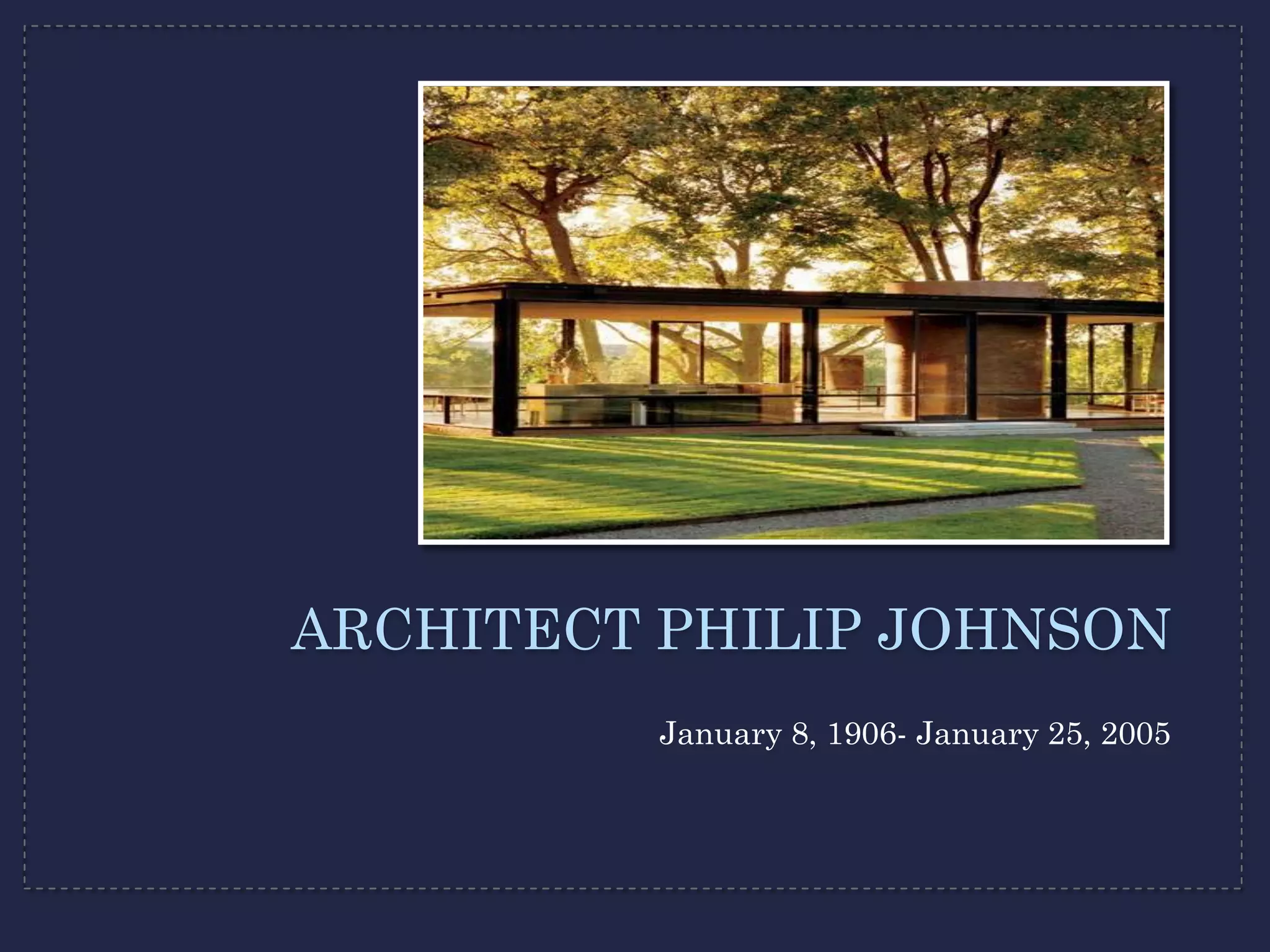
ARCHITECT PHILIP JOHNSON
          January 8, 1906- January 25, 2005
Beginning of Career:
                                               - Founded the
                                                 Department of
                                                 Architecture and Design
                                                 at Museum of Modern
                                                 Art (1930)
                                               - Produced the landmark
                                                 show “The International
                                                 Style: Architecture since
                                                 1922” as an introduction
                                                 of modern architecture
                                                 to the American public.


What is Modern Architecture?
1. Emphasis on architectural volume over mass (planes over solidity)
2. A rejection of symmetry
3. A rejection of applied decoration
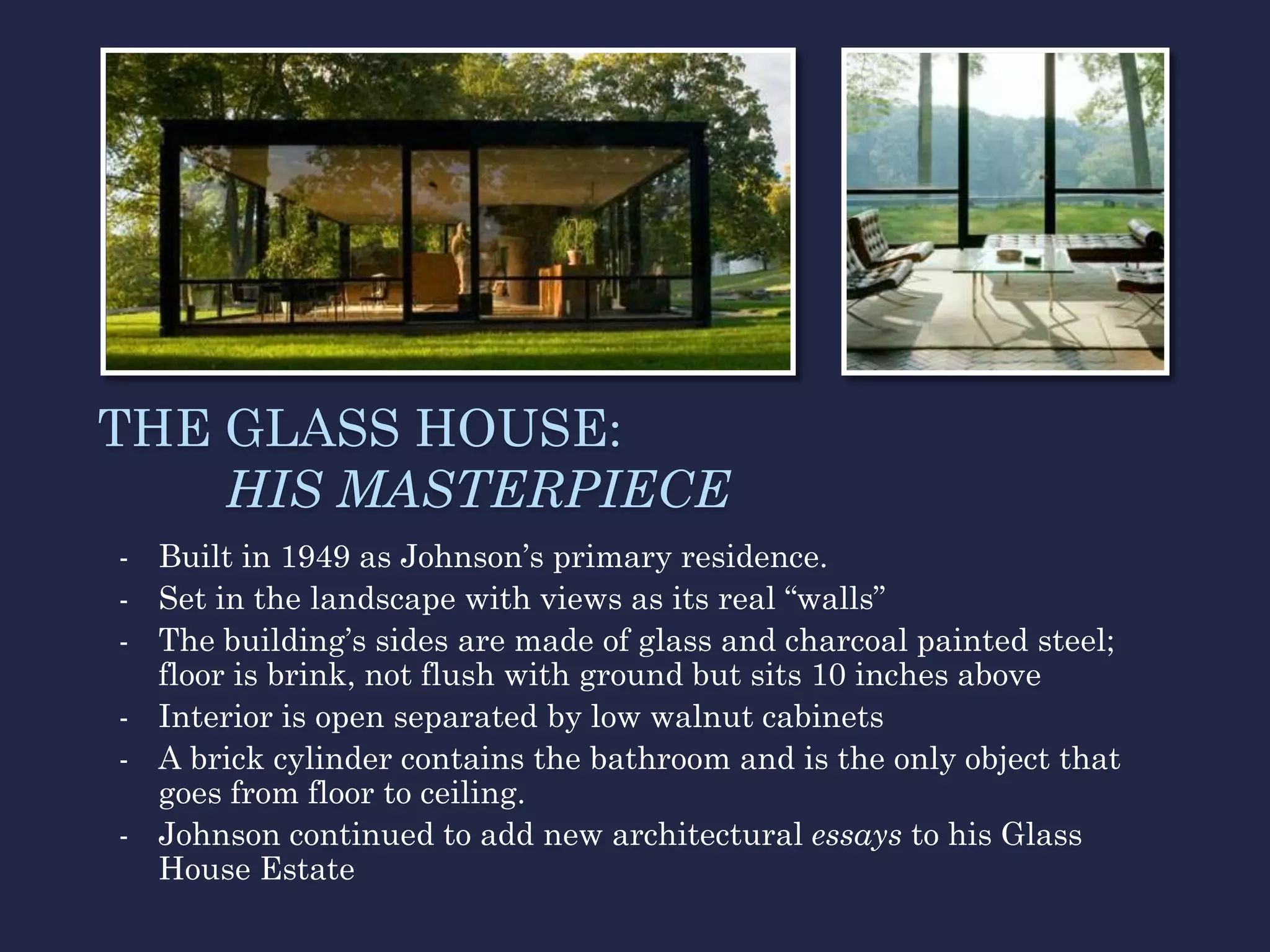
THE GLASS HOUSE:
    HIS MASTERPIECE
- Built in 1949 as Johnson’s primary residence.
- Set in the landscape with views as its real “walls”
- The building’s sides are made of glass and charcoal painted steel;
  floor is brink, not flush with ground but sits 10 inches above
- Interior is open separated by low walnut cabinets
- A brick cylinder contains the bathroom and is the only object that
  goes from floor to ceiling.
- Johnson continued to add new architectural essays to his Glass
  House Estate
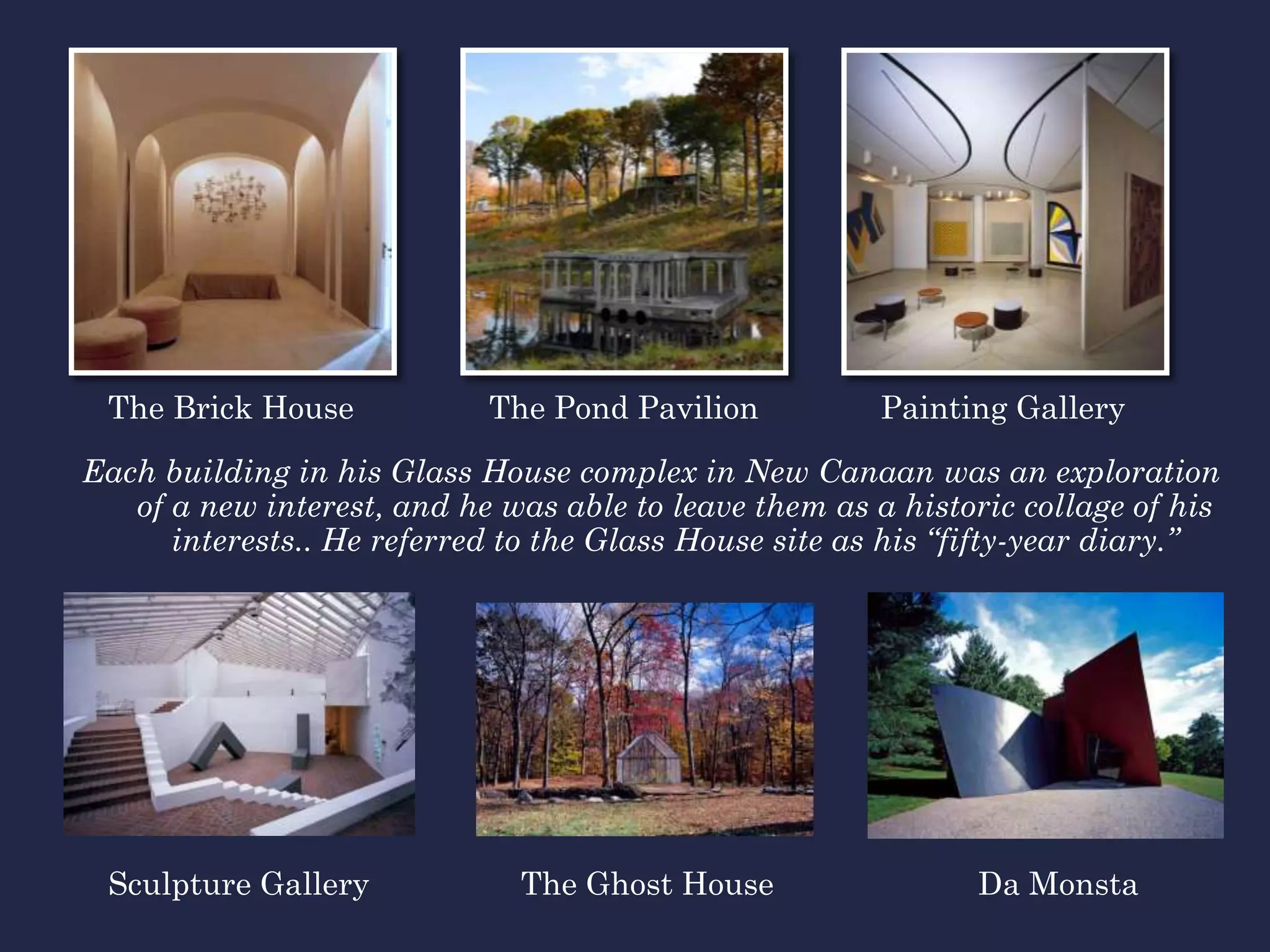
The Brick House            The Pond Pavilion           Painting Gallery

Each building in his Glass House complex in New Canaan was an exploration
   of a new interest, and he was able to leave them as a historic collage of his
      interests.. He referred to the Glass House site as his “fifty-year diary.”


 Sculpture Gallery            The Ghost House                 Da Monsta
The Seagram Building
(NYC):
- Johnson collaborated with
  Mies van der Rohe to design a
  39-story skyscraper in 1958.
- After this, Johnson’s practice
  grew and he worked on
  projects like the Lincoln
  Center and New York State
  Theater.
- After completion Johnson
  moved from his glass and
  steel tower buildings to
  designing spectacular
  crystalline structures
  sheathed in glass.
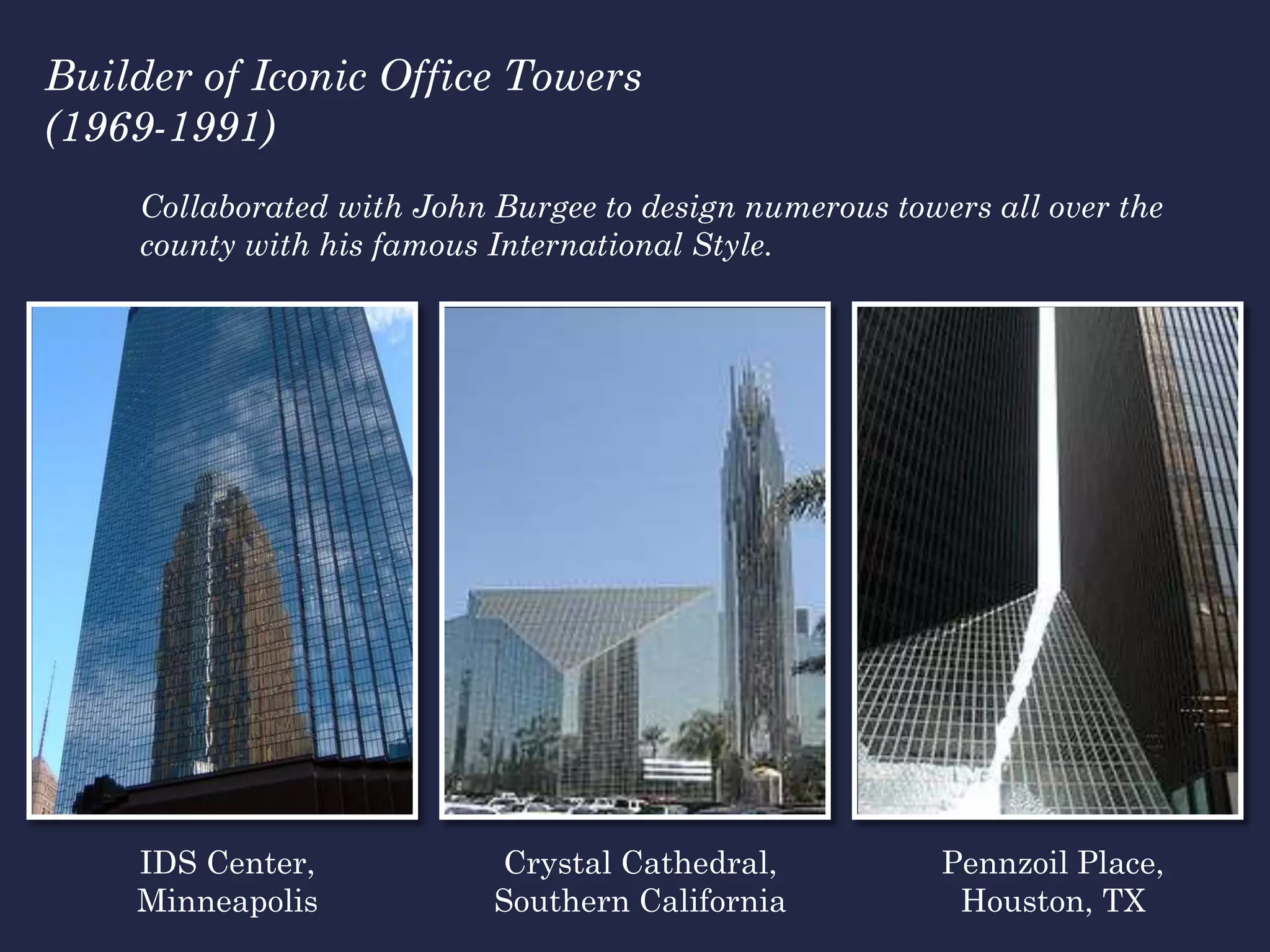
Builder of Iconic Office Towers
(1969-1991)
    Collaborated with John Burgee to design numerous towers all over the
    county with his famous International Style.


    IDS Center,            Crystal Cathedral,            Pennzoil Place,
    Minneapolis            Southern California            Houston, TX
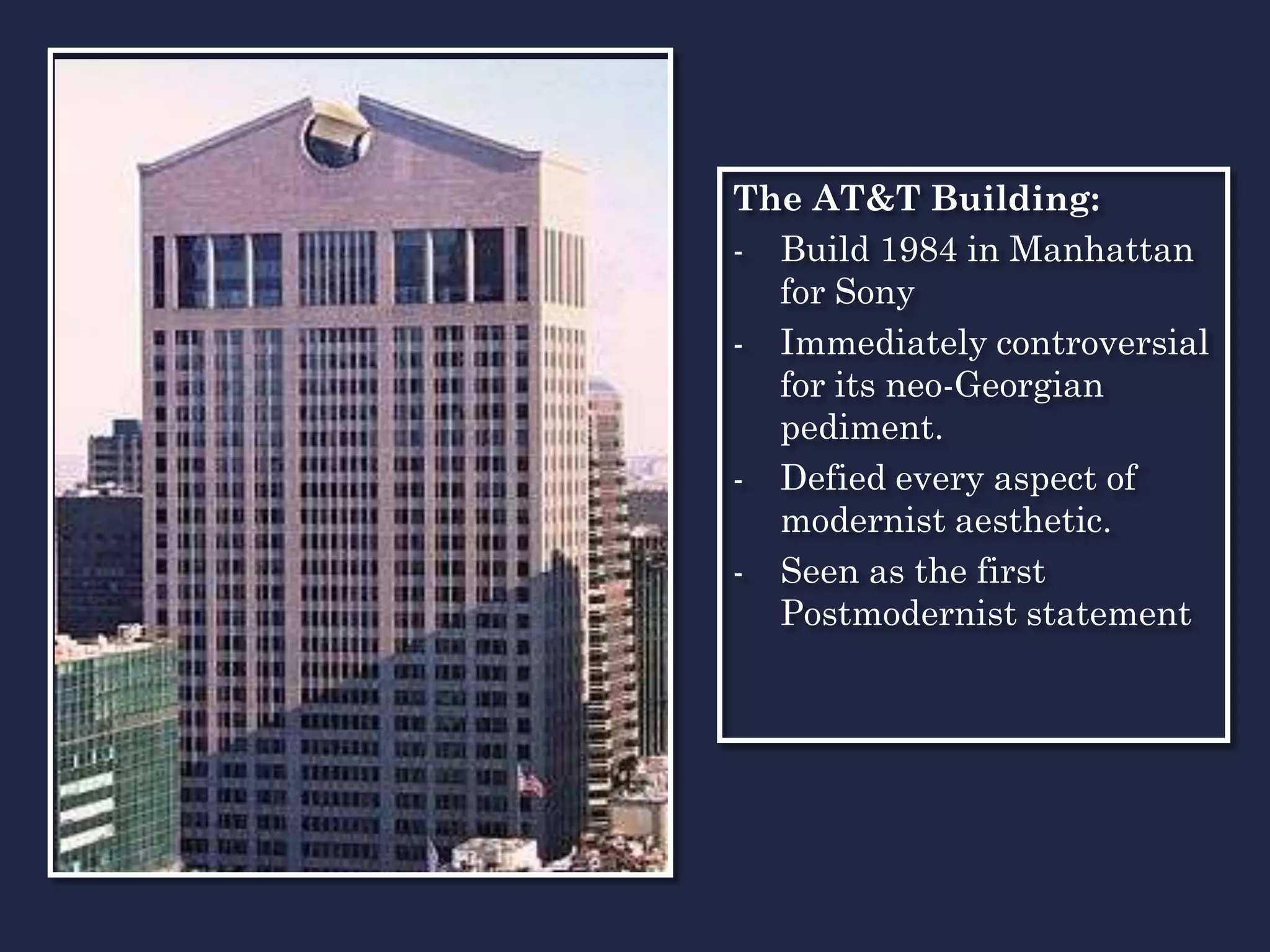
The AT&T Building:
- Build 1984 in Manhattan
  for Sony
- Immediately controversial
  for its neo-Georgian
  pediment.
- Defied every aspect of
  modernist aesthetic.
- Seen as the first
  Postmodernist statement
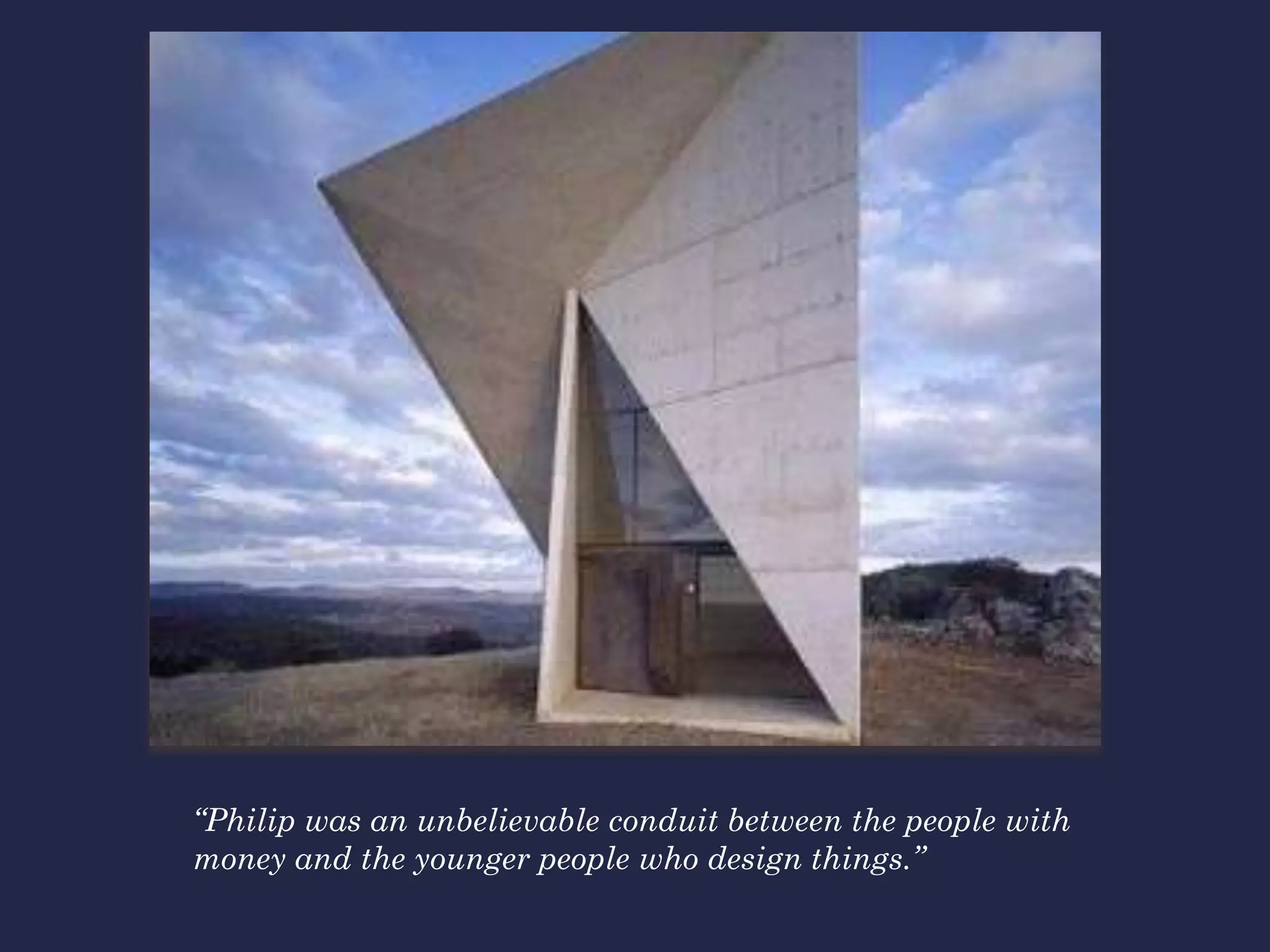
“Philip was an unbelievable conduit between the people with
money and the younger people who design things.”
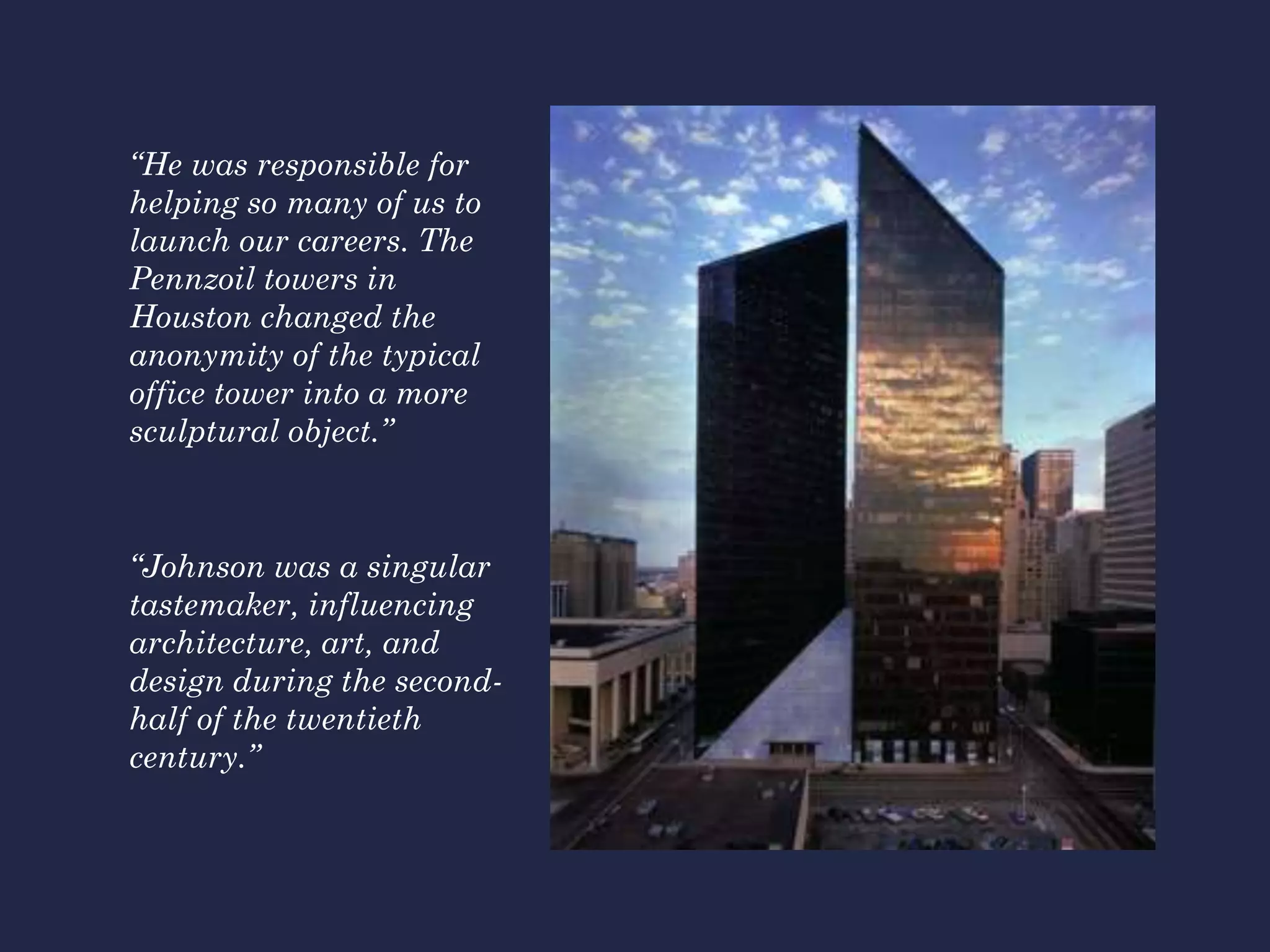
“He was responsible for
helping so many of us to
launch our careers. The
Pennzoil towers in
Houston changed the
anonymity of the typical
office tower into a more
sculptural object.”


“Johnson was a singular
tastemaker, influencing
architecture, art, and
design during the second-
half of the twentieth
century.”
“His 1932 exhibition placed architecture in the museum, making it
a discipline as important as painting or sculpture. That had a
major effect on the way Americans looked at it, and I don’t know of
any other equivalent in another country, putting architecture in
museums that early.”
“His exhibition in 1932
on International Style at
the Museum of Modern
Art and the book that he
wrote with Henry-Russell
Hitchcock sold
modernism to America.
He made it
understandable by
concentrating on the
formal aspects of
modernism, which is
what interested the
public at large”
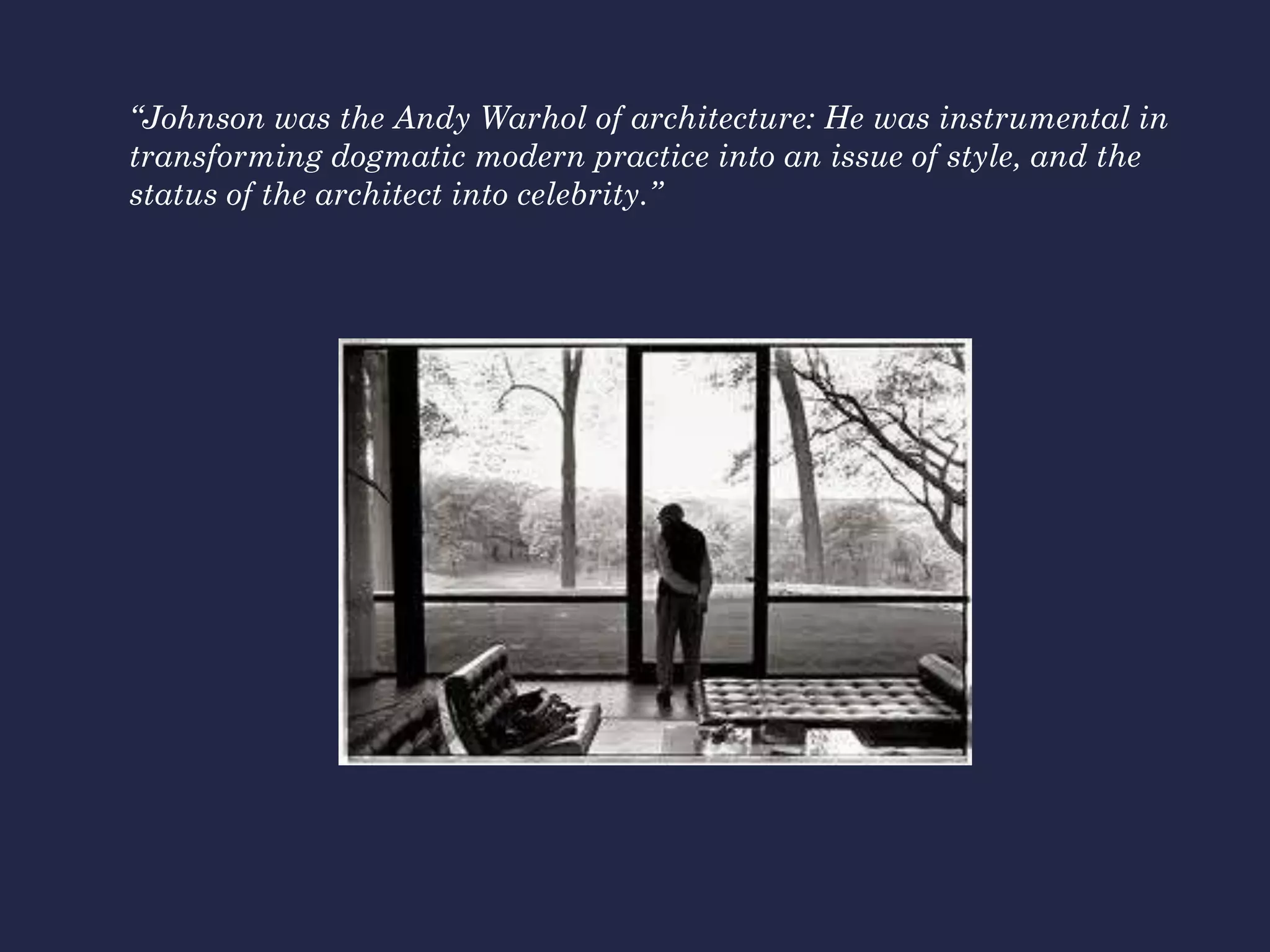
“Johnson was the Andy Warhol of architecture: He was instrumental in
transforming dogmatic modern practice into an issue of style, and the
status of the architect into celebrity.”

Philip Johnson

  • 1.
    ARCHITECT PHILIP JOHNSON January 8, 1906- January 25, 2005
  • 2.
    Beginning of Career: - Founded the Department of Architecture and Design at Museum of Modern Art (1930) - Produced the landmark show “The International Style: Architecture since 1922” as an introduction of modern architecture to the American public. What is Modern Architecture? 1. Emphasis on architectural volume over mass (planes over solidity) 2. A rejection of symmetry 3. A rejection of applied decoration
  • 3.
    THE GLASS HOUSE: HIS MASTERPIECE - Built in 1949 as Johnson’s primary residence. - Set in the landscape with views as its real “walls” - The building’s sides are made of glass and charcoal painted steel; floor is brink, not flush with ground but sits 10 inches above - Interior is open separated by low walnut cabinets - A brick cylinder contains the bathroom and is the only object that goes from floor to ceiling. - Johnson continued to add new architectural essays to his Glass House Estate
  • 4.
    The Brick House The Pond Pavilion Painting Gallery Each building in his Glass House complex in New Canaan was an exploration of a new interest, and he was able to leave them as a historic collage of his interests.. He referred to the Glass House site as his “fifty-year diary.” Sculpture Gallery The Ghost House Da Monsta
  • 5.
    The Seagram Building (NYC): -Johnson collaborated with Mies van der Rohe to design a 39-story skyscraper in 1958. - After this, Johnson’s practice grew and he worked on projects like the Lincoln Center and New York State Theater. - After completion Johnson moved from his glass and steel tower buildings to designing spectacular crystalline structures sheathed in glass.
  • 6.
    Builder of IconicOffice Towers (1969-1991) Collaborated with John Burgee to design numerous towers all over the county with his famous International Style. IDS Center, Crystal Cathedral, Pennzoil Place, Minneapolis Southern California Houston, TX
  • 7.
    The AT&T Building: -Build 1984 in Manhattan for Sony - Immediately controversial for its neo-Georgian pediment. - Defied every aspect of modernist aesthetic. - Seen as the first Postmodernist statement
  • 8.
    “Philip was anunbelievable conduit between the people with money and the younger people who design things.”
  • 9.
    “He was responsiblefor helping so many of us to launch our careers. The Pennzoil towers in Houston changed the anonymity of the typical office tower into a more sculptural object.” “Johnson was a singular tastemaker, influencing architecture, art, and design during the second- half of the twentieth century.”
  • 10.
    “His 1932 exhibitionplaced architecture in the museum, making it a discipline as important as painting or sculpture. That had a major effect on the way Americans looked at it, and I don’t know of any other equivalent in another country, putting architecture in museums that early.”
  • 11.
    “His exhibition in1932 on International Style at the Museum of Modern Art and the book that he wrote with Henry-Russell Hitchcock sold modernism to America. He made it understandable by concentrating on the formal aspects of modernism, which is what interested the public at large”
  • 12.
    “Johnson was theAndy Warhol of architecture: He was instrumental in transforming dogmatic modern practice into an issue of style, and the status of the architect into celebrity.”