 + Rx = 
 + Rx = 
 + Rx = 
People react differently to drugs!
PHARMACOGEN
ETICS
 Pharmacogenetics is the study of influences of a gene on therapeutic and adverse effects of
drugs.
 Primaquine induced hemolysis in patients with G6PD (Glucose-6-Phosphate Dehydrogenase
) deficiency, was the first pharmacogenetic discovery.
 The term Pharmacogenetics was coined by Vogel in 1959.
 Currently, there are over 120 drugs including warfarin, carbamazepine, azathioprine etc. whose
labeling includes pharmacogenetic discoveries.
 The pharmacokinetics of a drug can be changed by sequence variations in drug-disposition genes.
 The pharmacodynamics of a drug can be changed by sequence variations in drug-target genes.
i. single nucleotide polymorphisms (SNPs)
ii. insertions/deletions (indels).
TYPES OF GENETIC VARIANTS
 A drug’s disposition includes its absorption, metabolism, distribution, and excretion (ADME).
 The plasma concentrations of the parent drug or its active metabolites may be affected by a genetic
polymorphism changing the function of a protein that is involved in the disposition of a drug.
 Genetic polymorphism  lower activity of a metabolizing enzyme  plasma concentrations of the
parent drug may increase and plasma concentrations of metabolites may decrease.
 Parent drug exhibits pharmacologic activity, the genetic polymorphism will potentiate the drug
response, including adverse drug reactions.
 Examples:
 Warfarin and CYP2C9 polymorphisms
 Tamoxifen and CYP2D6 polymorphisms
 Thiopurine drugs and Thiopurine S-methyltransferase (TPMT) polymorphisms
 Large variability in the dose required to achieve
therapeutic anticoagulation
 CYP2C9 is the enzyme responsible for the
metabolism of warfarin
 SNPs exist in CYP2C9 gene that decrease the
activity of the CYP2C9 metabolizing enzyme
 Tamoxifen is commonly used for breast cancer
treatment.
 Endoxifen, a metabolite of tamoxifen, is 100 times
more potent than the parent drug.
 CYP2D6 is involved in generating endoxifen from
tamoxifen
 NPs exist in CYP2D6 gene that decrease the activity of
the CYP2D6 metabolizing enzyme
 CYP2D6 is responsible for the metabolism of a number
of different drugs
 Antidepressants, antipsychotics, analgesics, cardiovascular
drugs
 Over 100 polymorphisms in CYP2D6 have been
identified
 Thiopurine drugs are used to treat Acute
lymphoblastic leukemia
 TPMT metabolizes thiopurine drugs such as
mercaptopurine and azathioprine.
 Polymorphisms in the TPMT gene result in decreased
TPMT enzyme activity
 Decreased TPMT activity predisposes individuals to
severe, life-threatening toxicities from these drugs
 Genetic polymorphisms of drug-target enzyme or receptor may alter the drug
response.
 Fewer genetic polymorphisms in pharmacodynamic genes have been
recognized by FDA, including…
 ß1-adrenergic receptor gene polymorphisms (ADRB1) and ß-blocker response
 Ser49Gly and Arg389Gly are two common SNPs in ADRB1.
 It is hypothesized that hypertensive patients carrying Ser49 or Arg389 would have greater
reduction in blood pressure with ß-blocker therapy.
 Several studies have found that hypertensive patients with Ser49Arg389/Ser49Arg389
haplotype had the greatest reduction in blood pressure with oral metoprolol.
 Since the frequency of the Arg389 allele in ADRB1 is higher in Caucasians (73%) than in
African Americans (58%), Caucasians are more likely to have a better blood pressure response
to a ß-blocker than do African Americans.
 HLA gene tests
 Drug metabolism related gene test
 Drug target related gene test
 Combined (metabolism & target) gene test
Amplichip
Determine the genotype of the patient in terms of two
CYP450 enzymes: 2D6 and 2C19.
FDA approved the test on Dec 24, 2004. The Amplichip CYP450
test is the first FDA approved pharmacogenetic test.
 Maximize drug efficacy
 Minimize drug toxicity
 Studying drug metabolism and
pharmacological effects
 Aid in new drug development
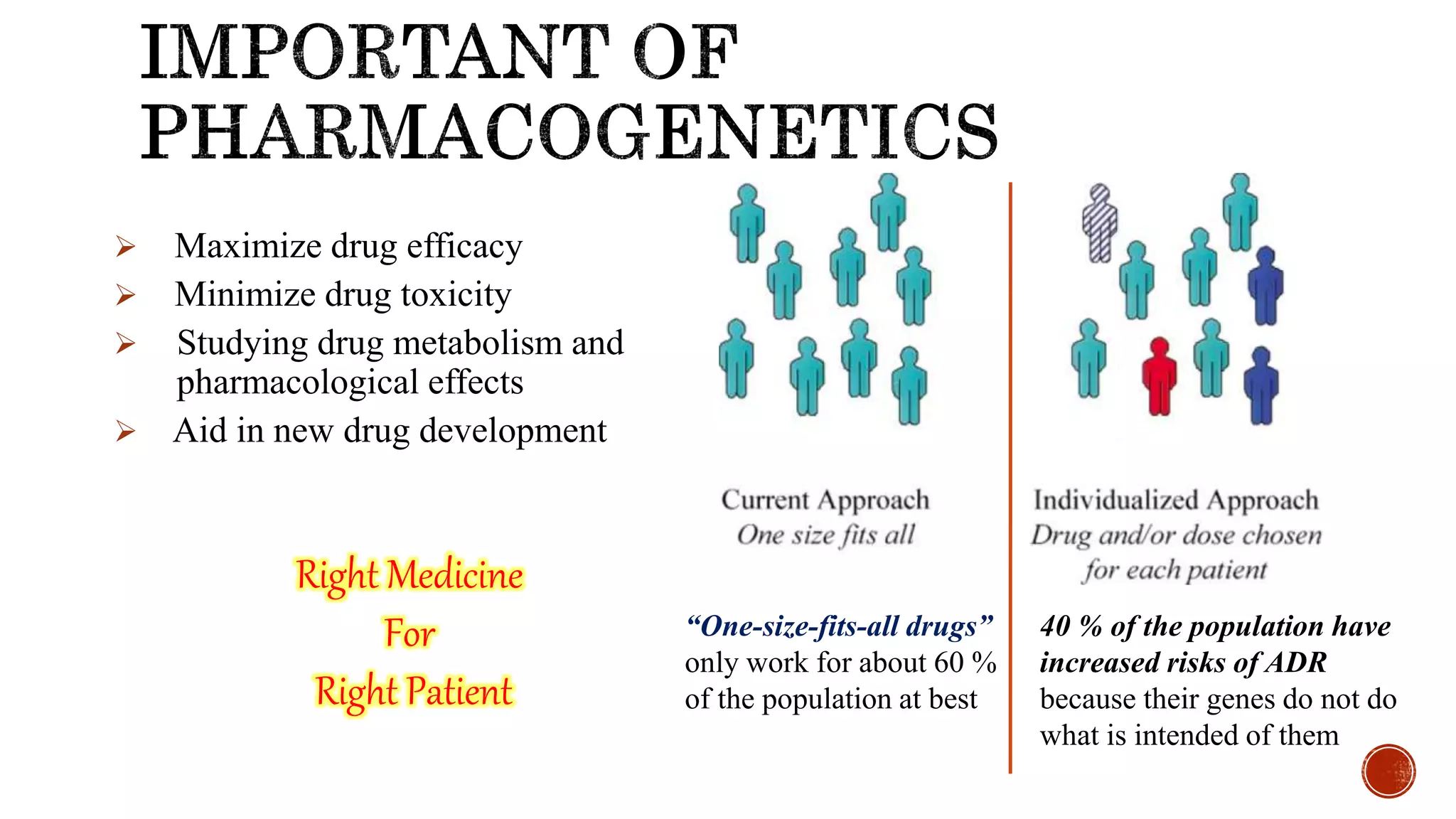
“One-size-fits-all drugs”
only work for about 60 %
of the population at best
40 % of the population have
increased risks of ADR
because their genes do not do
what is intended of them
Right Medicine
For
Right Patient
 The drug response is probably affected by multiple genes.
 Drug response might be predicted from a certain pattern of polymorphisms rather than only a
single polymorphism.
 Holding sensitive information on someone’s genetic make up raises questions of privacy and
security and ethical dilemmas in disease prognosis and treatment choices.

Pharmacogenetic

  • 1.
     + Rx=   + Rx =   + Rx =  People react differently to drugs! PHARMACOGEN ETICS
  • 3.
     Pharmacogenetics isthe study of influences of a gene on therapeutic and adverse effects of drugs.  Primaquine induced hemolysis in patients with G6PD (Glucose-6-Phosphate Dehydrogenase ) deficiency, was the first pharmacogenetic discovery.  The term Pharmacogenetics was coined by Vogel in 1959.  Currently, there are over 120 drugs including warfarin, carbamazepine, azathioprine etc. whose labeling includes pharmacogenetic discoveries.
  • 4.
     The pharmacokineticsof a drug can be changed by sequence variations in drug-disposition genes.  The pharmacodynamics of a drug can be changed by sequence variations in drug-target genes. i. single nucleotide polymorphisms (SNPs) ii. insertions/deletions (indels). TYPES OF GENETIC VARIANTS
  • 5.
     A drug’sdisposition includes its absorption, metabolism, distribution, and excretion (ADME).  The plasma concentrations of the parent drug or its active metabolites may be affected by a genetic polymorphism changing the function of a protein that is involved in the disposition of a drug.  Genetic polymorphism  lower activity of a metabolizing enzyme  plasma concentrations of the parent drug may increase and plasma concentrations of metabolites may decrease.  Parent drug exhibits pharmacologic activity, the genetic polymorphism will potentiate the drug response, including adverse drug reactions.  Examples:  Warfarin and CYP2C9 polymorphisms  Tamoxifen and CYP2D6 polymorphisms  Thiopurine drugs and Thiopurine S-methyltransferase (TPMT) polymorphisms
  • 6.
     Large variabilityin the dose required to achieve therapeutic anticoagulation  CYP2C9 is the enzyme responsible for the metabolism of warfarin  SNPs exist in CYP2C9 gene that decrease the activity of the CYP2C9 metabolizing enzyme
  • 7.
     Tamoxifen iscommonly used for breast cancer treatment.  Endoxifen, a metabolite of tamoxifen, is 100 times more potent than the parent drug.  CYP2D6 is involved in generating endoxifen from tamoxifen  NPs exist in CYP2D6 gene that decrease the activity of the CYP2D6 metabolizing enzyme  CYP2D6 is responsible for the metabolism of a number of different drugs  Antidepressants, antipsychotics, analgesics, cardiovascular drugs  Over 100 polymorphisms in CYP2D6 have been identified
  • 8.
     Thiopurine drugsare used to treat Acute lymphoblastic leukemia  TPMT metabolizes thiopurine drugs such as mercaptopurine and azathioprine.  Polymorphisms in the TPMT gene result in decreased TPMT enzyme activity  Decreased TPMT activity predisposes individuals to severe, life-threatening toxicities from these drugs
  • 9.
     Genetic polymorphismsof drug-target enzyme or receptor may alter the drug response.  Fewer genetic polymorphisms in pharmacodynamic genes have been recognized by FDA, including…  ß1-adrenergic receptor gene polymorphisms (ADRB1) and ß-blocker response
  • 10.
     Ser49Gly andArg389Gly are two common SNPs in ADRB1.  It is hypothesized that hypertensive patients carrying Ser49 or Arg389 would have greater reduction in blood pressure with ß-blocker therapy.  Several studies have found that hypertensive patients with Ser49Arg389/Ser49Arg389 haplotype had the greatest reduction in blood pressure with oral metoprolol.  Since the frequency of the Arg389 allele in ADRB1 is higher in Caucasians (73%) than in African Americans (58%), Caucasians are more likely to have a better blood pressure response to a ß-blocker than do African Americans.
  • 11.
     HLA genetests  Drug metabolism related gene test  Drug target related gene test  Combined (metabolism & target) gene test Amplichip Determine the genotype of the patient in terms of two CYP450 enzymes: 2D6 and 2C19. FDA approved the test on Dec 24, 2004. The Amplichip CYP450 test is the first FDA approved pharmacogenetic test.
  • 12.
     Maximize drugefficacy  Minimize drug toxicity  Studying drug metabolism and pharmacological effects  Aid in new drug development “One-size-fits-all drugs” only work for about 60 % of the population at best 40 % of the population have increased risks of ADR because their genes do not do what is intended of them Right Medicine For Right Patient
  • 14.
     The drugresponse is probably affected by multiple genes.  Drug response might be predicted from a certain pattern of polymorphisms rather than only a single polymorphism.  Holding sensitive information on someone’s genetic make up raises questions of privacy and security and ethical dilemmas in disease prognosis and treatment choices.