




B. Pharma
1St Semester
Unit -1
Presented by – Nikita Gupta
(Assistant Professor)
• Historical background and development of profession of pharmacy:
History of profession of Pharmacy in India in relation to pharmacy
education
• Industry and organization
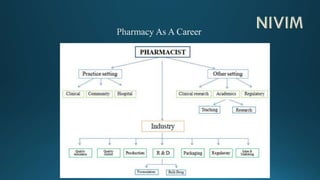
• Pharmacy as a career
• Pharmacopoeias: Introduction to IP, BP, USP and Extra
Pharmacopoeia.
Industrial Organization Areas of Study Below is a sample
listing of topics that the study of industrial organization can
focus on:-
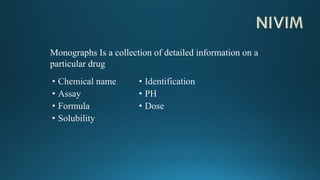
Monographs Is a collection of detailed information on a
particular drug
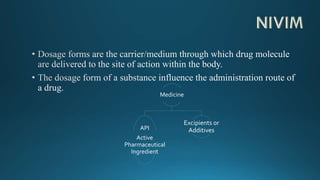
Medicine
API
Active
Pharmaceutical
Ingredient
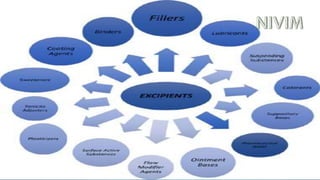
Excipients or
Additives
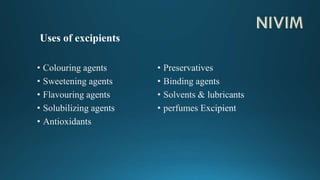
Uses of excipients
Definition
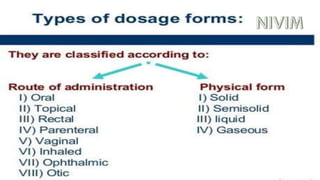
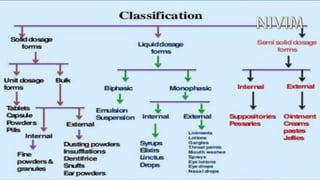
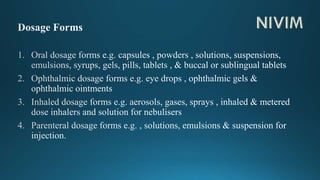
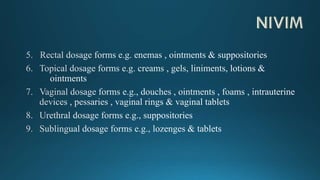
Tablets - Tablets are unit dosage form consisting API & excipients.it may
vary in size, shape, weight , hardness , thickness & in other aspects.
The active substance in the API & the excipients used are various
diluents , binders or granulating agents , glidants , lubricants ( for
efficient tableting ) , disintegrants , sweeteners , flavours & pigments.
Capsules - Capsules are you need to deposit form consisting of
gelatine such that break open after the capsule has been
swallowed these are of two types. e.g., hard & soft gelatine
capsule
Hard gelatine capsule two pieces fit together & hold the drug
either powder or granular form.
Soft gelatine capsule one piece with drug usually in liquid form
inside the shell Pills
Pills - These are spherical solid oral dosage forms which are mixtures
of one or more APIs and inert excipients.
Dentifrices - Dentifrices including toothpaste , are agents used along
with a toothbrush to clean and polish natural teeth.
• Elixirs - Elixirs are solution that contain alcohol & water, base ,
sugar & flavouring agents are commonly used for pediatrics and
elderly patients who have difficulty in tablet swallowing.
• Pastes - These are also semi-solid preparations applied externally.
The different from ointments and gels as they contain large amount
of finely powdered medicaments.
Suppositories - These are solid dosage forms which for producing
local or systematic effect are inserted into body cavities like rectum,
vagina, urethra , nose , or ear.
Infants or patients who are suffering from nausea, vomiting and GI
disturbances are not able to take drugs orally, are given in suppository
forms.
Lotions - These are liquid dosage forms which are
applied externally without friction.
Lotions are either applied directly on the skin or applied
on a dressing which is further covered with a waterproof
dressing, thus reducing evaporation.
Liniments - These are fluids, semi-fluids , or semisolid dosage form
which are applied to the skin.
They are alcoholic, oily solutions, or emulsions which are either
massage on the skin to produce counter irritant or stimulant action,
are applied on a warm dressing or with a brush to produce analgesic
and soothing effect.
Gargles - These are concentrated aqueous solutions which are diluted
with warm water in prophylaxis or for treating throat infections.
Mouthwashes - These are used for treating mouth infections and
maintaining oral hygiene. They are similar to gargles.
Prescription
Prescription is an order written by the physician ( either
electronic or handwritten), dentist or any other medical
practitioner to the pharmacist to compound or dispense a
specific medication for individual patient.
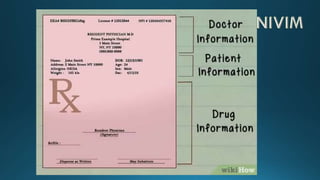
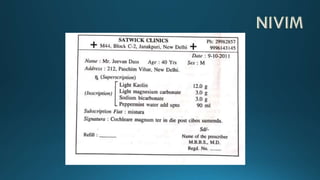
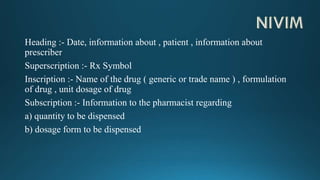
Heading :- Date, information about , patient , information about
prescriber
Superscription :- Rx Symbol
Inscription :- Name of the drug ( generic or trade name ) , formulation
of drug , unit dosage of drug
Subscription :- Information to the pharmacist regarding
a) quantity to be dispensed
b) dosage form to be dispensed
Transcription :- ❖ Prescribers direction to the patient
a) Instruction about the amount of drug to be taken
b) Time
c) Frequency of the dose to be taken
Signature & instruction :-
❖ Signature of prescriber
❖ Signature of patient ( if required )
❖ Refill instruction ( if needed )
❖ Special instruction ( if any )
Handling of prescription
Receiving:- prescription received by the pharmacist for
reading and checking
Dosage calculation :- dosage calculation is done by the
pharmacist
Compounding :- ingredients are compounded by accurate
method ( by electric weighing machine )
Finishing:- include packaging , labelling , rechecking and
filling
Pricing:- prescription is prized after finishing is done
Delivering:- these are of two types a) Store delivery b) Home
delivery/mail delivery
Posology
The word posology is derived from Greek word “ Posos” means how
much and “ logos” means science.
Posology is the branch of medical of science that deals with dose or
quantity of drugs which can be administered to the patient to get
desired pharmacological action.
Dose :- Dose is simply an amount (weight) of a medication which is
administered at one specific time,
e.g. paracetamol 450mg tablet
Dosage :- Dosages is the size or frequency of a dose of a medicine or
drug.
e.g. a dosage of paracetamol 450mg thrice a day.
Factor affecting dose
❖ Age
❖ Gender
❖ Body weight
❖ Route of administration
❖ Time of administration
❖ Environment factors
❖ Emotional factors
❖ Presence of disease
❖ accumulation
❖ Additive effect
❖ Synergism
❖ Antagonism
❖ Idiosyncrasy
❖ Tachyphylaxis
❖ Metabolic disturbance
❖ tolerance
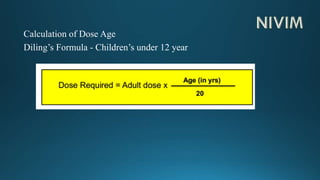
Calculation of Dose Age
Diling’s Formula - Children’s under 12 year
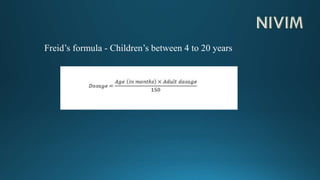
Freid’s formula - Children’s between 4 to 20 years
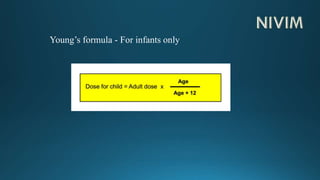
Young’s formula - For infants only
ThankYou
Stay Connected with NIVIM…..

Pharmaceutics Unit -1.pptx

  • 1.
    B. Pharma 1St Semester Unit-1 Presented by – Nikita Gupta (Assistant Professor)
  • 2.
    • Historical backgroundand development of profession of pharmacy: History of profession of Pharmacy in India in relation to pharmacy education • Industry and organization • Pharmacy as a career • Pharmacopoeias: Introduction to IP, BP, USP and Extra Pharmacopoeia.
  • 15.
    Industrial Organization Areasof Study Below is a sample listing of topics that the study of industrial organization can focus on:-
  • 20.
    Monographs Is acollection of detailed information on a particular drug
  • 32.
  • 35.
  • 41.
    Definition Tablets - Tabletsare unit dosage form consisting API & excipients.it may vary in size, shape, weight , hardness , thickness & in other aspects. The active substance in the API & the excipients used are various diluents , binders or granulating agents , glidants , lubricants ( for efficient tableting ) , disintegrants , sweeteners , flavours & pigments.
  • 42.
    Capsules - Capsulesare you need to deposit form consisting of gelatine such that break open after the capsule has been swallowed these are of two types. e.g., hard & soft gelatine capsule Hard gelatine capsule two pieces fit together & hold the drug either powder or granular form. Soft gelatine capsule one piece with drug usually in liquid form inside the shell Pills
  • 43.
    Pills - Theseare spherical solid oral dosage forms which are mixtures of one or more APIs and inert excipients. Dentifrices - Dentifrices including toothpaste , are agents used along with a toothbrush to clean and polish natural teeth.
  • 44.
    • Elixirs -Elixirs are solution that contain alcohol & water, base , sugar & flavouring agents are commonly used for pediatrics and elderly patients who have difficulty in tablet swallowing. • Pastes - These are also semi-solid preparations applied externally. The different from ointments and gels as they contain large amount of finely powdered medicaments.
  • 45.
    Suppositories - Theseare solid dosage forms which for producing local or systematic effect are inserted into body cavities like rectum, vagina, urethra , nose , or ear. Infants or patients who are suffering from nausea, vomiting and GI disturbances are not able to take drugs orally, are given in suppository forms.
  • 46.
    Lotions - Theseare liquid dosage forms which are applied externally without friction. Lotions are either applied directly on the skin or applied on a dressing which is further covered with a waterproof dressing, thus reducing evaporation.
  • 47.
    Liniments - Theseare fluids, semi-fluids , or semisolid dosage form which are applied to the skin. They are alcoholic, oily solutions, or emulsions which are either massage on the skin to produce counter irritant or stimulant action, are applied on a warm dressing or with a brush to produce analgesic and soothing effect.
  • 48.
    Gargles - Theseare concentrated aqueous solutions which are diluted with warm water in prophylaxis or for treating throat infections. Mouthwashes - These are used for treating mouth infections and maintaining oral hygiene. They are similar to gargles.
  • 49.
    Prescription Prescription is anorder written by the physician ( either electronic or handwritten), dentist or any other medical practitioner to the pharmacist to compound or dispense a specific medication for individual patient.
  • 52.
    Heading :- Date,information about , patient , information about prescriber Superscription :- Rx Symbol Inscription :- Name of the drug ( generic or trade name ) , formulation of drug , unit dosage of drug Subscription :- Information to the pharmacist regarding a) quantity to be dispensed b) dosage form to be dispensed
  • 53.
    Transcription :- ❖Prescribers direction to the patient a) Instruction about the amount of drug to be taken b) Time c) Frequency of the dose to be taken Signature & instruction :- ❖ Signature of prescriber ❖ Signature of patient ( if required ) ❖ Refill instruction ( if needed ) ❖ Special instruction ( if any )
  • 54.
    Handling of prescription Receiving:-prescription received by the pharmacist for reading and checking Dosage calculation :- dosage calculation is done by the pharmacist
  • 55.
    Compounding :- ingredientsare compounded by accurate method ( by electric weighing machine ) Finishing:- include packaging , labelling , rechecking and filling Pricing:- prescription is prized after finishing is done Delivering:- these are of two types a) Store delivery b) Home delivery/mail delivery
  • 66.
    Posology The word posologyis derived from Greek word “ Posos” means how much and “ logos” means science. Posology is the branch of medical of science that deals with dose or quantity of drugs which can be administered to the patient to get desired pharmacological action.
  • 67.
    Dose :- Doseis simply an amount (weight) of a medication which is administered at one specific time, e.g. paracetamol 450mg tablet Dosage :- Dosages is the size or frequency of a dose of a medicine or drug. e.g. a dosage of paracetamol 450mg thrice a day.
  • 68.
    Factor affecting dose ❖Age ❖ Gender ❖ Body weight ❖ Route of administration ❖ Time of administration ❖ Environment factors ❖ Emotional factors ❖ Presence of disease ❖ accumulation ❖ Additive effect ❖ Synergism ❖ Antagonism ❖ Idiosyncrasy ❖ Tachyphylaxis ❖ Metabolic disturbance ❖ tolerance
  • 69.
    Calculation of DoseAge Diling’s Formula - Children’s under 12 year
  • 70.
    Freid’s formula -Children’s between 4 to 20 years
  • 71.
    Young’s formula -For infants only
  • 72.