Pharmaceutical competitive
intelligence
A.U: 2016-2017
Realized by:
Abidi Feriel
Proposed by:
Lamia Zaibi
Definition Competitive Intelligence
Benefits of competitive intelligence
Use of competitive intelligence
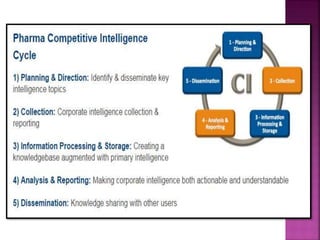
Pharmaceutical competitive intelligence
Competitive Intelligence for pharmaceutical
Examples of competitive intelligence research
Definition pharma competitive intelligence
Strategic Pharmaceutical Competitive Intelligence
Pharma competitive intelligence(video)
Definition Competitive Intelligence :
Competitive intelligence is the collection and analysis of
information to anticipate competitive activity, see past
market disruptions and dispassionately interpret events.
It is an essential component to developing a business
strategy.
Benefits of competitive intelligence:
Incorporates external competitive and market forces into
strategic planning.
Generates strategically relevant insights from research and
structured analysis.
Enhances marketing, strategic planning, finance, and operations.
Minimizes decision risk and reduces uncertainty about external
developments.
Use of competitive intelligence :
Develop corporate or business unit strategies.
Prepare a new product launch, new market entry, or other
strategic move in the market.
Benchmark other organizations.
Anticipate and plan for future market opportunities and
disruptions.
Assess effectiveness of competitors market positioning and
product messaging.
Pharmaceutical competitive
intelligence
Competitive Intelligence for pharmaceutical
Pharmaceutical companies are some of the world’s leading
practitioners of competitive intelligence.
Example of company is " Aqute" works with pharmaceutical
companies of all sizes, keeping a sharp eye out for what
competitors will do next.
Pharmaceutical competitive intelligence is intensely focused
on competitors’ product development plans.
Examples of competitive intelligence research
include:
In-depth interviewing of provider organizations, physicians,
solution partners, and competitors.
Pricing and positioning strategies of competing vendors.
Benchmarking competitors' products, services, and programs.
Definition
According to Pennside Partners , Competitive Intelligence for
the pharma and biotech industry is a systematic process for the
legal and ethical collection, objective analysis, and controlled
dissemination of actionable intelligence to decision-makers
about their competitors’ objectives, strategies, assumptions,
and capabilities.
By introducing competitive intelligence procedures and service
documents tailored to the pharmaceutical industry requirements,
laboratories are able to improve their reactivity to developments in
their competitive environment:
Monitoring changes in competitors’ portfolios, hiring in R&D
and priority advertising material.
Identifying and monitoring the opinion leaders and the
symposia and conferences organized by competitors.
Pharmaceutical competitive intelligence services includes:
Monitoring of clinical trials and product development.
Customized global competitive intelligence services.
Anticipating complaints, claims, or lawsuits about recently
developed drugs.
Identifying competitors’ sales structures and commercial
priorities.
Strategic Pharmaceutical Competitive
Intelligence
Restructure the team for success by raising pharmaceutical
competitive intelligence's (CI) profile.
 CI team budgets have gradually increased since 2007, but
many groups still withstand crippling cycles of expansions
and cutbacks.
Secure the budgets and staffing and establish the value of
Competitive intelligence within the larger organization.
Along the way, build a culture of competitive intelligence that
reaches across functions to collect and share critical information
wherever it appears.
Strategic Pharmaceutical Competitive
Intelligence
Research
phase: Focused on
disease analysis,
platforms,
technologies,
targets
Licensing phase: Focused on
potential products, mechanism
of action, company reviews,
competitive bidders, IP
(patents)
Development phase: Focused on
clinical endpoints, potential claims,
time to market, clinical issues
Manufacturing
phase: Focused on
bulk sources, cost
analysis, capacity,
technical
assessments
Marketing
phase: Focused on
phase III & IV,
market dynamics,
environment
LCM
phase: Foc
used on
new
formulatio
ns, product
line
extensions,
IP
(patents),
regulatory
issues,
generic
launches
http://www.fuld.com/what-is-competitive-intelligence
https://www.pharmaforce.biz/CompetitiveMonitoring.aspx
https://www.aqute.com/competitive-intelligence-in-pharmaceuticals/
https://www.youtube.com/watch?v=6tSROZHiUDg
http://www.news.pharma-
mkting.com/pmn69-article04.pdf
Webography
http://www.pennside.com/pharma-ci-competitive-intelligence-
corporate-intelligence-consulting
Pharmaceutical competitive intelligence

Pharmaceutical competitive intelligence

  • 1.
    Pharmaceutical competitive intelligence A.U: 2016-2017 Realizedby: Abidi Feriel Proposed by: Lamia Zaibi
  • 2.
    Definition Competitive Intelligence Benefitsof competitive intelligence Use of competitive intelligence Pharmaceutical competitive intelligence Competitive Intelligence for pharmaceutical Examples of competitive intelligence research Definition pharma competitive intelligence Strategic Pharmaceutical Competitive Intelligence Pharma competitive intelligence(video)
  • 3.
    Definition Competitive Intelligence: Competitive intelligence is the collection and analysis of information to anticipate competitive activity, see past market disruptions and dispassionately interpret events. It is an essential component to developing a business strategy.
  • 4.
    Benefits of competitiveintelligence: Incorporates external competitive and market forces into strategic planning. Generates strategically relevant insights from research and structured analysis. Enhances marketing, strategic planning, finance, and operations. Minimizes decision risk and reduces uncertainty about external developments.
  • 5.
    Use of competitiveintelligence : Develop corporate or business unit strategies. Prepare a new product launch, new market entry, or other strategic move in the market. Benchmark other organizations. Anticipate and plan for future market opportunities and disruptions. Assess effectiveness of competitors market positioning and product messaging.
  • 6.
  • 7.
    Competitive Intelligence forpharmaceutical Pharmaceutical companies are some of the world’s leading practitioners of competitive intelligence. Example of company is " Aqute" works with pharmaceutical companies of all sizes, keeping a sharp eye out for what competitors will do next. Pharmaceutical competitive intelligence is intensely focused on competitors’ product development plans.
  • 8.
    Examples of competitiveintelligence research include: In-depth interviewing of provider organizations, physicians, solution partners, and competitors. Pricing and positioning strategies of competing vendors. Benchmarking competitors' products, services, and programs.
  • 9.
    Definition According to PennsidePartners , Competitive Intelligence for the pharma and biotech industry is a systematic process for the legal and ethical collection, objective analysis, and controlled dissemination of actionable intelligence to decision-makers about their competitors’ objectives, strategies, assumptions, and capabilities.
  • 11.
    By introducing competitiveintelligence procedures and service documents tailored to the pharmaceutical industry requirements, laboratories are able to improve their reactivity to developments in their competitive environment: Monitoring changes in competitors’ portfolios, hiring in R&D and priority advertising material. Identifying and monitoring the opinion leaders and the symposia and conferences organized by competitors.
  • 12.
    Pharmaceutical competitive intelligenceservices includes: Monitoring of clinical trials and product development. Customized global competitive intelligence services. Anticipating complaints, claims, or lawsuits about recently developed drugs. Identifying competitors’ sales structures and commercial priorities.
  • 13.
    Strategic Pharmaceutical Competitive Intelligence Restructurethe team for success by raising pharmaceutical competitive intelligence's (CI) profile.  CI team budgets have gradually increased since 2007, but many groups still withstand crippling cycles of expansions and cutbacks.
  • 14.
    Secure the budgetsand staffing and establish the value of Competitive intelligence within the larger organization. Along the way, build a culture of competitive intelligence that reaches across functions to collect and share critical information wherever it appears. Strategic Pharmaceutical Competitive Intelligence
  • 15.
    Research phase: Focused on diseaseanalysis, platforms, technologies, targets Licensing phase: Focused on potential products, mechanism of action, company reviews, competitive bidders, IP (patents) Development phase: Focused on clinical endpoints, potential claims, time to market, clinical issues Manufacturing phase: Focused on bulk sources, cost analysis, capacity, technical assessments Marketing phase: Focused on phase III & IV, market dynamics, environment LCM phase: Foc used on new formulatio ns, product line extensions, IP (patents), regulatory issues, generic launches
  • 17.