
Pharma Research Automation
Daniel Butnaru
13th September 2019
What is the problem?
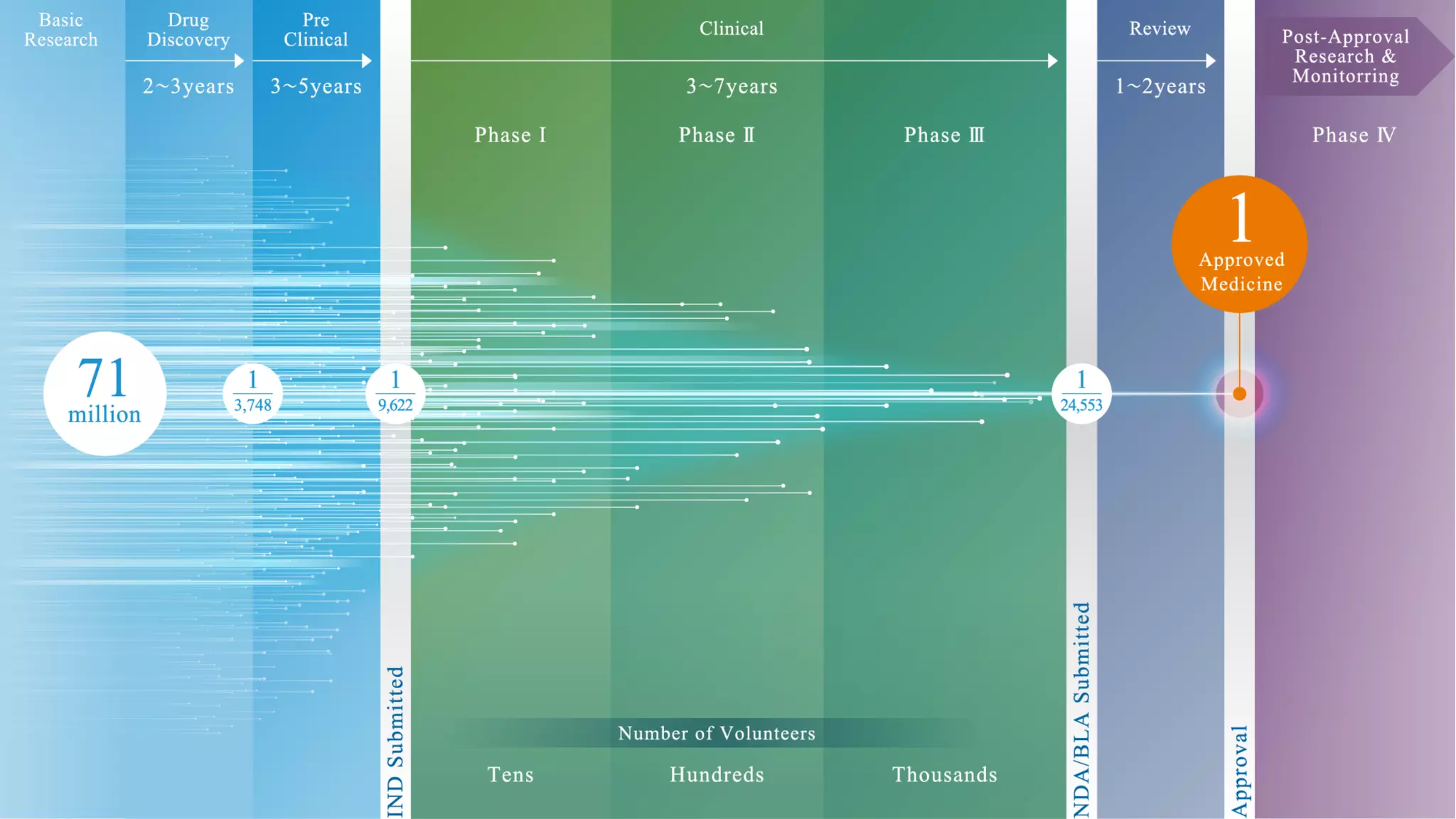
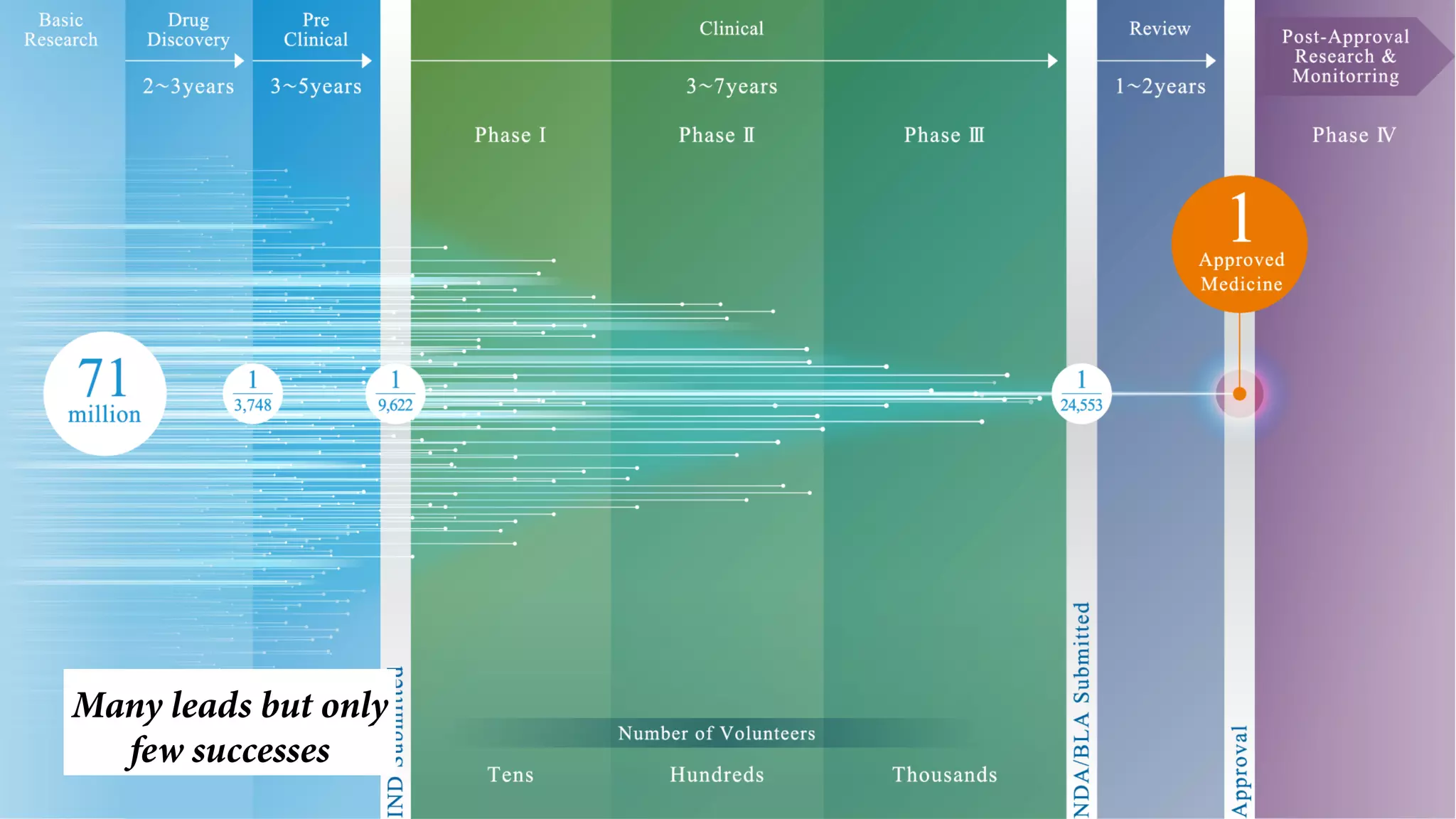
Many leads but only
few successes
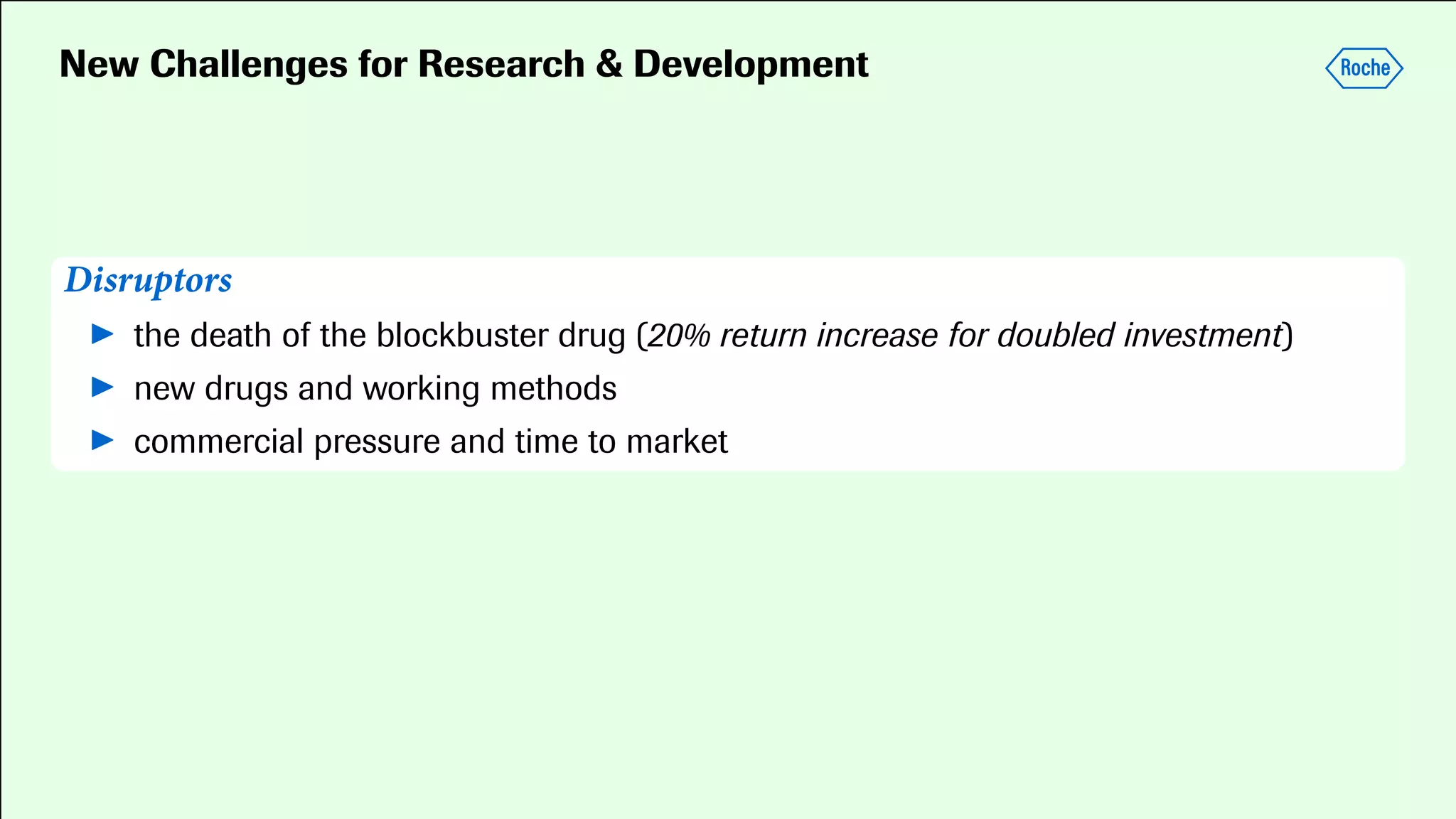
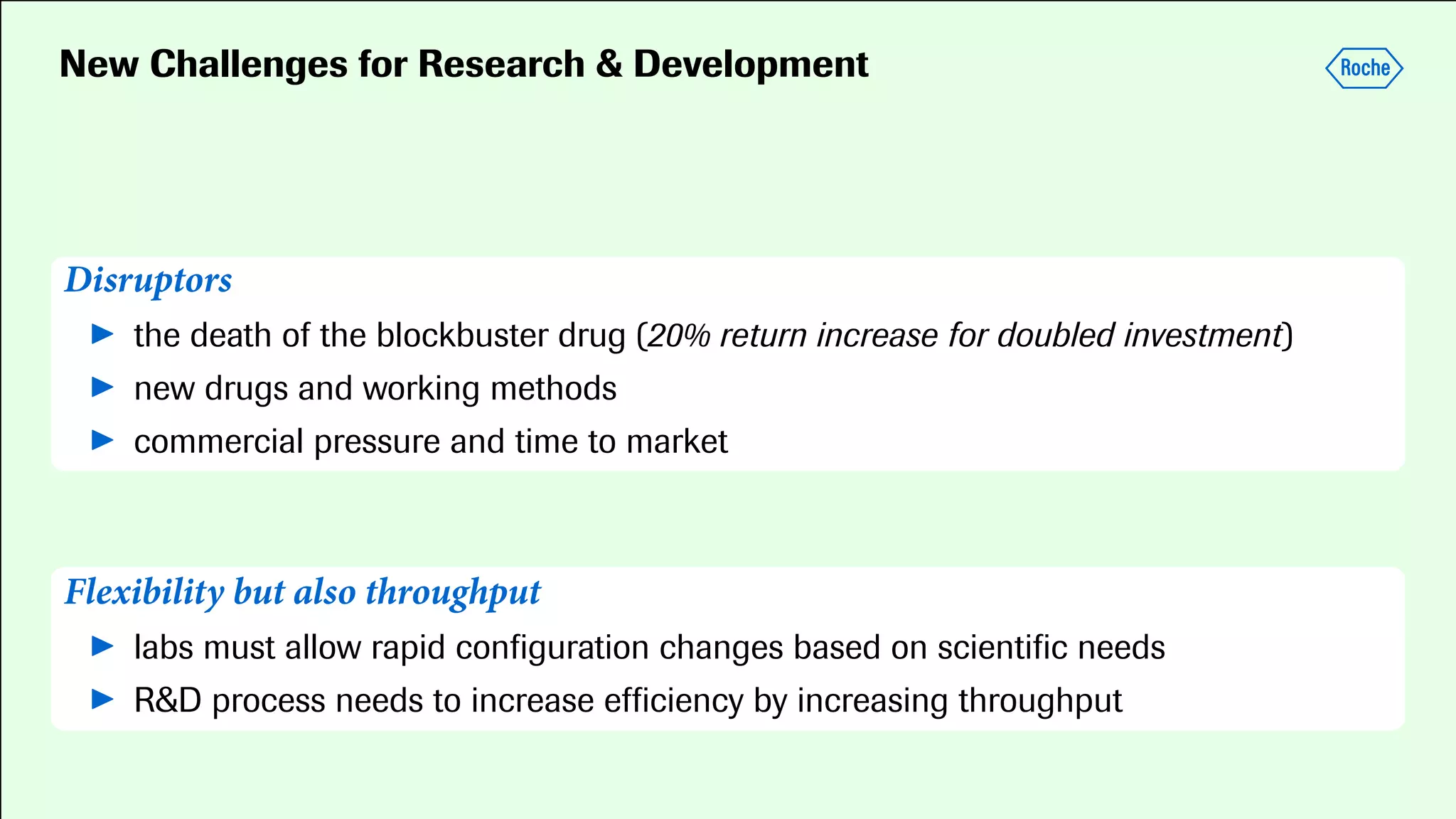
New Challenges for Research & Development
Disruptors
▶ the death of the blockbuster drug (20% return increase for doubled investment)
▶ new drugs and working methods
▶ commercial pressure and time to market
New Challenges for Research & Development
Disruptors
▶ the death of the blockbuster drug (20% return increase for doubled investment)
▶ new drugs and working methods
▶ commercial pressure and time to market
Flexibility but also throughput
▶ labs must allow rapid configuration changes based on scientific needs
▶ R&D process needs to increase efficiency by increasing throughput
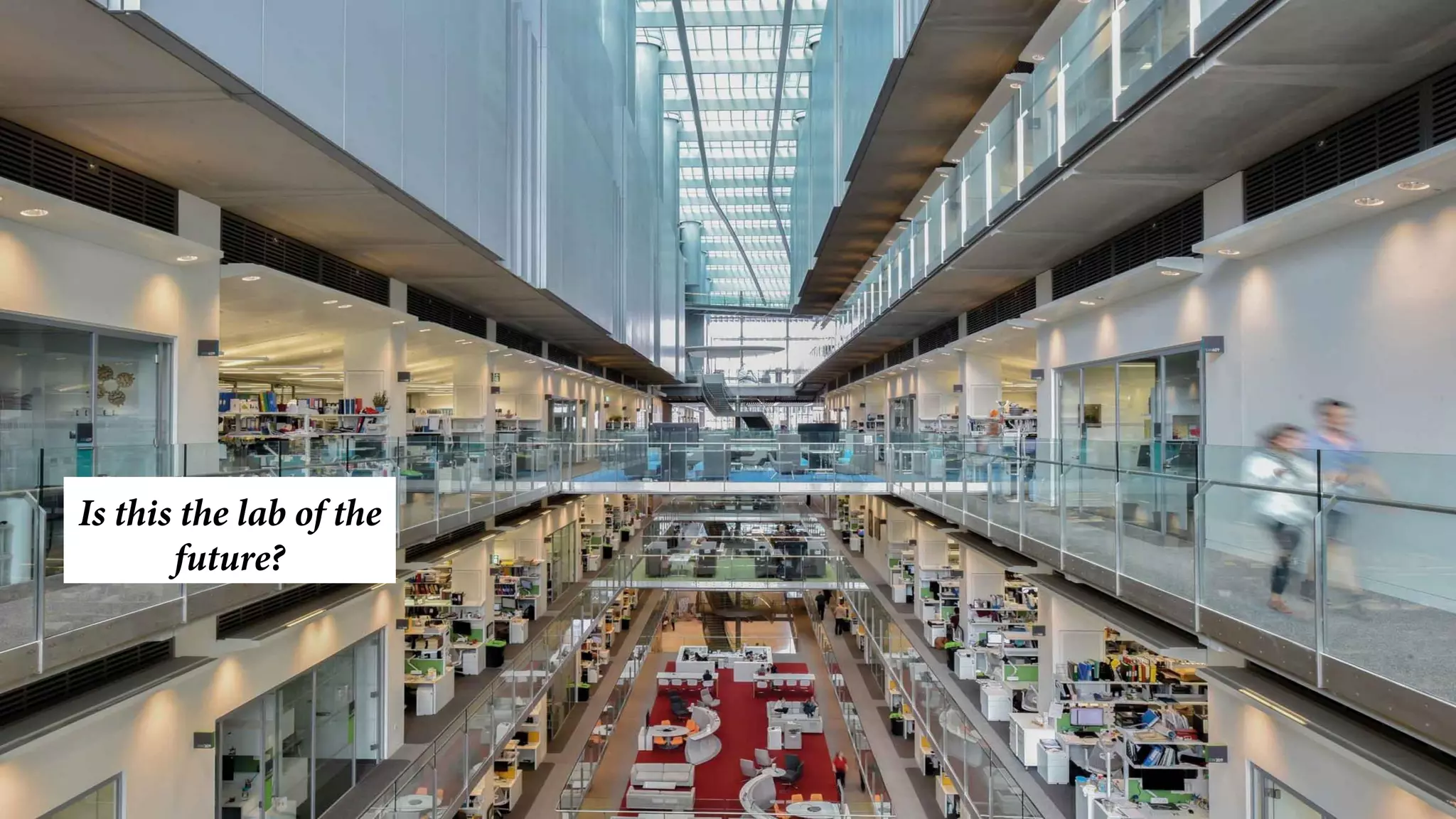
Is this the lab of the
future?
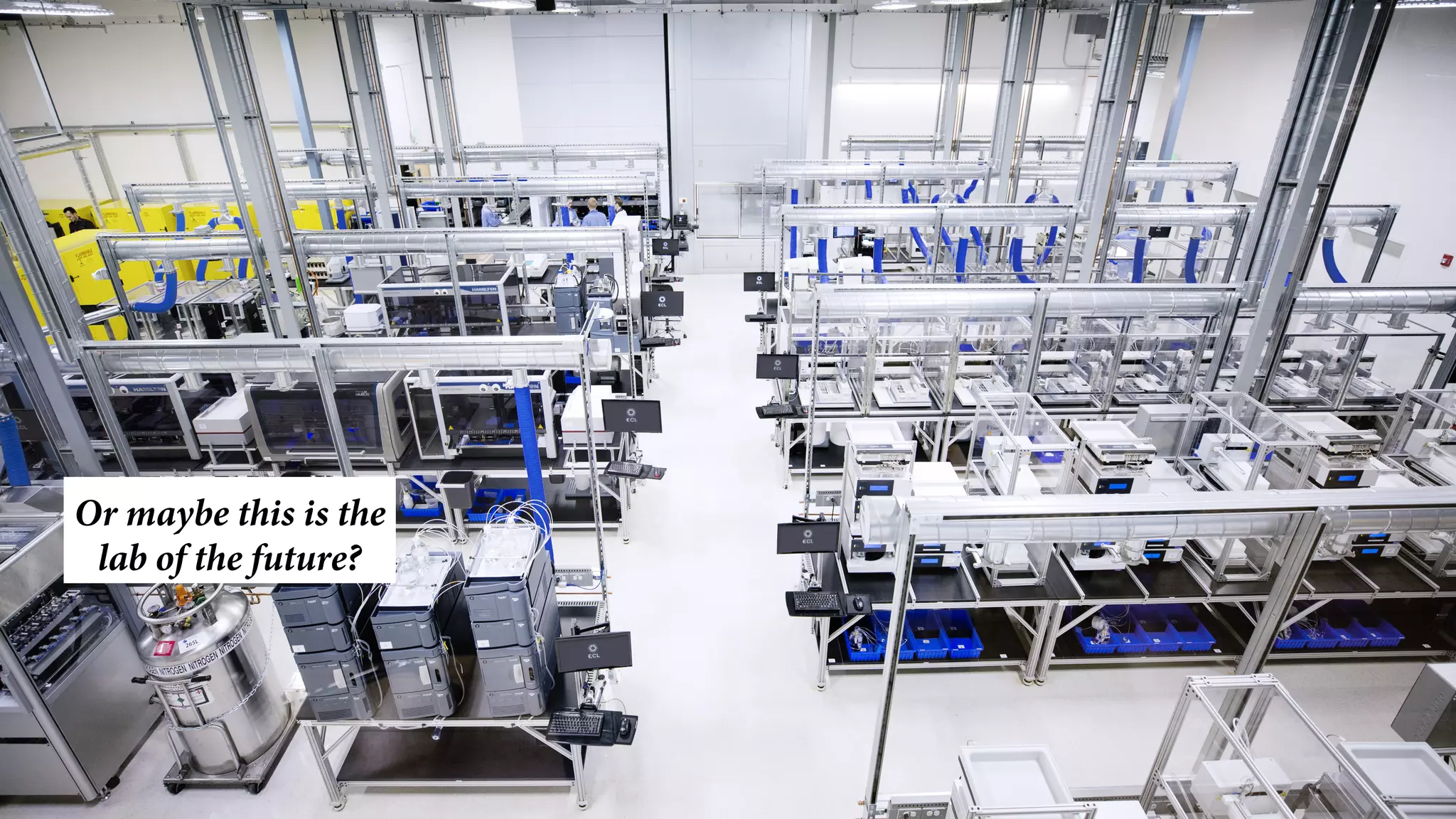
Or maybe this is the
lab of the future?
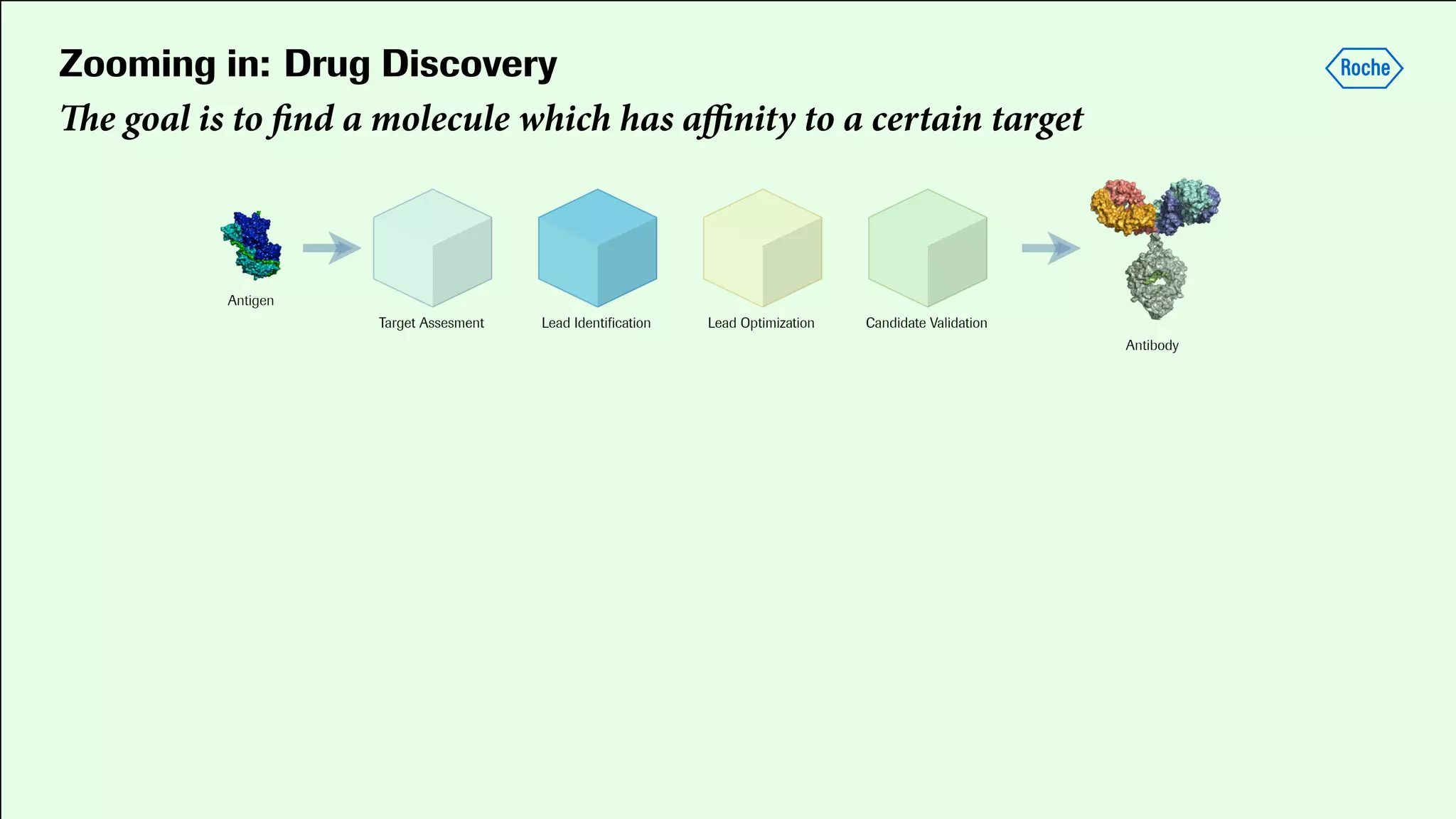
Zooming in: Drug Discovery
The goal is to find a molecule which has affinity to a certain target
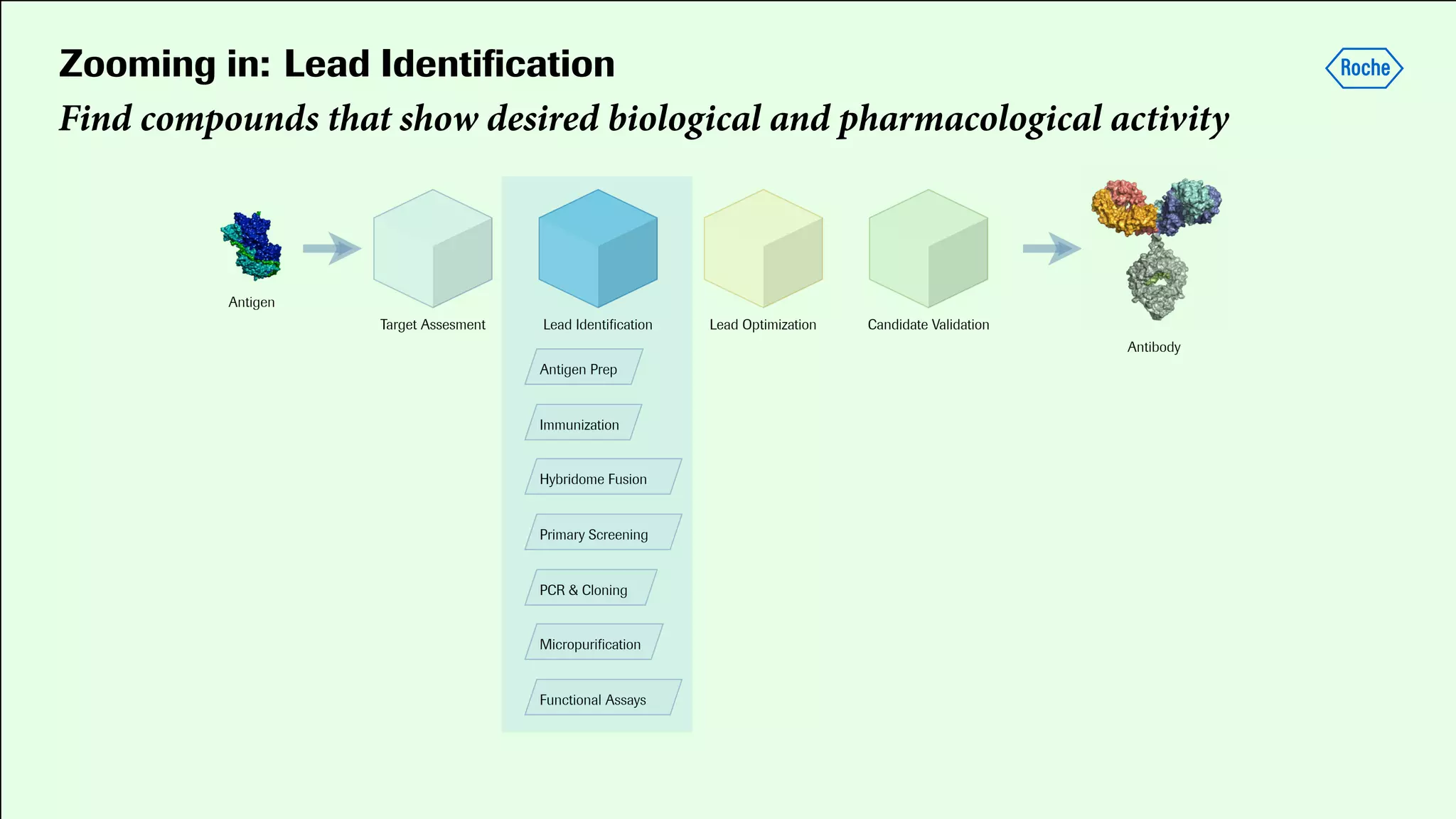
Zooming in: Lead Identification
Find compounds that show desired biological and pharmacological activity
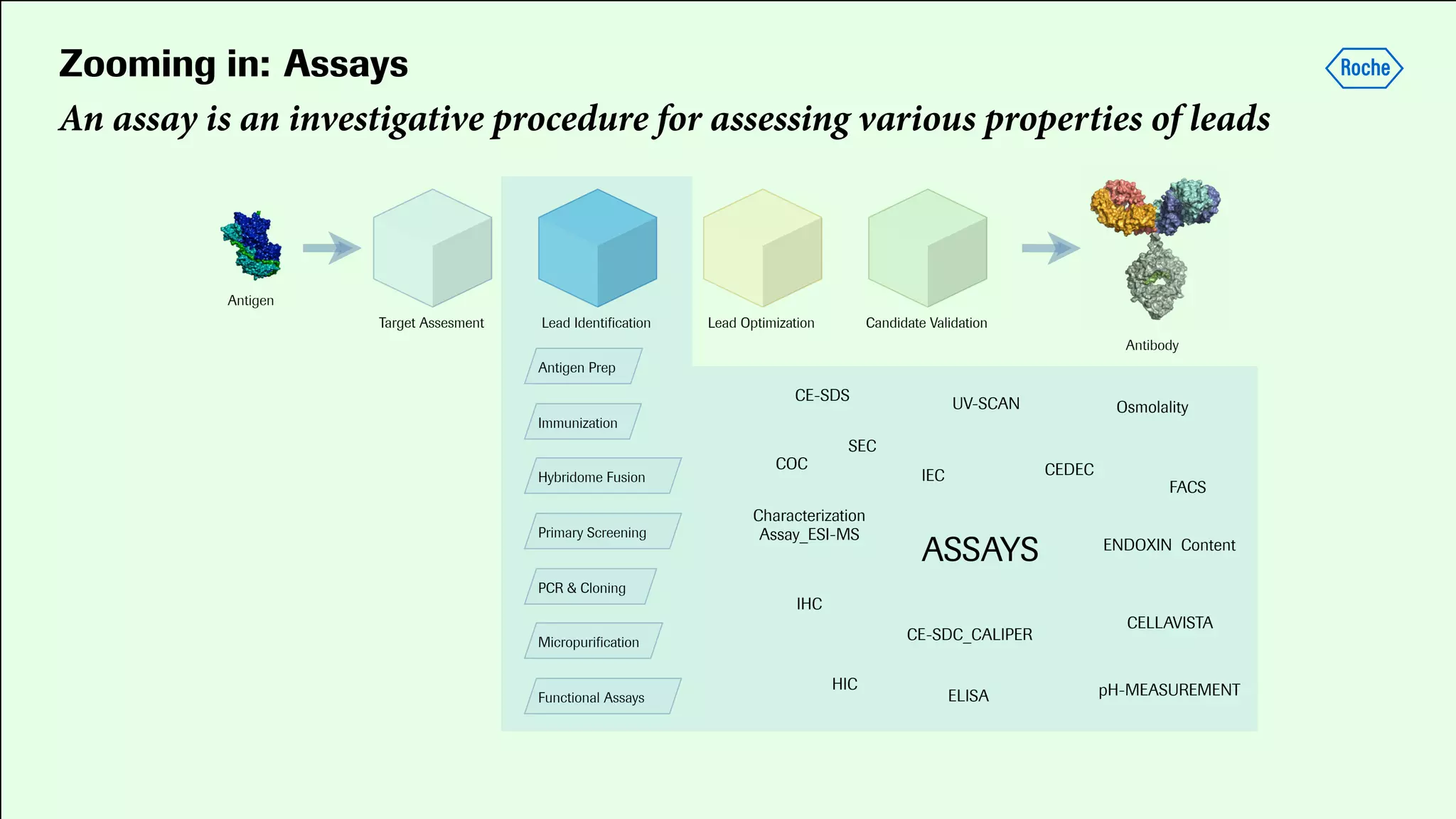
Zooming in: Assays
An assay is an investigative procedure for assessing various properties of leads
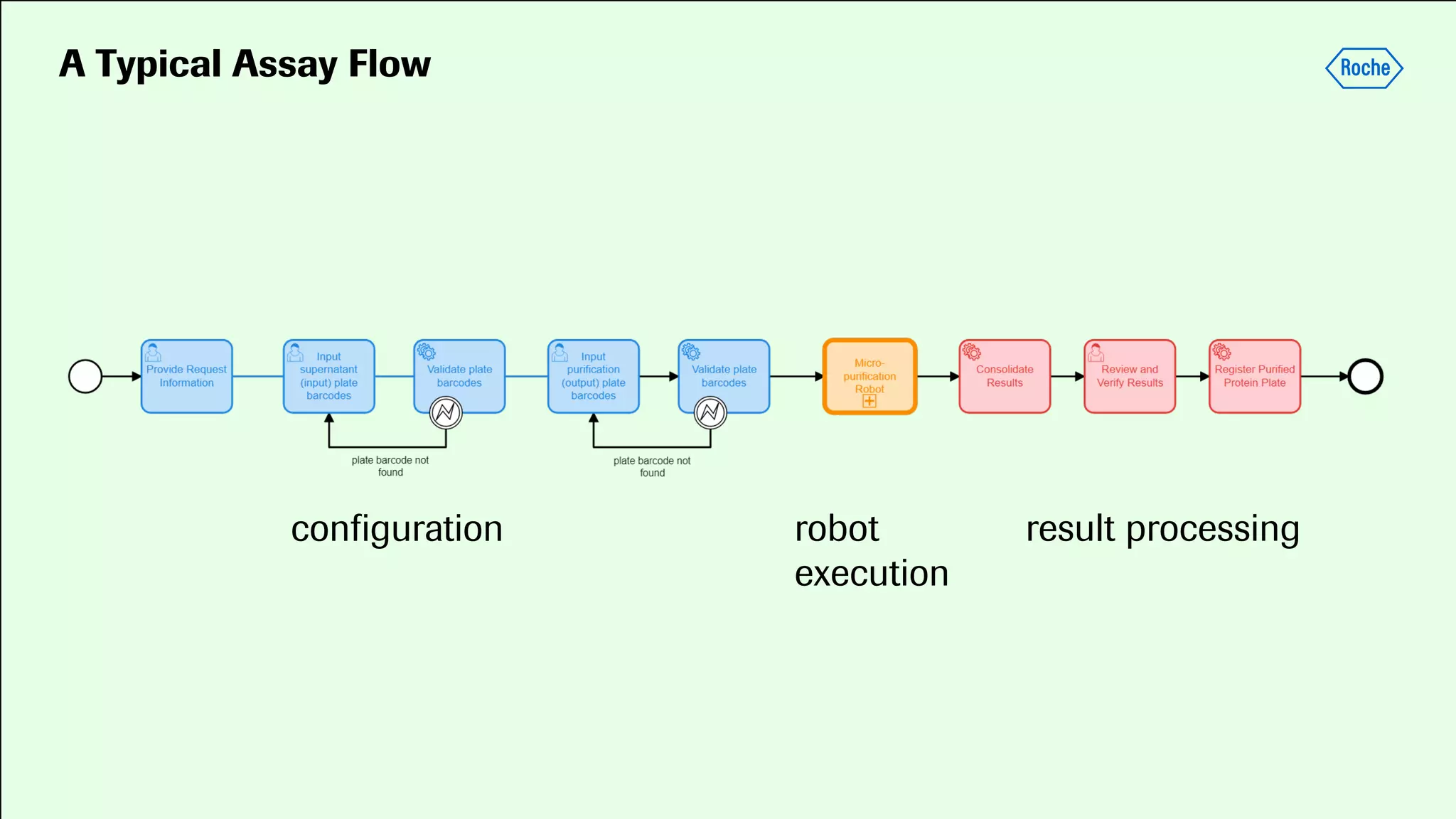
A Typical Assay Flow
configuration robot
execution
result processing
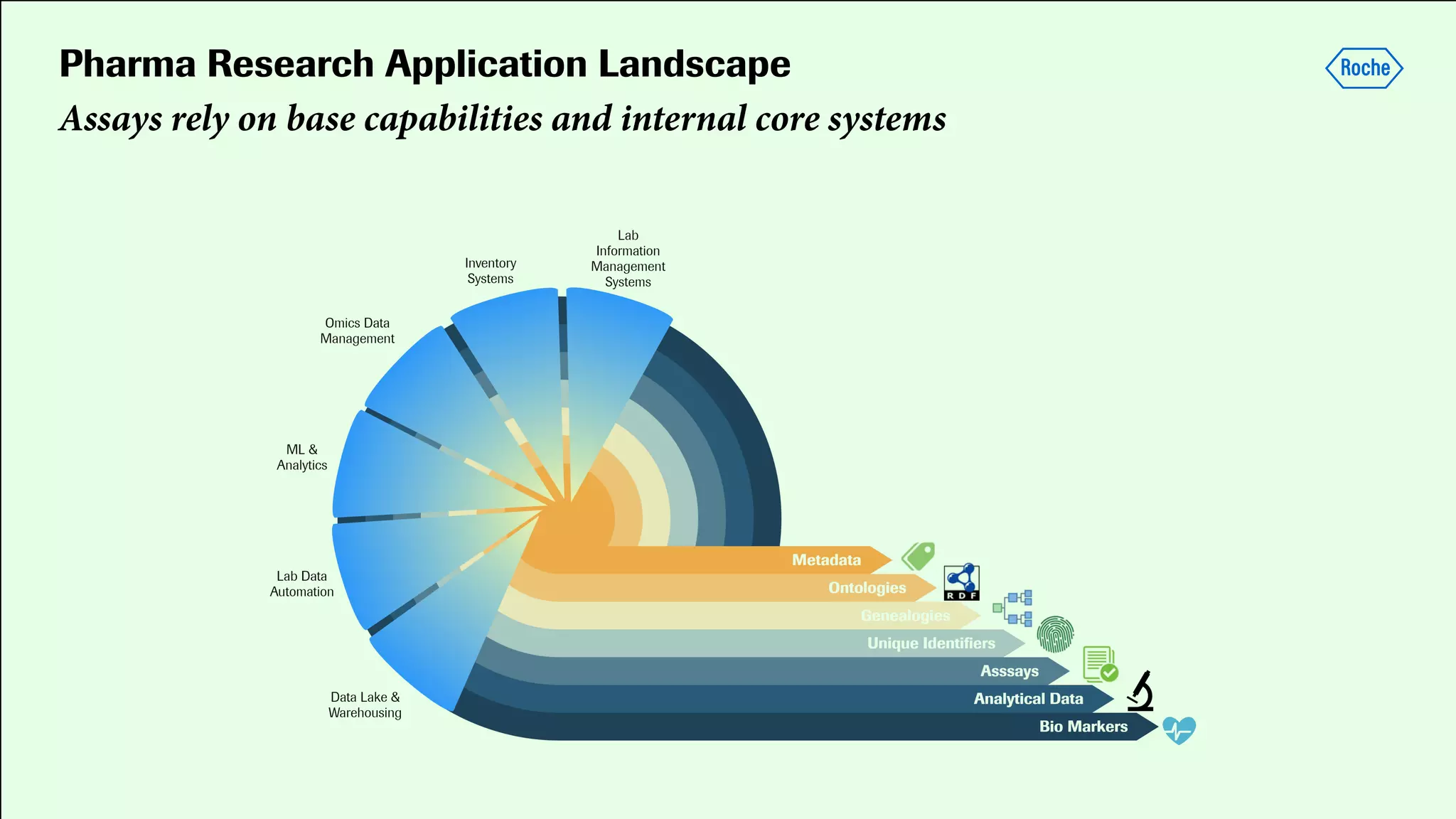
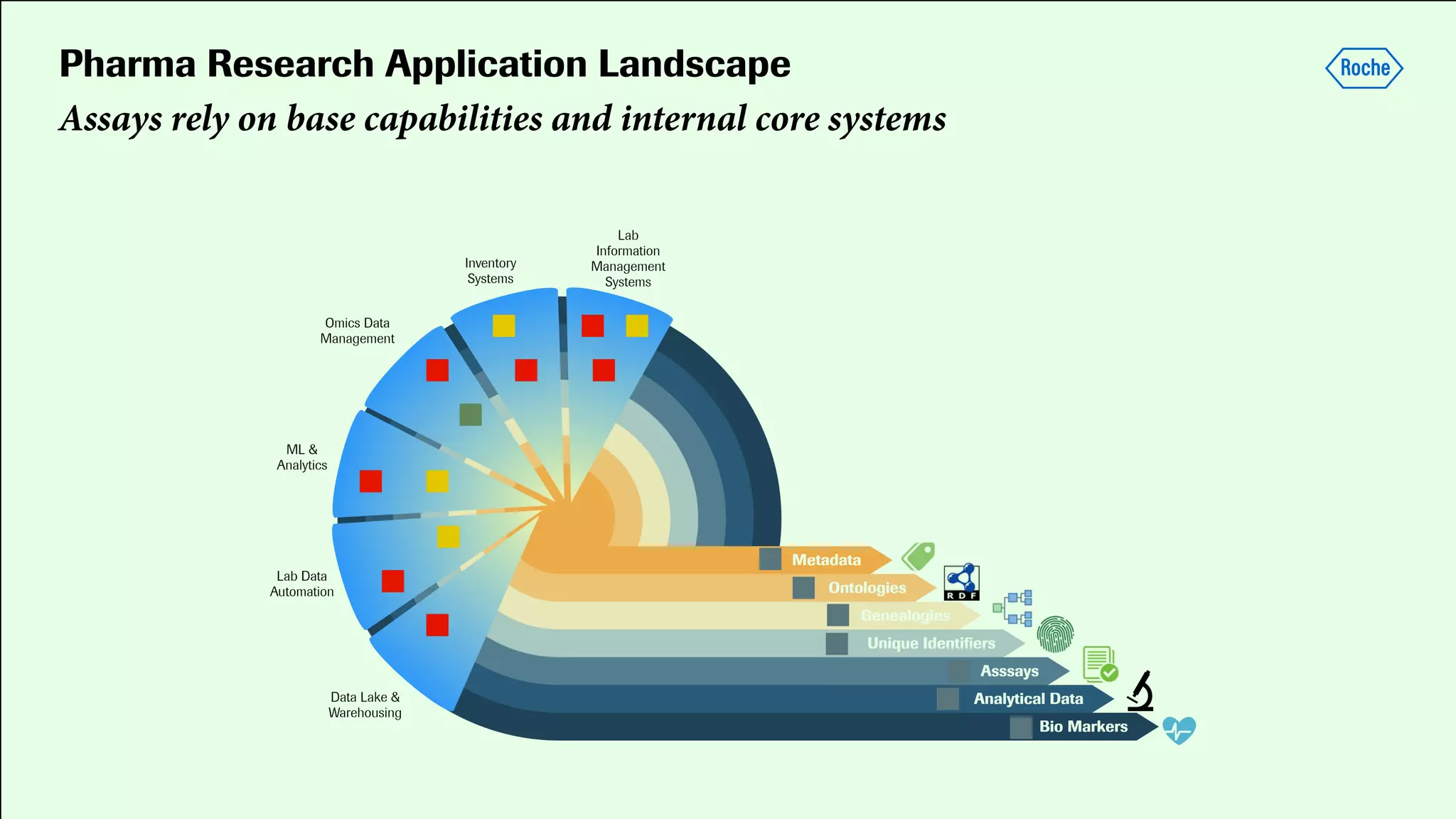
Pharma Research Application Landscape
Assays rely on base capabilities and internal core systems
Pharma Research Application Landscape
Assays rely on base capabilities and internal core systems
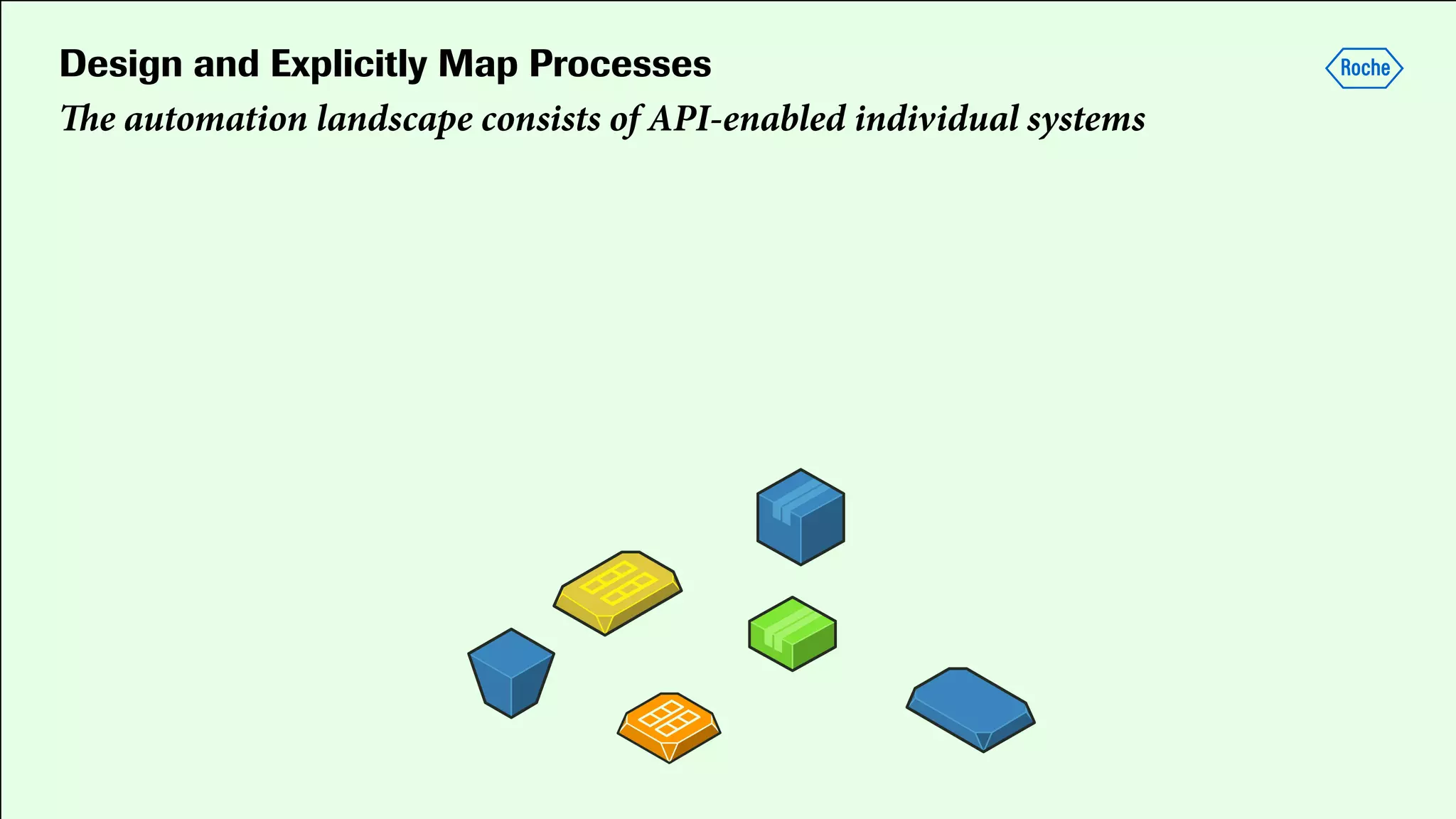
Design and Explicitly Map Processes
The automation landscape consists of API-enabled individual systems
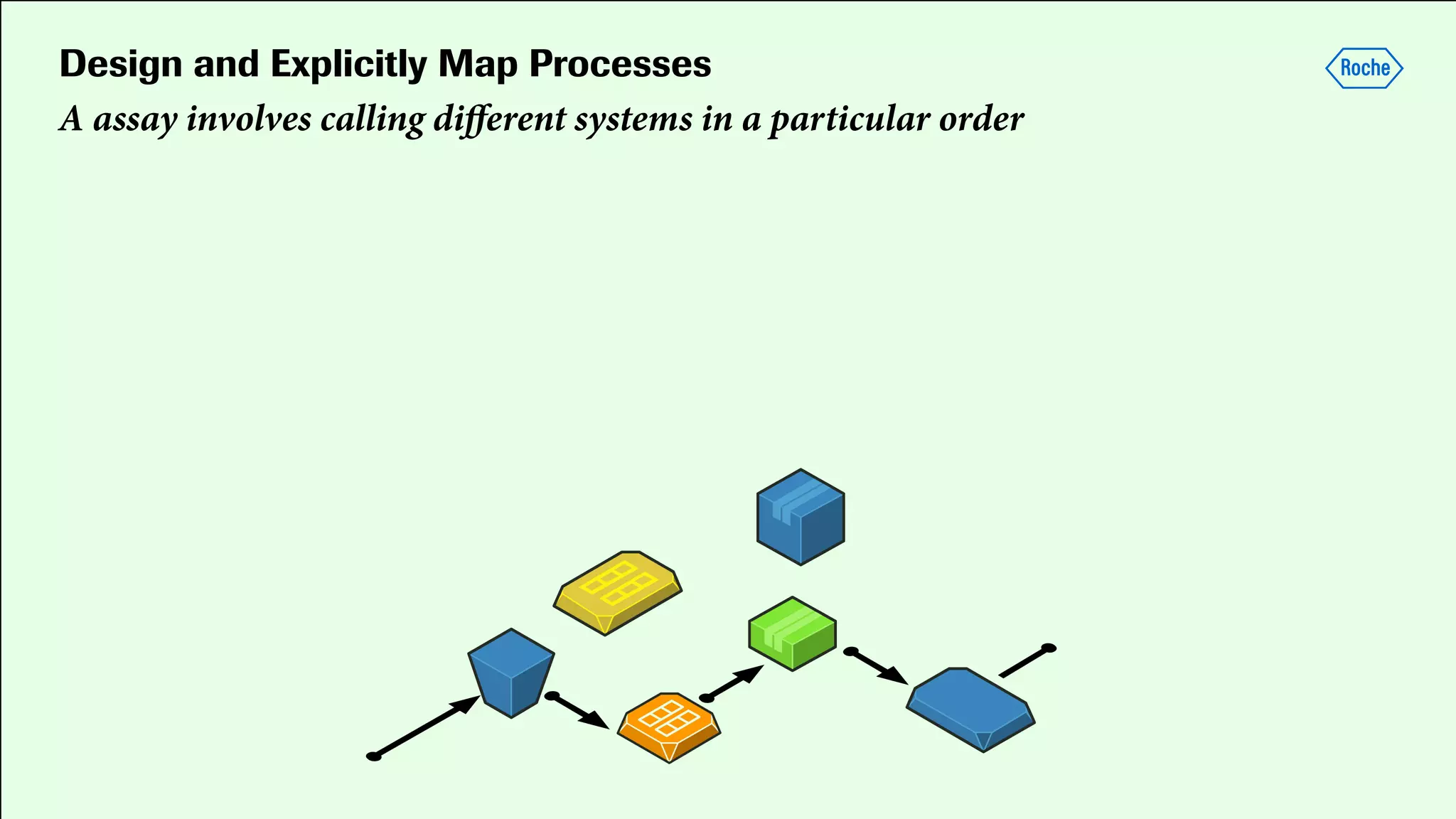
Design and Explicitly Map Processes
A assay involves calling different systems in a particular order
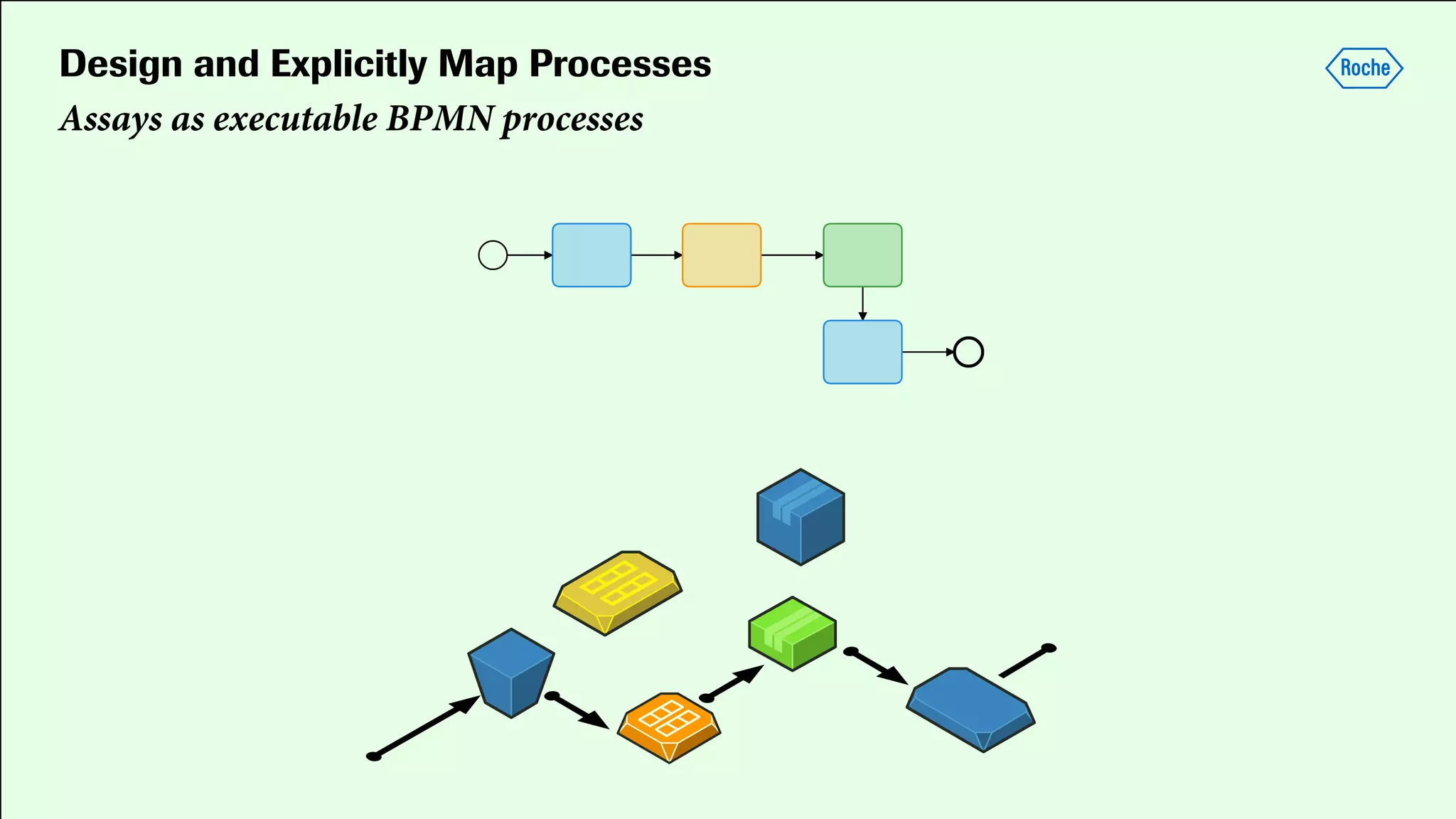
Design and Explicitly Map Processes
Assays as executable BPMN processes
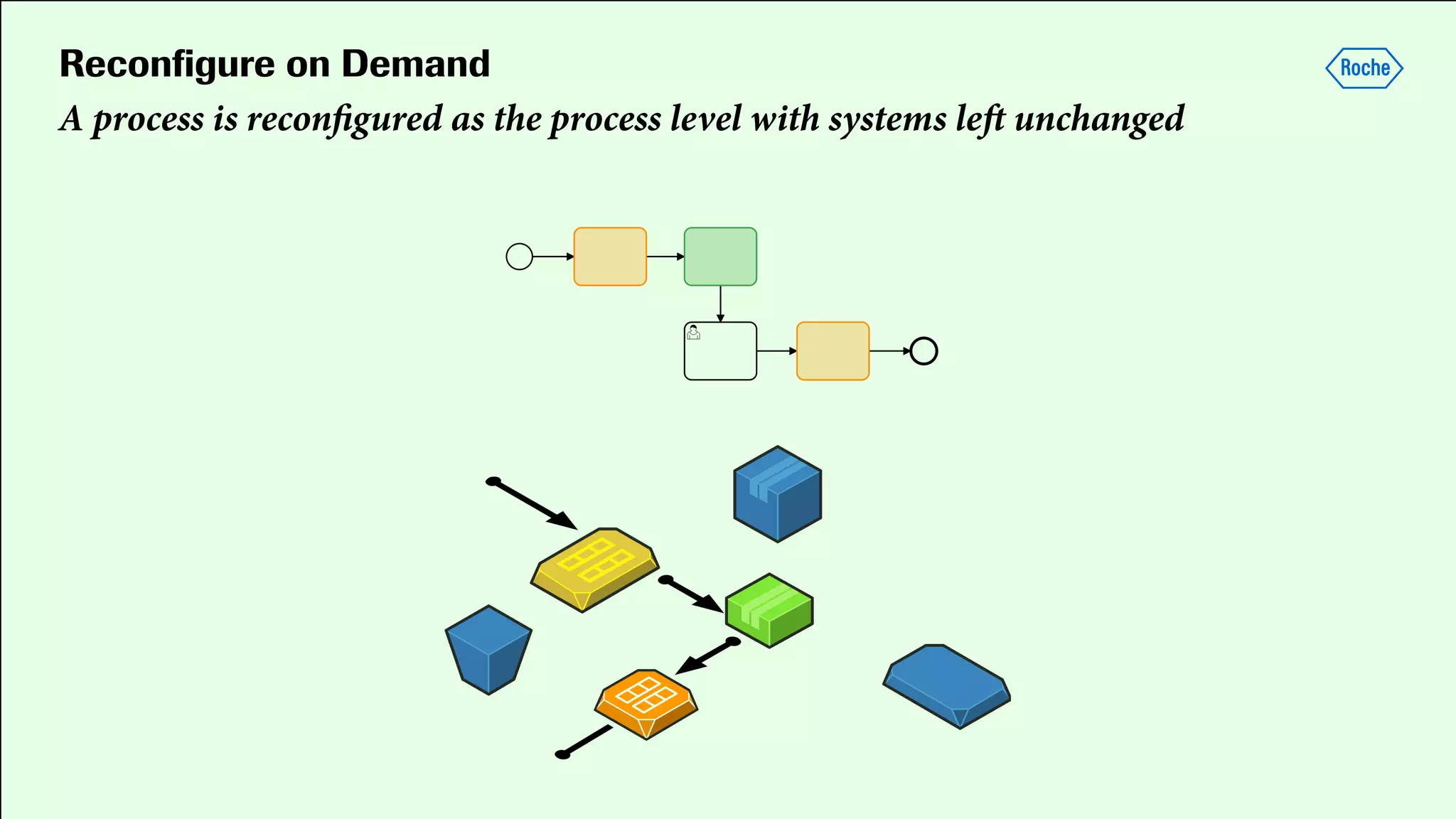
Reconfigure on Demand
A process is reconfigured as the process level with systems left unchanged
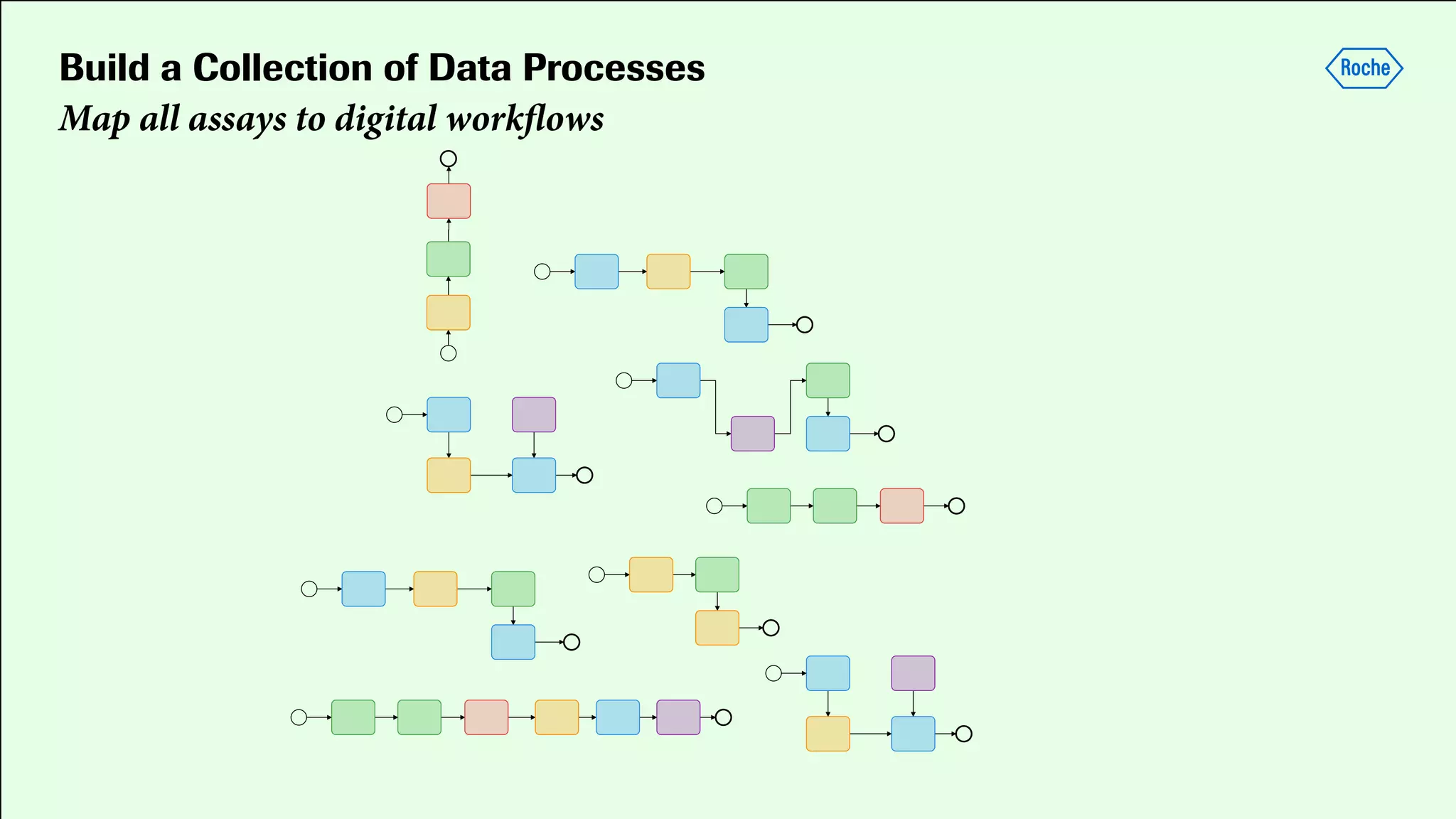
Build a Collection of Data Processes
Map all assays to digital workflows
Architecture
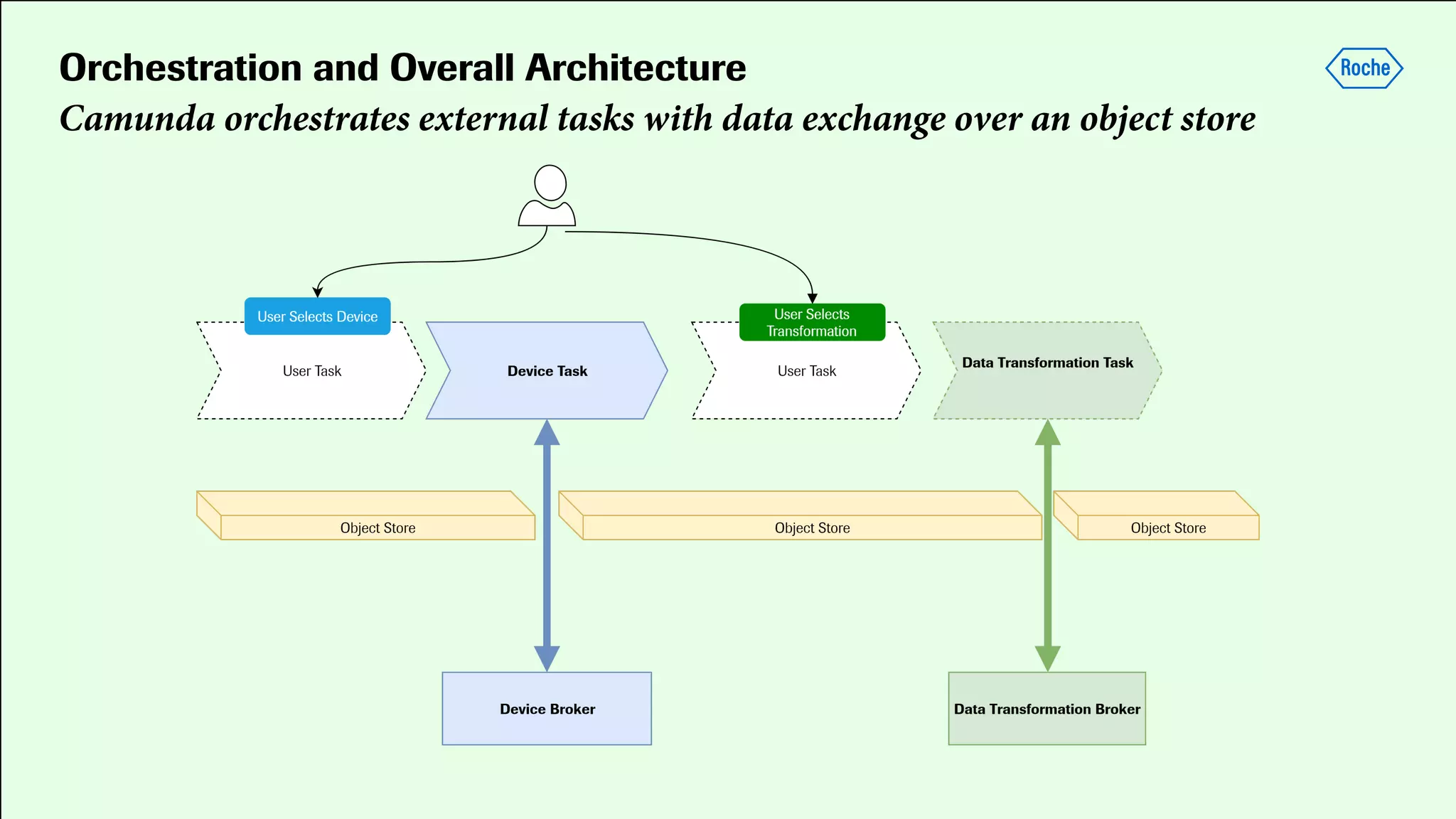
Orchestration and Overall Architecture
Camunda orchestrates external tasks with data exchange over an object store
Devices
Bruker Maxis [Mass Spetrometer]
Biomek i7 [liquid handler]
Thermo Scientific [Chromatograph]
Biomek i5 [liquid handler]
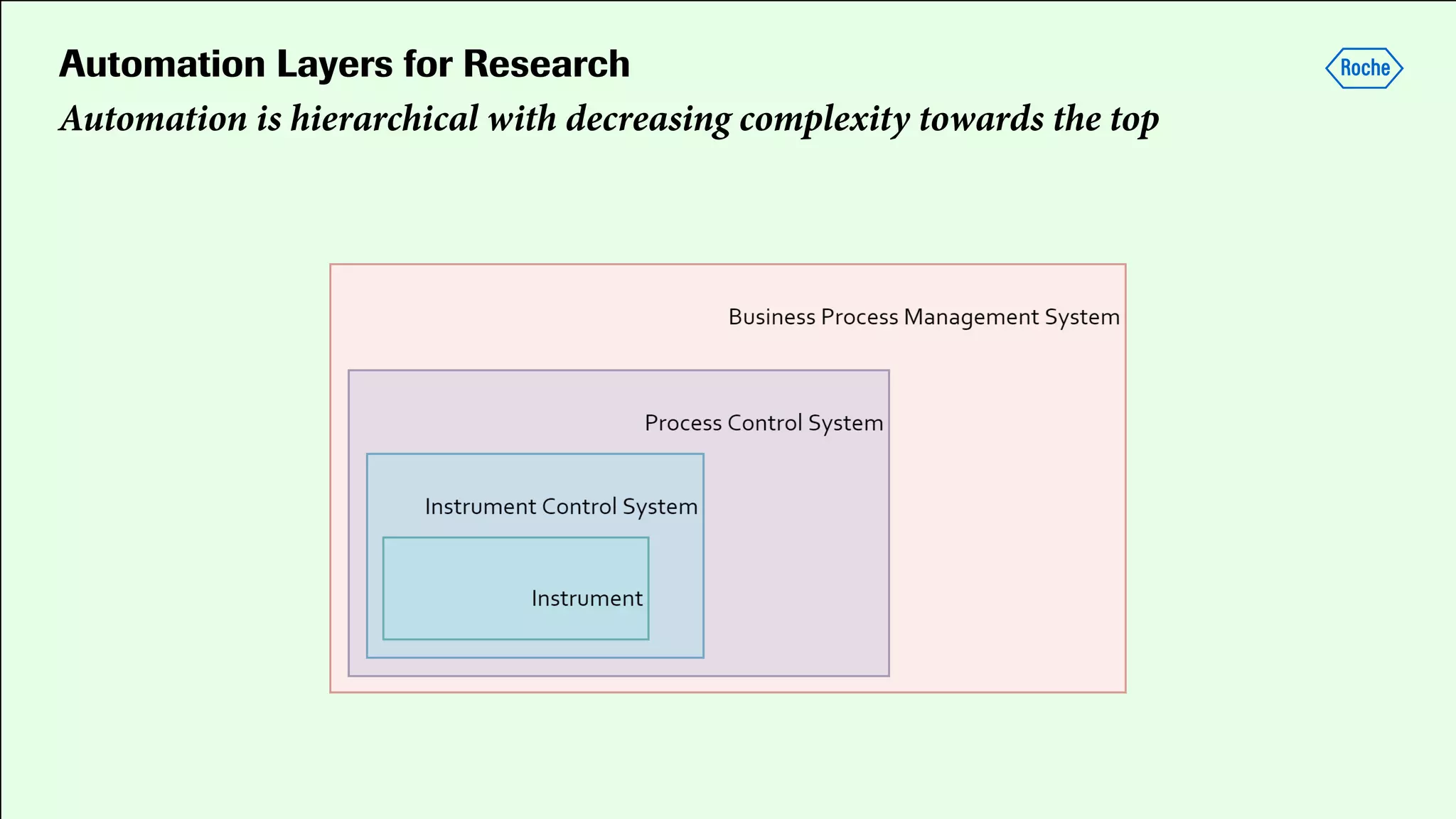
Automation Layers for Research
Automation is hierarchical with decreasing complexity towards the top
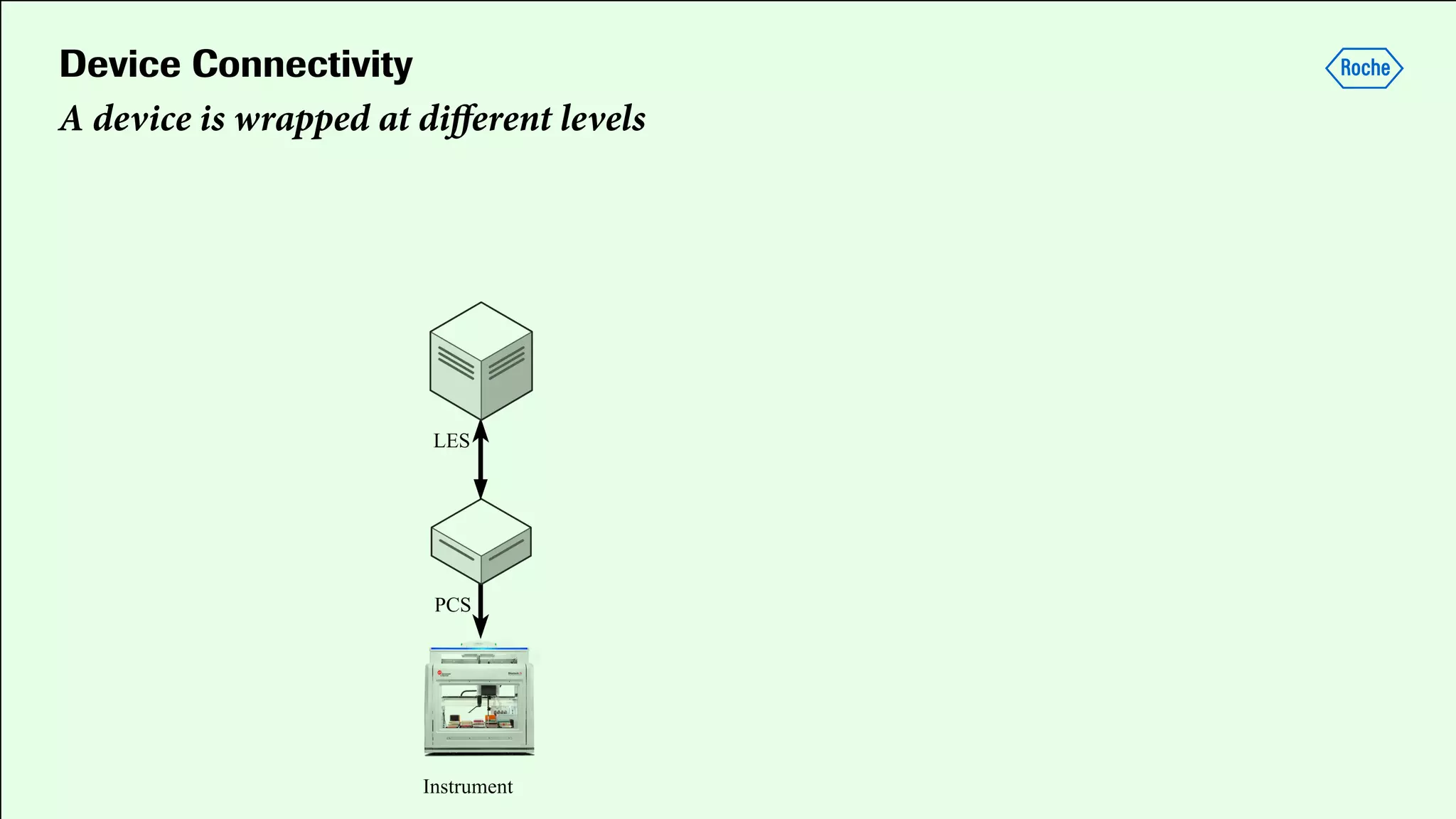
Device Connectivity
A device is wrapped at different levels
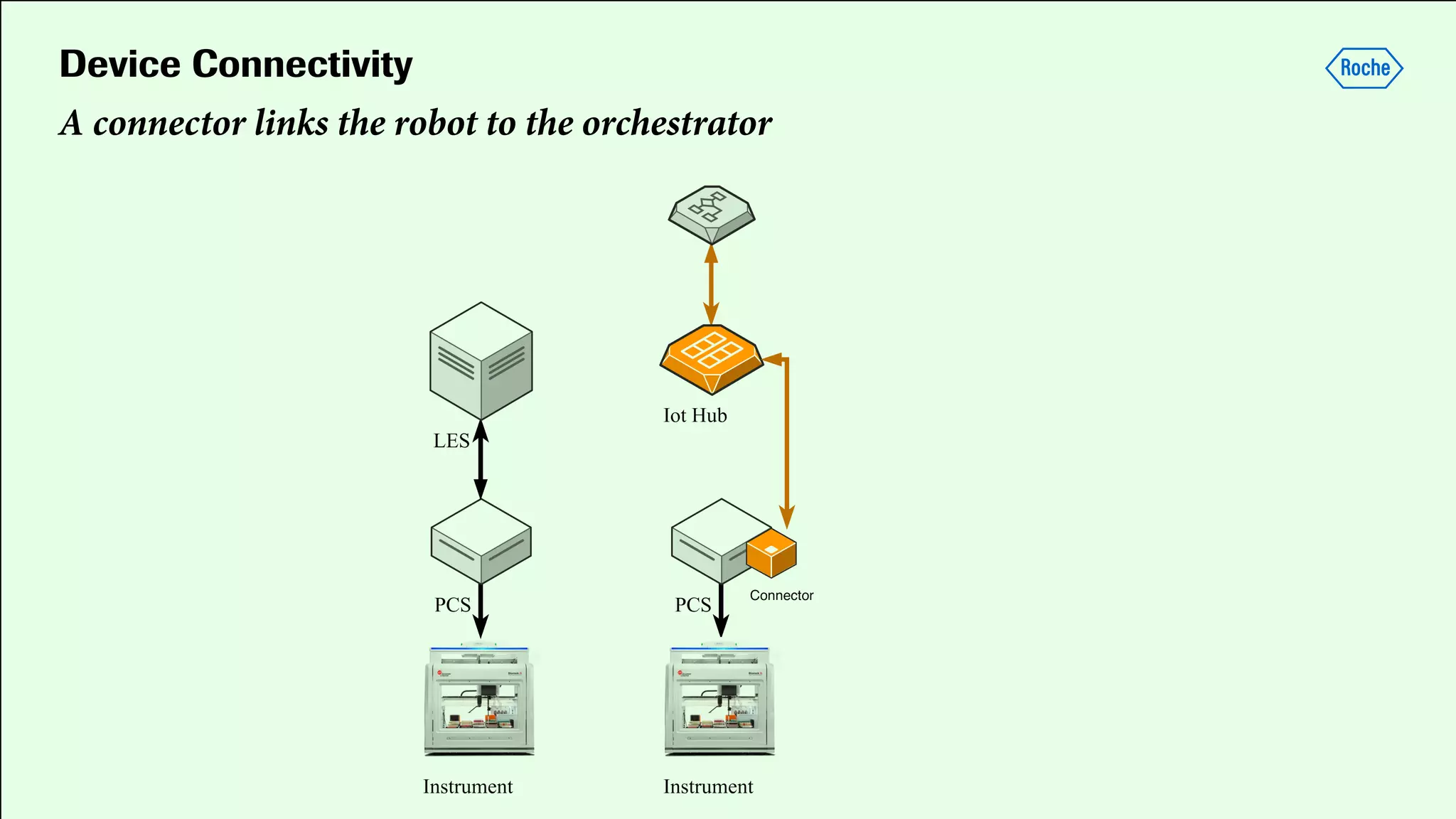
Device Connectivity
A connector links the robot to the orchestrator
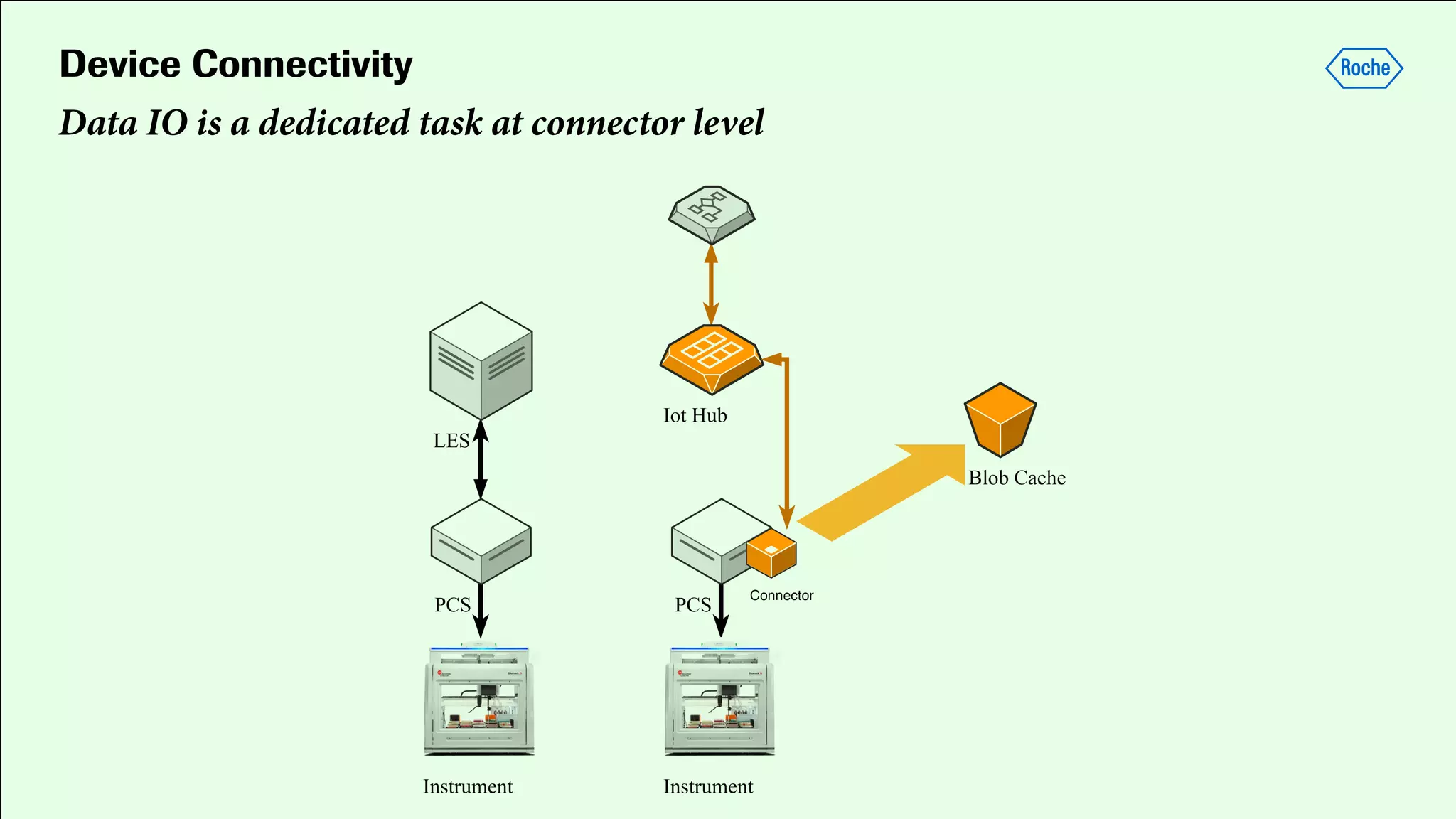
Device Connectivity
Data IO is a dedicated task at connector level
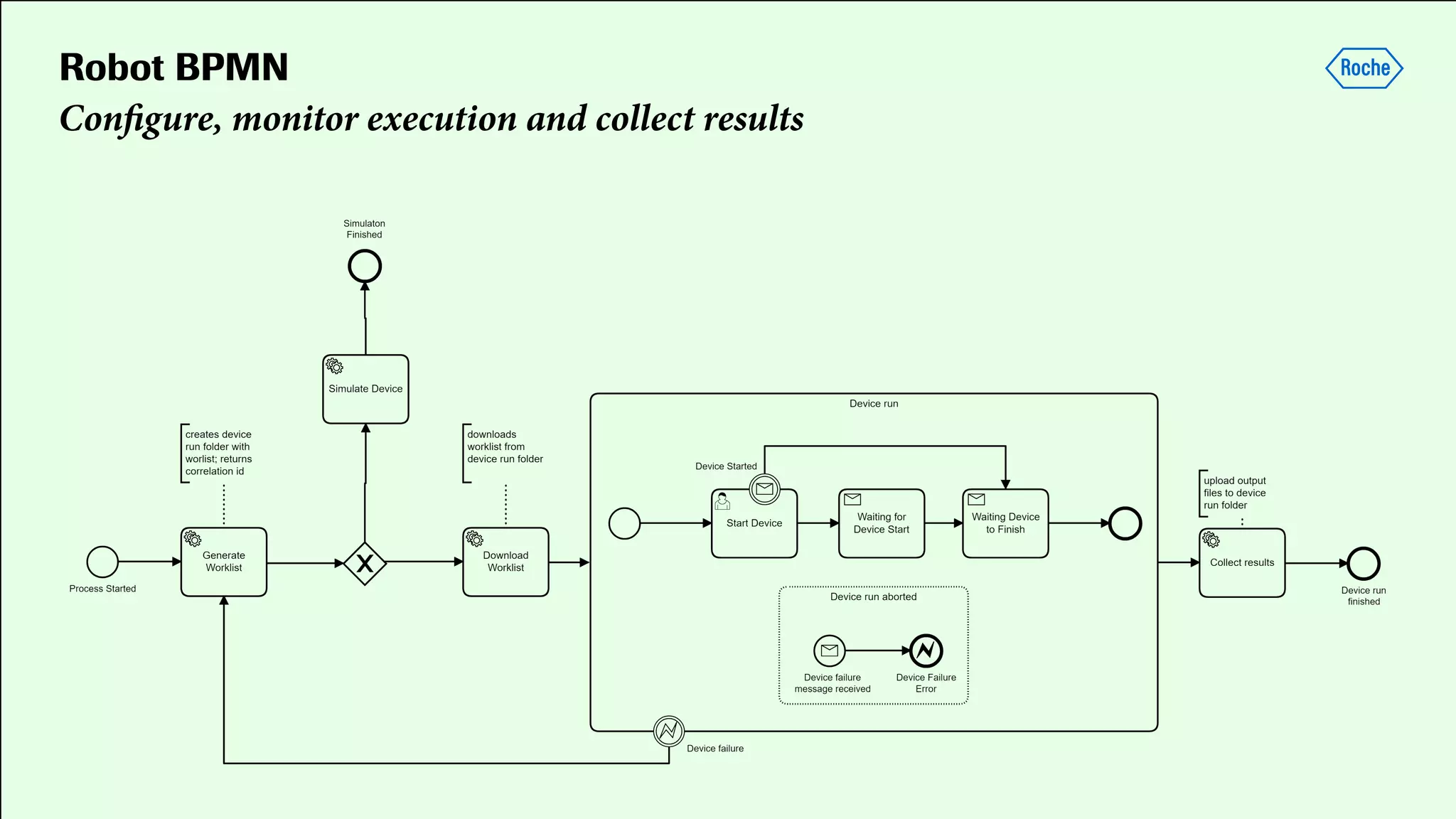
Robot BPMN
Configure, monitor execution and collect results
Data Wrangling
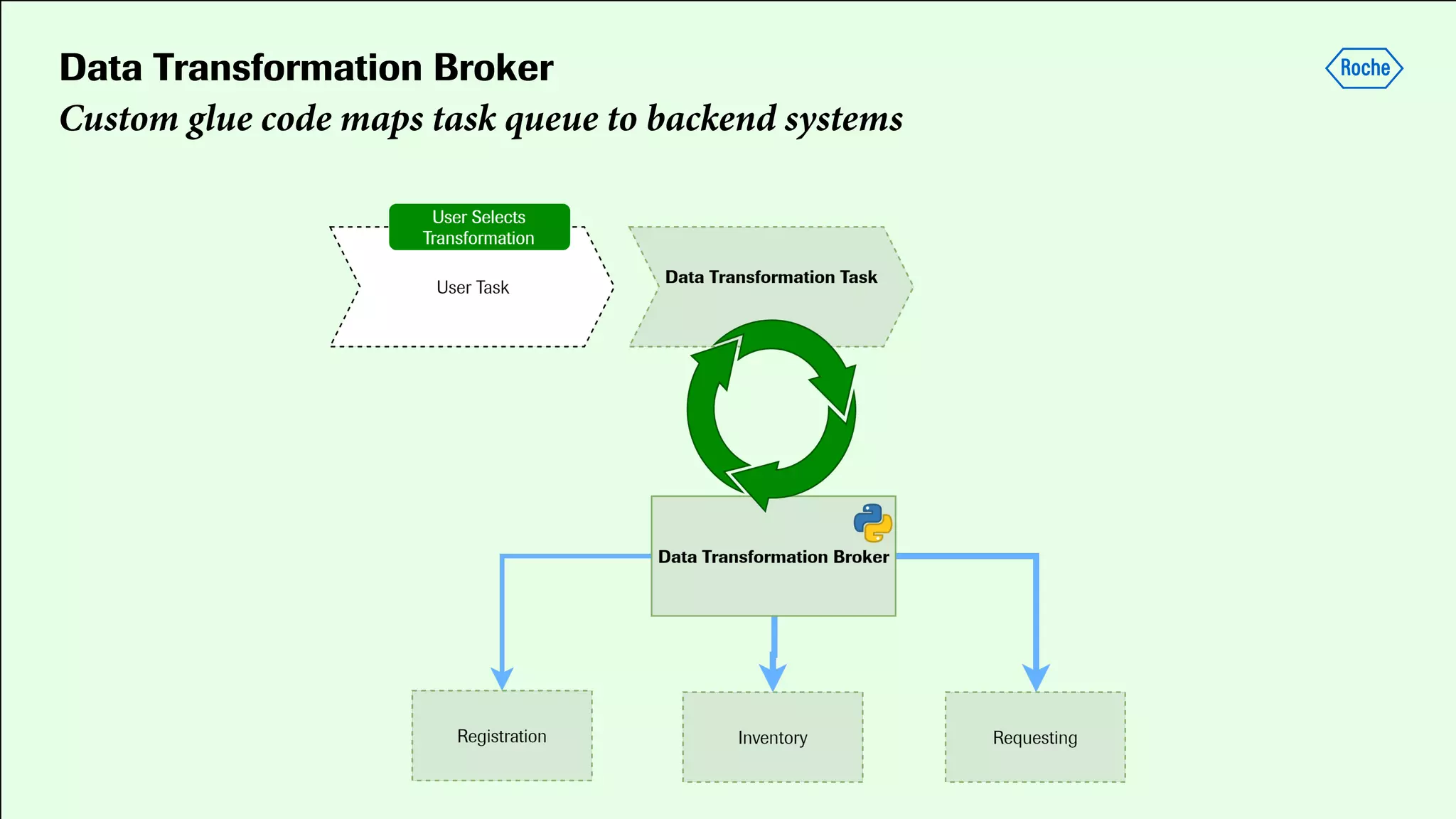
Data Transformation Broker
Custom glue code maps task queue to backend systems
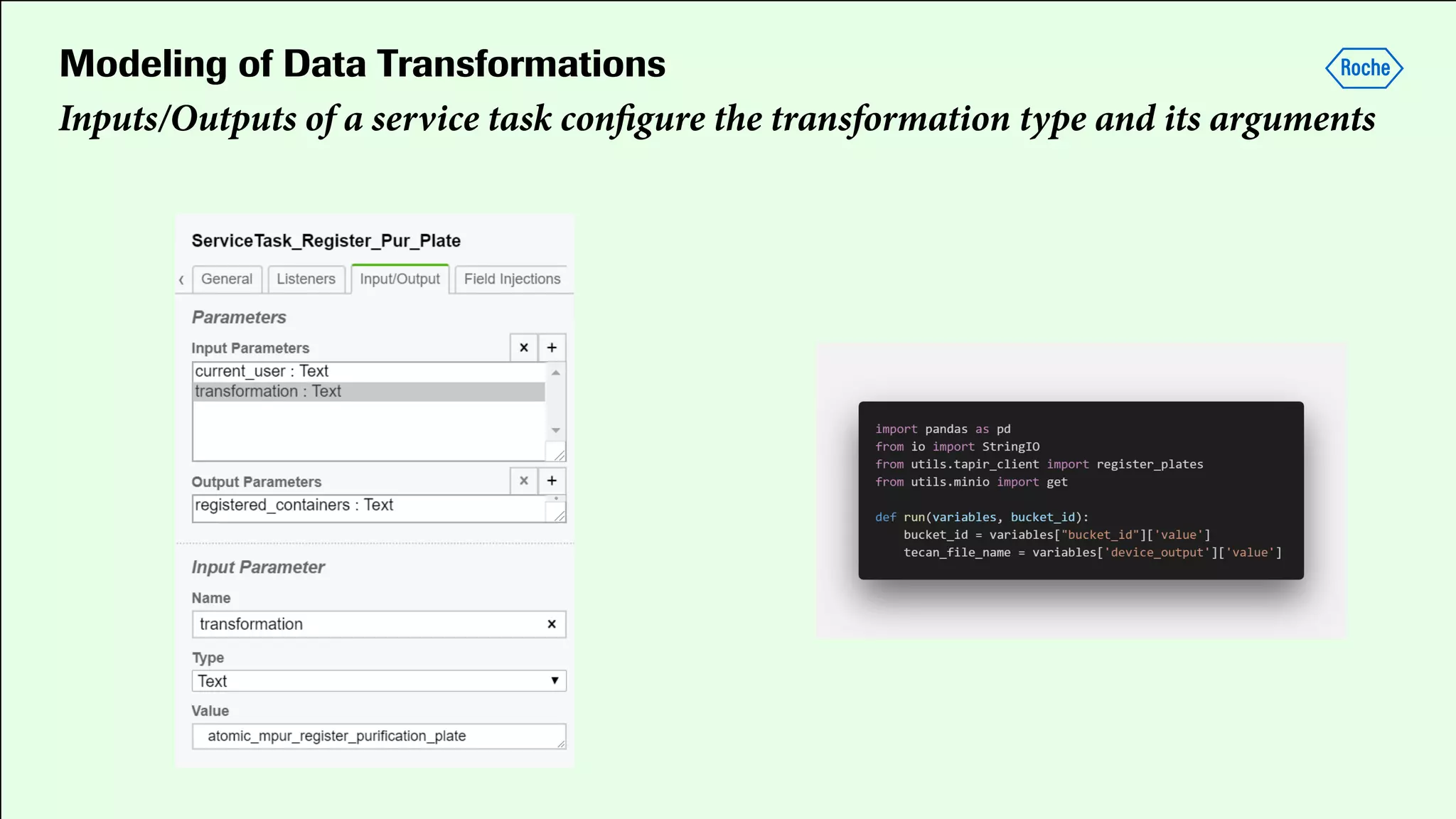
Modeling of Data Transformations
Inputs/Outputs of a service task configure the transformation type and its arguments
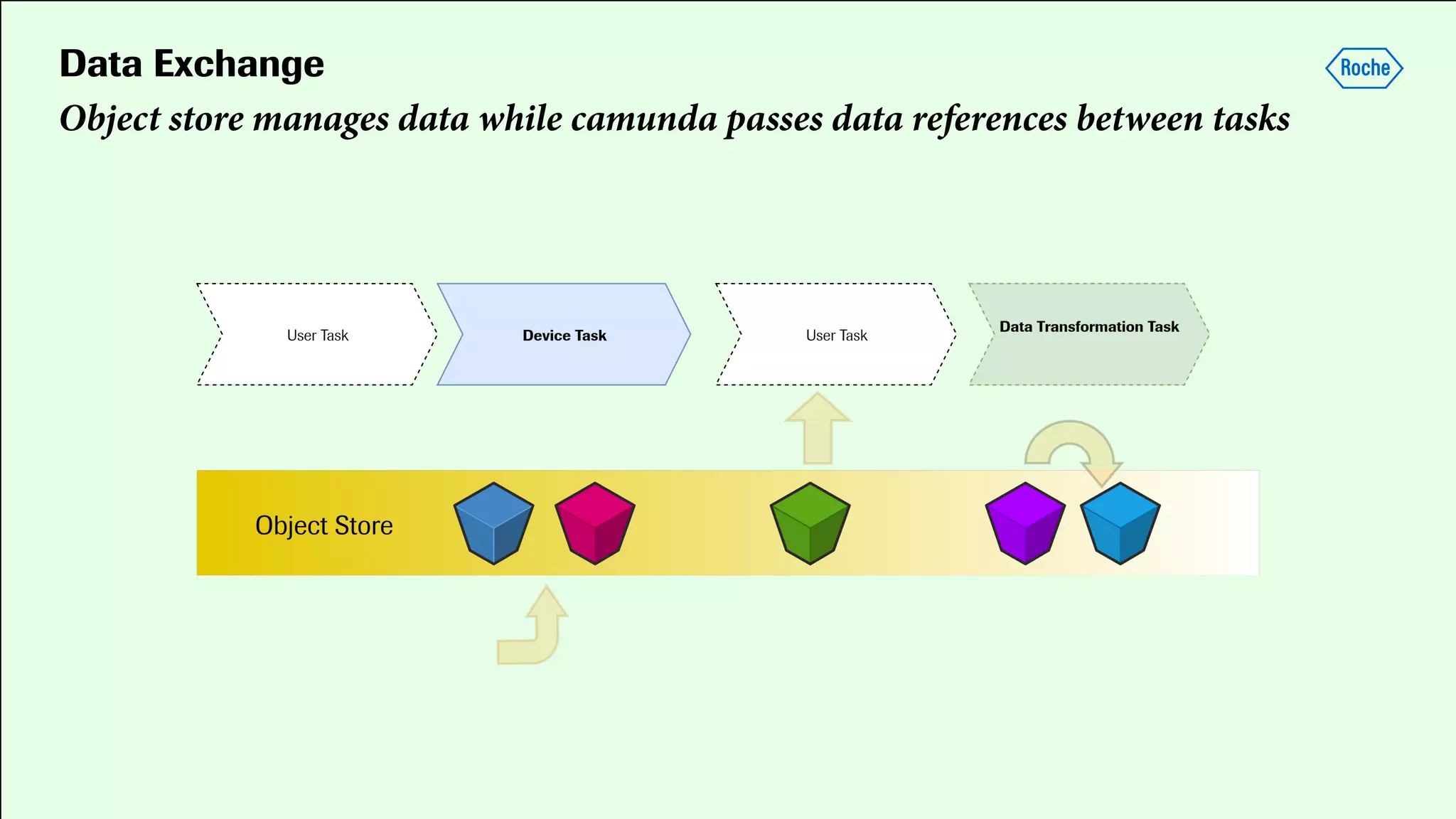
Data Exchange
Object store manages data while camunda passes data references between tasks
Process Modeling as a Platform
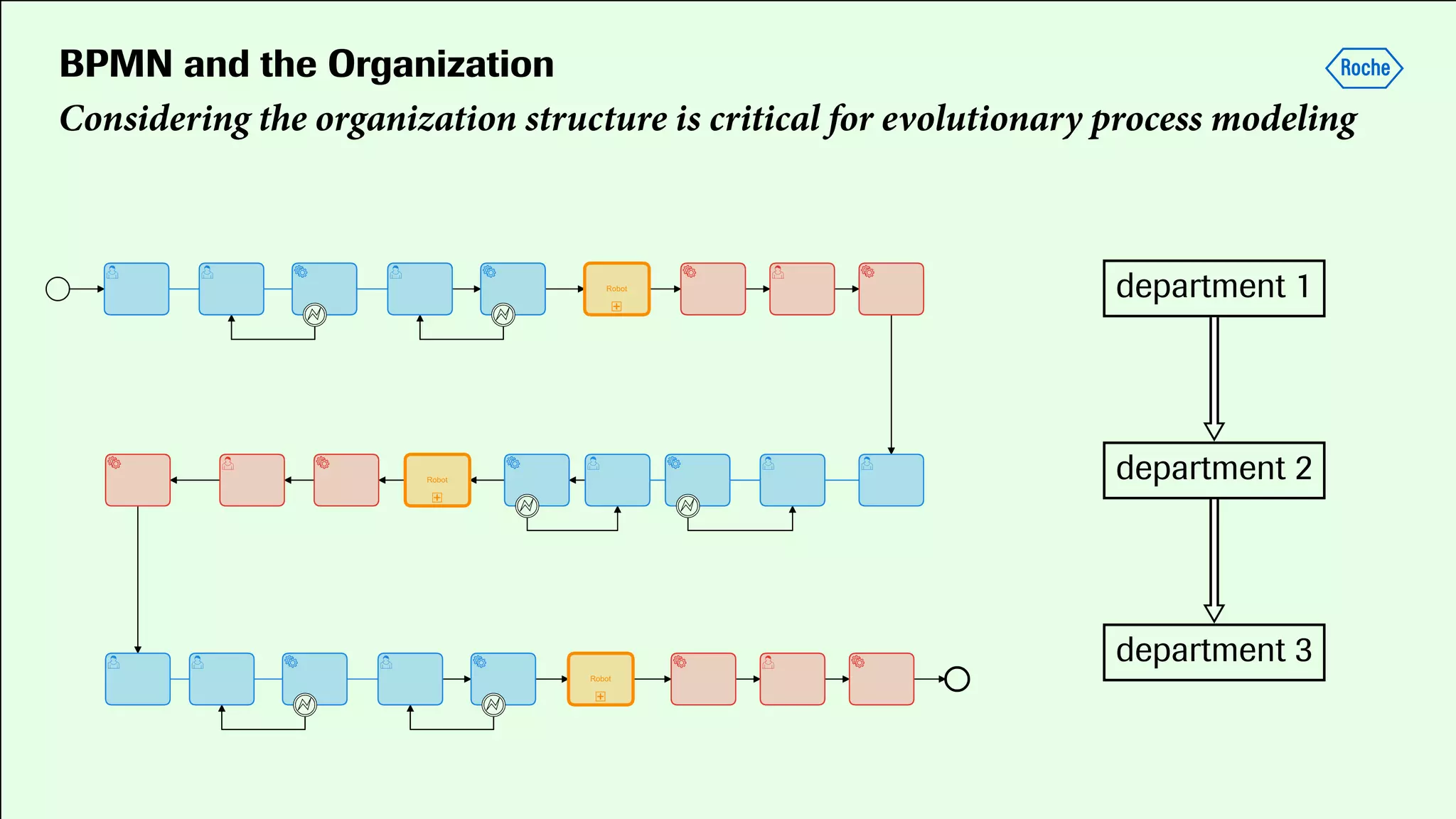
BPMN and the Organization
Considering the organization structure is critical for evolutionary process modeling
department 1
department 2
department 3
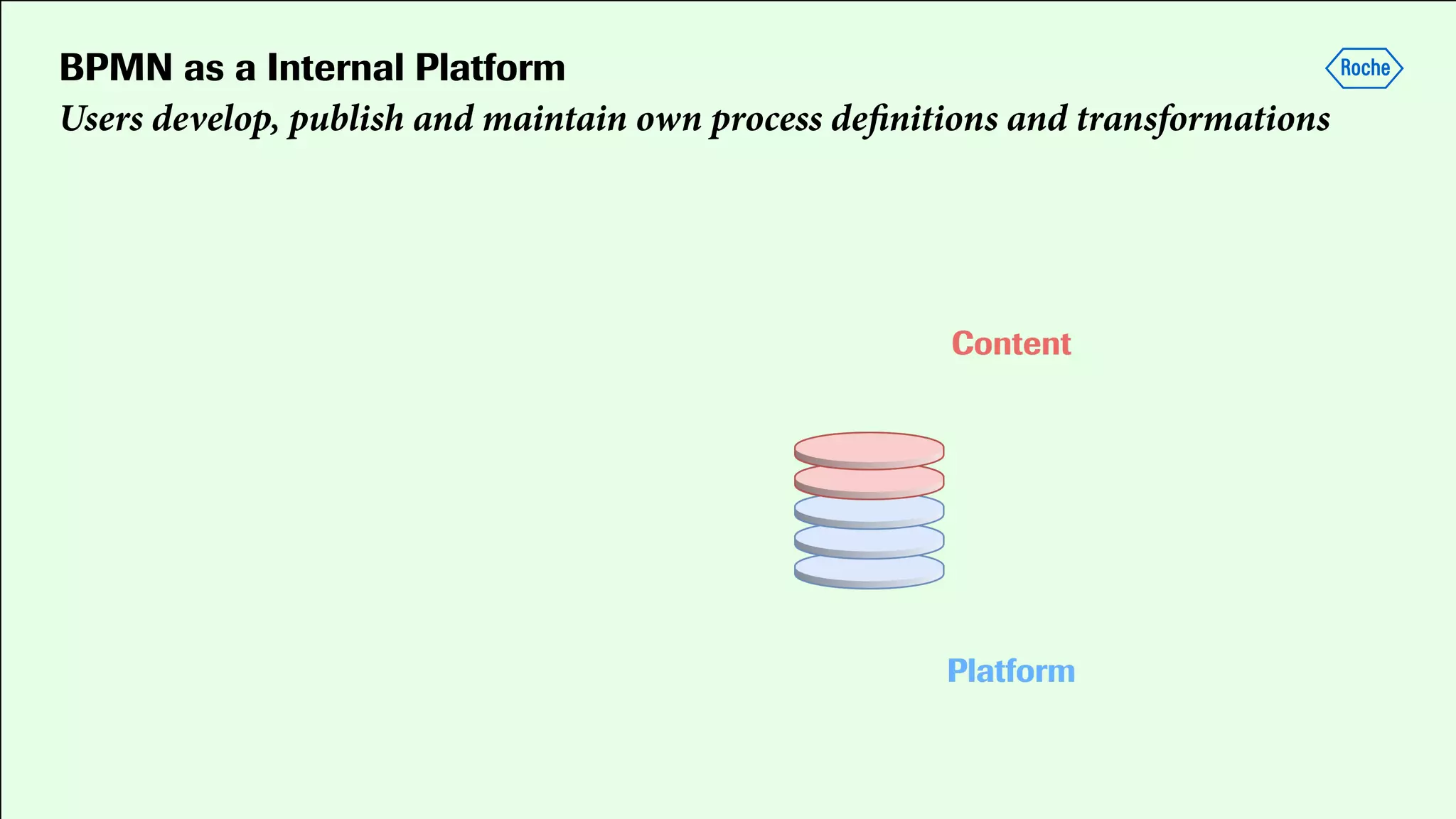
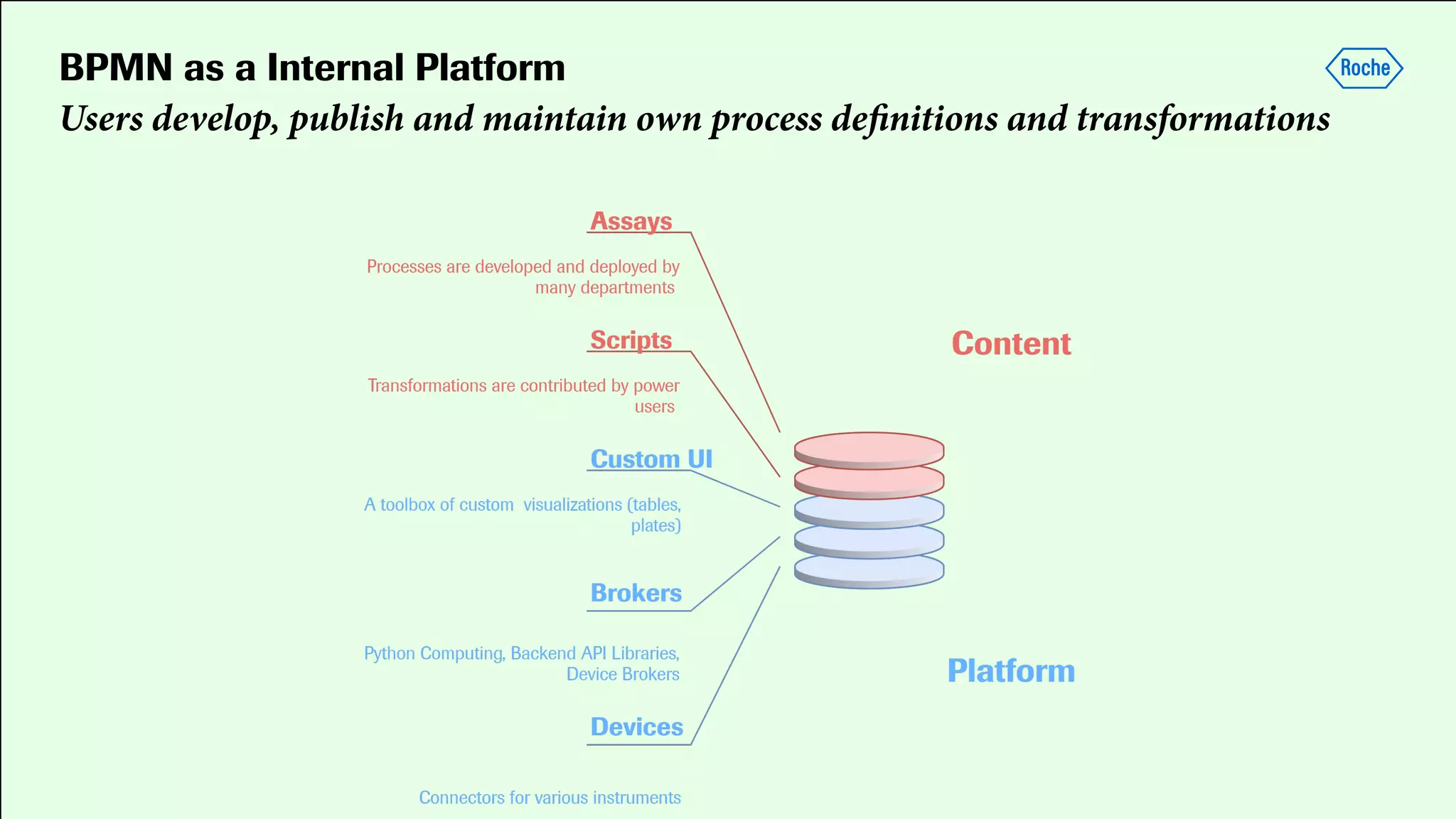
BPMN as a Internal Platform
Users develop, publish and maintain own process definitions and transformations
BPMN as a Internal Platform
Users develop, publish and maintain own process definitions and transformations
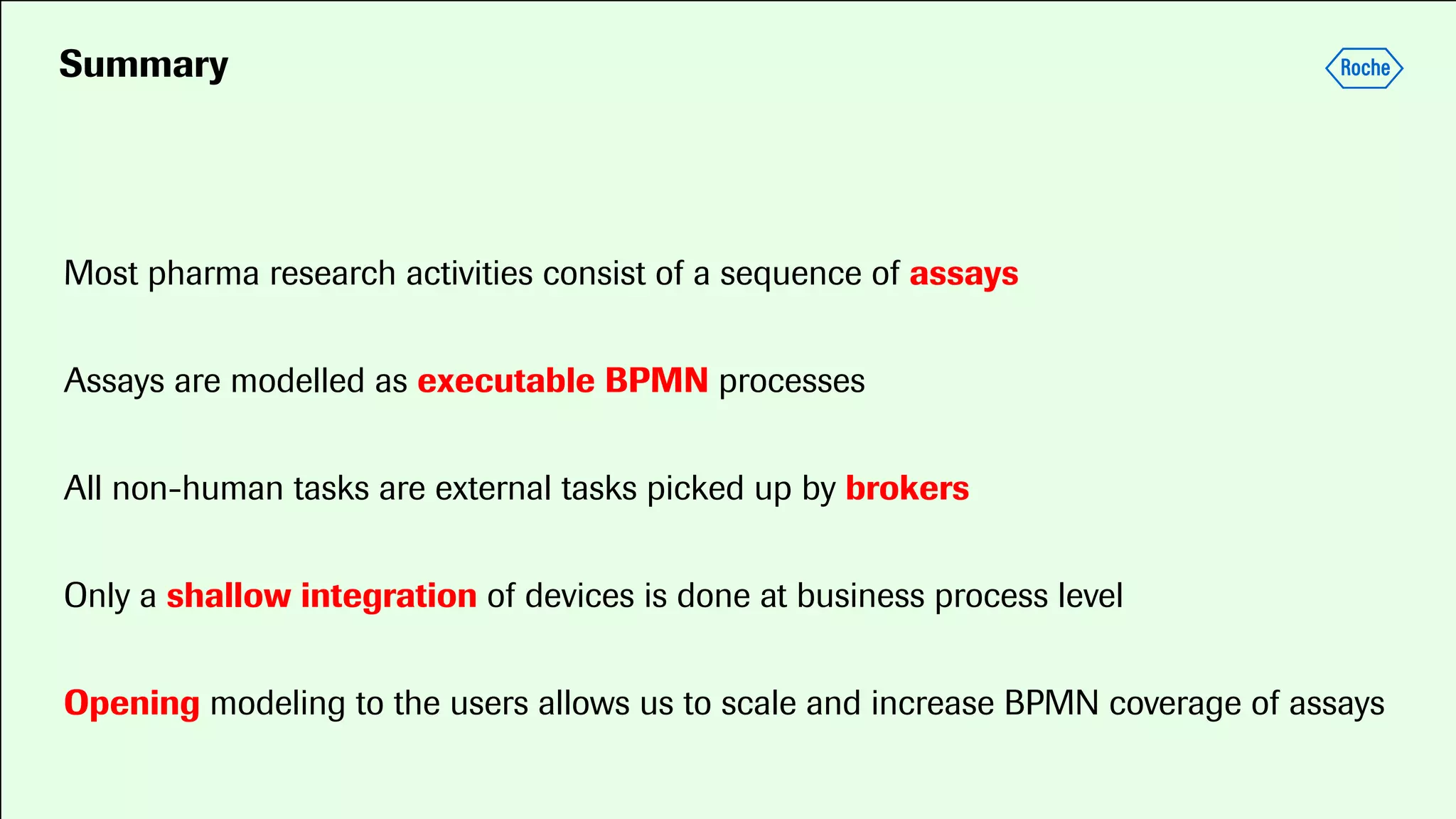
Summary
Most pharma research activities consist of a sequence of assays
Assays are modelled as executable BPMN processes
All non-human tasks are external tasks picked up by brokers
Only a shallow integration of devices is done at business process level
Opening modeling to the users allows us to scale and increase BPMN coverage of assays
Doing now what patients need next

Pharma Research Automation by Connecting Researchers with Robots and Systems by Daniel Butnaru