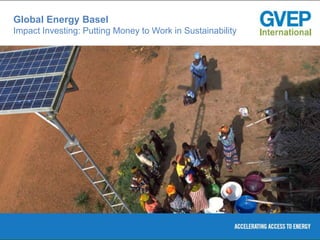
Global Energy Basel
Impact Investing: Putting Money to Work in Sustainability
Background
•   Organisation
    London-based NGO with 50 staff based primarily in Africa and Latin America


•   Mission
    Increased access to clean energy in developing countries


•   Approach
    Enterprise development for SMEs and project developers through provision of
    technical assistance and access to finance


•   Themes
    Solar lighting, small hydro, wind, waste-to energy, biogas, biomass, clean cooking
    (cook-stoves and briquettes), rural electrification and mini-grids


1
Current Initiatives
•   Energy SME Programme US$30m from Russian Gov’t through WB
     – TA and subsidies for SMEs and developers in 5 African countries; projects in solar,
       small hydro, productive use (e.g. dairies, agri) with focus on rural electrification


•   Developing Energy Enterprises Programme $5m from EU / Dutch Gov’t
     – Capacity building for 800 micro-enterprises in cook-stoves, briquettes, and solar
       products; expect to outperform target of improving access for 1.8m people at €2/person

•   Business plan competitions / grant facilities
     –   LAC IDEAS Energy Innovation Competition (IDB, DfID, Dutch Gov’t) – TA / Grants
     –   Access to Clean Energy Challenge (BiD Network, Barclays) – TA / Grants
     –   Africa Enterprise Challenge Fund REACT Competition (DfID / DANIDA) – TA
     –   Ashden Awards (Ashden Trust) – Judging and support

•   Access to finance
     – GVEP Loan Guarantee Fund – partial loan guarantees of $5-20k to increase availability
       of credit among small energy enterprises
     – Seed equity investments – $20-30k


2
New Initiatives
•   Prometheus Fund
    –   Clean energy-focused impact investment fund in partnership with AlphaMundi
    –   LAC/SSA; across technologies; debt and equity; €250k – 3m investment size
    –   GVEP as technical advisor provides pipeline, investee TA, impact measurement
    –   Fundraising, targeting first close in Q3 2012 at €25m; €50m final close in 2013


•   Caribbean IDEAS Energy Innovation Competition
    – $2.2m programme funded by DfID; second round of 2009 IDEAS Competition
    – Supports innovative energy projects in Caribbean across renewable technologies
    – Launches in Q1 2012


3
Achievements and Challenges
•   $10m mobilized since 2008 to support businesses, and increasingly to
    develop innovative solutions for challenges faced by energy enterprises
     – 900 businesses supported
     – 1.5m people benefiting from the growth of these businesses
     – 200,000 t/CO2 avoided


•   Challenges
     – Availability of biomass fuel for heat / cooking in remote areas
     – Access to capital (risk capital for development costs of small and/or off-grid projects and
       working capital for growth of early stage SMEs)
     – Consumer finance mechanisms
     – Scalable distribution models, particularly for penetration into rural communities
     – Product awareness; quality concerns prevent adoption


•   GVEP Goal: 14 – 15 – 16
     – Generate $14m of annual revenue to support businesses which provide access to
       energy to 15 million people by 2016


4
By 2020…
•   Higher level of awareness of failure to mitigate climate change
     – Will we be trying harder on renewables, or will we have given up?


•   Decreased barriers for private sector capital (equity and lenders)
     – Further along the experience curve, lower transaction costs, better information, deeper
       market and more monetization opportunities
     – Continued support from public sector (e.g. credit enhancements, FiTs, tax incentives)


•   Consumers will have more money and better information
     – Will no longer settle for kerosene, will differentiate between good and bad substitutes
     – Consumer transaction costs also decreased, product / service markets more liquid


•   Refined distribution and consumer finance models
     – Leveraging success of mobile telecom sector
     – Technology will permit innovative PAYG models (e.g. scratch-cards, mobile recharge)


5
By 2020…
•   Technological advancement and economies of scale will have reduced
    end-user prices
     – Already significantly lower prices than several years ago, even without companies
       having achieved scale and only a fraction of the market penetration that is possible


•   More development of mini-grids where grid extension is not feasible
     – Funding mechanisms / PPP drive private capital to distributed generation projects
     – Higher cost of diesel continues to improve relative economics


•   Overall challenge for BoP provision remains
     – Those at the very bottom of the pyramid remain most difficult to reach with private
       capital and private sector commercial activity; private sector interventions drift up the
       food chain


6

Peter George

  • 1.
    Global Energy Basel ImpactInvesting: Putting Money to Work in Sustainability
  • 2.
    Background • Organisation London-based NGO with 50 staff based primarily in Africa and Latin America • Mission Increased access to clean energy in developing countries • Approach Enterprise development for SMEs and project developers through provision of technical assistance and access to finance • Themes Solar lighting, small hydro, wind, waste-to energy, biogas, biomass, clean cooking (cook-stoves and briquettes), rural electrification and mini-grids 1
  • 3.
    Current Initiatives • Energy SME Programme US$30m from Russian Gov’t through WB – TA and subsidies for SMEs and developers in 5 African countries; projects in solar, small hydro, productive use (e.g. dairies, agri) with focus on rural electrification • Developing Energy Enterprises Programme $5m from EU / Dutch Gov’t – Capacity building for 800 micro-enterprises in cook-stoves, briquettes, and solar products; expect to outperform target of improving access for 1.8m people at €2/person • Business plan competitions / grant facilities – LAC IDEAS Energy Innovation Competition (IDB, DfID, Dutch Gov’t) – TA / Grants – Access to Clean Energy Challenge (BiD Network, Barclays) – TA / Grants – Africa Enterprise Challenge Fund REACT Competition (DfID / DANIDA) – TA – Ashden Awards (Ashden Trust) – Judging and support • Access to finance – GVEP Loan Guarantee Fund – partial loan guarantees of $5-20k to increase availability of credit among small energy enterprises – Seed equity investments – $20-30k 2
  • 4.
    New Initiatives • Prometheus Fund – Clean energy-focused impact investment fund in partnership with AlphaMundi – LAC/SSA; across technologies; debt and equity; €250k – 3m investment size – GVEP as technical advisor provides pipeline, investee TA, impact measurement – Fundraising, targeting first close in Q3 2012 at €25m; €50m final close in 2013 • Caribbean IDEAS Energy Innovation Competition – $2.2m programme funded by DfID; second round of 2009 IDEAS Competition – Supports innovative energy projects in Caribbean across renewable technologies – Launches in Q1 2012 3
  • 5.
    Achievements and Challenges • $10m mobilized since 2008 to support businesses, and increasingly to develop innovative solutions for challenges faced by energy enterprises – 900 businesses supported – 1.5m people benefiting from the growth of these businesses – 200,000 t/CO2 avoided • Challenges – Availability of biomass fuel for heat / cooking in remote areas – Access to capital (risk capital for development costs of small and/or off-grid projects and working capital for growth of early stage SMEs) – Consumer finance mechanisms – Scalable distribution models, particularly for penetration into rural communities – Product awareness; quality concerns prevent adoption • GVEP Goal: 14 – 15 – 16 – Generate $14m of annual revenue to support businesses which provide access to energy to 15 million people by 2016 4
  • 6.
    By 2020… • Higher level of awareness of failure to mitigate climate change – Will we be trying harder on renewables, or will we have given up? • Decreased barriers for private sector capital (equity and lenders) – Further along the experience curve, lower transaction costs, better information, deeper market and more monetization opportunities – Continued support from public sector (e.g. credit enhancements, FiTs, tax incentives) • Consumers will have more money and better information – Will no longer settle for kerosene, will differentiate between good and bad substitutes – Consumer transaction costs also decreased, product / service markets more liquid • Refined distribution and consumer finance models – Leveraging success of mobile telecom sector – Technology will permit innovative PAYG models (e.g. scratch-cards, mobile recharge) 5
  • 7.
    By 2020… • Technological advancement and economies of scale will have reduced end-user prices – Already significantly lower prices than several years ago, even without companies having achieved scale and only a fraction of the market penetration that is possible • More development of mini-grids where grid extension is not feasible – Funding mechanisms / PPP drive private capital to distributed generation projects – Higher cost of diesel continues to improve relative economics • Overall challenge for BoP provision remains – Those at the very bottom of the pyramid remain most difficult to reach with private capital and private sector commercial activity; private sector interventions drift up the food chain 6