1
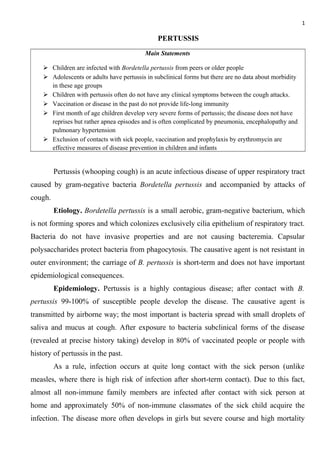
PERTUSSIS
Main Statements
 Children are infected with Bordetella pertussis from peers or older people
 Adolescents or adults have pertussis in subclinical forms but there are no data about morbidity
in these age groups
 Children with pertussis often do not have any clinical symptoms between the cough attacks.
 Vaccination or disease in the past do not provide life-long immunity
 First month of age children develop very severe forms of pertussis; the disease does not have
reprises but rather apnea episodes and is often complicated by pneumonia, encephalopathy and
pulmonary hypertension
 Exclusion of contacts with sick people, vaccination and prophylaxis by erythromycin are
effective measures of disease prevention in children and infants
Pertussis (whooping cough) is an acute infectious disease of upper respiratory tract
caused by gram-negative bacteria Bordetella pertussis and accompanied by attacks of
cough.
Etiology. Bordetella pertussis is a small aerobic, gram-negative bacterium, which
is not forming spores and which colonizes exclusively cilia epithelium of respiratory tract.
Bacteria do not have invasive properties and are not causing bacteremia. Capsular
polysaccharides protect bacteria from phagocytosis. The causative agent is not resistant in
outer environment; the carriage of B. pertussis is short-term and does not have important
epidemiological consequences.
Epidemiology. Pertussis is a highly contagious disease; after contact with B.
pertussis 99-100% of susceptible people develop the disease. The causative agent is
transmitted by airborne way; the most important is bacteria spread with small droplets of
saliva and mucus at cough. After exposure to bacteria subclinical forms of the disease
(revealed at precise history taking) develop in 80% of vaccinated people or people with
history of pertussis in the past.
As a rule, infection occurs at quite long contact with the sick person (unlike
measles, where there is high risk of infection after short-term contact). Due to this fact,
almost all non-immune family members are infected after contact with sick person at
home and approximately 50% of non-immune classmates of the sick child acquire the
infection. The disease more often develops in girls but severe course and high mortality
2
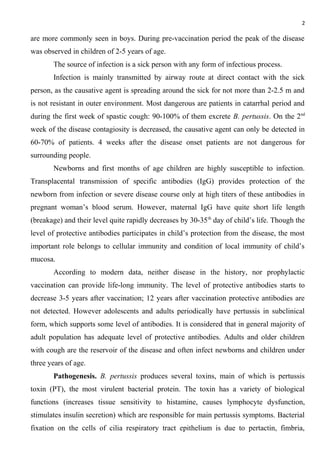
are more commonly seen in boys. During pre-vaccination period the peak of the disease
was observed in children of 2-5 years of age.
The source of infection is a sick person with any form of infectious process.
Infection is mainly transmitted by airway route at direct contact with the sick
person, as the causative agent is spreading around the sick for not more than 2-2.5 m and
is not resistant in outer environment. Most dangerous are patients in catarrhal period and
during the first week of spastic cough: 90-100% of them excrete B. pertussis. On the 2nd
week of the disease contagiosity is decreased, the causative agent can only be detected in
60-70% of patients. 4 weeks after the disease onset patients are not dangerous for
surrounding people.
Newborns and first months of age children are highly susceptible to infection.
Transplacental transmission of specific antibodies (IgG) provides protection of the
newborn from infection or severe disease course only at high titers of these antibodies in
pregnant woman’s blood serum. However, maternal IgG have quite short life length
(breakage) and their level quite rapidly decreases by 30-35th
day of child’s life. Though the
level of protective antibodies participates in child’s protection from the disease, the most
important role belongs to cellular immunity and condition of local immunity of child’s
mucosa.
According to modern data, neither disease in the history, nor prophylactic
vaccination can provide life-long immunity. The level of protective antibodies starts to
decrease 3-5 years after vaccination; 12 years after vaccination protective antibodies are
not detected. However adolescents and adults periodically have pertussis in subclinical
form, which supports some level of antibodies. It is considered that in general majority of
adult population has adequate level of protective antibodies. Adults and older children
with cough are the reservoir of the disease and often infect newborns and children under
three years of age.
Pathogenesis. B. pertussis produces several toxins, main of which is pertussis
toxin (РТ), the most virulent bacterial protein. The toxin has a variety of biological
functions (increases tissue sensitivity to histamine, causes lymphocyte dysfunction,
stimulates insulin secretion) which are responsible for main pertussis symptoms. Bacterial
fixation on the cells of cilia respiratory tract epithelium is due to pertactin, fimbria,
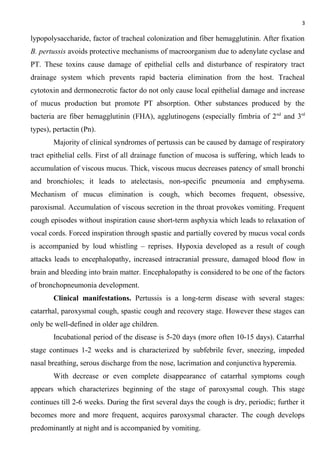
3
lypopolysaccharide, factor of tracheal colonization and fiber hemagglutinin. After fixation
B. pertussis avoids protective mechanisms of macroorganism due to adenylate cyclase and
PT. These toxins cause damage of epithelial cells and disturbance of respiratory tract
drainage system which prevents rapid bacteria elimination from the host. Tracheal
cytotoxin and dermonecrotic factor do not only cause local epithelial damage and increase
of mucus production but promote PT absorption. Other substances produced by the
bacteria are fiber hemagglutinin (FHA), agglutinogens (especially fimbria of 2nd
and 3rd
types), pertactin (Pn).
Majority of clinical syndromes of pertussis can be caused by damage of respiratory
tract epithelial cells. First of all drainage function of mucosa is suffering, which leads to
accumulation of viscous mucus. Thick, viscous mucus decreases patency of small bronchi
and bronchioles; it leads to atelectasis, non-specific pneumonia and emphysema.
Mechanism of mucus elimination is cough, which becomes frequent, obsessive,
paroxismal. Accumulation of viscous secretion in the throat provokes vomiting. Frequent
cough episodes without inspiration cause short-term asphyxia which leads to relaxation of
vocal cords. Forced inspiration through spastic and partially covered by mucus vocal cords
is accompanied by loud whistling – reprises. Hypoxia developed as a result of cough
attacks leads to encephalopathy, increased intracranial pressure, damaged blood flow in
brain and bleeding into brain matter. Encephalopathy is considered to be one of the factors
of bronchopneumonia development.
Clinical manifestations. Pertussis is a long-term disease with several stages:
catarrhal, paroxysmal cough, spastic cough and recovery stage. However these stages can
only be well-defined in older age children.
Incubational period of the disease is 5-20 days (more often 10-15 days). Catarrhal
stage continues 1-2 weeks and is characterized by subfebrile fever, sneezing, impeded
nasal breathing, serous discharge from the nose, lacrimation and conjunctiva hyperemia.
With decrease or even complete disappearance of catarrhal symptoms cough
appears which characterizes beginning of the stage of paroxysmal cough. This stage
continues till 2-6 weeks. During the first several days the cough is dry, periodic; further it
becomes more and more frequent, acquires paroxysmal character. The cough develops
predominantly at night and is accompanied by vomiting.
4
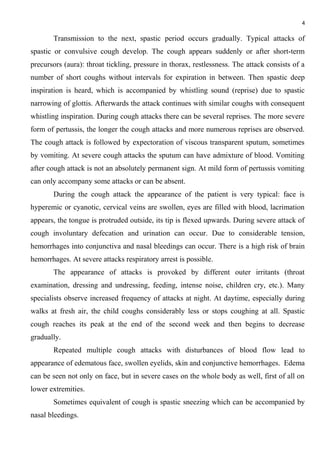
Transmission to the next, spastic period occurs gradually. Typical attacks of
spastic or convulsive cough develop. The cough appears suddenly or after short-term
precursors (aura): throat tickling, pressure in thorax, restlessness. The attack consists of a
number of short coughs without intervals for expiration in between. Then spastic deep
inspiration is heard, which is accompanied by whistling sound (reprise) due to spastic
narrowing of glottis. Afterwards the attack continues with similar coughs with consequent
whistling inspiration. During cough attacks there can be several reprises. The more severe
form of pertussis, the longer the cough attacks and more numerous reprises are observed.
The cough attack is followed by expectoration of viscous transparent sputum, sometimes
by vomiting. At severe cough attacks the sputum can have admixture of blood. Vomiting
after cough attack is not an absolutely permanent sign. At mild form of pertussis vomiting
can only accompany some attacks or can be absent.
During the cough attack the appearance of the patient is very typical: face is
hyperemic or cyanotic, cervical veins are swollen, eyes are filled with blood, lacrimation
appears, the tongue is protruded outside, its tip is flexed upwards. During severe attack of
cough involuntary defecation and urination can occur. Due to considerable tension,
hemorrhages into conjunctiva and nasal bleedings can occur. There is a high risk of brain
hemorrhages. At severe attacks respiratory arrest is possible.
The appearance of attacks is provoked by different outer irritants (throat
examination, dressing and undressing, feeding, intense noise, children cry, etc.). Many
specialists observe increased frequency of attacks at night. At daytime, especially during
walks at fresh air, the child coughs considerably less or stops coughing at all. Spastic
cough reaches its peak at the end of the second week and then begins to decrease
gradually.
Repeated multiple cough attacks with disturbances of blood flow lead to
appearance of edematous face, swollen eyelids, skin and conjunctive hemorrhages. Edema
can be seen not only on face, but in severe cases on the whole body as well, first of all on
lower extremities.
Sometimes equivalent of cough is spastic sneezing which can be accompanied by
nasal bleedings.
5
Sometimes at mouth examination ulcer is seen on the tongue frenulum. This ulcer
results from mechanical rubbing of tongue frenulum against sharp borders of lower incisor
teeth. With decrease of spastic cough the ulcer gradually lessens and disappears.
Even at frequent attacks of uncomplicated pertussis the general condition of
majority of the patients is not disturbed. Children with pertussis have usual lifestyle, play,
preserve appetite between attacks of pertussis. Temperature is mildly elevated in catarrhal
period, but by development of cough attacks it becomes normal in majority of patients,
sometimes subfebrile. Prominent fever at the period of spastic cough usually points out at
development of complications. Only in some patients with uncomplicated pertussis
increased temperature is seen for a prolonged time.
At lungs examination emphysema signs are often seen, tympanic sound tone at
percussion. At auscultation dry and not sound wet rales are heard. X-ray reveals increased
aeration of pulmonary fields, lower position and flattening of diaphragm, increased
shadow of both sinuses, more prominent reticular lung picture, appearance of linear
bundles. At further course of the disease, mainly at 5-7th
weeks, intense bungles appear
from the sinuses downwards, towards diaphragm. Sometimes these bundles form a triangle
(basal “triangle of Gotche”) with apex at spine, approximately at the level of sinus, and
with base at diaphragm. These X-ray changes gradually disappear in the stage of recovery.
Spastic cough continues from 2 till 8 weeks. Gradually the frequency of attacks
lessens, their severity decreases, and the disease is turned into the third period.
At recovery period the cough loses its spastic character and becomes rarer. Mucus
becomes serous-purulent. Gradually all the symptoms disappear. This period lasts 2-4
weeks. So, the total duration of the disease is from 5 till 12 weeks, sometimes longer.
In stage of recovery and even after complete disappearance of all the symptoms of
pertussis sometimes recurrence of typical attacks is seen; these are false relapses. They
appear after body release from pertussis bacteria and are not accompanied by typical for
pertussis CBC changes. These “recurrences” appear after recovery by the mechanism of
sequential reactions at joining of some other infectious disease: influenza, tonsillitis, etc.
Criteria of cough attack severity at pertussis
Sign Not life threatening Life threatening
Length of paroxysm <45 seconds >60 seconds
6
Behavior
Irritable, quickly calms
down; periorbital cyanosis
Flaccid
Character of cough Sound, without apnea
Apnea, tachypnea, suffocation are
more prominent than cough
Skin color Purple Cyanotic
Tachycardia
Disappears during <30
seconds
Persistent
Bradycardia
Disappears at the end of
the attack
Persistent, stimulation is required
Desaturation of О2
Disappears during <30
seconds
Persistent
Mucus plugs
Coughed out without
assistance
Obstruction, sanitation required
Restoration of
breezing
Rapid, with deep
breathing
Apnea or weak inspiration
Reprise Prominent Absent
Condition after cough Exhausted
Decrease of consciousness,
seizures
Pertussis in vaccinated children is characterized by shortening of all the disease
stages.
The most typical complications of pertussis are bronchitis, pneumonia,
encephalopathy, hernia, conjunctive bleeding. These complications can be caused by
action of the bacteria itself, by long-lasting attacks of cough, hypoxia or can develop as a
result of secondary viral or bacterial infection.
Pertussis has very severe course in first month of age children, in 3-10% of
patients the disease has lethal outcome. The disease course can resemble pneumonia or
bronchiolitis. Considering incubational period of the disease, the first symptoms of
pertussis can already appear on the 7-10th
days of life. Primary signs of the disease are
worsening of suckling, tachypnea, cough which can be so insignificant that it does not
alarm either parents or medical personnel. Sometimes catarrhal stage of the disease can
7
present with typical signs of acute upper respiratory tract infection (nasal discharge,
sneezing, light cough), which continues several hours, more seldom several days.
Considerable difficulties of diagnosis are caused by disease course without cough
or without spastic cough and without reprises. These children manly present with apnea
attacks, bradycardia, cyanosis. Episodes of apnea are caused by exhaustion after cough
attacks, excessive vagus irritation or by direct action of bacterial toxin on CNS. In
premature children episodes of apnea are misdiagnosed as apnea of prematurity. In some
patients repeated multiple expirations without inspiration are observed which also lead to
hypoxia and hypoxemia. As a result of hypoxia caused by respiratory distress, seizures
develop.
Neurological complications of pertussis in early age children can be seizures
(predominantly caused by hypoxia), encephalopathy, subarachnoid bleedings and cortical
atrophy. At pathologoanatomical examination of lethal cases brain hemorrhages of
different size (from microscopic till massive) are often detected. There are several
mechanisms of encephalopathy development at pertussis. CNS changes are considered to
be secondary to hypoxia, hypoxemia, hypoglycemia and direct action of pertussis toxin;
however, the only mechanism is proved: parenchymal hemorrhages into brain tissue
caused by disturbance of venous outflow and increased pressure at cough. Encephalopathy
is more seldom caused by metabolic and electrolyte disturbances due to frequent vomiting
and dehydration.
Frequent cause of death in infants is acute pulmonary hypertension, the reasons of
which are not determined yet nowadays. Revealing of massive lymphocyte accumulation
in pulmonary vessels resembling clots, relation between leukocytosis, pulmonary
hypertension and children mortality allow suggest that one of the mechanisms of
pulmonary hypertension development is lumen occlusion of pulmonary vessels with
leukocyte clots. Pulmonary hypertension rapidly leads to heart insufficiency (myocardial
weakness), which presents with refractory tachycardia (160-250 beats / min), arterial
hypotension not corrected by injection of monotropic drugs or fluid infusions in sufficient
amount.
Mortality among newborns remains high in spite of implementation into
therapeutic strategy of extracorporeal membrane oxygenation, artificial oxygenation with
8
nitrogen monoxide, usage of pulmonary vessel vasodilators or performance of replacing
blood transfusion for elimination of hyperleukocytosis.
Diagnosis. Leukocytosis or hyperleukocytosis (15.0 – 100.0 *109
/ l) can be
already seen in catarrhal stage of the disease. In blood smear lymphocytes predominate.
ESR is mainly unchanged. Early age children have less prominent lymphocytosis. Increase
of absolute number of neutrophils during the course of the disease justifies development of
bacterial complications.
X-ray reveals in most cases mild changes typical for peribronchial infiltrates,
edema, small foci of atelectasis. Lung parenchyma consolidation characterizes
development of pneumonia. More seldom pneumothorax, pneumomediastinum,
bronchiectasis and air in soft tissue of neck and thorax can be diagnosed.
Standard of diagnosis is currently culture of Bordetella pertussis from cilia
respiratory tract epithelium. Mucus collection is performed by the method of cough plates,
nasopharyngeal aspiration or by tampon from posterior pharyngeal wall (material
collection can be done through nasal canals or through mouth; it is important not to touch
other places of mouth mucosa and teeth and try to keep the tampon on pharyngeal wall
less than 10 seconds, picture 1). As cotton wool (cotton or artificial) contains fatty acids
which are toxic for the bacteria, the material collection should not be taken by standard
cotton buds. With this goal loops from aglinate calcium or sticks with tampon from elastic
nylon (e.g., Rayon, Dracon) are used.
Bacteriological method is highly specific but low sensitive (antibiotic therapy also
influences the results of the culture), and it is not recommended currently as the single
method of diagnosis confirmation.
PCR is characterized by high sensitivity and specificity during both catarrhal and
spastic cough stages of the disease. Antibiotic therapy has little influence on investigation
results.
According to WHO recommendations, the confirmed case of pertussis is the case
with typical clinical presentation and positive PCR results or with detected contact with
pertussis patient (laboratory proved case of pertussis). Diagnosis of pertussis is also made
at presence of the cough of any length with positive bacteriological culture B. pertussis.
9
Serological methods can reveal specific antibodies of IgA and IgM class to
pertussis toxin or pertactin or filament hemagglutinin in blood.
Treatment. First of all, supportive air regiment in the room is provided for the
patient. At mild and moderate forms children are recommended to stay outside in fresh air
for a long time. All the patients during the first 3 weeks from disease onset are given
macrolide antibiotics in age-related dosages (according to evidence-based medicine,
optimal drugs are erythromycin, azythromycin and clarithromycin).
Recommended dosages and schema of antibiotics at pertussis:
- children younger than 6 months of age – azythromycin 10 mg / kg (not more than 500
mg) orally 5 days;
- children older than 6 months of age – azythromycin 10 mg / kg (not more than 500 mg)
orally 1st
day; afterwards 5 mg / kg (not more than 250 mg) during the next 4 days;
- clarithromycin for children older than 1 month: 7.5 mg / kg (not more than 500 mg)
orally every 12 hours during 7 days;
- erythromycin for children older than 6 months: 40-50 mg / kg of body weight per day
(not more than 2 g per day) divided into 4 dosages during 7 days.
At intolerance of macrolides co-trimoxazole, ampicillin and amoxicillin are used
during 14 days on age-related dosages.
Prescription of etiotropic therapy after 3 weeks from disease onset is not grounded
and is considered individually (in this period antibiotics should be given to patients who
might probably have contact with not immune people in the future).
According to data of evidence-based medicine, immunoglobulins, corticosteroids
and ß-adrenoreceptor agonists are not recommended to patients with pertussis. Antitussive
drugs are not effective at pertussis.
Follow up of newborns with pertussis includes monitoring of vital functions,
episodes of apnea, frequent mucus aspiration from respiratory tract, provision of adequate
oxygenation, parentheral hydration, correction of hypoglycemia and parentheral nutrition.
As etiotropic therapy it is recommended to prescribe to newborns azythromycin in dose 10
mg / k per day, orally, during 5-7 days; in severe conditions – ceftriaxone or meronem.
Erythromycin for treatment of first 6 months of age children is contraindicated as it can
cause development of gastric pyloric stenosis. For prevention of apnea in early age
10
children traditionally aminazine is used in dosage 1-2.5 mg / kg / day as monotherapy or in
combination with lytic solution. Indications for artificial lung ventilation in children are
apnea, respiratory insufficiency and seizures.
In case of apnea it is necessary to maximally restore patency of respiratory tract.
Nose and mouth cavity of the patients are cleared from mucus and vomiting masses.
Respiratory movements are restored by rhythmic pressure by hands on child’s thorax,
usage of manual respirators, mask oxygen. At frequent long apnea and development of
seizures the child is transmitted into intensive care unit, where the questions of necessity
of artificial lung ventilation and vital function correction are decided.
Prophylaxis. Vaccination against pertussis is performed to children of 3, 4, 5
months of age by acellular or whole-cell pertussis vaccine, which is included into
combined vaccines (against diphtheria, tetanus and/or polyomyelitis, haemophilus
influenza, viral hepatitis B); revaccination is performed at 18 months of age.
Currently the question of adolescents and adults vaccination against pertussis is
discussed due to considerable increase of pertussis morbidity in these age groups.
High risk groups or severe or complicated course of pertussis include:
• first year of age children, especially first 4 months of life;
• children with chronic pulmonary diseases, cystic fibrosis, diseases accompanied
by respiratory insufficiency;
• children with immunodeficient conditions;
• pregnant women in the third trimester.
High risk group people should avoid contact with pertussis patients, as well as with
coughing people. At direct contact with sick person or staying in one room during 1 hour,
the high risk person should be given antibacterial drugs with prophylactic goal.
Recommended antibacterial drugs for prophylaxis
after contact with a patient with pertussis.
Age Azythromycin Erythromycin Clarithromycin Co-trimoxazole
До
1 мес.
10 mg/kg, once
a day, 5 days
Not prescribed Not prescribed Not prescribed
1 -5
Месс.
10 mg/kg, once
a day, 5 days
Not prescribed 15 mg/kg per day,
twice a day, 7 days
Not prescribed
От
6 мес.
10 mg/kg, once
the first day,
further 5 mg/kg
Only at the absence
of azythromycin
40-50 mg/kg per
15 mg/kg per day,
twice a day, 7 days
(not more than 1 g
40 mg/kg per day
(sulfamethoxazole)
twice a day, 14 days
11
4 days (not more
than 500 mg per
day)
day, 4 times a day,
14 days (not more
than 2 g per day)
per day)
Pregnant women after pertussis contact during the last trimester are given a course
of erythromycin or azythromycin.
Questions for self-control
1. What are main particularities of pertussis causative agent?
2. Point out the main steps of pertussis pathogenesis.
3. Describe clinical symptoms of pertussis depending on disease period.
4. What are the main particularities of pertussis in early age children?
5. Describe clinical classification of pertussis, indicators of disease severity.
6. What complications and consequences are observed at pertussis?
7. What are the main methods of pertussis diagnosis (epidemiological, clinical, hematological,
bacteriological, serological)?
8. What are the principles of pertussis therapy?
9. At what age are the scheduled prophylactic vaccinations against pertussis performed?
Tests for self-control
1. Severe complicated course of pertussis is most typical for which category of children:
A. Children diagnosed with cystic fibrosis
B. Male adolescents
C. Children of 5-7 years of age without prophylactic vaccination in the past
D. Children of 5-7 years of age with frequent episodes of ARVI
E. School age children with a case of parapertussis in past medical history
2. Material for bacteriological investigation (with the goal of detection of the causative agent,
B.pertussis) at suspicion of pertussis is the following:
A. Nasopharyngeal mucus
B. Nasopharyngeal mucus and blood
C. Nasopharyngeal mucus and gastric aspirate (vomiting masses)
D. Blood and urine
E. Discharge from conjunctivas
3. 5 years old child is in infectious disease hospital with diagnosis of “Pertussis, severe course, stage
of spastic cough”. Point out the most typical for this stage changes in CBC:
A. Hb -115 G / l, Er-3, 4 * 1012
/ l, Leuk.-14, 5 * 109 / l, e-2%, b-19%, s-41%, lymph.-35%, mon.3%
B. Hb -128 G / l, Er-3, 9 * 1012
/ l, Leuk.-.-6, 5 * 109 / l, e-1%, b-5%, s-34%, lymph.-56%, mon. 4%
C. Hb -128 G / l, Er-3, 9 * 1012
/ l, Leuk.-.-44, 5 * 109 / l, e-1%, b-5%, s-4%, lymph.-76%, mon. 4%
D. Hb -135 G / l, Er-4, 0 * 1012
/ l, Leuk.-.-5, 5 * 109 / l, e-1%, b-4%, s-50%, lymph.-40%, mon. 5%
E. Hb -90 G / l, Er-2, 0 * 1012
/ l, Leuk.-.-35, 5 * 109 / l, blasts-10%, b-0%, s-20%, lymph.-40%, mon 0%
4. Name complications of pertussis:
A. CNS damage
B. Pneumonia
C. Lungs atelectasis
D. Nasal bleedings
E. All the answers are correct
5. For antibiotic therapy at pertussis the following drug is used:
12
A. Erythromycin
B. Rifampicin
C. Penicillin
D. Tetracycline
E. Ciprofloxacin
Test answers
1-A, 2-A, 3-B, 4-E, 5-A.

Pertussis

  • 1.
    1 PERTUSSIS Main Statements  Childrenare infected with Bordetella pertussis from peers or older people  Adolescents or adults have pertussis in subclinical forms but there are no data about morbidity in these age groups  Children with pertussis often do not have any clinical symptoms between the cough attacks.  Vaccination or disease in the past do not provide life-long immunity  First month of age children develop very severe forms of pertussis; the disease does not have reprises but rather apnea episodes and is often complicated by pneumonia, encephalopathy and pulmonary hypertension  Exclusion of contacts with sick people, vaccination and prophylaxis by erythromycin are effective measures of disease prevention in children and infants Pertussis (whooping cough) is an acute infectious disease of upper respiratory tract caused by gram-negative bacteria Bordetella pertussis and accompanied by attacks of cough. Etiology. Bordetella pertussis is a small aerobic, gram-negative bacterium, which is not forming spores and which colonizes exclusively cilia epithelium of respiratory tract. Bacteria do not have invasive properties and are not causing bacteremia. Capsular polysaccharides protect bacteria from phagocytosis. The causative agent is not resistant in outer environment; the carriage of B. pertussis is short-term and does not have important epidemiological consequences. Epidemiology. Pertussis is a highly contagious disease; after contact with B. pertussis 99-100% of susceptible people develop the disease. The causative agent is transmitted by airborne way; the most important is bacteria spread with small droplets of saliva and mucus at cough. After exposure to bacteria subclinical forms of the disease (revealed at precise history taking) develop in 80% of vaccinated people or people with history of pertussis in the past. As a rule, infection occurs at quite long contact with the sick person (unlike measles, where there is high risk of infection after short-term contact). Due to this fact, almost all non-immune family members are infected after contact with sick person at home and approximately 50% of non-immune classmates of the sick child acquire the infection. The disease more often develops in girls but severe course and high mortality
  • 2.
    2 are more commonlyseen in boys. During pre-vaccination period the peak of the disease was observed in children of 2-5 years of age. The source of infection is a sick person with any form of infectious process. Infection is mainly transmitted by airway route at direct contact with the sick person, as the causative agent is spreading around the sick for not more than 2-2.5 m and is not resistant in outer environment. Most dangerous are patients in catarrhal period and during the first week of spastic cough: 90-100% of them excrete B. pertussis. On the 2nd week of the disease contagiosity is decreased, the causative agent can only be detected in 60-70% of patients. 4 weeks after the disease onset patients are not dangerous for surrounding people. Newborns and first months of age children are highly susceptible to infection. Transplacental transmission of specific antibodies (IgG) provides protection of the newborn from infection or severe disease course only at high titers of these antibodies in pregnant woman’s blood serum. However, maternal IgG have quite short life length (breakage) and their level quite rapidly decreases by 30-35th day of child’s life. Though the level of protective antibodies participates in child’s protection from the disease, the most important role belongs to cellular immunity and condition of local immunity of child’s mucosa. According to modern data, neither disease in the history, nor prophylactic vaccination can provide life-long immunity. The level of protective antibodies starts to decrease 3-5 years after vaccination; 12 years after vaccination protective antibodies are not detected. However adolescents and adults periodically have pertussis in subclinical form, which supports some level of antibodies. It is considered that in general majority of adult population has adequate level of protective antibodies. Adults and older children with cough are the reservoir of the disease and often infect newborns and children under three years of age. Pathogenesis. B. pertussis produces several toxins, main of which is pertussis toxin (РТ), the most virulent bacterial protein. The toxin has a variety of biological functions (increases tissue sensitivity to histamine, causes lymphocyte dysfunction, stimulates insulin secretion) which are responsible for main pertussis symptoms. Bacterial fixation on the cells of cilia respiratory tract epithelium is due to pertactin, fimbria,
  • 3.
    3 lypopolysaccharide, factor oftracheal colonization and fiber hemagglutinin. After fixation B. pertussis avoids protective mechanisms of macroorganism due to adenylate cyclase and PT. These toxins cause damage of epithelial cells and disturbance of respiratory tract drainage system which prevents rapid bacteria elimination from the host. Tracheal cytotoxin and dermonecrotic factor do not only cause local epithelial damage and increase of mucus production but promote PT absorption. Other substances produced by the bacteria are fiber hemagglutinin (FHA), agglutinogens (especially fimbria of 2nd and 3rd types), pertactin (Pn). Majority of clinical syndromes of pertussis can be caused by damage of respiratory tract epithelial cells. First of all drainage function of mucosa is suffering, which leads to accumulation of viscous mucus. Thick, viscous mucus decreases patency of small bronchi and bronchioles; it leads to atelectasis, non-specific pneumonia and emphysema. Mechanism of mucus elimination is cough, which becomes frequent, obsessive, paroxismal. Accumulation of viscous secretion in the throat provokes vomiting. Frequent cough episodes without inspiration cause short-term asphyxia which leads to relaxation of vocal cords. Forced inspiration through spastic and partially covered by mucus vocal cords is accompanied by loud whistling – reprises. Hypoxia developed as a result of cough attacks leads to encephalopathy, increased intracranial pressure, damaged blood flow in brain and bleeding into brain matter. Encephalopathy is considered to be one of the factors of bronchopneumonia development. Clinical manifestations. Pertussis is a long-term disease with several stages: catarrhal, paroxysmal cough, spastic cough and recovery stage. However these stages can only be well-defined in older age children. Incubational period of the disease is 5-20 days (more often 10-15 days). Catarrhal stage continues 1-2 weeks and is characterized by subfebrile fever, sneezing, impeded nasal breathing, serous discharge from the nose, lacrimation and conjunctiva hyperemia. With decrease or even complete disappearance of catarrhal symptoms cough appears which characterizes beginning of the stage of paroxysmal cough. This stage continues till 2-6 weeks. During the first several days the cough is dry, periodic; further it becomes more and more frequent, acquires paroxysmal character. The cough develops predominantly at night and is accompanied by vomiting.
  • 4.
    4 Transmission to thenext, spastic period occurs gradually. Typical attacks of spastic or convulsive cough develop. The cough appears suddenly or after short-term precursors (aura): throat tickling, pressure in thorax, restlessness. The attack consists of a number of short coughs without intervals for expiration in between. Then spastic deep inspiration is heard, which is accompanied by whistling sound (reprise) due to spastic narrowing of glottis. Afterwards the attack continues with similar coughs with consequent whistling inspiration. During cough attacks there can be several reprises. The more severe form of pertussis, the longer the cough attacks and more numerous reprises are observed. The cough attack is followed by expectoration of viscous transparent sputum, sometimes by vomiting. At severe cough attacks the sputum can have admixture of blood. Vomiting after cough attack is not an absolutely permanent sign. At mild form of pertussis vomiting can only accompany some attacks or can be absent. During the cough attack the appearance of the patient is very typical: face is hyperemic or cyanotic, cervical veins are swollen, eyes are filled with blood, lacrimation appears, the tongue is protruded outside, its tip is flexed upwards. During severe attack of cough involuntary defecation and urination can occur. Due to considerable tension, hemorrhages into conjunctiva and nasal bleedings can occur. There is a high risk of brain hemorrhages. At severe attacks respiratory arrest is possible. The appearance of attacks is provoked by different outer irritants (throat examination, dressing and undressing, feeding, intense noise, children cry, etc.). Many specialists observe increased frequency of attacks at night. At daytime, especially during walks at fresh air, the child coughs considerably less or stops coughing at all. Spastic cough reaches its peak at the end of the second week and then begins to decrease gradually. Repeated multiple cough attacks with disturbances of blood flow lead to appearance of edematous face, swollen eyelids, skin and conjunctive hemorrhages. Edema can be seen not only on face, but in severe cases on the whole body as well, first of all on lower extremities. Sometimes equivalent of cough is spastic sneezing which can be accompanied by nasal bleedings.
  • 5.
    5 Sometimes at mouthexamination ulcer is seen on the tongue frenulum. This ulcer results from mechanical rubbing of tongue frenulum against sharp borders of lower incisor teeth. With decrease of spastic cough the ulcer gradually lessens and disappears. Even at frequent attacks of uncomplicated pertussis the general condition of majority of the patients is not disturbed. Children with pertussis have usual lifestyle, play, preserve appetite between attacks of pertussis. Temperature is mildly elevated in catarrhal period, but by development of cough attacks it becomes normal in majority of patients, sometimes subfebrile. Prominent fever at the period of spastic cough usually points out at development of complications. Only in some patients with uncomplicated pertussis increased temperature is seen for a prolonged time. At lungs examination emphysema signs are often seen, tympanic sound tone at percussion. At auscultation dry and not sound wet rales are heard. X-ray reveals increased aeration of pulmonary fields, lower position and flattening of diaphragm, increased shadow of both sinuses, more prominent reticular lung picture, appearance of linear bundles. At further course of the disease, mainly at 5-7th weeks, intense bungles appear from the sinuses downwards, towards diaphragm. Sometimes these bundles form a triangle (basal “triangle of Gotche”) with apex at spine, approximately at the level of sinus, and with base at diaphragm. These X-ray changes gradually disappear in the stage of recovery. Spastic cough continues from 2 till 8 weeks. Gradually the frequency of attacks lessens, their severity decreases, and the disease is turned into the third period. At recovery period the cough loses its spastic character and becomes rarer. Mucus becomes serous-purulent. Gradually all the symptoms disappear. This period lasts 2-4 weeks. So, the total duration of the disease is from 5 till 12 weeks, sometimes longer. In stage of recovery and even after complete disappearance of all the symptoms of pertussis sometimes recurrence of typical attacks is seen; these are false relapses. They appear after body release from pertussis bacteria and are not accompanied by typical for pertussis CBC changes. These “recurrences” appear after recovery by the mechanism of sequential reactions at joining of some other infectious disease: influenza, tonsillitis, etc. Criteria of cough attack severity at pertussis Sign Not life threatening Life threatening Length of paroxysm <45 seconds >60 seconds
  • 6.
    6 Behavior Irritable, quickly calms down;periorbital cyanosis Flaccid Character of cough Sound, without apnea Apnea, tachypnea, suffocation are more prominent than cough Skin color Purple Cyanotic Tachycardia Disappears during <30 seconds Persistent Bradycardia Disappears at the end of the attack Persistent, stimulation is required Desaturation of О2 Disappears during <30 seconds Persistent Mucus plugs Coughed out without assistance Obstruction, sanitation required Restoration of breezing Rapid, with deep breathing Apnea or weak inspiration Reprise Prominent Absent Condition after cough Exhausted Decrease of consciousness, seizures Pertussis in vaccinated children is characterized by shortening of all the disease stages. The most typical complications of pertussis are bronchitis, pneumonia, encephalopathy, hernia, conjunctive bleeding. These complications can be caused by action of the bacteria itself, by long-lasting attacks of cough, hypoxia or can develop as a result of secondary viral or bacterial infection. Pertussis has very severe course in first month of age children, in 3-10% of patients the disease has lethal outcome. The disease course can resemble pneumonia or bronchiolitis. Considering incubational period of the disease, the first symptoms of pertussis can already appear on the 7-10th days of life. Primary signs of the disease are worsening of suckling, tachypnea, cough which can be so insignificant that it does not alarm either parents or medical personnel. Sometimes catarrhal stage of the disease can
  • 7.
    7 present with typicalsigns of acute upper respiratory tract infection (nasal discharge, sneezing, light cough), which continues several hours, more seldom several days. Considerable difficulties of diagnosis are caused by disease course without cough or without spastic cough and without reprises. These children manly present with apnea attacks, bradycardia, cyanosis. Episodes of apnea are caused by exhaustion after cough attacks, excessive vagus irritation or by direct action of bacterial toxin on CNS. In premature children episodes of apnea are misdiagnosed as apnea of prematurity. In some patients repeated multiple expirations without inspiration are observed which also lead to hypoxia and hypoxemia. As a result of hypoxia caused by respiratory distress, seizures develop. Neurological complications of pertussis in early age children can be seizures (predominantly caused by hypoxia), encephalopathy, subarachnoid bleedings and cortical atrophy. At pathologoanatomical examination of lethal cases brain hemorrhages of different size (from microscopic till massive) are often detected. There are several mechanisms of encephalopathy development at pertussis. CNS changes are considered to be secondary to hypoxia, hypoxemia, hypoglycemia and direct action of pertussis toxin; however, the only mechanism is proved: parenchymal hemorrhages into brain tissue caused by disturbance of venous outflow and increased pressure at cough. Encephalopathy is more seldom caused by metabolic and electrolyte disturbances due to frequent vomiting and dehydration. Frequent cause of death in infants is acute pulmonary hypertension, the reasons of which are not determined yet nowadays. Revealing of massive lymphocyte accumulation in pulmonary vessels resembling clots, relation between leukocytosis, pulmonary hypertension and children mortality allow suggest that one of the mechanisms of pulmonary hypertension development is lumen occlusion of pulmonary vessels with leukocyte clots. Pulmonary hypertension rapidly leads to heart insufficiency (myocardial weakness), which presents with refractory tachycardia (160-250 beats / min), arterial hypotension not corrected by injection of monotropic drugs or fluid infusions in sufficient amount. Mortality among newborns remains high in spite of implementation into therapeutic strategy of extracorporeal membrane oxygenation, artificial oxygenation with
  • 8.
    8 nitrogen monoxide, usageof pulmonary vessel vasodilators or performance of replacing blood transfusion for elimination of hyperleukocytosis. Diagnosis. Leukocytosis or hyperleukocytosis (15.0 – 100.0 *109 / l) can be already seen in catarrhal stage of the disease. In blood smear lymphocytes predominate. ESR is mainly unchanged. Early age children have less prominent lymphocytosis. Increase of absolute number of neutrophils during the course of the disease justifies development of bacterial complications. X-ray reveals in most cases mild changes typical for peribronchial infiltrates, edema, small foci of atelectasis. Lung parenchyma consolidation characterizes development of pneumonia. More seldom pneumothorax, pneumomediastinum, bronchiectasis and air in soft tissue of neck and thorax can be diagnosed. Standard of diagnosis is currently culture of Bordetella pertussis from cilia respiratory tract epithelium. Mucus collection is performed by the method of cough plates, nasopharyngeal aspiration or by tampon from posterior pharyngeal wall (material collection can be done through nasal canals or through mouth; it is important not to touch other places of mouth mucosa and teeth and try to keep the tampon on pharyngeal wall less than 10 seconds, picture 1). As cotton wool (cotton or artificial) contains fatty acids which are toxic for the bacteria, the material collection should not be taken by standard cotton buds. With this goal loops from aglinate calcium or sticks with tampon from elastic nylon (e.g., Rayon, Dracon) are used. Bacteriological method is highly specific but low sensitive (antibiotic therapy also influences the results of the culture), and it is not recommended currently as the single method of diagnosis confirmation. PCR is characterized by high sensitivity and specificity during both catarrhal and spastic cough stages of the disease. Antibiotic therapy has little influence on investigation results. According to WHO recommendations, the confirmed case of pertussis is the case with typical clinical presentation and positive PCR results or with detected contact with pertussis patient (laboratory proved case of pertussis). Diagnosis of pertussis is also made at presence of the cough of any length with positive bacteriological culture B. pertussis.
  • 9.
    9 Serological methods canreveal specific antibodies of IgA and IgM class to pertussis toxin or pertactin or filament hemagglutinin in blood. Treatment. First of all, supportive air regiment in the room is provided for the patient. At mild and moderate forms children are recommended to stay outside in fresh air for a long time. All the patients during the first 3 weeks from disease onset are given macrolide antibiotics in age-related dosages (according to evidence-based medicine, optimal drugs are erythromycin, azythromycin and clarithromycin). Recommended dosages and schema of antibiotics at pertussis: - children younger than 6 months of age – azythromycin 10 mg / kg (not more than 500 mg) orally 5 days; - children older than 6 months of age – azythromycin 10 mg / kg (not more than 500 mg) orally 1st day; afterwards 5 mg / kg (not more than 250 mg) during the next 4 days; - clarithromycin for children older than 1 month: 7.5 mg / kg (not more than 500 mg) orally every 12 hours during 7 days; - erythromycin for children older than 6 months: 40-50 mg / kg of body weight per day (not more than 2 g per day) divided into 4 dosages during 7 days. At intolerance of macrolides co-trimoxazole, ampicillin and amoxicillin are used during 14 days on age-related dosages. Prescription of etiotropic therapy after 3 weeks from disease onset is not grounded and is considered individually (in this period antibiotics should be given to patients who might probably have contact with not immune people in the future). According to data of evidence-based medicine, immunoglobulins, corticosteroids and ß-adrenoreceptor agonists are not recommended to patients with pertussis. Antitussive drugs are not effective at pertussis. Follow up of newborns with pertussis includes monitoring of vital functions, episodes of apnea, frequent mucus aspiration from respiratory tract, provision of adequate oxygenation, parentheral hydration, correction of hypoglycemia and parentheral nutrition. As etiotropic therapy it is recommended to prescribe to newborns azythromycin in dose 10 mg / k per day, orally, during 5-7 days; in severe conditions – ceftriaxone or meronem. Erythromycin for treatment of first 6 months of age children is contraindicated as it can cause development of gastric pyloric stenosis. For prevention of apnea in early age
  • 10.
    10 children traditionally aminazineis used in dosage 1-2.5 mg / kg / day as monotherapy or in combination with lytic solution. Indications for artificial lung ventilation in children are apnea, respiratory insufficiency and seizures. In case of apnea it is necessary to maximally restore patency of respiratory tract. Nose and mouth cavity of the patients are cleared from mucus and vomiting masses. Respiratory movements are restored by rhythmic pressure by hands on child’s thorax, usage of manual respirators, mask oxygen. At frequent long apnea and development of seizures the child is transmitted into intensive care unit, where the questions of necessity of artificial lung ventilation and vital function correction are decided. Prophylaxis. Vaccination against pertussis is performed to children of 3, 4, 5 months of age by acellular or whole-cell pertussis vaccine, which is included into combined vaccines (against diphtheria, tetanus and/or polyomyelitis, haemophilus influenza, viral hepatitis B); revaccination is performed at 18 months of age. Currently the question of adolescents and adults vaccination against pertussis is discussed due to considerable increase of pertussis morbidity in these age groups. High risk groups or severe or complicated course of pertussis include: • first year of age children, especially first 4 months of life; • children with chronic pulmonary diseases, cystic fibrosis, diseases accompanied by respiratory insufficiency; • children with immunodeficient conditions; • pregnant women in the third trimester. High risk group people should avoid contact with pertussis patients, as well as with coughing people. At direct contact with sick person or staying in one room during 1 hour, the high risk person should be given antibacterial drugs with prophylactic goal. Recommended antibacterial drugs for prophylaxis after contact with a patient with pertussis. Age Azythromycin Erythromycin Clarithromycin Co-trimoxazole До 1 мес. 10 mg/kg, once a day, 5 days Not prescribed Not prescribed Not prescribed 1 -5 Месс. 10 mg/kg, once a day, 5 days Not prescribed 15 mg/kg per day, twice a day, 7 days Not prescribed От 6 мес. 10 mg/kg, once the first day, further 5 mg/kg Only at the absence of azythromycin 40-50 mg/kg per 15 mg/kg per day, twice a day, 7 days (not more than 1 g 40 mg/kg per day (sulfamethoxazole) twice a day, 14 days
  • 11.
    11 4 days (notmore than 500 mg per day) day, 4 times a day, 14 days (not more than 2 g per day) per day) Pregnant women after pertussis contact during the last trimester are given a course of erythromycin or azythromycin. Questions for self-control 1. What are main particularities of pertussis causative agent? 2. Point out the main steps of pertussis pathogenesis. 3. Describe clinical symptoms of pertussis depending on disease period. 4. What are the main particularities of pertussis in early age children? 5. Describe clinical classification of pertussis, indicators of disease severity. 6. What complications and consequences are observed at pertussis? 7. What are the main methods of pertussis diagnosis (epidemiological, clinical, hematological, bacteriological, serological)? 8. What are the principles of pertussis therapy? 9. At what age are the scheduled prophylactic vaccinations against pertussis performed? Tests for self-control 1. Severe complicated course of pertussis is most typical for which category of children: A. Children diagnosed with cystic fibrosis B. Male adolescents C. Children of 5-7 years of age without prophylactic vaccination in the past D. Children of 5-7 years of age with frequent episodes of ARVI E. School age children with a case of parapertussis in past medical history 2. Material for bacteriological investigation (with the goal of detection of the causative agent, B.pertussis) at suspicion of pertussis is the following: A. Nasopharyngeal mucus B. Nasopharyngeal mucus and blood C. Nasopharyngeal mucus and gastric aspirate (vomiting masses) D. Blood and urine E. Discharge from conjunctivas 3. 5 years old child is in infectious disease hospital with diagnosis of “Pertussis, severe course, stage of spastic cough”. Point out the most typical for this stage changes in CBC: A. Hb -115 G / l, Er-3, 4 * 1012 / l, Leuk.-14, 5 * 109 / l, e-2%, b-19%, s-41%, lymph.-35%, mon.3% B. Hb -128 G / l, Er-3, 9 * 1012 / l, Leuk.-.-6, 5 * 109 / l, e-1%, b-5%, s-34%, lymph.-56%, mon. 4% C. Hb -128 G / l, Er-3, 9 * 1012 / l, Leuk.-.-44, 5 * 109 / l, e-1%, b-5%, s-4%, lymph.-76%, mon. 4% D. Hb -135 G / l, Er-4, 0 * 1012 / l, Leuk.-.-5, 5 * 109 / l, e-1%, b-4%, s-50%, lymph.-40%, mon. 5% E. Hb -90 G / l, Er-2, 0 * 1012 / l, Leuk.-.-35, 5 * 109 / l, blasts-10%, b-0%, s-20%, lymph.-40%, mon 0% 4. Name complications of pertussis: A. CNS damage B. Pneumonia C. Lungs atelectasis D. Nasal bleedings E. All the answers are correct 5. For antibiotic therapy at pertussis the following drug is used:
  • 12.
    12 A. Erythromycin B. Rifampicin C.Penicillin D. Tetracycline E. Ciprofloxacin Test answers 1-A, 2-A, 3-B, 4-E, 5-A.