In-Service Update
What is a PLP?
 A PLP is a Personalised Learning Plan.
 Personalised learning recognises the individual
strengths, needs and goals of students and that
schools respond to these differences and learning by
tailoring to meet each student’s need.
Is there a difference between
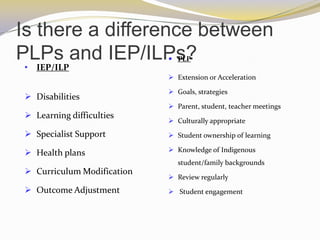
PLPs and IEP/ILPs? PLP
 Extension or Acceleration
 Goals, strategies
 Parent, student, teacher meetings
 Culturally appropriate
 Student ownership of learning
 Knowledge of Indigenous
student/family backgrounds
 Review regularly
 Student engagement
• IEP/ILP
 Disabilities
 Learning difficulties
 Specialist Support
 Health plans
 Curriculum Modification
 Outcome Adjustment
Why Are We Doing This?
 To close the gap in literacy and numeracy standards
between Indigenous and their non-Indigenous
counterparts and increase the rate of Year 12
attainments with students completing their
Queensland Certificate of Education (QCE).
 Or in short….we want to see the boys succeed!!!
How Will PLPs Help?
Personalised
Learning
will help by:
Actively
involving
learners
Engage
students &
parents
Responds to
learners
uniqueness
High
Expectations
& Valuing
excellence
What Is Our Role As Teachers?
 Become co-learners with students
 Working in teams of teachers to support students
 Facilitate learning at school, home and in the community
 Improving connections between student learning, curriculum, instruction,
classroom-based assessment, and national testing
 Implementing a rigorous curriculum, assessment and reporting differentiated to
each student's personal interests and abilities
 Problematizing learning and making it real world relevant
 Emphasise the value of basic literacy and numeracy skills and 21st century
competencies
AITSL Standards
 Below are the AITSL Standards that directly relate to teacher professional
practice and personalised learning plans.
 1.4 – Strategies for teaching Aboriginal and Torres Strait Islander students.
 2.4 – Understand and respect Aboriginal and Torres Strait Islander people to
promote reconciliation between Indigenous and non-Indigenous Australians.
 3.1 – Establish challenging learning goals
 6.3 – Engage with colleagues and improve practice
 7.3 – Engage with parents and carers
Professional Analysis
 As a teacher professional you must continually ask yourself
these three questions in relation to your teaching practice.
1. What are my strengths as a teacher?
2. Does your approach to teaching and learning enable
students to thrive and survive?
3. What areas do I need to build on to improve my teaching
and learning practices?
Intercultural Understanding
 Teaching in a multicultural classroom with both Indigenous and
non-Indigenous students can be challenging. It is important to
take stock of our own cultural beliefs and values and how these
might impact our Indigenous and non-Indigenous students.
1. What personal lenses and assumptions do you bring into the
classroom?
2. How do your own beliefs, behaviours and perceptions
contribute to the culture within your school or classroom?
3. How can you use this knowledge to build on the strengths and
capacity that already exist within your school and community?
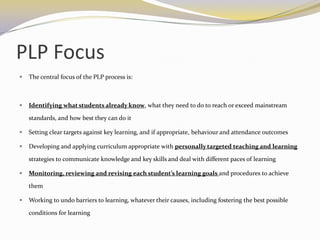
PLP Focus
 The central focus of the PLP process is:
 Identifying what students already know, what they need to do to reach or exceed mainstream
standards, and how best they can do it
 Setting clear targets against key learning, and if appropriate, behaviour and attendance outcomes
 Developing and applying curriculum appropriate with personally targeted teaching and learning
strategies to communicate knowledge and key skills and deal with different paces of learning
 Monitoring, reviewing and revising each student’s learning goals and procedures to achieve
them
 Working to undo barriers to learning, whatever their causes, including fostering the best possible
conditions for learning
Why Is It Important?
 Getting to know your students is one of the most critical aspects of quality
teaching and learning practice. For many years these beneficial and necessary
conversations about student learning have not occurred between teachers,
students and families.
 “Our people and the kids pick up fairly quickly if your fair dinkum or gammin,
basically. By you going to those homes shows that respect for them and that
you value them and that you’re willing to develop some sort of relationship with
them and that you are fair dinkum about their kids. For some people that’s the
challenge because it’s difficult for young teachers and some of those older,
experienced teachers to get out of their comfort zone and go and do that. Can I
also say that as an Indigenous person that it’s difficult aswell, that doesn’t come
easy.”
(Yolanda Coutts, Lockhart River SS).
Simple
documents
and
monitoring
Raising
expectations
Develop
relationshipsPositive and
friendly
Leadership
and
commitment
Quality
feedback
Cultural
understanding
RELATIONSHIPS
MATTER
STUDENT
OUTCOMES
Achievable
goals
DEVELOPING
REAL
PARTNERSHIPS
THROUGH PLPs

Personalised Learning Plans

  • 1.
  • 3.
    What is aPLP?  A PLP is a Personalised Learning Plan.  Personalised learning recognises the individual strengths, needs and goals of students and that schools respond to these differences and learning by tailoring to meet each student’s need.
  • 4.
    Is there adifference between PLPs and IEP/ILPs? PLP  Extension or Acceleration  Goals, strategies  Parent, student, teacher meetings  Culturally appropriate  Student ownership of learning  Knowledge of Indigenous student/family backgrounds  Review regularly  Student engagement • IEP/ILP  Disabilities  Learning difficulties  Specialist Support  Health plans  Curriculum Modification  Outcome Adjustment
  • 5.
    Why Are WeDoing This?  To close the gap in literacy and numeracy standards between Indigenous and their non-Indigenous counterparts and increase the rate of Year 12 attainments with students completing their Queensland Certificate of Education (QCE).  Or in short….we want to see the boys succeed!!!
  • 6.
    How Will PLPsHelp? Personalised Learning will help by: Actively involving learners Engage students & parents Responds to learners uniqueness High Expectations & Valuing excellence
  • 8.
    What Is OurRole As Teachers?  Become co-learners with students  Working in teams of teachers to support students  Facilitate learning at school, home and in the community  Improving connections between student learning, curriculum, instruction, classroom-based assessment, and national testing  Implementing a rigorous curriculum, assessment and reporting differentiated to each student's personal interests and abilities  Problematizing learning and making it real world relevant  Emphasise the value of basic literacy and numeracy skills and 21st century competencies
  • 9.
    AITSL Standards  Beloware the AITSL Standards that directly relate to teacher professional practice and personalised learning plans.  1.4 – Strategies for teaching Aboriginal and Torres Strait Islander students.  2.4 – Understand and respect Aboriginal and Torres Strait Islander people to promote reconciliation between Indigenous and non-Indigenous Australians.  3.1 – Establish challenging learning goals  6.3 – Engage with colleagues and improve practice  7.3 – Engage with parents and carers
  • 10.
    Professional Analysis  Asa teacher professional you must continually ask yourself these three questions in relation to your teaching practice. 1. What are my strengths as a teacher? 2. Does your approach to teaching and learning enable students to thrive and survive? 3. What areas do I need to build on to improve my teaching and learning practices?
  • 11.
    Intercultural Understanding  Teachingin a multicultural classroom with both Indigenous and non-Indigenous students can be challenging. It is important to take stock of our own cultural beliefs and values and how these might impact our Indigenous and non-Indigenous students. 1. What personal lenses and assumptions do you bring into the classroom? 2. How do your own beliefs, behaviours and perceptions contribute to the culture within your school or classroom? 3. How can you use this knowledge to build on the strengths and capacity that already exist within your school and community?
  • 13.
    PLP Focus  Thecentral focus of the PLP process is:  Identifying what students already know, what they need to do to reach or exceed mainstream standards, and how best they can do it  Setting clear targets against key learning, and if appropriate, behaviour and attendance outcomes  Developing and applying curriculum appropriate with personally targeted teaching and learning strategies to communicate knowledge and key skills and deal with different paces of learning  Monitoring, reviewing and revising each student’s learning goals and procedures to achieve them  Working to undo barriers to learning, whatever their causes, including fostering the best possible conditions for learning
  • 14.
    Why Is ItImportant?  Getting to know your students is one of the most critical aspects of quality teaching and learning practice. For many years these beneficial and necessary conversations about student learning have not occurred between teachers, students and families.  “Our people and the kids pick up fairly quickly if your fair dinkum or gammin, basically. By you going to those homes shows that respect for them and that you value them and that you’re willing to develop some sort of relationship with them and that you are fair dinkum about their kids. For some people that’s the challenge because it’s difficult for young teachers and some of those older, experienced teachers to get out of their comfort zone and go and do that. Can I also say that as an Indigenous person that it’s difficult aswell, that doesn’t come easy.” (Yolanda Coutts, Lockhart River SS).
  • 15.