PERSONAL LEARNING STYLES 
By Matthew Ritter 
Ritter_Matthew_Learning_Styles 1
HOW DO I LEARN BEST?... 
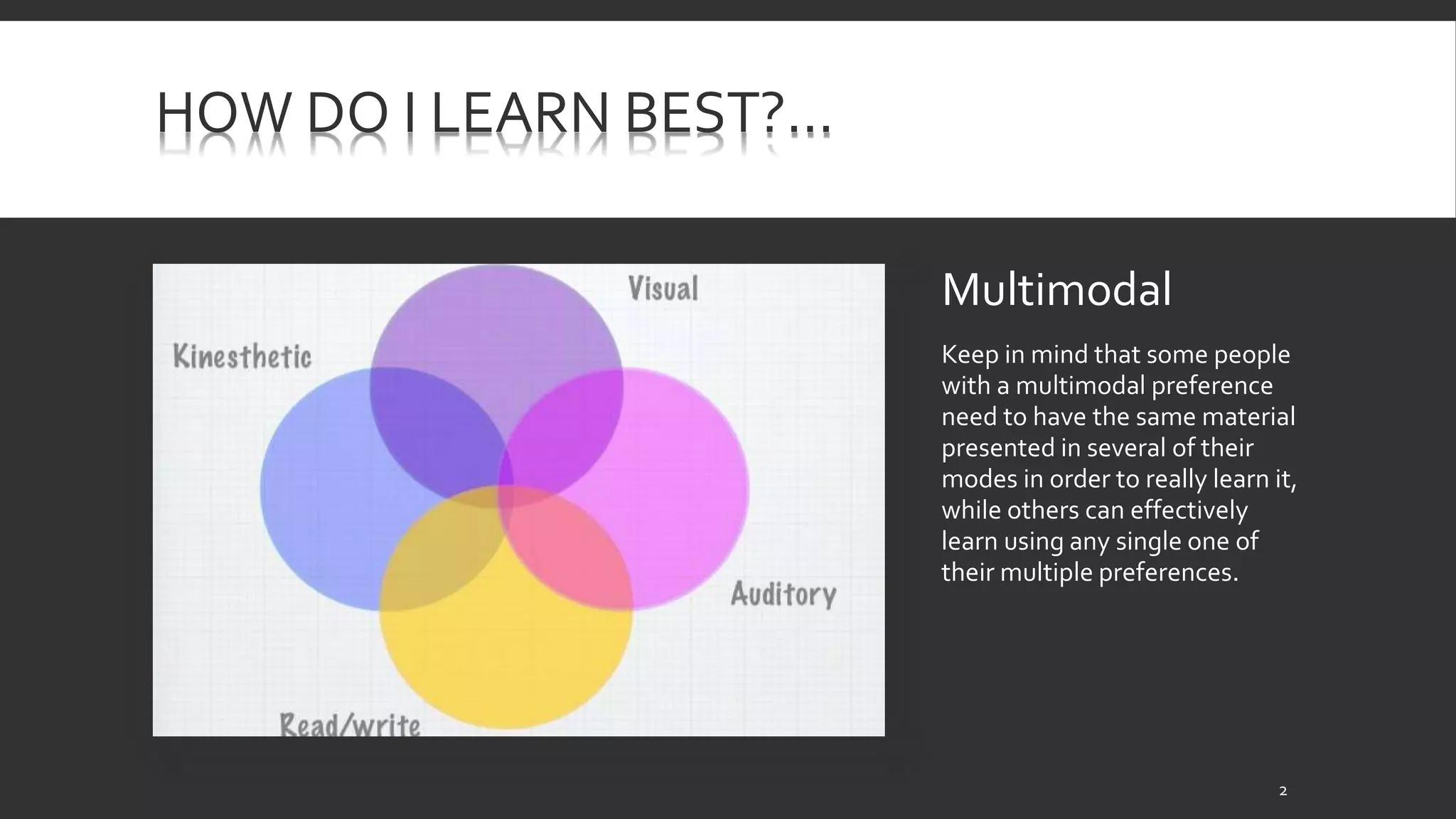
Multimodal 
Keep in mind that some people 
with a multimodal preference 
need to have the same material 
presented in several of their 
modes in order to really learn it, 
while others can effectively 
learn using any single one of 
their multiple preferences. 
2
STRENGTHS 
Kinesthetic 
 Senses 
 Practical Exercises 
 Examples 
 Cases 
 Trials and Errors 
Aural 
 Different Formats 
 Space 
 Graphs 
 Charts 
 Diagrams 
 Maps and Plans 
3
WEAKNESSES 
Reading / 
Writing 
• Lists 
• Notes 
• Texts 
• In any format. Printed or online 
4
NOW WHAT? 
Take your strengths 
and try to integrate 
them into your 
everyday learning! 
5
I GET IT NOW 
• Open Labs 
• Study Groups 
• Tutoring 
• Interactive Games 
6
FOOD FOR THOUGHT… 
7 
35 
30 
25 
20 
15 
10 
5 
0 
VARK Statistics 
Sport Law Applied Science 
Visual Aural Reading/Writing Kinesthetics
WORK CITED 
University, S. (n.d.). Http://www.stcloudstate.edu/math/tutoring/. Retrieved 
November 26, 2014. 
Home. (2014, November 21). Retrieved November 26, 2014, from http://www.vark-learn. 
com/ 
Willingham, D. (2014, March 6). Why the ‘learning pyramid’ is wrong. Retrieved 
November 26, 2014, from http://www.washingtonpost.com/blogs/answer-sheet/ 
wp/2013/03/06/why-the-learning-pyramid-is-wrong/ 
Bibi, F. (2013, August 25). Crunch Modo. Retrieved November 26, 2014, from 
http://crunchmodo.com/einstein-quotes-fish-insanity-technology/ 
8

Personal learning styles

  • 1.
    PERSONAL LEARNING STYLES By Matthew Ritter Ritter_Matthew_Learning_Styles 1
  • 2.
    HOW DO ILEARN BEST?... Multimodal Keep in mind that some people with a multimodal preference need to have the same material presented in several of their modes in order to really learn it, while others can effectively learn using any single one of their multiple preferences. 2
  • 3.
    STRENGTHS Kinesthetic Senses  Practical Exercises  Examples  Cases  Trials and Errors Aural  Different Formats  Space  Graphs  Charts  Diagrams  Maps and Plans 3
  • 4.
    WEAKNESSES Reading / Writing • Lists • Notes • Texts • In any format. Printed or online 4
  • 5.
    NOW WHAT? Takeyour strengths and try to integrate them into your everyday learning! 5
  • 6.
    I GET ITNOW • Open Labs • Study Groups • Tutoring • Interactive Games 6
  • 7.
    FOOD FOR THOUGHT… 7 35 30 25 20 15 10 5 0 VARK Statistics Sport Law Applied Science Visual Aural Reading/Writing Kinesthetics
  • 8.
    WORK CITED University,S. (n.d.). Http://www.stcloudstate.edu/math/tutoring/. Retrieved November 26, 2014. Home. (2014, November 21). Retrieved November 26, 2014, from http://www.vark-learn. com/ Willingham, D. (2014, March 6). Why the ‘learning pyramid’ is wrong. Retrieved November 26, 2014, from http://www.washingtonpost.com/blogs/answer-sheet/ wp/2013/03/06/why-the-learning-pyramid-is-wrong/ Bibi, F. (2013, August 25). Crunch Modo. Retrieved November 26, 2014, from http://crunchmodo.com/einstein-quotes-fish-insanity-technology/ 8

Editor's Notes

  • #2 Hello, good morning everyone. My name is Matthew Ritter and here is my take on the “Vark learning styles.” I think it is important to figure out how you learn best because it can make learning more enjoyable for a number of reasons. We can all admit it is a great feeling when concepts click or when you get that “A” on the exam. But Working up to those moments can be difficult and stressful, but that could be because you aren’t studying and learning the way YOU learn best. Sounds like common sense but let’s get into it.
  • #3 “VARK Learning” put together a rather simple survey for people to take, that would in return highlight their strengths and weaknesses within the VARK Learning model. The VARK learning model takes “How we learn” and splits it into groups. Visual, Aural, Reading/Writing, and Kinesthetic. When I took the survey, I got “Multimodal” with an emphasis on Kinesthetic and Aural styles. I learn best through most of the styles, although certain “content” may be received better with a certain “Style.”
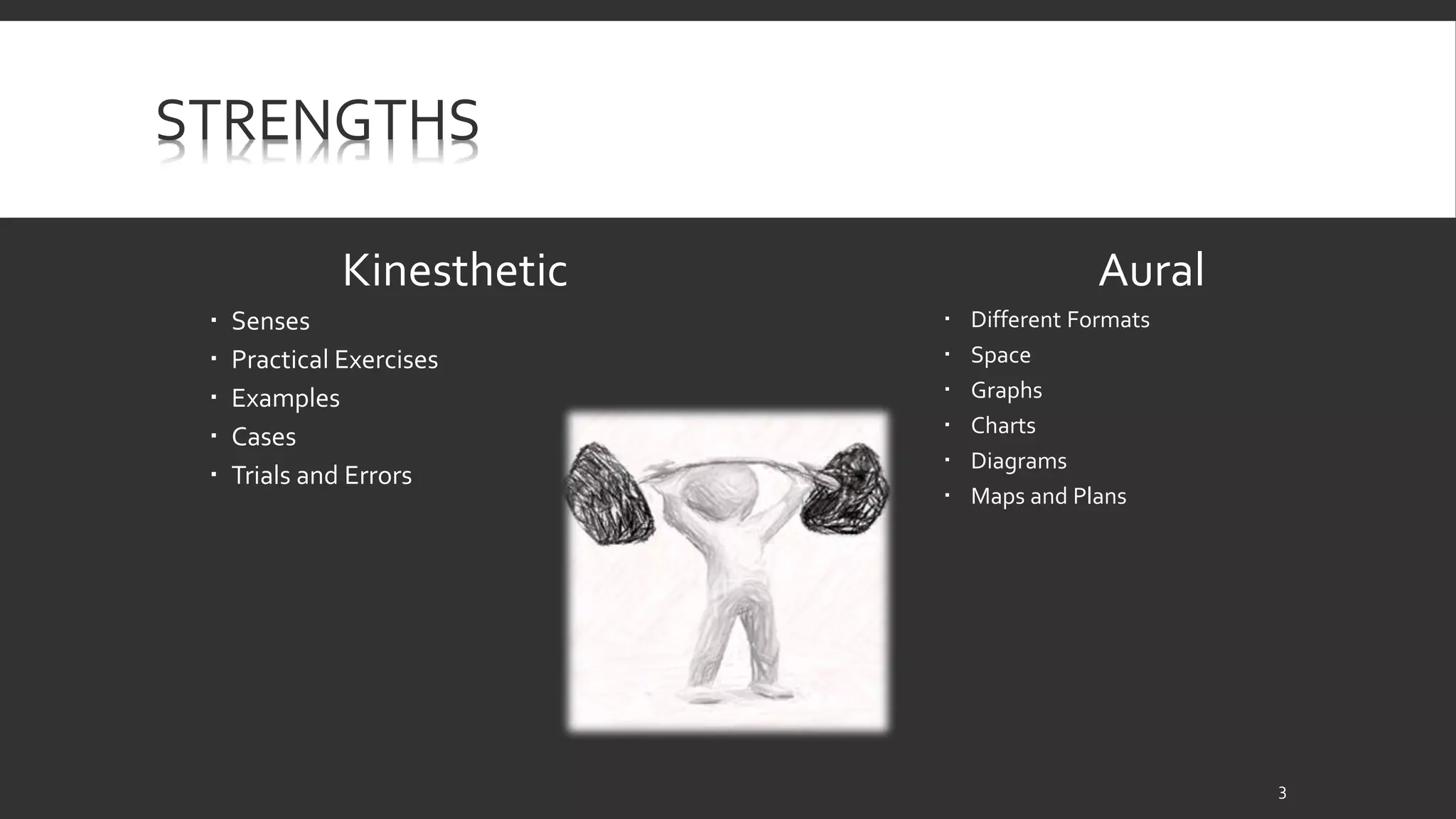
  • #4 Between the two, it means I am a learner who needs to hear it, see it in different formats and ways, and then ask questions about what I am hearing. I need to take what I am learning and link it to something real, and practical in my mind to make things click.
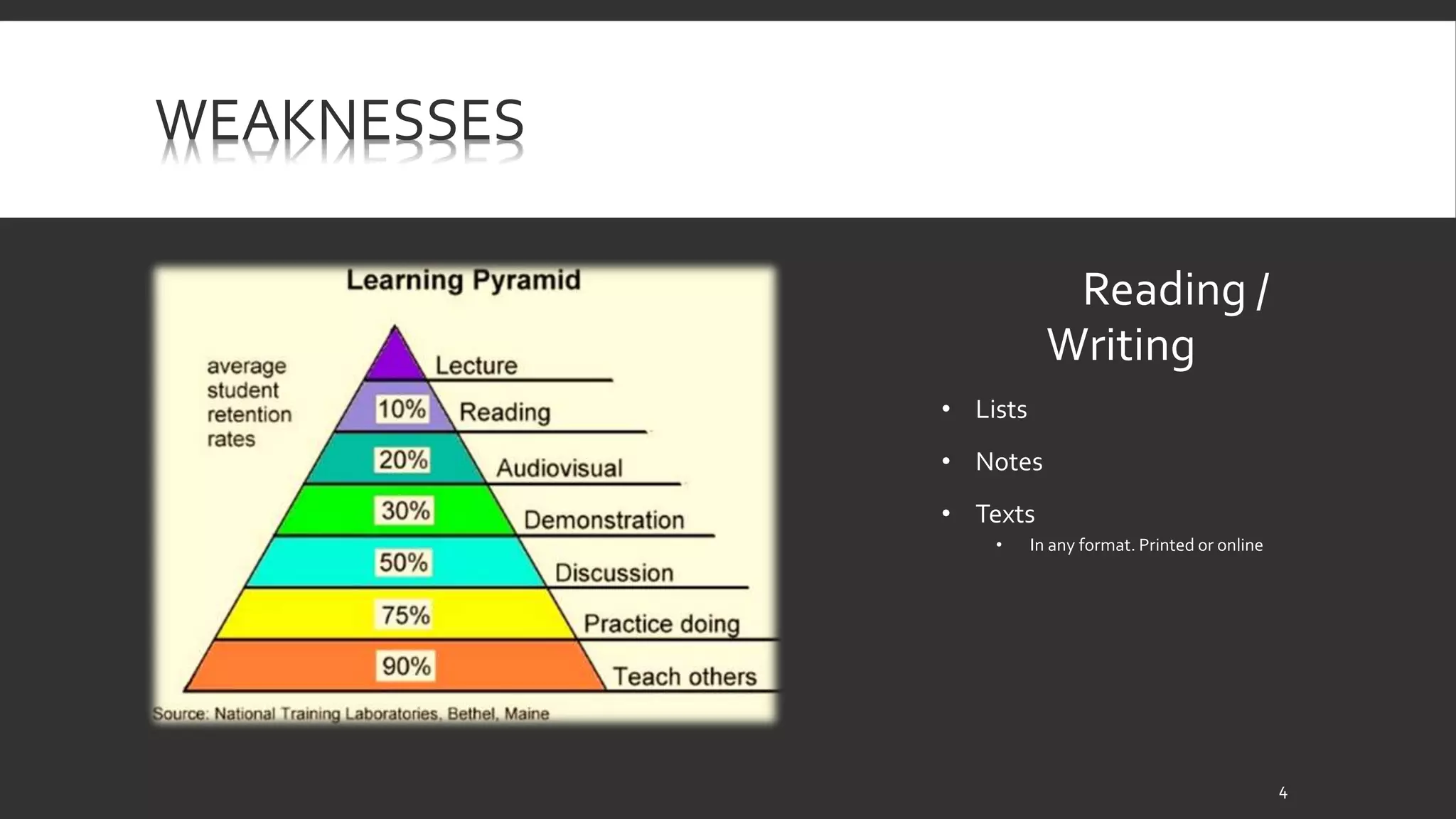
  • #5 My weakest style was Reading/Writing, which made sense to me because I’ve never been big into reading or writing. It’s good to look at your weakness because then you can work to improve it or change your habits to aid your more positive styles.
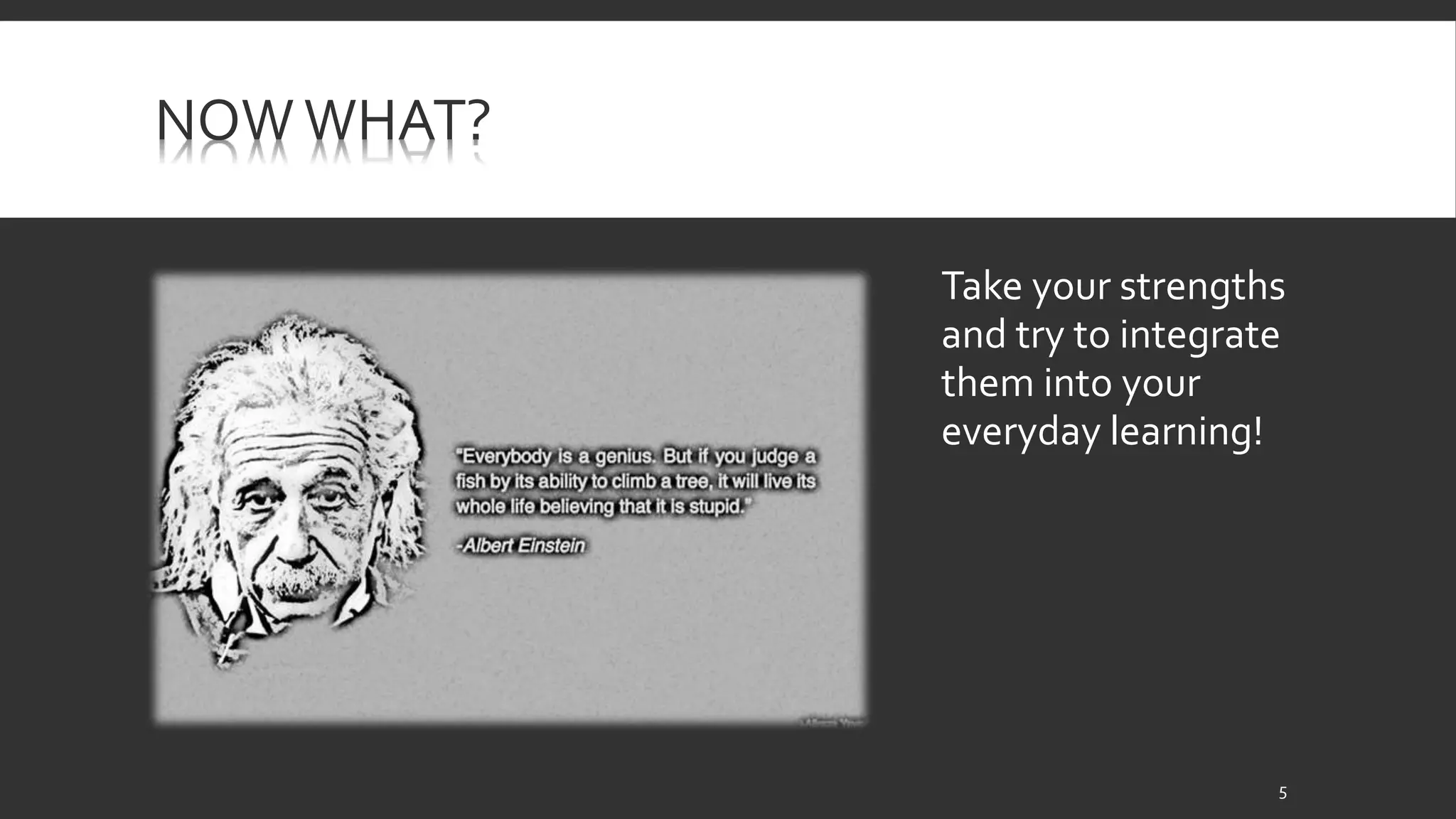
  • #6 I like this quote because I think it coincides nicely with learning styles in a way. I am not going to spend my “studying time” re-reading and re-writing notes, I am going to use the styles that I know I learn better with. Now that you know your strengths, take them and put them into play when you’re learning new material!
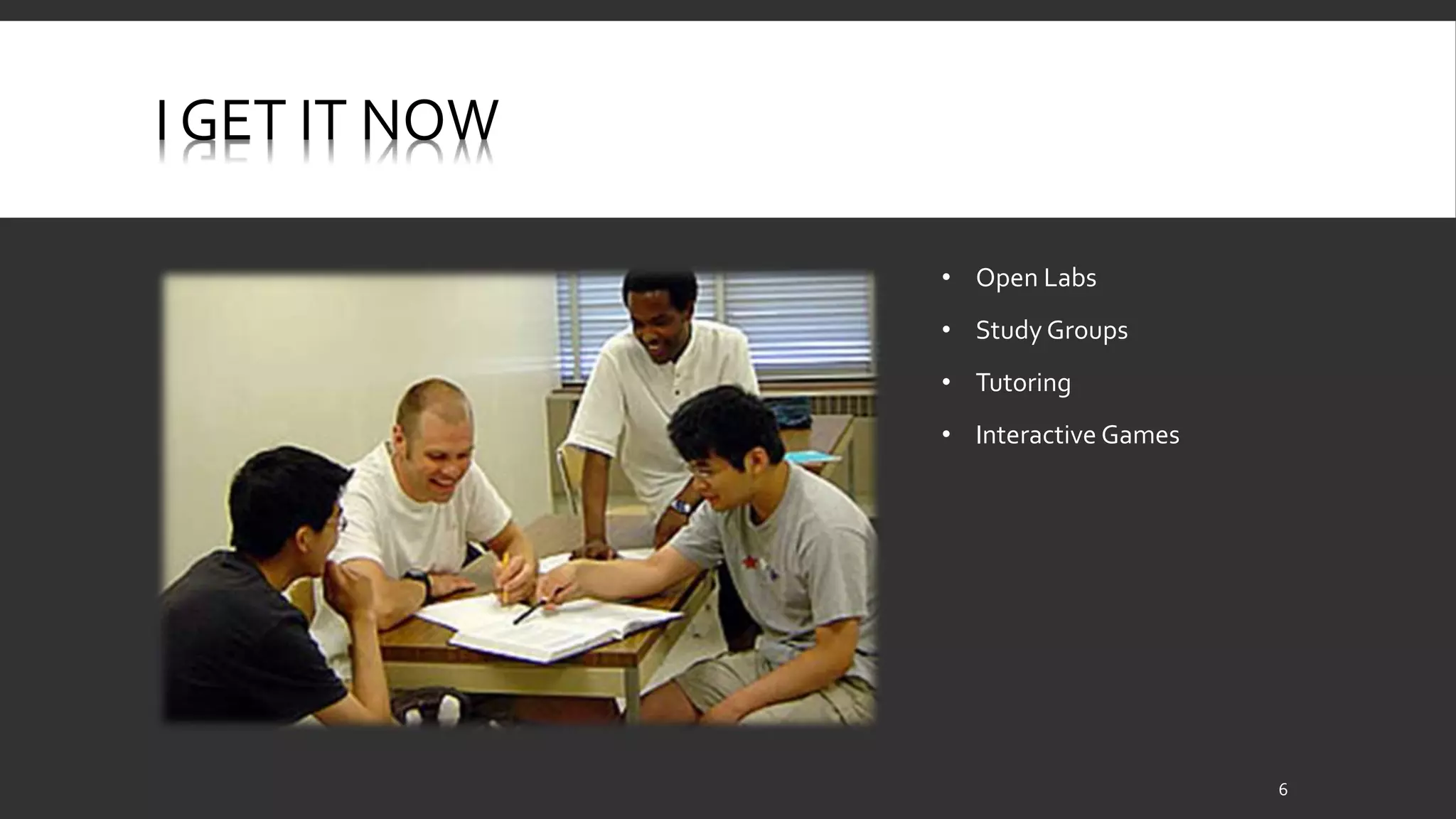
  • #7 Integrate your prominent styles into learning experience and you will be successful. For my styles, I know Open Labs with Professors or Study Groups are going to give me all the things my brain wants, to learn most effectively.
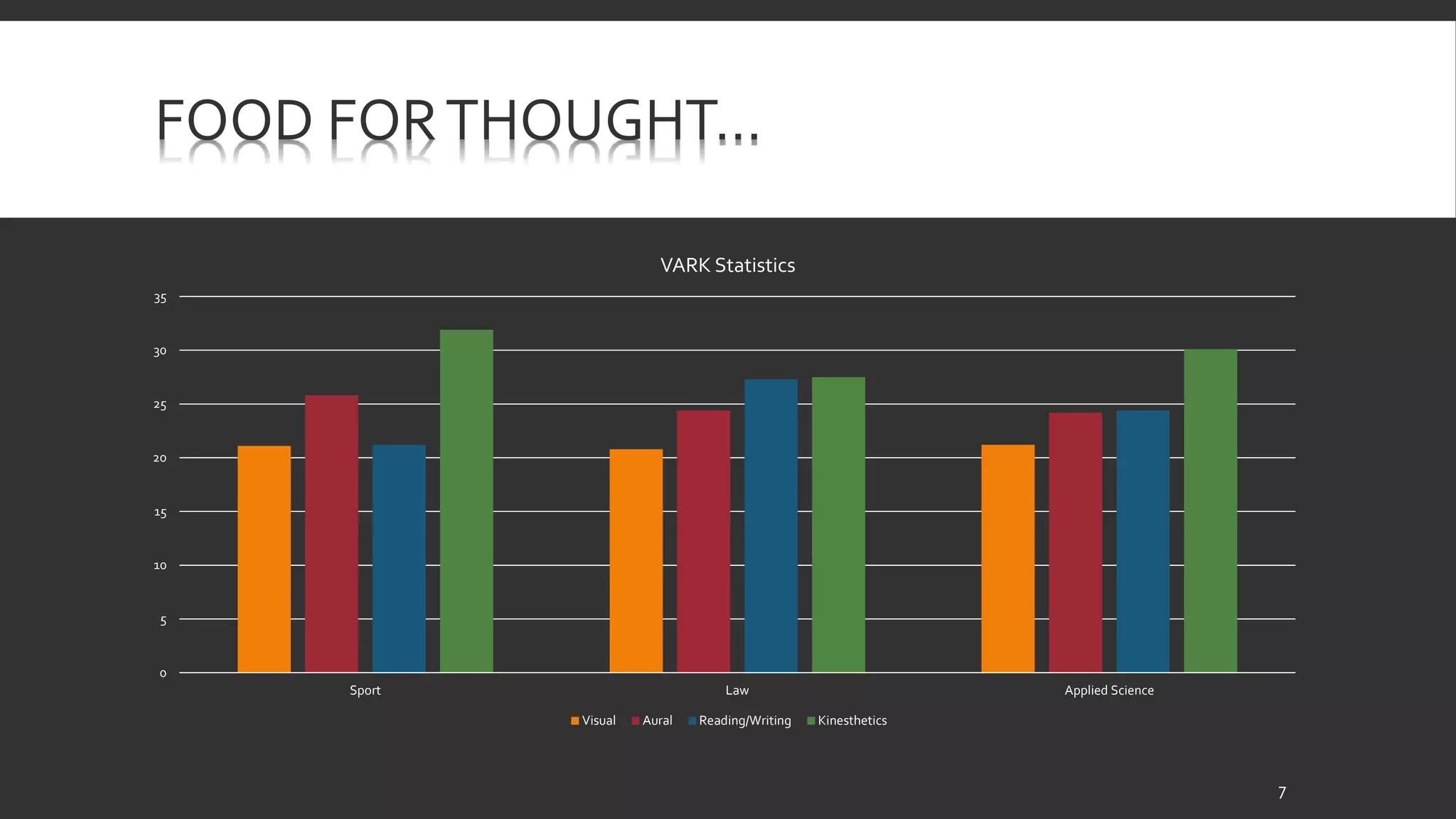
  • #8 Now I just made this for fun to show that no matter the major, kinesthetic learners are the most popular in the VARK model. I only show 4 majors but on the website you can see that kinesthetic learners are the most popular in each category.