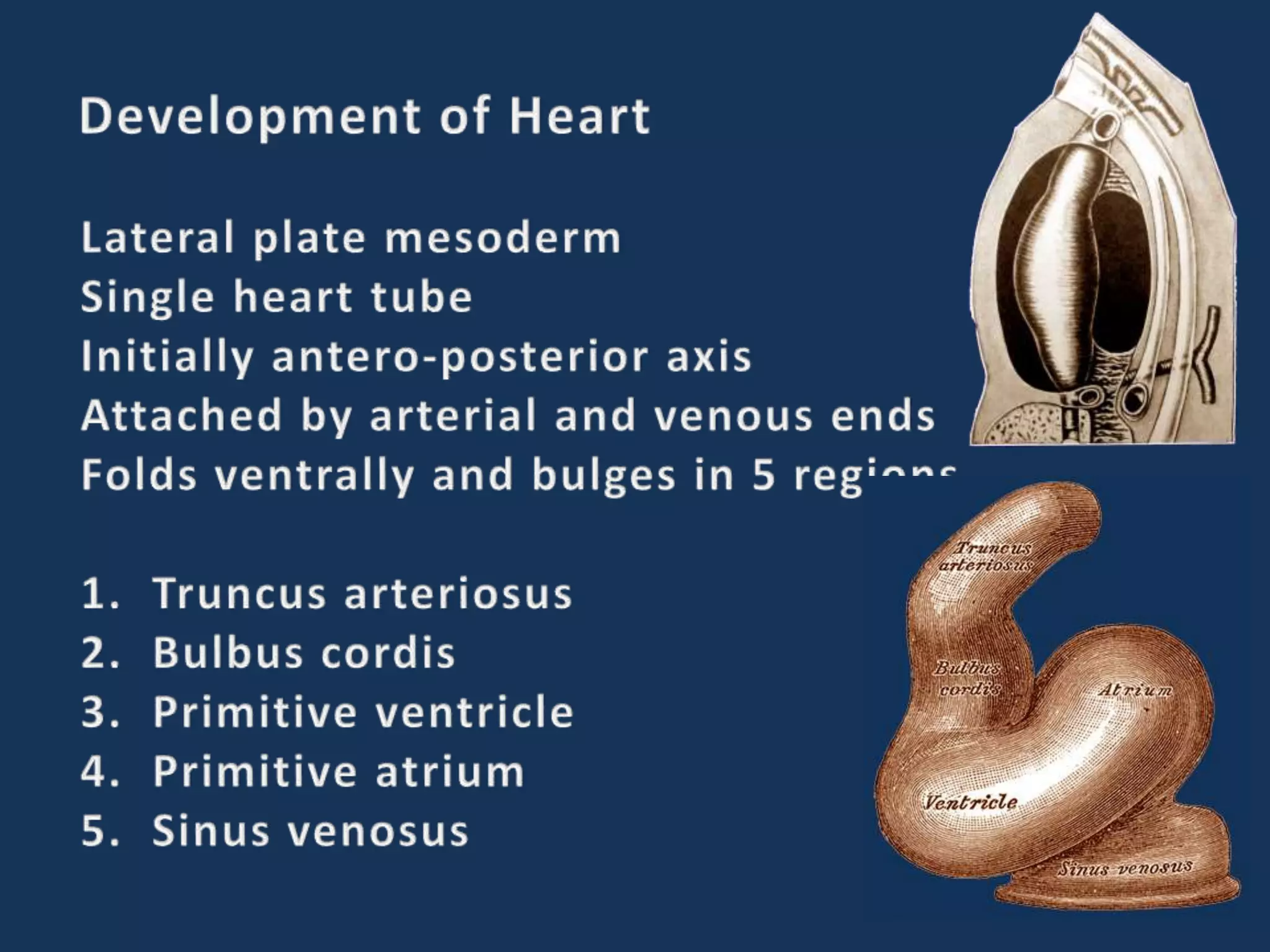
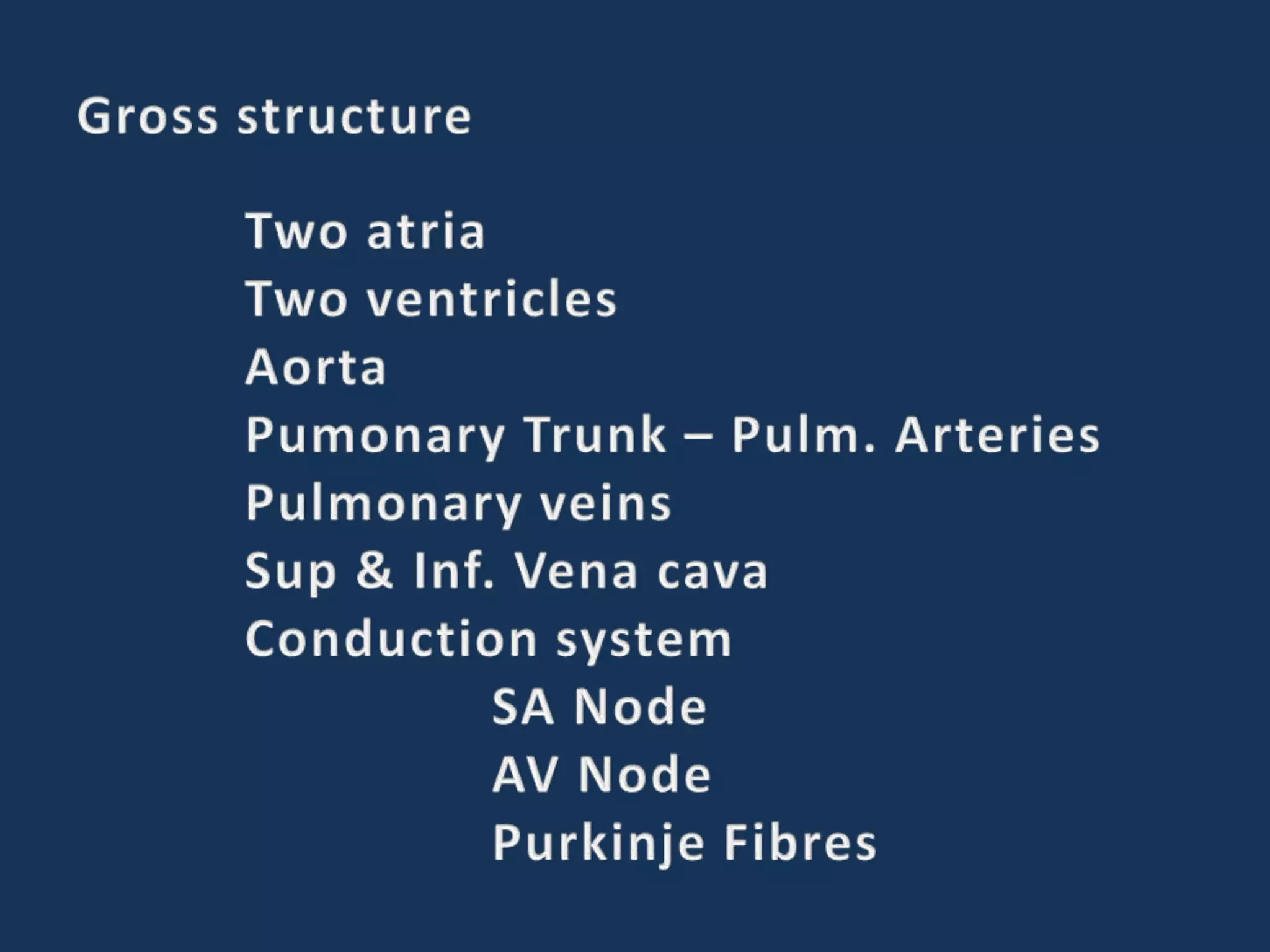
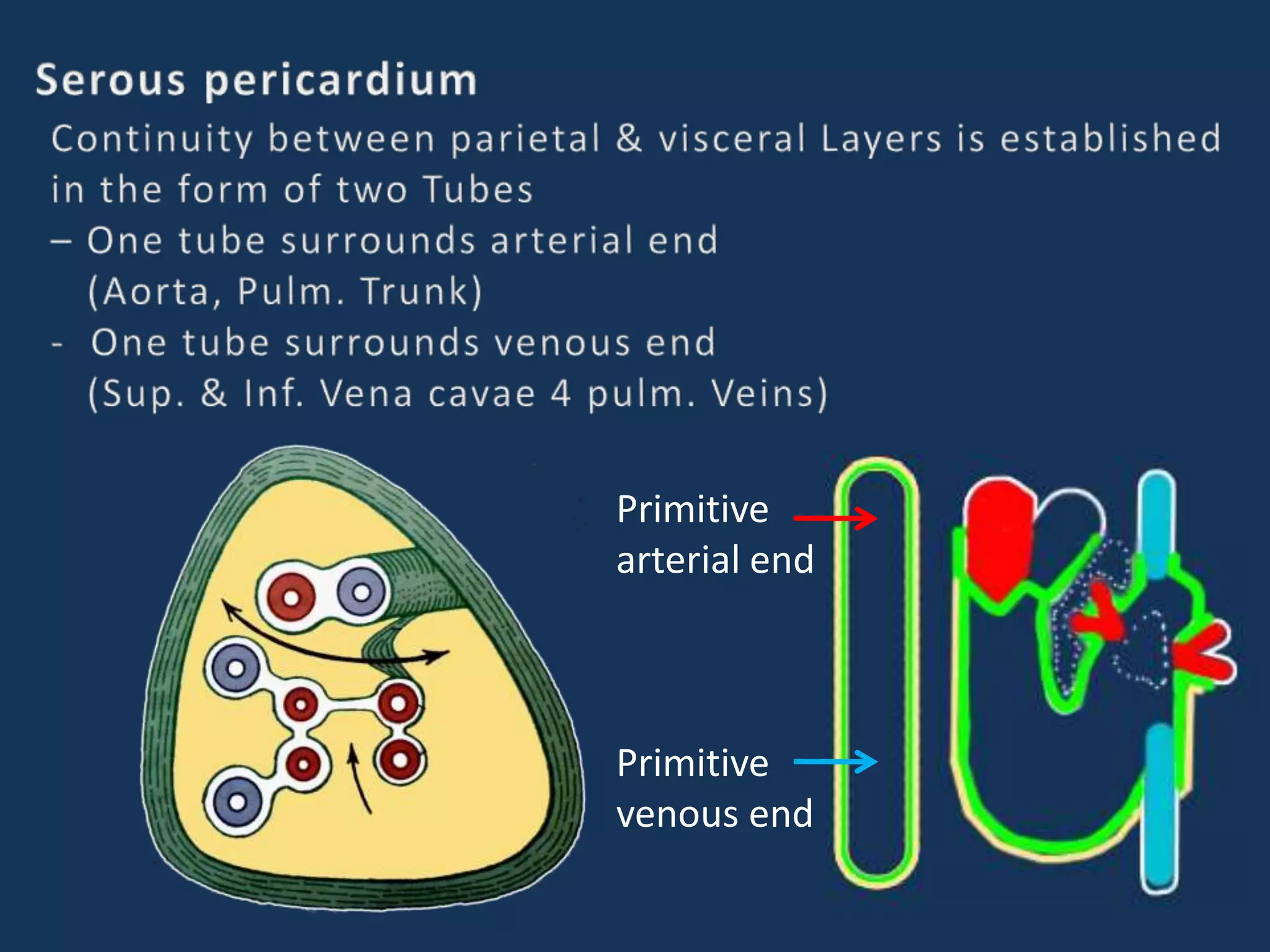
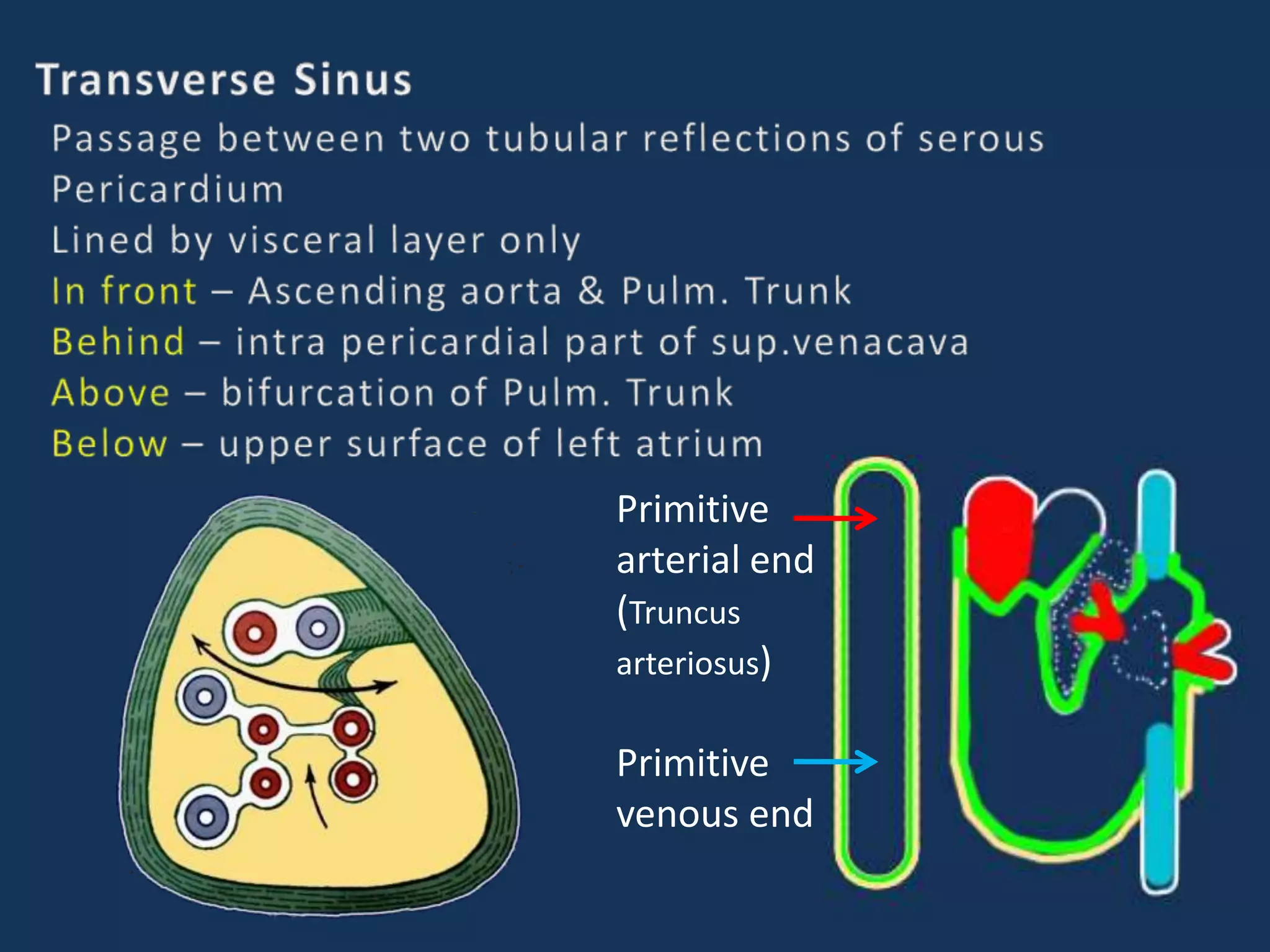
Primitive
arterial end
Primitive
venous end
Primitive
arterial end
(Truncus
arteriosus)
Primitive
venous end
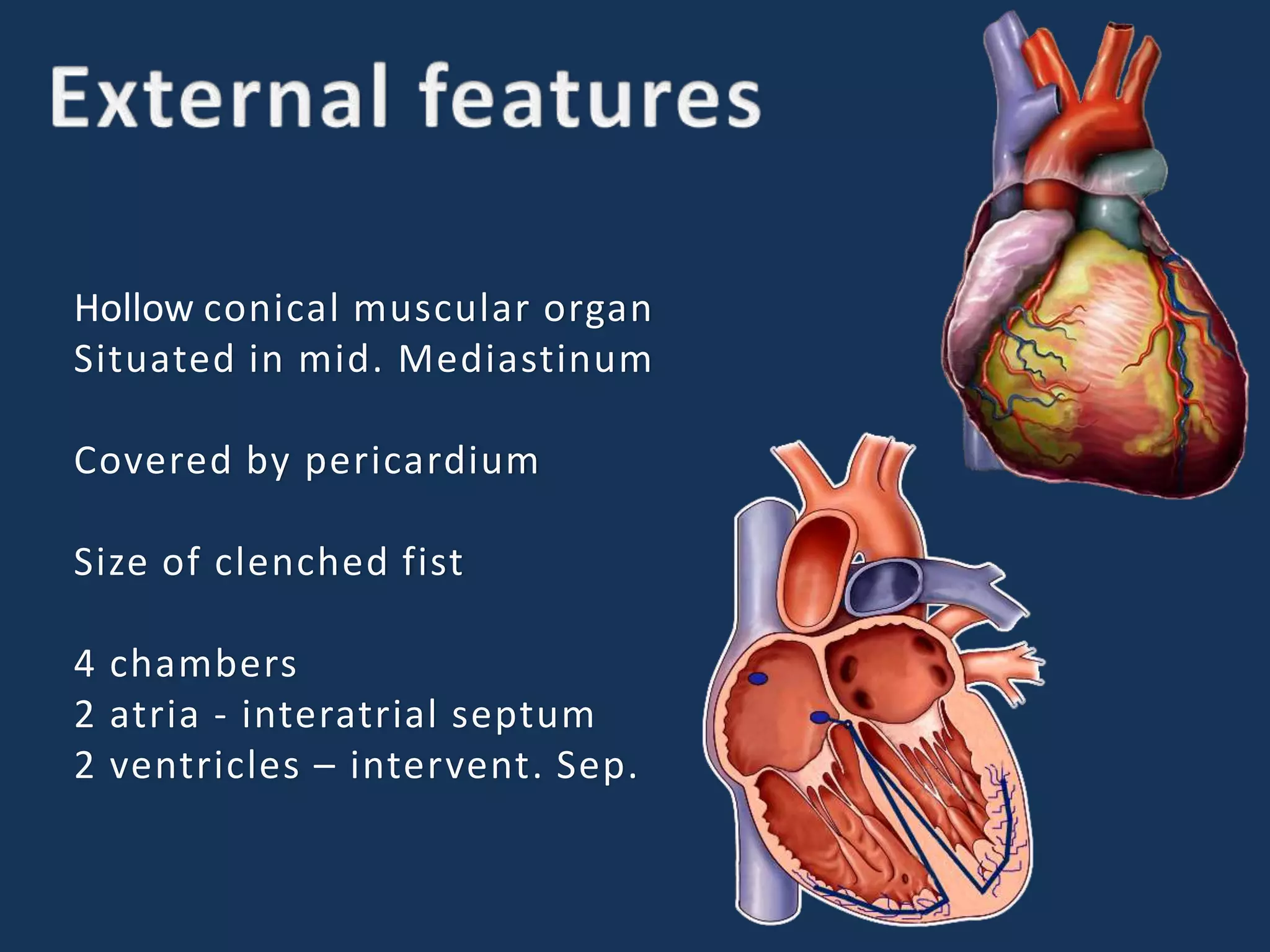
Hollow conical muscular organ
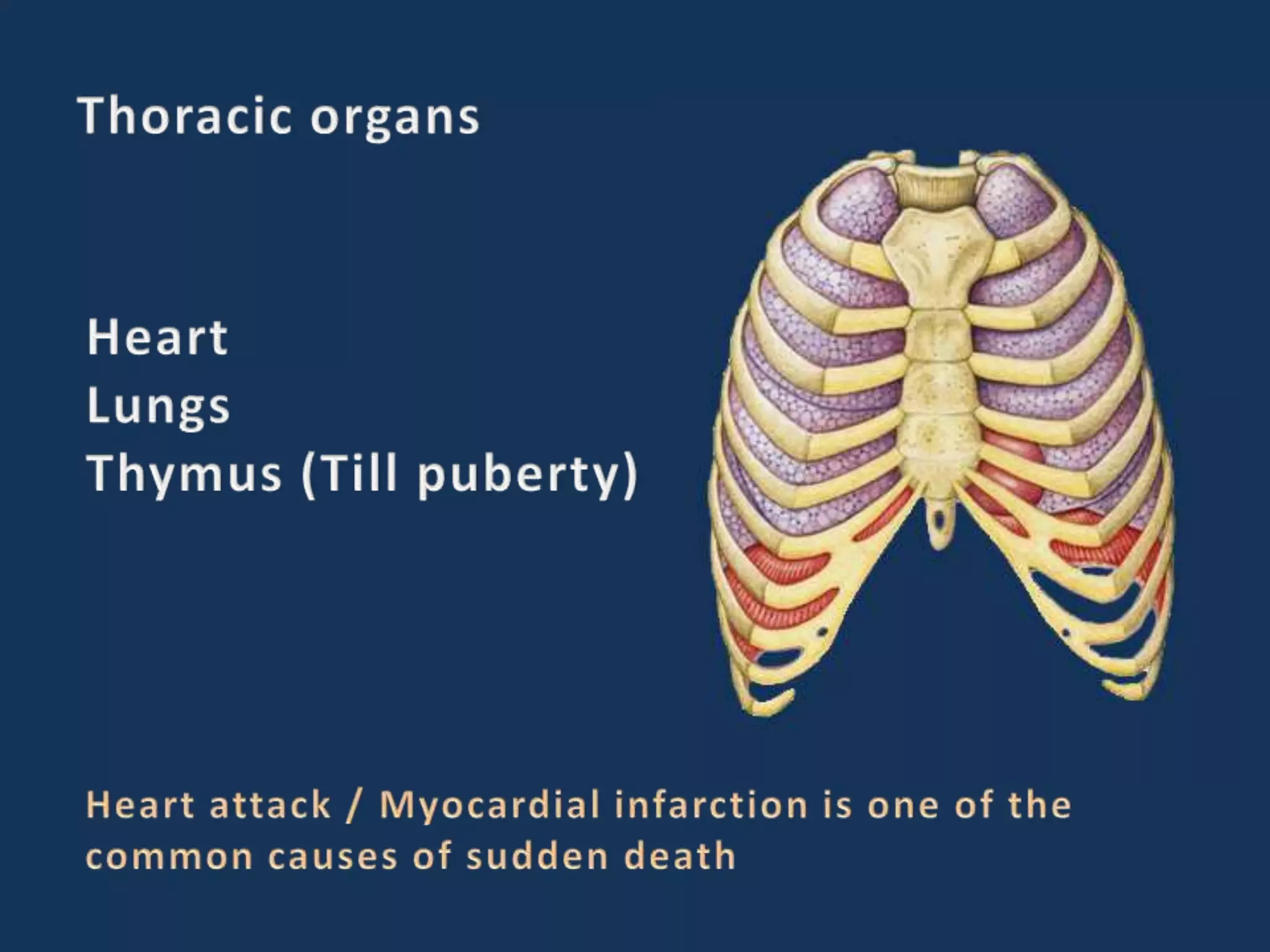
Situated in mid. Mediastinum
Covered by pericardium
Size of clenched fist
4 chambers
2 atria - interatrial septum
2 ventricles – intervent. Sep.
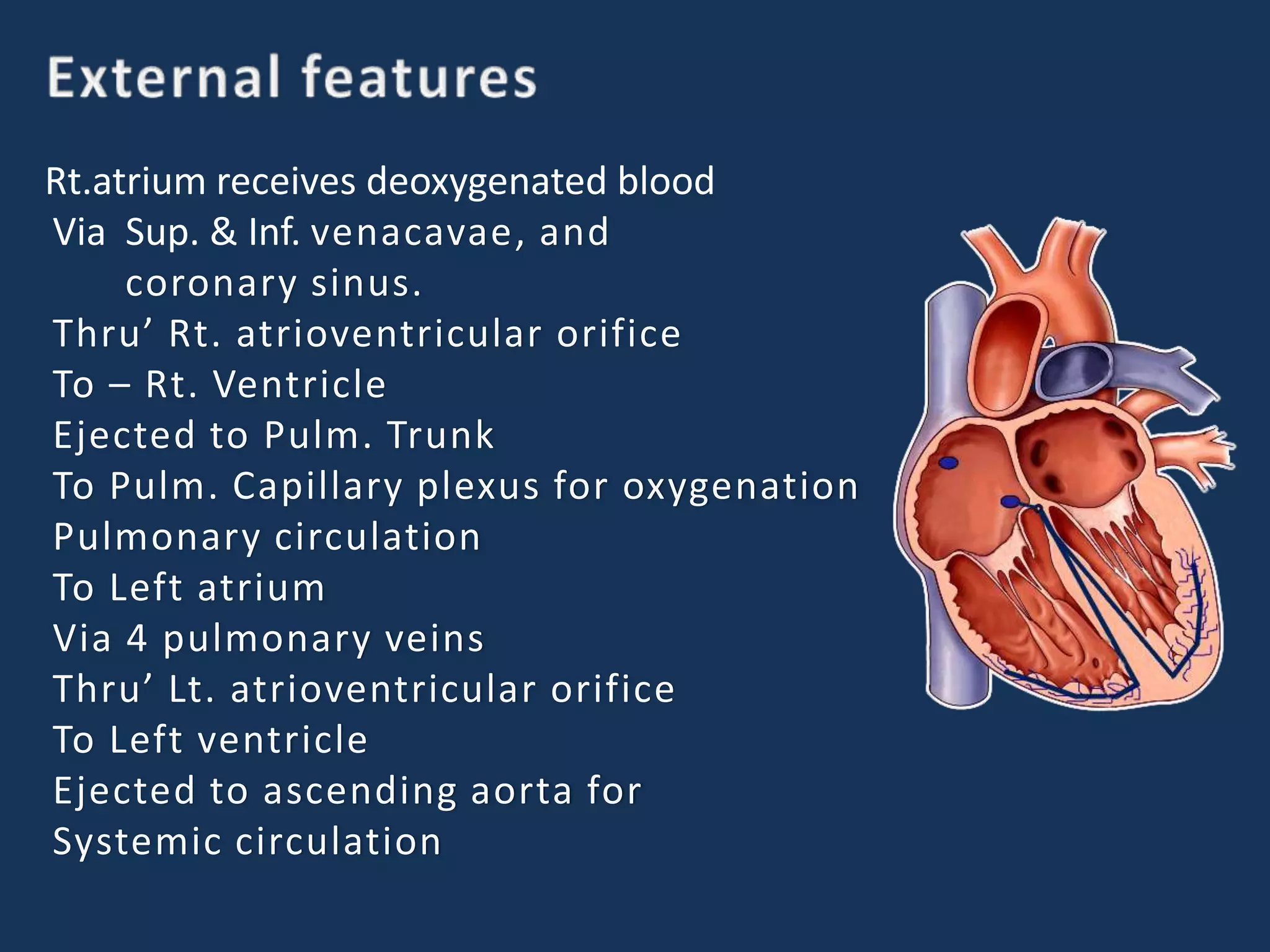
Rt.atrium receives deoxygenated blood
Via Sup. & Inf. venacavae, and
coronary sinus.
Thru’ Rt. atrioventricular orifice
To – Rt. Ventricle
Ejected to Pulm. Trunk
To Pulm. Capillary plexus for oxygenation
Pulmonary circulation
To Left atrium
Via 4 pulmonary veins
Thru’ Lt. atrioventricular orifice
To Left ventricle
Ejected to ascending aorta for
Systemic circulation
Measurements
Apex to base – - 12 cms
Antero-post diameter - 6 cms
Widest transverse diameter 8 to 9 cms
(Equal to one half of diameter of thorax)
Weight male – 280 to 340 gms
female - 230 to 280 gms
Presenting parts
Apex
Base
3 surfaces – Sternocostal, diaphragmatic & Left
3 borders - Right, Inferior & Left
Apex
Conical area formed by left ventricle
Directed downwards, forwards and to left
In 5th intercostal space 9 cms from midline
Slightly below & medial to left nipple
Separated from ant.thoracic wall by
left lung & pleura
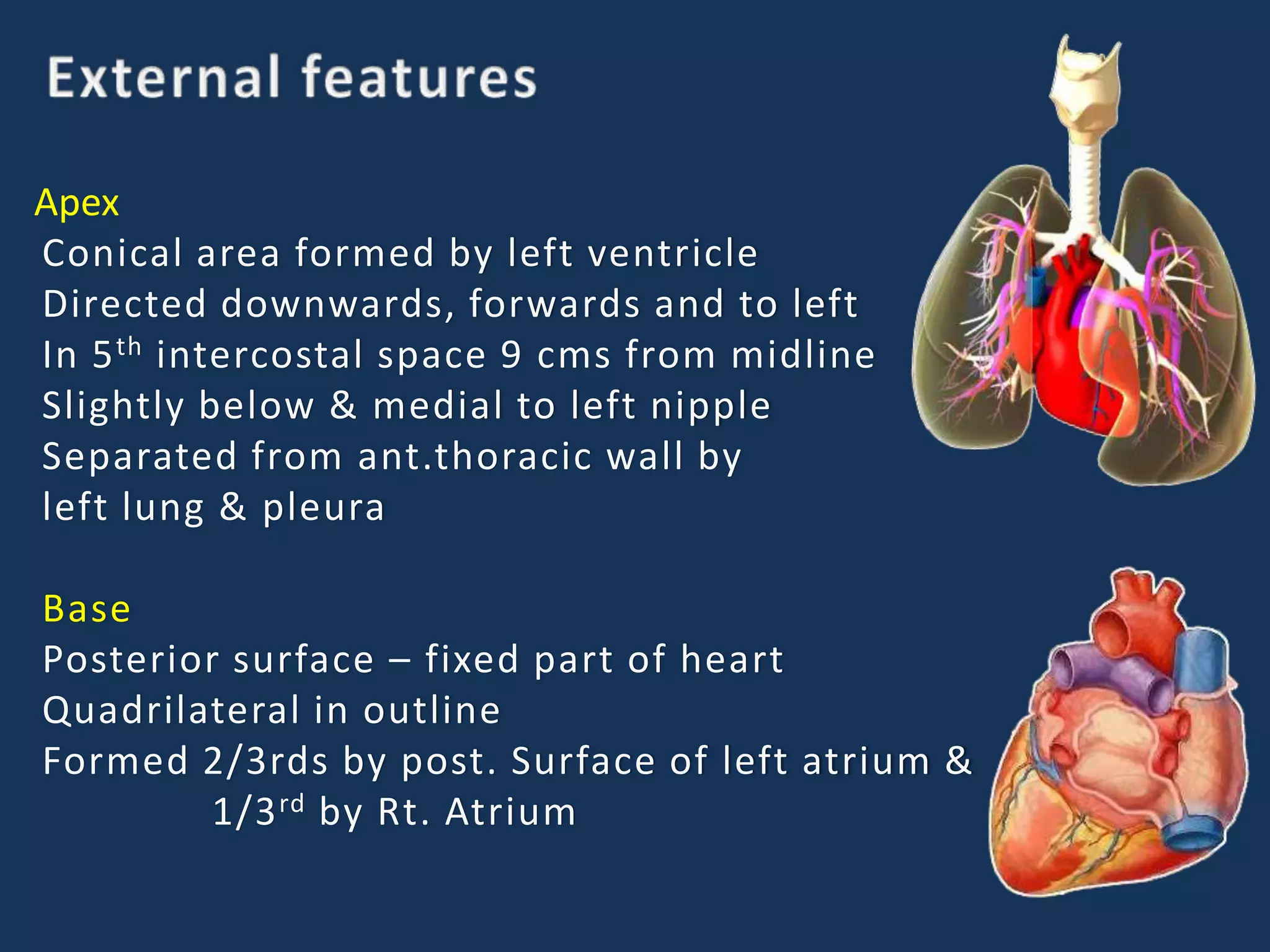
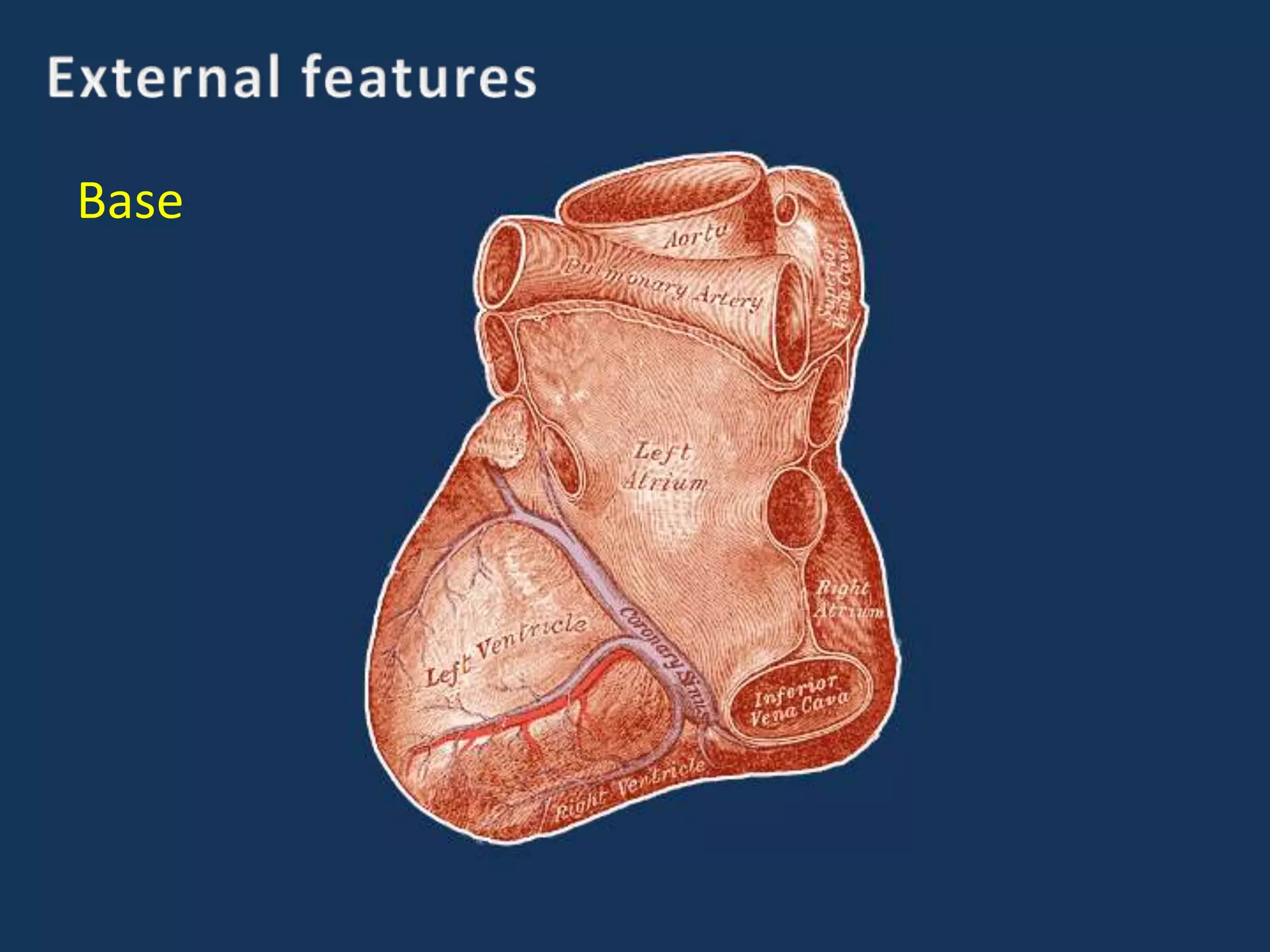
Base
Posterior surface – fixed part of heart
Quadrilateral in outline
Formed 2/3rds by post. Surface of left atrium &
1/3rd by Rt. Atrium
Base
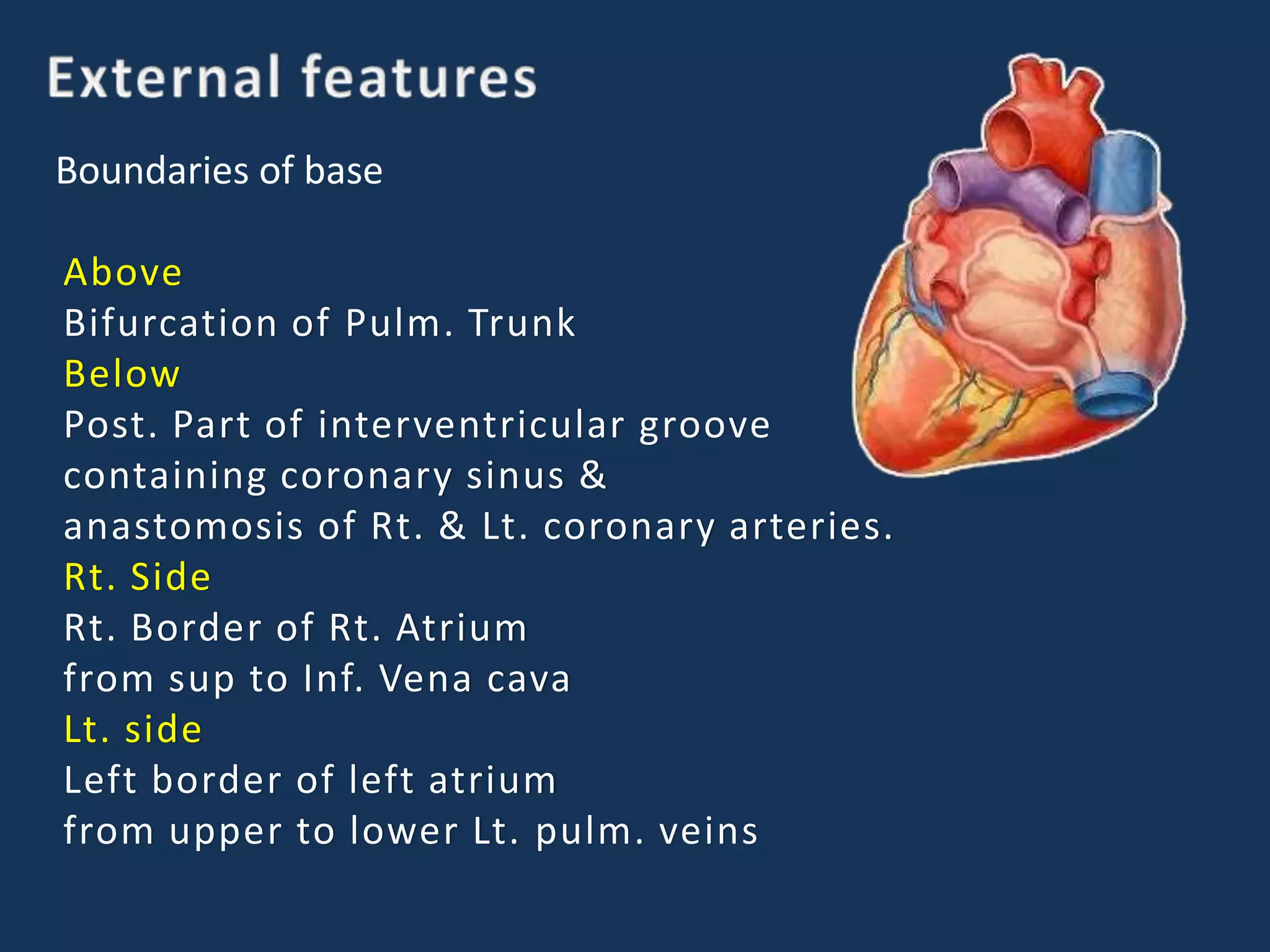
Boundaries of base
Above
Bifurcation of Pulm. Trunk
Below
Post. Part of interventricular groove
containing coronary sinus &
anastomosis of Rt. & Lt. coronary arteries.
Rt. Side
Rt. Border of Rt. Atrium
from sup to Inf. Vena cava
Lt. side
Left border of left atrium
from upper to lower Lt. pulm. veins
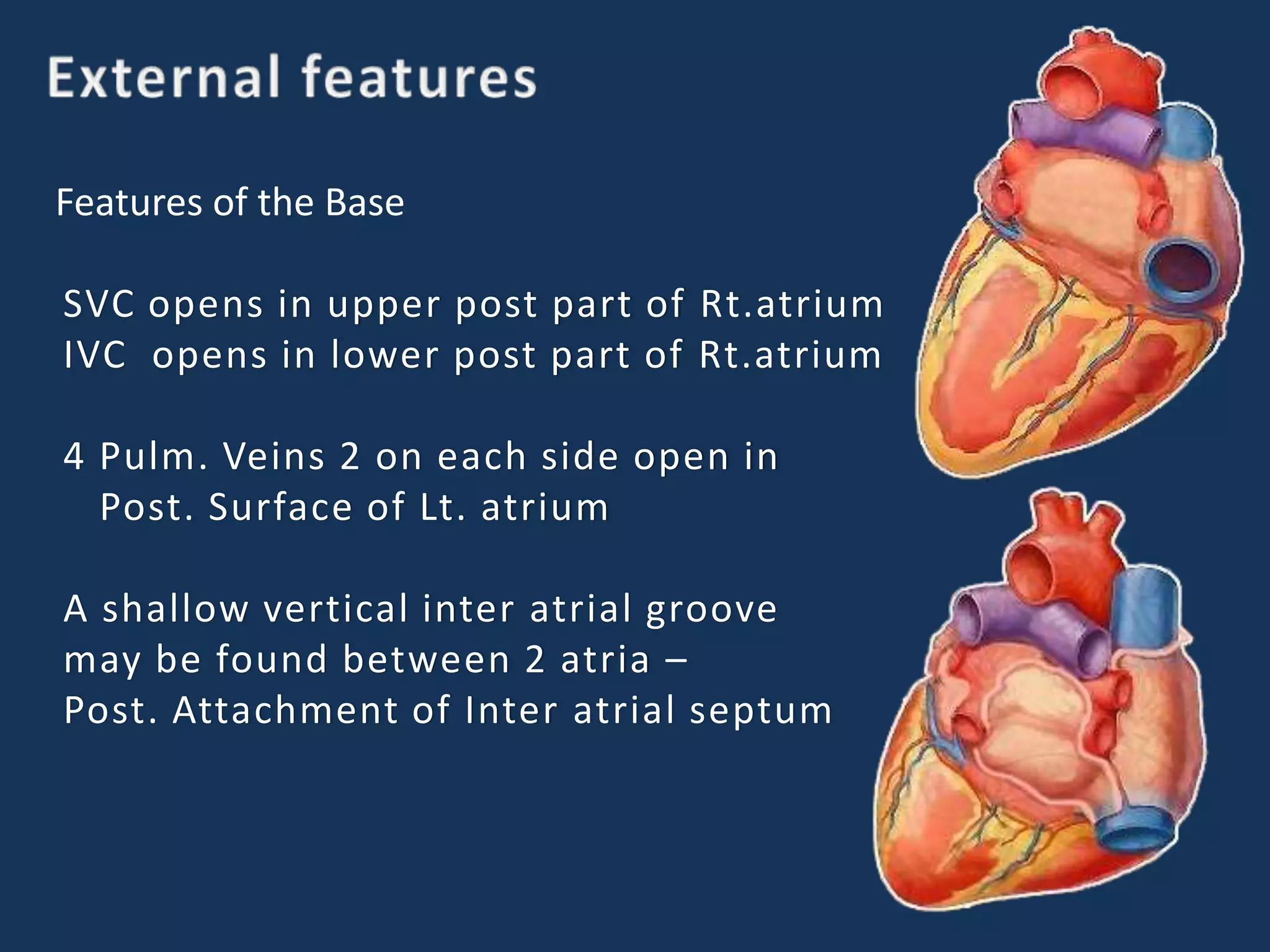
Features of the Base
SVC opens in upper post part of Rt.atrium
IVC opens in lower post part of Rt.atrium
4 Pulm. Veins 2 on each side open in
Post. Surface of Lt. atrium
A shallow vertical inter atrial groove
may be found between 2 atria –
Post. Attachment of Inter atrial septum
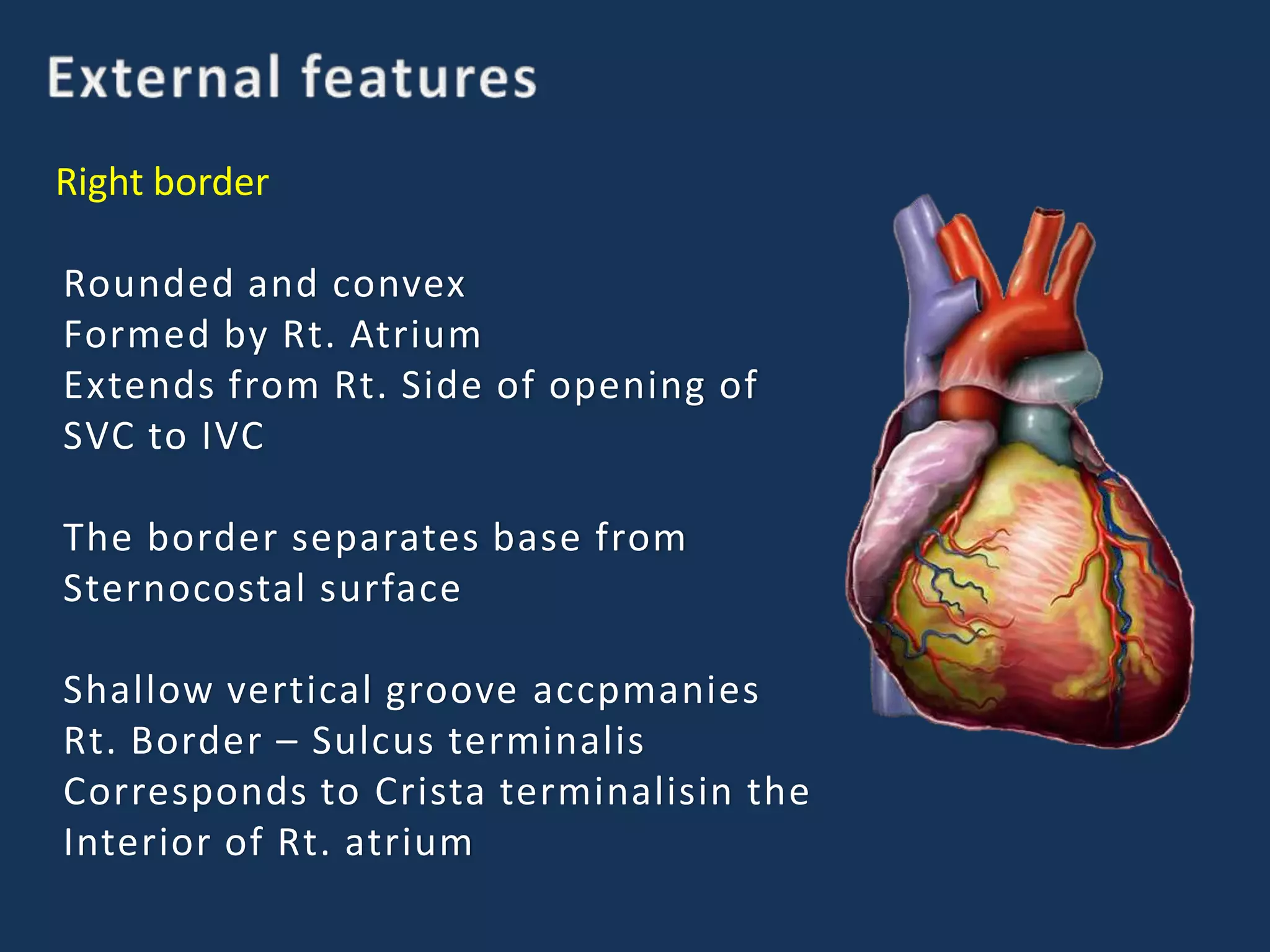
Right border
Rounded and convex
Formed by Rt. Atrium
Extends from Rt. Side of opening of
SVC to IVC
The border separates base from
Sternocostal surface
Shallow vertical groove accpmanies
Rt. Border – Sulcus terminalis
Corresponds to Crista terminalisin the
Interior of Rt. atrium
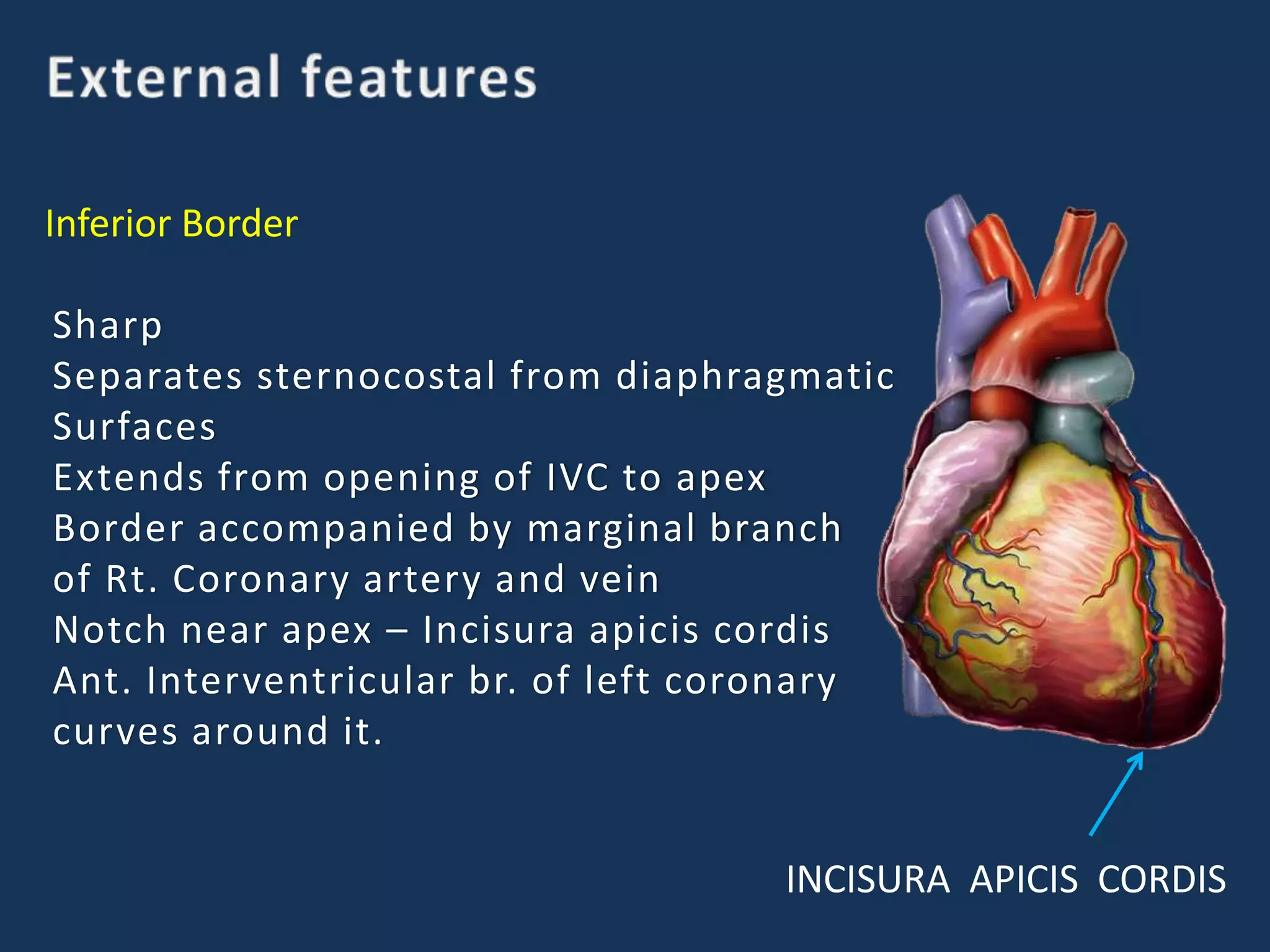
INCISURA APICIS CORDIS
Inferior Border
Sharp
Separates sternocostal from diaphragmatic
Surfaces
Extends from opening of IVC to apex
Border accompanied by marginal branch
of Rt. Coronary artery and vein
Notch near apex – Incisura apicis cordis
Ant. Interventricular br. of left coronary
curves around it.
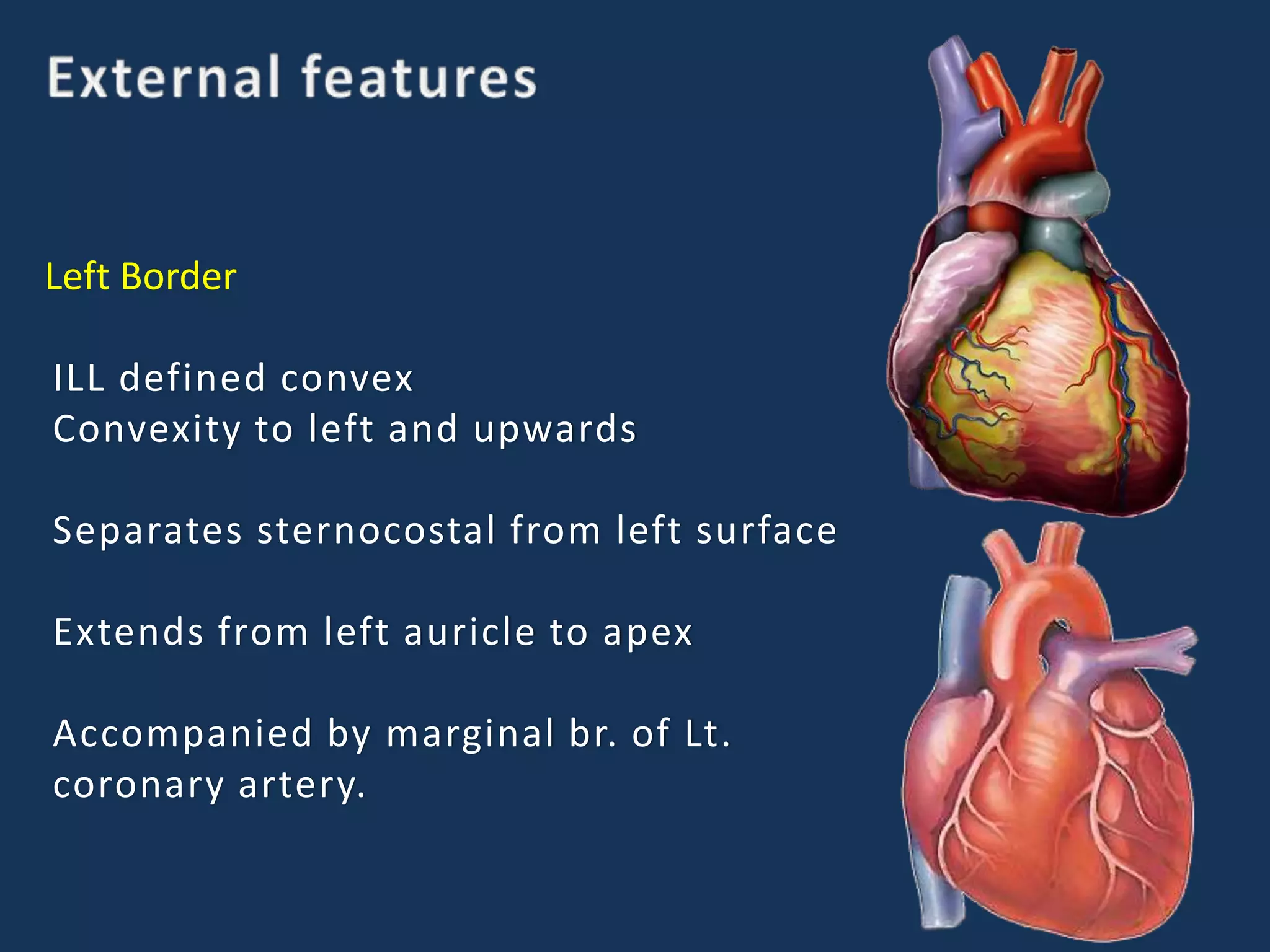
Left Border
ILL defined convex
Convexity to left and upwards
Separates sternocostal from left surface
Extends from left auricle to apex
Accompanied by marginal br. of Lt.
coronary artery.
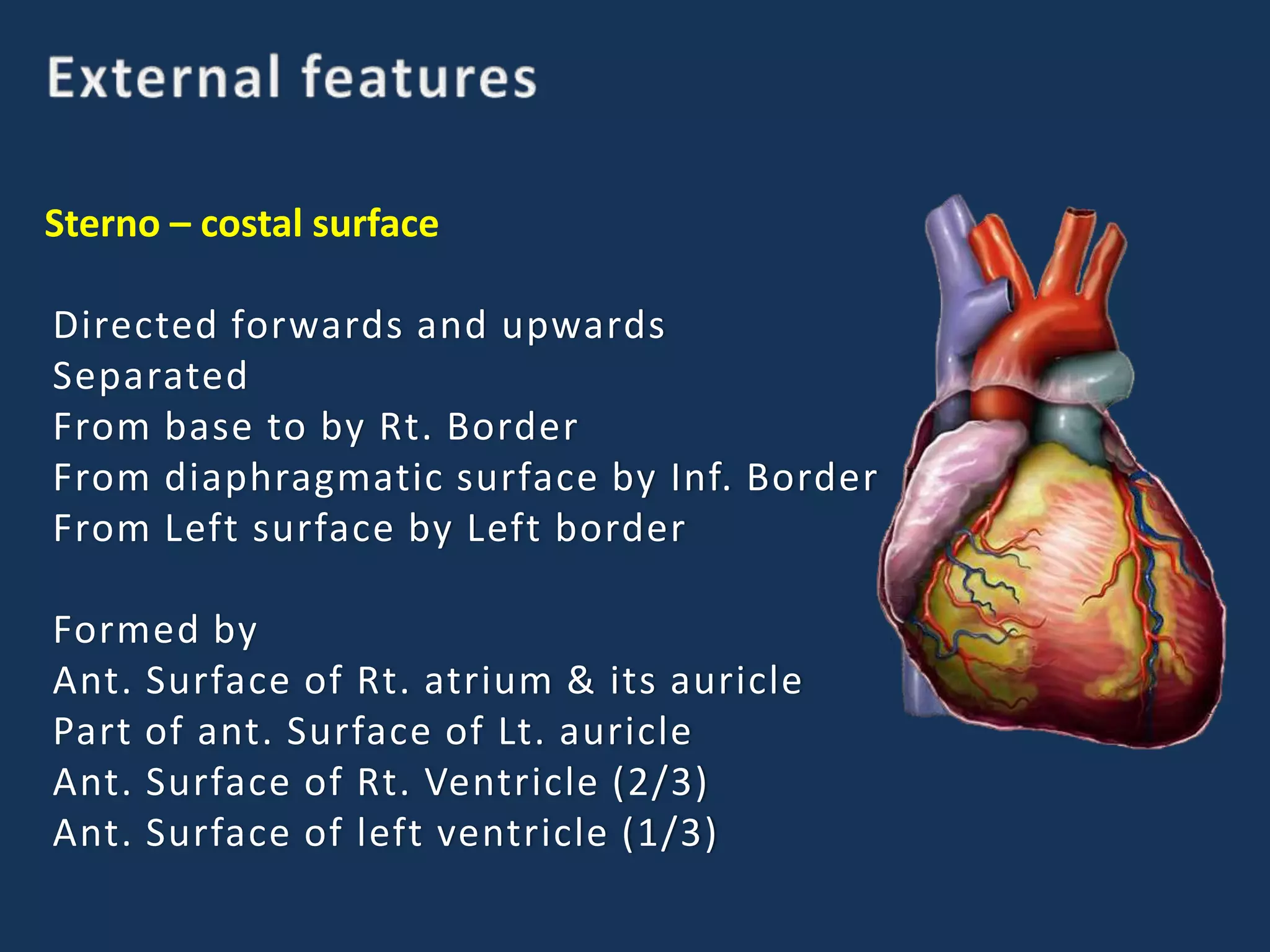
Sterno – costal surface
Directed forwards and upwards
Separated
From base to by Rt. Border
From diaphragmatic surface by Inf. Border
From Left surface by Left border
Formed by
Ant. Surface of Rt. atrium & its auricle
Part of ant. Surface of Lt. auricle
Ant. Surface of Rt. Ventricle (2/3)
Ant. Surface of left ventricle (1/3)
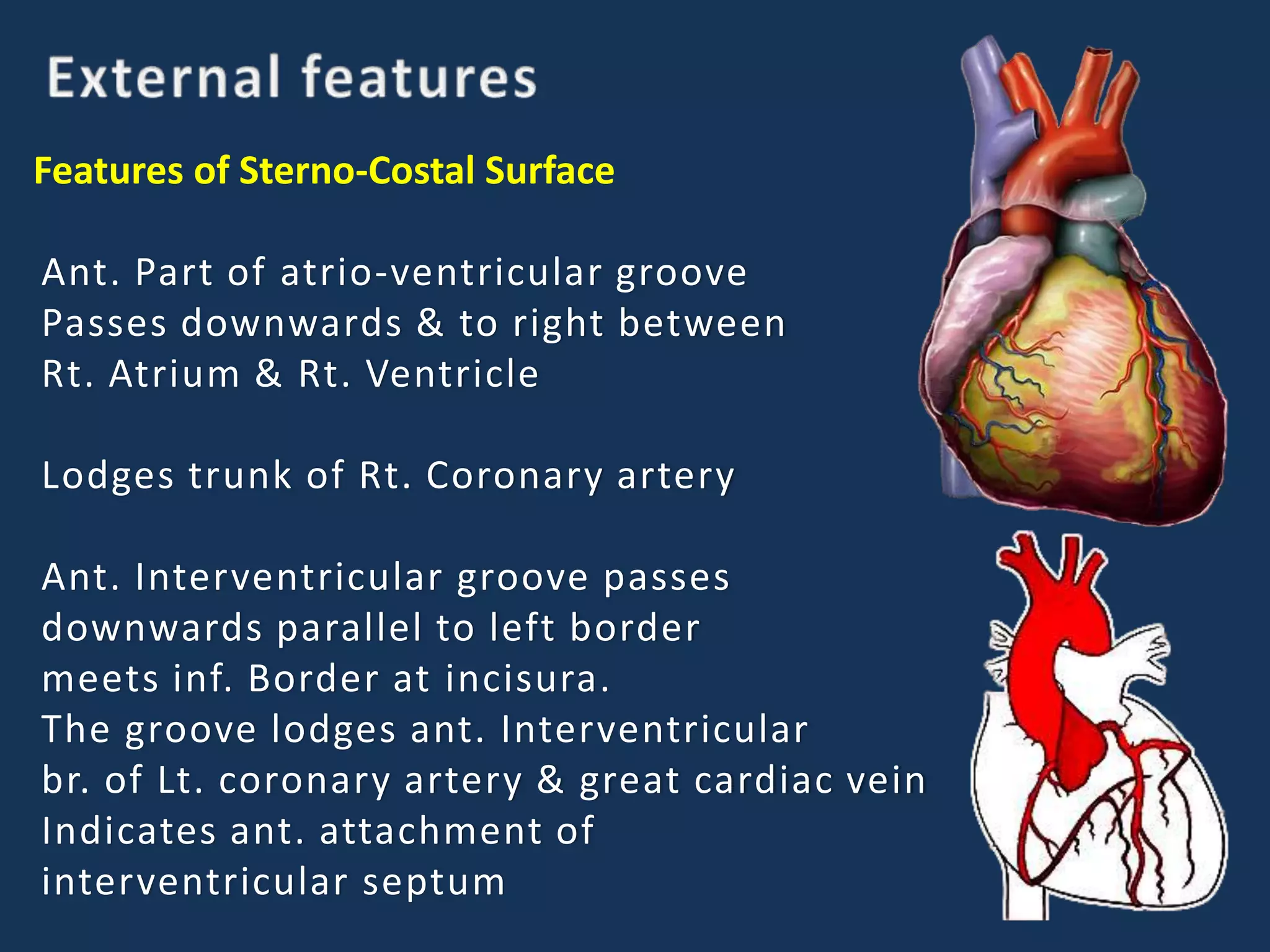
Features of Sterno-Costal Surface
Ant. Part of atrio-ventricular groove
Passes downwards & to right between
Rt. Atrium & Rt. Ventricle
Lodges trunk of Rt. Coronary artery
Ant. Interventricular groove passes
downwards parallel to left border
meets inf. Border at incisura.
The groove lodges ant. Interventricular
br. of Lt. coronary artery & great cardiac vein
Indicates ant. attachment of
interventricular septum
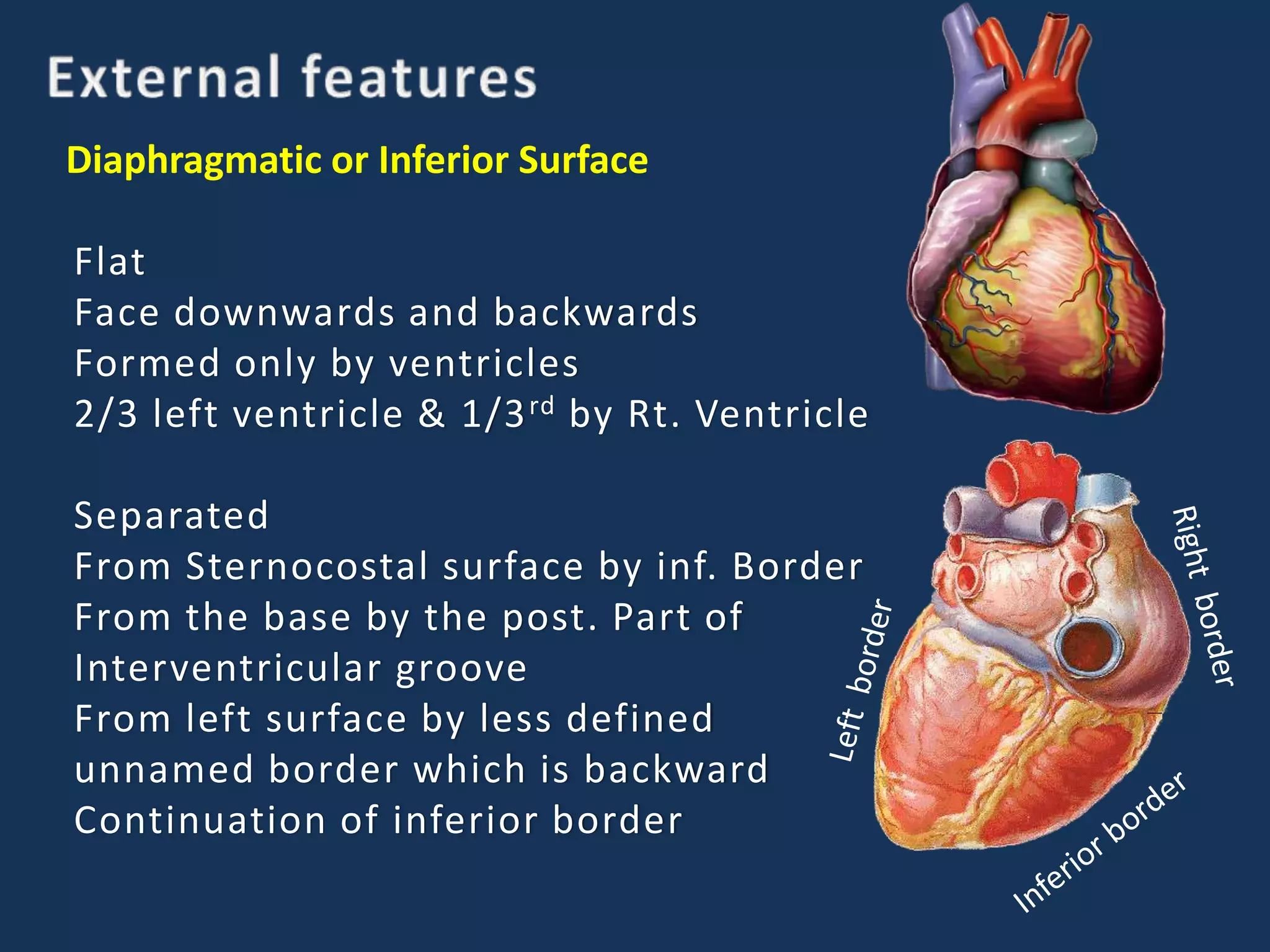
Diaphragmatic or Inferior Surface
Flat
Face downwards and backwards
Formed only by ventricles
2/3 left ventricle & 1/3rd by Rt. Ventricle
Separated
From Sternocostal surface by inf. Border
From the base by the post. Part of
Interventricular groove
From left surface by less defined
unnamed border which is backward
Continuation of inferior border
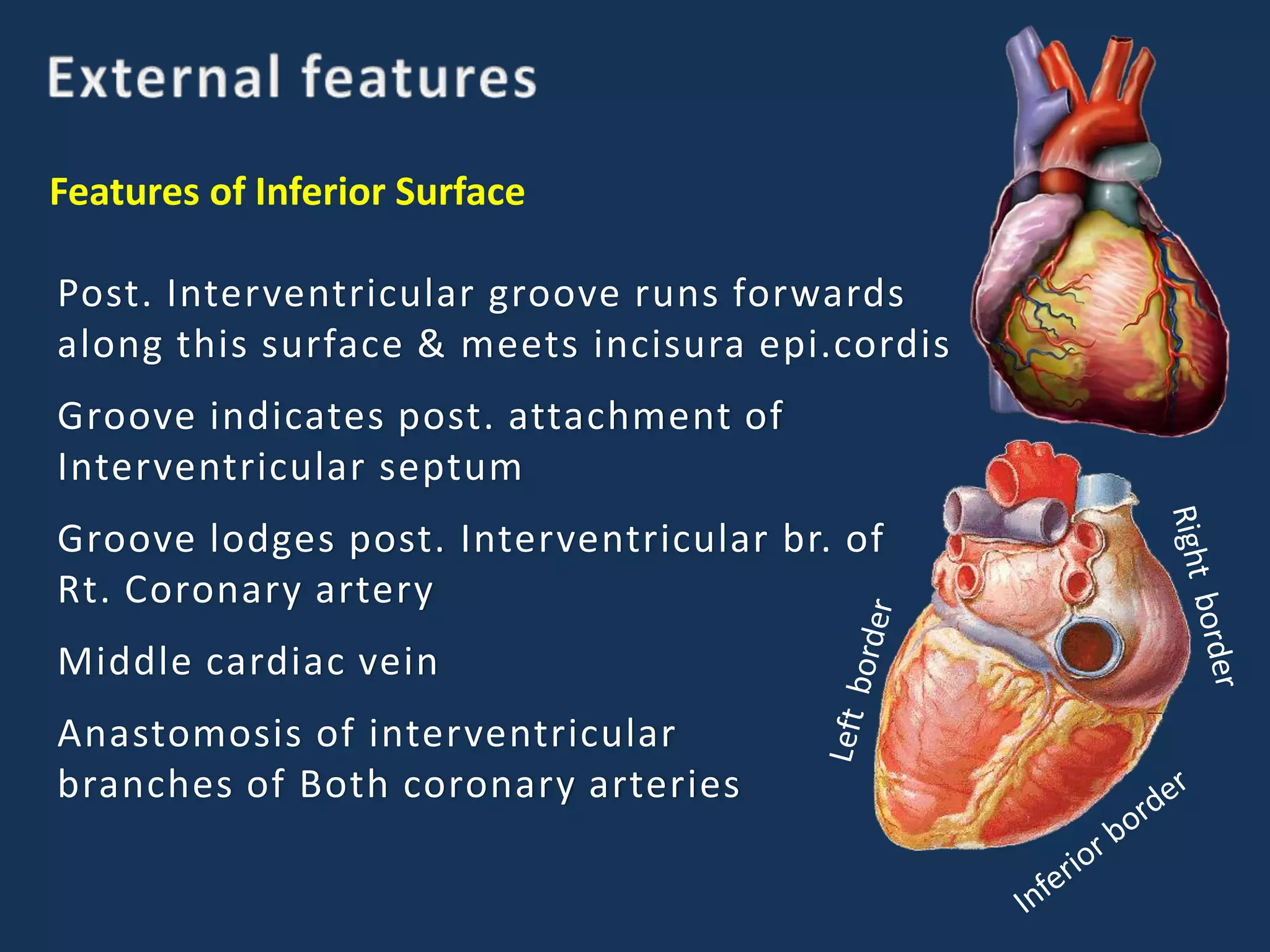
Features of Inferior Surface
Post. Interventricular groove runs forwards
along this surface & meets incisura epi.cordis
Groove indicates post. attachment of
Interventricular septum
Groove lodges post. Interventricular br. of
Rt. Coronary artery
Middle cardiac vein
Anastomosis of interventricular
branches of Both coronary arteries
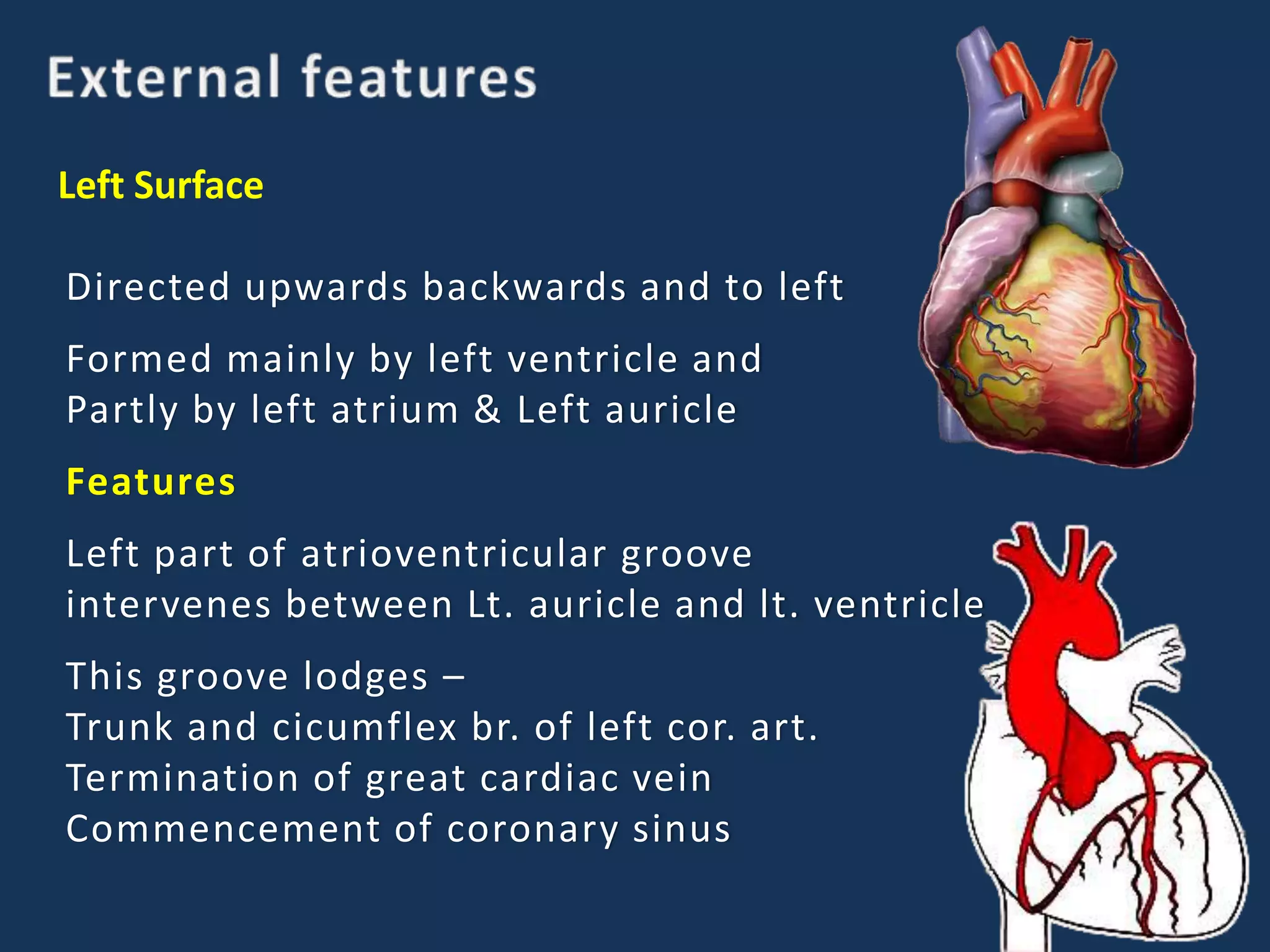
Left Surface
Directed upwards backwards and to left
Formed mainly by left ventricle and
Partly by left atrium & Left auricle
Features
Left part of atrioventricular groove
intervenes between Lt. auricle and lt. ventricle
This groove lodges –
Trunk and cicumflex br. of left cor. art.
Termination of great cardiac vein
Commencement of coronary sinus
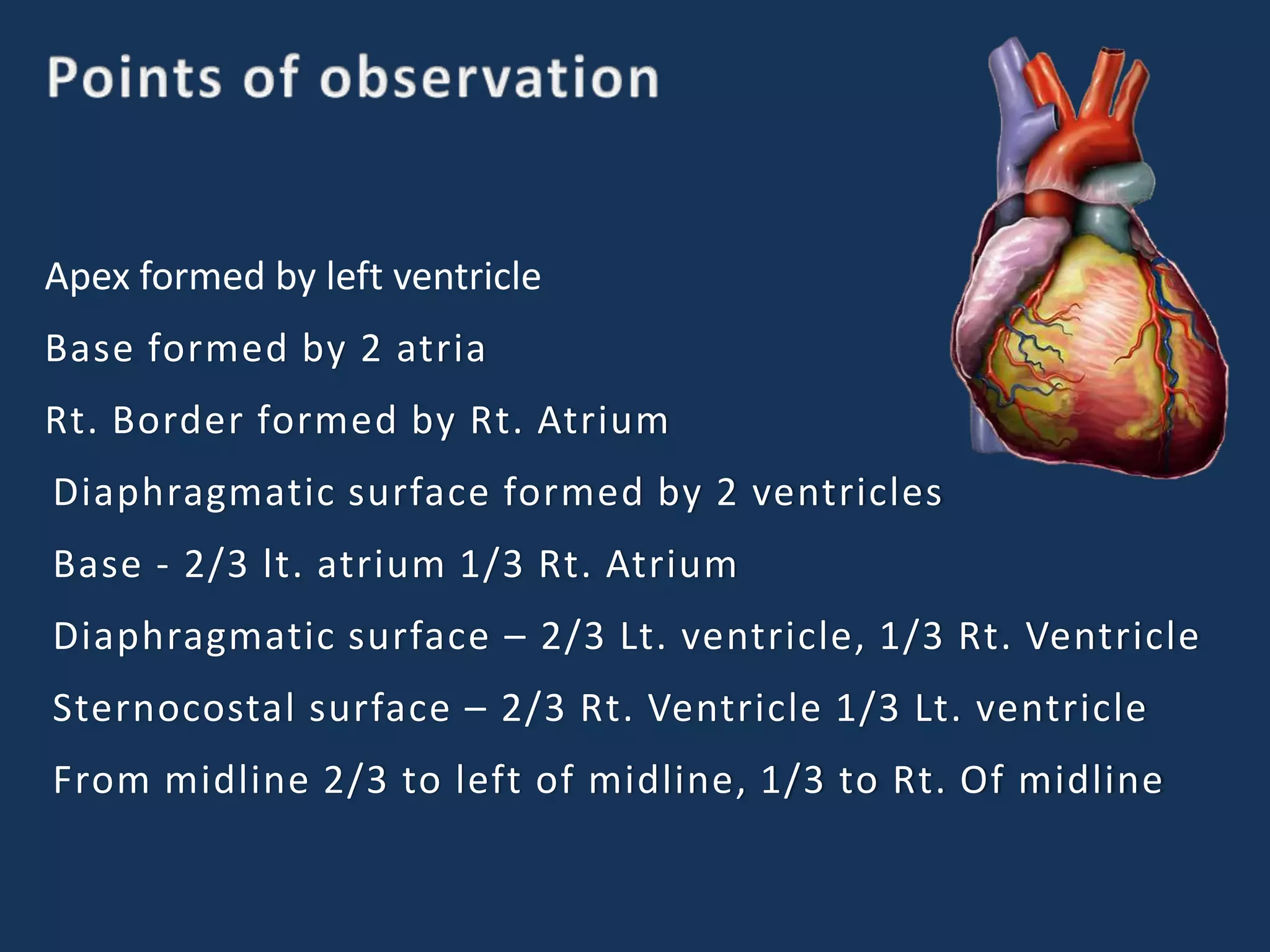
Apex formed by left ventricle
Base formed by 2 atria
Rt. Border formed by Rt. Atrium
Diaphragmatic surface formed by 2 ventricles
Base - 2/3 lt. atrium 1/3 Rt. Atrium
Diaphragmatic surface – 2/3 Lt. ventricle, 1/3 Rt. Ventricle
Sternocostal surface – 2/3 Rt. Ventricle 1/3 Lt. ventricle
From midline 2/3 to left of midline, 1/3 to Rt. Of midline
If an elderly in your house suffers from
chest pain
Do not browse net from your cel to verify
which Doctor can diagnose the illness
But; equip yourself with sufficient
Knowledge to save your own
kith and kin first.
Only gratitude you can return to your
“well-wishers”
And it is the ultimate pride and their ambition

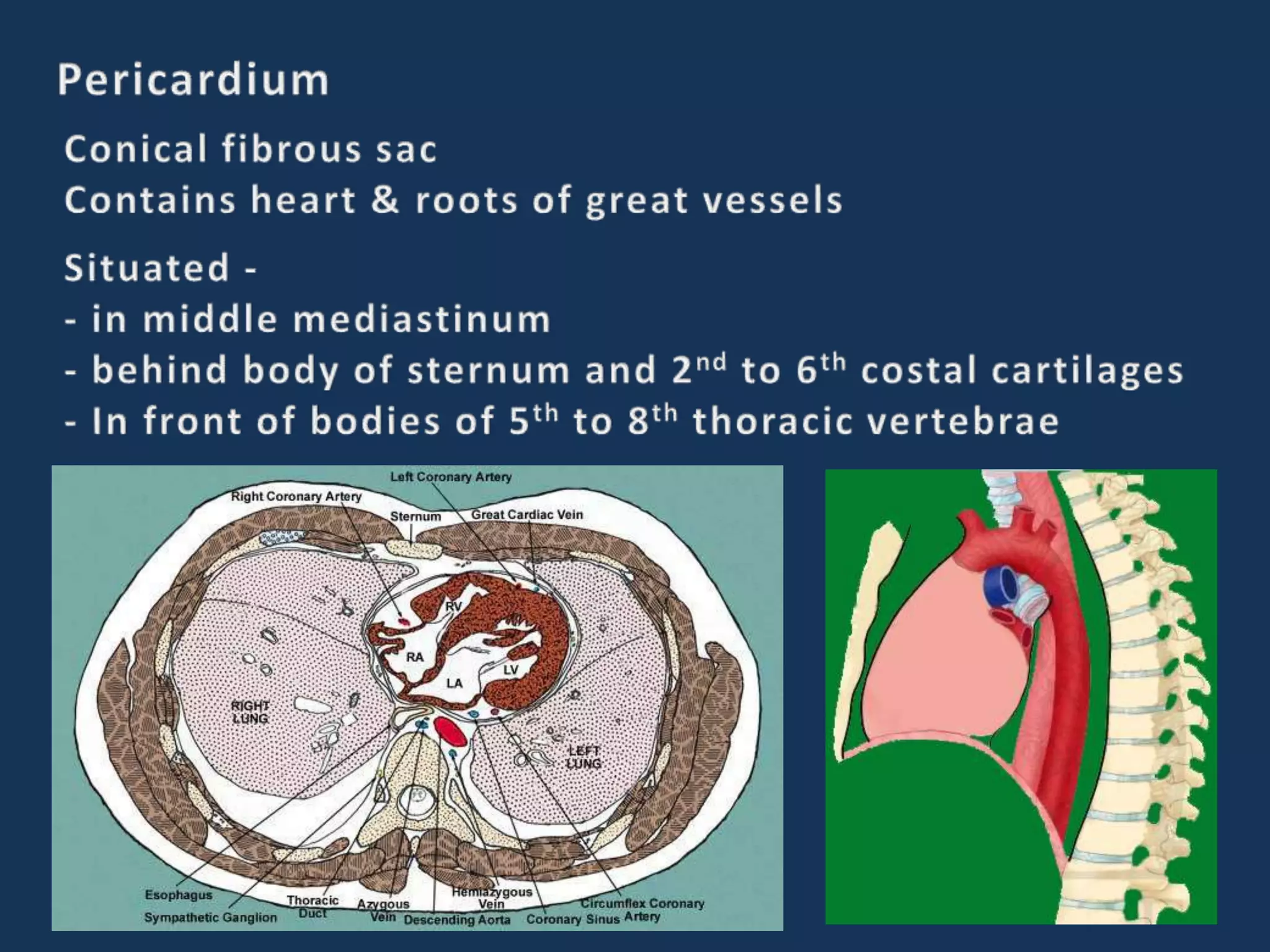
Pericardium external features

  • 16.
  • 17.
  • 21.
    Hollow conical muscularorgan Situated in mid. Mediastinum Covered by pericardium Size of clenched fist 4 chambers 2 atria - interatrial septum 2 ventricles – intervent. Sep.
  • 22.
    Rt.atrium receives deoxygenatedblood Via Sup. & Inf. venacavae, and coronary sinus. Thru’ Rt. atrioventricular orifice To – Rt. Ventricle Ejected to Pulm. Trunk To Pulm. Capillary plexus for oxygenation Pulmonary circulation To Left atrium Via 4 pulmonary veins Thru’ Lt. atrioventricular orifice To Left ventricle Ejected to ascending aorta for Systemic circulation
  • 23.
    Measurements Apex to base– - 12 cms Antero-post diameter - 6 cms Widest transverse diameter 8 to 9 cms (Equal to one half of diameter of thorax) Weight male – 280 to 340 gms female - 230 to 280 gms Presenting parts Apex Base 3 surfaces – Sternocostal, diaphragmatic & Left 3 borders - Right, Inferior & Left
  • 24.
    Apex Conical area formedby left ventricle Directed downwards, forwards and to left In 5th intercostal space 9 cms from midline Slightly below & medial to left nipple Separated from ant.thoracic wall by left lung & pleura Base Posterior surface – fixed part of heart Quadrilateral in outline Formed 2/3rds by post. Surface of left atrium & 1/3rd by Rt. Atrium
  • 25.
  • 26.
    Boundaries of base Above Bifurcationof Pulm. Trunk Below Post. Part of interventricular groove containing coronary sinus & anastomosis of Rt. & Lt. coronary arteries. Rt. Side Rt. Border of Rt. Atrium from sup to Inf. Vena cava Lt. side Left border of left atrium from upper to lower Lt. pulm. veins
  • 27.
    Features of theBase SVC opens in upper post part of Rt.atrium IVC opens in lower post part of Rt.atrium 4 Pulm. Veins 2 on each side open in Post. Surface of Lt. atrium A shallow vertical inter atrial groove may be found between 2 atria – Post. Attachment of Inter atrial septum
  • 28.
    Right border Rounded andconvex Formed by Rt. Atrium Extends from Rt. Side of opening of SVC to IVC The border separates base from Sternocostal surface Shallow vertical groove accpmanies Rt. Border – Sulcus terminalis Corresponds to Crista terminalisin the Interior of Rt. atrium
  • 29.
    INCISURA APICIS CORDIS InferiorBorder Sharp Separates sternocostal from diaphragmatic Surfaces Extends from opening of IVC to apex Border accompanied by marginal branch of Rt. Coronary artery and vein Notch near apex – Incisura apicis cordis Ant. Interventricular br. of left coronary curves around it.
  • 30.
    Left Border ILL definedconvex Convexity to left and upwards Separates sternocostal from left surface Extends from left auricle to apex Accompanied by marginal br. of Lt. coronary artery.
  • 31.
    Sterno – costalsurface Directed forwards and upwards Separated From base to by Rt. Border From diaphragmatic surface by Inf. Border From Left surface by Left border Formed by Ant. Surface of Rt. atrium & its auricle Part of ant. Surface of Lt. auricle Ant. Surface of Rt. Ventricle (2/3) Ant. Surface of left ventricle (1/3)
  • 32.
    Features of Sterno-CostalSurface Ant. Part of atrio-ventricular groove Passes downwards & to right between Rt. Atrium & Rt. Ventricle Lodges trunk of Rt. Coronary artery Ant. Interventricular groove passes downwards parallel to left border meets inf. Border at incisura. The groove lodges ant. Interventricular br. of Lt. coronary artery & great cardiac vein Indicates ant. attachment of interventricular septum
  • 33.
    Diaphragmatic or InferiorSurface Flat Face downwards and backwards Formed only by ventricles 2/3 left ventricle & 1/3rd by Rt. Ventricle Separated From Sternocostal surface by inf. Border From the base by the post. Part of Interventricular groove From left surface by less defined unnamed border which is backward Continuation of inferior border
  • 34.
    Features of InferiorSurface Post. Interventricular groove runs forwards along this surface & meets incisura epi.cordis Groove indicates post. attachment of Interventricular septum Groove lodges post. Interventricular br. of Rt. Coronary artery Middle cardiac vein Anastomosis of interventricular branches of Both coronary arteries
  • 35.
    Left Surface Directed upwardsbackwards and to left Formed mainly by left ventricle and Partly by left atrium & Left auricle Features Left part of atrioventricular groove intervenes between Lt. auricle and lt. ventricle This groove lodges – Trunk and cicumflex br. of left cor. art. Termination of great cardiac vein Commencement of coronary sinus
  • 36.
    Apex formed byleft ventricle Base formed by 2 atria Rt. Border formed by Rt. Atrium Diaphragmatic surface formed by 2 ventricles Base - 2/3 lt. atrium 1/3 Rt. Atrium Diaphragmatic surface – 2/3 Lt. ventricle, 1/3 Rt. Ventricle Sternocostal surface – 2/3 Rt. Ventricle 1/3 Lt. ventricle From midline 2/3 to left of midline, 1/3 to Rt. Of midline
  • 37.
    If an elderlyin your house suffers from chest pain Do not browse net from your cel to verify which Doctor can diagnose the illness But; equip yourself with sufficient Knowledge to save your own kith and kin first. Only gratitude you can return to your “well-wishers” And it is the ultimate pride and their ambition