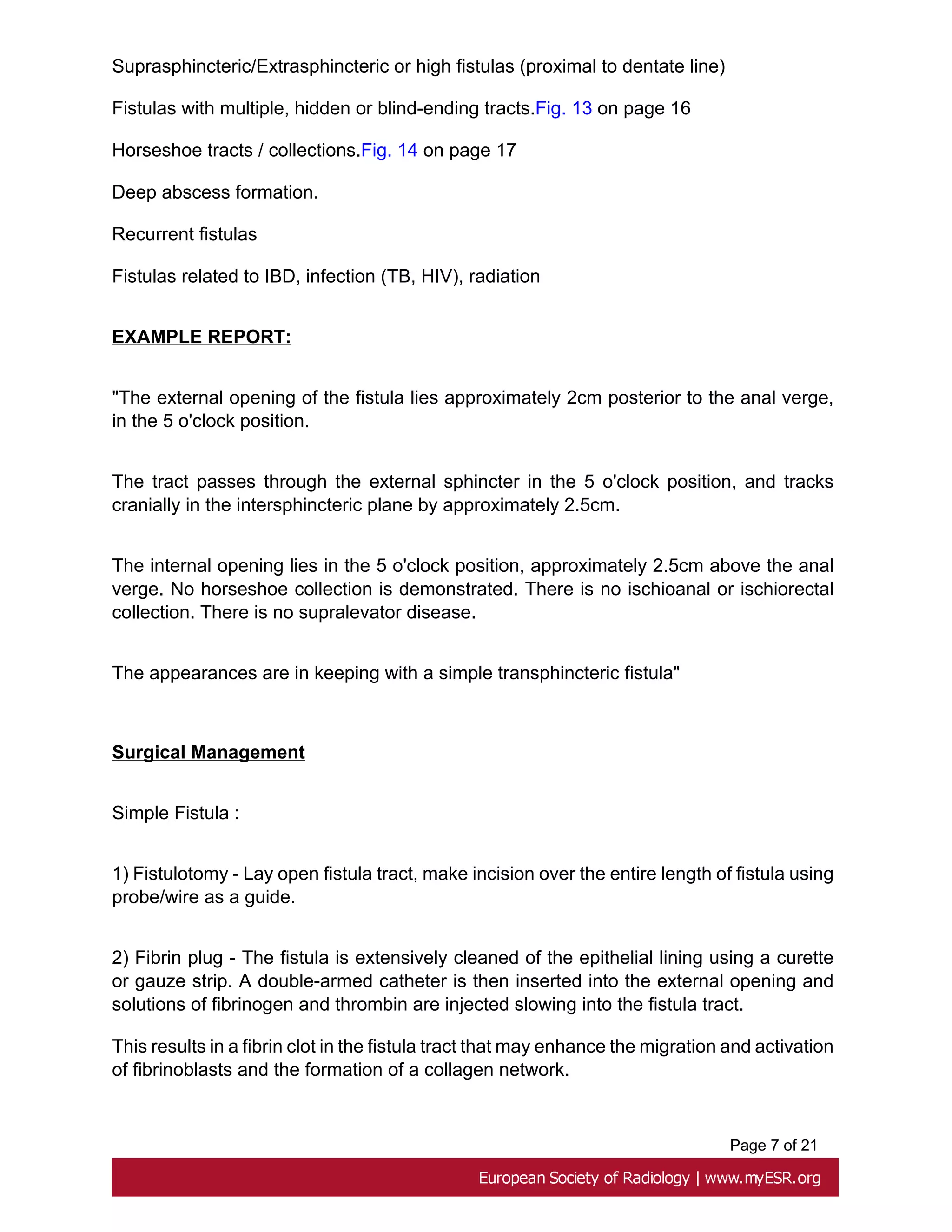
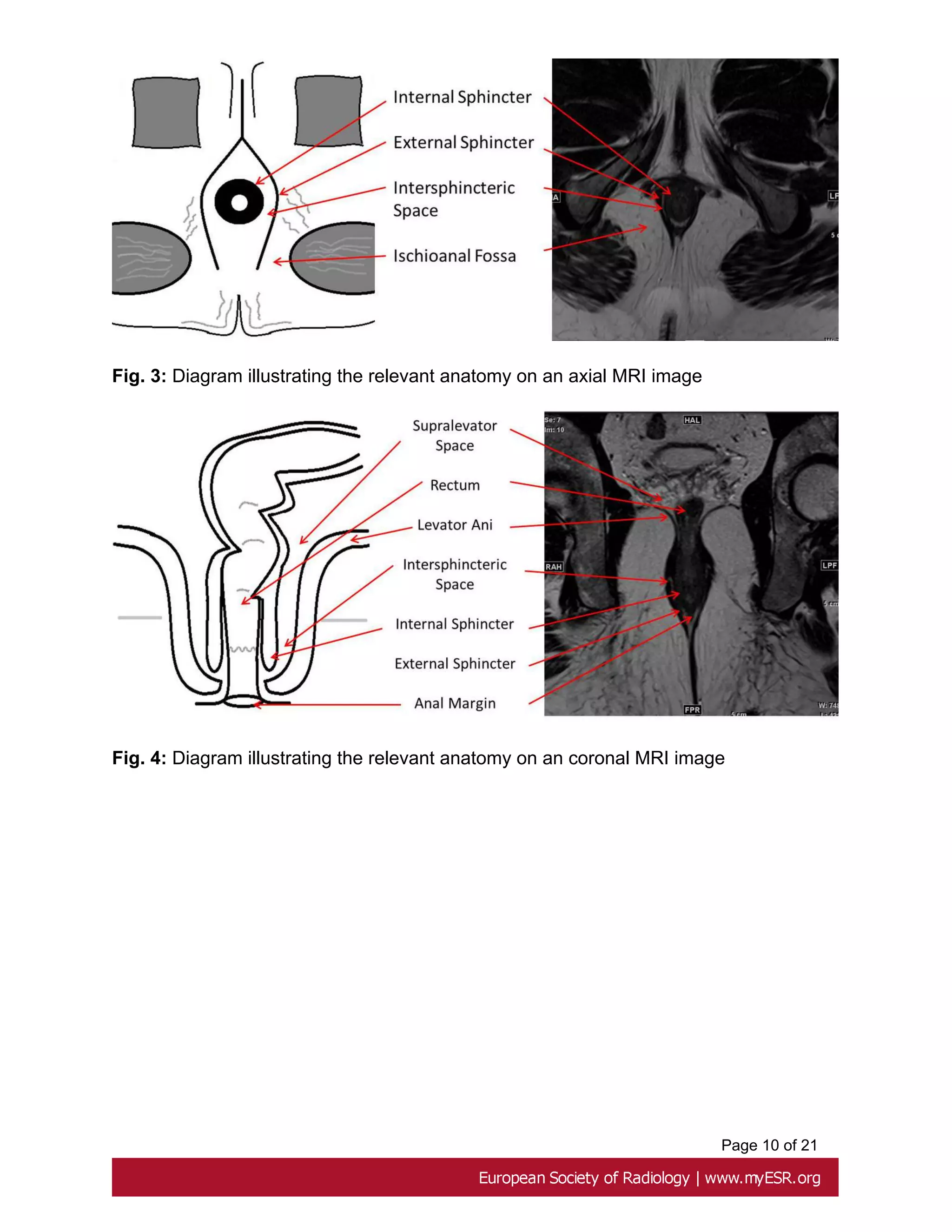
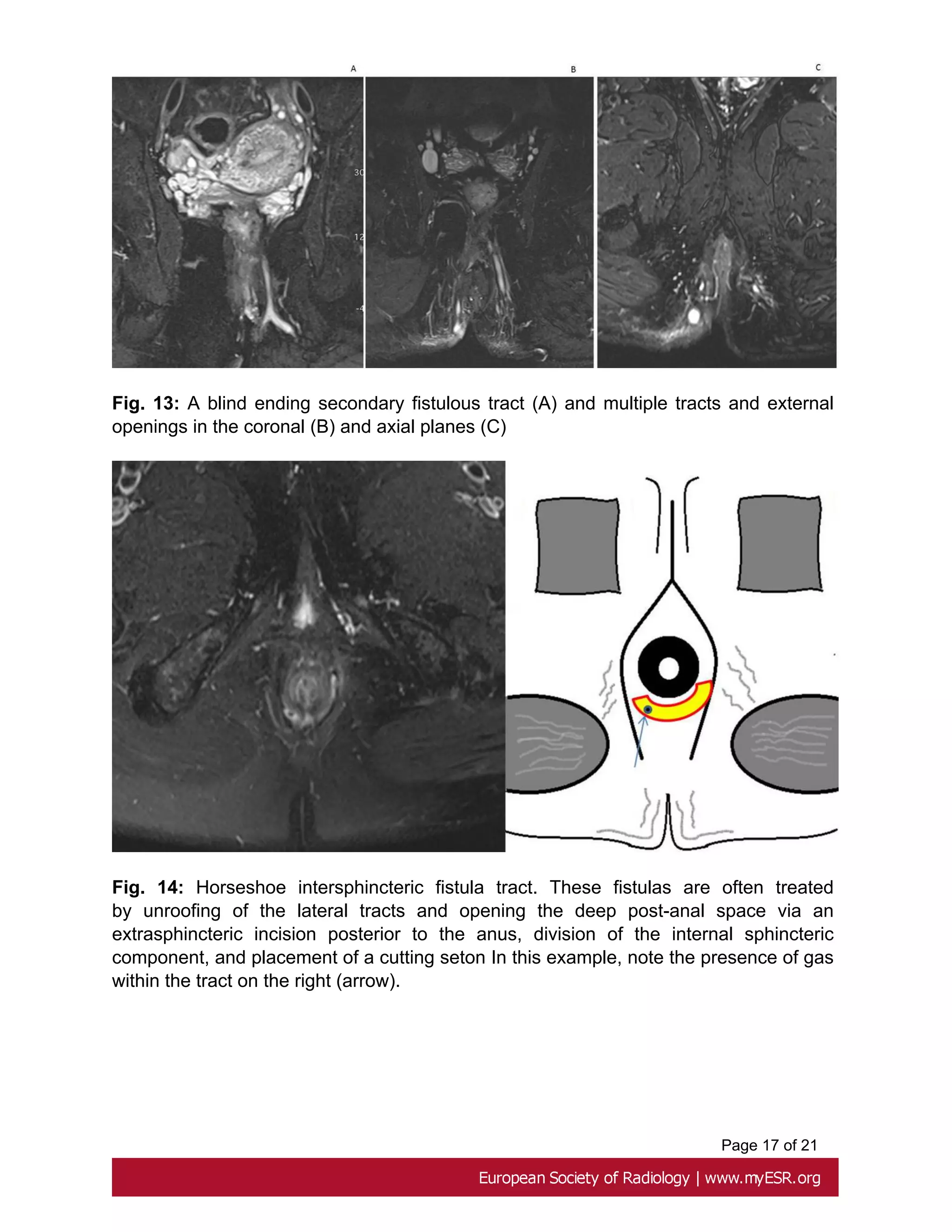
1) MRI is useful for evaluating perianal fistulae to guide surgical management and avoid recurrence. Key sequences include T2-weighted and fat-suppressed T2 to delineate anatomy and identify tracts/abscesses.
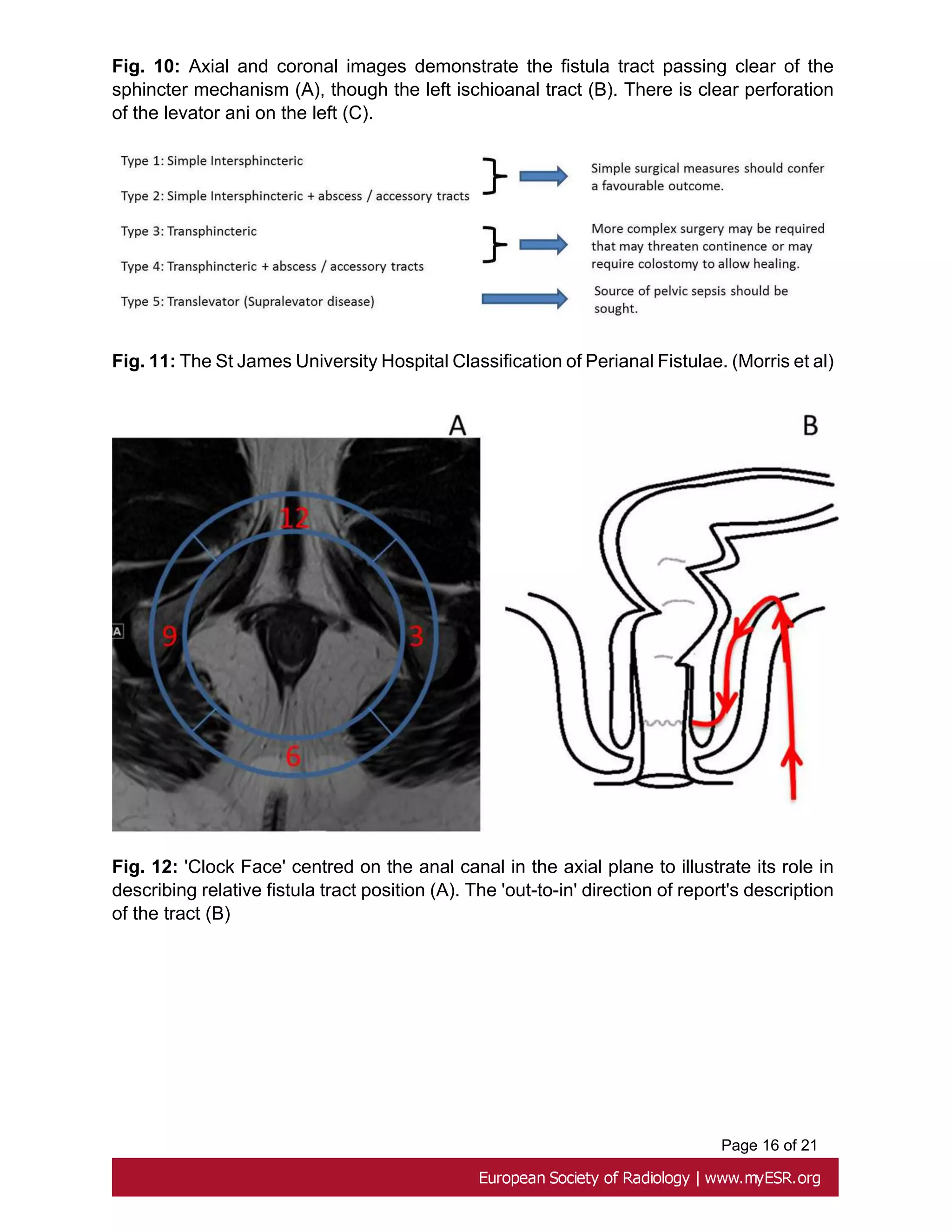
2) Fistulae are classified based on their relationship to sphincter muscles. Parks classification describes 4 main types: intersphincteric, transphincteric, suprasphincteric, and extrasphincteric.
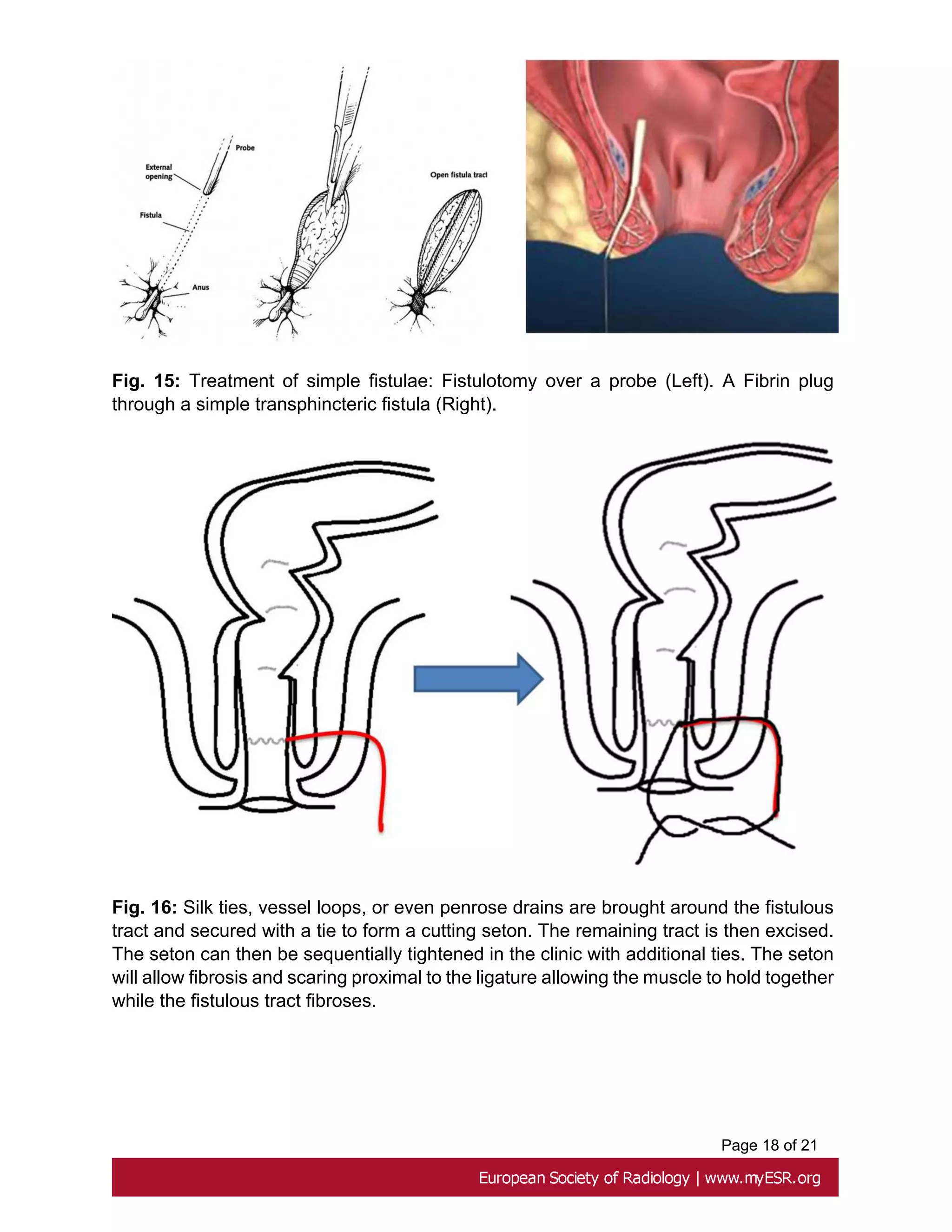
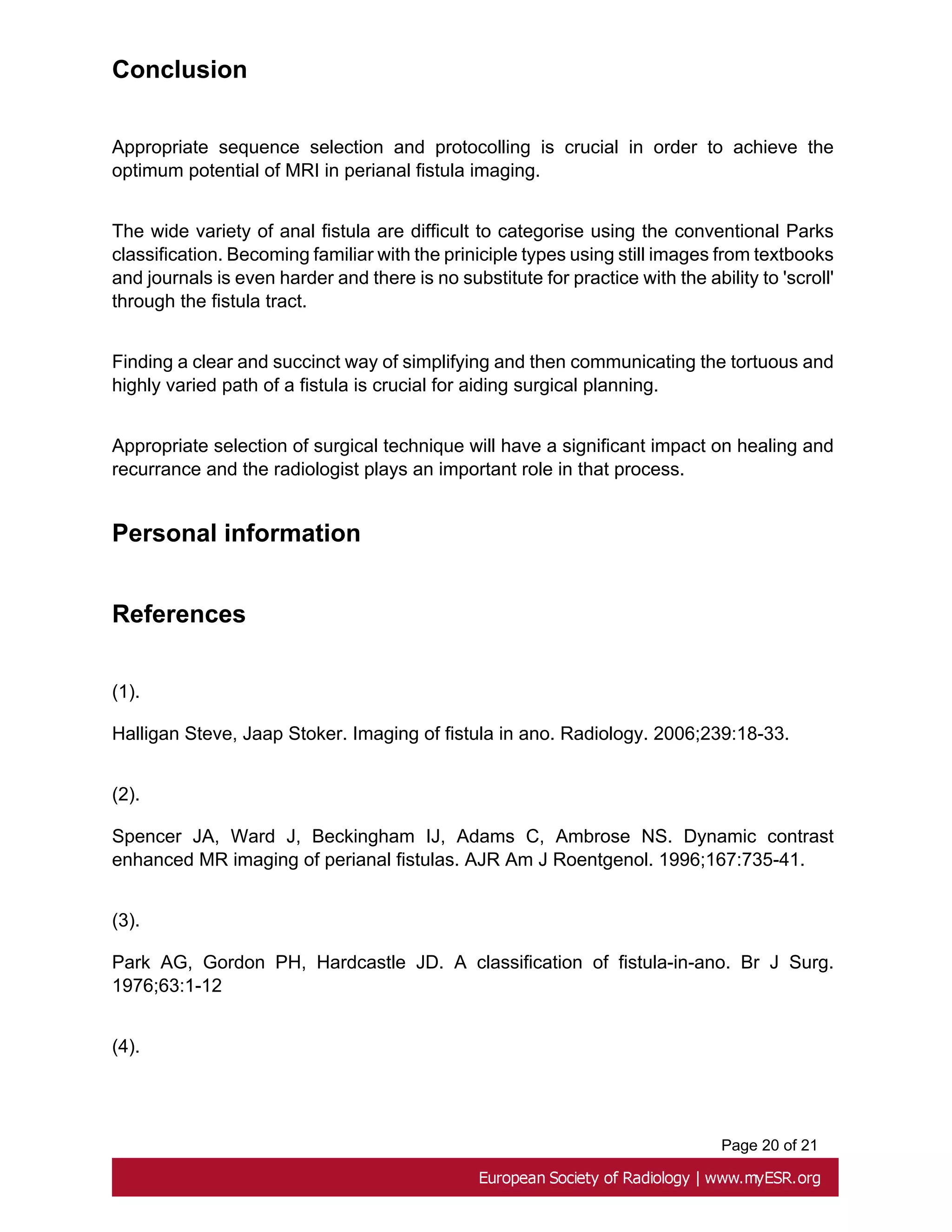
3) Reporting should include tract location, course, relationship to sphincters, and classification as simple or complex based on involvement of muscles. This aids surgical planning for fistulotomy or seton placement.