PERFORMANCE MONITORING
AND COACHING FORM
ARLITAV. LABACLADO, PhD
EPS
WHY MONITOR?
 It provides opportunities to remind
employees about goals and the importance
of these goals.
Periodic checks give you a chance to offer
positive feedback about the good things
that employees do.
These checks can help spot small problems
before they become large ones.
PERFORMANCE COACHING IS NOT…
• a one-time process
 • fault-finding and does not put the
employee down
• giving advice and does not involve the
coach sharing his or her personal
experience or opinions/beliefs
PERFORMANCE COACHING IS...
 • Creating the right atmosphere
MutualTrust
 Develop mutual trust by demonstrating concern for the Coachee’s well-being and
success. Showing empathy, genuine interest, consultation, and providing
opportunities for the Coachee to move ahead are demonstrations of concern.
 Experience in the matter at hand.Trust can be gained when the coach has a
reputation of success in the area.
 Being as good as your word.
 Trust is built through repeated demonstration. Do what you say everytime.
 Not disclosing information held in Coachee’s desire for confidentiality
PERFORMANCE COACHING IS...
Accountability for Results
• A person who is not held accountable for results will not take
coaching seriously.
• A formal coaching plan makes accountability explicit.
PERFORMANCE COACHING IS...
Motivation to Learn and Improve (workplace motivations
that encourage people)
• Mastering an important skill will open the door to advancement.
• A person knows that his or her job is in danger unless he or she
learns to do a particular task better.
• An employee has reached the point where he or she is eager to
learn something new or move on to a more challenging job.
PERFORMANCE COACHING IS...
Practice active listening
Active listening encourages communication and puts other people at ease.
An Active Listener pays attention to the speaker and practices the following good
listening skills:
Maintain eye contact
Smile at appropriate moments
Be sensitive to body language
Listen first and evaluate later
Never interrupt except to ask for clarification
Indicate that you are listening by repeating what was said about critical points
PERFORMANCE COACHING IS...
Asking the right questions
Asking the right questions will help the Coach to understand the
Coachee and get to the bottom of performance problems.
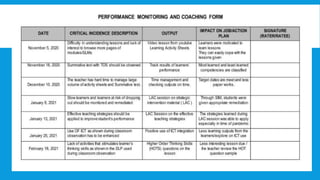
PARTS OF PMCF
1. Date
2. Critical Incidence Description
 Preparation ofTeaching and Learning
 Teaching and Learning Resources
 Learning Delivery
 Learning Assessment
 Professional Development ofTeachers
3. Output
Expected results of technical assistance provided
4. Impact on Job/Action Plan
-how can the results affect the performance of the teacher?
-actions to be taken to improve teacher’s performance
Performance-Monitoring-and-Coaching-Form-1.pptx

Performance-Monitoring-and-Coaching-Form-1.pptx

  • 1.
    PERFORMANCE MONITORING AND COACHINGFORM ARLITAV. LABACLADO, PhD EPS
  • 5.
    WHY MONITOR?  Itprovides opportunities to remind employees about goals and the importance of these goals. Periodic checks give you a chance to offer positive feedback about the good things that employees do. These checks can help spot small problems before they become large ones.
  • 6.
    PERFORMANCE COACHING ISNOT… • a one-time process  • fault-finding and does not put the employee down • giving advice and does not involve the coach sharing his or her personal experience or opinions/beliefs
  • 7.
    PERFORMANCE COACHING IS... • Creating the right atmosphere MutualTrust  Develop mutual trust by demonstrating concern for the Coachee’s well-being and success. Showing empathy, genuine interest, consultation, and providing opportunities for the Coachee to move ahead are demonstrations of concern.  Experience in the matter at hand.Trust can be gained when the coach has a reputation of success in the area.  Being as good as your word.  Trust is built through repeated demonstration. Do what you say everytime.  Not disclosing information held in Coachee’s desire for confidentiality
  • 8.
    PERFORMANCE COACHING IS... Accountabilityfor Results • A person who is not held accountable for results will not take coaching seriously. • A formal coaching plan makes accountability explicit.
  • 9.
    PERFORMANCE COACHING IS... Motivationto Learn and Improve (workplace motivations that encourage people) • Mastering an important skill will open the door to advancement. • A person knows that his or her job is in danger unless he or she learns to do a particular task better. • An employee has reached the point where he or she is eager to learn something new or move on to a more challenging job.
  • 10.
    PERFORMANCE COACHING IS... Practiceactive listening Active listening encourages communication and puts other people at ease. An Active Listener pays attention to the speaker and practices the following good listening skills: Maintain eye contact Smile at appropriate moments Be sensitive to body language Listen first and evaluate later Never interrupt except to ask for clarification Indicate that you are listening by repeating what was said about critical points
  • 11.
    PERFORMANCE COACHING IS... Askingthe right questions Asking the right questions will help the Coach to understand the Coachee and get to the bottom of performance problems.
  • 12.
    PARTS OF PMCF 1.Date 2. Critical Incidence Description  Preparation ofTeaching and Learning  Teaching and Learning Resources  Learning Delivery  Learning Assessment  Professional Development ofTeachers 3. Output Expected results of technical assistance provided 4. Impact on Job/Action Plan -how can the results affect the performance of the teacher? -actions to be taken to improve teacher’s performance