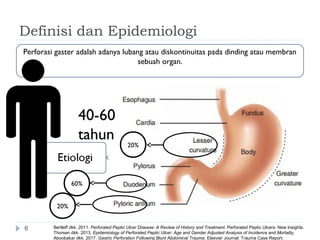
1. Perforated peptic ulcer or gastric perforation occurs when there is a hole or discontinuity in the wall or membrane of an organ.
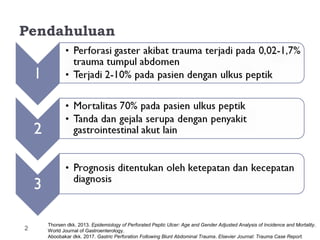
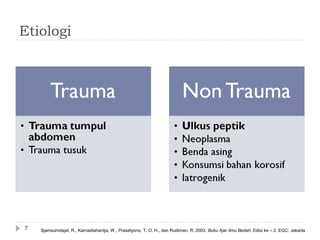
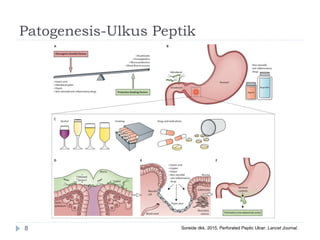
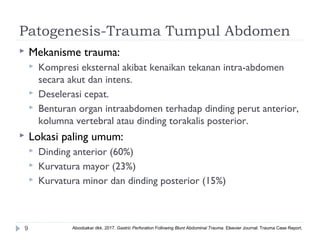
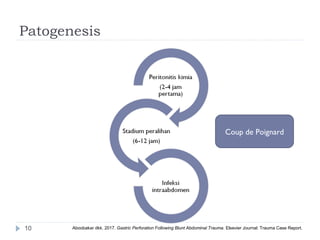
2. The most common causes of gastric perforation are peptic ulcers (60%) and blunt abdominal trauma (20-20%).
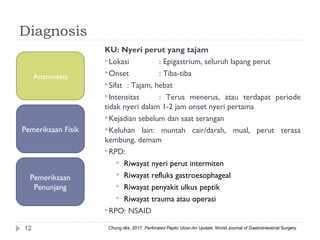
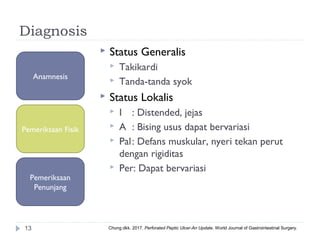
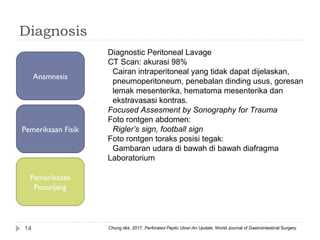
3. Clinical manifestations include sudden and severe abdominal pain localized to the epigastrium, which can be accompanied by vomiting, nausea, abdominal distension and fever. Diagnosis is confirmed through physical examination findings, imaging studies showing free air or fluid in the abdomen, and laboratory tests.
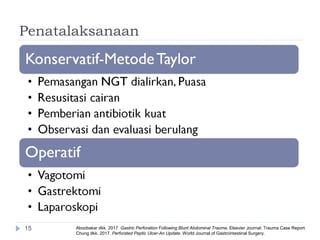
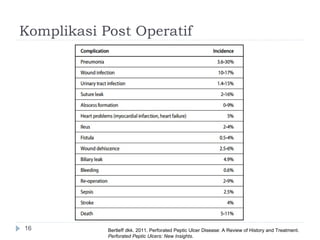
4. Treatment involves resuscitation, intravenous antibiotics, surgery to repair the perforation, and postoperative care. Complications can include